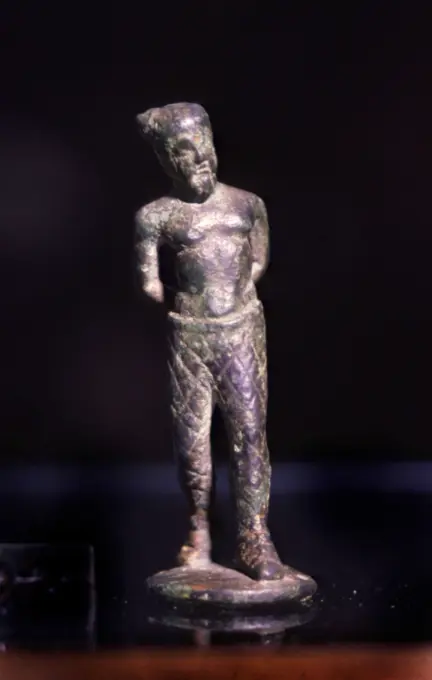
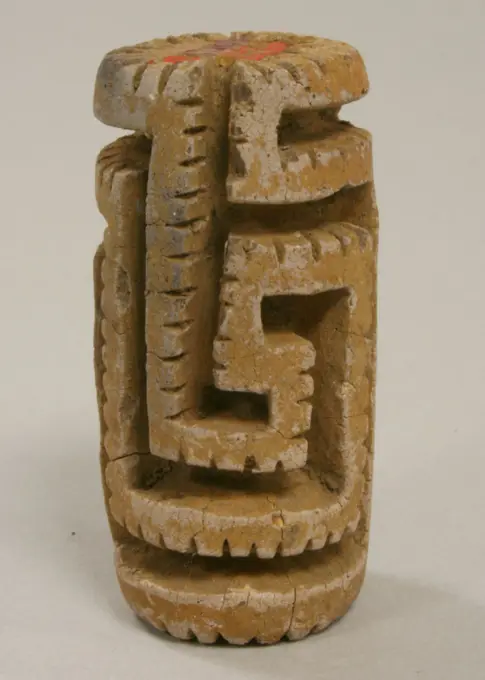
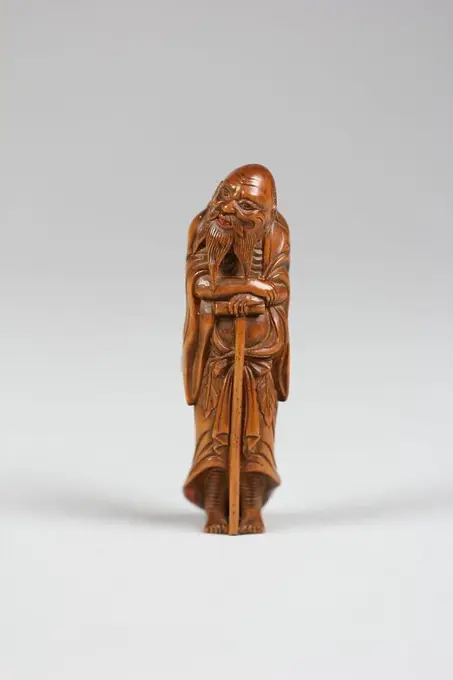
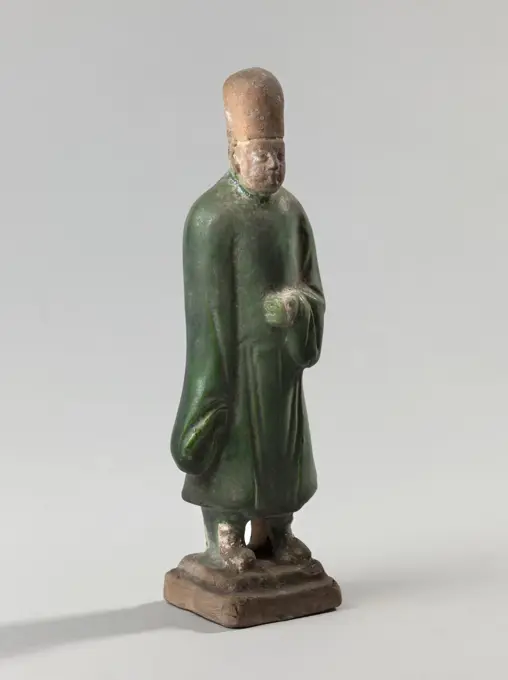
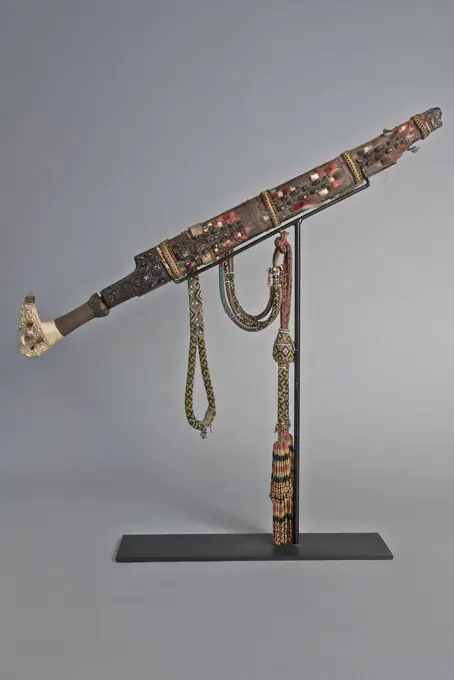
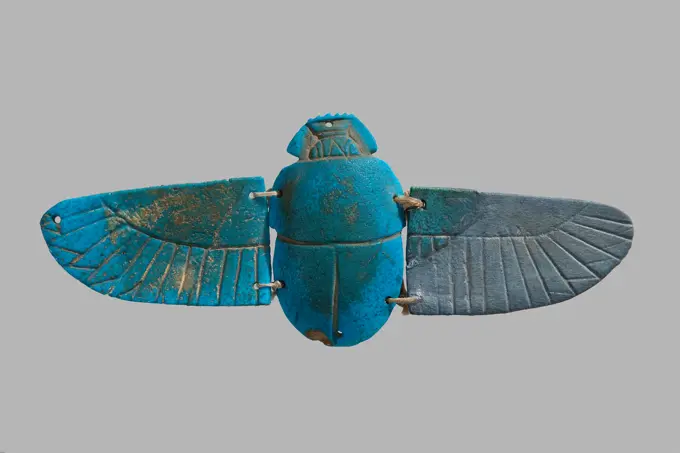
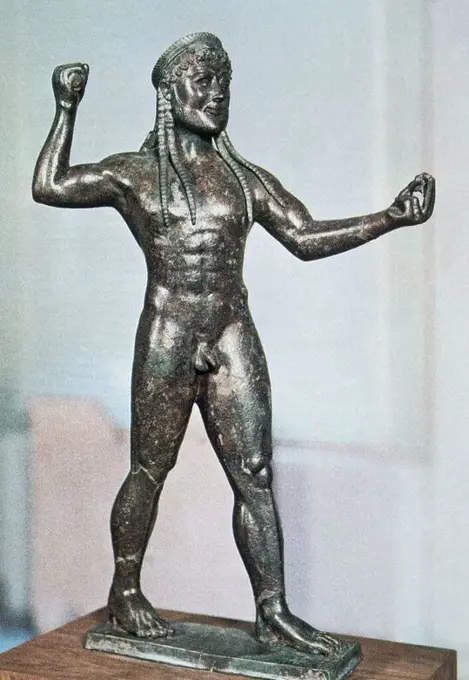
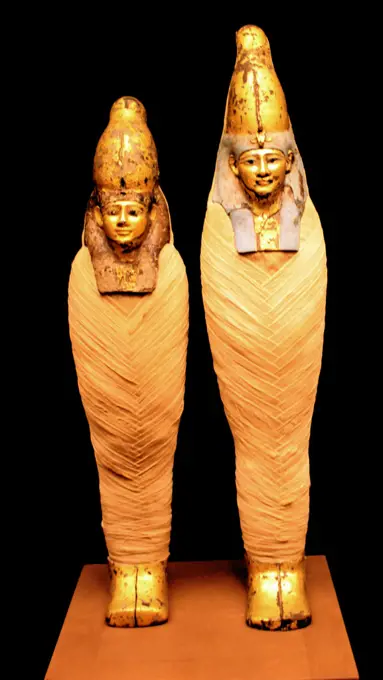
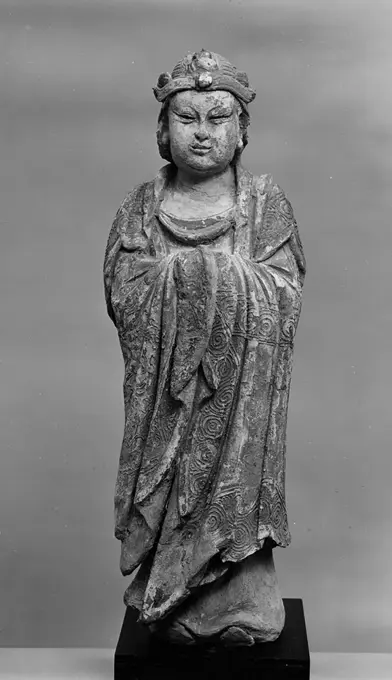
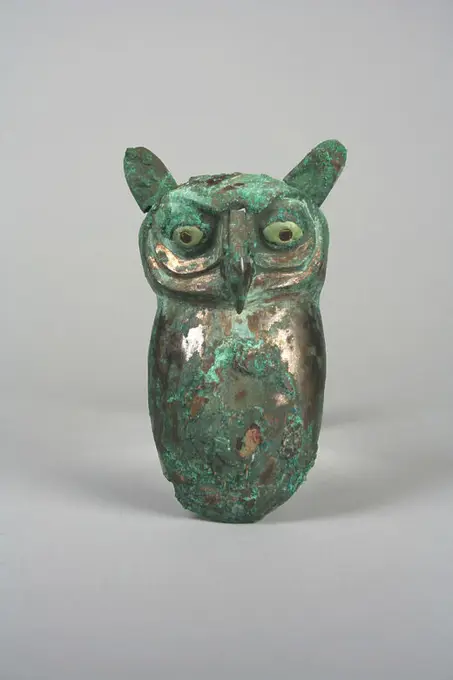
Ancient Egyptian Artifacts

Intricate amulets and figurines from ancient Egypt, showcasing historical craftsmanship. These artifacts reflect cultural significance and are a glimpse into past traditions.
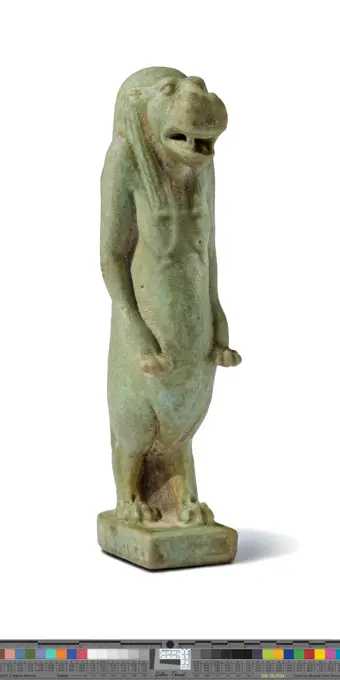
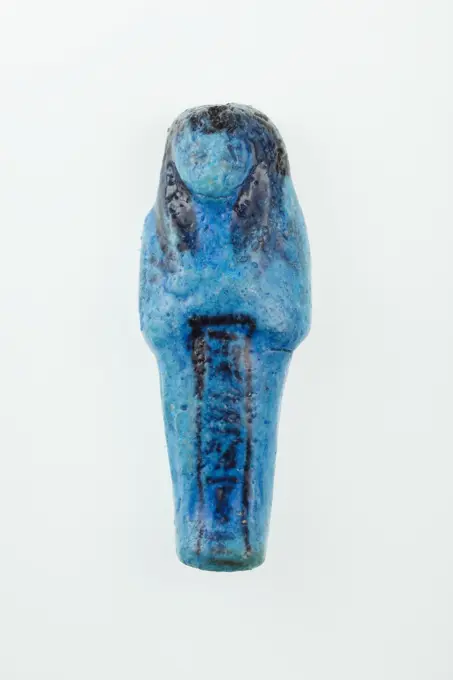
Taweret Amulet. Egypt, Late Period-Ptolemaic Period, 664-30 BCE. Jewelry and Adornments; amulets. Faience
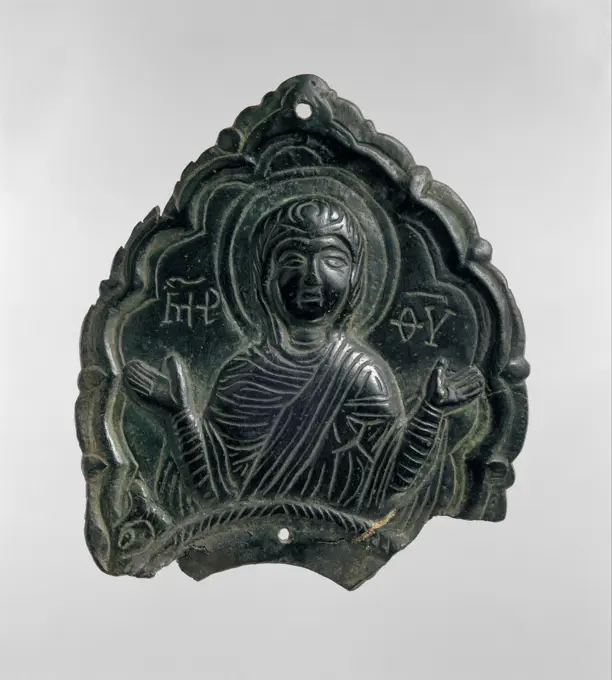
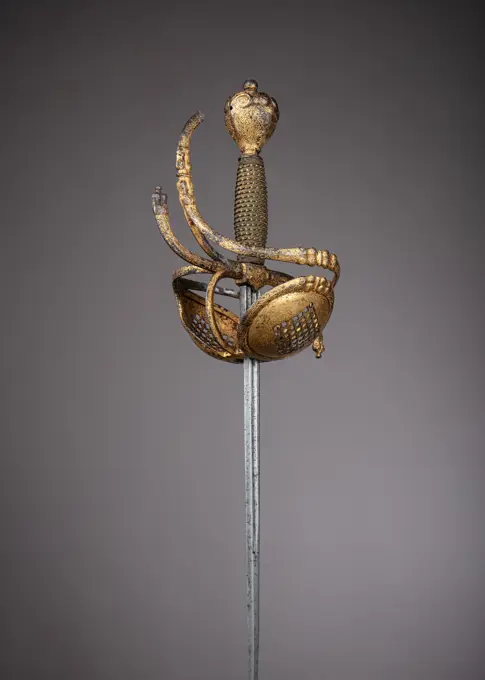
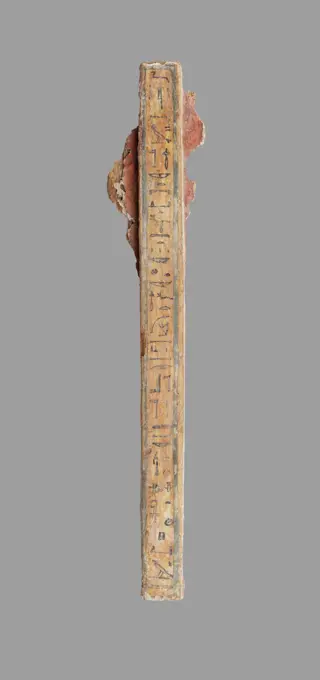
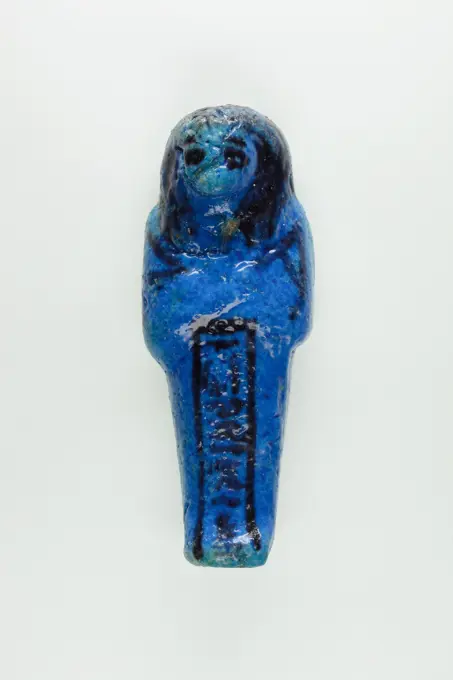
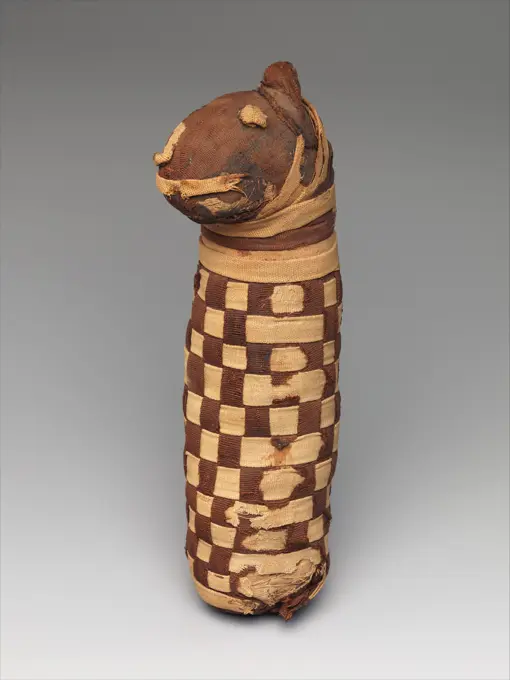
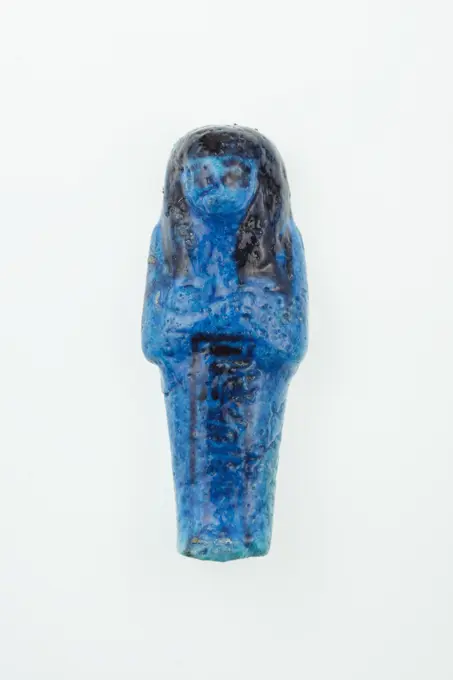
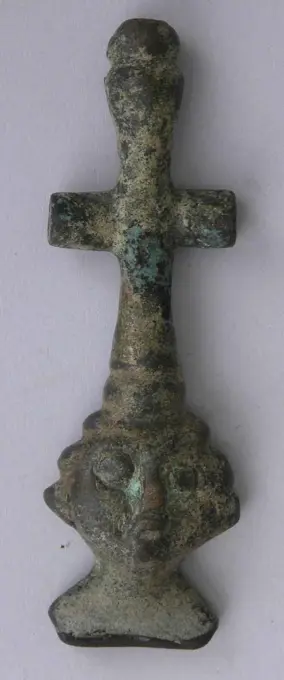
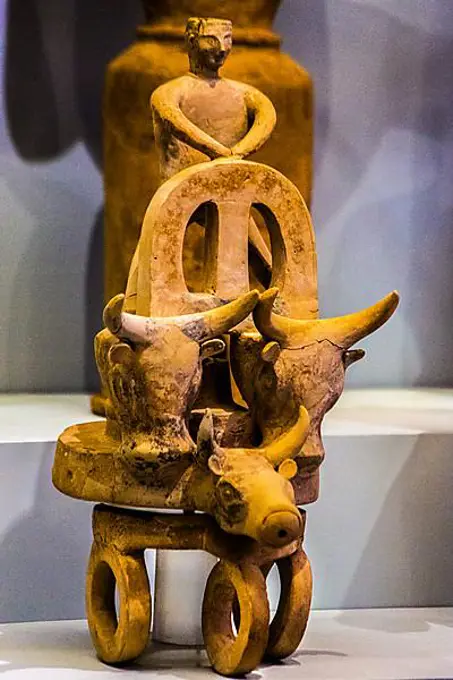
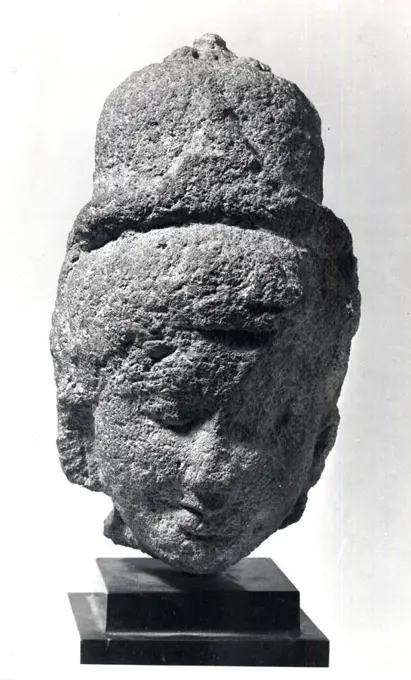
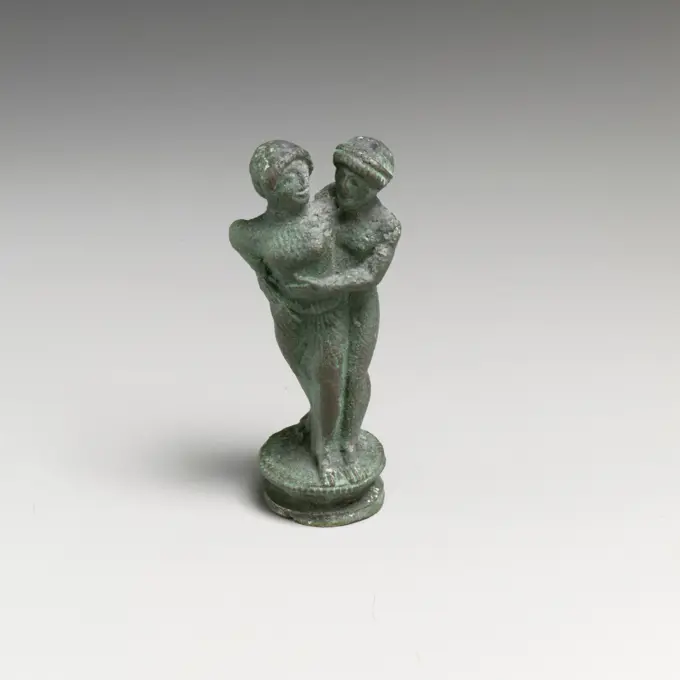
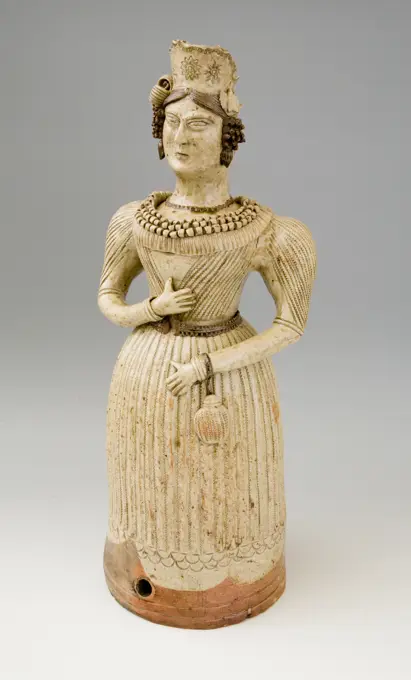
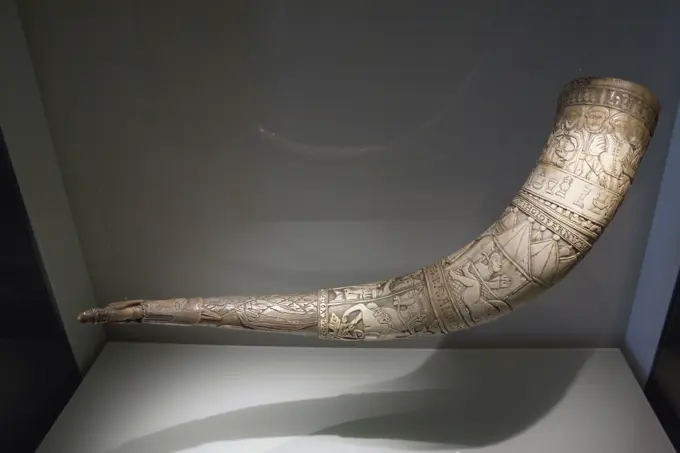
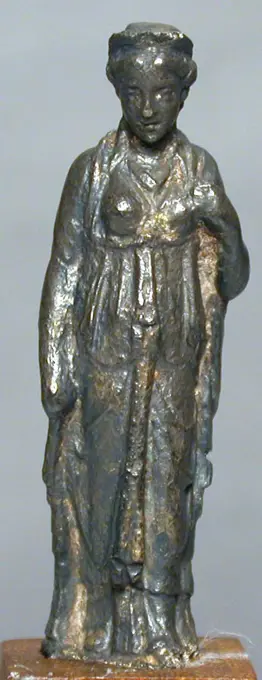
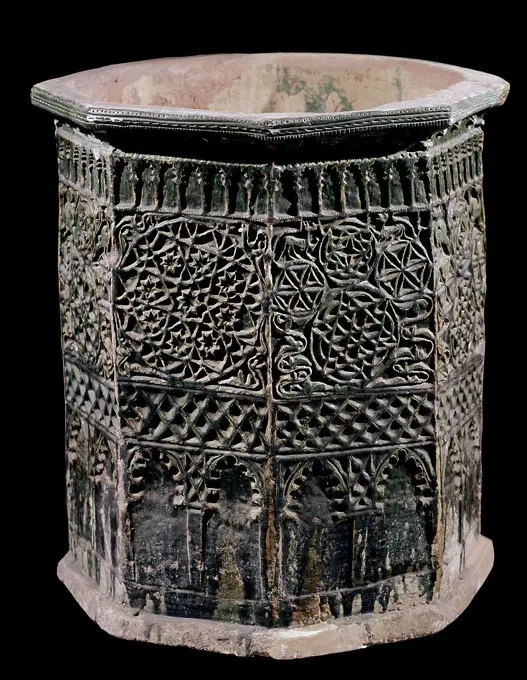
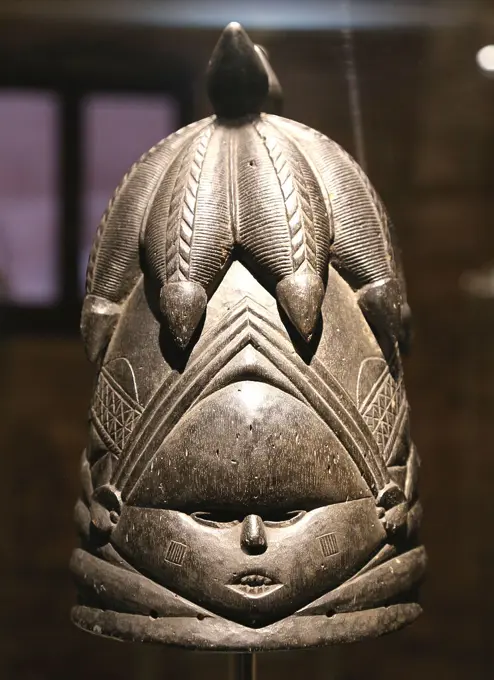
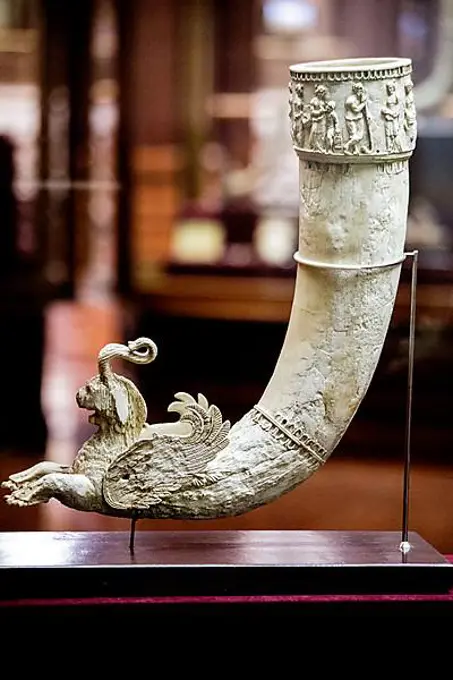
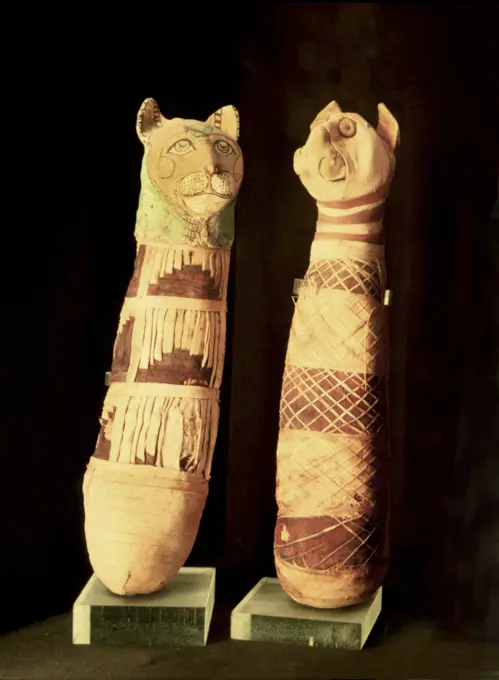
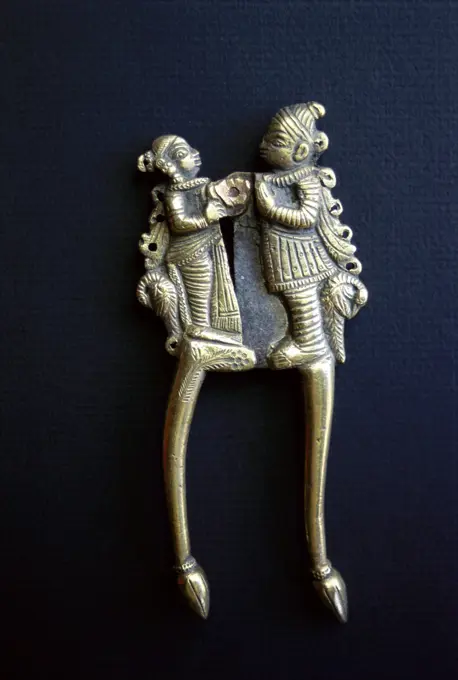
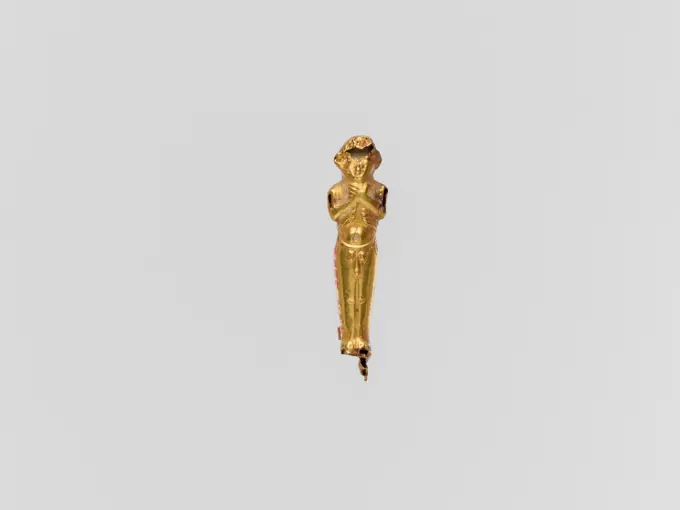
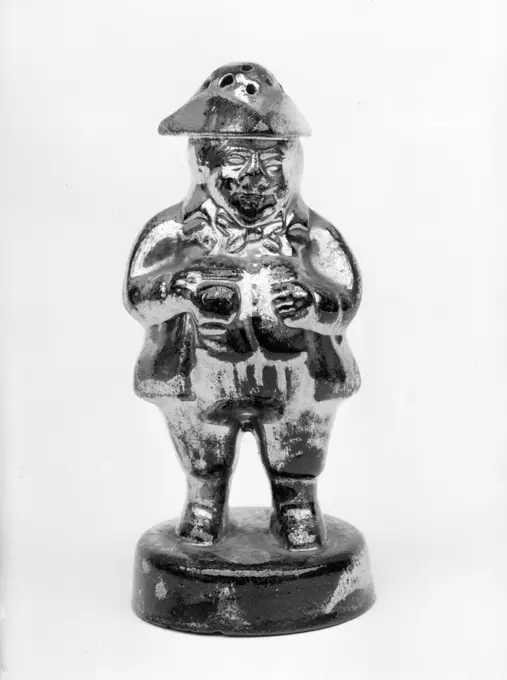
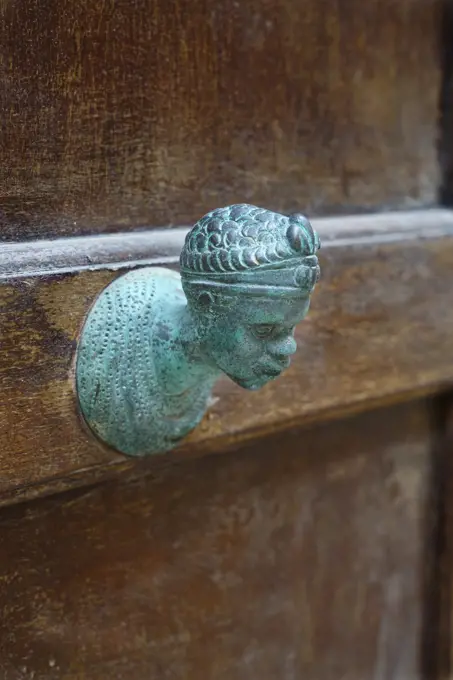
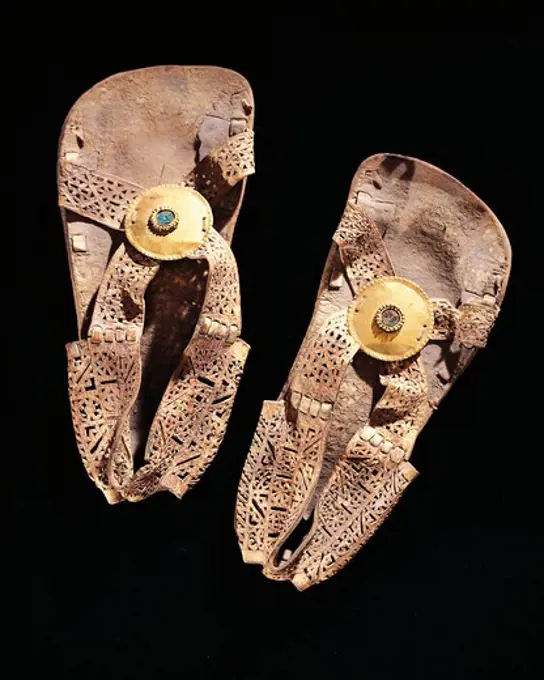
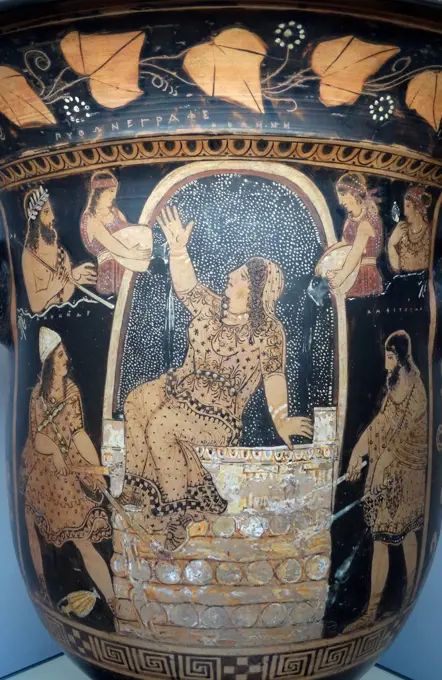
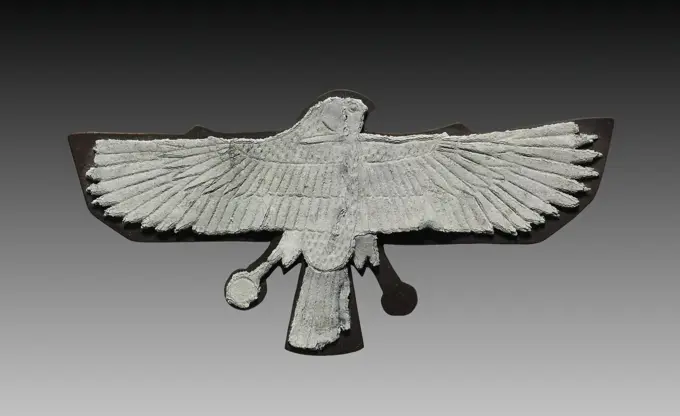
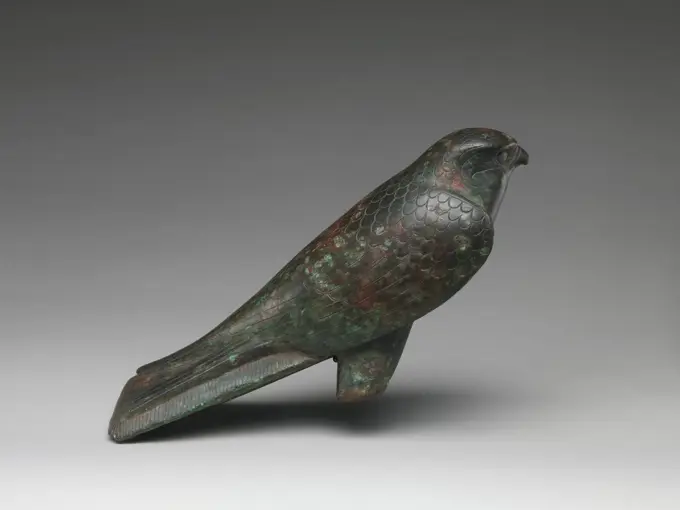
Falcon statue serving as a sarcophagus for a sacred animal 664-30 B.C. Late Period-Ptolemaic Period This bronze falcon is hollow. X-rays have revealed animal bones on the interior, presumably those of a falcon, and an opening beneath the tail through which the animal body had been inserted. The opening is closed with a close-fitting bronze plate. Listen to experts illuminate this artwork's story Listen Play or pause #2604. Falcon 00:00 / 01:33 Play or pause #2604. Falcon 00:00 / 01:38 Supported by Bloomberg Philanthropies We're sorry, the transcript for this audio track is not available at this time. We are working to make it available as soon as possible.. Falcon statue serving as a sarcophagus for a sacred animal 548516String of 5 Beads 600-900 Islamic Period. String of 5 Beads. 600-900. Glass. Islamic Period. From EgyptCenser Handle with Virgin Orant 13th-14th century Byzantine In later Byzantine churches, incense was released from standing censers with large handles (katzen). On this handle, the Virgin is shown in the prayer pose that became traditional in the early Byzantine period.. Censer Handle with Virgin Orant 472758Rapier ca. 1620-30 Northern European, possibly Flanders The rapier was the principal civilian sidearm throughout the sixteenth and seventeenth centuries. Designed for cut-and-thrust fencing of progressively complex techniques, the rapier is characterized by a double-edged blade with an acute point and an elaborate guard for the hand. The guards, usually of iron or steel, were subject to a variety of embellishment. They were engraved, chiseled, gilded, damascened, and encrusted in gold and silver in keeping with fashionable styles. Unless otherwise noted, the materials, attributions, and dating given here refer to the hilts. Rapier blades, invariably of steel, bear a variety of makers marks denoting their origin in the two principal centers of blademaking, Toledo in Spain and Solingen in Germany.. Rapier. Northern European, possibly Flanders. ca. 1620-30. Steel, gold, copper wire, wood. SwordsShrine fragment inscribed for Padihor Third Intermediate Period-Late Period ca. 760-332 BC One of three fragments found together, this may be part of the frame of a miniature shrine. The inscription is a spell asking that the sun god, Re-Harakhty, give offerings to the ka (spirit) of a priest of Montu named Padihor.These fragments were discovered in a Middle Kingdom tomb that had been re-used in the Third Intermediate Period and later for intrusive burials. View more. Shrine fragment inscribed for Padihor. ca. 760-332 BC. Wood, paint. Third Intermediate Period-Late Period. From Egypt, Upper Egypt, Thebes, Deir el-Bahri, Tomb MMA 511, MMA excavations, 1922-23. Dynasty 25-30Model Duck Offering. Egypt, New Kingdom - Late Period (1569 - 323 BCE). Sculpture; models. BronzeBronze serpentine-disc type fibula (safety pin) 9th century B.C. Villanovan There are two spirals, one of one turn, the other of two. The disk is formed by a flat piece of metal rolled once spirally.. Bronze serpentine-disc type fibula (safety pin) 246373Worker Shabti of Nany ca. 1050 B.C. Third Intermediate Period See 30.3.26.1a, b. Worker Shabti of Nany 625671Decorative element for furniture in the form of ureo, gold, low time, Egypt, collection of the British Museum, AfricaHead with Melon Coiffure. UnknownBronze statuette of Gaullish prisoner, France.Roller Stamp 5th-6th century Atlantic Watershed. Roller Stamp 313064Bead in the Shape of a Conch Shell, c. 6th-8th century, 1/4 x 1/2 x 1/4 in. (0.6 x 1.3 x 0.6 cm), Stone, Myanmar (Burma), 5th-9th centuryNetsuke. Culture: Japan. Dimensions: H. 3 1/8 in. (7.9 cm); W. 7/8 in. (2.2 cm); D. 3/4 in. (1.9 cm). Date: 19th century. Museum: Metropolitan Museum of Art, New York, USA.Netsuke 19th century Japan. Netsuke. Japan. 19th century. Wood. Edo (1615-1868) or Meiji period (1868-1912). NetsukeFigure-celt Pendant 3rd-6th century Guanacaste-Nicoya. Figure-celt Pendant 316646Worker Shabti of Nany ca. 1050 B.C. Third Intermediate Period See 30.3.29.1a, b. Worker Shabti of Nany. ca. 1050 B.C.. Faience. Third Intermediate Period. From Egypt, Upper Egypt, Thebes, Deir el-Bahri, Tomb of Meritamun (TT 358, MMA 65), first corridor, burial of Nany, MMA excavations, 1928-29. Dynasty 21Female Figurines 16C . BC . Gezer.Pottery Whistle before 1889 Mexican. Pottery Whistle. Mexican. before 1889. Pottery. Oaxaca, Mexico. Aerophone-Whistle Flute-whistleEagle. Dated: c. 1941. Dimensions: overall: 43.9 x 30.4 cm (17 5/16 x 11 15/16 in.) Original IAD Object: 2 5/8" wide; 2 5/8" deep; 10 3/4" high. Medium: watercolor, pen and ink, and graphite on paperboard. Museum: National Gallery of Art, Washington DC. Author: Hester Duany.Fragmentary Figure of a Seated Woman. UnknownFaience Vessel in the form of the God Bes. Bes the Egyptian deity worshipped as a protector of householdsHead of a Royal Personage. Egypt, 700 B.C. (late dynastic). Sculpture. Rose. granite flecked with blackIron SpearHeadAmulet - plakietka z boginią Sachmet i bogiem Mahesem (). unknown, authorBronze handicraft, India Copyright: xDinodiaxPhotoxSacred animal mummy containing dog bones ca. 400 B.C.-100 A.D. Late Period-Roman Period Animal cults The Egyptians considered certain individual animals to be living manifestations of a god, such as, since earliest times, the Apis bull. Those individuals were duly mummifed when they died and buried for eternal life, then replaced by another single living manifestation. During the first millennium BC, many multiples of animals associated with certain gods were specially raised in temple precincts as simultaneous avatars of that god and then mummified in large contingents and deposited in catacombs for eternal life. The ancient perception of these multiples, the evolution of the practice in this direction, and variations within the practice are not easily accessible to us. But the hundreds of thousands of often elaborately prepared animal mummies found in catacombs and other locales testify to its ancient resonance. Animal mummies Research on animal mummies has shown that the majority ofBronze statuette of a shepherd ca. 525-500 B.C. Greek, Arcadian Inscribed on the base in Greek "Aineas dedicated me to Pan.". Bronze statuette of a shepherd 254501 Greek, Arcadian, Bronze statuette of a shepherd, ca. 525?500 B.C., Bronze, H. 3 5/8 in. (9.2 cm). The Metropolitan Museum of Art, New York. Rogers Fund, 1943 (43.11.3)A Late Hellenistic Bronze Statue of Aphrodite  2nd-1st C. B.C.  Greek Art (Alexandria) Shabti of the Singer of Amun Inhai. Egyptian. Date: 1186 BC-1069 BC. Dimensions: 17.1 × 4.4 × 4.4 cm (6 3/4 × 1 3/4 × 1 3/4 in.). Ceramic, pigment. Origin: Egypt. Museum: The Chicago Art Institute, USA. Author: Ancient Egyptian.Pilgrim's Badge 15th century French. Pilgrim's Badge. French. 15th century. Lead. Metalwork-LeadCapital ca. 1130-40 Catalan. Capital 470773Figurine of Sinhalese official. unknown, sculptorWalking stick button in the shape of a lying Sphinx of Jasper and occupied with golden dots and diamond .. Walking stick button in the shape of a lying Sphinx from Jaspis cut, set with golden dots and diamonds. The bus at the stake for the stick is made of gold with diamond.Worker Shabti of Nany ca. 1050 B.C. Third Intermediate Period Seven shabti boxes were interred with Nany; five came to New York in the division of finds (30.3.26-.30), two of them are now in the Egyptian Museum in Cairo. All are made of sycamore wood and have high ends and flat lids. A white stucco wash was applied after the lids were closed. The shabtis, made of faience, were packed tightly in each box, in an upright position. They are of two types: foremen and workmen, with a ratio of one forman to ten workers (see 30.3.28a-h).. Worker Shabti of Nany. ca. 1050 B.C.. Faience. Third Intermediate Period. From Egypt, Upper Egypt, Thebes, Deir el-Bahri, Tomb of Meritamun (TT 358, MMA 65), first corridor, burial of Nany, MMA excavations, 1928-29. Dynasty 21Cross 3rd-12th century. Cross 447344Worker Shabti of Nany ca. 1050 B.C. Third Intermediate Period See 30.3.26.1a, b. Worker Shabti of Nany 625689Roof tile with a figure of deer China 18th-19th centuryChariot drawn by bulls, Tonrhyton. Karfi, Crete, Late Post-Palatial Period, 1100-1000 BC, Archaeological Museum with most important finds of the Minoan culture, Heraklion, Crete, Heraklion, Crete, Greece, EuropeHead Fragment 8th-9th century Indonesia (Java). Head Fragment 38458Bronze candelabrum finial showing a man embracing a woman 5th century B.C. Etruscan Statuette of a youth and a girl from candelabrum.. Bronze candelabrum finial showing a man embracing a woman 253005 Etruscan, Bronze candelabrum finial showing a man embracing a woman, 5th century B.C., Bronze, H.: 3 15/16 in. (10 cm). The Metropolitan Museum of Art, New York. Fletcher Fund, 1929 (29.131.1)Uszebti królowej Henuttaui. unknown, authorA female shaped wine vesselEarflare Frontal 6th-7th century Moche (Loma Negra). Earflare Frontal 315177A drinking horn carved in AD 1598 with Biblical themes is a key object in the National Museum of Iceland in Reykjavik.Silver statuette of a draped lady ca. 1st-2nd century A.D Roman This silver statuette of a female figure is portrayed with a high-girt chiton and heavily draped himation (mantle). While bronze statues were common, silver figures are rare and this work, which was originally gilded, demonstrates the virtuosity of Roman artisans and the variety of luxury materials used for small-scale devotional objects.. Silver statuette of a draped lady 330043Anglo-Saxon Sandstone Shaft from a Cross. 9th Century A.D.Statuette of Ta, Egyptian 1750-1650 BC; 13th Dynasty; EgyptianBROCAL DE UN POZO CORDOBES CON DECORACION ESTAMPILLADA E INCISA - SIGLO XIV-XV. Location: MUSEO ARQUEOLOGICO-COLECCION. CORDOBA. SPAIN.Sowei helmet mask for ritual female dances. Mende, Sierra Leone. Liberia. Early 20th Century. Carved wood.Walking stick handle. Close examination of this walking stick handle reveals the interwoven figures of a rat and a snake, both of which appear in the Japanese zodiac. The French silversmith drew his inspiration from Japanese netsukes, the carved toggles on kimono sashes. Netsukes could be made of many different materials. They were enthusiastically collected in France from 1860 onward.Ivory rhyton, ritual drinking horns, Old Nisa, 2nd C. BC, National Museum, finds from Nisa, Turkmenistan, Ashgabat, Turkmenistan, AsiaMingqi: offer of offerings. Terracotta with glaze. Paris, Cernuschi museum. Asian art, beyond, belief, figurine, mingqi, funeral object, model character, funeral rite, statuetteCeremonial Sword (TilanKemarau)Fragment of a cup.This fragment comes from an elongated ritual cup. Such cups were generally made of bronze, although some examples are also of ivory or - as is the case here - of bone. The profuse decoration recalls the ornamentation of bronze vessels from the same period. At the base and in the centre are stylized monster heads, with eyes, horns and claws.Ancient China: Cooking container (Fang Yi), Western Zhou Dynasty, 1027 to 771 BC. Bronze, with Taotie motifs.Belt Buckle. UnknownBeaker (one of a pair) dated 1605 Dutch, Limburg. Beaker (one of a pair) 202608Knife Finial, Figure 2nd-7th century Moche. Knife Finial, Figure 315497Vase in form of a Funamushi 1650 Japan. Vase in form of a Funamushi. Japan. 1650. Stoneware covered with flecked glaze (Bizen ware). Edo period (1615-1868). CeramicsMummified cats. EGYPT.Scapecurned scape;  664-332 BC ; Half period (-664-00-00--332-00-00);Scene.gal.eg., Society for the Encouragement of Fine Arts (Warsaw - 1860-1940) - collection, Tyszkiewicz, Michał (1828-1897), Tyszkiewicz, Michał (1828-1897) - collections, gift (provenance). Image of metal (bronze) In the form of a standing Budai (hotei) on a rock. Marked on the underside with an unidentified character.Intaglio and plaster Impression by Salvlus Jullanus, Italian (Rome) Cornelian, gold, early nineteenth century. gem from the collection of Prince Stanislas Poniatowski (1754-1833).Betel nut Crocker utensils in museum Copyright: xPxMistry/DinodiaxPhotoxFigurka Ptaha. unknown, authorGold pendant capsule in the form of a male figure 6th-4th century B.C. Cypriot This type of object is originally Phoenician and occurs, in various forms, in Carthaginian jewelry. It contained a text that would protect the wearer and was worn as an amulet.. Gold pendant capsule in the form of a male figure. Cypriot. 6th-4th century B.C.. Gold. Archaic-Classical. Gold and SilverCaster 1800-1830 British (American market). Caster. British (American market). 1800-1830. Earthenware, lusterware. Made in Staffordshire, EnglandTALLA EN MADERA DE LA VIRGEN DE MONSERRAT "LA MORENETA"- SIGLO XII. Location: MONASTERIO DE SANTA MARIA DE MONTSERRAT. MONTSERRAT. Barcelona. SPAIN.Statuette of a Flying Eros Carrying a Cock. UnknownZEUS O POSEIDON DE UGENTO - 550 AC - BRONCE. Location: NATIONAL MUSEUM. Tarento. ITALIA.Coffin and Mummy of Irti-Rutja, Ptolemaic Period, 305-30 BC. Said to be from Akhmim. Painted, gessoed and gilded wood; linen; painted and gilded cartonnage.Bodhisattva 10th century China. Bodhisattva. China. 10th century. Unfired clay with pigment. late Tang (618-907)-early Song (960-1279) dynasty. SculptureOwl. Culture: Moche (Loma Negra). Dimensions: H. 5 5/16 in. (13.5 cm). Date: 390-450. Museum: Metropolitan Museum of Art, New York, USA.Leather sandals from tomb of the unknownsCharacteristic door handle depicting the Moor's head. Giudecca. Venice. Veneto. Italy. Europe.Peru, Pre-Inca civilization,Chimu culture, Leather sandals with gold and turquoise disksPair of candlesticks second half 15th century Italian, Tuscany. Pair of candlesticks 199479Tutankhamun Miniature Coffin, EGYPT.Mingqi, sometimes referred to as 'spirit objects' or 'vessels for ghosts', are Chinese burial artefacts. They included daily utensils, musical instruments, weapons, armor, and intimate objects such as the deceased's cap, can and bamboo mat. Mingqi also could include figurines, spiritual representations rather than real people, of soldiers, servants, musicians, polo riders, houses, and horses. Extensive use of mingqi during certain periods may either have been an attempt to preserve the image of ritual propriety by cutting costs, or it may have been a new idea separating the realm of the dead from that of the living.Greek Red-figured bell-krater (wine bowl) with Alkmena seated on an altar, stacked with wood. Made in Paestum about 330 BC, signed by Python as painterFalcon Breast Ornament, 1000-900 BC. Egypt, Third Intermediate Period, late Dynasty 21 (1069-945 BC) or early Dynasty 22 (945-715 BC). Lead; overall: 8 x 16.4 cm (3 1/8 x 6 7/16 in.).Egyptian papyrus as a backgroundBULGARIA - 1987: shows Coprinus comatus, Mushrooms BULGARIA - CIRCA 1987: A stamp printed by Bulgaria shows Coprinus comatus, Mushrooms, circa 1987 Copyright: xZoonar.com/OlgaxPopovax 4429877