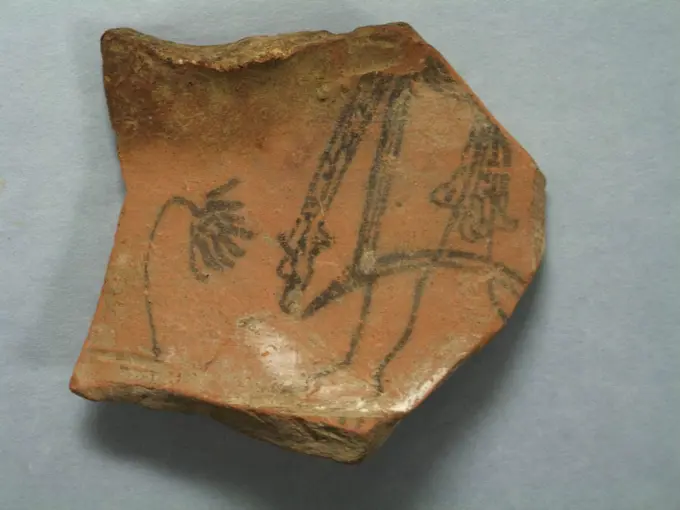
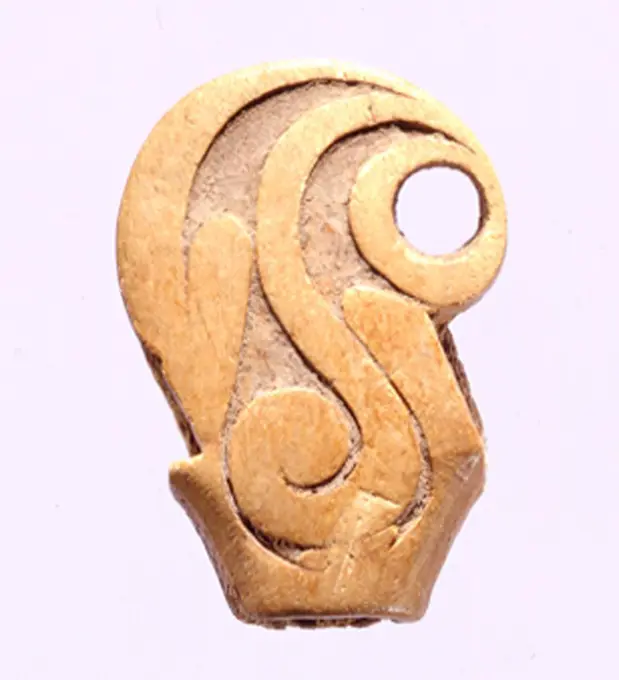
Ancient Egyptian Clay Objects

Significant archaeological items, including fragments and decorative pieces, representing the artistry of ancient Egypt, often made from faience or clay.
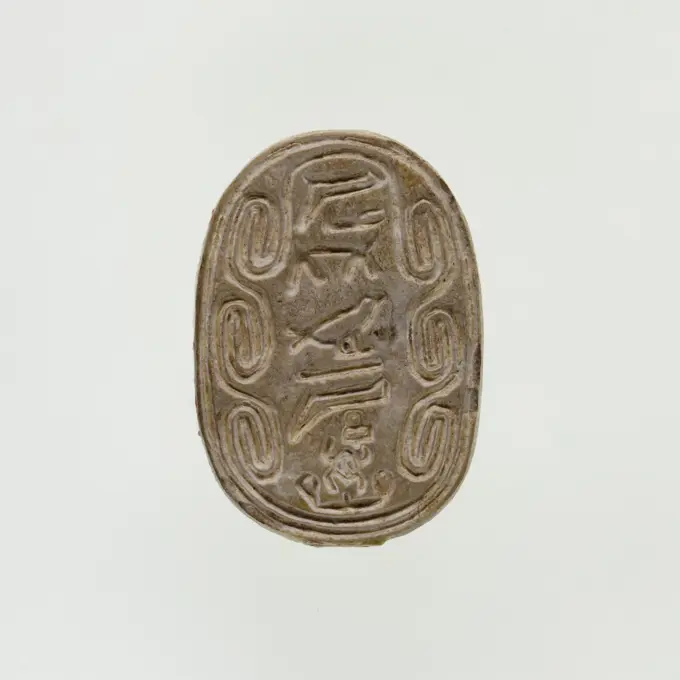
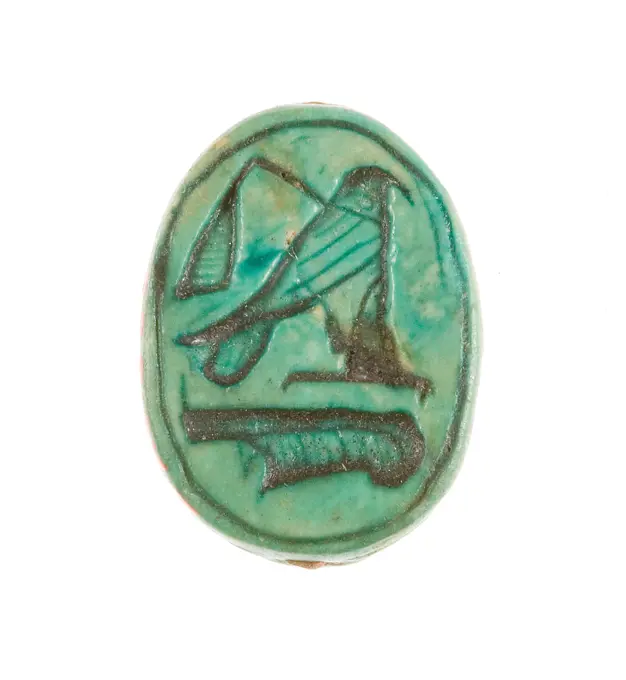
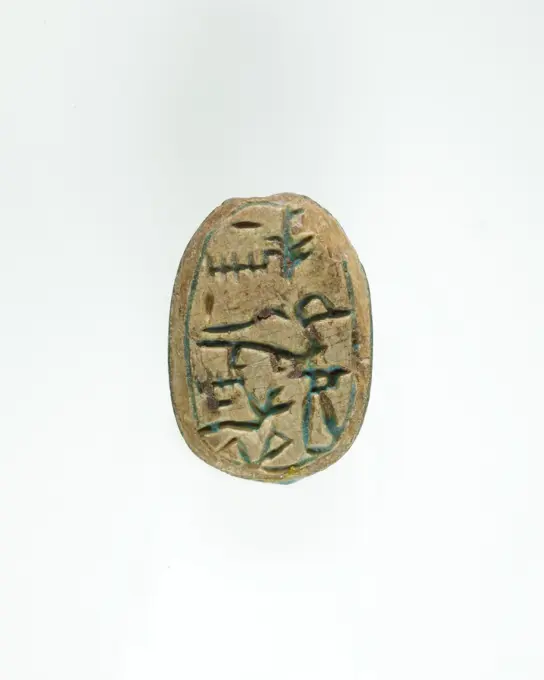
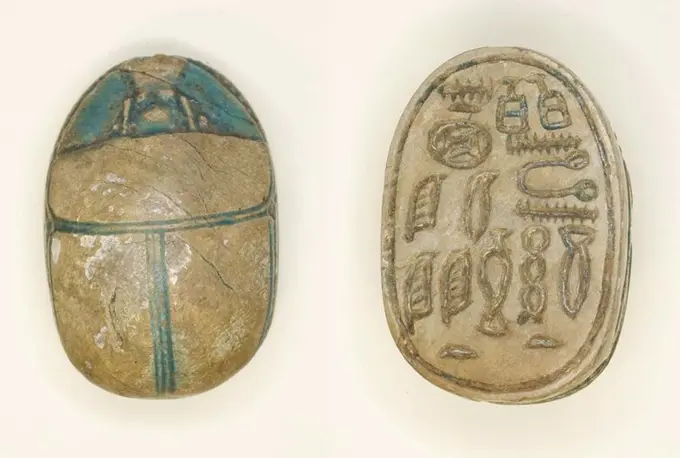
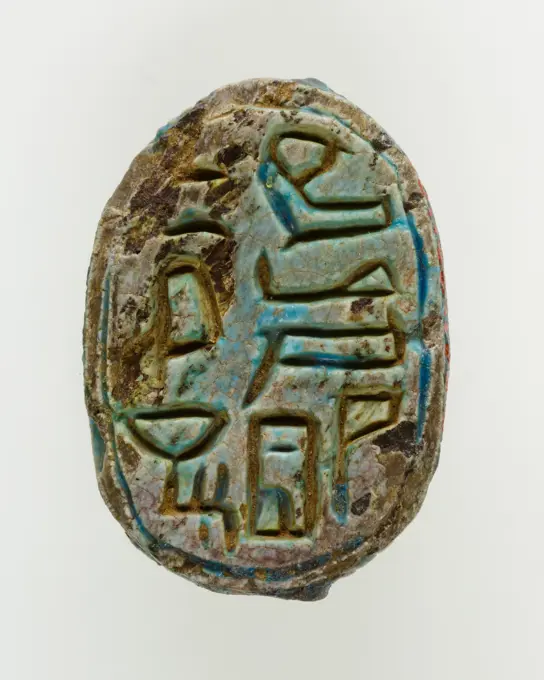
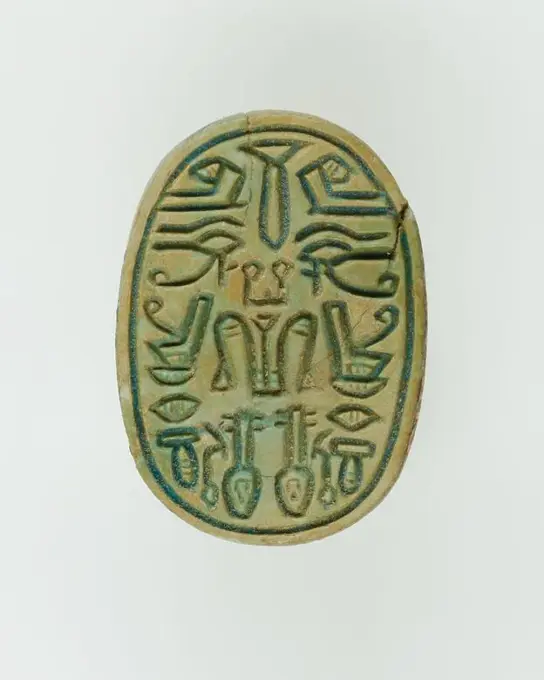
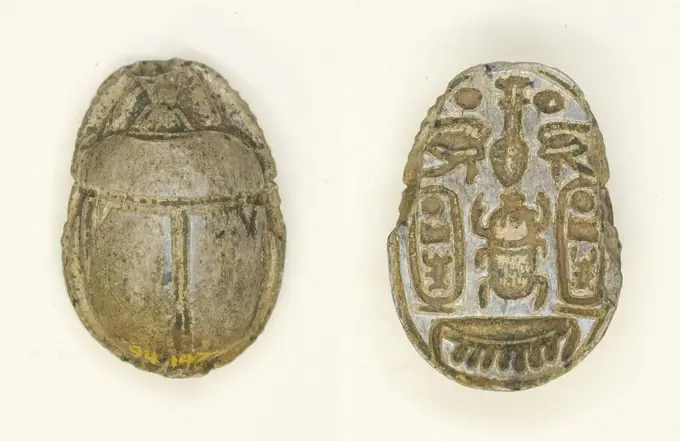
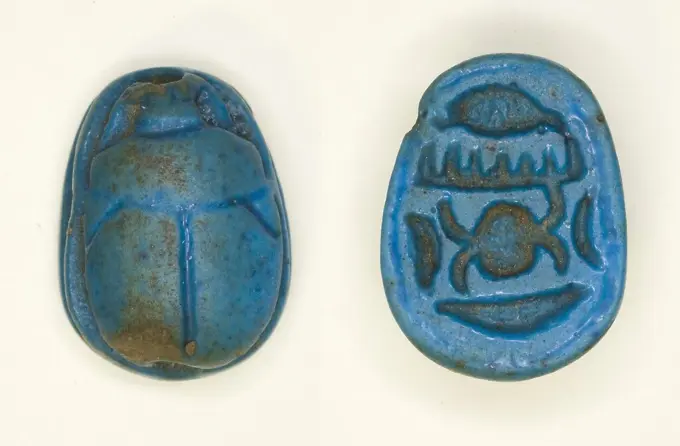
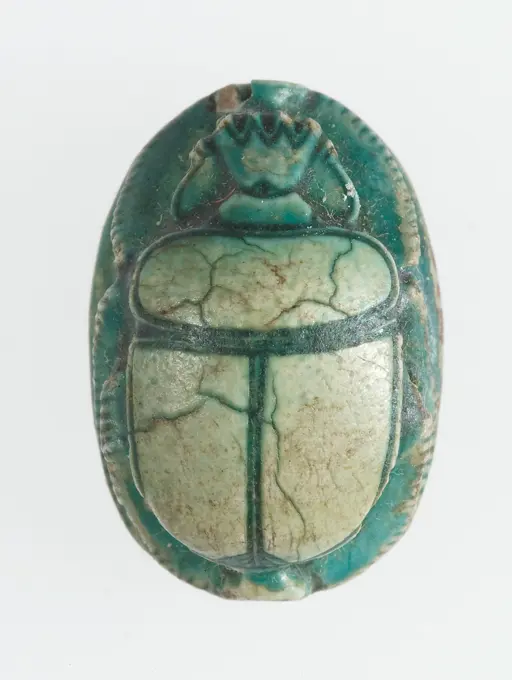
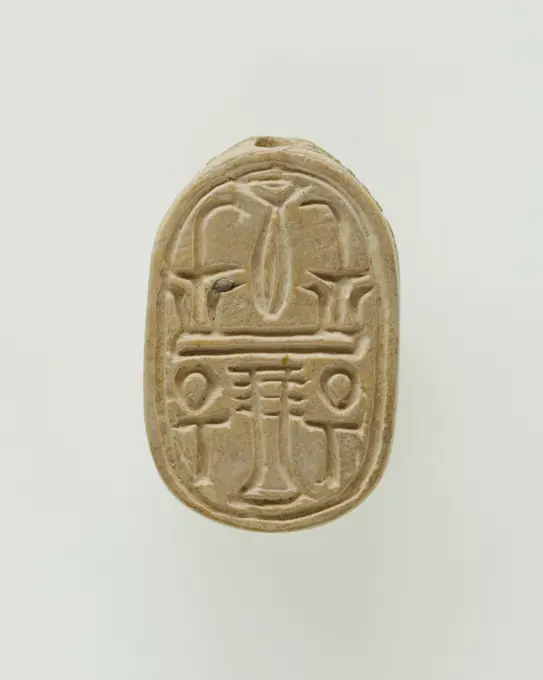
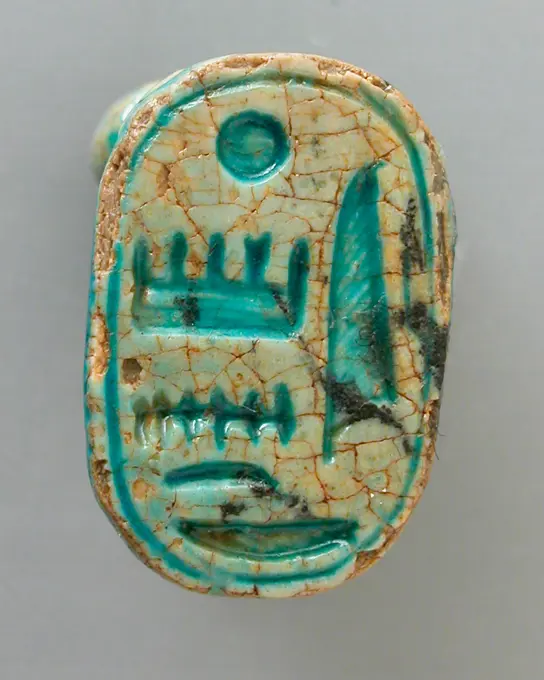
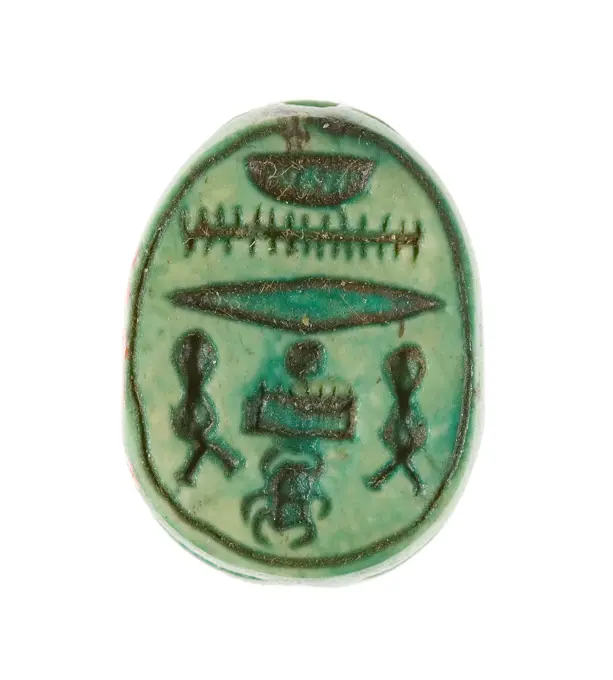
Scarab of the Chamberlain to the Treasurer Kheperka ca. 1760-1670 B.C. Middle Kingdom Administrative changes during Dynasty 12 lead to an increase in bureaucracy and, subsequently, in the production and use of seals. This is reflected in the beginning of the mass production of scarabs, the most popular shape for amulets, in late Dynasty 12 through Dynasty 13 (ca. 1850-1640 B.C.). Thousands of these late Middle Kingdom scarabs bear the names and titles of officials, who would wear them as amulets, but who could also use them to seal documents, containers or doors. However, the scarabs primary function remained that of a protective amulet. Several inscriptions add a funerary epithet to the owners name, indicating that the amulet was manufactured after the owner had passed away. This scarab is inscribed with the name and titles of Kheperka, the chief chamberlain of the Treasurer. A decorative scroll border surrounds the inscription.. Scarab of the Chamberlain to the Treasurer Kheperka
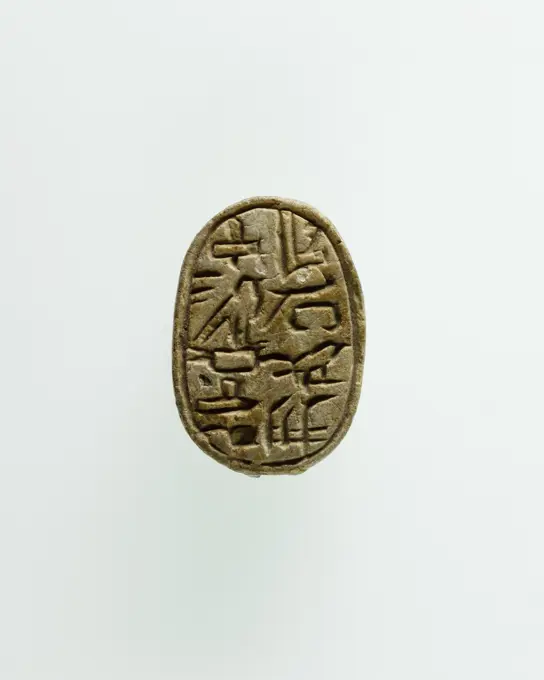
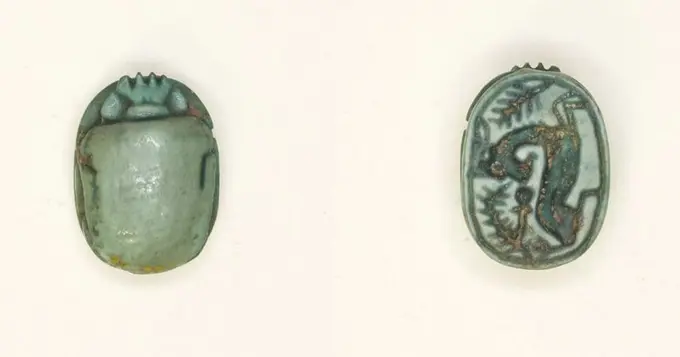
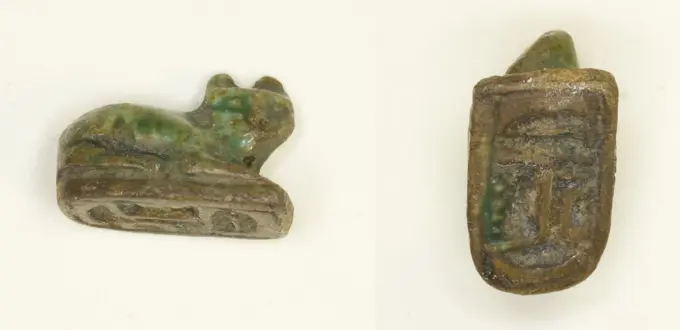
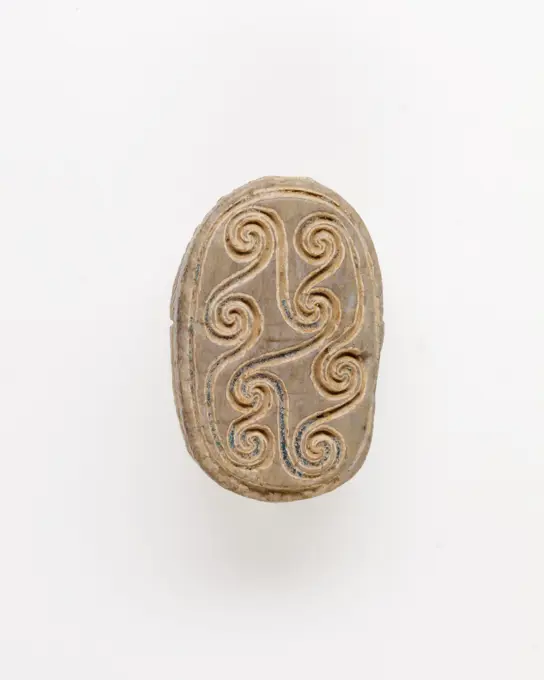
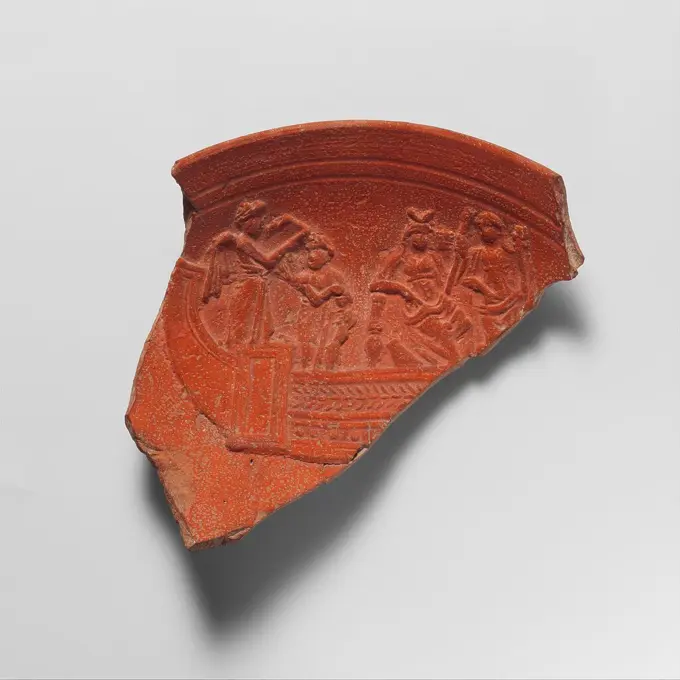
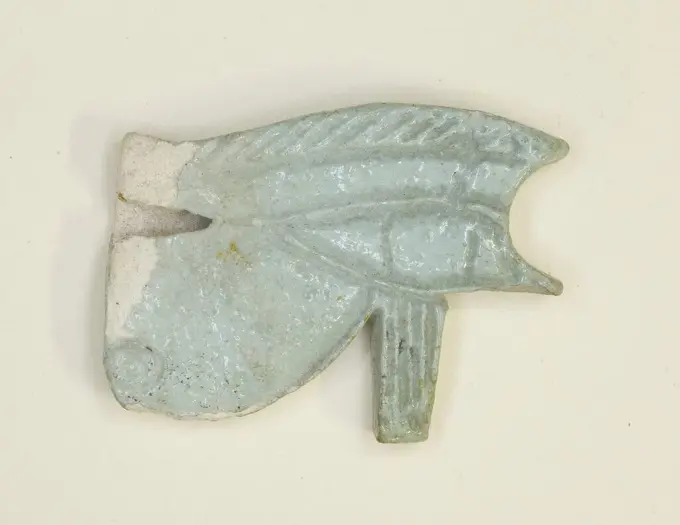
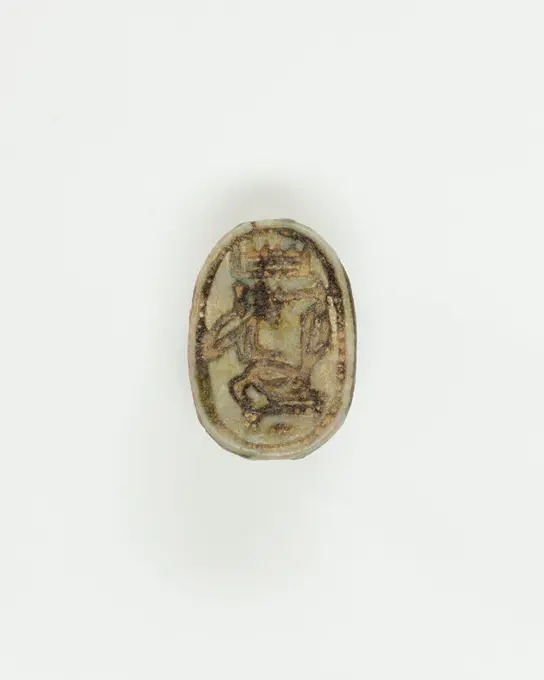
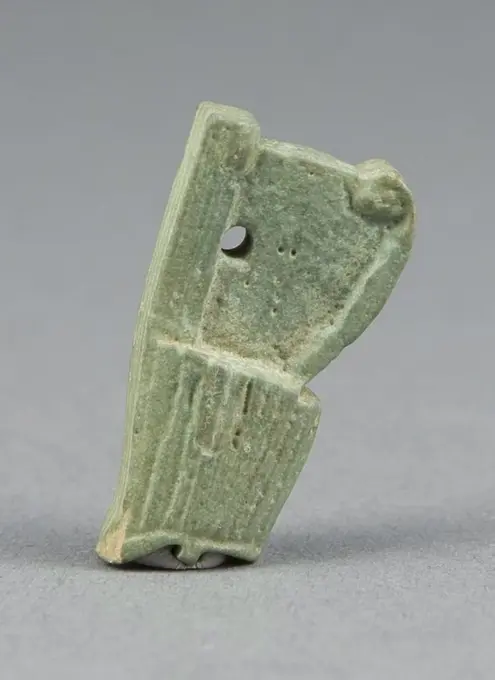
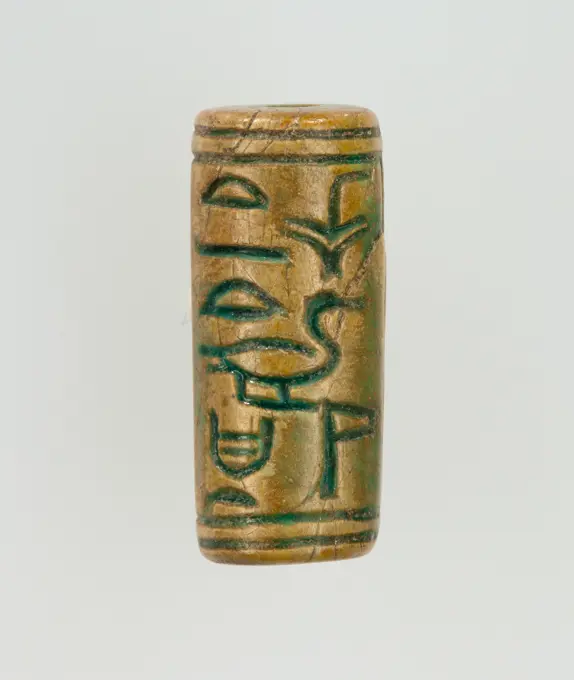
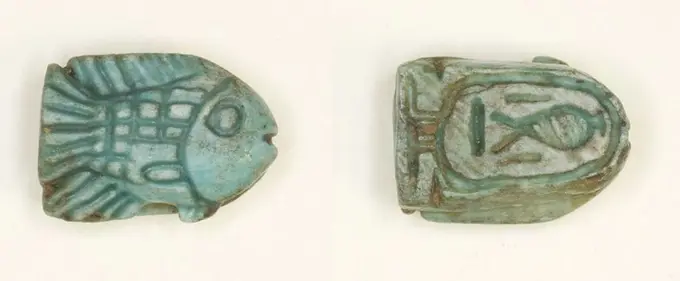
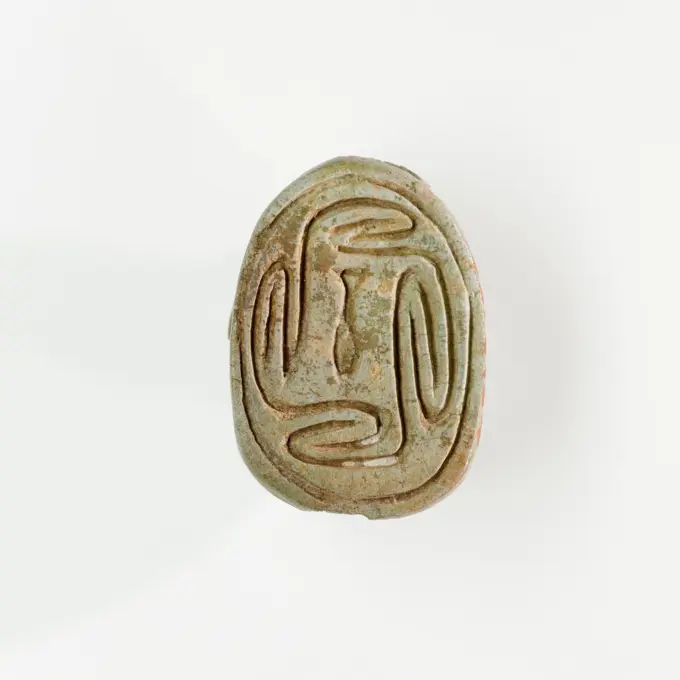
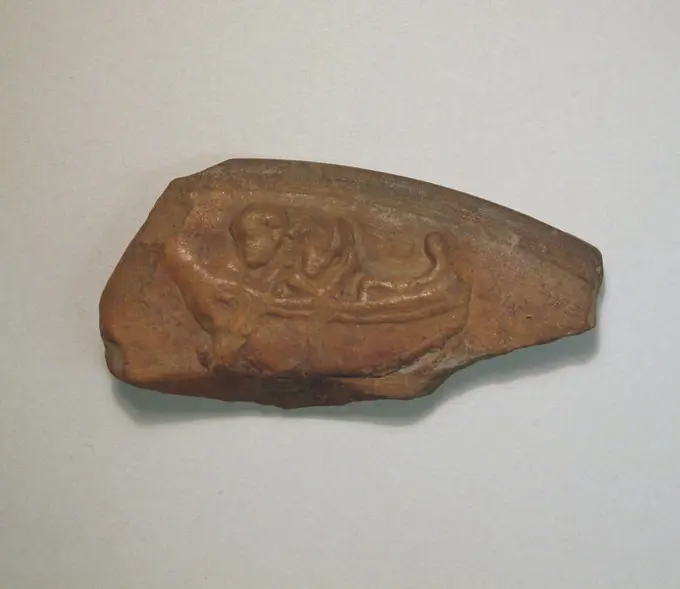
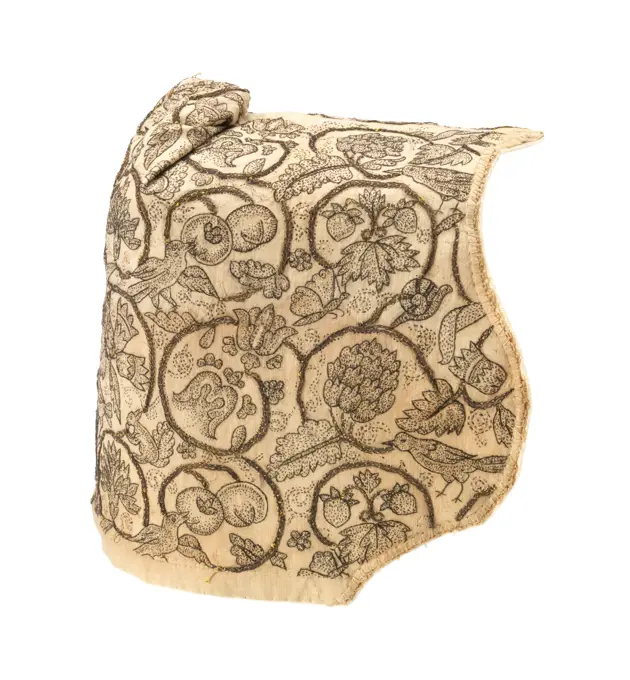
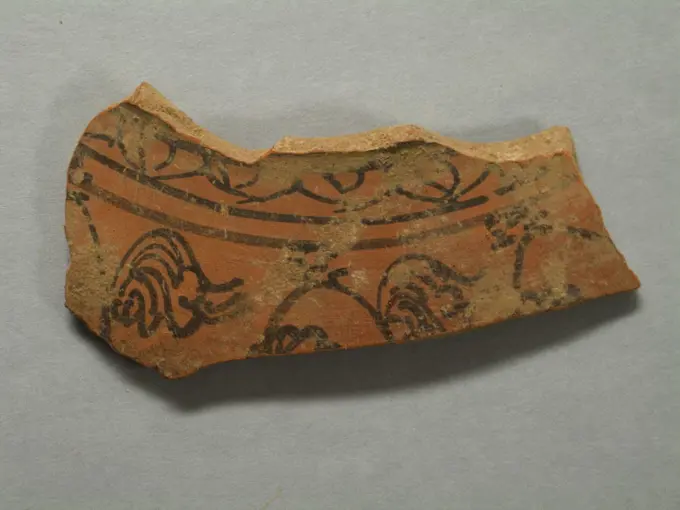
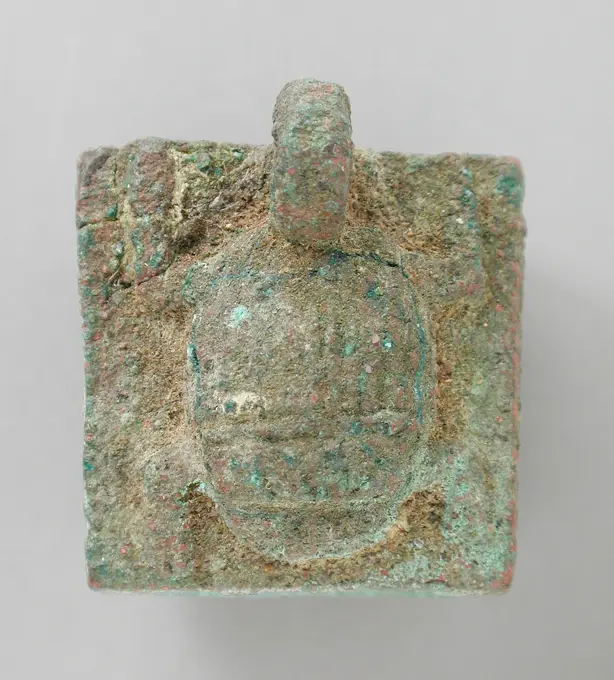
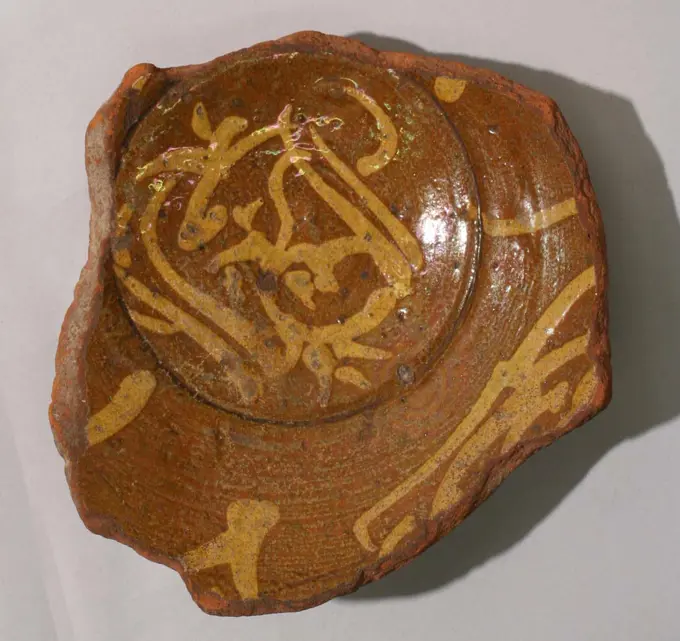
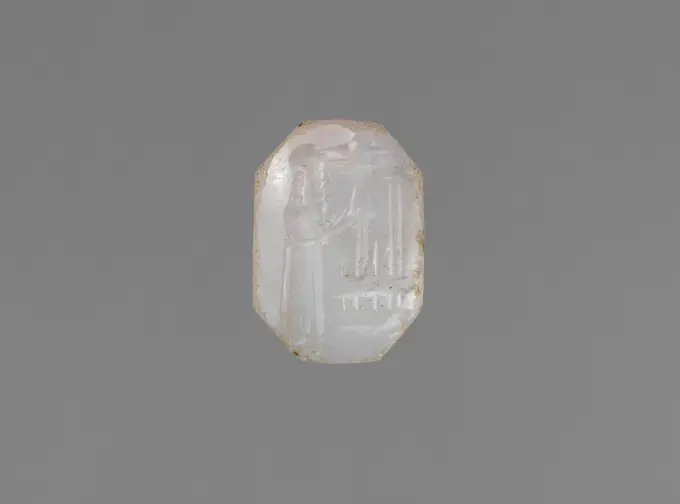
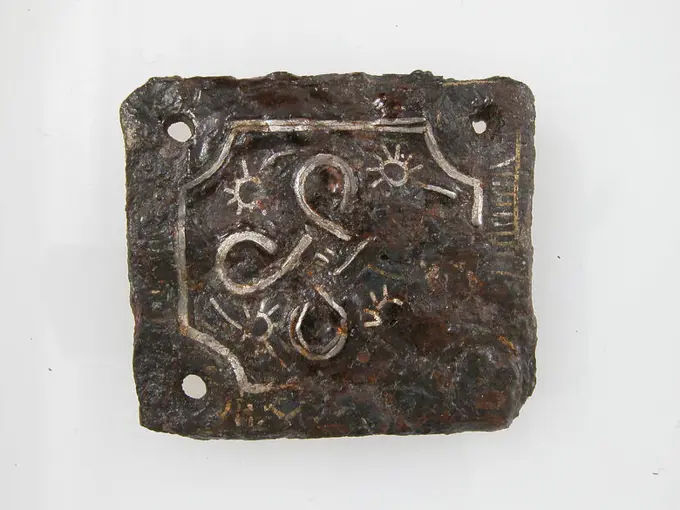
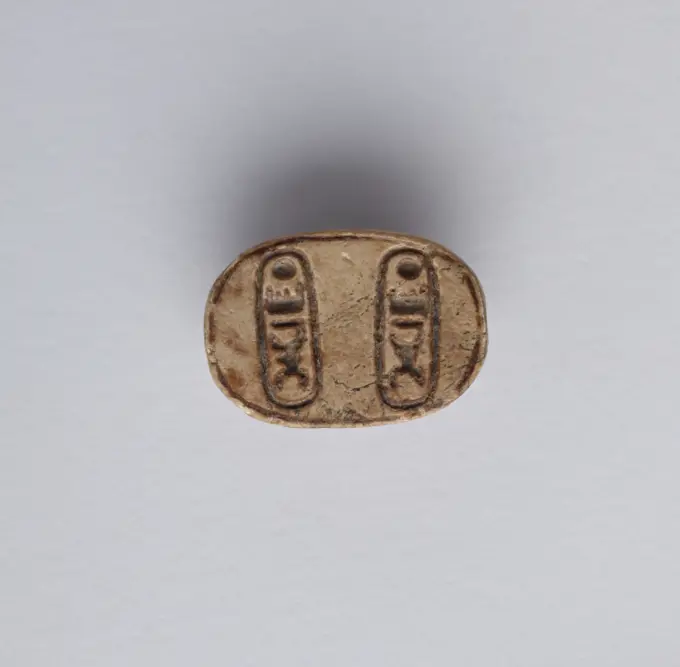
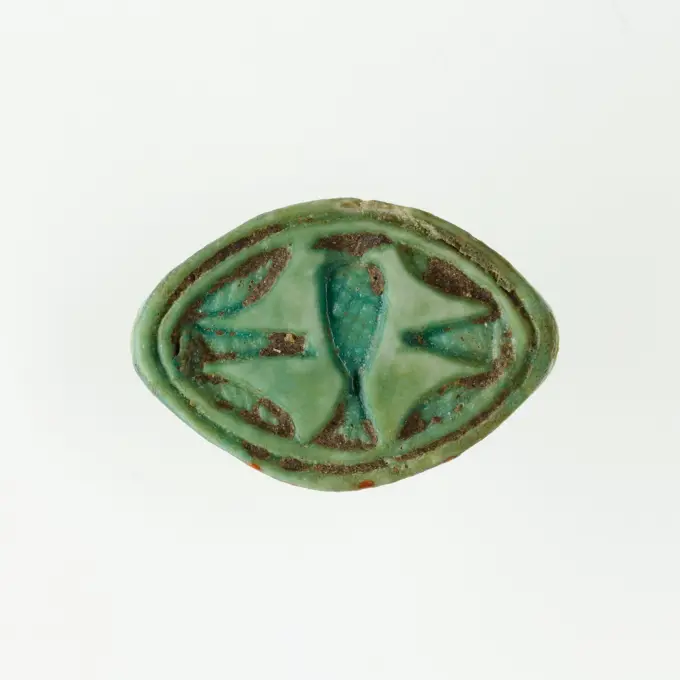
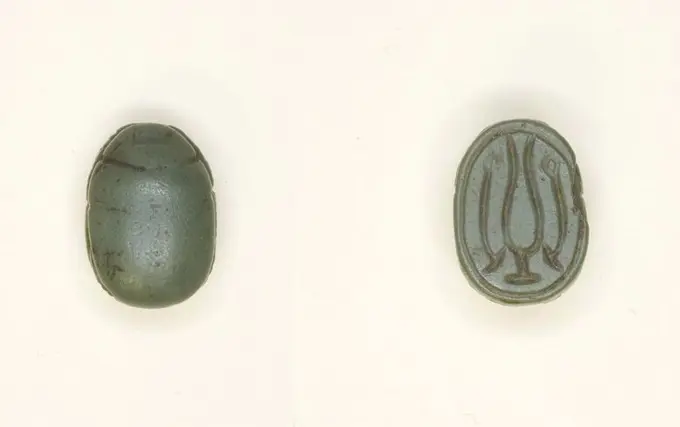
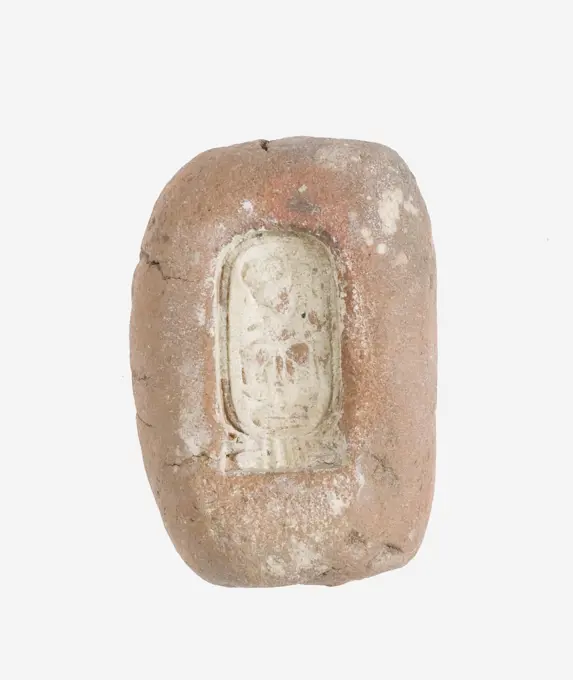
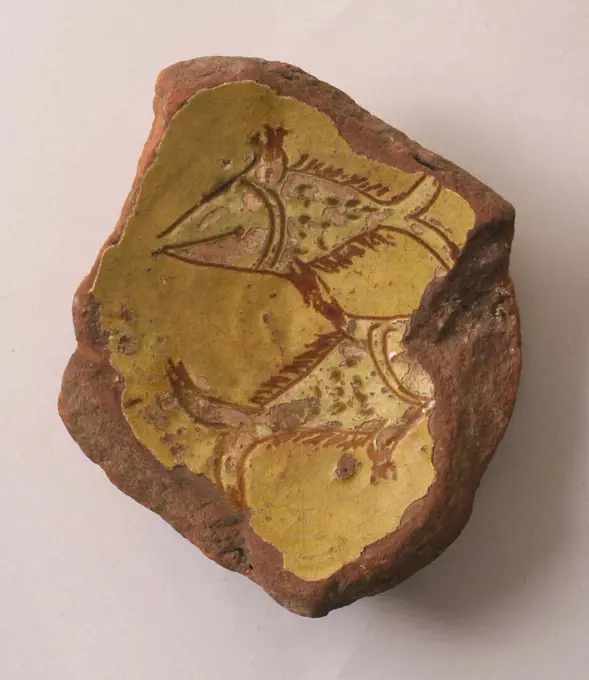
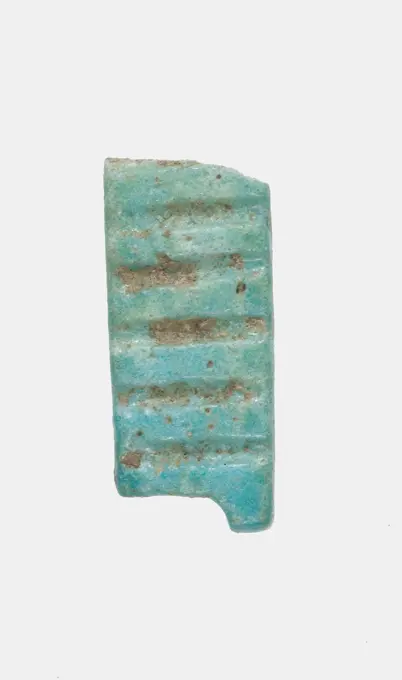
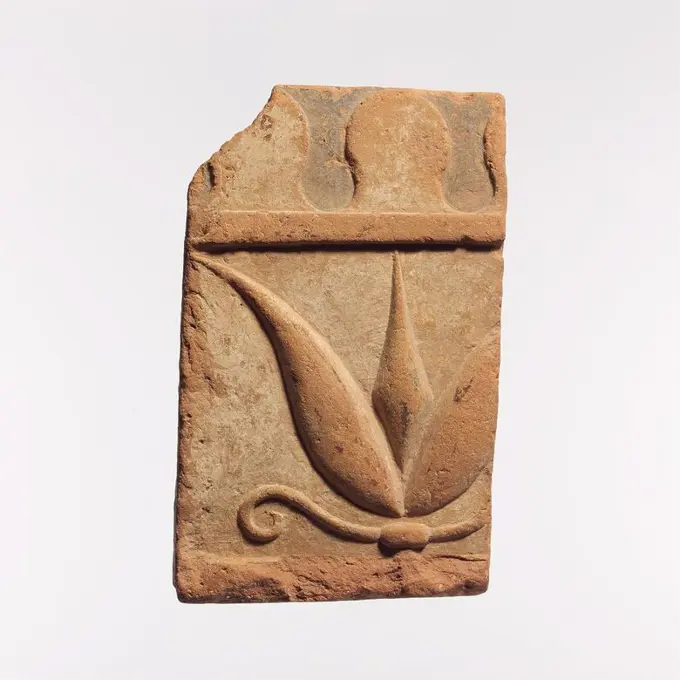
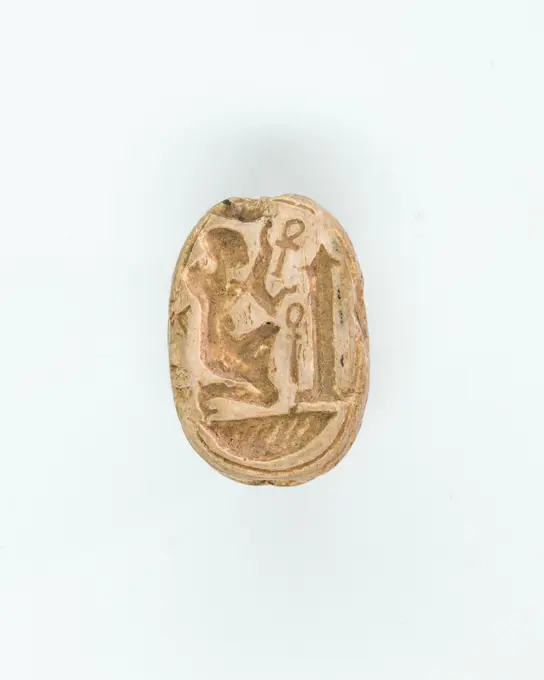
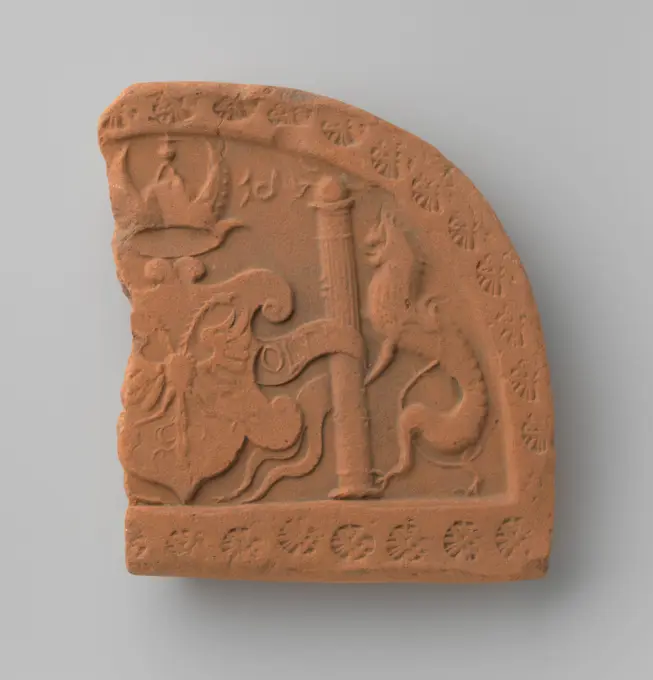
Cowroid The Kings Wife, Tiye 1390 BCE-1352 BCE Egypt. Faience or steatite . Ancient EgyptianFragment 14th-15th century. Fragment 446509Tile fragment ca. 1981-1640 B.C. Middle Kingdom. Tile fragment. ca. 1981-1640 B.C.. Faience. Middle Kingdom. From Egypt, Memphite Region, Lisht North, Cemetery, MMA excavations. Dynasty 12-13Scarab for Maatkare (Hatshepsut), Beloved of Amun ca. 1479-1458 B.C. New Kingdom. Scarab for Maatkare (Hatshepsut), Beloved of Amun. ca. 1479-1458 B.C.. Steatite (glazed). New Kingdom. From Egypt, Upper Egypt, Thebes, Deir el-Bahri, Temple of Hatshepsut, Foundation Deposit 7 (G), MMA excavations, 1926-27. Dynasty 18, earlyArtuqids of Mardin and Mayyafariqin bronze dirham. Unknown, 1184-1201/580-597 A.H.. Tools and Equipment; coins. CoinScarab Inscribed with a Hieroglyphic Motif ca. 1479-1458 B.C. New Kingdom. Scarab Inscribed with a Hieroglyphic Motif. ca. 1479-1458 B.C.. Steatite (glazed). New Kingdom. From Egypt, Upper Egypt, Thebes, Deir el-Bahri, Temple of Hatshepsut, Foundation Deposit 7 (G), MMA excavations, 1926-27. Dynasty 18, earlyScarab of Queen Sitsebek ca. 1802-1640 B.C. Middle Kingdom. Scarab of Queen Sitsebek. ca. 1802-1640 B.C.. Steatite, green glaze. Middle Kingdom. From Egypt. Dynasty 13Scarab of the Chamberlain to the Treasurer Kheperka ca. 1760-1670 B.C. Middle Kingdom Administrative changes during Dynasty 12 lead to an increase in bureaucracy and, subsequently, in the production and use of seals. This is reflected in the beginning of the mass production of scarabs, the most popular shape for amulets, in late Dynasty 12 through Dynasty 13 (ca. 1850-1640 B.C.). Thousands of these late Middle Kingdom scarabs bear the names and titles of officials, who would wear them as amulets, but who could also use them to seal documents, containers or doors. However, the scarabs primary function remained that of a protective amulet. Several inscriptions add a funerary epithet to the owners name, indicating that the amulet was manufactured after the owner had passed away. This scarab is inscribed with the name and titles of Kheperka, the chief chamberlain of the Treasurer. A decorative scroll border surrounds the inscription.. Scarab of the Chamberlain to the Treasurer Kheperka Fragment 14th-15th century. Fragment 446469Scarab inscribed for the King's Daughter Hatshepsut ca. 1479-1458 B.C. New Kingdom During the 1926-1927 excavation season, the Museum's Egyptian Expedition uncovered three foundation deposits along the eastern enclosure wall of Hatshepsut's funerary temple at Deir el-Bahri in Western Thebes. Among the contents were 299 scarabs and stamp-seals. Sixty-five of these are now in the Egyptian Museum, Cairo, and the rest were acquired by the Museum in the division of finds.Among the inscriptions on the bases of these scarabs and seals are examples of every title Hatshepsut held, from the time she was "king's daughter" during the reign of her father, Thutmose I; through the time she was queen of her half-brother, Thutmose II; and during her co-reign with her nephew/step-son, Thutmose III.This scarab is the sole example recording her title "King's Daughter, Hatshepsut.". Scarab inscribed for the King's Daughter Hatshepsut. ca. 1479-1458 B.C.. Steatite (glazed). New Kingdom. From Egypt, Upper EgScarab Inscribed for the God's Wife Hatshepsut, Living ca. 1479-1458 B.C. New Kingdom This scarab was found in one of the foundation deposits located along the front of the lower court of Hatshepsut's funerary temple at Deir el-Bahri. The inscription on the base is missing a hieroglyph. It reads: the living wife, Hatshepsut. It probably should have read: The Living God's Wife, Hatshepsut. In the late Seventeenth early Eighteenth Dynasties, the title God's Wife was held by the principal queen or the queen mother. Hatshepsut inherited the title while she served as principal queen of her half-brother, Thutmose II. Later, shortly after she took on the titles of king, Hatshepsut passed the title on to her daughter, Neferure (see scarab 27.3.325).This scarab and another from the foundation deposits (27.3.193) have an unusual version of one of the hieroglyphs. The woman seated on the chair is represented perching on the seat with her knees drawn up in front of her instead of seated with herScarab with a Lion Hunting Horned Animals ca. 1600-1500 B.C. Early New Kingdom. Scarab with a Lion Hunting Horned Animals. ca. 1600-1500 B.C.. Stone. Early New Kingdom. From Egypt, Eastern Delta. Dynasty 18Scarab of King's Son Intef ca. 1760-1670 B.C. Middle Kingdom This scarab is inscribed with the royal title king’s son’ followed by the prince’s name, Intef.. Scarab of King's Son Intef. ca. 1760-1670 B.C.. Blue glazed steatite. Middle Kingdom. From Egypt, Memphite Region, Lisht North, Cemetery, debris, MMA excavations. mid Dynasty 13Scaraboid Cat 1550 BCE-1295 BCE Egypt. Glazed steatite . Ancient EgyptianScarab Decorated with Scroll Design ca. 1850-1640 B.C. Middle Kingdom Scrolls and spirals -whether single or interlocking, or in combination with hieroglyphs or floral motifs- already decorate the earliest types of scarabs and are common throughout the first half of the second millennium B.C. While their meaning and source of inspiration remains unknown, scroll designs are also appealing to the eye. A wide variety of combinations, some of which more complex than others, is found on Egyptian scarabs of the Middle Kingdom and scrolls become particularly popular during late Dynasty 12 and Dynasty 13 (ca. 1850-1640 B.C.). While these designs continue to appear on scarabs in the Second Intermediate Period (ca. 1640-1550 B.C.) and on contemporary Canaanite imitations, details in the composition or on the scarabs back or its legs allow the seal-amulet to be more precisely dated.. Scarab Decorated with Scroll Design 557117Terracotta bowl fragment. Culture: Roman. Dimensions: width 5 1/4in. (13.3cm). Date: A.D. 350-430.Other more complete bowls decorated with a similar scene are known. Isis sits on a throne amidships, flanked by Demeter holding a cornucopiae. In the stern of the boat a winged cupid sings to the goddess, and another figure probably accompanies him on a musical instrument. Museum: Metropolitan Museum of Art, New York, USA.Scarab: Titles. Egyptian. Date: 2055 BC-1650 BC. Dimensions: 2.5 × 1.6 × 1 cm (1 × 5/8 × 3/8 in.). Glazed steatite. Origin: Egypt. Museum: The Chicago Art Institute, Chicago, USA. Author: Ancient Egyptian.Scarab of an Official ca. 1770-1670 B.C. Middle Kingdom Administrative changes during Dynasty 12 lead to an increase in bureaucracy and, subsequently, in the production and use of seals. This is reflected in the beginning of the mass production of scarabs, the most popular shape for amulets, in late Dynasty 12 through Dynasty 13 (ca. 1850-1640 B.C.). Thousands of these late Middle Kingdom scarabs bear the names and titles of officials, who would wear them as amulets, but who could also use them to seal documents, containers or doors. However, the scarabs primary function remained that of a protective amulet. Several inscriptions add a funerary epithet to the owners name, indicating that the amulet was manufactured after the owner had passed away. The scarab is inscribed for a high official named Teti and the funerary epithet following his name indicates this scarab was a funerary amulet.. Scarab of an Official 557049Dish fragment with a palmette pattern, anonymous, c. 1000 - c. 1099 Fragment of a dish of earthenware, on which a palmin ornament in brownish luster. Softly reddish soil with cream -colored cracked glaze. Egypt earthenware. glaze. luster (textile) painting / vitrification Fragment of a dish of earthenware, on which a palmin ornament in brownish luster. Softly reddish soil with cream -colored cracked glaze. Egypt earthenware. glaze. luster (textile) painting / vitrificationPlaque, two cartouches with names of Amenemhat II ca. 1919-1885 B.C. Middle Kingdom. Plaque, two cartouches with names of Amenemhat II 558075Scarab ca. 1479-1458 B.C. New Kingdom. Scarab. ca. 1479-1458 B.C.. Faience. New Kingdom. From Egypt, Upper Egypt, Thebes, Deir el-Bahri, Hatshepsut Hole, Hathor Shrine, MMA excavations, 1922-23. Dynasty 18Plaque Amulet with the Name of the God Ptah. Egyptian. Date: 1070 BC-656 BC. Dimensions: 1.5 × 1 × 0.2 cm (9/16 × 3/8 × 1/16 in.). Faience. Origin: Egypt. Museum: The Chicago Art Institute, Chicago, USA. Author: Ancient Egyptian.Scarab Inscribed with the Throne Name of Thutmose II ca. 1492-1479 B.C. New Kingdom. Scarab Inscribed with the Throne Name of Thutmose II. ca. 1492-1479 B.C.. Steatite . New Kingdom. From Egypt. Dynasty 18Fragment of tile ca. 1295-1070 B.C. New Kingdom, Ramesside. Fragment of tile 550201Scarab: Name of Amun-Ra. Egyptian. Date: 1550 BC-1069 BC. Dimensions: 1.6 × 1 × 0.6 cm (5/8 × 3/8 × 1/4 in.). Steatite. Origin: Egypt. Museum: The Chicago Art Institute, USA. Author: Ancient Egyptian.Eye of the God Horus (Wedjat) Amulet. Egyptian. Date: 1070 BC-656 BC. Dimensions: 2.5 × 2 × 0.5 cm (1 × 3/4 × 3/16 in.). Faience. Origin: Egypt. Museum: The Chicago Art Institute, FLORENCIA, USA. Author: Ancient Egyptian.Scarab. Dimensions: L. 2.1 cm (13/16 in). Dynasty: Dynasty 12-18. Date: ca. 1981-1550 B.C.. Museum: Metropolitan Museum of Art, New York, USA.Scarab Wish Formula ( ) 1295 BCE-525 BCE Egypt. Steatite . Ancient EgyptianScarab of Amenemhat. Dimensions: L. 0.9 × W. 0.6 × H. 0.4 cm (3/8 × 1/4 × 3/16 in.). Dynasty: Dynasty 12. Date: ca. 1981-1805 B.C..Scarab shaped seal inscribed on the base with the name Amenemhat. Museum: Metropolitan Museum of Art, New York, USA.Scarab Inscribed with the Throne Name of Thutmose III ca. 1479-1458 B.C. New Kingdom. Scarab Inscribed with the Throne Name of Thutmose III. ca. 1479-1458 B.C.. Steatite (glazed). New Kingdom. From Egypt, Upper Egypt, Thebes, Deir el-Bahri, Temple of Hatshepsut, Foundation Deposit 7 (G), MMA excavations, 1926-27. Dynasty 18, earlyAmulet of the Crown of Lower Egypt. Egyptian. Date: 1070 BC-656 BC. Dimensions: 3 × 1.6 × 1 cm (1 3/16 × 5/8 × 3/8 in.). Faience. Origin: Egypt. Museum: The Chicago Art Institute, Chicago, USA. Author: Ancient Egyptian.Fragment 14th-15th century. Fragment 446524Cylinder Bead Inscribed for (Ahmose-)Nefertari ca. 1550-1525 B.C. New Kingdom. Cylinder Bead Inscribed for (Ahmose-)Nefertari. ca. 1550-1525 B.C.. Steatite, glazed. New Kingdom. From Egypt. Dynasty 18Scarab from Ruiu's Burial. Dimensions: L. 2.1 cm (13/16 in.); W. 1.4 cm (9/16 in.); H. 0.9 cm (3/8 in.). Dynasty: Dynasty 18, early. Reign: reign of Thutmose I-early sole Thutmose III. Date: ca. 1504-1447 B.C..The burial of Ruiu was found in the tomb of her father, Neferkhawet, which was excavated by the Museum's Egyptian Expedition in 1935. Lying against the right side of the head end of Ruiu's coffin was a small basket that contained a wooden box and a metal razor. Inside the box were four scarabs and a cowroid seal-amulet made of steatite, two ebony kohl sticks, and a small metal spoon.This scarab was originally glazed bright blue, but the glaze has largely worn off the back and base. The device combines rearing cobras, wedjat-eyes, and a variety of hieroglyphs. Museum: Metropolitan Museum of Art, New York, USA.Scaraboid: Fish. Egyptian. Date: 1550 BC-1186 BC. Dimensions: 1.3 × 1 × 0.5 cm (1/2 × 3/8 × 3/16 in.). Glazed steatite. Origin: Egypt. Museum: The Chicago Art Institute, Chicago, USA. Author: Ancient Egyptian.Scarab from Rennefer's Burial ca. 1504-1447 B.C. New Kingdom. Scarab from Rennefer's Burial. ca. 1504-1447 B.C.. Faience. New Kingdom. From Egypt, Upper Egypt, Thebes, Asasif, Tomb of Neferkhawet (MMA 729), west chamber A, Burial of Rennefer (II), inside box 35.3.79, MMA excavations, 1934-35. Dynasty 18, earlyStamp Seal, Bead-Shaped. Iran, Sasanian Period, 3rd-7th century. Tools and Equipment; seals. BronzeScarab of an Official ca. 1760-1670 B.C. Middle Kingdom Administrative changes during Dynasty 12 lead to an increase in bureaucracy and, subsequently, in the production and use of seals. This is reflected in the beginning of the mass production of scarabs, the most popular shape for amulets, in late Dynasty 12 through Dynasty 13 (ca. 1850-1640 B.C.). Thousands of these late Middle Kingdom scarabs bear the names and titles of officials, who would wear them as amulets, but who could also use them to seal documents, containers or doors. However, the scarabs primary function remained that of a protective amulet. Several inscriptions add a funerary epithet to the owners name, indicating that the amulet was manufactured after the owner had passed away. The inscription on the scarabs underside mentions the name and titles of a high-ranking court official, named Nemtihotep.. Scarab of an Official. ca. 1760-1670 B.C.. Green glazed steatite. Middle Kingdom. From Egypt, Memphite Region, Lisht Scarab: Antelope with Foliage (sw.t-plant) Motif. Egyptian. Date: 1650 BC-1295 BC. Dimensions: 1.3 × 1 × 0.6 cm (1/2 × 3/8 × 1/4 in.). Glazed steatite. Origin: Egypt. Museum: The Chicago Art Institute, Chicago, USA. Author: Ancient Egyptian.Scarab of king's son Sobekhotep ca. 1802-1575 B.C. Middle Kingdom-Second Intermediate Period. Scarab of king's son Sobekhotep. ca. 1802-1575 B.C.. Steatite, blue glaze. Middle Kingdom-Second Intermediate Period. From Egypt. Dynasty 13Vase fragment 1st century B.C.-1st century A.D. Roman Figure with a torch.. Vase fragment 250320Cushion-shaped engraved seal. UnknownScarab of King Ia-ib. Egypt, Middle Kingdom, 13th dynasty, reign of Wahibre Ia-ib (1721-1712 BCE). Sculpture. Steatite with modern green colorAmulet of a Heart. Egyptian. Date: 1350 BC. Dimensions: 1.6 × 1.6 × 0.3 cm (5/8 × 5/8 × 1/8 in.). Glass. Origin: Egypt. Museum: The Chicago Art Institute, Chicago, USA. Author: Ancient Egyptian.Fragment Werra bowl, mirror decor deer, year 16 , light yellow and green glaze, bowl crockery holder earth discovery ceramics earthenware glaze, Red earthenware with drawing in light yellow and green glaze archeologyEngraved Scaraboid with Seashell. UnknownScarab: Menkheperra (Thutmose III). Egyptian. Date: 1479 BC-1425 BC. Dimensions: 2.2 × 1.6 × 1 cm (7/8 × 5/8 × 3/8 in.). Steatite. Origin: Egypt. Museum: The Chicago Art Institute, USA. Author: Ancient Egyptian.. .Scarab Inscribed with the Name of the God Amun-Re. Dimensions: L. 1.7 cm (11/16 in); w. 1.3 cm (1/2 in); h. 0.7 cm (1/4 in). Dynasty: Dynasty 18, early. Reign: Joint reign of Hatshepsut and Thutmose III. Date: ca. 1479-1458 B.C.. Museum: Metropolitan Museum of Art, New York, USA.Dishes of red -baking earthenware, with white glaze, on which a painting in blue, yellow and orange, of a person with hat and profil, with a flame, anonymous, 1600 - 1650 possibly possibly  Northern Netherlands earthenware. glaze majolica  Northern Netherlands earthenware. glaze majolicaFalse Coin, Władysław Jagiełło (1386 1434), Kwartalnik Mały (Ternar); 1399/1400 unknownScarab Inscribed with the Throne Name of Ahmose ca. 1550-1525 B.C. New Kingdom. Scarab Inscribed with the Throne Name of Ahmose. ca. 1550-1525 B.C.. Steatite, glazed. New Kingdom. From Egypt. Dynasty 18Scarab: Menkheperra (Thutmose III). Egyptian. Date: 664 BC-343 BC. Dimensions: 2.2 × 1.6 × 1 cm (7/8 × 5/8 × 3/8 in.). Faience. Origin: Egypt. Museum: The Chicago Art Institute, USA. Author: Ancient Egyptian.Scarab with Hathor-like Canaanite Goddess ca. 1640-1500 B.C. (Middle Bronze Age IIB-IIC) Second Intermediate Period Around the middle of Dynasty 13 (ca. 1802-1640 B.C.), scarabs carved in the eastern Nile Delta, at a site presently known as Tell el-Daba, show decorative elements that reveal Canaanite influence. Part of the population in this region was of Levantine origin. Soon afterward, at the beginning of the Second Intermediate Period (ca. 1700/1640 B.C), when Canaanites took political control over the Delta, a Canaanite production of scarabs is initiated; these scarabs also show details on their back and sides that distinguish them from Egyptian Middle Kingdom and Second Intermediate Period scarabs. These Canaanite scarabs (ca. 1700-1500 B.C.) imitate Egyptian late Middle Kingdom models (ca. 1850-1640 B.C.) while also introducing new decorative elements and symbols. This Canaanite scarab shows a female face in frontal view with large plume-like extensions on her head. This is an Vase Fragment. Culture: Roman. Dimensions: 1 3/8 × 2 3/4 × 1/4 in. (3.6 × 7.1 × 0.7 cm).Two children in a boat. Museum: Metropolitan Museum of Art, New York, USA.Coif (England); linen, silk, metallic (metal-wrapped silk-core yarns)Shard: Floral Meander ca. 4th-5th century Pakistan. Shard: Floral Meander 51253Bronze Coffin with Scarab. Egypt, Late Period - Ptolemaic Period (664 - 30 BCE). Jewelry and Adornments. BronzeCylinder Seal. Iran, Mesopotamia or Syria, circa 3300-2900 B.C.. Tools and Equipment; seals. Black serpentineFragment 14th-15th century. Fragment 445143Fragment of a Bowl 14th-15th century. Fragment of a Bowl 445489Stamp seal (octagonal pyramid) with cultic scene late 8th - 7th century B.C. Assyrian. Stamp seal (octagonal pyramid) with cultic scene. Assyrian. late 8th - 7th century B.C.. Flawed neutral Chalcedony (Quartz). Neo-Assyrian. MesopotamiaScarab ca. 1850-1640 B.C. Middle Kingdom-Second Intermediate Period. Scarab. ca. 1850-1640 B.C.. Blue glazed steatite. Middle Kingdom-Second Intermediate Period. From Egypt. Dynasty 12-13Fragment uszebti - nogi. unknown, authorTile Fragment 1334-1434. Tile Fragment 450555Scarab Inscribed with Hieroglyphs ca. 1760-1670 B.C. Middle Kingdom The scarab is inscribed with a symmetric arrangement of hieroglyphs, not meant to form words but chosen instead for their positive meaning. Such compositions are particularly prevalent on design scarabs of the late Middle Kingdom (late Dynasty 12-Dynasty 13, ca. 1850 -1640 B.C.). They serve as models for the wide array of variations seen on Egyptian scarabs of the Second Intermediate Period (Dynasty 14-17, ca. 1640-1550 B.C.) and on Canaanite scarabs (Middle Bronze Age IIB-IIC, ca. 1700-1500 B.C.).. Scarab Inscribed with Hieroglyphs 545235Bird Plaque Ornament 3rd century B.C.-A.D. 2nd century Vicús. Bird Plaque Ornament. Vicús. 3rd century B.C.-A.D. 2nd century. Copper, gilt. Peru. Metal-OrnamentsBelt Plate. Culture: Frankish. Dimensions: Overall: 1 7/8 x 1 5/8 x 3/16 in. (4.7 x 4.1 x 0.5 cm). Date: 7th century (). Museum: Metropolitan Museum of Art, New York, USA.Fireplace with representation of two flower vases in medallions. Fireplace with two flower vases, connected in two connected medallions.Scarab ca. 1550-1458 B.C. New Kingdom. Scarab. ca. 1550-1458 B.C.. Glazed Steatite. New Kingdom. From Egypt, Upper Egypt, Thebes, Asasif, Carnarvon excavations, 1911 (). Dynasty 18, earlyFragment majolica dish, orange and blue on white, four-sided brushstroke decor, dish crockery holder soil find ceramic earthenware glaze, baked Symmetric brushstrokes Italian decor archeology Italy food decorate Soil discovery 1914Hearing stone with representation of two flower vases in medallions, anonymous, c. 1600 - c. 1650 Hearing stone with two flower vases, in two connected medallions. Southern Netherlands earthenware Hearing stone with two flower vases, in two connected medallions. Southern Netherlands earthenwareVase fragment Greek, Laconian. Vase fragment 251297 Greek, Laconian, Vase fragment, Terracotta, 1 7/8 x 1 13/16in. (4.8 x 4.6cm). The Metropolitan Museum of Art, New York. Gift of A. J. B. Wace, 1923 (23.119.21)Hippopotamus Scaraboid with Name of Amen. Egypt, 18th - 26th Dynasty (1569 - 525 BCE). Sculpture. Blue glazed steatiteMummy label Third Intermediate Period-Late Period ca. 1070-343 B.C. View more. Mummy label. ca. 1070-343 B.C.. Wood (tamarisk). Third Intermediate Period-Late Period. From Egypt, Upper Egypt, Thebes, Southern Asasif, Tomb of Meketre (TT 280, MMA 1101), later use, MMA excavations, 1920Plaque with the Cartouche of Tawosret ca. 1188-1186 B.C. New Kingdom, Ramesside. Plaque with the Cartouche of Tawosret. ca. 1188-1186 B.C.. Faience. New Kingdom, Ramesside. From Egypt, Upper Egypt, Thebes, Ramesseum Area, Temple of Tawosret, foundation deposit, Petrie excavations, 1896. Dynasty 19SkarabeuszCowroid Seal-Amulet ca. 1492-1473 B.C. New Kingdom This cowrie-shaped seal-amulet was found with twenty-three scarabs and seal-amulets in the coffin of a young woman who was buried in Hatnefer's tomb (see 36.3.1 and 36.3 26). The base is inscribed with a hes-vase and what appeare to be two lotus blossoms.. Cowroid Seal-Amulet 549041Scarab: Hieroglyphs (Hs-vessel and wAs-Scepters). Egyptian. Date: 1550 BC-1295 BC. Dimensions: 1.3 × 1 × 0.6 cm (1/2 × 3/8 × 1/4 in.). Stone. Origin: Egypt. Museum: The Chicago Art Institute, Chicago, USA. Author: Ancient Egyptian.Mold for a Cartouche ca. 1390-1353 B.C. New Kingdom. Mold for a Cartouche. ca. 1390-1353 B.C.. Pottery. New Kingdom. From Egypt, Upper Egypt, Thebes, Malqata, Khor west of camp or E. side of S. Village, MMA excavations, probably 1911-12. Dynasty 18Grahal-Manzara. Carnavalet 2013-2016 collection sites. Numismatics.Intaglio. Eastern Mediterranean, Roman, 332 B.C.-A.D.395. Tools and Equipment; seals. StoneHeart Scarab of Ptahemua ca. 1295-1186 B.C. New Kingdom, Ramesside. Heart Scarab of Ptahemua. ca. 1295-1186 B.C.. Steatite. New Kingdom, Ramesside. From Egypt. Dynasty 19Fragment of a Bowl 14th-15th century. Fragment of a Bowl 445513Amulet or Inlay of a Serpent 664 BCE-332 BCE Egypt. Faience . Ancient EgyptianVolute-krater fragment 4th century B.C. Greek, South Italian, Apulian. Volute-krater fragment. Greek, South Italian, Apulian. 4th century B.C.. Terracotta; red-figure. Late Classical. VasesScarab Inscribed with the Throne Name of Thutmose III ca. 1479-1458 B.C. New Kingdom. Scarab Inscribed with the Throne Name of Thutmose III. ca. 1479-1458 B.C.. Steatite (glazed). New Kingdom. From Egypt, Upper Egypt, Thebes, Deir el-Bahri, Temple of Hatshepsut, Foundation Deposit 7 (G), MMA excavations, 1926-27. Dynasty 18, earlyAmulet ca. 1802-1450 B.C. Late Middle Kingdom-Early New Kingdom. Amulet. ca. 1802-1450 B.C.. Faience. Late Middle Kingdom-Early New Kingdom. From Egypt, Memphite Region, Lisht North, Cemetery south of pyramid, House A1, so-called "faience factory", MMA excavations, 1920-22. Dynasty 13-18, earlyFragment of a terracotta architectural tile. Culture: Lydian. Dimensions: Overall: 8 1/16 x 5 in. (20.5 x 12.7 cm). Date: 6th century B.C..Lotus. Museum: Metropolitan Museum of Art, New York, USA.Scarab of Ramesses II ca. 1295-1070 B.C. New Kingdom, Ramesside. Scarab of Ramesses II 550327Scarab with a Kneeling Figure Before an Obelisk ca. 1070-664 B.C. Third Intermediate Period  The underside of the scarab shows a kneeling figure raising both hands in a gesture of adoration. Between his arms and in front of him are two signs of life (ankh). The figure faces an obelisk, expressing his adoration for the sun go. Scarab with a Kneeling Figure Before an Obelisk. ca. 1070-664 B.C.. Glazed steatite. Third Intermediate Period . From Egypt. Dynasty 21-25 ScaraboidFire brick with the coat of arms of Karel V, c. 1500 - c. 1558  Semi -round fireplace with Charles V weapon of Habsburg; Crowned shield with two -headed eagle with shield on the chest, on either side columns, on the left with Griffioen on the right with lion, around columns and behind shield banderol with inscription: plus oltre, border in relief with rosettes; Very worn, upper and break lines; Right half of broken fireplace (fracture to the left of shield). Southern Netherlands brick (clay product)Amulet - plakietka z głową bogini Hathor. unknown, authorShard: Lower Part of Torso with Kushan Dress ca. 4th-5th century Pakistan. Shard: Lower Part of Torso with Kushan Dress 51255Fragment majolica plate, polychrome flower figure in the mirror, plate dish crockery holder soil find ceramics pottery glaze, Cooked on pruned On the back blue flower motif possible try. Polychrome archeology Rotterdam decorate serving food archaeological find in the soil Rotterdam 1941.Carved Bone Finial 4th-3rd century B.C. Northwest China. Carved Bone Finial. Northwest China. 4th-3rd century B.C.. Bone. BoneFragment of red -baking earthenware with foot ring, with a geometric pattern in relief and white glaze at the top, unglazed, anonymous, 1200 - 1899 at the bottom  Italy earthenware  Italy earthenwareMagic gemma with HeliosBath Scraper 12th-13th century Prolonged exposure to water and steam in a hammams hot rooms loosens dead skin and forces impurities out of the body, which are then wiped or scrubbed away with any number of exfoliating implements, such as a mitt or sponge. A group of ceramic scrapers similar to this one are believed to come from Iran. Their decoration includes a variety of animal, floral, and geometric patterns, suggesting customers could select their own designs.. Bath Scraper 447926