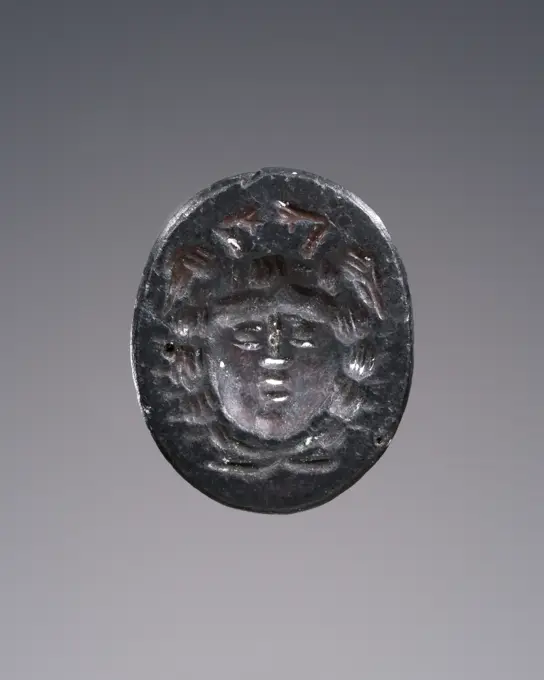
Ancient Egyptian Scarabs

Artistic depictions of scarabs and plaques from Ancient Egypt, featuring inscriptions and deities, showcasing historical artifacts.

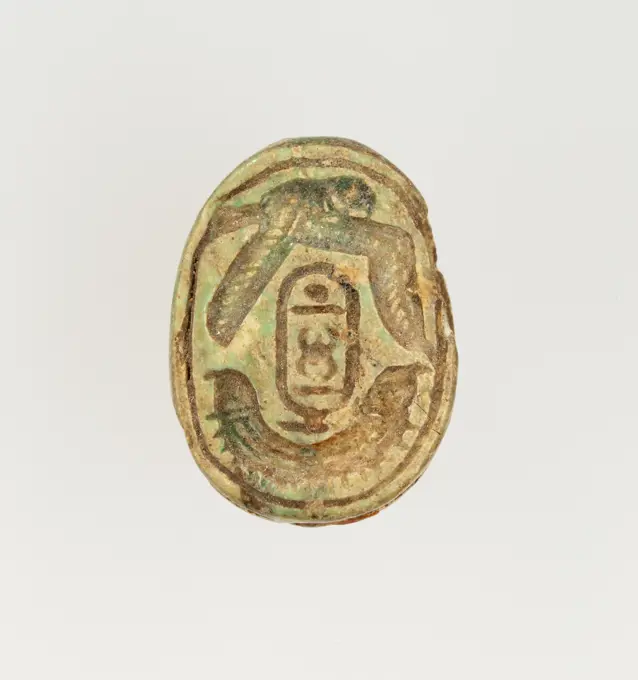
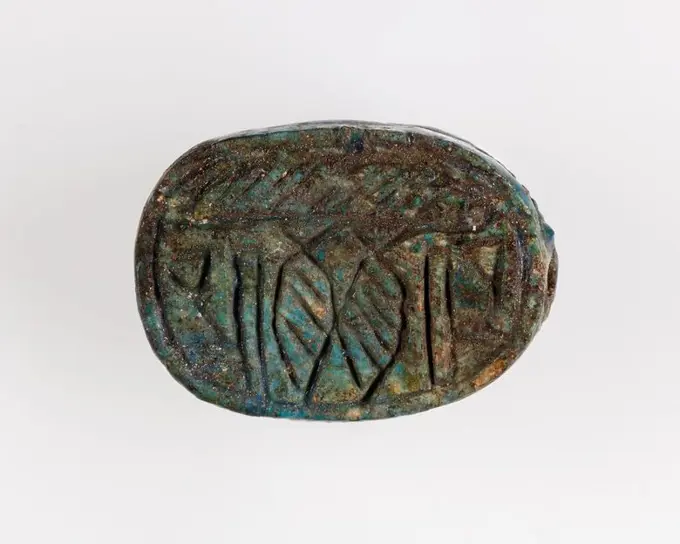
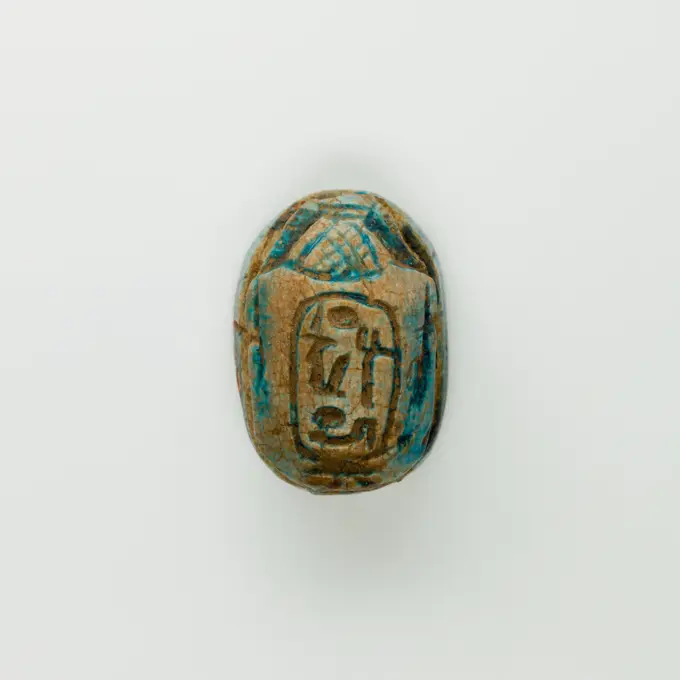
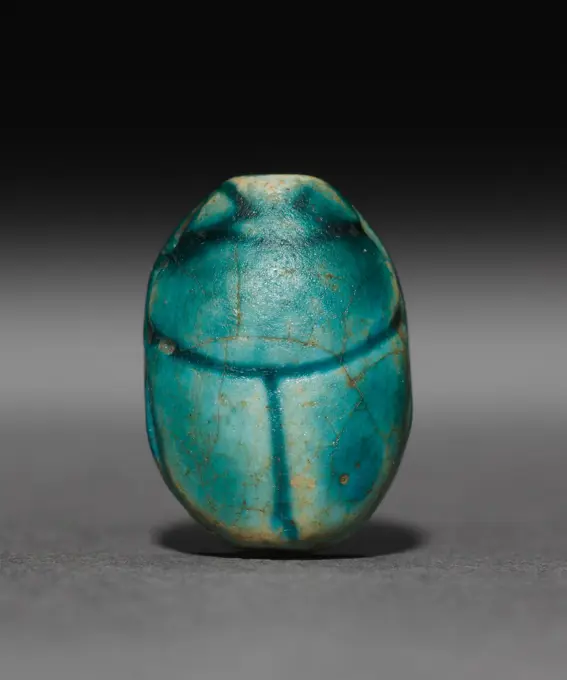
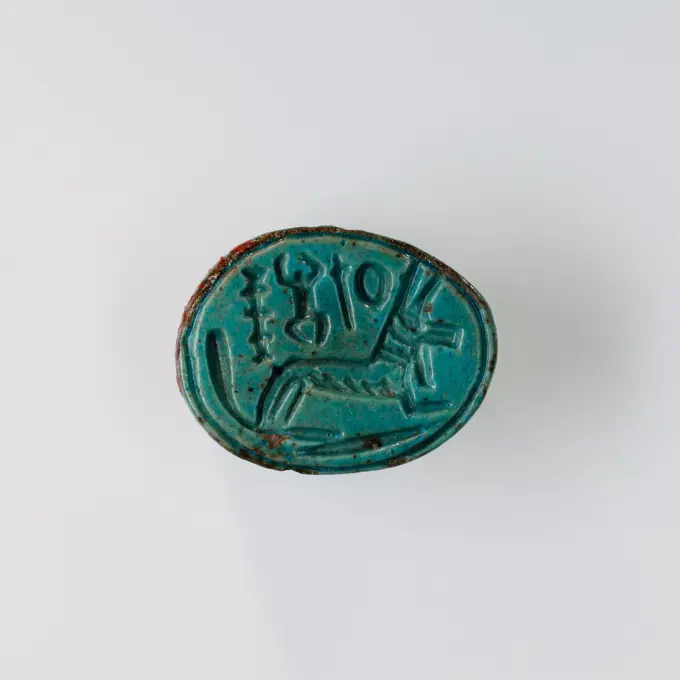
Scarab ca. 1640-1550 B.C. Second Intermediate Period. Scarab. ca. 1640-1550 B.C.. Steatite, blue glazed. Second Intermediate Period. From Egypt, Upper Egypt, Thebes, Asasif, Tomb CC 64, Burial 5, Carnarvon excavations, 1913
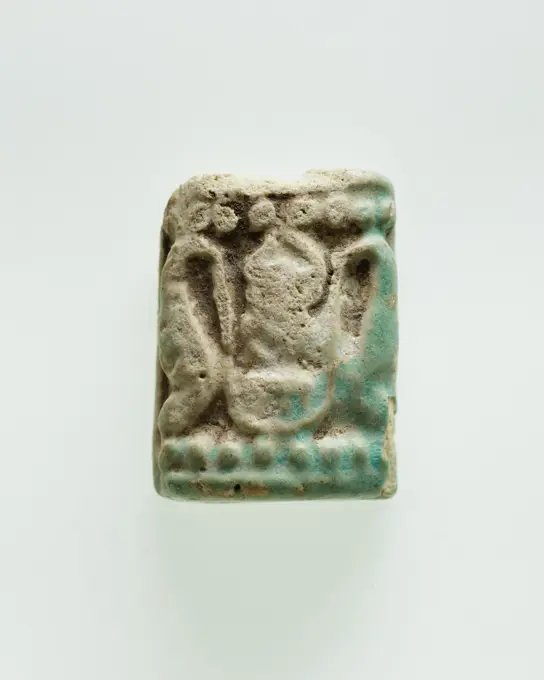
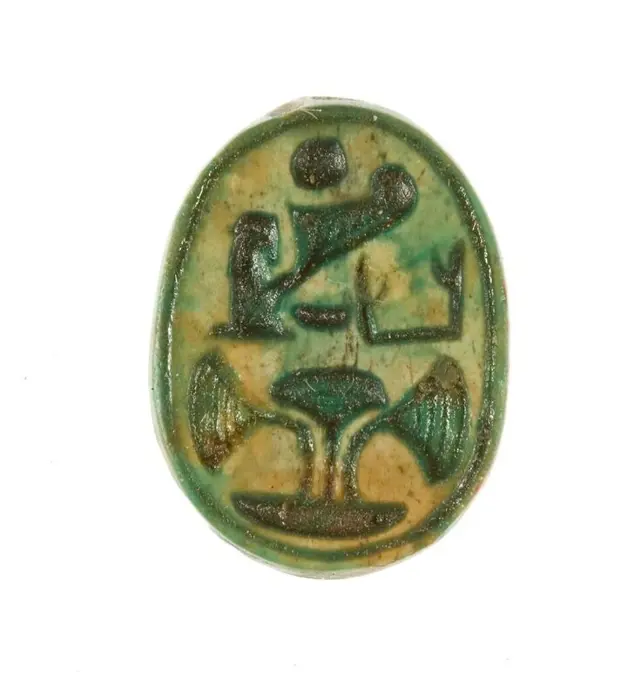
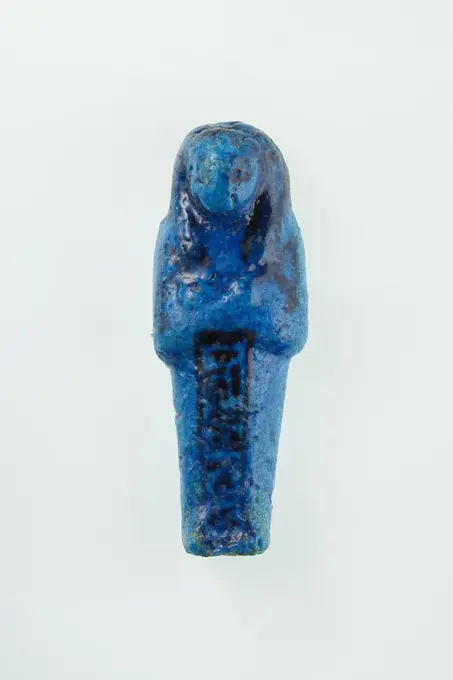
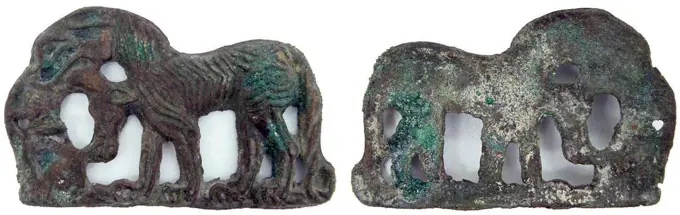
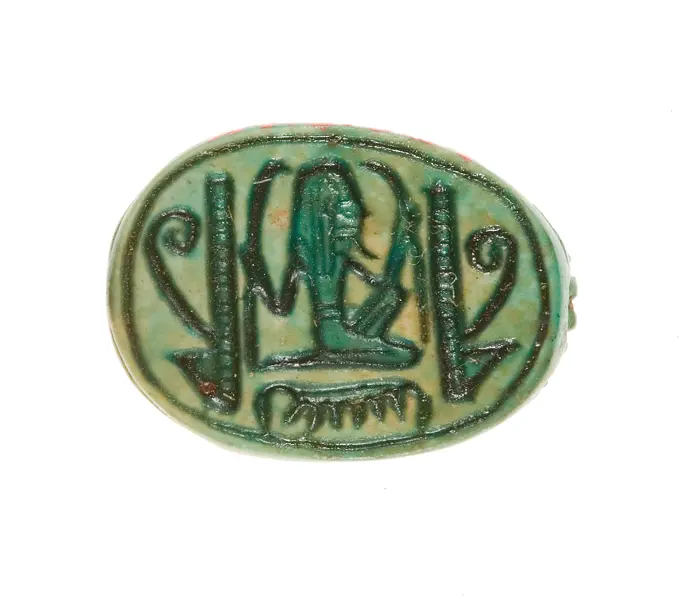
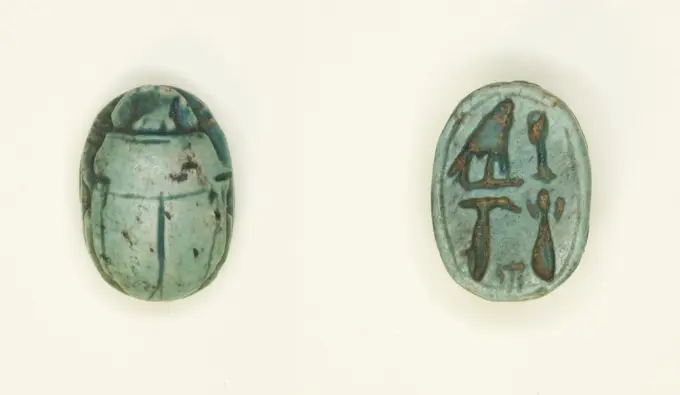
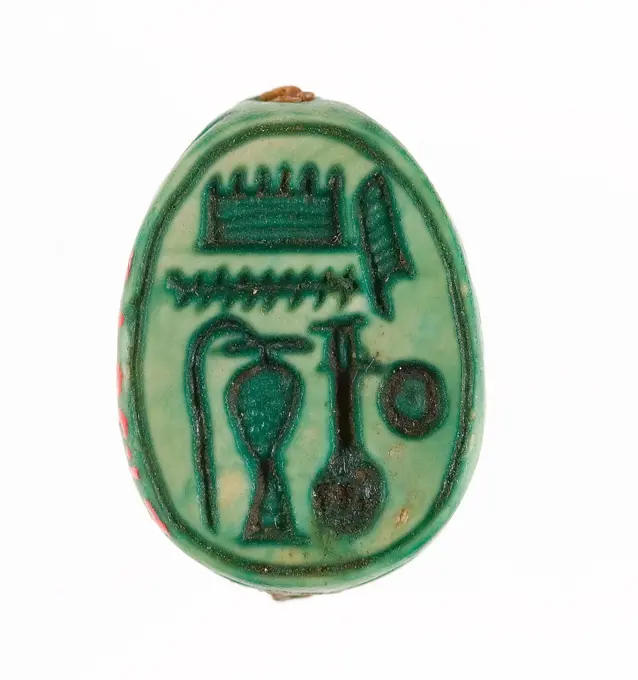
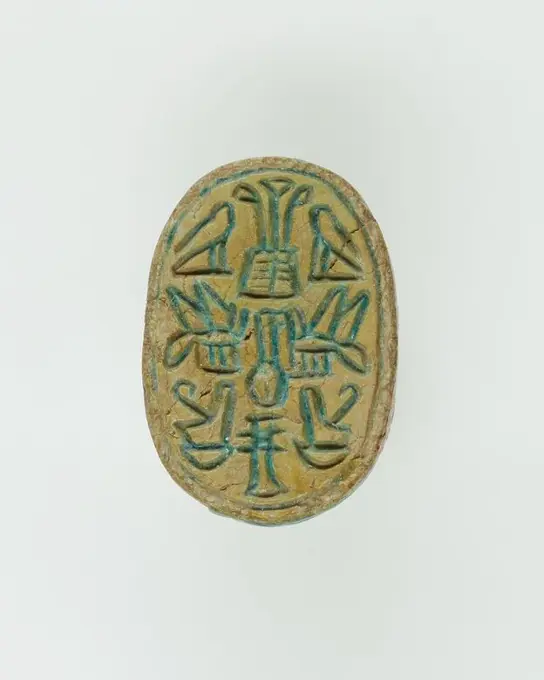
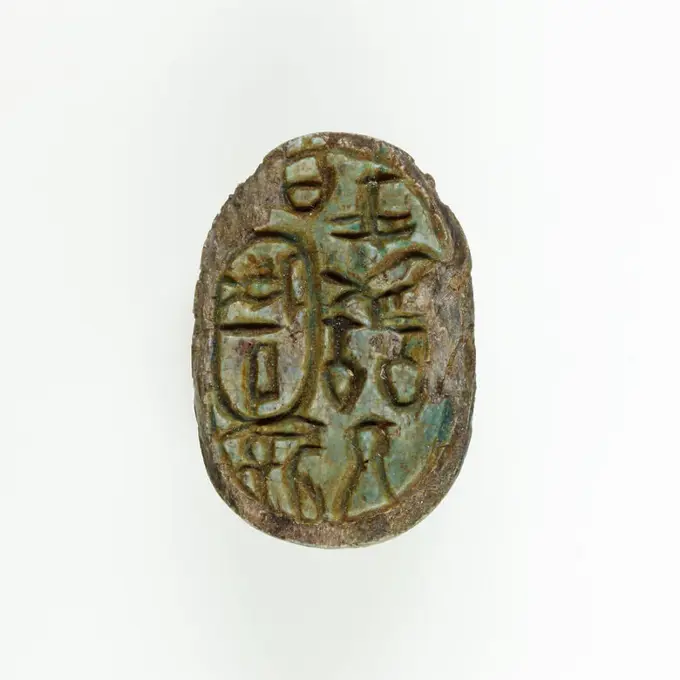
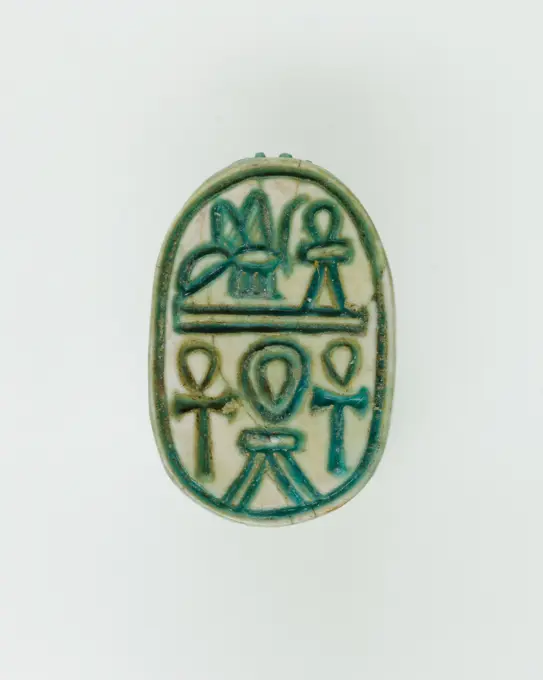
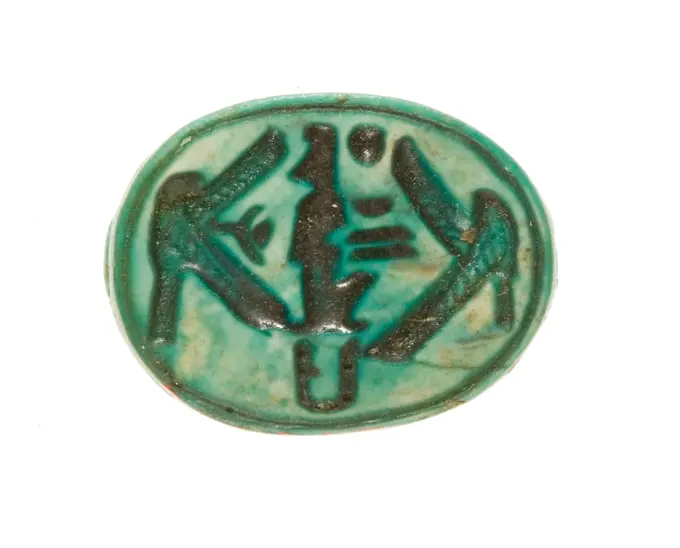
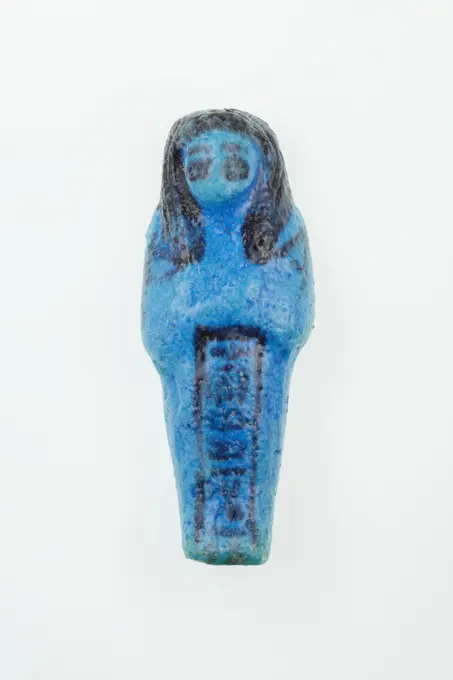
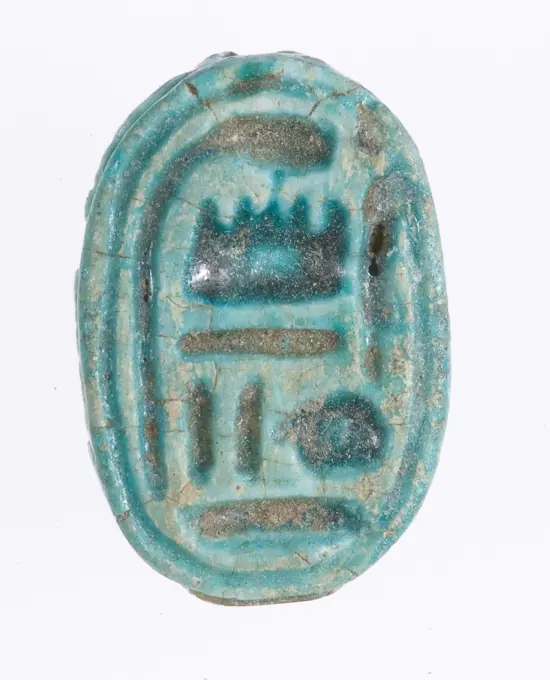
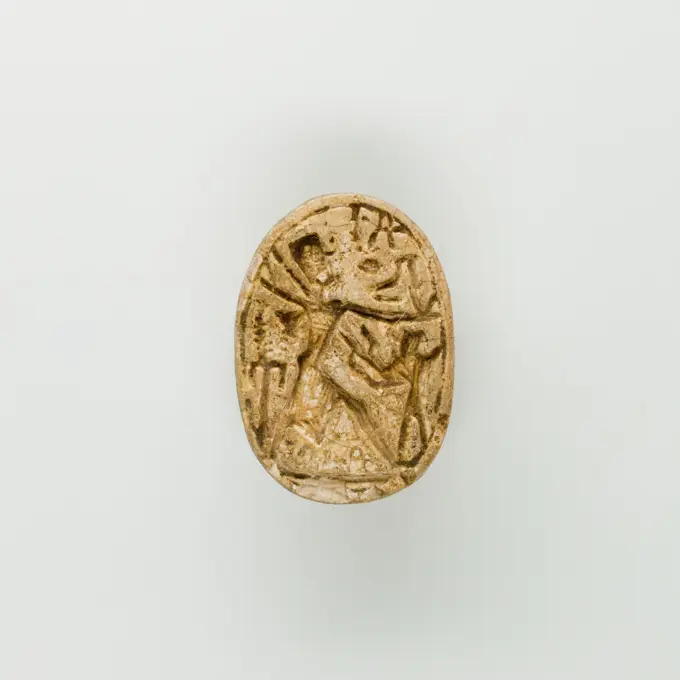
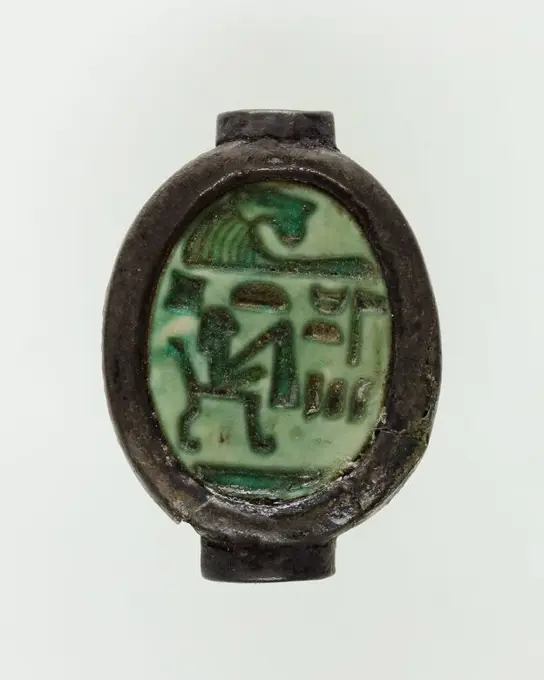
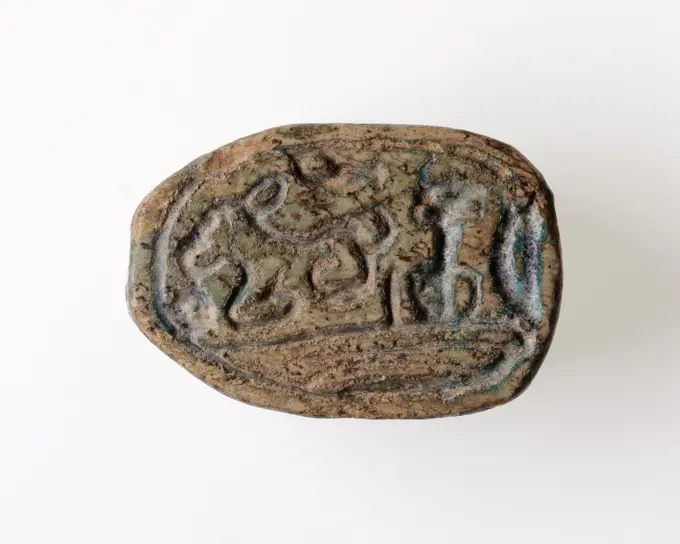
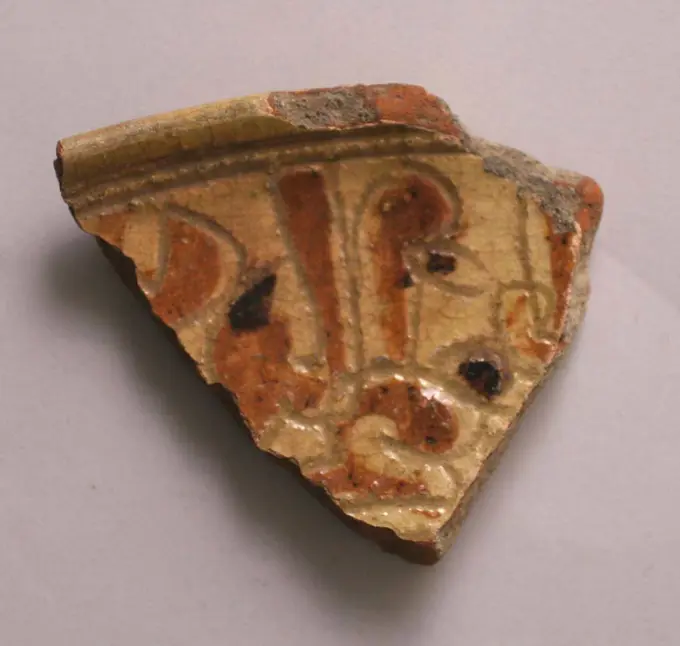
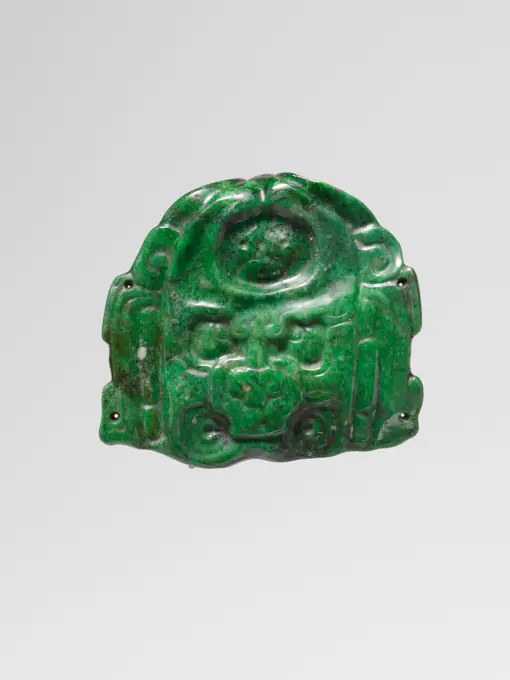
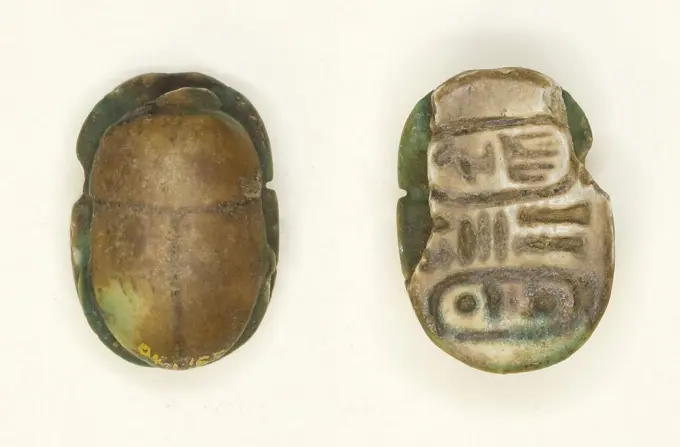
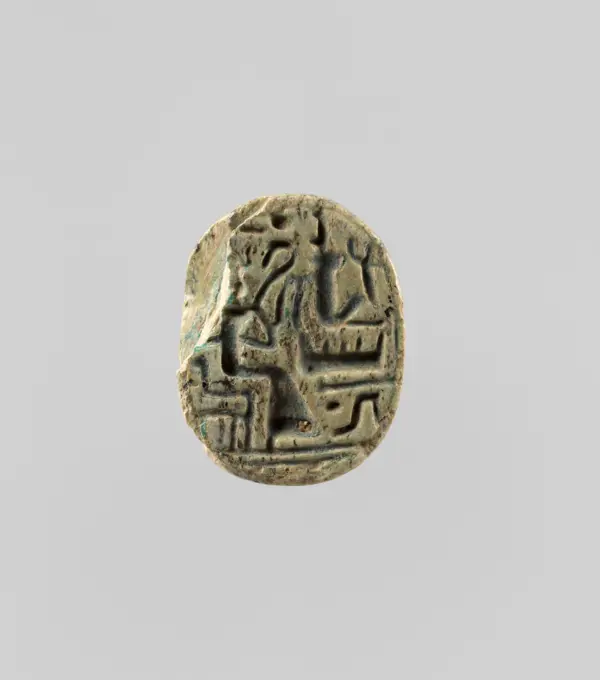
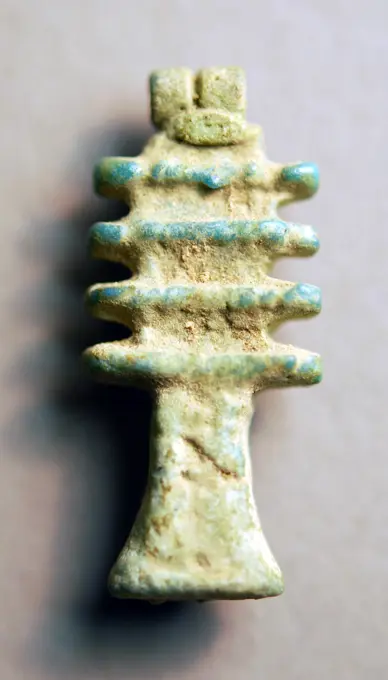
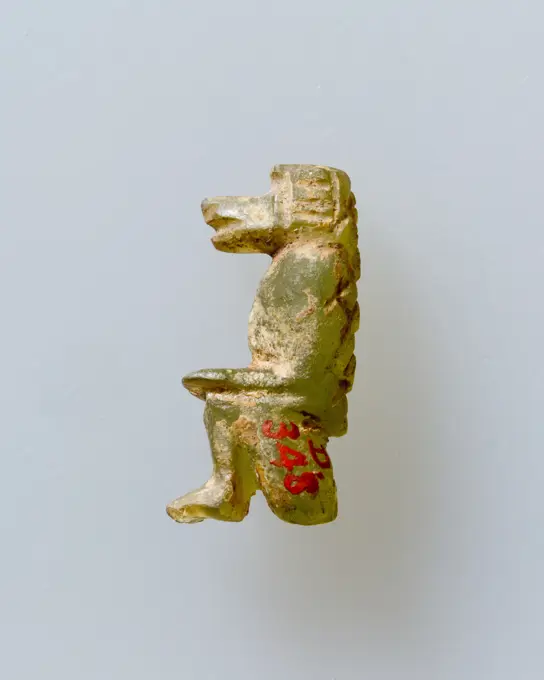
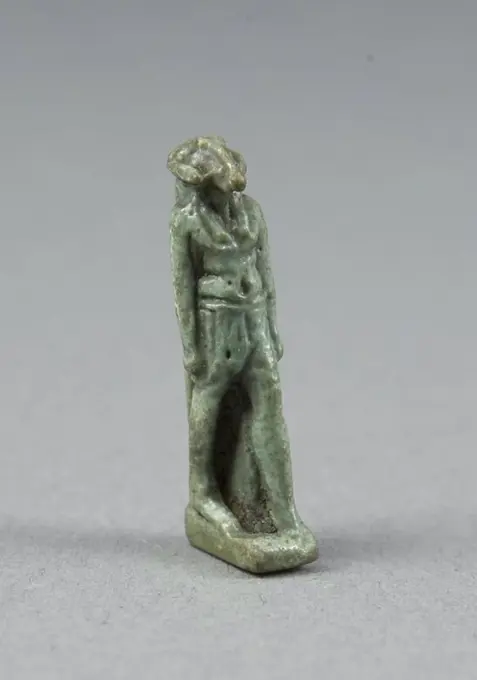
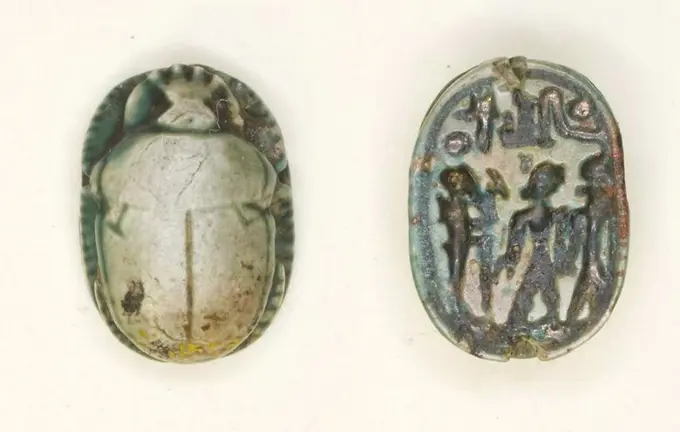
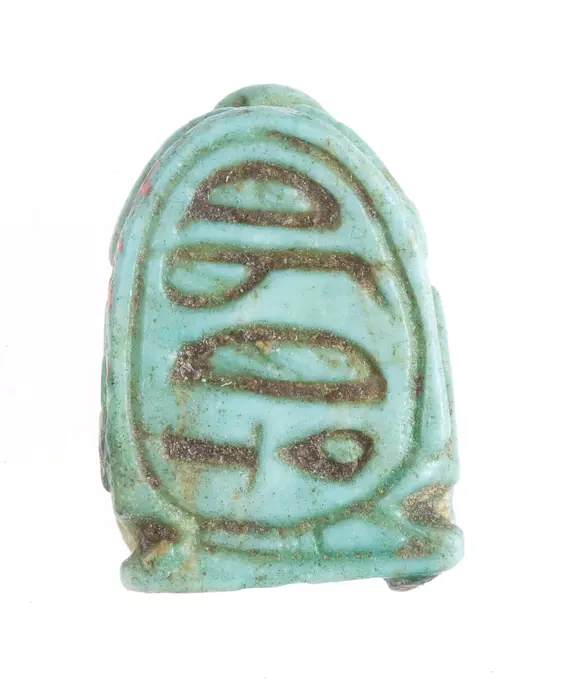
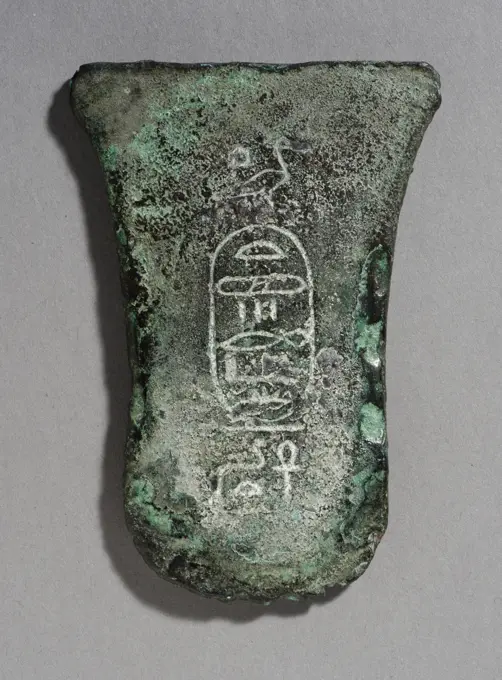
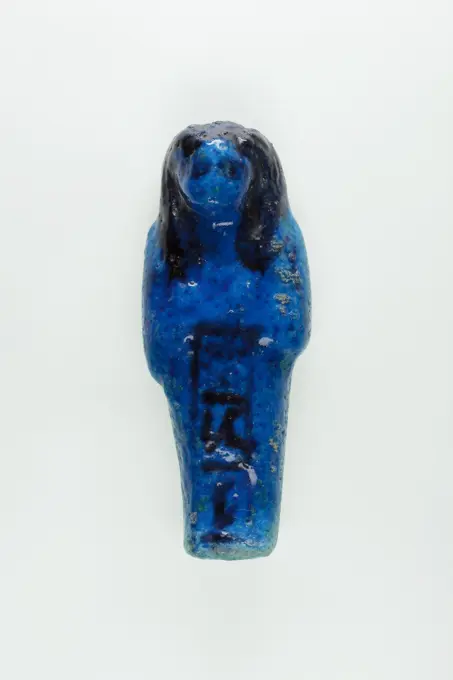
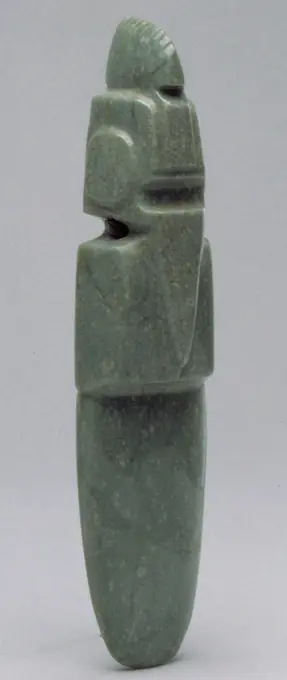
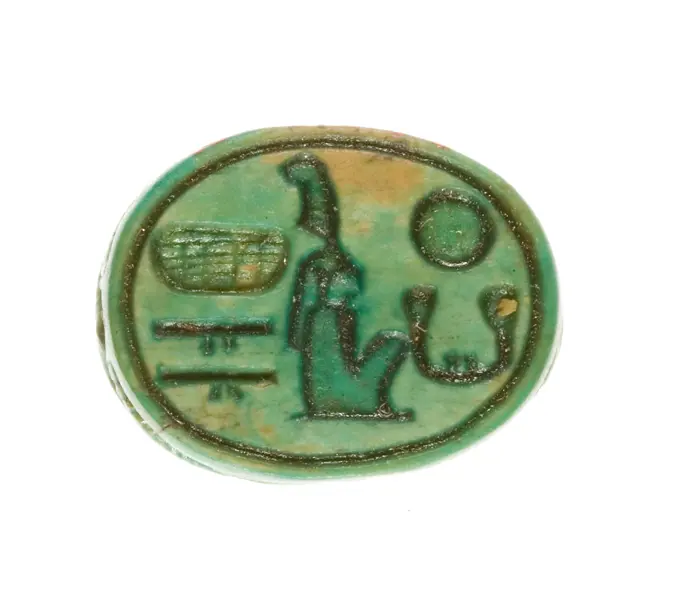
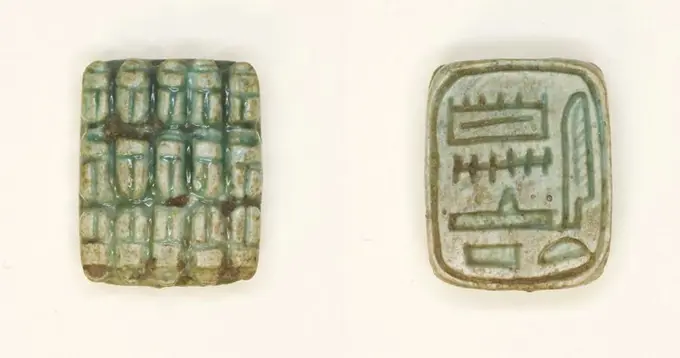
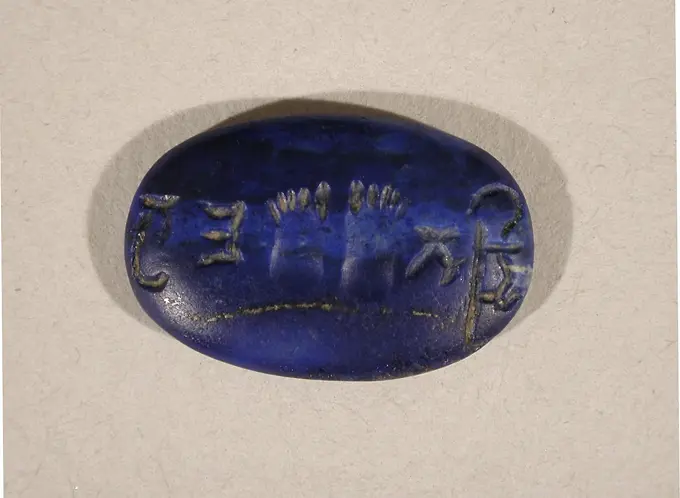
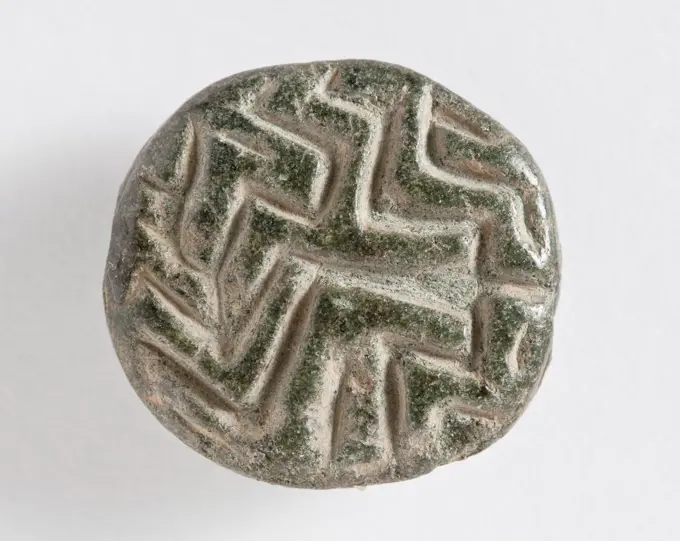
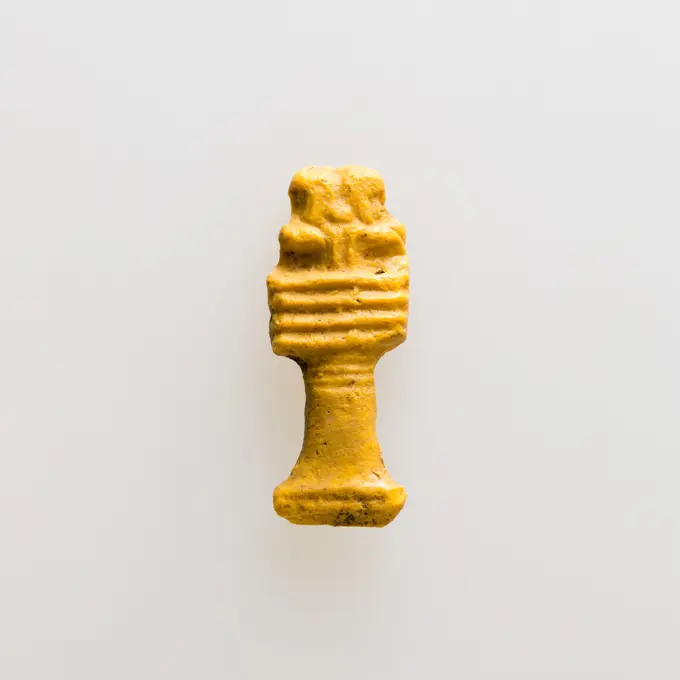
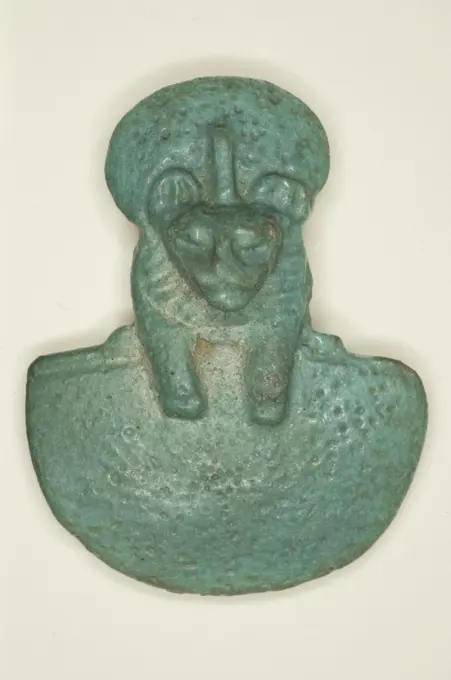
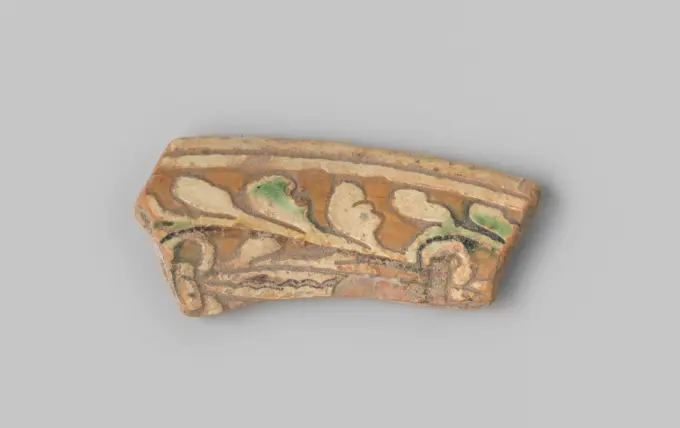
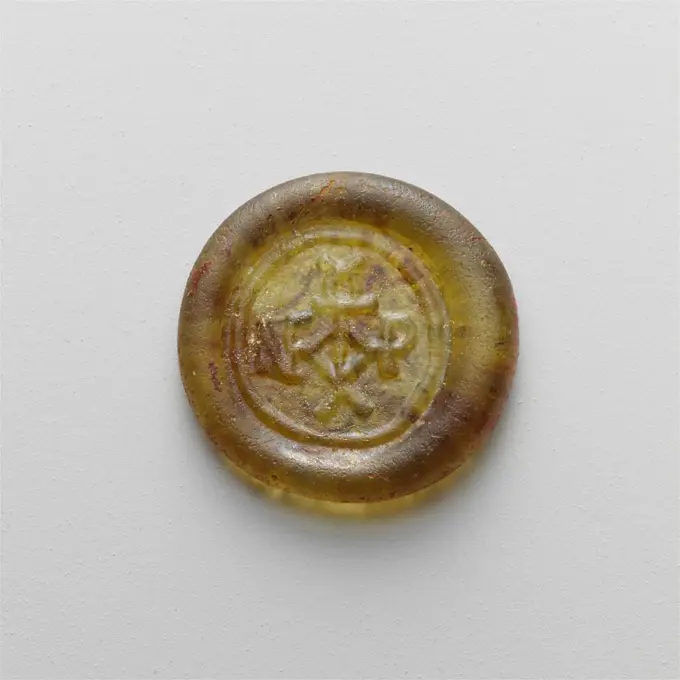
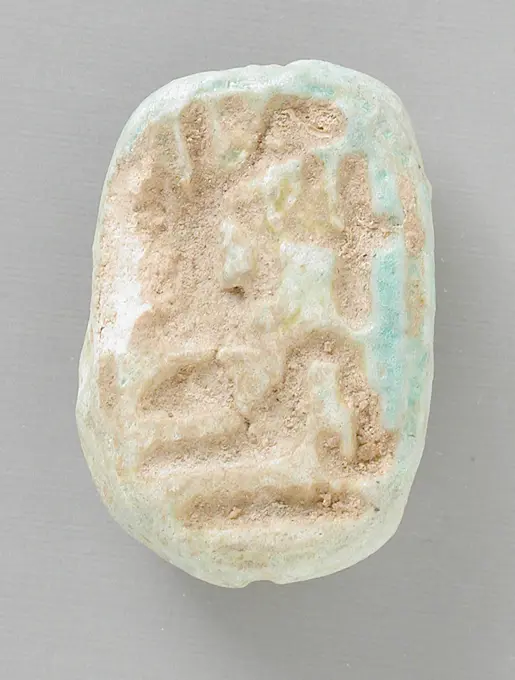
Scarab Inscribed with the Throne Name of Thutmose II ca. 1492-1479 B.C. New Kingdom. Scarab Inscribed with the Throne Name of Thutmose II. ca. 1492-1479 B.C.. Steatite (glazed). New Kingdom. From Egypt. Dynasty 18Plaque with winged Re-Harakhty ca. 1295-1070 B.C. New Kingdom The top of this rectangular plaque is decorated with a pair of uraei linked by their tails, flanking an incomplete version of the throne name of Thutmose III, (Men)kheperre. Despite the name of the early 18th Dynasty ruler, this plaque was carved after his reign, as indicated by the pearl strings running along the top and bottom. This decorative feature was common on plaques made during Dynasty 19-21. The later date is also confirmed by the decoration on the underside of the amulet, which shows a one-winged deity with falcon head standing behind an ostrich feather and a small uraeus. This god can be identified as the sun god Re or Re-Harakhty, who predominantly appears in similar compositions on scarabs and oval stamp seals from this period.. Plaque with winged Re-Harakhty. ca. 1295-1070 B.C.. Glazed steatite. New Kingdom. From Egypt. Dynasty 19-20Scarab Inscribed with the Name Maatkare Over a Papyrus Thicket. Dimensions: L. 1.8 cm (11/16 in.); w. 1.4 cm (9/16 in.). Dynasty: Dynasty 18, early. Reign: Joint reign of Hatshepsut and Thutmose III. Date: ca. 1479-1458 B.C..During the 1926-1927 excavation season, the Museum's Egyptian Expedition uncovered three foundation deposits along the eastern enclosure wall of Hatshepsut's funerary temple at Deir el-Bahri in Western Thebes. Among the contents were 299 scarabs and stamp-seals. Sixty-five of these are now in the Egyptian Museum, Cairo, and the rest were acquired by the Museum in the division of finds.Among the inscriptions on the bases of these scarabs and seals are examples of every title Hatshepsut held, from the time she was "king's daughter" during the reign of her father, Thutmose I; through the time she was queen of her half-brother, Thutmose II; and during her regency and co-reign with her nephew/step-son, Thutmose III.After the death of her husband, Hatshepsut became reScarab. Dimensions: L. 2.1 cm (13/16 in). Dynasty: Dynasty 12-18. Date: ca. 1981-1295 B.C.. Museum: Metropolitan Museum of Art, New York, USA.Scarab ca. 1295-1070 B.C. New Kingdom, Ramesside. Scarab 567933Scarab ca. 1640-1550 B.C. Second Intermediate Period. Scarab. ca. 1640-1550 B.C.. Steatite, blue glazed. Second Intermediate Period. From Egypt, Upper Egypt, Thebes, Asasif, Tomb CC 64, Burial 5, Carnarvon excavations, 1913Worker Shabti of Nany. Dimensions: H. 8.8 × W. 3.2 × D. 2.1 cm (3 7/16 × 1 1/4 × 13/16 in.). Dynasty: Dynasty 21. Reign: reign of Psusennes I. Date: ca. 1050 B.C..See 30.3.27.1a, b. Museum: Metropolitan Museum of Art, New York, USA.Scarab Inscribed with the Throne Name of Amenhotep II ca. 1427-1401 B.C. New Kingdom. Scarab Inscribed with the Throne Name of Amenhotep II. ca. 1427-1401 B.C.. Steatite. New Kingdom. From Egypt. Dynasty 18Plaque with Animal Combat Motif ca. 3rd century B.C. North China. Plaque with Animal Combat Motif. North China. ca. 3rd century B.C.. Bronze. MetalworkScarab Inscribed with a Hieroglyphic Motif ca. 1479-1458 B.C. New Kingdom. Scarab Inscribed with a Hieroglyphic Motif. ca. 1479-1458 B.C.. Steatite (glazed). New Kingdom. From Egypt, Upper Egypt, Thebes, Deir el-Bahri, Temple of Hatshepsut, Foundation Deposit 9 (I), MMA excavations, 1926-27. Dynasty 18, earlyStrap End 7th century () Frankish. Strap End 472618Plaque ca. 1295-1070 B.C. New Kingdom, Ramesside. Plaque 568016Uszebti. unknown, authorIndie, królestwo kangra, drachma, xiii xv w.Scarab Falcon and Hieroglyphs 1550 BCE-525 BCE Egypt. Glazed steatite . Ancient EgyptianPewter insignia in form of ampoule with straight sides with coat of arms with French lilies, insigne soil find tin lead metal, cast Insignia in the form of an ampoule with straight sides and two support eyes and with on both sides an unknown (city) Weapon with French lilies archeology heraldry Rotterdam Stadscentrum Stadsdriehoek Meent Markt Binnenrotte pilgrim worship Soil discovery pit corner Meent Markt Binnenrotte.Pendant. Culture: Maya. Dimensions: H. 3  W. 1 1/2  D. 1 1/2 in. (7.6  3.8  3.8 cm). Date: A.D. 600-700.This bright green jade pendant depicts a Maya ruler wearing the headdress of a supernatural being.Este colgante de jade verde representa a un gobernante maya con el tocado de un ser sobrenatural.Further informationThis bright green jade pendant depicts a Maya ruler wearing the headdress of a supernatural being. The lower half of the highly polished stone is a naturalistic face of a Maya lord whose lips are slightly parted, as if about to speak. The face seems to emerge from the gaping jaws of the deity depicted in the headdress. The iconography of the jade ties it strongly with Maya beliefs about rulership, particularly its connection with divine powers (see 2007.134).The apex of the work terminates in a visual element that is common in artists' depictions of crown jewels worn by Late Classic period (ca. A.D. 550 - 900) kings and queens, especially in the 7th and 8tVase fragment Minoan. Vase fragment 247752Scarab Inscribed with a Hieroglyphic Motif ca. 1479-1458 B.C. New Kingdom. Scarab Inscribed with a Hieroglyphic Motif. ca. 1479-1458 B.C.. Steatite (glazed). New Kingdom. From Egypt, Upper Egypt, Thebes, Deir el-Bahri, Temple of Hatshepsut, Foundation Deposit 9 (I), MMA excavations, 1926-27. Dynasty 18, earlyPoland, Władysław Warneńczyk (1434 1444), Denar, 1434 1444, Town of Krakow Mint of Kraków, W Adys Aw Warne Czyk (King of Poland, 1434 1444)Scarab of an Official ca. 1760-1670 B.C. Middle Kingdom Administrative changes during Dynasty 12 lead to an increase in bureaucracy and, subsequently, in the production and use of seals. This is reflected in the beginning of the mass production of scarabs, the most popular shape for amulets, in late Dynasty 12 through Dynasty 13 (ca. 1850-1640 B.C.). Thousands of these late Middle Kingdom scarabs bear the names and titles of officials, who would wear them as amulets, but who could also use them to seal documents, containers or doors. However, the scarabs primary function remained that of a protective amulet. Several inscriptions add a funerary epithet to the owners name, indicating that the amulet was manufactured after the owner had passed away. This scarab is inscribed for an astronomer (‘hour-watcher), possibly named Ankh. The inscription is partly damaged where the name of the official is mentioned.. Scarab of an Official 545229Ferret 7th century () Frankish. Ferret 465486 Frankish, Ferret, 7th century (), Copper alloy, Overall: 2 5/16 x 5/8 x 1/4 in. (5.8 x 1.6 x 0.7 cm). The Metropolitan Museum of Art, New York. Gift of J. Pierpont Morgan, 1917 (17.193.171b)Bake  cylindrical with pseudo-hieroglyphs;  19th century () (1801-00-00-1900-00-00);Amulet - oko udżat. unknown, authorScarab with Representation of an Enthroned King ca. 1070-900 B.C. Third Intermediate Period A particular type of seal-amulet is found in archaeological contexts from the 10th century B.C. onwards. They are quite crudely and irregularly carved and the motifs on the underside show predominantly hunting scenes, with varied combinations of horned quadrupeds, lions, ostriches, and hunters. Based on the style of the incisions and on the large numbers that have surfaced in (northern) Egypt, but especially in the southern Levant, these seal-amulets are considered to be the result of a mass production. Their origin, however, is still under discussion. In the scholarly literature, they are labelled Post-Ramesside mass-produced seal-amulets’ and are dated to the late 11th and 10th centuries B.C., that is, Dynasty 21 and early Dynasty 22 in Egypt, or the end of the Iron Age IB - early Iron Age II in the southern Levant. This example shows a highly stylized human figure seated on a stool or throneStrap End 7th century Frankish. Strap End 465791 Frankish, Strap End, 7th century, Copper alloy, Overall: 2 x 9/16 x 3/16 in. (5.1 x 1.5 x 0.4 cm). The Metropolitan Museum of Art, New York. Gift of J. Pierpont Morgan, 1917 (17.193.68b)StampScarab Inscribed with the Name of the God Amun-Re ca. 1479-1458 B.C. New Kingdom. Scarab Inscribed with the Name of the God Amun-Re. ca. 1479-1458 B.C.. Steatite (glazed). New Kingdom. From Egypt, Upper Egypt, Thebes, Deir el-Bahri, Temple of Hatshepsut, Foundation Deposit 7 (G), MMA excavations, 1926-27. Dynasty 18, earlyScarab. Dimensions: l. 1.7 cm (11/16 in). Dynasty: Dynasty 12-18. Date: ca. 1981-1550 B.C.. Museum: Metropolitan Museum of Art, New York, USA.Amulet of a Menat Counterpoise with Lion-headed Goddess 747 BCE-525 BCE Egypt. Faience . Ancient EgyptianScarab. Dimensions: L. 2.2 × W. 1.5 × H. 0.7 cm (7/8 × 9/16 × 1/4 in.). Dynasty: Dynasty 13-17. Date: ca. 1802-1550 B.C.. Museum: Metropolitan Museum of Art, New York, USA.Scarab Inscribed with Hieroglyphs ca. 1850-1640 B.C. Middle Kingdom The majority of design scarabs of the late Middle Kingdom (late Dynasty 12-Dynasty 13, ca. 1850 -1640 B.C.) are decorated with symmetric compositions of hieroglyphs and/or scrolls. These signs are not meant to form words but are chosen for their positive, protective meaning. Some of most frequently found hieroglyphs are the signs for life (ankh) and protection (sa), seen here on this scarab accompanied by a royal symbol, the bee.. Scarab Inscribed with Hieroglyphs. ca. 1850-1640 B.C.. Bright blue glazed steatite. Middle Kingdom. From Egypt, Memphite Region, Lisht North, Cemetery, debris, MMA excavations. late Dynasty 12-Dynasty 13Shawabty of Ditamenpaankh, 715-656 BC. Egypt, Late Period, Dynasty 25. Terracotta; overall: 5.7 x 1.7 x 1.2 cm (2 1/4 x 11/16 x 1/2 in.).Scarab Inscribed Lord of the Two Lands Maatkare Flanked by Falcons ca. 1479-1458 B.C. New Kingdom. Scarab Inscribed Lord of the Two Lands Maatkare Flanked by Falcons. ca. 1479-1458 B.C.. Steatite (glazed). New Kingdom. From Egypt, Upper Egypt, Thebes, Deir el-Bahri, Temple of Hatshepsut, Foundation Deposit 7 (G), MMA excavations, 1926-27. Dynasty 18, earlyScarab Inscribed for Princess Merytnub ca. 1550-1295 B.C. New Kingdom. Scarab Inscribed for Princess Merytnub 554597Scarab Inscribed for an Official ca. 1850-1750 B.C. Middle Kingdom. Scarab Inscribed for an Official 570922Scarab Inscribed Lord of the Two Lands Maatkare Flanked by Falcons. Dynasty: Dynasty 18, early. Reign: Joint reign of Hatshepsut and Thutmose III. Date: ca. 1479-1458 B.C.. Museum: Metropolitan Museum of Art, New York, USA.Worker Shabti of Nauny ca. 1050 B.C. Third Intermediate Period See 30.3.28.1a, b. Worker Shabti of Nauny. ca. 1050 B.C.. Faience. Third Intermediate Period. From Egypt, Upper Egypt, Thebes, Deir el-Bahri, Tomb of Meritamun (TT 358, MMA 65), first corridor, burial of Nauny, MMA excavations, 1928-29. Dynasty 21Fragment of a decorated New Year's flask unusually intended for ointment Saite Period 664-525 B.C. View more. Fragment of a decorated New Year's flask unusually intended for ointment. 664-525 B.C.. Faience. Saite Period. From Egypt. Dynasty 21-26Scarab ca. 1991-1450 B.C. Second Intermediate Period-Early New Kingdom. Scarab. ca. 1991-1450 B.C.. Glazed steatite. Second Intermediate Period-Early New Kingdom. From Egypt, Upper Egypt, Thebes, Asasif, Tomb CC 62, Burial G, Carnarvon excavations. Dynasty 17-18Amulet of the Goddess Isis 332 BCE-30 BCE Egypt. Faience . Ancient EgyptianAmulet of the God Shu 1186 BCE-1069 BCE Egypt. Faience . Ancient EgyptianScarab of Ramesses II ca. 1295-1070 B.C. New Kingdom, Ramesside. Scarab of Ramesses II 550321Scarab Inscribed for the God's Wife Hatshepsut. Dimensions: L. 2 cm (13/16 in.); W. 1.5 cm (9/16 in.); H. 0.8 cm (5/16 in.). Dynasty: Dynasty 18, early. Reign: reign of Thutmose II-Early Joint reign. Date: ca. 1492-1473 B.C..Two ring bezels were found among the hand bones of a child who was buried in the tomb of Hatnefer, the mother of Senenmut who was an important official in the reign of Hatshepsut (see 30.3 1 and 30.3.17). This bezel contains a beautifully carved scarab inscribed with Hatshepsut's personal name and her title God's Wife. This title was acquired by Hatshepsut while she was the principal queen of her half-brother, Thutmose II. Soon after taking on the titles of king, the title passed to Hatshepsut's daughter, Neferure (see 27.3.324-27.3.327). The scarab is similar in style and quality to those found in the foundation deposits of Hatshepsut's temple at Deir el-Bahri, but the inscription differs slightly (see esp. 27.3.174-27.3.191). Museum: Metropolitan Museum of Art, Pendant of a Female Head in Profile; Italy; 525 - 480 B.C; Amber; 57 × 56 × 30 mm (2 1,4 × 2 3,16 × 1 3,16 in.)Scarab with Hieroglyphs and Recumbent Donkey ca. 1700-1600 B.C. (Middle Bronze Age IIB) Second Intermediate Period The underside of this Canaanite Middle Bronze Age scarab is decorated with the representation of recumbent quadruped, which can be identified as a wild ass or donkey based on its long ears and equid-like muzzle. Above and behind the animal are the hieroglyphs for good (nefer) and unification (sema). While the donkey was one of the most important animals of burden in ancient Egypt, in the Levant, the donkey was commonly ridden too.. Scarab with Hieroglyphs and Recumbent Donkey 557120Fragment 14th-15th century. Fragment 445608Amulet of the God Shu 664 BCE-332 BCE Egypt. Faience . Ancient EgyptianDeity Face Pendant 7th-8th century Maya This apple-green jade ornament represents the avian face of Ux Yop Hun (“Three Leaves Paper” or “Three-Leaf-Paper”) a complex supernatural being that personified the paper headband worn by ancient Maya rulers. This figure is also frequently referred to in the literature as “the foliated Jester God.” His forehead is infixed with a hieroglyphic sign that translates as ajaw, or ruler (a schematic face comprised of two dots for eyes and one for a mouth). Ux Yop Hun is shown cross-eyed, his squared pupils looking inward toward a furrowed brow. In Maya art, this eye is a diagnostic feature of shining, solar, and/or resplendent supernatural beings. Below, a small nose with curling nostrils is carved atop a downturned beak. When seen in profile images, this bird beak has a distinct bracket shape (see, for instance, 1978.412.90a, b). Because jade is so difficult to carve, and because the artist was likely following the contours of a thin vein of apple-gHorse Fitting with Doe 5th-4th century B.C. Northwest China. Horse Fitting with Doe 65242Scarab: Menkheperra (Thutmose III). Egyptian. Date: 945 BC-715 BC. Dimensions: 1.4 × 1 × 0.5 cm (9/16 × 3/8 × 3/16 in.). Glazed steatite. Origin: Egypt. Museum: The Chicago Art Institute, USA. Author: Ancient Egyptian.Scarab Inscribed with the Name of Ramesses IV ca. 1153-1147 B.C. New Kingdom The hieroglyphs form the throne name of pharaoh Ramesses IV (Dynasty 20, ca. 1153-1147 B.C.). Facing the name is an enthroned royal figure, wearing a crown with a cobra on the front. The pharaoh holds a heqa-scepter, a symbol of his royal authority.. Scarab Inscribed with the Name of Ramesses IV. ca. 1153-1147 B.C.. Steatite, traces of green glaze. New Kingdom. From Egypt, Memphite Region, Lisht North, Cemetery, MMA excavations, 1906-07. Dynasty 20 (Ramesside)Djed Amulet ca. 1390-1352 B.C. New Kingdom. Djed Amulet. ca. 1390-1352 B.C.. Faience. New Kingdom. From Egypt, Upper Egypt, Thebes, West Valley of the Kings, Tomb of Amenhotep III (WV 22), Carnarvon/Carter excavations, 1915. Dynasty 18Baboon 200 BC-200 AD Ptolemaic or Roman Period This is one of a small group of animals carved in semiprecious stones from the Davis Collection that share share a general liveliness and more Hellenistic than Egyptian style. Alongside subjects that are familiar in Egyptian iconography such as a baboon and ducks, are others like a goat, dolphins, rhinoceros, galloping horse, and reclining hound that are more at home in the Greco-Roman sphere.. Baboon. 200 BC-200 AD. Chalcedony. Ptolemaic or Roman Period. From EgyptAmulet of the God Khnum. Egyptian. Date: 332 BC-30 BC. Dimensions: 3 × .75 × 1 cm (1 1/8 × 1/4 × 3/8 in.). Faience. Origin: Egypt. Museum: The Chicago Art Institute, Chicago, USA. Author: Ancient Egyptian.Scarab: The God Ptah with a Standing King and the Name of Usermaatra Setepenra (Rameses II). Egyptian. Date: 1279 BC-1213 BC. Dimensions: 1.3 × 0.8 × 0.6 cm (1/2 × 5/16 × 1/4 in.). Steatite. Origin: Egypt. Museum: The Chicago Art Institute, Chicago, USA. Author: Ancient Egyptian.Design Amulet in the Shape of a Fly ca. 1550-1425 B.C. Second Intermediate Period-Early New Kingdom Examples of amulets shaped like a fly are known from Predynastic graves (ca. 3600 B.C.). It remains unclear why the fly possessed an amuletic purpose; possible explanations for its depiction include both its fecundity and the need to rid oneself of this common pest.. Design Amulet in the Shape of a Fly. ca. 1550-1425 B.C.. Steatite (glazed). Second Intermediate Period-Early New Kingdom. From Egypt, Upper Egypt, Thebes, Asasif, Carnarvon/Carter excavations, 1907-11. Dynasty 13-18Amulet - CatAmulet - AegisScarab Ring ca. 1550-1500 B.C. New Kingdom This scarab was found tied to the hand of an unknown woman who was buried on the hillside below the tomb of Senenmut (TT 71), one of Hatshepsut's officials. The name of Hatshepsut's daughter, Neferure, and her title "God's Wife," are inscribed on the base of the scarab which is similar in quality and style to those placed in the foundation deposits of Hatshpepsut's funerary temple at Deir el-Bahri.. Scarab Ring 548891Amulet: Hes Vase ca. 1390-1353 B.C. New Kingdom. Amulet: Hes Vase. ca. 1390-1353 B.C.. Faience. New Kingdom. From Egypt, Upper Egypt, Thebes, Malqata, Palace of Amenhotep III, MMA excavations, 1910-11. Dynasty 18Ceremonial Battle Axe Inscribed with Name of King Seqenenre Tao. Egypt, New Kingdom, 17th Dynasty (1600 - 1569) or later. Arms and Armor; axes. BronzeCast Gem. UnknownScarab of Ramesses II ca. 1295-1070 B.C. New Kingdom, Ramesside On the back this scarab is inscribed with the throne name of Ramesses II, Usermaatre-Setepenre. On the base is a striding lion.. Scarab of Ramesses II 560044Shabti of Tantowy 1069 BCE-945 BCE Egypt. Ceramic . Ancient EgyptianUszebti. unknown, authorAmulet of the God Thoth Holding an Offering Table (). Egyptian. Date: 664 BC-332 BC. Dimensions: 1.6 × 0.5 × 0.6 cm (5/8 × 3/16 × 1/4 in.). Faience. Origin: Egypt. Museum: The Chicago Art Institute, USA. Author: Ancient Egyptian.Worker Shabti of Nany ca. 1050 B.C. Third Intermediate Period See 30.3.26.1a, b. Worker Shabti of Nany 625735Scarab ca. 1479-1458 B.C. New Kingdom. Scarab. ca. 1479-1458 B.C.. Faience. New Kingdom. From Egypt, Upper Egypt, Thebes, Deir el-Bahri, Hatshepsut Hole, Hathor Shrine, MMA excavations, 1922-23. Dynasty 18Anonymous. "Imberb mask crowned with ivy". Metal, bronze, hollow cast iron. Museum of Fine Arts of the City of Paris, Petit Palais. 99931-24 Antiquity, bronze, hollow, metal, ancientFigure-Celt Pendant 1st-5th century Guanacaste-Nicoya Many bird-form pendants of Costa Rica feature a lower section shaped like a workaday celt or ax. The stone celt of teardrop shape was the common working tool in the ancient Americas, and in some instances the shape itself took on greater, perhaps even sacred, significance. The lower part of this pendant is an example of how the celt shape was integrated into prized personal ornaments. At the top of the pendant, the bird aspects are stylized in a presentation known in greater detail from other jade pendants. To the modern eye, the minimal rendering of the crested bird headdress, the large, flattened earflares, and the acutely angled beak creates the impression of a helmeted warrior or spaceman. Costa Rican bird pendants fall into given groups based on style and imagery, but individual differences also characterize and distinguish them one from the other.. Figure-Celt Pendant 316770Scarab, 1900-1914. Egypt, Modern forgery. Blue-glazed steatite; overall: 1 cm (3/8 in.).Engraved Gem. UnknownTile inlay fragment ca. 1981-1640 B.C. Middle Kingdom. Tile inlay fragment. ca. 1981-1640 B.C.. Faience. Middle Kingdom. From Egypt, Memphite Region, Lisht North, Cemetery, MMA excavations, 1920-22. Dynasty 12-13Scarab Inscribed with a Geometric Pattern ca. 1479-1458 B.C. New Kingdom. Scarab Inscribed with a Geometric Pattern. ca. 1479-1458 B.C.. Steatite (glazed). New Kingdom. From Egypt, Upper Egypt, Thebes, Deir el-Bahri, Temple of Hatshepsut, Foundation Deposit 7 (G), MMA excavations, 1926-27. Dynasty 18, earlyCartouche Amulet Incribed with the Name Menkheperre ca. 1479-1458 B.C. New Kingdom. Cartouche Amulet Incribed with the Name Menkheperre. ca. 1479-1458 B.C.. Blue faience. New Kingdom. From Egypt, Upper Egypt, Thebes, Deir el-Bahri, Temple of Hatshepsut, Hathor Chapel, Egypt Exploration Fund excavations. Dynasty 18Scarab Inscribed for Maatkare (Hatshepsut), Lord of the Two Lands ca. 1479-1458 B.C. New Kingdom. Scarab Inscribed for Maatkare (Hatshepsut), Lord of the Two Lands. ca. 1479-1458 B.C.. Steatite (glazed). New Kingdom. From Egypt, Upper Egypt, Thebes, Deir el-Bahri, Temple of Hatshepsut, Foundation Deposit 7 (G), MMA excavations, 1926-27. Dynasty 18, earlyFaience Plaque with name of Deceased as Osiris. Egypt, Late Period (714 - 333 BCE). Sculpture; plaques. FaiencePlaque: 15 Scarabs/"Amun is Satisfied". Egyptian. Date: 2055 BC-1069 BC. Dimensions: 0.5 × 1.6 × 1.3 cm (3/16 × 5/8 × 1/2 in.). Steatite. Origin: Egypt. Museum: The Chicago Art Institute, Chicago, USA. Author: Ancient Egyptian.Intaglio Seal with Footprints of the Buddha (Buddhapada) ca. 4th century Pakistan (ancient region of Gandhara). Intaglio Seal with Footprints of the Buddha (Buddhapada). Pakistan (ancient region of Gandhara). ca. 4th century. Lapis lazuli. SealsStamp Seal, Lentil-Shaped with Small Knob Handle. Western Iran, circa 4th millennium B.C.. Tools and Equipment; seals. Black serpentinePendant. Culture: China. Dimensions: H. 13/16 in. (2.1 cm); W. 3/8 in. (0.9 cm); L. 3/16 in. (0.5 cm). Museum: Metropolitan Museum of Art, New York, USA.Amulet, Thueris. Amulet, Thueris. Clay, glazed. Gold and SilverDjed pillar 525-30 BC Late Period-Ptolemaic Period Starting in the later Late Period and continuing through the Ptolemaic Period, glass a type of glass amulet cast by pressing the glass into a shallow open mold appears. The back was left rough, and the amulets may look ragged because glass overflowed the mold around the edges. The earlier amulets are monochrome, bi- or multicolor amulets supplement the repertoire during the Ptolemaic Period. Some of the amulets can be specifically tied to spells of the Book of the Dead - for example, acc. no. 17.194.2526 - and most are clearly funerary amulets, presumably meant to be wrapped between the bandages of the mummy where the presence of the amulet would do its job irrespective of its degree of finish.. Djed pillar. 525-30 BC. Yellow Glass. Late Period-Ptolemaic Period. From EgyptFoundation Deposit Ox Head 1550 BCE-1069 BCE Egypt. Faience . Ancient EgyptianScarab Inscribed With the Name Aakheperenre (Thutmose II) ca. 1492-1479 B.C. New Kingdom This scarab shows a reclining jackal, probably representing Anubis, with the prenomen of Thutmose II, Aakheperenre, above it.. Scarab Inscribed With the Name Aakheperenre (Thutmose II) 547592Engraved Scarab. UnknownPectoral Amulet of the Goddess Bastet 1070 BCE-656 BCE Egypt. Faience . Ancient EgyptianFragment of earthenware with reddish shard, with a leaf vessel in SGRAFITTO technology, partly with white glaze, with white glaze at the rear, anonymous, 1200 - 1899  Italy earthenware  Italy earthenwareGlass weight. Culture: Roman. Dimensions: 13/16 × 1/8 in., 0.1oz. (2.1 × 0.3 cm, 2g). Date: 6th-early 7th century A.D..Translucent pale yellow green.Circular disk with rounded edge; impressed upper surface; flat bottom.On obverse, stamp in low relief, comprising a cruciform monogram, encircled by a line.Intact; dulling and pitting, with traces of brownish weathering.The weight is stamped with a Greek monogram to guarantee its authenticity. Such small glass weights were used by the Byzantines and later by the Arabs to check the value of gold and silver coins. This example weighs the equivalent of a semissis (half of a solidus, the standard gold coin). Museum: Metropolitan Museum of Art, New York, USA.Hand guard, anonymous, 1600 - 1800 Rounded square tsuba with an eagle with a monkey in his claws on the front raised in copper; A branch of a pine at the back; One of the Ryo-Hitsu is rectangular. Japan iron (metal). brass (alloy). copper (metal) Rounded square tsuba with an eagle with a monkey in his claws on the front raised in copper; A branch of a pine at the back; One of the Ryo-Hitsu is rectangular. Japan iron (metal). brass (alloy). copper (metal)Fragment of a sculpture., C. 1400 - c. 1950 Fragment of a sculpture in the form of a bird.  . Fragment of a sculpture in the form of a bird.  .Ring fragment with part of the name Sitamun ca. 1390-1353 B.C. New Kingdom. Ring fragment with part of the name Sitamun. ca. 1390-1353 B.C.. Faience, apple green. New Kingdom. From Egypt, Upper Egypt, Thebes, Malqata, Palace of Amenhotep III, MMA excavations, 1910-11. Dynasty 18Glass pendant in the shape of a Black Africans head 2nd-1st century B.C. Greek, Eastern Mediterranean Uncertain color, possibly deep purple, appearing black.Solid, vertical pendant, with prominent mold marks running up sides of head and under neck; aslant suspension loop on top of head.Shaped like the head of a Black African. Most of surface covered in enamel-like greenish weathering.With handle on top; head of a youth; opaque brown.. Glass pendant in the shape of a Black Africans head 249661Scaraboid: Duck with Head Resting on Back. Egyptian. Date: 1550 BC-1295 BC. Dimensions: 1 × 1.9 × 1.4 cm (3/8 × 3/4 × 9/16 in.). Glazed steatite. Origin: Egypt. Museum: The Chicago Art Institute, Chicago, USA. Author: Ancient Egyptian.Scarab Inscribed with Hieroglyphs ca. 1760-1670 B.C. Middle Kingdom The majority of design scarabs of the late Middle Kingdom (late Dynasty 12-Dynasty 13, ca. 1850-1640 B.C.) are decorated with symmetric compositions of hieroglyphs and/or scrolls. These signs are not meant to form words but are chosen for their positive, protective meaning. This scarab is inscribed with a pair of wedjat-eyes, the sign of life (ankh), the sign for good and beautiful (nefer), and the djed-pillar.. Scarab Inscribed with Hieroglyphs 545701Ring Horemheb, Beloved of Amon 1323 BCE-1295 BCE Egypt. Faience . Ancient EgyptianMolded Faience Plaque with Throne Name of Ramses II. Egypt, New Kingdom, 19th Dynasty, reign of Ramses II (1304 - 1237 BCE). Sculpture; plaques. FaienceSon of Horus Amulet, 664-525 BC. Egypt, Late Period, Dynasty 26. Bright turquoise faience; overall: 9 x 1.6 x 0.4 cm (3 9/16 x 5/8 x 3/16 in.).Glass pendant in the form of a demonic mask. Culture: Phoenician. Dimensions: H.: 15/16 in. (2.4 cm). Date: 6th-5th century B.C..Semi-opaque turquoise blue, with additions in opaque yellow and translucent cobalt blue.Conical, splayed at bottom with rounded edge; circular suspension loop applied to top; rod hole underneath.Applied large eyebrows in blue, tooled flat at outer ends to form horns (or ears), eyes as blue knobs applied over yellow circles, and blue edge at bottom.Intact; slight dulling, pitting, and weathering, with encrustation inside rod hole. Museum: Metropolitan Museum of Art, New York, USA.