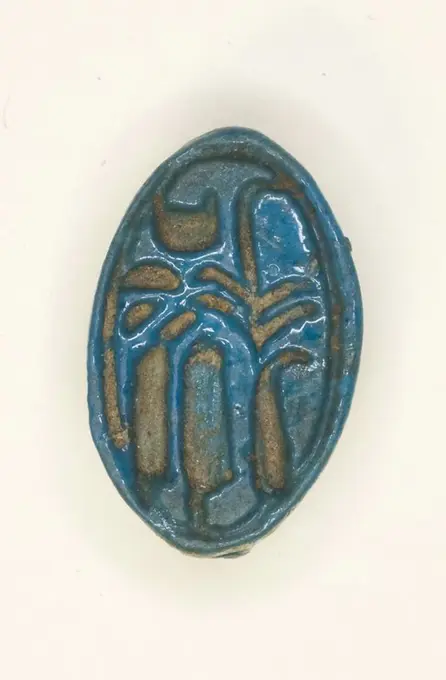
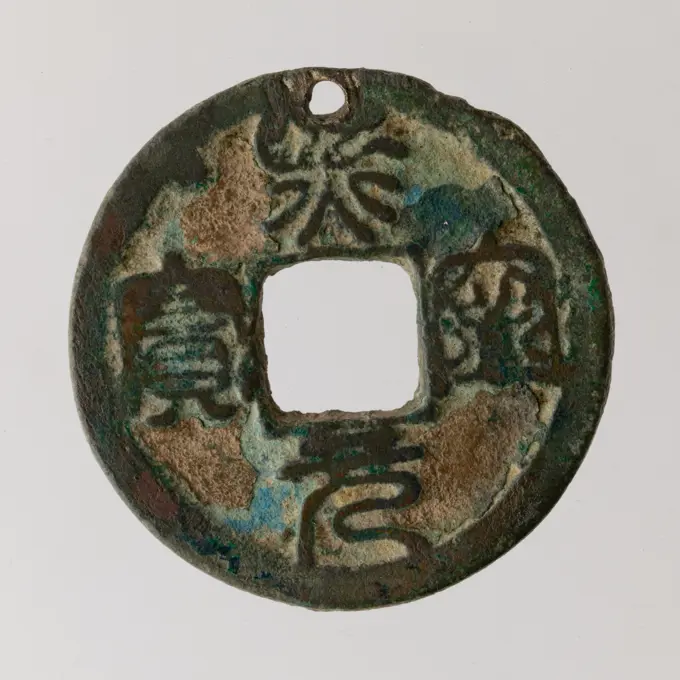
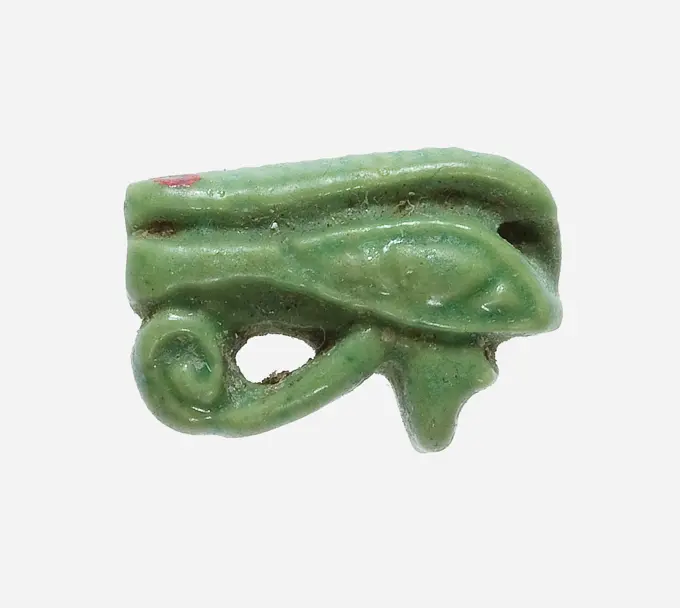
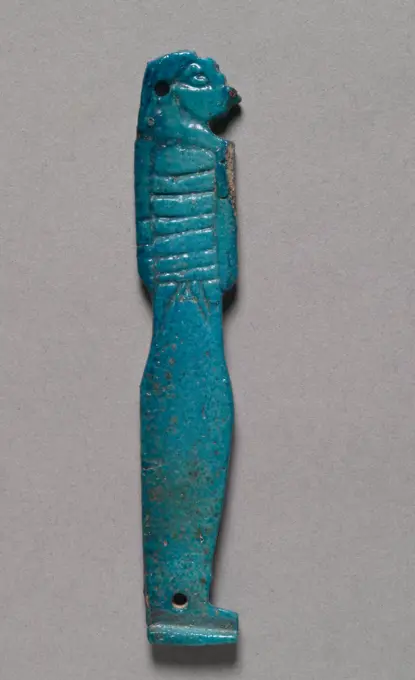
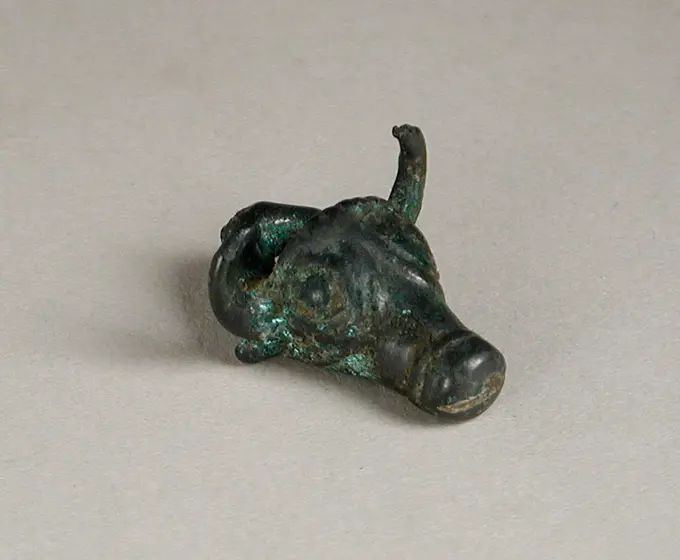
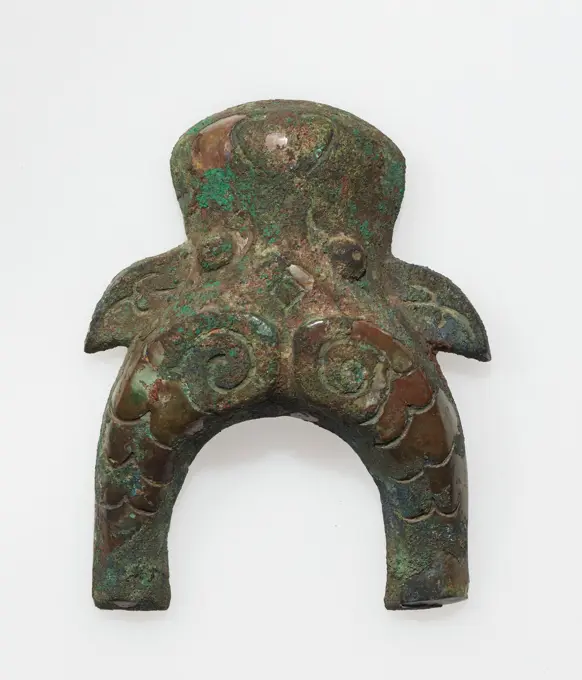
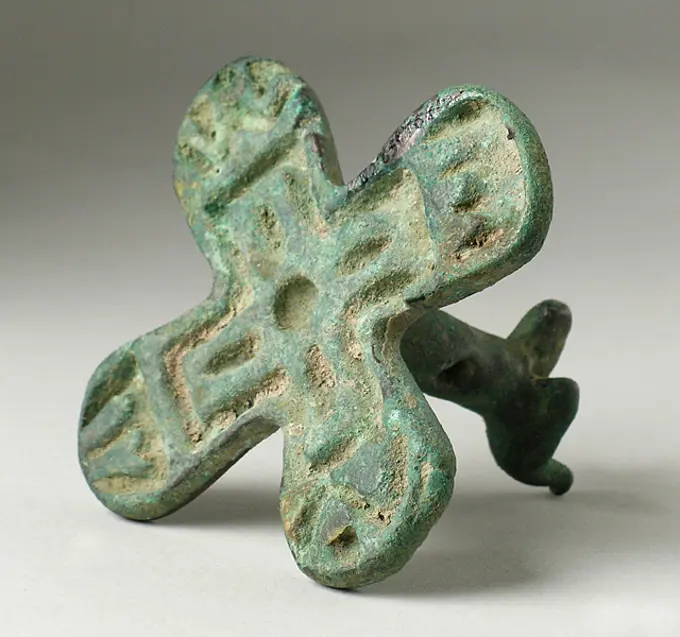
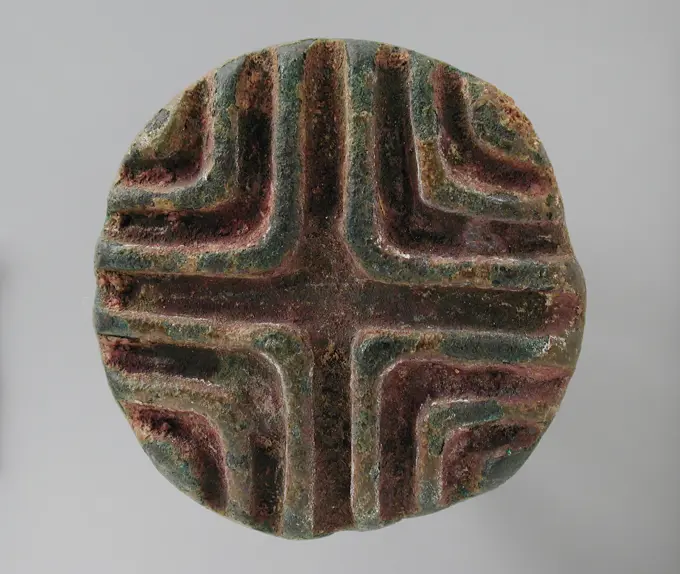
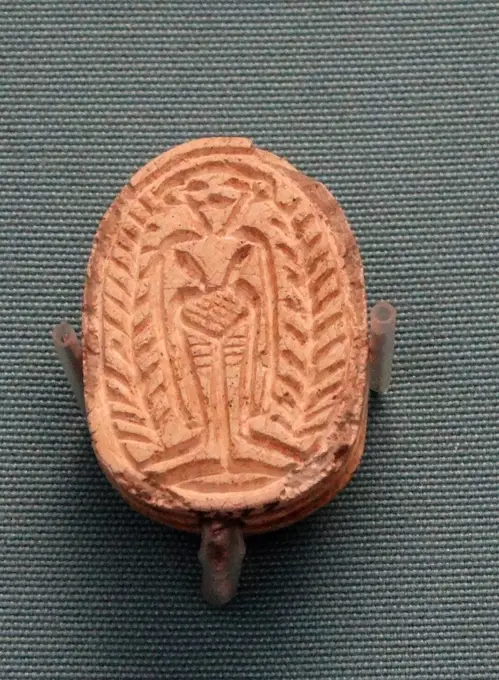
Ancient Egyptian Scarabs and Amulets

Scarabs and amulets from ancient Egypt, featuring inscriptions and symbolic designs, revealing their cultural and historical importance.
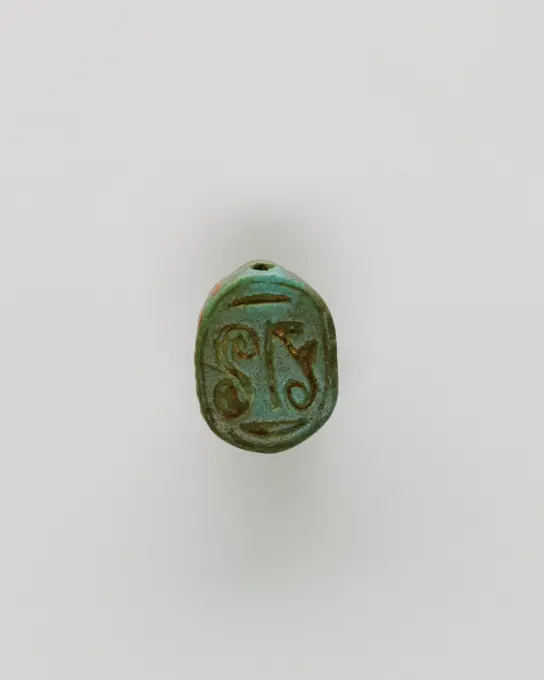
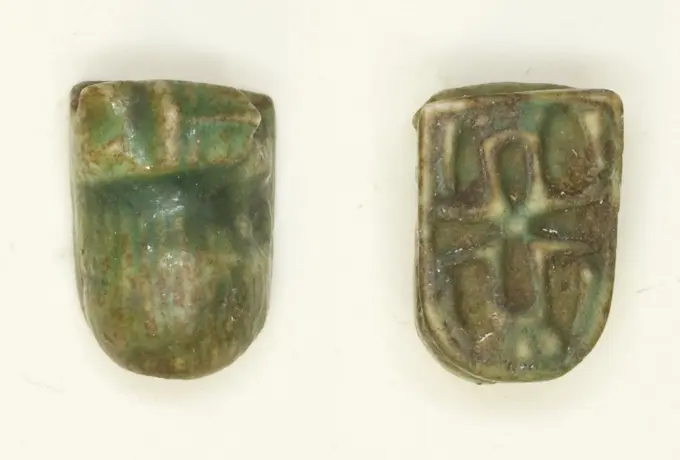
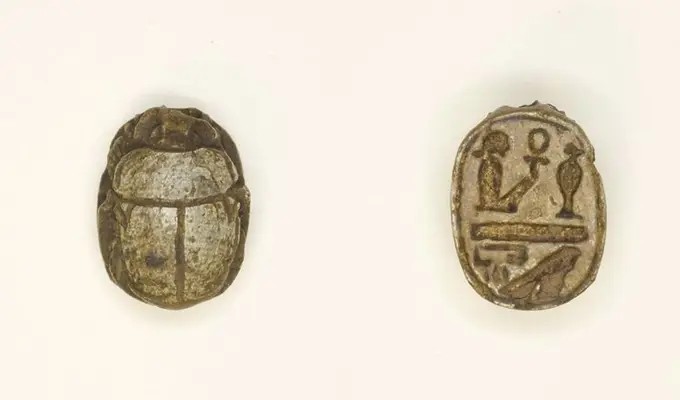
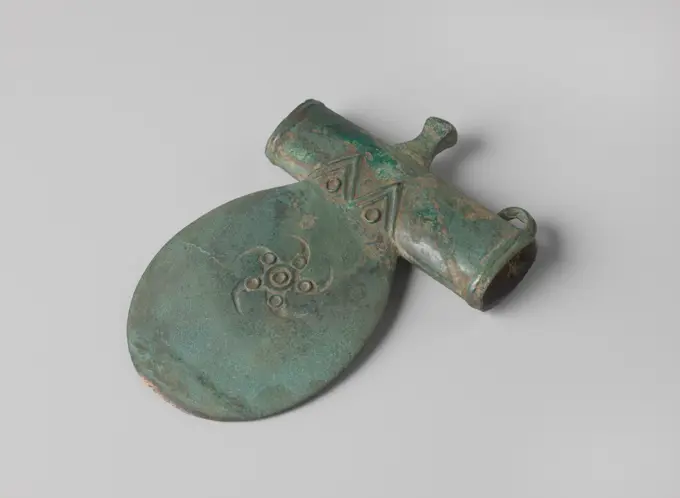
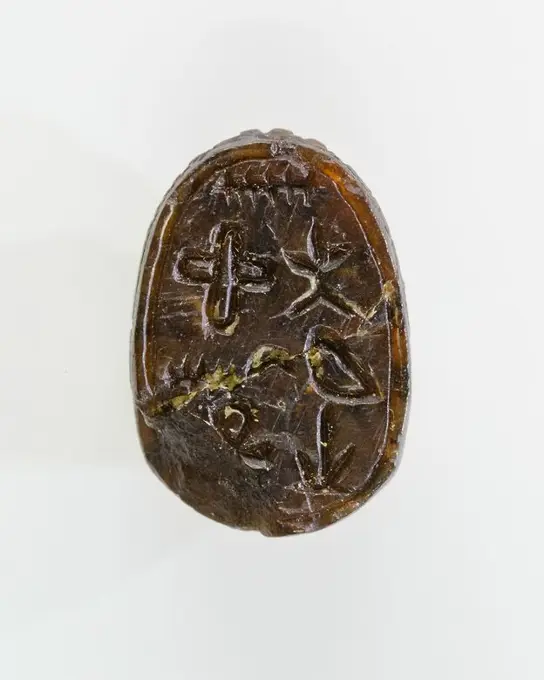
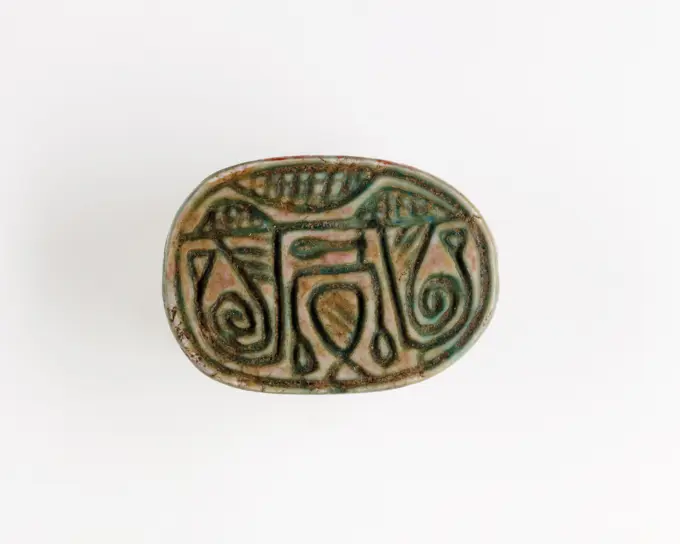
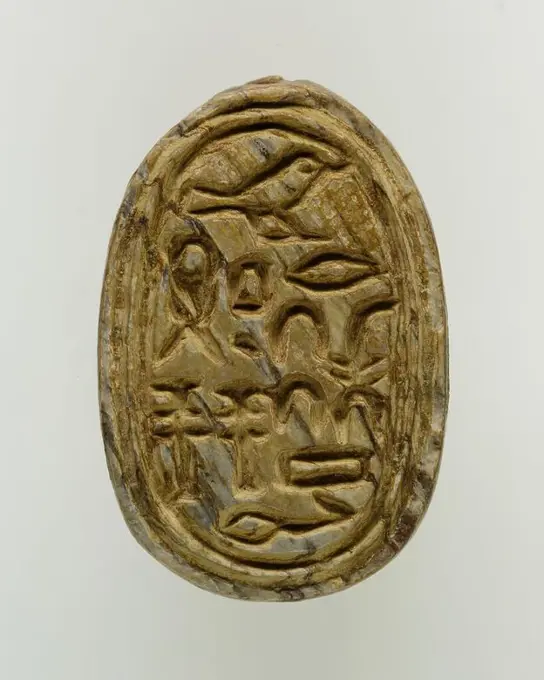
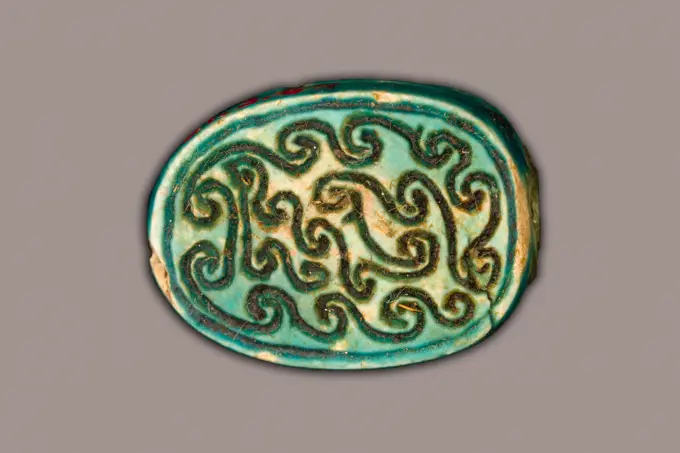
Scarabs ca. 1492-1473 B.C. New Kingdom This scarab was found with twenty-three other scarabs and seal-amulets in the coffin of a young woman who was buried in Hatnefer's tomb (see 36.3.1 and 36.3 26). The base is inscribed with a decorative pattern.. Scarabs. ca. 1492-1473 B.C.. Glazed steatite. New Kingdom. From Egypt, Upper Egypt, Thebes, Sheikh Abd el-Qurna, Tomb of Hatnefer and Ramose (below TT 71), coffin IV, burial 1, MMA excavations, 1935-36. Dynasty 18, early
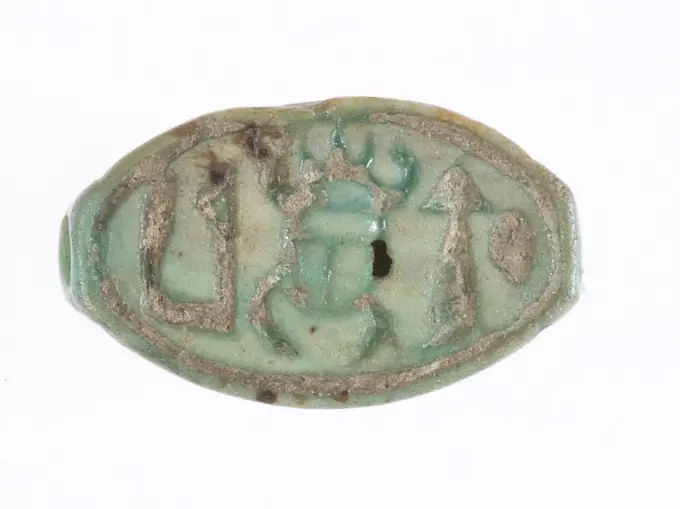
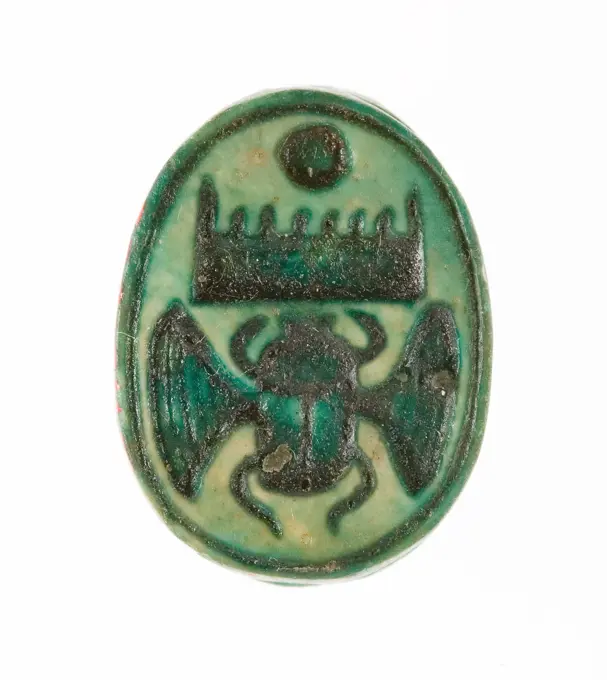
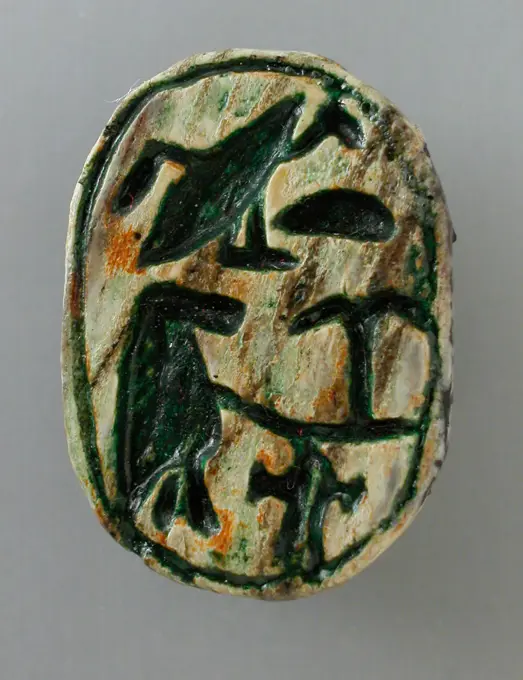
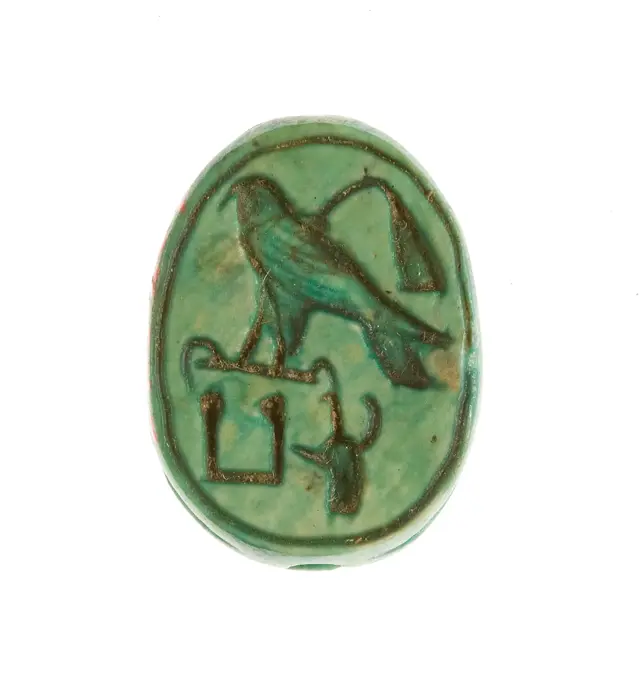
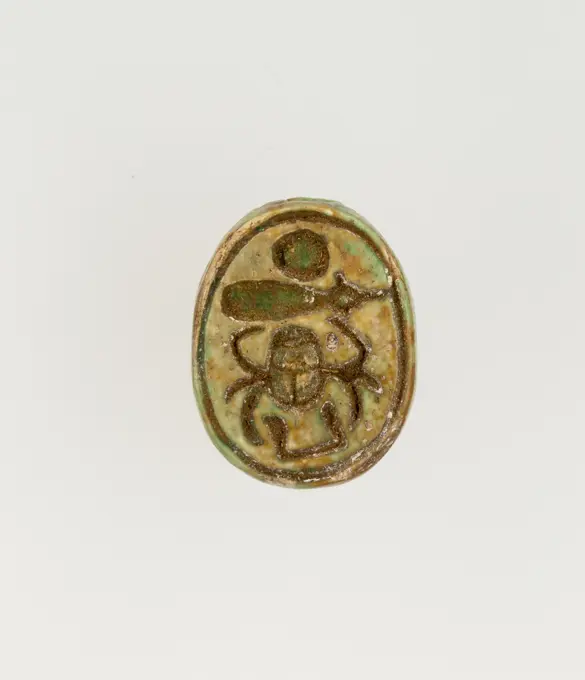
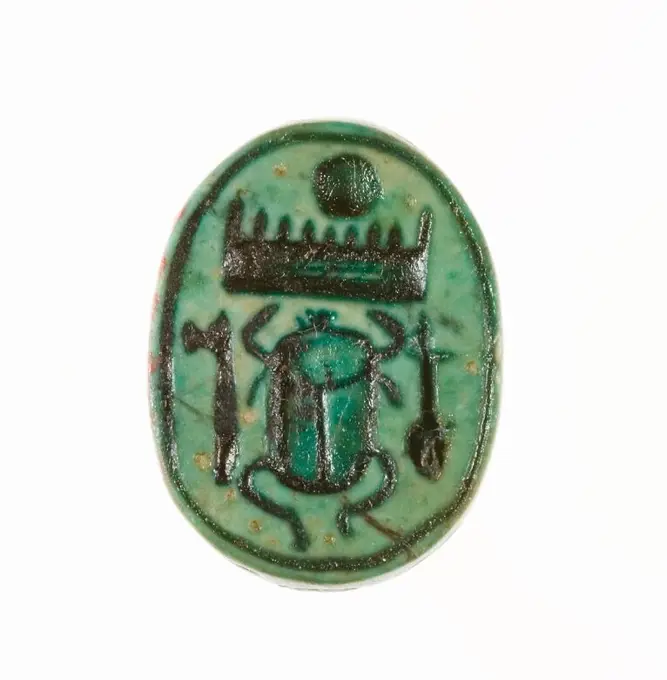
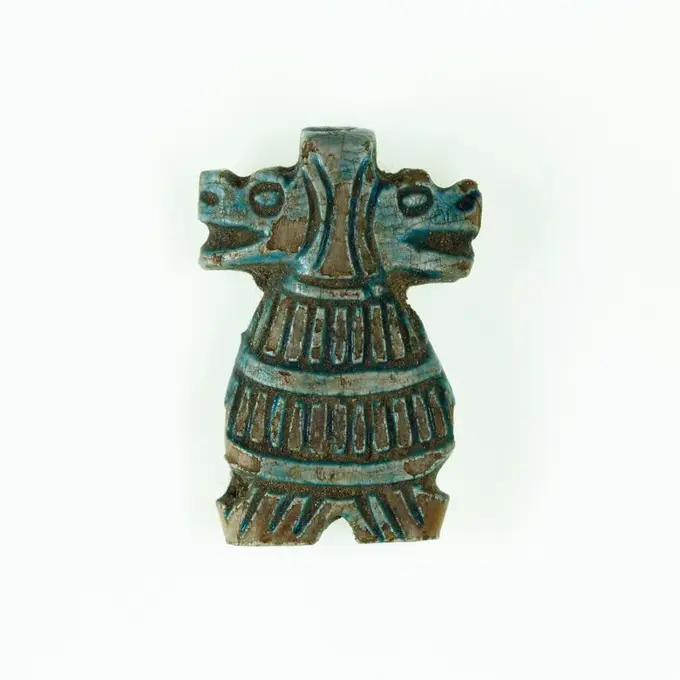
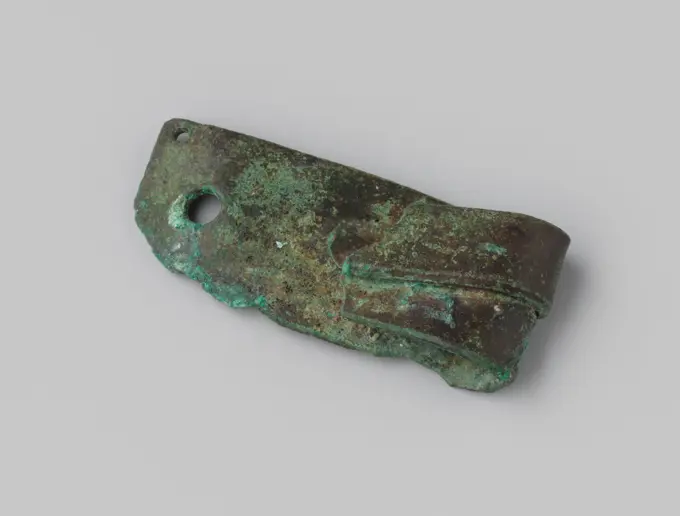
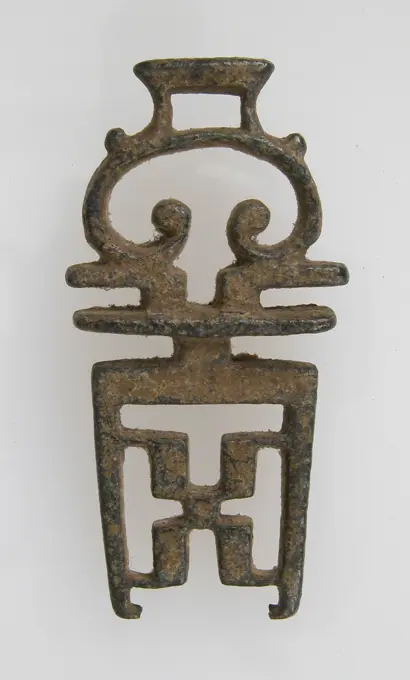
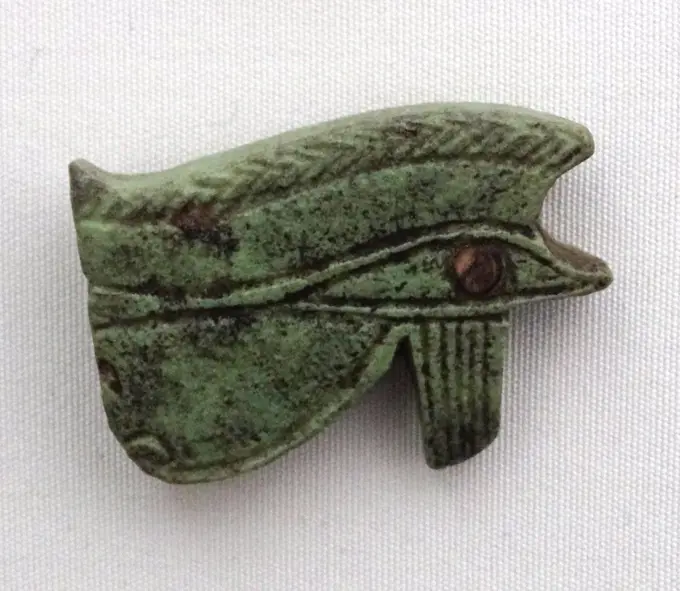
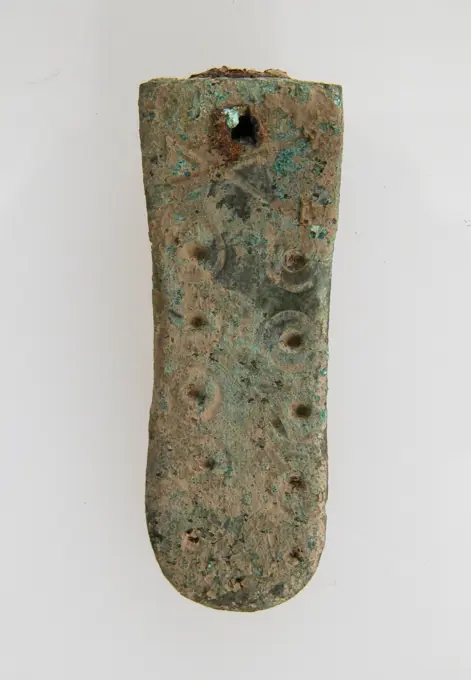
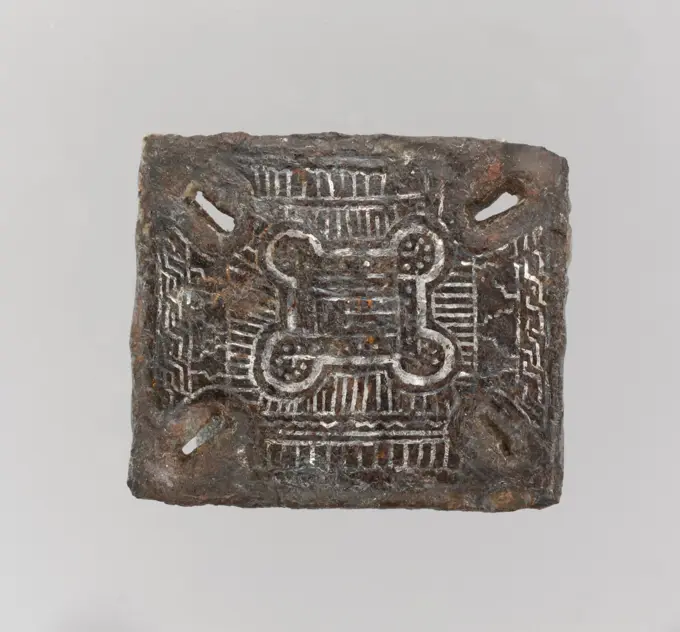
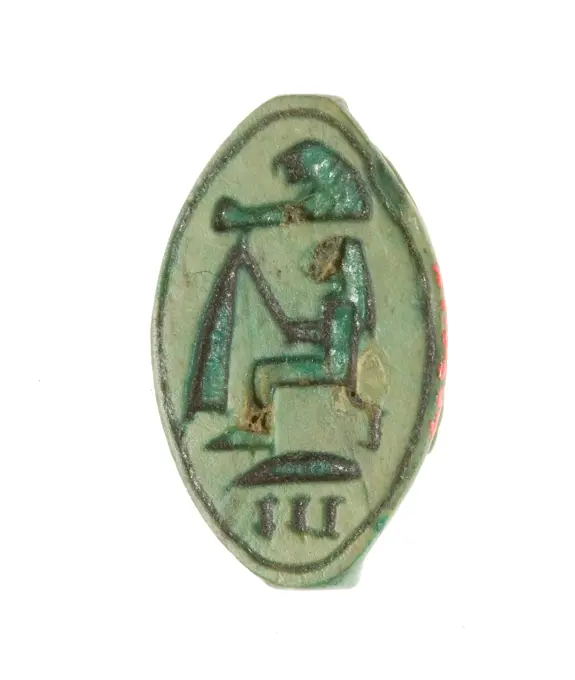
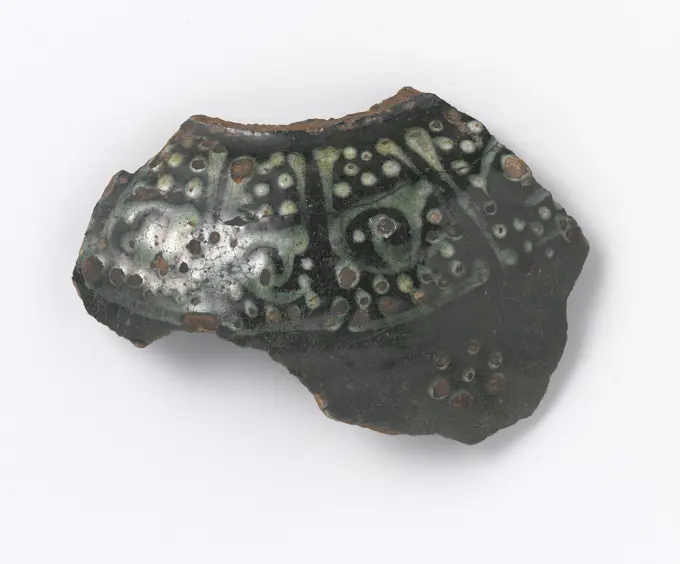
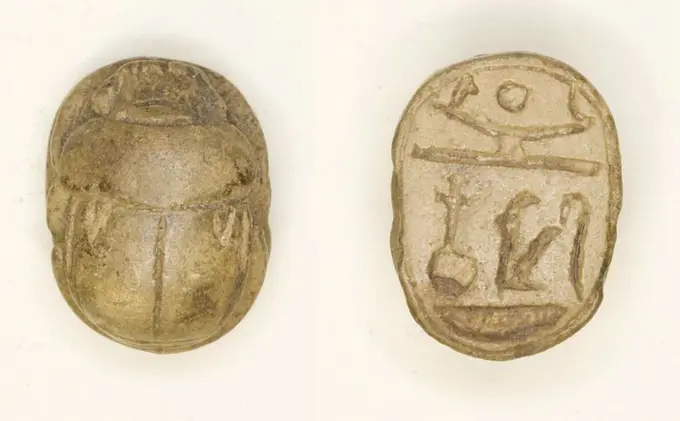
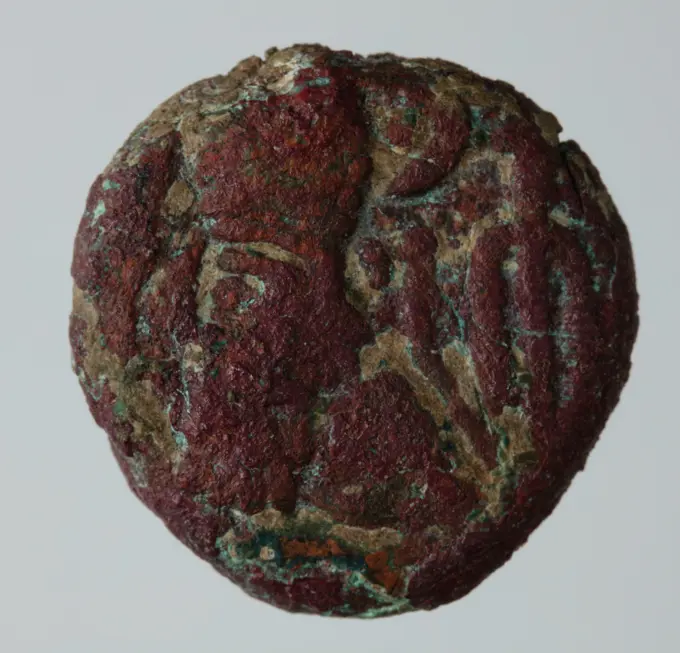
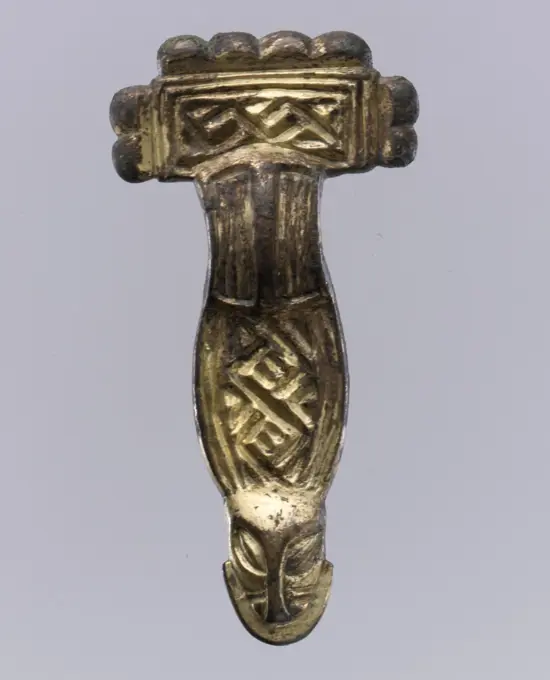
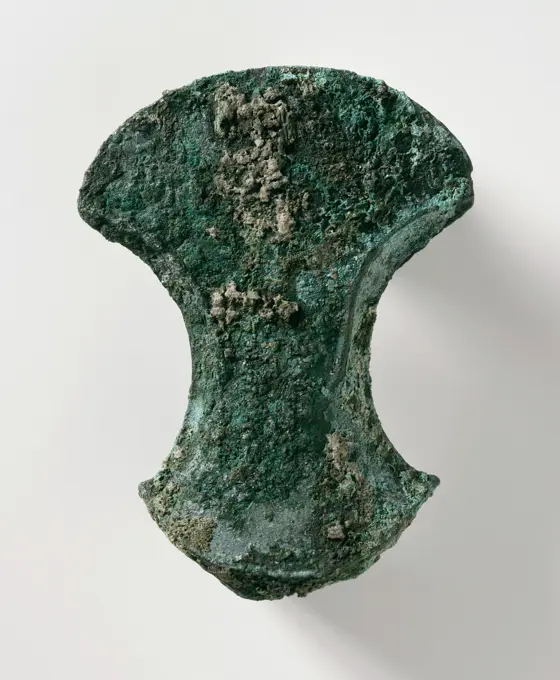
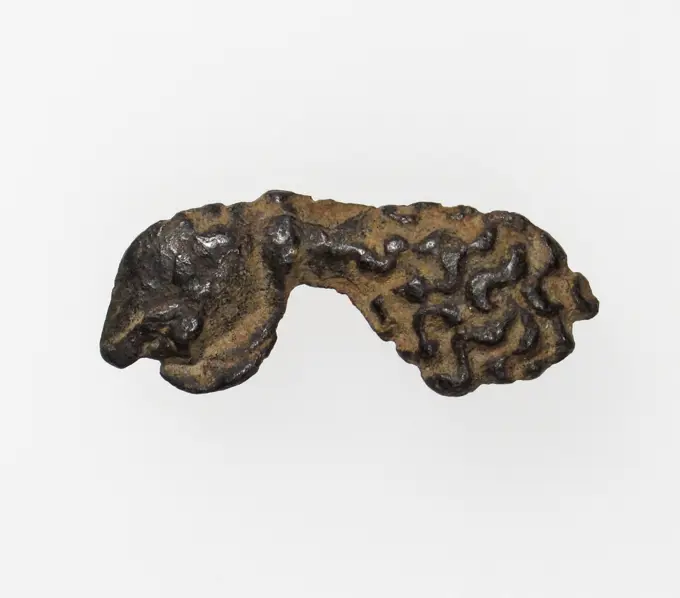
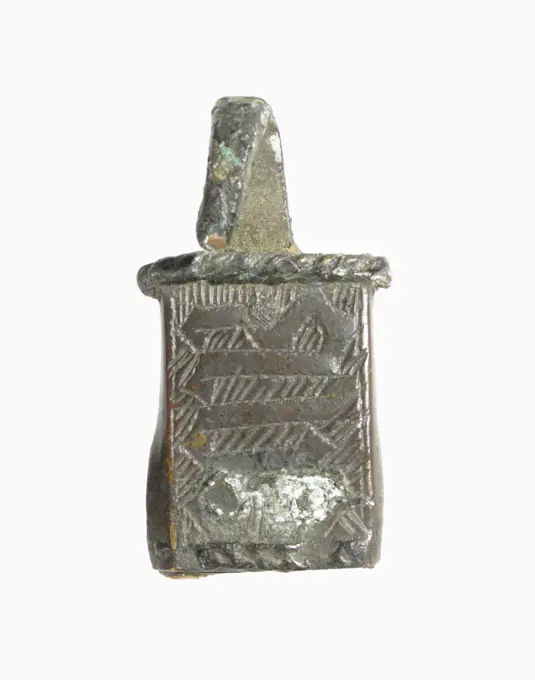
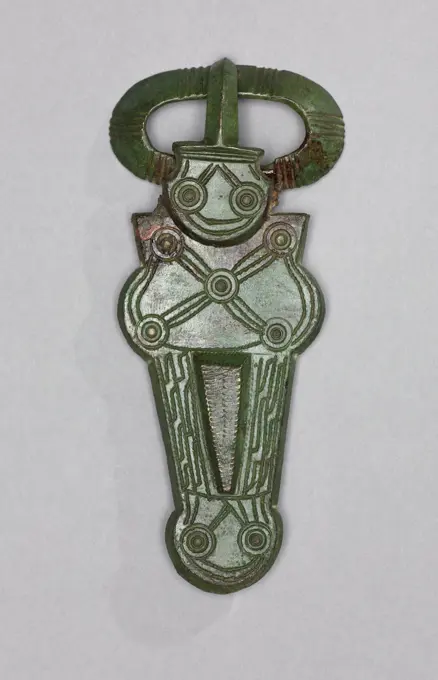
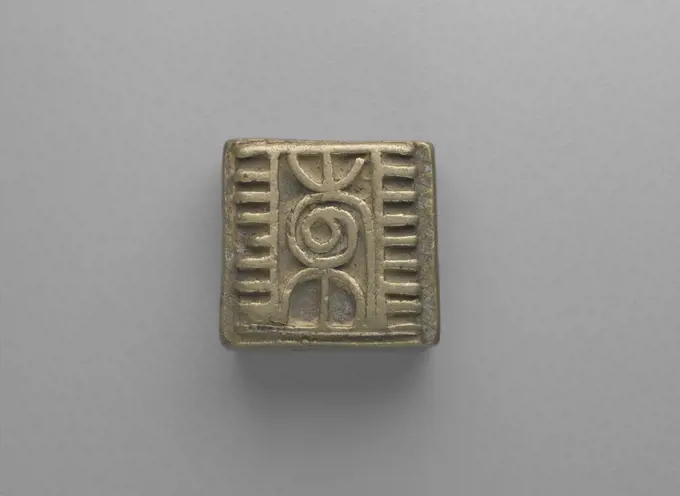
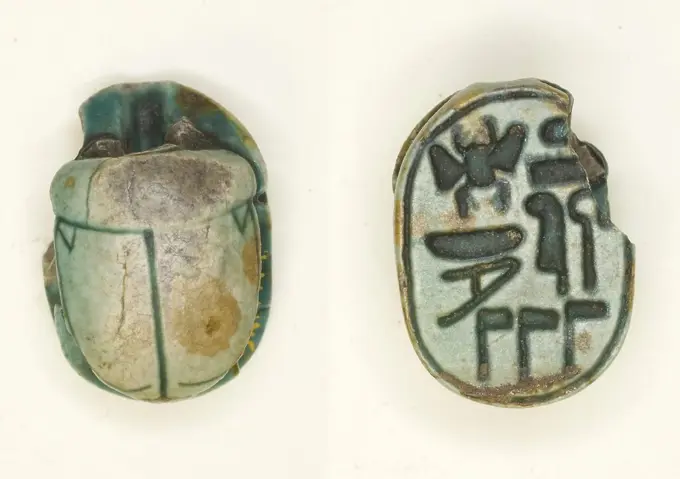
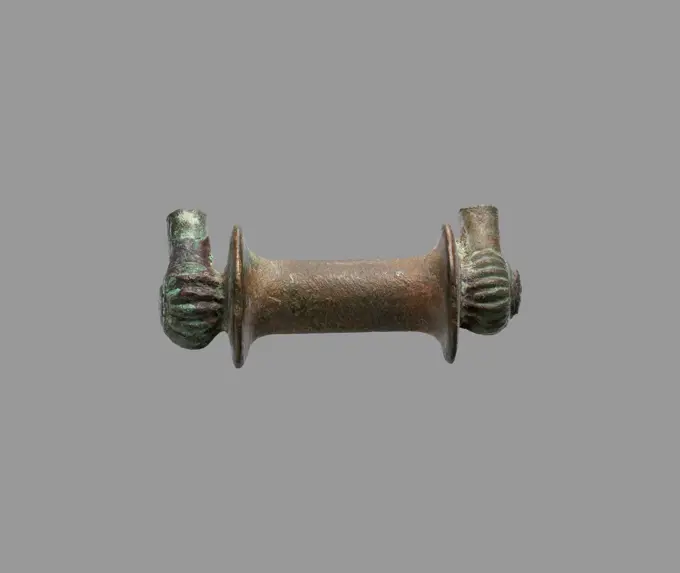
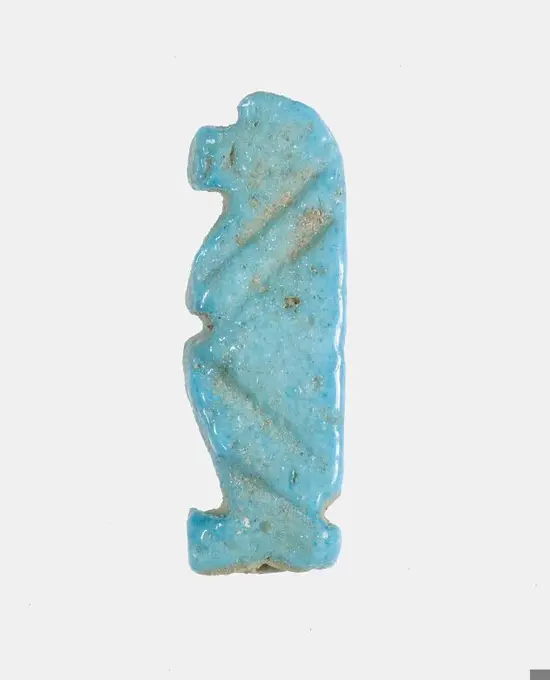
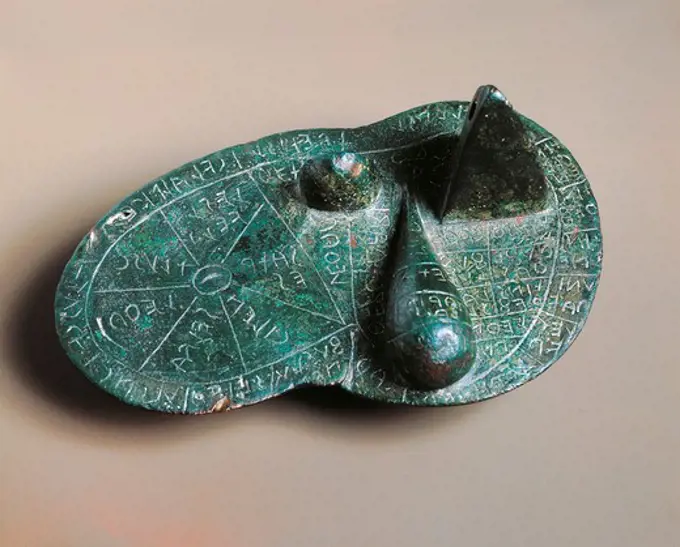
Scarab Inscribed with the Name Maatkare (Hatshepsut) Flanked by Two Falcons, One Proffering an Ankh ca. 1479-1458 B.C. New Kingdom During the 1926-1927 excavation season, the Museum's Egyptian Expedition uncovered three foundation deposits along the eastern enclosure wall of Hatshepsut's funerary temple at Deir el-Bahri in Western Thebes. Among the contents were 299 scarabs and stamp-seals. Sixty-five of these are now in the Egyptian Museum, Cairo, and the rest were acquired by the Museum in the division of finds.Among the inscriptions on the bases of these scarabs and seals are examples of every title Hatshepsut held, from the time she was "king's daughter" during the reign of her father, Thutmose I; through the time she was queen of her half-brother, Thutmose II; and during her regency and co-reign with her nephew/step-son, Thutmose III.The inscription on the base of this scarab records Hatshepsut's throne name, Maatkare, enclosed in a cartouche and flanked by two falcons with outstrAmulet Double Cartouche of King Akhenaton 1352 BCE-1336 BCE Egypt. Faience . Ancient EgyptianAmulet - oko udżat z lwicą. unknown, authorCowroid ca. 1550-1458 B.C. New Kingdom. Cowroid. ca. 1550-1458 B.C.. Steatite (glazed). New Kingdom. From Egypt, Upper Egypt, Thebes, Asasif, Courtyard CC 41, Tomb R 2, Burial F 6, On body, MMA excavations, 1915-16. Dynasty 18Scarab Inscribed with the Throne Name of Thutmose III ca. 1479-1458 B.C. New Kingdom. Scarab Inscribed with the Throne Name of Thutmose III. ca. 1479-1458 B.C.. Steatite (glazed). New Kingdom. From Egypt, Upper Egypt, Thebes, Deir el-Bahri, Temple of Hatshepsut, Foundation Deposit 9 (I), MMA excavations, 1926-27. Dynasty 18, earlyScarabs ca. 1492-1473 B.C. New Kingdom This scarab was found with twenty-three other scarabs and seal-amulets in the coffin of a young woman who was buried in Hatnefer's tomb (see 36.3.1 and 36.3 26). The base is inscribed with a decorative pattern.. Scarabs. ca. 1492-1473 B.C.. Glazed steatite. New Kingdom. From Egypt, Upper Egypt, Thebes, Sheikh Abd el-Qurna, Tomb of Hatnefer and Ramose (below TT 71), coffin IV, burial 1, MMA excavations, 1935-36. Dynasty 18, earlyScarab Inscribed with Images of the Goddess Mut and Taweret. Egypt, 19th - 26th Dynasty (1315 - 525 BCE). Sculpture. Steatite with modern green colorScaraboid Fish 1550 BCE-1295 BCE Egypt. Glazed steatite . Ancient EgyptianScarab ca. 1550-1525 B.C. New Kingdom. Scarab. ca. 1550-1525 B.C.. Steatite (glazed). New Kingdom. From Egypt, Upper Egypt, Thebes. Dynasty 18Scarab Inscribed for the Horus Wosretkau (Hatshepsut). Dynasty: Dynasty 18, early. Reign: Joint reign of Hatshepsut and Thutmose III. Date: ca. 1479-1458 B.C.. Museum: Metropolitan Museum of Art, New York, USA.Buckle Shank 7th century Visigothic. Buckle Shank. Visigothic. 7th century. Copper alloy. Miscellaneous-Buckles & OrnamentScarab Inscribed with the Name Maatkare (Hatshepsut) Flanked by Two Red Crowns ca. 1479-1458 B.C. New Kingdom DurDuring the 1926-1927 excavation season, the Museum's Egyptian Expedition uncovered three foundation deposits along the eastern enclosure wall of Hatshepsut's funerary temple at Deir el-Bahri in Western Thebes. Among the contents were 299 scarabs and stamp-seals. Sixty-five of these are now in the Egyptian Museum, Cairo, and the rest were acquired by the Museum in the division of finds.Among the inscriptions on the bases of these scarabs and seals are examples of every title Hatshepsut held, from the time she was "king's daughter" during the reign of her father, Thutmose I; through the time she was queen of her half-brother, Thutmose II; and during her regency and co-reign with her nephew/step-son, Thutmose III.After the death of her husband, Hatshepsut became regent for her nephew who was a small child. The length of this regency period is uncertain, with estimates ranging fScarab Inscribed with the Throne Name of Thutmose III ca. 1479-1458 B.C. New Kingdom. Scarab Inscribed with the Throne Name of Thutmose III. ca. 1479-1458 B.C.. Steatite (glazed). New Kingdom. From Egypt, Upper Egypt, Thebes, Deir el-Bahri, Temple of Hatshepsut, Foundation Deposit 7 (G), MMA excavations, 1926-27. Dynasty 18, earlyIndia, Rajżowie Sivaganga, Kasu, 1743 1801Scarab with Cryptographic Writing of the God's Name Amen-Re. Egypt, 19th - 20th Dynasty (1315 - 1081 BCE) or perhaps later. Sculpture. Dark gray steatiteScarab Inscribed for the Horus Wosretkau (Hatshepsut) ca. 1479-1458 B.C. New Kingdom. Scarab Inscribed for the Horus Wosretkau (Hatshepsut). ca. 1479-1458 B.C.. Steatite (glazed). New Kingdom. From Egypt, Upper Egypt, Thebes, Deir el-Bahri, Temple of Hatshepsut, Foundation Deposit 7 (G), MMA excavations, 1926-27. Dynasty 18, earlyScaraboid Cat 1550 BCE-1295 BCE Egypt. Glazed steatite . Ancient EgyptianFragment of a Toilet Dish with Cartouches of Amenhotep III. Dimensions: H. 3.8 cm (1 1/2 in), w. 3.2 cm (1 1/4 in). Dynasty: Dynasty 18. Reign: reign of Amenhotep III. Date: ca. 1390-1353 B.C.. Museum: Metropolitan Museum of Art, New York, USA.Scarab Inscribed with the Throne Name of Thutmose I ca. 1504-1492 B.C. New Kingdom. Scarab Inscribed with the Throne Name of Thutmose I. ca. 1504-1492 B.C.. Steatite, glazed. New Kingdom. From Egypt. Dynasty 18Scarab ca. 1991-1450 B.C. Second Intermediate Period-Early New Kingdom. Scarab. ca. 1991-1450 B.C.. Glazed steatite. Second Intermediate Period-Early New Kingdom. From Egypt, Upper Egypt, Thebes, Asasif, Tomb CC 62, Burial G, Carnarvon excavations. Dynasty 17-18Scarab Inscribed with the Throne Name of Thutmose III. Dimensions: L. 1.5 cm (9/16 in); w. 1.1 cm (7/16 in); h. 0.7 cm (1/4 in). Dynasty: Dynasty 18, early. Reign: Joint reign of Hatshepsut and Thutmose III. Date: ca. 1479-1458 B.C.. Museum: Metropolitan Museum of Art, New York, USA.Cowroid: The King's Wife, Tiye. Egyptian. Date: 1390 BC-1352 BC. Dimensions: 2.2 × 1.3 × 1 cm (7/8 × 1/2 × 3/8 in.). Faience or steatite. Origin: Egypt. Museum: The Chicago Art Institute, Chicago, USA. Author: Ancient Egyptian.Cash. Copper alloy, China, Song dynasty. Paris, Cernuschi museum. Amulet, Asian art, Chinese art, circle, Asian civilization, Chinese civilization, belief, disc, Song dynasty, currencyPlaque Decorated with a Duck ca. 1492-1473 B.C. New Kingdom This seal-amulet was found with twenty-three scarabs and seal-amulets in the coffin of a young woman who was buried in Hatnefer's tomb (see 36.3.1 and 36.3 26). The back is carved in the shape of a duck carved and the base is inscribed with a decorative floral pattern.. Plaque Decorated with a Duck 549038Scarab of Ramesses II ca. 1295-1070 B.C. New Kingdom, Ramesside. Scarab of Ramesses II 550329Scarab Incised with Hieroglyphs in Scroll Border ca. 1850-1640 B.C. Middle Kingdom This scarab is incised with two hieroglyphs (spelling "nefer ra" or "ra nefer") surrounded by a Late Middle Kingdom version of a scroll design.. Scarab Incised with Hieroglyphs in Scroll Border. ca. 1850-1640 B.C.. Green glazed steatite. Middle Kingdom. From Egypt, Memphite Region, Lisht North, Cemetery, debris, MMA excavations. late Dynasty 12-13Scarab Inscribed King of Upper and Lower Egypt Maatkare, Having Dominion. Dynasty: Dynasty 18, early. Reign: Joint reign of Hatshepsut and Thutmose III. Date: ca. 1479-1458 B.C.. Museum: Metropolitan Museum of Art, New York, USA.Buckle With oval rim of angular section and back piece with one rivet.. Buckle 246782Wedjat Eye Amulet ca. 1390-1353 B.C. New Kingdom One of the most popular amulets in ancient Egypt, the wedjat eye represents the healed eye of the god Horus. It depicts a combination of a human and a falcon eye, since Horus was often associated with a falcon. Its ancient Egyptian name, wedjat, means "the one that is sound (again)." In Egyptian mythology Horus eye was injured or stolen by the god Seth and then restored by Thoth. The wedjat eye embodies healing power and symbolizes rebirth. An amulet in this shape was thought to protect its wearer and to transfer the power of regeneration onto him or her. This particular wedjat eye shows the typical style of the New Kingdom, in which the spiral element sits directly underneath the cosmetic line, while in later examples it is situated much lower (see for example 89.2.415). On the backside of the piece is a nfr-sign, the hieroglyph for "good" or "beautiful.". Wedjat Eye Amulet. ca. 1390-1353 B.C.. Faience. New Kingdom. From Egypt, Upper ESon of Horus Amulet, 664-525 BC. Egypt, Late Period, Dynasty 26. Bright turquoise faience; overall: 9 x 1.6 x 0.4 cm (3 9/16 x 5/8 x 3/16 in.).Amulet of the God Bes 1069 BCE-332 BCE Egypt. Faience . Ancient EgyptianScarabs from Hatshepsut Foundation Deposits ca. 1479-1458 B.C. New Kingdom. Scarabs from Hatshepsut Foundation Deposits. ca. 1479-1458 B.C.. Steatite (glazed). New Kingdom. From Egypt, Upper Egypt, Thebes, Deir el-Bahri, Temple of Hatshepsut, Foundation Deposit 9 (I), MMA excavations, 1926-27. Dynasty 18, earlyTaweret amulet with double head. Dimensions: H. 2 cm (13/16 in.); W. 1.4 cm (9/16 in.); D. 0.4 cm (3/16 in.). Dynasty: Dynasty 18, late-Dynasty 19. Date: ca. 1390-1213 B.C..Double-headed amulets of the domestic goddess Taweret are rare forms and date to the 18th dynasty,. Amarna is among the known findspots for these, although this particular example is without provenance. Museum: Metropolitan Museum of Art, New York, USA.Scarab Inscribed Maatkare (Hatshepsut), Given Life Forever. Dynasty: Dynasty 18, early. Reign: Joint reign of Hatshepsut and Thutmose III. Date: ca. 1479-1458 B.C.. Museum: Metropolitan Museum of Art, New York, USA.Belt Mount 6th century Frankish. Belt Mount 465129 Frankish, Belt Mount, 6th century, Copper alloy, cast, Overall: 1 11/16 x 3/4 x 1/2 in. (4.3 x 1.9 x 1.2 cm). The Metropolitan Museum of Art, New York. Gift of J. Pierpont Morgan, 1917 (17.191.79)Bracket from the wreck of the East Indies Hollandia, Anonymous, 1700 - in Or Before 1743  Locks, fastenings and accessories, hasp; fragm, broken, squashed, id. NG 1979-220H2132. Netherlands copper (metal)   SecondScaraboid Monkey 1550 BCE-1186 BCE Egypt. Glazed steatite . Ancient EgyptianKey Latch 1st-7th century Roman. Key Latch 462941Scarab: Wish Formula (). Egyptian. Date: 1550 BC-525 BC. Dimensions: 1.6 × 1 × 0.6 cm (5/8 × 3/8 × 1/4 in.). Steatite. Origin: Egypt. Museum: The Chicago Art Institute, Chicago, USA. Author: Ancient Egyptian.Scarab Wish Formula 1550 BCE-525 BCE Egypt. Stone ( ) . Ancient EgyptianCostume Ornament 11th-12th century Central coast (). Costume Ornament 308779Amulet - biała korona. unknown, authorCeremonial ax in Ordos style. Ax with ellipse shaped leaf is decorated with a five-pointed star with thorn-shaped points.Belt Buckle about 600 Frankish At the center of the circular plate of this buckle is a tiny face superimposed on a cross. Other instances of this face that appear with inscriptions indicate that it is meant to represent Christ.. Belt Buckle 464925Scarab. Dimensions: l. 1.9 cm (3/4 in). Dynasty: Dynasty 12-18. Date: ca. 1981-1550 B.C.. Museum: Metropolitan Museum of Art, New York, USA.Amulet of the Goddess Tawaret (Thoeris) in Profile. Egyptian. Date: 1550 BC-1069 BC. Dimensions: 2.5 × 1.3 × 0.3 cm (1 × 1/2 × 1/8 in.). Faience. Origin: Egypt. Museum: The Chicago Art Institute, Chicago, USA. Author: Ancient Egyptian.Scarab ca. 1492-1479 B.C. New Kingdom. Scarab 552421Amuleto fálico en forma de media luna, con un falo en un extremo yla mano haciendo la "higa" por el otro. Entre ambos motivos, en laparte inferior un falo completo. Anilla de suspensión en la partesuperior. Todo en una pieza. Altura = 6,40 cm; Anchura máxima = 9,50 cm. Museum: MUSEO NACIONAL DE ARTE ROMANO, MERIDA, SPAIN.Ox Head Amulet. Egypt, 5th century B.C.-300 A.D. or later. Jewelry and Adornments; amulets. BronzeHenu barque amulet 525-30 BC Late Period-Ptolemaic Period Starting in the later Late Period and continuing through the Ptolemaic Period, a type of glass amulet cast by pressing the glass into a shallow open mold appears. The back was left rough, and the amulets may look ragged because glass overflowed the mold around the edges. The earlier amulets are monochrome, bi- or multicolor amulets supplement the repertoire during the Ptolemaic Period. Some of the amulets can be specifically tied to spells of the Book of the Dead - for example, acc. no. 17.194.2526 - and most are clearly funerary amulets, presumably meant to be wrapped between the bandages of the mummy where the presence of the amulet would do its job irrespective of its degree of finish.. Henu barque amulet. 525-30 BC. Glass. Late Period-Ptolemaic Period. From EgyptAppliqué in the in the form of a bovine head, one of a pair, 11th century BCE, 3 3/8 × 2 11/16 × 5/8 in., 0.2 lb. (8.6 × 6.8 × 1.6 cm, 0.1 kg), Bronze, China, 11th century BCEAmulet of the God Shu. Egyptian. Date: 664 BC-332 BC. Dimensions: 1.75 × 1 × .5 cm (5/8 × 3/8 × 3/16 in.). Faience. Origin: Egypt. Museum: The Chicago Art Institute, Chicago, USA. Author: Ancient Egyptian.Nikon 5400 Digital CaptureHead of a WomanStamp Seal. Northern or northeastern Iran, circa 1350-800 B.C.. Tools and Equipment; seals. Bronze, castThe Eye of Horus is an ancient Egyptian symbol of protection, royal power and good health. The eye is personified in the goddess WadjetFerret 6th-7th century Frankish. Ferret 465446 Frankish, Ferret, 6th7th century, Copper alloy, Overall: 1 1/4 x 1/2 x 1/4 in. (3.2 x 1.2 x 0.6 cm). The Metropolitan Museum of Art, New York. Gift of J. Pierpont Morgan, 1917 (17.193.137a)Scarab ca. 1550-1458 B.C. New Kingdom. Scarab. ca. 1550-1458 B.C.. Steatite (glazed). New Kingdom. From Egypt, Upper Egypt, Thebes, Asasif, Courtyard CC 41, Pit 2, Burial C 2, On body, MMA excavations, 1915-16. Dynasty 18, earlyBackplate of a Belt Buckle 7th century Frankish. Backplate of a Belt Buckle 465020 Frankish, Backplate of a Belt Buckle, 7th century, Iron, silver inlay, Overall: 1 7/8 x 1 9/16 x 3/16 in. (4.7 x 4 x 0.4 cm). The Metropolitan Museum of Art, New York. Gift of J. Pierpont Morgan, 1917 (17.191.309)Finger Ring 7th century Frankish. Finger Ring 465783 Frankish, Finger Ring, 7th century, Copper alloy, formerly silvered, Overall: 15/16 x 13/16 x 13/16 in. (2.4 x 2.1 x 2 cm) bezel: 13/16 in. (2 cm). The Metropolitan Museum of Art, New York. Gift of J. Pierpont Morgan, 1917 (17.193.63a)Scarab Inscribed with Hieroglyphs ca. 1760-1670 B.C. Middle Kingdom The scarab is inscribed with papyrus plants flanking hieroglyphs, not meant to form words but chosen instead for their positive meaning. Symmetric compositions are particularly prevalent on design scarabs of the late Middle Kingdom (late Dynasty 12-Dynasty 13, ca. 1850 -1640 B.C.). They serve as models for the wide array of variations seen on Egyptian scarabs of the Second Intermediate Period (Dynasty 14-17, ca. 1640-1550 B.C.) and on Canaanite scarabs (Middle Bronze Age IIB-IIC, ca. 1700-1500 B.C.).. Scarab Inscribed with Hieroglyphs 545703Mask of a Tiger China. Mask of a Tiger 61084Pilgrim's Badge 14th-16th century French. Pilgrim's Badge. French. 14th-16th century. Lead. Metalwork-LeadScarab Inscribed with a Hieroglyphic Motif ca. 1479-1458 B.C. New Kingdom. Scarab Inscribed with a Hieroglyphic Motif. ca. 1479-1458 B.C.. Steatite (glazed). New Kingdom. From Egypt, Upper Egypt, Thebes, Deir el-Bahri, Temple of Hatshepsut, Foundation Deposit 7 (G), MMA excavations, 1926-27. Dynasty 18, earlyEngraved Gem; 1st - 4th century; Bronze Bezel; 4 x 2.8 x 0.3 cm (1 9,16 x 1 1,8 x 1,8 in.)Stamp Seal. Assyria or Mesopotamia, Neo-Assyrian or neo-Babylonian (style), late 7th-6th century B.C.. Tools and Equipment; seals. Colorless chalcedonyScarab. Dimensions: 15/16 in. (2.5 cm). Dynasty: Dynasty 12-18. Date: ca. 1981-1295 B.C.. Museum: Metropolitan Museum of Art, New York, USA.Cowroid Seal Amulet Inscribed with the Name of Hatshepsut ca. 1479-1458 B.C. New Kingdom This cowrie-shaped amulet is inscribed with Hatshepsut's personal name which literally means "foremost of noblewomen" (hat-shepsut). The back of the amulet is decorated with the image of a falcon with its wings outstretched and wearing an atef-crown.. Cowroid Seal Amulet Inscribed with the Name of Hatshepsut. ca. 1479-1458 B.C.. Steatite (glazed). New Kingdom. From Egypt, Upper Egypt, Thebes, Deir el-Bahri, Temple of Hatshepsut, Foundation Deposit 9 (I), MMA excavations, 1926-27. Dynasty 18Fragment of a shoulder with an ornamental border, anonymous, c. 1100 - c. 1199 Fragment of the shoulder of a piece of vascular work, made of soft, reddish -brown earth, covered with a dark green glaze, in which some decorations in lighter green. Back of brownish and green enamel. Egypt earthenware. glaze vitrification Fragment of the shoulder of a piece of vascular work, made of soft, reddish -brown earth, covered with a dark green glaze, in which some decorations in lighter green. Back of brownish and green enamel. Egypt earthenware. glaze vitrificationScarab: Wish Formula. Egyptian. Date: 1295 BC-525 BC. Dimensions: 1.6 × 1.3 × 0.6 cm (5/8 × 1/2 × 1/4 in). Faience. Origin: Egypt. Museum: The Chicago Art Institute, Chicago, USA. Author: Ancient Egyptian.Bliżej Kultury Orodes IIIScaraboid Squatting Baboon 1550 BCE-1069 BCE Egypt. Glazed steatite . Ancient EgyptianSquare-Headed Bow Brooch first half of 6th century Langobardic. Square-Headed Bow Brooch 465195 Langobardic, Square-Headed Bow Brooch, first half of 6th century, Copper alloy, gilt, silvered on inner face, Overall: 2 1/2 x 1 1/4 x 1/2 in. (6.4 x 3.2 x 1.2 cm). The Metropolitan Museum of Art, New York. Gift of J. Pierpont Morgan, 1917 (17.192.138)Fragments from buyer from the wreck of the East India Hollandia.parts or artifacts; eroded fragments: Materials; Copper.Scarab ca. 2124-1504 B.C. Middle Kingdom-Early New Kingdom. Scarab 556674Costume Ornament 11th-12th century Central coast (). Costume Ornament 308784Adze. Thailand, Ban Chiang culture, 300 B.C.-A.D. 150. Tools and Equipment; adzes. Copper alloyPilgrim's Badge Fragment 14th and 15th century French or British. Pilgrim's Badge Fragment. French or British. 14th and 15th century. Lead. Metalwork-LeadWorker Shabti of Wendjebauendjedet ca. 1040-992 B.C. Third Intermediate Period. Worker Shabti of Wendjebauendjedet. ca. 1040-992 B.C.. Bronze or copper alloy. Third Intermediate Period. From Egypt; Presumably from Eastern Delta, Tanis (San el-Hagar), Royal Tombs, NRT III (Psusennes I), Montet excavations. Dynasty 21Khonsu shrine amulet 664-332 B.C. Late Period (). Khonsu shrine amulet. 664-332 B.C.. Egyptian blue. Late Period (). From Egypt. Dynasty 26-29Pendant in the shape of a dragon 11th-10th century B.C. China. Pendant in the shape of a dragon. China. 11th-10th century B.C.. Jade (nephrite). Western Zhou dynasty (1046-771 B.C.). JadeWeight for Measuring Gold(Mrammuo)Pilgrim's Badge 14th-16th century French. Pilgrim's Badge. French. 14th-16th century. Lead. Metalwork-LeadBuckle, 500s. Frankish(), Migration period, 6th century. Brass; overall: 11.8 cm (4 5/8 in.).Amulet - czerwona korona. unknown, authorGoldweight(geometric), Brass, 1/2 × 7/8 × 7/8in. (1.3 × 2.2 × 2.2cm), Made in Guinea Coast, Ghana, Akan, 16th-18thcentury, Tools andEquipmentScarab: Menkheperra (Thutmose III). Egyptian. Date: 1479 BC-1425 BC. Dimensions: 1.6 × 1.3 × 0.6 cm (5/8 × 1/2 × 1/4 in.). Glazed steatite. Origin: Egypt. Museum: The Chicago Art Institute, USA. Author: Ancient Egyptian.Scarab Nebmaatra (Amenhotep III) 1390 BCE-1352 BCE Egypt. Faience . Ancient EgyptianMold with Birth Name of Ramses II. Egypt, New Kingdom, Ramesside Period, 19th-20th Dynasty, reign of Ramses II or after (1304-1081 BCE). Tools and Equipment; molds. TerracottaPoland, Władysław Warneńczyk (1434 1444), Denar, 1434 1444, Town of Krakow Mint of Kraków, W Adys Aw Warne Czyk (King of Poland, 1434 1444)Roller ca. 18th century B.C. Babylonian Although the exact function of this fragmentary bronze piece is not certain, it has been associated with openwork bronzes produced during the early second millennium B.C., and entered the Mets collection with one such piece (1984.454.1a,b). Openwork bronzes are incompletely understood objects produced during the early second millennium B.C. that include one or more openings in a variety of shapes. It seems likely that a cord, strap, or fabric would have been fed through these openings, and various proposals have identified the bronzes as horse trappings, belt buckles, furniture elements, and implements used in the production of textiles. Some examples include a roller like this piece and were probably designed to allow for the adjustment of straps, or movement of a textile through the opening.. Roller. Babylonian. ca. 18th century B.C.. Bronze. Old Babylonian. MesopotamiaButterfly amulet ca. 1981-1640 B.C. Middle Kingdom. Butterfly amulet. ca. 1981-1640 B.C.. Faience, paint. Middle Kingdom. From Egypt, Memphite Region, Lisht North, Cemetery, debris, MMA excavations, 1915-16. Dynasty 12-13Monkey Amulet. Dynasty: Dynasty 13-18, early. Date: ca. 1802-1450 B.C.. Museum: Metropolitan Museum of Art, New York, USA.Buckle 500-550 Frankish. Buckle. Frankish. 500-550. Silvered copper alloy, glass paste. Made in Northern France. Metalwork-Copper alloyBronze model of sheep's liver with inscribed boxes from Settima di Gossolengo, Piacenza Province, Italy.Scarab Mounted in a Ring Bezel ca. 1635-1458 B.C. Second Intermediate Period-Early New Kingdom. Scarab Mounted in a Ring Bezel. ca. 1635-1458 B.C.. Glazed steatite, electrum. Second Intermediate Period-Early New Kingdom. From Egypt, Upper Egypt, Thebes, Asasif, Courtyard CC 41, Pit 3, Burial B 3, On body, MMA excavations, 1915-16. Dynasty 17-Early Dynasty 18Amulet of a Djed Pillar 1100 BCE-601 BCE Egypt. Columns with crossbars at their top represent the stylized backbone of the god Osiris, the main god of the afterlife. Known as djed columns, the backbone was associated with stability, hence with continued life.. Faience . Ancient EgyptianScarab from Lachish (1750-1550 BC). Based on the dung-beetle, scarabs were first produced in Egypt in the 21st century as amuletic seals.Tel Lachish, also Tell ed-Duweir, is the site of an ancient Near East city, now an archaeological site and an Israeli national park.Scarab ca. 1479-1458 B.C. New Kingdom. Scarab. ca. 1479-1458 B.C.. Faience. New Kingdom. From Egypt, Upper Egypt, Thebes, Deir el-Bahri, Hatshepsut Hole, Hathor Shrine, MMA excavations, 1922-23. Dynasty 18Bow Brooch 550-600 Visigothic. Bow Brooch. Visigothic. 550-600. Copper alloy, quaternary. Metalwork-Copper