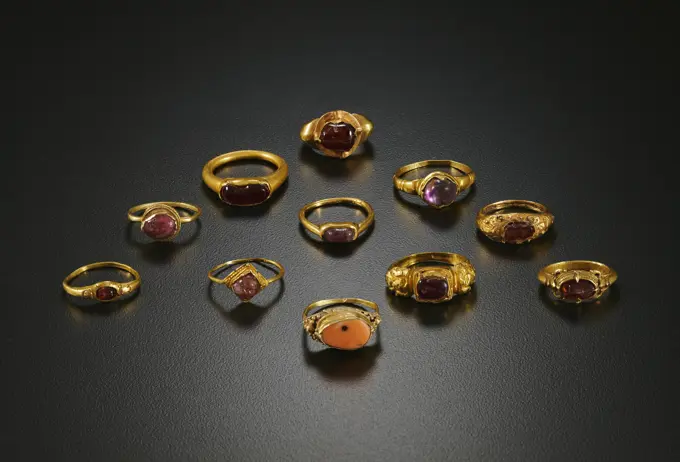
Ancient Etruscan Jewelry

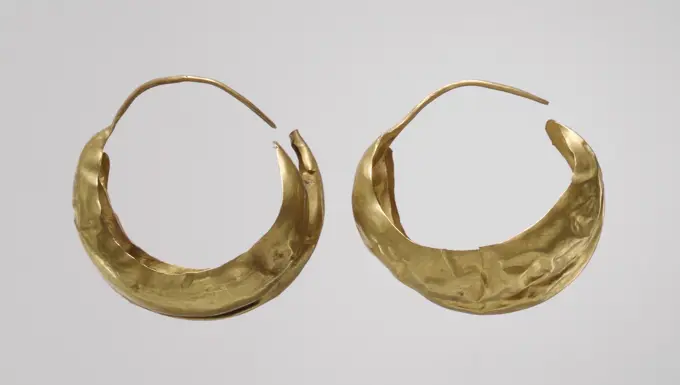
Gold earrings and ear clips from the Etruscan era, featuring intricate designs and unique shapes, showcasing historical craftsmanship.

Gold wedding ring, wedding ring ring ornament clothing accessory men's clothing clothes gold, forged Round continuous band smooth inside (debossed) wedding ring man adorn symbolize remember marriage
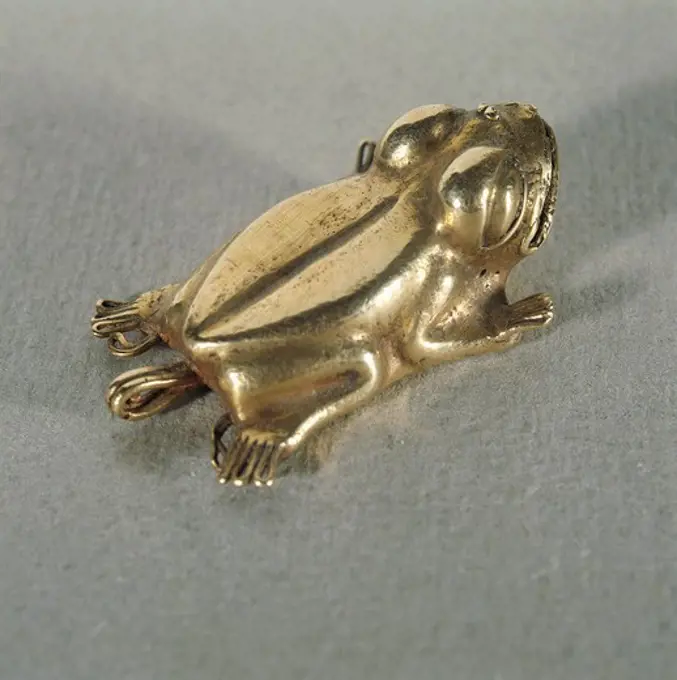
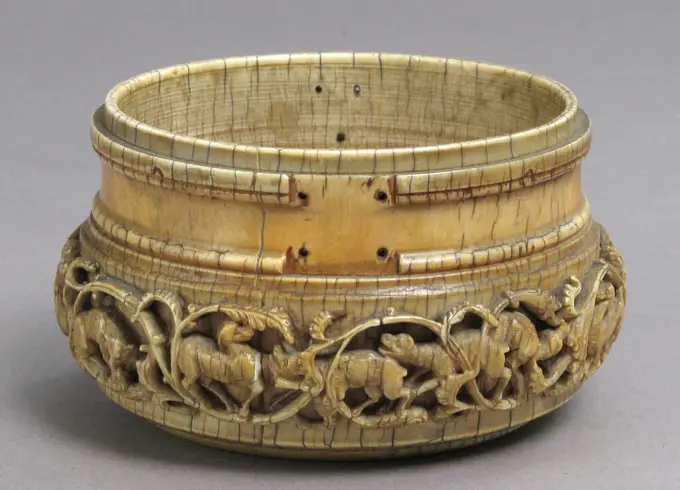
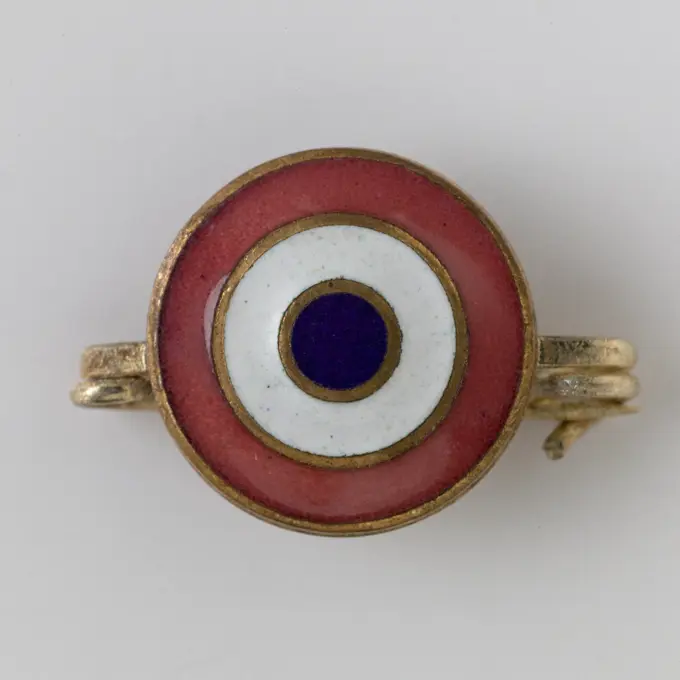
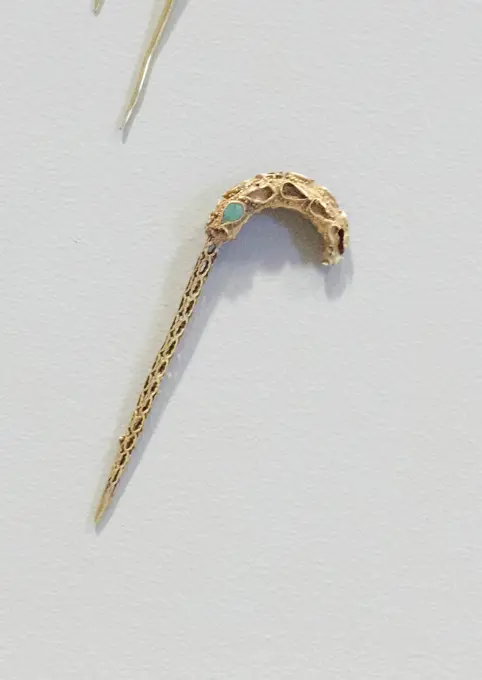
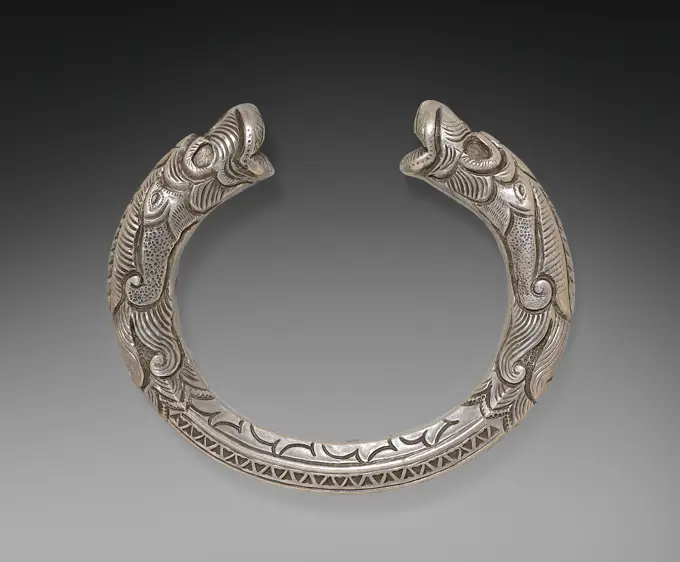
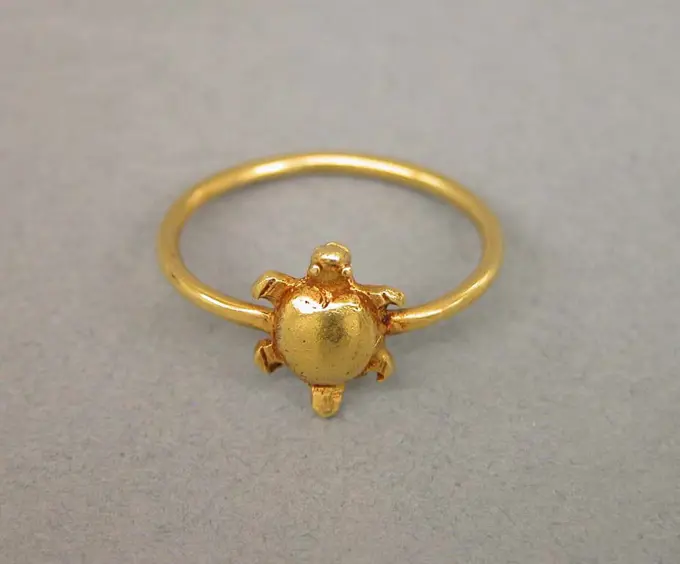
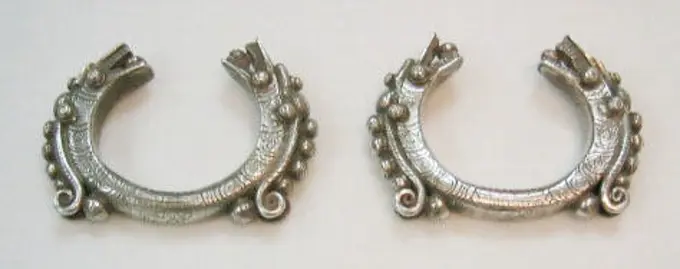
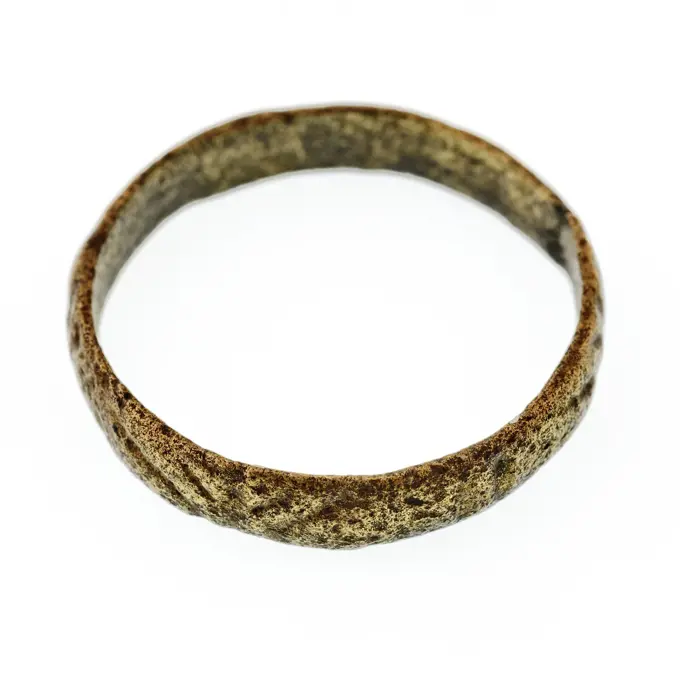
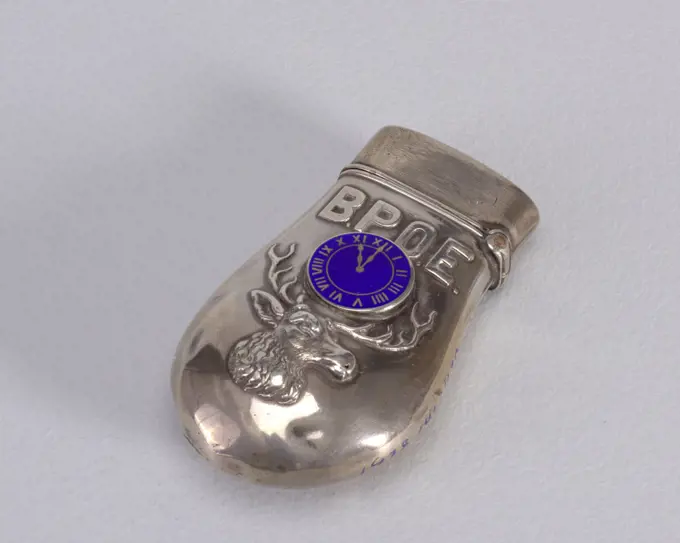
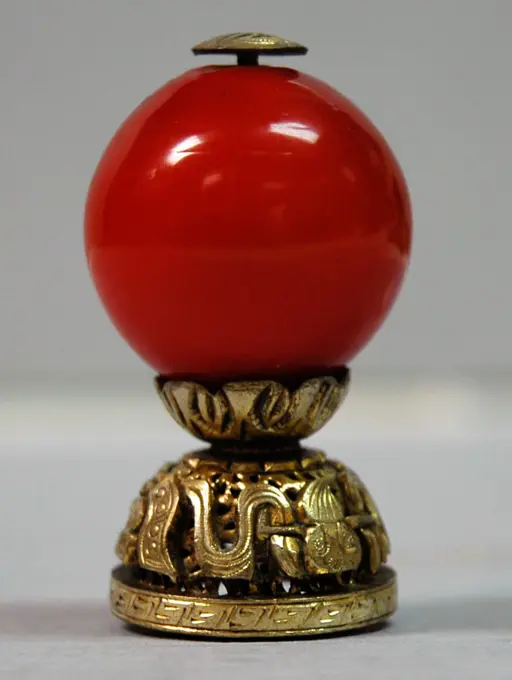
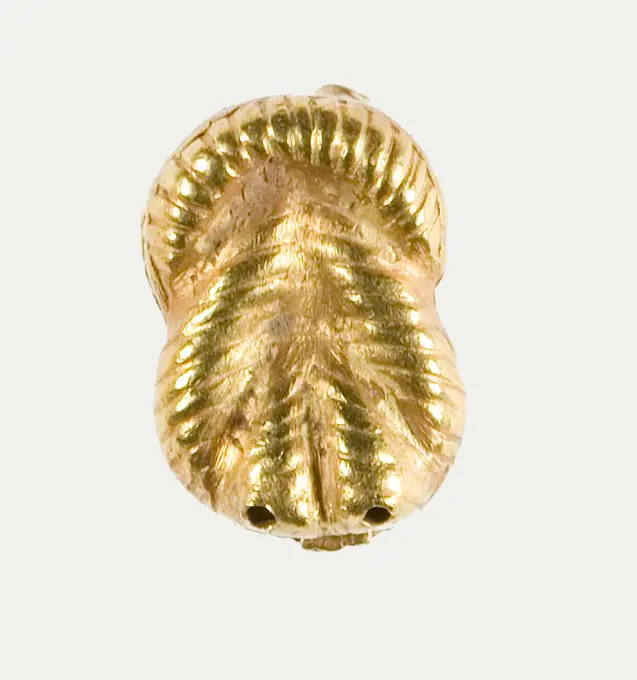
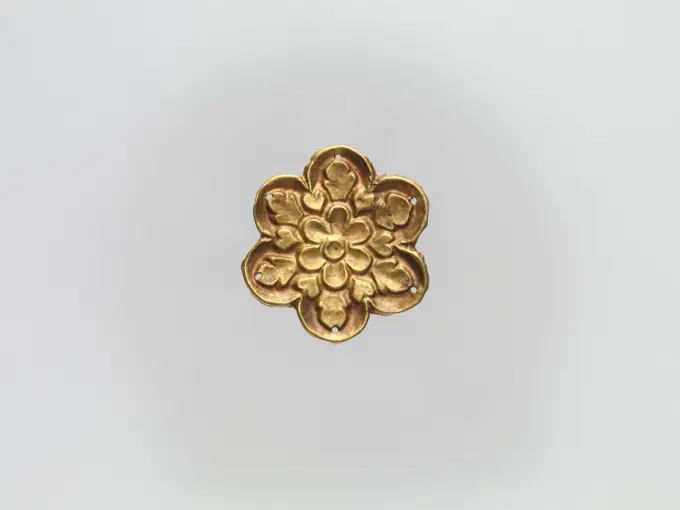
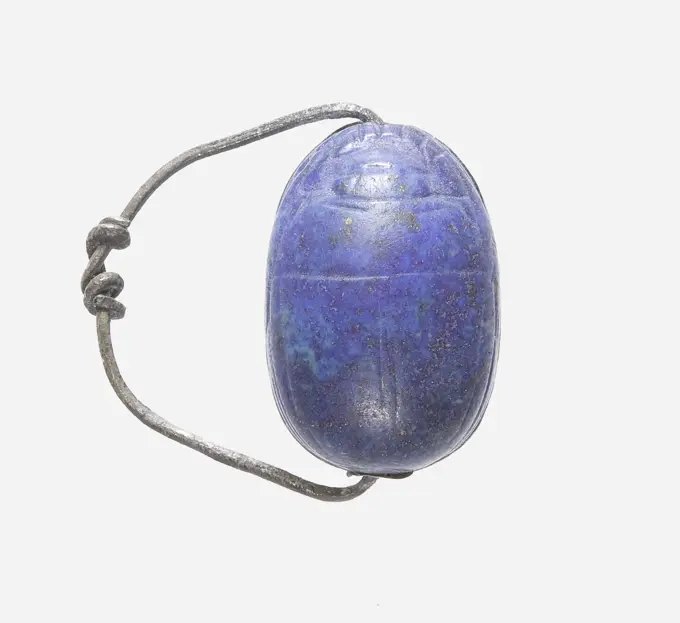
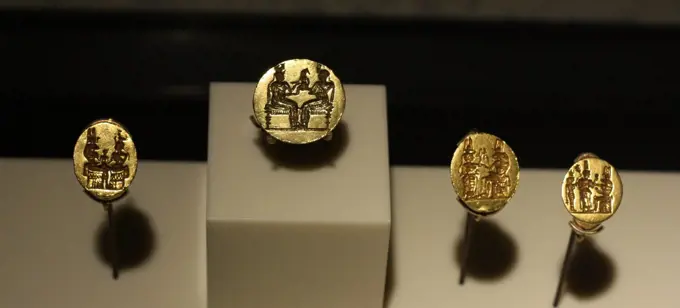
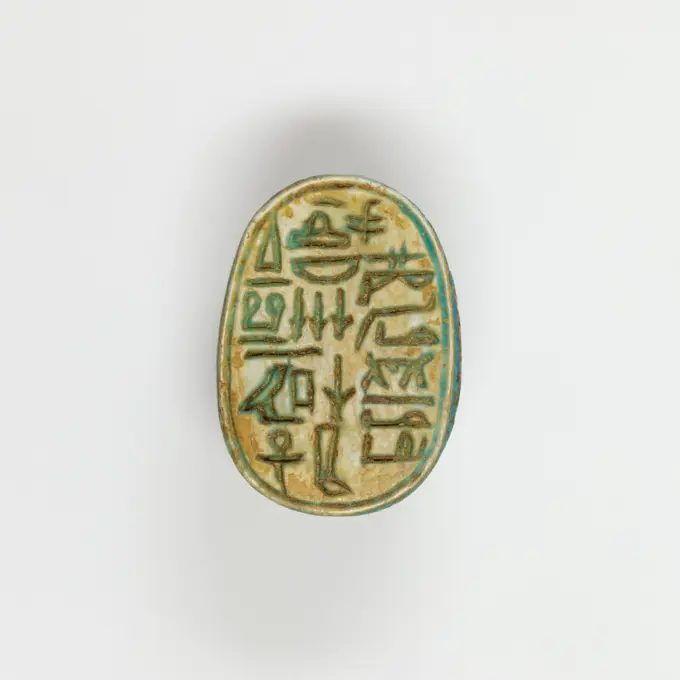
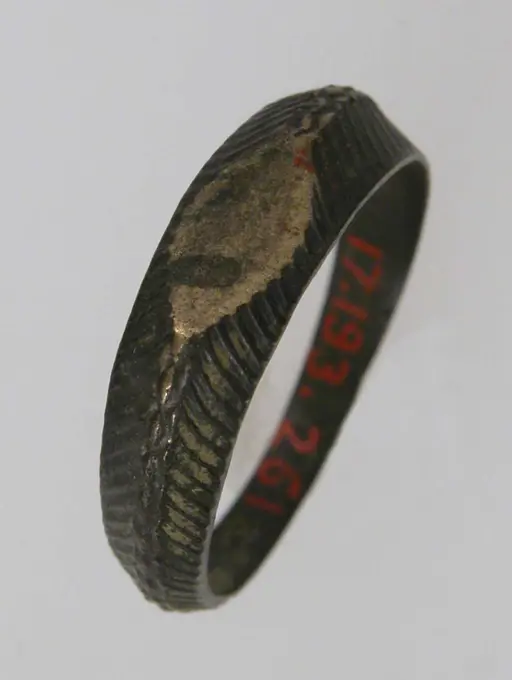
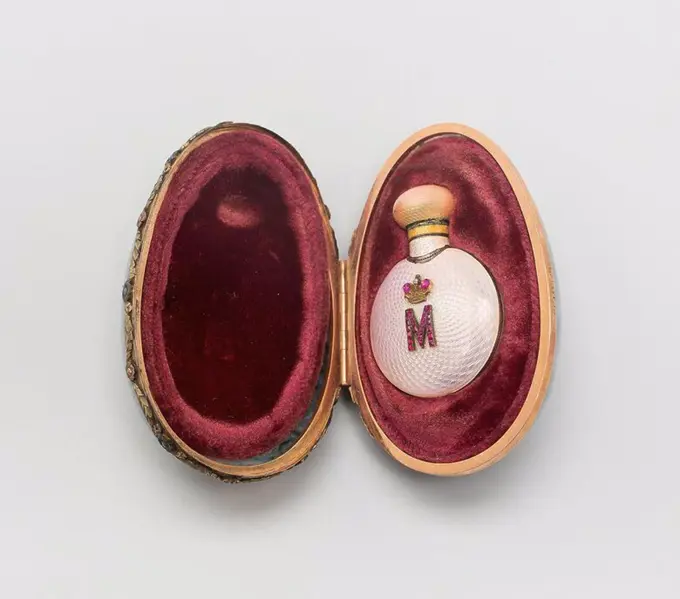
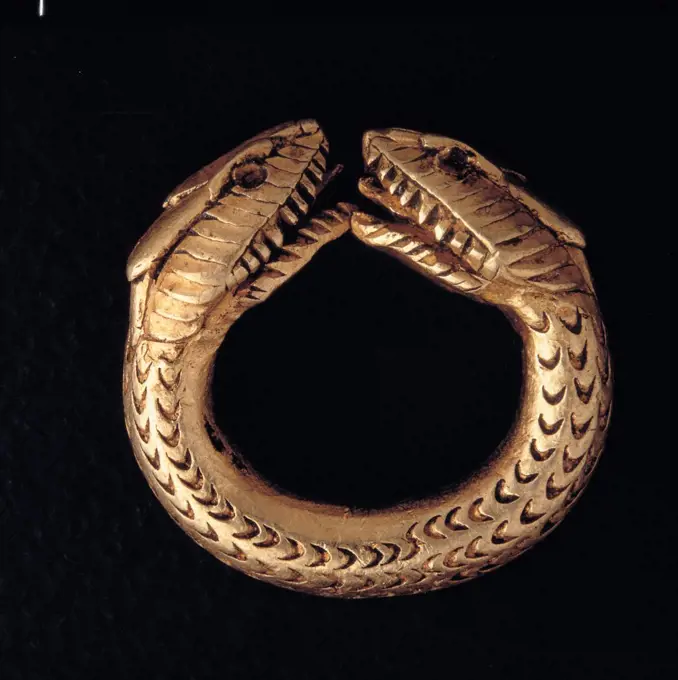
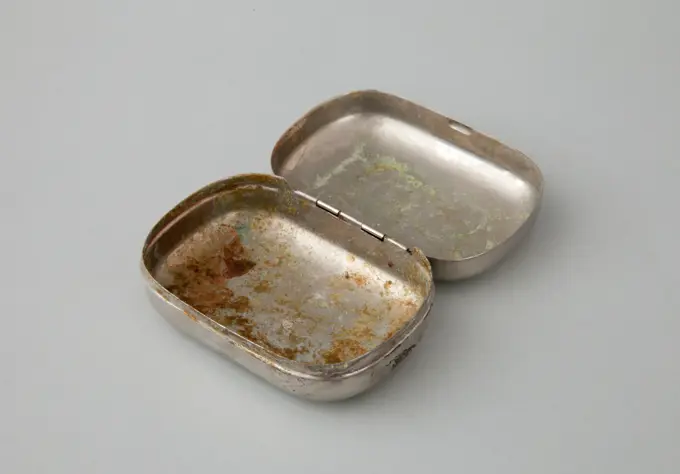
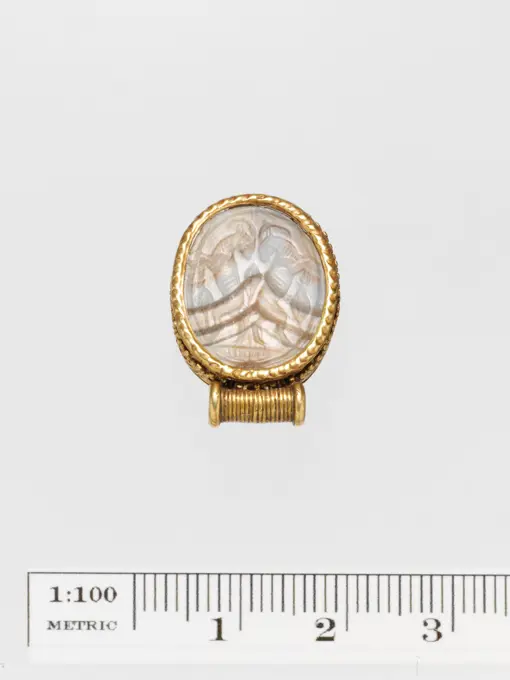
Earring 7th century or earlier Japan. Earring. Japan. 7th century or earlier. Silver plated. Kofun period (ca. 300-710). JewelryFrog shaped gold pendantPyx. Culture: Italian. Dimensions: Overall: 2 5/8 x 4 3/4 in. (6.7 x 12.1 cm). Date: 16th century or earlier. Museum: Metropolitan Museum of Art, New York, USA.Women's slippers; Dyck, Johann (Vilnius; Szewska Studio; Ca 1800-Ca 1850); 1st half 19th century (1801-00-00-1850-00-00);War 1939-1945. French tricolor cockroach brooch. Enamelled metal. 1944-1945. General Leclerc Museum of Hauteclocque and the Liberation of Paris, Jean Moulin Museum. Pin, war 1939-1945, war 39-45, Second World WarHairpin, 1644-1912, 3 1/2 in. (8.89 cm), Gold, turquoise, China, 17th-20th centuryFinger Ring. Culture: Frankish. Dimensions: Overall: 7/8 x 13/16 x 3/8 in. (2.3 x 2 x 1 cm)bezel: 1/2 x 3/8 x 3/16 in. (1.2 x 1 x 0.4 cm). Date: 6th-7th century. Museum: Metropolitan Museum of Art, New York, USA.Bracelet probably 14th-15th century The earliest known examples of this type of seamless mosaic glass bracelet are from the late thirteenth century; it continued to be produced well into the nineteenth century at Hebron, in Palestine. This bracelet, together with thirty-three others in the collection, comes from UpperEgypt and was probably made during the Mamluk period.. Bracelet 446036Bronze bracelet 7th century B.C. Greek A massive, solid armlet of a well-known Geometric type, with overlapping and slightly tapering ends, carinated and richly decorated on the outside, undecorated, slightly concave and relatively smooth on the inside. The outside is richly decorated with engraved linear designs (hatched lozenges and triangles) as well as punched circular designs. The flat ends flare out and bear a pattern of dice (five punched spots).. Bronze bracelet. Greek. 7th century B.C.. bronze. Geometric. BronzesRing 14th-15th century or earlier Visayes. Ring 317667Wedjat eye amulet 664-380 B.C. Late Period. Wedjat eye amulet 561523Earring-hook type, with disc and pendant. Earring-hook type, with disc and pendant 243362Shoe Buckles. United States, 1780s. Costumes; Accessories. Pewter and steelBracelet, 1800s. India. Silver; diameter: 5.8 cm (2 5/16 in.).Ring with Tortoise Motif Second half of the 8th-second half of the 10th century Indonesia (Java). Ring with Tortoise Motif 50156"Souvenir of A Midsummer Night's Dream" Matchsafe; Manufactured by Goldsmiths and Silversmiths Co., Ltd.; England; silver; 4 x 3.4 x .5 cm (1 9/16 x 1 5/16 x 3/16 in. )Cowroid bead ca. 1550-1425 B.C. New Kingdom. Cowroid bead 547612Bracelet early 1900s Thailand (Lu Mien Yao). Bracelet. Thailand (Lu Mien Yao). early 1900s. silver. Accessory-JewelryRing withGemWire wrapped Ring with Claw setStoneDevotional pendant 16th century (and later) Italian or Spanish. Devotional pendant 461595Earring ca. 2600-2500 B.C. Sumerian These earrings (MMA 33.35.45 and MMA 33.35.46) come from the so-called Great Death Pit, which was probably part of a royal tomb with an almost totally destroyed stone chamber. Laid out in the pit were the bodies of six armed men and sixty-eight people thought to be women or young girls, all adorned with the most splendid jewelry made of gold, lapis lazuli, and carnelian.The earrings are typical of those from the royal tombs. Made from two pieces of gold sheet, each is shaped like a hollow crescent or open boat with raised ends. The crescents were shaped over a bitumen core. Woolley identified these objects as earrings because they were regularly found in pairs beside the skull. He suggested that the pin could have passed through the lobe of the ear. Another possibility, however, is that they hung beside the ear but were attached to a headdress.. Earring. Sumerian. ca. 2600-2500 B.C.. Gold. Early Dynastic IIIa. Mesopotamia, Ur (modern Tell al-MuqayyarCopper or bronze ring, decorated, with text, ring ornament clothing accessory clothing soil find copper bronze metal, soldered Copper or bronze ring Flat and smooth walled on the inside slightly curled on the outside and decorated with vertical notches and protruding lines possibly also provided with text not readable text archeology Rotterdam rail tunnel wear adorn status prosperity Soil discovery: railway tunnel 1988-1993.Bracelet. Bracelet. Gold. Gold and SilverGold earring with head of a lion. Culture: Greek. Dimensions: Diam.: 13/16 in. (2.1 cm). Date: 4th-3rd century B.C..Circlet of gold wire, which tapers from the animal's head at the front end to a point. Museum: Metropolitan Museum of Art, New York, USA.Goldsmith's art, Italy, 16th century. Giacomo Anfossi, gold and enamel ring set with baroque pearls with hyacinth engraved on gem.Ring: Udjat Eye. Egyptian. Date: 1325 BC. Dimensions: W. 0.6 cm (1/4 in.); diam. 1.9 cm (3/4 in.). Faience. Origin: Egypt. Museum: The Chicago Art Institute, Chicago, USA. Author: Ancient Egyptian.Schmuck Schmuck Copyright: xZoonar.com/JulianxWeberx 877110Ojime 19th century Japan. Ojime. Japan. 19th century. Edo period (1615-1868). OjimeCarnelian seal set in a gold ring mid-6th century B.C. Greek Youth seizing a crouching girl by the hair.. Carnelian seal set in a gold ring. Greek. mid-6th century B.C.. Carnelian, gold. ArchaicNose Ornament 1st-7th century Calima (Yotoco). Nose Ornament 309848Ring with Quatrefoil-shaped Bezel with "Sri" Inscription Second half of the 9th-first quarter of the 10th century Indonesia (Java). Ring with Quatrefoil-shaped Bezel with "Sri" Inscription. Indonesia (Java). Second half of the 9th-first quarter of the 10th century. Gold. late Central Javanese period. JewelryGlass mosaic bowl fragment late 1st century B.C.-early 1st century A.D. Roman Translucent pale honey brown and opaque white.Narrow, outsplayed rim with rounded edge; fairly straight side tapering diagonally downward.Marbled mosaic pattern formed from large sections of a single cane in brown ground with numerous white streaks; part of a broad shallow vertical rib on exterior, forming concave indent on interior.Some pinprick bubbles; polished interior , with pitting of surface bubbles and creamy brown weathering in indent; dulling, pitting, and iridescent weathering on exterior, rim, and jagged edges.. Glass mosaic bowl fragment. Roman. late 1st century B.C.-early 1st century A.D.. Glass; cast. Early Imperial. GlassOne of a Pair of Overlapping Undecorated Anklets 500 B.C.-A.D. 300 Vietnam (North, Highlands). One of a Pair of Overlapping Undecorated Anklets 53311'Benevolent and Protective Order of Elks', Simons Bros. & Company, Silver, enamel, Oblong, in the shape of an Elk's tooth, featuring a blue enameled clock dial with Roman numerals and set at 11:00, beneath which is a raised image of an elk's head, above the clock are the letters B.P.O.E., an acronym for the Benevolent and Protective Order of Elks. No decoration on reverse. Lid hinged on upper left. Striker on the reverse side of lid., patented 1899, containers, Decorative Arts, Matchsafe, MatchsafeRing probably 19th century Chinese This collection of largely ethnographic jewelry includes examples from cultures in South America, North America, Europe, Asia, and Africa and dates from the Pre-Columbian period to the twentieth century. Owned by renowned art collector and fashion enthusiast Muriel Kallis Newman, the collection represents her knowledge and appreciation of a wide range of jewelry design and making traditions. Numerous items in her collection are composite artifacts made from various cultures and time periods reappropriated as modern jewelry creations by or for Muriel. It is important to note that Newman wore many of the pieces in the collection, interpreting them to suit and express her own singular, often avant-garde style.. Ring 141608Cylinder seal cap ca. 17th-16th century B.C. Babylonian or Kassite. Cylinder seal cap. Babylonian or Kassite. ca. 17th-16th century B.C.. Gold. late Old Babylonian-early Kassite. Mesopotamia, said to be from Dilbathead of cheese grunge iconHat Finial China Hats were an important part of official dress at all levels of government, and the finial worn atop a hat was an indicator of the wearer's rank. The finials shown here (1973.132.1-.3)red, blue, and whitecorrespond to three different ranks, from higher to lower.. Hat Finial 60889Ring. Ring. Bronze. BronzesFinger ring ca. 5th-4th century B.C. Achaemenid. Finger ring 326625Penannular Earring ca. 1550-1425 B.C. Second Intermediate Period-Early New Kingdom. Penannular Earring 559749Bracelet, 1800s. Siam. Silver gilt with diamonds; overall: 6.1 cm (2 3/8 in.).Knot Clasp of Sithathoryunet ca. 1887-1813 B.C. Middle Kingdom. Knot Clasp of Sithathoryunet. ca. 1887-1813 B.C.. Gold. Middle Kingdom. From Egypt, Fayum Entrance Area, Lahun, Tomb of Sithathoryunet (BSA Tomb 8), Chamber E, box 1 or 4, BSAE excavations 1914. Dynasty 12Flower-Shaped Clothing Plaque 7th-9th century China (Xinjiang Autonomous Region, Central Asia) The nomadic communities of Central Asia used such plaques to embellish clothing and horse trappings. As these nomadic cultures herded animals and were constantly moving, their artistic production was expressed in portable objects that marked the wearers status and wealth. The outstanding preservation of these fragile ornaments suggests they were used in conjunction with burials, where the body was aggrandized with valuable textiles and augmented with gold. Although it is difficult to date and place these objects geographically, their presence in Central Asia and has a long, established history.. Flower-Shaped Clothing Plaque 65217Scarab Ring ca. 1850-1775 B.C. Middle Kingdom The underside of the scarab is covered by a plain silver plate. The wire is twisted on the opposite side of the ring. The piece is part of a group of objects found in tomb V21 at Abydos. The group includes 04.18.1-04.18.49.. Scarab Ring. ca. 1850-1775 B.C.. Lapis lazuli, silver. Middle Kingdom. From Egypt, Northern Upper Egypt, Abydos, Cemetery V, Tomb V21, Egypt Exploration Fund excavations, 1904. Dynasty 12, late-early 13CloakPinReliquary 1875-1899 France. Silver-plated brass .Rings: divine birth of the king and king in front of gods. Goddesses nursing the king Gold, Silver.Scarab Inscribed for an Official ca. 1802-1575 B.C. Middle Kingdom. Scarab Inscribed for an Official. ca. 1802-1575 B.C.. Glazed steatite. Middle Kingdom. From Egypt. Dynasty 13Matchsafe with image of a Motor Car Matchsafe; USA; silverBroche, obra de Joaquim Capdevila, siglo XX. Colección privada.Gold scarab beetle, rings, worn by Tutankhamen. rom the tomb treasures of Tutankhamen, discovered in 1922. Tutankhamen was an Egyptian pharaoh of the 18th dynasty (ruled c. 1332-1323 BC). Now on display in the Cairo Museum.Beads, after 1519. Gold; overall: 1.9 cm (3/4 in.)."Cymric" lines Button; Attributed to Archibald Knox (British, 1864 - 1933); Distributed by Liberty & Company (United Kingdom); England; silver, enamel; Diameter: 2.4 cm (15/16 in.)Finger Ring 7th century Byzantine. Finger Ring 465587 Byzantine, Finger Ring, 7th century, Electrum, Overall: 11/16 x 3/16 in. (1.8 x 0.5 cm). The Metropolitan Museum of Art, New York. Gift of J. Pierpont Morgan, 1917 (17.193.261)Coil ca. 7th-6th century B.C. Iran This silver coil was excavated at Tepe Nush-i Jan, an Iron Age hilltop site about 60 km sound of Hamadan in western Iran. Nush-i Jan was occupied in the 7th and 6th centuries B.C., and its occupants are generally thought to be the Medes, an Iranian people known from Assyrian, Achaemenid and Biblical sources. Though the textual sources portray them as a powerful empire, archaeological evidence for the Medes has yet to sustain this impression. Rather, they seem to have lived in scattered fortified sites in western and central Iran, without any clear capital. Nush-i Jan, one of the best known of these sites, features two temples, a columned hall, and a fort, where the coil was found.The coil was discovered in a bronze bowl containing 231 pieces of silver, including jewelry, ingots and scraps. At the time coins were not yet in use in Iran, and silver bullion was the primary form of money. The form of the silver did not matter, only the weight, so any silvIsolated watercolor illustrated hot coffee in a brown cup from above top view. Isolated watercolor illustrated hot coffee in a brown cup from above top view Copyright: xZoonar.com/LiubovxPonomarchukx 21406435Glass striped mosaic fragment late 1st century B.C.-early 1st century A.D. Roman Body fragment.Translucent turquoise blue and opaque yellow appearing green, opaque white, yellow, and colorless.Convex curving side.Mosaic pattern formed from parallel bands of layered canes in colorless glass with yellow spiral thread, white, green, colorless glass with white spiral thread, and yellow.A few pinprick bubbles; exterior polished, with slight pitting of surface bubbles; dulling and creamy weathering on interior and edges.. Glass striped mosaic fragment 257207Commemorative ringCopper or bronze ring, classic wedding ring, ring jewel clothing accessory clothing soil find bronze copper metal d 0.6, cast Classic wedding ring. bronze or copper Lightly curled on the outside archeology Rotterdam rail tunnel wear adorn marry status prosperity classical Soil discovery: Railway tunnel 1988-1993.Miniature Easter Egg with Scent Bottle. Fabergé Workshop; Saint Petersburg, Russia, 1842-1917. Date: 1899. Dimensions: 5.1 x 8.3 x 5.6 cm (2 x 3 1/4 x 2 3/16 in.). Moss agate, gold, enamel, and cabochon rubies. Origin: Saint Petersburg. Museum: The Chicago Art Institute, Chicago, USA. Author: Dom Faberzhe.Ring, by Unknown artist, 1st Century, gold. Italy: Campania: Naples: National Archaeological Museum: n. inv. 25040. Whole artwork. Ring yellow gold heads snake scales/squamae reptileSoapSeal, Glass, silver, Seal: squirrel in box; crystal cylinder with silver ring, USA, 19th century, metalwork, Decorative Arts, SealWally Birds - Jar and Two Covers, 1914. Manufacturers: Martin Brothers. Designed by: Robert Wallace Martin (d. 1923).. This jar and two covers in the shape of a pair of grotesque birds is a fine example of Martinware. They were well known for their whimsically decorated vessels and bird sculptures, and are most probably called 'Wally' birds after Wallace Martin, the brother that created them.. Mounted on plinth. Carved and incised decoration. Painted in underglaze colours and enamels.Looped EarOrnamentBadge or Harness Pendant ca. 1400 possibly Spanish Heraldry, or coat-of-arms, were vitally important in Europe throughout the Middle Ages and the Renaissance. Heraldic emblems were used to identify noble families, cities, regions, and even countries. In addition to being displayed on shields and flags, heraldry was incorporated into architectural decoration on the interior and the exterior of buildings, on furniture, works of art, clothing, and horse equipment. Harness pendants, like this example, would have been attached to a headstall, bridle, or other straps making up the tack of a horse ridden by a nobleman or noblewoman, or a member of their household. Many harness pendants also have decoration that is simply ornamental, or have symbols that are not specifically heraldic in nature.. Badge or Harness Pendant. possibly Spanish. ca. 1400. Copper, gold, enamel. Miscellaneous-BadgesCuff Link (USA); Manufactured by Theodore W. Foster & Bro. Co.; gold; Overall: 1.8 x 1.8 x 1.3 cm (11/16 x 11/16 x 1/2 in.)Agate oval seal 6th century B.C. Greek Two prancing ibexes.. Agate oval seal. Greek. 6th century B.C.. Agate, banded. Archaic. Gems