My Boards
View Pictures
  • My Boards
← Artworks

Ancient Figurines and Statues

A collection of ancient ceramic and bronze figures, depicting various cultural representations, including deities and seated figures, showcasing intricate details and styles.

Statuette (usual name), 1400. Covered sandstone. Cernuschi Museum, Asia Museum of Asia in the city of Paris.
359 assets in this story
1788-23673
Statuette representing an Apsaras (celestial nymph), bronze
6145-29760290
Rattle in the Form of a Crouching Grotesque Yaksha (Male Nature Spirit) 1st century B.C. India. Rattle in the Form of a Crouching Grotesque Yaksha (Male Nature Spirit). India. 1st century B.C.. Terracotta. Shunga period. Sculpture
6145-29170481
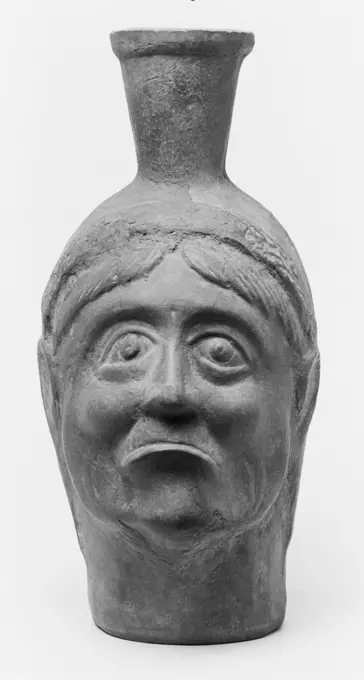
Aquamanile in the Form of a Human Head last quarter 19th century German or French, Paris (in fourteenth-century Hildesheim style). Aquamanile in the Form of a Human Head 461465
6145-58876747
Maangodin, anonymous, c. 1700 - c. 1800 The female figure cast as a whole, has a drapery in her left hand. Her right hand has been demolished. A moon on the head. With a pin the object, the function of which is unknown, can be inserted somewhere. Netherlands (possibly) brass (alloy) casting The female figure cast as a whole, has a drapery in her left hand. Her right hand has been demolished. A moon on the head. With a pin the object, the function of which is unknown, can be inserted somewhere. Netherlands (possibly) brass (alloy) casting
1848-63391714
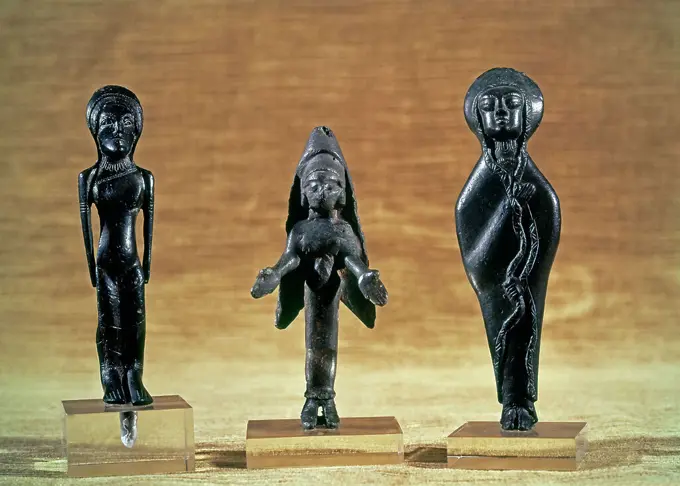
Statue of a female deity, Museo Archeologico Nazionale, Cagliari, Sardinia, Italy, Europe
4430-3719
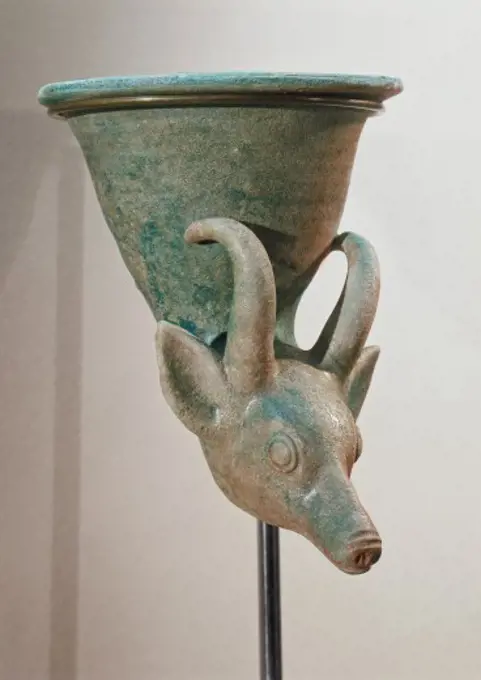
fine arts, ancient world, Parthia, vessels, Rython with gazelle hear, blue glazed ceramic, 2nd - 3rd century A.D., height: 22,5 cm, Iraqi National Museum Baghdad,
1788-39485
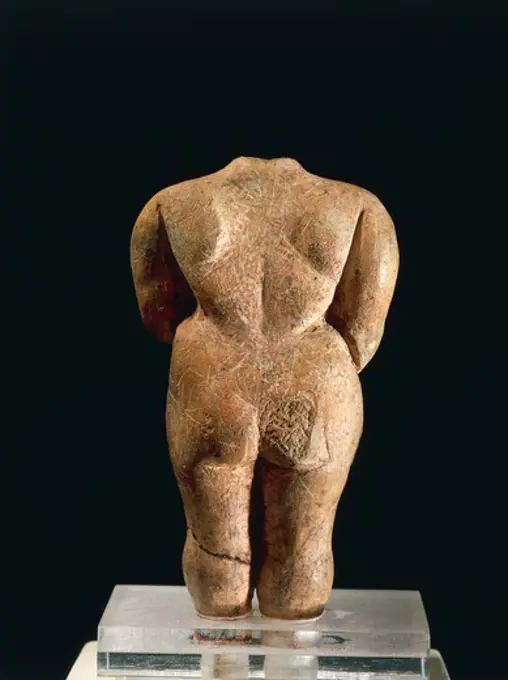
Prehistory, Malta, Neolithic. Terracotta figure known as Venus of Malta. From Hagar Qim megalithic temple.
6096-28625370
France, Paris, 2021-12-04. Illustration of tourism and daily life in the Greater Paris. Photograph by Martin Bertrand. France, Paris, le 2021-12-04. Illustration de tourisme et de vie quotidienne dans le Grand Paris. Photographie de Martin Bertrand.
4409-20999131
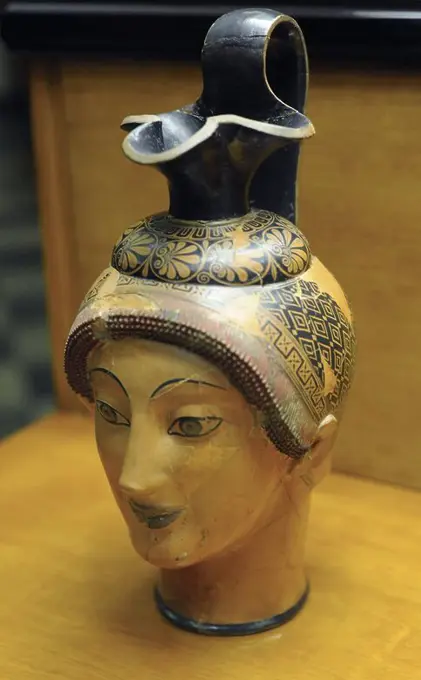
Greek art. Plaster vase: head of kore. Athens. 500-480 BC. Clay. The State Hermitage Museum. Saint Petersburg. Russia.
1746-21129825
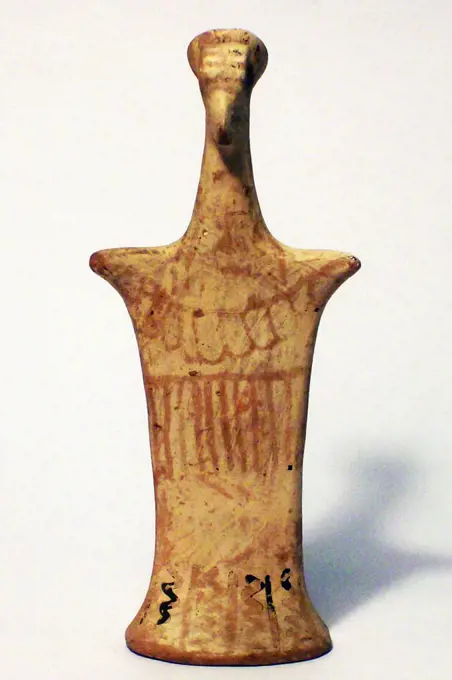
Boeotian Terracotta Goddess, Greek, 6th century BC.
6145-48529783
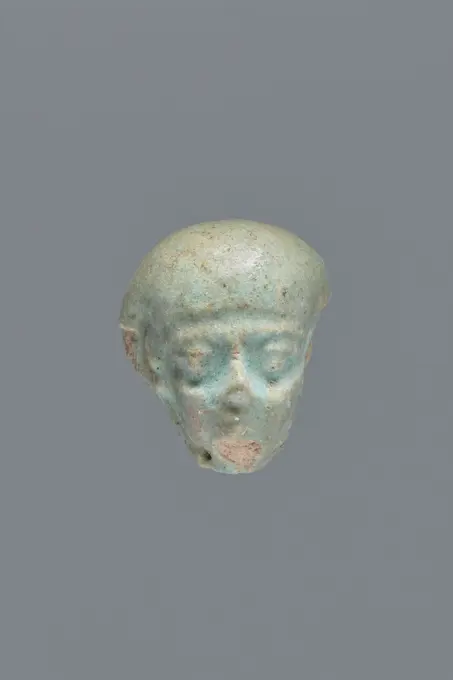
Fragment uszebti. unknown, author
4409-17417855
Netsuke of Demon Attacking a Man. Culture: Japan. Dimensions: H. 1 7/8 in. (4.8 cm). Date: 19th century. Museum: Metropolitan Museum of Art, New York, USA.
6145-29116508
Jina Mahavira (). India, Karnataka or Tamil Nadu, 850-900. Sculpture. Copper alloy
6145-29725977
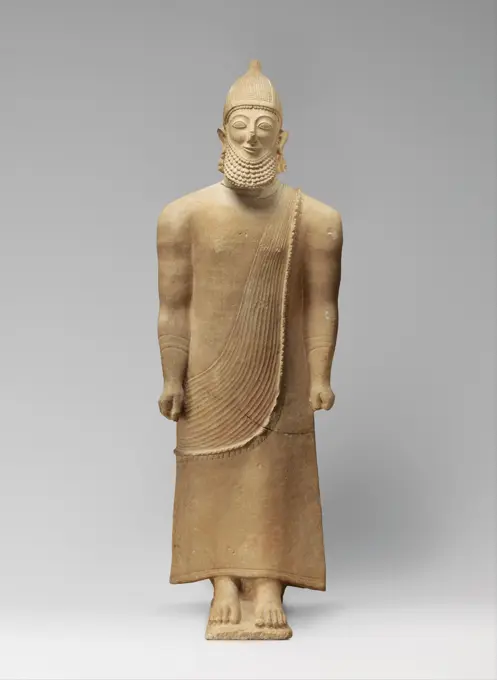
Limestone male figure last quarter of the 6th century B.C. Cypriot It is possible that the head and body did not originally belong to the same work. The articulation of each part, however, testifies to the first influences of Greek sculpture on that of Cyprus. In contrast to the monumental head, 74.51.2857, all details of this figure's head are executed in great detail. The smiling lips, moreover, animate the musculature of the whole face. The arms at the sides recall the Greek kouroi, and the differentiation of the undergarment and cloak show an awareness of three-dimensional texture as opposed to two-dimensional patterning.. Limestone male figure 242013
1788-16430
Anthropomorphic terracotta vessel with two figures of wrestlers, Vicus culture, circa 100 B.C.
6145-29065243
Zaō Gongen, 1200s. Japan, Kamakura period (1185-1333). Wood; average: 106.7 cm (42 in.).
1788-39388
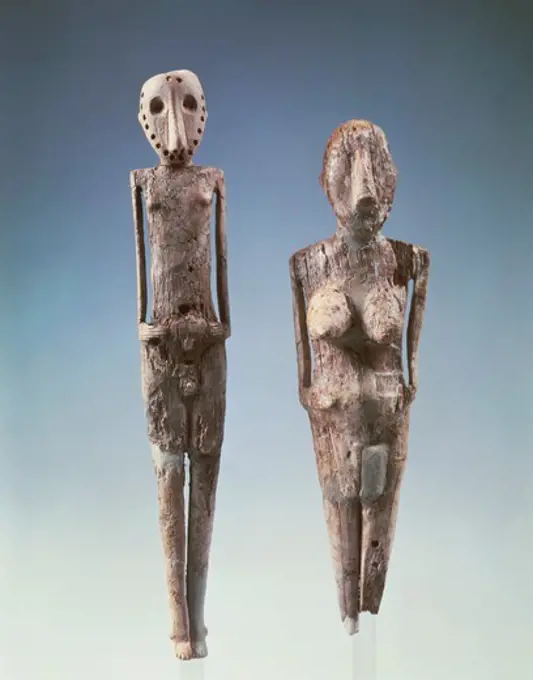
Prehistory, Palestine, 4th millennium b.C. Ivory male and female figures. From Be'er Sheva'.
4409-17419725
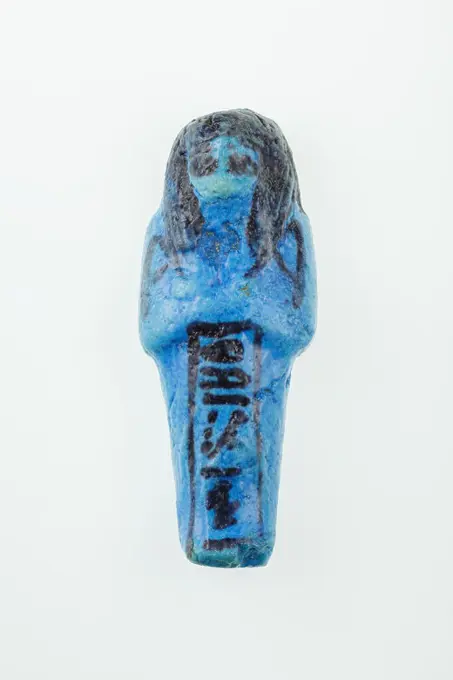
Worker Shabti of Nany. Dimensions: H. 8.8 × W. 3.4 × D. 2.1 cm (3 7/16 × 1 5/16 × 13/16 in.). Dynasty: Dynasty 21. Reign: reign of Psusennes I. Date: ca. 1050 B.C..See 30.3.28.1a, b. Museum: Metropolitan Museum of Art, New York, USA.
1899-30149
Terracotta Head of a Youth, by Unknown, 8th Century, terracotta . Italy, Sardegna, Cagliari, Archaeological National Museum. Whole artwork. Three quarters. Terracotta molded finished burin young man's head oriental features (archaic smile drawn eyes) resembling early Corinthian clay production.
1746-21115227
Coffin lid. Painted terracotta. Roman Period (3rd-4th centuries AD).
4435-6412
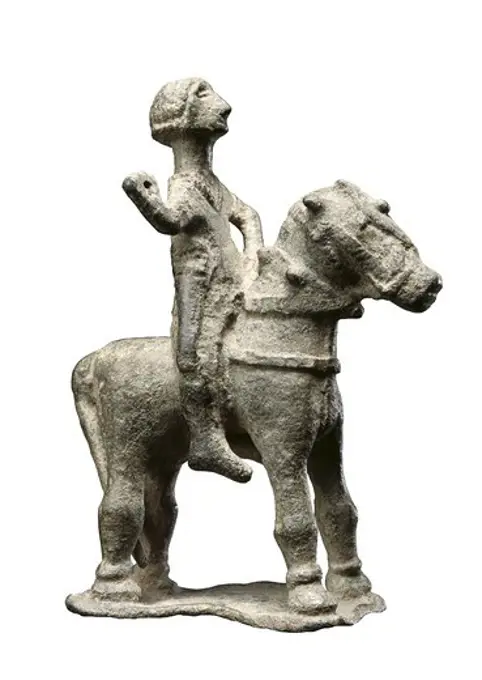
Rider. 5th-3rd c. BC. Iberian art. Sculpture on bronze. SPAIN. MADRID (AUTONOMOUS COMMUNITY). Madrid. National Museum of Archaeology. Proc: SPAIN. ANDALUSIA.
6145-44292107
Carthaginian Vase Fragment. Unknown
6145-30174031
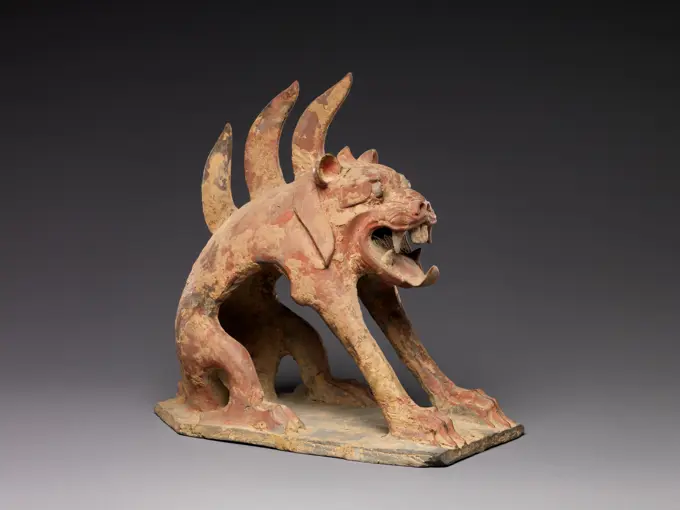
Winged Beast (Tomb Figure) 200 BCE-101 BCE China. Gray earthenware, slip-coated with polychrome pigments .
6145-29236525
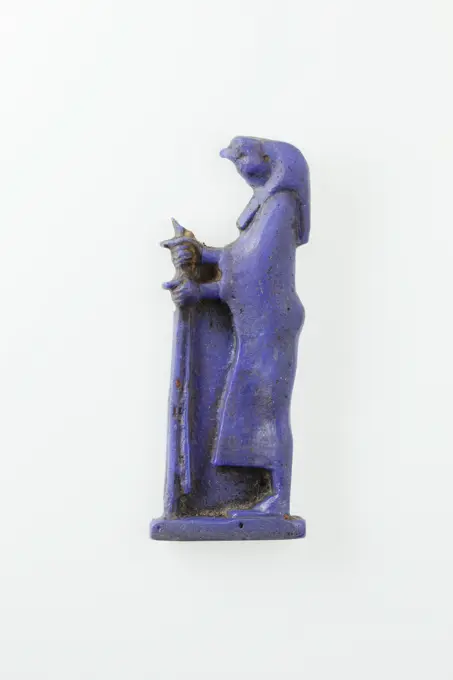
Funerary amulet depicting one of the Four Sons of Horus, Qebehsenuef 332-30 B.C. Ptolemaic Period This falcon-headed figure represents the god Qebehsenuef, who protected the intestines. He is one of the four so-called sons of Horus that are often depicted as mummies, each with a different head. The sons of Horus were deities who protected the internal organs and are probably best known from their representations on the lids of the canopic jars that contained mummified viscera. They were also thought to assist in the process of mummification and to provide nourishment, possibly because they were associated with the internal organs. Thus they had a general protective function for the deceased. Here Qebehsenuef is depicted holding a long piece of fabric, which represents the linen used in the mummification ritual.. Funerary amulet depicting one of the Four Sons of Horus, Qebehsenuef. 332-30 B.C.. Glass. Ptolemaic Period. From Egypt
6145-30177465
Jar with Anthropomorphic Figure 650 BCE-150 BCE Ocucaje. Ceramic with resinous postfire paint . Paracas
1850-46757
Mexico, Oaxaca, Monte Alban, Senora con Yelmo de Jaguar head-dress.
4409-59375
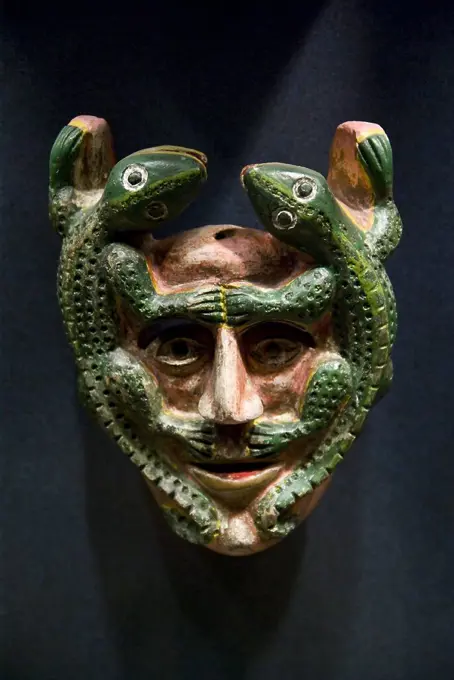
Mexico.Mexico city.National Museum of Antropology.Nahuatl people culture.Mask traditional ..
4443-28745455
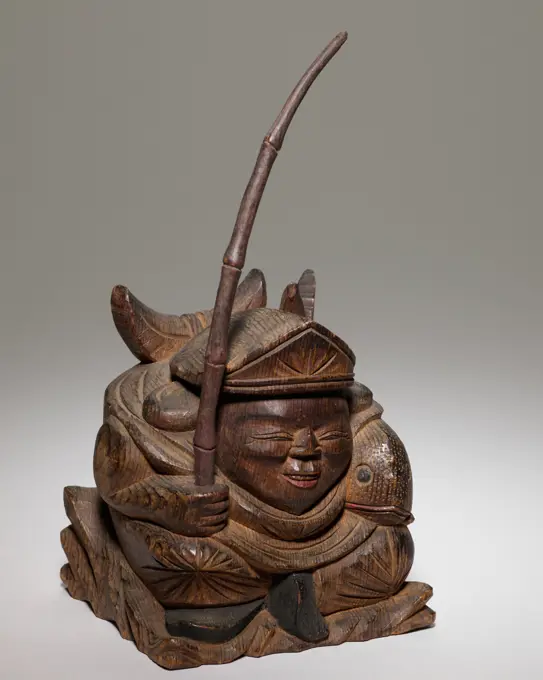
(Ebisu, from a pair of Daikoku and Ebisu), c. 1800, Unknown Japanese, 7 1/4 x 3 11/16 x 3 5/8 in. (18.42 x 9.37 x 9.21 cm), Wood, Japan, 18th-19th century
1848-57216985
Royal couple, bronze statues, Mali, Africa
4409-17394497
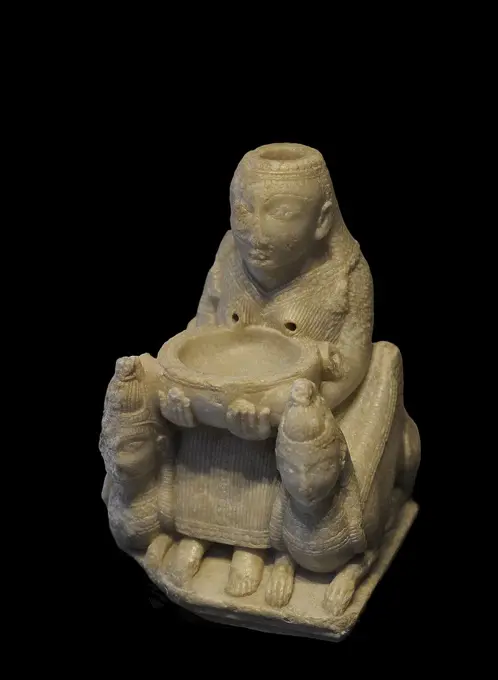
Lady of Galera. Sculpture of Phoenician production of the beginning of the 8th century BC. Alabaster. It depicts an enthroned goddess (Astarte) flanked by two effigies with the double Egyptian crown. Hold a bowl with both hands. It was conceived as a ritual vessel for the oil to anoint the deceased. Found in an Iberian tomb from the 5th century BC. From the Tutugi Necropolis, Zone I, Grave 20 (Galera, Granada province, Andalusia, Spain). National Archaeological Museum. Madrid. Spain.
1788-41747
Figure of an ancestor. Terracotta artefact from Mexico. Zapotec Civilization, classical period 200-900.
6145-43630912
Uszebti królowej Maatkare. unknown, author
6145-29768076
Terracotta head of a man 2nd century B.C. Greek, Asia Minor Head and back of the neck preserved.. Terracotta head of a man 247599
4409-17277250
CIERVO DE BRONCE - SURTIDOR DE UNA FUENTE DE MEDINA AZAHARA - SIGLO X. Location: MUSEO ARQUEOLOGICO NACIONAL-COLECCION. MADRID. SPAIN.
1788-24586
Duck-shaped bronze with traces of gilding perfume burner
1746-19669648
Faience swimming girl, derived from a type of Egyptian spoon. Probably made on Rhodes about 600 BC. From Kamiros, Rhodes
6145-59045795
Jean-Pierre Dantan (1800-1869), said Dantan the young. Caricature of the Haras inspector, of Guastalla. Patinated plaster, terracotta. 1833. Paris, Carnavalet museum. Haras inspector, patina patina, terracotta, caricature
6145-29180713
Tomb Guardian (Zhenmushou) mid-to-late 6th century China Bulging eyes, a gaping mouth with fangs, a protruding tongue, oversized paws, and a spiked back define this fantastic creature, which was once one of a pair placed facing outward at the entrance to the coffin chamber.. Tomb Guardian (Zhenmushou) 44797
4409-7696
EXVOTOS IBERICOS DE BRONCE-PROCEDE DE COLLADO DE LOS JARDINES. Location: MUSEO ARQUEOLOGICO NACIONAL-COLECCION. MADRID. SPANIEN.
6145-30177507
Container Depicting Warriors, Rulers, and Winged Beings with Trophy Heads 180 BCE-500 CE Peru. This monumental ceramic ceremonial drum or a storage containeróits long crack was repaired in antiquityódisplays scenes depicting military triumph. On the upper tier, composite supernatural creatures combine forms derived from predatory birds, felines, and fish, thereby manifesting the powers of the sky, earth, and sea. These otherworldly beings feast on human captives and trophy heads, emphasizing that the natural world is not only nurturing, but also dangerous. Nazca warriors also hold weapons and trophy heads, and wear similar masks and headdresses to those worn by the composite figures, signifying that the ultimate source of their military prowess is derived from the supernatural realm. A group of elaborately attired individuals witness the sacrifices of the prisoners captured in battle. Military expeditions and ceremonies were timed to the seasonal rhythms of the environment in order to
6145-29068515
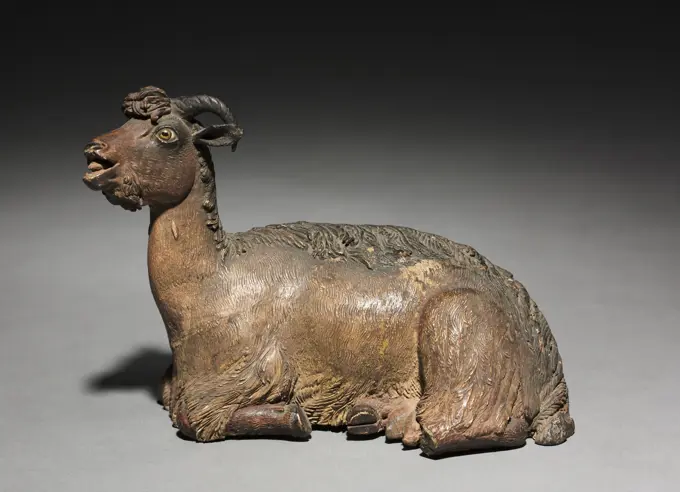
Figure from a Crèche: Sitting Ram, 1780-1830. Italy, Naples, late 18th-early 19th century. Painted terracotta; overall: 12.3 x 17 cm (4 13/16 x 6 11/16 in.). The practice of creating scenes of the Nativity for the home dates from the early 1700s in Italy, where people began to set up doll-like figures of about a foot or less in height. The custom was particularly popular in Naples around 1800, where crèche scenes (crèche means cradle, or crib) included many figures, whose heads and hands of painted terracotta, stuffed cloth bodies, and clothing adapted from contemporary local costumes gave them an amazingly realistic character.
4266-21634190
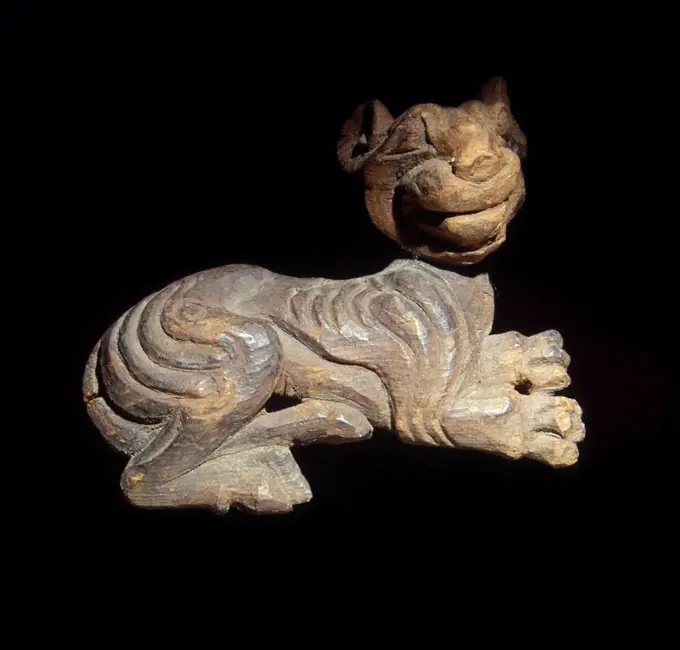
Lying Tiger. Plaque, Ancient Altaian, Pazyryk Burial Mounds
6145-29066441
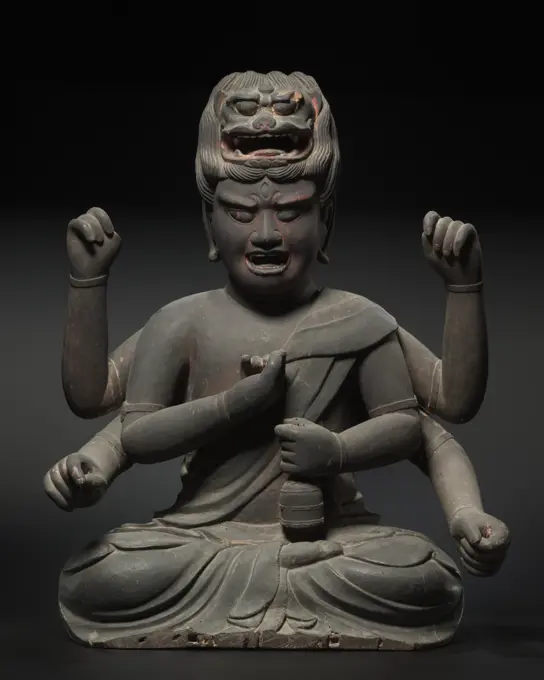
Aizen Myōō, early 1300s. Japan, Kamakura period (1185-1333). Wood with black lacquer and red pigments; overall: 75 x 59 x 35 cm (29 1/2 x 23 1/4 x 13 3/4 in.).
1746-19677548
Bronze Vishnu Figure 11th Century. India
4409-17383671
Priest in a leopard skin cloak with an inscription and Osiris on his skirt. Dimensions: H. 8.6 × W. 3 × D. 3 cm (3 3/8 × 1 3/16 × 1 3/16 in.); H (with tenon): 9.3 cm (3 11/16 in.). Dynasty: Dynasty 25. Date: ca. 712-664 B.C..Over the leopard skin this man is wearing is a banderole inscribed with the remnants of his name and titles: "God's Father, God's Beloved, .Haty." It has been suggested that the presence of the titles and names of the subject rather than the king may be characteristic of the Kushite or very early Saite Period. If true, this would agree with the stylistic traits--broad neck, round skull, and small chin--that also link this figure to that era. Museum: Metropolitan Museum of Art, New York, USA.
4409-17291216
Pompeo Leoni (Attributed to) / 'Felipe II'. Second half of the XVI century. Alabaster. Museum: Museo del Prado, Madrid, España.
4409-20919661
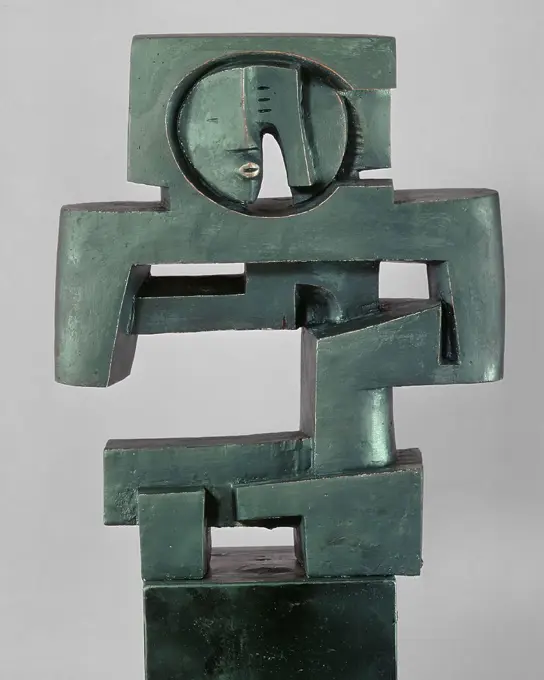
ESCULTURA. Author: LEANDRO MBOMIO (1938-). Location: PRIVATE COLLECTION. MADRID. SPAIN.
6188-68092932
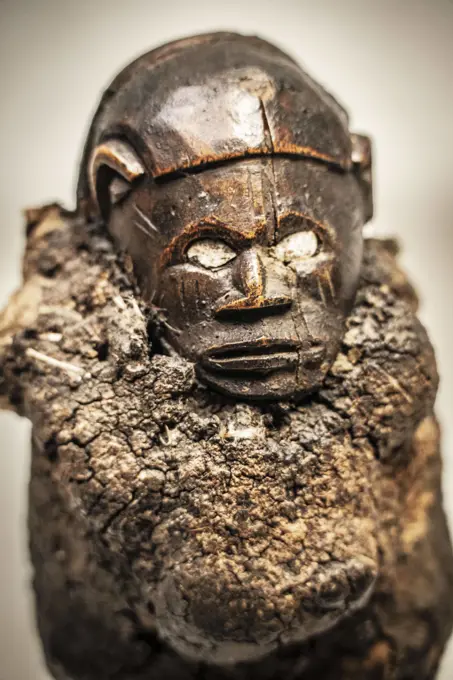
Bembe-Fetischfigur Bembe fetish figure, Democratic Republic of the Congo, 19th century, carved wood, clay, glass, cloth, rope, and ritual patina, MEB, Barcelona, Catalonia, Spain LicenseRF Copyright: xZoonar.com/Tolox 23171181
4409-17582588
'Kneeling Adorer'. Siam (now Thailand). Bangkok art, Second half of the 19th century. Dimensions: h. 11,5 cm. Museum: State Hermitage, St. Petersburg.
1788-23378
Pakistan, Mohenjo-daro, Terracotta figurine depicting a mother with her child
4409-17409101
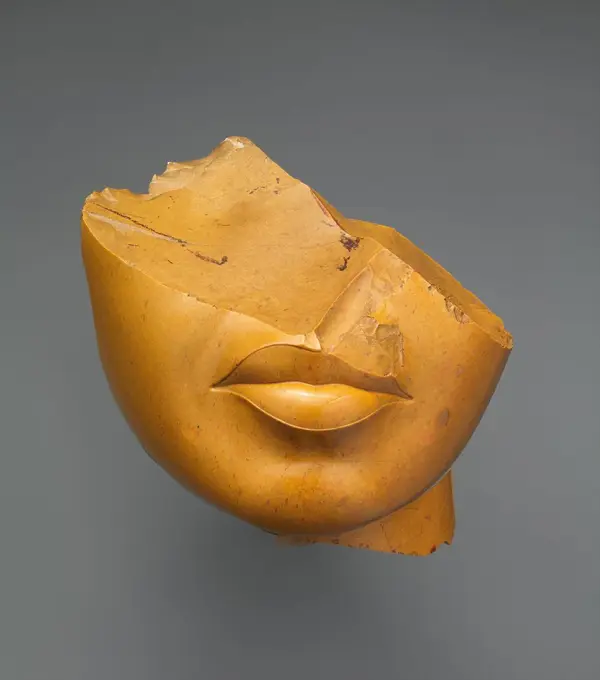
Fragment of a Queen's Face. Dimensions: h. 13 cm (5 1/8 in); w. 12.5 cm (4 15/16 in); d. 12.5 cm (4 15/16 in). Dynasty: Dynasty 18. Reign: reign of Akhenaten. Date: ca. 1353-1336 B.C..This striking fragment is from a statue composed of different materials. The back of the piece shows remains of the mortise that fitted onto a tenon extending from the statue's body which may have been made of Egyptian alabaster to represent a white garment. Two headdresses might have fit this head: the khat-headdress, or the Nubian wig (as seen on the canopic jar lid, 30.8.54, in the same gallery).The royal woman represented here cannot be identified with certainty. It is difficult to imagine that the already aged Queen Tiye--the mother of Akhenaten and highly respected as a wise woman at Amarna--was shown as a beauty of such sensuous character. Queens Nefertiti and Kiya, however, are both possible subjects. Museum: Metropolitan Museum of Art, New York, USA.
1746-30021082
A Water-Dropper for Writers. Celadon glaze; modelled and underglaze iron decoration. From the time of Koryo (Goreyo) (Goreyo) dynasty (918 - 1392)
1788-18675
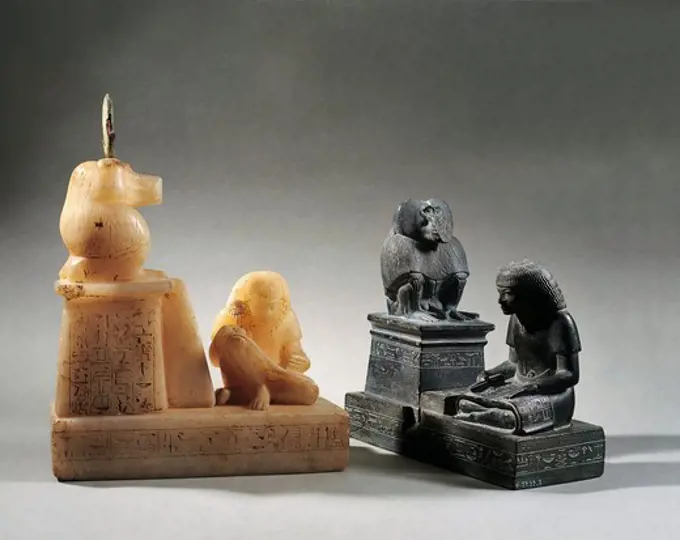
Alabaster and bronze statues of god Nehmertuf with god Thoth as a baboon
4409-17420121
Male figure. Culture: Babylonian. Dimensions: 1.61 x 1.69 in. (4.09 x 4.29 cm). Date: ca. 18th century B.C..This kneeling male figure would have originally been part of a larger openwork composition. Openwork bronzes are known from the early second millennium B.C. in a variety of forms, but their function in antiquity is not fully understood. Slots and circular openings in the plaques suggest their use with cords, straps, or fabric. The kneeling male seen here - in a belted skirt and clean-shaven - appears on many of the plaques and would have been one of a pair, symmetrically arranged. Clean-shaven individuals in Mesopotamian art are often associated with the temple, where their lack of hair may have been a marker of purity and cleanliness. Museum: Metropolitan Museum of Art, New York, USA.
6145-29063853
Manjuvara Turning the Wheel of the Law, 1300s-1400s. Nepal. Gilded copper; overall: 10.2 x 7.9 x 6 cm (4 x 3 1/8 x 2 3/8 in.).
6145-29138244
Shri Lakshmi Lustrated by Elephants (Gaja-Lakshmi). India, Odisha (Orissa), 18th century. Sculpture. Brass
6145-29820886
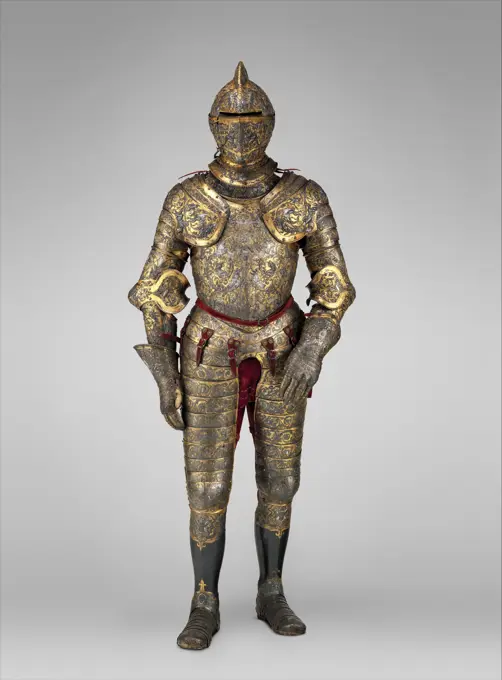
Armor of Henry II, King of France (reigned 1547-59) ca. 1555 Part of the decoration design by Jean Cousin the Elder This is one of the most elaborate and complete French parade armors, and it retains much of its original coloring. The surfaces are covered by dense foliate scrolls inhabited by human figures and a variety of fabulous creatures that derive from the Italian grotesque. The decoration includes, at the center of the breast, a Roman warrior receiving tribute of arms from two kneeling females and, on the shoulders, Apollo chasing the nymph Daphne (front) and Apollo with the slain monster Python (back). The crescent moon, one of the badges of Henry II (reigned 1547-59), appears in several places.Twenty original design drawings for this armor survive. One is by Jean Cousin the Elder; the rest are by either Étienne Delaunne or Baptiste Pellerin. All three were distinguished Parisian artists of the mid-sixteenth century. Listen to experts illuminate this artwork's story Listen Play
1746-19699554
Statuette of Ptah, god of the capital Memphis and patron of artisans. From the 7th-4th century.
4409-17473410
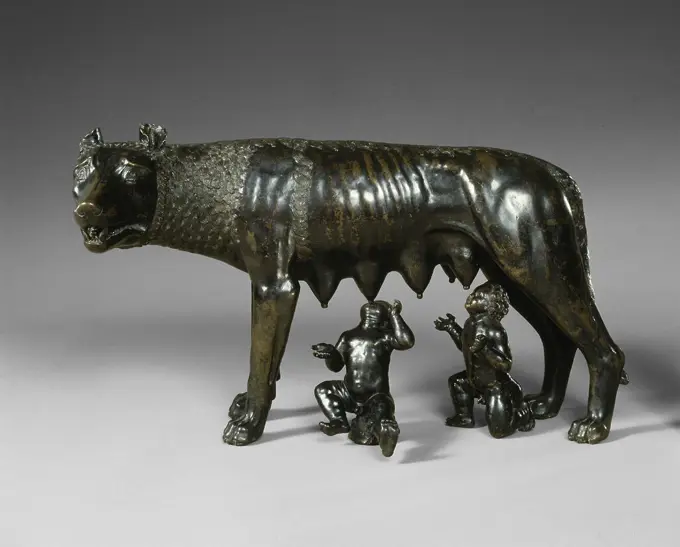
The Capitoline Wolf Suckling Romulus and Remus. Dated: late 15th - early 16th century. Dimensions: overall (wolf): 38 x 64.2 x 15.9 cm (14 15/16 x 25 1/4 x 6 1/4 in.) overall (height of kneeling twin): 18.1 cm (7 1/8 in.) overall (height of seated twin): 13.7 cm (5 3/8 in.). Medium: bronze. Museum: National Gallery of Art, Washington DC. Author: Central Italian 15th or 16th Century (Possibly Roman 15th or 16th Century).
PREVIOUS
of 4
NEXT
2401 S. Ervay, Suite 206
Dallas, Texas 75215
United States
Get Started
Free ResearchMy BoardsMy Cart
For Creators
How To License Your ContentContributor PortalFrame of Mind
Resources
API accessPricing
Contact
+1 866 236 0087help@viewpictures.co.uk Contact form
©2026 View Pictures. All Rights Reserved. -A
This site is protected by reCAPTCHA and Google Privacy Policy and Terms of Service apply.