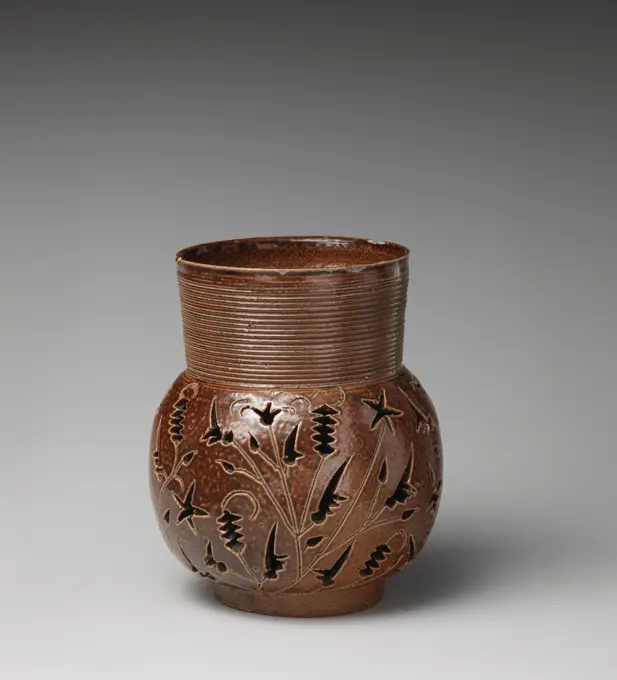
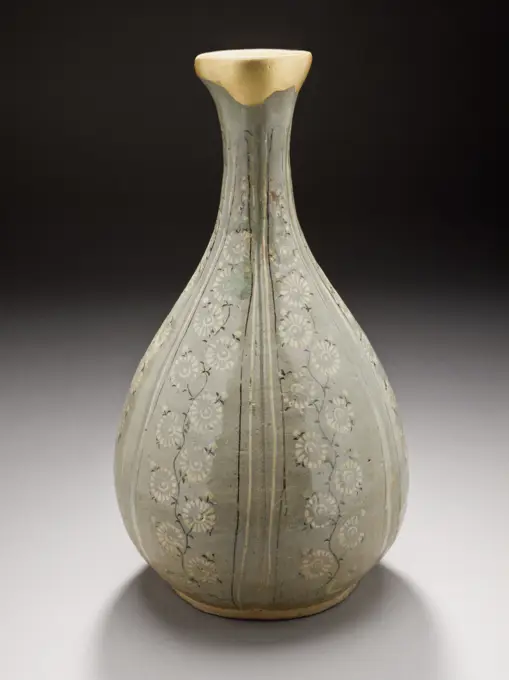
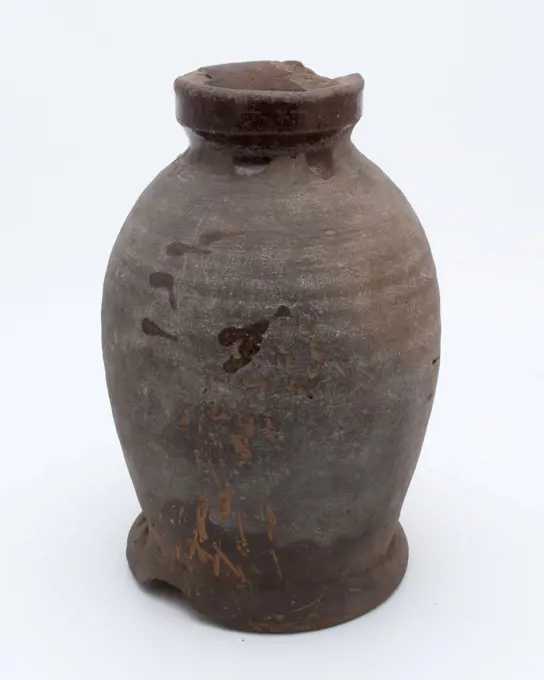
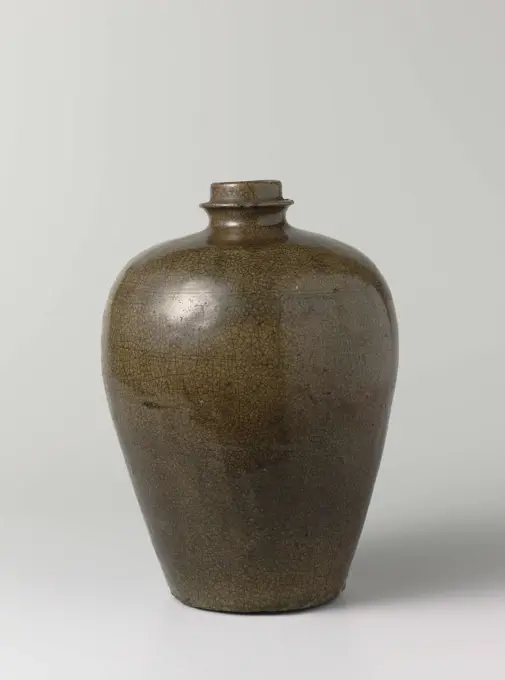
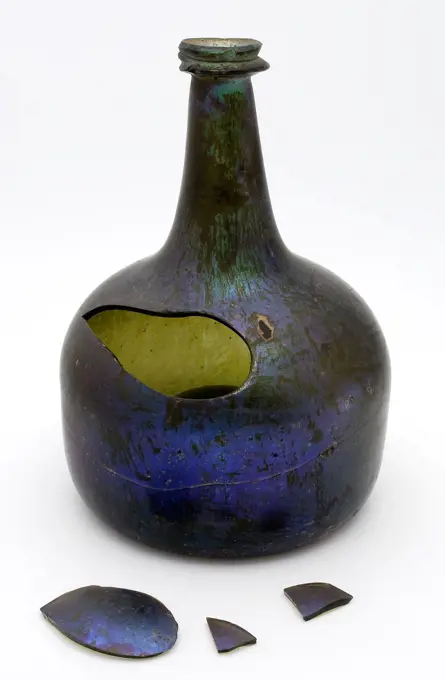
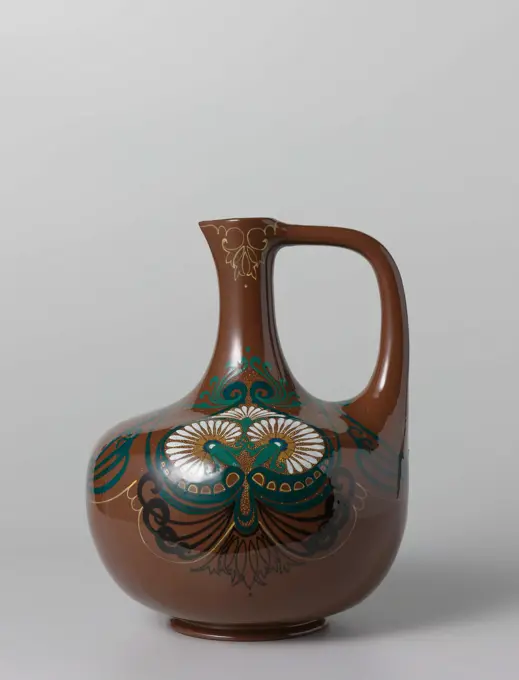
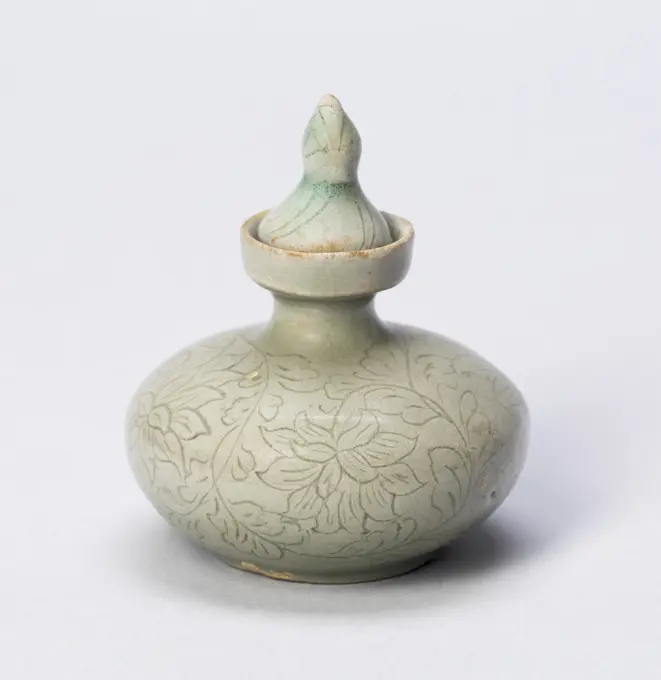
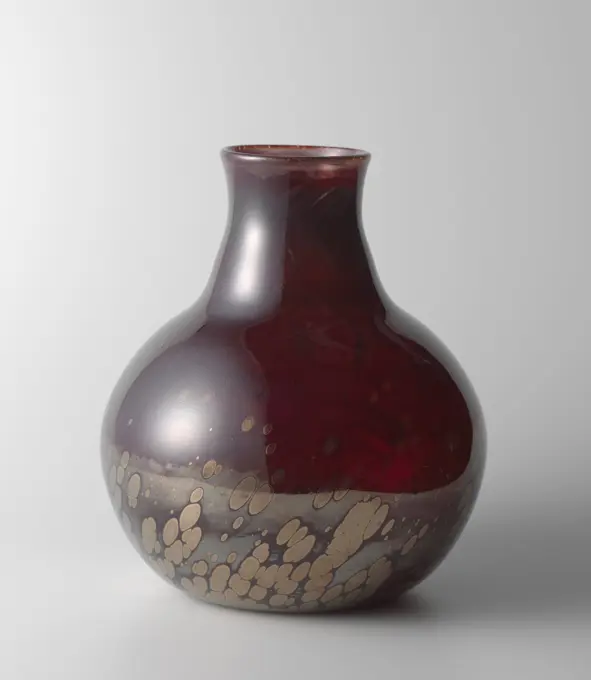
Ancient Glass and Ceramic Jars

Collection of historical jars from different cultures, showcasing varied shapes, materials, and finishes, including Roman glass and Chinese ceramics.
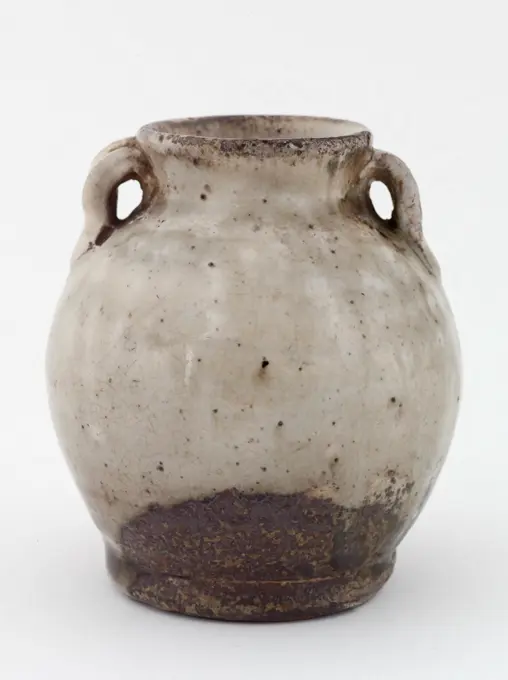
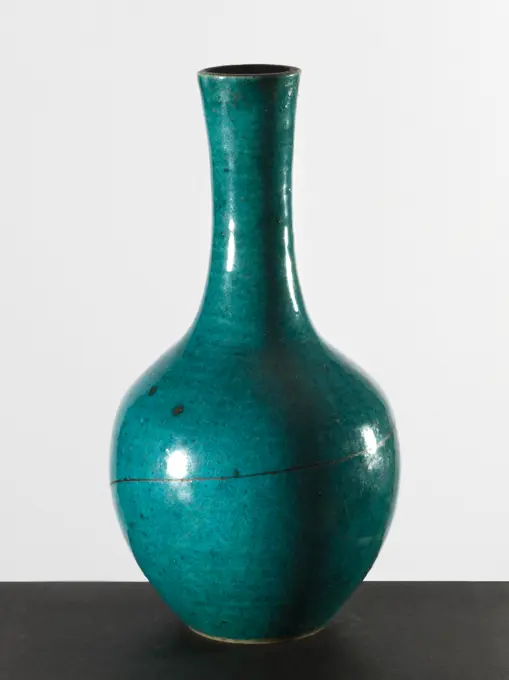
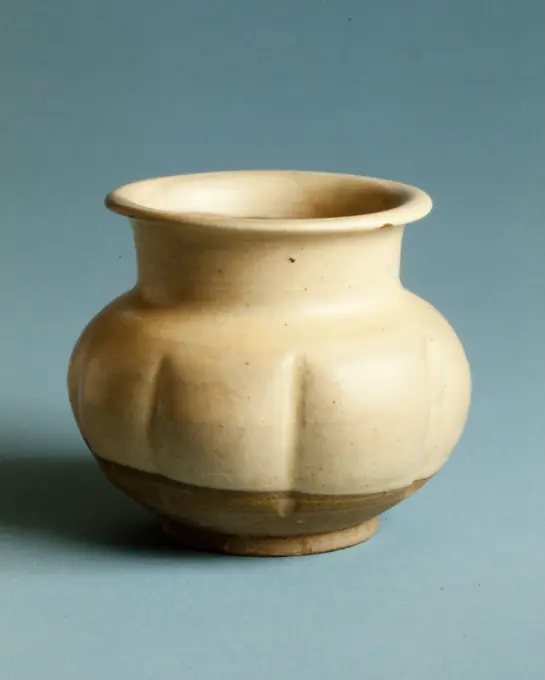
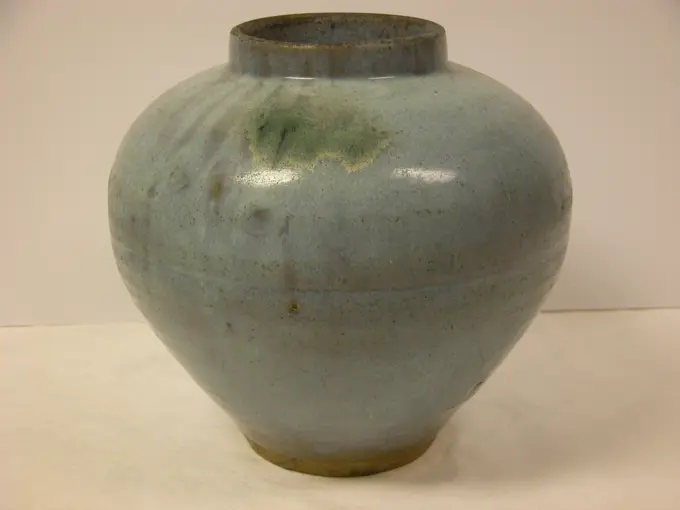
Jar ". Sandstone, white slip, covered celadon. China, Song dynasty (960-1279) / Yuan (1279-1368). Paris, Cernuschi museum. Chinese art, Chinese Ceramic, container, Song dynasty, Yuan dynasty, Song time, Yuan time, jar, container, terracotta
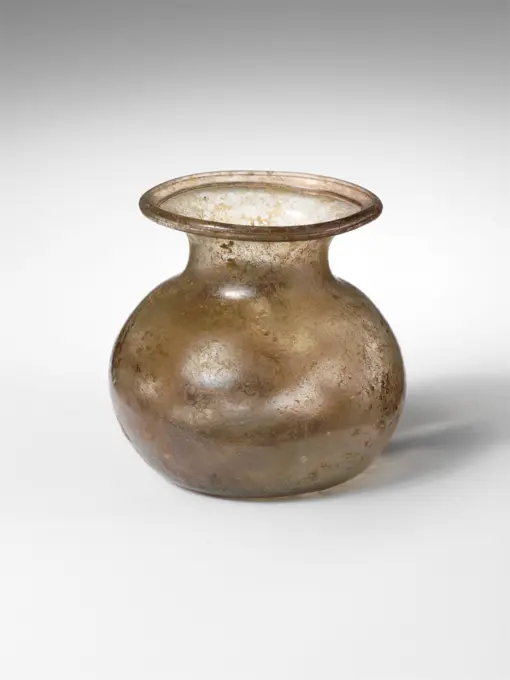
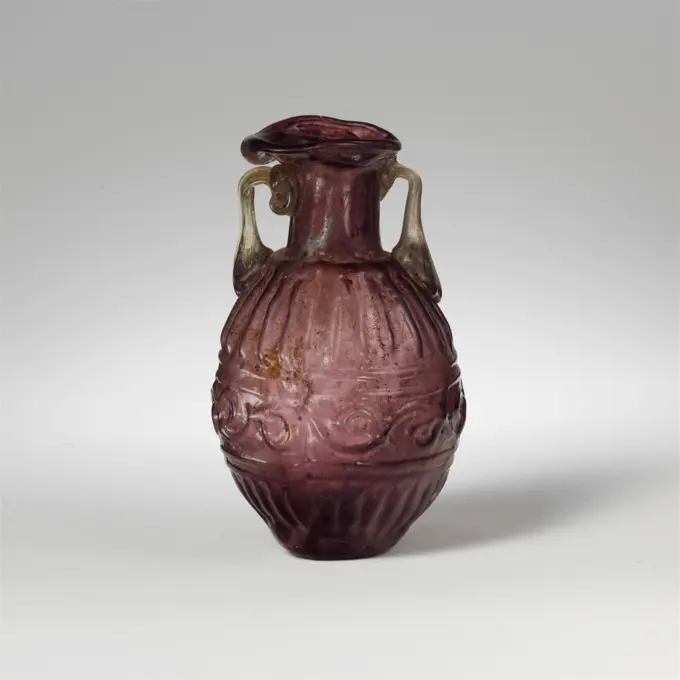
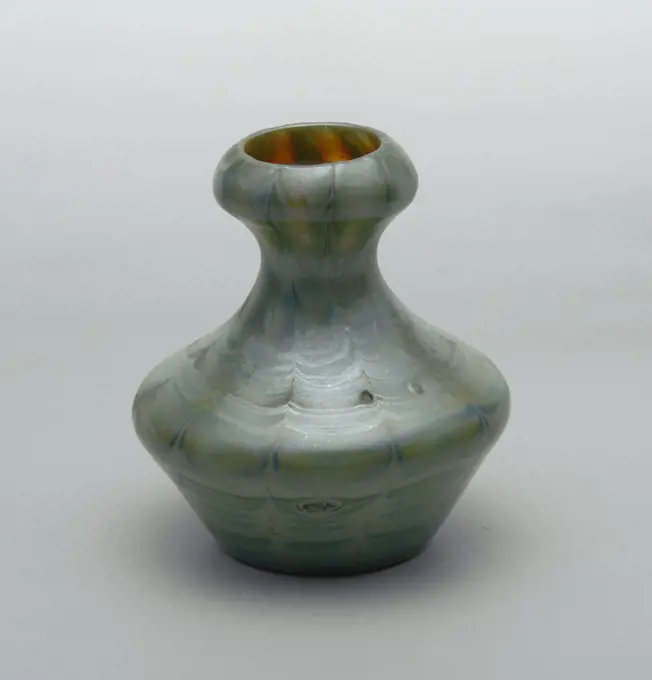
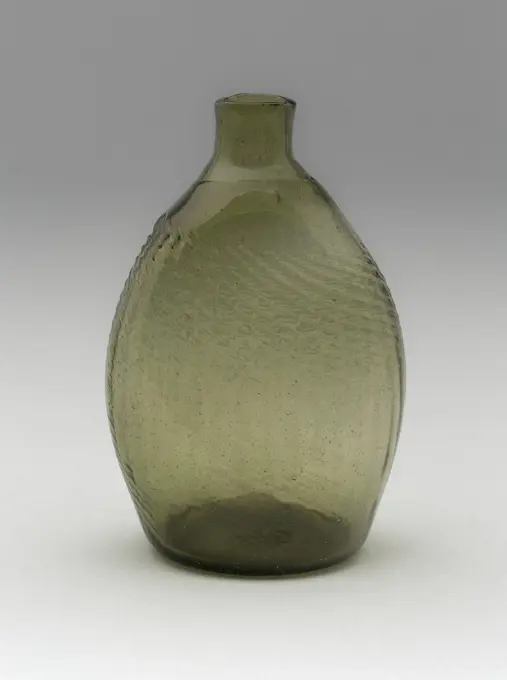
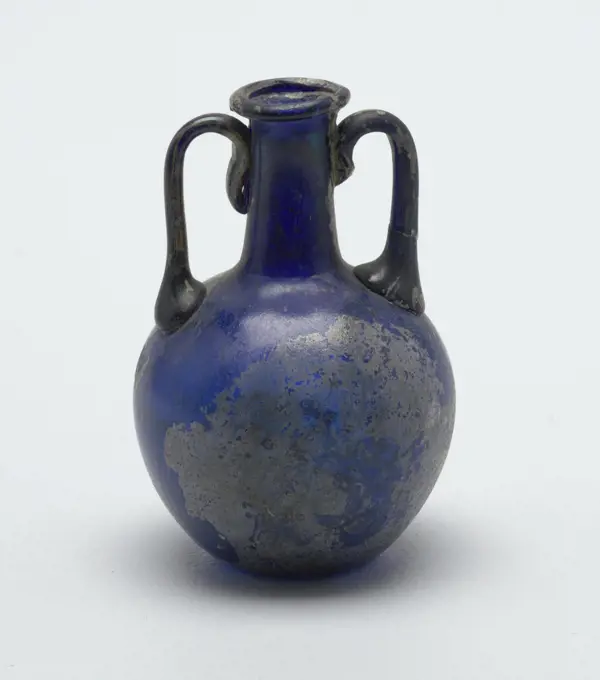
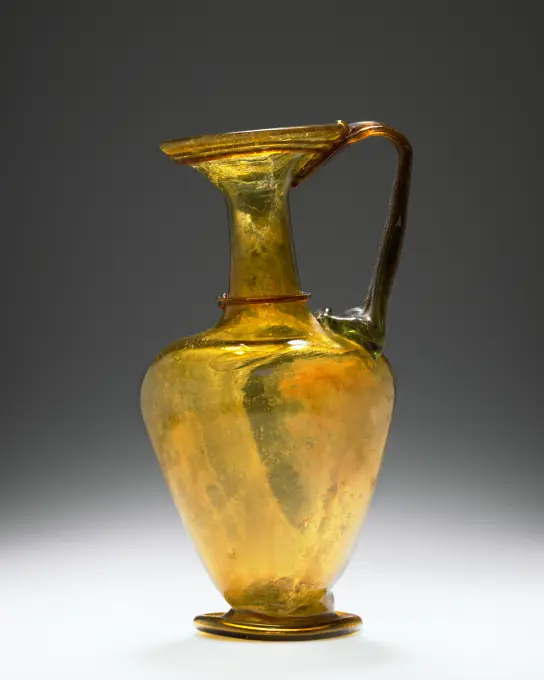
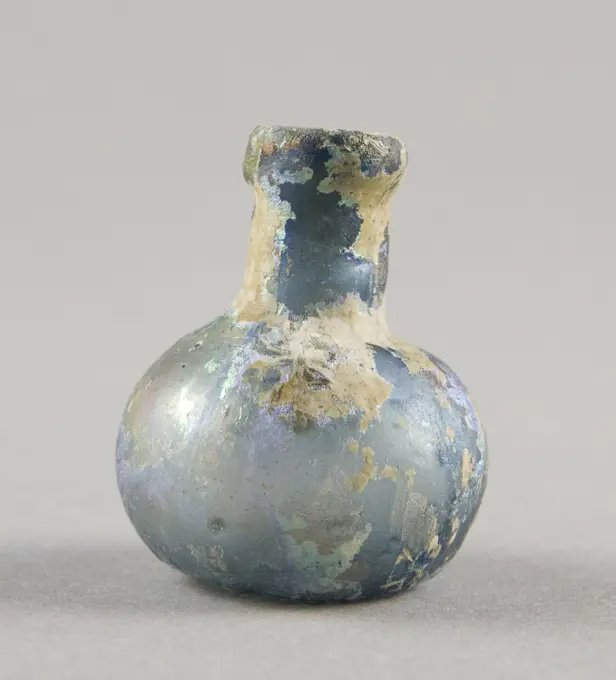
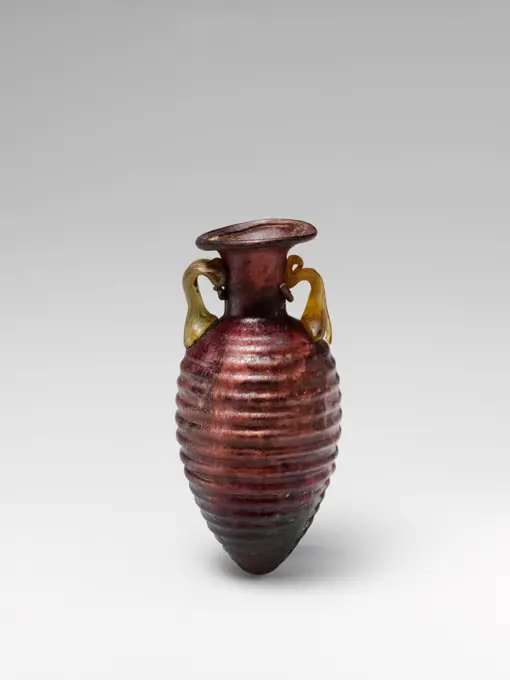
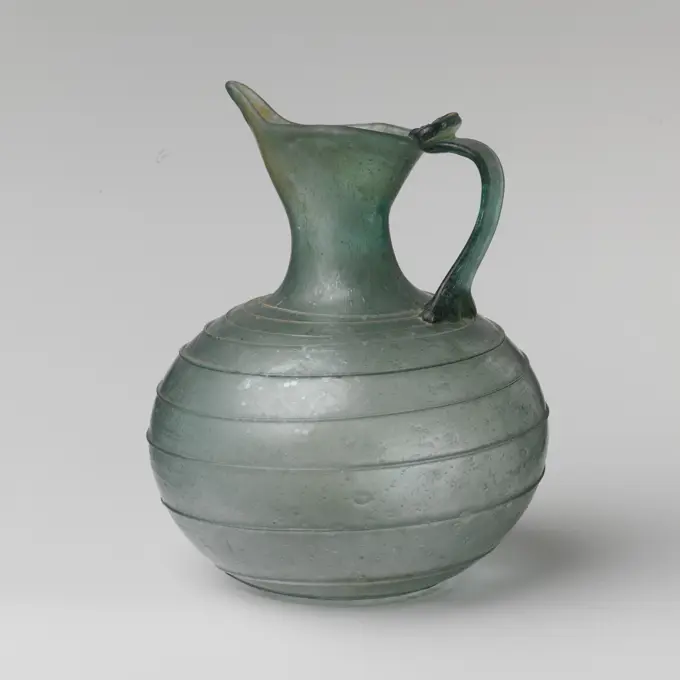
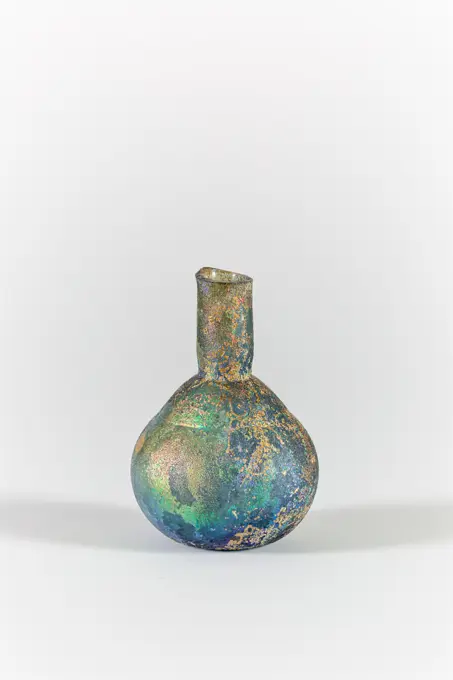
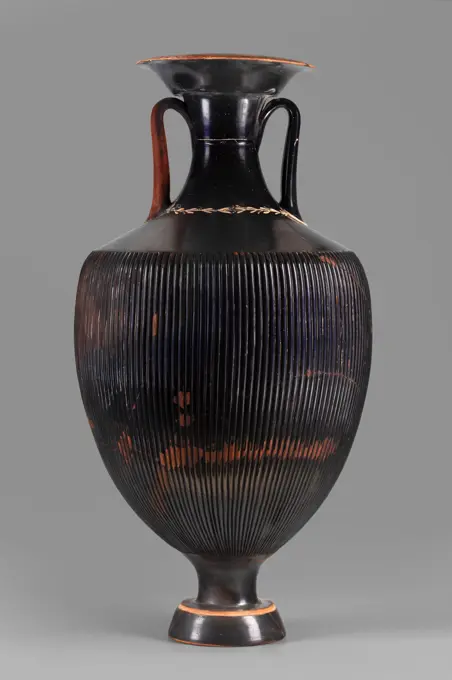
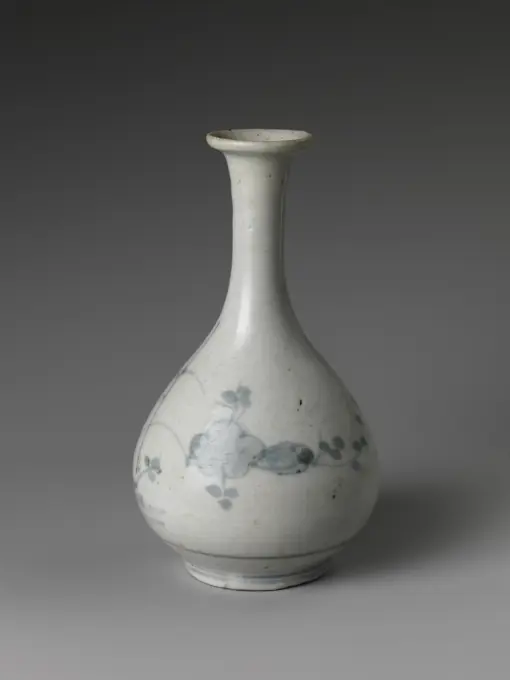
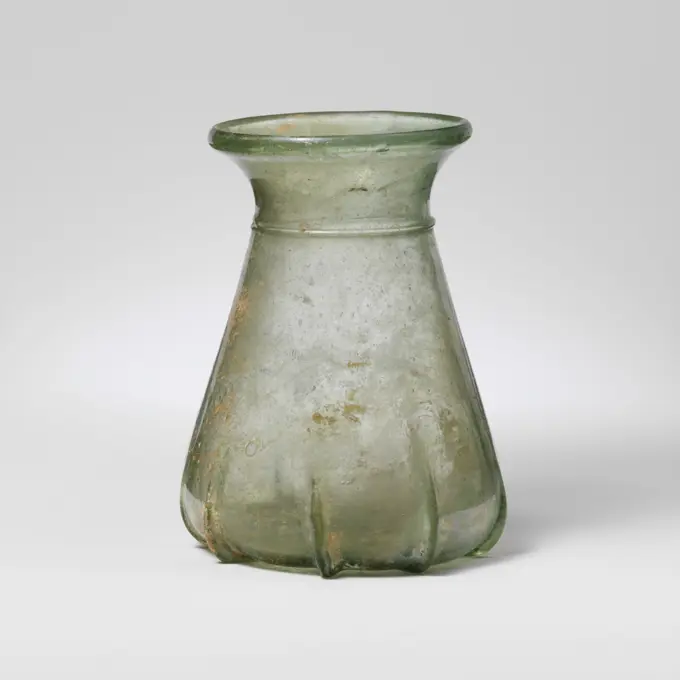
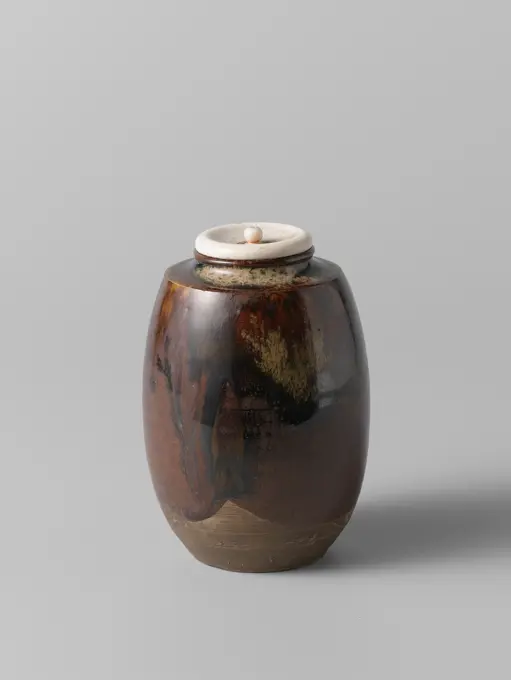
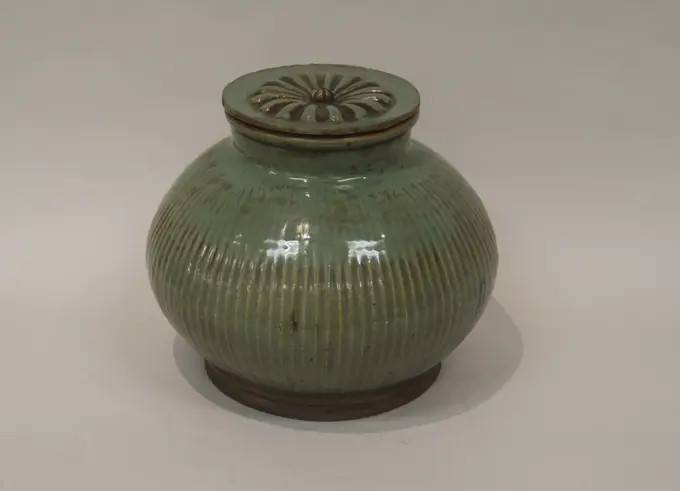
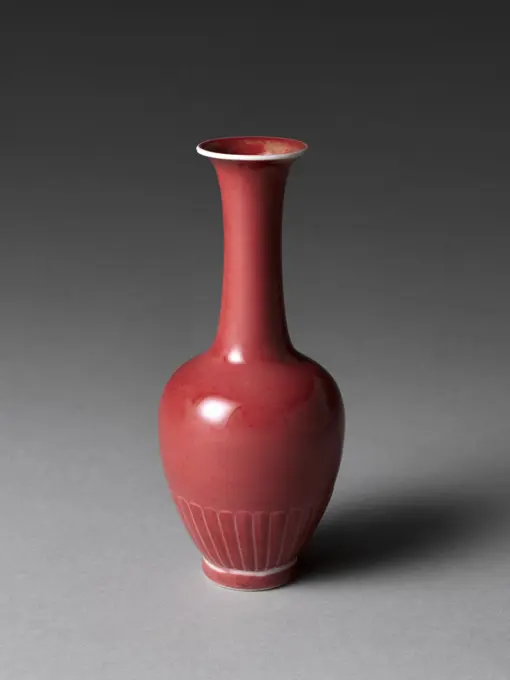
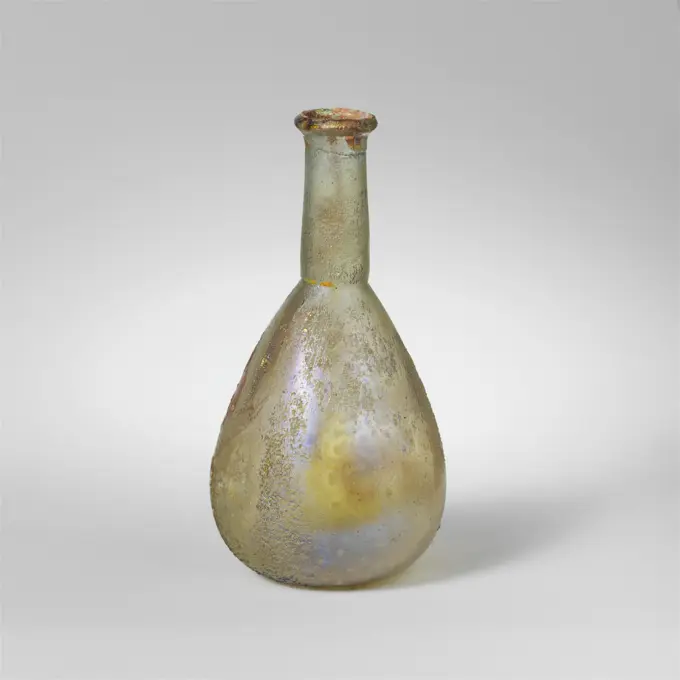
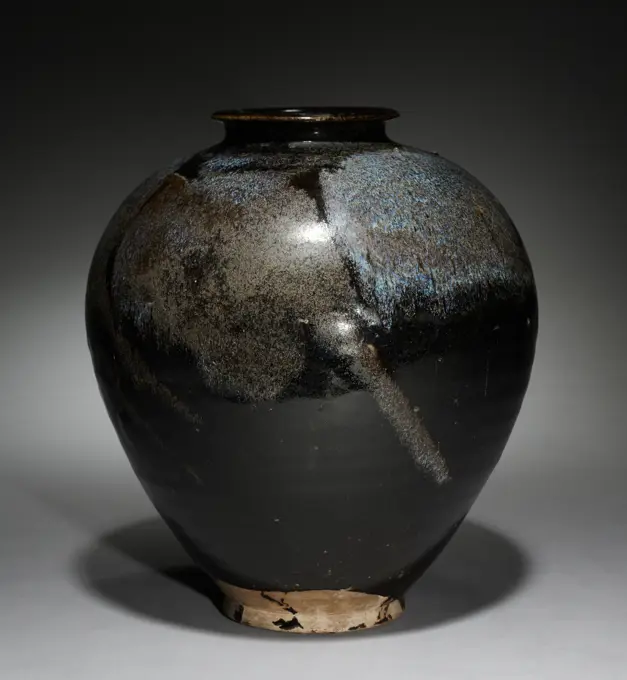
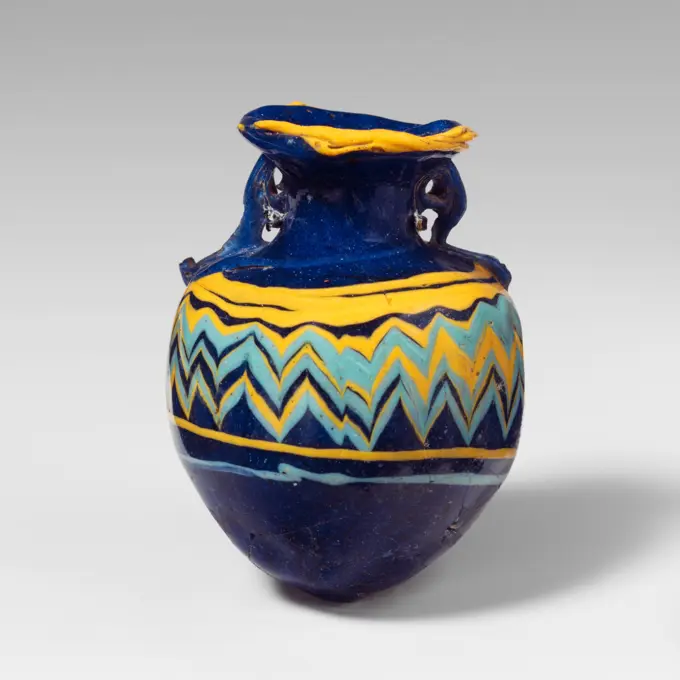
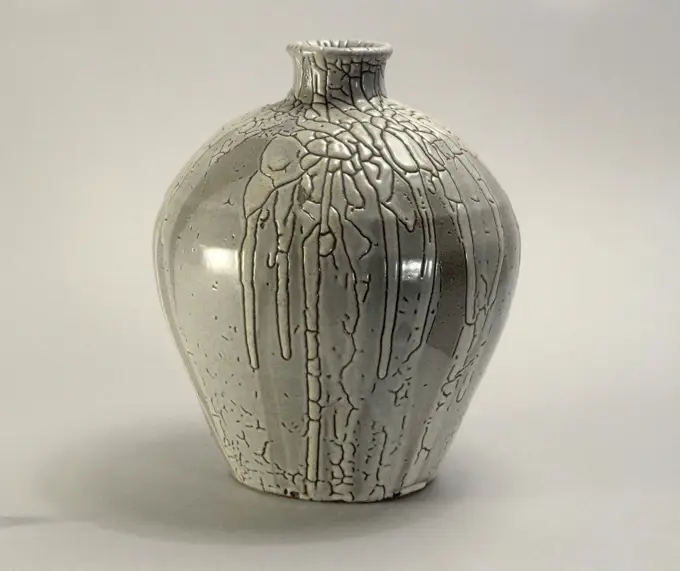
Glass indented jar. Culture: Roman. Dimensions: H.: 5 1/2 in. (14 cm). Date: 2nd-4th century A.D..Translucent pale blue green; base ring in same color.Slightly outsplayed, uneven, knocked-off rim; tall and broad cylindrical neck, with hollow folded flange at base; sloping shoulder; bulbous body with side tapering downwards; circular, applied base ring; almost flat bottom.On body, nine elongated, vertical indents.Intact; many pinprick and a few larger bubbles, and blowing striations; iridescence and small patches of soil encrustation and weathering on exterior; thick soil deposits on interior, covering brilliant iridescent weathering.With nine indents on body. Museum: Metropolitan Museum of Art, New York, USA.Jar ". Sandstone, white slip, covered celadon. China, Song dynasty (960-1279) / Yuan (1279-1368). Paris, Cernuschi museum. Chinese art, Chinese Ceramic, container, Song dynasty, Yuan dynasty, Song time, Yuan time, jar, container, terracottaGlass jar 2nd-3rd century A.D. Roman Translucent pale blue green.Tubular rim, folded out, down, round, and pressed into top of outsplayed mouth; short, cylindrical neck; shoulder sloping out to join bulbous body; pushed-in bottom.Intact; pinprick and some larger bubbles; slight encrustation and iridescent weathering on exterior, thick soil encrustation, weathering, and brilliant iridescence on interior.. Glass jar 245276Glass jar 2nd-3rd century A.D. Roman, Asia Minor Translucent pale purple.Tubular rim, folded out, round, and in, and pressed flat into side of broad, flaring mouth; concave, cylindrical neck; squat, bulbous body; shallow kick in bottom, with trace of large pontil mark.Intact; pinprick and larger bubbles, with a few glassy inclusions; dulling and faint iridescent weathering on exterior, patches of soil encrustation, brown weathering, and brilliant iridescence on interior.. Glass jar 245410Jar with a green glaze, anonymous, c. 1368 - c. 1644 Pot of stoneware with a spherical body and short neck, covered with a dark green, crawling glaze. A chip in the edge restored and gilded. Celadon. China stoneware. glaze vitrification Pot of stoneware with a spherical body and short neck, covered with a dark green, crawling glaze. A chip in the edge restored and gilded. Celadon. China stoneware. glaze vitrificationGlass spouted jug. Culture: Roman. Dimensions: H.: 5 7/16 in. (13.8 cm). Date: 2nd-3rd century A.D..Translucent deep blue green; handle in same color.Oval, outsplayed rim with vertical, rounded and thickened lip; upward-projecting spout at front and indents in sides below; neck expands downwards; globular body; thick, tubular, base ring; pushed-in bottom with pontil scar; three-ribbed handle applied to upper body, drawn up and outwards, then turned in horizontally and pressed onto top of back of rim with small, flattened, projecting thumb rest.Intact; many bubbles, blowing striations, and a few glassy inclusions; dulling, and patches of brownish weathering and iridescence.With pointed mouth and globular body; greenish. Museum: Metropolitan Museum of Art, New York, USA.Glass amphoriskos (perfume flask) 1st century A.D. Roman, Syrian Translucent, slightly streaky purple, with handles in colorless glass with a smoky green tinge.Misshapen tubular rim, folded out, over, and in, forming irregular flaring mouth; cylindrical neck; very narrow horizontal shoulder; ovoid body; cylindrical base, with flat but uneven bottom; two small rod handle attached in a claw pad to top of body, drawn up, round, and in, and trailed onto upper part of neck. One prominent continuous mold seam down neck, around body, and across bottom.On body, frieze of twenty-two downturned rounded ribs on upper body and twenty-eight upturned rounded ribs on lower body, joined by a central band of tendril scrolls bordered above and below by two horizontal raised lines.Intact; some bubbles; faint iridescence on exterior, some weathering and iridescence on interior.. Glass amphoriskos (perfume flask). Roman, Syrian. 1st century A.D.. Glass; blown in a two-part mold. Early Imperial. GlassVessel with Lug Handles 4000 BCE-2250 BCE Egypt. This jar was carved from very hard stone using a simple drill fitted with a copper tip. The small lug handles allowed for it to be suspended by cords. Vessels like this one were probably used for the storage of ointment or liquids.. Stone . Ancient EgyptianGlass sprinkler flask. Culture: Roman. Dimensions: H.: 3 x 2 1/2 x 1 1/2 in. (7.6 x 6.4 x 3.8 cm). Date: 4th century A.D..Translucent pale green with blue tinge.Broad horizontal rim folded out, down, round, and in; cylindrical neck, with constriction at base; globular body; small concave bottom. Tow prominent mold seams run down sides of body.On body, overlapping lozenge pattern of small raised knobs, indistinct at top and bottom.Intact, except for two tiny holes in body; some bubbles; dulling, pitting of surface large bubbles, iridescence, and patches of encrusted weathering on exterior, encrustation and brilliant iridescent weathering on interior. Museum: Metropolitan Museum of Art, New York, USA.Bottle Vase 14th century China. Bottle Vase 50548Globular Jar. China. Date: 618 AD-906 AD. Dimensions: H. 13.7 cm (5 3/8 in.); diam. 13.4 cm (5 1/4 in.). Earthenware with amber glaze. Origin: China. Museum: The Chicago Art Institute, Chicago, USA.Vase, Tiffany Glass and Decorating Company, American, 1892 - 1900, Mold-blown favrile glass, Opaque, predominantly green with yellow and blue, marbleized. Low angled broad shoulder, convex bulge below mouth., New York, NY, USA, ca. 1900-03, glasswares, Decorative Arts, VaseFlask c 1790-1830 Midwest. Pattern-molded glass . Artist unknownVase Necel, Franciszek (1868 1935)Amphora, glass, Iridized cobalt blue globular body and tapering cylindrical neck with circular, rimmed mouth; two applied, curved handles from neck to shoulder., Syria, 3rd-4th century, glasswares, Decorative Arts, amphora, amphoraGlass jug in the form of a pine cone. Culture: Roman. Dimensions: H.: 4 3/8 in. (11.1 cm). Date: 2nd half of the 1st century A.D..Translucent blue green; handle in same color.Misshapen thick, everted rim with fire-rounded lip, half turned downwards, half flaring upwards; cylindrical neck expanding downwards; plain, convex shoulder; globular body; tall circular base, with slightly concave, uneven bottom; strap handle attached to shoulder and top of body, drawn up and out, then turned in at an acute angle, and trailed on to underside of rim and top of neck. One continuous mold seam around body and across bottom, extending to shoulder and forming a slight ridge across bottom.Body shaped in the form of a pine cone with interlocking domed scales, arranged in diagonal rows.Complete, but two holes in outer edge of base; pinprick bubbles, with some large elongated bubbles in neck; patches of dulling and faint iridescence on exterior, some creamy weathering and brilliant iridescence on intePot and fragment of a pot of gray earth., Anonymous, c. 1400 - c. 1950 Pot and fragment of a pot of light gray earth, three to five legs at the foot. Belongs to pots and fragments with invnr. BK-NM-1693 to BK-NM-1697.  earthenware Pot and fragment of a pot of light gray earth, three to five legs at the foot. Belongs to pots and fragments with invnr. BK-NM-1693 to BK-NM-1697.  earthenwareLekythos (Oil Jar) 400 BCE Greece. During the course of the 5th and 4th centuries B.C., black vessels (commonly called black-glaze vessels) were made with increasing frequency in both Greece and South Italy. Many of them replicate the shape of metal vessels. Others have detailing that is molded or incised. While the quality of these vessels varies greatly, all would have been less expensive than vessels decorated in other contemporary techniques, for example, in red-figure.. terracotta, decorated in the black-glaze technique . Ancient GreekOinochoe. UnknownBottle 1 CE-200 CE Mediterranean Region. Initially affordable only among the wealthy, glass was used in ancient Rome as containers for oils, perfume, and tablewares. The variety of glass-making techniques reveals the changing tastes and fashions over the centuries. During the 1st century CE, cast glass was a novel form that was a luxury for the Roman household, but by the end of the century, the innovation of blown glass allowed for less labor-intensive and less expensive production, which meant people of lesser means could afford it. Blown glass became so popular it nearly supplanted ceramic and even bronze wares in the home.. Glass, blown technique . Ancient MediterraneanGlass amphoriskos with horizontal ribs 2nd half of 1st century A.D. Roman Translucent purple; handles in pale brownish yellow.Rim folded out, over, and in, and flattened into flaring mouth, aslant to cylindrical neck, the lower half of which is indented and bears vertical mold marks in relief below top of handles; ovoid body, tapering to pointed bottom; two handles with two ribs attached to upper body in pads, drawn up and folded onto sides of neck, with trails above. One continuous mold seam around body; mold slightly misaligned.Body decorated with seventeen concentric, horizontal ribs.Intact; some pinprick bubbles; dulling, slight pitting, and faint iridescence on exterior, soil encrustation and iridescent weathering on interior.Purple with yellow handles.. Glass amphoriskos with horizontal ribs. Roman. 2nd half of 1st century A.D.. Glass; blown in a two-part mold. Early Imperial, Flavian. GlassPearshaped Jar With a Gray Glaze. Printed pear-shaped pot of stoneware, with a cracked gray glaze. Two chips in the edge, one of which has been restored.Tankard ca. 1700 Possibly John Dwight. Tankard. Possibly John Dwight (British, 1635-1703) or. British, probably Nottingham. ca. 1700. Salt-glazed earthenware. Ceramics-PotteryPedestaled Vessel with Incised Band Design, 300s. Korea, Proto-Three Kingdoms period (57 BC-AD 668). Earthenware; overall: 26.1 cm (10 1/4 in.); outer diameter: 22.7 cm (8 15/16 in.).Kundika bottle 918 CE-1392 Korea. Bronze .Bottle with Inlaid Chrysanthemum Scroll Design. Korea, Goryeo dynasty (918-1392), 12th century. Furnishings; Accessories. Celadon; Wheel-thrown stoneware with incised and slip-filled decoration and green glazePottery pot on stand, baluster shape, used in the sugar industry, sugar bowl pot holder soil find ceramic earthenware glaze lead glaze, hand-turned glazed earthenware pot on stand. Baluster shape with round shoulder and narrow neck opening. Thick vertical neckline underneath constricted neck Rough shaped stand ring. Pivoting on the shoulder Red chute internal glazed Here sugar cones were made archeology indigenous earthenware sugar confectionery sugar industryJar, 1736-1795. China, Qing dynasty (1644-1911), Qianlong reign (1736-1795). Porcelain with molded decoration and blue glaze; overall: 20 cm (7 7/8 in.).Terracotta alabastron (oil flask). Culture: Greek, Corinthian. Dimensions: H. 4 3/16 in. (10.7 cm). Date: ca. 620-590 B.C..Two confronted lions. Museum: Metropolitan Museum of Art, New York, USA.. Floss-shaped vase of stoneware with an egg-shaped body and short, narrow neck with a turning ring, covered with a cracked dark green glaze. On the shoulder and belly tires with ingrangle, horizontal lines.Toilet vase ca. 1750 B.C. Middle Kingdom. Toilet vase. ca. 1750 B.C.. Travertine (Egyptian alabaster). Middle Kingdom. From Egypt, Memphite Region, Lisht North, cemetery south of pyramid below House A1:1, Pit 885, MMA excavations, 1920-21. Dynasty 13, midMaebyeong with chrysanthemum decoration. Culture: Korea. Dimensions: H. 10 3/4 in. (27.3 cm); Diam. 6 3/8 in. (16.2 cm). Date: 13th century.Maebyeong, a Korean transliteration of the Chinese term meiping (plum bottle), refers to a shape like this vessel's, with rounded shoulders and curved contours as well as a distinctive lip. Museum: Metropolitan Museum of Art, New York, USA.Bottle 17th century Objects like this bottle were typically displayed in open niches in reception rooms of upper-class Syrian residences during the Ottoman period. Bottle. 17th century. Stonepaste; painted under transparent glaze. Attributed to Iran. Ceramics. Stoneware lid pot with a ribbed wall, covered with a translucent green, cracked glaze. The lid has a wavy border with a flower-shaped lid knob. Lid probably not belonging to the pot. Celadon (Longquan).Vase. Porcelain with purplish purple glaze. Epoque Qing (1644-1912). Paris, Cernuschi museum. Asian, ceramic, old ceramic art, Chinese object, porcelain, container, dishesGlass spouted jug 2nd-3rd century A.D. Roman Translucent deep blue green; handle and trail in same color.Oval, outsplayed rim with vertical, rounded and thickened lip; upward-projecting spout at front and indents in sides below; neck expands downwards; globular body; flat bottom; strap handle applied to top of body over trail decoration, drawn up and outwards in a curve, then turned in and pressed onto back of rim with small, flattened, projecting thumb rest.Single trail applied to top of body and wound down in a spiral of 9½ turns, ending around bottom.Intact; very many bubbles and blowing striations; slight dulling and patches of brownish weathering and iridescence.With thread running from neck to foot.. Glass spouted jug 245344Terracotta alabastron (oil flask) ca. 620-590 B.C. Attributed to the Painter of New York 30.115.26 Two confronted lions.. Terracotta alabastron (oil flask). Greek, Corinthian. ca. 620-590 B.C.. Terracotta. Early Corinthian. VasesJar Jar; Manufactured by Rookwood Pottery (United States); Decorated by Maria Longworth Nichols (American, 1849-1932); USA; earthenwareRed polished ware jar ca. 3850-2960 B.C. Predynastic Period. Red polished ware jar. ca. 3850-2960 B.C.. Pottery. Predynastic Period. From Egypt, Southern Upper Egypt, Hierakonpolis (Nekhen), MMA excavationsVase With figures in a Water Landscape and Ornamental Borders. Vase of porcelain with a spherical body, long neck and raised edge, covered with black lacquer inlaid with mother-of-pearl. On the abdomen a river landscape with trees, rocks and a bridge. On the shore a scholar with a servant behind him. On the shoulder, neck and edge decorative tires. Marked on the bottom with an artemisia leaf. A lacquer chip in the edge.Vase. Culture: China. Dimensions: H. 5 in. (12.7 cm). Date: 18th century. Museum: Metropolitan Museum of Art, New York, USA.. Stoneware lid pot with a ribbed wall, covered with a translucent green, cracked glaze. Celadon (Longquan).Glass perfume bottle early-mid-1st century A.D. Roman Translucent light blue.Cylindrical neck, with horizontal tooled indent around base; conical body, curving in to slightly concave bottom.On upper body, a broad horizontal cut groove.Intact body but broken off at top of neck, with rim missing; pinprick bubbles; dulling, deep pitting, and brilliant iridescence.. Glass perfume bottle. Roman. early-mid-1st century A.D.. Glass; blown and cut. Early Imperial, Julio-Claudian. GlassJar 101 CE-300 CE Syria. Glass, blown technique . Ancient RomanGlass unguentarium (perfume bottle). Culture: Greek, Eastern Mediterranean. Dimensions: 4 1/4 × 2 3/8 × 2 1/16 in. (10.8 × 6 × 5.3 cm)Diam. of rim: 7/8 in. (2.3 cm)Diam. of foot: 1 1/16 in. (2.6 cm). Date: 3rd century B.C..Translucent cobalt blue, with handles in same color; trails in opaque white and opaque yellow.Uneven horizontal rim-disk, with rounded edge; tall cylindrical neck; broad sloping shoulder; ovoid body; applied tall outsplayed foot, with rounded edge and deep tooled indent in center of flat bottom; below shoulder, two flattened loop handles projecting at an upward angle from body, applied over trail pattern.A white trail attached to neck and wound down in a spiral and across shoulder, tooled from top of body in a close-set zigzag pattern with deep vertical ribs, then continuing down in a spiral and ending in two horizontal lines around lower body; a yellow trail applied over white halfway down zigzag pattern and continuing immediately below in four close-set horizoBottle with spherical body, anonymous, c. 1725 - c. 1750 Insented soul, slightly narrowing body through rounded shoulders transferred to a highly tuning neck with a high -placed ring. Northwest Europe glass glassblowing Insented soul, slightly narrowing body through rounded shoulders transferred to a highly tuning neck with a high -placed ring. Northwest Europe glass glassblowingDouble-Chambered Bottle early 17th century Inca or Colonial. Double-Chambered Bottle 318607Loom Weight or Vessel 10th-11th century. Loom Weight or Vessel. 10th-11th century. Glass; free blown. Attributed to Iran. GlassBag vase. Acquired from the Atelier de Glatigny on the Paris World Fair 1900Vase. Culture: China. Dimensions: H. 6 1/2 in. (16.5 cm). Museum: Metropolitan Museum of Art, New York, USA.Vase Perriform. Céramic. Par musée musée malée. 78847-20 Asian art, container, vaseAmphora;  5th century BC (-500-00-00--401-00-00);Działyńska, Izabela (1830-1899), Działyńska, Izabela Elżbieta née Czartoryski (1830-1899)-collection, Działyński, Jan (1829-1880), Greece, classic periodWine bottle from the wreck of the East Indies Hollandia, Anonymous, 1700 - in or before 1743  Wine bottle, continental production, onion-shaped, mouth missing; (1) eroded (16h, belly 15d, base 11d), tcs-kick-up. Netherlands .   SecondWine Bottle with Flowers and Grasses first half of the 17th century Japan The flower pattern on this delicate bottle was painted with soft brushstrokes, resulting in a fluid appearance and pale coloring. The focus on an isolated motif from nature is characteristic of early Imari porcelain, a style that differed from Chinese porcelain, which would later have a profound effect on Japanese wares.This porcelain vessel would have been used as a wine bottle for sake, Japanese rice wine. It belongs to the category of early Imari, which is the first type of porcelain produced in Japan. Works considered early Imari were made from the 1610s to the 1660s. After this point, the style of Japanese porcelain changed drastically due to the stimulation of the industry by the Dutch East India Company, when it began to buy Japanese wares and export them to Europe.. Wine Bottle with Flowers and Grasses. Japan. first half of the 17th century. Porcelain with underglaze blue decoration (Hizen ware, early ImaPitcher ca. 1815 American. Pitcher 5708Glass jar late 3rd to mid-4th century A.D. Roman Translucent blue green, with trail in same color.Plain, rounded rim, with bevelled inner lip; flaring neck; conical body, rounded at base; deep pushed-in bottom with pontil scar at center.Single horizontal trail wound around top of body, then spiral up to end on neck; on lower body extending onto bottom, nine irregular short ribs.Intact; pinprick bubbles and larger bubbles; patches of dulling, pitting, and faint iridescent weathering.. Glass jar 239829. Fabric tea bus or chair of stoneware with an ivory lid, partly covered with a brown glaze. The lower part of the bus is unglazed. Old label on the inside with 'agano / 18th'. Agano.Jar with flowers 16th century China. Jar with flowers. China. 16th century. Stoneware with incised decoration under celadon glaze (Longquan ware). Ming dynasty (1368-1644). CeramicsJar with Cover China. Jar with Cover 48726Jar, 1736-1795. China, Qing dynasty (1644-1911), Qianlong reign (1736-1795). Porcelain with molded decoration and blue glaze; overall: 20 cm (7 7/8 in.).Terracotta hydria (water jar). Culture: Greek, South Italian, Apulian. Dimensions: H. 8 1/8 in. (20.6 cm). Date: ca. 350-300 B.C..On the neck is a laurel wreath. Museum: Metropolitan Museum of Art, New York, USA.Vase. "Ge" type covered porcelain. Paris, Cernuschi museum. 78840-16 Asian art, container, vaseJar, 11th century, 4 1/2 x 4 1/4 x 4 1/4 in. (11.43 x 10.8 x 10.8 cm), Chu-lu-hsien ware (Tzu-chou family) Stoneware with white slip under clear glaze, China, 11th century, Plain white wares are amongst the earliest of the Tz'u-chou type wares. Produced from the tenth through the twelfth centuries, undecorated utilitarian white wares have been found at nearly every known Tz'u-chou kiln site of this period. Pieces in the group are made of the basic materials of most Tz'u-chou type wares, a greyish clay body covered with a white slip under a transparent colorless glaze. Several of these vessels have been excavated at Chu-lu-hsien, Honan province.. Dust tea bus or chair of stoneware with an ivory lid, partly covered with a light brown glaze. The lower part of the bus is unglazed. Shigaraki.Pitcher 1847-48 Fenton's Works. Pitcher 5791Vase, c. 1900. Pierre Adrien Dalpayrat (French, 1844-1910). Stoneware; overall: 19.7 cm (7 3/4 in.).Pitcher. England, Staffordshire, 1820-1850. Furnishings; Serviceware. Earthenware, transfer painted, lustreVase Necel, Franciszek (1868 1935)Antique glass 1898, Middle EastVase, 1-200. Parthian, 1st-2nd Century. Terracotta; overall: 25.4 cm (10 in.).Belly (bell or hammer) bottle, belly bottle bottle holder soil find glass, free blown and shaped glass application Circular bottle in clear green glass. (Sand) pontilemark under wide (dm 8.5) raised bottom In body around bursting and drop-shaped hole of which three shards remain Wall rises almost vertically to convex shoulders and rejuvenated neck with imposed all-round sharp glass thread under slightly dilated lip archeology packaging. Can of brown pottery, flatted spherical body with cylindrical long neck with spout and ear between mouth edge and shoulder. Painted in green, yellow, turquoise, blue, black and white, with a stylized flower pattern.Aryballos. UnknownJug with incised lines, anonymous, c. 1600  Small can be made of stoneware on a high base with a spherical body and narrow neck with pinched spout. The C-shaped ear is attached to the neck and shoulder. Profiles on the neck and foot. The neck has been broken and filled with wax. Frechen/ raeren. Frechen (possibly) stoneware. glaze. wax vitrificationCovered Oil Bottle with Peony Sprays 1100-1199 Korean Peninsula. Stoneware with underglaze incised decoration .AryballosVase, conically shaped, with multi-colored decor, N.V. Plateelbakkerij Ram, Theo Colenbrander, Willem Elstrodt, c. 1925Alabastron; Eastern Mediterranean; 6th - 4th century B.C; Glass; 10.4 cm (4 1,8 in.)Glass jug 1st-2nd century A.D. Roman Translucent blue green, with same color handle.Rim folded out, down, round, up and into mouth, with beveled surface; cylindrical neck, slightly expanding downward, with slight tooling marks around the base; sloping shoulder with rounded corners; square body with slightly concave sides; uneven, concave bottom; strap handle with three ribs, applied to edge of shoulder, drawn up vertically, then bent in and down, and attached to neck with backward trail above.Intact, except for one small weathered chip in rim; pinprick and a few larger bubbles, blowing striations; many vertical scratches on sides, and dulling, pitting, and iridescence on exterior, one patch of limy weathering on interior.. Glass jug 245184One-handled Jug. UnknownVase with Ossenbloedrode überfang, Royal Leerdam Crystal, 1928 - 1929 Light soil inserted. Spherical body transfer in a short neck, free -blown and formed. Ossebloedrode überfang, broken open in a reducing fire. The underside of the body illized. A strong gold gloss in the broken parts. Marked with the Diamant Leerdam Unica C.J. Lanooy E54. Leerdam glass glassblowing / iridescence Light soil inserted. Spherical body transfer in a short neck, free -blown and formed. Ossebloedrode überfang, broken open in a reducing fire. The underside of the body illized. A strong gold gloss in the broken parts. Marked with the Diamant Leerdam Unica C.J. Lanooy E54. Leerdam glass glassblowing / iridescenceJar China. Jar 52639Pot of white -baking clay, with yellow glaze on the inside and on the outside of green glaze, damaged, anonymous, 1500 - 1799   earthenware. glaze   earthenware. glazeFlat Flask 401 CE-600 CE Byzantine Empire. Glass vessels were part of the luxurious domestic decoration displayed in wealthy households in both urban villas and rural estates in the later Roman and early Byzantine eras (about 300ñ725), and were used for a variety of purposes, including cosmetic containers, pitchers for water or wine, and small cup for drinking. Byzantine glass craftsmen improved upon the techniques, forms, and decorative motifs they had inherited from their Roman predecessors. An imperial edict of 337 exempted glassworkers from personal taxes and attested to their relative status in society; it remained in effect for several centuries.. Glass, blown technique . ByzantineVase 1678-88 China. Vase. China. 1678-88. Porcelain with peach-bloom glaze (Jingdezhen ware); Tiffany stand. Qing dynasty (1644-1911), Kangxi mark and period (1662-1722). CeramicsDateFlaskGlass perfume bottle 1st century A.D. Roman Colorless with greenish tinge.Small rim, folded out, over, and in; tall, cylindrical neck, tooled in at base; piriform body; flat bottom.Broken and repaired on neck below rim; many pinprick bubbles; deep pitting and iridescent weathering.. Glass perfume bottle 239927Jar: Black Ware, 700s. China, Henan province, Huangdao kilns, Tang dynasty (618-907). Glazed stoneware; diameter: 26 cm (10 1/4 in.); overall: 29.3 cm (11 9/16 in.).. Fabric tea bus or chair of stoneware with an ivory lid, partially covered with a green-brown glaze. The bottom of the bus is unglazed. Old label on the inside with 'Satsuma / Prov. Osumi / (Kimmel) '. Tamba.Tea caddy with a brown glaze, anonymous, anonymous, c. 1600 - c. 1699 Dust bar or Chare of stoneware with an ivory lid, partially covered with a brown glaze. The lower part of the bus is unglazed. Old label on the bottom with 'W616'. Sobokai. Japan stoneware. glaze. deksel: ivory painting Dust bar or Chare of stoneware with an ivory lid, partially covered with a brown glaze. The lower part of the bus is unglazed. Old label on the bottom with 'W616'. Sobokai. Japan stoneware. glaze. deksel: ivory paintingCan, spherical, painted with medallion and hare. Spherical can of Multicolor painted majolica. The can have a foot, a squeezed spout and a wide ear. Under the spout is a medallion painted in which a ground on which a hare and above which a blue background in which a yellow rosette with a blue wreath.Glass perfume bottle 2nd-3rd century A.D. Roman Large candlestick unguentarium.Translucent pale blue green.Tubular rim folded out, over, and in; flaring mouth; tall cylindrical neck, expanding downwards; very narrow horizontal shoulder; squat bulbous body, expanding downwards; broad, concave bottom.Intact; many pinprick and a few larger bubbles; dulling and iridescence on exterior; soil encrustation and iridescent weathering on interior.. Glass perfume bottle 244592Hopper of Stoneware. Hopper of Stoneware. The egg-shaped belly is horizontal ribbed and runs into the funnel-shaped neck. The can be decorated with incised leaves.Bottle. Roman; probably coast of Syria or Palestine. Date: 250 AD-500 AD. Dimensions: 24.1 × 16.2 × 16.2 cm (9 1/2 × 6 3/8 × 6 3/8 in.). Glass, mold-blown technique. Origin: Roman Empire. Museum: The Chicago Art Institute, Chicago, USA. Author: ANCIENT ROMAN.Squat, round-bodied bottle vase with a red. Bottle-shaped vase of porcelain with a flat-pressed spherical body, covered with a red (sang de boeuf). Inside the foot edge white glazed. Monochromes.Fragment of round-bellied medicine Bottle, medicine bottle bottle holder soil find glass, free blown and shaped Small (medicine) Bottle in clear light green glass. Pontil mark under raised bottom of which part missing Bunchy body to narrow shoulders long neck and wide horizontal flattened lip, archeology packagingGlass aryballos (perfume bottle) late 6th-5th century B.C. Greek, Eastern Mediterranean Translucent cobalt blue, with same color handles; trails in opaque yellow and opaque turquoise blue. Broad uneven inward-sloping rim-disk; short cylindrical neck; sloping shoulder; ovoid body; convex pointed bottom; two vertical ring handles with knobbed tails, applied over trail decoration, extend from top of body to underside of rim-disk, with a long trail extending from one handle across shoulder to the other; handles are not directly opposite each other but rather more to one side.A yellow trail applied unevenly to outer edge of rim-disk; another yellow trail applied on shoulder and wound spirally, at first in horizontal lines, then tooled into a zigzag pattern around central section of body, formed by shallow vertical tooling indents, where a turquoise blue trail is added, mingling with the yellow; below this, a yellow trail and a turquoise blue trail wound unevenly once around body.Broken and Jean Carriès (1855-1894). Spherical pot in shades of gray, ceramic in enameled sandstone, between 1875 and 1894. Museum of Fine Arts of the city of Paris, small palace. 24072-7 Camaieu, ceramic, gres emaille, gray, spherical potBelly green bottle, belly, belly bottle bottle holder soil find glass, free blown and shaped glass application Bulky bottle in clear green glass. Pontil mark under wide raised bottom Body with almost straight ascending wall (hole 7.0 x 6.0 cm) to straight shoulders and rejuvenated (dm 5.5 - 2.5 cm) neck with imposed all-round flat glass wire and dilated lip archeology packagingPrunus Vase with Peony Spray Design in Underglaze Iron. Korea, Korean, Goryeo dynasty (918-1392), 12th century. Furnishings; Accessories. Wheel-thrown stoneware with brown painted decoration and green glaze