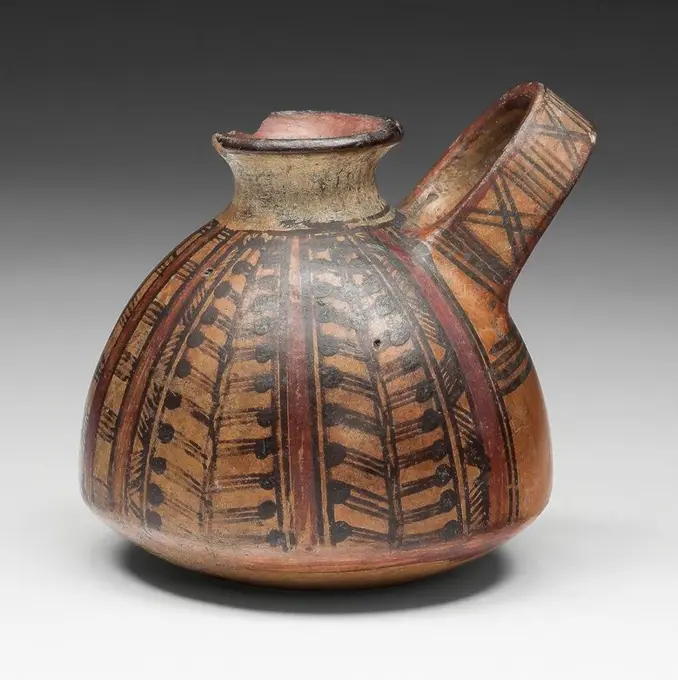
Ancient Glass and Pottery

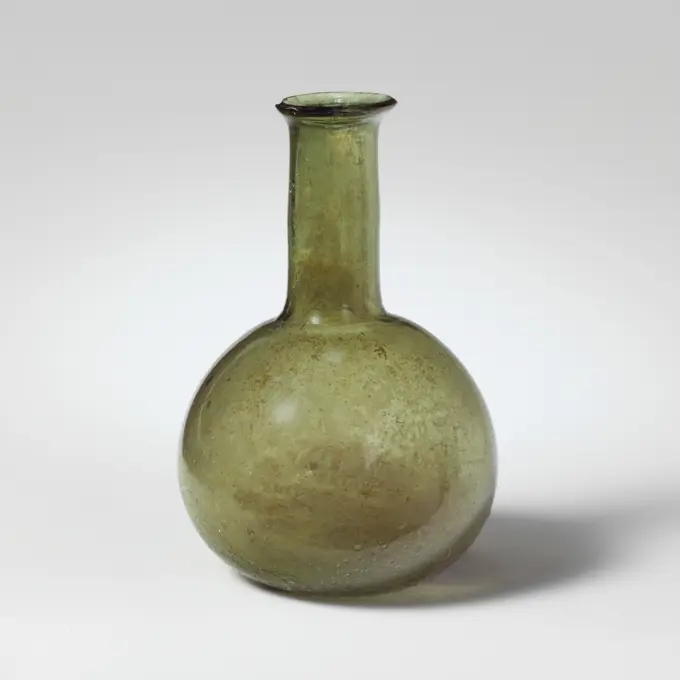
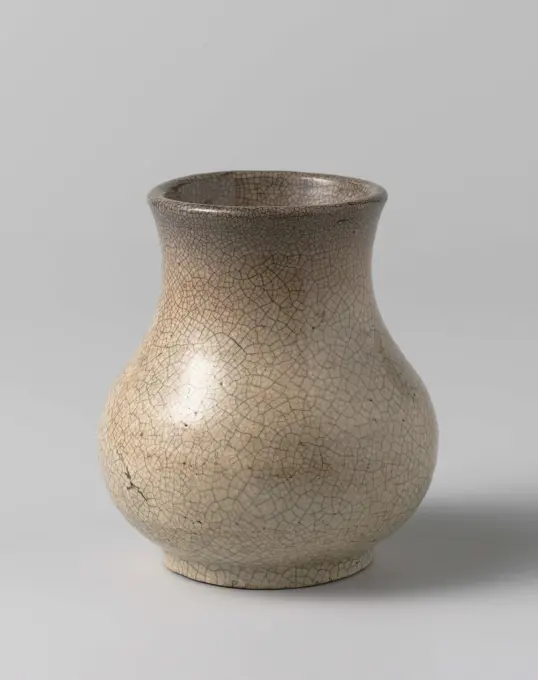
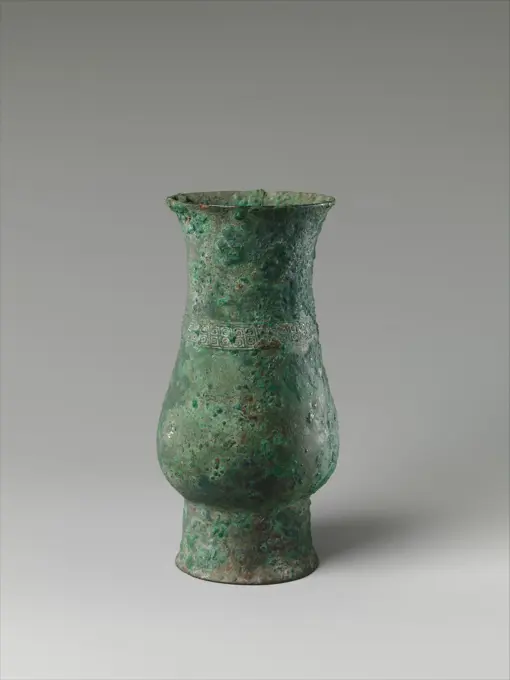
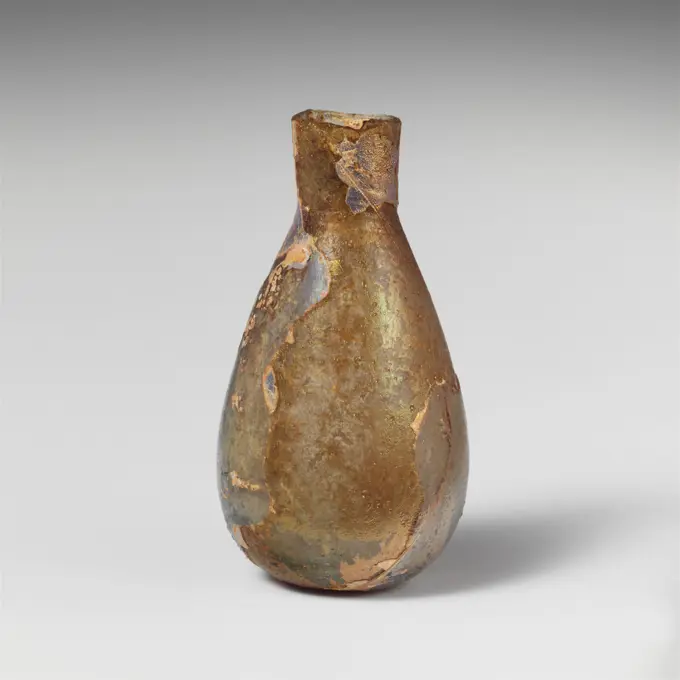
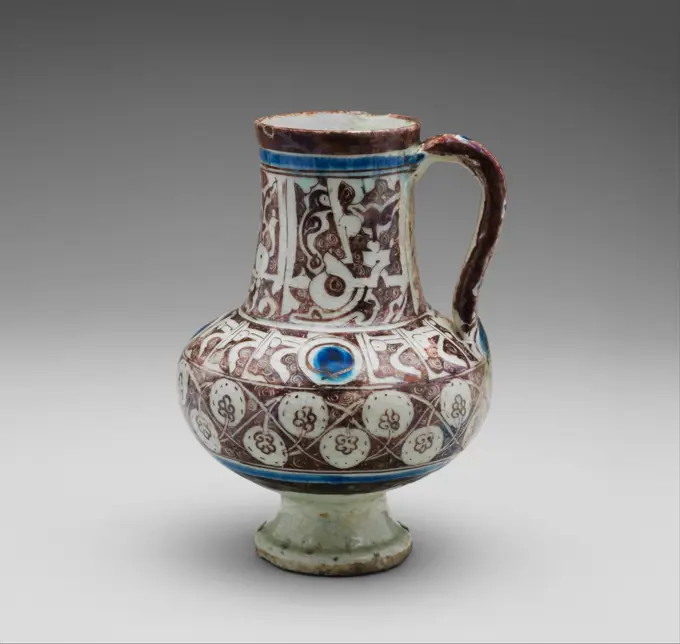
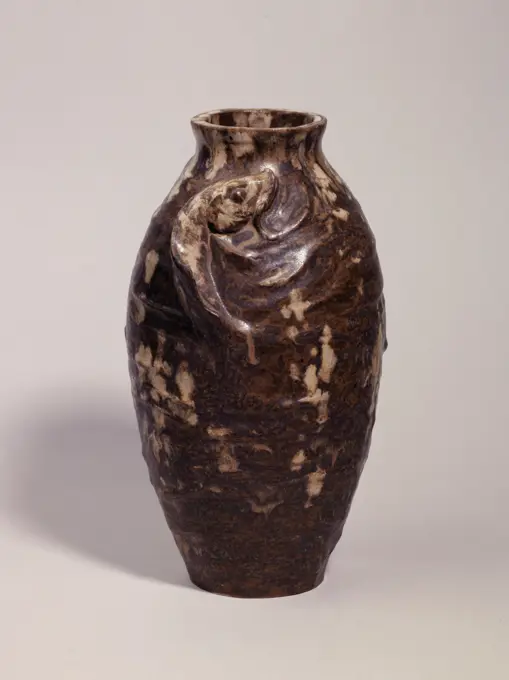
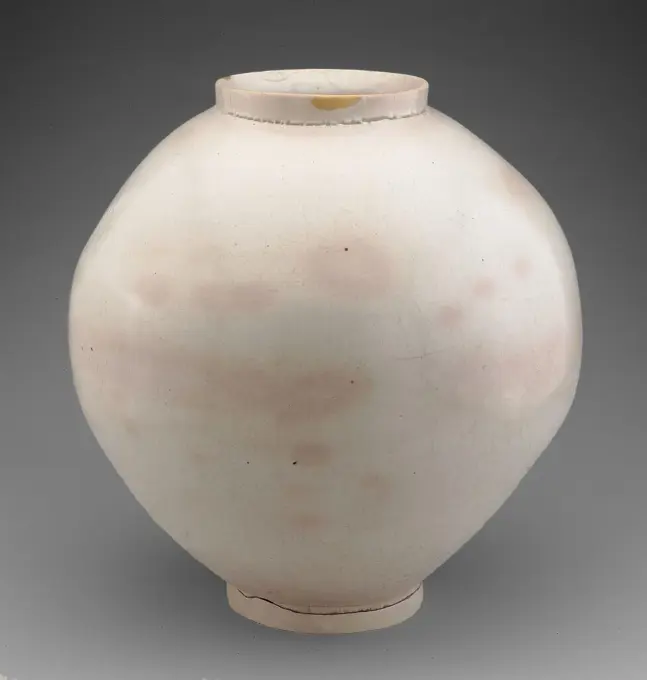
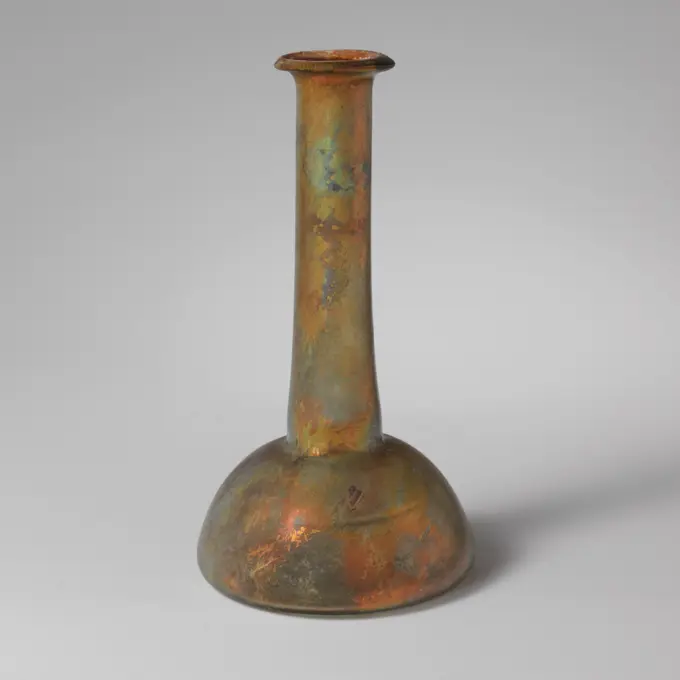
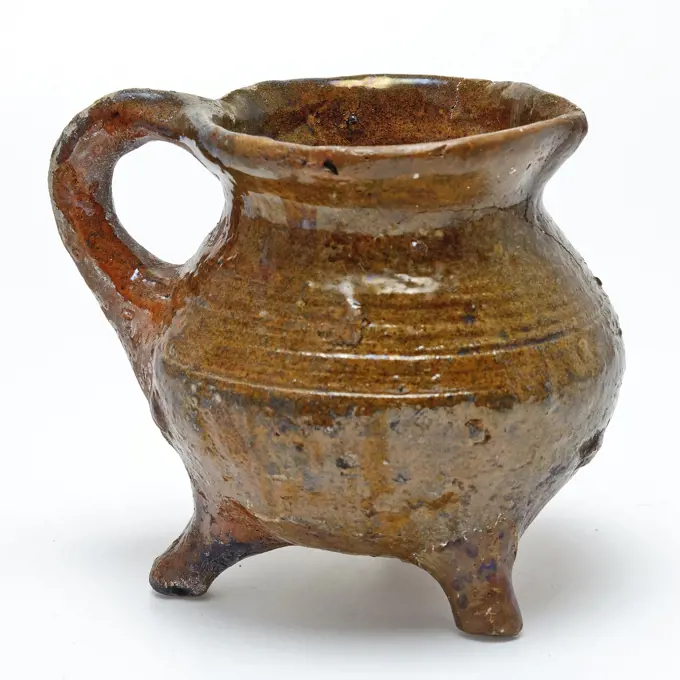
Historic glass flasks and jars from ancient civilizations, displaying unique shapes and weathered textures significant to archaeological studies.
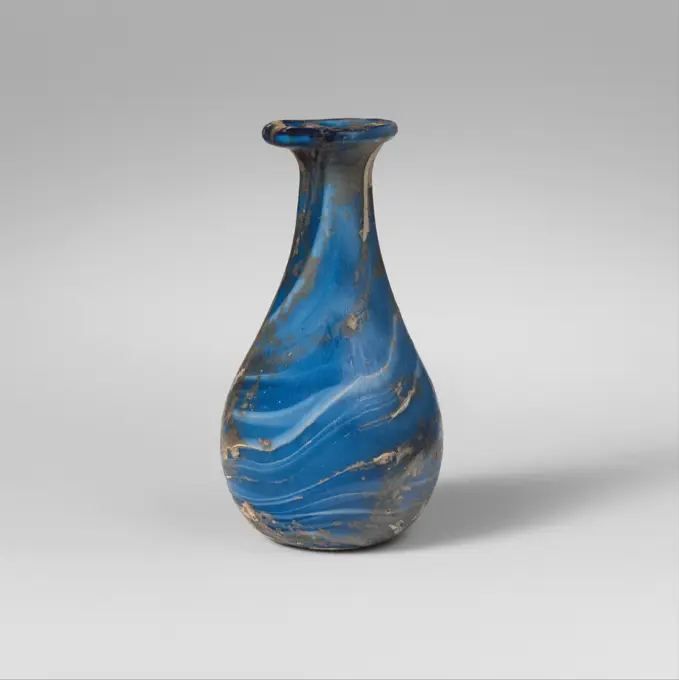
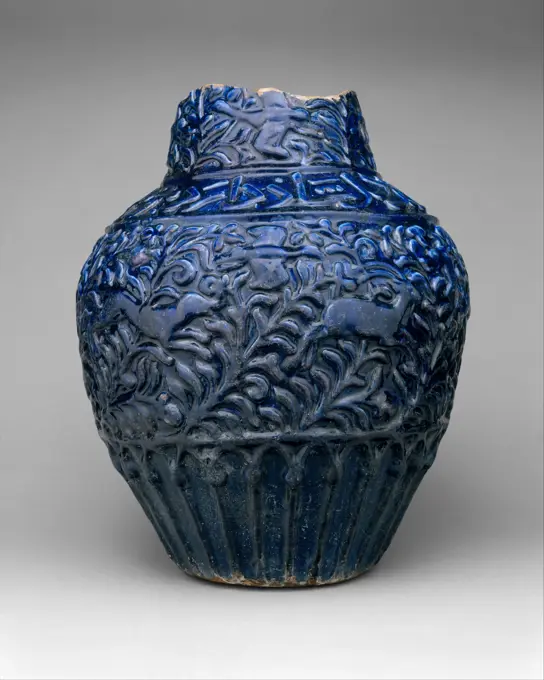
Marbled glass perfume bottle early to mid-1st century A.D. Roman Translucent blue and opaque white.Rim folded out, over, and in, and smoothed into sides of flaring mouth; short, cylindrical neck, expanding downwards to join imperceptibly with ovoid body; flattened, slightly concave bottom. Numerous trails applied to gather and marvered into surface, forming an irregular way pattern extending from rim to bottom.Intact; some bubbles; deep pitting, dulling, and patches of iridescence and creamy white weathering.Oval blue and white blown glass marbled perfume bottle.. Marbled glass perfume bottle 239780
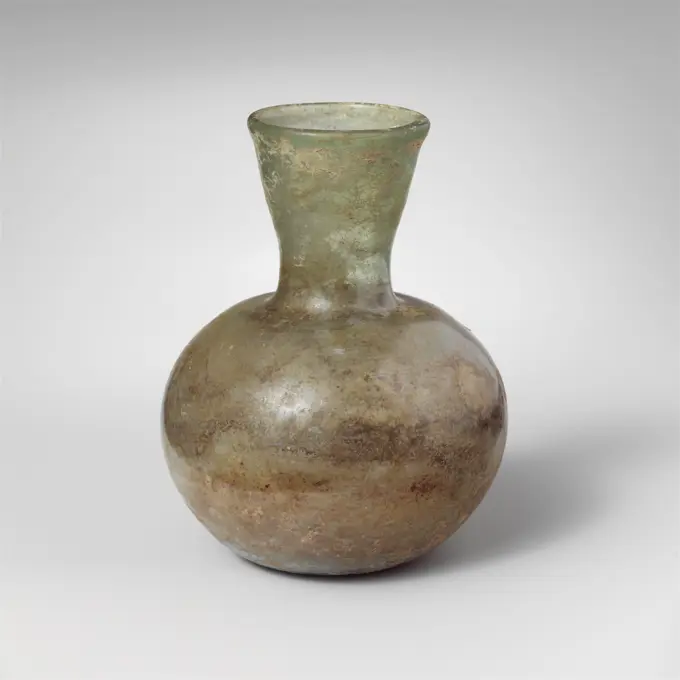
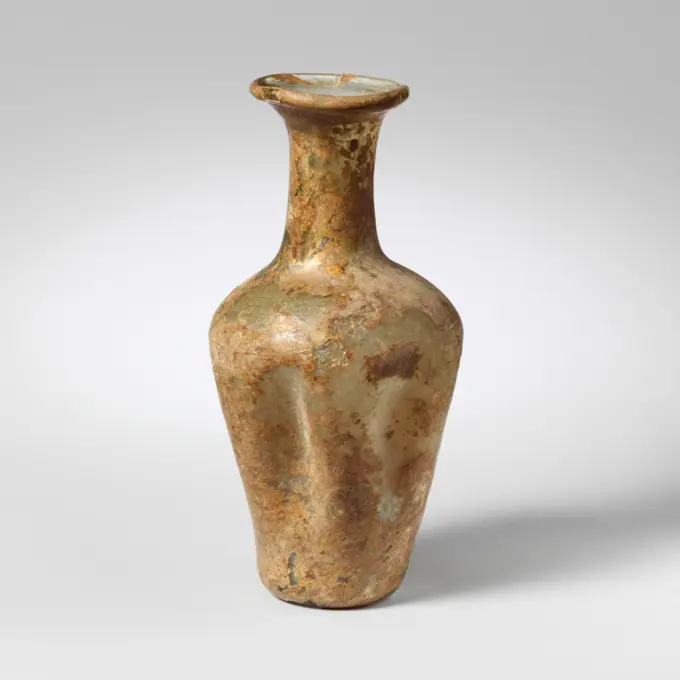
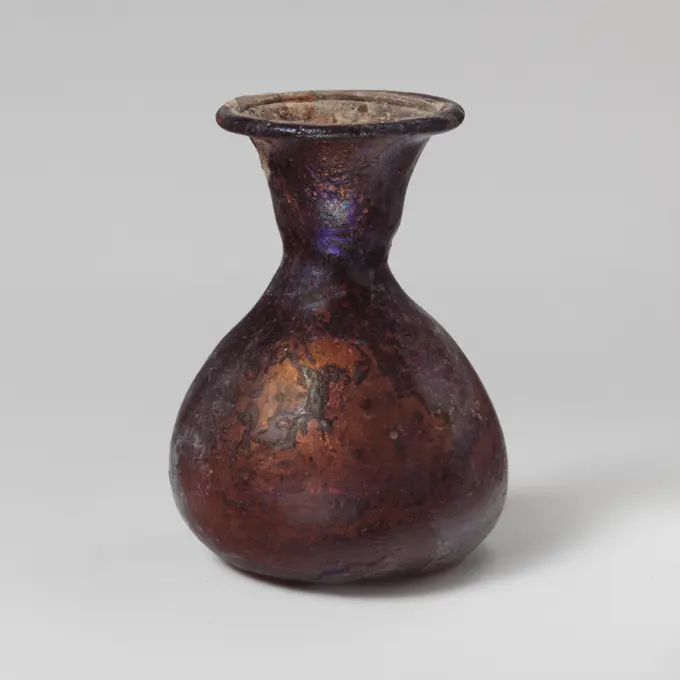
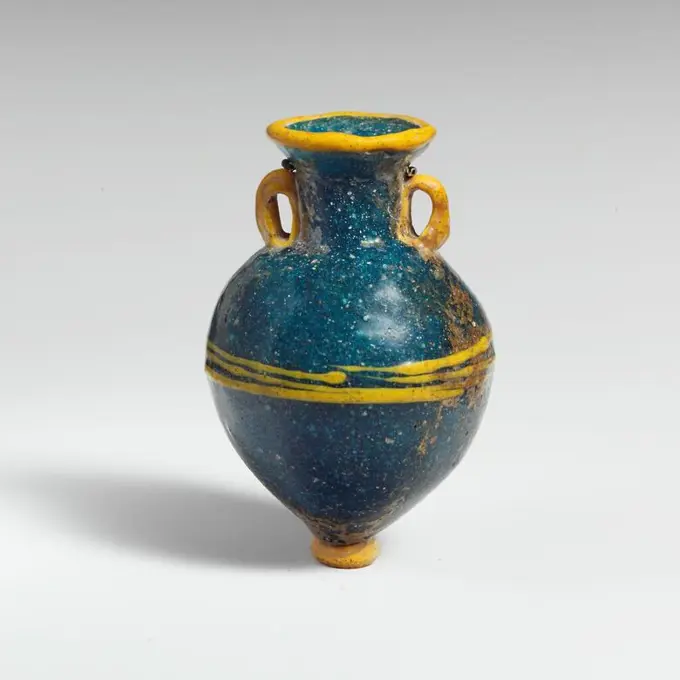
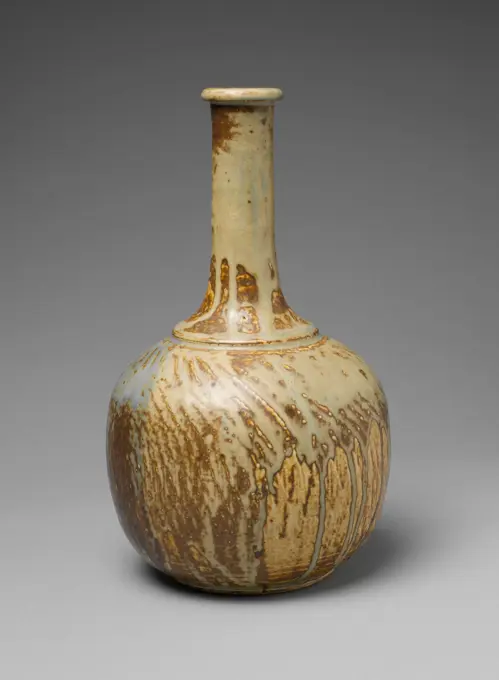
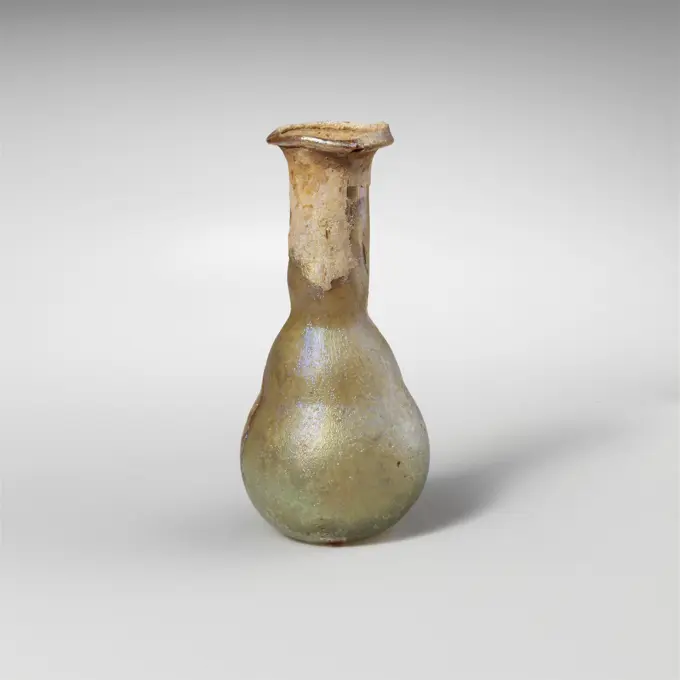
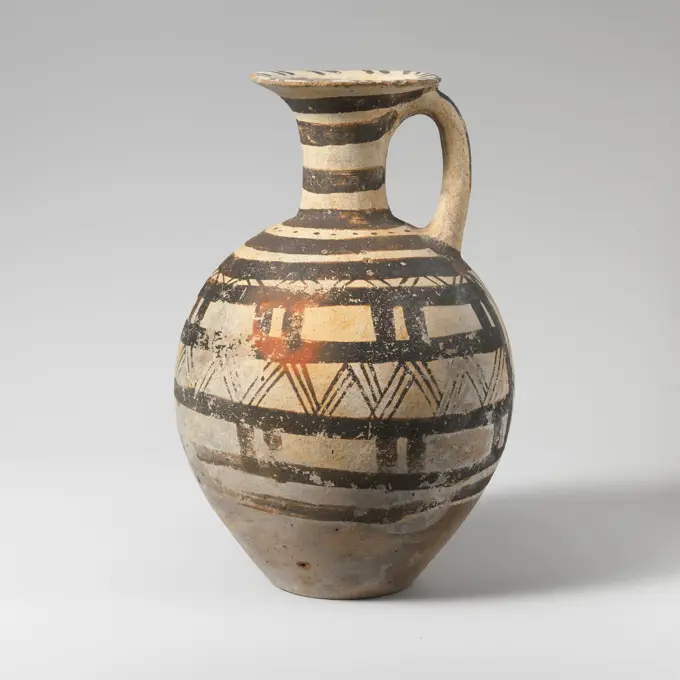
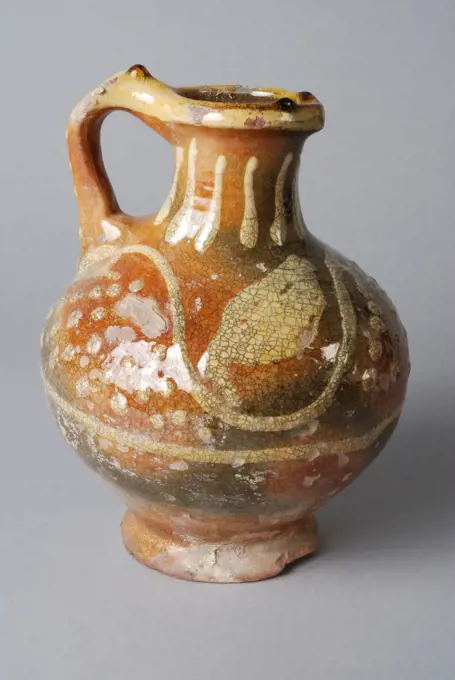
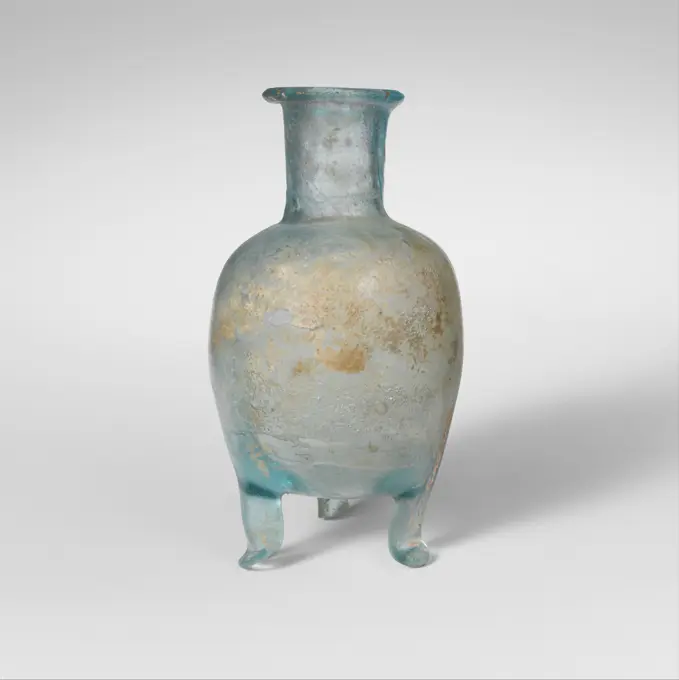
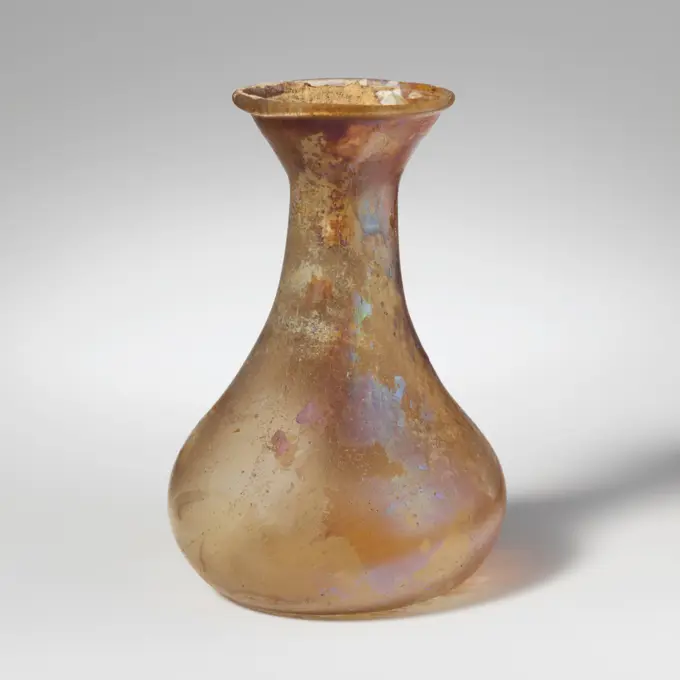
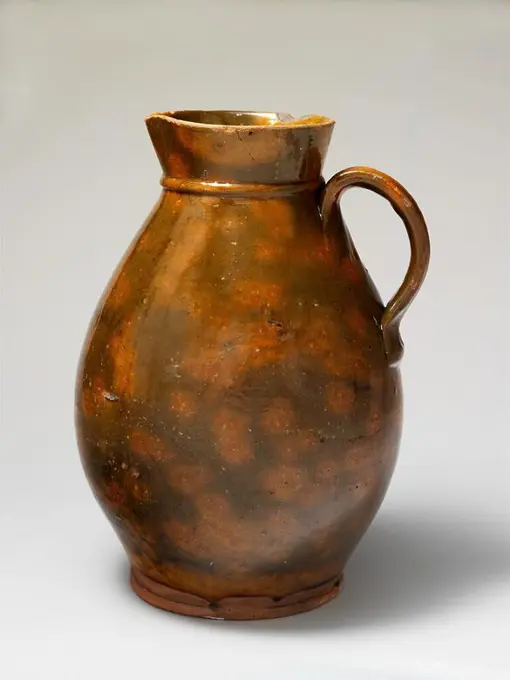
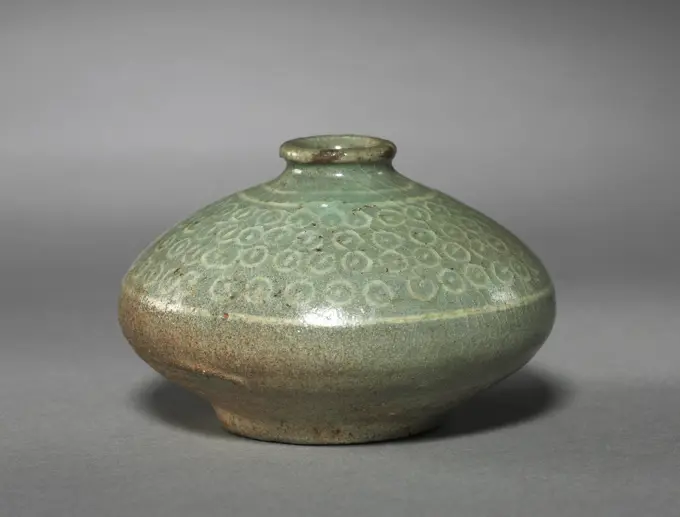
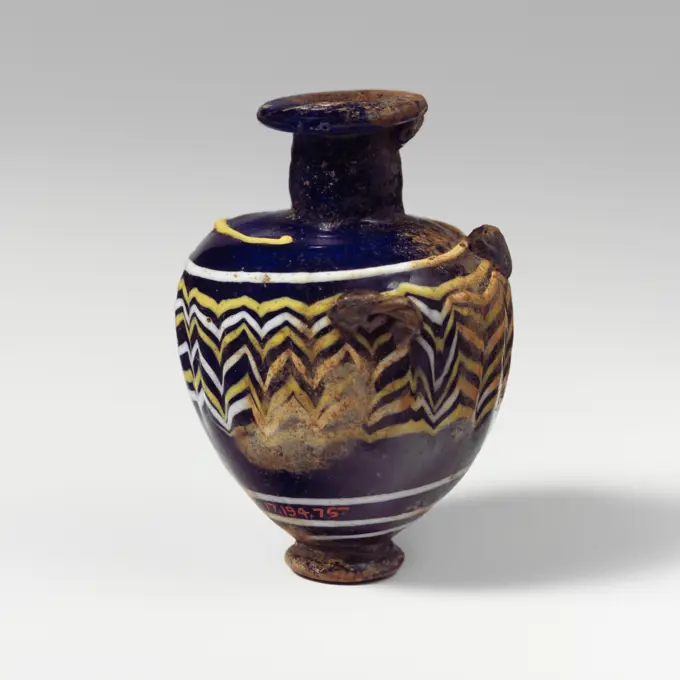
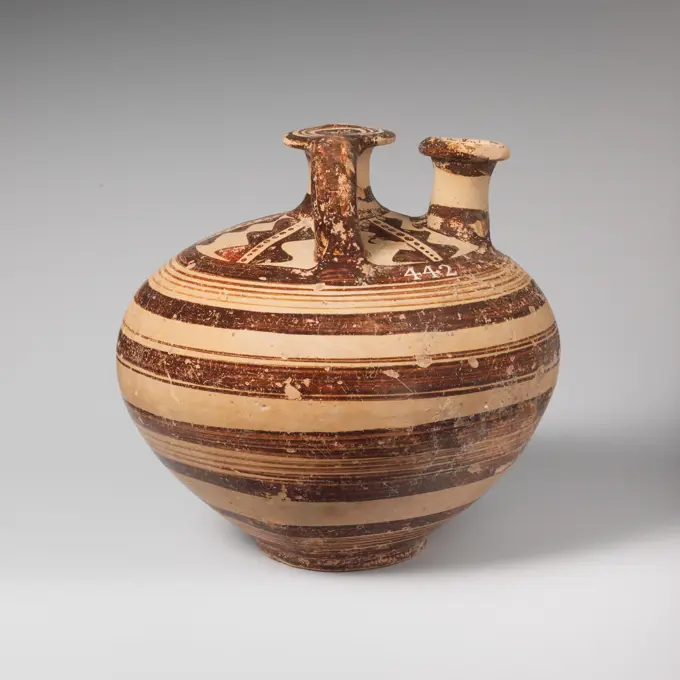
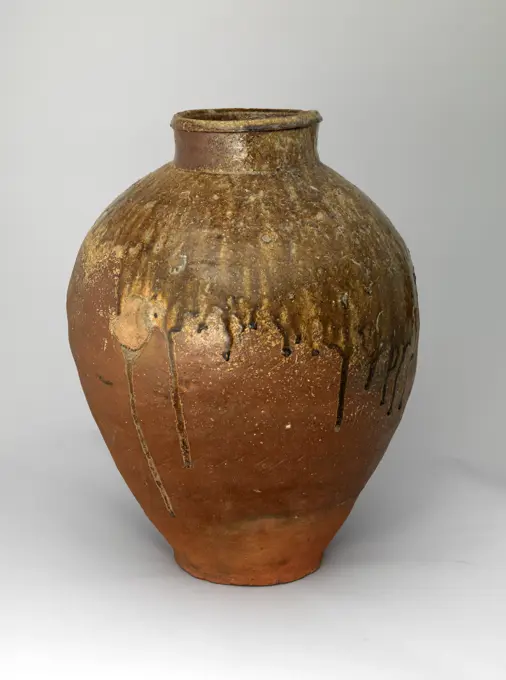
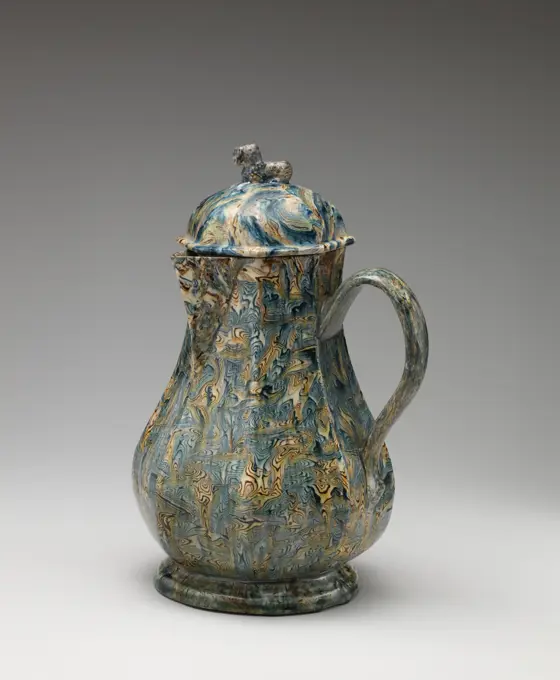
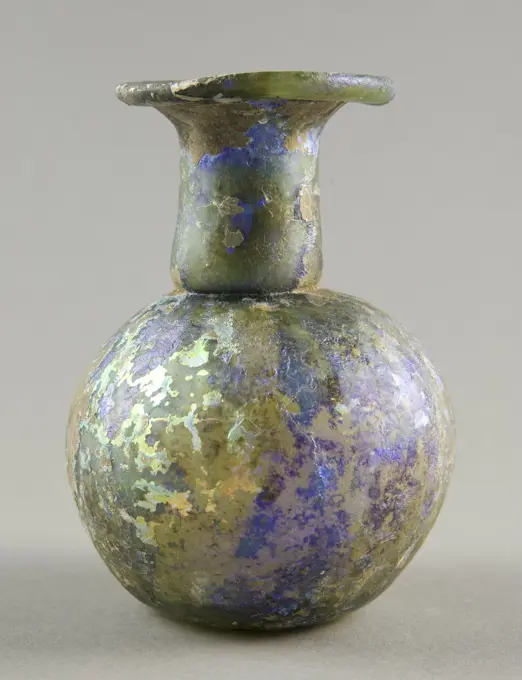
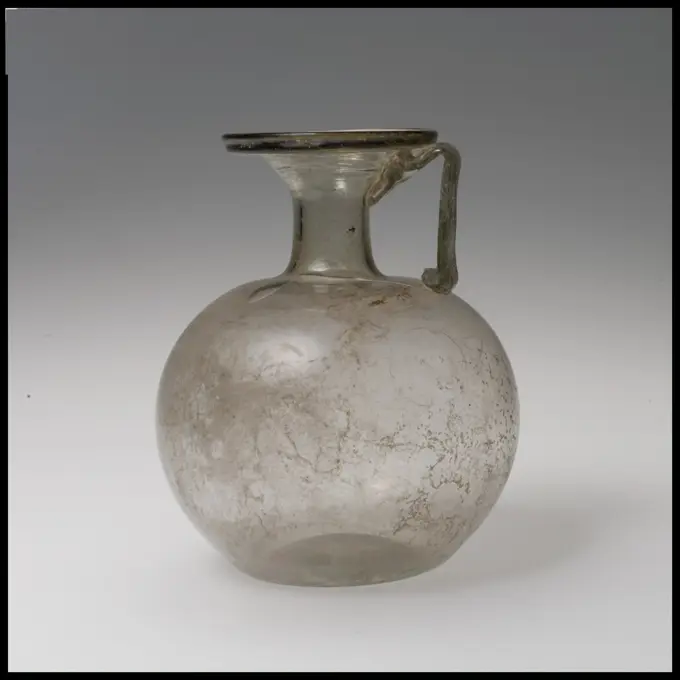
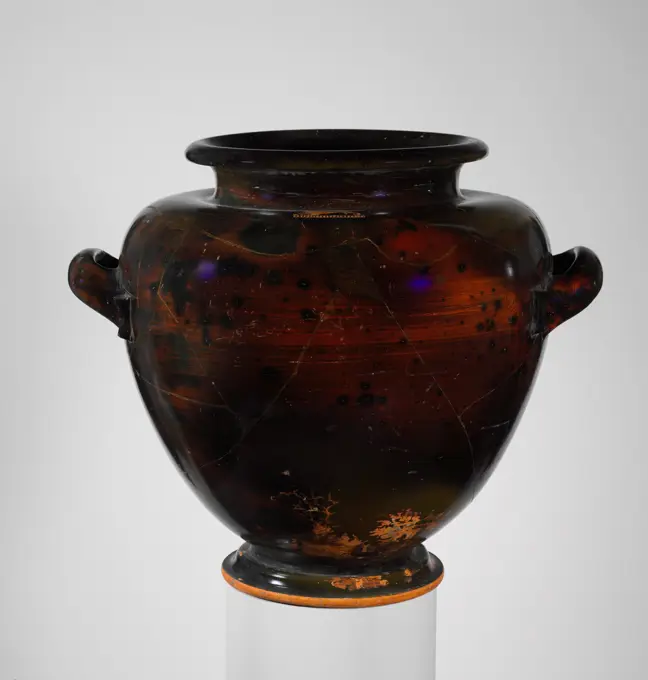
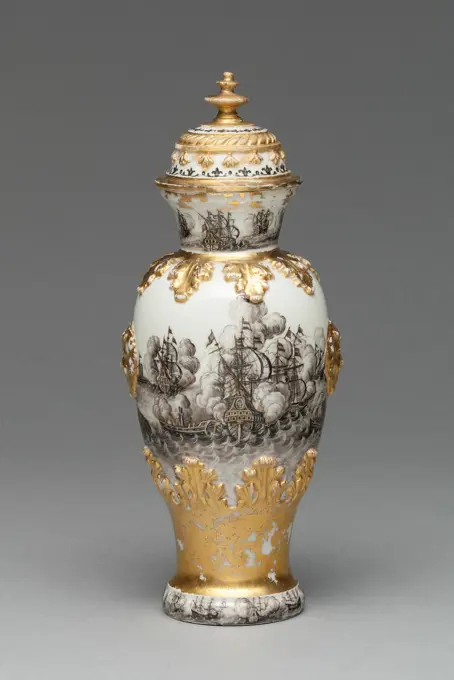
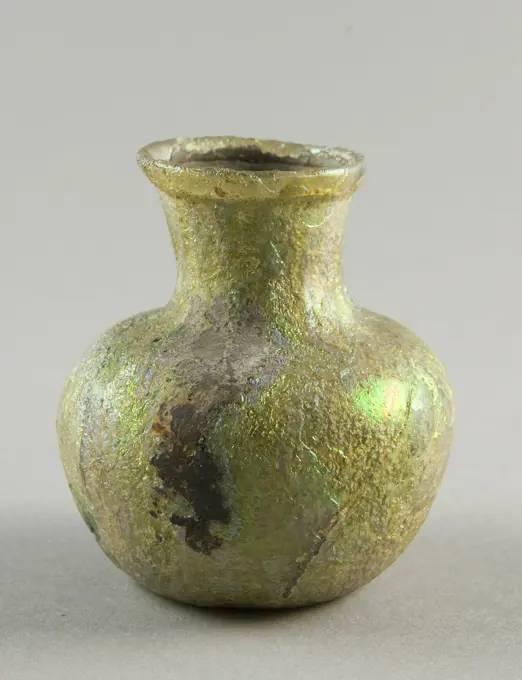
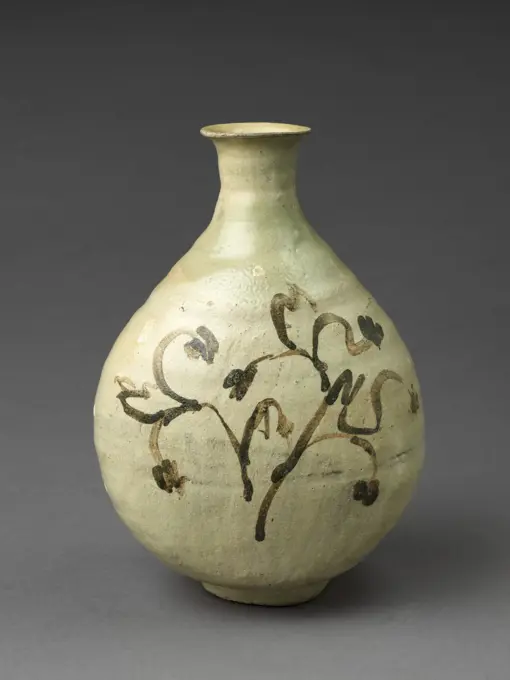
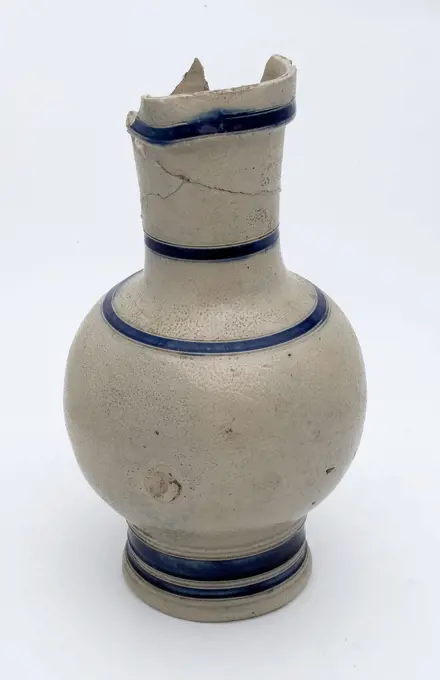
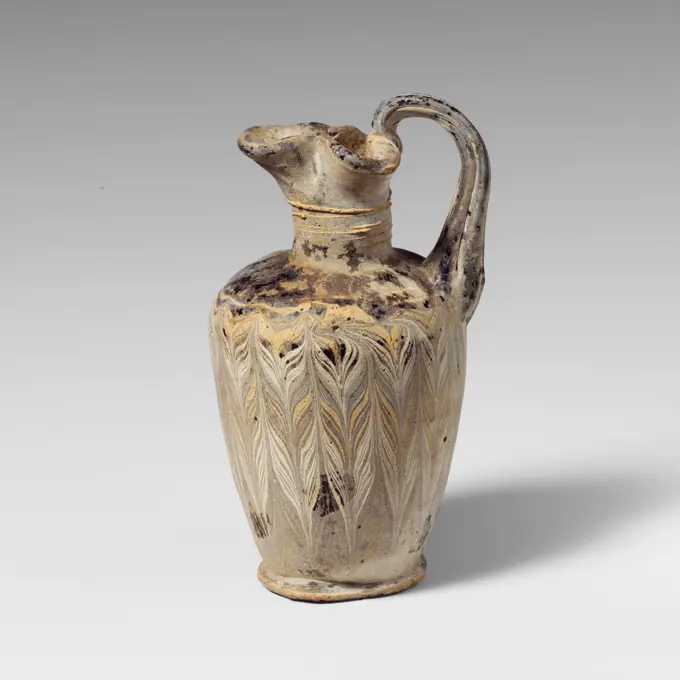
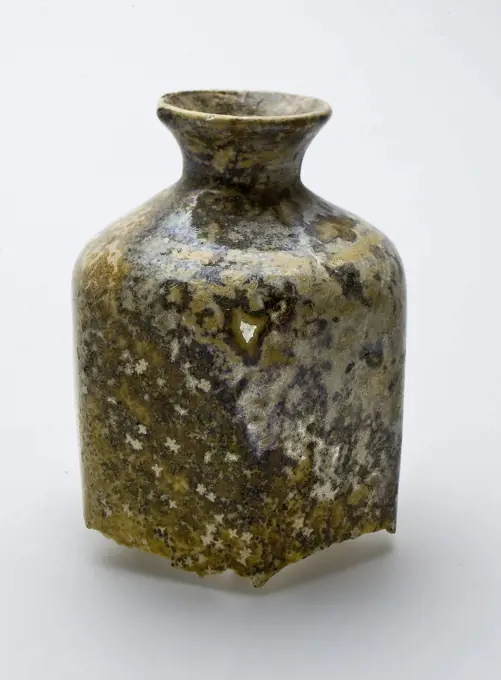
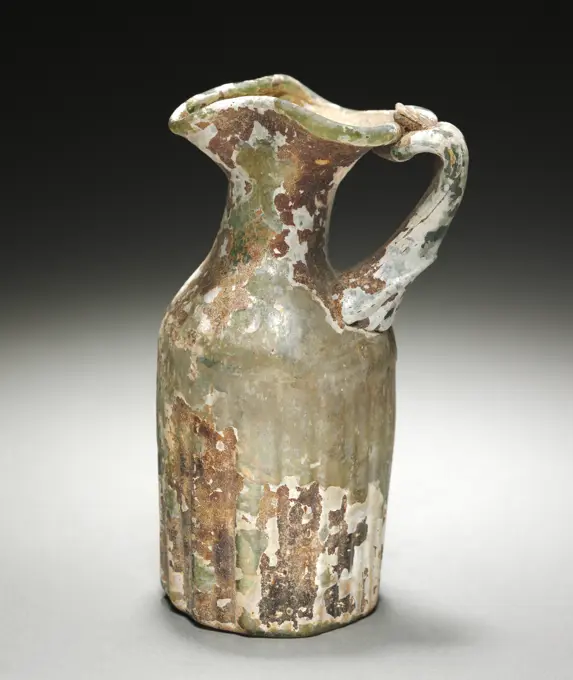
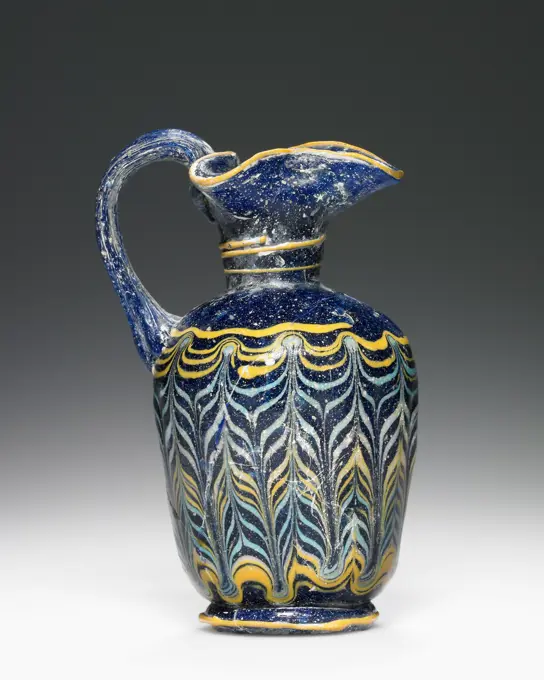
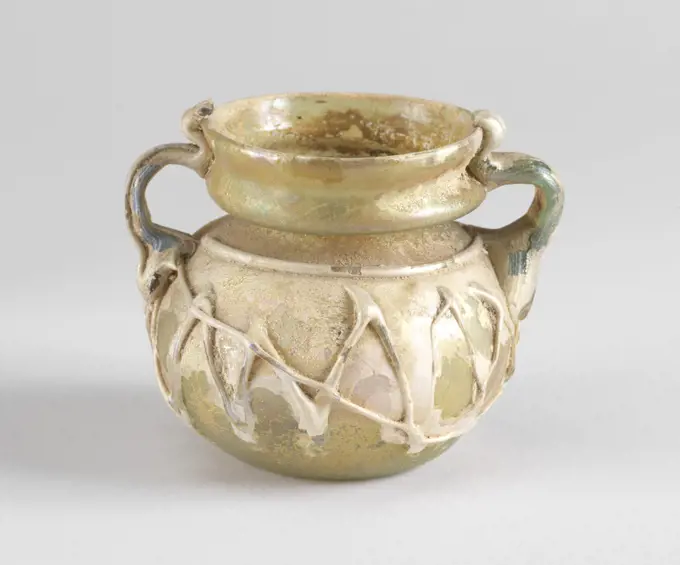
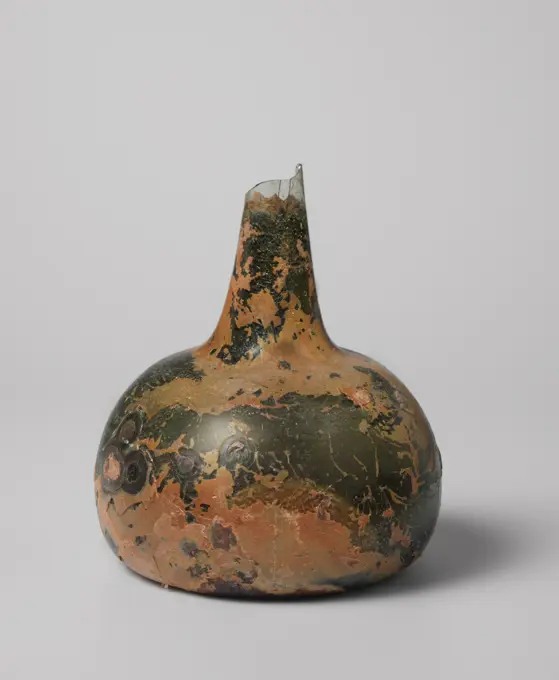
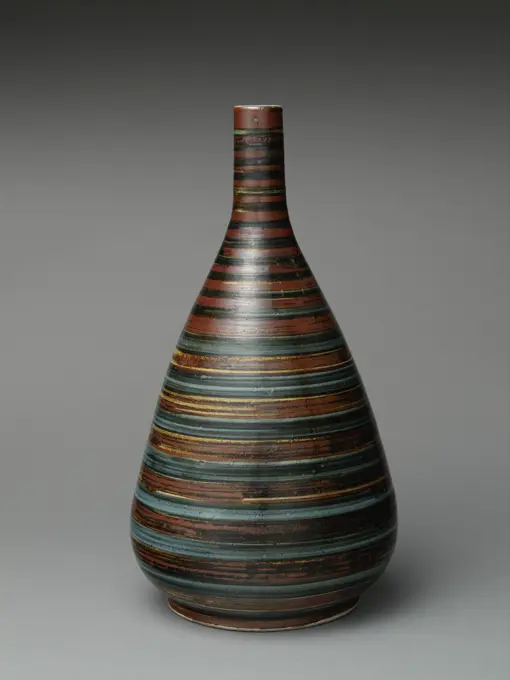
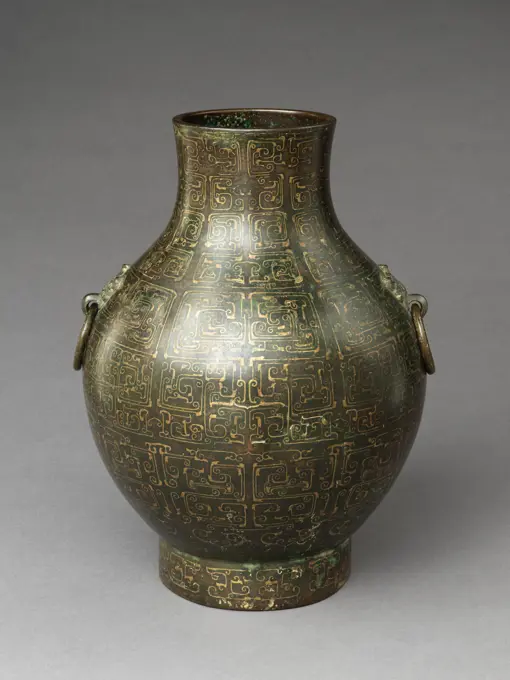
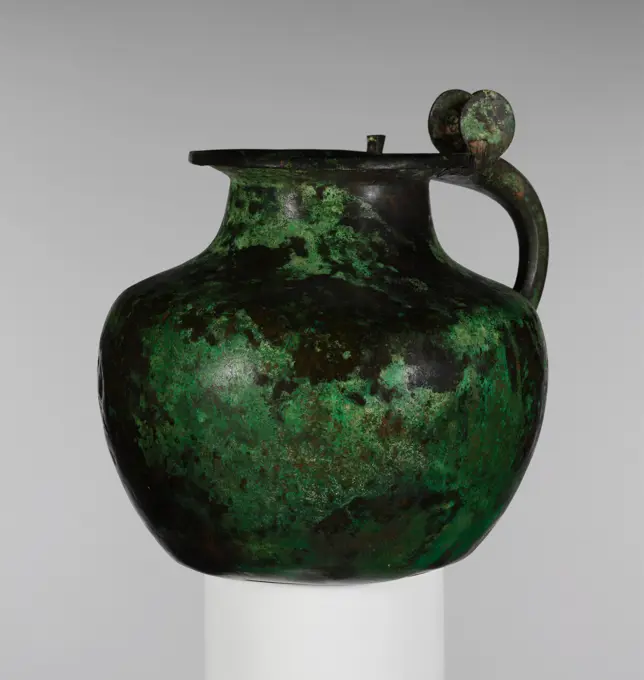
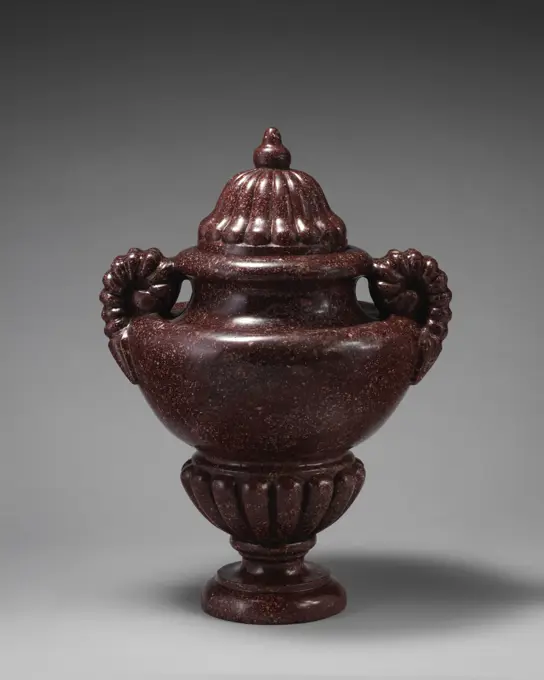
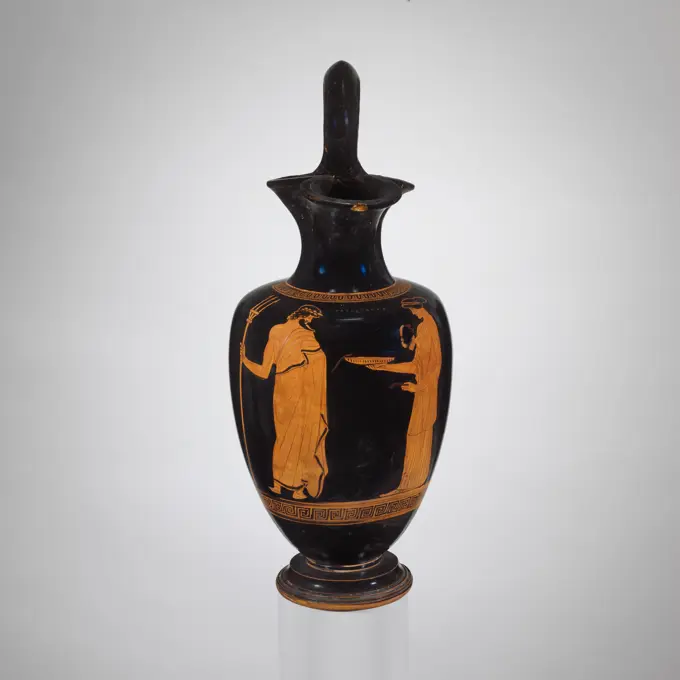
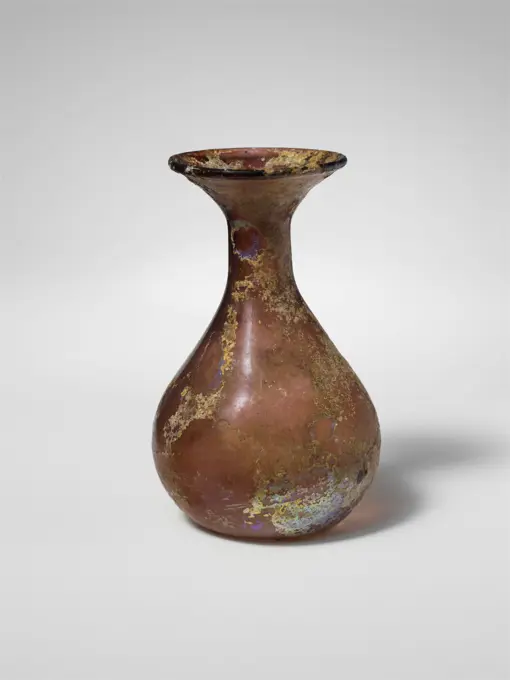
Glass flask ca. 3rd century A.D. Roman Translucent light manganese purple.Plain rounded rim; broad flaring mouth; short cylindrical neck; piriform body; pushed-in bottom.Intact; few bubbles and blowing striations; pitting, dulling, and iridescent weathering.. Glass flask 244709Glass flask 3rd-4th century A.D. Roman Translucent light blue green.Plain, vertical rim, partially flattened on top surface; funnel-shaped neck; very narrow, horizontal shoulder; globular body; pushed-in bottom with central pontil scar.Intact; few pinprick bubbles; dulling, faint iridescence, and patches of limy weathering on exterior, soil encrustation and iridescent weathering on bottom of interior.. Glass flask 244654Jar from the Burial of Amenhotep ca. 1479-1458 B.C. New Kingdom In the tomb of the child Amenhotep (36.3.153), six jars had been placed on either side of the coffin. The contents of the jars indicated that they had once held various liquids. Three of the jars (including 36.3.161. 36.3.164) are decorated with geometric patterns in red and black paint. One of the undecorated jars (36.3.162) still has its closure of linen cloth that covers the mouth and has been tied in a square knot around the neck.. Jar from the Burial of Amenhotep. ca. 1479-1458 B.C.. Pottery, paint. New Kingdom. From Egypt, Upper Egypt, Thebes, Sheikh Abd el-Qurna, below the Tomb of Senenmut (TT 71), burial of Amenhotep, Pot I, MMA excavations, 1935-36. Dynasty 18Glass indented flask 2nd-3rd century A.D. Roman Translucent pale blue green.Partly tubular, rounded rim; flaring mouth; neck expanding downward; broad, sloping shoulder; side of body tapering downward and with six elongated indents; round, pushed-in bottom.Intact; pinprick bubbles and blowing striations; creamy weathering and iridescence.. Glass indented flask 239799Glass perfume bottle 3rd-4th century A.D. Roman Small flaskTranslucent purple.Rim folded out, round, and in; funnel-shaped neck, with tooling marks around base; squat piriform body with convex sides; kick in bottom.Intact; bubbles and blowing striations; dulling and iridescence on exterior; enamel-like weathering on interior.. Glass perfume bottle 239766Miniature Pear-Shaped (Yuhuchun) Bottle 1401-1500 Vietnam. Glazed stonware with cobalt-blue underglaze .Glass amphoriskos (perfume bottle). Culture: Greek, Eastern Mediterranean. Dimensions: 2 1/4 × 1 7/16 in. (5.7 × 3.6 cm)Diam. of rim: 7/8 in. (2.2 cm). Date: 5th century B.C..Translucent deep turquoise blue, with opaque yellow handles, base knob, and trails.Short, outsplayed rim disk, forming funnel-shpaed mouth; cylindrical neck; piriform body; applied, solid knob base, slightly concave on bottom; two small ear-shaped ring handles applied to top of body and neck.Thick, unmarvered trail applied to outer lip of rim; two trails wound horizontally around center of body, forming three uneven lines.Intact; some pinprick bubbles; dulling and patches of iridescent brownish weathering.During the fifth century B.C., the colors of Mediterranean Group I vessels expanded from blue or opaque white to include other colors, such as dark green, golden brown, and opaque brick red. This amphoriskos is also unusual in that the handles match the trail decoration, not the color of the vessel itself. Marbled glass perfume bottle early to mid-1st century A.D. Roman Translucent blue and opaque white.Rim folded out, over, and in, and smoothed into sides of flaring mouth; short, cylindrical neck, expanding downwards to join imperceptibly with ovoid body; flattened, slightly concave bottom. Numerous trails applied to gather and marvered into surface, forming an irregular way pattern extending from rim to bottom.Intact; some bubbles; deep pitting, dulling, and patches of iridescence and creamy white weathering.Oval blue and white blown glass marbled perfume bottle.. Marbled glass perfume bottle 239780Vase soliflore ca. 1889-94 Jean-Joseph Carriès French Much of Carriès's work reflects the influence of Japanese stoneware, evident in this vase in the use of a traditional Japanese bottle form and in the randomly applied glaze, which has been allowed to drip down the sides to create an abstract design.. Vase soliflore 231832. Sakefles from stoneware with a horizontal ribbed belly and a narrow, short neck, covered with a cream-colored, cracked glaze and burned in underglaze brown. Part of the lower rib is unglazed. Plants flowering on the abdomen. Karatsu.Vase, Fulper Pottery Company, founded 1805, Ceramic, Flemington, New Jersey, USA, ca. 1915, ceramics, Decorative Arts, VaseBizen Jar with loops, 16th century, Unknown Japanese, 12 7/16 × 12 1/16 × 11 15/16 in. (31.59 × 30.64 × 30.32 cm), Stoneware with natural ash glaze, Japan, 16th centuryOinochoe; Roman Empire; 2nd - 3rd century; Glass; 9 x 7 cm (3 9,16 x 2 3,4 in.)Glass miniature perfume bottle 1st century A.D. Roman Colorless with greenish tinge.Uneven rim folded out, over, and in, with beveled outer edge; cylindrical neck with tooled indent at base; double convex profile to body; small, flattened bottom.Intact; pinprick bubbles and blowing striations; dulling, pitting and patches of brilliant iridescence and creamy brown weathering on exterior; soil encrustion on interior.. Glass miniature perfume bottle 244664Ovoid jar with a wicker decoration, anonymous, c. 1175 - c. 1199 Can be decorated from quartz fritry with braid work and stripes cut away from Engobe van Zwarte sludge under a transparent alarm laze. Iran earthenware. glaze cutting / vitrification Can be decorated from quartz fritry with braid work and stripes cut away from Engobe van Zwarte sludge under a transparent alarm laze. Iran earthenware. glaze cutting / vitrificationTerracotta jug ca. 2300-1900 B.C. Cycladic The kernos, the jar, and the jug were found together in 1829 on Melos by the British naval captain Richard Copeland, whose widow gave them to Eton College in 1857. Of the three, the kernos is the most intriguing and complex. Although kernoi were used in widely disparate regions during the prehistoric period, particularly impressive examples have come to light in the Cyclades, and this is one of the largest, most elaborate and elegant kernoi to have survived. The twenty-five flask-like containers around the central bowl were probably used to hold offerings of seeds, grain, flowers, fruit, or liquids. The painted decoration of the jar is similar to that of the kernos, with rows of alternating narrow and broad chevrons and designs in dark glaze over a white slip. The jug is more extensively decorated with comparable motifs. All three vessels represent Cycladic pottery at its most precise and accomplished, and presumably they came from the same toJar 12th-13th century. Jar. 12th-13th century. Stonepaste; molded, underglaze painted. Attributed to Syria, Raqqa. CeramicsEarthenware oil jug with pouring lip and standing ear, sludge decor on neck and shoulder, oil jug holder soil find ceramic earthenware glaze lead glaze clay, hand turned decorated glazed fried lemonade Pottery jug. Red shard entirely glazed. Sludge decoration Decoration consists of three green leaves on the belly connected to yellow wavy line of fields with yellow dots. Circle and stripes on the neck Yellow upper edge. Ball-shaped model with slender neck. Cuff collar around the neck Rotating cupping over the belly and in the neck archeology indigenous pottery oil tear lamp illuminate serving serveGlass perfume bottle 3rd century A.D. or later Roman Translucent green.Rim folded out with beveled lip; tall cylindrical neck; globular body; flattened bottom with large circular pontil mark.Intact; many pinprick and larger bubbles; faint iridescence on exterior; patches of weathering and soil encrustation on interior.. Glass perfume bottle 239784Wine bottle with wine from the wreck of the East Indians' t Vliegend Hart ,, 1700 - 1735 wine Uivid wine bottle of green glass filled with red (port) wine, closed with a cork. The thread that the cork had to keep on the bottle has disappeared. Netherlands glass. wine. Pear-shaped vase of stoneware with a wide, spreading neck, covered with a cracked creamy glaze. Two old label on the underside with 'Chosen-Karatsu / 16th' and 'W696'. Karatsu.Large stoneware bullet belly with portrait medallion, sgraffito and appliqués, Bullet pewter jug crockery holder soil find ceramic stoneware glaze salt glaze, hand rotated stamped molded sgraffito glazed baked Large stoneware bulletbayer gray shard with salt glaze bandoor with two holes for attaching lid short pointed tail Edge writing portrait medallion: WILHELMUS . III D.G MAG. BRIT. FRANC ET HIB. REX. archeology heraldry import pottery serve serve serve remembrance beer wine drink king-stadholder Prince William III OrangeRitual Wine Cup (Zhi) late 11th century B.C. China This elaborate set of wine vessels provides an idea of the splendor of Shang and early Zhou ritual ceremonies. The set is said to have come from a tomb uncovered in 1901; shortly thereafter, it entered the collection of Duan Fang, a senior Manchu official and one of the preeminent antiquarians of the late Qing period. The pieces vary in style and execution. Although eleven of the vessels are inscribed, only one grouping shares identical inscriptions: the two wine containers, or you (nos. 2, 3) and the tall wine container, or zun (no. 4). A second grouping has largely comparable inscriptions: the spouted water vessel, or he (no. 5) and one cup, or zhi (no. 11).A partial reconstruction of the sets arrangement in the tomb may be established from corrosion outlines on the three principal vessels—the two wine containers, or you, and the central tall wine container, or zun—that were etched onto the surface of the altar table. The diagram shJar. China. Date: 206 AD-220 AD. Dimensions: H. 15 in. Stoneware with lead green glaze and underglaze molded decoration. Origin: China. Museum: The Chicago Art Institute, Chicago, USA.Glass bottle with three feet mid-1st century A.D. Roman Translucent pale blue.Solid rim with horizontal everted lip; cylindrical neck, tapering slightly downwards; sloping shoulder; truncated ovoid body with three solid rods around base, drawn out and tooled, ending in splayed and pinched feet; slightly rounded bottom with irregular indent.Complete, except for lower part of one rod and foot, and two cracks running from rim down to body; many pinprick bubbles; dulling, some pitting, and patches of iridescent weathering.Bluish blown glass vase with three feet and short neck.. Glass bottle with three feet 239785Glass flask 2nd-3rd century A.D. Roman Small flaskColorless with pale yellow green tinge.Rim folded out, over, and in; broad, flaring mouth; cylindrical neck expandign downward to join imperceptibly with squat bulbous body; pushed-in bottom with central kick.Intact, except for crack and smal hole in side of neck; many bubbles, some very large; dulling and iridescent weathering on exterior, patches of soil encrustation and creamy brown weathering on interior.. Glass flask 239667Pocket bottle 1815-45 American. Pocket bottle. American. 1815-45. Blown, pattern-molded glass. Possibly made in Pennsylvania, United States; Probably made in Ohio, United StatesJean Carriès (1855-1894). "Corned bottle". Enameled sandstone. Museum of Fine Arts of the City of Paris, Petit Palais. 24203-10 Circlee bottle, ceramic, gres emailleHead Flask. UnknownPitcher. Culture: American. Dimensions: 14 x 10 1/2 x 10 in. (35.6 x 26.7 x 25.4 cm). Date: ca. 1815. Museum: Metropolitan Museum of Art, New York, USA.Oil Bottle with Inlaid Dots Design, 1200s-1300s. Korea, Goryeo period (918-1392). Inlaid celadon ware (Mishima ware); outer diameter: 8.3 cm (3 1/4 in.); overall: 5.5 cm (2 3/16 in.).Glass hydriske (perfume bottle) late 4th-3rd century B.C. Greek, Eastern Mediterranean Translucent cobalt blue, with handles in same color; trails in opaque white and opaque yellow.Horizontal rim-disk, with rounded edge; cylindrical neck, with slight upward taper; broad almost horizontal rounded shoulder; ovoid body; applied circular pad-base, with uneven bottom; on sides of upper body, two small vertical loop handles; strap handle applied at junction of shoulder and body in a pad and pressed on to underside of rim-disk and top of neck.Unmarvered yellow and white trails attached on shoulder and wound round; both trails tooled in a close-set zigzag pattern with deep vertical ribs over top half of body, then white trail continuing down in a spiral around lower body.Complete, except for most of one loop handle and strap handle; dulling and pitting, with patches of brownish weathering and faint iridescence.. Glass hydriske (perfume bottle) 249994Glass jar 4th-6th century A.D. Roman, Syrian Translucent pale green; handles in translucent green.Rim slightly outsplayed, with rounded vertical lip; below prominent hollow folded flange; cylindrical neck, tapering downwards; sloping shoulder; body with convex side, tapering downwards to pushed-in bottom with deep kick and pontil scar; four handles, arranged around sides of vessel, applied in large pads to edge of shoulder, drawn up, then folded in below flange, drawn up again over flange and top of neck, and trailed off on top edge of rim.Intact; pinprick and some larger bubbles, and blowing striations; dulling, patches of thick creamy brown and whitish weathering, and brilliant iridescence.. Glass jar 256752Terracotta stirrup jar ca. 1375-1300 B.C. Mycenaean Broad and narrow bands and degenerate floral ornament.. Terracotta stirrup jar. Mycenaean. ca. 1375-1300 B.C.. Terracotta. Late Helladic IIIA2. VasesVase inscribed for the Mistress of the House Amenemweskhet ca. 1479-1390 BC New Kingdom. Vase inscribed for the Mistress of the House Amenemweskhet 554689Glass perfume bottle 1st-2nd century A.D. Roman Translucent pale blue green.Rim folded out, over, and in, flattened on top and forming slight constriction to mouth; cylindrical neck with tooled line around base; ovoid body; small, flat bottom.Irregular tooled line around upper part of body.Broken and repaired, with vertical crack in neck; pinprick bubbles; dulling, pitting, and iridescent weathering, with some soil encrustation on interior.. Glass perfume bottle. Roman. 1st-2nd century A.D.. Glass; blown. Early to Mid Imperial. GlassLarge Storage Jar (tsubo) 16th century Japan. Large Storage Jar (tsubo). Japan. 16th century. Stoneware with natural ash glaze (Tokoname ware). Muromachi period (1392-1573). CeramicsCoffeepot ca. 1760 British, Staffordshire. Coffeepot. British, Staffordshire. ca. 1760. Lead-glazed earthenware (agateware). Ceramics-PotteryGlass bottle. Culture: Roman. Dimensions: Height: 5 11/16 in. (14.4 cm). Date: 3rd century A.D..Colorless; trail in translucent cobalt blue.Irregular oval everted rim with thick, rounded lip; cylindrical neck, expanding downwards; almost horizontal shoulder; elongated body, convex at top, then concave down side, and bulging at base; deeply pushed-in bottom with pontil scar.Trail applied on outer shoulder and wound round six times in a spiral, extending on to upper body, then drawn down and up in long strokes, creating a pattern of six finger-like shapes, some of which extend onto bottom.Intact; many pinprick bubbles; dulling, some pitting, and brilliant iridescent weathering.Vase with blue applied threads. Museum: Metropolitan Museum of Art, New York, USA.Ethiopia jar, Chris Lanooy, c. 1935 - c. 1936  Dark brown jug with one ear. On the belly a medallion with text, two coats of arms with a lion (the Netherlands and Ethiopia) and nine 'stamps' with professional emblems and text: physician leader Winckel, administrator De Vries, D.A.H.M. Colaco-Delmont, physician-nurse Lampe, nurse Hagestein, nurse of the honey, doctor Veenenklaas, doctor van der Does, surgeon van Schelven. Inscr.: Dutch red cross ambulance to Ethiopia led by Dr. Ch. W.F. Winckel Arts December 3, 1935 from Rotterdam etc. etc. Epe earthenware. glaze vitrification  Ethiopië. Italy. NetherlandsJar 101 CE-400 CE Syria. Glass, blown technique . Ancient RomanOintment Flask. UnknownGlass jug 3rd-4th century A.D. Roman Colorless with pale green tinge; handle in same color.Solid rim with rounded lip and downward rib below; broad, flaring mouth; short, cylindrical neck; globular body; pushed-in bottom; broad strap handle, decorated on exterior with vertical combed ribs, attached to top of body, drawn up and slightly out, then folded in and down, and trailed on to underside of mouth and top of neck.Broken and repaired with crack running from base of neck, below handle, and around sides; some pinprick and one large bubble in body, many bubbles and a few gritty impurities in handle; some limy encrustation and faint iridescent weathering.. Glass jug 239719Pear-Shaped Jar first half 13th century. Pear-Shaped Jar 453996Terracotta stamnos (jar) early 5th century B.C. Greek, Attic On the shoulder, obverse, lionWhile a wide variety of vase shapes were imported from Attica into Etruria, some seem to have been made specifically for the Etruscan market. The kyathos (ladle), for example, is an Etruscan shape that was reinterpreted in Attic workshops and exported. The stamnos is found so much more frequently in northern Italy than on the Greek mainland that it too may have been produced for a specific clientel.. Terracotta stamnos (jar) 248300Glass jug. Culture: Roman. Dimensions: Other: 5 3/4 × 2 5/8 in. (14.6 × 6.7 cm). Date: 1st-2nd century A.D..Translucent blue green, with same color handle.Rim folded out, down, round, up and into mouth, with beveled surface; cylindrical neck, slightly expanding downward, with slight tooling marks around the base; sloping shoulder with rounded corners; square body with slightly concave sides; uneven, concave bottom; strap handle with three ribs, applied to edge of shoulder, drawn up vertically, then bent in and down, and attached to neck with backward trail above.Intact, except for one small weathered chip in rim; pinprick and a few larger bubbles, blowing striations; many vertical scratches on sides, and dulling, pitting, and iridescence on exterior, one patch of limy weathering on interior. Museum: Metropolitan Museum of Art, New York, USA.Bottle, 1400s. Siam, Sawankhalok ware, 15th century. Stoneware; overall: 5.2 cm (2 1/16 in.).Vase and Cover (one of a pair) 1715-1720 Meissen. Hard-paste porcelain, black enamel (schwarzlot), gilding . Meissen Porcelain Manufactory (Manufacturer)Jar 101 CE-400 CE Mediterranean Region. Glass, blown technique . Ancient RomanJug. Jug of pottery with narrow neck. Decorated with horizontal rings.Miniature Vessel. Inca; South coast or southern highlands, Peru. Date: 1450-1532. Dimensions: 8.4 × 9.1 cm (3 5/16 × 3 9/16 in.). Ceramic and pigment. Origin: Peru, southern. Museum: The Chicago Art Institute, Chicago, USA.Glass perfume bottle 1st century A.D. Roman Colorless with pale blue tinge.Short, slightly funnel-shaped, cylindrical neck with horizontal tooling marks around base; piriform body; small, slightly concave bottom.Rim missing, unevenly broken off on neck with jagged edge, and cracked around body and bottom; many pinprick bubbles; deep pitting and iridescent weathering.Probably trimmed down around neck after losing original folded rim.. Glass perfume bottle 239928Vase Charles Volkmar American ca. 1900-10 View more. Vase. Charles Volkmar (American, Baltimore, Maryland 1841-1914 Metuchen, New Jersey). American. ca. 1900-10. Earthenware. Possibly made in Bronx, New York, United States; Possibly made in Metuchen, New Jersey, United StatesTerracotta aryballos (oil flask) 7th century or later East Greek  Globular with decoration in low relief; on flat mouth, four pointed and ribbed leaves; on body, pointed and ribbed leaves.. Terracotta aryballos (oil flask) 247432Hydria, 425 BC-400 BC. Greece, late 5th Century BC. Bronze; overall: 41.6 x 38.4 cm (16 3/8 x 15 1/8 in.).Pitcher 201 CE-400 CE Syria. Glass, blown technique . Ancient RomanLarge Jar dated A.H. 681/A.D. 1282-83 Alighting birds and leaping quadrupeds in leafy foliage decorate the upper portion of this large, deepblue glazed jar. Scholars have likened these motifs to similar designs on Chinese silk tapestries, which were widely traded along the Silk Road between China and Iran at the time that this jar was made. The verses on this dated vessel suggest that it may have held wine or another type of beverage. They read: "Tumultuous air and boiling earth; Joyous is he whose heart is happy. Drink!". Large Jar 451349Jar. Artist: Attributed to Christian Klinker (active 1773-98). Culture: American. Dimensions: H. 10 in. (25.4 cm). Date: ca. 1773. Museum: Metropolitan Museum of Art, New York, USA.Vessel with elephant motif, 1st century BCE - 1st century CE, 4 3/8 x 5 3/8 x 4 9/16 in. (11.11 x 13.65 x 11.59 cm), Glazed ceramic, 1st century BCE - 1st century CEAbdulazad Mirza Baba, Kraków, ceramics, gift for the museum, inscriptions, collection, naschi, plant ornament, so -called Recindling action, so -called REPWINDING ACTION - collection, vasesGlass jug. Culture: Roman. Dimensions: Overall: 4 3/4 in. (12.1 cm)Diam.: 1 1/4 x 1 7/8 x 1 in. (3.2 x 4.8 x 2.5 cm). Date: 4th century A.D..Translucent cobalt blue; handle, trail, and base ring in opaque turquoise blue.Rim folded over and in, and smoothed into side of flaring mouth; cylindrical neck, expanding downwards and joining imperceptibly with bulbous body, tapering to applied base ring; small, pushed-in bottom with pontil mark; two-ribbed strap handle attached to upper body with long, downward fins at edges, drawn up and outwards in a curve, then turned in and trailed onto underside of mouth over trail decoration and lip of rim, with a hollow projecting loop above. Thick trail wound horizontally around underside of mouth, then dropped in a fine trail down neck, and then wound horizontally slightly more than once around lower neck.Broken on body with one large hole and cracks extending to bottom, some of trail around neck also missing; many pinprick bubbles; some soil encrCore-formed Dark Blue Amphoriskos. UnknownKendi (Water Bottle), 14th-15th century, 5 1/2 x 6 1/4 x 5 1/4 in. (13.97 x 15.88 x 13.34 cm), Sawankalok ware Stoneware with painted iron decor under a clear glaze, Thailand, 14th-15th centuryAthenian Hydria, 440-430 BC. Greek Attic.. An ancient Greek pitcher with three handles, used for storing water.Glass amphoriskos (perfume bottle). Culture: Greek, Eastern Mediterranean or Italian. Dimensions: H.: 4 1/2 in. (11.5 cm)Diam.: 2 5/16 x 1 3/16 in. (5.9 x 3 cm). Date: mid-4th-early 3rd century B.C..Translucent cobalt blue, with handles and base-knob in same color; trails in opaque yellow and opaque white.Broad horizontal rim-disk with rounded edge; cylindrical neck, expanding slightly downwards; sloping shoulder; elongated ovoid body, tapering sharply downwards; applied small circular base-knob with uneven edge and tooling indent on flat bottom; two slender strap handles applied to shoulder and drawn up, turned in, and pressed on to neck.One yellow trail attached at edge of rim-disk; another applied to top of body and wound horizontally and then tooled into a close-set zigzag pattern, formed by uneven shallow vertical tooling indents around middle of body, where a second trail in white is added, mingling with the yellow trail; a third yellow trail wound in a spiral 3 1/2 times horEwer Inscribed with "al-'izz" ("Glory") in Floriated Kufic on its Neck first half 13th century. Ewer Inscribed with "al-'izz" ("Glory") in Floriated Kufic on its Neck 450946Glass jug with spout 2nd-3rd century A.D. Roman Translucent blue green; handle and spout in same color.Rim folded out, down, over, and in, and flattened on top surface around mouth; cylindrical neck, expanding slightly downwards; short, horizontal shoulder; globular body; low, solid splayed base ring, with tooling marks around sides; slightly convex bottom; thin strap handle, applied to upper body, drawn up and outwards, then turned in horizontally, with flattened fold projecting up and back above rim, and pressed onto edge of rim, with a smaller trail dropping onto top of neck; tubular spout dropped onto body as a blob, piercing side, then drawn out and knocked off.Intact; pinprick bubbles and blowing striations, with many black impurities in handle; faint dulling, weathering, and iridescence on exterior, patches of yellow limy weathering and iridescence on interior.. Glass jug with spout 245407Jar. Roman; Levant or Syria. Date: 101 AD-300 AD. Dimensions: 8.6 × 9.2 × 9.2 cm (3 3/8 × 3 5/8 × 3 5/8 in.). Glass, blown technique. Origin: Syria. Museum: The Chicago Art Institute, Chicago, USA. Author: ANCIENT ROMAN.Corinthian Vase, 600s BC. Greece, 7th Century BC. Earthenware; overall: 14.5 cm (5 11/16 in.).Glass perfume bottle. Culture: Roman. Dimensions: Overall: 3 1/16 in. (7.8 cm)Diam.: 1 5/8 x 13/16 in. (4.1 x 2.1 cm). Date: 1st-2nd century A.D..Translucent very pale blue.Rim folded out, slightly down, over, and in; funnel-shaped neck with tooling marks around base; slightly elongated ovoid body; flat bottom.Intact; many pinprick bubbles; pitting, dulling, and brilliant iridescence, with some remaining patches of creamy white weathering; mouth sealed with soil, and a large quantity of loose soil inside bottle. Museum: Metropolitan Museum of Art, New York, USA.Ernest Carrière (1858-1908). Vase. Sandstone. Museum of Fine Arts of the City of Paris, Petit Palais. 79583-4 GRES, object decoration, vase, 19th 19th 19th 19 19th 19th century centuryBottle first half 11th century. Bottle 450766Moon Jar. Korea. Date: 1601-1700. Dimensions: H. 33.0 cm (13 in.); diam. 32.5 cm (12 13/16 in.). Glazed porcelain, with repairs in gold powder. Origin: Korea. Museum: The Chicago Art Institute, USA.Vase. Culture: China. Dimensions: H. 12 5/8 in. (32.1 cm). Date: first half of the 19th century. Museum: Metropolitan Museum of Art, New York, USA.Glass perfume bottle Roman 2nd-3rd century CE Translucent blue-green.Thick rim folded out, over, and in, with beveled upper surface; cylindrical neck, expanding downward, with tooling marks around base; squat, bulbous body, with convex sides; concave bottom.Intact; pinprick bubbles and blowing striations; deeply pitted and weathered, with brilliant iridescence on most of surface.Bottle decorated with flowering plant late 15th-early 16th century Korea This flask-shaped bottle decorated with iron-brown flowering plant is an excellent and rare example of buncheong ware. Iron-brown ornamentation was primarily implemented in the Gongju Hakbong-ri kilns in South Chungcheong Province, of which the Mets jar with floral scroll (2006.241) is a good example. Differing from that jar with the partially covered slip on a dark clay body, this bottle has a finer, white clay body that is almost entirely covered in slip. The flowering plant is represented in a whimsical manner with confident brushwork. These qualities indicate that this bottle was produced at the Goheung Undae-ri kilns in South Jeolla Province, a region that predominately produced incised and sgraffito buncheong wares (1986.305 and 16.122.1). There are only two other known examples of intact bottles with this design and they are in Japanese and Korean museum collections.. Bottle decorated with flowering plant.Stoneware jug, with five blue piping, shaving clip, belly model with long neck, jug crockery holder soil find ceramic stoneware glaze salt glaze, hand turned glazed baked Stoneware jug light gray shard with salt glaze pouring lip ear missing profiled foot archeology import pottery serve serve drinking wine farmerBottle. Roman; Levant or Syria. Date: 100 BC-1 BC. Dimensions: H. 9.2 cm (3 5/8 in.); diam. 5.1 cm (2 in.). Glass, blown technique. Origin: Syria. Museum: The Chicago Art Institute, Chicago, USA. Author: ANCIENT ROMAN.Vase. Green coverage porcelain (ext.) And colorless and cracked (int.). Paris, Cernuschi museum. 78841-16 Asian art, container, vaseGlass oinochoe (perfume jug) mid-4th-early 3rd century B.C. Greek, Eastern Mediterranean or Italian Translucent cobalt blue, with handle and pad-base in same color; trails in opaque yellow and opaque white.Applied large trefoil rim-disk; cylindrical neck; broad rounded shoulder; slightly convex sides to body with downward taper; applied low circular pad-base with uneven concave bottom; strap handle attached in pad to outer edge of shoulder, drawn up and round in a loop, and pressed onto back of rim-disk and top of neck.A fine yellow trail attached at edge of rim-disk; another unmarvered yellow trail wound spirally five and a half times around neck; on body, alternating bands of yellow and white trails wound round from edge of shoulder to pad-base and tooled into a close-set feather pattern in sixteen vertical panels with alternating upward and downward strokes, creating long tails at bottom; another fine yellow trail wound round edge of pad-base.Intact, except for small weathered chip Flower Pot ca. 1750 Mexican. Flower Pot 9199Fragment of part of wall, shoulders, neck and lip of (medicine) Bottle, medicine bottle bottle holder soil find glass, free blown and shaped Fragment of part wall shoulders neck and lip of (medicine) bottle in clear colorless glass. Body hexagonal of which five parts remain. Powerful shoulders to short widening funnel-shaped neck archeology Rotterdam rail tunnel drink Soil discovery: rail tunnel Rotterdam.Terracotta aryballos (oil flask) ca. 620-590 B.C. Greek, Corinthian Goat and bull confronted.. Terracotta aryballos (oil flask) 254335 Greek, Corinthian, Terracotta aryballos (oil flask), ca. 620590 B.C., Terracotta, H. 2 13/16 in. (7.1 cm). The Metropolitan Museum of Art, New York. Rogers Fund, 1941 (41.162.164)Jug, 300s or later. Syro-Palestinian, Roman, 4th Century, or later. Glass; overall: 12.5 x 7.1 x 5.8 cm (4 15/16 x 2 13/16 x 2 5/16 in.).Jug. UnknownOinochoe. UnknownJar, Free-blown glass with trailed decoration, Bulbous body threaded with zig-zag lines, Wide 'bracelet' neck, turned down over junction with body. Applied loop handles with wide pads., Eastern Mediterranean, 4th-5th century, glasswares, Decorative Arts, JarBottle China. Bottle 46938. Bearded manner of stoneware, brown speckled. On the pear-shaped belly, a frieze has been pressed with inscription. Below and above women's busts in medallion. At the front of the neck, a beard man, with a long, symmetrical beard, symmetrically wrapped.Wine bottle from the wreck of the East Indies Hollandia, Anonymous, 1700 - in or before 1743  Wine bottle, continental production, onion-shaped, mouth missing; (1) eroded (15.h, belly 14d, base 10d), cs-kick-up. Netherlands .   SecondBottle 18th century Japan. Bottle. Japan. 18th century. Pottery with glaze (Hizen ware, Kutani type). Edo period (1615-1868). CeramicsWine container (hu) 5th-4th century B.C. China This ritual wine container with exquisite inlaid decoration illustrates a major innovation in China's bronze tradition in the late Eastern Zhou dynasty when, inspired by the nomadic art of the steppes, Chinese craftsmen created a sumptuous surface décor on otherwise austere bronzes. It also epitomizes a critical change in the function of bronze vessels from ritual objects to vehicles for the display of wealth and status.. Wine container (hu). China. 5th-4th century B.C.. Bronze inlaid with copper (gold). Eastern Zhou dynasty (770-256 B.C.). MetalworkAryballos Shaped LekythosBronze oinochoe (jug) 4th century B.C. Greek In the long history of the oinochoe, the later forms become quite squat. This example is interesting for its large rotelles.. Bronze oinochoe (jug) 255803Small pottery cooking jug on three legs, sausage ear and pouring lip, glazed, grape cooking pot tableware holder kitchenware earthenware ceramics earthenware glaze lead glaze, hand turned glazed baked Pottery cooking grape model with one standing sausage ear Small size. Three legs, one of which is filled with plaster Red shard entirely glazed. Ball-shaped body with light-edged top edge. Schenklip On the shoulder decorated with rings archeology inn Het Hart Geervliet Bernisse indigenous pottery cooking kitchen preparing food Soil discovery: Geervliet Dorpsplein 1 demolition Trouw put 5 city inn 't Hart 1985.BottleUrn with ram's horn handles and gadrooned lid and socle (one of a pair) first half 17th century Italian, Rome This handsome pair of Baroque porphyry urn with gadrooned lids were probably made in Rome and indeed bear resemblance with a design by the Roman painter and engraver Giovanni Angelo Canini (1609-1666), preserved at the Louvre. The echo of gadrooned lid and lower section of an urn, paired with rams horn handles can be found on numerous mid-17th century porphyry vases, including several examples from Cardinal Mazarins collection now at the Louvre.. Urn with ram's horn handles and gadrooned lid and socle (one of a pair). Italian, Rome. first half 17th century. Imperial porphyry. Natural SubstancesTerracotta oinochoe (jug) ca. 450-425 B.C. Attributed to the Richmond Painter Poseidon and womanPoseidon is probably to be understood here as the recipient of the woman's offering. Of note are the two inscriptions between them, describing each as beautiful (one in the masculine form, the other in the feminine).. Terracotta oinochoe (jug) 255457Amphora. UnknownJar