Ancient Glass and Pottery

Historic glass flasks and jars from ancient civilizations, displaying unique shapes and weathered textures significant to archaeological studies.
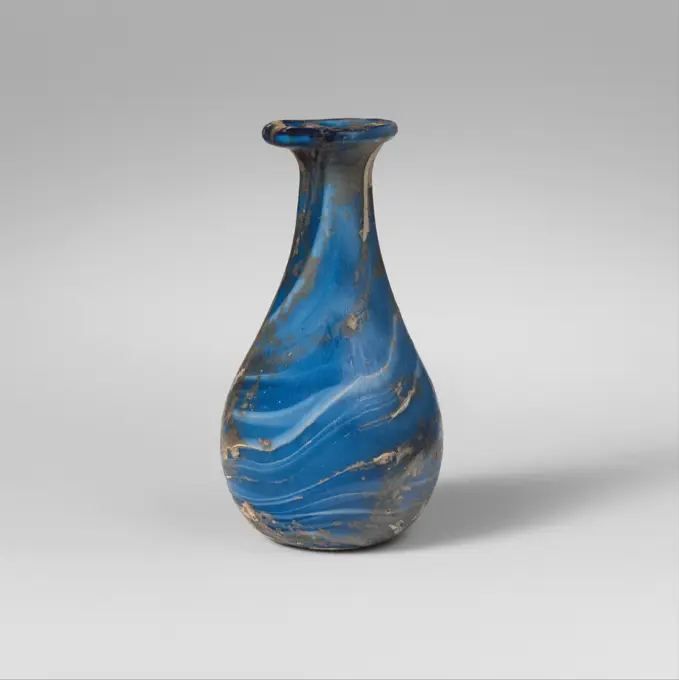
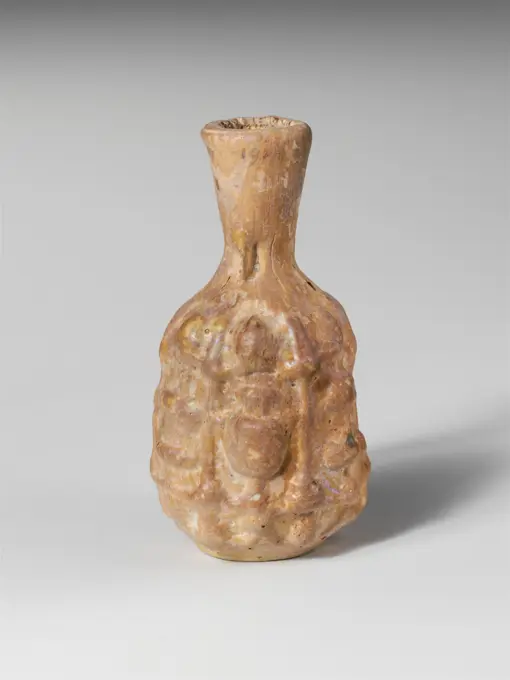
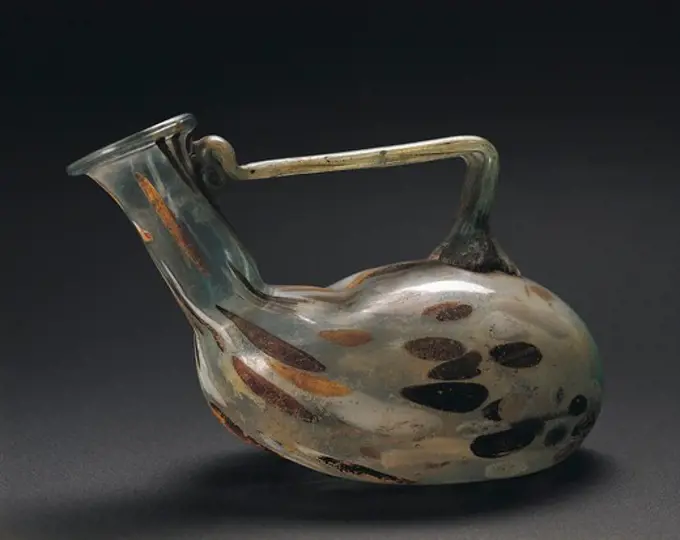
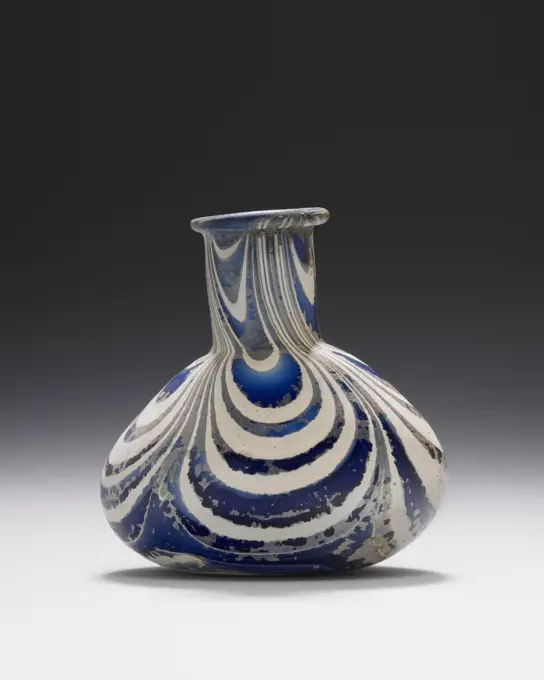
Marbled glass perfume bottle early to mid-1st century A.D. Roman Translucent blue and opaque white.Rim folded out, over, and in, and smoothed into sides of flaring mouth; short, cylindrical neck, expanding downwards to join imperceptibly with ovoid body; flattened, slightly concave bottom. Numerous trails applied to gather and marvered into surface, forming an irregular way pattern extending from rim to bottom.Intact; some bubbles; deep pitting, dulling, and patches of iridescence and creamy white weathering.Oval blue and white blown glass marbled perfume bottle.. Marbled glass perfume bottle 239780
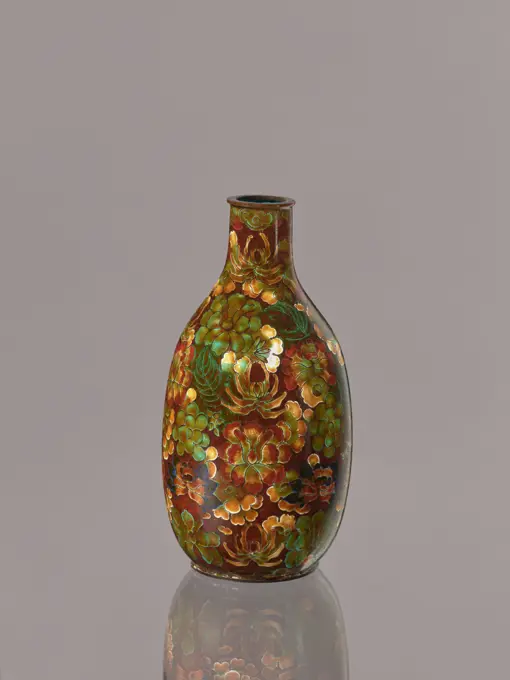
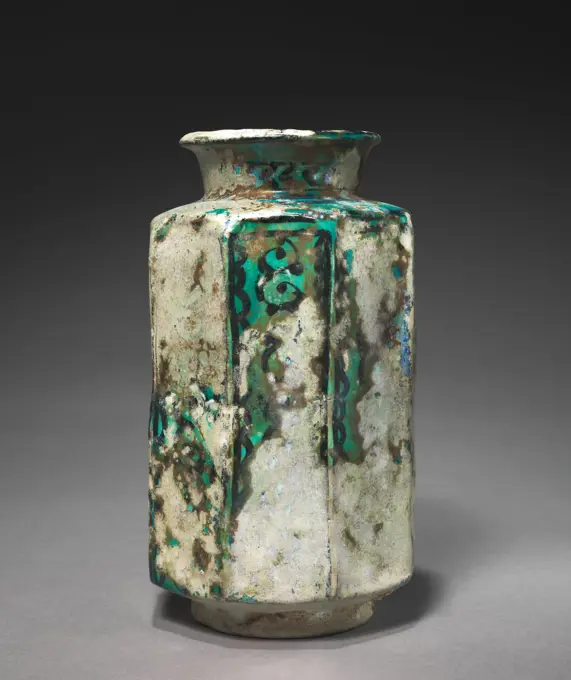
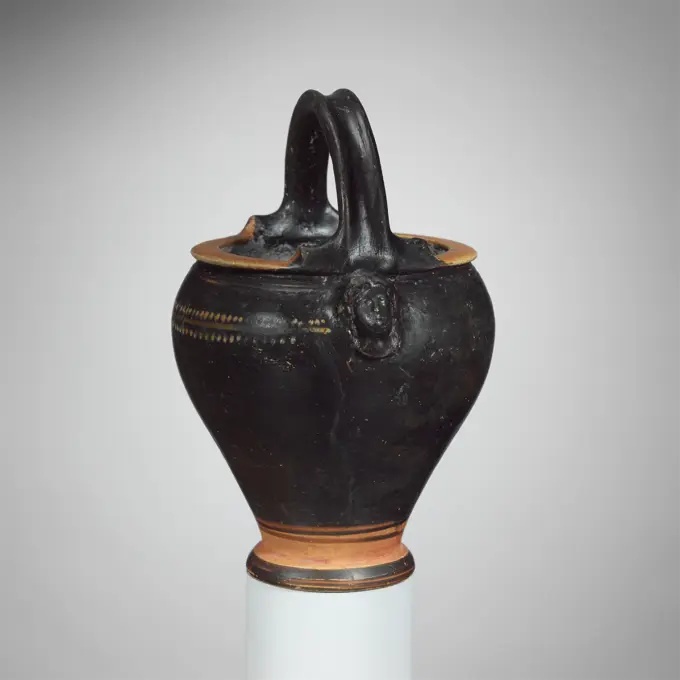
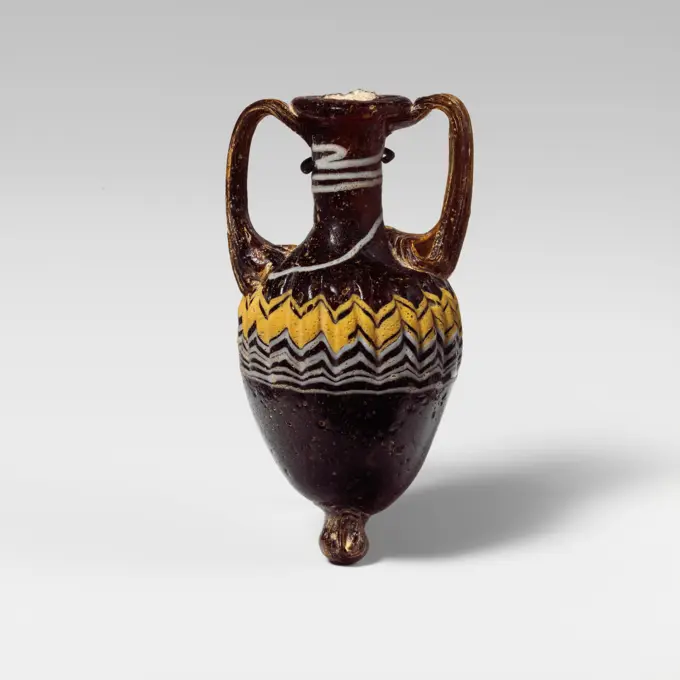
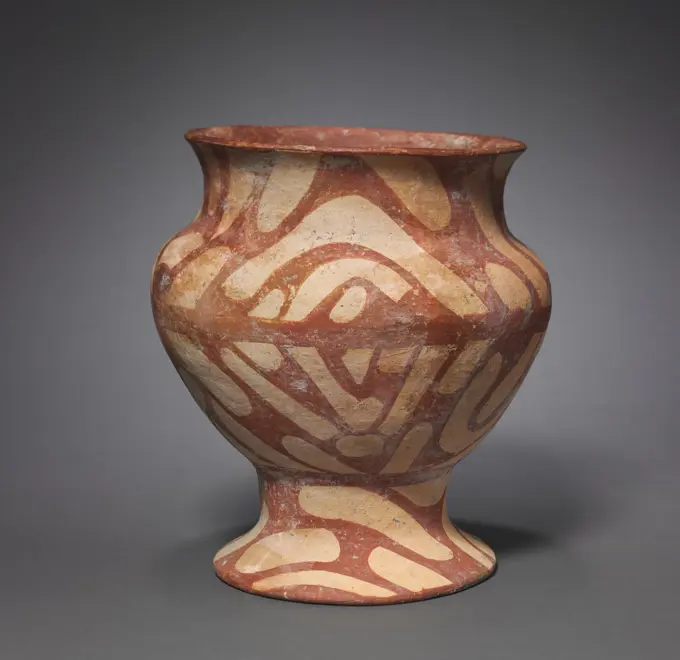
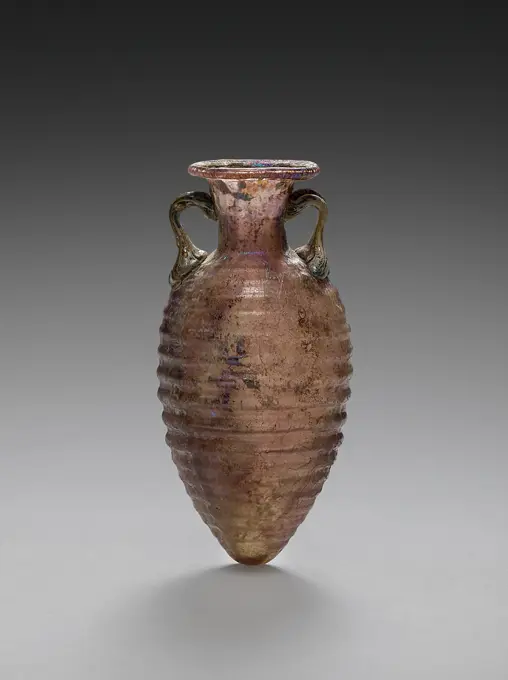
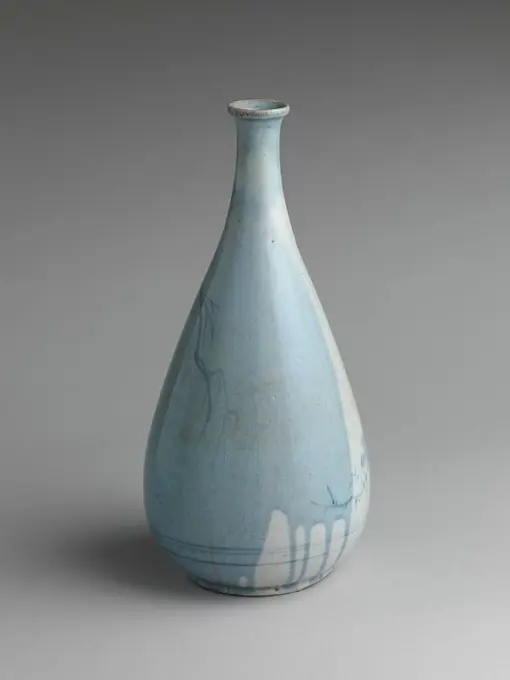
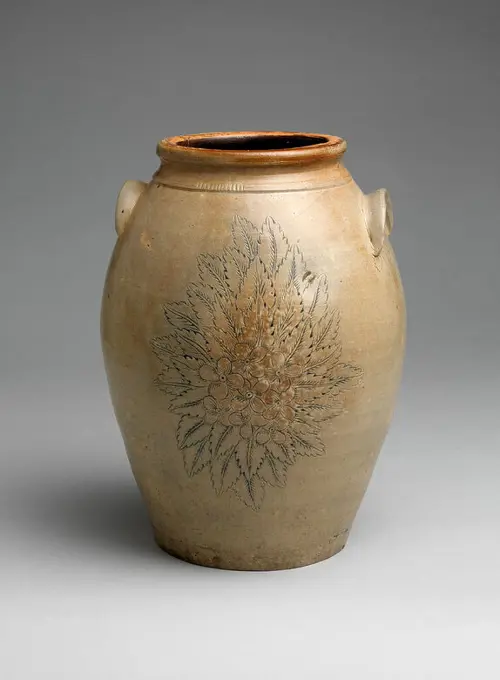
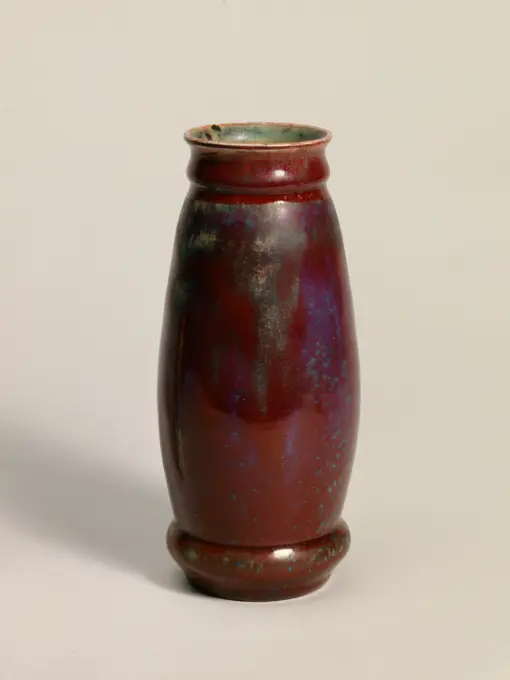
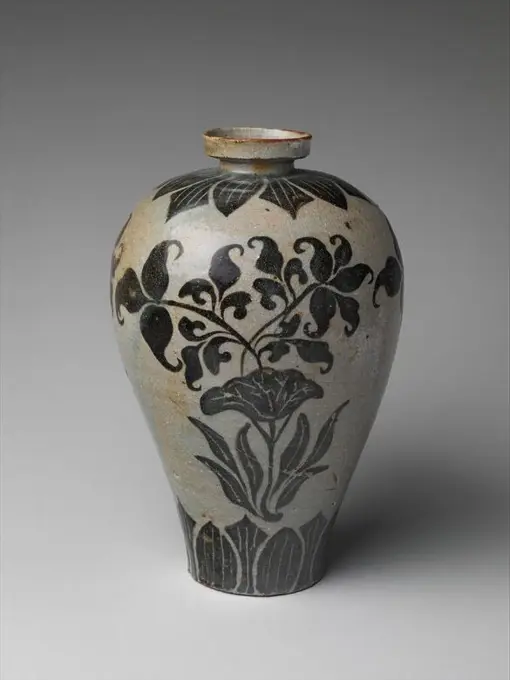
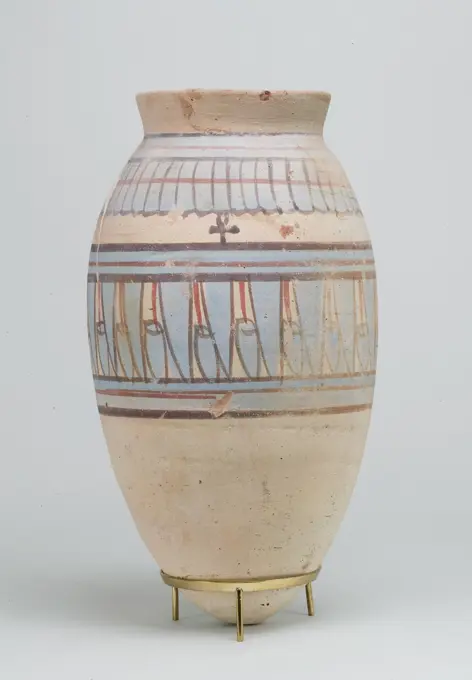
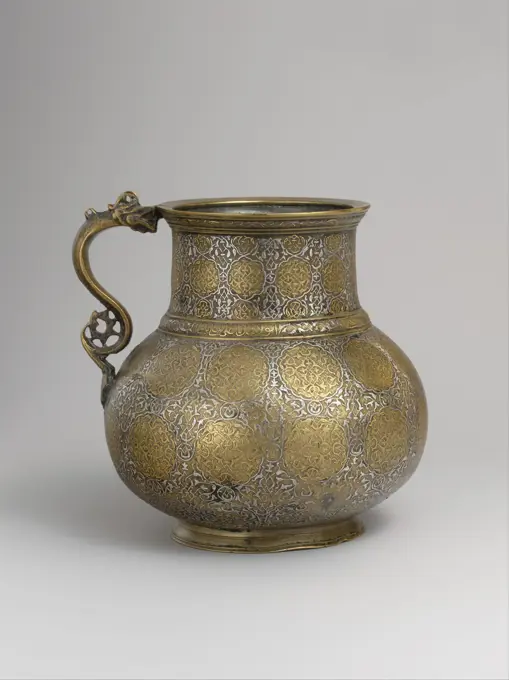
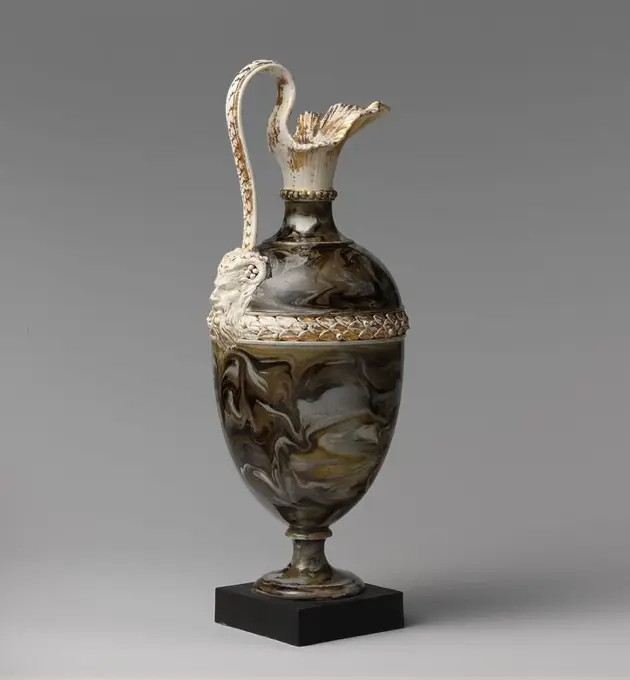
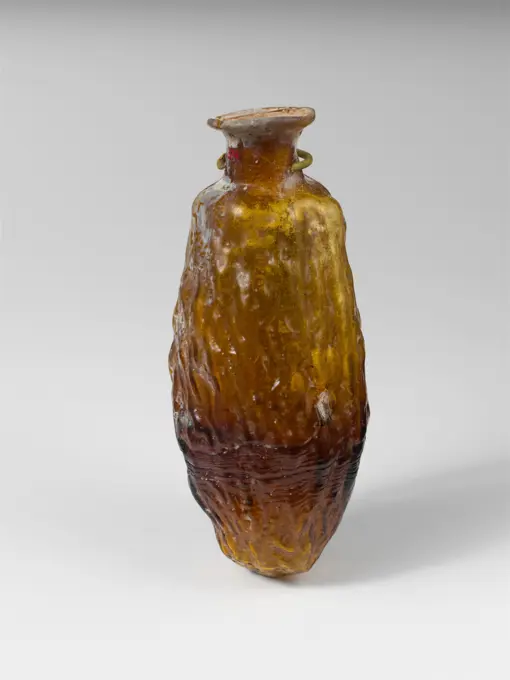
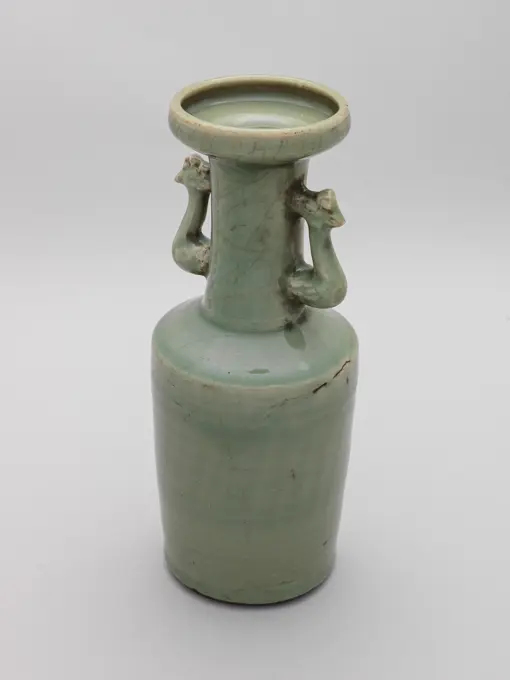
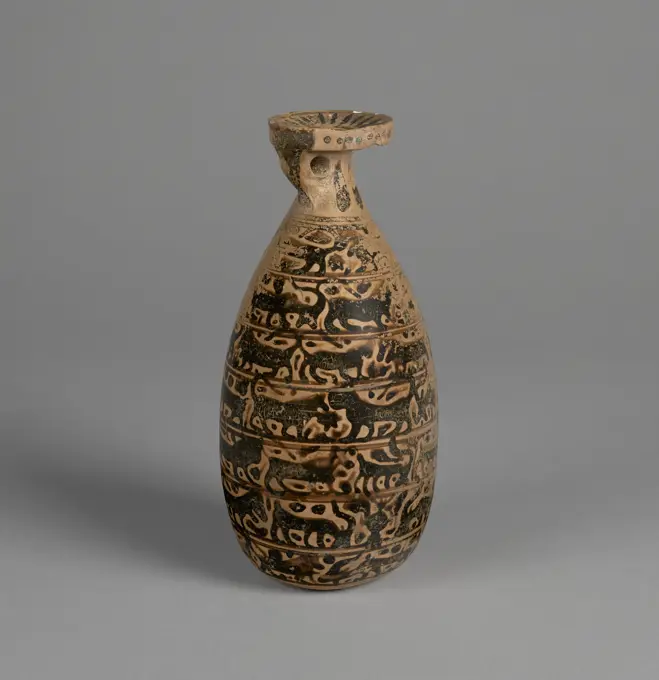
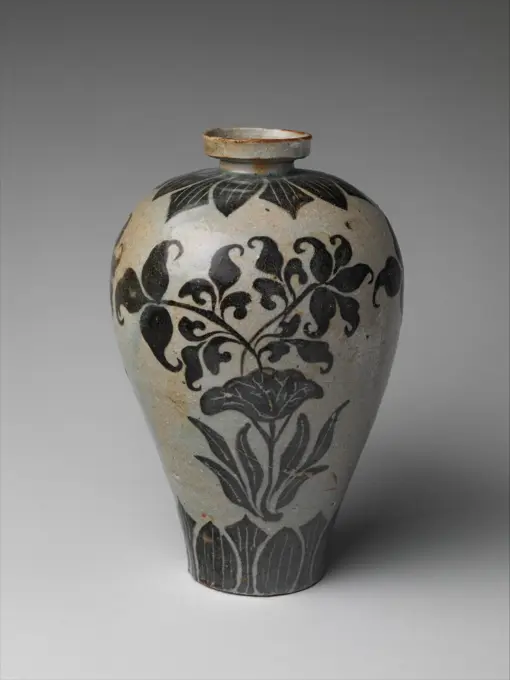
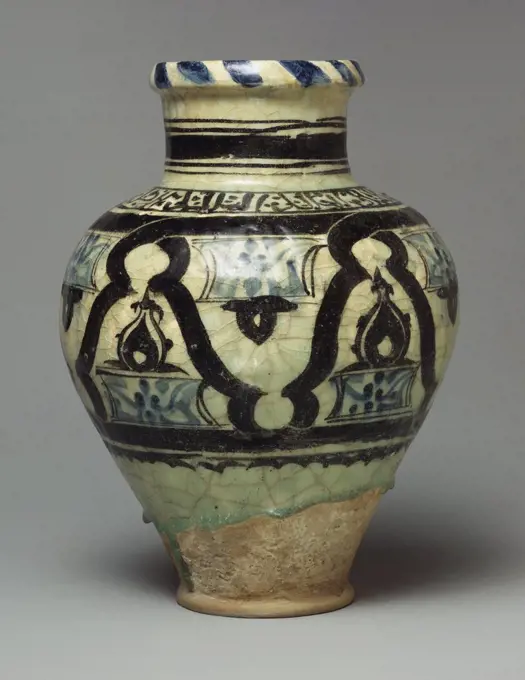
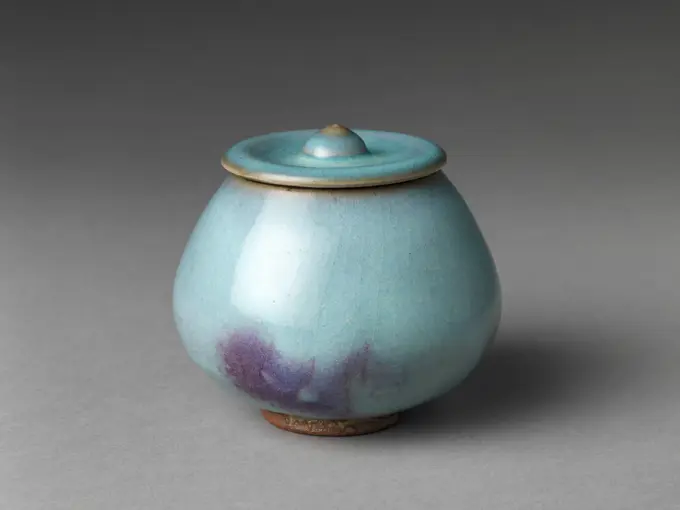
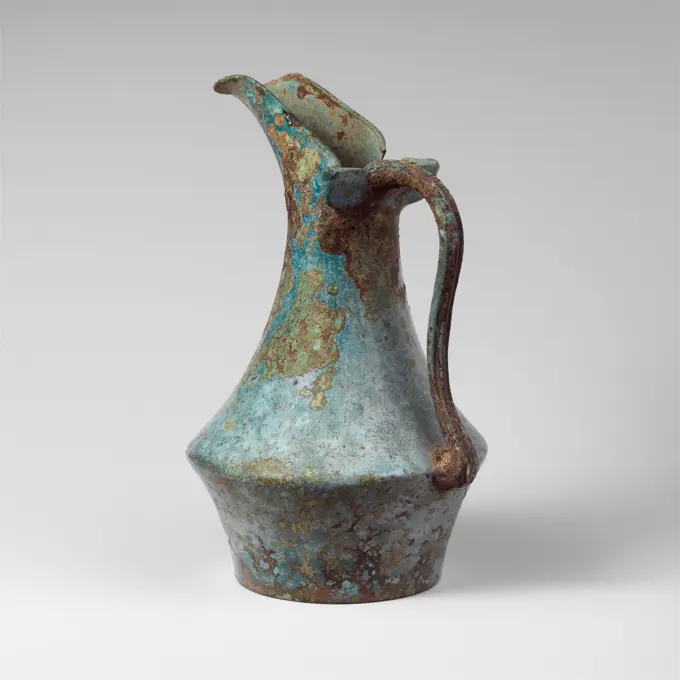
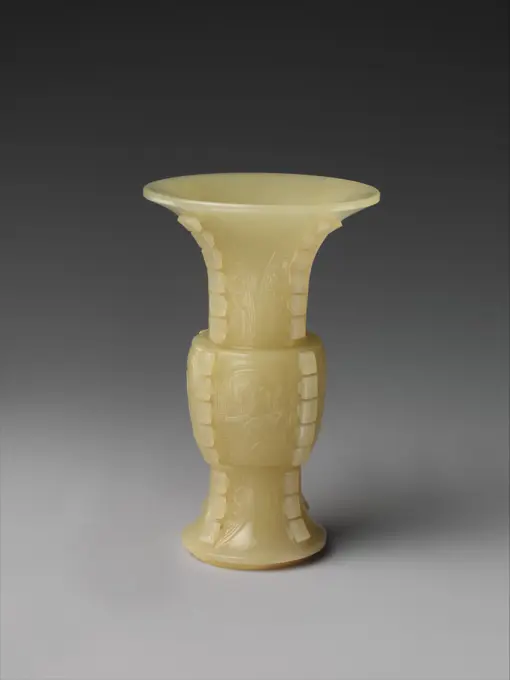
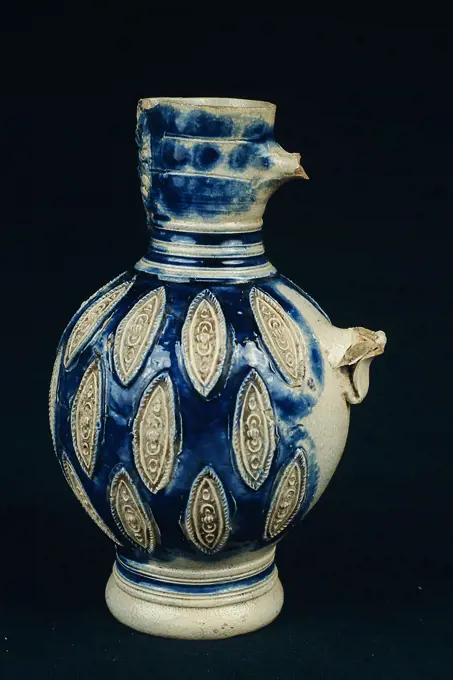
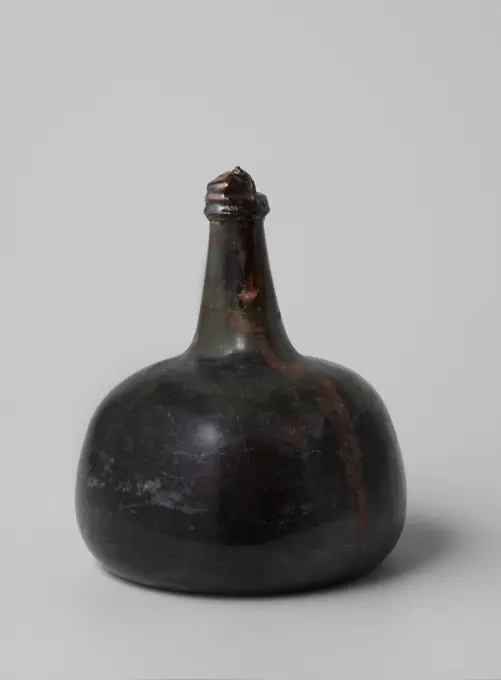
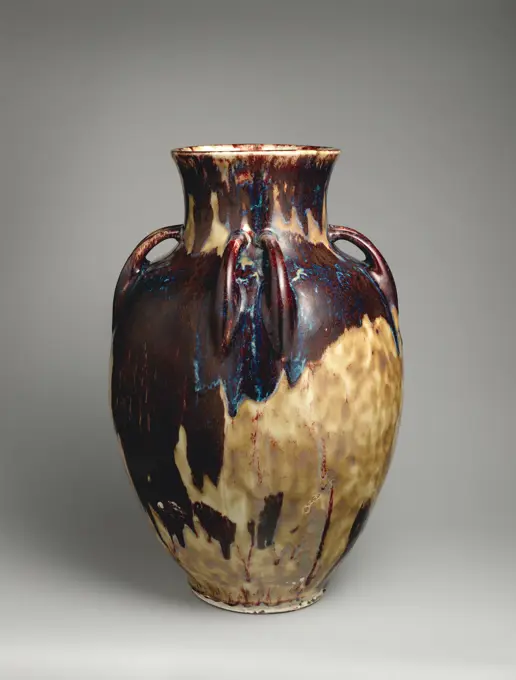
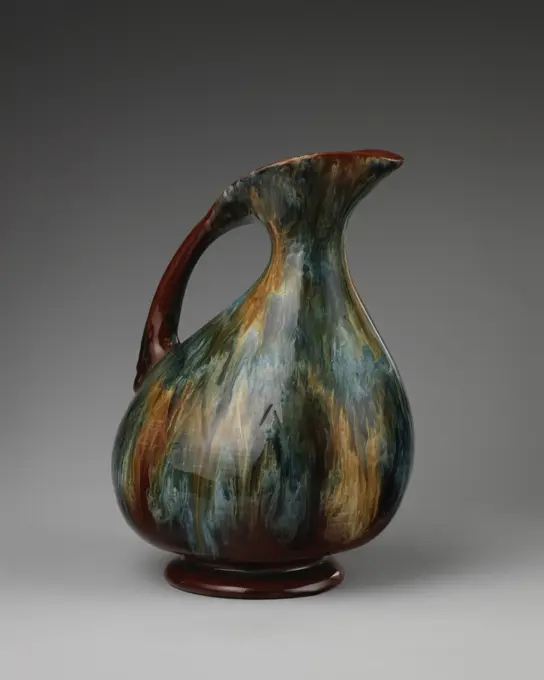
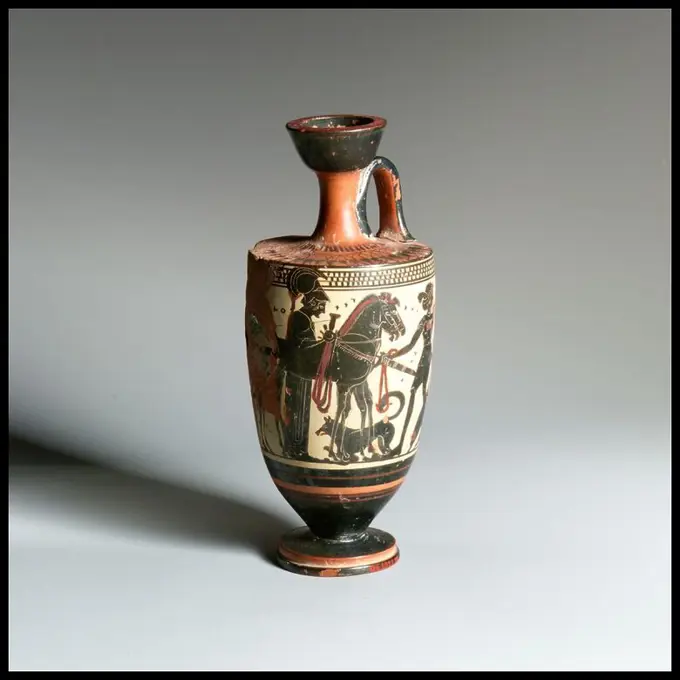
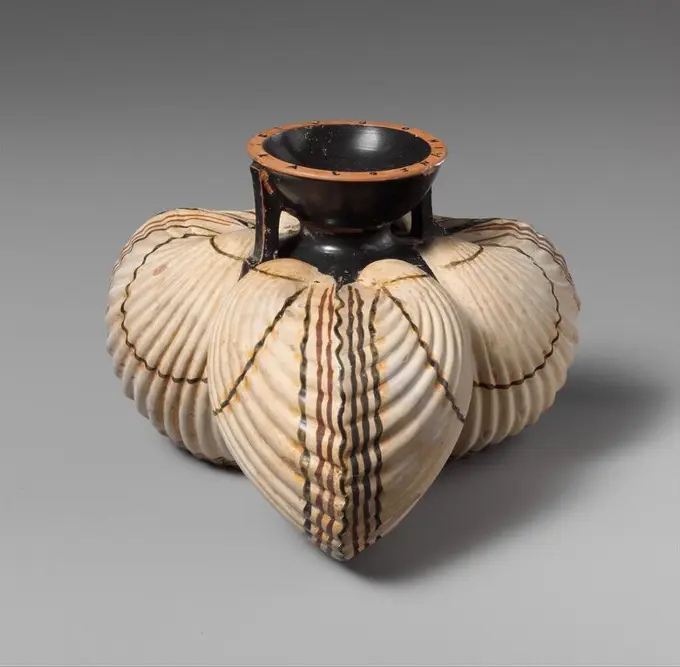
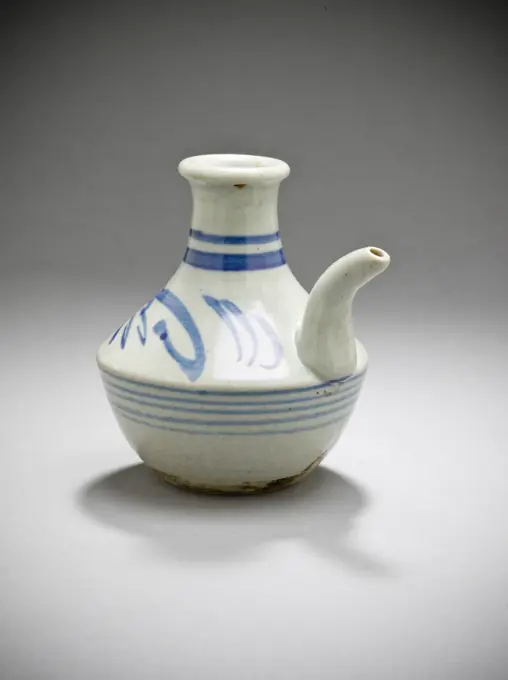
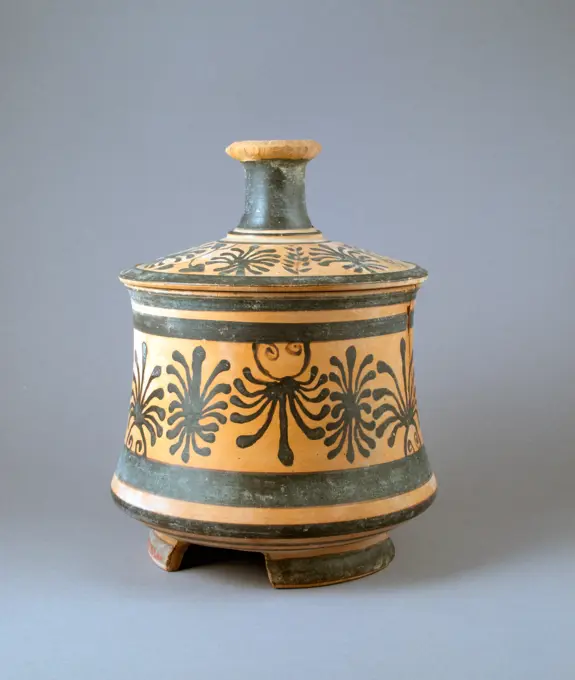
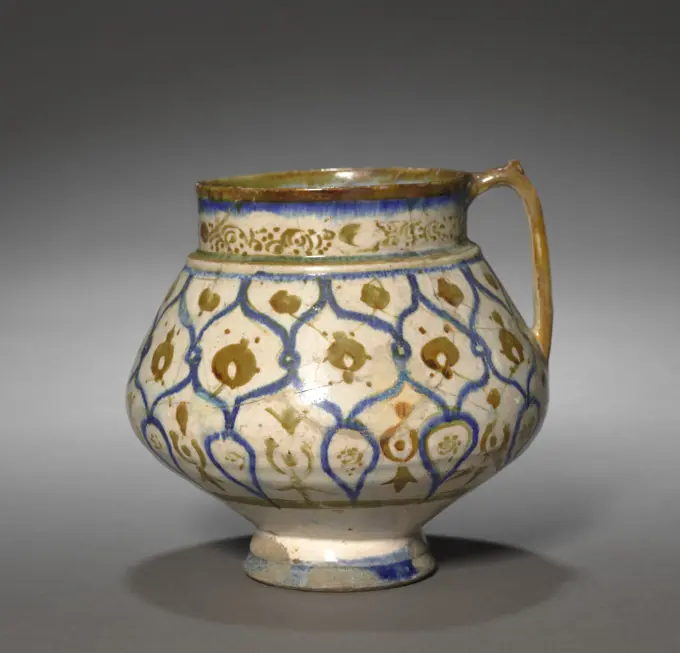
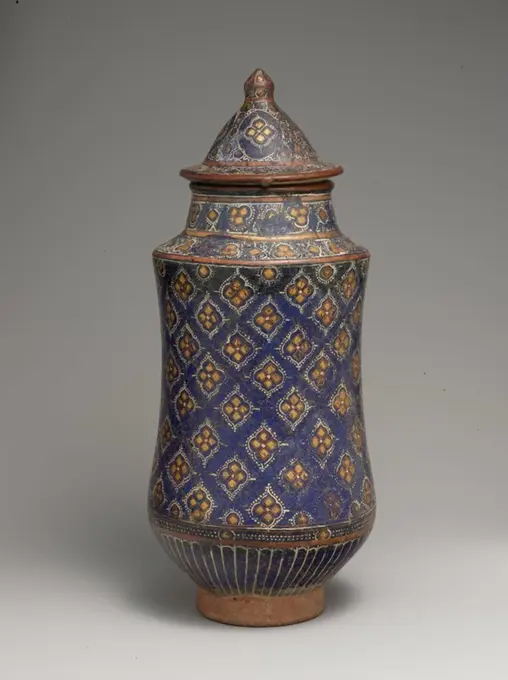
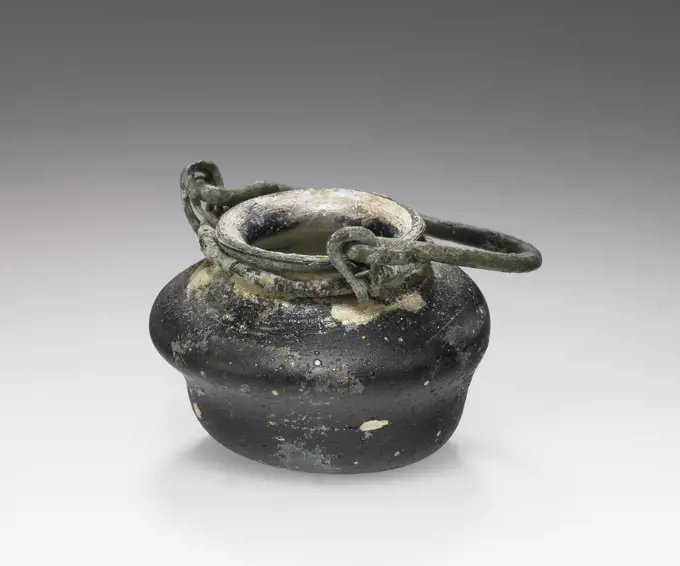
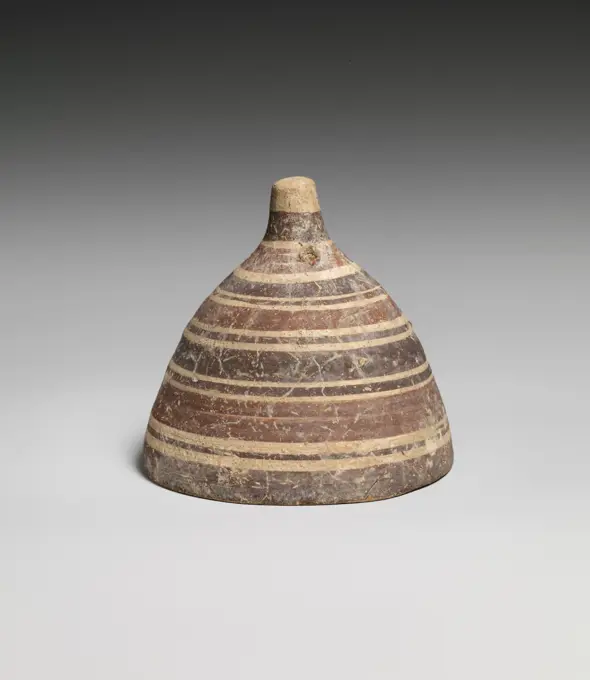
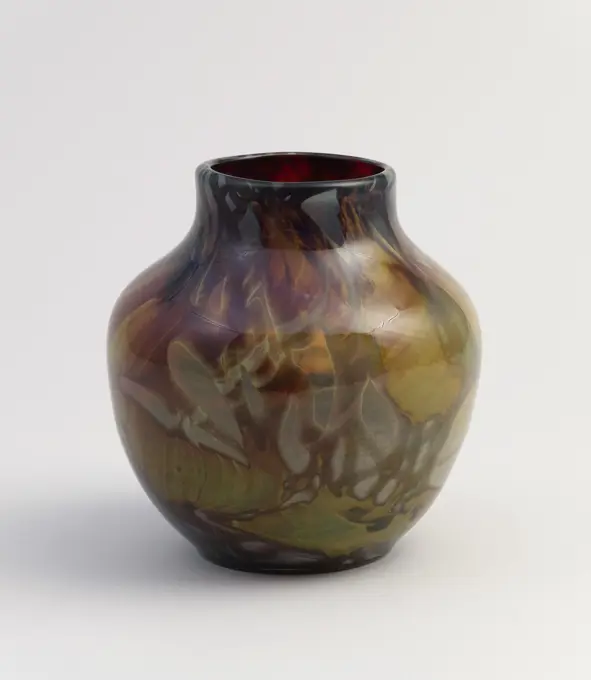
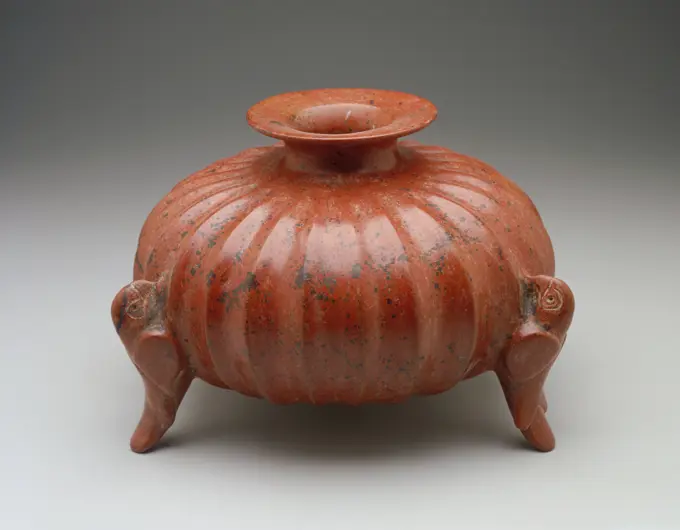
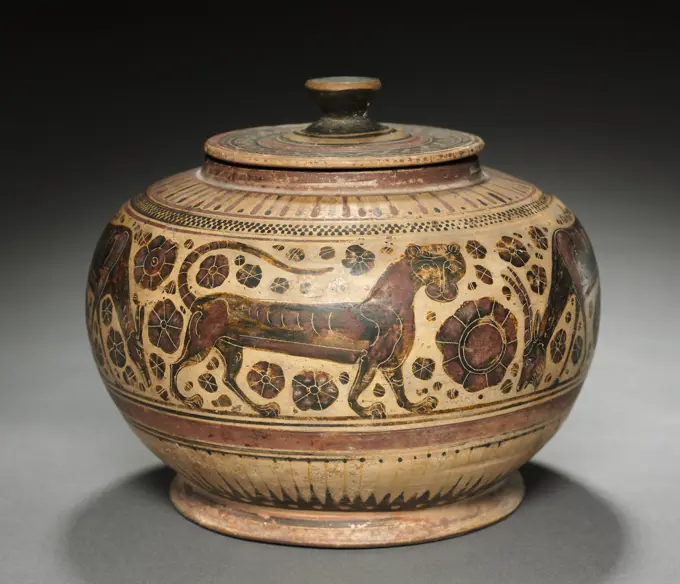
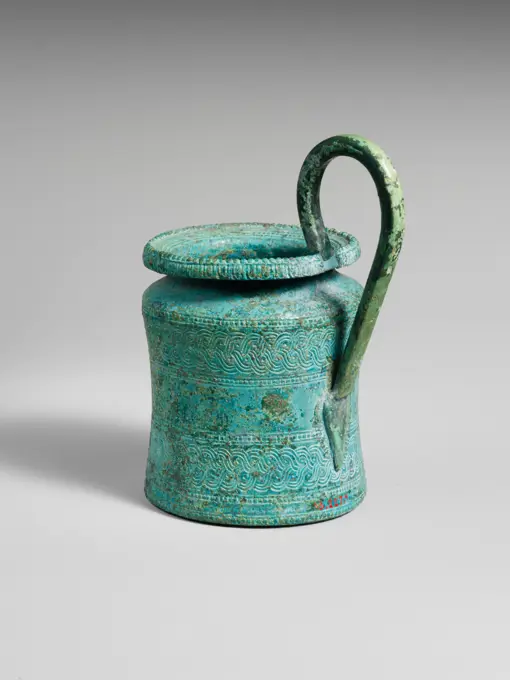
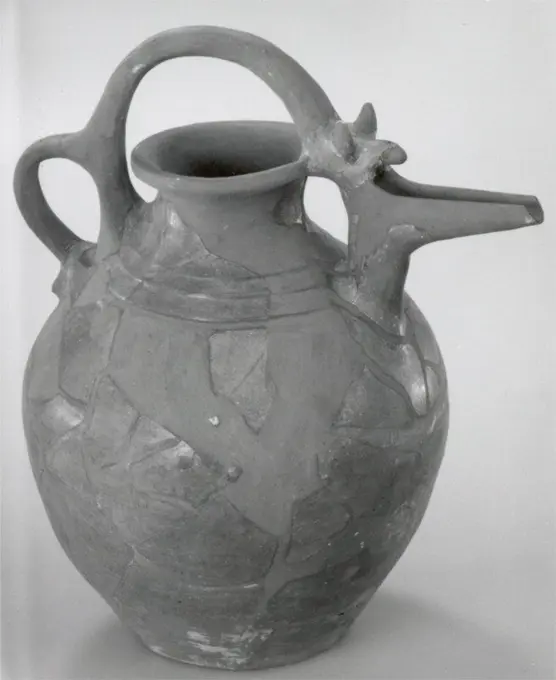
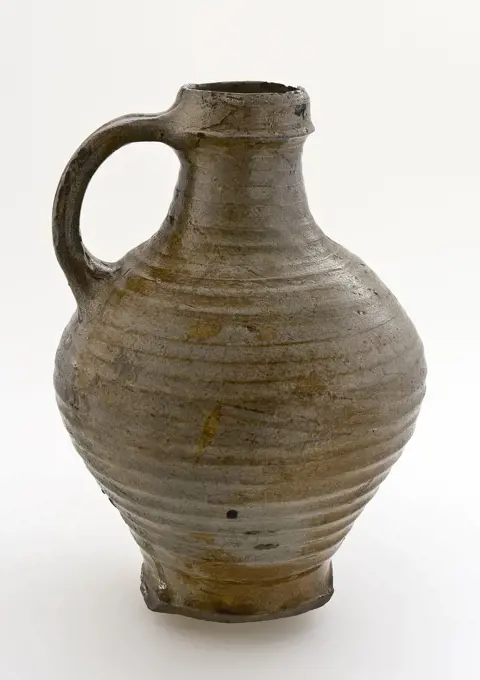
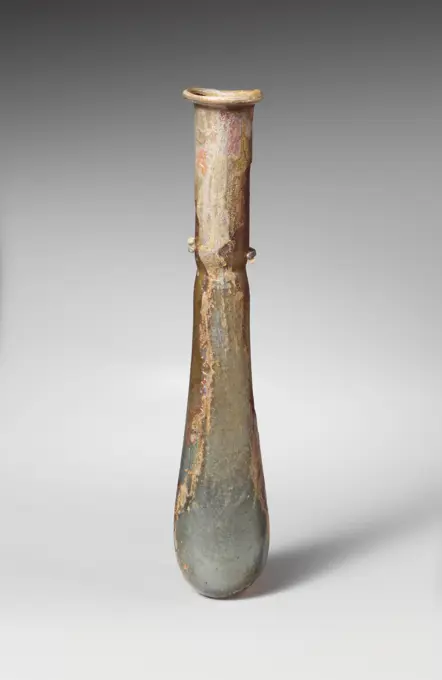
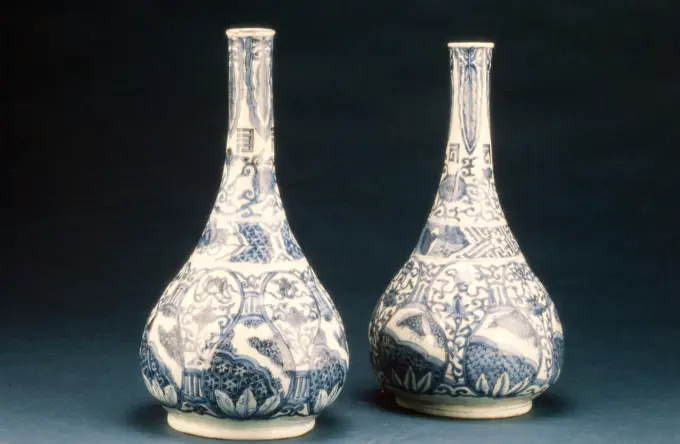
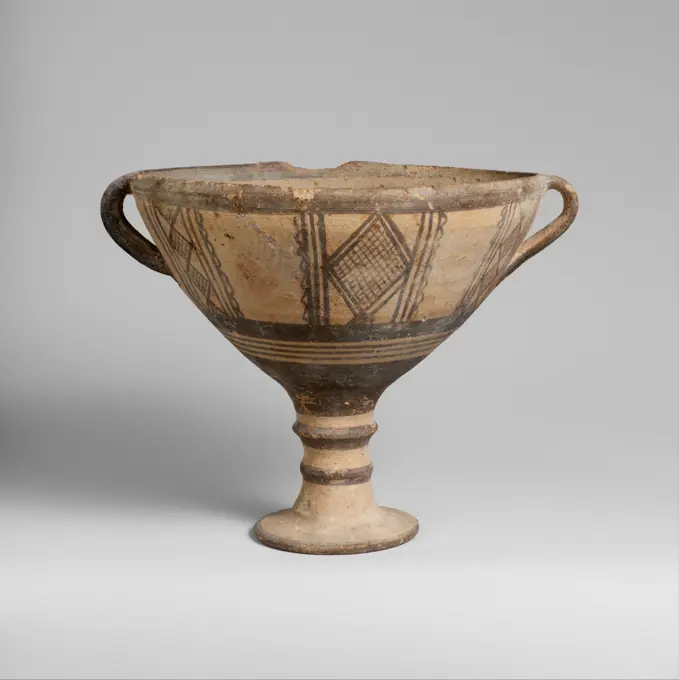
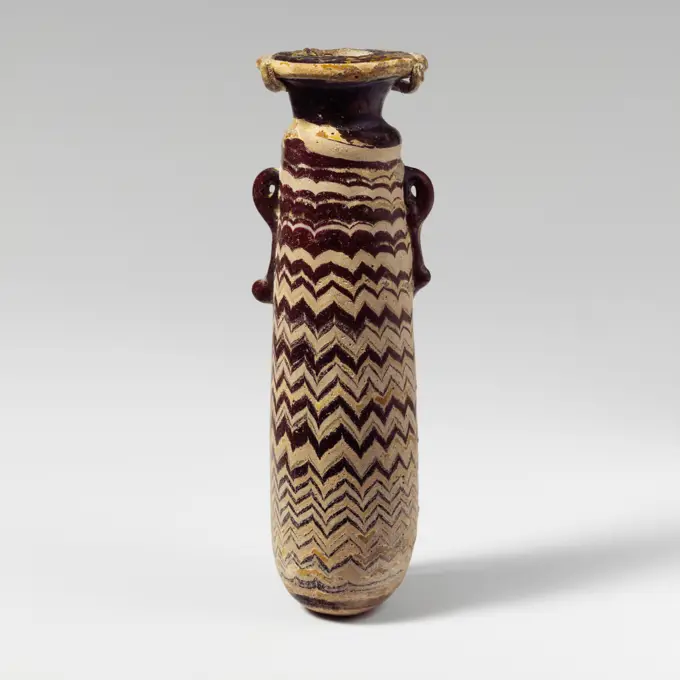
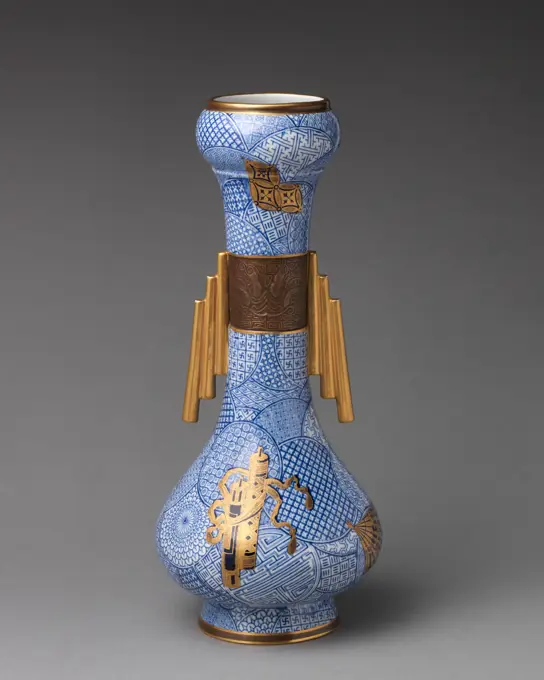
Vase, c.1900. Pierre Adrien Dalpayrat (French, 1844-1910). Stoneware; diameter: 12.3 cm (4 13/16 in.); overall: 17.5 cm (6 7/8 in.).Small vase. unknown, craftsmanAlbarello Jar, 1200s. Syria (Raqqa), Ayyabid Period, 13th Century. Fritware with underglaze-painted design; diameter of mouth: 10.7 cm (4 3/16 in.); overall: 25.6 x 14 cm (10 1/16 x 5 1/2 in.).Miniature terracotta situla (bucket) 4th century B.C. Greek, South Italian, Apulian, Gnathian Upright bail handle.. Miniature terracotta situla (bucket) 255789Glass amphoriskos (perfume bottle) 3rd century B.C. Greek, Eastern Mediterranean Translucent honey brown with same color handles and base-knob; trails in opaque white and opaque yellow.Horizontal rim with rounded edge and radiating tooling marks on top surface; tall slender cylindrical neck; broad sloping shoulder, slightly concave below handles; ovoid body; coiled base-knob applied to pointed bottom; two vertical handles applied to shoulder, drawn up in a curve, then turned in and down, and attached to top of neck and underside of rim.White trail applied on neck, wound spirally around and drawn down across shoulder to body; another yellow trail applied to top of body in a band over the white and tooled into a zigzag pattern with close-set vertical indents around top of body; the white trail continues as a zigzag band below, and then as a horizontal line around center of body.Intact; dulling, pitting, and faint iridescence.. Glass amphoriskos (perfume bottle) 250003Glass perfume bottle. Culture: Roman. Dimensions: Overall: 6 5/8 in. (16.8 cm)Diam.: 3 5/16 x 1 1/2 in. (8.4 x 3.8 cm). Date: 2nd-3rd century A.D..Large unguentarium.Translucent pale blue green body and yellow green neck and rim.Tubular rim folded out, over and pressed flat around mouth; tall cylindrical neck, expanding slightly downwards, with tooled indent around base; squat sloping body, expanding downwards; slightly concave bottom.Intact; some pinprick and elongated bubbles; pitting, dulling, and patches brilliant iridescence on exterior; limy encrustation and creamy brown weathering on interior of neck. Museum: Metropolitan Museum of Art, New York, USA.Vase with Landscape Vignette 19th century This vase is typical of the objects that were displayed in open niches in reception rooms of Ottoman-period upper-class Syrian homes. Vase with Landscape Vignette 444803Lécythe Aryballisque with reliefs. Applique decor. Apulie (Italy), 4th century BC. AD Museum of Fine Arts of the City of Paris, Petit Palais. 58729-4 Anse, Ceramic, Decor Applique, flat bottom, perfume oil, 4th 4th 4th 4th 4th century AV.JC, Aryballisque lecythe, ancient period, character, pottery, relief, body care, vase, Greek vaseVase with DancingFiguresJar, c. 3rd millenium BC. South East Asia, Thailand, Ban Chiang, Neolithic period. Earthenware; overall: 23.2 cm (9 1/8 in.).Amphoriskos (Small Amphora), AD 50-100. Roman. Glass, mold-blown; diameter: 2.5 cm (1 in.); overall: 7.5 x 3.5 cm (2 15/16 x 1 3/8 in.). First blown in a mold, then supplied with separately made handles, this small vessel likely held perfumed oil, a valuable commodity. Originally violet in color, its surface is now partially marred by areas of buff and iridescent weathering. The finely ribbed body is quite elegant, however, and its extravagant modern box attests to its significant value for a modern owner (prior to 1919).Vase: Fahua ware, late 15th Century. China, Jiangxi province, Ming dynasty (1368-1644). Porcelain; overall: 29.9 cm (11 3/4 in.).Wine Bottle with a Bird on a Rock under a Willow Tree. Culture: Japan. Dimensions: H. 11 1/2 in. (29.2 cm); Diam. 5 1/2 in. (14 cm); Diam. of rim 1 1/2 in. (3.8 cm); Diam. of foot 3 5/8 in. (9.2 cm). Date: first half of the 17th century. Museum: Metropolitan Museum of Art, New York, USA.Stoneware jar. Culture: American. Dimensions: 12 3/4 × 7 in. (32.4 × 17.8 cm). Maker: Cornwall Kirkpatrick (1814-1890); Wallace Kirkpatrick (1828-1896). Manufacturer: Anna Pottery (1859-96). Date: 1873. Museum: Metropolitan Museum of Art, New York, USA.Mug ca. 325-300 B.C. Greek, South Italian, Apulian. Mug 255711Jug. Culture: East Greek. Dimensions: H. with handle 7 in. (17.8 cm). Date: 4th century B.C.. Museum: Metropolitan Museum of Art, New York, USA.Jug ca. 1400-1352 B.C. New Kingdom. Jug. ca. 1400-1352 B.C.. Travertine (Egyptian alabaster). New Kingdom. From Egypt, Upper Egypt, Thebes. Dynasty 18Vase, Niloak, stoneware, Vase with curved, pear-shaped profile and broad flaring lip. Body of brown, beige, blue and white mottled and wedged stoneware to create overall marbled effect. Unglazed., USA, ca. 1900, ceramics, Decorative Arts, VasePierre-Adrien Dalpayrat (1844-1910). Vase. Flammed sandstone. Museum of Fine Arts of the City of Paris, Petit Palais. GRES, GRES FLAME, object of decoration, vase, 19th 19th 19th 19 19th 19th centuryAnonymous lime pot, 1400. White paste, two covered: ivory and green. Cernuschi Museum, Asia Museum of Asia in the city of Paris.Maebyeong with lotus decoration. Culture: Korea. Dimensions: H. 10 1/2 in. (26.7 cm). Date: 11th century.The lotus's distinctive open leaf forms the center of the painted design on this maebyeong (plum bottle). Iron pigment typically adds a yellowish tint to celadon glaze, as seen here. The style of the design is similar to those on iron-painted vessels from Cizhou kilns of Song China. Museum: Metropolitan Museum of Art, New York, USA.Blue-painted Jar from Malqata ca. 1390-1353 B.C. New Kingdom This jar of blue-painted ware has been decorated with floral patterns that are common on this type of pottery (see 11.215.465, .468, .469). A small "ankh" hieroglyph has also been painted on the side shown here.. Blue-painted Jar from Malqata. ca. 1390-1353 B.C.. pottery (red), white cream slip, paint. New Kingdom. From Egypt, Upper Egypt, Thebes, Malqata, Palace of Amenhotep III, House A, MMA excavations, 1910-11. Dynasty 18Dragon-Handled Jug with Inscription late 15th- first quarter 16th century This elegantly-formed jug with dragon-headed handle is covered with intricate silver and gold inlay, including a minute inscription around the base of its neck. It is inscribed with an invocation to 'Ali ibn Abi Talib the son-in-law of the Prophet Muhammad. As the Shi'i Muslim community holds a special reverence for 'Ali, scholars have suggested that this jug may have been created in the early 16th century, for a follower of the Shi'i Safavid dynasty. Listen to experts illuminate this artwork's story Listen Play or pause #6706. Dragon-handled Jug with Inscription Supported by Bloomberg Philanthropies We're sorry, the transcript for this audio track is not available at this time. We are working to make it available as soon as possible.. Dragon-Handled Jug with Inscription 444607Vase c 1903-1909 Boston. Inspired by the French earthenware at Chicagoís 1893 Worldís Columbian Exposition, William H. Grueby established his own firm in Boston the following year. By 1900, under the direction of George Prentiss Kendrick, Grueby Faience Company specialized in producing earthenware in solid shapes based on Asian precedents in a small spectrum of matte colors with elegant applied decoration. The color, shape, and symmetrical arrangement of daffodils on this vase evoke Japanese elements that Kendrick would have recognized through his involvement with the Boston Society of Art and Crafts. The beauty of Kendrickís designsóalong with the laborious handcraftingómade Grueby among the most popular pottery in the country. Unfortunately, Gruebyís devotion to time-consuming applied decoration led to the companyís demise.. Glazed earthenware . Grueby Faience & Tile Co.Ewer. Culture: British, Etruria, Staffordshire. Dimensions: Height: 11 in. (27.9 cm). Factory: Wedgwood and Bentley (1760-80). Date: ca. 1769-80. Museum: Metropolitan Museum of Art, New York, USA.Glass bottle shaped like a date mid-1st to early 2nd century A.D. Roman Translucent yellowish brown.Thin, everted rim folded round and in; flaring neck with concave sides; elongated body; round bottom. One continuous mold seam around body.Body molded into the shape of a wrinckled date, with pattern of short wavy ridges and hollows.Intact, except for small chip and crack in rim; some bubbles and blowing striations; slight dulling, iridescence, and whitish weathering.. Glass bottle shaped like a date 245386Jug 301 CE-400 CE Levant. Glass vessels were part of the luxurious domestic decoration displayed in wealthy households in both urban villas and rural estates in the later Roman and early Byzantine eras (about 300ñ725). Glass vessels were used for a variety of purposes, including cosmetic containers. In the kitchen and for dining, pitchers served water and wine, and small cups were used for drinking. Glass was also used for lamps to light the home.Byzantine glass craftsmen improved upon the techniques, forms, and decorative motifs they had inherited from their Roman predecessors. An imperial edict of 337 exempted glassworkers from personal taxes and attested to their relative status in society; it remained in effect for several centuries. These artisans would, in turn, pass on their craft to successive generations, including those who worked under Islamic rule after the important Byzantine provinces of Egypt, Palestine, and Syria were conquered in the seventh century.. Glass, blown techSugar bowl 1815-35 American. Sugar bowl 2490Vase (usual name). Sandstone, Céladon. Cernuschi Museum, Asia Museum of Asia in the city of Paris.Alabastron. UnknownVase first half 17th century. Vase 446886Maebyeong decorated with lotus 11th century Korea The lotuss distinctive open leaf forms the center of the painted design on this maebyeong (plum bottle). Iron pigment typically adds a yellowish tint to celadon glaze, as seen here. The style of the design is similar to those on iron-painted vessels from the Cizhou kilns of Song-dynasty (960-1279) China.. Maebyeong decorated with lotus. Korea. 11th century. Stoneware with iron-brown design under celadon glaze. Goryeo dynasty (918-1392). CeramicsAn important Syrian blue, black and white pottery storage jar. The body with a broad white band of bold black lines forming reciprocal arcades enclosing candlestick motifs. Rakka, early 13th century, 31.5cm high.Jar 11th-12th century China. Jar. China. 11th-12th century. Stoneware with splashed glaze (Jun ware). Northern Song dynasty (960-1127). CeramicsBamboo-shaped Sake Bottle. Japan, Edo period, early 18th century. Ceramics. Shōdai ware; stoneware with iron, wood ash, and rice straw ash glazesBronze oinochoe (jug) early 5th century B.C. Etruscan The shape, known archaeologically as an oinochoe shape 6, is characterized by the beaked spout and the low carination on the body. It is a relatively rare shape that appears in Attic pottery during the first and third quarters of the fifth century B.C. In pottery, black-glazed examples outnumber those with figural decoration.. Bronze oinochoe (jug) 248808Miniature vase in the shape of an ancient ritual vessel (gu) late 18th-early 19th century China The shape, raised ridges, and incised decoration on the surface of this vase derive from bronze beakers produced during the Shang dynasty (ca.1600-1046 B.C.).. Miniature vase in the shape of an ancient ritual vessel (gu) 42126Stoneware jug be used with shaving stick, lion mask, pointed appliqués, jug crockery holder soil find ceramic stoneware glaze salt glaze, hand rotated stamped glazed glazed baked stoneware jug light gray shard with salt glaze bandoor with curled tail profiled neck and foot pouring cliff archeology import pottery serve serve serve drink wine beerVase;  19th century (1801-00-00-1900-00-00);BURSUARY VASE. Brownstone. Cernuschi Museum, Asia Museum of Asia in the city of Paris.Vase;  around 1900 (1896-00-00-1905-00-00);Vase China. Vase. China. Porcelain with a dappled blue and green glaze. Qing dynasty (1644-1911). CeramicsJug (boccale). Culture: Italian, probably Tuscany or Umbria. Dimensions: Height: 9 5/8 in. (24.4cm). Date: late 14th or early 15th century. Museum: Metropolitan Museum of Art, New York, USA.Wine bottle with wine from the wreck of the East Indians' t Vliegend Hart, Anonymous, c. 1700 - c. 1735 wine The gaveuef -shaped green wine bottle is completely filled with wine. The bottle is closed with a cork, copper wire and paint.  glass. cork (bark). lacquer (coating). wine blow moldingTerracotta aryballos (oil flask) in the form of a pomegranate 6th century B.C. Lydian Incised tongues and meander pattern.. Terracotta aryballos (oil flask) in the form of a pomegranate 252568 Lydian, Terracotta aryballos (oil flask) in the form of a pomegranate, 6th century B.C., Terracotta, H. 2 9/16 in. (6.5 cm). The Metropolitan Museum of Art, New York. Gift of The American Society for the Excavation of Sardis, 1926 (26.164.3)Tea caddy with a purple glaze, anonymous, anonymous, c. 1700 - c. 1799 Dust bar or Chare van Steengoed with an ivory lid, partly covered with a purple glaze. The lower part of the bus is unglazed. Old label on the bottom with 'W594'. Takatori. Japan stoneware. glaze. deksel: ivory vitrification Dust bar or Chare van Steengoed with an ivory lid, partly covered with a purple glaze. The lower part of the bus is unglazed. Old label on the bottom with 'W594'. Takatori. Japan stoneware. glaze. deksel: ivory vitrificationMonumental vase ca. 1890 Ernest Chaplet French The massive scale of this vase represents a technical feat, even for a master like Chaplet. Firing porcelain this large posed many challenges, as evidenced by the firing crack and sloped profile where the clay sagged in the kiln. While many of his contemporaries worked almost exclusively in stoneware, Chaplet focused on porcelain, a material that required a much higher firing temperature.. Monumental vase. French, Choisy-le-Roi. ca. 1890. Porcelain. Ceramics-Porcelain. Fabric tea bus or chair of stoneware with an ivory lid, partially covered with a green-brown glaze. The lower part of the bus is unglazed. Old label on the bottom with 'W621'. Satsuma.Glass hexagonal bottle 1st century A.D. Roman Opaque white.Plain rim with slight inward lip and flattened top edge; funnel-shaped neck, with pinched tooling marks at base; ovoid body; flat bottom.On shoulder, six pointed arches, each containing a large ovoid object in high relief; on body, six rectangular panels divided by columns, each with a capital and base and each panel containing a vessel: 1. a spouted and footed jug, with high handle to right; 2. a footed bowl with two curved handles at sides and wide mouth containing indisctinct round objects (fruit); 3. a footed, round-bodied amphora with two handles on shoulder; 4. a footed bowl with tall cylindrical neck with vertical grooves, the mouth filled with small dimpled objects (grapes); 5. a footed jug with high handle to right; 6. a footed, round-bodied amphora with two handles on shoulder; around bottom, six fillets, each suspended from under the center of one panel to the next, enclosing alternating large and small objects (frCERAMICA POPULAR DE SEGORBE (CASTELLON).Pitcher 1879-82 Linthorpe Pottery Works British The form of this pitcher is probably based on Minoan or Cycladic pottery, as were many of Dresser's designs for Linthorpe Art Pottery. However, Asian, Mexican, Peruvian, and Fijian pottery, as well as prehistoric and Bronze Age artifacts found in Yorkshire, were also sources of inspiration for Dresser's works at Linthorpe.Dresser's trip to Japan in 1876/77 had a profound effect on his approach to design as well as his understanding of manufacturing processes. Prior to his trip, his output shows a great amount of attention to surface ornamentation. Upon his return, however, Dresser began to take a holistic approach to design. Form and decoration became inseparable. Incised decoration, barely discernable on the pitcher illustrated here, became an integralelement, unlike applied decoration such as enamel colors. Another effect of the trip was that Dresser took a greater interest in the manufacturing process and as a result became more involvTerracotta lekythos (oil flask). Culture: Greek, Attic. Dimensions: 6 13/16in. (17.3cm). Date: ca. 500-490 B.C..Warrior mounting chariot, Athena, and dogHarnessing of a chariot, Athena and a dog near. Museum: Metropolitan Museum of Art, New York, USA.Glass vaeTerracotta aryballos (oil flask) in the form of three cockleshells. Culture: Greek, Attic. Dimensions: H. 2 7/16 in. (6.2 cm). Date: late 6th century B.C..Inscribed on the lip, "the boy is fair"Such small bottles held the olive oil used by athletes to cleanse themselves after exercise. This exquisite vase is embellished with black and red lines that accentuate the outer rims of the three shells. Museum: Metropolitan Museum of Art, New York, USA.Snuff Bottle with Scholars and Assistants Opening a Scroll 1800-1900 China. Soapstone with carved decoration .Stand. UnknownSpouted Sake Bottle with Design of Grasses. Japan, Edo period (1615-1868), late 18th-early 19th century. Ceramics. Hirasa ware; porcelain with underglaze bluePyxis with lid late 5th century B.C. Greek, Boeotian Decorated with palmettes.. Pyxis with lid. Greek, Boeotian. late 5th century B.C.. Terracotta. Classical. VasesJug, 1170-1220. Iran, Kashan, Seljuq period of Iran (1037-1194). Fritware with luster-painted design; overall: 14.7 x 17 cm (5 13/16 x 6 11/16 in.).Glass perfume bottle 2nd-3rd century A.D. Roman Large candlestick unguentarium.Colorless.Tubular rim folded out, down, over and pressed into top of mouth; cylindrical neck, expanding downwards, with slight indent around base; narrow horizontal shoulder; squat sloping body, expanding downwards; flat bottom.Intact; many pinprick and elongated bubbles; deep pitting, dulling, and brilliant iridescence on exterior; limy encrustation and thick brown weathering on interior.. Glass perfume bottle 244621Ewer probably 18th-19th century. Ewer. probably 18th-19th century. Glass; blown with applied decoration, tooled on the pontil, cold-painted. Attributed to Iran. GlassCovered Jar (Albarello). Dimensions: H. 14 3/4in. (37.5cm)H with cover: 14 3/4in. (37.5cm). Date: second half 13th-14th century.This covered jar exhibits a rare glaze type referred to as lajvardina, from the Persian word lajvard, or lapis lazuli (a deep blue colored stone containing gold inclusions). Its design comprises small squares of gold leaf, carefully arranged into intricate patterns with delicate red and white overpainting. Production of this type of glazed ware is limited to the Ilkhanid period in Iran. And the luxurious nature of this example suggests it was destined for wealthy patrons. Museum: Metropolitan Museum of Art, New York, USA.Miniature pot with bronze handle; Eastern Mediterranean; 1st - 2nd century; Glass, bronze; 3 x 4.2 cm (1 3,16 x 1 5,8 in.)Terracotta bell ca. 600-480 B.C. Cypriot During the Archaic period, bells were often part of horses' harness. Clay examples were probably toys.. Terracotta bell 240548BowlBowl Roman. Bowl 250080Vase (USA); Made by Louis Comfort Tiffany (American, 1848-1933); glass; Overall: 16.6 x 13.4 cm (6 9/16 x 5 1/4 in.)Vessel, c. 300 BCE-200 CE, 9 x 11 1/2 x 11 1/2 in. (22.9 x 29.2 x 29.2 cm), Clay, 4th century BCE - 2nd century CE, Squash were staple crops of ancient Mexico--dried versions were some of the earliest containers for food and drink. This deep orange, symmetrical pot perches on three feet in the form of parrots. Parrots and pumpkins were both associated with fertility and abundance in ancient Colima.Amphora 750-600 B.C. Cypriot. Amphora. Cypriot. 750-600 B.C.. Terracotta. Cypro-Archaic I. VasesFlask; Eastern Mediterranean; 1st century; Glass; 5.5 cm (2 3,16 in.)Ritual Flask. Byzantine; Eastern Mediterranean. Date: 501 AD-700 AD. Dimensions: . Glass, mold-blown techinique. Origin: Syria. Museum: The Chicago Art Institute, Chicago, USA.Vase, Rookwood Pottery, American, 1880 - 1967, earthenware, glaze, Ovoid body, tall slender neck with flaring lip, banded foot. On shoulder and body ochre yellow nasturnums with olive green leaves painted under brilliant glaze on dark brown ground which shades into ochre on body and interior of neck., Cincinnati, Ohio, USA, 1902, ceramics, Decorative Arts, VaseBall vase. Acquired from the Atelier de Glatigny on the Paris World Fair 1900Elton Pottery Jug, 1900-1910. Manufactured by Elton PotteryFrontinian barrel. Gallo-Roman. Glass. Paris, Carnavalet museum. Frontinian barrel, bottle, Gallo-Roman, Gallo-Roman time, container, glass, archeological vestigeOinochoe; Eastern Mediterranean; 5th - 7th century; Glass; 9 x 6 cm (3 9,16 x 2 3,8 in.)Oinochoe; Roman Empire; 4th century; Glass; 17.5 x 6.3 cm (6 7,8 x 2 1,2 in.)Ovoid Jar with Handle Made 399 BCE-300 BCE China. Stoneware with traces of ash glaze with carved decoration .Black-Figure Pyxis (Cylindrical Lidded Box): Animals, 600s-500s BC, with modern painting and incision. Greek, Corinthian. Ceramic; overall: 14.5 cm (5 11/16 in.).Vase with ornamental borders and lion heads with ring handles, anonymous, c. 1800 - c. 1900 Vase of porcelain with high, spreading base, spherical body and wide, flared neck, covered with a monochrome white, cracked glaze. Different bronze -colored tires on the vase; On the foot a band with hanging, pointed leaf motifs, around the foot a band with 'Taotie' masks, on the shoulder a meander band and one with Ruyi motifs, around the edge also a band with Ruyi motifs; On the neck two modeled lion heads with ring -shaped ears. On the bottom a stamped, unidentified brand. Monochrome. China porcelain. glaze. bronze paint painting / vitrification Vase of porcelain with high, spreading base, spherical body and wide, flared neck, covered with a monochrome white, cracked glaze. Different bronze -colored tires on the vase; On the foot a band with hanging, pointed leaf motifs, around the foot a band with 'Taotie' masks, on the shoulder a meander band and one with Ruyi motifs, around the edge also aBottle-Shaped Vase. Korea. Date: 918 AD-1392. Dimensions: H. 31.3 cm; diam. 18.7 cm. Stoneware with iron brown glaze. Origin: Korea. Museum: The Chicago Art Institute, Chicago, USA.Vase. Culture: American. Designer: Designed by Louis Comfort Tiffany (American, New York 1848-1933 New York). Dimensions: H. 5 7/8 in. (14.9 cm). Maker: Tiffany Furnaces. Date: ca. 1912.This object form part of a group of glass vessels and enamel containers Louis Comfort Tiffany loaned to the Museum in 1925 that were later given to the Museum by the Tiffany Foundation in 1951 (51.121.1-.44). Tiffany originally chose this group of objects to show examples of form, technique, and color that were not represented in the 1896 Havemeyer gift (96.17.9-.56). The crusty, pitted surface and rainbow iridescence of this "Cypriote" vase represents Tiffany's attempt to replicate the surface effects found on the ancient Roman and Syrian glass he displayed at Laurelton Hall. The effect was achieved by rolling the parison of molten glass on a marver covered with pulverized glass crumbs and then exposing the surface to metallic fumes. Museum: Metropolitan Museum of Art, New York, USA.Pitcher 1850-55 Brooklyn Flint Glass Company American New York City was an important center for machine-cut luxury glass in the middle of the nineteenth century. This partial group (2014.626.1a,b -.7) of blue-cut-to-clear glass is extraordinarily rare and perhaps even experimental when it was made in the 1850s. This is the only known blue plated cut glass attributed to the Brooklyn Flint Glass Works. The diamond pattern is thought to have been executed by Joseph Stouvenel, a highly skilled glass cutter whose works were exhibited at the New York Exhibition of 1853-54 and published during the period.. Pitcher 667478Bronze kyathos (single-handled jug) ca. 450-400 B.C. Etruscan This is a very fine example of a Sant'Anatolia-type kyathos, a popular shape made in both bronze and terracotta. Several others of the type were found in the tomb-group from Civita Castellana displayed in a nearby case.. Bronze kyathos (single-handled jug) 248786Bridge-spouted jar ca. 7th century B.C. Iran This pitcher is reconstructed from several pieces. Although the complete profile does not survive, enough remains to determine that it has a flat base, a bulbous body, a spout on one side and a double handle on the other. Three vertical lines decorate the vessels shoulder, and there are three raised knobs on one side of the body. The spot where the handle and the spout meet the rim is decorated with a horned animal head. The pitcher is made of a buff clay on a potters wheel and then burnished, with the handles and spout added.The pitcher was excavated at Tepe Nush-i Jan, an Iron Age hilltop site about 60 km sound of Hamadan in western Iran. Nush-i Jan was occupied in the 7th and 6th centuries B.C., and its occupants are generally thought to be the Medes, an Iranian people known from Assyrian, Achaemenid and Biblical sources. Though the textual sources portray them as a powerful empire, archaeological evidence for the Medes has yet to sustaGray stoneware jug with rings and thickened neck opening, jug crockery holder soil find ceramic stoneware clay engobe glaze salt glaze, hand turned glazed baked stoneware jug or jug gray shard salt glaze partly brown engobe bandor excellent ridge under mouth rim rotations around whole body archeology import pottery serve before transporting keep packingAlabastron. UnknownGlass perfume bottle 1st-2nd century A.D. Roman Translucent pale blue green.Fine rim folded out, over, and in; flaring mouth; cylindrical neck, with deep tooled indent around base; elongated ovoid body; very small, uneven bottom.Intact; pinprick bubbles and blowing striations; dulling, slight pitting, and patches of brilliant iridescent weathering.. Glass perfume bottle 244687Point Neck Vase, 16th-17th century, 11 3/4 x 1 1/2 x 1 1/2 in. (29.8 x 3.81 x 3.81 cm), Porcelain with underglaze blue decor of flowers, China, 16th-17th centuryTerracotta stemmed cup 1050-950 B.C. Cypriot High foot, with lattice designs in panels.. Terracotta stemmed cup. Cypriot. 1050-950 B.C.. Terracotta. Cypro-Geometric I. VasesHydriske. Eastern Mediterranean or Italian. Date: 350 BC-250 BC. Dimensions: 7.5 × 4.8 × 4.7 cm (3 × 1 7/8 × 1 7/8 in.). Glass, core-formed technique. Origin: Eastern Mediterranean Region. Museum: The Chicago Art Institute, Chicago, USA. Author: Ancient Eastern Mediterranean.Bottle 1 CE-100 CE Syria. Initially affordable only among the wealthy, glass was used in ancient Rome as containers for oils, perfume, and tablewares. The variety of glass-making techniques reveals the changing tastes and fashions over the centuries. During the 1st century A.D., cast glass was a novel form that was a luxury for the Roman household, but by the end of the century, the innovation of blown glass allowed for less labor-intensive and less expensive production of glass wares like this bottle, which meant people of lesser means could afford them. Blown glass became so popular it nearly supplanted ceramic and even bronze wares in the home.. Glass, mold-blown technique . Ancient RomanGlass alabastron (perfume bottle) late 6th-5th century B.C. Greek, Eastern Mediterranean Opaque chocolate brown, with handles in same color; trails in opaque yellow and opaque turquoise blue.Uneven horizontal rim-disk, with radiating tooling marks on upper surface and rough edge to mouth; off-center cylindrical neck, tapering downwards; narrow rounded shoulder; slightly convex sides to cylindrical body, tapering upwards; convex bottom; two large vertical ring handles with knobbed tails, applied over trail decoration; one tail longer than the other.Yellow and turquoise trails attached at top of body, wound down in a close-set spiral as alternating lines, tooled into a close-set zigzag pattern; yellow trail ending as a broad spiral on bottom.Intact; dulling and pitting, and thick creamy weathering with faint iridescence; weathering makes most of trails appear opaque white.. Glass alabastron (perfume bottle) 245454Glass perfume bottle. Culture: Roman. Dimensions: 1 1/4 x 5/8in. (3.2 x 1.6cm)Diam. of rim: 9/16 in. (1.4 cm). Date: 2nd-3rd century A.D..Miniature perfume bottleTranslucent dark honey brown.Plain rounded rim; flaring mouth; cylindrical neck, tooled in around base; squat bulbous body; flattened bottom.Intact; dulling, pitting, and iridescent weathering. Museum: Metropolitan Museum of Art, New York, USA.Snuff Bottle, 19th century, 3 1/4 x 1 1/2in. (8.3 x 3.8cm), Jade, China, 19th centuryBottle c 1835-1845 Midwest. By the late-eighteenth century, American glass blowers had developed the technique of pattern molding. Using this method, the gaffer (the individual who blows the glass) collects a portion, or gather, of molten glass on the blowpipe. The glass is then pushed into a fluted or ridged mold, removed from the mold, and then blown. In this way, the molded decorative ridges expand and can be twisted, as shown in this bottle. Pattern molding was the most common method of glass decoration in the United States until the technique of press molding was developed in the 1820s.. Pattern-molded blown glass . Artist unknownBottle vase in blue and white (one of a pair) 1879 Worcester factory After the end of the Flight, Barr & Barr ownership of the Worcester factory in 1840, the firm went through a succession of owners and mergers before falling under the ownership of Kerr & Binns in 1852. During the partnership, the factory sought to rebuild its former eighteenth-century reputation in porcelain and known for Renaissance-inspired designs. With the establishment of the Royal Worcester Porcelain Company in 1862, the company gradually gained recognition for its Japanese-inspired designs, which formed part of Japonisme, a collective fascination with Japan that took place in Europe and the United States following the opening of Japanese markets to the West by Commodore Perry in 1853. Listen to experts illuminate this artwork's story Listen Play or pause #418. Christopher Dresser and the Birth of Industrial Design Supported by Bloomberg Philanthropies We're sorry, the transcript for this audio track is not avaiDecanter. Maker, probably by: August Hofbauer, American, born Austria, 1883-1968Maker, formerly attributed to: Adolph HofbauerVase 1756-60 Chelsea Porcelain Manufactory. Vase. British, Chelsea. 1756-60. Soft-paste porcelain. Chelsea Porcelain Manufactory (British, 1745-1784, Gold Anchor Period, 1759-69). Ceramics-PorcelainButelka. warsztat egipski, workshop