Ancient Glass and Pottery

Historic glass flasks and jars from ancient civilizations, displaying unique shapes and weathered textures significant to archaeological studies.
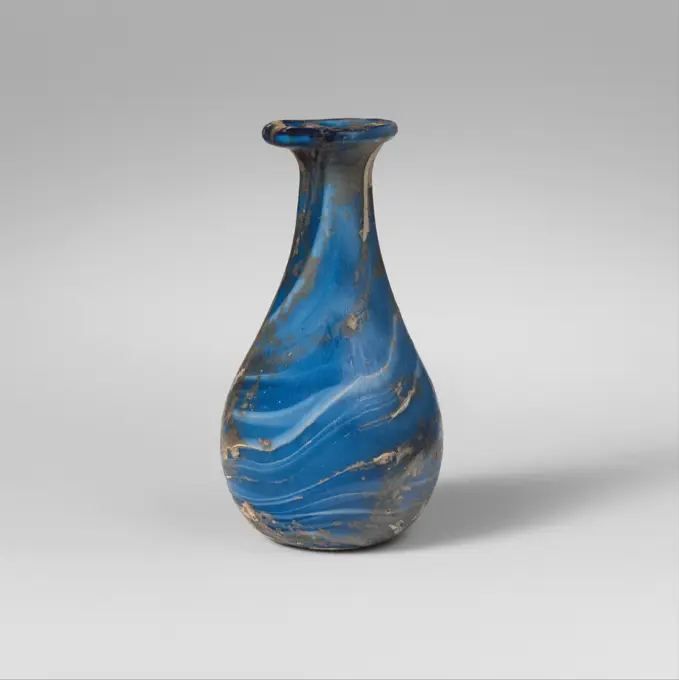
Marbled glass perfume bottle early to mid-1st century A.D. Roman Translucent blue and opaque white.Rim folded out, over, and in, and smoothed into sides of flaring mouth; short, cylindrical neck, expanding downwards to join imperceptibly with ovoid body; flattened, slightly concave bottom. Numerous trails applied to gather and marvered into surface, forming an irregular way pattern extending from rim to bottom.Intact; some bubbles; deep pitting, dulling, and patches of iridescence and creamy white weathering.Oval blue and white blown glass marbled perfume bottle.. Marbled glass perfume bottle 239780
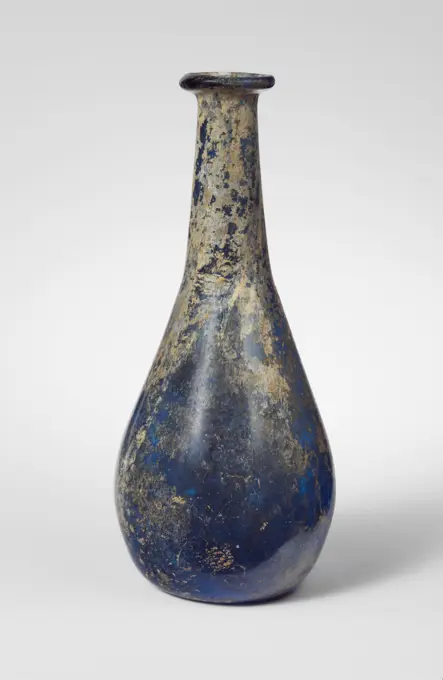
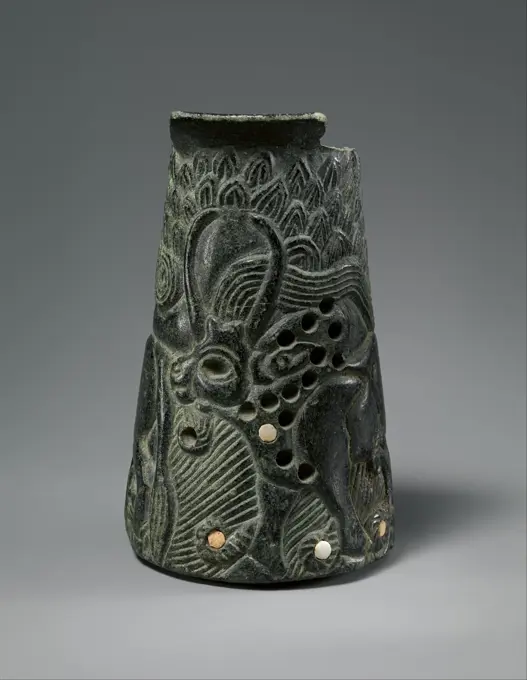
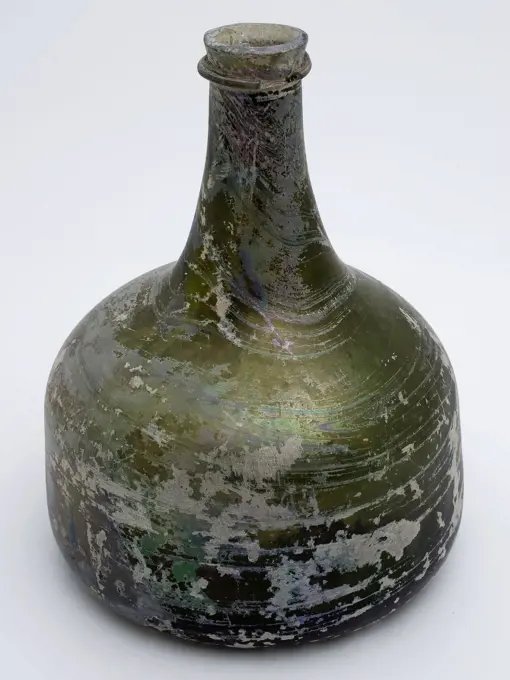
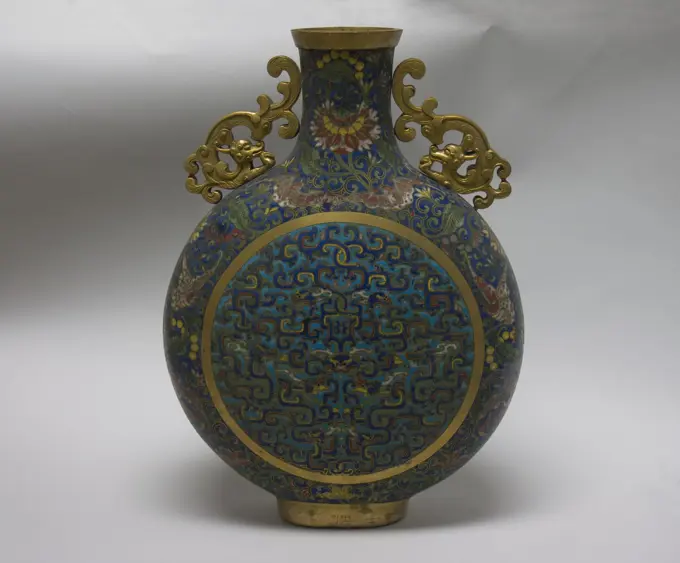
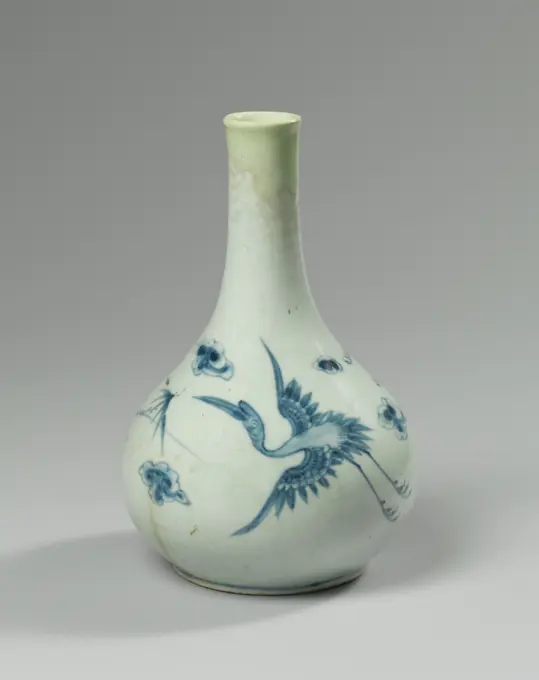
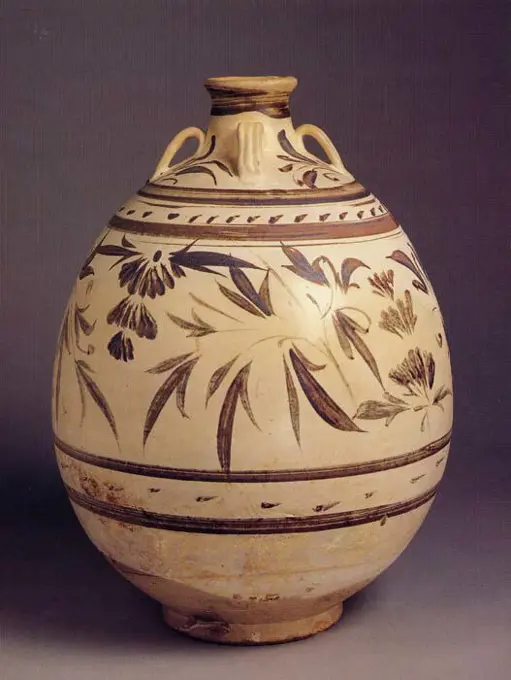
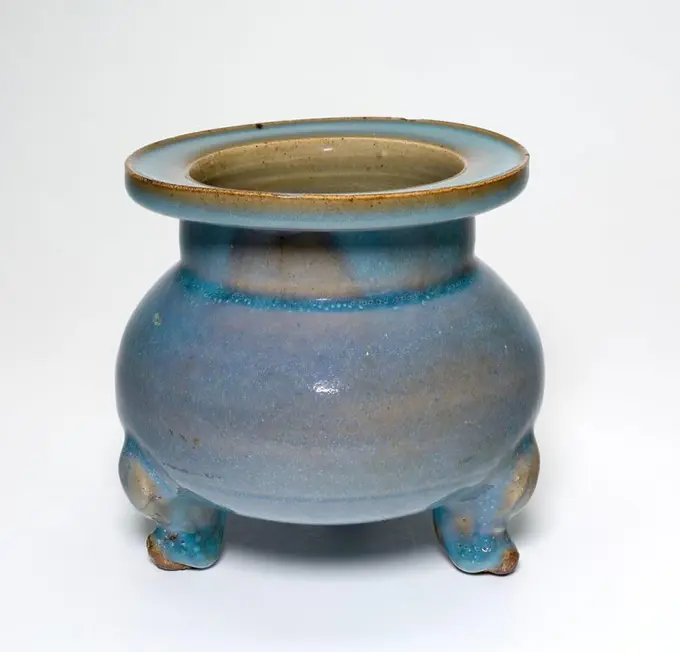
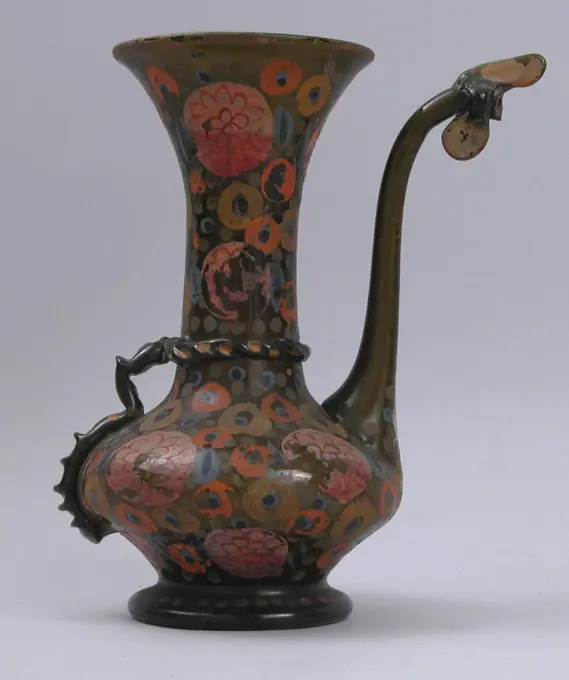
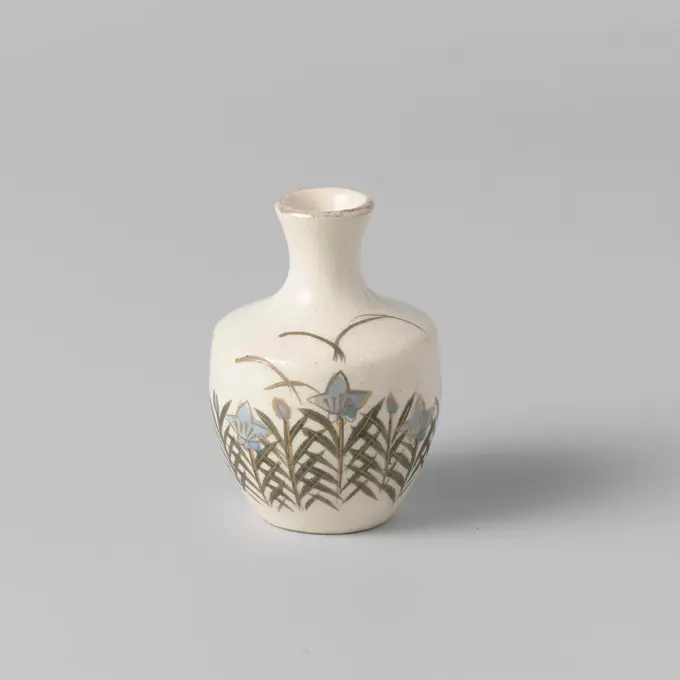
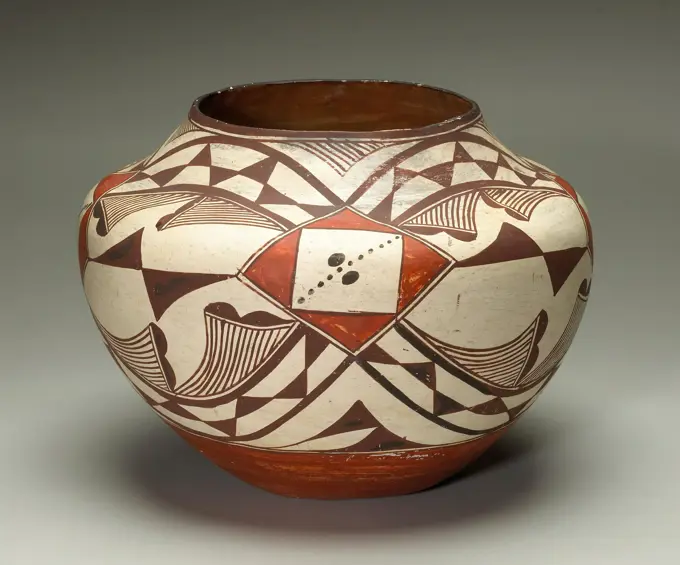
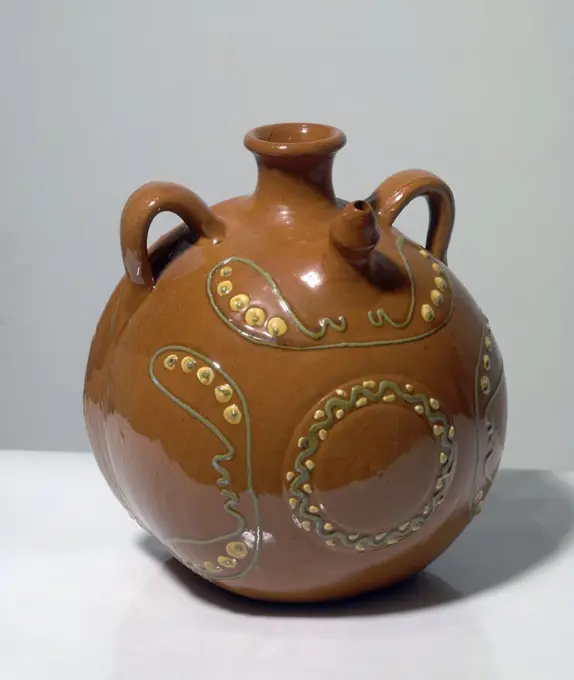
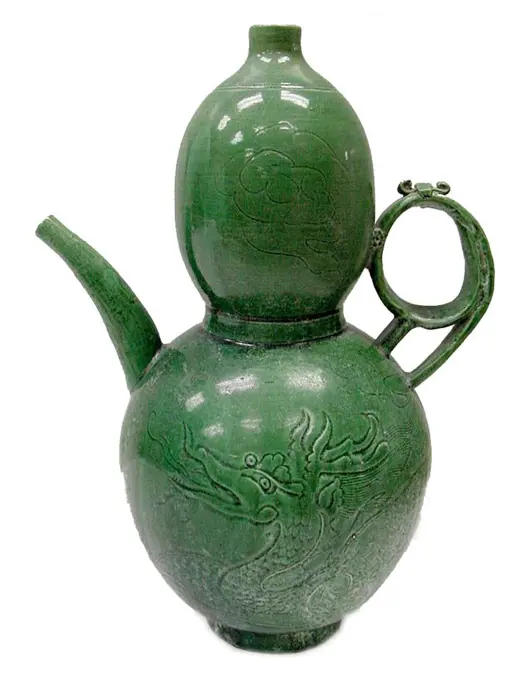
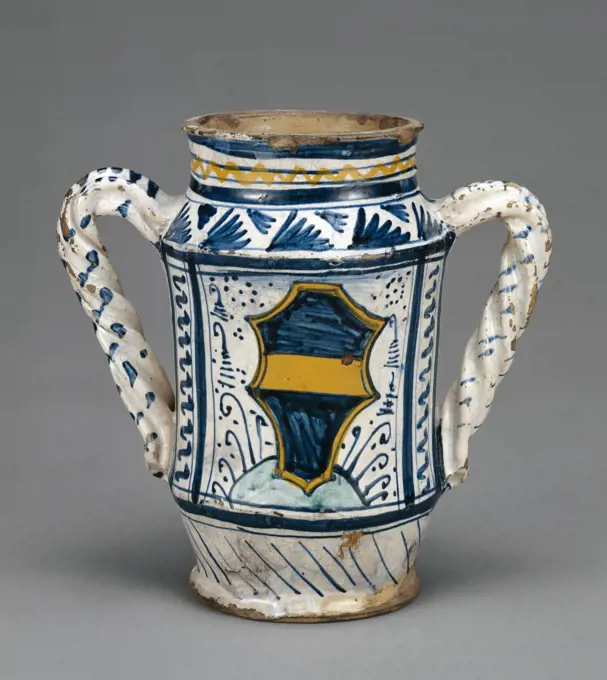
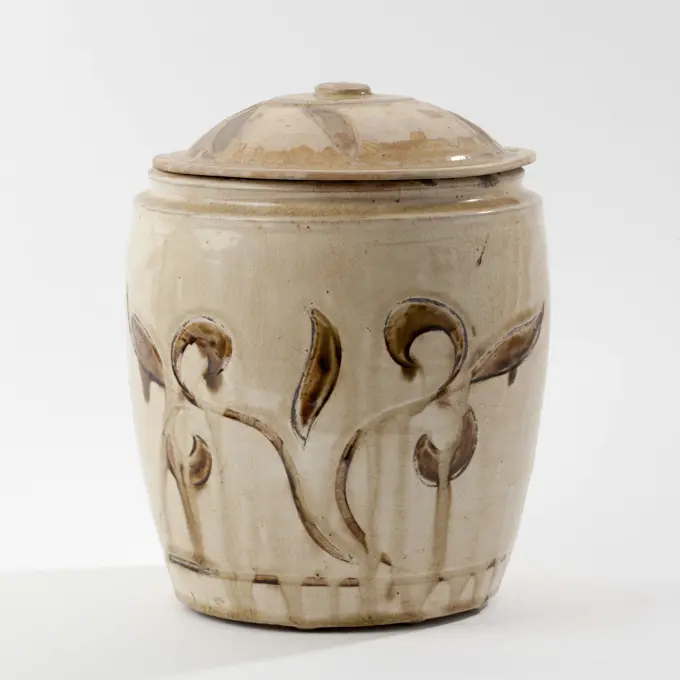
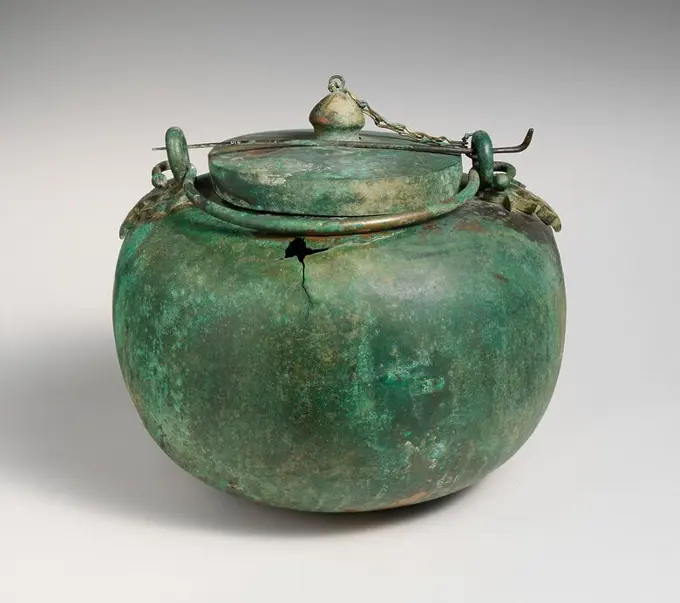
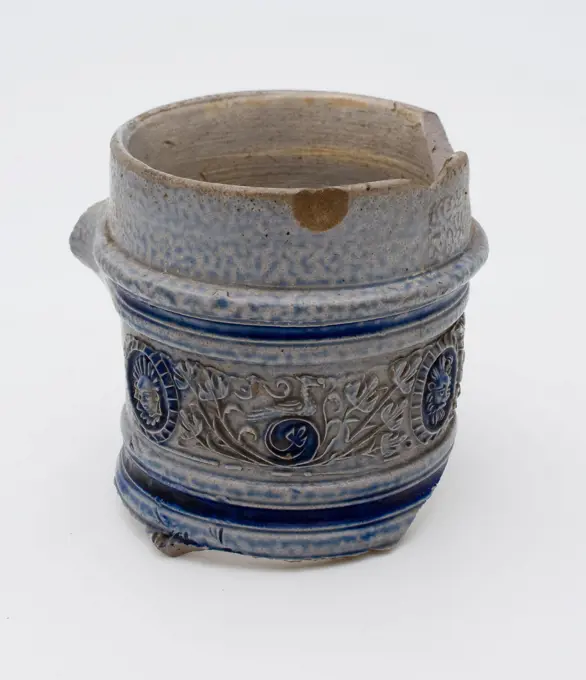
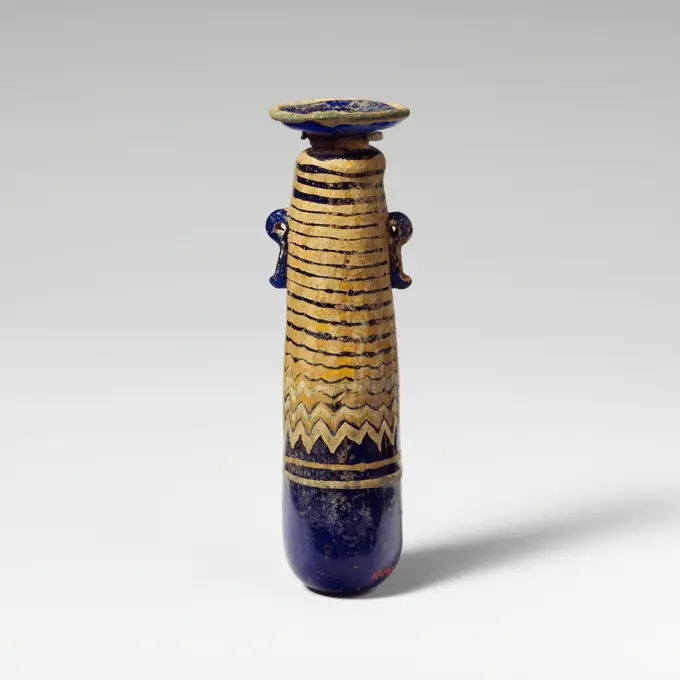
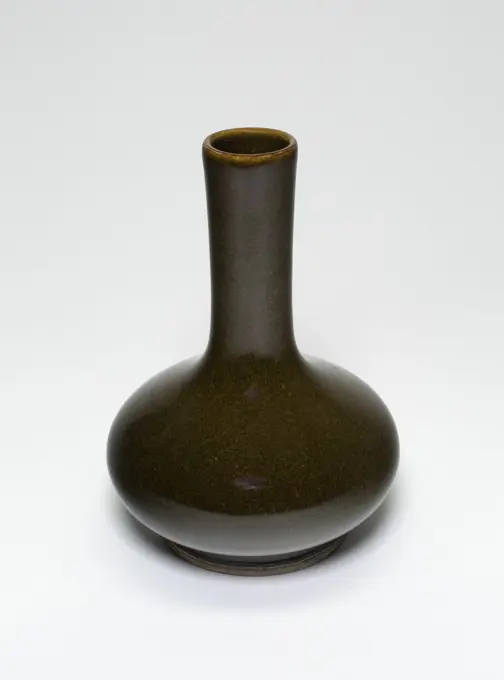
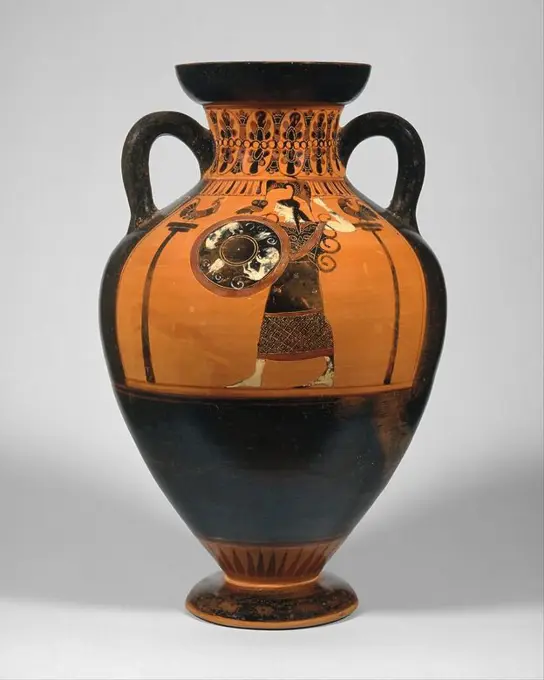
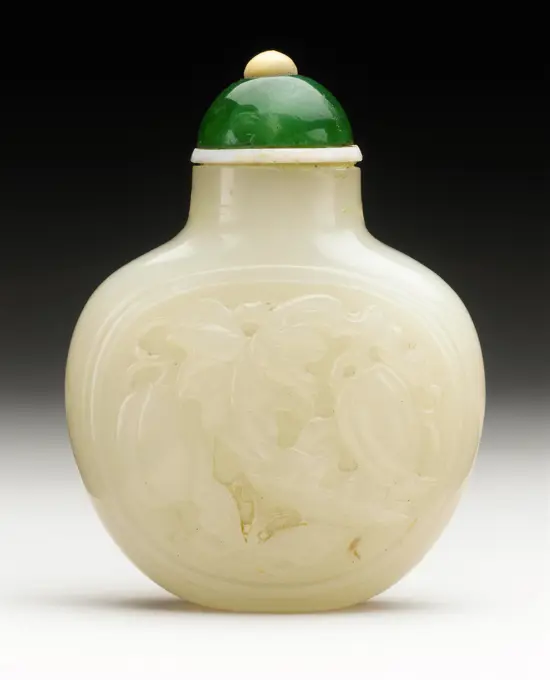
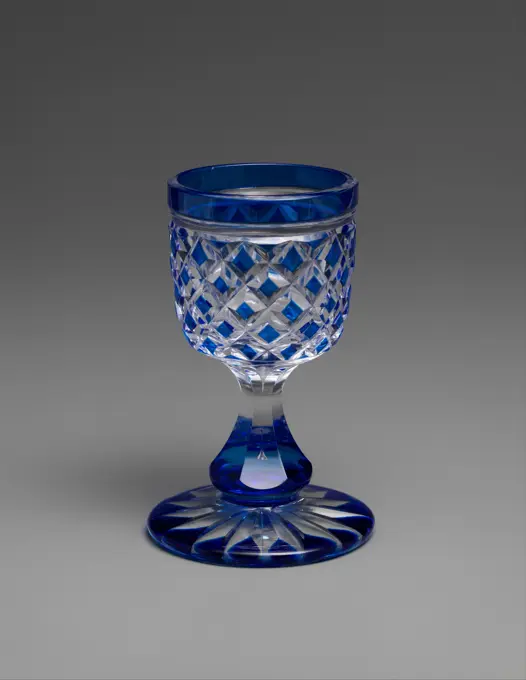
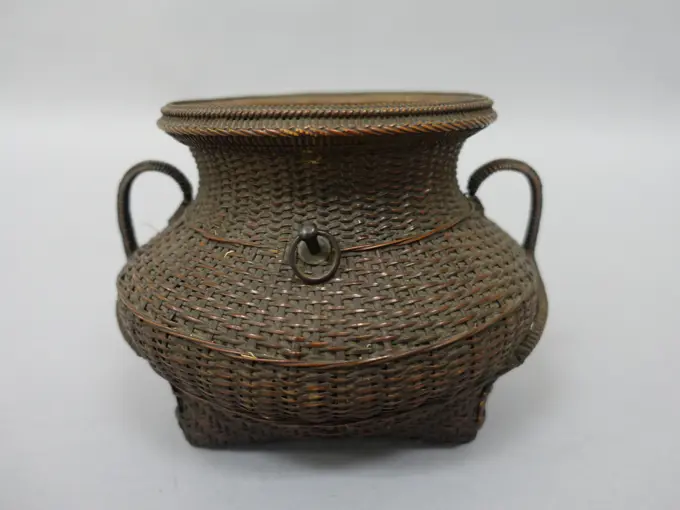
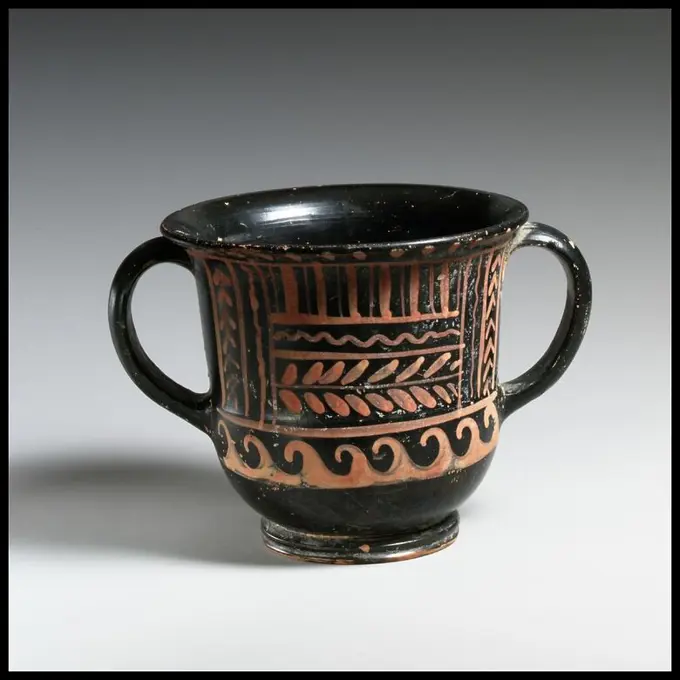
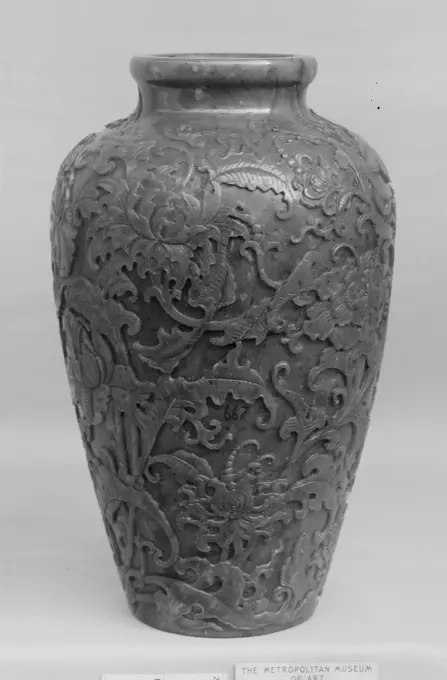
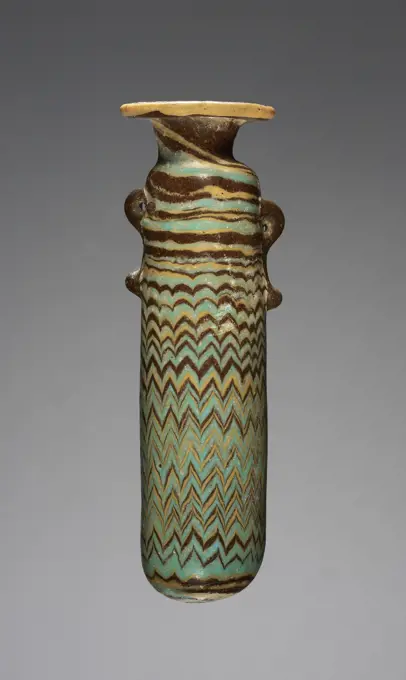
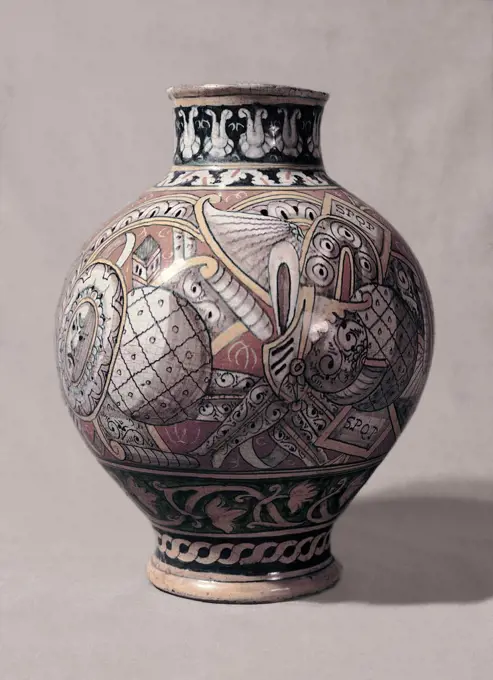
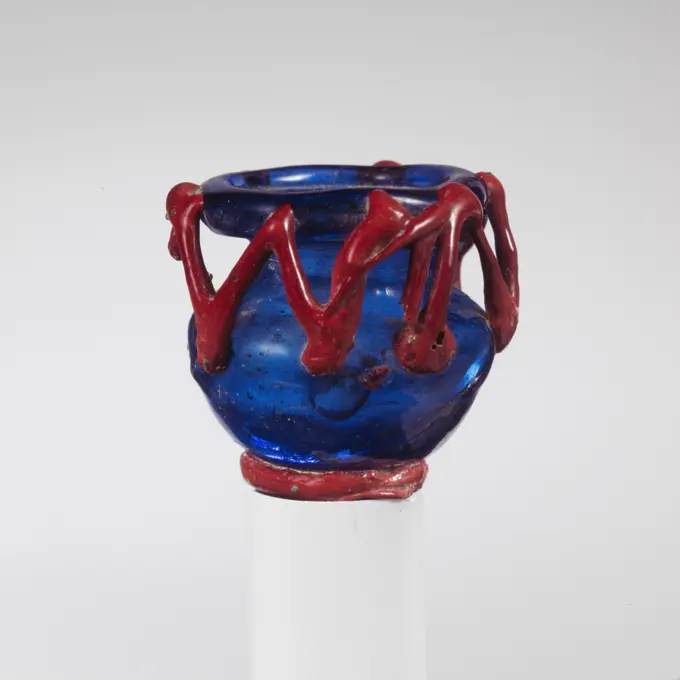
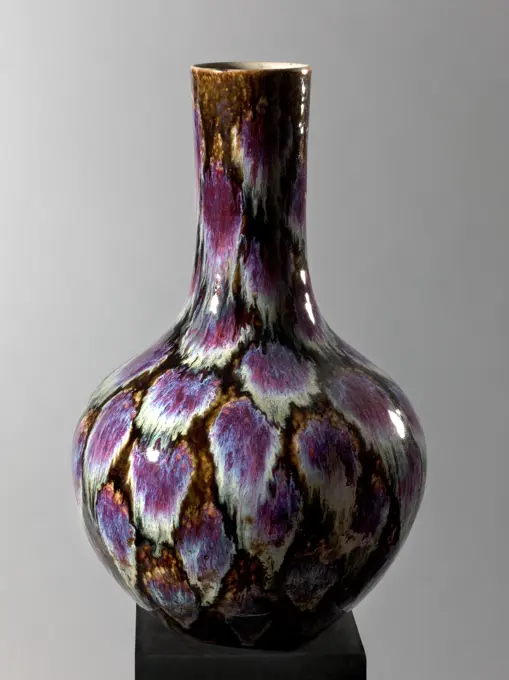
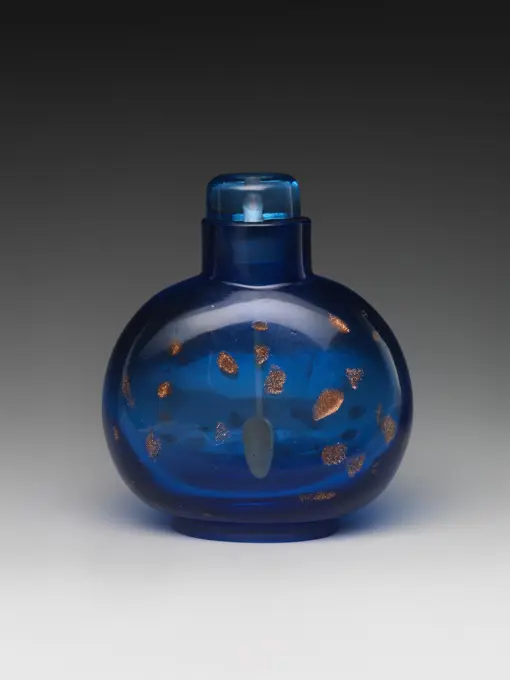
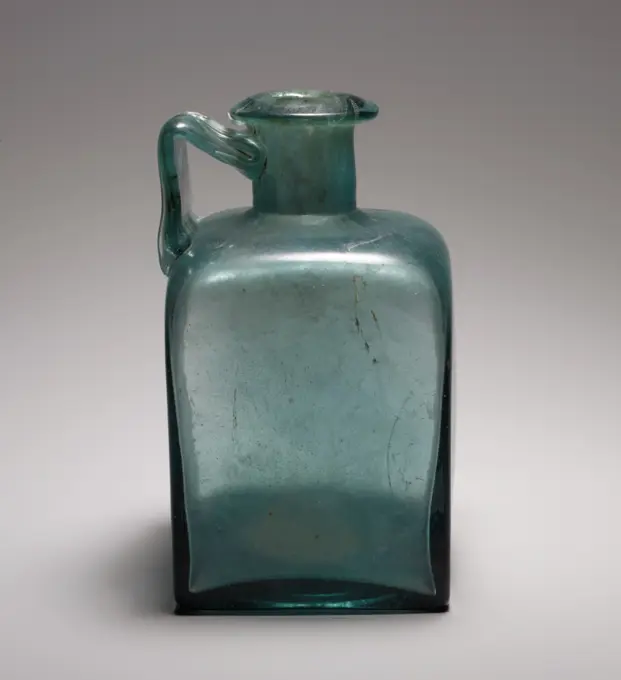
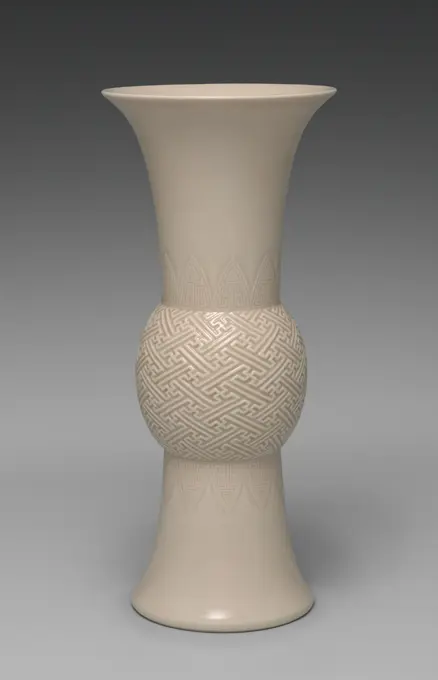
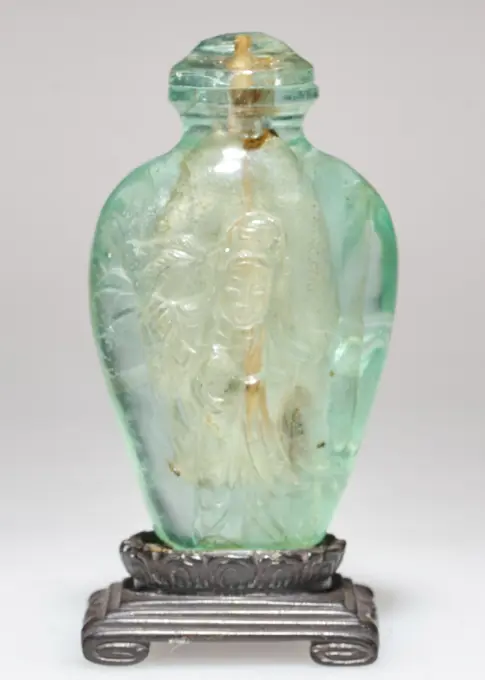
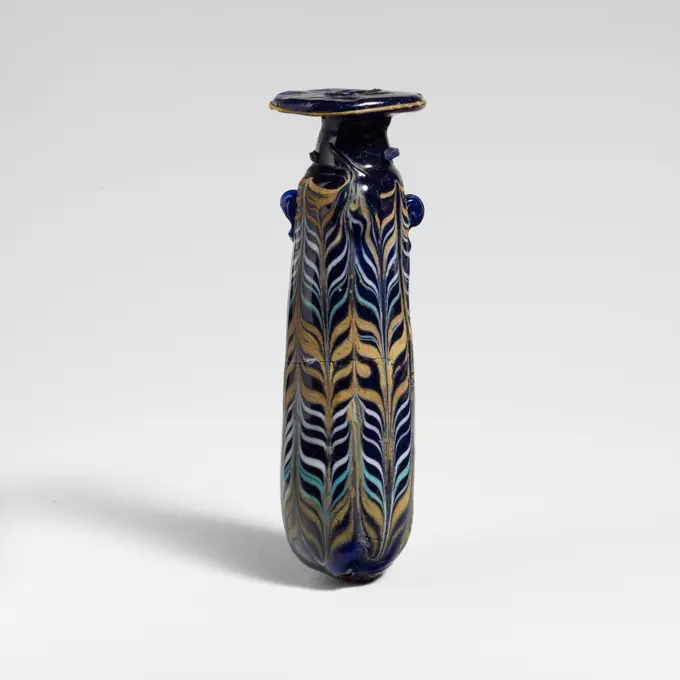
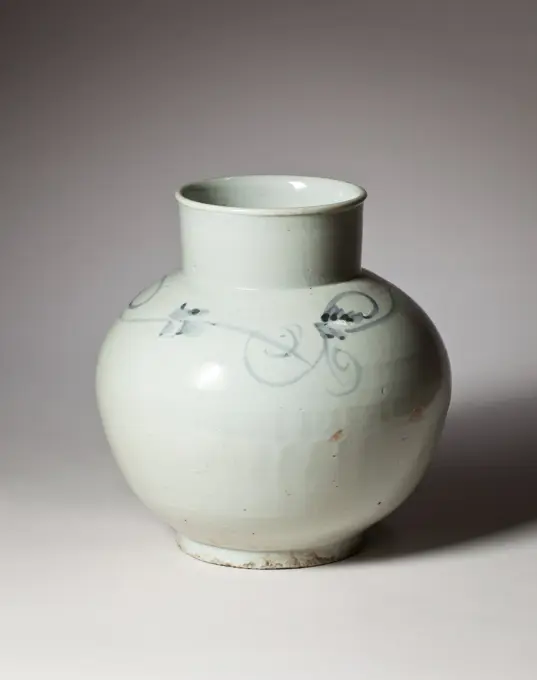
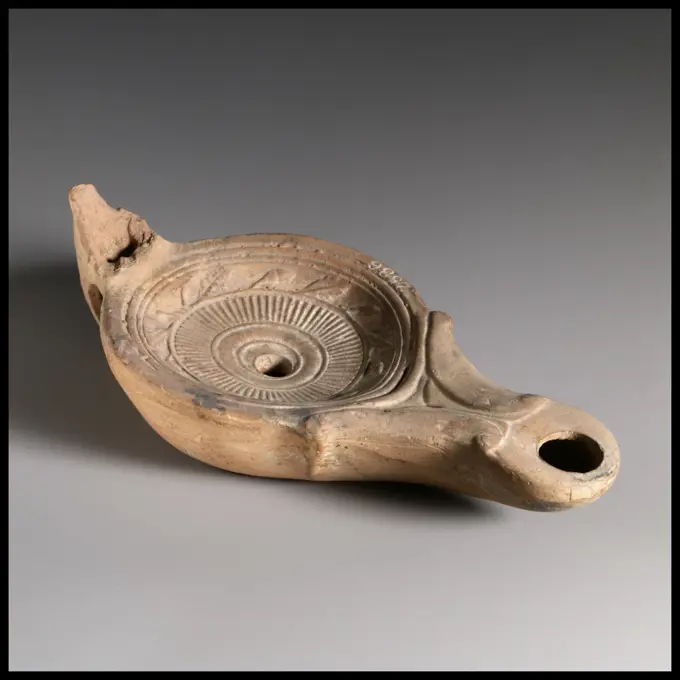
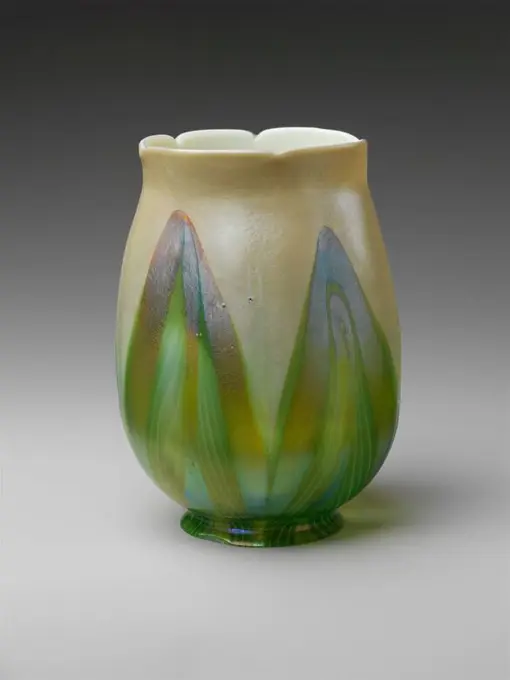
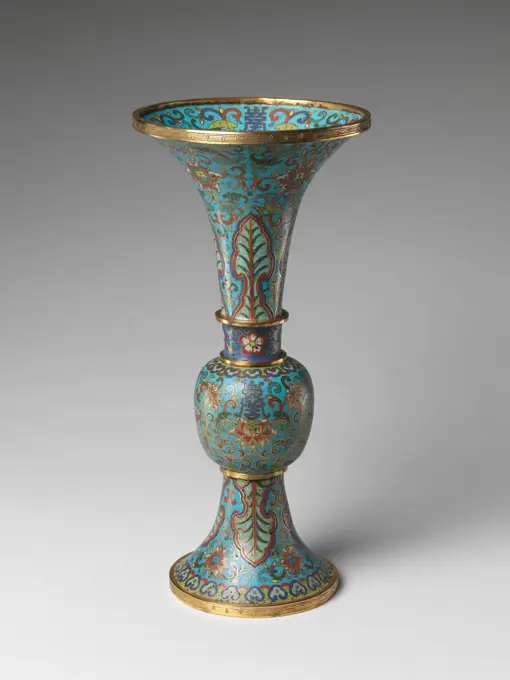
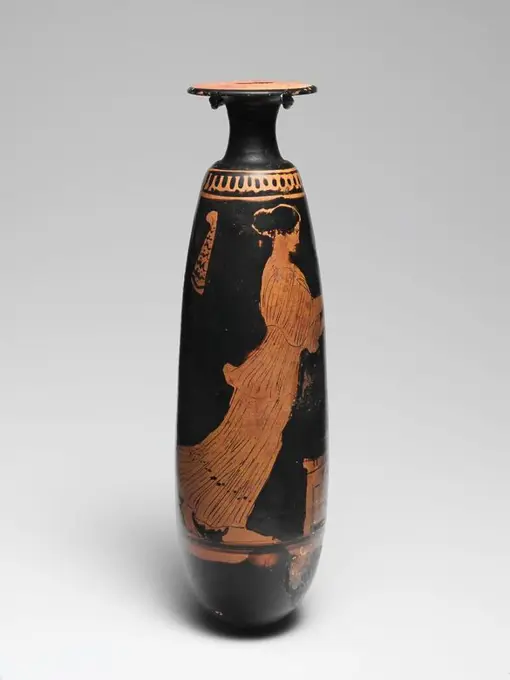
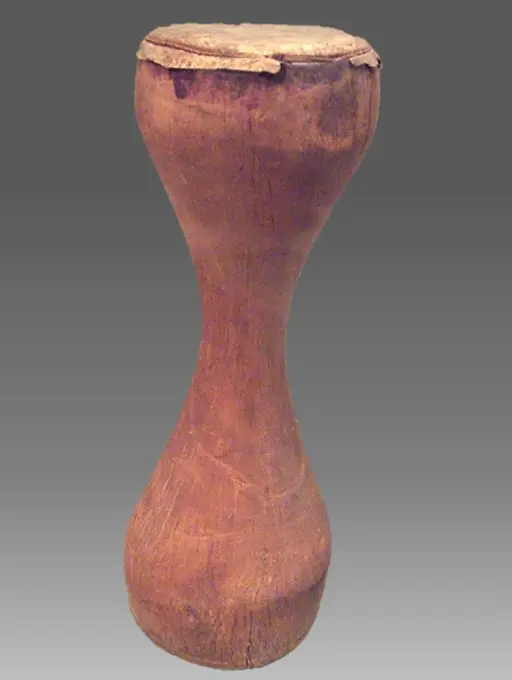
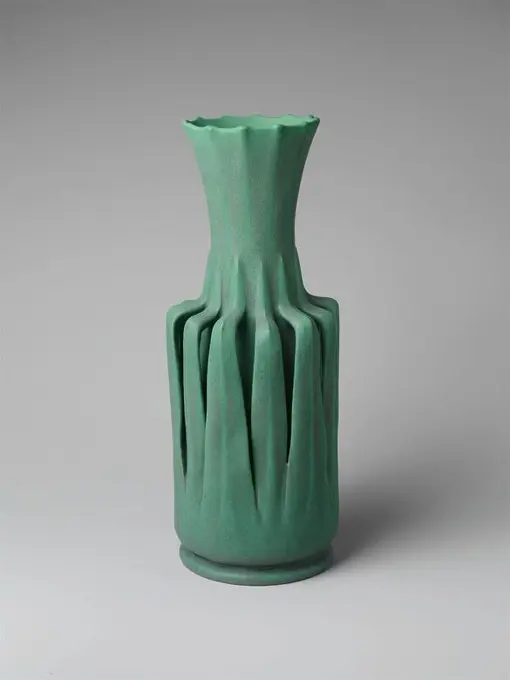
Jar ca. 3500-3300 B.C.. Jar 326497Glass perfume bottle 1st century A.D. Roman Translucent blue.Rim folded out, over, and in; irregular flaring mouth; cylindrical neck, expanding downwards, with tooling marks around base; elongated piriform body; pushed-in bottom.Intact; many bubbles and blowing striations; creamy brown weathering and iridescence.. Glass perfume bottle 244583Vessel with two zebu 2600-2350 B.C. This vessel is of particular interest for two reasons. First, it enlarges the corpus of "Intercultural Style" chlorite vessels bearing imagery derived from the Indus Valley. Second, it is attributed to Al-Rafiah, on the east coast of the island of Tarut. Here a considerable number of fragmentary examples with elaborate figural motifs have been found, perhaps originally intended for shipment to the temple repositories of Mesopotamia. Depicted in a carved and inlaid technique are two zebus striding one behind the other in a rich landscape. The modeled bodies of the animals are starkly outlined, emerging from a flat background in a manner characteristic of "Intercultural Style" vessels. Their eyes, muzzles, horns, and humps are sharply differentiated by deep incisions and sweeping curves. The humps are not patterned as in other examples but are embellished with circular areas of inlay, like those used on other vessels to indicate the spots on leopards' Bottle. Eastern Mediterranean, 11th-12th century. Glass. Glass, blown with applied decorationBelly bottle in clear olive green glass, hammer, iridescent, wine bottle bottle holder soil find glass, free blown and shaped glass application Circular bottle in clear green glass. Pontil mark underneath, bottom in which hole Body with almost straight upward wall to convex shoulders and rejuvenated neck with imposed all-round convex glass thread with large chip and dilated flattened lip archaeological packagingVase 19th century China. Vase. China. 19th century. Cloisonné enamel. Qing dynasty (1644-1911). CloisonnéBottle with flying cranes and clouds, 19th century, Unknown Korean, 8 1/8 × 5 5/16 × 5 5/16 in. (20.64 × 13.49 × 13.49 cm), Porcelain with cobalt-blue design under clear glaze, Korea, 19th century, The combination of cranes flying among the clouds is an ancient, auspicious motif that symbolized longevity. In this late Joseon blue-and-white porcelain bottle, a single, slightly gangly crane flies amid puffs of clouds, all rendered in cobalt blue.Vase with overlapping pattern and three bands of palm trees. Dimensions: H. 23.5 cm. Date: ca. mid- to late 3rd millennium B.C..Vessels carved of a gray-green stone in what is called the "Intercultural Style" were made in the greater Gulf area as well as in southern Iran. At the site of Tepe Yahya in Iran, workshops were found with vessels and the raw materials--chlorite or steatite--for their manufacture, dating to the mid-third millennium B.C. The stones were available in the nearby hills. Fragments of containers were also found at sites in the Gulf area. Vessels decorated in this style were found across the ancient Near East from Syria to the Indus Valley, evidence of the flourishing long-distance trade of the times.This piece has a tall shape with a flaring rim and is carved in alternating bands of an overlapping mountainlike pattern and date palm trees. The repertoire of motifs of the "Intercultural Style" includes vegetal, architectural, and abstract or naturalistic representatTwo-Handled "Oak Leaf" Pharmacy Jar with Fleur-de-Lys, c. 1430-1450. Workshop of Giunta di Tugio (Italian, c. 1382-1450). Tin-glazed earthenware (maiolica); overall: 29.6 cm (11 5/8 in.).Jar ca. 13th-early 14th century China. Jar 42436Vase, two copies Necel, Franciszek (1868 1935)Vase. unknown, craftsmanTripod Censer. China. Date: 1200-1234. Dimensions: H. 12.5 cm (4 15/16 in.); diam. 13.3 cm (5 1/4 in.). Jun ware; stoneware with opaque blue. Origin: China. Museum: The Chicago Art Institute, Chicago, USA.Ewer probably 18th-19th century. Ewer 444808Basket 19th century Japan. Basket. Japan. 19th century. Bamboo. Edo (1615-1868) or Meiji period (1868-1912). Basketry. Bottle-shaped vase of stoneware with a plate shoulder and a narrow, slightly spreading neck, painted on the glaze in blue, red, green and gold. On the abdomen a group of blooming plants (balloon clocks) and two flying butterflies. Some leaves on the shoulder. The glaze is slightly cracked. Satsuma.Vessel, 19th-20th century, 9 3/8 x 12 3/16 x 12 3/16 in. (23.81 x 30.96 x 30.96 cm), Ceramic, pigment, United States, 19th-20th century, Traditionally, pots in Acoma Pueblo were made of local clays and decorated with pigments found in the surrounding environment. This one is colored with the warm earth tones popular among Acoma artists at the time of its creation. Designs were painted on the vessels with brushes made of yucca, a native plant. After the pot dried it was fired, which bound the pigment to the clay, turning the vessel and its decoration into a physically integrated whole.Vase with Coiling Dragon late 16th-early 17th century China. Vase with Coiling Dragon. China. late 16th-early 17th century. Porcelain with raised decoration and peach-bloom and green glaze (Jingdezhen ware). Qing dynasty (1644-1911), Kangxi mark and period (1662-1722). CeramicsAmphora vase. Manises (ośrodek ceramiczny ; ca 1400- ), potter's workshopCup with Inlaid Clouds and Scroll DesignVase Vase; North India Or Persia; painted glassBOTIJO VIDRIADO Y DECORADO EN AMARILLO Y VERDE-CERAMICA POPULAR S XX. Location: ALFARERIA. SPAIN.Bottle 14th-17th century Quapaw. Bottle 316366Ewer with writhing dragon 10th-11th century China. Ewer with writhing dragon 73635Vase China. Vase 52720Bottle for incense tools (from a set) 17th century Attributed to Hu Wenming Implements commonly used for burning incense included a box, a burner, a flat-bowled spoon and tongs, and a vase for storing these utensils. The burners are often modeled after archaic bronze vessels. Although it is not clear if the three Chinese objects displayed here (2015.500.6.22-.24) originally formed a set, all are inscribed with the name of the artist, Hu Wenming, and exhibit the same decorative technique.. Bottle for incense tools (from a set) 39878Bottle. unknown, craftsmanPilgrim's Flask, 500-700. Byzantium, Syria-Palestine, 6th-7th century. Green glass; overall: 4.4 x 3.2 cm (1 3/4 x 1 1/4 in.).Old ceramic pot - kitchen retro equipment of cooking isolated on white background.ancient oriental metal teapot on dark background. antique bronze tableware. ancient metal utensilsDeep Bowl with Globular Body and Wide Mouth. China. Date: 1115-1234. Dimensions: H. 14.3 cm (5 5/8 in.); diam. 17.5 cm (6 7/8 in.). Cizhou-type ware; glazed stoneware with iron pigment. Origin: China. Museum: The Chicago Art Institute, Chicago, USA.Armorial Jar; Deruta, Umbria, Italy; about 1460 - 1490; Tin-glazed earthenware; 22.2 × 11.4 × 23.3 cm (8 3,4 × 4 1,2 × 9 3,16 in.)Jug. Culture: Italic-Native, South Italian (Daunian). Dimensions: H. with handle 6 3/16 in. (15.7 cm). Date: 1st half of 6th century B.C.. Museum: Metropolitan Museum of Art, New York, USA.Urns. GRS. Epoque song. Vietnam. Paris, Muse Cernuschi. Urns Asian art, art of extreme orient, art of Vietnam, Vietnamese art, GRES, dishesBronze cauldron and lid. Culture: Etruscan. Dimensions: total H. 11 1/8 in. (28.3 cm)diameter of mouth 6 1/4 in. (15.9 cm). Date: ca. 550 B.C..Swinging handle; the lid is chained to one of the ring attachments of the handle and is kept in place by a bronze pin. Museum: Metropolitan Museum of Art, New York, USA.Terracotta situla (bucket) early 3rd century B.C. Etruscan The story of Apollo and the satyr Marsyas is depicted in high relief around the vessel. Under each handle are additional reliefs that imitate treatments of this shape as they appear in metal. Fine bronze situlae have been found at many sites in Northern Greece, Thrace, Southern Russia, and Western Europe. Scholars debate their ultimate origin but most are probably Etruscan exports from Vulci.. Terracotta situla (bucket) 252918 Etruscan, Terracotta situla (bucket), early 3rd century B.C., Terracotta, H. 8 1/2 in. (21.6 cm). The Metropolitan Museum of Art, New York. Fletcher Fund, 1927 (27.122.3)Flask. Culture: American. Dimensions: H. 6 3/4 in. (17.1 cm). Maker: Mount Vernon Glass Works (1810-44). Date: 1835-40. Museum: Metropolitan Museum of Art, New York, USA.Flask in the Form of a Bottle Gourd With Bats. Balebasal bottle of porcelain with a slightly spreading edge, painted in underglazing red with a continuous decoration of small gourds, leaves and tendrils with bats in between. On the underside an old label with: Royal Academy of Arts, London / International Exhibition or Chinese Art, 1935-6 / Ser. NOS. 1054 / Owner R. May, Zeist, Holland and a torn old label with: Friends of Asian art. Undergilate copper red.ARTE PREHISTORICO. CANDIL. CUESTA DE LA VEGA. MUSEO MUNICIPAL. MADRID.Neck fragment of stoneware jug with ear starter, frieze with three masks, jug crockery holder soil find ceramic stoneware glaze salt glaze, hand twisted stamped glazed glazed fried Neck fragment of stoneware jug dark gray shard with salt glaze archeology import pottery serve serveGlass alabastron (perfume bottle) late 6th-5th century B.C. Greek, Eastern Mediterranean Translucent cobalt blue, with handles in same color; trails in opaque yellow and opaque turquoise blue.Broad, inward sloping rim-disk, with radiating tool marks on upper surface and uneven edge around mouth; short cylindrical neck with downward taper; narrow rounded shoulder; straight-sided cylindrical body, tapering upwards; convex bottom; two vertical ring handles with knobbed tails, applied over trail decoration.Turquoise blue trail attached at edge of rim-disk; a yellow trail applied on underside of rim-disk and wound down in a spiral to middle of body, then tooled into a close-set zigzag pattern; a turquoise blue trail is added, mingling with yellow; immediately below zigzag, another yellow trail and another turquoise blue trail are wound horizontally once around body.Intact; dulling and milky iridescent weathering.. Glass alabastron (perfume bottle) 250027Terracotta aryballos (oil flask) ca. 510 B.C. Greek, Attic The aryballos was typically held in the hand or carried on a thong, as depicted on the marble stele of Megakles (11.185) nearby.. Terracotta aryballos (oil flask). Greek, Attic. ca. 510 B.C.. Terracotta; black-glaze. Archaic. VasesJar with Interlocking-Stepped Motifs in Diagonal Pattern. Ancestral Pueblo (Anasazi), Tularosa Black-on-white; West-central New Mexico, United States. Date: 900 AD-1450. Dimensions: Approx. 20.3 x 27.9 cm (8 x 11 in.). Ceramic and pigment. Origin: Southwest. Museum: The Chicago Art Institute, Chicago, USA.Bottle; glassBottle-Shaped Vase 1700-1799 China. Porcelain with tea dust glaze .Beaker. UnknownVessel with Flaring Foot ca. 300 B.C.-A.D. 200 Thailand (Ban Chiang). Vessel with Flaring Foot. Thailand (Ban Chiang). ca. 300 B.C.-A.D. 200. Earthenware with buff slip and red oxide decoration. Late period. CeramicsLarge majolica ointment jar with blue decor on white fond, low and wide model, albarello holder soil find ceramic earthenware glaze tin glaze lead glaze hp 13,7 hand turned baked glazed painted baked Large ointment jar Low and wide model with two necking and oblique top edge Blue decor of geometric lines and triangles on white ground in wide bellyfreeze blue bands and for the constrictions with sloping stripes. Inside covered with lead glaze archeology health care pottery pharmacy craft ointment care store packageTerracotta neck-amphora of Panathenaic shape. Culture: Greek, Attic. Dimensions: H. 15 5/16 in. (38.9 cm)diameter 10 5/8 in. (27 cm). Date: ca. 540-530 B.C..Obverse, AthenaReverse, flute playerThe absence of the official inscription, from the games at Athens, and the reduced size indicate that this was not a prize vase. The decoration of the obverse, however, was clearly modeled on one. The reverse shows a young flute player standing on a table and performing as another youth and two men listen. Museum: Metropolitan Museum of Art, New York, USA.Snuff Bottle (Biyanhu) with Melon Reserves. China, middle Qing dynasty, about 1700-1800. Tools and Equipment; bottles. Abraded jadePitcher 1879-82 Linthorpe Pottery Works British. Pitcher. British, Linthorpe, Yorkshire. 1879-82. Earthenware. Linthorpe Pottery Works (British, 1879-1889). Ceramics-PotteryCordial 1850-55 Brooklyn Flint Glass Company American New York City was an important center for machine-cut luxury glass in the middle of the nineteenth century. This partial group (2014.626.1a,b -.7) of blue-cut-to-clear glass is extraordinarily rare and perhaps even experimental when it was made in the 1850s. This is the only known blue plated cut glass attributed to the Brooklyn Flint Glass Works. The diamond pattern is thought to have been executed by Joseph Stouvenel, a highly skilled glass cutter whose works were exhibited at the New York Exhibition of 1853-54 and published during the period.. Cordial 675758Basket 19th century Japan. Basket 62235Vase, Glazed and gilt earthenware, Double-gourd shape, ribbed lower section, band of impressed beading, painted gold, between two sections of body. Red glaze mottled with gold., England, ca. 1890, ceramics, Decorative Arts, VaseSitule. Bronze. Thanks Hoa, Vietnam (5 Av. J.-C-2 Ap. J.-C). Paris, Muse Cernuschi. Decor of pointed circles connected by tangents ART VIETNAMIEN, BRONZE, HOLY WATER VESSEL, SITULE, VASE, VIETNAMESE ARTKantharos. Culture: Greek, South Italian, Apulian. Dimensions: Other (width w/ handles): 4 3/8 × 6 7/16 in. (11.1 × 16.4 cm)Diameter: 4 3/4 × 2 11/16 in. (12.1 × 6.8 cm). Date: 4th century B.C.. Museum: Metropolitan Museum of Art, New York, USA.Vase China. Vase. China. Nephrite, spinach-green with cloudings of light grayish and emerald-green. Qing dynasty (1644-1911), Qianlong period (1736-95). JadeLazio Viterbo Viterbo Museo Civico30. Hutzel, Max 1960-1990 Views of paintings (Middle Ages through 18th c.), frescoes, a tabernacle, coffin, sculpture reliefs, portal fragments, busts, sculpture, tapestry found in the Pinacoteca, Second floor gallery and Second floor cloister sequences. Antiquities: Many views of Etruscan and Roman fragments, sculpture, sarcophagi, pottery, masks, jewelry and other objects found in the Storeroom sequence (inventory numbers on back of prints), and the Cloister, Second floor Cloister, Valle Giulia, Sala Romana and Sala Etrusca sequences. General Notes: There are eight separate numerical sequences for this location. The cloister as an architectural structure, rather than museum site, is documented in the record and file for S. Maria della Verita, Cloister, all views of which are stored in Medieval core collection. Five views from the Museo Civico Second floor cloister sequence are stored in Medieval. German-born photographer and scholar Max Hutzel (1911-Alabastron; Eastern Mediterranean; 6th - 4th century B.C; Glass; 10 cm (3 15,16 in.). Ritual barrel for food. Wide bond with fabached animals with beak-like pelvis and large, protruding eyes; Below triangular ornaments.BottleVasePharmacy pitcher, by Unknown, 16th Century, pottery . Italy, Emilia Romagna, Faenza, Ravenna, International Museum of Ceramic. Whole artwork. Vase globular shape lip distinct intertwined decoration panoplies decorative bands.Pre-Columbian art. Pre-Incan. Negative Carchi culture. 850-1500 AD. "Compotera". Negative decorated with black on red background. Pedestal decorated with anthropomorphic figures. 20 x 20 cm (diameter). From Ecuador. Private collection.Vessel in the Form of a Squash with Parrot Supports 1 CE-200 CE Colima. Ceramic and pigment . ColimaAnonymous / 'Cases for a lost vessel with Emperors, the Virtues and Fame'. 1670 - 1711. Leather, Wood, Cloth. Museum: Museo del Prado, Madrid, España.Lekythos ca. 1875-77 Chelsea Keramic Art Works The Chelsea Keramic Art Works was the first American ceramics firm to designate itself an "art pottery." It was founded in Chelsea, Massachusetts, by members of the Robertson family, all of whom had honed their skills in the ceramics industry in Britain before coming to this country. An early specialty of the firm was the reproduction of Ancient Greek pottery made fashionable by such English tastemakers as Charles Locke Eastlake. Chelsea's rich red clay was particularly well suited to Greek designs. By 1874 the firm was producing finely made copies of antique vases with decoration painted in black slip. One example imitates the form of a Greek Lekythos, several of which were in the published catalogue of the celebrated Engelfield Collection, with which the Robertson's were familiar. Unlike the decoration on the antique models by the firm, the ornamentation on the lekythos reflects the tenets of contemporary English Reform designers such asGlass bell beaker. Culture: Frankish. Dimensions: H.: 4 1/2 in. (11.4 cm)Diam.: 2 1/2 x 2 1/4 in. (6.4 x 5.7 cm). Date: 6th-7th century A.D..Translucent blue green; trail in uncertain color, possibly opaque white.Vertical, rounded rim; side tapers downwards, then flares to carination at junction with rounded bottom, slightly flattened at center with pontil mark.A single fine trail wound round five times below rim; below, body decorated with evenly spaced vertical ribs, ending at carination.Intact; pinprick bubbles and blowing striations; dulling, whitish weathering, and some soil encrustation on exterior, soil encrustation around bottom and creamy brown weathering around side on interior. Museum: Metropolitan Museum of Art, New York, USA.Glass miniature jar 4th-5th century A.D. Roman Translucent cobalt blue; one trail in same color, zigzag trail and base ring in opaque brownish red.Everted rim, folded over and in; short cylindrical neck with concave profile; projecting, rounded shoulder; bulbous body with side tapering downwards; applied base ring; small, pushed-in bottom with central pontil mark.Fine blue trail wound in a spiral twice around neck; thicker red trail applied to shoulder and drawn up to rim seven times forming openwork zigzag running from left to right.Body complete but cracked and chipped, part of zigzag trail and base ring missing; pinprick and larger bubbles; slight dulling and faint iridescent weathering.Blue jar with red opaque foot and red zigzag thread from neck to body.. Glass miniature jar 249549Vase - amphora, from thumbnails and marmorization; Korzec (Porcelain Manufaktura; 1790-1832); 1820-1830 (1820-00-00-1820-00-00);Annoyed landscape, decorative vaseTerracotta guttus (flask with handle and vertical spout) 4th century B.C. Greek, South Italian, Campanian On top, head of meanad, full face, in relief.. Terracotta guttus (flask with handle and vertical spout). Greek, South Italian, Campanian. 4th century B.C.. Terracotta; black-glaze. Classical. VasesSilver vessel in the shape of a pomegranate, discovered in KV62, the tomb of the young pharaoh Tutankhamen in the Valley of the Kings, now renowned for the wealth of valuable antiquities it contained. The tomb was discovered in 1922 by Howard Carter. Tutankhamen was an Egyptian pharaoh of the 18th dynasty (ruled c. 13321323 BC). Now on display in the Cairo Museum.Belly bottle, cat head dutch onion, belly bottle bottle holder soil find glass, free blown and shaped glass application Bottle shaped bottle cap in clear green glass. Pontil mark under slightly raised bottom Body with sloping wall to convex shoulders and rejuvenated (dm 5.0 - 3.0 cm) neck with imposed circumferential sharp glass thread (chips) and dilated lip archeology packagingGlass beaker 2nd half of 1st century A.D. Roman Colorless with green tinge.Unworked, knocked-off rim with slight bulge below; cylindrical body with vertical sides; concave undercurve and projecting rounded base ring; flat bottom. Three vertical mold seams run down sides from bulge to top of undercurve, with a separate cup-shaped base section.On body, two fine wheel-abraded horizontal lines on plain band at top of body; eight elongated vertical panels round sides with decoration in high relief: four downward-facing dolphins with shells in their mouth, alternating with four set of objects - a crescent, a four-lobed rosette, a shell, and a six-lobed rosette - arranged vertically; on undercurve, two rows of indented bosses, offset from each other (eighteen bosses in each row); on bottom, a single indented circle surrounding a central hollow with raised dot. Intact, except for slight chipping and cracking around rim; many bubbles; slight dulling, faint irisdescence, and patches of brownish Incense Burner (lid), 1736-95. China, Qing Dynasty (1644-1911), Qianlong reign (1736-95). Jade; overall: 15.3 cm (6 in.).Bronze kylix (drinking cup) 4th-3rd century B.C. Greek This small bronze cup has a simple, round bowl set on a tall, narrow foot that widens at the lower end to a flat base. It has two thin handles that curve inward at the top. Cups of this shape were made in a variety of sizes and materials, including terracotta, bronze, silver, and gold.This small bronze cup has a simple, round bowl set on a tall, narrow foot that widens at the lower end to a flat base. It has two thin handles that curve inward at the top. Cups of this shape were made in a variety of sizes and materials, including terracotta, bronze, silver, and gold. They were an important component of the symposium, which was a ritualized drinking party enjoyed by elite Greek men.. Bronze kylix (drinking cup) 247977Cache vent with a standGlass cylindrical bottle late 1st-2nd century A.D. Roman Colorless with greenish tinge.Tubular rim, folded out, slightly down, round, and in, forming uneven oval mouth; short cylindrical neck; sloping shoulder; cylindrical body with vertical sides; concave bottom.Intact; pinprick and a few later bubbles; patch of reddish soil encrustation on neck and underside of rim on exterior, most of interior covered with soil encrustation, weathering, and brilliant iridescence.. Glass cylindrical bottle 245258Ritual Vessel, 8 1/8 x 9 x 9 in. (20.64 x 22.86 x 22.86 cm), Terracotta, Burkina FasoLota. India, Gujarat, Kapadwanj, circa 1750-1800. Furnishings; Serviceware. Peacock blue glassVase. Khaki covered porcelain animated with purplish drips. Paris, Cernuschi museum. 78837-25 Asian art, container, vaseLiqueur jar of stoneware. Rectangular jug of stoneware. There is a pewter screw cap on the short cylindrical neck. The corners at the neck sentence decorated with a mascaron in relief.Snuff Bottle with Gold Speckles late 18th century China. Snuff Bottle with Gold Speckles 41515Glass square bottle 1st-3rd century A.D. Roman Translucent blue green, with same color handle.Rim folded out, over, and in, forming slightly constriction to mouth, with beveled top surface; cylindrical neck, with tooling marks around base; curving horizontal shoulder with rounded, sloping corners; flat, vertical sides; flat bottom; broad strap handle, with combed decoration on outer surface, attached to outer edge of shoulder, drawn up vertically, turned in an acute angle and applied in thick fold to neck.Molded decoration on bottom comprising three concentric rings and central dot in relief.Complete, except for handle, of which part of one side is missing; some pinprick and larger bubbles, black streaky impurities in neck, and blowing striations; slight dulling and iridescent weathering on exterior, patches of encrustation and weathering on interior.. Glass square bottle 245177Seif Yohei III mined the repertoire of Chinese vessel types, from ceramics modeled after ancient ritual bronzes to shapes developed in the Yuan (1279-1368) and Ming (1368-1644) dynasties. His designs tended to be formal and restrained, often featuring creamy white glazes suggestive of the hue of Ding ware and green glazes resembling Longquan ware. Gu-Shaped Vase, 1893-97. Seifū Yohei III (Japanese, 1851-1914). Porcelain with molded and carved design and cherry-blossom glaze; overall: 31.1 x 13.5 cm (12 1/4 x 5 5/16 in.).JARRON DE GRES VIDRIADO DECORADO-DINASTIA SONG 960/1279 -ALTURA 215 MM. Location: MUSEO REAL ARTE CHINO. STOCKHOLM.SNUFF BOTTLE, 18th-19th century, H.2-1/8 x W.1-1/4 in, Fluorite, China, 18th-19th centuryCovered Box with Floral Spray and Scrolls. Vietnam, 1450-1550. Furnishings; Accessories. Wheel-thrown stoneware with cream slip, underglaze blue painted decoration, and clear glazeGlass alabastron (perfume bottle) late 4th-early 3rd century B.C. Greek, Eastern Mediterranean or Italian Translucent cobalt blue, with handles in same color; trails in opaque yellow, opaque white, and opaque turquoise blue.Broad slightly uneven rim-disk, with a few radiating tooling marks on upper surface; cylindrical neck, expanding downwards; narrow shoulder; straight-sided cylindrical body, with slight upward taper; convex bottom; on upper body, two small vertical ring handles, unpierced, with short pointed trails, applied over trail pattern; on one side, irregular projections at top and bottom of bottom.A yellow trail attached at lower edge of rim-disk; on body, alternating bands of yellow, white, and opaque turquoise blue, tooled from top of body to undercurve at bottom into a regular feather pattern in six vertical panels with alternating upward and downward strokes.Broken and repaired around middle of body, with one small hole and several chips, and another oval hole at bottom Long-necked jar with scrolling plant design, early 20th century, Unknown Korean, 9 3/16 × 9 1/16 × 9 1/16 in. (23.34 × 23.02 × 23.02 cm), Porcelain with cobalt-blue design under clear glaze, Korea, 20th centuryPorrón, Vimbodi glass. Museum: COLECCION PRIVADA.Terracotta oil lamp ca. A.D. 40-100 Roman Broneer Type 21. Mold-made, with ring handle and ornament above. Discus: a band of close-set radiating lines within an oak wreath; a single central filling hole surrounded by a single raised line; a narrow band of lines and grooves at edge of discus. A narrow, plain shoulder. Elongated volutes flanking long nozzle, forming a channel with a tiny slit, and a large wick hole. Poorly-defined raised base ring, and slightly concave base.The handle ornament is hollow.Most of handle ornament broken off and missing, but otherwise complete.. Terracotta oil lamp 241620Glass Shade. Culture: American. Designer: Designed by Louis Comfort Tiffany (American, New York 1848-1933 New York). Dimensions: H. 5 in. (12.7 cm); Diam. 2 1/8 in. (5.4 cm). Maker: Tiffany Glass and Decorating Company (American, 1892-1902). Date: ca. 1900. Museum: Metropolitan Museum of Art, New York, USA.Vase from a Set of Five-Piece Altar Set (Wugong) 18th century China Cloisonné is the technique of creating designs on metal vessels with colored glass paste placed within enclosures made of copper or bronze wires, which have been bent or hammered into the desired patterns. Known as cloisons (French for "partitions"), the enclosures are generally either glued or soldered onto the metal body. The glass paste, or enamelwhich gets its color from metallic oxidesis painted into the contained areas of the design. The vessel is usually fired at a relatively low temperature, about 800 degrees Celsius. Enamels tend to shrink during firing, and the process is repeated several times to fill in the design. Once this process is completed, the surface of the vessel is rubbed until the edges of the cloisons are visible.. Vase from a Set of Five-Piece Altar Set (Wugong) 40726Wine Container 1050 BCE-900 BCE China. Exuberant, crested birds that encircle the central and lower zones of this vessel, together with jagged vertical flanges, display the new flamboyance of Western Zhou design. Around the neck, rising blades exhibit spreading cicada-like forms and the suggestion of monster masks. The surface of this vessel is of silvery color with patches of azurite blue and malachite green encrustations. The base is inscribed ìJian made (this) precious sacrificial vessel.î. Bronze .Vase. Culture: American. Dimensions: 13 x 6 7/8 in. (33 x 17.5 cm). Maker: George E. Ohr (American, Biloxi, Mississippi 1857-1918 Biloxi, Mississippi). Date: 1897-1900.In many ways George Edgar Ohr was the quintessential Arts and Crafts potter, combining artistic vision with extraordinary skill with his hands. Working in the seaside resort town of Biloxi, Mississippi, he dug the clay, processed and prepared it, threw the shape on the wheel, altered the piece according to his vision, mixed and applied his own glazes, fired the kiln, created his own style of advertising, and took his wares on the road. Ohr's personal mantra was "no two alike," and he was as eccentric as his work was individualistic, with its manipulated forms on ultra-thin thrown vessels, crimping, ruffling, off-centering, and twisting, to create unprecedented forms for the 1890s. To these forms, he applied his own completely new and unusual glazes, applied by sponging, splashing, and spattering, resulting in works thatHelmet. Dimensions: 10 13/16 x 9 1/16 in. (27.5 x 23 cm). Date: early 17th century.In the sixteenth century, Ottoman metalworkers developed a novel class of wares fashioned from gilded copper, tombak in Turkish. In addition to religious and domestic articles, tombak was also used for parade armor, especially helmets, shields, and shaffrons, as it was easy to fashion, lightweight, and, above all, colorful. Embossed in low relief in vertical lobes and with a split-leaf arabesque, this helmet is an unusually elaborate example of tombak armor. Museum: Metropolitan Museum of Art, New York, USA.Punchong bottle with decoration of peonies, Korea. Korean Civilisation, 15th century.Terracotta alabastron (perfume vase). Culture: Greek, Attic. Dimensions: H.: 6 3/4 in. (17.1 cm). Date: ca. 440-430 B.C..Two womenThe women are shown in the domestic quarters, indicated by the casket and the kalathos (wool basket) between them. This is a simple object but just what an Athenian woman would have used in life and received as an offering in her grave. Museum: Metropolitan Museum of Art, New York, USA.Aje late 19th century Micronesian (Marshall Islands) In the past drums were extremely rare in Micronesia (the islands of the tropical northwestern Pacific) and were made only in the eastern Caroline Islands, the Micronesian outliers of Wuvulu and Aua, and the Marshall Islands. With its clean lines, graceful form, and lack of surface ornamentation this example from the Marshall Islands embodies the spare, minimalist aesthetic and emphasis on form characteristic of Micronesian art. In contrast to many areas of the Pacific, where drumming is often a wholly or primarily male activity, drums in the Marshall Islands formerly were used almost exclusively by women. Marshallese drums, known as aje, were played as part of ensembles of female singers and drummers, who accompanied men's dances as well as dramatic song and dance performances similar in some respects to Western opera. Among the most important of these was the jebwa, a dance in which men carry staffs, which are struck together periodVase. Culture: American. Designer: Designed by William J. Dodd (1862-1930). Dimensions: H. 11 5/8 in. (29.5 cm); Diam. 4 1/2 in. (11.4 cm). Manufacturer: Manufactured by Gates Potteries (Teco Pottery) (ca.1890-ca.1927); American Terra Cotta and Ceramic Company (1886-1927). Date: ca. 1901-22. Museum: Metropolitan Museum of Art, New York, USA.