Ancient Gold Jewelry

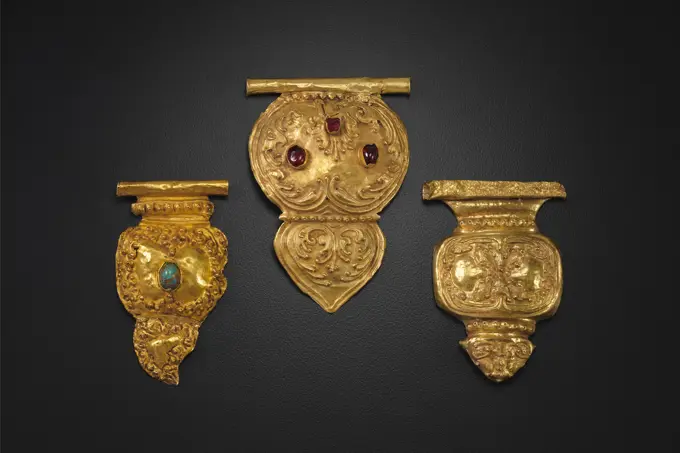
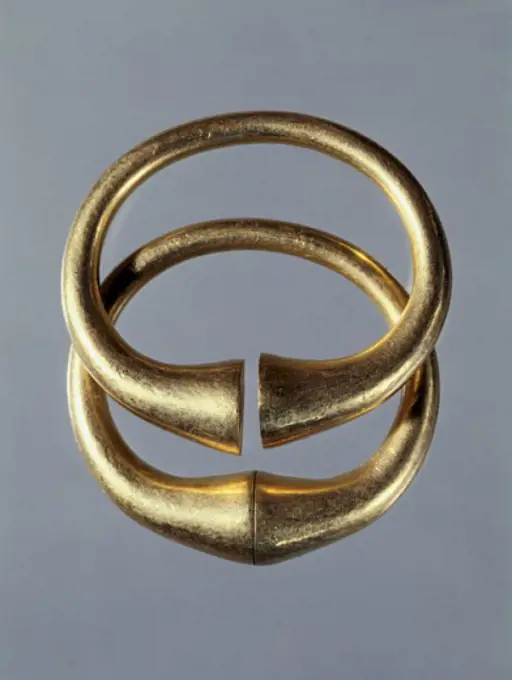
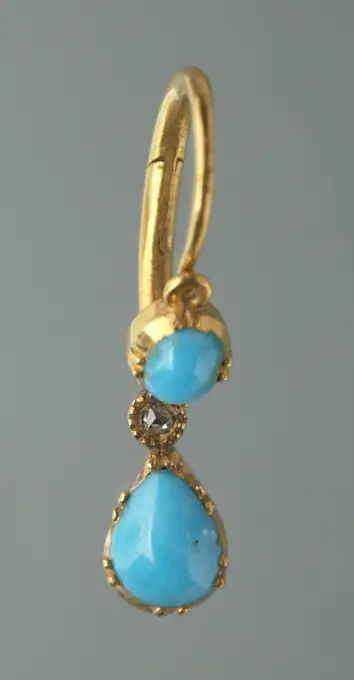
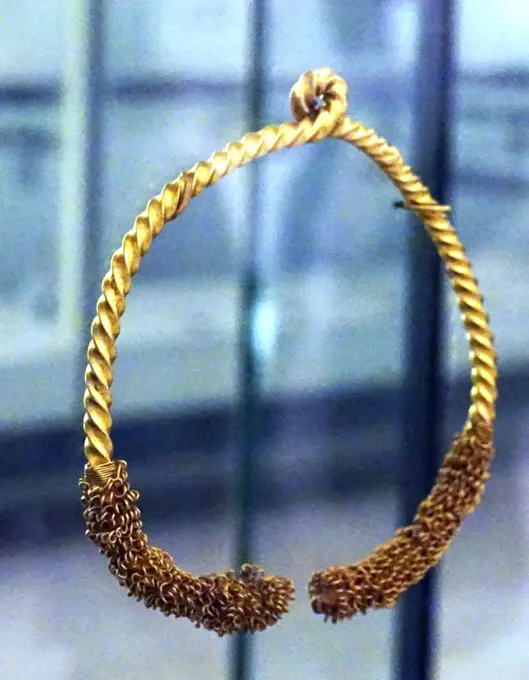
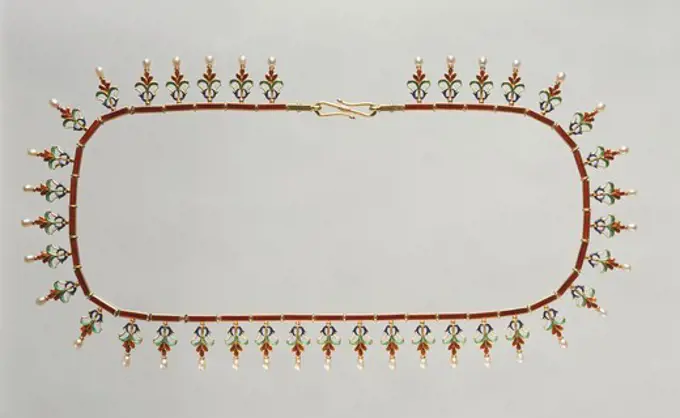
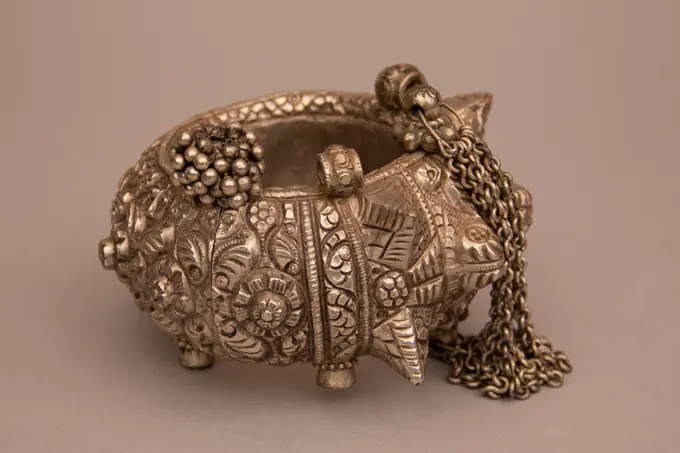
A collection of ornate gold jewelry pieces, including necklaces, rings, earrings, and ornaments, showcasing intricate designs and historical craftsmanship.
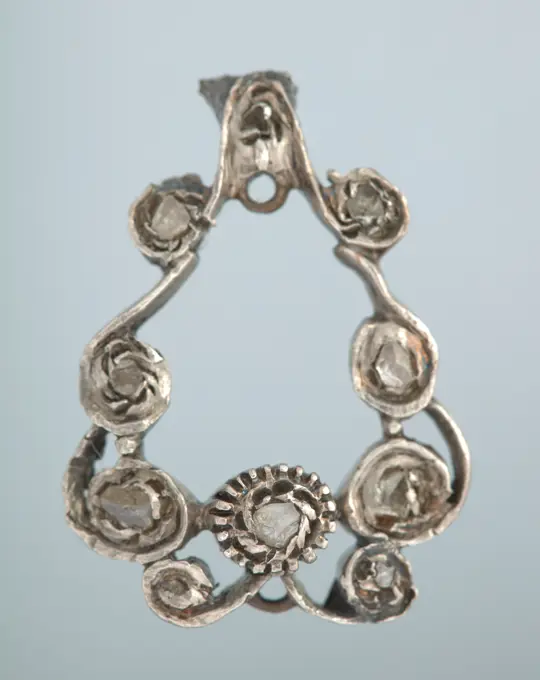
Earring
Earring
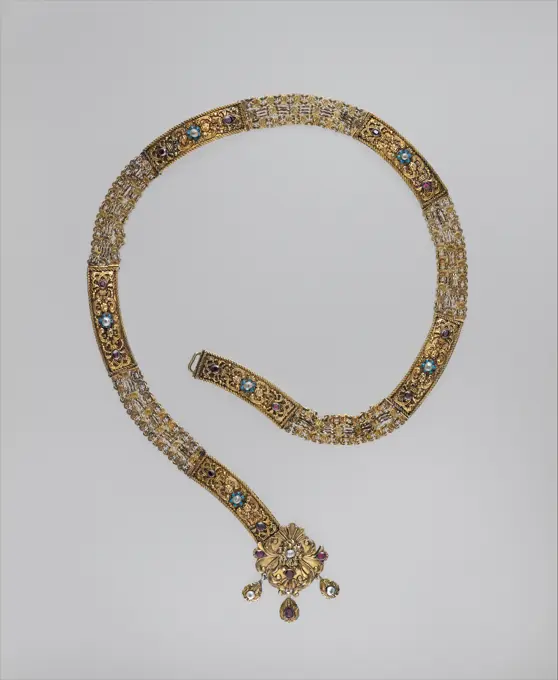
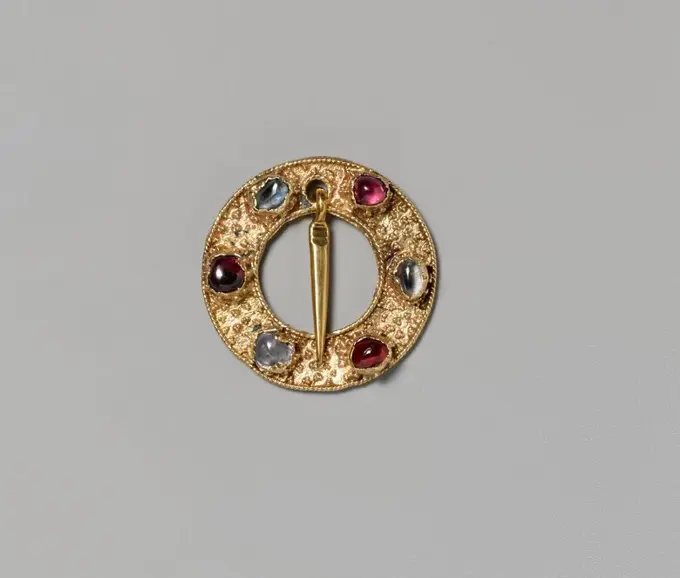
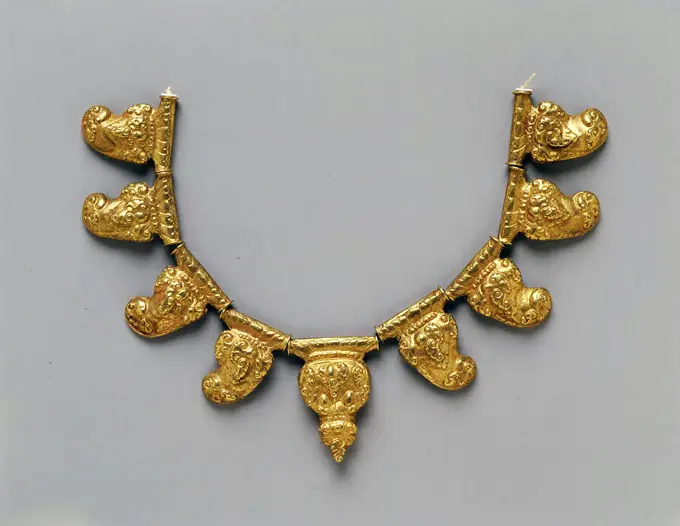
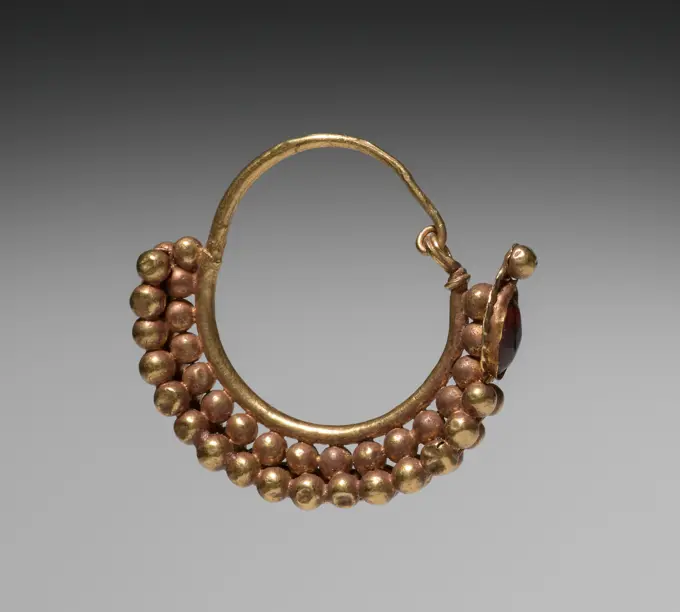
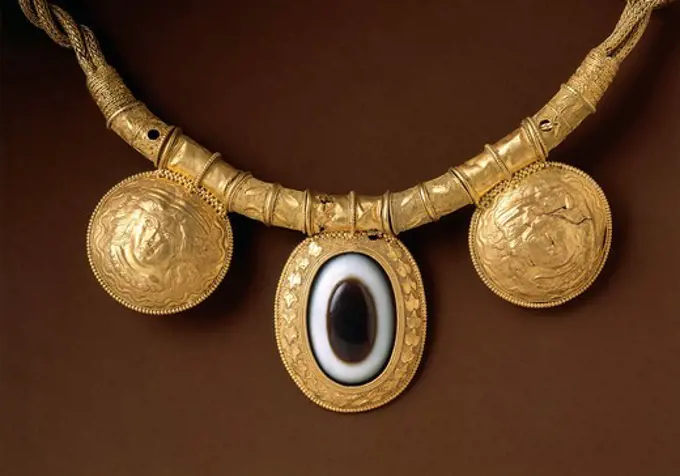
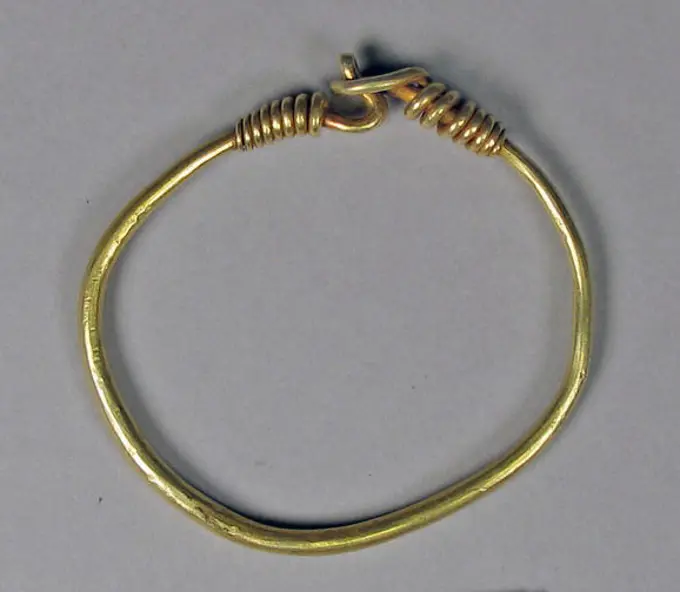
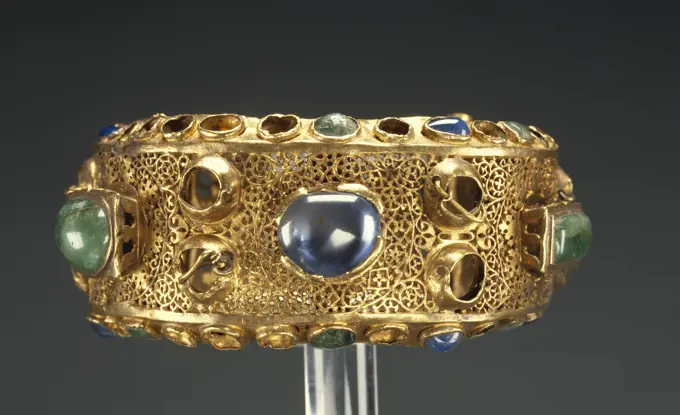
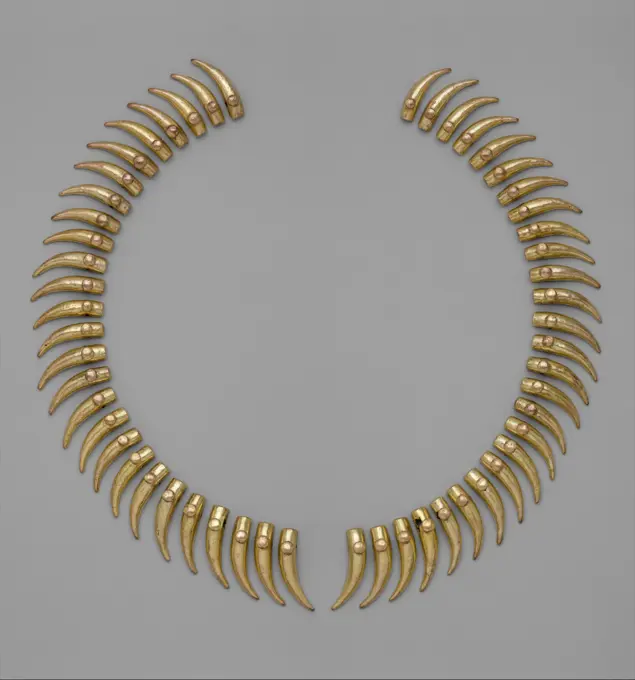
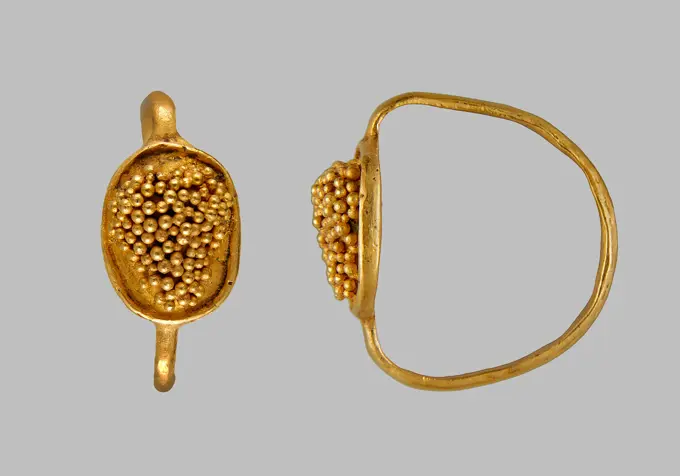
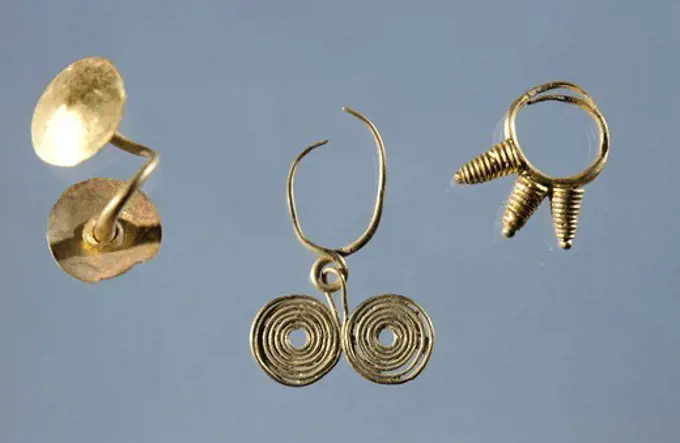
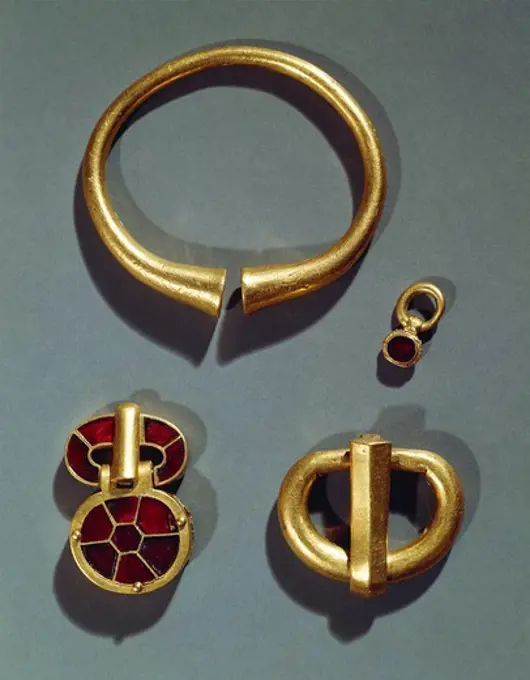
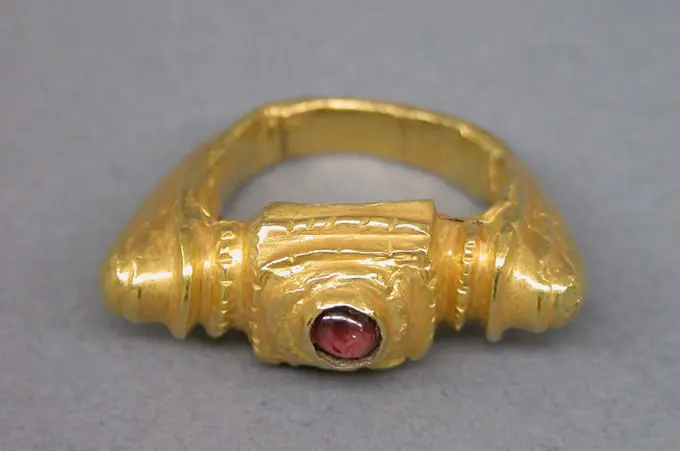
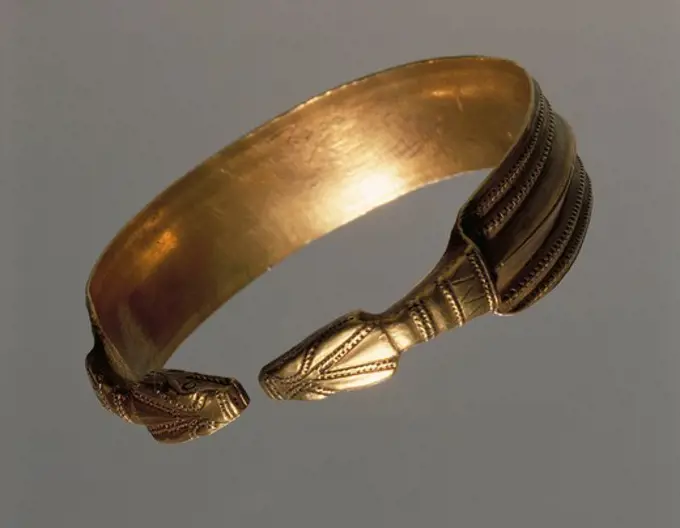
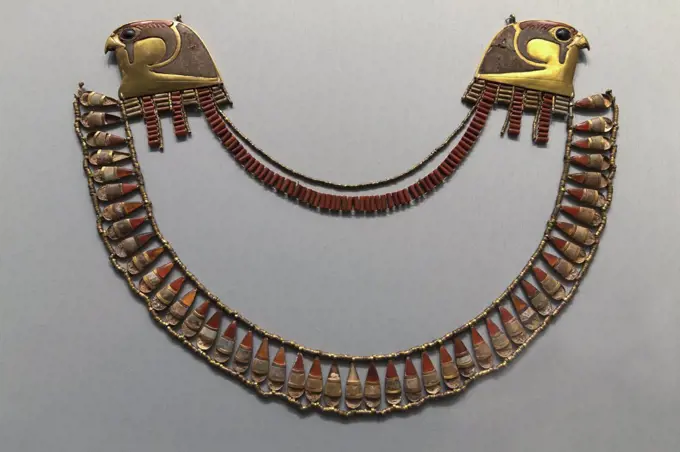
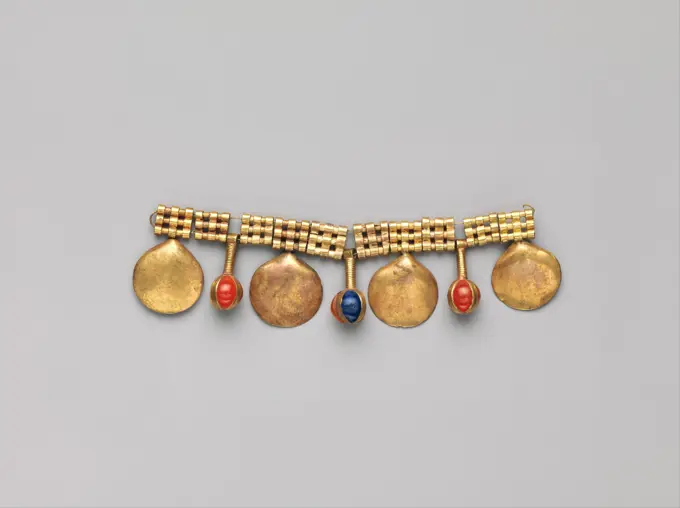
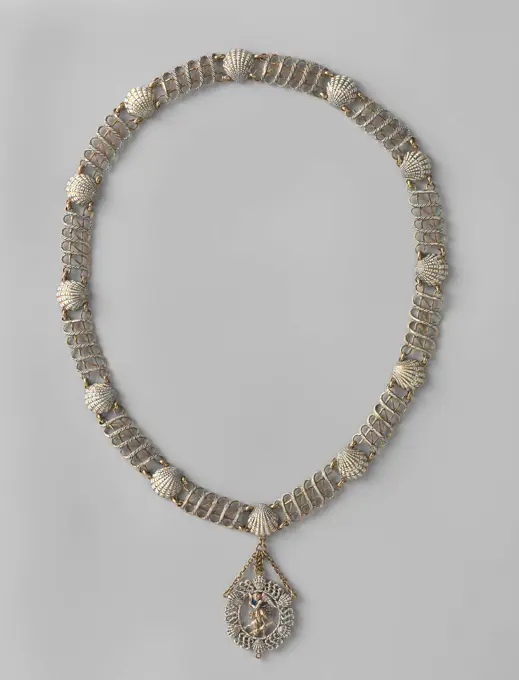
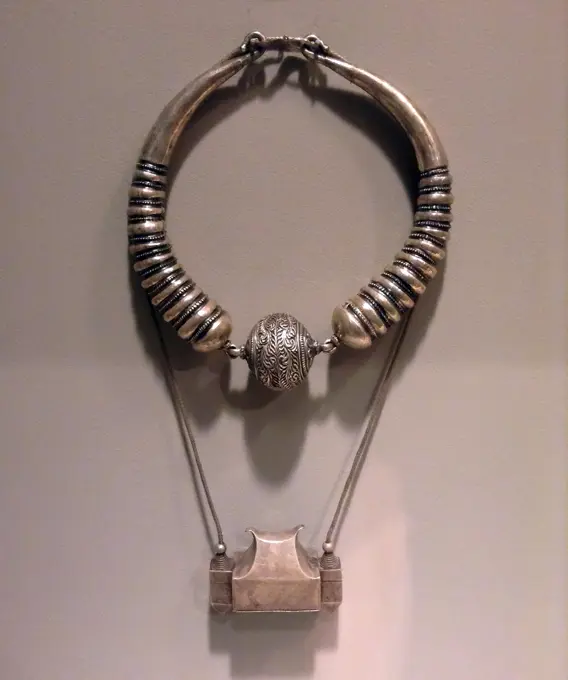
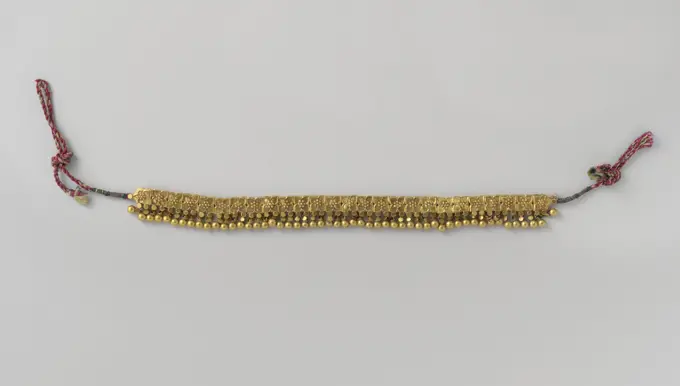
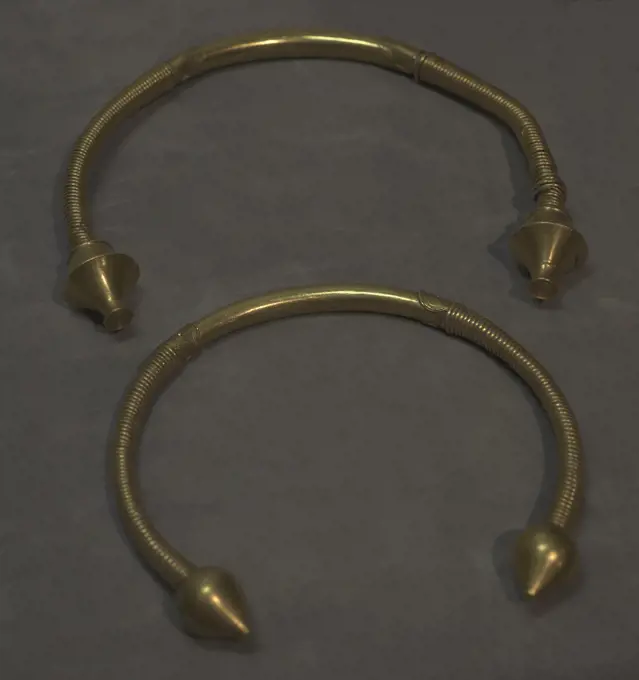
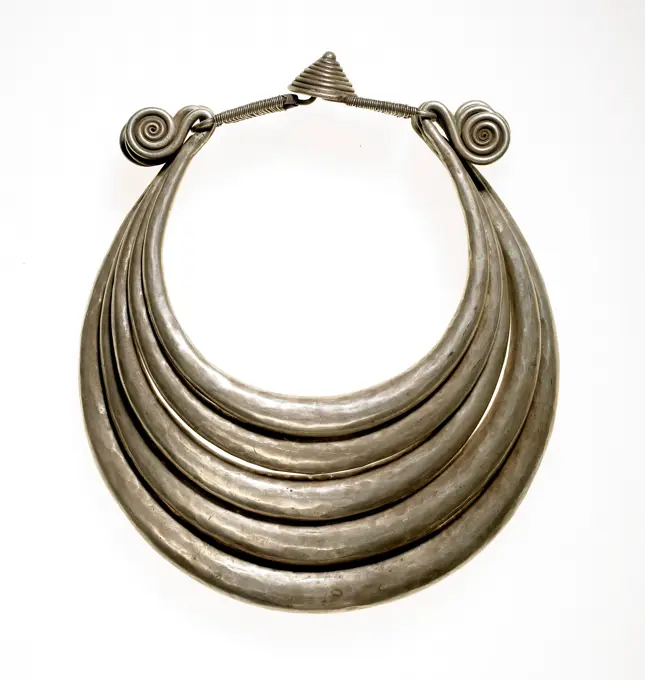
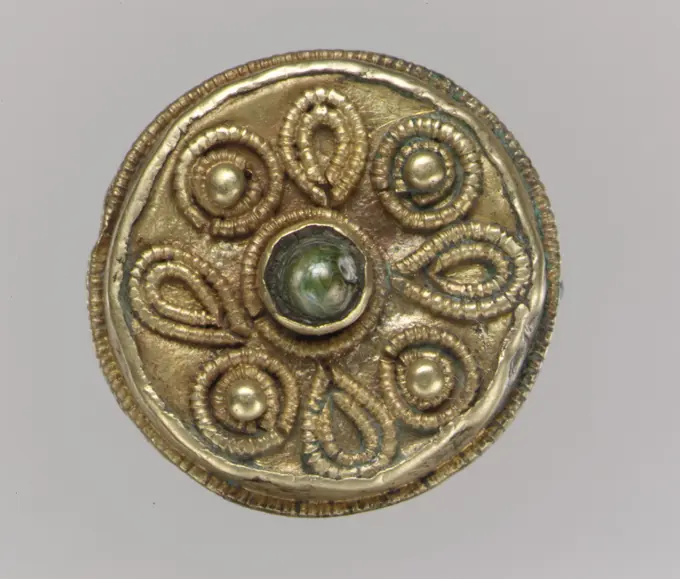
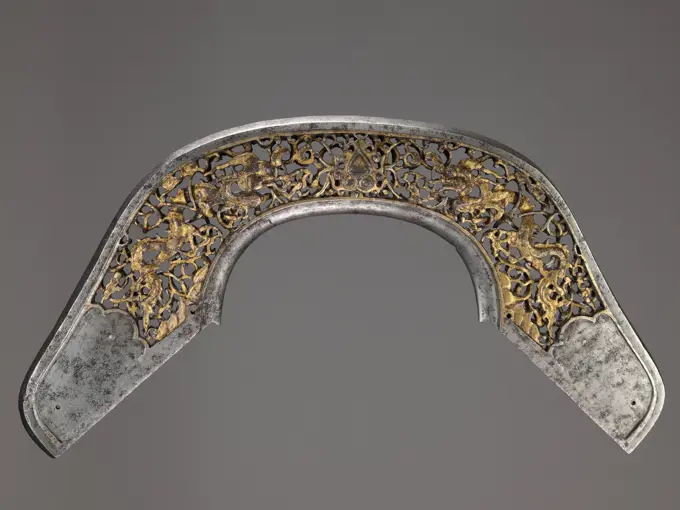
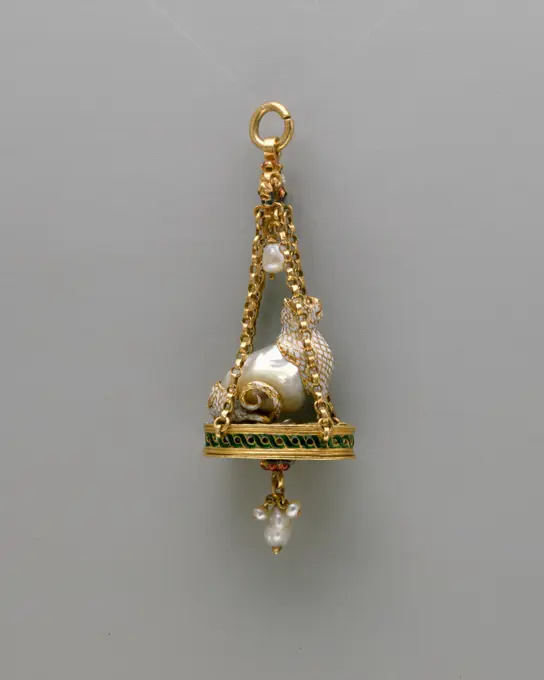
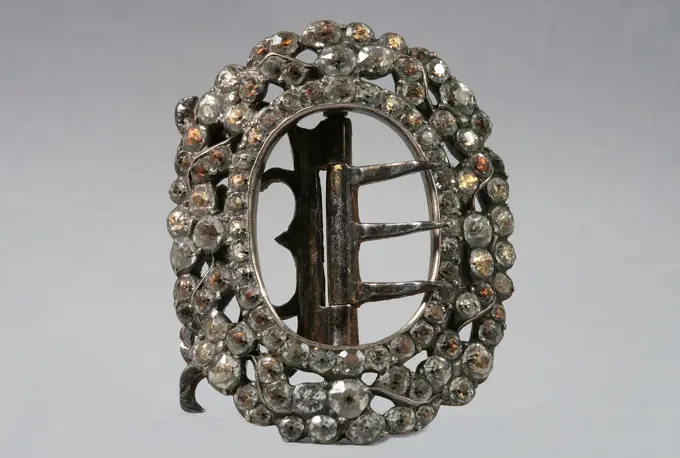
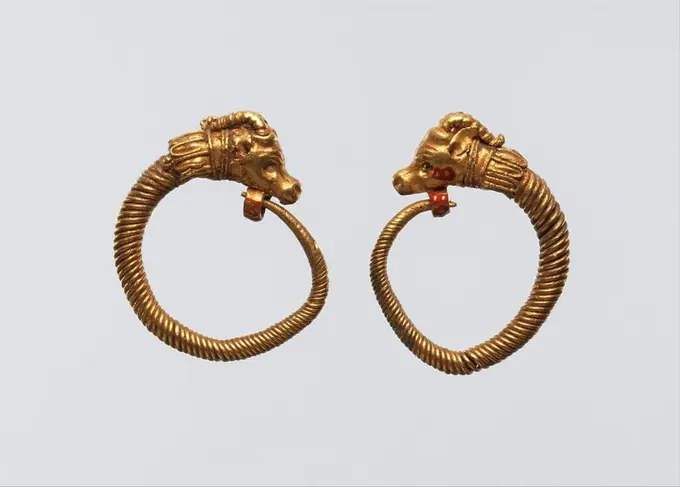
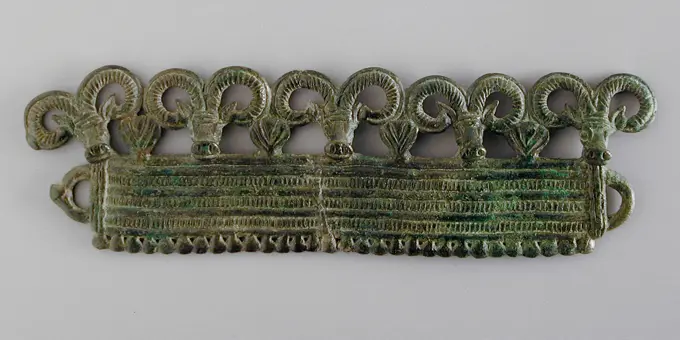
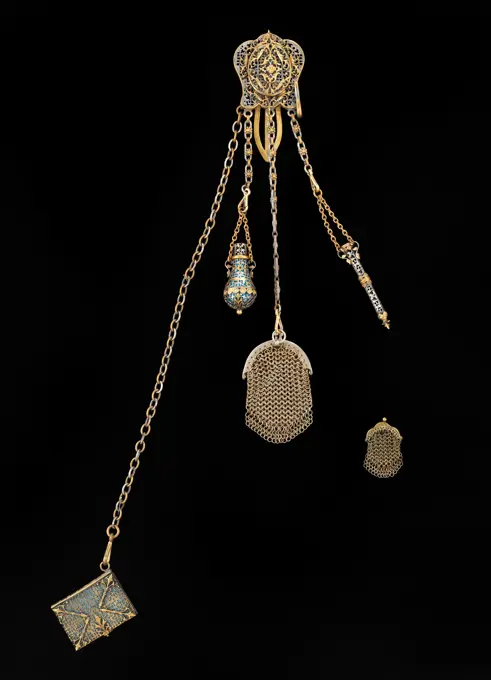
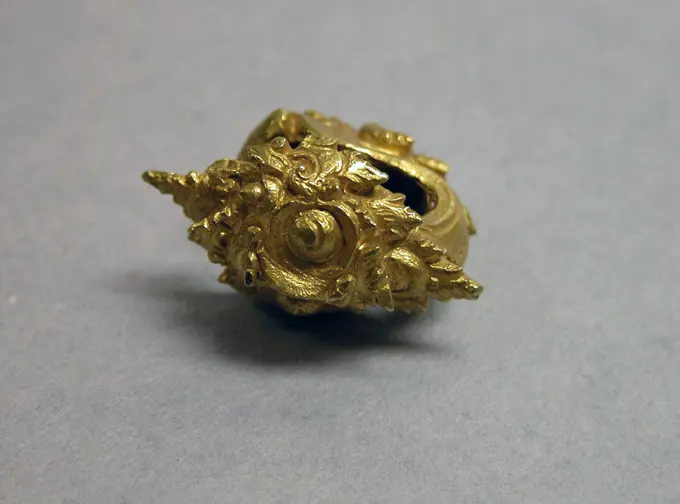
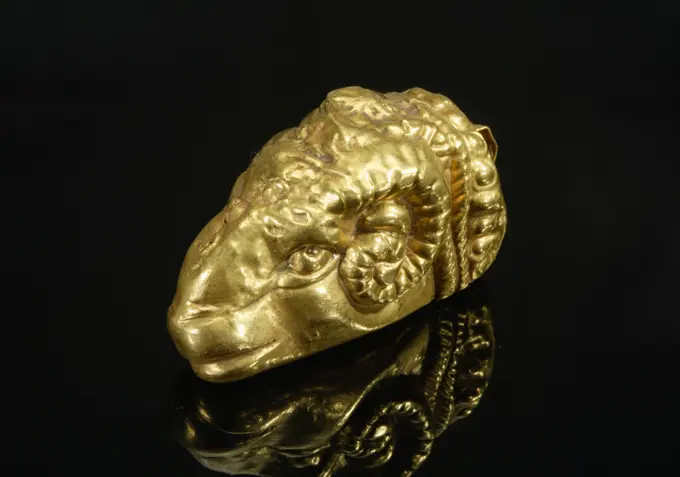
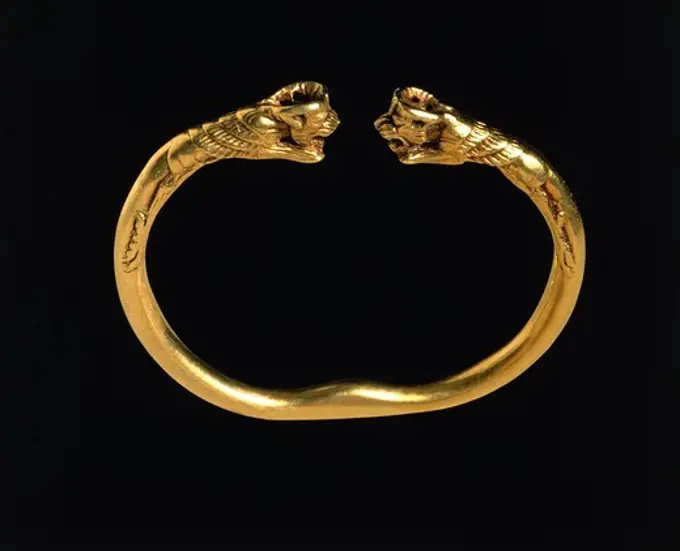
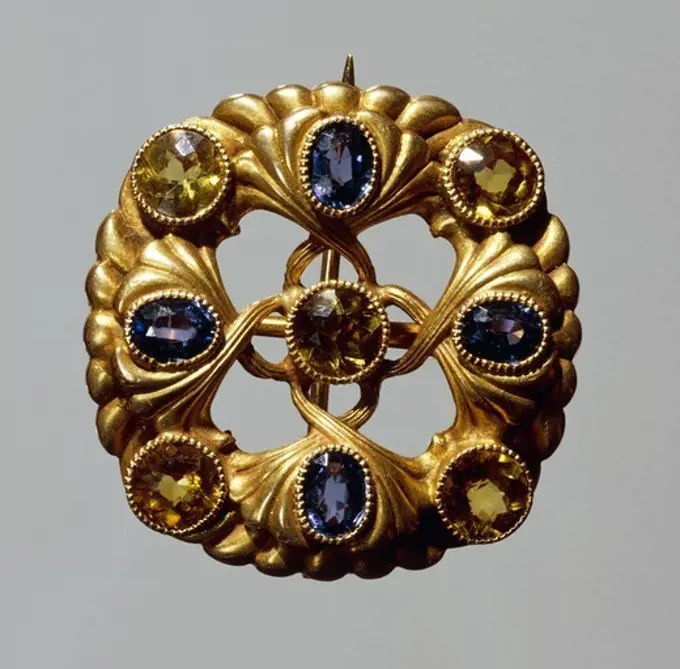
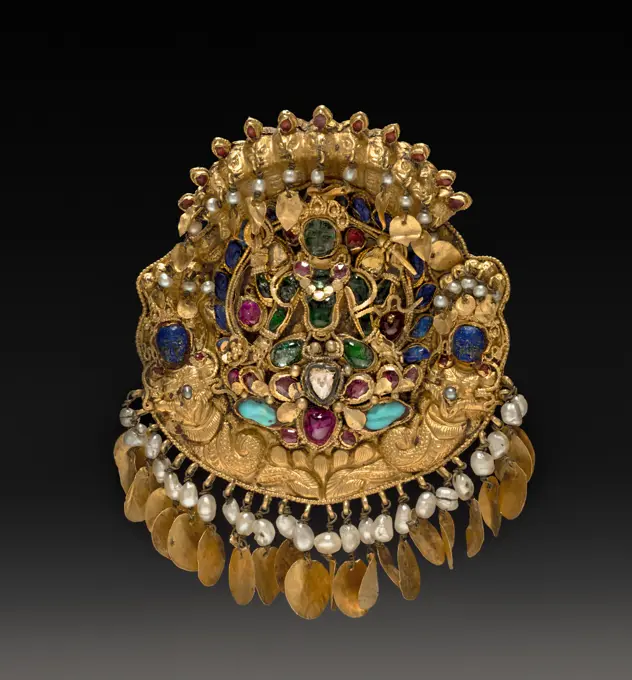
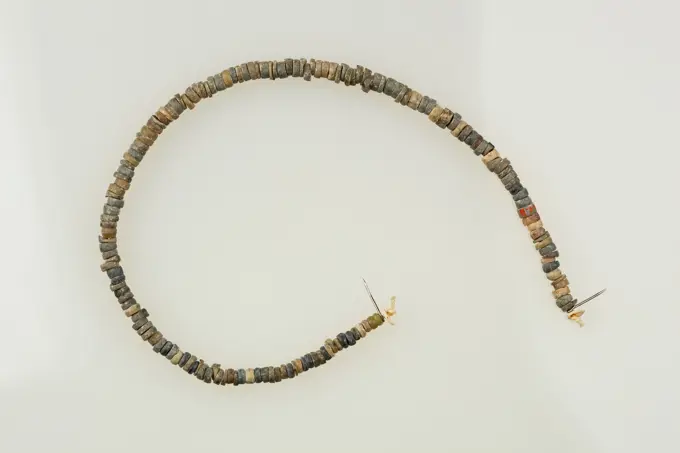
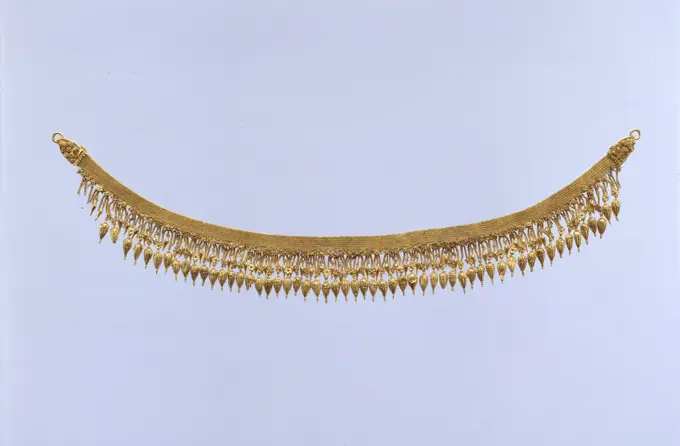
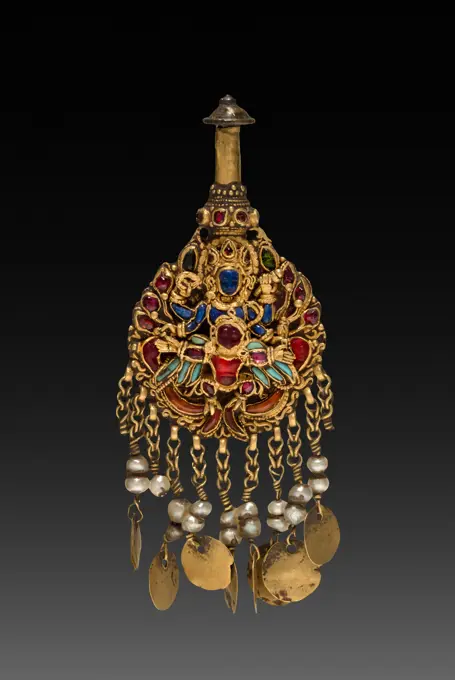
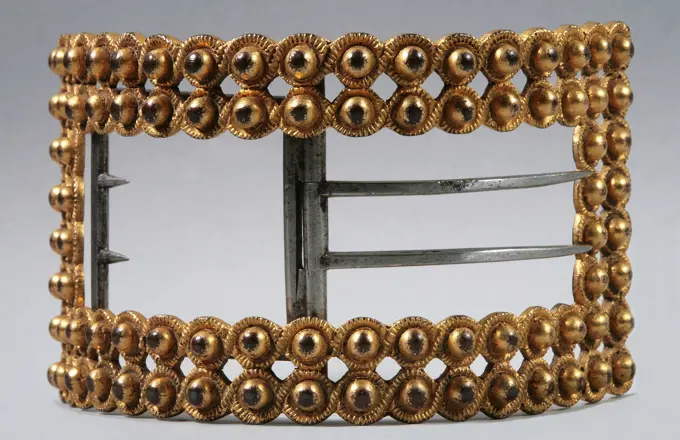
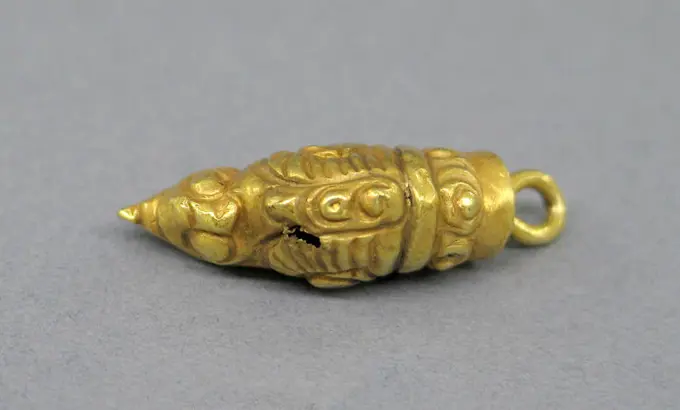
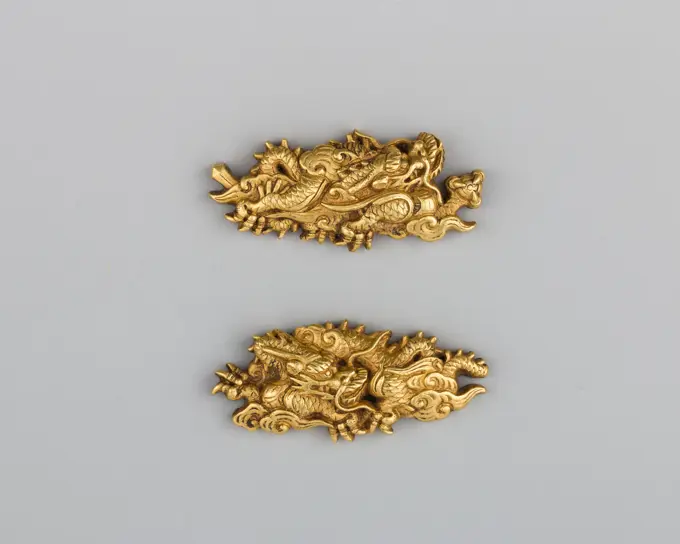
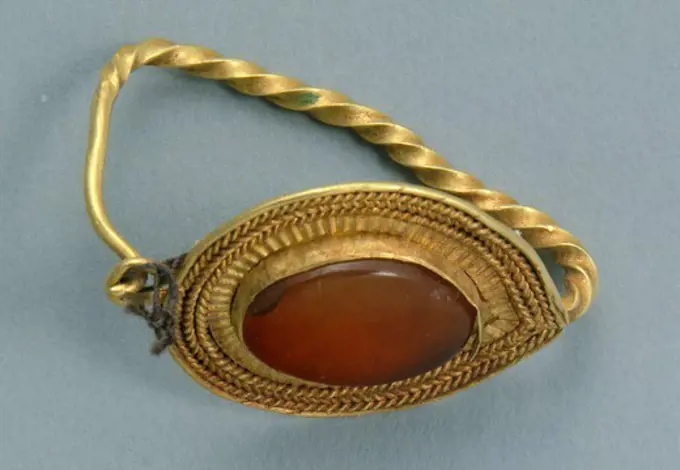
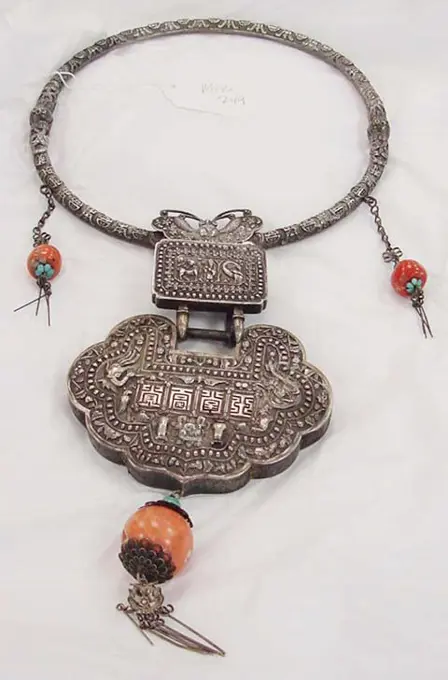
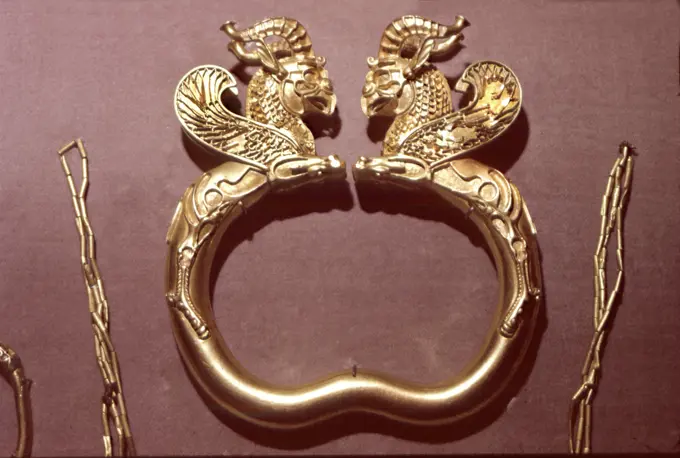
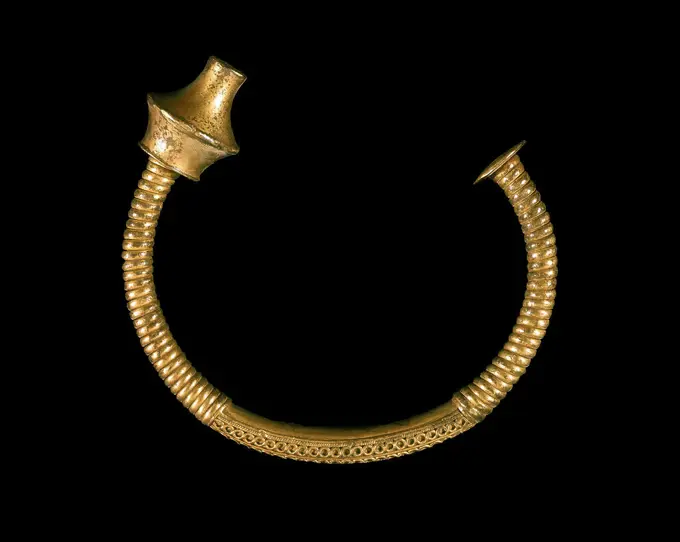
NecklaceRing with Scroll Pattern Design on Bezel Second half of the 8th-second half of the 10th century Indonesia (Java). Ring with Scroll Pattern Design on Bezel 50140Earring, crescent-shaped. Earring, crescent-shaped 243287PullNose Ornament 11th-16th century Quimbaya (). Nose Ornament 312711Belt mid-18th century Hungarian, Kolozsvár This belt and another in the collection, acc. no. 2010.110.75, are among the last pieces that Salgo acquired. Complete belts are rare, and in 1996, after decades of collecting, this piece appeared on the market. Salgo had the patience and knowledge to wait for pieces of this quality.ReferencesImportant English, Continental and American Silver and Gold. Sale cat., Christies, New York, May 17, 2011, nos. 117-118.[Wolfram Koeppe 2015. Belt 237058Earring or spiral 5th century B.C. Cypriot Worn in the upper lobe of the ear.. Earring or spiral. Cypriot. 5th century B.C.. Gold. Classical. Gold and SilverEarringBracelet 4th century Roman. Bracelet 464056Two Necklaces. UnknownRing Brooch. Culture: German. Dimensions: Overall: 7/8 x 3/16 in. (2.2 x 0.5 cm). Date: ca. 1340-49.This brooch comes from a hoard found in 1969 in the village of Lingenfeld, in the Rhine Valley. The hoard, containing coins minted in nearby Speyer between 1347 and 1349, is thought to have been buried by a member of the local Jewish community, which was persecuted in the wake of an outbreak of the plague in 1349. Museum: Metropolitan Museum of Art, New York, USA.Necklace with Stylized Tiger Claws 8th-early 10th century Indonesia (Java). Necklace with Stylized Tiger Claws. Indonesia (Java). 8th-early 10th century. Gold. late Central Javanese period. JewelryNotEarrings Cypriot. Earrings 242606Earring (one of a pair), 100 BC-AD 100. Syria, Roman, 1st Century BC-1st Century. Gold and garnet; diameter: 2.4 cm (15/16 in.); overall: 0.5 cm (3/16 in.).Breast plate. unknown, authorEarring 7th century () Frankish. Earring 465163 Frankish, Earring, 7th century (), Gold, blue and light green glass, pearls, Overall: 1 1/2 x 9/16 in. (3.8 x 1.5 cm) bead: 9/16 x 9/16 in. (1.5 x 1.4 cm). The Metropolitan Museum of Art, New York. Gift of J. Pierpont Morgan, 1917 (17.192.109)Late Roman brooch thought to have been produced in Ireland. Circa 3-4th century ADWreath from Adam Mickiewiczs Funeral in Kraków J. Z.Gold necklace with bulla pendants from Todi, Umbria Region, Italy, detailBracelet with Twisted Wire 8th-12th century Indonesia (Central Java). Bracelet with Twisted Wire. Indonesia (Central Java). 8th-12th century. Gold. JewelryBracelet; Roman Empire; 250 - 400; Gold, emeralds, sapphires, and glass; 2.8 × 5.8 cm (1 1,8 × 2 1,4 in.)Necklace 10th-16th century Tairona The fifty-four beads forming this necklace are cast of a copper-gold alloy known as tumbaga. The relatively high copper content in the alloy accounts for the pink tonality of the gold. The curved, pointed shape of the beads may represent animal teeth and or claws. A curious, unexplained feature is the projecting knob on top of each bead. The knobs may be ornamental or, more likely, may have had additional decorations such as colorful feathers or threads tied around them. Abrasions on the sides of the beads suggest that flat stone beads, about 1.5 centimeters in diameter, were once placed between the gold ones. The arrangement of the beads here is conjectural.Necklaces made of many repeated elements are common in many parts of Precolumbian America. Beginning in at least the third millennium B.C., they were fabricated in a wide range of styles, shapes, and materials. Among the Tairona, whose culture flourished in the Caribbean coastal plain and foothillPiercing; supervisory workshop; IV-I century BC (-400-00-00-1-00-00);Poznański, Marian, jewelry, purchase (provenance)Gold earrings and pendant from Lefkandi (Greece). Goldsmith art, Greek Civilization, mid 9th Century BC.Barbarian civilizations, France, 5th century. Goldsmith's art. Treasure of Pouan, princely burial of a Germanic warrior. Cloisonne' enamel and gold bracelet, belt buckle and clasps.Ring with Reddish-purple Stone Set in Square Bezel Second half of the 8th-second half of the 10th century Indonesia (Java). Ring with Reddish-purple Stone Set in Square Bezel 50206Studs. Culture: American. Dimensions: Studs: 5/8 x 3/4 in. (1.6 x 1.9 cm). Maker: Ball, Black & Co. (American, New York, 1851-1874). Date: mid-19th century.This pair of studs with applied circular backs is part of a demi-parure that also includes earrings and a brooch. All elements have a gold scalloped base chased with a foliate border, as well as coral cylinders mounted at the center beneath cast and chased clusters of berries and leaves. The suite retains its original leather case, which is lined in pale green satin and velvet, and is marked in gold letters with the name and address of New York City jewelers Ball, Black & Co. Believed by classical civilizations to possess therapeutic and apotropaic powers and used as ornament since ancient times, coral was a staple of jewelry design in Victorian America. Coral is an organic gem, the skeleton of tiny marine animals called 'polyps.' During the mid-nineteenth century, when this demi-parure was fabricated, coral was mainly harvested fSerbia, Kolari, gold braceletEarring end of 6th century-middle of 7th century Langobardic. Earring 465392 Langobardic, Earring, end of 6th century-middle of 7th century, Gold, Overall: 1 15/16 x 1 13/16 x 9/16 in., 0.3oz. (5 x 4.6 x 1.5 cm, 8g). The Metropolitan Museum of Art, New York. Gift of J. Pierpont Morgan, 1917 (17.192.89)Broad Collars, Reign of Thutmose III, Metropolitan Museum of Art, Manhattan, New York City, USA, North AmericaJewelry Elements ca. 1878-1805 B.C. Middle Kingdom Ten units of triplex beads, four of which have bivalve shells pendant from them. Ball beads of gold and carnelian or lapis lazuli have been strung between the shells. These are connected stylistically with jewelry found by Jacques de Morgan in the 1890s in the pyramid of Senwosret III at Dahshur and likely beloged to princess or queen.. Jewelry Elements 545728Order chain from St. Michel from Cornelis Lampsins. Golden chain with carrying sign. The chain consists of 12 shells, with white email, cross-over black striped, interspersed by 12 long openwork links consisting of 2 parallel rods over which 5 strigilis motifs run, with white-black striped email decorated. Internetic carrying sign consisting of an oval frame of identical motif as the chain (smaller and 2 x 6 links), within which multicolored enamelled representation of angel (St. Michel) a demon trimmy and spicy. Signature.Necklace with Prayer Box, late 19th-early 20th century, 2 1/2 x 3 5/16 x 1 5/16 in. (6.35 x 8.41 x 3.33 cm) (single element, pendant), Silver, India, Rajput style, Silver jewelry has been central to Indian culture for over three thousand years and, like gold, it remains extremely popular today. The torques shown above are typical of nineteenth century upper middle-class taste. The prayer box attached to the necklace contained a Hindu prayer which, when worn, acted as a type of talisman for the owner.Pair of Bracelets and Two Necklaces, anonymous, c. 1750 Necklace (tali) Of gold. The chain consists of a chain of small squares in the shape of a flower on which two golden balls hang. Surat gold (metal) Necklace (tali) Of gold. The chain consists of a chain of small squares in the shape of a flower on which two golden balls hang. Surat gold (metal)Torcs of the Castro of San Lourenzo Pastor. Gold. 1st century BC. O Pino, A Coruna province (Galicia, Spain). Archaeological and History Museum (San Anton Castle). A Coruna, Galicia, Spain.Goldsmith's art, 20th century. Gold and gems clip, circa 1940.Torque, 9 1/2 x 8 3/8 x 2 1/4 in. (24.13 x 21.27 x 5.72 cm), Silver, ChinaPair of Rowel Spurs 1490-1535 Germany, East. Brass or bronze with gilding .Headdress, mid 20th century, 9 1/2 x 5 1/4 x 5 1/2 in. (24.13 x 13.34 x 13.97 cm), Cotton, shells, India, 20th centuryDecorated torque. Brass. 19th century. Benin culture. Africa. Museum of the Americas. Madrid, Spain.Disk Brooch 7th century Frankish. Disk Brooch 464815 Frankish, Disk Brooch, 7th century, Gold, wire, paste cabochons, Overall: 5/8 x 3/8 in. (1.6 x 1 cm). The Metropolitan Museum of Art, New York. Gift of J. Pierpont Morgan, 1917 (17.191.125)Bracelet. Western Iran, circa 1000-650 B.C.. Jewelry and Adornments; bracelets. Bronze, castPrzeszo PrzyszociPendantPair of Spiral-Form EarringsCenter Element of a Tiger ClawNecklaceBactrian Gold: Bracelets Artist Unknown Kabul Museum, Afghanistan Jewelry set: earringPendant in the form of a seated cat late 16th-early 17th century probably Spanish The tiny animal of this pendant has the expectant look of an impatient house cat awaiting its bowl of cream. A design for a comparable jewel with a seated but somewhat more placid cat appears in a drawing by Gabriell Gomar, dated 1603, from the Llibres de Passanties, a set of volumes in the Barcelona Archivo Histórico de la Ciudad, containing the master drawings of applicants for admission to the Barcelona goldsmiths guild. The drawing was illustrated by Priscilla E. Muller, who noted that similar jewels had previously been considered to be German.[1 From the evidence provided by the design, however, Yvonne Hackenbroch has attributed this jewel to a Spanish goldsmith working about 1580 to 1590.The Spanish design shows the cat seated on a cushion-like base decorated with ornamental scrolling. The base of this jewel consists of an oval plinth with openwork guilloche-patterned sides. The underside, possiblScarf collar of dick side with two curved flower branches around large flower with two feathered leaves in the round on the back. Scarf collar of natural colosside: blonde. U-shaped model where the legs of the u bend out halfway. From loose parts a continuous pattern along the edges, the edges are split separately. In midfield in each leg a whimsical little or more triangular field. In the middle, on the curve (the part that is on the back and shoulders), there is a large flower with a large side of them two-substantially feathered leaves in which one up and the other is directed down. Around the large flower some smaller flowers. Left and right is symmetrical with respect to a curved branch with six flowers and some leaves. The motifs are largely made in scroll and several smaller motifs are made in linen. The motifs are equipped with shiny contour wires and are connected by a fine star-shaped grille. A Paris soil has been used around the Motief in the middle back. In the motifs, a roLoop. Interior row, small stones, outside row, openwork corrugated garland.Earrings with ibex head terminal. Dimensions: a. As Worn: H. 1.5 × W. 1.6 cm (9/16 × 5/8 in.)b. As Worn: H. 1.5 × W. 1.6 cm (9/16 × 5/8 in.). Date: 4th-3rd century B.C..Hoops formed of wound wire with animal head terminals are the commonest type of Hellenistic earring. The heads on these earrings have been referred to as those of gazelles, but is now thought more likely to be an ibex. Ibex-head earrings are well-known in Egypt, but also Asia Minor and Cyprus.The relatively simple decoration of these earrings points to an early Ptolemaic date. Museum: Metropolitan Museum of Art, New York, USA.Harness FittingChatelaine fourth quarter 19th century probably French Derived from the French for "lady or mistress of the castle," and related to the cordelière, a chatelaine was first worn in the 16th and 17th centuries and consisted of a chain with attached items such as a cross and keys. Both decorative and functional, the 19th-century version usually consisted of a central decorated clip that attached to the waistband or belt with a hook at back, such as this example. Several items draped from chains attached to the central clip, and included items a woman might need during her daily routine. This example includes a wax holder for sealing letters, a pencil, notebook and chain mail purses. The notebook, wax holder and pencil each have a distinctly Middle Eastern sensibility, particularly reminiscent of the highly detailed scrolling filigree patterns interspersed with small flower heads often seen in Persian design motifs.. Chatelaine. probably French. fourth quarter 19th century. metal, enamel, pJewelry from the Kingdom of Jodphur on display at the Royal Ontario Museum in TorontoZulu bracelet or necklace of lion's teeth. 19th century. AD. South Africa.Ear Ornament with Makara Motif Last quarter of the 10th-last quarter of the 15th century Indonesia (Java). Ear Ornament with Makara Motif. Indonesia (Java). Last quarter of the 10th-last quarter of the 15th century. Gold. Eastern Javanese period. JewelryA pendant in the shape of a ram;  5th century BC (-500-00-00--401-00-00);EtruriaGold and pearl earring (one of a pair) 3rd century A.D. Roman, Cypriot These items, all found on Cyprus, are very representative of Roman decorative jewelry, in which various designs are combined and highlighted with colored gems in order to make them look as rich and impressive as possible. Similar jewelry is found throughout the Roman Empire.. Gold and pearl earring (one of a pair) 243271Achaemenid civilization, rigid gold bracelet with heads of winged lions, from Syria, 6th -4th century b.c.Goldsmith's art, France, 19th century. Gold brooch set with sapphires and beryls.DiademNeck torque used by Akan society chiefsEarring 6th-7th century Frankish. Earring 465182 Frankish, Earring, 6th7th century, Gold, granulation, filigree wire, Overall: 1 1/2 x 1 7/16 x 1/4 in. (3.8 x 3.7 x 0.6 cm) Overall (bead): 3/16 x 1/4 in. (0.4 x 0.6 cm). The Metropolitan Museum of Art, New York. Gift of J. Pierpont Morgan, 1917 (17.192.126)Cluster Brooch with Letters Spelling "Amor". Culture: French. Dimensions: Overall: 1 1/8 x 15/16 x 9/16 in. (2.9 x 2.4 x 1.4 cm). Date: mid-15th century.This gold cluster jewel includes the Latin word amor (love) in delicate gold letters. It could have been worn either as a pendant or a brooch, and in portraits of young women many similar jewels are seen in their hair or at the shoulder or neck. Expensive jewelry played an important role in betrothal and marriage, and the groom gave brooches to the bride as tokens of love. In 1447, for example, Marco Parenti gave his betrothed, Caterina Strozzi, a golden brooch with two sapphires and three pearls to be worn on her shoulder. Museum: Metropolitan Museum of Art, New York, USA.Goldsmith's art, 19th century. Enamelled gold and seed pearls necklace.Anklet, One of a Pair 19th century. Anklet, One of a Pair. 19th century. Silver. Attributed to Central India or Rajasthan. JewelryPendant with Four-armed Green Vishnu on a lotus with Nagas, 1600s or 1700s. Nepal, Kathmandu Valley. Gold set with precious and semiprecious stones; overall: 7.2 x 5.8 cm (2 13/16 x 2 5/16 in.). Vishnu, made of emeralds, holds his typical emblems, each made of gold: a discus in his upper right hand, the club in his upper left, and a lotus in his lower right hand. He sits cross-legged on a lotus pedestal made of spinels, nestled on the back of his mount, Garuda, shown with a crystal face, spinel torso, and turquoise wings. The intertwined bodies of nagas (serpent deities) form the bottom of this pendant; each naga holds a pearl in offering; their faces are carved from lapis lazuli. An eleven-headed serpent hood rears over the entire ensemble.Celtic civilization, Italy. Goldsmith's art. Torques, gold bracelet or necklace. From Santa Paolina di Filottrano (Ancona province).String of beads ca. 3650-2960 B.C. Predynastic, Naqada II-Naqada III. String of beads 561758Afghanistan, Perfume bell, Gold artifacts from Tillya Tepe findGold strap necklace with seedlike pendants ca. 330-300 B.C. Greek Gold strap necklace with seed-like pendants, part of the Madytos Jewelry.This group of jewelry is said to have come from a tomb at Madytos on the European side of the Hellespont. The gold diadem is richly worked in repousse with an elaborate floral pattern. Dionysos, the god of wine, and his wife, Ariadne, sit in the center; muses playing musical instruments perch among the vines and along the sides. The tiny figure of a must playing a lyre also appears just above the crescent form on each of the boat-shaped earrings. The seedlike pendants of the earrings are identical to those on the elaborate necklace.. Gold strap necklace with seedlike pendants. Greek. ca. 330-300 B.C.. Gold. Hellenistic. Gold and SilverEarring with Vishnu Riding Garuda, 1600s or 1700s. Nepal, Kathmandu Valley. Gold set with precious and semiprecious stones; overall: 2.6 cm (1 in.). This earring was made to hang on sculptures of deities worshipped in Nepalese temples. Nepalese craftsmen excelled at the detailed encrustation of jewels to depict complex figural imagery. They shaped gold wires into a framework, then inserted polished stones into the spaces, held in place with an adhesive. Four-armed Vishnu is made of sapphires; his mount the man-eagle appears to be made of carnelian and spinel with wings of turquoise.Piece of iron link chain of twisted S-shaped links, chain soil find iron metal, current deformed state) Piece of iron link chain of twisted S-shaped links archeology Rotterdam rail tunnel attachment Soil discovery: trajectory rail tunnel Rotterdam.Nose Ring, 20th Century. Indo-Chinese, made in France. Silver; overall: 9.9 cm (3 7/8 in.).Miser's purse, Medium: silk, metal Technique: crochet, Crocheted blue silk ornamented with gold beads and cut steel beads in stylized floral pattern. Two gold rings control side opening. Gold drop with beads at either end., France, early 19th century, costume & accessories, Miser's purseTreasure of the Castro de Xanceda. Torc. Gold. 1st century BC. Mesa, A Coru–a province (Galicia, Spain). Archaeological and History Museum (San Anton Castle). A Coru–a, Galicia, Spain.Pair of Stirrups first half 17th century Netherlandish This kind of stirrup, evolved from 16th-century German types, also became very popular in several other European countries in the first half of 17th century. The horseshoe shape, however, came back into fashion in the northern part of Europe around the 1650s.. Pair of Stirrups. Netherlandish. first half 17th century. Iron, gold. Equestrian Equipment-StirrupsLoop . 2 openwork rows of pearls and small dotted garland.Pendant in Shape of a Makara Second half of the 8th-second half of the 10th century Indonesia (Java). Pendant in Shape of a Makara 50125Gold swivel ring with carnelian scarab. Culture: Etruscan. Dimensions: Diam.: 1 in. (2.5 cm). Date: 5th century B.C..On the scarab, head of a man. Museum: Metropolitan Museum of Art, New York, USA.Round BezelRingPair of Sword-Grip Ornaments (Menuki) possibly early 17th century Japanese Menuki are a pair of ornamental sword fittings attached to either side of a sword hilt.. Pair of Sword-Grip Ornaments (Menuki). Japanese. possibly early 17th century. Gold. Sword Furniture-MenukiBeltTieredFinialGold pendant in the form of a bull's head. Culture: Cypriot. Dimensions: L. 1 1/2 in. (3.8 cm). Date: ca. 1400-1050 B.C..Most of the raw materials for Cypriot jewelry came from the East. Gold became plentiful in the Late Bronze Age, when Syria and Egypt were the primary sources. These earrings are a Cypriot creation, an ornament in the form of a bull's head. Museum: Metropolitan Museum of Art, New York, USA.Gold and cornelian earring, Crimea. Jewellery. Gotho-Alanic Civilization, 3rd-4th Century.Oliphant. Culture: South Italian. Dimensions: Overall: 16 15/16 x 3 9/16 in. (43 x 9 cm). Date: 12th century.Decorated elephant tusks could be employed as drinking vessels, as horns to announce the hunt, or as symbols of feudal rights. In churches, some served as reliquary containers. As this example shows Christ as the Lamb of God, it probably was made for a Christian patron. Museum: Metropolitan Museum of Art, New York, USA.Necklace probably 19th century Chinese minority (Miao) This collection of largely ethnographic jewelry includes examples from cultures in South America, North America, Europe, Asia, and Africa and dates from the Pre-Columbian period to the twentieth century. Owned by renowned art collector and fashion enthusiast Muriel Kallis Newman, the collection represents her knowledge and appreciation of a wide range of jewelry design and making traditions. Numerous items in her collection are composite artifacts made from various cultures and time periods reappropriated as modern jewelry creations by or for Muriel. It is important to note that Newman wore many of the pieces in the collection, interpreting them to suit and express her own singular, often avant-garde style.. Necklace 141693Ziwiye Hoard. Treaseure hoard contains the Iranian plateau styles. Lake Urmia, Ziwiyeh, Kurditan, Iran. Necklace made of beads and pendants granules terminated two heads animals. Gold. Louvre Museum. Paris. France.Oxus Treasure- gold armlet with griffins. PERSIA- IRAN.Spain, Madrid, Gold bracelet decorated with studs, Carambolo Treasure found in Camas, SpainSphere with Gem BirdRingSilver loop.Finial (France); fire-gilt bronzeBracelet. Western Iran, circa 1000-650 B.C.. Jewelry and Adornments; bracelets. Bronze, castTORQUES DE ORO CELTA. Location: MUSEO PROVINCIAL. LUGO. SPAIN.Pair of Earrings, 30 BC-AD 395. Egypt, Roman Empire. Bronze and glass; diameter: 2.2 cm (7/8 in.).Silver bracelet with ram's head finials. Greek, late 4th century B.C. Metropolitan Museum of Art. Ny. USA.