Ancient Gold Jewelry

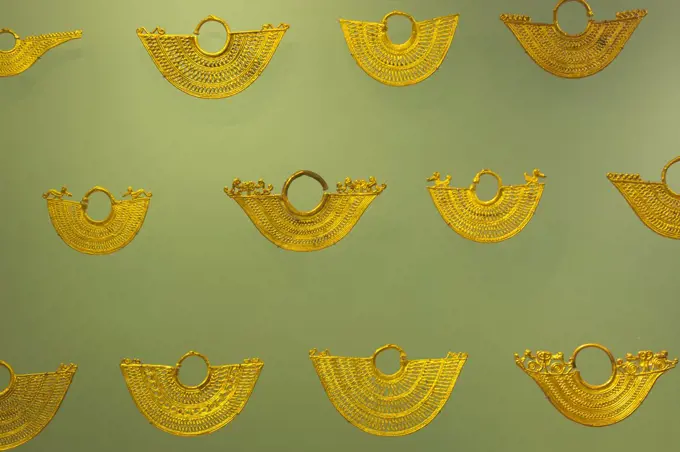
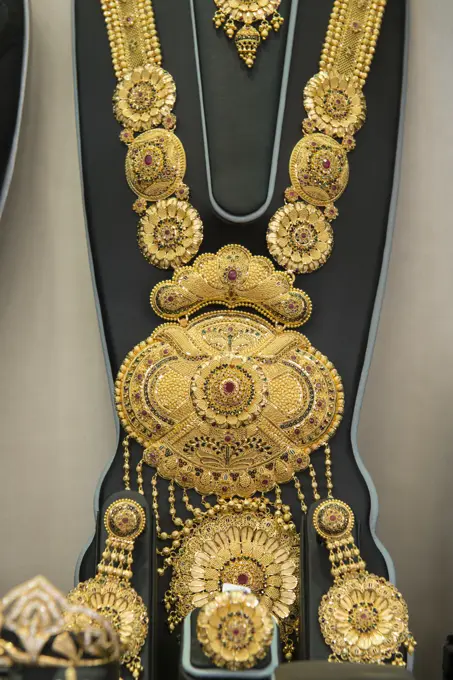
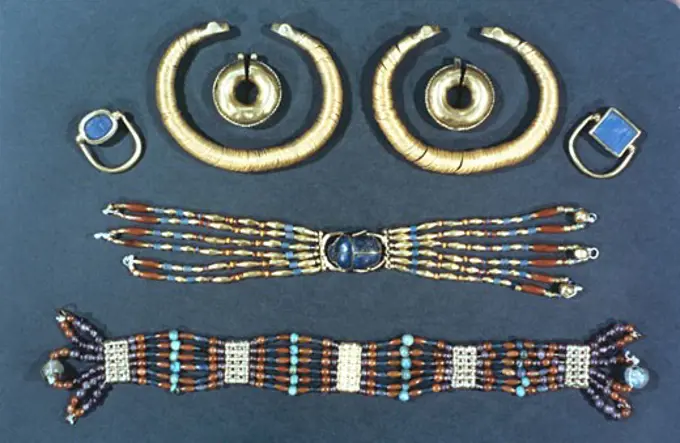
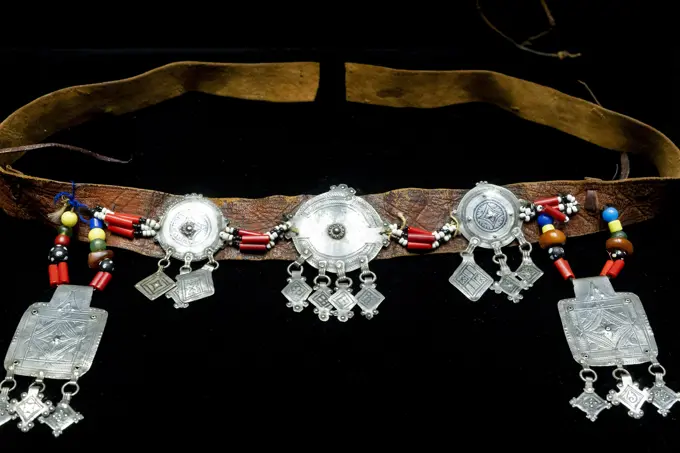
A collection of ornate gold jewelry pieces, including necklaces, rings, earrings, and ornaments, showcasing intricate designs and historical craftsmanship.
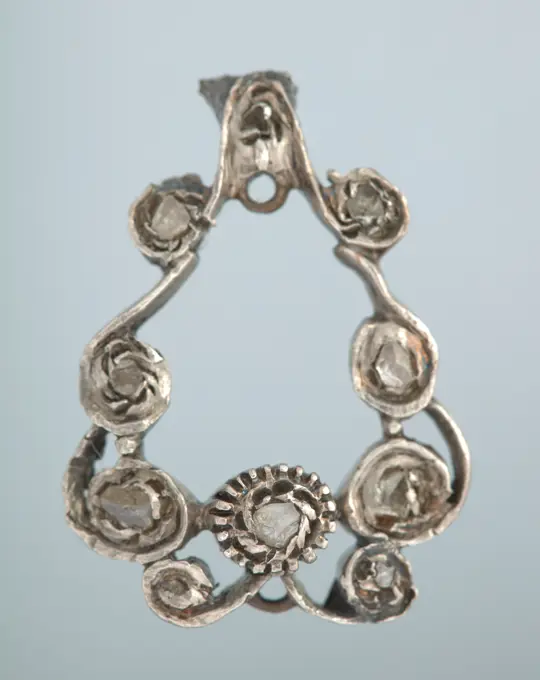
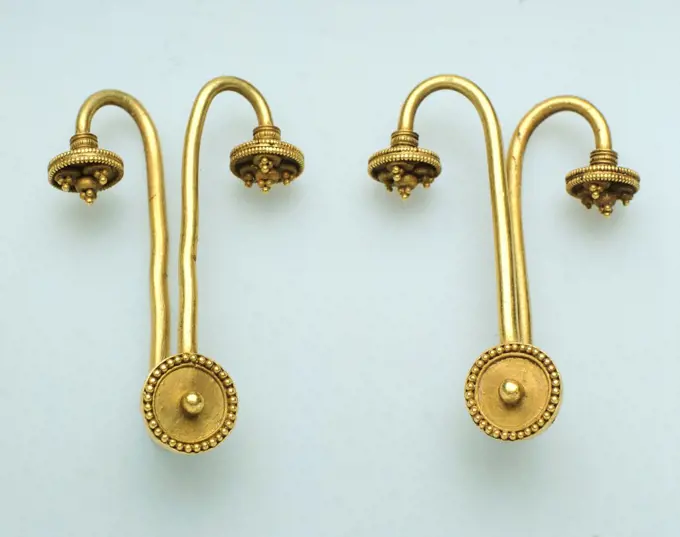
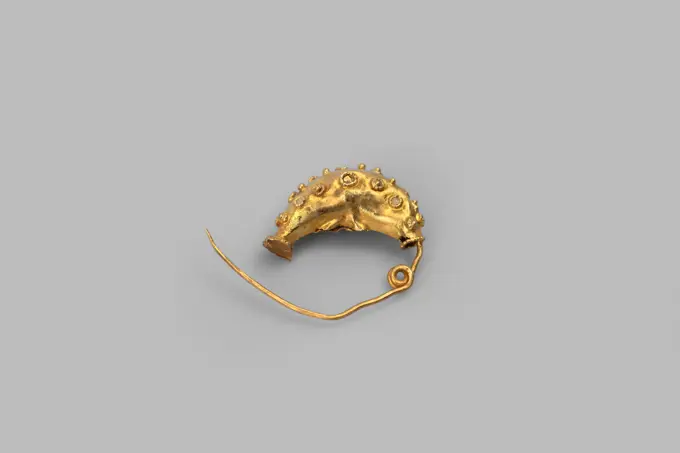
Earring
Earring
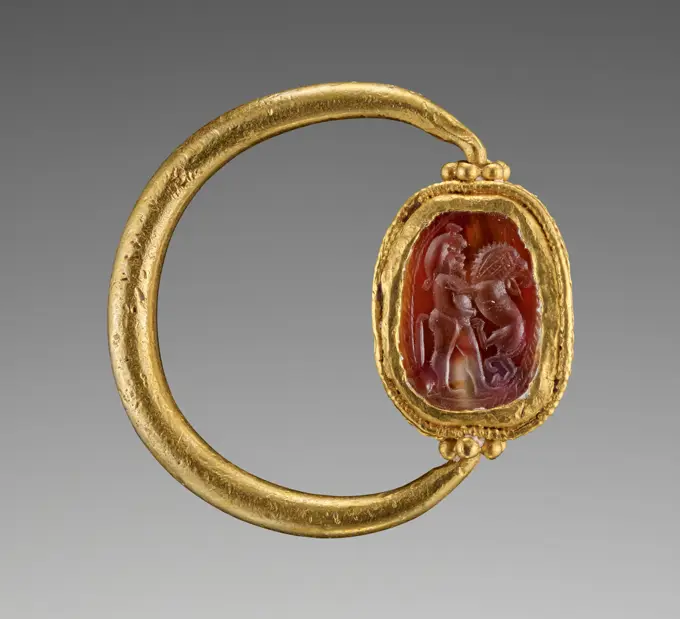
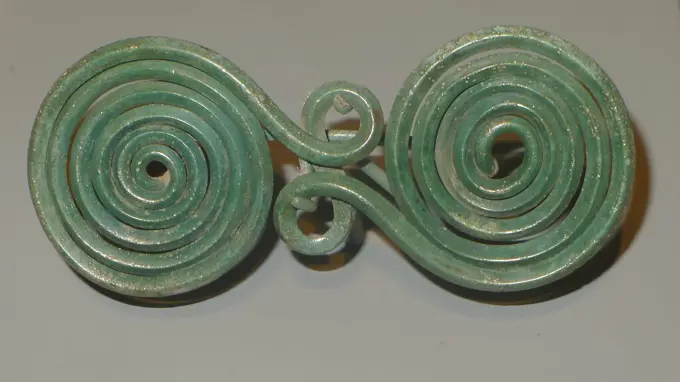
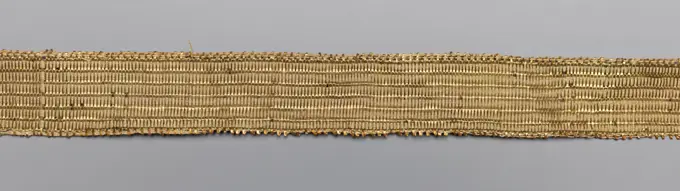
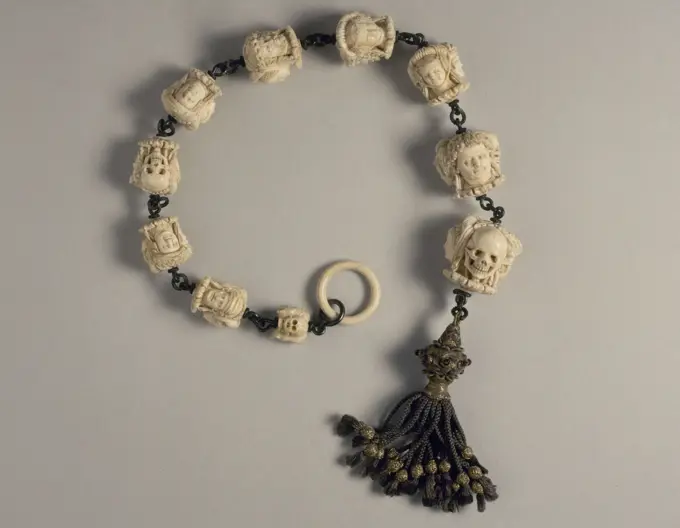
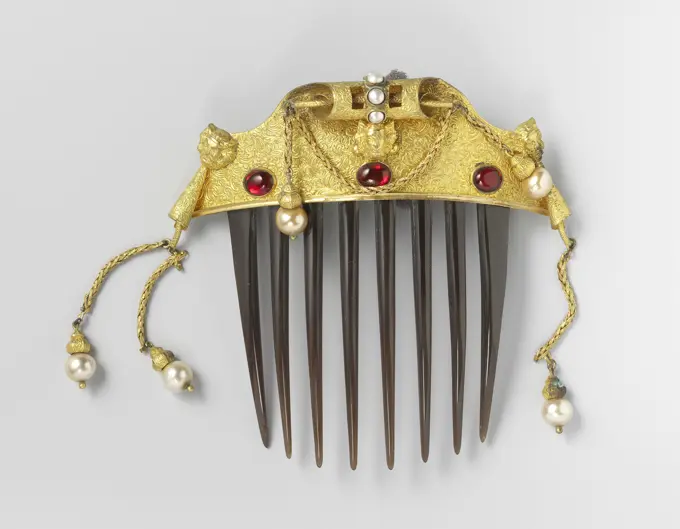
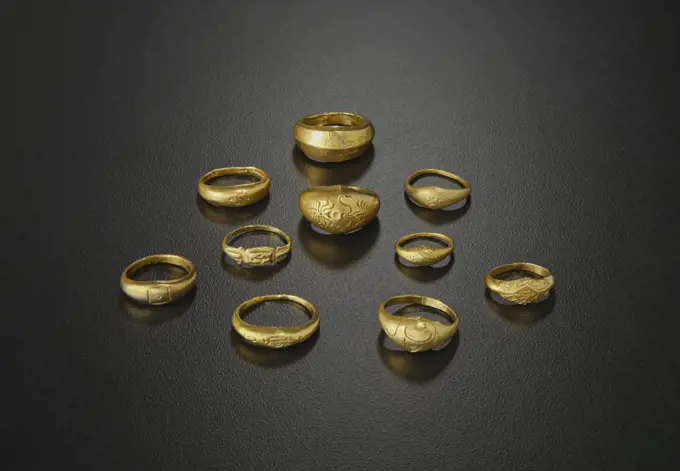
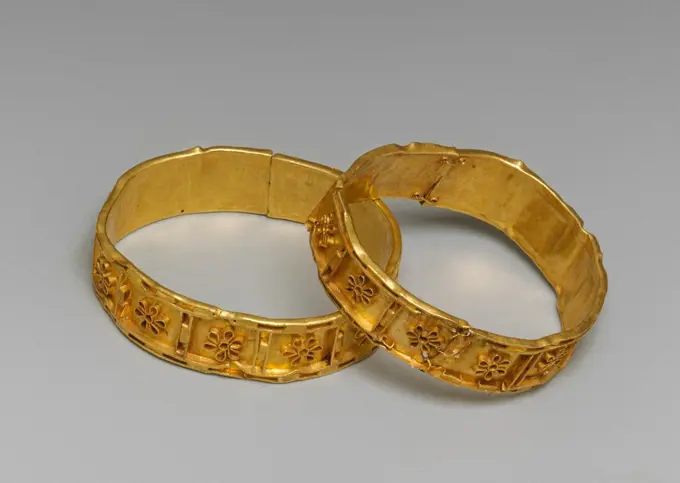
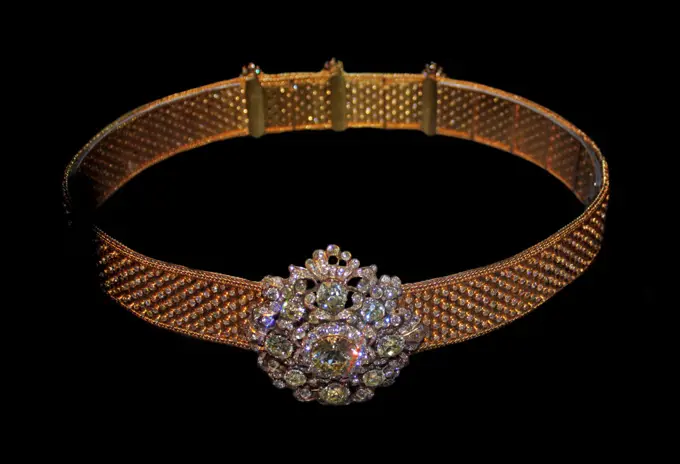
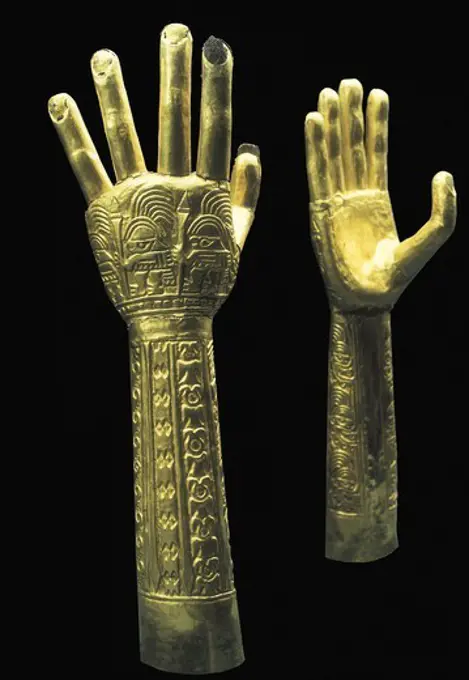
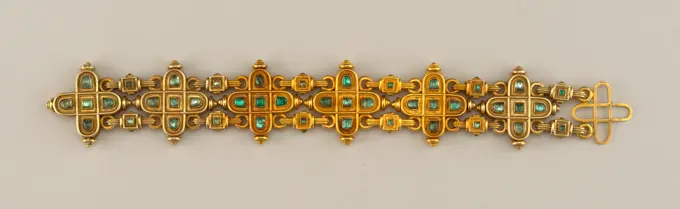
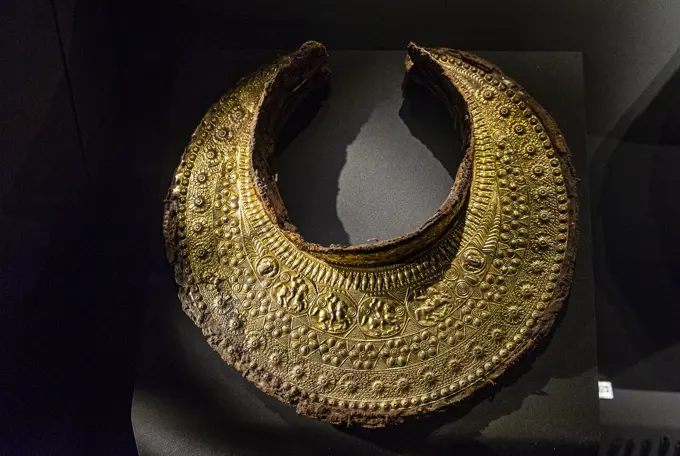
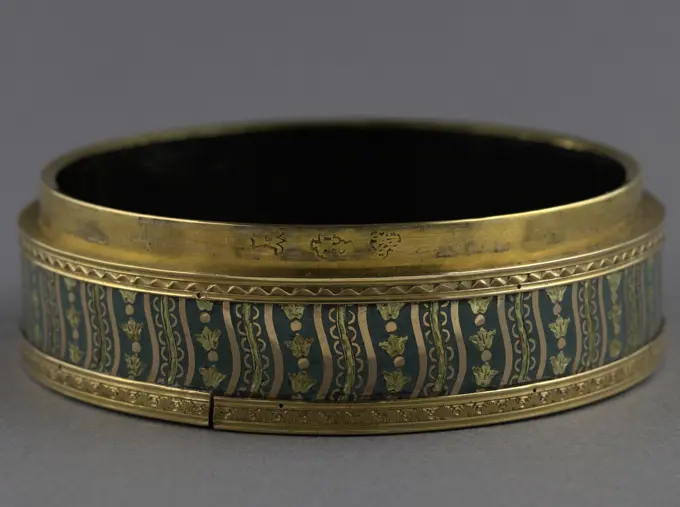
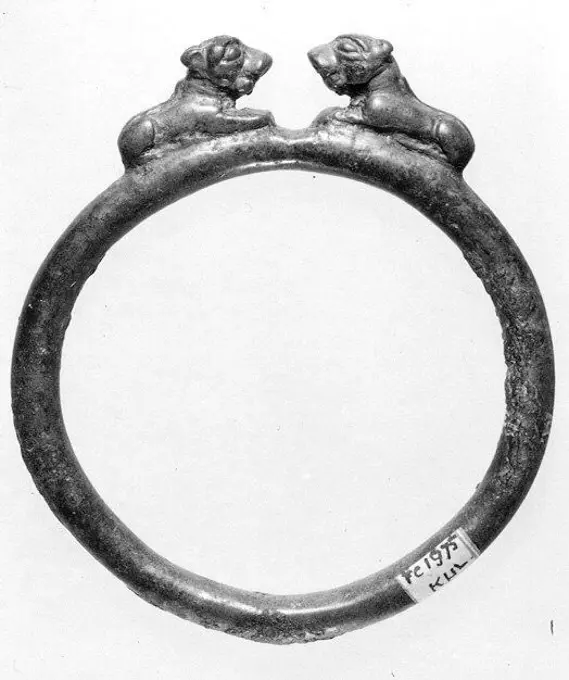
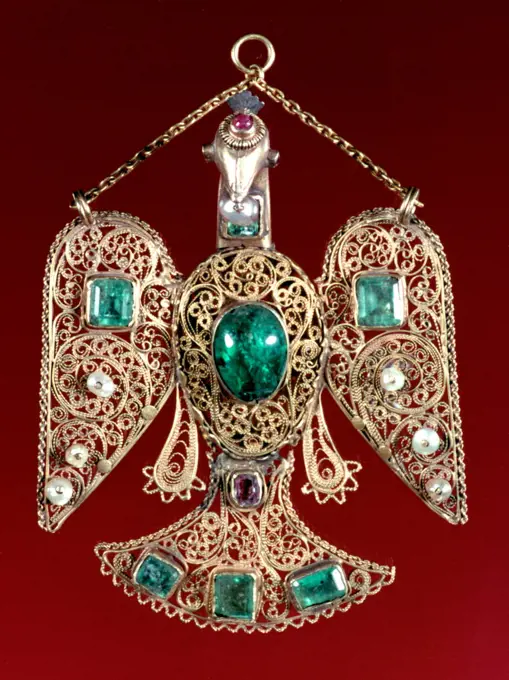
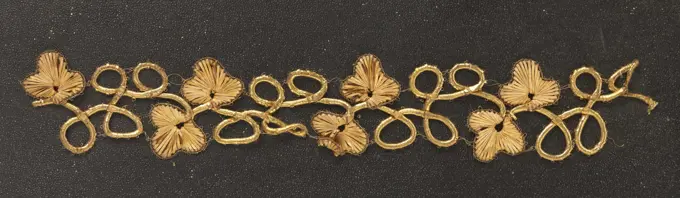
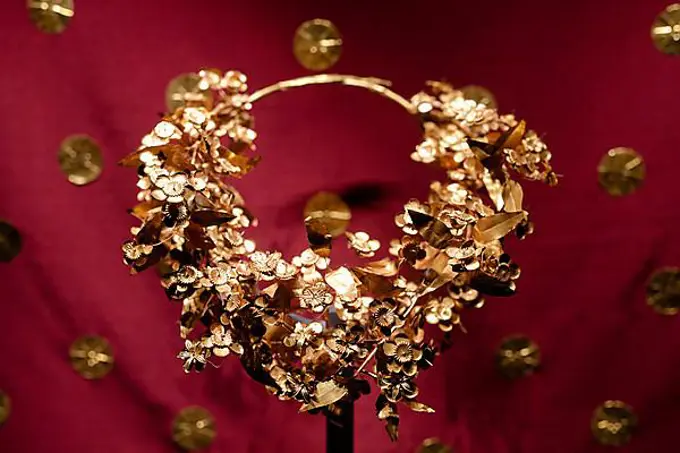
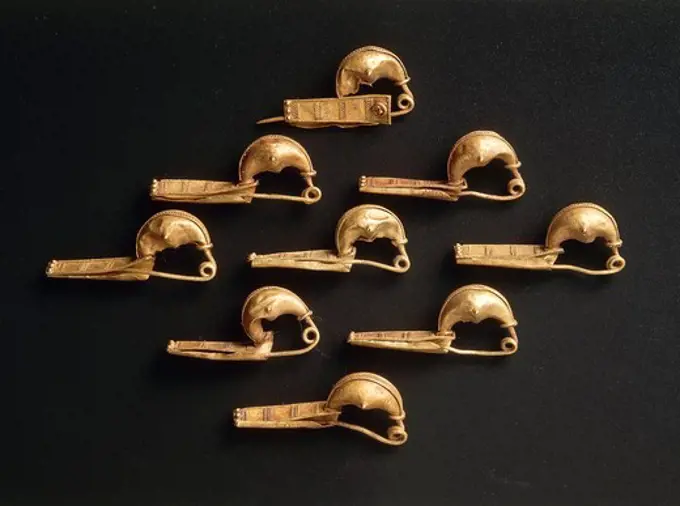
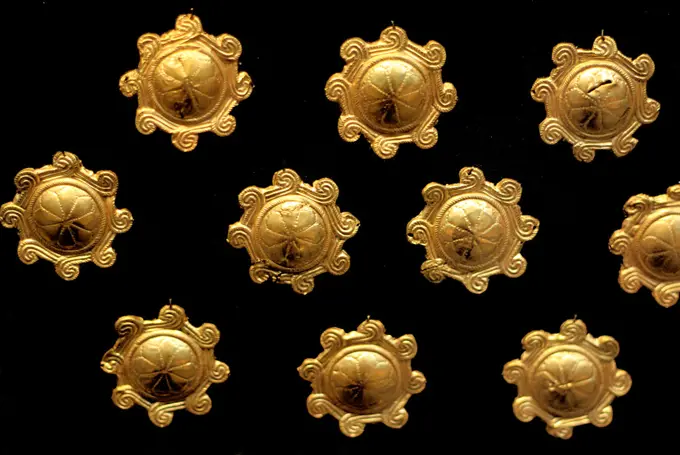
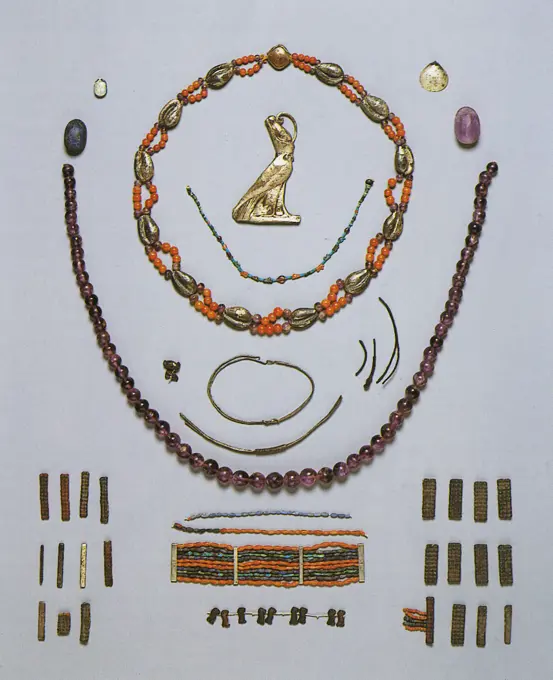
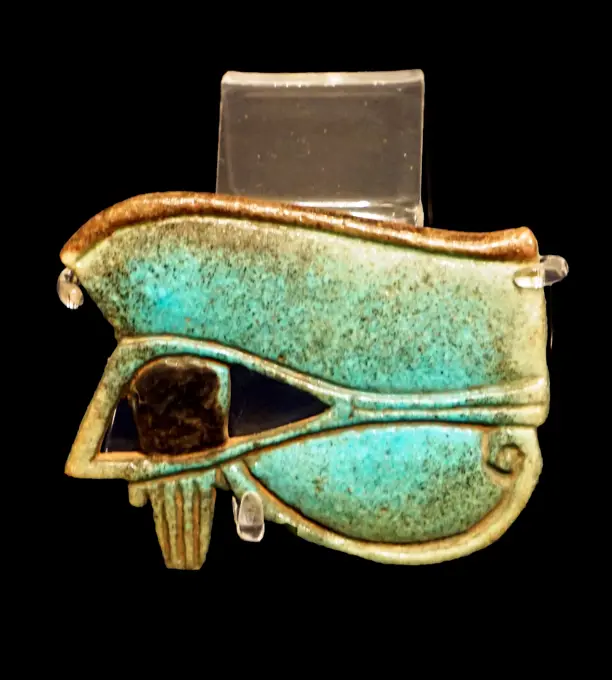
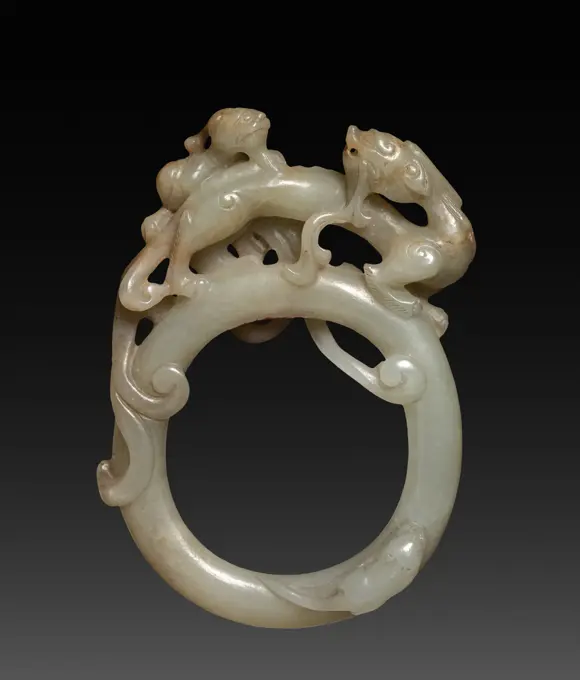
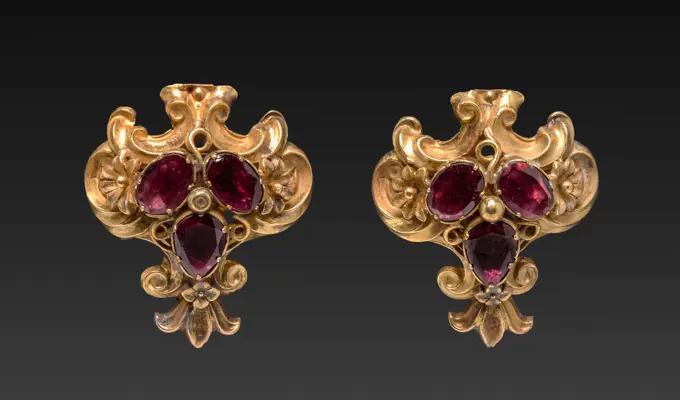
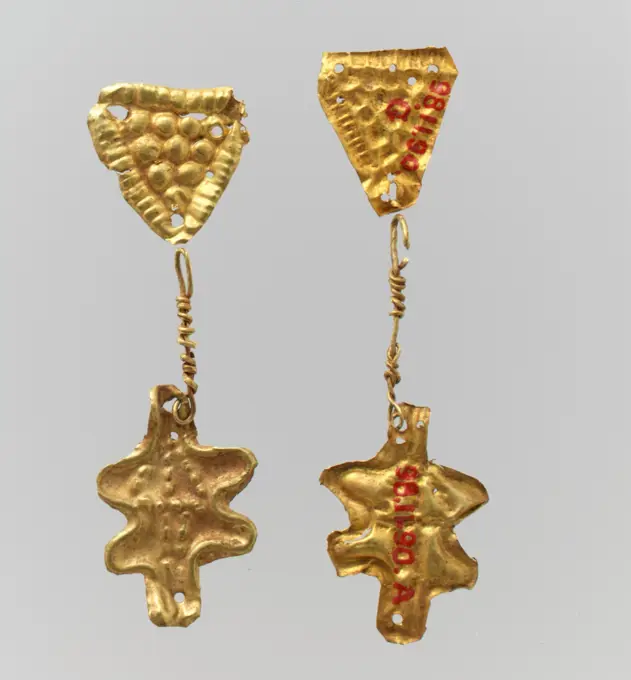
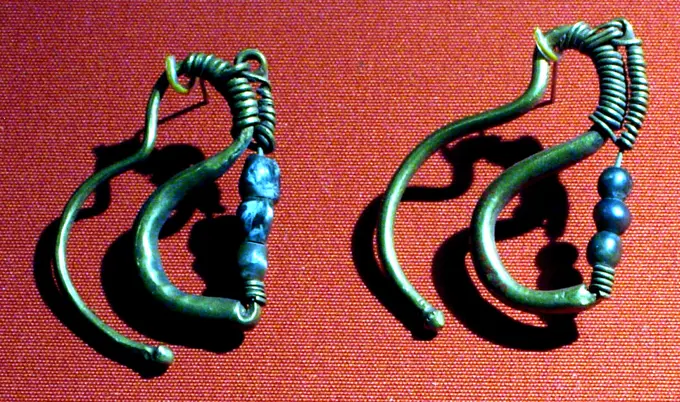
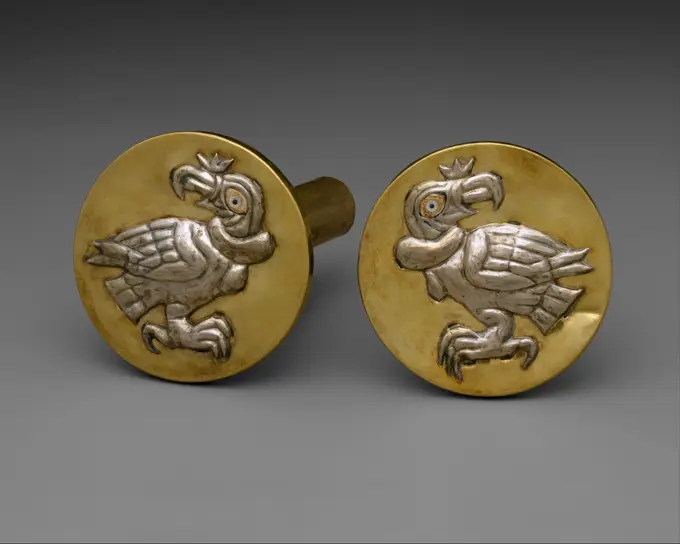
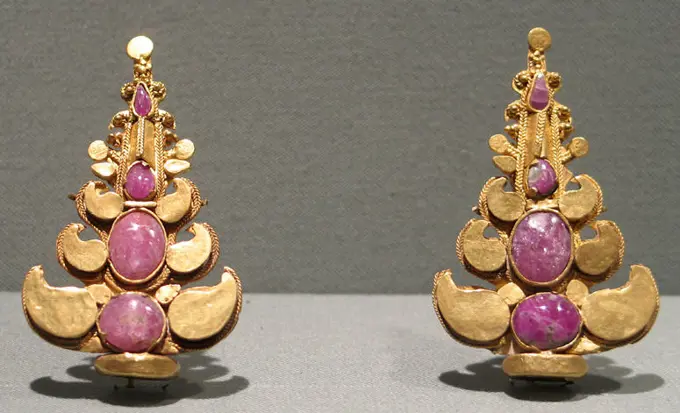
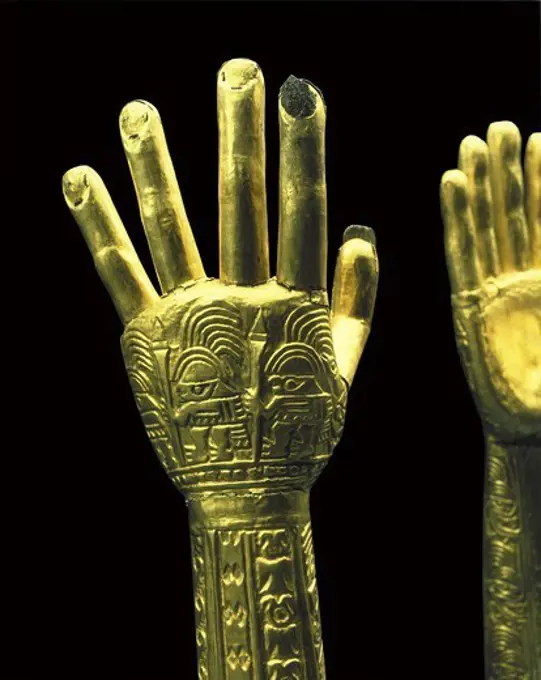
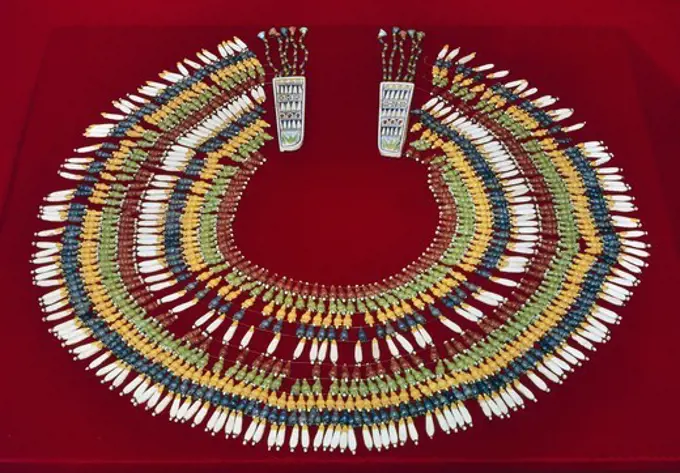
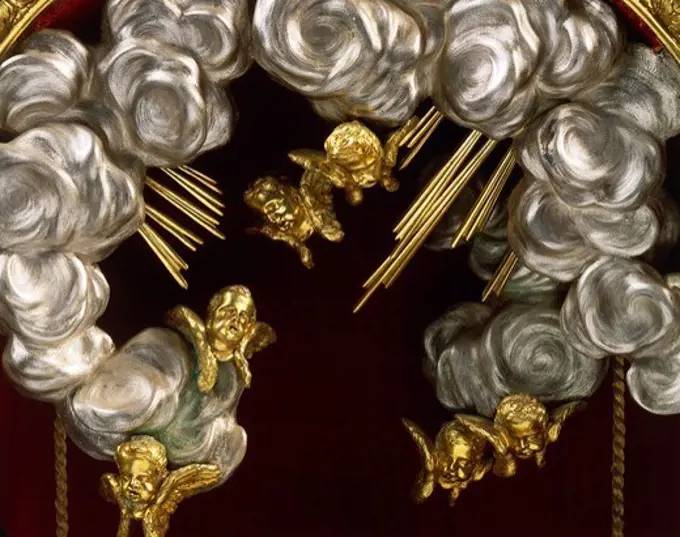
Silversmith's art, Italy, 17th century. Massimiliano Soldani Benzi (1656-1740), reliquary of Saint Raymond in silver, ebony and pietre dure, 1690. Detail.Pendant, one of a pair, 7 1/16 x 4 7/16 x 3/16 in. (17.94 x 11.27 x 0.48 cm), Silver, ChinaEngraved Scarab with Bes Fighting a Lion. UnknownFibula (Garment Pin). Greek; probably from Southern Italy. Date: 800 BC. Dimensions: 4.3 × 10 × 1.2 cm (1 3/4 × 25.4 × 1/2 in.). Bronze. Origin: Southern Italy. Museum: The Chicago Art Institute, USA. Author: ANCIENT GREEK.Collection of golden shiny frames.Gallon;  19th century (1801-00-00-1900-00-00);Gold pendant in the form of a bull's head. Culture: Cypriot. Dimensions: L. 1 3/16 in. (3.1 cm). Date: ca. 1400-1050 B.C..Most of the raw materials for Cypriot jewelry came from the East. Gold became plentiful in the Late Bronze Age, when Syria and Egypt were the primary sources. These earrings are a Cypriot creation, an ornament in the form of a bull's head. Museum: Metropolitan Museum of Art, New York, USA.MANTO DE ORO ENCONTRADO EN EL NORESTE DE GALES - PIEZA CEREMONIAL PREHISTORICA - 1900-1600 AC. Location: BRITISH MUSEUM. LONDON. ENGLAND.Ivory rosary, France, 16th century. Museum of Fine Arts of the City of Paris, Petit Palais. 51778-1 Ivory, skeleton, dead head, rosaryGold lion's head bracelet with copper-alloy core. Culture: Greek, Cypriot. Dimensions: outer diameter 2 3/4in. (7cm)length of head 15/16in. (2.3cm). Date: ca. 450-400 B.C..Bangle bracelets with animal-head finials. Museum: Metropolitan Museum of Art, New York, USA.Gold earrings, h. 4.90cm(Greece). Goldsmith art, Greek Civilization.Gold and variscite earring (one of a pair). Culture: Roman, Cypriot. Dimensions: Diam.: 1 1/16 in. (2.7 cm). Date: 2nd century A.D..Pair of earrings with green beads made from a type of chalcedony known as variscite, attached by wire loops. Museum: Metropolitan Museum of Art, New York, USA.Hair comb made of turtle, of which the back decorated with a gilded copper plate on which imitation pearls and robbers, anonymous, c. 1850 - c. 1869 Hair comb made of turtle, the back of which is decorated with a gilded copper plate on which counterfeit pearls and robbers, three gilt satyr heads and hangers with pearls are applied. Eight teeth. England (possibly) comb:. Back: copper (metal). Back: Gold Leaf. imitation pearl: Glass. imitation bine: Glass sawing / filing / polishing / gilding / blow molding Hair comb made of turtle, the back of which is decorated with a gilded copper plate on which counterfeit pearls and robbers, three gilt satyr heads and hangers with pearls are applied. Eight teeth. England (possibly) comb:. Back: copper (metal). Back: Gold Leaf. imitation pearl: Glass. imitation bine: Glass sawing / filing / polishing / gilding / blow moldingRing, 8th-10thcentury, Gold; cast, incised, 1.68 × 1.855 × 1.555 cm, 1.919 g (11/16 × 3/4 × 5/8 in., 1.919g), Made in Java, Indonesia, Java, Early Classic Period(650-1000), JewelryGold and cloisonné bracelet 5th century B.C. Greek, Cypriot Originally these bracelets must have been very colorful and eye-catching, but now all of the inlays that once filled the squares framing the rosettes have been lost. A similar bracelet found at Marion is now in the Cyprus Museum.. Gold and cloisonné bracelet. Greek, Cypriot. 5th century B.C.. Gold, cloisonne. Classical. Gold and SilverGolden insignia by Russian master, gold, enamel, gems, circa 1600, Russia, Moscow, State Armory Chamber in the KremlinBroad collar ca. 1981-1640 B.C. Middle Kingdom. Broad collar. ca. 1981-1640 B.C.. Black, white and blue-green faience. Middle Kingdom. From Egypt, Memphite Region, Lisht North, Tomb 954, Burial 954F, MMA excavations, 1920-22. Dynasty 12-13Royal Belt and Pendant Brooch. Late 1890's The queen wore this belt and accompanying pendant on state occasions, as shown in the portrait of her in about 1900. Later, the wife of her grandson wore them at the coronation of Queen Elizabeth 11 in LondonCeremonial gold hands with embossed decoration. 800-1450. Chimu art. Jewelry. PERU. Lima. Peruvian Gold Museum.Queen Elizabeth I Ring by Anonymous master   / Chequers Estate / c. 1560 / Great Britain / Gold, mother-of-pearl, rubies, and enamel / Objects /Collar of climbing side with nozzles placed blocks with rows of fine ovals with flower interspersed with rows braided ovals. Natural collar collar: Cluny side. Hemery model. The repeating pattern consists of nozzles placed rays of three columns and six rows of ovals. The fields consist of ovals alternately made in linen stroke on which a rosette flower with four leaves in shape stroke, followed by a block braided open ovals with a spindle site in the middle, a so-called 'spider with an eye'.COLLAR GUANCHE. Location: ARCHAEOLOGICAL MUSEUM. SANTA CRUZ DE TENERIFE. TENERIFFA. SPAIN.Bracelet (Italy); Made by Fortunato Pio Castellani & Sons (Italy); gold, emeralds; H: 3 cm x L: 21.8 cm x D: 0.9 cmGolden treasuries in the burial mound, Aigai, Vergina, UNESCO World Heritage Site, Greece, EuropeEmbrasse belonging to a set of curtains with floral design on yellow fond. Embrasse associated with a set of silk curtains with floral design on a yellow fond, from the small dance hall of Palace Noordeinde.Teke Floral Pectoral Ornament, One of a Pair late 19th-early 20th century Group of Turkman Ornaments, nos. 2018.922.1-.6a, .6bThese bold silver ornaments come from the world of the Turkman tribes of Central Asia. Some of the forms such as the lozenge shaped amulet holder or Quran box relate to the styles of jeweled arts of the courts and urban centers. But most of these large and vibrant ornaments are a final expression of the unique sensibility of the Turkman people as their nomadic life gives way to modernity.. Teke Floral Pectoral Ornament, One of a Pair. late 19th-early 20th century. Silver, fire-gilded and chased, with applied decoration, openwork, wire chains, pendants with applied decoration, and table-cut carnelians. Attributed to Central Asia or Iran. JewelryNative American Indian silver and turquoise necklace. USA.Bonbonnière in brown scales mounted in gold decorated with wavy gold lines of two colors on blue scales powder. Dominique-François Poitreau, French goldsmith. 1775-1776. Paris, Cognacq-Jay museum. 35599-5 Bonbonniere, brunette, decorated, two colors, squaille, blue squaille, wavy line, montee, gold, powderBronze bracelet ca. 6th century B.C. Iran. Bronze bracelet 327339Earring, 1700s - 1800s. Italy, Naples, 18th-19th century. Gold and enamel with pearls; overall: 6.4 cm (2 1/2 in.).An enamelled and gem set gold, eagle pendant, Islamic possibly north African 18th centuryFragment goudgalon.Fragment gold galon, decorated with garlands with flowers and a branch with leaves and flowers.Necklace pendants and beads ca. 17th-16th century B.C. Babylonian. Necklace pendants and beads 328886A pair of golden ear pendants, excavated from Tomb No.52 in Hwangu, Kyeongju, South Korea.Anklet/Bracelet. Western Iran, circa 1000-650 B.C.. Jewelry and Adornments; bracelets. Bronze, castREVERSO - JOYA DE ORO Y PIEDRAS PRECIOSAS DE LA REINA MERERT DE DASHUR - DINASTIA XII. Location: EGYPTIAN MUSEUM. KAIRO. EGYPT.Museum of the Royal Tombs of Aigai, interior view, Vergina, Greece, EuropeEtruscan leech shaped gold buckles, from tomb of Pantanaccio, Veii, Rome Province, Italy, 6th Century B.C.Watch Fob with Human Hair Chain. Dated: c. 1936. Dimensions: overall: 22.3 x 22.8 cm (8 3/4 x 9 in.). Medium: watercolor and graphite on paperboard. Museum: National Gallery of Art, Washington DC. Author: Kathryn Uhl.RingAncient Greek 'Palace Age' Minoan treasure. Circa 1850-1550 BC. Jewellery and other decorative Minoan objects from the Aegina treasures held at the British Museum, London. Originally from Aegina, off the south coast of Greece.Earrings 18th century-19th century Croatian. Earrings 90370Objects from Theban Tomb MMA 840 ca. 1850-1700 B.C. Late Middle Kingdom This group of objects was found in the plundered chamber reached by a shaft in the portico of a rock-cut tomb in the Asasif section of the Theban necropolis. Among the finds were parts of a rectangular wooden coffin with green hieroglyphs on a yellow background as well as a few remains of one or more model wooden boat(s), three scarabs (13.180.8- .10), two anhydrite toilet vessels (13.180.19a- .c, .20) and the group of jewelry items (13.180.1- .18a- .l) striking for the extensive use of silver. Dates that can be ascertained by stylistic comparisons to some of the objects range from the late Middle Kingdom (ca. 1850-1700 B. C.) to the late Second Intermediate Period (ca. 1580-1550 B. C.). A number of clay pots (28.3.239- .241 now in the Oriental Institute Museum, Chicago) from the area of the tomb but not with certainty identified as found inside the shaft and chamber from which the jewelry was obtained date to the Eye of Horus, Amulet, ancient Egyptian, 1075-945 B.C. Moulded faience, with coloured glaze,Ring with Carved Dragons (Ch'ih), c. 5th Century. China, Six Dynasties period (317-587). Jade ; overall: 6.4 cm (2 1/2 in.).Earring, c. 1840. Germany, possibly, 19th century. Gold and jewels; average: 3.3 x 2.9 cm (1 5/16 x 1 1/8 in.).Jewellery- pendant, 19th cent. INDIA.Bead ornaments, triangular, 8 3rd century A.D. Roman Gold diadems, worn on the head like a crown, were decorated with geometric patterns to match gold foil appliqués that were sewn onto the sleeves and neckline of festive clothing.. Bead ornaments, triangular, 8 246842Gold Nugget Falling on Black BackgroundPendant, 1800s. India, Bengal. Gold with emeralds and rubies, enamel and pearl pendants; diameter: 3.9 cm (1 9/16 in.); overall: 14 cm (5 1/2 in.); pendant: 4.6 cm (1 13/16 in.).Villena Hoard. Gold. Late Bronze Age. Villena, Alicante, Spain. Replicas (originals at the Museo Municipal de Villena). National Archaeological Museum. Madrid. Spain.Claw Set Gem BirdRingGolden Filigree Earrings From Tradicion Zenu Tribe In The Gold Museum In La Candelaria, The Old Town Of Bogota, ColombiaUnited Arab Emirates, Dubai, Deira district, Gold Souk window display. (Large format sizes available)Ancient Egyptian jewellery. In the centre of the middle item is a carving of sacred scarab beetle. British Museum, London.Oman, Muscat. Gold jewelry for sale in a souk.Necklace 18th century. Necklace 454100Amazigh Headband Amazigh Headband, Guelmim, Morocco, Corral del Carbón , al-fundaq al-yadida, 14th century, Granada, Andalusia, Spain Copyright: xZoonar.com/TOLOxBALAGUERx 21956750Fibula pijawkowata. unknown, authorGreenland, Nuuk. Greenland National Museum. Eskimo/Inuit and Greenlandic artifacts from Ammassalik, circa late1880s-1930s. Wooden items embellished with ivory and shells.Basket, 20th century, 4 3/4 x 11 5/8 x 11 5/8 in. (12.1 x 29.5 x 29.5 cm), Plant fiber, United States, 20th century, These shapes were most commonly made for the tourist market by the Akimel Oothom and Tohono Oodham in the mid twentieth century. During their construction, while the materials are moist and soft, the walls or sides of the basket are pounded between two stones. This flattens the coils and produces a very smooth, level surface.Lotus-shaped VotiveOfferingEngraved Scarab with Aphrodite Bathing in a Gold Swivel Ring. UnknownSinu ear ornaments with birds. Colombia.Mixtec gold and turquoise necklace with coral beads. The Mixtec Mesoamerican peoples of Mexico. In pre-Columbian times, a number of Mixtec city states competed with each other and with the Zapotec kingdoms. The major Mixtec polity was Tututepec which rose to prominence in the 11th century under the leadership of Eight Deer Jaguar Claw.S-hoop earrings with pearls A.D. 1st-2nd century Roman Period S-hoop earrings are simple in concept: one end of a wire passes through one or more beads and then wraps around the hoop, while the other end of the wire passes through the earlobe.These earrings are examples of a more complex version where elaborate bindings are created where the wire joins the hoop. Other features here are characteristic of the type: a tapered hoop, a hook end that bends back to parallel the lower end of the hoop, and a small fused ball terminating the hook end. The plaster mask 00.2.10 shows traces of such earrings.. S-hoop earrings with pearls 547909Pair of earflares with condors 6th-7th century Moche (Loma Negra) Moche metalworkers were among the most inventive and talented in ancient Peru. They developed sophisticated mechanical and metallurgical techniques for joining the three basic metals they worked: gold, copper, and silver. On these technically complex earflares, the front plates are made of sheet gold to which repoussé silver birds are attached by small tabs. The back plates and shafts are of gilded copper and also join in this manner. The ornaments were worn in the distended lobes of the ears, the long tubular shafts counterbalancing the weight of the frontals.The birds with massive talons and strong, curved beaks adorning these earflares depict Andean condors, identified by the large caruncle (fleshy protuberance) at the base of their beaks and the wattle around their necks. Impressive birds with a wing span of up to ten feet, Andean condors inhabit the high Andes mountains above 9,000 feet. They are primarily carrion eTwo Elements from a Crown with Inlaid Stones 8th-early 10th century Indonesia (Java). Two Elements from a Crown with Inlaid Stones 40130Ceremonial gold hands with embossed decoration. 800-1450. Chimu art. Jewelry. PERU. Lima. Peruvian Gold Museum.Wesekh collar. 1333 BC. Used as funereal ornament. The elements reproduce leaves, lotus, pomegranate and mandragora flowers imitating the collars of fresh leaves used at the feasts. Glassed ceramic. Tutankhamun's treasure. Egyptian art. New Kingdom. Jewelry. EGYPT. CAIRO. Cairo. Egyptian Museum. Proc: EGYPT. QUENA. Dayr al-Bahri. Valley of the Kings.Lluís Masriera / Brazalete con cisnes, 1905. Colección privada. Author: LLUÍS MASRIERA I ROSÉS.Fragment of a terracotta calyx-krater (bowl for mixing wine and water). Culture: Greek, Attic. Dimensions: H. 4 5/16 in. (11 cm)length 6 3/8 in. (16.2 cm). Date: ca. 450 B.C..Head and shoulders of a woman to left. Museum: Metropolitan Museum of Art, New York, USA.Funerary Equipment Belonging to Three Foreign Wives of Thutmose III, Metropolitan Museum of Art, Manhattan, New York City, USA, North AmericaThe Golden Horns of Gallehus, discovered in Gallehus, north of Mogeltonder, Southern Jutland, Denmark. The horns date to the early 5th century, the beginning of the Germanic Iron Age. The original horns were stolen and melted down in 1802. Replicas of the horns must thus rely on 17th and 18th-century drawings that also having been stolen and retrieved twice, in 1993 and in 2007. Museum of Denmark.Comb back. Decor on 3 levels on lower level, a row of pearls, on median and higher levels, border of cheeky scrolls supporting large balls of coral.