Ancient Gold Jewelry

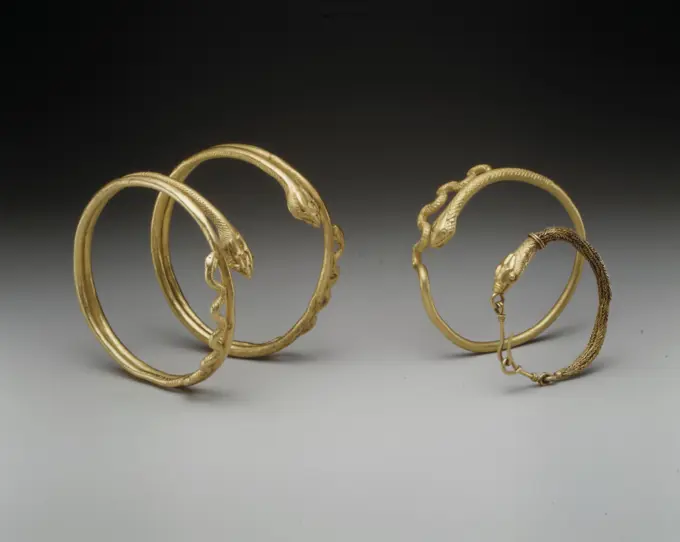
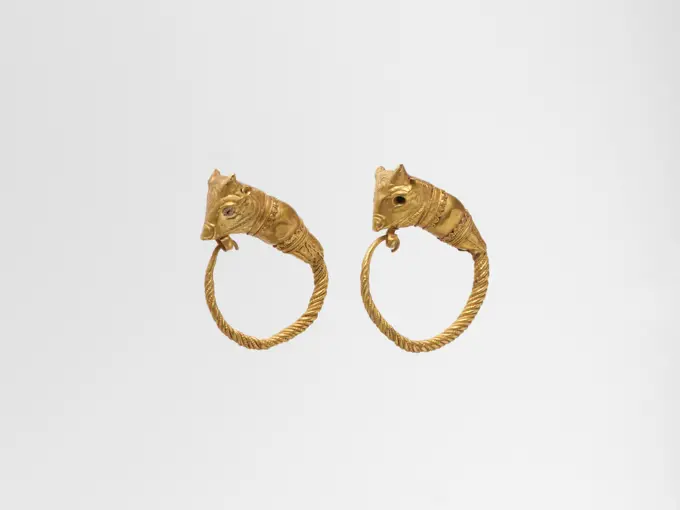
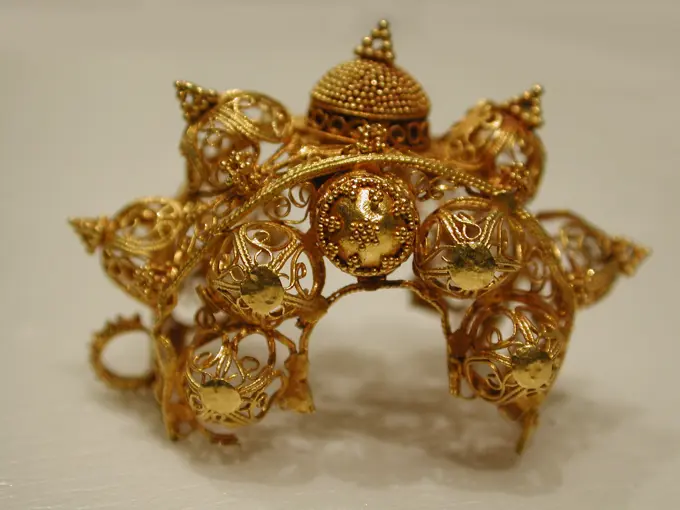
Intricate gold jewelry pieces from ancient times, featuring animal motifs and ornate designs, showcasing craftsmanship from distinct cultures.
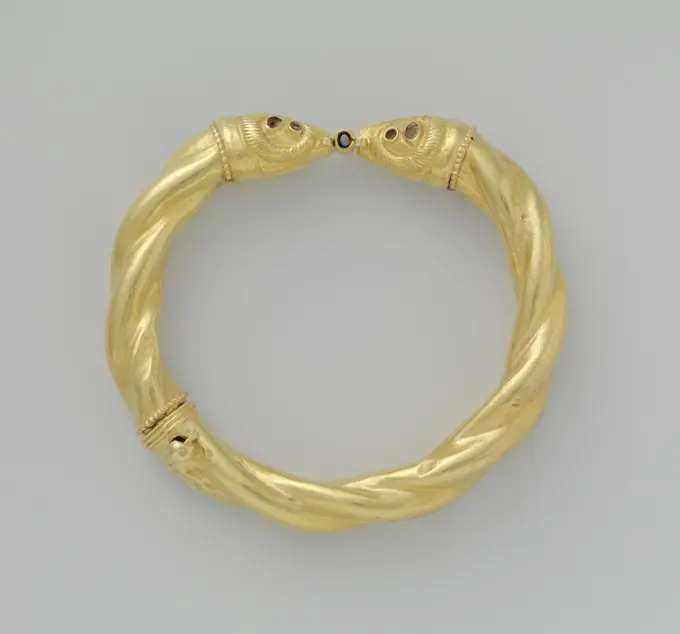
Armband, c. 900 - c. 1100 Gold bracelet consisting of two windings with rams heads on both ends. Egypte (possibly) gold (metal) Gold bracelet consisting of two windings with rams heads on both ends. Egypte (possibly) gold (metal)
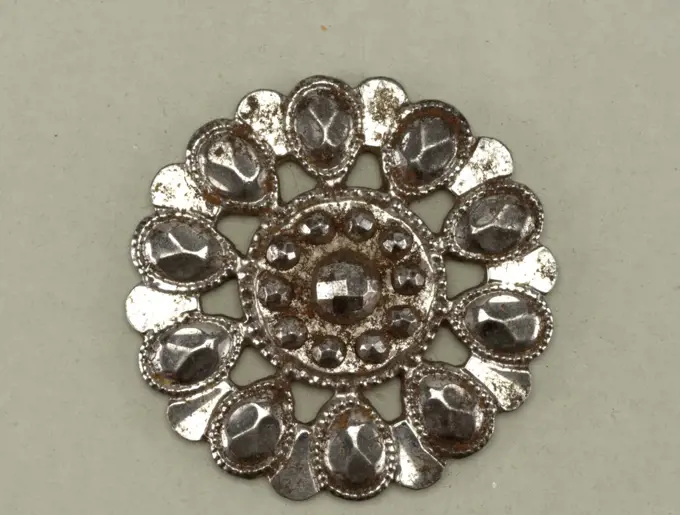
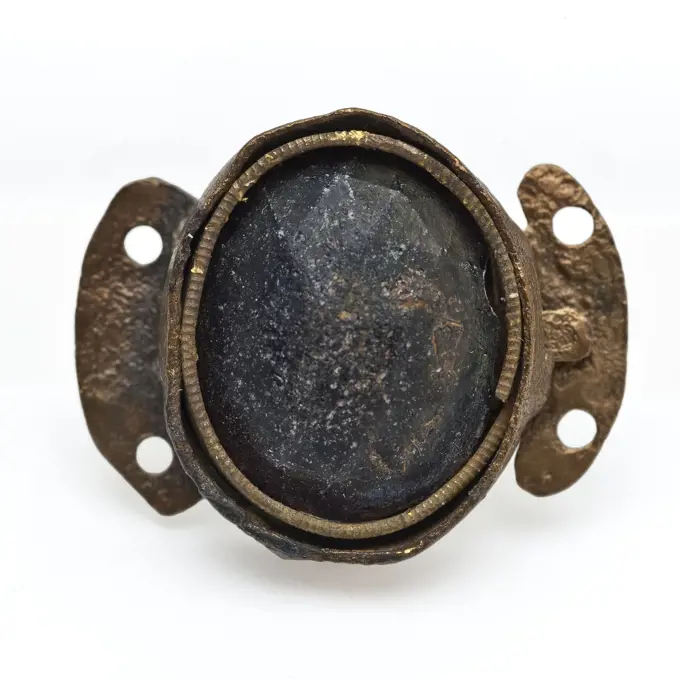
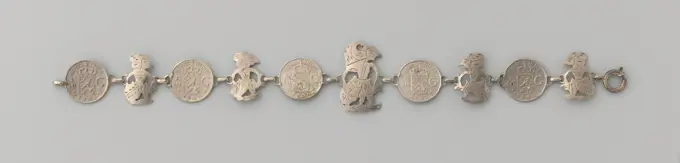
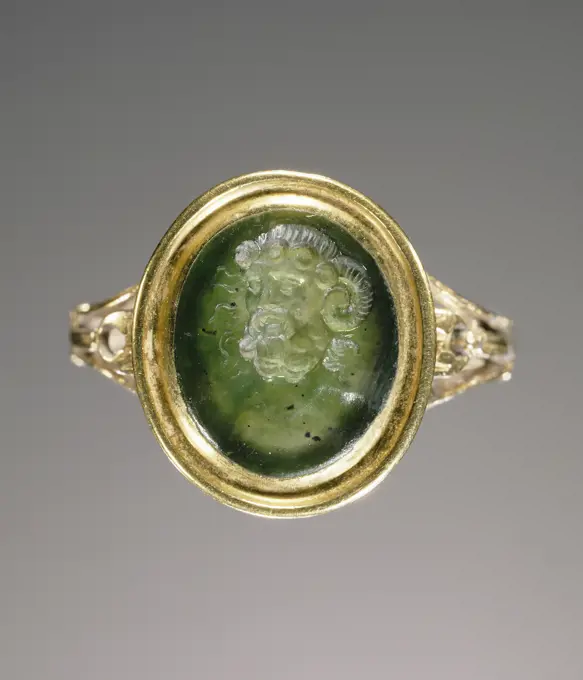
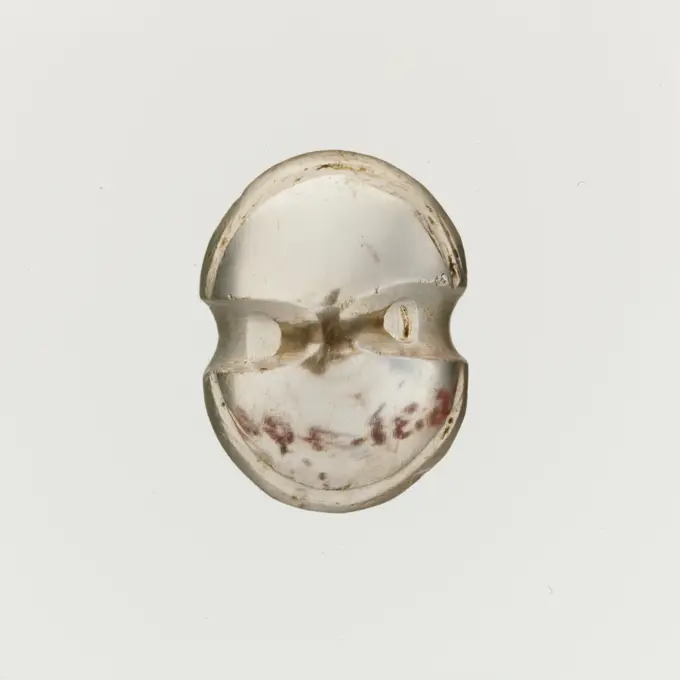
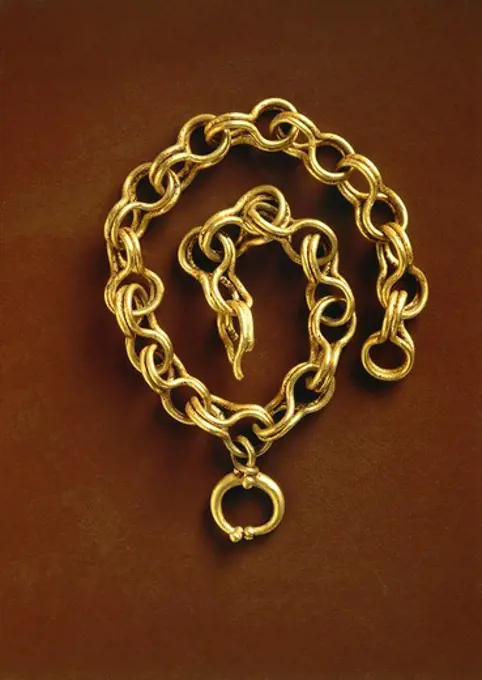
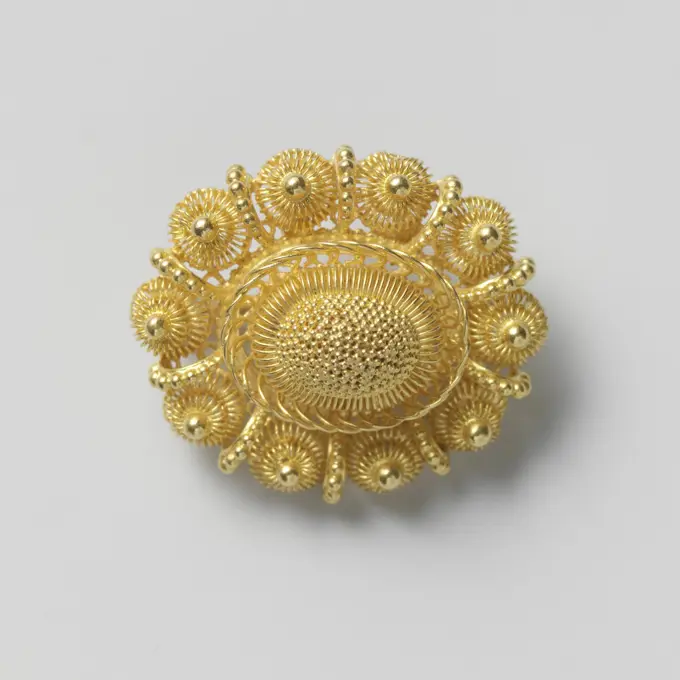
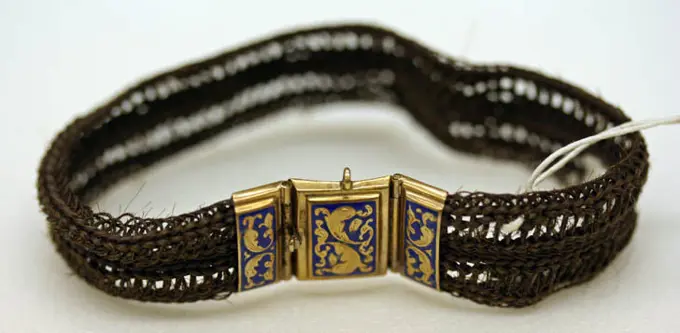
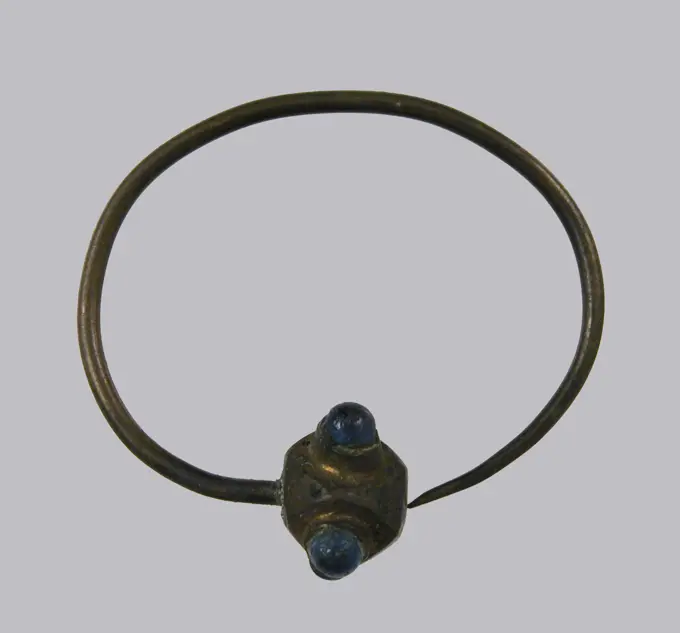
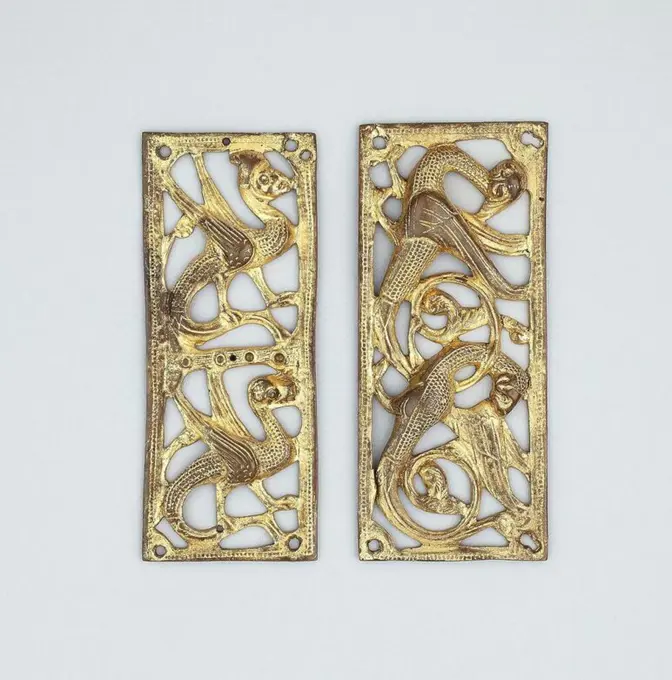
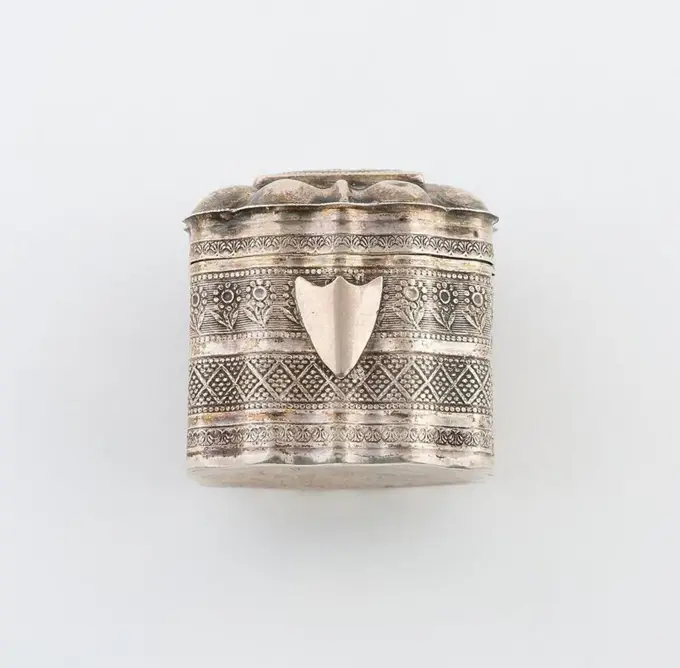
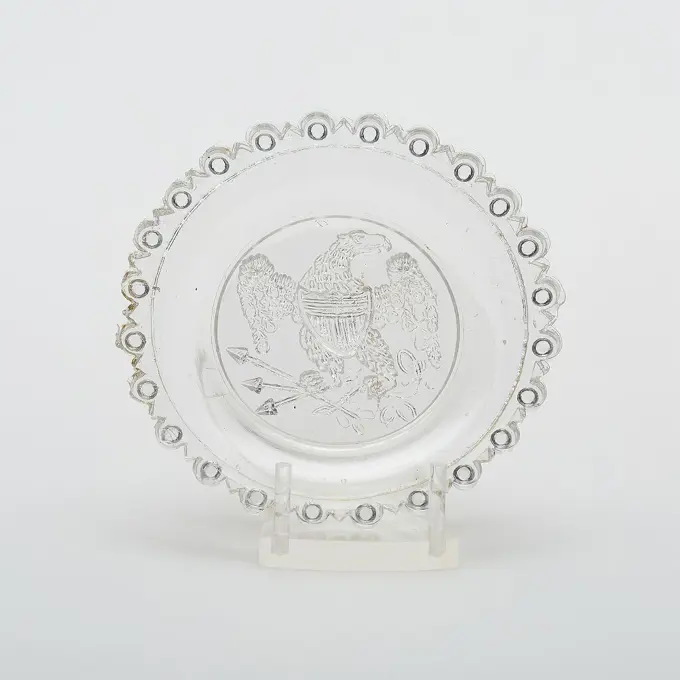
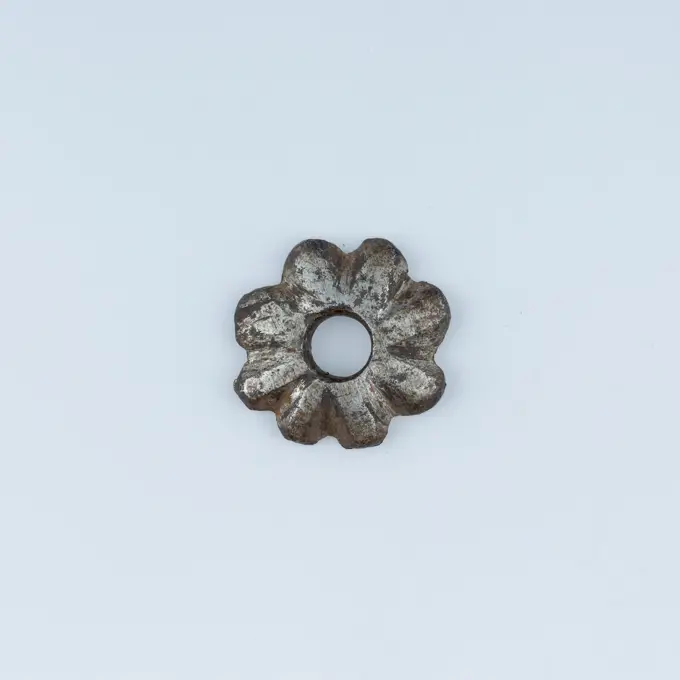
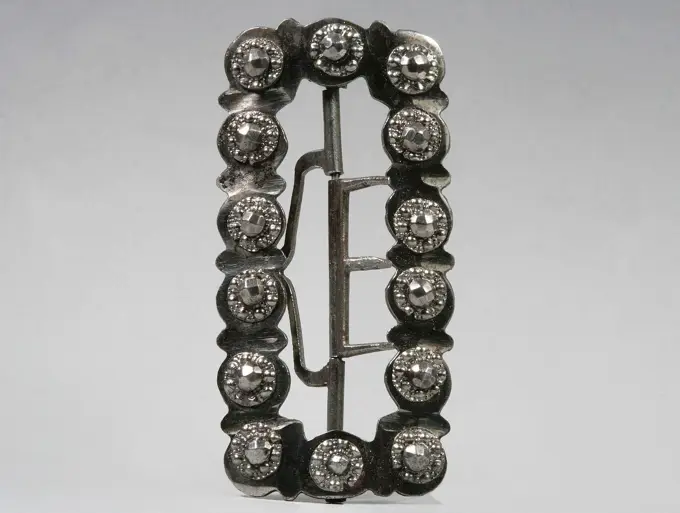
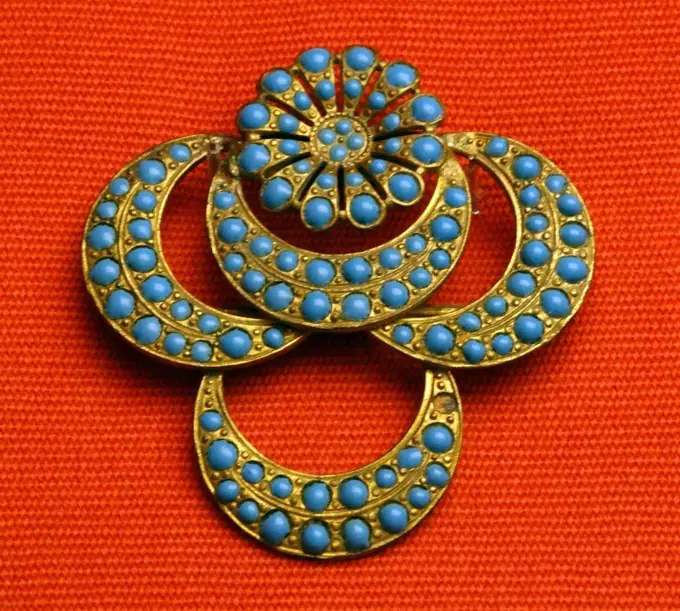
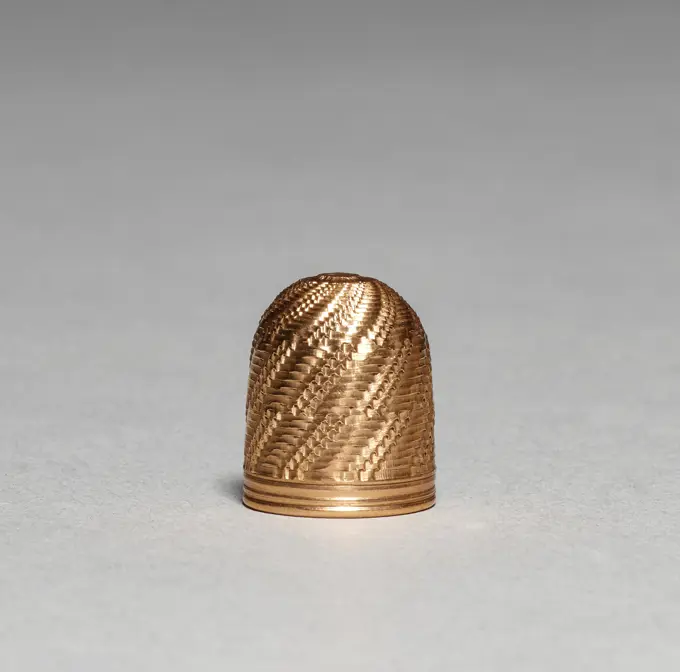
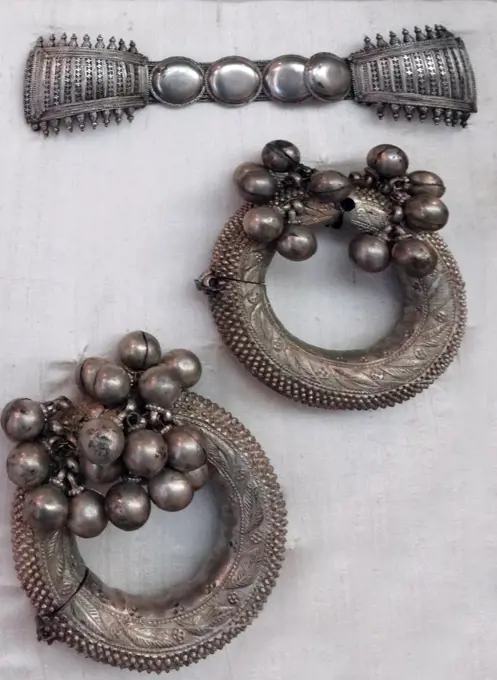
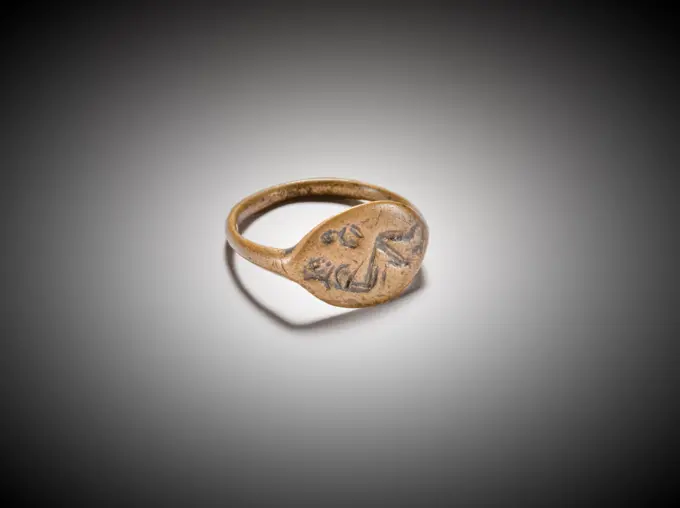
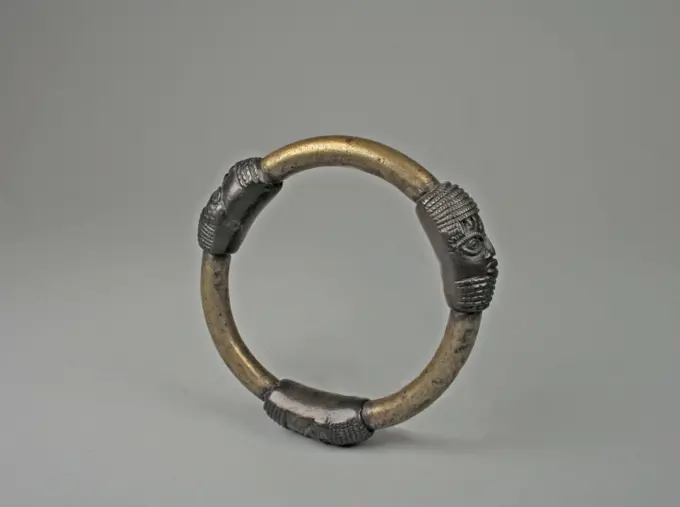
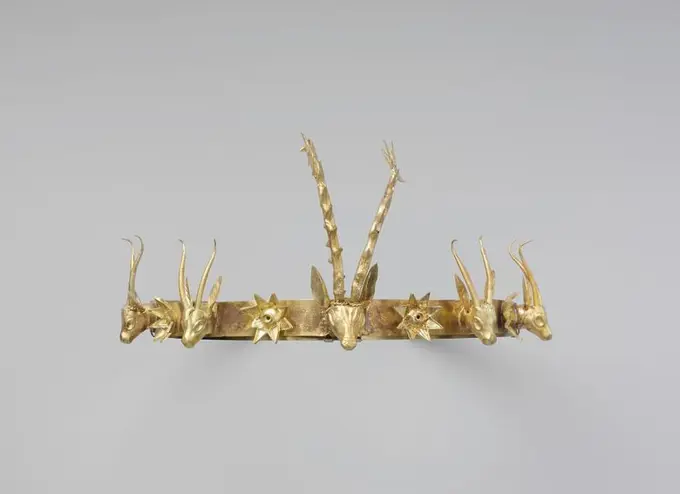
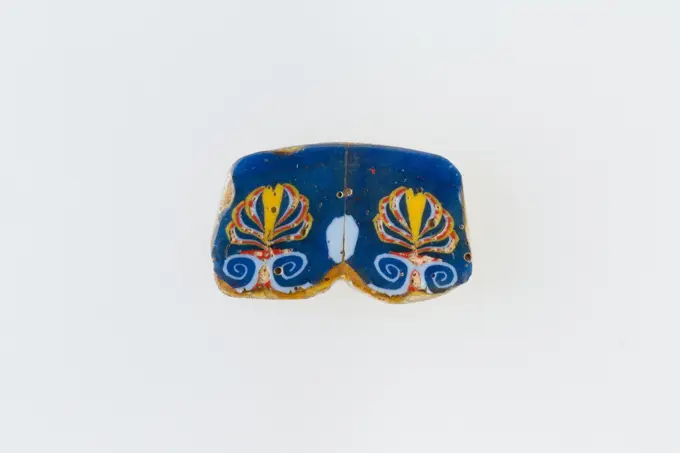
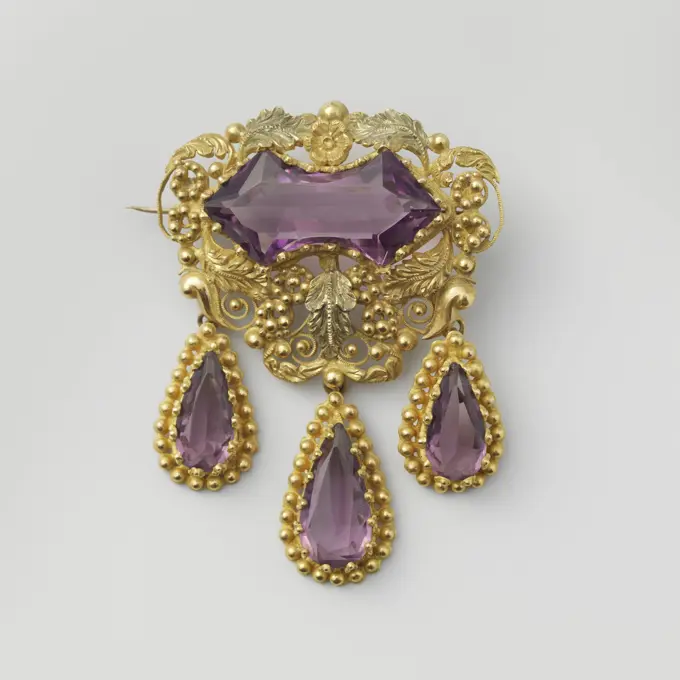
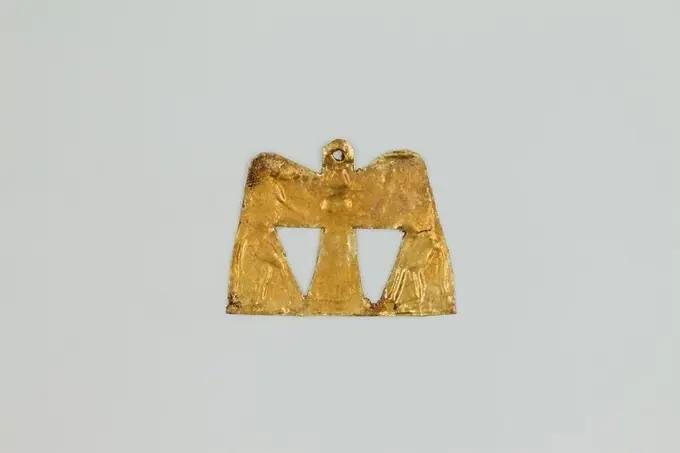
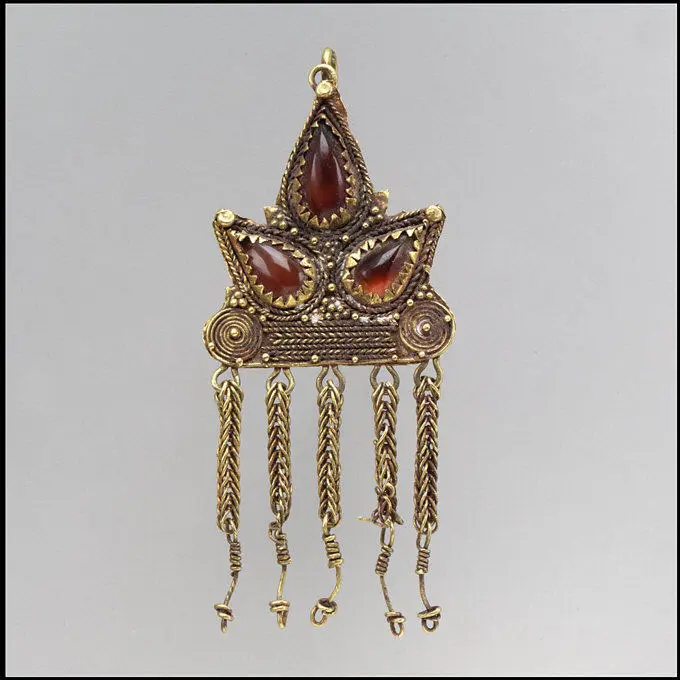
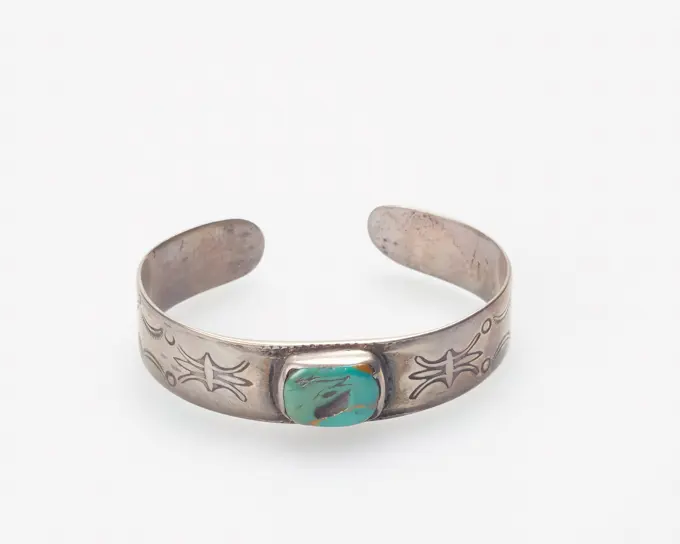
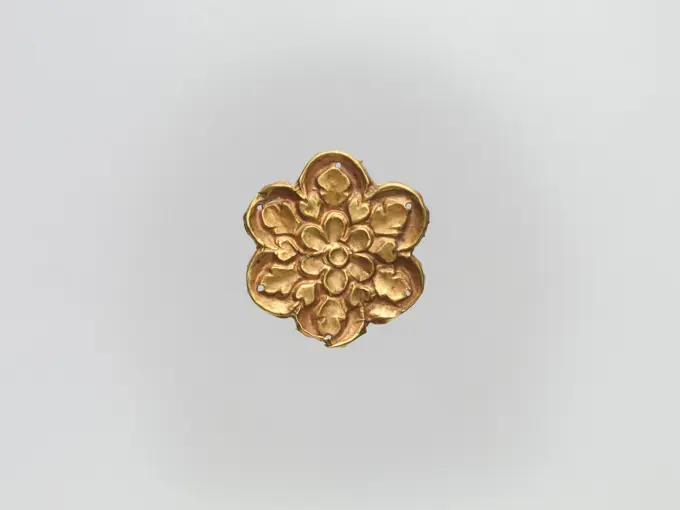
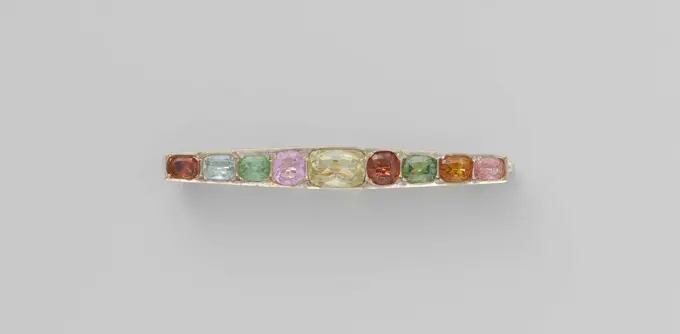
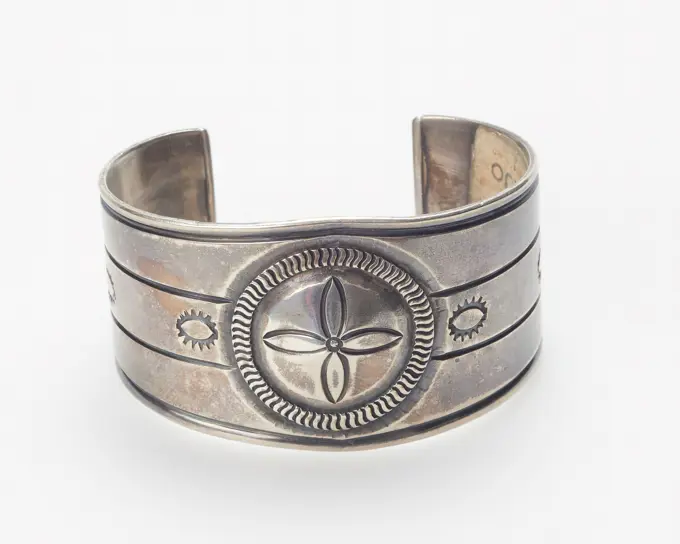
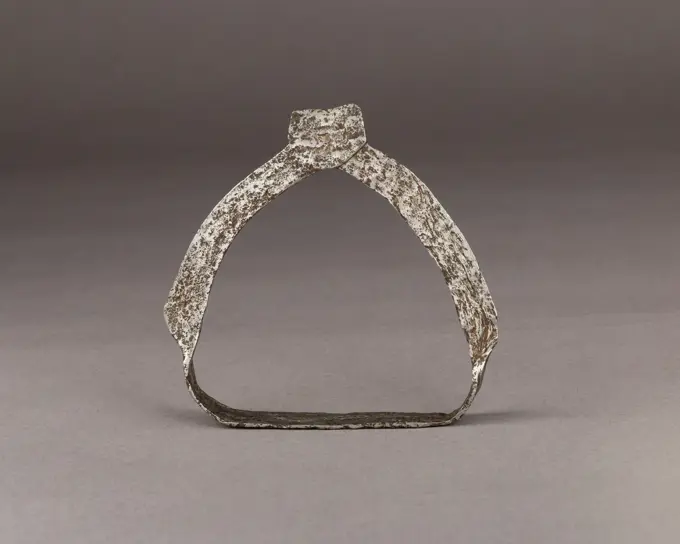
Opium Box. China. Date: 1816-1826. Dimensions: H. 3.2 cm (1 1/4 in.). Silver. Origin: China. Museum: The Chicago Art Institute, Chicago, USA.Torque, 11 3/16 x 10 1/2 x 2 in. (28.42 x 26.67 x 5.08 cm), Silver, ChinaAnonymous. "Schirmmütze de la Luftwaffe bucket fragment. Aluminum. 1935-1945. General Leclerc Museum of Hauteclocque and the Liberation of Paris, Jean Moulin Museum. 158813-4Steel button, Cut-steel beads, Component -b is on card 64, France, England, 19th century, costume & accessories, Decorative Arts, Button, ButtonLock with oval faceted gitstone, lock closing device jewelry clothing accessory clothing soil find brass copper stone metal, Baklock with oval faceted gitstone and on both sides eyelets for attachment to the rest ornament originally from bracelet or necklace archeology Rotterdam Kralingen-Crooswijk Kralingche Bos Kralingse Plas adorn close fastening Soil discovery: collected in 1972 at the Kralingse Plas from dredging spoil: metal detector finds and sight finds.Gold bracelet from Porogi Jampol prob 1st century AD Sarmatian. Museum: Ethno Museum, Vinnitsa, UKRAINE.Kolczyki w kształcie głów zwierzęcia fantastycznego. unknown, authorSilver bracelet with five dimes and five wajang dolls, c. 1940 - c. 1950 Silver bracelet with five Dutch-Indian dimes and five wajang dolls with a spring ring. The dimes and dolls are alternately linked with simple rings. On one of the wajang links is 'OM 800'. Netherlands silver (metal)   Dutch East Indies, The Silver bracelet with five Dutch-Indian dimes and five wajang dolls with a spring ring. The dimes and dolls are alternately linked with simple rings. On one of the wajang links is 'OM 800'. Netherlands silver (metal)   Dutch East Indies, TheAnklet, Reconstructed Using Claw Pendants and Barrel Beads ca. 1850-1775 B.C. Middle Kingdom The piece is part of a group of objects found in tomb V21 at Abydos with two bodies. It was restrung in the Museum. The group includes 04.18.1-04.18.49.. Anklet, Reconstructed Using Claw Pendants and Barrel Beads. ca. 1850-1775 B.C.. Silver over wood core, amethyst. Middle Kingdom. From Egypt, Northern Upper Egypt, Abydos, Cemetery V, Tomb V21, Egypt Exploration Fund excavations, 1904. Dynasty 12, late-early 13BraceletRing, 1800s. Burma. Gold, turquoise and rubies; overall: 4.6 cm (1 13/16 in.).Engraved Gem Set into a Ring; 1st century; Gem: nephrite; Ring: gold; 1.2 cm (1,2 in.)Snake bracelet A.D. 1st century Roman Period Snake jewelry was not limited to Egypt in the Ptolemaic and Roman Periods, and, in fact, was not a traditional Egyptian sort of jewelry before the Ptolemaic Period. Bracelets with animals, including snakes, appeared in Western Asia from about the eighth century BC, and spread to Greece in the fifth century BC, and came to Egypt mainly with the Ptolemaic Dynasty. In Greek culture there were certainly healing associations with snakes, but there may have been other assocations, too.. Snake bracelet 547712Torque, 10 x 9 x 1 3/4 in. (25.4 x 22.86 x 4.45 cm), Silver, ChinaGold earring with head of a bull 4th-3rd century B.C. Cypriot Circlet of twisted gold wire, which tapers from the bull's head at the front end to a hooked point which passes through a loop below the animal's throat.. Gold earring with head of a bull. Cypriot. 4th-3rd century B.C.. Gold. Classical or Hellenistic. Gold and SilverTart Mold Ring. French. Date: 1200-1300. Dimensions: Circumference: 5.7 cm (2 1/4 in.); Diameter: 1.8 cm (11/16 in.). Gold and garnet. Origin: . Museum: The Chicago Art Institute, Chicago, USA.Bracelet 300 B.C.-A.D. 300 Thailand (). Bracelet. Thailand (). 300 B.C.-A.D. 300. Bronze. Bronze and Iron Age period. JewelryRock crystal bead in the form of a figure-of-eight shield ca. 2200-1450 B.C. Minoan Grooved.. Rock crystal bead in the form of a figure-of-eight shield 252332 Minoan, Rock crystal bead in the form of a figure-of-eight shield, ca. 22001450 B.C., Rock Crystal, Length: 1/2 in. (1.3 cm). The Metropolitan Museum of Art, New York. Bequest of Richard B. Seager, 1926 (26.31.404)Etruscan gold link necklace, 7th Century B.C.Gold wreath of oak leaves and flowers. Late 4th early 3rd century BCPin, Guillaume Louis Ploem, c. 1824 - C. 1838 Brooch of gold. Made in filigrein. The loose pendant can be attached to the brooch. Amsterdam gold (metal) filigree Brooch of gold. Made in filigrein. The loose pendant can be attached to the brooch. Amsterdam gold (metal) filigreetraditional Chinese decorationBracelet 1850-69 American. Bracelet 124214Earring 500-700 Frankish. Earring 465165 Frankish, Earring, 500700, Copper alloy, gilt, glass paste cabochons, Overall: 1 7/16 x 1 3/8 x 1/2 in. (3.7 x 3.5 x 1.3 cm) bead: 5/16 x 1/2 in. (0.8 x 1.3 cm). The Metropolitan Museum of Art, New York. Gift of J. Pierpont Morgan, 1917 (17.192.110)Chrysanthemums and Butterfly, Brass, silver, copper, Oblong, curved sides and corners, featuring raised ornament of chrysanthemum flowers and foliage, some leaves highlighted with silver and copper, a single butterfly on lid, variation of floral ornament on reverse. Lid hinged on side. Oval shaped striker on bottom., Japan, late 19th century, containers, Decorative Arts, Matchsafe, MatchsafeTwo Plaques with Interlaced Chimeras. French; Limoges. Date: 1200-1250. Dimensions: A: 9.2 × 3.8 cm (3 5/8 × 1 1/2 in.); B: 9.5 × 4.1 cm (3 3/4 × 1 5/8 in.). Gilt copper alloy. Origin: Limoges. Museum: The Chicago Art Institute, Chicago, USA.Solid Undecorated Bangle 1000 B.C.-A.D. 400 Thailand. Solid Undecorated Bangle 53361Fragment. Culture: Syrian. Dimensions: L. 1 1/2 in. (3.8 cm). Date: 13th century. Museum: Metropolitan Museum of Art, New York, USA.Torque, 10 x 10 x 1 1/8 in. (25.4 x 25.4 x 2.86 cm), Silver, ChinaTorque, 8 1/4 x 7 1/2 x 1 in. (20.96 x 19.05 x 2.54 cm), Silver, ChinaPurse; silk, metalSponge Box. Possibly Adrianus G. Kooiman; Dutch, active c. 1837-c. 1860; Possibly Schoonhoven, Netherlands. Date: 1848. Dimensions: 3.8 x 3.8 cm (1 1/2 x 1 1/2 in.). Silver. Origin: Netherlands. Museum: The Chicago Art Institute, Chicago, USA.Purse-Shaped Vinaigrette with View of Windsor Castle 1843-1844 Birmingham. Silver .Handle; copper (gilt)Rock crystal ring. Greek 2nd1st century B.C.Goldweight Two Joined Drums, 19th-20th century, 1 3/8 x 1 3/8 x 3/4 in. (3.49 x 3.49 x 1.91 cm), Brass, Ghana, 19th-20th centuryBracelet Cypriot. Bracelet 244351Votive or Civic Badge with a Crowned Figure Kneeling before Christ, c. 1300. Italy, Venice, early 14th century. Gold repoussé medallion under glass inset within a bronze clasp; overall: 3.4 x 2.4 cm (1 5/16 x 15/16 in.).Tin ring with piece of glass in the setting, ring jewel clothing accessory clothing soil find glass tin metal, d 0.2 cast Pewter ring with piece of glass in the setting. Decorated with tapestry on the back. Curls and studs next to the stone. Four long bent lips hold the piece of glass in place. Remains of gilding or yellowish patina. Irregular shape and hardly finished archeology Rotterdam rail tunnel wear adorn prosperity status Soil discovery: Railway tunnel 1988-1993.Cup plate. American; Wheeling, West Virginia. Date: 1830-1835. Dimensions: diam. 8.9 cm (3 1/2 in.). Pressed glass. Origin: Wheeling. Museum: The Chicago Art Institute, USA.Silver tie with floral relief, c. 1940  Jogjakarta silver (metal)  Jogjakarta silver (metal)Buckle, 1900s. China, 20th century. Rose quartz and glass; diameter: 3.1 cm (1 1/4 in.); overall: 2.6 cm (1 in.).Pendant in the form of a vase. Pendant in the form of a vase 243049Hellenistic Period. Jewellery 4th-1st century BC. British Museum. London. GRB.Italy, Umbria, Nocera Umbra, Necklace, goldsmitheryGarment Clasp 14th-15th century or earlier Visayas. Garment Clasp 317655Rosette for Visor dated 1530 German. Rosette for Visor. German. dated 1530. Steel. Miscellaneous-Buckles & OrnamentLoop. Facetted stones patterns on circles.Amulet from a collection of Algerian, Italian and Tunisian amulets. Amulets such as this would have been kept in the home or worn on the body in order to provide protection against evil spirits or in order to help cure ill health.Thimble from a Sewing Box (Nécessaire), c. 1765. Austria, Vienna(), 18th century. Gold and mother-of-pearl;Ring. Dimensions: diameter 2.21 cm.. Museum: Metropolitan Museum of Art, New York, USA.Portrait of an unknown woman, Anonymous, 1900 - 1920 brooch. photograph   baryta paper. gold (metal). glass gelatin silver print historical persons - BB - woman19th Century silver bracelet and pair of anklets from India. Dated 1840Finger Ring. Western Iran, circa 550-330 B.C.. Jewelry and Adornments; rings. Bronze, castBracelet: Three Heads 18th-19th century Edo peoples At its origins, the centralized city-state of Benin was founded by Edo-speaking peoples. The accounts by official court historians and descriptions provided by visitors evoke a vibrant cultural center continually redefined by its leadership through shifting internal and external power dynamics. According to oral tradition, circa 1300, Edo chiefs are reputed to have reached out to the leader of neighboring Ife, Oranmiyan, to establish a new divinely sanctioned royal dynasty. Since then, the investiture of Benins rulers to the title of obas has conferred upon them at once a role of chief priest officiating in important religious ceremonies and presiding over an elaborate structure of palace officials. During the fifteenth century reign of Oba Ewuare, Benins armies were formed and the fortification of its capital with a massive wall undertaken. In parallel, delegations of Portuguese traders assiduously sought to secure exclusive commerMUSEO ANILLO DE FILIGRANA DORADA Y PIEDRA DURA S XI. Location: CATEDRAL MUSEO DIOCESANO. Orense. SPAIN.Necklace 14th-15th century. Necklace. 14th-15th century. Gold. Made in Spain. JewelryFlower Brooch, c. 1947 - c. 1953 Takbroche of gold with eleven half bulbs mounted on wire. Netherlands gold (metal) Takbroche of gold with eleven half bulbs mounted on wire. Netherlands gold (metal)Basket, 20th century, 5/8 x 3/4 x 3/4 in. (1.6 x 1.9 x 1.9 cm), Grass fibers, United States, 20th centuryPair of Earrings with Red Stones 8th-12th century Indonesia (Central Java). Pair of Earrings with Red Stones 64326Head of a little boy first half 16th century probably Italian, Venice. Head of a little boy 198264Badge. Culture: Spanish (). Dimensions: H. 1 3/8 in. (3.5 cm); W. 1 1/2 in. (3.8 cm); Wt. 0.1 oz. (2.8 g). Date: 14th century. Museum: Metropolitan Museum of Art, New York, USA.Precolumbian Art. Large Gold Necklace from the Larrea Collection . Inca Gold work. Madrid, Museum of America. Location: MUSEO DE AMERICA-COLECCION. MADRID. SPAIN.Jewelry from Indian Arts and Crafts Board displaySignet ringRing.  Maker: Samuel Tingley, active ca. 1767 - 1796Berber charm made of Lapis and Turquoise. Morocco 1990Mourningring. Maker, attributed to: Edward Winslow, American, 1669-1753Honorand: Elizabeth Pemberton Winslow, AmericanTobacco box 17th century British. Tobacco box. British. 17th century. Tortoiseshell, silver. Metalwork-Silver In CombinationSet of Pendants Ending in a Bull's Head, 185-72 BC. India, Sunga Period (185-72 BC). Gold repoussé with granulation;Headband with Heads of Gazelles and a Stag Between Stars or Flowers. Dimensions: h. of central stag 8.9 cm (3 1/2 in); l. of headband 49.5 cm (19 1/2 in). Dynasty: Dynasty 15. Date: ca. 1648-1540 B.C..During the late twelfth and then the thirteenth dynasty, late in the Middle Kingdom, people from western Asia established themselves among the Egyptian inhabitants of the eastern Nile Delta, especially at a place later called Avaris (now Tell el-Dab'a). A multicultural mix was thus established that culminated during Dynasty 15 in the rule of a line of kings now known as the Hyksos (from the Egyptian phrase "rulers of foreign lands") who resided at Avaris but dominated a good part of northern and middle Egypt, while the south remained under the indigenous Dynasty 17 of Thebes. The northern "Hyksos" culture combined Egyptian and Middle Bronze Age Levantine traditions. This diadem, with animal heads alternating with flowers, has Near Eastern affinities and is typical of the commingling of aInlay, palmette 100 BC-100 AD Ptolemaic Period-Roman Period A mosaic glass technique allowed multiples of an image to be created: a figural or design composition was made by bundling colored glass canes, which were then drawn out into a long bar. The bar was then sectioned at right angles, probably by striking the bar with appropriate tools, to produce small inlay tiles. The tile would then be smoothed and polished on the face intended to appear outwards.. Inlay, palmette. 100 BC-100 AD. Glass. Ptolemaic Period-Roman Period. From EgyptThai Knighthood (Order of the White Elephant), Anonymous, c. 1900 - Before 1955  The Order star has the same medallion as the carrying sign, but has 16 sharp, pen-like points, the upper of which is decorated with a pagoda or crown shape, similar to the pago shape of the carrying sign, but without oval. Bangkok silver (metal).   Netherlands. ThailandBroche, anonymous, c. 1825 - c. 1830 Brooch van Gold and Amethyst. With three drop -shaped supporters of gold -wit Amethist. The brooch is decorated with leaves, rosettes and volutes in filigrein. Netherlands gold (metal). amethyst (mineral) filigree Brooch van Gold and Amethyst. With three drop -shaped supporters of gold -wit Amethist. The brooch is decorated with leaves, rosettes and volutes in filigrein. Netherlands gold (metal). amethyst (mineral) filigreeAmulet depicting two baboons flanking a djed pillar with sundisk and atef-crown. Dimensions: l. 2.4 cm (15/16 in.) × h. 1.8 cm (11/16 in.). Dynasty: Dynasty 26-29. Date: 664-380 B.C.. Museum: Metropolitan Museum of Art, New York, USA.Earring mid-1st century Sarmatian This earring, along with its pair (acc. no. 22.50.6), are said to be from the ancient city of Olbia on the northern coast of the Black Sea. Long a colonial trading post of the ancient Greeks, the city was inhabited by a mix of Greeks and Scythians and, from the third century B.C., Sarmatians as well. These earrings were made in the mid-first century A.D., a time when local inhabitants received gold and silver from the Romans in exchange for local goods such as salt and grain. The earrings display an array of accomplished goldsmithing techniques: three teardrop-shaped sardonyx stones in serrated, or dogtooth, settings are placed above a crossbar adorned with twisted filigree and granulation. The five chains of twisted gold wire hanging from the crossbar would have originally terminated in small glass beads. The Sarmatians, like the Scythians, buried their dead with jewelry and other possessions, and these earrings were likely part of a wealthy woman's bRing with Purple Circular Stone Second half of the 8th-second half of the 10th century Indonesia (Java). Ring with Purple Circular Stone. Indonesia (Java). Second half of the 8th-second half of the 10th century. Gold with purple stone. Central Javanese period. JewelryBracelet, c. 1900, 2 5/16 x 1/2 x 1/2 in. (5.87 x 1.27 x 1.27 cm), Silver, turquoise, United States, 19th-20th centuryBrooch, Hair (human), gold, Rectangular brooch. Center of woven bundles of brown hair enclosed behind glass. Frame border of gold with scalloped edge; surface of frame engravedwith foliate scrolls. Reverse plain gold. Simple single pin and catch closure., USA, ca. 1850-70, jewelry, Decorative Arts, BroochFlower-Shaped Clothing Plaque 7th-9th century China (Xinjiang Autonomous Region, Central Asia) The nomadic communities of Central Asia used such plaques to embellish clothing and horse trappings. As these nomadic cultures herded animals and were constantly moving, their artistic production was expressed in portable objects that marked the wearers status and wealth. The outstanding preservation of these fragile ornaments suggests they were used in conjunction with burials, where the body was aggrandized with valuable textiles and augmented with gold. Although it is difficult to date and place these objects geographically, their presence in Central Asia and has a long, established history.. Flower-Shaped Clothing Plaque 65208PendantEarrings 18th century-19th century European, Eastern. Earrings 90373The Madame B Album Made 1870-1879 France. Albumen prints with watercolor (in album) . Marie-Blanche Hennelle FournierValise-shaped matchsafe, Silver, Birmingham, England, 1877, containers, Decorative Arts, Matchsafe, MatchsafeGilt bronze spiral with lion-griffin terminal ca. 400-350 B.C. Greek, Cypriot This typically Cypriot element of jewelry, usually found in pairs, served either as a hair spiral or an earring.. Gilt bronze spiral with lion-griffin terminal. Greek, Cypriot. ca. 400-350 B.C.. Gold. Classical. Gold and SilverFragment ca. 1150-ca. 1250 European or Middle Eastern. Fragment 694320Earring, One of a Pair 11th or 12th century These delicate earrings have been produced with fine strands of gold filigree, forming golden domes topped with small balls of granulation. The overall crescent and polylobed shape of these earrings is featured in Persian manuscript painting of the period.. Earring, One of a Pair 453015Retro styled key placed over fake gold coinsPair of Sword-Grip Ornaments (Menuki). Culture: Japanese. Dimensions: L. of each 1 in. (2.5 cm); Wt. of each 0.2 oz. (5.7 g). Date: 18th century. Museum: Metropolitan Museum of Art, New York, USA.Studio shot of telegraphRingFlower-Shaped Clothing Plaque. Culture: China (Xinjiang Autonomous Region, Central Asia). Dimensions: Diam. 1 1/4 in. (3.2 cm). Date: 7th-9th century.The nomadic communities of Central Asia used such plaques to embellish clothing and horse trappings. As these nomadic cultures herded animals and were constantly moving, their artistic production was expressed in portable objects that marked the wearer's status and wealth. The outstanding preservation of these fragile ornaments suggests they were used in conjunction with burials, where the body was aggrandized with valuable textiles and augmented with gold. Although it is difficult to date and place these objects geographically, their presence in Central Asia and has a long, established history. Museum: Metropolitan Museum of Art, New York, USA.Golden color decorative key on lined sheet of paperBrochette van goud met negen gekleurde edelstenen.Brochette of gold with nine colored gems. The sides of the brooch are open, so that the light behind the stones can invade what provides extra glare. The stones are of eight different types, including touring line, aquamarine, green beryl, rose corundum, yellow topaz, red topaz, chrysobanyl, citrine and rose corundy. The master's sign is somewhat reports.metal    brown    morocco in    africa the old wood  facade home and rusty safe padlock Bracelet, 1960s, 2 9/16 x 1 1/2 x 1 1/2 in. (6.51 x 3.81 x 3.81 cm), Silver, United States, 20th centuryLluís Masriera / Brazalete con hojas, siglo XX. Colección privada. Author: LLUÍS MASRIERA I ROSÉS.Stirrup 12th-13th century West Slavic This simple stirrup of Slavic type is said to have been found on the site of Dolkheim, today in Northern Poland.Horses had great importance in Slavic society, in both its social and religious aspects. Equestrian equipment, like stirrups, spurs and bits, are regularly found in their burials, even after their Christianization, among the goods warriors wanted to bring with them to the afterlife. The elite would sometimes even be accompanied by sacrificed horses, a meaningful practice at that time, considering the high economic value of horses.. Stirrup. West Slavic. 12th-13th century. Iron. Dolkheim, East Prussia. Equestrian Equipment-StirrupsVinaigrette box 1834 John Bettridge. Vinaigrette box 207420Crown in the middle of golden coins in a textured background