Ancient Greek Oil and Perfume Jugs

A collection of ancient jugs including terracotta lekythos, glass oinochoe, and ceramic jugs, showcasing intricate designs and historical significance from various Greek cultures.
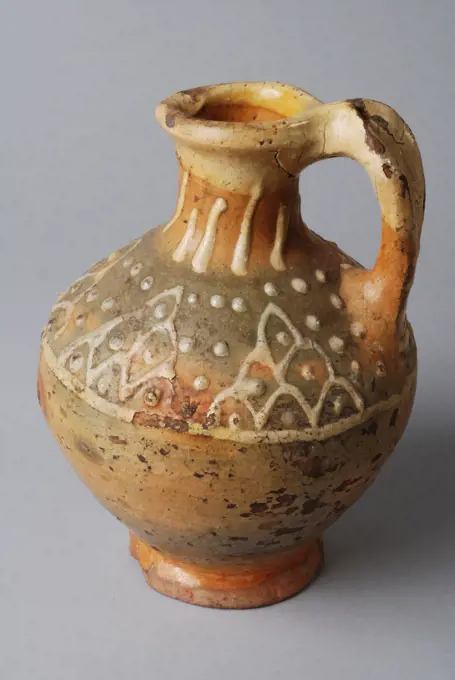
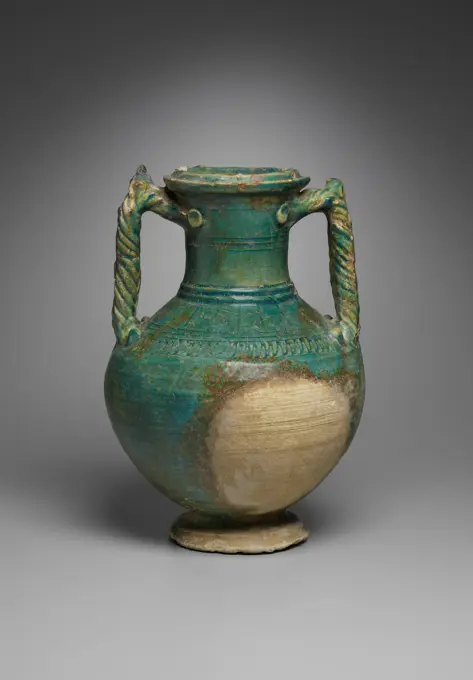
Pottery oil jug on stand with standing ear and silt decoration on the neck and shoulder, oil jug crockery holder soil find ceramic earthenware glaze lead glaze clay, ring 7.6 hand-turned decorated glazed baked lemonade Pottery jug be red shard in the top of the pinched ring, which is completely glazed. Protruding neck edge with pouring lip. Sludge decoration horizontal stripes on the ear vertical stripes around the neck five fields of cascading windows and fields with dots. Ball-shaped model with slender neck Green discoloration of glaze layer archeology indigenous pottery oil lamp enlighten tear pour serve
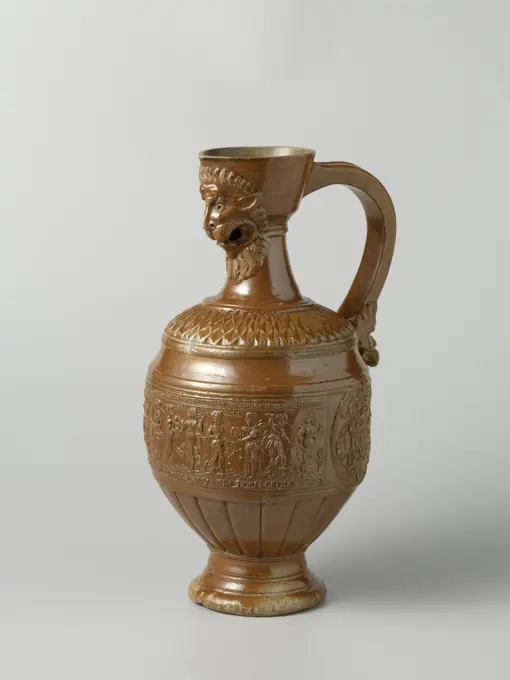
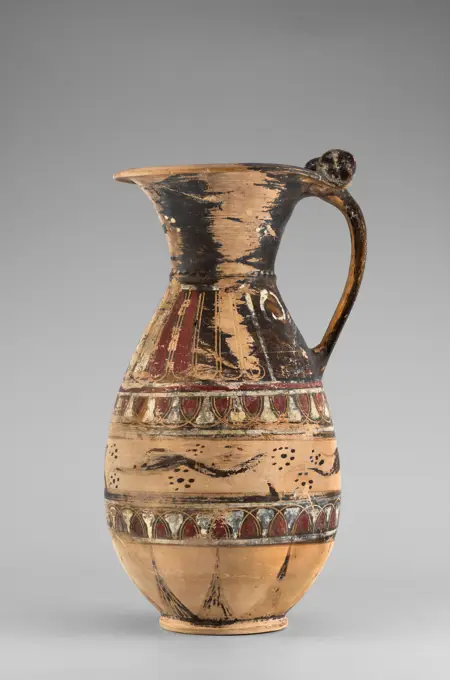
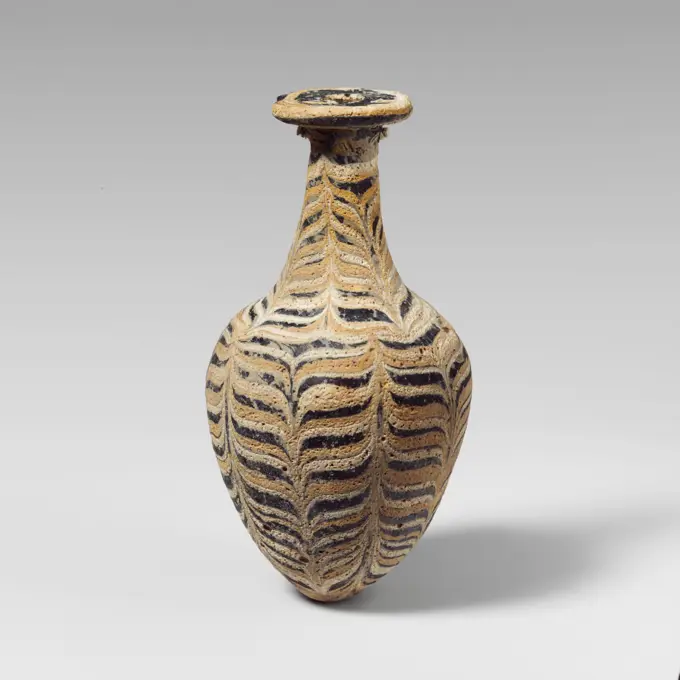
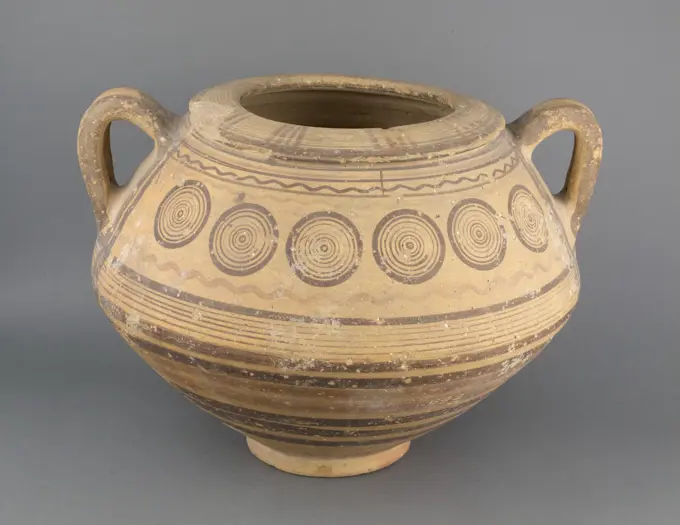
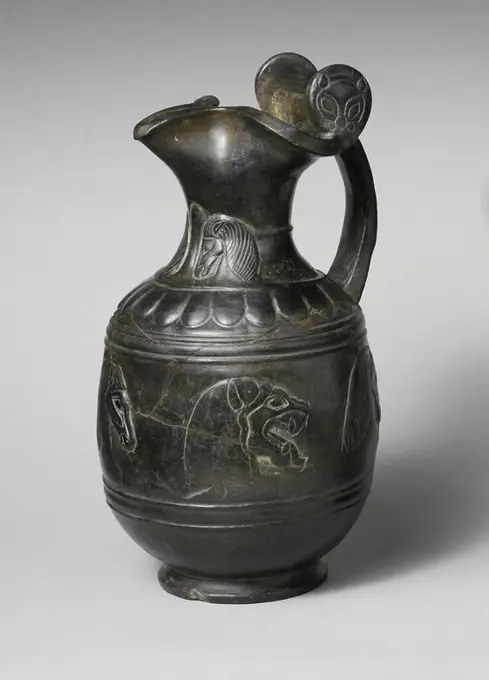
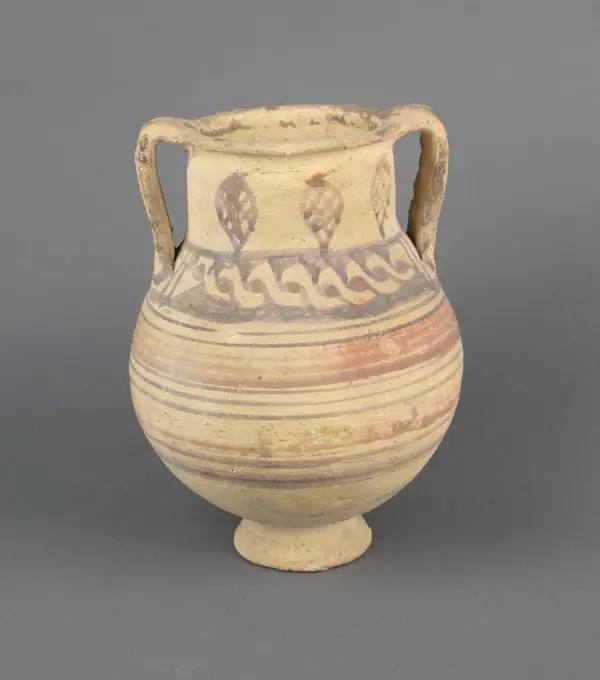
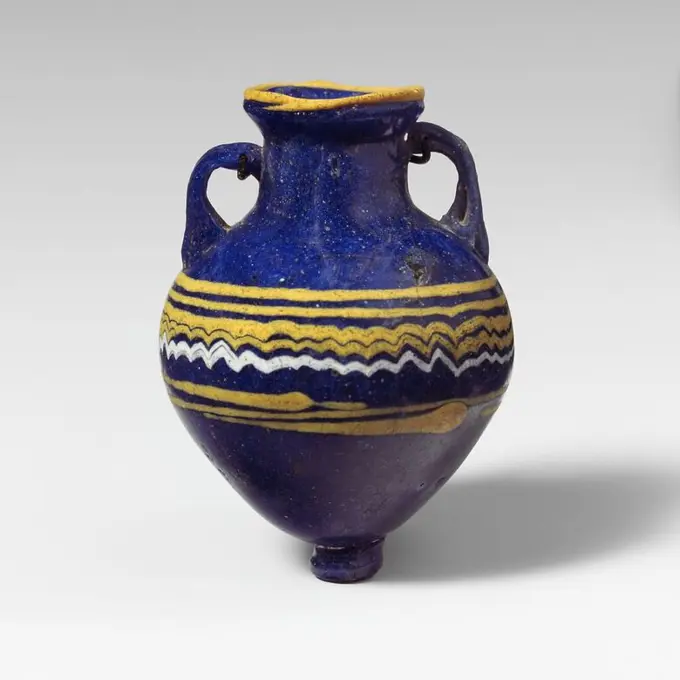
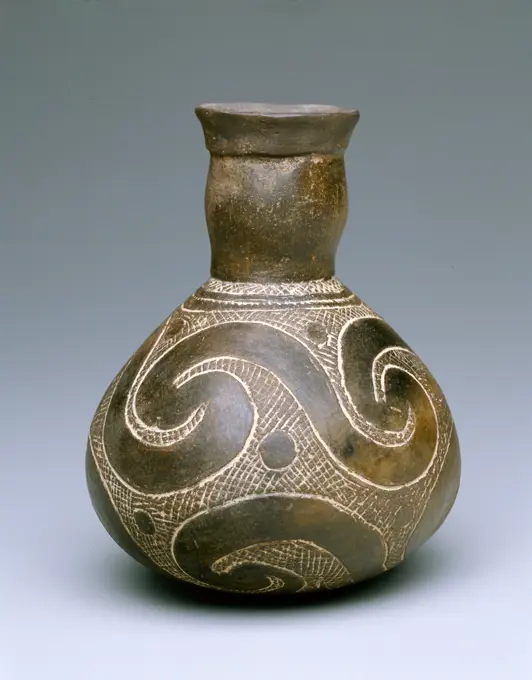
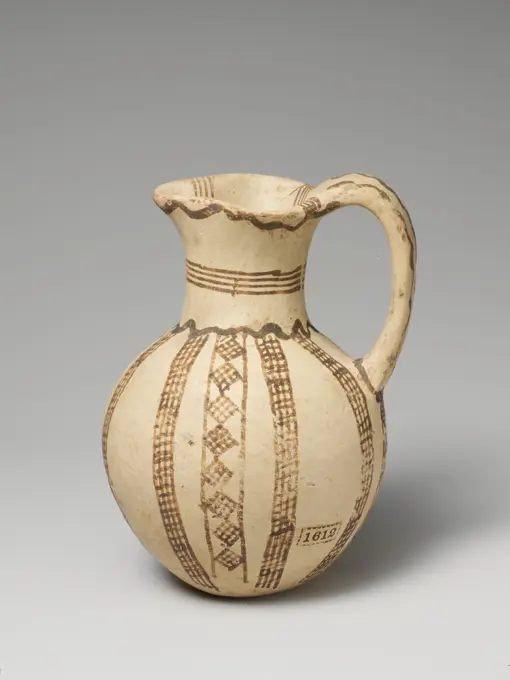
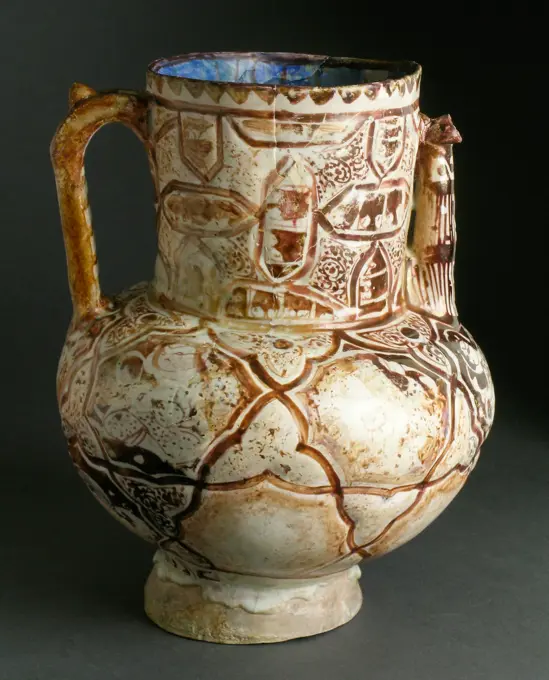
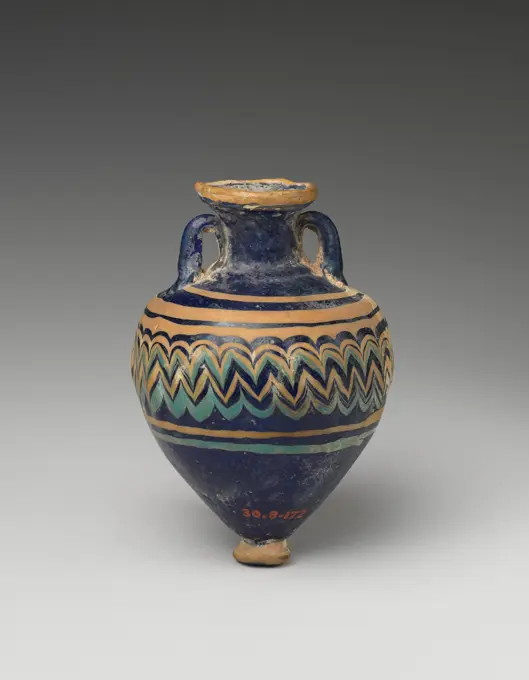
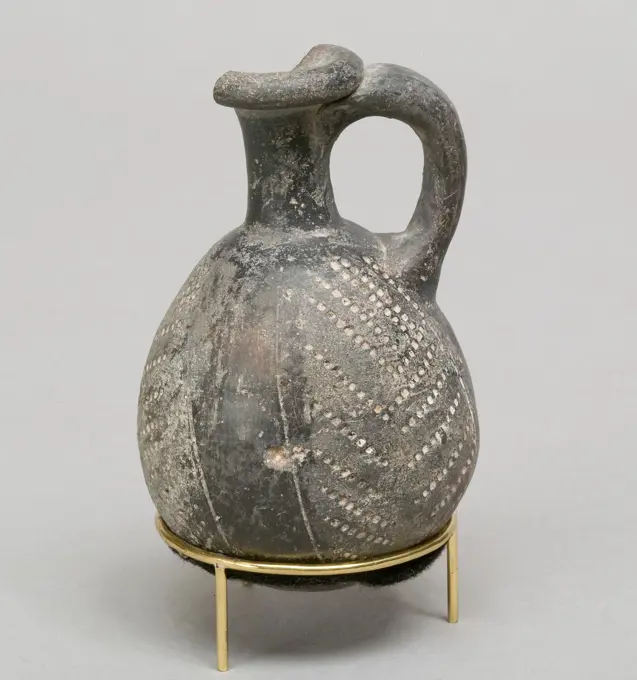
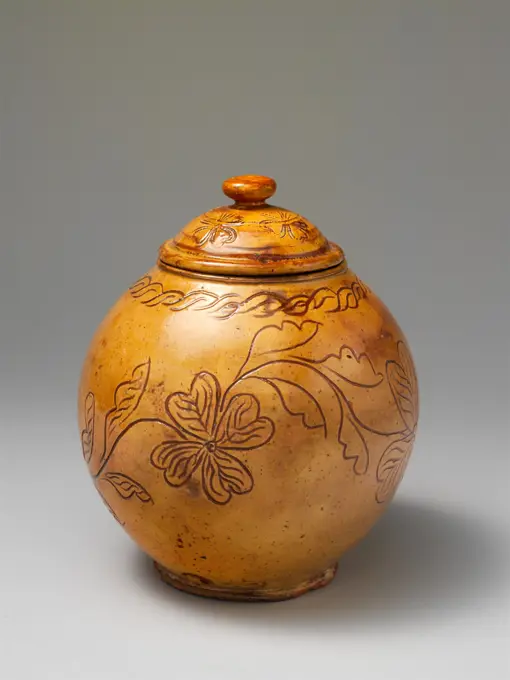
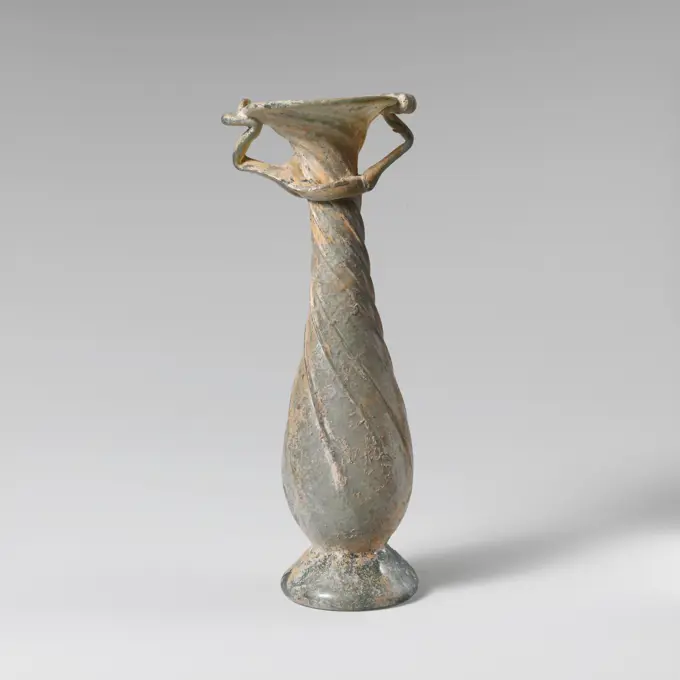
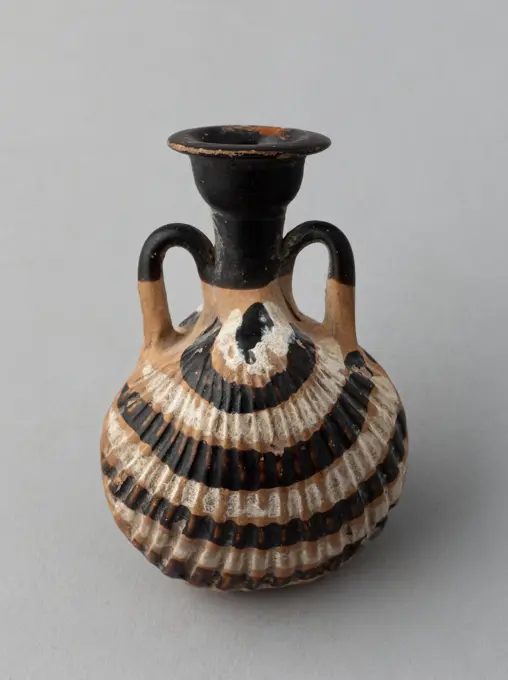
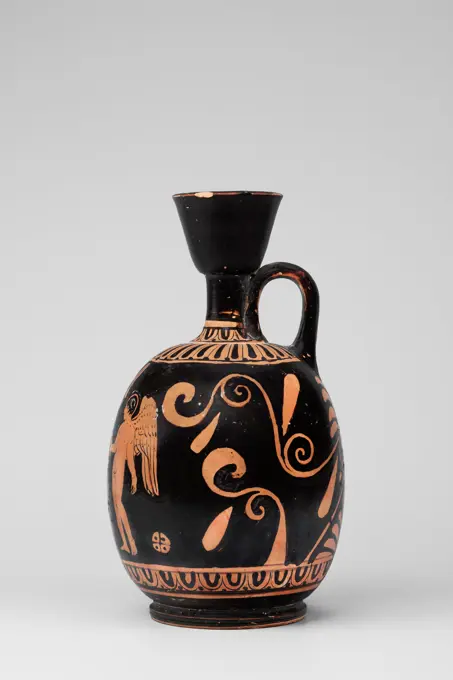
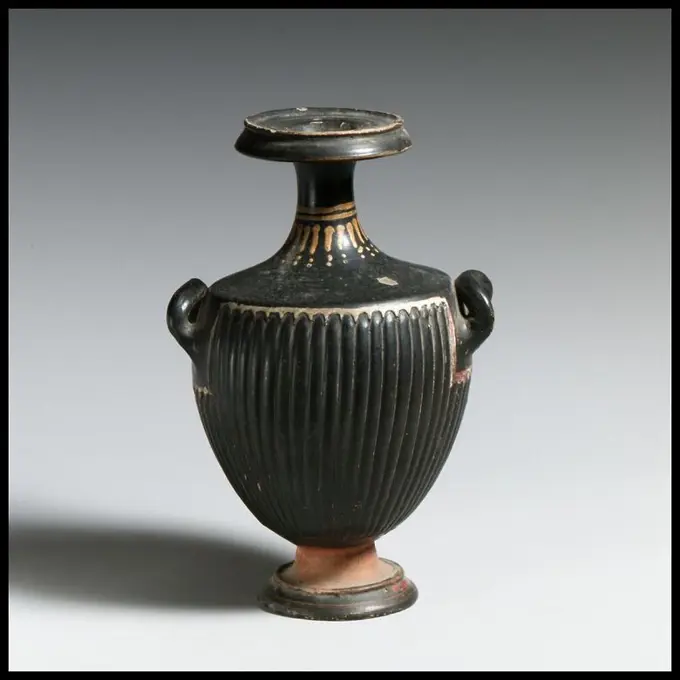
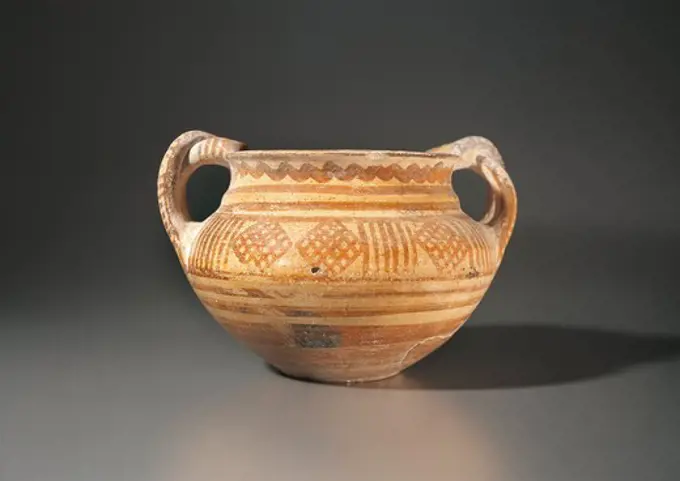
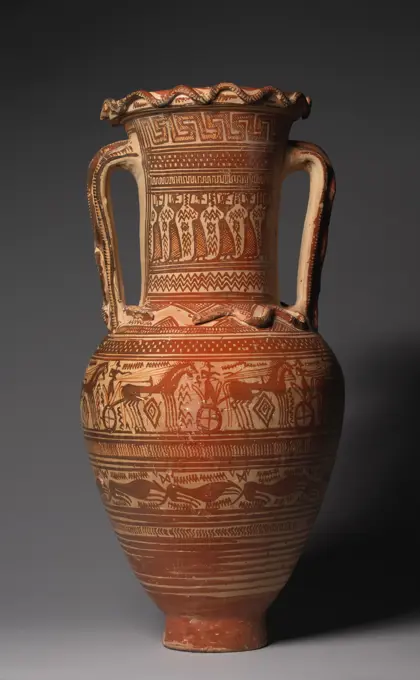
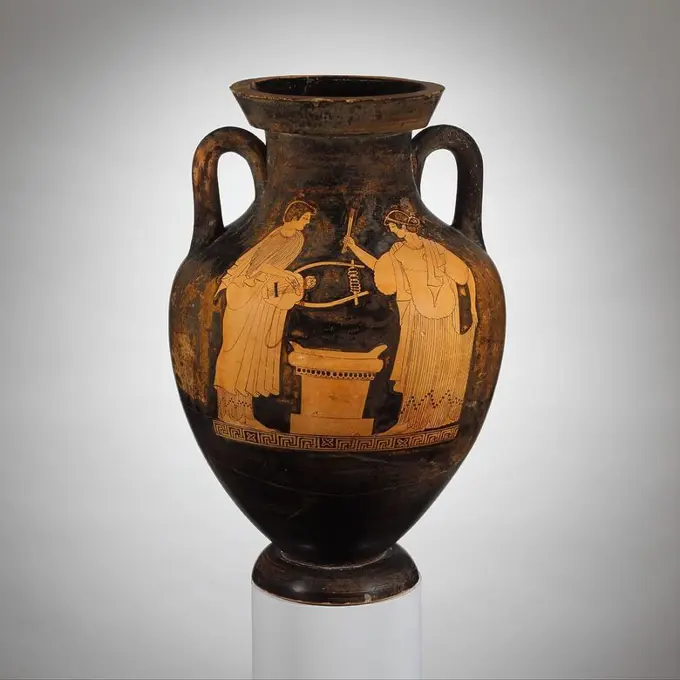
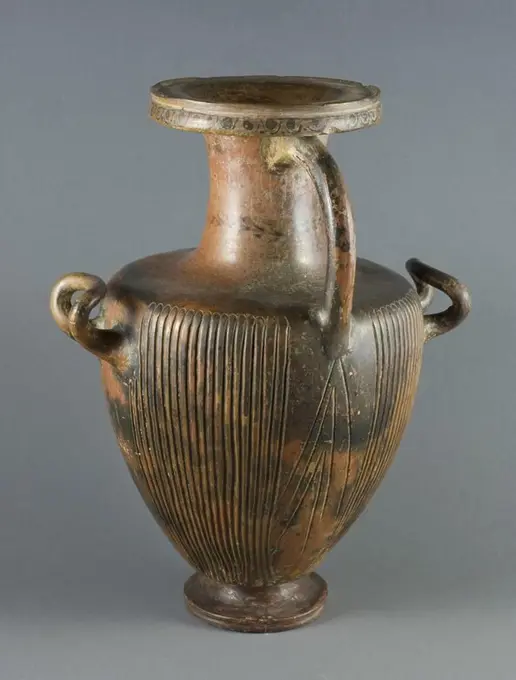
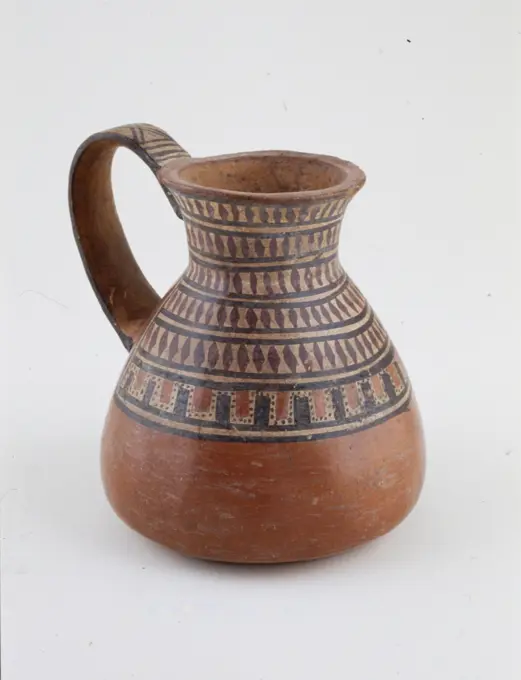
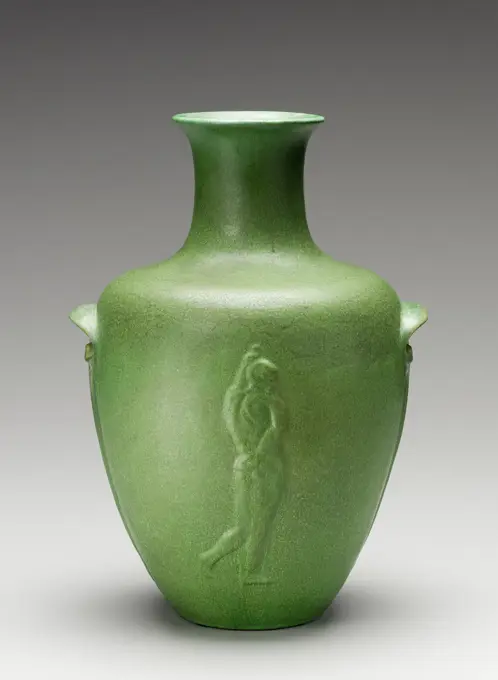
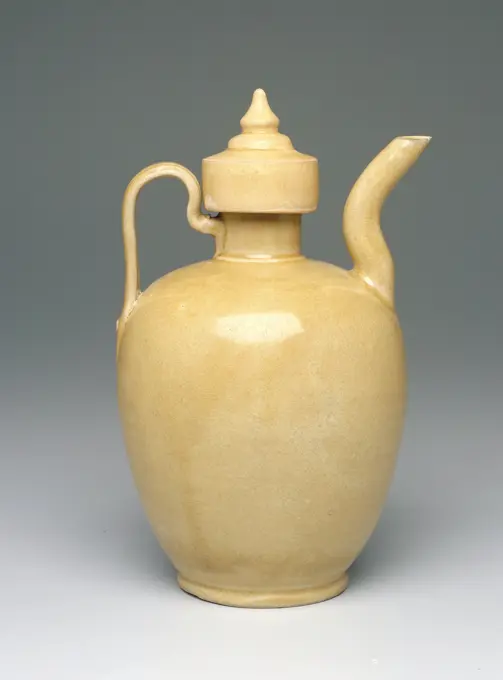
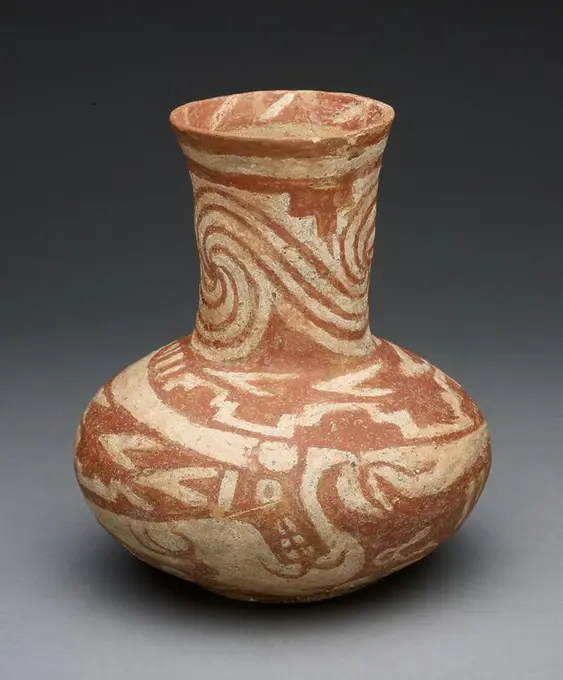
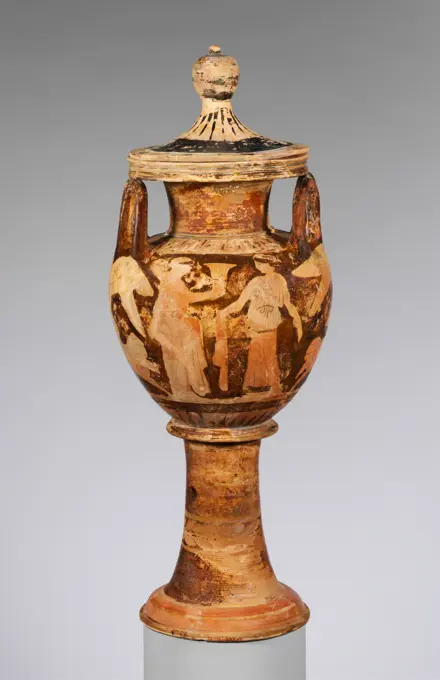
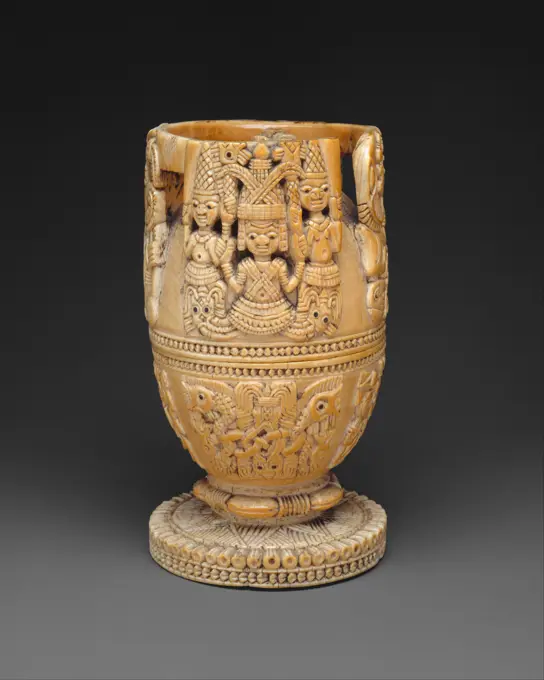
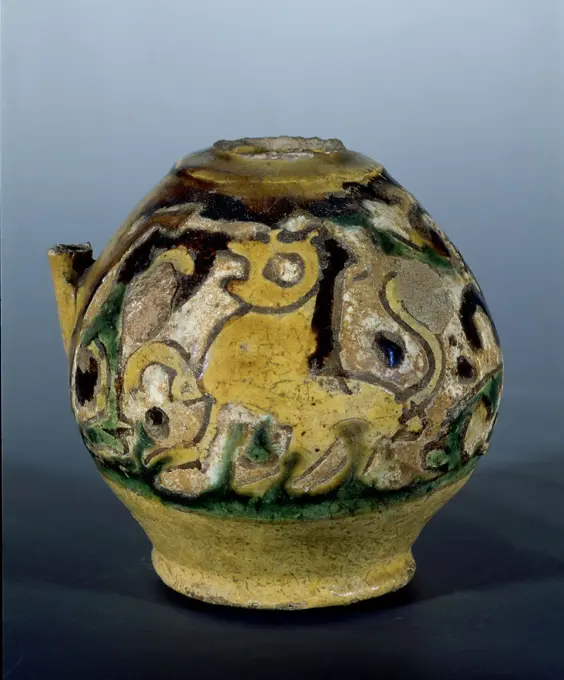
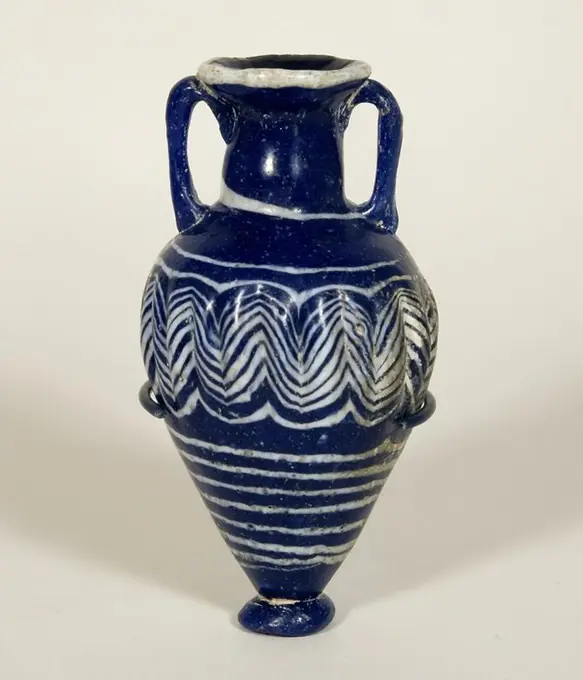
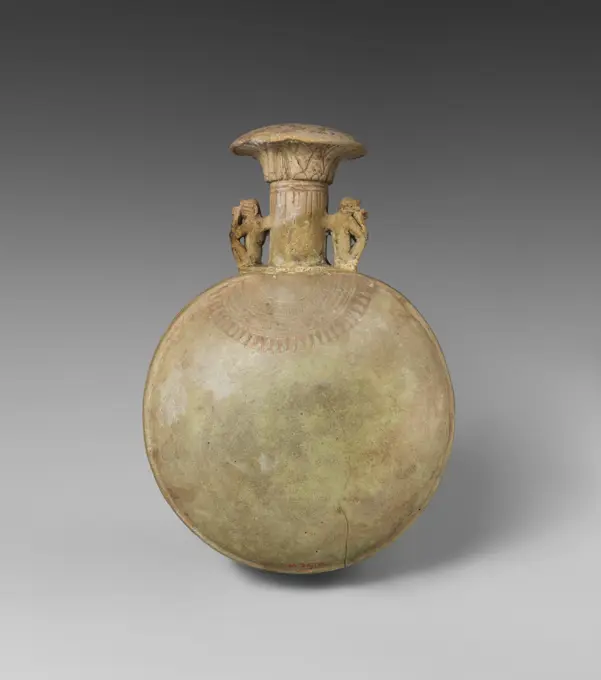
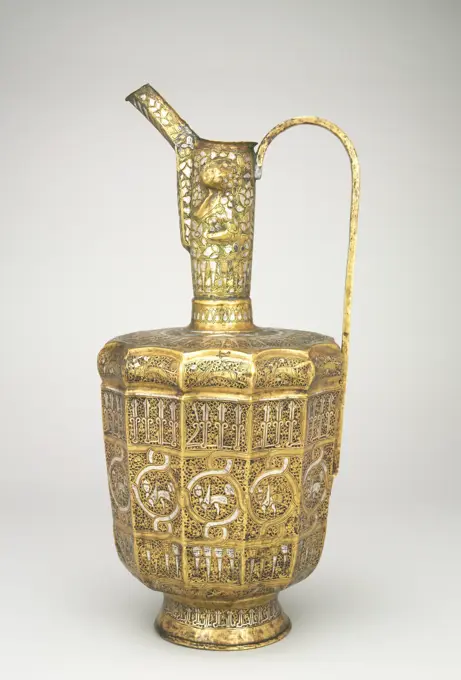
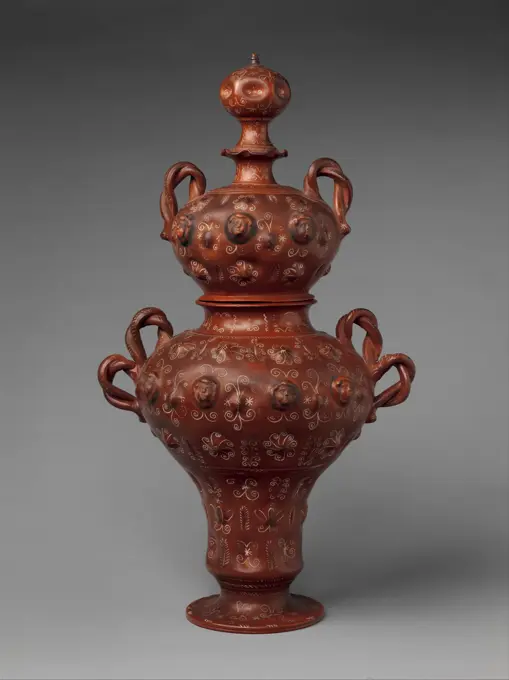
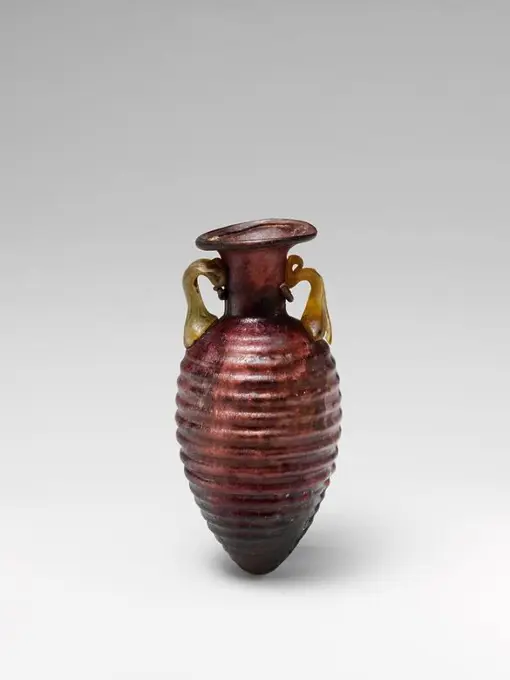
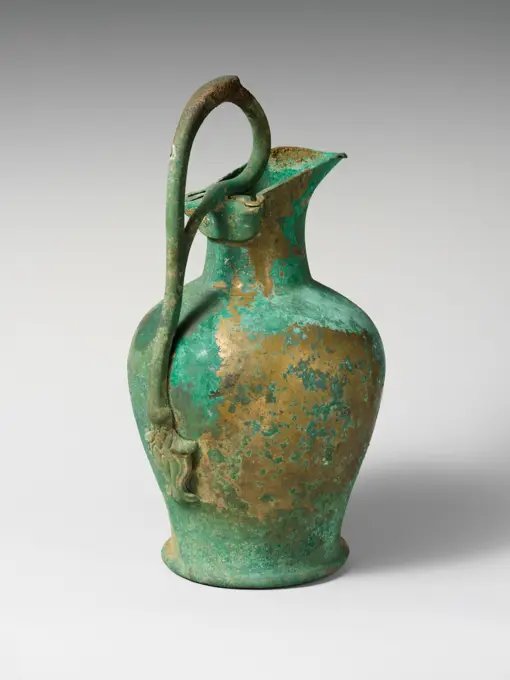
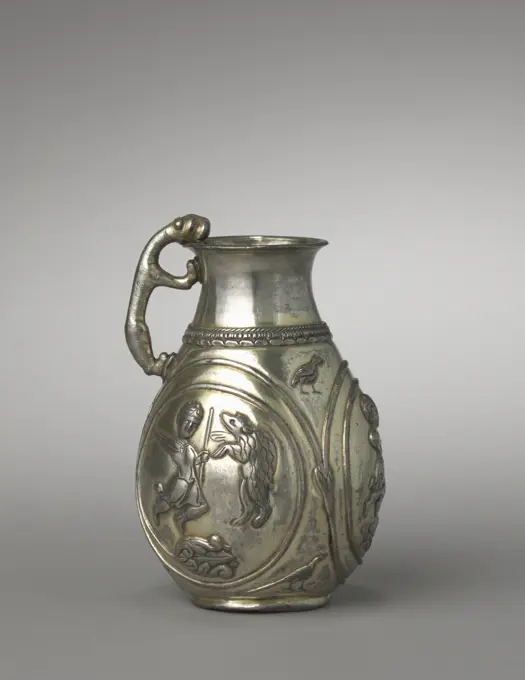
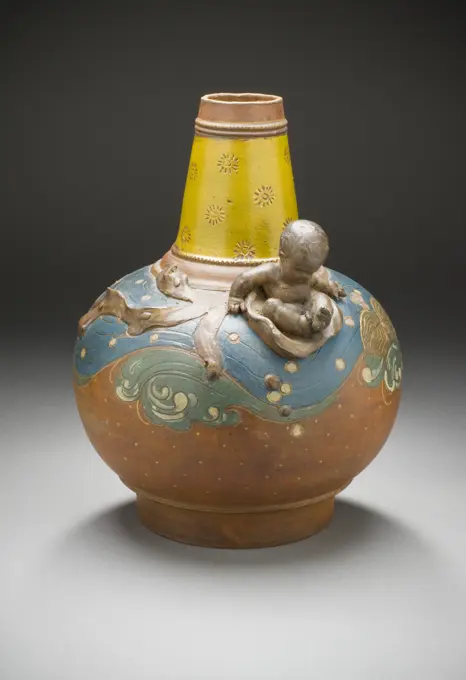
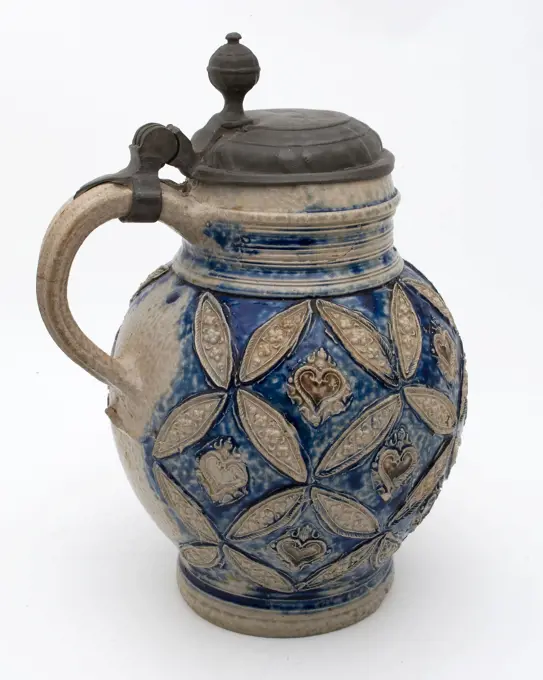
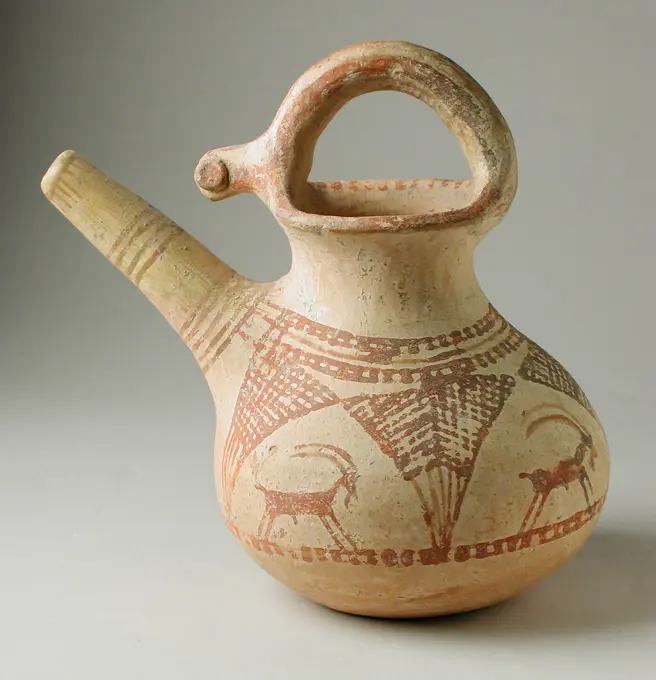
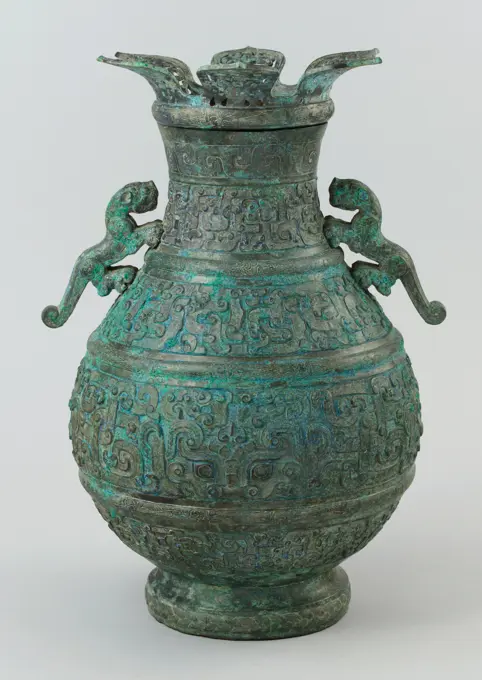
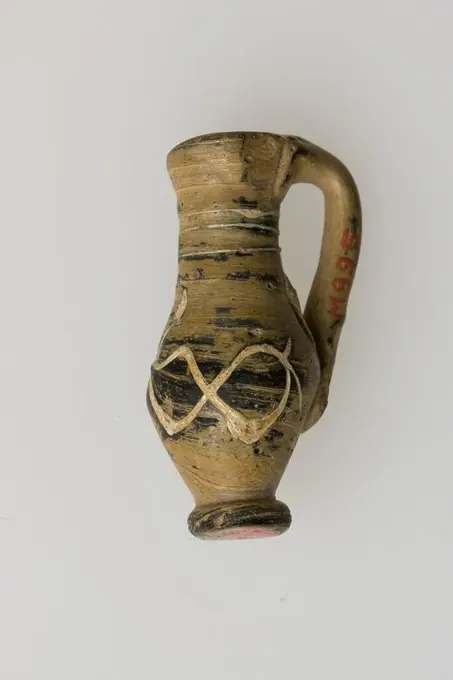
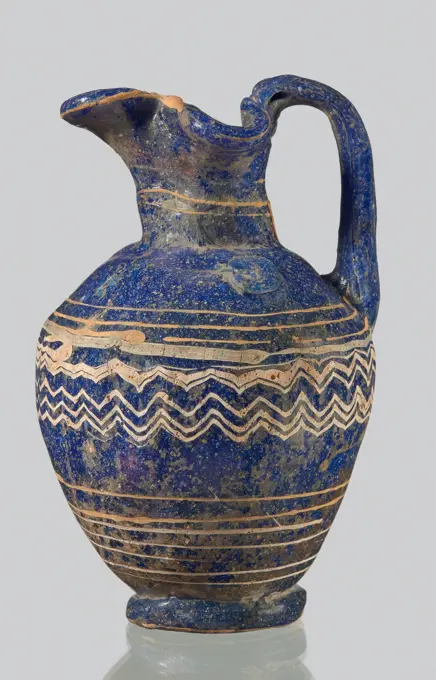
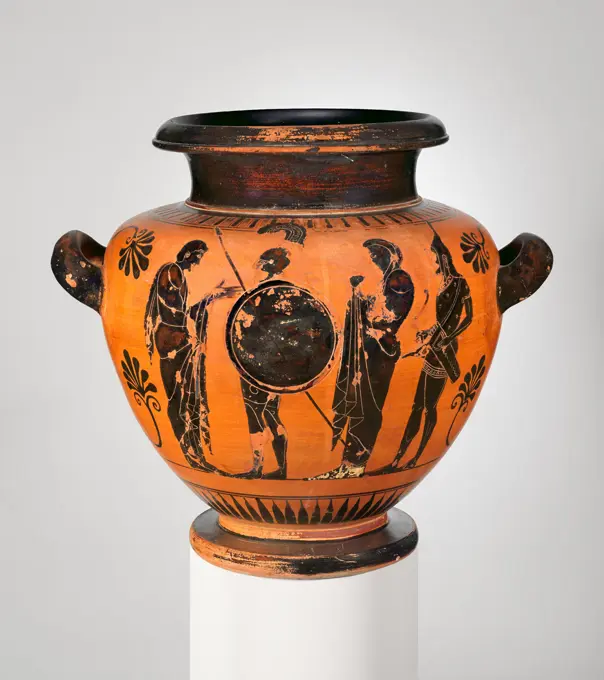
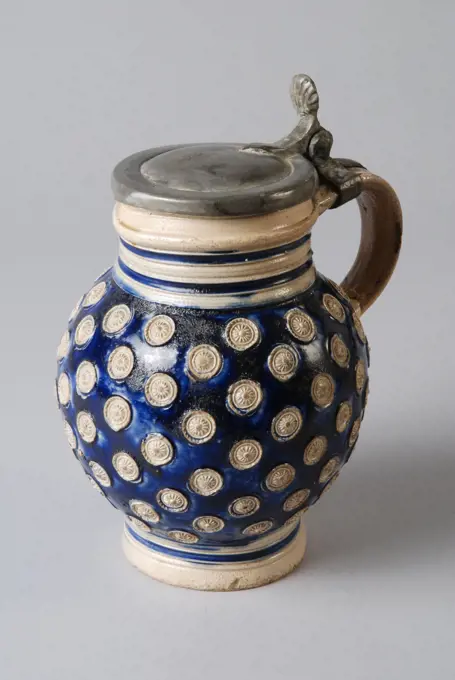
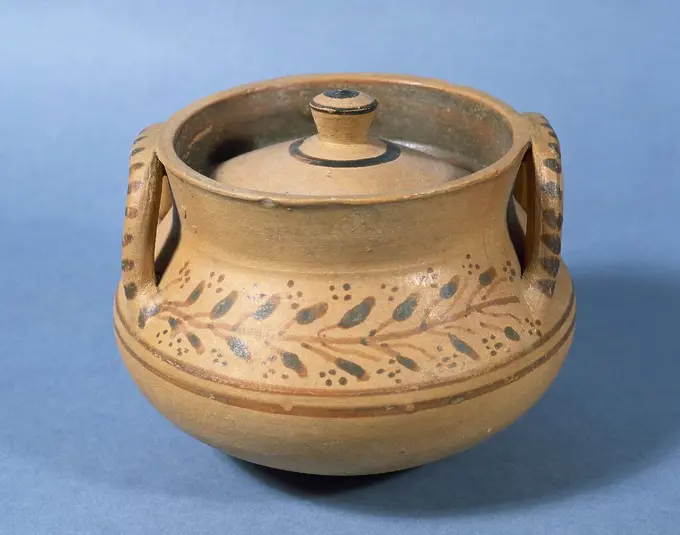
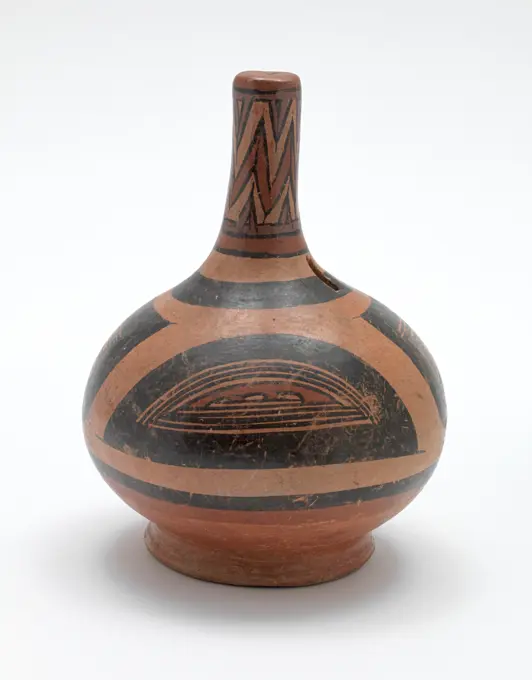
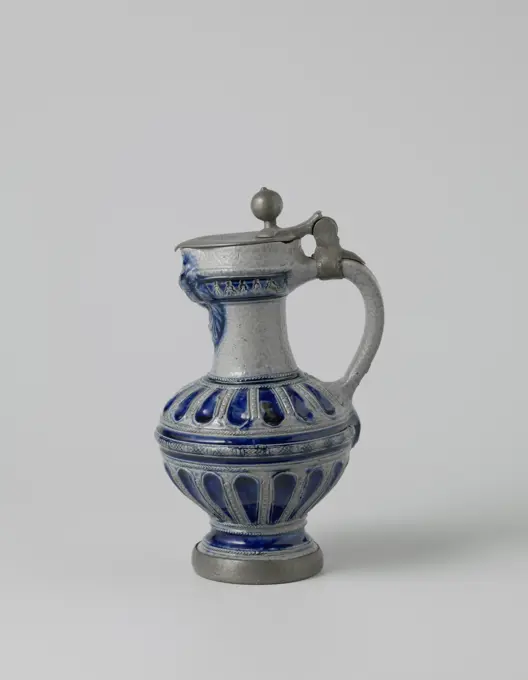
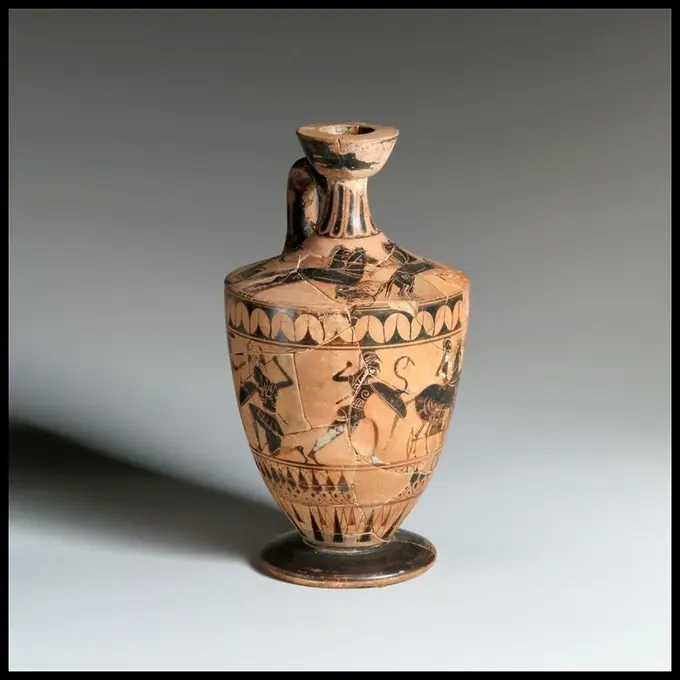
Terracotta lekythos (oil flask). Culture: Greek, Attic. Dimensions: H. 6 3/4 in. (17.1 cm). Date: ca. 530 B.C..On the body, Herakles fighting Amazons.On the shoulder, racing chariots. Museum: Metropolitan Museum of Art, New York, USA.Glass oinochoe (perfume jug). Culture: Greek, Eastern Mediterranean. Dimensions: H. 4 1/2 in. (11.4 cm)diameter of mouth 2 1/2 in. (6.4 cm). Date: late 6th-5th century B.C..Translucent cobalt blue, with handle and foot in same color; trails in opaque yellow and opaque turquoise blue.Applied broad trefoil rim-disk with narrow cylindrical mouth; cylindrical neck, slanting forward; broad sloping shoulder; large ovoid body; applied outsplayed foot with uneven concave bottom; handle attached to top of body, drawn up, turned in at right angle above rim-disk, dropped down and pressed on to back of neck below rim.Yellow trail attached at edge of rim-disk; a second yellow trail wound horizontally once around middle of neck; a thick yellow trail begun on shoulder and wound spirally, at first in horizontal lines, then tooled into an inverted festoon pattern; halfway down pattern a turquoise blue trail is added, mingling with yellow, and tooled into a close-set zigzag pattern; immediately beloJug;  850-750 BC ; Cypriot-geometric period III (-850-00-00--750-00-00);Art and antiquesOrientalized alabastron with kombastic performances; Altenburg painter (approx. 600 BCE), Wellcome workshop; around 600 BC (-605-00-00--595-00-00);Działyńska, Izabela (1830-1899), Działyński, Jan (1829-1880), Early Corpus periodJug with the seven liberal arts and the seven virtues, Baldem Mennicken, 1577 Can be made of stoneware on a high base with a cylindrical body with slightly narrower, round shoulder and narrow neck with pinched spout. The C-shaped ear is attached to the neck and shoulder and ends in a lion's head. Profiles on the neck, belly and foot. Covered with a brown Engobe. On the belly a broad bond with a printed and imposed representation of the seven free arts and the seven virtues in relief. At the top a bond with all the names' gramatica.dialectiva.retorica.arimetica.musica.geometria.Astrologia.fides.caritas.spes.ivsticia.prvdentia.temperatia.Fortitvdo 'and on the bottom the suscript' mester Balkenbecker Rorren in members dolted 1577 '. Between the figures 'Wan Got wants so Ist Mein Zill' and the brand 'R.M.'. On either side of this band the crowned weapons of Denmark, 'Kvning ZV DEMRCK 1577', and England 'Wapen von Engelant.a.77/ B.M.'. The lower part of the abdomen runs slanted to the foot Olpe etrusko-koryncka z przedstawieniem psów goniących zająca. Grupa Archetti Policromi (ok. 625-ok. 600 p.n.e.), authorCorinthian aryballos in the shape of a female headGlass amphoriskos (perfume bottle) 2nd to mid-1st century B.C. Greek, Eastern Mediterranean Translucent blue; trails in opaque yellow and opaque white.Broad, flat rim-disk, with radiating tooling marks on underside; cylindrical neck, expanding downward; broad sloping shoulder; straight-sided ovoid body; broad circular pad-base, flattened but uneven on underside and with round edge; two vertical s-shaped handles applied on shoulder, trailed up along lower part of neck, and pressed on to underside of rim and top neck.Both trails applied to edge of rim-disk and wound spirally down, tooled into a feather pattern on neck and shoulder in three panels of alternating upward and downward strokes, continuing on body in another feather pattern of five panels, extending to pointed bottom.Broken and repaired on rim, but body complete; handles and pad-base missing; dulling, deep pitting, faint iridescence, and small areas of milky white weathering.. Glass amphoriskos (perfume bottle) 253090 Greek, Vase, uivorous, with two S-shaped ears. Ugg-shaped vase of multi-colored painted majolica, at a high foot. The neck of the vase is wide in a profiled edge. The vase has two S-shaped ears. On the abdomen is painted with flower and leaf motifs and two drop-shaped cartouches on the shoulder within which geometric figures and wherever flour and leaf motifs. The vase has a reflet metallique.Pottery oil jug on stand with standing ear and silt decoration on the neck and shoulder, oil jug crockery holder soil find ceramic earthenware glaze lead glaze clay, ring 7.6 hand-turned decorated glazed baked lemonade Pottery jug be red shard in the top of the pinched ring, which is completely glazed. Protruding neck edge with pouring lip. Sludge decoration horizontal stripes on the ear vertical stripes around the neck five fields of cascading windows and fields with dots. Ball-shaped model with slender neck Green discoloration of glaze layer archeology indigenous pottery oil lamp enlighten tear pour serveDinos 600-480 B.C. Cypriot Two-handled vase with angular form, bands, wavy lines, and concentric circles.. Dinos. Cypriot. 600-480 B.C.. Terracotta. Cypro-Archaic II. VasesDouble Phnix vase. Bronze, China, Qing dynasty (1644-1911). Paris, Muse Cernuschi. ANSE, ART CHINOIS, BRONZE, CHINESE ART, DYNASTIE QING, HANDLE, PHOENIX HEAD, QING DYNASTY, TETE PHENIX, VASETerracotta Hadra hydria (water jar). Culture: Greek, Egypt, Alexandria-Hadra. Dimensions: Overall: 16 1/2 x 11 3/8 in. (41.9 x 28.9 cm). Date: 3rd century B.C..On body, ivy branch and band of laurel; on shoulder, conventional pattern; on neck, laurel sprays. Museum: Metropolitan Museum of Art, New York, USA.Terracotta trefoil oinochoe (jug). Culture: Etruscan. Dimensions: H. 14 3/16 in. (36 cm). Date: ca. 550 B.C..Horse and lion protomai (foreparts) are often used to decorate bucchero jugs made at Chiusi. The horse motif is especially reminiscent of protomai on Attic black-figure amphorae of about 600-570 B.C., which probably influenced these Etruscan designs. Museum: Metropolitan Museum of Art, New York, USA.. Egg-shaped pot of stoneware with a narrow neck and a round edge, covered with a gray-colored white sludge and under the enamel brown. On the belly twice a bond with a wavy line. On the shoulder a band with flower branches. The neck also has a bond with a wavy line. The bottom is unglazed. Glaze releases in some places. Cizhou.Amphoriskos 600-480 B.C. Cypriot Wide-mouthed amphora with cable and lattice ornament.. Amphoriskos. Cypriot. 600-480 B.C.. Terracotta. Cypro-Archaic II . VasesGlass amphoriskos (perfume bottle). Culture: Greek, Eastern Mediterranean. Dimensions: H.: 2 7/8 in. (7.3 cm). Date: late 6th-5th century B.C..Translucent cobalt blue, with handles in same color; trails in opaque yellow and opaque white.Deep inward-sloping rim-disk; broad cylindrical neck, tapering upwards; sloping shoulder; top-shaped body; circular base-knob with deep indent on bottom; two strap handles applied in pads to shoulder, drawn up, turned in, and pressed onto neck.Yellow trail attached at edge of rim-disk; another yellow trail applied in a spiral around top of body in horizontal lines, then tooled into an irregular close-set zigzag pattern around middle of body together with a single white trail; below, a yellow trail wound horizontally twice around lower body. Part of zigzag pattern distorted by cobalt blue overlay.Intact; some white gritty inclusions and one large cracked inclusion on shoulder; slight dulling and some pitting of surface bubbles, but little weathering.Glass alabastron (perfume bottle). Culture: Greek, Eastern Mediterranean. Dimensions: H.: 3 1/2 in. (8.9 cm). Date: late 6th-5th century B.C..Translucent light blue, with handles in same color; trails in opaque yellow.Broad flat rim-disk; short slightly slanting cylindrical neck; narrow rounded shoulder; straight-sided body with upward taper; convex bottom marked by irregular tooling indents; below shoulder, two vertical ring handles with knobbed tails applied over trail decoration; one slightly larger than the other.One trail attached at edge of rim-disk; another applied as a thick blob at top of body and wound down in spiral four to five times, then tooled into a close-set zigzag pattern around the central part of body; below this, a third trail wound two and a half times horizontally around lower body.Complete, except for weathered hole in neck and crack around bottom; slight dulling and pitting, and most of body, especially the trails, covered with creamy iridescent weathering.Bottle, c. 1100-1299, 7 1/16 x 5 1/2 in. (17.94 x 13.97 cm), Clay, United States, 12th-13th centuryTerracotta lagynos (pitcher) late 2nd-early 1st century B.C. Cypriot Jug of fine light clay, with angular body, laurel-wreath.The Greek word KITIAC (Kitias) painted above the wreath of laurel leaves and berries is probably a woman's name. These vessels are associated particularly with women's festivals and gatherings.. Terracotta lagynos (pitcher) 239975Terracotta amphoriskos (oil flask) ca. 550-525 B.C. East Greek, Milesian, Fikellura WaterbirdsAfter the amphora, tall slender amphoriskoi were the most popular Fikellura shape.. Terracotta amphoriskos (oil flask) 240115Terracotta juglet ca. 1600-1150 B.C. Cypriot White slip ware with handle and pinched lip, lattice and lozenge ornament.. Terracotta juglet. Cypriot. ca. 1600-1150 B.C.. Terracotta; White slip ware. Late Cypriot I-IIIA. VasesJar from the Burial of Amenhotep. Dimensions: H. 36 cm (14.3/16 in.); Diam. of mouth 11.5 cm (4 1/2 in.); Greatest diam. 17.5 cm (6 7/8 in.); D. 35 cm (13 3/4 in.). Dynasty: Dynasty 18. Reign: Joint reign of Hatshepsut and Thutmose III. Date: ca. 1479-1458 B.C..In the tomb of the child Amenhotep (36.3.153), six jars had been placed on either side of the coffin. The contents of the jars incidated that they had once held various liquids. Three of the jars (including 36.3.161. 36.3.164) are decorated with geometric patterns in red and black paint. One of the undecorated jars (36.3.162) still has its closure of linen cloth that covers the mouth nad has been tied in a square knot around the neck. Museum: Metropolitan Museum of Art, New York, USA.Jug, decorated with blue and gray vertical tires on which purple ornaments. Jug of stoneware. Decorated with vertical blue tires, interspersed by gray tires on which purple ornaments.Pyxis (Container for Personal Objects) 580 BCE-570 BCE Corinth. Located on the narrow isthmus that joins the Greek mainland and the Peloponnese, with natural harbors facing east and west, Corinth was the major port of trade in Greece for most of the Archaic period (700ñ480BC). Producers exported scented oil around the Mediterranean in terra-cotta containers that survive today in the thousands.Around the time that this jar was made, Egyptís king, Amasis (r. 570ñ526 B.C.), in the interest of trade, gave the Greeks the Egyptian port city of Naucratis, where Greek and Egyptian cultures mingled. The small sphinx on this jar is indicative of this cultural encounter, as Greeks would have been familiar with the part human, part-lion creatures, which lined the entryway to most Egyptian temples. Including a sphinx on this jar added a touch of the exotic East, which would have appealed to the citizens of Corinth.The identities of most Greek vase painters are unknown, so sometimes they are named aAmphoriskosOinochoe with circular motives. Geometric pottery. Etruscan Civilization, ca 700 BC.Miniature Stirrup Jar. UnknownTerracotta amphora (two-handled jar). Culture: Roman, Syrian. Dimensions: H. 16 11/16 in. (42.4 cm). Date: ca. A.D. 100-225.Decorated with reliefs and grooves. Museum: Metropolitan Museum of Art, New York, USA.Ewer. Iran, Kashan, late 12th-early 13th century. Ceramics. Fritware, molded and overglaze luster-paintedPerfume vase Late Period 664-332 B.C. View more. Perfume vase. 664-332 B.C.. Glass. Late Period. From Egypt. Dynasty 26-30MORTERO PINTADO Y VIDRIADO AL MODO ARABE DEL S XV -ARTE POPULAR. Location: ALFARERIA. TERUEL. SPAIN.Glass amphoriskos with horizontal ribs 2nd half of 1st century A.D. Roman Translucent greenish yellow, with handles in cobalt blue.Tubular rim folded out, over, and in, and flattened into flaring mouth; cylindrical neck, the lower third of which is indented from mold; elongated ovoid body, tapering to pointed bottom; two rod handles attached to upper body in large claw pads, drawn up and turned in, then pressed onto sides of neck. One continuous mold seam around body, extending onto lower part of neck, misaligned on one side.Body decorated with twenty-six concentric, slightly slanting ribs.Intact, except for hole in bottom; few bubbles; slight dulling and faint iridescence on exterior, encrustation and iridescent weathering on interior.Many examples of this type of small mold-blown glass bottle are known from the eastern Mediterranean and Black Sea areas. Its shape resembles that of large terracotta jars, but horizontal ribbing is not usually found on Roman transport amphorae of the 1sTell el-Yahudiya-ware juglet ca. 1750-1700 B.C. Middle Kingdom. Tell el-Yahudiya-ware juglet. ca. 1750-1700 B.C.. Black incised ware. Middle Kingdom. From Egypt, Memphite Region, Lisht North, cemetery, Pit 995, MMA excavations, 1921-22. Dynasty 13, midGlass jug. Culture: Roman. Dimensions: H.: 11 1/2 in. (29.2 cm). Date: 4th century A.D..Translucent blue green; handle and trails in same color.Plain, rounded rim; broad flaring mouth; cylindrical neck expanding downwards and joining imperceptibly with large piriform body; tall, splayed, tubular foot ring, made by folding; thick projecting bottom with large central pontil mark; broad, ribbed strap handle applied to body, with projecting lip below, drawn up vertically, tooled in and downwards, then folded on underside of mouth over trail decoration, drawn up and trailed off on rim.Single trail wound round horizontally on underside of mouth; another trail wound round neck.Intact; a few bubbles in body, but many elongated bubbles in handle; soli encrustation, slight dulling, and faint iridescence. Museum: Metropolitan Museum of Art, New York, USA.Terracotta squat lekythos (oil flask). Culture: Greek, Boeotian. Dimensions: H. as restored 6 5/16 in. (16 cm). Date: 4th century B.C..Black-glaze lekythos with stamped decoration. Museum: Metropolitan Museum of Art, New York, USA.Jug 1 CE-50 CE Syria. Initially affordable only among the wealthy, glass was used in ancient Rome as containers for oils, perfume, and tablewares. The variety of glass-making techniques reveals the changing tastes and fashions over the centuries. During the 1st century A.D., cast glass was a novel form that was a luxury for the Roman household, but by the end of the century, the innovation of blown glass allowed for less labor-intensive and less expensive production, which meant people of lesser means could afford it. Blown glass became so popular it nearly supplanted ceramic and even bronze wares in the home.. Glass, mold-blown technique . Ancient RomanGlass hydriske (perfume bottle). Culture: Greek, Eastern Mediterranean. Dimensions: 2 7/8 × 1 15/16 × 1 13/16 in. (7.4 × 4.9 × 4.7 cm)Diam. of rim: 15/16 in. (2.4 cm)Diam. of foot: 3/4 in. (1.9 cm). Date: late 4th-3rd century B.C..Translucent cobalt blue, with handles in same color; trails in opaque white and opaque yellow.Horizontal rim-disk, with rounded edge; tall cylindrical neck, slanting forward; broad horizontal shoulder; ovoid body; applied circular pad-base, with rounded edge and flat bottom; at junction of shoulder and body, two small vertical loop handles; strap handle also applied at junction of shoulder and body in a pad, drawn up and outwards, then turned in and pressed on to underside of rim-disk.An unmarvered blob of yellow on front edge of rim; a white trail attached to bottom of neck and wound across shoulder; a yellow trail, applied over white at shoulder and wound round; then both trails tooled in a close-set zigzag pattern with deep vertical ribs over top halfPitcher. Roman; Levant or Syria. Date: 101 AD-400 AD. Dimensions: 8 × 5.4 × 5.4 cm (3 1/8 × 2 1/8 × 2 1/8 in.). Glass, blown technique. Origin: Syria. Museum: The Chicago Art Institute, Chicago, USA. Author: ANCIENT ROMAN.Pre-Columbian art. Pre-Incan. Cuasmal Culture (500-1500 AD). From Ecuador. Ceramic vessel. 23 x 16 cm (diameter).  Private collection.Covered jar ca. 1830-40 Attributed to Jacob Scholl This jar is coated with cream-colored slip and bears a sgraffito design of flowers and leaves. Sgraffito hollow ware is rare, and the incised flowers here are of exceptional artistic merit. The jar is said to have descended in the family of the potter.. Covered jar 2412Lid jug; Plaue A.D.HAVEL; 1710-1719 (1710-00-00-1710-00-00);Glass cosmetic flask (kohl tube) 3rd-4th century A.D. Roman Translucent blue green; handles and trail in same color.Rounded rim; broad funnel-shaped neck; slender, piriform body; conical tubular foot, made by folding; small, slightly convex bottom; one handle applied in a claw pad to top of body, drawn round horizontally, forming trail-like ring, then turned up and out, tooled in sharply and trailed onto underside of rim with horizontal pinched projection, and ending slightly above rim; the other handle then applied on opposite side of body over the ring, drawn up and out, tooled in sharply and trailed onto underside of rim with fold ending slightly above rim.On body and extending over neck, nine regular ribs that swirl down from left to right, fading towards the bottom.Intact; few bubbles; deep pitting, iridescence, creamy brown weathering, and soil encrustation on inside around bottom of neck.. Glass cosmetic flask (kohl tube) 256737Amphorisque (small amphora) in the shape of a bivalve shell. Athens, 4th century BC. AD Museum of Fine Arts of the City of Paris, Petit Palais. 59233-5 Amphorisque, handle, Greek antiquity, ancient art, Greek art, attic, bivalve, ceramic, shell, shell, hygiene, 4th 4th 4th 4th 4th century AV.JC, stripe pattern, molding, toilet object, ancient vase, ancient vase , EVERYDAY LIFElarge green two-handledjugBottle with Impressed Decorations 10th-11th century This bottle was created with a number of complex glass-working techniques. The piece was made in two parts that were joined at the horizontal seam. Decoration was impressed with tongs before the pieces were joined. The blue glass thread around the rim gives a spark of color to this otherwise transparent piece. The bottles decoration consists of repeating bulls-eyes, a pattern that was especially popular in decorating the surfaces of small bronze vessels.. Bottle with Impressed Decorations. 10th-11th century. Glass, greenish yellow; blown in two parts, impressed with tongs, applied blue rim. Attributed to probably Iran. GlassEwer 18th century. Ewer 446945Amphora by the Painter of Amsterdam, orientalizing pottery. Etruscan civilization, 660-640 BC.Lekyt aryballosowy czerwonofigurowy ze sceną toalety Afrodyty. unknown, authorTerracotta miniature hydria: kalpis (water jar). Culture: Greek, South Italian, Apulian, Gnathian. Dimensions: H. 5 1/2 in. (14 cm). Date: ca. 350-300 B.C..Such small-scale vases were made for funerary purposes. Museum: Metropolitan Museum of Art, New York, USA.Oinochoe. Culture: Greek, South Italian, Apulian. Dimensions: H. 11.10 cm.; diameter 7.6 cm.. Date: ca. 325-300 B.C.. Museum: Metropolitan Museum of Art, New York, USA.Italy, Lazio, Tarquinia, Two-handled little geometric amphora, circa 700 B.C.Terracotta globular cup with two handles last quarter of the 6th century B.C. Etruscan The shape of the cup is derived from Etruscan bucchero models. The decoration shows influences from both East Greece and the Greek mainland. Most noteworthy is the phallos bird that was popular in Athenian vase-painting during the second half of the sixth century B.C.. Terracotta globular cup with two handles 258424Geometric Neck-Handled Amphora (Storage Vessel): Prothesis (Laying out of Corpse), Mourners, Chariots, c. 720-700 BC. Attributed to Workshop of Athens 894 (Greek, Attic, Late Geometric llb). Ceramic; overall: 60 cm (23 5/8 in.).Terracotta amphora (jar). Culture: Greek, Attic. Dimensions: H. 18 1/2 in. (47 cm)diameter 12 5/16 in. (31.3 cm). Date: ca. 490 B.C..Obverse, Apollo and Artemis flanking an altarReverse, athlete and trainerThe Eucharides Painter worked in the black-figure as well as the red-figure technique. It is noteworthy that here he decorates the type of amphora that was typical before the invention of red-figure. Museum: Metropolitan Museum of Art, New York, USA.Hydria (Water Jar). Greek; Campania (), Italy. Date: 400 BC-350 BC. Dimensions: 38.4 × 29.2 × 27.8 cm (15 1/8 × 11 1/2 × 9 in.). Terra-cotta, decorated in the black-glaze technique. Origin: Greece. Museum: The Chicago Art Institute, Chicago, USA. Author: ANCIENT GREEK.Handle Spout Jar with Fineline Bird Hunt Motifs Made 100 BCE-500 CE North Coast. Ceramic and pigment . MocheLong-Necked Flask with Lid, 1401-1353 BC. Egypt, New Kingdom, Dynasty 18, reign of Tuthmosis III, to reign of Amenhotep III, 1479-1353 BC. Travertine; diameter: 9.7 cm (3 13/16 in.); diameter of mouth: 4.5 cm (1 3/4 in.); overall: 16.4 cm (6 7/16 in.); diameter of lid: 6.6 cm (2 5/8 in.).Skyphos (Drinking Cup) 450 BCE-400 BCE Athens. terracotta . Ancient GreekSkyphos (Drinking Cup). Greek; Athens. Date: 450 BC-400 BC. Dimensions: 8.2 x 17.1 x 10.1 cm (3 1/4 x 6 3/4 x 4 in.). Terra-cotta. Origin: Athens. Museum: The Chicago Art Institute, Chicago, USA. Author: ANCIENT GREEK.Polychrome jar, 3rd century BCE - 11th century CE, 5 1/4 x 4 3/8 x 4 5/8 in. (13.3 x 11.11 x 11.75 cm), Polychrome ceramic, Peru, Pre-ColumbianVase ca. 1898-1909 Grueby Pottery. Vase. Wilhelmina Post (American, 1867 - unknown). American. ca. 1898-1909. Earthenware. Made in Boston, Massachusetts, United StatesEwer with Cover, 10th-11th century, 9 1/8 x 5 7/16 x 4 7/8 in. (23.18 x 13.81 x 12.38 cm), Yue ware Porcelaneous stoneware with celadon glaze, China, 10th-11th century, The term Yueh is associated with a large body of celadon-glazed stoneware produced from the Eastern Han dynasty (25-220) into the Song (thirteenth century) in numerous kilns in northern Chekiang and southern Jiangsu provinces. An important form of early celadon, it's high-fired glazes were refined over the centuries but, around 1200 the production of Chekiang Yueh ware came to an end. This elegant wine ewer, retaining its original lid, represents the end of the long and venerable tradition of Yueh ware celadon production.Pilgrim Flask (Bian Hu) 565 CE-699 CE China. The flat sides of this canteen-shaped container depict a youthful dancer and a musician who perform above a pair of romping lions. In their costumes and facial features, these performers resemble figures depicted in ancient Hellenistic art. The clarity of their features is partially obscured by a thickly applied glaze, as well as by the dense background of undulating foliage, floral heads, and grapevines. Some of these designs clearly derive from Central Asian metalwork. They may have been transmitted to China as decorative motifs on imported objects or alternatively, as background patterns on Buddhist images that were brought to China or created in China from Central Asian prototypes.. Stoneware with mold-impressed decoration under yellowish-brown lead glaze .Bottle with Underwater Serpents. Mississippian; Possibly Arkansas, United States. Date: 1300-1500. Dimensions: 24.1 × 20.3 cm (9 1/2 × 8 3/4 in.). Earthenware and pigment. Origin: Arkansas. Museum: The Chicago Art Institute, Chicago, USA.Terracotta trozella (two-handled jar) 5th century B.C. Native Italic, Apulian, Messapian With its egg-shaped body and decoration confined to two panels on the body, this vase represents a distinct variant of trozella.. Terracotta trozella (two-handled jar) 254610 Native Italic, Apulian, Messapian, Terracotta trozella (two-handled jar), 5th century B.C., Terracotta, H. 7 5/16 in. (18.6 cm). The Metropolitan Museum of Art, New York. Gift of Mrs. Laura W. Andre, 1948 (48.189.2)Terracotta lebes gamikos (round-bottomed bowl with handles and stand used in weddings) ca. 440-430 B.C. Attributed to Painter of London 1923 Obverse, seated woman and attendantsReverse, two womenAt each handle, NikeOf particular interest in this representation is the pyxis carried by the woman at the far left. Pyxides are small boxes that contained personal items such as toilet articles. Terracotta examples exist in the greatest quantity, but during the late fifth and fourth centuries B.C., they were also made of marble and often included as offerings in graves.. Terracotta lebes gamikos (round-bottomed bowl with handles and stand used in weddings) 247461Water jar, 900-1499, 7 7/8 x 8 1/4 x 8 1/4 in. (20 x 20.96 x 20.96 cm) (height), Earthenware clay, pigments, Costa Rica or Panama, 10th-15th centuryMiniature Single-Handled Jar with Textile-like Pattern Made 1450-1532 Peru, southern. Ceramic and pigment . IncaLidded Vessel 17th-18th century Yoruba peoples, Owo group This spectacular ivory vessel was once the treasured possession of an "olowo," the ruler of the Yoruba kingdom of Owo in present-day southern Nigeria. Owo rose to regional prominence in the eighteenth century through trade and conquest, and became one of the largest states in West Africa at that time. It had close political ties to the Benin kingdom some seventy miles to the southeast. Much of Owo's courtly culture, including titles, costumes, and prestige sculpture, reflect a close association between the two important political and cultural centers.The vast and terrible powers of the "olowo" are expressed in the imagery of this work by four figural groups united by a python, an important symbol of royalty. Prominent and pervasive mudfish and crocodile motifs evoke the king's praise names, or "oriki," that liken him to a vast ocean into which all rivers flow and whose unfathomable depths hold potent secrets and supernatural abiPear-shaped vase with shishi, monster heads and gilded bands with ruyi motif, anonymous, c. 1750 - c. 1799 Pear -shaped vase of porcelain with flared neck and upright edge, covered with a monochrome crawls gray glaze and on biscuit gold. A monster head with ring on both sides on the shoulder; Around the foot, shoulder and neck a band with Ruyi motif, decoration in gilded biscuit. Gilding flake; one ring. Monochrome. China porcelain. glaze. gold (metal) gilding / vitrification Pear -shaped vase of porcelain with flared neck and upright edge, covered with a monochrome crawls gray glaze and on biscuit gold. A monster head with ring on both sides on the shoulder; Around the foot, shoulder and neck a band with Ruyi motif, decoration in gilded biscuit. Gilding flake; one ring. Monochrome. China porcelain. glaze. gold (metal) gilding / vitrificationTerracotta Hadra hydria (water jar). Culture: Greek, Ptolemaic, Cretan. Dimensions: H.: 16 5/8 x 10 1/2 in. (42.2 x 26.7 cm). Date: 226-225 B.C..The inscription on the front gives the name of the deceased whose cremated bones were placed inside it. He was Hieronides of Phocaea, who died while leading an embassy to the royal court of Ptolemy III Euergetes (246-221 B.C.). Museum: Metropolitan Museum of Art, New York, USA.Pottery Lekane from north Adriatic, IVth century b.C. with crude drawing of female heads. Museum: ARCHAEOLOGICAL MUSEUM, FERRARA, ITALIA.REDOMA ALMOHADE DE CUERDA SECA CON LEONES PASANTES - SIGLO XII-XIII - AL-ANDALUS. Location: INSTITUTO VALENCIA DE DON JUAN-COLECCION. MADRID. SPAIN.Amphoriskos (Container for Oil). Eastern Mediterranean, possibly Rhodes. Date: 500 BC-301 BC. Dimensions: 9.7 × 4.9 × 4.9 cm (3 7/8 × 1 7/8 × 1 7/8 in.). Glass, core-formed technique. Origin: Rhodes. Museum: The Chicago Art Institute, Chicago, USA. Author: Ancient Eastern Mediterranean.Lentoid Bottle ("New Year's Bottle") Late Period 664-332 B.C. This is an example of a "New Year's Bottle." The short neck is in the form of a papyrus or lotus column, flanked by two squatting apes that take the place of handles.The shoulder is adorned front and back with the representation of a broad collar, worn by Egyptians at festive occasions, or floral garland. Faience flasks of this type, often inscribed with good wishes and apparently filled with water from the Nile, were given as gifts at the New Year. View more. Lentoid Bottle ("New Year's Bottle"). 664-332 B.C.. Faience. Late Period. From Egypt. Dynasty 26-30Twelve-sided Ewer with Sphinxes and Human-Headed Inscriptions, 1300-1350. Iran, Khurasan, Ilkhanid period (1256-1353). Hammered sheet of brass inlaid with silver; overall: 44.8 cm (17 5/8 in.).Covered jar ca. 1675-1700 Mexican Ceramic vessels of this type, known as búcaros de Indias, were highly prized by European collectors during the 17th and 18th centuries. They were appreciated not only for their unusual shapes and American origin, but also for the distinctive aroma and taste of the clay from which they were made. Búcaros were used to contain water and gave it a pleasing flavor. The clay was thought to have medicinal qualities, and it was fashionable among Spanish and Italian elites, especially women, to consume fragments of the pottery. This unusual practice made their complexions pale, which was considered desirable at the time.The popularity of this kind of pottery in Europe is well documented in the art and literature of the period. In Diego Velázquezs Las Meninas, the infanta Margarita is served a small búcaro of water on a silver tray, while artists like Juan van der Hamen often included búcaros in their still life paintings. The Spanish dramatist, Lope de Vega, wTerracotta alabastron (perfume vase) late 7th-early 6th century B.C. Etruscan The alabastron is noteworthy for its horizontal rills. It probably represents an Etruscan adaptation of Corinthian alabastra with painted bands.. Terracotta alabastron (perfume vase) 246109Glass amphoriskos with horizontal ribs. Culture: Roman. Dimensions: H. 3 1/8 in. (7.9 cm)diameter 1 1/2 in. (3.8 cm). Date: 2nd half of 1st century A.D..Translucent purple; handles in pale brownish yellow.Rim folded out, over, and in, and flattened into flaring mouth, aslant to cylindrical neck, the lower half of which is indented and bears vertical mold marks in relief below top of handles; ovoid body, tapering to pointed bottom; two handles with two ribs attached to upper body in pads, drawn up and folded onto sides of neck, with trails above. One continuous mold seam around body; mold slightly misaligned.Body decorated with seventeen concentric, horizontal ribs.Intact; some pinprick bubbles; dulling, slight pitting, and faint iridescence on exterior, soil encrustation and iridescent weathering on interior.Purple with yellow handles. Museum: Metropolitan Museum of Art, New York, USA.Can. Can be from stoneware. The belly is between bullet and egg shape. The jug has a narrow high neck and a pointed spout. The belly is colored blue. An uncoloured star is printed on the belly. On the side a band with lion's heads.Jug with round base and round spout, Incised Red Polished Ware, Early Bronze Age, 2000 BC. from CyprusTerracotta lekythos (oil flask) with a bird. Culture: Greek, South Italian, Apulian. Dimensions: H. 3 1/4 in. (8.3 cm). Date: 4th century B.C..On belly, a bird. Museum: Metropolitan Museum of Art, New York, USA.Bronze oinochoe (jug) early 3rd century B.C. Etruscan The escutcheon at the base of the handle is modeled into an elegant plant resembling an acanthus leaf, common in Apulian pottery of this period. "Suthina" is inscribed in Etruscan letters on the neck, indicating this object was made for the tomb.. Bronze oinochoe (jug). Etruscan. early 3rd century B.C.. Bronze. Hellenistic. BronzesHunt Pitcher, 500-600. Sasanian, Iran, 6th-7th Century. Silver; overall: 13.4 x 9 cm (5 1/4 x 3 9/16 in.).Vase. Ernest Chaplet (France, 1835-1909)Haviland and Co. (France, Limoges, 1842-present). France, circa 1881-1887. Furnishings; Accessories. StonewareStoneware jug from Westerwald with tin lid on which AW, Bullet pewter jug crockery holder soil find tin ceramics stoneware glaze salt glaze, hand-turned baked glazed stoneware bullet awasive gray shard with salt glaze profiled bandoor profiled neck and foot. With tin lid Duimrust consists of baluster-shaped nodule on the lid the initials AW archeology import pottery serve serve drink beerSpouted Jar. Western Iran, circa 1000-650 B.C.. Furnishings; Serviceware. Buff wareBasket Amphoriskos. UnknownHu "Boute". Bronze. Western Zhou Dynasty (1121-771 BC). Paris, Cernuschi museum. 144391-2 Asian art, Chinese art, Hu bottle, bronze, dance, western zhou dynasty, animalVase Pendant. Culture: Egyptian possibly. Dimensions: 1 3/16 × 5/8 × 1/2 in. (3 × 1.6 × 1.2 cm). Date: 4th-5th century. Museum: Metropolitan Museum of Art, New York, USA.Oinochoe; unknown eastern workshop; III century BC (201-00-00-300-00-00);Terracotta stamnos (storage jar) ca. 525-500 B.C. Attributed to an artist related in style to the Antimenes Painter Obverse, athletesReverse, warriors departingAthletics were among the most important pursuits of Athenian youths and therefore appear frequently on vases. The scene here was probably quite typical in a gymnasium. Two young men with spears converse with another who holds a diskos. An older man, perhaps a trainer, appears at the right.. Terracotta stamnos (storage jar). Greek, Attic. ca. 525-500 B.C.. Terracotta; black-figure. Archaic. VasesStoneware bell jar on foot, completely covered with small appliqués, rosettes, tin lid, bullet-bell jar crockery holder soil find ceramic stoneware glaze salt glaze tin metal, hand turned stamped glazed glazed baked Stoneware bell jar on base with short cylindrical neck. Pewter lid undetected and possibly not original Profiled ear curled up on the attachment with the belly Profile rings around the neck and the foot blue rushing Completely covered with small appliqués rosettes on cobalt blue background archeology indigenous pottery import drinking pour serving wine beerGreek pottery. Spain. Catalonia. Spheroidal form. 4th-3rd century BC. Found in Empuries. Archaeological Museum of Catalonia. Girona.Jar. Panama, Tonosí, Los Altos, 300-500 CE. Ceramics. Burnished ceramic with slipFlask, 618-699, 8 1/4in. (21cm), Stoneware with molded decor under a clear glaze, China, 7th-10th century, This early example of white ware is mold made. The vessel shape as well as its decoration are derived from silver vessels of western Asiatic origin.Jug with a lion's head and fluted body, anonymous, anonymous, c. 1590 - c. 1610 Can be made of stoneware on a high base with a spherical body and narrow neck with a pinched spout. The C-shaped ear is attached to the neck and shoulder. Profiles on the neck and foot. Partly covered with cobalt blue. The belly with canelures, separated by a profile. The neck with a printed and imposed lion's head and a band with stamped, triangular leaf motifs. The KAN is caught in a pewter frame with lid and the inscription 'N.H.'. Possibly a falsification. Germany/Raeren. Germany (possibly) Stoneware. Glaze. Cobalt (Mineral). frame: tin (metal) vitrification Can be made of stoneware on a high base with a spherical body and narrow neck with a pinched spout. The C-shaped ear is attached to the neck and shoulder. Profiles on the neck and foot. Partly covered with cobalt blue. The belly with canelures, separated by a profile. The neck with a printed and imposed lion's head and a band with stamped, triangulaJuglet. Egypt, Second Intermediate Period (1640 - 1532 BCE). Furnishings; Serviceware. CeramicPersian Vase, Iran, Susa