My Boards
View Pictures
  • My Boards
← Artworks

Ancient Greek Terracotta Vases

A selection of intricately designed Greek neck-amphorae, depicting mythological scenes and figures, reflecting ancient art and culture.
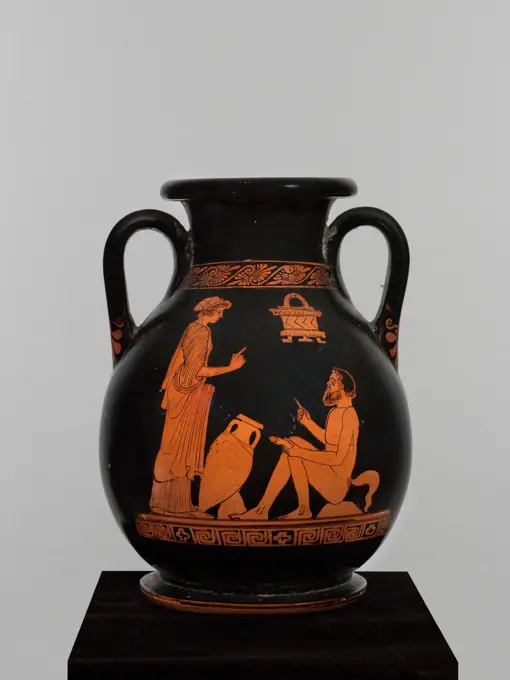
Carlsruhe painter. Pelikè. Red figures. 470-460 BC. AD Museum of Fine Arts of the City of Paris, Petit Palais. 59230-1 Amphora, handle, ceramic, red figure, pelike, rehabet, character representation, ancient scene, ancient vase, veme ve v 5th 5th 5th century AV.jc
158 assets in this story
6145-44288682
Apulian Red-Figure Pelike. Varrese Painter (Greek (South Italian, Apulian))
6145-59181916
Lazio Viterbo Viterbo Museo Civico06. Hutzel, Max 1960-1990 Views of paintings (Middle Ages through 18th c.), frescoes, a tabernacle, coffin, sculpture reliefs, portal fragments, busts, sculpture, tapestry found in the Pinacoteca, Second floor gallery and Second floor cloister sequences. Antiquities: Many views of Etruscan and Roman fragments, sculpture, sarcophagi, pottery, masks, jewelry and other objects found in the Storeroom sequence (inventory numbers on back of prints), and the Cloister, Second floor Cloister, Valle Giulia, Sala Romana and Sala Etrusca sequences. General Notes: There are eight separate numerical sequences for this location. The cloister as an architectural structure, rather than museum site, is documented in the record and file for S. Maria della Verita, Cloister, all views of which are stored in Medieval core collection. Five views from the Museo Civico Second floor cloister sequence are stored in Medieval. German-born photographer and scholar Max Hutzel (1911-
1899-75356
Apulian red-figure volute krater, by Painter of Pavia, 320-IV Century, cm 36 diam. orlo cm 22, piede cm 14.7
1899-18611503
Spain, Toledo province, Illescas. Parish Church of Santa Maria. Dated to the end of the 12th and beginning of the 13th century. Built in Romanesque-Mudejar style. In the 16th century it was remodelled. View of the 13th century Mudejar tower. Engraving. La Ilustracion Espan~ola y Americana, 1881.
1788-17314
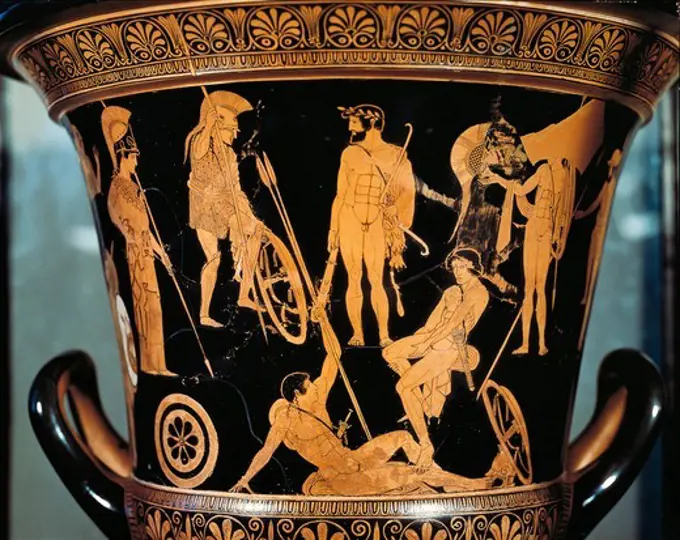
Red-figure pottery. Attic krater depicting Heracles and Argonauts from Orvieto, Umbria region, Italy, 475-450 B.C.
4409-17372619
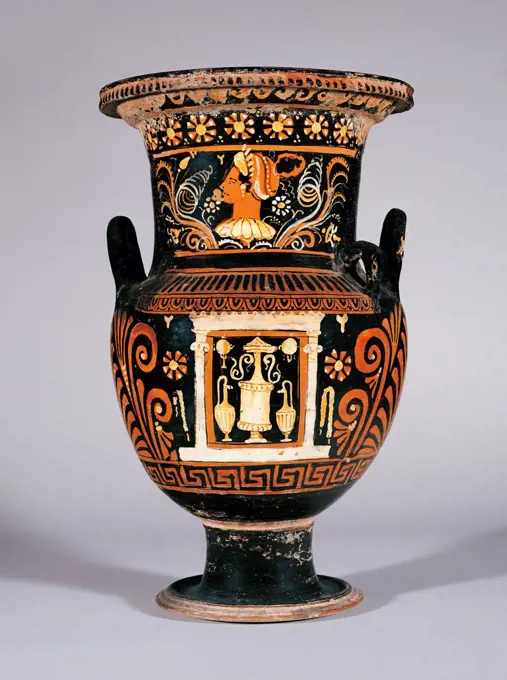
Terracotta loutrophoros (ceremonial vase for water). Culture: Greek, South Italian, Apulian. Dimensions: 34 3/4 in. (88.3 cm). Date: 3rd quarter of the 4th century B.C..On the body, obverse, woman with attendant in naiskos (shrine) flanked by youth and womenReverse, woman in naiskos flanked by youths and womenOn the shoulder, obverse, Eros with alabastron and mirror within foliageReverse, head of a woman within foliageThis imposing and beautifully executed vase, together with its counterpart exhibited here, is of exceptional interest for the architectural structure on the obverse. A small naiskos, rendered with three columns, encloses a woman, her maid who holds out a small casket, and a metal loutrophoros. Between the level on which they stand and the podium for the shrine are two panels with a pair of confronted lions. The podium itself consists of an upper frieze of triglyphs, alternating with metopes showing Greeks fighting Amazons. The lower element is covered with tendrils e
6145-29719712
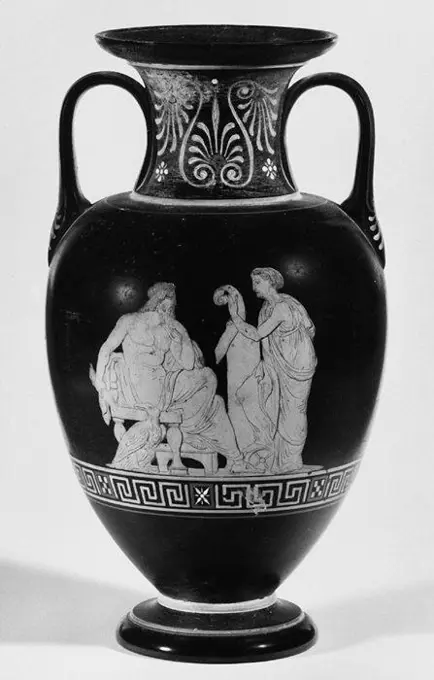
Pair of vases ca. 1875 Frederick Sonne These vases are decorated with scenes based on marble reliefs of 1825 by the Danish sculptor Bertel Thorvaldsen (1770-1844) that are on the facade of the Christiansborg Palace, Copenhagen. On .1, Minerva, goddess of wisdom, places a butterfly, image of the soul, upon the head of a man of clay formed by Prometheus; on .2, Nemesis, goddess of retributive justice, reads the records of a man's like to Jupiter, seated on his tribunal and holding a thunderbolt.. Pair of vases 205143
4409-17435045
Terracotta calyx-krater (bowl for mixing wine and water). Culture: Greek, Attic. Dimensions: Overall: 14 7/16 x 13 9/16in. (36.7 x 34.4cm). Date: early 4th century B.C..Obverse, woman seated between two men and two womenReverse, woman between two menThe iconography here leaves unclear whether it belongs to the everyday world or the realm of Dionysos. The figure on the obverse suggests Ariadne. Museum: Metropolitan Museum of Art, New York, USA.
6145-59125637
Attic Red-Figure Cup (Type B). Attributed to the Eretria Painter, painter (Greek (Attic), active 440 - 410 B.C.) about 430 B.C. I: Mounted warrior with spear, bow, and quiver riding to left; Exterior: A: Three warriors, one of whom holds a horse; B: Two warriors to right, one mounted, the other on foot beside his horse, looking back.
6145-48829366
Attic Red-Figure Kylix Fragment. Attributed to Euaion Painter (Greek (Attic), active about 460 - 440 B.C.)
6145-48871633
Attic Black-Figure Siana Cup Fragment. Heidelberg Painter (Greek (Attic), active about 560 - 540 B.C.)
4409-153238
TARRO DE BOTICA DE MANISES - POT O BOTE CON DAMAS FORMANDO UN CORRO - SIGLO XV. Location: INSTITUTO VALENCIA DE DON JUAN-COLECCION. MADRID. SPAIN.
4409-47640
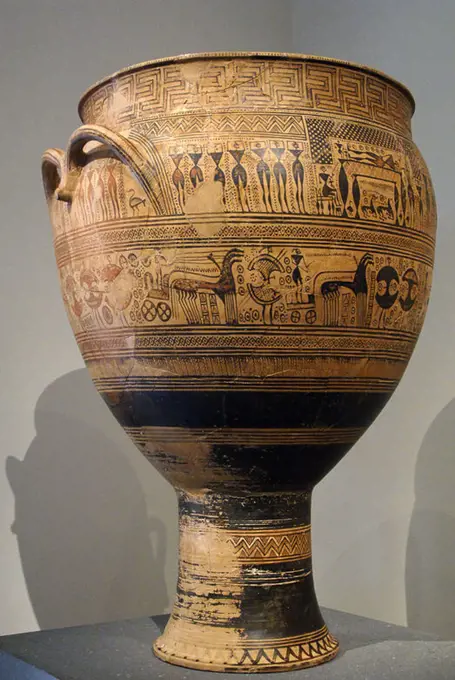
Greek art. 8th century B.C. Terracotta funerary krater dated between 750 and 735 depicting the deceased lying and surrounded by his family. At the bottom, a procession of chariots and foot soldiers. It comes from Attica. Metropolitan Museum of Art. New York. United States.
6145-52505691
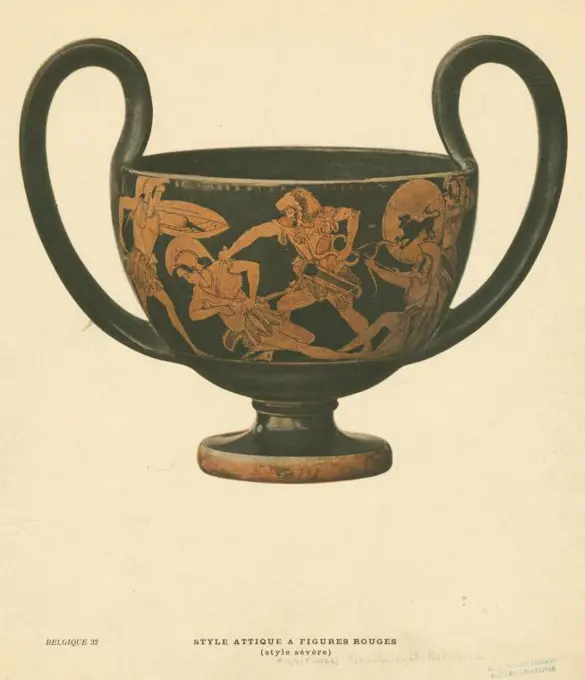
Style attique a figures rouges (style sévère) Kantharos depicting Heracles and the Amazons, ca. 490-485 B.C. Douris, 6th/5th cent. B.C.. still image. 1926. The Miriam and Ira D. Wallach Division of Art, Prints and Photographs: Picture Collection. Pottery , Greece, Pottery, Greek, Antiquities, Mythology, Hercules (Roman mythology), Amazons, Arms & armament , To 499, Fighting , To 499, Drinking cups, Heracles (Greek mythology), Drinking vessels , To 499
4409-64079
Fragment of a Krater. Italy 30-20 BC. Marble. Artemis carries a torch as the Goddess of the Night and Darkness, and a quiver as the Goddess of the Hunt. Behind her is a pine tree. The other women cannot be identified. Ny Carlsberg Glyptotek. Copenhagen, Denmark.
4409-17400921
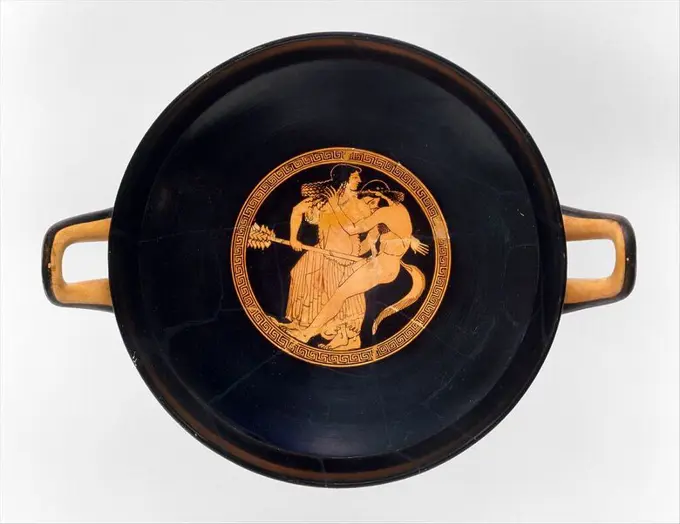
Terracotta kylix (drinking cup). Culture: Greek, Attic. Dimensions: H. 5 in. (12.7 cm)diameter 11 1/4 in. (28.6 cm). Date: ca. 490-480 B.C..Interior, satyr and maenadExterior, satyrs and maenadsMakron's satyrs and maenads (male and female followers of Dionysos, the god of wine) are distinguished not only by their vivacity but also by their fine garments and meticulous grooming. Here, Makron has clearly enjoyed depicting flying skirts and hair and the different ways of wearing animal pelts. Museum: Metropolitan Museum of Art, New York, USA.
4409-17279807
R-CERAMICA DE ISNIK S XVI-CERAMICA TURCA DE LA ANTIGUA NICEA. Location: VICTORIA AND ALBERT MUSEUM. LONDON. ENGLAND.
4409-39970
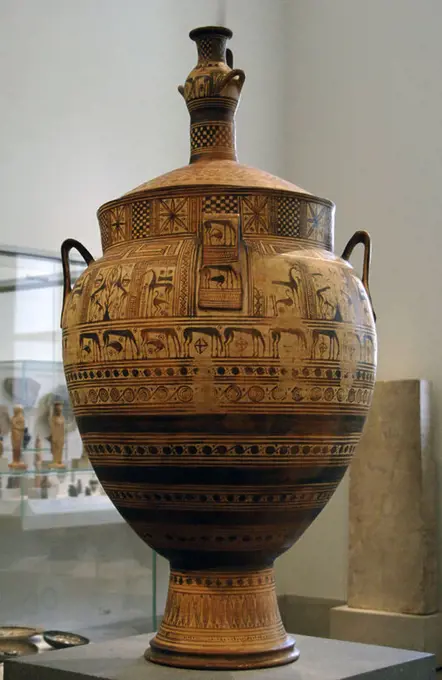
Greek art. Terracotta krater with lid surmounted by a small hydria. Geometric Period. Ca. 750-740 BC. Found on Kourion, Cyprus. Metropolitan Museum of Art. New York. Unidos.r States.
6145-48859499
Fragmentary Apulian Red-Figure Pelike. Close to Suckling - Salting Group (Greek (South Italian, Apulian), active about 360 - 340 B.C.)
1788-16971
Etruscan kylix depicting Triton, from Vulci, Viterbo Province, Italy
6145-29141640
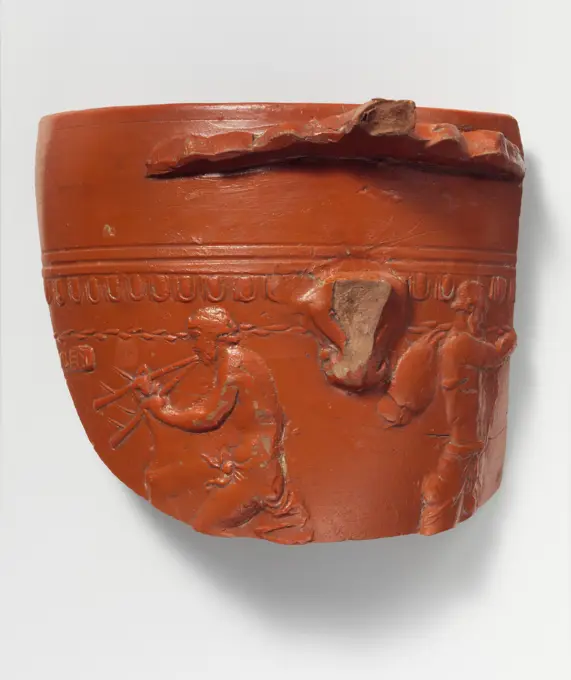
Terracotta fragment of an Arretine cup with satyrs ca. 31 B.C.-A.D. 14 Signed by Perennius Fragment of an Arretine cup with satyrs.. Terracotta fragment of an Arretine cup with satyrs 250277 : Signed by Perennius, Terracotta sherd from an Arretine cup with satyrs, ca. 31 B.C.A.D. 14, Terracotta, 2 3/4  3 3/16  11/16  1/8 in. (7  8.1  1.8  0.3 cm). The Metropolitan Museum of Art, New York. Gift of J. Pierpont Morgan, 1917 (17.194.1931)
1788-16201
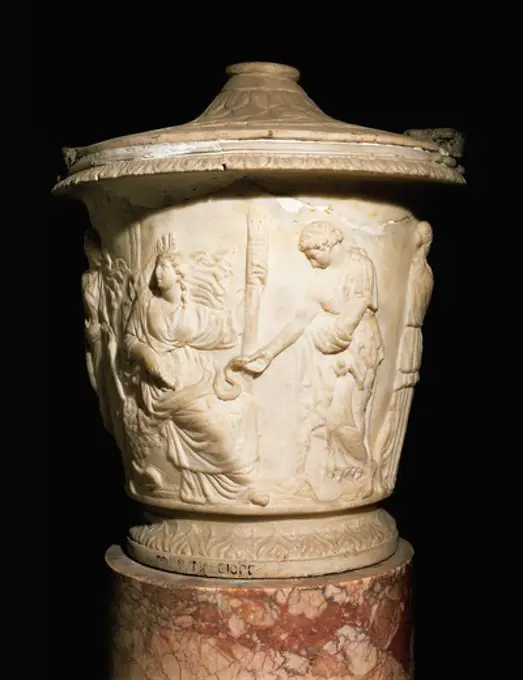
Roman civilization, cinerary urn with relief decoration showing Eleusinian Mysteries from terme di diocleziano (baths of diocletian)
6145-29116169
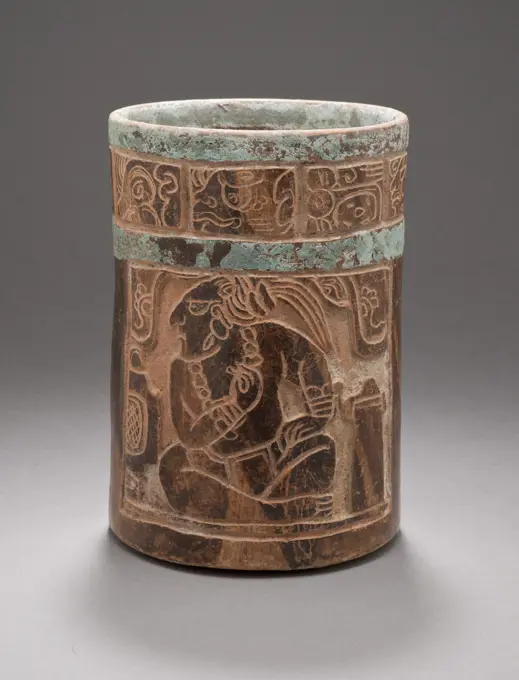
Cylinder Vessel with Image of Seated Figure. Mexico or Guatemala, Maya, 600-900 CE. Ceramics. Slip-painted ceramic with postfire application of Maya blue pigment
4443-21195510
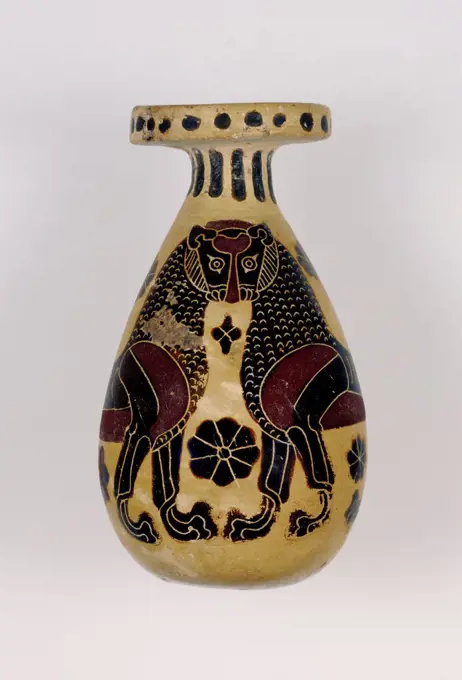
Corinthian Alabastron; Painter of Palermo 489, Greek (Corinthian), active 640 - 600 B.C.; Greece (Corinth); 640 - 625 B.C.; Terracotta; Object (body): H: 7.4 x Diam.: 4.3 cm (2 15/16 x 1 11/16 in.), Object (rim): Diam.: 3.1 cm (1 3/16 in.)
6145-29200474
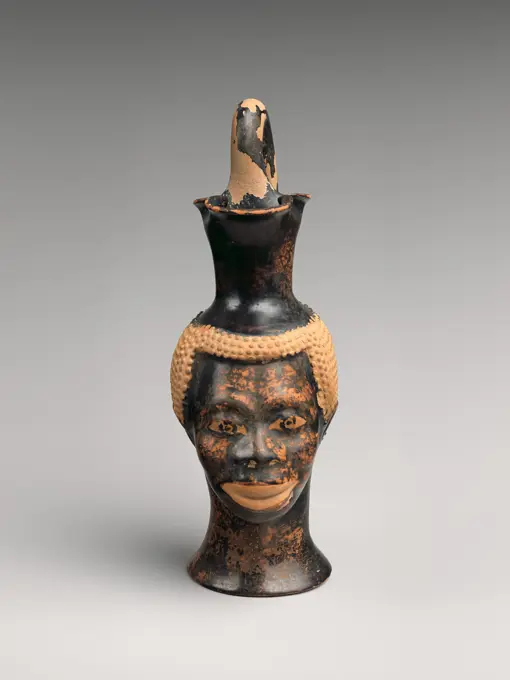
Terracotta oinochoe (jug) in the form of a Black's head ca. 480 B.C. Greek, Attic Vases in the form of a Black's head were popular during the first half of the fifth century B.C. Blacks were familiar to Greeks from the time of Homer. In his Iliad, for instance, Memnon, the son of Eos (the goddess of dawn), was king of the Ethiopians and a prominent ally of the Trojans. In such vases, the features conveyed exoticism and permitted the juxtaposition of lustrous black glaze with textured hair.. Terracotta oinochoe (jug) in the form of a Black's head. Greek, Attic. ca. 480 B.C.. Terracotta; red-figure. Classical. Vases
4409-21385221
CALIZ DE FAYENZA. III PERIODO INTERMEDIO, XXII DINASTIA. HACIA 850 A.C. Location: NEUES MUSEUM. BERLIN. DEUTSCHLAND. HATHOR. BES DIOS.
6145-59129423
Campania Caserta Capua Museo Campano037. Hutzel, Max 1960-1990 Medieval: Byzantine architectural fragments; parchment fragments with miniatures (12th century) from Montecassino; painted wooden crucifix (13th century); Carolingian crucifixes; Bishop's miter (11th century) of gold and silver damask; fresco (13th century). Post-medieval: Architecture (15th century). Formerly the Palazzo Antignano. Unusual Catalan/Moorish-style portal; Paintings on panel and canvas (15th-18th centuries); marble intarsia (16th century); marble sculpture: busts of Christ and Mary (17th century); sculpture of saints in marble and in wood (15th century); painted and gilded sculpture in wood; marble grave sculpture (16th century); sarcophagus with allegorical carvings; gold reliquary "Rosa d'Oro"; crucifix made of elephant tusk Specific Location: Pianterreno Antiquities: Italic sculpture (seated women holding babies); inscription. Photo campaign #1: 533 photos. Roman relief and sculpture; cinerary urns; Greek a
6145-48885524
Black-Figure Kylix. Attributed to Hunt Painter (Greek (Lakonian), active 565 - 530 B.C.)
7155-70378846
Ancient Greek Vase Black Figure Amphora of Runners, 5th cent. BC.
6145-59181903
Lazio Viterbo Viterbo Museo Civico13. Hutzel, Max 1960-1990 Views of paintings (Middle Ages through 18th c.), frescoes, a tabernacle, coffin, sculpture reliefs, portal fragments, busts, sculpture, tapestry found in the Pinacoteca, Second floor gallery and Second floor cloister sequences. Antiquities: Many views of Etruscan and Roman fragments, sculpture, sarcophagi, pottery, masks, jewelry and other objects found in the Storeroom sequence (inventory numbers on back of prints), and the Cloister, Second floor Cloister, Valle Giulia, Sala Romana and Sala Etrusca sequences. General Notes: There are eight separate numerical sequences for this location. The cloister as an architectural structure, rather than museum site, is documented in the record and file for S. Maria della Verita, Cloister, all views of which are stored in Medieval core collection. Five views from the Museo Civico Second floor cloister sequence are stored in Medieval. German-born photographer and scholar Max Hutzel (1911-
6145-29706473
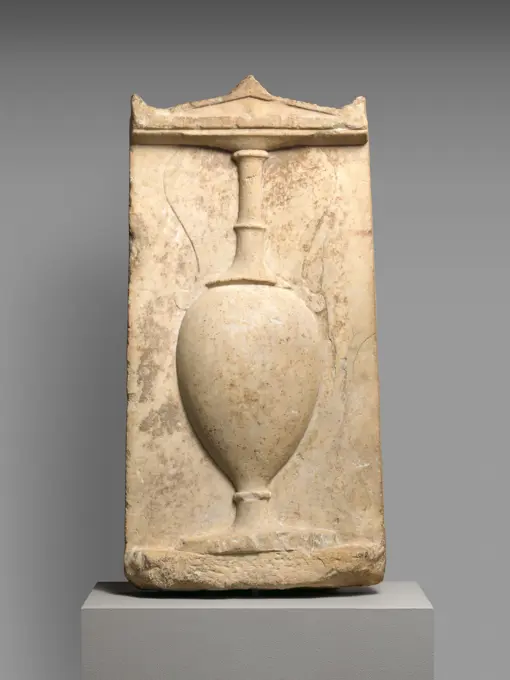
Marble stele (grave marker) of Eukleia 4th century B.C. Greek, Attic Painted on the epistyle, EukleiaThe stele shows a loutrophoros, a vase used to fetch water for the bridal bath and for certain funerary rites.. Marble stele (grave marker) of Eukleia. Greek, Attic. 4th century B.C.. Marble. Classical. Stone Sculpture
4409-20999191
Large xenophantes lekythos: fantastic hunt scene. Black glaze, white coating on the figures, and purple paints. Attica. 390-380 century BC. Xenophantes painter. Pantikapaion (Kerch, Crimea, Black See). The State Hermitage Museum. Saint Petersburg. Russia.
6145-44300086
Attic Black-Figure Amphora. Unknown
4409-20078
PLATO - FRAGMENTO DE CUERDA SECA CON DECORACION FIGURADA - PROCEDE DE LA ALCAZABA - SIGLO XII/XIII. Location: ARCHAEOLOGICAL MUSEUM. Malaga. SPAIN.
6176-67065850
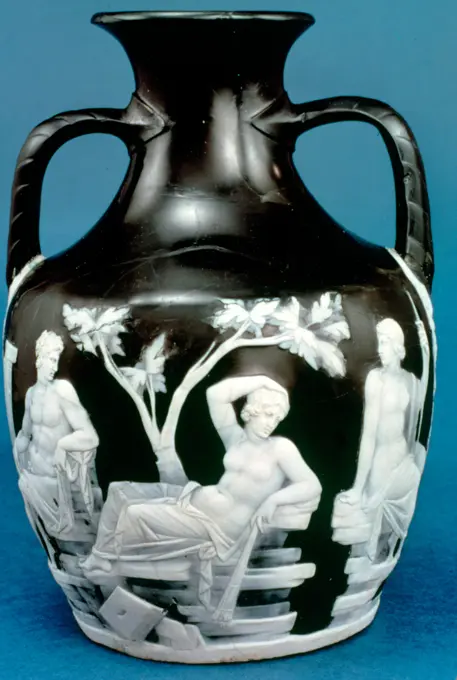
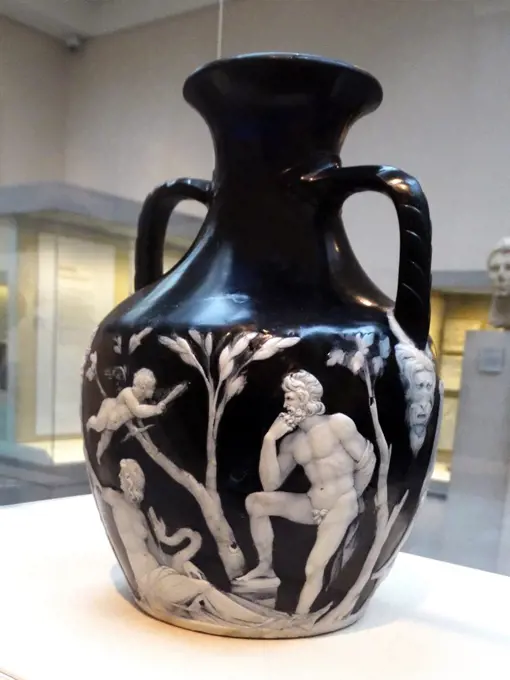
The Portland Vase, c5-25 AD. Artist: Unknown
1788-18238
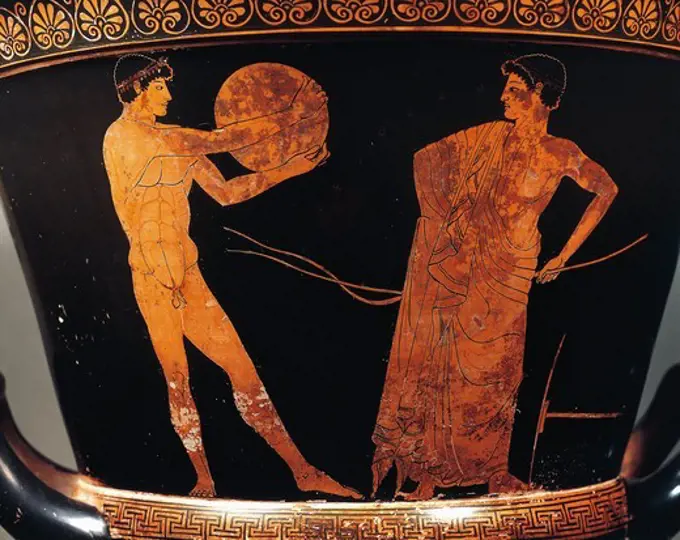
Calyx-krater attributed to Painter of Kleophrades, Detail of discobolus with trainer
7155-70378852
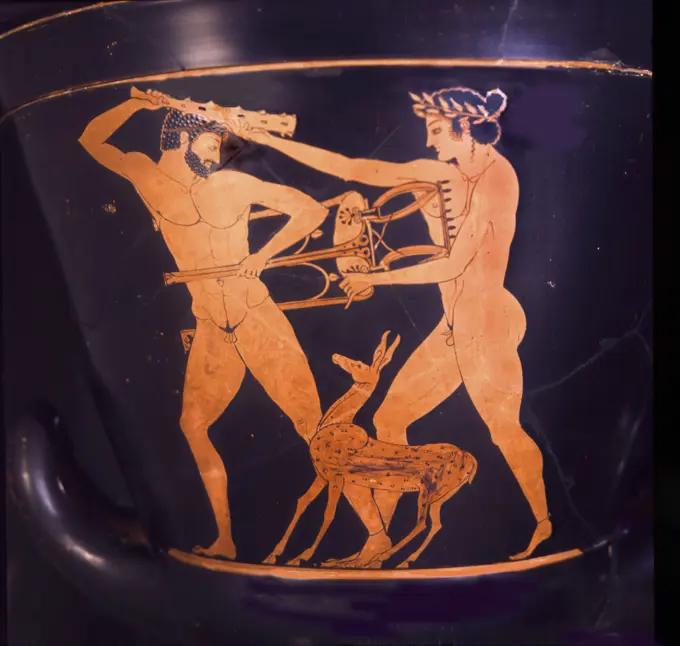
Ancient Greek vase. Herakles fights Apollo for the tripod. Red figure style Attic vase.
6145-44301744
Attic Red-Figure Cup Fragment. Aberdeen Painter (Greek (Attic))
4409-17421777
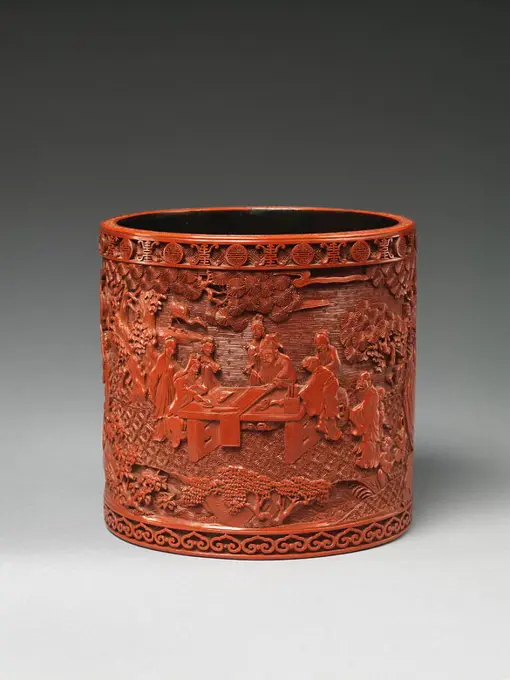
Brush holder with scholars in a garden. Culture: China. Dimensions: H. 6 1/2 in. (16.5 cm); Diam. 6 3/4 in. (17.1 cm). Date: 18th century.This brush pot shows scholars writing, painting, and enjoying nature--a form of imagery found throughout Chinese art. While resonating with individual activities, the scene also recalls famous historical gatherings such as those in the West Garden, an eleventh-century imperial family residence. Museum: Metropolitan Museum of Art, New York, USA.
4409-78021639
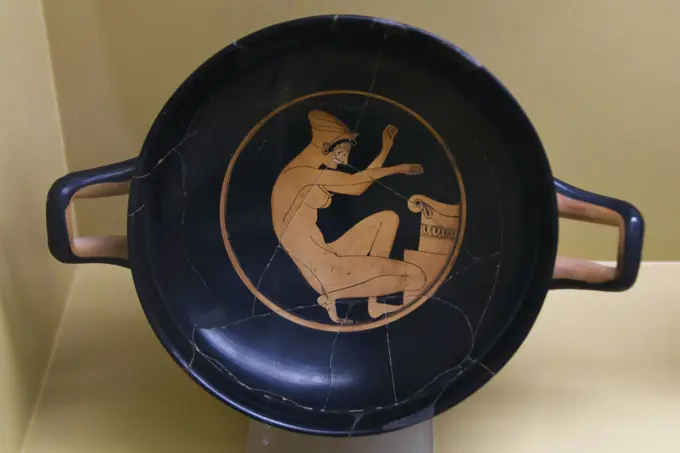
Red-figure kylix, ca. 510-500 BC. Naked hetaira depicted wearing a sakkos in her hair, kneeling in front of an altar. Painted by Chairias, Attic vase painter active between 510 BC and 490 BC. Museum of the Ancient Agora. Athens, Greece. Author: Epiktetos (fl. 520 BC-490 BC). Chairias (fl. 510 BC-490 BC). Attic vase painter.
6145-29230502
Terracotta fragment of a skyphos (deep drinking cup) late 6th/early 5th century B.C. Greek, Attic Obverse, goat to right; seated goatherd, wearing a petasos, with his chlamys wrapped around his waist and legs, with his right arm behind him, holding an unidentified object; and his bent left arm in front of him, in between the goat's head and the man's head, four letters of an inscription; in front of the man's head, three letters of an inscription; Reverse, draped male to right, with a lyre, facing a goat; below the rim, on both obverse and reverse, dot ivy. Terracotta fragment of a skyphos (deep drinking cup). Greek, Attic. late 6th/early 5th century B.C.. Terracotta; black-figure. Archaic. Vases
4409-17582181
'The Piranesi Vase'. Italy, Late 18th century. Dimensions: h. 125 cm. Museum: State Hermitage, St. Petersburg.
1746-29971934
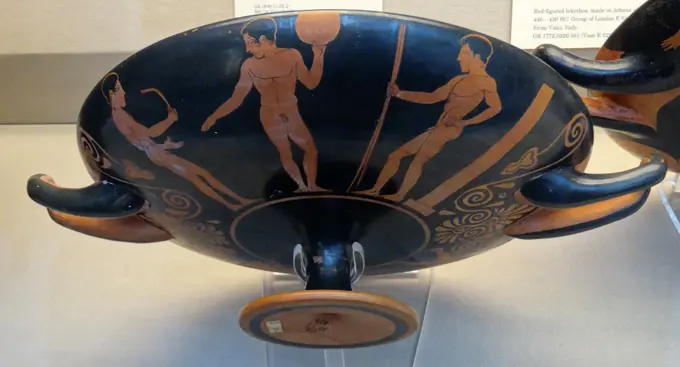
Greek red and black Krater (vase), depicting athletes training. On the left, the youth holds a strigil to scrape oil and dirt off his skin after exercise. In the middle is a young man holding a discus, on the right, a third youth, standing in front of a stele, holds two javelins. All three athletes wear victor's ribbons. Athenian, 430 BC
6145-29118388
Cylinder Vessel with Palace Scene. Guatemala, Petén, Dos Pilas or vicinity, Maya, lk style, 740-800 CE. Ceramics. Slip-painted ceramic with post-fire pigment
4409-17436466
Vase. Culture: Japan. Dimensions: H. 9 3/4 in. (24.8 cm); Diam. 6 in. (15.2 cm). Date: 1780. Museum: Metropolitan Museum of Art, New York, USA.
4409-17388115
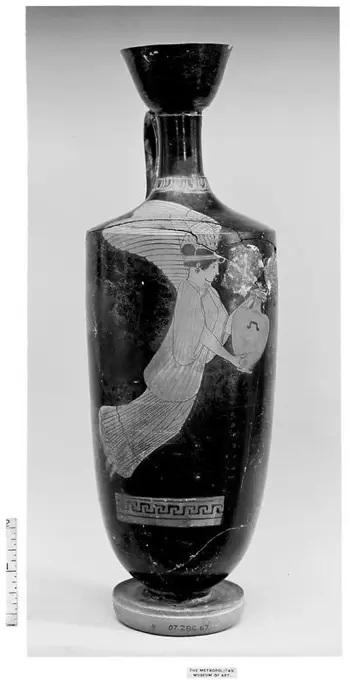
Terracotta lekythos (oil flask). Culture: Greek, Attic. Dimensions: H. 14 in. (35.5 cm). Date: ca. 480-470 B.C..Nike carrying prize hydriaInscribed "Hippon is fair"Athenian civic life was filled with contests-athletic, musical, and theatrical. It is no wonder, therefore, that Nike, the personification of victory, hovers on many vases. Museum: Metropolitan Museum of Art, New York, USA.
6145-48831163
Fragmentary Faliscan Red-Figure Cup (Cup 104) (comprised of 5 Joined Fragments). Attributed to the Del Chiaro Painter
6145-52507100
Ancient Greek and Italian pottery vessels. still image. 1883. The Miriam and Ira D. Wallach Division of Art, Prints and Photographs: Picture Collection. Decoration and ornament , Greece, Pitchers, Pottery , Greece, Ewers
6145-52511666
Lekythen. Genick, A.. still image. Prints. 1883. The Miriam and Ira D. Wallach Division of Art, Prints and Photographs: Picture Collection. Pottery , Greece, Pottery, Greek, Lotus, Lyres, Satyrs (Greek mythology), Decoration and ornament , Plant Forms , Greece, Vases, Greek
6145-29213027
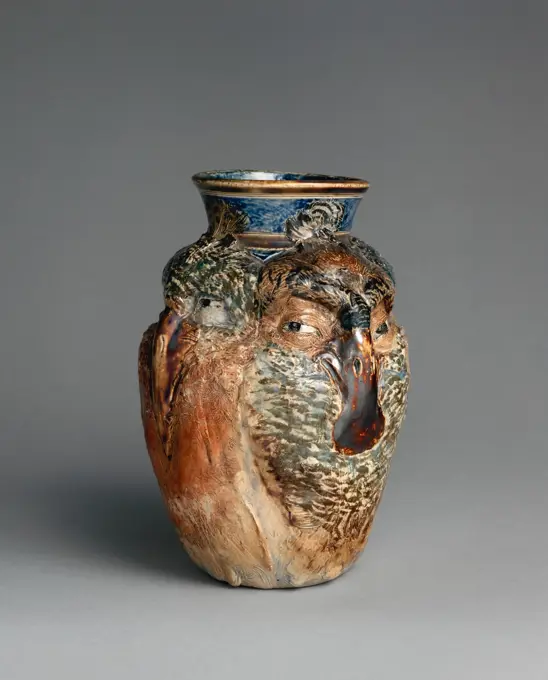
Jar with four birds 1892 R. W. Martin and Brothers British Determined that pottery vessels should be regarded as true works of art, avant-garde ceramicists in France in the last decades of the nineteenth century transformed their craft into an intellectual and emotional endeavor. The pioneers of this revival were Jean Carriès, Ernest Chaplet, Théodore Deck, and Auguste Delaherche. These revolutionary artist-potters embraced artisanal traditions while pursuing lost techniques through exhaustive experimentation. Reacting to what they viewed as an excessive and improper use of ornament, they celebrated the simplicity and sincerity of their medium, following the tenets of the Art Nouveau style taking place in Europe. Based on the principles of the British Arts and Crafts movement, Art Nouveau artists sought to reform the decorative arts by emphasizing uniqueness and a return to craftsmanship. Artist-potters found inspiration in Asian ceramics, particularly Japanese stoneware (a hard, dense
6145-29734301
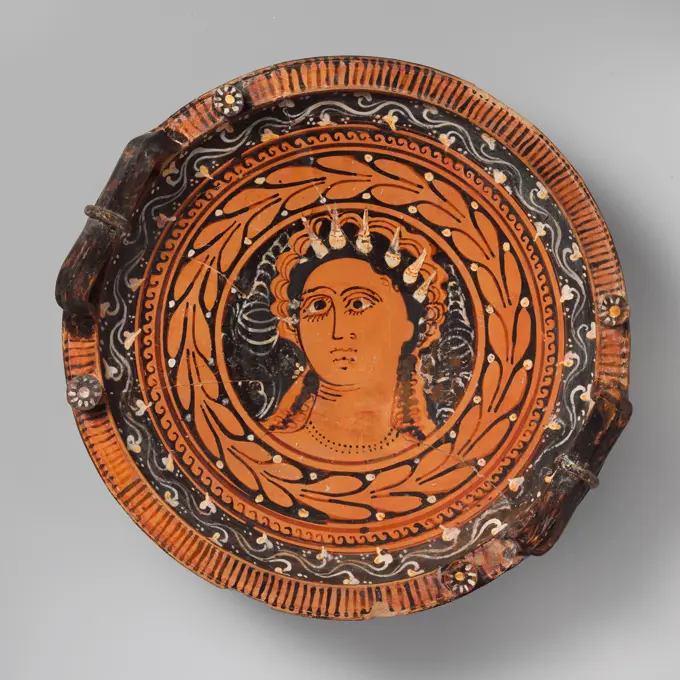
Terracotta lekanis (dish) ca. 325-300 B.C. Close in style to the Baltimore Painter Frontal head of a womanFemale heads decorate vases of many shapes. They are particularly suited to a circular format, as evidenced also by the heads of goddesses, nymphs, and other mythological ladies on the coinage of South Italian and Sicilian cities such as Metapontum, Thurii, Terina, and Syracuse.. Terracotta lekanis (dish) 247387
6145-30177644
One of a Pair of Matched Bowls Depicting Costumed Ritual Performers 180 BCE-500 CE Peru. Ceramic and pigment . Nazca
1746-19985007
The Portland Vase; Cameo glass, probably made in Rome, 15 BC - AD 25. The Portland Vase is one of the finest surviving pieces of Roman glass, and is named after the Dukes of Portland who owned it
6145-48843136
Fragmentary Attic Red-Figure Kylix. Attributed to Oltos (Greek (Attic), active about 525 - 500 B.C.)
4409-36796
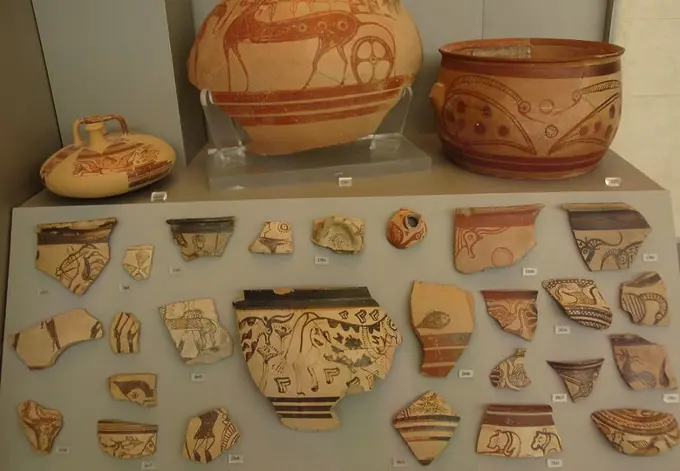
Mycenaean art. Greece. Fragments of pottery. Painting style. Dating from 14th-12th centuries B.C. Acropolis of Mycenae. National Archaeological Museum. Athens.
6145-30177502
Plate Depicting Head of Llama on Interior Made 180 BCE-500 CE Peruvian South Coast. Ceramic and pigment . Nazca
6145-29812721
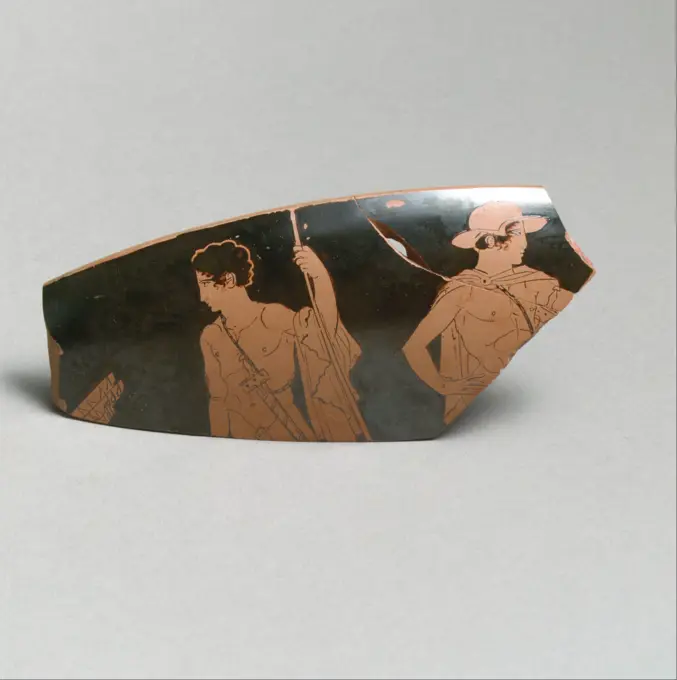
Fragment of a terracotta kylix (drinking cup) ca. 425 B.C. Attributed to the Codrus Painter Figure with two phialai (libation bowls) and two young warriors setting outThe preserved part of the cup would have shown a figure offering libations for the departing youths. They have swords and spears. The youth at the right wears a petasos, a traveling hat, suggesting a long journey.. Fragment of a terracotta kylix (drinking cup) 250779 : Attributed to the Codrus Painter, Fragment of a terracotta kylix (drinking cup), ca. 425 B.C., Terracotta, H. 2 1/4 in. (5.7 cm); length 4 3/4 in. (12.1 cm). The Metropolitan Museum of Art, New York. Rogers Fund, 1919 (19.192.46)
6145-45524286
Przeszo Przyszoci Domenico from Venice (fl. 1547 1570)
PREVIOUS
of 2
NEXT
2401 S. Ervay, Suite 206
Dallas, Texas 75215
United States
Get Started
Free ResearchMy BoardsMy Cart
For Creators
How To License Your ContentContributor PortalFrame of Mind
Resources
API accessPricing
Contact
+1 866 236 0087help@viewpictures.co.uk Contact form
©2026 View Pictures. All Rights Reserved. -A
This site is protected by reCAPTCHA and Google Privacy Policy and Terms of Service apply.