My Boards
View Pictures
  • My Boards
← Artworks

Ancient Greek Vases

A diverse array of terracotta vases depicting scenes of Greek mythology and everyday life, characterized by intricate black-figure painting, highlighting cultural themes and artistry.

Attic oenochoe depicting Hermes, messenger of gods, between two sphinkx, black-figure pottery
163 assets in this story
4409-10812
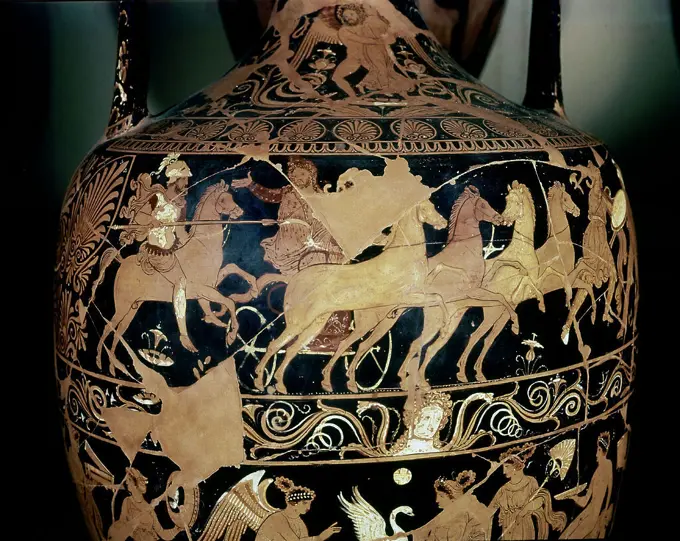
ANFORA DE RUVA SIGLO IV AC - DARIO III SE FUGA DE ALEJANDRO MAGNO. Location: NATIONAL MUSEUM OF ARCHAEOLOGY. NEAPEL. ITALIA.
6145-29209491
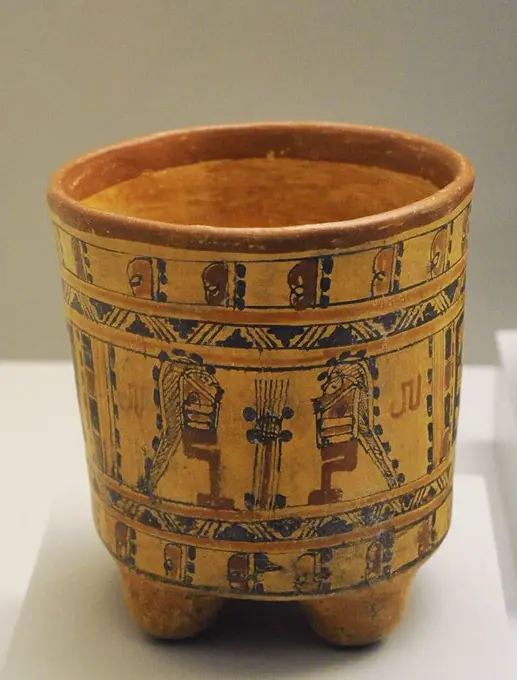
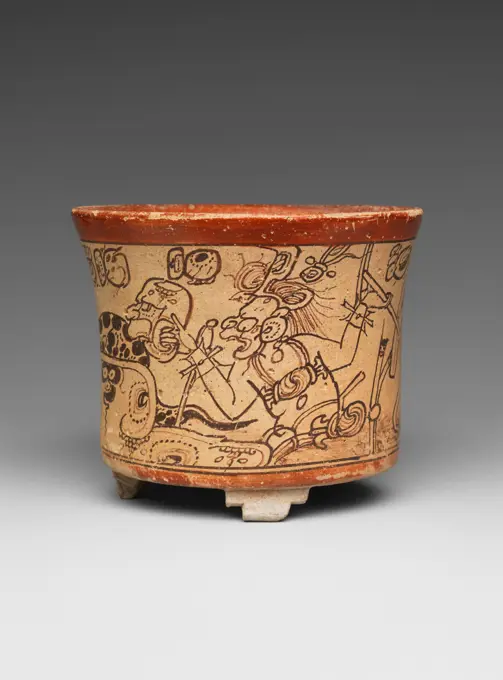
Vessel, Mythological Scene 7th-8th century Attributed to the Metropolitan Painter This small drinking cup with stepped tripod supports features one of the most masterfully painted, well-preserved mythological scenes found on a Maya vessel. Because of the calligraphic lines resemblance to that found in the three Maya books known as codices (sing. codex), this class of painted vases are referred to as "codex-style." Only four Maya codices have survived from what was certainly a large corpus, but these codex-style vessels afford a glimpse into the rich world of painted narratives and complex Maya mythologies about agricultural cycles. The subject of this particular vessel is a myth pertaining to the start of the tropical rainy season. The black-on-cream painted scene, framed by vivid red bands on the flaring rim and the base, centers on an anthropomorphic feline marked with dark spots. This "water lily jaguar," a character known from other depictions and hieroglyphic texts, crouches on a
6145-29117583
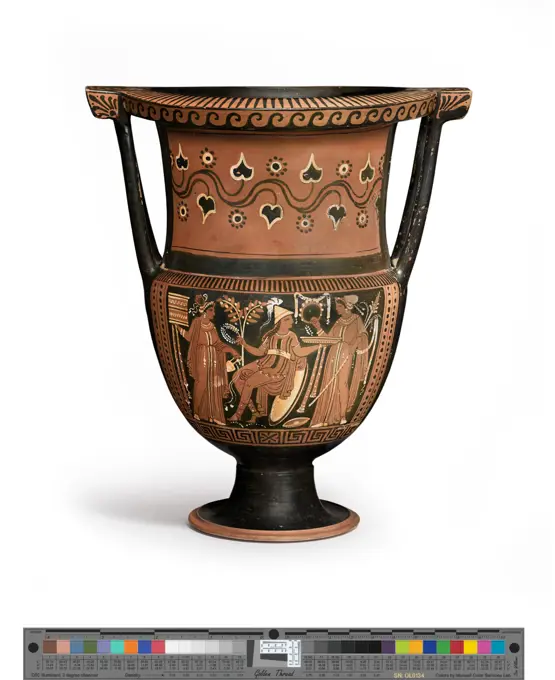
Column-Krater with (A) Oscan Warrior and Two Women and (B) Three Youths. Patera Painter (attributed to the) (South Italy and Greece active circa 340-320 B.C.). South Italy, circa 340-320 B.C.. Furnishings; Serviceware. Terracotta
1746-19669711
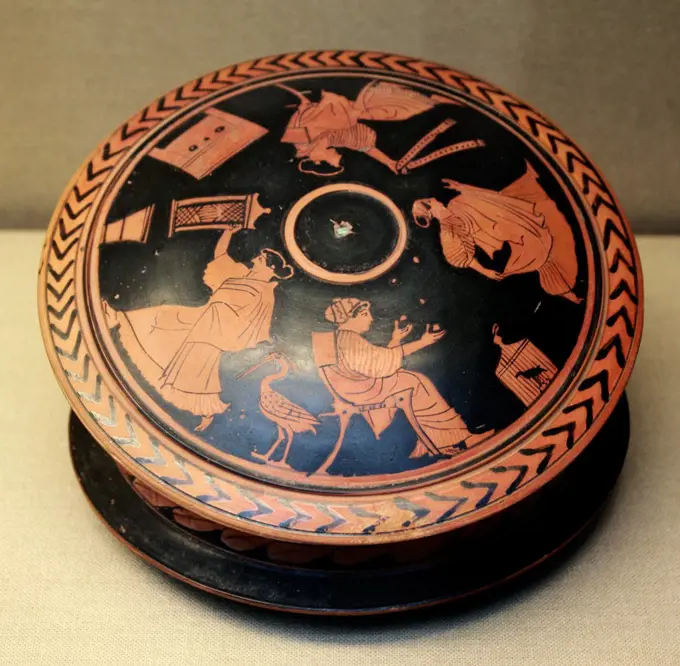
Red-figured pyxis (trinket-box) with a lid showing a woman holding a 'sprang' frame. Greek, ,made in Athens around 470 BC. This frame differs in its rectangular shape from the tapering version shown on the vase 1909.11-2.3 also exhibited in the case.
4409-135309
ANFORA: CON GUERRERO CORRIENDO CON DOS LANZAS. GRIEGO CERAMICA. (DEPOSITO: MUSEO ARQUEOLOGICO NACIONAL).
6145-29817131
Terracotta volute-krater (mixing bowl) ca. 340-320 B.C. Attributed to the Group of New York 17.210.240 A: eight mourners at the tomb of a warrior. The naiskos contains a statuary group that shows a woman about to crown the deceased warrior with a wreath. He is seated wearing his helmet ant holding a spear and a phiale. Outside the shrine the mourners are grouped symmetrically. Above, on either side, a woman rests one foot on an Ionic capital and offers a wreath to a warrior who is seated in front of her holding a phiale. Below, on the left, a standing warrior whit a shield and helmet. On the right a standing woman with fan and situla. At the bottom, two seated women, one with a fan and grapes, the other with a mirror and open box. On the neck, two Erotes wreathe Aphrodite, who are sitting in a floral setting holding a phiale. On the handles, in relief, heads of Io with blond hair. B: four mourners at a tomb. Inside the naiskos stands a statue of the deceased youth holding a phiale and
6145-54681100
Hydria fragment Attributed to the Hamburg Painter ca. 410-380 BCE View more. Hydria fragment. Attributed to the Hamburg Painter. Greek, South Italian, Lucanian. ca. 410-380 BCE. Terracotta; red-figure. Late Classical. Vases
6176-67040827
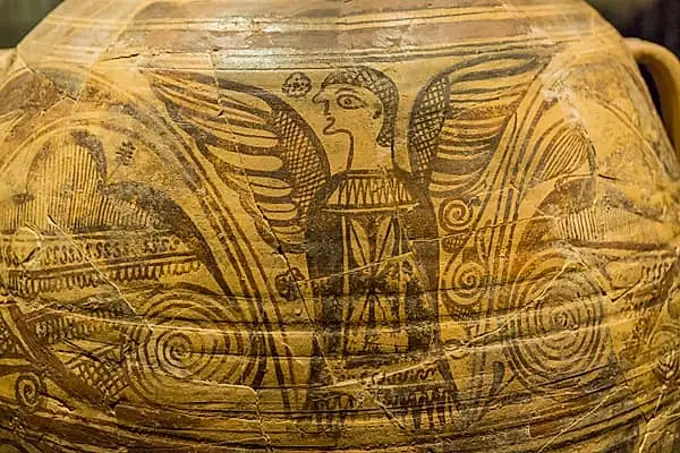
Greek Pithos, (Jar) from Thebes, 7th century BC. Artist: Unknown.
6145-58999213
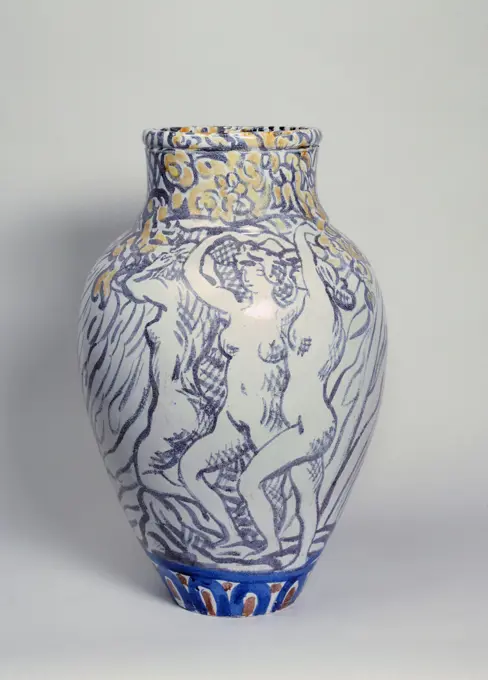
André Metthey (1871-1920), Louis Valtat (1869-1952). Vase "The three graces". Ceramics, earthenware. Museum of Fine Arts of the City of Paris, Petit Palais. 25525-6 Ceramic, Roman divinity, faience, mythological, nudite, three graces, vase, mythology, naked
4443-21958694
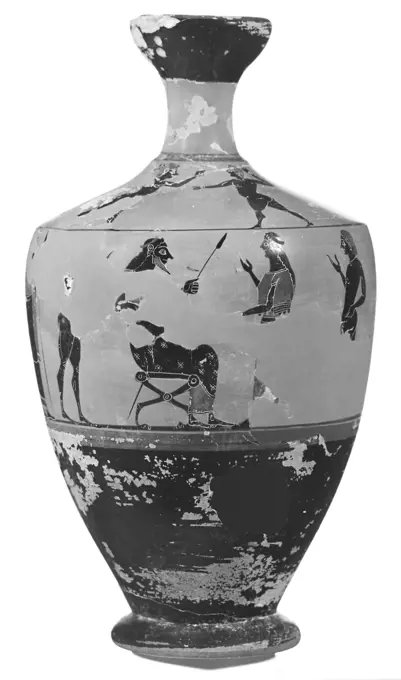
Attic Black-Figure Lekythos; Taleides Painter, and Amasis (Greek (Attic), active 560 - 520 B.C.); Athens, Greece; about 540 B.C; Terracotta; 18.3 cm (7 3,16 in.)
4409-77944263
Protoattic Pottery. Sphinx amphora by the Nessos Painter (Athenian painter born before 625 BC). 620-610 BC. Museum of the Ancient Agora. Athens, Greece.
4443-21957410
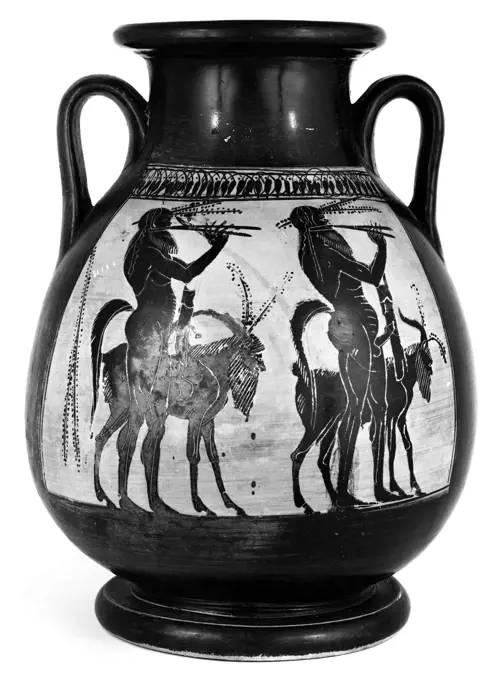
Attic Black-Figure Pelike; Attributed to Theseus Painter (Greek (Attic), active about 510 - about 490 B.C.); Athens, Greece; about 490 B.C; Terracotta; 37.8 × 17 cm (14 7,8 × 6 11,16 in.)
6145-29115874
Vessel with Dance Scene. Maya, 600-900 CE. Ceramics. Slip-painted ceramic
6145-29721372
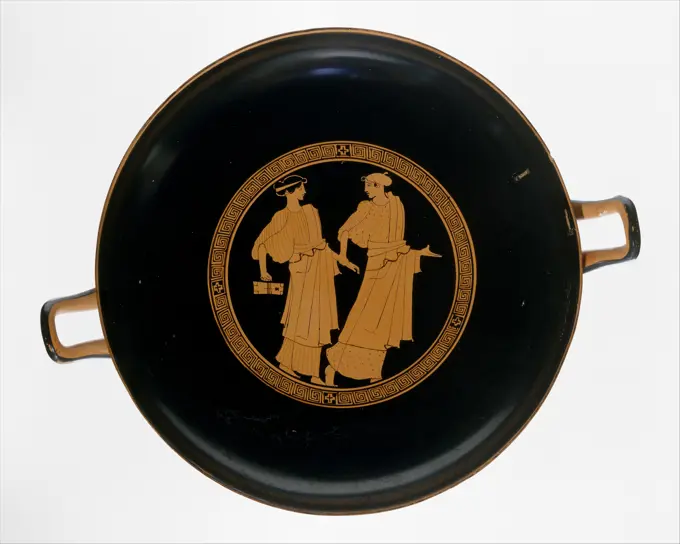
Terracotta kylix (drinking cup) ca. 460-450 B.C. Attributed to the Painter of Bologna 417 Interior, two schoolgirlsExterior, women conversingThe representation in the tondo provides interesting evidence of the education of women in the mid-fifth century B.C. The girl on the left carries a pair of writing tablets and a stylus. Where she and her companion are going is no indicated. Although there apparently were some schools, those who could afford it were probably tutored at home. The girl with the tablets is obviously reluctant, but why we cannot know. The scene on the exterior may have some connection as the paraphernalia suspended in the background includes another set of tablets, torchholders, and an alabastron (perfume vase) in addition to wreaths and slippers.. Terracotta kylix (drinking cup). Greek, Attic. ca. 460-450 B.C.. Terracotta; red-figure. Classical. Vases
1746-19670497
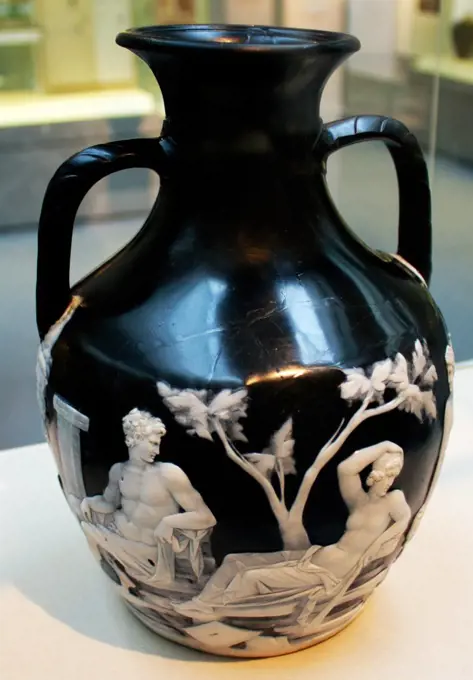
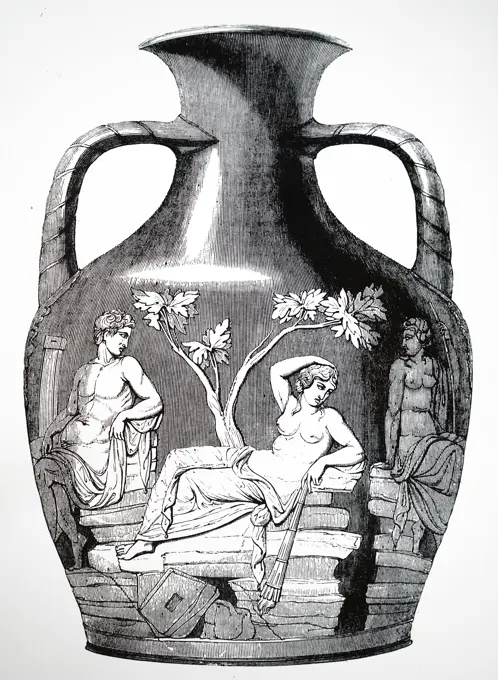
The Portland Vase. Cameo glass, probably made in Rome About 15BC - AD 25. The Portland Vase is one of the finest surviving pieces Roman glass, and is named after the Duke of Portland who owned it from 1785 to 1945. It made of cameo glass a technique in which vessels and plaques, sometimes free-blown, sometimes cast, are created with two layers of glass. The outer layer (usually white) is carved away from the underlying dark layer (usually blue) to create decorative scenes and patterns.
4409-17501421
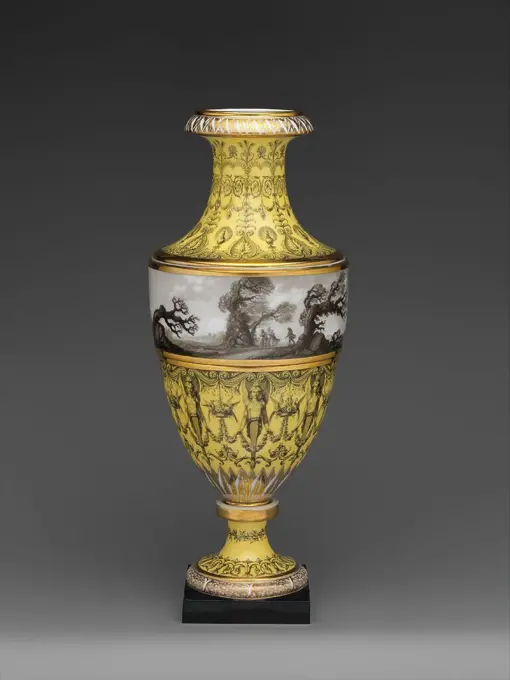
Vase with scenes of storm on land. Culture: French, Paris. Dimensions: Overall (confirmed): 18 5/16 × 7 1/4 × 7 1/4 in. (46.5 × 18.4 × 18.4 cm). Manufacturer: Dihl et Guérhard (French, 1781-ca. 1824) (Manufacture de Monsieur Le Duc d'Angoulême, until 1789). Date: ca. 1790-95.These two vases were made at the time of the French Revolution, at a factory that was located in the heart of Revolutionary Paris. Decorated with landscapes depicting severe storms, the people in both landscapes are at the mercy of the wild forces of nature. These scenes, highly unusual for French porcelain, can be plausibly seen as reflections of the tumultuous period during which the vases were produced. Museum: Metropolitan Museum of Art, New York, USA.
4409-20999142
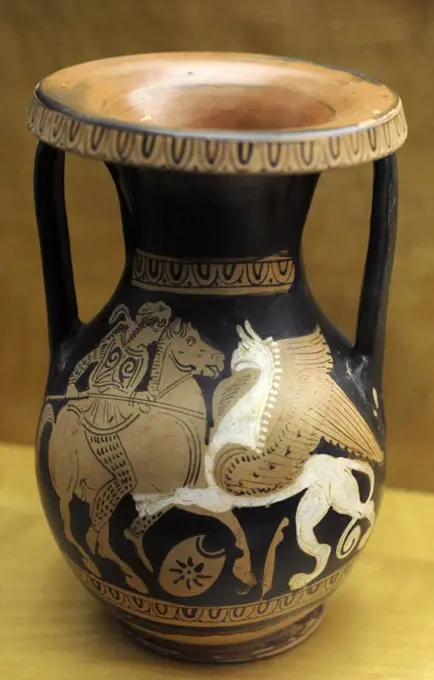
Greek art. Red-figured pelika: Amazon and griffin. Clay. Attica, ca. 340 BC, Kerch style. The Group G. The State Hermitage Museum. Saint Petersburg. Russia.
6145-29062884
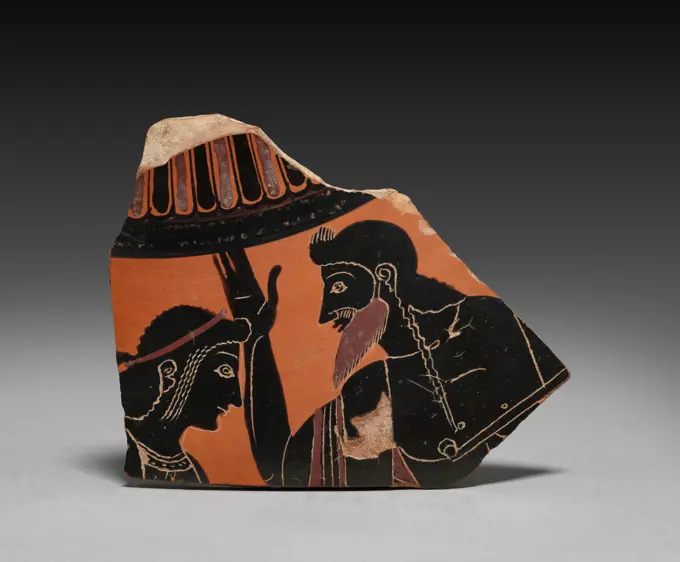
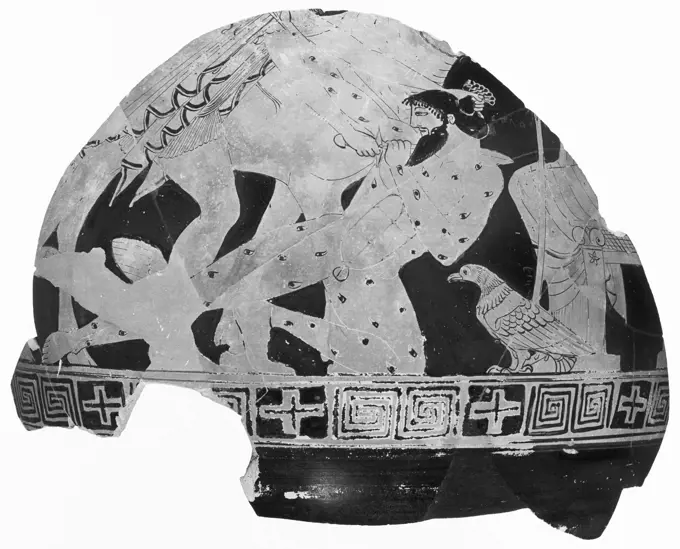
Fragment from Black-Figure Neck-Amphora of Panathenaic Shape (Storage Vessel): Apollo and Zeus, c. 520 BC. Manner of Antimenes Painter (Greek, Attic, active c. 530-510 BC). Ceramic; overall: 1.2 x 0.7 cm (1/2 x 1/4 in.). Comparison with better-preserved vasesand with other artworks and monuments, such as the famous Siphnian Treasury at Delphihelps to fill in some of the action no longer surviving from the rest of this vase, which once showed Apollo and Herakles struggling for the Delphic tripod. One claw-footed leg of the tripod survives, across the chest of Zeus, the bearded figure who intervened to stop the quarrel between two of his sons. Apollo is the unbearded figure at left, while Herakles would have appeared beyond the break on the right.
6145-29767651
Terracotta lekythos (oil flask) ca. 460-450 B.C. Attributed to the Vouni Painter Woman and youth at two gravesThis lekythos is impressive for the well-preserved color and quantity of detail. The setting is probably a family burial plot. Closest to the viewer are two dark blocks, the left one partly overlapping the right. Attached to the right block are a pair of jumping weights, an aryballos (oil flask), and a wreath. The two stelai (grave markers) should certainly be understood as standing on top of the blocks. Farthest from the viewer are two forms that represent one or two burial mounds. The figures at this funerary precinct are adding to the large number of fillets (bands) and wreaths.. Terracotta lekythos (oil flask) 253485 : Attributed to the Vouni Painter, Terracotta lekythos (oil flask), ca. 460450 B.C., Terracotta, Overall: 16 11/16 x 5 7/16in. (42.4 x 13.8cm). The Metropolitan Museum of Art, New York. Purchase, Anonymous Gift, 1935 (35.11.5)
6145-44300096
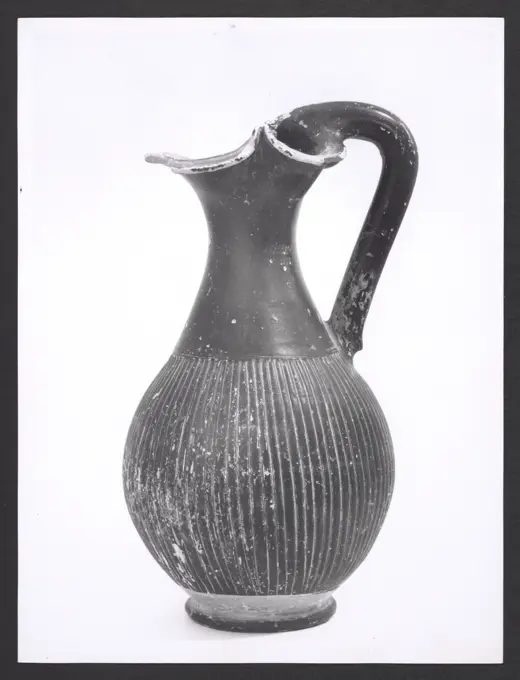
Campanian Oinochoe. Attributed to Boston Ready Painter (Greek (Campanian))
1788-41444
Cup, red-figure pottery. Detail showing the divine assembly with Zeus, Ganymede and Vesta, Greece. Greek Civilization, 6th Century BC.
6145-59157231
Lazio Roma Grottaferrata Museo56. Hutzel, Max 1960-1990 German-born photographer and scholar Max Hutzel (1911-1988) photographed in Italy from the early 1960s until his death. The result of this project, referred to by Hutzel as Foto Arte Minore, is thorough documentation of art historical development in Italy up to the 18th century, including objects of the Etruscans and the Romans, as well as early Medieval, Romanesque, Gothic, Renaissance and Baroque monuments. Images are organized by geographic region in Italy, then by province, city, site complex and monument.
4409-135640
JARRON IBERICO CON DIBUJO DE GUERREROS. (DEPOSITO: MUSEO NUMANTINO).
6145-48881394
Red-Figure Cup. Attributed to Penthesilea Painter (Greek (Attic))
6145-52337303
Hercules in the Garden of the Hesperides. Hamilton, William, Sir, 1730-1803. Illustrations. 1766. The Miriam and Ira D. Wallach Division of Art, Prints and Photographs: Art & Architecture Collection. Classical antiquities, Hercules (Roman mythology)
4409-17395845
Vase decorated with courtly scenes. Painted ceramics. Maya culture. Late Classic Period (600-900 AD). Mesoamerica. Maya region. Museum of the Americas. Madrid, Spain.
4409-13812
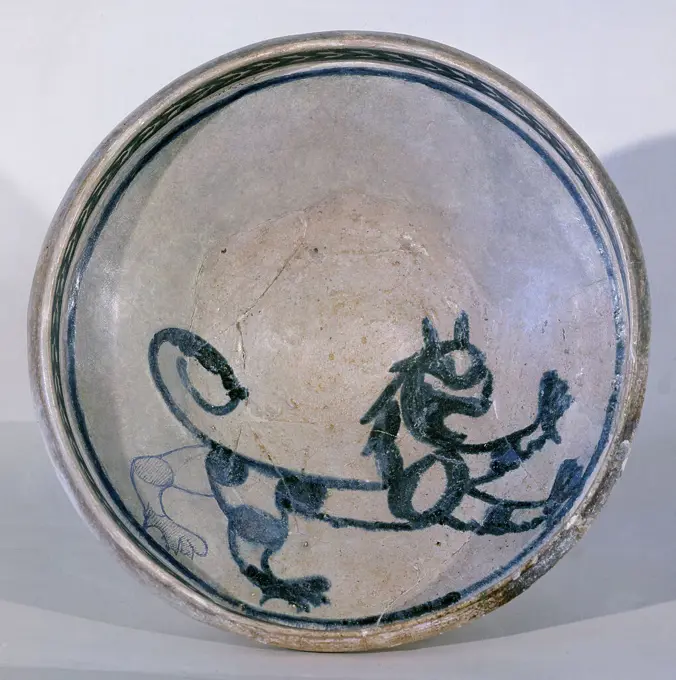
PLATO DE CERAMICA AZUL COBALTO-FIGURA DE LEON. Location: ALHAMBRA-MUSEO-CERAMICA. GRANADA. SPAIN.
6145-44300945
Attic Black-Figure Hydria Fragment. Unknown
1848-56648546
Enocoe, museo arqueologico y de historia de Elche Alejandro Ramos Folques, Elche, Alicante, comunidad Valenciana, Spain, Europe
6145-29077918
Vase with Procession of Warriors, c. 350-600. Peru, South Coast, Nasca, 4th-7th Century. Earthenware with colored slips; diameter: 15 x 11.4 cm (5 7/8 x 4 1/2 in.); overall: 15 cm (5 7/8 in.).
6145-29806239
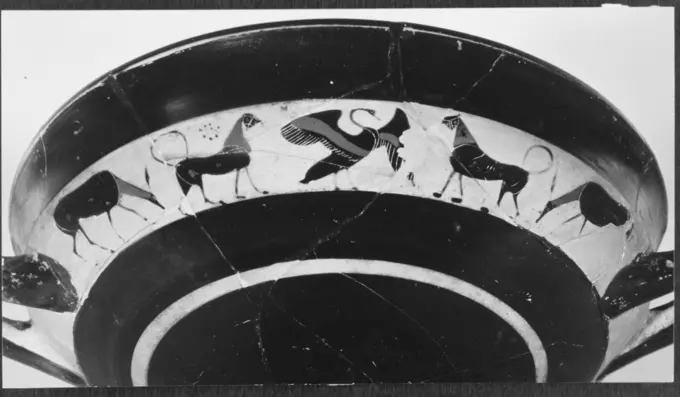
Kylix, band-cup 3rd quarter of 6th century B.C. Greek, Attic Swan between panthers, between does; the stem and foot are restored.. Kylix, band-cup 250997
1788-17841
Red-figure pottery: Attic skyphos with asymmetrical handles, side depicting a centaur from Vulci, tomb 45 of the Palm Painter from Tarquinia
6145-59034108
Master I. C. (Jean Court, dit) (n.1555 - D.1585), scenes from the history of Jason and the Golden Fleece: Jason has plowed by the Taurus of Mars the field in which he sows teeth where giants are born; Jason winner of the dragon committed to the guard of the fleece (main title), 1590. Enamelled copper, polychrome painted enamels on a blue and black background, silver mlazes, gold raises. Petit Palais, Museum of Fine Arts of the City of Paris.
6145-44282545
Attic Red-Figure Pelike Fragment. Kleophrades Painter (Greek (Attic), active 505 - 475 B.C.)
1746-19631058
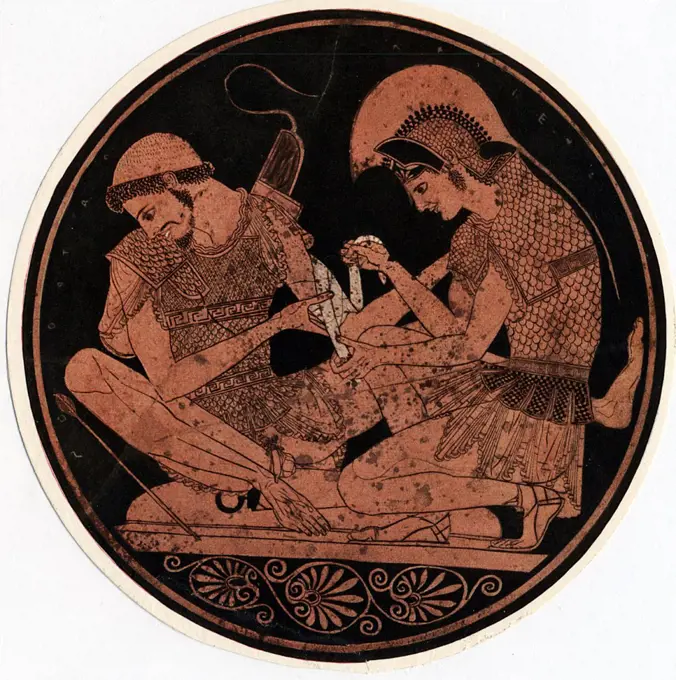
Achilles, hero of Homer's epic poem 'Iliad', bandaging the wound of his firend Patroclus. Decoration on the base of an antique vase
6145-59194175
Tuscany Grosseto Massa Marittima Museo Civico7. Hutzel, Max 1960-1990 Post-medieval: Panel painting (1), painting Antiquities: Sculpture, urns, arrowheads, tools German-born photographer and scholar Max Hutzel (1911-1988) photographed in Italy from the early 1960s until his death. The result of this project, referred to by Hutzel as Foto Arte Minore, is thorough documentation of art historical development in Italy up to the 18th century, including objects of the Etruscans and the Romans, as well as early Medieval, Romanesque, Gothic, Renaissance and Baroque monuments. Images are organized by geographic region in Italy, then by province, city, site complex and monument.
6145-59181710
Lazio Viterbo Viterbo Museo Civico94. Hutzel, Max 1960-1990 Views of paintings (Middle Ages through 18th c.), frescoes, a tabernacle, coffin, sculpture reliefs, portal fragments, busts, sculpture, tapestry found in the Pinacoteca, Second floor gallery and Second floor cloister sequences. Antiquities: Many views of Etruscan and Roman fragments, sculpture, sarcophagi, pottery, masks, jewelry and other objects found in the Storeroom sequence (inventory numbers on back of prints), and the Cloister, Second floor Cloister, Valle Giulia, Sala Romana and Sala Etrusca sequences. General Notes: There are eight separate numerical sequences for this location. The cloister as an architectural structure, rather than museum site, is documented in the record and file for S. Maria della Verita, Cloister, all views of which are stored in Medieval core collection. Five views from the Museo Civico Second floor cloister sequence are stored in Medieval. German-born photographer and scholar Max Hutzel (1911-
6145-29269245
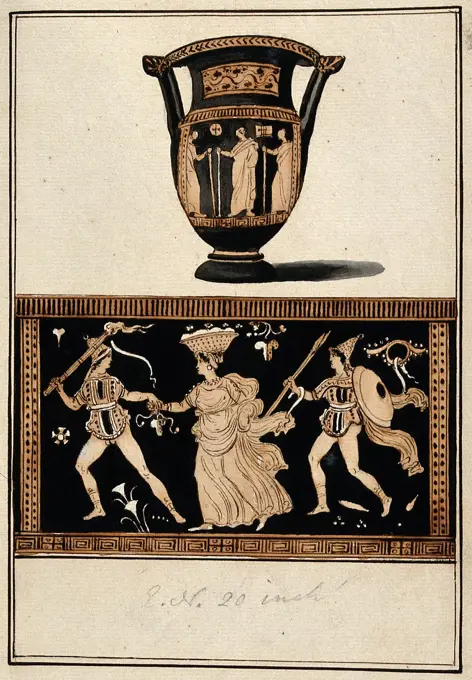
Above, red-figured Greek wine bowl (column krater); below, detail showing a man with a torch holding the hand of a woman with a basket (of grape ) on her head and a man with a shield (during a bacchanalia ). Watercolour by A. Dahlstein, 1760/1780 ().
6145-29269265
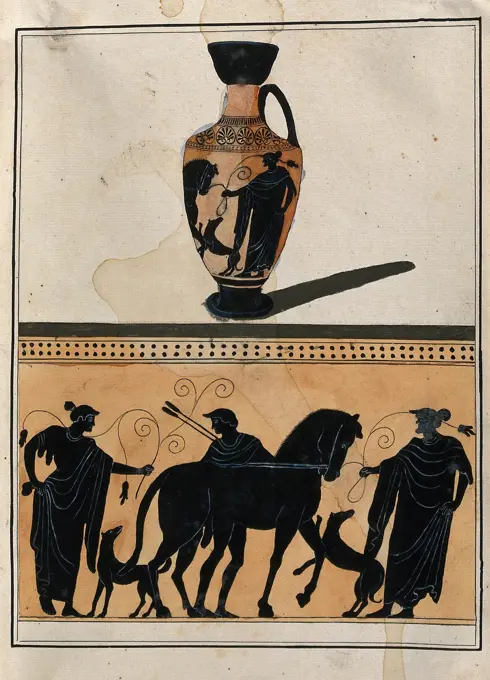
Above, black-figured Greek perfume bottle (lekythos); below, detail of the decoration showing a young man about to ride his horse, with two servants and two dogs. Watercolour by A. Dahlstein, 1760/1780 ().
6176-66095605
The scene on this red-figure Attic vase shows a victory offering, with the goddess of victory Nike pouring a libation.
4443-21960971
Attic Red-Figure Pelike Fragment; Geras Painter (Greek (Attic), active 480 - 470 B.C.); Athens, Greece; about 480 - 470 B.C; Terracotta; 25.2 cm (9 15,16 in.)
6145-29295222
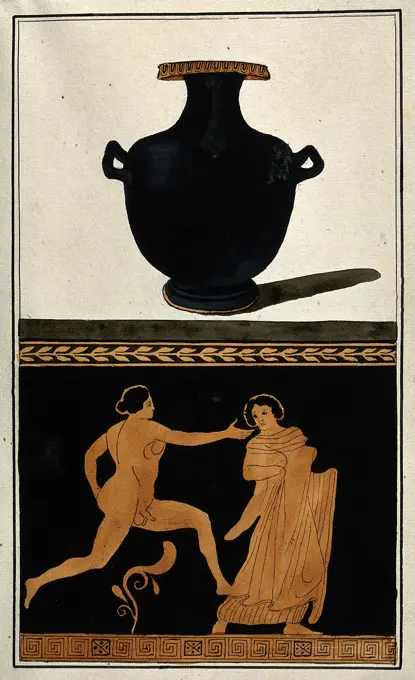
Above, a black Greek water-jug (hydria); below, detail of decoration showing a naked man running towards a woman. Watercolour by A. Dahlstein, 1760/1780 ().
6145-59047304
Mary Bracquemond (1841-1916). Vase. Enameled terracotta, 1872-1881. Museum of Fine Arts of the City of Paris, Petit Palais. VASE Decorative art, decorative art, emaillee, enamel, women portrait, portrait, terracotta, terracotta, vase, woman
6145-44284909
Attic Black-Figure Band Cup Fragment. Unknown
1788-18048
Amphora with Theseus fighting against Minotaur, attributed to Painter of Birth of Athena, Detail
1788-18577
Cylindrical vase with hieroglyphic text and dignitary, from Tikal
4409-17414198
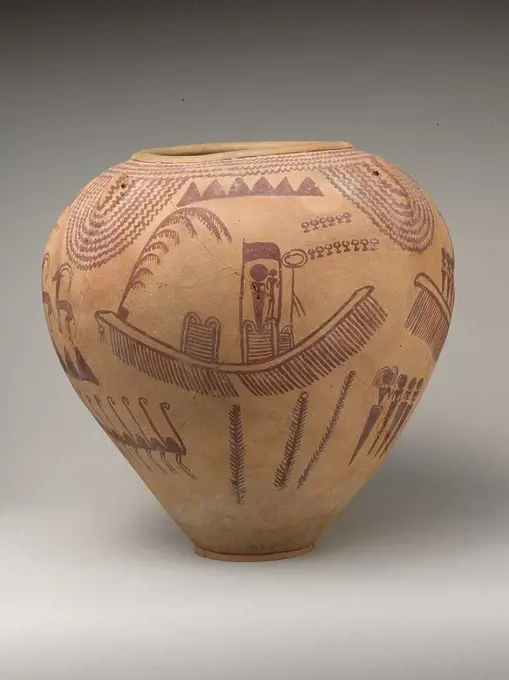
Decorated Ware Jar Depicting Ungulates and Boats with Human Figures. Dimensions: h. 30 x w. 31 cm (11 13/16 x 12 3/16 in.)diam (of rim): 17 cm (6 11/16 in.)diam (of opening): 14 cm (5 1/2 in.). Date: ca. 3500-3300 B.C..The images on this vessel represent important social or religious events, the precise significance of which is not perfectly understood. Two male and two female figures stand aboard a boat, which is depicted with oars and two cabins. In the areas surrounding the boat are mountains, birds that may represent flamingos, plants, and water. Museum: Metropolitan Museum of Art, New York, USA.
4409-17374118
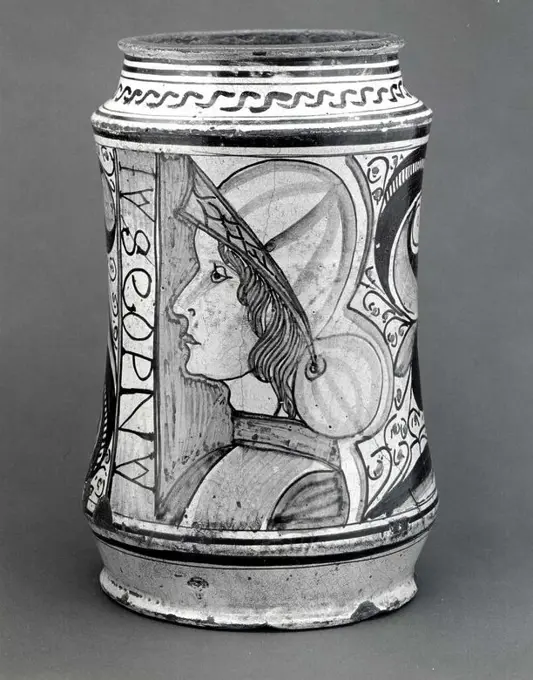
Maiolica: Apothecary jar (albarello). Culture: Italian (probably Naples). Dimensions: Height: 13 1/2 in. (34.3 cm). Date: late 15th century. Museum: Metropolitan Museum of Art, New York, USA.
6145-29172458
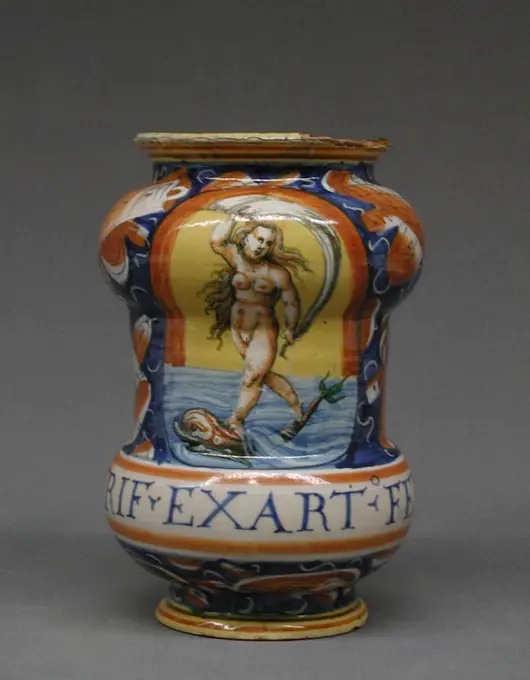
Pharmacy jar (albarello) (one of a pair) ca. 1579 Italian, probably Pesaro The goddess Fortuna is depicted standing astride a sea-monster on each of these five jars (see 53.225.83, .84 and 41.190.343a, b-.345a, b). She is likely a symbol identifying the pharmacy to which the objects belonged. It is clear from subtle differences in the decoration that a number of artists were involved in making this set. On the three lidded jars, the roundel creates an illusion of a window opening onto a deep pictorial space. The painters have achieved an ambitious perspectival viewmore impressive still on the two vessels with convex surfaces. On one, there is an amusing modification to the representation of Fortuna, who puckers her lips to blow wind into her own sail. The three lids are original, a rare survival.. Pharmacy jar (albarello) (one of a pair). Italian, probably Pesaro. ca. 1579. Maiolica (tin-glazed earthenware). Ceramics-Pottery
4409-17547295
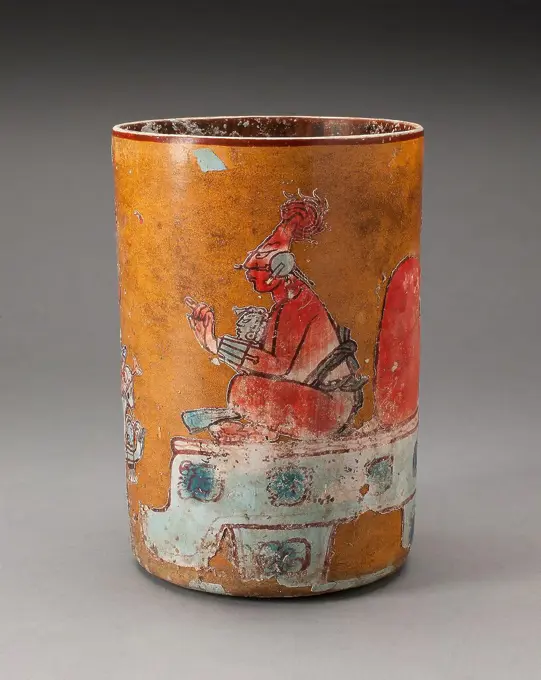
Vase Depicting a Courtly Scene. Late Classic Maya; Petén region, Guatemala. Date: 600 AD-800 AD. Dimensions: 19.1 x 15.9 cm (7 1/2 x 6 1/4 in.). Earthenware, slip, stucco, and pigment. Origin: Guatemala. Museum: The Chicago Art Institute, USA.
7155-70378879
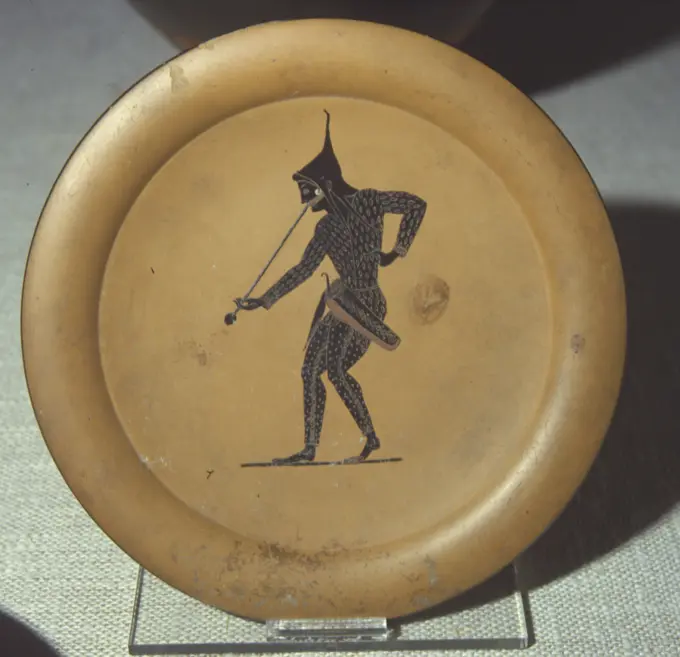
Scythian archer with trumpet. Greek plate by Psiax. 520 BC. GREECE.
6145-29153885
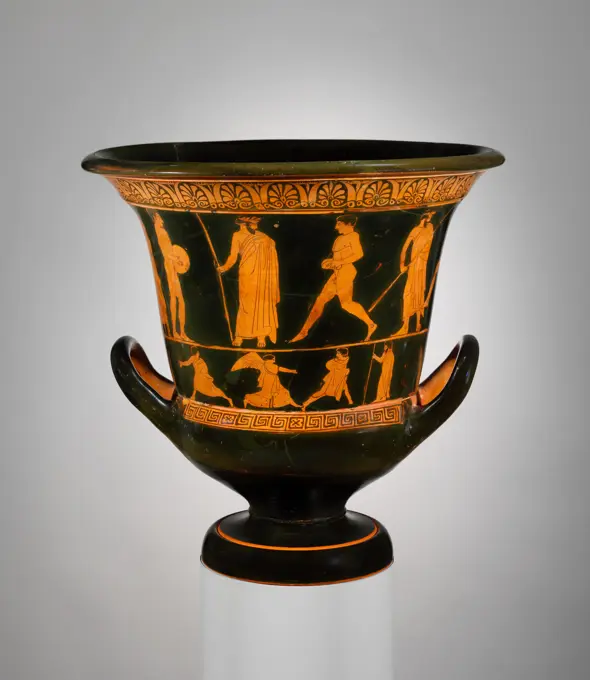
Calyx-krater ca. 440 B.C. Attributed to the Painter of the Louvre Centauromachy Above, athletes practicing with trainersBelow, obverse, Eos pursuing Tithonos;reverse, youth with two spears pursuing womanKraters with decoration in two superposed friezes occur rather rarely in the second half of the fifth century B.C. Usually the two zones are comparable in height. Here, the lower zone functions as a predella. The combination of subjects is noteworthy: athletes training in the primary frieze, abduction scenes below.. Calyx-krater 247336
6145-59169386
Lazio Roma Subiaco Monastery of S. Scolastica Archaeological Museum5. Hutzel, Max 1960-1990 Antiquities: Views of antiquities in museum, including sarcophagi, plates, vases, coins. General Notes: Hutzel guide says we have negatives, but we cannot find them. German-born photographer and scholar Max Hutzel (1911-1988) photographed in Italy from the early 1960s until his death. The result of this project, referred to by Hutzel as Foto Arte Minore, is thorough documentation of art historical development in Italy up to the 18th century, including objects of the Etruscans and the Romans, as well as early Medieval, Romanesque, Gothic, Renaissance and Baroque monuments. Images are organized by geographic region in Italy, then by province, city, site complex and monument.
6145-29267070
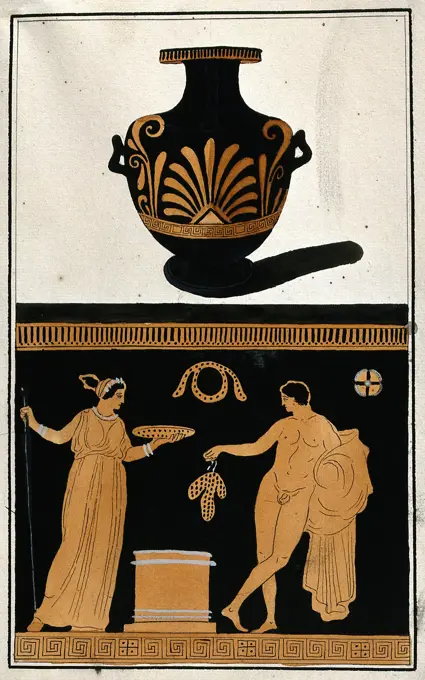
Above, red-figured Greek water jar (hydria) decorated with a palm motif; below, detail of decoration showing a naked man and a woman holding a dish. Watercolour by A. Dahlstein, 1760/1780 ().
1746-30001931
Engraving depicting the Portland (Barberini) Vase, one of the great attractions of the British Museum, Wedgwood made a copy.
6145-59147169
Lazio Frosinone Casamari Museo Archeologico2. Hutzel, Max 1960-1990 Post-medieval: paintings on canvas, paintings on wood, wooden church furnishings Governing Body: Abbazia di Casamari General Notes: This record is for the pinacoteca which is part of the Museo Archeologico, housed within the Abbey of Casamari. Hutzel assigned it a separate numbering sequence. German-born photographer and scholar Max Hutzel (1911-1988) photographed in Italy from the early 1960s until his death. The result of this project, referred to by Hutzel as Foto Arte Minore, is thorough documentation of art historical development in Italy up to the 18th century, including objects of the Etruscans and the Romans, as well as early Medieval, Romanesque, Gothic, Renaissance and Baroque monuments. Images are organized by geographic region in Italy, then by province, city, site complex and monument.
4409-17221360
Polychrome vessel representing a warrior carrying weapons. Ceramics. Nazca culture (100 BC-700 AD). Peru. Museum of the Americas. Madrid, Spain.
1746-19666286
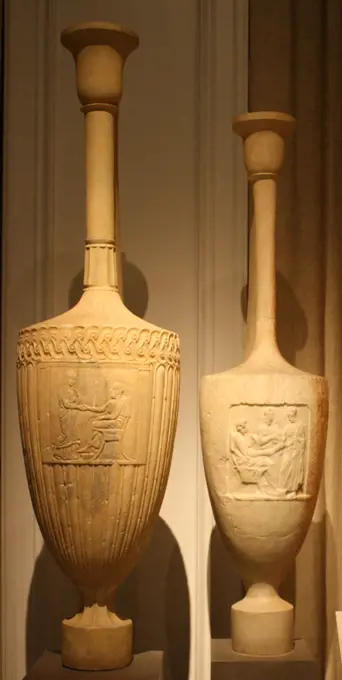
left - Attic marble funerary Lakythos with a farewell scene. Athens, 350-320 BC. Right - Attic marble funerary Lakythos with scene of dexiosis c 350 BC *** Local Caption ***
1848-63250819
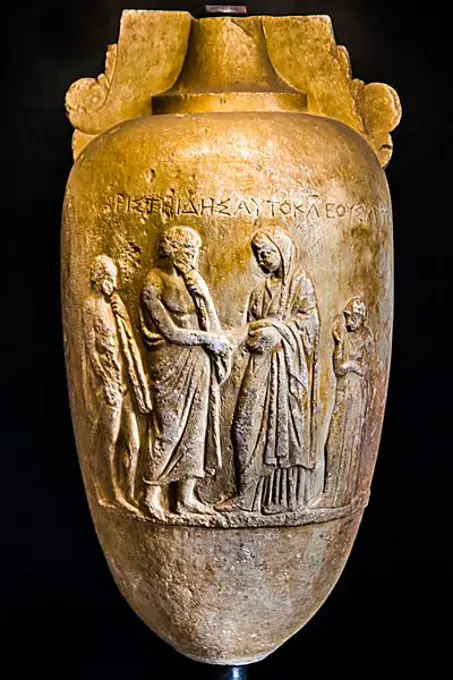
Loutrophoros from the tomb of Aristide, funerary urn, marble, 4th cent. B. C. Palazzo Duccale, Royal Palace, Castle of San Giorgio, Mantua, Lombardy, Italy, Mantua, Lombardy, Italy, Europe
6145-59156194
Lazio Roma Cerveteri Museo Nazionale Cerite. Hutzel, Max 1960-1990 Antiquities: General views of museum interior and collection of ancient funerary items. Most prints are of terracotta vessels. Some headless statues and a detail of two heads and an antefix. (9th to 1st century B.C.) German-born photographer and scholar Max Hutzel (1911-1988) photographed in Italy from the early 1960s until his death. The result of this project, referred to by Hutzel as Foto Arte Minore, is thorough documentation of art historical development in Italy up to the 18th century, including objects of the Etruscans and the Romans, as well as early Medieval, Romanesque, Gothic, Renaissance and Baroque monuments. Images are organized by geographic region in Italy, then by province, city, site complex and monument.
6176-67077591
Greek Vase,  Black-figure Amphora depicting Boxing Scene, c6th century BC. Artist: Unknown.
4409-17405989
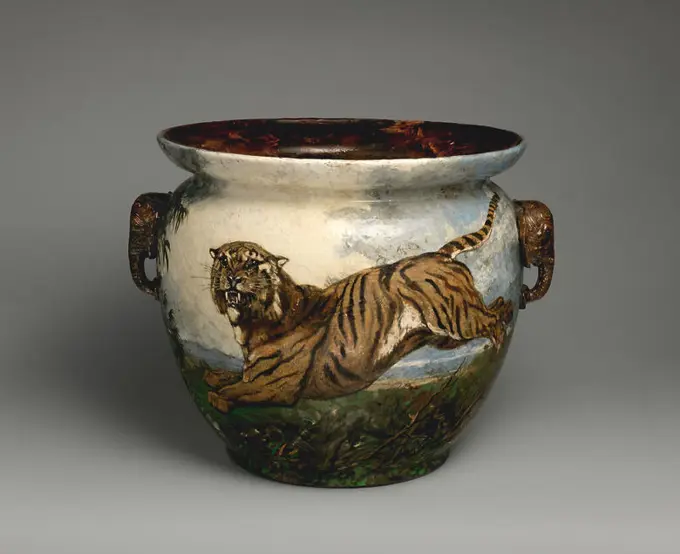
Pot. Culture: French, Longwy. Decorator: Martinus Kuijtenbrouwer (Dutch, 1821-1897). Dimensions: Overall (confirmed, irregular diameter at rim): 18 × 23 1/2 × 20 in. (45.7 × 59.7 × 50.8 cm). Manufactory: Probably Longwy manufactory. Date: 1882.Determined that pottery vessels should be regarded as true works of art, avant-garde ceramicists in France in the last decades of the nineteenth century transformed their craft into an intellectual and emotional endeavor. The pioneers of this revival were Jean Carriès, Ernest Chaplet, Théodore Deck, and Auguste Delaherche. These revolutionary artist-potters embraced artisanal traditions while pursuing lost techniques through exhaustive experimentation. Reacting to what they viewed as an excessive and improper use of ornament, they celebrated the simplicity and sincerity of their medium, following the tenets of the Art Nouveau style taking place in Europe. Based on the principles of the British Arts and Crafts movement, Art Nouveau artists sought
4443-21959993
Attic Red-Figure Kylix; Attributed to Dokimasia Painter; Athens, Greece; about 510 B.C; Terracotta; 33 cm (13 in.)
PREVIOUS
of 2
NEXT
2401 S. Ervay, Suite 206
Dallas, Texas 75215
United States
Get Started
Free ResearchMy BoardsMy Cart
For Creators
How To License Your ContentContributor PortalFrame of Mind
Resources
API accessPricing
Contact
+1 866 236 0087help@viewpictures.co.uk Contact form
©2026 View Pictures. All Rights Reserved. -A
This site is protected by reCAPTCHA and Google Privacy Policy and Terms of Service apply.