My Boards
View Pictures
  • My Boards
← Artworks

Ancient Greek Vases and Pottery

Collection of terracotta vases featuring mythological scenes, showcasing detailed black and red-figure art styles, depicting figures such as Herakles and Dionysos.

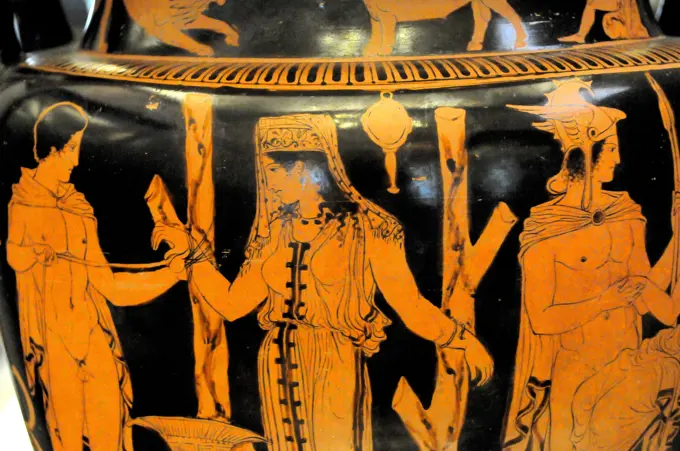
The Witch Circe. 5th-4th c. BC. Black figure vase. Classical Greek art. Ceramics. ITALY. PUGLIA. Taranto. Taranto Archaelogical National Museum.
182 assets in this story
6145-29813630
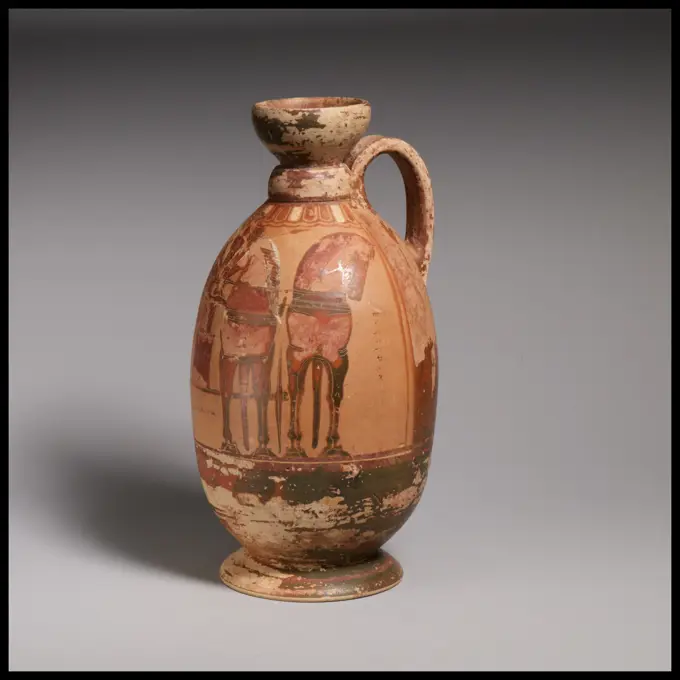
Terracotta lekythos (oil flask) ca. 570-550 B.C. Attributed to the Dionysios Painter Frontal chariot and dogIn shape and decoration, this work is heavily influenced by Attic models. The so-called Deianeira lekythos, with its elongated body, small mouth, and drip ring, represents an early Attic variety. The frontal quadriga began to be popular as well in the second quarter of the sixth century. Three names are painted in the panel, one for each horse and one additional (Dionysios).. Terracotta lekythos (oil flask) 255063 : Attributed to the Dionysios Painter, Terracotta lekythos (oil flask), ca. 570550 B.C., Terracotta, H. 8 11/16 in. (22 cm). The Metropolitan Museum of Art, New York. Rogers Fund, 1960 (60.11.5)
6145-29157034
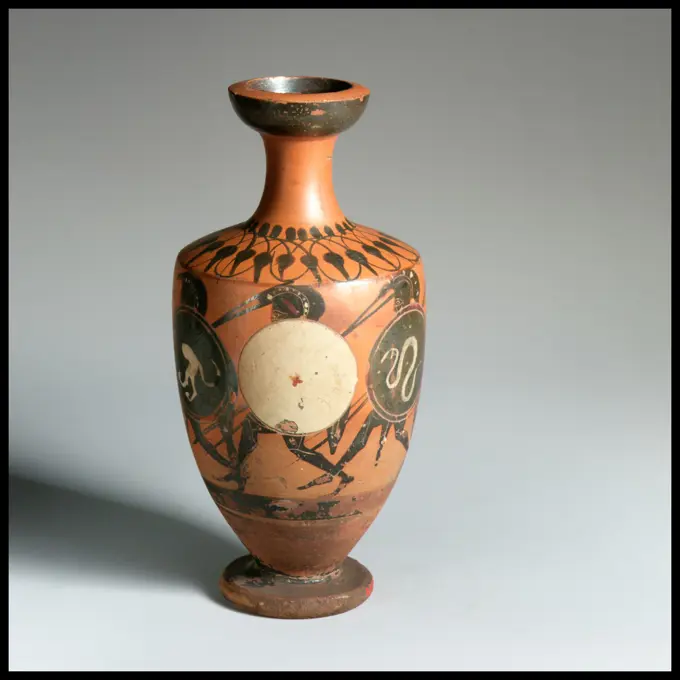
Lekythos early 5th century B.C. Attributed to the Class of Athens 581 Three warriors running to left with large, circular shields covering their bodies.. Lekythos. Greek, Attic. early 5th century B.C.. Terracotta; black-figure. Late Archaic. Vases
4443-21957371
Gnathia Oinochoe; Gnathia, South Italy; 4th century B.C; Terracotta; 17.9 cm (7 1,16 in.)
6145-48861425
Attic Red-Figure Kylix Type B. Attributed to the Euaichme Painter (Greek (Attic), active about 475 - 450 B.C.)
7155-70378851
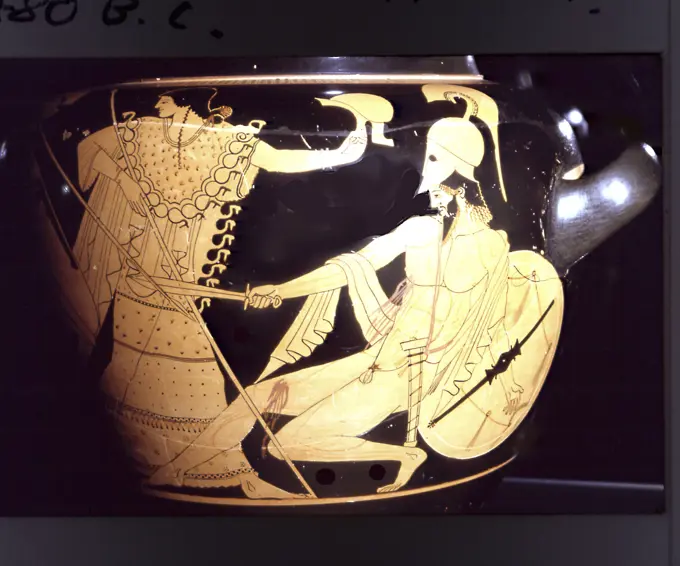
Wine Glass (Stammos) showing Hector's death by the hand of Achilles assisted by the Goddess Athena. 480 B.C.
4443-21959762
Wine Cup with a Woman Playing a Game; Attributed to Onesimos (Greek (Attic), active 500 - 480 B.C.); Athens, Greece; about 490 B.C; Terracotta; 8.5 × 36.9 cm (3 3,8 × 14 1,2 in.)
6188-60998185
Greek red-figure bell crater Greek red-figure bell crater, 4th century BC, Ategua,xIberian culture, Iberian Museum of Jaén, Andalusia, Spain Copyright: xZoonar.com/BartomeuxBalaguerxRotgerx 21704881
6145-29135491
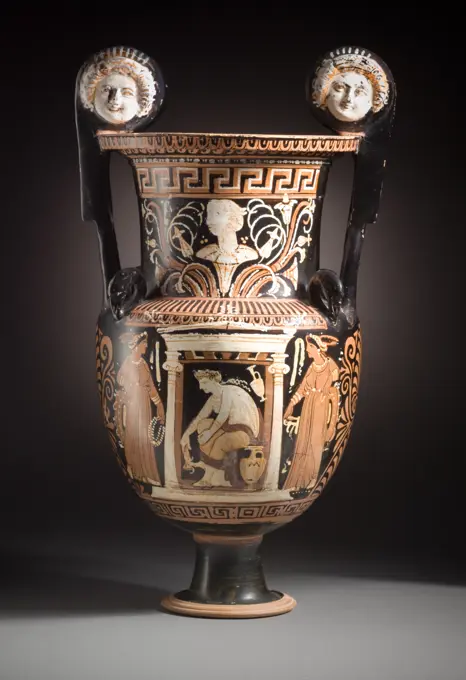
Volute-Krater with a Woman Seated in a Shrine. Baltimore Painter (Italy, Apulia, circa 330-circa 310 B.C.). South Italy, Apulia, circa 320 B.C.. Furnishings; Serviceware. Red-figure ceramic with added red wash and yellow and white
1746-21124957
Plate with a seated sphinx from Naucratis, Egypt. Dated 6th Century BC
1788-17294
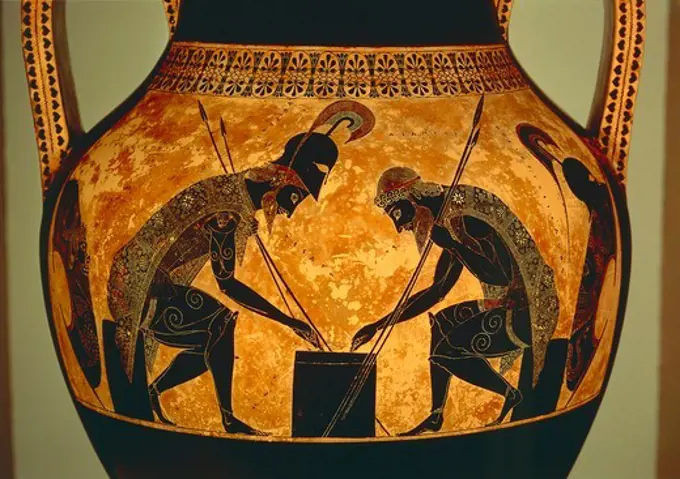
Attic vase of Exekias depicting Achilles and Ajax playing dice, detail
1848-61260892
Splendid and characteristic Hellenistic polychrome terracotta production from Centuripe (Enna) . 280220 A.D.m Museo Archeologico Regionale Antonino Salinas, Collection of Etruscan, Roman, Egyptian and Greek Works, Palermo, Palermo, Sicily, Italy, Europe
7155-70379144
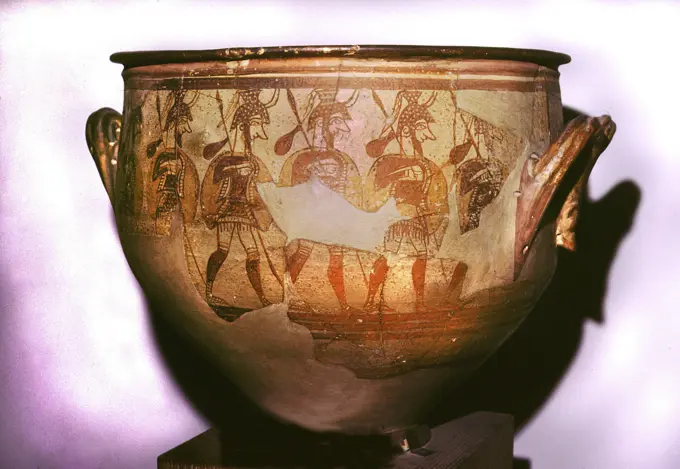
Warrior Vase from Mycenae. 1200 BC. Late Mycenaean Vase painting. GREECE.
6145-44287836
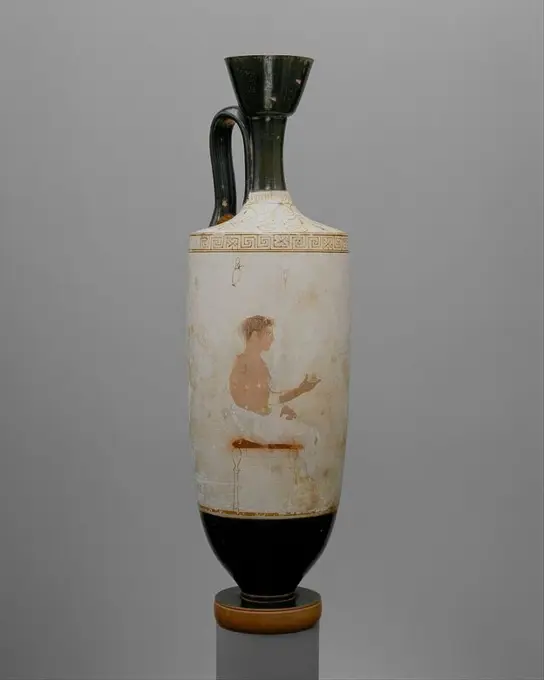
Attic White-Ground Lekythos. Sabouroff Painter (Greek (Attic))
6145-29067918
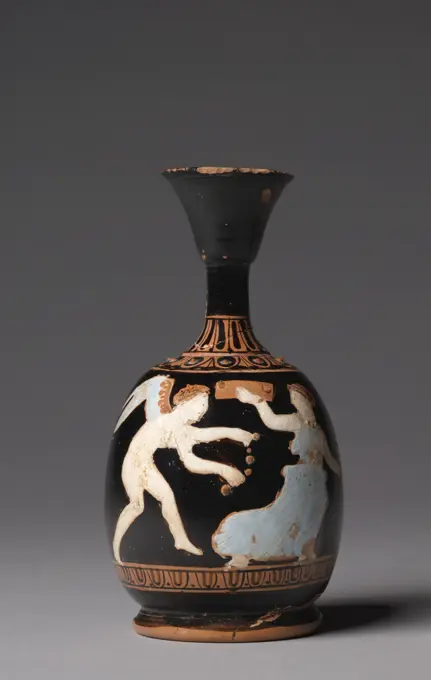
Red-Figure Squat Lekythos (Oil Vessel): Eros and Woman, c. 400-380 BC. Greece, Attic. Ceramic; overall: 11.7 cm (4 5/8 in.).
6145-44300362
Apulian Bell Krater. Attributed to Malibu Painter, Chevron Group (Greek (Apulian))
4292-70292
Italy, Lazio, Rome, Poli Palace Museum, Nostoi Exhibition, Ancient Art, Painted Terracotta Amphora.
1788-16223
Red-figure pottery, Krater attributed to Polygnotus showing scene of Gigantomachy
6145-59181885
Lazio Viterbo Viterbo Museo Civico95. Hutzel, Max 1960-1990 Views of paintings (Middle Ages through 18th c.), frescoes, a tabernacle, coffin, sculpture reliefs, portal fragments, busts, sculpture, tapestry found in the Pinacoteca, Second floor gallery and Second floor cloister sequences. Antiquities: Many views of Etruscan and Roman fragments, sculpture, sarcophagi, pottery, masks, jewelry and other objects found in the Storeroom sequence (inventory numbers on back of prints), and the Cloister, Second floor Cloister, Valle Giulia, Sala Romana and Sala Etrusca sequences. General Notes: There are eight separate numerical sequences for this location. The cloister as an architectural structure, rather than museum site, is documented in the record and file for S. Maria della Verita, Cloister, all views of which are stored in Medieval core collection. Five views from the Museo Civico Second floor cloister sequence are stored in Medieval. German-born photographer and scholar Max Hutzel (1911-
6145-44295296
Apulian Red-Figure Pelike. Near to the Berkeley Painter (South Italian (Apulian), active 375 - 350 B.C.)
6145-59181295
Lazio Viterbo Viterbo Museo Civico96. Hutzel, Max 1960-1990 Views of paintings (Middle Ages through 18th c.), frescoes, a tabernacle, coffin, sculpture reliefs, portal fragments, busts, sculpture, tapestry found in the Pinacoteca, Second floor gallery and Second floor cloister sequences. Antiquities: Many views of Etruscan and Roman fragments, sculpture, sarcophagi, pottery, masks, jewelry and other objects found in the Storeroom sequence (inventory numbers on back of prints), and the Cloister, Second floor Cloister, Valle Giulia, Sala Romana and Sala Etrusca sequences. General Notes: There are eight separate numerical sequences for this location. The cloister as an architectural structure, rather than museum site, is documented in the record and file for S. Maria della Verita, Cloister, all views of which are stored in Medieval core collection. Five views from the Museo Civico Second floor cloister sequence are stored in Medieval. German-born photographer and scholar Max Hutzel (1911-
1788-15303
Italy, Umbria, Orvieto, Red-figure pottery attic krater depicting Heracles and the Argonauts
1788-18232
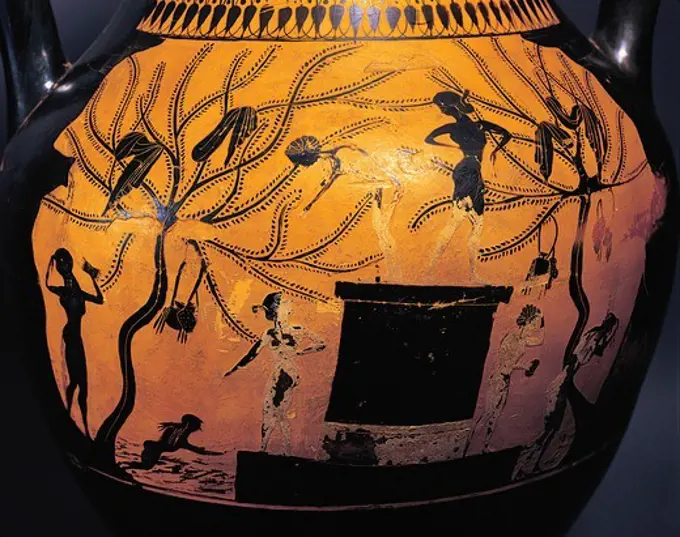
Amphora by Painter of Priam, Detail of women bathing, 520-510 B.C.
6145-48851702
Neptune Vase. Factory of Geminiano Cozzi (Italian (Venetian), active 1764 - 1812)
1746-29964496
warriors depicted on a Krater Jug, workshop of Dipylon, Athenian; 750-730 BC
4176-55734
Mycenaean Pottery. Three-handled Palace Style amphora with three large octopuses within a marinescape of rocks and seaweed. From the Mycenaean cemetery at Argive Prosymna, tob 2. 15th c. BC.
6145-48874133
Fragmentary Attic Black-Figure Hydria. Unknown
4409-133609
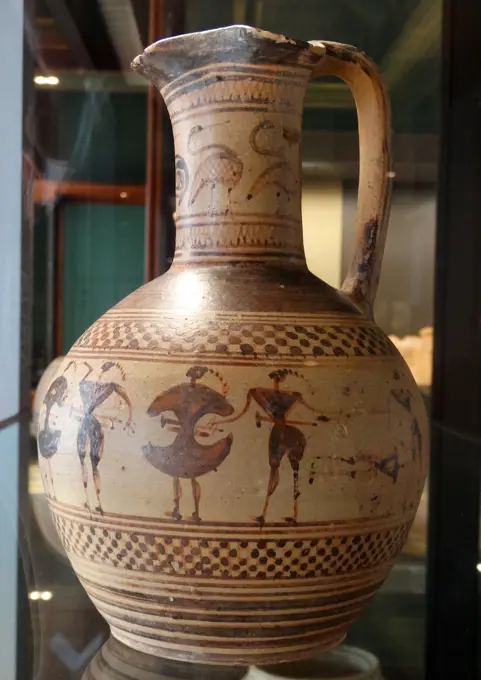
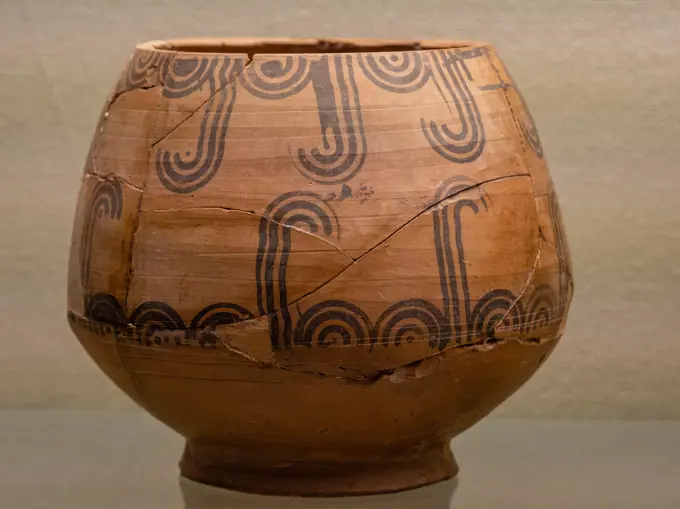
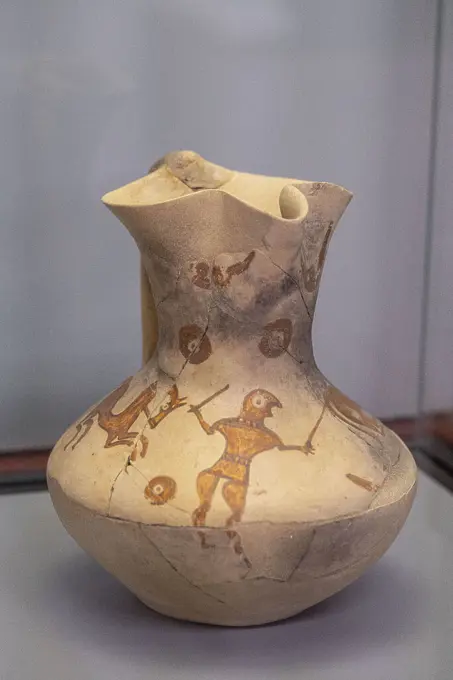
Decorated jug. Free Field Style. Pottery. 8th-6th centuries BC. From Cyprus. Neues Museum. Berlin. Germany.
6145-48838282
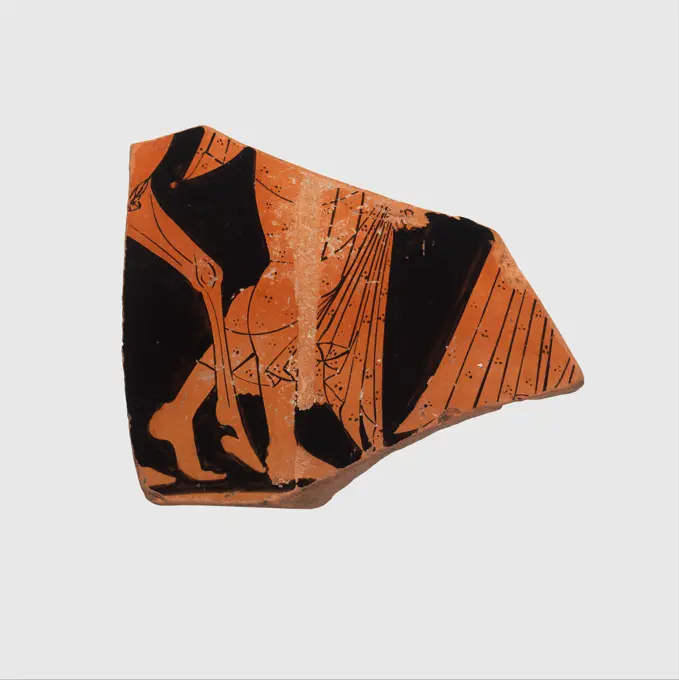
Attic Red-Figure Cup Fragment. Wider Circle of Nikosthenes Painter (Greek (Attic), active Athens, Greece 510 - 500 B.C.)
6145-30377505
Red-Figure SquatLekythos. Artist: Shuvalov Painter, Workshop, Greek
1746-19666530
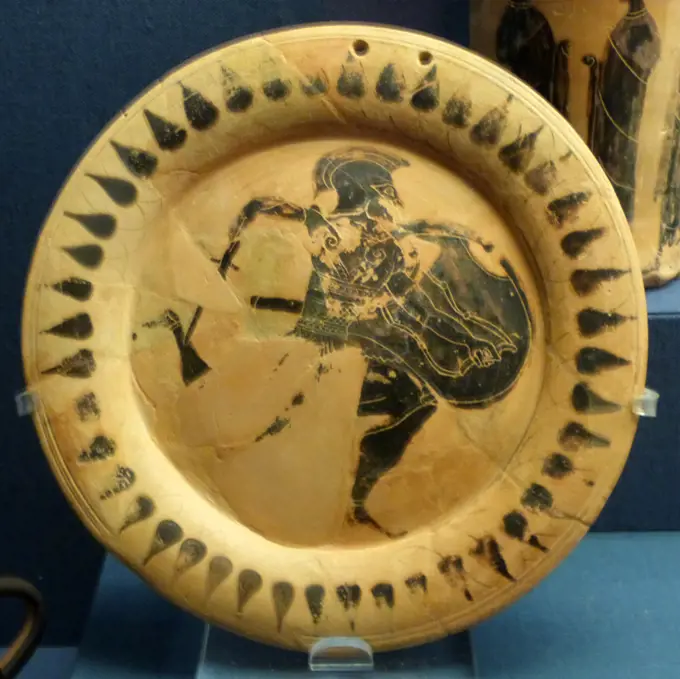
Attic black figure votive plate with a representation of a fully armed running warrior holding shield and sword. Most probably produced in the workshop of Lydos. Approx. mid 6th century BC
6145-59181241
Lazio Viterbo Viterbo Museo Civico27. Hutzel, Max 1960-1990 Views of paintings (Middle Ages through 18th c.), frescoes, a tabernacle, coffin, sculpture reliefs, portal fragments, busts, sculpture, tapestry found in the Pinacoteca, Second floor gallery and Second floor cloister sequences. Antiquities: Many views of Etruscan and Roman fragments, sculpture, sarcophagi, pottery, masks, jewelry and other objects found in the Storeroom sequence (inventory numbers on back of prints), and the Cloister, Second floor Cloister, Valle Giulia, Sala Romana and Sala Etrusca sequences. General Notes: There are eight separate numerical sequences for this location. The cloister as an architectural structure, rather than museum site, is documented in the record and file for S. Maria della Verita, Cloister, all views of which are stored in Medieval core collection. Five views from the Museo Civico Second floor cloister sequence are stored in Medieval. German-born photographer and scholar Max Hutzel (1911-
6145-48852846
Attic Red-Figure Cup Fragment. Akestorides Painter (Greek (Attic), active about 470 - 450 B.C.)
6145-29255589
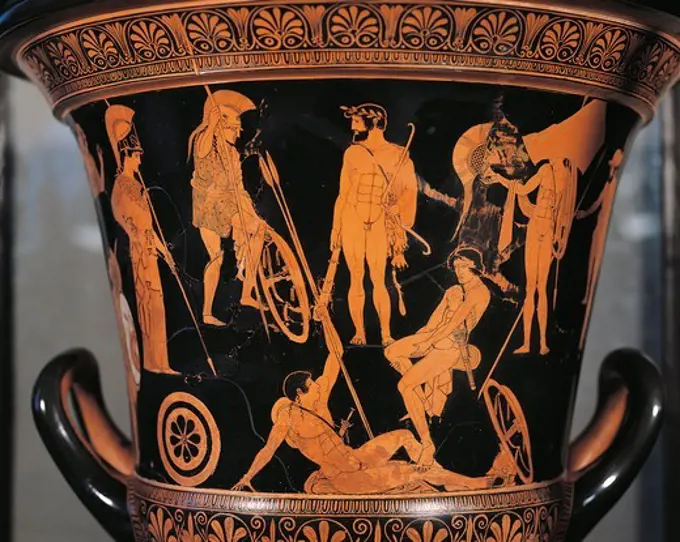
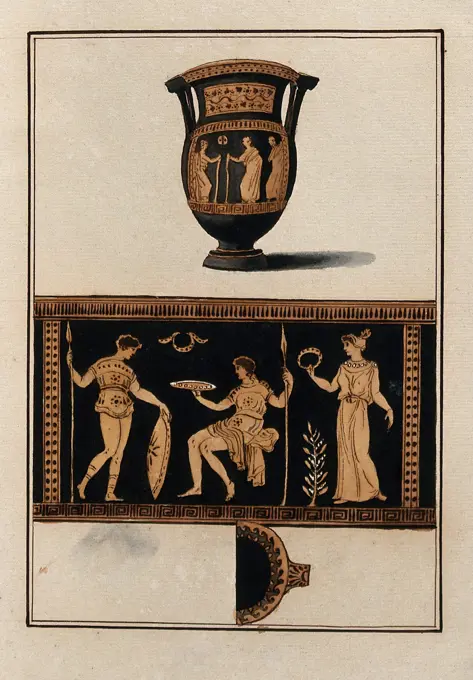
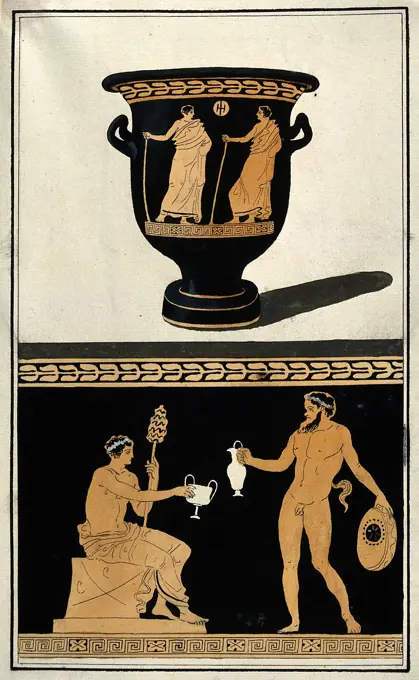
Above, red-figured Greek wine-mixing bowl (column krater); below, detail of the decoration showing a woman, a man holding a shield and a spear and a seated man holding a spear. Watercolour by A. Dahlstein, 1760/1780 ().
4435-5011
Attic black-figure amphora. 6th c. BC. Representation of a musician playing the zither. Archaic Greek art. Ceramics. FRANCE. ëLE-DE-FRANCE. Paris. Louvre Museum. Proc: GREECE. ATTICA. ATHENS. Athens.
1746-19670340
Panathenaic Prize-amphora signed by the potter Kittos The event from the Panathenaic Games shown here is the pankration, a rather brutal mixture of wrestling and boxing. On the left is a judge with his stick; on the right another contestant points out the 'foul'.
1788-8616
Ceramics, Italy 20th century. Vase with hunting scenes. Green procelain. Disign Gio Ponti. Richard Ginori di Doccia production, 1925-1930
4409-17395844
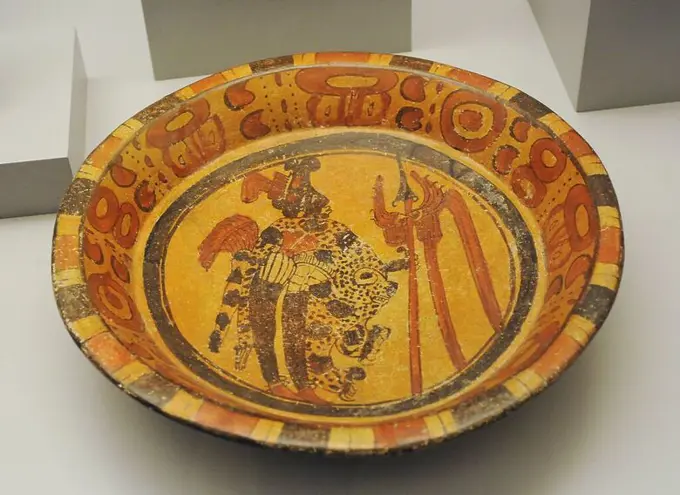
Plate with figurative and geometric decoration. Painted ceramic. Maya culture. Late Classic Period (600-900 AD). Mesoamerica. Maya region. Museum of the Americas. Madrid, Spain.
4409-17428205
Terracotta lekythos (oil flask). Culture: Greek, Attic. Dimensions: H. 12 3/4 in. (32.4 cm). Date: ca. 420 B.C..Youth and woman at a tomb. Museum: Metropolitan Museum of Art, New York, USA.
4409-24224
Large decorated vase discovered near Elche on the archaeological site of Alcudia.. Alicante, Alcudia museum. Location: MUSEO DE LA ALCUDIA. ELCHE. Alicante. SPAIN.
7155-70378814
Achilles. From a Krater by the Berlin Painter. 490 BC. Red Figure vase. GREECE.
4409-17385497
Terracotta lekythos (oil flask). Culture: Greek, Attic. Dimensions: H. 15 1/2 in. (39.4 cm). Date: ca. 440 B.C..Seated youth and womanSeated on a stool, the young man hands what appears to be a piece of fruit to the woman standing before him. An oinochoe (jug), a mirror, and a sakkos (snood) are suspended in the background. It is impossible to determine whether this is a vignette of daily life, as depicted by Douris, the Villa Giulia Painter, and many other artists of the mid and later fifth century B.C. It may instead be a funerary representation as depicted on grave stelai; the youth would be the deceased. Museum: Metropolitan Museum of Art, New York, USA.
7155-70379276
Greek vase showing satyrs dancing.
1746-21125571
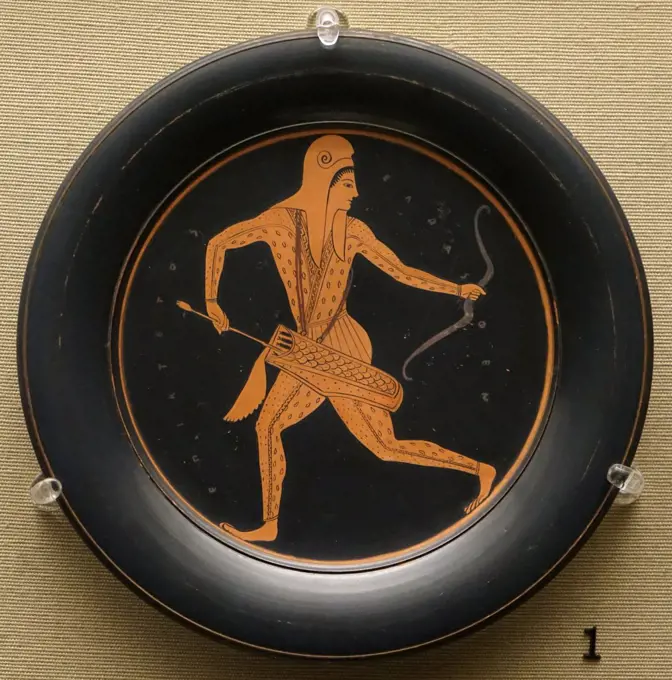
Red-figured plate, depicts an archer, made in Athens. Dated 6th Century BC
6145-44290935
Attic White-Ground Lekythos. Bowdoin Painter (Greek (Attic))
6176-66095906
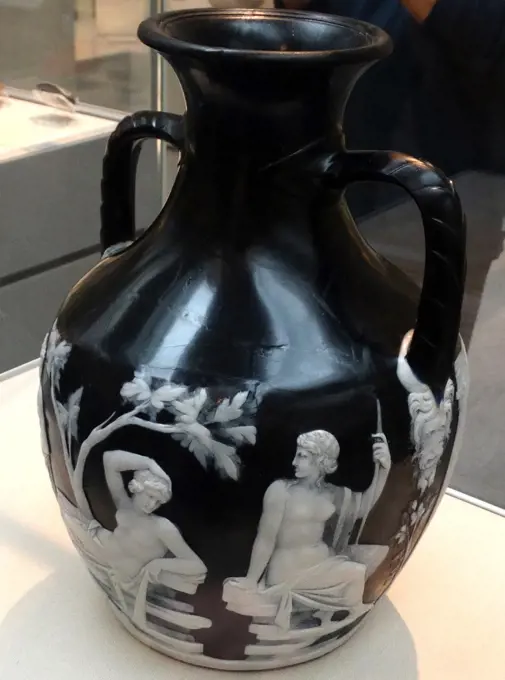
The 1884 caption reads: Portland Vase found in sarcophagus of Alexander Severus. The Portland Vase is a Roman cameo glass vase, which is dated to between AD 1 and AD 25, though low BC dates have some scholarly support. It is the best known piece of Roman cameo glass and has served as an inspiration to many glass and porcelain makers from about the beginning of the 18th century onwards.  Alexander Severus was the Roman emperor from 222 to 235 AD.
4409-17545622
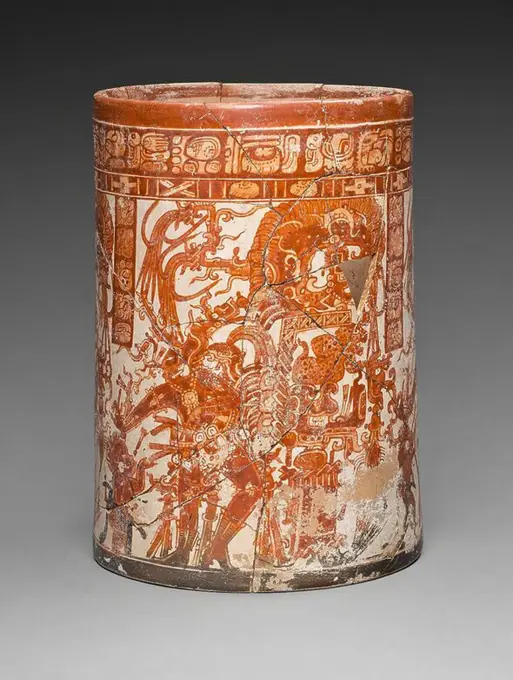
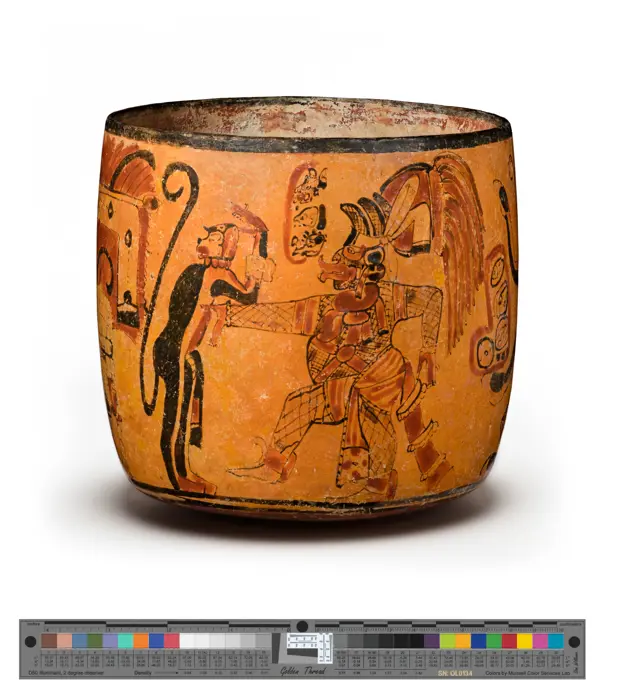
Vessel of the Dancing Lords. Ah Maxam (active mid-/late 8th century); Late Classic Maya; Vicinity of Naranjo, Petén region, Guatemala. Date: 700 AD-850 AD. Dimensions: 24 × 15.8 cm (9 1/2 × 6 1/4 in.). Ceramic and pigment. Origin: . Museum: The Chicago Art Institute, Chicago, USA.
4409-17379065
Terracotta lekythos (perfume flask). Culture: Greek, Attic. Dimensions: H. 13 3/8 in. (34 cm). Date: ca. 460 B.C..Woman and youth at a tombThere are many aspects of these funerary representations that are not clear, such as the relationship of the two figures here. On the other hand, they illuminate many practical details concerning objects of daily life and how they were handled. Note the young woman carrying the large basket on her head. Museum: Metropolitan Museum of Art, New York, USA.
6145-29287072
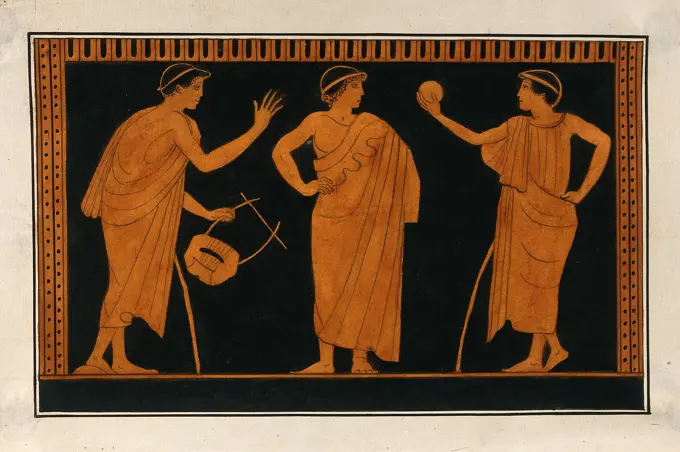
Detail of decoration of a red-figured Greek vessel showing three youths, one holding a ball, one holding a lyre . Watercolour by A. Dahlsteen, 176- ().
7155-70378880
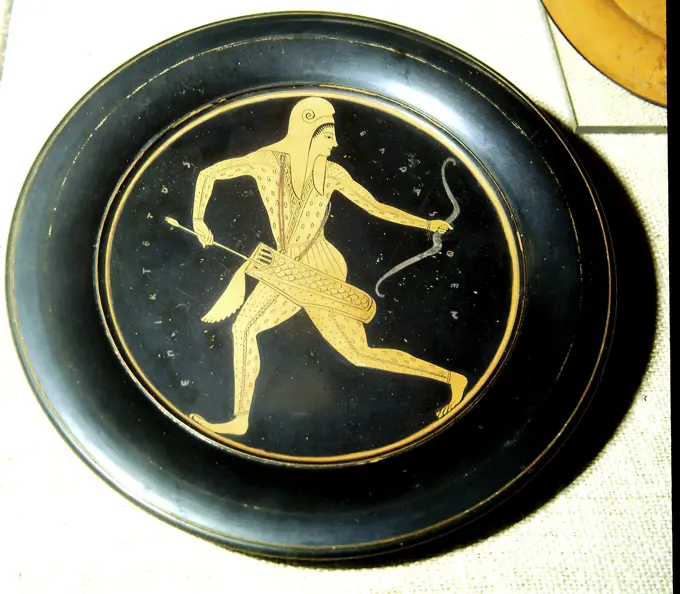
Greek pottery painting. Scythian Persian archer by Epiktelos. 520 BC.
4409-10325
JARRA DE CERAMICA DE PUENTE DEL ARZOBISPO - SIGLO XVII. Location: MUSEE D'ARTS DECORATIFS. MADRID. SPAIN.
6145-44296111
Apulian Red-Figure Krater with Mascarons. Patera Painter (Greek (Apulian))
6176-67038220
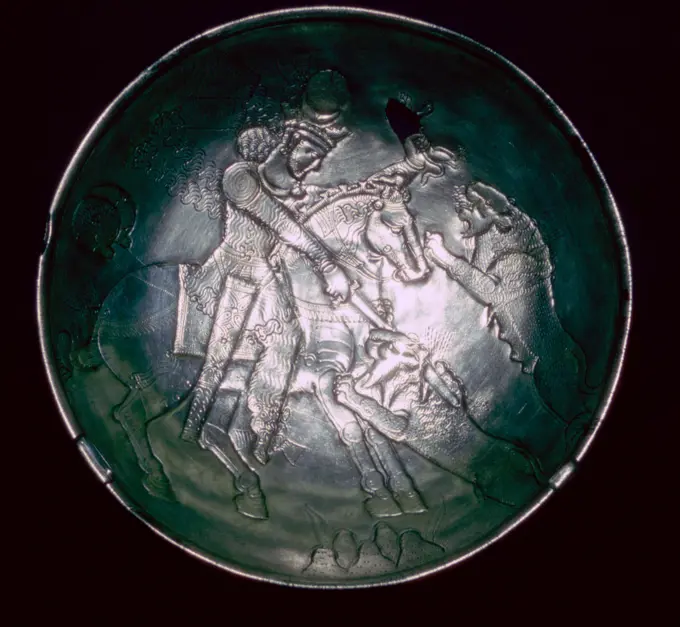
Silver plate, Sasanian, c5th-c7th century. Artist: Unknown
6188-67427812
Keltiberisches Schiff Celtiberian vessel, 4th-1st century BC, Cerro de San Miguel, Arnedo, Museum of Romanization, Calahorra, La Rioja, Spain, Europe Copyright: xZoonar.com/BartomeuxBalaguerxRotgerx 22945861
4409-17429685
Terracotta lekythos (oil flask). Culture: Greek, Attic. Dimensions: H. 8 3/4 in. (22.2 cm). Date: ca. 500 B.C..Herakles with the Delphic tripodThe subject of Herakles and the tripod that he stole from the temple of Apollo at Delphi was particularly popular at the end of the sixth century B.C. Even when the hero was depicted without his adversary, the subject was evident. Museum: Metropolitan Museum of Art, New York, USA.
6145-29116431
Vessel with Procession Scene. Guatemala, Maya, 600-900 CE. Ceramics. Slip-painted ceramic
6145-29245585
Above, red-figured Greek wine bowl (bell krater); below, detail of decoration showing a satyr about to pour some wine for a seated man (Dionysus). Watercolour by A. Dahlstein, 1760/1780 ().
6145-29731557
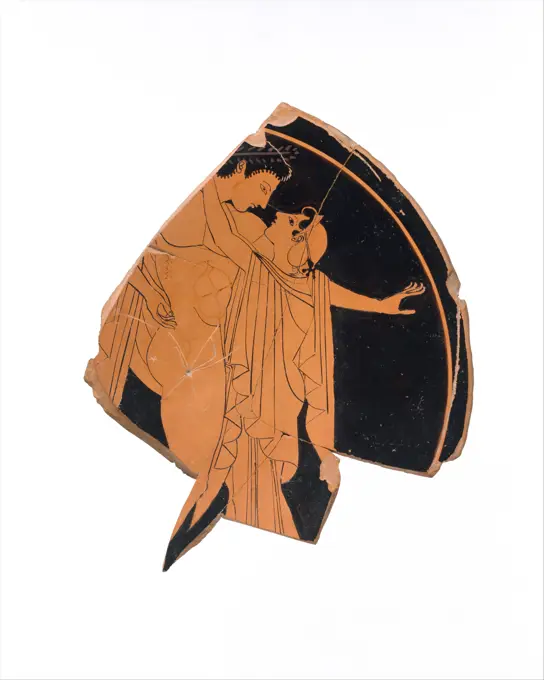
Fragmentary terracotta kylix (drinking cup) ca. 510-500 B.C. Attributed to the Kiss Painter An intimate moment is captured here with remarkably acute observation as well as with considerable artistic attention to the juxtaposition of nude and clothed forms and the deployment of drapery. The tondo was evidently cut down in antiquity; the hole and the scratches in the youth's thigh indicate the center point that was used to mark the reduced circle.. Fragmentary terracotta kylix (drinking cup) 247930
4409-17438401
Bowl depicting a Man holding a Cup and a Flowering Branch. Dimensions: H. 2 7/16 in. (6.2 cm)Diam. 9 5/16 in. (23.7 cm). Date: 10th century.Luster ceramics from Samarra often include stylized human figures. In this example, the lively caricatural quality of the seated man holding a cup and a flowering branch is enhanced by the two birds that hold fish in their beaks but look like they are kissing. The foot bears an Arabic inscription that reads baraka (blessing) in kufic script. Museum: Metropolitan Museum of Art, New York, USA.
4409-17403167
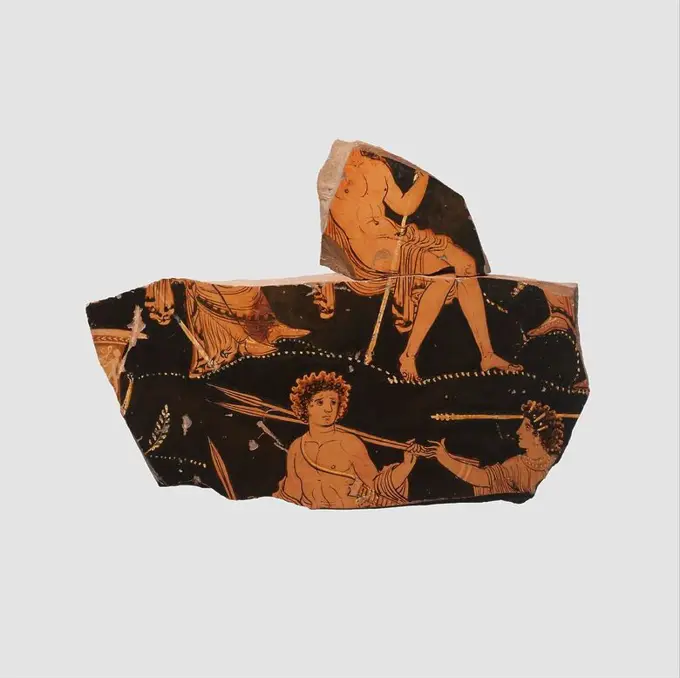
Fragment of a terrracotta volute-krater (bowl for mixing wine and water). Culture: Greek, South Italian, Apulian. Dimensions: Overall: 9 3/4 x 4 1/2in. (24.8 x 11.4cm). Date: mid-4th century B.C..Pentheus attacked by a womanThis piece consists of two joined fragments, 19.192.81.2 and .8. Pentheus is shown holding two spears and a sword. He brandishes the latter in defense against a woman who attacks him from the right with a thyrsos (fennel stalk with ivy). The death of Pentheus is the main subject of the front of the vase. His expression is masterfully conveyed by the relief lines. Museum: Metropolitan Museum of Art, New York, USA.
1788-19987
Marble krater with Dionysiac subject reliefs known as Vaso Borghese, 40-30 b.c., from Rome, Sallustian Gardens
1746-19689137
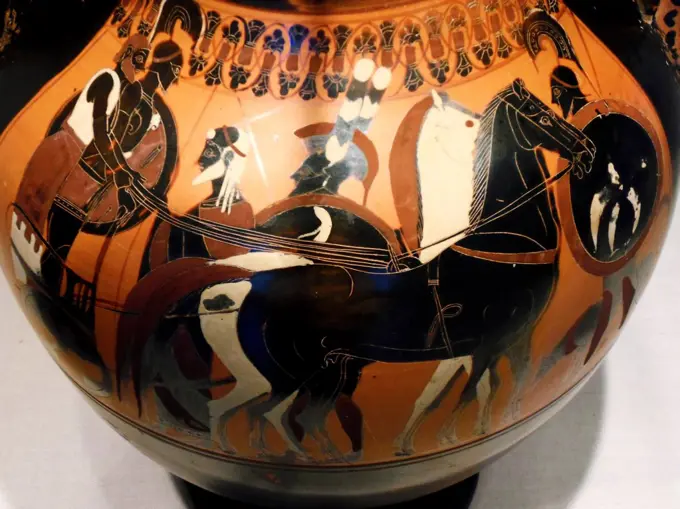
Terracotta neck-amphora (jar). Greek, Attic, black-figure, ca. 500 B.C.
6189-55132441
Museo de la Romanización, Calahorra, La Rioja , Spain, Europe.
4409-28790475
jarra de boca trilobulada con escena de doma , siglo I a.C. Procedente de Numancia, Garray, museo Numantino de Soria, Soria, Comunidad Autónoma de Castilla, Spain, Europe.
4409-17388530
Miniature terracotta squat lekythos (oil flask) with siren. Culture: Greek, Attic. Dimensions: H. 3 5/16 in. (8.5 cm.). Date: mid-5th century B.C..In Greek mythology, sirens, human-headed birds known for their beautiful voices, were offen associated with the afterlife, and they appear frequently in Classical Greek funerary art. In addition to their mournful depictions on grave stelai, sirens were also an appropriate decoration for a lekythos, a type of vase often connected with death and burial ritual. Museum: Metropolitan Museum of Art, New York, USA.
1788-18182
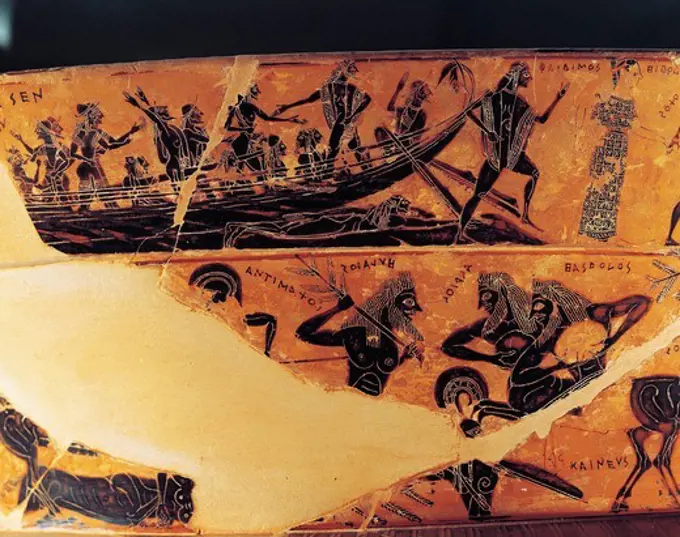
Volute krater Attic Francois vase, signed by potter Ergotimos and painter Kleitias, 570-560 B.C., black-figure pottery
7155-70378837
Four horse chariot racing, 420-400 BC. Tocra. Greek Classical vase painting.
6145-29117539
Vessel with Ballplayer and Dancers. Maya, 300-600 CE. Ceramics. Slip-painted ceramic
4409-17280931
VASO MEDICEO DEL JUICIO DE LOS HEROES GRIEGOS. Location: GALERIA DE LOS UFFIZI. Florenz. ITALIA.
1899-18611423
Vases decorated with courtly scenes. Painted ceramics. Maya culture. Late Classic Period (600-900 AD). Mesoamerica. Maya region. Museum of the Americas. Madrid, Spain.
6145-29742449
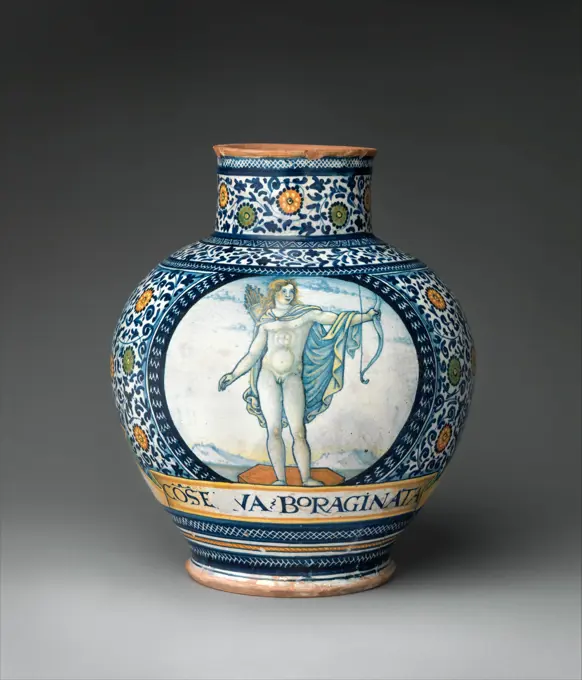
Pharmacy jar with the Apollo Belvedere and King David ca. 1545-50 Figure of Apollo Belvedere based on an engraving by Nicoletto da Modena The decoration on this jar combines pagan antiquity and biblical historya common pairing in Renaissance Italy. In one roundel, the Old Testament prophet King David appears playing his harp. On the other side is a lively rendering of the Apollo Belvedere, the ancient marble statue discovered in Rome in 1489. The label"Conserve with borage"appears on both sides.. Pharmacy jar with the Apollo Belvedere and King David. Figure of Apollo Belvedere based on an engraving by Nicoletto da Modena (Italian, Modena, active ca. 1500-ca. 1520). Italian, possibly Castelli. ca. 1545-50. Maiolica (tin-glazed earthenware). Ceramics-Pottery
6145-48843588
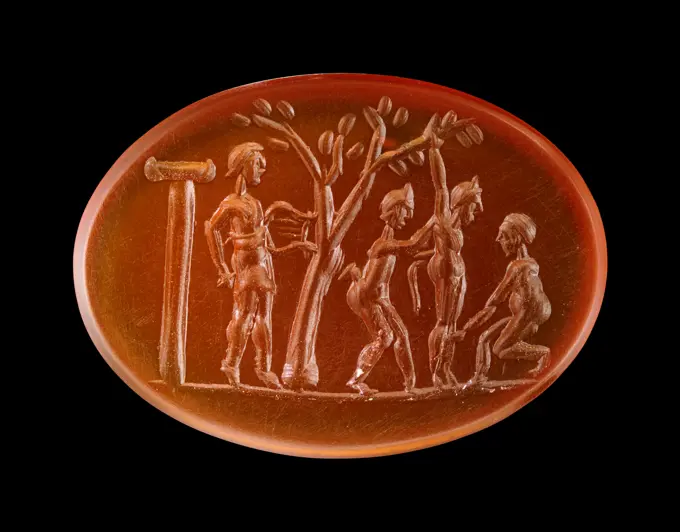
Engraved Gem with the Flaying of Marsyas. Unknown
6145-44294231
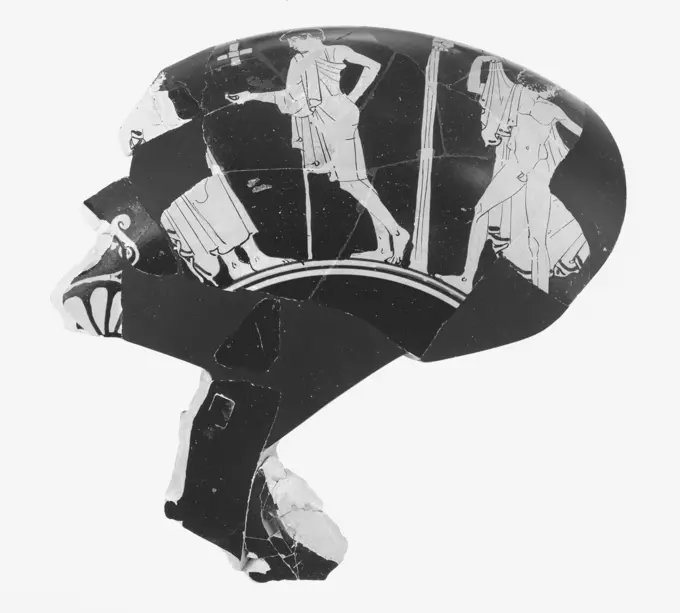
Attic Red-Figure Cup Fragment. Attributed to the Penthesilea Painter (Greek (Attic))
1746-19985006
The Portland Vase; Cameo glass, probably made in Rome, 15 BC - AD 25. The Portland Vase is one of the finest surviving pieces of Roman glass, and is named after the Dukes of Portland who owned it
6145-29786188
Fragment of a terracotta kylix (drinking cup) ca. 520-510 B.C. Attributed to Euphronios Exterior, nude male figure and two womenThe scene may depict Peleus and Thetis.. Fragment of a terracotta kylix (drinking cup) 255786
6145-30191295
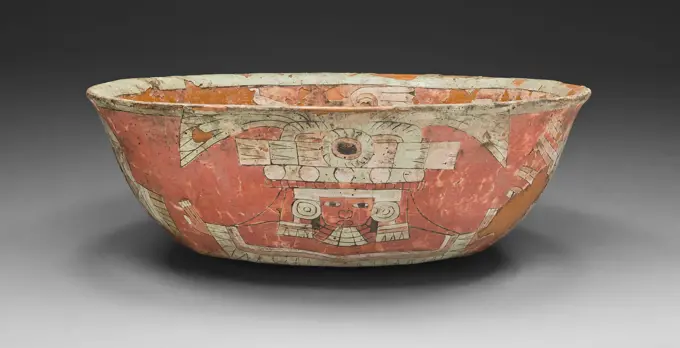
Bowl Depicting a Female Figure with Shield and Darts Motifs 300 CE-600 CE Valley of Mexico. Teotihuacan ceramic vessels were often fired and coated with a fine plaster that was then painted with figures and symbolic elements. This technique was derived from methods employed by mural painters, who covered masonry walls with fine plaster to serve as the ground for large-scale frescoes. The flaming torch may well allude to the ceremony of New Fire, kindled at New Yearís festivals and every 52 years at the inauguration of a new ìcenturyî in the native calendar system.. Ceramic, plaster, and pigment . Teotihuacan
1788-22899
Greece, Athens, Red-figure kylix depicting a banquet scene
4409-20999188
Greek art. White-ground lekythos: Woman and Youth by the Gravestone. Clay. Attica, 440 BC. The Thanatos painter. The State Hermitage Museum. Saint Petersburg. Russia.
1788-18856
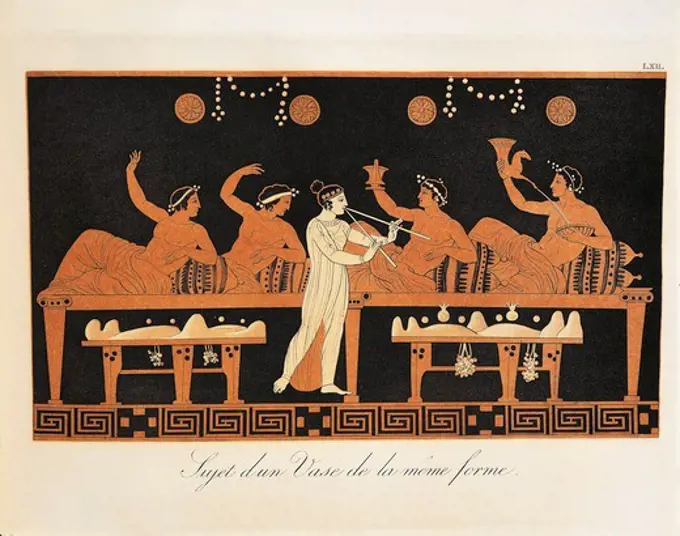
Scene from ancient Greek vase with Banquet scene in a triclinium with woman playing flute by Piringer (after Greek original), engraving
6145-45490086
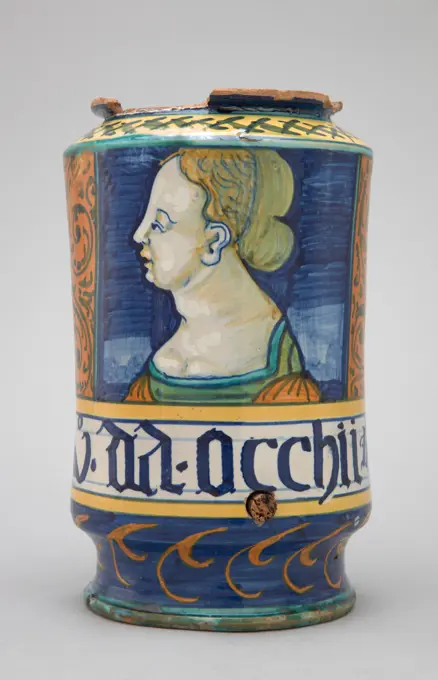
ALBARELLO (MEDICINAL JAR) Pompeii, Orazio (1516-1590/96)
1899-32561
Vittoriale of Vase with monochrome figures, by Unknown, 20th Century, Unknow. Italy, Lombardy, Gardone Riviera, Brescia, The Vittoriale. Vase decoration figures glass.
1746-30020996
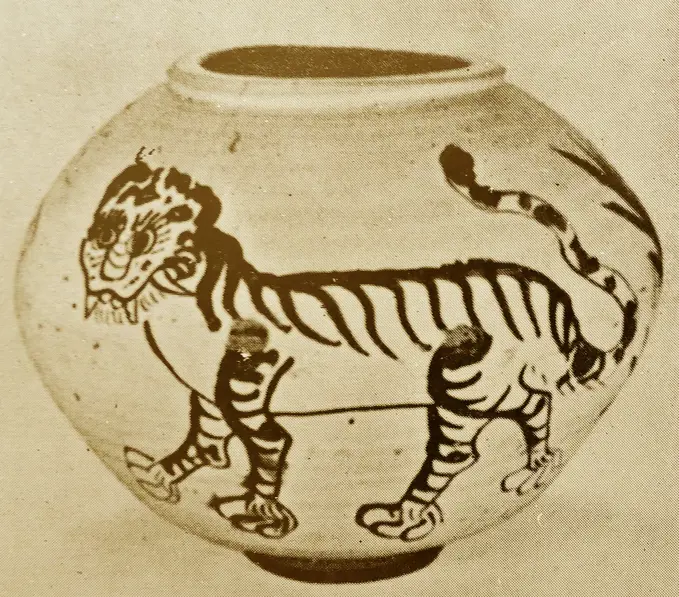
A Korean Jar from Joseon Dynasty. Painted in underglaze iron brown. From the time of Joseon dynasty (1392 - 1910)
1848-61443604
Historic illustration, Phoenician ornaments, glas- and clay work, Georges Perrot et Charles Chipiez, Histoire d e l'art dans l'antiquite
PREVIOUS
of 2
NEXT
2401 S. Ervay, Suite 206
Dallas, Texas 75215
United States
Get Started
Free ResearchMy BoardsMy Cart
For Creators
How To License Your ContentContributor PortalFrame of Mind
Resources
API accessPricing
Contact
+1 866 236 0087help@viewpictures.co.uk Contact form
©2026 View Pictures. All Rights Reserved. -A
This site is protected by reCAPTCHA and Google Privacy Policy and Terms of Service apply.