Ancient Iron Tools and Artifacts

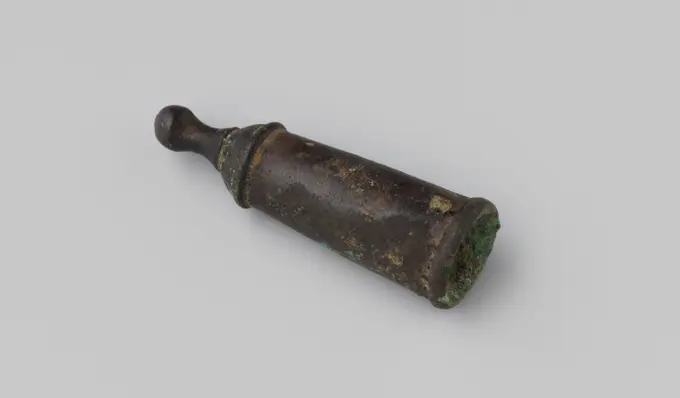
A collection of historical iron and brass tools, including a crowbar, table knife, and censer. The items exhibit unique shapes and are indicative of past craftsmanship.

Brass book fittings with decoration, decorative fittings ground find copper brass metal, whipped riveted engraved Double fittings with hook at the end. The other tip flares out and is scalloped. Three cavities are covered by the scallops and little figure is made out of four holes. Along the long sides two notches archeology Rotterdam rail tunnel book adorn close Soil discovery: trajectory rail tunnel Rotterdam.
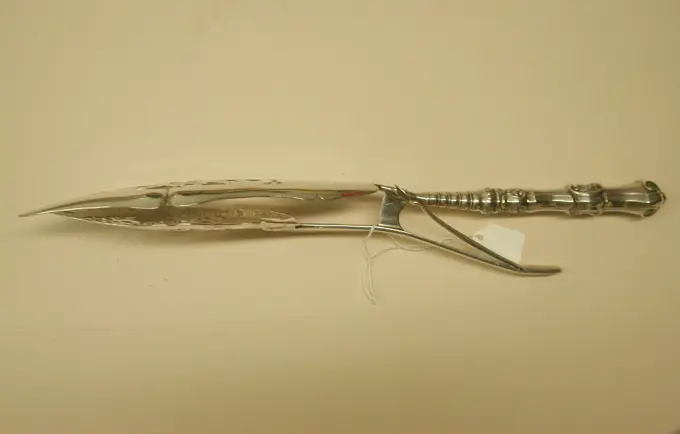
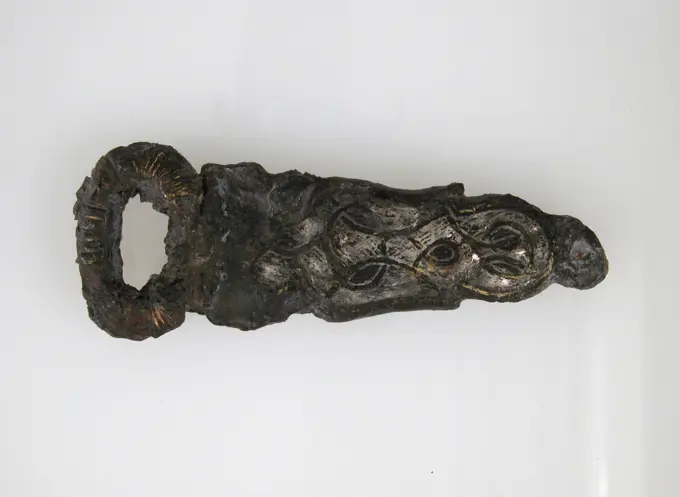
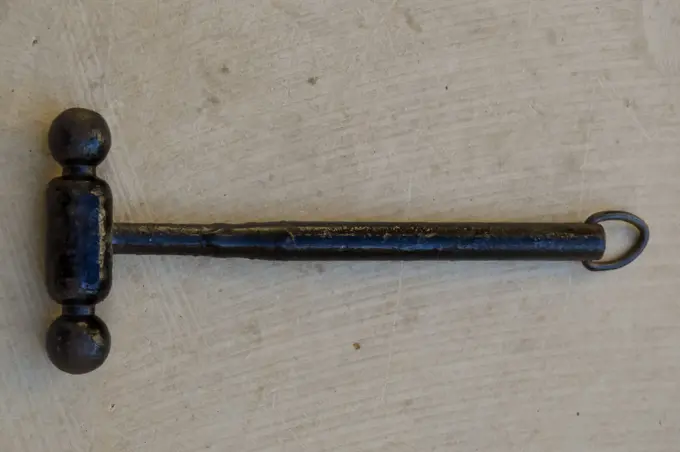
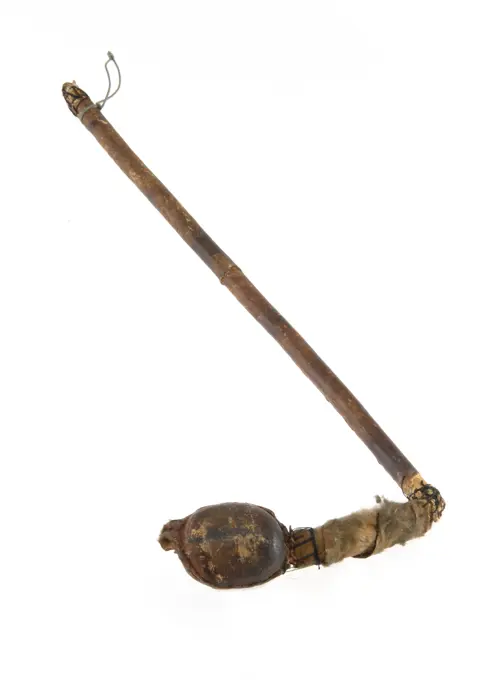
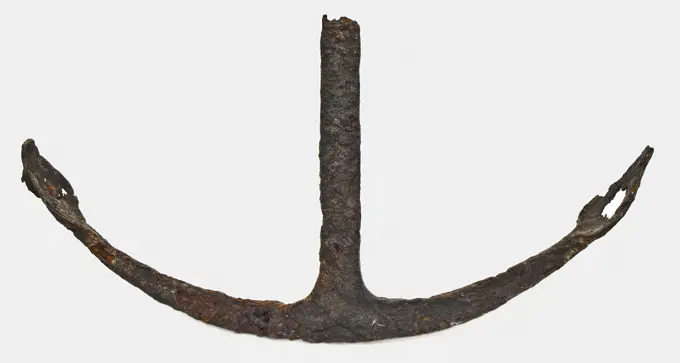
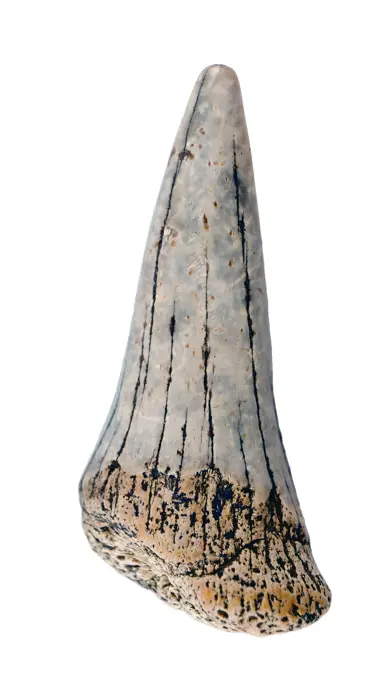
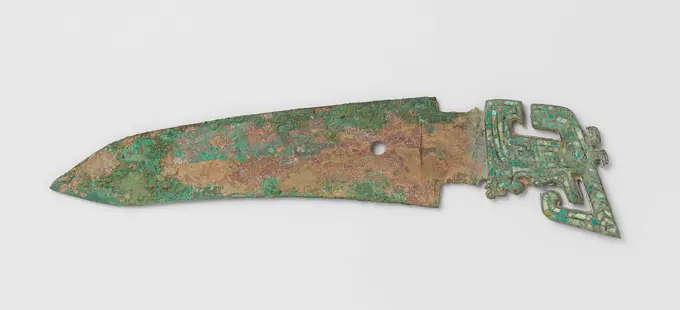
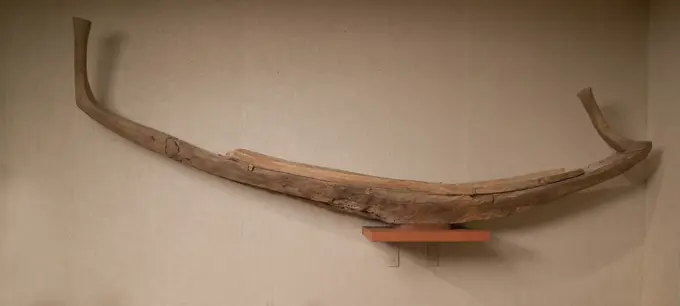
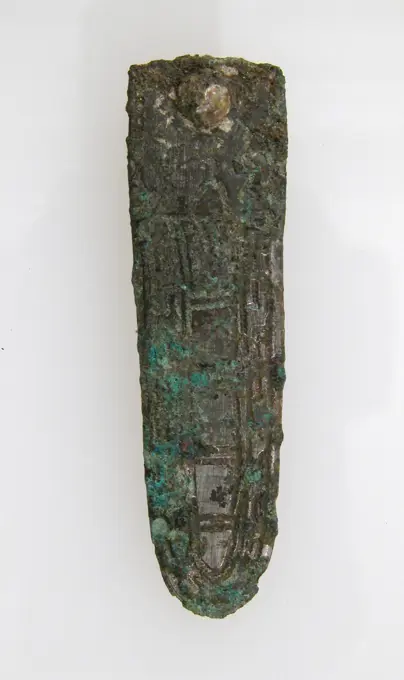
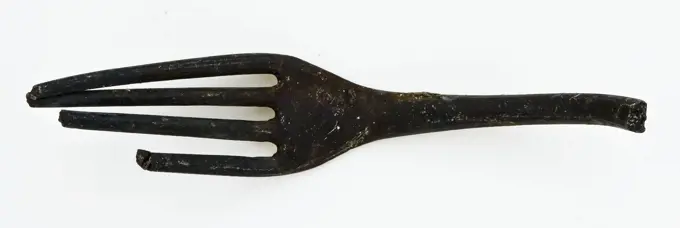
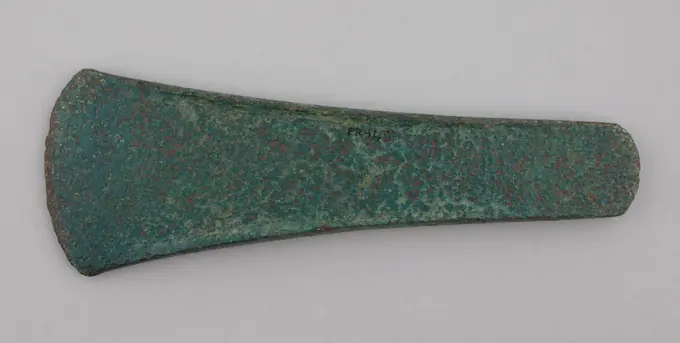
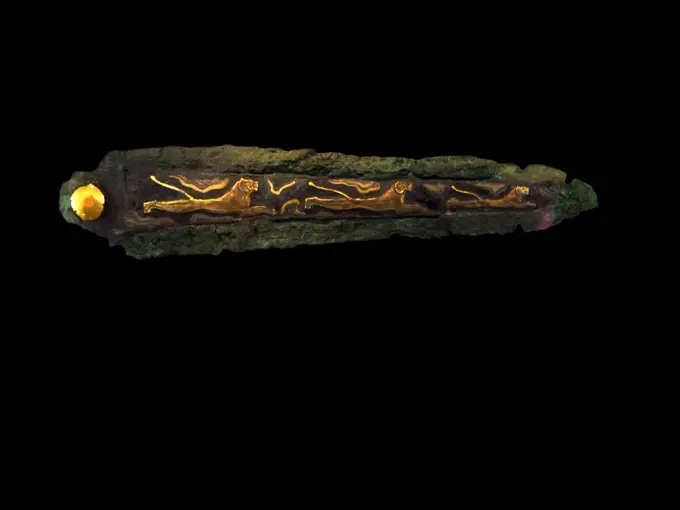
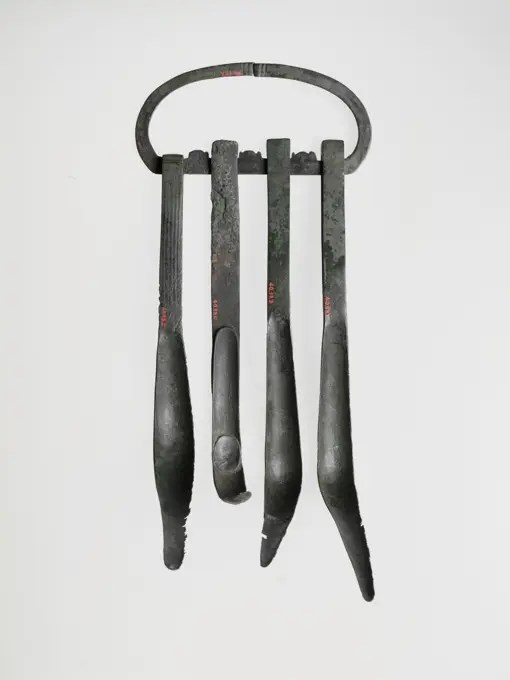
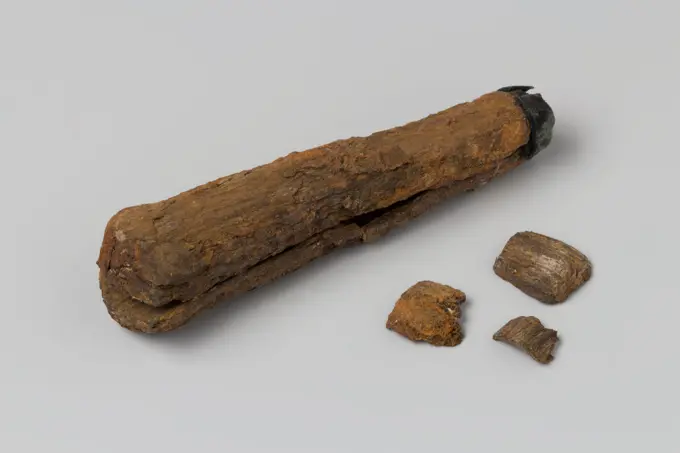
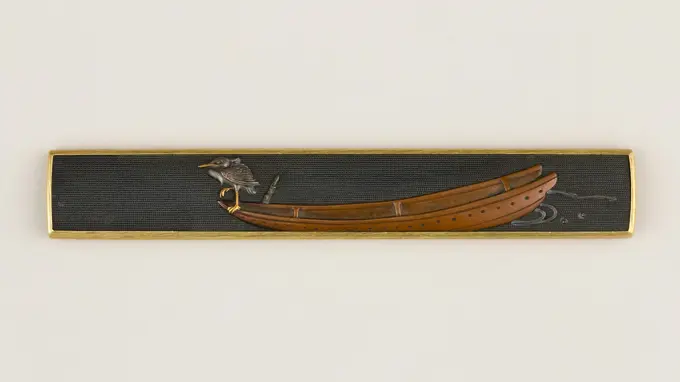
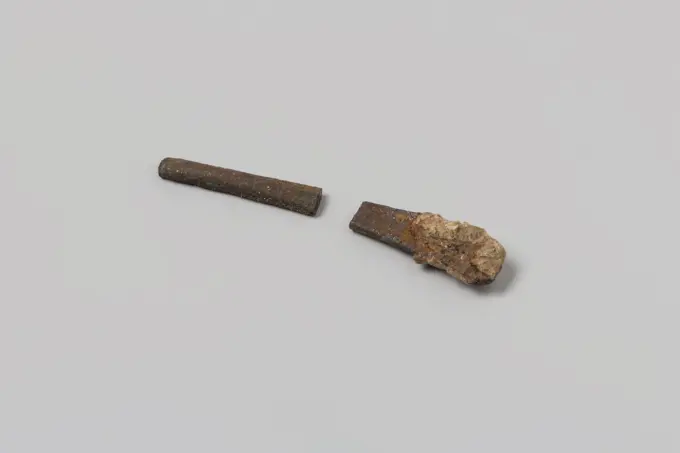
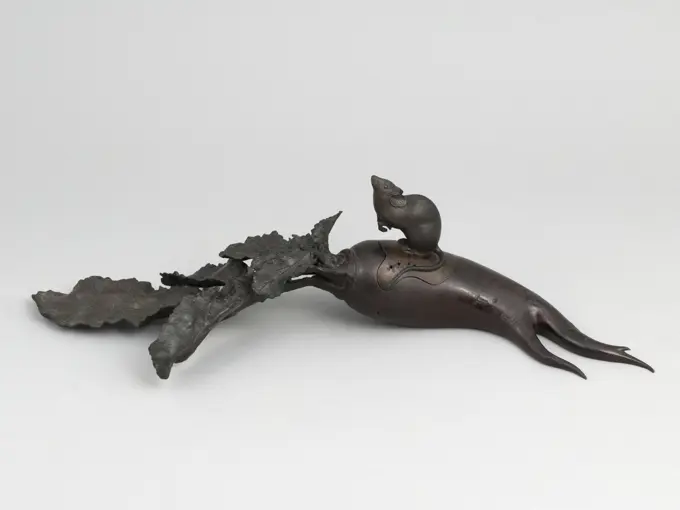
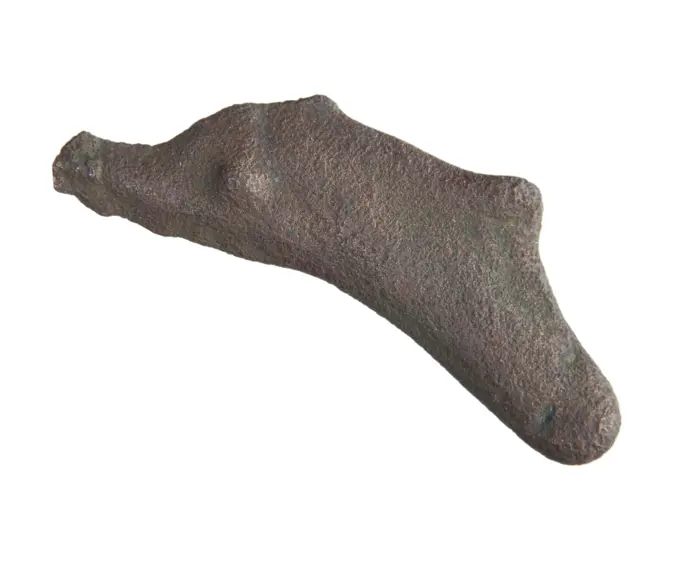
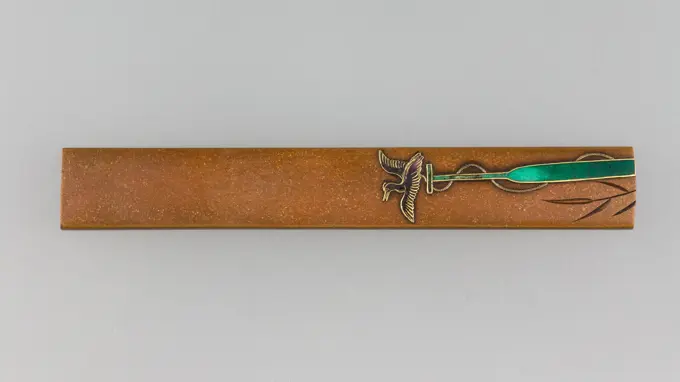
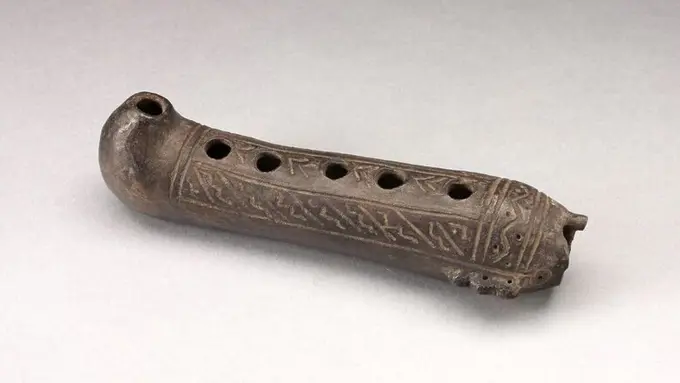
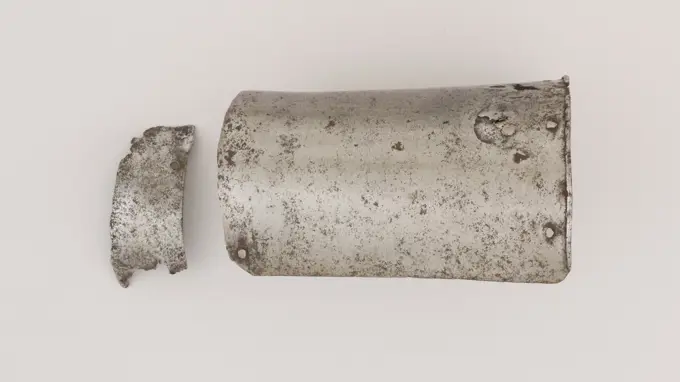
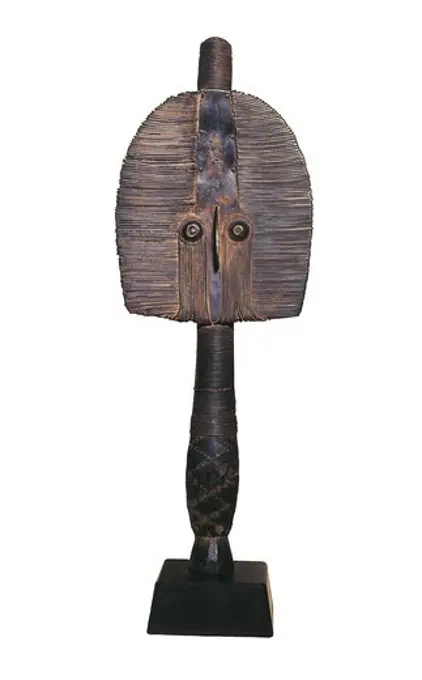
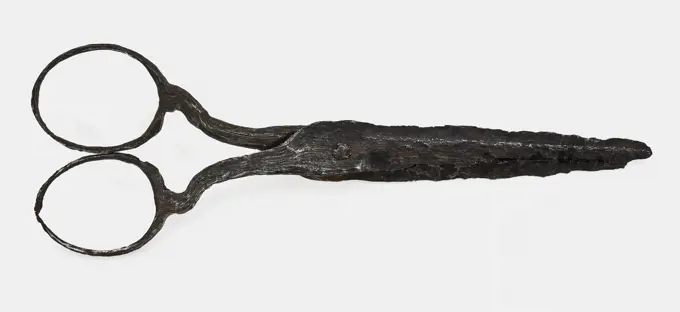
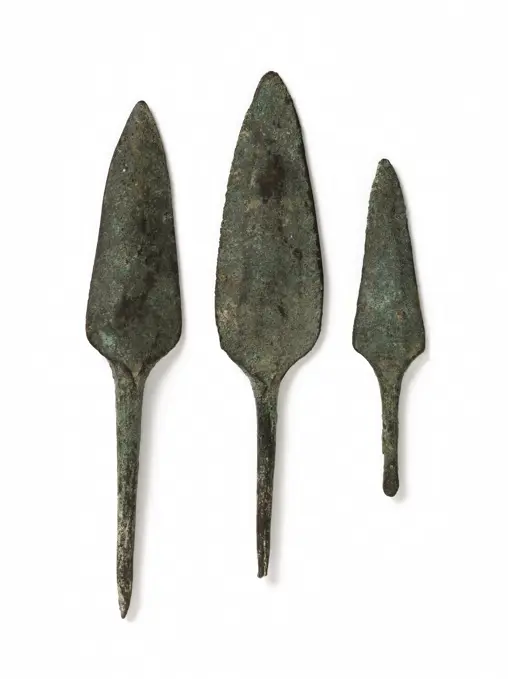
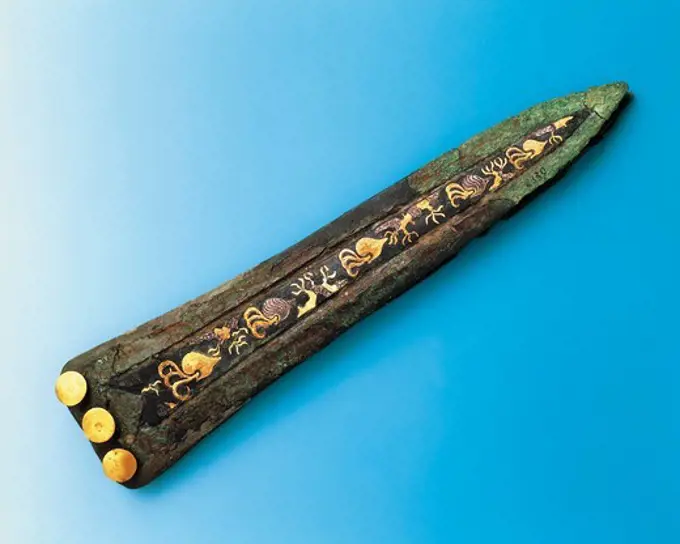
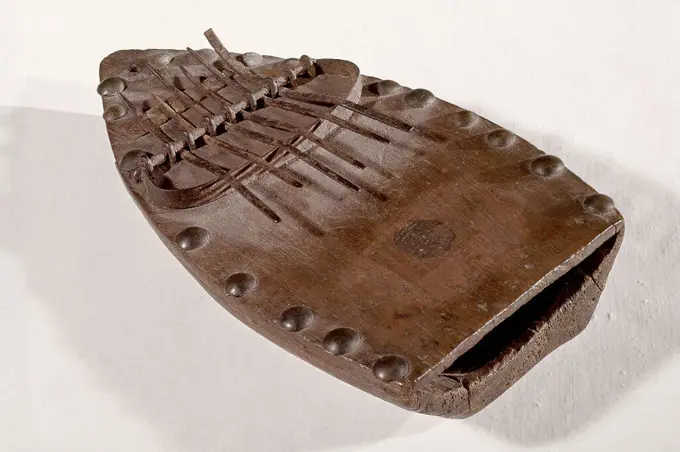
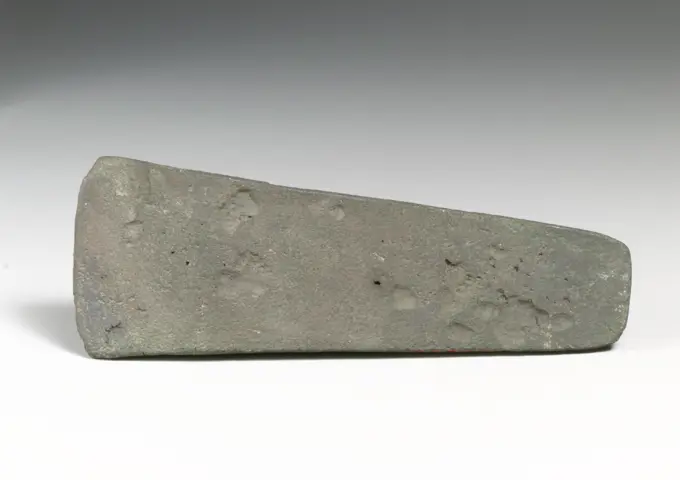
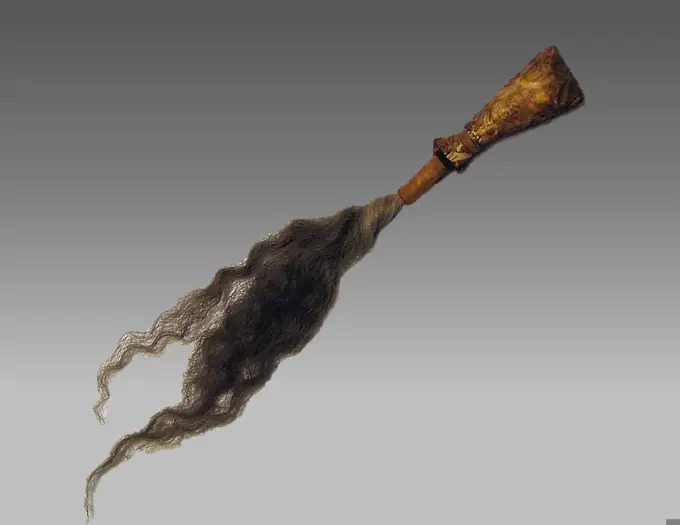
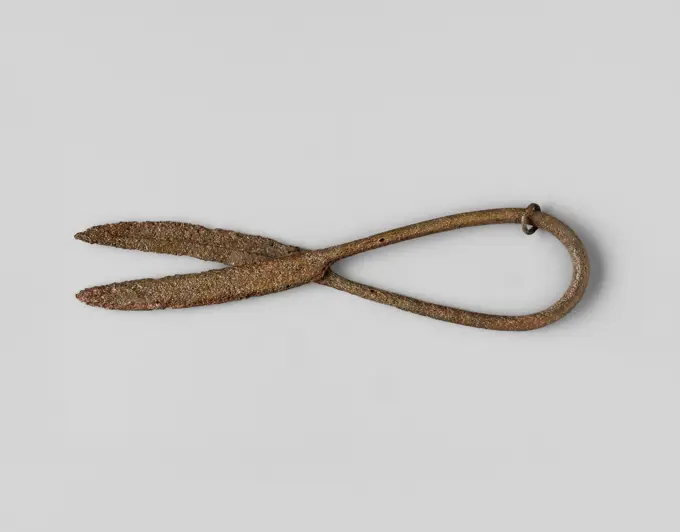
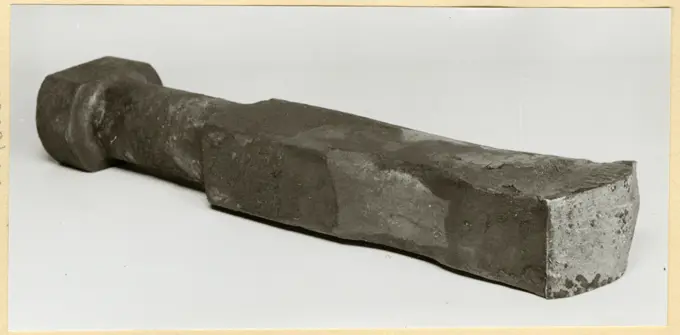
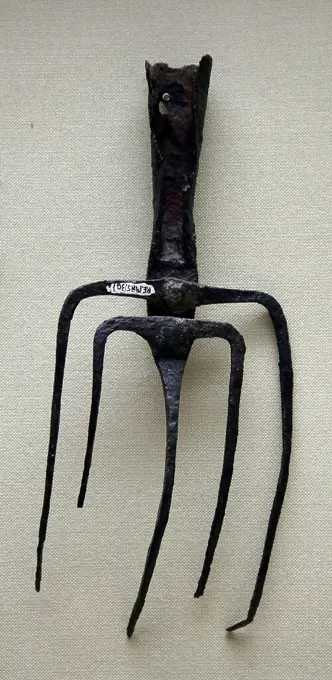
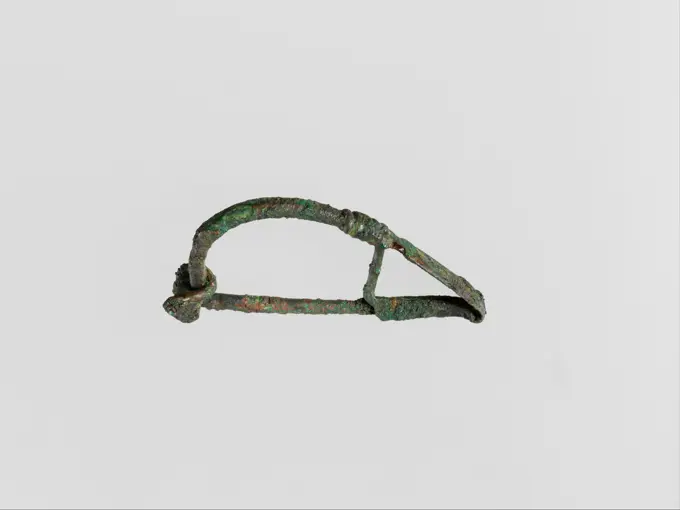
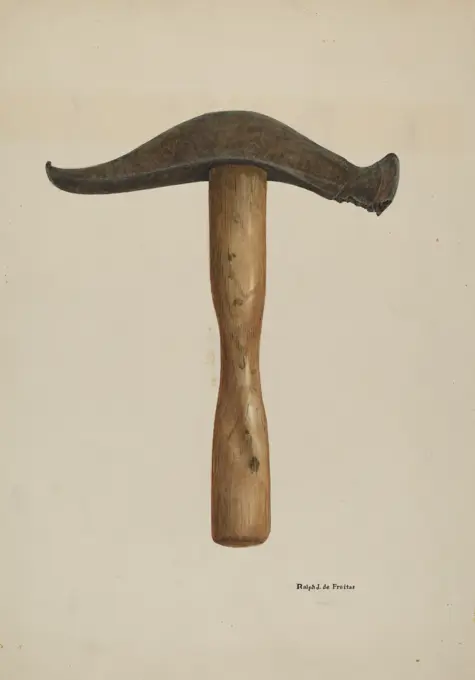
RJ De Freitas, Hammer, c 1939 HammerDouble-bladed fish server ca. 1847 Andrei Astrakhantsev Russian Such servers were used to pick up and grasp a portion of food. This sublime exacmple is a typical representative for the opulent dining tradition in mid-nineteenth century Russia. The form and decoration was developed in England between 1790 and 1830 and most likely introduced to Russia through some of the English goldsmiths working in Moscow and Saint Petersburg since the early 19th century.. Double-bladed fish server 210860Ritual wine scoop with monster heads and a dragon, anonymous, -1100 - -800 Ritual wine spoon with a pipe-shaped reservoir that is connected to the handle by two samples and a profiled stem. China bronze (metal) Ritual wine spoon with a pipe-shaped reservoir that is connected to the handle by two samples and a profiled stem. China bronze (metal)Belt Buckle Loop 6th-7th century Frankish. Belt Buckle Loop 465025 Frankish, Belt Buckle Loop, 6th7th century, Iron, silver and brass inlay, Overall: 3 11/16 x 1 5/16 x 3/8 in. (9.3 x 3.4 x 0.9 cm). The Metropolitan Museum of Art, New York. Gift of J. Pierpont Morgan, 1917 (17.191.313a)Old hammer for calling on a bell . Old hammer for calling on a bell for meals in a Cretan monasteryClub -wooden sword, Minko, c. 1750 - c. 1850 A wooden sword (, Bokutō), also known as 'doctor's sword', designed as a sword with frames and accessories, with cut decoration of a dragon, clouds and floral motifs. Japan wood (plant material) A wooden sword (, Bokutō), also known as 'doctor's sword', designed as a sword with frames and accessories, with cut decoration of a dragon, clouds and floral motifs. Japan wood (plant material)Iron anchor, broken shaft, flat wrought iron, anchor ship's equipment equipment foundry iron metal, forged Small iron anchor Flat wrought iron with outward blades Triangular blades archeology Rotterdam City Triangle Short Hoogstraat shipping transport fishing inland shipping archaeological find in the soil Rotterdam: Korte Hoogstraat 1952.Petrified prehistoric shark tooth. Macro. Tertiary period of the Cenozoic era. Isolated on white Petrified prehistoric shark tooth. Macro. Tertiary period of the Cenozoic era. Isolated on white Copyright: xZoonar.com/PavelxSytilinxxxxxVolgograd,xRussia.x 22057607Arm Guard 17th-18th century Indian. Arm Guard 31999Two dagger-axes.This kind of broad, dagger-like blade was affixed at a right angle to the end of a long pole, forming a weapon that was probably carried by foot soldiers. The turquoise inlay, however, shows that these were no ordinary weapons. Their chief function may have been symbolic, to emphasize the status of high-ranking officers.Model Funerary Boat of Imhotep ca. 1919-1878 B.C. Middle Kingdom. Model Funerary Boat of Imhotep. ca. 1919-1878 B.C.. Acacia, paint. Middle Kingdom. From Egypt, Memphite Region, Lisht South, tomb of Imhotep, south of south wall, MMA excavations, 1913-14. Dynasty 12, early-midLute 19th century Native American (Yakutat Tlingit). Lute 501183Sword, early 20th century, 15 1/2 x 3 1/4 x 1 1/2 in. (39.37 x 8.26 x 3.81 cm), Metal, wood, Democratic Republic of the Congo, 20th centurySmall lying fish ". Jade. Shang Dynasty (1765 - 1122 BC), China. Paris, Cernuschi Museum. 101270-22 Asian art, Chinese art, art of extreme-East, Shang dynasty, prehistoric time, Shang, jade, fish, prehistoryStone Vessel 900 A.D. Carved ritual figureKnife lift from the wreck of the East India Hollandia. Knife-Handle, Straight-Sided: tapering; Square in Section, Edges Ribbed, Circular Flat Upper End.Ferret 6th-7th century Frankish. Ferret. Frankish. 6th-7th century. Copper alloy, silvered. Metalwork-Copper alloyFork with four teeth and flattened hexagonal handle, fork cutlery soil find tin metal, current form) archeology Rotterdam railway tunnel food Soil discovery: railway tunnel Rotterdam.Ceremonial Stone Axe before 16th century Colombia. Ceremonial Stone Axe. Colombia. before 16th century. Stone. Colombia. Stone-ImplementsBronze spear-heads. Greek, about 5th century BC. From Olympia. British Museum. London. United Kingdom.Amenemhat's Razor ca. 1504-1447 B.C. New Kingdom. Amenemhat's Razor. ca. 1504-1447 B.C.. Bronze or copper alloy, modern wood. New Kingdom. From Egypt, Upper Egypt, Thebes, Asasif, Tomb of Neferkhawet (MMA 729), east chamber, Burial of Amenemhat (V), inside coffin, by head, MMA excavations, 1934-35. Dynasty 18, earlyAxe Head. Culture: possibly Tartar-Circassian, Crimean Khanate. Dimensions: 5 3/4 x 3 x 1 3/8 in. (14.6 x 7.6 x 3.5 cm). Date: possibly 16th-17th century.This steel head for a small axe or hatchet has a single asymmetrical blade at one end and a squared poll, or butt, at the opposite end. The top of the axe head forms a straight horizontal line from the upper corner, or toe, of the blade to the end of the poll. The bottom corner, or heel, of the cutting edge is set slightly back to form a steep point, or beard, at the base of the blade. The eye (opening for the missing haft) is slightly oval. The axe head is incised with the same decorative patterns along the length of both sides. These designs feature a triangle with a spade at each corner on the cheeks of the blade and a circle containing a whirling motif on the sides of the poll. Portions of the triangle-spade motif, the whirling motif, and other incised patterns are overlaid with copper alloy. The top of the poll and the area forwClavicle, illustrationFragment of buyer from the wreck of the East India Hollandia.parts or artifacts; eroded fragments: Materials; Copper.Scissors 7th century Frankish. Scissors 465615 Frankish, Scissors, 7th century, Iron, Overall: 5 3/4 x 1 1/4 x 1/2 in. (14.6 x 3.1 x 1.3 cm). The Metropolitan Museum of Art, New York. Gift of J. Pierpont Morgan, 1917 (17.193.287)Dagger with gold inlays depicting lion hunting, from Mycenae, GreeceSpearpointArrow or Javelin Point of Neferkhawet ca. 1504-1447 B.C. New Kingdom. Arrow or Javelin Point of Neferkhawet. ca. 1504-1447 B.C.. Bronze or copper alloy. New Kingdom. From Egypt, Upper Egypt, Thebes, Asasif, Tomb of Neferkhawet (MMA 729), west chamber A, Burial of Neferkhawt (I), MMA excavations, 1934-35. Dynasty 18, earlyTwo fragments of clear beaker, bottom and part of rim, beaker drinking glass drinking utensils tableware holder soil find glass rim fragment, hand-blown Bottom fragment with raised bottom pontilemark at the bottom Smooth glass wire at the edge of the bottom. Ribs in the soul. Clear and colorless glass light iridescent edge fragment of probable same cup. The same damage to the glass surface. Decorated on the outside with band of arches arched archeology Rotterdam City Triangle Nieuwehaven drinking wine water table serving Soil discovery Rotterdam Nieuwe Haven 1st round cesspool 21-8-1980Talon ax (common name). Bronze. Carnavalet museum, history of Paris. Heel ax. The cutting edge is arched and partly torn off.Pestle 14th century. Pestle 450411Flat ax with slightly raised edges (common name). Bronze. Carnavalet museum, history of Paris. Oblong form. This ax is marked on the flat part by slight edges.Foedraal for a knife of wood and batter of tin and inscription, anonymous, 1400 - 1600 Wooden parting for a knife, where the blade can be put in the sheath. The pewter batter at the top and bottom is decorated with cord motifs and has a start at the rear to get a cord through. The wood is decorated with four pigeons and a inscription. Netherlands tin (metal). wood (plant material) cutting / engraving Wooden parting for a knife, where the blade can be put in the sheath. The pewter batter at the top and bottom is decorated with cord motifs and has a start at the rear to get a cord through. The wood is decorated with four pigeons and a inscription. Netherlands tin (metal). wood (plant material) cutting / engravingBronze dagger with inlaid decoration which depicts lions in 'flying gallop'Excavated spurWar 1939-1945. Together of Colonel Louis-Guy Warabiot (501st RCC). Semi-automatic pistol charger Colt 45. Metal. 1943-1945. General Leclerc Museum of Hauteclocque and the Liberation of Paris, Jean Moulin Museum. Firearm weapon, 1939-1945 war, war 39-45, pistol, Second World WarLute. Culture: Roman/Byzantine. Dimensions: Overall: 4 3/4 x 1 7/16 x 28 13/16 in. (12 x 3.7 x 73.2 cm). Date: 200-500.Strings ran from the top of this instrument's long neck to the end of the sound box, which has indentations (called the waist) on its sides. The musician's right hand probably plucked the strings while the left hand used the lower portion of the neck as a fingerboard. This lute is one of only four of the type to survive; the indentations on the sound box suggest that it may be an ancestor of the guitar. Museum: Metropolitan Museum of Art, New York, USA.ClovesFiresteel -Set of bronze strigils and carrying ring 1st century B.C.-2nd century A.D. Roman Four strigils attached to a ring.. Set of bronze strigils and carrying ring. Roman. 1st century B.C.-2nd century A.D.. Bronze. Late Republican or Imperial. BronzesTweezers 306-30 B.C. Ptolemaic Period. Tweezers. 306-30 B.C.. Copper alloy. Ptolemaic Period. From Egypt, Upper Egypt, Thebes, Asasif, MMA excavationsFragments of copper from the wreck of the East Indians Hollandia, 1700 - in Or Before 1743 fragment Varied parts or fragments; unidentified and miscellaneous parts or fragments; fragm, squashed, eroded; shaft, circular, in section, one widened flattened end, semicircular in section with linear motif engraved on curved side, other end curving downwards, thinned, circular in section, flat, curving crest on apex of curve ending in a straight-angled strip with moulded upper side (triangular motif) and riveted to thinned extension of shaft on semicircular end underneath vertical fitting id. 80H1132, incomplete; fragm of fitting id. 80H1132, squashed, consisting of the harp-shaped base section and the central vertical strip, broken off, with a double ramification, indicating the original presence of at least 2 upper extensions. Netherlands copper (metal)   SecondPrehistory, Denmark, 16th century b.C. Engraved Viking ax. From Faardrup.Handle of a drill. Drill wrap without drill.Awl Cypriot. Awl 244215Tool. Date: ca. 3850-2960 B.C.. Museum: Metropolitan Museum of Art, New York, USA.Tusk with figurative relief Kongo artist ca. 1880-1890 This tusk is one of numerous carved ivories produced by Kongo artists for foreign consumption in the second half of the nineteenth century. The scenes carved in relief portray the brutality of Belgian colonial activities in the Kongo. Chained figures are marched forward by men brandishing rifles. Elsewhere, scenes depict men beaten with knives and the butts of rifles, emphasizing the violent and dehumanizing practices employed by Belgian officials. The portrayal of both slave caravans and ivory porters, many of whom were also enslaved, on this tusk evokes the interdependence between these two commercial endeavors. While vividly illustrating these abuses, this ivory and others like it actively protest against the catastrophes of colonialism by capturing, recording, and circulating these scenes locally and abroad. This tusk can be specifically dated to the early 1880s. in the middle register, a suit worn by a European figure sitting Cosmetic Palette. Egypt, circa 3400 - 3000 BCE. Tools and Equipment; palettes. SchistPINTURA ABSTRACTA. Author: SANTIAGO SERRANO (1942-). Location: GALERIA SOLEDAD LORENZO. MADRID. SPAIN.Messenheft from the wreck of the East Indians Hollandia, Anonymous, 1700 - in Or Before 1743  Knife, handle, cylindrical: tapering; id. NG 1979-403H, eroded. Netherlands wood (plant material). copper (metal)   SecondKnife Handle (Kozuka) late 18th-early 19th century Japanese A kozuka is a handle of a by-knife that is part of a sword mounting. It is kept in a slot on the reverse of a katana scabbard, often with a matching kōgai (hairdressing tool).. Knife Handle (Kozuka) 25224Small iron cannon, cannon firearm weapon soil foundry cast iron metal, cast Small iron cannon Conical in shape. Firing fire nozzle Small sun hole. Marked at the bottom circular mark of which the image is unrecognizable Four circumferential cast rings Clear cast seams archeology Schans Bospolder Delfshaven Rotterdam weaponry armament militaria war shooting signals An iron canon excavated at Delfshaven 4 meters underground in house at the Kreeksloot at the Schans for 1907.Hoe ca. 1961-1917 B.C. Middle Kingdom. Hoe. ca. 1961-1917 B.C.. Wood. Middle Kingdom. From Egypt, Memphite Region, Lisht South, debris west, MMA excavations. Dynasty 12Bracelet. Western Iran, circa 1000-650 B.C.. Jewelry and Adornments; bracelets. Bronze, castSticks arranged in circular shapeFlint knife from the Tomb of Khasekhemwy, Second Dynasty, Abydos. Khasekhemwy (ca. 2690 BC; sometimes spelled Khasekhemui) was the final king of the Second dynasty of Egypt. Little is known of Khasekhemwy, other than that he led several significant military campaigns and built several monumentsClamp from the wreck of the East Indians Hollandia, Anonymous, 1700 - in or Before 1743  Terminals; id. 75-52H1447. Netherlands copper (metal)Fragments Steel van Fork or Spoon from the wreck of the East Indians Hollandia, Anonymous, 1700 - in Or Before 1743 spoon Cutlery, fragment: stem of fork or spoon; fragm, sim. NG 1980-27H536a. Netherlands copper (metal)   SecondSchep van messing in de vorm van een Jacobsschelp.The molded object consists of two parts: the scoop and the stake for the handle. The scoop has the form of a scallop shell. The wooden handle is missing.Radish-shaped-shaped burn with a rat over it. Japan. Bronze. Nineteenth century. Paris, Cernuschi museum. 53739-1 Bronze, Brule-Parfum, Radish, Japanese, rat formSteel from fork or spoon from the wreck of the East Indiesman Hollandia. Cutlery, fragment: voice or fork or spoon; Fragm, Encrusted, ID. NG 1980-27H67.Case lid made of iron, anonymous, c. 1590 - 1596 chest. lid Case lid made of iron, with jumping lock over the entire surface. See also NM-7657. Netherlands iron (metal) forging  Nova Zembla. Saving HuysModel Dagger. Egypt, Ptolemaic Period - Roman Period (332 BCE - 395 CE) or later. Arms and Armor; daggers. BronzeGreece, Sarmacja, Olmia, V The beginning of the 4th century BC, Dolphin money, AE MintKnife Handle (Kozuka) 19th century Japanese A kozuka is a handle of a by-knife that is part of a sword mounting. It is kept in a slot on the reverse of a katana scabbard, often with a matching kōgai (hairdressing tool).. Knife Handle (Kozuka) 29782Flute Incised with Geometric Design. Chimú; North coast, Peru. Date: 1200-1450. Dimensions: 18.4 x 5.1 cm (7 1/4 x 2 in.). Ceramic. Origin: North Coast. Museum: The Chicago Art Institute, Chicago, USA.Cornet ca. 4600-3600 B.C. Ghassulian. Cornet 326513Types of traditional axes of the Golo people, Democratic Republic of the Congo. Africa. Heart of Africa Three years travels and adventures in the unexplored regions of Central Africa by Georg August Schweinfurth, 1868-1871Upper Arm Defense (Rerebrace) ca. 1430-40 Italian This is part of a large find of medieval armor discovered in 1840 in the ruins of the fortress of Chalcis, on the Greek island of Euboea (then a Venetian colony called Negroponte). The fortress had been captured and destroyed by the Turks in 1470. Now divided largely between the Ethnological Museum, Athens, and The Metropolitan Museum of Art, the Chalcis hoard contains many rare and unusual elements of fourteenth- and fifteenth-century armor. Of particular importance are the variety of headpieces and the many fragments of brigandines (armor for the torso constructed of small plates riveted to layers of fabric), some of which retain portions of their original velvet covering. The Chalcis armor provides a unique picture of the armament used in the Aegean, one of the easternmost military outposts of the Venetian empire.. Upper Arm Defense (Rerebrace) 23129Ritual tool for the "Opening of the Mouth" ceremony ca. 1479-1458 B.C. New Kingdom. Ritual tool for the "Opening of the Mouth" ceremony. ca. 1479-1458 B.C.. Wood. New Kingdom. From Egypt, Upper Egypt, Thebes, Deir el-Bahri, Temple of Hatshepsut, Foundation Deposit 3 (C), MMA excavations, 1923-24. Dynasty 18Tabakspijp., anonymous, c. 1400 - c. 1950 Tobacco pipe.  earthenware. pipe clay Tobacco pipe.  earthenware. pipe clayFigure of the reliquary Bwete or Bwitti (Gabon). The Mahongwe practice an ancestor cult (bwiti or bwete) that was at the center of a system of beliefs and rites and ancestor worship formed the core of the family group's religious and social life. African art. Mixted Technic. Private Collection. Proc: GABON.Flounce (Incomplete). Belgium, Flanders, Brussels. Date: 1720-1739. Dimensions: 44.2 × 78.7 cm (17 3/8 × 31 in.). Linen, bobbin part lace of a type known as "Brussels" with a plaited bar ground. Origin: Flanders. Museum: The Chicago Art Institute, Chicago, USA.Amulet, papyrus capital Symbolic objects used for amulets include a menat-pendant, the djed-sign, a papyrus capital are all common in Egyptian architecture. Also, a pectoral, such as is used on mummies, a bunch of grapes, or other clusters of fruit, and an inscribed bead are common shapes.. Amulet, papyrus capital. Clay, glazed. Gold and SilverScissors with slightly curved legs, scissor cutting tool soil finds iron metal, one scissor blade marked with letter: Y archeology Rotterdam City triangle Groenendaal underground pit clipping Soil discovery Rotterdam underground pit Groenendaal (waking Blaakstation) 04-1977.AZUELA.Three arrow heads. Perse, Hurvin. IXEM-VIIIth centuries BC. Paris, Cernuschi museum. 35179-11 Armament, weapon, bronze, Fleche headSnuff Bottle (stopper), 1644-1911. China, Qing dynasty (1644-1911). Glass; overall: 6.4 cm (2 1/2 in.).Dagger with gold inlays depicting an underwater landscape, from Routsi, GreeceINSTRUMENTO MUSICAL.Key piece with gothic frame, anonymous, c. 1400 - c. 1950 Key piece of oak with gothic frame. Northern Netherlands (possibly) oak (wood). iron (metal). paint (coating) Key piece of oak with gothic frame. Northern Netherlands (possibly) oak (wood). iron (metal). paint (coating)Knife Handle (Kozuka). Culture: Japanese. Dimensions: L. 3 13/16 in. (9.7 cm); W. 9/16 in. (1.4 cm); thickness 1/4 in. (0.6 cm); Wt. 1.1 oz. (31.2 g). Date: ca. 1615-1868. Museum: Metropolitan Museum of Art, New York, USA.ARMAS IBERICAS EN BRONCE PROCEDENTES DE LA RIA DE HUELVA - SIGLOS V-IV AC. Location: MUSEO ARQUEOLOGICO NACIONAL-COLECCION. MADRID. SPAIN.Axehead ca. 3200-2000 B.C. Cypriot. Axehead. Cypriot. ca. 3200-2000 B.C.. Bronze. Early Bronze Age. BronzesPoster with one hole in the wall and decorated with three ring straps. Small size sleeve with one hole in the wall and decorated with three ring binders that are arranged in the material. On the inside of the tube are red paint tracks. Possibly it concerns a handle of paint brush or sail makersRattle Native American (Apache) 19th century This rattle is made of an inflated bladder and a handle edged with buckskin, terminating in a skein of horsehair.Nożyczki. warsztat rzymski, workshopDamaged part of railway car.Legs block with row of holes, residue of button fabrication, waste ground find leg, drilled strip bone toothed by coring round holes for the manufacture of knots archeology close dress knotter knotting guild craftOld hammer closeup on wood background Degen carrier, fragment, a valve with iron hinge, anonymous, c. 1590 - c. 1596 fragment Degen carrier, fragment consisting of a valve with an iron hinge. The sword could be confirmed by means of a kind of iron hinge, attached with a pen. The belt hook that served to attach the sword to a belt is missing.  leather. iron (metal) forging  Nova Zembla. Saving HuysRoman era. Agricultural tool. Rake. Andalucia, Spain. Archaeological Museum of Seville. Spain.Dog harness fastener -Spoon, 19th century, 6 1/4 x 2 1/4 in. (15.88 x 5.72 cm), Mountain goat horn, United States, 19th centuryFibula 7th century B.C. Etruscan The end of the foot is twisted spirally around the bow.. Fibula 246341Excerpt of copper from the wreck of the East Indians Hollandia, 1700 - in or before 1743 fragment Varied parts or fragments, strips and strip-shaped fragments; fragm. Netherlands copper (metal)   SecondFragment Messenheft from the wreck of the East India Hollandia.knife, Handle, Cylindrical: tapering; Fragm, ID. NG 1979-403H.Bracelet -Dagger hilt ca. late 2nd-early 1st millennium B.C. Iran. Dagger hilt 324546