Ancient Jars and Vessels

Historical jars and vessels from different periods, showcasing varied shapes and materials, reflecting rich cultural craftsmanship.
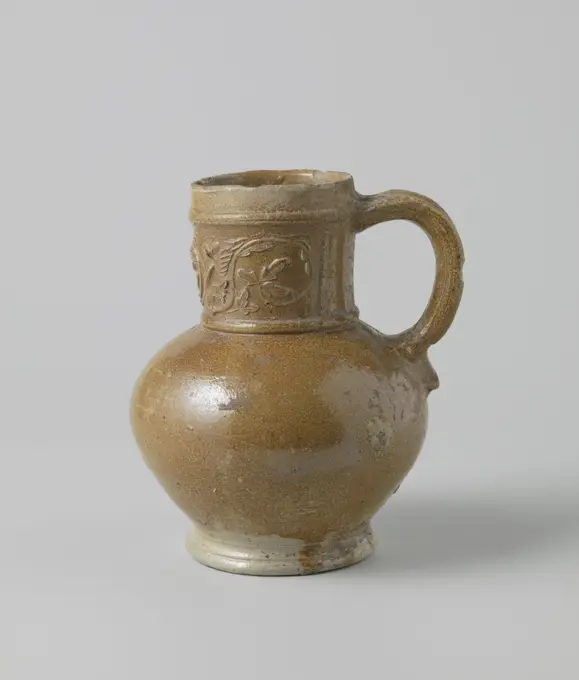
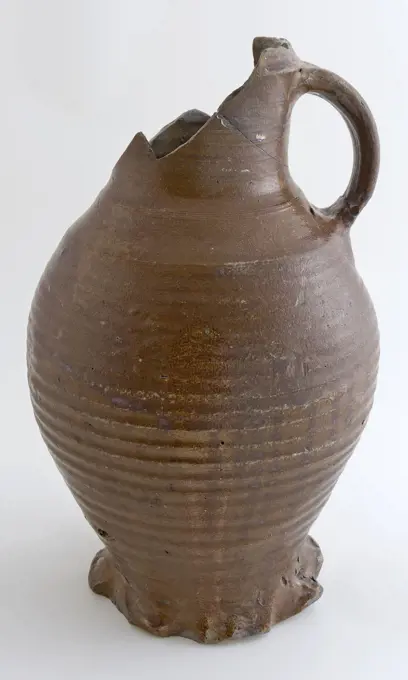
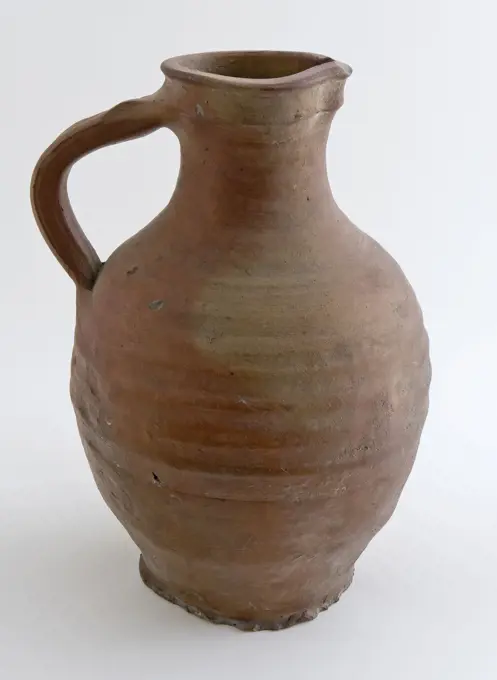
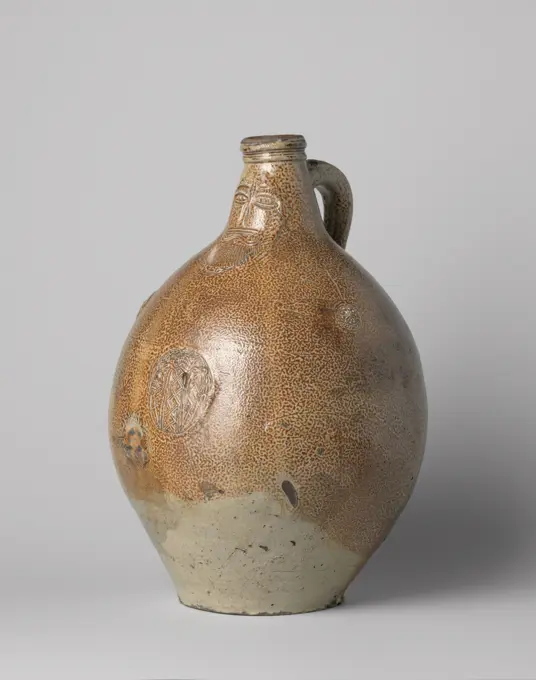
Jug with a portrait, winged figures and foliate scrolls, anonymous, c. 1560 - c. 1580 Jug of stoneware on stand ring with a printed, egg -shaped belly and short neck. The C-shaped ear is attached to the neck and shoulder. Profiles on the foot and neck. Covered with a brown Engobe. On the neck in relief a printed and laid bond with a portrait and face in a medallion flanked by winged figures with a hat, the lower body of which overflows into leaf vines. Raeren. Rae stoneware. glaze. engobe vitrification Jug of stoneware on stand ring with a printed, egg -shaped belly and short neck. The C-shaped ear is attached to the neck and shoulder. Profiles on the foot and neck. Covered with a brown Engobe. On the neck in relief a printed and laid bond with a portrait and face in a medallion flanked by winged figures with a hat, the lower body of which overflows into leaf vines. Raeren. Rae stoneware. glaze. engobe vitrification
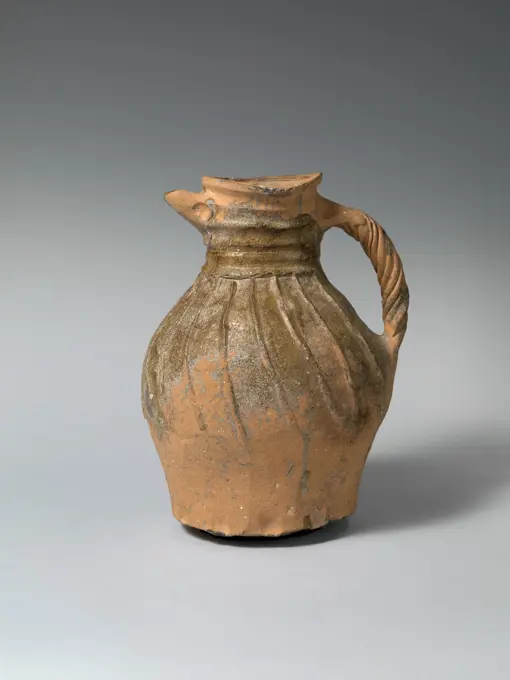
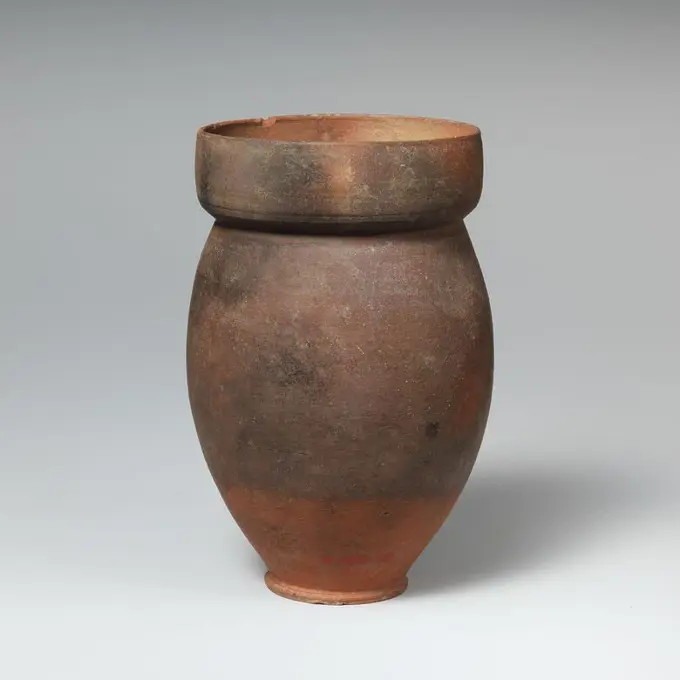
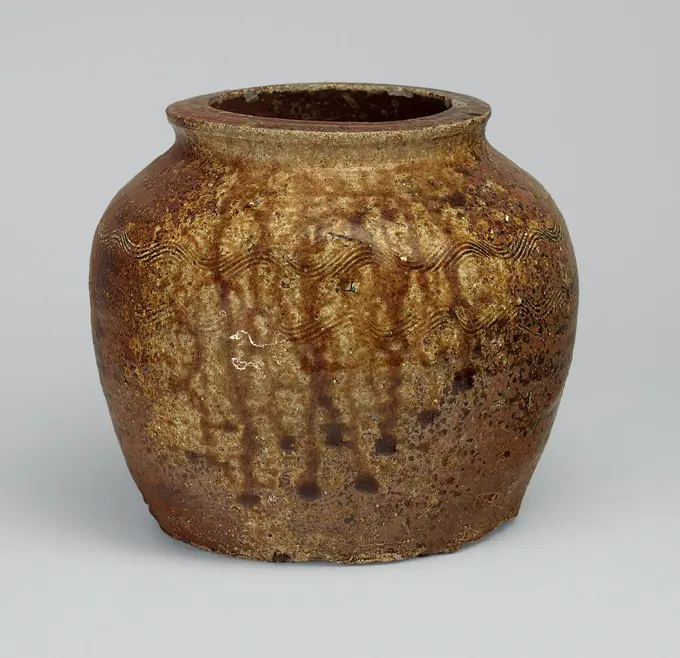
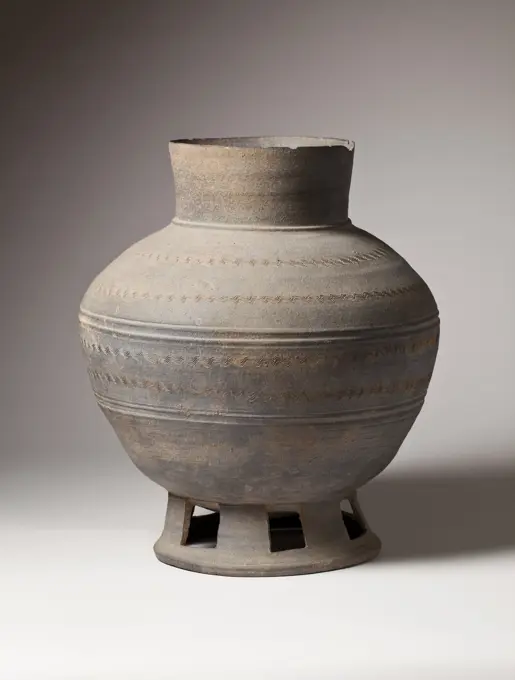
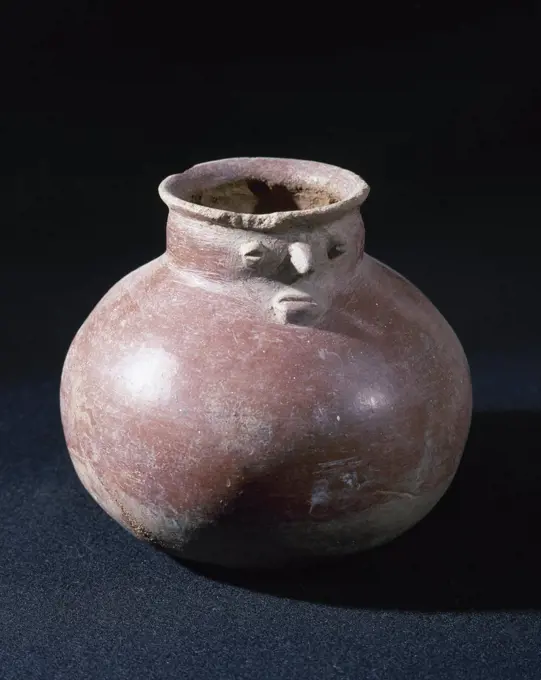
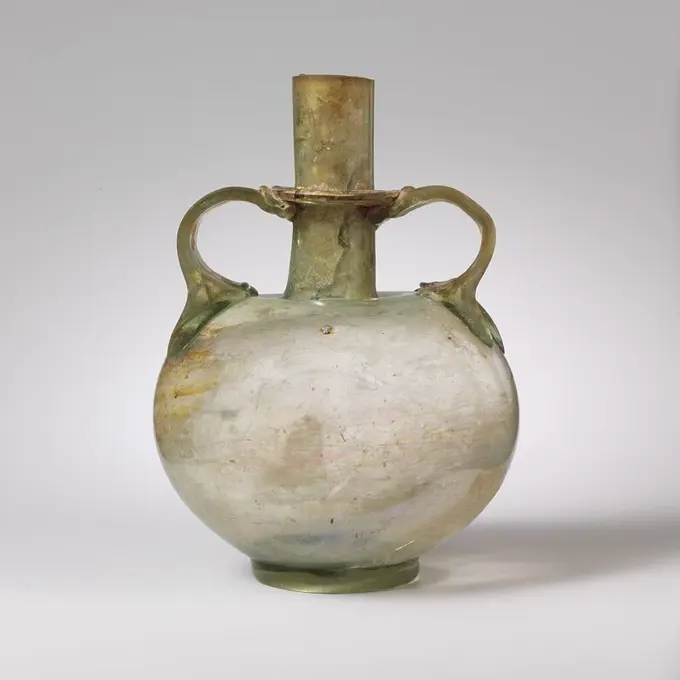
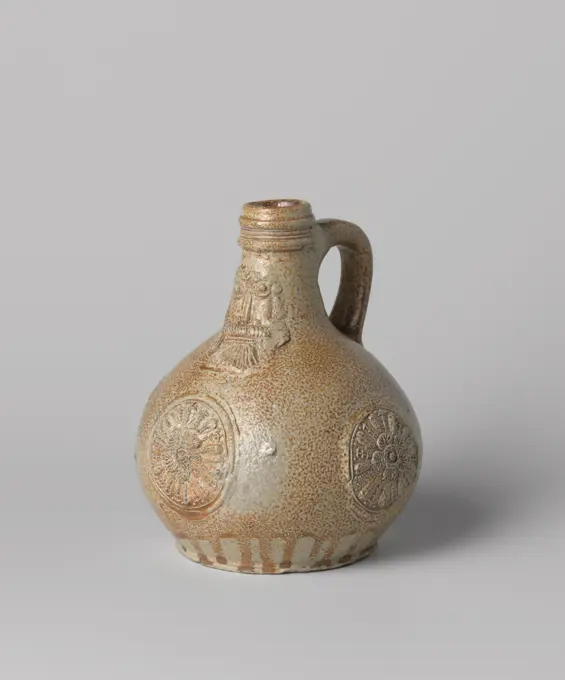
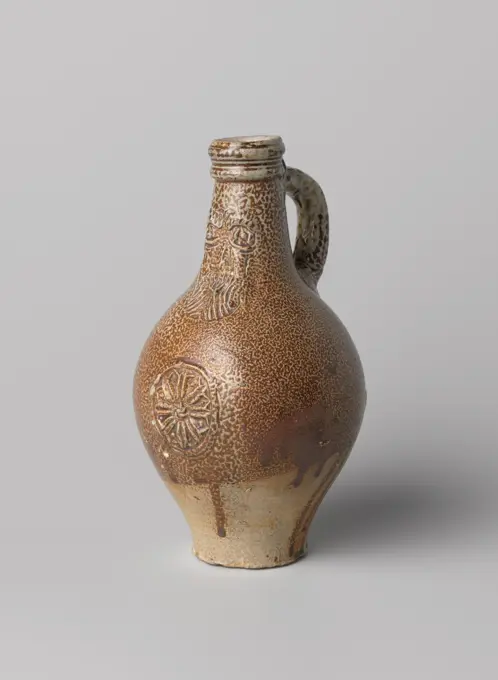
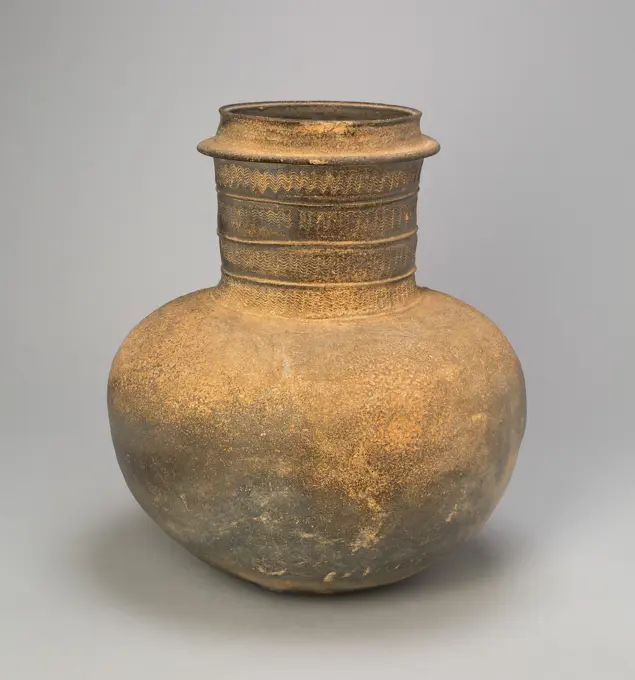
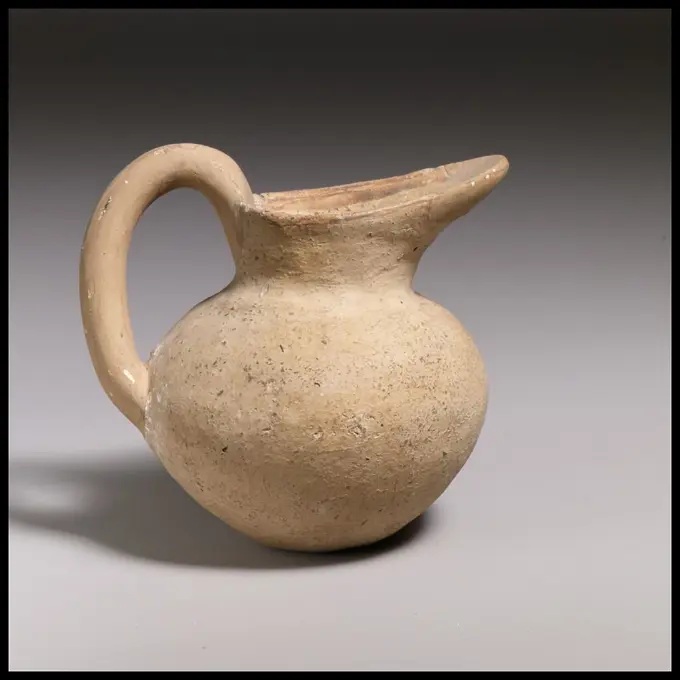
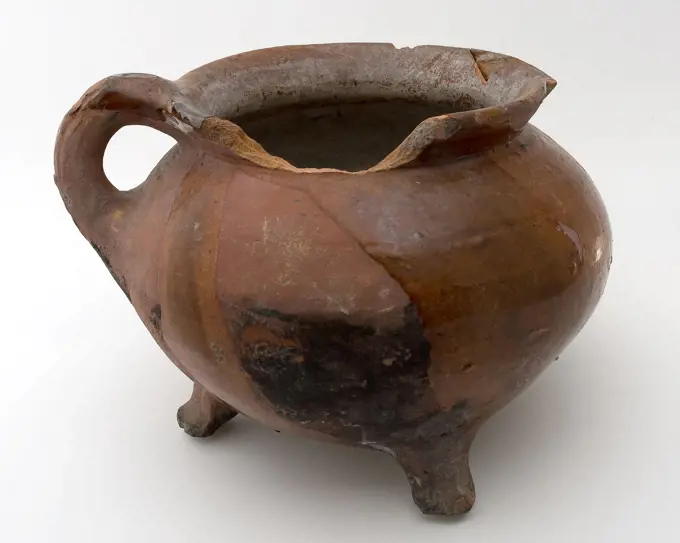
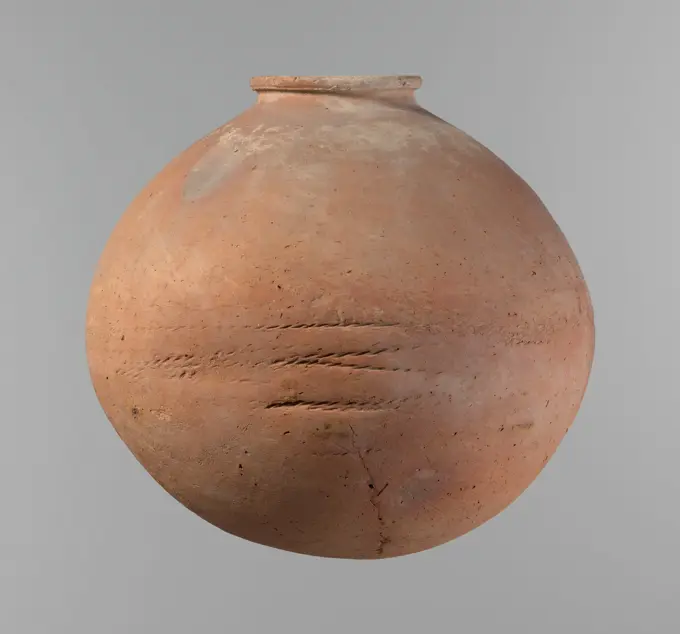
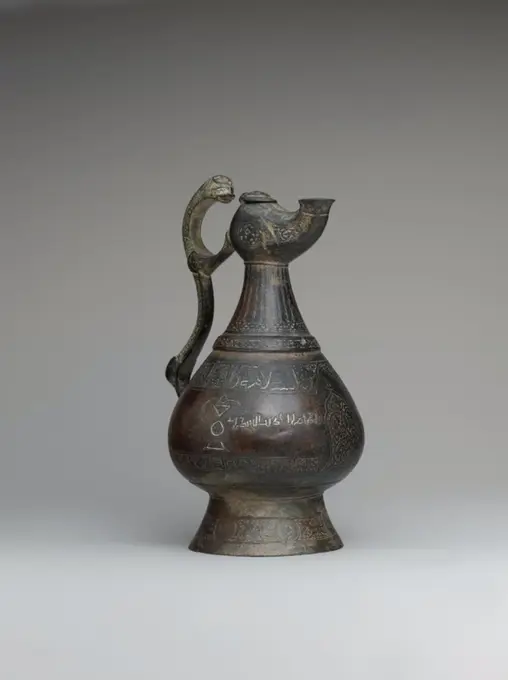
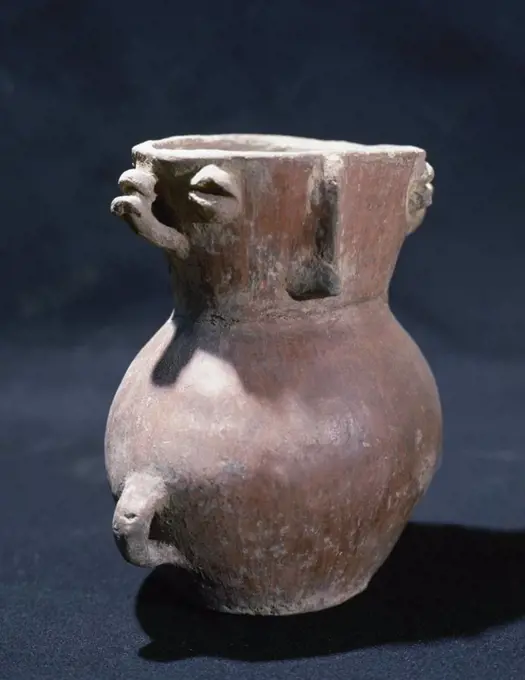
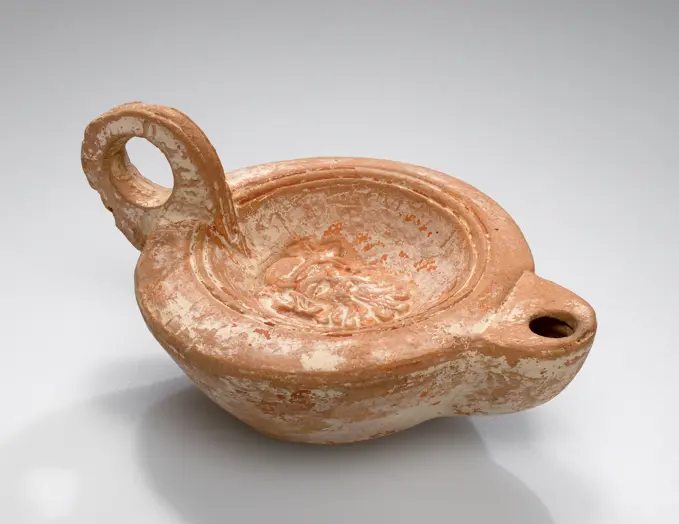
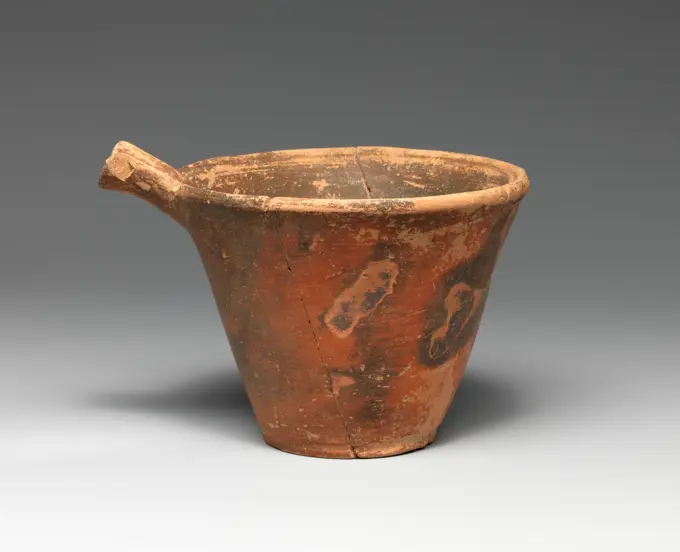
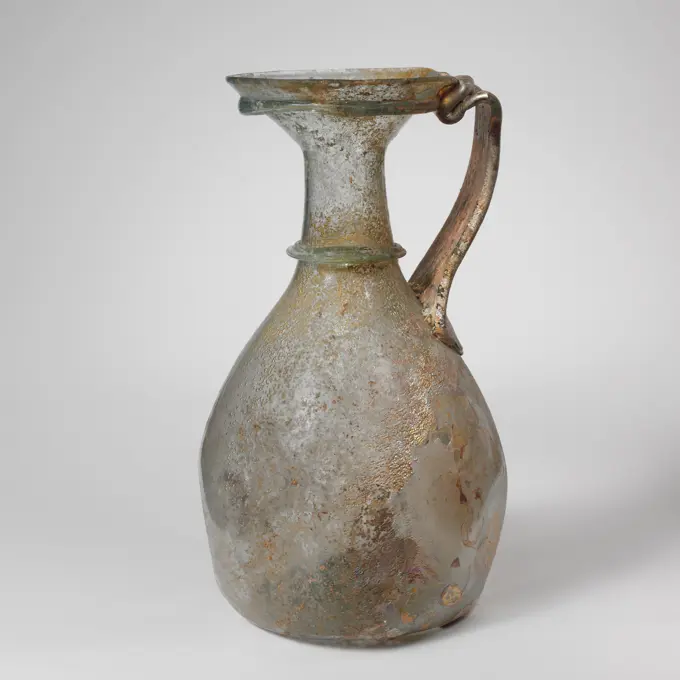
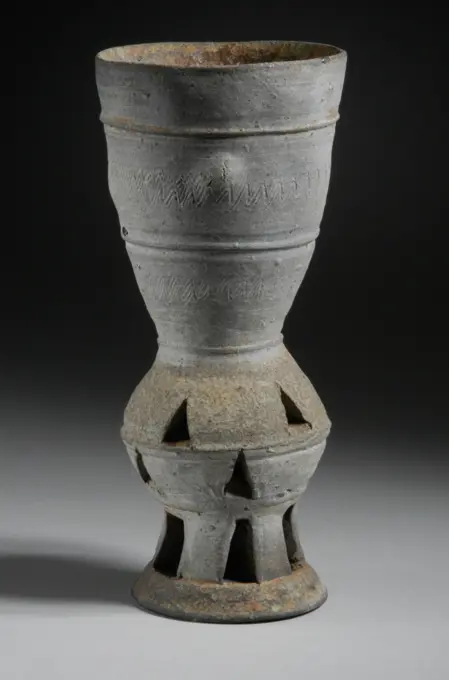
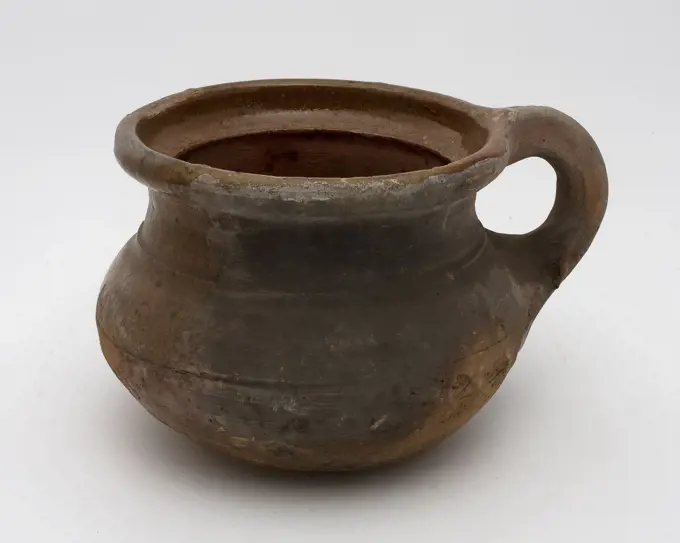
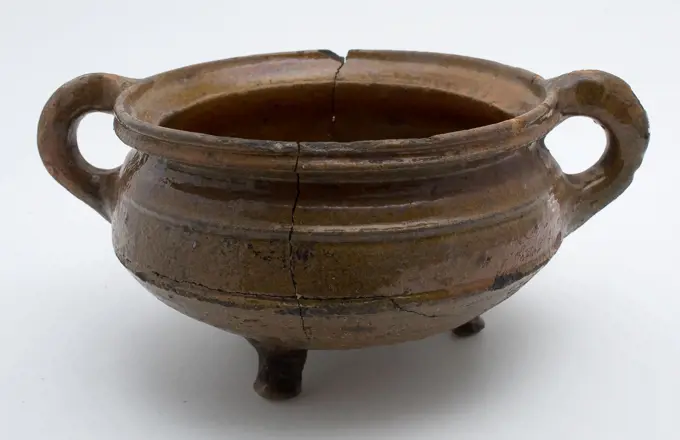
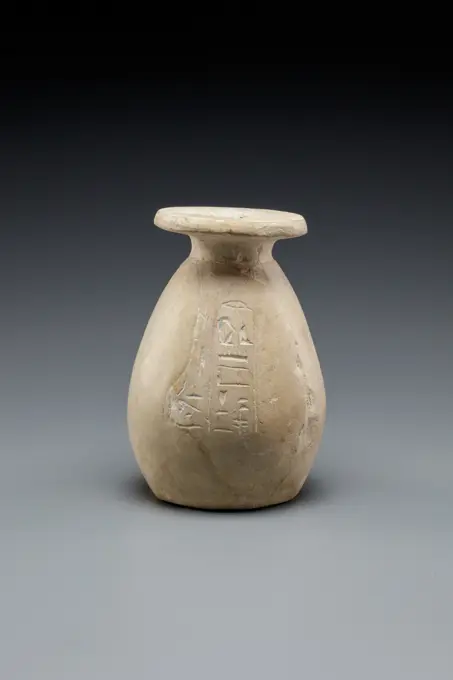
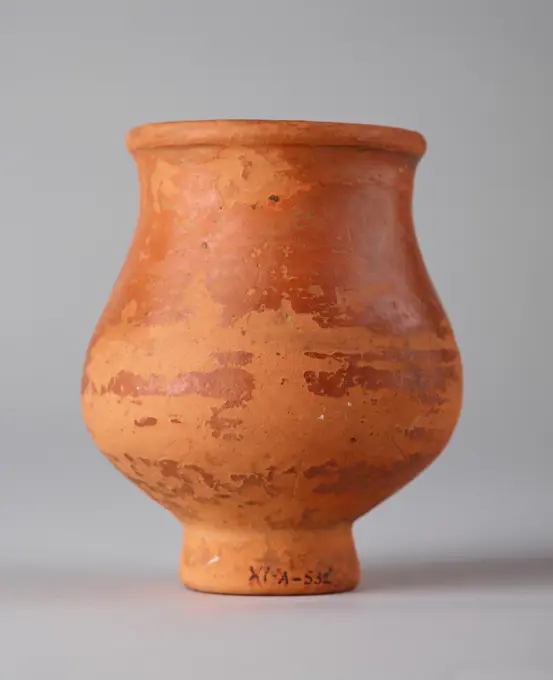
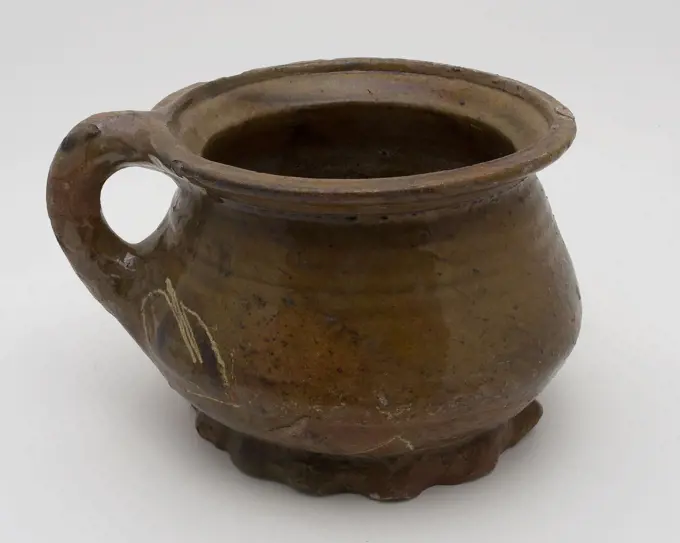
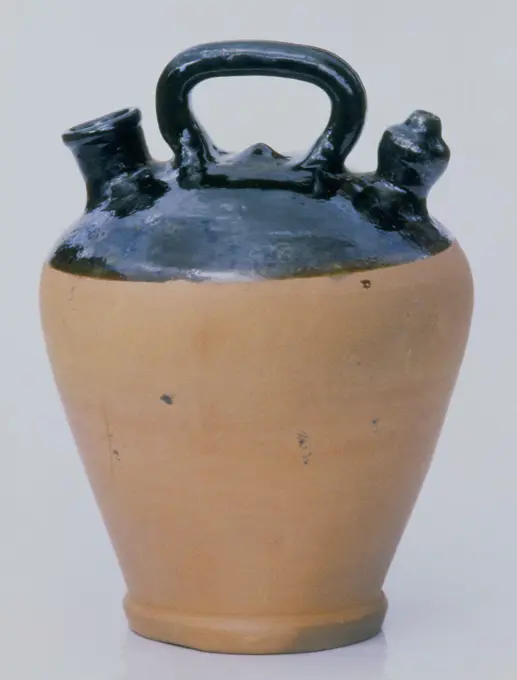
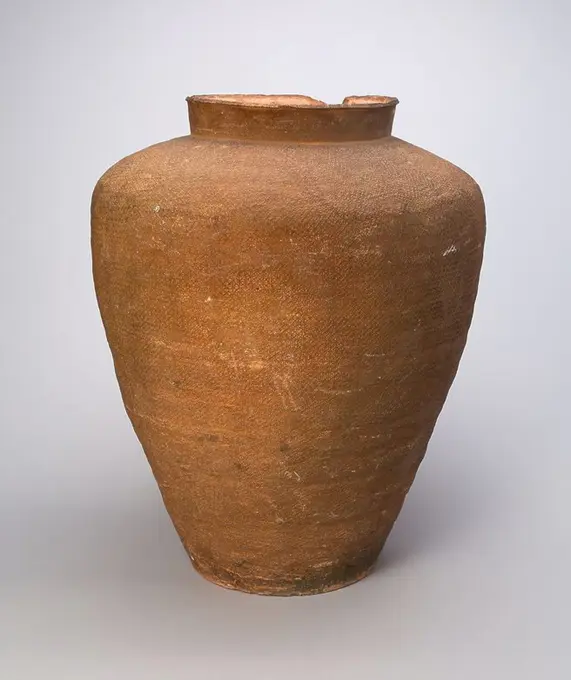
Jar. China. Date: 400 BC-221 BC. Dimensions: H. 47.0 cm (18 1/2 in.); diam. 38.8 cm (15 1/4 in.). Stoneware with impressed decoration. Origin: China. Museum: The Chicago Art Institute, Chicago, USA.Jar late 8th-first half 9th century. Jar 449430Ewer 12th-13th century. Ewer 448181Red ware.BottleRound-Bottomed Jar ca. 1295-1070 B.C. New Kingdom, Ramesside. Round-Bottomed Jar 549230Jug with a portrait, winged figures and foliate scrolls, anonymous, c. 1560 - c. 1580 Jug of stoneware on stand ring with a printed, egg -shaped belly and short neck. The C-shaped ear is attached to the neck and shoulder. Profiles on the foot and neck. Covered with a brown Engobe. On the neck in relief a printed and laid bond with a portrait and face in a medallion flanked by winged figures with a hat, the lower body of which overflows into leaf vines. Raeren. Rae stoneware. glaze. engobe vitrification Jug of stoneware on stand ring with a printed, egg -shaped belly and short neck. The C-shaped ear is attached to the neck and shoulder. Profiles on the foot and neck. Covered with a brown Engobe. On the neck in relief a printed and laid bond with a portrait and face in a medallion flanked by winged figures with a hat, the lower body of which overflows into leaf vines. Raeren. Rae stoneware. glaze. engobe vitrificationHou with globular body ". Terracotta. Vietnam-Xe-Xive s. Paris, Cernuschi museum. 72185-33 Hou, Vietnamese object, globular stamper, terracottaAmphora 4th-7th century Coptic. Amphora. Coptic. 4th-7th century. Earthenware. Made in Kharga Oasis, Byzantine Egypt. CeramicsPot 5th-9th century Coptic. Pot 476263Jean Carriès (1855-1894). "Cabossé pot". Enameled sandstone. Museum of Fine Arts of the City of Paris, Petit Palais. J. CARRIES - Cabosse pot Batted, Cabosse, Ceramic, Ceramic, Enamed Stoneware, Gres Emaille, PotJug with twisted handle late 13th century British The twisted handle, beaklike spout, and applied vertical ribs distinguish this partially glazed jug. The turning marks on the interior of the neck are remarkably fresh. The bottom is slightly convex, making the jug somewhat unstable.. Jug with twisted handle 651241Flask with Four Faces. Korea, Unified Silla Kingdom to Goryeo (676-1392). Furnishings; Accessories. Wheel-thrown stoneware with ash glazeTerracotta jug 1600-1050 B.C. Cypriot Globular jug with handle and ribbed body.. Terracotta jug. Cypriot. 1600-1050 B.C.. Terracotta; Base-Ring ware. Late Cypriot. VasesTerracotta beaker. Culture: Roman. Dimensions: H. 4 3/8 in. (11.1 cm); diameter of mouth 3/16 in. (0.5 cm). Date: late 1st century B.C..Deep cup of thin clay without decoration. Museum: Metropolitan Museum of Art, New York, USA.Cut. Terracotta, Vietnam, 10th-12th century. Provenance: Vietnam. Paris, Cernuschi museum. 78605-16 Archeology, Vietnamese art, cut, container, terracotta, archeological vestige, XEME X 10th 10th 10th century, XIIIEM XIIIth 13th 13th 13th 13Pot 4th-7th century Coptic. Pot 477291Widemouthed Oil Jar (Kame) with Wave Pattern 18th century Japan. Widemouthed Oil Jar (Kame) with Wave Pattern 670992Ewer 12th century. Ewer 447289Long-necked jar with perforated foot, second half 5th century, Unknown Korean, 12 1/2 × 10 13/16 × 10 13/16 in. (31.75 × 27.46 × 27.46 cm), Stoneware with incised design of wavy lines, Korea, 5th century, This long-necked jar, with a short, perforated foot supporting a bulbous body is consistent with burial vessels found in the Silla capital of Gyeongju, on the southeast coast of the peninsula. Although many, including this jar, are decorated only with incised wavy lines or geometric designs, other examples have been discovered with incised pictorial motifs like horses or with affixed clay figurines.South America. Chorrera culture. Late Formtive indigenous culture (1300 BC-300 BC in Ecuador). Ceramic vessel. 14 x 13 cm. From Ecuador. Private collection.(diameter). From Ecuador. Private collection.Glass bottle with two handles. Culture: Roman. Dimensions: H.: 6 1/4 in. (15.9 cm). Date: 4th century A.D..Translucent pale blue green; handles, foot ring, and trail in same color.Thick, vertical, cracked-off rim; cylindrical neck; pushed-in shoulder; globular body; applied solid foot ring; flat bottom, slightly pushed-in at center; two three-ribbed strap handles applied to top of body in large pads with downturned fins, drawn up in a circular loop, and attached to neck and underside of collar.Broad, flat collar applied as a coil to neck at midpoint; on body, bands of faint horizontal wheel-cut lines, either as single lines or in groups.Broken and repaired, with numerous cracks and three small losses to side of body; some pinprick bubbles; dulling, iridescence, and creamy brown weathering, with some soil encrustation on inside of neck.Greenish, two handled bottle with handle ridge. Museum: Metropolitan Museum of Art, New York, USA.Vase, before 1921. Colombia. Pottery; overall: 23 x 19.5 cm (9 1/16 x 7 11/16 in.).Dark brown stoneware jug be fitted with pinched foot and sloping neck edge, water jug jug holder soil find ceramic stoneware clay engobe glaze salt glaze, hand-turned glazed fired stoneware water jug gray shard brown engobe and salt-glaze twists pinched foot. Egg-shaped jug with sloping neck edge. Bandoor with groove archeology import pottery serve serve serve water wash prepare foodLarge pottery water jug on eight stand lobes, narrow neck openings, grooved ear, water jug crockery holder soil find ceramic earthenware glaze lead glaze, hand-turned glazed baked Pottery water jug. Red shard very sparingly glazed only on the shoulder and further single glaze. Eight stand lobes. Egg-shaped body with narrow neck Straight on the neck with profile ring on the outside. Sturdy sausage ear with three lobes on the attachment on the shoulder Groove over the top of the ear archeology Poortugaal Albrandswaard indigenous pottery water washing food preparation drink storage Soil discovery: Poortugaal.Urn 8th century Japan This vessel was shaped on a wheel and its green glaze achieved when wood ash melted and fused onto the body during firing. It could have been a medicine jar, but more likely was intended as a cinerary urn, an inexpensive substitute for a gilt-bronze container for ashes. The high rim was designed to hold a straight-sided lid.. Urn 50213Naczynie kuliste. nieznany warsztat północno mezopotamski (ca 2600-ca 2350 a.C.), workshopVessel, 1500-500 BCE, 21 3/4 x 23in. (55.2 x 58.4cm), earthenware, Thailand, 15th-5th century BCEPrehistory, Iraq, El Obeid culture. Vase with incised decoration in fishbone pattern, 4th millennium b.C. From Tell Abu Husaini.Hydria 400-310 B.C. Cypriot Unpainted clay.. Hydria. Cypriot. 400-310 B.C.. Terracotta. Cypro-Classical II. VasesBottle with floral motif, 12th century, Unknown Korean, 4 x 3 3/4 in. (10.16 x 9.53 cm), Iron glazed stoneware with underglaze iron painted decor, Korea, 12th centuryJug (Bartmann jug) with a roundel in a medallion, anonymous, c. 1600 - c. 1620 Jug (beard fancier bush) of stoneware on the standing surface with a spherical body and narrow neck. The C-shaped ear is attached to the neck and shoulder. Profiles on the neck. Covered with a brown Engobe. Three times a printed and imposed medallion with a rosette in relief on the abdomen. On the neck, continuously on the shoulder, a bearded man. Frechten. Cheek stoneware. glaze. engobe vitrification Jug (beard fancier bush) of stoneware on the standing surface with a spherical body and narrow neck. The C-shaped ear is attached to the neck and shoulder. Profiles on the neck. Covered with a brown Engobe. Three times a printed and imposed medallion with a rosette in relief on the abdomen. On the neck, continuously on the shoulder, a bearded man. Frechten. Cheek stoneware. glaze. engobe vitrificationJug (Bartmann jug) with a roundel in a medallion, anonymous, c. 1600 - c. 1699 Jug (beard fancier) of stoneware on the standing surface with an egg -shaped body and narrow neck. The C-shaped ear is attached to the neck and shoulder. Profiles on the neck and the foot. Covered with a brown Engobe. The belly with a printed and imposed medallion with a rosette. On the neck, continuously on the shoulder, a bearded man. Frechten. Cheek stoneware. glaze. engobe vitrification Jug (beard fancier) of stoneware on the standing surface with an egg -shaped body and narrow neck. The C-shaped ear is attached to the neck and shoulder. Profiles on the neck and the foot. Covered with a brown Engobe. The belly with a printed and imposed medallion with a rosette. On the neck, continuously on the shoulder, a bearded man. Frechten. Cheek stoneware. glaze. engobe vitrificationJarra, procedente de Santa Maria del Mar. Siglo XIV. Museu d'Història de Catalunya.Pot 4th-7th century Coptic. Pot. Coptic. 4th-7th century. Earthenware. Made in Kharga Oasis, Byzantine Egypt. CeramicsPot 4th-7th century Coptic. Pot. Coptic. 4th-7th century. Earthenware, slip decoration. Made in Kharga Oasis, Byzantine Egypt. CeramicsStoneware jug with pinched foot and curved body, jug crockery holder soil find ceramic stoneware, surface 8.1 hand-turned baked Stoneware jug gray shard unglazed brown spots bandoor rings round neck and lower half of the belly pinched foot Gebold body and cylindrical neck Ear crooked archeology Rotterdam Hillegersberg import pottery serving serve wine wine Soil discovery Rotterdam: Hillegersberg 1925Vase ". Gres. Vietnam-XE-XEN s. Paris, museum berried. 72187-39 GRES, Vietnamese object, vaseBrown-gray jug on stand, shank and manche neck, jug crockery holder soil find ceramic stoneware pottery clay engobe, opening 7.0, surface 9.0 hand-turned baked Stoneware or pottery jug gray shard of purple brown engobe cuff-shaped mouth rim with shaving clip bandoor rings around the entire body Egg-shaped abdomen on stand archeology foreign pottery import serving serve drinking water wine beerOinochoe ca. 1050-900 B.C. Cypriot "Bird-Jug" type with arrow-ornament.. Oinochoe. Cypriot. ca. 1050-900 B.C.. Terracotta. Iron Age. VasesJug (Bartmann jug) with a coat of arms, anonymous, c. 1625 - c. 1750 Jug (beard fancier bush) of stoneware on the standing surface with a spherical body and narrow neck. The C-shaped ear is attached to the neck and shoulder. Profiles on the neck. On the abdomen in relief three times a printed and imposed medallion with a crowned weapon, surrounded by a bond with bulbs. On the neck, continuously on the shoulder, a bearded man. Frechten. Cheek stoneware. glaze. engobe vitrification Jug (beard fancier bush) of stoneware on the standing surface with a spherical body and narrow neck. The C-shaped ear is attached to the neck and shoulder. Profiles on the neck. On the abdomen in relief three times a printed and imposed medallion with a crowned weapon, surrounded by a bond with bulbs. On the neck, continuously on the shoulder, a bearded man. Frechten. Cheek stoneware. glaze. engobe vitrificationOLLA CON DOS ASAS. Location: ALFARERIA. ARROYO DE LA LUZ. CACERES. SPAIN.Globular Jar with Ribs 400 CE-599 CE Korea. Stoneware with natural ash glaze .Olla miniature;  District Hellenistic (0-00-00-0-00-00);Small terracotta jug. Culture: Helladic. Dimensions: Greatest H. 4 5/8 in. (11.6 cm.). Date: ca. 2650-2150 B.C..Jug with sturdy proportions and handcrafted technique. Museum: Metropolitan Museum of Art, New York, USA.Jug (Bartmann jug) with the coat of arms of Amsterdam and roundels, anonymous, c. 1650 - c. 1749 Jug (beard fancier) of stoneware on the standing surface with an egg -shaped body and narrow neck. The C-shaped ear is attached to the neck and shoulder. Profiles on the neck. Covered with a brown Engobe. On the abdomen three times printed and imposed medallion in relief. The middle medallion shows the weapon of Amsterdam. On either side of this, on the shoulder, a medallion with a rosette. On the neck, continuously on the shoulder, a bearded man. Frechten. Cheek stoneware. glaze. engobe. cobalt (mineral) vitrification Jug (beard fancier) of stoneware on the standing surface with an egg -shaped body and narrow neck. The C-shaped ear is attached to the neck and shoulder. Profiles on the neck. Covered with a brown Engobe. On the abdomen three times printed and imposed medallion in relief. The middle medallion shows the weapon of Amsterdam. On either side of this, on the shoulder, a medallion Pottery cooking jug on three legs, convex and stocky model, smooth finish, ear and pouring lip, cooking pot crockery holder kitchenware earthenware ceramics earthenware glaze lead glaze, hand-turned glazed baked Pottery cooking jug on three legs grape-model. Ball and stocky model Wide neck opening with sneb clip. Red shard sparingly glazed. Standing sausage ear. Very smooth finished and evenly shaped traces of use; lime scale on the inside archeology Geervliet Bernisse indigenous earthenware cooking kitchen nutrition food preparation Soil discovery: Geervliet pit 15 Gruttersslob ZZ demolition Trouw.Can of red -baking earthenware, on the inner and partly the outside with glaze, with damaged edge, foot and ear, anonymous, 1500 - 1799   earthenware. glaze   earthenware. glazeDish;  around 2686- 2181 BC ; Old PAAmphoriskos ca. 850-750 B.C. Cypriot Wide-mouthed amphora with grooved body; red bucchero.. Amphoriskos 240207FOREIGN OLDAmphoriskos 600-480 B.C. Cypriot Miniature krater with horizontal bands.. Amphoriskos. Cypriot. 600-480 B.C.. Terracotta. Cypro-Archaic II. VasesLamp; Greece (Corinth); 3rd century; Terracotta; 4.2 × 7.4 × 10.3 cm (1 5,8 × 2 15,16 × 4 1,16 in.)Pottery pot on stand, baluster shape, used in sugar production, sugar pot pot holder soil find ceramic earthenware glaze lead glaze, hand-turned glazed earthenware pot on stand. Baluster shape with round shoulder and narrow neck opening. Thick bulging neck edge. Red shard internally glazed Blurred spindle was used for the production of sugar cones archeology indigenous earthenware sugar confectionery craft sugar industryCANTARO DE UN ASA Y BOCA VIDRIADA - ARTE POPULAR S XX. Location: ALFARERIA. Coca. SEGOVIA. SPAIN.Pyx from the necropolis of Macchiabate in Francavilla Marittima, Calabria, Italy. Ancient Greek civilization, Magna Graecia, 8th Century BC.Earthenware nap, sparingly glazed, decorated with fingerprints, part of larger whole, nap bowl holder earth discovery ceramics earthenware glaze lead glaze, hand turned decorated glazed baked Earthenware sparingly glazed decorated with fingerprints part of larger picture. Soil is stand with soul archeology Rotterdam railway tunnel indigenous earthenware food preparation Soil discovery: railway tunnel Rotterdam.Jug with chip carving and incised borders, anonymous, c. 1550 - c. 1620 Jug of stoneware on stand ring with a spherical body and wide neck. The C-shaped ear is attached to the neck and shoulder. Ribbed neck and profiles on the foot and belly. Covered with a brown Engobe. The lower part of the abdomen with vertical, entry tires. On the shoulder a tire with core cut. Raeren. Rae stoneware. glaze. engobe vitrification Jug of stoneware on stand ring with a spherical body and wide neck. The C-shaped ear is attached to the neck and shoulder. Ribbed neck and profiles on the foot and belly. Covered with a brown Engobe. The lower part of the abdomen with vertical, entry tires. On the shoulder a tire with core cut. Raeren. Rae stoneware. glaze. engobe vitrificationAmphora ca. 560-520 B.C. Etruscan Two-handled jug with moulded ridge on shoulder.. Amphora. Etruscan. ca. 560-520 B.C.. Terracotta; bucchero. Archaic. VasesJar 4th-7th century Coptic. Jar 475749Stoneware jug with on shoulder stamp 2, sausage ear, jug holder kitchen utensils earthenware ceramic stoneware icing salt glaze, hand-turned baked glazed stoneware jug gray shard with orange-brown salt-glaze sausage ear profile rings underneath the mouth edge traces on the underside. Stamped figure on the shoulder possibly applied with radstempel On the shoulder: 2 (size of the jug) archeology import pottery transport packing transport store cellar warehouseCanteen painted in iron oxide in groups of three fingers of Fatima. Height 25 cm Diameter mouth 5, 2 cm (13 th CE ) - Hispanic-Muslim period from the archaeological site of the "Calle seises " in Alcalá de Henares - "Burgo de Santiuste Museum" (Madrid). SPAIN.Pottery pot on stand, baluster shape, used in the sugar industry, sugar bowl pot holder soil find ceramic earthenware glaze lead glaze, hand turned glazed baked Pottery pot on stand. Baluster shape with round shoulder and narrow neck opening. Thick and round neck edge Coarse pinched stand ring badly finished Red shard internal glazed Sugar cones made here archeology indigenous earthenware sugar confectionery sugar industryJug 4th-7th century Coptic. Jug 477276Verseuse ". Céramique. XiI-Xively sixteen. Parigi, Museum Museum. Paris, museum meer and semean. 144391-22 Asian art, art of Vietnam, Vietnamese art, ceramic, dishes, pouches, 12th XIII 12th 12th 12th 12th century, 13th XIIIth 13th 13th 13th 13th century, XIVth XIV 14th 14th 14th centuryCANTARO "GERRA" - S XX - ARTE POPULAR. Location: ALFARERIA. MARRATXI-PORTOL. MALLORCA. SPAIN.Two Ewers with Lamp-shaped Spouts. Dimensions: H. 7 1/4 in. (18.41 cm). Date: late 12th century.The shape and decoration of this ewer and 54.64 are very similar. On this piece, the handle is preserved, and its leonine form is echoed in the lion mask on the lid. This object represents an early phase of the inlay technique, when areas of intricate inlay were balanced by broad zones of brass. Like other metalwork objects from the period, this ewer bears Arabic inscriptions of good wishes to the owner. Museum: Metropolitan Museum of Art, New York, USA.Vase with peony scroll and landscape panels 19th century China The shape of this vase is common in porcelain but unusual in carved lacquer. Its form reflects the experimentation and exchange that characterized the decorative arts in China in the eighteenth century. Unlike most carved lacquer objects, which have a wood substructure, this heavy vessel probably has a support of metal, such as brass or copper.. Vase with peony scroll and landscape panels 60916Pre-Columbian art. Pre-Incan. Puruha Culture. 1300-1500. Anthropomorphic ceramic vessel. 17,5 x 16 cm (diameter). From Ecuador. Private collection.Lamp. UnknownTerracotta spouted cup ca. 2600-2200 B.C. Minoan Mottled red and black ware with a polished surface.. Terracotta spouted cup. Minoan. ca. 2600-2200 B.C.. Terracotta. Early Minoan II. VasesJug. UnknownPot ". Terracotta. Vietnam-Xe-Xive s. Paris, Cernuschi museum. 72186-4 Vietnamese object, pot, terracottaJug with pinched trefoil rim 1-200 Roman Period Most of the archaeological finds from the Tomb of Nespekashuty originate from the courtyard and first chamber of the tomb. While the relief finds can be assigned with confidence to the tomb, the other general finds and graffiti testify to a long usage life. This juglet dates to the first or second centuries of the Roman Period, most probably first century AD, some seven hundred years after Nespekashuty's burial.The courtyard finds help to sketch the long life and various incarnations of the tomb. Nespekashuty had used for his tomb the courtyard and causeway of an earlier Dynasty 11 tomb of a high official of Mentuhotep II. That tomb's position in the northern cliffs of Deir el Bahri, and above the subsequently built temple of Hatshepsut made it suited for certain reuses. Already in the Third Intermediate Period the tomb was reused for a burial and seemingly for overflow off offerings from the Hathor Shrine in Hatshepsut's Temple. PossiblyModel Storage Vessel, 2000-1900. Egypt, Middle Kingdom, late Dynasty 11 (2040-1980 BC) to early Dynasty 12 (1980-1951 BC). Painted wood; overall: 11.7 x 4.5 cm (4 5/8 x 1 3/4 in.).Dish;  around 1550 1069 BC ; New PAJar 9th-10th century. Jar 450759Jug late 8th-early 9th century. Jug 449404Glass jug 4th-5th century A.D. Roman, Syrian Translucent pale blue green; handle and trails in same color.Plain rounded rim; broad flaring mouth; cylindrical neck, expanding downwards; piriform body; deep kick in bottom with central pontil mark; broad reeded handle applied at junction of neck and body, drawn up and out, then turned in and folded onto underside of mouth over trail decoration.One trail wound horizontally twice around underside of mouth; another trail wound horizontally twice around lower neck, forming a projecting collar; on lower body, seven oval indents.Intact; many pinprick bubbles; pitting and brilliant iridescent weathering with some patches of soil encrustation.. Glass jug 256763Cup with Foot Containing Bell. Korea, Korean, Three Kingdoms period, Old Silla kingdom (57 B.C.-A.D. 668), 5th-7th century. Furnishings; Serviceware. Wheel-thrown stoneware with impressed, combed, and cut decoration and ash and lead glazesBowl 4th-7th century Coptic. Bowl 478837CANTARO CON UNA SOLA ASA Y DECORACION INCISA. Location: ALFARERIA. FREGENAL DE LA SIERRA. Badajoz. SPAIN.Pottery chamber pot, easy to use with curved bottom, large neck opening and standing ear, pot holder sanitary earthenware ceramic earthenware glaze lead glaze, hand turned glazed baked Pottery chamber pot red shard Spicy glazed Externally only on the edge and partly on the shoulder internally only under the neck opening. Belly model with low belly and almost straight neck. Top edge with lid slot. Standing sausage ear stand with soul archeology indigenous pottery drains night sleeping room hygienePottery cooking pot, red shard, fully glazed, two vertical sausages, on three legs, cooking pot tableware holder kitchenware earthenware ceramics earthenware glaze lead glaze, hand-turned glazed baked Pottery cooking pot grape-model red shard with lead glaze with greenish spots two at the top pinched sausages three legs underside partly unglazed with soot spores Two excellent ribs around the shoulder archeology native pottery food prepare cooking food cuisineTerracotta vase, from The Asenkofen Burial Mound, Bavaria, Germany. Middle Bronze Age.Dummy Jar Inscribed for Sennefer and Senetnay ca. 1427-1400 B.C. New Kingdom This jar is a model made of solid stone that was intended as a piece of burial equipment. The inscription names the Royal Nurse Senetnay who lived into the reign of her nursling, Amenhotep II. As wet-nurse of a king, she was granted burial in the royal cemetery now called the Valley of the Kings. The tomb originally intended for Senetnay is unknown, but some of her funerary equipment, including this jar and several others in the collection, was discovered in an unused royal tomb, KV 42, in 1900. Burial equipment inscribed for other non-royal individuals was also found in KV 42 and it is likely that the contents of a number of robbed tombs had been reburied here for safe-keeping in ancient times.For more information on KV 42 and the burial equipment of Senetnay, see the Curatorial Interpretation below.. Dummy Jar Inscribed for Sennefer and Senetnay. ca. 1427-1400 B.C.. Limestone. New Kingdom. From Egypt, Upper Ovoid jar with flared collar ". Terracotta. Vietnam-Xe-Xive s. Paris, Cernuschi museum. 72185-35 Col Evase, Jarre OVOID, Vietnamese object, terracottaAn ancient Greek Urn with geometric decoration. Barcelona. Spain 2013VesselPottery chamber pot, easy to use on pinched stand, with standing ear, pot holder sanitary soil found ceramic earthenware glaze lead glaze, hand turned glazed baked Pottery chamber pot on pinched stand. Red shard covered with lead glaze with greenish spots Fully glazed. Abdominal shape with low abdominal short neck and wide neck opening Portrait bandage Vague rotating under the pot edge on the outside. Sloping inwardly directed pot edge archeology indigenous pottery drains night sleeping room hygieneBOTIJO VIDRIADO - S XX ARTE POPULAR. Location: ALFARERIA. TARRAGONA. SPAIN.Preserving Jar. Dated: c. 1936. Dimensions: overall: 35.8 x 25.4 cm (14 1/8 x 10 in.) Original IAD Object: 10 1/2" High. Medium: watercolor, graphite, and colored pencil on paperboard. Museum: National Gallery of Art, Washington DC. Author: Frank Maurer.Naczynie kuliste z tytulaturą Unisa. unknown, authorJug ca. late 8th-7th century B.C. Israelite. Jug 323161Close-up of a stoneware vase, Borgo San Lorenzo, Tuscany, ItalyBottle 6th century. Bottle 450463Earthenware cooking pot with one band ear, shank, on three legs, cooking pot tableware holder utensils earthenware ceramics earthenware glaze lead glaze, hand-turned glazed baked Pottery cooking pot with band ear on three legs. Saucer edge with pouring clip on the outside of collar Internal glazed external to the bottom glazed Red shard of brown color. Turning lips on the belly. Roetsporen at the bottom archeology Rotterdam Heliport terrain indigenous pottery cooking food preparation kitchen food Soil discovery: Heliport site Rotterdam June 1978.Terracotta rattle () in the form of an owl ca. 1600-1450 B.C. Cypriot Rattle with vertical bands of black paint.. Terracotta rattle () in the form of an owl 240990Amphora by the Painter of Swallows, front view, Etruscan-Corinthian pottery. Etruscan Civilization, 620-610 BC.ELEMENTO FUNCIONAL. Location: MUSEO ARQUEOLOGICO-COLECCION. Sevilla. Seville. SPAIN.Ellipsoidal vessel; Unknown Night -Tamanian workshop; approx. 2600 2350 BC ; Early period D Azira III (-2600-00-00--2350-00-00);