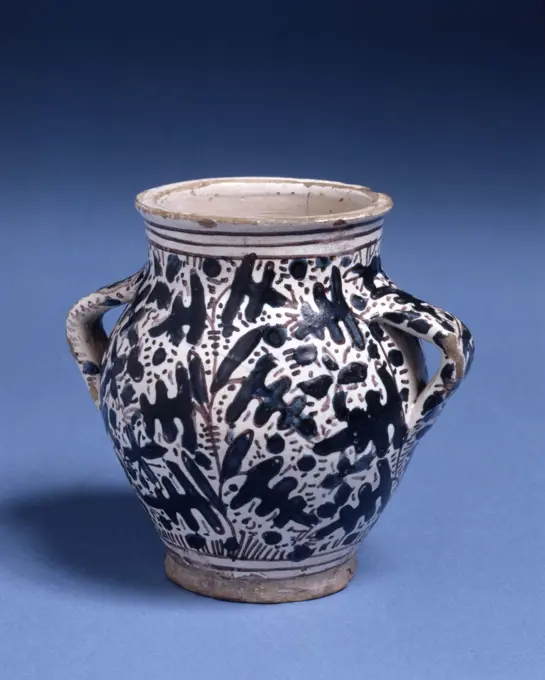
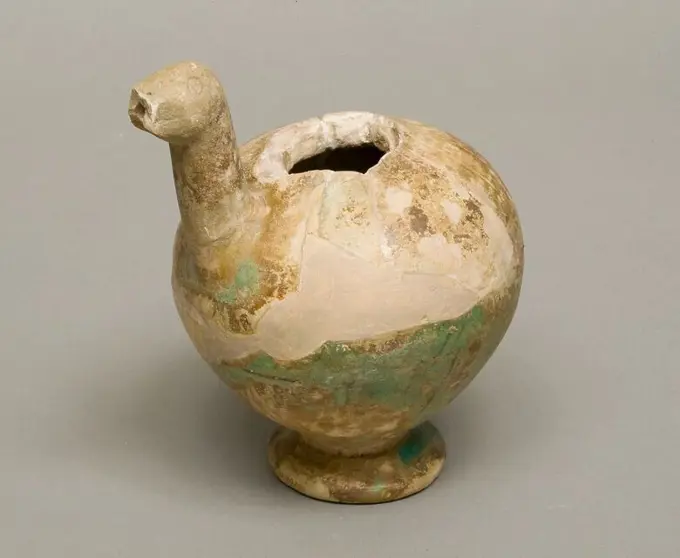
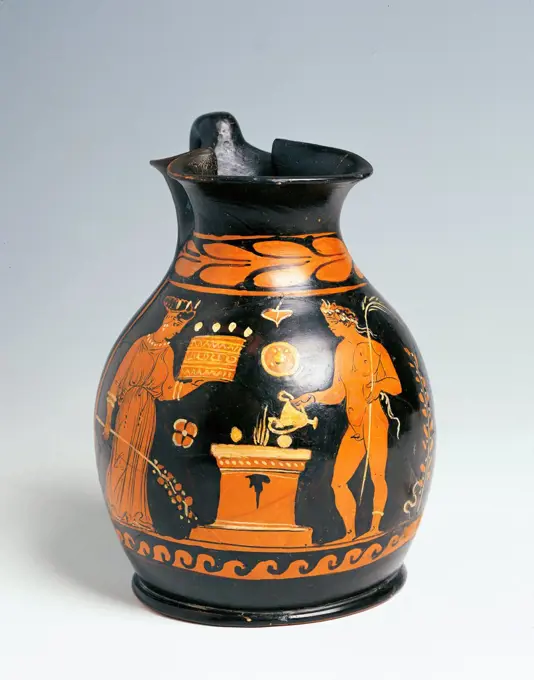
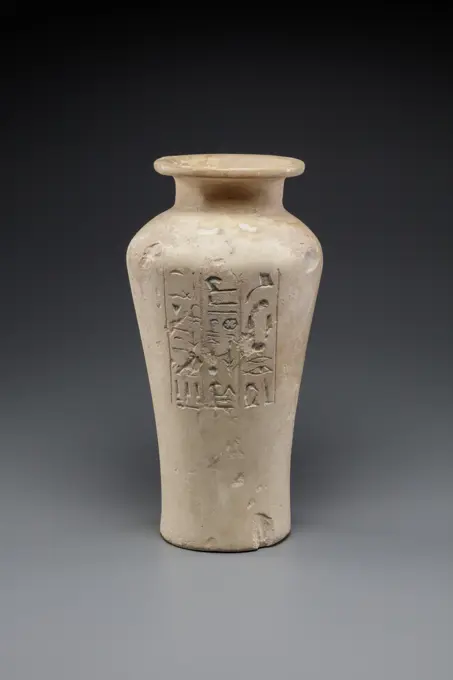
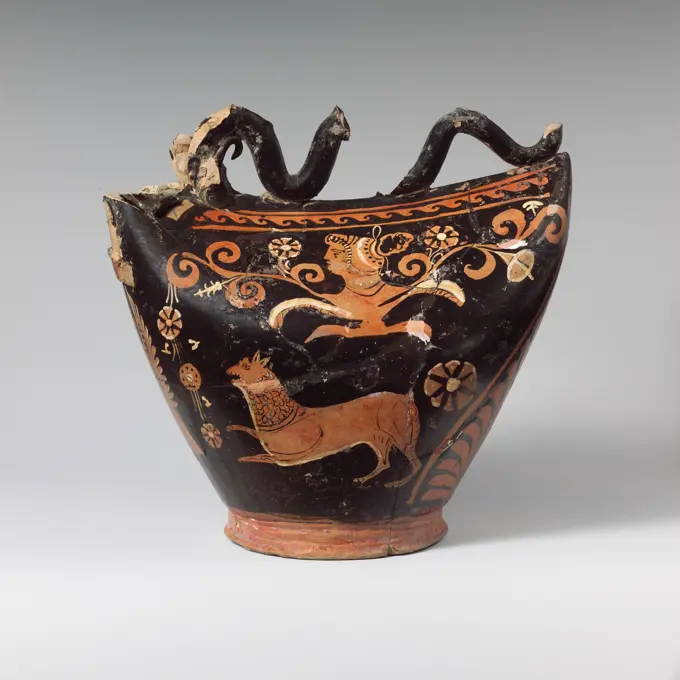
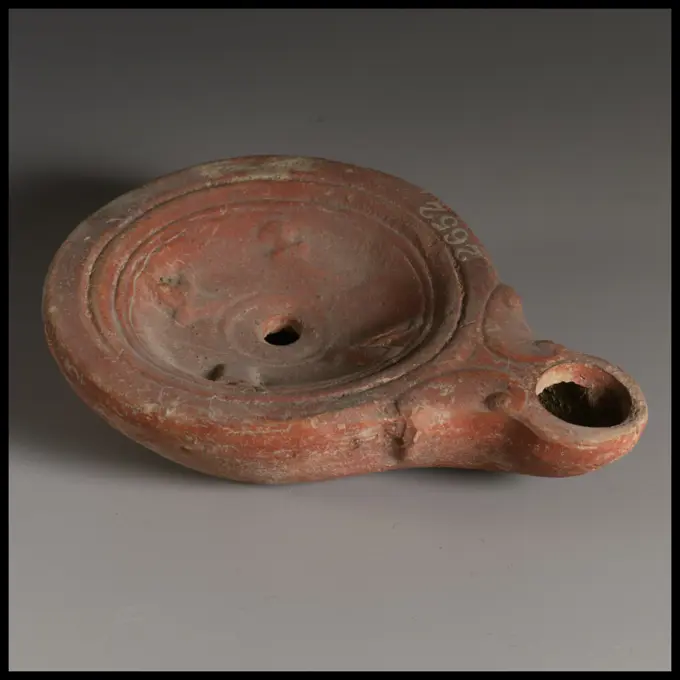
Ancient Jugs and Vessels

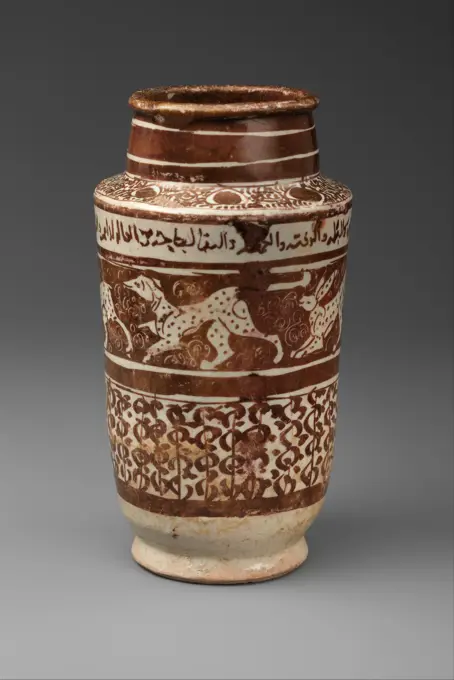
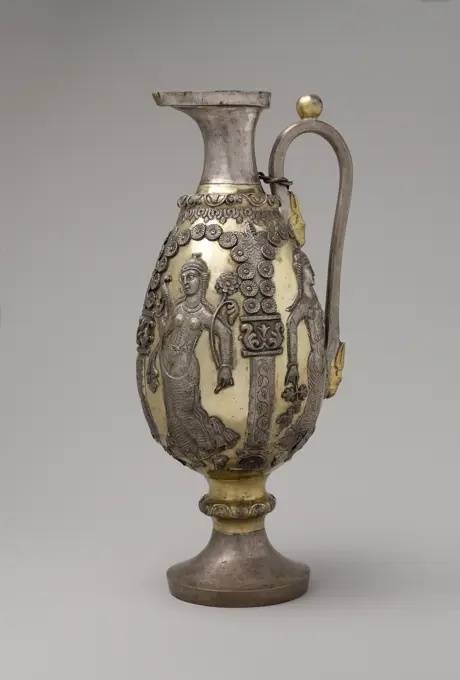
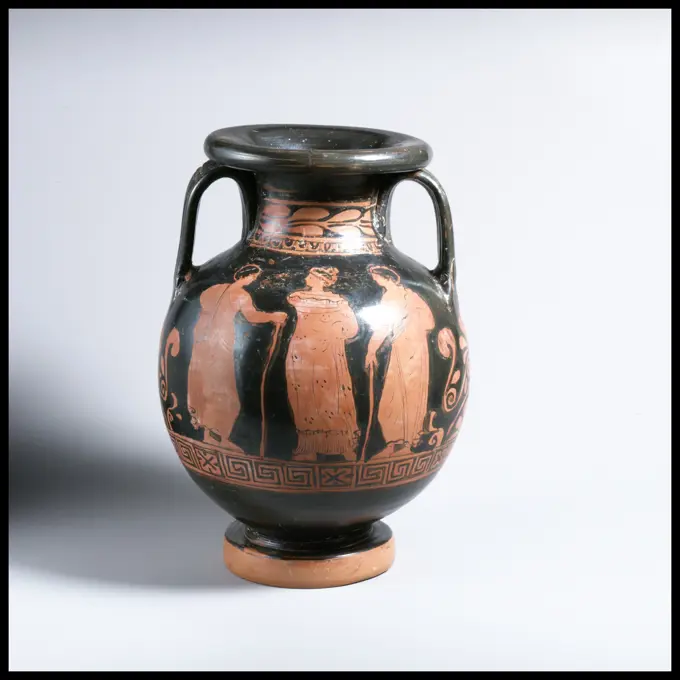
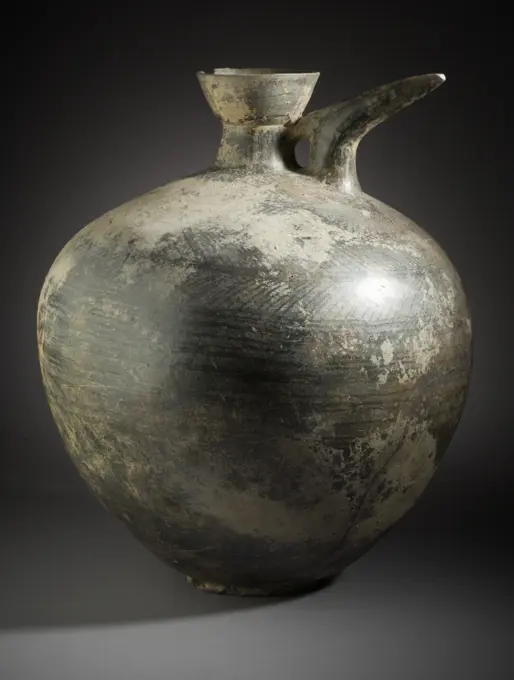
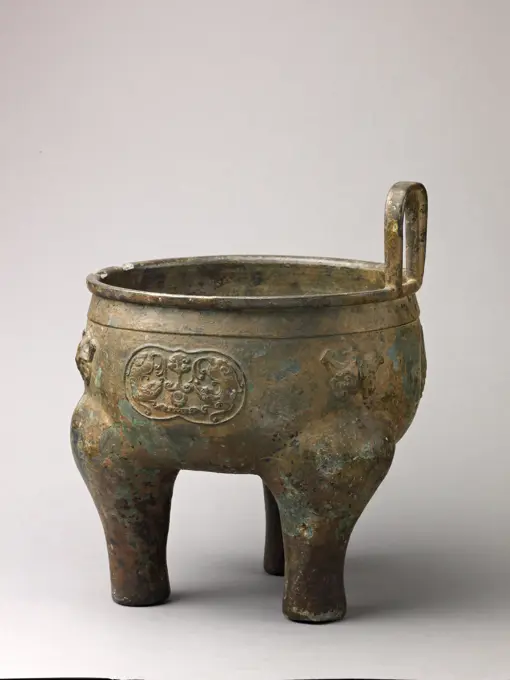
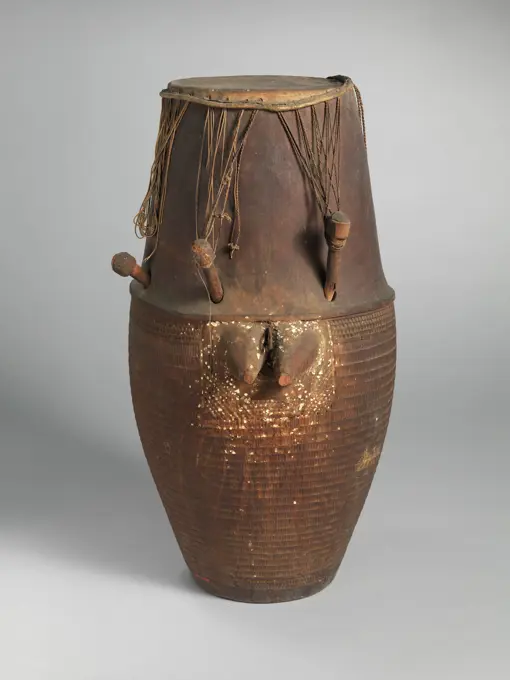
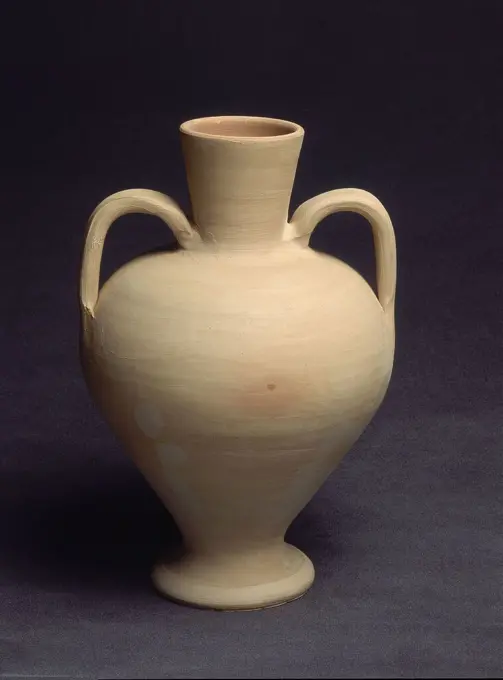
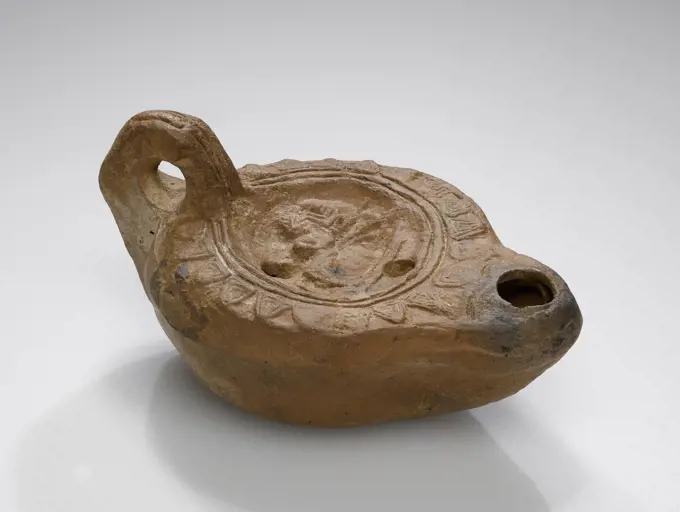
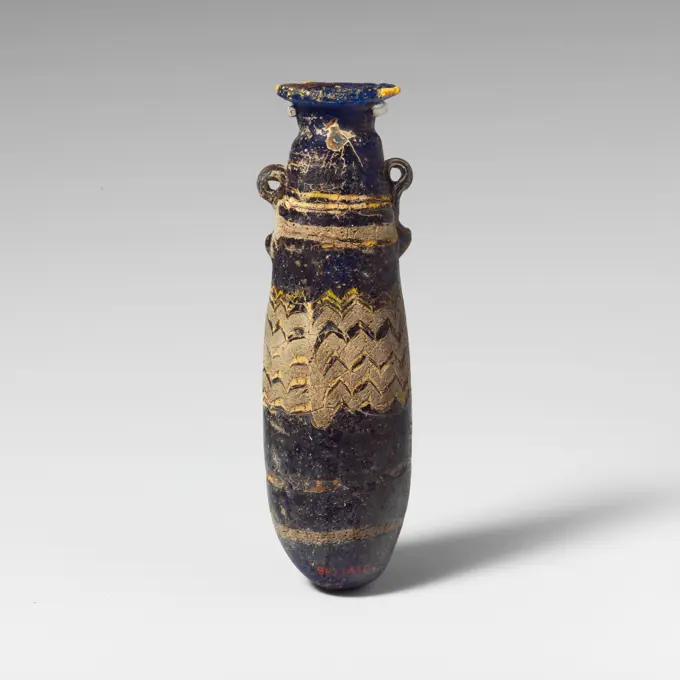
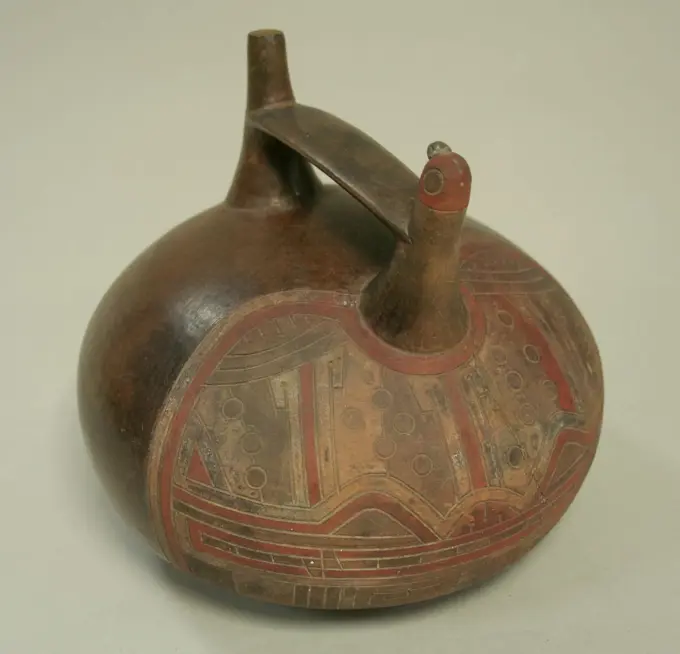
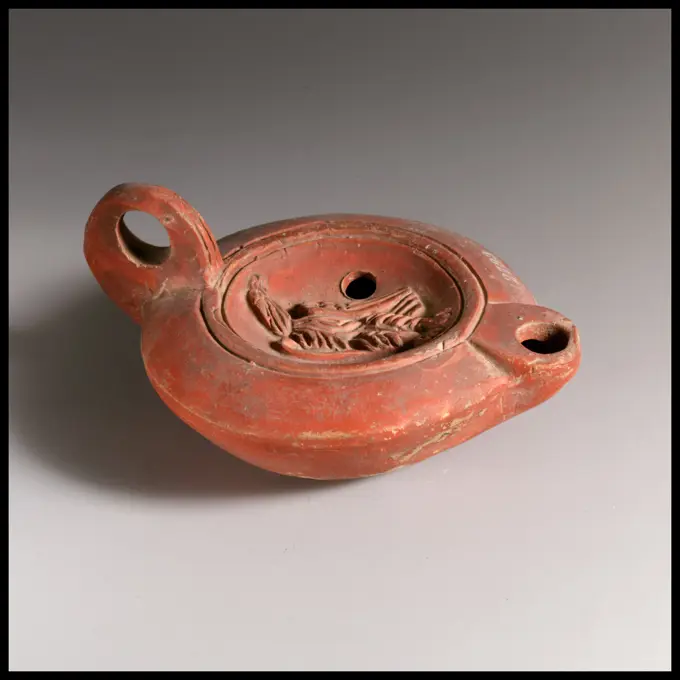
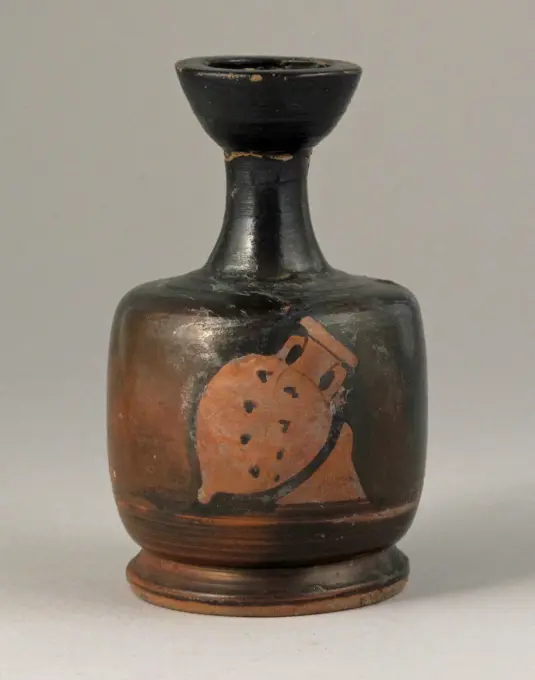
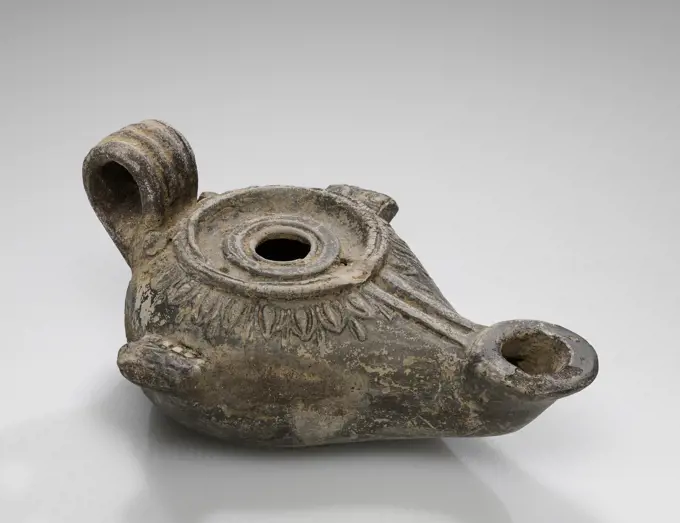
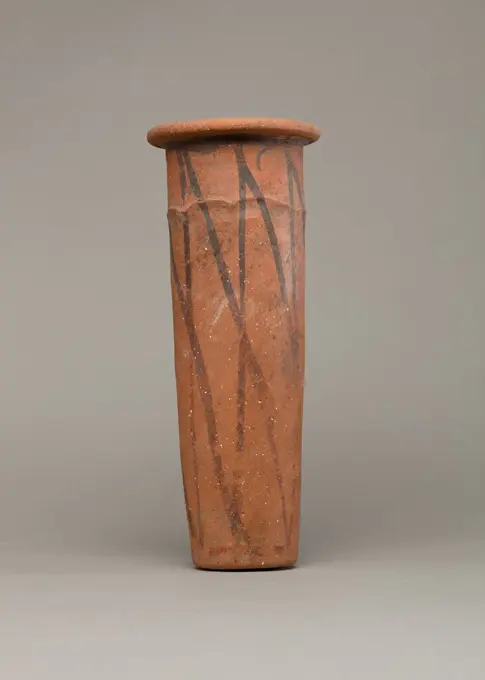
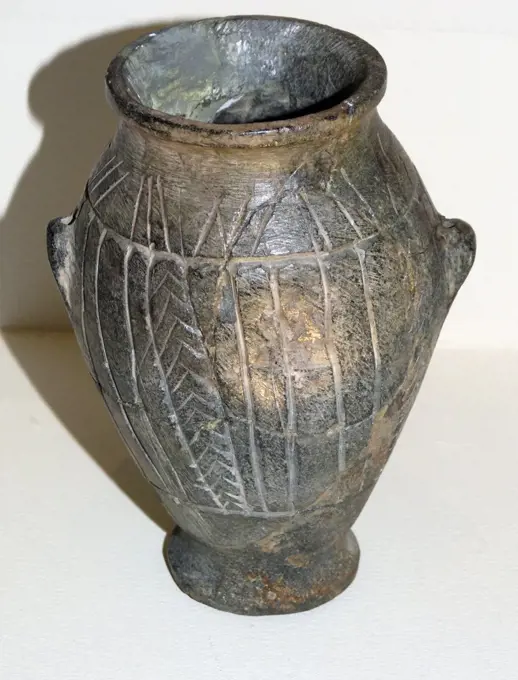
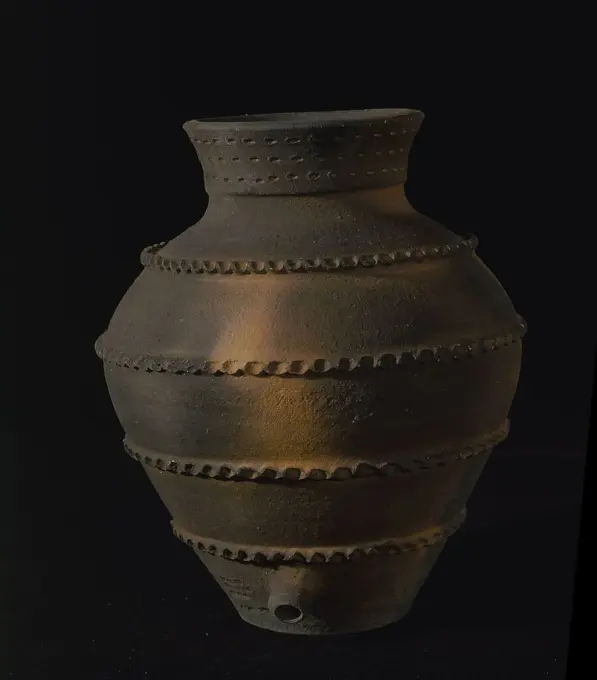
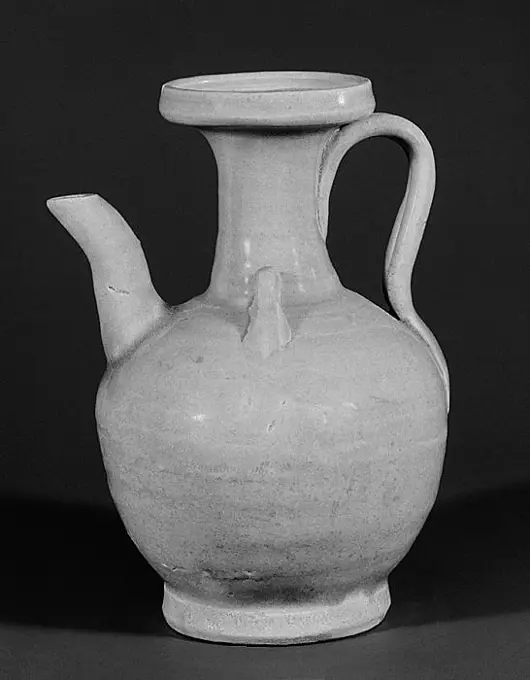
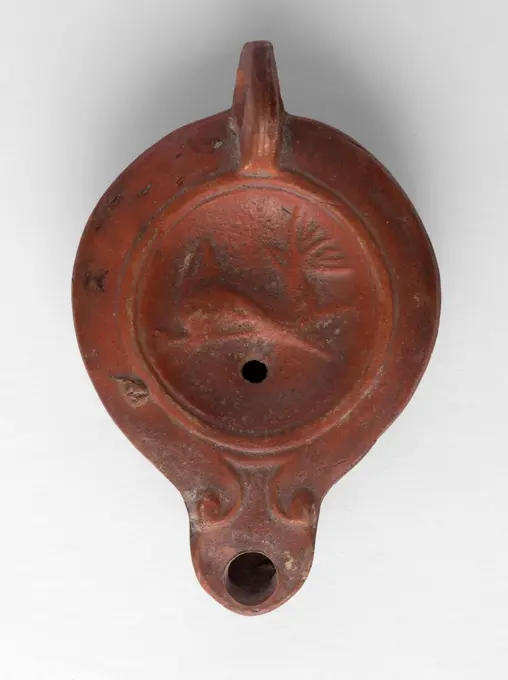
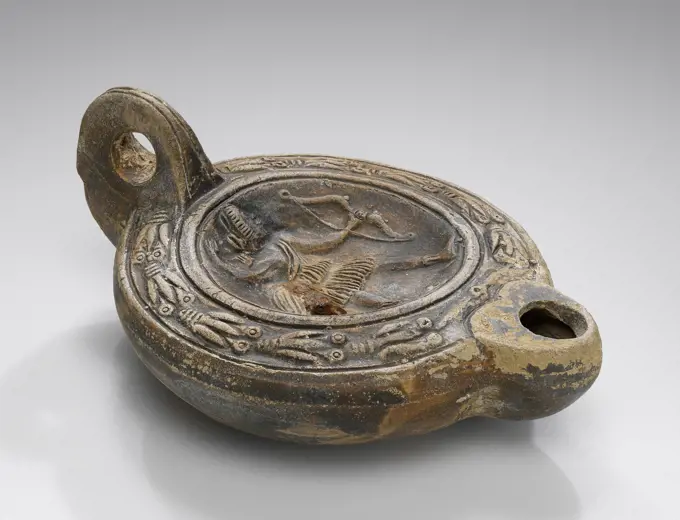
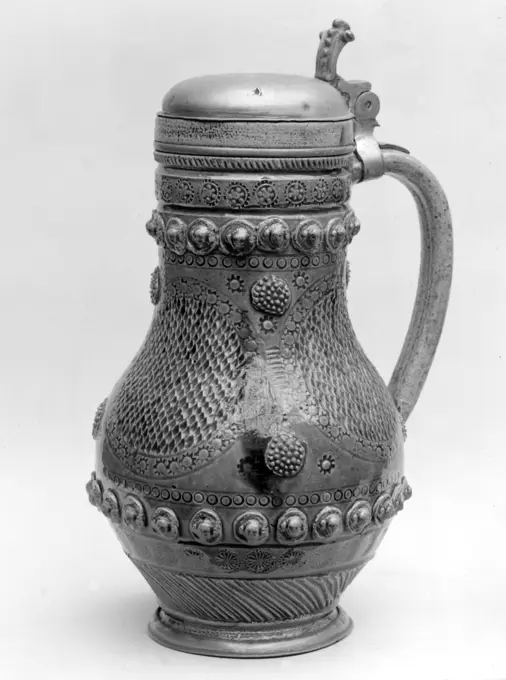
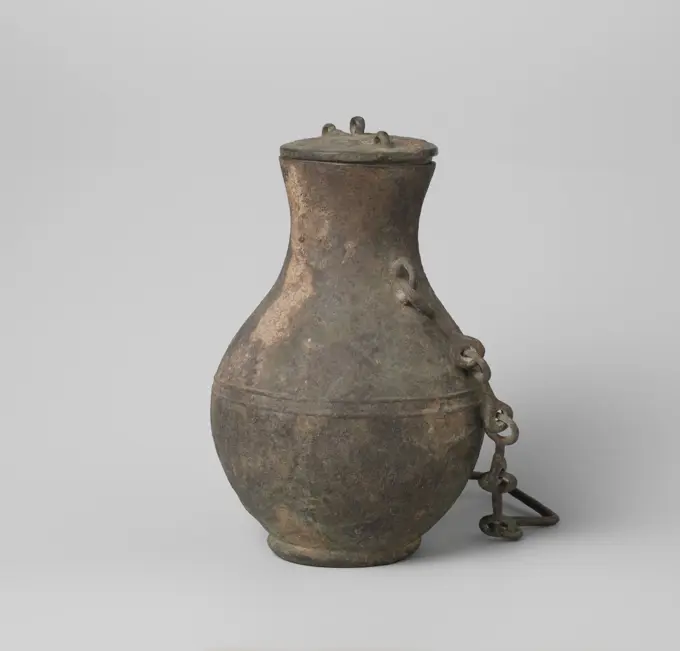
A collection of historical jugs made from terracotta and glass, featuring intricate patterns and details, showcasing ancient craftsmanship from various cultures.
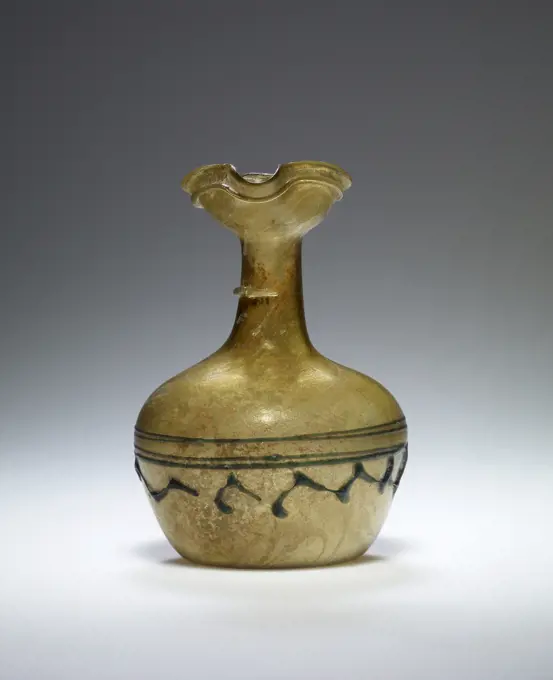
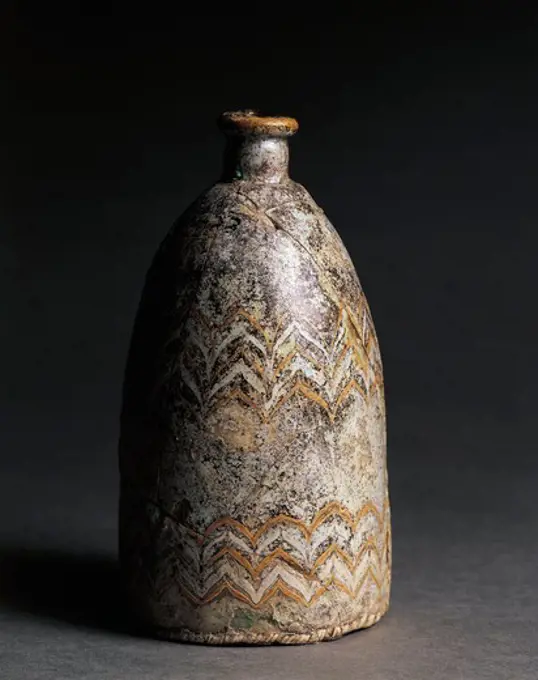
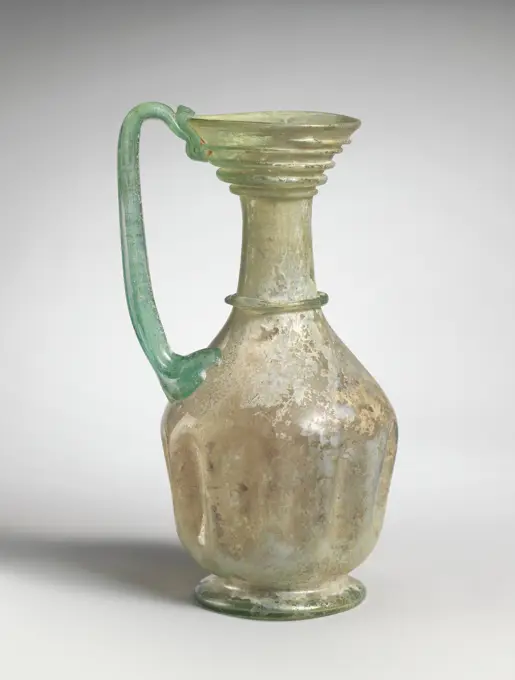
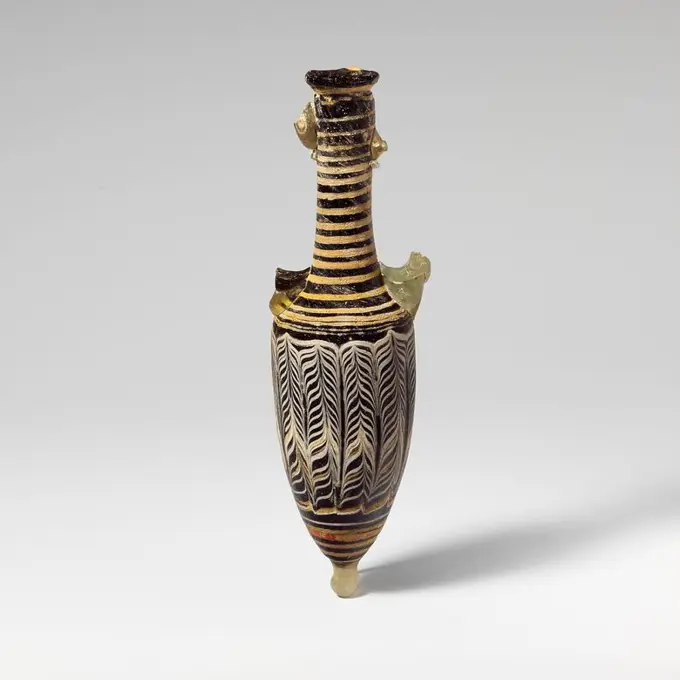
Yellowish-Green Oinochoe with blue trails; Roman Empire; 3rd - 4th century; Glass; 11 x 7.5 cm (4 5,16 x 2 15,16 in.)
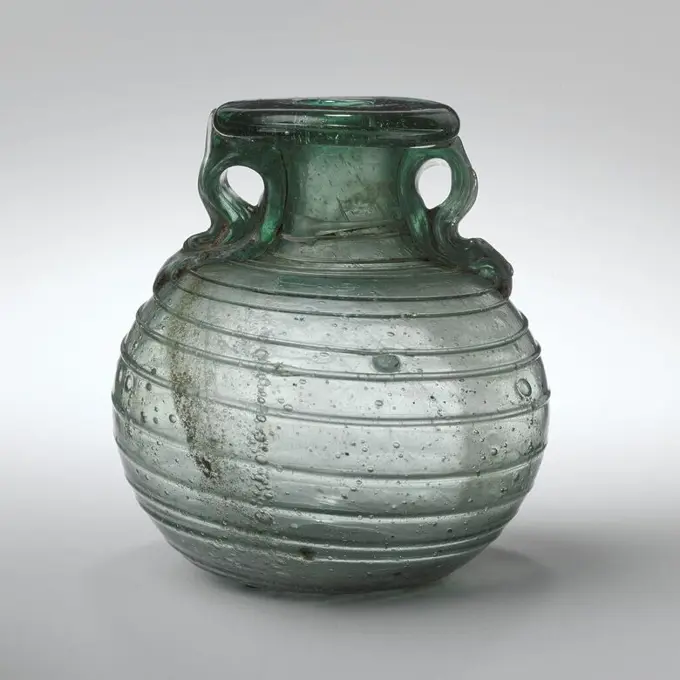
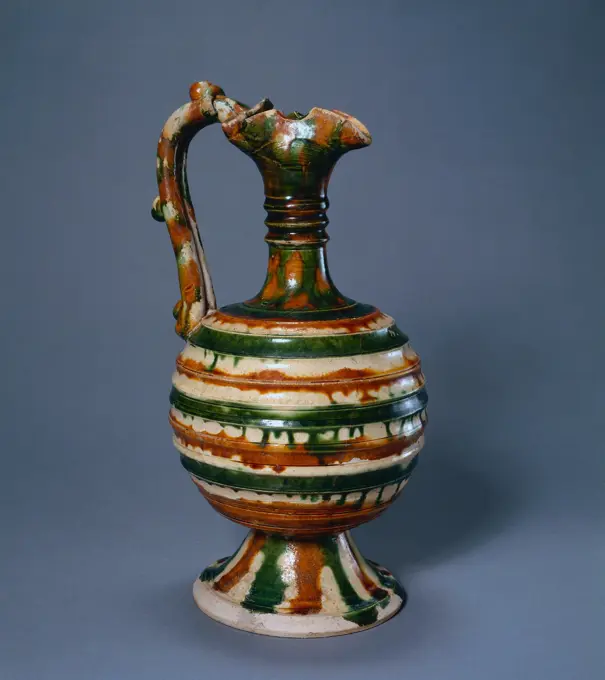
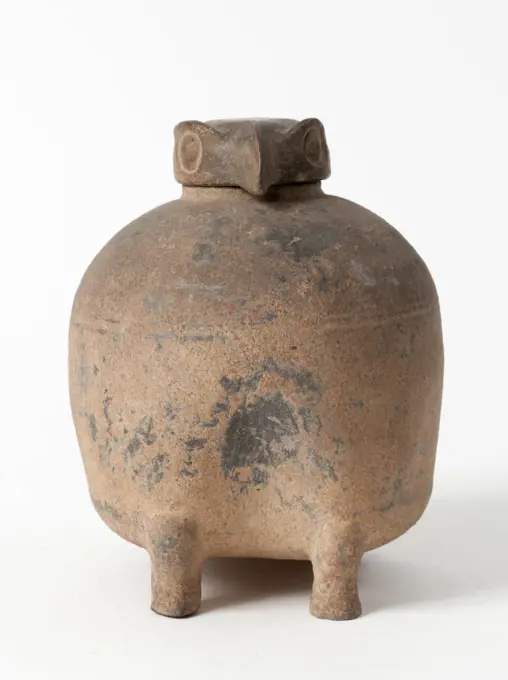
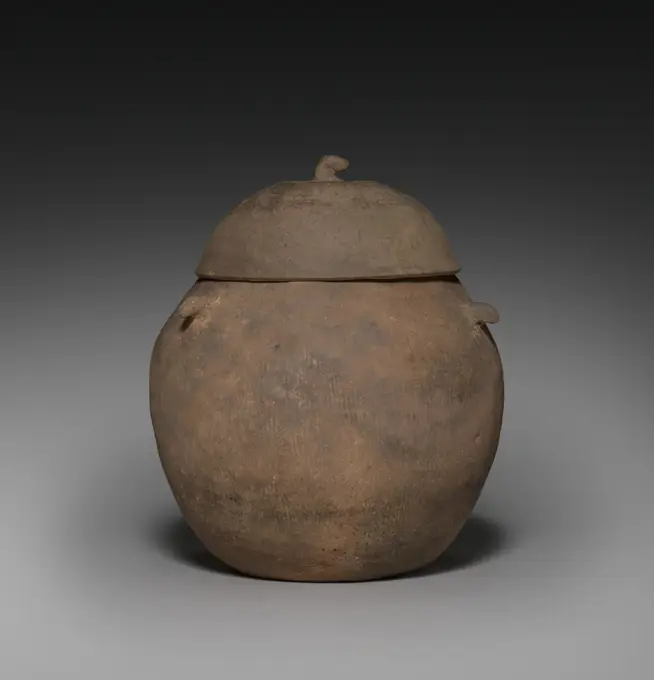
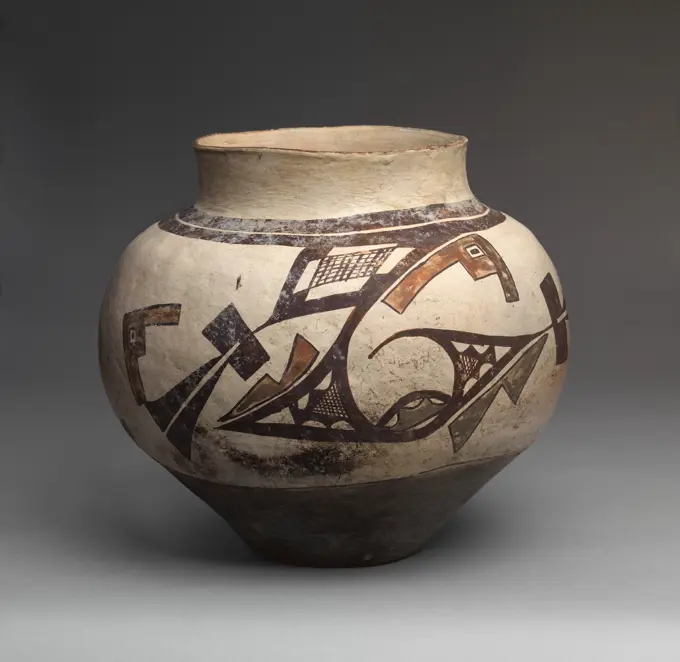
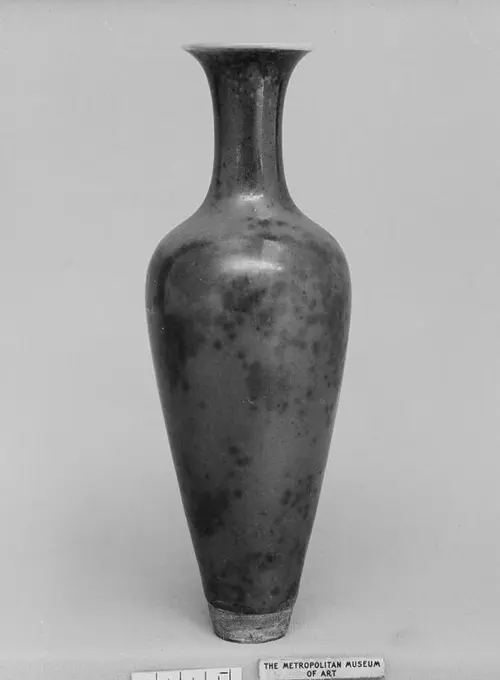
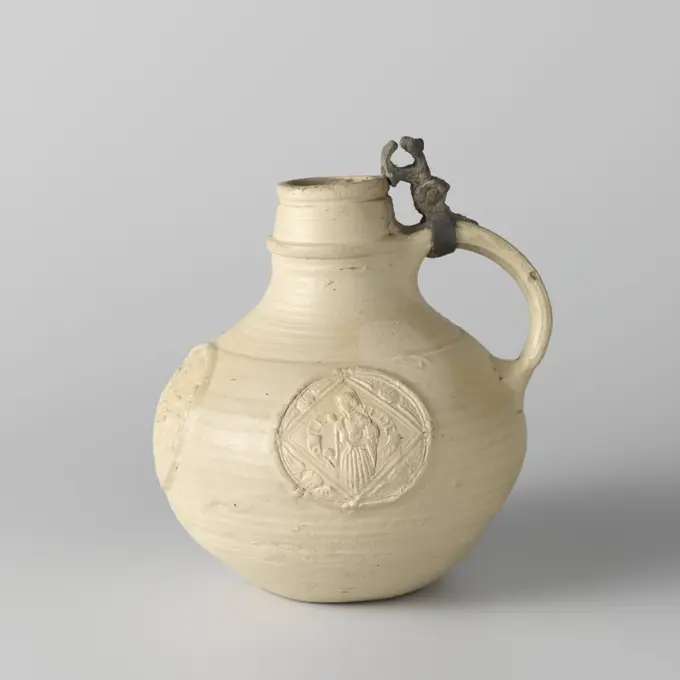
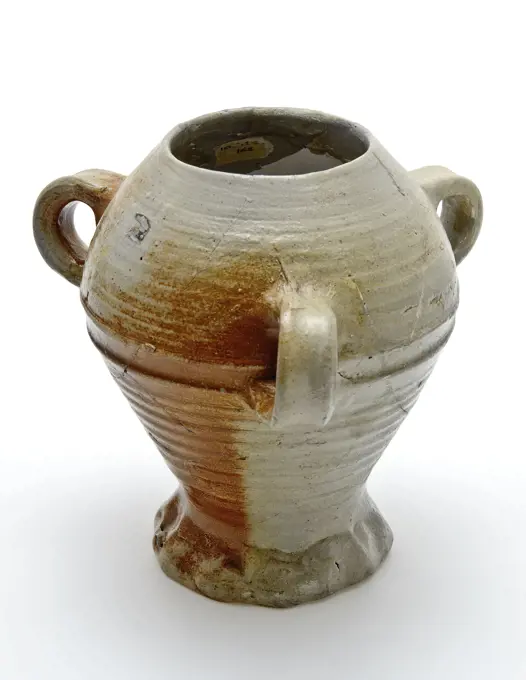
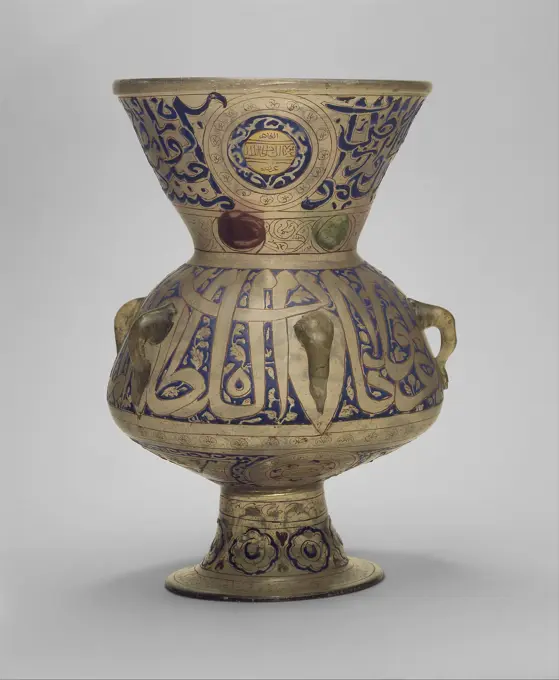
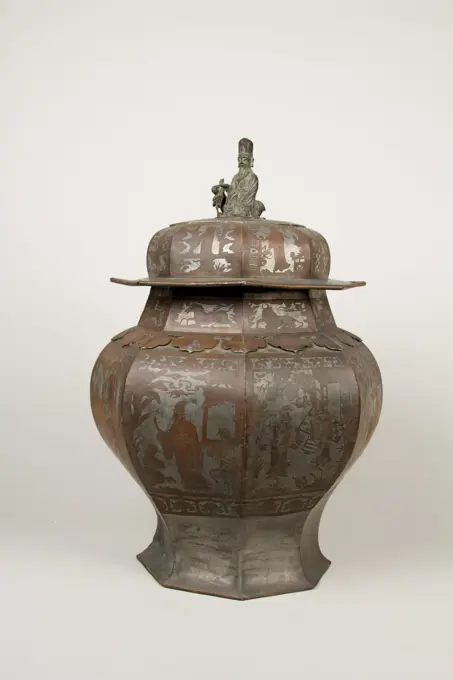
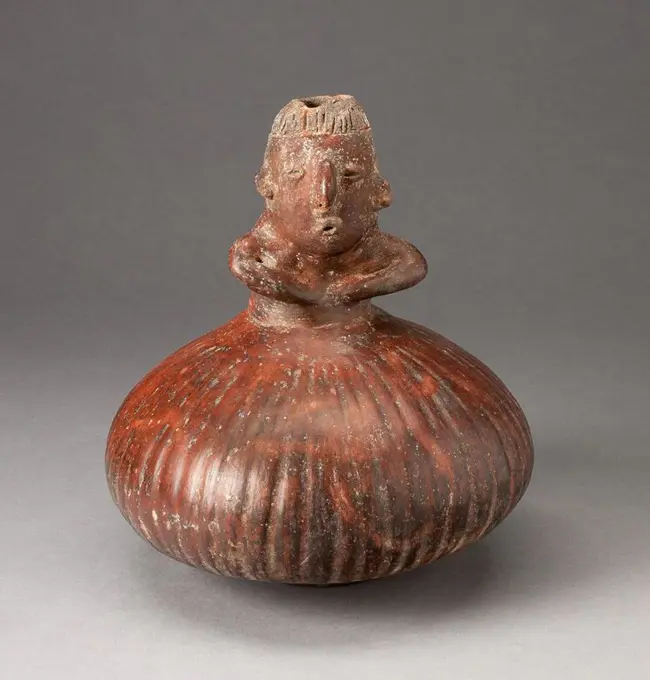
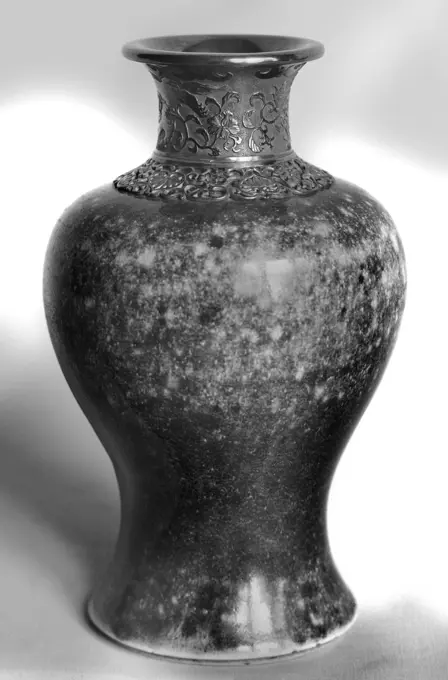
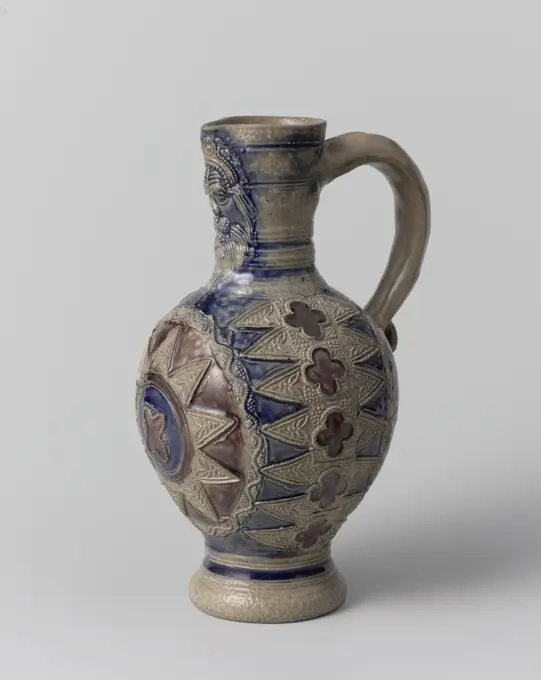
Jug with a mask and stylized foliate ornamentation, anonymous, c. 1650 - c. 1674 Can be made of stoneware on high foot with an egg -shaped abdomen and a narrow neck with pinched spout. The C-shaped ear is attached to the neck and shoulder. Some of the lines of the foot and the neck. Partly covered with cobalt blue and mangangan purple. On the neck a relief decoration with a printed, imposed mask from a bearded man or a lion. The front of the abdomen with concentric circles of tendrils and stylized, triangular leaf motifs. A four pass in the center. To the handle an empty medallion. The sides with a vertical line of four passes with leaf motifs on either side. Westerwald. Westerwald stoneware. glaze. cobalt (mineral). manganese oxide vitrification Can be made of stoneware on high foot with an egg -shaped abdomen and a narrow neck with pinched spout. The C-shaped ear is attached to the neck and shoulder. Some of the lines of the foot and the neck. Partly covered with cobalt blue and mangPear-shaped vase with monster heads and gilded bands with ruyi motif, anonymous, c. 1750 - c. 1799 Pear -shaped vase of porcelain with flared neck and upright edge, covered with a monochrome crawls gray glaze and on biscuit gold. A monster head with ring on both sides on the shoulder; Around the foot, shoulder and neck a band with Ruyi motif, decoration in gilded biscuit. Gilding flake; one ring. Monochrome. China porcelain. glaze. gold (metal) gilding / vitrification Pear -shaped vase of porcelain with flared neck and upright edge, covered with a monochrome crawls gray glaze and on biscuit gold. A monster head with ring on both sides on the shoulder; Around the foot, shoulder and neck a band with Ruyi motif, decoration in gilded biscuit. Gilding flake; one ring. Monochrome. China porcelain. glaze. gold (metal) gilding / vitrificationOil LampCovered Box with Floral Scrolls. Thailand, Sawankhalok, 16th century. Furnishings; Accessories. Wheel-thrown stoneware with incised decoration and brown and cream glazeSingle Spout Painted Jar 7th-5th century B.C. Paracas. Single Spout Painted Jar 308592Sprinkler Flask. UnknownTin-glazed Earthenware Drug Jar, 1400-1450. Maiolica. Made in ItalyBottle. unknown, craftsmanPot 4th-7th century Coptic. Pot 476290Handled Vessel. Iran, circa 150 B.C.-A.D. 225. Furnishings; Serviceware. SilverLamp. UnknownTerracotta mug Greek, Attic mid-5th century BCE The mug was a versatile shape that could be used as a drinking cup, as a ladle, or as a measure. Rare examples are preserved in silver.Storage Jar China. Storage Jar 53964Terracotta stirrup jar. Culture: Mycenaean. Dimensions: H. 6 in. (15.2 cm.). Date: ca. 1300-1200 B.C..With spout and two handles; decorated with bands, wavy line, and cross-hatched squares. Museum: Metropolitan Museum of Art, New York, USA.Punic-Phoecian glass. Bottle. Polycrome. 6th-4th C. BC. From Empuries. Catalonia. Spain. Episcopal Museum. Vic. Catalonia. Spain.Vial. unknown, craftsmanOinochoe 4th century B.C. East Greek. Oinochoe 250571 East Greek, Oinochoe, 4th century B.C., Terracotta, H. 7 1/8 in. (18.1 cm). The Metropolitan Museum of Art, New York. Rogers Fund, 1917 (17.230.38)Pitcher;  around 2686- 2181 BC ; Old state (-2686-00-00--2181-00-00);Glass miniature perfume bottle. Culture: Roman. Dimensions: Overall: 1 7/16 in. (3.7 cm)Diam.: 1 3/16 x 3/4 in. (3 x 1.9 cm). Date: 1st-2nd century A.D..Translucent light blue.Rim folded out, over, and in, with beveled upper surface; cylindrical neck with tooled indent at base; globular body; small, flattened bottom.Intact; pinprick bubbles; dulling on exterior; creamy brown weathering and thick layer of soil encrustion on bottom of interior. Museum: Metropolitan Museum of Art, New York, USA.Glass aryballos (oil bottle). Culture: Roman. Dimensions: H.: 2 5/8 in. (6.7 cm). Date: 2nd-3rd century AD.Translucent blue green; handles and trail in same color.Thick, partially tubular rim, folded out, down, round, and in, flattened on upper surface; cylindrical neck, expanding downwards; sloping shoulder; globular body; bottom with central kick and pontil mark; two dolphin handles applied to shoulder over trail decoration, drawn up side of neck to underside of rim, turned out, round, and down, forming to ring holes, then folded back and trailed off upwards.Trail applied to bottom and wound round and up in a spiral 16 times, ending on lower neck (trail is thick and fire-rounded on lower body but becomes fine and in sharp relief above).Intact; many pinprick and a few larger bubbles, and some glassy inclusions; slight soil encrustation and faint iridescence on exterior, patches of weathering on interior.Greenish aryballos with dolphin handles and glass threads around body. MuseumEwer, 700-750. China, Tang dynasty (618-907). Glazed earthenware, sancai (three-color ware); diameter: 13.5 cm (5 5/16 in.); overall: 27.3 cm (10 3/4 in.).Hibou-shaped container. Terracotta. Han dynasty (206 BC-220 AD). Paris, Cernuschi museum. Chinese art, Chinese ceramic, cover, head cover, han dynasty, han time, owl, container, terracotta, animalPitcher 13th century French. Pitcher. French. 13th century. Earthenware, partially covered with a green lead glaze. CeramicsLidded Jar with Four Horn Lugs, AD 200s-400s. Korea, Kaya period (AD 42-562). Earthenware; overall: 24.6 cm (9 11/16 in.); outer diameter: 21.3 cm (8 3/8 in.). Closed kilns built on hillsides became widely used for producing this type of pottery vessel in Korea during the Three Kingdoms period. Both its gray color and shimmering glaze are the result of the reduction of oxygen in the closed kiln chamber built on hillsides.Storage Jar, c. 2300 BCE, 13 3/4 x 16 1/2 in. (34.93 x 41.91 cm), Earthenware with painted decor, China, 24th-23rd century BCEIraq, Tell al-Rimah, Bell-shaped chalice in molten sand glassJug ca. 1500-1400 B.C. New Kingdom. Jug 552352Pitcher. Culture: French. Dimensions: 11 5/16 × 5 3/8 × 6 15/16 in. (28.8 × 13.7 × 17.7 cm). Date: 13th century. Museum: Metropolitan Museum of Art, New York, USA.Apothecary Jar with Running Hares and a Dog 12th century This jar was used to store solid substances (dried herbs, roots, bark, seeds, and fruit, or salts, minerals, and metals) most likely employed in the preparation of drugs or home remedies. The iconography is not directly connected to the jars function, but the chasing animals and the Arabic benedictory words addressed to the owner convey an overall propitious symbolism. For their cleverness and speed the hare seems to have been regarded as especially auspicious.. Apothecary Jar with Running Hares and a Dog. 12th century. Stonepaste; luster-painted on opaque white glaze. Country of Origin Iran. CeramicsBARRIL DE VINO DE FORMA REDONDA Y 2 ASAS- VIDRIADO INTERIOR Y LA BOCA EXTERIO. Location: ALFARERIA. JIMENEZ DE JAMUZ. LEON. SPAIN.Ewer with dancing females within arcades ca. 6th-7th century A.D. Sasanian Late Sasanian silver vessels, particularly bottles and ewers, often were decorated with female figures holding a variety of festal objects. The appearance of these motifs attests to the continuing influence of Greek imagery associated with the wine god Dionysus. On this silver-gilt vessel, floral arches, supported by low pilasters, frame four dancing female figures. Each holds a ceremonial object in either hand: grape and leaf branches, a vessel, a heart-shaped flower. Beneath one arcade, birds peck at fruit, and beneath another a tiny panther drinks from a ewer. Both the females and their decorative motifs recall representations of the maenads, attendants of Dionysus. However, it has been suggested that these figures have been adapted to the cult of the Iranian goddess Anahita. No texts survive to explain the appearance or function of these female figures, but it seems likely that vessels decorated with motifs Wine Pot 12th-13th century Korea. Wine Pot 57494Stoneware jug with ribbon ear, round ball shape, belly blue and purple stamp decor and appliqués, Bullet pewter jug crockery holder soil find ceramic stoneware glaze salt glaze, hand turned fried glazed stoneware bullet abbot gray shard with salt glaze archeology import pottery serve serve wine beer tableVase with archaistic dragon pattern 18th century China. Vase with archaistic dragon pattern. China. 18th century. Porcelain with incised decoration under turqoise glaze (Jingdezhen ware). Qing dynasty (1644-1911). CeramicsTerracotta pelike (jar) ca. 360-340 B.C. Attributed to the Dechter Painter Obverse, Eros, Amymone, and Poseidon. Reverse, woman and two youthsAmymone was rescued from a satyr by Poseidon, god of the sea, who took her for himself. Striking the ground with his trident, he produced a spring that bore Amymone's name. The protagonists are assembled here, together with a rare representation of a feline.. Terracotta pelike (jar) 255816Acomita polychrome water jar ca. 1790 Acoma, Native American The earliest Acomita water jars are distinguished by short, undecorated necks, bulbous mid-bodies, and dark concave underbodies. This example features a spiral configuration, possibly an abstract bird, painted against a white, open background on each side. The head, rectangular eye, and beak flow into the geometric shapes that may be stylized feathers and the birds body. In traditional Pueblo thought, birds and feathers are associated with prayers for rain, germination, and fertility.. Acomita polychrome water jar. Acoma, Native American. ca. 1790. Clay and pigment. Made in New Mexico, United StatesVase. Culture: China. Dimensions: H. 6 in. (15.2 cm). Museum: Metropolitan Museum of Art, New York, USA.Covered Jar, 4th century BCE, 6 x 10 3/8 in. (15.2 x 26.35 cm) (a: jar)3/4 x 5 7/8 in. (1.91 x 14.92 cm) (b: lid), Stoneware with 'accidental' glazing, China, 4th century BCE, Made in imitation of a ritual bronze vessel, this high-fired stoneware is unglazed except for some accidental splashes of green glaze on the lid. Throughout the Zhou period, high-fired, impressed stoneware continued to be refined, especially in the lower reaches of the Yangzi and the southeastern provinces. For many years, the glazed and unglazed stonewares remained similar in technique and decoration. By eastern Zhou, glazed wares became more numerous and, by the Warring States (475-221 BCE) era, about half of all ceramics were glazed.Spouted Jar. Iran, 1700-1500 B.C.. Furnishings; Serviceware. CeramicCenser 19th to early 20th century Chinese. Censer 460557Terracotta jug. Culture: Lydian. Dimensions: total H. 8 9/16 in. (21.8 cm)H. without handle 7 3/8 in. (18.8 cm). Date: 6th century B.C..Archaic Lydian pottery shows a predilection for special effects such as marblizing, slips, and, as here, a combination of burnishing and applied color. Museum: Metropolitan Museum of Art, New York, USA.Glass jug 4th-5th century A.D. Roman Translucent pale blue green; trails in same color, but handle in deeper blue green.Plain, rounded rim; flaring, oval mouth; cylindrical neck, expanding slightly downwards; conical shoulder; side of body tapering slightly downwards, then curving in to outsplayed tubular base ring, made by folding; pushed-in bottom with small central pontil mark; rod handle applied in a pad to shoulder, drawn up vertically, then turned in, and trailed on to underside of mouth over trail decoration, with one horizontal tooling indent across trail, and ending slightly above rim.One trail wound round slightly over four times in a spiral on underside of mouth; another trail wound horizontally 1½ times around base of neck; on body, twelve vertical tooled indents.Intact; few bubbles, but many elongated bubbles in handle; dulling, pitting, iridescence, and creamy weathering, with patches of soil encrustation on interior.. Glass jug 253626 Roman, Glass jug, 4th5th century AEwerBreasted Drum 19th century Akan, Ashanti (Asante). Breasted Drum 501975BARRAL DE MONTE O CANTARO CON DOS ASAS Y CUELLOA ANCHO-S XX CERAMICA POPULAR. Location: ALFARERIA. HUESCA. SPAIN.Bottle late 4th century B.C. Greek, South Italian, Campanian. Bottle 256828Amphoriskos (Container for Oil) 550 BCE-450 BCE Eastern Mediterranean Region. Glass, core-formed technique . Ancient Eastern MediterraneanLamp, Asia Minor; 1st - 4th century; Terracotta; 3 x 5.7 x 8 cm (1 3,16 x 2 1,4 x 3 1,8 in.)Bird shaped vase. Dimensions: Including sprout: h. 17 cm (6 11/16 in); diam. 12 cm (4 3/4 in). Dynasty: Dynasty 12- 13. Date: ca. 1981-1640 B.C.. Museum: Metropolitan Museum of Art, New York, USA.Spittoon, Wagging of the brand, inlaid with red -copper heart -shaped leaves. Arabic or Indonesian.  brass (alloy). copper (metal) Wagging of the brand, inlaid with red -copper heart -shaped leaves. Arabic or Indonesian.  brass (alloy). copper (metal)Naczynie kuliste. nieznany warsztat północno mezopotamski (ca 2600-ca 2350 a.C.), workshopLekythos Greek, Attic 1st quarter of the 5th century BCE View more. Lekythos. Greek, Attic. 1st quarter of the 5th century BCE. Terracotta; black-figure. Late Archaic. VasesStirrup Spout Vessel with Fineline Depiction of an Abstract Feline Made 100 BCE-500 CE North Coast. Ceramic and pigment . MocheVery large Storage Jar (adult height) known as a Pithos; Crete; 700-600 B.C. Often decorated with Sphinx; bull; snake or geometric patterns.Apulian red-figured oinochoe, by Painter of Verona, 4th Century, cm 21 diamentro piede 12.2 cmMiniature skyfos; unknown, unknown attic workshop; 1. W. 5th century BC (-500-00-00--476-00-00);Model Jar Inscribed for Sennefer and Senetnay ca. 1427-1400 B.C. New Kingdom This jar is made of solid stone, with only a small depression at the top. It was never intended to be functional, but was a model used as part of the owner's burial equipment. The shape imitates a ceremonial hes-vase that would have been used for pouring libations. The inscription names the Mayor of Thebes Sennefer and his wife, the Royal Nurse Senetnay.Senetnay was the wet-nurse of Amenhotep II and another title "one who nurtured the body of the god" indicates that she lived into the king's reign. Because of her close relationship with the king, Senetnay was given the privilege of burial in the royal cemetery now known as the Valley of the Kings. Several dozen model jars inscribed with her name (and sometimes with that of her husband as well) were discovered in and around the entrance of KV 42. Four of these, including this one, a small jug, and two pear-shaped jars are now on view in gallery 117.For more infGlass oinochoe (perfume jug). Culture: Greek, Eastern Mediterranean. Dimensions: 4 9/16 × 2 3/8 in. (11.6 × 6.1 cm)Diam. of foot: 1 1/16 in. (2.6 cm)Height (without handle): 4 in. (10.2 cm). Date: late 6th-5th century B.C..Opaque white, with handle and foot in same color but with some purple streaks; trails in translucent purple.Applied broad trefoil rim-disk, with edge of mouth projecting above inside of rim-disk; short, slightly-square shaped, concave neck; broad sloping shoulder; large ovoid body; applied outsplayed foot with uneven slightly convex bottom; handle attached as a large flattened pad to top of body over trail decoration, drawn up and slightly out, then turned in, arching well above rim-disk, then down and pressed on to back of neck below rim.One trail attached at edge of rim-disk; a second thick trail wound horizontally twice around shoulder and top of body, then tooled into a close-set zigzag pattern around upper half of body; below this, a third, fine trail woundVase, c. 800. Peru, Huacho Ware, early 9th Century. Black ware; overall: 17.6 x 20.1 x 12.5 cm (6 15/16 x 7 15/16 x 4 15/16 in.).Terracotta askos (flask with a handle over the top) ca. 300 B.C. Compared to the Mignot Painter The askos itself is in the form of a sea creature, Scylla, its snake-like body forming the handle on top. On the body is a hound coursing a hare, with the head of a woman above. On the front of the vase is a head of Nike; on the back, a palmette.Scylla askoi are late Apulian creations most notable for the treatment of the shape and the apparently unrelated decoration.. Terracotta askos (flask with a handle over the top) 246576Glass alabastron (perfume bottle) late 6th-5th century B.C. Greek, Eastern Mediterranean Translucent cobalt blue, with handles in same color; trails in opaque yellow and opaque pale turquoise blue.Broad uneven rim-disk with radiating tooling marks on upper surface; short, funnel-shaped neck; rounded shoulder; elongated oval body with upward taper; convex bottom; below shoulder, two vertical ring handles with knobbed tails, applied over trails.One yellow trail attached at edge of rim-disk; another applied on shoulder and wound down in spiral on upper part of body, where a second broader trail in turquoise blue is added, mingling with the first, then both tooled into a close-set zigzag pattern around middle of body, formed by uneven shallow vertical tooling indents; below this, another broad turquoise blue trail wound unevenly around lower part of body.Complete except for part of rim-disk, with cracks around body; dulling, pitting, slight iridescence, and milky weathering.. Glass alabastStoneware jokes, gray-white, kerbschnitt, jug crockery holder soil find ceramic stoneware glaze salt glaze, hand turned fried glazed carved Stoneware jug gray shard gray salt glaze. Upper half of the abdomen divided into compartments Profiled foot archeology import pottery drinking drunk foolsBottle 7th-3rd century B.C. Paracas. Bottle 310538Terracotta oil lamp late 1st-early 2nd century A.D. Roman Loeschcke Type 8. Mold-made, with ring handle. Discus: in high relief, an eagle standing facing with wings at sides and head turned upward to right; a single filling hole towards right edge, and two grooves flanking a raised band at edge of discus; a broad, sloping, and undecorated shoulder. Two incised lines on front edge of handle. An incised base ring, and a shallow concave base.Intact.The eagle was the symbol of the Greek Zeus and the Roman Jupiter, the father of the gods. Under the Romans, the bird also became associated with the emperor and so acquired an imperial connotation.. Terracotta oil lamp. Roman. late 1st-early 2nd century A.D.. Terracotta; mold-made. Mid Imperial. TerracottasLamp, North Africa; 1st - 4th century; Terracotta; 2.7 x 7 x 9.5 cm (1 1,16 x 2 3,4 x 3 3,4 in.)Jug with three scenes in medallions, Anno Knütgen (attributed to workshop of), c. 1570 - c. 1580 Jug of stoneware on standing surface with a spherical body and narrow neck. The C-shaped ear is attached to the neck and shoulder. Profile on the neck and light hires on the body. On the abdomen in relief three times a printed and imposed medallion. The left medallion with the fall; The middle one with Esther for Ahasveros and the fourth with a personification of love surrounded by four angel heads and the inscription 'D Leifde 1566'. Attached to the ear a pewter frame whose lid is missing. Siegburg. Siegburg Stoneware. Glaze. frame: tin (metal) vitrification Jug of stoneware on standing surface with a spherical body and narrow neck. The C-shaped ear is attached to the neck and shoulder. Profile on the neck and light hires on the body. On the abdomen in relief three times a printed and imposed medallion. The left medallion with the fall; The middle one with Esther for Ahasveros and the fourJug ca. 3rd-7th century A.D. Sasanian Plain unglazed ceramics, like this example, are the most common type of pottery found during the Sasanian period. These plain vessels were part of the everyday household materials. This jug would have been created in two pieces, then joined together to form the final vessel. The join line is partially visible about halfway up the vessel. Both the rim and the handle have been broken off. This jug was excavated from the house at Maaridh I in the Ctesiphon area. The city of Ctesiphon was located on the east bank of the Tigris River, 20 miles (32 km) south of modern Baghdad in Iraq. It flourished for more than 800 years as the capital of the Parthians and the Sasanians, the last two dynasties to rule the ancient Near East before the Islamic conquest in the seventh century. Systematic excavations in the Ctesiphon area were undertaken by an expedition in 1928-29 sponsored by the German Oriental Society (Deutsche Orient-Gesellschaft). The Metropolitan MuDouble handled jug from the Levant ca. 3500-3300 B.C. Predynastic, Naqada II. Double handled jug from the Levant. ca. 3500-3300 B.C.. Pottery. Predynastic, Naqada II. From Egypt, Southern Upper Egypt, Hierakonpolis (Nekhen), Fort Cemetery (Hk 27), Tomb 106, MMA excavations, 1934-35Terracotta beak-spouted jug ca. 750-690 B.C. Late Villanovan The distinctive beak-spout of this jug indicates that it is a local imitation of a type imported to Italy from the Eastern Mediterranean with increasing frequency into the seventh century B.C. This particular type, with split handle and modeled ribs, was especially popular in Bisenzio, during the transition between Villanovan and Early Etruscan culture.. Terracotta beak-spouted jug. Late Villanovan. ca. 750-690 B.C.. Terracotta; impasto. Geometric. VasesTerracotta jug ca. 1600-1150 B.C. Cypriot White slip ware with handle, pinched lip, lattice, lozenge and wavy lines.. Terracotta jug. Cypriot. ca. 1600-1150 B.C.. Terracotta; White slip ware. Late Cypriot I-IIIA. VasesBalocard Balsamary. Bas-empire. Glass.Squat lekythos, miniature ca. 425-400 B.C. Greek, Attic Pointed amphora on belly.. Squat lekythos, miniature. Greek, Attic. ca. 425-400 B.C.. Terracotta; red-figure. Classical. VasesLamp, South Anatolia, Anatolia; 1st century B.C; Terracotta; 3.5 × 8.2 × 11 cm (1 3,8 × 3 1,4 × 4 5,16 in.)Bottle. Culture: Japan. Dimensions: H. 7 in. (17.8 cm). Date: 19th century. Museum: Metropolitan Museum of Art, New York, USA.Italian 16th Century, Mortar with Dragon and Dolphin head Handles, early 16th century Mortar with Dragon and Dolphin-head HandlesTerracotta barrel-shaped jug 850-750 B.C. Cypriot One handle, circles and geometric ornament at front.. Terracotta barrel-shaped jug 240484Wavy-handled jar with cross-hatched design. Dimensions: h. 30 cm (11 13/16 in). Date: ca. 4500-4000 B.C. (). Museum: Metropolitan Museum of Art, New York, USA.Stone jar from Late Bronze Age tombs in Cyprus. Dated 12th Century BC.Stoneware cup or three-eared jug on pinched foot, gray with brown flamed salt glaze, cup holder can be tableware holder soil find ceramic stoneware glaze salt glaze, hand-turned glazed baked stoneware cup or three-ear jug on pinched foot. Gray with brown flamed salt glaze. Blown body ending awuptly at the mouth rim Three standing ears on the belly. Double ledge over the widest part of the belly. Beneath that are rotations above archways archeology inn Het Hart Geervliet Bernisse indigenous pottery import drinking serve serve water wine beer Soil discovery: Geervliet Dorpsplein 1 demolition Trouw put 5 city inn 't Hart 1985.CERAMICA O AMBOA CON CANILLA-BARRO COCIDO CON REFUERZOS DECORADOS - VASIJA DE VINO. Location: ALFARERIA. GUNDIBOS. LUGO. SPAIN.Mosque Lamp of Sultan Barquq ca. 1382-99 As the ambitious design on this lamp demonstrates, by the late fourteenth century, glassmakers had resolved the difficulty of applying enamel to the underside of their vessels and continued their pursuit of everlarger sizes. Dedicated to Sultan Barquq (r. 1382-89, 1390-99), this piece bears the epigraphic type of blazon adopted by sultans at this time.. Mosque Lamp of Sultan Barquq 447004Vase. Dimensions: H. 10.5 cm (4 1/8 in.), Diam. 7.5 cm (2 15/16 in.). Dynasty: Dynasty 19-20. Date: ca. 1295-1070 B.C..Egyptian glassmaking, which had reached a high level of virtuosity in late Dynasty 18, continued to be practiced in the Ramesside Period; however, the quality, as well as quantity, of it production dropped off sharply in Dynasty 20. The vase here is characteristic of its time, as it is monochrome with only a "rope" made of stained glass rods in contrasting colors attached to the rims, shoulders and feet of the vessel. Museum: Metropolitan Museum of Art, New York, USA.Vessel with Abstract Motifs and a Modeled Head. Tiwanaku-Wari; Possibly Santa Valley, north coast, Peru. Date: 700 AD-900 AD. Dimensions: 17.6 × 15.2 cm (6 15/16 × 6 in.). Ceramic and pigment. Origin: Peruvian North Coast. Museum: The Chicago Art Institute, Chicago, USA.Terracotta jug 600-480 B.C. Cypriot On the shoulder, a female figure holding a miniature jugThis piece is part of a large group that was undoubtedly made for a specific, possibly ritual, function.. Terracotta jug 240148Ewer 10th-11th century China. Ewer 48507Jar with lid ca. 1479-1458 B.C. New Kingdom. Jar with lid. ca. 1479-1458 B.C.. Pottery. New Kingdom. From Egypt, Upper Egypt, Thebes, Deir el-Bahri, Temple of Hatshepsut, Foundation Deposit 3, 4, 5, 6 (C, D, E, F), MMA excavations, 1923-24. Dynasty 18Terracotta stemmed kyathos (single-handled cup). Culture: Etruscan. Dimensions: H.: 7 1/8 in. (18.1 cm). Date: 6th century B.C..The cup with a short stem and single, high handle is typically Etruscan. It served as a ladle or dipper. Like the Nicosthenic amphora, this shape was taken into the Attic ceramic repertoire in the second half of the sixth century B.C. and produced for export to Etruria. The name given to the shape is that of the Greek variety. Museum: Metropolitan Museum of Art, New York, USA.Oil LampJug. Gray jar with three medallions, in which a weapon with above P S M K.Rooster-Headed Ewer. Probably Iran, 8th century. Ceramics. Earthenware, underglaze-paintedLamp. 71, rue du Cardinal Lemoine (1885), coll. MAGNE. Terracotta. High Empire. Dolphin. Paris, Carnavalet museum. Dolphin, high-empire, lamp, terracottaLamp, North Africa; 1st - 4th century; Terracotta; 3 x 8.6 x 12 cm (1 3,16 x 3 3,8 x 4 3,4 in.)Tankard (Kanne) 17th century German, Muskau German stoneware tankards were brought to America in large numbers on Dutch fur-trading ships. Shards of these popular vessels have been uncovered at seventeenth century sites in New York and New England.. Tankard (Kanne) 194585Ritual barrel. Barrel (HU) of bronze, with chain.Glass amphoriskos (perfume bottle). Culture: Greek, Eastern Mediterranean. Dimensions: H.: 7 1/16 in. (17.9 cm). Date: 2nd to mid-1st century B.C..Translucent cobalt blue; handles and base-knob in translucent colorless with pale green tinge, but one handle with additional trail in dark olive green, appearing black; trails in opaque white and opaque yellow .Uneven rim-disk, with rounded edge and sloping inward; tall, slender cylindrical neck, with tooling indents around top; narrow sloping shoulder; elongated, narrow ovoid body; pointed bottom with applied base-knob; two vertical handles applied with separate pads on shoulder, and pressed on to upper neck.Yellow trail applied to edge of rim-disk and wound spirally down neck and across shoulder, a second white applied over yellow at top of body, both tooled into a feather pattern on body in eleven irregular panels of alternating upward and downward strokes, then fine white trail continuing on lower body in a spiral almost two turns buBottle 10th-11th century. Bottle 447465Octagonal covered jar China. Octagonal covered jar 61017Small Fluted Bottle with Neck in Form of a Figure Holding Arms to Chest. Nayarit; Nayarit, Mexico. Date: 100 AD-300 AD. Dimensions: 18.7 x 17.8 cm (7 3/8 x 7 in.). Ceramic and pigment. Origin: Nayarit state. Museum: The Chicago Art Institute, Chicago, USA.Meiping vase 18th century China. Meiping vase. China. 18th century. Porcelain with copper red glaze (Jingdezhen ware), silver mount. Qing dynasty (1644-1911). CeramicsTerracotta oil lamp 1st century B.C.-1st century A.D. Roman Loeschcke Type 4. Mold-made. Discus: a single, slightly off-center filling hole, surrounded by a raised circle and a frieze band containing gladiatorial equipment: a helmet, a curved sword, a pair of greaves, and a rectangular shield; band of two grooves towards edge; narrow, plain, horizontal shoulder. Volutes flanking nozzle, with large wick hole. Incised base ring, and raised, concave base.Intact.. Terracotta oil lamp 241457