Ancient Keys and Hardware

Historical keys and metalwork pieces from various periods, showcasing unique designs and functionalities, reflecting craftsmanship from ancient to medieval times.
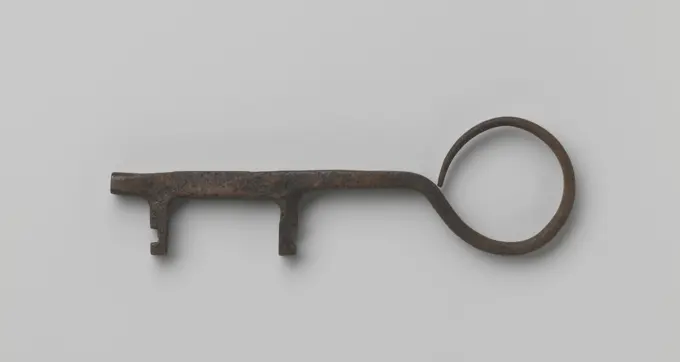
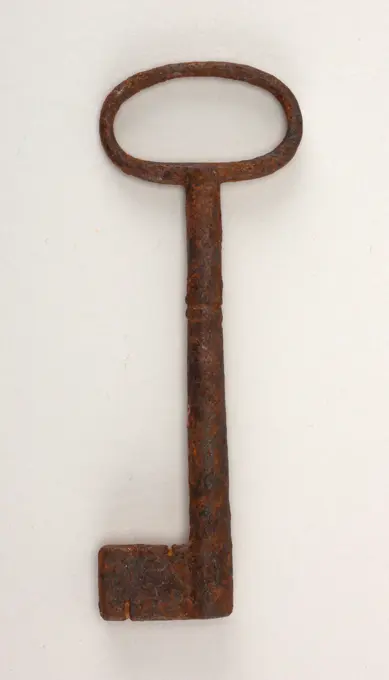
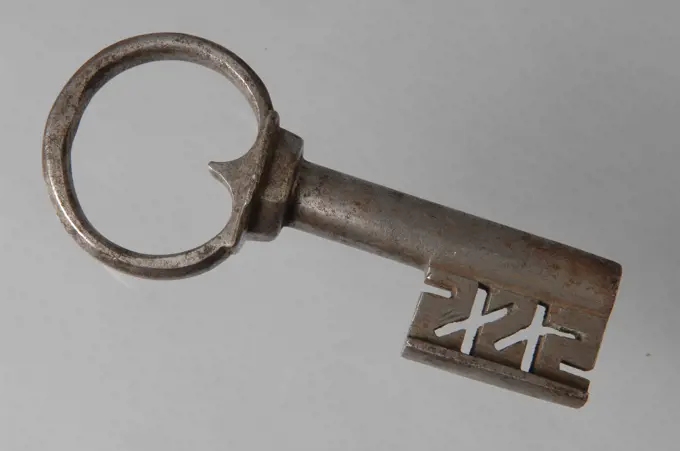
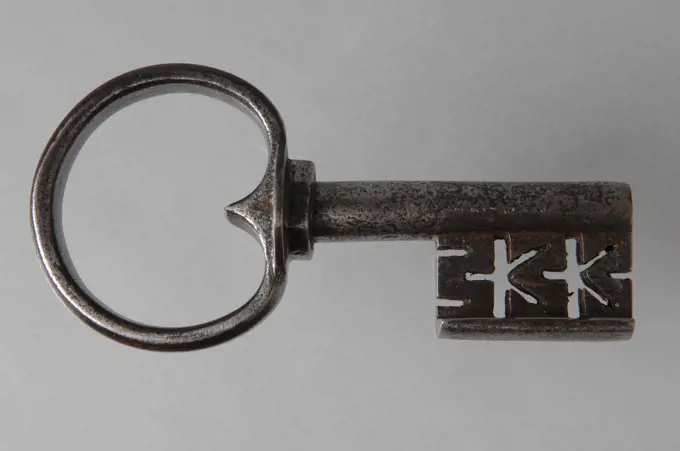
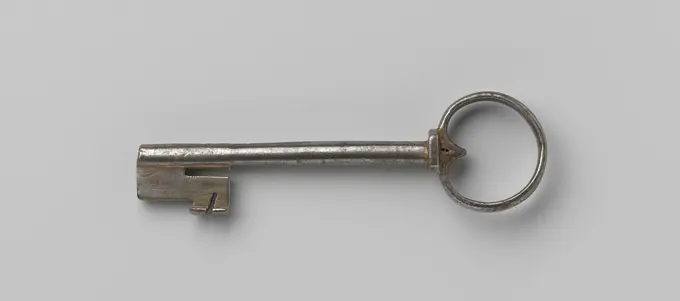
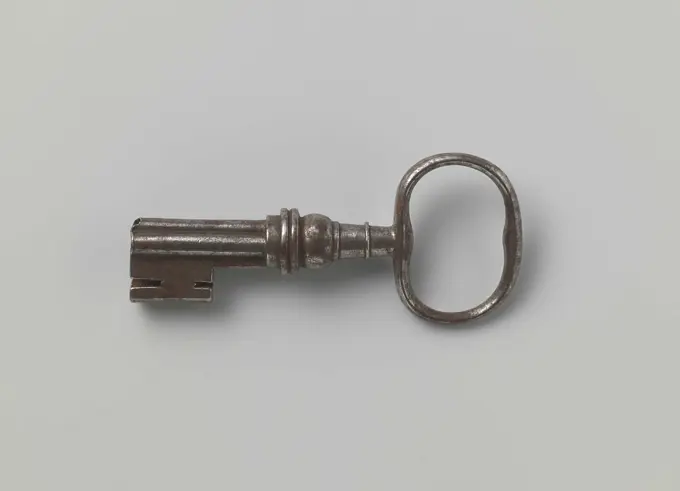
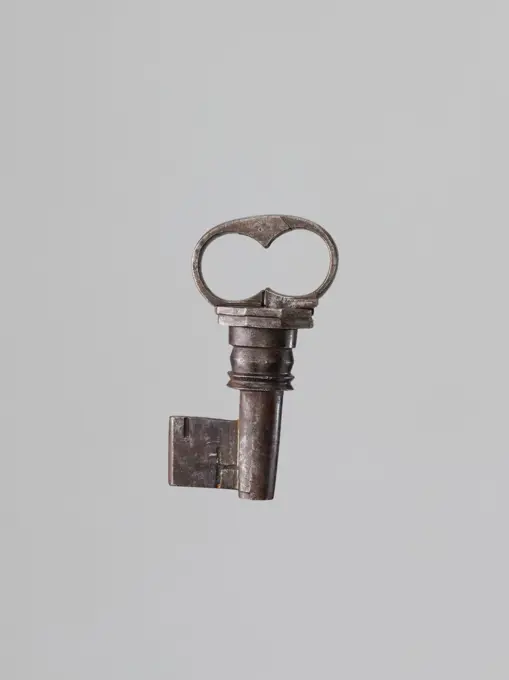
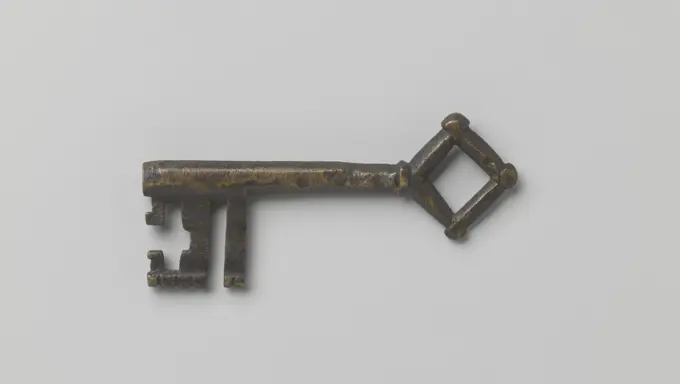
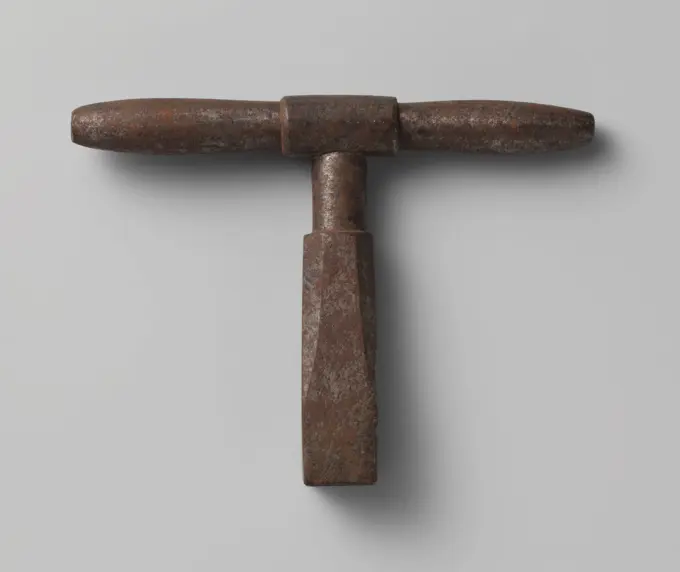
Key, 1700 - 1900 Key with square handle, at the end of the striker giving and in an eye. The beard is two -fold.  iron (metal) Key with square handle, at the end of the striker giving and in an eye. The beard is two -fold.  iron (metal)
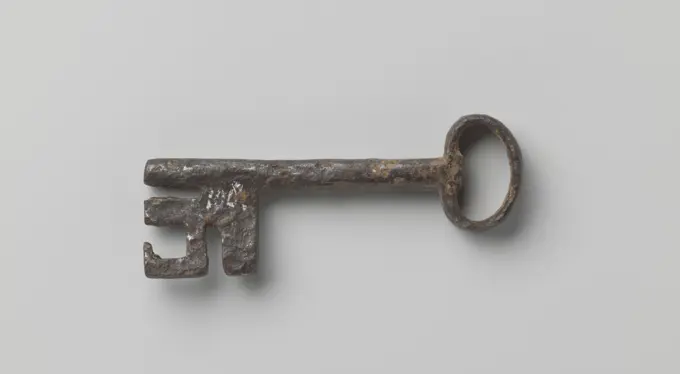
Key, 1700 - 1900 Key with square handle, at the end of the striker giving and in an eye. The beard is two -fold. iron (metal) Key with square handle, at the end of the striker giving and in an eye. The beard is two -fold. iron (metal)
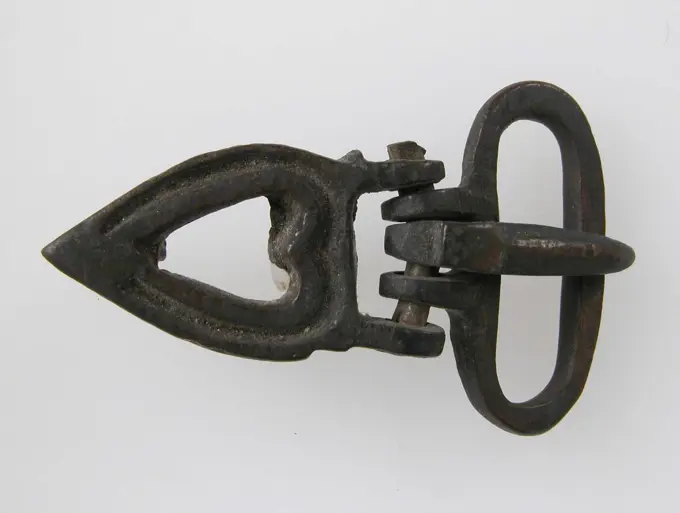
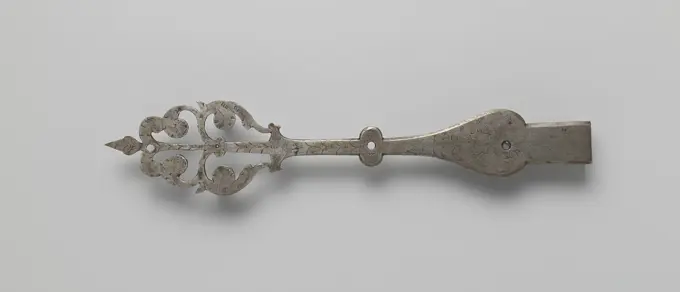
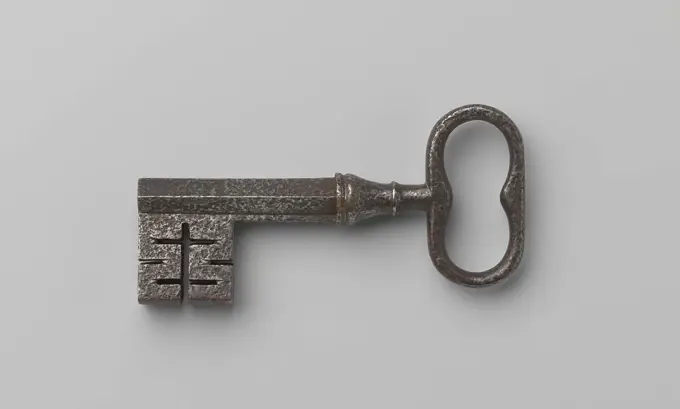
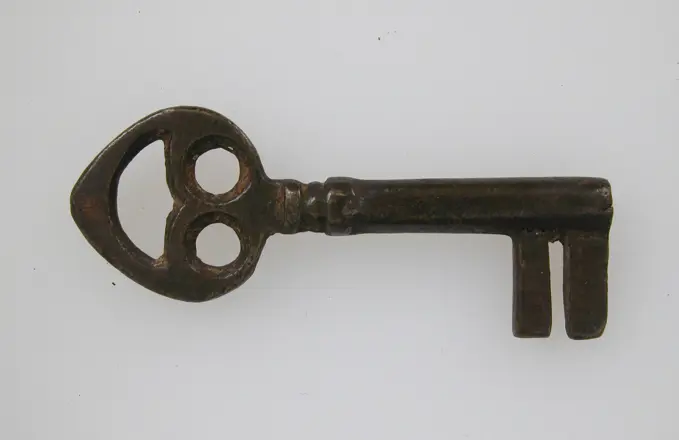
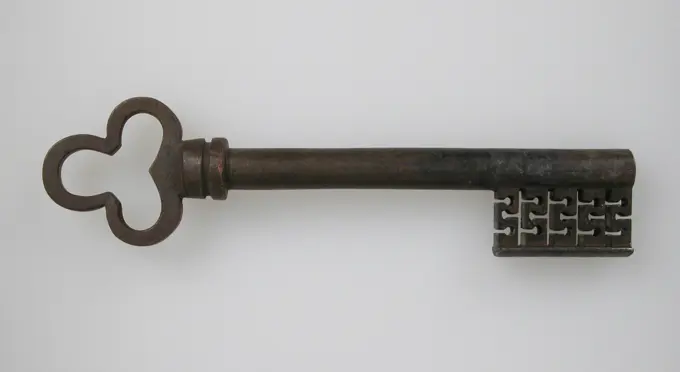
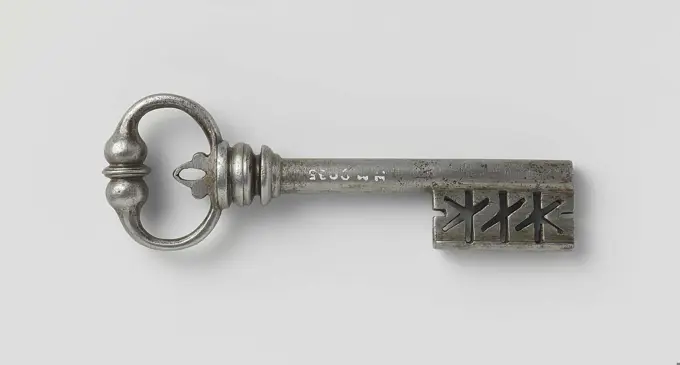
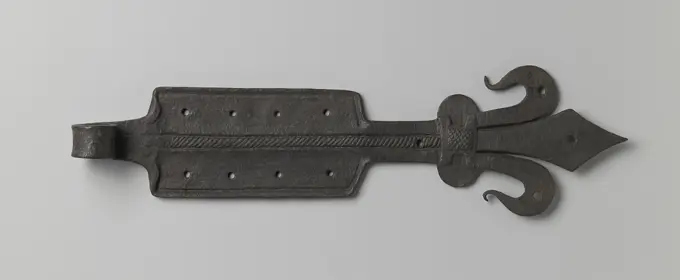
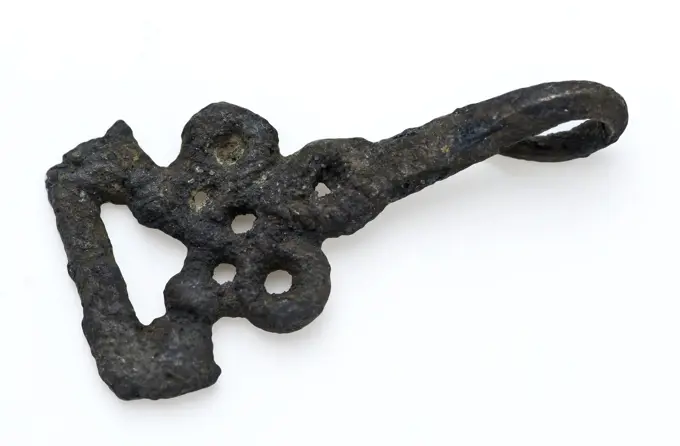
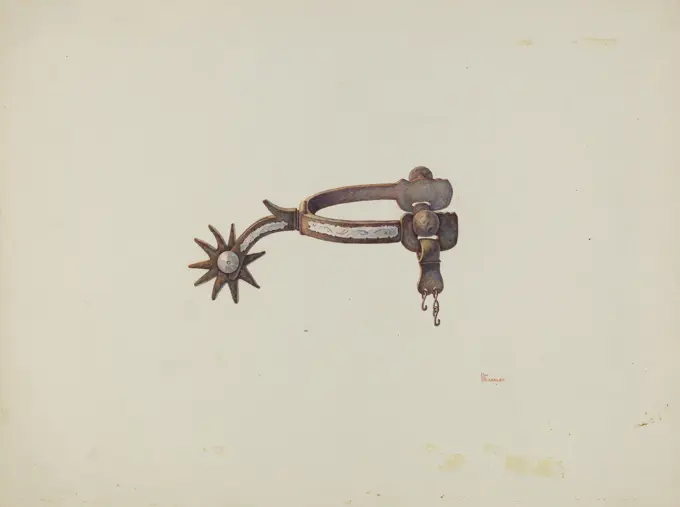
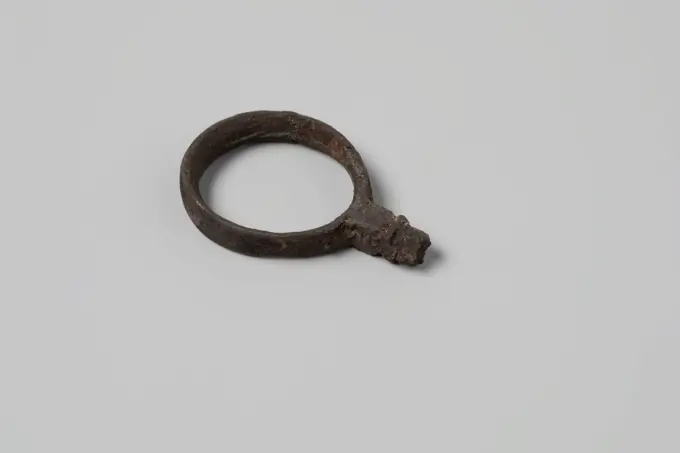
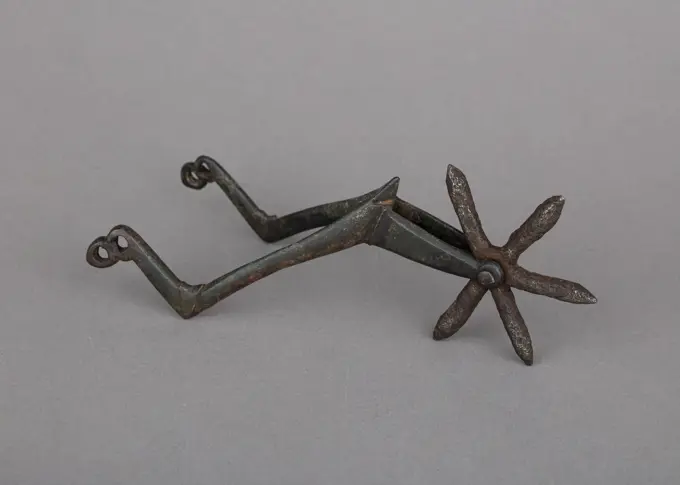
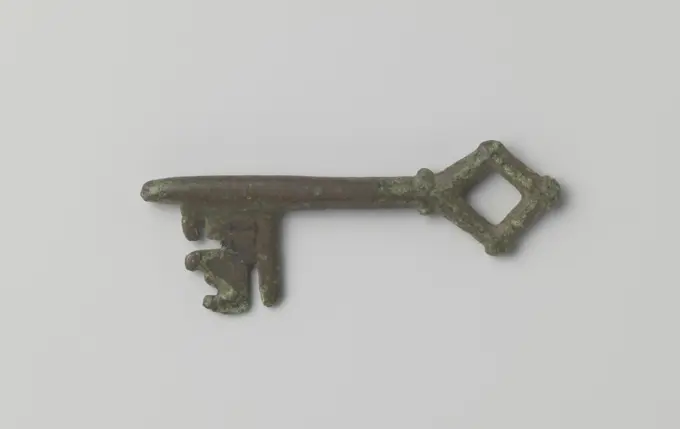
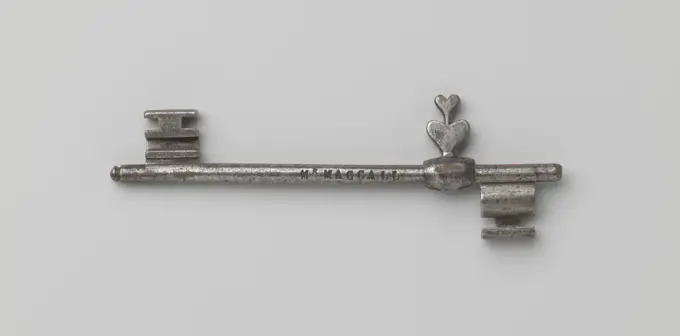
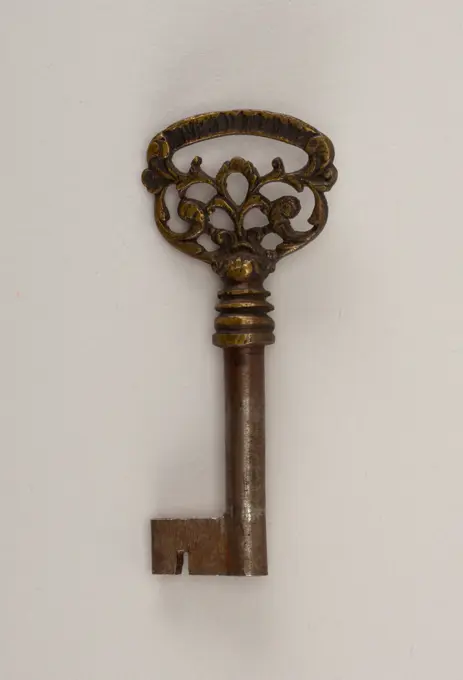
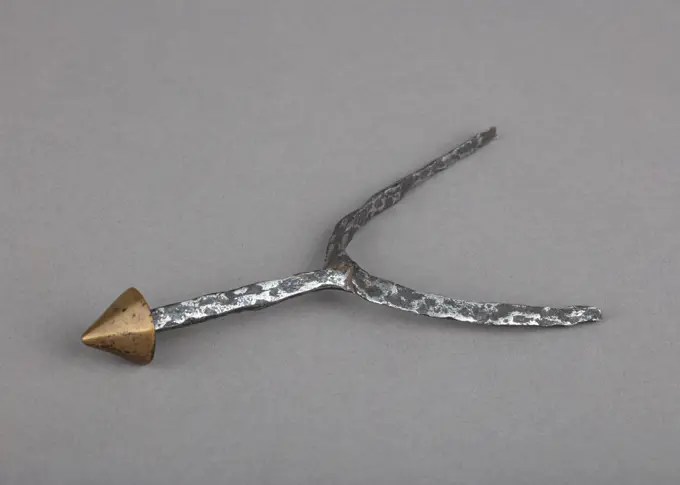
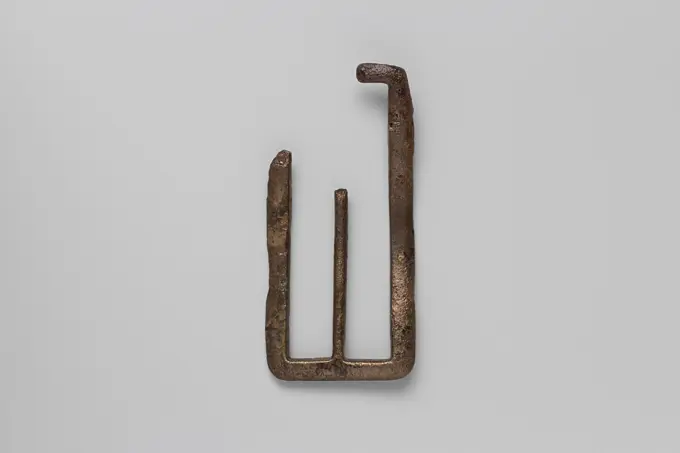
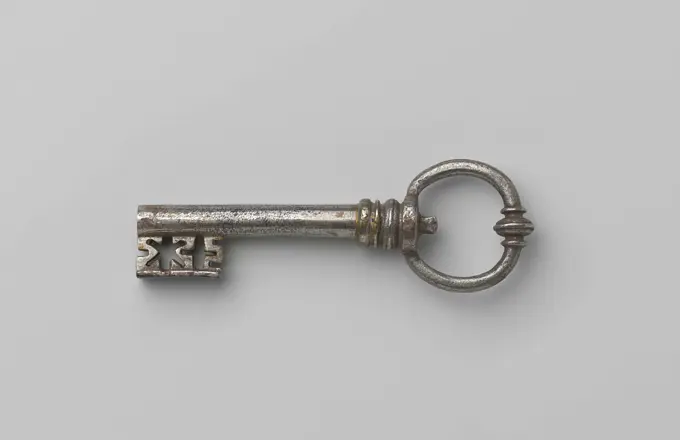
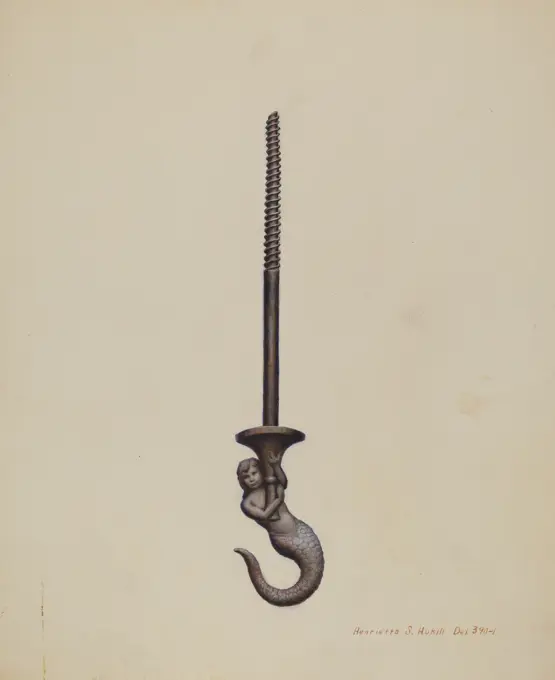
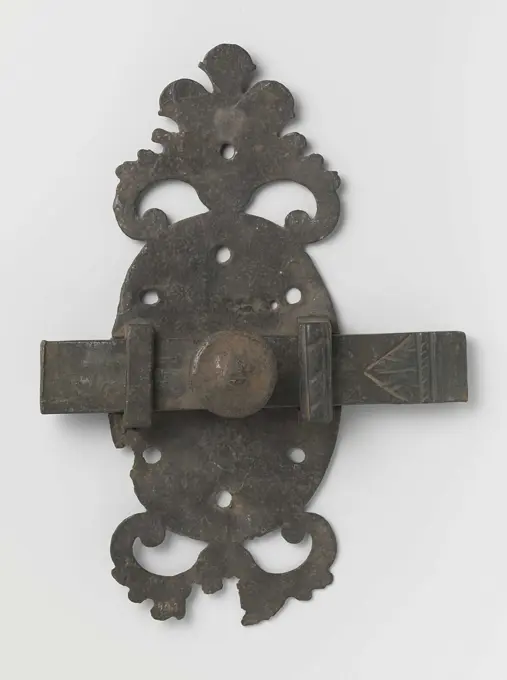
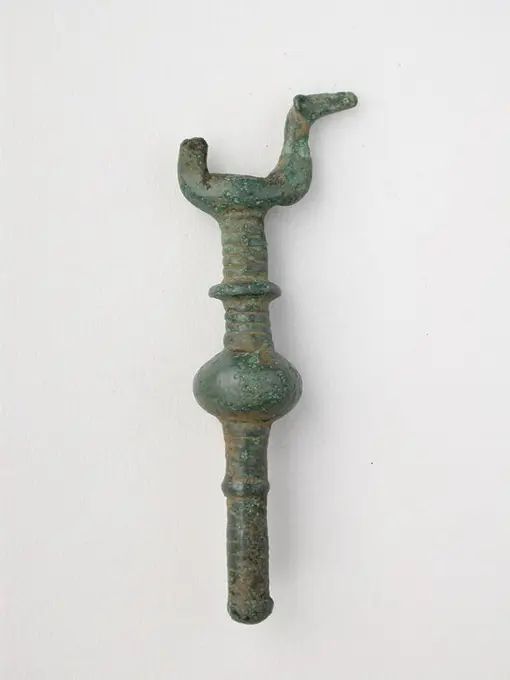
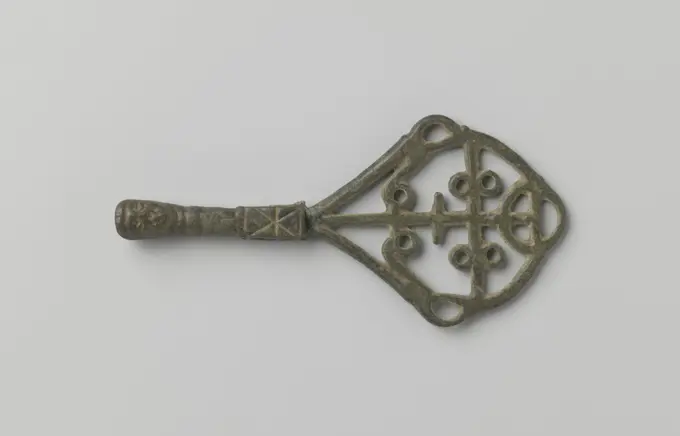
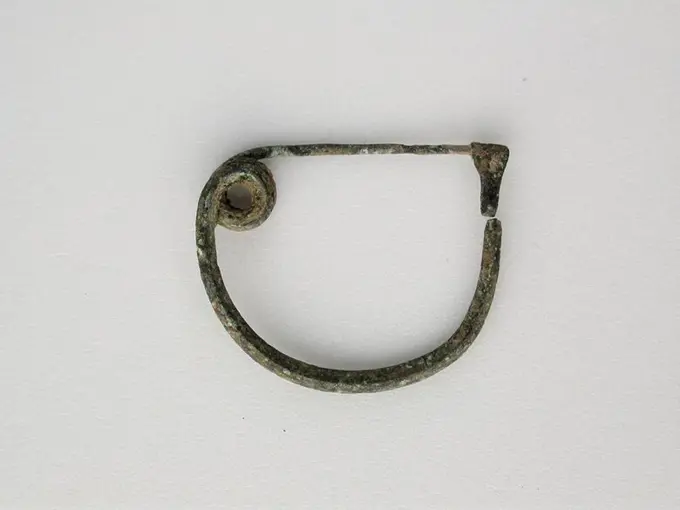
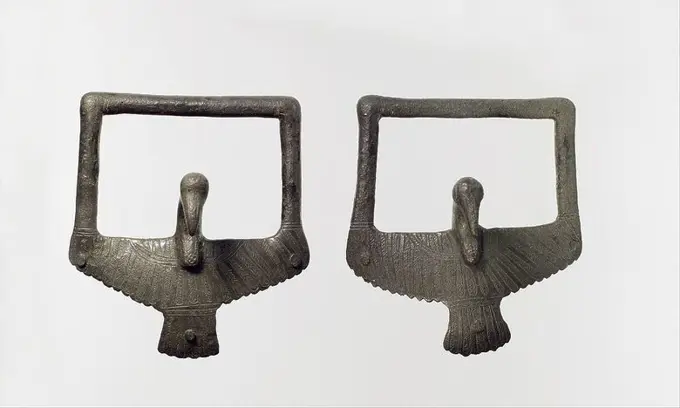
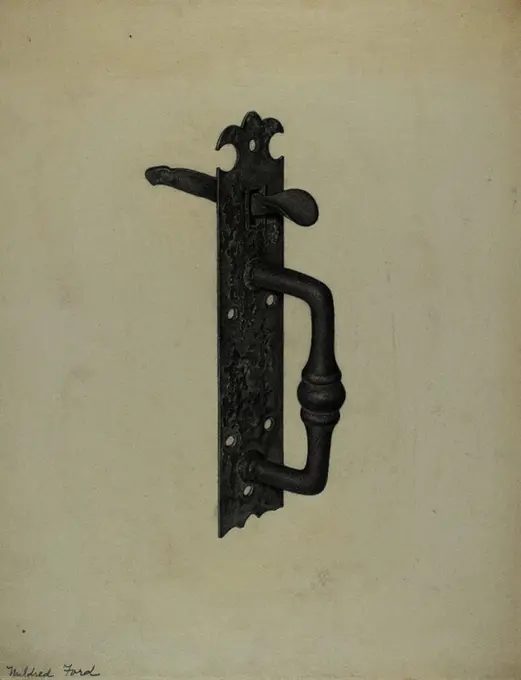
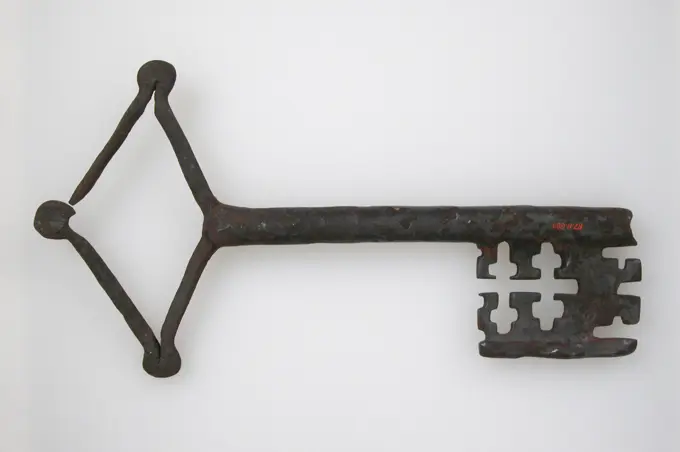
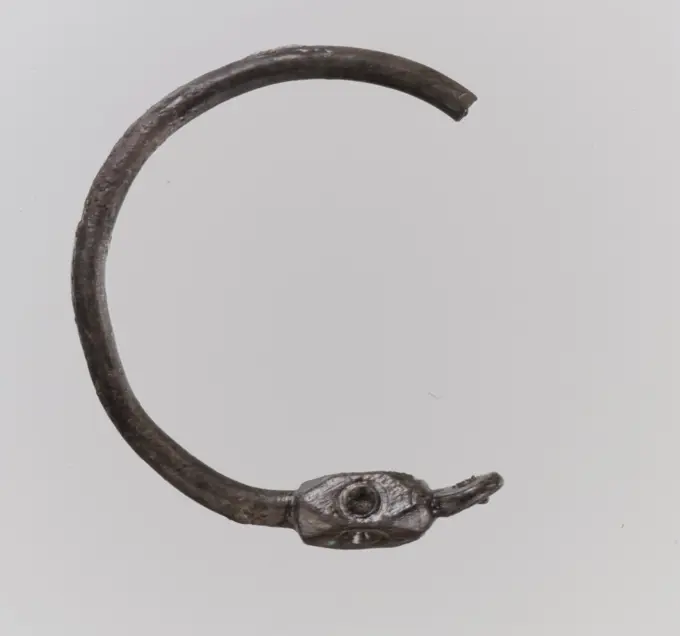
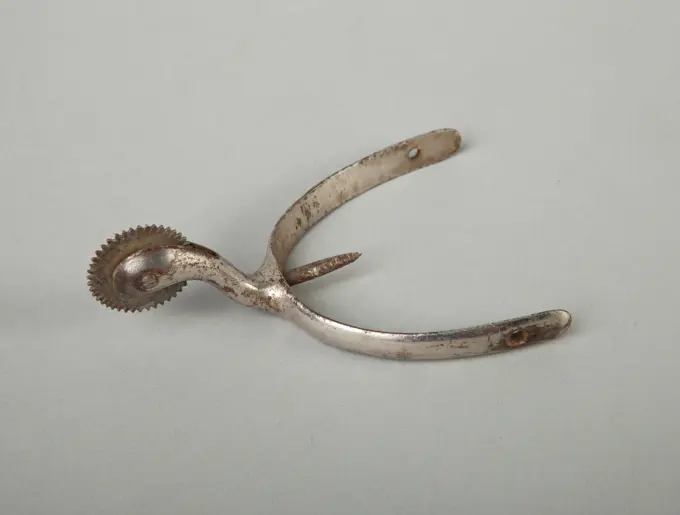
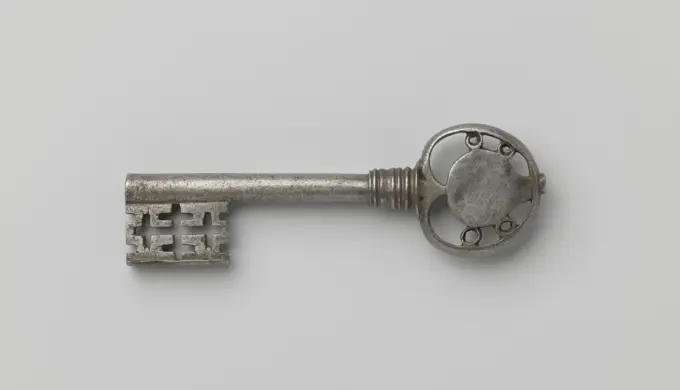
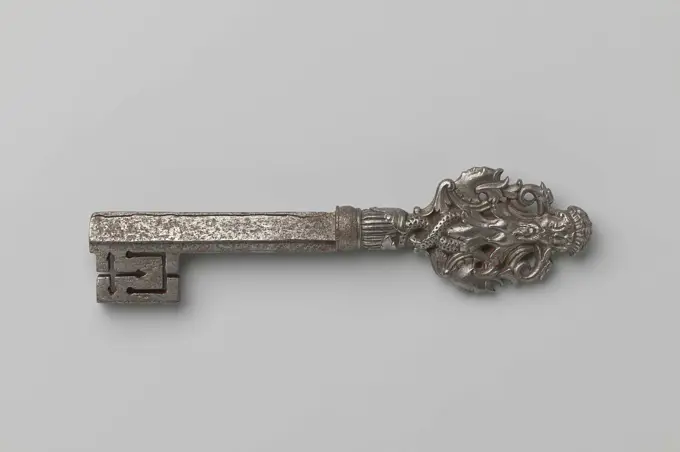
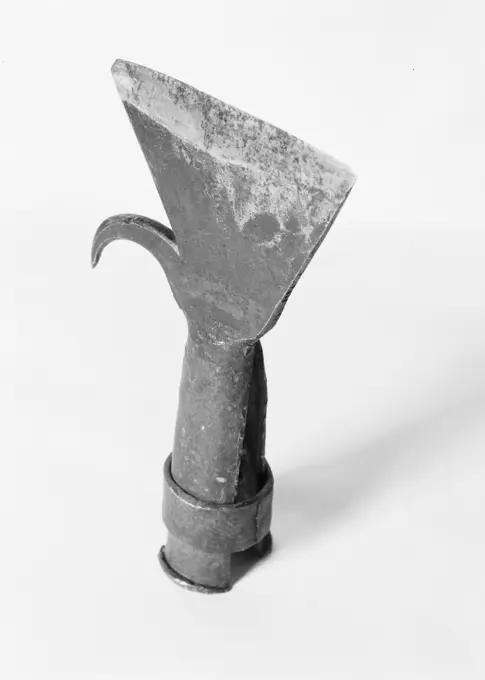
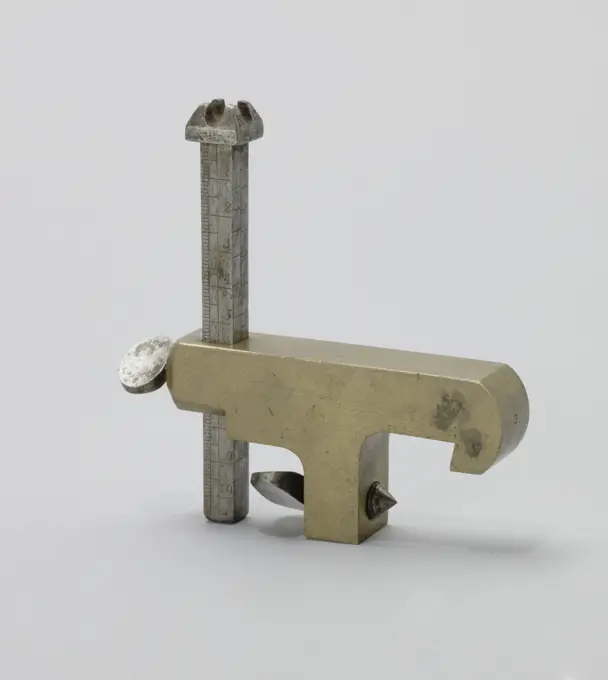
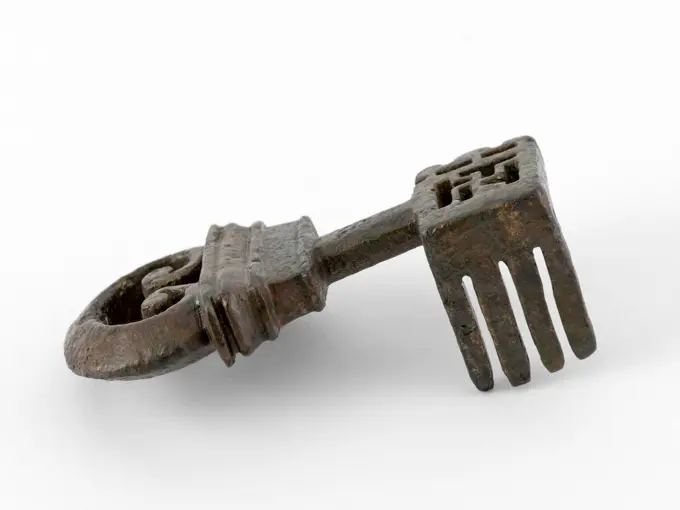
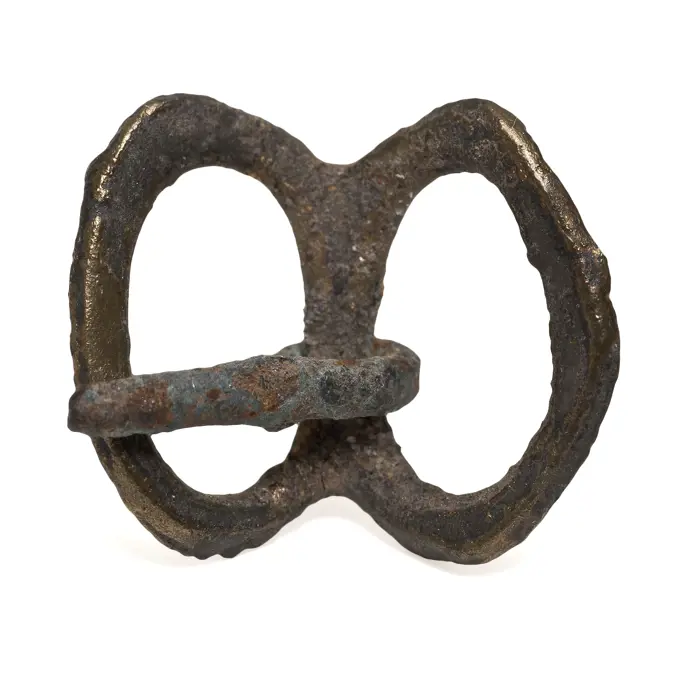
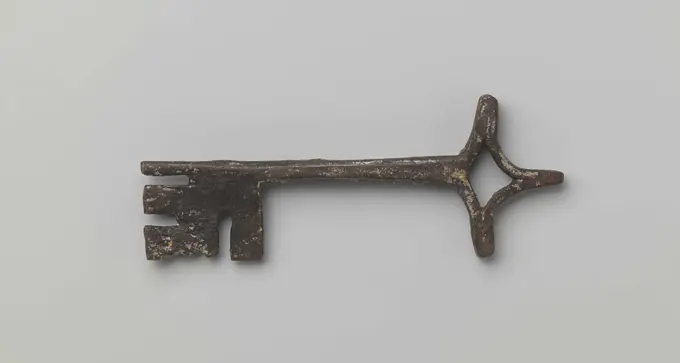
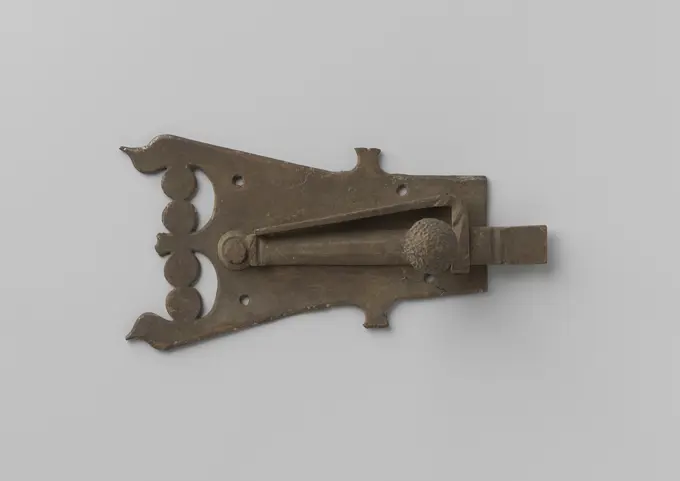
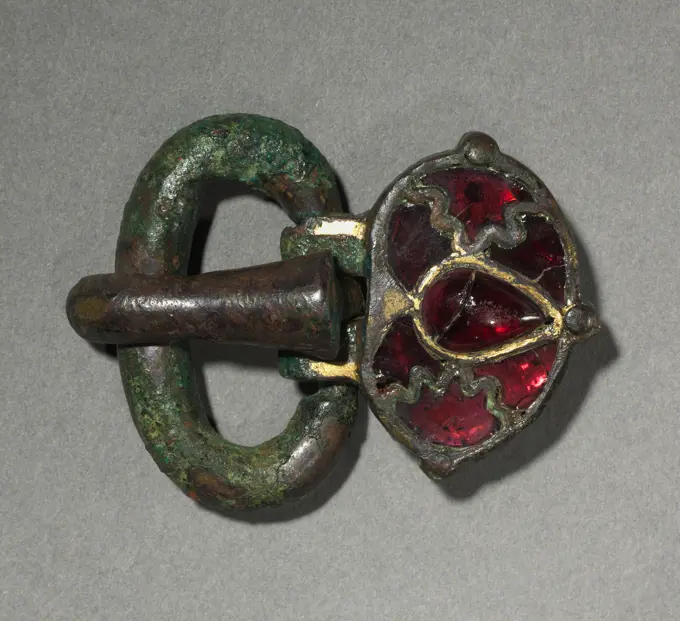
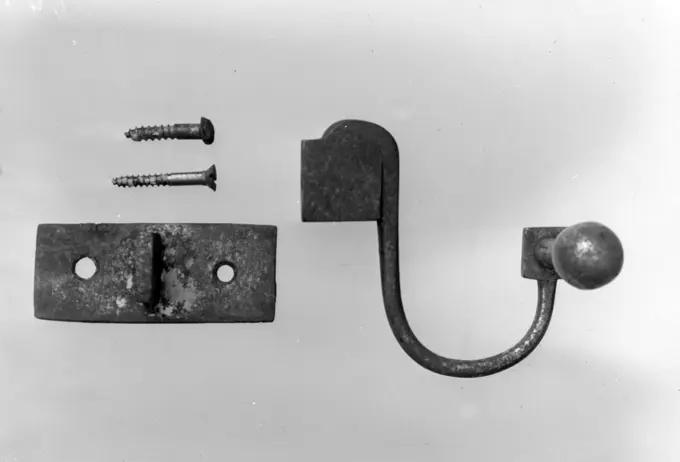
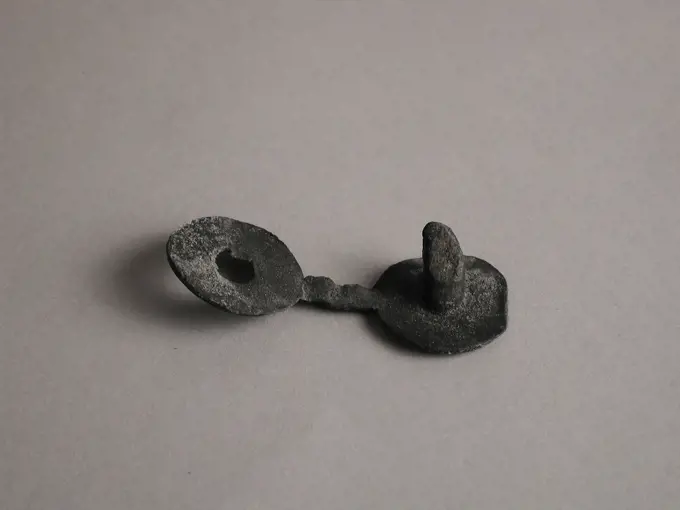
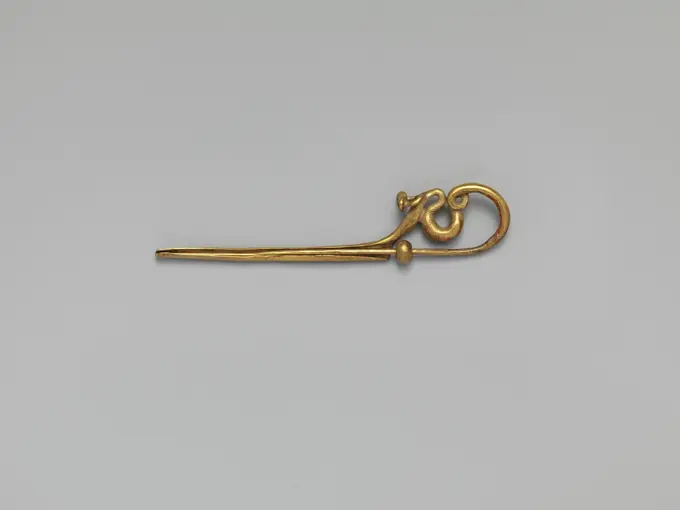
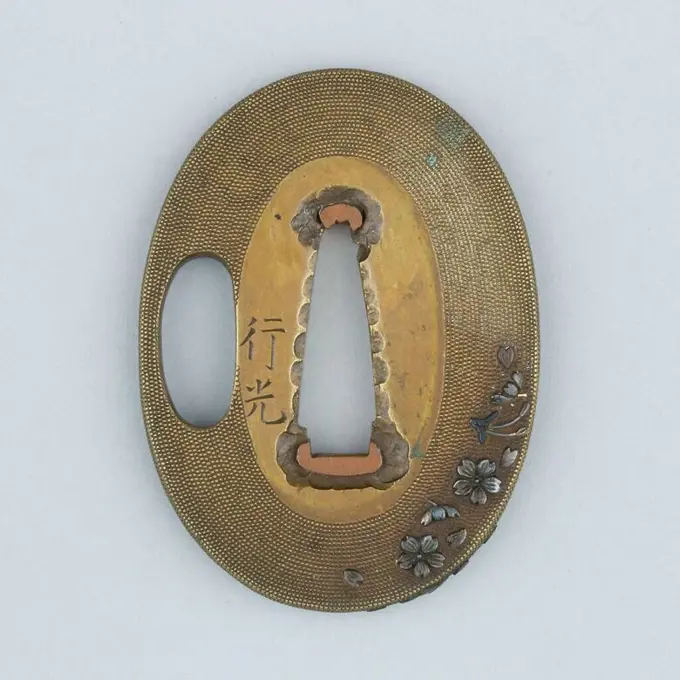
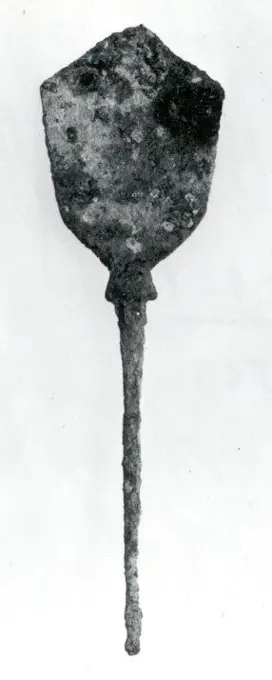
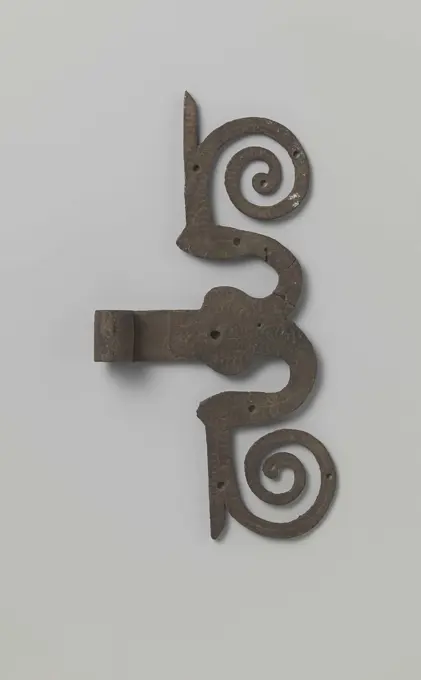
Key 1st-3rd century Roman. Key 463352Pijpsleutel.Pipe key with reverse pear-shaped open handle that is cracked at the top. The beard exhibits a cross-shaped incision between four open air corners.Buckle 7th century () Byzantine. Buckle 472761Key, 1700 - 1900 Key with square handle, at the end of the striker giving and in an eye. The beard is two -fold.  iron (metal) Key with square handle, at the end of the striker giving and in an eye. The beard is two -fold.  iron (metal)Key, 1300 - 1500 Key whose upstairs steel is turned over to one eye. The square beard shows coarse incisions.  iron (metal) Key whose upstairs steel is turned over to one eye. The square beard shows coarse incisions.  iron (metal)Sleutel aan sleutelring.A key to a disposal circular key ring of iron with cutting closure.Key; 1904-21-8Onderdeel van een deurhengsel.Door batter of tinned iron, part of a door mixture, decorated with engravings. The batter is as follows from the hinge: a baluster-shaped start, delegating in a narrow, straight piece from which to the end steal some leaf motifs that curl as volutes. The whole ends in a pointed leaf.Sleutel.Key with a square shaft under the profiled key chest. Beard from above wedge-shaped.Key 15th century German The decoration of Gothic iron locks and keys was often elaborate and of the highest standard of workmanship. The motifs were frequently drawn from Gothic architecture, reproducing on a miniature scale complicated tracery patterns and even tiny statuettes. A number of these tiny locks were compound, with some of the mechanisms concealed from view, and required two or even three keys used in sequence to open them. It has been suggested that the greatly expanded use of locks on doors, or coffrets and other types of storage chests was a result of the increasing urbanization of life and the new emphasis on material wealth and private ownership which developed in the late Middle Ages.. Key 463341Key second half 15th century German The decoration of Gothic iron locks and keys was often elaborate and of the highest standard of workmanship. The motifs were frequently drawn from Gothic architecture, reproducing on a miniature scale complicated tracery patterns and even tiny statuettes. A number of these tiny locks were compound, with some of the mechanisms concealed from view, and required two or even three keys used in sequence to open them. It has been suggested that the greatly expanded use of locks on doors, or coffrets and other types of storage chests was a result of the increasing urbanization of life and the new emphasis on material wealth and private ownership which developed in the late Middle Ages.. Key 46336839 keys from the collection of Emmanuel Vita Israël, anonymous, c. 1200 - c. 1400 Key whose handle looks like a four -leaf flower pattern. The extensively processed beard has been partially demolished.  iron (metal) Key whose handle looks like a four -leaf flower pattern. The extensively processed beard has been partially demolished.  iron (metal)Key, 1200 - 1400 Key with diamond -shaped eye, short handle and crochet -shaped beard.  iron (metal) Key with diamond -shaped eye, short handle and crochet -shaped beard.  iron (metal)Pipe key. Pipe wrench with silver handle and key chest; Shaft and beard of iron. Set of 4: BK kog-2314-a to -d. The shafts are drilled to the four figures of the card game.A key.Deurhanger met leliemotief.A forged iron door hanger, flared in a lily.. The Amsterdam apothecary and art collector Emmanuel Vita Israël. He donated his collection, comprising keys dating from Roman antiquity to the 19th century, to the Koninklijk Oudheidkundig Genootschap (Royal Antiquarian Society) in 1937. Vita Israël claimed that his key collection had grown more or less by accident: being one of the few collectors of keys, dealers automatically made their way to him.Key 15th century German The decoration of Gothic iron locks and keys was often elaborate and of the highest standard of workmanship. The motifs were frequently drawn from Gothic architecture, reproducing on a miniature scale complicated tracery patterns and even tiny statuettes. A number of these tiny locks were compound, with some of the mechanisms concealed from view, and required two or even three keys used in sequence to open them. It has been suggested that the greatly expanded use of locks on doors, or coffrets and other types of storage chests was a result of the increasing urbanization of life and the new emphasis on material wealth and private ownership which developed in the late Middle Ages.. Key 467589Iron key with heart-shaped eye, hollow key handle, collar and cruciform beards in beard, key iron iron, hand forged Key with heart-shaped eye (handle) hollow keysteel octagonal collar cross-shaped notches (horizontal vertical and diagonal) in key beard and symmetrical keyhole cross-section hingesCoat hook or coat closure, cut-away object with eye, ending in bent point, closure clothing accessory clothing soil find copper metal, cast Open worked flat metal object ending in bent point Open rectangle to confirm archeology Rotterdam rail tunnel fasten close dress Soil discovery: trajectory rail tunnel Rotterdam.. An staggered single cut.Key. Key.Pijpsleutel.Forged pipe wrench from a piece. A quadrangular beard with two notches is at the under wider shaft. The round eye is flat.Iron balance, 1600 - 1699 A star at the end of the equator. (Point of the equator before 1922 demolished).  iron (metal) A star at the end of the equator. (Point of the equator before 1922 demolished).  iron (metal)Snaffle Bit. Culture: German. Dimensions: H. 4 1/4 in. (10.8 cm); W. 8 3/4 in. (22.2 cm); Wt. 8.3 oz. (235.3 g). Date: late 16th - early 17th century.This full-cheek bit has simple articulated canons, arched for giving more comfort to the tongue. The snaffle bit is the simplest type of horse bit, and has an effect on the bars (part of the horses' jaw without teeth) and the corners of the lips. The rings on the sides would serve to hang the bit on the headstall and attach the reins. The cheekpieces press on the side of the mouth when a rein is pulled, helping indicating the direction to the horse and keeping the rings from pulling through the horse's mouth.According to contemporary equestrian manuals, this bit was probably used as a racing bit. It is virtually identical to some bit used until today. Museum: Metropolitan Museum of Art, New York, USA.Hal Blakeley, Spur, c 1940 SpurRowel Spur 18th century German The rowel of this silvered spur can be folded back in its ring when its owner is not riding. This feature prevents the rowel from scratching things (or people) when the wearer is walking.. Rowel Spur. German. 18th century. Iron alloy, silver. Equestrian Equipment-SpursHanden van Vertind iron with rank motifs, anonymous, 1600 - 1800 Handen of Vertind iron. At the bottom a large, round opening of a hinge. From there, two symmetrical, stylized rank motifs, which are curling towards the end in volutes.  iron (metal). tin (metal) Handen of Vertind iron. At the bottom a large, round opening of a hinge. From there, two symmetrical, stylized rank motifs, which are curling towards the end in volutes.  iron (metal). tin (metal)Key 15th century German The decoration of Gothic iron locks and keys was often elaborate and of the highest standard of workmanship. The motifs were frequently drawn from Gothic architecture, reproducing on a miniature scale complicated tracery patterns and even tiny statuettes. A number of these tiny locks were compound, with some of the mechanisms concealed from view, and required two or even three keys used in sequence to open them. It has been suggested that the greatly expanded use of locks on doors, or coffrets and other types of storage chests was a result of the increasing urbanization of life and the new emphasis on material wealth and private ownership which developed in the late Middle Ages.. Key 468833Pin from the wreck of the East Indies Hollandia, Anonymous, 1700 - in Or Before 1743  Tools and instruments, sewing and sailmaking, pin; fragm, bow, id. NG 1980-27H3265. Netherlands copper (metal)   SecondBolt; bronze (gilt); 1904-21-72Pipe key. Pipe key with bean-shaped eye on which a point is. The beard has a tear-shaped occupation ..Iron key, key iron value iron, Key with heart-shaped eye (handle) hollow key handle cross-shaped battens (horizontal vertical and diagonal) in key bite octagonal collar and symmetrical keyhole cross-section hang-and-seal Rotterdam Kaat MosselRowel Spur second half 14th century European The iron rowel attached to this spur is contemporary to the bronze body but may not be original to it. The first rowel spurs, which featured a revolving disc or star at the end of the neck, appeared in Western Europe around the mid 13th century. They cohabitated with the earlier form, the prick spur, for about a century, before replacing it almost completely in Europe by the mid 14th century. The advantage of the rowel spur over the prick was it allowed the rider to reach the flanks of its horse with one of the points whatever the angle of its foot, which was very convenient regarding the riding position of the time, with long stirrups-leathers and extended legs. The fact that the rowel rolled against the horse instead of hitting it directly reduced also the probability of injuring it too seriously.. Rowel Spur. European. second half 14th century. Copper alloy, iron. Equestrian Equipment-SpursKey 1st-7th century Roman. Key 462977Pipe wrench. Pipe wrench with annular eye, which passes above the square disc with beveled corners in a pointed increase. Long shaft.Key 15th century German. Key 468862Iron key with pen;  early 19th century (1801-00-00-1900-00-00);Applied furniture; Unknown Roman workshop; 98-117 (98-00-00-117-00-00);Decorative elementsCrescent-shaped axe head ca. 2300-2000 B.C. Hattian. Crescent-shaped axe head 324447Bronze socket, c. 1300 - c. 1400 Bronze socket wrench, diamond -shaped ring, pen -about in pointed point, beard from below and incised from the front. France bronze (metal) Bronze socket wrench, diamond -shaped ring, pen -about in pointed point, beard from below and incised from the front. France bronze (metal)Key.key.Double key, c. 1800 - c. 1900 Double key with a beard on both ends of the shaft. The sliding handle consists of a tonus -shaped cylinder with two placed hearts that slide around the shaft. England iron (metal) Double key with a beard on both ends of the shaft. The sliding handle consists of a tonus -shaped cylinder with two placed hearts that slide around the shaft. England iron (metal)Silver loop. GAL1990.148.18Notenkraker met drakenkop.A forged iron nutcracker, decorated and engraved in various places with copper. The mouth wears a dragon head on either side.Key; 1909-2-260Fragmentary Fibula. UnknownPrick Spur 11th century possibly German The prick spur was the first type of spur to be invented, and it consists of a goad or prick, more or less pointed, connected to side arms or a heel plate. The earliest spurs were probably simple thorns attached at the back of the heel, before they started to be made out of metal in antiquity. Prick spurs were the main type of spurs used in the Middle Ages until the mid-14th century, when they were supplanted by rowel spurs, which appeared in Europe a century before and with which they had cohabitated for a time. As a knights status was closely related to his horse, spurs became one of the symbols of chivalry, and one of the tokens given to him during his knighting.. Prick Spur. possibly German. 11th century. Iron alloy, copper alloy. Equestrian Equipment-SpursBrooch -Key, c. 1500 - c. 1600 Key with square deep -cut beard and bean -shaped eye.  iron (metal) Key with square deep -cut beard and bean -shaped eye.  iron (metal)Belt buckle from the wreck of the East Indiesman Hollandia.RiemSp. Rectangular, 1 Fragm or Ring (C.4.7x9.7, 0.7W, 0.4T) with spindle, calls buckle.Pipe key. Pipe wrench whose annular eye is broken by a disc between two small disks. There is a square rebellion on the profiled around capital. The beard has a cross and star-shaped occupancy.Copper buckle, rectangular, buckle fastener part soil find brass brass metal, cast Buckle rectangular bracket with middle post to which angel archeology Rotterdam rail tunnel attach fasten clothes Soil discovery: rail tunnel Rotterdam.Henrietta S Hukill, Ceiling Hook, 1935 1942 Ceiling HookA shark or scroll with plate.Pin from the wreck of the East Indies Hollandia, Anonymous, 1700 - in Or Before 1743  Tools and instruments, sewing and sailmaking, pin; fragm of shaft with bow, id. NG 1980-27H3265. Netherlands copper (metal)   SecondDouble Birds on Knobbed Stand. Greek; Thessaly. Date: 800 BC-600 BC. Dimensions: 7.2 × 2.5 × 1.4 cm (2 7/8 × 1 × 9/16 in.). Bronze. Origin: Thessaly. Museum: The Chicago Art Institute, Chicago, USA. Author: ANCIENT GREEK.Bronze key, c. 1400 - c. 1950  unknown bronze (metal)  unknown bronze (metal)Insert lock. Second key from insert from a furniture, also music box. The square lock case is attached to a slightly larger copper mounting plate. Two accompanying keys with clover leaf-shaped pipe and a small key with copper handle for winding the music box.Bow Fibula (wire). Greek; Thessaly. Date: 800 BC-600 BC. Dimensions: 3.3 × 4.4 × 0.8 cm (1 1/4 × 1 3/4 × 3/8 in.). Bronze. Origin: Greece. Museum: The Chicago Art Institute, Chicago, USA. Author: ANCIENT GREEK.Silver Shoe Buckle late 600's Frankish Belts were important features of early medieval dress. Not only did they serve the practical function of holding weapons and tools, but their fittings, which could vary in terms of material, decoration, and size, were also highly visible indicators of rank and status. Iron buckles, many imposing in size, were worn by both men and women. Their intricate decoration was achieved by squeezing narrow twisted strips of silver into patterns engraved on the surface of the prefabricated iron pieces. A complete belt would have consisted of a buckle, a counter plate that was placed opposite the buckle, and sometimes a rectangular plate placed in the middle of the belt at the back for decoration.. Silver Shoe Buckle 464877 Frankish, Silver Shoe Buckle, late 600's, Silver, Overall: 1 1/2 x 11/16 x 1/4 in. (3.8 x 1.8 x 0.6 cm). The Metropolitan Museum of Art, New York. Gift of J. Pierpont Morgan, 1917 (17.191.181)Pair of bird-shaped handles. Culture: Iran. Dimensions: H. 4 1/4 x W. 3 15/16 in. (10.8 x 10 cm). Date: ca. 9th century B.C..These handles were once fixed, each by three rivets, to a hammered bronze shallow bowl or basin. They are in the form of stylized long-necked birds with outstretched wings and tail; a fixed rectangular handle rises from the wing tips. Each bird head, which faced out from the bowl, projects slightly forward, with a herringbone pattern on the beak and neck, and the eyes etched in simple concentric circles. The wings and tails are decorated by incised herringbone patterns to suggest separate feathers. Such bird-head protome attachments are represented in Near Eastern art in the round on buckets and cauldrons as well as on bowls and basins. They were popular in Assyria and Iran during the ninth and eighth centuries B.C. Museum: Metropolitan Museum of Art, New York, USA.Pipe key, c. 1600 - c. 1699 Pipe key of which the handle consists of two backs -placed and stylized griffins, connected by two choirs. France iron (metal) Pipe key of which the handle consists of two backs -placed and stylized griffins, connected by two choirs. France iron (metal)Door Handle with Thumb Press. Dated: c. 1938. Dimensions: overall: 28.8 x 22.8 cm (11 5/16 x 9 in.). Medium: graphite on paperboard. Museum: National Gallery of Art, Washington DC. Author: Mildred Ford.Key 13th century German. Key 468871Earring Fragment 7th century Frankish. Earring Fragment 465816 Frankish, Earring Fragment, 7th century, Silver, Overall: 1 1/16 x 13/16 x 1/8 in. (2.7 x 2.1 x 0.3 cm) bead: 1/4 x 1/8 in. (0.6 x 0.3 cm). The Metropolitan Museum of Art, New York. Gift of J. Pierpont Morgan, 1917 (17.193.89)OstrogaCoffer or chest key late 16th-early 17th century probably Italian. Coffer or chest key 206351PliersPipe key, c. 1500 - c. 1600 Pipe key with pear -shaped "box" between four eyes in the round handle; Heavily profiled capital and cross -shaped occupation of the beard.  iron (metal) Pipe key with pear -shaped "box" between four eyes in the round handle; Heavily profiled capital and cross -shaped occupation of the beard.  iron (metal)Fork (England); Made by Robert Stocker; silver; L x W x D: 12 x 4.8 x 1 cm (4 3/4 x 1 7/8 x 3/8 in.)Key. Drilled key with three-sided pipe whose handle consists of a neptune and a mermaid on the other side; They carry a basket filled with fruits on the head and are placed between two masks, dolphins and leaf refines.Key;  19th century (1801-00-00-1900-00-00);Pipe key, c. 1200 - c. 1300 Pipe key with hexagonal, pipes widening down and a square eye, with one of the corners facing down. On the corners of thickening.  bronze (metal) Pipe key with hexagonal, pipes widening down and a square eye, with one of the corners facing down. On the corners of thickening.  bronze (metal)An old key closeup on white backgroundPadlock. A copper triangular padlock, from the battery countries, middle Sumatra. Coming from the collection E. Vita Israels.Collection of the Dutch Heidematschappij. tools. December 1954Brooch -Tangent Sight, anonymous, 1845 - 1865 demonstration model. test model Set-up or target that is mounted against the back of the closure of the closure, identical to NG-MC-1889-24-A. The support is provided with a hook that intervenes in a square notch in the final exaltation, and is tightened from behind with a screw. It is a short square iron rod, on top of pyramid -shaped with grooves through the top; Can move back and forth vertically. The set -up rod has three sides with bowls, five scales in total. Netherlands iron (metal). brass (alloy)Pair of Spurs Made 1620-1640 Europe. Iron .Lazio Viterbo Viterbo Museo Civico97. Hutzel, Max 1960-1990 Views of paintings (Middle Ages through 18th c.), frescoes, a tabernacle, coffin, sculpture reliefs, portal fragments, busts, sculpture, tapestry found in the Pinacoteca, Second floor gallery and Second floor cloister sequences. Antiquities: Many views of Etruscan and Roman fragments, sculpture, sarcophagi, pottery, masks, jewelry and other objects found in the Storeroom sequence (inventory numbers on back of prints), and the Cloister, Second floor Cloister, Valle Giulia, Sala Romana and Sala Etrusca sequences. General Notes: There are eight separate numerical sequences for this location. The cloister as an architectural structure, rather than museum site, is documented in the record and file for S. Maria della Verita, Cloister, all views of which are stored in Medieval core collection. Five views from the Museo Civico Second floor cloister sequence are stored in Medieval. German-born photographer and scholar Max Hutzel (1911-old key isolated on white backgroundPanneton key. High Empire. Copper alloy, cast iron. Coming from: rue Clovis, 1896. Paris, Carnavalet museum. Copper alloy, Roman antiquity, key, Roman Empire, Fonte, High Empire, Panneston, AncientSmall brass buckle with two oval eyes, buckle fastener part soil find copper brass metal, cast Copper buckle: double-oval ring with middle post to which the angel Copper bracket iron angel archeology Rotterdam rail tunnel fasten fasten closures soil find: rail tunnel Rotterdam.Sleutel van ijzer.Forged iron key with cross-shaped ring, closed angular pipe and wide flat beard.Pair of Spurs Made 1600-1633 Western Europe. Iron .Bronze Lime Spoon 15th-mid-16th century Peru; north coast (). Bronze Lime Spoon 309232Cut. An arrested single cut (tinned).Buckle, 400s. Hunnish, Migration Period. Bronze, traces of gilding, and garnets; overall: 5.8 x 4.4 cm (2 5/16 x 1 3/4 in.).Jamb Hook 1700-1800. Jamb Hook. 1700-1800. IronTuning hammer, anonymous, c. 1800 - c. 1900 Iron voting hammer.  brass (alloy) Iron voting hammer.  brass (alloy)Loop. LOWER WORKS for Paris, 1750-1766; charge punch of the city of Dijon between 1756 and 1759; Discharge punch for old silver objects. Decor engraved with waveletsCloth lead, unused, sheeting quality seal ground find lead metal, sheet unused and thus open archeology authentication government cloth trade textile trade trade guildGold serpentine fibula (safety pin) probably 7th century B.C. Etruscan Serpentine fibulae have distinctive coiled bows.. Gold serpentine fibula (safety pin) 245986Handle of black horn, baluster -shaped, bent, gelria, c. 1900 - c. 1930 Handle of Black Horn, Balus -shaped, bent Netherlands Handle: Horn (Animal Material) cutting Handle of Black Horn, Balus -shaped, bent Netherlands Handle: Horn (Animal Material) cuttingBrooch -Sword Guard (Tsuba). Culture: Japanese. Dimensions: H. 2 1/8 in. (5.4 cm); W. 1 9/16 in. (4 cm); thickness 3/16 in. (0.5 cm); Wt. 2.1 oz. (59.5 g). Date: ca. 1615-1868. Museum: Metropolitan Museum of Art, New York, USA.Prehistory, Czech Republic, 6th century b.C. Bylani culture. Iron horse bit.Spearhead ca. 3rd-7th century A.D. Sasanian. Spearhead 323254Door brace ..