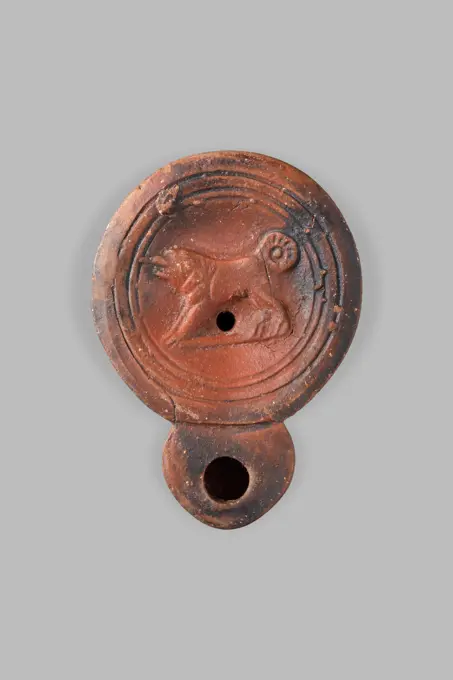
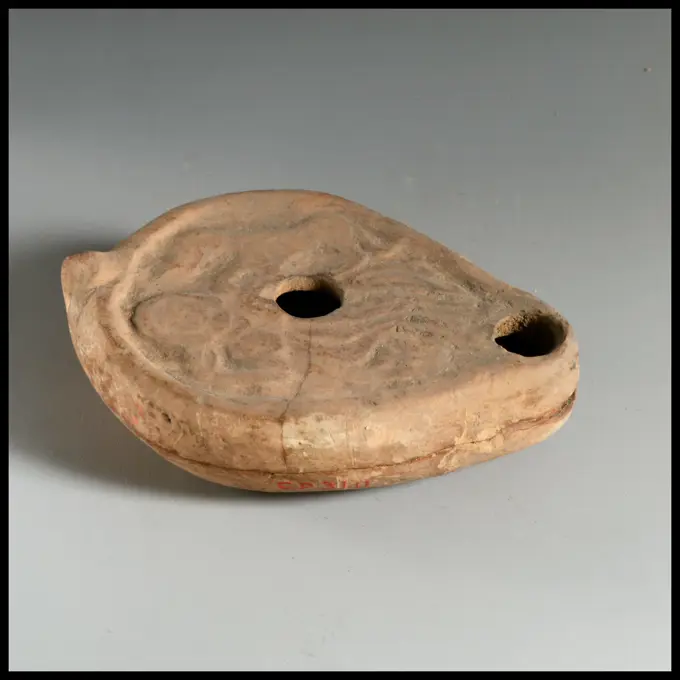
Ancient Lamps

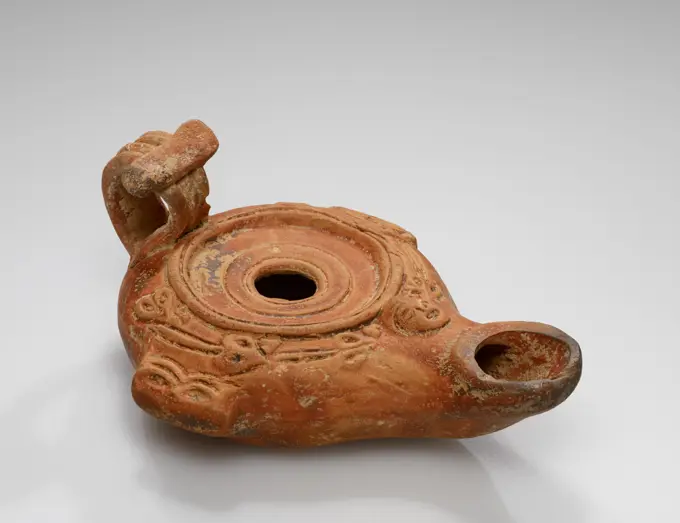
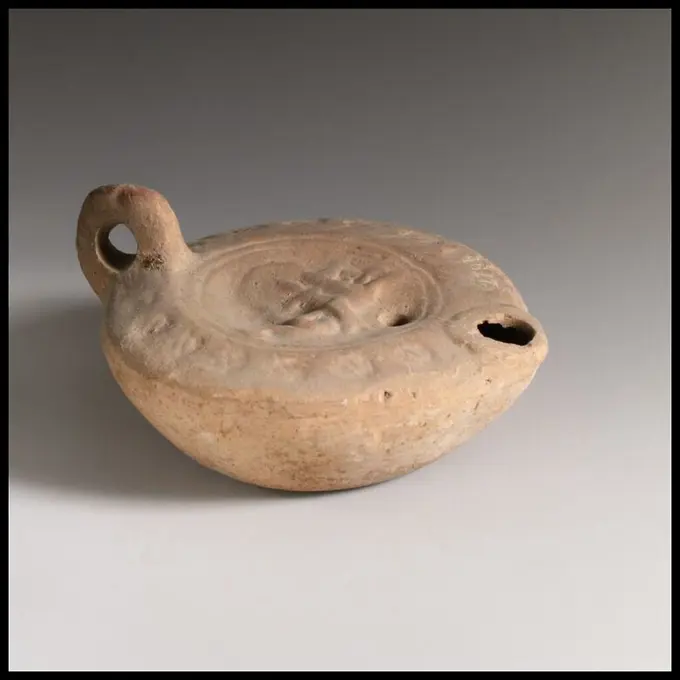
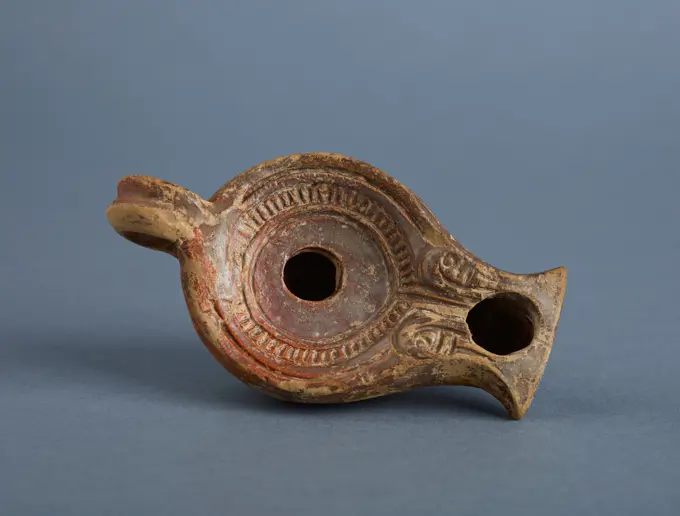
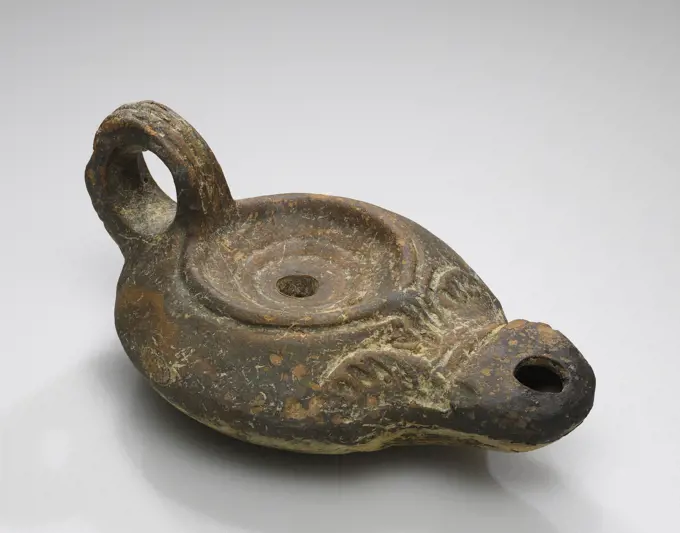
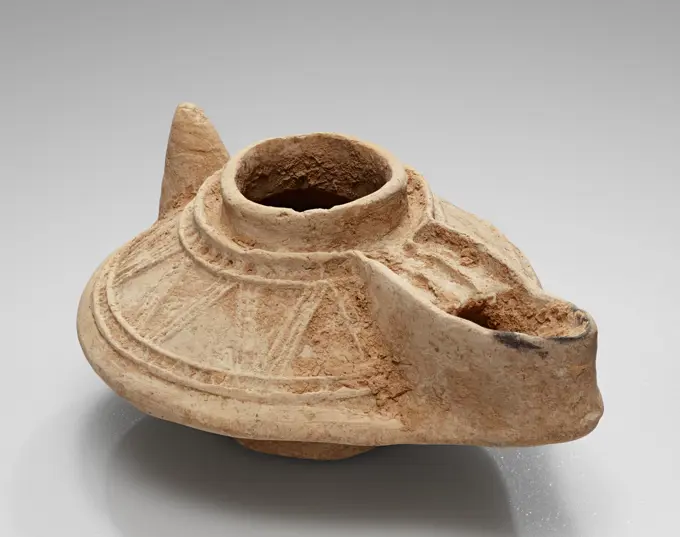
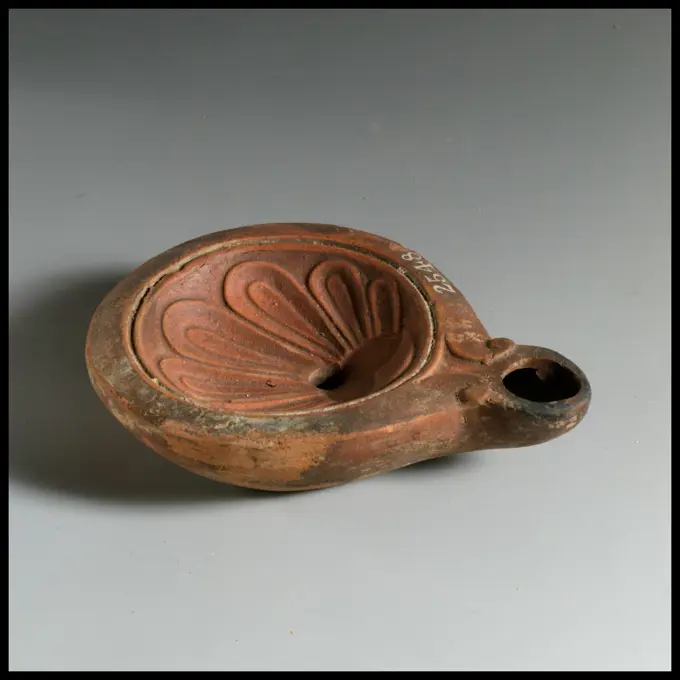
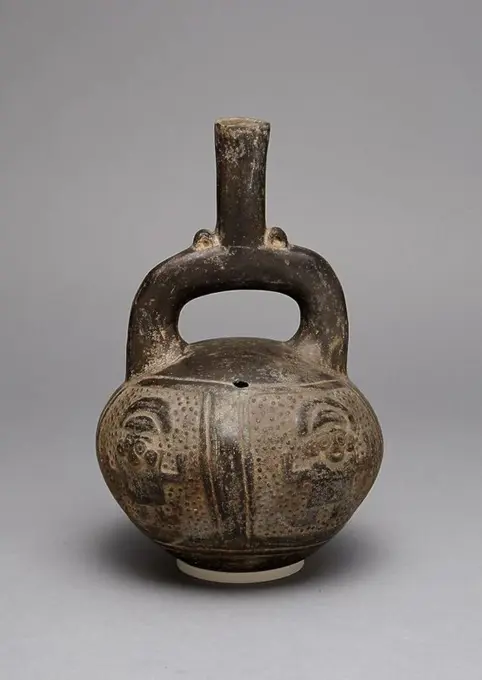
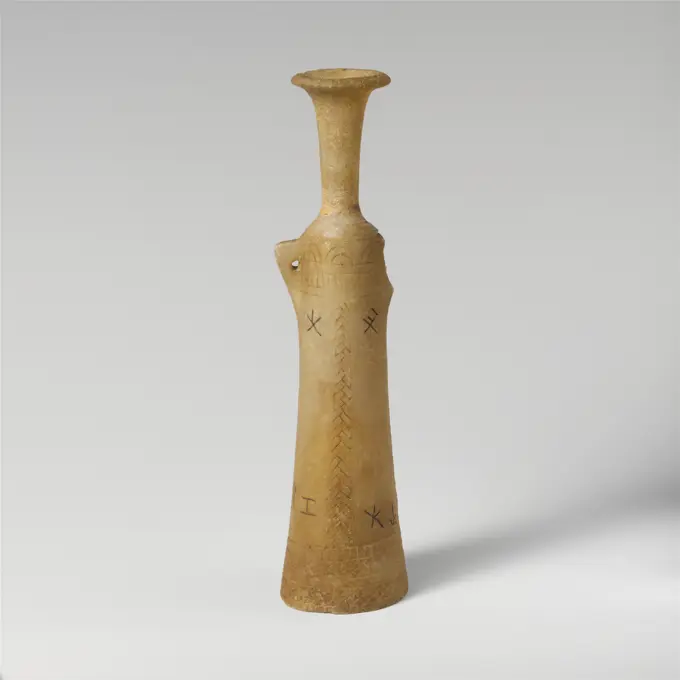
Terracotta oil lamps with historical significance from various cultures, showcasing unique designs and craftsmanship, reflecting ancient lighting methods.
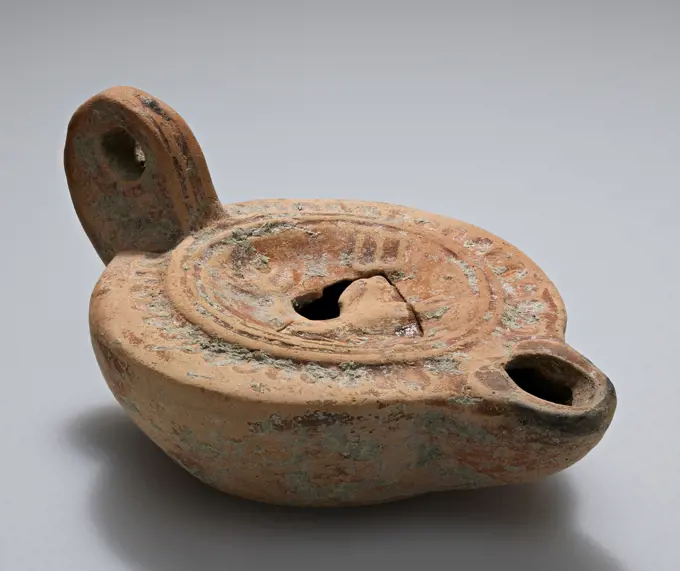
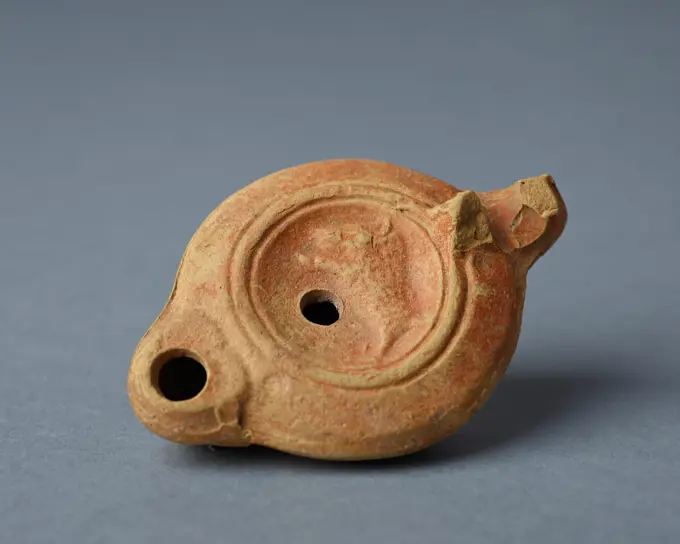
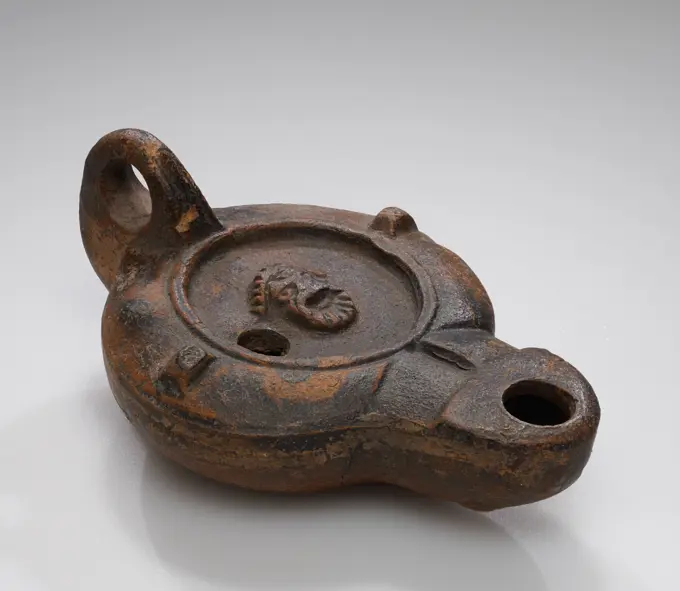
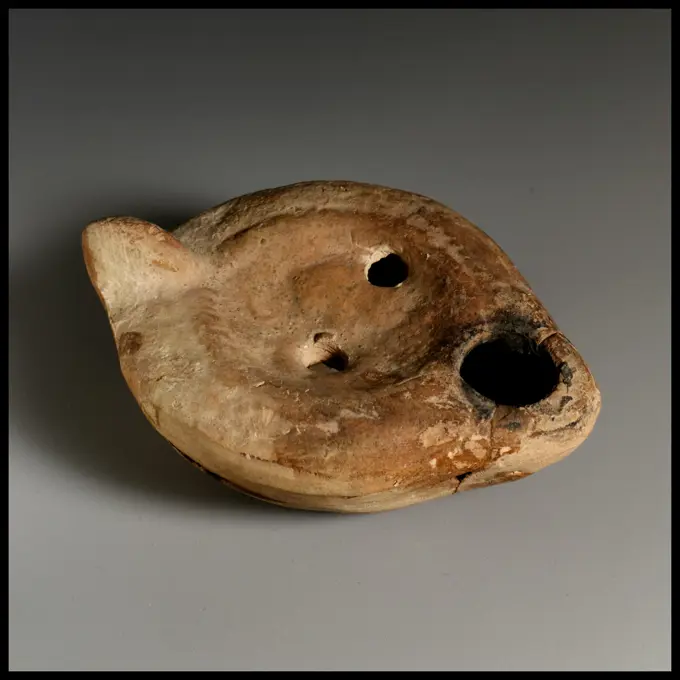
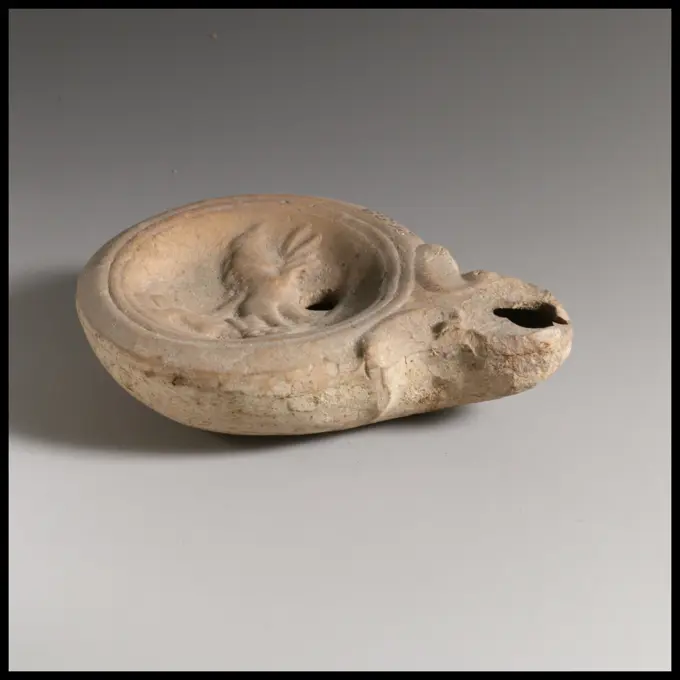
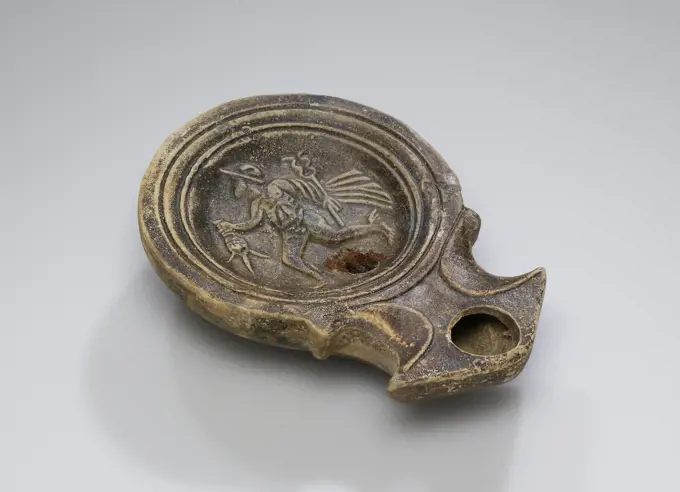
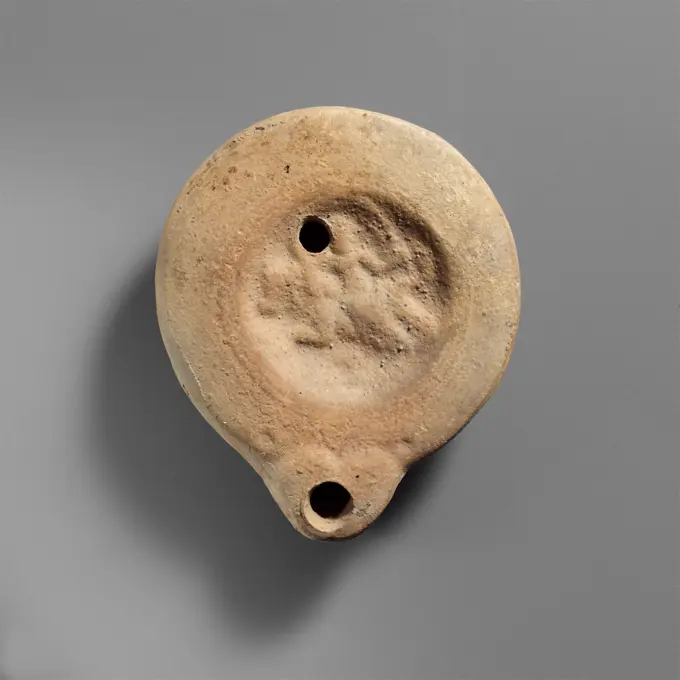
Lamp; Italy; 2nd century; Terracotta; 3.6 × 5.4 × 7.7 cm (1 7,16 × 2 1,8 × 3 1,16 in.)
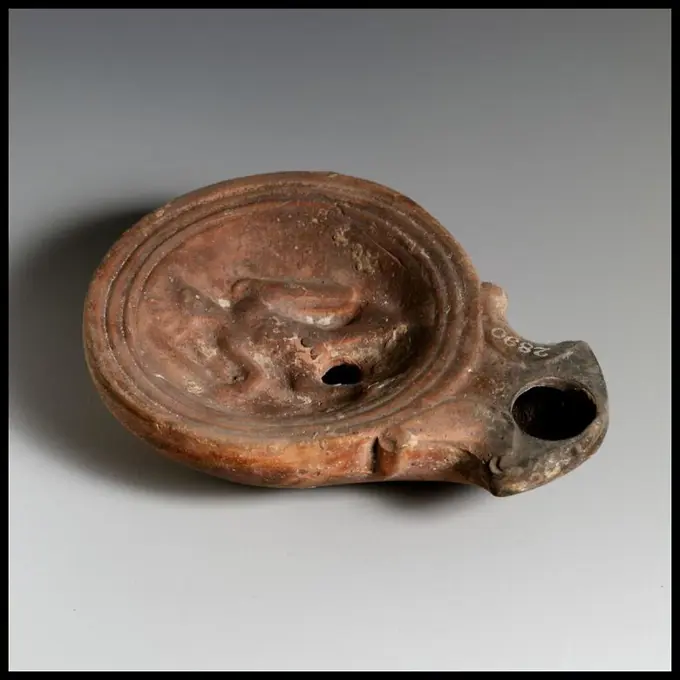
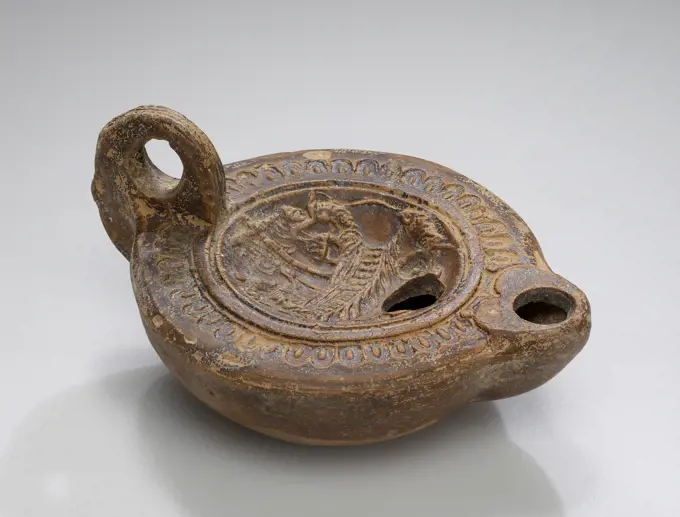
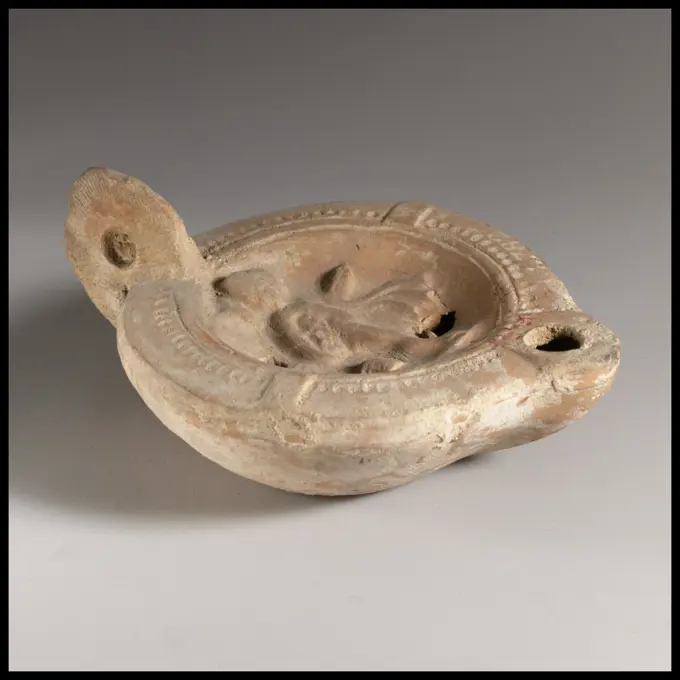
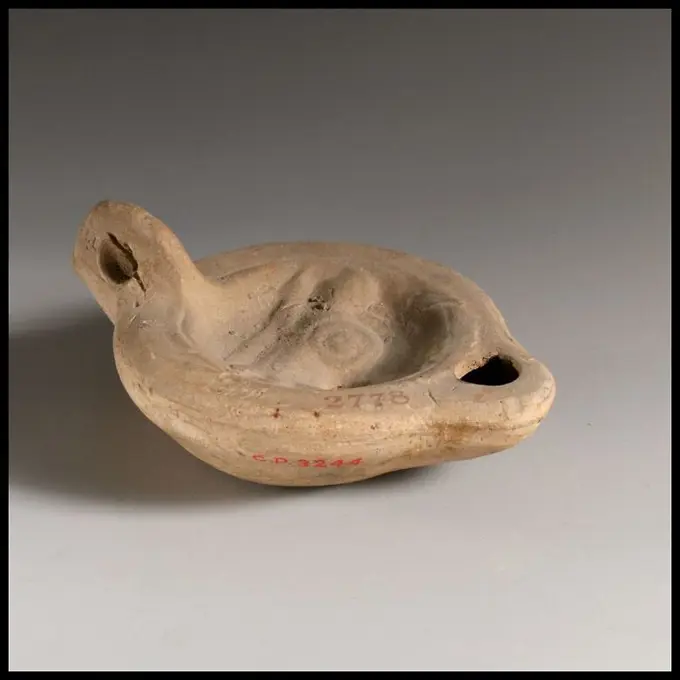
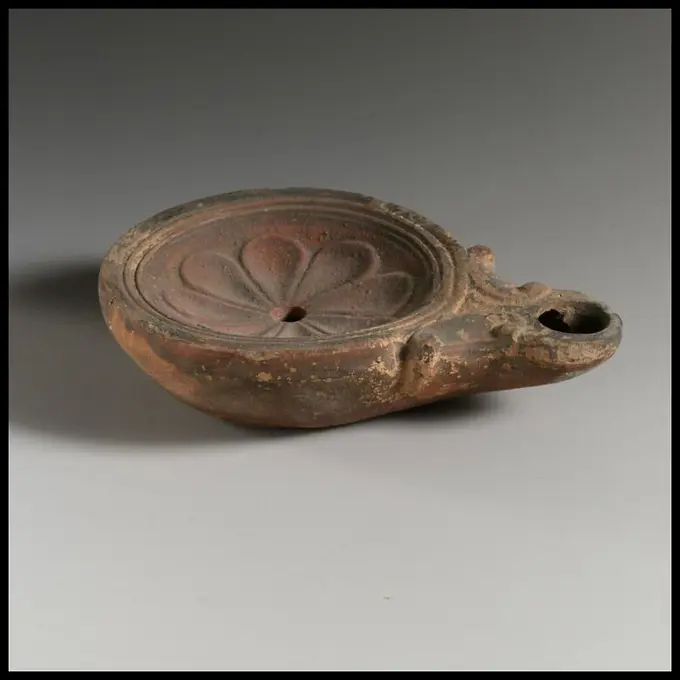
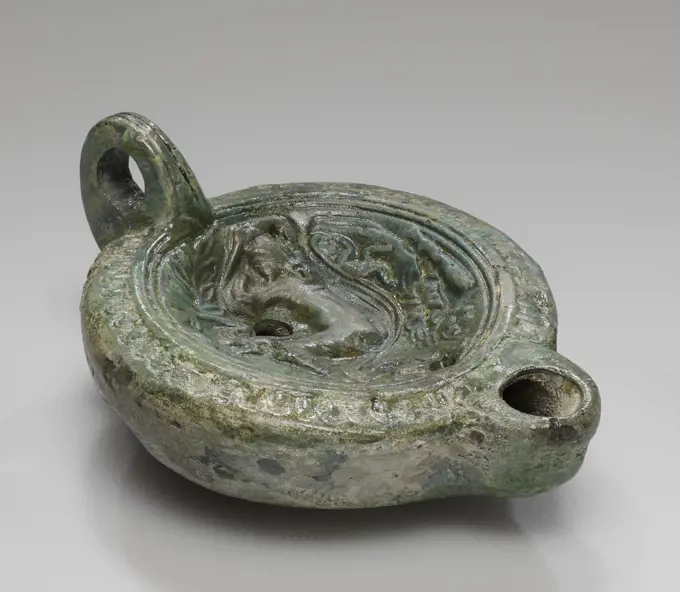
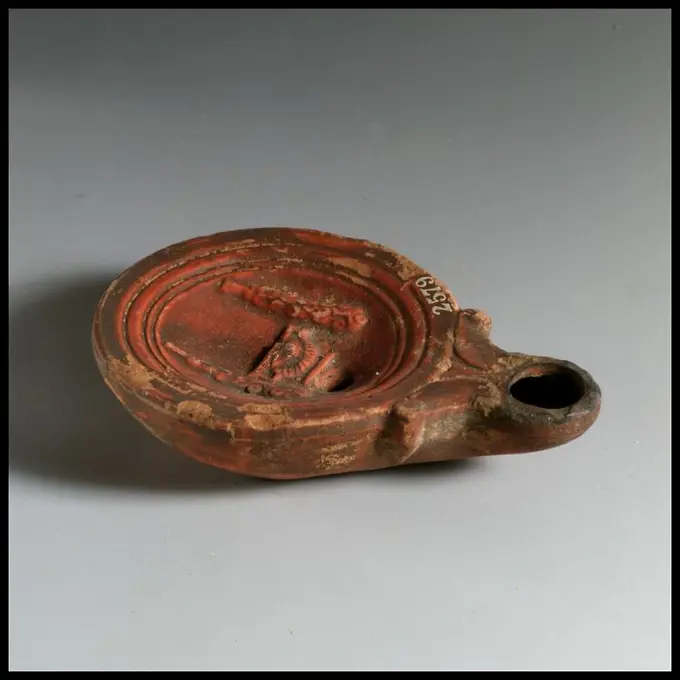
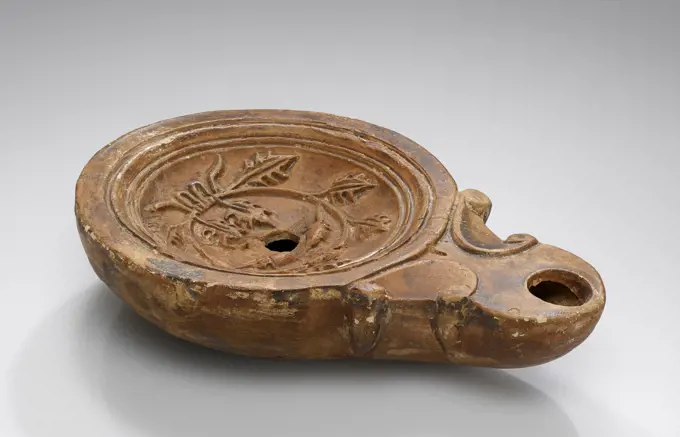
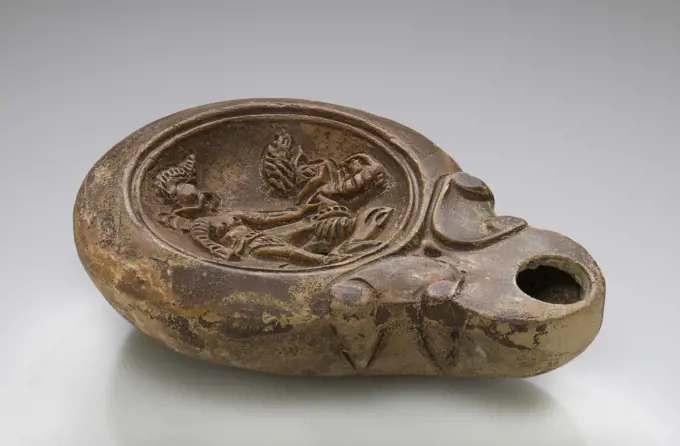
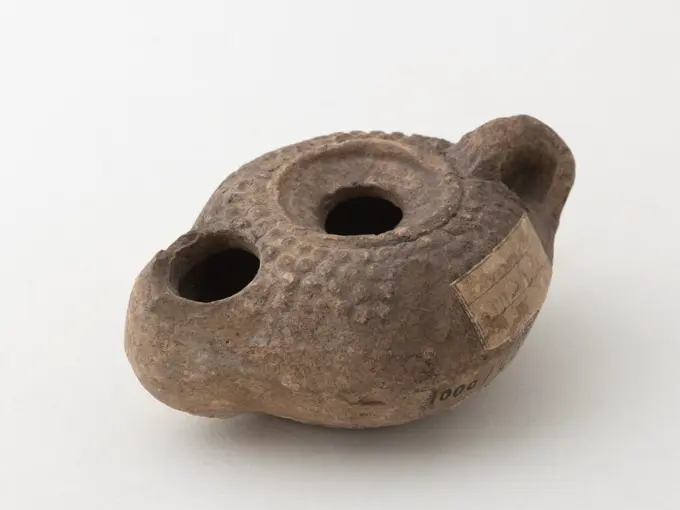
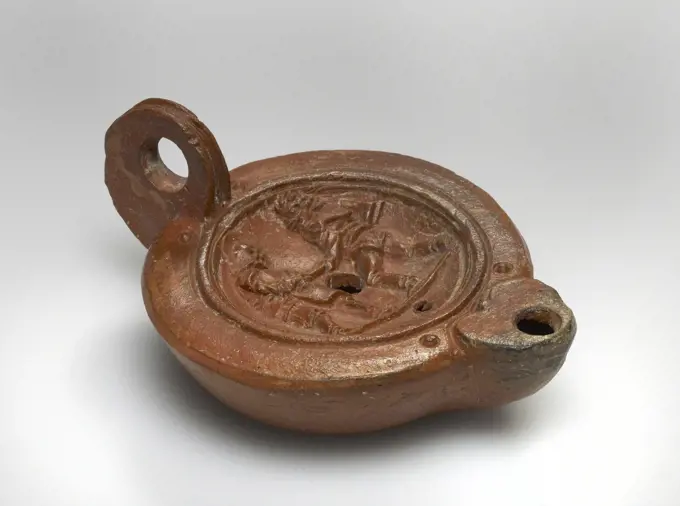
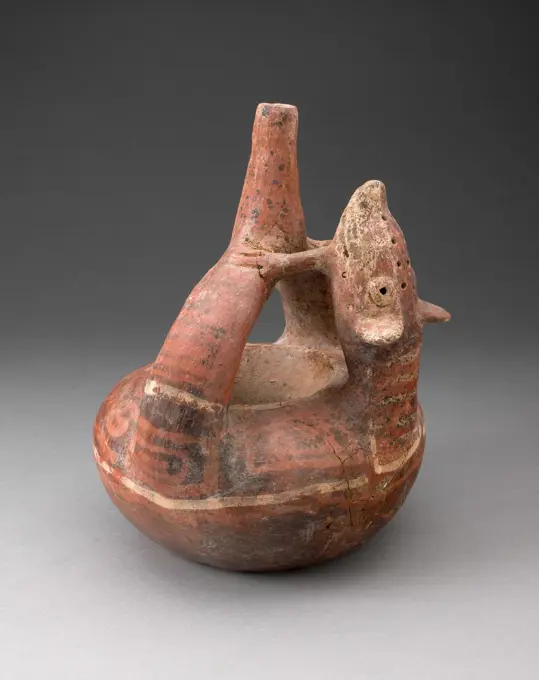
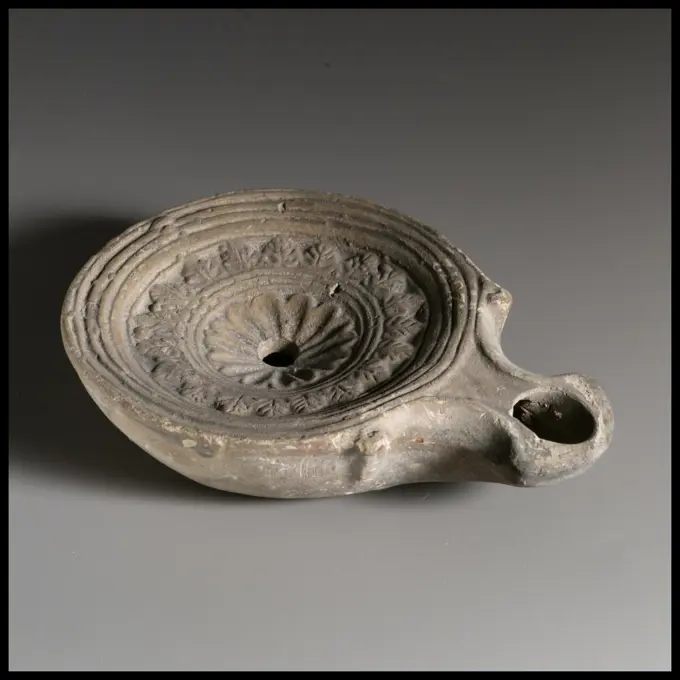
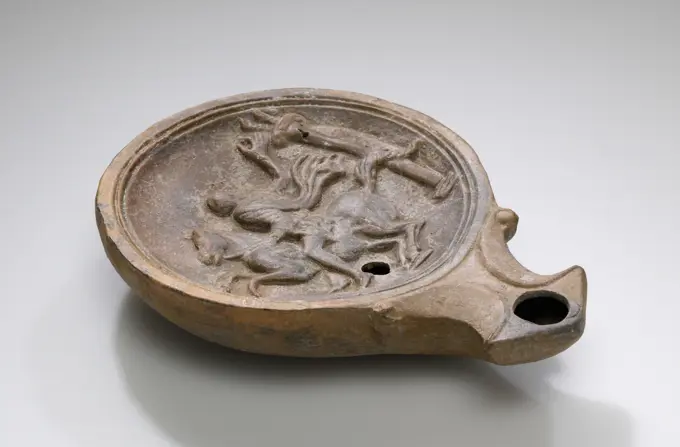
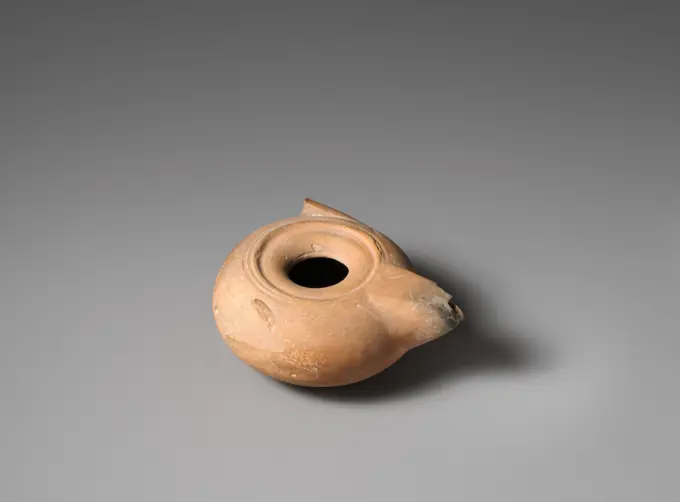
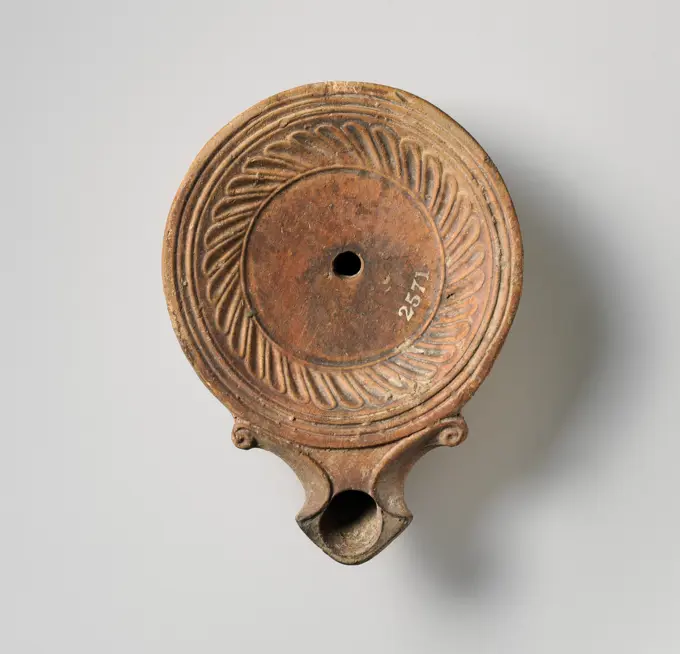
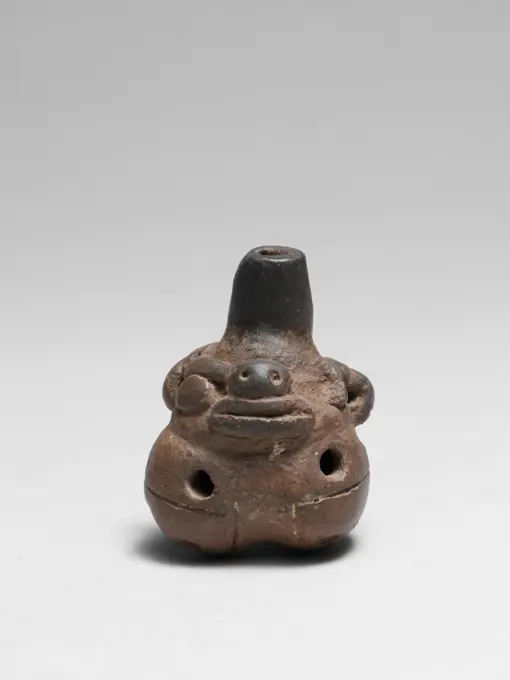
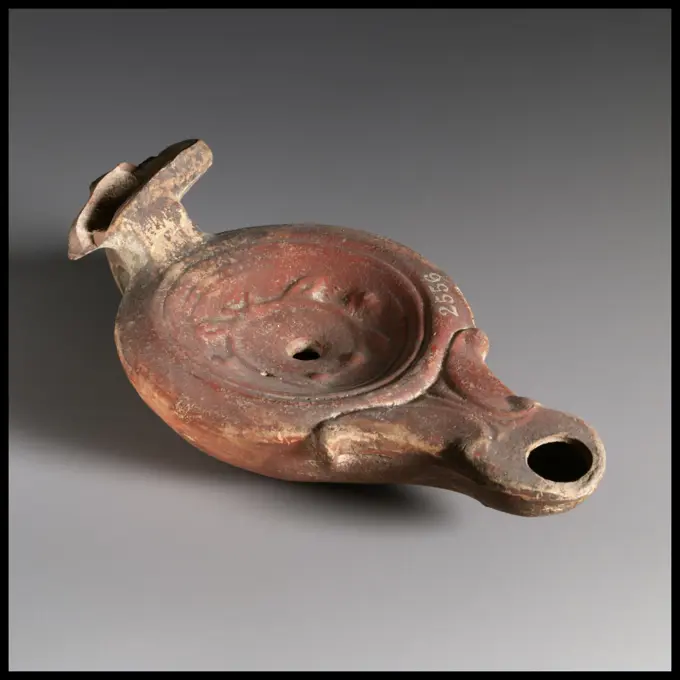
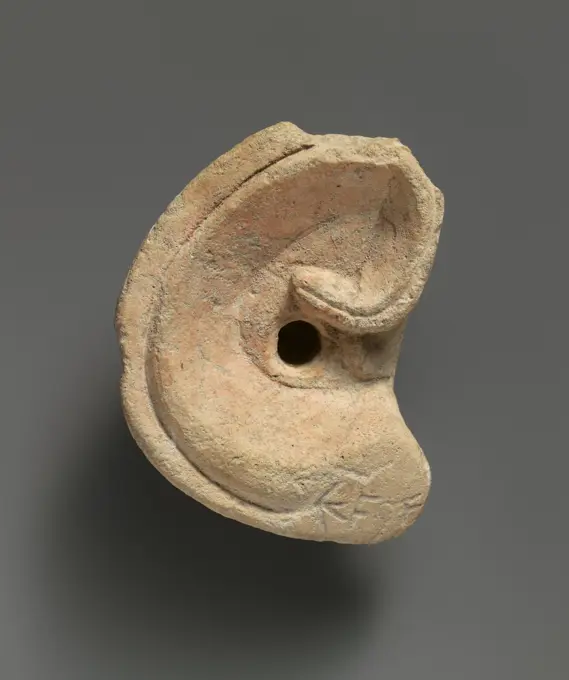
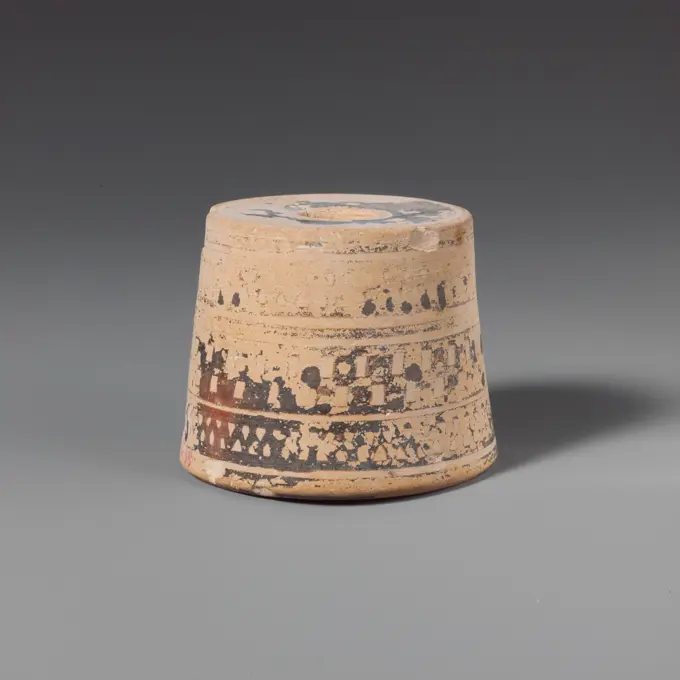
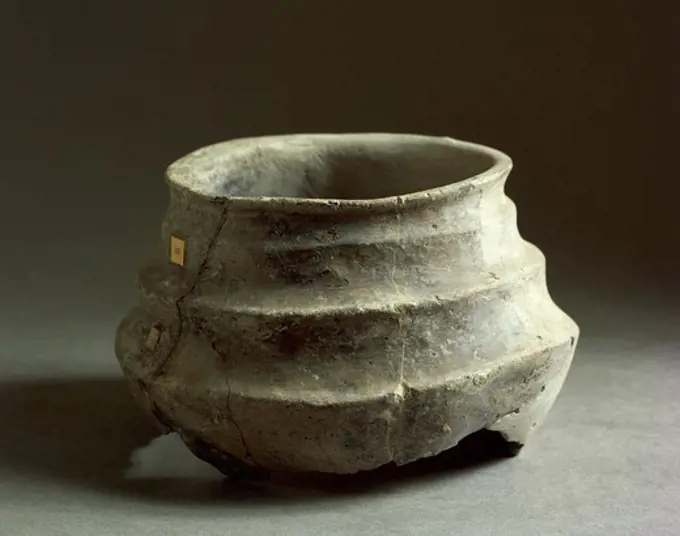
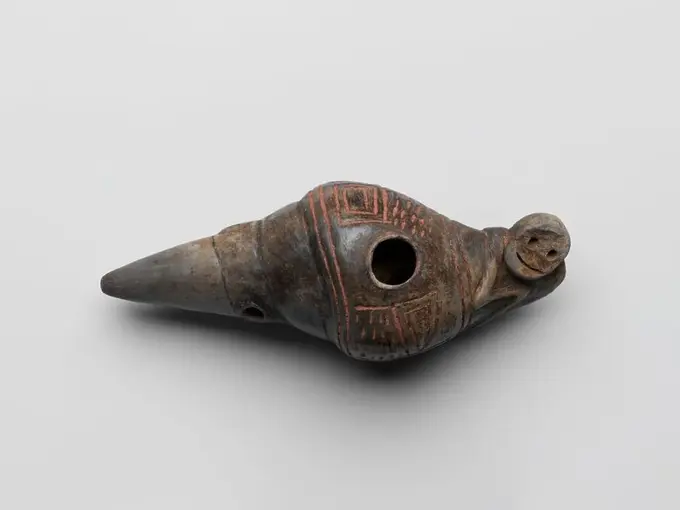
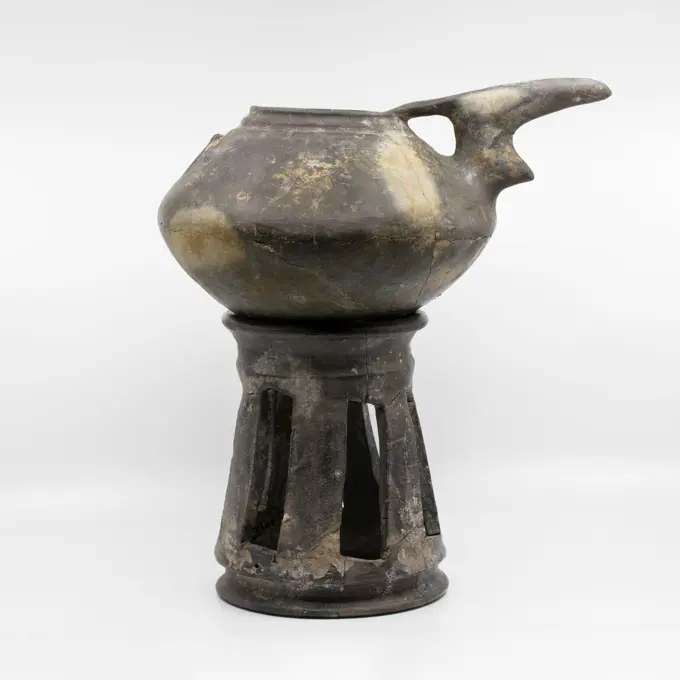
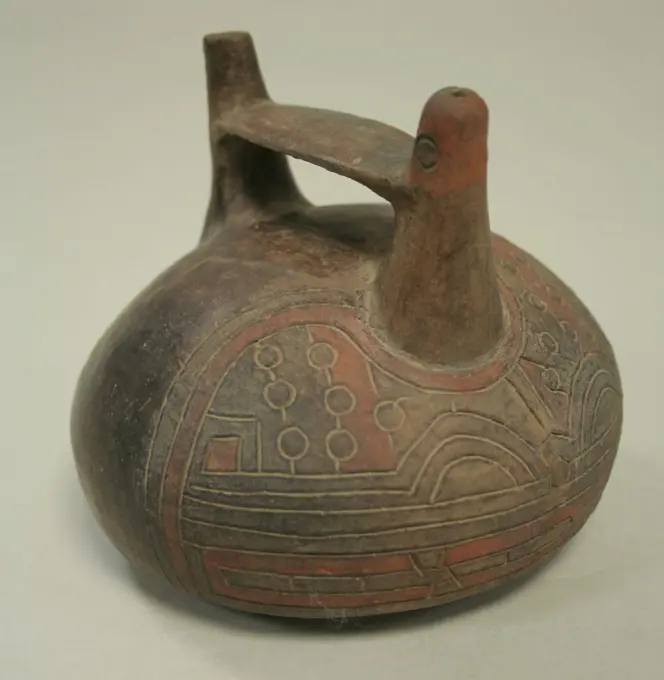
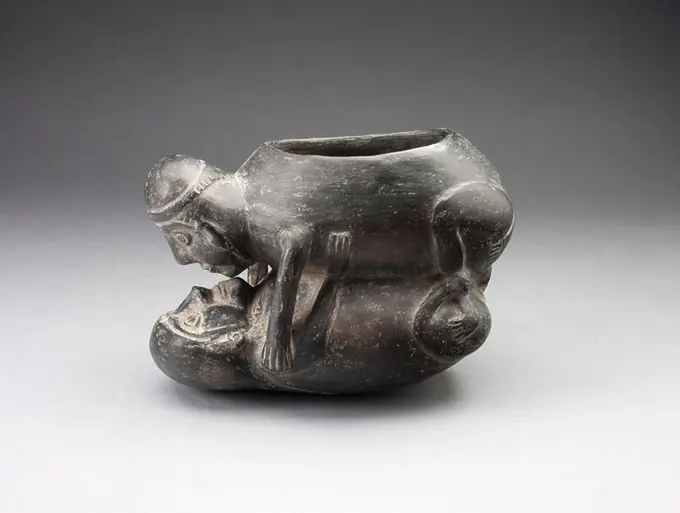
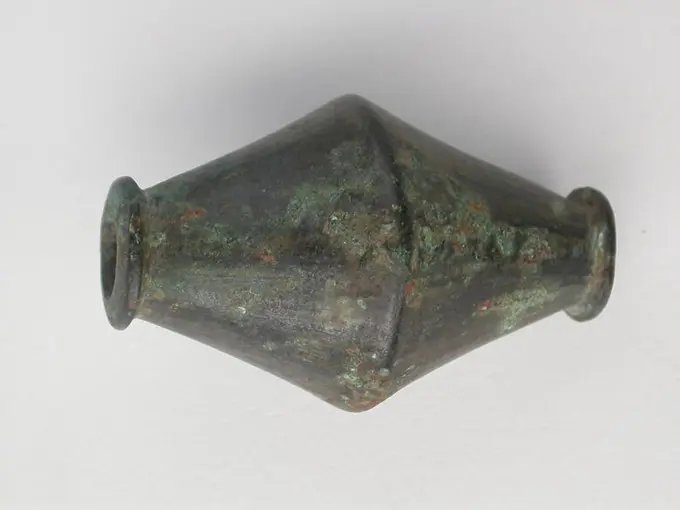
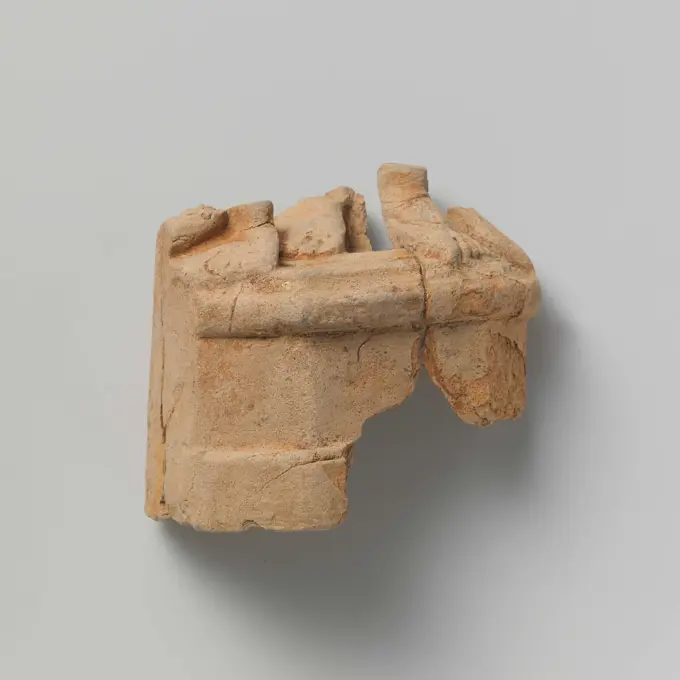
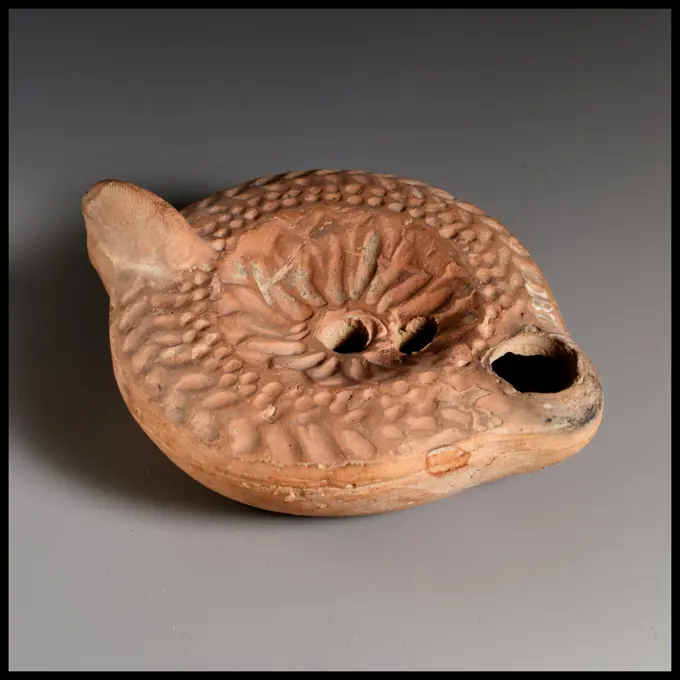
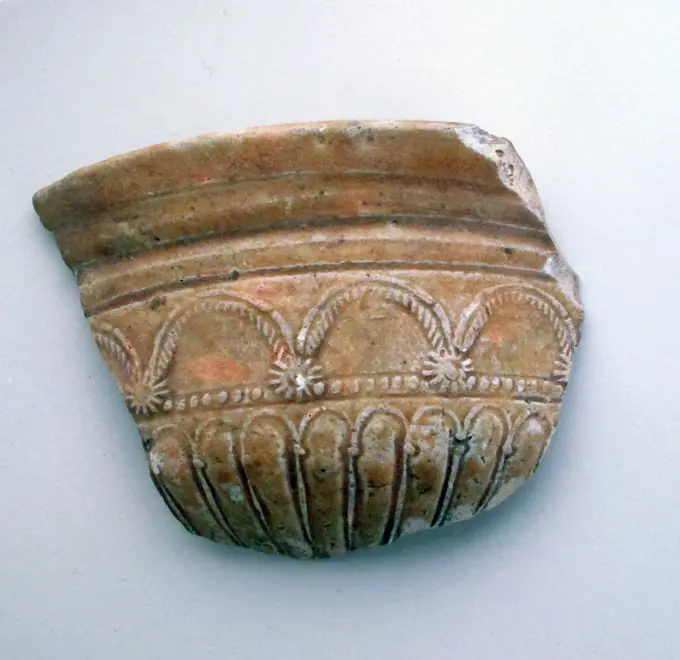
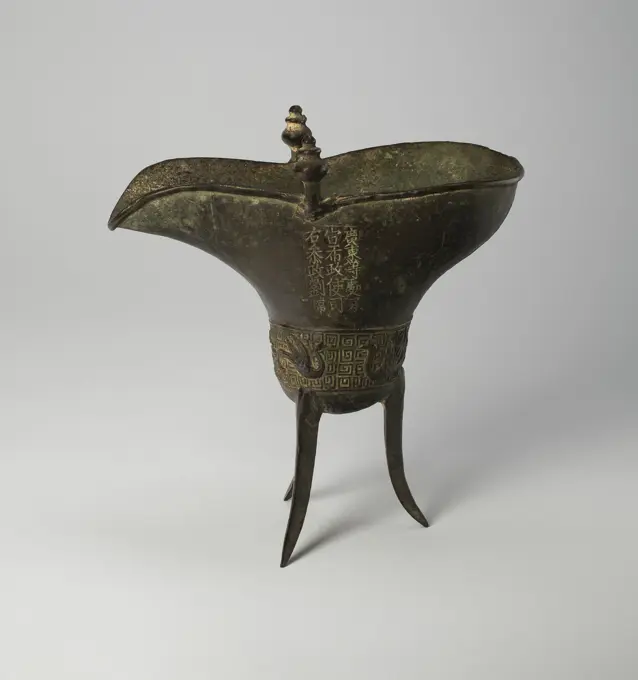
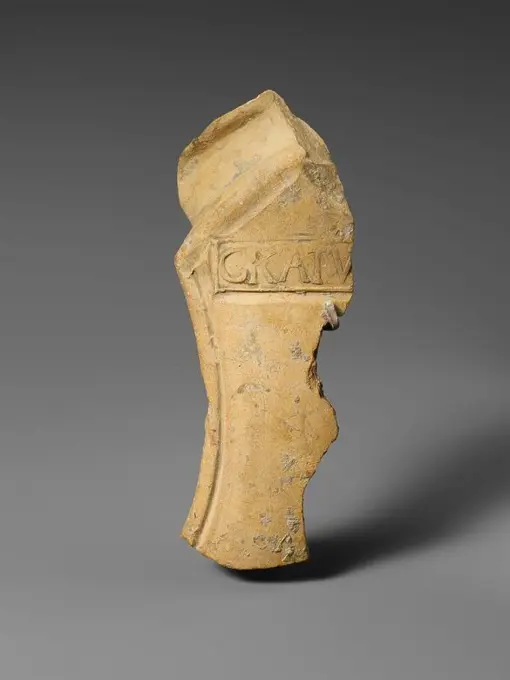
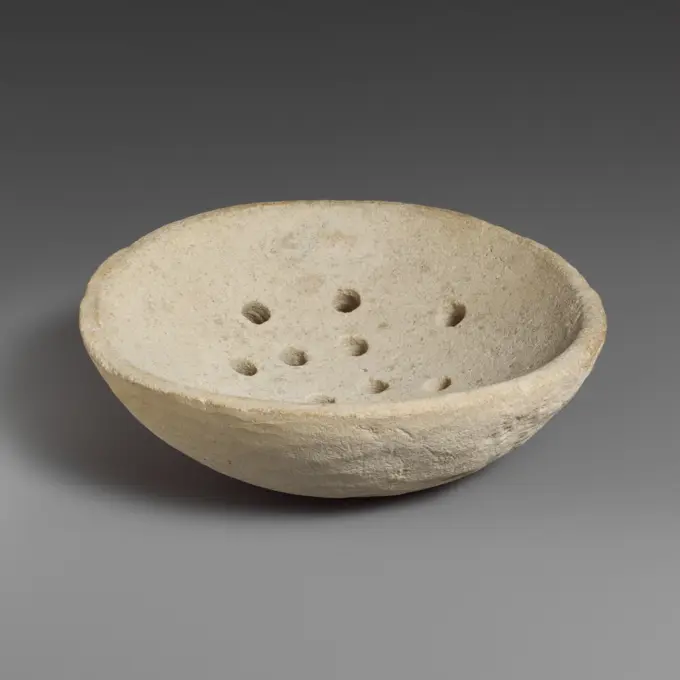
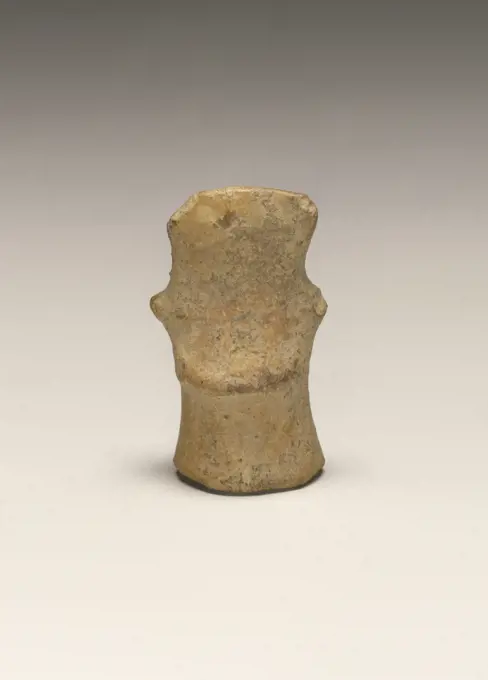
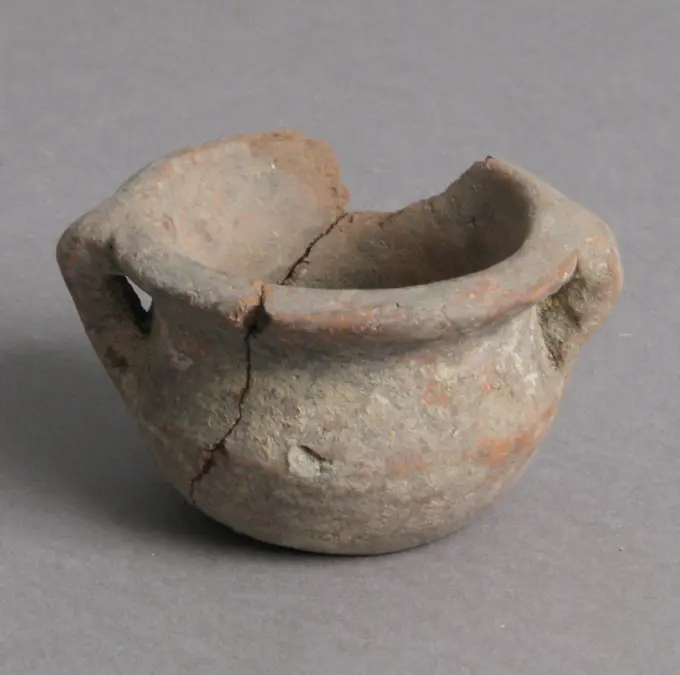
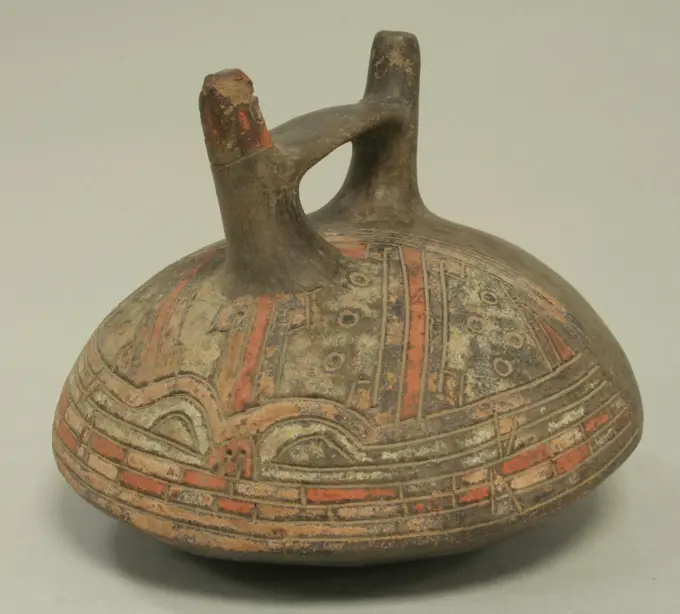
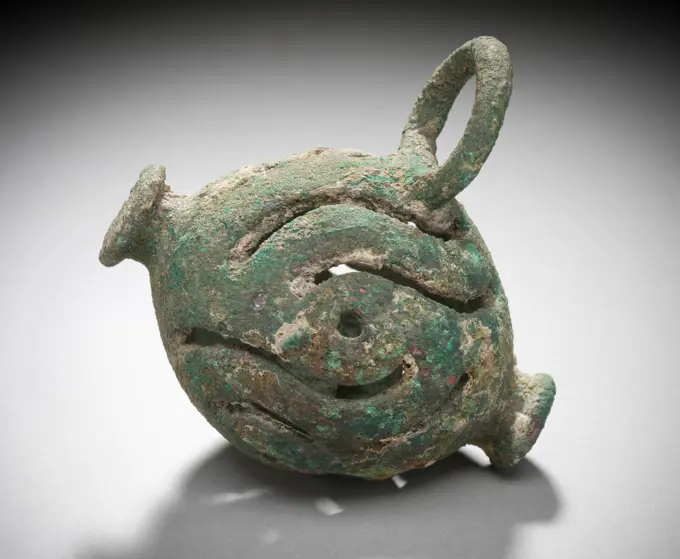
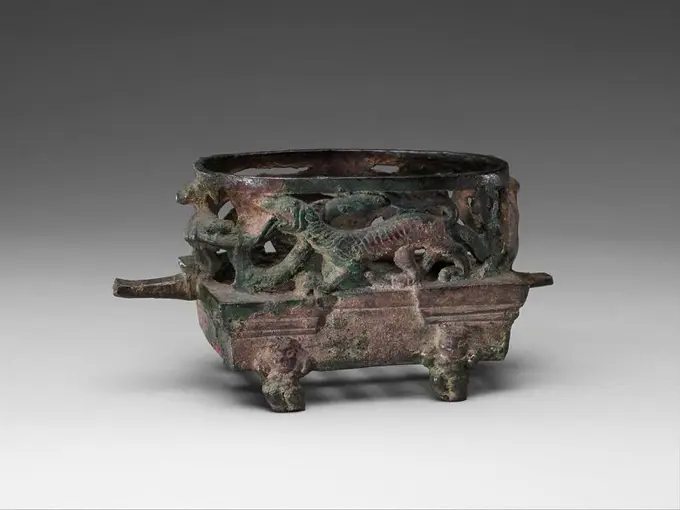
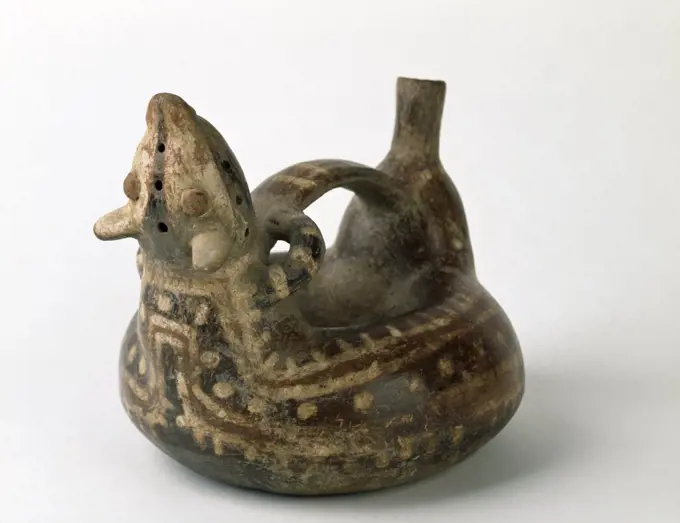
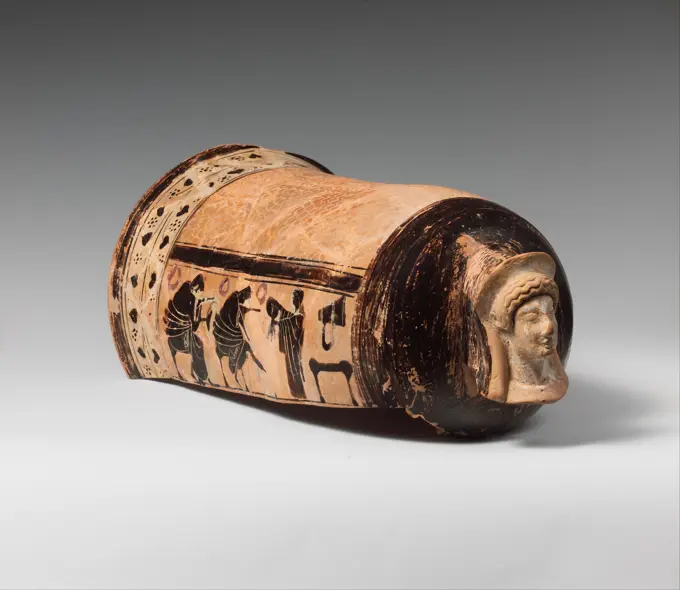
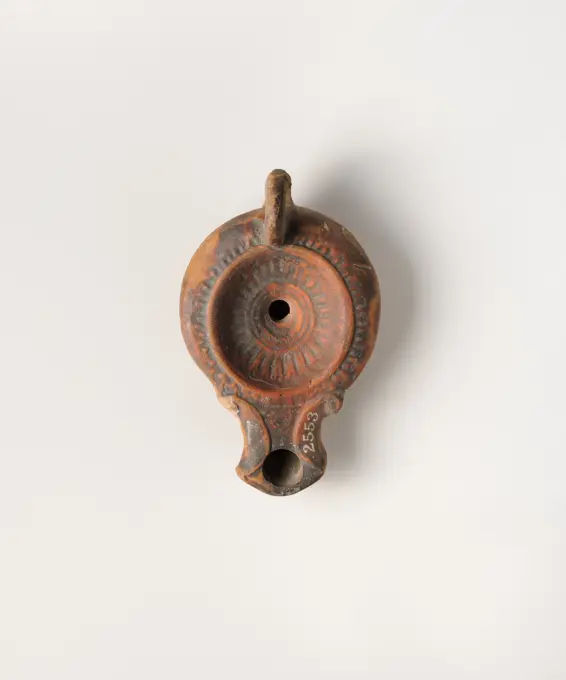
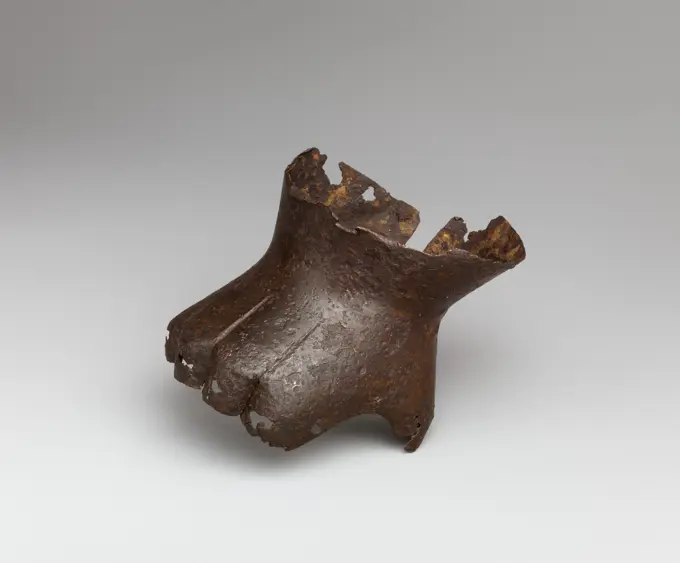
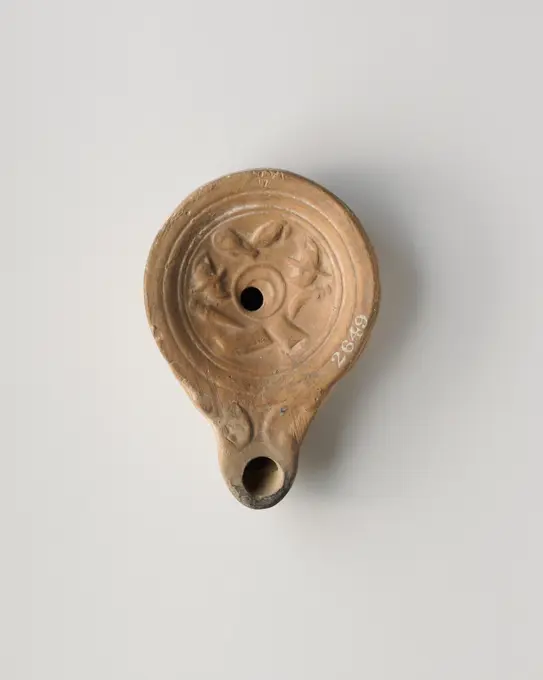
Oil LampLamp. UnknownLamp; Italy; 2nd century; Terracotta; 3.6 × 5.4 × 7.7 cm (1 7,16 × 2 1,8 × 3 1,16 in.)Terracotta oil lamp. Culture: Roman. Dimensions: Overall: 1 7/8 x 3 3/4 in. (4.8 x 9.5 cm). Date: ca. A.D. 150-200.Nereid riding on a hippocampus on top; with low body, handle, and short nozzle. Museum: Metropolitan Museum of Art, New York, USA.Lamp, North Africa, Tunisia; 1st - 4th century; Terracotta; 2.3 x 7 x 9 cm (7,8 x 2 3,4 x 3 9,16 in.)Oil LampLamp, Asia Minor; 1st - 4th century; Terracotta; 2.3 x 6.6 x 10.5 cm (7,8 x 2 5,8 x 4 1,8 in.)Lamp. UnknownLamp, North Africa; 1st century B.C. - 4th century A.D; Terracotta; 2.9 x 8 x 11 cm (1 1,8 x 3 1,8 x 4 5,16 in.)Terracotta oil lamp. Culture: Roman, Cypriot. Dimensions: Overall: 7/8 x 3 1/4 in. (2.2 x 8.3 cm). Date: 1st century A.D..Loeschcke Type 1B. Mold-made. Discus: gladiator facing right but advancing left, wearing crested helmet, holding long rectangular shield on his left arm and a sword in raised right hand, and his right leg bent under him, with a band of concentric lines and grooves towards edge. Single filling hole between his legs. Volutes flanking nozzle. Within raised base ring, flat base, with the raised letter I at center.Intact. Museum: Metropolitan Museum of Art, New York, USA.Lamp, Asia Minor; 1st - 4th century; Terracotta; 2.6 x 7.5 x 9.5 cm (1 x 2 15,16 x 3 3,4 in.)Lamp, North Africa; 1st - 4th century; Terracotta; 2 x 6.3 x 9 cm (13,16 x 2 1,2 x 3 9,16 in.)Terracotta oil lamp ca. A.D. 175-250 Roman Broneer Type 27C (Vessberg Type 16). Mold-made, with ring handle. Discus: in high relief, winged Eros, standing facing right but with head turned back over right shoulder, with lamp-holder in right hand and bowl of fruit in left, and flowing drapery to wither side of body; two filling holes, one at upper left, the other at lower right; band of liens and grooves around edge. On horizontal shoulder, tiny ovules interrupted by rectangular panels at sides. Rounded nozzle. Incised base ring, and slightly concave base.Intact. The hole in the handle has not been pierced through; maker's fingerprints visible on left side of handle.. Terracotta oil lamp 241509Lamp. Culture: Roman. Dimensions: Length: 3 5/16 in. (8.4 cm)Height: 1 3/8 in. (3.5 cm). Date: 2nd century A.D.. Museum: Metropolitan Museum of Art, New York, USA.Terracotta oil lamp. Culture: Roman. Dimensions: Other: 3 13/16 × 15/16 in. (9.7 × 2.4 cm). Date: 1st century B.C.-1st century A.D.. Museum: Metropolitan Museum of Art, New York, USA.Steelyard Weight with heraldic decoration. Used on a steelyard balance - a counterweight for a straight-beam balance with arms of unequal length. The counterweight slides along the longer arm to counterbalance the load and indicate its weight. Also known as a Roman steelyard or Roman balance.. Found at Weoley Castle, Birmingham, a Birmingham Museums Trust Heritage site.Oil LampLamp. UnknownLamp. UnknownTerracotta oil lamp mid-1st century A.D. Roman Loeschcke Type 1A. Mold-made. Discus: a myrtle-wreath in relief, around a central filling hole, with a small hole at bottom behind nozzle, and band of lines and grooves around edge. Incised base ring, and flat base.Complete, except for loss to left projection on nozzle.. Terracotta oil lamp. Roman. mid-1st century A.D.. Terracotta; mold-made. Early Imperial. TerracottasLamp, Roman Empire; 1st century B.C. - 4th century A.D; Terracotta with green glaze; 3.2 x 9 x 12 cm (1 1,4 x 3 9,16 x 4 3,4 in.)Terracotta oil lamp. Culture: Roman, Cypriot. Dimensions: Overall: 3 3/4 x 15/16in. (9.5 x 2.4cm). Date: ca. A.D. 40-100.Loeschcke Type 4. Mold-made. Discus: a skyphos (drinking cup) flanked by two clubs of Hercules; a single filling hole in middle below skyphos, and a band of lines and grooves towards edge. Broad, raised base ring, and flat base.Complete, except for some chips in edge and one small hole in underside of body at left. Museum: Metropolitan Museum of Art, New York, USA.Flame-rimmed” deep bowl (kaen doki) Japan The swirling, dynamic appearance of the rim of this bowl is one of the most recognizable characteristics of wares from Japan’s oldest-known civilization. Although most J?mon containers were cooking vessels, the wildly irregular rim of this type seems unsuitable for practical use and may instead have served a ritual function. Built with coils of clay smoothed by hand and with paddles, the bowl has a dramatically simpler lower body that was impressed with a rough cord before being fired in an open pit.. Flame-rimmed” deep bowl (kaen doki). Japan. Earthenware with cord-marked and incised decoration. Middle Jomon period (ca. 3500-2500 B.C.). CeramicsLamp, North Africa; 1st - 4th century; Terracotta; 3 x 8.5 x 12 cm (1 3,16 x 3 3,8 x 4 3,4 in.)Terracotta oil lamp. Culture: Roman. Dimensions: Overall: 3/4 x 3 in. (1.9 x 7.6 cm). Date: 2nd century A.D..Loeschcke Type 8. Mold-made. Discus: a plain concave disk, surrounded by a band of lines and grooves; a single filling hole at center. Shoulder: impressed, small ovules, facing outward. Large wick hole. Incised base ring, and a uneven base. with a central verrtical groove.Intact, except for a small surface chip on base. Museum: Metropolitan Museum of Art, New York, USA.Lamp, North Africa; 1st - 4th century; Terracotta; 3 x 8.2 x 11 cm (1 3,16 x 3 1,4 x 4 5,16 in.)Lamp. Rue de l'Abbé-de-l'Epée (1882), coll. MAGNE. Terracotta. High Empire. Gry decor. Paris, Carnavalet museum. Decor seeds, high-empire, lamp, oil lamp, terracottaVase fragment East Greek/Sardis, Lydian. Vase fragment 252769 East Greek/Sardis, Lydian, Vase fragment, Terracotta, Overall: 6 x 3 3/4in. (15.2 x 9.5cm). The Metropolitan Museum of Art, New York. Gift of The American Society for the Excavation of Sardis, 1926 (26.199.202)Terracotta oil lamp. Culture: Roman. Dimensions: Overall: 1 1/8 x 2 7/8 in. (2.9 x 7.3 cm). Date: 4th-5th century A.D..Vessberg Type 18. Unpierced handle. Mold-made. Discus: horse trotting left, with uncertain object suspended above his back. Two filling holes. Herring-bone wreath around discus. Pattern of dots on shoulder. Large wick hole. Slightly uneven base.Large chip and crack on either side of body and around nozzle along mold join. Museum: Metropolitan Museum of Art, New York, USA.Lamp, South Anatolia, Anatolia; 1st - 4th century; Terracotta; 2.4 x 7.2 x 9.6 cm (15,16 x 2 13,16 x 3 3,4 in.)Lamp, North Africa; 1st - 4th century; Terracotta; 2.7 × 8 × 12 cm (1 1,16 × 3 1,8 × 4 3,4 in.)Terracotta oil lamp 4th-5th century A.D. Roman, Cypriot Vessberg Type 18. Unpierced handle. Mold-made. Discus: uncertain; around edge, herring-bone wreath (). Shoulder: uncertain. Two filling holes. On base, raised Greek letters. Broken and repaired around top of lower half of mold and nozzle.. Terracotta oil lamp. Roman, Cypriot. 4th-5th century A.D.. Terracotta. Late Imperial. TerracottasLamp. UnknownStirrup Spout Vessel with Circular Body and Molded Head and Arms of Animal 200 BCE-200 CE North Coast. Ceramic and pigment . GallinazoTerracotta oil lamp 1st century B.C.-1st century A.D. Roman Loeschcke Type 1B. Mold-made. Discus: a central rosette with fifteen petals and a single filling hole at center, surrounded by three concentric lines; an outer band of nineteen raised leaves, and a band of lines and grooves around edge. Volutes flanking angular nozzle with large wick hole. Raised base ring, flanked by incised circles, and a plain, flat base.Intact.. Terracotta oil lamp 241557Lamp. UnknownLamp, 1-200. Parthian, 1st-2nd century. Terracotta; overall: 2.6 x 9.8 cm (1 x 3 7/8 in.).Terracotta oil lamp ca. A.D. 40-100 Roman Loeschcke Type 4. Mold-made. Discus: charioteer driving biga to right, holding reins in left hand and whip in right over his head; a single filling hole at right below horses' bodies; band of lines and grooves towards edge; narrow, undecorated shoulder. Volutes flanking large nozzle. Incised base ring, and flat base.Intact, except for small chip in front of nozzle.. Terracotta oil lamp 241490Terracotta oil lamp ca. 350-250 B.C. Greek Wheel-made body, with applied nozzle. Large central filling hole, surrounded by an inward-sloping shoulder and a band of incised lines; convex-curving side to deep, carinated body and projections on either side. Raised base ring and concave base.Both projections broken, with most of the one on the left side missing; chip to fron and right side of nozzle. Heavy, thick base.. Terracotta oil lamp. Greek. ca. 350-250 B.C.. Terracotta. Late Classical or Early Hellenistic. TerracottasFragment Pijpenkop, Adrianus Frans Sparnaaij, 1814 - 1830 Fragment Pijpenkop with Mercury sitting on a box with the letters PS (Pieter Scholenaar) between a pipe basket and a pipe tone and two ships in the background; sitting Neptunus with trident, fish and shells and a ship in the background; Standing lion with sword and arrow bundle. Of the excavations on the Hofstede Arentsburg 1827-1831 under the supervision of Professor Reuvens. Gouda pipe clay Fragment Pijpenkop with Mercury sitting on a box with the letters PS (Pieter Scholenaar) between a pipe basket and a pipe tone and two ships in the background; sitting Neptunus with trident, fish and shells and a ship in the background; Standing lion with sword and arrow bundle. Of the excavations on the Hofstede Arentsburg 1827-1831 under the supervision of Professor Reuvens. Gouda pipe clayMarble vase with high foot and four lug handles ca. 2800-2700 B.C. Cycladic Of particular note in this example is that the lug has been reworked.. Marble vase with high foot and four lug handles 256896Terracotta oil lamp 1st century B.C.-1st century A.D. Roman Loeschcke Type 1A. Mold-made. Discus: at center, a plain, shallow disk, surrounded by a frieze of slanting elongated tongues; a small single filling hole at center, with a band of lines and grooves at edge. Volutes flanking angular nozzle, with large wick hole. Raised base ring, and uneven base.Intact; patches of limy encrustation on body.. Terracotta oil lamp. Roman. 1st century B.C.-1st century A.D.. Terracotta. Early Imperial. TerracottasPottery Whistle 16th century or earlier () possibly Costa Rican. Pottery Whistle. possibly Costa Rican. 16th century or earlier (). Clay. Aerophone-Whistle Flute-whistleLamp 25 CE-75 CE Roman Empire. The windowless rooms of Roman buildings required artificial illumination, which was frequently provided by oil lamps. While inexpensive terracotta lamps were widely used, bronze lamps were luxury items produced for wealthier people. The handle of this lamp is adorned with a crescent moon surmounted by a bust of Jupiter, king of the gods, and his companion animal, the eagle, which clutches a thunderbolt (a symbol of the god) in its talons. A knobbed lid tops the container, which would have been filled with olive oil.. Bronze . Ancient RomanLamp. UnknownTerracotta oil lamp ca. A.D. 40-100 Roman Broneer Type 21. Mold-made, with ring handle and triangular ornament above. Discus: a wreath; a single central filling hole, with a band of lines and grooves at edge. A narrow, plain, sloping shoulder. Large volutes flanking long nozzle, with large wick hole. Raised base ring, and slightly concave base.The handle ornament is hollow.Most of handle ornament broken off and missing.. Terracotta oil lamp 241621Limestone votive ear 4th-3rd century B.C. Cypriot The right ear is schematically rendered, with the canal indicated by a circular hole. There are traces of red paint. On the lobe are four syllabic signs signifying I belong to a deaf person.". Limestone votive ear 241911Terracotta loom weight ca. 575-525 B.C. Greek, Corinthian The geometric decoration shows a rather even balance between glazed and reserved areas. It recalls the checkerboard patterns on the shrouds depicted in Geometric representations of the prothesis (laying out of the dead). One wonders whether the pattern on the loomweight echoed, in simpler form, that of the textiles being woven.. Terracotta loom weight 252524 Greek, Corinthian, Terracotta loom weight, ca. 575525 B.C., Terracotta, H.: 1 11/16 x 2 1/16 in. (4.3 x 5.2 cm). The Metropolitan Museum of Art, New York. Fletcher Fund, 1926 (26.60.58)Prehistory, Italy, Bronze Age. Terramare culture. Bowl. From Emilia Romagna Region.Lamp, North Africa; 1st - 4th century; Terracotta; 2.5 x 7.5 x 10.2 cm (1 x 2 15,16 x 4 in.)Terracotta oil lamp. Culture: Roman. Dimensions: L.2 7/8 in. (7.3 cm.)H. 15/16 in. (2.4 cm.). Date: 1st century A.D..Centaur on top carrying an amphora on his back; with low body and short nozzle. Museum: Metropolitan Museum of Art, New York, USA.Terracotta saucer-shaped lamp. Culture: Cypriot. Dimensions: Overall: 1 3/4 x 5 3/8 in. (4.4 x 13.7 cm). Date: 4th century B.C.. Museum: Metropolitan Museum of Art, New York, USA.Cup ca. 3200-1050 B.C. Cypriot Horizontal handle and bands of quirks.. Cup. Cypriot. ca. 3200-1050 B.C.. Terracotta. Bronze Age. VasesBridge Vessel in the Form of a Pair of Interlocked Fish 180 BCE-500 CE Peru. Ceramic and pigment . NazcaTerracotta lamp mold. Culture: Roman. Dimensions: Greatest Width: 3 1/4 in. (8.3 cm)Diameter: 2 in. (5.1 cm). Date: 1st-2nd century A.D..The fragment is from the upper half of the mold with the whole of the discus showing a scene of two gladiators fighting. Museum: Metropolitan Museum of Art, New York, USA.Pottery Whistle ca. 800-1500 Costa Rican. Pottery Whistle. Costa Rican. ca. 800-1500. Clay. Pre-Columbian. Central Region, Costa Rica. Aerophone-Whistle Flute-whistleOcarina. Culture: Nariño. Dimensions: W. 5.2 x D. 4.9 x L. 14.2cm (2 1/16 x 1 15/16 x 5 9/16in.). Date: 600-1200. Museum: Metropolitan Museum of Art, New York, USA.Spouted jar and stand ca. 1050-800 B.C. Iran This biconical pitcher has a squat round body with a flat base. A pointed spout with an angled protrusion below it emerges from one side of the body. The spout is attached to the rim by a small bridge. It sits on a hollow cylindrical stand with a ring base and a collar at the top. The sides of the cylinder are open in horizontal strips. Both the pitcher and the stand are made of burnished grey clay. Both were made on a potters wheel. The pitcher was probably made in two halves that were joined together, with the spout added later.This pitcher and its stand were excavated from a grave at Hasanlu, a large settlement site in northwestern Iran. During the Iron Age Hasanlu was one of the largest and most powerful towns in Iran, and probably controlled much of the Ushnu-Solduz valley until its destruction ca. 800 B.C. by the Urartians. Like many in western Iran in this period, the people of Hasanlu made ceramic pitchers like this one with globulaLamp. UnknownDouble Spout and Bridge Bottle with Feline and Bird 7th-5th century B.C. Paracas. Double Spout and Bridge Bottle with Feline and Bird. Paracas. 7th-5th century B.C.. Ceramic, pigment. Peru, Ica Valley. Ceramics-ContainersJar in the Form of an Erotic Scene. Chimú-Inca; North coast, Peru. Date: 1200-1470. Dimensions: 14.3 x 20.3 cm (5 5/8 x 8 in.). Ceramic. Origin: North Coast. Museum: The Chicago Art Institute, Chicago, USA.Lamp. UnknownTerracotta oil lamp ca. A.D. 50-100 Roman, Cypriot Loeschcke Type 4. Mold-made. Discus: a scallop shell, with raised fan; a single filling hole within a raised circle, and a single concentric grooves around edge of discus; a narrow, horizontal shoulder. Voluted nozzle. Fine, incised base ring, and concave base.Intact. Irregular lines running across base.. Terracotta oil lamp. Roman, Cypriot. ca. A.D. 50-100. Terracotta; mold-made. Early Imperial. TerracottasBlackware Stirrup Spout Vessel with a Relief Depicting Warriors with Raised Arms. Chimú; North coast, Peru. Date: 1200-1450. Dimensions: H. 25.4 cm (10 in.). Ceramic. Origin: North Coast. Museum: The Chicago Art Institute, Chicago, USA.Oil Lamp 4th-7th century Coptic. Oil Lamp 478692Tall alabaster flask ca. 1050-950 B.C. Cypriot With long neck, flaring lip, and two handles.. Tall alabaster flask 242003Biconical Bead. Greek; Thessaly. Date: 800 BC-600 BC. Dimensions: 3.7 × 5.9 × 3.7 cm (1 1/2 × 2 3/8 × 1 1/2 in.). Bronze. Origin: Greece. Museum: The Chicago Art Institute, Chicago, USA. Author: ANCIENT GREEK.Ships essentials. Pulleys, boathooks and rope, all these items were recovered on Nova Zembla. The rope in particular is still surprisingly intact. A piece of the hull of Barentsz ship has also been preserved and is now kept in St Petersburg.Fragment of image. Fragment of image, pedestal with feetTerracotta oil lamp late 3rd century A.D. Roman, Cypriot Loeschcke Type 8. Unpierced handle. Mold-made. Discus; rosette with hollow, radiating petals around central filling hole; a second filling hole towards nozzle. On shoulder: two rows of impressed dots encircled by a herring-bone wreath. Deep concave base crudely-inscribed in Greek letters: CYXI/WNOC.. Terracotta oil lamp. Roman, Cypriot. late 3rd century A.D.. Terracotta. Late Imperial. TerracottasVase fragment Roman Greenish-yellow enamelled vase with raised leaf and rod pattern around shoulder.. Vase fragment. Roman. Terracotta. VasesLamp. UnknownCanteen, 1870. Southwest,Pueblo, Hopi, Post-Contact Period,19th century. Pottery; overall: 20 x 24.5 cm (7 7/8 x 9 5/8 in.).Lampka dekorowana przedstawieniem psa. warsztat wschodni, workshopTerracotta lamp. Culture: Roman. Dimensions: Length: 3 3/16 in. (8.1 cm)Height: 1 in. (2.5 cm). Date: 1st century B.C.-1st century A.D.. Museum: Metropolitan Museum of Art, New York, USA.Terracotta rim fragment with handle and incised decoration ca. 3600-3100 B.C. Cretan From Knossos, CreteFragment of vase with handle, gray ware, decorated with incised lines.. Terracotta rim fragment with handle and incised decoration 248516Goblet (jue) Made 1464 China. Bronze .Terracotta mortarium fragment. Culture: Roman. Dimensions: Overall: 5 x 2 7/8 x 1 1/4 in. (12.7 x 7.3 x 3.2 cm). Date: A.D. 50-85.Mortaria were used for mixing and grinding foodstuff that could then be poured out of the spout in one side of the broad, flanged rim. This fragment retains part of the spout and the stamp on the rim that identifies the maker as (G. Atisius) GRATV(s), whose workshop was at Augusta Tricastinorum (modern Aoste) in the Rhone valley. This type of mortarium is found in Eastern Gaul, the Rhineland, and occasionally Southern Britain. Museum: Metropolitan Museum of Art, New York, USA.Guttus. UnknownBone stand with relief of a centaur ca. 550-500 B.C. Greek Small stand on three legs; surface decorated with a centaur and other decorative elements.. Bone stand with relief of a centaur 257726Dagger hilt inlay ca. 9th century B.C. Iran. Dagger hilt inlay 326178Amulet - right pi  (element of the mummy mesh);  664-525 BC ; Half period, 26 dynasty (-664-00-00--525-00-00);Lamp. UnknownTerracotta oil lamp 3rd century A.D. Roman Mold-made, with small, stub handle. Large, tear-shaped, flat discus: draped figure seated at left, facing front, with right arm raised to side of head, and animal (dog) leaping up at top right, facing left; a single, large filling hole at center. Undefined, flat base.Complete, but crack around mold seam and small hole at front below nozzle.. Terracotta oil lamp. Roman. 3rd century A.D.. Terracotta. Late Imperial. TerracottasLimestone strainer Cypriot The strainer consists of a small bowl perforated with holes.. Limestone strainer 244032Standing Abstract Figure; Thessaly, Greece; 6th - 5th millennium B.C; Terracotta; 6.4 x 3.8 x 2.4 cm (2 1,2 x 1 1,2 x 15,16 in.)Two Handled Pot 4th-7th century Coptic. Two Handled Pot 478713Lampka. unknown, authorDouble Spout and Bridge Bottle with Feline Face 3rd-2nd century B.C. Paracas. Double Spout and Bridge Bottle with Feline Face 308606Fire-flame Cooking Vessel (Ka'en Doki), c. 2500 BC. Japan, Jōmon period (c. 10,500-300 BC). Earthenware with carved and applied decoration; height: 61 cm (24 in.); diameter: 55.8 cm (21 15/16 in.).Bell. Western Iran, circa 1000-650 B.C.. Tools and Equipment; musical instruments. BronzeBurner (Ranlu). Culture: China. Dimensions: H. 3 7/8 in. (9.8 cm); W. 3 1/4 in. (8.3 cm); D. 7 5/8 in. (19.4 cm). Museum: Metropolitan Museum of Art, New York, USA.Circular vicus vessel with zoomorphic figure and bridge handle,  from Peru,  USA,  Florida,  Jacksonville,  The Museum of Contemporary Art,  Pre-Columbian Collection,  circa 200-500 A.D.Model Basket as Amulet, c. 1069-945 BC. Egypt, Late Period, Dynasties 21-22. Egyptian blue; overall: 1.5 cm (9/16 in.).Terracotta oil lamp 2nd century A.D. Roman Loeschcke Type 8. Mold-made. Shallow discus: Europa with veil over her head, seated on bull facing left; a single filling hole at top left; band of lines and grooves around edge. Broad, undecorated shoulder. Heart-shaped nozzle. Incised base ring, and slightly convex base.Intact.. Terracotta oil lamp 241515Terracotta onos (leg guard used in carding wool) ca. 510-500 B.C. Akin to the Golonos Group On each side, women working woolProducing cloth for garments and other fabrics needed in a household was a significant task for women. It required special equipment such as a loom and loomweights as well as this utensil, known as an onos or epinetron. It is a generally semicircular tile that is closed at one end. It was placed over the lower thigh and knee. Although its exact function is not clear, the roughened upper surface suggests that it served to prepare wool for spinning.. Terracotta onos (leg guard used in carding wool) 248298Terracotta oil lamp 1st century B.C.-1st century A.D. Roman Loeschcke Type 1A. Mold-made, with ring handle. Discus; a pattern of radiating lines outside a central band of three raised concentric circles, and a raised outer edge; single filling hole at center. On curving shoulder, a pattern of close-set ovules. Volutes flanking broad, angular nozzle, with large wick hole. Broad raised ring base, and a slightly uneven base, with an obscure impressed mark (planta pedis) at center.Intact.. Terracotta oil lamp. Roman. 1st century B.C.-1st century A.D.. Terracotta. Early Imperial. TerracottasSpindle Whorl, 700s - 900s. Iran, early Islamic period, 8th - 10th century. Bone, incised; overall: 0.3 x 2.6 x 2.6 cm (1/8 x 1 x 1 in.).Gauntlet for the Right Hand, from Tannenberg Castle ca. 1380 German This gauntlet was found in 1849 during the excavation of Tannenberg Castle (near Darmstadt), which had been destroyed by siege in 1399.. Gauntlet for the Right Hand, from Tannenberg Castle. German. ca. 1380. Steel. Armor Parts-GauntletsTerracotta oil lamp ca. A.D. 40-100 Roman, Cypriot Loeschcke Type 4. Mold-made. On discus, circular frieze comprising two rectangular shields at bottom behind nozzle, two swords, one straight (a gladius), the other curved (a sica), two helmets, and two greaves at top; two raised circles and a single filling hole at center, with a band of lines and grooves towards edge. Volutes flanking nozzle. Within incised base ring, slightly uneven base, with an impressed line at center.Intact... Terracotta oil lamp. Roman, Cypriot. ca. A.D. 40-100. Terracotta. Early Imperial. Terracottas