Ancient Lamps and Whistles

A collection of ancient terracotta lamps and pottery whistles, featuring various shapes and styles from Greek and Costa Rican origins, showcasing historical craftsmanship.
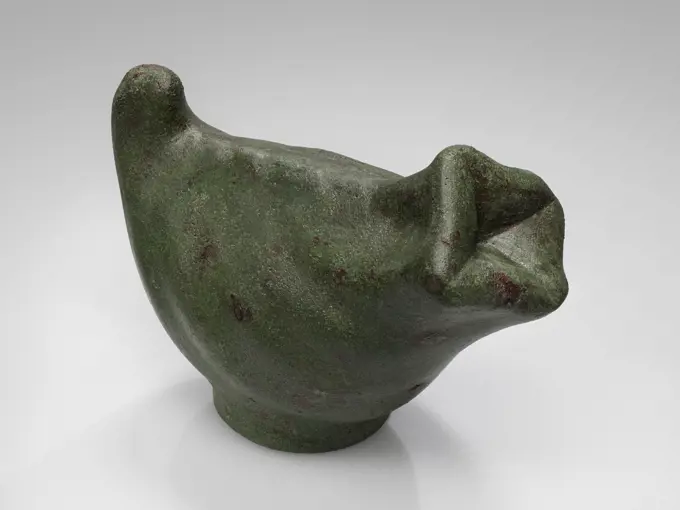
Votive Uterus; Etruria; 4th century B.C; Bronze; 9.4 x 12.7 cm (3 11,16 x 5 in.)
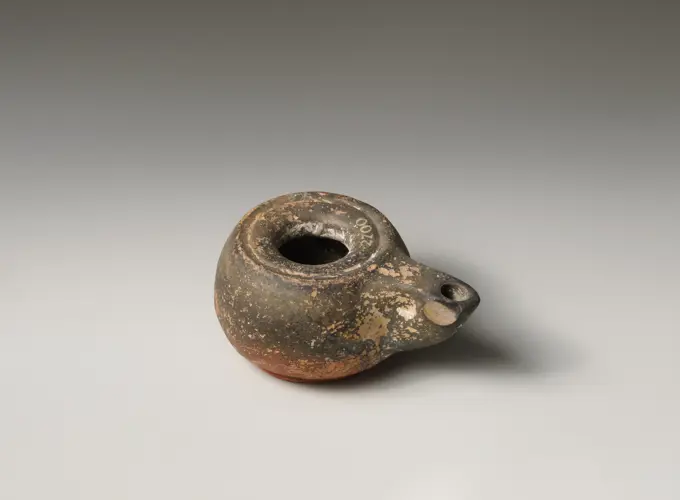
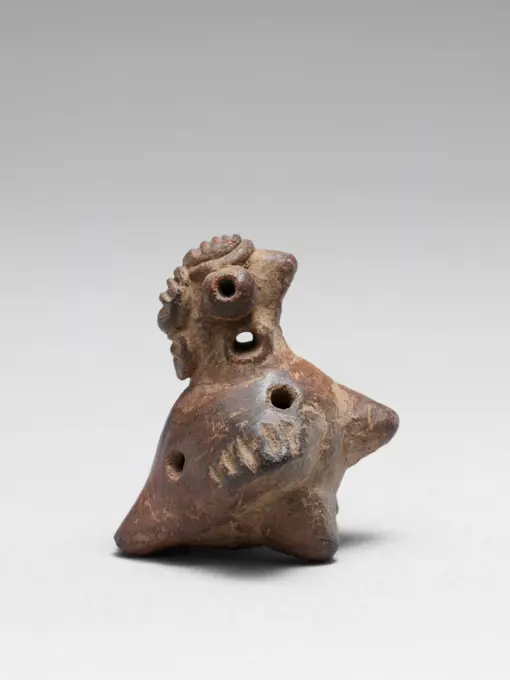
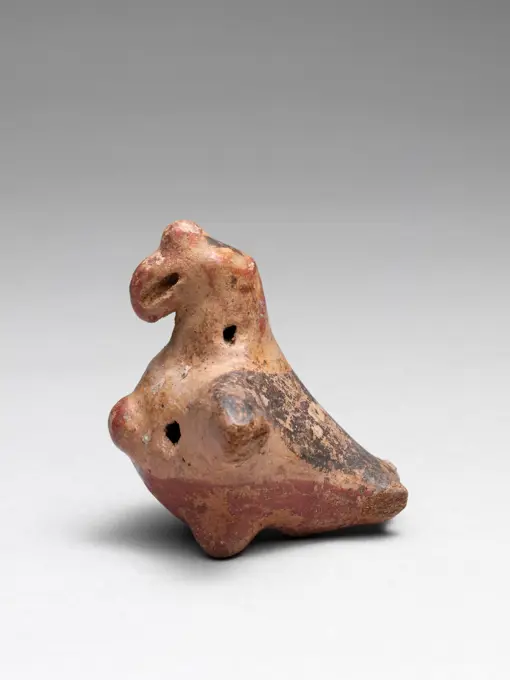
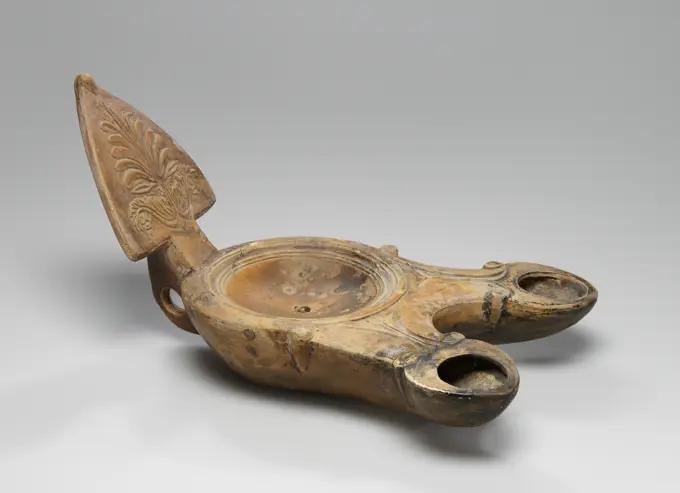
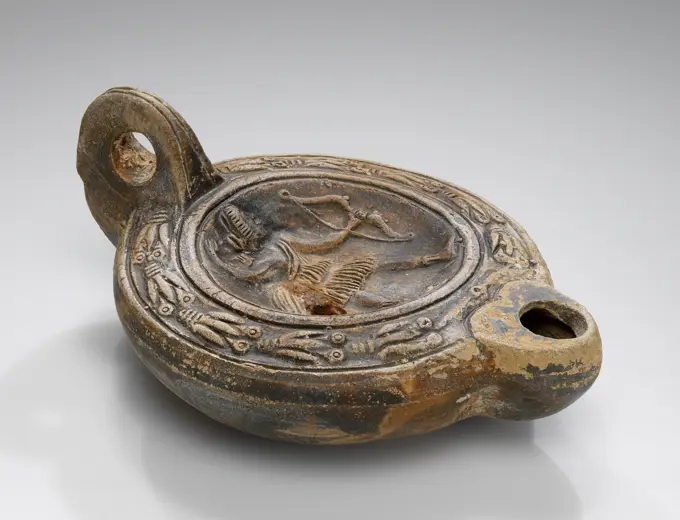
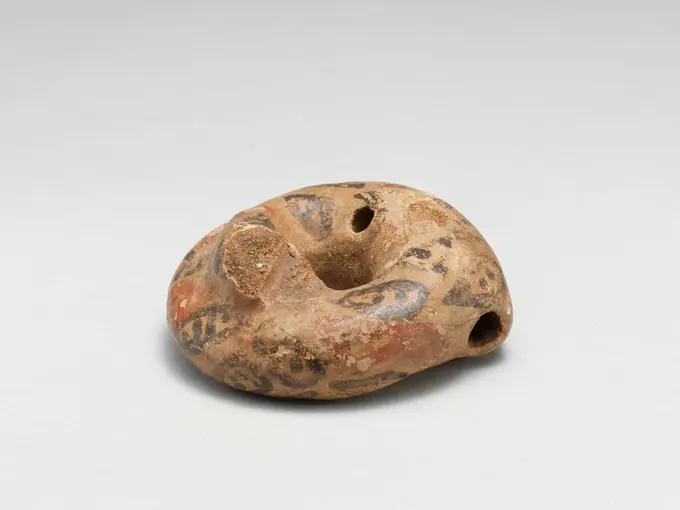
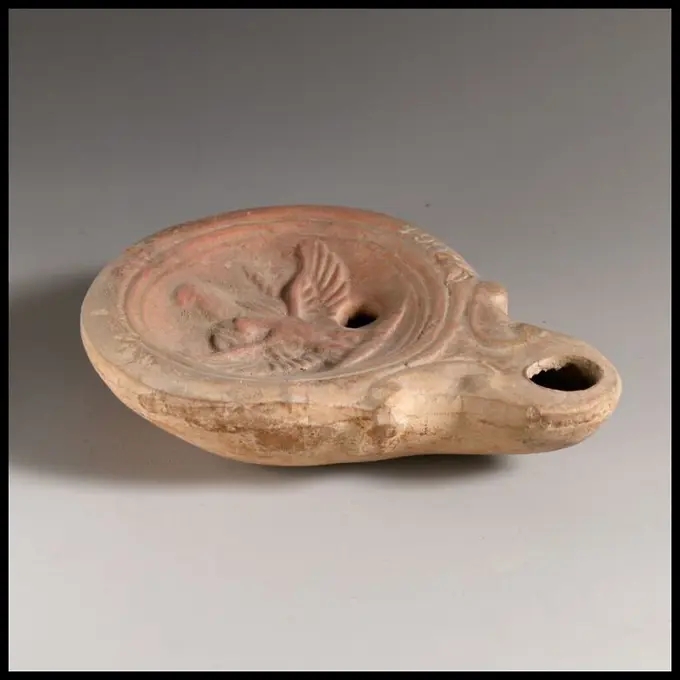
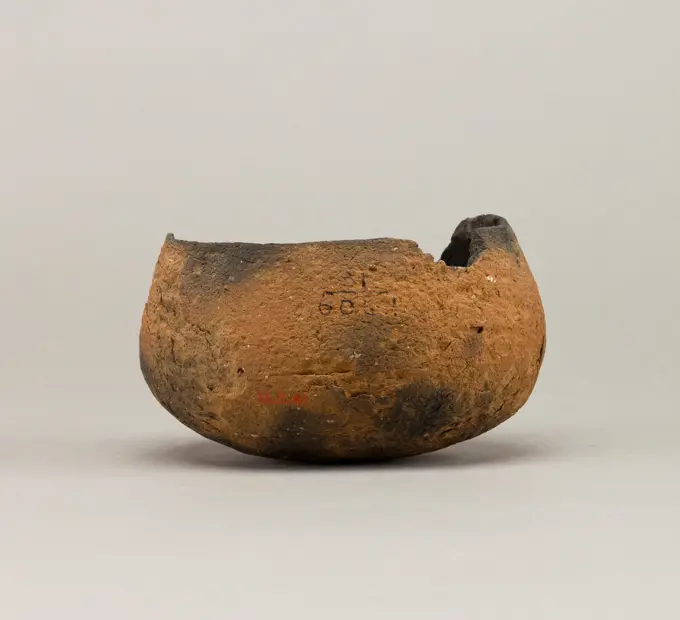
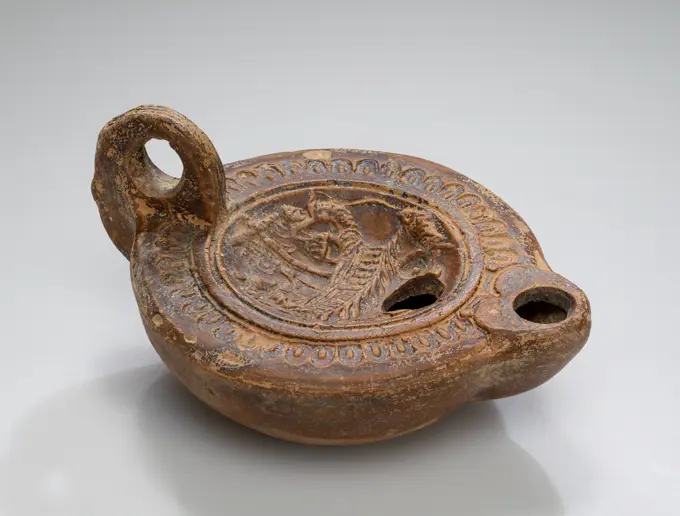
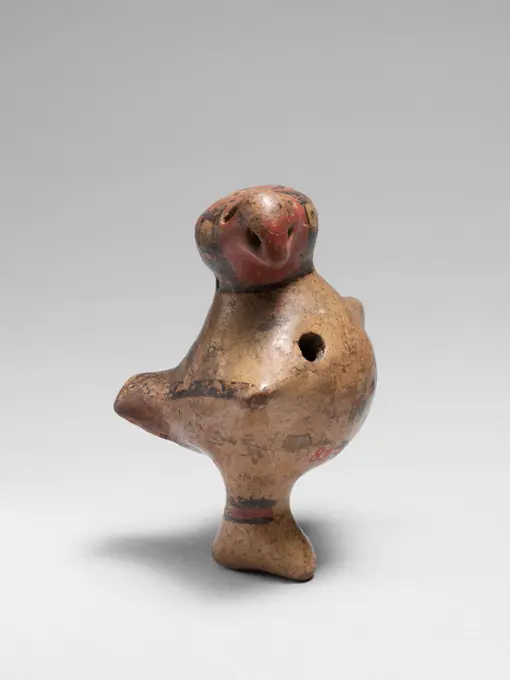
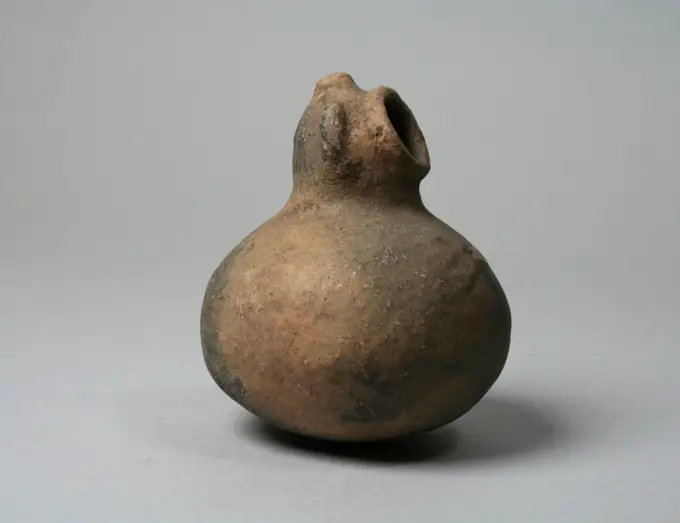
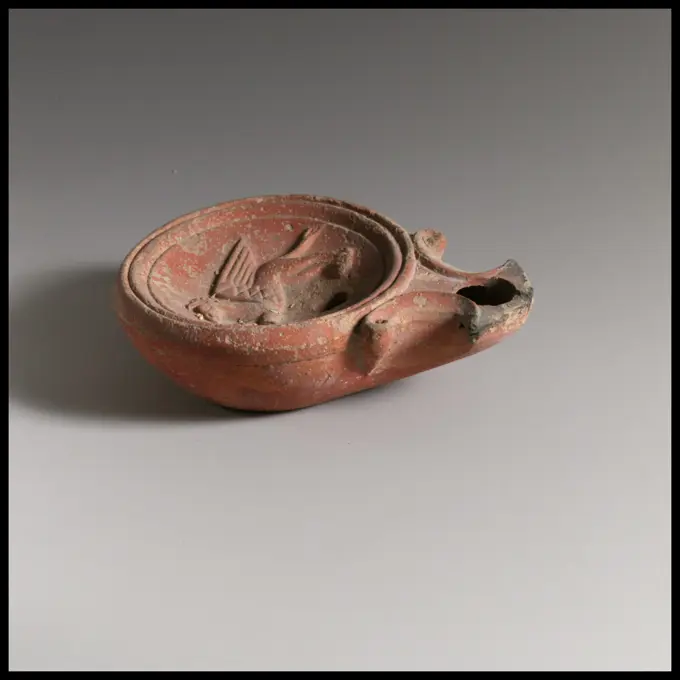
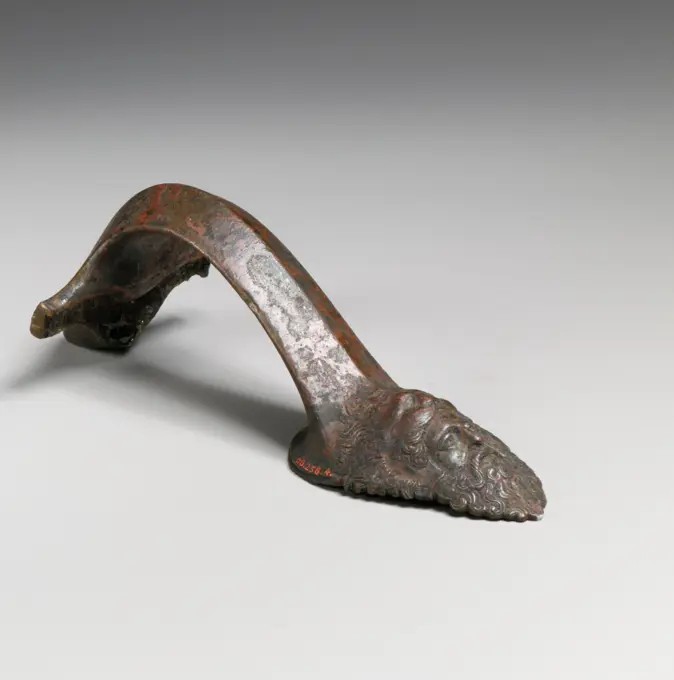
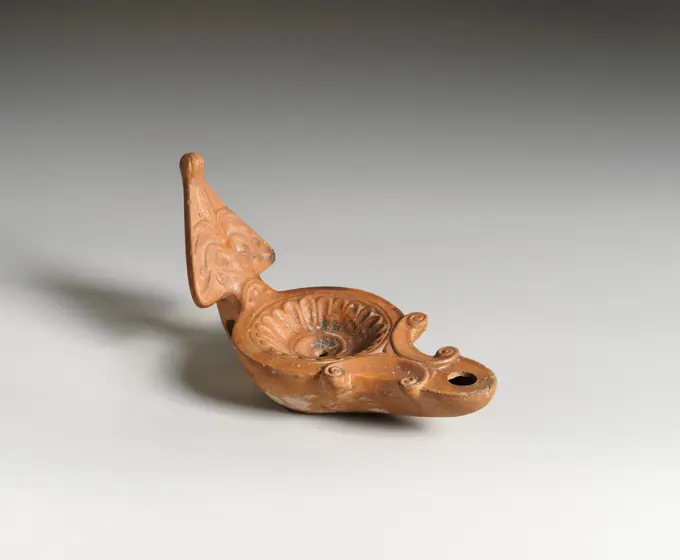
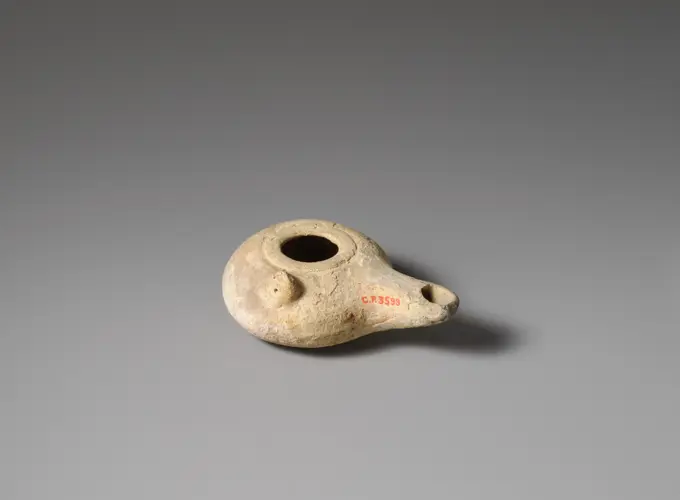
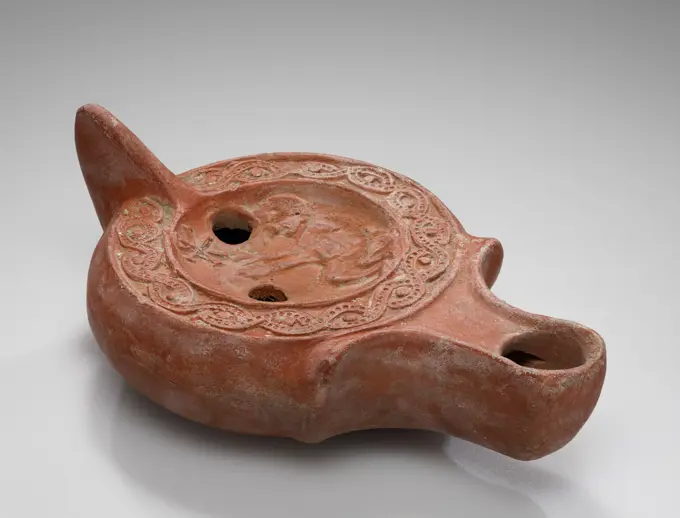
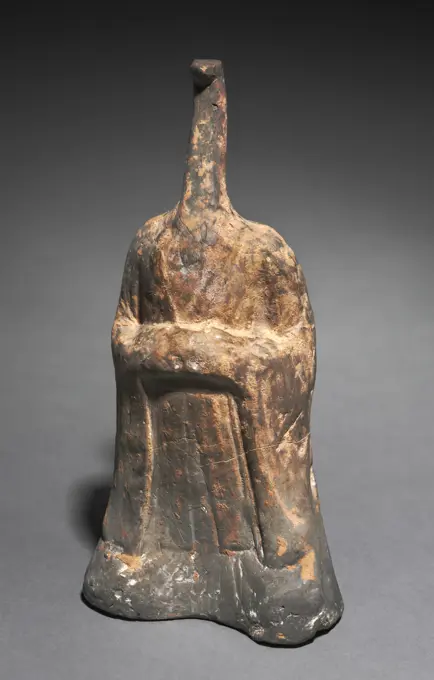
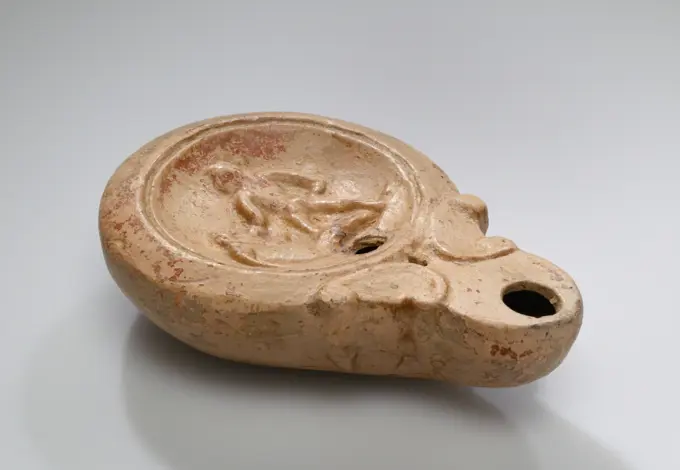
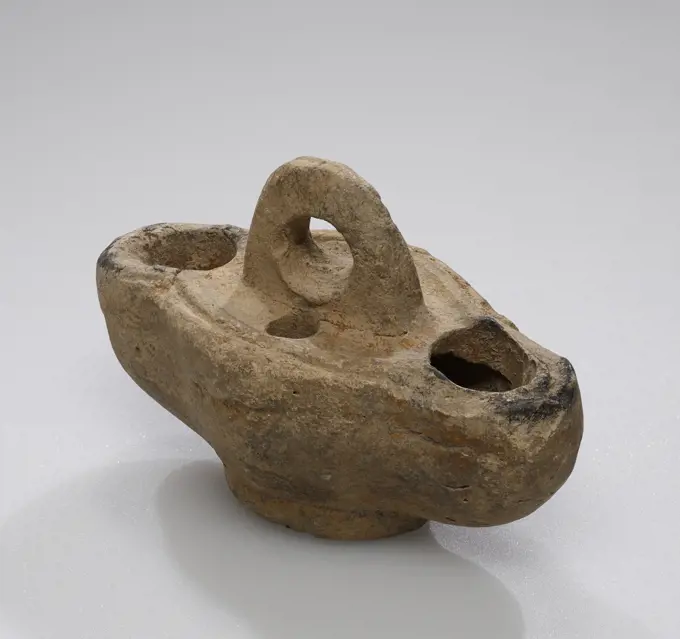
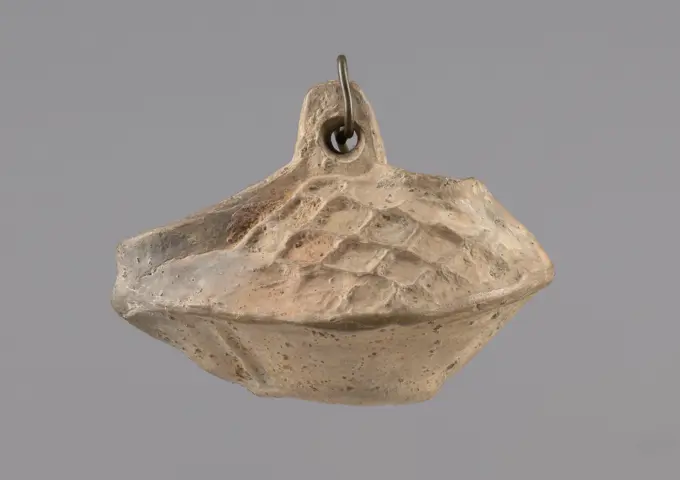
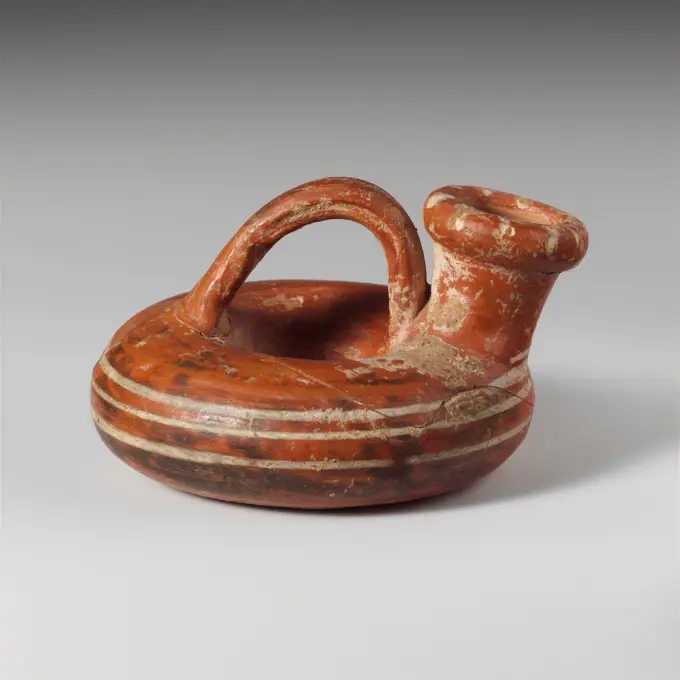
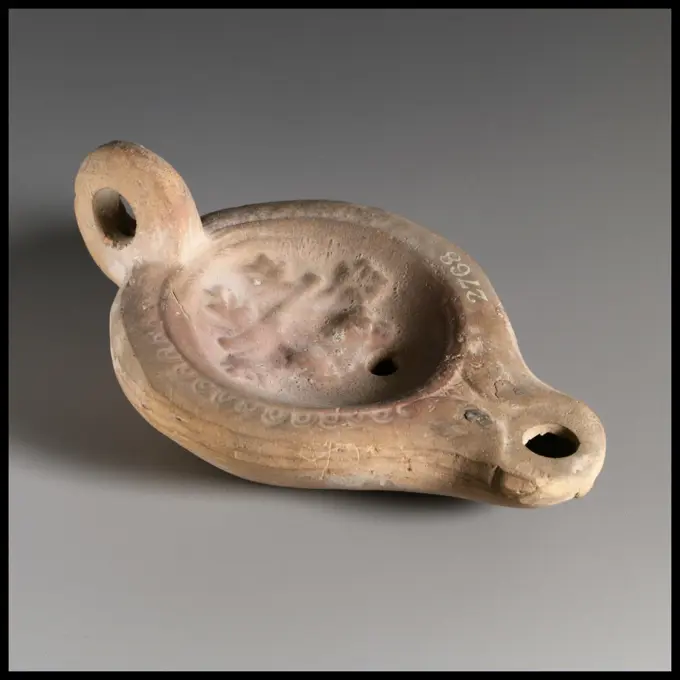
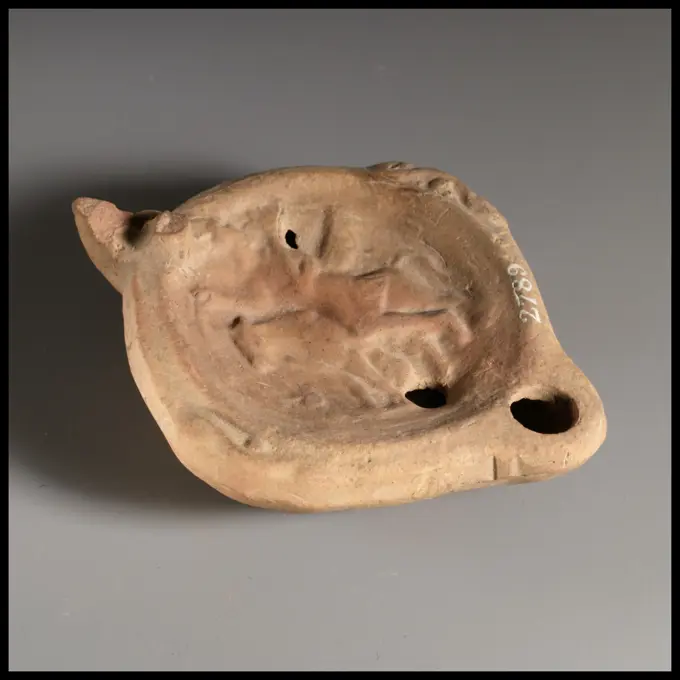
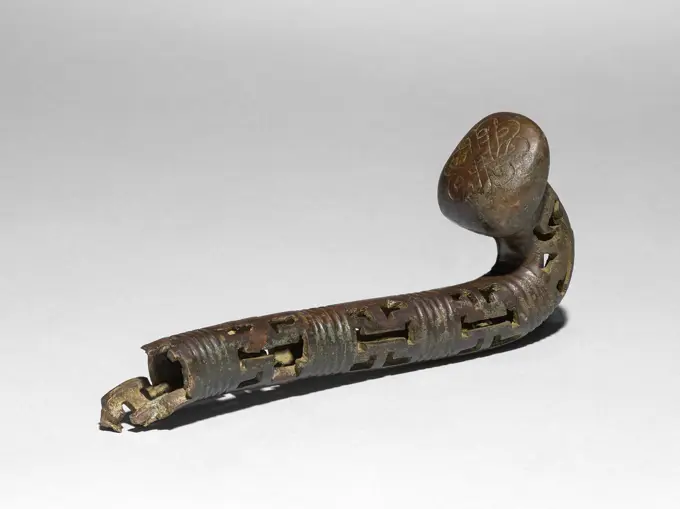
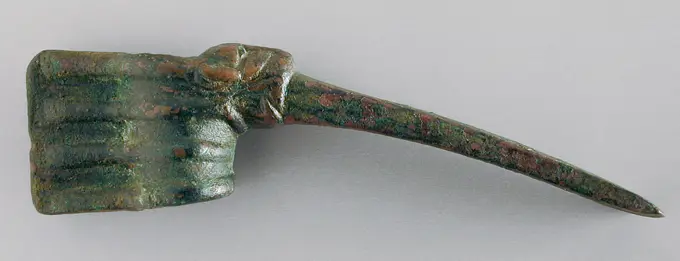
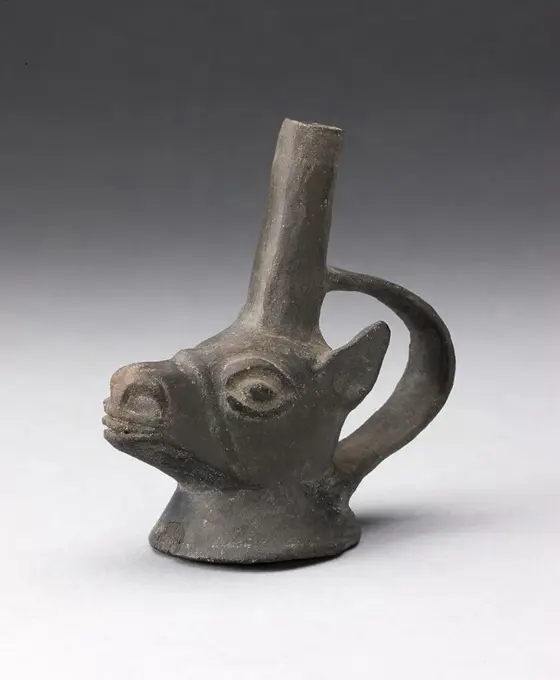
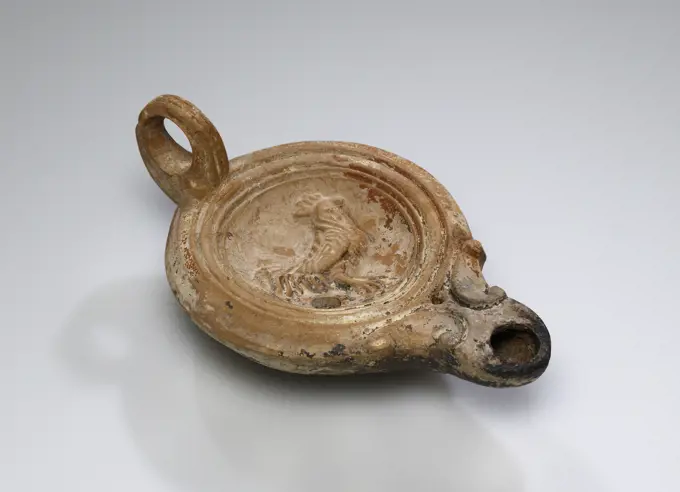
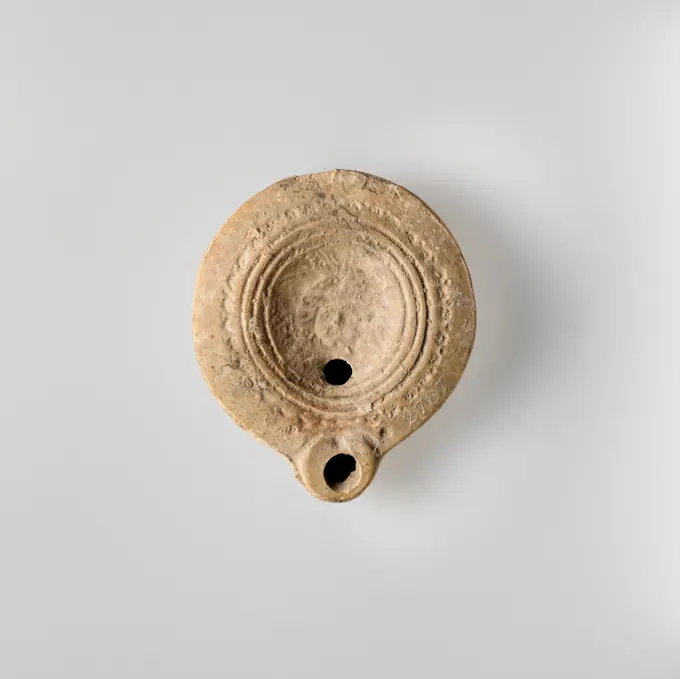
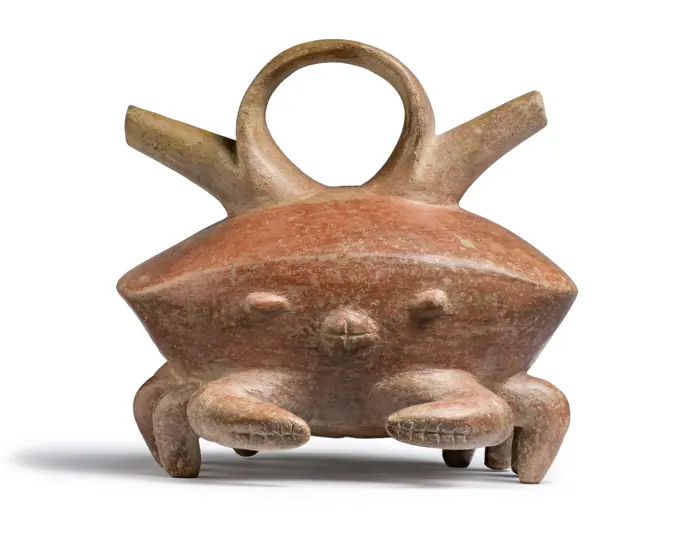
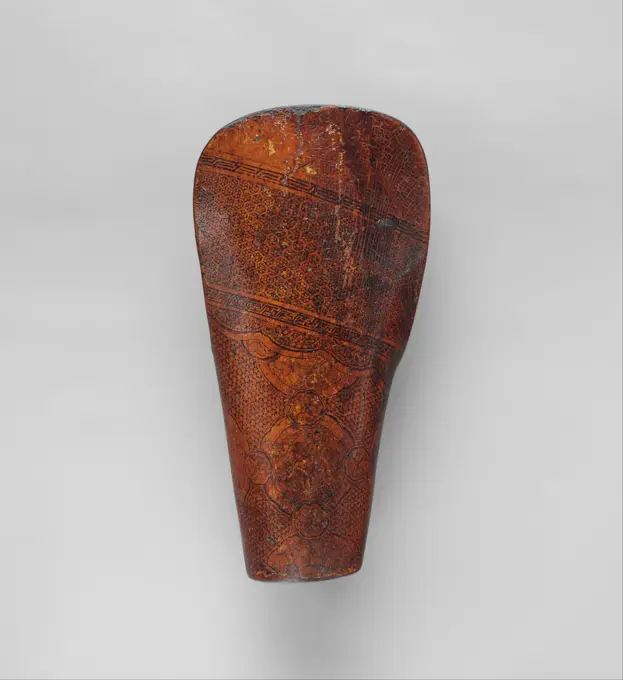
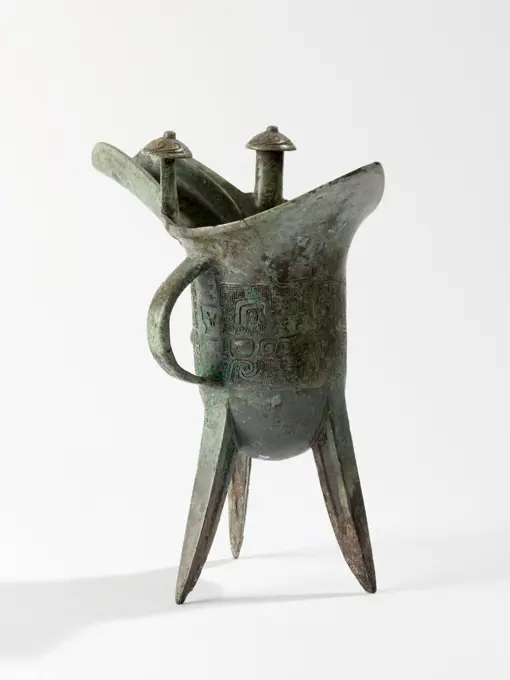
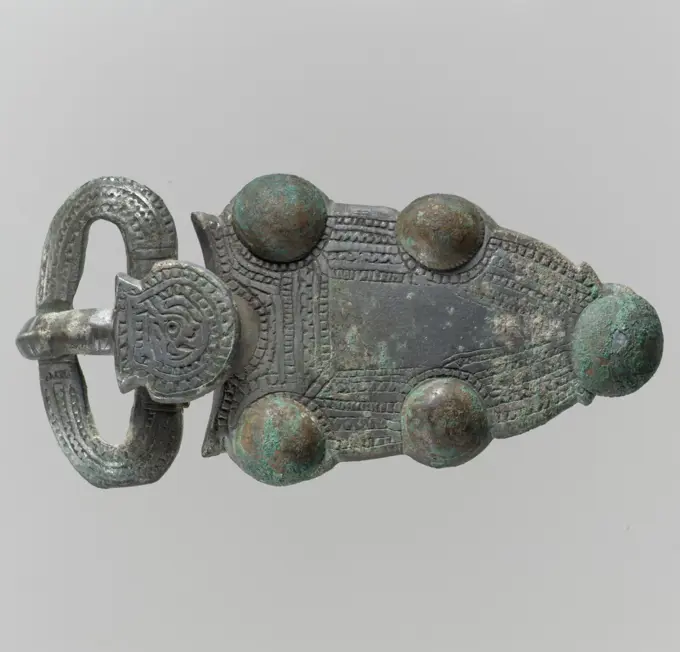
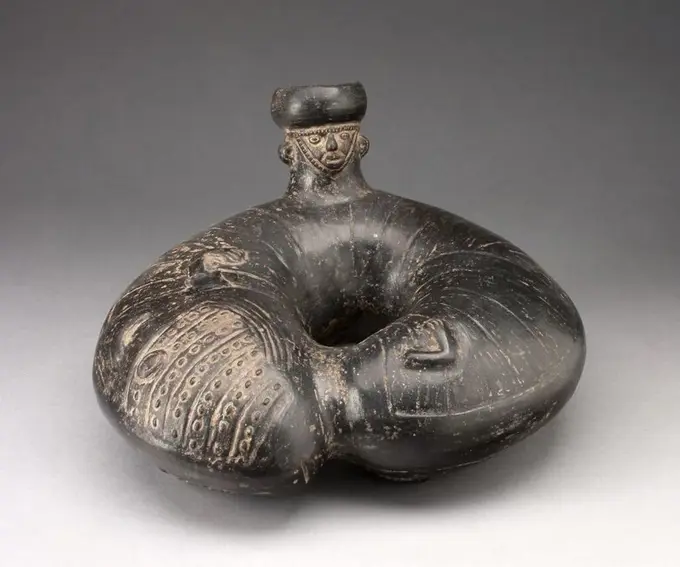
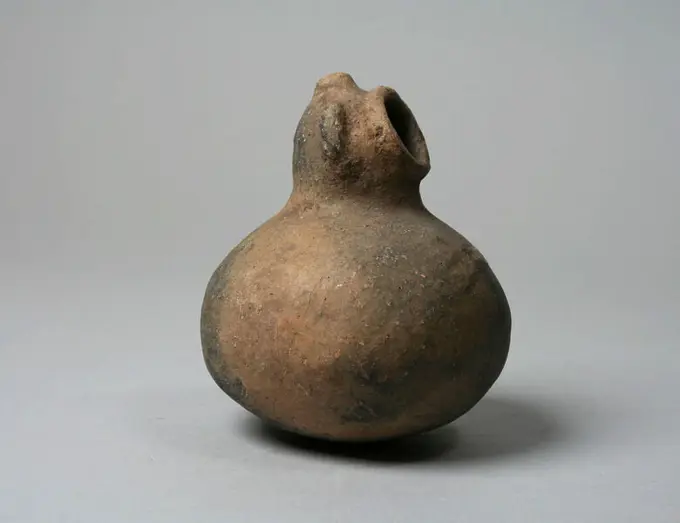
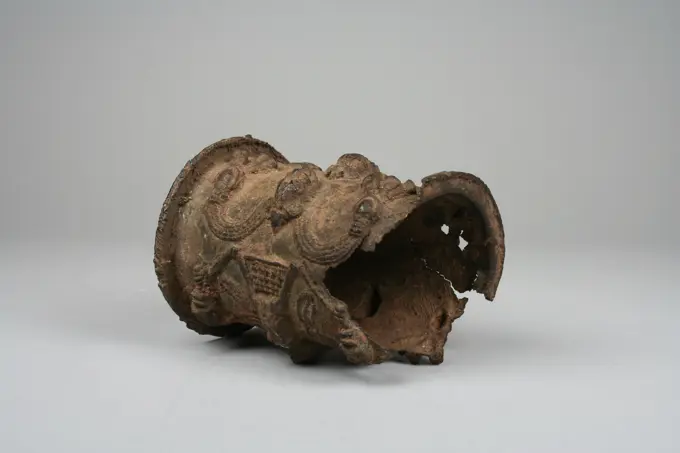
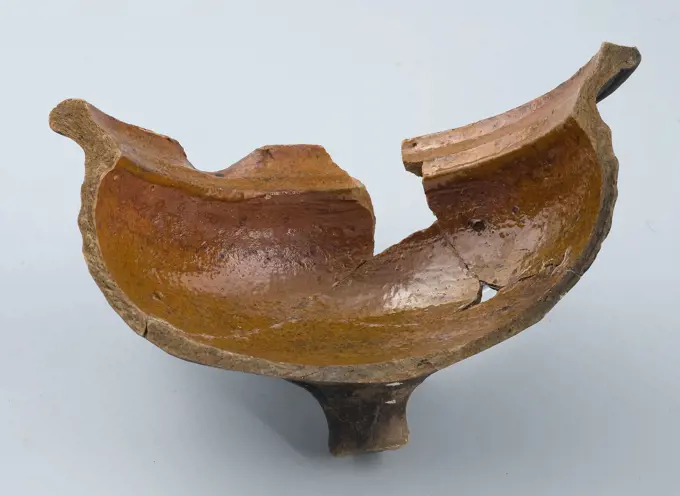
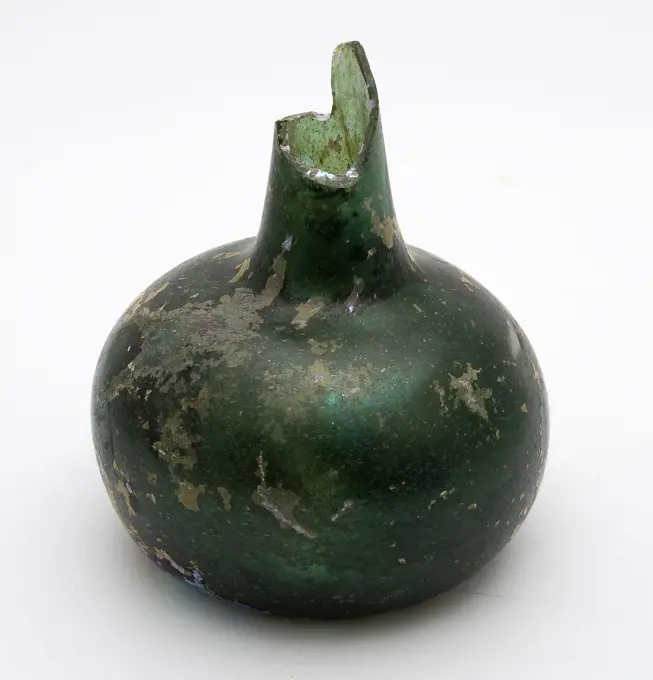
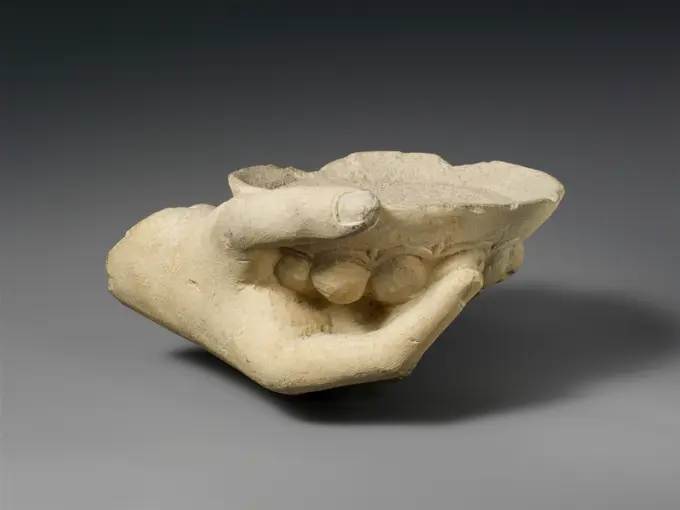
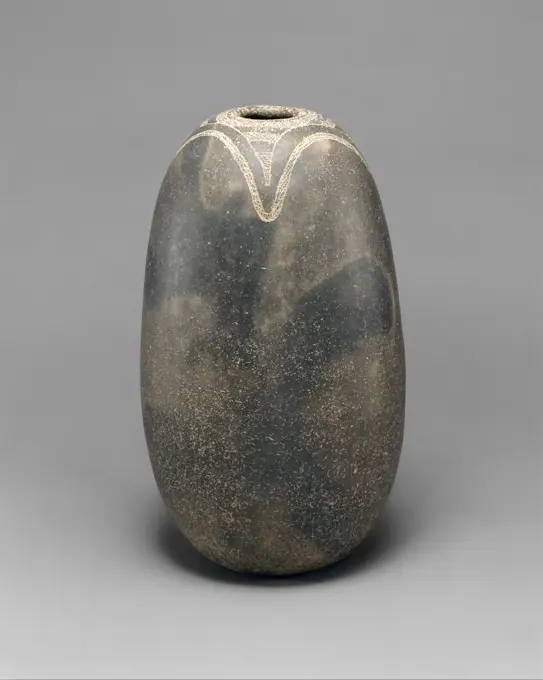
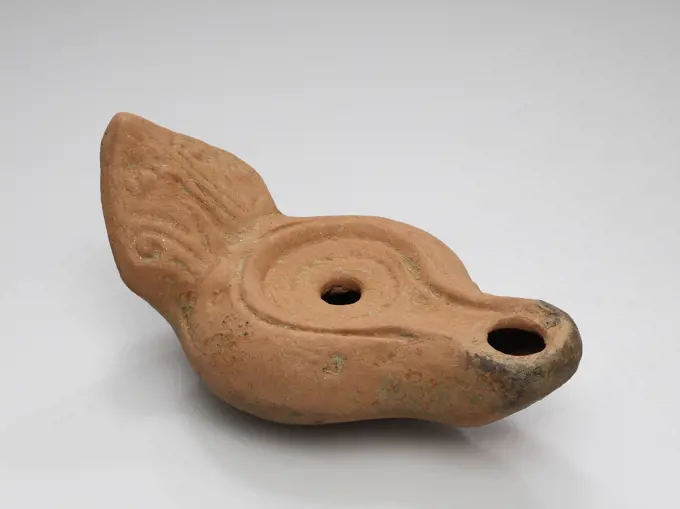
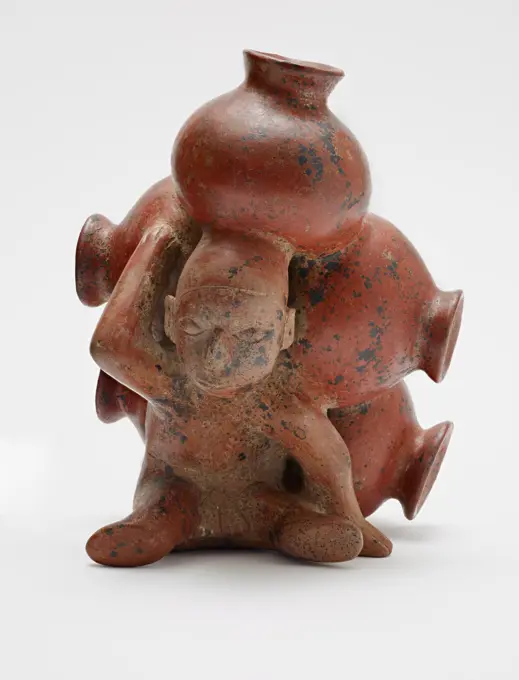
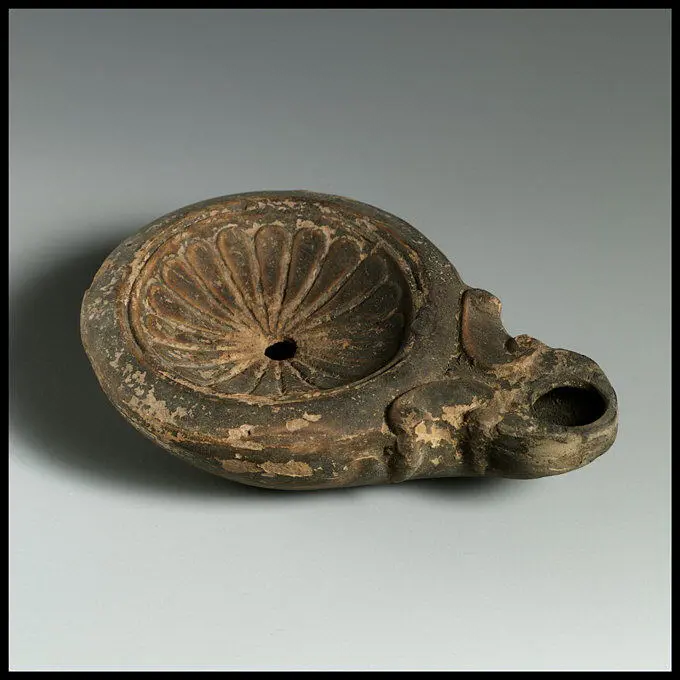
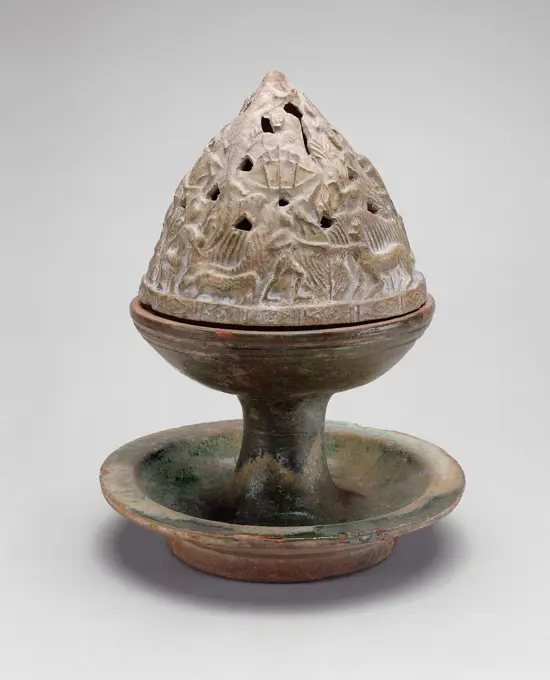
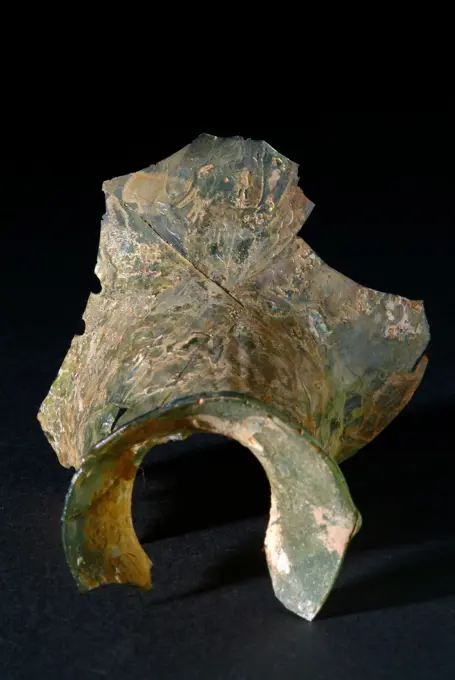
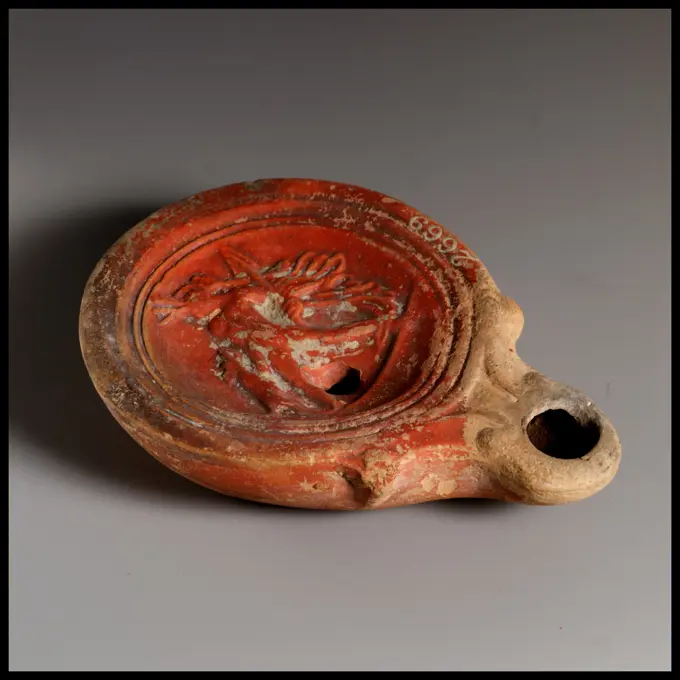
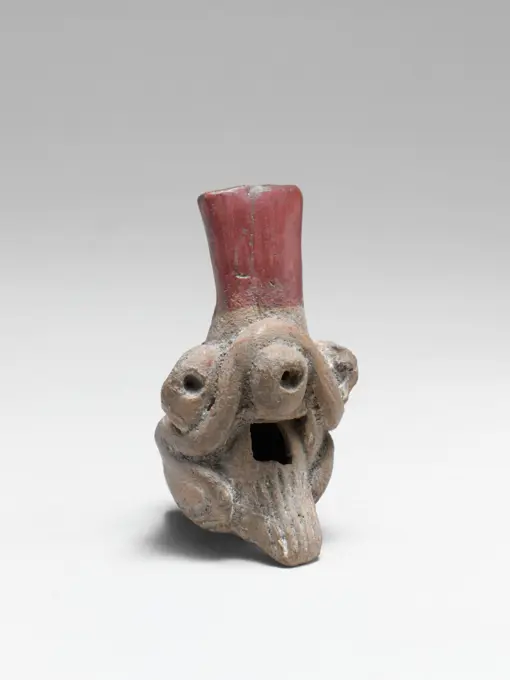
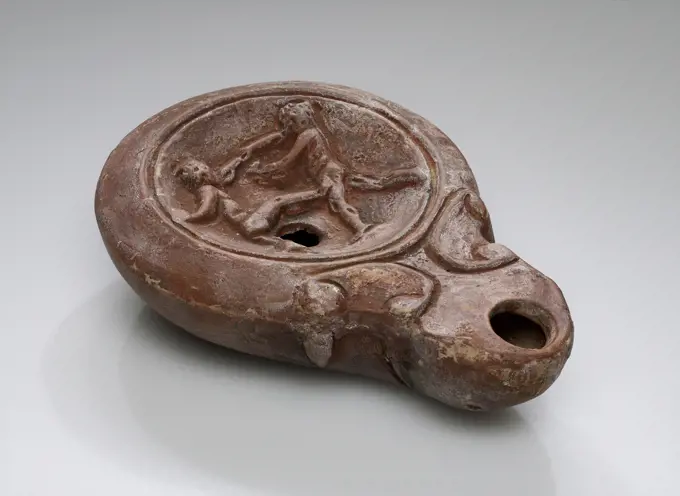
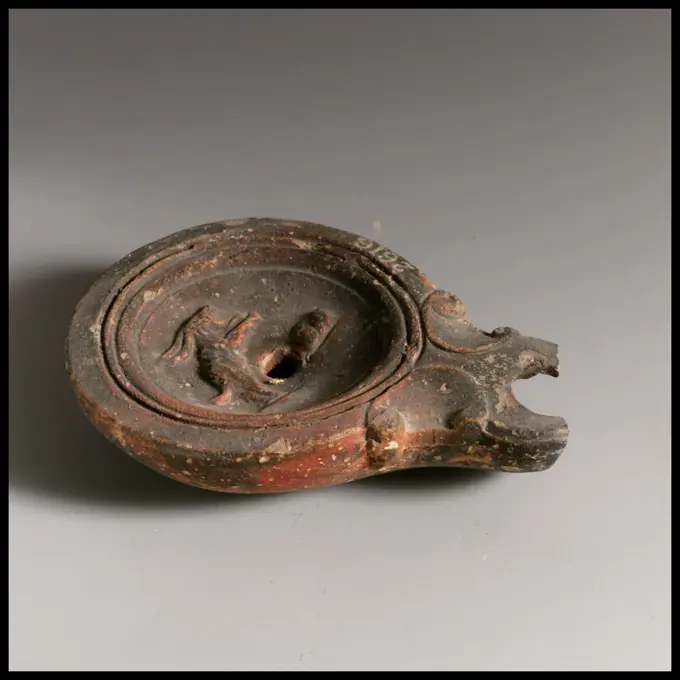
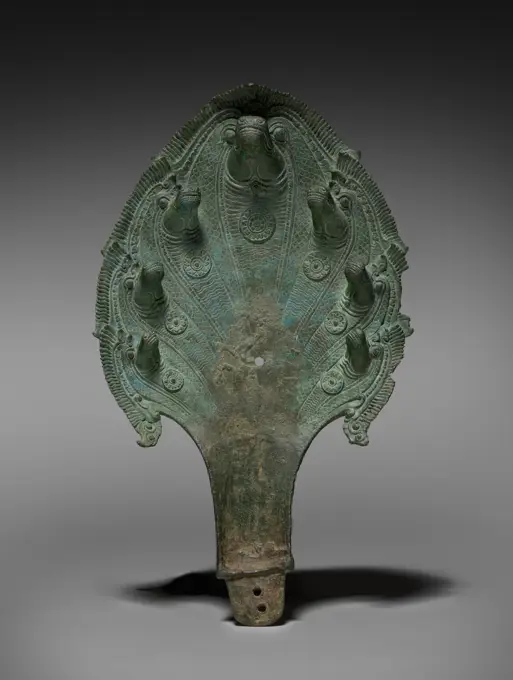
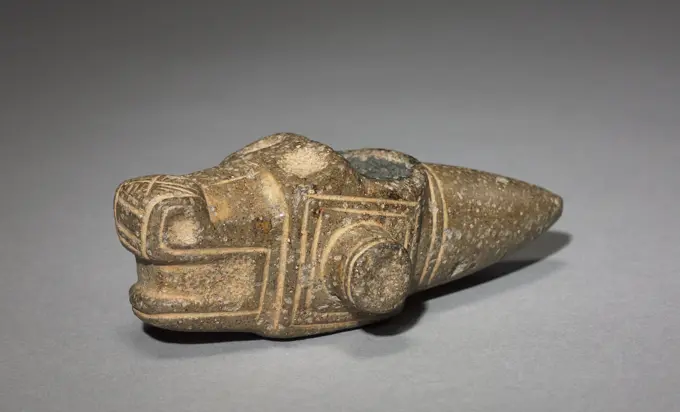
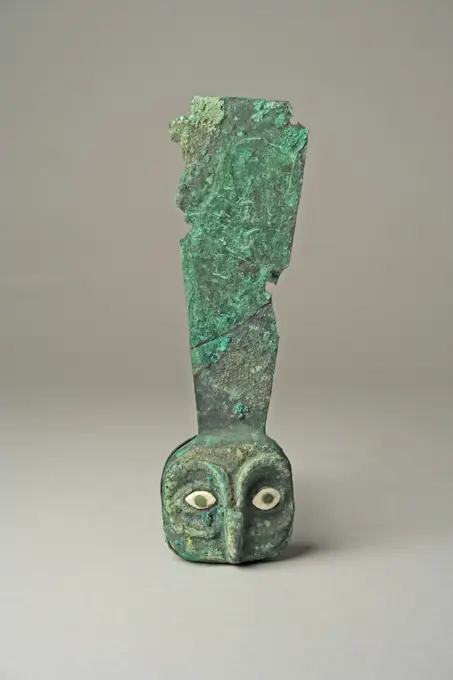
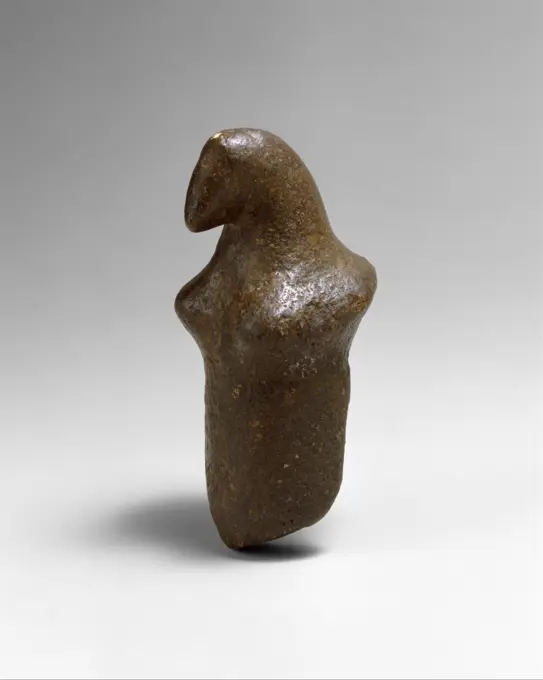
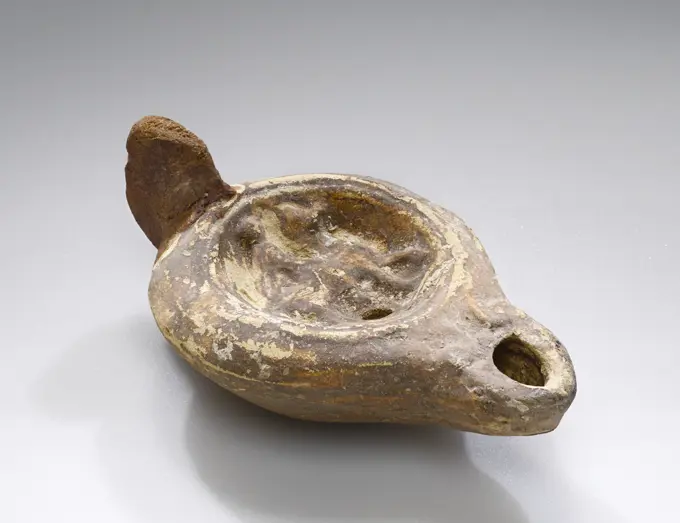
Lamp. UnknownTerracotta oil lamp early 3rd century B.C. Greek, Attic Wheel-made body, with applied long nozzle. Large central filling hole, surrounded by an inward-sloping shoulder and an incised circle; deep, convex-curving side to cylindrical body. Raised base ring and deep, concave base. Intact. Heavy, thick base.. Terracotta oil lamp. Greek, Attic. early 3rd century B.C.. Terracotta. Hellenistic. TerracottasPottery Whistle ca. 800-1500 Costa Rican. Pottery Whistle. Costa Rican. ca. 800-1500. Clay. Pre-Columbian. Costa Rica. Aerophone-Whistle Flute-whistlePottery Whistle ca. 800-1525 Costa Rican. Pottery Whistle. Costa Rican. ca. 800-1525. Clay. Pre-Columbian. Central Region, Costa Rica. Aerophone-Whistle Flute-whistleLamp. UnknownVotive Uterus; Etruria; 4th century B.C; Bronze; 9.4 x 12.7 cm (3 11,16 x 5 in.)Lamp. UnknownBowl with a handle in the form of a winged bull ca. 8th century B.C.. Bowl with a handle in the form of a winged bull. ca. 8th century B.C.. Chlorite. Iron Age II. Northern SyriaTerracotta oil lamp 4th-5th century A.D. Roman, Cypriot Vessberg Type 18. Unpierced handle. Mold-made. Discus: bestiarius using large cochlea to shield him from a bear; letters in relief below cochlea. Shoulder: right side, herring-bone wreath; left side, wolf () running towards man with raised arms. On concave base, circle of raised Greek letters: EYTYXHTOC.. Terracotta oil lamp. Roman, Cypriot. 4th-5th century A.D.. Terracotta. Late Imperial. TerracottasLamp. UnknownLamp. UnknownLamp. UnknownPottery Whistle. Culture: Costa Rican. Dimensions: H: 25mm; D: 62mm.. Date: ca. 800-1525. Museum: Metropolitan Museum of Art, New York, USA.Terracotta oil lamp. Culture: Roman, Cypriot. Dimensions: Length: 3 1/2 in. (8.9 cm)Height: 7/8 in. (2.2 cm). Date: ca. A.D. 40-100.Loeschcke Type 4. Mold-made. Discus: Jupiter with scepter on back of eagle with outspread wings standing on a thunderbolt. Volutes flanking nozzle. Museum: Metropolitan Museum of Art, New York, USA.Terracotta oil lamp. Culture: Roman. Dimensions: Overall: 1 5/8 x 4 1/8 in. (4.1 x 10.5 cm). Date: 1st century B.C.-1st century A.D..Loeschcke Type 5. Mold-made, with ring handle. Discus: an oak wreath in high relief; a single filling hole towards back and with a band of two raised lines and a groove at edge of discus. A plain, narrow, almost horizontal shoulder. Volutes flanking nozzle. Incised ring base, and a flat base.Intact, but patches of limy accretion especially on base. Museum: Metropolitan Museum of Art, New York, USA.Terracotta oil lamp. Culture: Roman, Cypriot. Dimensions: Overall: 15/16 x 3 3/8 in. (2.4 x 8.6 cm). Date: 1st century B.C.-1st century A.D.. Museum: Metropolitan Museum of Art, New York, USA.Deep bowl ca. 4400-3800 B.C. Predynastic, Badarian. Deep bowl. ca. 4400-3800 B.C.. Pottery. Predynastic, Badarian. From Egypt, Northern Upper Egypt, Matmar, Tomb 6001, BSAE/Brunton excavations, 1931Oil Lamp. Culture: Coptic. Dimensions: Overall: 1 15/16 x 2 15/16 x 2 1/2 in. (5 x 7.5 x 6.3 cm). Date: 4th-7th century. Museum: Metropolitan Museum of Art, New York, USA.Lamp. UnknownPottery Whistle and Rattle ca. 800-1525 Costa Rican. Pottery Whistle and Rattle. Costa Rican. ca. 800-1525. Clay. Pre-Columbian. Diquis Region, Costa Rica. Aerophone and Idiophone-flue blown / vessel rattleJar, before 1921. Colombia. Pottery; overall: 4.6 x 9 cm (1 13/16 x 3 9/16 in.).Bottle 11th-14th century Mississippian. Bottle 318594Terracotta oil lamp ca. 20 B.C.-A.D. 25 Roman Loeschcke Type 1A. Mold-made. Discus: winged gryphon, running to left; single filling hole towards bottom, and a band of two grooves around edge. Volutes flanking nozzle. Narrow raised base ring, and flat base.Intact.Gryphon on discus; with concave top and scrolled nozzle.. Terracotta oil lamp. Roman. ca. 20 B.C.-A.D. 25. Terracotta; mold-made. Early Imperial, Augustan. TerracottasBronze handle of an oinochoe (jug) ca. 425-400 B.C. Greek The attachment plate at the base of this handle is cast in the form of the head of Herakles. The hero, wearing his characteristic lion-skin cap, is represented with a long curly beard. This older, bearded Herakles was a popular subject on vase handles of this period.. Bronze handle of an oinochoe (jug) 248076Bronze fitting, possible from a cart or chariot 2nd-3rd century A.D. Roman Fitting, possible from a cart or chariot.. Bronze fitting, possible from a cart or chariot 250687 Roman, Bronze fitting, possible from a cart or chariot, 2nd3rd century A.D., Bronze, H.: 4 1/16 in. (10.3 cm) Other: 6 1/4 in. (15.9 cm). The Metropolitan Museum of Art, New York. Rogers Fund, 1918 (18.145.22)Terracotta oil lamp. Culture: Roman. Dimensions: Overall: 1 3/8 x 3 9/16 in. (3.5 x 9.1 cm). Date: 3rd-mid-4th century A.D.. Museum: Metropolitan Museum of Art, New York, USA.Terracotta oil lamp 1st half of 1st century A.D. Roman Vessberg Type 12. Mold-made, with ring handle below large upright triangular attachment. Deeply concave discus with small, central filling hole, surrounded by two concentric raised lines that form the base for a rosette pattern of twenty-one rounded petals. Large volutes flanking nozzle; a bud design in relief between them at front behind the wick hole. On attachment, an acanthus palmette. Raised base ring, and on base three raised concentric circles and a central raised knob.Intact. Vitreous sheen to slip.Probably made in Italy, although local imitations of such lamps with a large handle ornament were also produced in Cyprus.. Terracotta oil lamp. Roman. 1st half of 1st century A.D.. Terracotta; mold-made. Early Imperial. TerracottasTerracotta oil lamp Greek Wheel-made body, with applied long nozzle. Large central filling hole, surrounded by a plain band and an incised circle; convex sloping shoulder, with a single projecting knob at edge of left side; squat, carinated body. Flat base.. Terracotta oil lamp. Greek. Terracotta. Hellenistic. TerracottasLamp. UnknownMortuary Figure of the Zodiac Sign: Serpent (Virgo), 500s. China, Northern Wei dynasty (386-534). Gray earthenware with traces of slip; overall: 22.6 cm (8 7/8 in.).Terracotta oil lamp. Culture: Roman. Dimensions: Overall: 1 1/8 x 4 1/2 in. (2.9 x 11.4 cm). Date: 1st century B.C.-1st century A.D..Loeschcke Type 4. Mold-made. Shallow discus: a circular frieze of gladiatorial weapons and armor, comprising pairs of swords, helmets, shields, and greaves; single filling hole at center, surrounded by two concentric lines, with a band of lines and grooves toward the edge. Volutes flanking nozzle. Incised base ring, and a broad, flat base.Complete, except for weathering chip in right edge of shoulder. Museum: Metropolitan Museum of Art, New York, USA.Lamp. UnknownLamp, Cologne, Germany; 2nd century; Terracotta; 2.6 x 3.5 x 6.6 cm (1 x 1 3,8 x 2 5,8 in.)Lamp;  V/VI century (400-00-00-600-00-00);Terracotta ring askos (flask with a spout and handle over the top) 6th century B.C. Lydian White lines around body.. Terracotta ring askos (flask with a spout and handle over the top) 252589 Lydian, Terracotta ring askos (flask with a spout and handle over the top), 6th century B.C., Terracotta, 2 3/4in. (7cm) Other: 4in. (10.2cm). The Metropolitan Museum of Art, New York. Gift of the American Society for the Excavation of Sardis, 1926 (26.164.26)Terracotta oil lamp 2nd century A.D. Roman Loeschcke Type 5. Mold-made, with ring handle. Discus: a horizontal branch with oak leaves above and below; a single, small filling hole near front and with a band of grooves and raised lines at edge of discus. On narrow, almost horizontal shoulder, a pattern of small ovules. Volutes flanking nozzle. Broad raised ring base, outlined by two incised circles, and a slightly concave base, with a vertical impression at center.Intact.. Terracotta oil lamp 241615Terracotta oil lamp 2nd century A.D. Roman Broneer Type 27. Mold-made, with ring handle. Discus: in high relief, bull moving left and carrying on his back a figure wearing a knee-length tunic and a headdress, holding a stick-like object in left arm across shoulder and another indistinct object in raised right hand; a small, footed krater in field at left; a single filling hole at bottom; raised band around discus and two scrolled projections at sides. Undefined, slightly uneven base.Top half of handle missing, and one small hole on discus at top right.. Terracotta oil lamp 241586Jar Shaped like an Curling Insect with Single Spout in the Form of a Human Head Made 1200-1450 North Coast. Ceramic . ChimúGroup Figurine of Osiris Facing a Squatting Goddess. Egypt, 26th - 31st Dynasty (664 - 332 BCE). Sculpture. BronzeTail for a Feline Incense Burner, 1150-1200. Iran, Khurasan, Seljuq period of Iran (1037-1194). Copper alloy, cast, engraved, chased, and pierced; overall: 36 cm (14 3/16 in.). In Iran during the 1000s and 1100s, vessels in the shape of animals gained popularity, especially as incense burners. Felines were favored in Persian art and this piece may represent a caracal, a type of lynx. The head of the creature was cast separately and is removable to fill its body with hot coals and incense. Quranic verses on the neck and spine remind worshippers to set work aside, attend prayer, and then disperse to seek Gods bounty. The diffusion of perfumed smoke through the burners pierced palmette design may have served as a sensorial reminder of this teaching.Terracotta oil lamp. Culture: Roman. Dimensions: Overall: 1 3/4 x 3 7/8 in. (4.4 x 9.8 cm). Date: 7th century A.D.. Museum: Metropolitan Museum of Art, New York, USA.Adze-head. Iran, Luristan, circa 1350-1000 B.C.. Arms and Armor; adzes. Bronze, castSingle Spout Vessel in the Form of the Head of a Llama. Chimú; North coast, Peru. Date: 1000-1400. Dimensions: 10.8 x 10.5 cm (4 1/4 x 4 1/8 in.). Ceramic and pigment. Origin: North Coast. Museum: The Chicago Art Institute, Chicago, USA.Lamp, Asia Minor; 1st - 4th century; Terracotta; 2.6 x 7.4 x 11.7 cm (1 x 2 15,16 x 4 5,8 in.)Glass double cosmetic flask (kohl tube). Culture: Roman, Syrian. Dimensions: H.: 4 1/2 x 1 3/4 in. (11.4 x 4.4 cm). Date: 4th century A.D..Translucent blue green; handles in same color.Rim folded out, over, and in; body comprising two tubes, side by side, made from a single inflated gather by pinching sides vertically to make diaphragm; pontil mark on thick, flattened bottom; two rod handles attached to side of body over diaphragm in large, claw pads, drawn up and out, turned in, and trailed off on top of rim.Intact; pinprick bubbles; dulling, pitting, iridescence, and blackish weathering on exterior, some encrustation and brilliant weathering on interior. Museum: Metropolitan Museum of Art, New York, USA.Lamp. UnknownLamp, North Africa; 1st - 4th century; Terracotta; 2.7 x 7.5 x 10 cm (1 1,16 x 2 15,16 x 3 15,16 in.)Terracotta oil lamp 2nd century A.D. Roman Loeschcke Type 8. Mold-made. Discus: head of Sol (Helios), facing; broad band of concentric circles around edge; a single filling hole at bottom near nozzle. Shoulder: small circles with central dots. Heart-shaped nozzle. Two slanting grooves, flanking underside of nozzle. Incised base ring, and flat base; across base in Greek letters: W[PO/Y.Intact; slight surface chipping on back edge.. Terracotta oil lamp. Roman. 2nd century A.D.. Terracotta. Mid Imperial. TerracottasBronze statuette of a goose. Culture: Greek. Dimensions: H. 4 13/16 in. (12.3 cm). Date: ca. 3rd-1st century B.C..Goose in midstride, looking left. Museum: Metropolitan Museum of Art, New York, USA.Incense Box. Culture: Japan. Dimensions: H. 2 in. (5.1 cm). Date: 19th century. Museum: Metropolitan Museum of Art, New York, USA.Bronze furniture attachment with griffin heads 6th century B.C. Etruscan This element was once attached with two bronze pins to the corner of a wooden object. Incisions mark the eyes, teeth, nose, and scales of each solid-cast griffin.. Bronze furniture attachment with griffin heads 246983Crab Vessel with Double Spout. Colombia, Calima, Ilama, Calima Ilama, 1500 BCE-100 CE. Ceramics. CeramicThree Forearm Guards for the Left Arm possibly 15th-17th century Tibetan or Mongolian. Three Forearm Guards for the Left Arm 26594Vase jue ". Bronze. China, Shang dynasty. Paris, Cernuschi museum. 72455-14 Chinese art, bronze, zhou, tripod dynasty, jue vaseBelt Buckle 7th century Frankish. Belt Buckle. Frankish. 7th century. Copper alloy, tinned surface. Metalwork-CopperKey Handle 1st-7th century Roman. Key Handle 462927Terracotta oil lamp. Culture: Roman. Dimensions: Overall: 7/8 x 3 3/8 in. (2.2 x 8.6 cm). Date: ca. A.D. 40-100.Loeschcke Type 4. Mold-made. Discus: hare facing right eating from a bunch of grapes on vine that spreads above and below the ground line. Volutes flanking nozzle. Raised base. Museum: Metropolitan Museum of Art, New York, USA.VASIJA DE CERAMICA EN FORMA DE VIVIENDA PALACIEGA- PERU- CULTURA CHIMU-INCA - 1470-1533 DC. Location: MUSEO DE AMERICA-COLECCION. MADRID. SPAIN.Belt Buckle 6th-7th century Frankish. Belt Buckle 465454 Frankish, Belt Buckle, 6th7th century, Iron, silver inlay, Overall: 5 13/16 x 2 11/16 x 1 1/16 in. (14.7 x 6.8 x 2.7 cm). The Metropolitan Museum of Art, New York. Gift of J. Pierpont Morgan, 1917 (17.193.143)Jar Shaped like an Curling Insect with Single Spout in the Form of a Human Head. Chimú; North coast, Peru. Date: 1200-1450. Dimensions: 15.2 × 26.7 × 25.7 cm (6 × 10 1/2 × 10 1/8 in.). Ceramic. Origin: North Coast. Museum: The Chicago Art Institute, Chicago, USA.Bottle. Culture: Mississippian. Dimensions: Height 3-3/4 in.. Date: 11th-14th century. Museum: Metropolitan Museum of Art, New York, USA.Bracelet: Figures in Relief 15th-19th century Yoruba peoples. Bracelet: Figures in Relief. Yoruba peoples. 15th-19th century. Bronze. Nigeria. Metal-OrnamentsFragment of earthenware cooking pot or saucepan on three legs, with pouring lip, saucepan cooking pot crockery holder kitchen utensils earthenware ceramics earthenware glaze lead glaze, hand turned glazed fried Fragment earthenware saucepan or cooking pot Shaving clip rings Black burned Red shard Semicircular shape. Internal glazed archeology underground pit Rotterdam Stadscentrum Stadsdriehoek Groenendaal indigenous pottery food preparation cooking kitchen Soil discovery: underground pit Groenendaal cesspool 1975-09-11.Plackart from an Armor possibly of Prince Nikolaus VIII Christoph Radziwill of Poland (1549-1616) 1573 Augsburg. By the early sixteenth century armorers had devised a system of interchangeable pieces, called a garniture, that could be converted between use for battle and tournaments. These four reinforcing pieces belonged to an elaborate garniture produced for a member of the Radziwill family, princes of Poland and Lithuania. Pieces of this garniture were dispersed from the Radziwill family armory at Nesvizh Castle around the turn of the twentieth century.Portions of this armor in the Art Institute include reinforces for the sport of the joustó the bevor that strengthens the helmet visor and plackart that strangthens the breastplate. Two plates used in the tourney, a mock battle that required more mobility than the joustóthe wrapper to reinforce the lower helmet visor and the guard brace to strengthen the left shoulder. Additionally, there are four sets of pauldrons or shoulder defenseBulbous bottle, onion, belly bottle bottle holder bottomfound glass, free blown and shaped Small bulbous bottle onion in clear dark green glass. Pontil mark under slightly raised soil Body with convex wall to flat shoulders and narrowed neck broken off at approximately 4.7 cm archeology Rotterdam Kralingen-Crooswijk Struisenburg's Gravenweg Oostmaaslaan packing Soil discovery Oostmaaslaan and De's GravenwegLimestone statue fragment of a right hand holding a phiale (libation bowl) late 6th-5th century B.C. Cypriot A large right hand, the nails of which are well articulated, holds a fluted phiale decorated with lotus flowers.. Limestone statue fragment of a right hand holding a phiale (libation bowl) 242250Elephant Bell with Miniature Elephant ca. 300 B.C.-A.D. 200 Thailand (Ban Chiang) Its' shape and the animal standing on one side towards the top indicate that this exquisitely cast bell once adorned an elephant. Indian elephants, also native to mainland Southeast Asia, were used for transportation and treasured for their ivory.. Elephant Bell with Miniature Elephant. Thailand (Ban Chiang). ca. 300 B.C.-A.D. 200. Bronze. Late period. MetalworkSeed Jar 14th-16th century Caddoan. Seed Jar 319181Lamp, Asia Minor; 1st - 4th century; Terracotta; 2.5 x 4.7 x 7.8 cm (1 x 1 7,8 x 3 1,16 in.)Figure Bearing Five Jars. Mexico, Colima, 200 BCE-500 CE. Ceramics. Slip-painted ceramicTerracotta loom weight. Culture: Lydian. Dimensions: Length: 2 5/8 in. (6.6 cm). Date: 6th century B.C. or later.Loom weight with hole. Museum: Metropolitan Museum of Art, New York, USA.Terracotta oil lamp ca. A.D. 40-100 Roman, Cypriot Loeschcke Type 4. Mold-made. Discus: rosette pattern of nineteen relief petals radiating from a central filling hole, with a narrow band of concentric lines and a groove towards edge. Volutes flanking nozzle. Within incised base ring, slightly uneven base, with a large letter or numeral in relief across center: X.Intact, except for a small chip on edge of shoulder at back.. Terracotta oil lamp 241733Terracotta seated veiled woman 3rd century B.C. Cypriot The figurine is mold-made and solid. The back seems mold-made, although it is plain except for the top of the seat.. Terracotta seated veiled woman. Cypriot. 3rd century B.C.. Terracotta; mold-made. Early Hellenistic. TerracottasMountain-Shaped Incense Burner (Boshan Xianglu) 206 BCE-9 CE China. Brick-red earthenware with green lead glaze .Neck Fragment of Glass Urinal. Found at Weoley Castle, Birmingham, a Birmingham Museums Trust heritage sitePyxis fragment ca. 9th century B.C. Iran. Pyxis fragment. Iran. ca. 9th century B.C.. Ivory. Iron Age II. Iran, HasanluTerracotta oil lamp ca. A.D. 40-100 Roman Loeschcke Type 4. Mold-made. Discus: in high relief, Actaeon, standing to front, facing left, being attacked by a hound at left, holding a spear in his left arm, and brandishing a sword in his raised right hand behind his head; flowing drapery over his left arm; stag horns sprouting from his head; a ground line across bottom of discus; a single filling hole between Acyaeon's legs; broad band of lines and grooves around edge. Volutes flanking nozzle. Raised base ring, and slightly uneven, flat base.Intact.. Terracotta oil lamp. Roman. ca. A.D. 40-100. Terracotta. Early Imperial. TerracottasMouse, AD 1-200. Italy, Rome, 1st-2nd Century. Bronze; overall: 1.4 x 1.6 cm (9/16 x 5/8 in.).Horse and rider ca. 750-600 B.C. Cypriot The figurine is handmade and solid. The rider stretches his arms forward to touch the horse's mane.. Horse and rider 241330Bell. Western Iran, circa 150 B.C. - 224 A.D.. Tools and Equipment; musical instruments. Bronze, hammeredFibula (leech type) 800 BCE-700 BCE Thessaly. This precious bronze object is a votive, or devotional gift, made as an offering to the gods. They come in many forms, such as animals, beads and brooches. Many seem once to have been attached to something else. Votives were hung from sacred trees or placed in sanctuaries around Greece. Once a shrine was full, the votives were ceremonially buried to make room for more offerings.. Bronze . Ancient GreekPottery Whistle 1880 Mexican. Pottery Whistle. Mexican. 1880. Clay. Mexico. Aerophone-Whistle Flute-whistleBell Amulet with Animal Heads. Egypt, Late Period - Ptolemaic Period (711 - 30 BCE). Jewelry and Adornments; amulets. BronzeBurnt-Parfum (common name). Sandstone, molding, celadon. Cernuschi Museum, Asia Museum of Asia in the city of Paris.Lamp, North Africa; 1st - 4th century; Terracotta; 2.9 x 7.7 x 11 cm (1 1,8 x 3 1,16 x 4 5,16 in.)Fibula. Western Iran, circa 750-550 B.C.. Jewelry and Adornments; pins. Bronze, castLadleLamp. UnknownSteatite () pendant in the form of a bull's head. Culture: Minoan. Dimensions: H. 1 3/4 in. (3.44 cm); Diameter 1 in. (2.54 cm). Date: ca. 2200-1050 B.C..Bull's head. Museum: Metropolitan Museum of Art, New York, USA.Terracotta oil lamp ca. A.D. 40-100 Roman Loeschcke Type 4. Mold-made. Discus: at left, goat standing on its hind legs, facing right; at right, sleeping dog, facing left; both on separate, unaligned ground lines; a single filling hole at center. Volutes flanking nozzle. Incised base ring, and raised, flat base with footprint stamp at center.Front of nozzle broken and missing.. Terracotta oil lamp. Roman. ca. A.D. 40-100. Terracotta; mold-made. Early Imperial. TerracottasMace head. Mace head 244451Lamp,; Neuss, Germany; 4th century B.C. - 4th century A.D; Terracotta; 2.4 x 6.8 x 10 cm (15,16 x 2 11,16 x 3 15,16 in.)Whetstone Socket. Iran, Luristan, circa 1350-1000 B.C.. Tools and Equipment; sockets. Bronze, castBlack leather mouth with low heel and round nose, high cover leaf with perforations and notching in stripe design, c. 1600 - c. 1650 Muvers of black leather. Model: Low heel, round nose, fairly narrow constricted sole. High cover with perforations and notches, in stripe design. North Netherlands whole:. stitching: rope perforating Muvers of black leather. Model: Low heel, round nose, fairly narrow constricted sole. High cover with perforations and notches, in stripe design. North Netherlands whole:. stitching: rope perforatingNaga-enthroned Buddha (serpent hoods), 1100-1150. Cambodia, Angkor, Angkor Wat Period, 12th century. Bronze; overall: 58.4 x 28 cm (23 x 11 in.). Jayavarman VII, who built the great royal temple at Banteay Chhmar, linked himself with the image of the Buddha seated on a serpent, or naga, as the divine form under which he would be honored. During his reign, the naga-enthroned Buddha became a ubiquitous image for veneration, often set up together with Lokeshvara, who was associated with his father, and Prajnaparamita, the form under which his deceased mother was honored. Lokeshvara is the powerful enlightened being of compassion, while Prajnaparmita is the goddess who personifies wisdom. King Jayavarman VII, therefore, presented himself as the enlightened Buddha, the product of the union of Compassion and Wisdom, supported and glorified by the naga, which refers to the Khmer people. Images of the naga-enthroned Buddha have been found at Banteay Chhmar, both in architectural relief sculptMace Head, 300-500. Costa Rica. Pecked and polished gray stone; overall: 4.2 x 7.3 x 13.6 cm (1 5/8 x 2 7/8 x 5 3/8 in.).Owl Tab Ornament 6th-7th century Moche (Loma Negra). Owl Tab Ornament 313750ARTE IRANI-CABEZA DE CARNERO EN BRONCE. Location: MUSEO ARQUEOLOGICO NACIONAL-COLECCION. MADRID. SPANIEN.Key Handle 1st-7th century Roman. Key Handle 462917Pestle Finial ca. 1500 B.C.- A.D. 1600 Highlands, Mt. Hagen region This stylized bird figure once adorned the end of a stone pestle. Almost certainly used in conjunction with the prehistoric stone mortars found in the same region, such pestles may have been ritual objects—possibly used to grind pigments used for body paint or in the preparation of ceremonial meals.The earliest known works of Oceanic sculpture are a series of ancient stone figures unearthed in various locations on the island of New Guinea, primarily in the mountainous highlands of the interior. To date, no examples have been excavated from a secure archaeological context. Although organic material trapped within a crack in one example has recently been dated to 1500 B.C., firm dating and chronology for the figures are otherwise lacking.The stone sculptures fall into three basic categories: mortars, pestles, and freestanding figures. The tops of many pestles are adorned with images of human heads, birds, or bird's heads