Ancient Metalworks

Collection of bronze and iron artifacts from ancient civilizations, including finials, brooches, and handles, showcasing intricate designs from various historical periods.
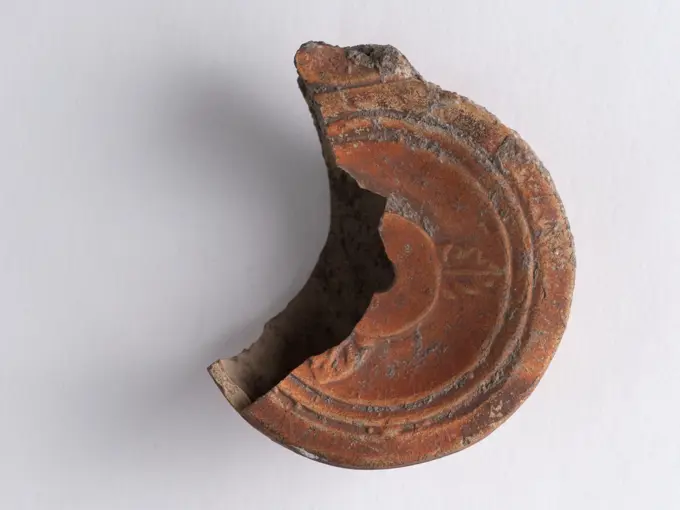
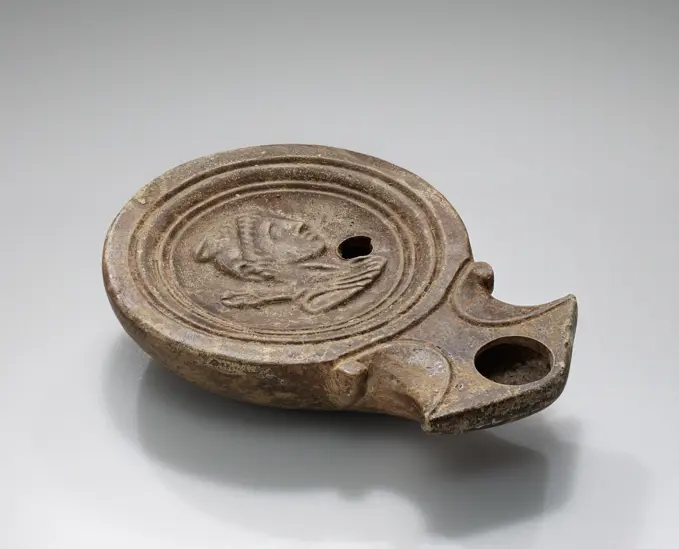
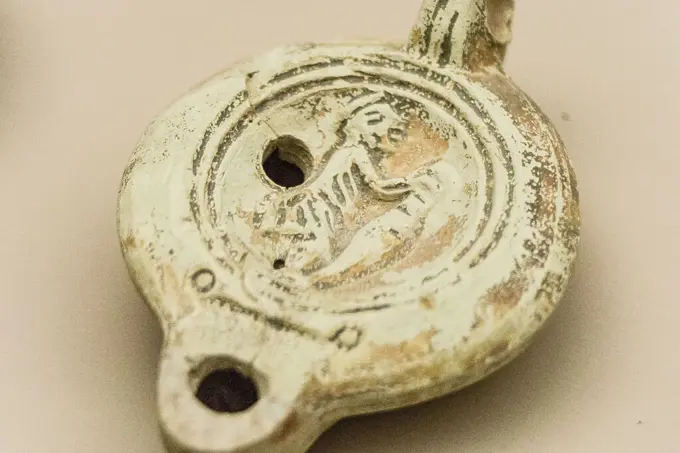
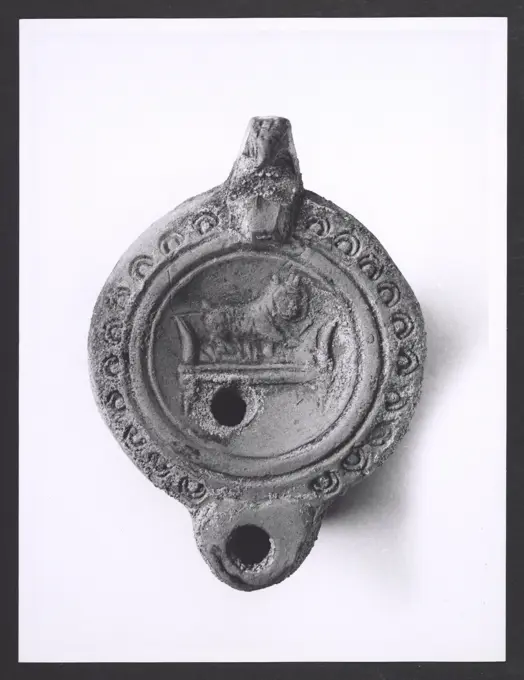
Oil lamp. Spout beak, leaves. Street Ste Catherine. Terracotta. Late Antiquity. Paris, Carnavalet museum. 50208-20 Late antique, oil lamp, terracotta, ancient
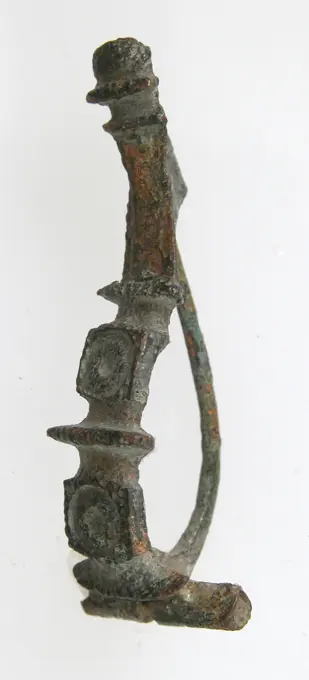
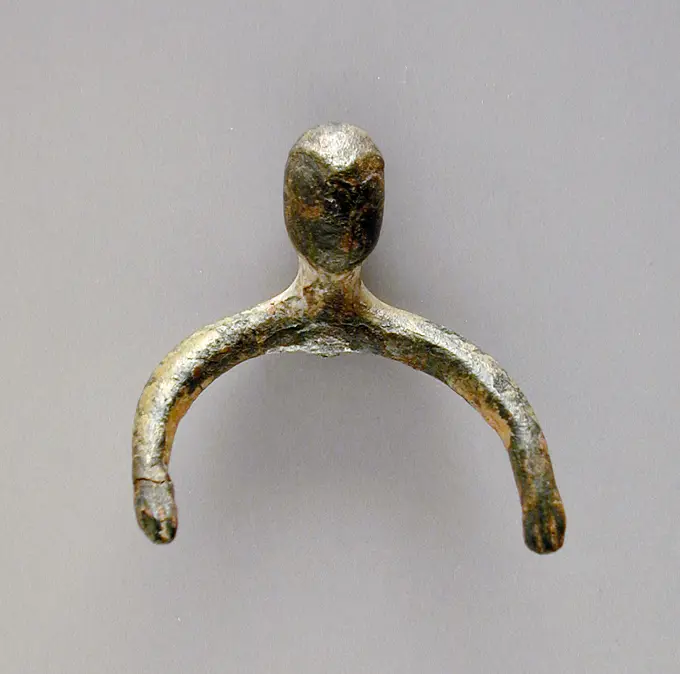
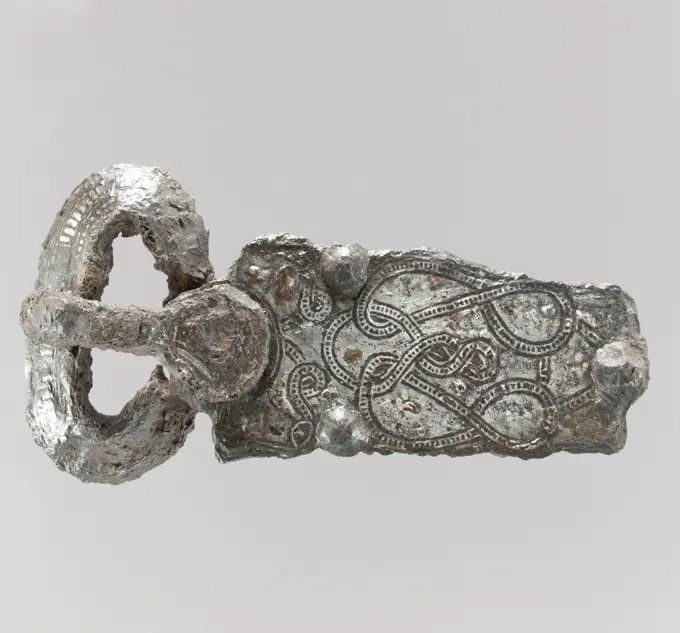
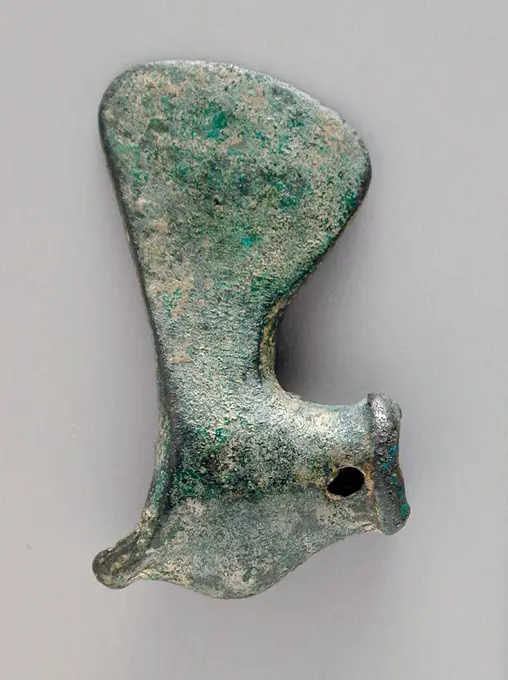
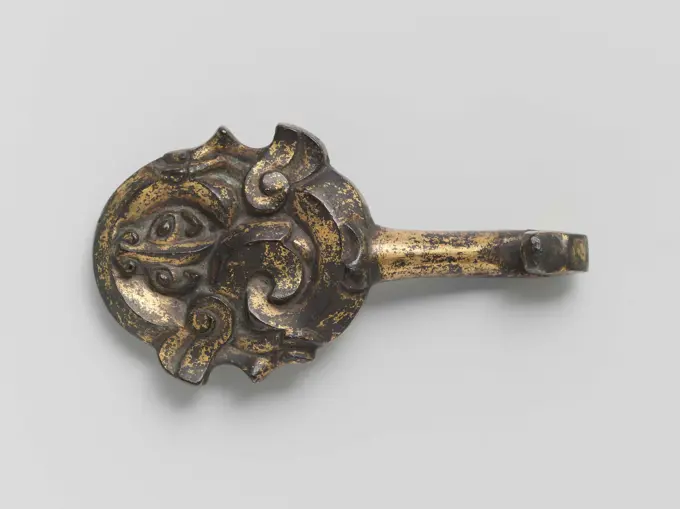
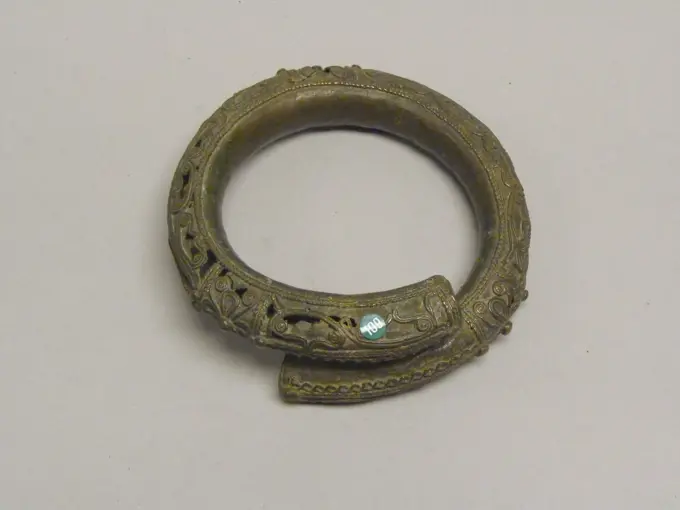
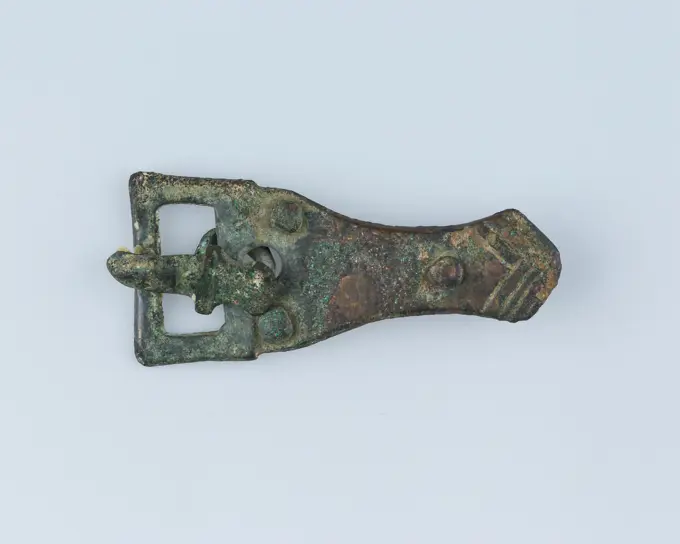
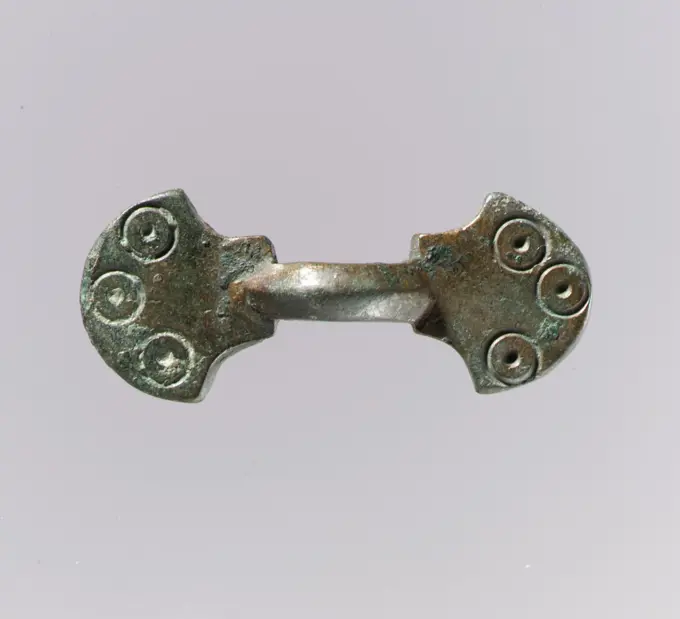
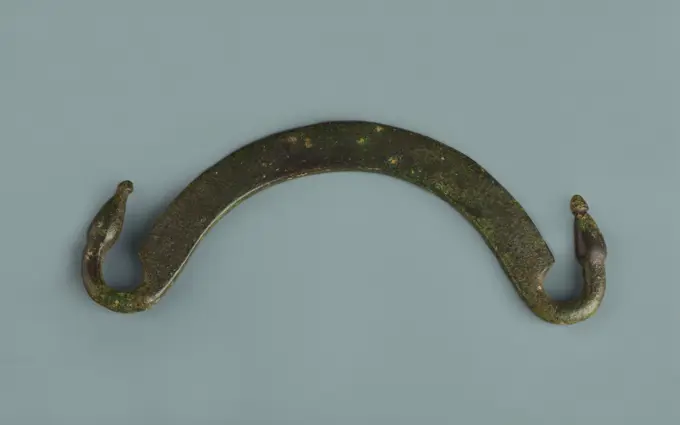
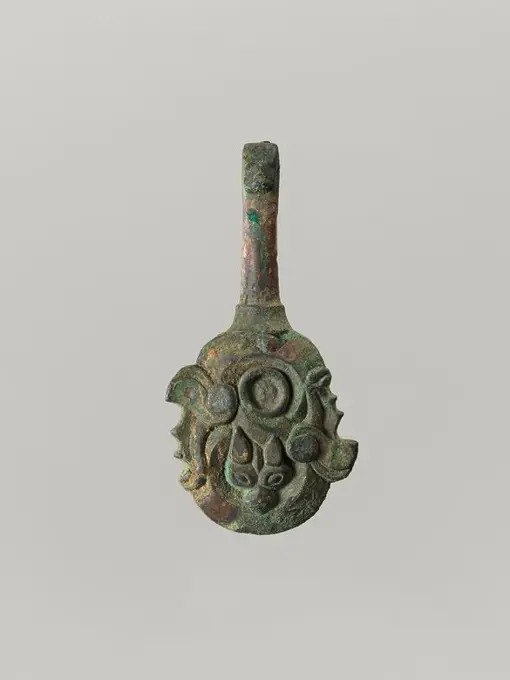
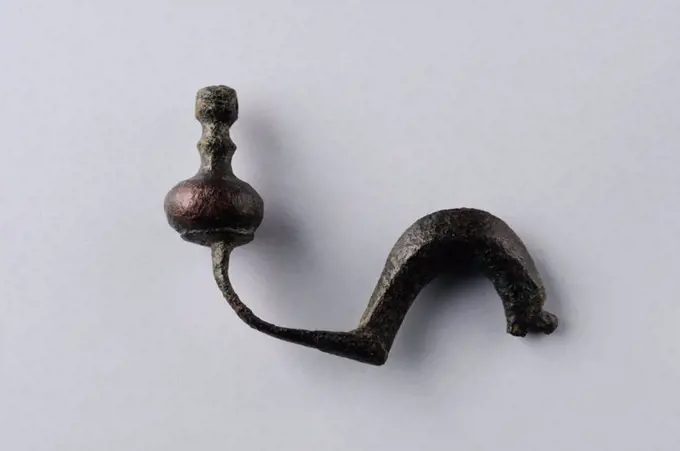
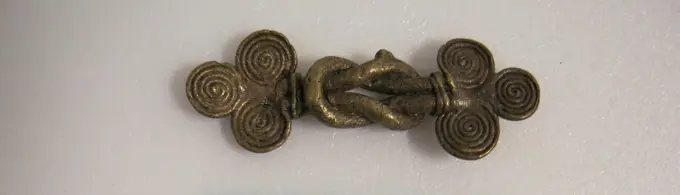
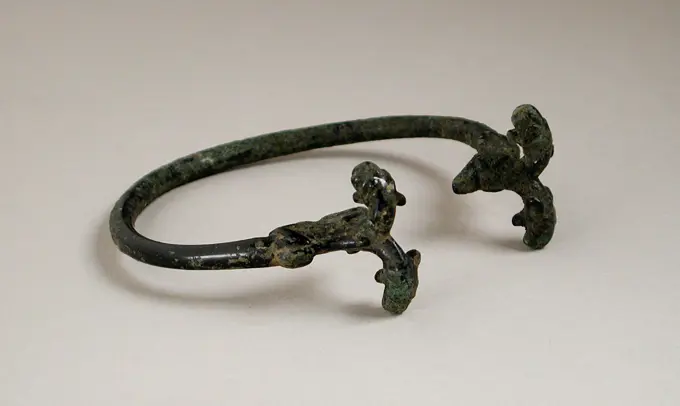
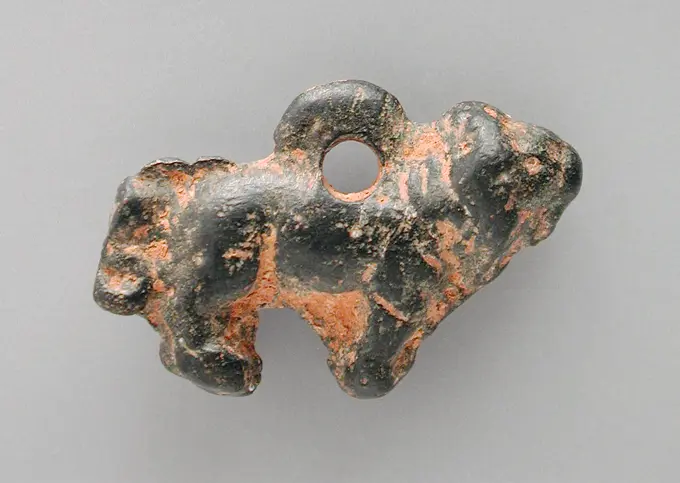
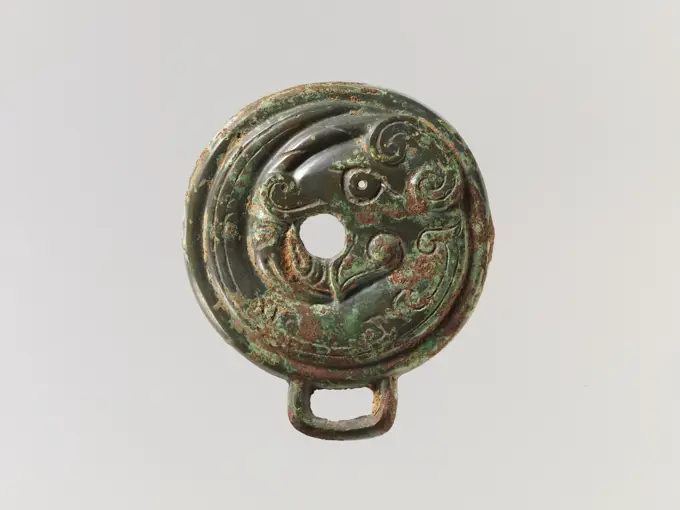
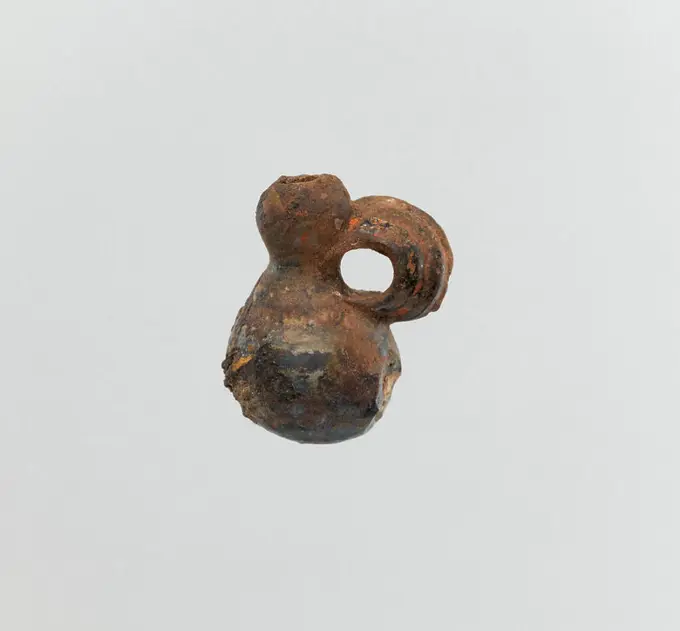
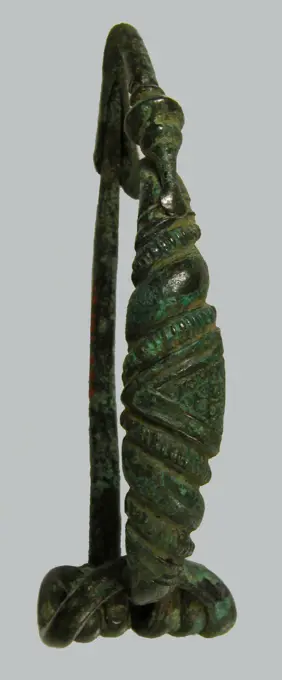
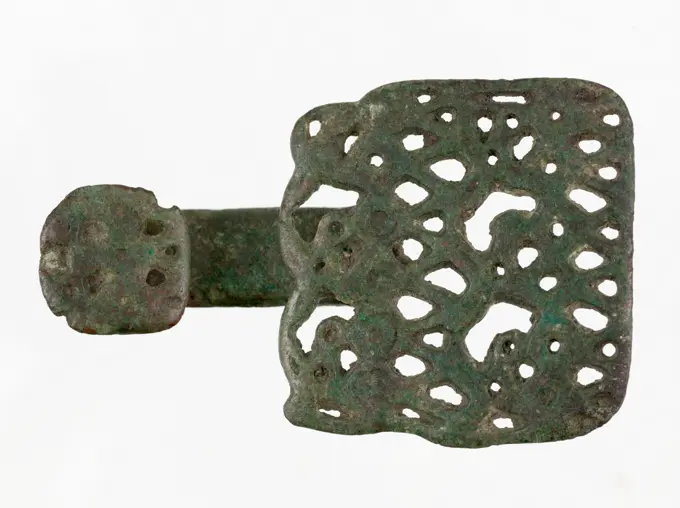
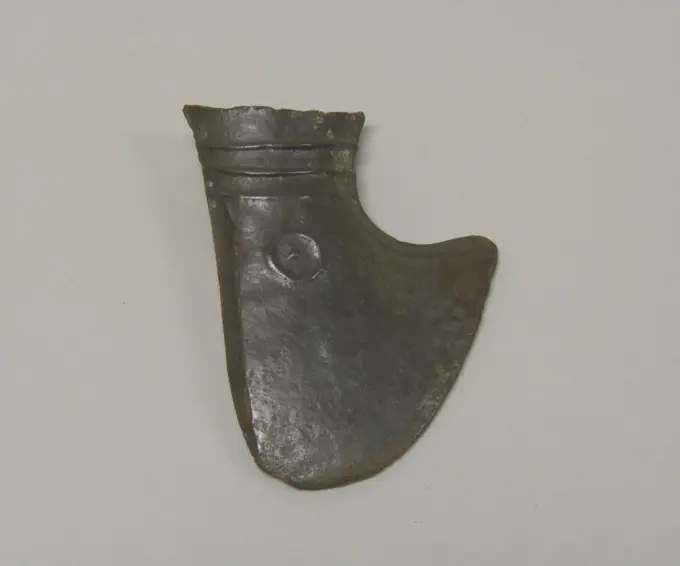
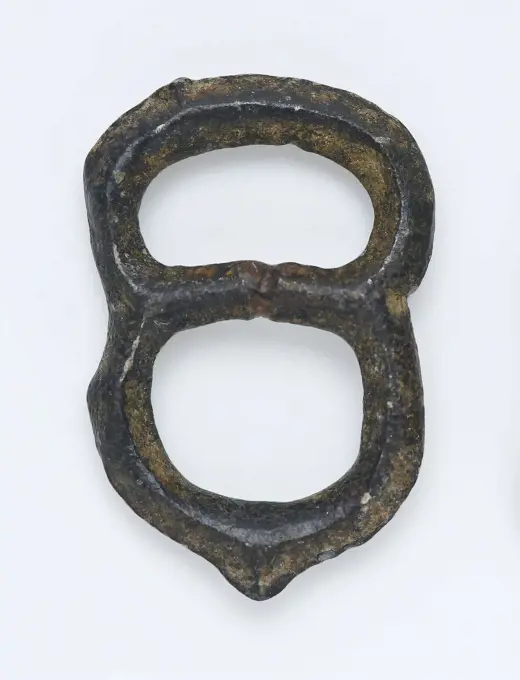
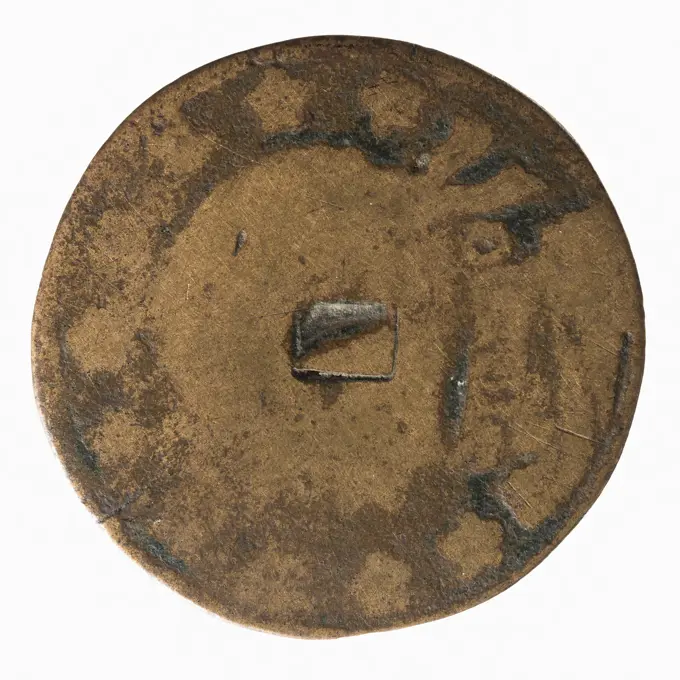
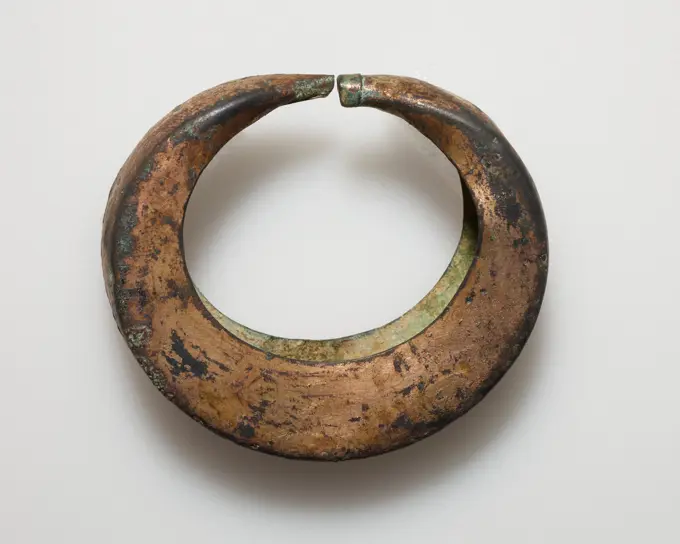
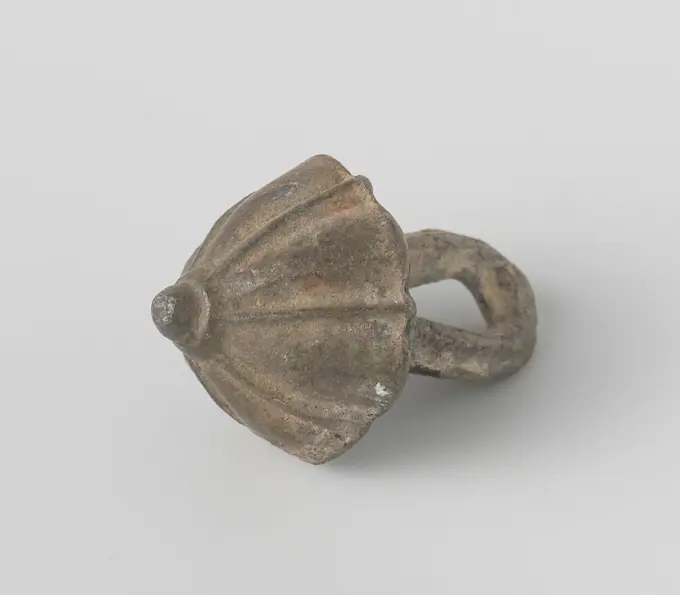
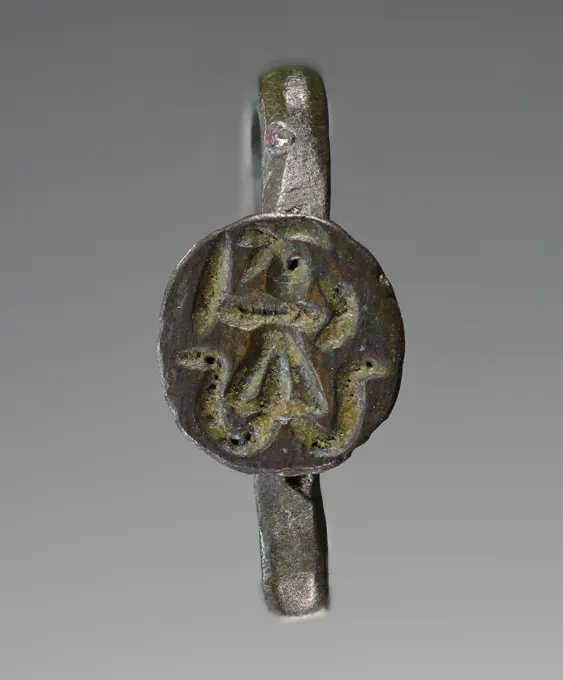
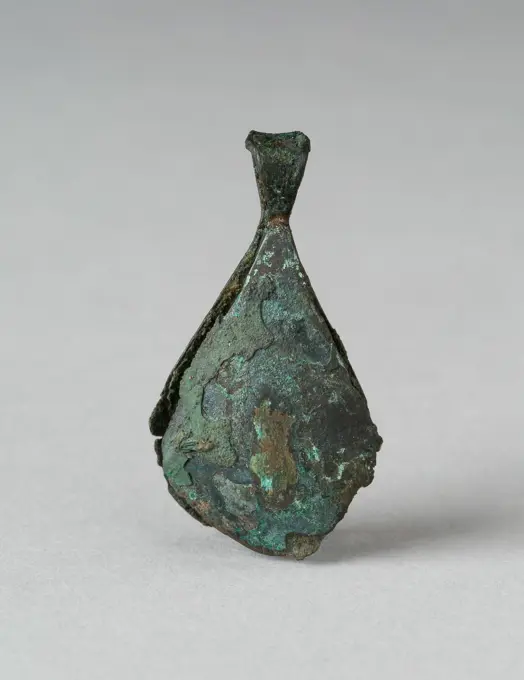
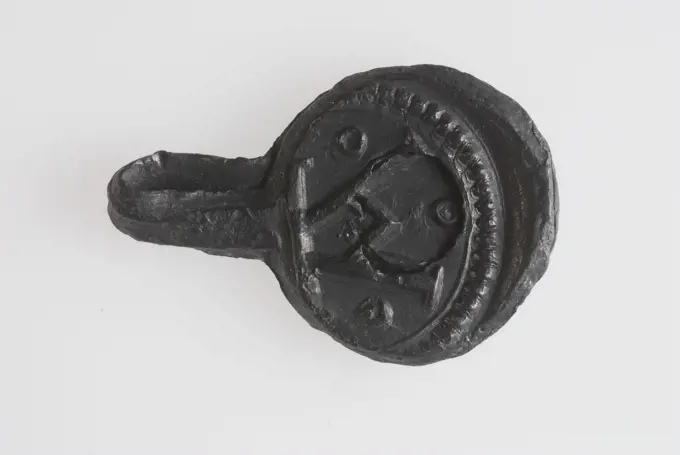
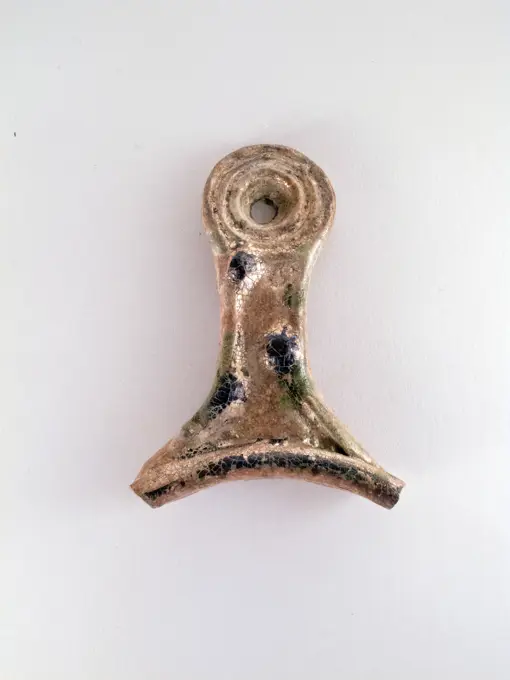
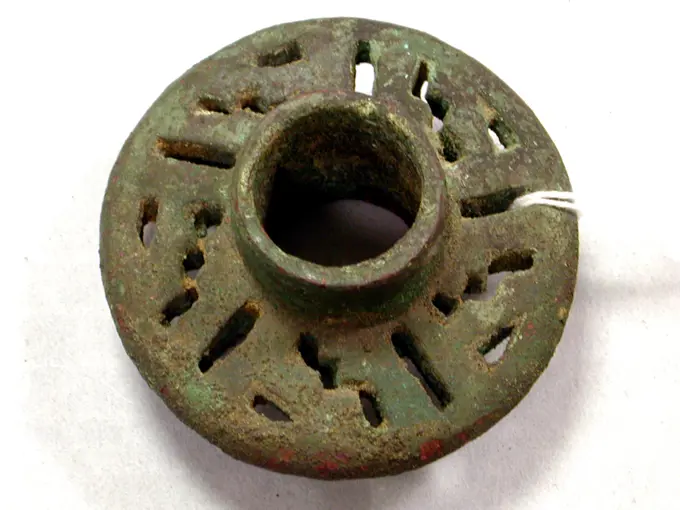
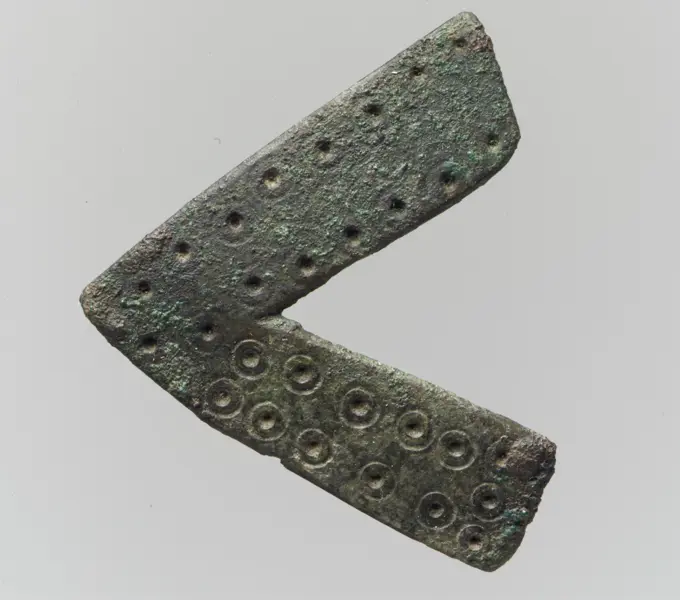
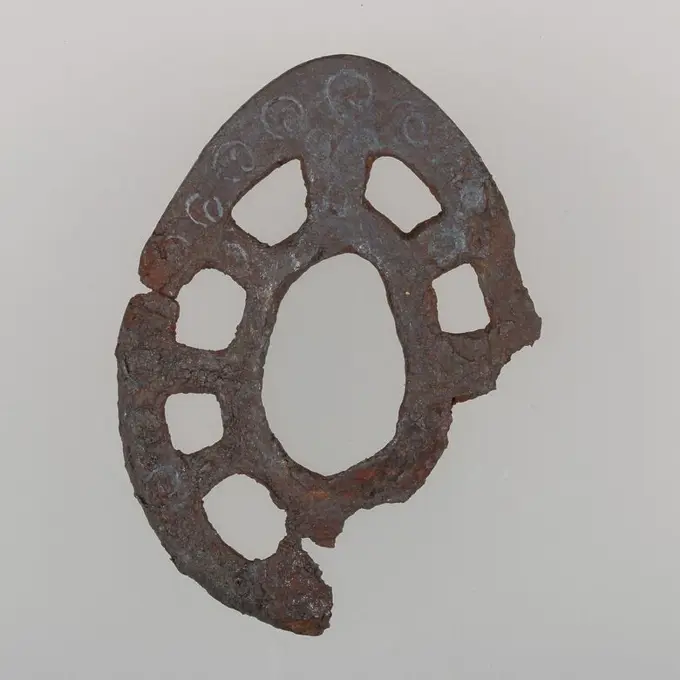
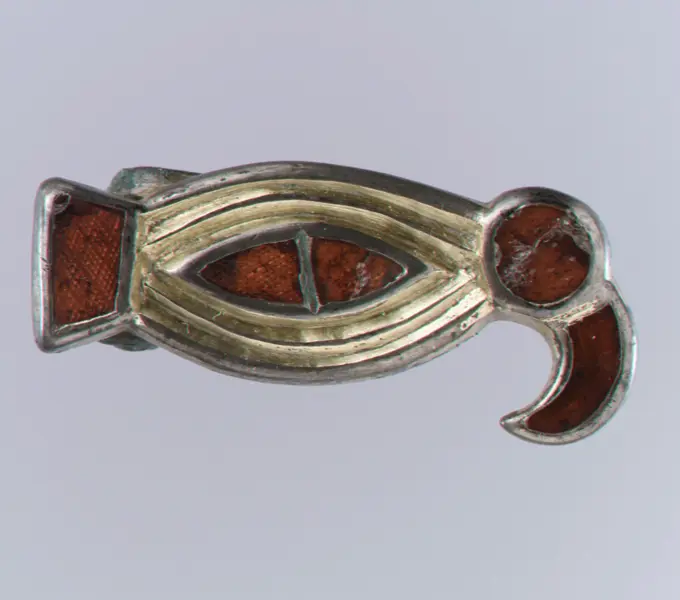
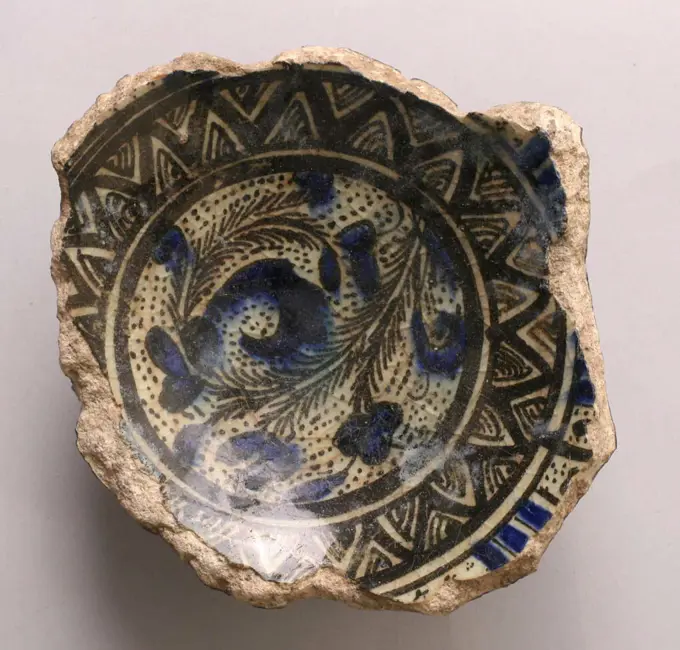
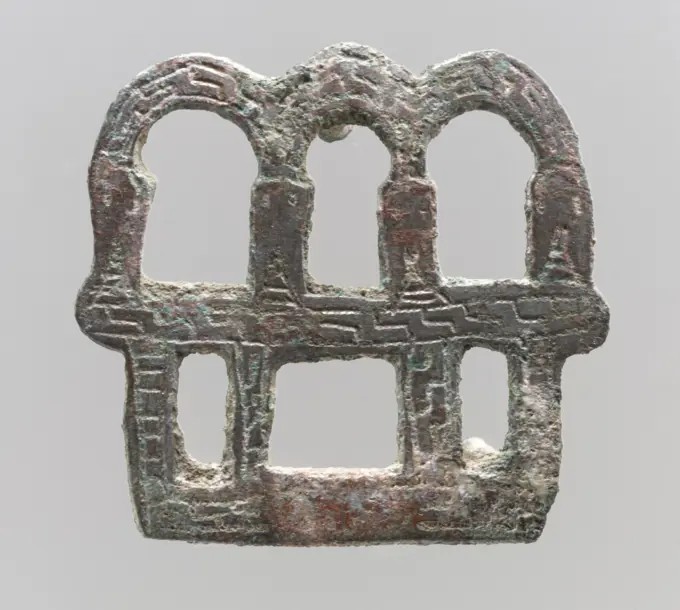
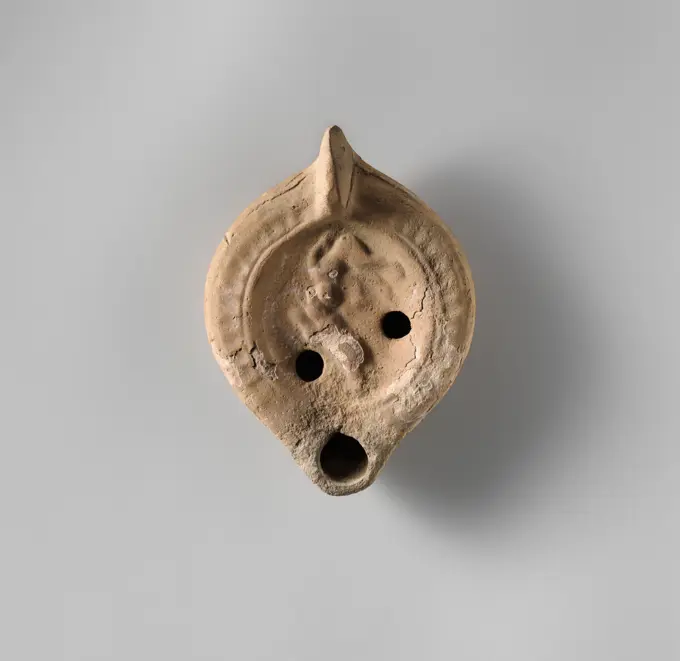
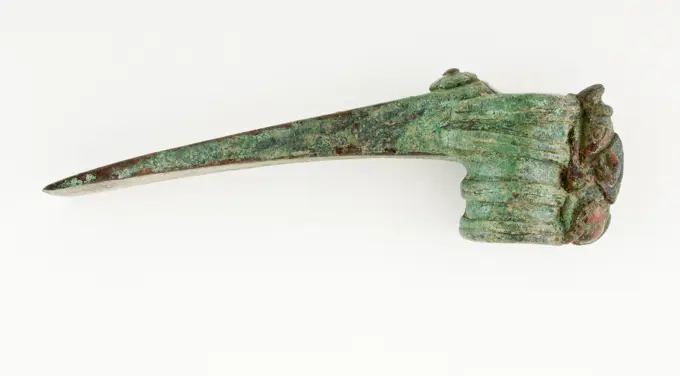
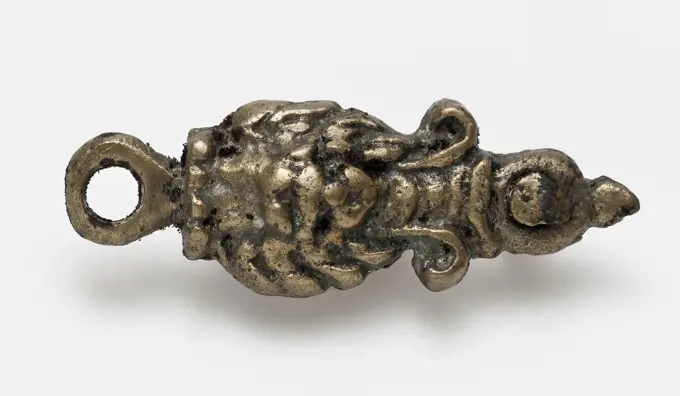
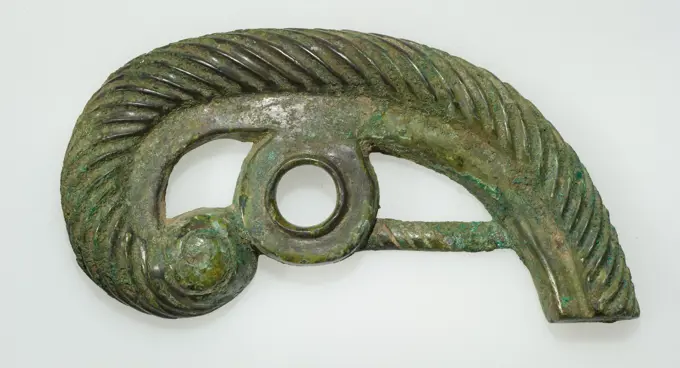
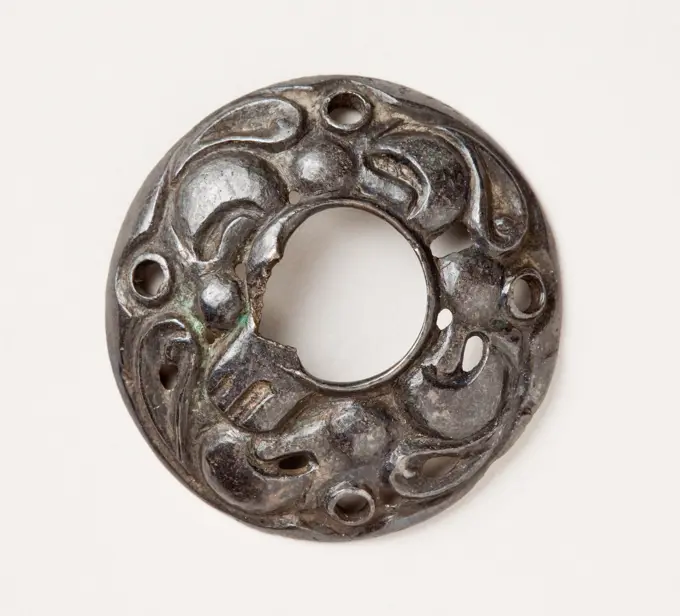
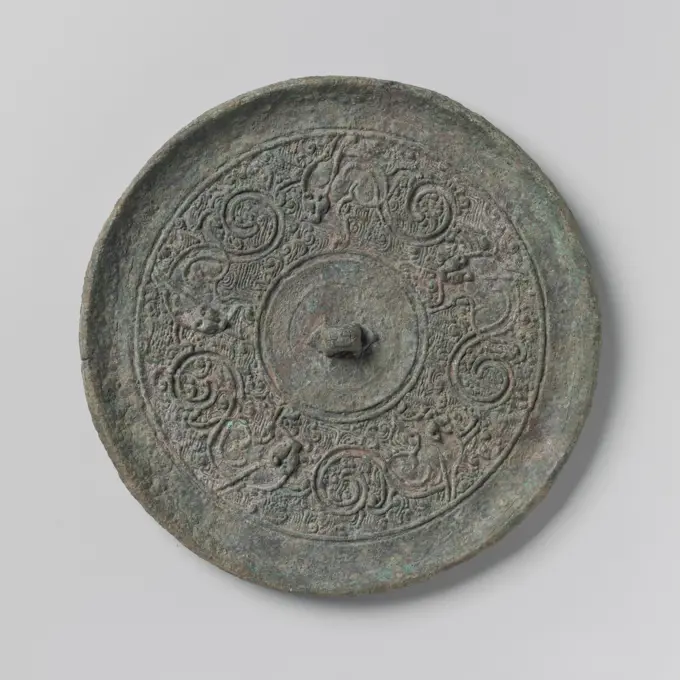
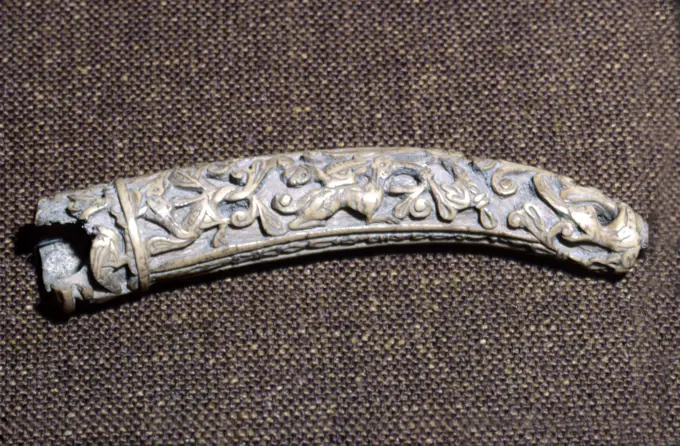
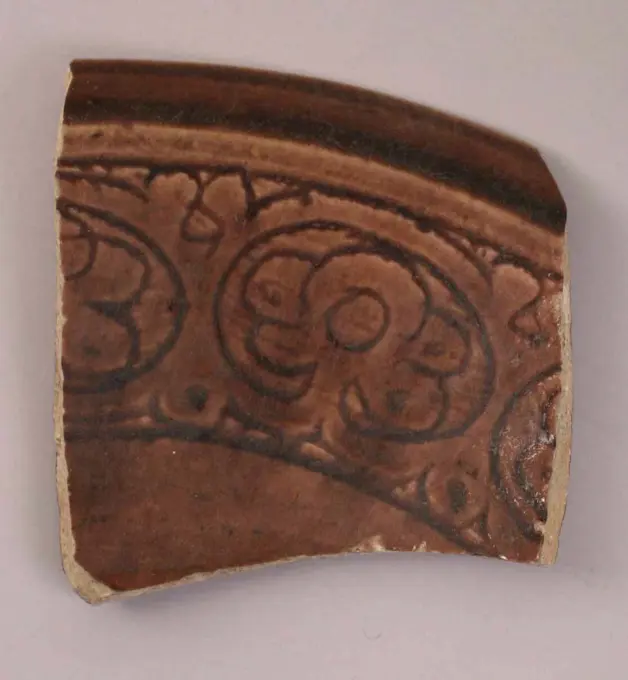
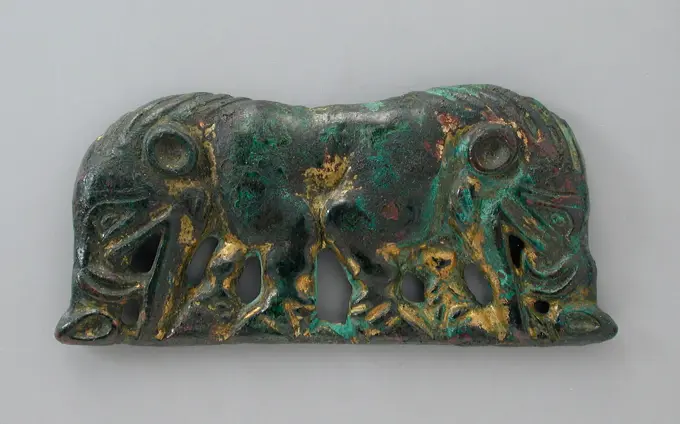
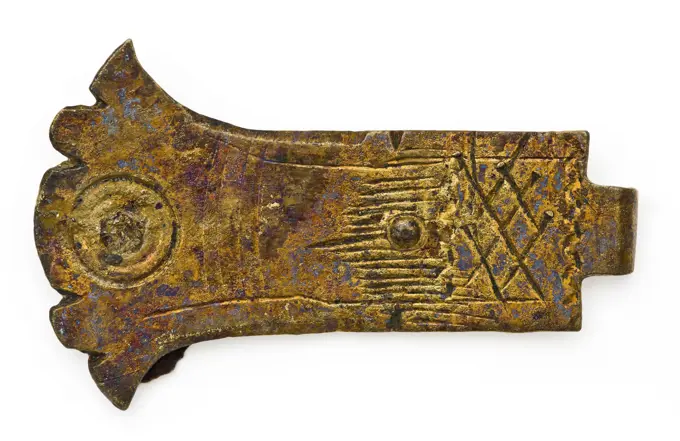
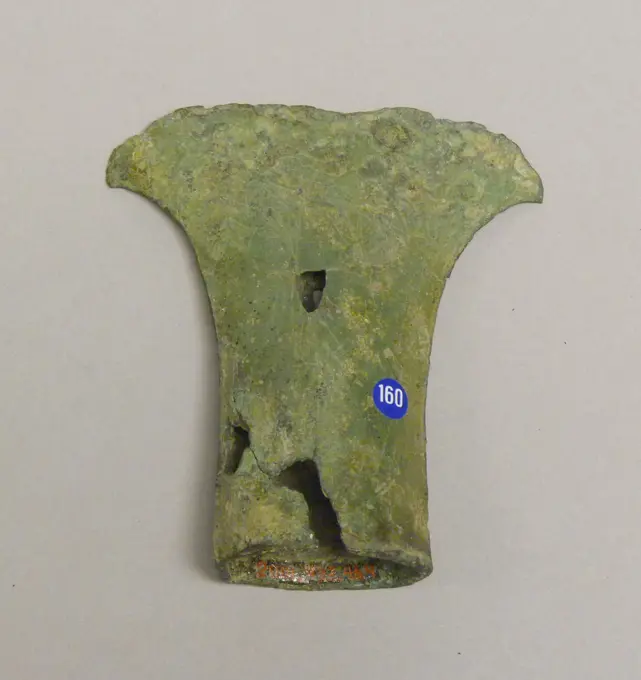
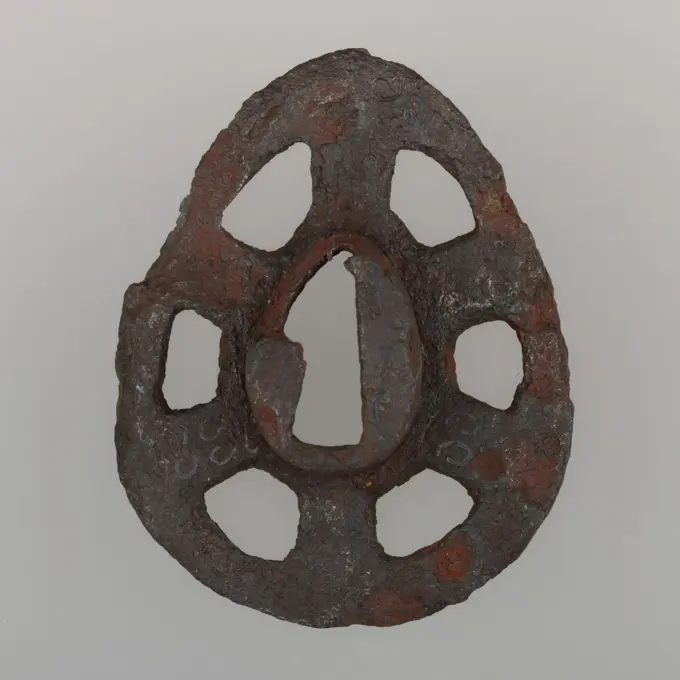
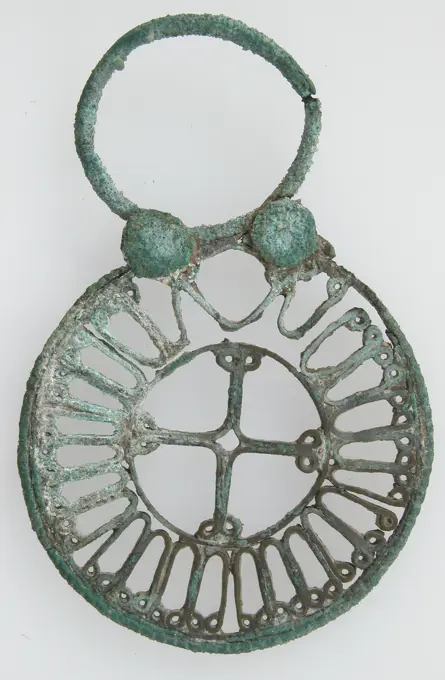
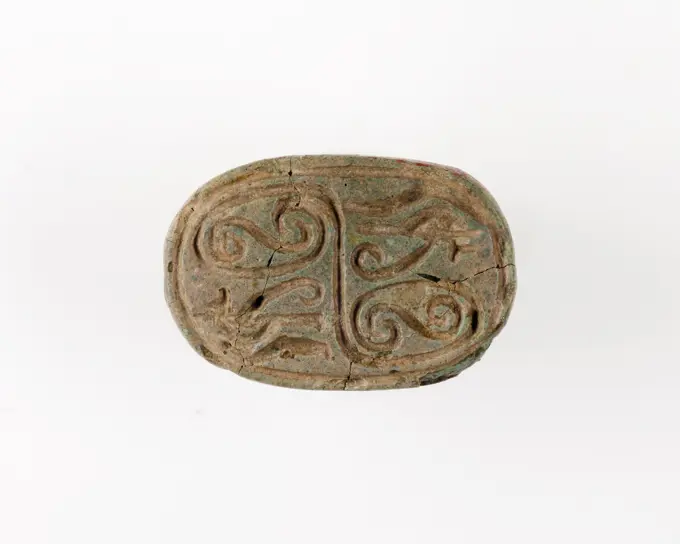
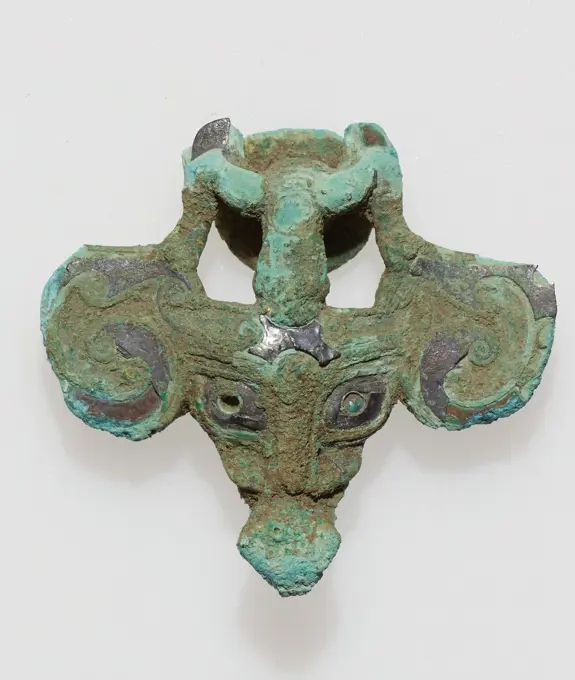
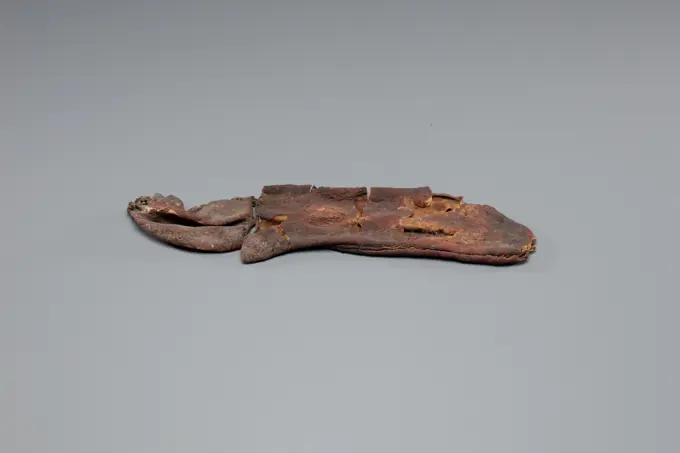
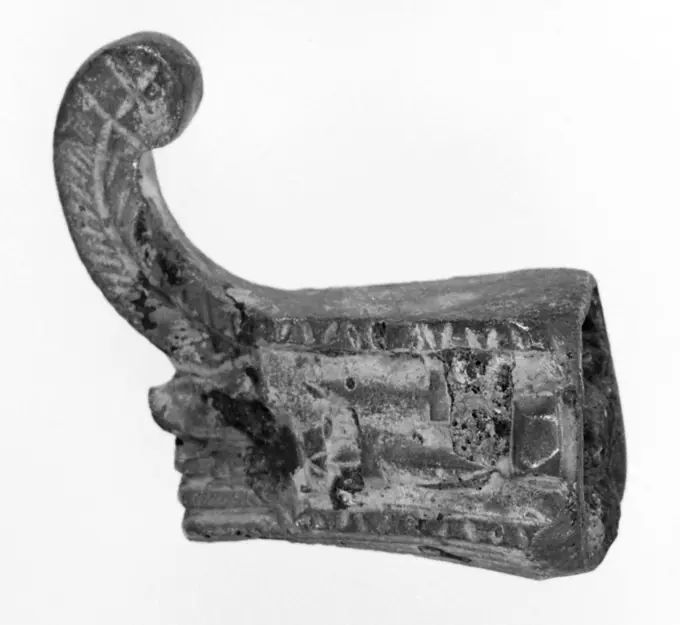
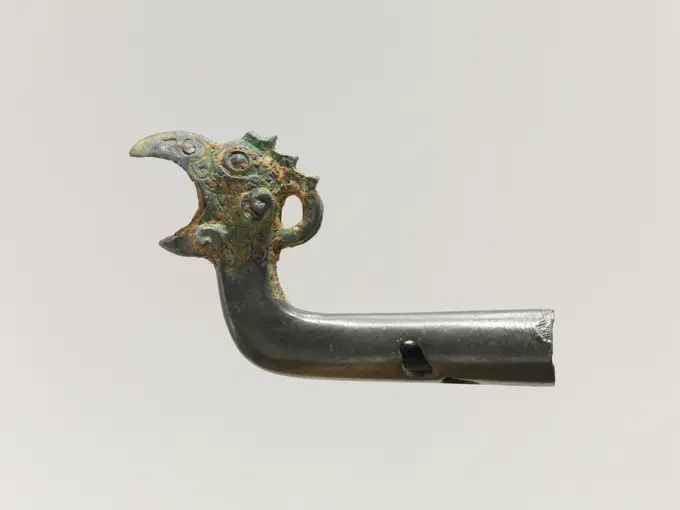
Bird-head finial 5th-3rd century B.C. China. Bird-head finial. China. 5th-3rd century B.C.. Bronze. Eastern Zhou dynasty, Warring States period (475-221 B.C.). MetalworkBow Brooch 3rd century Late Roman. Bow Brooch 466239Vessel Handle. Iran, circa 150 B.C.-A.D. 225. Tools and Equipment; handles. Bronze, castBelt Buckle 7th century Frankish or Burgundian. Belt Buckle 465031 Frankish or Burgundian, Belt Buckle, 7th century, Iron with silver inlay and copper-alloy, Overall: 4 15/16 x 2 9/16 x 13/16 in. (12.6 x 6.5 x 2 cm). The Metropolitan Museum of Art, New York. Gift of J. Pierpont Morgan, 1917 (17.191.318a-c)Miniature Shaft-hole Axehead. Iran, Luristan, circa 2350-2000 B.C.. Arms and Armor; axes. Bronze, cast. Belt hook of gold-plated bronze.Anklet 500 B.C.-A.D. 300 Thailand. Anklet 53882Buckle ca. 50 B.C.-ca. 500 A.D. Gallo-Roman. Buckle. Gallo-Roman. ca. 50 B.C.-ca. 500 A.D.. Bronze. Miscellaneous-Buckles & OrnamentOil lamp. Spout beak, leaves. Street Ste Catherine. Terracotta. Late Antiquity. Paris, Carnavalet museum. 50208-20 Late antique, oil lamp, terracotta, ancientEqual-Arm Brooch 7th century Frankish. Equal-Arm Brooch 465001 Frankish, Equal-Arm Brooch, 7th century, Copper alloy, Overall: 1 7/16 x 9/16 x 1/2 in. (3.6 x 1.4 x 1.2 cm). The Metropolitan Museum of Art, New York. Gift of J. Pierpont Morgan, 1917 (17.191.292)HandleBelt Hook. Culture: China. Dimensions: W. 1 11/16 in. (4.3 cm); L. 3 3/8 in. (8.6 cm). Museum: Metropolitan Museum of Art, New York, USA.Bronze fibula , back foot type without needle . Length 45 mm Width 7 mm. ( 1 st - 3 rd CE ) - Roman period, from the " La Dehesa "- Archaeological site of Complutum in Alcalá de Henares ( Madrid ). SPAIN.Goldweight Linked Knots, 19th-20th century, 2 1/4 x 13/16 in. (5.72 x 2.06 cm), Brass, Ghana, 19th-20th centuryBracelet. Western Iran, circa 1000-650 B.C.. Jewelry and Adornments; bracelets. Bronze, castAmulet of a Lion. Egypt, Old Kingdom - New Kingdom (2687 - 1081 BCE). Jewelry and Adornments; amulets. Unidentified stone (steatite ) carved in the roundLamp. UnknownBridle Cheekpiece 11th-10th century B.C. China. Bridle Cheekpiece. China. 11th-10th century B.C.. Bronze. Western Zhou dynasty (1046-771 B.C.). MetalworkGlass pendant in the form of a miniature jug or gourd. Culture: Roman. Dimensions: Other: 11/16 x 5/8 x 7/16 in. (1.8 x 1.6 x 1.2 cm). Date: ca 4th-5th century A.D..Deep cobalt blue, appearing black, with same color handle; trail in pale blue.Thick, bulging rim; concave neck; piriform body; rounded bottom; large ring handle (for suspension) trailed on to top of body, neck, and underside of rim.Applied, marvered trail wound spirally on body. Complete, except for large, weathered chip in body; some pitting, dulling, and encrustation. Museum: Metropolitan Museum of Art, New York, USA.Bow-Shaped Brooch 4th century B.C. Celtic. Bow-Shaped Brooch. Celtic. 4th century B.C.. Copper alloy. Metalwork-BronzePlate. Bronze. 6th century BC. AD northeast China. Paris, Cernuschi museum. 59515-5 Antiquity, bronze, Chinese, ancient, plateAsymmetric Pediform Hafted Ax with Eye 500 B.C.-A.D. 300 Vietnam (North) or Thailand (North). Asymmetric Pediform Hafted Ax with Eye. Vietnam (North) or Thailand (North). 500 B.C.-A.D. 300. Bronze. Bronze and Iron Age period. MetalworkCymbal. Cymbal 244532Anklet 500 B.C.-A.D. 300 Thailand. Anklet 53880Small pewter ornamental buckle, buckle in the shape of an 8, buckle fastener component soil find tin metal, archeologyBow Fibula 800 BCE-700 BCE Greece. This precious bronze object is a votive, or devotional gift, made as an offering to the gods. They come in many forms, such as animals, beads and brooches. Many seem once to have been attached to something else. Votives were hung from sacred trees or placed in sanctuaries around Greece. Once a shrine was full, the votives were ceremonially buried to make room for more offerings.. Bronze . Ancient GreekBraceletPin from the wreck of the East Indiesman Hollandia. Tools and Instruments, Sewing and Sailmaking, PIN; Fragm or Shaft With Bow, ID. NG 1980-27H3265.Lombard account token with head left, XIII-15th century Anonymous. "Lombard account token with head left, XIII-15th century". Copper. 1200-1400.Earring, from a collection of six, 11th-16th century, 2 x 2 1/4 x 9/16 in. (5.08 x 5.72 x 1.43 cm), Gold, Ecuador, Pre-ColumbianButton, conical with ribs and leafy eye. Knot, conical shape with six ribs that come together in a point and a leafy eye.Stud Button. UnknownDoor handle early 16th century German. Door handle 468864Ring with Engraved Bezel. UnknownHand guard, anonymous, 1180 - 1600 Almost round tsuba with a large mon in silver (Unome-Zogan) on the front with a number of smaller mono and silver mon (nunome-zoga) n to a green enameled stock; At the rear a diamond -shaped field with stylized tibulas; Under the central opening a round hole (udenuki-ana). Hirado iron (metal). gold (metal). silver (metal). Almost round tsuba with a large mon in silver (Unome-Zogan) on the front with a number of smaller mono and silver mon (nunome-zoga) n to a green enameled stock; At the rear a diamond -shaped field with stylized tibulas; Under the central opening a round hole (udenuki-ana). Hirado iron (metal). gold (metal). silver (metal).Kopystka z rękojeścią w kształcie postaci kobiecej. unknown, authorBoss, Pyramidal Hollow 500-700 Frankish. Boss, Pyramidal Hollow 465473 Frankish, Boss, Pyramidal Hollow, 500700, Copper alloy, Overall: 13/16 x 13/16 x 9/16 in. (2.1 x 2 x 1.5 cm). The Metropolitan Museum of Art, New York. Gift of J. Pierpont Morgan, 1917 (17.193.160)Strap or attachment plate of belt buckle, belt tongue fittings clothing accessories clothing soil find copper brass metal, w 3,6 cast punched riveted driven Double batter plate with hook. Belt tongue belonging to belt buckle Decoration consists of flowering plant archeology Rotterdam rail tunnel attaching fastening carrying carrying belt Ground finding: trajectory rail tunnel Rotterdam.Lazio Latina Sezze Antiquarium Comunale12. Hutzel, Max 1960-1990 German-born photographer and scholar Max Hutzel (1911-1988) photographed in Italy from the early 1960s until his death. The result of this project, referred to by Hutzel as Foto Arte Minore, is thorough documentation of art historical development in Italy up to the 18th century, including objects of the Etruscans and the Romans, as well as early Medieval, Romanesque, Gothic, Renaissance and Baroque monuments. Images are organized by geographic region in Italy, then by province, city, site complex and monument.Oval-Shaped Tweezers 1000-1400 Peru. Copper alloy . ChimúLinen lead with teasel, weapon of Augsburg, cloth seal hallmark ground find lead metal, poured beaten Linen lead with on the front in pearl ring the coat of arms of Augsburg flower of the card thistle on carved pillar and around small crosses or lilies the reverse side in pearl ring the of Augsburg and on both sides small zero Closed collapsed, archeology authentication government cloth trade textile trade trade guildSpindle Whorl, 700s - 900s. Iran, early Islamic period, 8th - 10th century. Bone, incised; overall: 0.6 x 1.8 x 1.8 cm (1/4 x 11/16 x 11/16 in.).Vase fragment Roman. Vase fragment. Roman. Terracotta; lead-glazed ware. VasesSword Guard (Tsuba). Culture: Japanese. Dimensions: H. 3 3/8 in. (8.6 cm); W. 2 7/8 in. (7.3 cm). Date: ca. 3rd century-710. Museum: Metropolitan Museum of Art, New York, USA.Hinge, anonymous, -500 --200 Rich play of arabesken, located in different levels; Part of a few. China bronze (metal) Rich play of arabesken, located in different levels; Part of a few. China bronze (metal)Copper Openwork Mace Head 3rd century B.C.-A.D. 2nd century Vicús. Copper Openwork Mace Head 315484Belt Fitting middle of 6th century Frankish. Belt Fitting 465438 Frankish, Belt Fitting, middle of 6th century, Copper alloy, Overall: 1 5/8 x 1 7/16 x 5/16 in. (4.2 x 3.6 x 0.8 cm). The Metropolitan Museum of Art, New York. Gift of J. Pierpont Morgan, 1917 (17.193.130)Sword Guard (Tsuba). Culture: Japanese. Dimensions: H. 3 1/8 in. (7.9 cm); W. 2 3/8 in. (6 cm). Date: ca. 3rd century-710. Museum: Metropolitan Museum of Art, New York, USA.Large Inlaid Bronze Cobra Element. Egypt, Late Period - Ptolemaic Period (664 - 30 BCE). Sculpture. BronzeThree -pointed fragment. Bronze. Cernuschi Museum, Asia Museum of Asia in the city of Paris.Bird-Shaped Brooch 500-600 Frankish The dress of Frankish women generally consisted of a tunic, cinched by a belt from which hung an array of pendants. A wrap or cloak went over the tunic. Shoes and hosiery, fastened with buckles, covered the legs. Earrings, necklaces, and hairpins completed the ensemble.Aspects of this dress changed from the 300s to the 600s, and brooches in particular convey changes in taste. From the 300s to the 500s, pairs of small brooches, in an array of inventive shapes, held the wrap in place. By the 600s, a single large disc brooch, usually elaborately decorated, served the same function. No other piece of jewelry is more characteristic of Frankish dress than the brooch, and no other better demonstrates the virtuosity of Frankish metalworkers.. Bird-Shaped Brooch. Frankish. 500-600. Silver-gilt, garnets with patterned foil backings. Metalwork-SilverParrotOrnament.   Maker: UnknownMiniature oil lamp, 1st century, Monographic Museum of Conimbriga, city of the Conventus Scallabitanus, district of Coimbra, Portugal.Fragment of a Bowl 14th century. Fragment of a Bowl 445172Staff Base. Egypt, Late Period, 712-332 B.C.. Sculpture. BronzeFan Holder. Egypt, New Kingdom (1569 - 1081 BCE). Tools and Equipment. WoodEénschijfsblok, anonymous, c. 1590 - c. 1596 block Ship section, one -slice block, half of the house present, with disc.  wood (plant material) cutting  Nova Zembla. Saving HuysSpindle Whorl A.D.1-500 Peruvian; north coast (). Spindle Whorl 308913Buckle from the Visigoth citadel Puig Rom. 7th century.Klamra 2-częściowa. unknown, authorSpindle Whorl 9th-15th century Mexican. Spindle Whorl 315827Bliżej Kultury Gepner, Stanisław (1889 1965)False Coin, Penny, Mieszko II (1025 1031)Standard FinialOpenwork Plaque 7th century Frankish. Openwork Plaque 464981 Frankish, Openwork Plaque, 7th century, Copper alloy, silvered or tinned surface, Overall: 1 1/2 x 1 7/16 x 3/8 in. (3.8 x 3.6 x 0.9 cm). The Metropolitan Museum of Art, New York. Gift of J. Pierpont Morgan, 1917 (17.191.274)Terracotta oil lamp 2nd century A.D. Roman Loeschcke Type 8. Mold-made, with unpierced handle. Discus: a scene, comprising two ill-defined figures, possibly to be viewed from the right; a standing man leans forward with head bent, facing left, and an animal leaps forward from the left with its front legs above the man's head; two filling holes above and below the animal. Shoulder: narrow pattern of indistinct ovules. Undefined, broad, flat base, with inscription: EIN (). Raised bar running from base to back of handle. Complete, except for chip in right side of handle.. Terracotta oil lamp. Roman. 2nd century A.D.. Terracotta. Mid Imperial. TerracottasAxe head with crouching lion, 900-400 BCE, 6 3/4 in. (17.15 cm), Bronze, Persia (Iran), 9th-4th century BCEAdze-head. Iran, Luristan, circa 1350-1000 B.C.. Arms and Armor; adzes. Bronze, castBrass garment closure or fitting with embossed cherub head, clothing accessory clothing fittings soil find copper brass metal, cast Closure with eye and hook-in pin. Flat underside slightly convex top with cherub head archeology Rotterdam Kralingen-Crooswijk Struisenburg Oostmaaslaan adorn fasten close confirm Soil discovery: Oostmaaslaan at the site of the Schieland pumping station.Bridle Piece, one of a pair, 600-220 BCE, 4 3/8 x 1/4in. (11.1 x 0.6cm), Bronze, China, 4th-3rd century BCESpindle Whorl 9th-15th century Mexican. Spindle Whorl 315823Pottery Fragment. Culture: Coptic. Dimensions: Overall: 2 13/16 x 3 3/4 x 1 11/16 in. (7.2 x 9.6 x 4.3 cm). Date: 4th-7th century. Museum: Metropolitan Museum of Art, New York, USA.Phalera. Southern Siberia and western Inner Mongolia, 5th-4th century B.C.. Tools and Equipment; horse trappings. Silver, castDisk Brooch ca. 550-650 Frankish. Disk Brooch 465383 Frankish, Disk Brooch, ca. 550650, Copper alloy, gold, glass paste cabochon, garnet, iron pin, Overall: 1 7/16 x 1/2 in. (3.7 x 1.2 cm). The Metropolitan Museum of Art, New York. Gift of J. Pierpont Morgan, 1917 (17.192.77)Mirror with monkeys, anonymous, -500 --200 In midfield five monkeys that grab each other by the tail. The stock is decorated with comma figures and bent bundles of thin lines. The patina is light green. China bronze (metal) In midfield five monkeys that grab each other by the tail. The stock is decorated with comma figures and bent bundles of thin lines. The patina is light green. China bronze (metal)Emilia-Romagna Ferrara Ferrara Museo Civico di Schifanoia78. Hutzel, Max 1960-1990 General Notes: INCOMPLETE RECORD--NEGATIVES PROCESSED, PRINTS FILED German-born photographer and scholar Max Hutzel (1911-1988) photographed in Italy from the early 1960s until his death. The result of this project, referred to by Hutzel as Foto Arte Minore, is thorough documentation of art historical development in Italy up to the 18th century, including objects of the Etruscans and the Romans, as well as early Medieval, Romanesque, Gothic, Renaissance and Baroque monuments. Images are organized by geographic region in Italy, then by province, city, site complex and monument.Anglo Saxon walrus ivory plaque. ENGLAND.Medalla colgante romana de bronce. Can Serra Museu de Mataró.Fragment 13th-14th century. Fragment 445534Plaque. Southern Siberia and western Inner Mongolia, 4th-3rd century B.C.. Sculpture; plaques. Gilt bronze, castEarring, delta-shaped with beads. Earring, delta-shaped with beads 243351Amulet of a Mummy Lying on a Bier 700 BCE-100 BCE Egypt. Faience . Ancient EgyptianBrass book fittings with linear decoration, decorative fittings ground find copper brass metal, whipped riveted engraved Double horseshoe with at the end hook Other end is flared and has 4 notches Two hole with pins archeology Rotterdam rail tunnel book close adornment Soil discovery: trajectory Rotterdam rail tunnel.Fragmentary silver bowl. Culture: Cypriot. Dimensions: diameter 6 7/8 in. (17.5 cm). Date: ca. 710-675 B.C..The focus of the banquet scene in the outer frieze is an offering table with a bowl probably filled with fruit. It is flanked by two reclining figures. On the right is a figure wearing an Egyptian crown, above whom an inscription may signify "king." Behind him appears a flute player. On the left of the table is a "queen" with an Egyptian wig, above whom are letters that certainly include the prefix "Cypro-" and give her name or title, perhaps Kypromedousa, "protectress of Cyprus." Behind her, from right to left, come three musicians, a large amphora, a table with vases and ladles, and three women bearing offerings: bowls, the legs of sheep or goats, and trussed geese. The banquet iconography, combining Egyptian and Phoenician features, indicates that the bowl would not have been a temple dedication. Museum: Metropolitan Museum of Art, New York, USA.Glass appliqué with theatrical mask 2nd-4th century A.D. Roman Translucent deep turquoise green, appearing black; vessel wall colorless.Thick oval appliqué attached to wall of vessel; on inside of wall, bulb.Grotesque female mask with straight-haired peruke, parted at middle and with an outturned fringe at sides of face; deep eye holes and large curved mouth cavity.Complete but with chipped and weathered edges, and most of nose missing; pitting, dulling, and iridescent weathering on all surfaces.The appliqué was probably attached to a large glass jug or bottle as decoration below the handle.. Glass appliqué with theatrical mask. Roman. 2nd-4th century A.D.. Glass; mold-pressed or stamped. ImperialSpindle Whorl, 700s - 900s. Iran, early Islamic period, 8th - 10th century. Bone, incised; overall: 0.8 x 1.8 x 1.8 cm (5/16 x 11/16 x 11/16 in.).Hafted Ax 500 B.C.-A.D. 300 Indonesia. Hafted Ax. Indonesia. 500 B.C.-A.D. 300. Bronze. Bronze and Iron Age period. MetalworkSword Guard (Tsuba) ca. 300-710 Japanese A tsuba is a sword guard and part of a sword mounting. It is mounted between the swords blade and grip to protect the users hands.. Sword Guard (Tsuba) 35135Cymbal. Cymbal 244535Cylinder Seal. Iran, late 2nd-early 1st millennium B.C.. Tools and Equipment; seals. BronzePlaque, Openwork 5th-6th century Byzantine. Plaque, Openwork 468228Scarab Decorated with Scrolls and Wedjat Signs ca. 1770-1670 B.C. Middle Kingdom The majority of design scarabs of the late Middle Kingdom (late Dynasty 12-Dynasty 13, ca. 1850 -1640 B.C.) are decorated with symmetric compositions of protective hieroglyphs and/or scrolls. This scarab shows wedjat-eyes on either side of a scroll. As the healed eye of Horus, the wedjat is a powerful symbol, representing health and regeneration.. Scarab Decorated with Scrolls and Wedjat Signs 557098Belt hook, 600-222 BCE, 2in. (5.1cm), Bronze, silver, China, 5th-4th century BCEDecorative batter from the wreck of the East India Hollandia. Fitting, decorative fitting or fragment; SLIGHTLY BE, OBLONG, WAVY OUTLINE, POINTED ENDS, 3 CIRCULAR HOLES ALONG CENTER.Pouch for Cosmetic Implements ca. 1550-1295 B.C. New Kingdom This leather pouch contained a group of cosmetic implements that included two razors (12.182.7d, .7f3), two pairs of tweezers and their wood mounts (12.182.7e1, 2; 12.182.7f1, 2), and a whetstone (12.182.7b).. Pouch for Cosmetic Implements. ca. 1550-1295 B.C.. Leather. New Kingdom. From Egypt, Upper Egypt, Thebes. Dynasty 18Fragment 14th-15th century. Fragment 445151Campania Napoli Naples S. Lorenzo Maggiore29. Hutzel, Max 1960-1990 Medieval: Sculpture, architecture, architectural sculpture (including Roman spolia) 13-14th century Chapter house; sarcophagi, gravestones; wall painting. Fragment of mosaic; sculptural fragments in the Sala Capitolare. Post-medieval: Architecture, architectural sculpture, ceiling painting fresco cycle; prints depicting Venice c. 1845 (4), sculpture; life-size creche figures dressed in original Neapolitan costume Church restored in 1882, 1926, 1944; excavations under the transept undertaken between 1958-1962, and in the cloister in 1976, have revealed remains of a Roman macellum (market), street, and the paleochristian basilica of the 6th c. AD. Antiquities: Pottery: black-glazed, archaic banded, domestic wares, bucchero; architectural terracottas, statuettes, lamps, sculpture fragments Object Notes: 3 color negatives with no prints at the end. General Notes: Most objects/paintings/frescoes unidentified. Three batches Finial. Unknown. Almost round tsuba with a few small mon against a background of small copper rods (Gomoku-Zogan) on both sides.Pendant: Lion's Head. Unknown