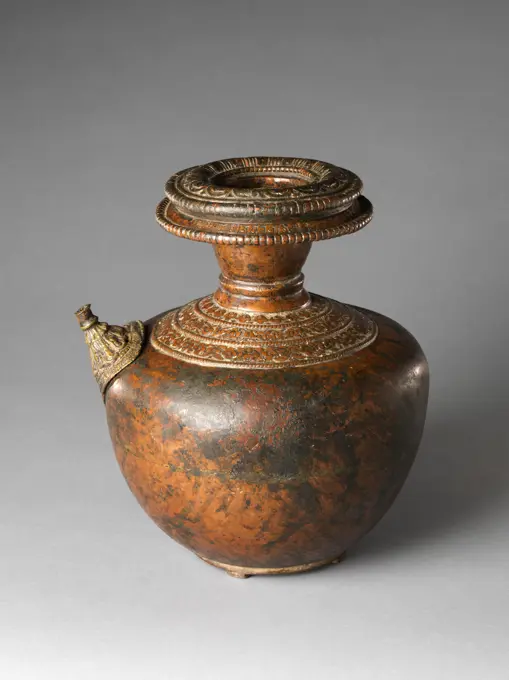
Ancient Pottery and Vessels

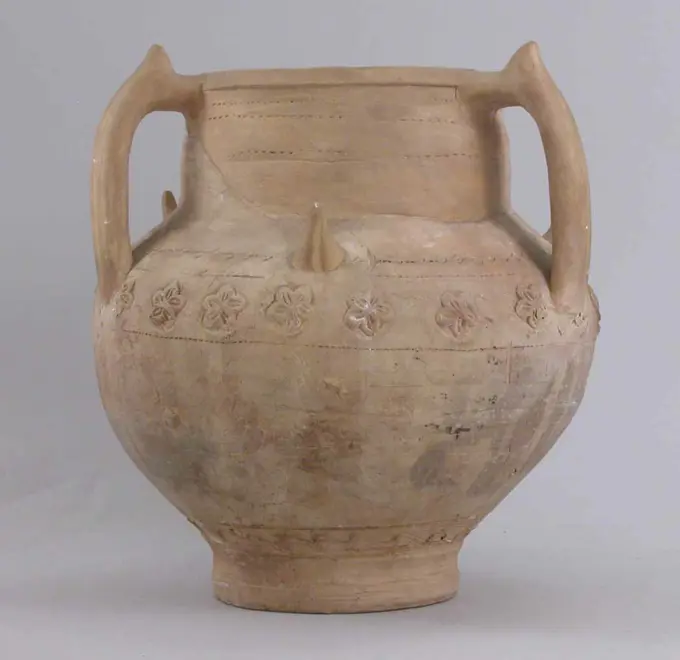
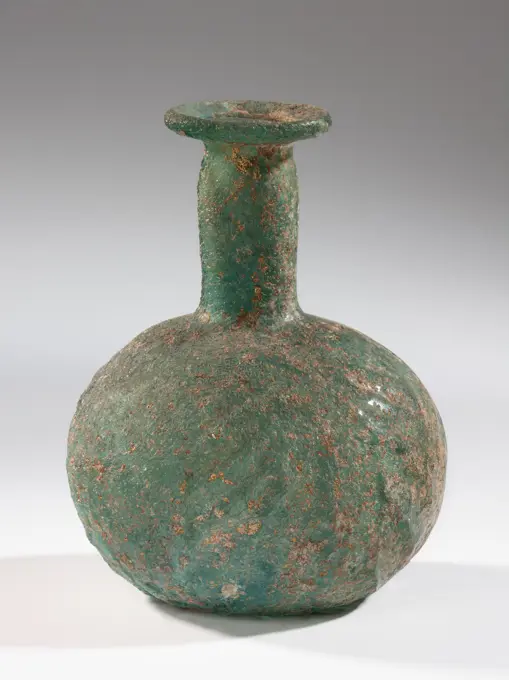
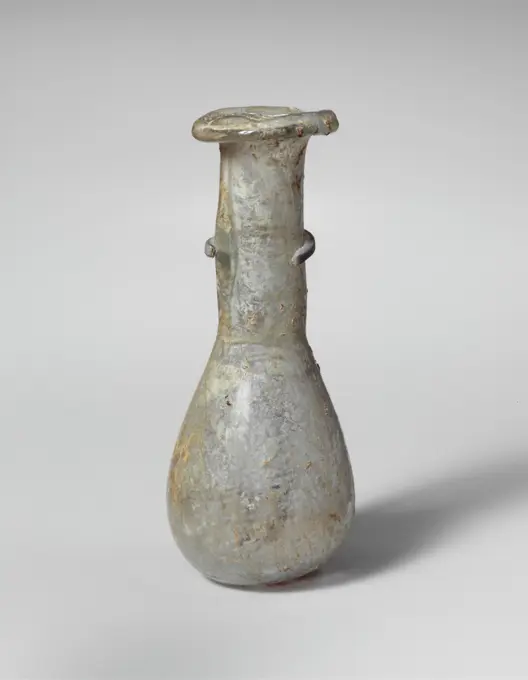
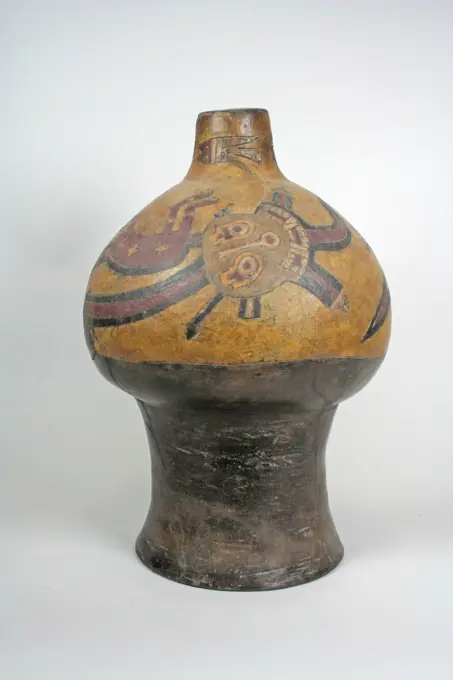
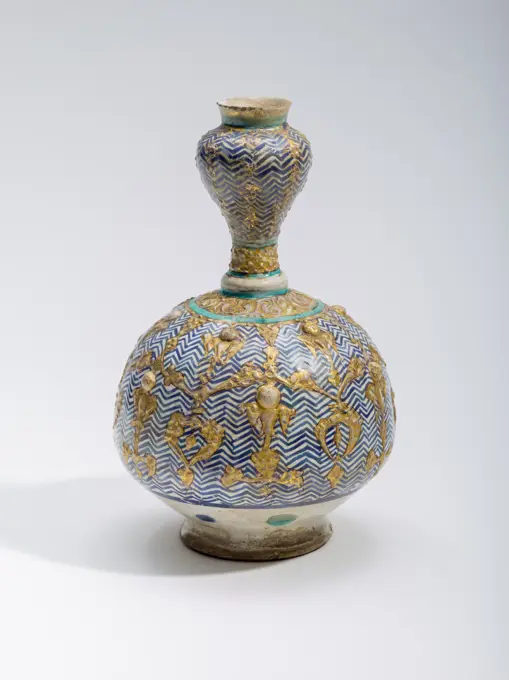
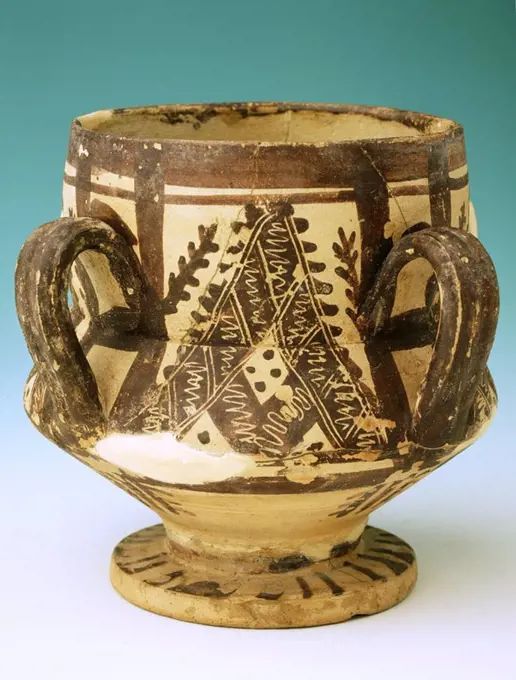
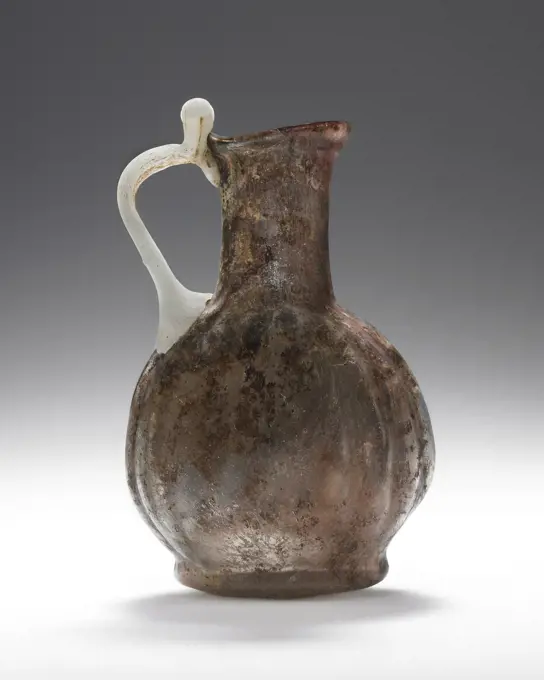
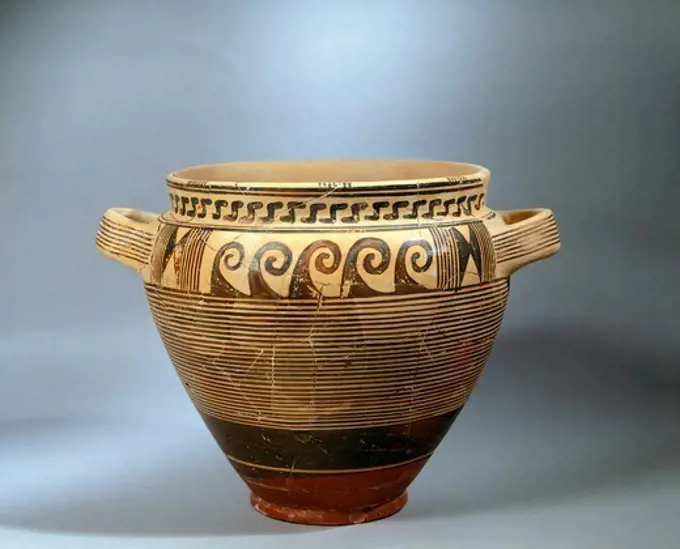
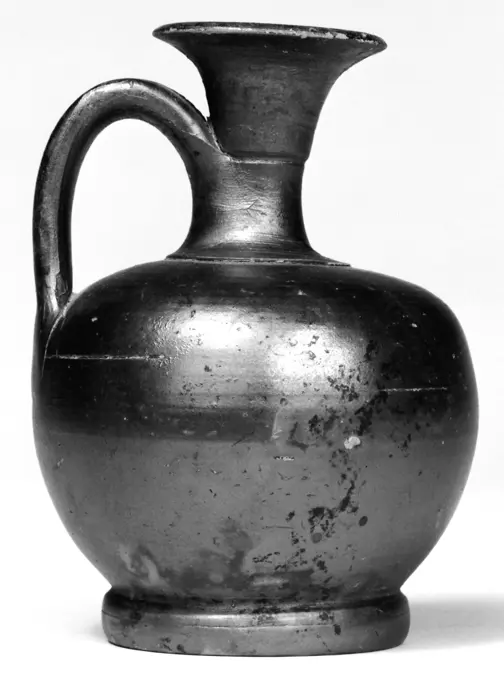
Collection of ancient pottery, including storage vessels and oil flasks. Rich textures and colors reflect distinctive cultural designs across centuries.
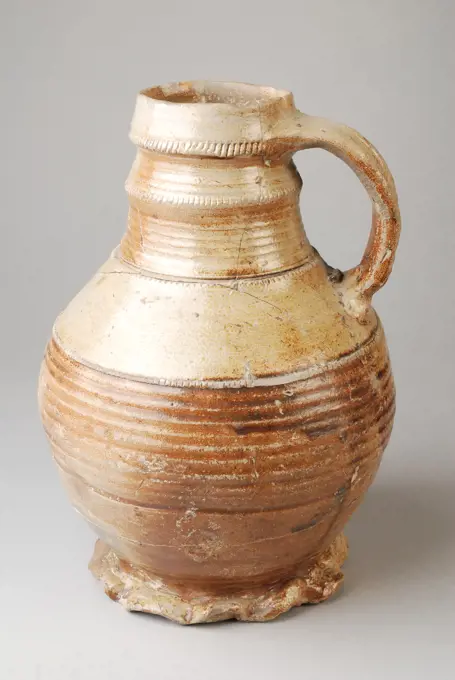
Stoneware jug with salt glaze, rad-temple decorations, pinched foot, water jug crockery holder soil find ceramic stoneware glaze salt glaze, twisted set radstamp decoration glazed baked Stoneware jug be pinched on foot Decorated with rad stamp Egg-shaped belly. Pretty wide neck. Fully covered with salt glaze Gray and green mottled archeology Capelle aan den IJssel House in Capelle castle Crockery utensils tableware water washing food preparation Soil discovery: water well 1393 house in Capelle Capelle aan den IJssel 1964.
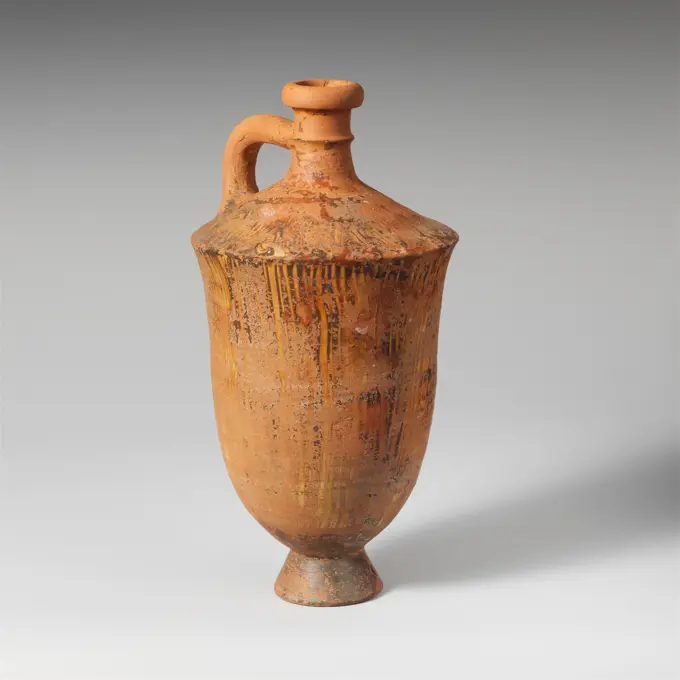
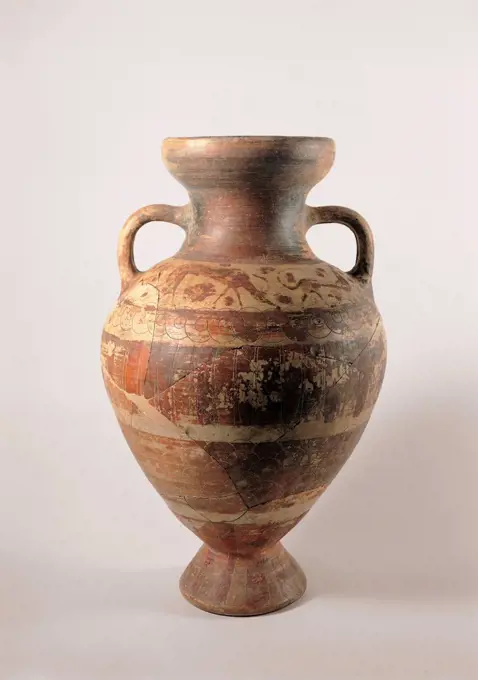
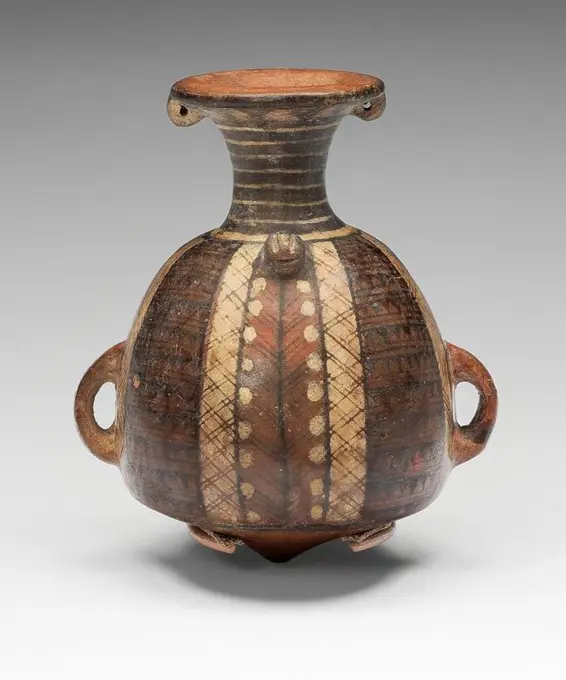
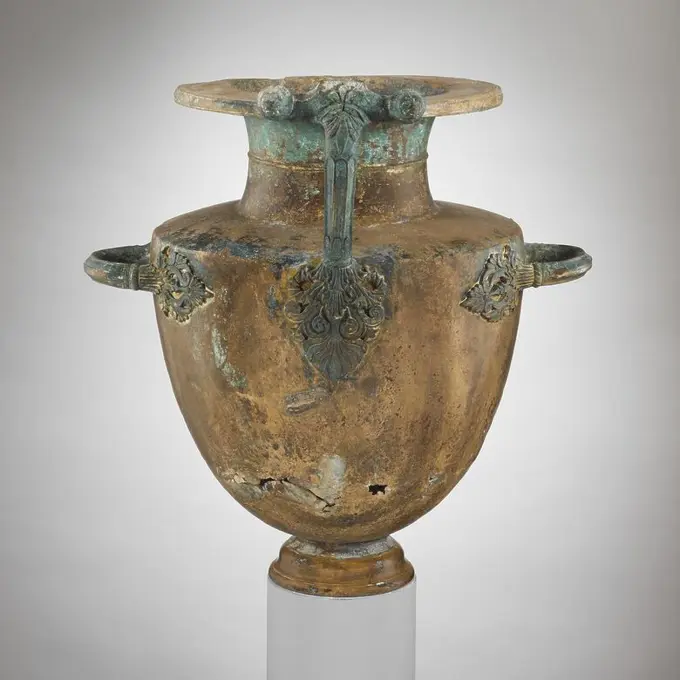
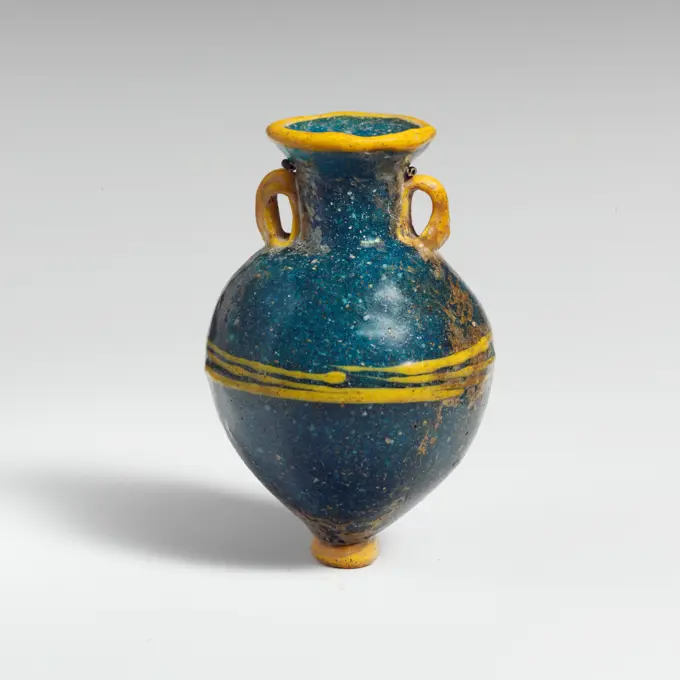
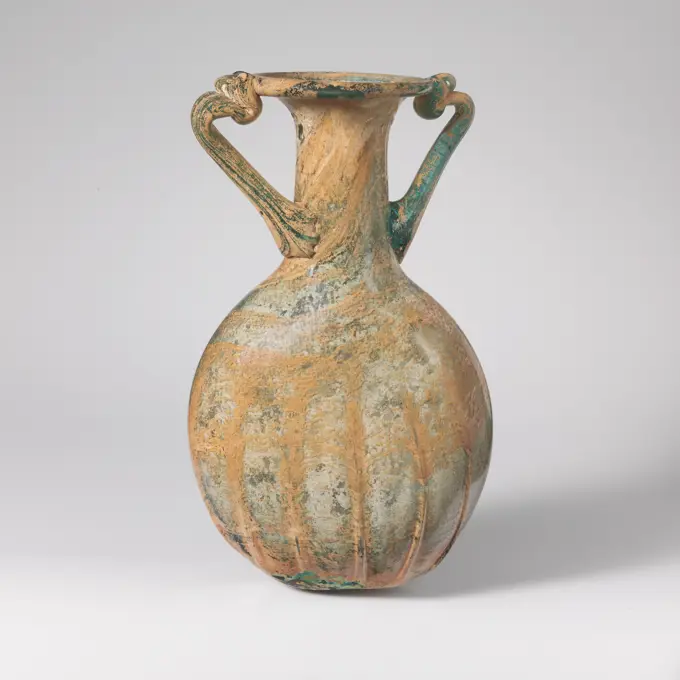
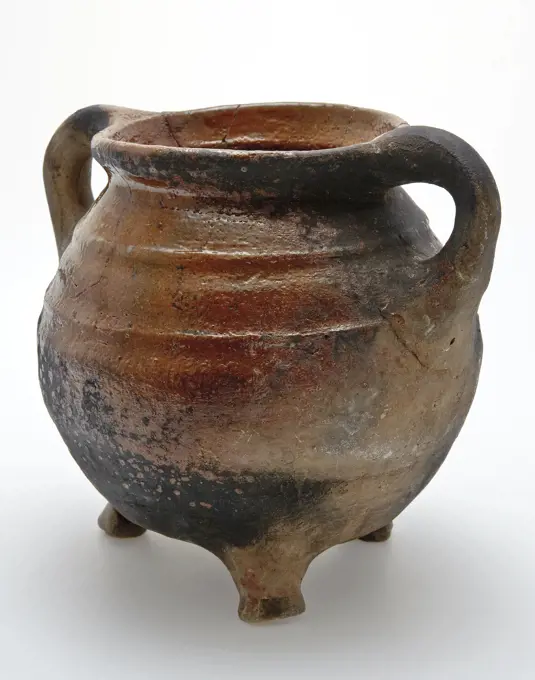
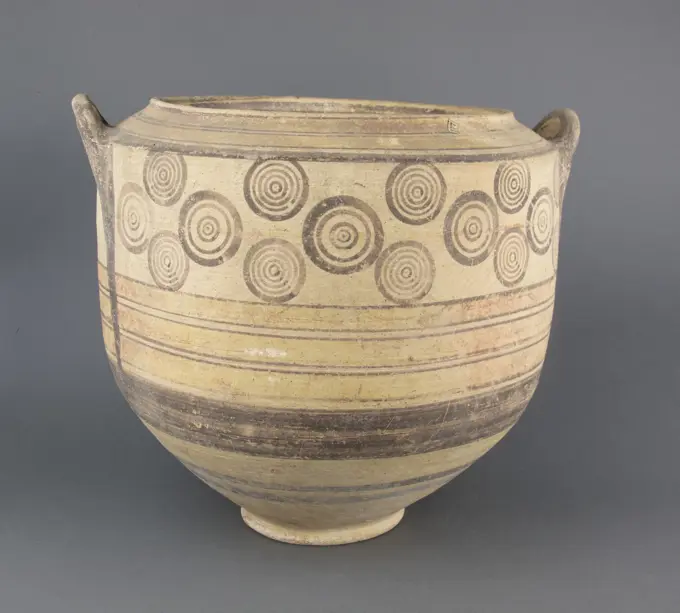
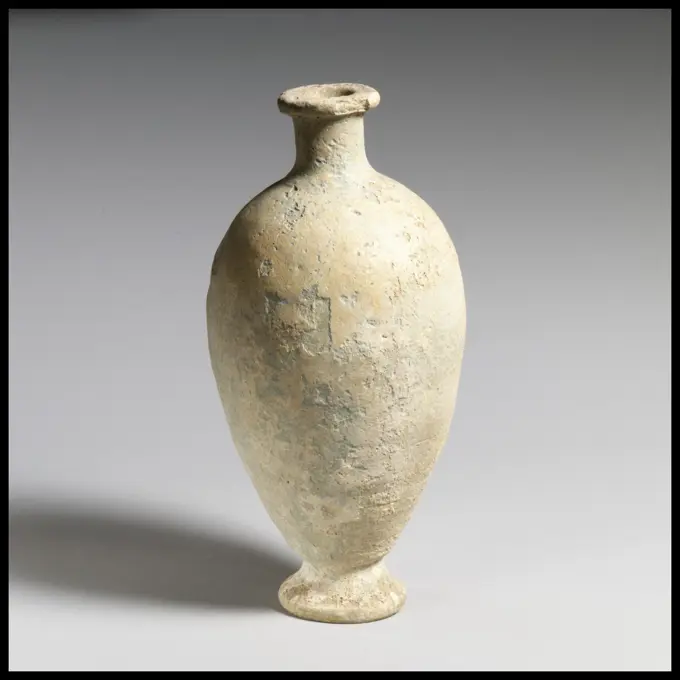
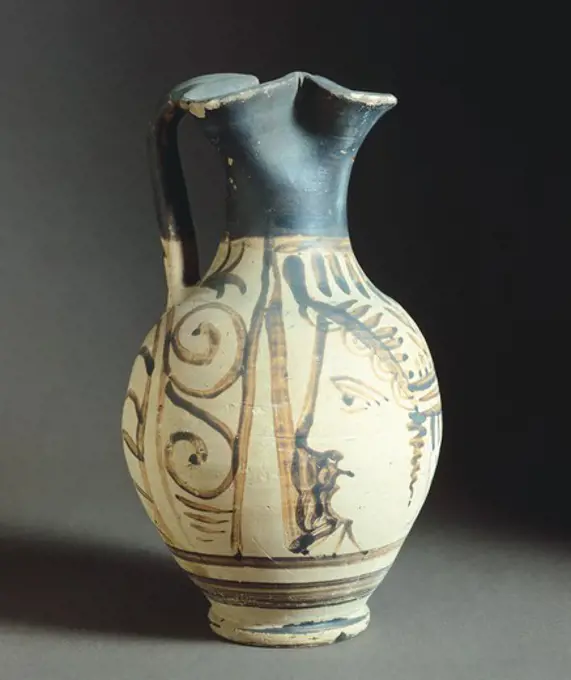
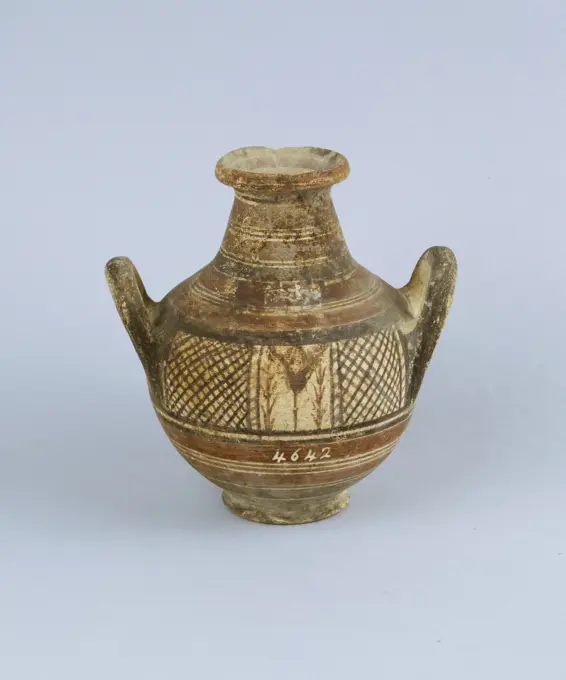
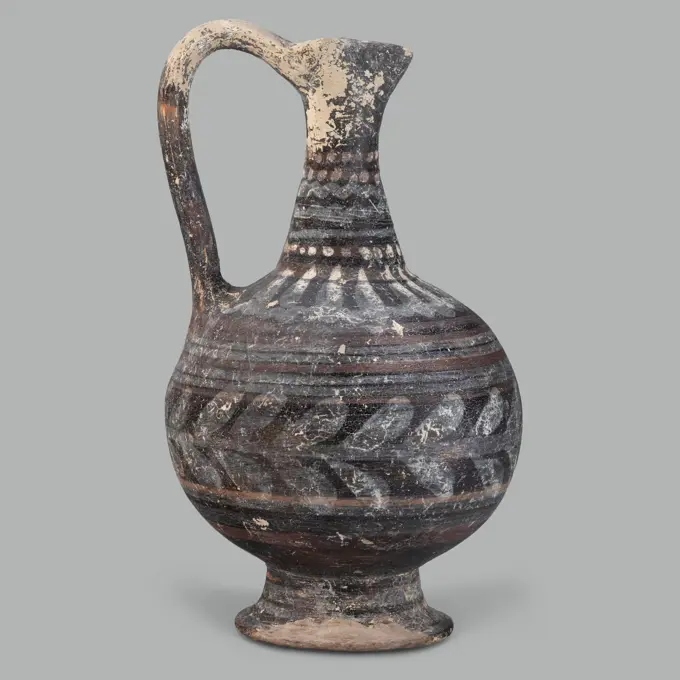
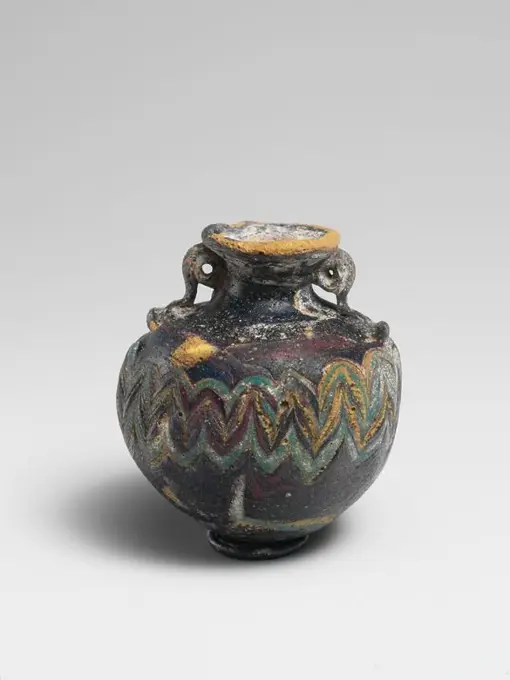
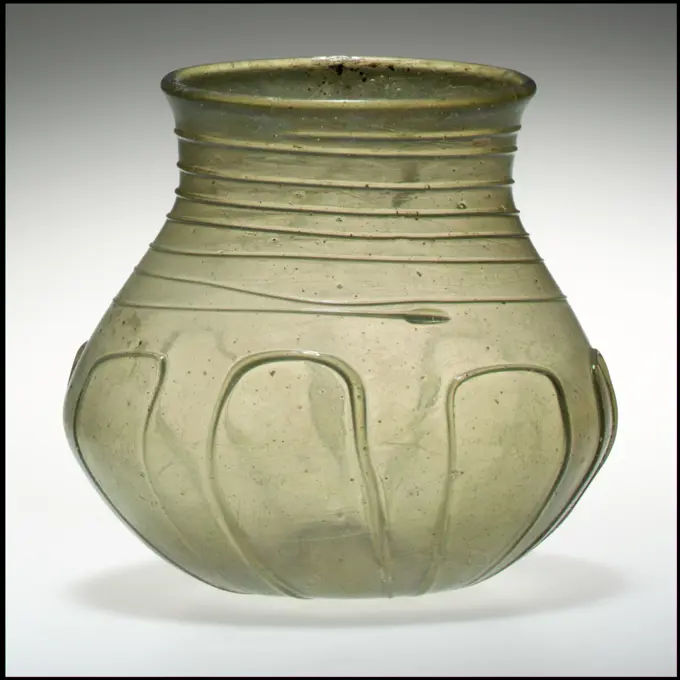
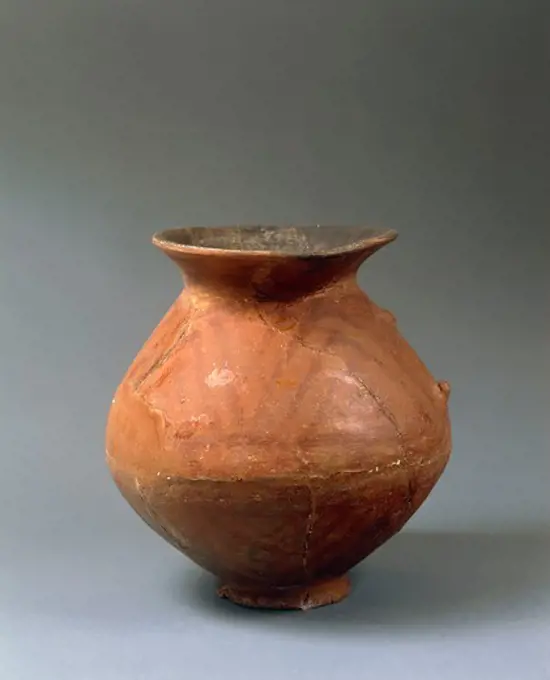
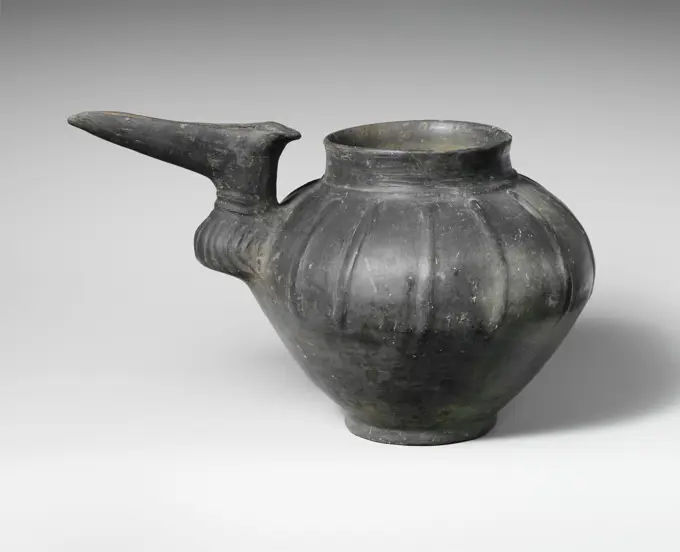
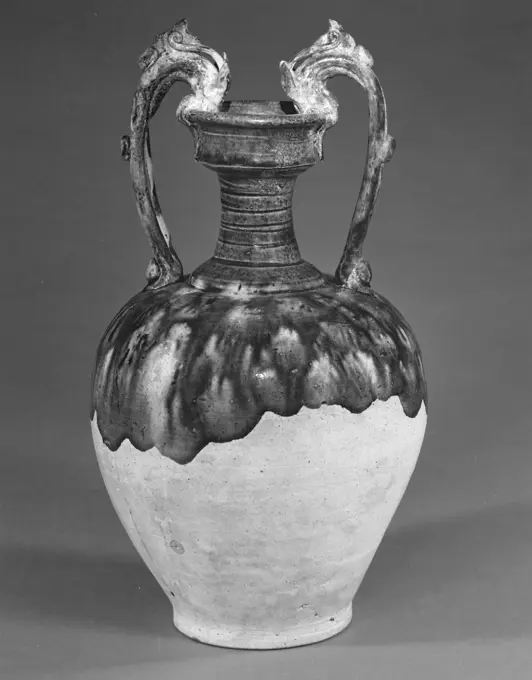
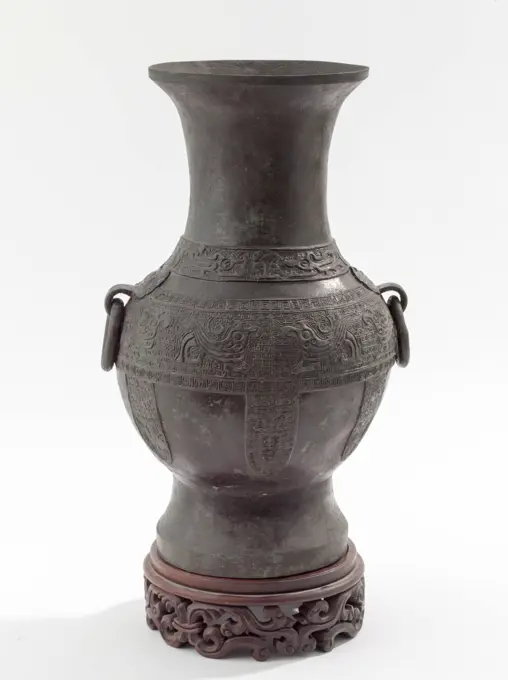
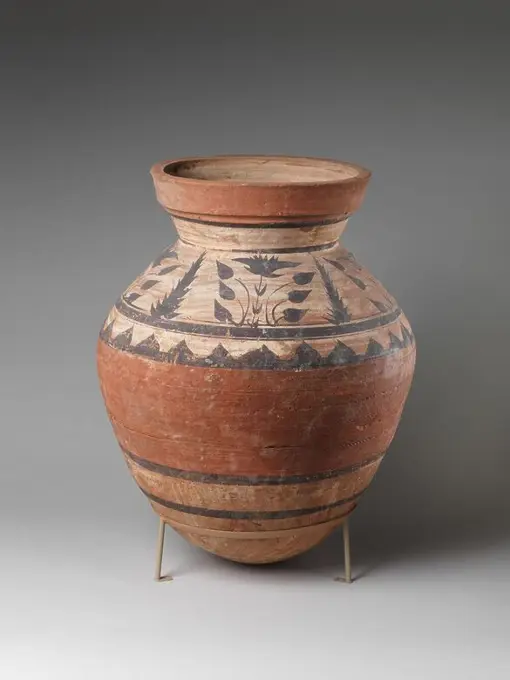
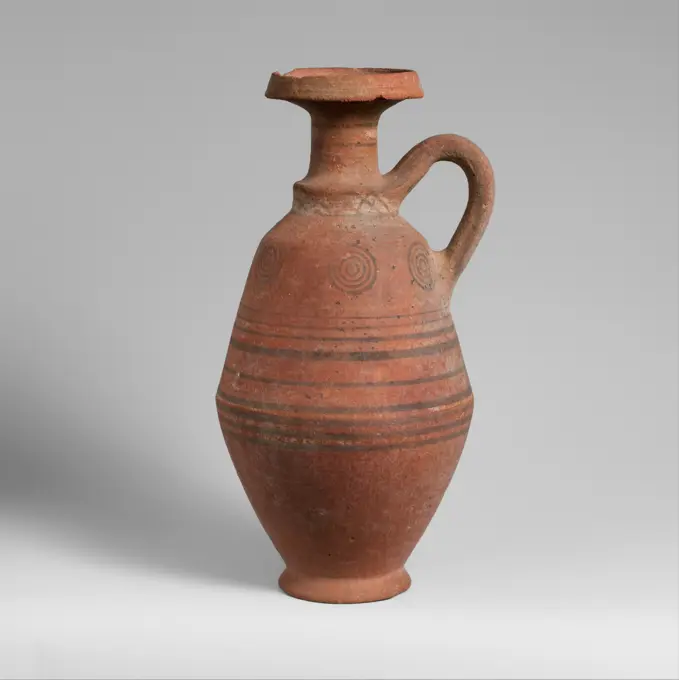
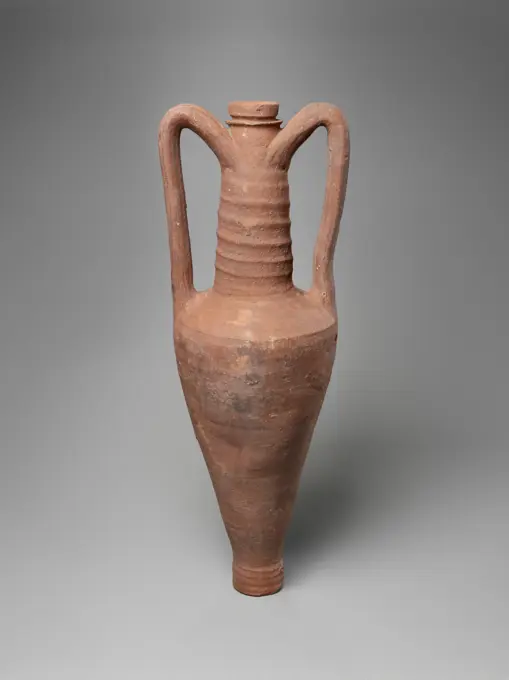
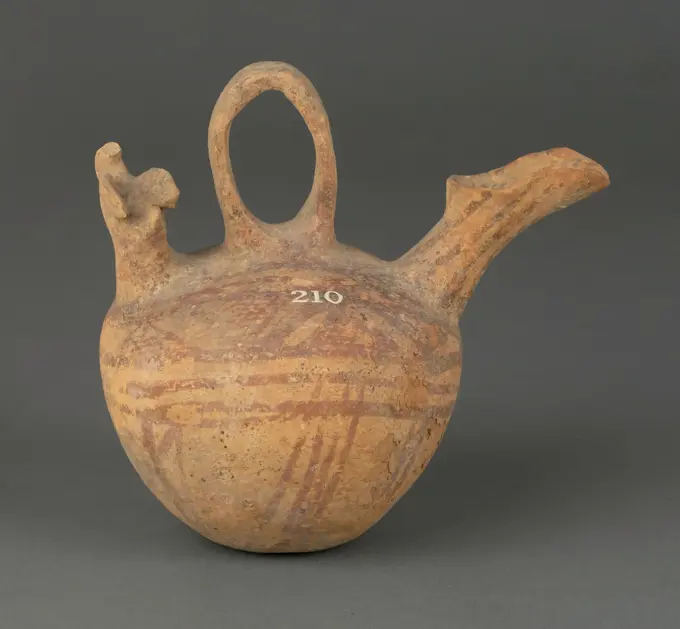
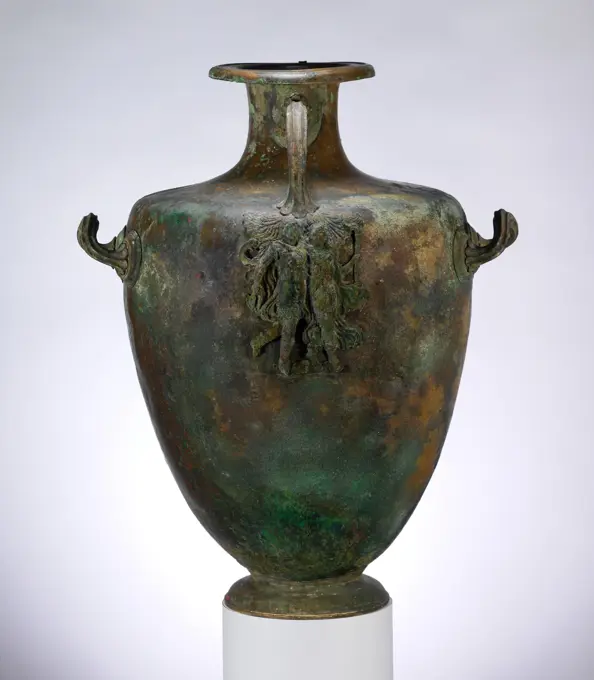
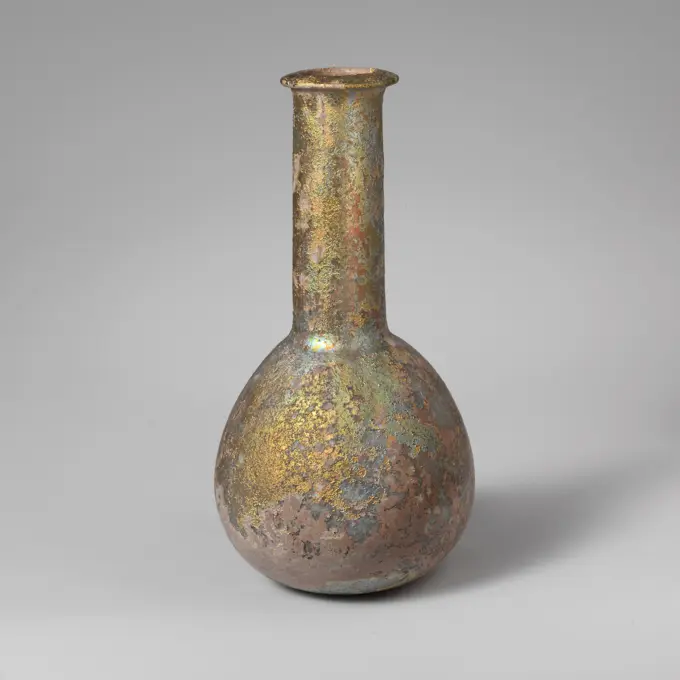
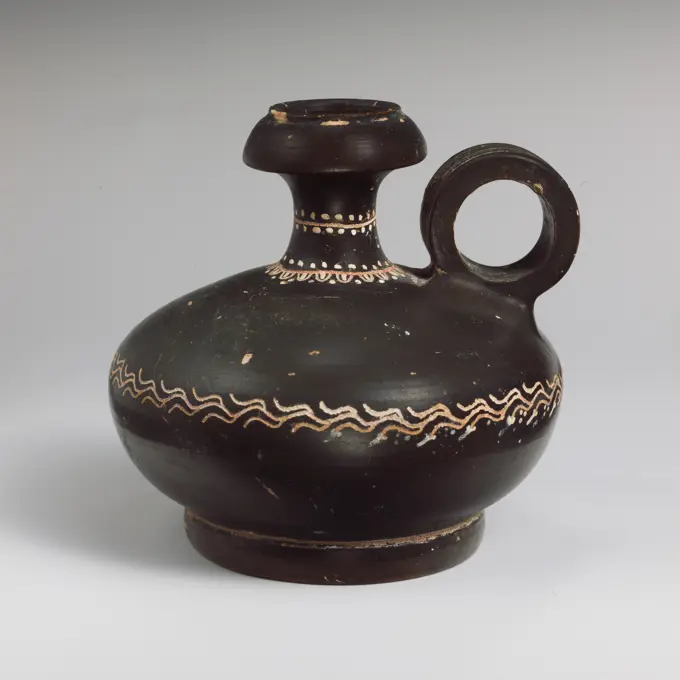
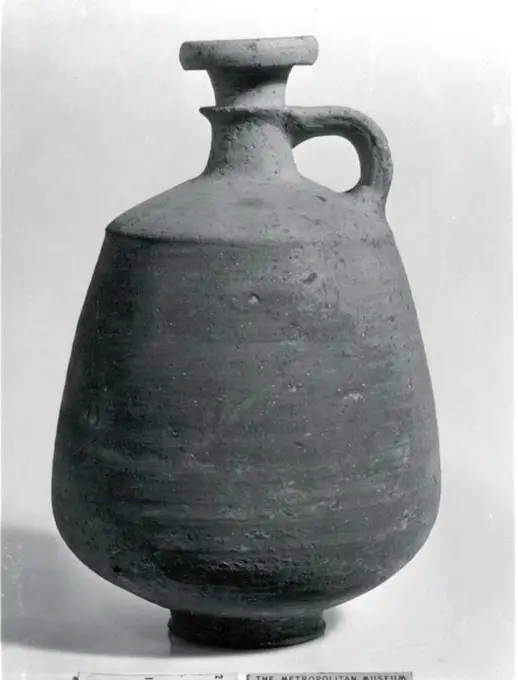
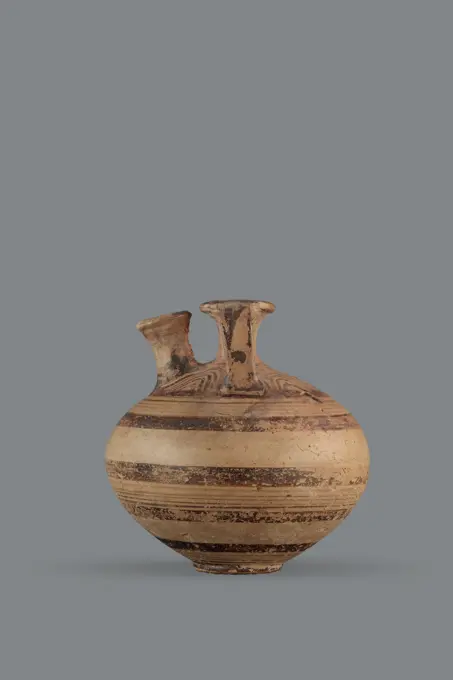
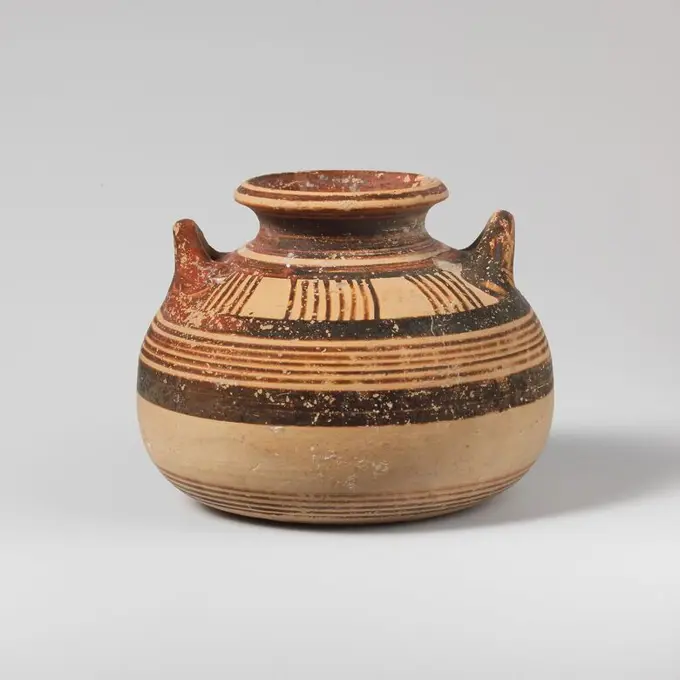
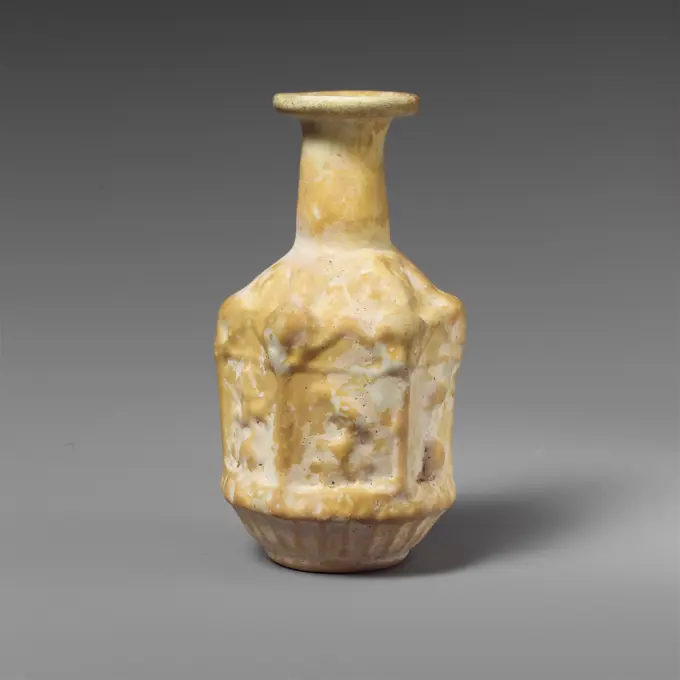
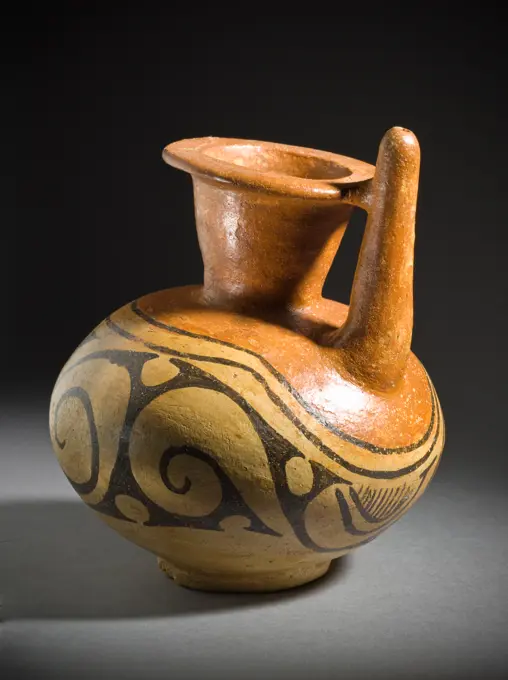
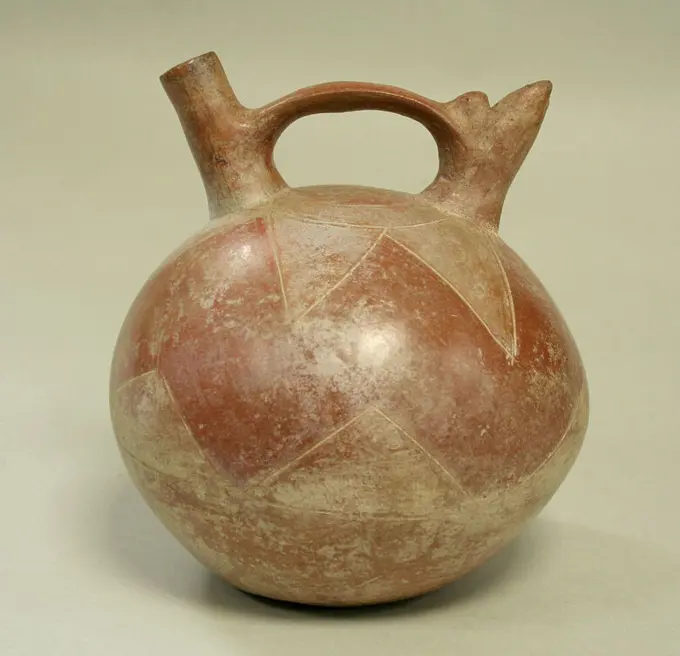
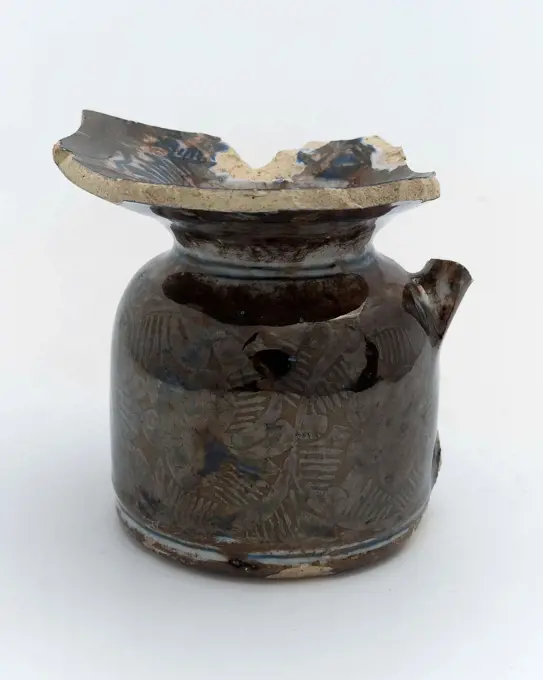
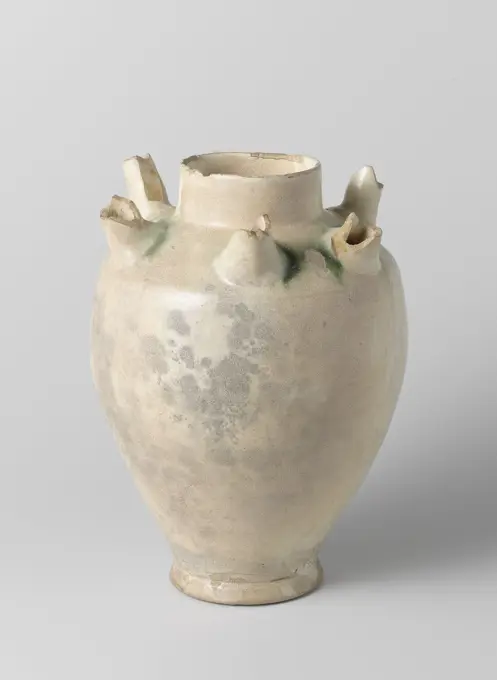
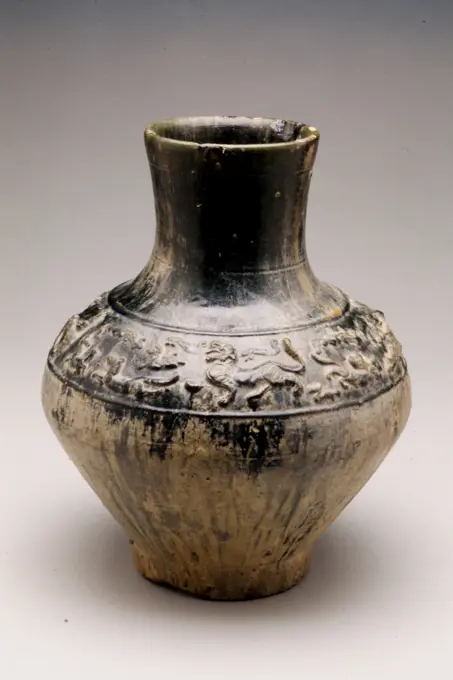
Hu (Ritual Storage Vessel), 206 BCE - 220 CE, 15 1/2 x 12 in. (39.4 x 30.48 cm), Stoneware with green glaze over molded decor, China, 3rd century BCE - 3rd century CE, The earliest lead glazed pottery has been found in the tombs of Middle Western Han. This was a revolutionary ware in that it marked the beginning of controlled colored glazes, primarily green, yellow, and brown. The term 'lead glaze' refers to the addition of lead flux to the glaze compound which lowers the melting point of the glaze thereby speeding up the firing process. The hu shown to the left is brown glazed and, like this example, molded with a lively hunting scene around its shoulder. The shapes and lead glaze colors shown here are typical of Han storage jars made specifically for tomb burial. They contained nourishment for the afterlife.Terracotta lekythos (oil flask) late 7th-6th century B.C. Lydian The decoration is a kind of marblizing that was favored for various, particularly local, shapes at Sardis.. Terracotta lekythos (oil flask) 252593 Lydian, Terracotta lekythos (oil flask), late 7th6th century B.C., Terracotta, 8 1/8in. (20.6cm). The Metropolitan Museum of Art, New York. Gift of the American Society for the Excavation of Sardis, 1926 (26.164.30)Hydria; terra-cottaItaly, Lazio, Viterbo, Etruscan-Corinthian olpe (container for wine) with wheelsTerracotta stirrup jar ca. 1200-1050 B.C. Cypriot Bands and lattice triangles.. Terracotta stirrup jar. Cypriot. ca. 1200-1050 B.C.. Terracotta. Late Cypriot III. VasesLarge amphora, 8th Century, ceramic,Jar (Hu) with Equestrians and Animals amid Mountains 206 BCE-220 CE China. Earthenware with lead glaze and underglaze molded relief decoration .Miniature Ceremonial Vessel (Aryballos). Inca; South coast or southern highlands, Peru. Date: 1450-1532. Dimensions: 10.2 × 7.3 cm (4 × 3 7/8 in.). Ceramic and pigment. Origin: Peru, southern. Museum: The Chicago Art Institute, Chicago, USA.Cooking pot, anonymous, 1200 - 1300 Bronze cooking pot. The hull has a casting seam near the ears and is bullet -shaped, but slightly sagged. He has a thickening at the bottom, which was created as a result of the casting technique. This is formed by a round casting hole with twice three rays -placed cast ribs. The transition from hull to neck is fluent. The lip edge has a relatively sharp side at the top and runs outwards. The pot is on three six -sided legs, the inner side of which takes the entire width. These seem to be turned on later. They run out in seven -sided feet, the inner side of which also takes the entire width. The ears lying in each other were probably turned on later. They are rounded sharp -angled and in diameter versatile. On the outside they have a vague ornament, consisting of a swinging slender with leaves beaten. At the impetus of one of the ears is a piece of iron that originally belonged to the handle. Northern Netherlands bronze (metal) casting Bronze cookingStoneware jug with salt glaze, rad-temple decorations, pinched foot, water jug crockery holder soil find ceramic stoneware glaze salt glaze, twisted set radstamp decoration glazed baked Stoneware jug be pinched on foot Decorated with rad stamp Egg-shaped belly. Pretty wide neck. Fully covered with salt glaze Gray and green mottled archeology Capelle aan den IJssel House in Capelle castle Crockery utensils tableware water washing food preparation Soil discovery: water well 1393 house in Capelle Capelle aan den IJssel 1964.Ewer 12th-13th century. Ewer. 12th-13th century. Stonepaste; luster-painted. Attributed to Iran, Rayy. CeramicsVase 4th-7th century Coptic. Vase 476280Bronze hydria (water jar). Culture: Greek. Dimensions: Other: 19 x 18 5/16 in. (48.3 x 46.5 cm). Date: early 4th century B.C..The hydria has two inscriptions on the lip, indicating that it was a prize in a contest. One inscription gives the name of the presiding official, Kalliar. The other inscription, in a different hand and dialect, indicates that the contestants dedicated the prize to Herakles, for whom the games were held. The implication is that the hydria was dedicated because there was no winner. Museum: Metropolitan Museum of Art, New York, USA.Jug 16th-17th century British. Jug 468393Jug probably 9th century. Jug 449079Bartmann jug, also called Bellarmine jug, on belly three coat of arms, coat of arms Amsterdam, braided ear, beardmug tableware holder soil find ceramic stoneware clay engobe glaze salt glaze, hand turned stamped glazed glazed baked stoneware jug gray shard brown speckled salt glaze locally blue strewn or braided ear archeology heraldry import pottery drink pouring packing transporting pouring storing store AmsterdamGlass amphoriskos (perfume bottle) 5th century B.C. Greek, Eastern Mediterranean Translucent deep turquoise blue, with opaque yellow handles, base knob, and trails.Short, outsplayed rim disk, forming funnel-shpaed mouth; cylindrical neck; piriform body; applied, solid knob base, slightly concave on bottom; two small ear-shaped ring handles applied to top of body and neck.Thick, unmarvered trail applied to outer lip of rim; two trails wound horizontally around center of body, forming three uneven lines.Intact; some pinprick bubbles; dulling and patches of iridescent brownish weathering.During the fifth century B.C., the colors of Mediterranean Group I vessels expanded from blue or opaque white to include other colors, such as dark green, golden brown, and opaque brick red. This amphoriskos is also unusual in that the handles match the trail decoration, not the color of the vessel itself.. Glass amphoriskos (perfume bottle) 239911Amphora Cypriot Bands, and concentric circles on neck and shoulder.. Amphora. Cypriot. Terracotta. Iron Age. VasesEtruscan Oinochoe with Floral DecorationGlass lentoid bottle with two handles 4th century A.D. Roman, Syrian Translucent blue green; handle in same color.Thick, outsplayed, tubular rim, folded over and into shallow flaring mouth; cylindrical neck; lentoid body with rounded sides; thick, narrow oval bottom, slightly concave, with central pontil scar; two rod handles applied as large claw-like pads on lower neck, twisted round, up and outwards, tooled in with a downward fold, attached to edge of rim, and tooled off above.On body, twelve irregular vertical ribs, made by tooling.Intact; many pinprick bubbles and some blowing striation; dulling, pitting, creamy weathering, and iridescence, with soil encrustation on interior.. Glass lentoid bottle with two handles 256769Glass jug. Culture: Roman. Dimensions: 3 1/8 in. (8 cm)Other: 2 1/4 in. (5.8 cm)Diam. of rim: 1 15/16 in. (5 cm)Diam. of foot: 1 7/16 in. (3.7 cm). Date: 4th-5th century A.D..Small one-handled jugTranslucent pale bluish green, with translucent deep purple handle.Rounded tubular rim folded out, over, and in to flaring mouth; short, concave neck; globular body; integral tubular base ring; flat bottom with small central indent; rod handle applied to upper body in a large pad with tooling indent, drawn out and up, tooled in to flat projection, then turned in and trailed on to rim, with another tooled projection above.Intact; some pinprick bubbles and glassy inclusions in body; dulling, iridescence, and weathering on body. Museum: Metropolitan Museum of Art, New York, USA.Terracotta Hadra hydria (water jar). Culture: Greek, Egypt, Alexandria-Hadra. Dimensions: Overall: 17 x 12 13/16 in. (43.2 x 32.5 cm). Date: 3rd century B.C..On body, palmette, two rosettes, and network; on neck, laurel sprays. Museum: Metropolitan Museum of Art, New York, USA.Amphoriskos; Eastern Mediterranean; 6th - 4th century B.C; Glass; 6 cm (2 3,8 in.)Terracotta jar with barbotine decoration Roman 2nd-3rd century CE Rough gray urn with barbotine leaf and line decoration on shoulder.Grape of red earthenware on three legs, two sausages, glazed, two ridges over the shoulder, grape cooking pot tableware holder kitchen utensils earthenware ceramics earthenware glaze lead glaze, hand turned glazed fried Grape with two ears. Red shard and sparingly glazed Internal glaze only on the bottom below the neck opening external glaze on the shoulder and rim. Ball-shaped body and uprising upper edge Two thickened ridges over the shoulder as decoration. traces of use archeology inn Het Hart Geervliet Bernisse indigenous pottery cooking kitchen preparing food Soil discovery: Geervliet Dorpsplein 1 demolition Trouw put 5 city inn 't Hart 1985.Glass oinochoe (perfume jug) 4th-3rd century B.C. Greek, Eastern Mediterranean or Italian Translucent cobalt blue, with handle in same color; trails in opaque yellow and opaque white.Applied trefoil rim-disk; short cylindrical neck; broad rounded shoulder with irregular shape; ovoid body with downward taper; applied low circular coiled pad-base, almost flat on bottom; strap handle attached to outer edge of shoulder, drawn up and round in a curve and with a sideways slant, and attached to top edge of rim-disk. Poorly and hastily formed.A yellow trail attached in a thick blob at edge of rim-disk; another yellow trail wound spirally two and a half times around neck; other fine yellow trails wound intermittently around shoulder; a white trail wound spirally four times round upper body, tooled into an irregular zigzag pattern; below, another yellow trail wound horizontally round in two turns and a thicker white trail applied over it and wound round one and a half times further down body.IntJug (Bartmann jug) with speckled orbs, anonymous, c. 1530 - c. 1560 Jug (beard fancier bush) of stoneware on the standing surface with a spherical body and narrow neck. The C-shaped ear is attached to the neck and shoulder. Profiles on the neck. Covered with a brown Engobe. The belly is covered with small printed and imposed, dotted balls in relief. On the neck, continuously on the shoulder, a bearded man. Cologne/ Frechen. Cologne stoneware. glaze. engobe vitrification Jug (beard fancier bush) of stoneware on the standing surface with a spherical body and narrow neck. The C-shaped ear is attached to the neck and shoulder. Profiles on the neck. Covered with a brown Engobe. The belly is covered with small printed and imposed, dotted balls in relief. On the neck, continuously on the shoulder, a bearded man. Cologne/ Frechen. Cologne stoneware. glaze. engobe vitrificationDinos 600-480 B.C. Cypriot Vase with angular form, double handles, bands, and concentric circles.. Dinos. Cypriot. 600-480 B.C.. Terracotta. Cypro-Archaic II . VasesTerracotta juglet. Culture: Cypriot. Dimensions: H. 4 3/4 in. (12.1 cm). Date: ca. 1600-1150 B.C..White slip ware with handle and pinched lip, lattice and lozenge ornament. Museum: Metropolitan Museum of Art, New York, USA.Bottle ca. 1600-1050 B.C. Cypriot. Bottle. Cypriot. ca. 1600-1050 B.C.. Faience. Late Bronze Age. Miscellaneous-FaienceOinochoe with trefoil lip, pottery from the Alto Adriatico factories, part of a funerary object unearthed in the Necropolis in Spina, Emilia-Romagna, Italy. Italic Civilization, 4th Century BC.Pottery cooking pot, cooking jug with outstanding top edge, one sausage ear, on three legs, cooking pot crockery holder kitchenware earthenware ceramics earthenware glaze lead glaze, hand-turned glazed baked Pottery cooking jug with one sausage ear on three legs. Sausage handle attached to the top edge and protruding above the edge. Outstanding, wide top Band of fine twisted arms around the shoulder Red shard on the bottom after completely glazed Restoration is repainted archeology Rotterdam Stadscentrum Stadsdriehoek Bulgersteyn indigenous pottery cooking food preparation kitchen food Soil discovery: slot Bulgersteyn in Rotterdam.Jug with the coat of arms of England, anonymous, c. 1594 - c. 1600 Jug of stoneware on stand ring with an egg -shaped body and narrow neck. The C-shaped ear is attached to the neck and shoulder. Profiles on the neck and the foot. Covered with a brown engobe and cobalt blue. On the abdomen three times printed and imposed medallion. In the middle medallion the weapon of England with the date 'Anon 1594' and the inscriptions 'Elisabet die Gracia Regina' and 'Honi soit Qvi Mal Pens'. On either side of this medallion a crowned two -headed eagle surrounded by rolling work. On the neck, continuously on the shoulder, alternating tires and tires with rosettes in relief. Frechten. Cheek stoneware. glaze. cobalt (mineral). engobe vitrification  England Jug of stoneware on stand ring with an egg -shaped body and narrow neck. The C-shaped ear is attached to the neck and shoulder. Profiles on the neck and the foot. Covered with a brown engobe and cobalt blue. On the abdomen three times printed and iAmphora 600-480 B.C. Cypriot Lattice and lotus panels.. Amphora. Cypriot. 600-480 B.C.. Terracotta. Cypro-Archaic II. VasesOinochoe; Unknown Cypriot workshop; Hellenistic period (-323-00-00--30-00-00);Cyprus, Cypr, ArsinoeGlass aryballos (perfume bottle) 5th century B.C. Greek, Eastern Mediterranean Opaque dark purple, appearing black, with lighter red brown streaks, with same color handles; trails in opaque yellow and opaque turquoise blue. Inward-sloping rim-disk with rough protruding edge to mouth; short concave neck; broad sloping shoulder; almost spherical body; convex, slightly uneven bottom; two ring handles with knobbed tails extend from shoulder to neck and underside of rim-disk.A yellow trail applied to outer edge of rim-disk, with top of neck folded over part of trail; yellow and turquoise blue trails applied in a band around the upper half of body and tooled into a close-set zigzag pattern, formed by uneven, shallow vertical tooling indents; below this, two separate yellow and turquoise blue trails added vertically to lower body and wound once round bottom in an irregular swirl; one raised yellow blob on edge of shoulder on one side.Intact, except for one small chip in rim-disk; dulling, pitJug (Bartmann jug) with floral scrolls, bird and stars, anonymous, c. 1540 - c. 1570 Jug (beard fancier) of stoneware on the standing surface with a spherical abdomen and narrow neck. The double C-shaped ear is attached to the neck and shoulder. Profiles on the neck. Covered with a brown Engobe. Printed and imposed flower vines and a bird on the belly. Two tires with stars on the neck. On the neck, continuously on the shoulder, a bearded man. Cologne/ Frechen. Cologne (possibly) stoneware. glaze. engobe vitrification Jug (beard fancier) of stoneware on the standing surface with a spherical abdomen and narrow neck. The double C-shaped ear is attached to the neck and shoulder. Profiles on the neck. Covered with a brown Engobe. Printed and imposed flower vines and a bird on the belly. Two tires with stars on the neck. On the neck, continuously on the shoulder, a bearded man. Cologne/ Frechen. Cologne (possibly) stoneware. glaze. engobe vitrification. Egg-shaped pot of quartz fritewes painted in blue and brown with a wide tire with an engaged cord and narrower tires with engraving pseudocript.Glass aryballos (perfume bottle). Culture: Greek, Eastern Mediterranean. Dimensions: 2 1/4 × 2 1/16 in. (5.7 × 5.2 cm)Diam. of rim: 1 in. (2.6 cm). Date: 5th century B.C..Opaque dark purple, appearing black, with lighter red brown streaks, with same color handles; trails in opaque yellow and opaque turquoise blue. Inward-sloping rim-disk with rough protruding edge to mouth; short concave neck; broad sloping shoulder; almost spherical body; convex, slightly uneven bottom; two ring handles with knobbed tails extend from shoulder to neck and underside of rim-disk.A yellow trail applied to outer edge of rim-disk, with top of neck folded over part of trail; yellow and turquoise blue trails applied in a band around the upper half of body and tooled into a close-set zigzag pattern, formed by uneven, shallow vertical tooling indents; below this, two separate yellow and turquoise blue trails added vertically to lower body and wound once round bottom in an irregular swirl; one raised yellow Globular Beaker with Trails 5th-7th century Anglo-Saxon. Globular Beaker with Trails. Anglo-Saxon. 5th-7th century. Glass. Glass-VesselsWine container (hu) 1st-2nd century China. Wine container (hu). China. 1st-2nd century. Earthenware with lead green glaze. Eastern Han dynasty (25-220). CeramicsPainted Aryballus Jar 15th-16th century Inca. Painted Aryballus Jar 309760Vase Roman Red spindle-shaped vase with two handles; traces of painted circles.. Vase. Roman. Terracotta. VasesPrehistory, Italy, Iron Age. Golasecca culture. Urn with red decorations. From the necropolis of Ca' Morta, surroundings of Como.Jar 13th-14th century French. Jar 465876 French, Jar, 13th14th century, Earthenware with slip decoration, Overall: 8 3/16 x 4 3/4 in. (20.8 x 12.1 cm). The Metropolitan Museum of Art, New York. Gift of J. Pierpont Morgan, 1917 (17.194.2189)Spouted pitcher ca. 1450-1050 B.C. Iran This pitcher has a globular body, a ring base, and a slightly flared rim. A pointed spout rises vertically from a protuberance on one side of the body before extending outward horizontally. Both the body and the protuberance supporting the spout are decorated with raised ridges. The combination of the pointed spout and protuberance may suggest the form of a bird with a long beak and a crop in its neck. The pitcher is made of burnished grey clay. The body was likely made on a wheel, with the spout and raised decorations added later.This pitcher was excavated from a grave at Dinkha Tepe in northwestern Iran. During the Iron Age Dinkha Tepe was a small settlement, probably ruled by Hasanlu, a major site fifteen miles to the east. Presumably this pitcher was used to pour a liquid containing dregs, such as wine, since the round body and spout would prevent the dregs from ending up in the cup. Possibly it was used in a funerary banquet or ritual beforeAmphora with dragon-shaped handles ca. late 7th-first half of 8th century China Owing to their large oval bodies and narrow cylindrical necks, vessels of this type have traditionally been called "amphorae" and were said to be based on the ancient Greek jar with essentially the same contours. Recently, however, it has been suggested that the shape is derived from Roman glass and metalwork that came to China over the Silk Road. This Western shape has been modified here by the addition of two Chinese features, the high, arched dragon-headed handles and a cupped mouth.. Amphora with dragon-shaped handles 49905Vase. Bronze. Chine. Par musée musée malée. Rings, handle, Chinese art, bronze, vaseLarge storage jar with floral decoration. Dimensions: H. 62 cm (24 7/16 in.); Diam. 48 cm (18 7/8 in.). Date: late 3rd-2nd century B.C..This large jar typifies a type of painted floral decoration characteristic of the Late Period into the Ptolemaic Period at Thebes. The bowl (13.180.34b) was used base downward as a lid in the mouth of the jar. The large jars usually held solid funerary offerings, such as dates, grain and various kinds of seeds, or, alternatively, mummification materials; analysis indicates the bowl originally contained some thick liquid with containing bovine cellulose, perhaps a beef broth or puddingThe jar was found by the Museum's Egyptian Expedition in an area of brick-vaulted Ptolemaic tombs over the area of Hatshepsut's Valley Temple. The tombs were partly sunk beneath the ground but the vaults were above ground. At the ground entrance there would be a small vestibule or open entrance area. Sometimes vessels were found in twosomes or groups at he entrance; thEwer with Peony Scroll. China. Date: 1000-1099. Dimensions: H. 25.1 cm (9 7/8 in.); diam. 16.5 cm (6 1/2 in.). Cizhou ware; stoneware, slip-coated with underglaze incised and impressed decoration. Origin: China. Museum: The Chicago Art Institute, Chicago, USA.Terracotta jug 600-480 B.C. Cypriot Jug with one handle, moulded neck, bands, concentric circles, and details in white.. Terracotta jug 240165Terracotta siphon. Culture: Lydian. Dimensions: H. 6 5/8 in. (16.8 cm). Date: 6th century B.C..The siphon is in the shape of a jug with the mouth in the form of a ram's head. The underside of the vase is punctured by small holes. When the vase was filled, the contents stayed in as long as the user covered the small hole on the top of the ram's head with his thumb. When the thumb was withdrawn, the liquid flowed out through the base. Museum: Metropolitan Museum of Art, New York, USA.Ewer. Syria, 8th century. Metal. Bronze, castJug. Jug of stoneware, with a spiny tapered neck and ear. Three weapons on the belly. Hereby 2 spins (no longer present in 1992).LazyBrown speckled stoneware jug be worn with rings around the neck, three decorated medallions on the belly, jug crockery holder soil find ceramic stoneware glaze salt glaze, hand turned stamped glazed glazed baked Stoneware jug gray shard brown brindled salt glaze bandoor with short tail profiled neck and foot archeology heraldry import pottery pour serve serve drink wine beerPrehistory, China, Neolithic. Ceramic funerary urn with black and red geometric decoration. From Gansu.OlpeJar ca. 13th-12th century B.C. Assyrian. Jar 324296Spherical Box with a Pedestal Foot; Cyclades, Greece; 2700 - 2200 B.C; Terracotta; 12.7 × 15.2 × 12.7 cm (5 × 6 × 5 in.)Two-HandledJugGlass alabastron (perfume bottle). Culture: Greek, Eastern Mediterranean. Dimensions: H.: 4 5/8 in. (11.7 cm). Date: late 6th-5th century B.C..Translucent cobalt blue, with handles in same color; trails in opaque yellow and opaque white.Uneven rim-disk, with tooling indents in upper surface; cylindrical neck; narrow rounded shoulder; elongated oval body with marked upward taper; convex, slightly pointed bottom; below shoulder, two vertical ring handles with knobbed tails applied over trail decoration; one with a longer tail than the other.A yellow trail attached unevenly at edge of rim-disk; a white trail applied as a thick blob at top of body and wound down in spiral ten times and overlaid with a yellow trail, then tooled into a close-set zigzag pattern around the central part of body, flanked at top and bottom by overlaid thicker yellow trails; below this, the white trail continuesfive and a half times horizontally around lower body, again overlaid with a yellow trail; one large rAskos in the form of an animal 1900-1600 B.C. Cypriot. Askos in the form of an animal. Cypriot. 1900-1600 B.C.. Terracotta. Middle Cypriot. VasesBronze hydria (water jar) mid-4th century B.C. Greek On the handle plaque, Dionysos and AriadneIn the fourth century B.C., bronze hydriae were embellished with a separately attached relief under the vertical handle. The subjects included scenes of abduction, Eros, or, as here, Dionysos, the god of wine, and his wife, Ariadne. The expensive vessels may have been given as wedding gifts and then used for special occasions. Many were placed in tombs, sometimes as containers for the ashes of the deceased.. Bronze hydria (water jar) 254673 Greek, Bronze hydria (water jar), mid-4th century B.C., Bronze, Overall: 19 1/16 in. (48.4 cm). The Metropolitan Museum of Art, New York. Rogers Fund, 1951 (51.11.8)Glass perfume bottle 2nd-3rd century A.D. Roman Large perfume bottleColorless ().Rim folded out, over, and in, with beveled upper surface; fairly broad mouth; cylindrical neck expanding slightly downward with tooling marks around base; piriform body; rounded bottom, slightly flattened at center.Intact, except for one crack in neck and another around body; deep pitting and brilliant iridescence; patches of creamy weathering. Soil encrusted on interior.. Glass perfume bottle 239686Pitcher. Byzantine; Levant or Syria. Date: 301 AD-500 AD. Dimensions: 11 × 8 × 8 cm (4 1/4 × 3 1/4 × 3 1/4 in.). Glass, blown technique. Origin: Syria. Museum: The Chicago Art Institute, Chicago, USA.Jug. Uneven, brown colored jug. On the bullet-shaped belly 3 oval medallions with weapon.Terracotta squat lekythos (oil flask) ca. 330-300 B.C. Greek, South Italian, Campanian, Teano Decorated with ivy vine.. Terracotta squat lekythos (oil flask) 248197Three-legged vessel in the form of a pumpkin, 2nd century BCE - 3rd century CE, 9 1/4 x 11 x 11 in. (23.5 x 27.9 x 27.9 cm), Earthenware, Mexico, 2nd century BCE - 3rd century CEPUCHERO CON DOS ASAS Y VIDRIADO - ARTE POPULAR S XX. Location: ALFARERIA. NARVAJA. NAVARRA. SPAIN.Neck-amphora. Culture: Greek, Attic. Dimensions: H. 22.40 cm.. Date: ca. 440 B.C..Obverse, woman pouring a libation for a king; reverse, youth. Museum: Metropolitan Museum of Art, New York, USA.Bottle;  VIII-X century (701-00-00-1000-00-00);Semerau-Siemianowski, Władysław (1849-1938)-collection, Arabic (culture), bottles, gift (provenance), Islam (culture), Islamic artCan. Gray with blue can of stoneware. The belly is strewn with rosettes printed in flat relief on a blue fond. With a low, wide, cylindrical neck with pewter lid.Glass perfume bottle 1st-2nd century A.D. Roman Small unguentarium.Colorless with pale blue tinge.Rim folded out, over, and in; flaring mouth; cylindrical neck with tooled indent around base; small ovoid body; round bottom.Intact; few bubbles but one large elongated bubble in neck; dulling, limey weathering, and iridescence, with some soil encrustation.. Glass perfume bottle 244679Drum, Monkey Figures 4th-2nd century B.C. Paracas. Drum, Monkey Figures. Paracas. 4th-2nd century B.C.. Ceramic, post-fired paint. Peru, Ica Valley. Ceramics-Musical InstrumentsBottle. Iran, 13th century. Ceramics. Fritware, overglaze paintedWater jug ca. late 8th-7th century B.C. Israelite. Water jug 323146Stirrup Spout Vessel with Raised Geometric Scroll Motif Made 600 BCE-400 BCE North Coast. Ceramic . ChavínNaczynie mykeńskie typu Stirrup Jar. unknown, authorTerracotta alabastron (jar). Culture: Mycenaean. Dimensions: H. 3 in. (7.6 cm.). Date: ca. 1600-1050 B.C..Two handles and horizontal and vertical bands. Museum: Metropolitan Museum of Art, New York, USA.Glass hexagonal bottle ca. A.D. 25-50 Roman Opaque white.Rim folded out, round, and in, then pressed into flaring mouth; misshapen cylindrical neck; downward sloping shoulder; hexagonal body with vertical sides, then cup-shaped below; low base with rounded edge and slightly indented bottom. Mold seams run from base of neck, down sides, and meet at center of bottom.Decoration in relief in three registers: on shoulder, six downturned rays or pointed petals; on body, six rectangular panels, each decorated at top with a triangular pediment flanked by prominent but indistinct round objects, framed at sides with posts or slender columns, and bordered below by an egg-and-dart band; in each panel, a different bird perched on or flying over a nest or rock; above the base, twenty-seven upturned tongues (nine in each segment of mold).Intact; pitting, dulling, and thick creamy weathering.This bottle belongs to a type known as the Bird Series because the figures depicted in the pedimented panels apGlass square bottle. Culture: Roman. Dimensions: 3 3/4 in. (9.5 cm)Other: 1 7/16 in. (3.7 cm)Diam. of rim: 1 in. (2.5 cm). Date: 2nd-3rd century A.D..Small, square, one-handled bottleTranslucent pale blue green; handle in pale green.Rim folded out, over, and in; cylindrical neck, tapering downward and aslant to body, with tooling marks around base; horizontal, rounded shoulder; uneven, slightly indented sides to body; uneven, rectangular bottom; claw handle applied to sholuder with two large pads extending to top of side, drawn up and out, then turned in horizontally and trailed with upward projecting loop on to edge of rim and top of neck. Unstable on bottom.Intact; some pinprick bubbles in body and elongated bubbles in handle; creamy brown weathering, with dulling and iridescence, covering much of surface. Museum: Metropolitan Museum of Art, New York, USA.Jar with decorations. Jug of stoneware. The high egg-shaped belly is ribbed and profiled to the shoulder. On the shoulder and neck stamped ornaments.JARRA CON DECORACION EN MANGANESO Y ESGRAFIADO. Nº INV. 28172. (ALTURA 13,5 CM) MUSULMAN. (EXPOSICION :ARTE ISLAMICO ESPAÑOL)(DEPOSITO: MUSEO ARQUEOLOGICO ALMERIA).Jug and Alien Handle (Once Attached). UnknownOinochoe; Eastern Mediterranean; 1st - 2nd century; Glass; 7.8 cm (3 1,16 in.)Lekyt aryballosowy (naczynie na wonności). warsztat etrusko-kampański, authorGeometric protocorinthian krater, Greece. Greek Civilization, 8th Century BC.Terracotta lydion (perfume jar) 6th century B.C. Lydian Because large numbers of such perfume jars have been found in Lydia, modern scholars have called the shape a lydion. It was locally made in other regions of the ancient Mediterranean, notably Athens. The significant aspect of these vases was certainly the contents.. Terracotta lydion (perfume jar) 257788Pot. Pot with convex belly, rubbed neck and turning edge.Glass jar. Culture: Roman or Islamic. Dimensions: Overall: 1 13/16in. (4.6cm).Small jar.Uncertain, appearing opaque.Broken-off, uneven vertical rim; cylindrical neck with horizontal indent around base; broad, sloping shoulder; body with side tapering downwards; slightly concave bottom.Possibly intact, with weathered edge to rim; deep pitting, dulling, and thick iridescent weathering covering entire surface, with some limy encrustation inside neck. Museum: Metropolitan Museum of Art, New York, USA.Campanian Black Squat Lekythos. UnknownLamp 13th-14th century. Lamp 450375Jar with Spout. Panama, Conte/Macaracas style, 600-900 CE. Ceramics. Slip-painted ceramicWhistling Double Spout and Bridge Bottle. Culture: Salinar (). Dimensions: Height: 8 1/2in. (21.6cm)Diameter: 8in. (20.3cm). Date: 1st century B.C.-A.D. 2nd century. Museum: Metropolitan Museum of Art, New York, USA.Cup with an arcadenfries and hybrid creatures, anonymous, c. 1850 - c. 1900 The cast and accompanying object consists of a round cup -shaped barrel on a low round foot. This runs up to the center and is articulated by four vertical ribs. At the top, the foot in diameter is narrower than the horizontal rib, which belongs to the high upwards slightly broadening cup -shaped part. This ends at the top in a rim outward, which has a more or less flat top. Clean the upper half of the outer wall is taken by a Frisian with, among other things, stabbed details. The Frisian is divided into four by columns and arches and is equipped with representations of a troubled tree, a siren (centaur -like orphans with a bodies ending in a fishing tail), a centaur, and a dog or wolf for a tree. Above two columns, which are placed in each other, there is always an animal head with round holes, in which a ring is sounded. Above the other two columns, a palmet has always been applied, which protrudes slightly aEarthenware faience spittoon, decor in blue and white, spittoon holder soil find ceramic pottery glaze tin glaze, hand turned decorated glazed baked Cylindrical body with very wide neck opening under the neck opening. Ear Completely glazed Blue and white decorated over which dark shiny layer of archeology Rotterdam railway tunnel for indigenous earthenware tobacco room drains Soil discovery: railway tunnel Rotterdam.Jar with crolled handle and horizontal bands of floral polychrome motifs early 19th century Mexican. Jar with crolled handle and horizontal bands of floral polychrome motifs 4556Ovoid vase with six tubes, anonymous, c. 907 - c. 960 Egg -shaped vase of stoneware, covered with a gray -green, slightly cracked glaze. Six broken spouts from the shoulder. A few chips in the edge and in the foot. China stoneware. glaze vitrification Egg -shaped vase of stoneware, covered with a gray -green, slightly cracked glaze. Six broken spouts from the shoulder. A few chips in the edge and in the foot. China stoneware. glaze vitrificationRitual Ewer Dated by inscription 1733 Nepal, Bhaktapur This spouted ewer (lota) with bulbous body is a typical form for metal vessels employed in temple worship. An inscription records that it was gifted by Ranajit Malla, the king of Bhaktapur (r. 1722-89), and is dated to 1733. Ranajit was the grandson of King Jitamitra Malla of Bhaktapur, who, along with his younger brother Ugra Malla, donated another temple ewer in the Museums collection, dated 1675. It is inscribed “the 15th of the bright half of Baisakh 853 (April-May 1733), gifted by Ranajit Malla deva of Bhaktapur.”. Ritual Ewer. Nepal, Bhaktapur. Dated by inscription 1733. Copper alloy. Sculpture