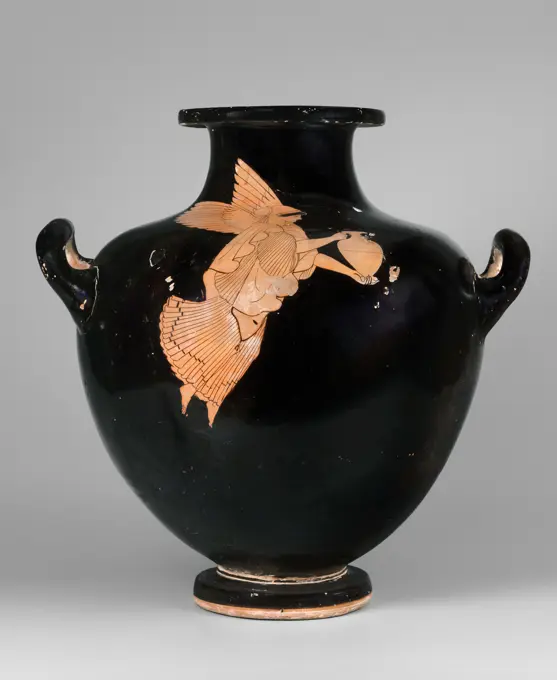
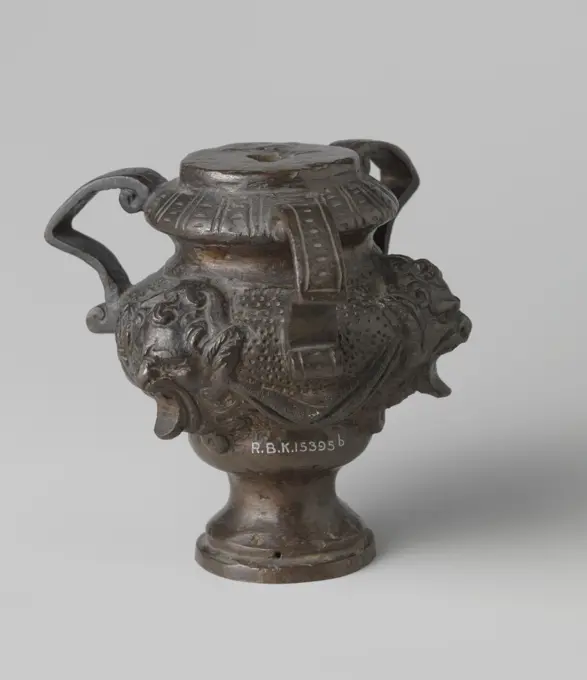
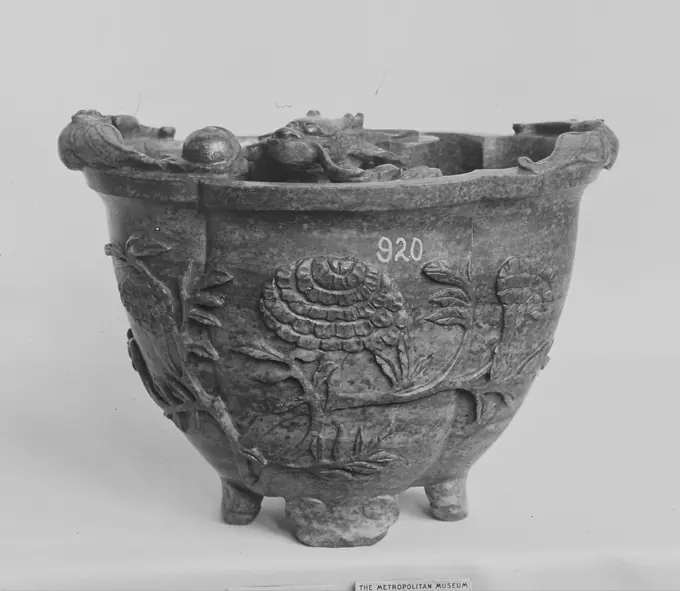
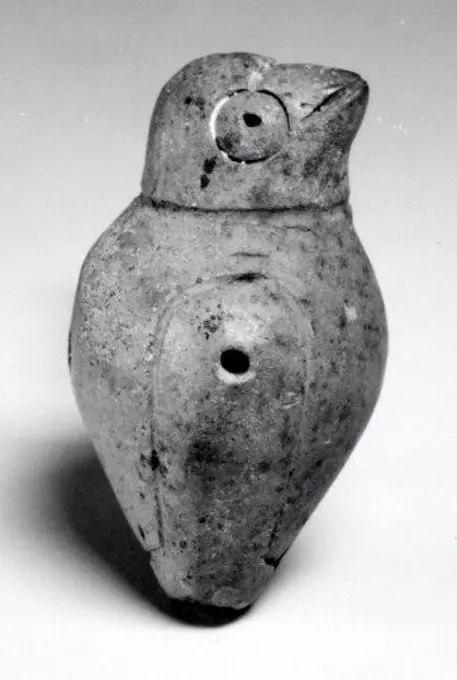
Ancient Pottery and Vessels

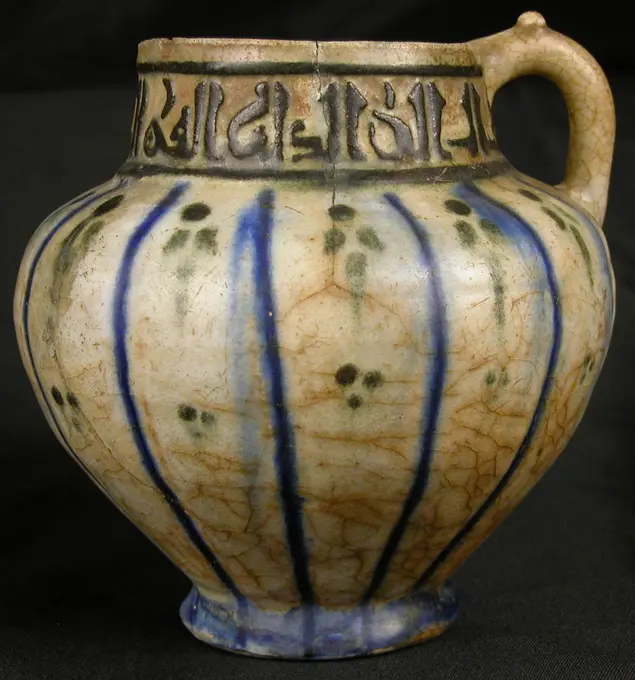
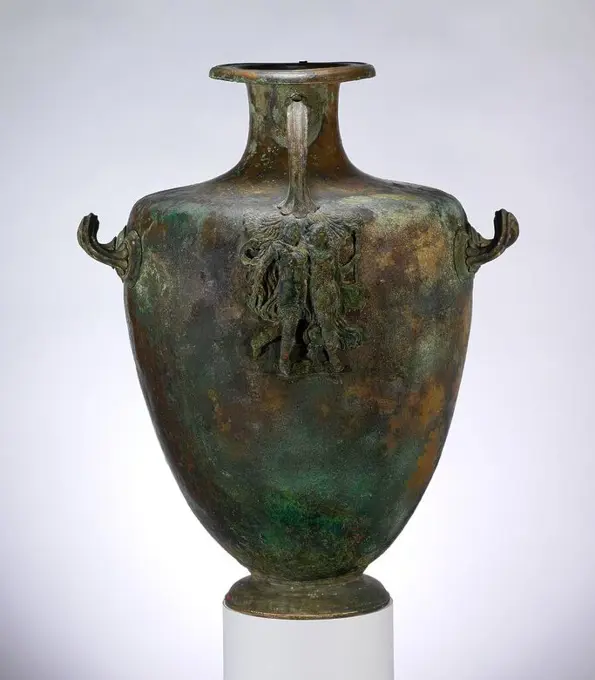
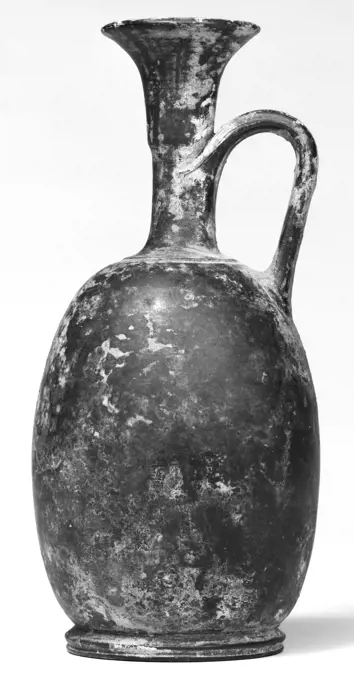
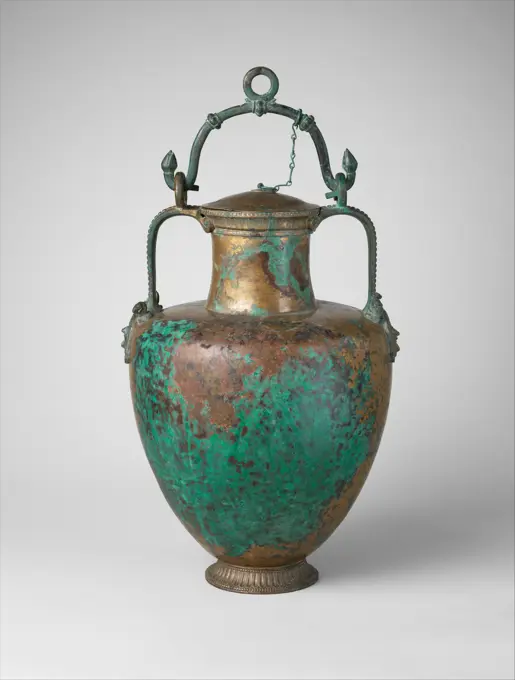
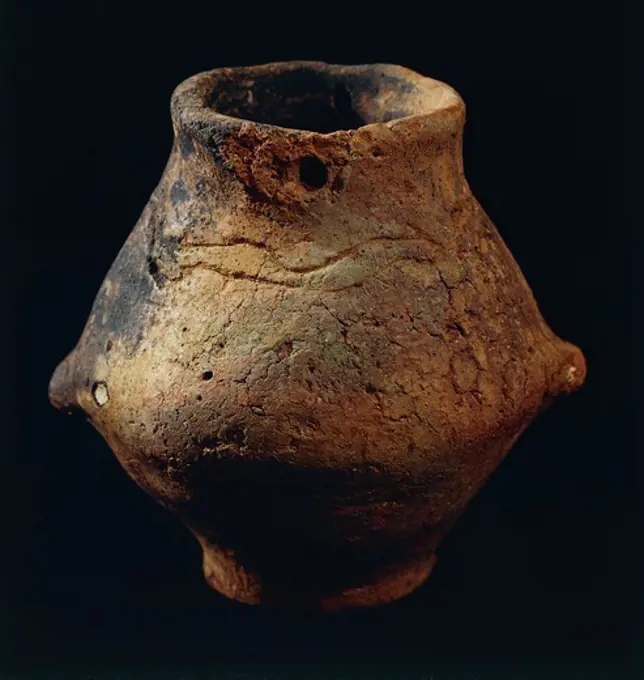
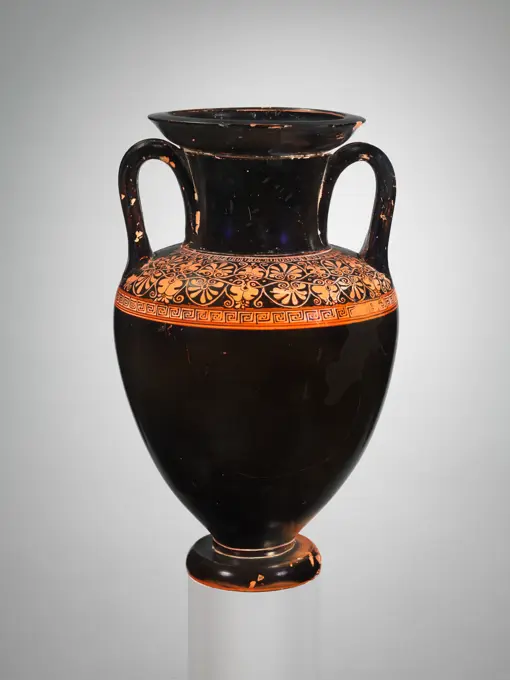
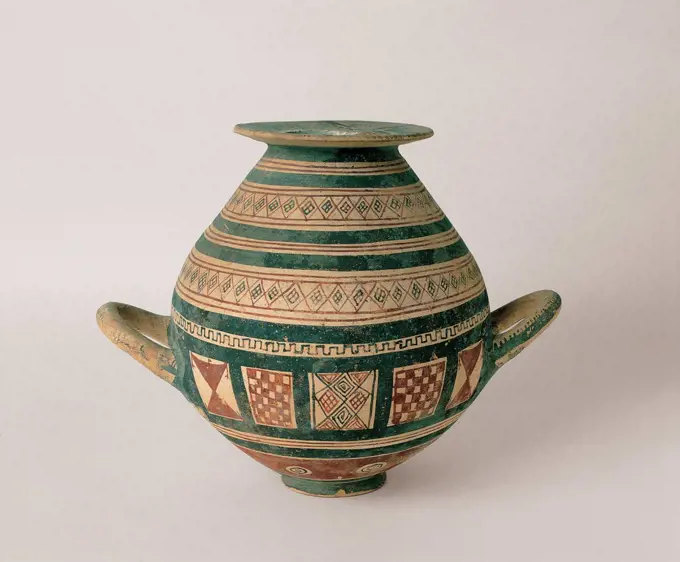
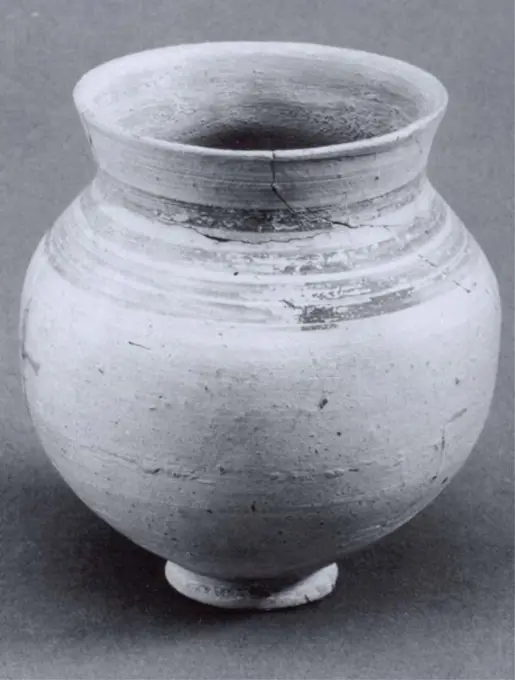
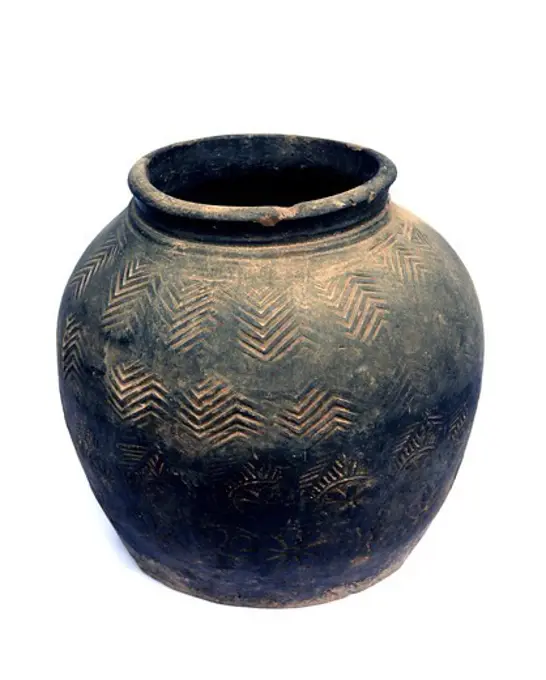
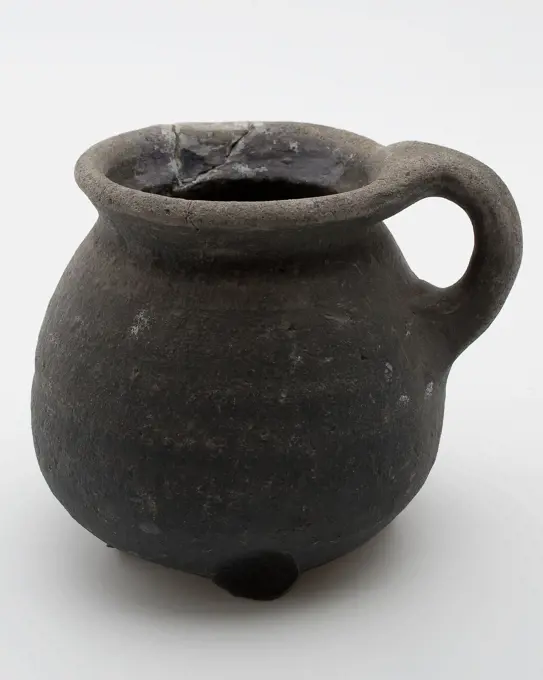
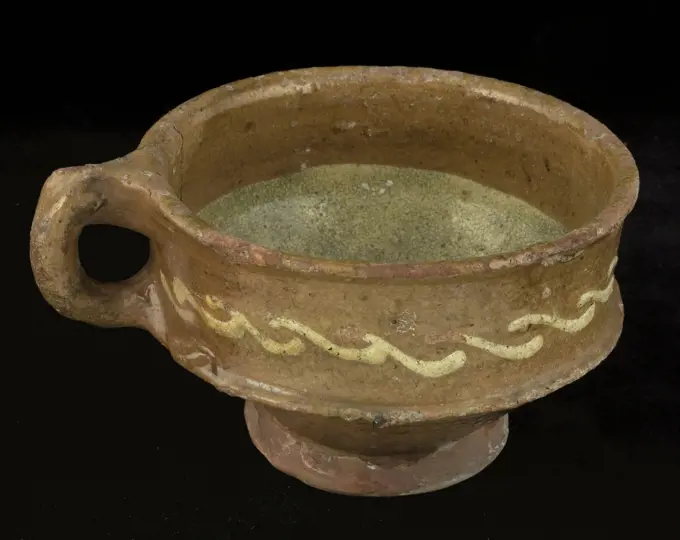
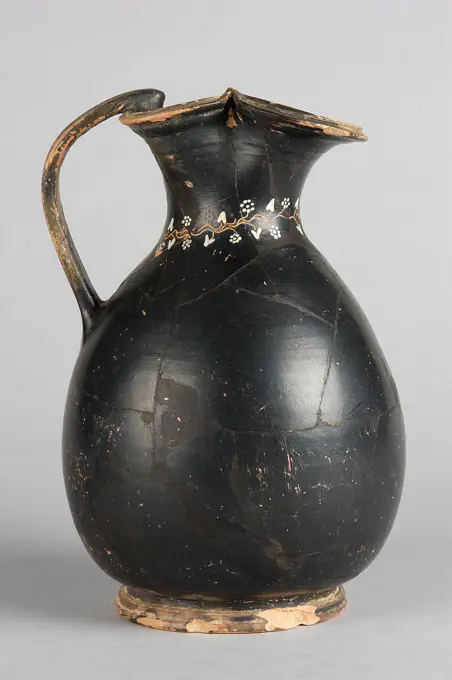
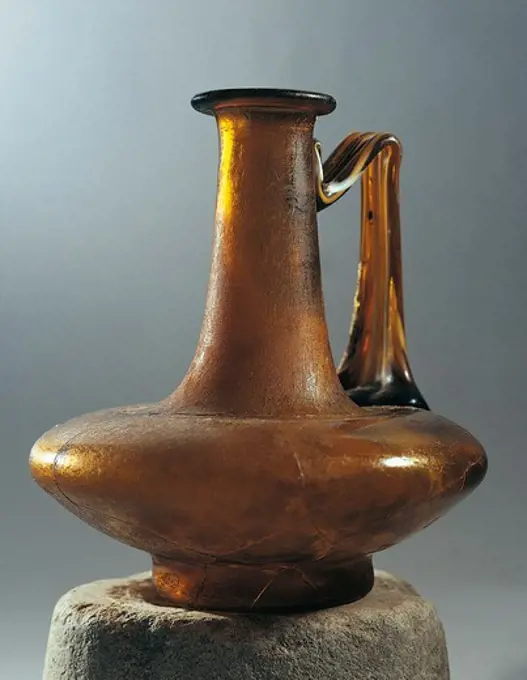
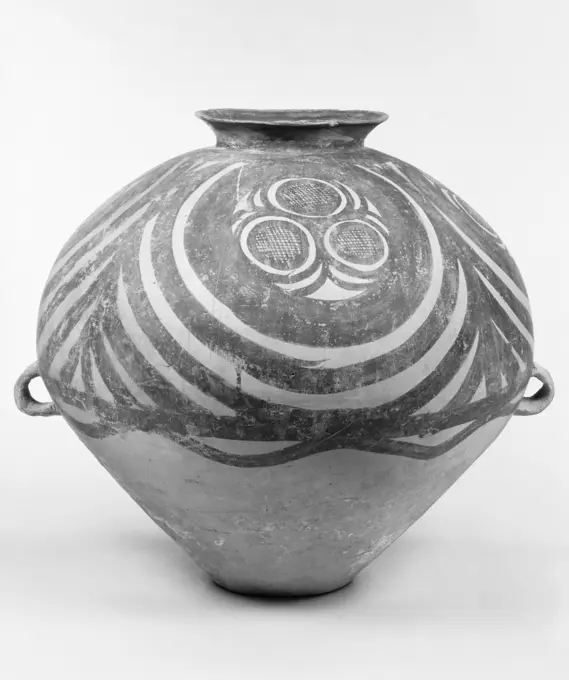
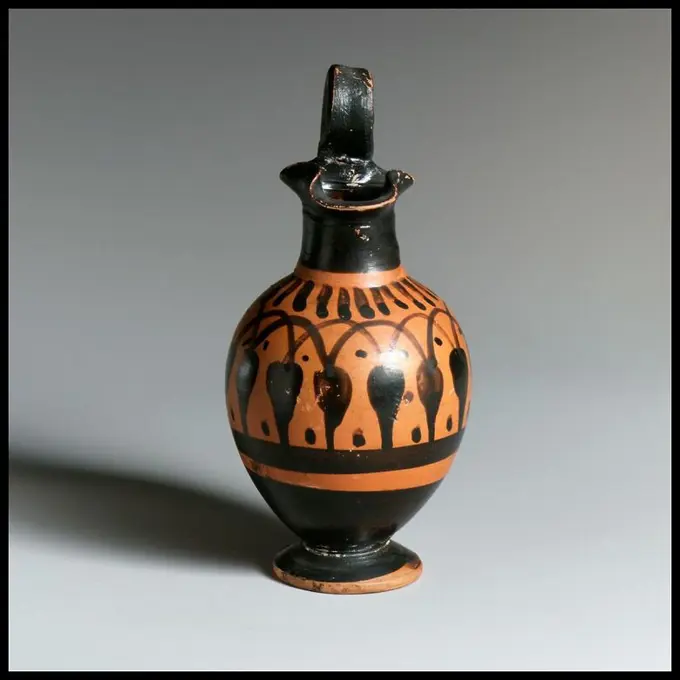
Collection of ancient pottery, including storage vessels and oil flasks. Rich textures and colors reflect distinctive cultural designs across centuries.
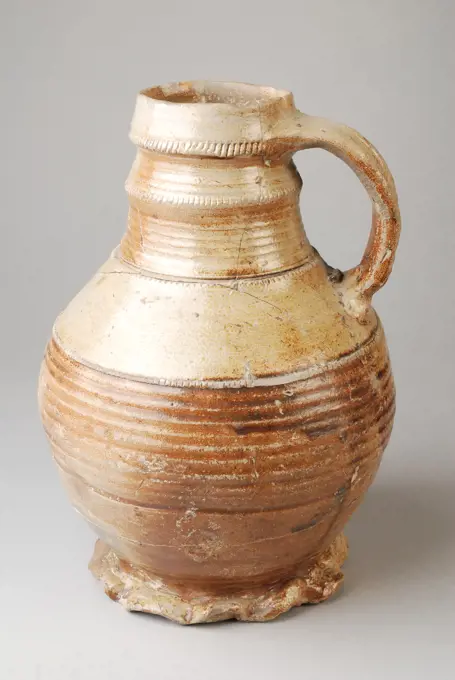
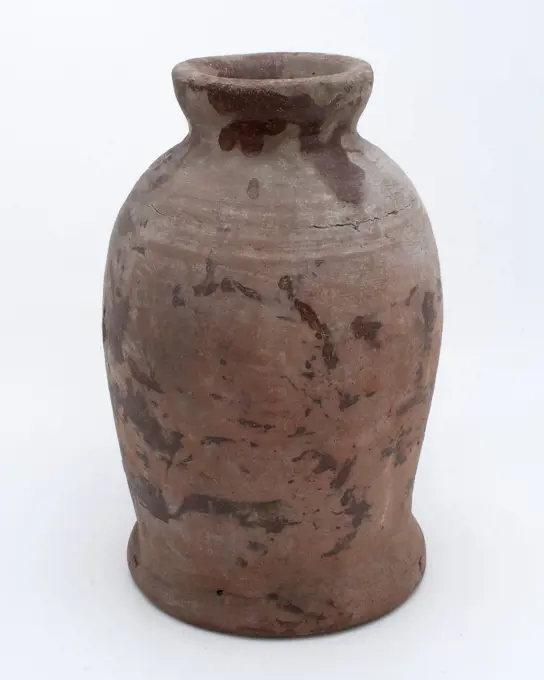
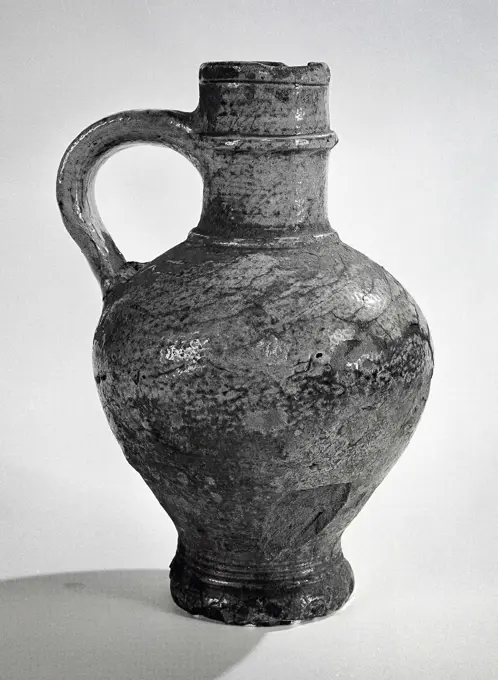
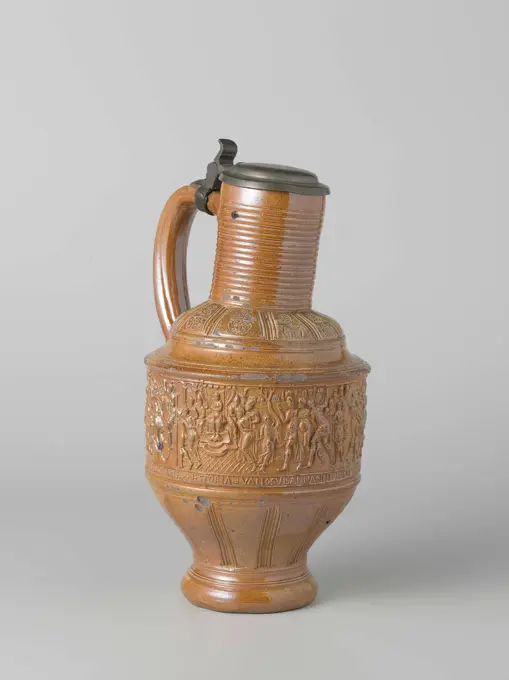
Stoneware jug with salt glaze, rad-temple decorations, pinched foot, water jug crockery holder soil find ceramic stoneware glaze salt glaze, twisted set radstamp decoration glazed baked Stoneware jug be pinched on foot Decorated with rad stamp Egg-shaped belly. Pretty wide neck. Fully covered with salt glaze Gray and green mottled archeology Capelle aan den IJssel House in Capelle castle Crockery utensils tableware water washing food preparation Soil discovery: water well 1393 house in Capelle Capelle aan den IJssel 1964.
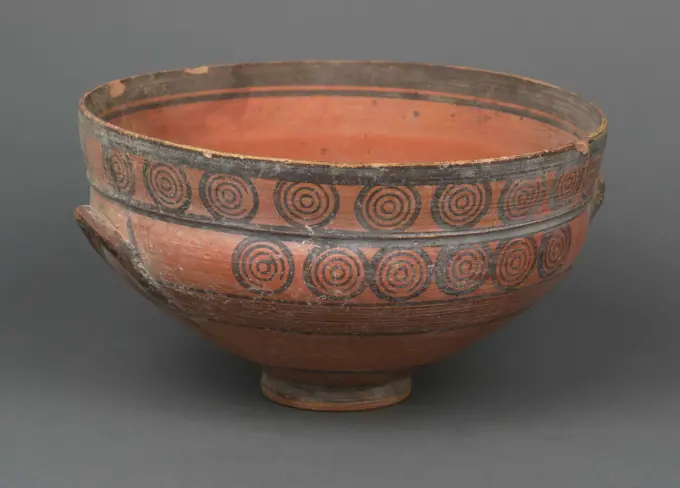
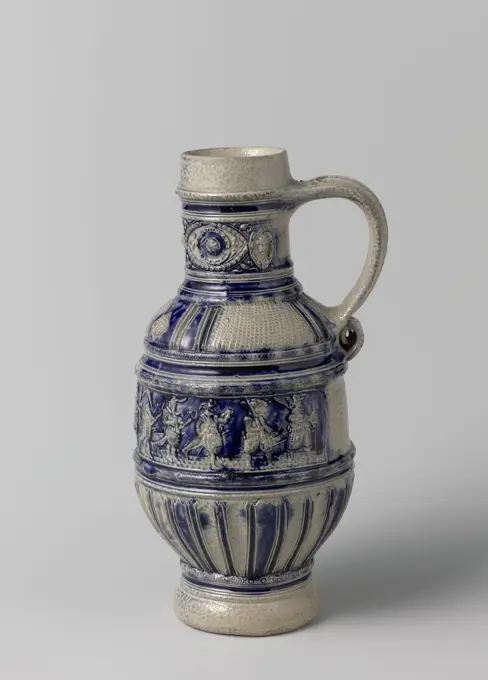
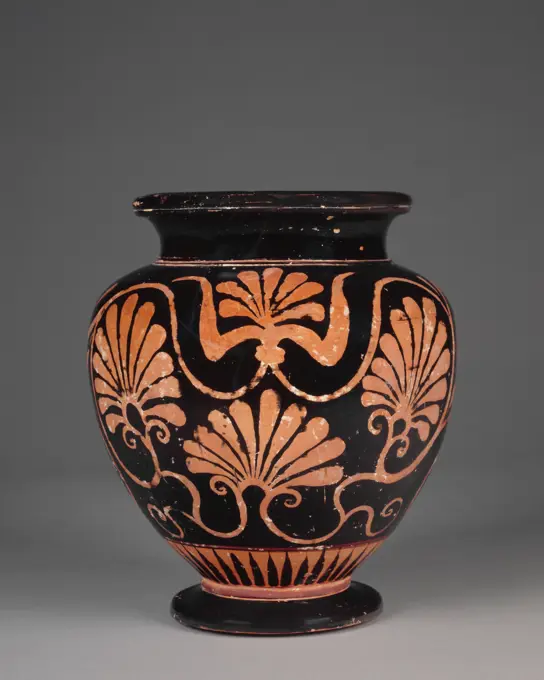
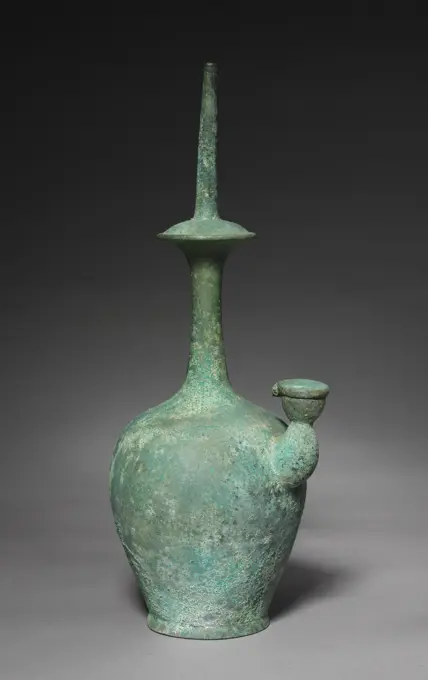
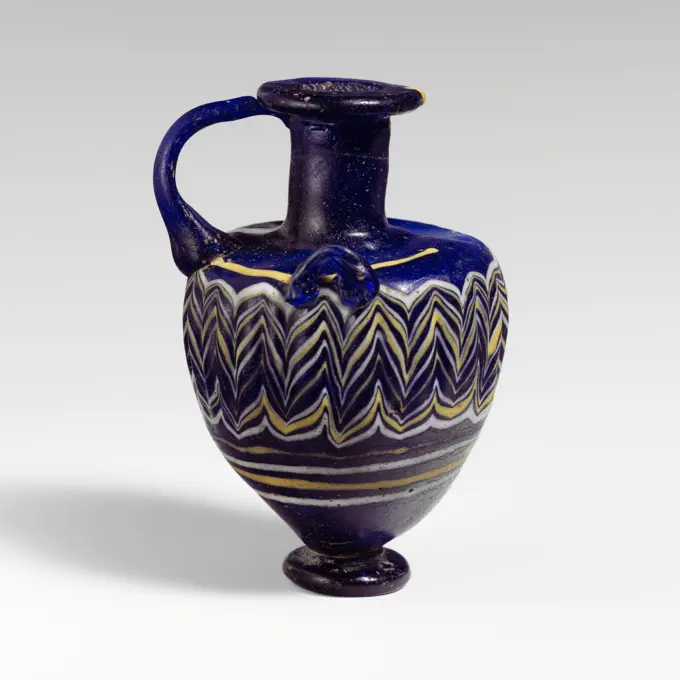
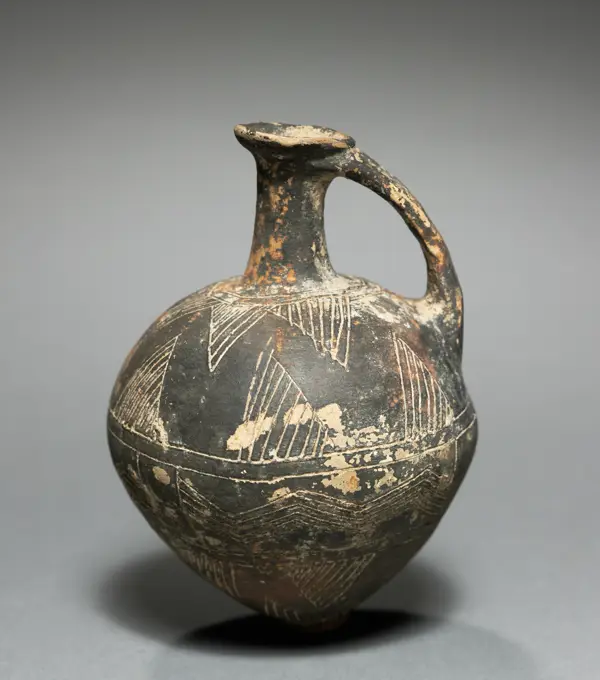
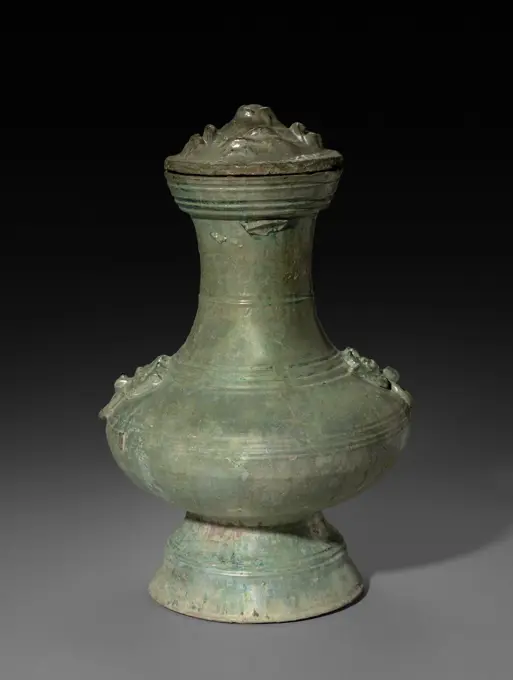
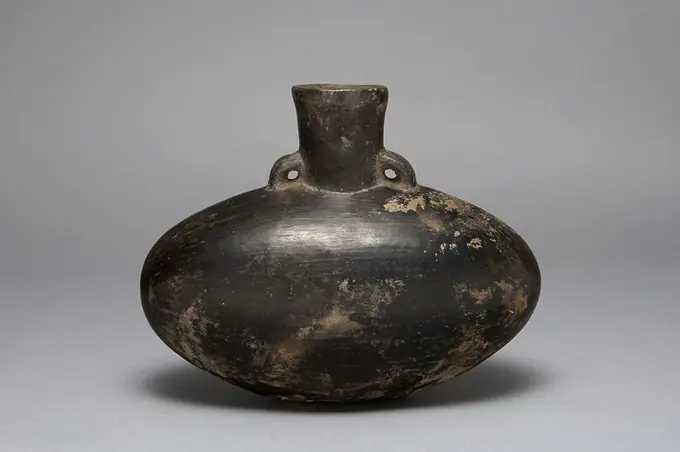
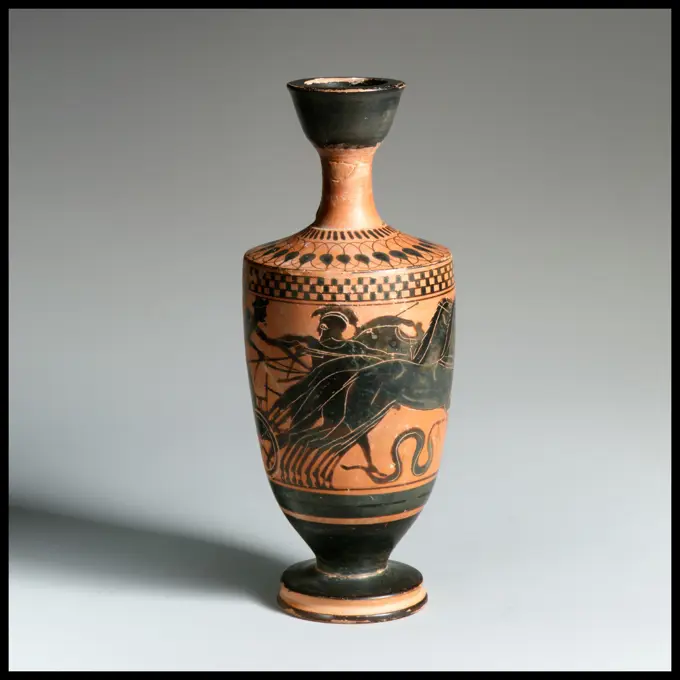
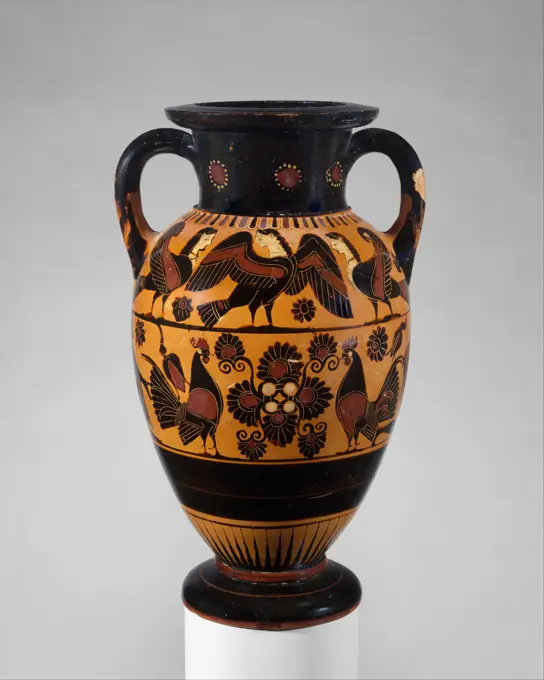
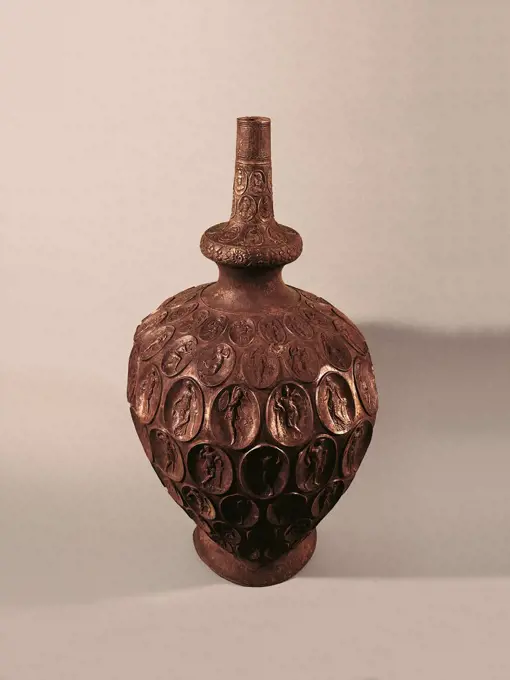
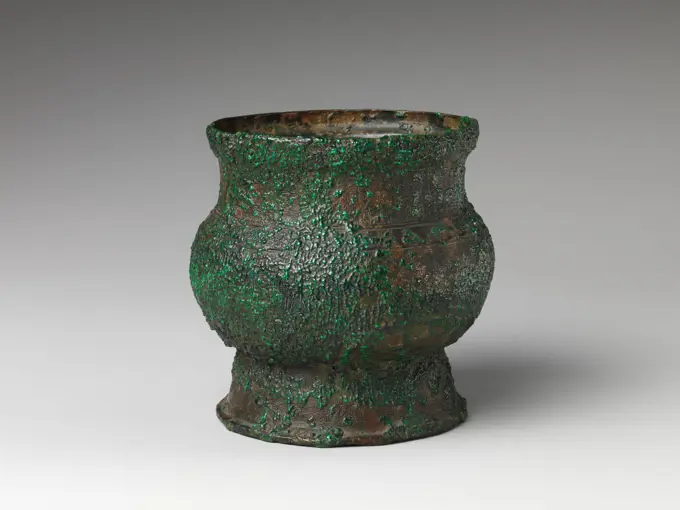
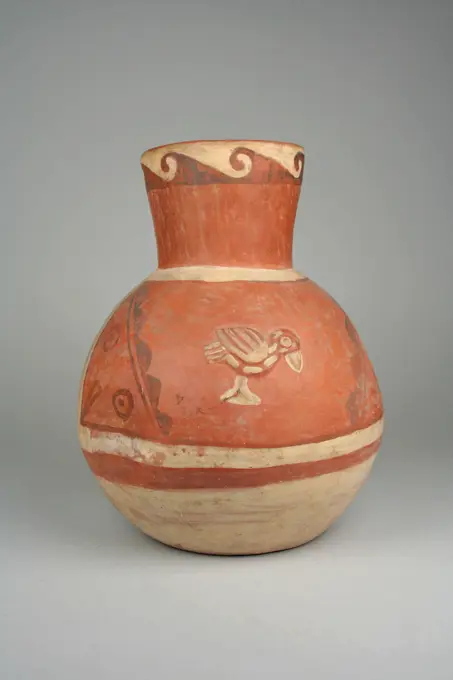
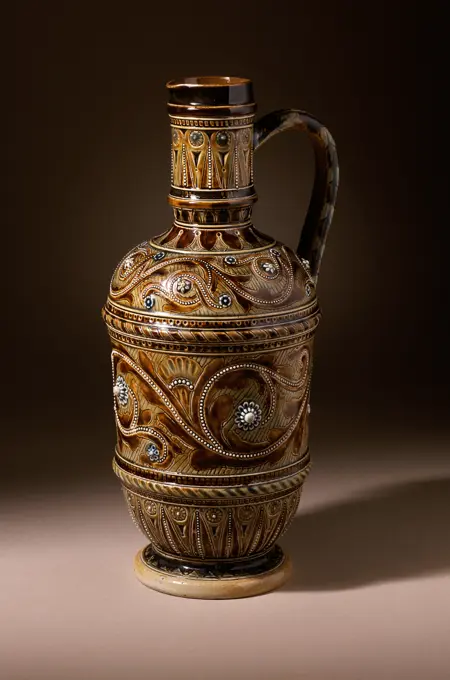
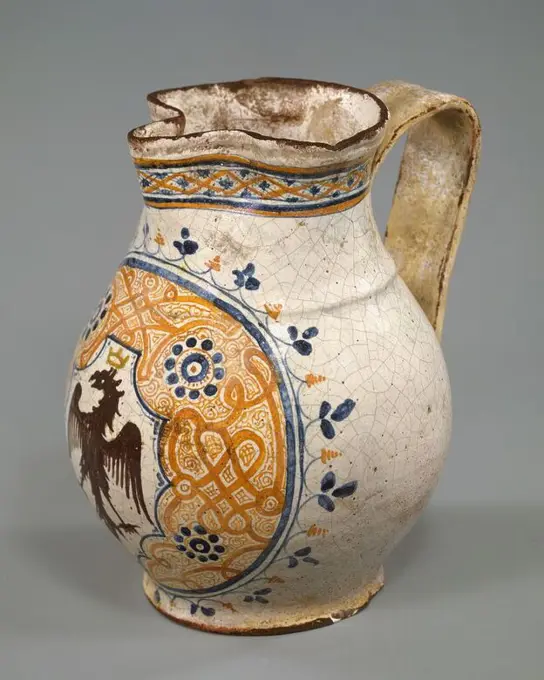
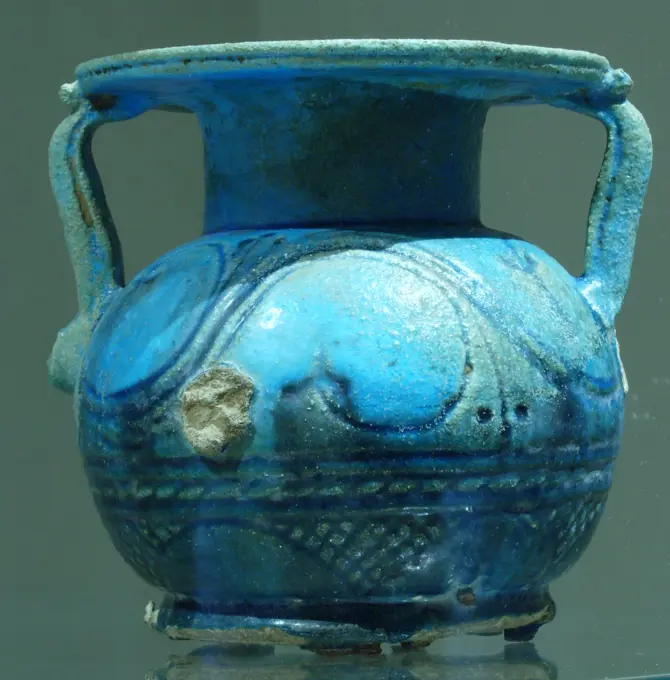
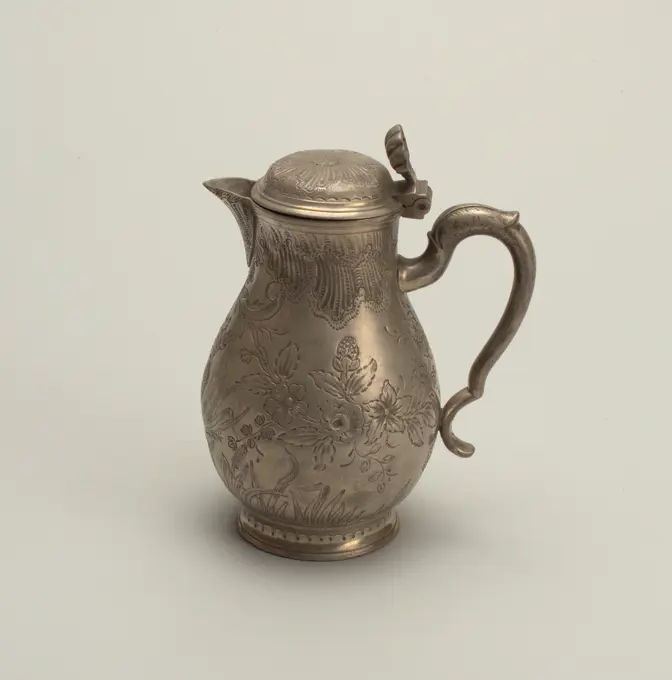
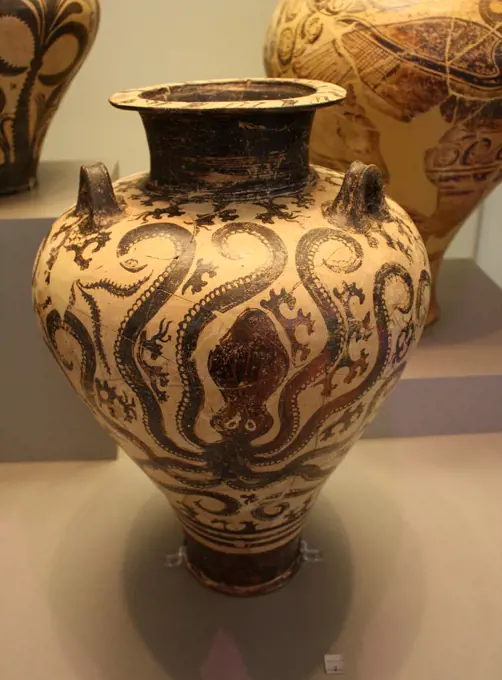
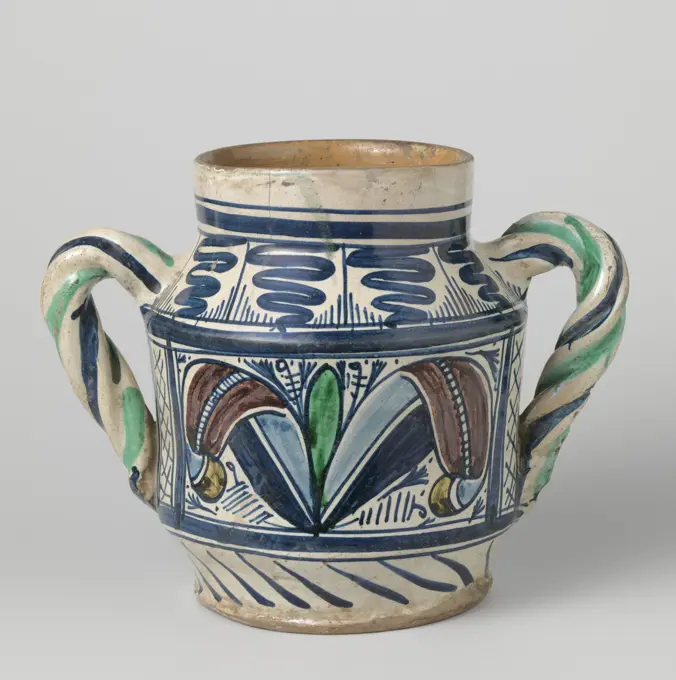
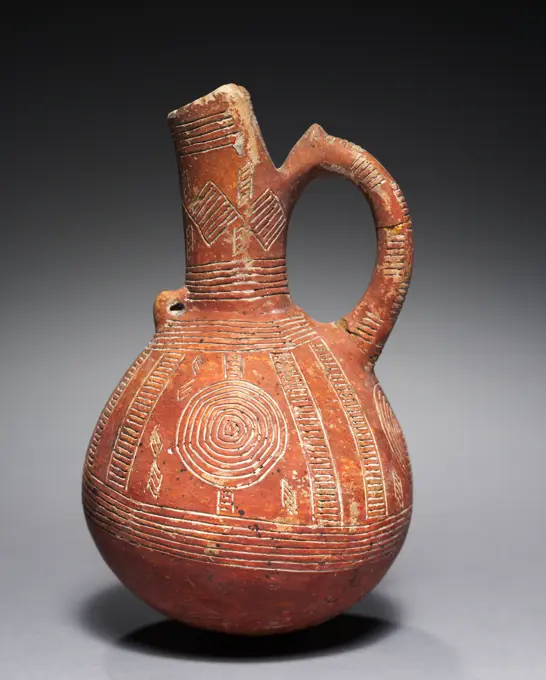
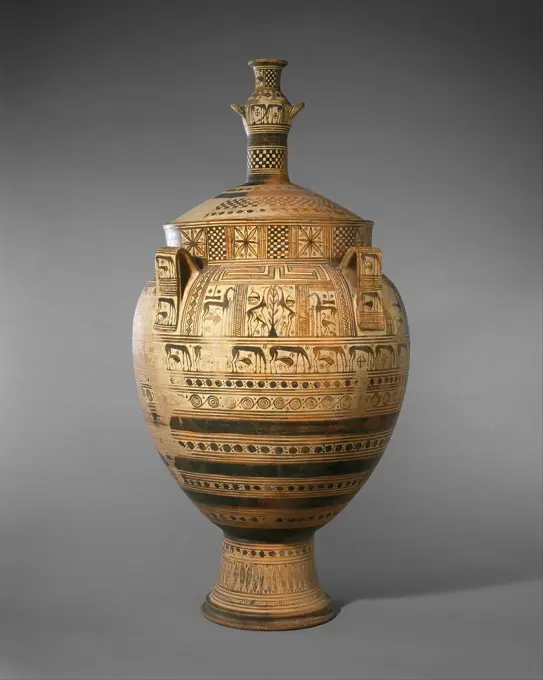
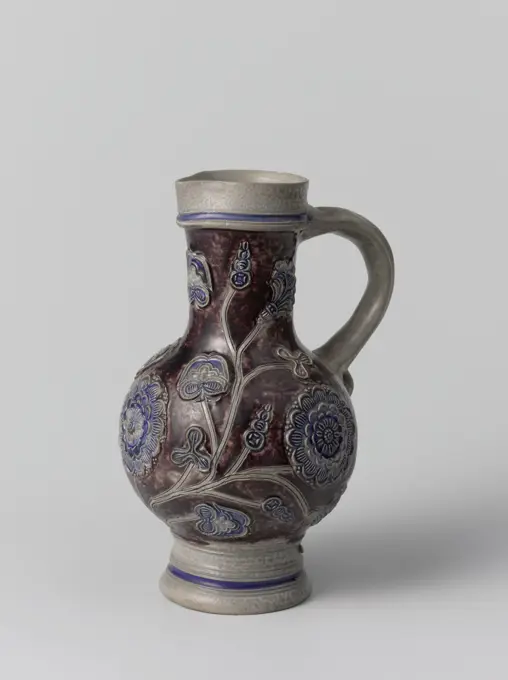
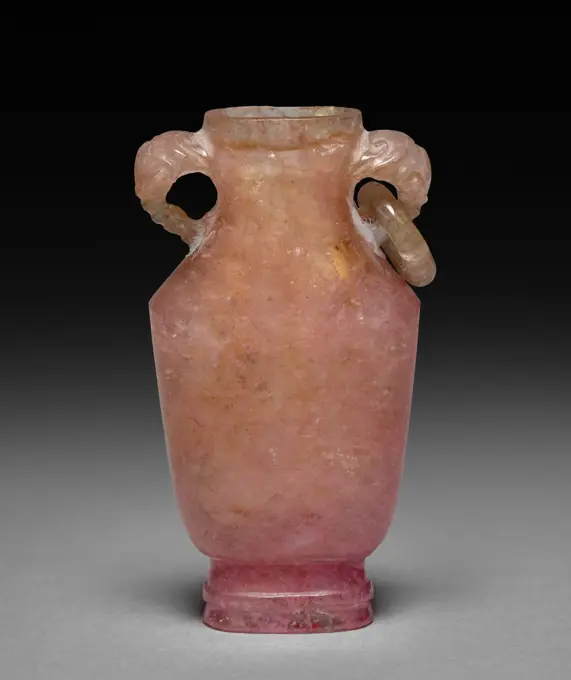
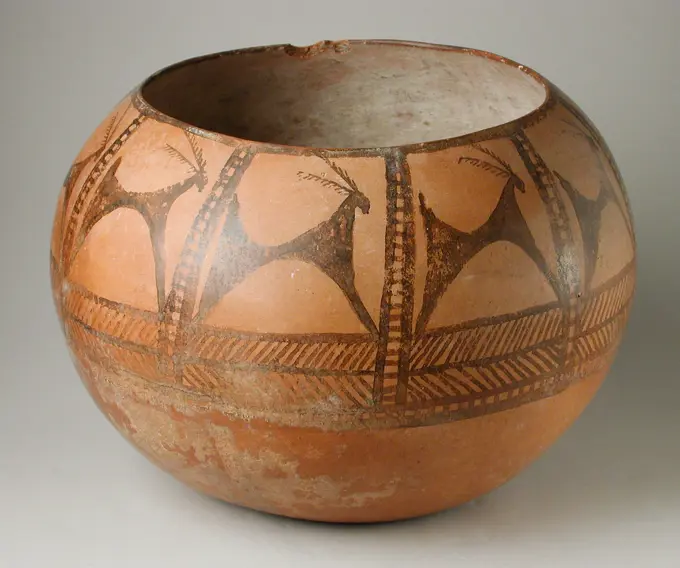
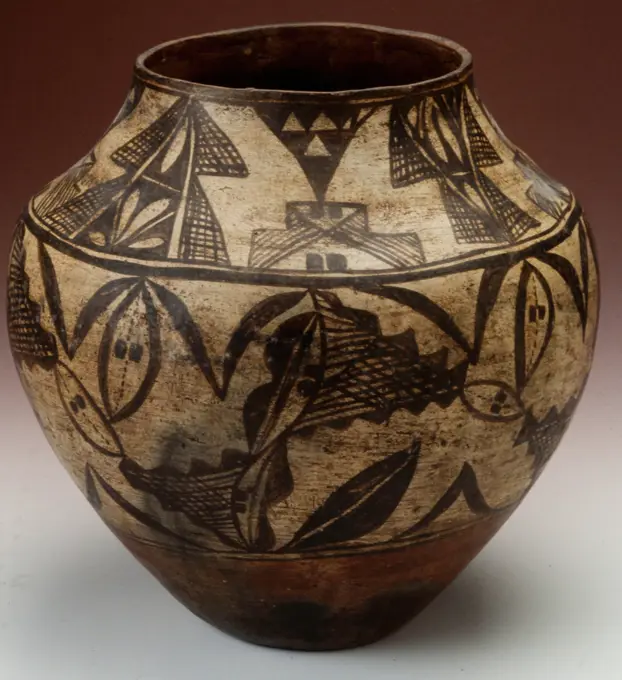
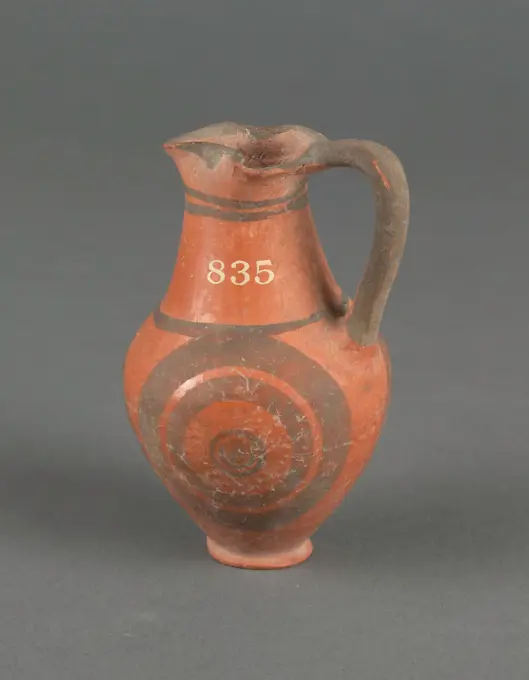
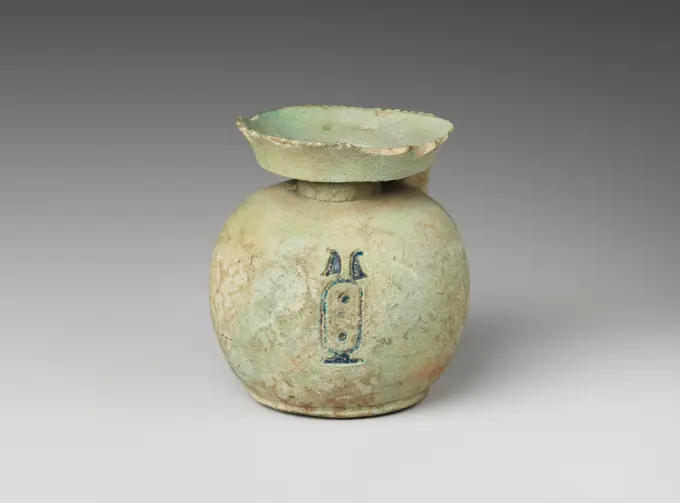
Jar (Aryballos) with a cartouche derived from names of Apries or Amasis Late Period 6th century BC View more. Jar (Aryballos) with a cartouche derived from names of Apries or Amasis. 6th century BC. Faience. Late Period. From Egypt. Dynasty 26-30Jug. Yellow-brown jug consisting of two spherical halves. The upper sphere is alternately decorated with carved network and rubbing ornament.Bowl 600-480 B.C. Cypriot Deep bowl with two handles, horizontal bands and concentric circles.. Bowl. Cypriot. 600-480 B.C.. Terracotta. Cypro-Archaic II. VasesJug with instructions on how to operate a musket, anonymous, anonymous, c. 1610 - c. 1630 Jug of stoneware on high foot with a cylindrical body with round shoulder and wide neck. The C-shaped ear is attached to the neck and shoulder. Profiles on the neck, belly and foot. Partly covered with cobalt blue. On the belly in relief a printed and imposed bond with eleven instructions for handling a musket, after the prints of Jacob de Gheyn II (1565-1629) from his arms handling (1607). The lower part of the abdomen with canelures and the shoulder is divided into courses with alternating cer kinds and stamped rosettes in a window. On the neck a band in relief with masks and rosettes in medallions surrounded by leaf vines. Marked on the ear with a stamped 'm'. Raeren/ Westerwald. Raeren (possibly) stoneware. glaze. cobalt (mineral) vitrification Jug of stoneware on high foot with a cylindrical body with round shoulder and wide neck. The C-shaped ear is attached to the neck and shoulder. ProfileCorinthian Aryballos. Eastern Mediterranean, Middle Corinthian period, circa 570 B.C.. Furnishings; Serviceware. Terracotta, painted and incisedURNA CINERARIA EN MARMOL (ROMANO). Location: MUSEO DE CADIZ-ARQUEOLOGIA. Cadiz. SPAIN.Handleless Stamnos in Attic Six Technique. UnknownGlass jug 1st-3rd century A.D. Roman Translucent blue-green; handle in same color.Tubular rim folded out, round, and in; wide, concave, cylindrical neck; squat bulbous body with gently curving side; pushed-in bottom; small rod handle applied in a round pad to top of body, drawn up and outwards, turned in and slightly down, and trailed onto top of neck with upward trail extending to lip of rim.Intact; few bubbles; dulling, slight pitting, and iridescenec on exterior, creamy weathering and iridescence on interior.. Glass jug. Roman. 1st-3rd century A.D.. Glass; blown. Imperial. GlassFooted Vessel. Mexico, Western Oaxaca or Puebla, Mixtec-Puebla, 1200-1500. Ceramics. Slip-painted ceramicLazio Viterbo Viterbo Museo Civico06. Hutzel, Max 1960-1990 Views of paintings (Middle Ages through 18th c.), frescoes, a tabernacle, coffin, sculpture reliefs, portal fragments, busts, sculpture, tapestry found in the Pinacoteca, Second floor gallery and Second floor cloister sequences. Antiquities: Many views of Etruscan and Roman fragments, sculpture, sarcophagi, pottery, masks, jewelry and other objects found in the Storeroom sequence (inventory numbers on back of prints), and the Cloister, Second floor Cloister, Valle Giulia, Sala Romana and Sala Etrusca sequences. General Notes: There are eight separate numerical sequences for this location. The cloister as an architectural structure, rather than museum site, is documented in the record and file for S. Maria della Verita, Cloister, all views of which are stored in Medieval core collection. Five views from the Museo Civico Second floor cloister sequence are stored in Medieval. German-born photographer and scholar Max Hutzel (1911-Ewer 12th-13th century. Ewer 444966Terracotta guttus (flask with handle and vertical spout). Culture: Greek, South Italian, Campanian. Dimensions: H. 3 7/16 in. (8.8 cm). Date: 4th-3rd century B.C..The medallion depicts Cybele with her attendants. Museum: Metropolitan Museum of Art, New York, USA.Anonymous / 'Case for two-spouted vase with the bust of a woman'. 1650 - 1711. Leather, Wood, Metal, Cloth. Museum: Museo del Prado, Madrid, España.Water Ewer for Rituals (Kundika), 1100s. Korea, Goryeo period (918-1392). Bronze; overall: 39.5 cm (15 9/16 in.).Glass hydriske (perfume bottle) late 4th-3rd century B.C. Greek, Eastern Mediterranean Translucent cobalt blue, with handles in same color; trails in opaque white and opaque yellow.Horizontal rim-disk, with rounded edge; tall cylindrical neck, slanting forward; broad horizontal shoulder; ovoid body; applied circular pad-base, with rounded edge and flat bottom; at junction of shoulder and body, two small vertical loop handles; strap handle also applied at junction of shoulder and body in a pad, drawn up and outwards, then turned in and pressed on to underside of rim-disk.An unmarvered blob of yellow on front edge of rim; a white trail attached to bottom of neck and wound across shoulder; a yellow trail, applied over white at shoulder and wound round; then both trails tooled in a close-set zigzag pattern with deep vertical ribs over top half of body, then continuing down in a spiral in three horizontal lines around lower body.Complete, except for most of one handle, and small circular hoJug, c. 1600-1450 BC. Cyprus, Late Cypriot I. Black-glazed earthenware; diameter: 6.7 cm (2 5/8 in.); overall: 9.5 cm (3 3/4 in.); diameter of lid: 2.1 cm (13/16 in.).Jar 3rd-4th century Roman. Jar. Roman. 3rd-4th century. Almost colorless glass with a yellowish green tint. Blown, the rim finished at the furnace.. GlassIncense Burner With a Copper Cover. Pear-shaped incense burner from stoneware with an openwork, copper lid, covered with a cracked gray glaze. Goudaakrestaurations in the edge. Old label on the bottom with 'W137' and 'Korea 33 / Vente Bing ? 226'.Covered Jar (Hu), AD 25-220. China, Eastern Han dynasty (AD 25-220). Earthenware with lead glaze; overall: 47 cm (18 1/2 in.).High Shouldered Jar with Loop Handles and Reserved Decoration of Stylized Floral Decor. China. Date: 960 AD-1279. Dimensions: H. 20.7 cm (8 1/8 in.); diam. 16.4 cm (6 7/16 in.). Cizhou-type ware; stoneware with brown-black glaze and underglaze reserved decoration. Origin: China. Museum: The Chicago Art Institute, Chicago, USA.Skyfos orientalizujący z przedstawieniami zwierząt. unknown, authorRitual barrel, anonymous, c. -300 - c. -200 Vat (hu) of bronze, with chain and lid. China bronze (metal) Vat (hu) of bronze, with chain and lid. China bronze (metal)Jug. Uneven brown colored and speckled jug of pottery with pewter lid. Belly with a flat-walled center piece that is decorated with the arms of Amsterdam and between the weapons of Saxony.Blackware Jar with Single Spout. Chimú; North coast, Peru. Date: 1200-1450. Dimensions: H. 24.1 cm (9 1/2 in.). Ceramic. Origin: North Coast. Museum: The Chicago Art Institute, Chicago, USA.Jug. Jug of stoneware. Decorated with a vertical, blue tire, in which 13 gray Satermaskers. Furthermore, 2 circular figures composed of decorated tires and a gray star on blue ground.Terracotta lekythos ca. 500 B.C. Attributed to the Diosphos Painter. Terracotta lekythos. Greek, Attic. ca. 500 B.C.. Terracotta; black-figure. Archaic. VasesJug. Gray with blue jug of stoneware. On the belly 3 times a weapon, the middle between two running lions. With pewter lid.Miniature jar ca. 1700-1600 B.C. Iran. Miniature jar 325007Terracotta neck-amphora (jar) ca. 540 B.C. Attributed to the Painter of the Cambridge Hydria Obverse and reverse, on the shoulder, siren; on the body, cocks flanking a floral; under the handles, man runningThis type of very fine black-figure vase is found primarily in southern Italy and was probably made there. It is known as Chalcidian because some examples carry inscriptions in the script used at the city of Chalkis, on the island of Euboea.. Terracotta neck-amphora (jar) 255151 : Attributed to the Painter of the Cambridge Hydria, Terracotta neck-amphora (jar), ca. 540 B.C., Terracotta, Overall: 11 1/2 x 7 3/16in. (29.2 x 18.2cm) diameter of body 6 7/16in. (16.3cm) diameter of foot 4 1/16in. (10.3cm). The Metropolitan Museum of Art, New York. Dodge Fund, 1963 (63.11.3)Silver vase from Porto Baratti, IV- Century, casting,Vase ca. 1876 Designed by George W. Fenety. Vase 15303Earthenware pot on stand, baluster-shaped, used in the sugar industry, sugar pot pot holder soil find ceramic earthenware glaze lead glaze, hand turned glazed baked Pottery pot on stand. Baluster shape with round shoulder and narrow neck opening. Blurred turnings. Protruding and thick neck edge. Red shard internally glazed on the outside of many glaze stains. Here sugar cones were made archeology indigenous earthenware sugar confectionery sugar industryVesselWine cup in the style of Western Zhou dynasty (Zhi) China. Wine cup in the style of Western Zhou dynasty (Zhi) 61025Bottle 5th-7th century Moche. Bottle 309445Jug with Brown Glaze. Arthur B. Barlow (England, active 1871-1878)Doulton & Co. (England, London, Lambeth, founded 1815-1956 and Straffordshire, Burslem, 1877-present). England, 1875. Furnishings; Serviceware. Salt-glazed stonewareArmorial Jug (boccale). Culture: Italian, possibly Tuscany. Dimensions: H. 8 3/8 in. (21.3 cm). Date: late 15th century. Museum: Metropolitan Museum of Art, New York, USA.Ewer late 12th-early 13th century. Ewer 453349Jar Wari 6th-12th centuryPottery piggy bank, stocky model with button, upright ridge on the belly, piggy bank holder earth discovery ceramics earthenware glaze lead glaze h 8.7 hand turned cut glazed baked Pottery savings pottery red shard top part covered with lead glaze breast shaped stand up ridge on the shoulder archeology indigenous pottery save save save child penny moneyGlass amphoriskos (perfume bottle) 3rd century B.C. Greek, Eastern Mediterranean or Italian Translucent cobalt blue with same color handles and base-knob; single trail in opaque white.Horizontal rim-disk with rounded edge; tall cylindrical neck with concave sides; small sloping shoulder; narrow, elongated ovoid body; large coiled base-knob applied to pointed bottom; two vertical strap handles applied to top of body, drawn up and outward, then turned in and down, and attached to top of neck and underside of rim-disk.Trail applied on neck below rim-disk, wound horizontally once around neck and drawn spirally down to body, tooled into a zigzag pattern with close-set vertical indents around top of body, then wound spirally down body in five turns with one more turn further down, and trailed off back across body to bottom of one handle.Body intact, but upper half of one handle missing; dulling, pitting, and faint iridescence.. Glass amphoriskos (perfume bottle) 249816Bronze hydria (water jar). Culture: Greek. Dimensions: Overall: 19 1/16 in. (48.4 cm). Date: mid-4th century B.C..On the handle plaque, Dionysos and AriadneIn the fourth century B.C., bronze hydriae were embellished with a separately attached relief under the vertical handle. The subjects included scenes of abduction, Eros, or, as here, Dionysos, the god of wine, and his wife, Ariadne. The expensive vessels may have been given as wedding gifts and then used for special occasions. Many were placed in tombs, sometimes as containers for the ashes of the deceased. Museum: Metropolitan Museum of Art, New York, USA.Lazio Viterbo Viterbo Museo Civico53. Hutzel, Max 1960-1990 Views of paintings (Middle Ages through 18th c.), frescoes, a tabernacle, coffin, sculpture reliefs, portal fragments, busts, sculpture, tapestry found in the Pinacoteca, Second floor gallery and Second floor cloister sequences. Antiquities: Many views of Etruscan and Roman fragments, sculpture, sarcophagi, pottery, masks, jewelry and other objects found in the Storeroom sequence (inventory numbers on back of prints), and the Cloister, Second floor Cloister, Valle Giulia, Sala Romana and Sala Etrusca sequences. General Notes: There are eight separate numerical sequences for this location. The cloister as an architectural structure, rather than museum site, is documented in the record and file for S. Maria della Verita, Cloister, all views of which are stored in Medieval core collection. Five views from the Museo Civico Second floor cloister sequence are stored in Medieval. German-born photographer and scholar Max Hutzel (1911-Prehistory, Italy, Bronze Age. Vase.Campanian Black Squat Lekythos; Campania, South Italy; 323 - 31 B.C; Terracotta; 19 × 4.8 cm (7 1,2 × 1 7,8 in.)Bronze neck-amphora (jar) with lid and bail handle last quarter of the 6th century B.C. Greek Metal vases are far more rare than their ceramic counterparts because fewer were made and because the metal deteriorated or was melted down. Only about half a dozen complete bronze neck-amphorae are known. The side handles served for pouring, the swinging bail for lifting and carrying. The embellishment here is particularly masterfulnot only the Gorgon's heads beneath the handles but also the beading, tongues, and lotos buds on the foot, lip, and handles.. Bronze neck-amphora (jar) with lid and bail handle 255060 Greek, Bronze neck-amphora (jar) with lid and bail handle, last quarter of the 6th century B.C., Bronze, H. with handle 21 11/16 in. (55.1 cm) H. to rim of mouth 16 1/8 in. (41 cm) diameter of mouth 5 1/8 in. (13 cm) width with handles 11 11/16 in. (29.7 cm). The Metropolitan Museum of Art, New York. Rogers Fund, 1960 (60.11.2a, b)Homreh ca. 3rd-7th century A.D. Sasanian. Homreh 323030Vase with Lid A.D. 2nd century Roman Period Many artworks of the Roman Period in Egypt represent the taste of wealthy urban merchant and rich farming classes of Roman Egypt. Wide trade of luxury works is evident, and Greco-Roman style dominates. Since Egyptian pharaohs had first authorized Greek trading colonies and employed Greek mercenaries in the seventh century BC., there was a considerable Greek presence in Egypt. With Alexander's conquest, Macedonian Greek Ptolemies ruled as successors to the pharaohs, and Ptolemaic Greek and eastern Mediterranean soldiery was heavily settled in parts of Egypt. Although the Ptolemaic kings maintained traditional Egyptian religious and political forms, elite society, of mixed Greek and Egyptian descent, aspired to Greek culture in many respects. With the replacement of a Ptolemaic pharaoh in Memphis and Alexandria by a Roman emperor in Rome, the status of Greek culture and art, if anything, increased. However, multiple cultural influences were t pPrehistory, Italy. Vase from the necropolis of Valdesi, at the Conca d'Oro, Palermo.Terracotta Nolan neck-amphora (jar) ca. 480 B.C. Attributed to the Group of the Floral Nolans On the shoulder, palmette-lotos ornamentThe composition and execution of the nonfigural types of decoration on a vase are as important as the treatment of figural subjects. The stylistic ambient of the Berlin Painter included artists who specialized in vases decorated only with foliate and geometric motifs. A work such as this one demonstrates how effectively a band of florals adds an organic quality to the architectonic structure of the shape.. Terracotta Nolan neck-amphora (jar) 247571Jug. Spherical jar of stoneware, with a wide cylindrical neck and an ear. The abdomen is decorated with a medallion in Relief, with a rider with dog and the writer "... AR Hen Friso ...".Peucetian sub-geometric olla with two color decoration, 7th Century, ceramic,Aarden kruikje met daarin nog enig vet.Earthen jug with some fat. A similar jug is depicted in the travel dispenser of the spring, on the print between folio 46 and 47.Jar sherd ca. 1400-1200 B.C. Iran. Jar sherd 325001Terracotta cup with barbotine decoration mid-1st century A.D. Roman Two-handled with a row of leaf-shaped plastic decorations; barbotine decoration.. Terracotta cup with barbotine decoration. Roman. mid-1st century A.D.. Terracotta; sigillata ware. Early Imperial. VasesCan be from stoneware. Can be from stoneware. There is a small pointed spit on the narrow, high neck. The egg-shaped belly is strewn with rosettes printed in flat relief, uncoloured on blue fond. A sheet mask has been printed on the neck.Bearded manner. Bearded manner decorated with medallions in which heads, leaf ornament and a band with Roman letters.Jug; pewterJar old objectsTerracotta mug with lid ca. 340-320 B.C. Attributed to the Painter of Vienna 113 On the body, head of a womanOn the lid, heads of two womenThe mug belongs to a class of examples that are similar in shape and provided with handles that are either twisted or embellished with a Herakles knot. The decoration consists of a woman's head.. Terracotta mug with lid 247385Three-handled Palace Style amphora with three large octopuses with a marines cape of rocks and seaweed. A Mycenaean imitation of the Minoan Marine Style. From the Mycenaean cemetery at Argive Prosymna, 15th century BC.. Brown jug of pottery with pewter lid. Belly with a straight-handed center piece decorated with the history of Suzanna.Pot, cylindrical, multi -colored painted with a compartment on either side on the abdomen in which a stylized flower or plant, anonymous, c. 1450 - c. 1500 Cylindrical pot of multicolored painted majolica. The foot runs diagonally as well as the shoulder. The two ears are twisted. On the belly of the pot, there is a compartment on either side in which a stylized flower or plant is painted. On the shoulder courses are painted within which a winding line. Faenza (Possibly) Montelupo (Possibly) earthenware. tin glaze. lead glaze majolica Cylindrical pot of multicolored painted majolica. The foot runs diagonally as well as the shoulder. The two ears are twisted. On the belly of the pot, there is a compartment on either side in which a stylized flower or plant is painted. On the shoulder courses are painted within which a winding line. Faenza (Possibly) Montelupo (Possibly) earthenware. tin glaze. lead glaze majolicaJug, c. 2000-1800 BC. Cyprus, from Alambra or Ayia Paraskeve, Early Cypriot III-Middle Cypriot I. Red ware; diameter: 10.4 cm (4 1/8 in.); overall: 16.5 cm (6 1/2 in.).Terracotta krater with lid surmounted by a small hydria. Culture: Greek, Euboean. Dimensions: H. 45 1/4 in. (114.9 cm). Date: ca. 750-740 B.C..Said to be from Kourion, CyprusDuring the eighth century B.C., the Geometric style that had originated in Athens spread throughout the Greek-speaking world. This beautifully proportioned vase found on Cyprus differs in a number of ways from the three monumental Geometric kraters from Attica displayed elsewhere in this gallery. The shoulder is subdivided by four handles rather than two, and the carpetlike decoration was applied over a light ceramic slip ground instead of directly onto the clay. Since the 1870s, scholars have debated where the vase was made; current opinion attributes it to a workshop on Euboea, an island just off the east coast of Attica, rather than to the island of Naxos, in the Cyclades. In the center panel, between the handles, two stags or goats rise on their hind legs to nibble at a tree. While the graceful long-legged animGray pottery jug or cup with sausage ear, on four vanes, beaker cooking jug be found in the earthenware ceramic pottery, hand-turned (reducing) baked Pottery cooking jug or beaker blue-gray shard sausage-ear rotating bonnets on the shoulder four pinched stand fins. Ball-round narrowing upwards. Outstanding top edge with slit on the inside Ear attached to the top and shoulder. Restoration is sloppy performed archeology Rotterdam indigenous pottery food preparation cooking kitchen drinking table serving Soil discovery: from batch of earthenware with Rotterdam soil finds.Pottery test on stand, wide top and narrow foot, sludge decoration, test fire test earth discovery ceramics earthenware lead glaze clay, ring 7.6 hand turned decorated glazed baked lozenge Pottery test red shard with sludge decoration covered entirely with lead glaze vertical set of sausage at the top pinched stand ring Inside partly provided with yellow sludge layer outside wall with yellow sling motifs. Tapered model with wide and wide upper edge narrow foot. Restoration is repainted in color and overgrown in the ear archeology indigenous pottery warm food prepare cooking kitchen stew roomOinochoe;  2. PO. 4th century BC (-350-00-00--301-00-00);Pitcher. Culture: Spanish. Dimensions: Overall: 18 3/8 x 9 in. (46.7 x 22.9 cm). Date: ca. 1430.Pitchers with exaggeratedly tall necks, beaklike spouts, and large heavy handles were common in fifteenth-century Spain. This unusually large pitcher, probably made in Manises, the principal center of Spanish lusterware throughout the fifteenth century, holds almost eight quarts, and is a rare example of earthenware technique. Although pitchers were common items of tableware, this particular example, when full, would have been much too heavy to wield conveniently. It therefore might have been used for dispensing wine or water to smaller table pitchers, or for serving wine at large banquets. Its large size and ornamentation have also made it a valuable decorative piece, which perhaps explains its fine state of preservation. The decoration, which includes patterns of pseudo-Kufic script, points to the Muslim origin of all Spanish lusterware. The technique, which originated in the Near East, fItaly, Glass amphora from the tomb n.41, necropolis of AltinoJar. Culture: Japan. Dimensions: H. 7 5/8 in. (19.3 cm); Diam. 5 3/4 in. (14.6 cm); Diam. of rim 2 5/8 in. (6.7 cm); Diam. of base 3 in. (7.6 cm). Date: 18th century. Museum: Metropolitan Museum of Art, New York, USA.Pyxis ca. 325-300 B.C. Attributed to the Kantharos Group On the lid, head of a woman.. Pyxis 255266 : Attributed to the Kantharos Group, Pyxis, ca. 325300 B.C., Terracotta, H. 11.99 cm.. The Metropolitan Museum of Art, New York. Rogers Fund, 1968 (68.11.42a, b)Bridge and Spout Bottle in Animal Form 1st-5th century Vicús. Bridge and Spout Bottle in Animal Form 309747Jar (Guan) ca. 2500-2000 B.C. China. Jar (Guan) 44690Pitcher early 15th century Italian. Pitcher 463530Oinochoe. Culture: Greek, Attic. Dimensions: 5 1/16in. (12.9cm). Date: 6th century B.C.. Museum: Metropolitan Museum of Art, New York, USA.Jug with floral scrolls, anonymous, c. 1680 - c. 1724 Can of stoneware on a high base with a spherical body and narrow, long neck with a pinched spout. The C-shaped ear is attached to the neck and shoulder. On the neck a profile and some entry lines on the foot. Partly covered with cobalt blue and mangangan purple. The front of the jug with a flourishing plant consisting of breached tifles saved in a purple background. The flowers are printed, imposed and colored with blue. Westerwald. Westerwald stoneware. glaze. cobalt (mineral). manganese oxide vitrification Can of stoneware on a high base with a spherical body and narrow, long neck with a pinched spout. The C-shaped ear is attached to the neck and shoulder. On the neck a profile and some entry lines on the foot. Partly covered with cobalt blue and mangangan purple. The front of the jug with a flourishing plant consisting of breached tifles saved in a purple background. The flowers are printed, imposed and colored with blue. WesterwOinochoe 3rd century B.C. Greek, South Italian, Apulian Ribbed body and arched handle; incised leaf-pattern down back; glazed.. Oinochoe 250074Lazio Viterbo Viterbo Museo Civico74. Hutzel, Max 1960-1990 Views of paintings (Middle Ages through 18th c.), frescoes, a tabernacle, coffin, sculpture reliefs, portal fragments, busts, sculpture, tapestry found in the Pinacoteca, Second floor gallery and Second floor cloister sequences. Antiquities: Many views of Etruscan and Roman fragments, sculpture, sarcophagi, pottery, masks, jewelry and other objects found in the Storeroom sequence (inventory numbers on back of prints), and the Cloister, Second floor Cloister, Valle Giulia, Sala Romana and Sala Etrusca sequences. General Notes: There are eight separate numerical sequences for this location. The cloister as an architectural structure, rather than museum site, is documented in the record and file for S. Maria della Verita, Cloister, all views of which are stored in Medieval core collection. Five views from the Museo Civico Second floor cloister sequence are stored in Medieval. German-born photographer and scholar Max Hutzel (1911-Bottle with Incised Geometric Figure 650 BCE-150 BCE Ica Valley. Ceramic with resinous postfire paint . ParacasOinochoe 4th century B.C. Attributed to the Xenon Group. Oinochoe 255348Italy, Lazio, Tarquinia, Red-figure oenochoe (or oinochoe, wine jug), by the Ceratana School, 350/325 B.C.Jar with Seven Keurvorsten. Jug of stoneware with a pewter lid. The neck of the jug is decorated with three medallions in which a cup, the belly is decorated the Archbishops of Trier, Cologne and Mainz, the king of Bohemia, the Markgraaf of Brandenburg, Palzgraaf and the Duke of Saxony as in Niches, each with a caption and the year 1602.Water Jar. Culture: China. Dimensions: H. 2 1/4 in. (5.7 cm); Diam. 3 3/4 in. (9.5 cm). Date: 1678-88. Museum: Metropolitan Museum of Art, New York, USA.Italy, Monza and Brianza, Albiate, Cup decorated with lamella tin from Golasecca CultureTerracotta jug. Culture: Cypriot. Dimensions: H. 10 3/8 in. (26.4 cm). Date: 750-600 B.C..Vertical-circle ornament and highly conventionalized bird. Museum: Metropolitan Museum of Art, New York, USA.Aryballos wąskodenny orientalizujący z fryzem zwierzęcym. unknown, authorMiniature Jar, 19th-early 20th century. China, Qing dynasty (1644-1911). Jade; overall: 6.1 cm (2 3/8 in.).Prehistoric Painted Pottery Vessel. Central Iran, Cheshmeh Ali - Esmailabad, circa 5000-4500 B.C.. Furnishings; Serviceware. CeramicPot (Olla), c. 1875-1880, 11 1/2 x 12 in. (29.21 x 30.48 cm), Clay, pigment, United States, 19th centuryTerracotta tankard. Culture: Greek, Attic. Dimensions: H. 3 in. (7.6 cm). Date: late 8th-early 7th century B.C..On the neck, waterbirds. Museum: Metropolitan Museum of Art, New York, USA.Jug ca. 1580 John Eydes Stoneware jugs of this type were frequently imported from Germany and the mounts added in England.. Jug. British, Exeter. ca. 1580. Stoneware, silver gilt. Metalwork-Silver In CombinationJuglet 850-750 B.C. Cypriot Miniature oinochoe with concentric circles.. Juglet. Cypriot. 850-750 B.C.. Terracotta. Cypro-Geometric III. VasesBeaker. China. Date: 1599 BC-1450 BC. Dimensions: H. 15.5 (6 1/8 in.); diam. 11.0 cm (4 5/16 in.). Bronze. Origin: China. Museum: The Chicago Art Institute, Chicago, USA.Terracotta vase Terracotta vase, 450-425 BC, Archaeological Museum of Ibiza and Formentera, Spain Copyright: xZoonar.com/Tolox 23005348Kalpis czerwonofigurowa z przedstawieniem Nike niosącej nagrodę dla zwycięzcy. Malarz Oreithyi (ok. 470-460 p.n.e.), authorVaasVormig Onderdeel, Jacopo della Quercia, 1575 - 1599 On the belly, which is, three lion heads, interconnected by three 'clothguirles'. Above three ears, formed from broken, band-shaped S-Voluten. Venice bronze (metal). stucco On the belly, which is, three lion heads, interconnected by three 'clothguirles'. Above three ears, formed from broken, band-shaped S-Voluten. Venice bronze (metal). stuccoTripod with dragon. Culture: China. Dimensions: H. 3 7/8 in. (9.8 cm); L. 5 1/8 in. (13 cm). Date: 18th century. Museum: Metropolitan Museum of Art, New York, USA.Vase Gui ". Bronze. Dynasty of western Zhou (1121-771 BC). Paris, Cernuschi museum. 144391-1 Asian art, Chinese art, art of extreme-East, bronze, zhou dynasty, western zhou dynasty, guy, vaseWhistle, Bird 9th-5th century B.C. Tembladera. Whistle, Bird 316716