Ancient Pottery and Vessels

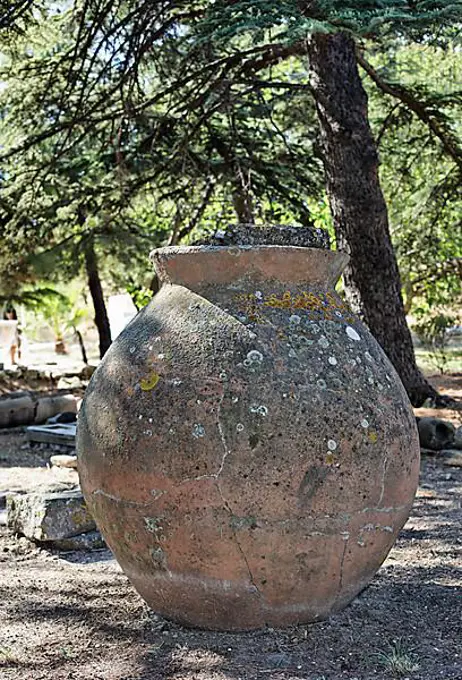
Collection of ancient pottery, including storage vessels and oil flasks. Rich textures and colors reflect distinctive cultural designs across centuries.
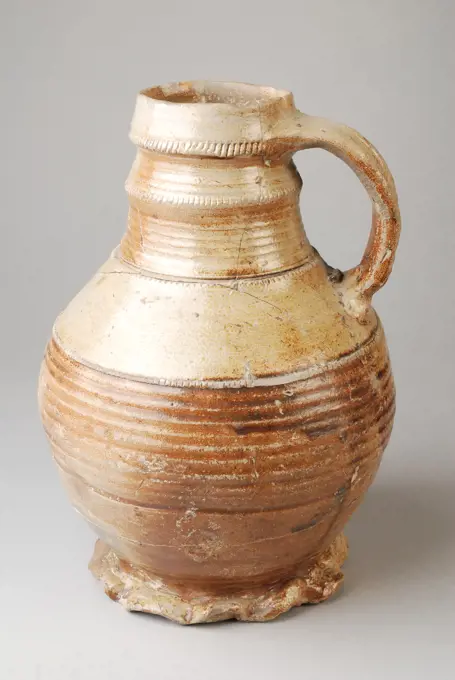
Stoneware jug with salt glaze, rad-temple decorations, pinched foot, water jug crockery holder soil find ceramic stoneware glaze salt glaze, twisted set radstamp decoration glazed baked Stoneware jug be pinched on foot Decorated with rad stamp Egg-shaped belly. Pretty wide neck. Fully covered with salt glaze Gray and green mottled archeology Capelle aan den IJssel House in Capelle castle Crockery utensils tableware water washing food preparation Soil discovery: water well 1393 house in Capelle Capelle aan den IJssel 1964.
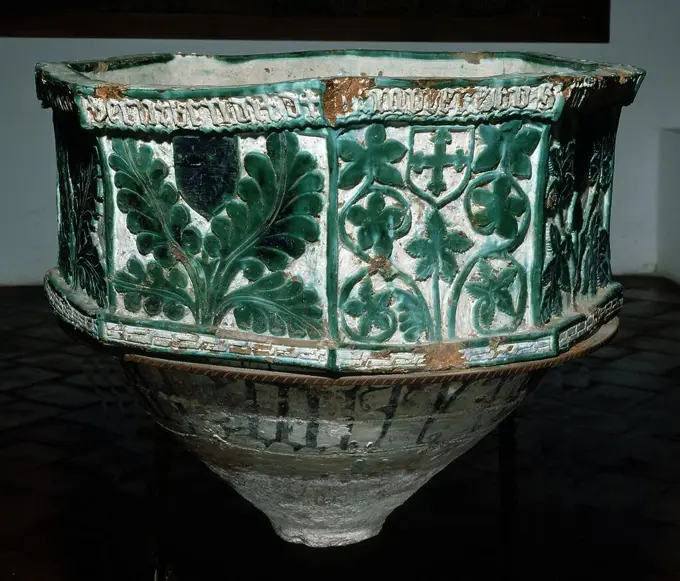
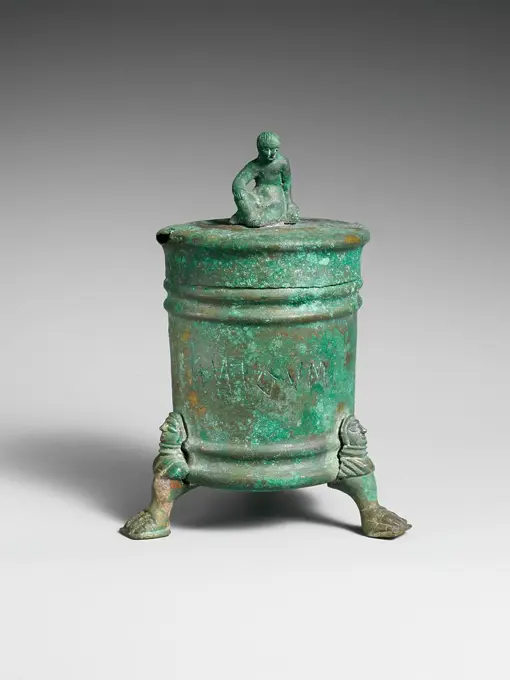
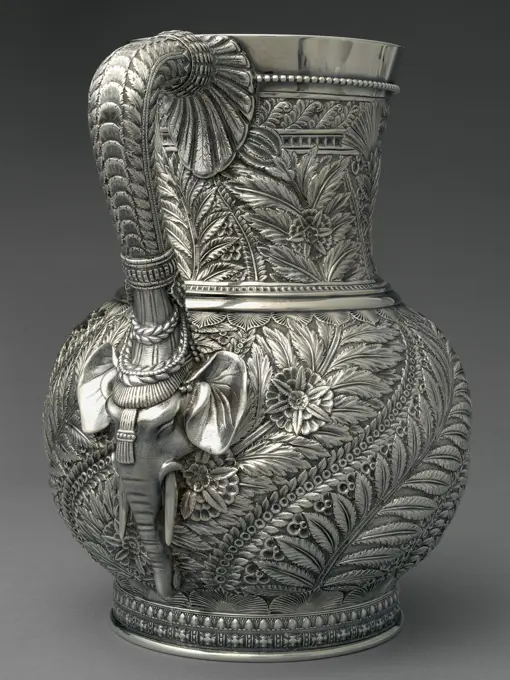
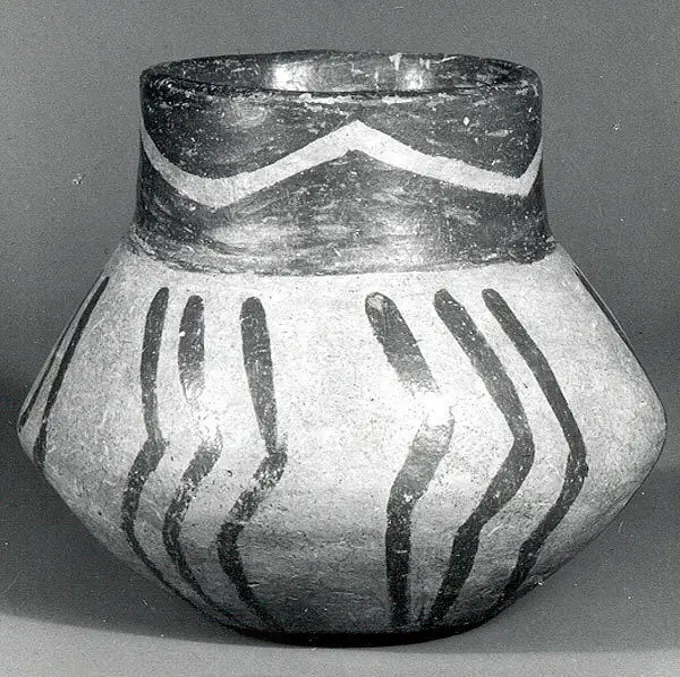
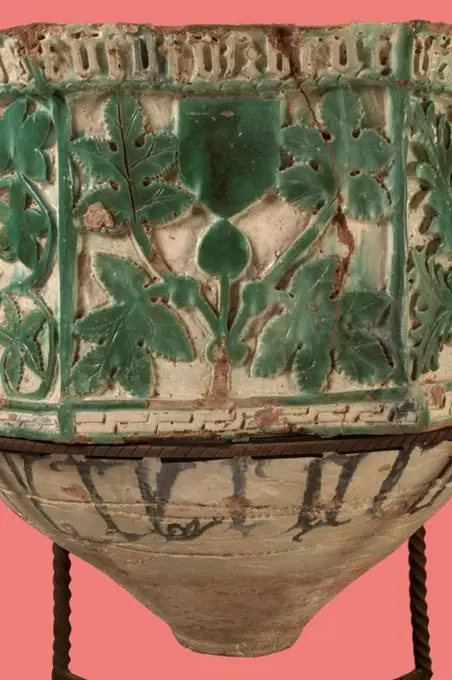
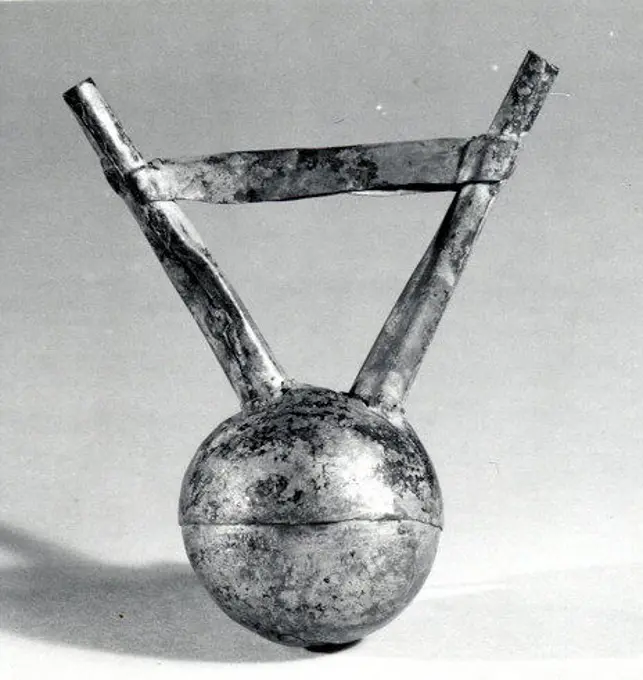
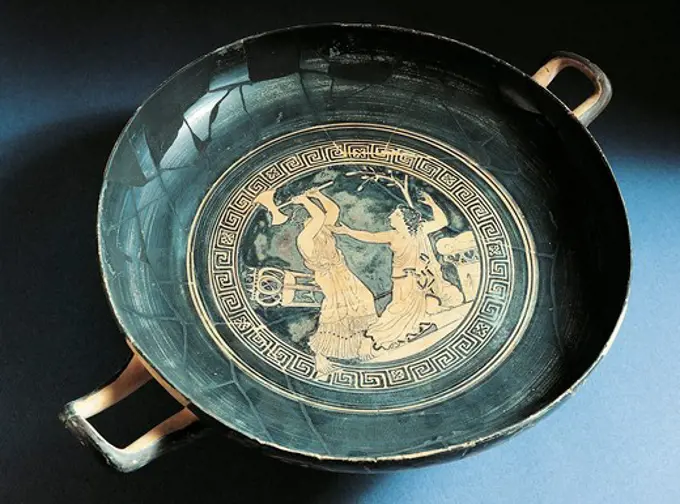
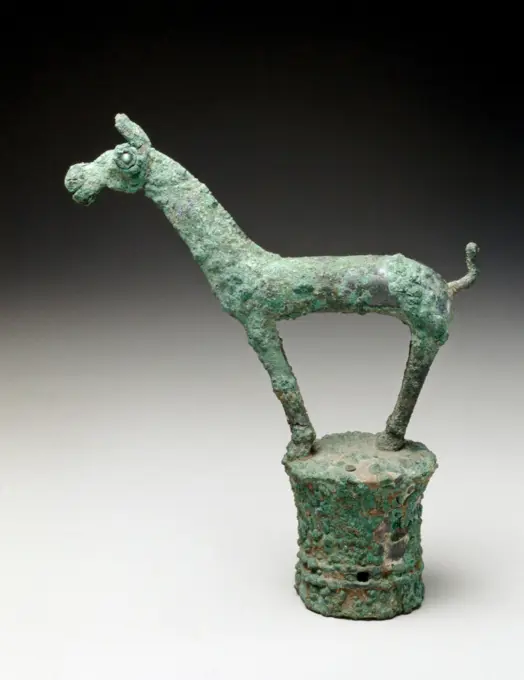
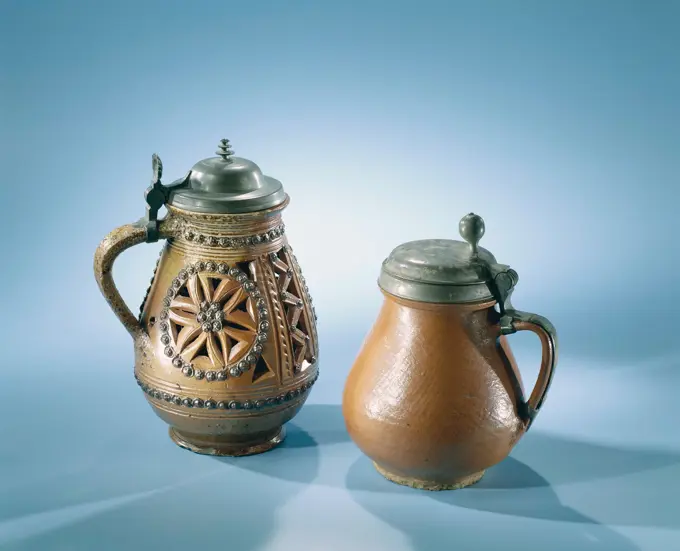
. Yellow brown jug of stoneware with pewter lid and double wall. The outer wall is open.Gold krater, from Derveni, Macedionia, Greece, circa 330-320 B.C.Lazio Viterbo Viterbo Museo Civico86. Hutzel, Max 1960-1990 Views of paintings (Middle Ages through 18th c.), frescoes, a tabernacle, coffin, sculpture reliefs, portal fragments, busts, sculpture, tapestry found in the Pinacoteca, Second floor gallery and Second floor cloister sequences. Antiquities: Many views of Etruscan and Roman fragments, sculpture, sarcophagi, pottery, masks, jewelry and other objects found in the Storeroom sequence (inventory numbers on back of prints), and the Cloister, Second floor Cloister, Valle Giulia, Sala Romana and Sala Etrusca sequences. General Notes: There are eight separate numerical sequences for this location. The cloister as an architectural structure, rather than museum site, is documented in the record and file for S. Maria della Verita, Cloister, all views of which are stored in Medieval core collection. Five views from the Museo Civico Second floor cloister sequence are stored in Medieval. German-born photographer and scholar Max Hutzel (1911-. Pot of stoneware with four small ears from the shoulder to the neck, partly covered with a white sludge and painted under the enamel in brown. A galloping horse and a flower branch on the belly. The bottom is unglazed. Four times a dot on the neck. The glaze has released in a few places. Old label on the bottom with 'W011'. Cizhou.Urnen, links eine Bronzeurne, ein Gräberfund aus der südgermanischen Eisenzeit, rechts eine Knochenurne aus Sittanova, Cittanova in Kalabrien, Italien  /  Urns, on the left a bronze urn, a burial find from the South Germanic Iron Age, on the right a bone urn from Sittanova, Cittanova in Calabria, Italy, Historisch, historical, digital improved reproduction of an original from the 19th century / digital restaurierte Reproduktion einer Originalvorlage aus dem 19. Jahrhundert, genaues Originaldatum nicht bekannt.PILA BAUTISMAL TOLEDANA DECORADA CON HOJAS DE VID Y ACANTOS VIDRIADOS PROCEDENTE DE LA PARROQUIA DE SAN SALVADOR - SIGLO XV. Location: TALLER DEL MORO. SPAIN.Codex-Style Cylinder Vessel with Avian Maize God. Guatemala or Mexico, Northern Peten or Southern Campeche, Maya, 650-800 CE. Ceramics. Slip-painted ceramicBronze cista (toiletries box). Culture: Etruscan or Praenestine. Dimensions: H. 7 5/8 in. (19.4 cm). Date: early 3rd century B.C..Small cista with a solid cast handle of a seated boy. "Suthina" inscribed in Etruscan letters on the body and the lid, indicating this object was made for the tomb. Museum: Metropolitan Museum of Art, New York, USA.Pitcher 1874-75 Tiffany & Co. This pitcher exemplifies the technical virtuosity and creativity that characterized Tiffany & Co.s finest silver during the 1870s and 1880s. Under the direction of Edward C. Moore (1827-1891), the silver division at Tiffany & Co. produced a diverse array of exquisitely wrought and highly original work. Created in 1874 or 1875, this pitcher is an early example of Tiffany & Co.s engagement with Near Eastern and Indian works of art. Edward C. Moore was a passionate and discerning collector of metalwork, glass, ceramics, and textiles from the Islamic world and the Indian subcontinent, and these objects had a profound impact on his creative vision and deigns. The elephant head draped with garlands and the surrounding panels of dahlias, lotus flowers, and other exotic vegetation reflect careful study of Indian and Near Eastern sources and attest to the masterful chasing skills of Eugene Soligny (1832-1901). Together with a matching pitcher that was made severaAn amphora (English plural: amphorae or amphoras) is a type of container of a characteristic shape and size, descending from at least as early as the Neolithic Period. Amphorae were used in vast numbers for the transport and storage of various products, both liquid and dry, but mostly for wine. It is most often ceramic, but examples in metals and other materials have been found. Stoppers of perishable materials, which have rarely survived, were used to seal the contents. Two principal types of amphorae existed: the neck amphora, in which the neck and body meet at a sharp angle; and the one-piece amphora, in which the neck and body form a continuous curve. Neck amphorae were commonly used in the early history of ancient Greece, but were gradually replaced by the one-piece type from around the 7th century BCE.Bowl depicting a woman's head and vase in the shape of a duckVessel ca. 5600-5400 B.C. Hacilar In western Asia, people discovered how to make pottery during the period known as the "Pottery Neolithic," beginning about 6900 B.C. For several millennia, pottery was made by hand, since the potter's wheel was invented only in the fourth millennium B.C. The colors, shapes, and decorations of pottery vary from culture to culture and often small pieces of distinctive broken pottery (sherds) help archaeologists identify the dates and cultural affiliations of archaeological sites.The site from which this ceramic vessel comes has not been identified. However, the geometric decorative pattern in red paint on cream slip (a thin coating of special clay) is characteristic of the site of Hacilar in Turkey in the Chalcolithic period. In the previous Neolithic period, the pottery at Hacilar was brown- or red-slipped and then polished with a piece of stone or bone before being placed in the kiln; in the Chalcolithic, lively painted decoration was introduced.The poPILA BAUTISMAL S XV DE TRIANA. Location: ARCHAEOLOGICAL MUSEUM. Malaga. SPANIEN.PILA BAUTISMAL PROCEDENTE DE LA IGLESIA DE SAN SALVADOR (TOLEDO), EN EL MUSEO DE SANTA CRUZ.Cattybrook Brick Co. Ltd., 1877-1972. Bricks are still made on this site. This was, by far, Britain's biggest brick company and was particularly noted for its red facing bricks and terracotta ornaments which adorn many of the city's older factory buildings.Lazio Roma Subiaco Monastery of S. Scolastica Archaeological Museum0. Hutzel, Max 1960-1990 Antiquities: Views of antiquities in museum, including sarcophagi, plates, vases, coins. General Notes: Hutzel guide says we have negatives, but we cannot find them. German-born photographer and scholar Max Hutzel (1911-1988) photographed in Italy from the early 1960s until his death. The result of this project, referred to by Hutzel as Foto Arte Minore, is thorough documentation of art historical development in Italy up to the 18th century, including objects of the Etruscans and the Romans, as well as early Medieval, Romanesque, Gothic, Renaissance and Baroque monuments. Images are organized by geographic region in Italy, then by province, city, site complex and monument.Attic Red-Figure Kalpis; Attributed to the Eucharides Painter, Greek (Attic), active about 500 - 470 B.C.; Athens, Greece, Europe; about 480 B.C.; Terracotta; Object: H: 38.9 x Diam. (body): 32 cm (15 5/16 x 12 5/8 in.), Object (mouth): Diam. (outside): 15.8 to 16.3 to (inside): 12.5 cm (6 1/4 to 6 7/16  to 4 15/16 in.), Object (foot): Diam.: 13.7 cm (5 3/8 in.)Double Spouted Miniature Silver Vessel 11th-12th century Chancay. Double Spouted Miniature Silver Vessel 308740Knife. Culture: Moche. Dimensions: H x W: 7 1/8 x 4 1/8in. (18.1 x 10.5cm). Date: 1st-mid-8th century. Museum: Metropolitan Museum of Art, New York, USA.Red -support cottles;  5th century BC (-500-00-00--401-00-00);Pueblo pot with a bird design Artist: UnknownAttic kylix showing killing of CassandraShowcase with jugs and jugs of german stoneware, at the top of a softening cup in the form of a gun; West. Courtyard. .Archaic Vases, of various grotesque and fanciful forms. Stephen Thompson (British, about 1830 - 1893)Greek vase showing chariot racing. Passing winning post.Tunisia, Tunis, Byrsa Hill Museum, Phoenician Amphores And PotsDecorative Vases in Athens GreeceFinial with Animal, late 12th-11th century BCE, 7 3/8 × 6 1/16 × 2 5/16 in., 1.1 lb. (18.73 × 15.4 × 5.87 cm, 0.5 kg), Bronze with turquoise, China, 12th-11th century BCEAncient Ceramic Vases And Bowls A collection of antique ceramic vases and bowls featuring intricate geometric ornamentation. These historical pieces showcase diverse styles and patterns, representing a rich cultural heritage from across the ancient world. Copyright: xMarArtxAmphora, Troy, Truva, UNESCO World Heritage Site, Canakkale, Canakkale, Marmara, Turkey, AsiaFrame and amphora with Greek ornament Meander. Vector frame with Traditional vintage golden square Greek ornament Meander and amphora with patterns of gold and blackFrame and amphora with Greek ornament Meander. Vector frame with Traditional vintage golden square Greek ornament Meander and amphora with patterns of gold and black