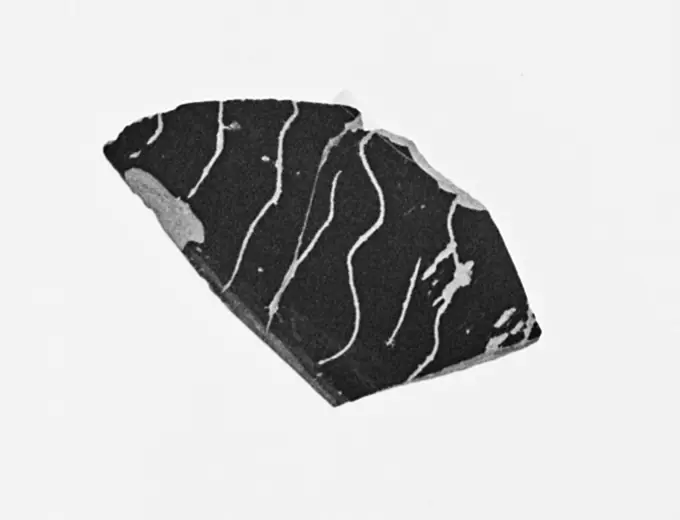
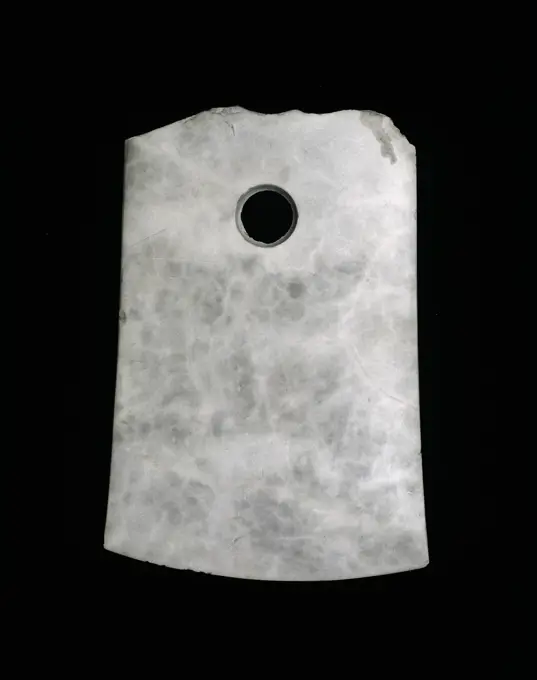
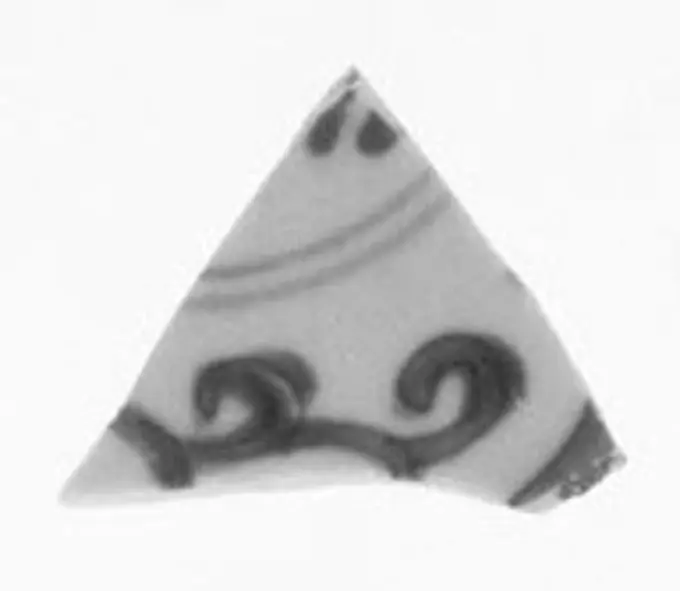
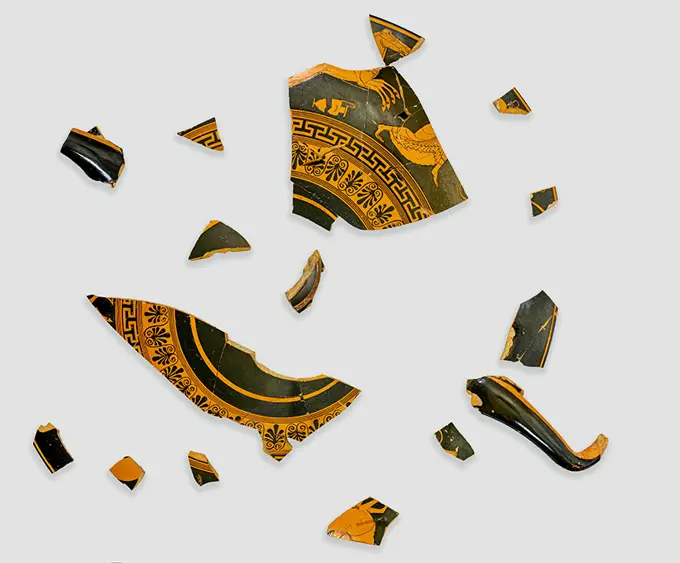
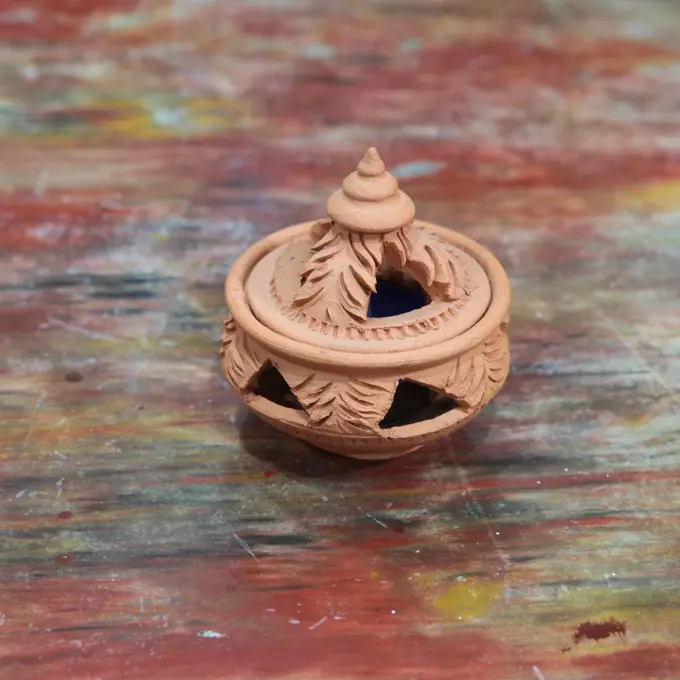
Ancient Pottery Fragments

Various fragments of ancient pottery, showcasing intricate designs and historical significance, in monochrome styling.
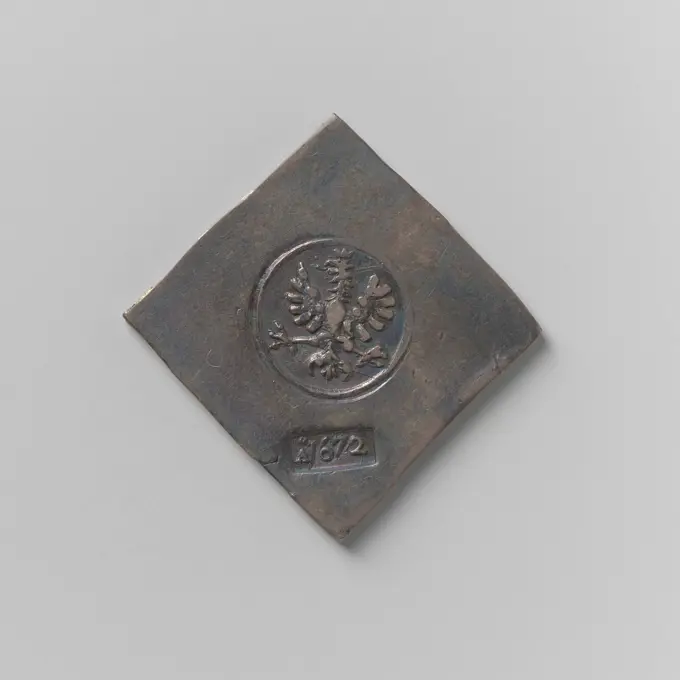
Emergency mint from half Daalder from Deventer's siege, emergency minted from the council silver to payment of the war costs. Unilateral, diamond-shaped emergency. Front: two stamps: large, round stamp: crowned eagle; Below: Rectangular stamp with year. Downside: blank
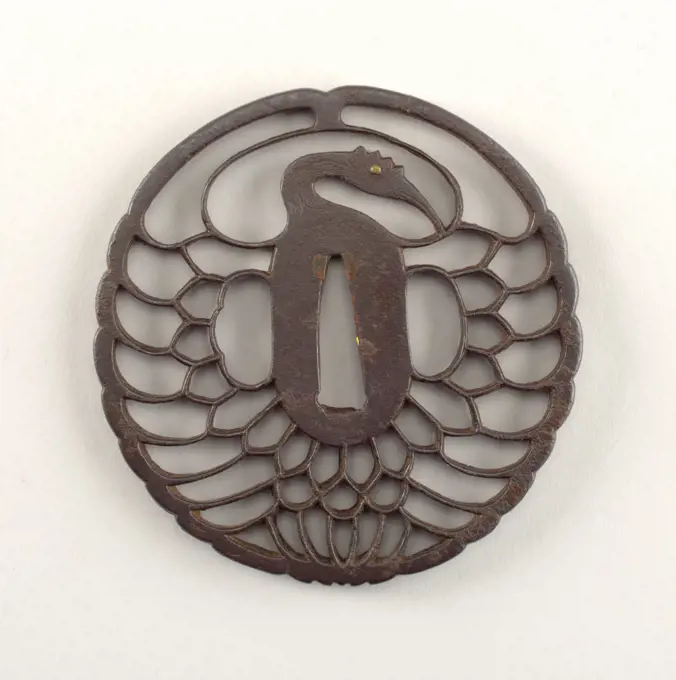
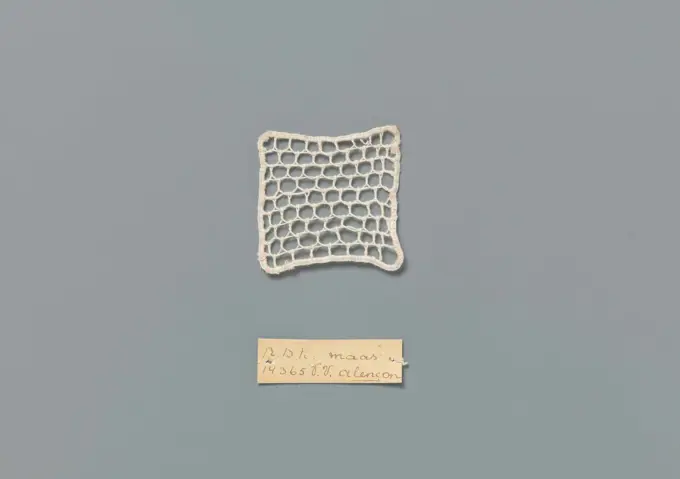
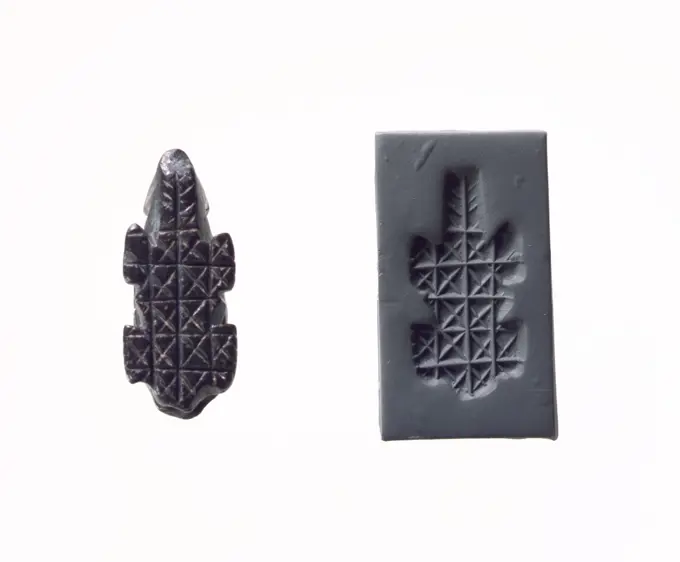
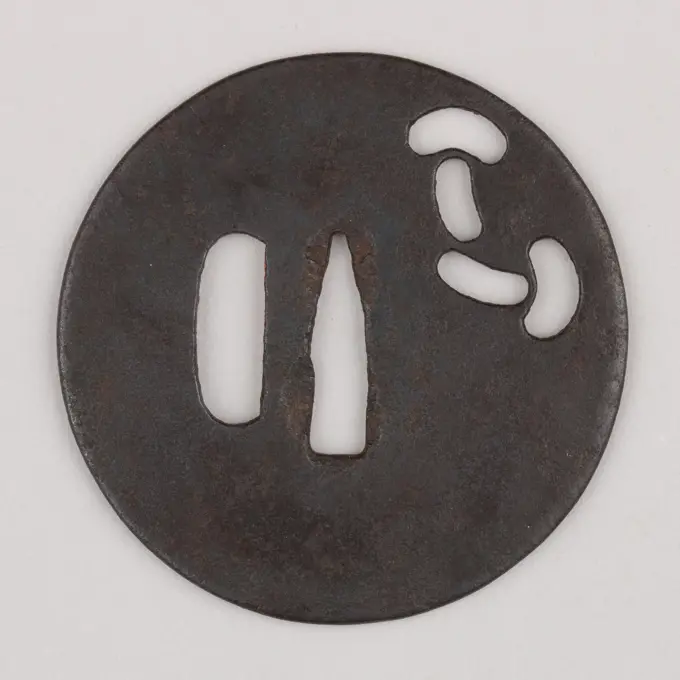
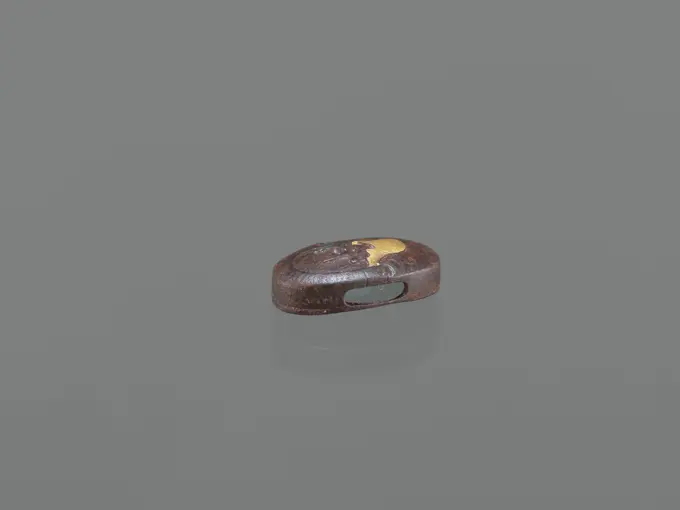
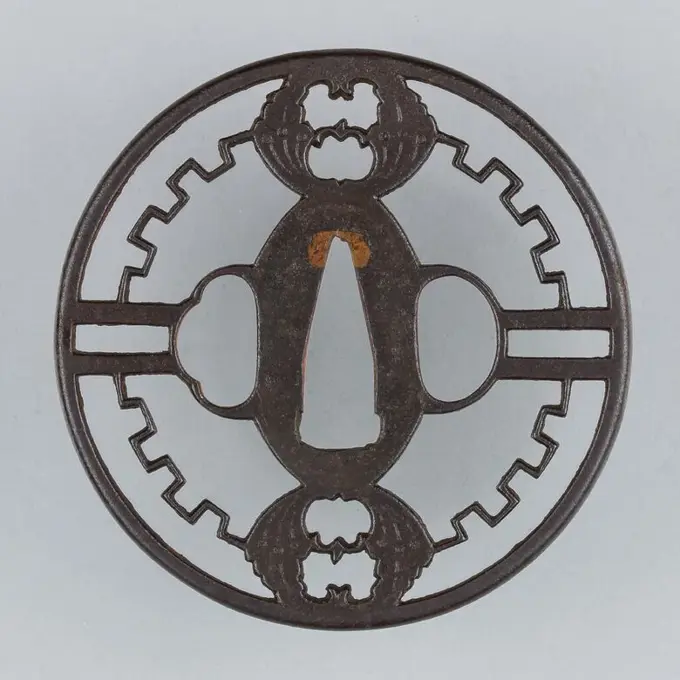
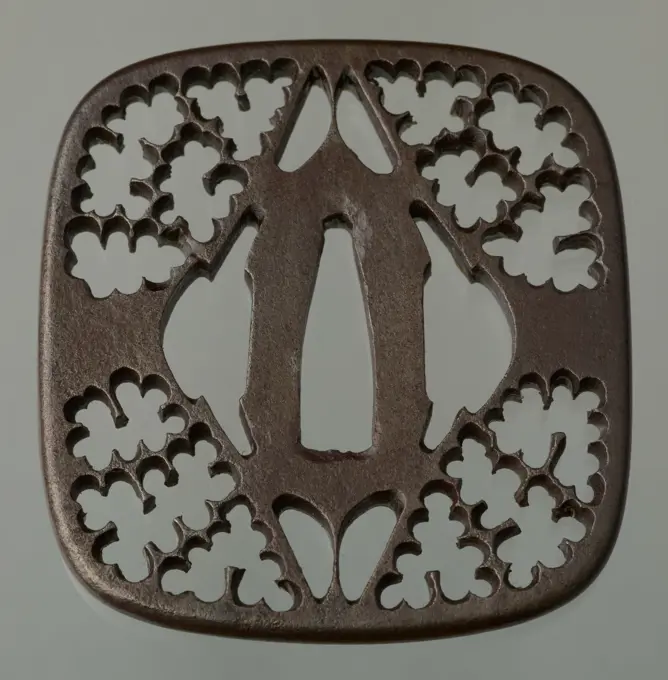
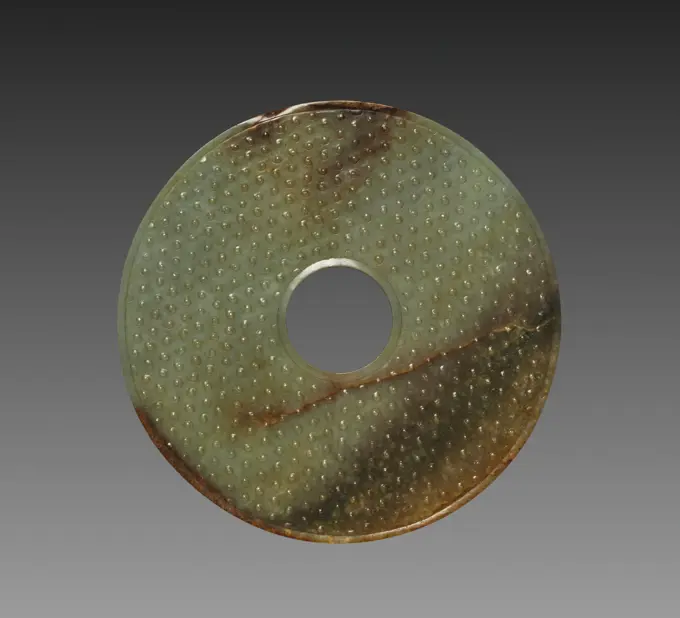
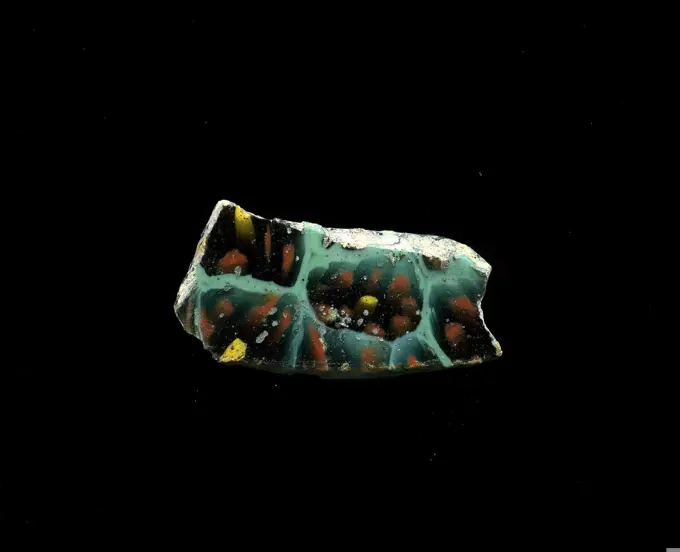
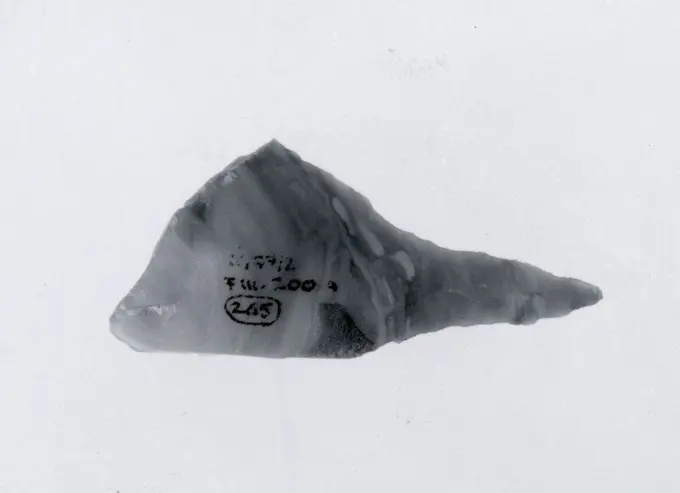
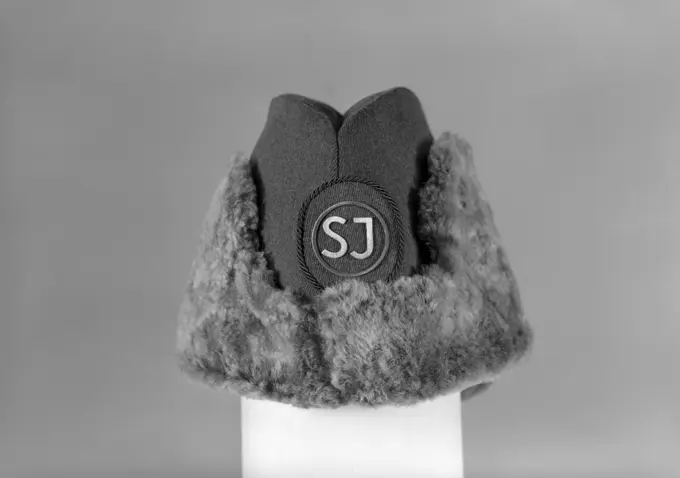
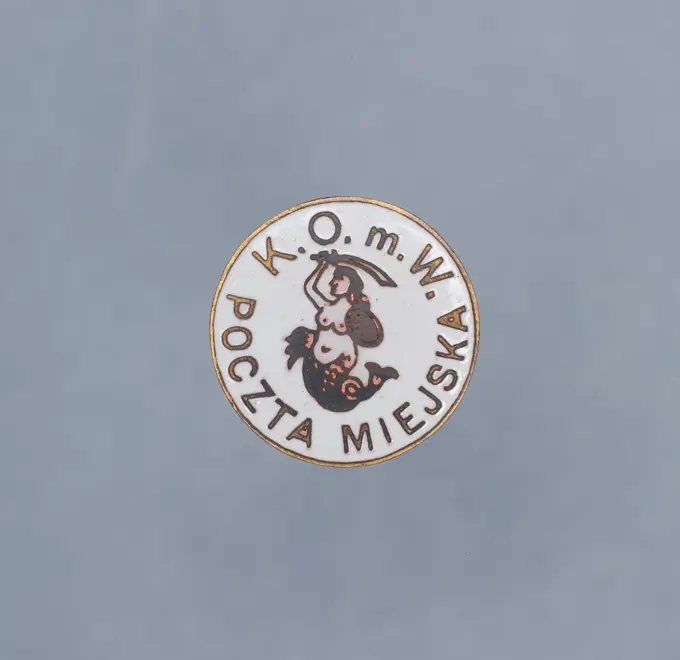
Woman's Buckle. Dated: c. 1936. Dimensions: overall: 5.3 x 12.4 cm (2 1/16 x 4 7/8 in.). Medium: watercolor, pen and ink, and gouache on paperboard. Museum: National Gallery of Art, Washington DC. Author: Charles Criswell.Anonymous, American identity plaque M -1940 of the Marshal of Logis Jules Jayr - Char Reims, 2nd Peloton, 2nd squadron of the 12th Cuirassiers regiment (common name), 1943, stainless metal, Paris Liberation Museum - Museum - Museum - Museum - of General LECLERChrysanthemum crane, Iron, shakudo (a soft copper and gold alloy), This Kyo-sukashi (Kyoto openwork) style tsuba takes the form of a tsuru maru (crane circle). At the center is the nakago-ana, an opening through which the sword passes, with traces of sekigane (plugs added to fit the tsuba to a sword) made of shakudo (a soft copper and gold alloy). The surrounding seppadai (flat oval area) forms the body of the crane; it is elegantly long and narrow, with a migaki (burnished) surface. The head of the crane has kebori (line carving). Flanking the body are ryo-hitsu, openings for the kozuka (utility knife) and the kogai (skewer tool). At right is sashi ura, the side which faces the blade, whose opening takes the hangetsu-kei (half moon) shape. Opposite is sashi omote, the side which faces the sword hilt; its tri-lobed opening is of the suhama type, and symbolically represents the coastline of Horai, the holy island of the Immortals. The surrounding openwork forms symmetrical feathers withCollar of needle side with spindly tifles, anonymous, c. 1890 - c. 1899 Collar of natural -colored needle side: Venetian rose side. The collar has a semicircular neckline, is square on the back and shows pointed ends. Very open bars stock with wide wavy, spindly, branched tendrils, which are decorated with roses, among other things. The contour is formed by the flowers and leaves of the middle pattern. Burano (possibly) linen (material) Venetian rose point Collar of natural -colored needle side: Venetian rose side. The collar has a semicircular neckline, is square on the back and shows pointed ends. Very open bars stock with wide wavy, spindly, branched tendrils, which are decorated with roses, among other things. The contour is formed by the flowers and leaves of the middle pattern. Burano (possibly) linen (material) Venetian rose pointGreek OrnamentThe letter oRetro cartoon with texture. Isolated on White.Ornaments, Medium: silk, metal, pearls Technique: split stitch embroidery on satin weave, Four separate ornaments, cruciform, with center circular medallions framing pictorial representations of Saints (apostles). Faces and hands in fine silk split stitch; balance in metal with halos in high relief, on red satin, with details in pearls. Top and bottom oblong medallion with inscription., Russia, 17th century, embroidery & stitching, OrnamentsProduktbild.Dress ornament ca. 5th century B.C. Scythian. Dress ornament 328985Attic Red-Figure Janiform Kantharos Fragment.1 Malaquian Quay - Lambris Regence 1 Malaquian wharf, paneling regency listed music. Paris (old arr.). Photograph of Charles Lansiaux (1855-1939).Realistic circular saw vector imageSteel needle side with single mesh soil formed by retrieved feston stitches. Steel natural needle side with an alençon ground. Study material. The application of this type of maase soil with single meshes formed by collected festivone stitches was to approximately 1800 characteristic of alençon sides. Different Maas Grounds were later applied in Alençon sides. The edges of the steel are finished with feston stitches. The steel belongs a fragment Alençon side in which the technique has been applied (see the fragment at BK-NM-14365-WW).Planets-manager. Cornalet Collection Sites 2013-2016. Numismatic.Italy, Spatial concept, The End of GodGlass Fragment 12th-15th century () French. Glass Fragment. French. 12th-15th century (). Colorless glass. Made in Chartres (), France. Glass-StainedAttic Panathenaic Amphora Fragment. Unknown 430 B.C. Top portion of a Panathenaic amphora reconstructed from ten fragments. Handle, part of the neck, and top of the body preserved. Palmette-lotus chain around the neck, ring at junction between neck and body, and tongue pattern on the shoulder. Top right of side A is preserved; in the corner, a rooster to the left, incised with added red on the comb, wings and tail. Interior: black.Attic Panathenaic Amphora Fragment. Unknown 430 B.C. Neck fragment. Ext: tongue pattern, double lined black border; Int: black. From side A.Stamp seal and modern impression: geometric pattern ca. 5600-5000 B.C. Halaf Mesopotamian pendants of the Halaf period are usually of simple, mostly geometric forms. However, this stamp seal appears to represent a hedgehog, an animal that was native to northern Mesopotamia. The stamping surface is decorated with two superimposed grid patterns and a chevron pattern with a central line under the animal's head. Hedgehogs continued to be represented in Mesopotamia for millennia but the animal's symbolic or mythological significance is unknown.. Stamp seal and modern impression: geometric pattern 327236metal on the wallSword Guard (Tsuba) late 16th-early 17th century Japanese A tsuba is a sword guard and part of a sword mounting. It is mounted between the swords blade and grip to protect the users hands.. Sword Guard (Tsuba) 26295Old adhesive tape set isolated on white background.Skuwka from the sword of the sword (Kashira);  18th century (1701-00-00-1800-00-00);Vinyl record isolated vintage Vinyl record vintage analog music recording medium with blue label isolated over white vintage Copyright: xZoonar.com/ClaudioxDiviziax 8536556Minimalism abstract step dark geometric marble podium with roman greek column background for product presentation 3D rendering illustrationBeautiful makeup closeup. Beautiful makeup closeup. Copyright: xZoonar.com/SerhiixHolenkox 10374736Mourning brooch with two flowers of black glass on silver brochure, c. 1880 - c. 1900 Mourning brooch with two flowers made of black glass on a silver brochure with a hook closure. Schoonhoven glass. silver (metal) Mourning brooch with two flowers made of black glass on a silver brochure with a hook closure. Schoonhoven glass. silver (metal)Axe 3000 BCE-2000 BCE China. Jade .Nine images of various gold mines. Unknown maker, AmericanNumber made from rust plateShard (Study Collection) China. Shard (Study Collection). China. Blue-and-white porcelain. Ming (1368-1644)-Qing (1644-1911) dynasties. CeramicsWhite Rock - Chalk. Chalk is processed for use on blackboards today.Turtle amulet ca. 2110-2030 B.C. Old Kingdom-First Intermediate Period. Turtle amulet. ca. 2110-2030 B.C.. Ivory. Old Kingdom-First Intermediate Period. From Egypt. Dynasty 8-11Fragments of a terracotta kylix (drinking cup), bilingual ca. 520 B.C. Greek, Attic. Fragments of a terracotta kylix (drinking cup), bilingual. Greek, Attic. ca. 520 B.C.. Terracotta. Archaic. Vasesmetal and wood figure metal and wood figure Copyright: xZoonar.com/OxanaxRishnyakx 6029948Spindle whorl 6th millennium B.C.. Spindle whorl 327834blue water splash isolated on white background, Charles F. Walcott Archaleogical CollectionMetal Mount for a Belt Buckle. UnknownBowl Fragment 100 BCE-100 CE Roman Empire. In ancient Rome, there was a high demand for colorful glass that could dazzle banquet guests alongside the expensive silver and gold serving wares meant to impress. Fragments like this one would have once been a part of larger mosaic dishes. The mosaic pattern was made by sagging molten glass into bowl-shaped molds, a technique used on many of these fragments is similar to millefiori, ìthousand flowersî in Italian, a modern glass-making method in which tiny rods of colored glass are bundled together, wrapped in a sheet of glass, fused, and then thinly sliced to reveal swirls of a flower-like patterns. They were arranged side by side, sometimes together with bits of colored glass, and fused together with heat.. Glass, mosaic glass technique . Ancient RomanScrew head, screw heads, screw head, screw heads ** Screw Head, Screw Heads KTN-JVNLeather tag or label on white background WITH CLIPPING PATHVintage looking Screws Vintage looking Detail of bronze screws for wood works Copyright: xZoonar.com/ClaudioxDiviziax 9955448Spain, Balearic Islands, Formentera, Drone view of rows of umbrellas on empty beachSchreibmaschine mit weißem Textfreiraum Schreibmaschine mit weißem Textfreiraum Copyright: xZoonar.com/ThomasxHutx 20602674Sword Guard (Tsuba). Culture: Japanese. Dimensions: Diam. 3 1/4 in. (8.3 cm); thickness 3/16 in. (0.5 cm); Wt. 3.3 oz. (93.6 g). Date: late 16th-early 17th century. Museum: Metropolitan Museum of Art, New York, USA.metal and wood figure metal and wood figure Copyright: xZoonar.com/OxanaxRishnyakx 6029882String of beads ca. 1550-1295 B.C. New Kingdom . String of beads. ca. 1550-1295 B.C.. Resin. New Kingdom . From Egypt, Upper Egypt, Thebes, Deir el-Bahri, Roman Burial XLV, MMA excavationsOrnament or button for harness ca. 9th-7th century B.C. Assyrian This small shell piece was found in a well in the Northwest Palace of Ashurnasirpal II at Nimrud, together with other similar shell ornaments, several of which are also in the Metropolitan Museums collection (54.117.16, .17). They were probably thrown into the well when the palace was sacked, in 614 B.C. and then again two years later. They can be identified as horse trappings, and were probably part of a leather harness which disintegrated in the well sludge. Horses in the reliefs of the palace of Sargon II at Dur Sharrukin (modern Khorsabad) are represented with double-fan shaped ornaments on their bridles, as in a relief in the Metropolitan Museum (33.16.1) showing a groom with two horses. Because of the close parallel with the reliefs from the palace at Dur Sharrukin, the equestrian harness elements from this well probably date to the time of Sargon in the late eighth century B.C. At this time, the Northwest Palace wCDK Unknown, Higo school, NishigakiEmbroidered Collar, c. 1836. America, 19th century. Embroidery: linen; average: 122 x 21.6 cm (48 1/16 x 8 1/2 in.).isolated metal figureShards of signs from V.O.C. ship De 'Witte Leeuw', Anonymous, Before 1613 plate (dishes) Shards of signs from V.O.C. ship De 'Witte Leeuw'. Jingdezhen bone china (material)   Sint-HelenaCeremonial Disk with Grain Pattern (Bi), 475-221 BC. China, Warring States period (475-221 BC). Jade (nephrite); diameter: 18.4 cm (7 1/4 in.).Inrō with Stylized Waves 19th century Shibata Zeshin Japanese This inrô, designed and signed by Shibata Zeshin (1807-1891), was crafted in tribute to another great artist, Ogata Kôrin (1658-1716).. Inrō with Stylized Waves 45456Isolated vintage banners on black - useful for designers in web and print - available as jpg and eps-filePrinting Block For Embroidery (USA); wood, copper, brass; 1941-87-1-kFragment of a vessel. A low curvature of the glass fragment allows the assignment to a vessel, possibly a shell. The mint green shard shows several flowers in millefiori technology. A yellow circle is enclosed by several red circles with black contour. The representations are slightly distorted. For the production different colored glasses were formed into tubes and rods. These were compressed and heated, causing a long bar. The glass sliced now had different amorphous or floral patterns. Thereafter, several of these platelets were folded, heated again and pressed into a vascular shape. Burry for the elaborate manufacturing process and its fragility was one of the luxury articles of antiquity.Sweden, Blekinge, Blekinge, Karlskrona, Karlskrona, external marina (depicted, town).Sweden, Blekinge, Blekinge, Karlskrona, Karlskrona, External War Gogs (depicted, City)Awl ca. 4600-3600 B.C. Ghassulian. Awl 326536Circular saw blade for cutting woodVector gold hand drawn ethnic tribal element isolated on black background. Golden Illustration.. Vector gold hand drawn ethnic tribal element isolated on black background.TacksRidderkruis 4th class of the Military William Order for courage, policy and loyalty, on gold buckle, Anonymous, in or after 1815 - in or before 1831  Silver carrying sign with gilding, email and ribbon, on gold buckle.  Penning: Silver (Metal). Buckle: Gold (Metal). Cross: Gilding (Material). crotch:. Lint: Textile Materials gildingStone arrows and signs set. Rectangle boards and panels, rubble rock pointers, medical cross, plank tablets. Vector illustration for online game application templateswooden R typeface detailed vintage wooden R letter typeface isolated Copyright: xZoonar.com/YuryxZapx 21235789Alphabet made from rust plateFragment. Culture: European or Middle Eastern. Dimensions: L. 2 1/4 in. (5.7 cm). Date: ca. 1150-ca. 1250. Museum: Metropolitan Museum of Art, New York, USA.Plastic token moneyHSC Model 154 Dyna Soar (Martin-Bell)Barbed and Tanged Arrowhead Made 1600 BCE-1050 BCE China. Jade .Attic Black-Figure Vase Fragment. UnknownLetterpress-Buchstabe A 3D aus gealtertem Metall Aged metal letterpress Letter A 3D rendering illustration isolated on white background Copyright: xZoonar.com/MilicxDjurovicx 22691473House numberWooden letter K on whiteHand Amulet ca. 2465-2100 B.C. Old Kingdom-First Intermediate Period During the Old Kingdom and First Intermediate Period, small amulets of hands (10.130.2358) and feet (10.130.2355) were commonly included in bracelets and anklets. These amulets protected the limbs and extremities of their wearers, while possibly conferring abilities such as dexterity, creative potential, or speed. Often these amulets were made of carnelian, an orange-red stone. The color, reminiscent of blood, would bring power and energy to the amulet.. Hand Amulet. ca. 2465-2100 B.C.. Carnelian. Old Kingdom-First Intermediate Period. From Egypt. Dynasty 5-8Sun Carrier Shell (Stellaria solaris), Meeresmuseum Ozeania, Riedenburg, GermanyOrnament ca. 9th-7th century B.C. Assyrian This small shell piece was found in a well in the Northwest Palace of Ashurnasirpal II at Nimrud, together with other similar shell ornaments, several of which are also in the Metropolitan Museums collection (54.117.16, .17, .19). They were probably thrown into the well when the palace was sacked, in 614 B.C. and then again two years later. They can be identified as horse trappings, and were probably part of a leather harness which disintegrated in the well sludge. Horses in the reliefs of the palace of Sargon II at Dur Sharrukin (modern Khorsabad) are represented with double-fan shaped ornaments on their bridles, as in a relief in the Metropolitan Museum (33.16.1) showing a groom with two horses. Because of the close parallel with the reliefs from the palace at Dur Sharrukin, the equestrian harness elements from this well probably date to the time of Sargon in the late eighth century B.C. At this time, the Northwest Palace was primarily usedStamp seal ca. late 3rd-early 2nd millennium B.C. Bactria-Margiana Archaeological Complex. Stamp seal. Bactria-Margiana Archaeological Complex. ca. late 3rd-early 2nd millennium B.C.. Copper alloy. Bronze Age. Bactria-MargianaIsolated skull against white background Skull isolated against white background and facing camera Copyright: xZoonar.com/StevexHeapx 11243228Planets-manager. Cornalet Collection Sites 2013-2016. Numismatic.Mosaic glass fragment. The small glass fragment shows several flowers in millefiori technology on dark violet background. They are delimited by a grid of white lines reminiscent of bee honeycombs. Some of the ornaments consist of a yellow point with a white contour to which a double row lays out of yellow dots. Others consist of a yellow circle to which a green-transparent spiral is developing. In Roman times, they used colored, ornamented glass for vessels, mosaics, wall decorations and furniture ornaments.Flag of Shizuoka prefecture with rain dropsClay potUniform cap with SJ emblems.Glass head profile Profile shot of a generic human dummy head made of glass isolated in white back Copyright: xZoonar.com/AchimxPrillx 22101700Numeral 7 of mechanic alphabet steampunk style Vector ImageMedallion (Egypt); warp; s-spun linen. wefts; s-spun linen, z-spun woolCommemorative badge of an employee of the Municipal Post OfficeReplacement coin for 5 cents, ARMY Air Force Exchange Services, Military base, Afghanistan, 2007.White torn sheet of paper with burnt holes background flat vector illustration. Paper With Burnt Holes Background