Ancient Pottery Shards

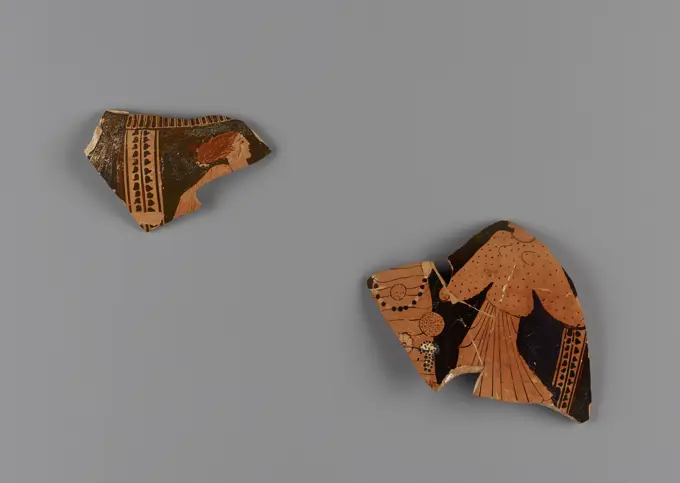
Fragments of ancient pottery and tiles, featuring historic designs, textures, and materials from various archaeological contexts.

Five round copper objects, bowls, feet or bins, artifact Soil discovery copper metal largest, Five round (bent) thin copper plates with raised edge Three with one or more holes in the upright edge and two with holes in the middle. Possible basic images of candlesticks or basins of balance scales archeology Rotterdam rail tunnel lighting illumination evening night Soil discovery: trajectory Rotterdam rail tunnel.
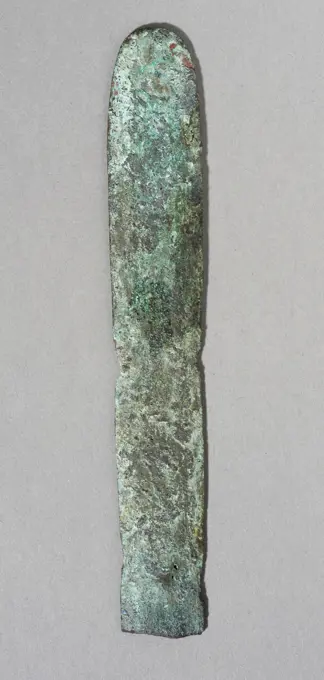
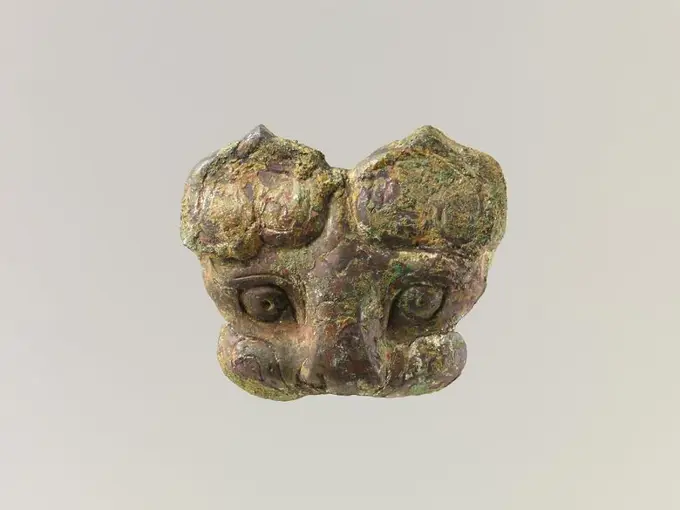
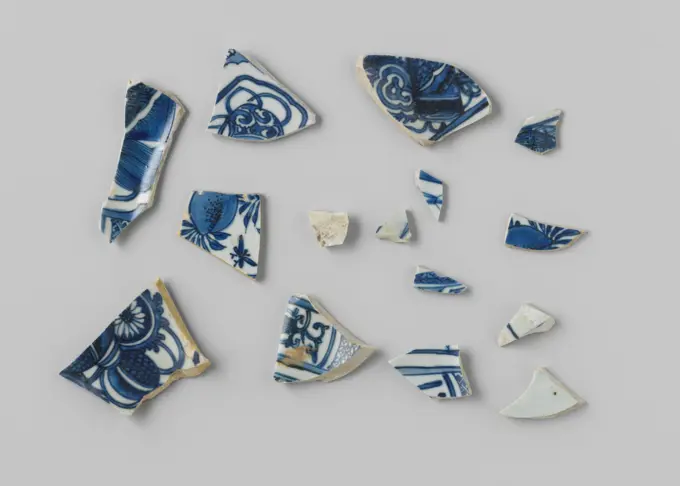
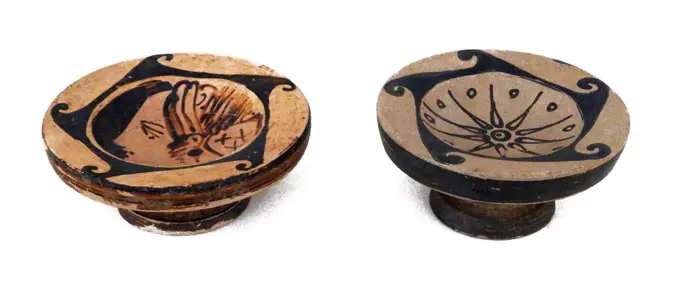
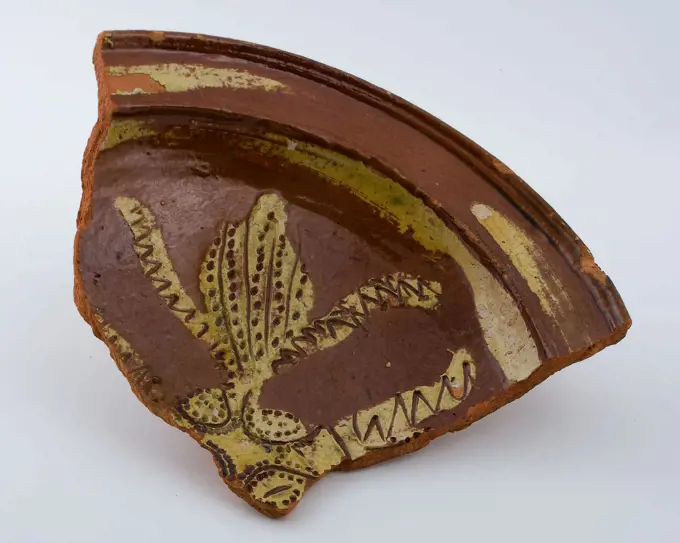
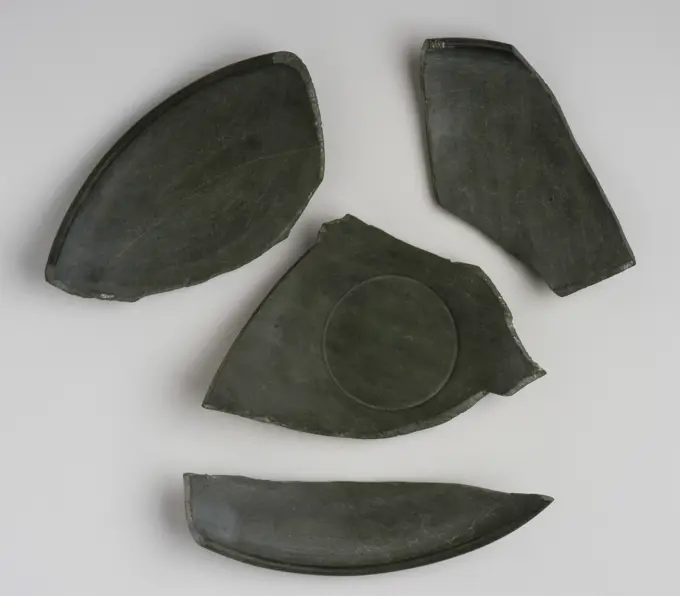
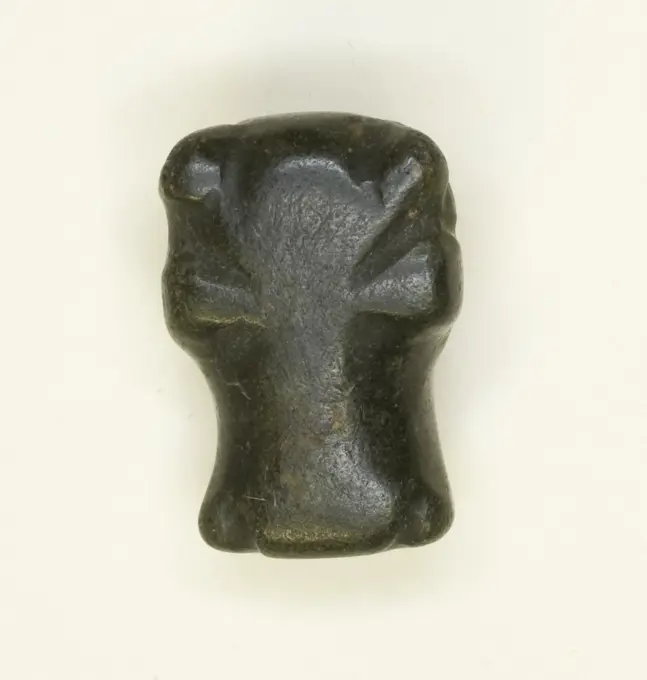
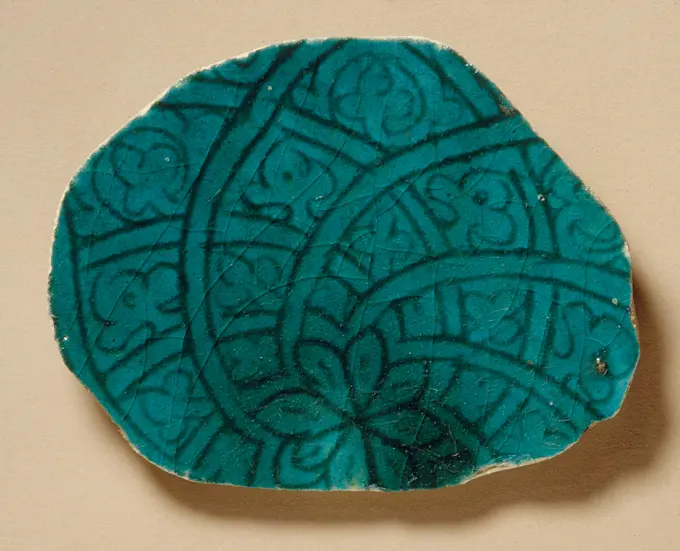
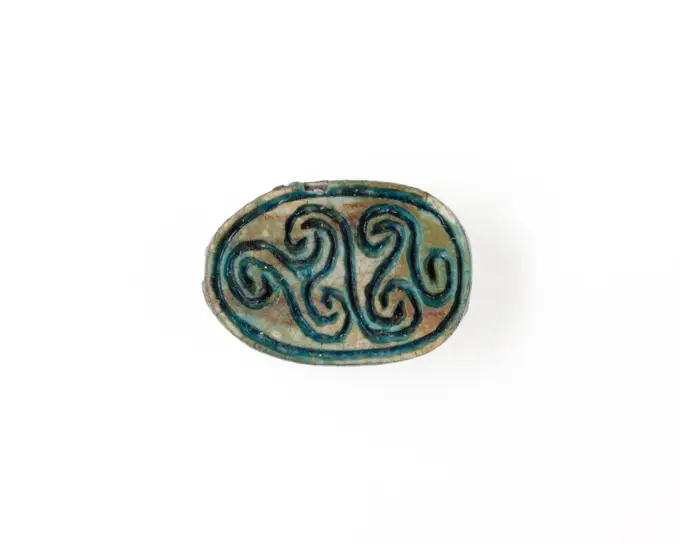
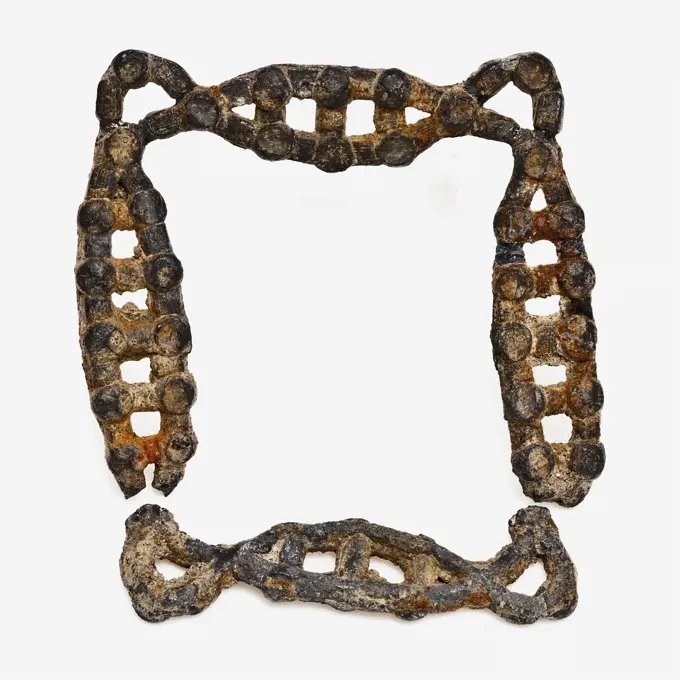
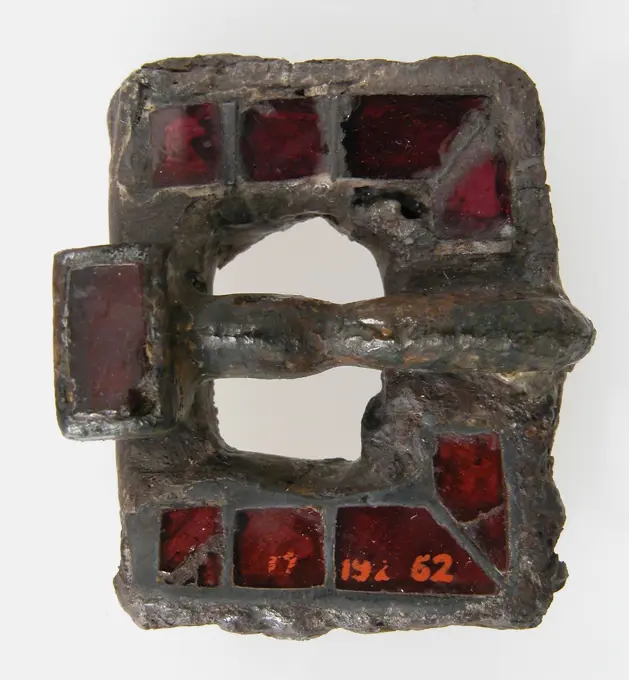
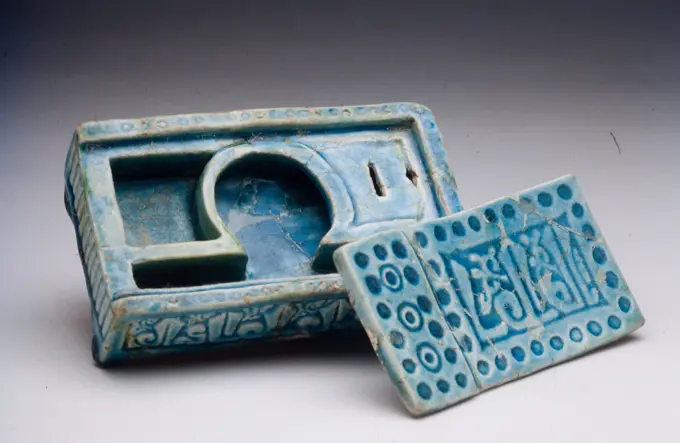
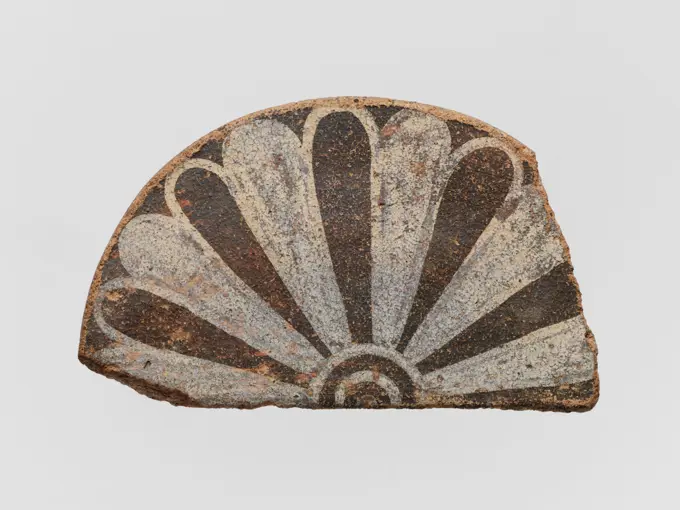
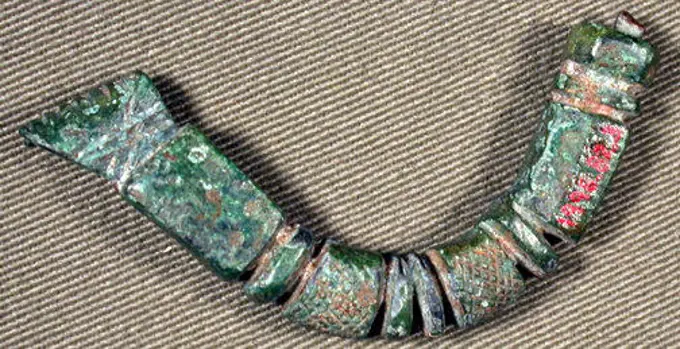
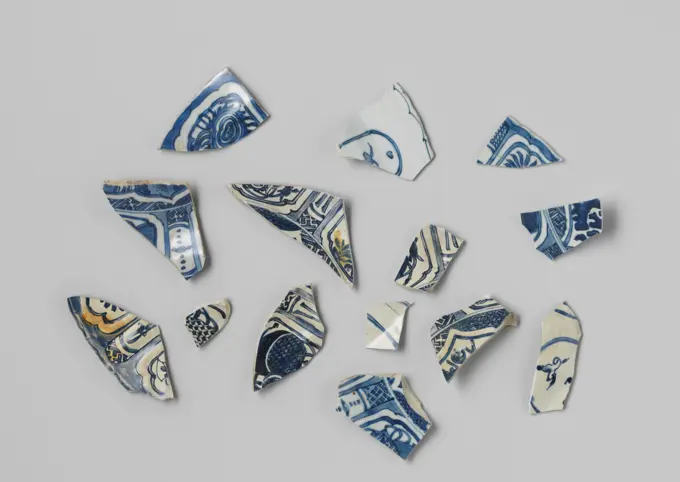
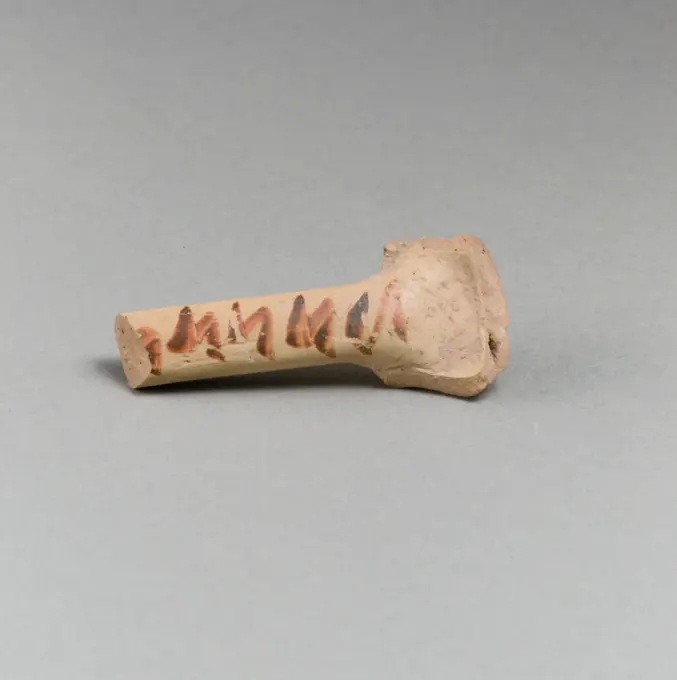
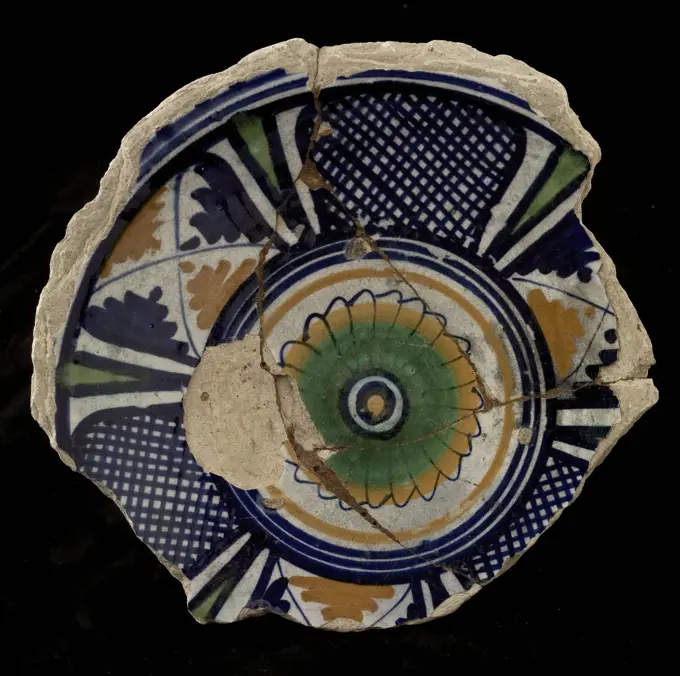
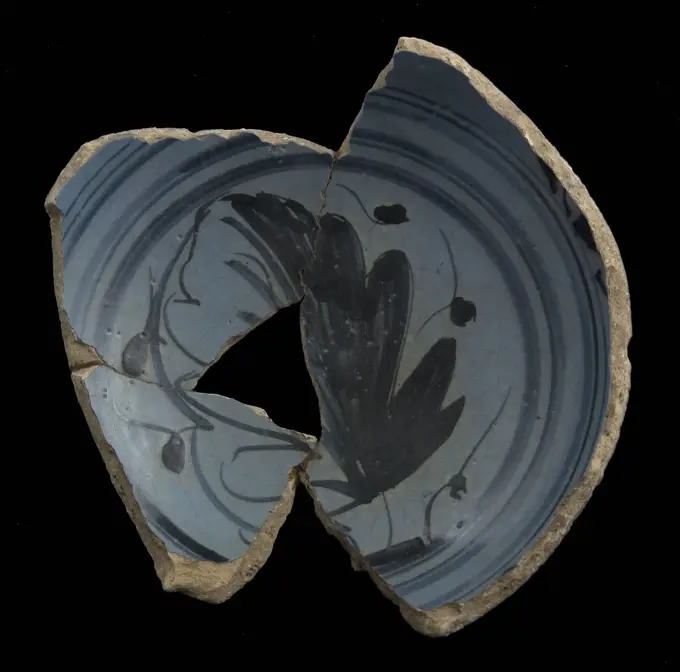
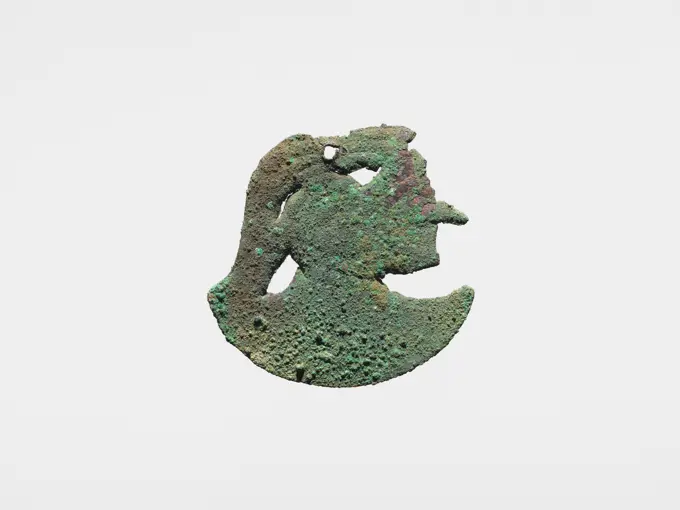
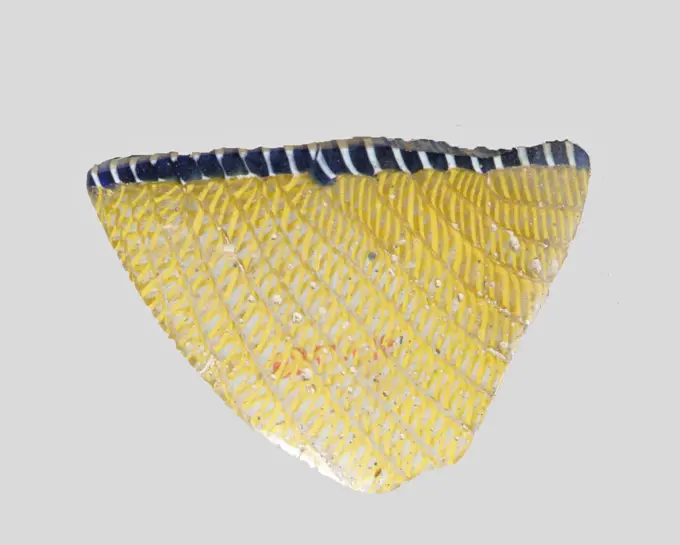
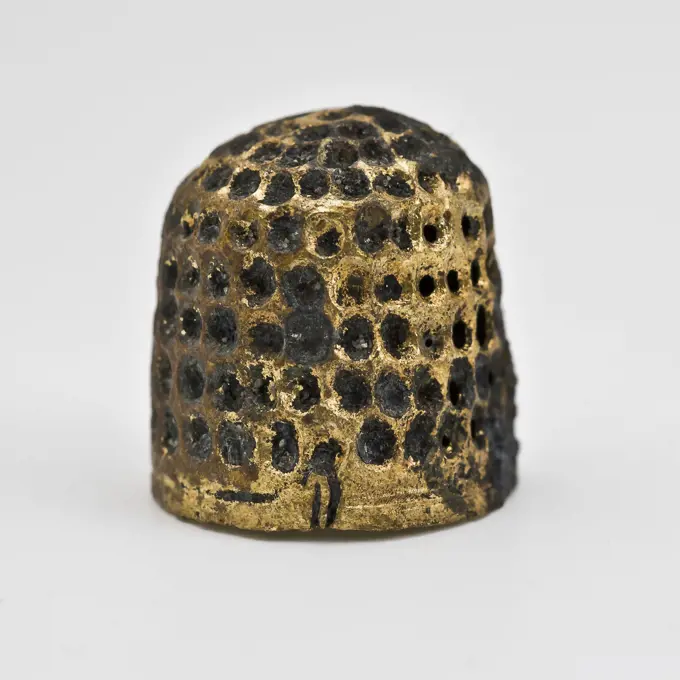
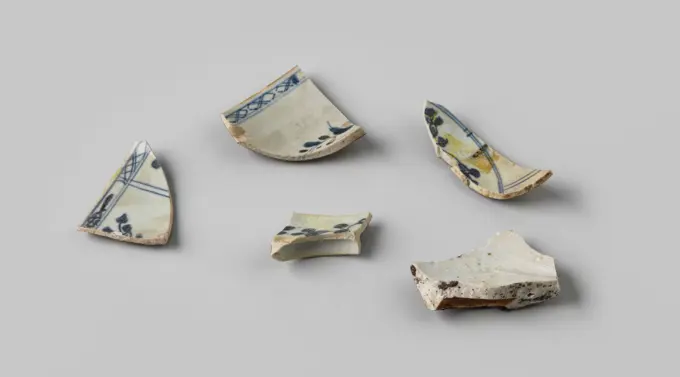
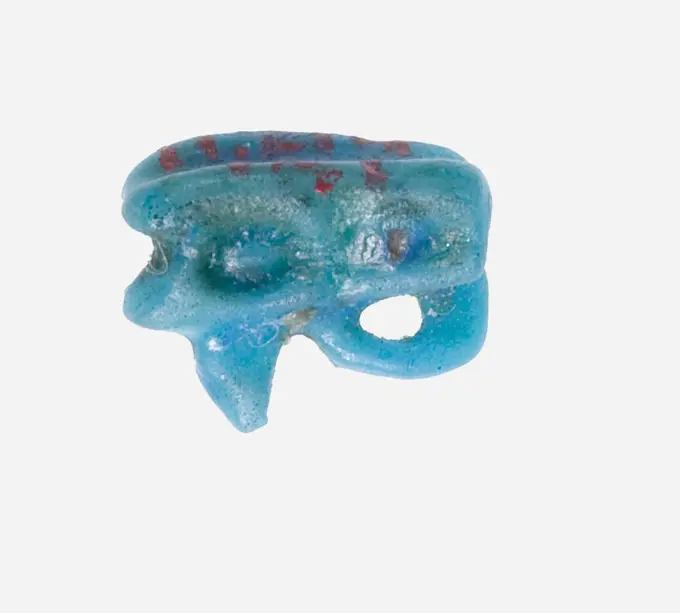
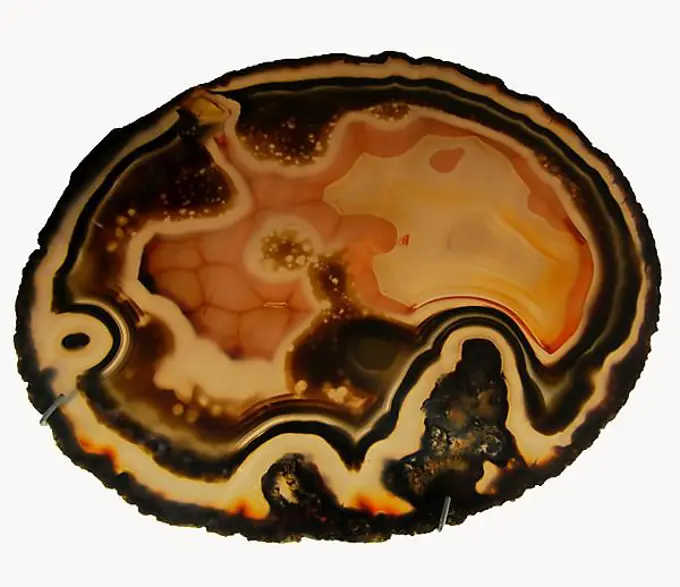
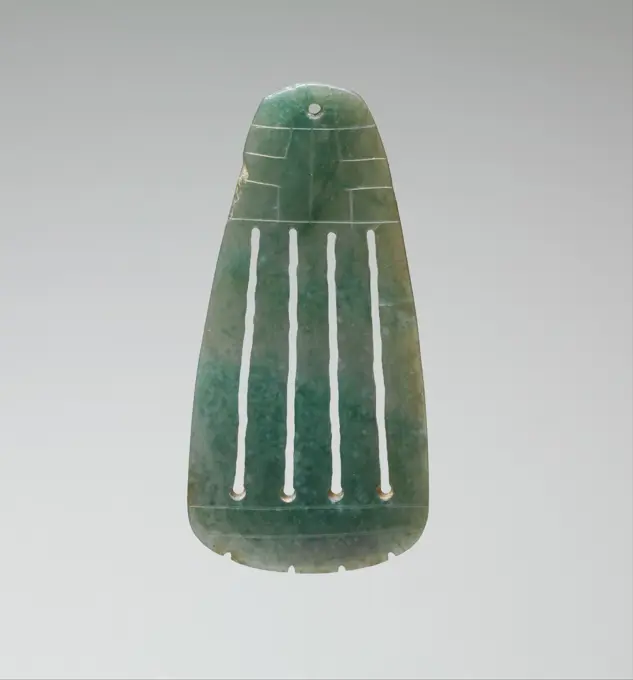
Openwork Pendant 10th-4th century B.C. Olmec This jade pendant is carved with an axe-like profile and thinned into a translucent plaque. A drilled hole at the top of the pendant may have been used to suspend it as part of Olmec ritual regalia. Four parallel lines run the length of the pendant, made by a combination of drilling and string-sawing. An incised cruciform design, a motif common in Olmec art, probably references the cardinal directions.. Openwork Pendant 316285Excerpt of a dish with red -baking shard, with green glaze, with scratched geometric patterns in black glaze, anonymous, 1200 - 1899  Italy earthenware  Italy earthenwareMajolica plate, blue on white, Chinese decor, two flowers on the ground, plate dish crockery holder soil find ceramic earthenware glaze, Cooked on prunings Covered with green mottled clear lead glaze Small fragment of stuck earthenware in the stand archaeology food serve serve adorn ChinaFragment majolica dish, purple, blue on white, border in Wanli style, dish crockery holder soil find ceramic earthenware glaze, Cooked on pruned Set in thin purple line blue on white fond archeology Rotterdam serving food decorate China archaeological find in the soil Rotterdam 1941.Vase fragment ca. 800-700 B.C. East Greek/Sardis, Lydian Half circles in black.. Vase fragment 252812 East Greek/Sardis, Lydian, Vase fragment, Terracotta, Overall: 4 3/8 x 4 3/4in. (11.1 x 12cm). The Metropolitan Museum of Art, New York. Gift of The American Society for the Excavation of Sardis, 1926 (26.199.245)Glass mosaic inlay late 1st century B.C.-early 1st century A.D. Egyptian, Ptolemaic or Roman Translucent turquoise green; decoration in opaque white and yellow, and translucent purple.Diamond-shaped thin, flat plaque.Symmetrical bug-shaped motif, with wings represented by white and purple stripes.Complete but with minor chips on edges; upper side and edges ground and polished; pitted surface bubbles, iridescent weathering on back.The inlay is made from two sections cut from the same cane of mosaic glass, with decoration appearing in mirror image.The design may represent a winged beetle.. Glass mosaic inlay. Egyptian, Ptolemaic or Roman. late 1st century B.C.-early 1st century A.D.. Glass; cast. Hellenistic. GlassFragment 14th-15th century. Fragment 455195Fragment of a Bowl 10th-12th century. Fragment of a Bowl 452713Fragment ca. 1150-ca. 1250 European or Middle Eastern. Fragment. European or Middle Eastern. ca. 1150-ca. 1250. Glass, ceramic. Glass-VesselsSword Guard (Tsuba). Culture: Japanese. Dimensions: H. 3 3/4 in. (9.5 cm). Date: ca. 3rd century-538. Museum: Metropolitan Museum of Art, New York, USA.Attic Red-Figure Column Krater Fragment. Attributed to Group of Undetermined Mannerists (Greek (Attic), active 460 - 430 B.C.)Deployment;  VIII-XII century (701-00-00-1200-00-00);Arabic (culture), Islam (culture), message (provenance), Islamic artFragment of a Bowl early 9th century. Fragment of a Bowl 448974Fragment of a terracotta architectural tile. Culture: Lydian. Dimensions: Overall: 3 5/8 x 6 in. (9.2 x 15.2 cm). Date: 6th century B.C..Forelegs of an animal. Museum: Metropolitan Museum of Art, New York, USA.Vase fragment East Greek/Sardis, Lydian Rim fragment with basket pattern.. Vase fragment 252684 East Greek/Sardis, Lydian, Vase fragment, Terracotta, Overall: 3 9/16 x 1 3/4in. (9 x 4.5cm). The Metropolitan Museum of Art, New York. Gift of The American Society for the Excavation of Sardis, 1926 (26.199.116)Left Arm Defense (Vambrace) with Elbow Reinforce ca. 1450-60 Italian, Milan This is part of a large find of medieval armor discovered in 1840 in the ruins of the fortress of Chalcis, on the Greek island of Euboea (then a Venetian colony called Negroponte). The fortress had been captured and destroyed by the Turks in 1470. Now divided largely between the Ethnological Museum, Athens, and The Metropolitan Museum of Art, the Chalcis hoard contains many rare and unusual elements of fourteenth- and fifteenth-century armor. Of particular importance are the variety of headpieces and the many fragments of brigandines (armor for the torso constructed of small plates riveted to layers of fabric), some of which retain portions of their original velvet covering. The Chalcis armor provides a unique picture of the armament used in the Aegean, one of the easternmost military outposts of the Venetian empire.. Left Arm Defense (Vambrace) with Elbow Reinforce 35850Vase fragment 1st century B.C.-1st century A.D. Roman Man and woman.. Vase fragment 250315Fragment of fire hose rings from the wreck of the East Indians Hollandia, Anonymous, 1700 - in Or Before 1743  Fire engine, firehose; fragments, id. NG-1975-20-H-1271-a, squashed. Netherlands copper (metal)   SecondProfile Warrior Ornament 6th-7th century Moche (Loma Negra). Profile Warrior Ornament 315121Armlet 400-100 B.C. Celtic. Armlet. Celtic. 400-100 B.C.. Copper alloy. Metalwork-Copper alloyKarte von Katar auf rostigem Metall - Map of Qatar on rusty metal Karte von Katar auf rostigem Metall - Map of Qatar on rusty metal Copyright: xZoonar.com/lantapixx 10606870Chess Piece, Rook 9th-12th century. Chess Piece, Rook 449840Blue mussel (Mytilus edulis) shell, Rye, New Hampshire, USA, September. meetyourneighbours.net projectAmulet - ears stretch;  around 1550 1295 BC ; New PAScen.gal.eg., columnsBlade. Egypt, Middle Kingdom - Late Period (1991 - 323 BCE). Arms and Armor; blades. BronzeAnklet 300 B.C.-A.D. 300 Thailand (). Anklet 53863Lion Mask. Culture: China. Dimensions: H. 2 1/8 in. (5.4 cm); W. 2 1/2 in. (6.4 cm). Museum: Metropolitan Museum of Art, New York, USA.Bird Plaque Ornament. Culture: Vicús. Dimensions: H. 2 x W. 2 in. (5 x 5 cm). Date: 3rd century B.C.-A.D. 2nd century. Museum: Metropolitan Museum of Art, New York, USA.Trident in the Form of Crocodile Head. China, 206 B.C. - A.D. 220. Arms and Armor; tridents. Cast bronzePrinting block for embroidery, Medium: wood, copper, brass, One of twenty-one wood blocks showing a different floral motif formed by metal strips set in wood., USA, 1825-50, appliances & tools, Printing block for embroideryBronze ch'ih (wine spoon), western Chou (or Zhou) dynastyBeads, 3. Beads, 3. Glass. GlassBracelet. Dimensions: diameter 10.11 cm.. Museum: Metropolitan Museum of Art, New York, USA.Fragment of Bowl 14th century. Fragment of Bowl 446433Coin Weight. Syria, 1000-1250. Metal. Bronze, castMirror, 618-907. China, Tang dynasty (618-907). Bronze with silver inlay in lacquer; overall: 17.8 x 17.8 cm (7 x 7 in.).Shawabty of Ditamenpaankh, 715-656 BC. Egypt, Late Period, Dynasty 25. Terracotta; overall: 1.8 x 1.5 x 1 cm (11/16 x 9/16 x 3/8 in.).Axe 1250 BCE-1000 BCE China. Jade .Shards of signs from V.O.C. ship De 'Witte Leeuw', Before 1613 plate (dishes) Shards of signs from V.O.C. ship De 'Witte Leeuw'. Shatou bone china (material). porcelain   Sint-HelenaAttic Black-Figure Neck Amphora Fragment (comprised of 3 Joined Fragments). Unknown about 510 B.C.Attic Black-Figure Neck Amphora Fragment (comprised of 6 Joined Fragments). Unknown about 510 B.C.Shards of signs from V.O.C. ship De 'Witte Leeuw', Anonymous, Before 1613 plate (dishes) Shards of signs Kraakporcelain from V.O.C. ship De 'Witte Leeuw'. Jingdezhen bone china (material)   Sint-HelenaMale Feline-Shaped Container (lid), 50-800. Peru, North Coast, Moche style() (50-800). Cast copper alloy; overall: 7.7 x 10.2 cm (3 1/16 x 4 in.).Tile. Tile decorated with a row of trees with a quarter circle in the corners.Inscribed Axe Head. Egypt, probably 13th Dynasty (1786 - 1665 BCE) or later. Arms and Armor; axes. BronzeSacrificial knife, 12th century BCE, 16 9/16 × 5 1/16 × 1/4 in., 1.3 lb. (42.07 × 12.86 × 0.64 cm, 0.6 kg), Bronze, China, 12th century BCEStandard for stamp cutter ,, 0 - 1850 stand (support object) Black convex-economic standard where a flat oval shape is cut at the top. Very rough shaped. Inscription: o.: JVL.Z14. According to inventory list NM a standard for a stamp cutter. Netherlands asphalt (bituminous material)   Wijk bij DuurstedeExcerpt of red -baking earthenware, with a geometric pattern in relief and white glaze at the top, with colorless and white glaze, anonymous, 1200 - 1899 at the bottom  Italy earthenware  Italy earthenwareFragment 8th-9th century. Fragment 448763Floor tile decorated with a bird.Stemmed dish from Central Italy. Dated 300 BCAmulets made of gold, lapislazuli and semi-precious stones with vulture, falcon and jackal heads, from Treasure of TutankhamenSherd ca. 1800 B.C. Assyrian. Sherd 327054Fragment of earthenware dish on stand lobes, yellow silt decoration and sgraffitet, dish plate crockery holder soil find ceramics earthenware glaze lead glaze clay, w 16.3 hand turned glazed decorated fried birch cord sgraffito Fragment of earthenware dish on stand fins. Red shard Internally glazed Decorated in sludge technique and graffiti technique Decoration consists of yellow streaks on the edge yellow band under the shoulder and in the mirror part of an unknown representation in yellow. Bowl shaped dish with flat flag and thickened saucer edge archeology underground pit Rotterdam City center Stadsdriehoek Blaak Groenendaal indigenous pottery serving serve serving table room Soil discovery of underground pit Groenendaal direction Blaak from large trash -4 meters under N..P 15061977.Tile Fragment 1334-1434. Tile Fragment 450562Cast pendant bead. UnknownScherf Majolica with decoration in blue, yellow and green, anonymous, 1500 - 1699  Majolic screen. Northern Netherlands earthenware. glazeBowl. Egypt, 2nd Dynasty (circa 2850 - 2687 BCE). Furnishings; Serviceware. SlateAmulet of a Hippopotamus Head 1985 BCE-1773 BCE Egypt. Serpentine . Ancient EgyptianFragment 8th-9th century. Fragment 448786Shard: Foot Ring. Egypt, 13th century. Ceramics. Fritware with turquoise glazeWall revetment, marble pattern 200 BC-100 AD Ptolemaic Period-Roman Period Glass plaques imitating expensive marble or stones were used as wall coverings.. Wall revetment, marble pattern. 200 BC-100 AD. Glass. Ptolemaic Period-Roman Period. From EgyptScarab Decorated with Scrolls ca. 1700-1500 B.C. (Middle Bronze Age, MB IIB-IIC) Second Intermediate Period Scrolls and spirals -whether single or interlocking, or in combination with hieroglyphs or floral motifs- already decorate the earliest types of scarabs and are common throughout the first half of the second millennium B.C. While their meaning and source of inspiration remains unknown, scroll designs are also appealing to the eye. A wide variety of combinations, some of which more complex than others, is found on Egyptian scarabs of the Middle Kingdom and scrolls become particularly popular during late Dynasty 12 and Dynasty 13 (ca. 1850-1640 B.C.). While these designs continue to appear on scarabs in the Second Intermediate Period (ca. 1640-1550 B.C.) and on contemporary Canaanite imitations, details in the composition or on the scarabs back or its legs allow the seal-amulet to be more precisely dated.. Scarab Decorated with Scrolls 557116Pewter buckle with open frame in two parts, clasp fastener component soil find tin metal, cast Pewter clasp: rectangular openwork bracket middle pillar missing. Decorated with molded loops in the list on which small semicircular planes at regular distances confirm archeology Rotterdam rail tunnel decorate footwear archaeological find in the soil: route rail tunnel Rotterdam.Bowl, 1200-1300. Fritware, Ilkhanid Dynasty (1256-1353), Persia/Iran, Rhages .Flat Rectangular Buckle end of the 5th-early 6th century Frankish. Flat Rectangular Buckle 465368 Frankish, Flat Rectangular Buckle, end of the 5thearly 6th century, Copper alloy, gilt (tongue); 1/2 silver-gilt iron with garnets (plaque), Overall: 1 3/8 x 1 1/4 x 9/16 in. (3.5 x 3.1 x 1.4 cm). The Metropolitan Museum of Art, New York. Gift of J. Pierpont Morgan, 1917 (17.192.62)Stone Ear Flare before 16th century Mexican. Stone Ear Flare 317424Pen Box with ink well, c. 1200, 2 1/8 x 4 x 7 in. (5.4 x 10.16 x 17.78 cm), Stonepaste with turquoise-blue glaze over molded decor, Iran, Seljuk period (1038- c. 1194), Produced in the famed Kashan workshops of western Iran, the interior rim of this exceptionally large dish is incised with an elegant Arabic verse: La elah ela allah (No god other than God). As seen in works throughout these galleries, and in the great care taken in producing the ceramic pen box below it, one unifying aspect of Islamic art is the importance of the written worda conduit of the word of God as revealed in the Qur’an to the Prophet Muhammad in the 600’s CE. The pen box would have been used by a master calligrapher, perhaps to compose poetry or religious or philosophical texts. The dish was likely used for feasting, likely on a religious holiday or courtly celebration, with the calligraphy evoking one of the essential truths of the Islamic faith. The iridescent surface of the plate is due to chemical changesTextile Ornament 14th-15th century Chimú. Textile Ornament 308747Fragment of a terracotta antefix early 5th century B.C. Etruscan The petals of a simple radiating blossom are painted in white over a dark brown background.. Fragment of a terracotta antefix. Etruscan. early 5th century B.C.. Terracotta. Late Archaic. TerracottasSharf Blue Majolica with corrugated edge, Anonymous, 1500 - 1699  Majolic screen. Northern Netherlands earthenware. glazeSacred Eye Ring ca. 1390-1353 B.C. New Kingdom. Sacred Eye Ring. ca. 1390-1353 B.C.. Dark violet and white faience. New Kingdom. From Egypt, Upper Egypt, Thebes, Malqata, Palace of Amenhotep III, MMA excavations, 1910-11. Dynasty 18Fibula fragment ca. 8th-7th century B.C. Western Asia. Fibula fragment 327522Bowl with Inscription 9th century. Bowl with Inscription 449321Shards of signs from V.O.C. ship De 'Witte Leeuw', Anonymous, Before 1613 plate (dishes) Shards of signs from V.O.C. ship the 'Witte Leeuw' of Kraakporcelain. Jingdezhen bone china (material)   Sint-HelenaHippopotamus head figurine ca. 1981-1640 B.C. Middle Kingdom. Hippopotamus head figurine. ca. 1981-1640 B.C.. Blue faience. Middle Kingdom. From Egypt, Memphite Region, Lisht North, Cemetery, MMA excavations, 1906-07. Dynasty 12-13Excerpt (foot) with white shard, with circles in yellow, orange and blue glaze on a white surface, anonymous, 1200 - 1899  Italy earthenware  Italy earthenwareBuckle With circular rim and tongue fastened at one end by a sliding loop.. Buckle 246785Vase fragment ca. 3000-2200 B.C. Fragment of handle, reddish zigzag lines.. Vase fragment 251324 Vase fragment, ca. 30002200 B.C., Terracotta, 2 x 7/8in. (5.1 x 2.2cm). The Metropolitan Museum of Art, New York. Gift of Gisela M. A. Richter, 1923 (23.121.24)Belt Buckle, 1100s-1200s. Korea, Goryeo period (918-1392). Bronze gilt; overall: 7.5 x 5.5 cm (2 15/16 x 2 3/16 in.).Fragment majolica plate, polychrome, with rosette, grid and checkered borders, plate dish crockery holder soil find ceramic earthenware glaze, baked underside covered with clear lead glaze. Italian Dutch decor. Polychrome. Layered and veined pottery archeology Italy decorate serving foodTab from Mummy Band, 945-715 BC. Egypt, Third Intermediate Period, Dynasty 22, reign of Osorkon I. Stained leather; overall: 3.3 cm (1 5/16 in.).Fragment blue plate, berettino, leaf motif, round wall rings, plate crockery holder earth discovery ceramics pottery glaze, majolica archeology indigenous pottery serve serving food decorateShards of signs from V.O.C. ship De 'Witte Leeuw', Anonymous, Before 1613 plate (dishes) Shards of signs from V.O.C. ship De 'Witte Leeuw'. Jingdezhen bone china (material)   Sint-HelenaCrescent Ornaments 6th-7th century Moche (Loma Negra). Crescent Ornaments. Moche (Loma Negra). 6th-7th century. Copper. Peru. Metal-OrnamentsBird Pendant. China. Date: 1100 BC-900 BC. Dimensions: 1 7/8 × 7/8 × 1/8 in. Jade. Origin: China. Museum: The Chicago Art Institute, Chicago, USA.Hemisphere made of jigsaw puzzlesCup ". GRS covered brown. Song. Paris, Muse Cernuschi. Asian art, extreme-East art, Vietnamese art, ceramic, cut, gres, dishesSpindle Whorl, 700s - 900s. Iran, early Islamic period, 8th - 10th century. Bone, incised; overall: 0.7 x 1.7 x 1.7 cm (1/4 x 11/16 x 11/16 in.).Glass network mosaic bowl fragment late 1st century B.C.-early 1st century A.D. Roman Rim fragment.Translucent blue, opaque yellow, and colorless.Applied coil rim; slightly convex curving side, tapering downward. Rim in blue with white spiral thread; body decorated with fourteen colorless canes, slanting from top left to bottom right, decorated with double spirally twisted white threads.Rim partially chipped; pinprick bubbles; exterior polished, with pitting of surface bubbles; dulling, iridescence, and creamy weathering on interior; jagged, weathered edges.Bowls of this type with network patterns typically have a rim made in contrasting colors, as here in blue and opaque white.. Glass network mosaic bowl fragment. Roman. late 1st century B.C.-early 1st century A.D.. Glass; cast. Early Imperial. GlassRound Plaque 3rd century B.C.-A.D. 2nd century Vicús. Round Plaque 315570Pink, blue, white by Claes Oldenburg, sculpture, born 1929Pipe in the Form of Coiled Snake, 1780-1820. England, Staffordshire, late 18th-early 19th Century. Lead-glazed earthenware; diameter: 17 cm (6 11/16 in.); overall: 25 x 17 x 3.5 cm (9 13/16 x 6 11/16 x 1 3/8 in.).Karte von Kentucky auf rostigem Metall - Map of Kentucky on rusty metal Karte von Kentucky auf rostigem Metall - Map of Kentucky on rusty metal Copyright: xZoonar.com/lantapixx 15288302Copper molded thimble, thimble sewing kit soil find copper metal, cast beaten Copper cast thimble with one-by-one wells with left spinning spiral and with blank board archeology seamstress tailor sewing textile machining clothing needle and thread repairFive shards of one or different bowls, found at V.O.C. -Schip Witte Leeuw, possibly from Zeelelie, 1775 - 1800 bowl Five shards of one or different bowls, one of which is two glued fragments, found at V.O.C. ship De 'Witte Leeuw'. This object is 18th century and cannot therefore be from the freight of the Witte Leeuw. It is unclear whether the object will come from the site or whether it was mixed later, possibly with material from the Zeelelie. China porcelain   Sint-HelenaWedjat Eye Amulet ca. 1390-1353 B.C. New Kingdom One of the most popular amulets in ancient Egypt, the wedjat eye represents the healed eye of the god Horus. It depicts a combination of a human and a falcon eye, since Horus was often associated with a falcon. Its ancient Egyptian name, wedjat, means "the one that is sound (again)." In Egyptian mythology Horus eye was injured or stolen by the god Seth and then restored by Thoth. The wedjat eye embodies healing power and symbolizes rebirth. An amulet in this shape was thought to protect its wearer and to transfer the power of regeneration onto him or her. This particular wedjat eye shows the typical style of the New Kingdom, in which the spiral element sits directly underneath the cosmetic line, while in later examples it is situated much lower (see for example 89.2.415).. Wedjat Eye Amulet. ca. 1390-1353 B.C.. Faience. New Kingdom. From Egypt, Upper Egypt, Thebes, Malqata, South Village, MMA excavations, 1911-12. Dynasty 18Spanische Terra-Sigillata-Gefäße Spanische Terra-Sigillata-Gefäße Copyright: xZoonar.com/TOLOxBALAGUERx 22568944Stone Earflare before 16th century Mexican. Stone Earflare 317339Agate slice