Ancient Pottery Shards

Fragments of ancient pottery and tiles, featuring historic designs, textures, and materials from various archaeological contexts.

Five round copper objects, bowls, feet or bins, artifact Soil discovery copper metal largest, Five round (bent) thin copper plates with raised edge Three with one or more holes in the upright edge and two with holes in the middle. Possible basic images of candlesticks or basins of balance scales archeology Rotterdam rail tunnel lighting illumination evening night Soil discovery: trajectory Rotterdam rail tunnel.
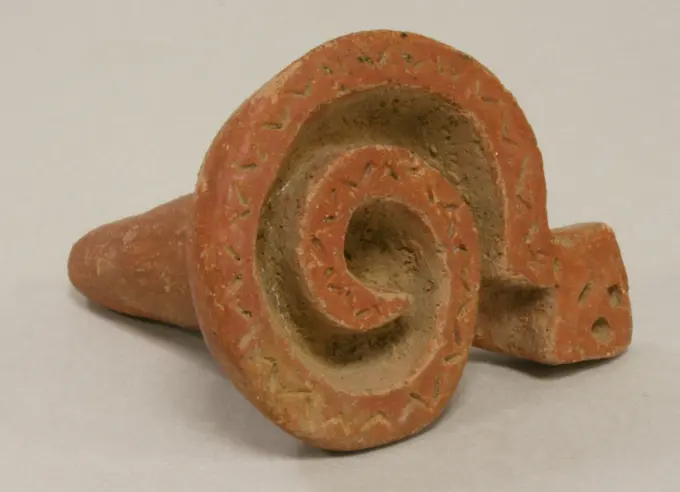
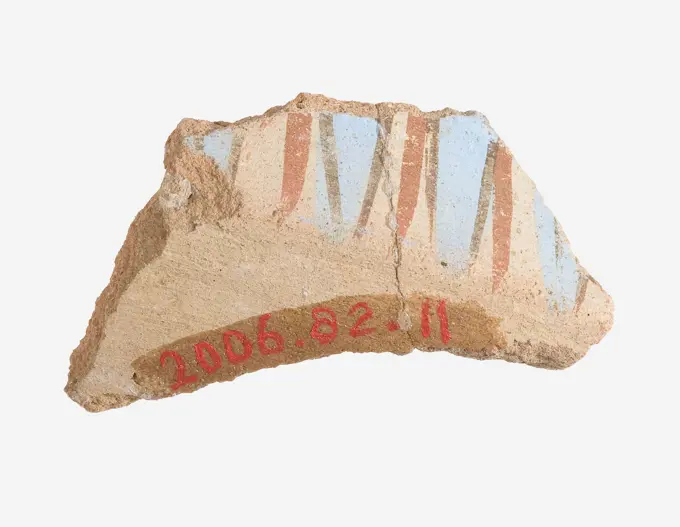
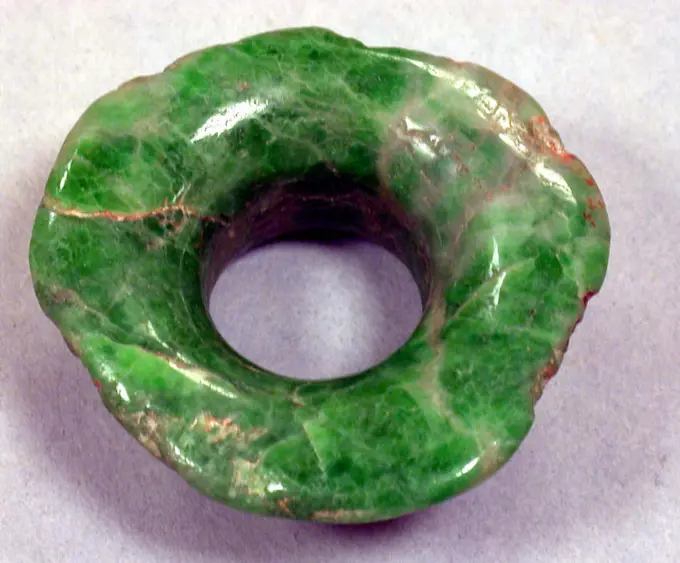
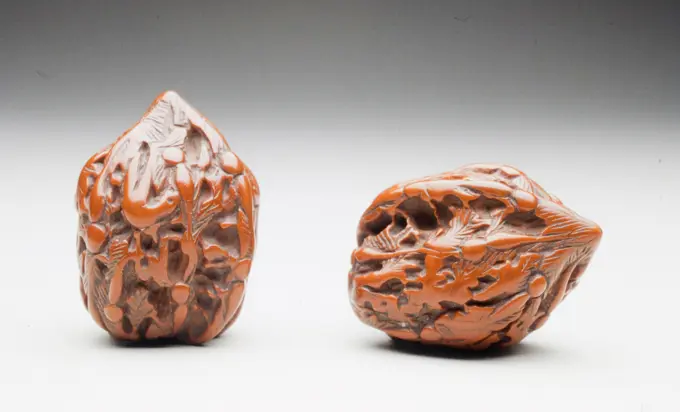
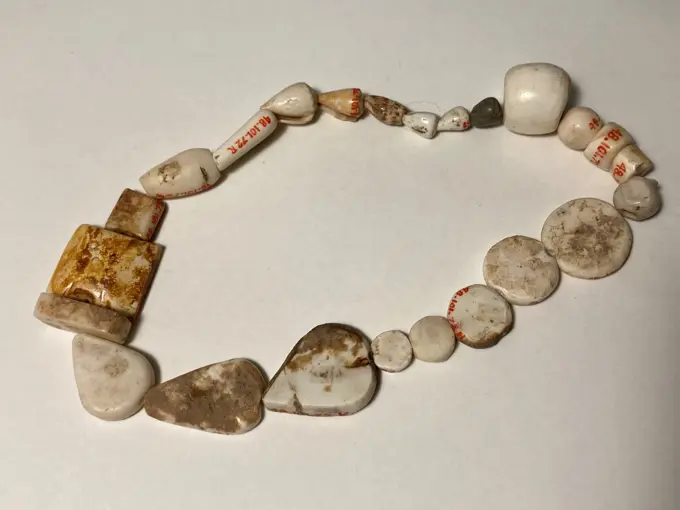
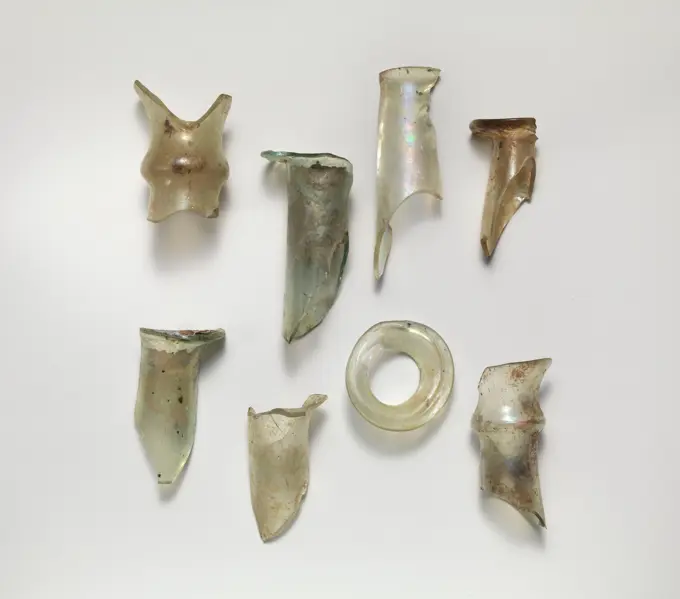
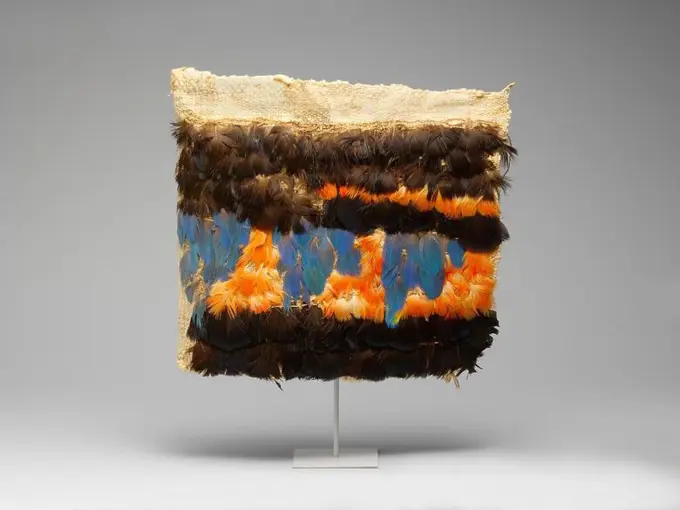
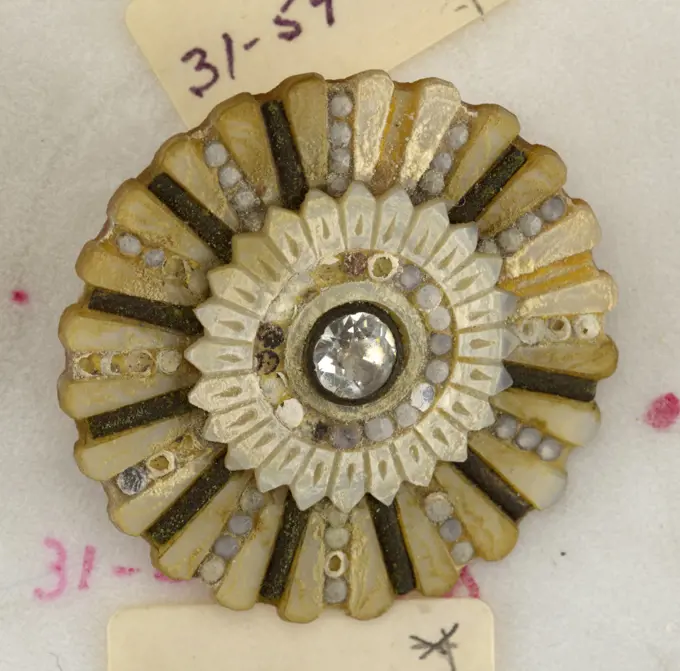
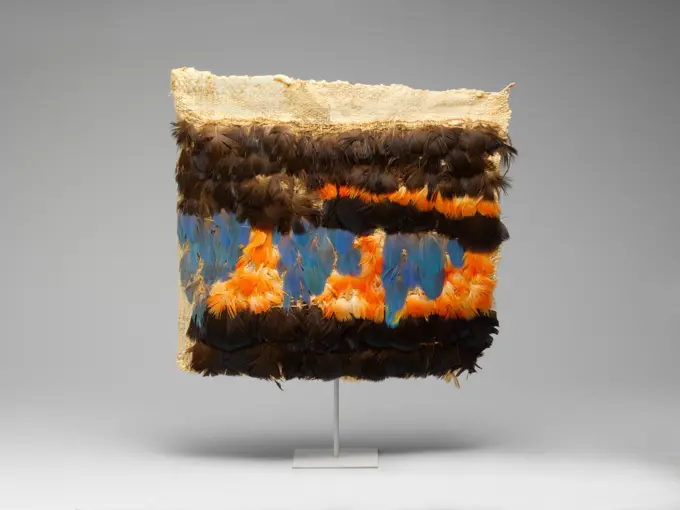
Tile Fragment 1334-1434. Tile Fragment 450556Serpent Stamp 1st-7th century Atlantic Watershed Ceramic stamps are found in Costa Rican burials, suggesting that their importance extended beyond utilitarian. Much speculation has been made with regard to the material that these stamps were intended to imprint, including paper, textiles, and the human body. The curved shape of the printing surface supports the function of body painting most strongly. This theory is reinforced by the presence of stamp motifs on Costa Rican ceramic figure sculpture. The designs of the stamps can be divided into two categories, those that mimic the geometricity of textile structure and those that do not. The frog stamp, with the angular lines of an amphibian, falls into the category of textile imagery, whereas the more fluid depiction of the serpent is derived from a more naturalistic source.. Serpent Stamp 313373Vessel fragment ca. 1390-1353 B.C. New Kingdom. Vessel fragment. ca. 1390-1353 B.C.. Pottery, paint. New Kingdom. From Egypt, Upper Egypt, Thebes, Malqata, Palace of Amenhotep III. Dynasty 18Fish Ornament. Culture: Peru; central coast (). Dimensions: L. 1 1/2 in. (3.8 cm). Date: 11th-12th century. Museum: Metropolitan Museum of Art, New York, USA.Fragment of a Bowl or Cup 13th-16th century. Fragment of a Bowl or Cup 452431Relief fragments from tomb of Meketre ca. 1981-1975 B.C. Middle Kingdom. Relief fragments from tomb of Meketre 669011Bracelet fragments CypriotEarflare 3rd-9th century El Salvador; Maya () Set into a wide perforation in the wearer’s earlobe (as earspools are today), this earflare frontal (a paired set with 1994.35.582) would have been anchored in place in various ways. In some cases, a bead (or beads) were set into the front of the earflare, anchoring it with the help of a set of beaded counterweights that were threaded through the earflare and hung behind the earlobe. Another possibility is that an L-shaped plug (likely made of wood) was fitted through the earflare’s central opening, or stem, from the back, holding the entire assemblage in place, snug against the wearer’s ear (for examples, see the earflare assemblages worn by the figures on 1979.206.1047).The word "jade," when used in Mesoamerican contexts, refers specifically to jadeite. All Mesoamerican jade comes from a single source, located in the Motagua River Valley of eastern highland Guatemala. Such a restricted point of access made jade a particularly rare and vaHand Exerciser, 18th century, 1 7/8 x 1 1/2 in. (4.76 x 3.81 cm), Carved and polished walnut, China, 18th century, The Chinese brush is an extremely sensitive writing instrument. To master it requires years of practice, great finger dexterity, and a steady hand. To gain muscle tone and flexibility, scholars often used hand exercisers, holding them in their palms. Carved with an overall pattern of double-gourd vines and polished to a mellow finish, the objects here reflect classic scholarly taste. The intellectual nature of Chinese ink painting and the difficulty of its execution meant that artists often were middle-aged before they were accomplished and elderly by the time they were famous. Thus, many of the finest literati paintings date from an artist's later years. Keeping fingers nimble and hands steady in old age required constant exercise and conditioning.Rectangular brooch from email on copper with people and two Dutch flags, c. 1950 - c. 1960 Rectangular brooch made of email on copper with a hook closure. Between two Dutch flags, two men and two women hold each other's hands against a light pink background. Netherlands copper (metal). Rectangular brooch made of email on copper with a hook closure. Between two Dutch flags, two men and two women hold each other's hands against a light pink background. Netherlands copper (metal).Architectural Model Mezcala 1st-8th century Stone architectural models in the Mezcala style primarily come from the present-day state of Guerrero in southwest Mexico. A particularly long-lived tradition, these works may have been produced over some one thousand years, beginning as early as 500 BCE. Little is known about their archaeological contexts, and there are few points of reference with surviving architecture in the region. It is possible that models with pillars reference buildings with stone columns, such as those from Cuetlajuchitlán. In most examples the rendering favors the two-dimensional; a row of columns representing a façade or entrance which stands for the structure as a whole (see MMA 1979.206.431). Other, more three-dimensional models more closely resemble thatched roofed dwellings (see MMA 1994.35.712). While Mezcala architectural models are generally referred to as temples, it has also been suggested that, when placed in graves, they were meant to serve as dwelling bead. bead. Bone. Ivories and BoneFragment European or Middle Eastern ca. 1150-ca. 1250 View more. Fragment. European or Middle Eastern. ca. 1150-ca. 1250. Glass, ceramic. Glass-VesselsFragment European or Middle Eastern ca. 1150-ca. 1250 View more. Fragment. European or Middle Eastern. ca. 1150-ca. 1250. Glass, ceramic. Glass-VesselsFragment European or Middle Eastern ca. 1150-ca. 1250 View more. Fragment. European or Middle Eastern. ca. 1150-ca. 1250. Glass, ceramic. Glass-VesselsFinger Ring. Western Iran, circa 1350-800 B.C.. Jewelry and Adornments; rings. Bronze, hammeredHeaddress Fragment 6th-7th century Moche (Loma Negra). Headdress Fragment 315150Shards of a crow head from V.O.C. ship De 'Witte Leeuw', Anonymous, Before 1613 bowl Shards of a crow head from V.O.C. ship the 'Witte Leeuw'. Jingdezhen bone china (material)   Sint-HelenaDaisy Pendant ca. 1390-1353 B.C. New Kingdom. Daisy Pendant. ca. 1390-1353 B.C.. Faience. New Kingdom. From Egypt, Upper Egypt, Thebes, Malqata, Palace of Amenhotep III, MMA excavations, 1910-11. Dynasty 18Wedjat-Eye Ring, 1350-1296 BC. Egypt, New Kingdom, late Dynasty 18 (1540-1296 BC). Bright turquoise blue faience; diameter: 2.1 cm (13/16 in.); overall: 2.1 cm (13/16 in.).Recipiente (plata de bacallaner), Blanes. Museu Català de les Arts i Tradicions Populars.Twenty porcelain Shards, found at V.O.C. -Schip Witte Leeuw, possibly from Zeelelie, Anonymous, 1750 - 1799 plate (dishes) Twenty porcelain shards, one of which is two glued fragments, found at V.O.C. ship De 'Witte Leeuw'. This object is 18th century and cannot therefore be from the freight of the Witte Leeuw. It is unclear whether the object will come from the site or whether it was mixed later, possibly with material from the Zeelelie.  porcelaincartridges of second world war vintage military cartridge of second world war on white background Copyright: xZoonar.com/MaximilianxBuzunx 7910156Miniature Dress. Culture: Ica. Dimensions: H. 11 x W. 12 1/8 in. (27.9 x 31.1 cm). Date: 12th-13th century. Museum: Metropolitan Museum of Art, New York, USA.Fragment of a Cup 100 BCE-100 CE Italy. In ancient Rome, there was a high demand for colorful glass that could dazzle banquet guests alongside the expensive silver and gold serving wares meant to impress. Fragments like this one would have once been a part of larger mosaic dishes. The mosaic pattern was made by sagging molten glass into bowl-shaped molds, a technique used on many of these fragments is similar to millefiori, ìthousand flowersî in Italian, a modern glass-making method in which tiny rods of colored glass are bundled together, wrapped in a sheet of glass, fused, and then thinly sliced to reveal swirls of a flower-like patterns. They were arranged side by side, sometimes together with bits of colored glass, and fused together with heat.. Glass, mosaic glass technique . Ancient RomanButton, pearl shell and copper, central brilliant of white glass set in pearl disc, cut to represent a daisy and ornamented with small brilliants and copper strips - copper shank., On card 29, France, 19th century, costume & accessories, Decorative Arts, ButtonClose up craft rings with natural stones on stub concept photo. Top view photography with plywood sheet on background. High quality picture for wallpaper, travel blog, magazine, article. Close up craft rings with natural stones on stub concept photoMiniature Dress 12th-13th century Ica. Miniature Dress 312820Fragment of a vessel. A low curvature of the glass fragment allows the assignment to a vessel, possibly a shell. On a violet ground with yellow stuck, two flower forms in Millefiori technology can be seen. One is simple, in the form of concentric circles in the color sequence from inside out to the outside blue, yellow, purple and white. At the second, the flowers are composed of light blue dots and surrounds white. For the production, different colored glasses were molded into tubes and rods. These were compressed and heated, causing a long bar. The glass sliced now had different amorphous or floral patterns. Thereafter, several of these platelets were folded together, heated again and pressed into the vascular shape. Burry for the elaborate manufacturing process and its fragility was one of the luxury articles of antiquity.