Ancient Scarabs and Seals

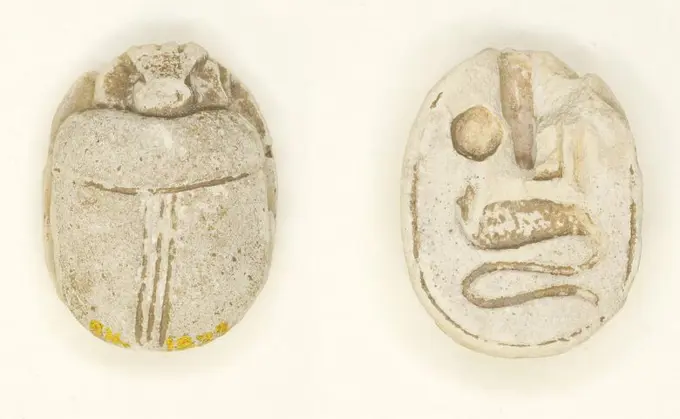
Collection of ancient scarabs and seals, featuring inscriptions and intricate designs, showcasing historical artifacts from Egypt and Syria.
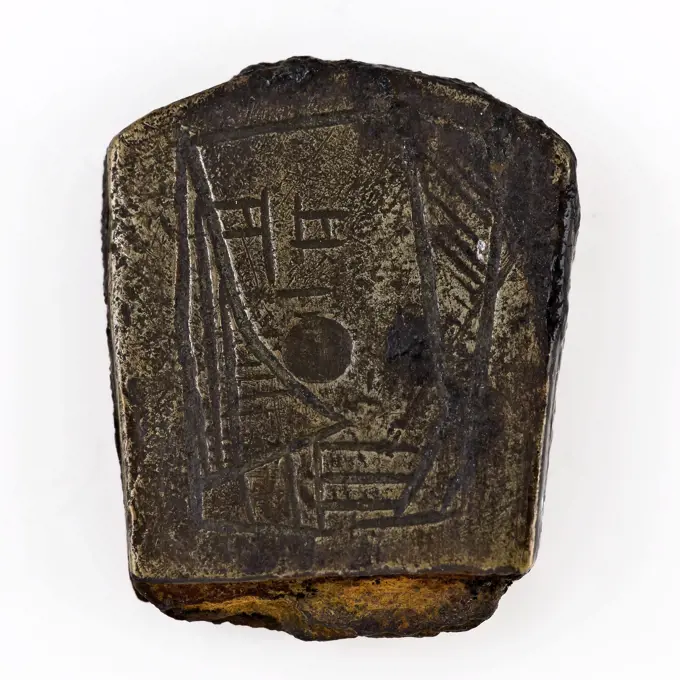
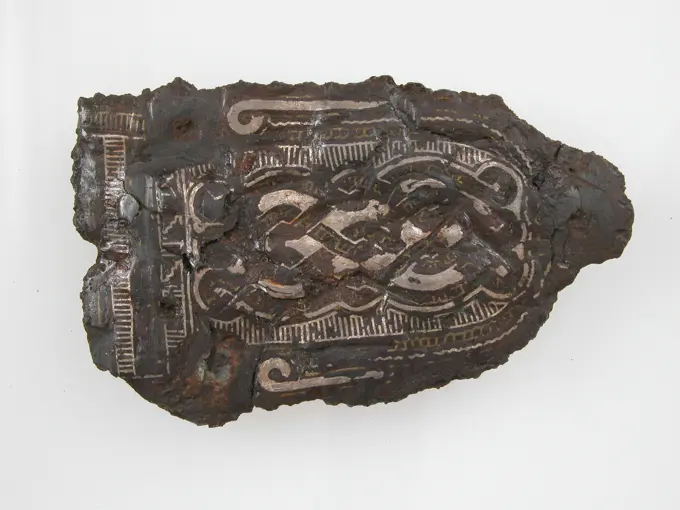
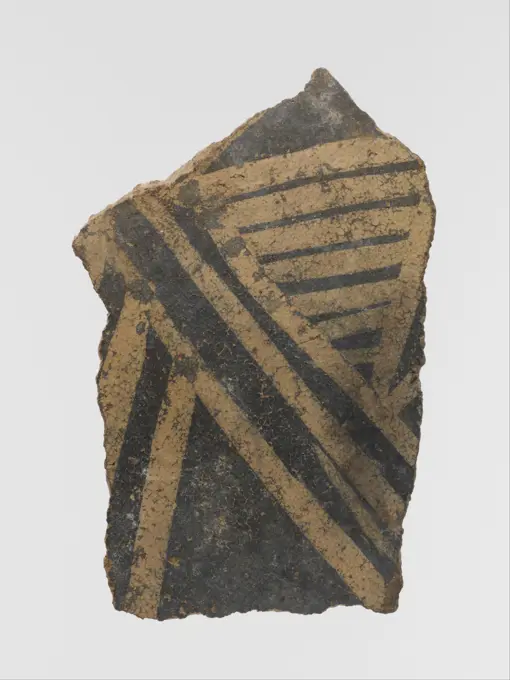
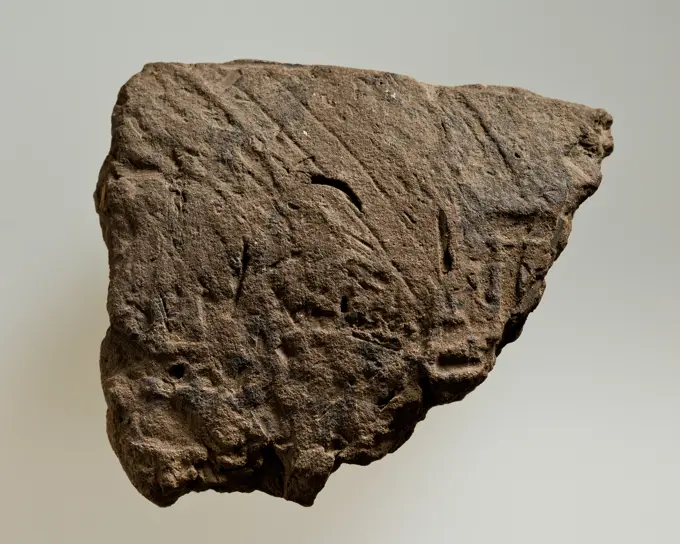
Knob of cutlery knife, handle knife cutlery soil find copper brass metal, w 1.7 forged riveted engraved Heftind consists of two fittings riveted to plate girdle. Rounded corners archeology Rotterdam Kralingen-Crooswijk Kralingen East Honingerdijk eating religion bible Mary Magdalene Soil discovery: Honingerdijk 1982-05-23
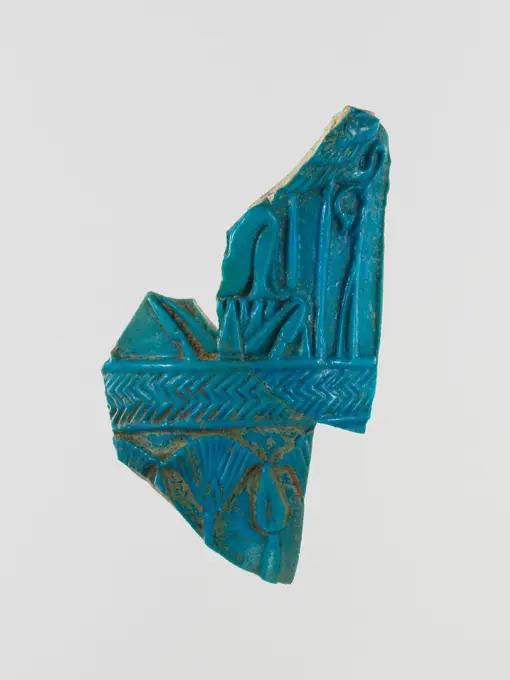
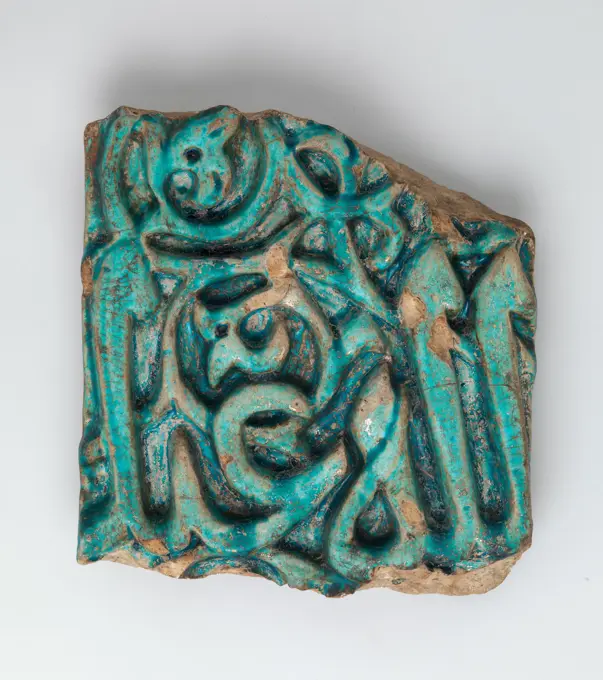
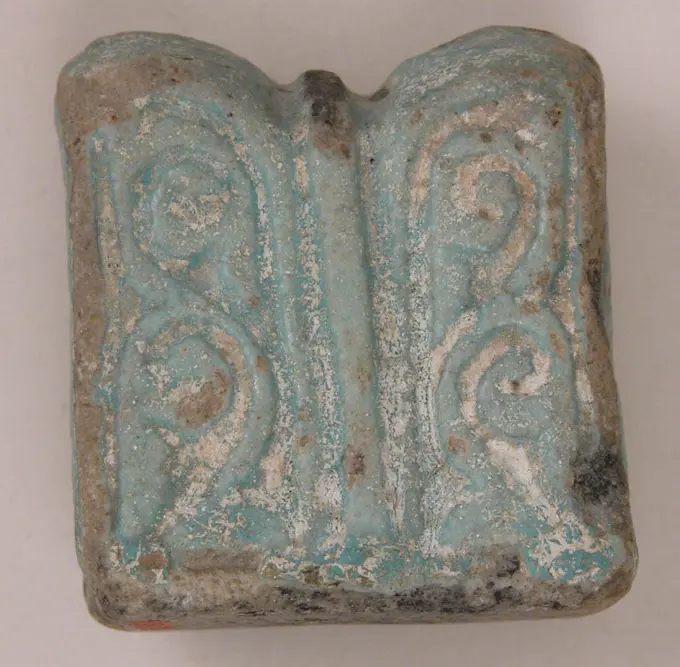
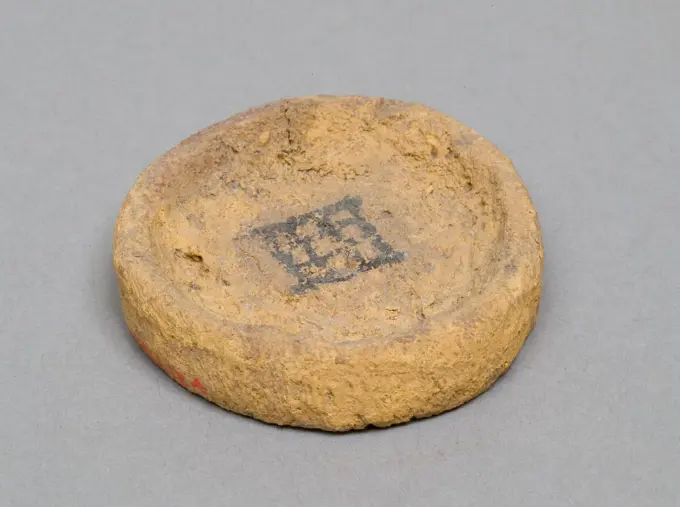
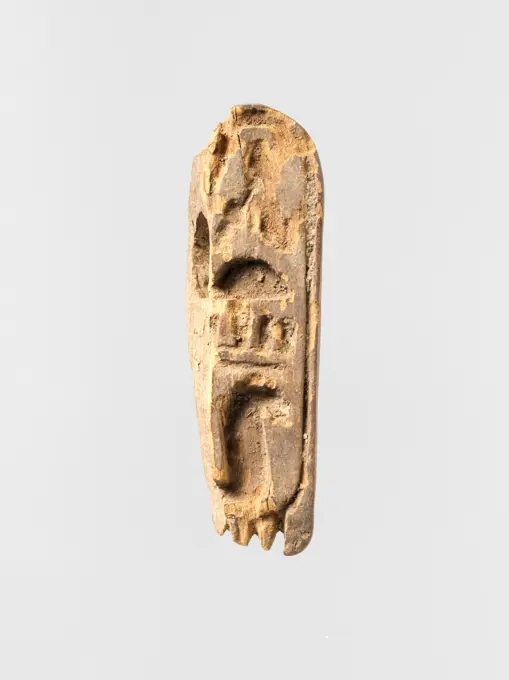
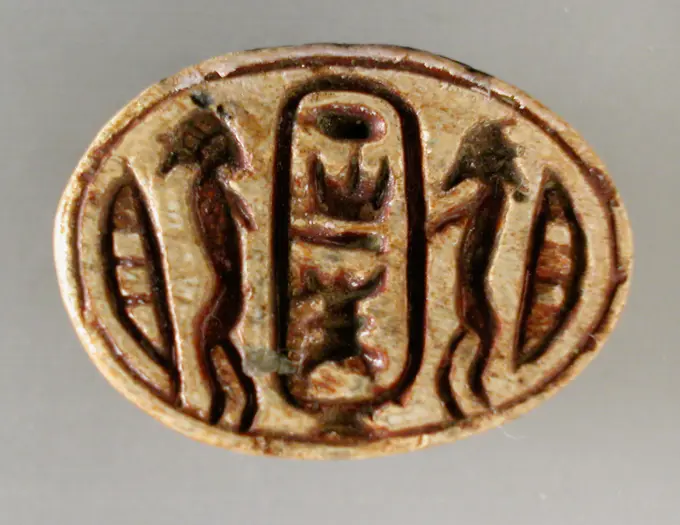
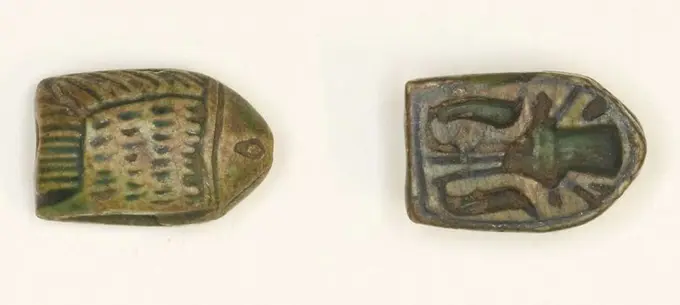
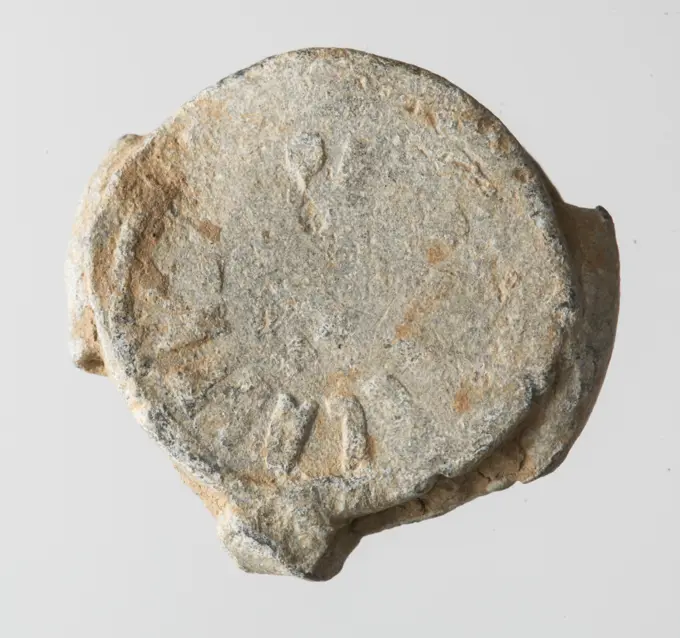
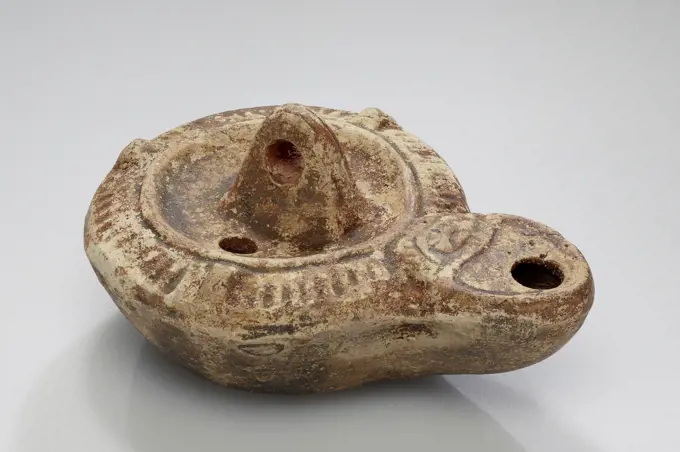
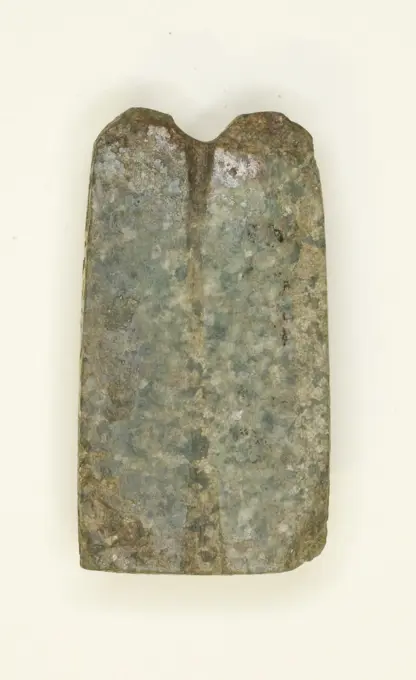
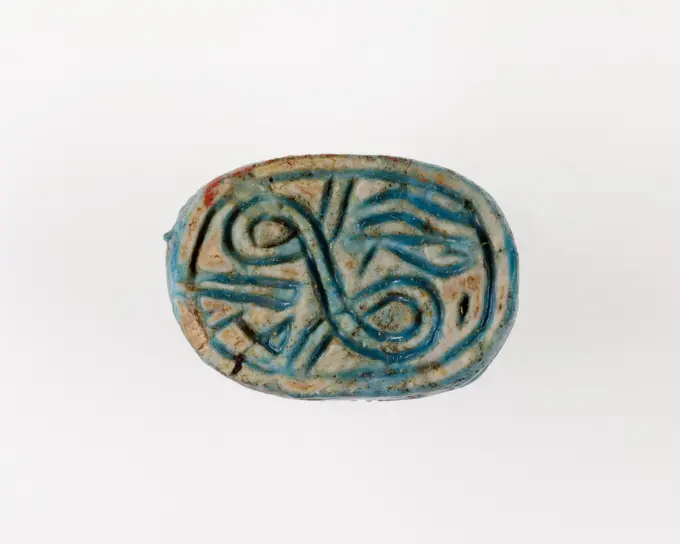
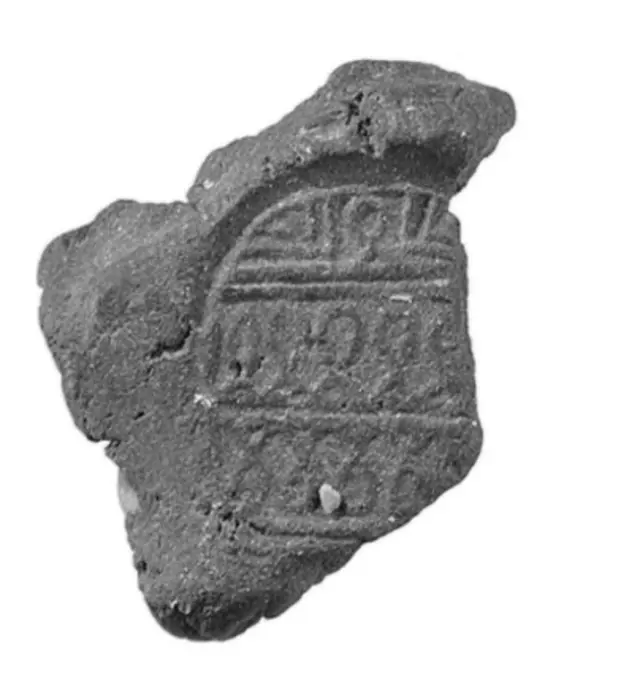
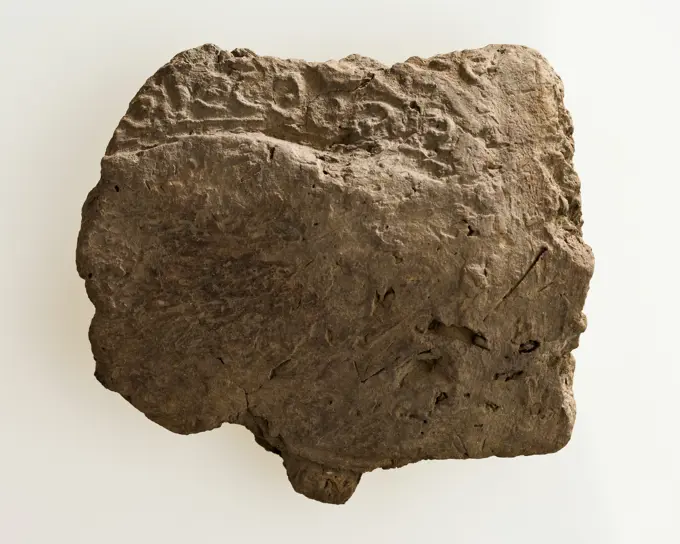
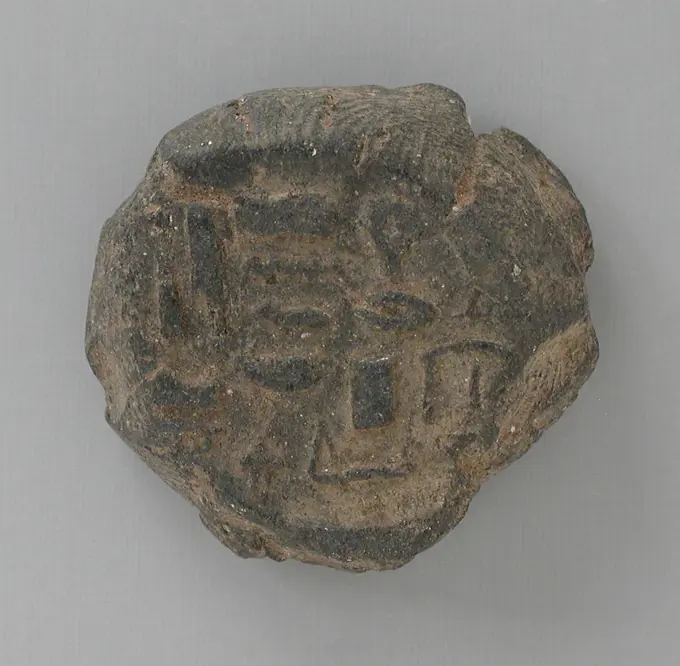
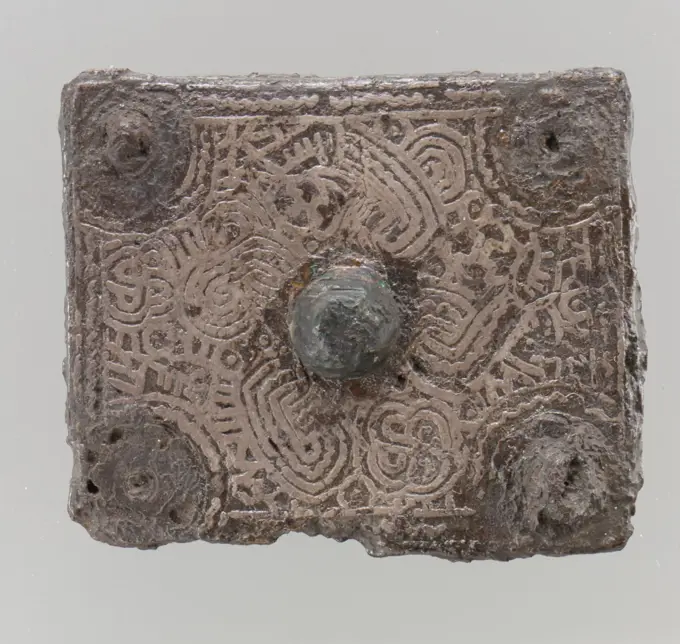
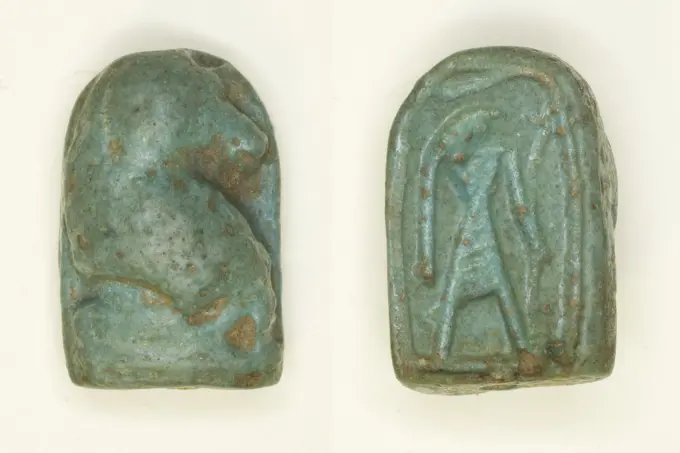
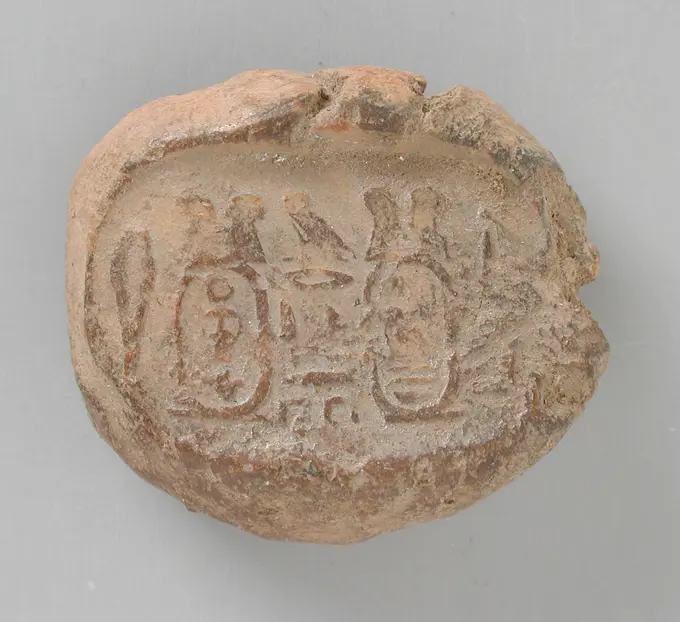
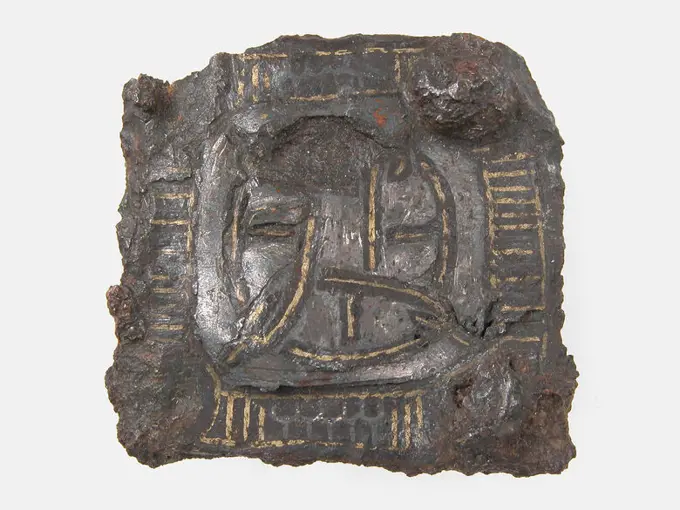
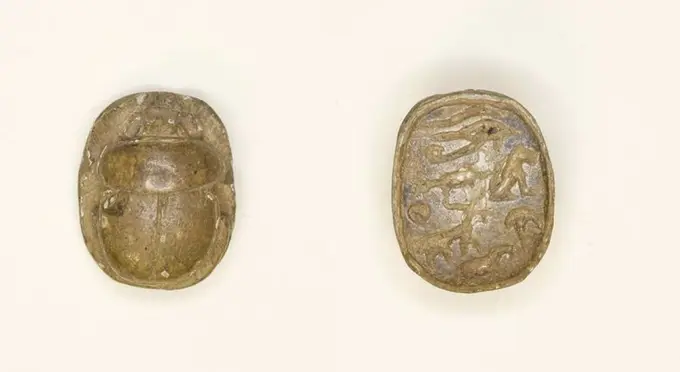
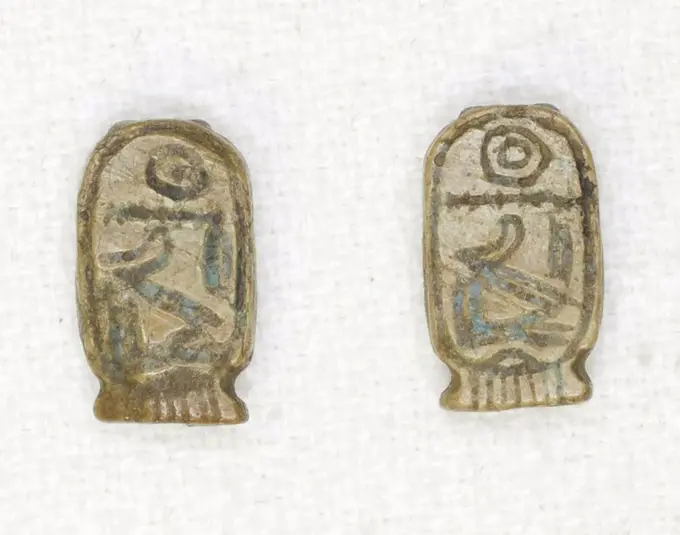
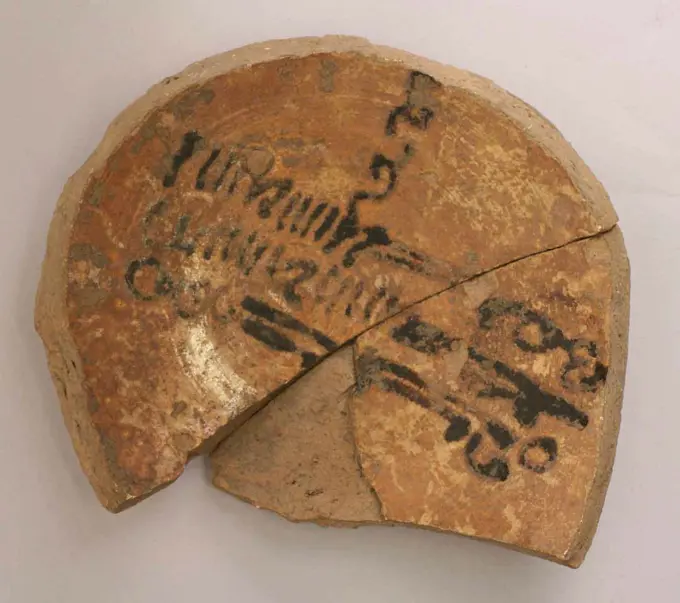
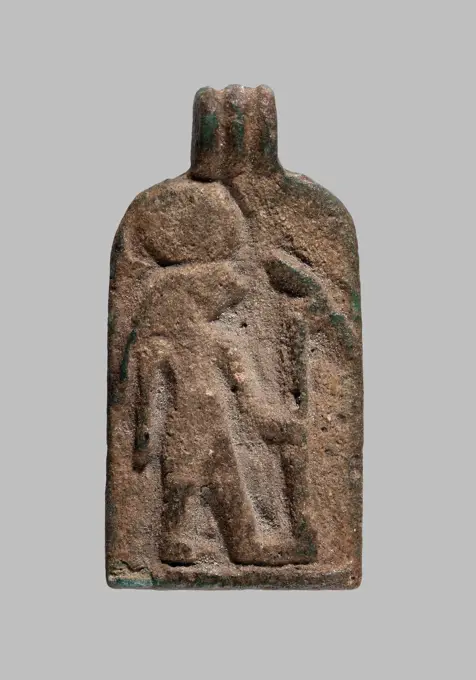
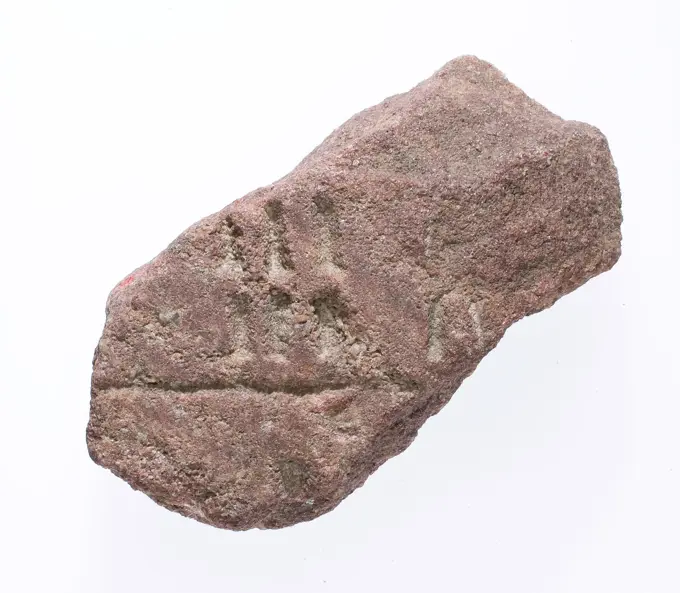
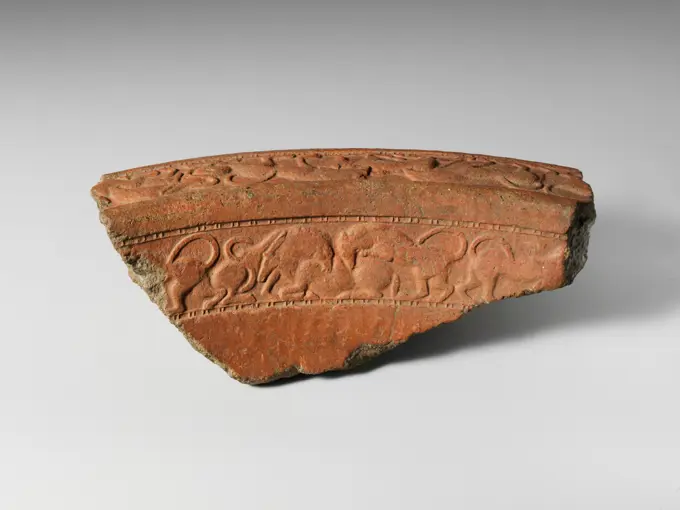
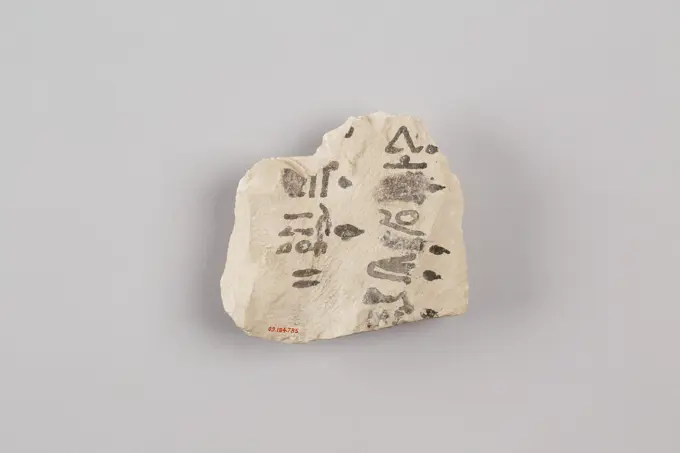
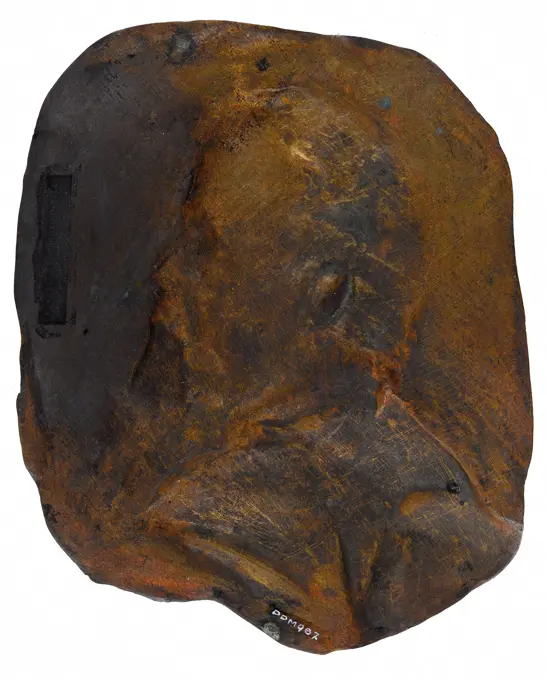
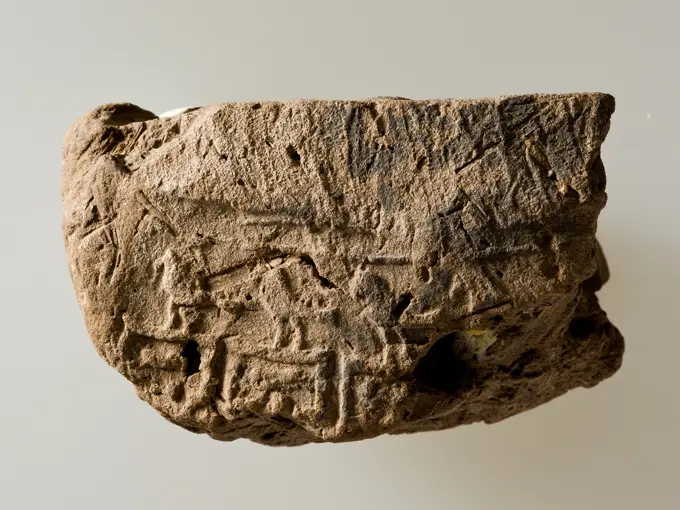
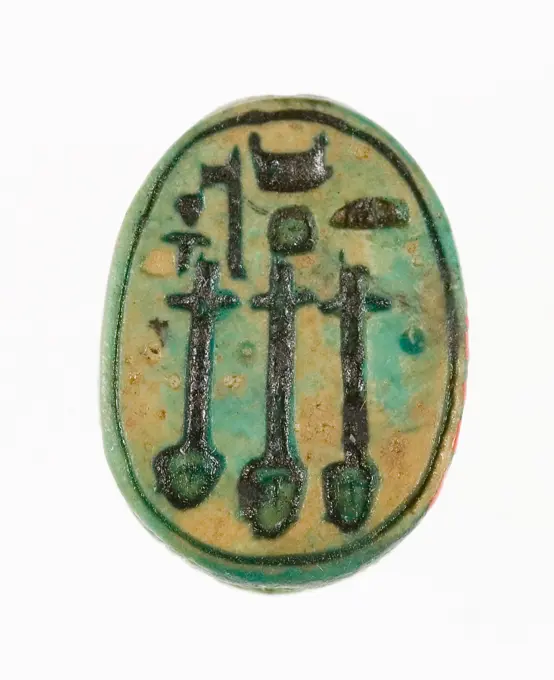
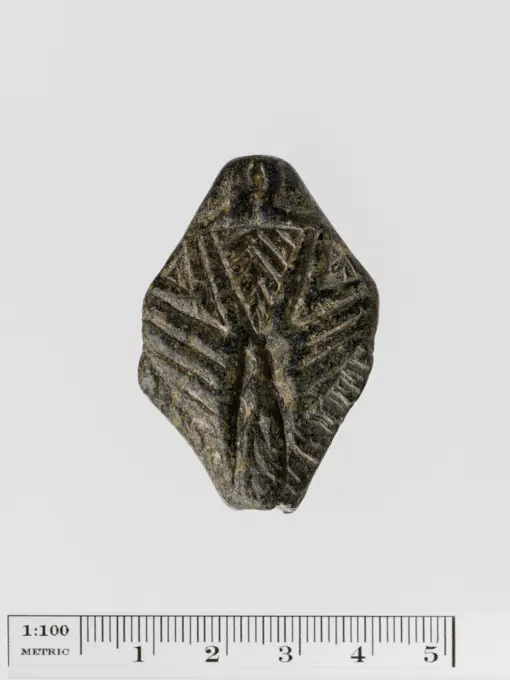
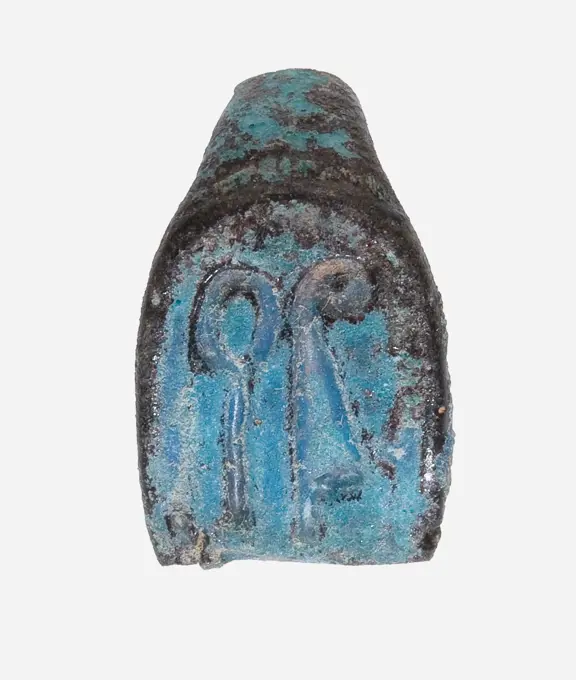
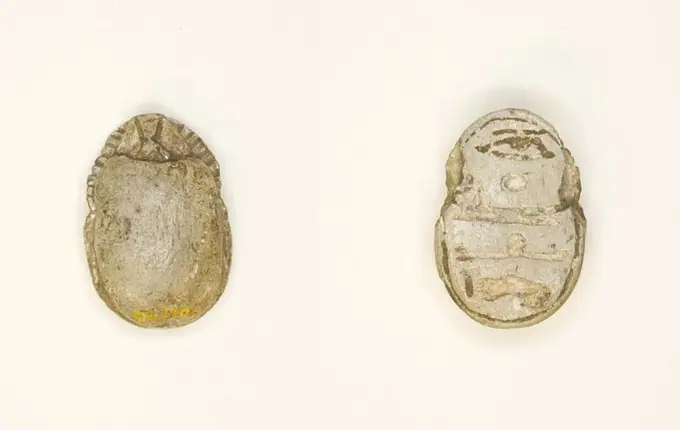
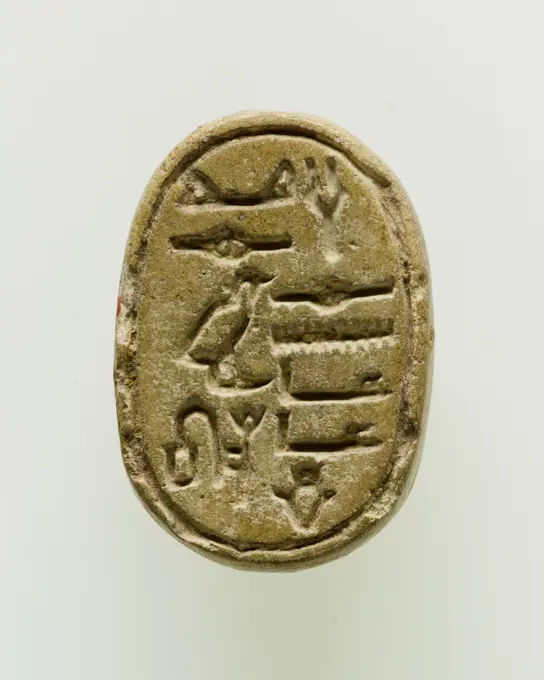
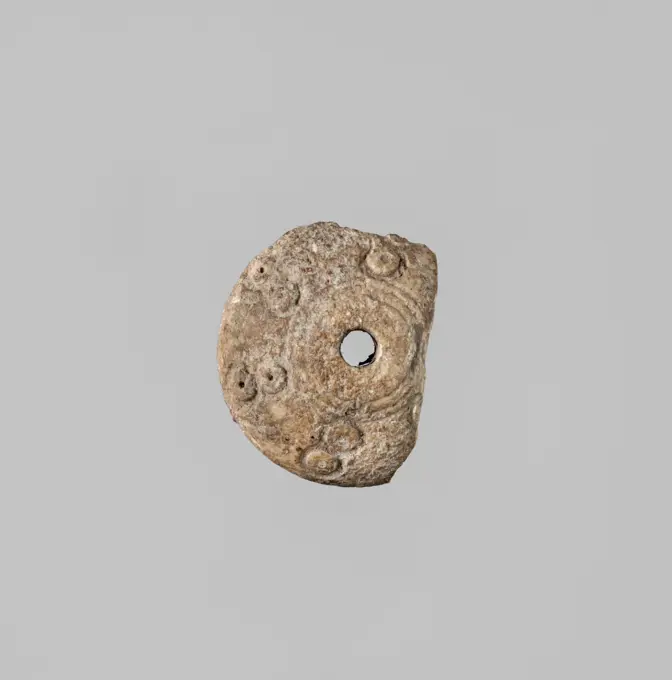
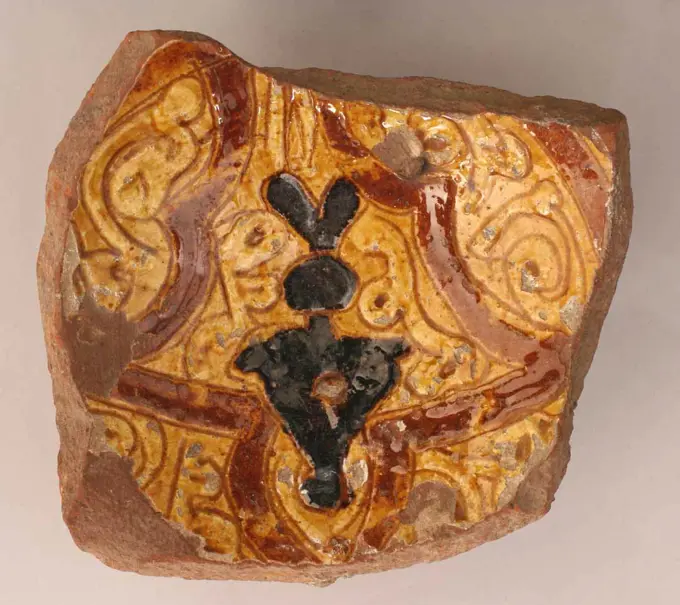
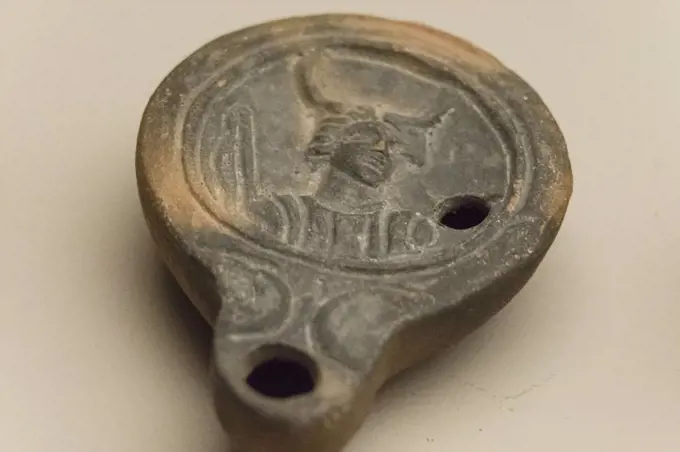
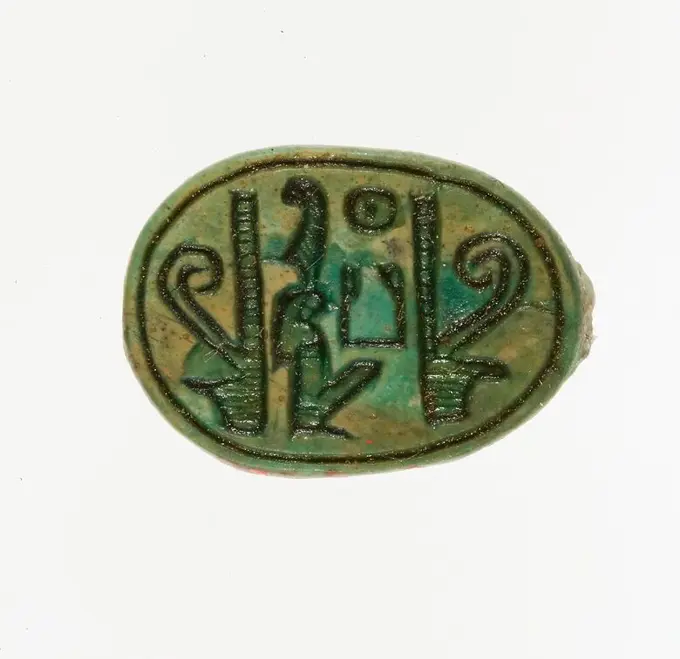
Scarab Inscribed with the Name Maatkare (Hatshepsut) Flanked by Two Red Crowns. Dimensions: L. 1.9 cm (3/4 in.); W. 1.4 cm (9/16 in.). Dynasty: Dynasty 18, early. Reign: Joint reign of Hatshepsut and Thutmose III. Date: ca. 1479-1458 B.C..During the 1926-1927 excavation season, the Museum's Egyptian Expedition uncovered three foundation deposits along the eastern enclosure wall of Hatshepsut's funerary temple at Deir el-Bahri in Western Thebes. Among the contents were 299 scarabs and stamp-seals. Sixty-five of these are now in the Egyptian Museum, Cairo, and the rest were acquired by the Museum in the division of finds.Among the inscriptions on the bases of these scarabs and seals are examples of every title Hatshepsut held, from the time she was "king's daughter" during the reign of her father, Thutmose I; through the time she was queen of her half-brother, Thutmose II; and during her regency and co-reign with her nephew/step-son, Thutmose III.After the death of her husband, HatsheScaraboid Two Scarabs Side By Side 1550 BCE-1069 BCE Egypt. Glazed steatite . Ancient EgyptianStamp Seal, Oval with Knob Handle with Crisscross Decoration. Northern Syria, 10th-8th century B.C.. Tools and Equipment; seals. Black serpentineKnob of cutlery knife, handle knife cutlery soil find copper brass metal, w 1.7 forged riveted engraved Heftind consists of two fittings riveted to plate girdle. Rounded corners archeology Rotterdam Kralingen-Crooswijk Kralingen East Honingerdijk eating religion bible Mary Magdalene Soil discovery: Honingerdijk 1982-05-23Terracotta jug fragment 1st half of 2nd century A.D. Roman, Gaul Lower part of nude male.. Terracotta jug fragment 250472 Roman, Gaul, Terracotta jug fragment, 1st half of 2nd century A.D., Terracotta, Overall: 2 3/8 x 2 3/4 in. (6 x 7 cm). The Metropolitan Museum of Art, New York. Gift of J. Pierpont Morgan, 1917 (17.194.2134)Fragment from a lotiform chalice Third Intermediate Period ca. 1070-925 B.C. Fragment of a lotiform chalice, with lotus, water band, and papyrus zone. Joined with 30.8.154. View more. Fragment from a lotiform chalice. ca. 1070-925 B.C.. Faience. Third Intermediate Period. From Egypt; Possibly from Fayum Entrance Area, Lahun. Dynasty 21-22Wall Tile with the Cartouche of Seti II ca. 1200-1194 B.C. New Kingdom, Ramesside. Wall Tile with the Cartouche of Seti II 550192Bliżej Kultury Mint of Kraków, Władysław Warneńczyk (King of Poland, 1434 1444)Bliżej Kultury Władysław Jagiełło (CA 1351 1434), Mint of KrakówScarab Inscription Made 2055 BCE-1650 BCE Egypt. Steatite . Ancient EgyptianAmulet of the Goddess Hathor 1069 BCE-664 BCE Egypt. Faience . Ancient EgyptianOrnament  Tassel  1st-3rd century A.D. or later Roman Shaped like a tassel, with a ring for suspension at the back.. Ornament  Tassel  246766Fragment of a Glazed Tile Inscription 12th-13th century This fragment, which includes three letters of the word "Allah," would have been part of a long horizontal band forming part of the decoration on the facade of a presumably religious building. Glazed tiles, especially in light or turquoise blue, were readily available from cobalt deposits in Iran and became popular in this region as early as the twelfth century, gradually replacing carved stucco as the favored medium for architectural decoration.. Fragment of a Glazed Tile Inscription 449135Highstone with a HermkariaTide with leaf vines, c. 1575 - c. 1600 Hemmkaratide with a hermkario peat with a leaf vank. Southern Netherlands earthenware Hemmkaratide with a hermkario peat with a leaf vank. Southern Netherlands earthenwareOracle Bone Fragment 13th-11th century B.C. China. Oracle Bone Fragment. China. 13th-11th century B.C.. Bone. Shang dynasty (ca. 1600-1046 B.C.). BoneS-Shaped Brooch 550 Frankish. S-Shaped Brooch 465354 Frankish, S-Shaped Brooch, 550, Silver-gilt; garnet or glass, Overall: 1 3/8 x 1 x 5/16 in. (3.5 x 2.5 x 0.8 cm). The Metropolitan Museum of Art, New York. Gift of J. Pierpont Morgan, 1917 (17.192.5)Fibula, boat-shaped type 8th-6th century B.C. The bow is hollow and closed on the underside. The upper surface is decorated with incised patterns consisting of bands and concentric circles.. Fibula, boat-shaped type 246327Fragment with the cartouche of Nefertiti ca. 1353-1336 B.C. New Kingdom, Amarna Period. Fragment with the cartouche of Nefertiti 561155Mold with a Ramesside Royal Name. Egypt, New Kingdom, 19th or 20th Dynasty, 1315-1081 B.C., probably after reign of Ramses II, 1304-1237 B.C.. Tools and Equipment; molds. TerracottaDecorative Element with Fleur de Lis and Lion's Head. Egypt, Roman Period (30 BCE - 395 CE) or later. Sculpture. BronzeHearing stone with representation of two climbing lions, placed in two windows, Anonymous, c. 1575 - c. 1625 Hearing stone with representation of two climbing lions, placed in two windows. Southern Netherlands (possibly) earthenware Hearing stone with representation of two climbing lions, placed in two windows. Southern Netherlands (possibly) earthenwareChess Piece, Rook 11th-12th century Caliphal decrees prohibited the playing of chess (the pieces of which are customarily figural) for iconoclastic reasons as early as the eighth century. It is likely that chess pieces of the abstract type, such as those exhibited here, replaced the figural ones in order to circumvent those decrees.. Chess Piece, Rook 452518Model sieve ca. 1981-1640 B.C. Middle Kingdom. Model sieve. ca. 1981-1640 B.C.. Wood, paint. Middle Kingdom. From Egypt, Memphite Region, Lisht South, Double Row of Pits, Pit 6L.P13, MMA excavations, 1923-24. Dynasty 12-13Stamp Inscribed for the Goddess Renenutet ca. 1295-1070 B.C. New Kingdom. Stamp Inscribed for the Goddess Renenutet. ca. 1295-1070 B.C.. Wood. New Kingdom. From Egypt, Memphite Region, Lisht North, Cemetery, MMA excavations, 1906-07. Dynasty 19-20 (Ramesside)Scarab with Two Bound Enemies. Egypt, New Kingdom to Late Period, 18th-26th dynasties (1504-525 BCE). Sculpture. Steatite with modern brown colorScaraboid: Fish. Egyptian. Date: 1550 BC-1295 BC. Dimensions: 1.3 × 1 × 0.5 cm (1/2 × 3/8 × 3/16 in.). Glazed steatite. Origin: Egypt. Museum: The Chicago Art Institute, Chicago, USA. Author: Ancient Egyptian.Scarab ca. 1550-1458 B.C. New Kingdom. Scarab. ca. 1550-1458 B.C.. Glazed steatite. New Kingdom. From Egypt, Upper Egypt, Thebes, Asasif, Courtyard CC 41, Pit 3, Burial E 1, On body, MMA excavations, 1915-16. Dynasty 18, earlyBliżej Kultury Herakliusz (610 641)Shabti. Egyptian. Date: 1069 BC-945 BC. Dimensions: 11.5 × 4.0 × 2.6 cm (4 1/2 × 1 5/8 × 1 in.). Faience. Origin: Egypt. Museum: The Chicago Art Institute, Chicago, USA. Author: Ancient Egyptian.Lead seal, France or Switzerland unknownPainted glass fragment. Culture: Assyrian. Dimensions: H. 3/4 x W. 3/4 x D. 1/8 in. (1.8 x 1.9 x 0.3 cm). Date: ca. 8th-7th century B.C.. Museum: Metropolitan Museum of Art, New York, USA.Bliżej Kultury Władysław Jagiełło (CA 1351 1434), Mint of KrakówLamp, North Africa; 1st - 4th century; Terracotta; 2.6 x 6.5 x 8.9 cm (1 x 2 9,16 x 3 1,2 in.)Amulet of Double Plumes 664 BCE-332 BCE Egypt. Steatite . Ancient EgyptianScarab with Scroll and Hieroglyphs ca. 1740-1640 B.C. Middle Kingdom Designs with twirling continuous lines and coils, sometimes forming complicated woven patterns, appear on scarabs in the early Middle Kingdom and become particularly popular from the later part of Dynasty 12 onward, during the late Middle Kingdom (late Dynasty 12-Dynasty 13, ca. 1850-1640 B.C.). In some cases they are accompanied by hieroglyphs with protective meaning. Soon afterwards, these often complex linear designs were imitated on Canaanite scarabs of the Middle Bronze Age (contemporary with the Second Intermediate Period in Egypt, ca. 1640-1550 B.C.). This scarab shows morphologic details that are characteristic for mid to late Dynasty 13 (ca. 1750-1640 B.C.). Scarabs of this type may have been carved at a workshop active in Avaris (present-day Tell el-Daba).. Scarab with Scroll and Hieroglyphs 545234Fireplace of baked earth with diamond-shaped distribution. Fireplace of baked earth with diamond-shaped distribution. With medallions in a wide border.Sealing ca. 2030-1640 B.C. Middle Kingdom. Sealing 546589Mud jar sealing impressed with a row of spiral signs ca. 3100 B.C. Predynastic, Late Naqada III. Mud jar sealing impressed with a row of spiral signs. ca. 3100 B.C.. Clay (mud). Predynastic, Late Naqada III. From Egypt, Fayum Entrance Area, Tarkhan, Tomb 414, BSAE excavations 1911-1913Engraved Gem with Abrasax and a magical inscription; 100 - 250; Green chalcedony; 2 × 1.6 × 0.2 cm (13,16 × 5,8 × 1,16 in.)Belt Ornament () middle of 6th century Frankish. Belt Ornament () 465609 Frankish, Belt Ornament (), middle of 6th century, Copper alloy, Overall: 1 7/8 x 1 x 1/2 in. (4.7 x 2.5 x 1.2 cm). The Metropolitan Museum of Art, New York. Gift of J. Pierpont Morgan, 1917 (17.193.281)Seal Impression Mentioning the Gods Amen and Horus, Probably in Private Names. Egypt, probably Late Period (724 - 333 BCE). Tools and Equipment; seal impressions. Blackened clayBackplate of a Belt Buckle 6th-7th century Frankish. Backplate of a Belt Buckle 465455 Frankish, Backplate of a Belt Buckle, 6th7th century, Iron, silver inlay, copper alloy, Overall: 2 11/16 x 2 5/16 x 11/16 in. (6.9 x 5.8 x 1.7 cm). The Metropolitan Museum of Art, New York. Gift of J. Pierpont Morgan, 1917 (17.193.144)Scaraboid Squatting Baboon 1550 BCE-1069 BCE Egypt. Glazed steatite . Ancient EgyptianBelt Buckle Fragment. Culture: Frankish. Dimensions: Overall: 3 5/8 x 2 5/16 x 1 1/8 in. (9.2 x 5.8 x 2.8 cm). Date: 4th-7th century. Museum: Metropolitan Museum of Art, New York, USA.Seal Impression with Names of King Amasis and Queen Nitocris. Egypt, Late Period, 26th Dynasty, probably reign of Amasis and Nitocris (569 - 525 BCE). Tools and Equipment; seals. Semi-baked clay with scorch marksBelt Plate Fragment 4th-7th century Frankish. Belt Plate Fragment 469815Backplate of a Belt Buckle. Culture: Frankish. Dimensions: Overall: 1 3/4 x 1 5/8 x 5/16 in. (4.5 x 4.2 x 0.8 cm). Date: 6th-7th century. Museum: Metropolitan Museum of Art, New York, USA.Scarab: Hieroglyphs. Egyptian. Date: 1069 BC-525 BC. Dimensions: 1.6 × 1.3 × 0.6 cm (5/8 × 1/2 × 1/4 in.). Steatite. Origin: Egypt. Museum: The Chicago Art Institute, Chicago, USA. Author: Ancient Egyptian.Bead Plaque ca. 733-664 B.C. Third Intermediate Period. Bead Plaque. ca. 733-664 B.C.. Faience. Third Intermediate Period. From Egypt. Dynasty 25 (Kushite)Fragment 9th century. Fragment 451527Window frame 8th-13th century. Window frame 450318Plaque: Cartouche of Nimaatre (Amunemhat III). Egyptian. Date: 1831 BC-1786 BC. Dimensions: 1.9 × 1 × 0.6 cm (3/4 × 3/8 × 1/4 in.). Steatite. Origin: Egypt. Museum: The Chicago Art Institute, Chicago, USA. Author: Ancient Egyptian.Fragment of a Bowl 9th-10th century. Fragment of a Bowl 450194Counter Plate of a Belt Buckle 7th century Frankish. Counter Plate of a Belt Buckle 465510 Frankish, Counter Plate of a Belt Buckle, 7th century, Iron, silver and brass inlay, Overall: 4 1/8 x 2 9/16 x 7/16 in. (10.4 x 6.5 x 1.1 cm). The Metropolitan Museum of Art, New York. Gift of J. Pierpont Morgan, 1917 (17.193.193)Scarab with Throne Name of Amenhotep III. Egypt, New Kingdom to Late Period, 18th-24th dynasties (1410-711 BCE). Sculpture. Steatite with modern brown colorTerracotta vessel fragment with linear motifs ca. 2300-2100 B.C. Minoan From Gournia, CreteFragment with triangular motifs.. Terracotta vessel fragment with linear motifs 247857Sharf of yellowish earthenware, with blue glaze on the front, with a scratched decoration of a window and a stylized flower shape, anonymous, 1600 - 1650 on the flat  Northern Netherlands earthenware. glaze majolica  Northern Netherlands earthenware. glaze majolicaInscribed terracotta pipe, 12th century collected at Ulakadam near Erode, Tamil Nadu, South India, India, AsiaMud jar sealing ca. 3200-2650 B.C. Predynastic, Late Naqada III-Early Dynastic Period. Mud jar sealing 573267Scarab: Name of Amun-Ra. Egyptian. Date: 1550 BC-1069 BC. Dimensions: 1.6 × 1.3 × 0.5 cm (5/8 × 1/2 × 3/16 in.). Steatite. Origin: Egypt. Museum: The Chicago Art Institute, USA. Author: Ancient Egyptian.Part of a standing Buddha, Anonymous, 1500 - 1700 Part of a standing Buddha. Thailand bronze (metal) Part of a standing Buddha. Thailand bronze (metal)Fragment of a Bowl 7th-8th century. Fragment of a Bowl 454747Amulet - a plaque from the character Re;  VII-IV century BC ; Half period (-700-00-00--301-00-00);Re (Mitol.), Society for the Encouragement of Fine Arts (Warsaw - 1860-1940) - collection, Tyszkiewicz, Michał (1828-1897), Tyszkiewicz, Michał (1828-1897) - collections, gift (provenance), plaks, uas (iconogr .)Limestone censer decorated in relief, Egyptian civilization, Coptic PeriodHeart Scarab ca. 1070-332 B.C. Third Intermediate Period-Late Period. Heart Scarab. ca. 1070-332 B.C.. Slate. Third Intermediate Period-Late Period. From Egypt, Upper Egypt, Thebes, Deir el-Bahri, MMA excavations, 1922-23. Dynasty 21-30Offering list stela ca. 1353-1336 B.C. New Kingdom, Amarna Period. Offering list stela 577106Right hand from sarcophagus;  around 1069-945 BC ; 3rd transition period, 21 dynasty (-1069-00-00--945-00-00);Funerary Cone of Maaty and His Wife Huy ca. 1550-1352 B.C. New Kingdom See 90.6.253. Funerary Cone of Maaty and His Wife Huy. ca. 1550-1352 B.C.. Pottery. New Kingdom. From Egypt, Upper Egypt, Thebes, Sheikh Abd el-Qurna. Dynasty 18Terracotta brazier fragment ca. 540-530 B.C. Etruscan Rim fragment with a pair of lions attacking a bull and a horned deer.. Terracotta brazier fragment 251427Dishwill of red -baking earthenware, at the front with different edges in sgrafitto technology with white glaze, at the rear unggestive, anonymous, 1200 - 1899  Italy earthenware  Italy earthenwareLimestone moulds with amulet figurines, Late Period, Egyptian civilizationCylinder Seal Inscribed with the Throne Name of Amenhotep I ca. 1492-1479 B.C. New Kingdom. Cylinder Seal Inscribed with the Throne Name of Amenhotep I. ca. 1492-1479 B.C.. Steatite. New Kingdom. From Egypt. Dynasty 18Ostracon inscribed with identity marks and the name of female family member ca. 1153-1143 B.C. New Kingdom, Ramesside Ostraca (plural for ostracon) are potsherds used as surfaces on which to write or draw. The term is used, by extension, to refer to chips of limestone, which were employed for similar purposes. Despite their humble appearances, ostraca bear a wide range of images and texts, including administrative documents, literary texts, and depictions of royal and divine figures. The texts were mostly written with reed pen and ink of two colors, red and black, and inscribed in Hieratic, the cursive script of ancient Egypt throughout most of its periods. This ostracon bears identity markers referring to royal necropolis workmen of the right side of the crew and the name of a woman written in hieroglyphs.. Ostracon inscribed with identity marks and the name of female family member. ca. 1153-1143 B.C.. Limestone, ink, paint. New Kingdom, Ramesside. From Egypt, Upper Egypt, Thebes, ValCounter Plate of a Belt Buckle. Culture: Frankish. Dimensions: Overall: 2 1/16 x 1 1/16 x 3/8 in. (5.3 x 2.7 x 1 cm). Date: 7th century. Museum: Metropolitan Museum of Art, New York, USA.Plaque: Two Baboons Back to Back/Cartouches. Egyptian. Date: 1550 BC-1069 BC. Dimensions: 1 × 1 × 0.5 cm (3/8 × 3/8 × 3/16 in.). Steatite. Origin: Egypt. Museum: The Chicago Art Institute, Chicago, USA. Author: Ancient Egyptian.Scarab Inscribed with the Name of the God Amun-Re ca. 1479-1458 B.C. New Kingdom. Scarab Inscribed with the Name of the God Amun-Re 559888Plaque fragment ca. 9th century B.C. Iran. Plaque fragment 325754Scarab Nebmaatra (Amenhotep III) and Queen Tiye 1390 BCE-1352 BCE Egypt. Steatite . Ancient EgyptianAlexandre-Louis Charpentier (1856-1909). Medal plate. Constantin Meunier. Metal, bronze. 1899. Museum of Fine Arts of the City of Paris, Petit Palais. 57547-10 Obverse, bronze, medal, metal, numismatics, plateBath Scraper 12th-13th century This flat object, molded on one side, was used in the public bath (hammam). The opposite side, which is coarse due to the siliceous fragments in the clay, would be used to rub the skin. The number of bath scrapers which have survived display a wide variety of decorative motifs.Prolonged exposure to water and steam in a hammams hot rooms loosens dead skin and forces impurities out of the body, which are then wiped or scrubbed away with any number of exfoliating implements, such as a mitt or sponge. A group of ceramic scrapers similar to this one are believed to come from Iran. Their decoration includes a variety of animal, floral, and geometric patterns, suggesting customers could select their own designs.. Bath Scraper 447927Mud jar sealing ca. 3200-2650 B.C. Predynastic, Late Naqada III-Early Dynastic Period. Mud jar sealing 547445Scarab Inscribed for the God's Wife Neferure ca. 1479-1458 B.C. New Kingdom. Scarab Inscribed for the God's Wife Neferure. ca. 1479-1458 B.C.. Steatite (glazed). New Kingdom. From Egypt, Upper Egypt, Thebes, Deir el-Bahri, Temple of Hatshepsut, Foundation Deposit 7 (G), MMA excavations, 1926-27. Dynasty 18, earlySteatite octagonal seal 8th century B.C. Greek Man and linear patterns.. Steatite octagonal seal. Greek. 8th century B.C.. Steatite, gray. Geometric. GemsRing Fragment, heqa maat device ca. 1390-1353 B.C. New Kingdom. Ring Fragment, heqa maat device. ca. 1390-1353 B.C.. Faience, blue. New Kingdom. From Egypt, Upper Egypt, Thebes, Malqata, Palace of Amenhotep III, MMA excavations, 1910-11. Dynasty 18Seated man inlay 522-343 B.C. Late Period. Seated man inlay. 522-343 B.C.. Lapis. Late Period. From Egypt, Upper Egypt, Thebes, Southern Asasif, Unfinished Temple Site, MMA excavations, 1920-22. Dynasty 26Terracotta vessel fragment with grass motif. Culture: Minoan. Dimensions: Overall: 1 7/16 x 1 5/8in. (3.7 x 4.1cm). Date: ca. 1600-1450 B.C..From Knossos, CreteFragment with grass design; dark-on-light ware. Museum: Metropolitan Museum of Art, New York, USA.Pectoral Amulet of the Goddess Bastet. Egyptian. Date: 1070 BC-656 BC. Dimensions: 4.1 × 0.6 × 1.3 cm (1 5/8 × 1/4 × 1/2 in.). Faience. Origin: Egypt. Museum: The Chicago Art Institute, USA. Author: Ancient Egyptian.Epitaaf or Memorie table, dug up in Utrecht at the old minor brothers monastery (fragments), Anonymous, c. 1400 - c. 1950 Four fragments in white sandstone with Dutch inscription in Gothic letters surrounded with frame. One of the fragments has a consolorous figure on the outside of the list above which a bearded human head. Fragment A is the largest piece. Dug up in Utrecht at the old Minderbroederklooster Utrecht sandstone   Minderbroedersklooster Four fragments in white sandstone with Dutch inscription in Gothic letters surrounded with frame. One of the fragments has a consolorous figure on the outside of the list above which a bearded human head. Fragment A is the largest piece. Dug up in Utrecht at the old Minderbroederklooster Utrecht sandstone   MinderbroederskloosterScarab: Wish Formula. Egyptian. Date: 1550 BC-525 BC. Dimensions: 1.6 × 1 × 0.6 cm (5/8 × 3/8 × 1/4 in.). Steatite. Origin: Egypt. Museum: The Chicago Art Institute, Chicago, USA. Author: Ancient Egyptian.Scarab of an Official ca. 1850-1640 B.C. Middle Kingdom Administrative changes during Dynasty 12 lead to an increase in bureaucracy and, subsequently, in the production and use of seals. This is reflected in the beginning of the mass production of scarabs, the most popular shape for amulets, in late Dynasty 12 through Dynasty 13 (ca. 1850-1640 B.C.). Thousands of these late Middle Kingdom scarabs bear the names and titles of officials, who would wear them as amulets, but who could also use them to seal documents, containers or doors. However, the scarabs primary function remained that of a protective amulet. Several inscriptions add a funerary epithet to the owners name, indicating that the amulet was manufactured after the owner had passed away. This scarab belonged to Senaaib, who was an administrator or controller, as indicated by his titles.. Scarab of an Official 545214Bonk from 2 pennies of the Dutch East Indies, 1805, Batavian Republic, 1805 coin Copper rectangular mint. Front: Within a rectangular list of pearls value indication 2 S. Down side: within a rectangular list of pearls year. Batavia copper (metal) striking (metalworking)  Dutch East Indies, TheVase fragment East Greek/Sardis, Lydian Basket pattern.. Vase fragment 252707 East Greek/Sardis, Lydian, Vase fragment, Terracotta, Overall: 4 7/16 x 3 9/16in. (11.3 x 9cm). The Metropolitan Museum of Art, New York. Gift of The American Society for the Excavation of Sardis, 1926 (26.199.139)ARTE ROMANO. ESPAÑA. "CANDIL". Lámpara de aceite de terracota, dedorada con la figura de un guerrero. Fechada en el siglo I a. C. Procede de Mérida, la antigua "Emérita Augusta". Provincia de Badajoz, Extremadura. Museu Episcopal de Vic. Provincia de Barcelona. Comarca de Osona. Cataluña.Przęślik. nieznany warsztat asyryjski, workshopClose-up of brick of Great WallFragment 8th century. Fragment 448770Fragment 14th century. Fragment 445455Engraved Gem. UnknownMiniature oil lamp, 1st century, Monographic Museum of Conimbriga, city of the Conventus Scallabitanus, district of Coimbra, Portugal.Fragment of image. .