My Boards
View Pictures
  • My Boards
← Artworks

Ancient Sculptures and Figurines

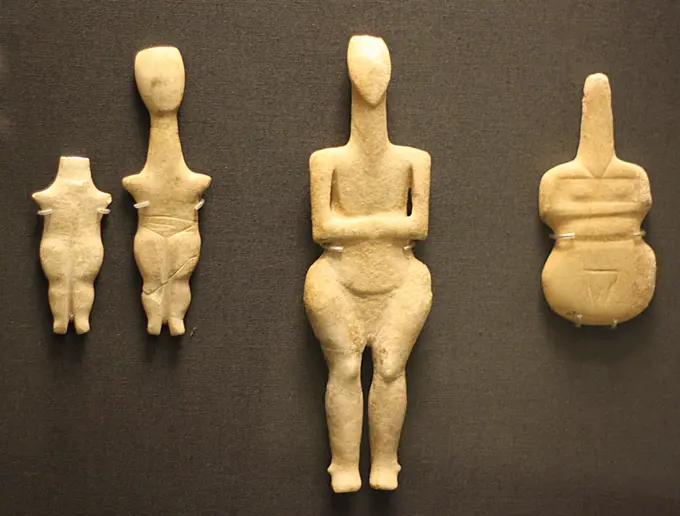
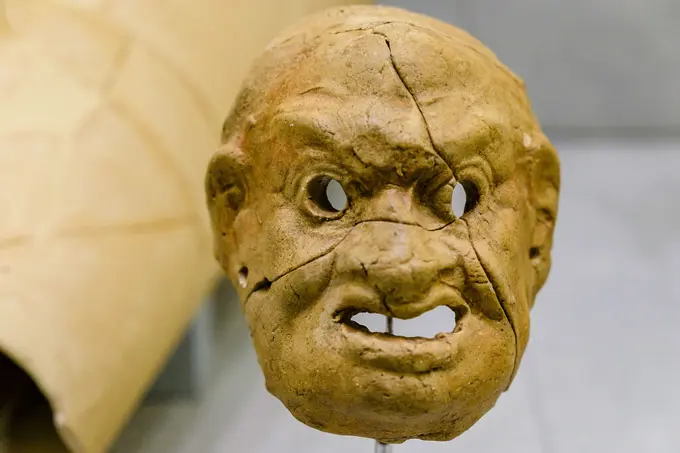
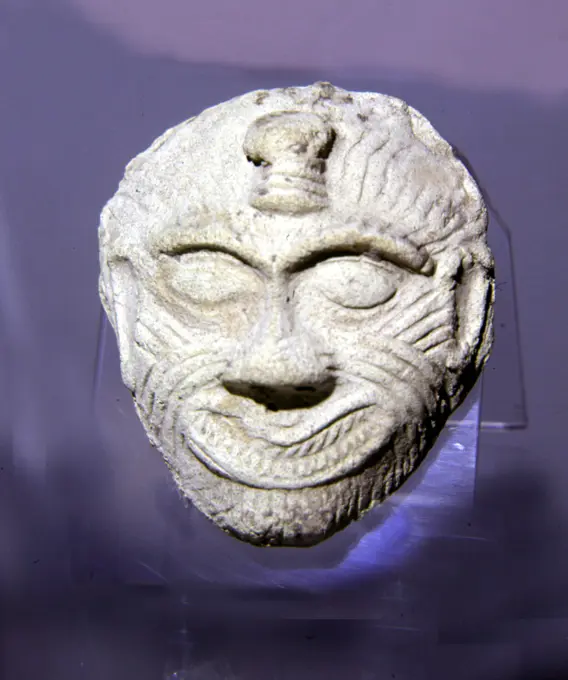
Collection of ancient sculptures including torso fragments and terracotta figures from various cultures and time periods, showcasing distinctive styles and forms.
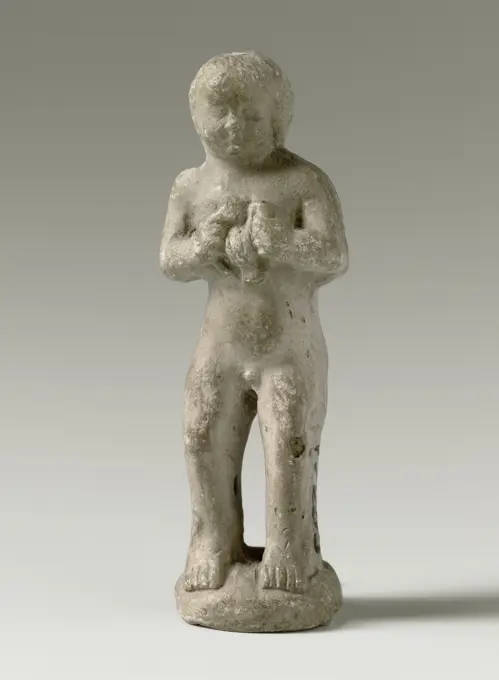
Christ Child Holding a Bird, anonymous, , c. 1475 - c. 1525  'statue-squeezer': Northern NetherlandsUtrecht (possibly)Deventer (possibly) pipe clay   Diepenveen  'statue-squeezer': Northern NetherlandsUtrecht (possibly)Deventer (possibly) pipe clay   Diepenveen
Christ Child Holding a Bird, anonymous, , c. 1475 - c. 1525 'statue-squeezer': Northern NetherlandsUtrecht (possibly)Deventer (possibly) pipe clay Diepenveen 'statue-squeezer': Northern NetherlandsUtrecht (possibly)Deventer (possibly) pipe clay Diepenveen
266 assets in this story
6145-29829079
Funerary relief ca. 50-150 This relief is a type of funerary monument characteristic of the prosperous caravan city of Palmyra during the first three centuries A.D. Reliefs with a representation of the deceased and a short identifying inscription were used to seal burial niches in elaborately decorated communal tombs; those with a half-length or bust format became prevalent sometime after A.D. 65. The relief depicts the upper body of a woman dressed in a draped garment, pinned at the left shoulder with an elaborate brooch, who faces directly towards the viewer. Her hair is covered by a turban-like headdress, made up of a wrapped cloth with a twisted border, worn over a diadem that covers her forehead. Long, wavy locks of hair fall behind her ears to her shoulders. Tiny plain rings cover the outer rims of her ears. She wears a long veil over her head which covers both arms, leaving only the hands exposed. The left hand holds a spindle and distaff, tools for spinning wool into yarn, whic
7155-70383335
Humbaba the Demon from the Gilgamesh epic, 1800 BC. Sippar, Babylon.
6145-29118981
Mask
4409-63012747
Carved corbel stone with angel 15 th century. Jordi de Deu ( c. 1363-1418) or workshop. Catalan Gothic art. Frederic Mares Museum, Barcelona.
4409-17411701
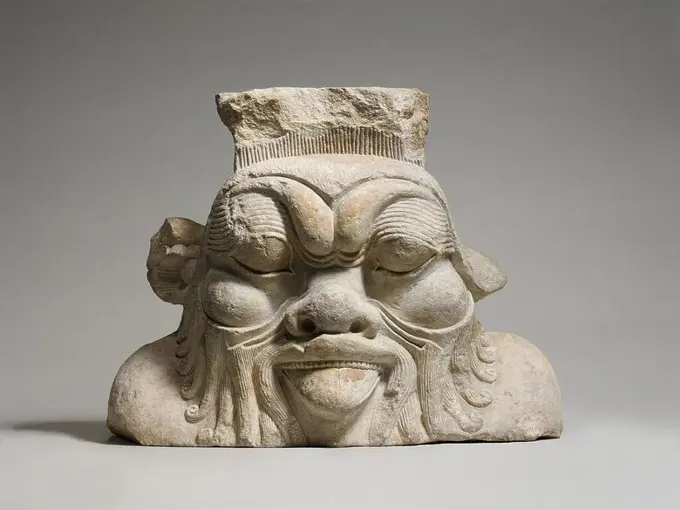
Column Capital in the form of a Bes-image. Dimensions: h. 39.5 cm (15 9/16 in); w. 52 cm (20 1/2 in); d. 21.5 cm (8 7/16 in). Date: 332-30 B.C..This large head unmistakably depicts the god known as Bes, or, more accurately, what is known as a "Bes-image," since Bes's appearance was sometimes adopted for other gods, and there is no name preserved on the statue. From the Kushite Period onward, images of Bes appeared on architectural support elements such as abaci, column shafts, or, rarely, large two-sided pillars. These architectural images are especially associated with mammisis, or temples celebrating the birth of a child-god; it is thought that this is related to the long association of the deity with domestic concerns and fertility. Such Bes figures are typically frontal and carved in high relief, but the depth of this figure against an abacus or shaft surface, if that is actually its origin, would have been quite unusual. Another possibility is that the head originally belonged t
6145-43630931
Model rzeźbiarski - głowa Nektanebo I lub II. unknown, author
4409-63015047
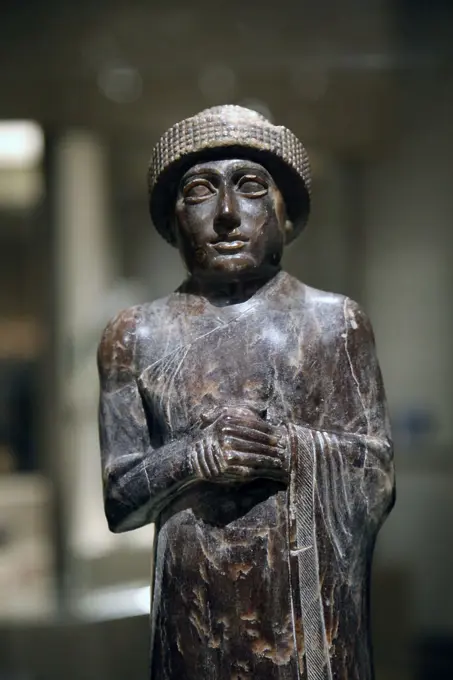
Statue of Ur-Ningirsu, son of Gudea. Chlorite. Mesopotamia, probably Tello (ancient Girsu). ca. 2100 BC. Metropolitan Museum. Ny. USA.
6145-29163747
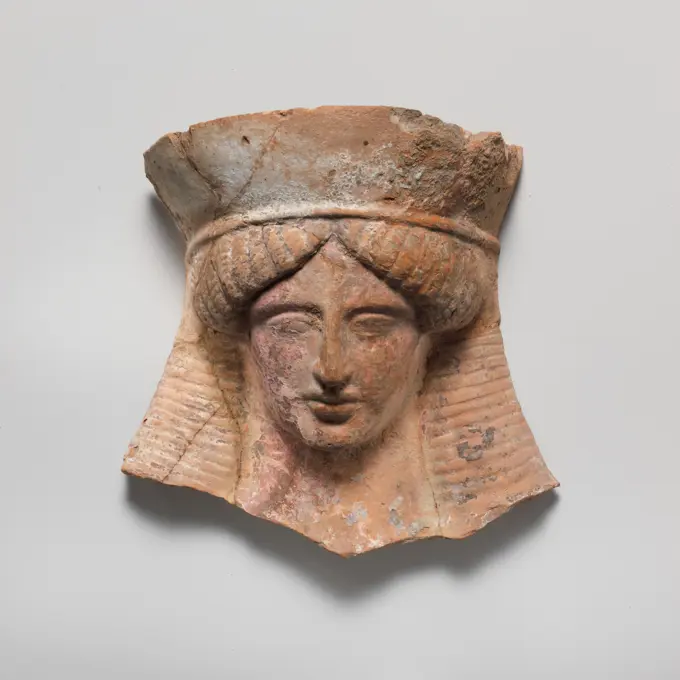
Terracotta relief head of a woman mid-5th century B.C. Greek, Boeotian Mask of a woman wearing a stephane.. Terracotta relief head of a woman 254436 Greek, Boeotian, Terracotta relief head of a woman, mid-5th century B.C., Terracotta, H. 5 13/16 in. (14.8 cm). The Metropolitan Museum of Art, New York. Purchase, 1941 (41.162.266)
6145-29150228
Limestone finial of a funerary stele with a seated lion late 7th century or early 6th century B.C. Cypriot The head is turned toward the viewer, the mouth wide open, the tongue extended, the teeth carefully shown. The body is thin, the ribs protrude; traces of the tail are visible on the side. The upper right front leg is clearly articulated. The smooth mane spreads over the top of the back and on to the chest, but is not shown on the back.. Limestone finial of a funerary stele with a seated lion 242403
6145-29820974
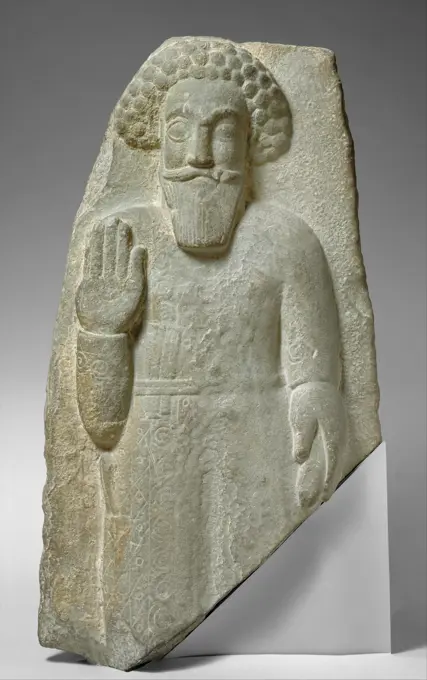
Standing man ca. A.D. 2nd century Parthian This fragmentary stone relief of a standing man is a product of the resurgence of an Eastern aesthetic in Parthian art. The style it exemplifies is characterized by strict frontality and a concentration on linear details, in particular the careful rendition of textiles. The figure shown here, carved in extremely low relief, may be identified as a worshipper by the right hand raised palm forward in a gesture of reverence. Lines incised on the surface, rather than volumetric modeling, convey the quality of his clothes, mustache, and broad, square-cut beard. His prominent eyes are flat and outlined with ridges; the nose is also flat. His hair is executed in tiers of thick spirals. The worshiper wears a belted tunic decorated with a row of lozenges, each containing a circle; a braid of spirals runs down the front of his garment and others trim the cuffs. Two items are tucked under his belt, and in his left hand he holds an object. At his right hip
6145-29803794
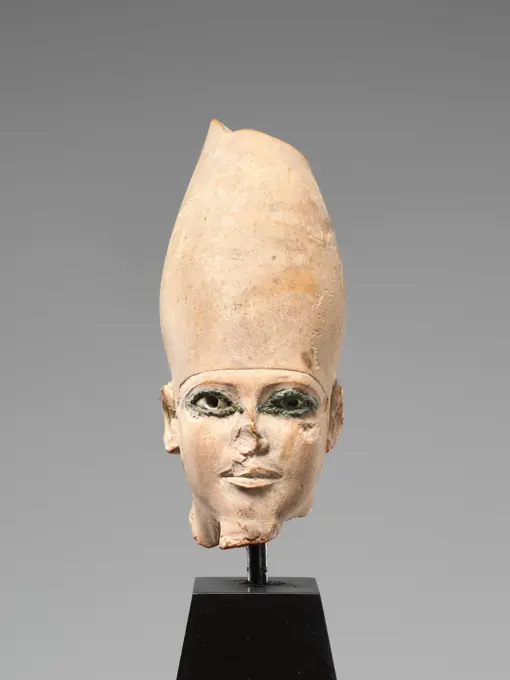
Head of a King, Probably Khafre, in a White Crown ca. 2520-2494 B.C. Old Kingdom This exquisitely carved king has intricately inlaid eyes, a partially preserved beard, and a long white crown, broken near the top. The inlaid eyes give it a sense of immediacy, liveliness, and even monumentality despite its small size. The head has been identified as a representation of the Fourth Dynasty Pharaoh Khafre, who built the second pyramid at Giza, based on comparison to a royal head wearing a red crown now in the Ägyptisches Museum, Universität, Leipzig (1947). The latter head was excavated just outside the valley temple of Khafres pyramid complex at Giza, along with other pieces of small statues made of the same stone.. Head of a King, Probably Khafre, in a White Crown. ca. 2520-2494 B.C.. Limestone, cupreous metal, possibly paint, probably obsidian (pupil), stone(sclera). Old Kingdom. Dynasty 4
4443-28739961
Head, 1000 BCE-300 CE, 5 1/2 x 3 3/4 x 3 1/2 in. (excluding attached base); 9 3/4 x 4 x 4 in. (24.77 x 10.16 x 10.16 cm) (including attached base), Terracotta, Nigeria, 5th century BCE - 6th century CE, The refined hairstyle of this delicate heada fragment of a full figurehas been carefully sculpted into four protruding shapes. The Nok culture, which developed in central Nigeria between 1000 BCE to 300 CE, is one of the oldest civilizations south of the Sahara. Yet very little is known about the Nok people, famed for their terracotta sculptures, or their worldview. In recent years, new ethical and judicial guidelines have been developed to protect Africa’s archaeological patrimony.
6145-46869377
Herakles and the NemeanLion
1788-39531
France - Corsica - Filitosa prehistoric archaeological site. Anthropomorphic menhir statue.
6145-29115762
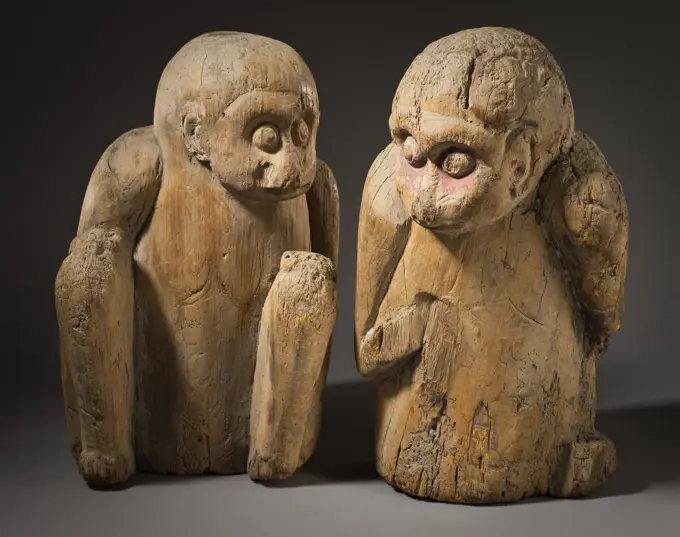
Pair of Sacred Monkeys. Japan, late Heian period (794-1185), 12th century. Sculpture. Camphor (kusunoki) wood with traces of pigment
6145-29126226
Articulated Figure
1746-29955569
Granite statue of the head of Queen Nefertiti, from the workshop of the sculptor Thutmose. Neferneferuaten Nefertiti (c. 1370  c. 1330 BC) was an Egyptian queen and the Great Royal Wife (chief consort) of Akhenaten
6145-59049224
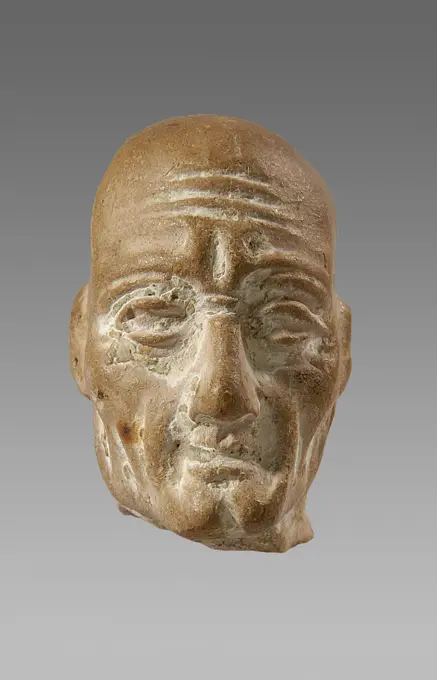
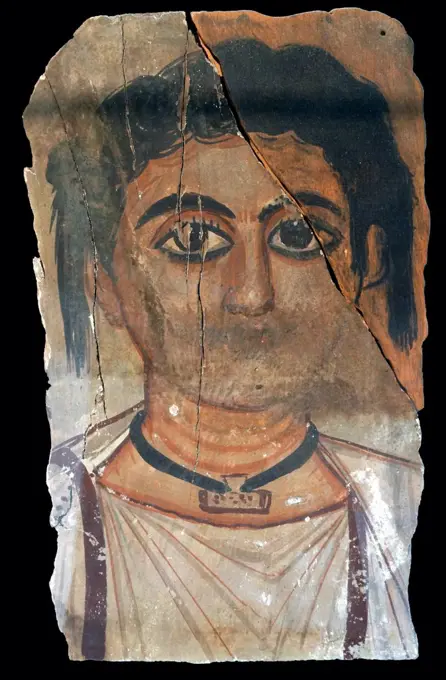
A star of an older man;  And w.; Roman period (1-00-00-100-00-00);Scenes.gal.eg., men's figurines, portraits
1848-49543673
Antefix, frontal tile of a building, head of a gorgoneion, standing, 6th century BC, Archaeological Museum, Corfu Town, Corfu Island, Ionian Islands, Greece, Europe
7155-70376554
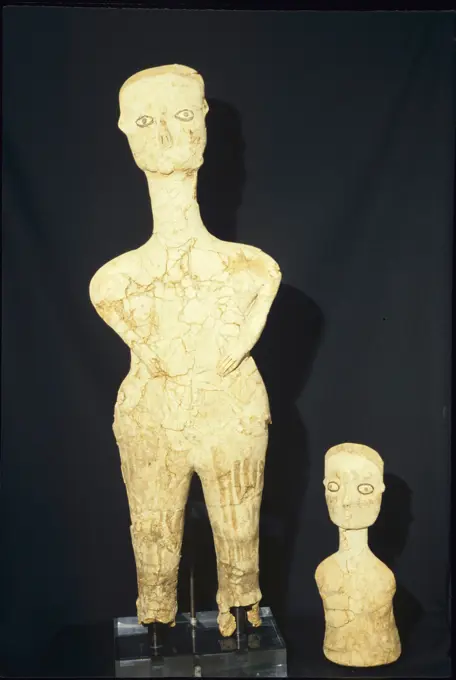
Stone Age statue. 3ft high. clay. 6000 BC. found in Amman.
6145-29840183
Edgar Degas, Head, Study for a Portrait of Mme Salle, c 1892 Head, Study for a Portrait of Mme Salle
1746-21109142
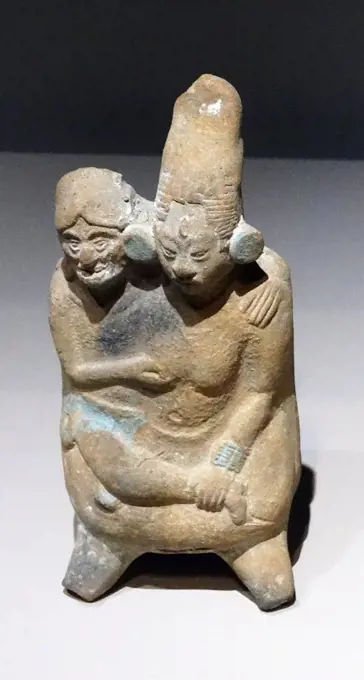
Mayan ceramic figurine of a young woman in the embrace of an old man. From Jaina, Campeche, Mexico 600-900 AD
4409-63365
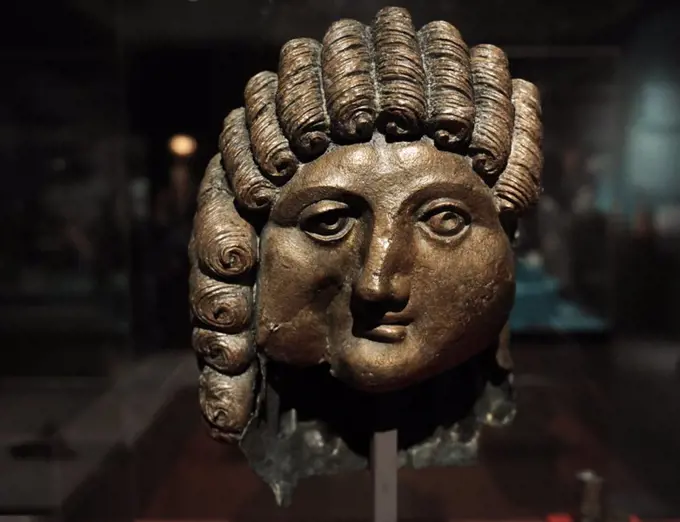
Arabic peninsula. Pre-Islam. Head of a man. 1st century BC-2nd century AD. Cast bronze. H. 40 cm. Qaryat al-Faw. Department of Archaeology Museum, King Saud University, Riyadh. Saudi Arabia.
4409-43082
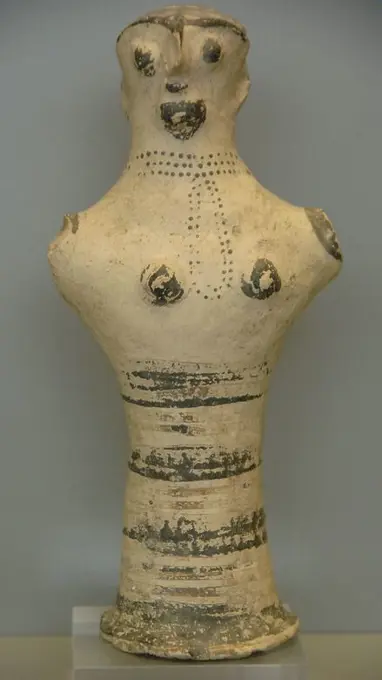
Mycenaean art. Greece. Female figure with ritual gesture and necklace. National Archaeological Museum. Athens. Greece.
4409-96805
Greek art. Statue of a youth. About 530 BC. Glyptothek. Munich. Germany.
4409-17383189
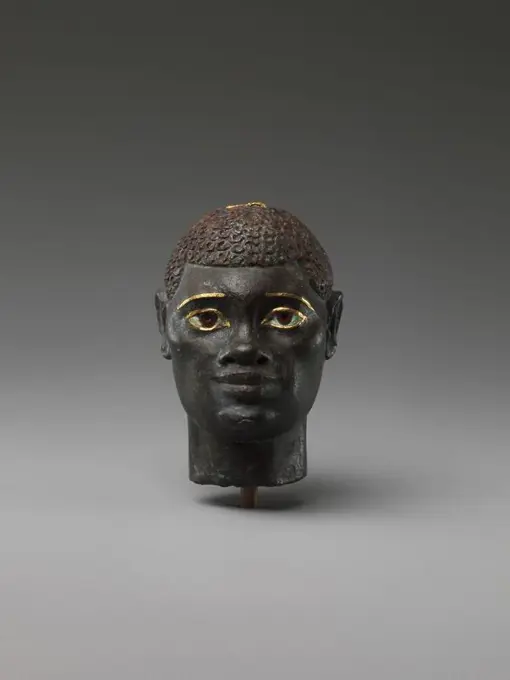
Head of an "Ethiopian" depicted in Hellenistic mode. Dimensions: h. 3.9 cm (1 9/16 in); w. 2.8 cm (1 1/8 in); d. 3.2 cm (1 1/4 in). Date: 332-30 B.C..All black Africans were termed Ethiopians by the ancient Greeks, and Greek artists had defined for them a distinct iconography well before the cosmopolitan Hellenistic period, when, especially in Ptolemaic Egypt, regular contact came about. (See the Timeline of Art History essay Africans in Ancient Greek Art http://www.metmuseum.org/toah/hd/afrg/hd_afrg.htm)This beautiful head of an "Ethiopian" was created as an attachment for some luxurious object of Hellenistic Greek type. A gold plug remains in the top of the head, and on the back twin loops were broken away. Possibly the head was part of a richly ornamented serving dish: for example, on one elaborate dish from Pompeii a head with a loop and ring decorates the rim next to the handle. Museum: Metropolitan Museum of Art, New York, USA.
4409-21385419
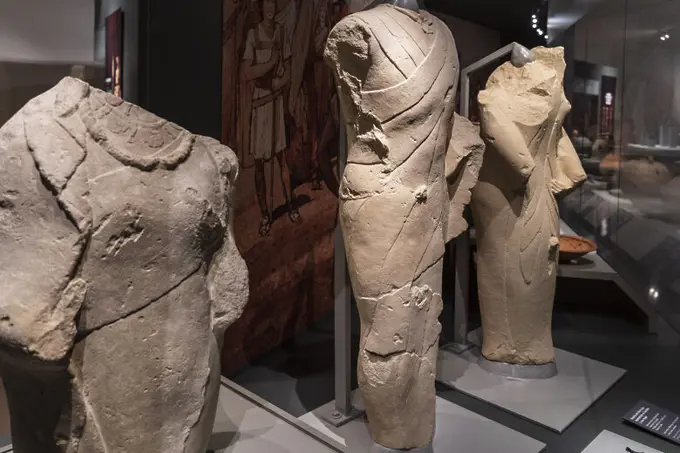
IMAGEN TALLADA EN PIEDRA. Location: ARCHAEOLOGICAL MUSEUM. Almería. SPANIEN.
6145-29720823
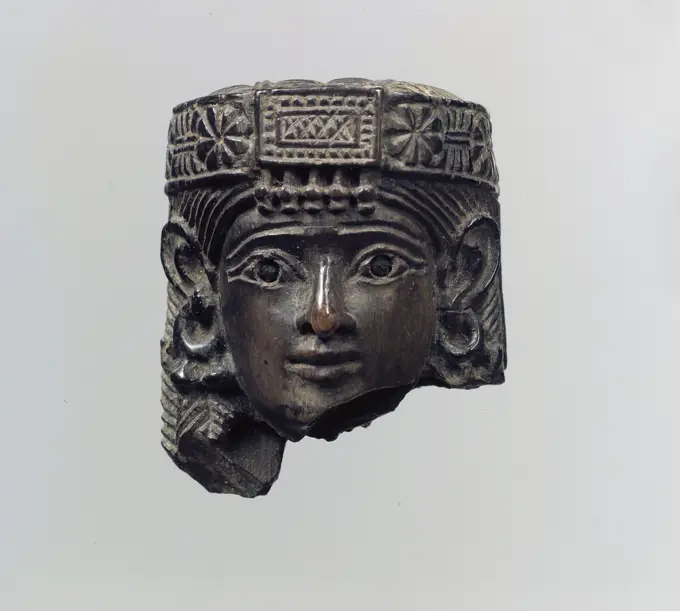
Head of a female figure ca. 8th century B.C. Assyrian Carved in the round, this female head was found in the Burnt Palace at Nimrud and was blackened through exposure to fire during the final defeat of Assyria at the end of the seventh century B.C. Originally, it may have been part of a composite statuette made of various materials and overlaid with gold. The fleshy cheeks, full lips, and small, receding chin are combined with stylized features such as the eyebrows and eyes, all characteristic of Syrian style ivories. The pupils are drilled to receive inlays in colored glass or semiprecious stones. The hair, tucked behind the ears, falls in braids. Like other carved ivory female figures from the Neo-Assyrian period in the Metropolitan Museums collection (MMA 57.80.11, 57.80.12, 57.80.13, and 61.197.5), this figure is richly adorned with jewelry, including hoop earrings with pendants, and a woven diadem, studded with rosettes and a rectangular forehead ornament with pendant pomegranate
6145-29194239
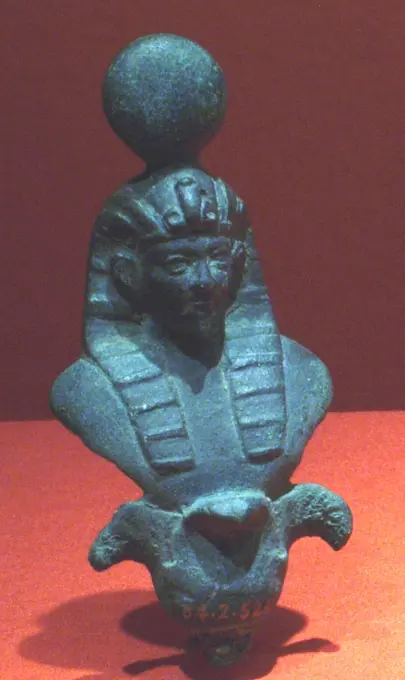
Finial with nemes and crowned figure, probably Osiris A.D. 2nd-3rd century Roman Period This object in its form as a figural finial for furniture or a stand belongs to a Greco-Roman tradition. Most images of the god Osiris in Greco-Roman period are either typical images of the mummiform god or images of Osiris of Canopus where the god takes the form of a jar. But it has been argued that some figures of a male in shendyt kilt and nemes seen in Isaic contexts outside Egypt represent Osiris because they appear against or as pillars. While Egyptologists recognize that historically in Egypt such architectonic figures in fact represented kings, it is difficult to evaluate the understanding of such figures by the Greco-Roman Period and made for Isaic cults. But on the basis of that theory, the bust rising out of the floral element here has been identified as Osiris.. Finial with nemes and crowned figure, probably Osiris 547863
1746-21112783
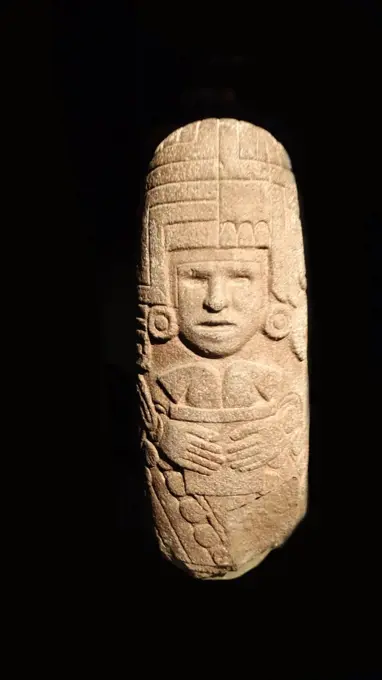
Aztec volcanic rock statue of Chicomecoatl the Goddess of maize and groundwater. Dated 14th Century
6145-30357845
Male Seated Figure withBowl. Artist: Ateu-Atsa, Bangwa, 1840-1910
4443-28739442
Pair of Figures, c. 500 BCE - 500 CE, 13-3/8 x 7-3/8 x 6-1/8 in. (34.0 x 18.7 x 15.6 cm), Terra cotta, Nigeria, 6th century BCE - 6th century CE
6145-29729885
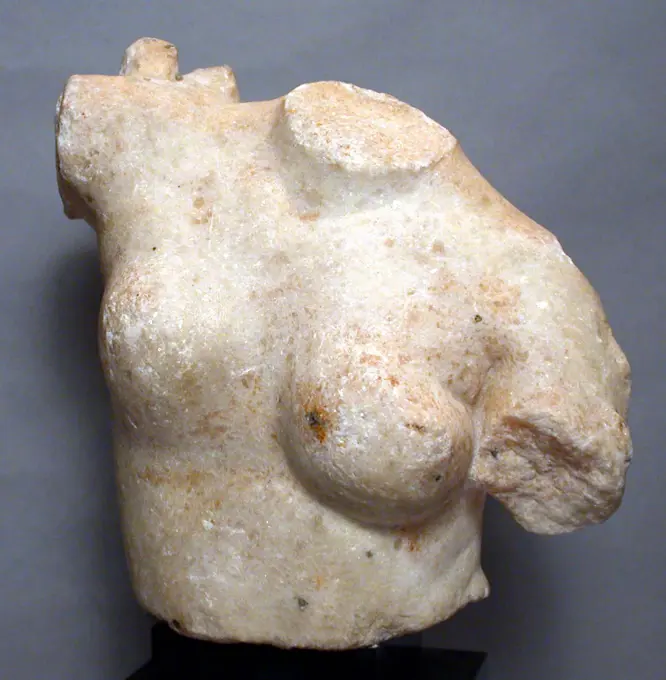
Marble torso of Aphrodite ca. 1st-2nd century A.D. Greek This work likely represents Aphrodite Anadyomene, capturing the moment when the goddess tying her hair as she rises from the sea after her birth.. Marble torso of Aphrodite. Greek. ca. 1st-2nd century A.D.. Marble. Hellenistic. Stone Sculpture
4409-137245
ESCULTURAS PERTENECIENTES AL FRISO DE OSUNA: GUERRERO A CABALLO CON ARCO. DETALLE. IBERICO.(DEPOSITO: MUSEO ARQUEOLOGICO NACIONAL).
1746-21128911
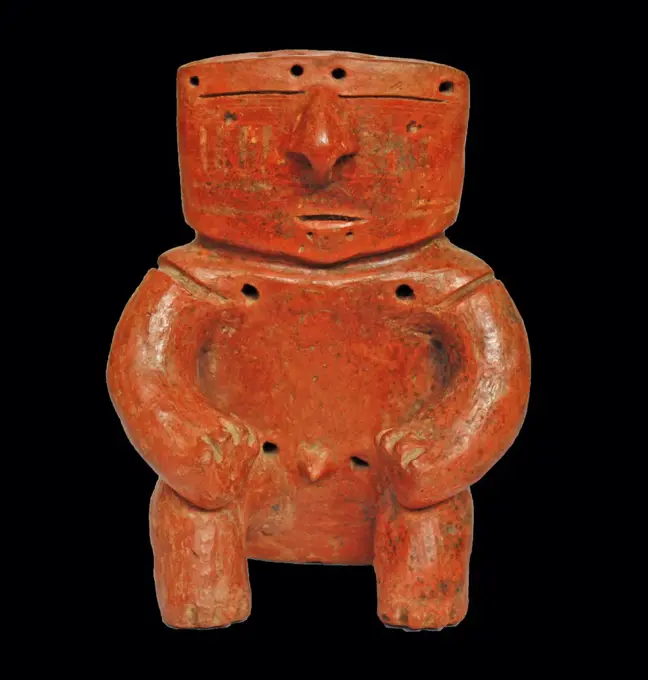
Slab-head figure from Quimbaya, Colombia, AD 1000. Seated pottery figure with stylized, rectangular head and hands on knees.
6145-58825147
Masker, Mitsunaga, 1600-1672 No-mask, representing Yase onoko, the lean man. The black dots are a copy of the damage/restorations of an earlier original, which has been copied here in its entirety. Typical for Mitsunaga is the nose cut, which runs slanted at the bottom and the top of which runs above the eye openings. Japan wood (plant material). dye No-mask, representing Yase onoko, the lean man. The black dots are a copy of the damage/restorations of an earlier original, which has been copied here in its entirety. Typical for Mitsunaga is the nose cut, which runs slanted at the bottom and the top of which runs above the eye openings. Japan wood (plant material). dye
1848-49150344
Archaeological Museum, Lipari Town, Lipari, Lipari Islands, Aeolian Islands, Sicily, Italy, Europe
6145-29745215
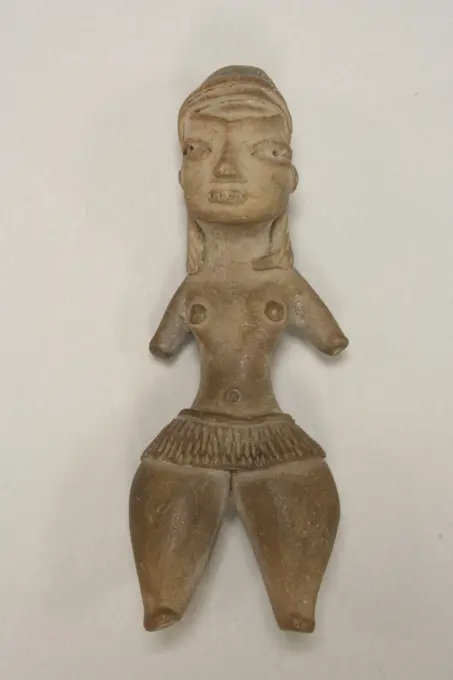
Female Figure 12th-9th century B.C. Tlatilco. Female Figure 317816
6145-30164897
Fountain Spout 1 CE-100 CE Pompeii. Marble . Ancient Roman
6188-60049462
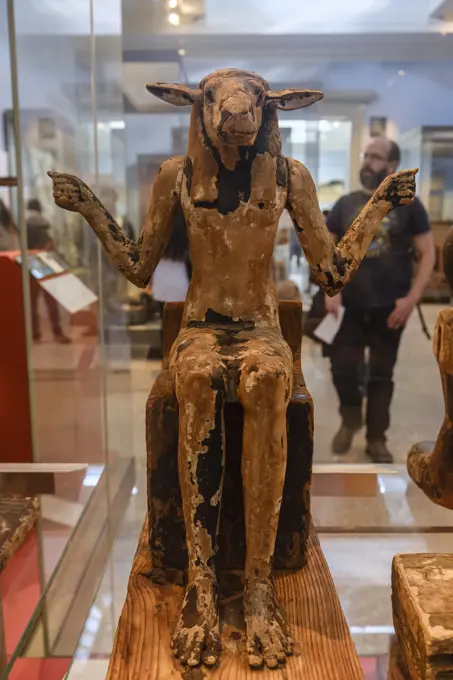
Ram-headed deity Ram-headed deity, late 18hDynasty, about 1295 BC, tomb of Horemheb, British museum, London, England, Great Britain Copyright: xZoonar.com/BartomeuxBalaguerxRotgerx 21633022
6176-67039210
Painted Mycenaean plaster head, possibly of a Sphinx. Artist: Unknown
4409-157379
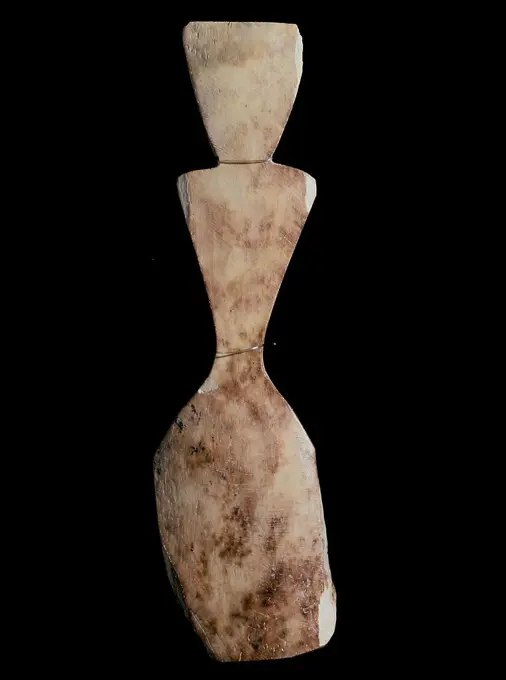
IDOLO FEMENINO EN MARFIL-INFLUENCIA CICLADICA-EDAD BRONCE. Location: MUSEO ARQUEOLOGICO-PREHISTORIA. GRANADA. SPAIN.
6188-55462973
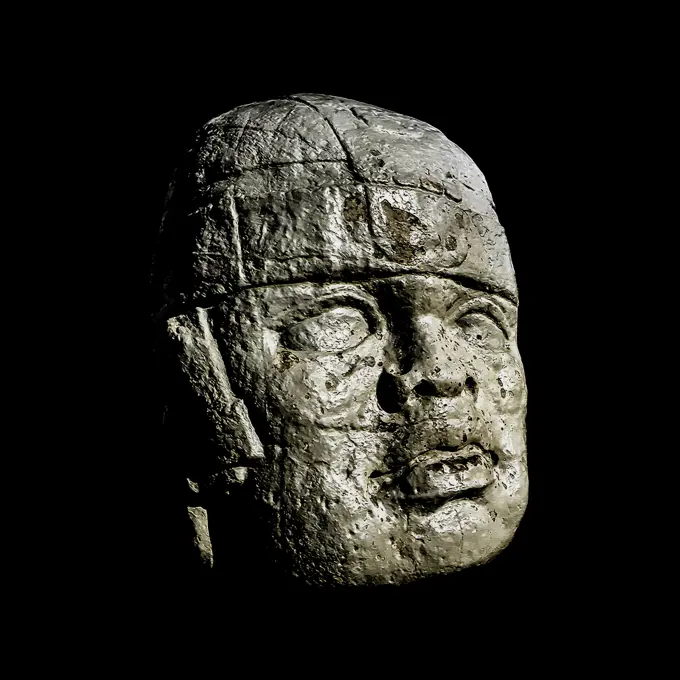
Mexican Culture Head Over Black Background Mexican pre hispanic culture head sculpture over black background Copyright: xZoonar.com/DanielxFerreira-LeitesxCiccarinox 15687747
1848-49489948
Statue of a Neolithic Mother Goddess dating from around 3150BC at the Pech Merle cave museum, famous for its prehistoric art and cave paintings, Cabrerets, Lot, Midi-Pyrenees, France, Europe
4409-21480771
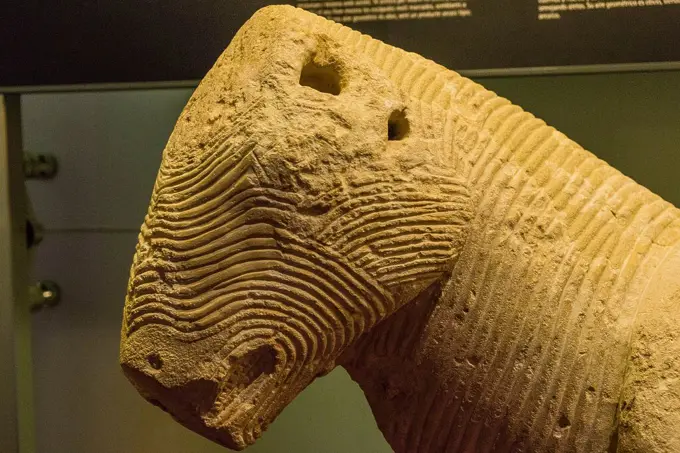
toro del parque, museo arqueologico y de historia de Elche Alejandro Ramos Folqués, Elche, Alicante, comunidad Valenciana, Spain, Europe.
4069-4308
Vessel with agricultural theme, painted ceramic, Nazca culture, c. 200-700 AD, Peru
4409-59178524
sculpture of a lady, 5th century BC, Cerro de Alcalá, Torres,, Iberian Museum of Jaén, Andalusia, Spain.
1746-28980852
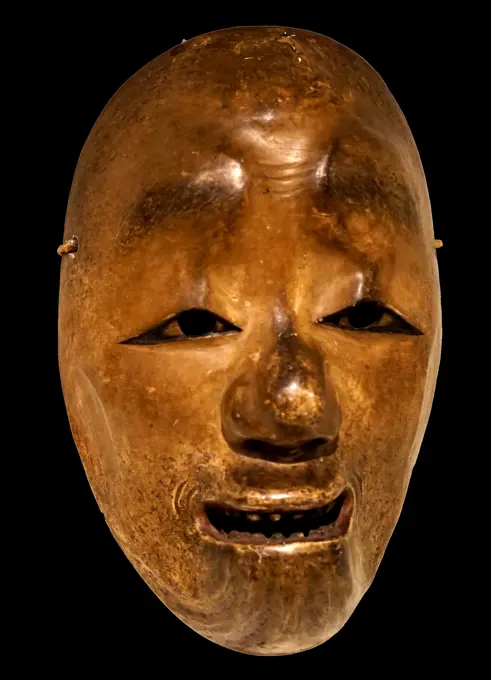
Painted N Theatre Mask from Japan. N Theatre is a major form of classical Japanese musical drama that has been performed since the 14th century
1848-54547356
Statue of Artemis, Ephesus Museum Selcuk, Selcuk, Izmir Province, Aegean Sea, Turkey, Asia
4409-20896912
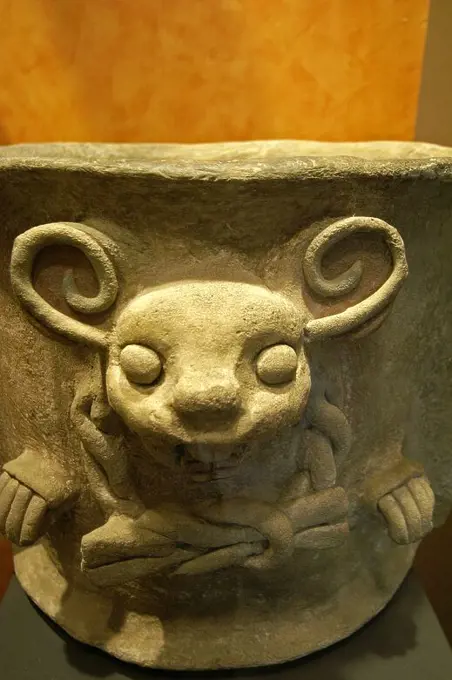
Vasija. Museo Nacional de antropologia. Estado de Mexico D.F. Mexico.
6145-29150151
Limestone plaque with breasts and a bunch of grapes in relief ca. 350-250 B.C. Cypriot Two breasts and uncertain object.. Limestone plaque with breasts and a bunch of grapes in relief 242405
1788-42074
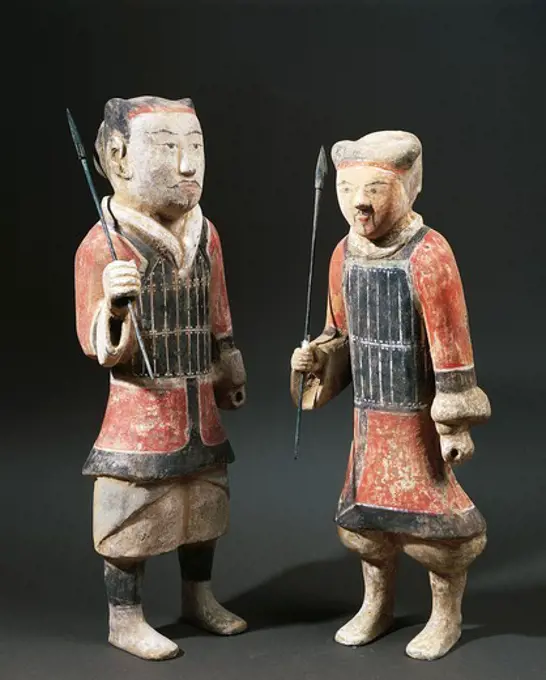
Warriors with spears, polychrome terracotta statues from the Shanxi Region, China. Chinese Civilisation, Western Han Dynasty, 3rd century BC - 1st century AD.
6145-29825061
Scribes from Meketre's Model Granary ca. 1981-1975 B.C. Middle Kingdom. Scribes from Meketre's Model Granary. ca. 1981-1975 B.C.. Wood, plaster, paint, linen. Middle Kingdom. From Egypt, Upper Egypt, Thebes, Southern Asasif, Tomb of Meketre (TT 280, MMA 1101), serdab, MMA excavations, 1920. Dynasty 12
6189-55132650
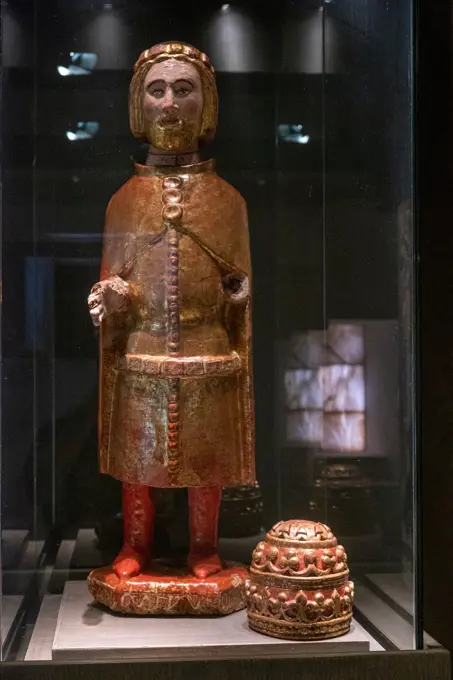
carving of Saint Alexander, gilded and polychrome wood, hermitage of Saint Alexander on Mount Larrain de Bernues, Diocesan Museum of Jaca, Huesca, Spa...
1848-55296320
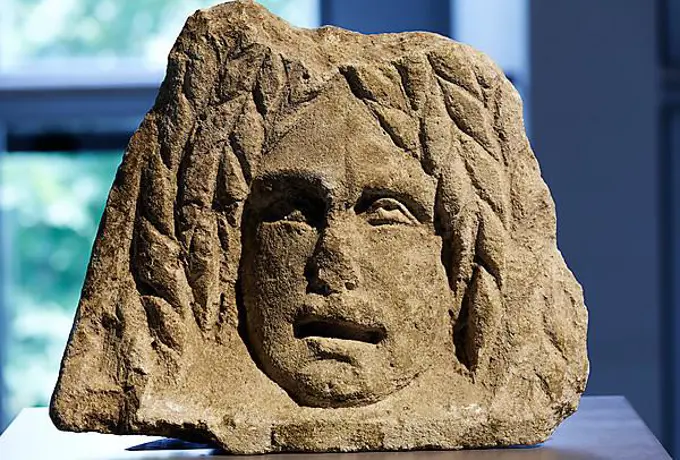
Roman relief with theatre mask, from a gravestone from the 1 century AD, new Roman museum, Xanten archaeological park, APX, Lower Rhine region, North Rhine-Westphalia, Germany, Europe
1746-28970257
Bust of the God Dyonisos Greek 1st Century BC - Ist Century AD
6145-29201582
Rattle in the Form of a Crouching Yaksha (Male Nature Spirit) 1st century B.C. India (West Bengal,Chandraketugarh). Rattle in the Form of a Crouching Yaksha (Male Nature Spirit). India (West Bengal,Chandraketugarh). 1st century B.C.. Terracotta. Shunga period. Sculpture
1558-13914195
England, London, The Wellcome Collection, Exhibit of German Anatomical Wooden Figure dated 1700
1746-21109173
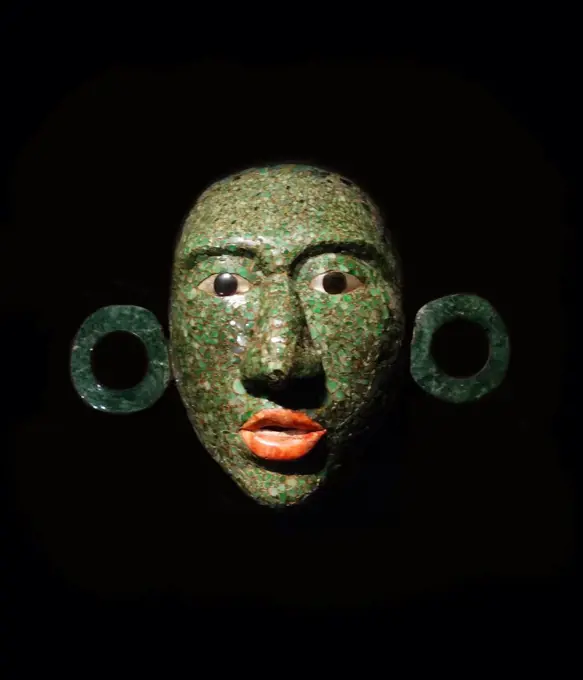
Mayan Jade funerary mask from Calakmul, Campeche, Mexico 600-900 AD
1746-21115246
Roman-Egyptian Fayum encaustic coffin portrait on Wood. Roman Period (2nd-3rd centuries AD). Fayum portraits are a sign of the continuity of pharonic funerary practices and the adaptations they underwent during the Roman Period.
4443-21195695
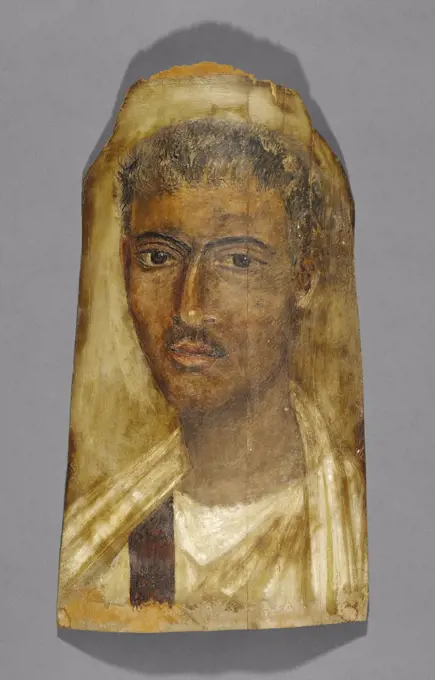
Mummy Portrait of a Man; Unknown; Fayum, Egypt, Africa; 100 - 125; Encaustic on wood; Object: H:  47.5 x W:  24.1 x D:  0.4 cm (H:  18 11/16 x W:  9 1/2 x D:  3/16 in.)
7012-69881190
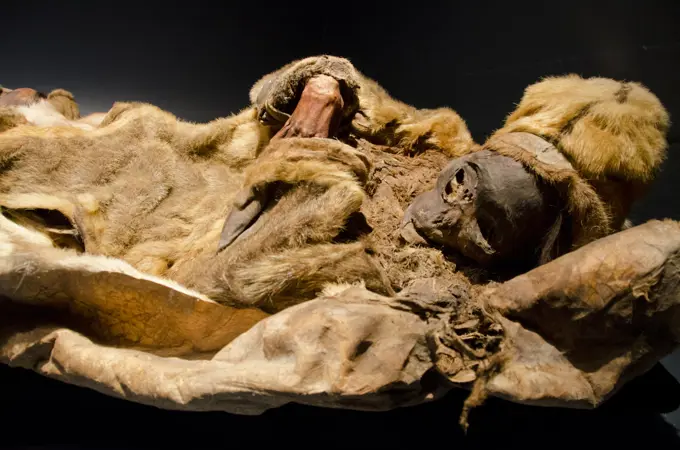
Greenland, capitol city of Nuuk. Greenland National Museum, Qilakitsoq mummies, c. 1475. Six females and 2 boys were found in the Qilakitsoq settlement near Uummannaq, female adult.
4409-62748497
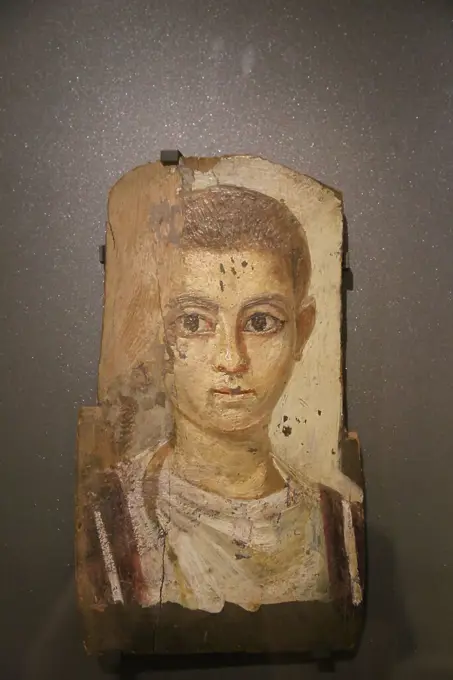
Mummy portrait. Panel painting. A boy. 2nd century AD. Antinoopolis, Egypt. Roman era. Louvre Museum. France. Italy.
6145-29127526
Articulated Figure
1746-19669511
Marble figurine of a woman (Plastiras type) Cycladic (grotta-pelos culture)3000-2800 BC. Said to be from Grave 'D' of the Kapros cemetery, Amorgos. The long neck, angular upper body and bulging thighs are characteristic of this type but the cut out areas separating the upper arms from the body are unusual.
4409-67199810
Remains of hypogeum 1 on Calle Lleo, 375-100 BC, Carthaginian face, Archaeological Museum of Ibiza and Formentera, Spain.
PREVIOUS
of 3
NEXT
2401 S. Ervay, Suite 206
Dallas, Texas 75215
United States
Get Started
Free ResearchMy BoardsMy Cart
For Creators
How To License Your ContentContributor PortalFrame of Mind
Resources
API accessPricing
Contact
+1 866 236 0087help@viewpictures.co.uk Contact form
©2026 View Pictures. All Rights Reserved. -A
This site is protected by reCAPTCHA and Google Privacy Policy and Terms of Service apply.