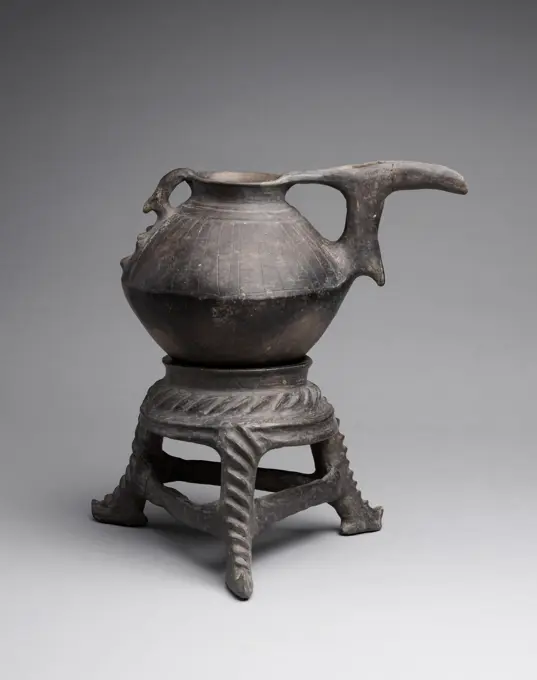
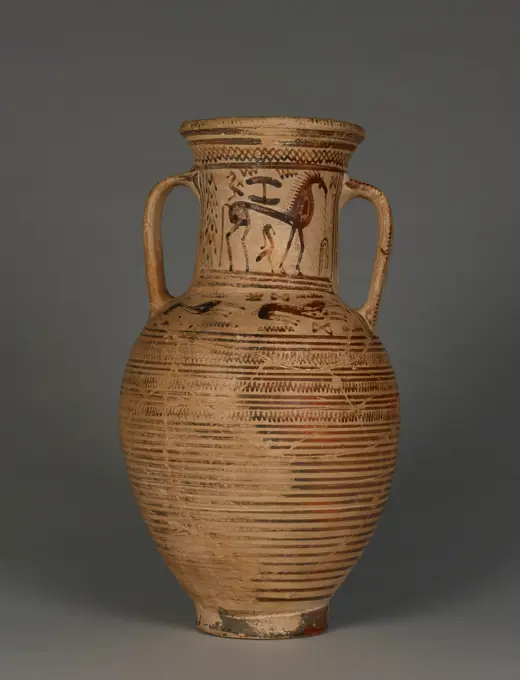
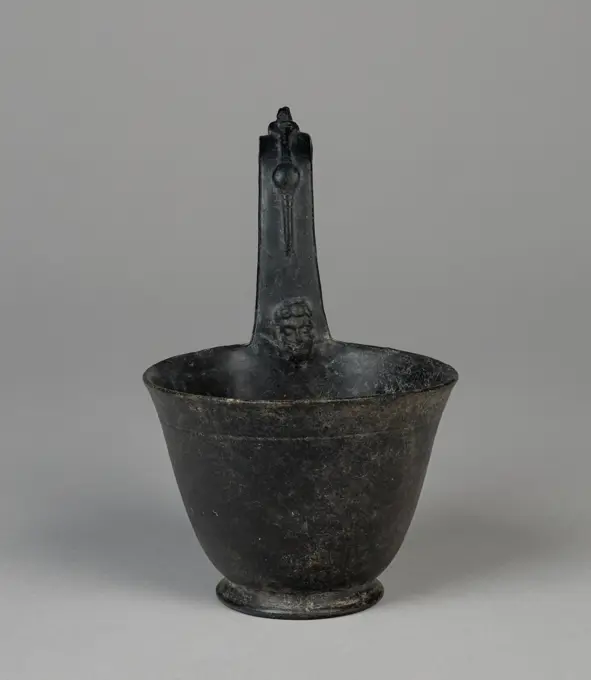
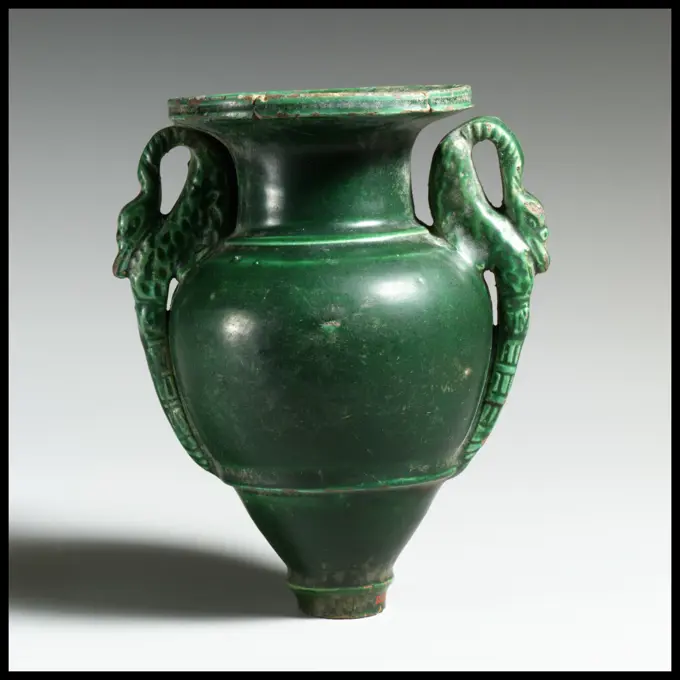
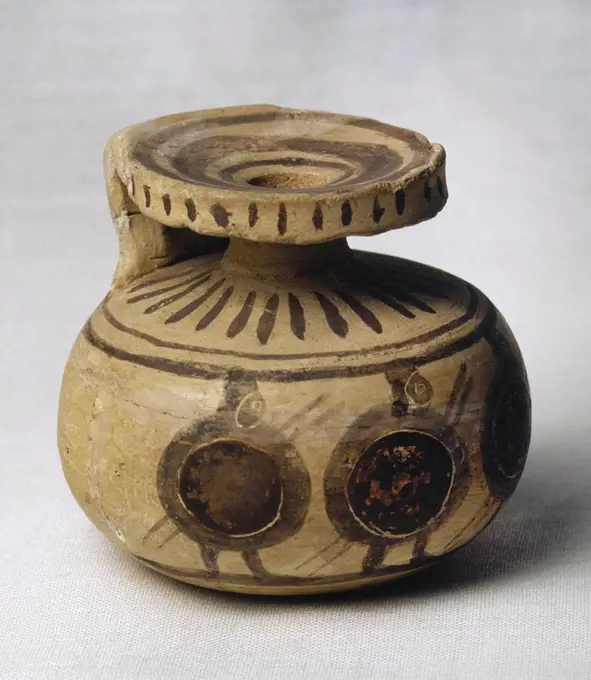
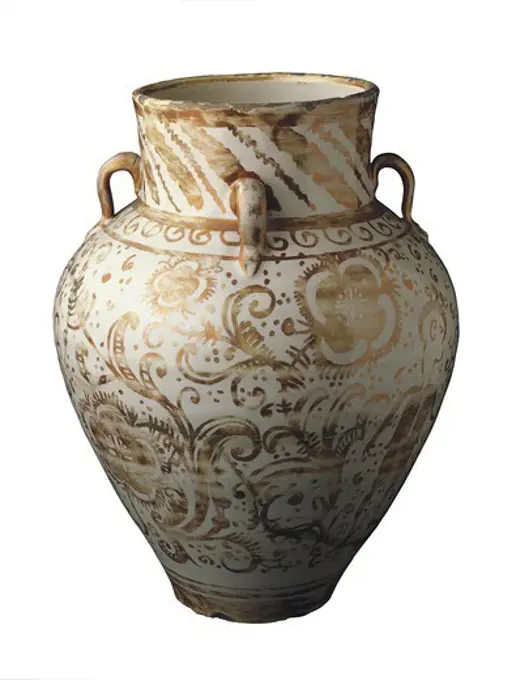
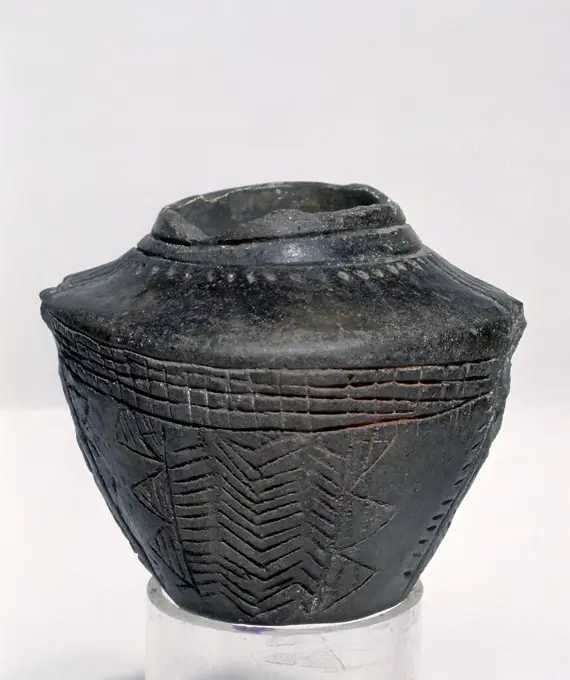
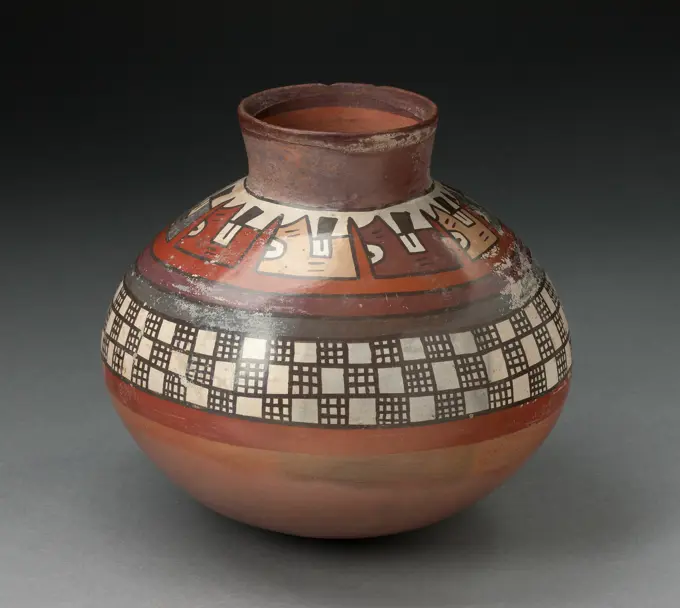
Ancient Terracotta And Bronze Vessels

Various historical vessels including terracotta jugs and bronze jars from ancient cultures, showcasing intricate designs and different materials.

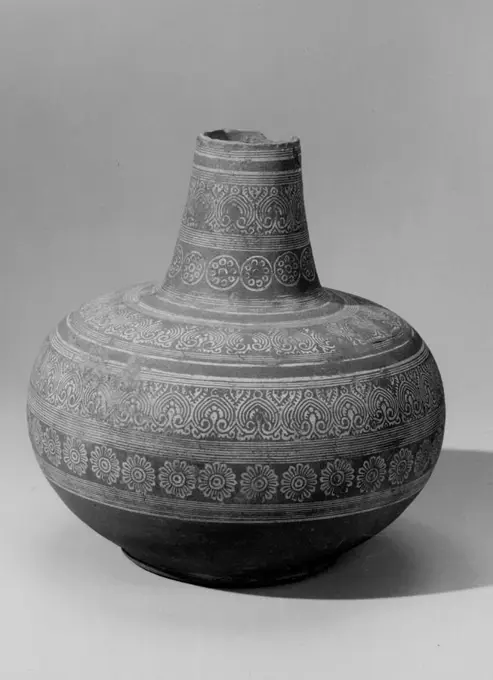
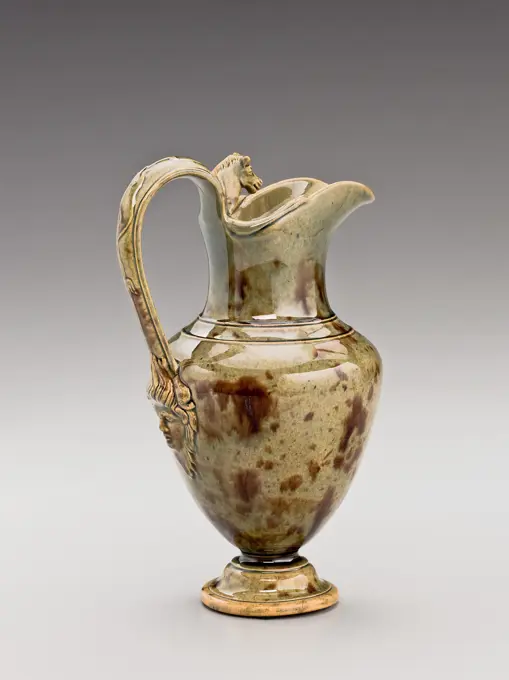
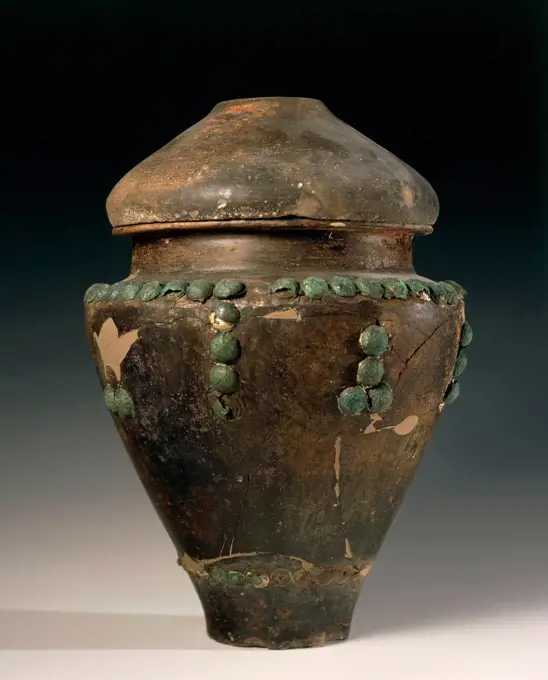
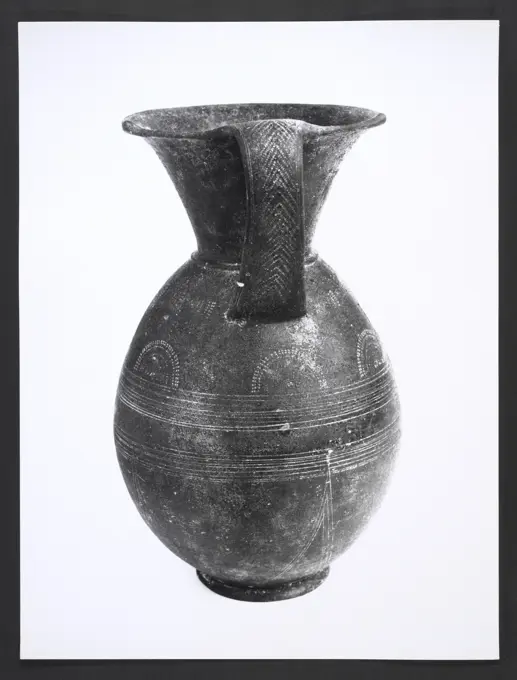
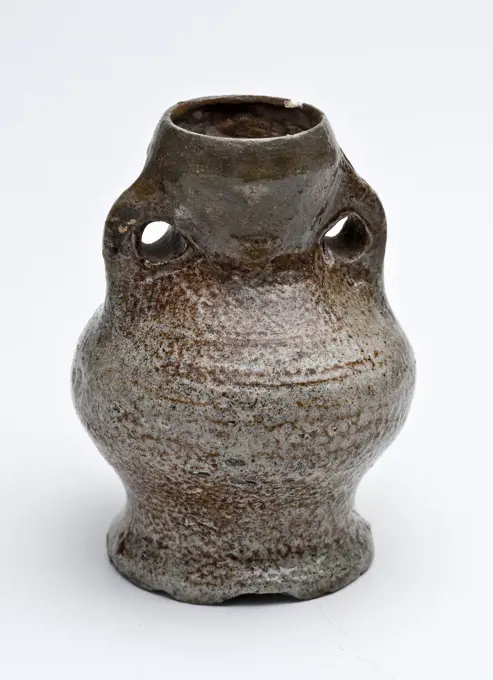
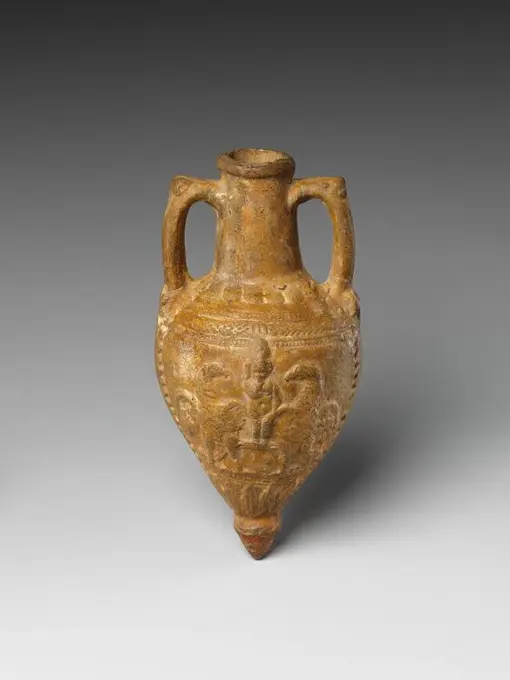
Asymetrical globular vessel, 8th-11th century, 11 x 9 1/4 x 9 1/4 in. (27.9 x 23.5 x 23.5 cm), Earthenware, Peru, 8th-11th century
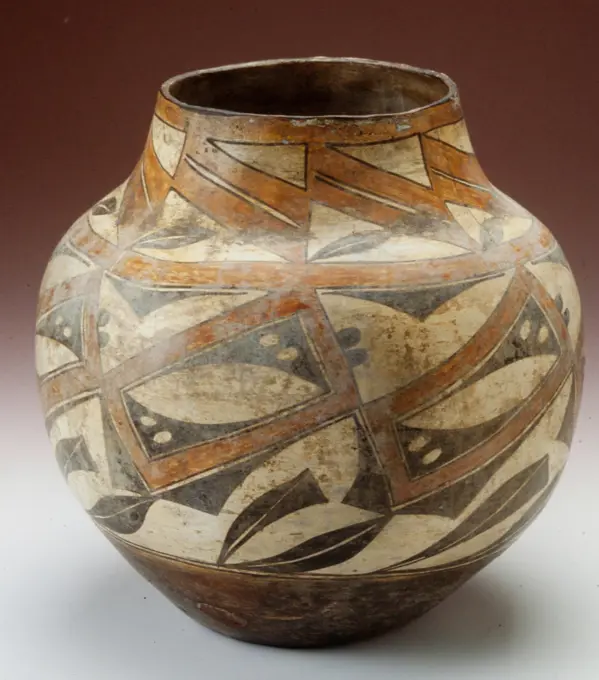
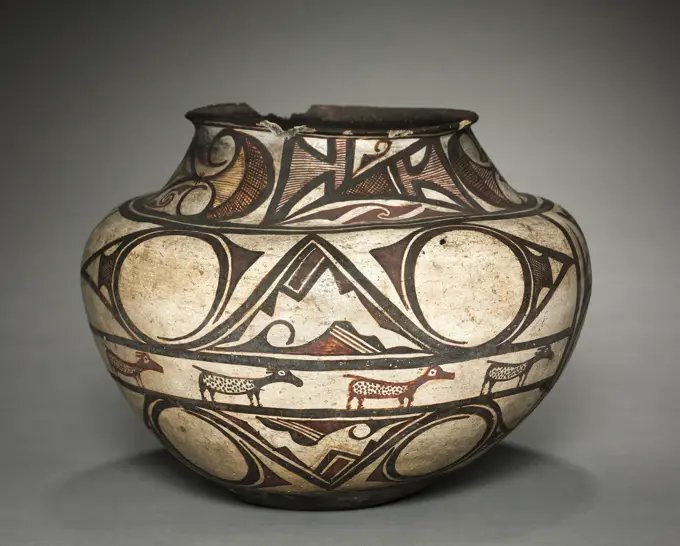
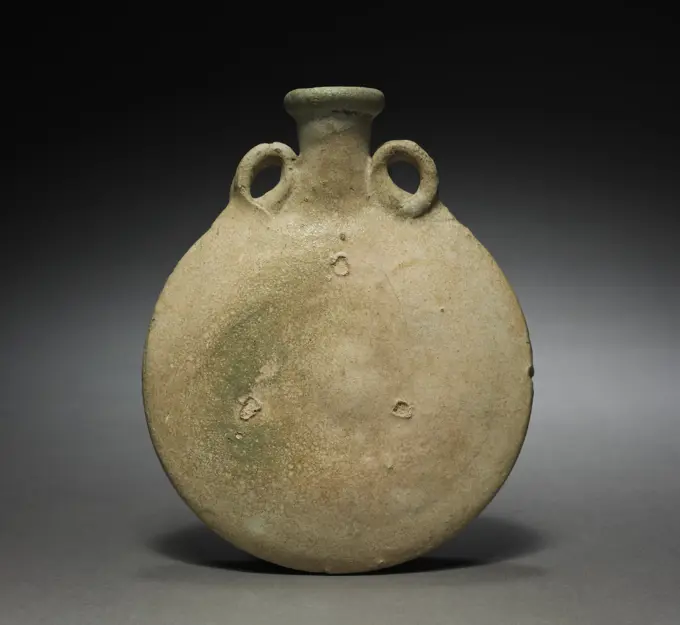
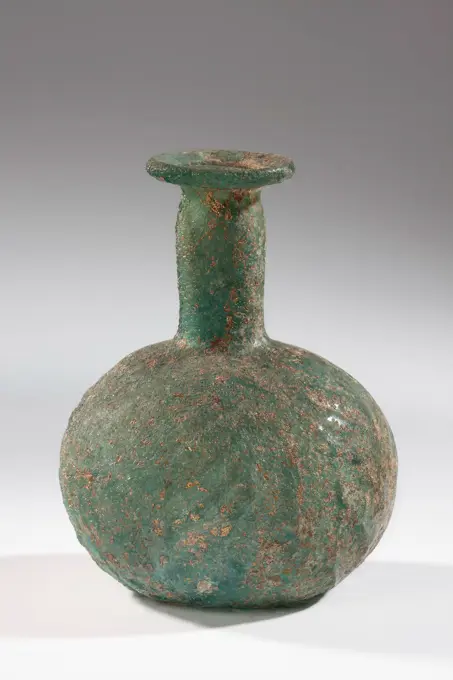
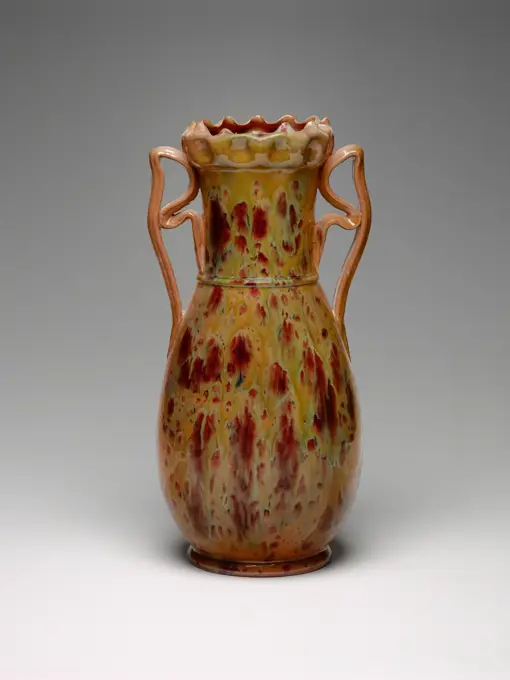
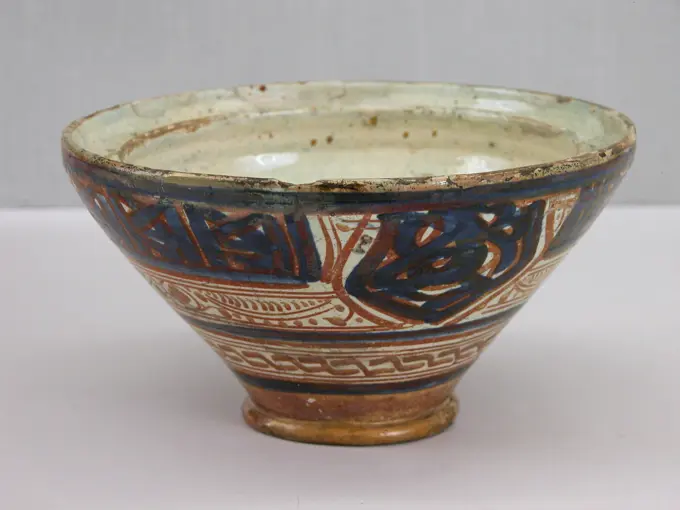
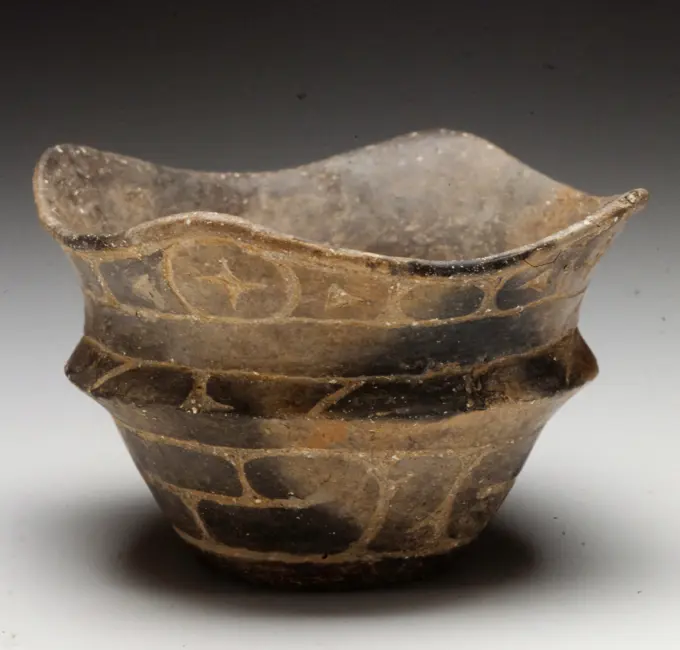
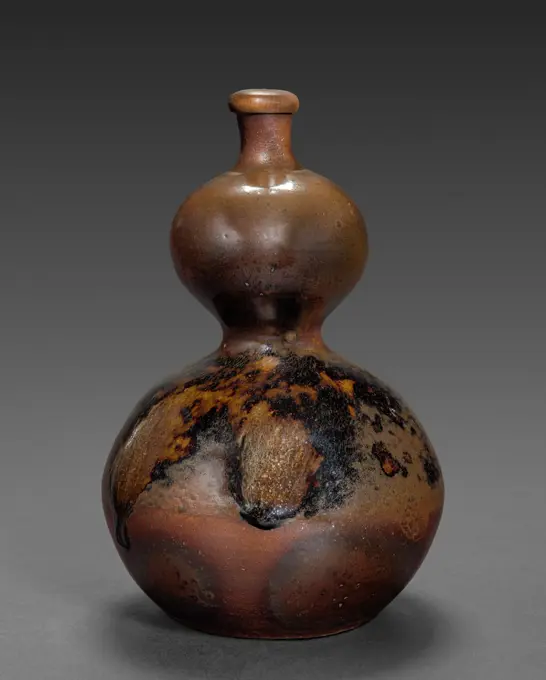
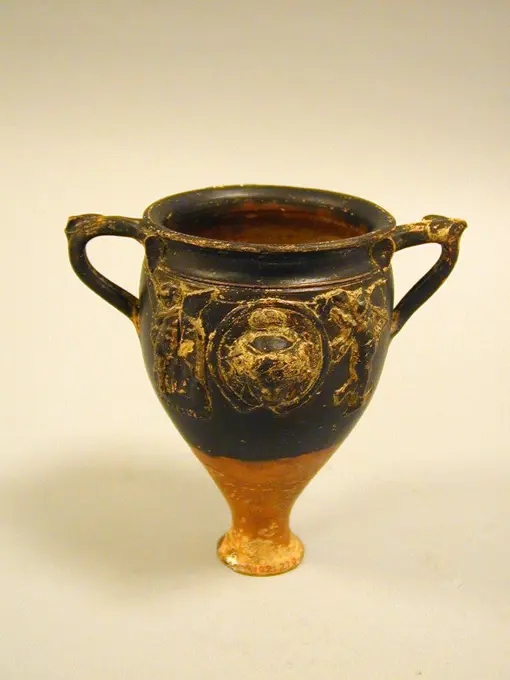
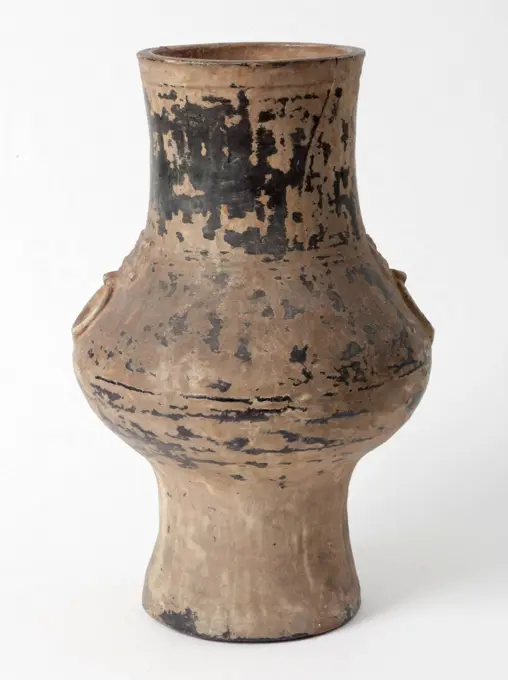
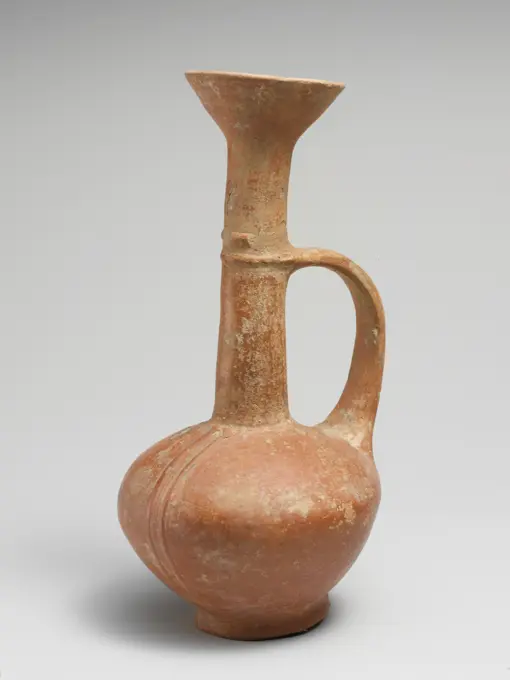
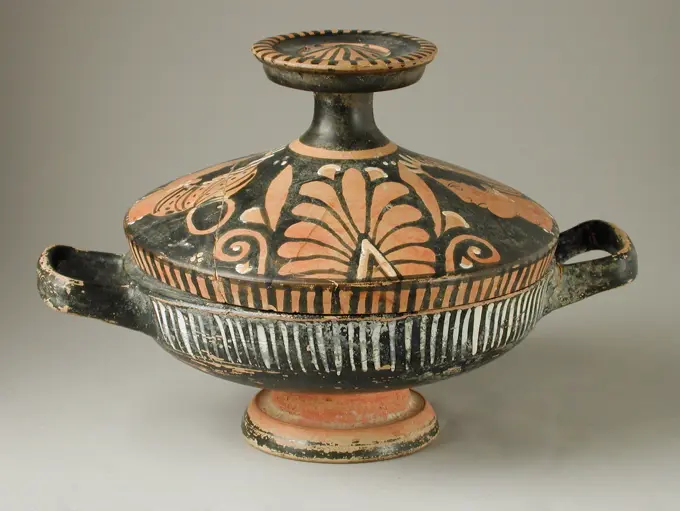
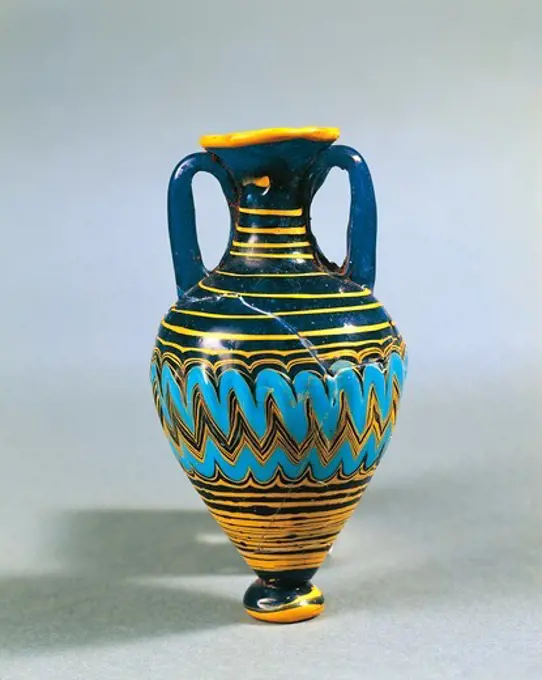
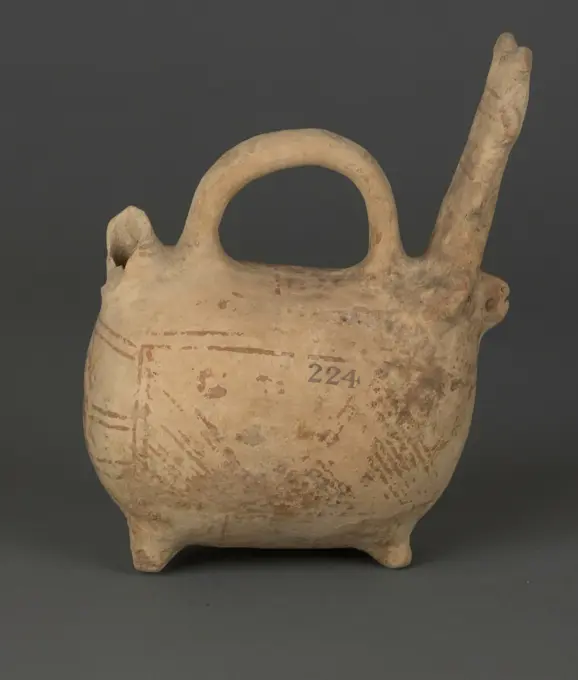
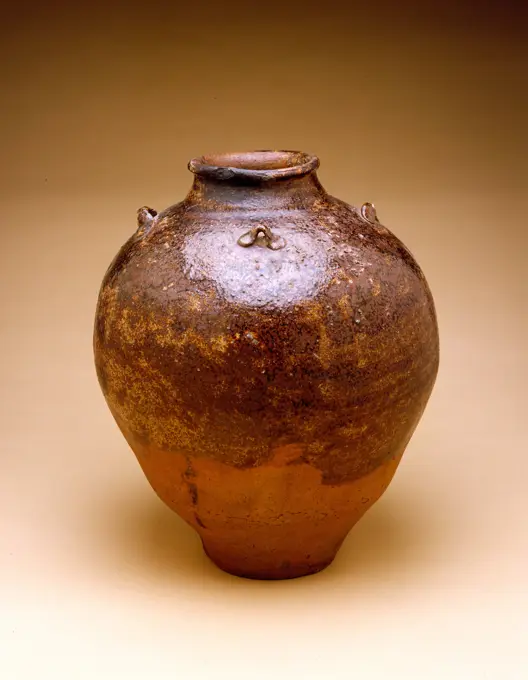
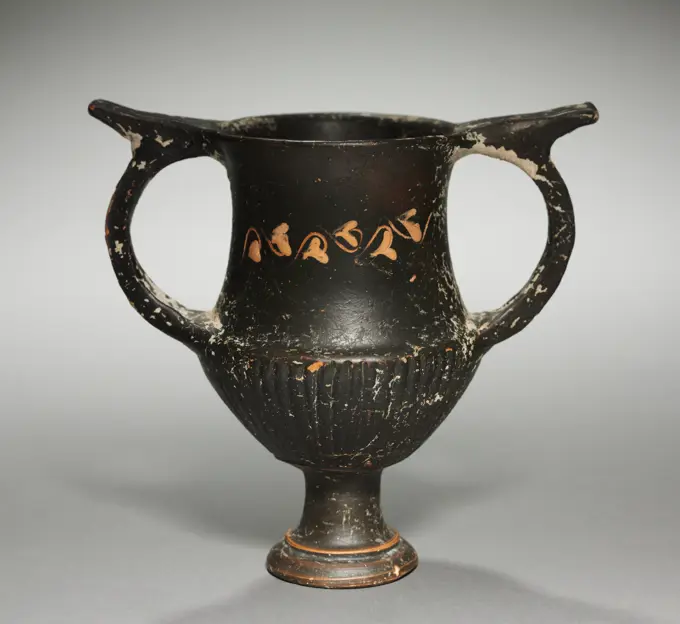
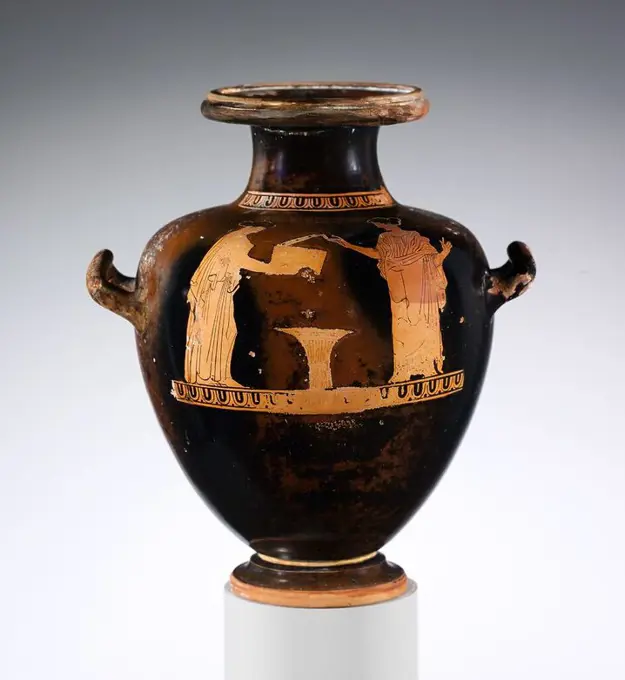
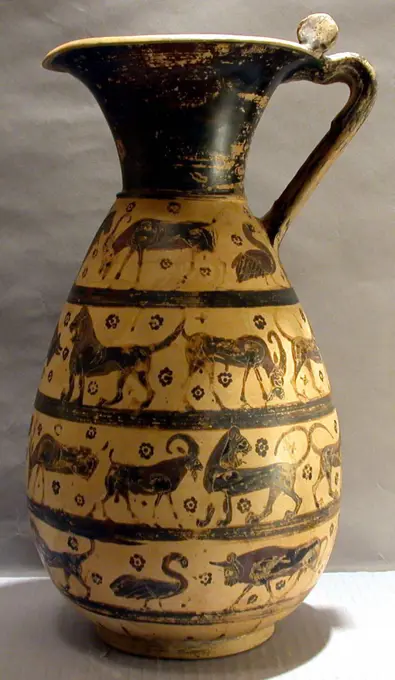
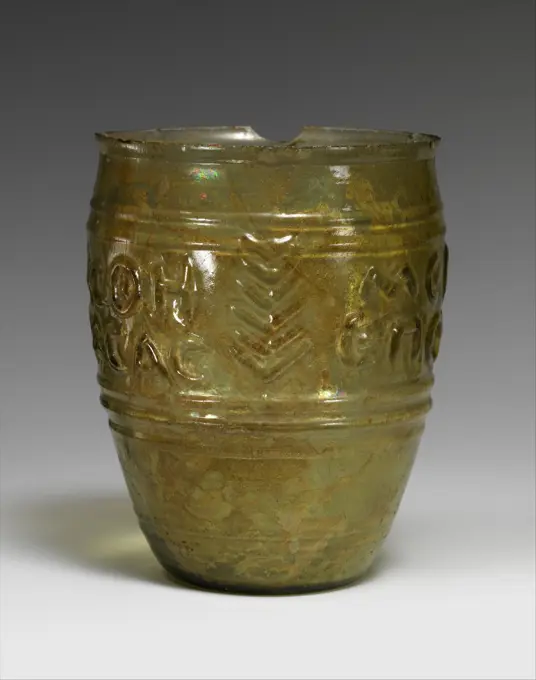
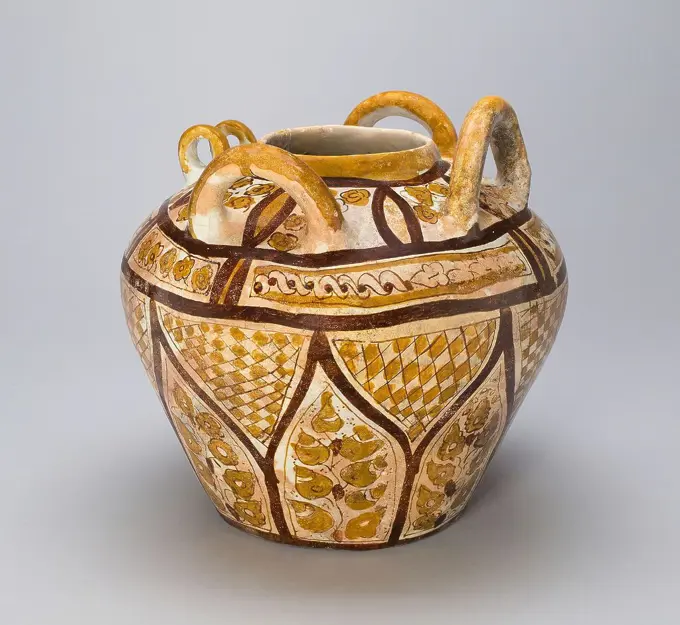
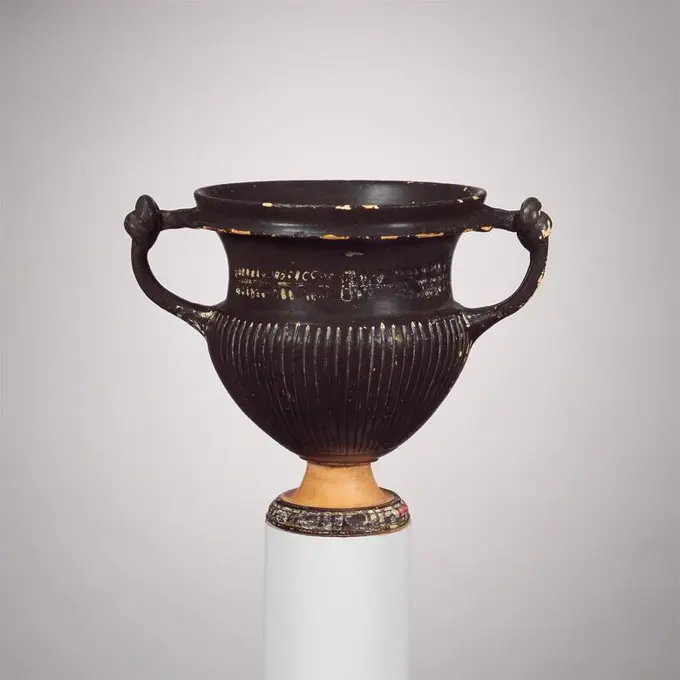
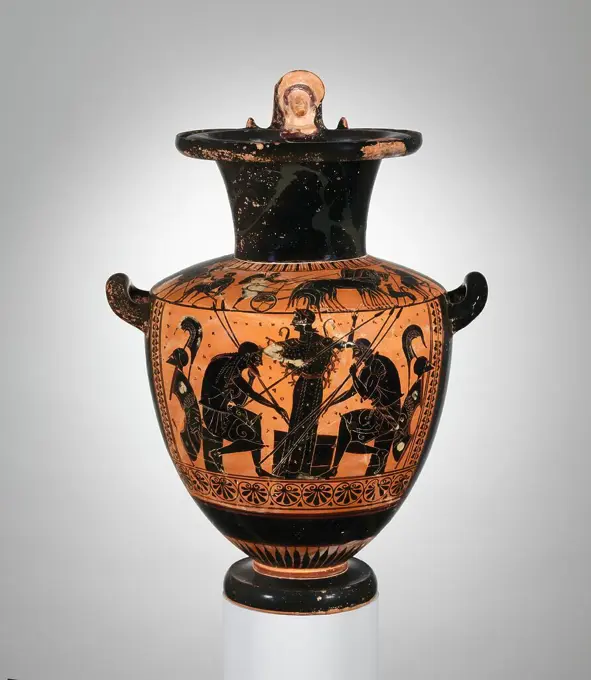
Glass unguentarium (perfume bottle). Culture: Greek, Eastern Mediterranean, possibly Alexandrian. Dimensions: H.: 4 in. (10.1 cm). Date: 3rd century B.C..Translucent light blue, with opaque turquoise green handles, rim-disk, and pad-base; trails in opaque white and uncertain color, appearing opaque reddish brown. Turquoise green trail applied as outsplayed rim-disk around jagged top edge of neck; tall, slender neck, tapering slightly downward; steeply sloping shoulder; elongated piriform body, tapering downward to applied; small pad-base with uneven flat bottom; two small loop handles applied to edge of shoulder and top of body with everted upward angle.White and reddish brown trails attached at top of neck and wound down as alternate spiral lines, tooled into a festoon pattern round upper half of body, with fifteen upward tooling strokes.Intact; some dulling and pitting, especially of turquoise blue additions, and areas of creamy brown weathering and iridescence. Museum: MetropoliSake Bottle. Japan, Edo period, 1615-1868, mid-19th century. Ceramics. Seto ware; stoneware with iron and ash glazesMessapian civilization, decorated vessel with handle, from Ceglie Messapica, Apulia Region, ItalyBottle ca. late 14th century Thailand. Bottle 37398Jug ca. late 8th-7th century B.C. Israelite. Jug 323157Water Vessel, 1885-1890, 11 3/4 x 11 1/2 in. (29.85 x 29.21 cm), Ceramic, pigment, United States, 19th centuryWater Jar (Olla), 1880-1900. Southwest,Pueblo, Zuni, Post-Contact Period, late 19th century - early 20th century. Ceramic; overall: 25.3 x 32.5 cm (9 15/16 x 12 13/16 in.).Pilgrim Flask, 1-200. Parthian, 1st-2nd Century. Terracotta; overall: 18.5 cm (7 5/16 in.).Jar 301 CE-500 CE Syria. Glass, blown technique . Ancient RomanBottle. unknown, craftsmanTerracotta lekythos (oil flask). Culture: Greek, South Italian, Campanian. Dimensions: H. 7 3/8 in. (18.8 cm). Date: 4th century B.C..Black glaze lekythos without decoration. Museum: Metropolitan Museum of Art, New York, USA.Vessel. Iraq, Iran, Syria, or Egypt, first half of 8th century. Ceramics. Earthenware, moldedVase.  Artist: George E. Ohr, American, 1857-1918Bowl 15th century. Bowl. 15th century. Earthenware; overglaze luster-painted. Attributed to Spain, Valencia. CeramicsAmphora. Culture: Cypriot. Dimensions: H. 10 in. (25.4 cm). Date: 750-480 B.C..Vase with bands, wavy line, rosettes and cartouche. Museum: Metropolitan Museum of Art, New York, USA.Can with female sports, anonymous, c. 1500 - c. 1625 Spherical can of multi -colored painted lead glaze pottery. The jug stands on a foot and has a squeezed spout. The ear is flat and wide. Under the spout, a female portrait is painted from a woman desired to the left. Around the portrait are regularly painted over each other. Italy earthenware. lead glaze Spherical can of multi -colored painted lead glaze pottery. The jug stands on a foot and has a squeezed spout. The ear is flat and wide. Under the spout, a female portrait is painted from a woman desired to the left. Around the portrait are regularly painted over each other. Italy earthenware. lead glazeBronze oinochoe (jug) ca. 550 B.C. Etruscan Beaked trefoil mouth. The handle attachment terminates in stylized animal heads with an elegant palmette at the base.. Bronze oinochoe (jug) 247041Bowl, 10th-12th century, 4 x 5 3/4 in. (10.16 x 14.61 cm), Ceramic, United States, 10th-12th centuryDouble Gourd Jar with Wooden Stopple, 1700s to mid-1800s. Japan, Edo period (1615-1868). Stoneware (Bizen ware); with stopple: 16.9 cm (6 5/8 in.); without stopple: 15.6 cm (6 1/8 in.).Terracotta cup with appliqués Greek, Pergamene ca. 150-100 BCE Applied decoration: head of a maenad between Erotes playingDrinking cups comprise the most important class of Pergamene relief ware. The genre may have been developed for libations and feasts celebrated in the context of the ruler cult of the Attalids, the royal dynasty that ruled Pergamon in the third and second centuries B.C.Vase Hu ". Terracotta, traces of green lead glaze. Han dynasty (206 BC-220 AD). Paris, Cernuschi museum. Chinese art, Chinese ceramic, container, han dynasty, han time, container, terracotta, humAnonymous, jar (usual name), 0600. Sandstone with incised decoration, formerly covered with a green cover almost completely disappeared. Cernuschi Museum, Asia Museum of Asia in the city of Paris.Vase, before 1550. Colombia, 15th-16th century. Red ware; overall: 11.5 x 15 cm (4 1/2 x 5 7/8 in.).Jug with a portrait and lions, c. 1672 - c. 1699 Jug of stoneware on the standing surface with a spherical abdomen and narrow neck. The C-shaped ear is attached to the neck and shoulder. Profiles on the neck. Partly covered with cobalt blue. On the shoulder an entry line with a tire with stamped semi -circles with flour against a blue background. The belly with three printed and imposed medallions, the middle flanked by crowned lions. In the medallions a portrait with the edge of 'ich.brins.der.hers.lebsten.vm.i.frvntlichen.kvs.1672'. Westerwald. Westerwald stoneware. glaze. cobalt (mineral) vitrification Jug of stoneware on the standing surface with a spherical abdomen and narrow neck. The C-shaped ear is attached to the neck and shoulder. Profiles on the neck. Partly covered with cobalt blue. On the shoulder an entry line with a tire with stamped semi -circles with flour against a blue background. The belly with three printed and imposed medallions, the middle flanked by crowned lionJug (Bartmann jug) with oak scrolls and a bird, anonymous, c. 1525 - c. 1549 Jug (beard fancier bush) of stoneware on a high base with a spherical body and narrow neck. The C-shaped ear is attached to the neck and shoulder. Profiles on the neck. Covered with a brown Engobe. Printed and imposed oak vines and a bird on the abdomen. On the neck, continuously on the shoulder and belly, a bearded man. Cologne. Cologne stoneware. glaze. engobe vitrification Jug (beard fancier bush) of stoneware on a high base with a spherical body and narrow neck. The C-shaped ear is attached to the neck and shoulder. Profiles on the neck. Covered with a brown Engobe. Printed and imposed oak vines and a bird on the abdomen. On the neck, continuously on the shoulder and belly, a bearded man. Cologne. Cologne stoneware. glaze. engobe vitrificationPitcher;  around 2686- 2181 BC ; Old state (-2686-00-00--2181-00-00);Terracotta jug ca. 1600-1450 B.C. Cypriot Long-necked jug with funnel-shaped mouth, handle and spiral bands in relief.. Terracotta jug. Cypriot. ca. 1600-1450 B.C.. Terracotta; Base-Ring Ware. Late Cypriot I. VasesLamp, Asia Minor; 1st - 4th century; Terracotta; 2.6 x 7.5 x 10 cm (1 x 2 15,16 x 3 15,16 in.)Vase, c. 224-650. Sasanian, 3rd-7th Century. Glass; overall: 5.4 cm (2 1/8 in.).Miniature Oinochoe. Can decorated from quartz fritgoed with tires with inscription in luster and rebuilt in luster on a surface of opaque white tin-lead-alkalilation.Milk; Lilpop, Karol Jerzy (Fl. 1820-1833); around 1820 (1815-00-00-1825-00-00);Bowl ca. 1500 Japan. Bowl. Japan. ca. 1500. Clay with light brown crackled glaze; foot unglazed; lacquer repairs (Ki Seto ware). Muromachi period (1392-1573). CeramicsPot Coptic 4th-7th centuryLamp, Anatolia; 1st - 4th century; Terracotta; 6.3 x 7.1 x 12.2 cm (2 1,2 x 2 13,16 x 4 13,16 in.)Rough ware jar ca. 3850-2960 B.C. Predynastic Period. Rough ware jar. ca. 3850-2960 B.C.. Pottery. Predynastic Period. From Egypt, Southern Upper Egypt, Hierakonpolis (Nekhen), MMA excavationsLekanis with Female HeadsAmphoriskos. UnknownItaly, Campania, Glass paste vase used to contain unguents, from the necropolis of Capuaancient oriental metal teapot on dark background. antique bronze tableware. ancient metal utensilsDecorated ware jar depicting two boats Predynastic Period ca. 3850-2960 B.C. View more. Decorated ware jar depicting two boats. ca. 3850-2960 B.C.. Pottery, paint. Predynastic Period. From EgyptAskos in the form of an animal 1900-1600 B.C. Cypriot. Askos in the form of an animal. Cypriot. 1900-1600 B.C.. Terracotta. Middle Cypriot. VasesTea leaf storage jar, 17th century, Unknown Japanese, 16 x 13 1/2 in. (40.64 x 34.29 cm), Tanba ware; stoneware with applied and natural glaze, Japan, 17th century, After tea leaves are picked and dried in spring, they are placed in tightly sealed stoneware jars and stored in cool, dry places (such as in the mountains or underground) to protect the tea from the heat and humidity of summer. The high neck of such storage jars was designed to receive a stopper, which would have been lashed to the vessel with a cord threaded through the four lugs (loops). During special mid-autumn tea gatherings called kuchikiri no chaji (mouth-cutting tea gathering), the jars seal is broken, and guests are invited to enjoy the marvelous fragrance of the freshly opened tea. While guests then eat a formal, multicourse meal, the tea is ground into a fine powder using small stone mills set up in the preparation areas (mizuya) adjoining the tearoom.Ritual Vessel, 11 7/8 x 11 x 12 3/16 in. (30.16 x 27.94 x 30.96 cm), Terra cotta, Burkina FasoSpouted jar ca. 9th century B.C. Iran Hasanlu in northwestern Iran is best known as the site of a citadel that was destroyed in about 800 B.C., most likely by an army from Urartu coming from eastern Turkey. Thousands of artifacts of terracotta, bronze, iron, gold, silver, and ivory were recovered from the monumental buildings, which were characterized by an elaborate entrance and a large central hall with columns that supported a two-story superstructure.This gray-ware jar (MMA 60.20.15) and stand (MMA 60.20.16), found in a burial in the cemetery of Hasanlu, is typical of Iron Age pottery of northwestern Iran. The bodies of such vessels are often fluted, gadrooned, or decorated with grooves. The handles are frequently raised higher than the vessel rim with a thumb rest like modern beer mugs. Many other aspects of culture, including architectural form, mode of burial, and style of bronze weapons and small objects, were altered at this time, leading some scholars to suggest a migration oAttic Geometric Amphora. Attributed to the Workshop of Painter of Athens 897 (Greek (Attic))Terracotta oinochoe (jug). Culture: Greek, Corinthian. Dimensions: H. 3 9/16 in. (9 cm). Date: late 6th century B.C..Pattern-work on body and shoulder. Museum: Metropolitan Museum of Art, New York, USA.Kyathos with low foot. UnknownTerracotta amphora (two-handled jar) ca. late 1st century A.D. Roman Handles in the form of snakes.. Terracotta amphora (two-handled jar) 248704. Pot of pottery with a wide, flared neck and a round underside, painted in red. On the belly and neck a spiral pattern. Two chips in the edge.Black-Gloss Kantharos (Drinking Cup), c. 300-275 BC. Greece, Attic. Ceramic; overall: 13.4 cm (5 1/4 in.).Bratina 19th century, after 17th century original Elkington & Co. British This electrotype is after a seventeenth-century original a treasure of the Patriarch, Moscow, at the time of reproduction.. Bratina 186614Askos. nieznany warsztat apulijskiJugTripod vessel withballplayers. Artist: UnknownPrehistoric Art. Spain. Beaker culture (2500-1800 BC). Late Neolithic or Chalcolithic running into the early Bronze Age. It comes from Mallen. Museum of Zaragoza. Aragon.Miniature red -and -delayed palmet;  early 4th century BC (-400-00-00--375-00-00);Glass ribbed bowl. Culture: Roman. Dimensions: H.: 2 7/16 in. (6.2 cm)Diam.: 3 5/8 in. (9.2 cm). Date: mid-1st century A.D..Translucent purple; trail in opaque white.Plain, vertical rim; short concave neck; globular body curving in to flat bottom.One trail wound around rim; another trail wound spirally three times around neck; a third trail applied on bottom and wound spirally nine times up body; sides tooled into fifteen irregular, vertical ribs.Intact, except for two weathered chips in rim; pitting of surface bubbles and creamy iridescent weathering, especially on trails.Violet, with white enamel decoration. Museum: Metropolitan Museum of Art, New York, USA.Jug with a coat of arms, medallions and foliate scrolls, anonymous, c. 1580 - c. 1620 Jug of stoneware on high foot with an egg -shaped body and wide, long neck. The C-shaped ear is attached to the neck and shoulder. Profiles on the neck and foot. Covered with a brown Engobe. On the abdomen three times in relief a printed and imposed medallion containing a weapon. The weapon consists of a zigzag band with reverse tilting. The shield is surrounded by leaf vines and as a helmet sign is a man with an arrow in the hand. At the top the inscription 'Winant von Kreps/ 84'. On the neck an imposed band with portraits or masks in medallions interrupted by a flower surrounded by leaf vines and curl. Raeren. Rae stoneware. glaze. engobe vitrification Jug of stoneware on high foot with an egg -shaped body and wide, long neck. The C-shaped ear is attached to the neck and shoulder. Profiles on the neck and foot. Covered with a brown Engobe. On the abdomen three times in relief a printed and imposed mBowl 13th-15th century Taíno Most containers that survive from the Taíno civilizations of the ancestral Caribbean islands are ceramic vessels. While some feature whole or partial depictions of anthropomorphic and zoomorphic characters, many show the Taíno artists abilities to distill figural imagery into abstract and geometric motifs. Hands, eyes, gaping or grimacing mouths, and stylized linear passages appear in the modeled ceramic bottles and bowls.. Bowl. Taíno. 13th-15th century. Ceramic. Dominican Republic, Caribbean. Ceramics-ContainersPitcher ca. 1877-89 Chelsea Keramic Art Works The Chelsea Keramic Art Works was the first American ceramics firm to designate itself an "art pottery." It was founded in Chelsea, Massachusetts, by members of the Robertson family, all of whom had honed their skills in the ceramics industry in Britain before coming to this country. An early specialty of the firm was the reproduction of Ancient Greek pottery made fashionable by such English tastemakers as Charles Locke Eastlake. Especially well-received I the United Sates were the Greek style wares exhibited at the 1876 Centennial Exhibition in Philadelphia by the Copenhagen firm of P. Ipsens Enke. Chelsea's rich red clay was particularly well suited to Greek designs. This finely potted redware pitcher copies a well-known metal pitcher that had been excavated at Pompeii and was frequently reproduced at the time for the tourist trade. Chelsea interpreted the form in red bisque (2018.294.23) and glazed versions, such as this example. It copiSpouted Ewer. China. Date: 960 AD-1127. Dimensions: H. 15.2 cm (6 in.); diam. 10.0 cm (3 15/16 in.). Cizhou ware; slip-coated stoneware with yellowish brown glaze and applied handle and loop handles. Origin: China. Museum: The Chicago Art Institute, Chicago, USA.Vase 18th century Japan. Vase. Japan. 18th century. Pottery covered with a mottled glaze (Takatori ware). Edo period (1615-1868). CeramicsItalic civilizations, Paleo-Venetians, 8th century b.C. Ossuary in the shape of a situla decorated with studs. From Este necropolis.Lazio Viterbo Viterbo Museo Civico75. Hutzel, Max 1960-1990 Views of paintings (Middle Ages through 18th c.), frescoes, a tabernacle, coffin, sculpture reliefs, portal fragments, busts, sculpture, tapestry found in the Pinacoteca, Second floor gallery and Second floor cloister sequences. Antiquities: Many views of Etruscan and Roman fragments, sculpture, sarcophagi, pottery, masks, jewelry and other objects found in the Storeroom sequence (inventory numbers on back of prints), and the Cloister, Second floor Cloister, Valle Giulia, Sala Romana and Sala Etrusca sequences. General Notes: There are eight separate numerical sequences for this location. The cloister as an architectural structure, rather than museum site, is documented in the record and file for S. Maria della Verita, Cloister, all views of which are stored in Medieval core collection. Five views from the Museo Civico Second floor cloister sequence are stored in Medieval. German-born photographer and scholar Max Hutzel (1911-Small stoneware jug with two pierced ears, salt glaze, jug holder tools equipment soil find ceramics stoneware glaze salt glaze, hand-turned glazed baked Small stoneware jug with ball body and two pierced ears. Standring Gray and brown salt glaze archeology Capelle aan den IJssel House in Capelle castle indigenous pottery import weaving wool spinning craft Soil discovery: house in Capelle canal south side house ± 1395-1500 Capelle aan den IJssel 1963.Hydria; Unknown; Greece, Europe; 460 B.C.; Bronze; Object (body): H: 47 x Diam.: 28.2 cm (18 1/2 x 11 1/8 in.), Object (neck): Diam.: 19 cm (7 1/2 in.)Jug with chip carving and fluting, anonymous, c. 1585 - c. 1600 Jug of stoneware on stand ring with a lobed, egg -shaped body and wide neck. The C-shaped ear is attached to the neck and shoulder. Profiles on the neck and foot. Covered with a brown Engobe. The belly is divided into four lobes, separated by profiles. The middle two are decorated with notch cut; The lower part and the shoulder with canelures. On the neck in relief a printed and imposed bond with portraits and profil under bows. Attached to the ear a pewter frame with lid. Raeren. Rae Stoneware. Glaze. Engobe. frame: tin (metal) vitrification Jug of stoneware on stand ring with a lobed, egg -shaped body and wide neck. The C-shaped ear is attached to the neck and shoulder. Profiles on the neck and foot. Covered with a brown Engobe. The belly is divided into four lobes, separated by profiles. The middle two are decorated with notch cut; The lower part and the shoulder with canelures. On the neck in relief a printed and imposAnonymous / 'Case for agate flask with a handle'. Ca. 1550. Museum: Museo del Prado, Madrid, España.Saleratus Jar 1848 Bladensburg. Missing its cover, this ovoid stoneware jar has an unusual reddish hue due to the soil composition near Bladensburg, Maryland. The areaís foundation was characterized by red sandstone, which was reinforced by the exposed red soil in nearby Washington, D.C. Mrs. Hannah Craig, for whom this vessel was made, would have used it for the storage of saleratus, a rising agent used to make buckwheat cakes, muffins, doughnuts, and other baked goods.. Stoneware and salt glaze with cobalt oxide glaze . George MukJar with geometric patterns, anonymous, anonymous, c. -3000 - c. -2000 Pottery pot on a high, narrow base and a concave wall. The pot is shaded with geometric motifs saved on the outside wall. Thailand earthenware engraving Pottery pot on a high, narrow base and a concave wall. The pot is shaded with geometric motifs saved on the outside wall. Thailand earthenware engravingJug with StyliteSaintJug 1300-1500 German. Jug 466618Storage Jar, 13th Century. Syria (Raqqa), Ayyubid Period. Fritware with glaze; diameter of mouth: 16 cm (6 5/16 in.); overall: 48.2 cm (19 in.); diameter of base: 14 cm (5 1/2 in.).Terracotta hydria: kalpis (water jar). Culture: Greek, Attic. Dimensions: H. 6 13/16 in. (17.3 cm); diameter 4 13/16 in. (12.2 cm); width with handles 6 in. (15.3 cm). Date: ca. 420 B.C..Two womenThis domestic scene depicts a woman holding a rather large chest or casket that her counterpart--perhaps her mistress--seems to be opening. On the ground between them stands a kalathos (wool basket). Museum: Metropolitan Museum of Art, New York, USA.Tell el-Yahudiya-ware juglet ca. 1640-1550 B.C. Second Intermediate Period. Tell el-Yahudiya-ware juglet. ca. 1640-1550 B.C.. pottery; Tell el-Yahudiyeh ware. Second Intermediate Period. From Egypt, Memphite Region, Lisht North, Cemetery, MMA excavations. Dynasty 15-17Terracotta olpe 3rd quarter 7th century B.C. Attributed to Master of Vatican, 73 Friezes of real and fantastic animals, including lions, panthers, goats, deer, bulls, boars, swans, are characteristic of Corinthian art. The style was strongly influenced by the art of the ancient Near East, where repetitive bands of animal decoration were common. At the same time, Corinthian vessels like this olpe were widely distributed throughout the Mediterranean, and the distinctive design was closely copied in a number of local pottery workshops, particularly in Etruria and South Italy.. Terracotta olpe 329989Jar with stylized flowers and four handles, anonymous, c. 1200 - c. 1299 Pot of quartz fritry with four four small ears on the neck. Painted in underly glaze blue with four stylized flower branches separated by a wide blue strap. Iran earthenware. glaze. cobalt (mineral) painting / vitrification Pot of quartz fritry with four four small ears on the neck. Painted in underly glaze blue with four stylized flower branches separated by a wide blue strap. Iran earthenware. glaze. cobalt (mineral) painting / vitrificationWood water vase. Wood water vase (incomplete, part of the top missing) of bronze.Ancient Greece. Aryballos. Used to contain perfume or oil. Decorated with four warriors with shield, helmet and spear. From Corintio. 4th century BC. Museum of Perfume. Barcelona. Spain.Covered Jar. Thailand, Sawankhalok, circa 16th century. Furnishings; Serviceware. Stoneware with underglaze black painted decorationTerracotta scyphus (drinking cup) 1st half of 1st century A.D. Roman Two-handled cup decorated with vine leaves and grapes.. Terracotta scyphus (drinking cup) 253544 Roman, Terracotta scyphus (drinking cup), 1st half of 1st century A.D., Terracotta, H. 2 7/8 in. (7.3 cm). The Metropolitan Museum of Art, New York. Bequest of George D. Pratt, 1935 (37.128.3)Ewer (Suichū) with Cherry Blossoms and Picnic Curtain early 17th century Japan In the tea ceremony, this type of ewer (suichū) is used to replenish the water jar, which holds water for rinsing tea bowls and filling the iron kettle. The coppergreen glaze and dark brown graphic design are characteristic features of Oribe ware. Depicted on the lower half of the vessel is a curtain of the type used to surround the picnic area selected for cherry blossom viewings. Cherry blossoms are painted in iron brown underglaze and white clay slip.. Ewer (Suichū) with Cherry Blossoms and Picnic Curtain 53006Jar with four handles (17th c.). Baroque art. Ceramics. SPAIN. CATALONIA. Barcelona. Barcelona Ceramics Museum. Proc: SPAIN. VALENCIAN COMMUNITY. VALENCIA. Manises.VASIJA NEOLITICA DE ARCILLA-PROCEDENTE DE LA CUEVA DE LA CARIGUELA EN PIÑAR, GRANADA- 4000-3500 a JC. Location: MUSEO ARQUEOLOGICO-PREHISTORIA. SPAIN.Jar ca. A.D. 1st-3rd century Parthian. Jar 322980Jar with Rows of Checkerboard Pattern and Abtract Plants 180 BCE-500 CE Peru. Ceramic and pigment . NazcaBeaker signed by Meges mid-1st century A.D. Roman, Syro-Palestinian Translucent yellow green.Outsplayed knocked-off rim with indent below; body with convex sides, tapering downwards; slightly concave bottom.Three-part mold with two vertical sections joined to cup-shaped bottom section, forming decoration in relief on sides and bottom; two horizontal ridges above central frieze containing two Greek inscriptions, each in two lines and divided vertically by a stylized palm frond; below frieze, three more horizontal ridges; near bottom on cup section of mold, two more horizontal ridges; on bottom, three raised concentric circles surrounding small central depression.Intact except for one chip in rim; blowing striations, pinprick and a few larger bubbles; slight dulling, pitting, and iridescence on exterior, and patches of whitish weathering on side of interior.The inscriptions read "Meges made (me/it)" on one side and "May the buyer be remembered" on the other.This beaker is very similar toJar. Iraq; Samarra. Date: 801 AD-900 AD. Dimensions: H: 8 11/16 in. (22 cm); D: 10 1/4 in. (26 cm); H (to top of handle): 9 15/16 in. (25.2 cm). Earthenware, lustre-painted overglaze decoration. Origin: Mesopotamia. Museum: The Chicago Art Institute, USA.Terracotta kantharos (drinking cup with high handles). Culture: Greek, South Italian, Apulian, Gnathian. Dimensions: H. 4 1/2 in. (11.4 cm). Date: late 4th-early 3rd century B.C..The knotted handles and the ribbing are characteristic of the latest phase of Gnathian pottery. Museum: Metropolitan Museum of Art, New York, USA.Ovoid covered jar with a light blue glaze, anonymous, c. 1400 - c. 1599 Egg -shaped lid pot of stoneware with four small ears on the shoulder, partly covered with a light blue/gray -white glaze. The lower part of the pot is unglazed. A chip in the edge of the lid has been restored. Sawankhalok stoneware. glaze vitrification Egg -shaped lid pot of stoneware with four small ears on the shoulder, partly covered with a light blue/gray -white glaze. The lower part of the pot is unglazed. A chip in the edge of the lid has been restored. Sawankhalok stoneware. glaze vitrificationBottle. Culture: Moche. Dimensions: H. 8 3/8 x Diam. 6 11/16 in. (21.3 17 cm). Date: 5th-7th century. Museum: Metropolitan Museum of Art, New York, USA.Ewer with loop handles 9th century China. Ewer with loop handles 49909Prehistory, Hungary, Bronze Age. Hatvan culture. Bird-shaped clay vase. From Mondszent.Terracotta oil lamp. Culture: Roman. Dimensions: Overall: 1 1/2 x 3 5/8 in. (3.8 x 9.2 cm). Date: 2nd century A.D..Loeschcke Type 8. Mold-made, with ring handle. Plain, deeply concave discus; a single filling hole at center and with a band of two grooves and raised lines at edge of discus. On almost horizontal shoulder, around inner edge, a pattern of impressed circles containing raised dots. Incised ring base, and a slightly concave base.Intact. Museum: Metropolitan Museum of Art, New York, USA.Terracotta hydria (water jar). Culture: Greek, Attic. Dimensions: H. 21 5/16 in. (54.1 cm)diameter of mouth 9 3/4 in. (24.8 cm)diameter of foot 6 7/16 in. (16.3 cm). Date: ca. 510 B.C..On the body, Achilles and Ajax playing board game at TroyOn the shoulder, chariot departingThe scene on the body depicts one of the most popular subjects in Greek art, mainly vase-painting, between about 540 and 480 B.C. Over 150 occurrences are known. Remarkably, the original composition survives on an amphora in the Vatican Museums. The artist was Exekias, the potter and painter whose work represents the height of black-figure painting. In this variant, the painter has placed Athena stage center as the two primary Greek heroes of the Trojan War while away their time playing a game in which pieces are moved according to the roll of dice. Museum: Metropolitan Museum of Art, New York, USA.Etruscan Beak-Spouted Oinochoe; Etruria; early 5th century B.C; Bronze; 19.1 cm (7 1,2 in.)Amphoriskos with molded design of Harpokrates and eagles. Dimensions: H. 15 cm (5 7/8 in.); Diam. 7.8 cm (3 1/16 in.). Dynasty: Ptolemaic Dynasty. Date: 300 B.C.-A.D. 50.Light ground relief vessels of this nature begin to be made in the 3rd century B.C. This example depicts Harpokrates, possibly standing on the thunderbolt, between two eagles. Little is known about their use context, but recently relief ceramics have been found in a terracotta workshop at Athribis dated to the time of Ptolemy IV (222-204 B.C.); the workshop seemed to serve an area of baths attached to a sacral structure, now missing. Museum: Metropolitan Museum of Art, New York, USA.Fopkan on stand ring with an enacted neck and C-shaped ear. Indeeded .. Round can be of unforded faience. The can stand on a stand ring, has a cut-away neck and a C-shaped ear.Kiua Polychrome Ceramic Storage Jar. United States, New Mexico, Cochiti, Cochiti Pueblo, circa 1820-1840. Furnishings; Serviceware. Earthenware and pigments