Ancient Terracotta And Bronze Vessels

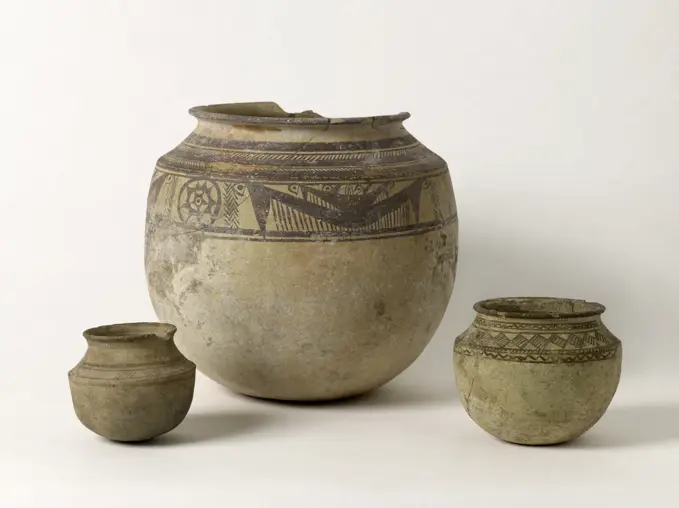
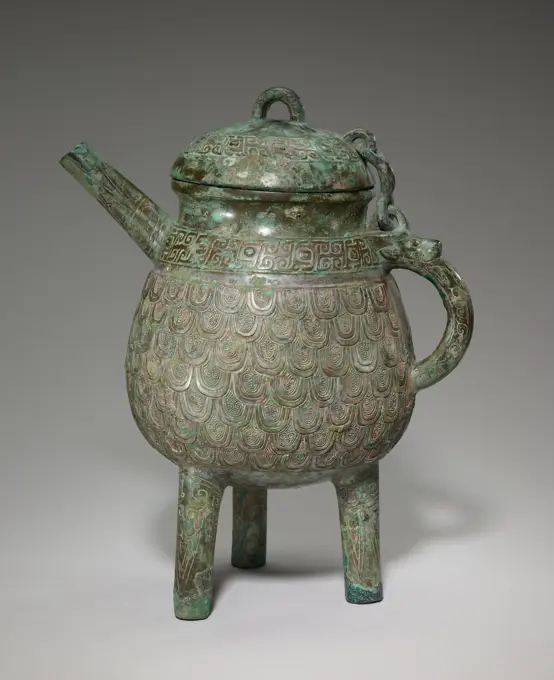
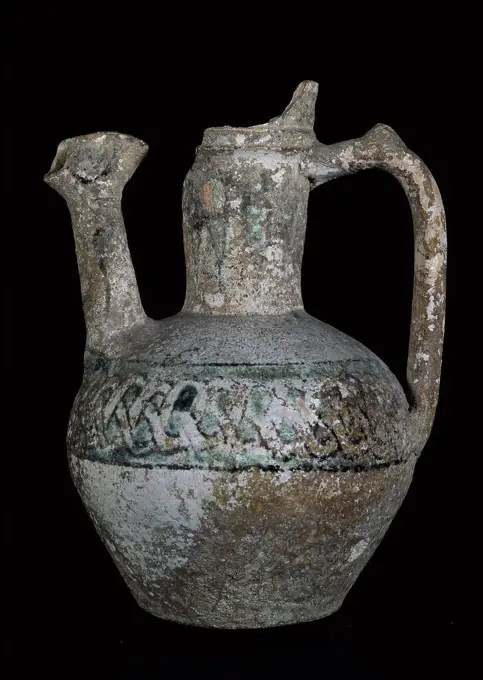
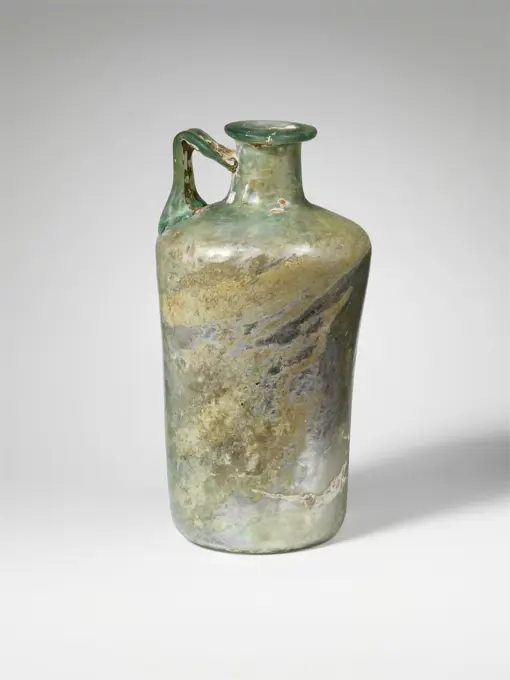
Various historical vessels including terracotta jugs and bronze jars from ancient cultures, showcasing intricate designs and different materials.

Asymetrical globular vessel, 8th-11th century, 11 x 9 1/4 x 9 1/4 in. (27.9 x 23.5 x 23.5 cm), Earthenware, Peru, 8th-11th century
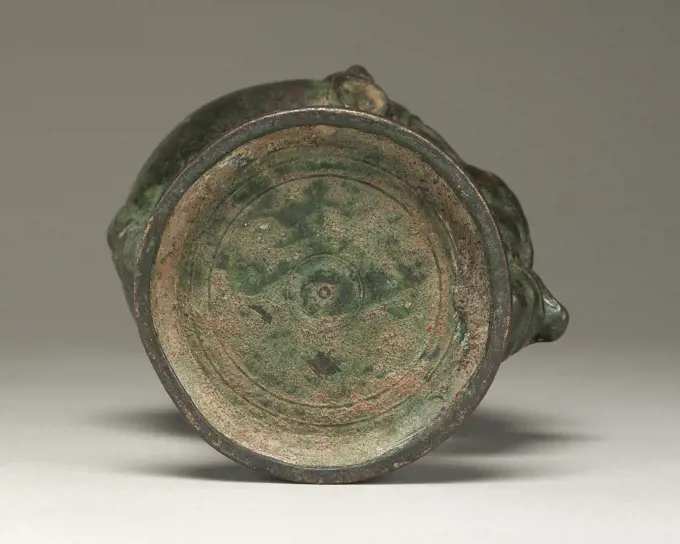
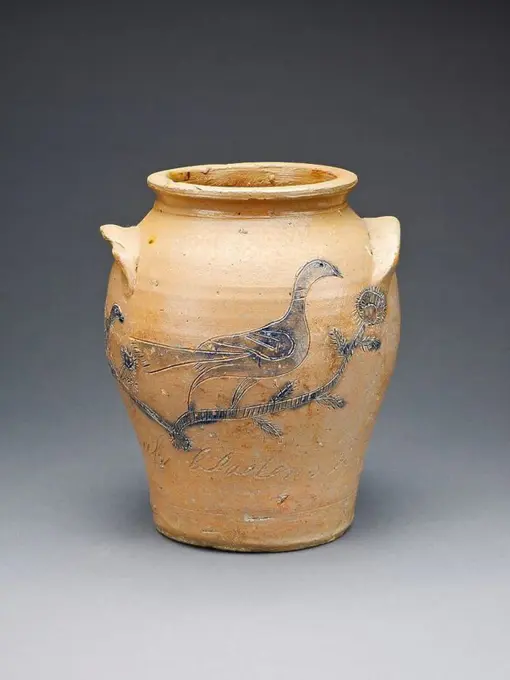
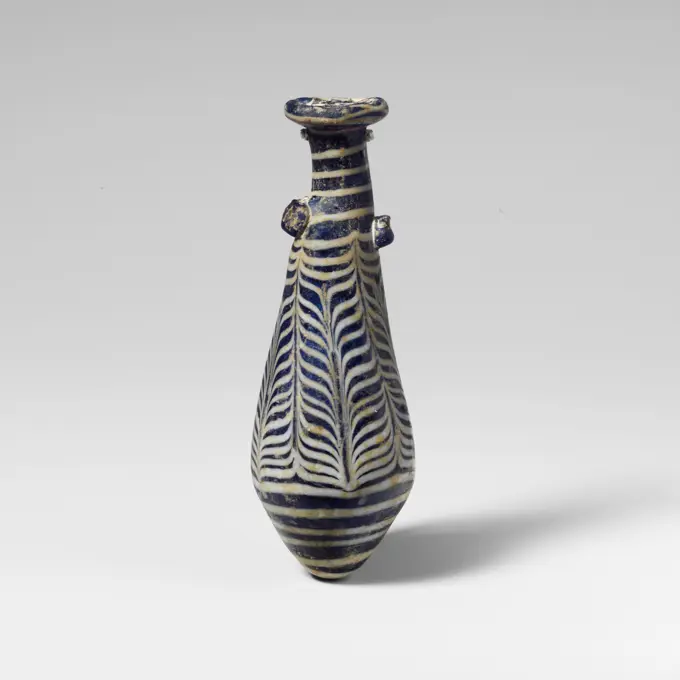
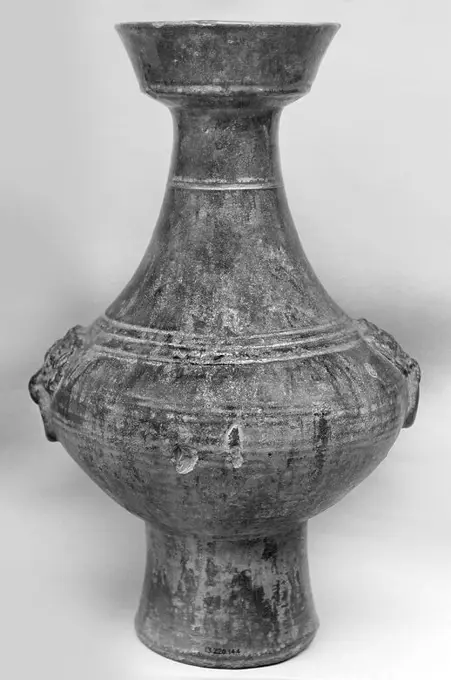
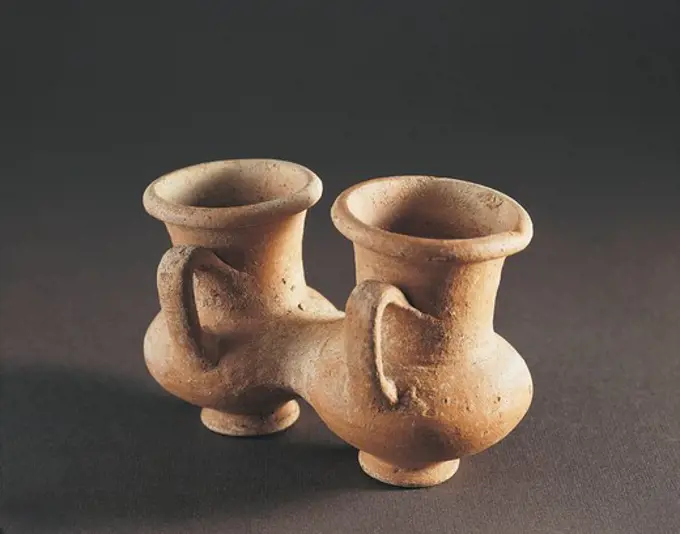
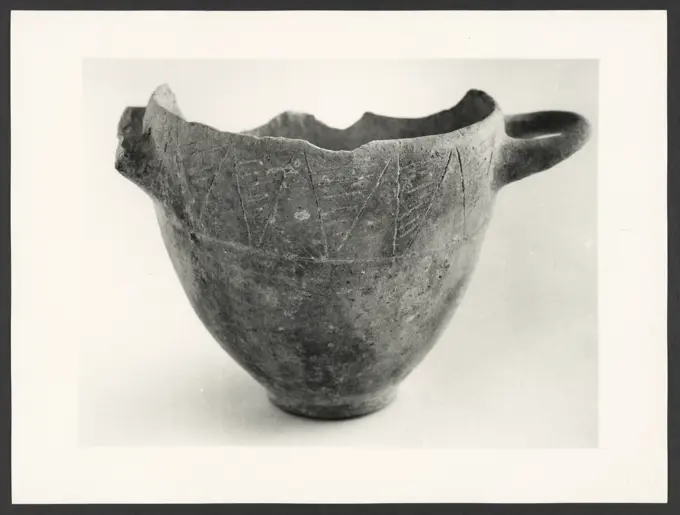
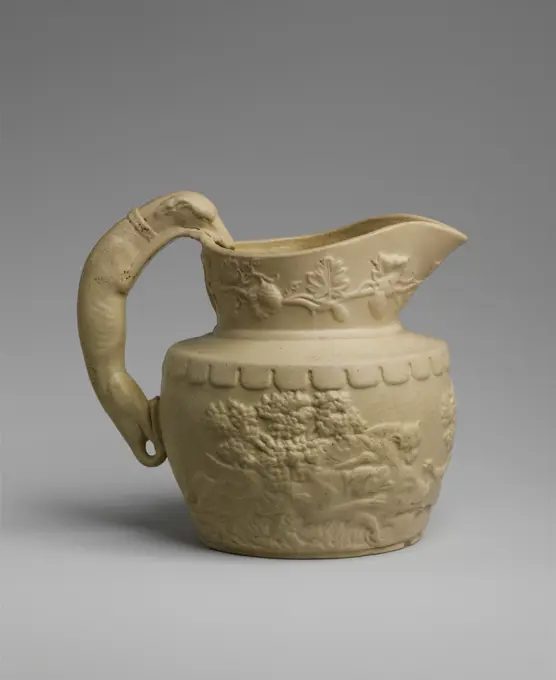
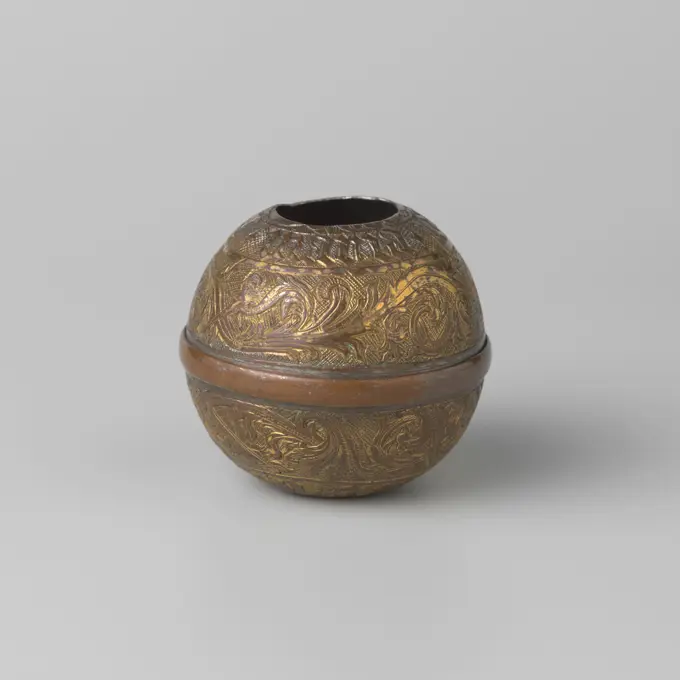
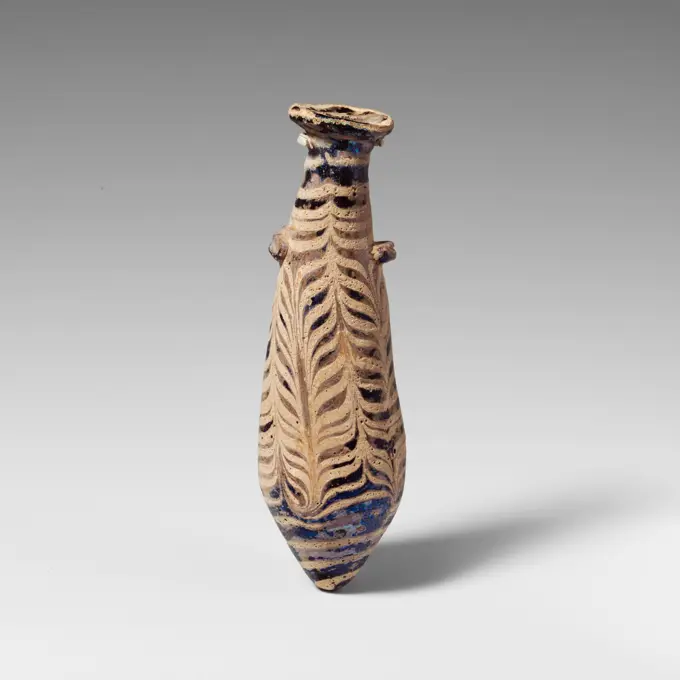
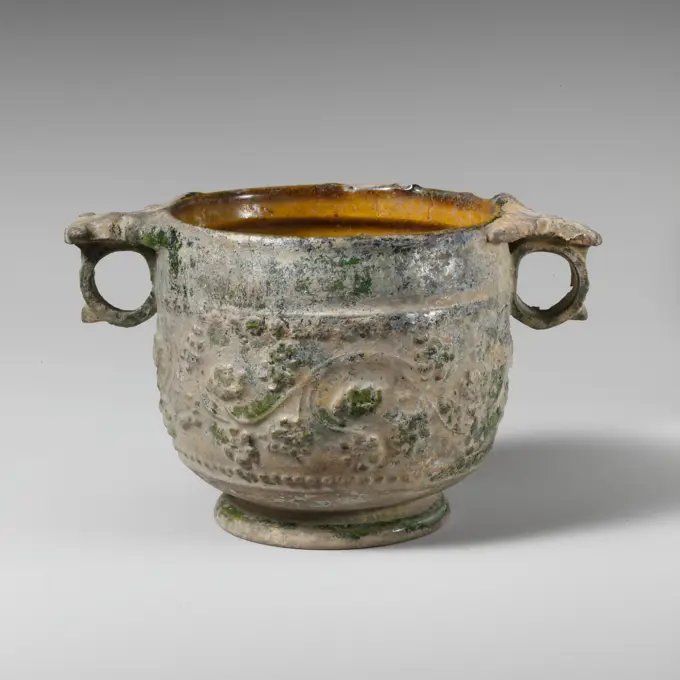
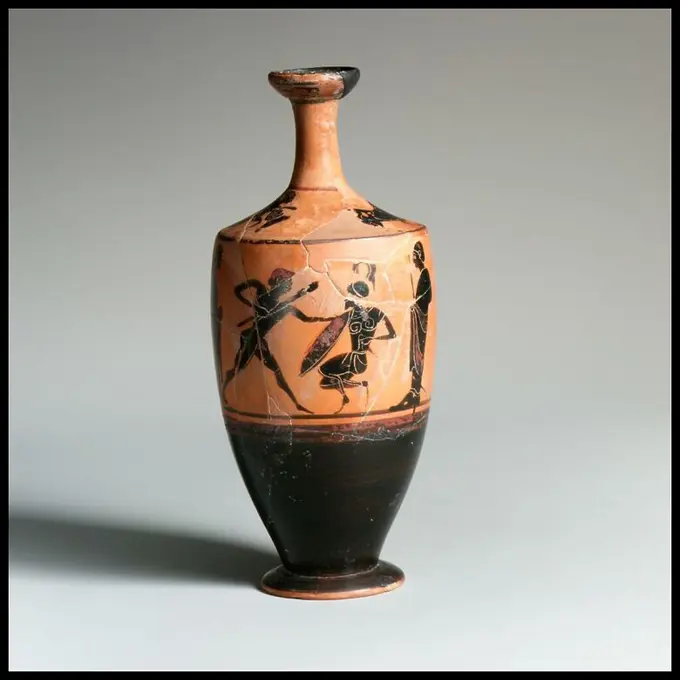
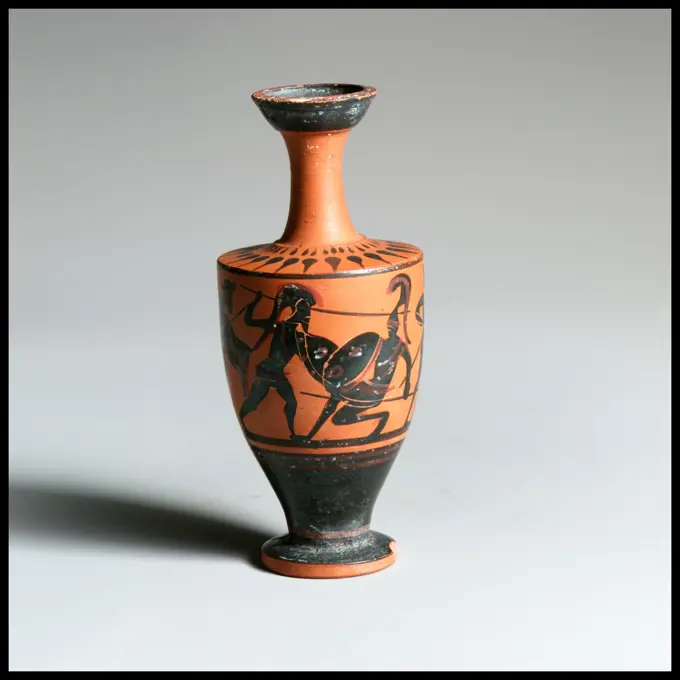
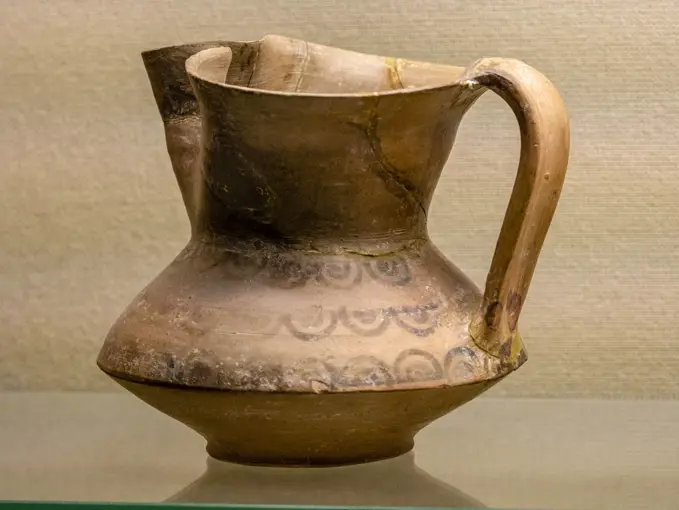
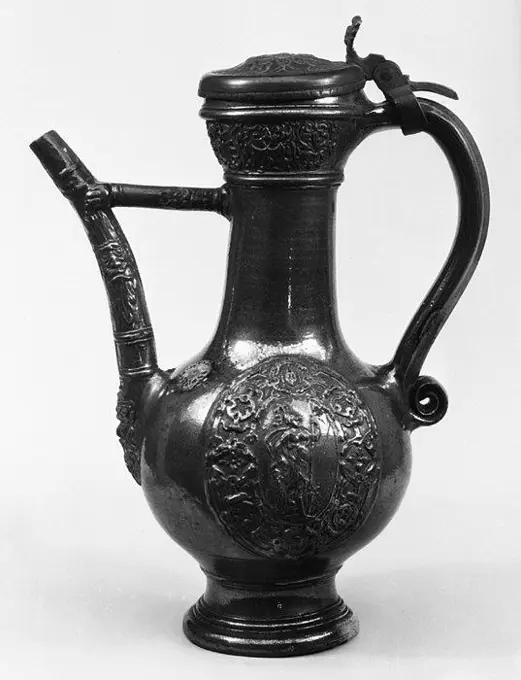
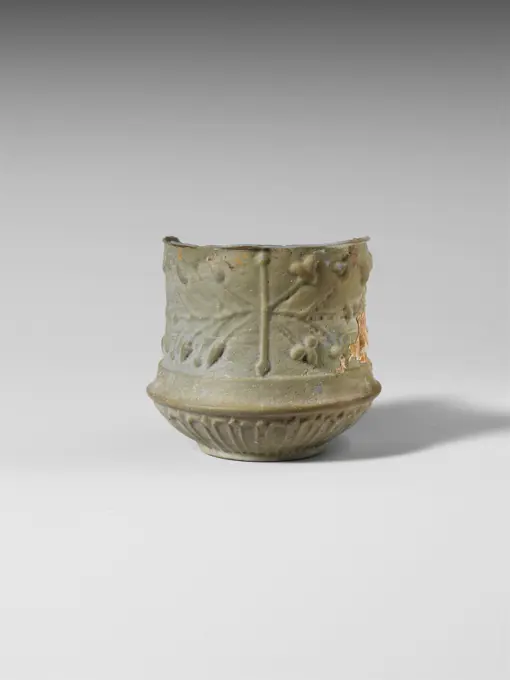
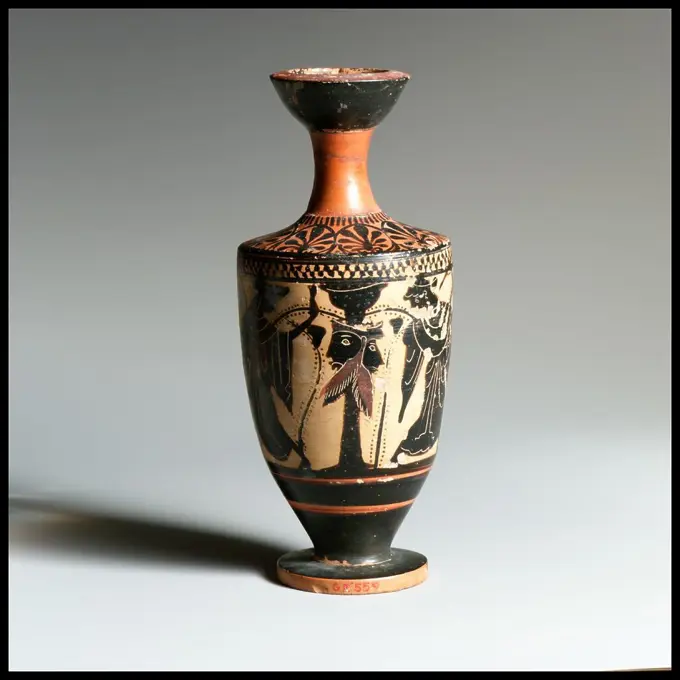
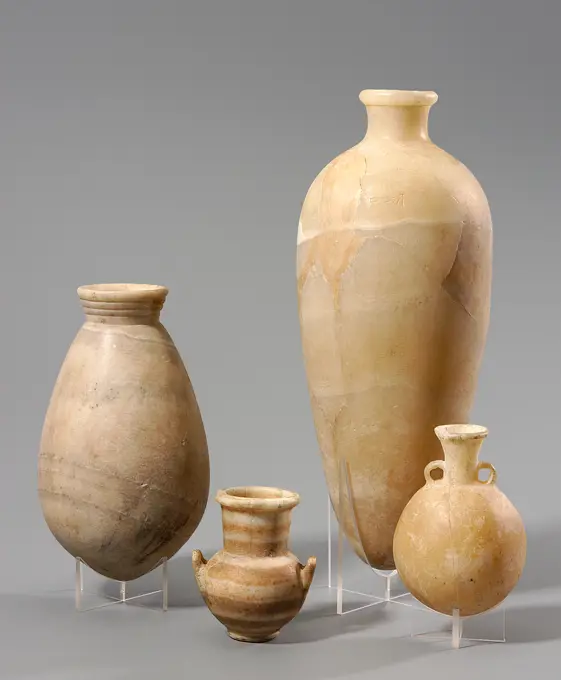
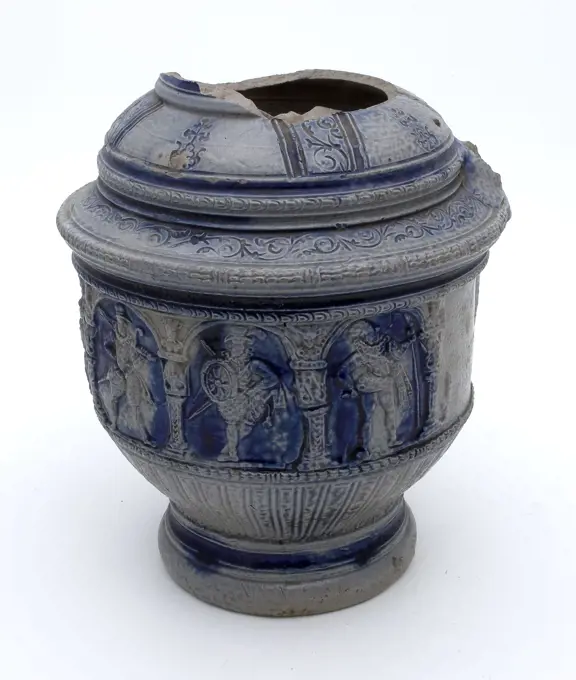
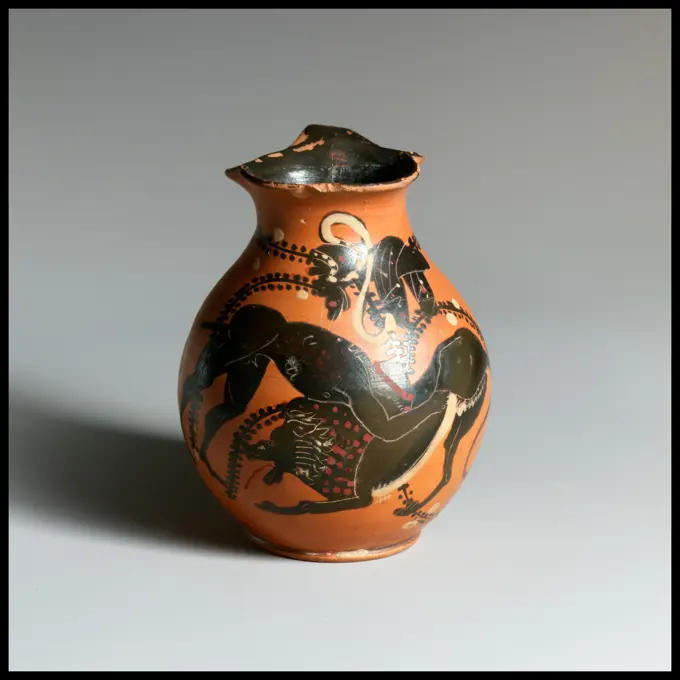
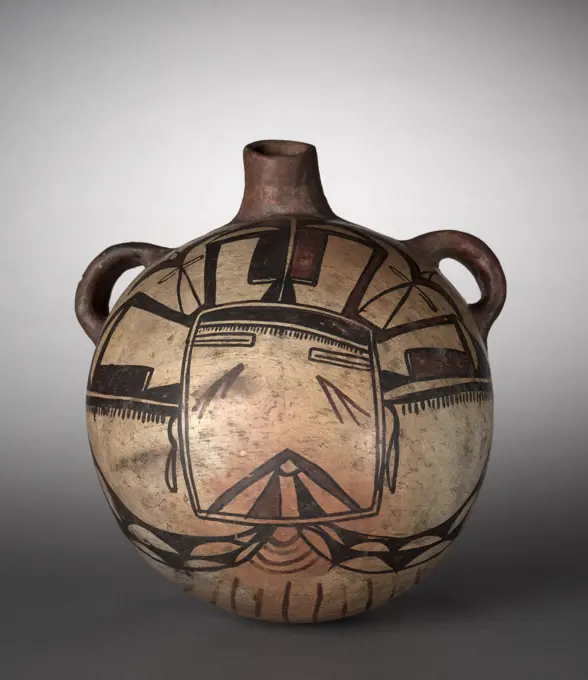
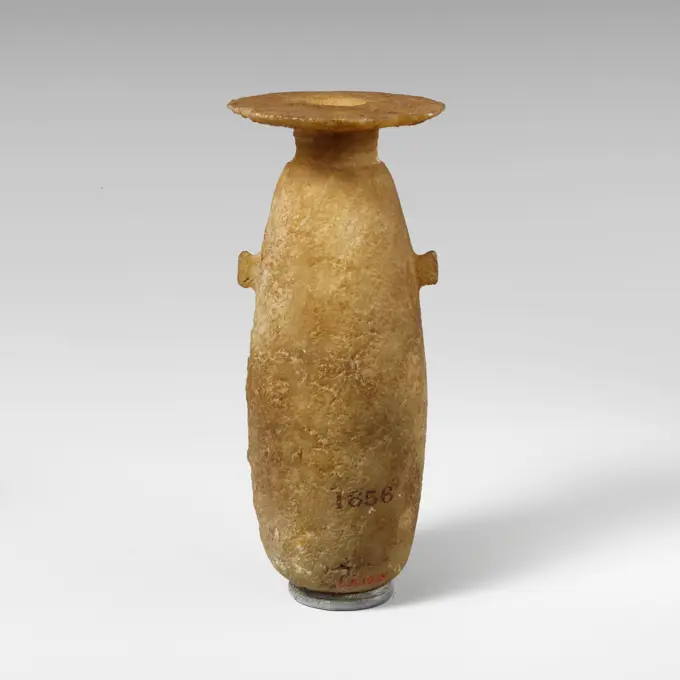
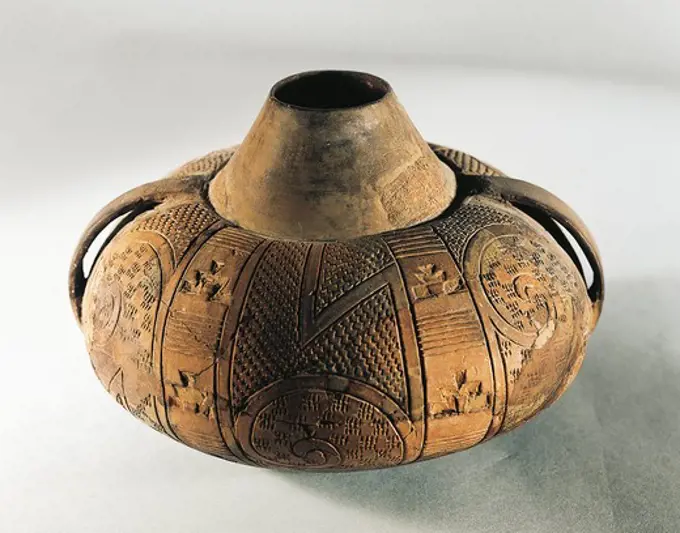
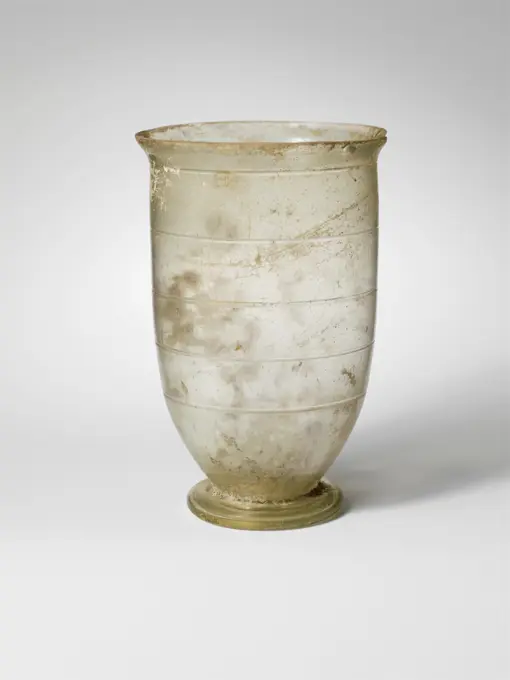
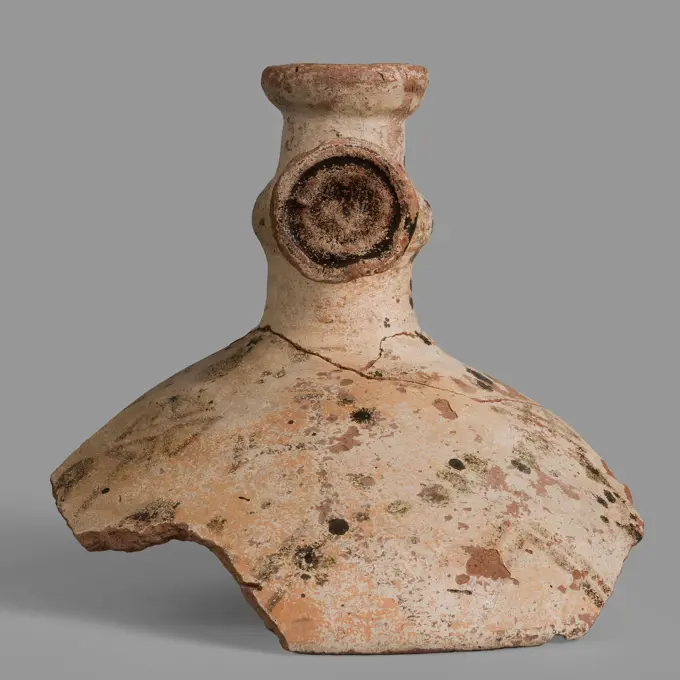
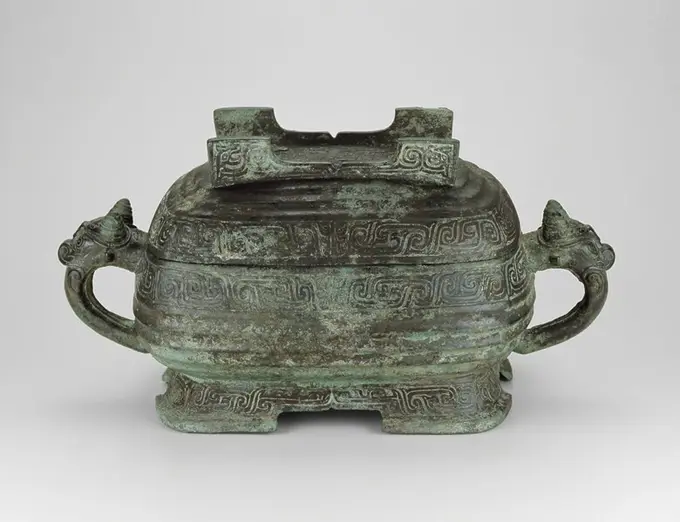
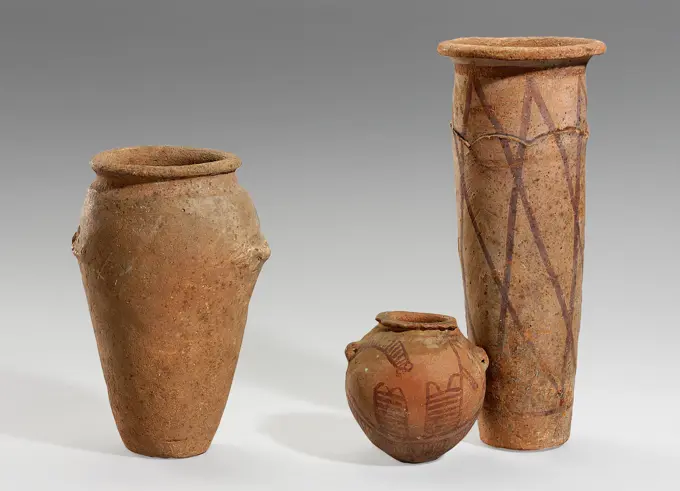
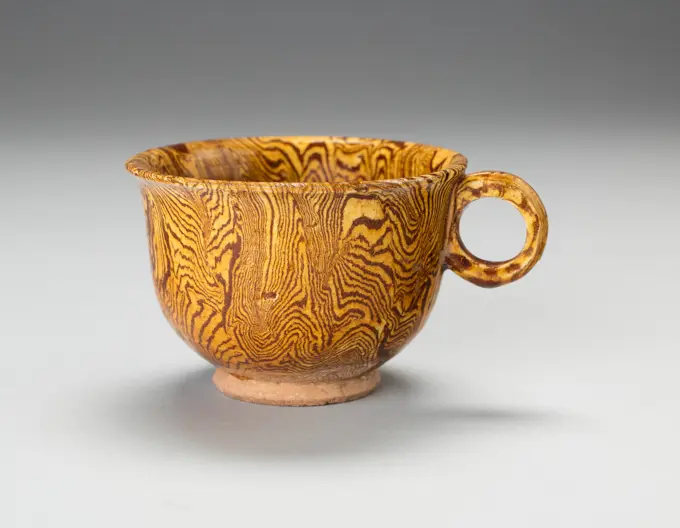
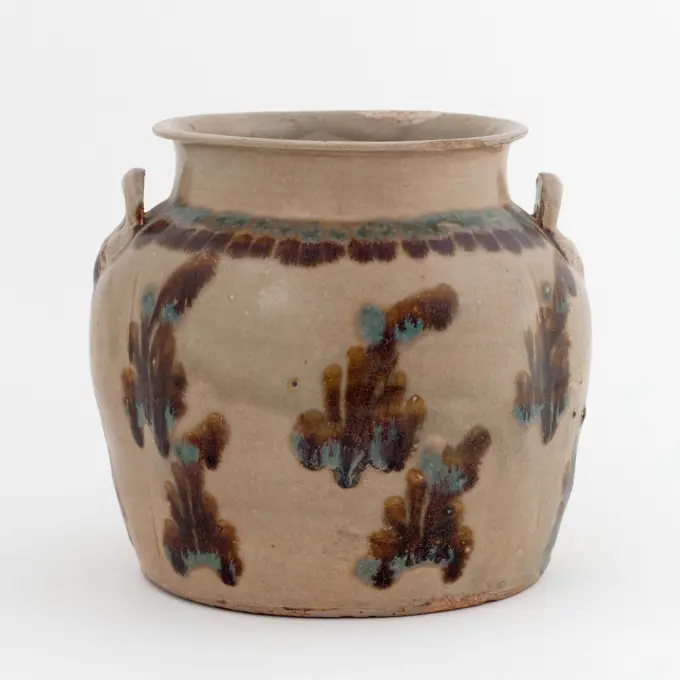
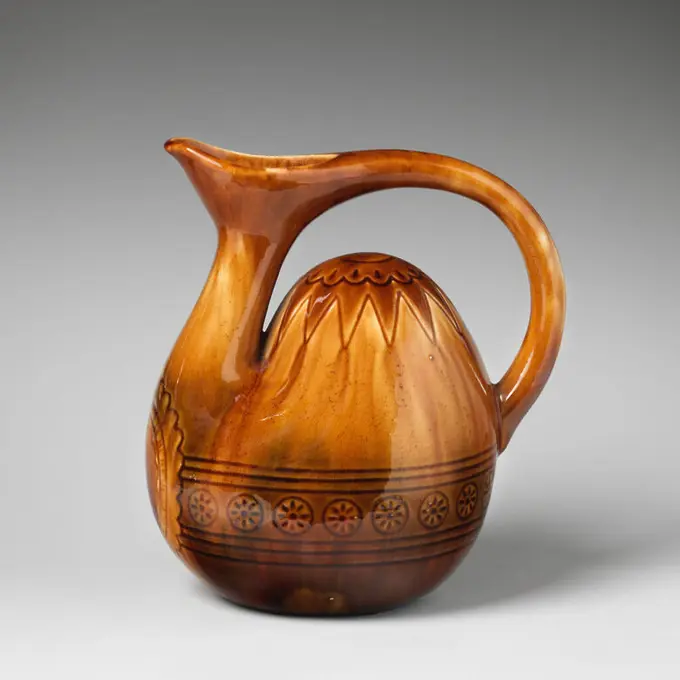
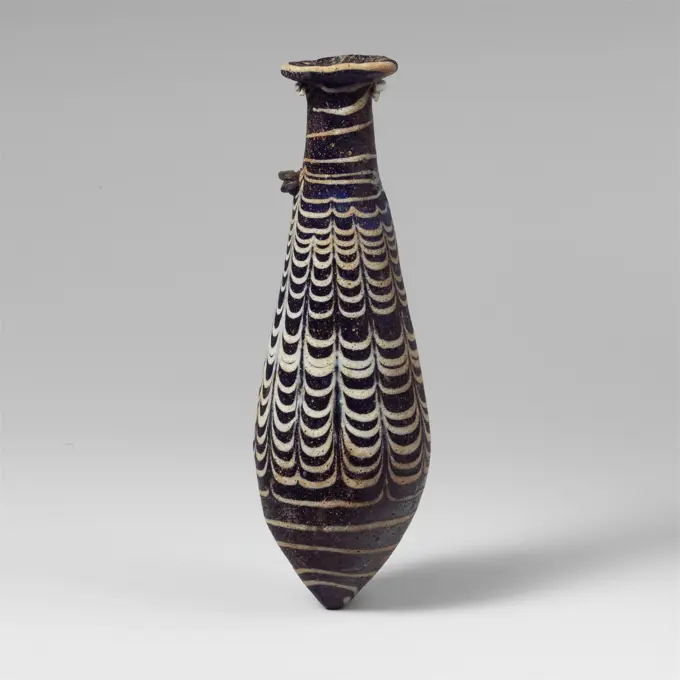
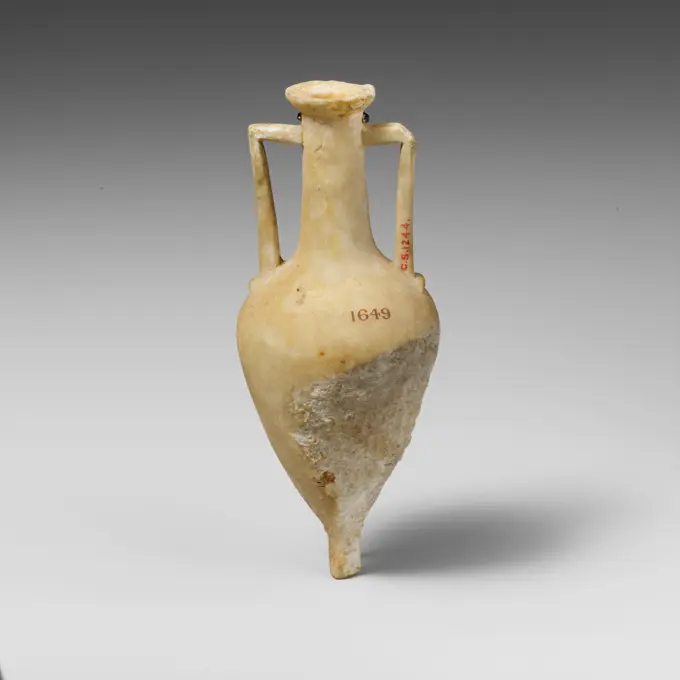
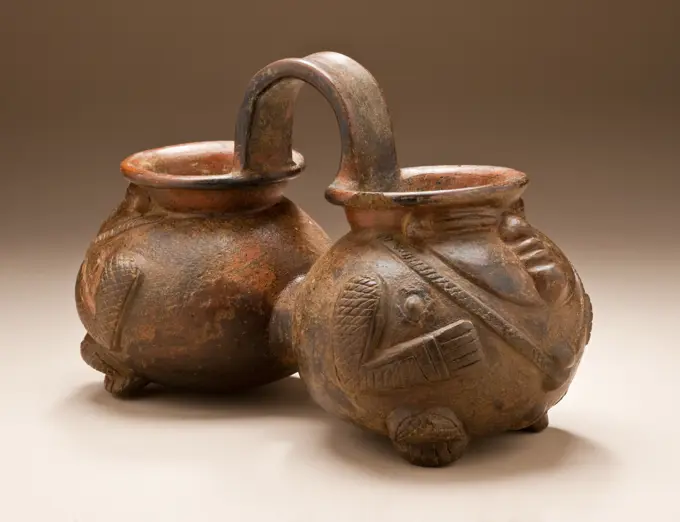
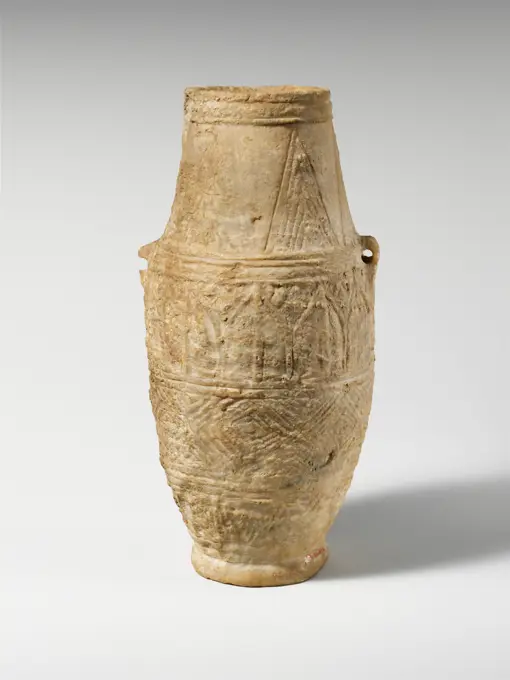
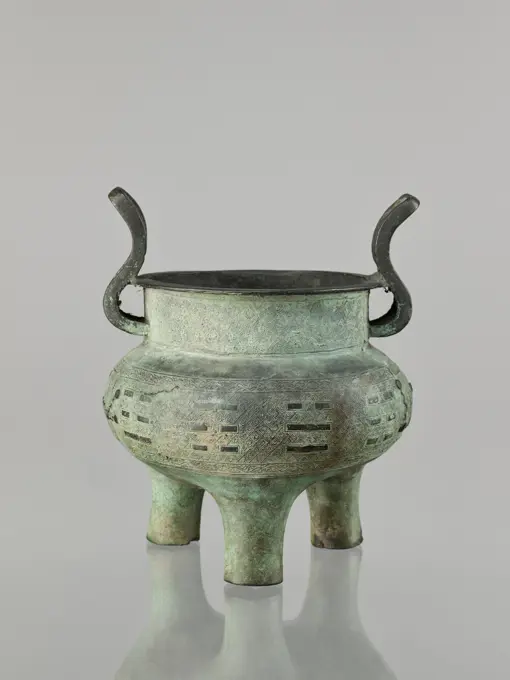
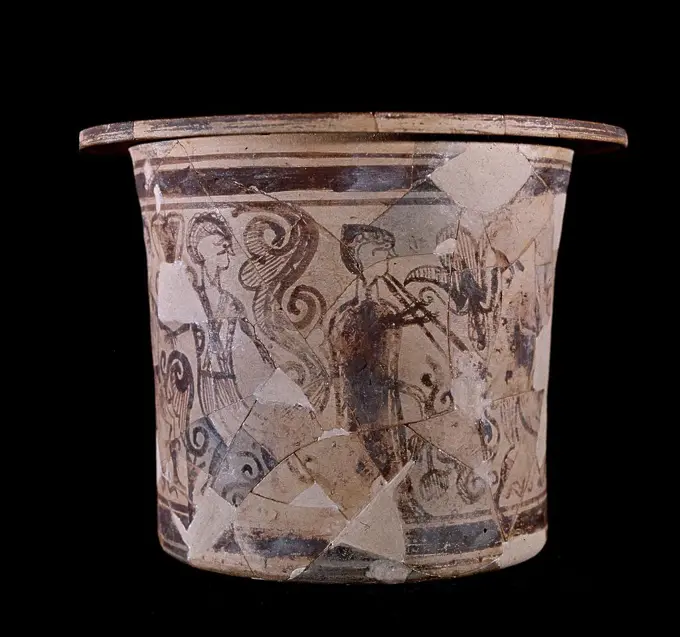
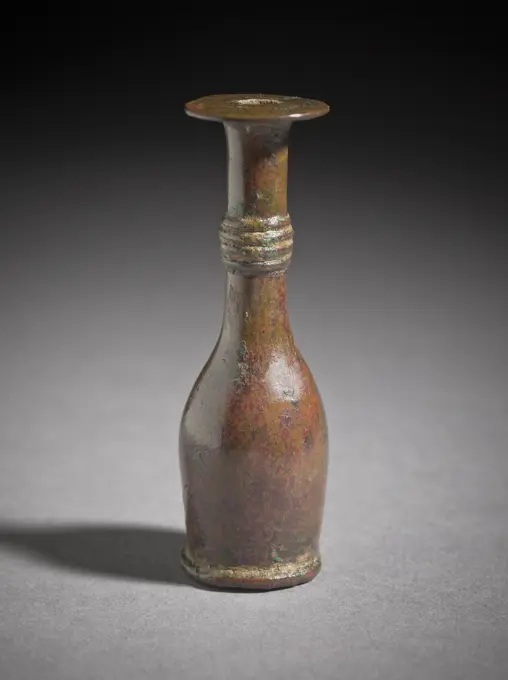
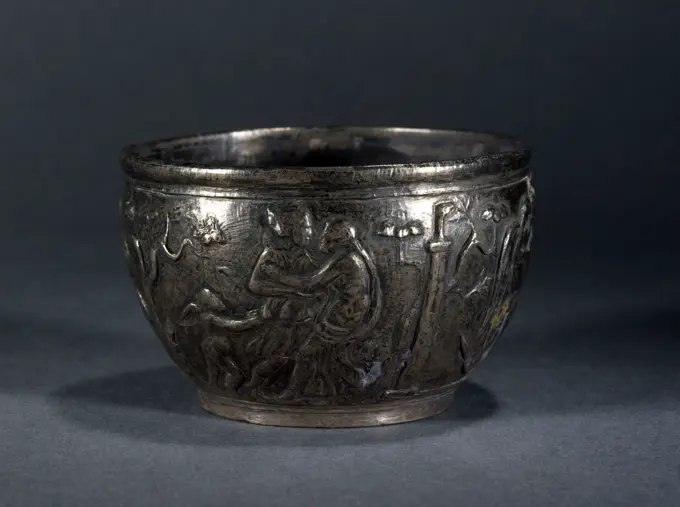
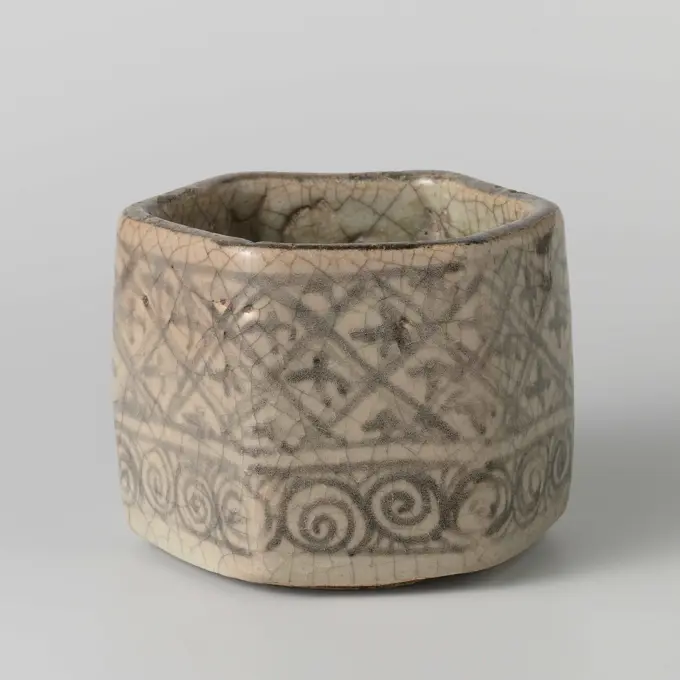
Covered urn with geometric decoration. Culture: Korea. Dimensions: H. 8 1/2 in. (23.2 cm); W. 7 1/8 in. (18.1 cm); D. 7 1/8 in. (18.1 cm). Date: 8th century.The custom of cremation is associated with buddhism, and the prevalence of such urn signals the growing popularity of the religion in Korea. Museum: Metropolitan Museum of Art, New York, USA.Balsamarium in the Form of a Boxer's Head; Eastern Mediterranean, Egypt (); 2nd century; Bronze with silver; 17.1 × 15 cm (6 3,4 × 5 7,8 in.)Saleratus Jar. George Muk; American, c. 1813-after 1850; Bladensburg, Maryland. Date: 1848. Dimensions: 16.8 × 12.7 cm (6 5/8 × 5 in.). Salt-glazed stoneware. Origin: United States. Museum: The Chicago Art Institute, Chicago, USA.Glass alabastron (perfume bottle) 2nd-mid-1st century B.C. Greek, Eastern Mediterranean Translucent blue, with handles in same color; trails in opaque white.Rim-disk with thick rounded edge, uneven and sloping inward, with projecting jagged inner edge to neck; slender cylindrical neck, slanting to one side; straight-sided fusiform body expanding downward, then tapering in to pointed bottom; two large horizontal lug handles applied over trail at top of body.Trail wound unevenly around edge of rim; another thick trail attached at bottom, drawn up in a spiral to point of carination, tooled into a close-set feather pattern around side, arranged in five panels of alternating upward and downward strokes, wound round again in spiral, and ending in irregular wavy line on edge of rim.Intact, but with slight surface chipping; some dulling with creamy weathering and iridescence.. Glass alabastron (perfume bottle) 255491Vase. Culture: China. Dimensions: H. 16 in. (40.6 cm); Diam. 9 1/2 in. (24.1 cm). Museum: Metropolitan Museum of Art, New York, USA.Terracotta lagynos (oil flask). Culture: Greek. Dimensions: h. 5 7/16 in. (13.9 cm). Date: 2nd-1st century B.C..Lagynos ware is named after the shape most commonly associated with the distinctive decorative style seen on this flask: canonical motifs such as wreaths, olive bows, baskets, and lagynoi themselves painted in a thinned orange-brown slip on a white ground. Museum: Metropolitan Museum of Art, New York, USA.Pitcher in bucchero, Abruzzo, Italy. Piceno Civilization, 9th-3rd Century BC.Torch-holder Ptolemaic Period 332-30 BC Torches were used by workers in the catacombs at North Saqqara where mummified ibises were buried. Flammable material would be placed in the cup at the top, and once lit could be carried by the handle.The torch was found with other broken pottery and small material in the fill in a set of small buildings associated with the catacombs. The buildings were used from the time of Nectanebo II onward and so the torch probably dates to the Ptolemaic Period. View more. Torch-holder. 332-30 BC. Pottery. Ptolemaic Period. From Egypt, Memphite Region, North Saqqara, EES excavations 1969-71. PtolemaicHousehold pottery, double vessel with handles, from Deir el Medina, Egyptian civilizationLazio Viterbo Viterbo Museo Civico56. Hutzel, Max 1960-1990 Views of paintings (Middle Ages through 18th c.), frescoes, a tabernacle, coffin, sculpture reliefs, portal fragments, busts, sculpture, tapestry found in the Pinacoteca, Second floor gallery and Second floor cloister sequences. Antiquities: Many views of Etruscan and Roman fragments, sculpture, sarcophagi, pottery, masks, jewelry and other objects found in the Storeroom sequence (inventory numbers on back of prints), and the Cloister, Second floor Cloister, Valle Giulia, Sala Romana and Sala Etrusca sequences. General Notes: There are eight separate numerical sequences for this location. The cloister as an architectural structure, rather than museum site, is documented in the record and file for S. Maria della Verita, Cloister, all views of which are stored in Medieval core collection. Five views from the Museo Civico Second floor cloister sequence are stored in Medieval. German-born photographer and scholar Max Hutzel (1911-Round-bodied jar with oxen, scrolls and geometric patterns in a panel decoration, c. 1400 - c. 1950 vase Spherical pot of earthenware with a spreading neck, painted in red. The belly is divided into wide and narrow courses with an ox and in the narrow stylized tifles. On the shoulder a raised edge with a bond with oxen in sections separated by lines. The neck with geometric patterns. A chip in the edge.  earthenware paintingPedestalled Vessel ca. 300 B.C.-A.D. 300 Thailand. Pedestalled Vessel. Thailand. ca. 300 B.C.-A.D. 300. Earthenware with buff slip and red oxide decoration. Late Neolithic period. CeramicsBeaker signed by Meges. Culture: Roman, Syro-Palestinian. Dimensions: Height: 3 5/16 in. (8.5 cm)Diameter: 2 5/8 × 2 9/16 in. (6.6 × 6.5 cm). Date: mid-1st century A.D..Translucent yellow green.Outsplayed knocked-off rim with indent below; body with convex sides, tapering downwards; slightly concave bottom.Three-part mold with two vertical sections joined to cup-shaped bottom section, forming decoration in relief on sides and bottom; two horizontal ridges above central frieze containing two Greek inscriptions, each in two lines and divided vertically by a stylized palm frond; below frieze, three more horizontal ridges; near bottom on cup section of mold, two more horizontal ridges; on bottom, three raised concentric circles surrounding small central depression.Intact except for one chip in rim; blowing striations, pinprick and a few larger bubbles; slight dulling, pitting, and iridescence on exterior, and patches of whitish weathering on side of interior.The inscriptions read "MePitcher 1829-33 Probably designed by Daniel Greatbatch British Listen to experts illuminate this artwork's story Listen Play or pause #4530. Overview: Yellow Ware and Rockingham Ware Supported by Bloomberg Philanthropies We're sorry, the transcript for this audio track is not available at this time. We are working to make it available as soon as possible.. Pitcher 5802Kantaros. nieznany warsztat attycki, authorPomellum Met Acanthusblad A Text Band, Anonymous, c. 1500 - c. 1550 The object made from copper plate consists of two half balls, which are tied on the inside, and which are decorated with an engraved continuous acanthus ornament, in which two or three figures are included with lance or bow and are provided with the round openings with the round openings Inscriptions in Gothic Minuskels Jesus.Maria.johes. A tire has been applied to the outer edge of one ball that closes on another. Germany (possibly) copper (metal). gilding (material) engraving / gilding The object made from copper plate consists of two half balls, which are tied on the inside, and which are decorated with an engraved continuous acanthus ornament, in which two or three figures are included with lance or bow and are provided with the round openings with the round openings Inscriptions in Gothic Minuskels Jesus.Maria.johes. A tire has been applied to the outer edge of one ball that closes on another. Germany (possibly) cJug ca. 3rd-7th century A.D. Sasanian. Jug 322984JarBeaker. UnknownPrehistory, Albania, Bronze Age. Kephtiu type cup. From Elbasan.Glass alabastron (perfume bottle) 2nd-mid-1st century B.C. Greek, Eastern Mediterranean Translucent pale blue with greenish tinge, with handles in same color; trails in opaque white.Rim-disk with thick rounded edge, uneven and sloping inward, with projecting jagged inner edge to neck; slender cylindrical neck, slanting with body to one side; straight-sided fusiform body expanding downward, then tapering in to pointed bottom; two large horizontal lug handles applied over trail at top of body.Trail applied unevenly around rim-disk; another trail attached at bottom, drawn up in a spiral to point of carination, tooled into a close-set feather pattern around side, arranged in five panels of alternating upward and downward strokes, and wound round again in spiral ending under rim.Intact; dulling, pitting, iridescence, and creamy weathering.. Glass alabastron (perfume bottle) 245725Pilgrim's Flask with Central Asian Dancers. Culture: China. Dimensions: H. 4 3/4 in. (12.1 cm). Date: 6th century.Both the shape and decoration show foreign influence: the shape is based on a West Asian pilgrim's flask, while the whirling dancer is performing a dance derived from the culture of Sogdia. Centered in present-day Uzbekistan, merchants from this polity, some of whom lived in China, dominated the Silk Road trade from the fourth to the seventh century. Museum: Metropolitan Museum of Art, New York, USA.Cup mid 6th century B.C. Etruscan Low foot with pear-shaped decoration and knobs on lip.. Cup. Etruscan. mid 6th century B.C.. Terracotta; bucchero pesante. Archaic. VasesGlass flask with elaborate looped handles. Culture: Roman, Syrian. Dimensions: H. 7 5/8 in. (19.4 cm). Date: 5th-6th century A.D..Translucent blue green; handles and trails in same color.Thick rim folded out, over, and in, flattened on top; tall, slightly concave neck, with tooling indent around base; sloping shoulder; side tapering downwards and curving in to low, conical pedestal; tubular base with rounded edge, made by folding; kick in bottom with circular pontil scar; four rod handles applied in claw pads over trail decoration to middle of neck, drawn out, turned down vertically, and trailed off on top edge of body; four trails attached to handles at point where they bend down, drawn across from left to right in a large upward loop, and applied to top of next handle.Single trail applied in a small pad near base of neck, drawn up and wound round in a spiral 27 times, ending at rim.Intact; some bubbles in handles; dulling, limy encrustation, and small patches of iridescent weatheTerracotta scyphus (drinking cup) 1st half of 1st century A.D. Roman Lead-glazed cup with floral decoration.. Terracotta scyphus (drinking cup). Roman. 1st half of 1st century A.D.. Terracotta; lead-glazed ware. Early Imperial, Julio-Claudian. VasesTerracotta lekythos (oil flask). Culture: Greek, Attic. Dimensions: H. 5 5/16 in. (13.5 cm). Date: ca. 500 B.C..Herakles fighting Kyknos; on the shoulder, Herakles and the Lion. Museum: Metropolitan Museum of Art, New York, USA.Jug ca. 3rd-7th century A.D. Sasanian. Jug. Sasanian. ca. 3rd-7th century A.D.. Ceramic. Sasanian. Mesopotamia, CtesiphonLekythos early 5th century B.C. Attributed to the Little Lion Class. Lekythos. Greek, Attic. early 5th century B.C.. Terracotta; black-figure. Late Archaic. VasesTripod Cypriot Iron Age Decorated with broad and narrow bands. View more. Tripod. Cypriot. Terracotta. Iron Age. VasesKeltiberischer Krug Celtiberian jug, 4th-1st century BC, Cerro de San Miguel, Arnedo, Museum of Romanization, Calahorra, La Rioja, Spain, Europe Copyright: xZoonar.com/BartomeuxBalaguerxRotgerx 22946652Pottery Fragment. Culture: Coptic. Dimensions: Overall: 1 1/4 x 1 5/8 x 5/8 in. (3.2 x 4.2 x 1.6 cm). Date: 4th-7th century. Museum: Metropolitan Museum of Art, New York, USA.Glass perfume bottle. Culture: Roman. Dimensions: Overall: 2 13/16in. (7.1cm)Diam.: 1 7/8 x 7/8 in. (4.8 x 2.2 cm). Date: 3rd-4th century A.D..Translucent pale blue.Thick rim, folded out, over and in, flattened on top and forming uneven opening to mouth; cylindrical neck, tapering slightly downwards and tooled in deeply around base; conical body with straight sides; deep, pointed kick in bottom with large circular pontil scar.Intact; pinprick bubbles; areas of pitting and iridescent weathering. Museum: Metropolitan Museum of Art, New York, USA.Koro, 1736-1795. China, Qing dynasty (1644-1912), Qianlong reign (1735-1795). Jade; overall: 17.6 cm (6 15/16 in.).Ewer 1578 Jan Emens. Ewer 196343Tripod Food Caldron (Ding) 699 BCE-600 BCE China. Bronze .Glass fragmentary bottle 1st half of 1st century A.D. Roman Opaque pale greyish blue.Cylindrical body with recessed central panel, then cup-shaped below; low circular base with flat lower edge and flat bottom. Three mold seams run down sides to top of prominent horizontal ridge; a separate cup-shaped section forms the lower body and base.Remaining decoration in two registers: on body, central panel divided into three sections by a vertical thrysos-like staff or rod, with bud-like knobs on each end, floral sprays shoot out horizontally from each staff in symmetrical but different designs of ivy, vine, and laurel leaves with berries, with a plain raised band below expanding outwards to prominent horizontal ridge; above the base, a frieze of twenty-four upturned tongues in raised outline, interspersed at top with pointed darts; on bottom, three raised concentric circles, decreasing in thickness towards center, and central small knob.Broken with all of rim, neck, and shoulder missing, and Bowl, 19th century, 3 1/2 x 4 1/2 in. (8.9 x 11.43 cm), Earthenware, Democratic Republic of Congo, 19th centuryTerracotta lekythos (oil flask). Culture: Greek, Attic. Dimensions: Height: 5 3/4 in. (14.6 cm)Diameter: 2 7/16 × 1 9/16 × 1 3/4 in. (6.1 × 4 × 4.4 cm). Date: early 5th century B.C..Women dancing before an image of Dionysos. Museum: Metropolitan Museum of Art, New York, USA.Dish, amphora on the foot, a dish in the manner's shape;  around 1985-m 1650 BC ; Pahu (0-00-00-0-00-00), approx. 1550-1186 BC ; New PA ; Pahu, 12-13 dynasty (0-00-00-0-00-00), approx. 1550-OK. 1186 BC ; New PADeposit of the University of Warsaw from 1937-1939, scenes.gal.g., Stone vessels, Polish-French excavations in Edfu (Egypt)Vessel with a hieratic inscription;  around 2686- 2181 BC ; Old state (-2686-00-00--2181-00-00);Stoneware jug with arcade around belly including band of musketeers and soldiers, ear with tail, musketeer jar jug crockery holder soil find ceramic stoneware glaze salt glaze, hand turned stamped glazed glazed fried Stoneware musketeer jar gray shard with salt glaze. Pointed tail Profiled foot archeology import pottery packing serve drink pouring beer wineJar 4th-7th century Coptic. Jar 475751Terracotta oinochoe (jug) early 5th century B.C. Attributed to the Class of the Red-Bodied Oinochoai III The representation of Herakles fighting the Nemean lion is the most common depiction in Archaic Greek art of all the hero's labors. In this scene, Herakles wrestles the lion on the ground, pulling up its hind leg. The skin of the lion was invulnerable; thus, Herakles strangled the beast with his bare hands.. Terracotta oinochoe (jug). Greek, Attic. early 5th century B.C.. Terracotta; black-figure. Archaic. VasesFragment of an Ewer. Dimensions: H. 6 1/8 in. (15.6 cm)Diam. 5 3/4 in. (14.6 cm)Wt. 15.6 oz. (442.3 g). Date: 8th century. Museum: Metropolitan Museum of Art, New York, USA.Canteen, 1890. Southwest, Pueblo, Hopi, Post-Contact Period,19th century. Pottery; overall: 21.5 x 24.5 cm (8 7/16 x 9 5/8 in.).Alabaster alabastron (perfume vase) 6th-4th century B.C. Cypriot The miniature alabastron has two lugs with thickened ends and a wide lip. The surface shows traces of burning.. Alabaster alabastron (perfume vase) 243985Container with engraved decorationBottle, Geometric Designs 5th-7th century Moche. Bottle, Geometric Designs 310192Stein (Kugelbauchkrug). Germany, Westerwald, 18th century. Furnishings; Serviceware. StonewareGlass beaker 2nd half of 1st-early 2nd century A.D. Roman Colorless with pale yellow green tinge.Thick, outsplayed rim, cracked off and ground; cylindrical body with almost straight side, then curving in; large integral tubular splayed ring base, made by folding; almost flat but uneven bottom.On body, five horizontal grooves, arranged at regular intervals down vertical side.One large hole in rim, one chip in exterior edge of rim, and one large crack extending round upper body from hole; pinprick bubbles; dulling, iridescence, and patches of whitish weathering.. Glass beaker 245393Fragment of the cover; Unknown Nubian workshop; 2. PO. X-XI century; Classic Christian period (951-00-00-1100-00-00);Nubian ceramics, nubian vessels, nubian vessels, painted coversCovered Food Container. China; Probably from Qishan, Shaanxi province. Date: 900 BC-800 BC. Dimensions: 19.9 × 21.3 cm (7 3/4 × 8 3/8 in.). Bronze. Origin: China. Museum: The Chicago Art Institute, Chicago, USA.Gadrooned body bowl, 5 3/4 x 4 x 4 in. (14.6 x 10.2 x 10.2 cm), Polychromed earthenware, MexicoA vessel with wavy ear, painted vessel, a cylindrical vessel with a cartoon decoration;  approx. 3500-3050 BC ; Predominating period, Nagada II/III (-3505-00-00--3045-00-00), 2. PO. 4,000 BC ; Predominating period, Nagada II (-3500-00-00--3001-00-00), approx. 3200-OK. 3050 BC; Predominating period, Nagada III (-3205-00-00--3045-00-00);Louvre (Paris) - collection, scenes.gal.eg., Egyptian ceramics, painted ceramics, painted decorations, rice decorations, painted dishes, oils for oils and ointments, wavy handlesVase by Torido Mazzotti (1895-1988)Food Vessel(Ding)Ring-Handled Cup 618 CE-907 CE China. Marbled earthenware with clear glaze .Plate and cup mid 6th-5th millennium B.C. Ubaid. Plate and cup 324091Jar Sasanian ca. 3rd-7th century CEVASO DE ORO DEL NEOLITICO GRIEGO.Terracotta kyathos (single-handled cup) 7th century B.C. Late Villanovan Buccheroid impasto is wheel thrown pottery. The clay is less refined, and the firing techniques less precise than later bucchero ware.. Terracotta kyathos (single-handled cup). Late Villanovan. 7th century B.C.. Terracotta; buccheroid impasto. Italic. VasesJARRA MALLORQUINA DE CUERDA SECA PARCIAL Y MANGANESO ESGRAFIADO - SIGLO XIII. Location: MUSEO DE CERAMICA-CERAMICA DE AL ANDALUS Y MUDEJAR. Barcelona. SPAIN.Covered Pilgrim Flask with Scrolls 907 CE-1124 China. Stoneware with lead glaze and underglaze incised decoration .Przeszo Przyszoci unknownCypriot tick -plated jug;  850-700 BC (-850-00-00--700-00-00);Jar. Ceramic. China, Tang dynasty, Changsha. Paris, Cernuschi museum. 72685-54 Anse, Chinese, Ceramic Art, Changsha, Tang dynasty, jar, decorative motifPitcher. Culture: British. Designer: Christopher Dresser (British, Glasgow, Scotland 1834-1904 Mulhouse). Dimensions: Overall (confirmed): 7 × 6 5/16 × 4 15/16 in. (17.8 × 16 × 12.5 cm). Date: ca. 1880.This pitcher is an example of the Peruvian-inspired ceramics designed by Christopher Dresser for Linthorpe. A related pitcher (2016.178.7) is also in the Museum's collection. Museum: Metropolitan Museum of Art, New York, USA.CANTARO PARA AGUA DE BOCA ANCHA Y PARCIALMENTE VIDRIADO - SIGLO XX - ARTE POPULAR. Location: ALFARERIA. BENISANET. TARRAGONA. SPAIN.Stoneware ease of use or chamber pot with ear, on belly three weapon medallions and two lions, dated, pot holder sanitary soil find ceramic stoneware glaze salt glaze, hand rotated stamped glazed glazed baked Stoneware chamber pot gray shard with salt glaze profile rings around neck and foot In the medallions the date: 1588 archeology heraldry import pottery drain night sleeping room hygieneVessel with a hieratic inscription;  around 2686- 2181 BC ; Old state (-2686-00-00--2181-00-00);Glass alabastron (perfume bottle) 2nd-mid-1st century B.C. Greek, Eastern Mediterranean Translucent cobalt blue, with handles in same color; trail in opaque white.Inward-sloping irregular rim-disk with rounded edge and radiating tooling marks on upper surface; cylindrical neck, expanding downward; straight-sided fusiform body expanding downward, then tapering in to pointed bottom; two horizontal lug handles applied over trail at top of body.Trail applied at bottom, wound upwards in a spiral to carination, tooled into a festoon around side, with twelve upward strokes, then wound again in a spiral up neck and partially around rim, and trailed off with backward swirl down neck.Intact, but one handle completely missing; dulling, pitting, and faint iridescence.Blue, with white wave pattern; two solid handles.. Glass alabastron (perfume bottle) 249814Alabaster amphoriskos (small flask) 310-30 B.C. Cypriot With long neck, high handles and pointed base.. Alabaster amphoriskos (small flask) 244010Pot to base round et col igasé. URNE. Perse,, Iran, Nehavend. Par musée musée malée. 35407-10 Rounded base, Col Evase, Geometric Decor, Painted Decor, Nehavend, Pot, Oblique Strie, Terracotta, UrNETerracotta tripod. Culture: Cypriot. Dimensions: H. 7 in. (17.8 cm)diameter 5 13/16 in. (14.7 cm). Date: ca. 1050-950 B.C..The lozenge and checker motifs evoke the openwork of bronze furnishings. Two of the three legs have figural motifs: a man between two fish and another between two small quadrupeds. This decoration associates the piece with four-sided bronze stands that were made on Cyprus at the very end of the Bronze Age and that combine indigenous and Aegean iconography. Decorated ceramic tripods also preserved features that were adopted in Attic Geometric pottery. Museum: Metropolitan Museum of Art, New York, USA.Polychrome Jar with Rainbow, Macaw, and Floral Motifs Made 1880-1889 New Mexico. In the American Southwest, there is an Indian ceramic tradition that began to take form in the early centuries A.D. and has continued unbroken to the present time. Characterized by its many superbly varied styles, the art has been sustained by diverse Pueblo peoples and some of their neighbors, whose ancient and more recent settlements have long been established in the arid regions of Arizona and New Mexico. Ceramic artist of the ¡coma Pueblo, west of Albuquerque, produced an especially distinguished series of vessels during the late nineteenth and early twentieth centuries.This large, rounded, and beautifully proportioned vessel is covered by exuberant, colorful figures representing macaws and other birds, double rainbows, flowers, and plants. The fluid, lively pattern breaks from the disciplined, abstract symmetry that widely prevails in Puebloan tradition, possibly reflecting the influence of designs frFood Vessel 11th-10th century B.C. China. Food Vessel 61318He wine vessel, 11th-10th century BCE, 11 1/2 × 9 7/16 × 6 5/8 in., 7.1 lb. (29.21 × 23.97 × 16.83 cm, 3.2 kg), Bronze, China, 11th-10th century BCE, The he wine container is an old vessel type that emerged as early as the Erlitou period, dating from the 17th century BCE. During the late Shang dynasty (c. 1300-1046 BCE), its shape evolvedits bulging body, with narrow neck and spout, was supported by three cylindrical legs, as seen in this example. The vessel bears an inscription identifying that it was cast by 'Shi' in honor of his father, 'Gui.' Recent archaeological activities have established that all bronzes bearing the 'Shi' inscription were cast during the late Shang and early Western Zhou periods. The vessel’s main body bears a decorative motif consisting of rows of scales in flat, double-band relief. It is generally recognized that by the mid-Western Zhou period (c. 976-886 BCE) Chinese bronze art began a process of stylistic transformation from that of the waning Shang to thaJARRO CALIFAL CON LARGO PITORRO Y DECORACION TRENZADA - SIGLO X - OMEYA. Location: INSTITUTO VALENCIA DE DON JUAN-COLECCION. MADRID. SPAIN.Glass cylindrical jug 1st-3rd century A.D. Roman Translucent blue green, with same color handle.Rim folded out, up, and in, with flattened upper surface and lip around mouth; neck expanding downwards; shoulder slanting outwards with rounded edge; cylindrical body with slightly concave side tapering downwards; concave bottom; three-ribbed strap handle attached to shoulder, drawn up vertically, then turned in at an acute angle and trailed onto neck.Intact; few bubbles; dulling, slight pitting, iridescence, and small patches of weathering and soil encrustation on exterior, soil encrustation, weathering, and brilliant iridescence on interior.. Glass cylindrical jug 245253Anonymous, zun vase (usual name), -1300. Cast iron, bronze, cast iron. Cernuschi Museum, Asia Museum of Asia in the city of Paris. Metal dishes is one of the most prestigious productions in Chinese art. These containers, executed from the 16th century BC. Until the third century AD. J.-C. have a varied typology and diversified ornamentation. The Shang era, they participated in the ceremonial dishes, used during ceremonial banquets during which we paid tribute to the ancestors of the clan. They were divided between containers for solid foods and vases for liquids, more particularly drinks undoubtedly flavored. This bronze vase in the middle of the 13th century BC. AD belongs to this last category. Before being reheated, drinks were kept in bronze bottles, then presented in containers like this. In addition to its undeniable plastic quality, its good state of conservation, the subtlety of its patina and the variety of its decor, this zun has an iconographic rarity. Instead of the fierce Pharmacy pot, Late 14th century - early 15th century, Ceramics (decorated with metallic reflections and superimposed reticulated borders), of Manises or Paterna, Valencia, Height: 13,6 cm. Museum: Museo Fundación Francisco Godia, Barcelona, Cataluña, España.Double-chambered Figured Vessel with Bridge Handle. Colombia, Valle del Cauca, Calima, Calima Ilama, 1000 BCE-100 CE. Ceramics. CeramicGlass alabastron (perfume bottle). Culture: Greek, Eastern Mediterranean. Dimensions: H.: 4 1/8 in. (10.5 cm). Date: late 6th-5th century B.C..Opaque chocolate brown, with handles in same color; trails in opaque yellow and opaque turquoise blue.Uneven horizontal rim-disk, with radiating tooling marks on upper surface and rough edge to mouth; off-center cylindrical neck, tapering downwards; narrow rounded shoulder; slightly convex sides to cylindrical body, tapering upwards; convex bottom; two large vertical ring handles with knobbed tails, applied over trail decoration; one tail longer than the other.Yellow and turquoise trails attached at top of body, wound down in a close-set spiral as alternating lines, tooled into a close-set zigzag pattern; yellow trail ending as a broad spiral on bottom.Intact; dulling and pitting, and thick creamy weathering with faint iridescence; weathering makes most of trails appear opaque white. Museum: Metropolitan Museum of Art, New York, USA.VASO DE CERAMICA - CULTURA NAZCA - ARTE PERUANO PRECOLOMBINO - 100 AC-700 DC. Location: MUSEO DE AMERICA-COLECCION. MADRID. SPAIN.Gypsum jar ca. 1600-1050 B.C. Cypriot With loop handles and geometric decoration.. Gypsum jar 243993Ding crap;  XVII-XVIII century () (1601-00-00-1800-00-00);VASO DE LA DANZA CERAMICA PROCEDENTE DE LIRIA - KALATHOS. Location: MUSEO DE PREHISTORIA Y ARQUEOLOGIA. Valencia. SPAIN.SkyphosRoman civilization, glass containers for ointmentsVessel with Pedestal 300 B.C.-200 A.D. Thailand. Vessel with Pedestal. Thailand. 300 B.C.-200 A.D.. Earthenware with buff slip and red oxide decoration. Late period. CeramicsFinial Support. Iran, Luristan, Luristan bronzes, circa 1350-650 B.C.. Architecture; Architectural Elements. Bronze, castSaven (Simpulum). Tarraconaise. The paunch is decorated with mythological scenes: Jupiter transformed into Diane. Discovery in Cullera (Spain) in 1861. Metal, golden silver. Museum of Fine Arts of the City of Paris, Petit Palais. 33939-1 Roman antiquity, gilded silver, saucepan, god, divinity, electric power, Roman mythology, metal, paunch, ancient rome, mythological scene, simpulum, tarraconaise, transformation, transformTankard. Switzerland, 18th century. Furnishings; Serviceware. Earthenware, faienceCHOCOLATERA O CAZO CON TAPA - VIDRIADO INTERIOR Y TAPA. Location: ALFARERIA. Coruña. SPAIN.Goblet-VaseTerracotta bottle 3rd century B.C. Greek, South Italian, Gnathian he decoration of this bottle was created by applying color on black gloss before the vase was fired, a technique characteristic of the "Gnathian style," named for the ancient site of Gnathia where many examples have been discovered. The use of yellow evokes models with gilded decoration.. Terracotta bottle 330015Pottery from 2400 BC in an exhibit at the Shanghai Museum, a museum of ancient Chinese art, situated on the Peoples Square in the Huangpu District of Shanghai, China.Jar with Inscription, 13th century, 7 1/2 in. (19.05 cm), Sultanabad ware Glazed earthenware, Iran, 13th centuryMug. Nottingham, England. Date: 1695-1705. Dimensions: 8.6 x 10.8 x 8.6 cm (3 3/8 x 4 1/4 x 3 3/8 in.). Salt-glazed stoneware. Origin: Nottinghamshire. Museum: The Chicago Art Institute, Chicago, USA.. Hexagonal charcoal burner (hiire) of stoneware, partially covered with a crackled, gray glaze and painted in underglaze blue. On the outer wall a wide bond with napkin with a narrower bond with curling work below. Three notches in the foot ring. The inside and bottom are unglazed. Shino.