Ancient Terracotta Jugs

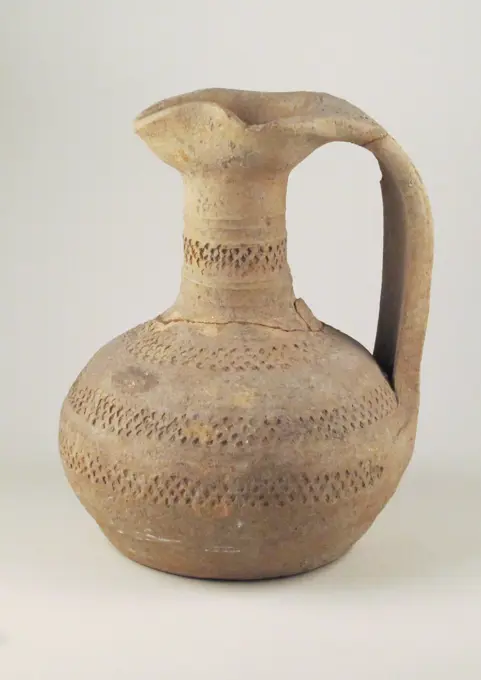
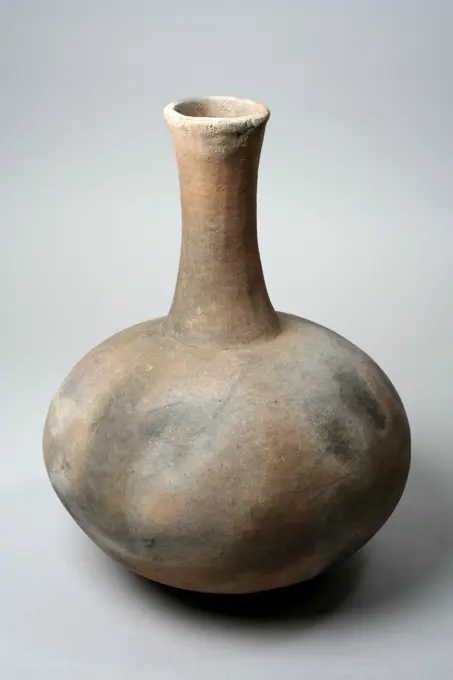
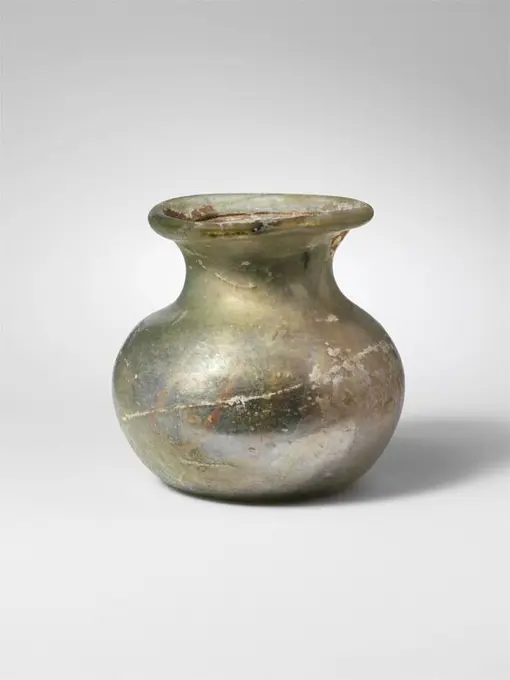
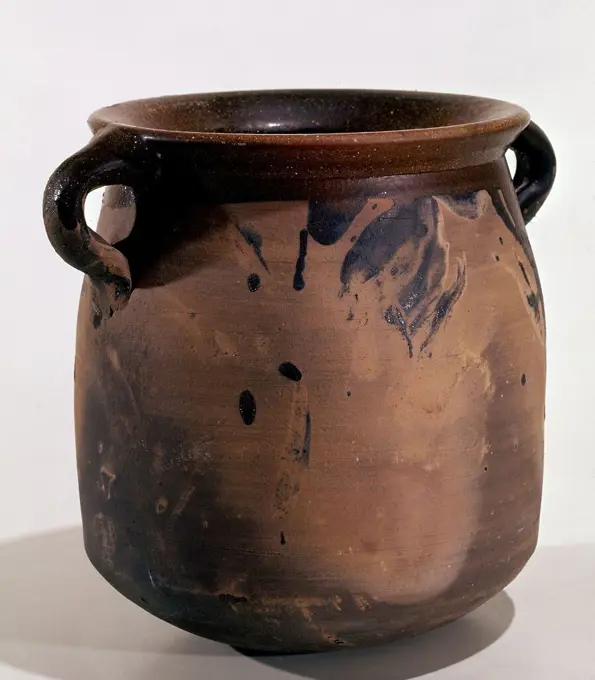
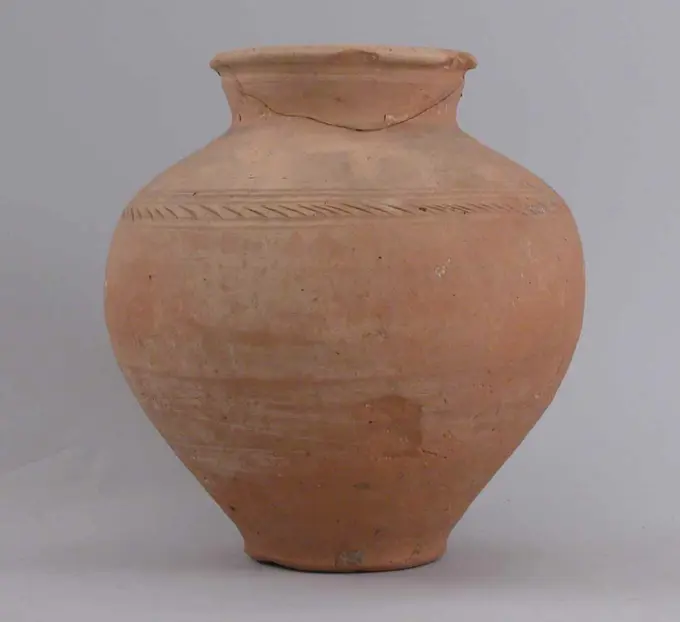
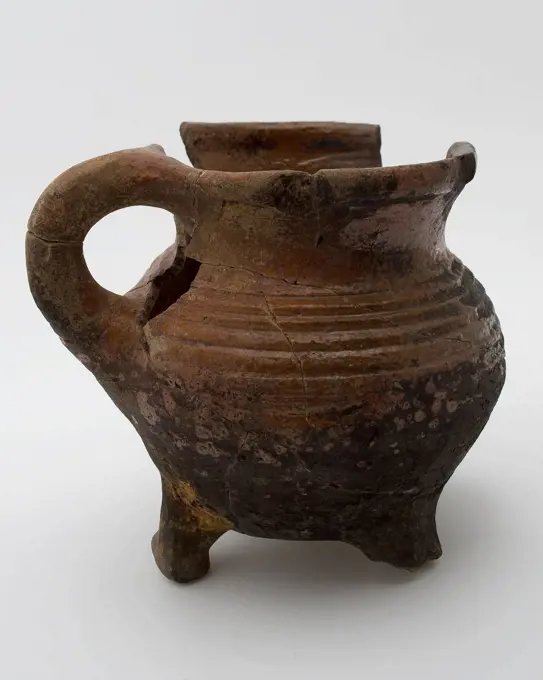
A collection of historical terracotta jugs, showcasing various shapes and designs from ancient cultures. The pieces feature intricate patterns and surfaces, reflecting their archaeological significanc
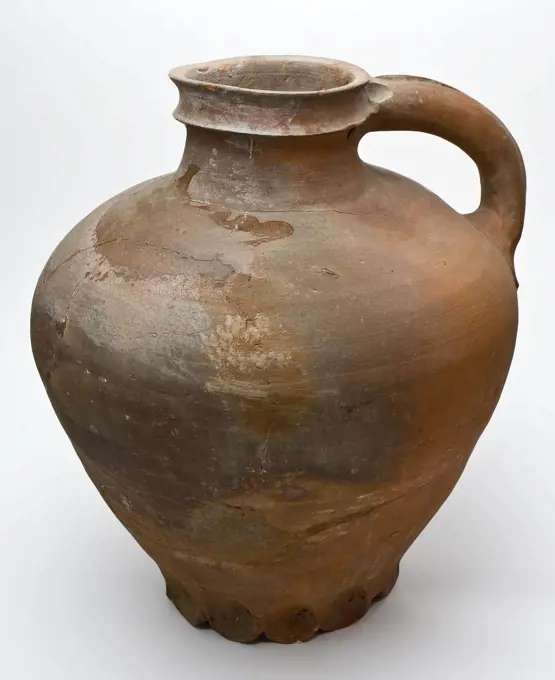
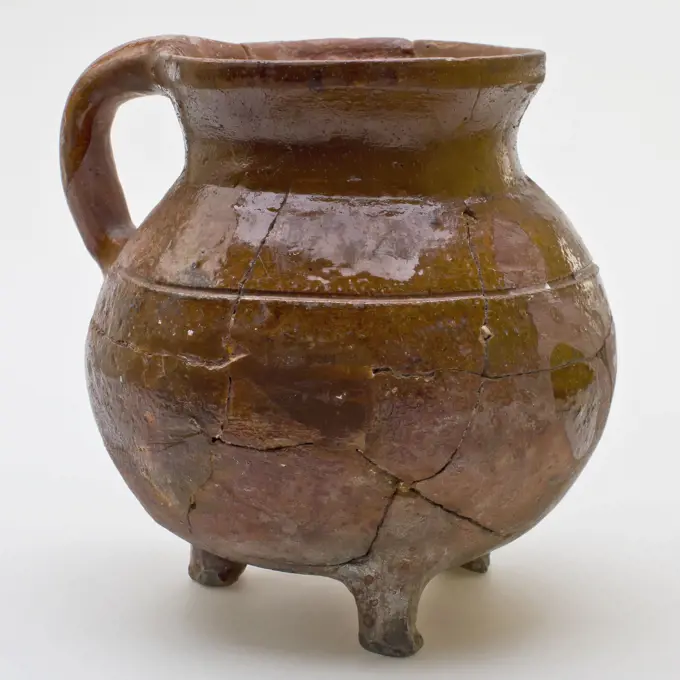
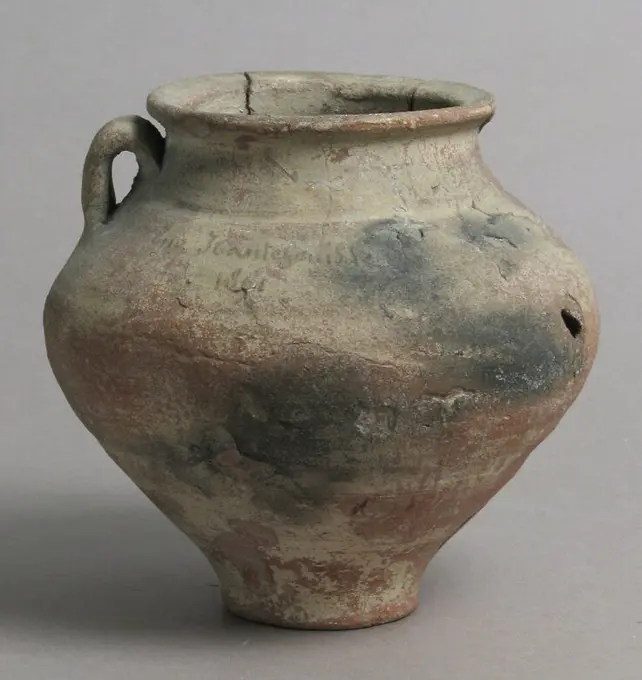
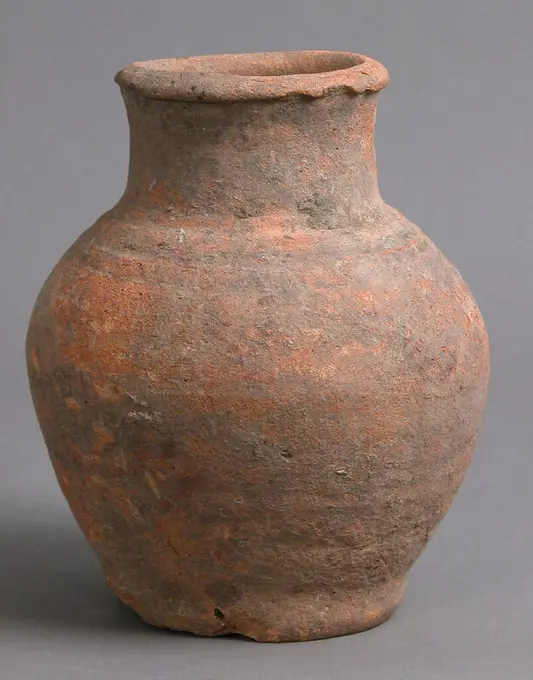
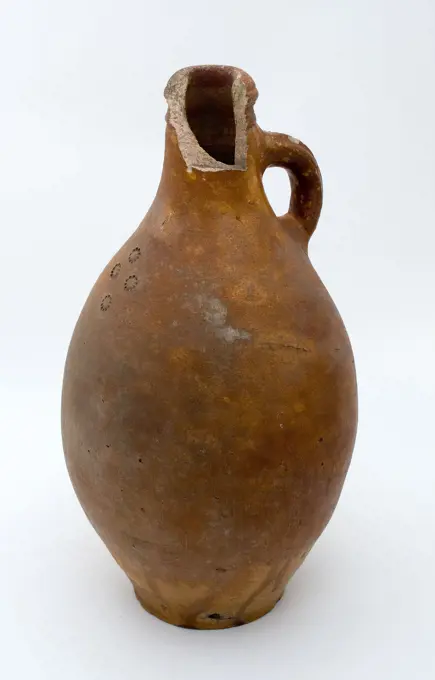
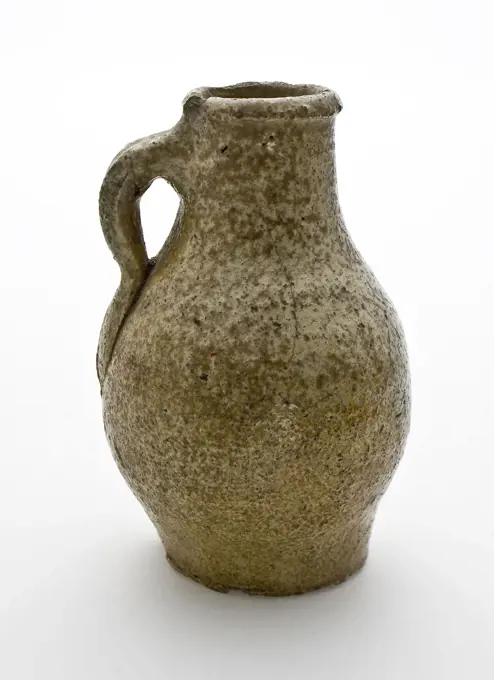
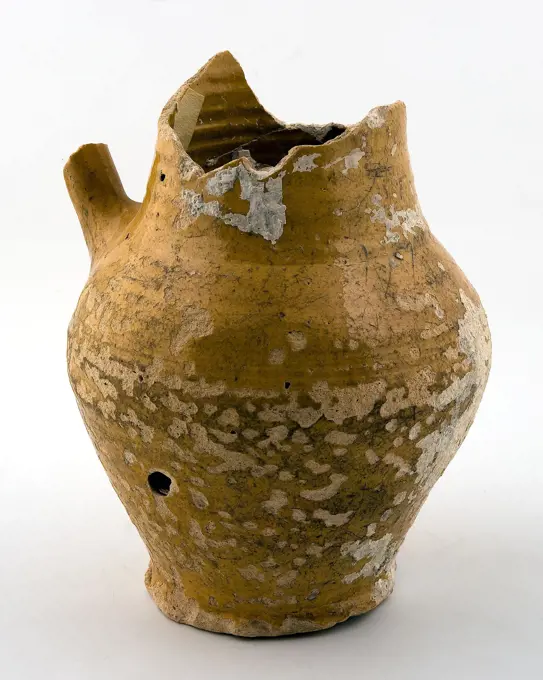
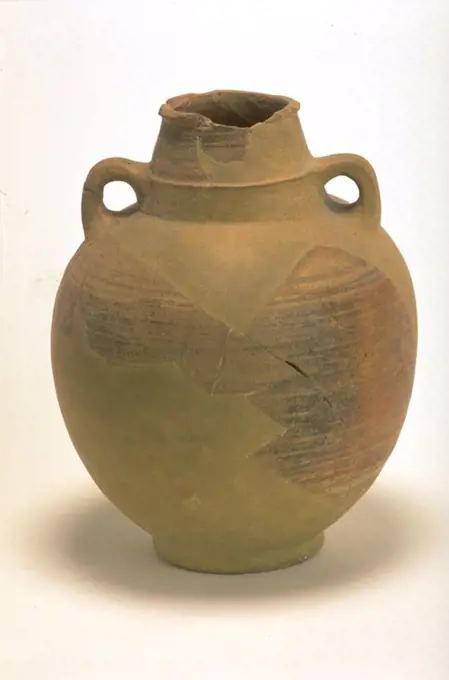
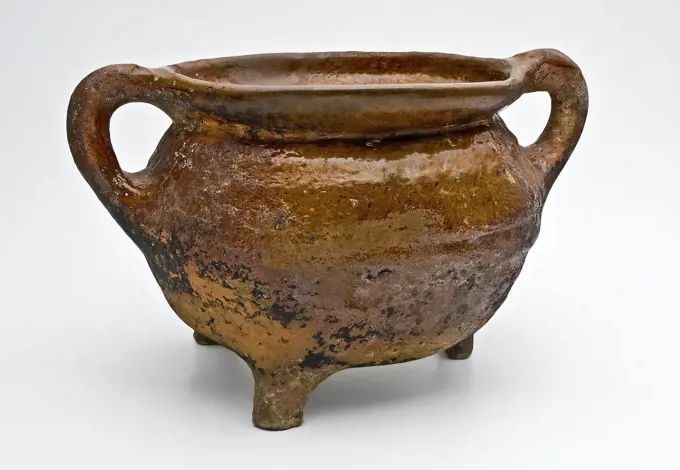
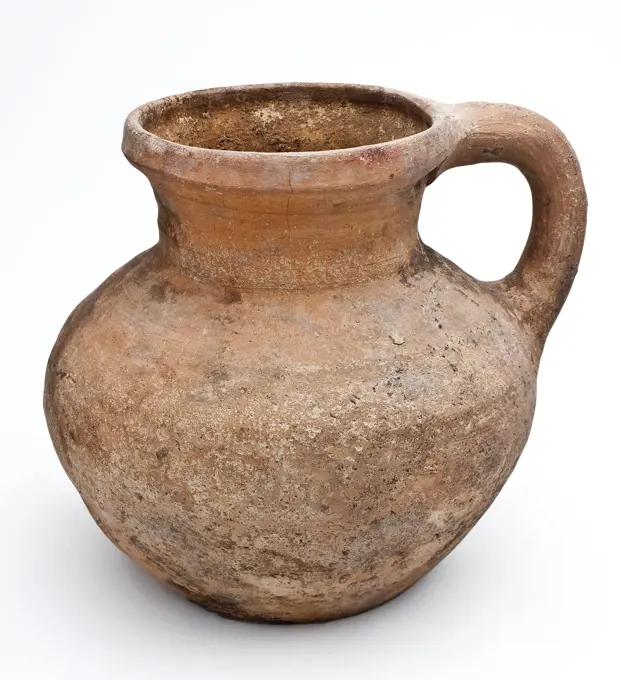
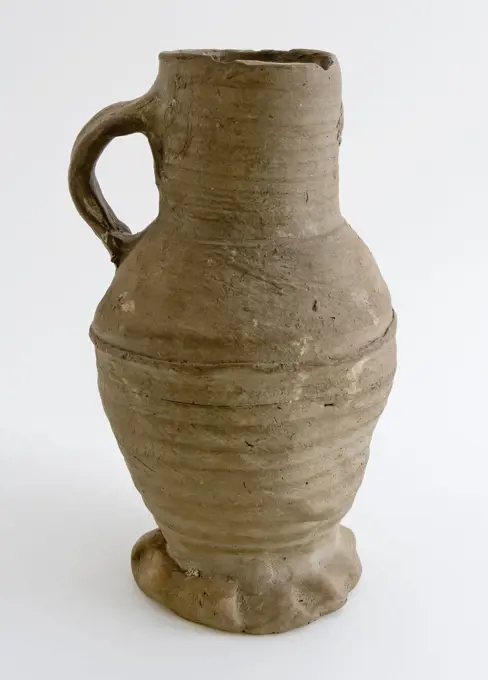
Pottery water jug on circle of stand fins, red shard, some glaze on the shoulder, water jug crockery holder soil find ceramic earthenware glaze lead glaze, hand turned glazed fried jug of red earthenware cuff shaped upper edge with thick round ear with groove and three pinched lobes twelve pinched toes of which two in plaster sparing glaze on shoulder and some sweeping on belly foot and toes. Eir-shaped model archeology Valckensteyn Poortugaal Albrandswaard indigenous pottery water washing food preparation stock packaging kitchen Soil discovery: under the bridge pole at bridge castle Valckensteyn at Poortugaal now Albrandswaard 1962.
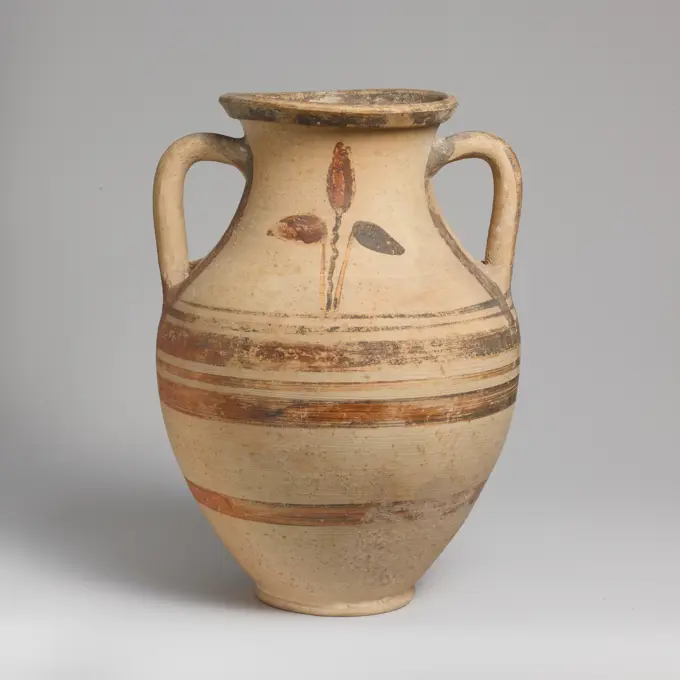
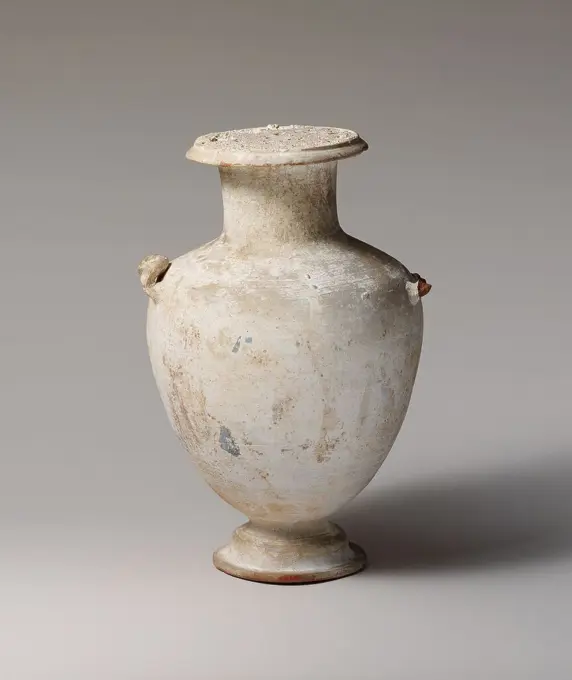
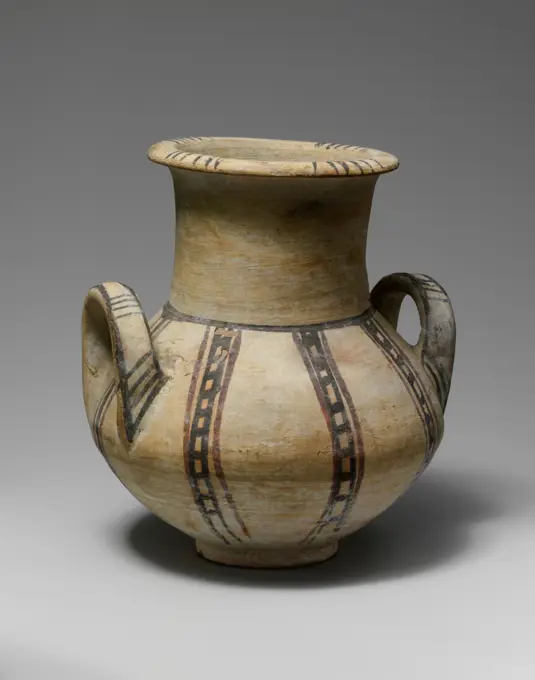
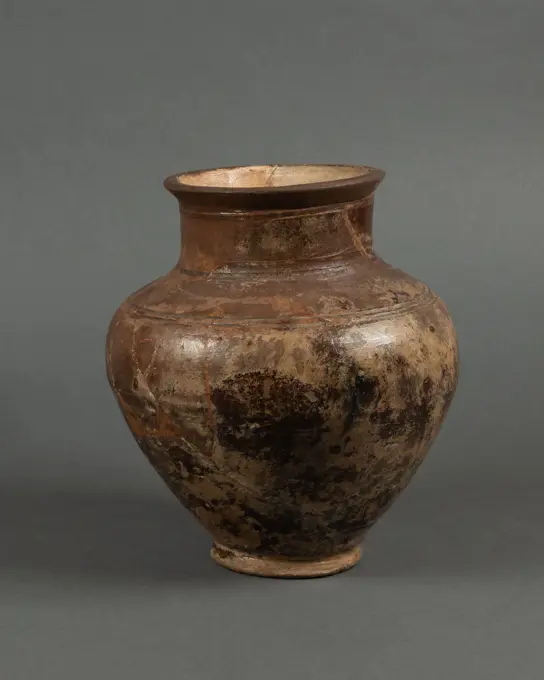
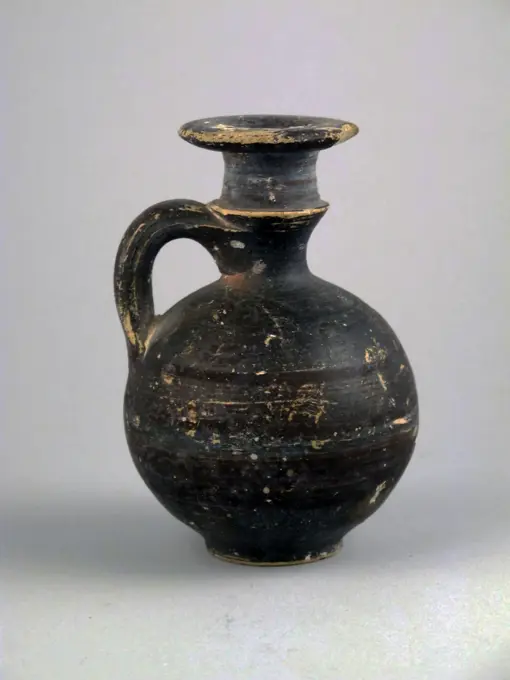
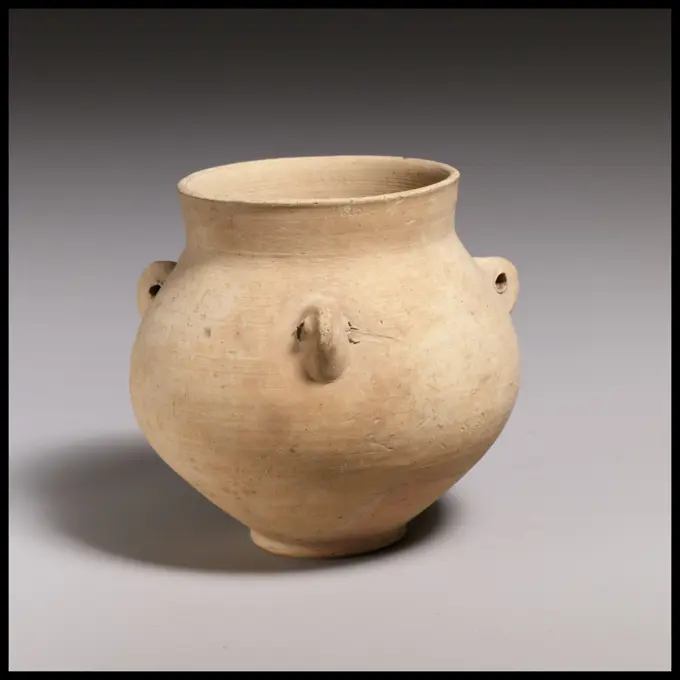
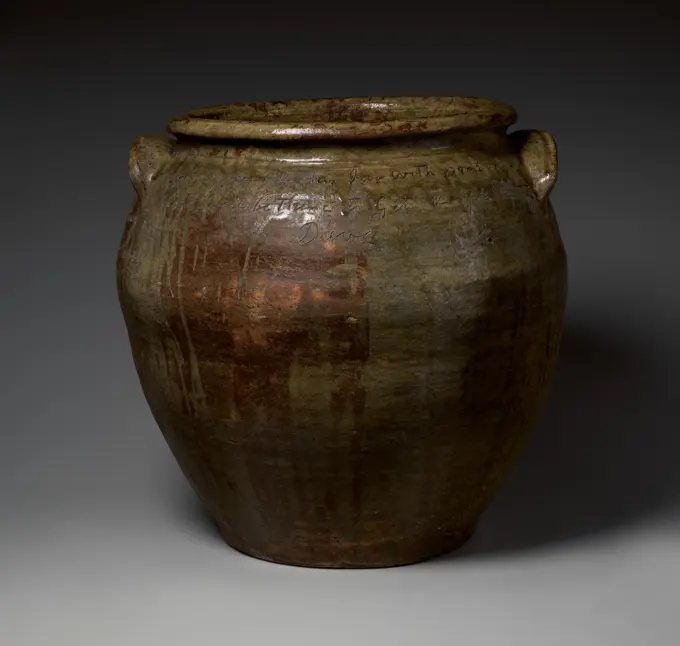
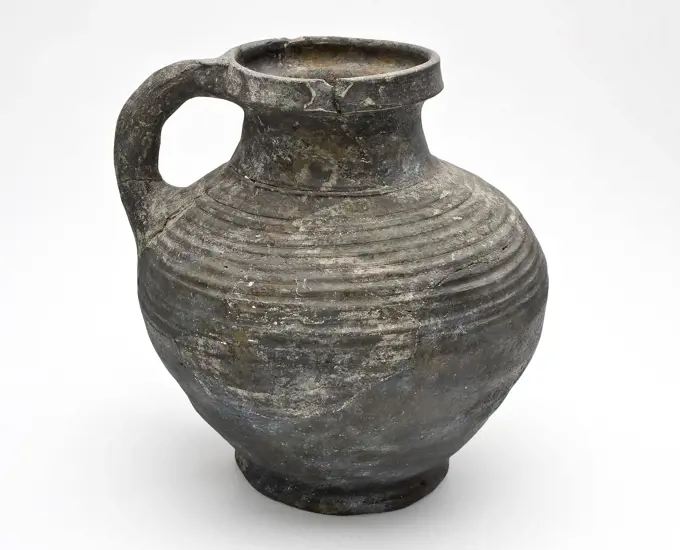
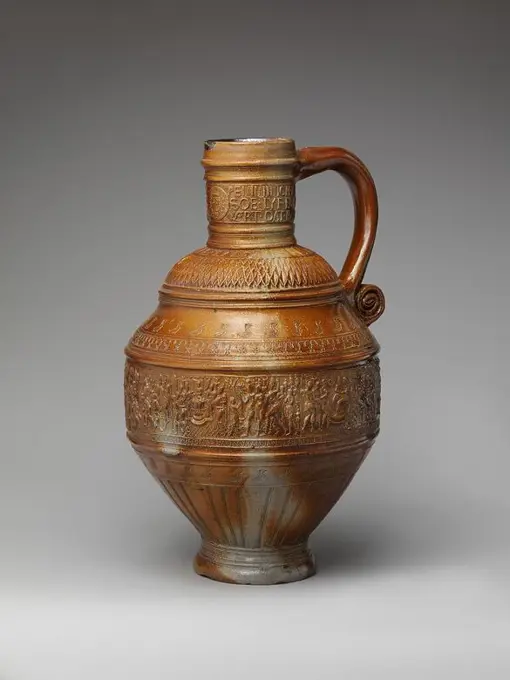
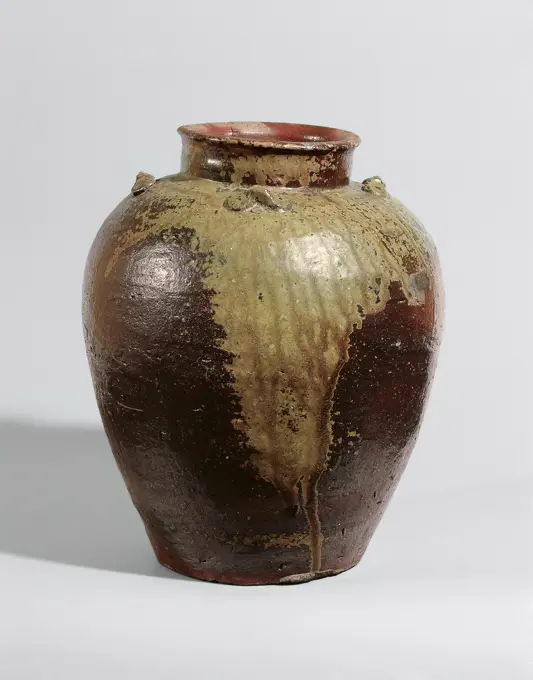
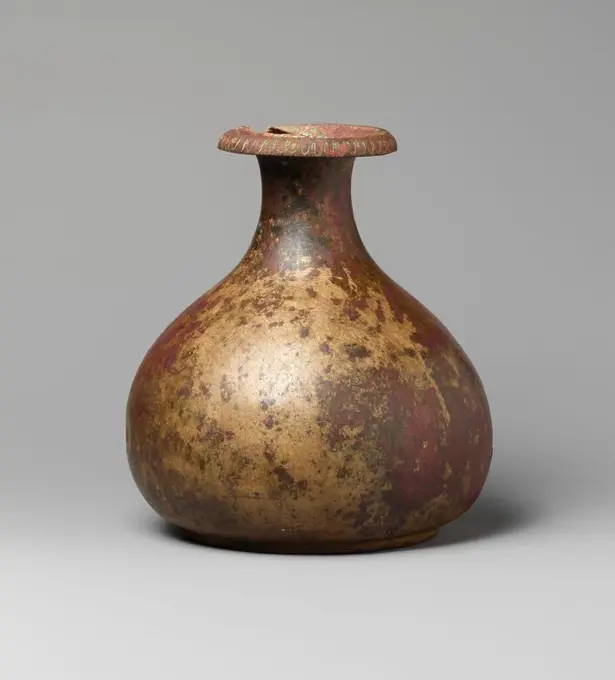
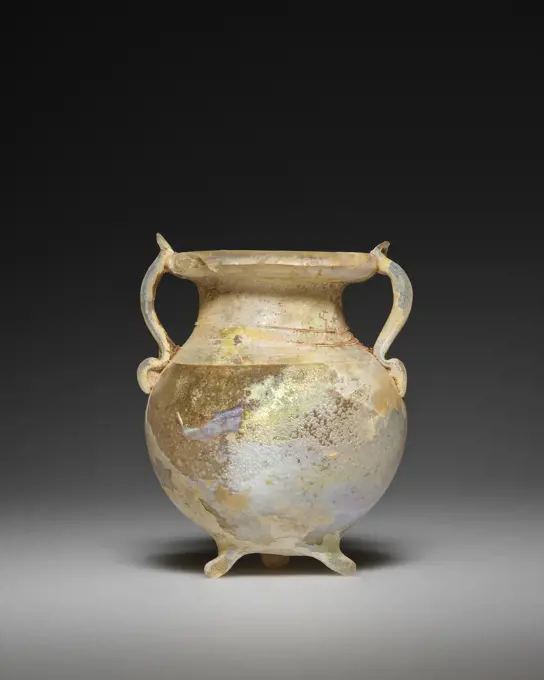
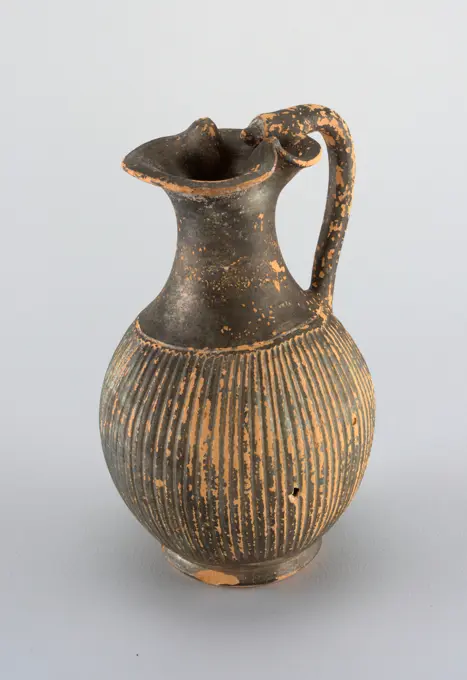
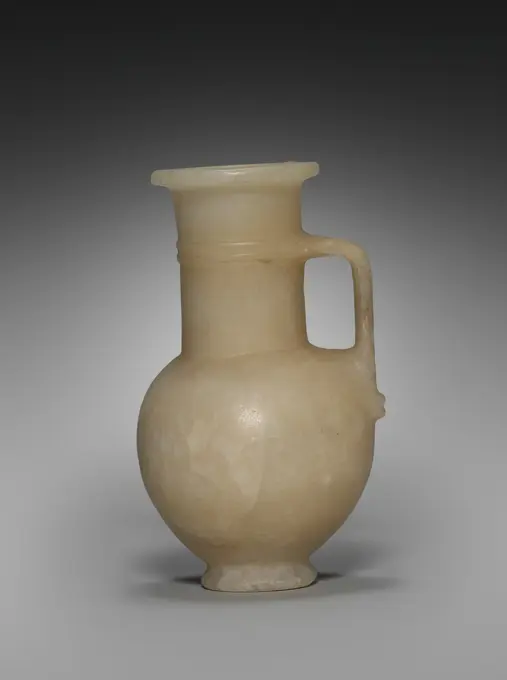
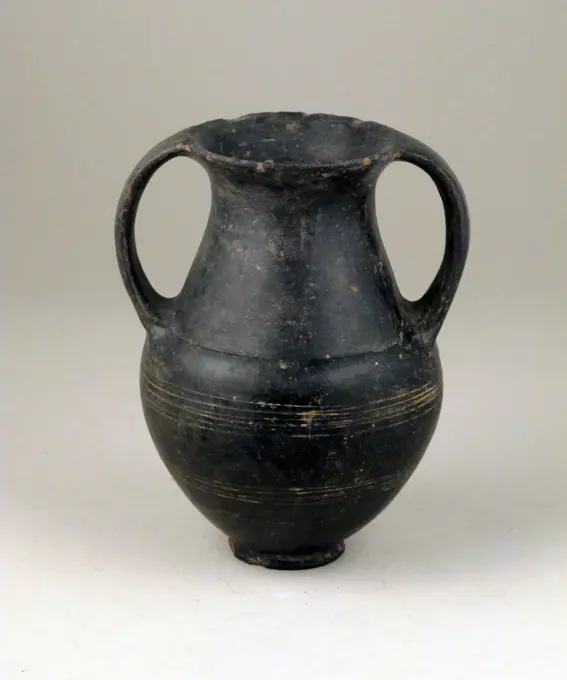
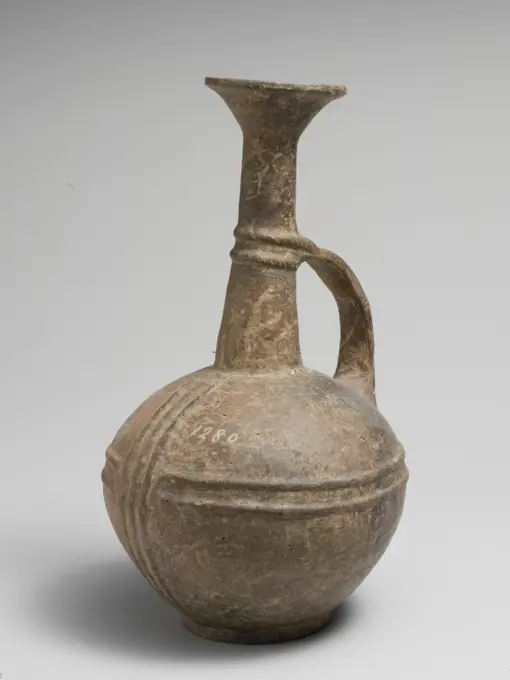
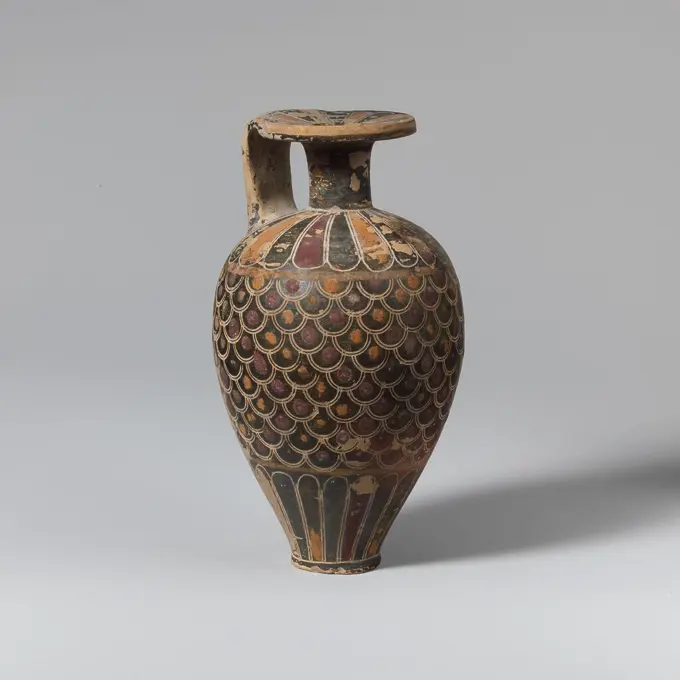
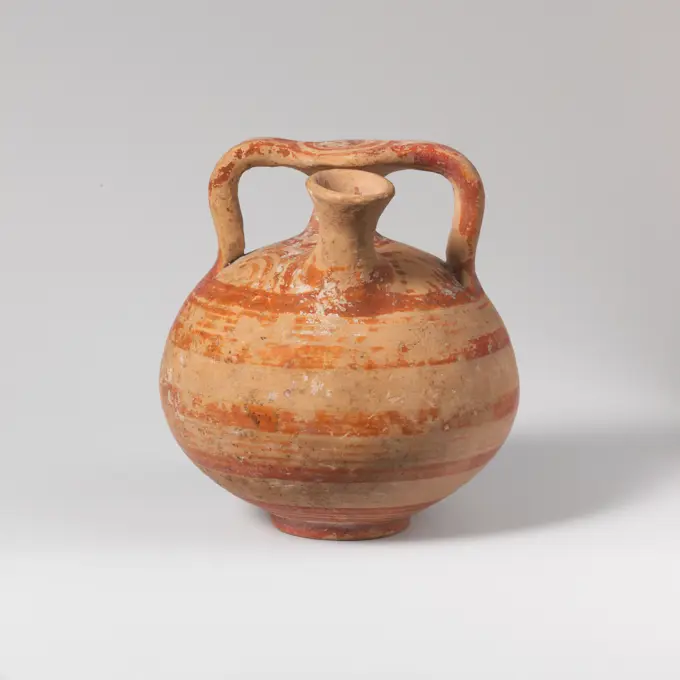
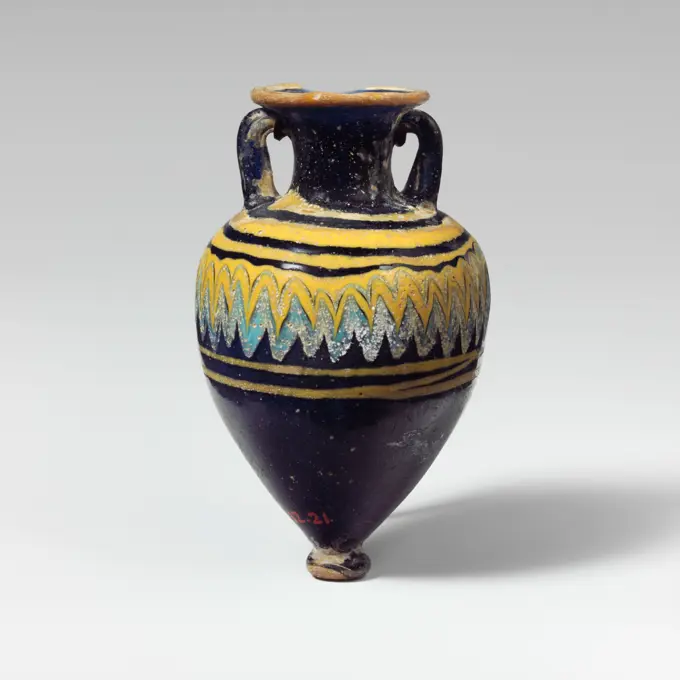
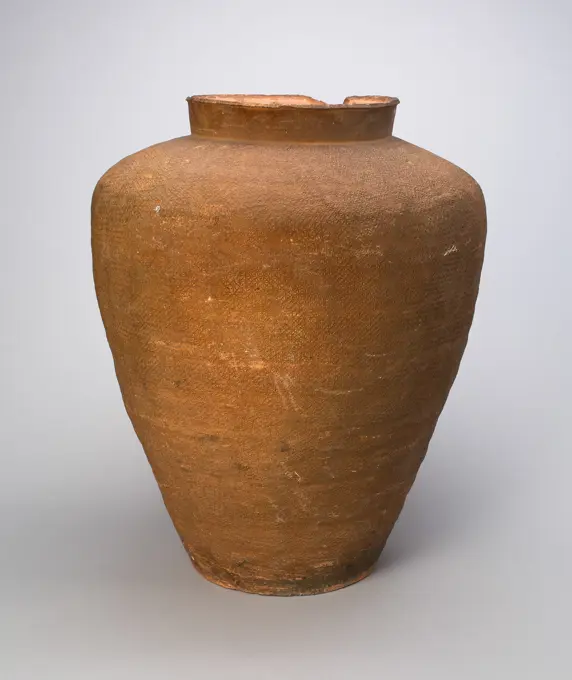
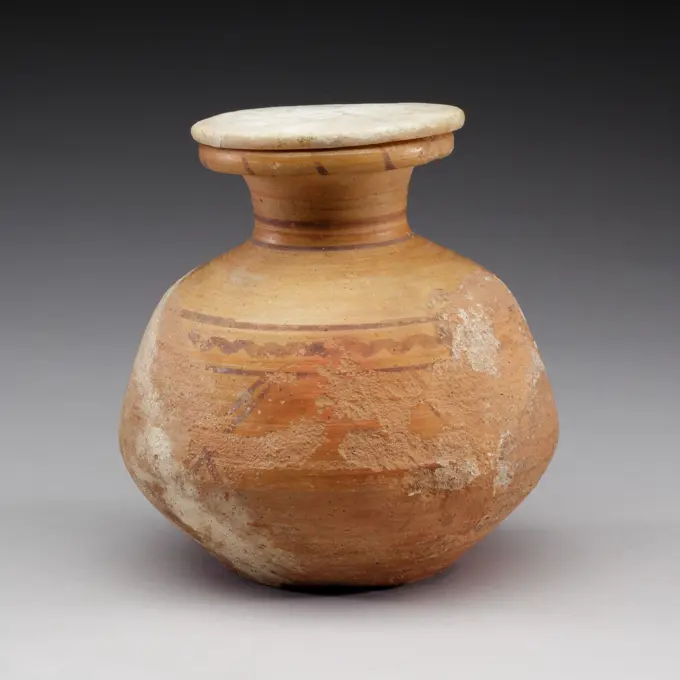
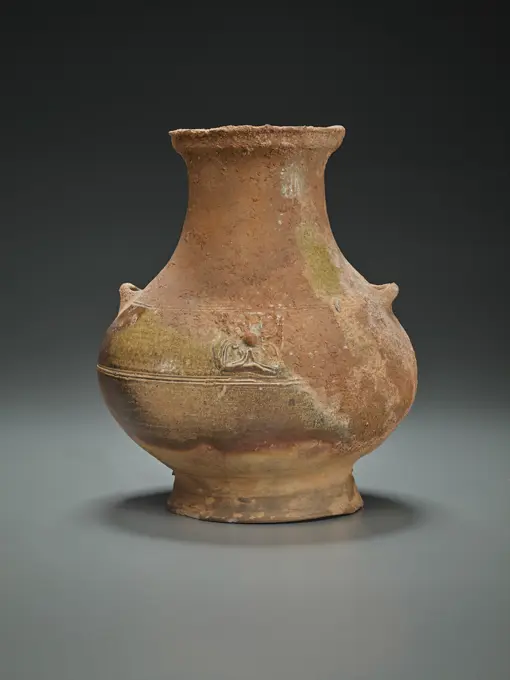
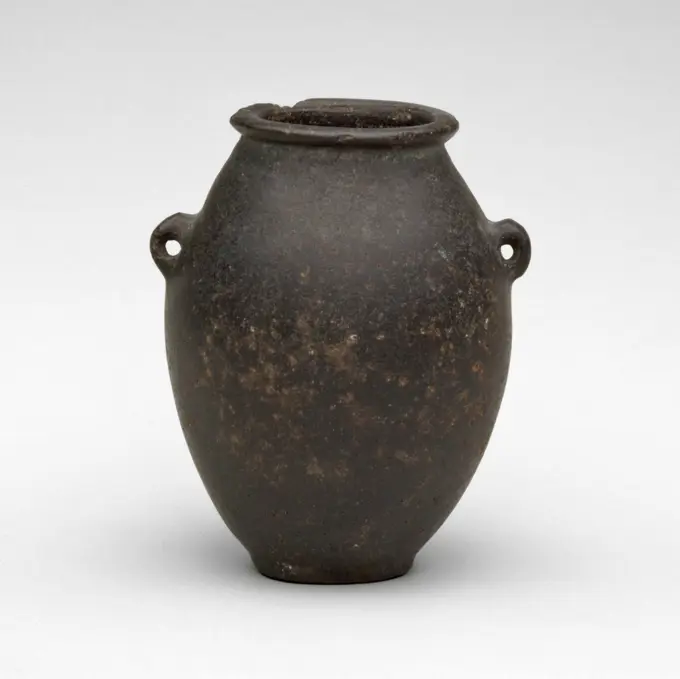
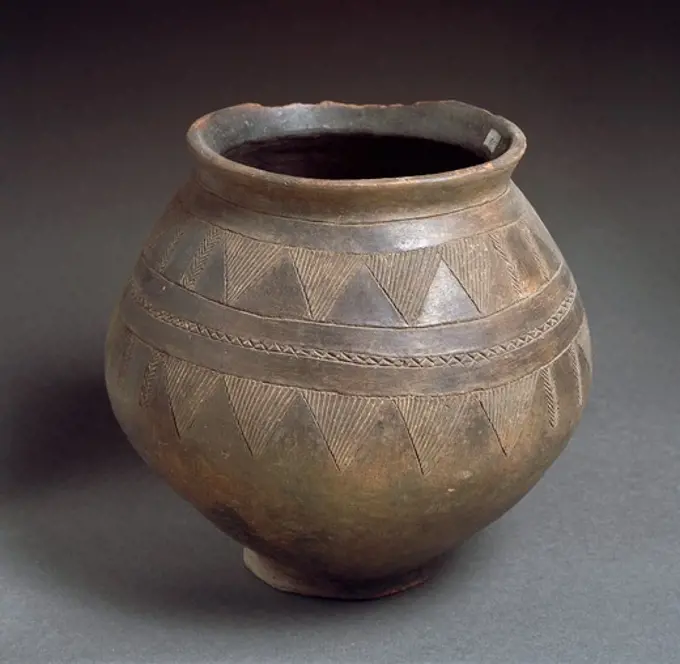
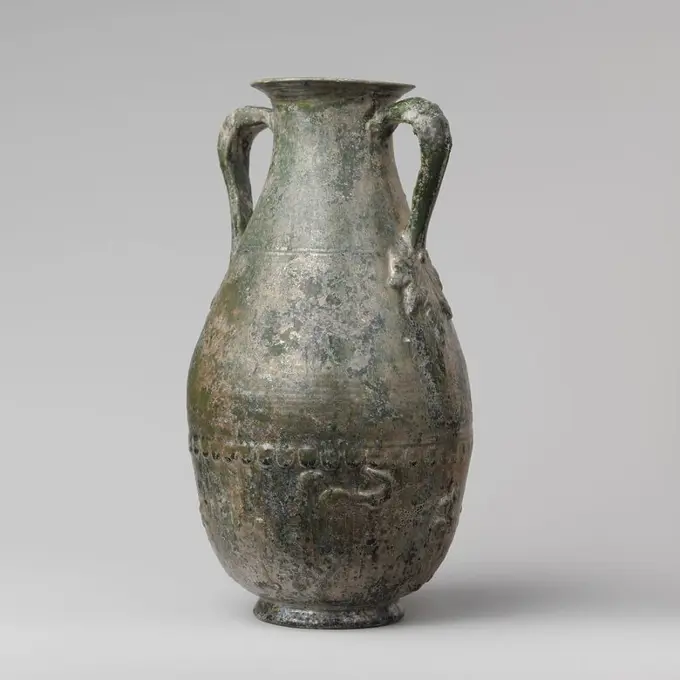
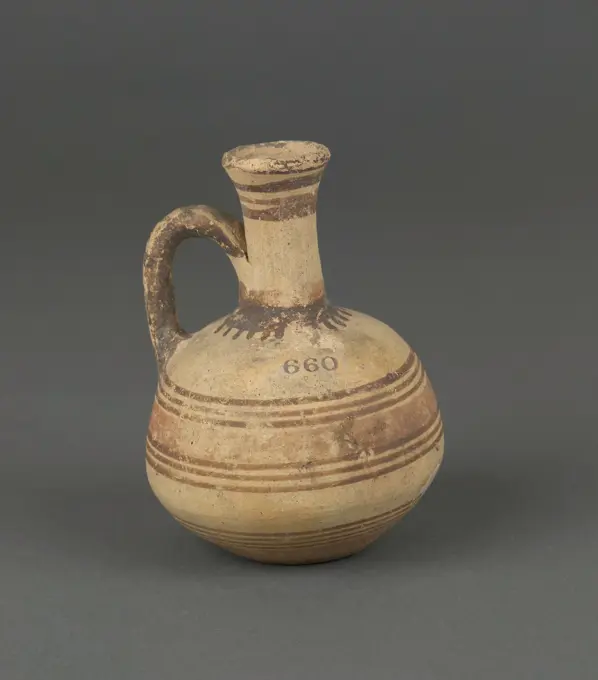
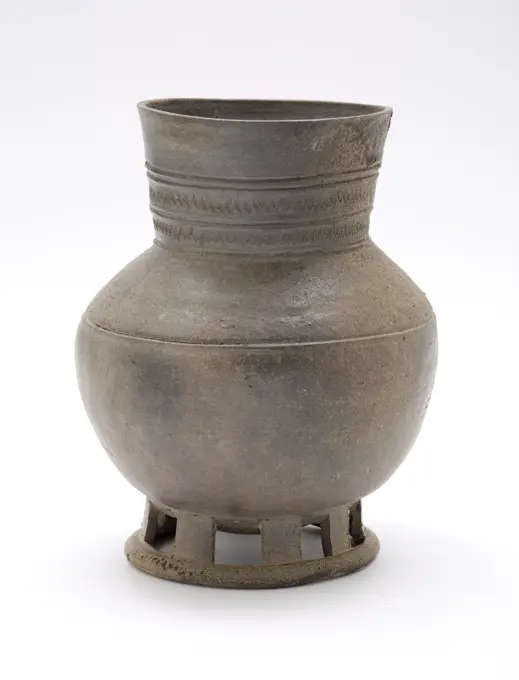
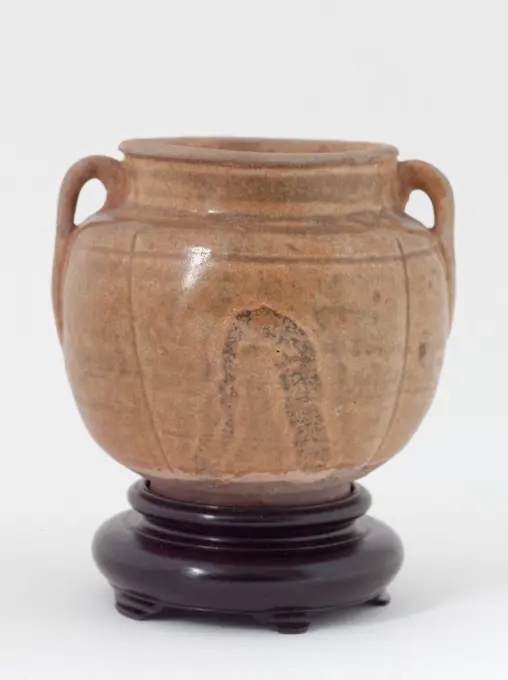
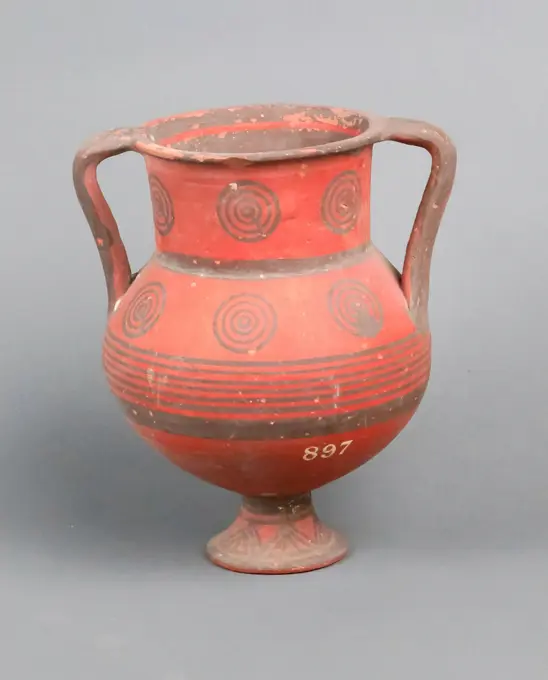
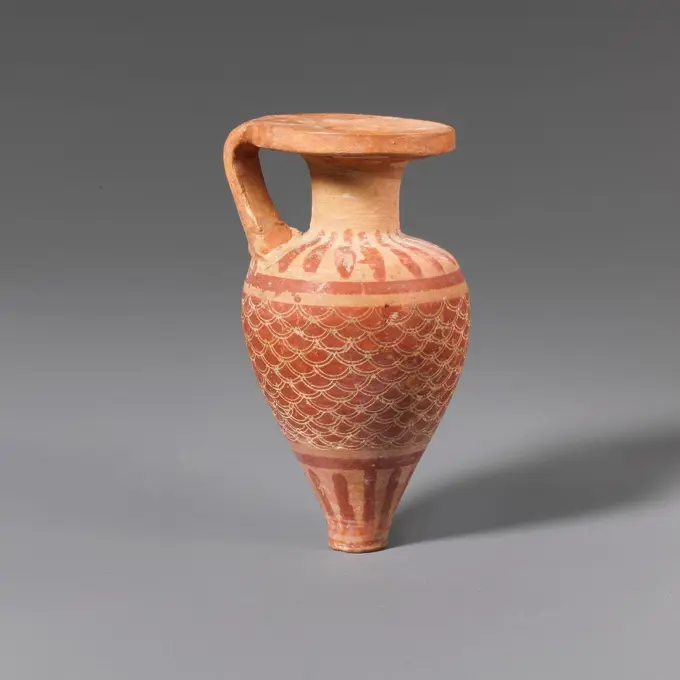
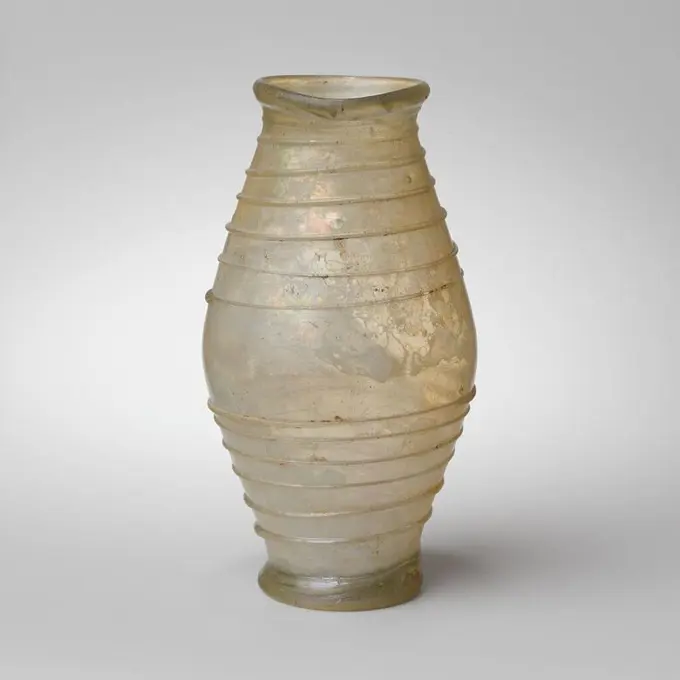
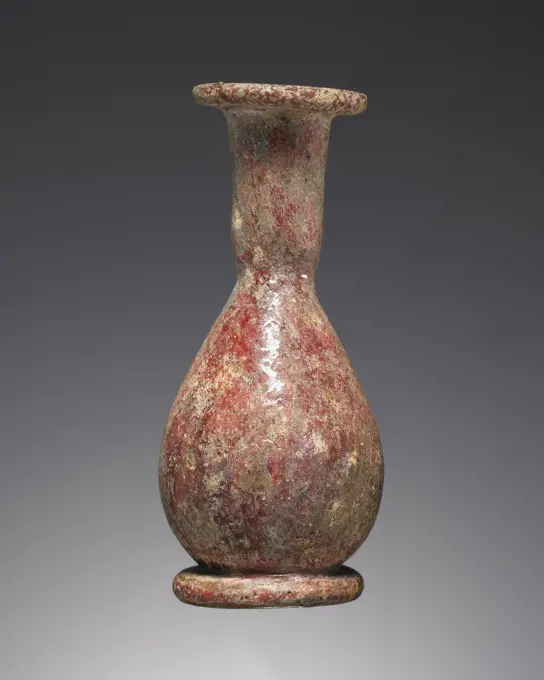
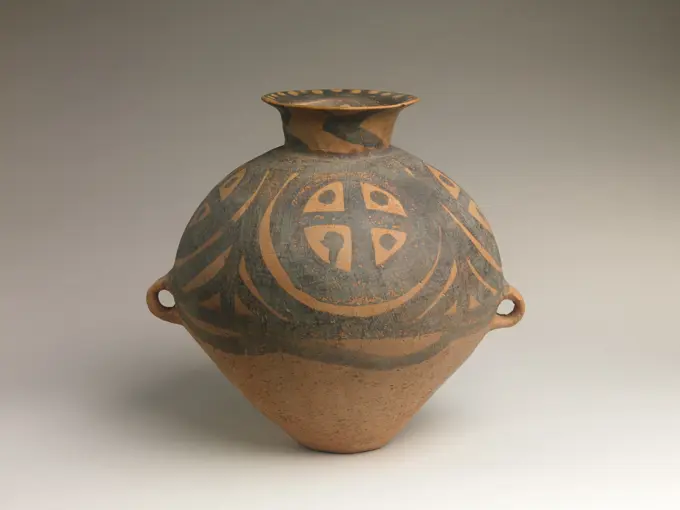
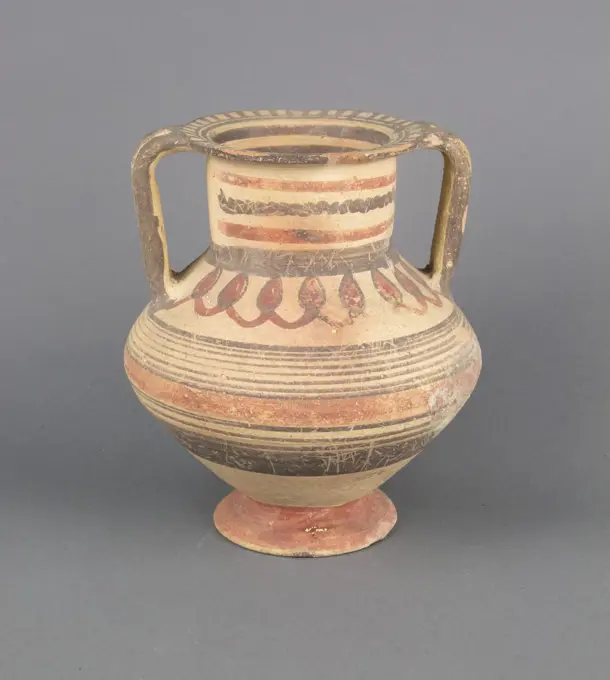
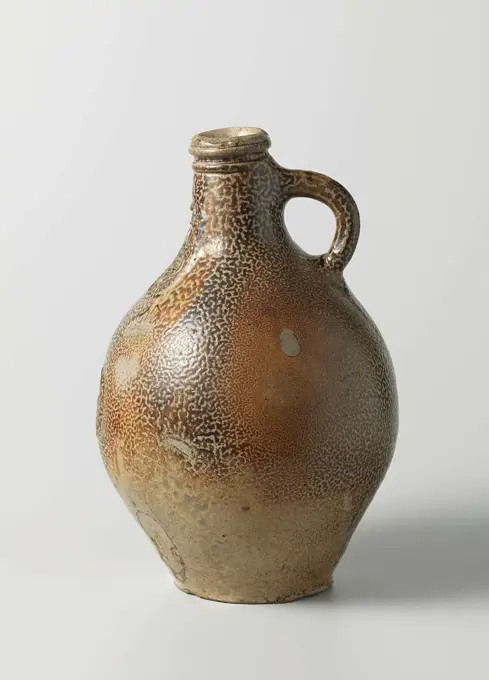
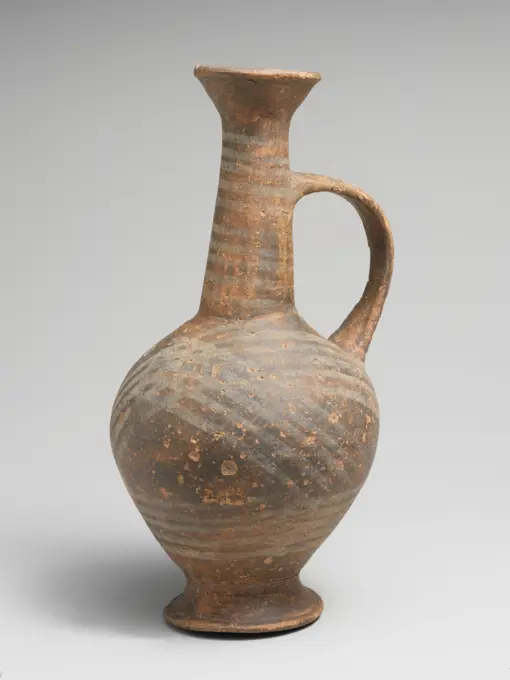
Pottery water jug on circle of stand fins, red shard, some glaze on the shoulder, water jug crockery holder soil find ceramic earthenware glaze lead glaze, hand turned glazed fried jug of red earthenware cuff shaped upper edge with thick round ear with groove and three pinched lobes twelve pinched toes of which two in plaster sparing glaze on shoulder and some sweeping on belly foot and toes. Eir-shaped model archeology Valckensteyn Poortugaal Albrandswaard indigenous pottery water washing food preparation stock packaging kitchen Soil discovery: under the bridge pole at bridge castle Valckensteyn at Poortugaal now Albrandswaard 1962.Terracotta jug ca. 1450-1200 B.C. Cypriot Narrow-necked jug with handle, with white binding pattern.. Terracotta jug. Cypriot. ca. 1450-1200 B.C.. Terracotta; Base-Ring Ware. Late Cypriot II. VasesTerracotta amphora (jar) 6th century B.C. East Greek Amphora with bands and on neck groups of leaves.. Terracotta amphora (jar) 239945Terracotta Hadra hydria (water jar). Culture: Greek, Ptolemaic, Alexandrian. Dimensions: h. 14 7/8 in. (37.8 cm); d. 10 in. (25 cm). Date: late 3rd century B.C..Faint traces of an elaborate helmet with a griffin crest, a shield bearing the snakey head of Medusa, and a cuirass, are evident on this white-ground hydria. A warrior's armor was a common subject for vases destined for burial, since it alluded to the both the heroic character of the deceased, as well as the manner of death. Sites in Alexandria have yielded hydriai with similar motifs in much better states of preservation, thus providing an idea of the original appearence of this vase. Museum: Metropolitan Museum of Art, New York, USA.Vase Hu ". Terracotta with green lead glaze. Han dynasty (206 BC J.-220). Paris, Cernuschi museum. Chinese art, Chinese ceramic, han dynasty, green lead, terracotta, humTwo-handled Jar ca. 1550-1458 B.C. New Kingdom This wheel-made jar with basket handles has decoration similar to that on a jug found in the same tomb (16.10.426). Both are made of marl clay , covered with a pale coating, burnished, and decorated in red and black paint. The decoration recalls Cypriot pottery that was imported into Egypt at the end of the Second Intermediate Period. The Egyptian potters of early Dynasty 18 adopted the Cypriot style of red and black decoration and used it on forms, like this one, that were typically Egyptian.. Two-handled Jar 547033Pottery cooking pot, cooking jug with profile ring on the shoulder, one sausage ear, on three legs, cooking pot tableware holder kitchenware earth discovery ceramic earthenware glaze lead glaze, hand turned glazed baked Pottery cooking jug with one sausage ear on three legs. Sausage handle attached to the top edge and protruding above the edge Funnel-shaped upper edge with lip. Profile ring around the shoulder. Red shard sparsely glazed mainly externally Restoration is repainted archeology Rotterdam City triangle Bulgersteyn indigenous pottery cooking food preparation kitchen food Soil discovery: Slot Bulgersteyn in Rotterdam.Jug. Culture: French. Dimensions: Overall: 5 1/16 x 5 1/4 in. (12.9 x 13.4 cm). Date: 15th-16th century. Museum: Metropolitan Museum of Art, New York, USA.Jug 15th century French. Jug 465881 French, Jug, 15th century, Earthenware, Overall: 7 1/2 x 5 3/16 in. (19 x 13.1 cm). The Metropolitan Museum of Art, New York. Gift of J. Pierpont Morgan, 1917 (17.194.2194)Jar 9th-10th century View more. Jar. 9th-10th century. Earthenware; under brown glaze. Excavated in Iran, Nishapur. Attributed to Iran, Nishapur. CeramicsGlobular Jar with Ring Handles 99 BCE-1 BCE China. Stoneware with olive-green glaze and incised, impressed decoration and relief cordons .Juglet 750-600 B.C. Cypriot Handle-ridged jug, pale clay with dark slip, traces of bands and circles in white.. Juglet. Cypriot. 750-600 B.C.. Terracotta. Cypro-Archaic I. VasesTerracotta collar-necked jar ca. 1400-1190 B.C. Mycenaean The three vertical lugs on the shoulder likely were used to tie down a lid.. Terracotta collar-necked jar. Mycenaean. ca. 1400-1190 B.C.. Terracotta; Coarse ware. Late Helladic IIIA-B. VasesVase. Culture: Coptic. Dimensions: Overall: 6 11/16 x 5 1/2 in. (17 x 14 cm). Date: 4th-7th century. Museum: Metropolitan Museum of Art, New York, USA.Storage jar 1858 David Drake Inscription: "this jar is to Mr Segler who keeps the bar in orangeburg / for Mr Edwards a Gentle man  who formly kept / Mr thos bacons horses / April 21 1858" "when you fill this Jar with pork or beef / Scot will be there; to get a peace, - / Dave"?This monumental storage jara masterwork by the enslaved African American potter and poet David Drakereveals his unmatched technical facility and command of language. Born into slavery at the turn of the nineteenth century, Drake worked throughout Edgefield District, South Carolina, the epicenter of alkaline-glazed stoneware in the American South in the decades before the Civil War. This vessel is inscribed with his signature, the date, and a poem of Drake’s own creation, a practice anomalous in the production of nineteenth-century stoneware in this country, and one he reserved for a very small percentage of his output. In the absence of written accounts from the hands of enslaved individuals, this jar offers aJug of dark gray earthenware with cuff collar around neck and rings on the shoulder, jug crockery holder soil find ceramic earthenware neck, hand-turned baked Stand ring one ear Turnings on shoulder Blue-gray shard reduced fried. Ovoid body and conical neck with cuff collar. Standing sausage ear archeology Heenvliet Bernisse pottery serving serving water washing preparing food Soil discovery: Heenvliet Branderf ditch filling Found 1970 1971.Jug ca. 1175-1250 German. Jug 466283Dinos 750-600 B.C. Cypriot Two-handled vase of angular form with bands, guilloche, and zone of rosettes and triangles.. Dinos. Cypriot. 750-600 B.C.. Terracotta. Cypro-Archaic I. VasesJug. Artist: Decoration after engravings on copper by Conrad Golzius. Culture: Flemish, Raeren. Dimensions: Height: 17 1/4 in. (43.8 cm). Maker: Engel Kran. Date: 1584. Museum: Metropolitan Museum of Art, New York, USA.Tea leaf storage jar, late 16th century, Unknown Japanese, 12 5/16 × 10 3/8 × 10 3/8 in. (31.27 × 26.35 × 26.35 cm), Bizen ware; stoneware with natural ash glaze and straw fire marks around mouth, Japan, 16th century, This sturdy jar was used to store dried tea leaves before they were ground into powder for use in the tea ceremony. Its high neck was designed to accommodate a stopper that would have been lashed to the vessel with a cord threaded through the four lugs (loops). In the kiln, ash from the fire landed on the shoulders of the vessel and liquefied in the intense heat, creating natural glaze. The high iron content of Bizen clay determines the reddish-brown color of the jar and also causes the naturally greenish glaze to turn yellow, an effect known as gomayū or 'sesame seed glaze.'. Ritual wine cup with five bands of braid around the barrel, one of which is around the foot. With a lid.Bronze jug. Culture: Greek. Dimensions: H. 7 7/8 in. (20 cm). Date: 3rd-1st century B.C..The shape of this vase is unusual. It combines the attenuated, concave neck and flaring, down-turned lip of an alabastron, with the globular body of a squat lekythos. Museum: Metropolitan Museum of Art, New York, USA.VINAJERA DE BASE ANCHA - CUELLO ALTO Y ESTRECHO CON UN ASA - VIDRIADA. Location: ALFARERIA. JIMENEZ DE JAMUZ. LEON. SPAIN.Jar with tripod foot; Eastern Mediterranean; 3rd century; Glass; 7 x 6 cm (2 3,4 x 2 3,8 in.)Oinochoe; terra-cottaLong-Necked Flask with Strap Handle and Lid, 1401-1353 BC. Egypt, New Kingdom, Dynasty 18, reign of Tuthmosis III, to Amenhotep III, 1479-1353 BC. Travertine; diameter: 9.1 cm (3 9/16 in.); diameter of mouth: 6.8 cm (2 11/16 in.); overall: 16.9 cm (6 5/8 in.).Amphora, miniature end of 7th-early 6th century B.C. Etruscan Grey clay, burnished almost black; neck separated from shoulder by groove; five wheel-run grooves on the side below the handle; four below.. Amphora, miniature. Etruscan. end of 7th-early 6th century B.C.. Terracotta; bucchero. Orientalizing/ Archaic. VasesTerracotta jug ca. 1600-1450 B.C. Cypriot Long-necked jug with funnel-shaped mouth, handle and bands in relief.. Terracotta jug. Cypriot. ca. 1600-1450 B.C.. Terracotta; Base-Ring Ware. Late Cypriot I. VasesFluted bottle with lid ca. 1950 B.C. Middle Kingdom. Fluted bottle with lid 544015Terracotta pointed aryballos (oil flask). Culture: Greek, Corinthian. Dimensions: H. 4 3/8 in. (11.1 cm). Date: ca. 640-625 B.C..This vase is representative of the mastery achieved by Corinthian artists of the seventh century B.C. There is utmost precision in both the potting and the execution of the scale pattern. Museum: Metropolitan Museum of Art, New York, USA.Stoneware jug marked with four stamped rosettes on shoulder, brown glazed, jug holder kitchen utensils earthenware ceramic stoneware glaze salt glaze, hand-turned glazed baked stoneware jug light-gray shard with red-brown salt-glaze profiled rings underneath the mouth rim profiled sausage ear deducting traces on the underside of the shoulder: four rosettes in diamond shape placed archeology import pottery serve drink store store basement warehouse transportTerracotta stirrup jar ca. 1400-1050 B.C. Mycenaean Parallel circles, chevrons.. Terracotta stirrup jar. Mycenaean. ca. 1400-1050 B.C.. Terracotta. Late Helladic III. VasesGlass amphoriskos (perfume bottle) late 6th-5th century B.C. Greek, Eastern Mediterranean Translucent blue, with handles in same color; trails in opaque yellow and opaque turquoise blue.Broad, slightly inward-sloping rim-disk; cylindrical neck with concave sides; broad sloping shoulder; top-shaped body; small circular base-knob with flat bottom; two vertical strap handles applied to shoulder, drawn up, and pressed onto neck and underside of disk-rim.A yellow trail attached at edge of rim-disk; another thick yellow trail applied at base of neck, wound down in a spiral across shoulder and around top of body, then tooled into an uneven close-set zigzag pattern on upper half of body, where a turquoise blue trail is added, mingling with the yellow; below, a fine yellow trail wound horizontally twice around middle of body.Complete, except for large chip in rim-disk; slight dulling and pitting, and small patches of creamy brown iridescent weathering.. Glass amphoriskos (perfume bottle) 25345Jar 400 BCE-221 BCE China. Stoneware with impressed decoration .Small stoneware jug with standing ear and thickened lip, ovoid, jug holder soil find ceramic stoneware glaze salt glaze, hand-turned glazed baked stoneware jug gray shard salt glaze brownish shades bandoor with tail. Slightly stretched round belly. Very small sized archeology import pottery oil store packagingJug, anonymous, c. 1700 - c. 1800 Conversely, pear -shaped jug (frown) of lead glaze pottery, on a small foot. The inside is greenish glazed. Netherlands (possibly) earthenware. lead glaze Conversely, pear -shaped jug (frown) of lead glaze pottery, on a small foot. The inside is greenish glazed. Netherlands (possibly) earthenware. lead glazeDinos. Culture: Cypriot. Dimensions: 10 7/8in. (27.6cm). Date: 600-480 B.C..Vase with angular form, double handles, bands, and concentric circles. Museum: Metropolitan Museum of Art, New York, USA.Glued fragment of yellow jug with remnant of standing ear, water jug be tableware holder earth discovery ceramics earthenware glaze lead glaze, hand turned glazed baked Pottery water jug Yellow glazed white shard Globe model on stand ring Long neck with twisted lenses Long standing ear Extremely much damage to enamel layer and remnants lime or plaster both internal and external archeology Gerdesiaweg underground pit Rotterdam Kralingen-Crooswijk Rubroek Muted Slaak indigenous pottery water drinking craft lime plaster Soil discovery probably metropolis Gerdesiaweg or Gedempte Slaak 1977 1978Jug 4th-7th century Coptic. Jug 476285Jar from Neferkhawet's Tomb ca. 1504-1447 B.C. New Kingdom The burial of Ruiu was found in the tomb of her father, Neferkhawet, which was excavated by the Museums Egyptian Expedition in 1935. This pottery jar had been placed inside the coffin, by the left shoulder of Ruiu's mummy. The jar was filled with a black, aromatic pitch flecked with red that has become solid with age. The geometric pattern on the outside of the jar was painted with dark and light red paint. The lid is made of Egyptian alabaster.. Jar from Neferkhawet's Tomb. ca. 1504-1447 B.C.. Jar: pottery, paint. Lid: travertine (Egyptian alabaster). New Kingdom. From Egypt, Upper Egypt, Thebes, Asasif, Tomb of Neferkhawet (MMA 729), east chamber, Burial of Ruiu (IV), inside coffin by head, MMA excavations, 1934-35. Dynasty 18, earlyWine Jar (Hu) 481 BCE-221 BCE China. This vessel displays a rich variety of ornament and filler patterns Two thick bands of interlaced dragons, their bodies filled with spirals, triangles, and dots, alternate with thinner bands.. Bronze .JarVase with Inscription and Chrysanthemum Flowers China. Slip-coated stoneware with underglaze iron brown painting .Terracotta pointed aryballos (oil flask). Culture: Etruscan, Italo-Corinthian. Dimensions: H.: 3 15/16 in. (10 cm). Date: late 7th-early 6th century B.C..During the late eighth and much of the seventh century B.C., Corinthian pottery was widely exported . The major question is whether the contents or the ceramic was more important. On the Italian peninsula, especially in Etruria, local workshops produced imitations or adaptations, of which this is an example. Museum: Metropolitan Museum of Art, New York, USA.Tea Caddy, 1700s. Japan, Edo period (1615-1868). Porcelain ; overall: 8 cm (3 1/8 in.).Conical ointmentURNA TIPO. FENICIO. (DEPOSITO: MUSEO ARQUEOLOGICO NACIONAL).Vessel with Lug Handles 4000 BCE-2250 BCE Egypt. This jar was carved from very hard stone using a simple drill fitted with a copper tip. The small lug handles allowed for it to be suspended by cords. Vessels like this one were probably used for the storage of ointment or liquids.. Stone . Ancient EgyptianPrehistory, Italy, Iron Age. Golasecca culture. Cinerary urn decorated with engravings.Terracotta Hadra hydria (water jar). Culture: Greek, Ptolemaic, Cretan. Dimensions: h. 15 1/4 in. (38.7 cm); d. 9 13/16 in. (25 cm.). Date: late 3rd century B.C..inscribed on shoulder "of Apollonios"The inscription on this hydria indicates that this vessel once contained the ashes of a Greek named Apollonios. It is likely he died while in Alexandria, where the vast majority of these hydrias have been discovered. The clay-colored ground of this urn, however, points to the island of Crete as the place of its manufacture. Museum: Metropolitan Museum of Art, New York, USA.Terracotta amphora (jar). Culture: Roman. Dimensions: H. 10 3/8 in. (26.4 cm); diameter of body 5 1/2 in. (14 cm). Date: 1st half of 1st century A.D..Frieze of maenads and female figures at bottom. Museum: Metropolitan Museum of Art, New York, USA.Jug Roman Reddish brown jug with stamped bands; unglazed.. Jug. Roman. Terracotta. VasesBottle 11th-14th century Mississippian. Bottle 318601Jar. UnknownJarGlass jar. Culture: Roman. Dimensions: H. 2 11/16 in. (6.8 cm). Date: ca. 2nd-4th century A.D..Translucent pale green.Tubular rim, folded out, over, and flattened into side of flaring mouth; short, concave neck; squat, globular body; pushed-in bottom with traces of pontil scar.Intact; many bubbles, some large, and blowing striations; iridescence and small patches of weathering on exterior, thick brown weathering and brilliant iridescence on interior. Museum: Metropolitan Museum of Art, New York, USA.Terracotta amphora 1900-1600 B.C. Cypriot Amphora with globular body, zigzag bands and lattice panels.. Terracotta amphora. Cypriot. 1900-1600 B.C.. Terracotta; White Painted Ware. Middle Cypriot. VasesOLLA PARCIALMENTE VIDRIADA CON 2 ASAS - ARTE POPULAR S XX. Location: ALFARERIA. Breda. GERONA. SPAIN.Pot of red -baking clay, with green lead glaze on the inside and on the outside of brown lead glaze, damaged, anonymous, 1500 - 1799   earthenware. glaze   earthenware. glazeGlass jar 4th-6th century A.D. Roman, Syrian Translucent pale blue green; trail and handles in translucent blue green streaked with opaque dark brown red.Rim slightly outsplayed, with rounded vertical lip; below hollow folded flange; funnel-shaped neck; sloping shoulder; body with convex side, tapering downwards to pushed-in bottom with kick and pontil scar; four handles, arranged in pairs on opposite sides of vessel, applied in large claw pads to edge of shoulder, drawn up and out, then folded in to flange, drawn up again to form hollow loop, and trailed off on top edge of rim.Single fine trail wound horizontally two and a half times around middle of body.Broken on one side of rim and neck with one large hole; many pinprick and some larger bubbles; dulling, faint weathering, and iridescence on exterior, soil encrustation, creamy weathering, and iridescence covering much of interior.. Glass jar 256749Jar, 1-200. Parthian, 1st-2nd Century. Terracotta; overall: 14.8 cm (5 13/16 in.).Juglet 750-480 B.C. Cypriot. Juglet. Cypriot. 750-480 B.C.. Terracotta. Cypro-Archaic II. VasesJar with Long Neck. Korea, Korean, Three Kingdoms period, Old Silla kingdom, 57 B.C.-A.D. 668, 5th-7th century. Furnishings; Serviceware. Coiled and wheel-thrown stoneware with impressed, combed, and cut decoration and ash glazeJarre ". Glès à coourt eric. What is the day with a changsha. Paris, museum museum meats. Anse, Asian art, Chinese art, Chinese ceramic, container, oval form, jar, container, base, terracottaCovered Jar. Culture: American. Dimensions: H. 12 1/2 in. (31.8 cm). Date: 1825-75. Museum: Metropolitan Museum of Art, New York, USA.Stoneware jug with sausage ear, with indentation in belly, marked on the shoulder, jug holder kitchen utensils earthenware ceramic stoneware icing salt glaze, hand turned fried glazed stoneware jug light gray shard with salt glaze orange brown brindled profiled rings underneath the mouth rim profiled sausage ear Worstoor untidy attached Marked on the shoulder with letter possible pottery mark On shoulder: T with above it vertical stripe archeology import pottery store store package cellar warehouseJar (Hu) 2800-2400 B.C. China. Jar (Hu) 36446Vase Painted with a Spiral Decoration Chinese Art Cernuschi Museum, Paris, France Pottery grape on three legs with two standing sausage ears, oval model or misbaksel, grape cooking pot tableware holder utensils earthenware ceramics earthenware glaze lead glaze h 15.3 abdomen, - 19,5 hand-turned glazed baked Oval two vertical ears red internally entirely glazed exterior partially glazed. Red shard. Outstanding above. Soot stains on the underside. Possible miscreation archeology Heenvliet Bernisse indigenous pottery food prepare cooking kitchen craft pottery Soil discovery: Heenvliet Branderf. Found 1971-04-24.. Bake from stoneware with salt glaze, part of a crockery.Amphoriskos 850-750 B.C. Cypriot Wide-mouthed amphora with horizontal bands and concentric circles.. Amphoriskos. Cypriot. 850-750 B.C.. Terracotta. Cypro-Geometric III. VasesPot ". Terracotta. Vietnam-Xe-Xive s. Paris, Cernuschi museum. 72186-40 Vietnamese object, pot, terracottaAmphoriskos; Eastern Mediterranean; 6th - 4th century B.C; Glass; 7 cm (2 3,4 in.)Terracotta pointed aryballos (oil flask). Culture: Greek, Corinthian. Dimensions: H. as restored 2 1/2 in. (6.4 cm). Date: ca. 640-625 B.C..Ornamented with scale pattern incised. Museum: Metropolitan Museum of Art, New York, USA.Kroes of brown glazed stoneware. Small fridge made of brown glazed stoneware without ornament, with inscription listed on September 27, 1883 in excavating a foundation on the Rijkswerf in Amsterdam.Stoneware barb jug, small and round ball with beard and salt glaze, beardmug tableware holder soil find ceramic stoneware glaze salt glaze, hand turned stamped glazed glazed baked Stoneware beard jug Small ball-shaped jug on small standing face conical neck with profile rings below the neck edge. Standing ribbon ear with short rat tail over the belly Baardman as appliqué Fully brown-gray glazed Stand surface with traces of archaeology Rotterdam IJsselmonde indigenous pottery import drinking serve store transport Soil discovery: IJsselmonde Castle Northwest tower pit 1 Rotterdam 1972.Glass perfume bottle 1st century A.D. Roman Colorless with pale blue tinge.Rim folded out, over, and in, flattened on top with irregular opening to mouth; cylindrical neck, with tooling marks around base; tall conical body with rounded curve to slightly concave bottom.Intact; some pinprick bubbles, blowing striations, and a few glassy inclusions; deep pitting and iridescent weathering.. Glass perfume bottle 244641Glass barrel-shaped jar. Culture: Roman. Dimensions: H.: 4 3/4 in. (12 cm). Date: 2nd century A.D..Colorless with green tinge; trails in same color.Thick, everted, rounded rim, misshapen on one side; side slanting out to convex mid-point on body, then slanting in to solid low base ring; uneven bottom with low central kick and prominent pontil mark.One trail applied to side above mid-point and wound from left to right in a spiral 7 times up body, ending under rim; another trail applied to side just below mid-point and wound from right to left in a spiral 6½ times down body, ending on edge of base.Intact; some bubbles and a few black impurities; slight dulling, creamy weathering, and iridescence.The trails around the body are meant to represent the hoops around a wooden barrel. Museum: Metropolitan Museum of Art, New York, USA.Jar ca. 1550-1295 B.C. New Kingdom. Jar. ca. 1550-1295 B.C.. Pottery. New Kingdom. From Egypt; Probably from Upper Egypt, Thebes. Dynasty 18Flask; Eastern Mediterranean or Italy; 1st century; Glass; 6.2 cm (2 7,16 in.)Jar. Western Iran, circa 2100-1900 B.C.. Furnishings; Serviceware. Buff ware; brown-black painted decorationPedestaledJarEarthenware chamber pot with curved bottom, unglazed, narrow neck, pot holder sanitary earthenware ceramic pottery, belly 17,5 soil 10,5 hand turned pottery Pot brown-red pottery unglazed vaulted bottom with soul round ear round belly narrow neck faint rings neck. Neck with narrow cuff and finger impression on the site of the attachment of the ear archeology Capelle aan den IJssel House in Capelle castle indigenous pottery toilet disposal night sleeping room hygiene Soil discovery: cesspool 1420-1425 house in Capelle Capelle aan den IJssel 1963.Ritual vessel, China. Chinese Civilisation, Eastern Zhou Dynasty,8th-3rd century BC.Pre-Columbian art. Pre-Incan. Cuasmal Culture (500-1500 AD). From Ecuador. Ceramic vessel. 23 x 16 cm (diameter). Private collection.Bronze hydria (water jar) with lid. Culture: Greek. Dimensions: 19 1/2in. (49.5cm). Date: 3rd century B.C..The Museum has the largest collection of Greek bronze hydriai in the world outside of Athens. This example illustrates the development of the shape in the third century B.C. when there was a tendency towards slimmer, more elongated proportions. Like the Hadra hydriai displayed nearby, this vase was probably used as a container for cremated remains. Museum: Metropolitan Museum of Art, New York, USA.Jar (Guan) ca. 2300-2000 B.C. China. Jar (Guan) 44726Vessel with Lug Handles 4000 BCE-2250 BCE Egypt. This jar was carved from very hard stone using a simple drill fitted with a copper tip. The small lug handles allowed for it to be suspended by cords. Vessels like this one were probably used for the storage of ointment or liquids.. Stone . Ancient EgyptianVase. Vase. Terracotta. VasesAmphora 600-480 B.C. Cypriot Krater with bands, wavy lines, and lotus bud ornament.. Amphora. Cypriot. 600-480 B.C.. Terracotta. Cypro-Archaic II. VasesBearder Mankruik. Beard Mankruik from pottery. On the abdomen decorated with one rose.Stoneware jug be on pinched foot, ledge around belly and cylindrical neck, jug crockery holder soil find ceramic stoneware, hand turned baked stoneware jug gray shard unglazed irregularly shaped neck bandoor dent under the ear rings round neck and belly rib around transition shoulder belly pinched foot archeology import serving pottery serving serve drinking wine beer .Jar 9th-10th century. Jar 449089Small pottery cooking jug on three legs, grape-model, thick rings on the shoulder, cooking pot crockery holder kitchenware earthenware ceramics earthenware glaze lead glaze, hand-turned glazed baked Pottery cooking jug on three legs grape-model small size Belly model with high funnel-shaped neck Neckline thickened along the outside. Pronged rotations around the shoulder Standing sausage ear Heavy beret at the bottom Red shard sparsely glazed archeology Geervliet Bernisse indigenous earthenware cooking kitchen nutrition food preparation Soil discovery: Geervliet pit 15 Gruttersslob ZZ demolition Loyal.Urn with Lug Handles, c. 1300-1000 BC. China, Gansu province, Xindian Culture. Earthenware with slip coating and painted decoration; diameter: 29 cm (11 7/16 in.); overall: 41.3 cm (16 1/4 in.); diameter with handles: 35 cm (13 3/4 in.).Globular Vase, 20th century, 11 3/4 x 10 3/4 in. (29.8 x 27.31 cm), Earthenware, Democratic Republic of Congo, 20th centuryGlobular pitcher, 3rd century BCE - 4th century CE, 6 x 6 in. (15.2 x 15.24 cm), Polychromed earthenware, Mexico, 3rd century BCE - 4th century CEJar, late 7th-8th Century. China, Tang dynasty (618-907). Pottery; overall: 13.1 cm (5 3/16 in.).Dragon-Handled Amphora. China. Date: 700 AD-750 AD. Dimensions: H. 48.8 cm (19 3/16 in.); diam. 25.6 cm (10 1/16 in.). Stoneware with creamy white glaze. Origin: China. Museum: The Chicago Art Institute, Chicago, USA.Globular vessel, 4 1/4 x 4 1/4 x 4 1/4 in. (10.8 x 10.8 x 10.8 cm), Earthenware, Mexico, Pre-Classic