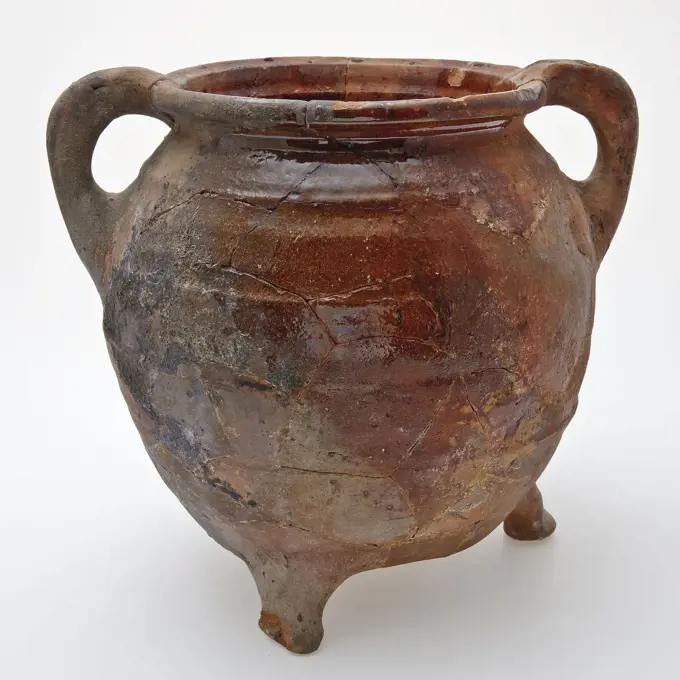
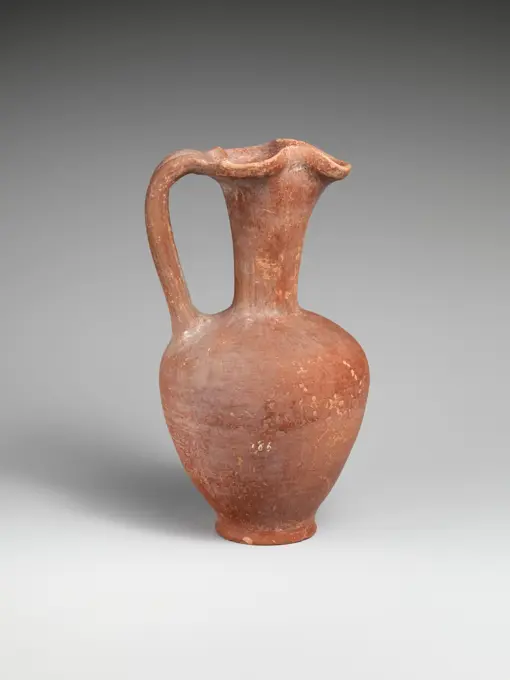
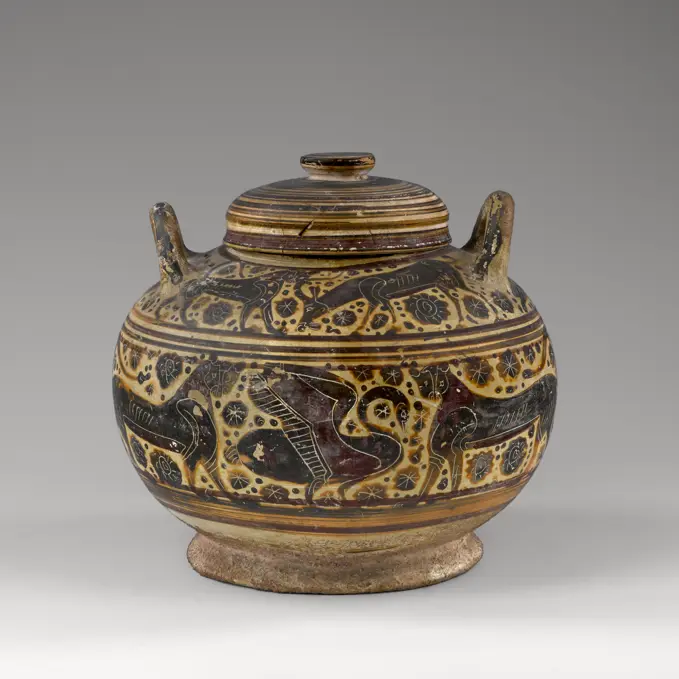
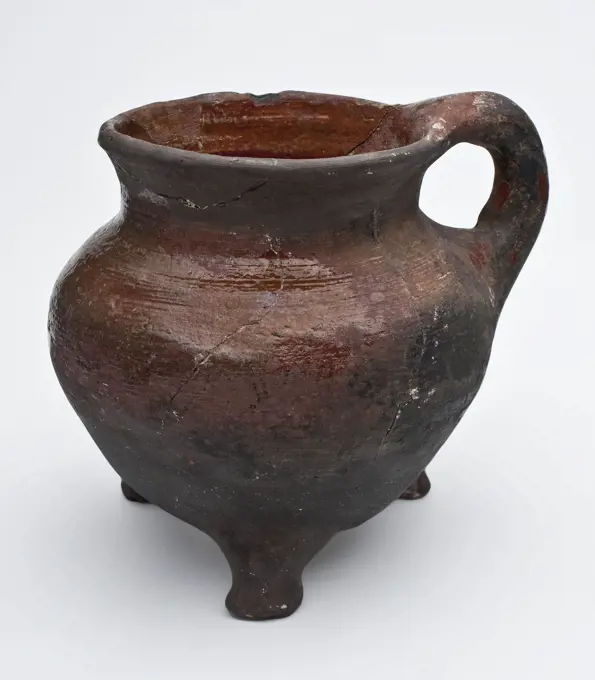
Ancient Terracotta Jugs

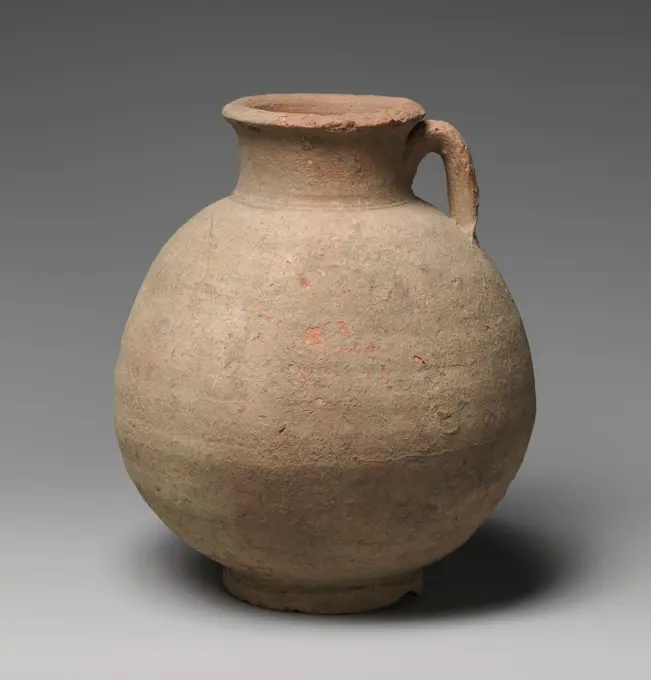
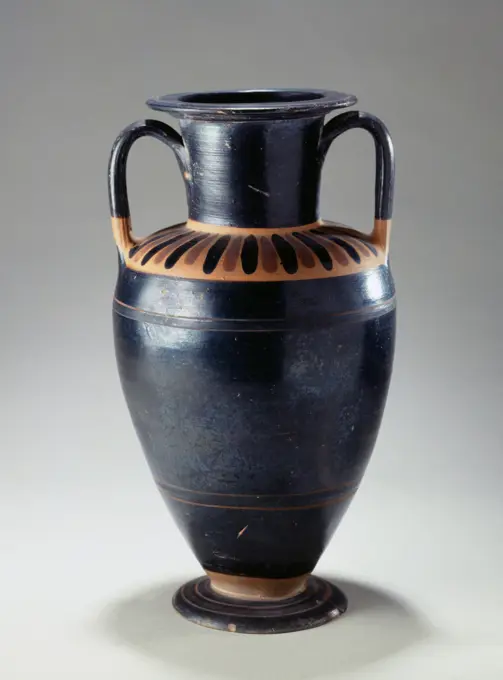
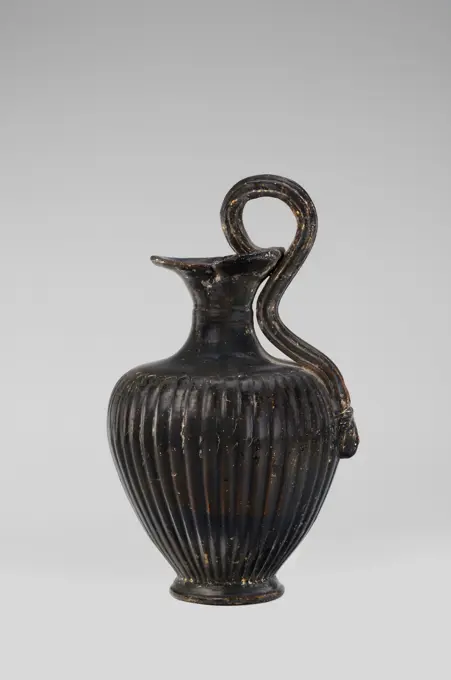
A range of terracotta jugs from various ancient cultures, featuring intricate designs and varying ages, reflecting historical pottery craftsmanship.
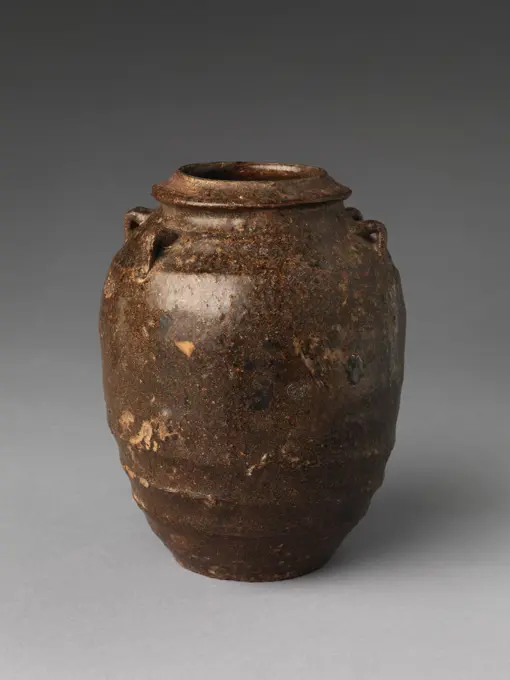
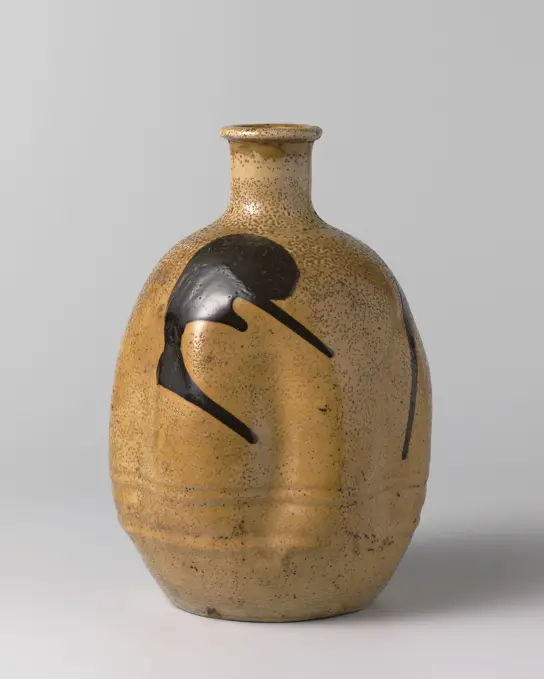
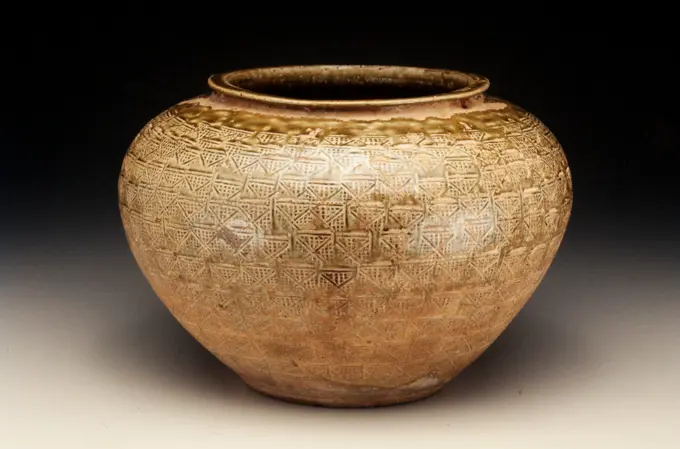
Jar 18th century Japan. Jar. Japan. 18th century. Clay covered with mottled glaze (Seto ware). Edo period (1615-1868). Ceramics
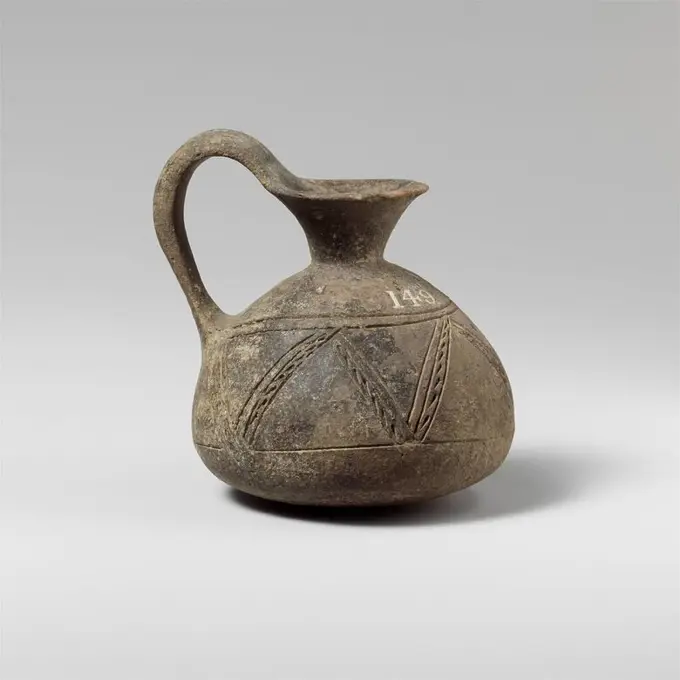
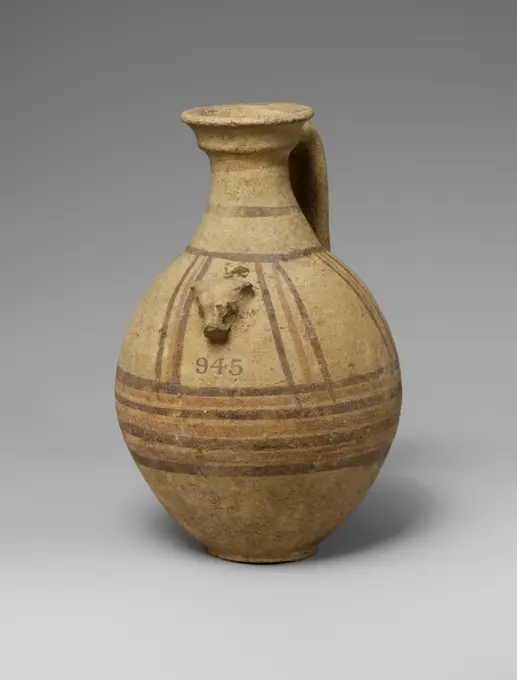
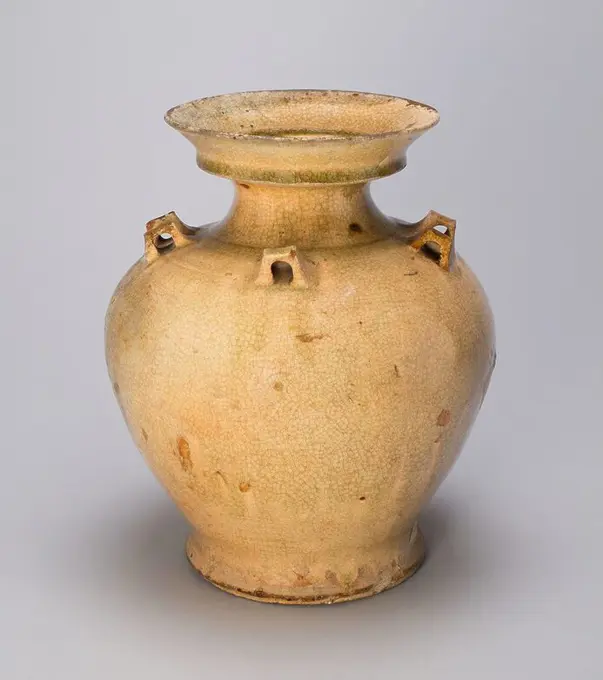
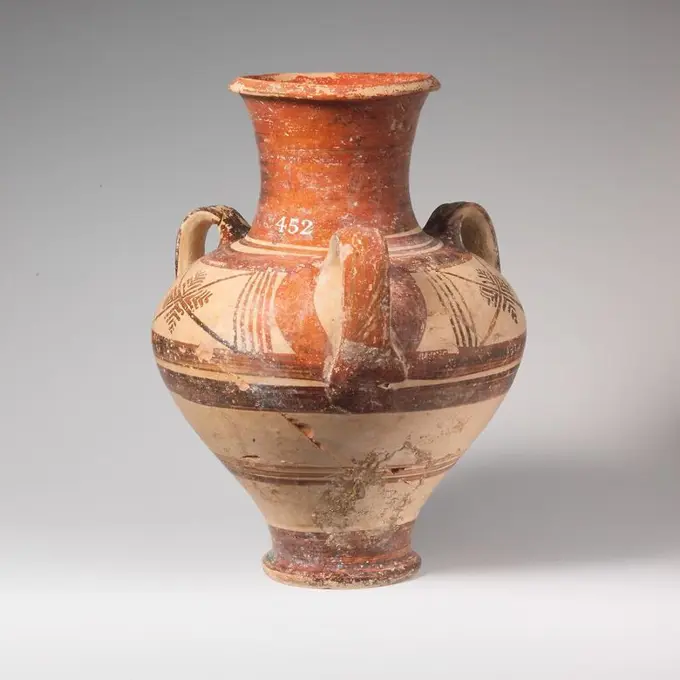
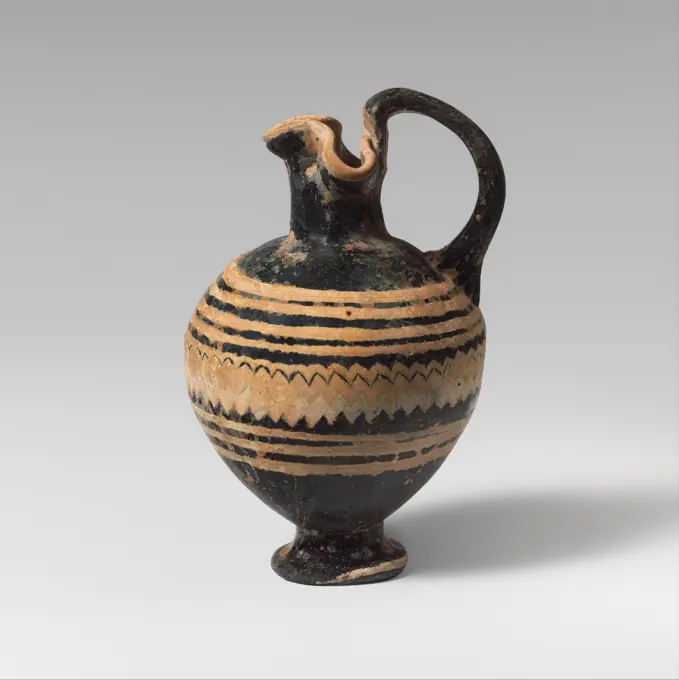
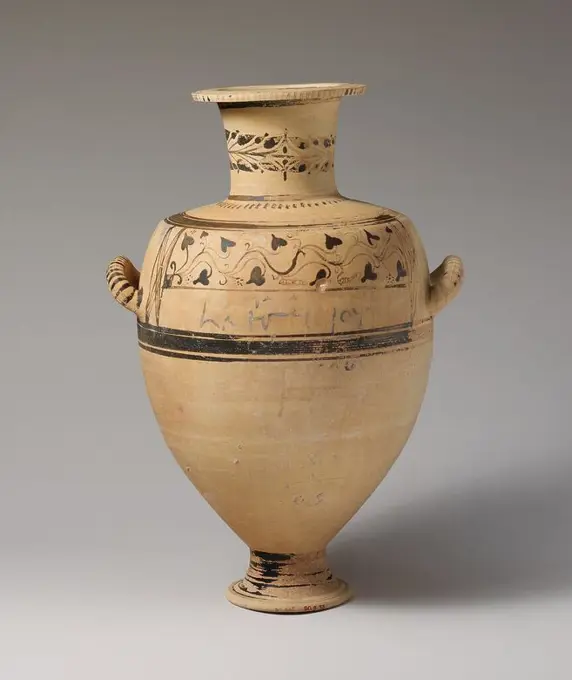
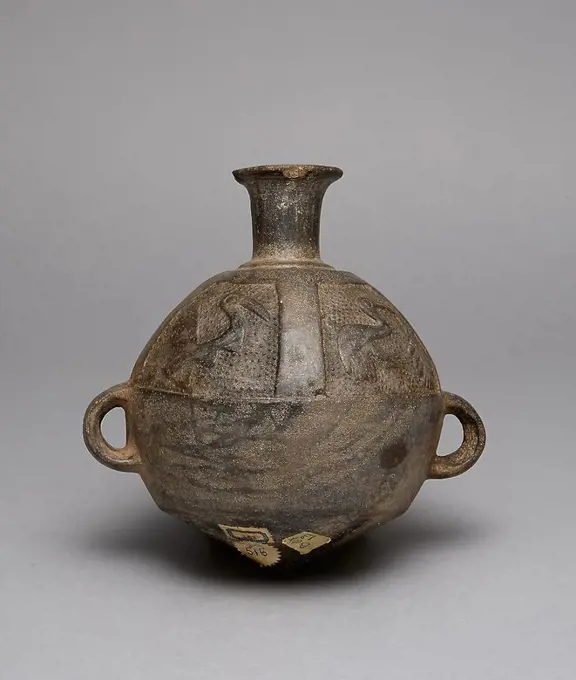
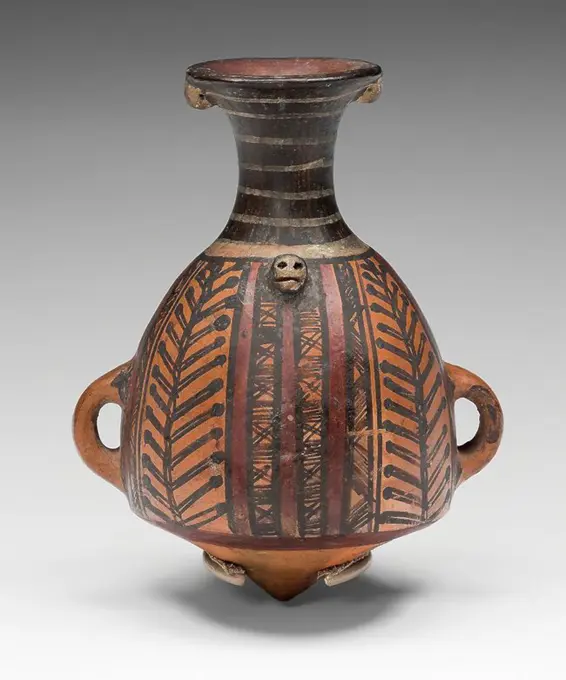
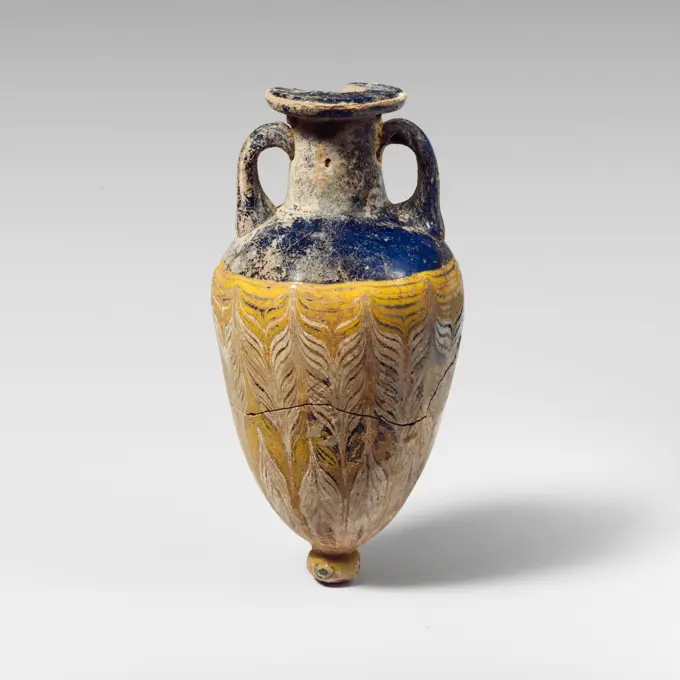
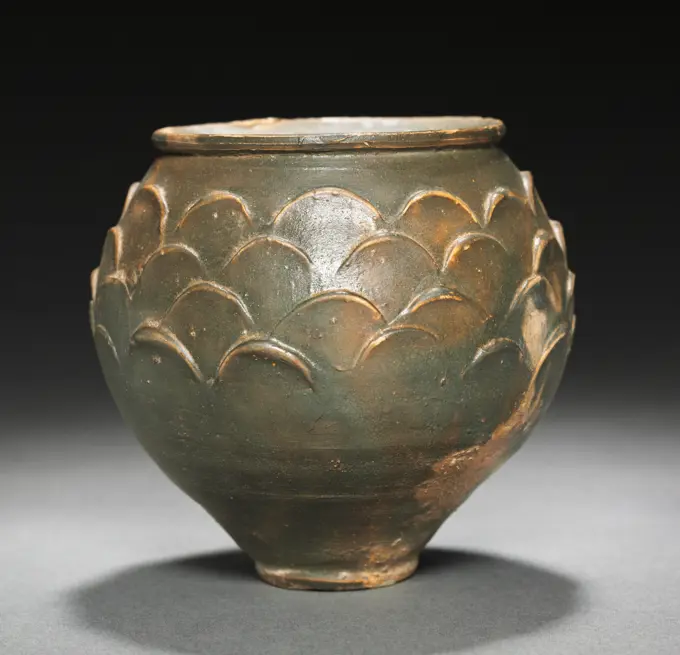
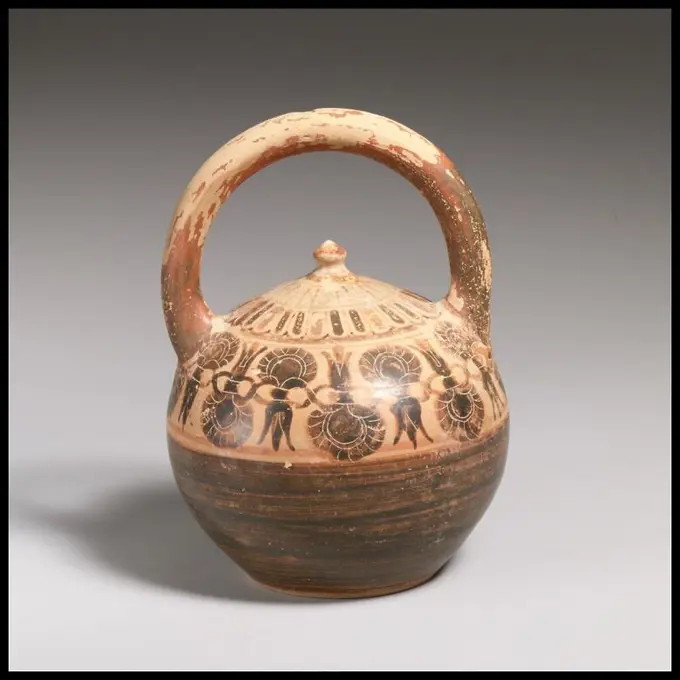
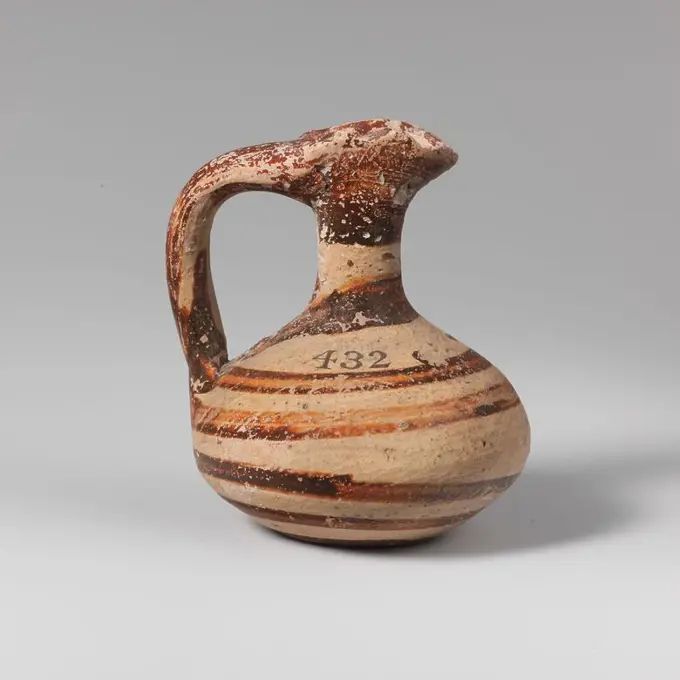
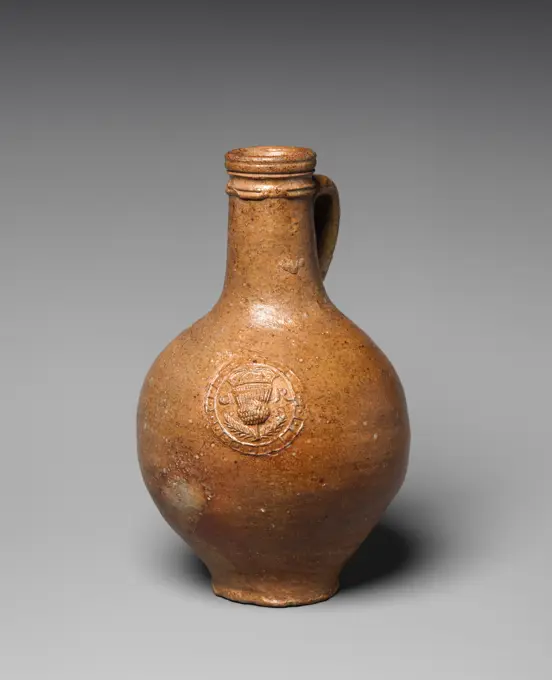
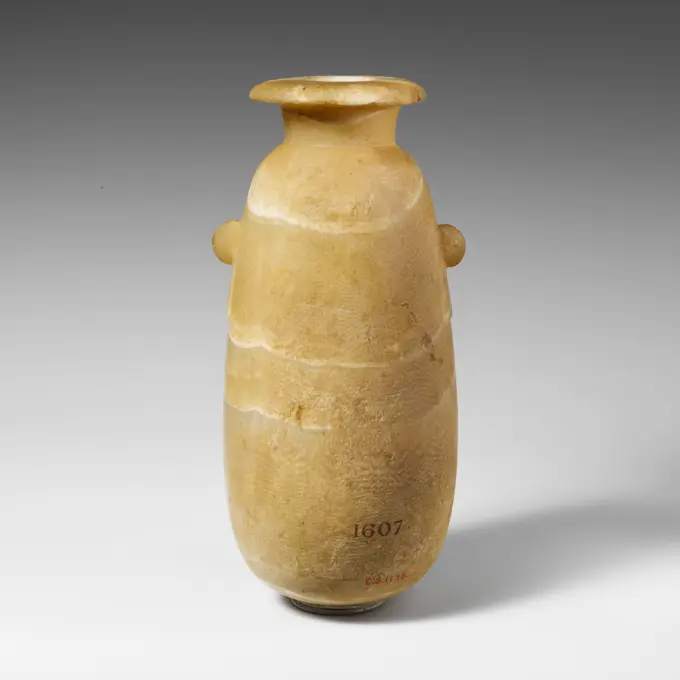
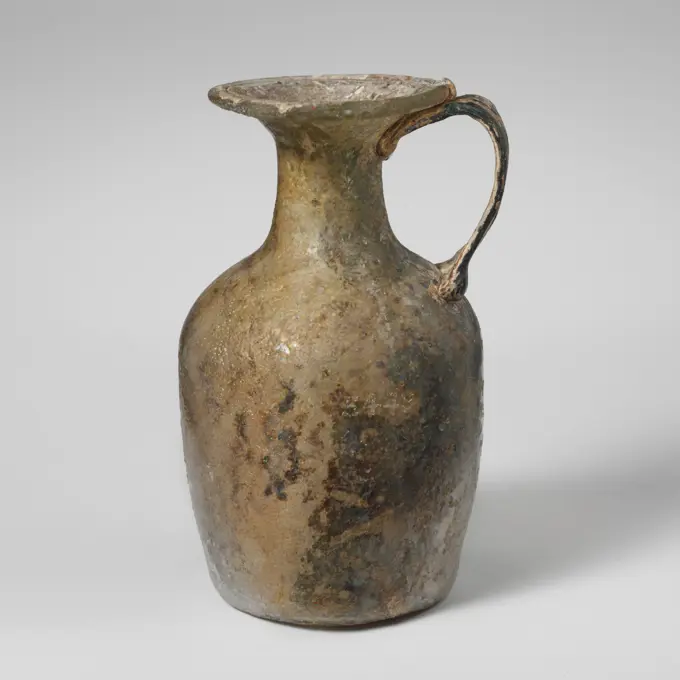
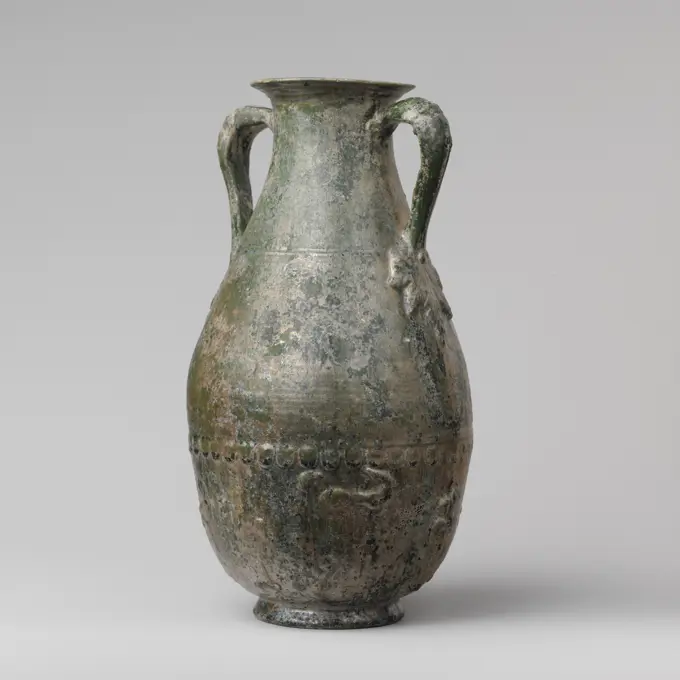
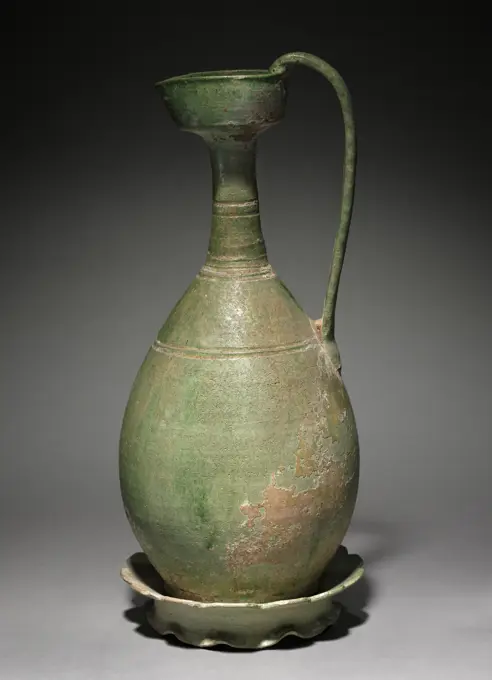
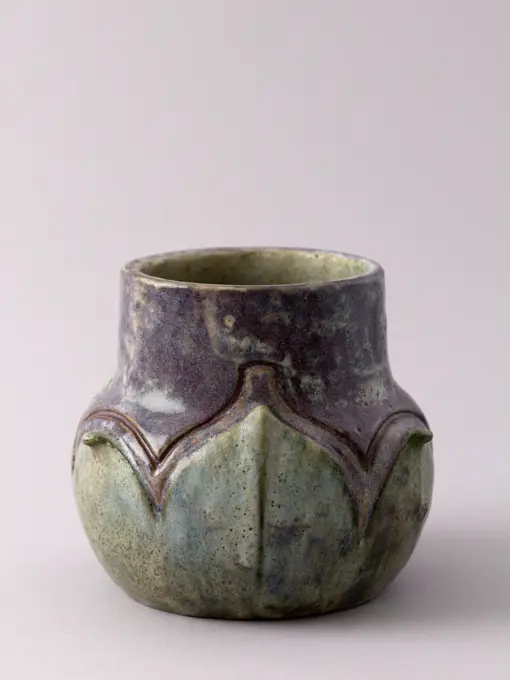
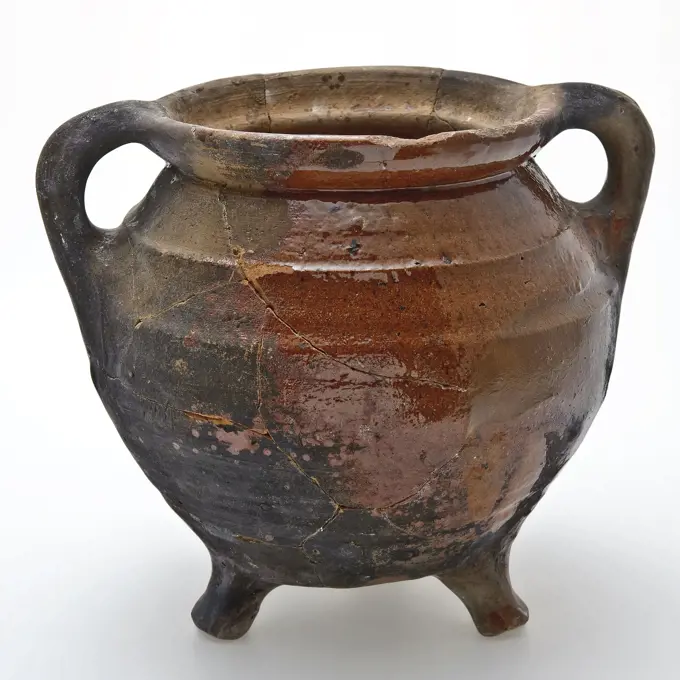
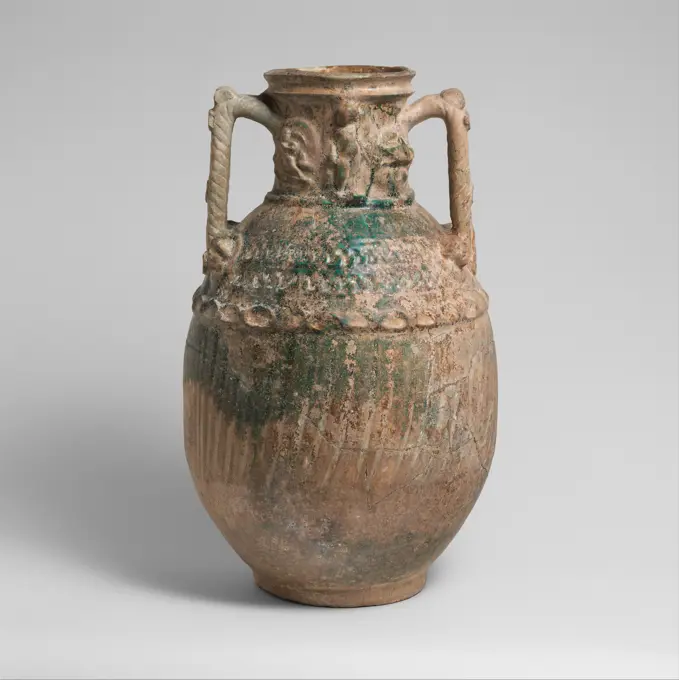
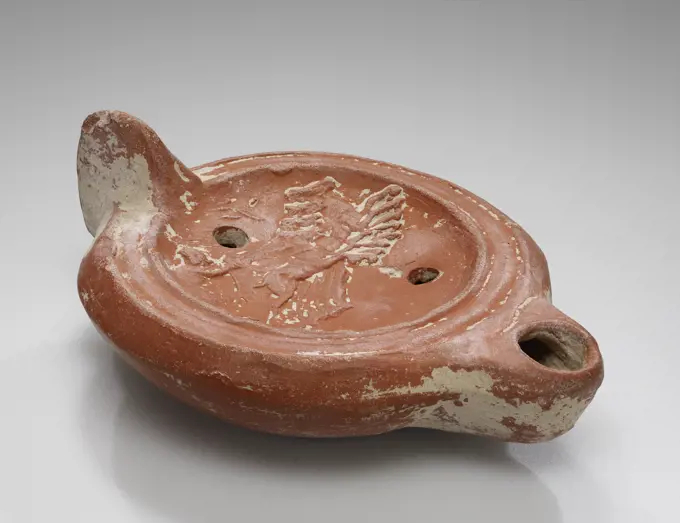
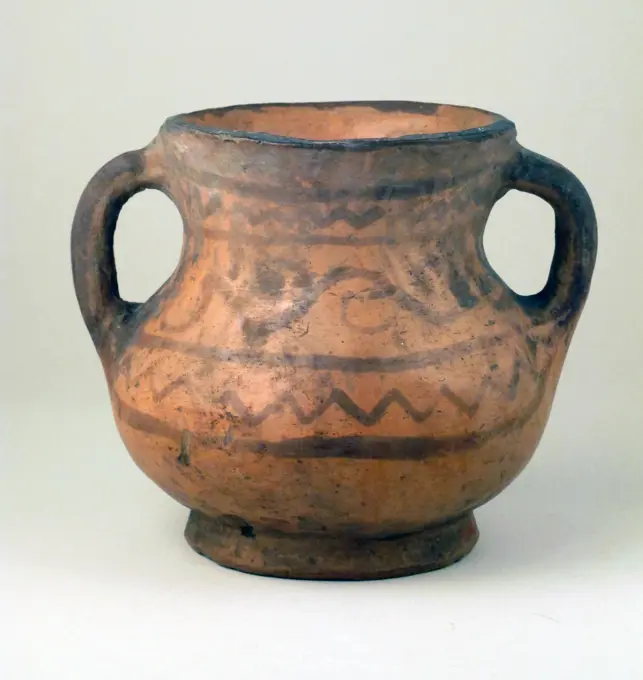
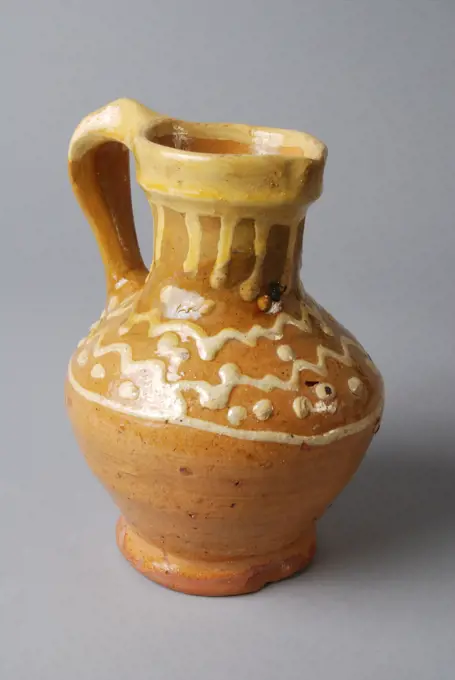
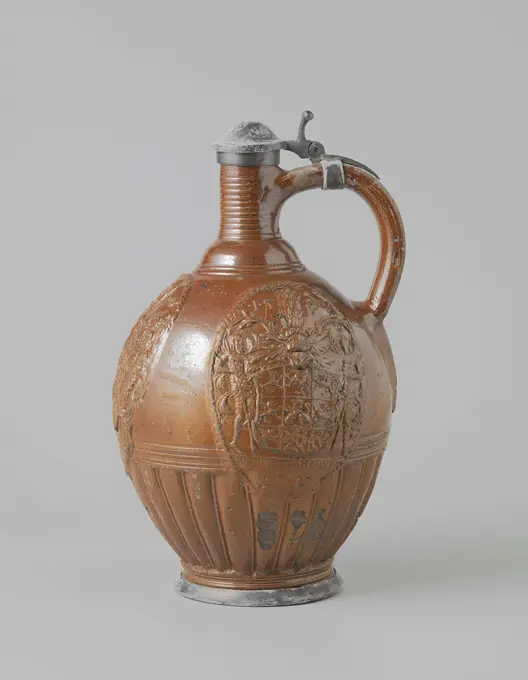
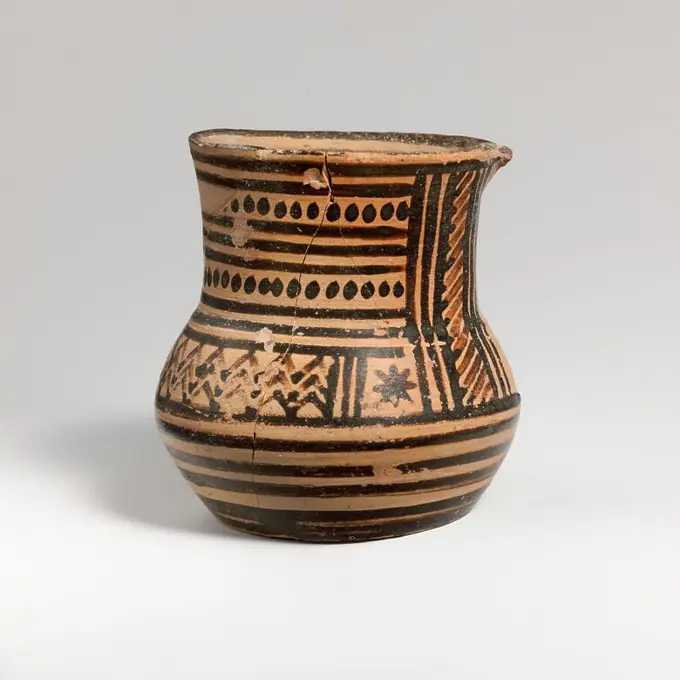
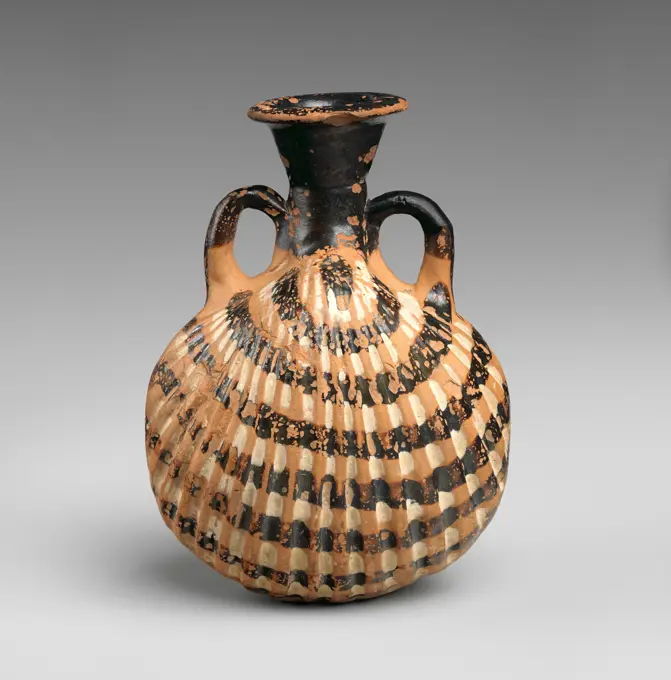
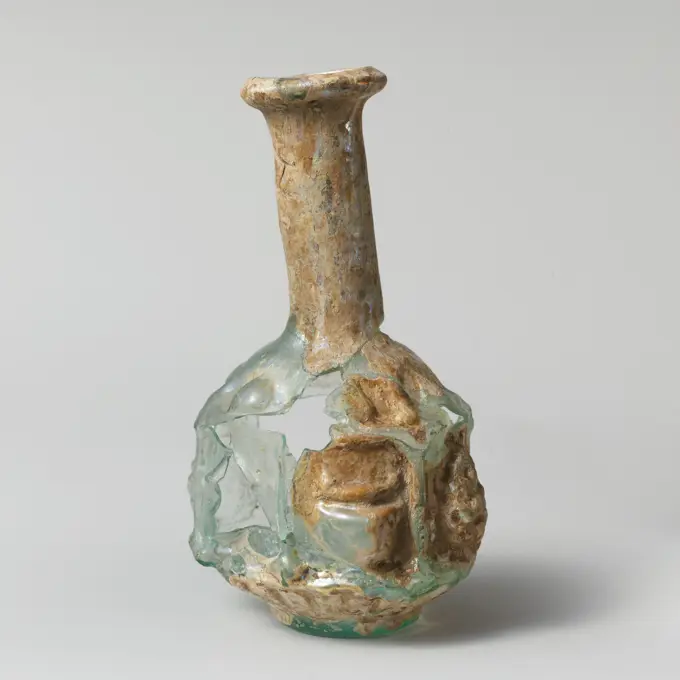
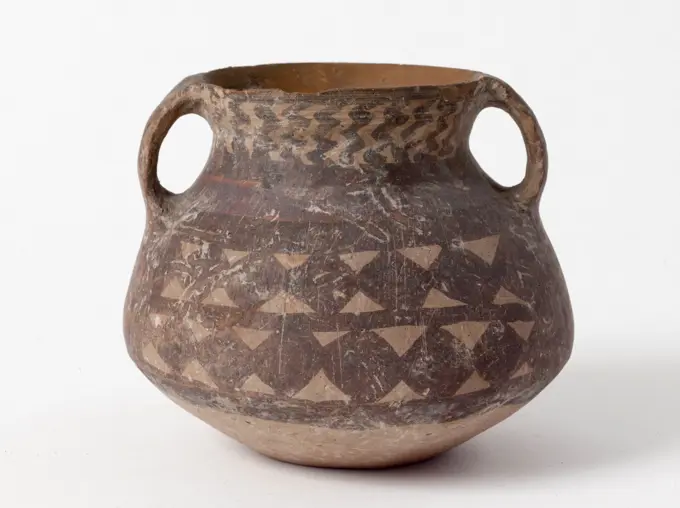
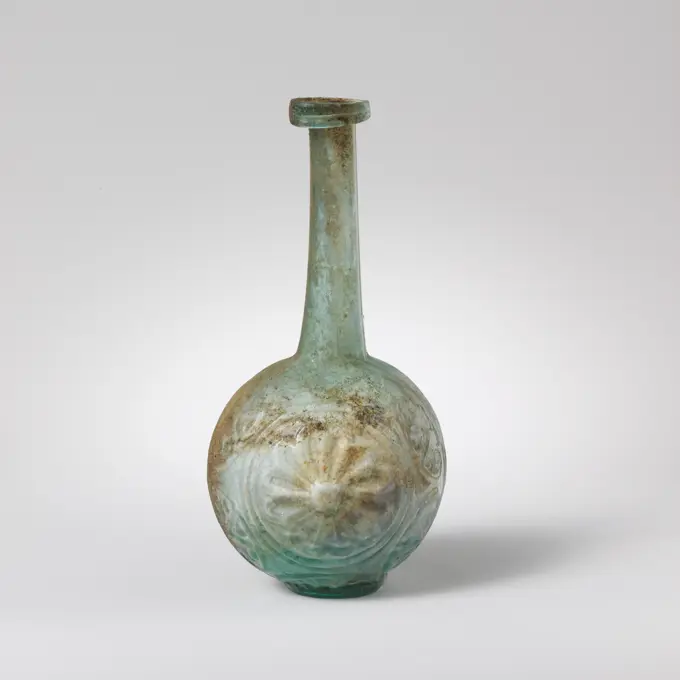
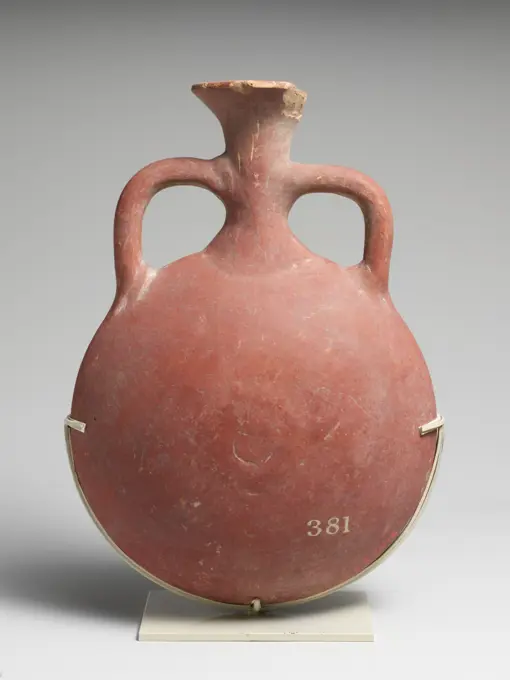
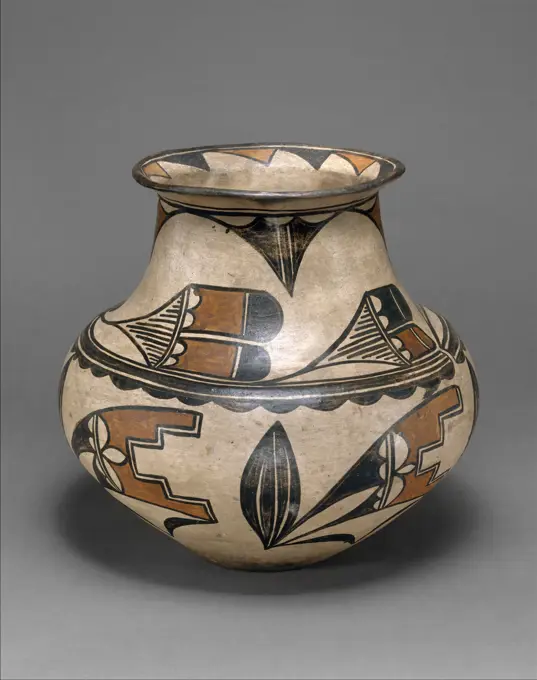
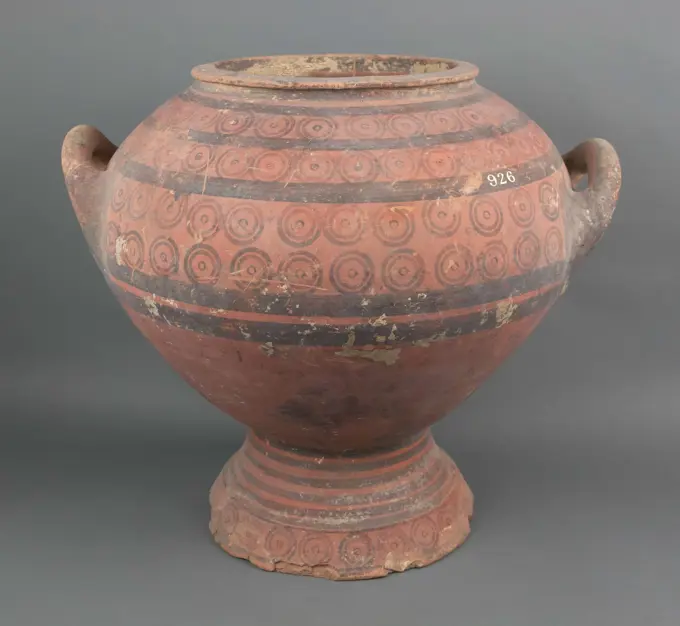
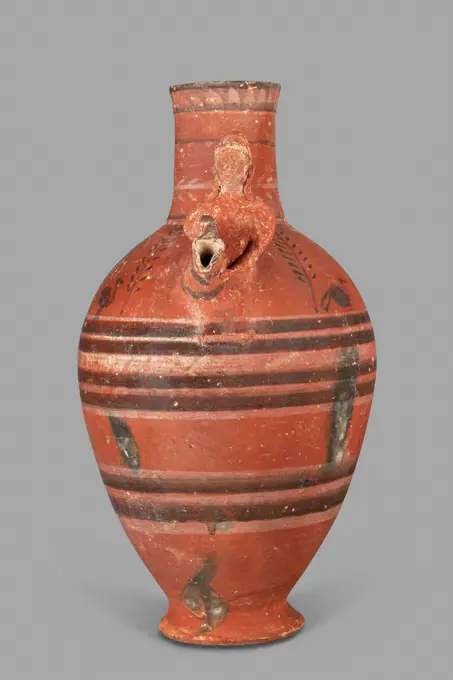
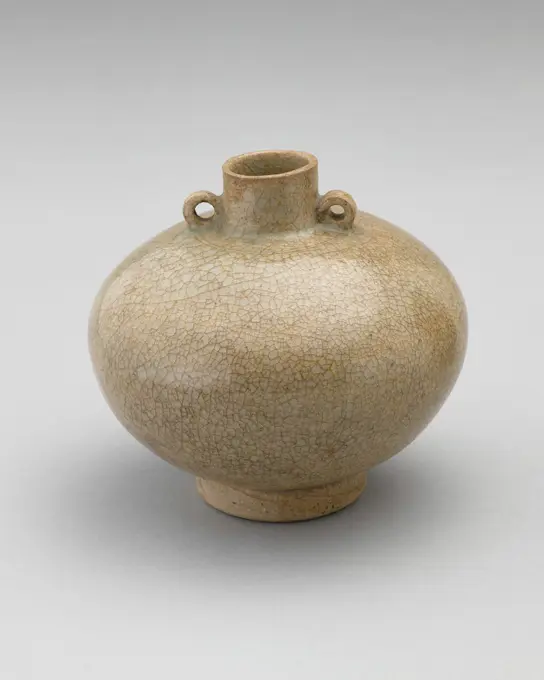
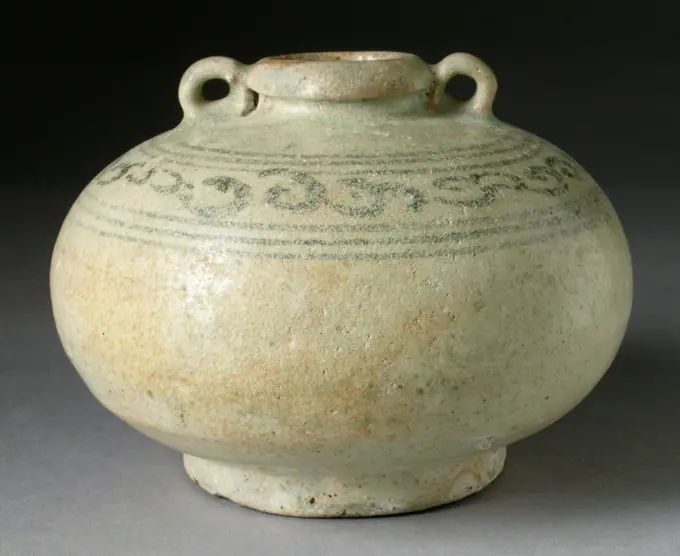
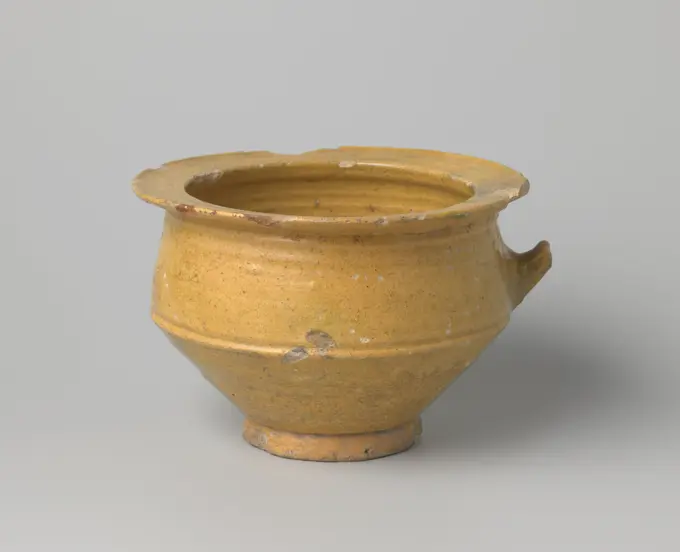
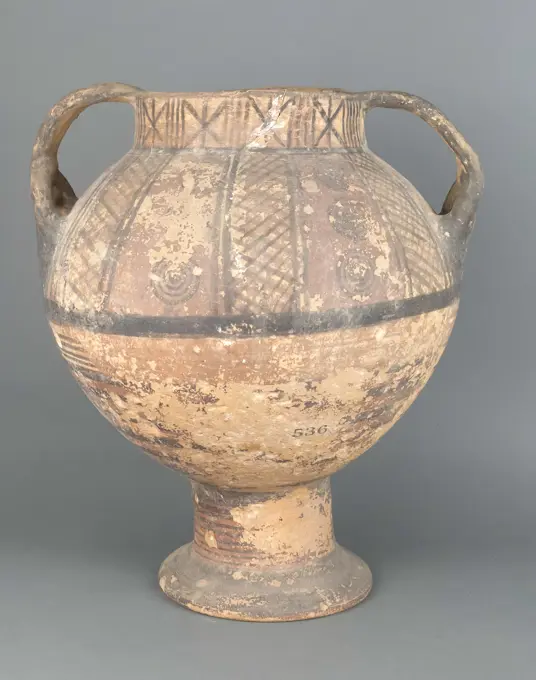
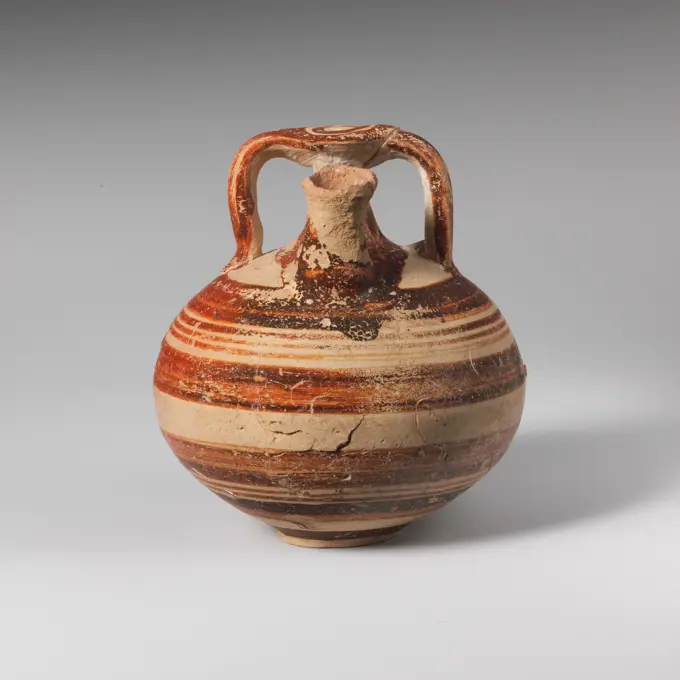
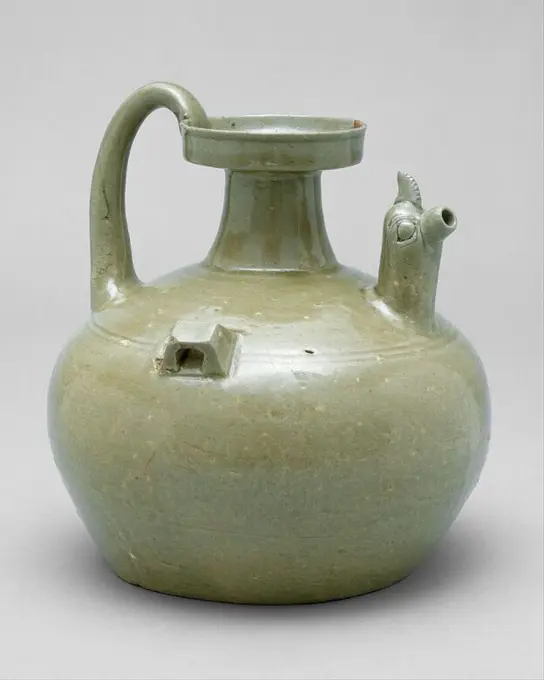
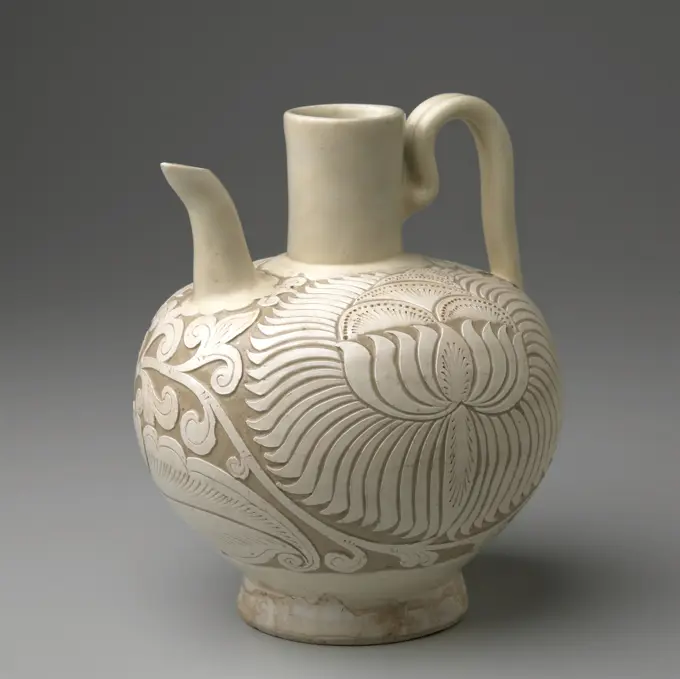
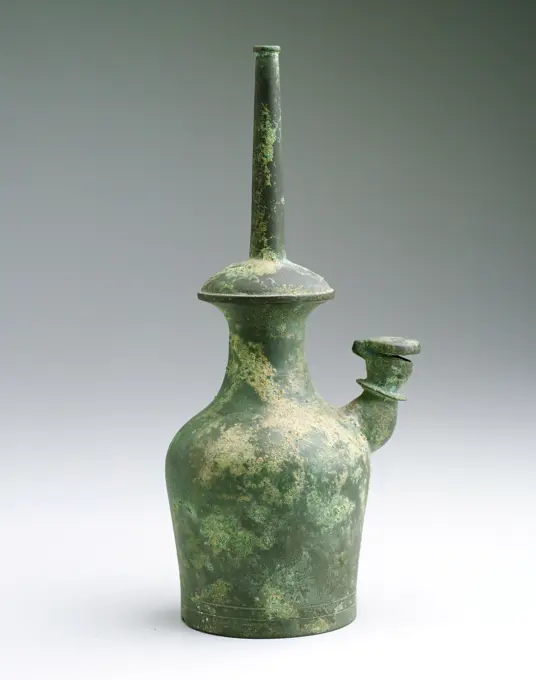
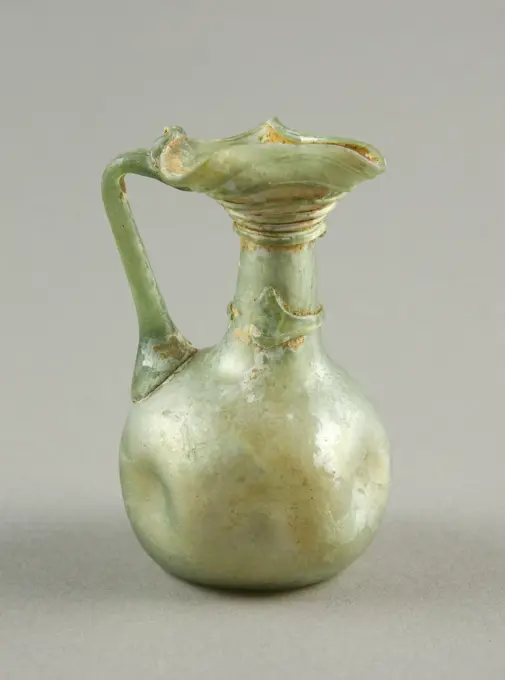
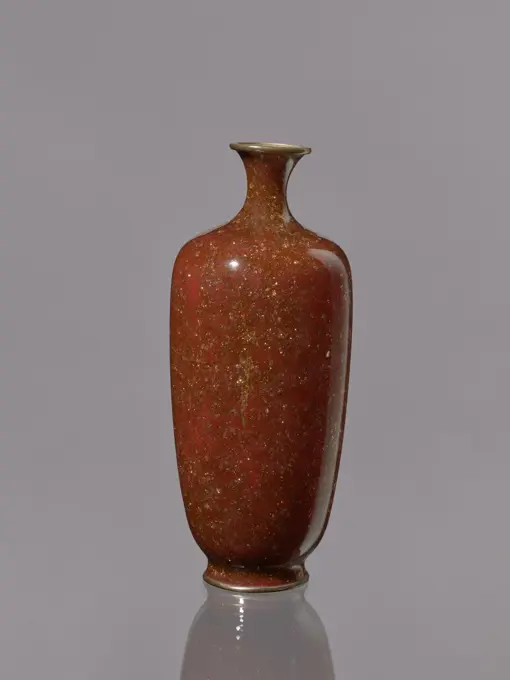
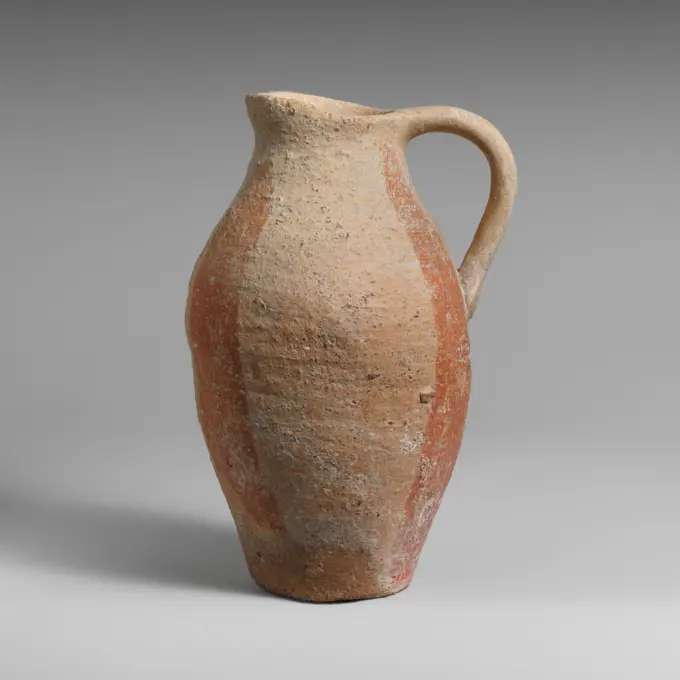
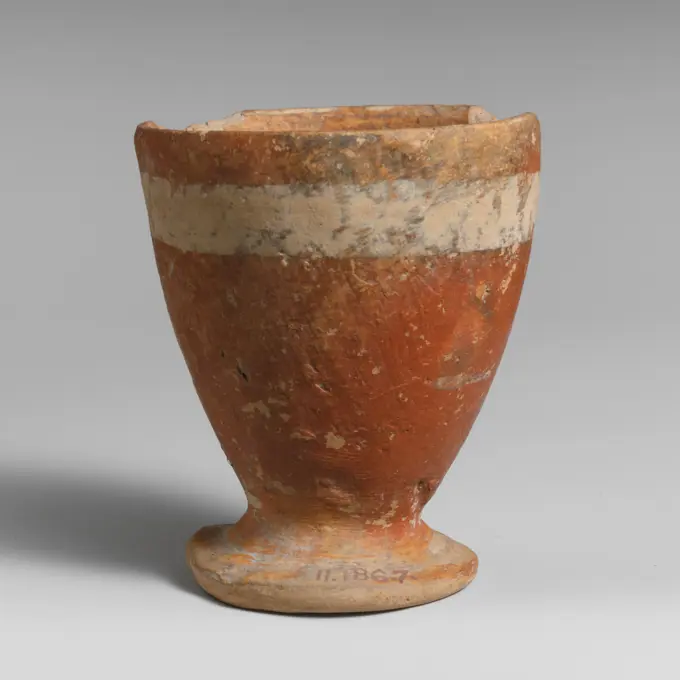
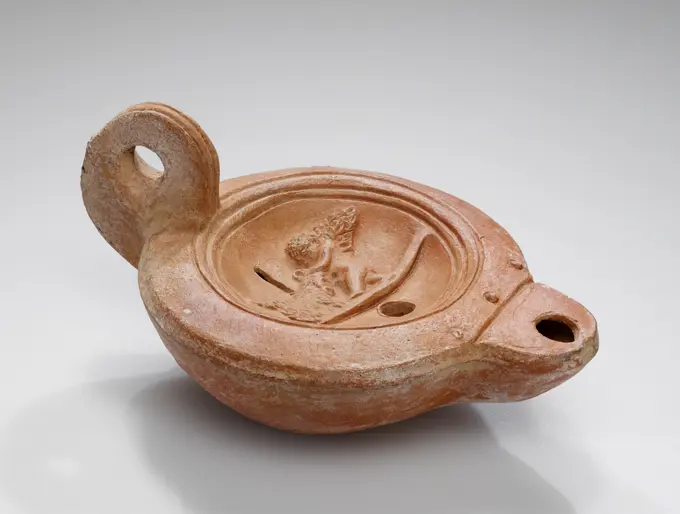
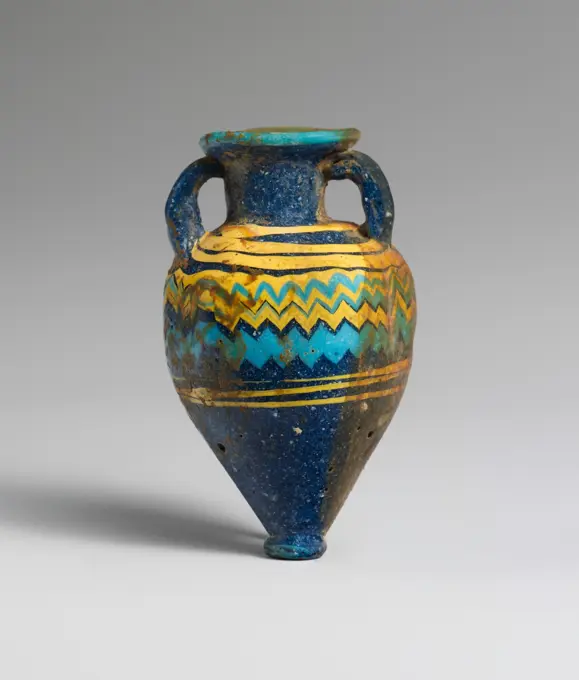
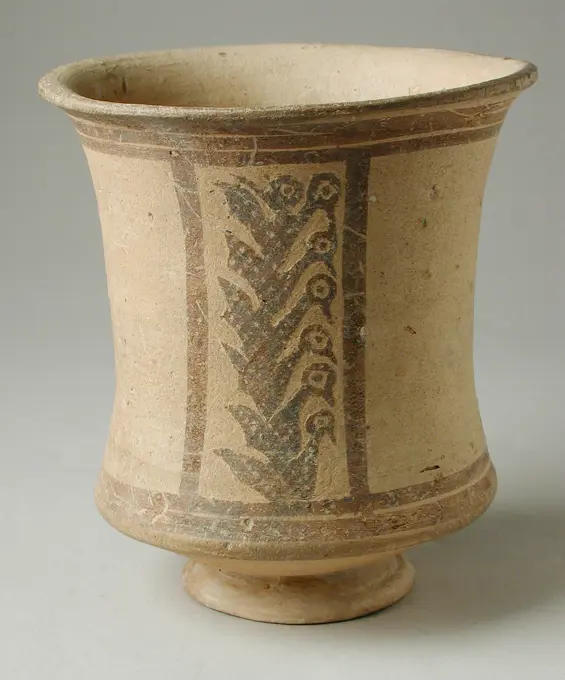
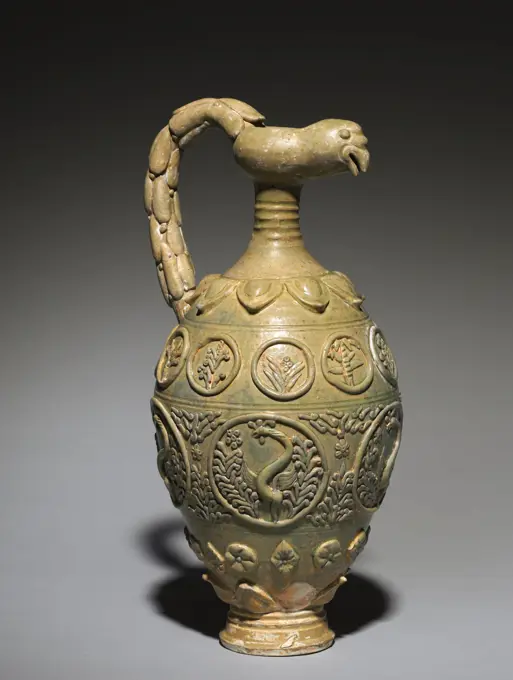
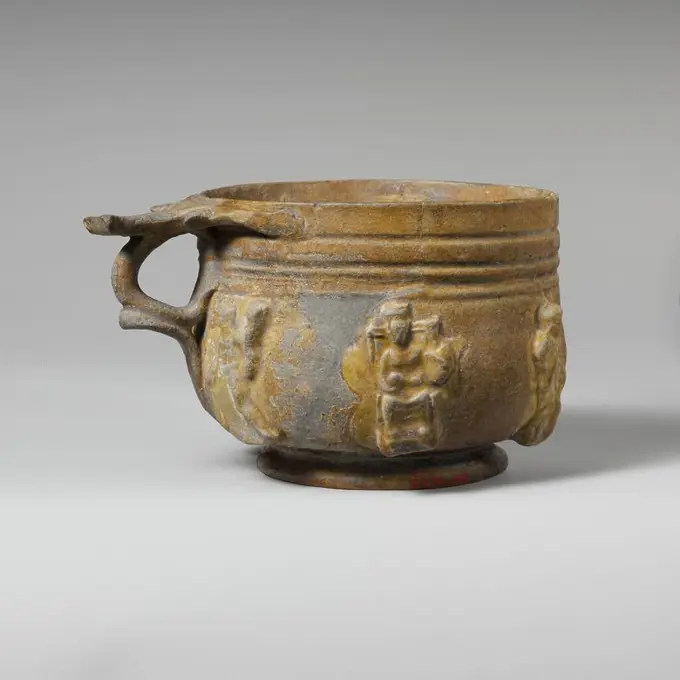
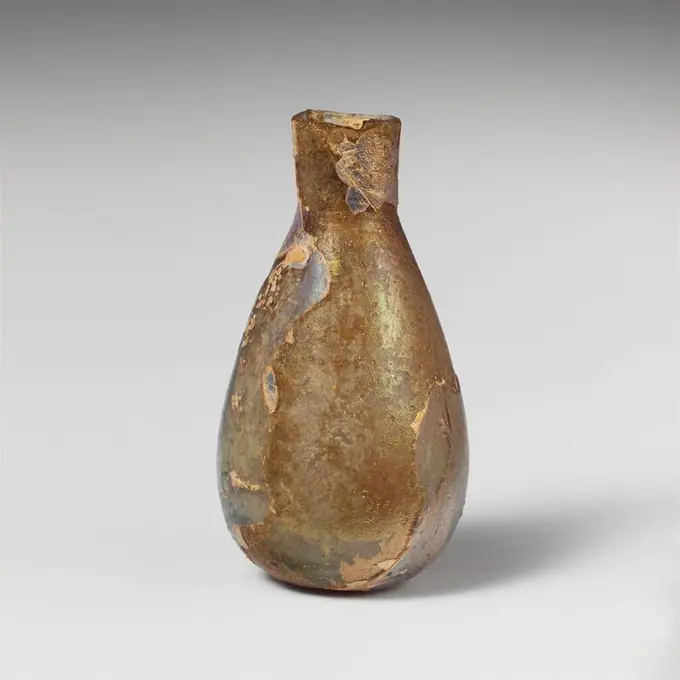
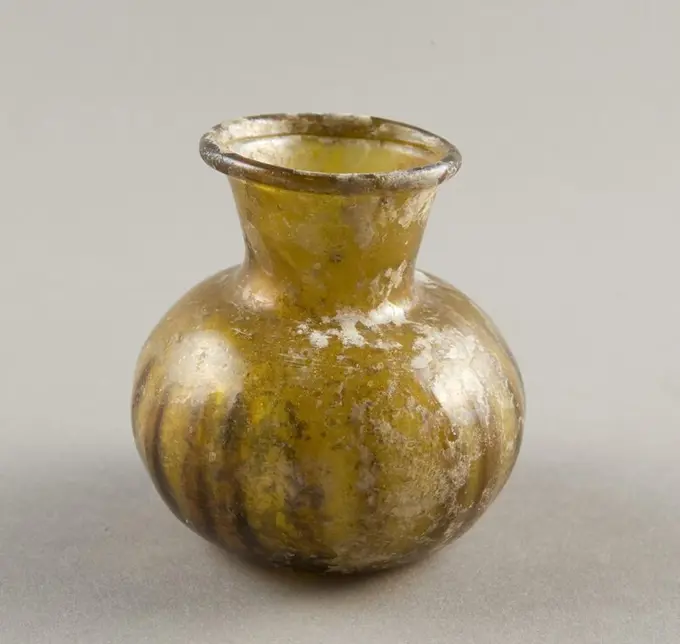
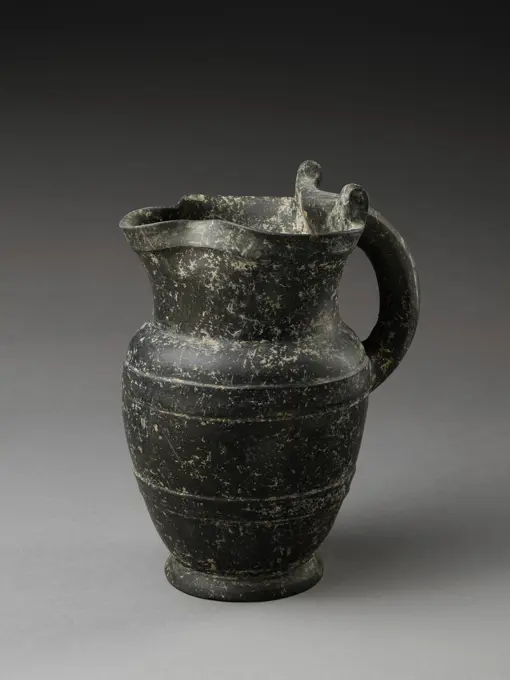
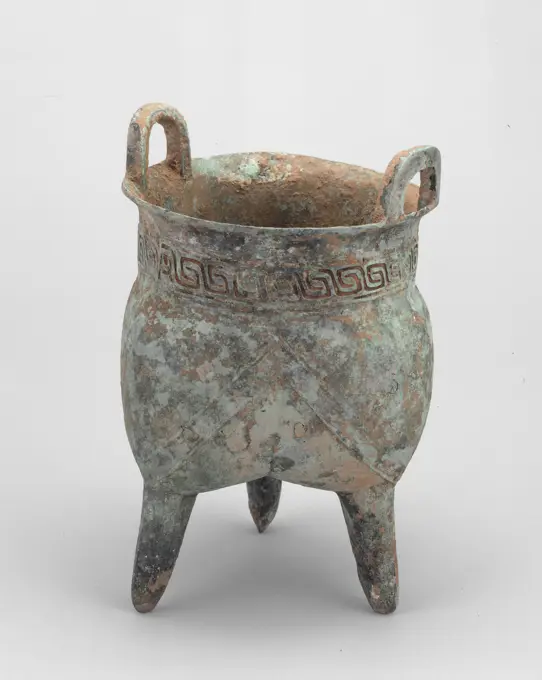
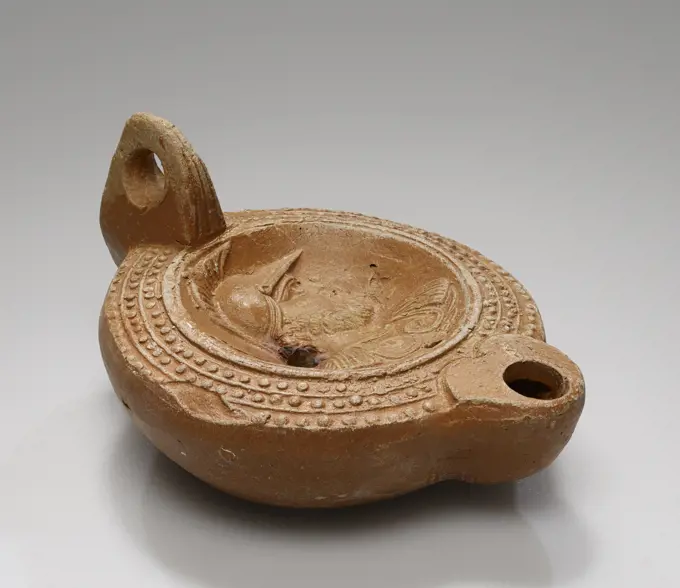
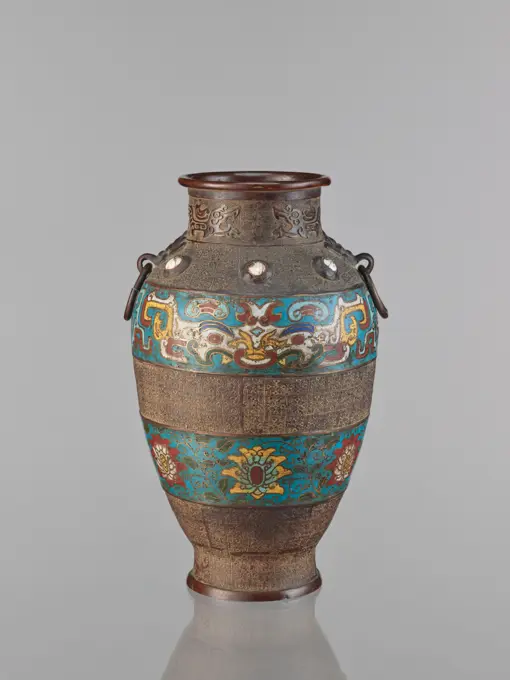
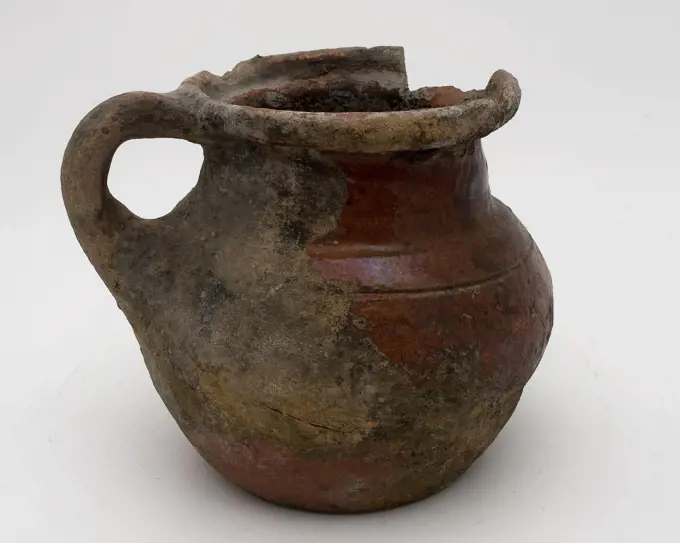
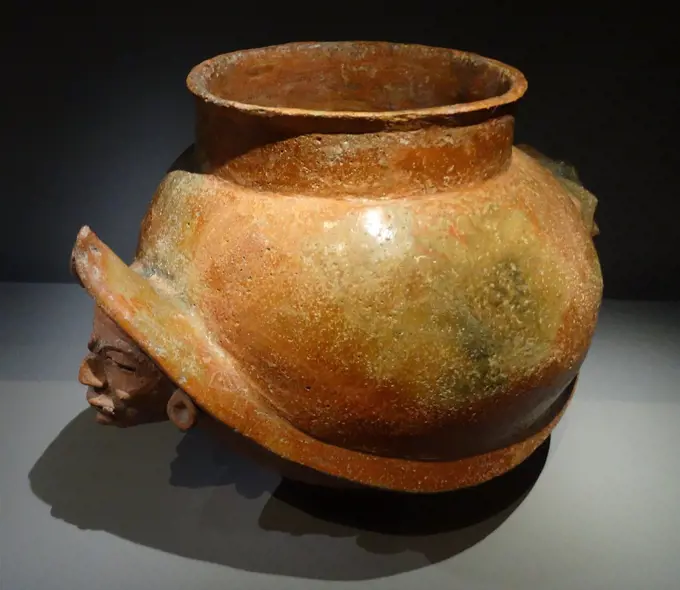
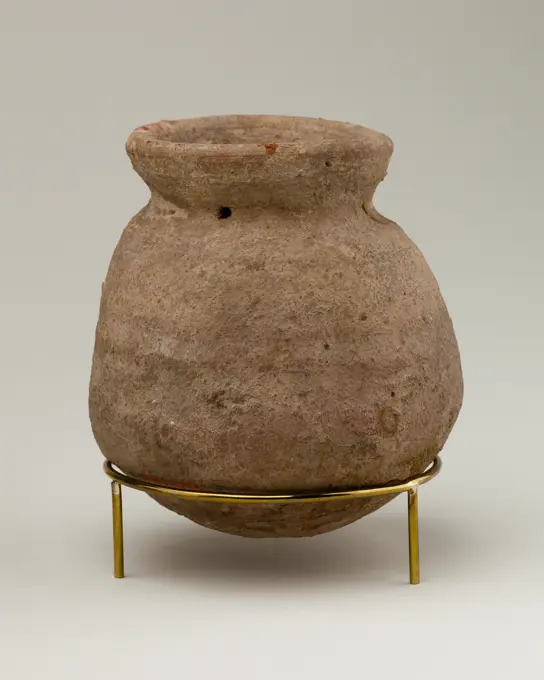
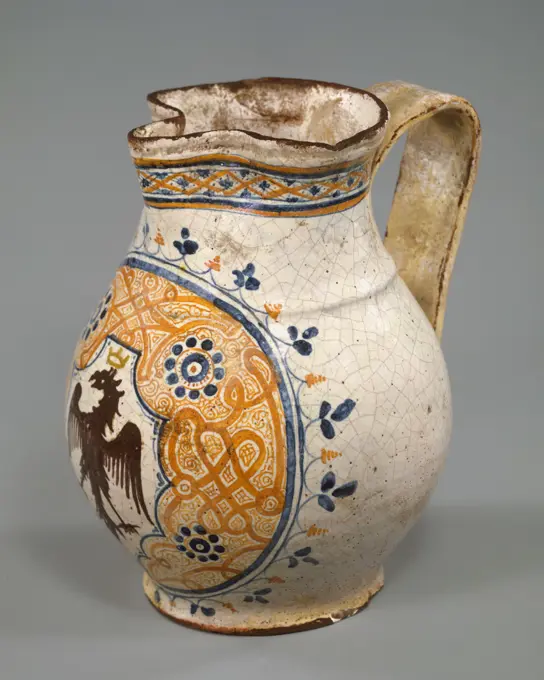
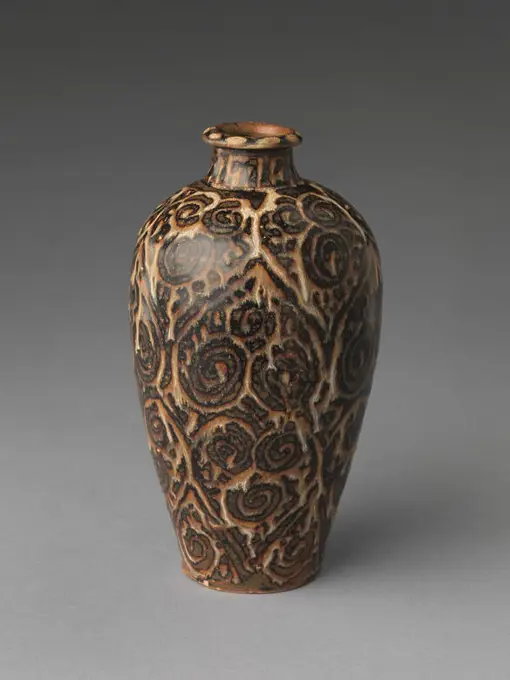
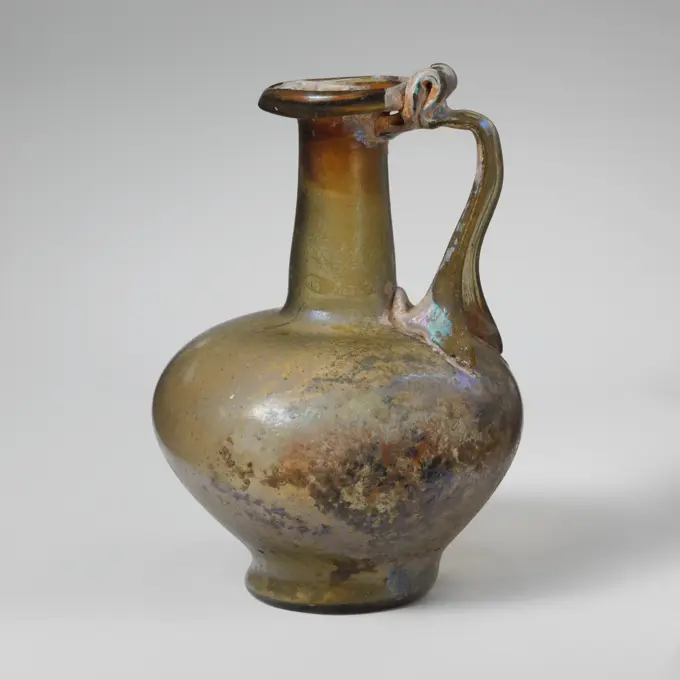
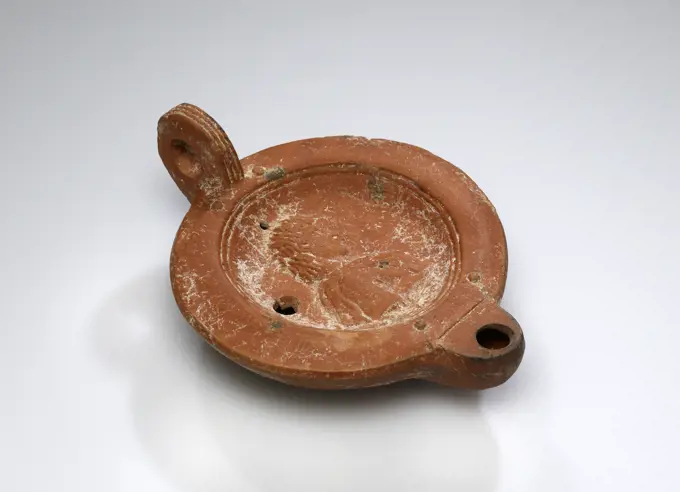
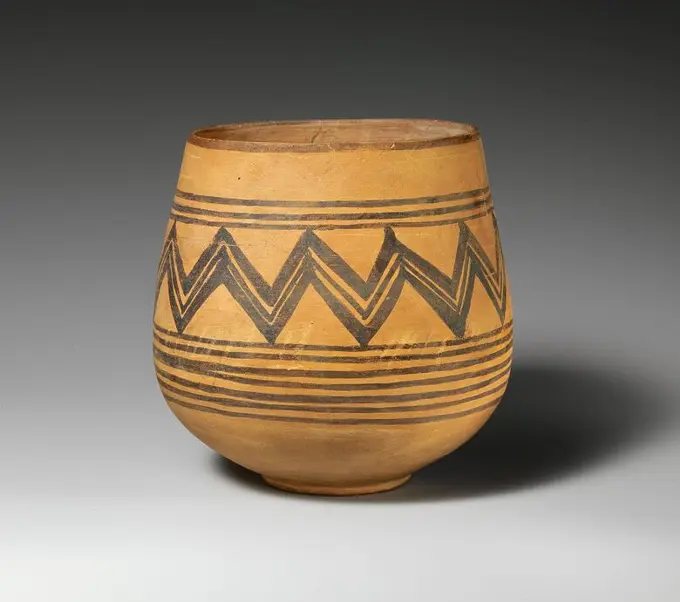
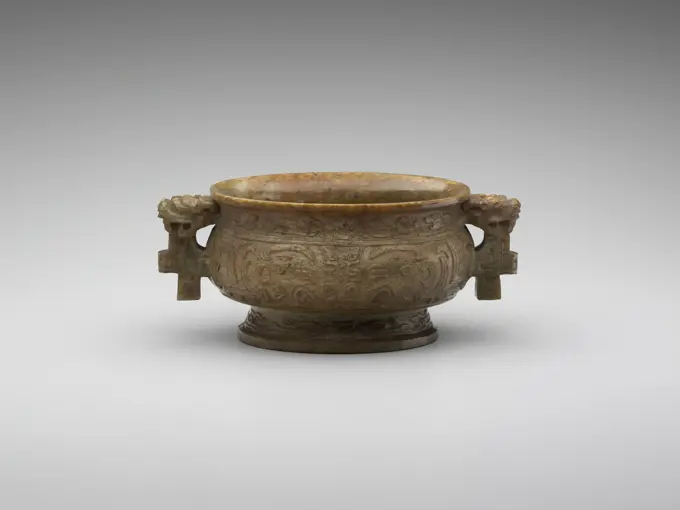
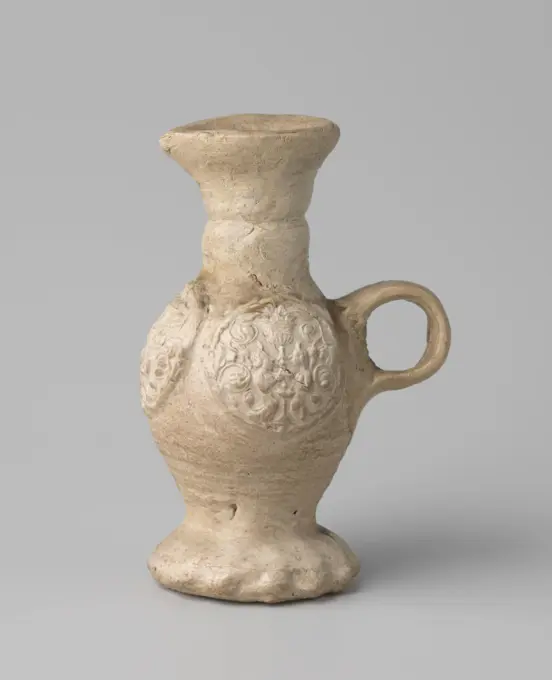
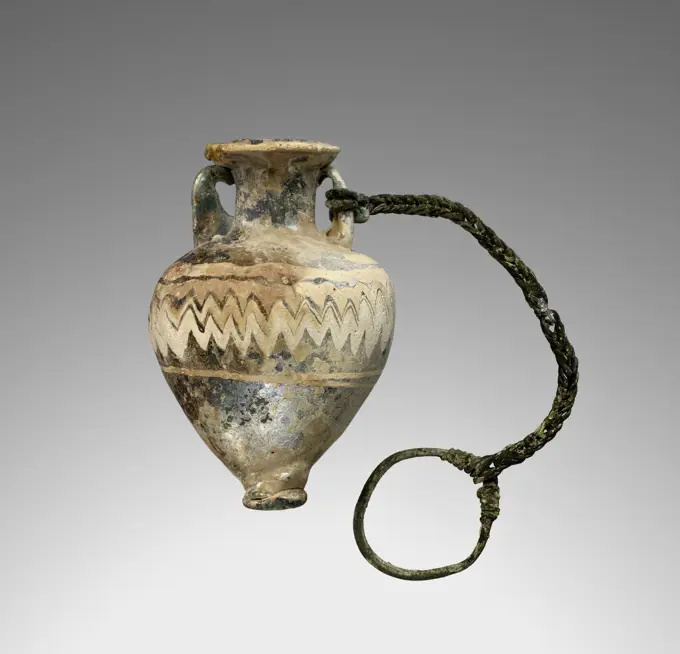
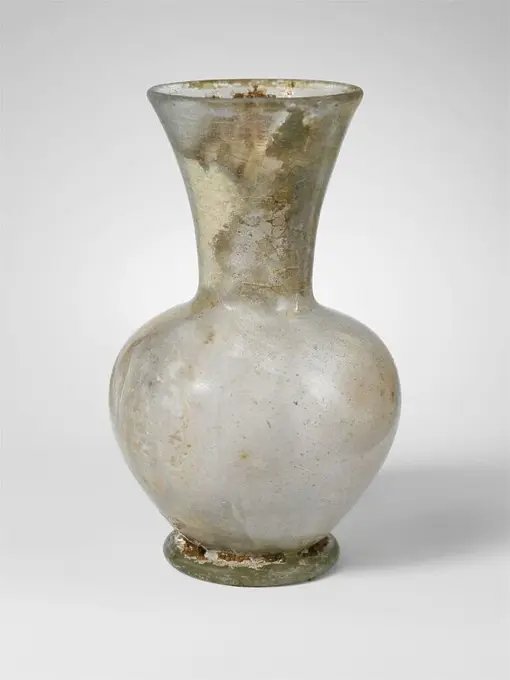
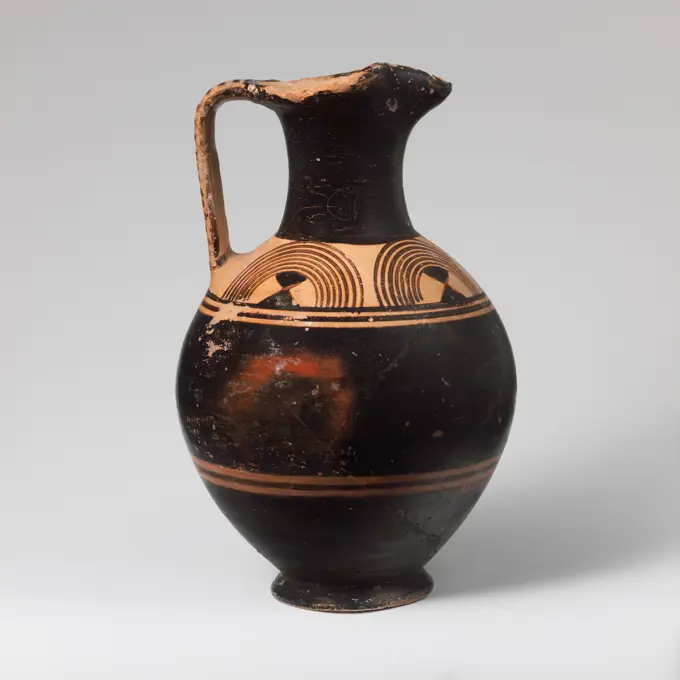
Terracotta oinochoe (jug) late 10th-early 9th century B.C. Greek, Attic From the Hymettos deposit (see 30.118.1). Terracotta oinochoe (jug). Greek, Attic. late 10th-early 9th century B.C.. Terracotta. Geometric. VasesTerracotta jug with incised decoration. Culture: Cypriot. Dimensions: H. 3 in. (7.6 cm). Date: ca. 1600-1050 B.C..This jug was likely inspired by Tell el-Yahudieh Ware pottery imported to Cyprus from Egypt. Museum: Metropolitan Museum of Art, New York, USA.Terracotta jug 600-400 B.C. Cypriot In relief, bull's headThe bull's head is not perforated. Thus, it served as decoration or in some symbolic capacity.. Terracotta jug 240141Jar with Six Square Loop Handles. China. Date: 450 AD-499 AD. Dimensions: H. 9 in. Celadon-glazed stoneware. Origin: China. Museum: The Chicago Art Institute, Chicago, USA.Jar 18th century Japan. Jar. Japan. 18th century. Clay covered with mottled glaze (Seto ware). Edo period (1615-1868). CeramicsTerracotta pithoid jar. Culture: Mycenaean. Dimensions: H. 8 11/16 in. (22.1 cm.). Date: ca. 1300-1190 B.C..Jar with pear-shaped body, three handles, and geometric designs in panels. Museum: Metropolitan Museum of Art, New York, USA.Glass oinochoe (perfume jug) late 6th-5th century B.C. Greek, Eastern Mediterranean Translucent blue, with handle and foot in same color; trails in opaque yellow and opaque turquoise blue.Applied broad trefoil rim-disk, with upright spout; cylindrical neck, expanding downwards; angular shoulder; large ovoid body; applied irregular outsplayed foot with rounded edge and pushed-in bottom; handle attached to upper body in a pad over trail decoration, drawn up and out, and turned in, forming an arch slightly above rim-disk, then dropped down and pressed on to back of neck below rim-disk.Yellow trail attached at edge of rim-disk; a second yellow trail applied as a thick unmarvered line on upper body, wound horizontally four times, then tooled into a close-set, narrow zigzag pattern, intermingling with a turquoise blue trail; below, another yellow trail wound horizontally three times around body; a yellow trail partially wound around edge of foot.Intact; dulling, slight pitting, iridescence, Terracotta Hadra hydria (water jar). Culture: Greek, Ptolemaic, Cretan. Dimensions: h. 18 in. (45.7 cm); d. 10 7/8 in. (27.6 cm). Date: 227 B.C..inscribed on obverse "By Sarapion; year 20; Hegesias son of Aglophanes"inscribed on reverse "Hegesias son of  Aglophanes of Keos; year 20; Apellaios"The date of this hydria is provided by two inscriptions. The name Sarapion, an official in the court of Ptolemy III (ruled 246-221 B.C.), who supervised the funerals of those who died while on state visits to Alexandria, and the Greek letter "Kappa," which stands for the number 20 and indicates the specific year of Ptolemy's reign, 227/6 B.C. Museum: Metropolitan Museum of Art, New York, USA.Vessel (Aryballos) with Relief Depicting Birds and Fish. Chimú-Inca; North coast, Peru. Date: 1200-1450. Dimensions: H. 19.4 cm (7 5/8 in.). Ceramic and pigment. Origin: North Coast. Museum: The Chicago Art Institute, Chicago, USA. Author: Chimú-Inca.Vase (usual name), 1400. Covered sandstone. Cernuschi Museum, Asia Museum of Asia in the city of Paris.Miniature Ceremonial Vessel (Aryballos). Inca; South coast or southern highlands, Peru. Date: 1450-1532. Dimensions: 11.4 × 9.2 cm (4 1/2 × 3 5/8 in.). Ceramic and pigment. Origin: South Coast. Museum: The Chicago Art Institute, Chicago, USA.Glass amphoriskos (perfume bottle) 4th-3rd century B.C. Greek, Eastern Mediterranean or Italian Translucent cobalt blue, with handles and base-knob in same color; trails in opaque yellow and opaque white.Broad horizontal rim-disk with rounded edge; cylindrical neck, expanding slightly downwards; broad, sloping shoulder; elongated ovoid body, tapering sharply downwards; applied small circular base-knob with uneven bottom; two strap handles applied to shoulder and drawn up, turned in, and pressed on to neck.One fine white trail attached at edge of rim-disk; a yellow trail applied to top of body and wound spirally, at first in a horizontal line, then tooled into a feather pattern, with alternating upward and downward strokes, the former making slightly raised knobs, the latter shallow indents around top of body; a second trail in white added around upper body, forming alternating bands with the yellow trail; both trails continuing to bottom; on base-knob, three stratified eyes, comprisingBeaker with Scale Pattern, AD 1-100. Rhenish (Cologne), Gallo-Roman, 1st Century. Reddish ware with dark gray burnished slip; diameter: 10.2 cm (4 in.); overall: 11.2 cm (4 7/16 in.).Terracotta siphon. Culture: Greek, Boeotian. Dimensions: H. 6 in. (15.2 cm); diameter 4 3/8 in. (11.1 cm). Date: 6th century B.C..The siphon is filled by immersing it in liquid and stopping a small hole in the handle with one finger. Removing the finger from the hole allows the water to flow out. Although the shape is rare, it is attested over a rather extensive area from mainland Greece to Ionia. Museum: Metropolitan Museum of Art, New York, USA.Terracotta beak-spouted jug. Culture: Mycenaean. Dimensions: H. 2 3/8 in. (6 cm.). Date: ca. 1600-1050 B.C..Handle and broad bands. Museum: Metropolitan Museum of Art, New York, USA.Jug 4th century B.C.-4th century A.D. Coptic. Jug. Coptic. 4th century B.C.-4th century A.D.. Earthenware, slip decoration. Made in Kharga Oasis, Byzantine Egypt. CeramicsAnonymous. "Chalcidian amphora". Ceramics, yellow-orange clay, black figures, red and white highlights. -600/500 BC .. Museum of Fine Arts in the city of Paris, Petit Palais. 99936-6 Antiquity, clay, ceramic, black figure, life VI 6th 6th 6 century before av. JC, ancientBottle with a thistle medallion ca. 1675-76 Factory of John Dwight British John Dwight was the first Englishman to successfully produce salt-glazed stoneware, for which he obtained a patent in 1672. While still a student at Oxford, Dwight worked with scientists Robert Hooke and Robert Boyle, and began to experiment with ceramics. In addition to producing sculptural ceramics, Dwights Fulham Pottery produced vessels that emulated Rhenish bellarmine jugs. Dwight took legal actions against many of his competitors, but despite his efforts, salt-glazed stoneware was produced by other British potteries in Lambeth, Nottingham, Bristol, and Staffordshire.John Dwights role in producing and marketing British salt-glazed stoneware speaks to the rise of entrepreneurship in the British ceramic industry. Dwight bottles with "loyal" British medallions are extremely rare, and demonstrate how Dwight transformed a German form into something essentially British. Typically there would be three medallionsOinochoe czarnofirnisowana z imadłem zakończonym główką Meduzy. unknown, authorAlabaster alabastron (perfume vase) 5th-4th century B.C. Cypriot The alabastron has two lugs above a short trapezoidal tab in low relief. The neck is short and the lip slightly convex.. Alabaster alabastron (perfume vase) 243964Glass jug 3rd century A.D. Roman Colorless with pale blue-green tinge; handle in same color.Rim folded down, round, and in; broad, flaring mouth; short, concvae neck; rounded shoulder, sloping downward; slightly convex sides tapering downward; pushed-in bottom with central pontil scar; strap handle applied to outer edge of shoulder, drawn up, round, and in, then trailed on to top of neck and underside of mouth and rim, and trailed off on top edge of rim.Intact; many bubbles; deep pitting and iridescent weathering.. Glass jug 239697Terracotta amphora (jar) 1st half of 1st century A.D. Roman Frieze of maenads and female figures at bottom.. Terracotta amphora (jar). Roman. 1st half of 1st century A.D.. Terracotta; lead-glazed ware. Early Imperial, Julio-Claudian. VasesEwer with Corolla Base, 907-1125. China, Manchuria, Liao dynasty (916-1125). Pottery; diameter: 54.6 cm (21 1/2 in.); overall: 39.4 cm (15 1/2 in.); base: 19.4 x 18 cm (7 5/8 x 7 1/16 in.).Emile Decoeur (1876-1953) and Edmond Lachenal (1855-1948). Artichoke vase. Enamelled sandstones. Museum of Fine Arts of the City of Paris, Petit Palais. Artichoke vase Artichoke, gres emaille, vasePottery grape on three legs, two sausage ears, two ribs on the shoulder, grape cooking pot crockery holder kitchen utensils earthenware ceramic earthenware glaze lead glaze, hand-turned glazed baked Pottery grape on three legs one of which supplemented with plaster Red shard sparingly glazed Belly almost spherical model decorated with two clear ribs ridges over the shoulder. Outstanding sloping top edge with minimal lid slot Two standing sausage ears Partly black discolored by soot by use Finger impression on the site of the attachment of the ear in the side wall of the abdomen archeology inn The Heart Geervliet Bernisse indigenous pottery cooking kitchen nutrition food preparation Soil discovery: Geervliet Dorpsplein 1 demolition Trouw put 5 city inn 't Hart 1985.Ovoid jar 'Tradescant' with lotus scrolls in relief, anonymous, c. 1600 Egg -shaped pot of stoneware with a wide neck and spreading edge, covered with a green and yellow enamel. Lotus vines applied on the wall and shoulder. Around the foot a band with raised leaf motifs. Six C-shaped ears on the shoulder. Glaze releases in some places. 'Tradescant Jar'. China stoneware. glaze vitrification Egg -shaped pot of stoneware with a wide neck and spreading edge, covered with a green and yellow enamel. Lotus vines applied on the wall and shoulder. Around the foot a band with raised leaf motifs. Six C-shaped ears on the shoulder. Glaze releases in some places. 'Tradescant Jar'. China stoneware. glaze vitrificationTerracotta amphora (two-handled jar) ca. A.D. 100-225 Roman, Syrian Decorated with reliefs and grooves.. Terracotta amphora (two-handled jar) 253570 Roman, Syrian, Terracotta amphora (two-handled jar), ca. A.D. 100225, Terracotta, H. 16 11/16 in. (42.4 cm). The Metropolitan Museum of Art, New York. Gift of John D. Rockefeller Jr., 1938 (38.84.4)Lamp, North Africa; 1st - 4th century; Terracotta; 3.2 x 10 x 13.2 cm (1 1,4 x 3 15,16 x 5 3,16 in.)Vase Two-handled vase with linear decoration.. Vase. Terracotta. VasesEarthenware oil jug on stand with standing ear and shaving clip, silt decoration on the neck and shoulder, oil jug crockery holder soil find ceramic earthenware clay engobe glaze lead glaze, ring 7.9 hand-turned petal glazed baked Pottery jug be orange red shard entirely covered with lead glaze cuff shaped mouth rim with pouring clip at the top pinched band ear stand ring. Yellow silt trim around the pericarp vertical stripes around the neck two wavy lines and dots around the shoulder Ball-shaped model with slender neck Restoration is color-repainted archeology indigenous earthenware oil tear lamp illuminate pour serveJug. Brunette jug with pewter lid. 3 large ovals have been printed on the egg-shaped belly in which a weapon.FOREIGN OLDTerracotta tankard. Culture: Greek, Attic. Dimensions: H. 2 3/4 in. (6.9 cm). Date: late 9th century B.C..From the Hymettos deposit (see 30.118.1). Museum: Metropolitan Museum of Art, New York, USA.Beak-Spouted Jug. UnknownTerracotta amphoriskos (flask) in the form of a shell 4th century B.C. Greek, Attic Two handles on either side of mouth; horizontal stripes on body.. Terracotta amphoriskos (flask) in the form of a shell. Greek, Attic. 4th century B.C.. Terracotta. Classical. VasesGlass hexagonal bottle 1st half of 1st century A.D. Roman Translucent blue green.Thick rim, folded out, round, and in; tall cylindrical neck; sloping, slightly convex shoulder; squat body with hexagonal sides; low base with flat bottom.Decoration in relief in three registers: on shoulder, six arches, each containing an unidentified domed object; on body, six square panels, divided by columns with capitals and bases, each containing an object: 1, a footed bowl; 2, a pine cone; 3, a footed jar with rounded objects (fruit ) emerging from its rim; 4, (missing); 5, another pine cone; 6, a handled vase with conical lid; below, continuous band of twenty-two radiating upturned tongues; on bottom, raised broad circle around edge and dot at center.Broken and repaired, with several large holes in shoulder and body; pinprick bubbles; slight dulling and faint iridescence, with patches of encrusted thick creamy brown weathering.Made in the same mold as 17.194.229.. Glass hexagonal bottle. Roman. 1sJar ". Terracotta painted in black. Neolithic period (around 8000 BC). Paris, Cernuschi museum. Anse, Chinese art, Chinese Ceramic, container, jar, decorative motif, Neolithic period, container, terracottaGlass globular bottle late 1st-early 2nd century A.D. Roman Translucent blue green.Collared rim, folded out, down, round, and up, with slight raise lip to mouth; tall cylindrical neck, expanding downwards; globular body; base with rounded edge and concave bottom. One continuous mold seam around body and across bottom, extending to base of neck and forming a raised line across bottom.Body decorated in matching relief designs on the two sides: a central twelve-petalled rosette within two concentric circles, and six pelta-like crescents with curling finials and central triangles together with bosses, flanked by a vertical line. The lowest of the crescents on each side is partially obscured by the base.Broken and repaired at middle of neck, and base chipped and cracked on one side; some bubbles, elongated in neck; one side with soil encrustation and dulling on exterior, whitish weathering and iridescence on interior.. Glass globular bottle. Roman. late 1st-early 2nd century A.D.. Glass; blTerracotta lentoid flask ca. 1600-1050 B.C. Cypriot A symbol is incised on one of the handles.. Terracotta lentoid flask. Cypriot. ca. 1600-1050 B.C.. Terracotta. Late Cypriot. VasesTerracotta oinochoe (jug). Culture: Greek, Attic. Dimensions: H. 3 in. (7.6 cm). Date: late 8th century B.C.-early 7th century B.C..On the shoulder, four birds. Museum: Metropolitan Museum of Art, New York, USA.Terracotta miniature jar with two handles. Culture: Greek, Laconian. Dimensions: H. 2 1/16 in. (5.2 cm). Date: 7th-6th century B.C..Two handles, traces of white paint. Museum: Metropolitan Museum of Art, New York, USA.Storage Jar 1904-1905 Martina Vigil Montoya. Storage Jar 319208Globular pot on Piédouche ". Terracotta. Vietnam-Xe-Xive s. Paris, Cernuschi museum. 72186-39 Vietnamese object, piedouche, globular pot, terracottaDinos 750-600 B.C. Cypriot. Dinos. Cypriot. 750-600 B.C.. Terracotta. Cypro-Archaic I. VasesFlask. UnknownLarge pottery grape on three legs, two sausage ears, ovoid with four ribs over the belly, grape cooking pot crockery holder kitchenware earthenware ceramics earthenware glaze lead glaze, hand-turned glazed fried Large pottery grape on three legs. Red shard sparsely glazed. Ovoid model Outstanding sloping top edge with thickened and round edge. Two sturdy standing sausage ears Decorated with four ribs across the belly at mutually equal distances. There is dark caked material on various glued fragments. Deep finger impressions on the side wall of the abdomen at the site of the attachment of the ears archeology inn The Heart Geervliet Bernisse indigenous pottery cooking kitchen nutrition food preparation Soil discovery: Geervliet Dorpsplein 1 demolition Trouw put 5 city inn 't Hart 1985.Oinochoe ca. 800-700 B.C. Cypriot Ovoid body and long neck; red bucchero.. Oinochoe 240229Pyksis orientalized with animal performances; Painter of Geladakis (around 570 BC); around 580 BC (-585-00-00--575-00-00);Greece, lion (iconogr.), Central and Corvoian period, transmission (provenance), images of birds, images of animalsPottery cooker on three legs, rings on shoulder and one standing ear, grape cooking pot tableware holder utensils earthenware ceramics earthenware glaze lead glaze, belly 15.0 bottom 9.0 hand turned set glazed fried One ear grape or cooking jug small red pottery round ear high funnel-shaped neck thickened round edge fine rotations on the shoulder and abdomen inverted pouched sparing lead glaze three legs of which two in plaster archeology Capelle aan den IJssel House in Capelle castle indigenous pottery cooking kitchen food preparation tableware tableware Soil discovery: house in Capelle Capelle aan den IJssel.Dzban z figurką kobiety z dzbankiem. unknown, authorGlass perfume bottle. Culture: Roman. Dimensions: 5 1/4in. (13.3cm)Other: 2 5/8 in. (6.6 cm)Diam. of rim: 1 1/4 in. (3.2 cm). Date: 2nd-3rd century A.D..Translucent pale blue green.Rim folded out, over, and in, with broad mouth; cylindrical neck, expanding downward and deeply tooled in around base; slightly elongated bulbous body; pushed-in bottom with deep kick and trace of pontil scar.Intact, except for crack in body and bottom, and small hole in side; many bubbles; deep pitting and iridescent weathering. Museum: Metropolitan Museum of Art, New York, USA.Globular vase in ANSES (common name), 1400. Gray coverage sandstone. Cernuschi Museum, Asia Museum of Asia in the city of Paris.Deep Cooking Vessel, c. 2500 BC. Japan, Jōmon period (c. 10,500-300 BC). Earthenware with impressed and carved decoration; diameter: 36.8 cm (14 1/2 in.); overall: 44.7 cm (17 5/8 in.). This cooking vessel was formed by piling coils of clay atop one another, smoothing and thinning the walls, and then adding surface decoration. These designs consist of vertical incised squiggle lines as well as impressed rope patterns (jmon), diagonal lines that create texture. Jmon are typical of vessels of the era, so archaeologists named the period after them.Jarlet. Thailand, Sawankhalok, 14th-15th century. Furnishings; Serviceware. Stoneware with painted decorationPot of white -baking clay, with yellow glaze on the inside and outside, damaged, anonymous, c. 1400 - c. 1950   earthenware. glaze   earthenware. glazeOvoid sake bottle with a yellow glaze and brown marks, anonymous, c. 1750 - c. 1850 Wooden Stop of egg -shaped sake bottle from Steengoed. Japan wood (plant material) vitrification Wooden Stop of egg -shaped sake bottle from Steengoed. Japan wood (plant material) vitrificationAmphora 750-600 B.C. Cypriot Triple handles and geometric decoration in black and red.. Amphora. Cypriot. 750-600 B.C.. Terracotta. Cypro-Archaic I. VasesTerracotta stirrup jar ca. 1325-1200 B.C. Mycenaean The stirrup jar is one of the most common Mycenaean shapes used to contain liquids such as oil or wine.. Terracotta stirrup jar 244728Chicken-Headed Ewer. Culture: China. Dimensions: H. (to top of handle) 7 1/2 in. (19.1 cm). Date: 4th-5th century.The beginnings of the Chinese celadon tradition can be traced to the Yue kilns (a term that comes from the ancient name for a region in Zhejiang Province), which in the fourth century began to produce highfired stoneware covered with gray-green glazes. Early examples such as this were produced as burial goods. The meaning of the chicken head on the spout remains obscure. Museum: Metropolitan Museum of Art, New York, USA.Ewer, 10th-early 11th century, 7 5/8 x 6 5/16 in. (19.4 x 16 cm), Cizhou ware Stoneware with white slip and 'cut-glaze' peony decor against a grey body, China, 10th-11th century, Cizhou type wares are an important, technically diverse, body of popular ceramics manufactured in northern China from early Song (tenth century) onwards. Among the earliest type of Cizhou ware is a small group of cream-colored vessels whose principle motif is a large, deeply carved, peony with scrolling leaves. Ewers are an important part of this rare sub-group. Typically, they are well-proportioned with short, globular bodies, a flat shoulder, cylindrical neck and long spout. The 'cut-glaze' design of this vessel is perhaps the most aesthetically satisfying of the five ewers of this type that are recorded. Its curvilinear design fits the shape of the vessel perfectly and the design has been cut through the white slip to the grey body with unusual clarity and precision.Double-Bodied Amphora Vase. China. Date: 581 AD-618 AD. Dimensions: 17.5 ×10.7 × 7.3 cm (6 7/8 × 4 3/16 × 2 7/8 in.). Stoneware with underglaze molded decoration. Origin: China. Museum: The Chicago Art Institute, Chicago, USA.Model of a Stove, 2nd-1st century BCE, 5 3/8 x 7 3/4 x 9 5/8 in. (13.65 x 19.69 x 24.45 cm), Red pottery with green glaze and molded decor, China, 2nd-1st century BCEPitcher 101 CE-400 CE Syria. Glass, blown technique . Ancient RomanSmall vase. unknown, craftsmanTerracotta jug ca. 1800-1750 B.C. Minoan Numerous examples of this type of jug have been found in the old palace at Phaistos, and their production has been linked to a workshop there.. Terracotta jug. Minoan. ca. 1800-1750 B.C.. Terracotta; Coarse painted ware. Middle Minoan IIB. VasesTerracotta amphoriskos (oil flask) 4th century B.C. Greek, Attic Black-glazed flask with stamped patterns.. Terracotta amphoriskos (oil flask) 255117 Greek, Attic, Terracotta amphoriskos (oil flask), 4th century B.C., Terracotta, H. 6 3/16 in. (15.7 cm). The Metropolitan Museum of Art, New York. Bequest of George Kenneth Graham, 1961 (61.191.3)Terracotta goblet ca. 2100-1900 B.C. Minoan Decorated with a white band on dark slip.. Terracotta goblet. Minoan. ca. 2100-1900 B.C.. Terracotta. Middle Minoan I. VasesLamp. UnknownGlass amphoriskos (perfume bottle) late 6th-5th century B.C. Greek, Eastern Mediterranean Translucent blue, with handles in same color; trails in opaque yellow and opaque turquoise blue.Broad, uneven, slightly inward-sloping rim-disk, with off-center mouth; cylindrical neck, with slight downward taper; almost horizontal shoulder; top-shaped body; circular base-knob with slanting flat bottom; two vertical strap handles applied to shoulder, drawn up, and pressed onto neck and underside of rim-disk.A turquoise blue trail attached at edge of rim-disk; a thick yellow trail applied at base of neck, wound down in a spiral across shoulder and around top of body, then tooled into an uneven close-set zigzag pattern on upper part of body, where a turquoise blue trail is added, mingling with the yellow; below, a second, thicker turquoise blue trail also forms part of the zigzag pattern; a fine yellow trail wound horizontally two and a half times around middle of body; a turquoise blue trail applieFooted Goblet. Western Iran, circa 1500-1000 B.C.. Furnishings; Serviceware. Buff wareBird-Headed Ewer, 600s-700s. China, probably Henan province, Tang dynasty (618-907). Green-glazed stoneware with modeled, molded, and applied decoration; overall: 42.1 cm (16 9/16 in.).Terracotta scyphus (drinking cup). Culture: Roman. Dimensions: H. 2 3/4 in. (6.9 cm); width with handles 5 13/16 in. (14.8 cm). Date: late 1st century B.C.-early 1st century A.D..Skyphos with applique figures. Museum: Metropolitan Museum of Art, New York, USA.Glass perfume bottle. Culture: Roman. Dimensions: H.: 2 5/16 in. (5.9 cm)Diam.: 1 1/4 x 5/8 in. (3.2 x 1.6 cm). Date: 1st century A.D..Colorless with pale blue tinge.Short, slightly funnel-shaped, cylindrical neck with horizontal tooling marks around base; piriform body; small, slightly concave bottom.Rim missing, unevenly broken off on neck with jagged edge, and cracked around body and bottom; many pinprick bubbles; deep pitting and iridescent weathering.Probably trimmed down around neck after losing original folded rim. Museum: Metropolitan Museum of Art, New York, USA.Storage Jar (lei), 1st-3rd century, 9 x 13 in. (22.86 x 33.02 cm), Stoneware with mold-impressed decor under a celadon glaze, China, 1st-3rd century, While still pliable, the clay body of this lei was impressed with a decorated stamp to create its overall geometric pattern. The high-fired greenish-yellow glaze takes its color from small amounts of iron oxide fired in a reducing atmosphere. The descriptive term used in the West for this wide range of grey-green glazes is 'celadon', but it is not a term used in China. Compared with those of later date, Han dynasty celadons are immature in quality, but they are important precursors to the accomplished celadons of the Six Dynasties era. Green ware vessels with glaze and decor similar to this jar have been recovered from an Eastern Han kiln site at Shang-yu, Chekiang.Three-handled jug with relief medallions late 2nd-early 3rd century A.D. Roman This unusual three-handled jug is decorated with molded appliqué disks. Two are from the same mold and depict the Greek mythological figures Atalanta and Hippomenes. The third appliqué shows a religious procession with the cult statue of the Egyptian goddess Isis being paraded in a cart. The jug is said to have been found at Arausio (modern Orange, Southern France), but it was probably made in a workshop at either Lyon or Vienne in the upper Rhône Valley.. Three-handled jug with relief medallions. Roman. late 2nd-early 3rd century A.D.. Terracotta; Rhône Valley ware. Imperial. VasesJar. Roman; Levant or Syria. Date: 101 AD-300 AD. Dimensions: H. 6.9 cm (2 5/8 in.); diam. 7 cm (2 6/8 in.). Glass, blown technique. Origin: Syria. Museum: The Chicago Art Institute, Chicago, USA. Author: ANCIENT ROMAN.Face Neck Bottle Quimbaya 10th-16th century This striking vessel is a stirrup bottle with a face at the top of the spouts, a relatively uncommon form in Colombia. However, examples have been found among funerary offerings in the middle Cauca River area. The joined spouts on these bottles invariably form a human head with modeled features that are similar to those of the region's full-figure vessels. The bottle opens on the top of the head like full-figure examples. The ears and nose are pierced to hold ornaments. The thick spouts and globular chamber bear characteristic geometric resist designs in black on white and red. In tombs, full-figure vessels are said to be placed in rows flanking the body of the deceased or positioned at the head. It is possible that these two-spouts-with-head bottles were used in the same fashion. View more. Face Neck Bottle. Quimbaya. 10th-16th century. Ceramic. Colombia, Cauca River. Ceramics-ContainersSpherical body urn with cover (one of a pair) ca. 1770-1820 possibly Italian The timeless’ Neo-Classical design of this fine pair of spherical Imperial porphyry urns makes their dating particularly difficult. They are likely to have been produced between 1770 and 1820 and could have been acquired by a grand tourist to Italy around that time. While earlier, more elaborately designed urns gave the carver the opportunity to display their artistic virtuosity, this plainer example puts the emphasis on the mesmerizing color of the porphyry stone. This particular example shows variations of light pink and black speckles.. Spherical body urn with cover (one of a pair). possibly Italian. ca. 1770-1820. Imperial red porphyry, gilt bronze. Natural SubstancesOinochoe Etruscan 7th-6th century BCE View more. Oinochoe. Etruscan. 7th-6th century BCE. Terracotta. VasesTripod Food Container (Li) Made 1500 BCE-1400 BCE China. Bronze .Lamp, North Africa; 1st century B.C. - 4th century A.D; Terracotta; 3.4 × 9.3 × 12 cm (1 5,16 × 3 11,16 × 4 3,4 in.)Miniature Jar in the Form of a Figure Wearing a Tunic Made 600 CE-1000 Bolivia. Ceramic and pigment . TiwanakuVase;  18th century () (1701-00-00-1800-00-00);Pottery chamber pot, ease of use with curved bottom and narrow neck opening, standing ear, pot holder sanitary earthenware ceramic earthenware glaze lead glaze, hand-turned glazed baked Pottery chamber pot red shard partly glazed External only on the edge and half of the shoulder glazed internally on the bottom under the neck opening Standing sausage above the edge excellent Belly model with narrow neck opening staggered shoulder with deep groove archeology indigenous pottery draining night sleeping room hygieneCeramic jar with effigy (human face on a snail) from Quintana Roo, Mexico. Dated 900-1250 AD.Pot That Contained a Donkey (12.181.272b-k) ca. 1991-1450 B.C. Second Intermediate Period-Early New Kingdom While excavating on behalf of Lord Carnarvon in the area of Hatshepsut's temple, Howard Carter uncovered this small pot. Inside was a clay donkey carrying sacks of grain on its back (12.181.272b-k).. Pot That Contained a Donkey (12.181.272b-k) 552353Armorial Jug (boccale) Italian, possibly Tuscany late 15th century View more. Armorial Jug (boccale). Italian, possibly Tuscany. late 15th century. Maiolica (tin-glazed earthenware). Ceramics-PotteryVase with Abstract Scroll Design. Culture: China. Dimensions: H. 8 1/4 × Diam. 4 1/4 in.Diam. of rim: 1 3/4 in.Diam of foot: 2 5/8 in.. Date: 13th-14th century. Museum: Metropolitan Museum of Art, New York, USA.Dalpayrat, Pierre-Adrien (n.1844-04-14-D.1910-08-10), flared collar pot and biconic body (main title). Speckled and garnet sandstone. Petit Palais, Museum of Fine Arts of the City of Paris.Glass jug 1st century A.D. Roman Small one-handled jugTranslucent yellow green; handle in same color.Rim folded out, down, round, and up, with beveled outer edge above flaring mouth; slightly cone-shaped cylindrical neck, with tooling marks at base; squat, bulbous body, curving in to integral, high base ring; concave bottom; strap handle applied to shoulder in two broad claws at front and triangular pad at back spreading to base of neck with tooling mark across it, drawn up and out, turned in horizontally, with a vertical fold as thumb rest above rim, and then trailed on to top of neck and outer edge of rim.Intact; some bubbles; some dulling and weathering, with areas of brilliant iridescence.. Glass jug 239718Terracotta Hadra hydria (water jar). Culture: Greek, Egypt, Alexandria-Hadra. Dimensions: Overall: 15 3/4 x 12 1/16 in. (40 x 30.6 cm). Date: 3rd century B.C..Twisted vertical handle; on body, laurel branch and network between bands; on neck, man with a tree and bird on each side. Museum: Metropolitan Museum of Art, New York, USA.Bottle. Korea, Korean, Goryeo dynasty, 918-1392. Furnishings; Accessories. Cast bronzeLamp, Anatolia; 1st - 4th century; Terracotta; 2.5 x 8.1 x 11 cm (1 x 3 3,16 x 4 5,16 in.)Bowl with painted decoration. Culture: Indus. Dimensions: 6.02 in. (15.29 cm). Date: ca. early to mid-3rd millennium B.C..Damb Sadaat, located in Baluchistan, was outside the area controlled by the cities of the Indus Valley. Similarities in ceramic form and design, however, show that these areas were in contact during the middle and late third millennium B.C. Museum: Metropolitan Museum of Art, New York, USA.Can be decorated with crosses and rank ornaments. Can be from stoneware. The body is pear-shaped. A small, pointed spout. The belly is always two vertical and horizontal grooved tires divided into four corners, in which crosses or rank ornaments are engraved, uncoloured on a blue ground.Terracotta jug ca. 750-600 B.C. Cypriot Two figures and two birds flanking a lotus compositionClosely related to 74.51.510, this vase depicts two human figures and two birds flanking a central lotus composition that is the equivalent of a sacred tree. The figures wear long garments, trousers, and shoes; their sex is not readily identifiable. Each looks toward the bird behind him, one bending forward, the other upright. The representation may pertain to an Oriental deity that has power over animals.. Terracotta jug 240096Gui-shapedVesselBeaker 'trichterhalsbecher' with medallions, Anno Knütgen (attributed to workshop of), c. 1560 - c. 1590 Cup (funnel neck cup) of stoneware with wavy base and egg -shaped body with funnel -shaped neck with spout. The C-shaped ear is attached to the shoulder and abdomen. On the abdomen in relief three times a medallion with a cup carried by two figures surrounded by leaf vines. Tires on the body. Neck and ear have been restored. Siegburg. Siegburg stoneware. glaze vitrification Cup (funnel neck cup) of stoneware with wavy base and egg -shaped body with funnel -shaped neck with spout. The C-shaped ear is attached to the shoulder and abdomen. On the abdomen in relief three times a medallion with a cup carried by two figures surrounded by leaf vines. Tires on the body. Neck and ear have been restored. Siegburg. Siegburg stoneware. glaze vitrificationAmphoriskos. UnknownGlass flask. Culture: Roman. Dimensions: H. 5 in. (12.7 cm). Date: 4th century A.D..Colorless with slight greenish tinge.Plain rounded rim; concave funnel neck; globular body, tapering downwards; kick in bottom with pontil scar; low tubular base ring.Complete but one repaired crack in side of body; many pinprick bubbles and blowing striations; traces of soil encrustation, patches of whitish weathering, and iridescence. Museum: Metropolitan Museum of Art, New York, USA.