Ancient Terracotta Jugs

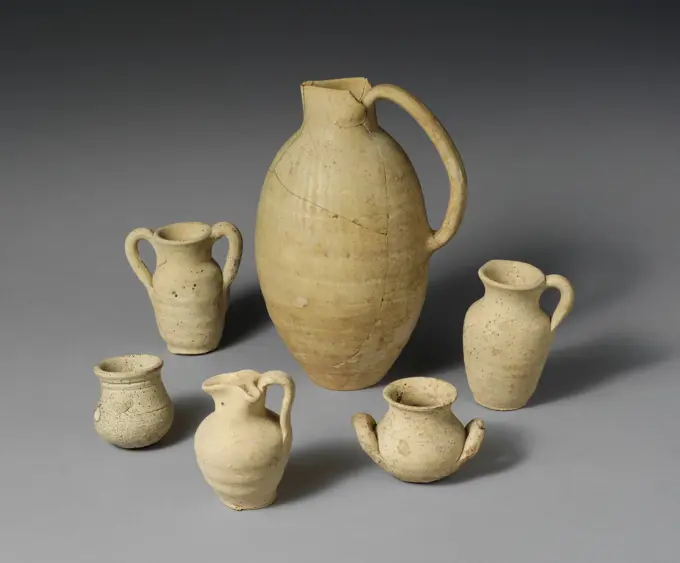
A range of terracotta jugs from various ancient cultures, featuring intricate designs and varying ages, reflecting historical pottery craftsmanship.
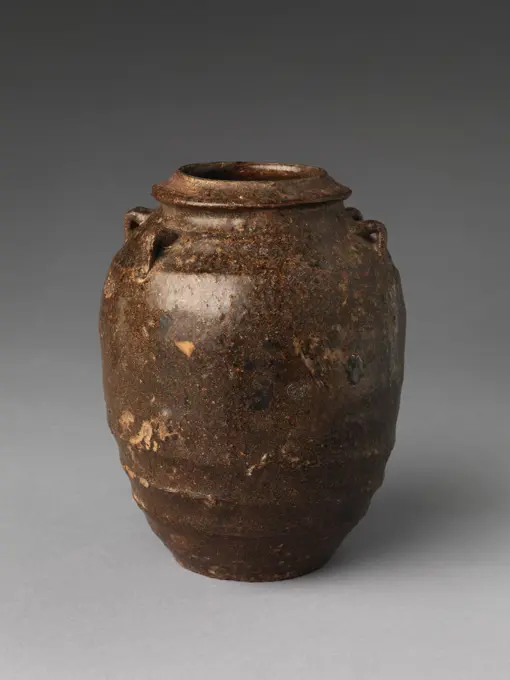
Jar 18th century Japan. Jar. Japan. 18th century. Clay covered with mottled glaze (Seto ware). Edo period (1615-1868). Ceramics
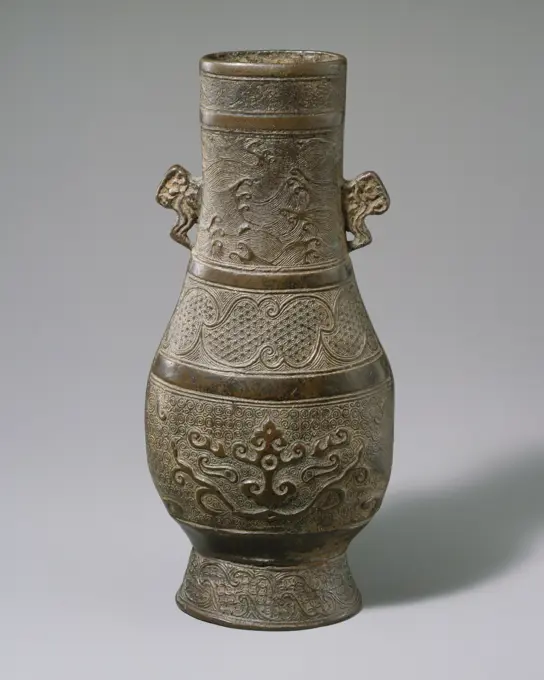
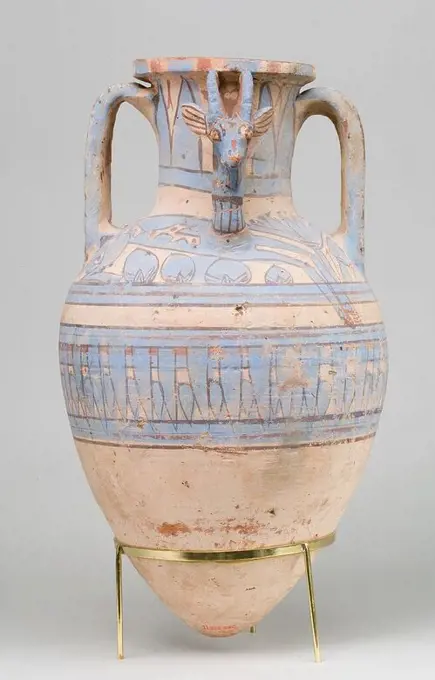
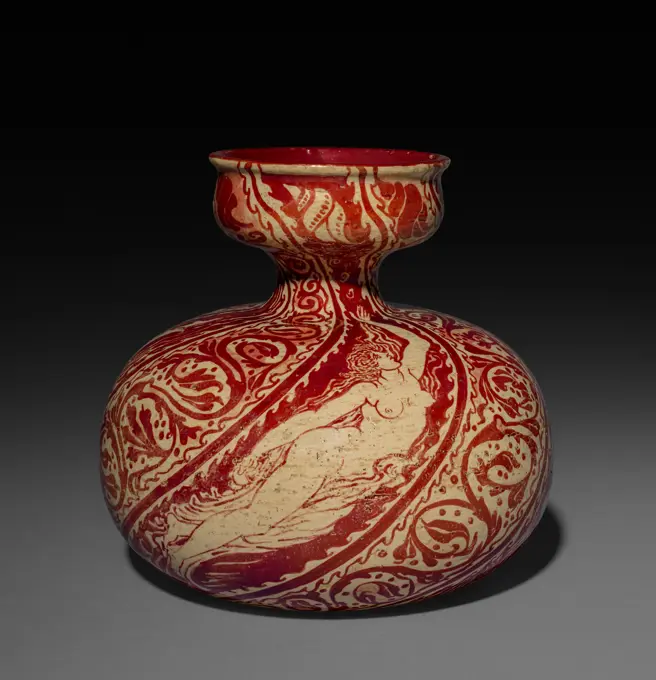
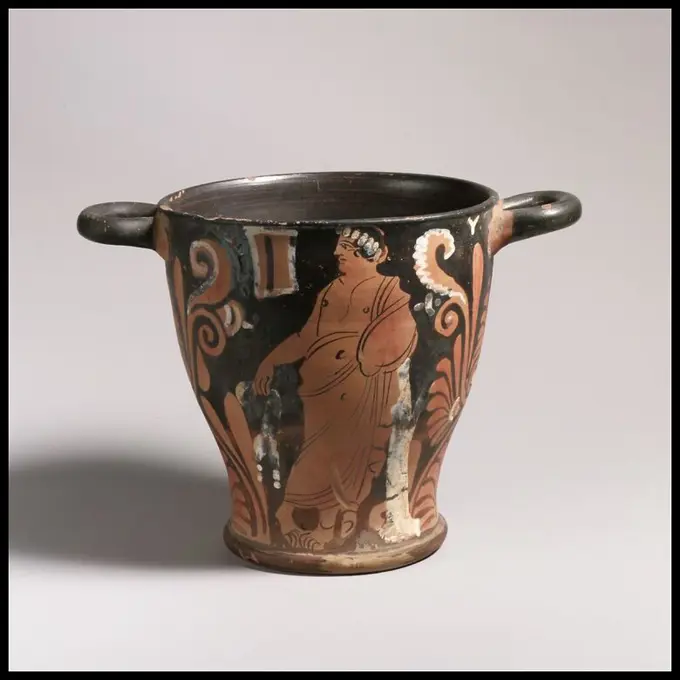
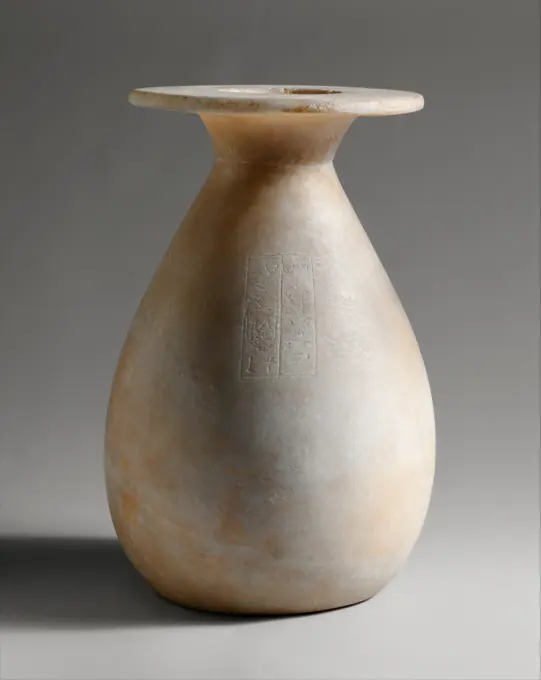
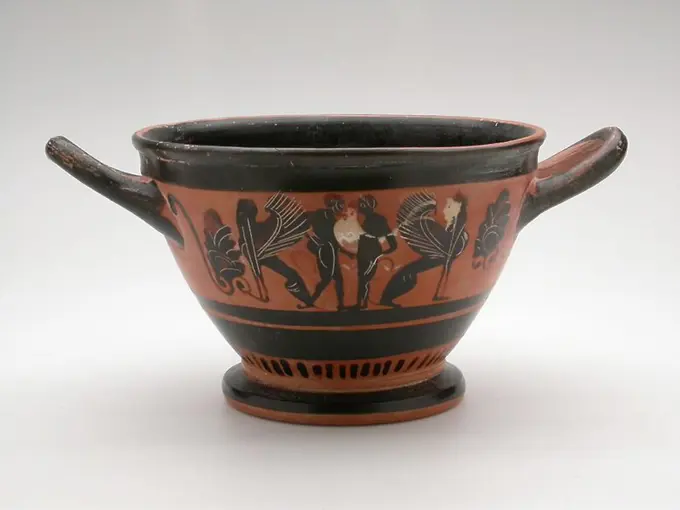
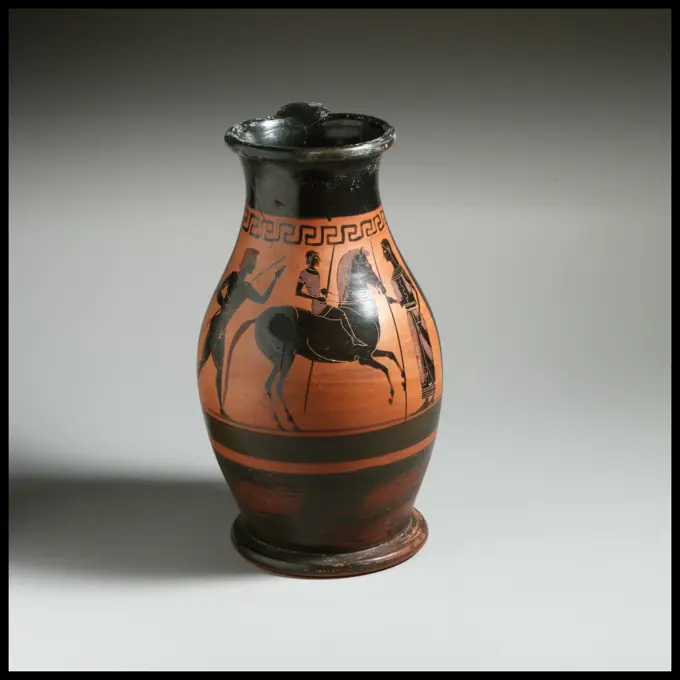
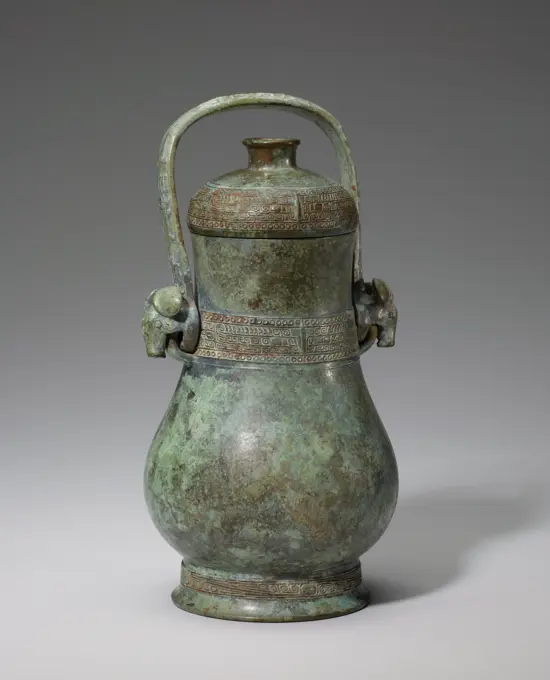
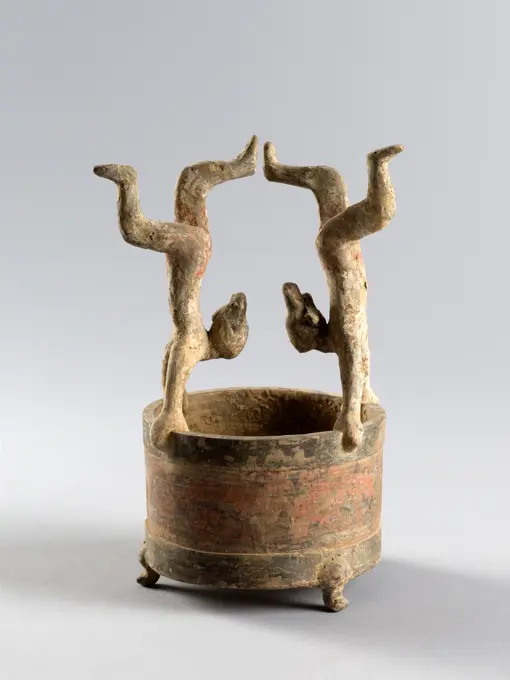
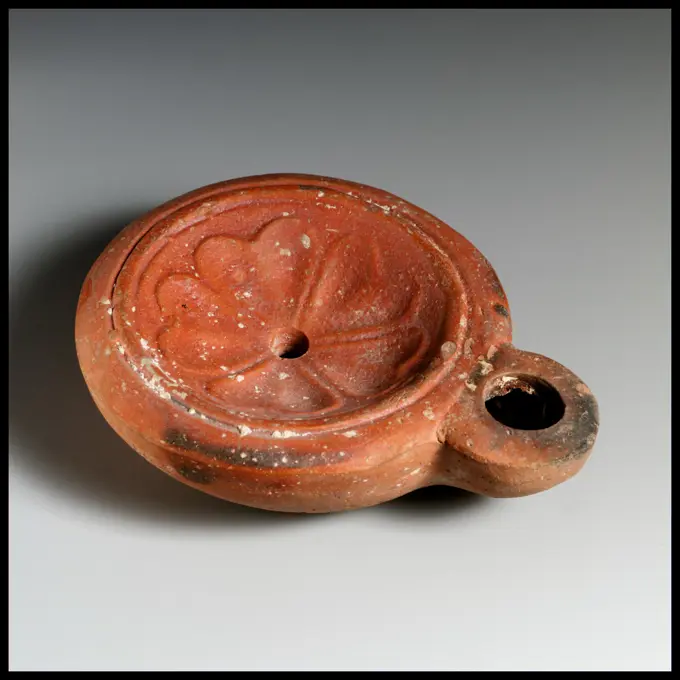
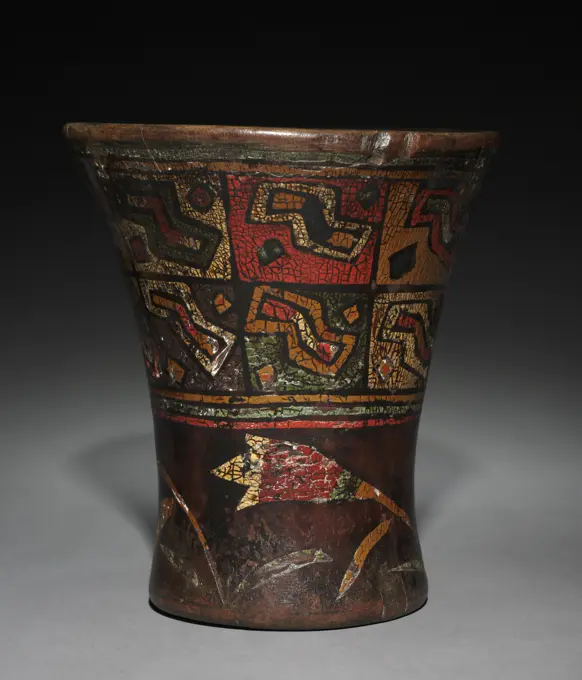
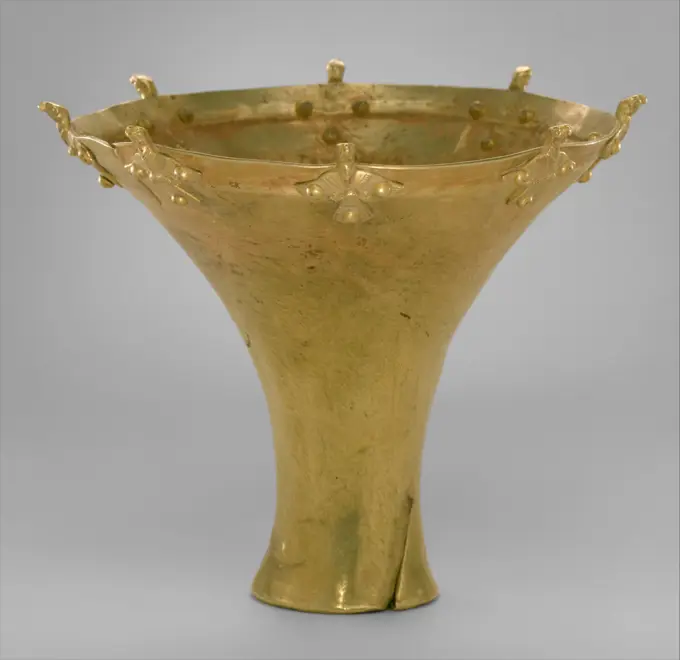
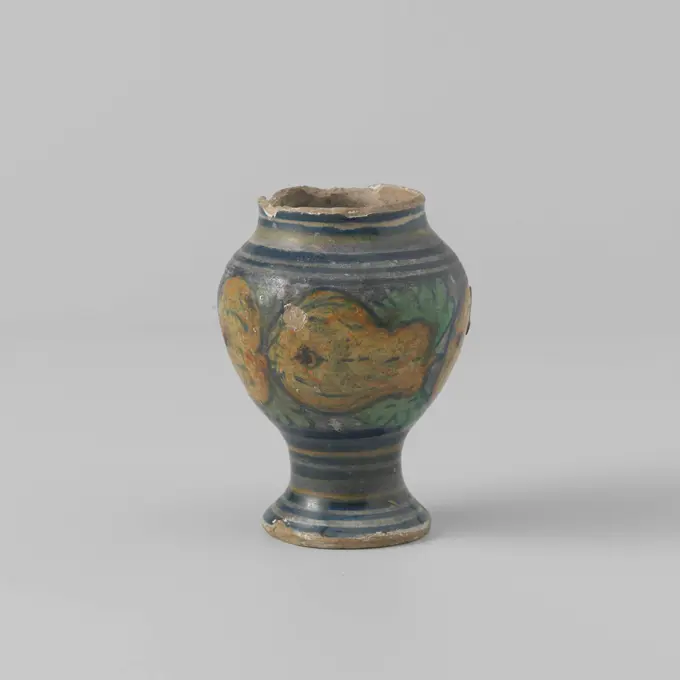
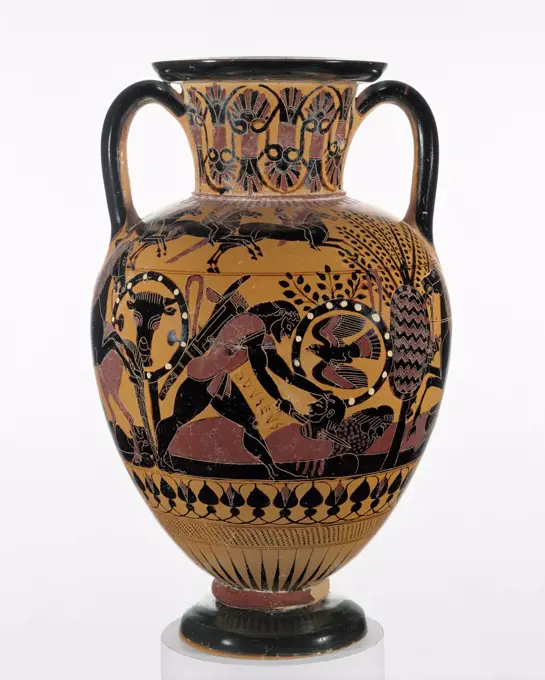
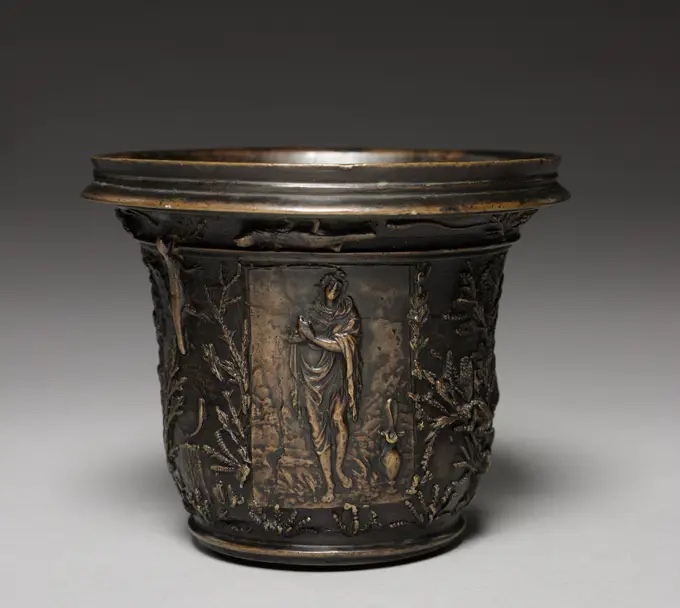
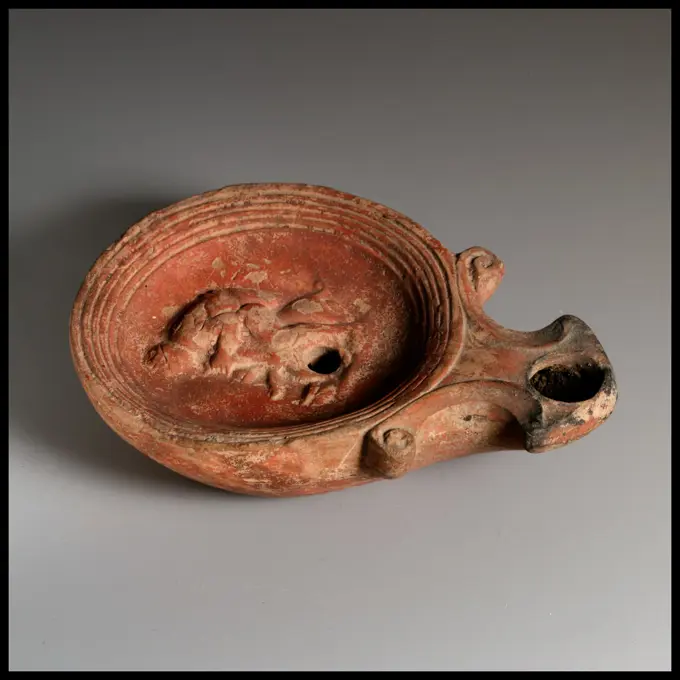
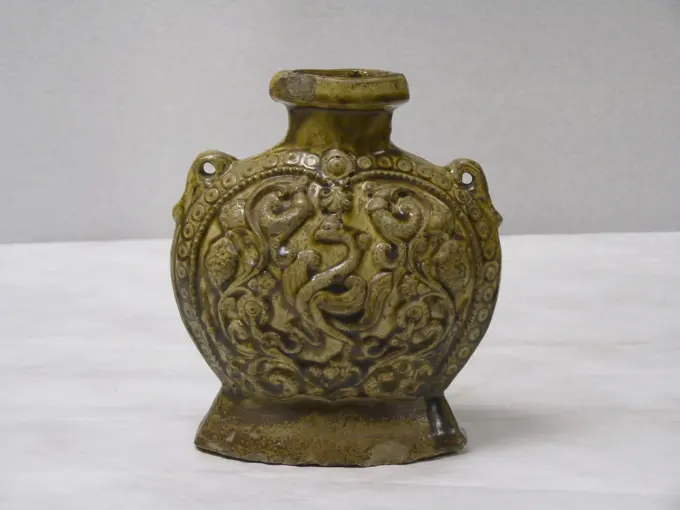
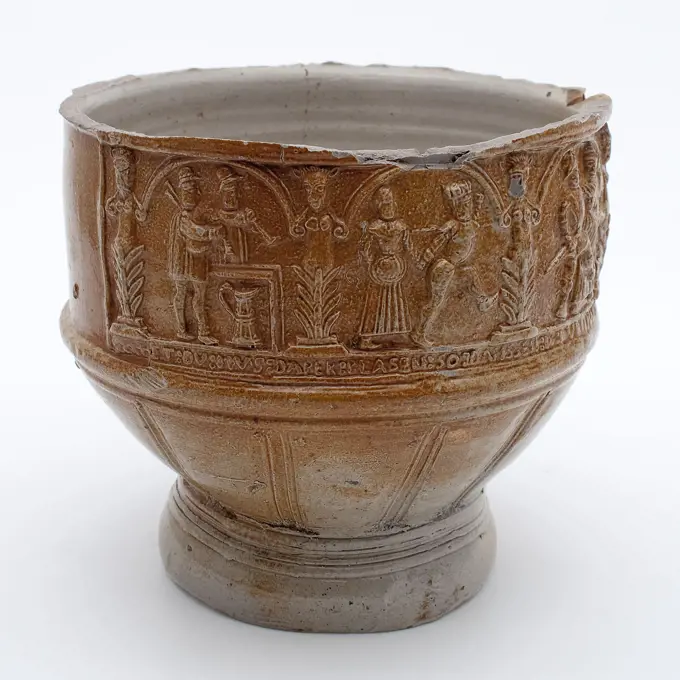
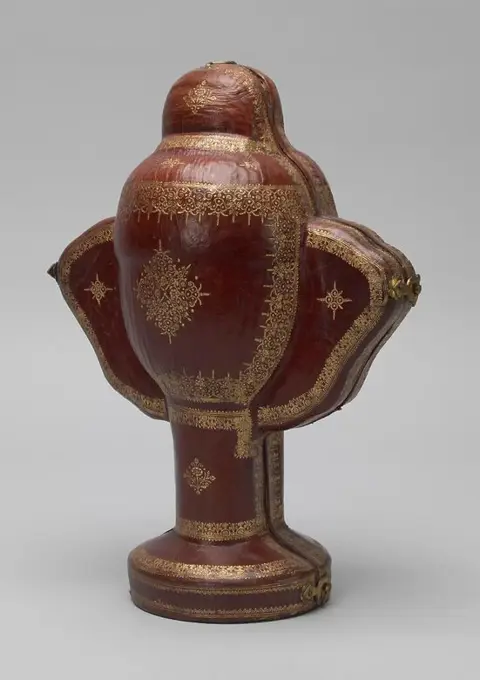
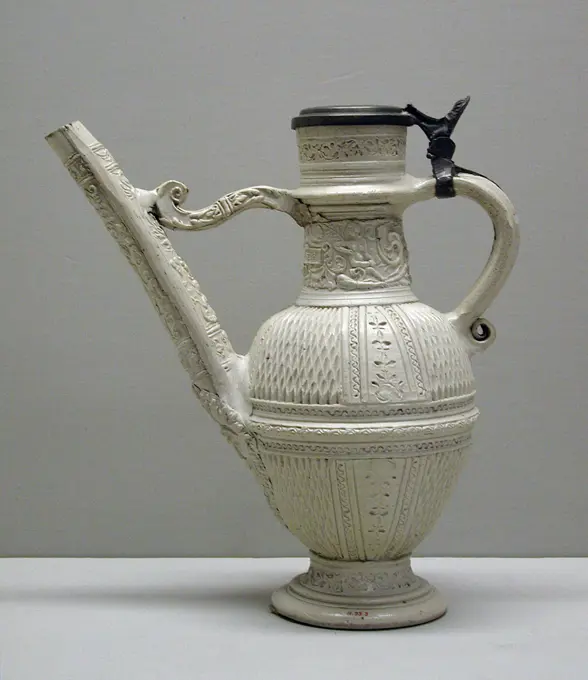
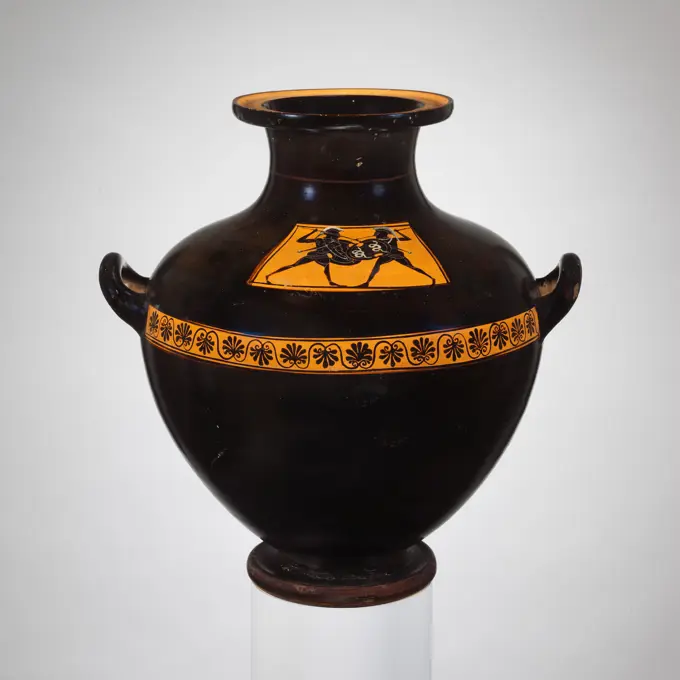
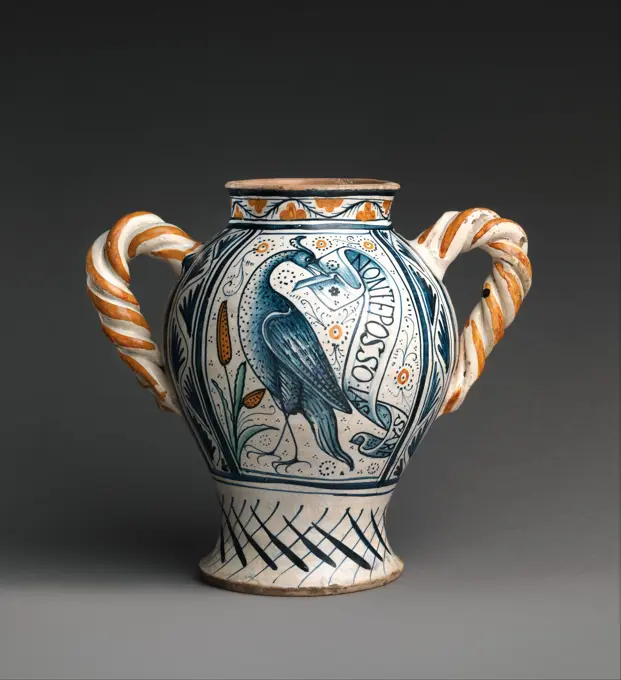
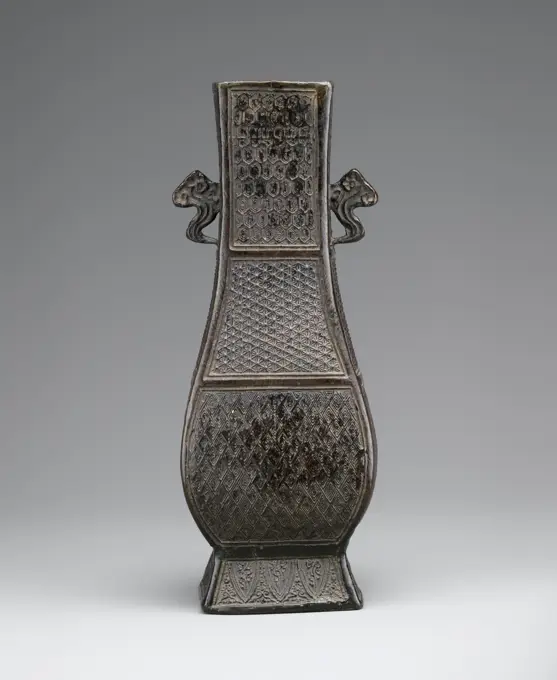
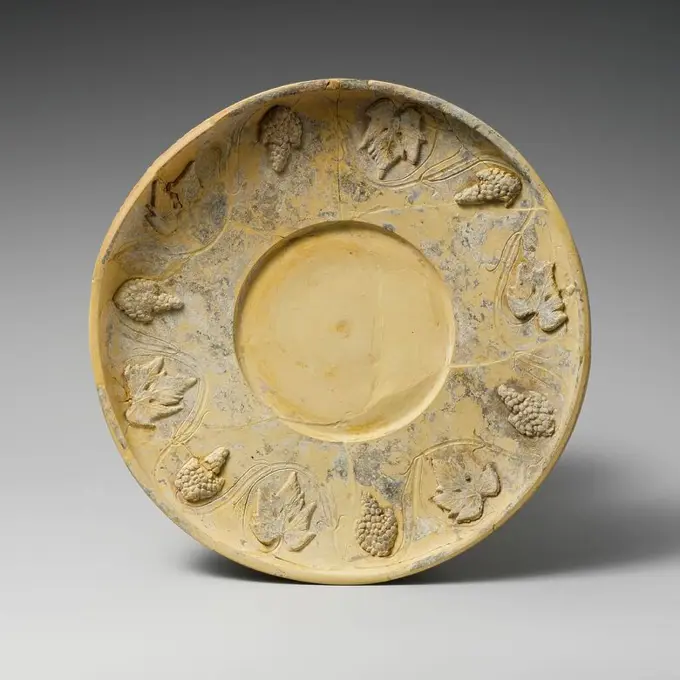
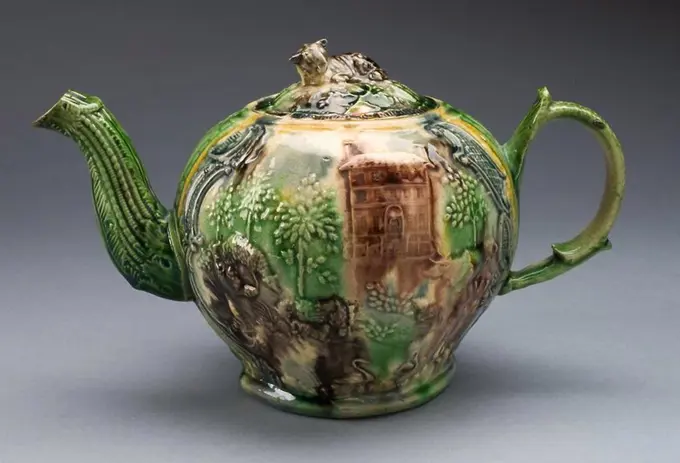
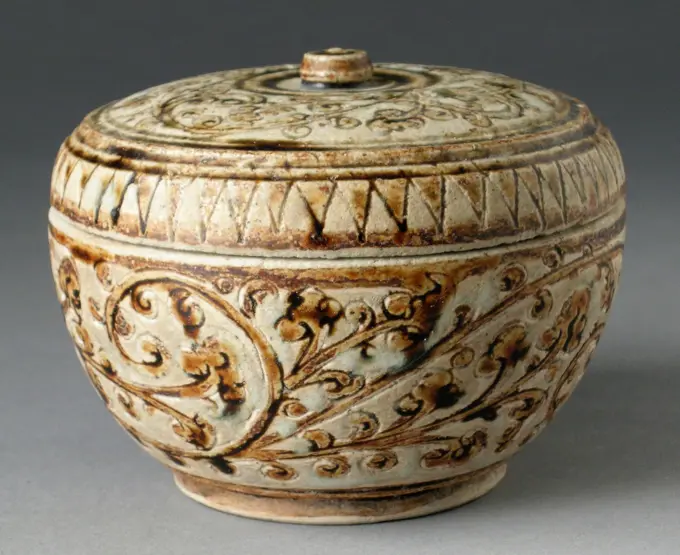
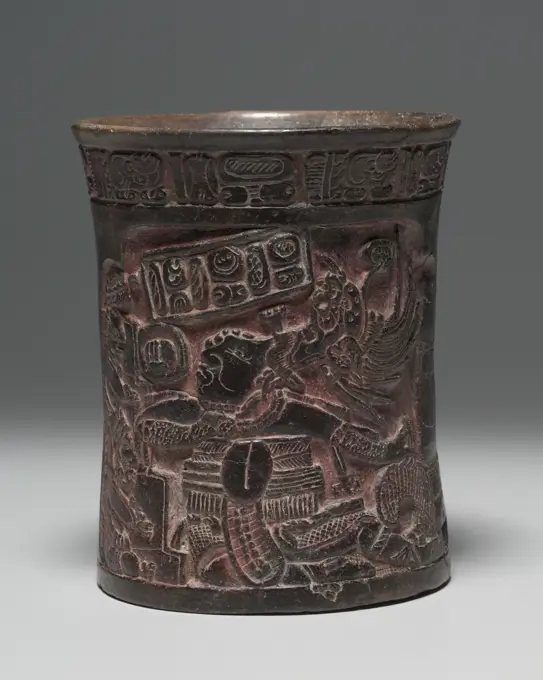
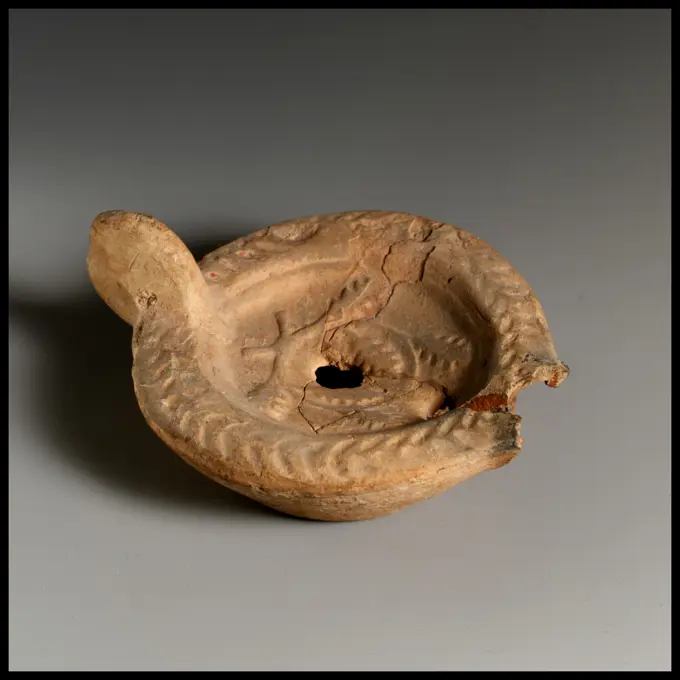
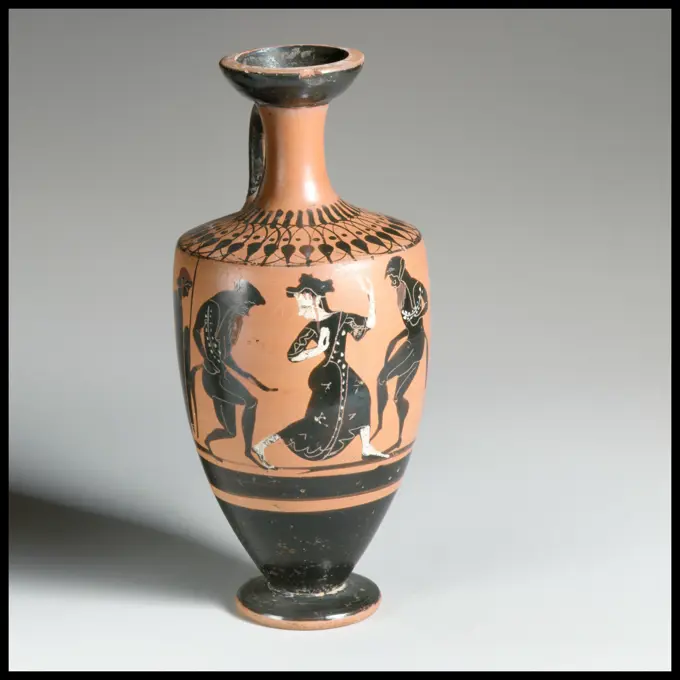
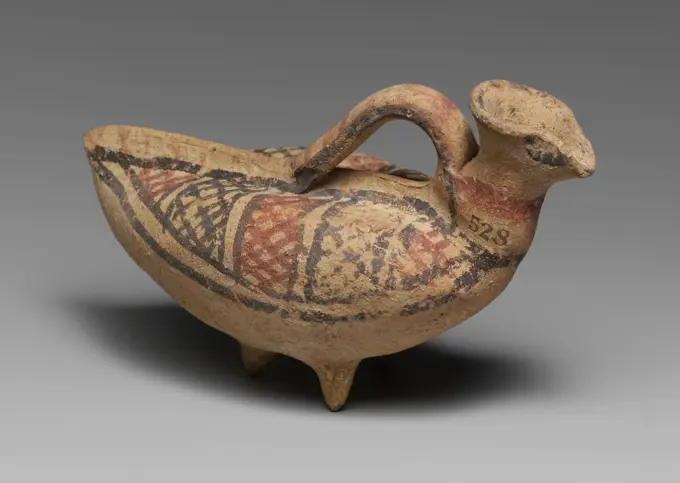
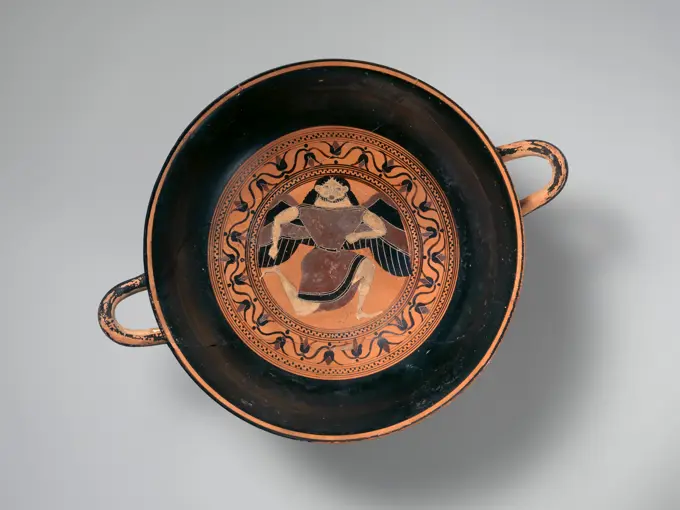
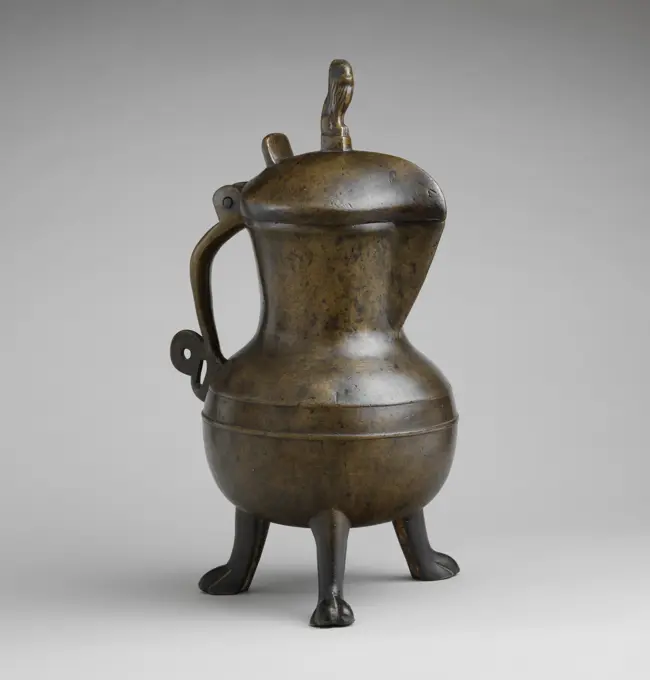
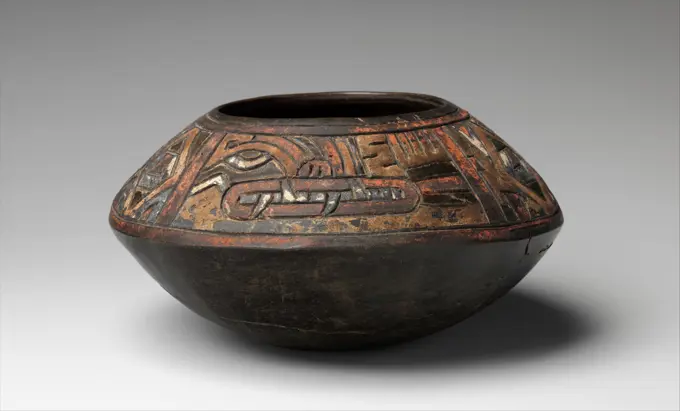
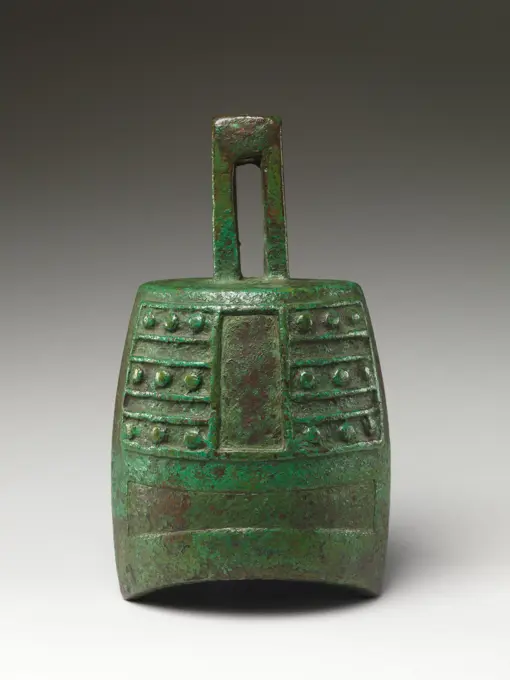
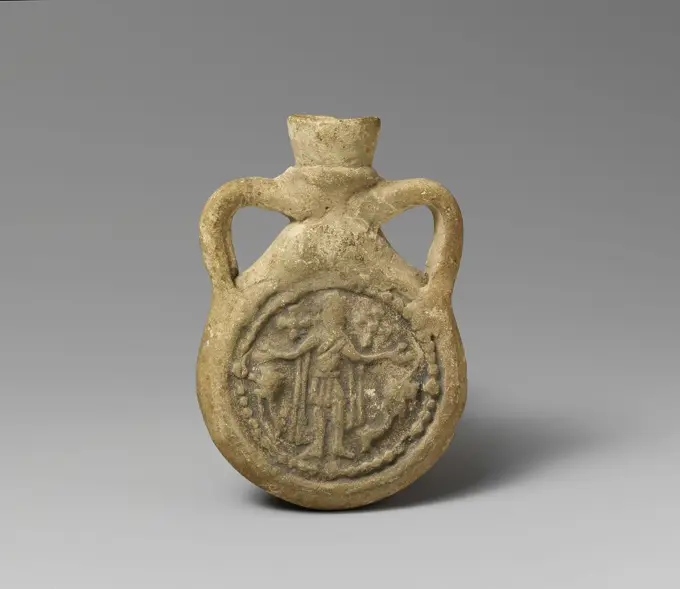
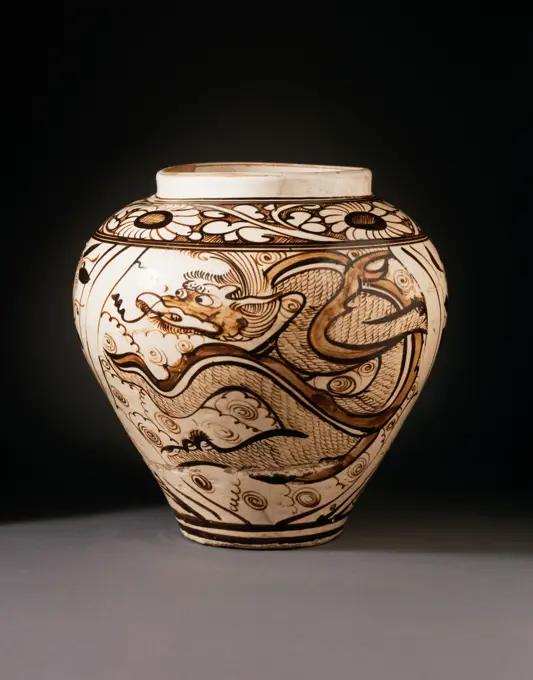
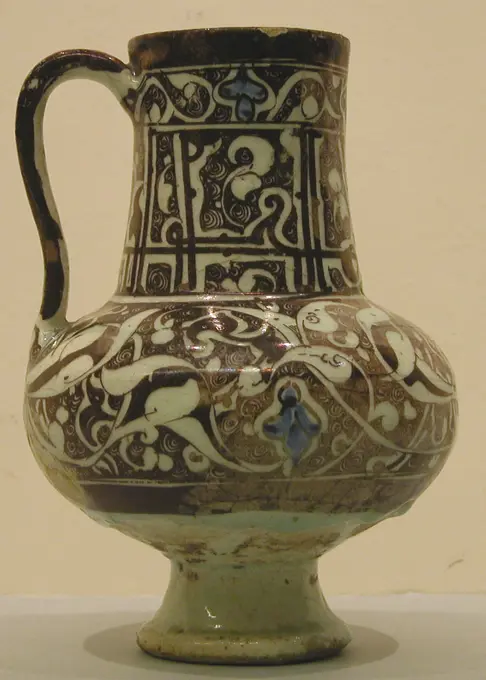
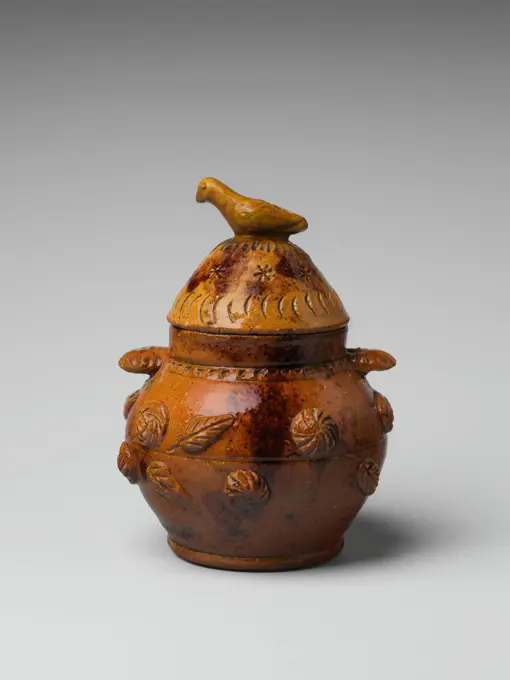
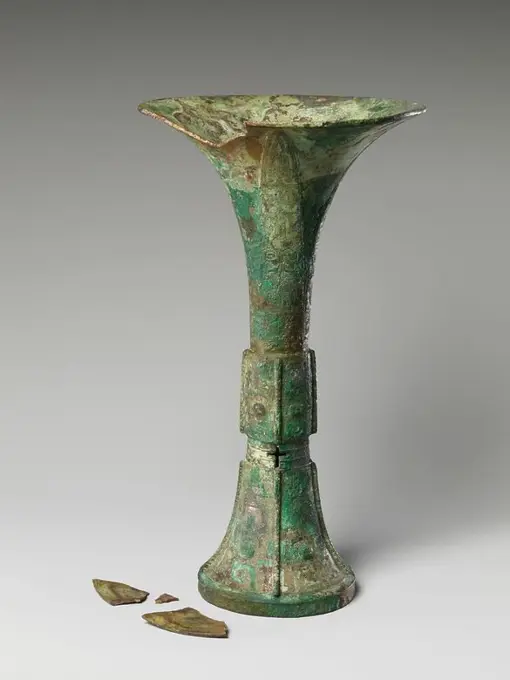
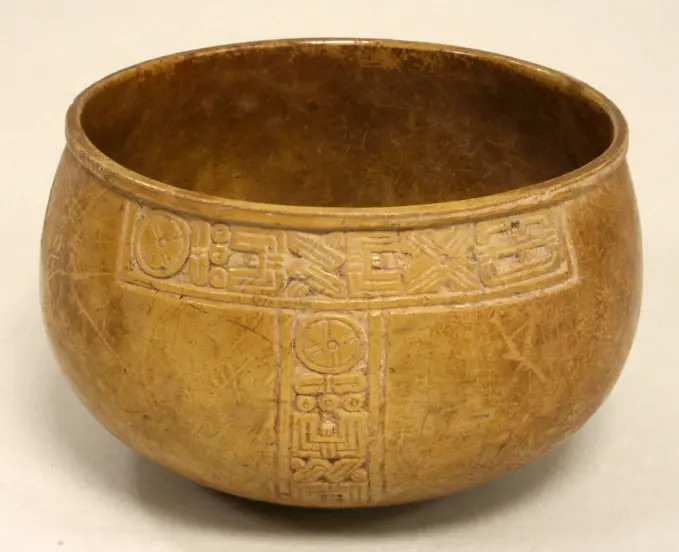
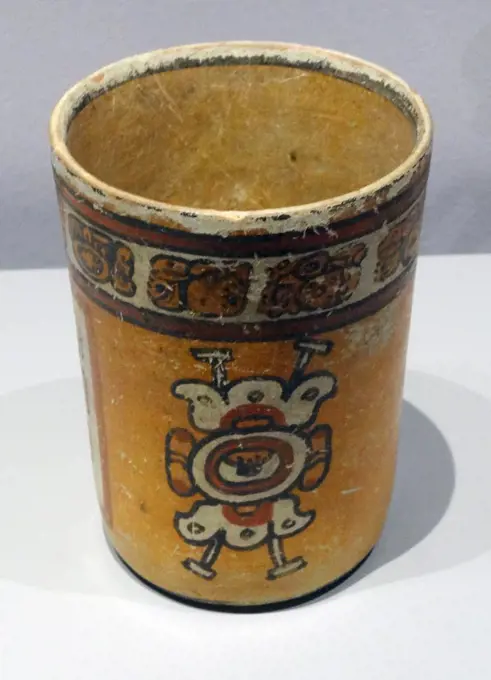
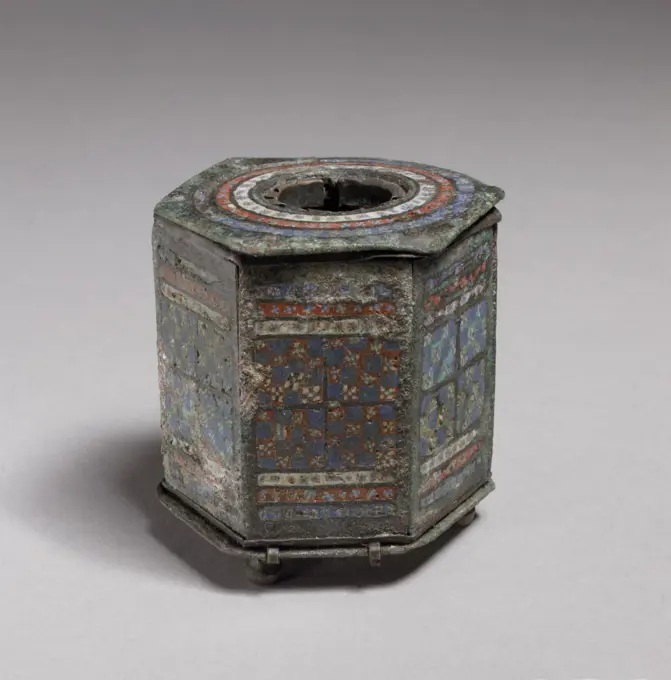
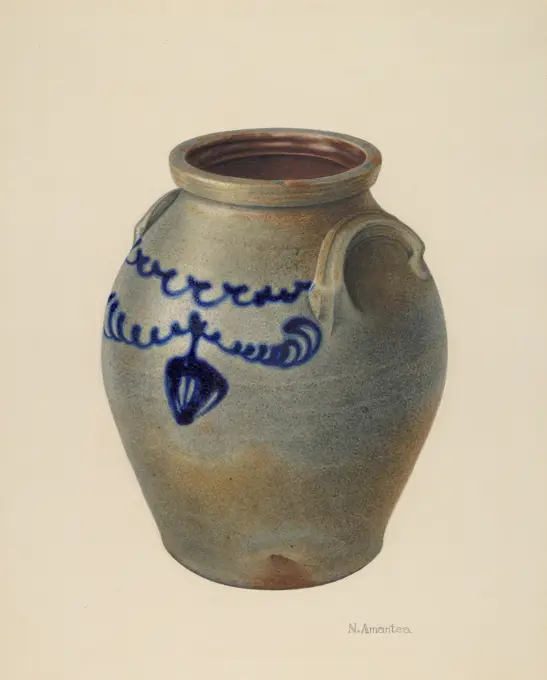
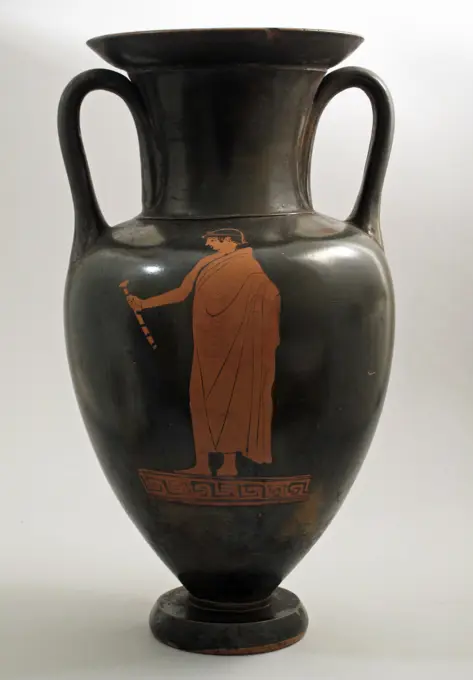
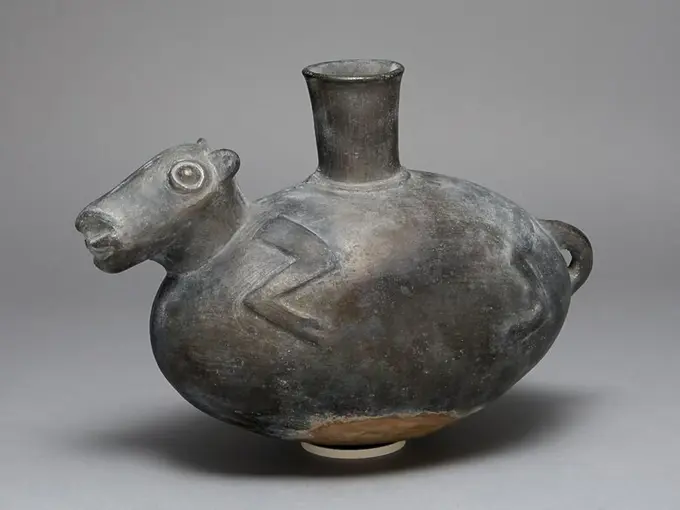
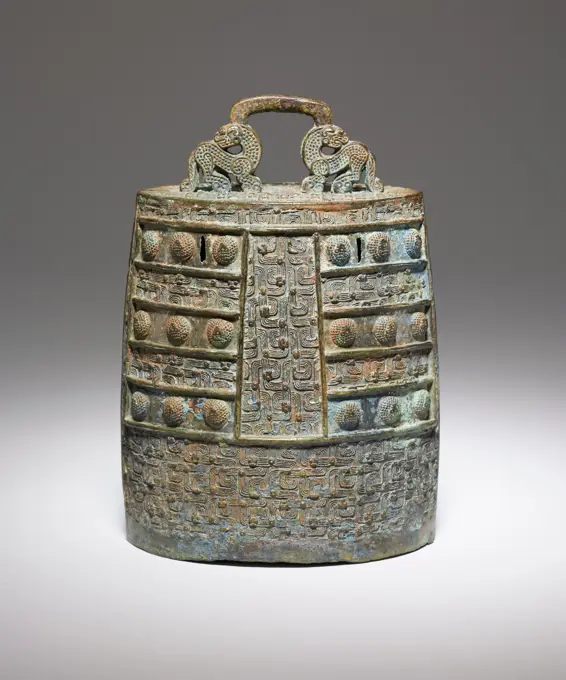
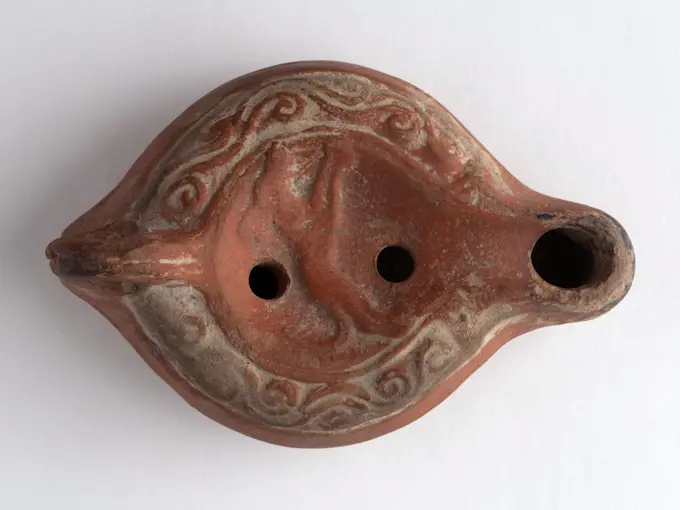
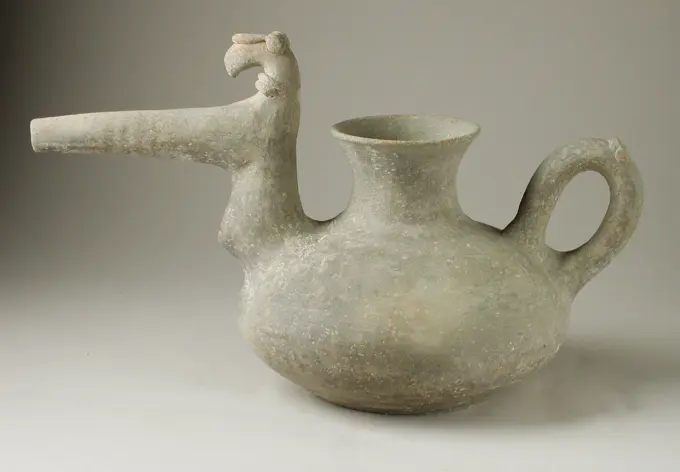
Spouted Jar. Northern Iran, circa 1000-600 B.C.. Furnishings; Serviceware. Gray warePrunted Beaker (Krautstrunk). UnknownVase 13th century China Similar vessels excavated in Inner Mongolia suggest that this somewhat awkward vase was produced for a member of the Ruzhen, or some other confederation of Mongol people, who ruled parts of northern China from the twelfth to the fourteenth century. The shape of the vessel derives from the hu form, first produced in China during the Bronze Age, and the mask-like imagery on the lower section has similar roots. Both allude to the antiquarianism that was common in China in the twelfth and thirteenth centuries. The cresting waves at the top of the vase, on the other hand, are a contemporaneous motif commonly found in ceramics and metalwork.. Vase 42147Blue-Painted Ibex Amphora from Malqata. Dimensions: H. 39.5 cm (15 9/16 in); diam. 21 cm (8 1/4 in). Dynasty: Dynasty 18. Reign: reign of Amenhotep III. Date: ca. 1390-1353 B.C..This remarkable vase was found during the Museum's excavations of the palace of Amenhotep III at Malqata in western Thebes. The head of the ibex had broken off, but was found nearby. Like much of the pottery at Malqata, this amphora was made of a red clay covered with a cream colored slip and decorated with blue, red, and black paint.For more blue-painted ware from this site, see 11.215.461-.469, .471-.473, .477, .489. Museum: Metropolitan Museum of Art, New York, USA.Skyfos in the Gnathia style;  350-330 BC (-350-00-00--330-00-00);Vase, 1889. Walter Crane (British, 1845-1915), Maw & Co. (British (modern), 1850-1969). Earthenware; 22.4 x 22.7 cm (8 13/16 x 8 15/16 in.). Walter Crane was one of the leading figures of the British Arts and Crafts movement. His work helped establish a renewed interest in Renaissance ceramics and the importance of illustration in decorative ceramics. He collaborated with several major manufacturers of decorative furnishings including Maw & Co., an important manufacturer of aesthetic period tiles and other decorative ceramics. This vase is one of a series of vases that Crane designed for Maw around 1889 when they first appear listed in the catalogue of the Arts and Crafts Exhibition Society in London of that year, described along with a series of tiles that Crane also designed for Maw. Its brilliant ruby-red luster surface is a hallmark of Maws work featuring Cranes lyrical designs while referencing earlier 15th- and 16th-century Spanish lusterware.Skyphos. Culture: Greek, South Italian, Campanian. Dimensions: Other (width w/ handles): 6 3/4 × 9 3/8 in. (17.1 × 23.8 cm)Diameter: 6 1/4 × 4 1/4 in. (15.9 × 10.8 cm). Date: ca. 350-320 B.C.. Museum: Metropolitan Museum of Art, New York, USA.Terracotta kylix (cup) 850-750 B.C. Cypriot Kylix of angular form, on each side a bird between vertical bands.. Terracotta kylix (cup) 240101Serpentine tankard ca. 1750-1450 B.C. Minoan Handleless cup.. Serpentine tankard 248873Piriform Jar Inscribed with Hatshepsut's Titles as Queen ca. 1492-1473 B.C. New Kingdom This pear-shaped jar would have been used to store unguents or oils. It is inscribed with Hatshepsut's personal name and her titles as queen: "God's Wife, King's Great Wife whom he loves, Mistress of the Two Lands, Hatshepsut, may she live!"The designation "King's Great Wife whom he loves" suggests this vessel was made before the death of Hatshepsut's husband, Thutmose II.The jar may originally have been intended to furnish Hatshepsut's queen's cliff tomb in western Thebes. After she became king, Hatshepsut seems to have donated goods inscribed with her queen's titles as provisions for the burials of individuals she deemed important (see linen and vessels from the tomb of Hatnefer and Ramose, 36.6.1-36.6.70). Two stone jars, this one and 18.8.15, seem to have been donated to the burial of three foreign wives of her nephew, Thutmose III.. Piriform Jar Inscribed with Hatshepsut's Titles as Queen 5476Fragmentary terracotta cup. Culture: Roman. Dimensions: H. 8.31 cm.. Date: 2nd century A.D..On the sides of the cup is barbotine decoration inset with small chunks of colored glass. Museum: Metropolitan Museum of Art, New York, USA.Skyphos (Wine Cup). Greek; Athens; Attributed to the CHC Group. Date: 500 BC-480 BC. Dimensions: 10.6 × 23.2 × 16.5 cm (4 3/16 × 9 1/8 × 6 1/2 in.). Terra-cotta, decorated in the black-figure technique. Origin: Athens. Museum: The Chicago Art Institute, USA. Author: ANCIENT GREEK.Lamp. Culture: Roman. Dimensions: Overall: 1 x 3 3/8 in. (2.5 x 8.6 cm). Date: 1st century B.C.-1st century A.D.. Museum: Metropolitan Museum of Art, New York, USA.Terracotta oinochoe: olpe (jug) ca. 540 B.C. Greek, Attic Young horseman between youth and womanThe olpe is a jug characterized by a mouth that is continuous rather than articulated with a spout. This example represents an early type in which the mouth is black rather than decorated. The meaning of the scene is puzzling, insofar as all three figures are holding spears. It may be that the youths are leaving or returning home; the woman with a spear is probably a member of the household.. Terracotta oinochoe: olpe (jug) 247232You wine vessel, 11th century BCE, 9 7/8 × 5 1/4 × 4 13/16 in., 3.3 lb. (25.08 × 13.34 × 12.22 cm, 1.5 kg), Bronze, China, 11th century BCE, This vessel is a variation of the you wine vessel. The foot belt displays an eye-like motif and diagonals. The belts on the neck and lid, bordered by bands of circles, display taotie with bodies, rows of quills on their backs. The flange marking the center line of the face has been reduced to a narrow ridge. The handle is adorned at each end with a Malayan tapir, or mo, a mammal species that today inhabits parts of Southeast Asia.Lei with acrobats. Terracotta with traces of polychromy. China, west han. Paris, Cernuschi museum. Acrobat, han west dynasty, balance, balanced exercise, funeral figurine, figure, lei, mingqi, representation, terracotta, polychromy traceStanding cup 17th-18th century European. Standing cup. European. 17th-18th century. Silver, leather. Metalwork-Silver In CombinationTerracotta oil lamp early 2nd century A.D. Roman, Cnidian Loeschcke Type 8. Mold-made. Discus: rosette with five heart-shaped petals. Large, slightly pointed nozzle. Within impressed ring base, faintly inscribed in Greek letters: ROMANE/SIS, with small circle below. Slip across top but only in small patches on sides and base.. Terracotta oil lamp. Roman, Cnidian. early 2nd century A.D.. Terracotta. Mid Imperial. TerracottasTerracotta oil lamp. Culture: Roman, Cypriot. Dimensions: Overall: 1 x 3 3/8 in. (2.5 x 8.6 cm). Date: 1st century A.D..Loeschcke Type 1A. Mold-made. Discus: gladiator facing right, wearing crested helmet and greaves, holding shield up in front of him to right and short sword in outstretched right hand, and his right leg bent under him, with a band of concentric lines and grooves towards edge. Single filling hole below him towards nozzle. Volutes flanking nozzle. Within raised base ring, uneven, indented base, with the raised letter I at center.Intact, except for small chip in edge of shoulder and projecting finial of right volute. Museum: Metropolitan Museum of Art, New York, USA.Skyphos 8th century B.C. Cypriot Two-handled bowl with geometric ornament with birds and rosettes.. Skyphos. Cypriot. 8th century B.C.. Terracotta. Geometric. VasesRitual barrel, anonymous, c. -1700 - c. -800 Ritual holds three legs. Decorative tire around neck and around buttons; Double zigza edge around the body. China lead (metal). antimony Ritual holds three legs. Decorative tire around neck and around buttons; Double zigza edge around the body. China lead (metal). antimonyAmforka z namalowanym naszyjnikiem z kwiatów. unknown, authorTerracotta skyphos (deep drinking cup). Culture: Greek, Attic. Dimensions: H. 6 7/8 in. (17.5 cm)diameter 7 3/4 in. (19.7 cm). Date: ca. 350 B.C..Obverse, seated woman, holding openwork processional basket and accompanied by two other women, Eros, and satyrReverse, seated woman with standing servant, Eros, and satyrOpenwork baskets of this type holding implements of sacrifice were carried by women in religious processions. The presence of a satyr and Eros on both sides of this vase suggests that the festival being celebrated is the Anthesteria. On the second day of this important Attic celebration devoted to Dionysos, the god of wine, he was united in marriage in a secret ritual to the wife of a high honorary official of Athens. It was apparently also a popular time for weddings in the city, and the seated woman on the back of this vase may be a bride being prepared for marriage. The basket and details of jewelry are in slight relief and gilded. Museum: Metropolitan Museum of Art, Can glazed with ear, gray and brown speckled. Can glazed with ear, stoneware, gray and brown speckled. On the belly some baking projects in the soil a crack due to a baking error.Greece, Athens, Protogeometric style. Oenochoe (or oinochoe, wine jug) with a clovered spoutKrater with lines, depicting ibexes and birds. Geometric pottery. Etruscan Civilization, 750-725 BC.Ritual wine vessels. Around 1050 BC the Zhou defeated the Shang. Seeking to present themselves as worthy successors to the Shang, they adopted many of their predecessors customs. This included ceremonies with ritual bronze objects. The decoration of these wine vessels - alternating smooth zones and bands of motifs - still greatly resembles that of earlier Shang bronzes.Beaker. Culture: Hungarian, Rimaszombat. Dimensions: Overall: 4 1/2 x 4 in. (11.5 x 10.1 cm). Date: late 17th century.Floral decoration was very popular on goldsmiths' work in the later seventeenth century, culminating with the use of large, swirling blossoms and foliage, as seen on this beaker that is elevated on ball feet. Objects with this form belonged to a standard type and were produced in large quantities throughout Central and Eastern Europe.Literature<i>Fine Continental, English and American Silver and Objects of Vertu</i>. Sale cat., Christie's, New York, March 28, 1979, p. 62, no. 196.Judit H. Kolba. <i>Hungarian Silver: The Nicolas M. Salgo Collection</i>. London, 1996, p. 94, no. 72.ReferencesElemér Koszeghy. <i>Magyarországi ötvösjegyek a középkortól 1867-ig / Merkzeichen der Goldschmiede Ungarns vom Mittelalter bis 1867</i>. Budapest, 1936, nos. 1872 town mark, 1892 maker's mark.Wolfram Koeppe 2015. Museum: Metropolitan Museum of Art, New York, USA.Li ding (tripod vessel), Shang dynasty, bronzeKero (Waisted Cup), after 1550. Peru, Colonial Inka style, 16th century. Wood, inlaid pigments; diameter of mouth: 17.8 x 16 cm (7 x 6 5/16 in.); overall: 17.8 cm (7 in.).Beaker with birds on the rim ca. late 3rd-early 2nd millennium B.C. Bactria-Margiana Archaeological Complex During antiquity, vessels of precious metal were used in ritual ceremonies and as symbols of status for members of the ruling elite. From the western Caucasus to eastern Afghanistan, several hoards of these vessels in gold and silver have been found and recorded. Such a cup is this one, made of a natural alloy of gold and silver known as electrum. Resting on its narrow base, the body of the vessel curves gently inward before flaring out again to a wide mouth. The vessel is decorated at the rim with eight birds of prey incised with patterned lines. They are placed at equal intervals, with wings outspread and heads projecting above the rim of the cup. Each bird is attached with three round-headed rivets. Since the placement of the birds makes it awkward to drink from the cup, it is probable that the vessel was intended for some kind of ceremonial libation. The bird of prey is promiCovered Jar 618 CE-906 CE China. Stoneware with blue lead glaze .Vase or pot, baluster-shaped and painted multi-colored. Baluster-shaped vase of multi-colored painted majolica. Horizontal lines are painted on the foot and along the top edge and on the belly fruits and blades. The colors used are green, yellow and blue.Chalkidian Black-Figure Neck Amphora; Attributed to the Inscription Painter, Greek, active 570 - 530 B.C.; Rhegion, South Italy, Europe; about 540 B.C.; Terracotta; Object: H: 39.6 cm (15 9/16 in.), Object (body): Diam.: 24.9 cm (9 13/16 in.), Object (mouth, outside): Diam.: 16.2 cm (6 3/8 in.)Mortar, c. 1550-1560. Workshop of Wenzel Jamnitzer I (German, 1508/09-1585), with plaquettes cast after models by Peter Flötner (German, 1485-1546). Bronze; overall: 12.4 x 14.6 cm (4 7/8 x 5 3/4 in.).Terracotta oil lamp 1st half of 1st century A.D. Roman, Cypriot Loeschcke Type 1B. Mold-made. Deep, concave discus: man facing left, bending over animal, with a band of close-set lines and grooves at edge. Volutes flanking nozzle. Within raised base ring, flat base, with impressed letters across center: FAVSTI.Intact.The maker's stamp is read, unusually, from the back of the lamp.. Terracotta oil lamp. Roman, Cypriot. 1st half of 1st century A.D.. Terracotta. Early Imperial. TerracottasFlask with molded decoration late 6th-early 7th century China The mold-impressed design on either side of these two jars is suggestive of classic Greek ornament. The scrolling grapevine decorative motif has an ultimate Hellenistic prototype; it can be traced from the West through Central Asia to China. This design became part of the Chinese decorative repertoire in several kinds of art in the Six Dynasties (220-589) period. (According to tradition, the domesticated grape itself was introduced into China from the West in the second century B.C.). Flask with molded decoration 52562Fragment of stoneware farmer's pitch with dance pairs and text under arcades, farmer's pitcher crockery holder fragment soil found ceramic stoneware clay engobe glaze salt glaze, hand turned stamped glazed glazed fried belly-foot fragment of stoneware farmer dance gray shard brown engobe and salt glaze long tail under in the frieze: GERHET: DU: MUS: DAPER: BLASEN: SO: DANSSEN: D ...: ALS: WINES: SI: RASEN: ... IS: ...: SPRICHT: BASTOR: I ... archeology import pottery serving serve drinking beer wine wedding marriage party dancingTerracotta kantharos (drinking cup with high handles) ca. 325-300 B.C. Greek, South Italian, Apulian The original polychrome decoration is lost.. Terracotta kantharos (drinking cup with high handles) 248135Terracotta oil lamp ca. A.D. 150-225 Roman, Cypriot Loeschcke Type 8. Mold-made, with ring handle. Discus: a peacock displaying his tail feathers, head turned to right, standing on a branch (); a single filling hole to bottom left, and surrounded by two raised concentric lines; on shoulder, impressed leaf pattern. Incised ring base, and slightly pushed-in base with central indented marker's mark.Intact.. Terracotta oil lamp 241588Anonymous / 'Case for the agate Cup with a handle'. 1650 - 1675. Leather, Wood, Metal, Cloth. Museum: Museo del Prado, Madrid, España.Stirrup Spout Bottle with Deer. Culture: Moche. Dimensions: H. 9 x Diam. 5 1/2 in. (22.9 x 14 cm). Date: 1st-6th century. Museum: Metropolitan Museum of Art, New York, USA.Kouei, vase and urn vase. Bronze. China, western zhou dynasty. Paris, Cernuschi museum. 71127-29 Bronze, dynasty, third Chinese dynasty, urn, kouei vase, zhou westSeed Jar 14th-16th century Caddoan. Seed Jar 316622Vase 1898 Caroline H. Rimmer. Vase. Caroline H. Rimmer (1851-1918). American. 1898. Earthenware. Made in Boston, Massachusetts, United StatesVessel Depicting a Bird-Hunting Scene 100 BCE-500 CE North Coast. Ceramic and pigment . MocheCan. Can be made from stoneware with pewter lid. The body is pear-shaped. Half rosettes are painted on the belly in blue. On the shoulder a row of the same rosettes.Ewer (Schnabelkanne) ca. 1595 Decoration after a design by Theodor de Bry Netherlandish. Ewer (Schnabelkanne) 191731Snuff Bottle, 17th-19th century, 3 x 1 3/8in. (7.6 x 3.5cm), Porcelain, China, 17th-19th centuryTerracotta hydria: kalpis (water jar) ca. 510 B.C. Greek, Attic On the shoulder, two warriors in combatThe shape and the glossy black glaze contribute decisively to the elegance and power of the hydria. The combat on the shoulder, probably deliberately anonymous, evokes a heroic encounter from the epic cycle of poems concerning the Trojan War of which only the Iliad and the Odyssey survive. The palmette ornament in the handle zone represents a motif popular with red-figure vase-painters of the generation contemporary with Euphronios.. Terracotta hydria: kalpis (water jar) 254888 Greek, Attic, Terracotta hydria: kalpis (water jar), ca. 510 B.C., Terracotta, H. 13 in. (33 cm). The Metropolitan Museum of Art, New York. Fletcher Fund, 1956 (56.171.30)Vase with love motifs ca. 1470-90 Italian, Deruta Amorous symbols decorate this vessel. On one side, a graceful bird clutches a scroll inscribed with a romantic dedication: Non te posso lassar (I cannot leave you). This declaration of fidelity is paired, on the opposite side, with the image of an arrow piercing a heart from which flowers and acorns bloom. The broad span of the handles and the two-sided design suggest that it was intended more for display than for storagepossibly as a gift between lovers.. Vase with love motifs 204513Vase 13th-14th century China This slender vase has a rectangular section on a splayed foot, with two cloud-shaped handles attached to the sides of its neck. All four sides of the vase are decorated, from neck to foot, with geometric patterns, including honeycomb diaper, floret-and-dots diaper, diamond diaper, and pendant lappets. The entire vessel is covered with a warm blackish patina that bears no trace of being buried underground.. Vase. China. 13th-14th century. Bronze. Yuan dynasty (1271-1368). MetalworkBowl. Culture: Cypriot. Dimensions: H. 3 3/4 in. (9.5 cm)diameter 5 in. (12.7 cm). Date: ca. 750-480 B.C..Two-handled cup or hard white clay, black line outside, white band inside. Museum: Metropolitan Museum of Art, New York, USA.Holmos by Argivo Painter. Geometric pottery. Etruscan Civilization, 725-700 BC.Terracotta phiale (libation bowl). Culture: Etruscan. Dimensions: H. 1 13/16 in. (4.6 cm); diameter 8 3/4 in. (22.2 cm). Date: ca. 250-200 B.C..The interiors are enlivened with modeled vines or fanciful vegetal motifs reminiscent of modern wedding-cake decorations. At the center of each phiale, within a fluted medallion, is a frontal Silenos head. Museum: Metropolitan Museum of Art, New York, USA.KALATHOS DE TOYA. IBERICO CERAMICA. (DEPOSITO: MUSEO ARQUEOLOGICO NACIONAL).Terracotta oil lamp. Culture: Roman, Cypriot. Dimensions: Overall: 1 1/2 x 3 1/2 in. (3.8 x 8.9 cm). Date: 3rd century A.D..Unpierced handle. Discus: prancing horse facing left, flanked to either side by herring-bone wreath. Two large filling holes. On shoulder, vine tendril with stylized bunches of grapes. Uneven, slightly concave base. Museum: Metropolitan Museum of Art, New York, USA.Teapot. Staffordshire, England. Date: 1760-1770. Dimensions: 13.7 x 21 x 12.1 cm (5 3/8 x 8 1/4 x 4 3/4 in.). Lead-glazed earthenware (creamware). Origin: Staffordshire. Museum: The Chicago Art Institute, Chicago, USA.Terracotta kantharos (drinking cup) early 3rd century B.C. Etruscan From a group of 6 undecorated vessels, simple objects that may have been used in a drinking ritual.. Terracotta kantharos (drinking cup) 247098Kylix, band-cup Greek, Attic ca. 540 BCE Siren between men flanked by panthers and palmettes. View more. Kylix, band-cup. Greek, Attic. ca. 540 BCE. Terracotta; black-figure. Archaic. VasesCovered Box. Thailand, Sawankhalok, 16th century. Furnishings; Accessories. Stoneware with brown and white glazeKantaros Bucchero Nero;  625-600 BC (-625-00-00--600-00-00);EtruriaVessel with Ballplayer, c. 600-1000. Mexico, Yucatán, Maya (Chocholá) style (250-900). Earthenware, pigment; diameter: 18.1 x 15.6 cm (7 1/8 x 6 1/8 in.); overall: 18 cm (7 1/16 in.).Cup. Iran, 12th-early 13th century. Metal. Bronze, engraved and inlaid with silverTerracotta oil lamp 1st half of 3rd century A.D. Roman Loeschcke Type 8. Unpierced handle. Mold-made. Discus: oak wreath around central filling hole; second filling hole near edge behind nozzle. On shoulder: herring-bone wreath. On concave base near edge, in small Greek letters: PMIAN.Broken and partially repaired with cracks across discus, most of nozzle missing, and large hole in front of bowl.. Terracotta oil lamp. Roman. 1st half of 3rd century A.D.. Terracotta, mold-made. Late Imperial. TerracottasMaker Unknown, Scroll Flask (pint), 1845-60, mold-blown glass.Canosa ceramic jug decorated with geometric patterns and adjuncts in shape of hands, from Apulia Region, ItalyRitual Food Vessel, 12th century BCE, 8 7/16 × 5 1/2 × 5 1/2 in., 2.9 lb. (21.43 × 13.97 × 13.97 cm, 1.3 kg), Bronze, China, 12th century BCELekythos early 5th century B.C. Attributed to the Class of Athens 581. Lekythos 247250Terracotta askos (flask with a spout and handle over the top) in the form of a bird 750-600 B.C. Cypriot Three feet with geometric ornament.. Terracotta askos (flask with a spout and handle over the top) in the form of a bird 240431Fountain. Green enamel sandstone. Cernuschi Museum, Asia Museum of Asia in the city of Paris.Bronze kyathos (ladle) 450-400 B.C. Etruscan With handle, lip decorated with beading.. Bronze kyathos (ladle) 248649Krateriskos (małe naczynie do mieszania wina). warsztat attycki, workshopPitcher Baranowski, Józef (1863 or 1868 1942)Terracotta kylix: Siana cup (drinking cup) ca. 575 B.C. Attributed to the C Painter Interior, gorgonExterior, obverse, Achilles pursuing Troilos and Polyxena; reverse, horsemenThe C(orinthianizing) Painter takes his name from the strong influence of Corinthian vase-painting on his style. He particularly favored the Siana cup, which afforded him an ample, regularly shaped surface over which to deploy mythological narratives. The C Painter has chosen a later moment in the Troilos story than the Painter of London B 76. The hare and bird emphasize the speed of Achilles' pursuit.. Terracotta kylix: Siana cup (drinking cup). Greek, Attic. ca. 575 B.C.. Terracotta; black-figure. Archaic. VasesEwer with Engraved Fish Scale Pattern, Inscribed in Persian with the name Khairullah Made 1701-1725 India. The Sultans of the Deccan (r. 1347-1636) in South India combined the Persian aesthetic with the Indic to forge a new Indo-Islamic idiom. In this ewer, we see the confrontation of the Indic preference for a sensuous fullness of volume, weight, balance, and a naturalistic silhouette (representing shapes such as gourds, mangoes, fruits, and birds) with the Islamic preference for the abstract, ethereal, and attenuated silhouette from Iran. The Indic aspect of this Indo-Islamic vessel is evident in the voluptuous, bottom-heavy, pear-shaped belly on raised on a pedestal foot, rising to a tall slender neck with a disk or ìbulgeî in the center, to a dome shaped top. The curvaceous handle echoes the rounded belly, while the spout, with a chased band of chevron, rises in a gentle S-curve to a lotiform mouth. A fully opened lotus surrounds the base of the spout. It is chased in a repoussÈ fiCovered Vessel 14th-15th century South Netherlandish The legs on this vessel resemble those on contemporary cooking pots, suggesting that this sturdy jug was used both for heating and for serving. The area around Dinant was renowned for such domestic brasswork, which was then exported throughout Northern Europe.. Covered Vessel. South Netherlandish. 14th-15th century. Copper alloy. Metalwork-Copper alloyBowl 6th-3rd century B.C. Paracas. Bowl 308421Bell (Niu Zhong) in the style of an Eastern Zhou model 19th century China. Bell (Niu Zhong) in the style of an Eastern Zhou model 61052Pilgrim Flask with Saint Menas. Dimensions: 3 7/8 x 2 5/8 in. (9.8 x 6.7 cm). Date: 4th-7th century.Ampullae like this one were used by pilgrims to bring home water or oil from the great pilgrimage site for Saint Menas, said to be a late-third-century Egyptian Roman soldier who was martyred for his Christian faith. He is shown between the two camels who returned his body to Egypt for burial. Museum: Metropolitan Museum of Art, New York, USA.Potpourri Vase Made 1810-1820 Burslem. Lead-glazed earthenware with purple lustre decoration . Wedgwood Manufactory (Manufacturer)Jar (Ping) with Dragon and Clouds. China, Hebei or Henan Province, Yuan dynasty, 1279-1368. Furnishings; Serviceware. Cizhou ware, wheel-thrown stoneware with cream slip, brown painted decoration, and clear glazeWine Strainer. UnknownEwer late 12th-first half 13th century Nineteenth-century antiquarians fascination with The Thousand and One Nights and its 9th-century protagonist, Harun al‑Rashid, provoked interest in the Syrian city of Raqqa, where this Abbasid caliph once resided, and in the ceramics unearthed there. These prized objects date to the Ayyubid period, however, not Haruns time. Recent study confirms that Raqqa was an important ceramics center, especially in the first part of the twelfth century, but other centers produced so‑called Raqqa ware as well.. Ewer 451429Sugar bowl 1875-80 James C. Mackley Mackley worked with Anthony W. Baecher before the latter moved to Virginia. The close similarity of the work of the two potters is seen here in the applied stylized leaves and the floral elements in high relief.. Sugar bowl 7961Wine Beaker. Culture: China. Dimensions: H. 11 1/4 in. (28.6 cm); Diam. 6 1/2 (16.5 cm). Museum: Metropolitan Museum of Art, New York, USA.Bowl 9th-10th century Maya. Bowl 313242Brush Holder with Travelers in a Landscape late 19th-early 20th century China. Brush Holder with Travelers in a Landscape 76442Mayan polychrome Vase, decorated with flowers. Tenosique, Tabasco, Mexico. (600-900 AD). Ceramic. white flowers adorn the vase. The vase is related to the supernatural world. The band of glyphs contained on the edge testifies to the use of the recipient;Six-Sided Box 3rd century Late Roman Small six-sided boxes such as this one, with millefiore enamel, have been found all over Europe, including Germany, Poland, and the Ukraine. In this technique, the artist fuses together glass rods of different colors. The multicolored rods are then cut into cross-sections, which are placed in a metal base and heated sufficiently for them to adhere. The result is intricate pattern of flowers and checkerboards.. Six-Sided Box. Late Roman. 3rd century. Champlevé enamel, bronze, inlaid with millefiore enamel. Enamels-ChamplevéNicholas Amantea, Jar, c 1937 JarTerracotta Nolan amphora (jar) ca. 460-450 B.C. Attributed to near the Painter of London E 342 Obverse, hoplite (foot soldier)Reverse, youth holding sword sheath. Terracotta Nolan amphora (jar). Greek, Attic. ca. 460-450 B.C.. Terracotta; red-figure. Classical. VasesCoveredDing, 8th-3rd century B.C., Stoneware, 9 1/2 × 8 in. (24.1 × 20.3cm), China, Chinese, Eastern Zhou dynasty (770-221 B.C.E.), Containers -CeramicsBlackware Vessel in the Form of a Llama. Chimú; North coast, Peru. Date: 1200-1450. Dimensions: 26.7 × 32.4 × 19.1 cm (10 1/2 × 12 3/4 × 7 1/2 in.). Ceramic. Origin: North Coast. Museum: The Chicago Art Institute, Chicago, USA.Bo bell, 6th- 5th century BCE, 6 5/16 × 4 1/2 × 3 1/2 in., 2.9 lb. (16 × 11.4 × 8.9 cm, 1.3 kg), Bronze, China, 6th-5th century BCE, Generally speaking, the individual bells cast for graduated sets will typically display the same decoration regardless of size. The set of which this relatively small bo was part must have been quite striking. It has a simple yet elegant suspension device: a plain loop carried on the heads of two tigers. The circular bosses (raised partial spheres) are coiled snakes, and all remaining surfaces, including the top, consist of highly stylized interlaced snakes. This interlace motif is even used to fill in the central vertical space, which is typically left blank.Portrait Vessel of a Head Made 100 BCE-500 CE North Coast. Ceramic and pigment . MocheBowl (Persia, Kashan); glazed earthenwareOil lamp. Toulouze collection (Anc. Dr Martin), acquisition 1889. Terracotta. High Empire. Paris, Carnavalet museum. 50034-19 Toulouze collection, high-Empire, oil lamp, terracotta, animalBridge and Spout Bottle in Bird Form 1st-6th century Nasca. Bridge and Spout Bottle in Bird Form. Nasca. 1st-6th century. Ceramic, pigment. Peru. Ceramics-ContainersAttic Black-Figure Kyathos; Attributed to Group of Berlin 2095; Athens, Greece; about 510 B.C; Terracotta; 14.9 × 11.7 cm (5 7,8 × 4 9,16 in.)