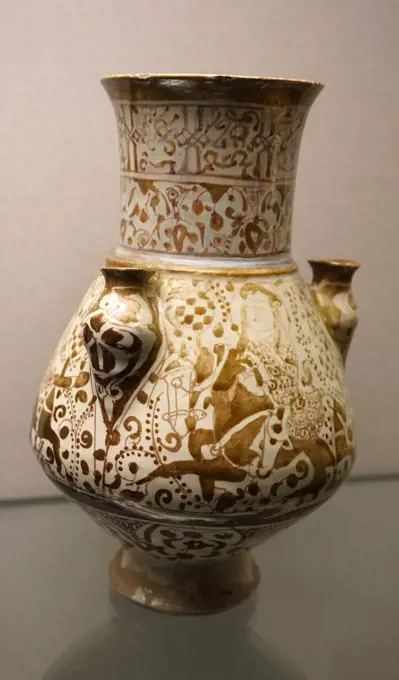
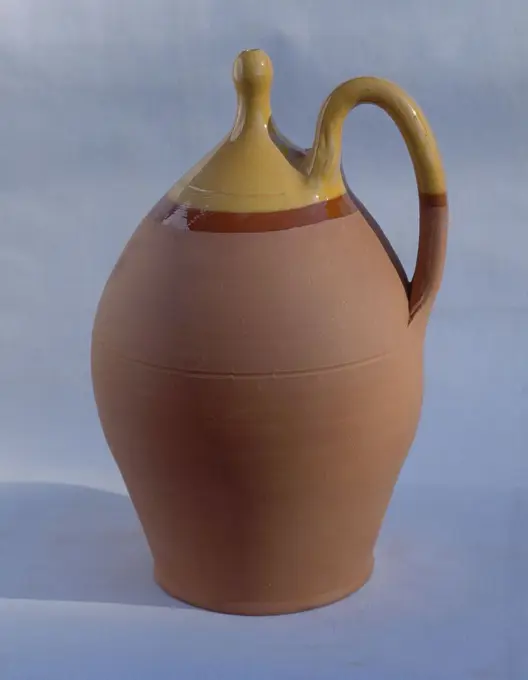
Ancient Terracotta Jugs

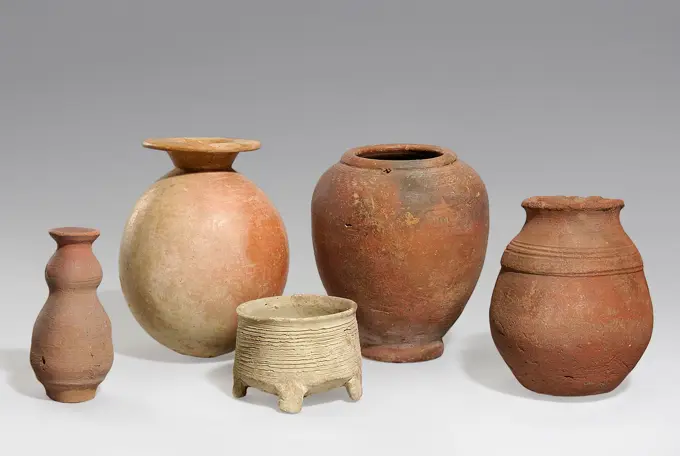
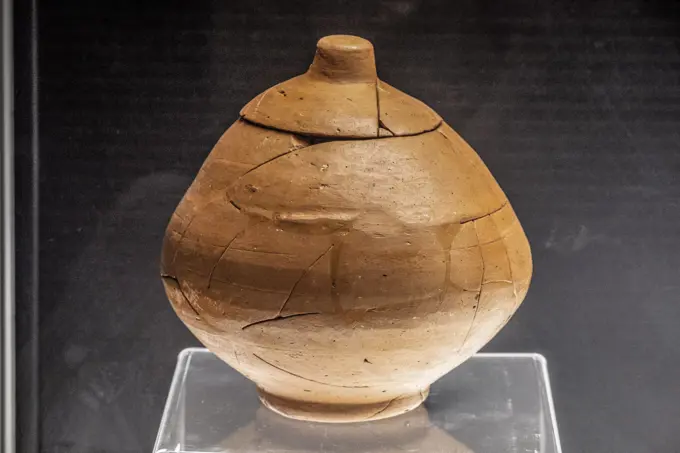
A collection of historical terracotta jugs, showcasing various shapes and designs from ancient cultures. The pieces feature intricate patterns and surfaces, reflecting their archaeological significanc
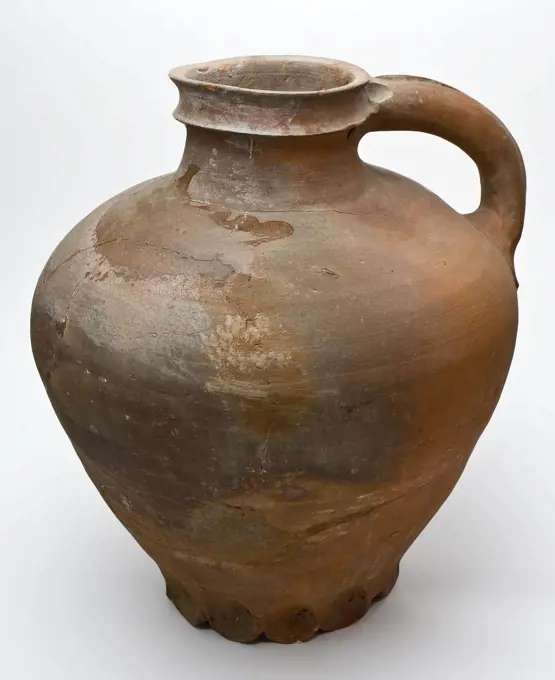
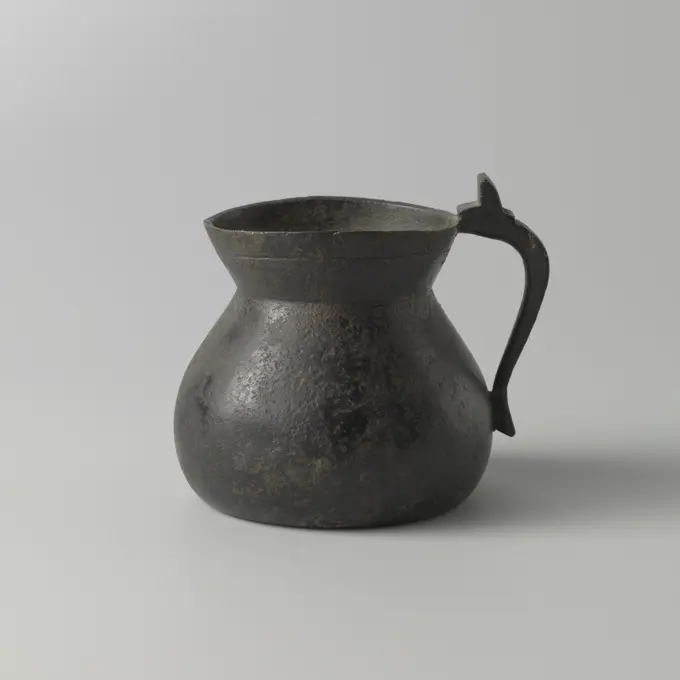
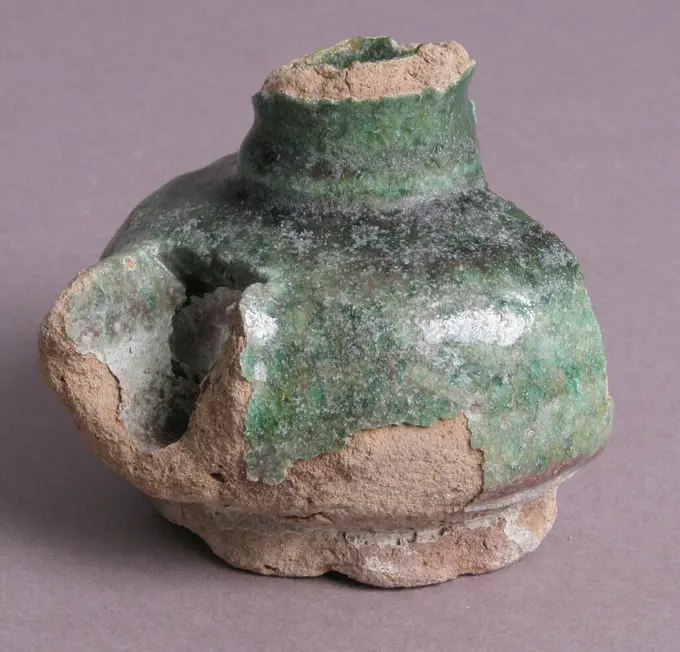
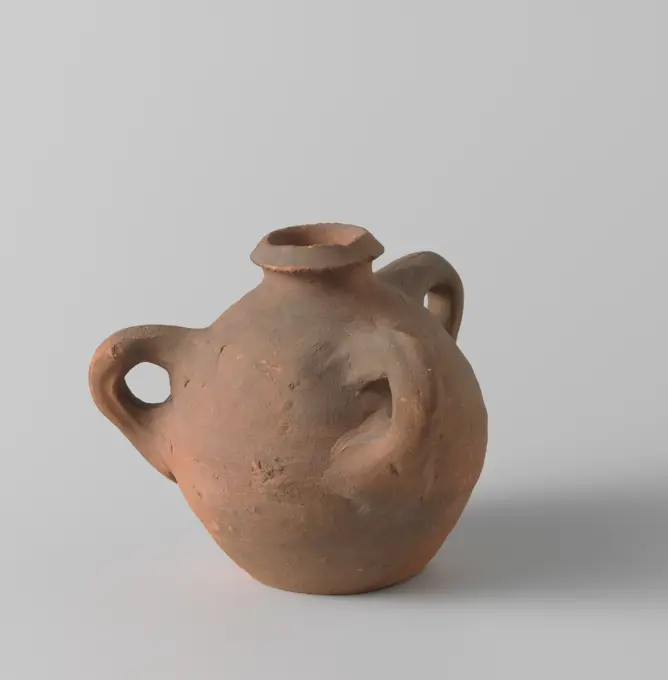
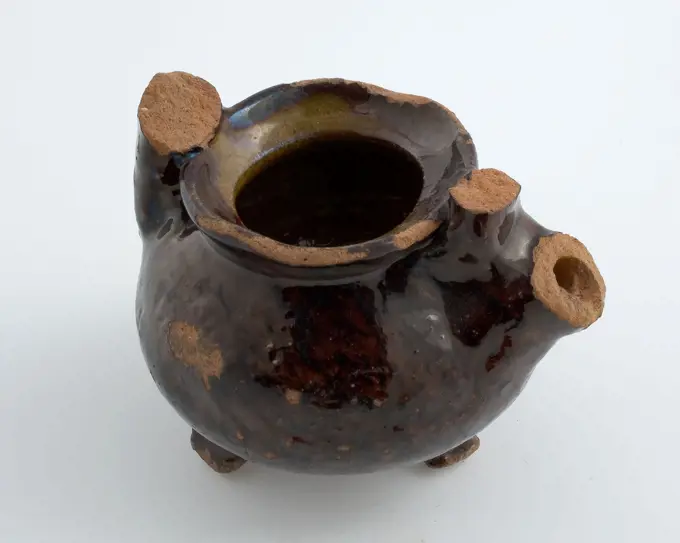
Pottery water jug on circle of stand fins, red shard, some glaze on the shoulder, water jug crockery holder soil find ceramic earthenware glaze lead glaze, hand turned glazed fried jug of red earthenware cuff shaped upper edge with thick round ear with groove and three pinched lobes twelve pinched toes of which two in plaster sparing glaze on shoulder and some sweeping on belly foot and toes. Eir-shaped model archeology Valckensteyn Poortugaal Albrandswaard indigenous pottery water washing food preparation stock packaging kitchen Soil discovery: under the bridge pole at bridge castle Valckensteyn at Poortugaal now Albrandswaard 1962.
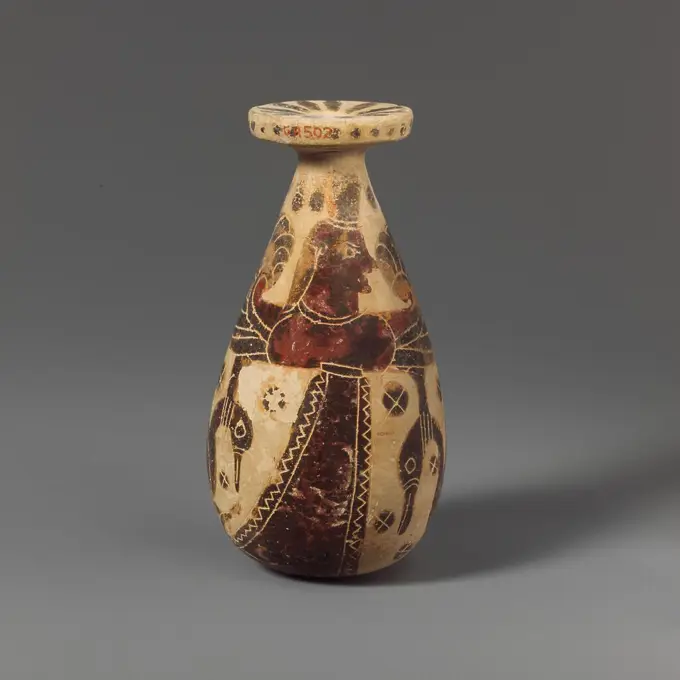
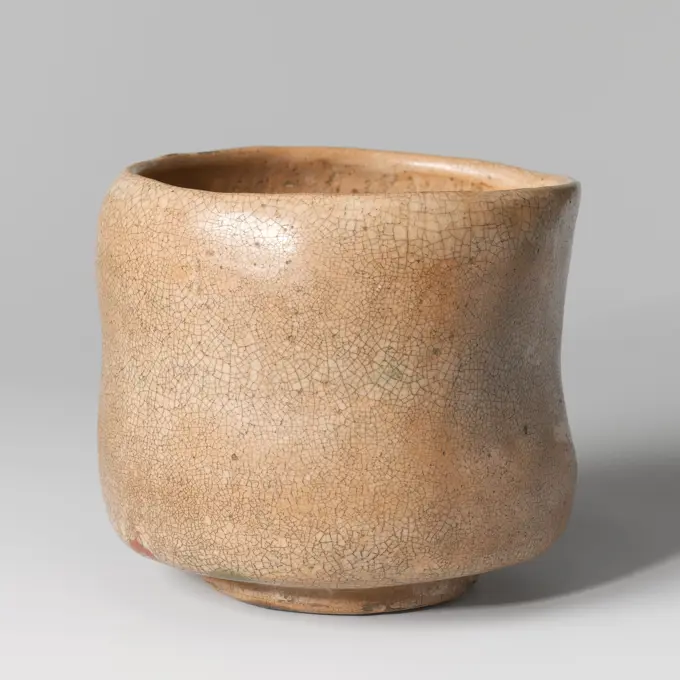
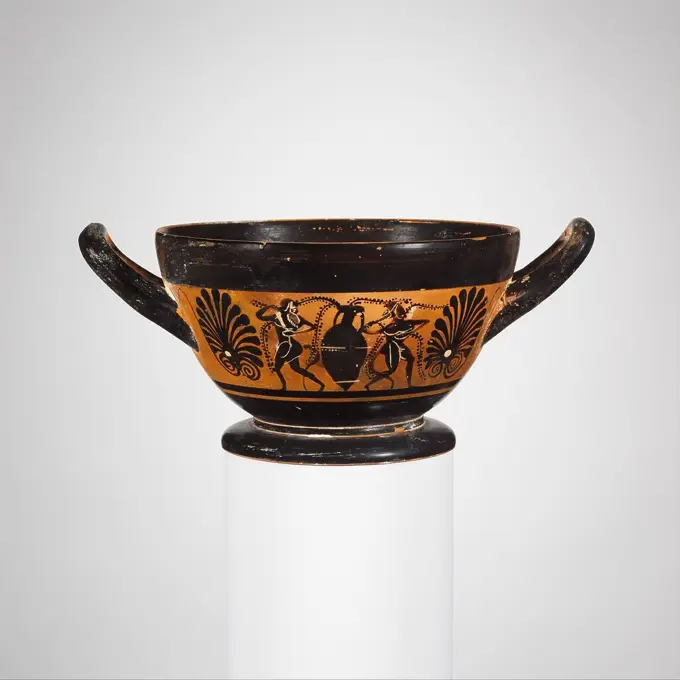
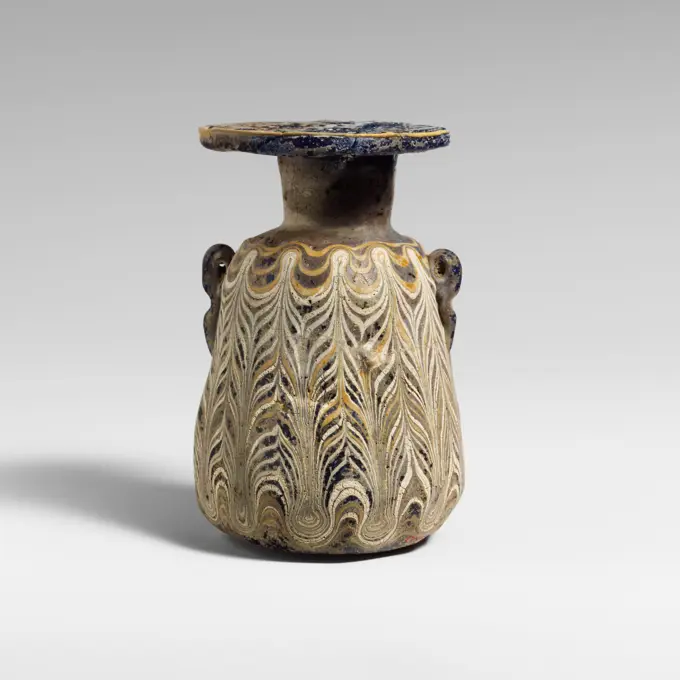
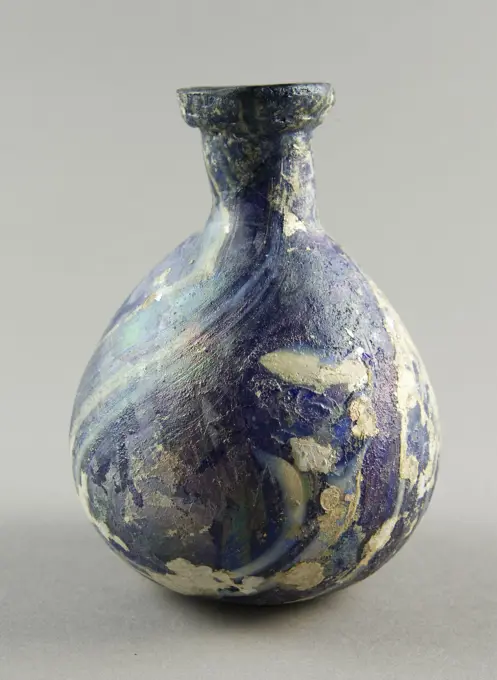
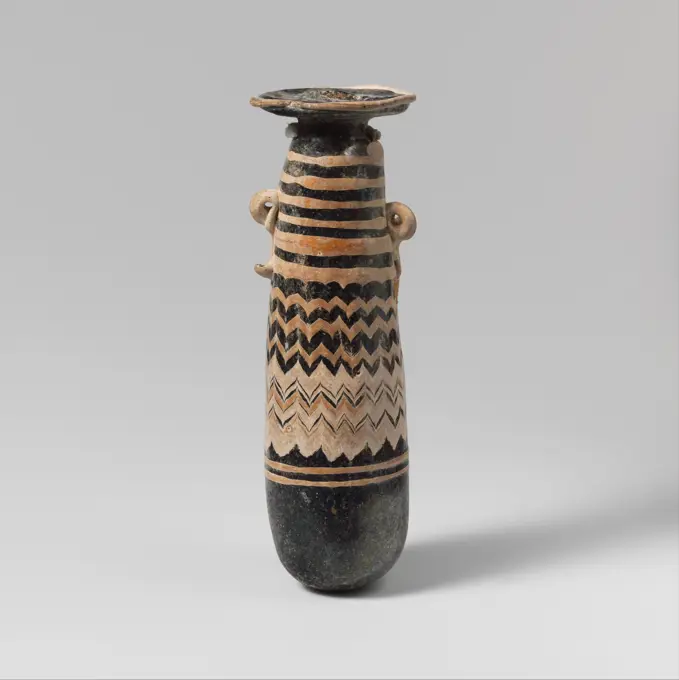
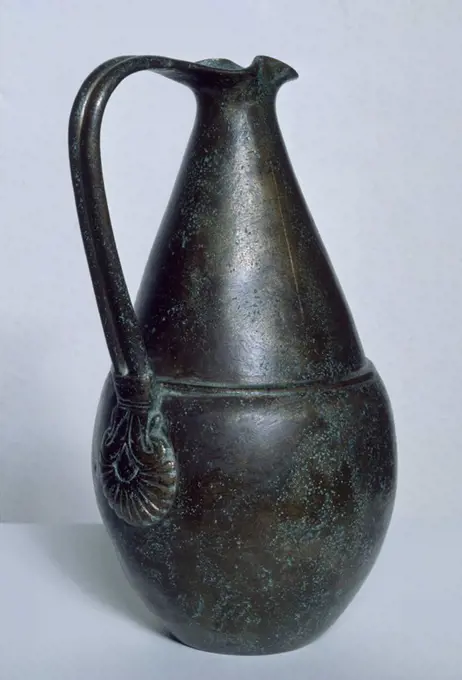
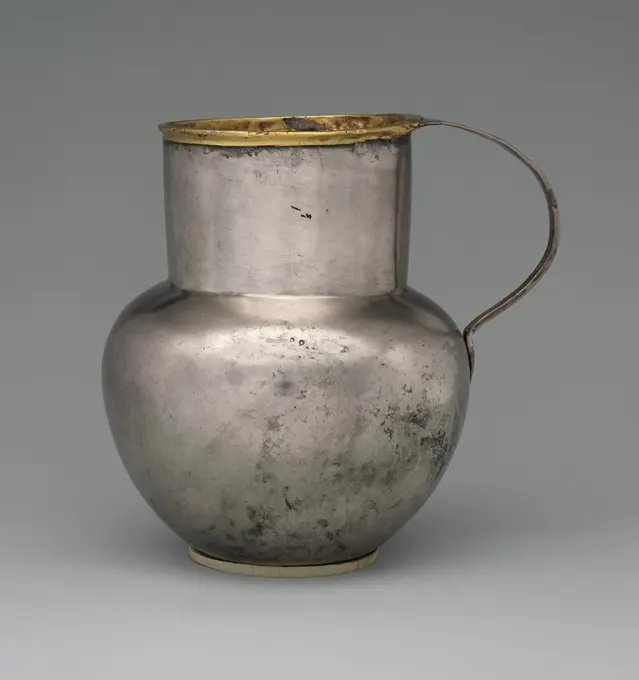
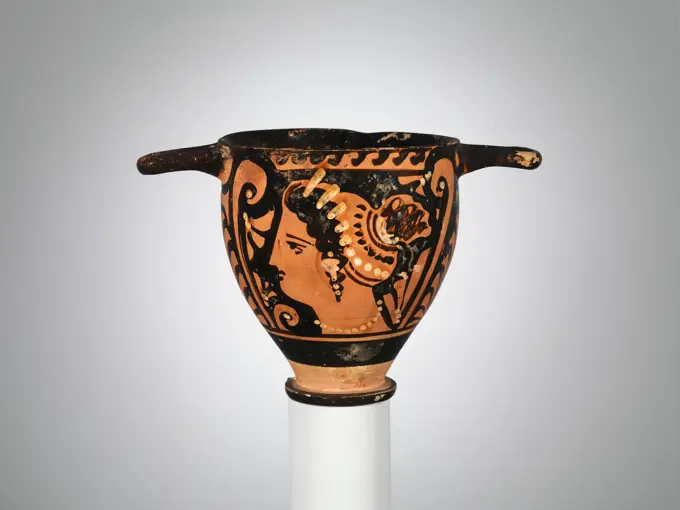
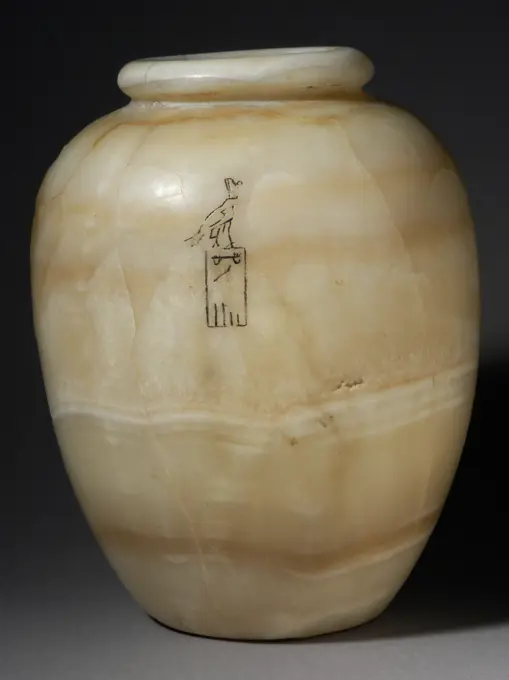
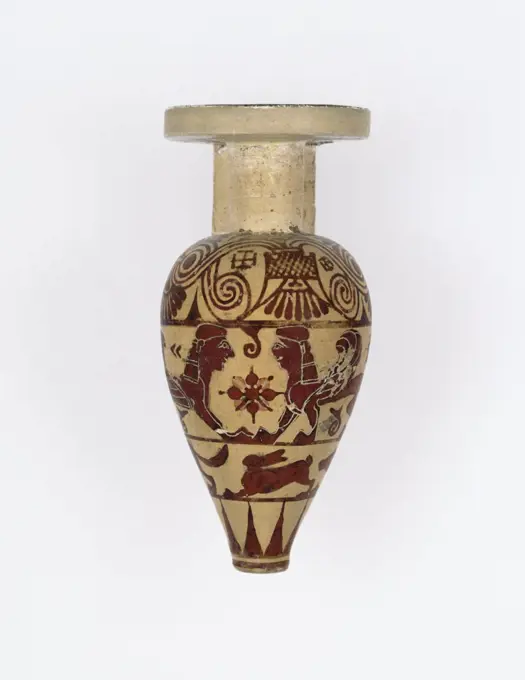
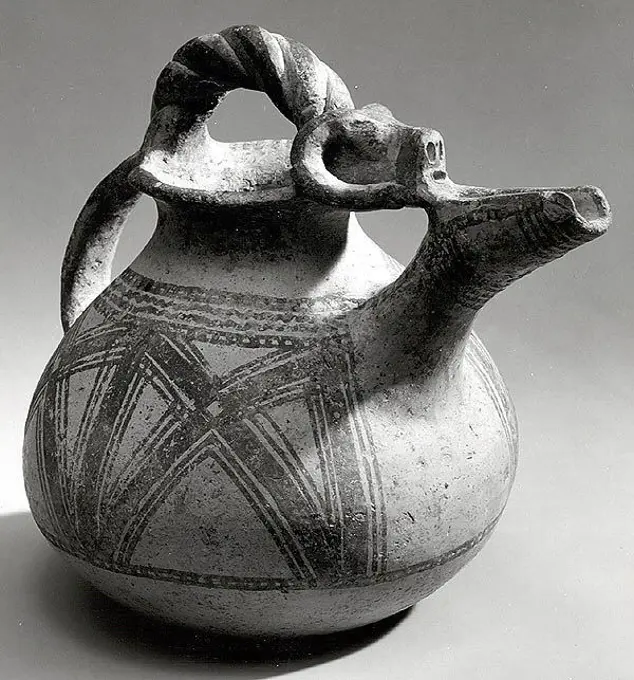
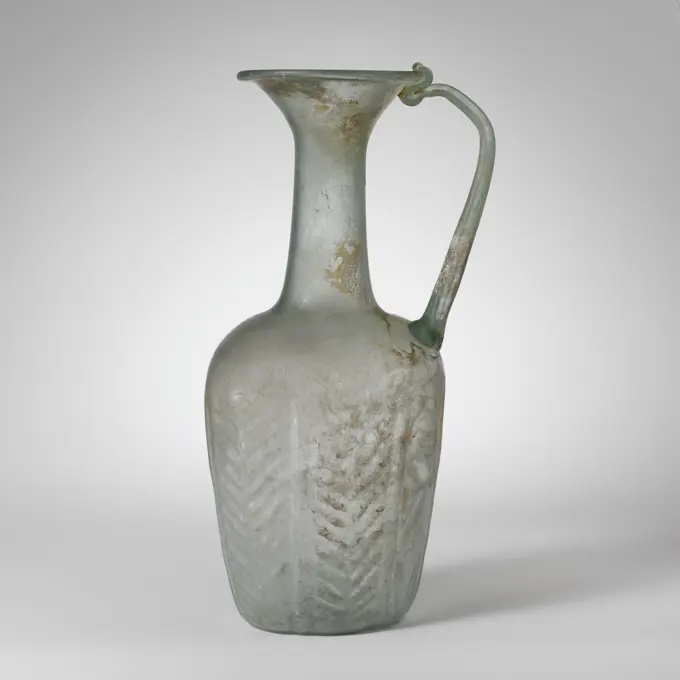
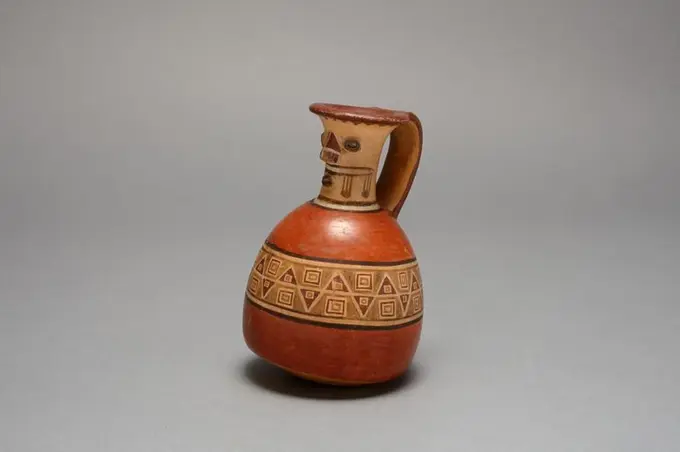
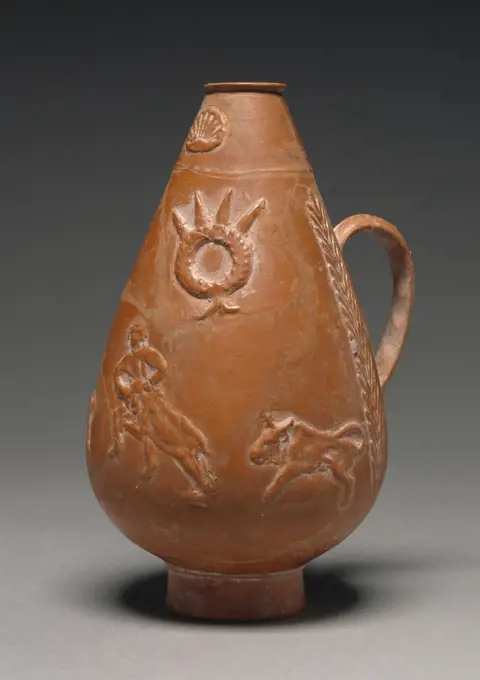
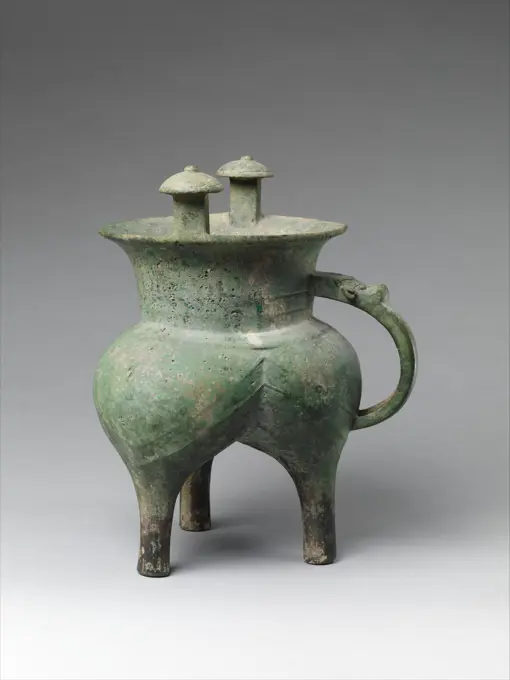
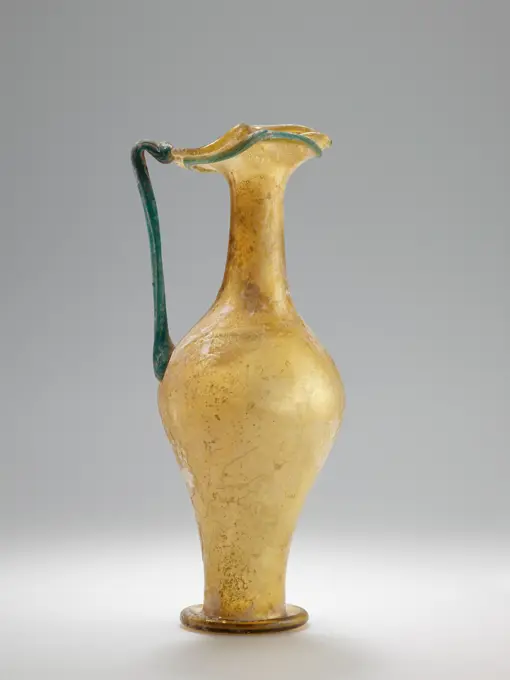
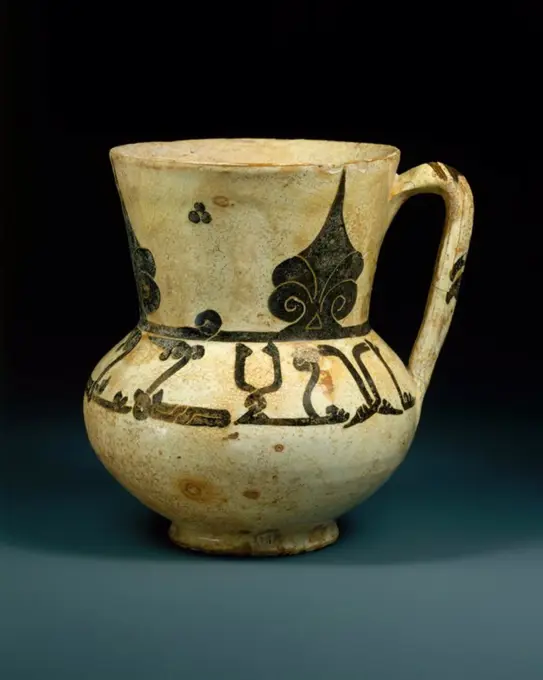
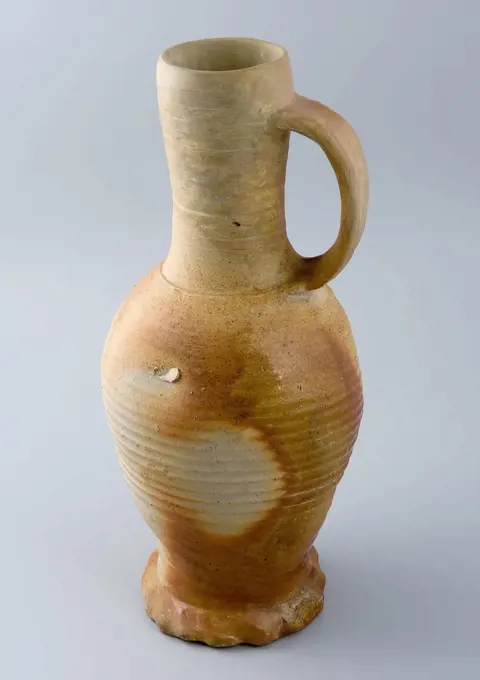
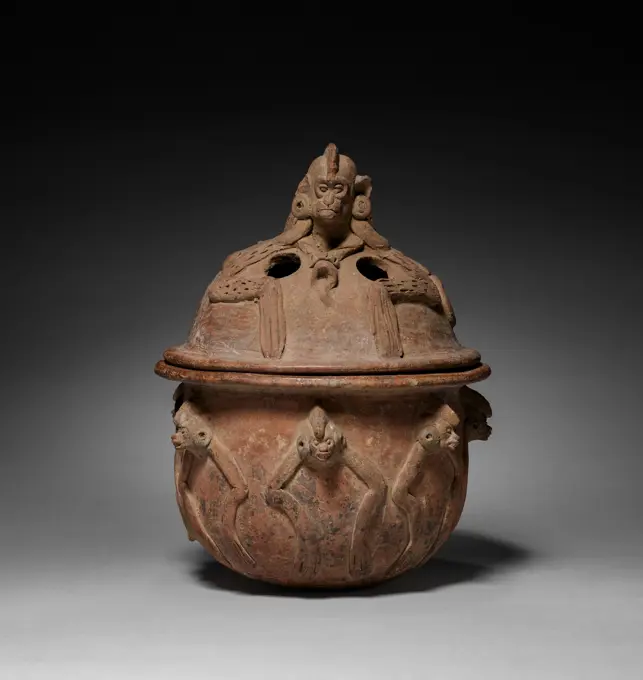
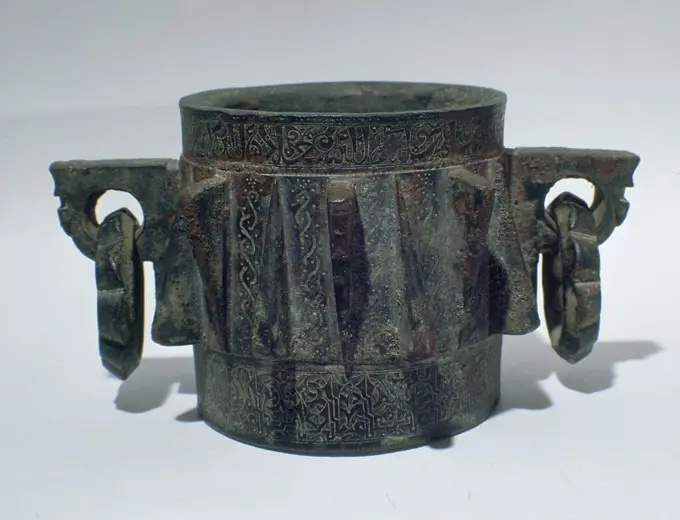
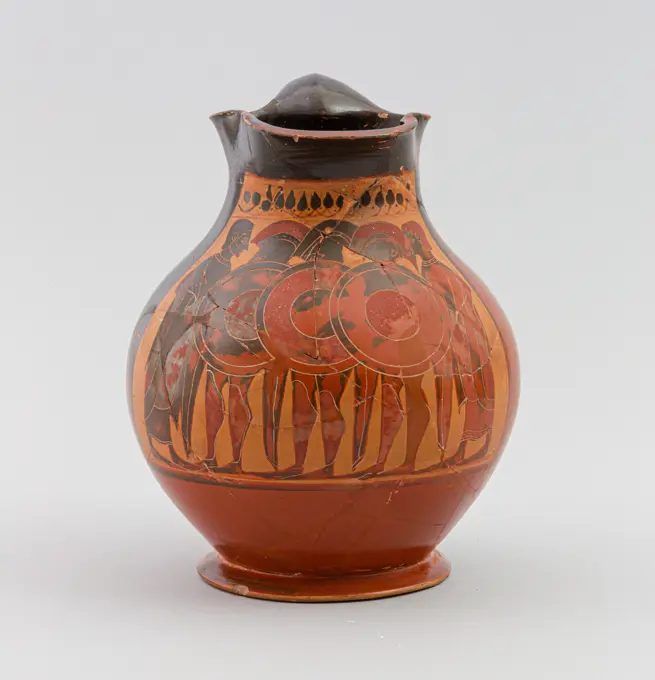
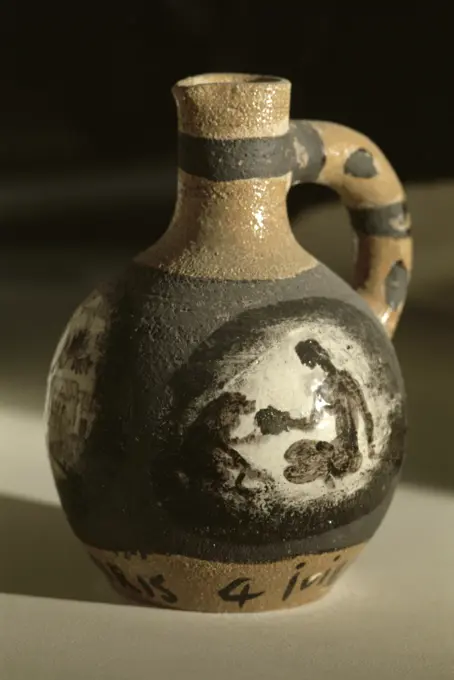
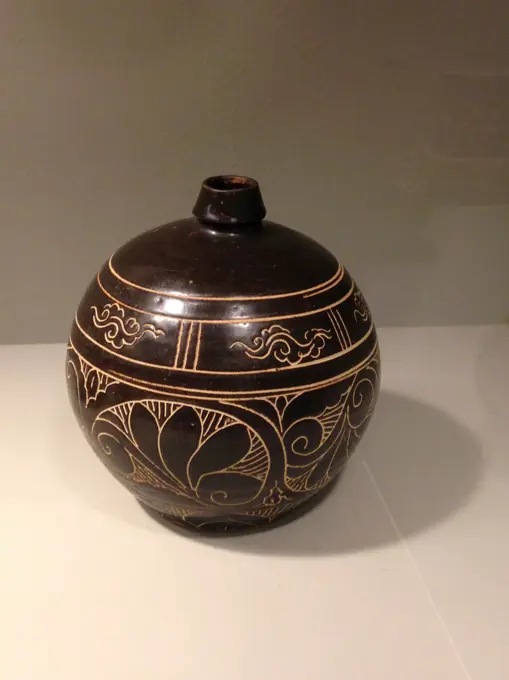
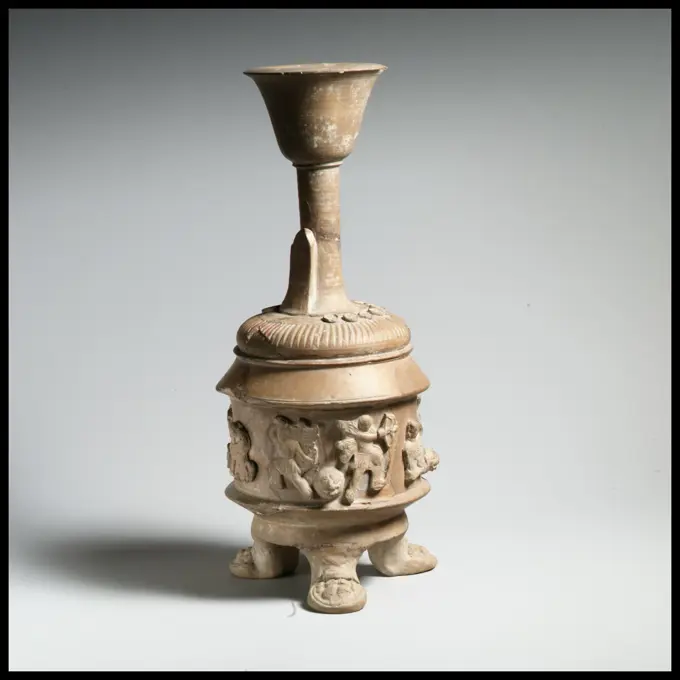
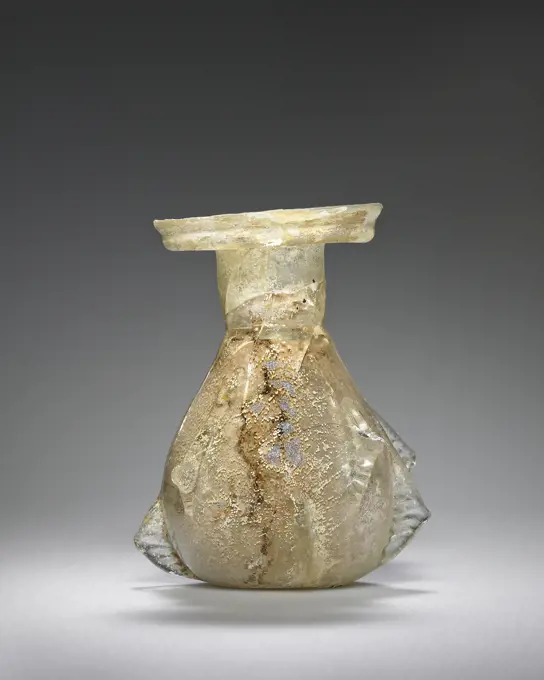
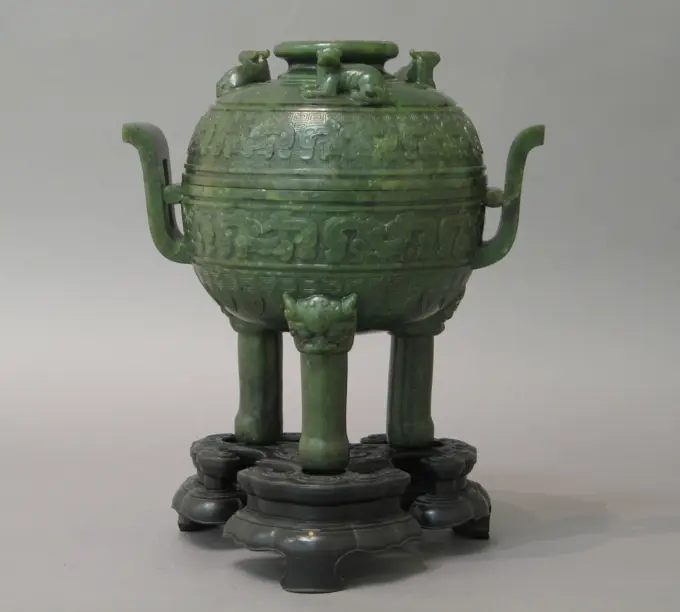
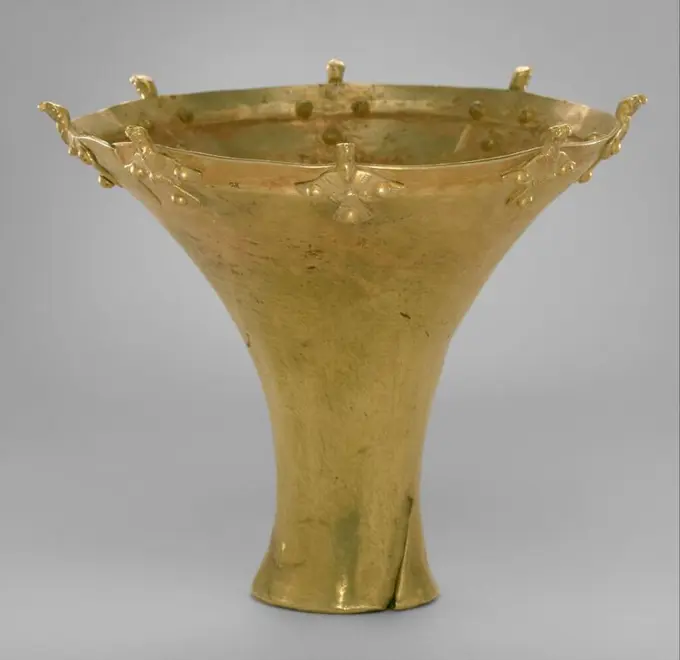
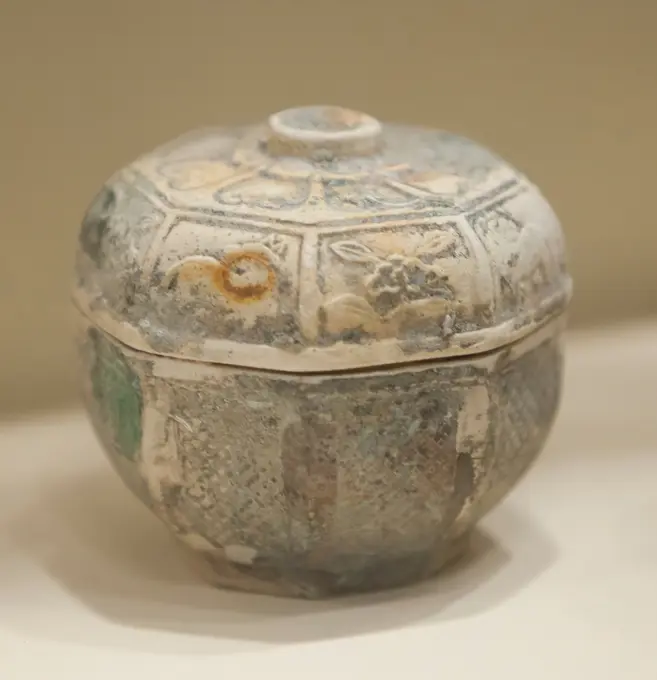
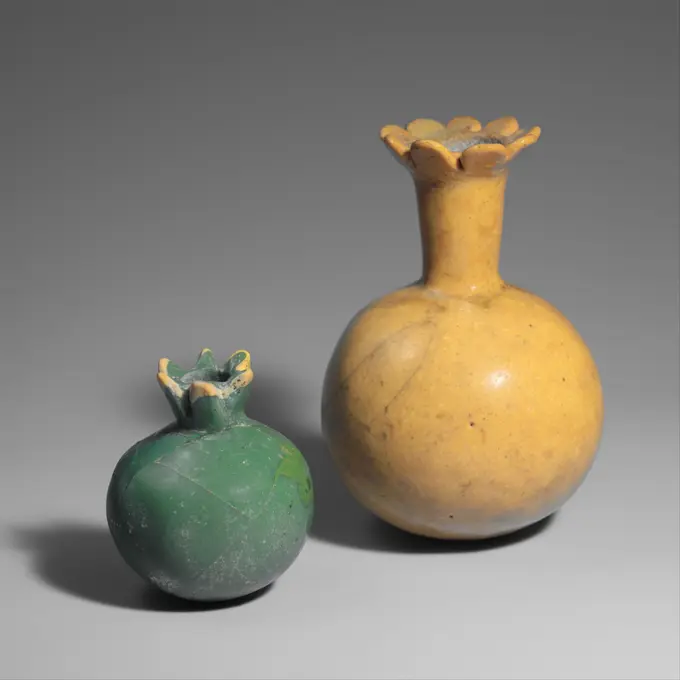
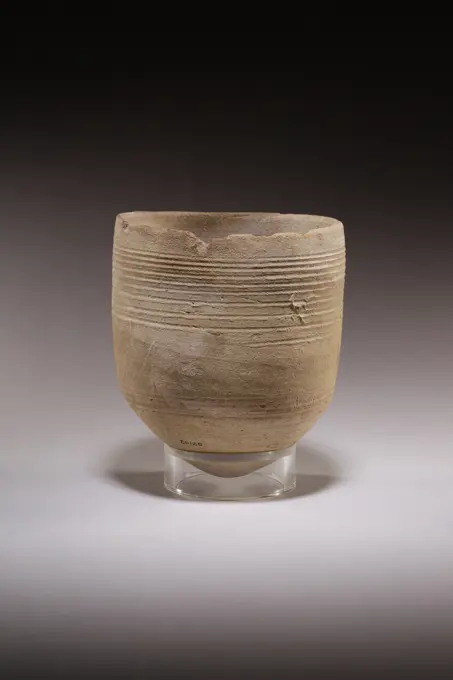
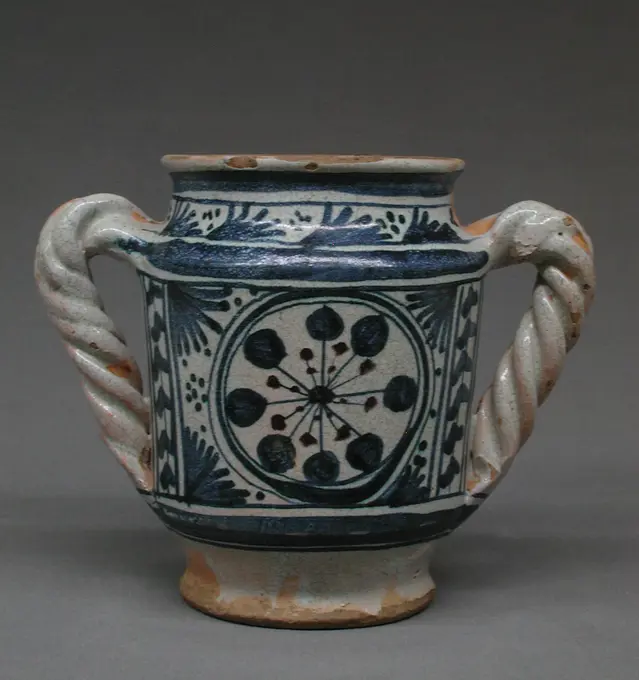
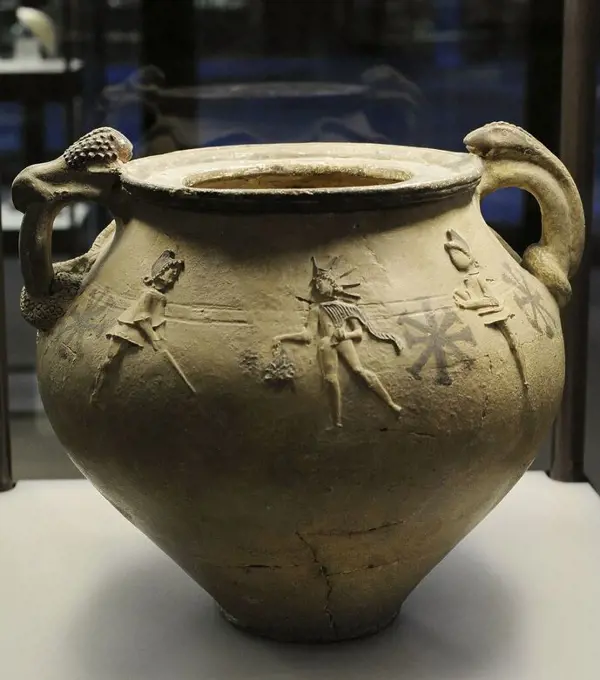
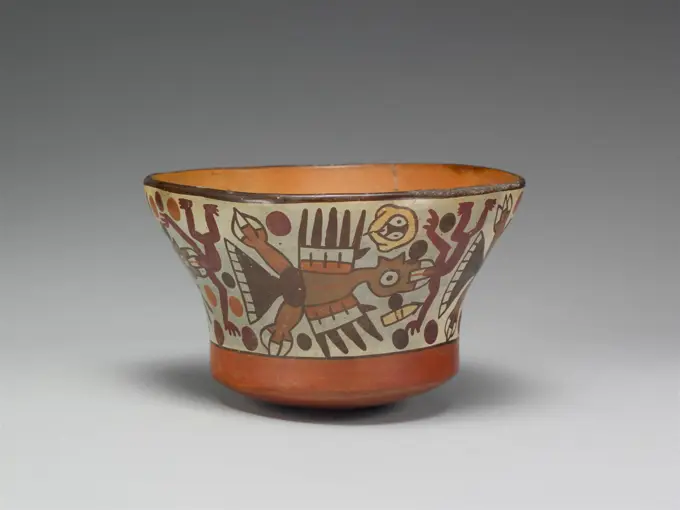
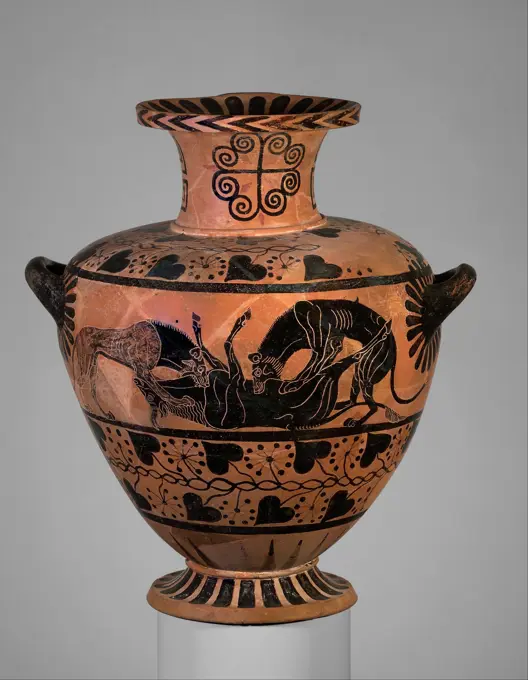
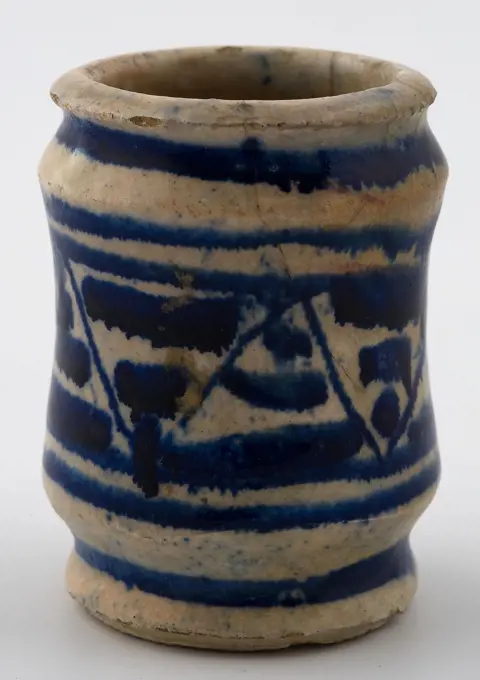
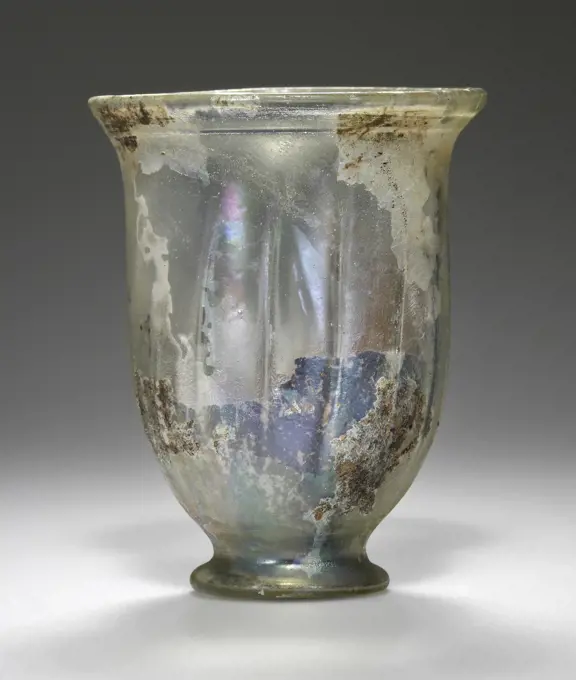
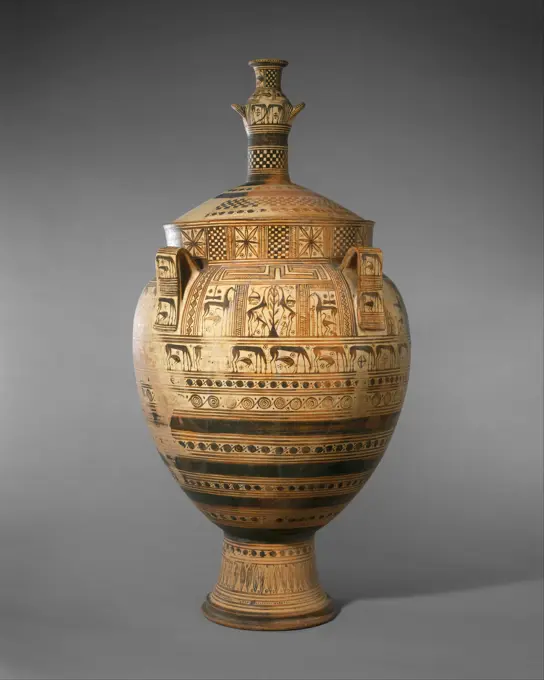
jarra celtibera de tipo Oinochoe, siglos IV-I a.C, Cerro de San Miguel, Arnedo, Museo de la Romanización, Calahorra, La Rioja , Spain, Europe.Terracotta alabastron (perfume vase). Culture: Greek, Corinthian. Dimensions: H. 2 3/4 in. (7 cm). Date: ca. 630-615 B.C..Two animal friezes: bird and boar, coursing hounds. Museum: Metropolitan Museum of Art, New York, USA.Vase with two handles. unknown, craftsmanTeabowl with an orange red glaze, anonymous, anonymous, c. 1700 - c. 1799 Theekom van Steengoed, covered with a cracked orange -red glaze. On the underside outside the foot ring inscriptions in red:  'Koraku' 'Old Raku' and a given name for De Kom,  'Fuyugomori' '' 'wintering/winter seclusion' and cursivated signature (kaō). Fuyugomori refers to being isolated indoors indoors due to cold or severe snowfall; It is used as a seasonal word in Japanese poetry. Raku (red). Japan stoneware. glaze. painting / vitrification Theekom van Steengoed, covered with a cracked orange -red glaze. On the underside outside the foot ring inscriptions in red:  'Koraku' 'Old Raku' and a given name for De Kom,  'Fuyugomori' '' 'wintering/winter seclusion' and cursivated signature (kaō). Fuyugomori refers to being isolated indoors indoors due to cold or severe snowfall; It is used as a seasonal word in Japanese poetry. Raku (red). Japan stoneware. glaze. painting / vitrificationTerracotta skyphos (deep drinking cup). Culture: Greek, Attic. Dimensions: Other: 4 1/8 x 6 7/8 in. (10.5 x 17.5 cm). Date: ca. 500 B.C..Obverse and reverse, storage jar for wine flanked by satyrsBoth satyrs on one side, one satyr on the other carry kerata (drinking horns). Museum: Metropolitan Museum of Art, New York, USA.Cinerary Urn. Ancient Mediterranean. Date: 101 AD-400 AD. Dimensions: 28.6 × 20 × 20 cm (11 1/4 × 7 3/4 × 7 3/4 in.). Glass, human remains. Origin: Mediterranean Region. Museum: The Chicago Art Institute, Chicago, USA.Glass squat alabastron (perfume bottle) late 4th-early 3rd century B.C. Greek, Eastern Mediterranean or Italian Translucent cobalt blue, with handles in same color; trails in opaque yellow and opaque white.Very broad, thick rim-disk, made as a spiral coil around top of neck; cylindrical neck, tapering downwards; sloping shoulder; slightly elongated bell-shaped cylindrical body; almost flat bottom; on upper body, two vertical ring handles, with long tapering tails, applied over trail pattern.A yellow trail attached at upper edge of rim-disk; on body, alternating bands of yellow and white, tooled from top of body to undercurve at bottom into a regular feather pattern in twelve vertical panels with alternating upward and downward strokes, forming vertical indents in sides and large round loops at bottom and bottom.Body complete, but rim-disk broken and repaired, with part missing; dulling, pitting, and creamy iridescent weathering.Squat alabastra such as these are unusual. The highly weatBottle 100 BCE-100 CE Syria. Glass, blown technique . Ancient RomanJar, c. 300 -100 BCE, 13 3/8 x 9 in. (33.97 x 22.86 cm), Earthenware, pigment, Thailand, 4th-2nd century BCEGlass alabastron (perfume bottle) late 6th-5th century B.C. Greek, Eastern Mediterranean Translucent blue, with handles in opaque yellow; trails in opaque yellow.Broad flat rim-disk with rough edge to mouth; very short concave cylindrical neck; narrow uneven shoulder; straight-sided body with upward taper; convex bottom, slightly flattened to one side; below shoulder, two vertical ring handles with knobbed tails applied over trail decoration; one slightly higher than the other.One trail attached at edge of rim-disk; another applied at top of body and wound down in spiral six times, then tooled into a close-set zigzag pattern around the central part of body, formed by shallow vertical tooling indents; below this, trail wound twice horizontally around lower body.Intact, except for knob on tail of one handle; slight dulling and pitting, and most of body, especially the trails, covered with creamy iridescent weathering.. Glass alabastron (perfume bottle) 245462Small limestone jar 6th-3rd century B.C. Cypriot High shoulder and two vertical handles.. Small limestone jar. Cypriot. 6th-3rd century B.C.. Limestone. Archaic or Classical. Miscellaneous-Stone VasesJARRO RITUAL DE BRONCE-PROCEDE DE ALCALA DEL RIO (SEVILLA)- HACIA S VII. A. C- ARTE TARTESICO. Location: MUSEO ARQUEOLOGICO-COLECCION. Sevilla. Seville. SPAIN.Silver jug with gold rim ca. 1279-1213 B.C. New Kingdom, Ramesside Wine was a coveted drink starting in Egypts earliest days, though wine services do not have a long history there, as strainers were not found before the New Kingdom. The importance of wine grew during that period, as intoxicating drinks played a prominent role in festivals and in communal celebrations. When associated with Bastet and other feline goddesses, these drinks helped partakers emulate the drunkenness that brought about the goddesses pacification. Such practices probably occurred in festivals for Bastet in Tell Basta, where this and other vessels were found. The vessels were buried in two caches close to the temple, along with silver and gold jewelry, ingots, and lesser objects. Rare in antiquity, most silver and gold vessels were later melted down and reused for new projects. The Tell Basta hoards are thus exceptional finds.Jugs like this one might be used for pouring wine.. Silver jug with gold rim. ca. 127Skyphos ca. 325-300 B.C. Greek, South Italian, Apulian On both sides, a female head between palmettes.. Skyphos. Greek, South Italian, Apulian. ca. 325-300 B.C.. Terracotta; red-figure. Late Classical. VasesFragment of stoneware inkwell in the shape of beehive, inkwell fragment soil finding ceramic stoneware glaze salt glaze, edge 4.1 hand turned carved glazed baked stoneware inkwell In the shape of beehive. Stand on three legs Two small standing ears. Fully covered with fine comb decoration in kerfsneedechniek built up in three layers Salt glaze archeology Rotterdam City Triangle Oostplein underground pit uitheems pottery import writing ink storage Ground discovery construction of the Metro in Rotterdam underground pit Oostplein.Jar. Egypt, early Dynastic Period - 4th Dynasty (3050 - 2513 BCE) (inscription probably modern). Furnishings; Serviceware. CalciteCovered Box. Thailand, Sawankhalok, 16th century. Furnishings; Accessories. Stoneware with underglaze brown painted decorationProto-Corinthian Ovoid Aryballos; Attributed to Fighting Rams Group, Greek, active about 670 - 630 B.C.; Greece (Corinth); about 670 - 630 B.C.; Terracotta; Object: H: 7 x Diam.(body): 3.2 cm (2 3/4 x 1 1/4 in.), Object (base): Diam.: 0.9 cm (3/8 in.)ancient oriental metal teapot on dark background. antique bronze tableware. ancient metal utensilsSkyphos ca. 325-300 B.C. Greek, South Italian, Apulian. Skyphos 254390 Greek, South Italian, Apulian, Skyphos, ca. 325300 B.C., Terracotta, H. 16.03 cm. Diameter w/ handles 23.9 cm.. The Metropolitan Museum of Art, New York. Rogers Fund, 1941 (41.162.219)Vase on the base;  XVII/18th century (1690-00-00-1710-00-00);Spouted jar with geometric decoration ca. early 1st millennium B.C. Iran. Spouted jar with geometric decoration 325713Ewer 12th century. Ewer 451763Tin house with high raised edge, anonymous, 1500 - 1600 Tin parlor. The round pot has a flat bottom. The abdomen runs conically up and after a congestion, a border wide runs upwards conically. The edge has a horizontal quarry. A handle with a thumb rest is switched on on the top edge. Rotterdam (possibly) tin (metal) casting Tin parlor. The round pot has a flat bottom. The abdomen runs conically up and after a congestion, a border wide runs upwards conically. The edge has a horizontal quarry. A handle with a thumb rest is switched on on the top edge. Rotterdam (possibly) tin (metal) castingBucket 4th-7th century Coptic. Bucket 475757Pot to base round et col igasé. URNE. Perse,, Iran, Nehavend. Par musée musée malée. 35407-10 Rounded base, Col Evase, Geometric Decor, Painted Decor, Nehavend, Pot, Oblique Strie, Terracotta, UrNEGlass hexagonal jug 6th to early 7th century A.D. Roman, Syrian Translucent pale blue green, with same color handle.Outsplayed rim folded outward, over, and inward; broad, funnel-shaped mouth, joining imperceptibly with cylindrical neck, expanding slightly downwards; convex curving shoulder; cylindrical body, tapering downwards; slightly pushed-in bottom, with central pontil scar; rod handle, applied in a pad to outer edge of shoulder, drawn up and outwards, slightly bent sideways, then tooled in and trailed onto underside of mouth and rim, ending slightly above top of rim.On body, six elongated rectangular panels, flanked with prominent vertical ribbed edges and decorated with different impressed patterns: three panels contain similar tall stylized palm frond with leaves to either side of central stem; a fourth panel has a shorter palm frond or leaf with rounded top edge and dots above; the fifth panel has two vertical lozenges that form a relief cross at the center; and the sixth panRice Bin(Rumbi)Aryballos with Modeled and Painted Face on Neck of Vessel. Inca-Lambayeque; North coast, Peru. Date: 1200-1450. Dimensions: 15.4 x 10.3 cm (6 1/16 x 4 1/16 in.). Ceramic and pigment. Origin: North Coast. Museum: The Chicago Art Institute, Chicago, USA.Tontopf Tontopf Copyright: xZoonar.com/TOLOxBALAGUERx 22682475Jug with Gladiators Fighting Wild Beasts; North Africa, Tunisia; 200 - 275; Terracotta; 15.3 cm (6 in.)Ritual Wine Container (Jia) late 11th century B.C. China This elaborate set of wine vessels provides an idea of the splendor of Shang and early Zhou ritual ceremonies. The set is said to have come from a tomb uncovered in 1901; shortly thereafter, it entered the collection of Duan Fang, a senior Manchu official and one of the preeminent antiquarians of the late Qing period. The pieces vary in style and execution. Although eleven of the vessels are inscribed, only one grouping shares identical inscriptions: the two wine containers, or you (nos. 2, 3) and the tall wine container, or zun (no. 4). A second grouping has largely comparable inscriptions: the spouted water vessel, or he (no. 5) and one cup, or zhi (no. 11).A partial reconstruction of the sets arrangement in the tomb may be established from corrosion outlines on the three principal vessels—the two wine containers, or you, and the central tall wine container, or zun—that were etched onto the surface of the altar table. The diagCANTARO PARA AGUA DE BOCA ANCHA Y PARCIALMENTE VIDRIADO- S XX- ARTE POPULAR. Location: ALFARERIA. BENISANET. TARRAGONA. SPAIN.Oinochoe. UnknownEwer with Arabic proverb, "Devotion fortifies action". Dimensions: H. 5 3/8 in. (13.7 cm)Diam. at rim 3 3/4 in. (9.5 cm). Date: 10th century.Slip-painting, the technique employed to decorate this ewer, was developed in Khurasan and Central Asia in the 10th century. It consists of diluting the pigment of the desired color in a slip (liquid clay), and of painting designs with the mixture: the adherence of the slip-painted designs to the surface of the vessel makes for a neat design, that does not run under the glaze. In this case, fine incisions of the black slip give definition to the design.The black slip-painting outlines a continuous motif of palmettes connected by a band with loops and an inscription in Kufic script. The text, typical of slip-painted vessels of this type, is an Arabic proverb and reads "devotion fortifies action". Museum: Metropolitan Museum of Art, New York, USA.High stoneware jug, gray glazed with brown spots, on squeeze foot, jug crockery holder soil find ceramic stoneware glaze salt glaze, hand turned baked glazed White stoneware jug be made entirely with rings. Light abdominal shape cylindrical neck. Wide standing ribbon ear. Pinched foot Bumps in belly. Gray glazed brown-orange discoloration Restorations are repainted archeology Rotterdam City center Stadsdriehoek Groenendaal underground pit indigenous earthenware import drink serving serve Soil discovery: underground pit Rotterdam Groenendaal at approximately 30 m from Mariniersweg approx. 3.5 m -NAP 1975-09-22.Incense Burner, 600-1000. Guatemala, Quiché, San Juan Cotzal, Maya, 7th-11th century. Pottery; overall: 16.3 x 25.5 cm (6 7/16 x 10 1/16 in.). According to the Popol Vuh, a sixteenth-century Quiché Maya manuscript, the world has been created and destroyed twice, and we now live in the third creation. In the second creation, human beings were made from wood and reeds. They lacked souls and minds, and they did not revere their creator. Because of these imperfections, most were killed by an uprising of utensils and domestic animals. Monkeys are the descendents of the survivors.Jar with decorated rim, swivel, and knob 664-30 B.C. Late Period-Ptolemaic Period The color of this cylindrical vessel suggests a Late Period or Ptolemaic Period date, although the type of the vessel seems unfamiliar in Egypt. In a thickening on one side of the vessel's lip there is a hole for a swivel for the now missing lid. When meant to remain closed, string would have secured a knob on the lid to a knob protruding from the side of the vessel opposite the swivel.. Jar with decorated rim, swivel, and knob. 664-30 B.C.. Faience. Late Period-Ptolemaic Period. From EgyptStool (common name). Sandstone, celadon, molded decor. Cernuschi Museum, Asia Museum of Asia in the city of Paris.MORTERO DE BRONCE HISPANO MUSULMAN DEL SIGLO XI PROCEDENTE DE MONZON DE CAMPOS PALENCIA. Location: MUSEO BALAGUER. VILANOVA i LA GELTRU. Barcelona. SPAIN.Bowl. Culture: Coptic. Dimensions: Overall: 2 5/16 x 3 11/16 in. (5.8 x 9.3 cm). Date: 4th-7th century. Museum: Metropolitan Museum of Art, New York, USA.Chamber pot of tin with high raised edge. Kametot van tin. The round pot has a flat bottom. The belly runs up conical and after a coil an edge walks widely reversed conical. The edge has a horizontal quarry. A handle is turned on at the top edge with a thumb trust.Glazed Spouted Pot. Culture: Coptic. Dimensions: Overall: 2 1/2 x 2 7/8 x 2 3/4 in. (6.4 x 7.3 x 7 cm). Date: 4th-7th century. Museum: Metropolitan Museum of Art, New York, USA.Terracotta oinochoe: chous (jug) ca. 560 B.C. Attributed to the Amasis Painter Three hoplites (foot soldiers) between a man and a youthThe Greek heavy infantry fought shoulder to shoulder behind overlapping round shields. Here the shields of three hoplites dominate the composition and emphasize with their concentric rings the swelling roundness of this little pitcher.. Terracotta oinochoe: chous (jug). Greek, Attic. ca. 560 B.C.. Terracotta; black-figure. Archaic. VasesWoman With Monkey by Pablo Picasso, Ceramic, 4 July 1953, 1881-1973Pottery ointment jar, conical model, red shard, internally glazed, ointment jar pot holder soil find ceramic earthenware glaze lead glaze, hand turned glazed baked Pottery ointment jar conical model red shard internal glazed Slanted inwardly directed top edge Stand surface. Conical flat over the foot small narrowing of the kettle Spindles on the inside archeology health care indigenous pottery pharmacy store sell craftVase, anonymous, c. 1127 - c. 1279 Graf vase of stoneware with an egg -shaped abdomen and a long, wide, narrowing neck upwards, partially covered with a transparent enamel with a light blue tint. On the neck an application decoration of a band with figures on a modeled, scalloped edge. Above that different figures and a dragon between clouds. Under the edge a ring -shaped thickening with a modeled, scalloped edge. Under this thickening four small, modeled rings. Some chips in the edge. Qingbai. China stoneware. glaze vitrification Graf vase of stoneware with an egg -shaped abdomen and a long, wide, narrowing neck upwards, partially covered with a transparent enamel with a light blue tint. On the neck an application decoration of a band with figures on a modeled, scalloped edge. Above that different figures and a dragon between clouds. Under the edge a ring -shaped thickening with a modeled, scalloped edge. Under this thickening four small, modeled rings. Some chips in the edge. QingbaiGlobular Bottle, 13th century, 9 9/16 x 9 3/16 in. (24.3 x 23.34 cm), Tzu-chou ware Stoneware with brown glaze with 'cut-glaze' designs, China, 13th century, Probably used to store wine, this incised globular bottle has two bands of floral and cloud decoration that were carved through the stable but still moist glaze to the clay body before firing. 'Cut-glaze' decoration, as this technique is called, rose to prominence in Cizhou kilns during the Northern Song (960-1127) and Jin (1115-1234) periods. The method was inspired by the more complicated earlier Cizhou decorative techniques worked with black and white slips in combination with incised decor under a clear glaze. Vessels with cut-glaze decoration are often attributed to Shanxi province but many such vessels were produced in other northern provinces as well.Clay vessel, museum in Bogazkale, finds from the Hittite period, Turkey, Bogazkale, Turkey, AsiaLekythos 4th century B.C. Greek, South Italian, Apulian. Lekythos. Greek, South Italian, Apulian. 4th century B.C.. Terracotta. Late Classical. VasesColorless Sprinkler Flask with pinched decoration; Roman Empire; 3rd - 4th century; Glass; 7.5 x 5 cm (2 15,16 x 1 15,16 in.)BOTIJA DE CUELLO ALTO Y ANCHO - CERAMICA BLANCA. Location: ALFARERIA. Agost. Alicante. SPAIN.Lead-Glazed Skyphos; 50 B.C. - A.D. 50; Terracotta; 6.4 × 13.3 × 8.6 cm (2 1,2 × 5 1,4 × 3 3,8 in.)Urna cineraria de vidrio. S.I d.C -S. III. Procedencia Italia. Museum: MUSEO ARQUEOLOGICO, MADRID, SPAIN.Kero (jar) representing the conflict between the Inca warriors and the Spanish soldiers. Madrid, Museum of America. Location: MUSEO DE AMERICA-COLECCION, MADRID, SPAIN.BottleEwer 9th-10th centurySacrificial Tripod with Cover China. Sacrificial Tripod with Cover 43978ANFORA GRIEGA PANATENEICA HACIA 480 AC. Location: MUSEO ARQUEOLOGICO NACIONAL-COLECCION. MADRID. SPAIN.Fire pot. Fire or stink pot of pottery with three ears.Jug with men beneath arches, Jan Baldems Mennicken (attributed to workshop of), c. 1580 - c. 1620 Jug of stoneware on high foot with a cylindrical body with round shoulder and wide neck. The C-shaped ear is attached to the neck and shoulder. Profiles on the neck, belly and foot. Covered with a brown Engobe. On the abdomen in relief a printed and laid band of men in 16th century clothing (gets) in full bows. The lower part of the abdomen runs slanted to the foot and is divided into courses with entry lines. On the shoulder entered courses with a stamped flower drink. The neck with a printed and imposed bond with masks in medallions between leaf vines. Attached to the ear a pewter frame with lid. Marked on the inside with a crowned flower and the brand 'ie'. Raeren. Rae Stoneware. Glaze. Engobe. frame: tin (metal) vitrification Jug of stoneware on high foot with a cylindrical body with round shoulder and wide neck. The C-shaped ear is attached to the neck and shoulder. Profiles on the neIranian vase with multiple spouts. Dated 13th CenturyBeaker with birds on the rim. Culture: Bactria-Margiana Archaeological Complex. Dimensions: H. 12 cm, W. 13.3 cm, D. 4.5 cm. Date: ca. late 3rd-early 2nd millennium B.C..During antiquity, vessels of precious metal were used in ritual ceremonies and as symbols of status for members of the ruling elite. From the western Caucasus to eastern Afghanistan, several hoards of these vessels in gold and silver have been found and recorded. Such a cup is this one, made of a natural alloy of gold and silver known as electrum. Resting on its narrow base, the body of the vessel curves gently inward before flaring out again to a wide mouth. The vessel is decorated at the rim with eight birds of prey incised with patterned lines. They are placed at equal intervals, with wings outspread and heads projecting above the rim of the cup. Each bird is attached with three round-headed rivets. Since the placement of the birds makes it awkward to drink from the cup, it is probable that the vessel was intended Paste box, c. 1643, 2 7/8 x 2 3/4 in. (7.3 x 6.99 cm), Porcelain, China, 17th centuryBridge-spouted pitcher ca. 10th-9th century B.C. Iran. Bridge-spouted pitcher 325925Beaker. UnknownOttavio Miseroni; Jan Vermeyen / 'Heliotrope cup in the form of a shell with handles'. Ca. 1600. Enamel, Bloodstone, Gold. Museum: Museo del Prado, Madrid, España.Two Bottles in the Form of Pomegranates ca. 1295-1070 B.C. New Kingdom, Ramesside The pomegranate did not arrive in Egypt until the beginning of the New Kingdom, when it was probably brought back from western Asia during the military campaigns of the early Eighteenth Dynasty. While the fruit may initially have been available only as an import, pomegranate trees were soon planted in Egyptian gardens. The attributes of the fruit served as the point of departure for an elegant, stylized vessel shape with a scalloped rim. Pomegranates in nature can range from green to yellow to red, so the choices for these vessels are not unrealistic. The juice was prized as a drink and often added to wine, but it can also be used as an astringent to shrink tissues and reduce swelling in wounds. The larger jar (26.7.1180) probably held juice for consumption as a drink. The smaller, green jar (44.4.52) depicts the fruit in its unripe state, when the juice is too sour to drink, and may have held juice intenCup 1st-2nd century Roman Period Most of the archaeological finds from the Tomb of Nespekashuty originate from the courtyard and first chamber of the tomb. While the relief finds can be assigned with confidence to the tomb, the other general finds and graffiti testify to a long usage life. This particular pottery beaker dates to the Roman Period, probably first century AD, some seven hundred years after Nespekashuty's burial.The courtyard finds help to sketch the long life and various incarnations of the tomb. Nespekashuty had used for his tomb the courtyard and causeway of an earlier Dynasty 11 tomb of a high official of Mentuhotep II. That tomb's position in the northern cliffs of Deir el Bahri, and above the subsequently built temple of Hatshepsut made it suited for certain reuses. Already in the Third Intermediate Period the tomb was reused for a burial and seemingly for overflow off offerings from the Hathor Shrine in Hatshepsut's Temple. Possibly such a bond with the Hathor ShrinMilk jug of hard-baked pottery; Wheemberon true, cauliflower true .. pear-shaped milk jug from hard-baked pottery. The can have a triangular sneb, a scalloped edge and an S-shaped ear. The milk jug has the appearance of a cauliflower through the decoration in embossed and the colors green and white."DOLL" PARA AGUA O HIBRIDO DE CANTARO Y BOTIJO - ARTE POPULAR S XX. Location: ALFARERIA. Figueras. GERONA. SPAIN.Vase late 15th century Italian, Florence. Vase. Italian, Florence. late 15th century. Maiolica (tin-glazed earthenware). Ceramics-PotteryPottery depicting Mithras surrounded by the torch-bearers Cautes and Cautopates. 2nd-3rd centuries. From Cologne, Germany. Roman-Germanic Museum. Cologne. Germany.Terracotta volute-krater (bowl for mixing wine and water) ca. 330-290 B.C. Attributed to the Bolsena Group Fluted body. On neck and shoulder, in relief, hunting Erotes, vine wreaths and reclining figures; on handle attachment a female group.. Terracotta volute-krater (bowl for mixing wine and water) 246131Bowl 2nd-4th century Nasca Although finely decorated Nazca vessels were made in specialized workshops, recent discoveries in small habitation sites show that the use of painted plates and open bowls was not limited to people living in monumental sites. These vessels were widely distributed among the population and used in households of any socioeconomic status. Plates and bowls were probably obtained during feasts, which gave opportunities to elites to enhance their own status by displaying and distributing prestigious crafts among the population. This bowl shows large raptorial birds decapitating human beings. The white background is filled with spears, zoomorphic heads, and circular objects interpreted as sling stones. The Nazca had a headhunting cult; caches of several trophy heads with carrying ropes have been discovered occasionally by archaeologists. The frequent depiction of severed heads is one of the most distinctive features of Nazca ceramic art. According to specialists of NBottleA vessel with a wavy profile, a vessel - imitation alabaster, a vessel on four legs, a dish;  around 1985-m 1650 BC ; Pahu, 12-13 dynasty (0-00-00-0-00-00), around 1985-m 1650 BC ; Pahu, 12-13 dynasty (-1990-00-00--1650-00-00);Deposit of the University of Warsaw from 1937-1939, scenes.gal.eg., Egyptian ceramics, imprinted decorations, Polish-French excavations in Edfu (Egypt)Aschenurne Aschenurne Copyright: xZoonar.com/BartomeuxBalaguerxRotgerx 23057721Terracotta hydria (water jar) ca. 520-510 B.C. Attributed to the Eagle Painter Obverse, a lion and a leopard felling a bullReverse, two horsemenThis jar belongs to a small group of distinctive hydriae found in Etruria that are believed to have been produced by East Greek craftsmen who had emigrated to Caere, an Etruscan city on the Italian coast, north of Rome. Here, two felines attacking a bull are surrounded by beautifully drawn ivy wreaths.. Terracotta hydria (water jar). Greek, Caeretan. ca. 520-510 B.C.. Terracotta; black-figure. Archaic. VasesREGADERA SIN VIDRIAR Y CON DECORACION INCISA-ARTE POPULAR S XX. Location: ALFARERIA. Toledo. SPAIN.Bottle 6th-7th century. Bottle 449013Small JugJar 1st-6th century Nasca. Jar 313301Marble funerary loutrophoros 4th century B.C. Greek, Attic This monumental grave marker has the form of a loutrophoros, a vessel used to carry water for the bridal bath and for funerary rites.. Marble funerary loutrophoros. Greek, Attic. 4th century B.C.. Marble. Classical. Stone SculptureBowl 4th-7th century Coptic. Bowl 478860Earthenware teapot, small size on three legs with spout and handle, manganese glaze, teapot crockery holder toy relaxant soil find ceramic earthenware glaze lead glaze, hand turned molded glazed baked earthenware teapot on three legs. Small size with relatively large and log handle for so far present. Possible toys Fully glazed exterior manganese internal greenish brown. Red shard archeology Rotterdam City center C.S.-Quarter Schiekade indigenous pottery play child tea tea drink serve Soil discovery: Schiekade third waste pit.Vase 13th century. Vase. 13th century. Stonepaste; glazedType: black-white-blue ware. Attributed to Iran, Kashan. CeramicsGlass alabastron (perfume bottle). Culture: Greek, Eastern Mediterranean. Dimensions: H.: 5 3/16 in. (13.1 cm). Date: 2nd-mid-1st century B.C..Translucent cobalt blue, with handles in same color; trail in opaque white.Inward-sloping irregular rim-disk with rounded edge and radiating tooling marks on upper surface; cylindrical neck, expanding downward; straight-sided fusiform body expanding downward, then tapering in to pointed bottom; two horizontal lug handles applied over trail at top of body.Trail applied at bottom, wound upwards in a spiral to carination, tooled into a festoon around side, with twelve upward strokes, then wound again in a spiral up neck and partially around rim, and trailed off with backward swirl down neck.Intact, but one handle completely missing; dulling, pitting, and faint iridescence.Blue, with white wave pattern; two solid handles. Museum: Metropolitan Museum of Art, New York, USA.Ancient metal jug in oriental style  in antique marketSmall majolica albarello on stand with flown blue decor, albarello holder soil find ceramics earthenware glaze lead glaze tinglaze, hand turned fried glazed painted fried Small albarello on standing surface Lightly constricted cylindrical sidewall. Deep constrictions above the standing surface and below the upper edge Blue decor on white background lightly faded by too high baking temperature. Decor consists of frieze divided into triangular planes in which thick lines are stacked cascaded. Underneath and above tire decor Internally covered with lead glaze archeology health pottery ointment care pharmacy wrapping craftLazio Viterbo Viterbo Museo Civico82. Hutzel, Max 1960-1990 Views of paintings (Middle Ages through 18th c.), frescoes, a tabernacle, coffin, sculpture reliefs, portal fragments, busts, sculpture, tapestry found in the Pinacoteca, Second floor gallery and Second floor cloister sequences. Antiquities: Many views of Etruscan and Roman fragments, sculpture, sarcophagi, pottery, masks, jewelry and other objects found in the Storeroom sequence (inventory numbers on back of prints), and the Cloister, Second floor Cloister, Valle Giulia, Sala Romana and Sala Etrusca sequences. General Notes: There are eight separate numerical sequences for this location. The cloister as an architectural structure, rather than museum site, is documented in the record and file for S. Maria della Verita, Cloister, all views of which are stored in Medieval core collection. Five views from the Museo Civico Second floor cloister sequence are stored in Medieval. German-born photographer and scholar Max Hutzel (1911-Beaker; Workshop in the Eastern Mediterranean, Eastern Mediterranean; 1st - 2nd century; Glass; 9.8 x 8.3 cm (3 7,8 x 3 1,4 in.)Pa. German Pitcher. Dated: c. 1939. Dimensions: overall: 32.9 x 24.4 cm (12 15/16 x 9 5/8 in.) Original IAD Object: 11" high. Medium: watercolor and graphite on paper. Museum: National Gallery of Art, Washington DC. Author: Carl Strehlau.Pottery cooking pot, grape-model, red shard with lead glaze, two vertical sausages, on three legs, grape cooking pot tableware holder utensils earthenware ceramics earthenware glaze lead glaze, hand turned glazed baked Small pottery cooking pot grape-model red shard with lead glaze two at the top pinched sausages three legs bottom unglazed with traces of archeology indigenous pottery food prepare cooking kitchen foodLazio Roma Grottaferrata Museo93. Hutzel, Max 1960-1990 German-born photographer and scholar Max Hutzel (1911-1988) photographed in Italy from the early 1960s until his death. The result of this project, referred to by Hutzel as Foto Arte Minore, is thorough documentation of art historical development in Italy up to the 18th century, including objects of the Etruscans and the Romans, as well as early Medieval, Romanesque, Gothic, Renaissance and Baroque monuments. Images are organized by geographic region in Italy, then by province, city, site complex and monument.Terracotta krater with lid surmounted by a small hydria ca. 750-740 B.C. Attributed to the Cesnola Painter Said to be from Kourion, CyprusDuring the eighth century B.C., the Geometric style that had originated in Athens spread throughout the Greek-speaking world. This beautifully proportioned vase found on Cyprus differs in a number of ways from the three monumental Geometric kraters from Attica displayed elsewhere in this gallery. The shoulder is subdivided by four handles rather than two, and the carpetlike decoration was applied over a light ceramic slip ground instead of directly onto the clay. Since the 1870s, scholars have debated where the vase was made; current opinion attributes it to a workshop on Euboea, an island just off the east coast of Attica, rather than to the island of Naxos, in the Cyclades. In the center panel, between the handles, two stags or goats rise on their hind legs to nibble at a tree. While the graceful long-legged animals are represented in a typically GIranian vase with multiple spouts. Dated 13th CenturyNear East. Iranian glazed pottery. 2nd-3rd century AD. The State Hermitage Museum. Saint Petersburg. Russia.BOTIJA PARCIALMENTE VIDRIADA CON PITORRO EN LA PARTE ALTA Y UN ASA. Location: ALFARERIA. SPAIN.Bowl ca. 2960-2770 B.C. Early Dynastic Period. Bowl. ca. 2960-2770 B.C.. Pottery. Early Dynastic Period. From Egypt, Northern Upper Egypt, Abydos, Egypt Exploration Fund excavations. Dynasty 1