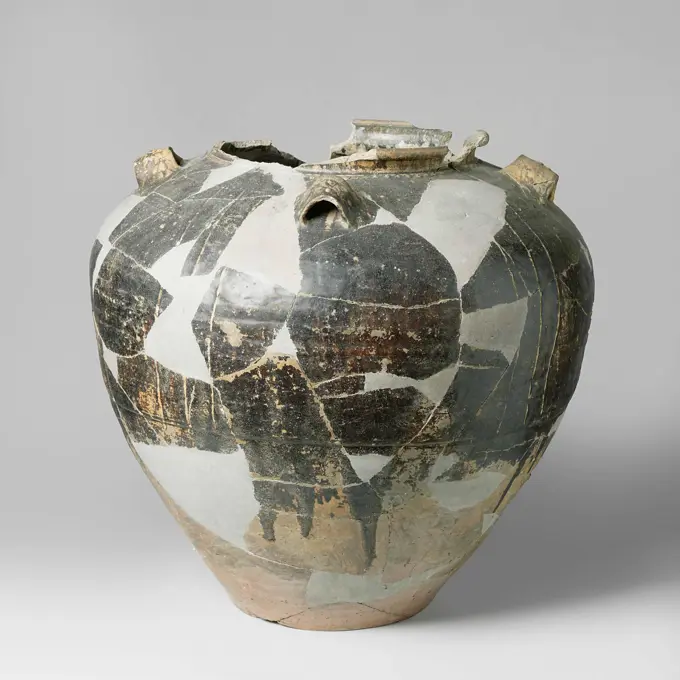
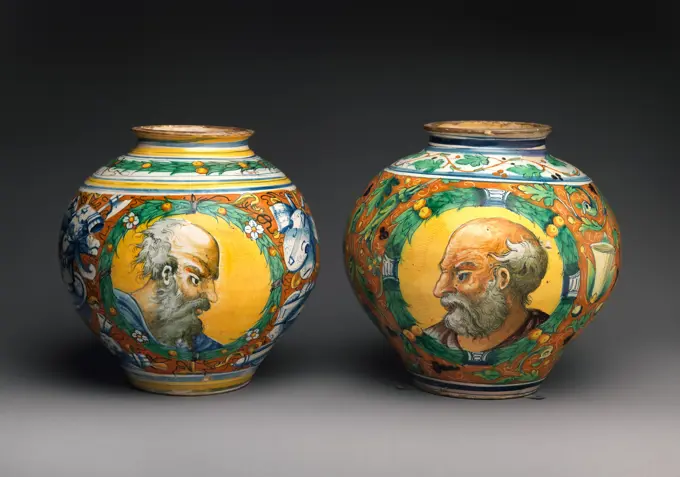
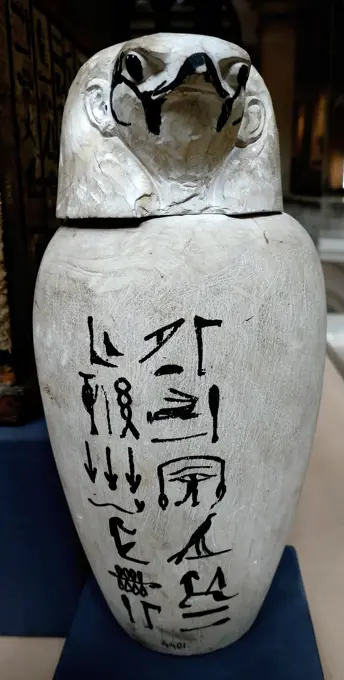
Ancient Terracotta Jugs

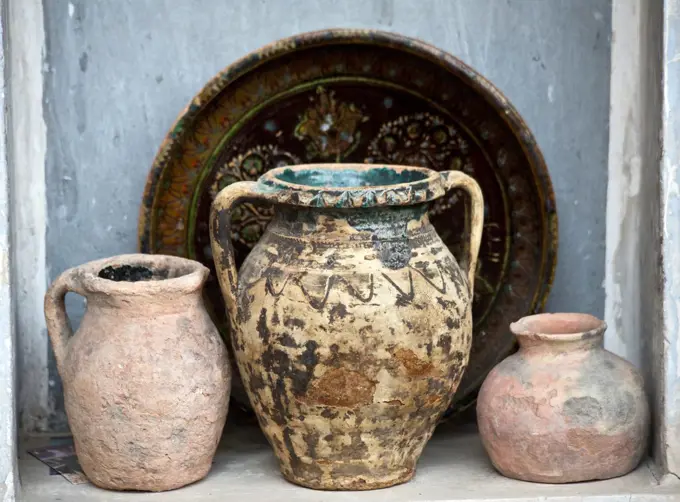
A collection of historical terracotta jugs, showcasing various shapes and designs from ancient cultures. The pieces feature intricate patterns and surfaces, reflecting their archaeological significanc
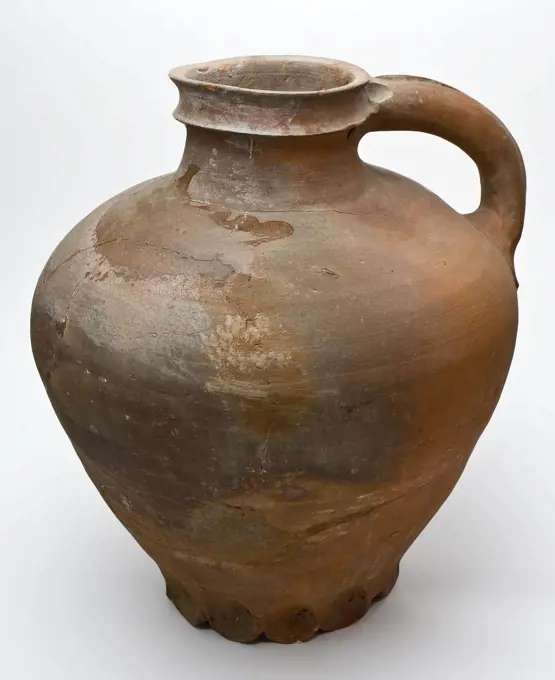
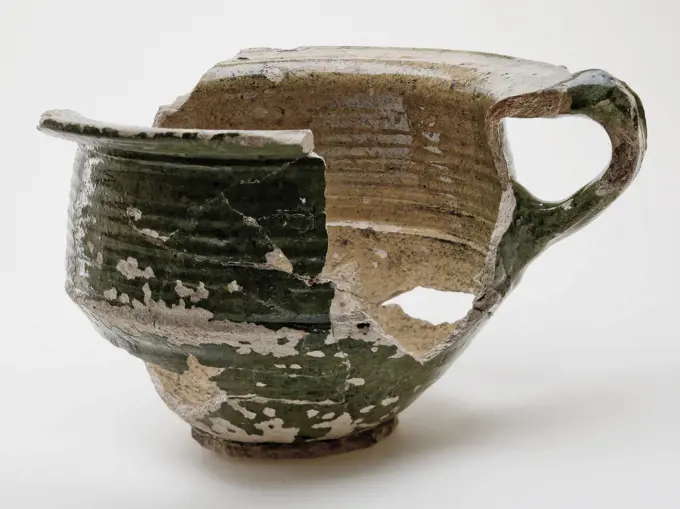
Pottery water jug on circle of stand fins, red shard, some glaze on the shoulder, water jug crockery holder soil find ceramic earthenware glaze lead glaze, hand turned glazed fried jug of red earthenware cuff shaped upper edge with thick round ear with groove and three pinched lobes twelve pinched toes of which two in plaster sparing glaze on shoulder and some sweeping on belly foot and toes. Eir-shaped model archeology Valckensteyn Poortugaal Albrandswaard indigenous pottery water washing food preparation stock packaging kitchen Soil discovery: under the bridge pole at bridge castle Valckensteyn at Poortugaal now Albrandswaard 1962.
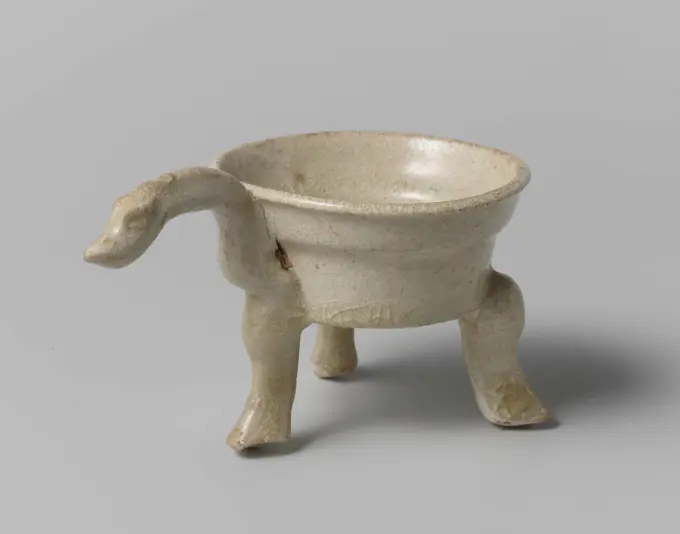
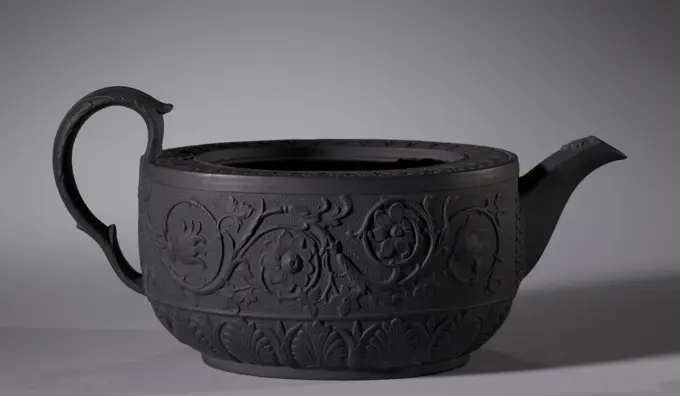
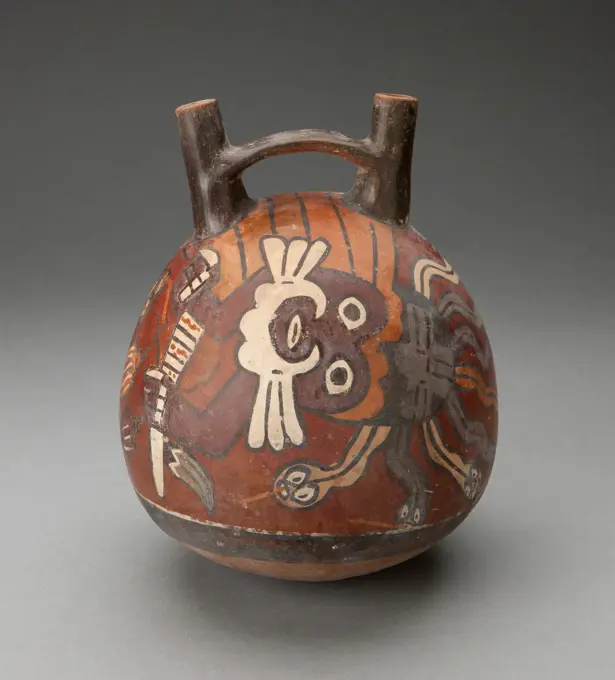
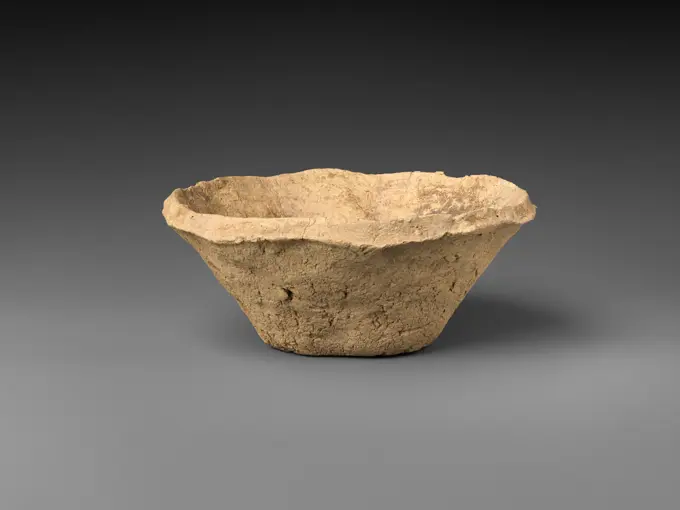
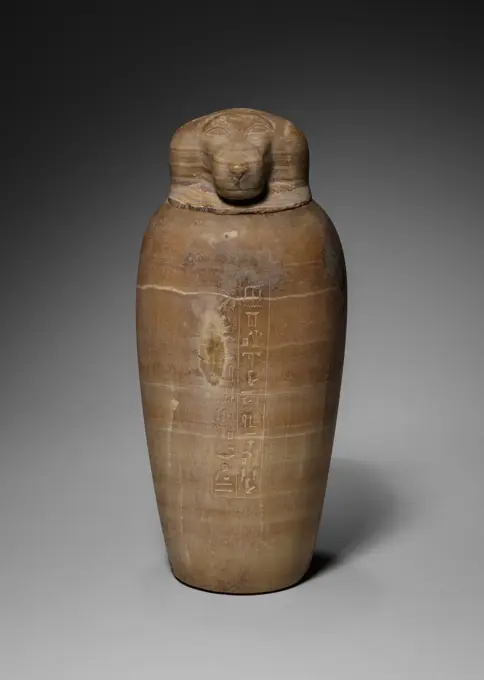
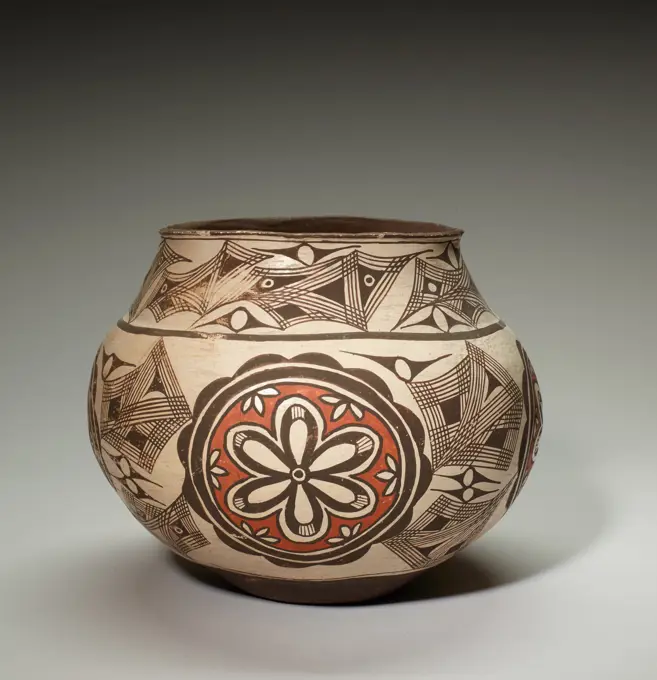
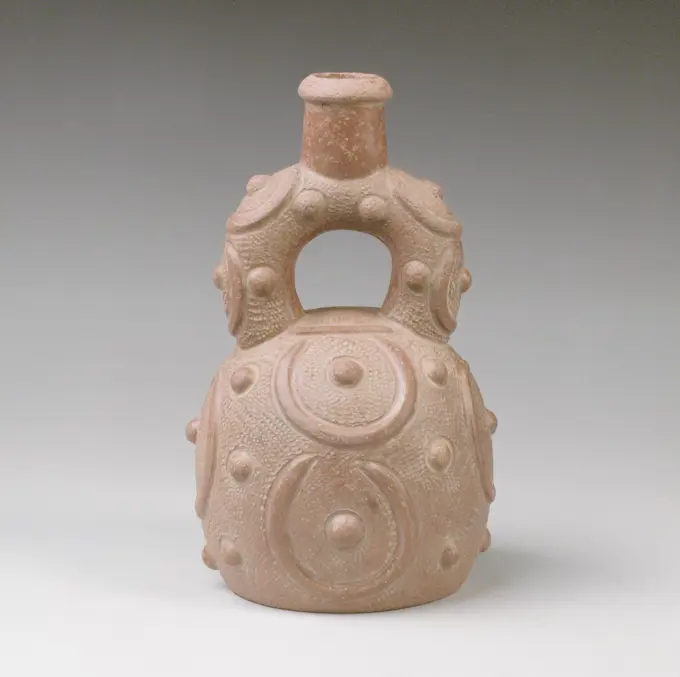
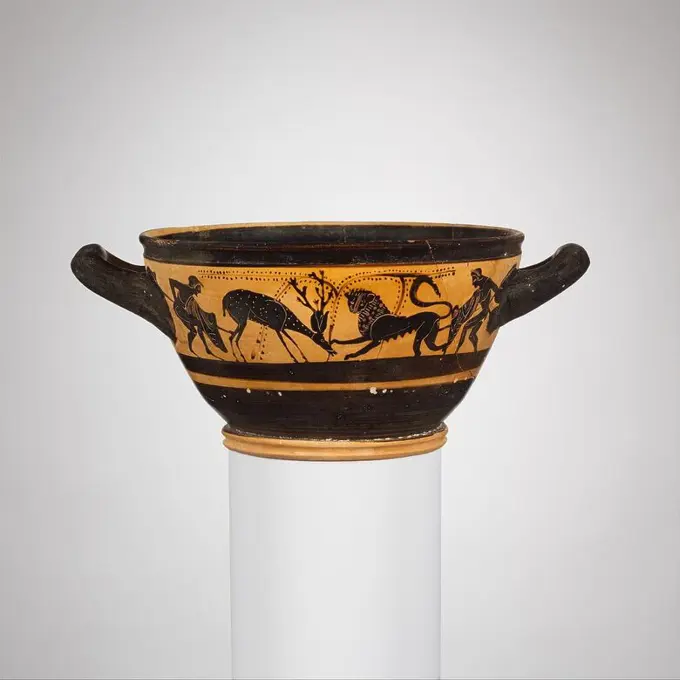
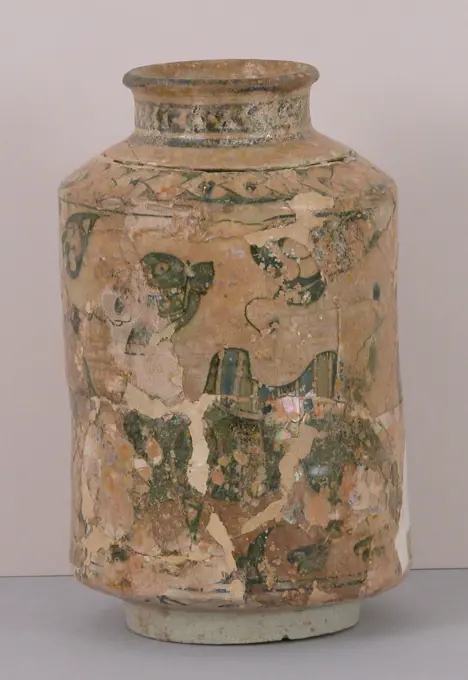
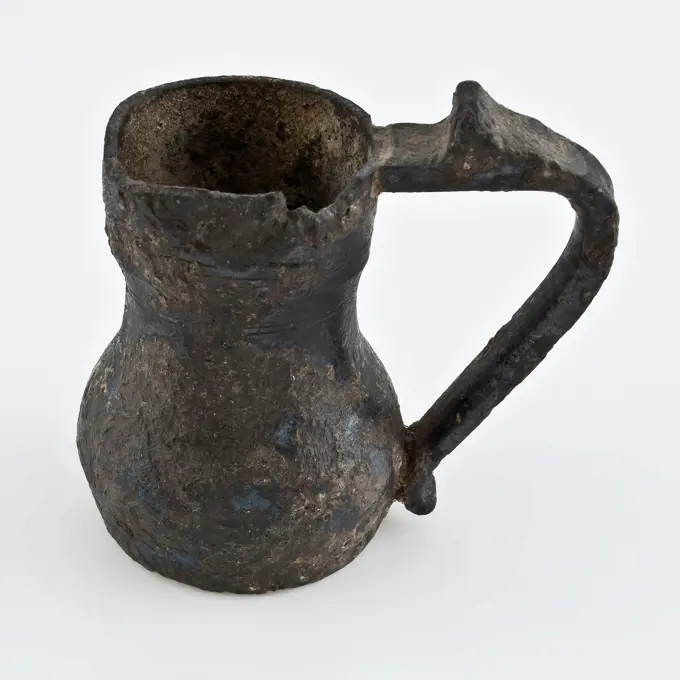
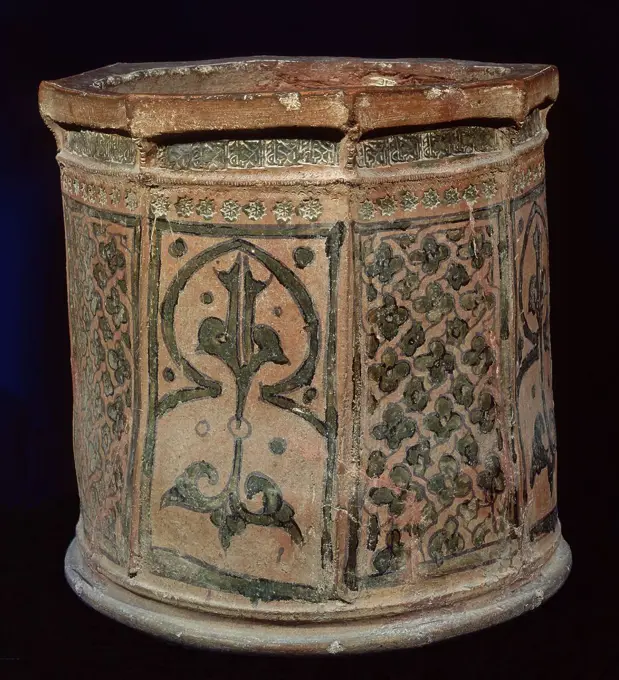
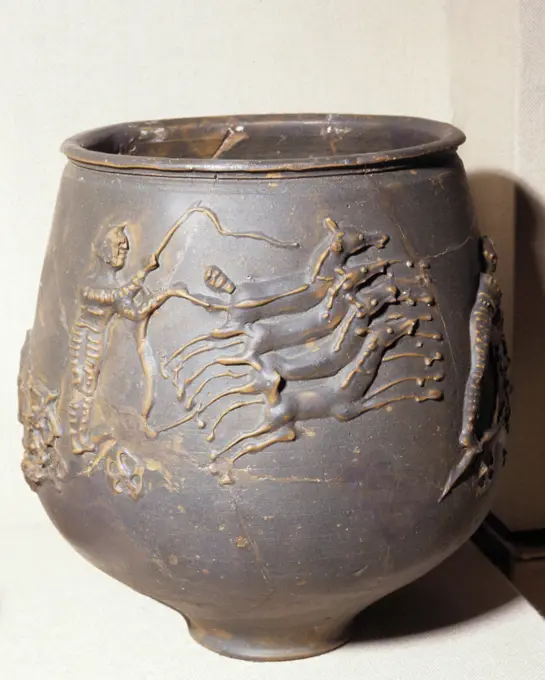
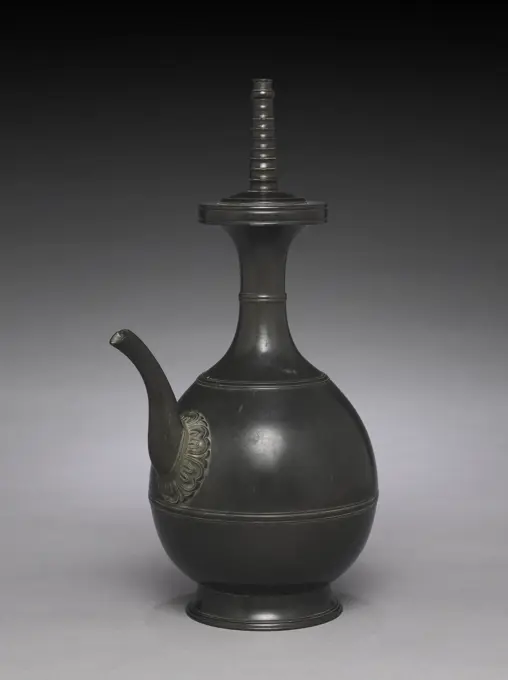
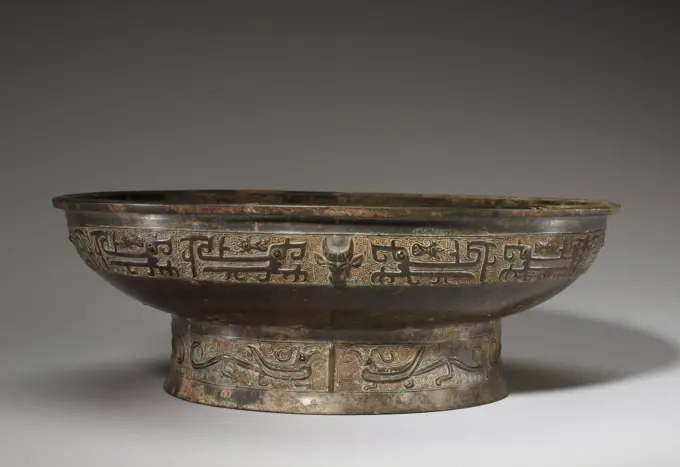
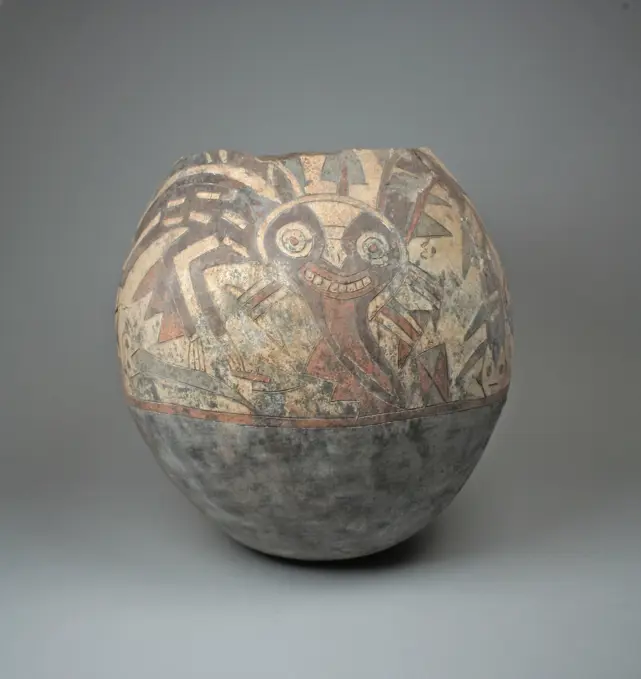
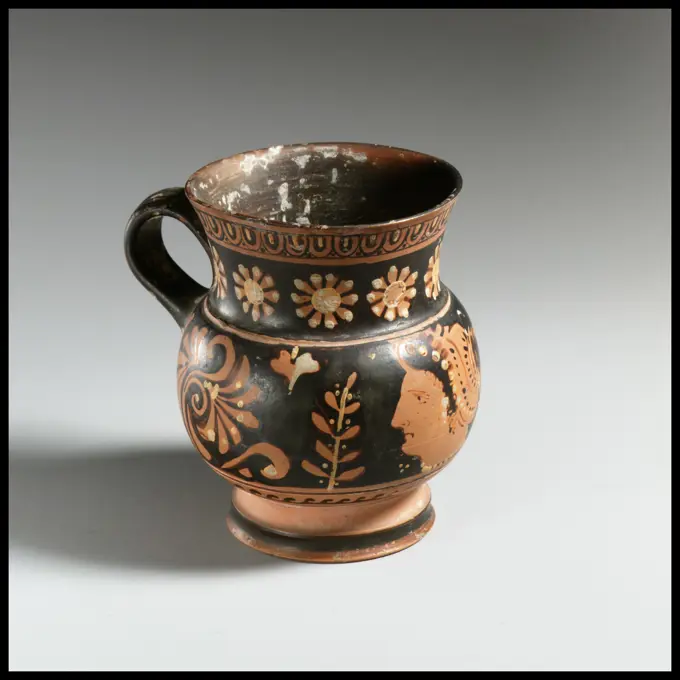
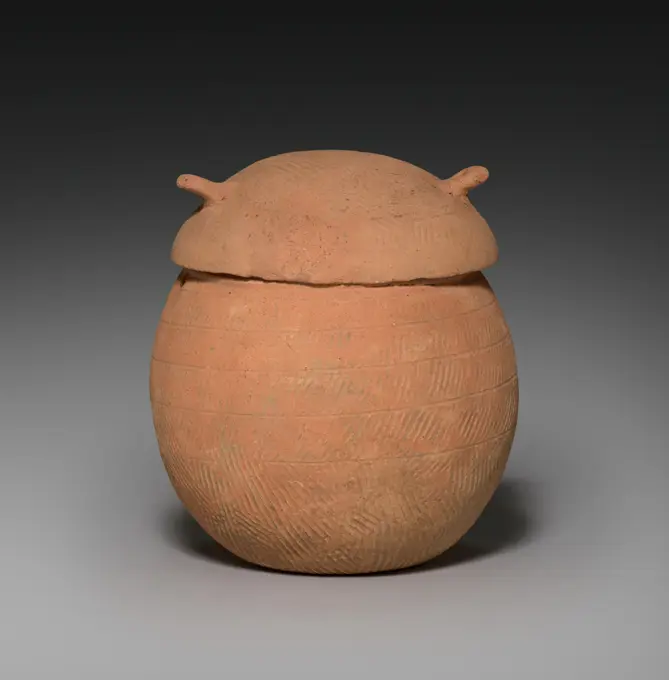
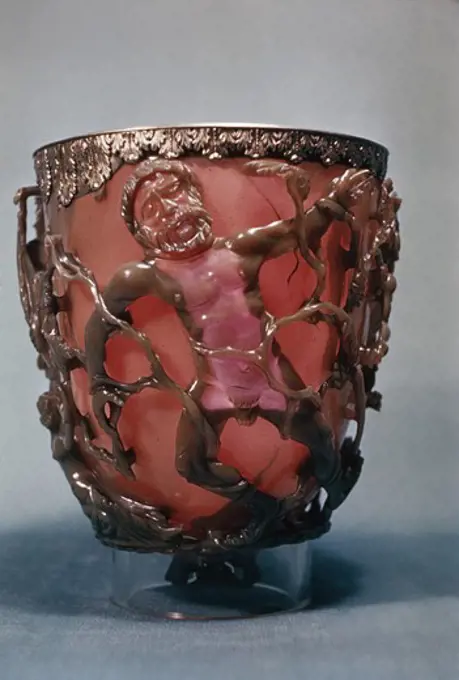
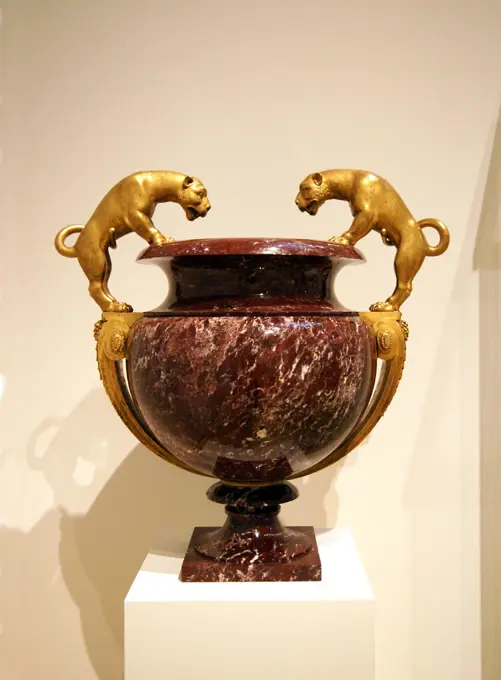
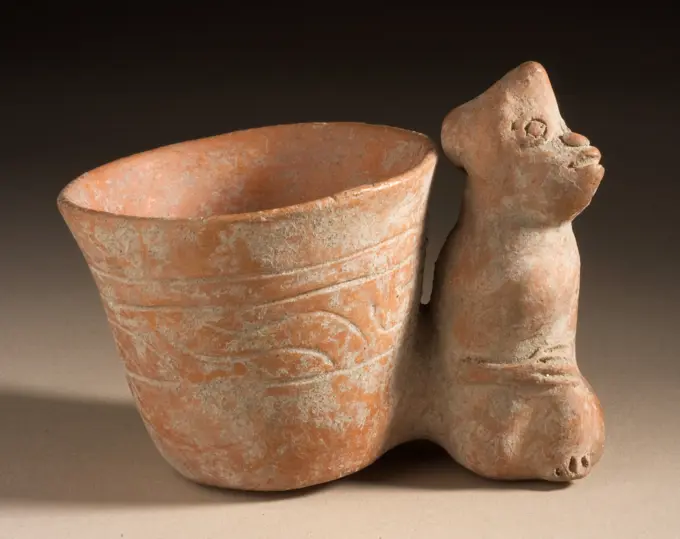
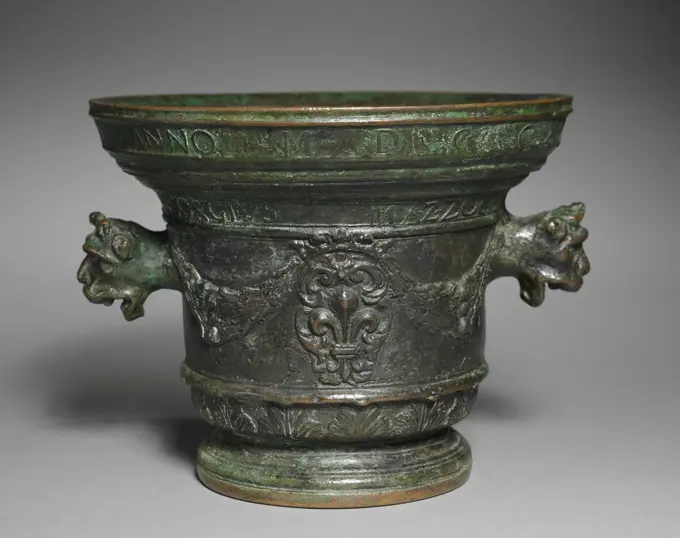
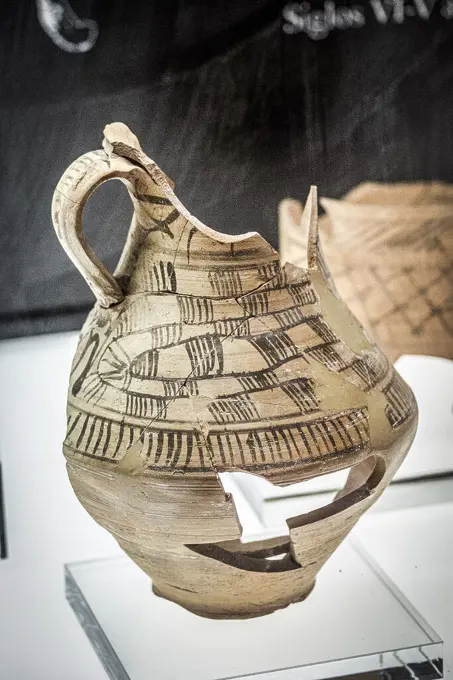
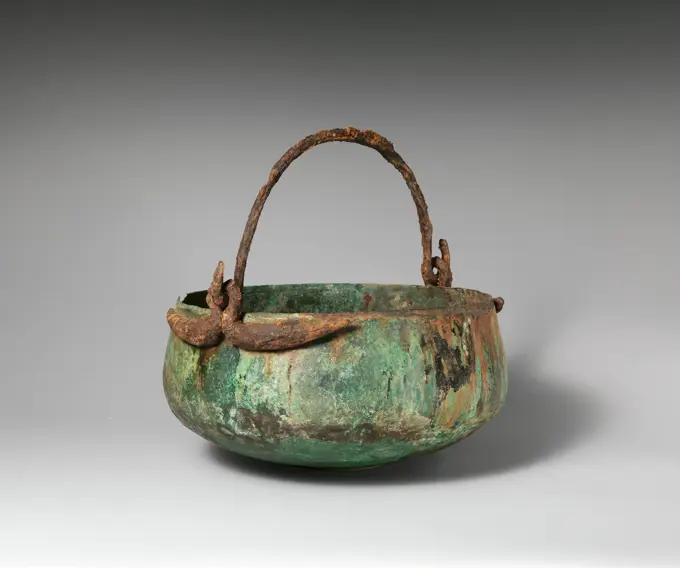
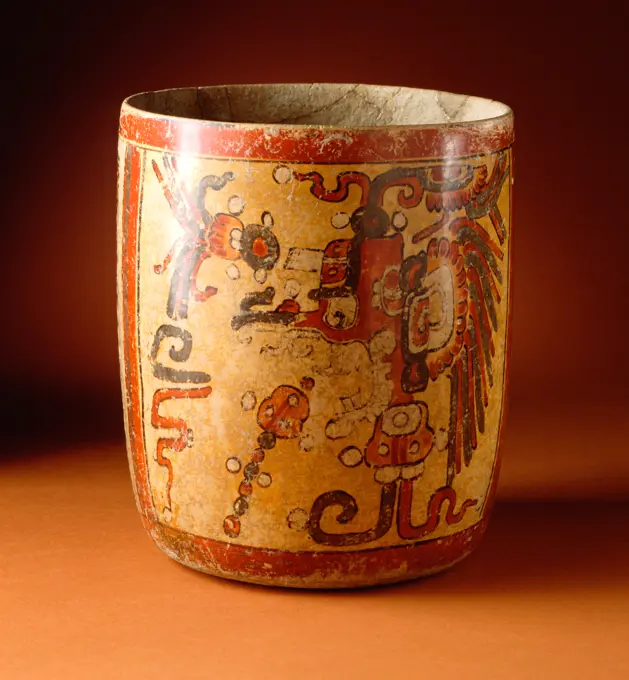
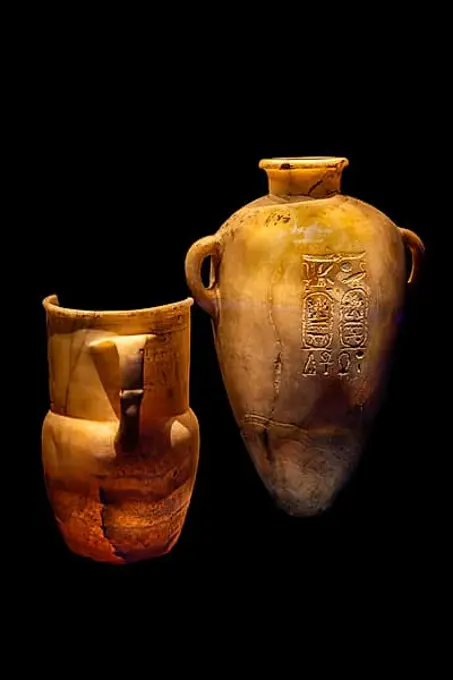
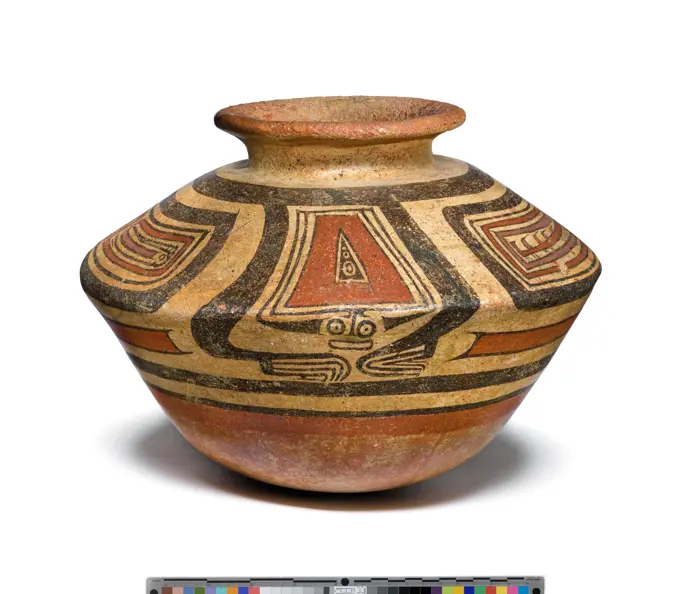
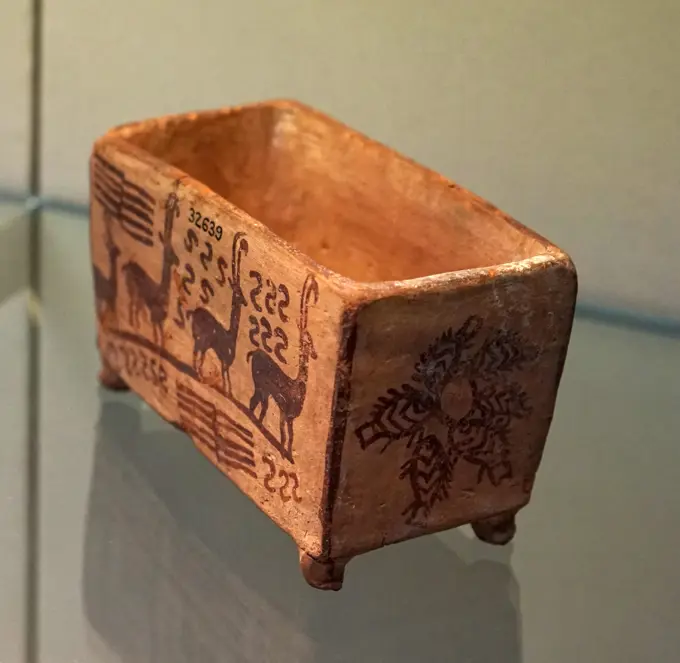
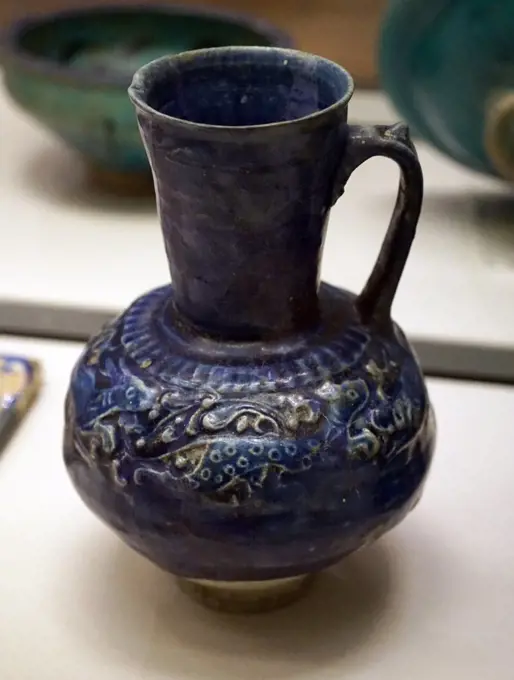
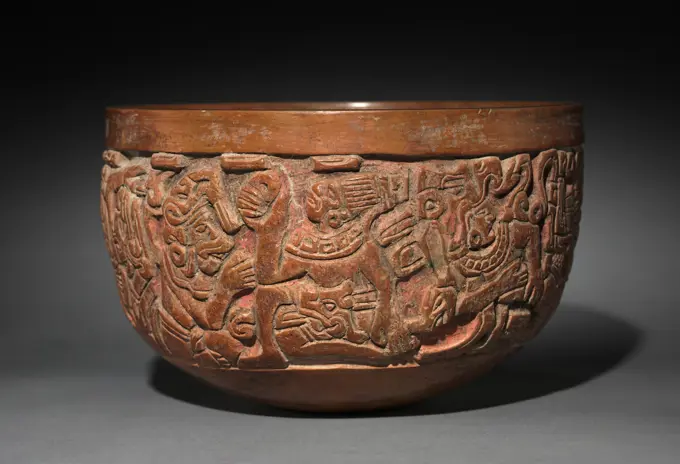
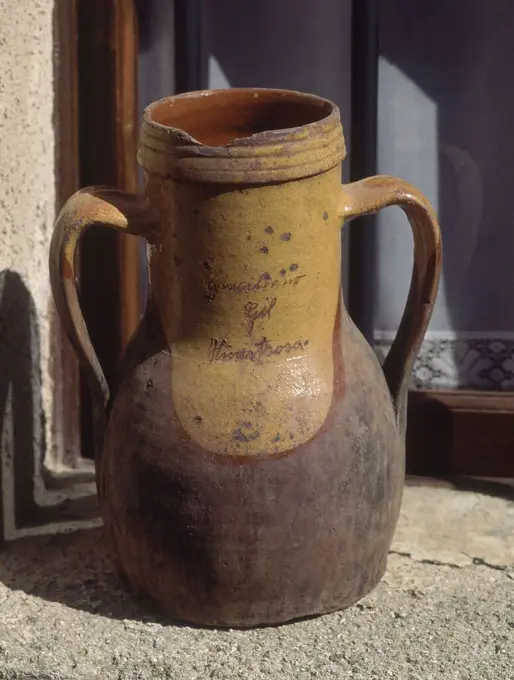
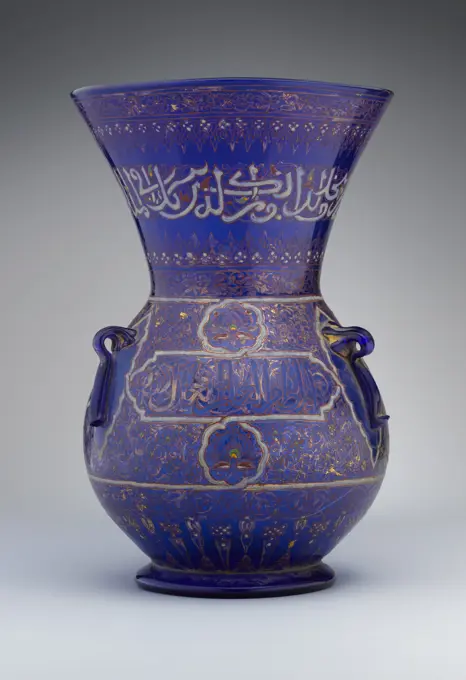
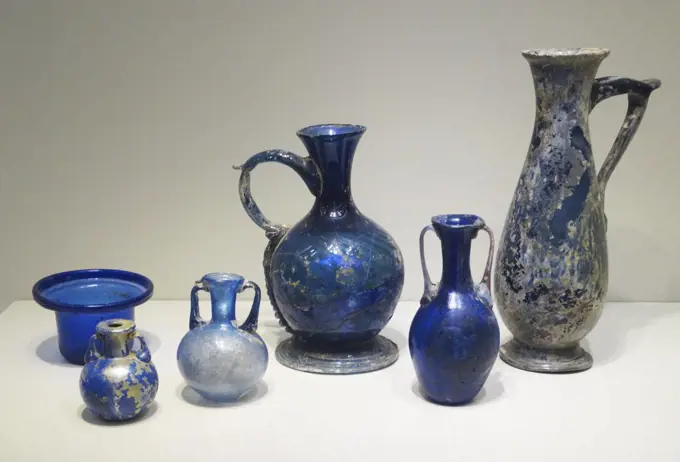
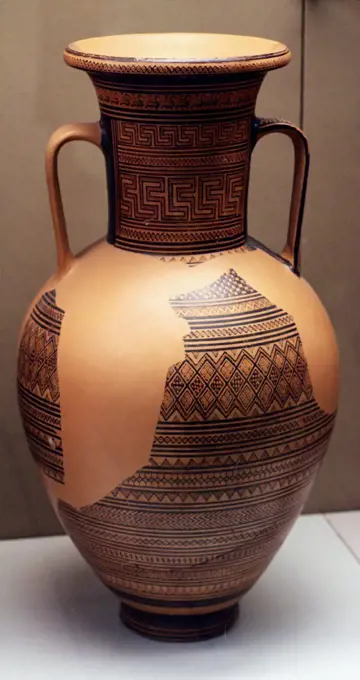
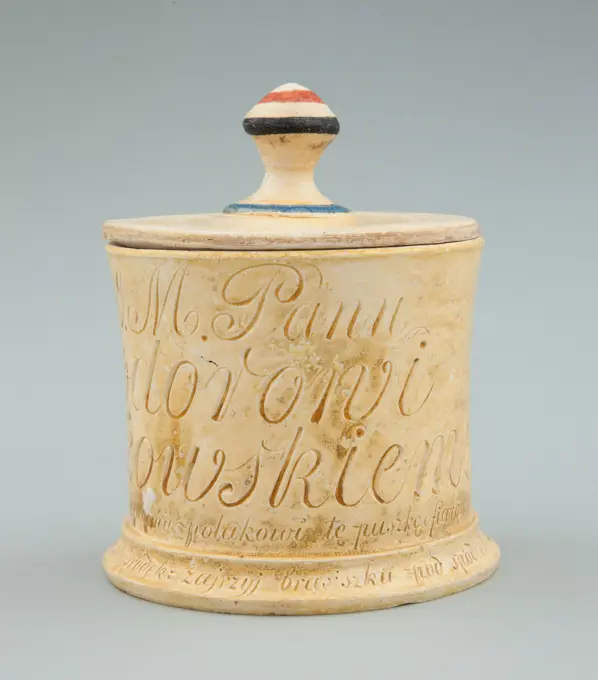
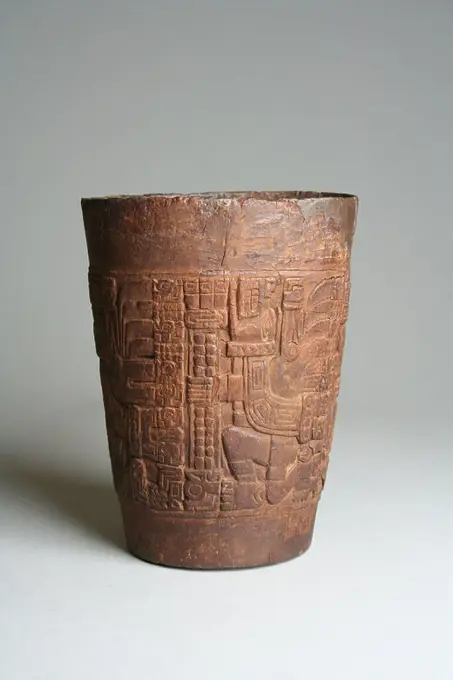
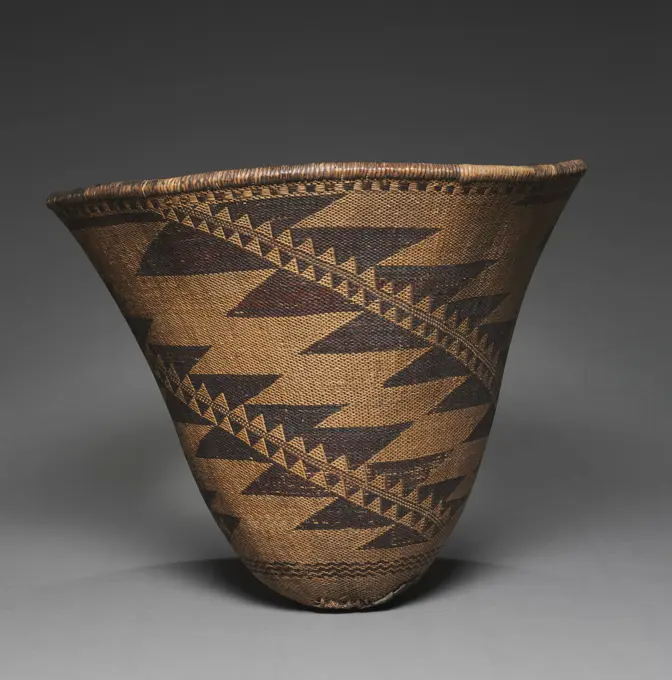
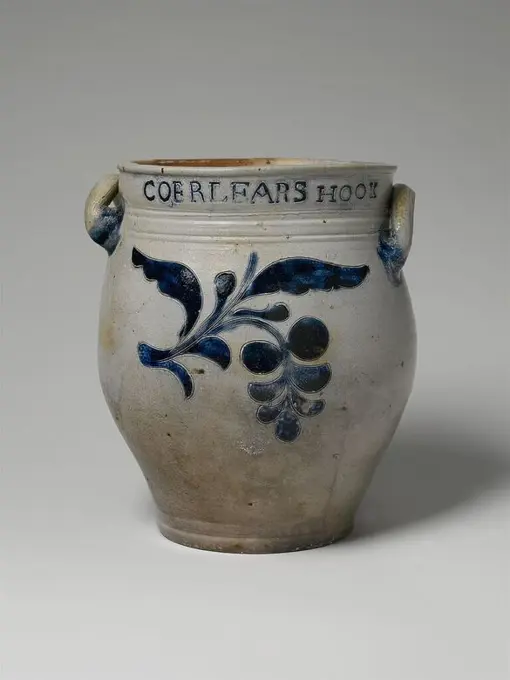
Przeszo Przyszoci unknownTeapot, c. 1810. Elijah Mayer & Son. Black basalt; overall: 13.7 x 26.6 x 14.3 cm (5 3/8 x 10 1/2 x 5 5/8 in.).Double Spout and Bridge Vessel Depicting Costumed Performer with Snake Headdress 180 BCE-500 CE Peru. Ceramic and pigment . NazcaOld clay jug isolated on white backgroundCERAMICA DE SEPULTURA NEOLITICA DE ALCANTARA. Location: ARCHAEOLOGICAL MUSEUM. JEREZ DE LA FRONTERA. SPAIN.Uzbekistan, Bukhara, Clay Urns near Chor MinorBeveled rim bowl ca. 3300-3100 B.C.. Beveled rim bowl. ca. 3300-3100 B.C.. Ceramic. Late Uruk. Mesopotamia, NippurTIBOR MEXICANO - SIGLO XVII. Location: MUSEO DE AMERICA-COLECCION. MADRID. SPAIN.Canopic Jar with Baboon's Head, 664-525 BC. Egypt, Late Period, Dynasty 26. Travertine; diameter: 18.2 cm (7 3/16 in.); diameter of mouth: 9.6 cm (3 3/4 in.); overall: 40.8 cm (16 1/16 in.). In the process of mummification, the liver, lungs, stomach, and intestines were removed, separately embalmed, and stored in specialized jars known as canopic jars (after a sailor in Greek mythology, who died at the town of Canopus in the Nile Delta and was worshipped there in the form of a human-headed jar). Each organ was identified with one of four funerary deities collectively known as the Sons of Horus: the liver with Imsety (man's head), the lungs with Hapy (baboon's head), the stomach with Duamutef (jackal's head), and the intestines with Qebehsenuef (falcon's head). It was their duty to protect the deceased and restore to him his body parts in the hereafter.Olla (vessel), late 1920s-1930s, 9 3/8 × 11 1/16 × 11 1/16 in. (23.81 × 28.1 × 28.1 cm), Ceramic, pigments, United States, 20th centuryVASIJA OVOIDE CON DOBLE PITORRO. Location: ARCHAEOLOGICAL MUSEUM. SANTA CRUZ DE TENERIFE. TENERIFFA. SPAIN.Stirrup-spout Bottle 12th-5th century B.C. Cupisnique Bottles made in northern South America beginning in the second millennium B.C. were frequently made in a shape that is visually reminiscent of the stirrup on a horse's saddle. Stirrup-spout bottles, as they are called, were particularly favored in Peru, where for thousands of years they were made in a great variety of shapes, sizes, and finishes. Those stirrup-spout bottles, such as this example, termed Cupisnique, after the location in which many vessels in the style were initially discovered, are robustly sculptural and often monochrome in color. Strong and squat in shape, this bottle has a particularly well-balanced surface, with carefully placed, raised projections and round protrusions that echo the curved forms of body and spout. Since the Cupisnique style became known in the 1930s, it has become clear that there are a number of ceramic styles that are contemporary with and similar to it, but that can be distinguished from it Terracotta skyphos (deep drinking cup). Culture: Greek, Attic. Dimensions: H. 4 3/16 in. (10.6 cm). Date: ca. 500 B.C..Obverse, between hunters, lioness felling fallow deerReverse, between hunters, lion felling deerThis vase gives noteworthy testimony to the persistence of tradition in Attic vase-painting. Introduced from the Near East and depicted as early as Geometric vases, the motif of a feline felling a bull or deer appears here in mannerly, decorative form. The hunters to either side reflect the predilection for symmetrical compositions with decorative elements, figural or floral, at the handles. The shape of the skyphos readily accommodates the narrative frieze. Museum: Metropolitan Museum of Art, New York, USA.Kero.  Maker: UnknownJar 12th-13th century. Jar 446673Small pewter jug with belly and ear, jug, measuring cup measuring instrument jug holder soil finds tin metal, cast Small pewter jug with low belly and long standing ear. Thumb rest on the ear. Shoulder and neck decorated with circumferential grooves. Mark not readable under the oxidation possibly incised characters on the neck not sure Unreadable mark archeology Rotterdam rail tunnel measuring pouring dosing Soil discovery Rotterdam rail tunnel.CERAMICA DE ARAGON S XVIII - DECORACION VEGETAL. Location: MUSEO DEL PUEBLO ESPAÑOL. MADRID. SPAIN.Terracotta oinochoe (jug) ca. 350-330 B.C. Attributed to the Knudsen Group Decorated with ivy vine.. Terracotta oinochoe (jug) 255332Kantharos orSkyphosBROCAL DE POZO SEVILLANO EN BARRO COCIDO Y DECORACION DE CUERDA SECA - OCTOGONAL - SIGLO XI - AL-ANDALUS. Location: MUSEO ARQUEOLOGICO NACIONAL-COLECCION. MADRID. SPAIN.Kettle with Handle, 1700s-1800s. China, Qing dynasty (1644-1911) or Republican period (1912-49). Bronze;VASIJA - CULTURA NAZCA - ARTE PERUANO PRECOLOMBINO - 100 AC-700 DC. Location: MUSEO DE AMERICA-COLECCION. MADRID. SPAIN.Romano-British pot from Colchester showing chariot race, 3rd c. AD.VASO ATICO CON ESCENA DE PALESTRA S V AC. Location: BRITISH MUSEUM. LONDON. ENGLAND.A reproduction of a Nikosthenic black figure amphora from the Hellenic period. The original was found on the  Cyprus. The copy is typical of a genre of mass produced archaeological tourist souvenirs sold throughout Greece and Cyprus.Mortar with Animal Frieze. Culture: German, Innsbruck. Dimensions: Overall (confirmed): 7 1/4 × 7 7/8 × 6 3/4 in. (18.4 × 20 × 17.1 cm). Founder: Probably cast by Henrich Reinhart (ca. 1570-1629). Modeler: Modeled by Caspar Gras (Austrian, Bad Mergentheim, near Würzburg 1585-1674 Schwaz, near Innsbruck). Date: 1603.Mortars were used in daily life in domestic settings to grind seeds, grains, spices and herbs as well as numerous ingredients for cooking, and simple medicines and cosmetics. The sculptor Caspar Gras (1585-1674) worked for the Innsbruck Habsburg court from 1613 to 1632. Through his training with Hubert Gerhard, himself student of Giambologna in Florence. Gras became one of the artists who was instrumental in the transmission of Giambologna's style to the Northern Europe. Dated "1603" this mortar is the sculptor's earliest work presently known. Museum: Metropolitan Museum of Art, New York, USA.Chinese art. Bronze vase. Qin Dynasty. 3rd century.urn urn, Museum of Maya Anthropology, Department of El Quiché, Guatemala, Central America Copyright: xZoonar.com/ToloxBalaguerx 22071388Earthenware chamber pot with top edge, bandoor, on stand, yellow and green glazed, pot holder sanitary earthenware ceramic earthenware glaze lead glaze, ring 9.5 hand-turned glazed baked Pottery chamber pot easy to stand on stand ring Completely yellow and green glazed dark stain in glaze outside. White shard. Outstanding top edge with band ear. Belly model with narrowing downwards Rotating lips on top side wall. Striking wear marks pottery is soft archeology Rotterdam Heliport terrain indigenous pottery drainage hygiene room sleeping night Soil discovery: Heliport site Rotterdam June 1978.Bottle - jar with handles, 9th century ,Mikulcice, Great Moravia, Czech RepublicEwer (Fusatsugata Suibyō), 1200s. Japan, Kamakura period (1185-1333). Bronze; overall: 34.9 cm (13 3/4 in.).Pan water basin, 12th-11th century BCE, 4 9/16 × 13 3/8 in., 9 lb. (11.59 × 33.9 cm, 4.1 kg), Bronze, China, 12th-11th century BCEAmber-colored Pyxis with lid. UnknownStorage Jar 7th-2nd century B.C. Paracas. Storage Jar 312938Germany, Bavaria, Munich, Glyptothek and State Collections of Antiquities Museum, Exhibit of Daunian Pottery VesselsTerracotta mug ca. 350-325 B.C. Greek, South Italian, Apulian Head of a woman.. Terracotta mug 255984Lidded Vessel with Loop Handles, 57 BC-AD 668. Korea, Three Kingdoms period (57 BC-AD 668). Earthenware, with impressed, paddled, and incised decoration and red slip; This small storage jar was hand built from coils of clay before it was finished on a potter's wheel. The thick, vertical ridges covering the surface were impressed into the wet clay using a carved wooden paddle. This network of raised lines was then intersected by four incised lines coursing around the bulbous form and separating the body into lower and upper areas with deft visual simplicity. Such direct, effective design solutions to ceramic decoration appear frequently in early Korean ceramics. The two perforations in the upper body were no doubt used to help secure the lid to the body with cord.. Come from stoneware, covered with a gray-white / green, cracked glaze. The bowl overshoes up and stands on three feet in the form of animal legs with a hoof; The handle is modeled in the form of a dragon head. Celadon (Yue).Lycurgus Cup 4th C. A.D. Roman Art OLLA CON DOS ASAS Y VIDRIADO PARCIAL - ARTE POPULAR S XX. Location: ALFARERIA. PERERUELA. Zamora. SPAIN.Decorative vase with panthers, funerary art, 1802. Yekaterinburg Lapidary Factory. Jasper and bronze. Russia. The Hermitage Museum.Figure. Peru, Moche, 100 BCE-700 CE. Ceramics. CeramicMortar, 1712. Georgius Mazzochus (Italian). Bronze; overall: 24.5 x 31.8 x 31 cm (9 5/8 x 12 1/2 x 12 3/16 in.).Ceramic jar of indigenous tradition, Carratiermes Necropolis, 1st century AD, Tiermes Archaeological Site Museum, Soria, Spain.Tripod Bowl 7th-10th century Veracruz. Tripod Bowl 313092Benin Bronze tusk holder; Nigeria; West Africa 1600-1700 ADBronze cauldron with swinging handle ca. 550 B.C. Etruscan With arched handle.Similar cauldrons are frequent in the tombs of Etruria, Umbria and Abruzzo.. Bronze cauldron with swinging handle 247026Cylinder Vessel with K'awiil. Guatemala, Northwestern Petén, Maya, 600-900 CE. Ceramics. Slip-painted ceramicclay pot isolated on white backgroundCalcite amphora with cartouches of Merenptah, from the exhibition: Ramses the Great and the Gold of the Pharaohs, Cologne, North Rhine-Westphalia, Germany, EuropePyxis with lid, ca. 750 BC. Offering from a woman's grave in the family burial ground, to the south of the Tholos of Athens. Late Geometric Period. Museum of the Ancient Agora. Athens, Greece.urnas de orejetas, 425-200 b.C., Ibiza and Formentera Archeological Museum, Patrimonio de la Humanidad «Ibiza, biodiversidad y cultura», Ibiza, Balear...Pitcher with a depiction of the drunken Dionysus supported by a Satyr at the attachment of the vertical handle. 350 BC. From a tomb at Eretria, Euboea. Carinated turtle effigy jar. Panama, Parita style, 1000-1300. Ceramics. Slip-painted ceramicRed -andech oinochoe; Berlin painter 2268 (approx. 520-500 BC); approx. 500 BC (-510-00-00--490-00-00);Box decorated with antelopes and fish. Dated 340 BCCANTARO VIDRIADO CON DECORACION VEGETAL-S XX ARTE POPULAR. Location: ALFARERIA. ALBA DE TORMES. SALAMANCA. SPAIN.Ceramic mug. Viceroyalty of New Spain. 17th century. Tonala (Guadalajara), Mexico. Museum of the Americas. Madrid, Spain.Ceramic pots of culture Lima 200 AD-700 AD.Huaca Pucllana. Miraflores district. Lima city. Peru.Archaeological site.Paul Ward, Pitcher, c 1937 Pitcher12th Century jug with foliate and zoomorphic decoration, from Iran.Bowl, c. 500-1000. Mexico, South-central Veracruz. Molded, carved, and burnished pottery; diameter: 17.8 cm (7 in.); overall: 11 x 18 cm (4 5/16 x 7 1/16 in.).CANTARA DE VINO CON VIDRIADO TIPO BABERO - S XIX. Location: ALFARERIA. SPAIN.Mosque Lamp 19th century Mamluk enameled glass was popular in nineteenth century Europe, and a number of glassmakers made copies or interpretations of the original vessels. The most renowned artists of the period were Philippe-Joseph Brocard (French, d. 1896, the brothers Joset and Ludwig Lobmeyr (Austrian, d. 1864 and 1917), and the glassworkers of the Salviati factory at Murano, Venice.. Mosque Lamp. 19th century. Glass; enamel-painted and gilded with applied elements. Attributed to possibly France. GlassBlue glass vessels, Eastern Mediterranean from the 1st century.VASO ROMANO DE CERAMICA ROJA - SIGLATA HISPANICA (MALLEN). Location: MUSEUM OF FINE ARTS. SARAGOSSA. Saragossa Zaragoza. SPAIN.The Elgin Amphora. Greek, made in Athens circa 760-750 BC. Late Geometric period. Attributed to artist Dipylon Painter.Tobacco can Dudziewicz, Wawrzyniec (1822 1891)New Mexico, Santa Fe. American Indian Art Morning Star Gallery Canyon Road Santa Fe, New Mexico.Beaker (kero). Culture: Wari. Dimensions: H. 4 1/2 x Diam. 2 1/2 in. (11.4 x 6.4 cm). Date: 7th-10th century.Cylindrical beakers with flaring sides, called keros, are a vessel form popular when the cities of Wari and Tiwanaku dominated the central and southern Andes. Used for the consumption of chicha (corn beer) during ceremonies and everyday gatherings, they played an important role in the maintenance of social and political relations. Keros were made of wood, fired clay, gold, and silver--the material reflecting the social status of the owner. They are decorated on the exterior with religious imagery and geometric motifs. On the circumference of this kero are four anthropomorphized winged figures in low but crisp relief. Its abstract carving style, distortion of the figures, and dense ornamentation are characteristic of Tiwanaku art. All four figures carry the staffs in their right hands that are a symbol of status and authority in ancient Peru. Two have feline faces looking skywarBurden Basket, 1880. California, Pomo, central, late 19th century. Redbud, sedge; diagonal twine; overall: 47.6 cm (18 3/4 in.).TARRO PARA EL ORDEÑO SIN VIDRIAR-ARTE POPULAR S XX. Location: ALFARERIA. PERERUELA. Zamora. SPAIN.Jar. Culture: American. Dimensions: H. 9 1/2 in. (24.1 cm); Diam. 6 3/4 in. (17.1 cm). Maker: Thomas Commeraw (active 1797-1819) or; David Morgan (active 1797-1802). Date: 1797-1819. Museum: Metropolitan Museum of Art, New York, USA.Martavan from v.O.c.-ship the 'white lion'. Martavan from v.o.c.-ship the 'white lion'.Storage jar (one of a pair) ca. 1550-70 Possibly by Domenico Veneziano Italian Storage vessels were among the most frequently produced maiolica wares in late medieval and Renaissance Italy. Made in fairly standard shapes, they were designed to fit with dozens of others on a shelf, often in a pharmacy or shop. Their handles therefore tend to fit within the vessels profile, and the cylindrical albarello type is generally narrower at the middle than at the top or bottom, making it easy to grip. Other common features include inscriptions indicating contents and flanged lips to help secure cloth or paper seals. The decoration, usually more elaborate on one side than the other, can sometimes link pieces to a known dispensary or specific workshop or artist.. Storage jar (one of a pair) 198782Canopic jar, for internal organs in the afterlife. Ancient Egyptian tomb object. The Late Period 664 BC - 332 BCMiniatureJugEtruscan Civilization, Vase with Silenus's face