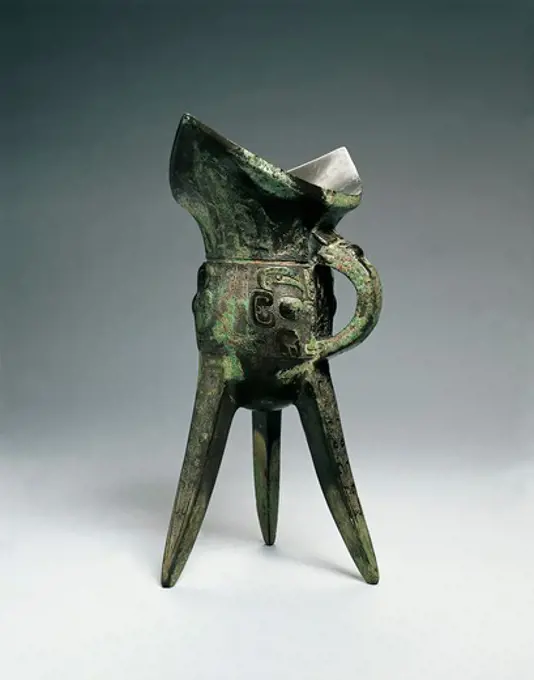
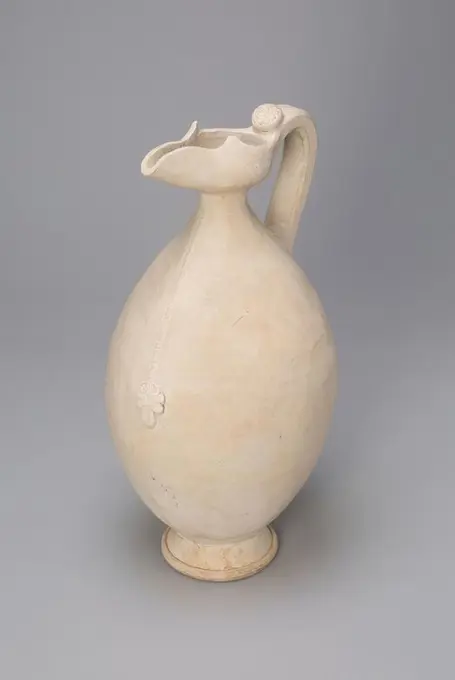
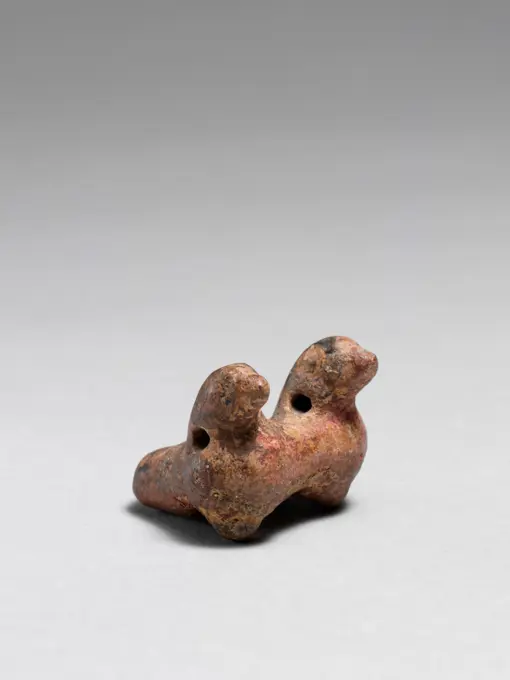
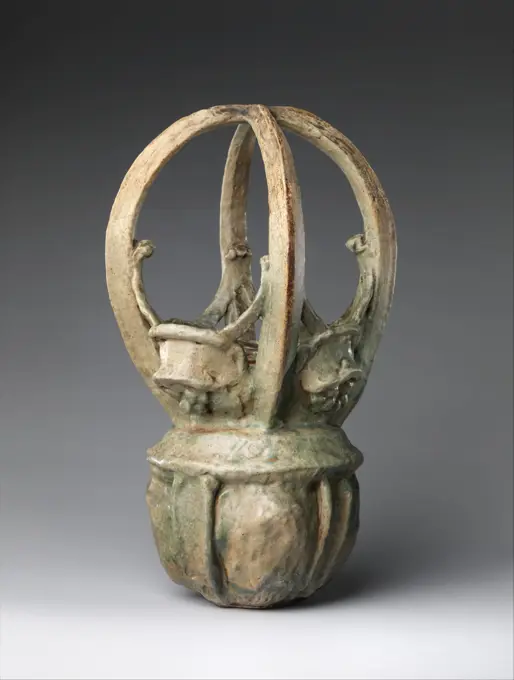
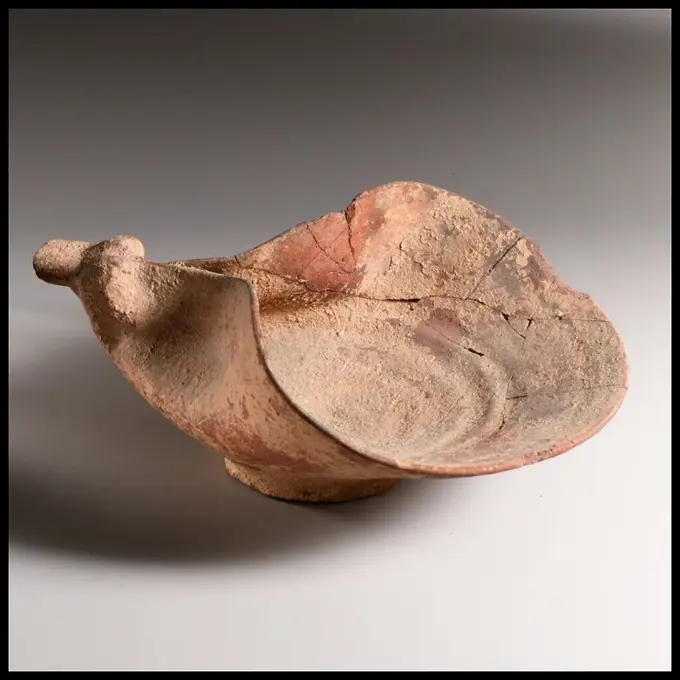
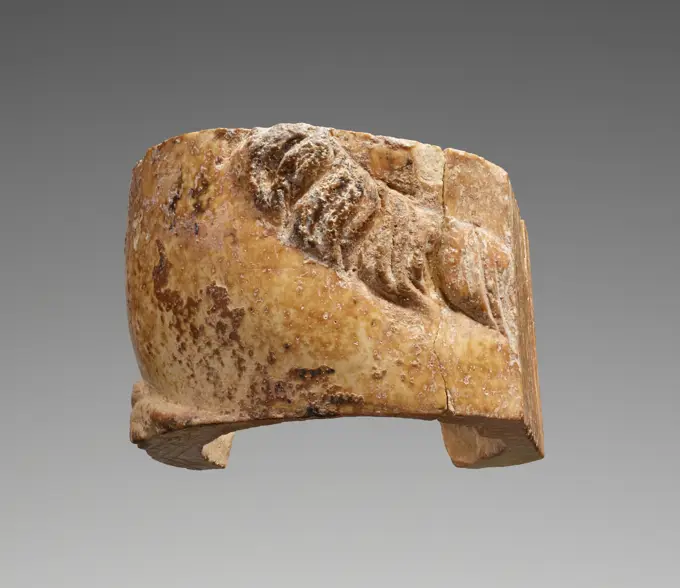
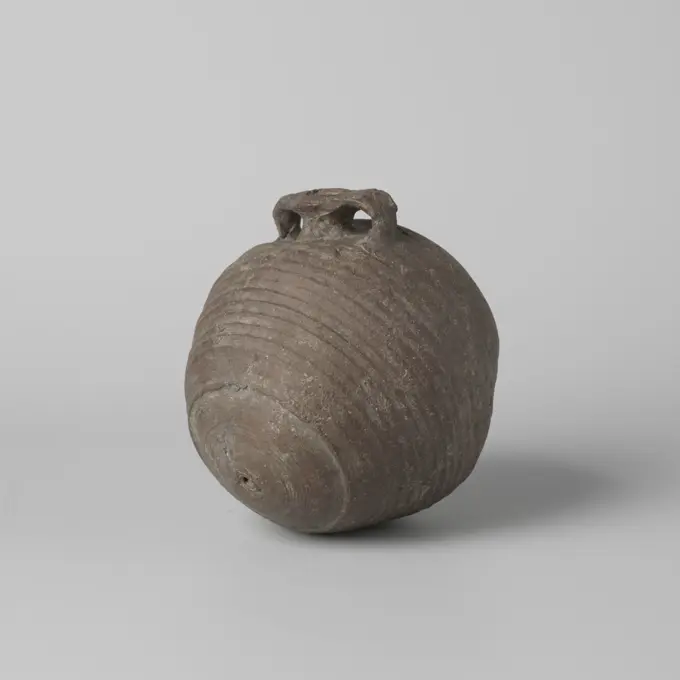
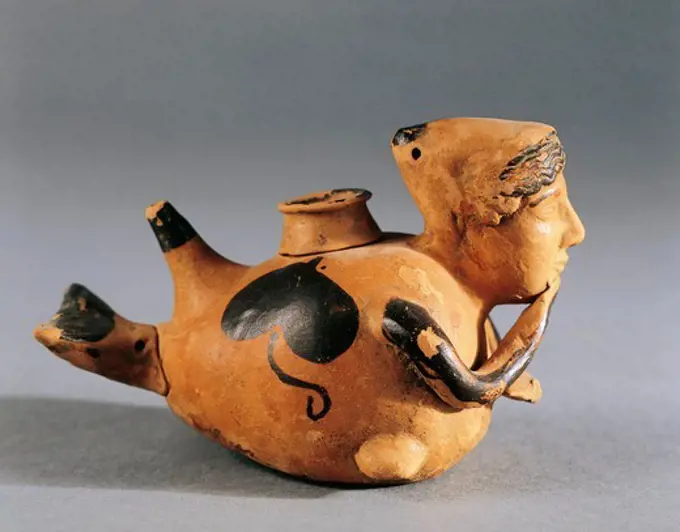
Ancient Terracotta Lamps

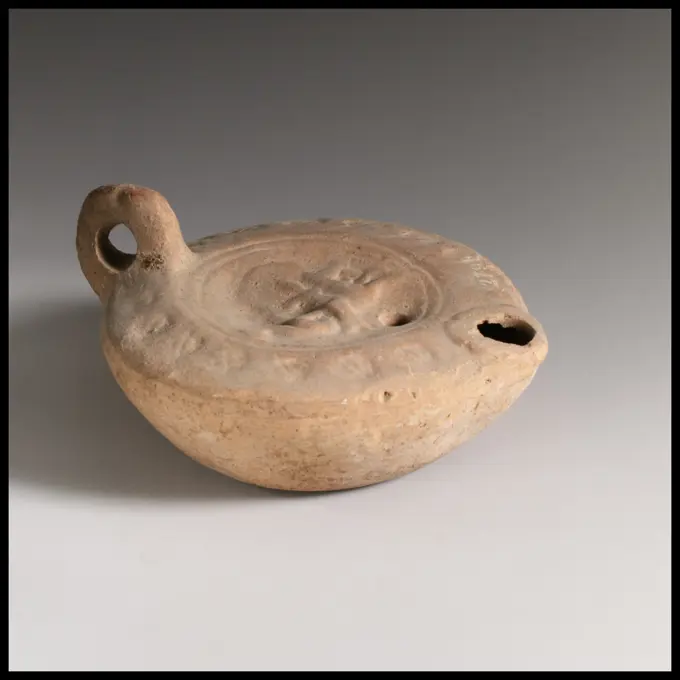
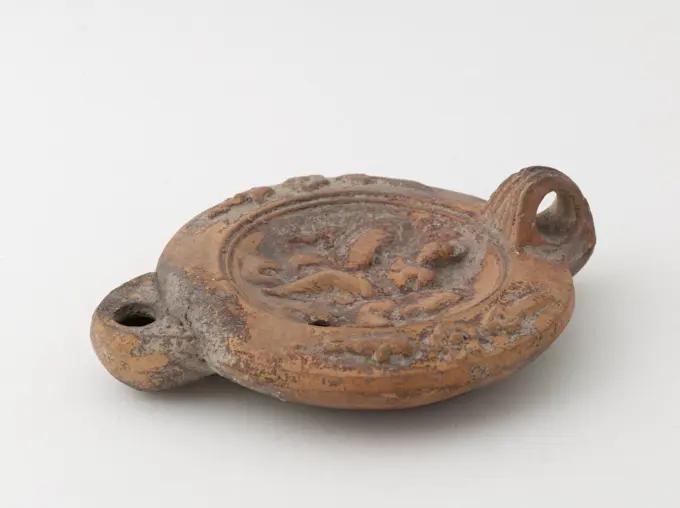
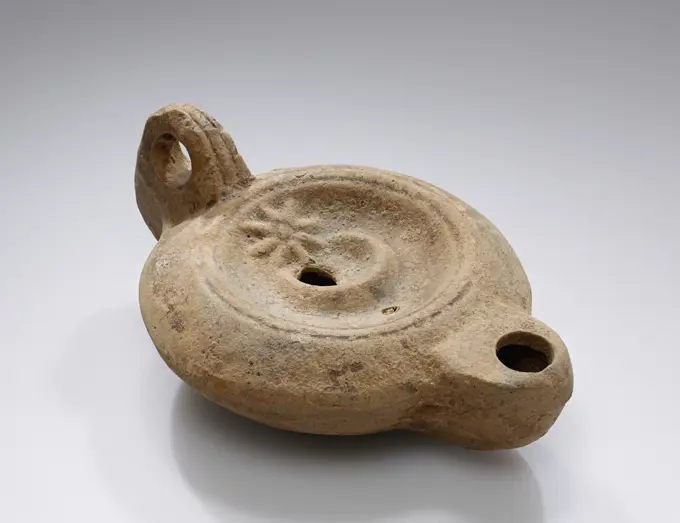
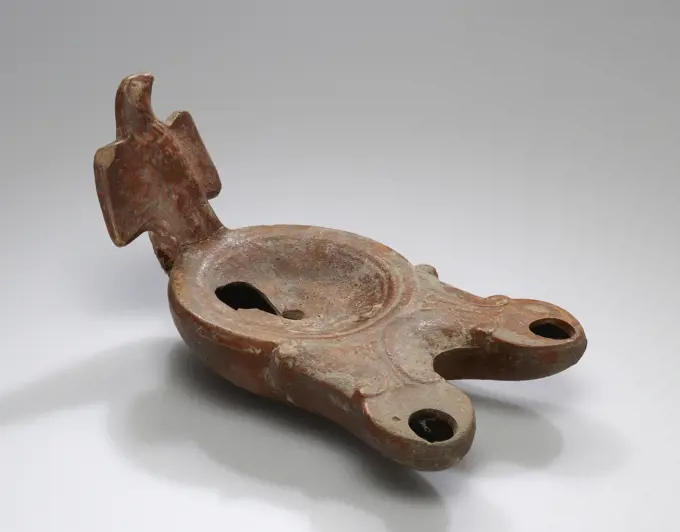
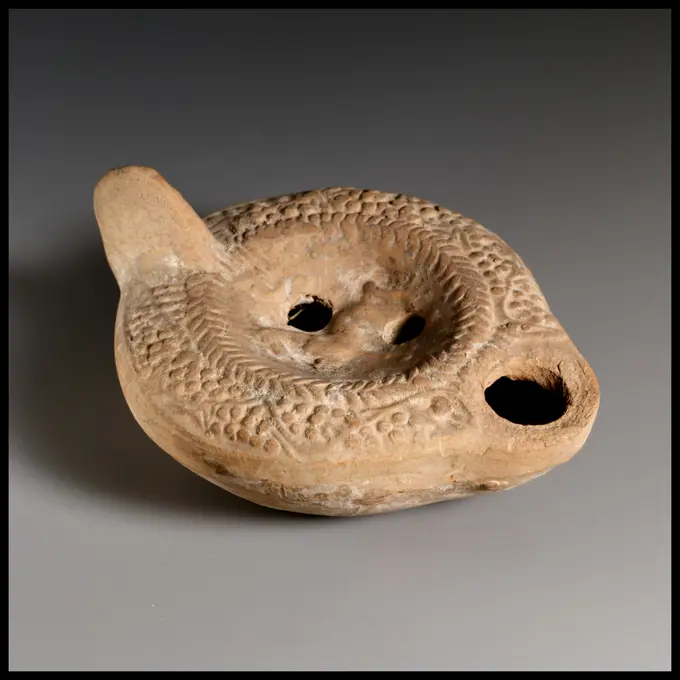
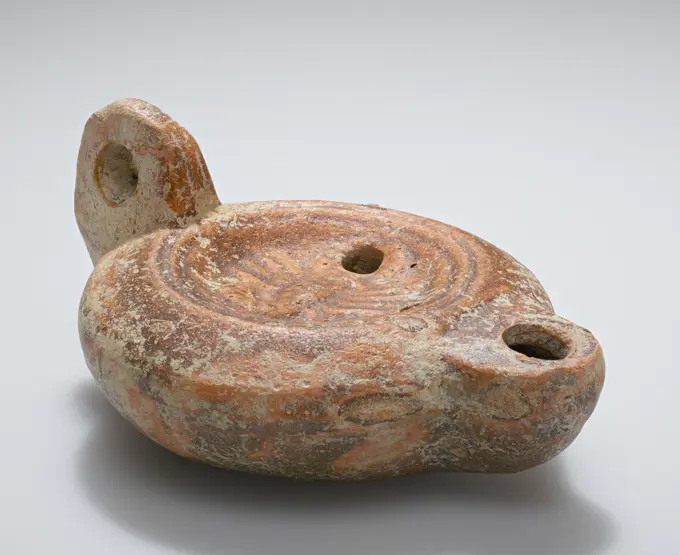
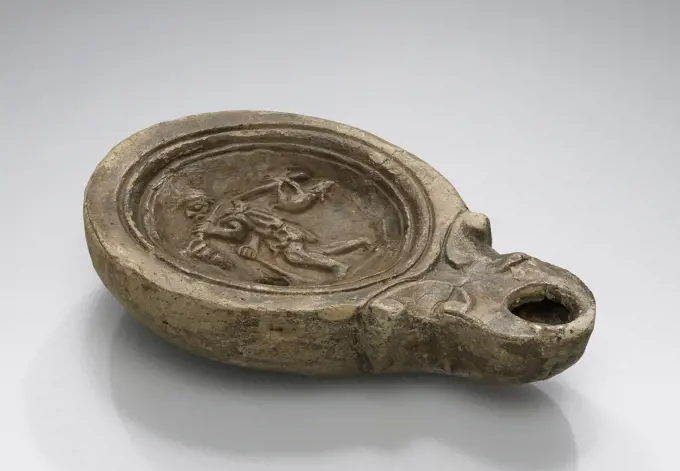
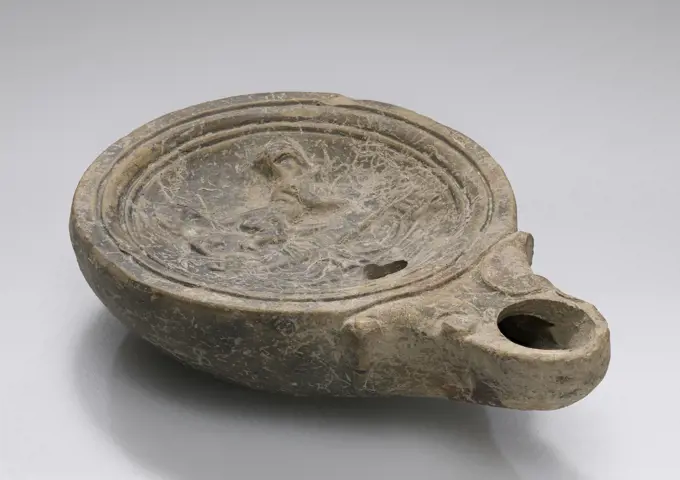
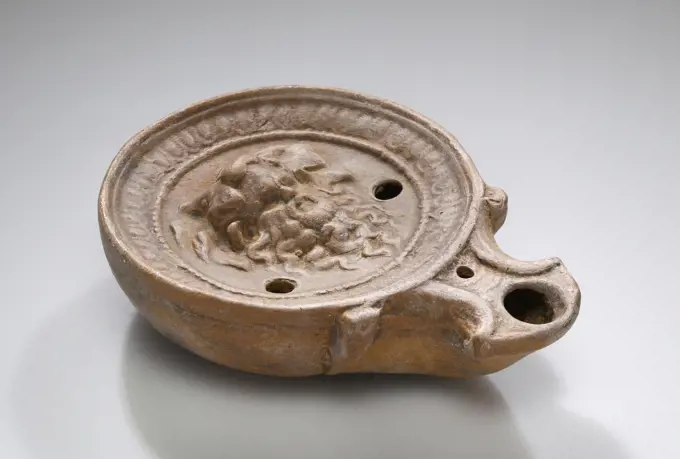
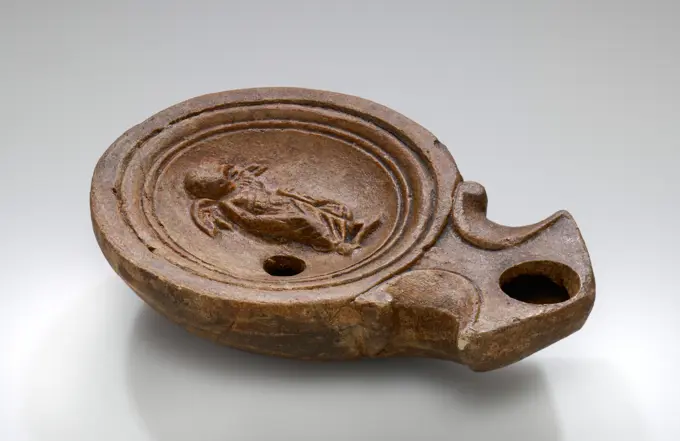
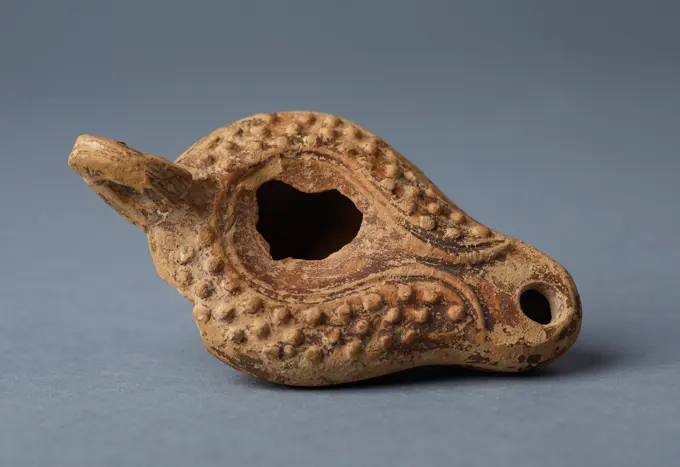
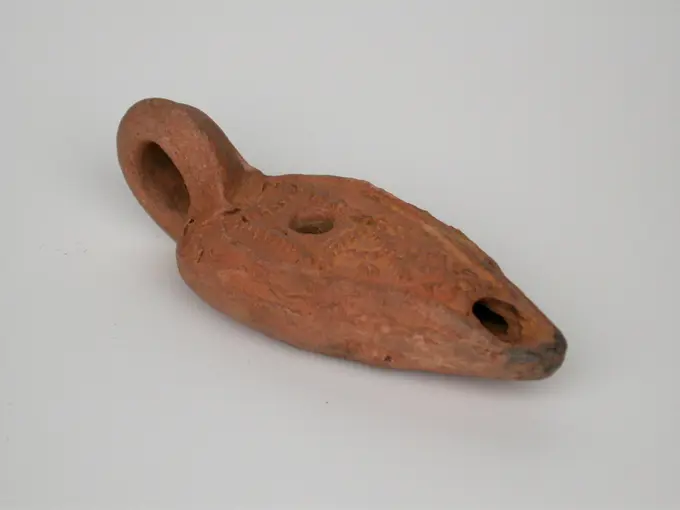
Collection of historical terracotta oil lamps from the Roman era. Varied designs with intricate reliefs, showcasing cultural artistry in muted earthy tones.
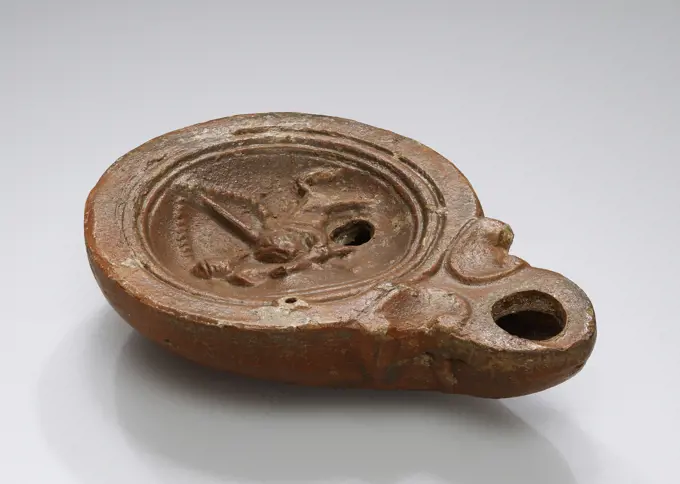
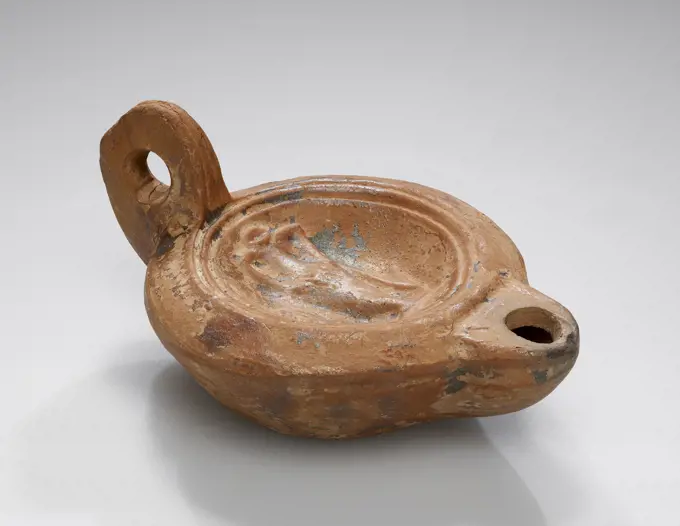
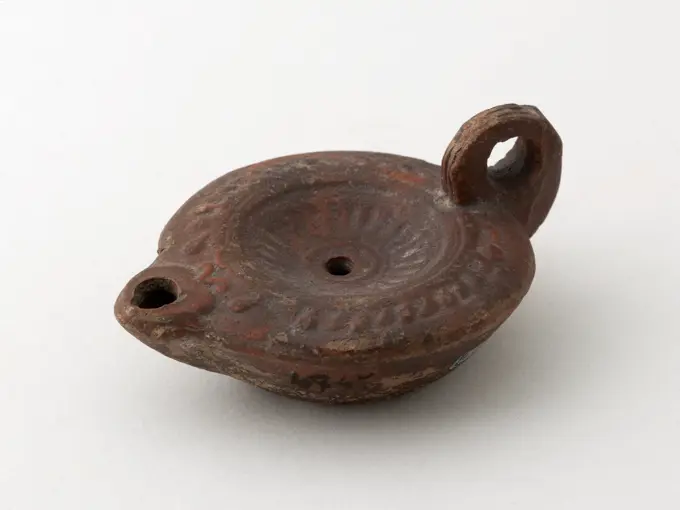
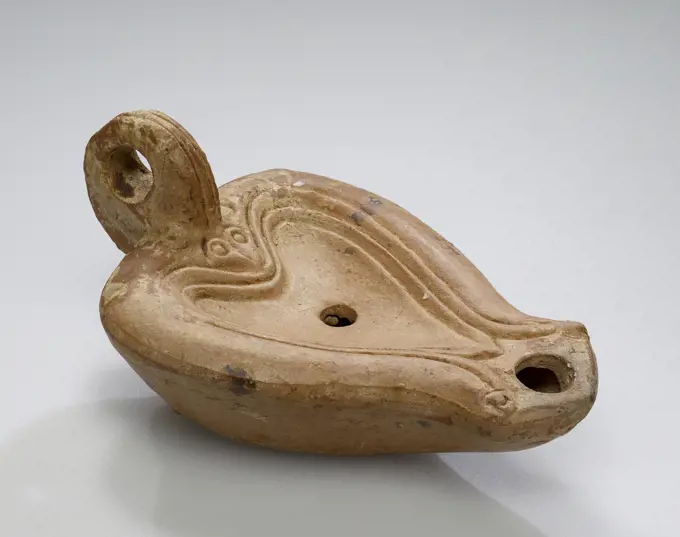
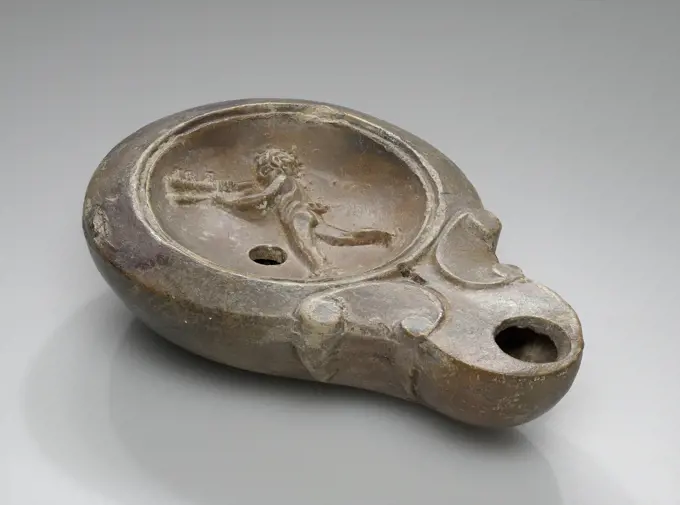
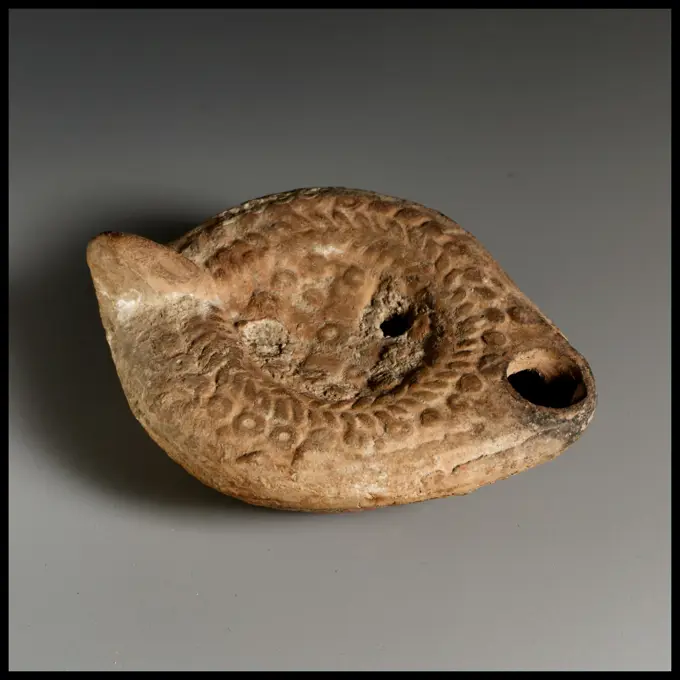
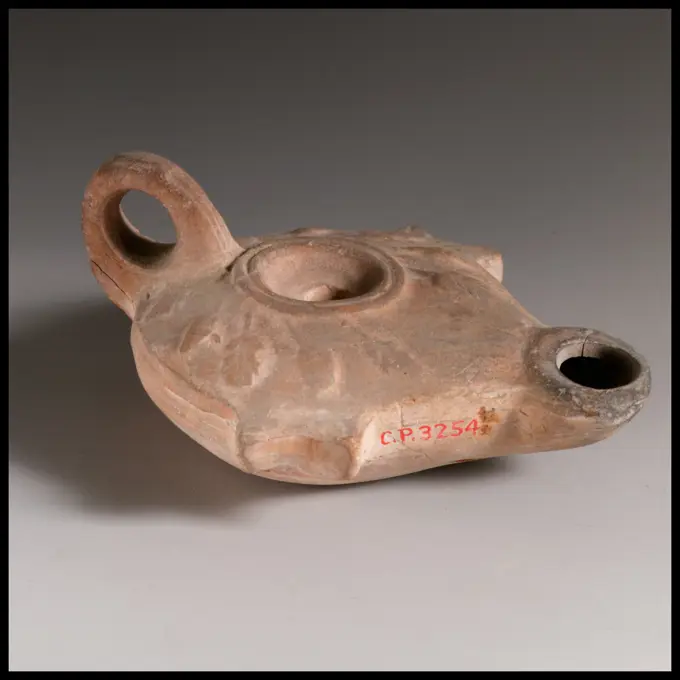
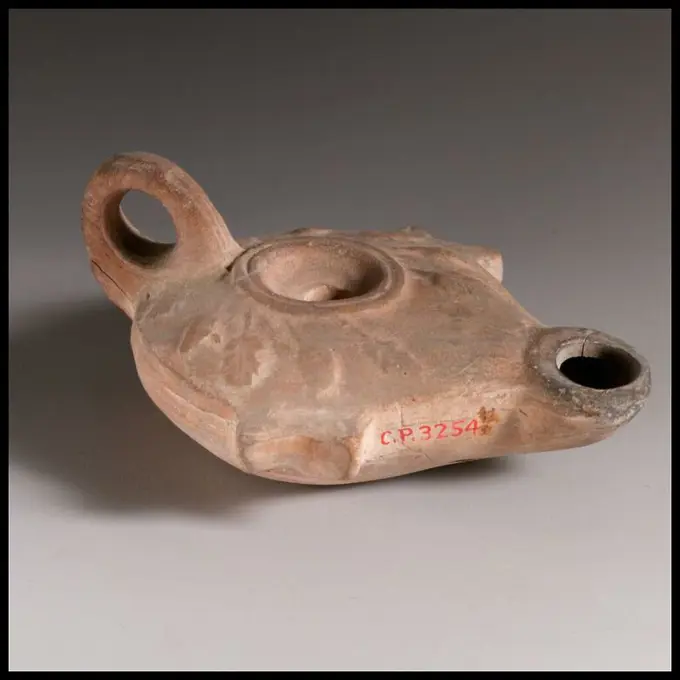
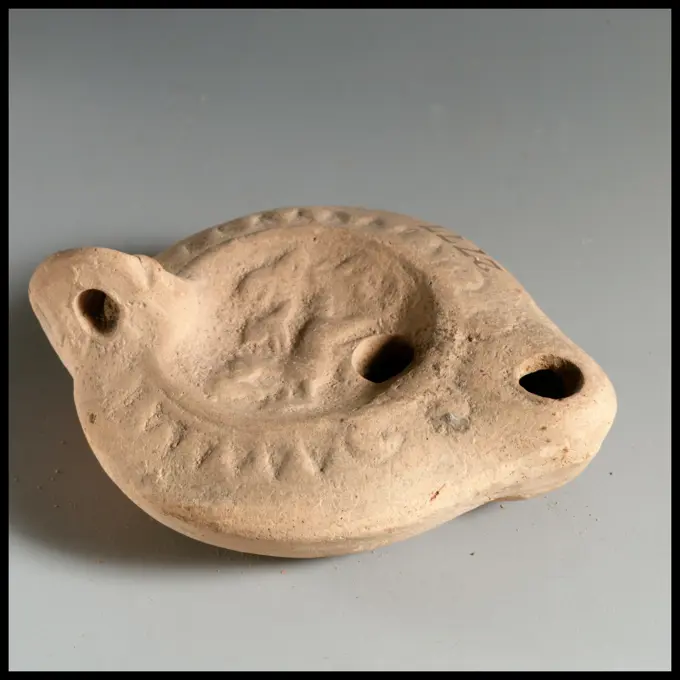
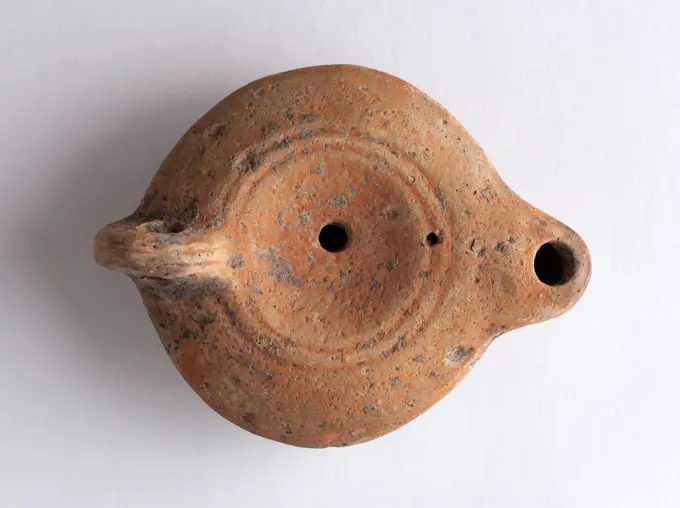
Lamp, North Africa; 1st - 4th century; Terracotta; 2.2 x 6.8 x 9.5 cm (7,8 x 2 11,16 x 3 3,4 in.)
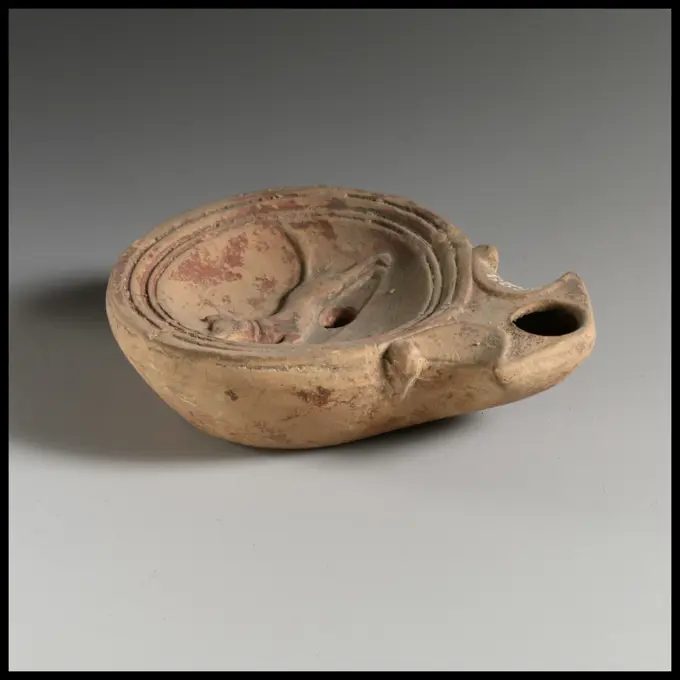
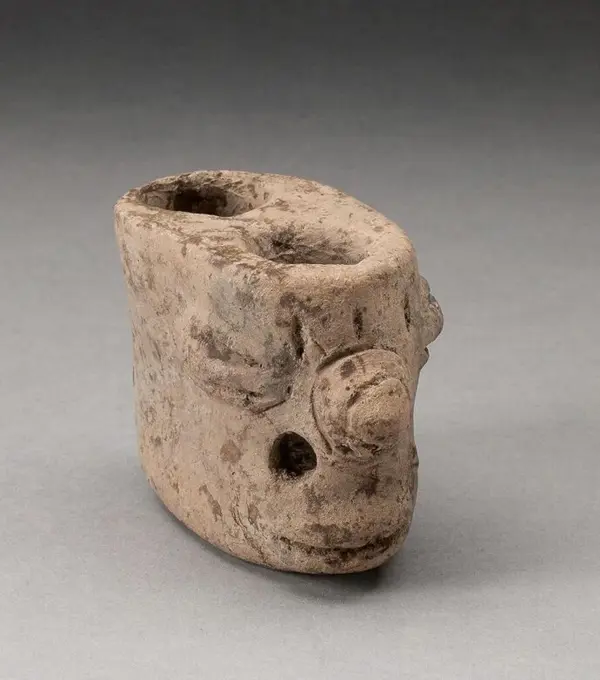
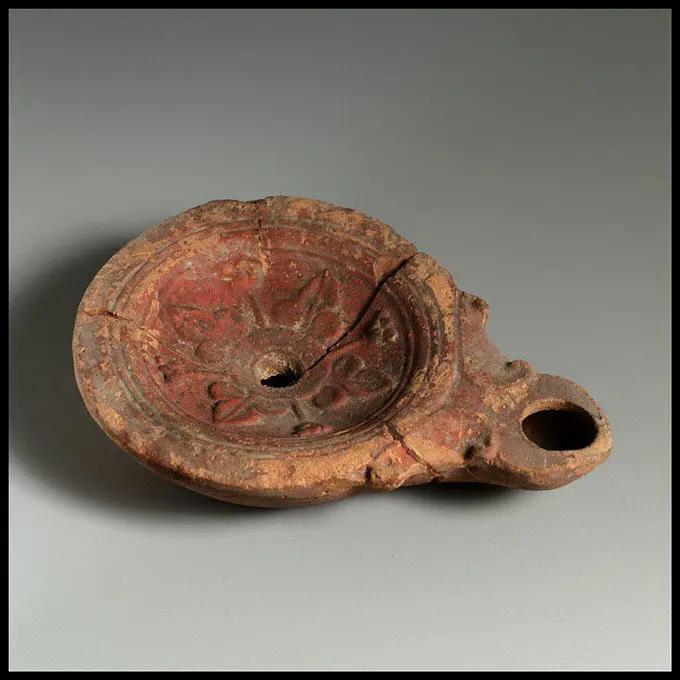
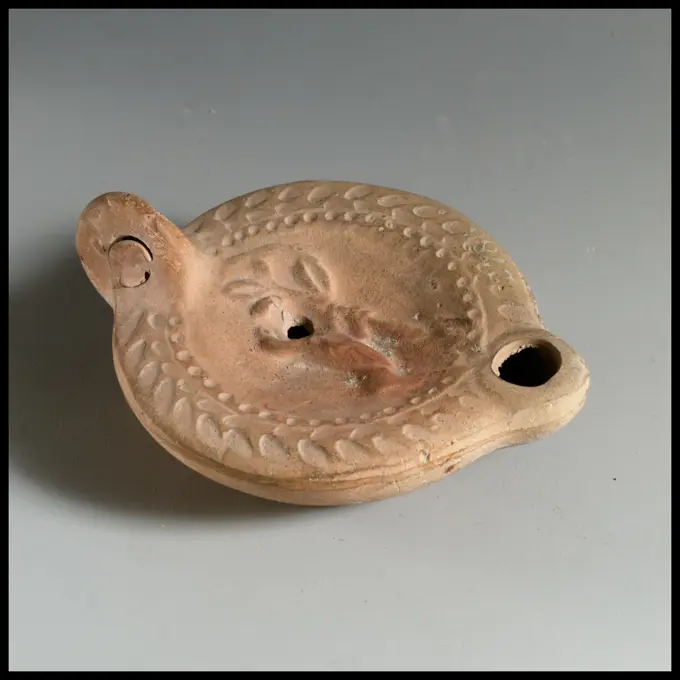
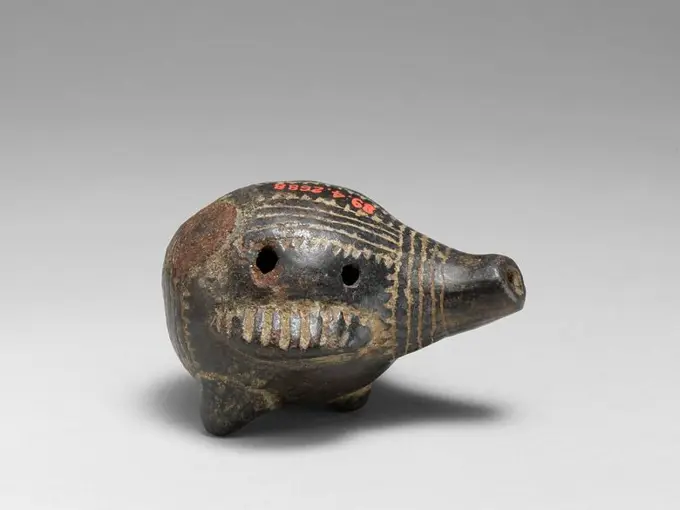
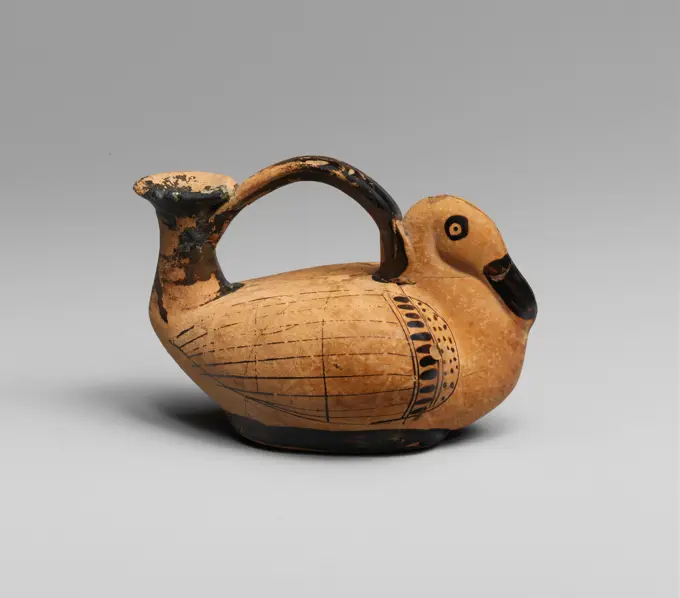
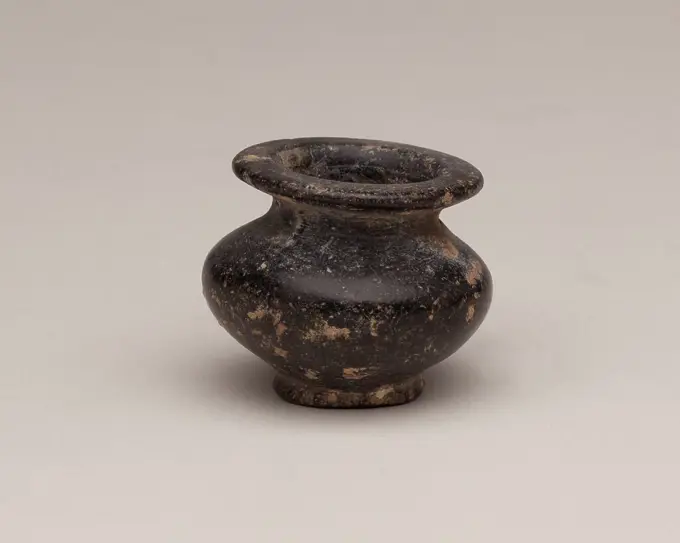
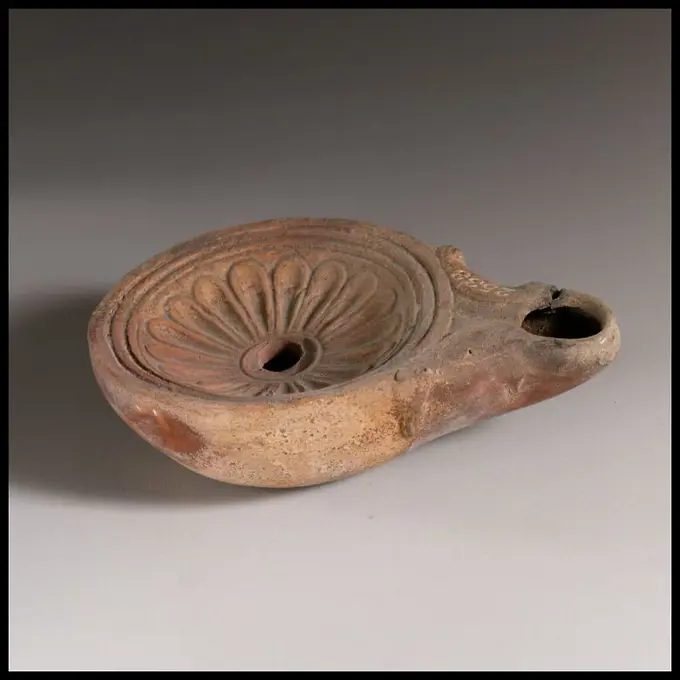
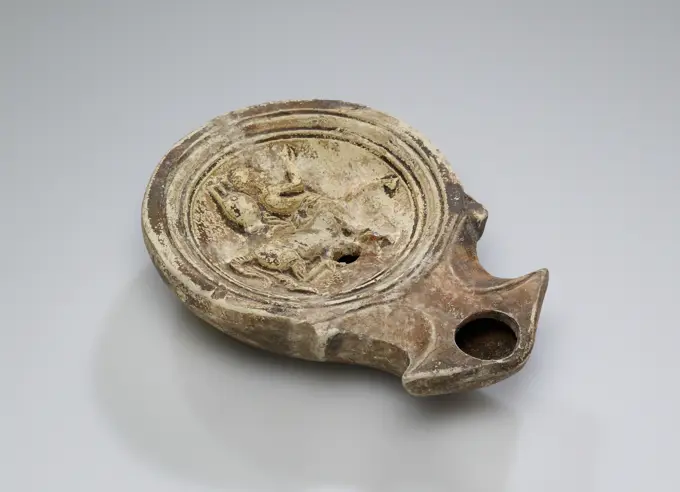
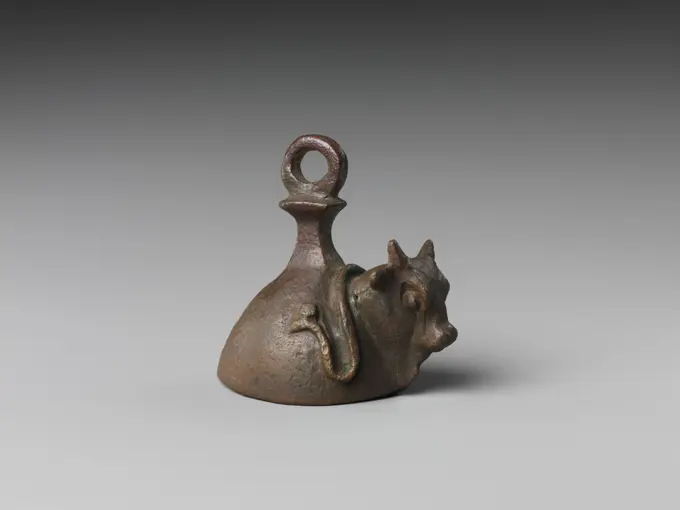
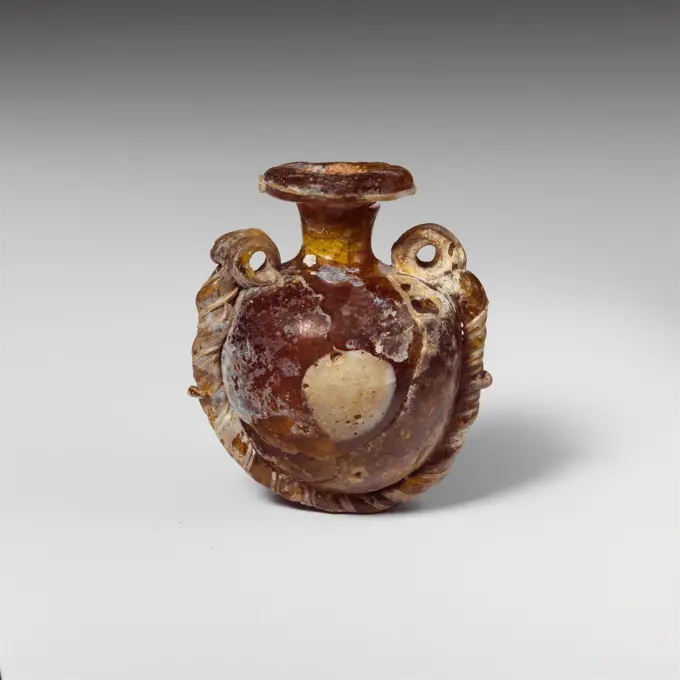
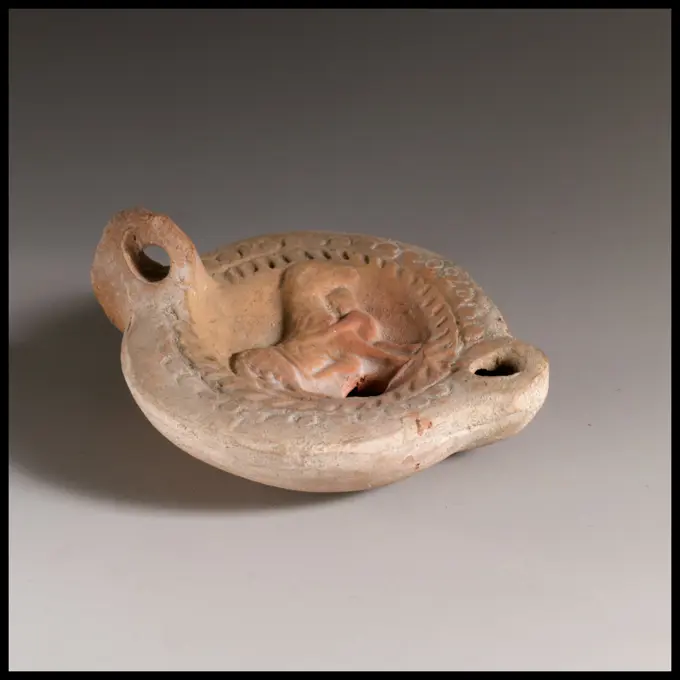
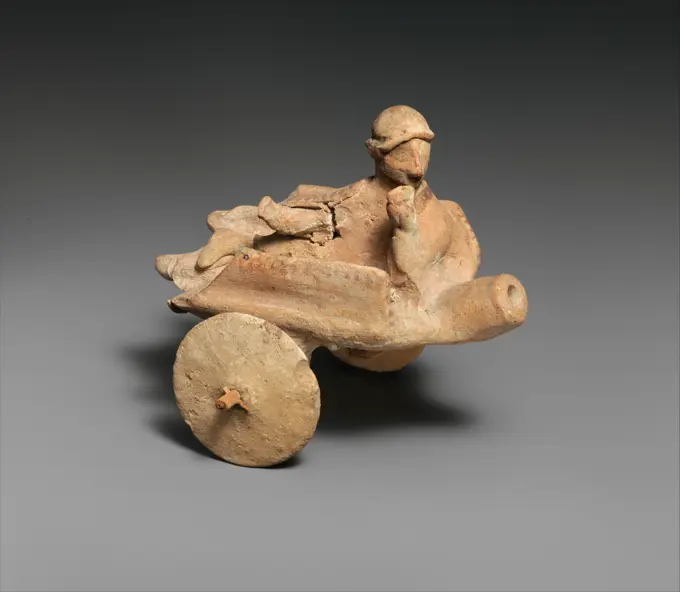
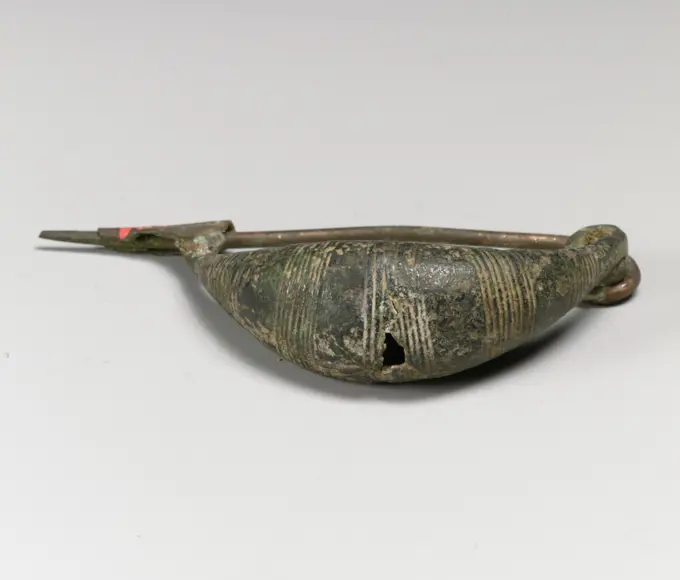
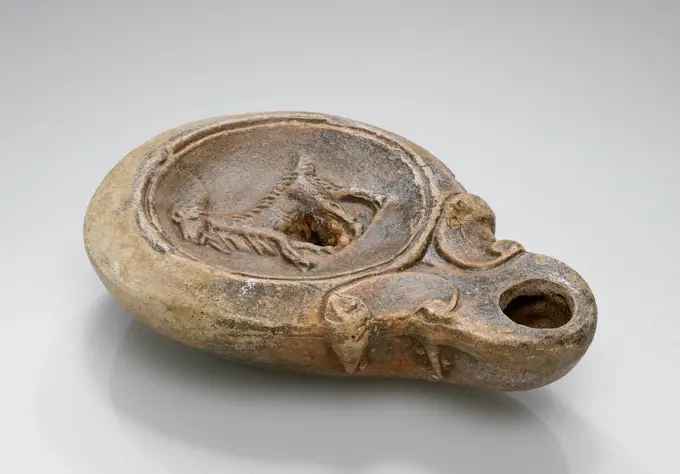
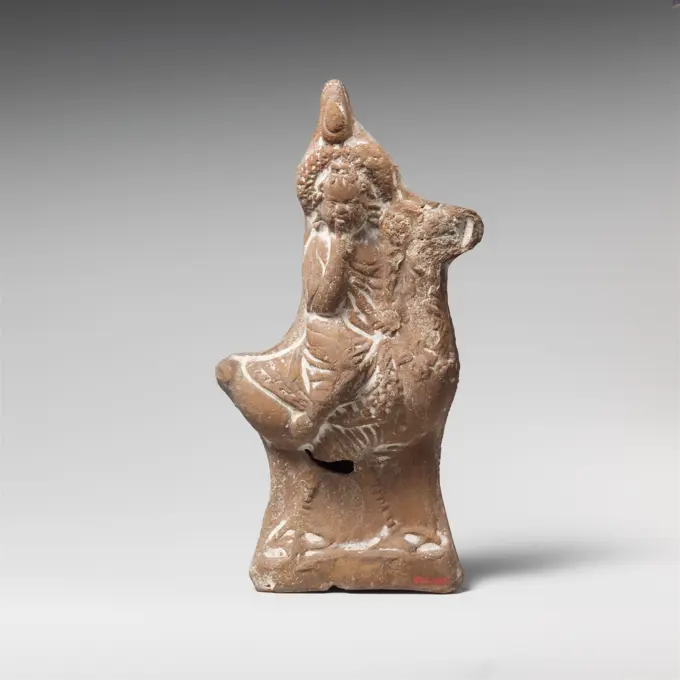
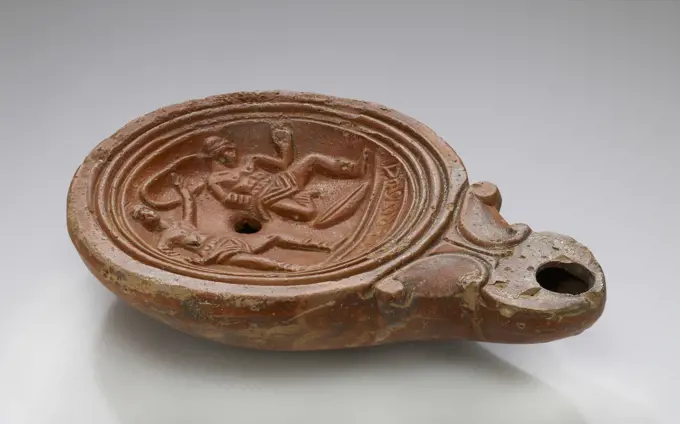
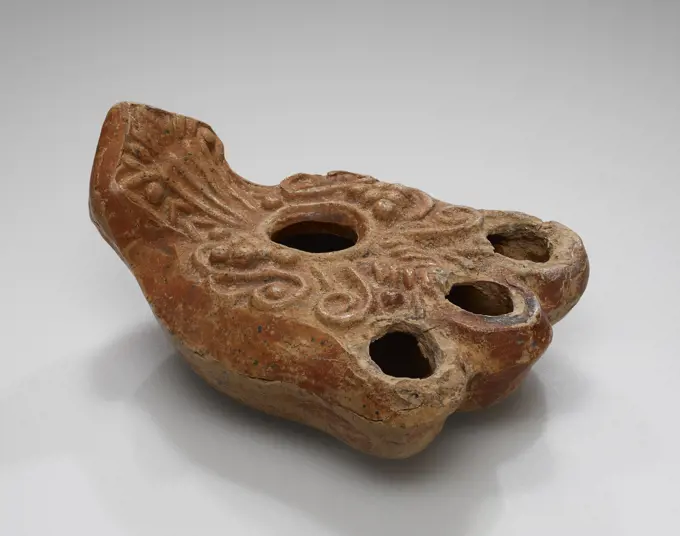
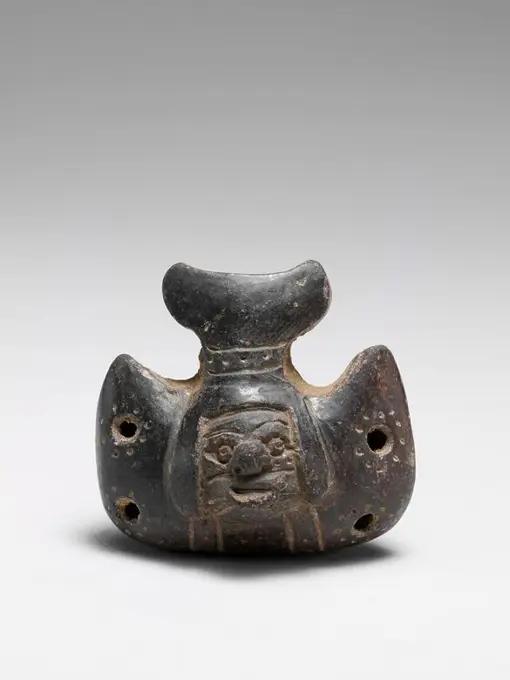
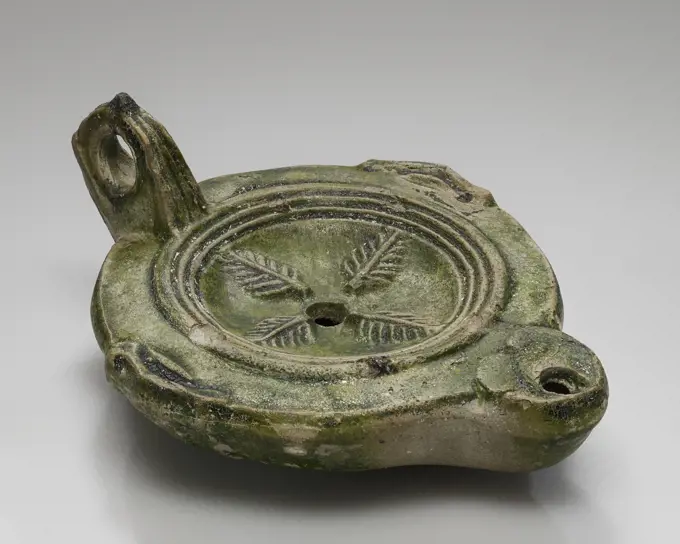
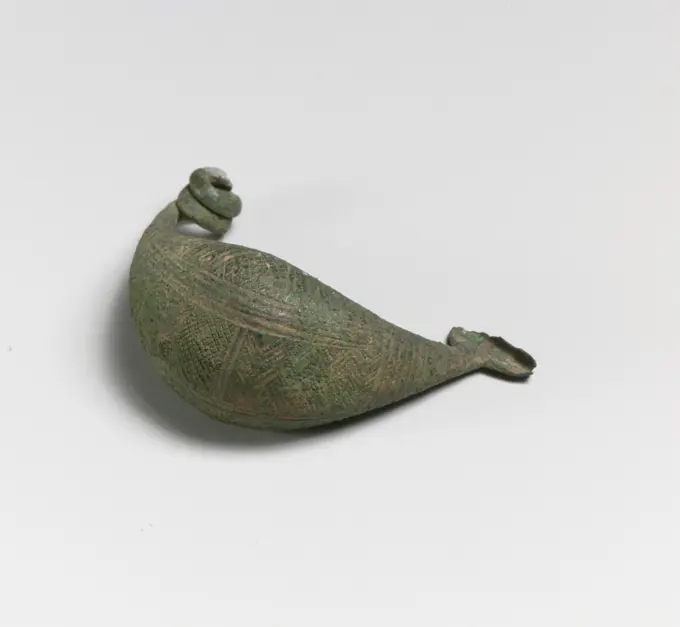
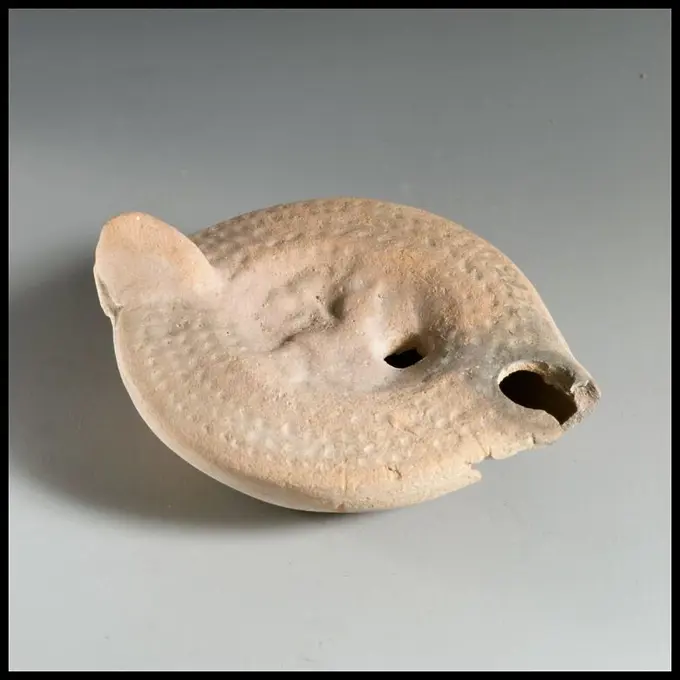
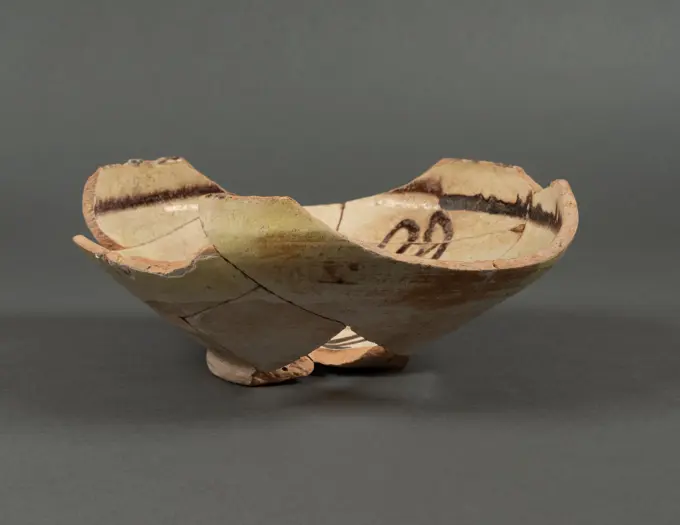
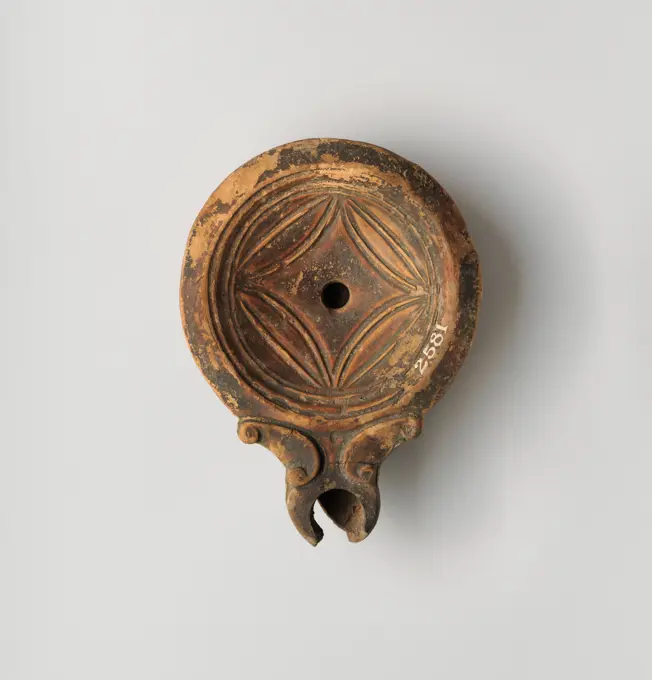
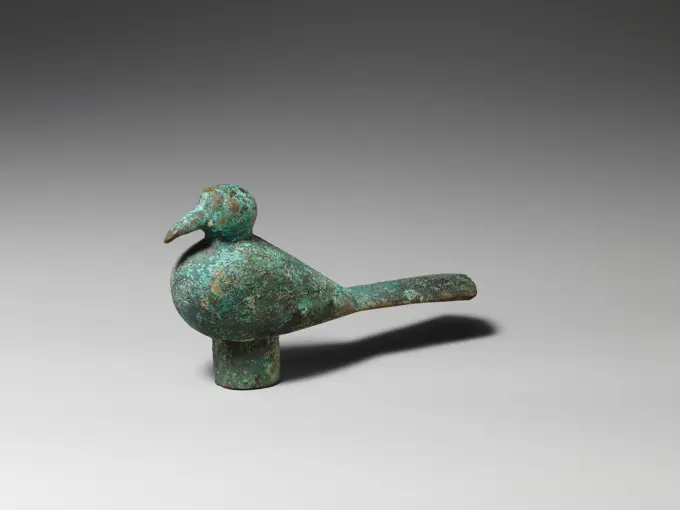
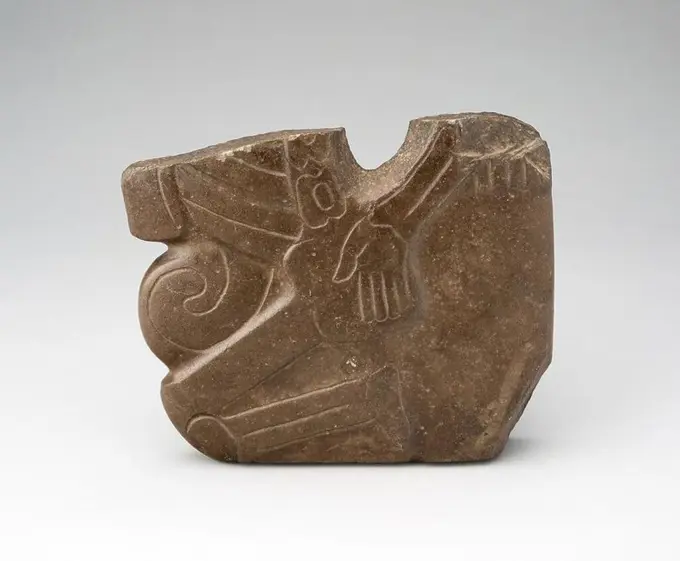
Terracotta oil lamp 2nd century A.D. Roman Loeschcke Type 8. Mold-made, with pierced handle. Concave discus: bird in high relief facing right but head turned back to left, holding a berry () in its beak; others berries at its feet; behind, a raised circle; a single, filling hole, near bottom center; band of a groove and line around edge. Slightly sloping shoulder: impressed large ovules, each comprising two arched lines and a central tongue. Tall, undecorated handle. Heart-shaped nozzle. Broad, undefined, and slightly concave base.Intact.. Terracotta oil lamp. Roman. 2nd century A.D.. Terracotta. Mid Imperial. TerracottasLamp. UnknownLamp, Asia Minor; 1st - 4th century; Terracotta; 2.7 x 6.3 x 9 cm (1 1,16 x 2 1,2 x 3 9,16 in.)Terracotta oil lamp ca. A.D. 150-200 Roman Mold-made, with ring handle. Discus: a Nereid riding on a hippocampus to right, with billowing veil behind; a single filling hole at bottom towards nozzle, with a band of two grooves and a raised circle around discus. On shoulder, a row of impressed circular leaf patterns. Incise base ring, and a concave base.The detail of the scene is very indistinct. The back of the handle forms part of the molded body, with the upper part added by hand.Intact.. Terracotta oil lamp 241506Lamp. Coll. Capitan. Terracotta. In the shape of a human head. Paris, Carnavalet museum. High-Empire, lamp, oil lamp, terracotta, human headLamp. UnknownWorkshops of S. de la Gaul. Lamp. Terracotta. High Empire. Dogs and braid. Paris, Carnavalet museum. Groove, high-empire, lamp, oil lamp, terracotta, braidTerracotta oil lamp. Culture: Greek. Dimensions: Overall: 1 3/8 x 4 1/8 in. (3.5 x 10.5 cm). Date: 1st century B.C.Mold-made, with ring handle. Plain, slightly concave discus, with central filling hole and raised edge, which also runs around the nozzle and large wick hole, forming a channel between the two. On the sloping shoulder, a pattern of radiating grooves, with irregular raised dots; parallel incised lines run along the handle; squat, carinated body. Raised, broad base ring, and flat base.On chip in underside of body at base of nozzle. Museum: Metropolitan Museum of Art, New York, USA.Terracotta oil lamp 1st century B.C.-1st century A.D. Roman Loeschcke Type 1A. Mold-made. Discus: large dog springing to left, with erect tai and collar round neck; ground line below; a single filling hole below dog's body, with a band of lines and grooves at edge. Volutes flanking angular nozzle. Raised base ring, and slightly concave base.. Terracotta oil lamp 241475Lamp, North Africa; 1st - 4th century; Terracotta; 2.2 x 6.8 x 9.5 cm (7,8 x 2 11,16 x 3 3,4 in.)Lamp. UnknownLamp. UnknownDouble-Chambered Vessel. Teotihuacan; Teotihuacan, Mexico. Date: 100 AD-700 AD. Dimensions: H. 7.6 cm (3 in.). Ceramic. Origin: Mexico. Museum: The Chicago Art Institute, Chicago, USA.Terracotta oil lamp. Culture: Roman. Dimensions: Length: 3 15/16 in. (10 cm)Height: 1 1/8 in. (2.9 cm). Date: 1st century B.C.-1st century A.D.. Museum: Metropolitan Museum of Art, New York, USA.Lamp; Roman Empire; second half of 1st century; Terracotta; 7.5 x 7.2 x 14.5 cm (2 15,16 x 2 13,16 x 5 11,16 in.)Lamp, Asia Minor; 4th century; Terracotta; 3.5 × 6 × 10.6 cm (1 3,8 × 2 3,8 × 4 3,16 in.)Terracotta oil lamp 4th-5th century A.D. Roman, Cypriot Vessberg Type 18. Unpierced handle. Discus: prancing horse facing left, flanked to either side by herring-bone wreath. Two large filling holes. On shoulder, vine tendril with stylized bunches of grapes. Rounded nozzle with large wick hole. Undefined, slightly concave base.Intact.. Terracotta oil lamp. Roman, Cypriot. 4th-5th century A.D.. Terracotta. Late Imperial. TerracottasTerracotta oil lamp. Culture: Roman. Dimensions: Overall: 1 5/8 x 3 1/2 in. (4.1 x 8.9 cm). Date: 1st century B.C.-1st century A.D.. Museum: Metropolitan Museum of Art, New York, USA.Lamp, Anatolia; 1st century B.C. - 4th century A.D; Terracotta; 3.4 x 9.5 x 13 cm (1 5,16 x 3 3,4 x 5 1,8 in.)Lamp. UnknownLamp. UnknownLamp. UnknownLamp. UnknownLamp, North Africa; 1st - 4th century; Terracotta; 2.5 x 6.8 x 9.9 cm (1 x 2 11,16 x 3 7,8 in.)Lamp, Roman Empire; 1st century B.C. - 4th century A.D; Terracotta; 10.5 x 2.6 x 7.6 cm (4 1,8 x 1 x 3 in.)Terracotta oil lamp. Culture: Roman. Dimensions: H.: 1 3/8 x 4 1/16 in. (3.5 x 10.3 cm). Date: 3rd-early 4th century A.D..The lamp was made in Athens and is decorated appropriately with the bust of Athena (Roman Minerva) on the discus. Museum: Metropolitan Museum of Art, New York, USA.Lamp. UnknownLamp, Asia Minor; 1st - 4th century; Terracotta; 2.2 x 6 x 9.8 cm (7,8 x 2 3,8 x 3 7,8 in.)Bronze object in the shape of a horn 1st-2nd century A.D. Roman Although the objects function is uncertain, it clearly forms part of a richly decorated ornament. Below the acanthus fronds is a series of rosettes, inlaid with silver, niello, and copper.. Bronze object in the shape of a horn. Roman. 1st-2nd century A.D.. Bronze, inlaid with silver, niello and copper. Imperial. BronzesLamp, Anatolia; 1st - 4th century; Terracotta; 2.9 x 7.9 x 10.6 cm (1 1,8 x 3 1,8 x 4 3,16 in.)Lamp. UnknownTerracotta oil lamp ca. A.D. 40-100 Roman, Cypriot Loeschcke Type 4. Mold-made. Discus: rosette pattern of four ivy leaves interspersed with vertical stems with berries around a central raised circle containing the filling hole, with a band of concentric lines and grooves towards edge. Volutes flanking nozzle. Within raised base ring, flat base, with impressed foot print.Broken and repaired, with small losses on edge of shoulder and underside of nozzle.. Terracotta oil lamp 241736Forma do produkcji lampek. unknown, authorLamp. Culture: Roman. Dimensions: Length: 3 1/4 in. (8.3 cm)Height: 1 in. (2.5 cm). Date: 2nd century A.D.. Museum: Metropolitan Museum of Art, New York, USA.Bronze simpulum (ladle) late 1st-early 2nd century A.D. Roman With deep cylindrical bowl.. Bronze simpulum (ladle) 246914Lamp. UnknownTerracotta oil lamp. Culture: Roman, Cypriot. Dimensions: Overall: 1 1/8 x 3 7/8 in. (2.9 x 9.8 cm).Loeschcke Type 1A. Mold-made. Discus: figure in long tunic with many folds, seated facing forward, leaning on his left arm and right folded towards chest; his legs bent below him to his right, with a band of concentric lines and grooves towards edge. Single filling hole to left of figure and small air hole at edge behind nozzle. Volutes flanking nozzle. Within raised base ring, flat base, with the raised letter E towards one side.Intact, except for small chip in edge of shoulder; patches of encrustation on side of body. Museum: Metropolitan Museum of Art, New York, USA.Lamp, concave top. Culture: Cypriot. Dimensions: Overall: 1 1/16 x 3 5/8 in. (2.7 x 9.2 cm). Date: 1st century B.C.-1st century A.D.. Museum: Metropolitan Museum of Art, New York, USA.Lamp, North Africa; 1st - 4th century; Terracotta; 2.9 x 7.5 x 10.9 cm (1 1,8 x 2 15,16 x 4 5,16 in.)Terracotta oil lamp mid-2nd-mid-3rd century A.D. Roman, Cypriot Mold-made, with ring handle. Shallow discus: vertical scene with bird on leafy branch, facing right; a single, small filling hole between bird's neck and branch. Horizontal shoulder: inner band of impressed dots and herring bone wreath. Incised base ring, and uneven, pushed-in base.Intact. The hole in the handle has been outlined on both side but not made.. Terracotta oil lamp. Roman, Cypriot. mid-2nd-mid-3rd century A.D.. Terracotta. Imperial. TerracottasOil LampLamp. UnknownLamp 500 CE-699 CE Italy. terracotta . Ancient RomanTerracotta oil lamp 5th century A.D. Roman, Cypriot Vessberg Type 18. Unpierced handle. Mold-made. Discus: cross, decorated with circles, with similar circles between the arms. Two filling holes. Shoulder: herring-bone wreath surrounded by a row of hollow circles. Concave base. One filling hole filled with concretion.. Terracotta oil lamp. Roman, Cypriot. 5th century A.D.. Terracotta. Late Imperial. TerracottasTerracotta oil lamp 3rd century A.D. Roman Mold-made, with pierced handle. Small, undecorated, concave discus, with a single, central filling hole, surrounded by a band of two ridges. Broad, sloping shoulder decorated in relief with sprays of different, single leaves; at sides, large crescent-shaped knobs; projecting, rounded nozzle. Undefined, pushed-in base.Intact.. Terracotta oil lamp. Roman. 3rd century A.D.. Terracotta. Late Imperial. TerracottasPottery Whistle. Culture: Costa Rican. Dimensions: L. 7.2 cm (2.83); W. 5.7 cm (2-1/4 in.); H. 4.7 cm (1-7/8); Wt. 58 g.. Date: ca. 800-1500. Museum: Metropolitan Museum of Art, New York, USA.Terracotta askos in the form of a duck late 5th century B.C. Greek, Attic Askos in the form of a duck.. Terracotta askos in the form of a duck 254356 Greek, Attic, Terracotta askos in the form of a duck, late 5th century B.C., Terracotta, H. 3 1/16 in. (7.8 cm). The Metropolitan Museum of Art, New York. Rogers Fund, 1941 (41.162.185)Kohl jar. Dimensions: h. 2.8 cm (1 1/8 in). Dynasty: Dynasty 12-13. Date: ca. 1981-1640 B.C.. Museum: Metropolitan Museum of Art, New York, USA.Lamp. Culture: Roman. Dimensions: Length: 3 3/16 in. (8.1 cm)Height: 15/16 in. (2.4 cm). Date: 1st century B.C.-1st century A.D.. Museum: Metropolitan Museum of Art, New York, USA.Lamp. UnknownBell with head of a bovine wearing a yoke ending in uraei 332-30 B.C. Ptolemaic Period Bells began to appear in Egypt about the 8th century BC. This bell is decorated with a bovine head wearing a yoke ending in uraei. The clapper is missing. Similarly shaped bells with heads of mythological animals were found in the cemetery at Naukratis, where they must have had some kind of amuletic function for the deceased.. Bell with head of a bovine wearing a yoke ending in uraei 551319Glass lentoid aryballos (perfume bottle) 4th-3rd century B.C. Greek Translucent honey brown, with same color handles and cord; trails and blobs in opaque white.Broad flat rim-disk with rounded edge and radiating tooling marks on upper surface; slender cylindrical neck, tapering downwards; sloping shoulder; globular lentoid body; convex bottom; two large vertical ring handles attached to shoulder.A trail attached at edge of rim-disk; a circular marvered blob applied to both faces of body; a large cord, twisted together with a white trail, attached under handles runs down sides and across bottom.Broken and repaired, with large chip in one side of body; some pitting, large patches of milky white weathering and iridescence.Together with the other two similar aryballoi displayed here (17.194.309 and 30.115.7), this bottle belongs to a small group of core-formed glass that may have been made in southern Italy, Sicily, or even Carthage. It has also been suggested that these bottles may have bTerracotta oil lamp. Culture: Roman. Dimensions: Length 3 11/16 in. (9.4 cm); H. 1 13/16 in. (4.6 cm).. Date: 3rd century A.D.. Museum: Metropolitan Museum of Art, New York, USA.Terracotta oil lamp ca. A.D. 150-250 Roman, Cypriot Loeschcke Type 8. Mold-made, with ring handle. Discus: Odysseus (Ulysses) escaping from the Cyclops Polyphemus strapped under a large ram, standing to right; ground line below; a single, large filling hole at bottom, below figures; on horizontal shoulder, an inner band of short, diagonal impressed lines surrounded by a band of raised dots. Incised base ring, and uneven, slightly concave base.Intact.. Terracotta oil lamp. Roman, Cypriot. ca. A.D. 150-250. Terracotta; mold-made. Imperial. TerracottasTerracotta oil lamp 2nd century A.D. Roman Vessberg Type 14. Mold-made, with ring handle. Discus: biga with charioteer, moving left; a single filling hole at center bottom; raised line around edge. Sloping shoulder: impressed saw-tooth pattern, with two stylized volutes at front flanking back on nozzle. Base ring, flanked by two incised circles, and flat base.Intact. Hole in handle not carefully made, and small gash in front edge of handle.. Terracotta oil lamp. Roman. 2nd century A.D.. Terracotta; mold-made. Mid Imperial. TerracottasTerracotta model of a "cart" 6th century B.C. Cypriot This model differs from 74.51.1792 mainly in that the rail at the sides is higher. A single male occupant holds a cup.. Terracotta model of a "cart" 241357Fibula, boat-shaped type 8th-6th century B.C. Italic The bow is hollow and open on the underside. The outer surface is decorated with incised bands.. Fibula, boat-shaped type 246355Lamp. UnknownLamp. UnknownTerracotta statuette of Harpokrates riding a goose ca. 2nd century A.D. Roman, Egyptian In high headdress riding on a swan; right hand on mouth.. Terracotta statuette of Harpokrates riding a goose 245520Lamp, South Anatolia, Anatolia; 2nd - 1st century B.C; Terracotta; 3 × 7 × 10.5 cm (1 3,16 × 2 3,4 × 4 1,8 in.)Lamp, Anatolia; 1st - 4th century; Terracotta; 2.7 x 8.6 x 12.3 cm (1 1,16 x 3 3,8 x 4 13,16 in.)Lamp, Asia Minor; 1st - 4th century; Terracotta; 2.6 x 7.2 x 9.5 cm (1 x 2 13,16 x 3 3,4 in.)Oil Lamp 4th-7th century Coptic. Oil Lamp 478703Lamp, North Africa; 1st - 4th century; Terracotta; 2.5 x 7.9 x 11 cm (1 x 3 1,8 x 4 5,16 in.)Fitting 2nd-1st century B.C. China. Fitting 61347Ocarina. Culture: Tairona People; Gayraca style. Dimensions: L. 5 cm (1-15/16 in.); W. 5.5 cm (2-3/8 in.). Date: 1300-1500. Museum: Metropolitan Museum of Art, New York, USA.Lamp, Mainz, Germany; 1st century B.C. - 4th century A.D; Terracotta with green glaze; 3.2 x 10.5 x 13.1 cm (1 1,4 x 4 1,8 x 5 3,16 in.)Lamp. UnknownOil lamp. Lambèse excavations, Capitan collection. Terracotta. High Empire. Paris, Carnavalet museum. 50036-13 Capitan collection, High Empire, Oil lamp, TerracottaLUCERNA - NECROPOLIS DEL PUIG DES MOLINS (IBIZA). Location: MUSEO ARQUEOLOGICO / MUSEO DE PUIG DES MOLINS. IBIZA. SPAIN.Fibula, boat-shaped type 9th-8th century B.C. Italic The bow is hollow. Its outer surface it is decorated with incised patterns.. Fibula, boat-shaped type. Italic. 9th-8th century B.C.. Bronze. Early Iron Age. BronzesTerracotta lamp. Culture: Roman. Dimensions: Length: 3 1/4 in. (8.3 cm)Height: 1 5/16 in. (3.3 cm). Date: 2nd century A.D.. Museum: Metropolitan Museum of Art, New York, USA.Bowl late 9th-early 10th century View more. Bowl. late 9th-early 10th century. Earthenware; white slip with polychrome slip decoration under yellowish transparent glaze. Excavated in Iran, Nishapur. CeramicsFragment Martavaan from V.O.C. ship De 'Witte Leeuw', Before 1613  Fragment Martavaan from V.O.C. ship De 'Witte Leeuw'. Mouth and neck. Chinezizid-China stoneware. porcelain   Sint-HelenaVase with Pine and Deer 18th century China. Vase with Pine and Deer 44167Terracotta handled saucer-shaped oil lamp. Culture: Cypriot. Dimensions: Overall: 2 x 11 1/8 in. (5.1 x 28.3 cm). Date: 4th century B.C.. Museum: Metropolitan Museum of Art, New York, USA.Animal. Culture: Coptic. Dimensions: Overall: 2 5/16 x 5 1/4 x 1 11/16 in. (5.9 x 13.4 x 4.3 cm). Date: 4th-7th century. Museum: Metropolitan Museum of Art, New York, USA.Terracotta oil lamp. Culture: Roman. Dimensions: Length: 4 1/8 in. (10.5 cm)Height: 1 5/8 in. (4.1 cm). Date: 1st century B.C.-1st century A.D.. Museum: Metropolitan Museum of Art, New York, USA.Chueh (ritual vessel), western Chou (or Zhou) dynastyOvoid Ewer with Flaring, Beak-Shaped Spout, Floral Medallion, and Zipper-like Band with Palmette. China. Date: 700 AD-799 AD. Dimensions: H. 33.0 cm (13 in.); diam. 15.8 cm (6 1/4 in.). Stoneware with underglaze molded and applied decoration. Origin: China. Museum: The Chicago Art Institute, Chicago, USA.Animal 4th-7th century Coptic. Animal. Coptic. 4th-7th century. Earthenware. Made in Kharga Oasis, Byzantine Egypt. CeramicsPottery Whistle ca. 800-1525 Costa Rican. Pottery Whistle. Costa Rican. ca. 800-1525. Clay. Pre-Columbian. Diquis Region, Costa Rica. Aerophone-Whistle Flute-whistleOil LampBasket vase ca. 1900 Georges Hoentschel French An influential interior designer, Hoentschel also made experimental ceramic forms with his friend and collaborator Jean Carriès. Following the tenets of Art Nouveau, Hoentschel combines the architectural and the organic in his design for this vase. The thick green glaze resembles corroded bronze.. Basket vase 239564Ladle-saucer, or shovel. Dimensions: Length: 7 5/8 in. (19.4 cm)Height: 3 1/16 in. (7.8 cm). Date: 4th century B.C.. Museum: Metropolitan Museum of Art, New York, USA.Lamp. UnknownAppliqué for a funeral couch. UnknownGauntlet for the Right Hand, from Tannenberg Castle. Culture: German. Dimensions: H. 6 3/4 in. (17.1 cm); W. 5 in. (12.7 cm); D. 4 in. (10.2 cm); Wt. 7.1 oz. (201.3 g). Date: ca. 1380.This gauntlet was found in 1849 during the excavation of Tannenberg Castle (near Darmstadt), which had been destroyed by siege in 1399. Museum: Metropolitan Museum of Art, New York, USA.Jug, anonymous, c. 1350 - c. 1450 Unguarded cone -shaped jug of stoneware, with two ears. The belly is decorated with concentric rings in relief. Netherlands Rhine region stoneware. tin (metal) Unguarded cone -shaped jug of stoneware, with two ears. The belly is decorated with concentric rings in relief. Netherlands Rhine region stoneware. tin (metal)Terracotta oil lamp. Culture: Roman, Cypriot. Dimensions: Overall: 7/8 x 3 1/2 in. (2.2 x 8.9 cm). Date: 1st century B.C.-1st century A.D..Loeschcke Type 4. Mold-made. Discus: a bird, facing left, perched on the end of a large branch with two leaves and a berry; a single filling hole near center between bird and berry, and a band of lines and grooves towards edge. Volutes flanking nozzle. Incised base ring, and flat base.Intact. Museum: Metropolitan Museum of Art, New York, USA.Amulet. Dimensions: length 5.11 cm.. Museum: Metropolitan Museum of Art, New York, USA.Head. Culture: Coptic. Dimensions: Overall: 2 x 1 3/4 x 13/16 in. (5.1 x 4.5 x 2.1 cm). Date: 4th-7th century. Museum: Metropolitan Museum of Art, New York, USA.Lamp. UnknownItaly, Calabria, Vase in the shape of a sirenTerracotta oil lamp. Culture: Roman, Cypriot. Dimensions: Overall: 15/16 x 3 7/16 in. (2.4 x 8.7 cm). Date: ca. A.D. 40-100.Loeschcke Type 4. Mold-made. Discus: oared galley facing left, with stylized waves below; a single filling hole at center, immediately above galley, and band of lines and grooves towards edge. Volutes flanking nozzle. Broad, raised base ring within incised circle, and flat but slightly uneven base.Intact. Museum: Metropolitan Museum of Art, New York, USA.Terracotta oil lamp 1st century B.C.-1st century A.D. Roman, Cypriot Loeschcke Type 4. Mold-made. Discus: geometric design comprising diamond and arched, four-pointed star, all in a single line flanked by two grooves; a single filling hole at center; band of lines and grooves towards edge. Volutes flanking rounded nozzle, with small Y-shaped ornament between. Broad, raised base ring, and slightly concave base.Front and underside of nozzle broken and missing; body complete.. Terracotta oil lamp. Roman, Cypriot. 1st century B.C.-1st century A.D.. Terracotta. Early Imperial. Terracottas. Fragment of a quartz-fritgoed can be covered with a monochrome turquoise alkali acid.Bird-Shaped Finial China. Bird-Shaped Finial 39755Fragment of a Hacha. Classic Veracruz; Veracruz, Mexico. Date: 700 AD-900 AD. Dimensions: 17.5 x 20.3 cm (6 7/8 x 8 in.). Stone. Origin: Veracruz state. Museum: The Chicago Art Institute, Chicago, USA.