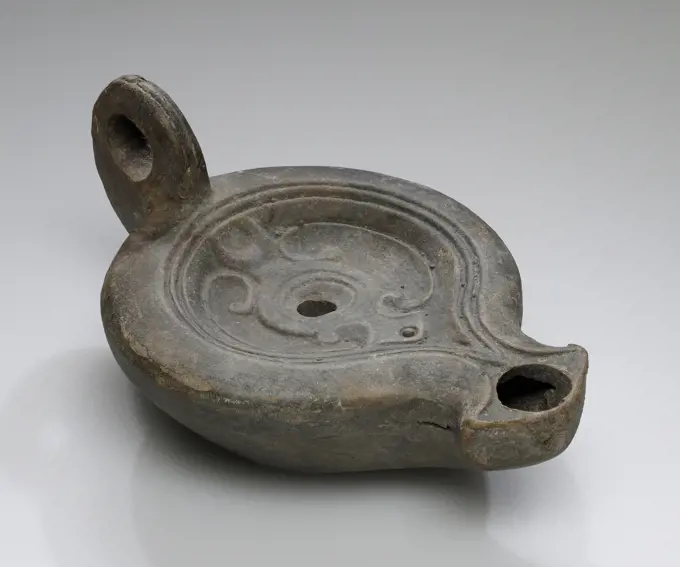
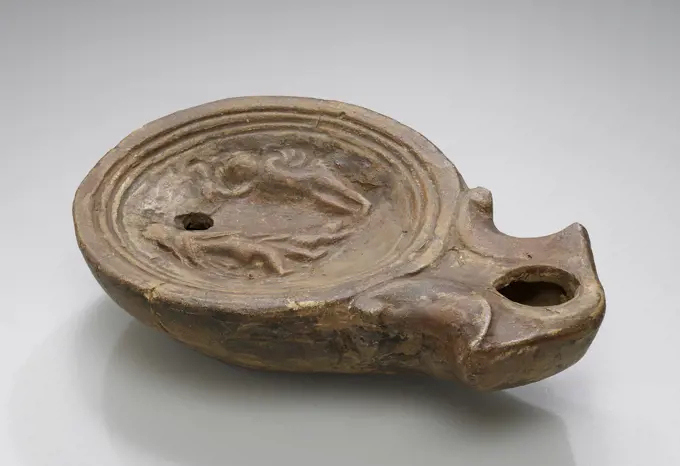
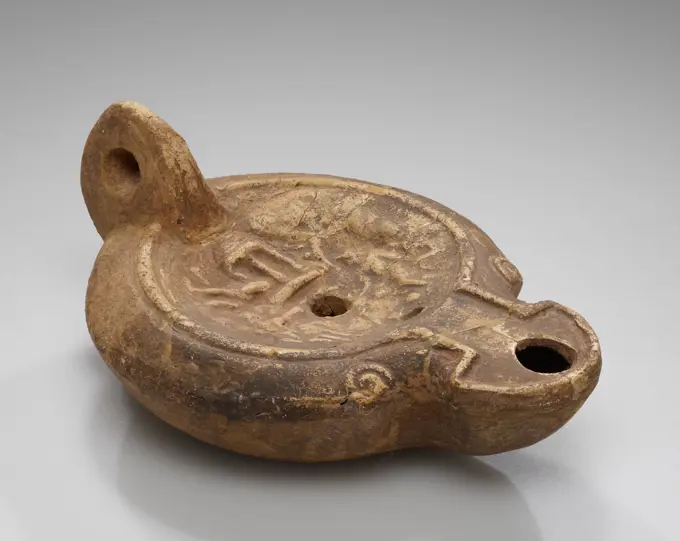
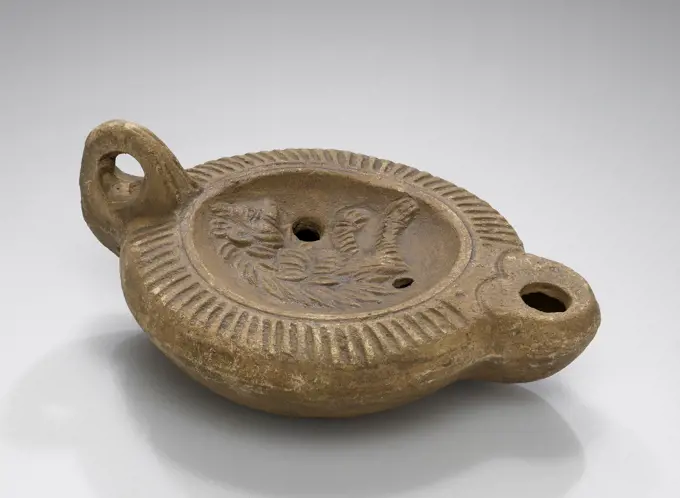
Ancient Terracotta Lamps

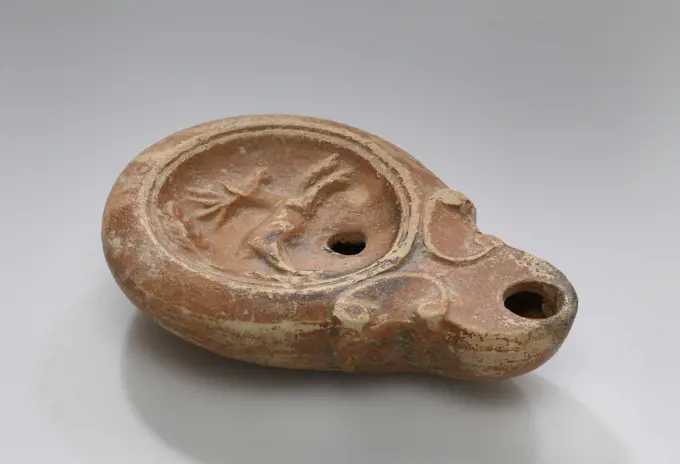
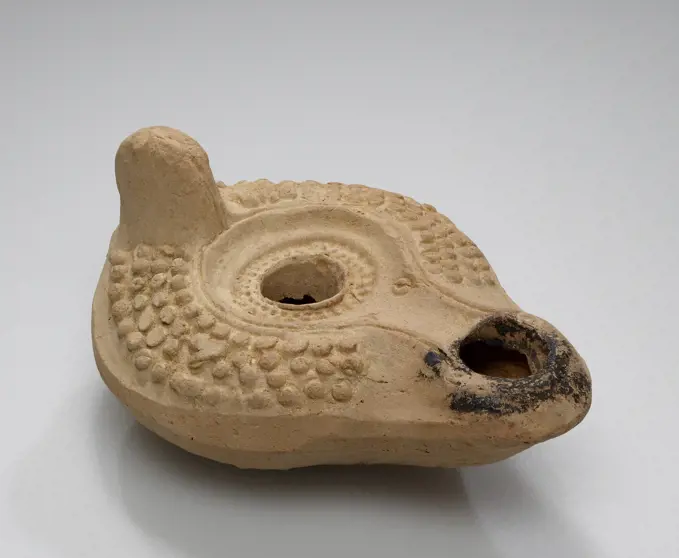
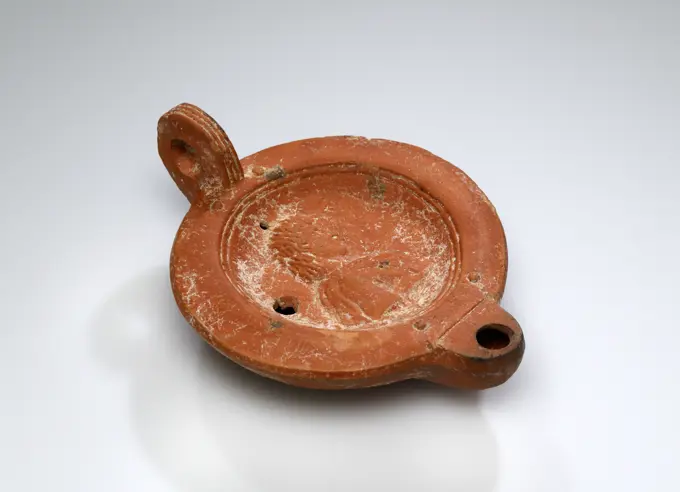
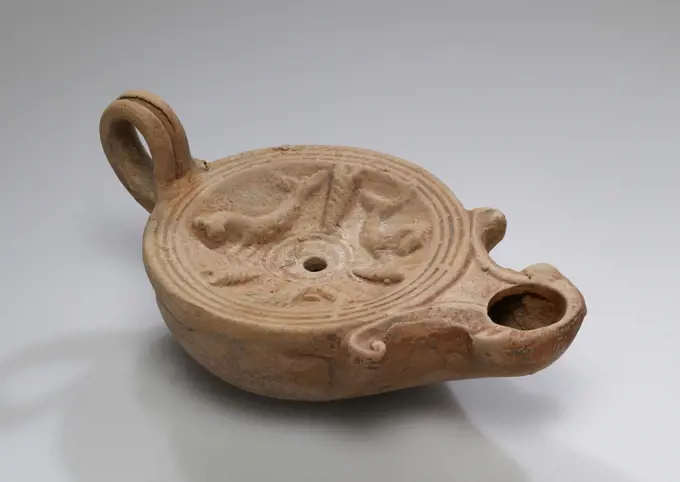
A variety of ancient terracotta lamps from different periods, showcasing unique designs and details, with historical significance.

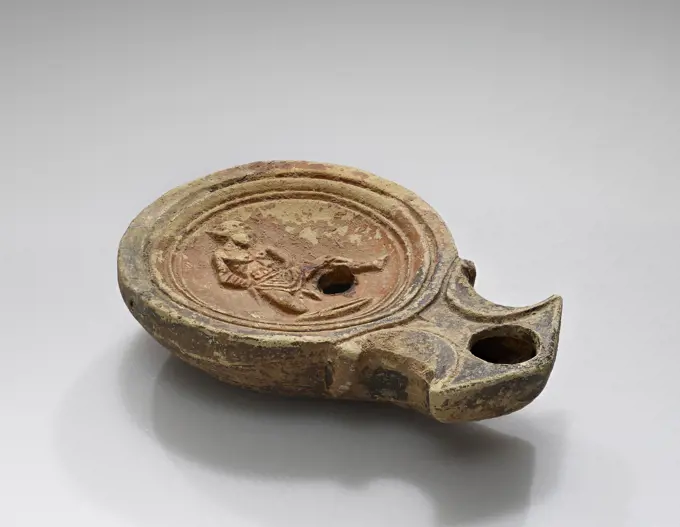
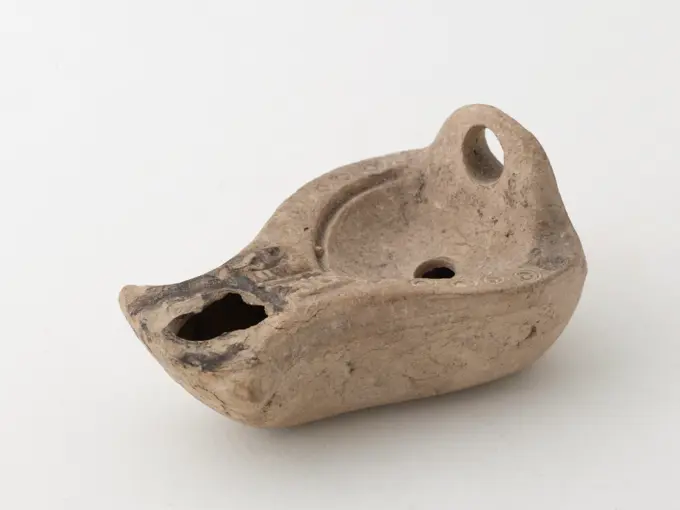
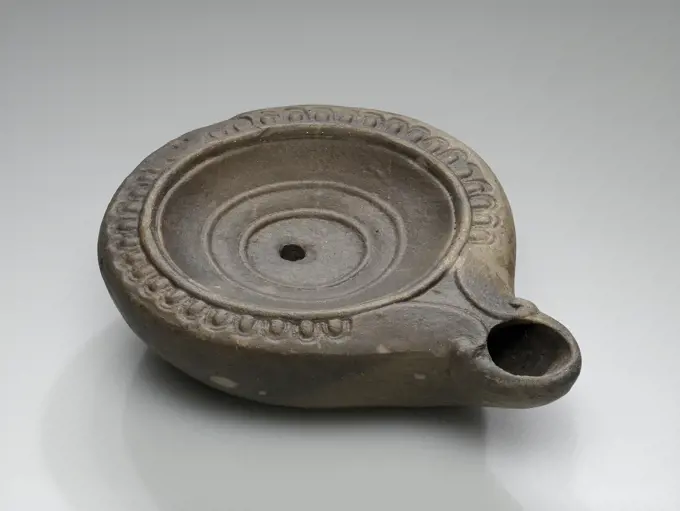
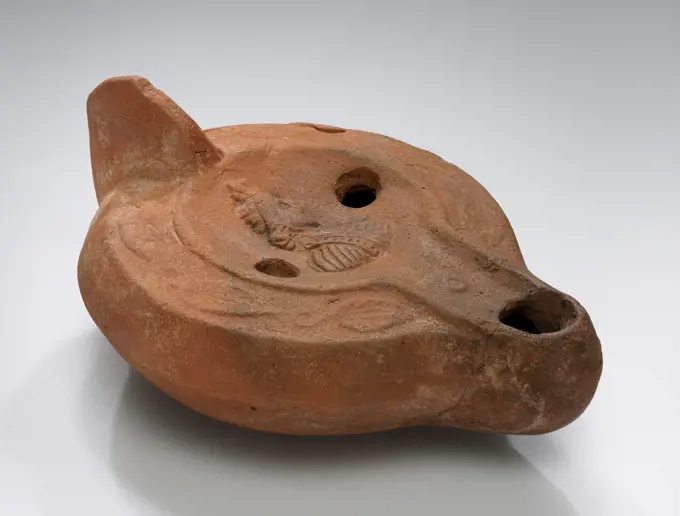
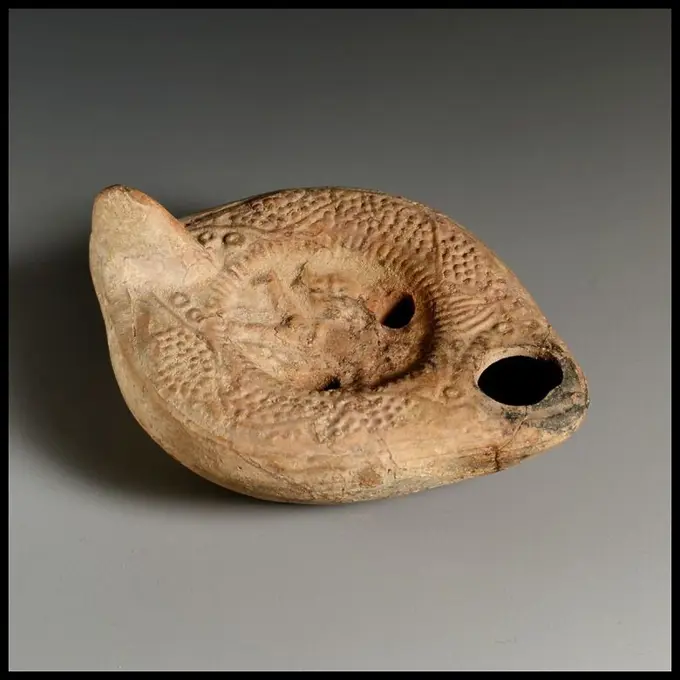
Lamp, North Africa; 1st century B.C. - 4th century A.D; Terracotta; 2.6 × 7.1 × 11 cm (1 × 2 13,16 × 4 5,16 in.)
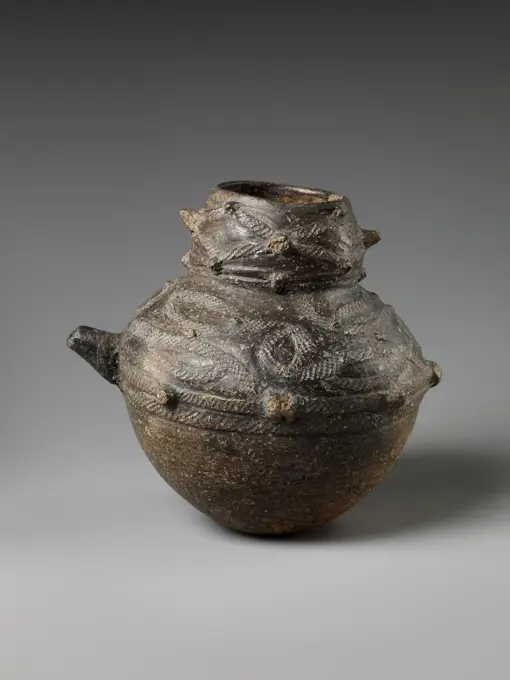
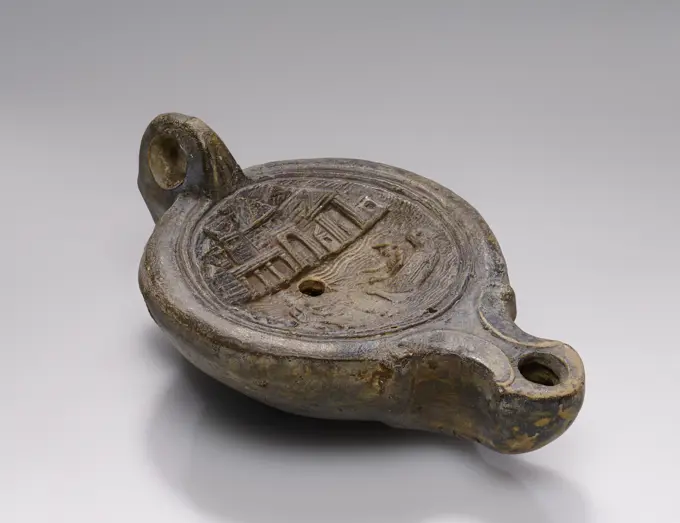
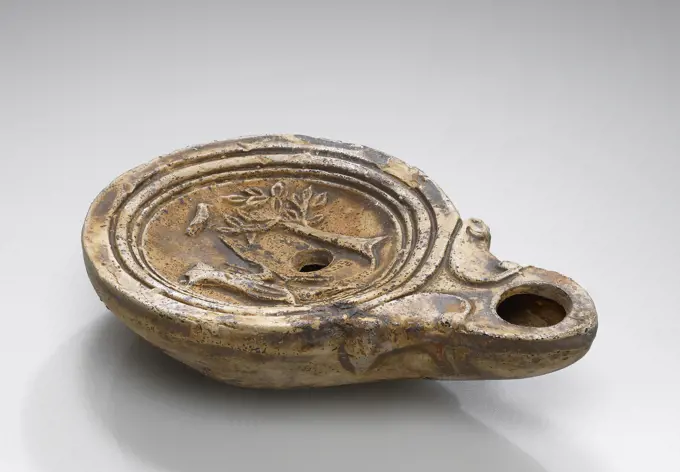
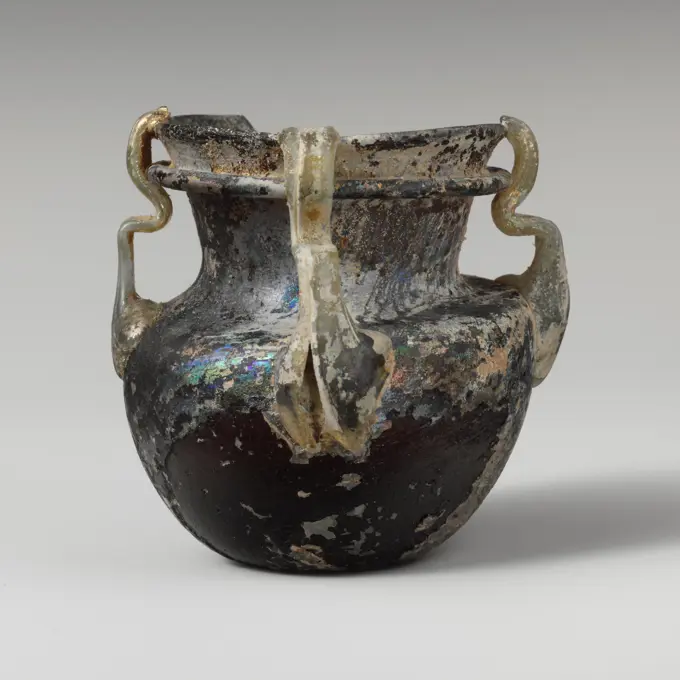
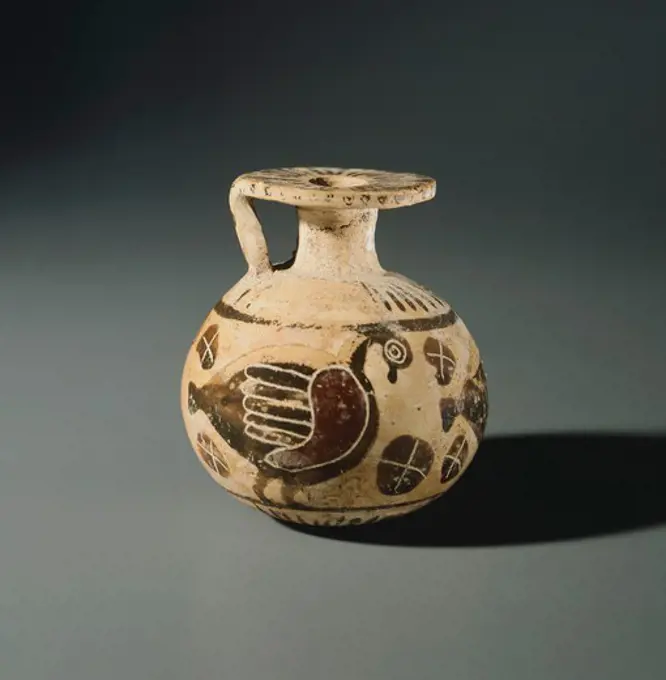
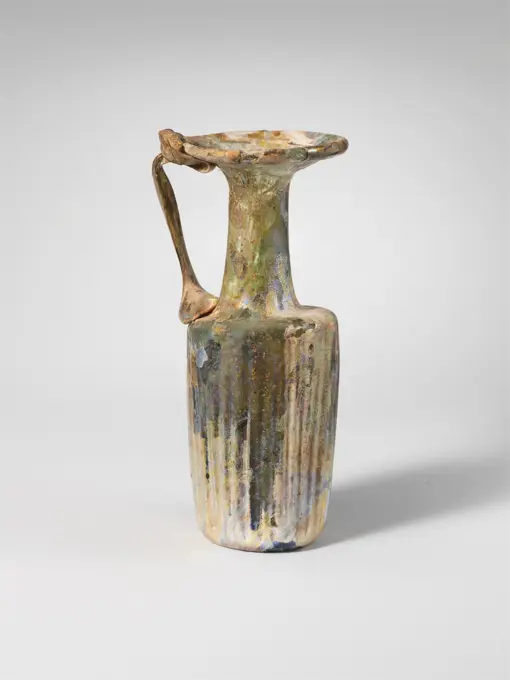
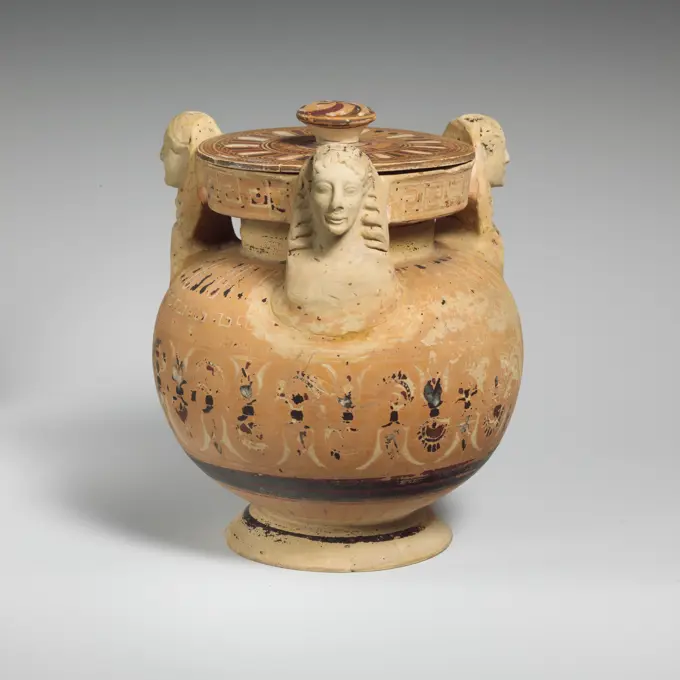
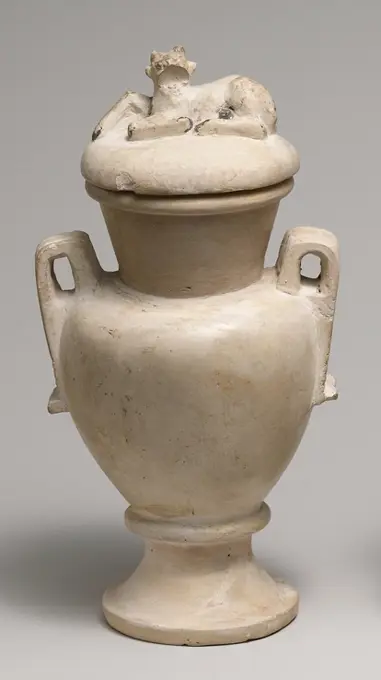
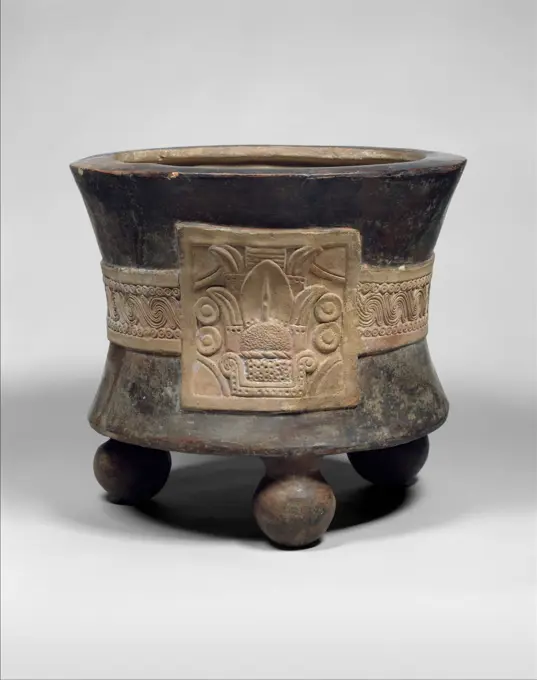
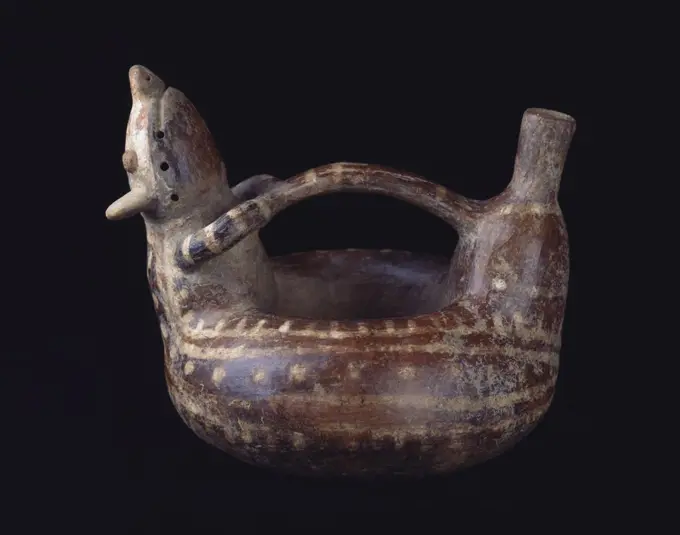
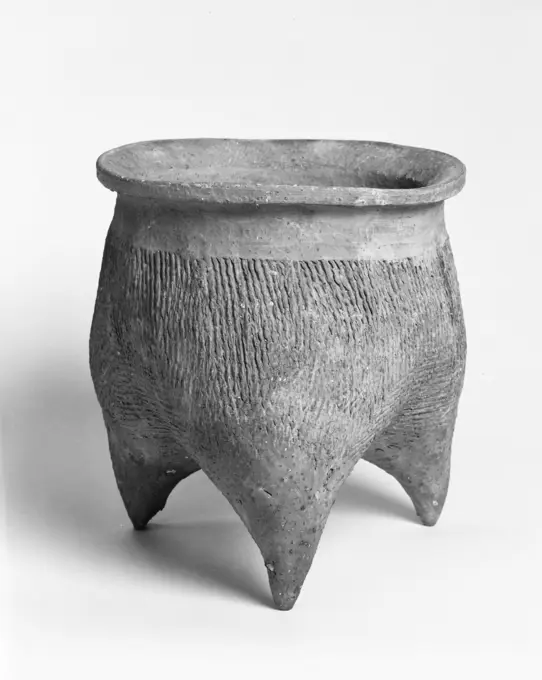
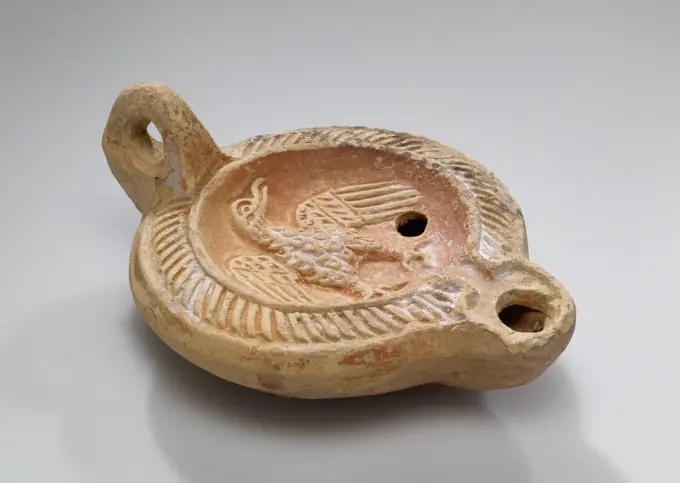
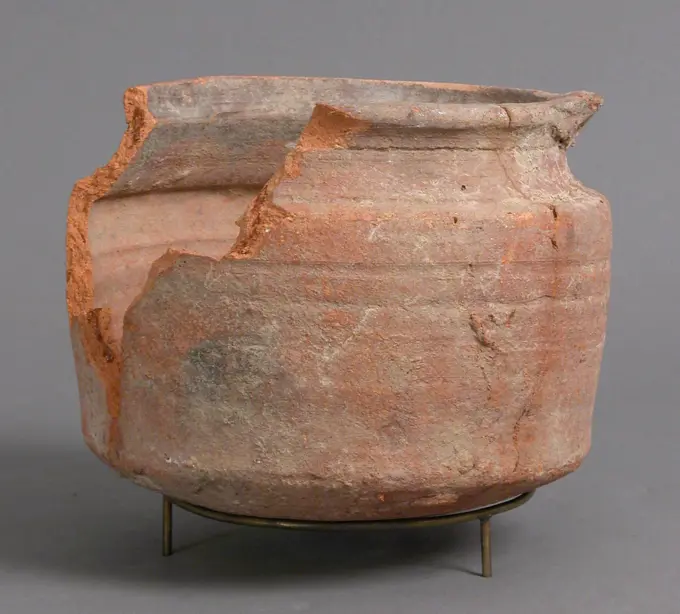
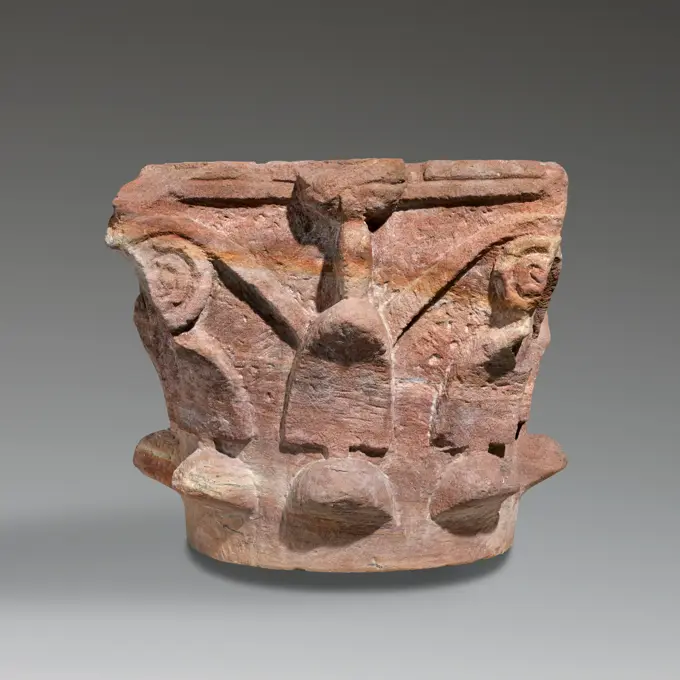
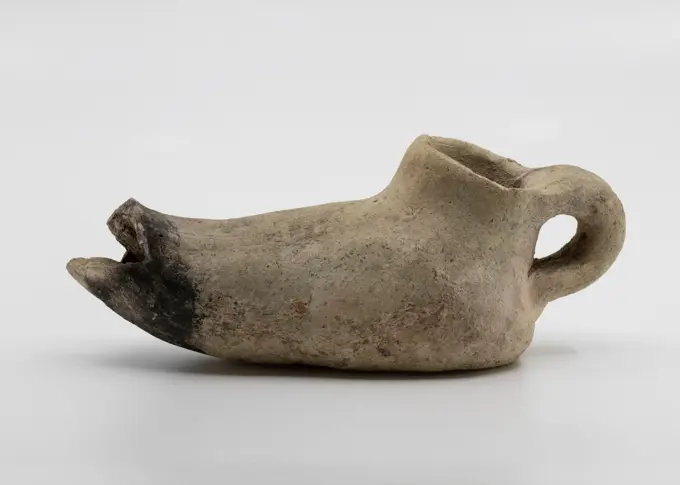
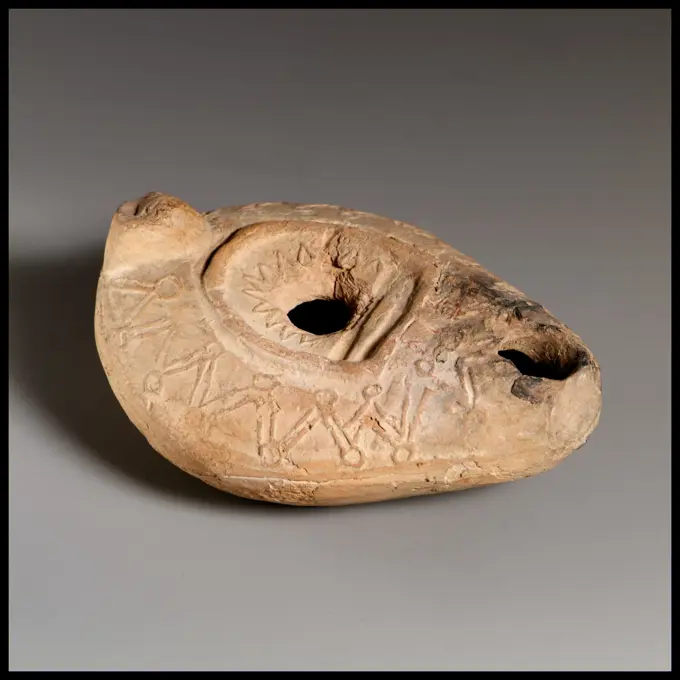
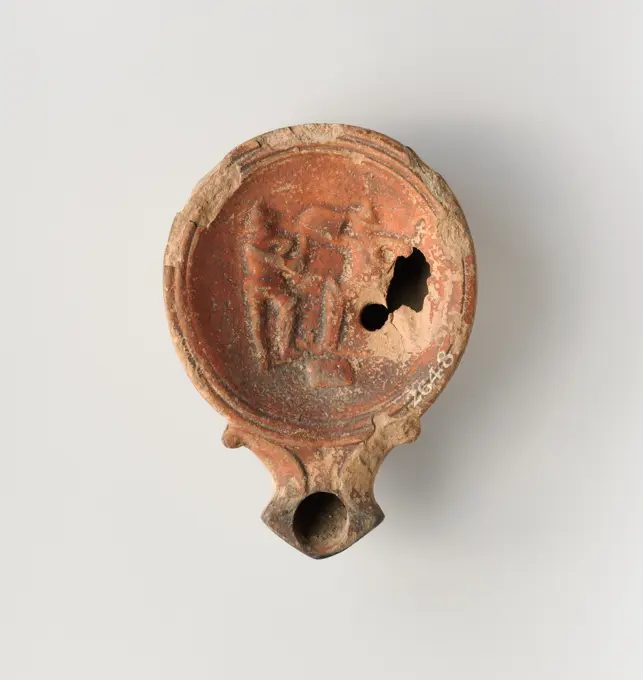
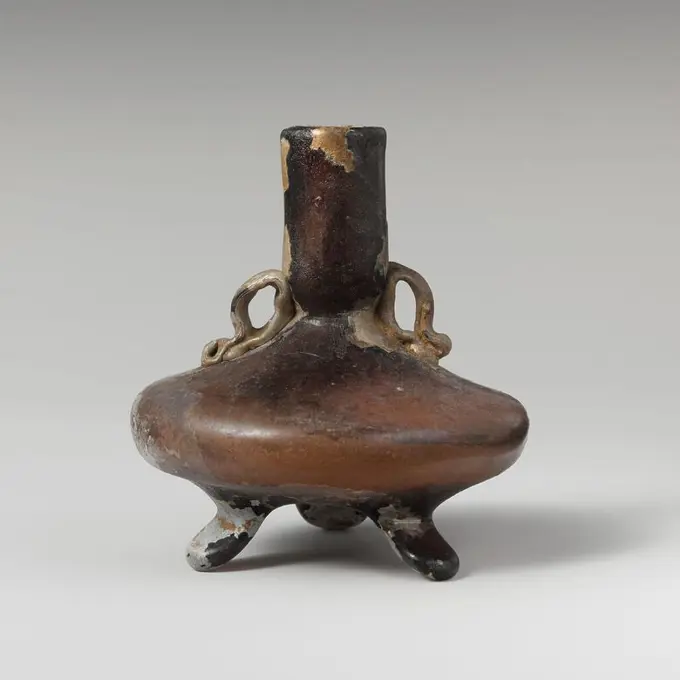
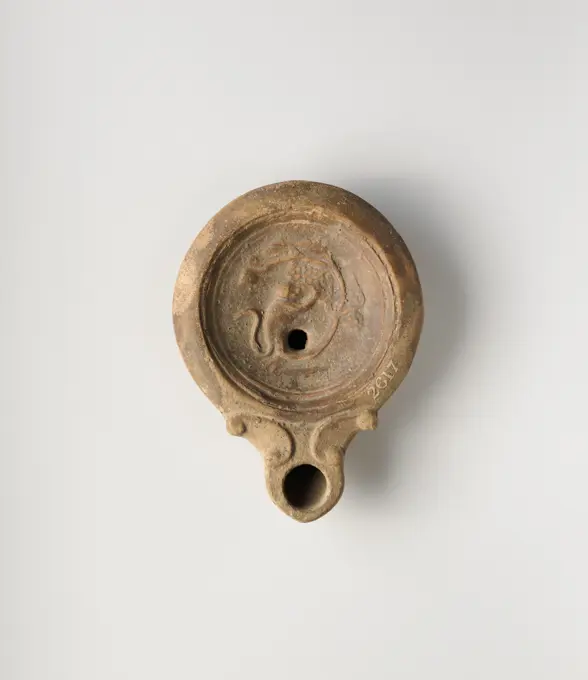
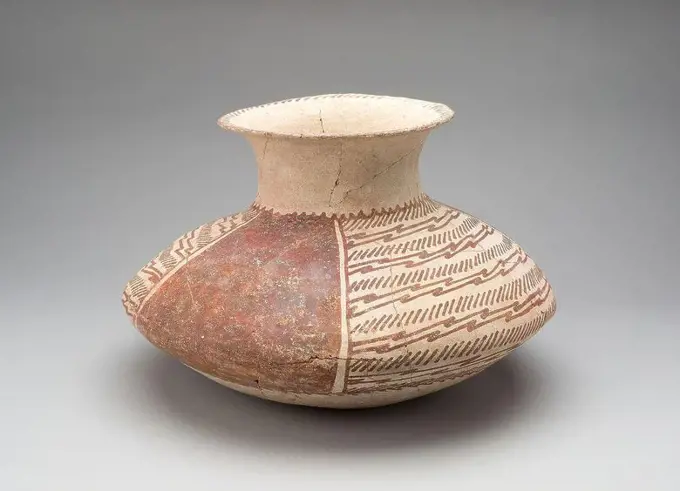
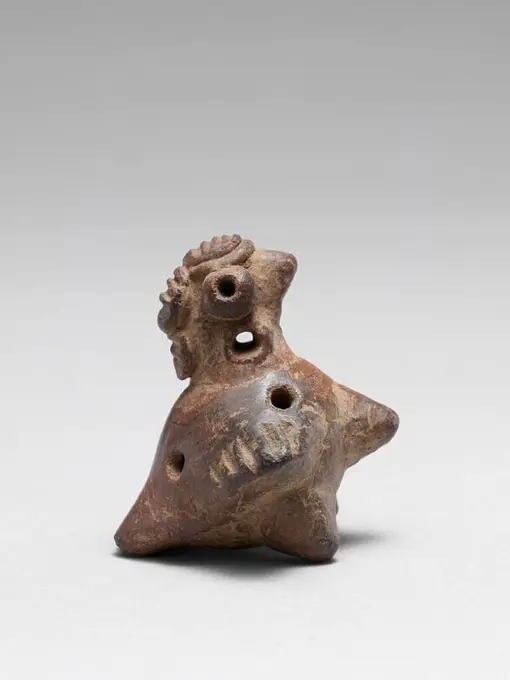
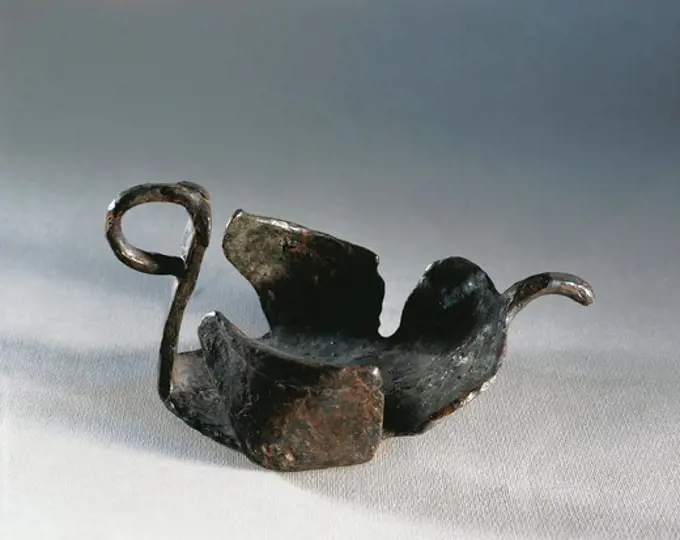
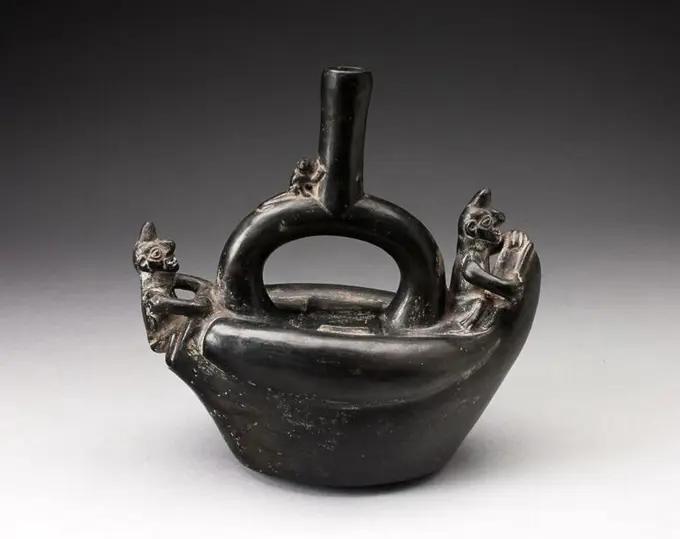
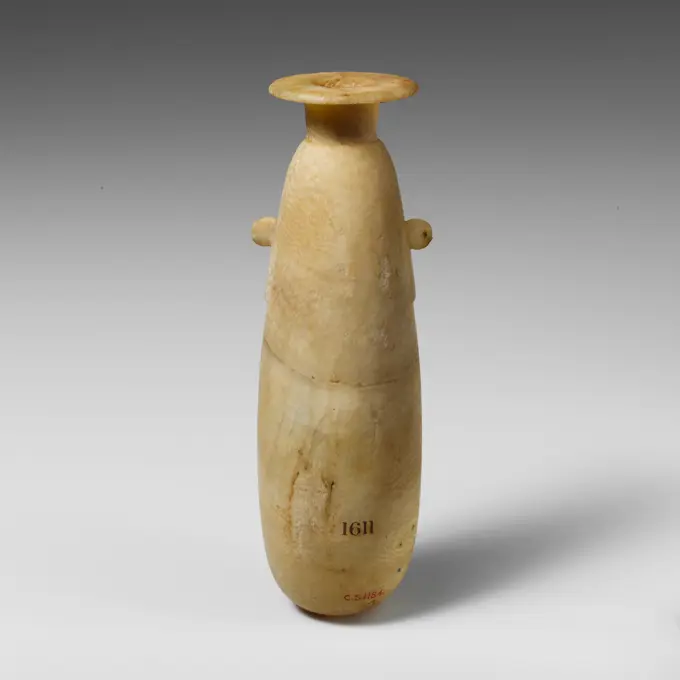
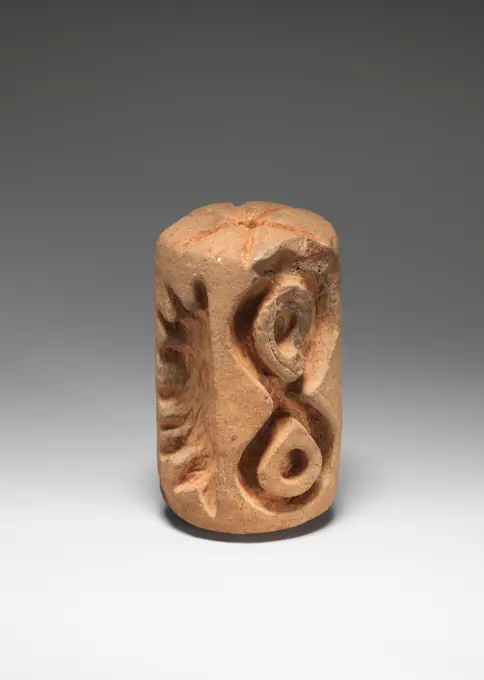
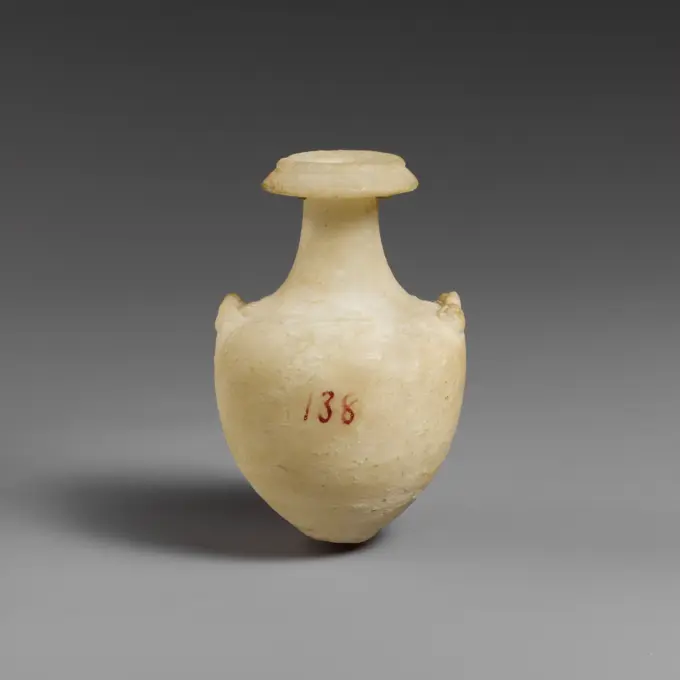
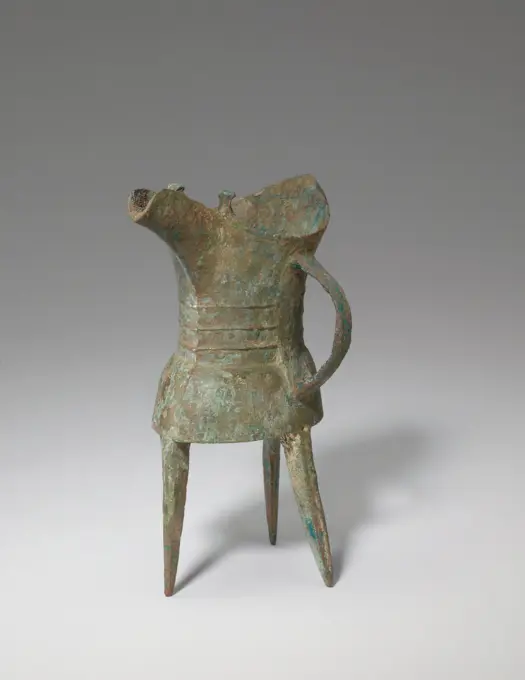
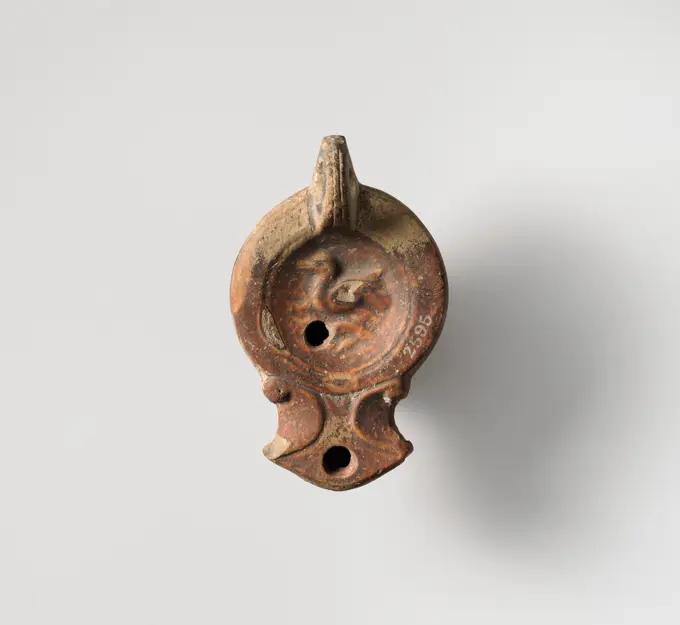
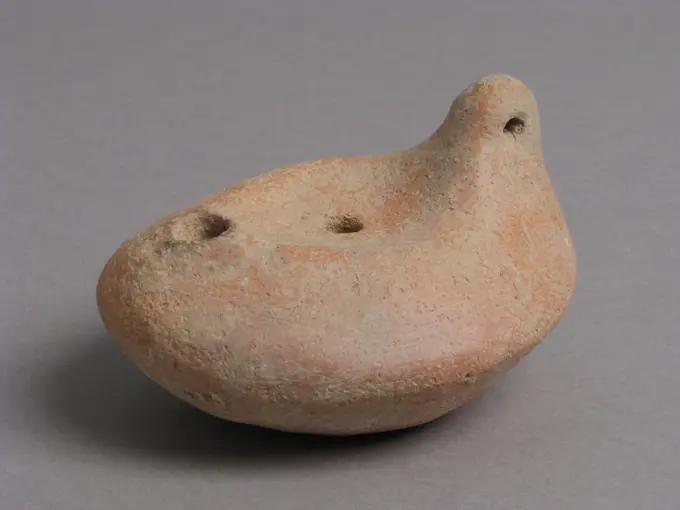
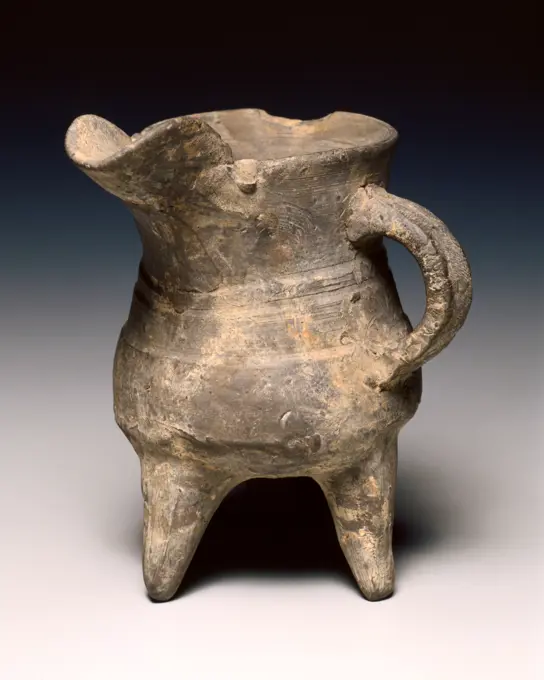
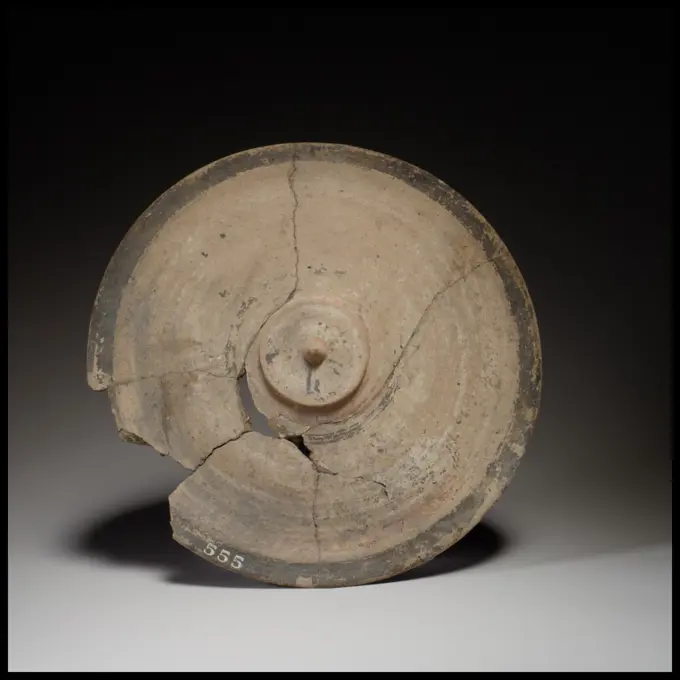
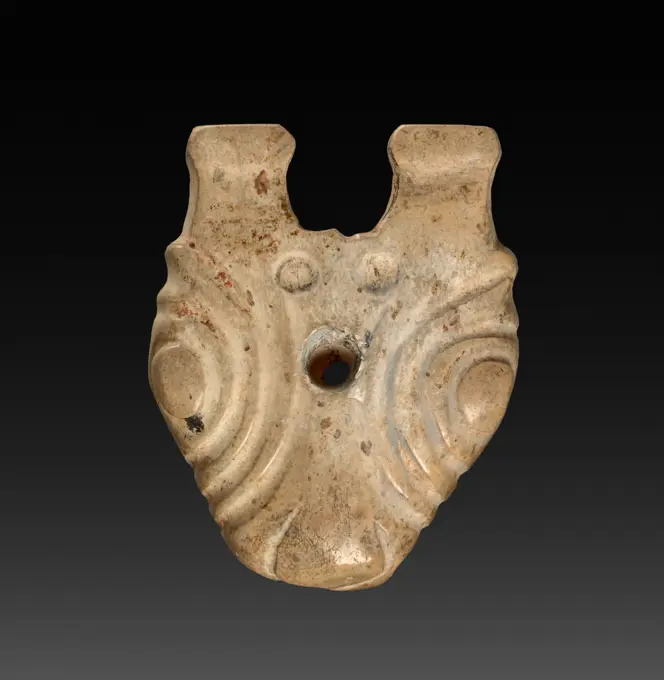
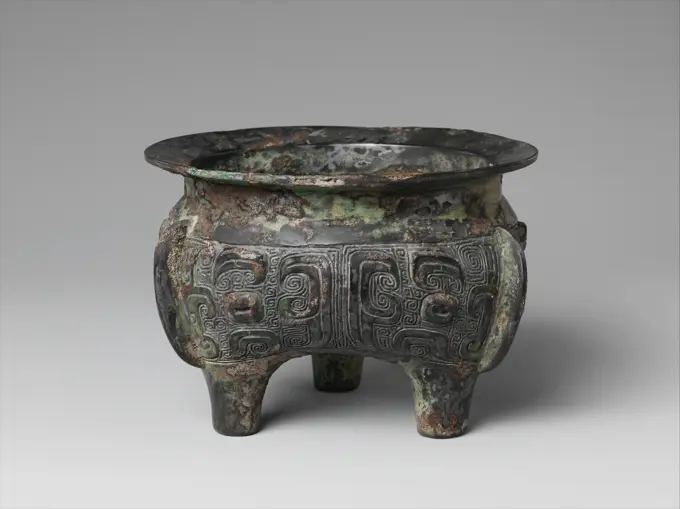
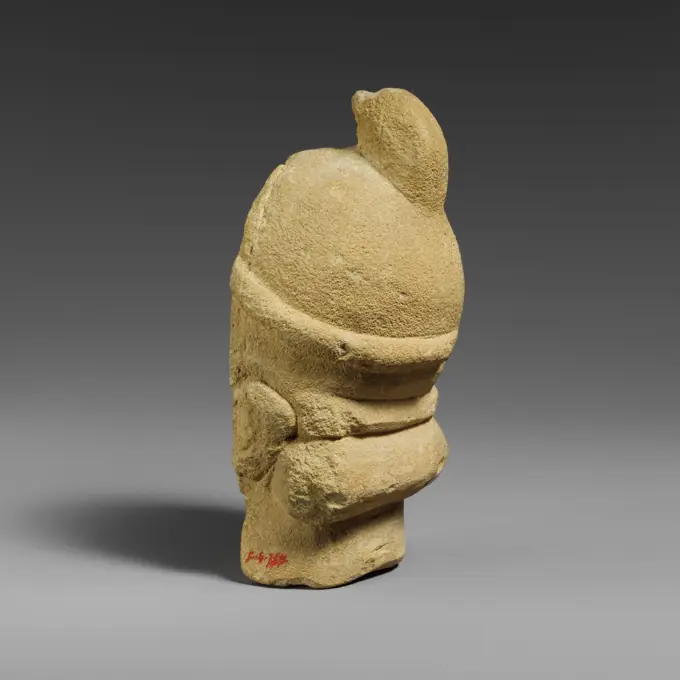
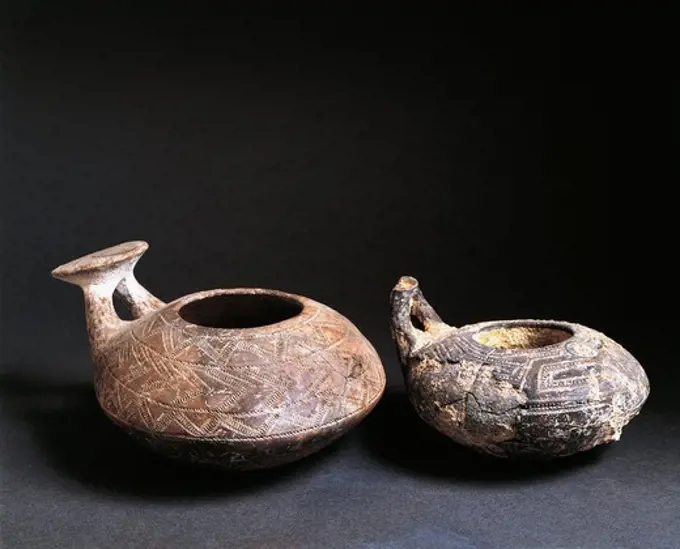
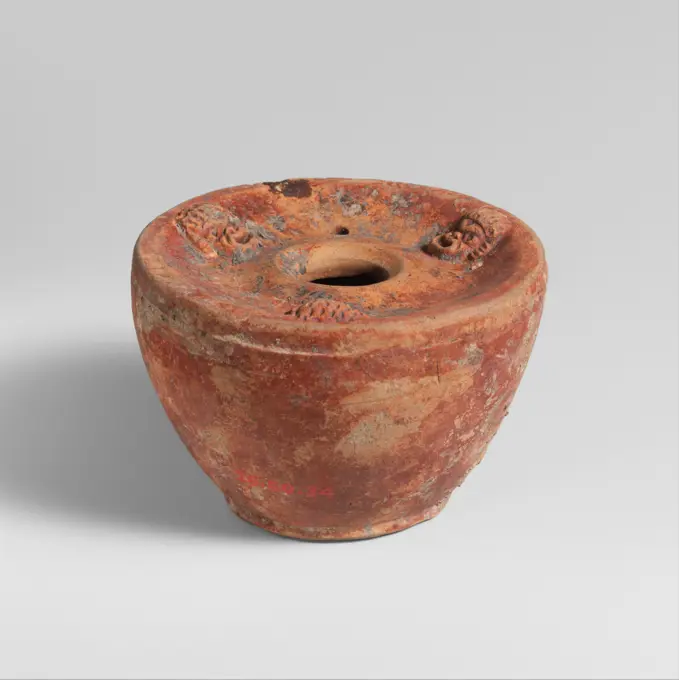
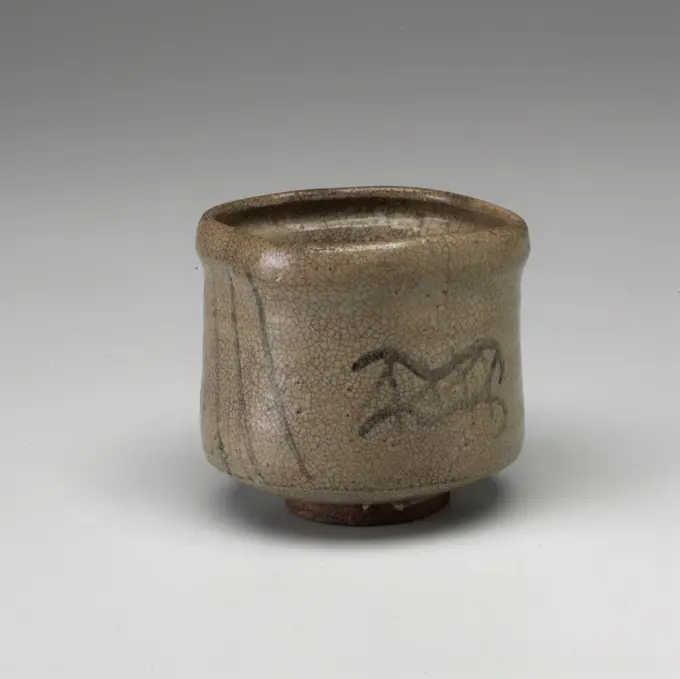
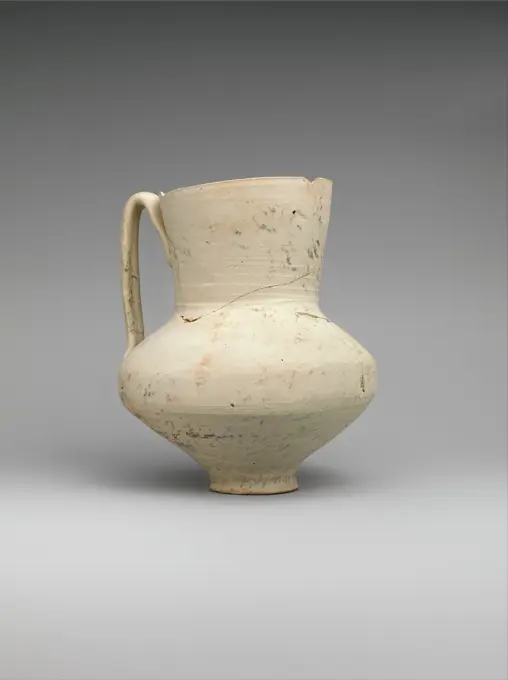
Lamp, Roman Empire; 1st century B.C. - 4th century A.D; Terracotta; 2.1 x 6.3 x 9.1 cm (13,16 x 2 1,2 x 3 9,16 in.)Lamp. UnknownLamp. UnknownLamp. UnknownLamp. UnknownLamp, North Africa; 1st - 4th century; Terracotta; 2.5 x 6 x 10 cm (1 x 2 3,8 x 3 15,16 in.)Lamp, North Africa; 1st - 4th century; Terracotta; 3.2 x 8.6 x 12.2 cm (1 1,4 x 3 3,8 x 4 13,16 in.)Lamp. UnknownLamp. UnknownLamp, North Africa; 1st century B.C. - 4th century A.D; Terracotta; 2.6 × 7.1 × 11 cm (1 × 2 13,16 × 4 5,16 in.)Lamp, Anatolia; 1st - 4th century; Terracotta; 2.6 x 6.5 x 10.5 cm (1 x 2 9,16 x 4 1,8 in.)Lamp. UnknownLamp, North Africa; 1st - 4th century; Terracotta; 2.7 x 7.7 x 11 cm (1 1,16 x 3 1,16 x 4 5,16 in.)Lamp. UnknownLamp, North Africa; 1st - 4th century; Terracotta; 3.5 x 7.5 x 10.2 cm (1 3,8 x 2 15,16 x 4 in.)Lamp. Culture: Roman, Cypriot. Dimensions: Overall: 1 1/8 x 4 1/4 in. (2.9 x 10.8 cm). Date: 2nd century A.D..Discus: portrait head of a bearded, laureate man, facing right. Shoulder: continuous band of lines and grooves. Volutes flanking nozzle. Incised base ring, with incised Greek letters: ROMANESI/S and circle below. Museum: Metropolitan Museum of Art, New York, USA.Lamp. UnknownLamp; North Africa, Tunisia; late 1st century; Terracotta; 9.5 x 2 x 6.8 cm (3 3,4 x 13,16 x 2 11,16 in.)Lamp, South Anatolia, Anatolia; 1st - 4th century; Terracotta; 2.5 x 6 x 8.9 cm (1 x 2 3,8 x 3 1,2 in.)Spouted Vessel Japan. Spouted Vessel. Japan. Earthenware with carved and cord-marked decoration (Tohoku region, Tokoshinai 5 type). Late Jmon (ca. 1500-1000 B.C.). CeramicsGlass jug. Culture: Roman. Dimensions: H.: 4 1/2 x 1 3/4 x 1 3/4 in. (11.4 x 4.4 x 4.4 cm). Date: 4th-5th century A.D..Colorless with bluish tinge; handle in same color.Rim folded round and in and pressed flat into broad, flaring mouth; cylindrical neck, expanding downwards; narrow horizontal shoulder; cylindrical body with side tapering slightly downwards; pushed-in bottom with circular pontil scar; handle applied in a large pad to shoulder, drawn up and outwards, then turned in and folded on to underside of mouth and edge of rim with projecting trail above.Body decorated with thirty-one regular vertical ribs.Broken and repaired, but complete; pinprick and elongated bubbles; pitting and brilliant iridescent weathering. Museum: Metropolitan Museum of Art, New York, USA.Lamp. UnknownVase fragment Minoan. Vase fragment 247671Lamp. UnknownRome. Lamp. Coll. Capitan. Terracotta. Late Antiquity. Leaves, pointed circles. Paris, Carnavalet museum. Late antique, tip circle, leaf, lamp, oil lamp, terracottaLamp. UnknownGlass alabastron (perfume bottle). Culture: Greek, Eastern Mediterranean. Dimensions: H.: 5 3/8 in. (13.7 cm). Date: 2nd-mid 1st century B.C..Translucent blue, with handles in same color; trails in opaque white and opaque yellow.Rim-disk, uneven with slight inward taper; short, funnel-shaped cylindrical neck; tall, straight-sided fusiform body expanding downward, then tapering in to pointed bottom; two horizontal lug handles applied over trail at top of body.White trail attached near bottom, drawn up in a spiral to point of carination; yellow trail attached at carination wound slightly over once round in an upward spiral; both trails then drawn up body, tooled into a festoon pattern with fourteen upward strokes, and wound round again in spiral; yellow ending in a backward loop on top of body, and white ending on lip of rim.Intact; some dulling, severe pitting, and brilliant iridescent weathering. Museum: Metropolitan Museum of Art, New York, USA.Lamp. UnknownTerracotta oil lamp. Culture: Roman. Dimensions: Overall: 15/16 x 3 1/8 in. (2.4 x 8 cm). Date: ca. 20 B.C.-A.D. 25.Gryphon on discus; with concave top and scrolled nozzle. Museum: Metropolitan Museum of Art, New York, USA.Lamp. UnknownLamp,; Neuss, Germany; 4th century B.C. - 4th century A.D; Terracotta; 2.4 x 6.8 x 10 cm (15,16 x 2 11,16 x 3 15,16 in.)Glass jar with four handles 4th-5th century A.D. Roman Translucent manganese purple; handles in translucent pale green.Rim slightly outsplayed, with rounded vertical lip; below hollow folded flange; funnel-shaped neck; uneven, slightly pushed-in shoulder; body with convex side, tapering downwards to small, pushed-in bottom with small pontil mark; four handles applied in large pads to top of side, drawn up vertically, turned in at a right angle, then folded upwards over flange to top of rim.Part of rim and top of one handle missing, with weathered edges, but body complete; some bubbles and blowing striations; dulling, deep pitting, patches of weathering, and brilliant iridescence on exterior, whitish weathering covering much of interior.. Glass jar with four handles 256733Globular aryballos showing the cycle of birds. Etruscan-Corinthian pottery from Vulci (Lazio). Etruscan Civilization, 6th Century BC.Terracotta oil lamp. Culture: Roman, Cypriot. Dimensions: 1 3/16 x 4 9/16 in. (3.0 x 11.6 cm). Date: ca. A.D. 70-120.Loeschcke Type 4. Mold-made. Discus: at bottom, acanthus wreath with tendrils, spreading up and around toward back; a single central filling hole, surrounded by two raised circles and with a band of raised lines and grooves towards edge. Shortened, stylized volutes flanking nozzle, with large wick hole. Within impressed base ring, a slight concave base with the incised marker's mark: ROMANESIS (both S retrograde).Intact. Museum: Metropolitan Museum of Art, New York, USA.Glass jug 4th-5th century A.D. Roman Colorless with bluish tinge; handle in same color.Rim folded round and in and pressed flat into broad, flaring mouth; cylindrical neck, expanding downwards; narrow horizontal shoulder; cylindrical body with side tapering slightly downwards; pushed-in bottom with circular pontil scar; handle applied in a large pad to shoulder, drawn up and outwards, then turned in and folded on to underside of mouth and edge of rim with projecting trail above.Body decorated with thirty-one regular vertical ribs.Broken and repaired, but complete; pinprick and elongated bubbles; pitting and brilliant iridescent weathering.. Glass jug 248996Lamp, Central Anatolia, Anatolia; 1st century B.C. - 4th century A.D; Terracotta; 3 x 7.5 x 12 cm (1 3,16 x 2 15,16 x 4 3,4 in.)Terracotta lamp. Culture: Roman. Dimensions: Overall: 1 1/4 x 3 7/16 in. (3.2 x 8.7 cm). Date: 5th-6th century A.D..Stub handle.On discus, angular rosette; on shoulder, band of ladder pattern. Museum: Metropolitan Museum of Art, New York, USA.Terracotta pyxis (box) 2nd half of the 6th century B.C. Greek, Corinthian The handles are in the form of three human busts.. Terracotta pyxis (box) 253498 Greek, Corinthian, Terracotta pyxis (box), 2nd half of the 6th century B.C., Terracotta, total H. 6 7/8 in. (17.4 cm). The Metropolitan Museum of Art, New York. Fletcher Fund, 1935 (35.11.21a, b)Oil LampTwo Handled Jar and Lid decorated with a Resting Ibix Calf ca. 1390-1352 B.C. New Kingdom This jar belongs to a set that was purchased in Luxor from Sayed Molattam in 1923. The set is unusual because of the various creatures/deities decorating each lid. These include a resting calf (this jar), the head of the god Bes, the head of an ox, and a frog. The only parallel group was discovered in the Valley of the Kings tomb of Yuya and Tjuyu, the parents of Queen Tiye, principal wife of Amenhotep III. For this reason, the jars are tentatively dated to this king's reign.. Two Handled Jar and Lid decorated with a Resting Ibix Calf. ca. 1390-1352 B.C.. Limestone, paint. New Kingdom. From Egypt, Upper Egypt, Thebes. Dynasty 18Lamp, Anatolia; 1st - 4th century; Terracotta; 3 x 8.3 x 10.5 cm (1 3,16 x 3 1,4 x 4 1,8 in.)Terracotta oil lamp. Culture: Greek. Dimensions: Overall: 2 x 4 1/8 in. (5.1 x 10.5 cm).Wheel-made, with applied, plain strap handle and long, straight nozzle. Large, central filling hole, with collar flaring upward; carinated body, with applied, projecting, pierced knob on left side near nozzle. Splayed base ring, and conical base.One large chip in collar. Museum: Metropolitan Museum of Art, New York, USA.Tripod Vessel with Date Glyph 15th-early 16th century Aztec The hourglass shape of this sizable vessel is reminiscent of the form of ceremonial braziers that were closely linked to the religious architecture in the Aztec capital Tenochtitlan. The thick-walled, heavy vessel is supported by three hollow, bulbous feet containing clappers, which produced sounds when the vessel was moved. The middle of the vessel is encircled by a broad band decorated with interlocked scrolls framed by circles. On the front is a cartouche containing the date glyph "4 Reed," which possibly refers to the year 1431 A.D., during which the third enlargement of the Main Temple at Tenochtitlan was celebrated. The band and cartouche were made in molds, as evidenced by multiple seams, and have the natural clay color in which the rest of the vessel is covered, with reddish-brown burnished slip.Ceramic braziers, often bearing deity images, some reaching three feet in height, were placed outside temples or in front of Terracotta oil lamp. Culture: Roman, Cypriot. Dimensions: Overall: 7/8 x 3 5/8 in. (2.2 x 9.2 cm). Date: ca. A.D. 40-100.Loeschcke Type 4. Mold-made. Discus: Eros, facing forward, with outspread wings and wearing drapery around his lower body and legs, standing on small ground line. Base ring and slightly concave base. Museum: Metropolitan Museum of Art, New York, USA.Circular Vessel With A Zoomorphic Figure And Bridge Handle, Peru, Vicus C.200-500 A.D. Pre-Columbian Ceramic Collection of The Museum of Contemporary Art, Jacksonville, Florida Fragment of unglazed test on three legs, side wall with revolving blades, test fire-proof stool soil find ceramic pottery, hand-turned baked Fragment of test on three legs. Red shard unglazed. Slightly curved floor and upright sidewall with revolving edges Outstanding and flat upper edge traces of use: gray spots on the inside archeology Rotterdam IJsselmonde indigenous pottery heating cooking kitchen room food preparation stoof Soil discovery: Castle IJsselmonde pit 1 Rotterdam 1972.Terracotta oil lamp. Culture: Roman, Cypriot. Dimensions: Overall: 7/8 x 3 3/8 in. (2.2 x 8.6 cm). Date: ca. A.D. 40-100.Loeschcke Type 4. Mold-made. Discus: cockerell facing right; a single filling hole to lower right, and a broad band of concentric lines and grooves at edge. Volutes flanking nozzle. On left side of body: raised, molded letters: IT. Within impressed base ring, slightly raised base, sunken at center and inscribed with a diagonal line. Museum: Metropolitan Museum of Art, New York, USA.Tripod Cooking Vessel (Li) 12th-11th century B.C. China The tri-lobed shape and combed ridges of this cooking pot increased heating efficiency by maximizing the vessels surface area.. Tripod Cooking Vessel (Li) 49897Lamp. UnknownTerracotta aryballos (perfume vase) ca. 620-590 B.C. Attributed to the Duel Painter Swan between two sphinxes.. Terracotta aryballos (perfume vase). Greek, Corinthian. ca. 620-590 B.C.. Terracotta; black-figure. Early Corinthian. VasesLamp. UnknownAmphora 4th-7th century Coptic. Amphora 476256Volume capital; Unknown Nubian workshop; 2. PO. VI century (551-00-00-600-00-00);Faras (Sudan), relief decorations, architectural elements, graffiti, capitals, crosses, Nubian art, Nubian crafts, Polish excavations in Faras (Sudan)Vessel, 15th-16th century, 8 in. (20.3 cm), Ceramic, Peru, 15th-16th century, Chimu ceramics were made in molds, with unique decorative details added when the halves were joined. The placement of a hand-modeled bird where the spout meets the arch is a distinctive marker of the Chimu style. Given the probable date of manufacture, this piece was likely made by a Chimu artist for an Incan patron. The body of the vessel depicts a fruit or vegetable. Food was depicted frequently in art from this region, as it connoted feasting and abundance.Lamp, Asia Minor; 1st - 4th century; Terracotta; 3.4 x 8.4 x 12.2 cm (1 5,16 x 3 5,16 x 4 13,16 in.)Lamp ca. 3rd-7th century A.D. Sasanian Oil lamps were a common way to provide light in the ancient world. The body of the lamp would be filled with oil and a wick would extend out. This shoe-shaped example would have had the wick coming out the tip’ of the shoe. Although its tip is broken, the blackened area of the shoe gives a clear indication of how the lamp would have been used. The lamp was excavated from a house at the site of Ma’aridh II in the Ctesiphon area. The city of Ctesiphon was located on the east bank of the Tigris River, 20 miles (32 km) south of modern Baghdad in Iraq. It flourished for more than 800 years as the capital of the Parthians and the Sasanians, the last two dynasties to rule the ancient Near East before the Islamic conquest in the seventh century. Systematic excavations in the Ctesiphon area were undertaken by an expedition in 1928-29 sponsored by the German Oriental Society (Deutsche Orient-Gesellschaft). The Metropolitan Museum of Art and the Staatliche Terracotta oil lamp 3rd century A.D. Roman Mold-made, with unpierced handle. Discus surrounded by a raised line, straight at bottom behind wick hole but forming an rounded arch extending to handle; within, another straight line at bottom, and a fine zigzag pattern around central filling hole. On shoulder, another zigzag pattern in double, raised lines with hollow circles at their points. Carinated body. Raised base ring and flat base.Complete, except for top of handle and tip of nozzle, with crack running around back and left side of body.. Terracotta oil lamp. Roman. 3rd century A.D.. Terracotta. Late Imperial. TerracottasLamp. Culture: Roman. Dimensions: Length: 3 1/16 in. (7.8 cm)Height: 1 in. (2.5 cm). Date: 2nd century A.D.. Museum: Metropolitan Museum of Art, New York, USA.Yellow-pink clay potLecythus; terra-cottaLamp. UnknownOil LampPlaque: Rooster. Mesopotamia, no date. Sculpture; plaques. BronzeTerracotta oil lamp 1st century B.C.-1st century A.D. Roman Loeschcke Type 1A. Mold-made. Discus: two gladiators fighting, both wearing helmets and greaves; on the left, the gladiator is static, facing right, with his short, curved sword in his outstretched right hand; on the right, the gladiator is advancing forward to left, his back facing to front, holding his shield up in front of his face in his left hand and his right arm behind him; two separate ground lines below figures, and a small, rectangular shield below; a single filling hole between gladiator's legs at right; a band of lines and grooves around edge. Volutes flanking angular nozzle with large wick hole. Raised base ring, and flat base.One hole towards right edge of discus, another on left underside, and some large chips to edges and on base.. Terracotta oil lamp. Roman. 1st century B.C.-1st century A.D.. Terracotta. Early Imperial. TerracottasGlass bottle with three feet. Culture: Roman. Dimensions: H. 2 13/16 in. (7.1 cm). Date: ca. 4th century A.D..Translucent purple; handles probably in same color.Plain, thick, vertical rim; cylindrical neck with tooled horizontal indent around base; body in a broad, horizontal lentoid shape; three feet pinched out from lower body in splayed broad pads; pushed-in bottom; two dolphin handles applied to top of body, drawn up side to lower part of neck, then folded out and downwards, and trailed off over other end. Intact; a few bubbles; dulling, pitting, patches of thick creamy and white weathering, and iridescence. Museum: Metropolitan Museum of Art, New York, USA.Terracotta oil lamp 1st century B.C.-1st century A.D. Roman Vessberg Type 10. Mold-made. Discus: monkey at left facing right reaching up to grapes hanging from a tall vine to right; a single filling hole at center between monkey's feet and base of vine; band of lines and grooves around edge; plain, narrow, sloping shoulder. Volutes flanking large, slightly pointed nozzle, with large wick hole. Incised base ring, and pushed-in base.One large hole in base.. Terracotta oil lamp. Roman. 1st century B.C.-1st century A.D.. Terracotta. Early Imperial. TerracottasJar. Hohokam; Southern Arizona, United States. Date: 950 AD-1150. Dimensions: 24.8 × 38.1 cm (9 3/4 × 15 in.). Ceramic and pigment. Origin: Arizona. Museum: The Chicago Art Institute, Chicago, USA.Pottery Whistle. Culture: Costa Rican. Dimensions: L. 5 cm.; H. 4.1 cm.; W. 3.9 cm.; Wt. 24 g.. Date: ca. 800-1500. Museum: Metropolitan Museum of Art, New York, USA.Antique horseshoe or hipposandalSingle Spout Blackware Vessel in the Form of Figures Riding on Reed Boat. Chimú; North coast, Peru. Date: 1000-1400. Dimensions: 21.3 x 21.6 cm (8 3/8 x 8 1/2 in.). Ceramic and pigment. Origin: North Coast. Museum: The Chicago Art Institute, Chicago, USA.Alabaster alabastron (perfume vase) 5th-4th century B.C. Cypriot The alabastron has two vertical lugs above a short trapezoidal tab in low relief. The lip is convex.. Alabaster alabastron (perfume vase) 243977Lamp. Culture: Roman. Dimensions: Length: 3 1/8 in. (8 cm)Height: 1 in. (2.5 cm). Date: 2nd century A.D.. Museum: Metropolitan Museum of Art, New York, USA.Lamp. UnknownStatuette of a Female Figure, perhaps a Goddess. UnknownRoller Stamp 5th-6th century Atlantic Watershed. Roller Stamp 313057Miniature alabaster amphora (jar) late 4th-3rd century B.C. Cypriot The handles are short, vertical lugs. The large mouth is articulated into two parts.. Miniature alabaster amphora (jar) 244011Vessel (Olla) Ancestral Puebloan (Jeddito ) 14th century Diverse civilizations known collectively as Ancestral Puebloan flourished in the southwest of what is now the United States before the arrival of Europeans. This jar or olla was created in a style known as Jeddito Black-on-Yellow, and it features a geometric design painted in a black iron-manganese pigment.Jue wine vessel, 16th-15th century BCE, 5 9/16 × 4 3/4 × 2 5/8 in., 0.2 lb. (14.1 × 12.1 × 6.6 cm, 0.1 kg), Bronze, China, 16th-15th century BCE, This wine vessel dates from nearly the beginning of the Chinese Bronze Age. Its plainness may reflect the relative newness of bronze casting technology; artisans were still figuring out the basics. This relic is from the Erligang culture (1600-1300 BCE), which flourished during the early Shang and predates the movement of the Shang capital to Anyang around 1300 BCE. Archaeological research shows that the jue is the earliest ritual wine vessel form and that it was developed about 1700-1600 BCE. Artisans originally based the jue on the style of existing pottery vessels. The form rapidly evolved toward an aesthetic based entirely on cast-bronze principles, and this vessel demonstrates the primitive technology and awkward proportions of the first ceremonial bronzes.Carved Conch 11th century or earlier India. Carved Conch. India. 11th century or earlier. Shell. Pala period. SculptureTerracotta oil lamp 1st century B.C.-1st century A.D. Roman Loeschcke Type 1A. Mold-made, with ring handle. Discus; a bird (duck or swan), floating on the wavy surface of a stretch of water; single filling hole at lower left and with a band of two raised lines and a groove at edge of discus. Plain, horizontal shoulder. Volutes flanking broad, angular nozzle. Incised lines on front edge of handle, with uneven join towards back. Incised ring base, and a flat base, with an obscure impressed mark at center.Intact.. Terracotta oil lamp. Roman. 1st century B.C.-1st century A.D.. Terracotta. Early Imperial. TerracottasPrehistory, Italy, 6th century b.C. Bronze vase from the Gallic Castelliere (fortified borough) at Burcina hill, Biella.Oil Lamp 4th-7th century Coptic. Oil Lamp 478699Wine Warmer (Jue), c. 1300-1023 BC. China, Shang dynasty (c.1600-c.1046 BC), Anyang phase (c.1250-1046 BC). Pottery, tripod vessel with loop handle and rudimentary bowstring decoration; diameter: 11 cm (4 5/16 in.); overall: 12.8 cm (5 1/16 in.).Votive shield ca. 600-480 B.C. Cypriot The shield is wheel-made and shallow with a handle on the inside.. Votive shield 240046Glass alabastron (perfume bottle). Culture: Greek, Eastern Mediterranean or Italian. Dimensions: H.: 6 7/8 in. (17.5 cm)Diam.: 1 13/16 x 2 1/8 in. (4.6 x 5.4 cm). Date: 4th-3rd century B.C..Translucent cobalt blue, with handles in same color; trails in opaque yellow and opaque white.Broad horizontal rim-disk, made as a spiral coil around top of neck; cylindrical neck, tapering downwards; narrow, almost horizontal shoulder; straight-sided cylindrical body, with slight upward taper; faceted bottom ending in slight point; below shoulder, two small horizontal ring handles, only one of which is pierced through vertically, applied over trail pattern.A fine yellow trail attached at edge of rim-disk; on body, alternating bands of yellow and white, tooled from shoulder to undercurve at bottom into a close-set feather pattern in eight vertical patterns with alternating upward and downward strokes, with well-defined loops at top and bottom.Intact; dulling, pitting, and some creamy iridescentGlass cosmetic flask (kohl tube). Culture: Roman, Syrian. Dimensions: Overall: 5 9/16in. (14.1cm). Date: 4th century A.D..Colorless with pale green tinge; foot, handles, and trail in same color.Broad, horizontal rim folded out, over, and in; cylindrical neck, joining imperceptibly with slender, piriform body; applied conical foot, with folded tubular edge; deep kick in bottom and pontil mark; two rod handles applied in claw pads to neck, drawn up and out, and then turned in and pressed onto lip of rim.Single fine trail applied as a pad on lower body, drawn up and wound in a spiral twenty-one times around body and neck, ending under one of the handles.Complete, but crack in neck and upper body, and some parts of trail missing; some bubbles; dulling, slight pitting, thick creamy brown weathering, and limy encrustation.Associated with the flask is a small bronze spatula, suitable for spooning the contents out of the deep flask. Museum: Metropolitan Museum of Art, New York, USA.Wine Beaker (Gu) China. Wine Beaker (Gu) 53562Vessel with Abstract Feline Mask and Bird-Head Spout 650 BCE-150 BCE Ica Valley. Ceramic with resinous postfire paint . ParacasBovine Mask with Capped Horns, 14th-10th Century BC. China, Shang dynasty (c.1600-c.1046 BC) - Western Zhou dynasty (c.1046-771 BC). Jade; overall: 1.9 cm (3/4 in.).Terracotta oil lamp. Culture: Roman, Cypriot. Dimensions: Overall: 1 1/2 x 3 1/4 in. (3.8 x 8.3 cm). Date: 3rd-4th century A.D..Vessberg Type 18. Unpierced handle. Mold-made. Discus: naked man facing front but moving to right, holding large bulbous jar in right hand and with an amphora below raised left hand; around edge of discus, short radiating lines. Two filling holes. On broad shoulder, stylized vines with many grapes. On slightly concave base, raised indistinct raised letters. Broken and repaired around underside of nozzle. Museum: Metropolitan Museum of Art, New York, USA.Tripod Cauldron (Ding) 11th century B.C. China. Tripod Cauldron (Ding) 53560Fragment of a limestone head of the Triple Geryon” (?) 6th or 5th century B.C. Cypriot The face of the helmeted head is fragmentary. The very schematic right ear is painted red. The crest of the helmet is turned toward the front. A mass of hair falls beneath the neck guard.. Fragment of a limestone head of the Triple Geryon” (?) 242136Italy, Marche, Novilara, Picene vases, dark color pasteTerracotta inkwell and bronze stylus 1st2nd century A.D. Roman Inkwell stamped on the bottom CN·HEThe inkwell is decorated with three theatrical masks in relief on the upper face. It was found together with the stylus (26.60.35).. Terracotta inkwell and bronze stylus 252501 Roman, Terracotta inkwell and bronze stylus, 1st?2nd century A.D., Terracotta, H. 2 in. (5.1 cm) diameter 2 15/16 in. (7.5 cm). The Metropolitan Museum of Art, New York. Fletcher Fund, 1926 (26.60.34)Serving dish with bridge and water, 17th century, Unknown Japanese, 3 1/2 x 3 3/4 x 3 3/4 in. (8.89 x 9.53 x 9.53 cm), Karatsu ware; glazed stoneware, Japan, 17th century, Japanese tea masters prized the simple, unpretentious beauty of everyday wares produced by Korean potters at the Karatsu kilns on the southernmost Japanese island of Kyushu. This small cup-shaped dish, called mukōzuke, was used to serve an appetizer of raw fish or marinated vegetables. The term mukōzuke describes their placement (zuke) on the far side (mukō) of the serving trayaway from the guest. Bowls for rice and soup were placed closer to the guest on the tray. Typical of wares from the Karatsu kilns, this mukōzuke is decorated with casual, rapidly painted designs in iron-oxide brownin this case a simple bridge over flowing water.Jar 1st-6th century Nasca. Jar 310358Unglazed Jug with Writing 8th-9th century This jugs entire surface is covered with writing, and the faint image of a demon can be discerned on the shoulder. While quite unusual for the Islamic period, this combination of features can be found on a group of sixth- and seventh-century ceramics known as incantation bowls. These bowls were supposed to rid their owners of ailments or to exorcize demons from their homes, and were inscribed with curses in Aramaic, Syriac, and Mandaic. The few known examples of such ceramics from the early Islamic period take the form of jugs with handles, rather than bowls, and seem to have only Quranic writing, though other forms appeared later on.. Unglazed Jug with Writing 450760Terracotta lamp. Culture: Roman, Cypriot. Dimensions: Overall: 1 1/2 x 3 11/16 in. (3.8 x 9.4 cm). Date: 5th-6th century A.D.. Museum: Metropolitan Museum of Art, New York, USA.Terracotta funerary urn in the shape of a human profile, on throne from ByzantiumLamp. Unknown