Ancient Terracotta Oil Lamps

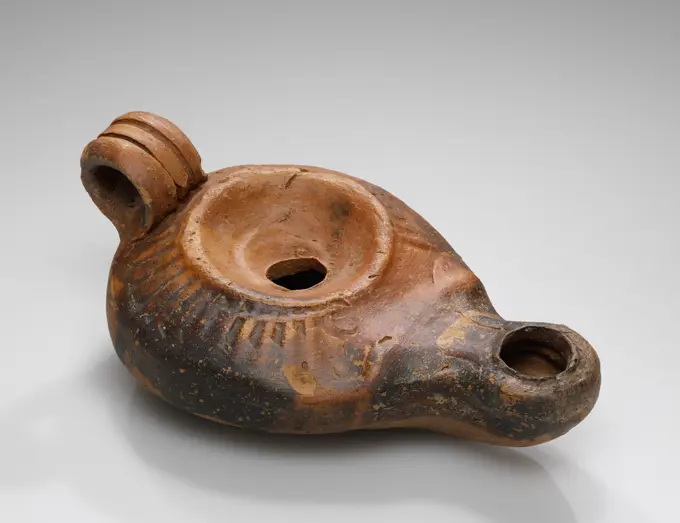
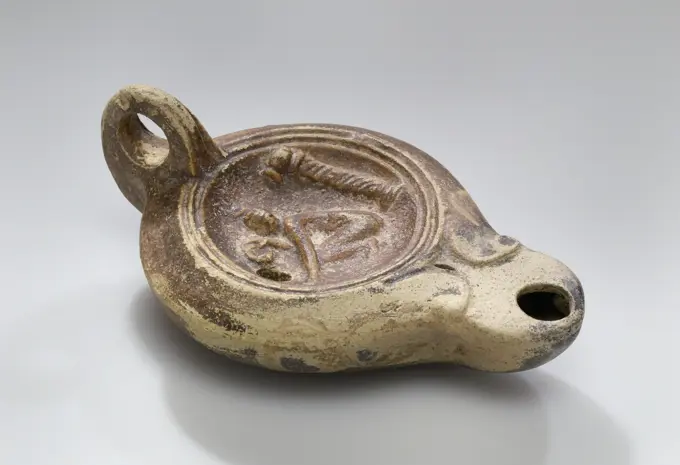
Collection of ancient terracotta oil lamps from Roman and North African origins, showcasing intricate designs, historical significance, and unique artistic styles.
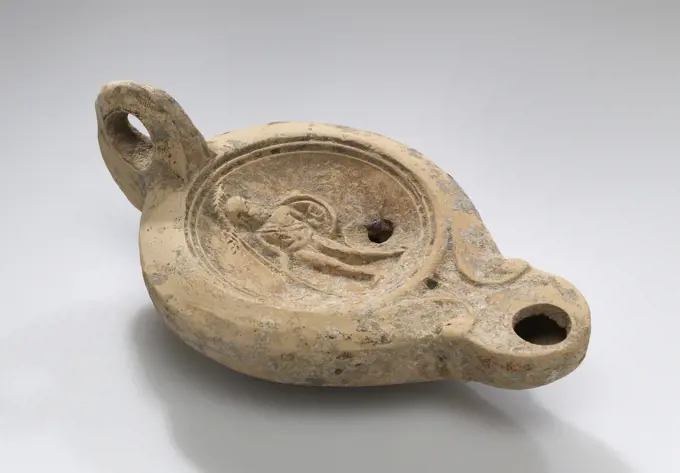
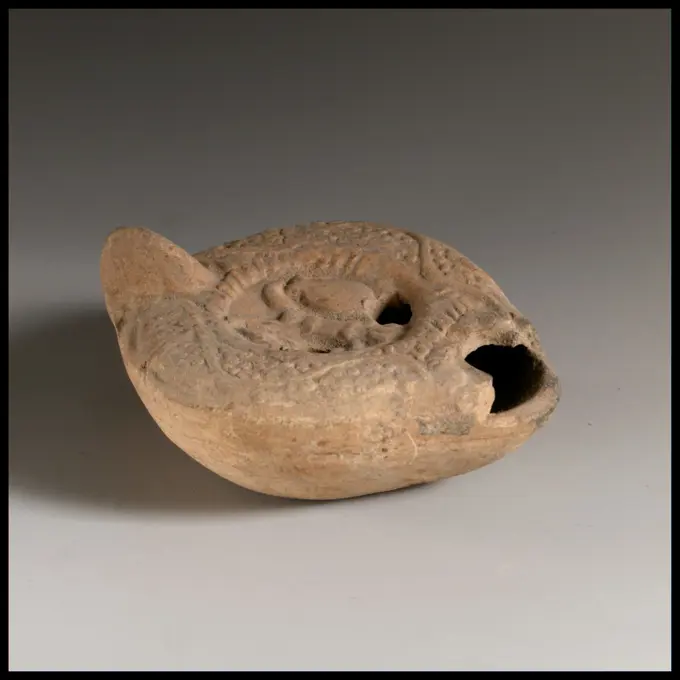
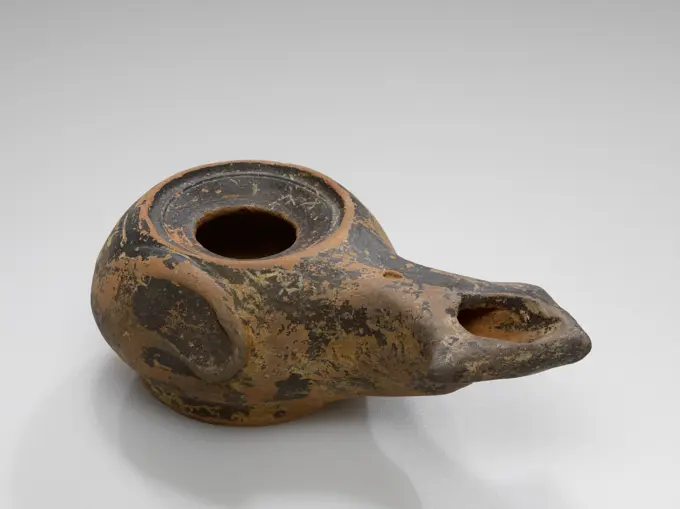
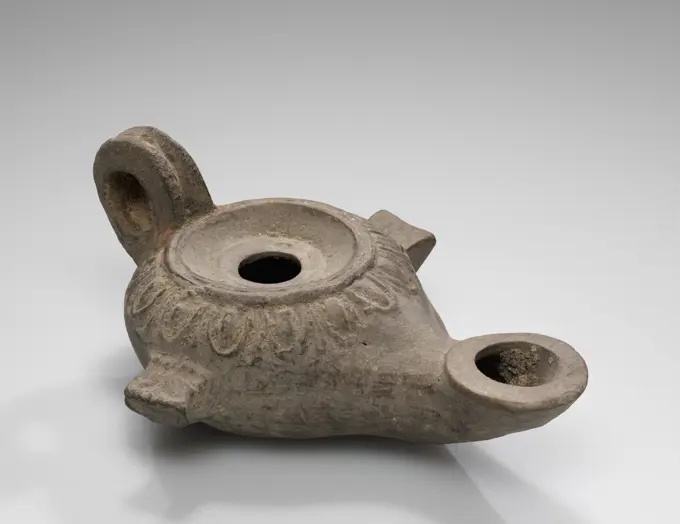
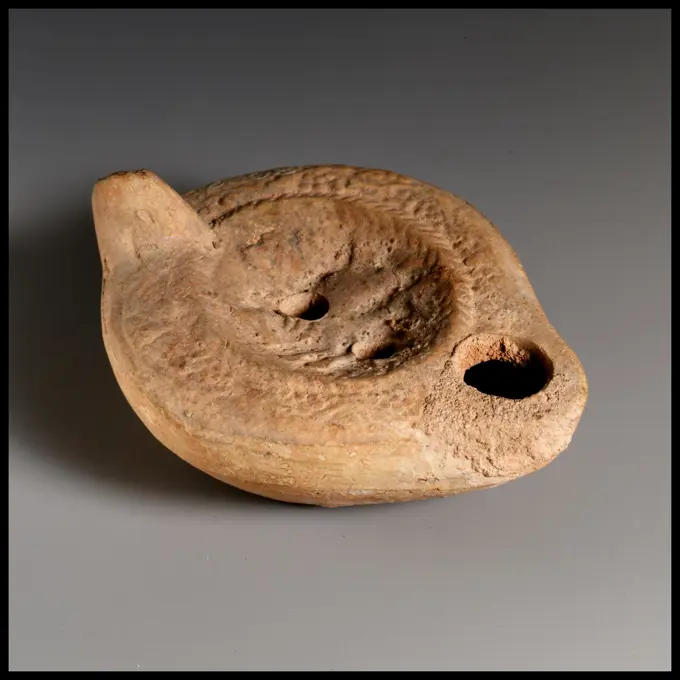
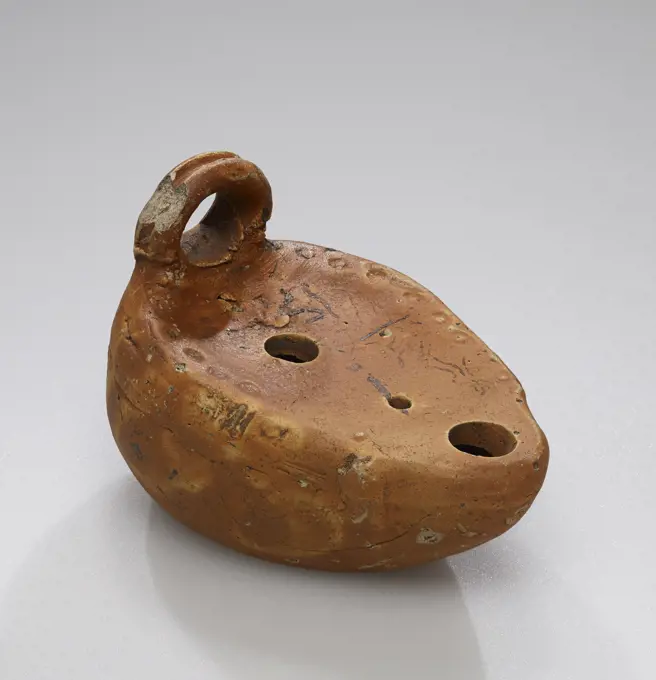
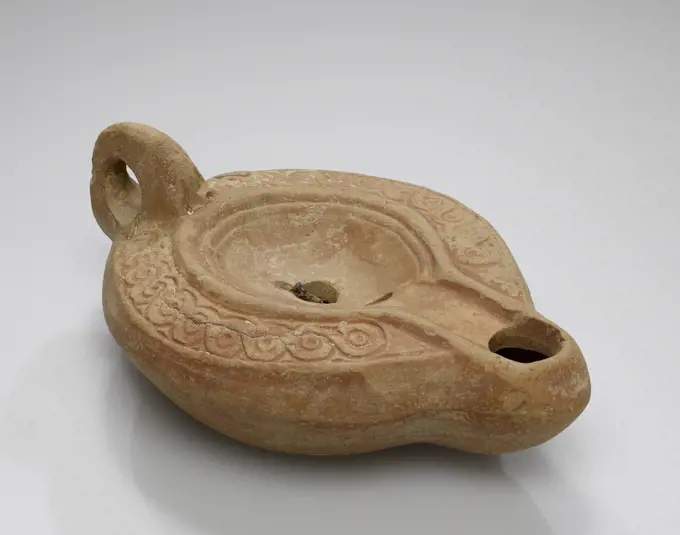
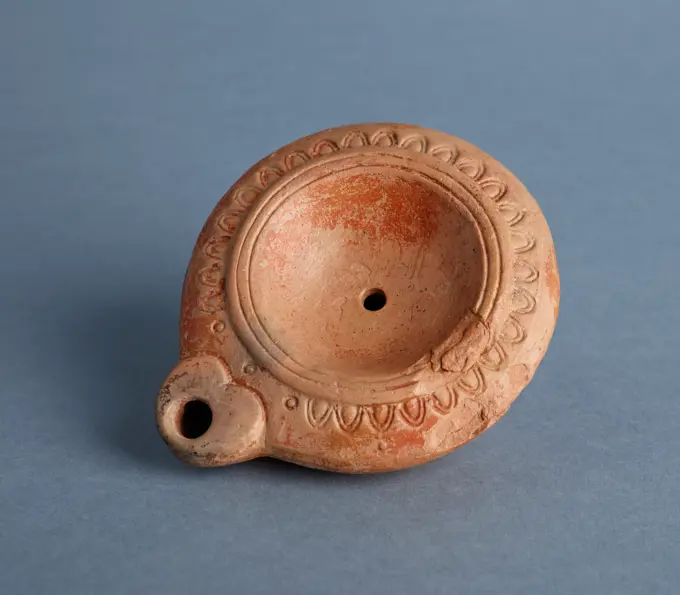
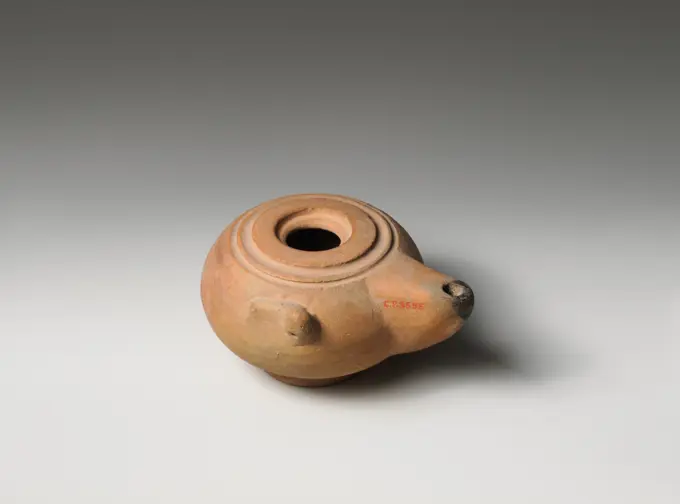
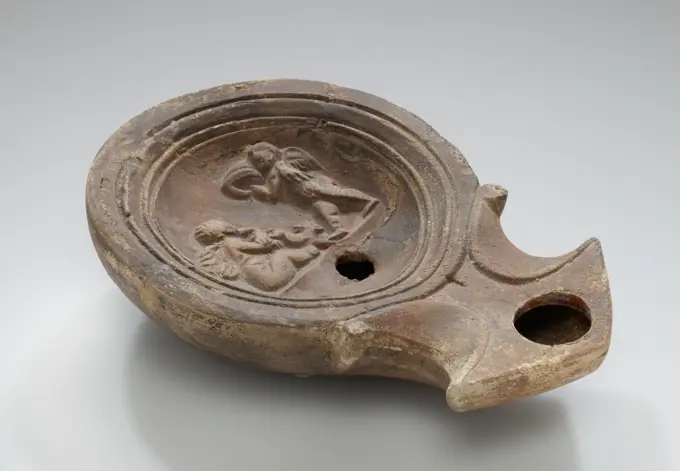
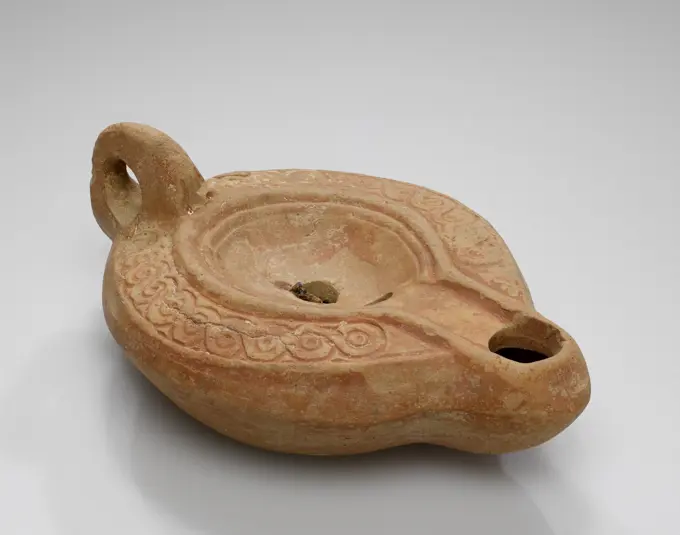
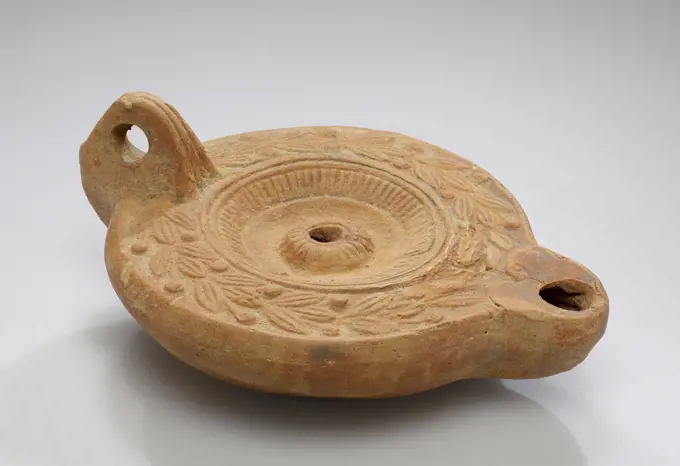
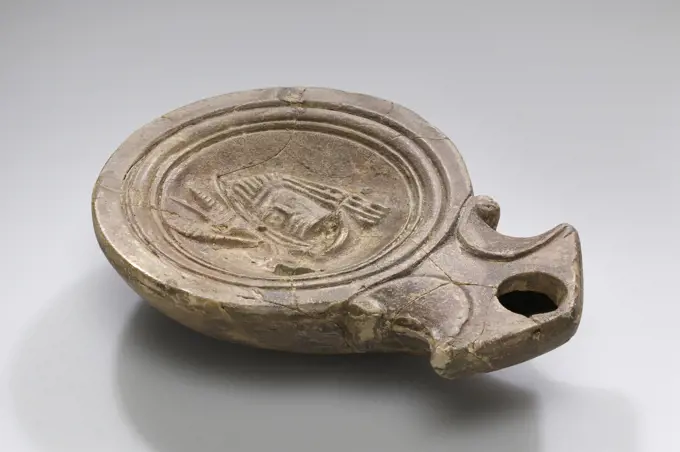
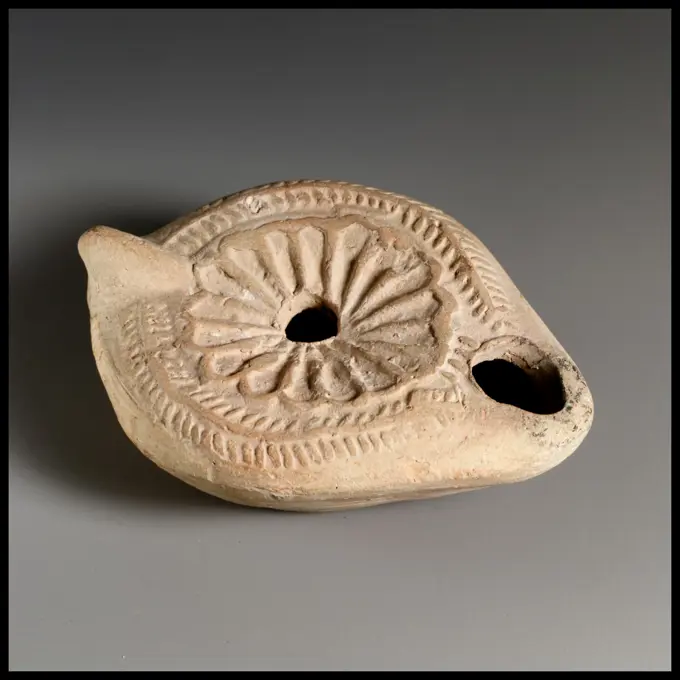
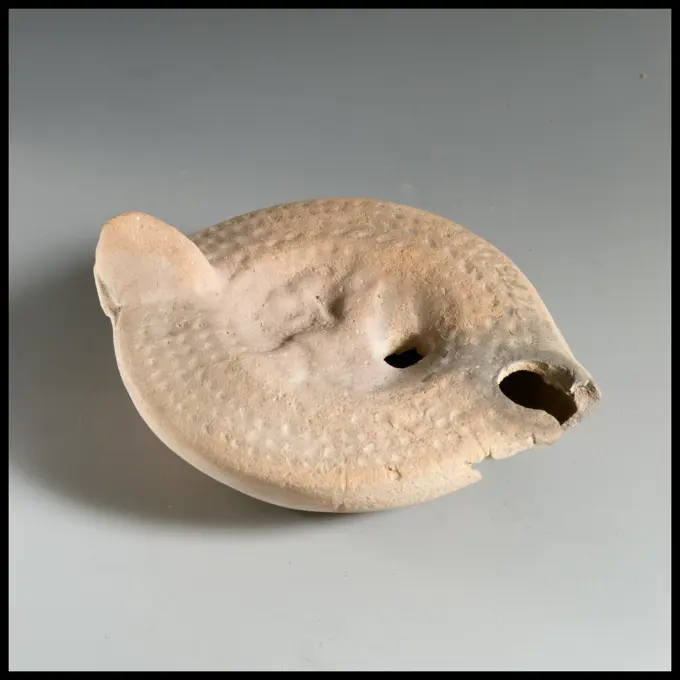
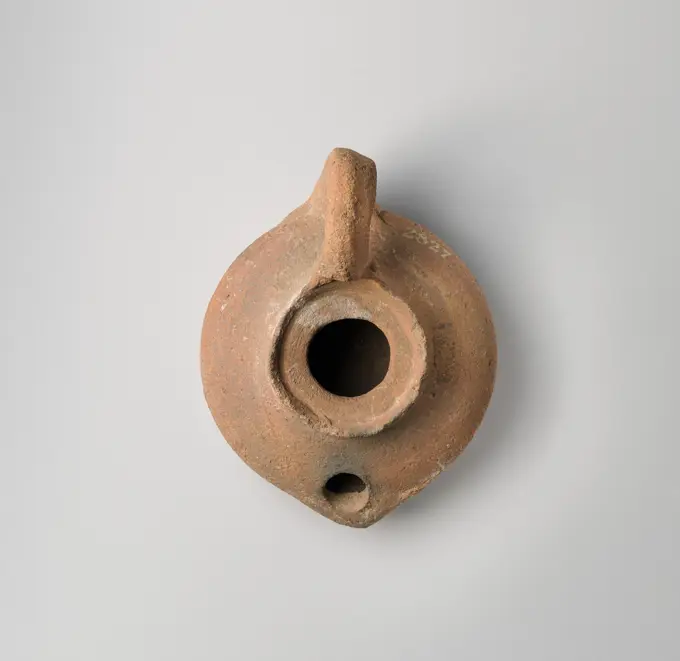
Lamp; North Africa, Tunisia; 1st - 2nd century; Terracotta; 12.2 x 4.9 x 7 cm (4 13,16 x 1 15,16 x 2 3,4 in.)
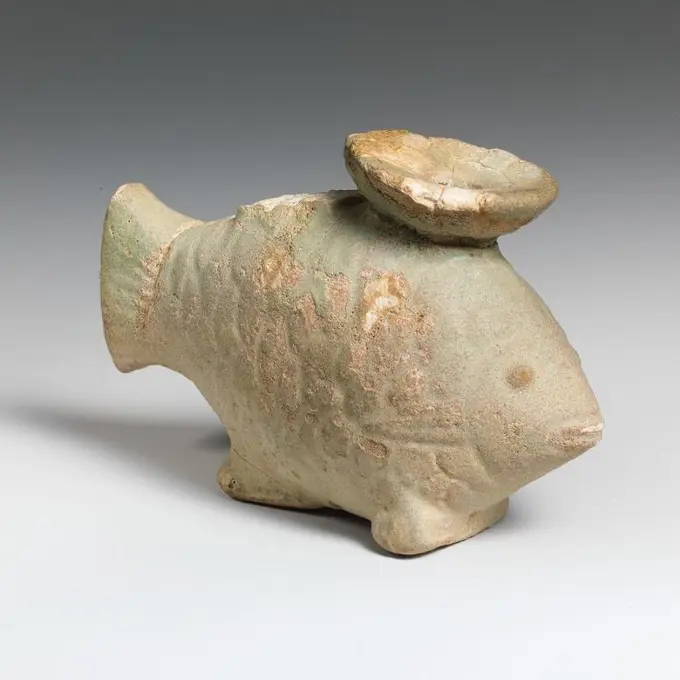
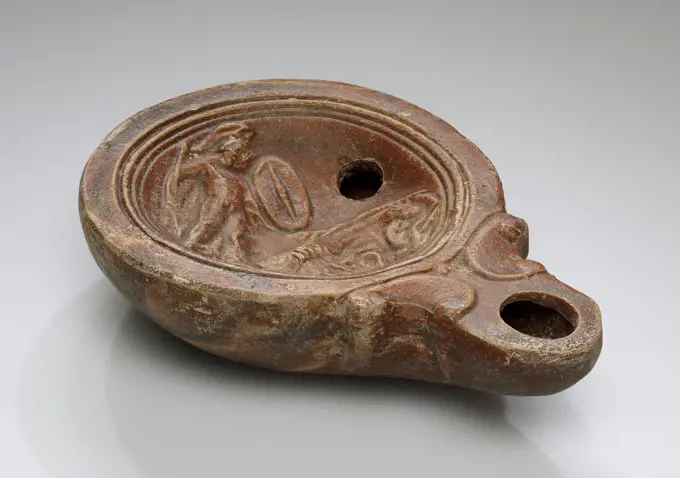
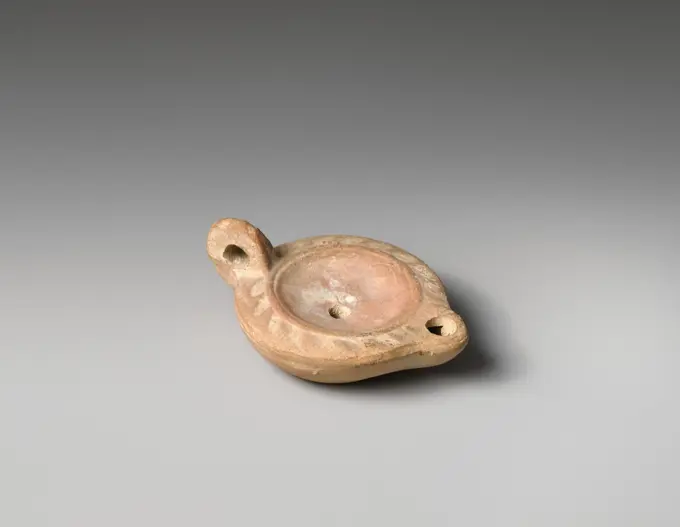
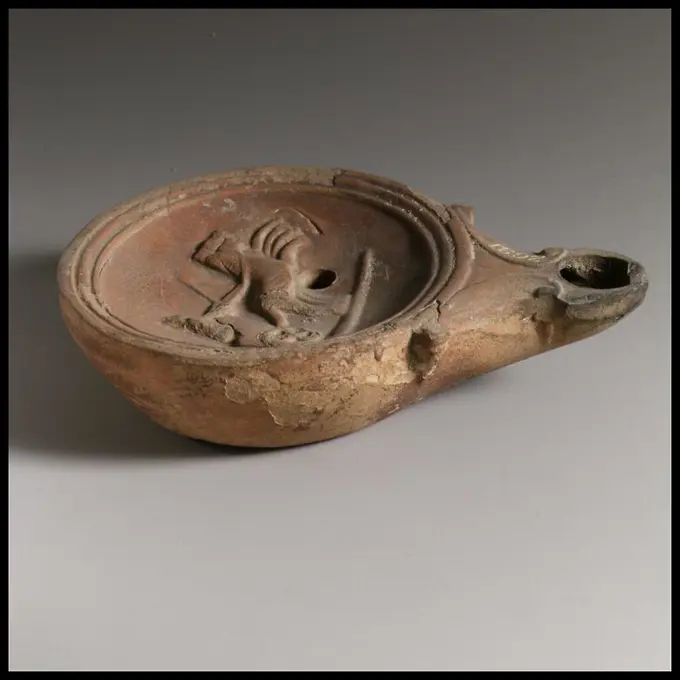
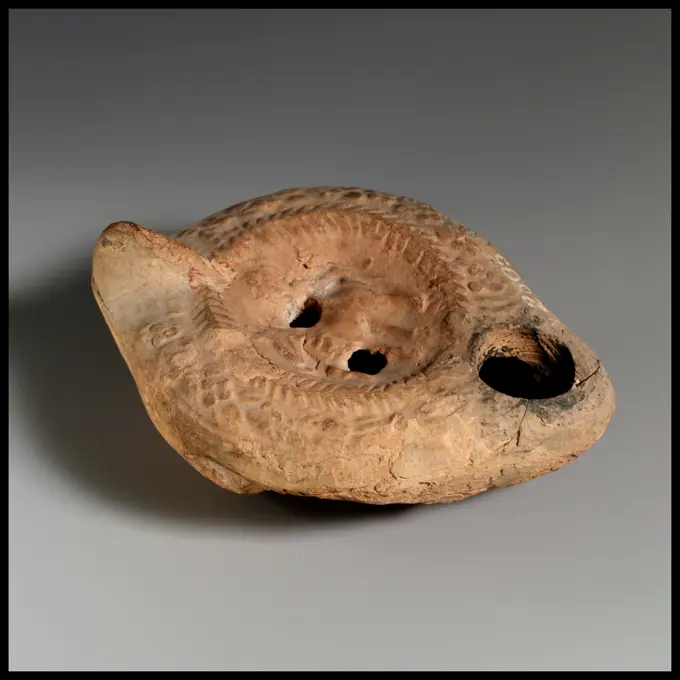
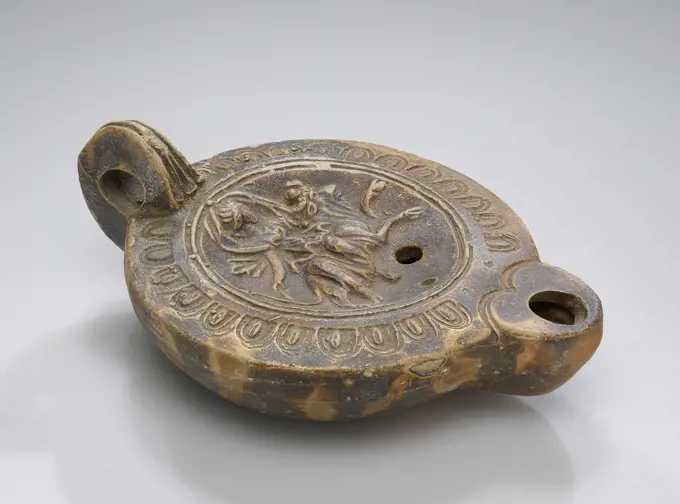
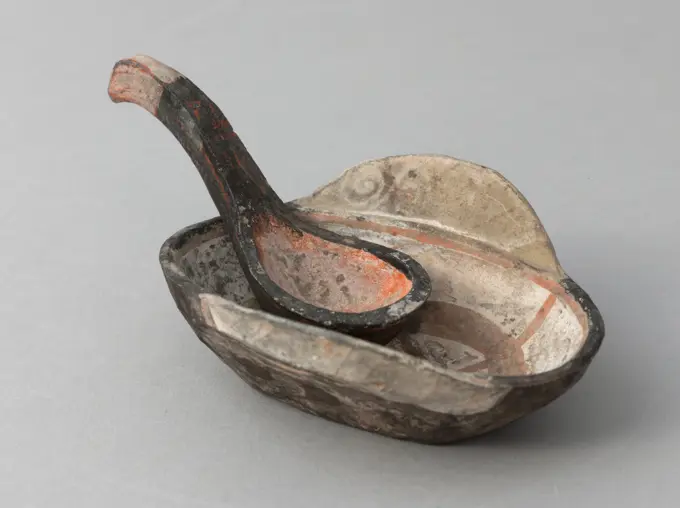
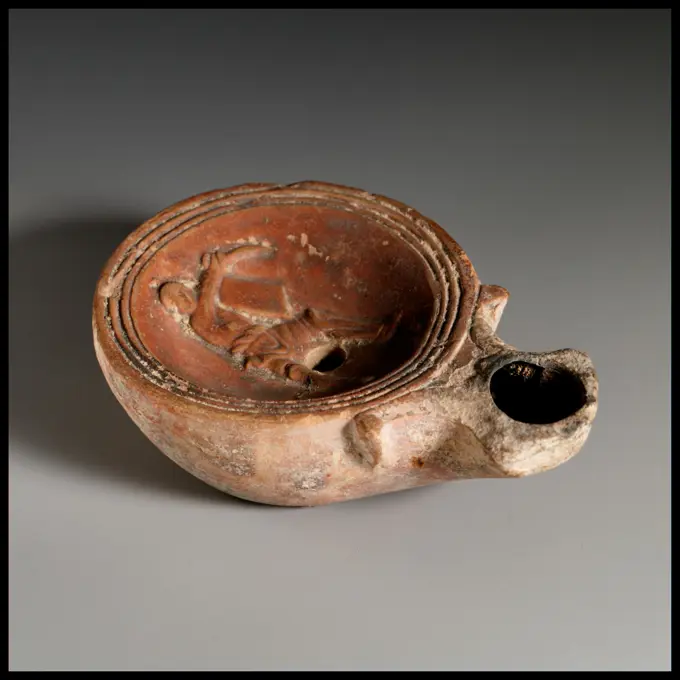
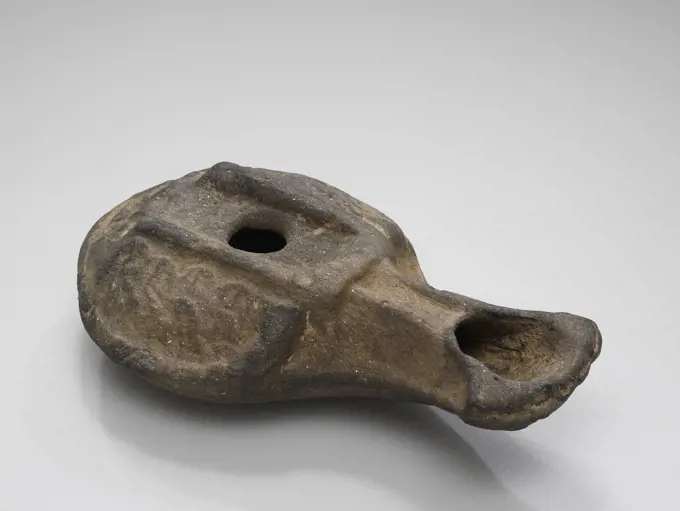
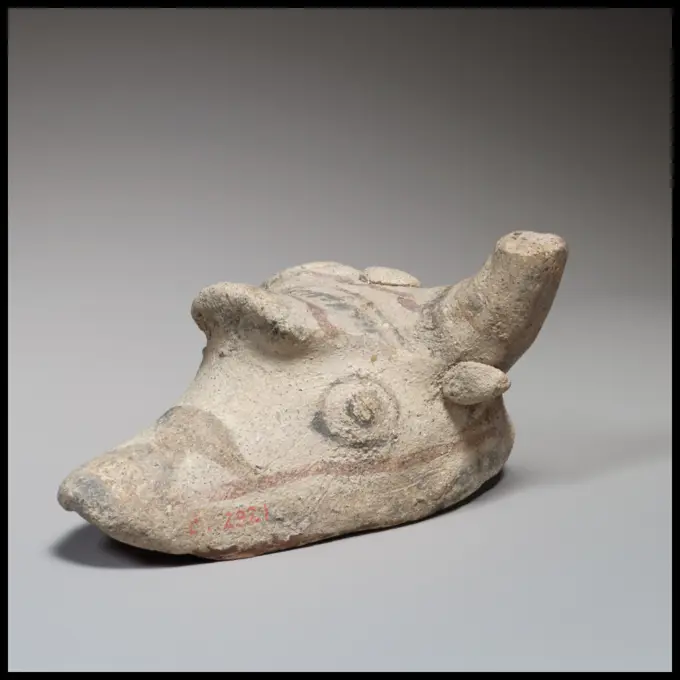
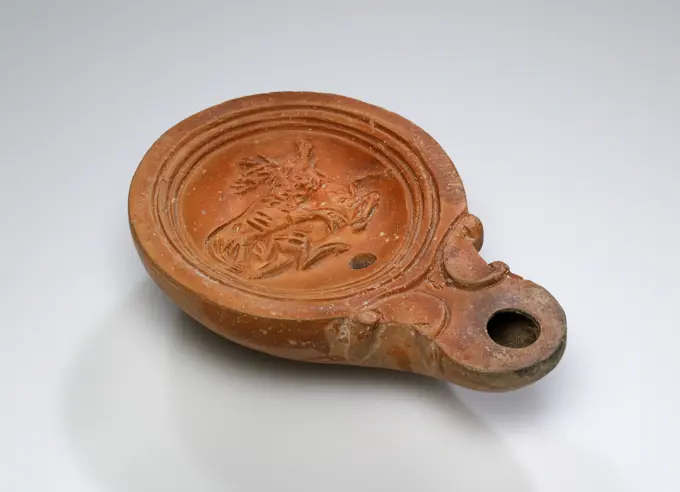
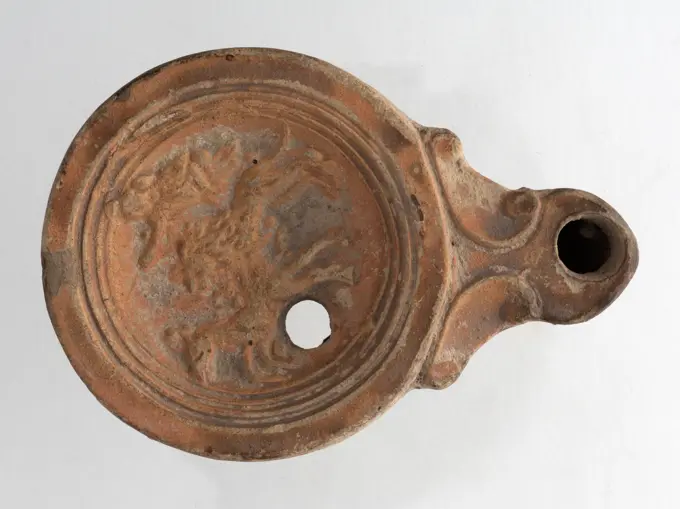
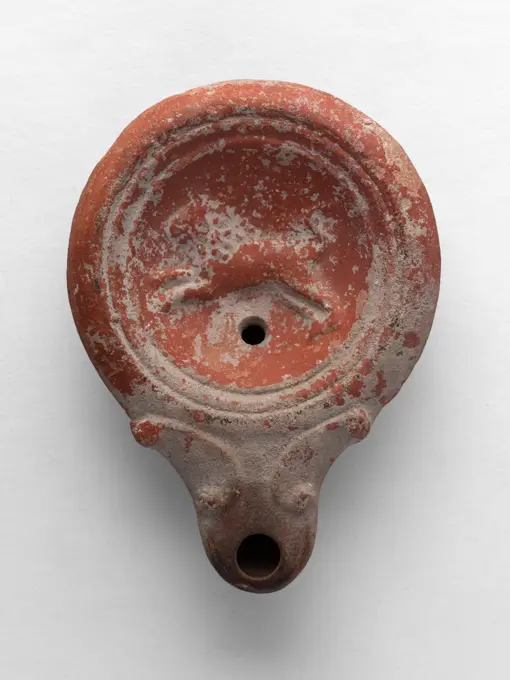
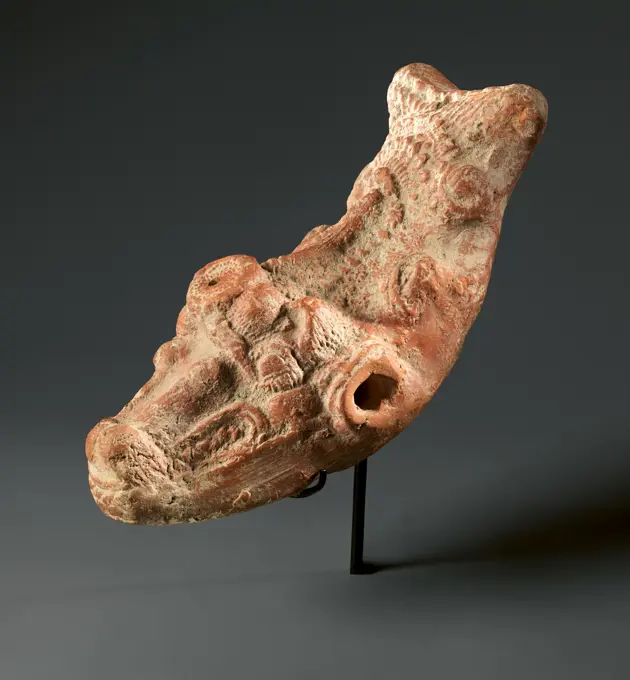
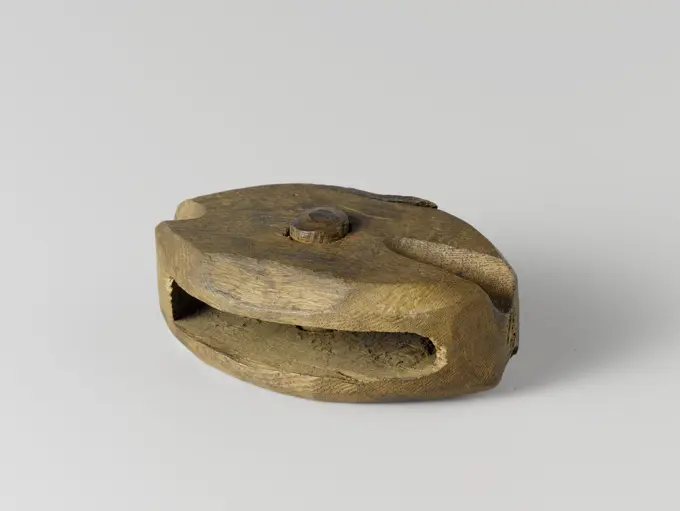
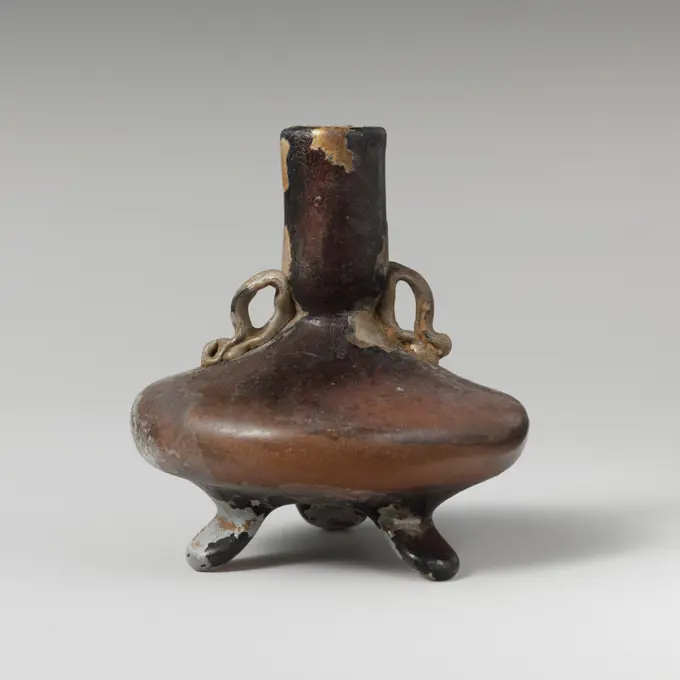
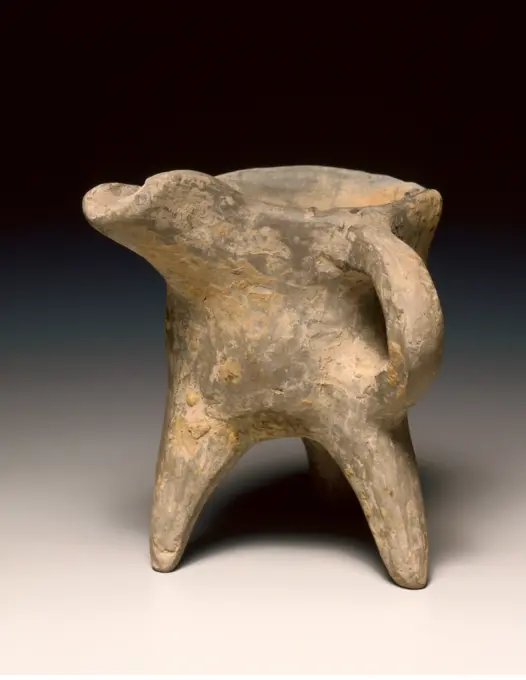
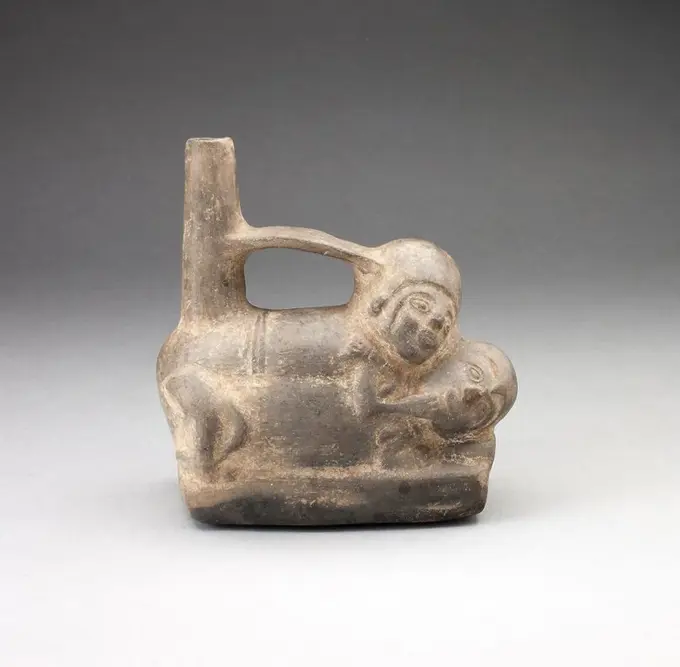
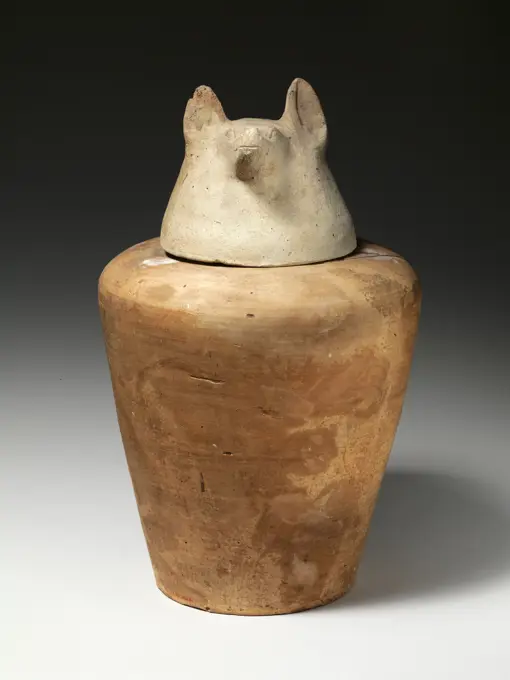
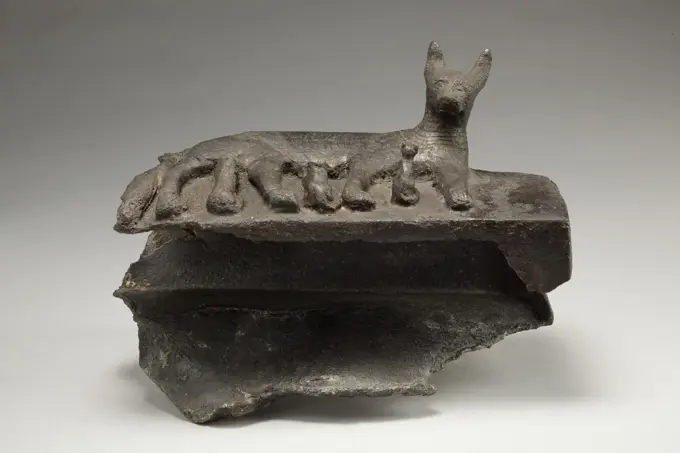
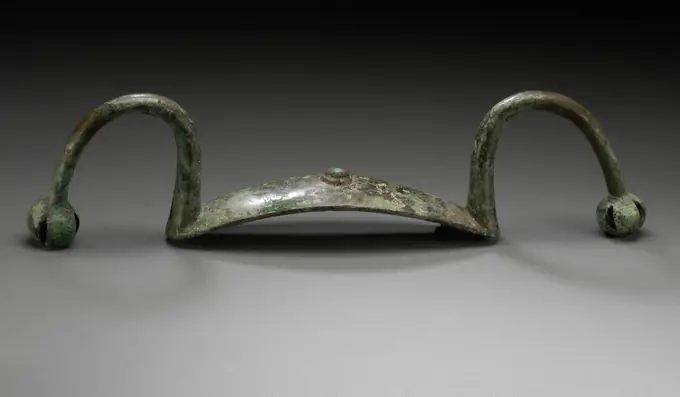
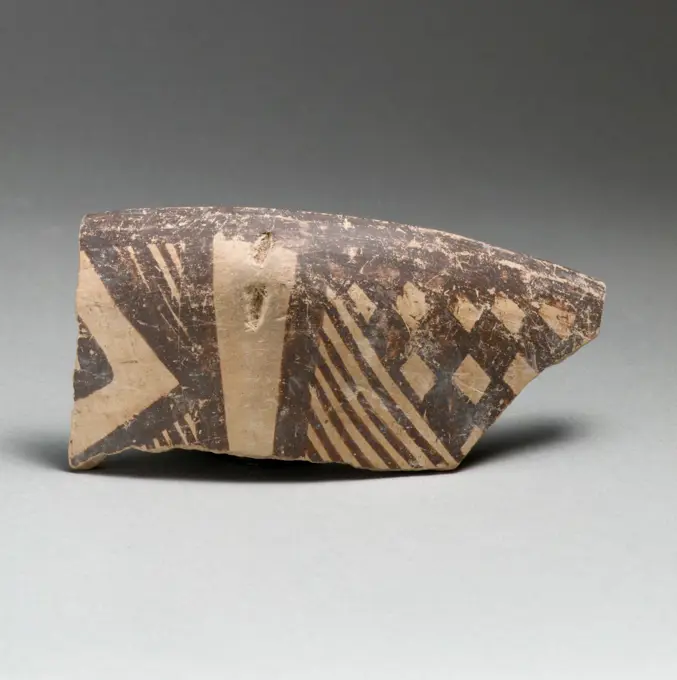
Terracotta oil lamp 4th-5th century A.D. Roman Vessberg Type 18. Unpierced handle. Mold-made. Discus: poorly-executed naked man facing front but moving to right, holding large bulbous jar in right hand and with an amphora in raised left hand; around edge of discus, short radiating lines. Two filling holes to either side of figure. On broad shoulder, stylized vines with many grapes. Undefined, slightly concave base. Front of nozzle missing, and chip in right side of handle.. Terracotta oil lamp. Roman. 4th-5th century A.D.. Terracotta. Late Imperial. TerracottasLamp; North Africa, Tunisia; 1st - 2nd century; Terracotta; 12.2 x 4.9 x 7 cm (4 13,16 x 1 15,16 x 2 3,4 in.)Lamp. UnknownLamp. UnknownTerracotta oil lamp. Culture: Roman. Dimensions: Overall: 7/8 x 3 3/4 in. (2.2 x 9.5 cm). Date: 1st century B.C.-1st century A.D.. Museum: Metropolitan Museum of Art, New York, USA.Lamp, Asia Minor; 1st century B.C. - 1st century A.D; Terracotta; 2.7 × 6.2 × 10.5 cm (1 1,16 × 2 7,16 × 4 1,8 in.)Lamp. UnknownLamp. UnknownLamp. UnknownTerracotta oil lamp. Culture: Roman. Dimensions: Length: 2 1/2 in. (6.4 cm)Height: 1 3/16 in. (3 cm). Date: ca. A.D. 550-650.Broneer Type 29. Unpierced handle. Mold-made. Discus: krater containing fruit. Two large filling holes at bottom of scene near nozzle. Sloping shoulder: row of large raised points. Museum: Metropolitan Museum of Art, New York, USA.Terracotta oil lamp 2nd century A.D. Roman, Cnidian Loeschcke Type 8. Mold-made. Discus: rosette with eight petals, radiating from a central filling hole. On shoulder, an oak wreath. Undefined, pushed-in base.Intact.. Terracotta oil lamp 241554Faience aryballos (oil flask) in the form of a fish. Culture: East Greek. Dimensions: H.: 2 1/4 x 4 3/8 in. (5.7 x 11.1 cm). Date: 6th century B.C..The fish has been identified as a native Egyptian species, tilapia nilotica. Museum: Metropolitan Museum of Art, New York, USA.Terracotta oil lamp 4th-5th century A.D. Roman, Cypriot Vessberg Type 18. Unpierced handle. Mold-made. Discus: running bull facing left and wearing ornate collar, flanked to either side by herring-bone wreath. Above bull: indistinct letters (); below bull: Greek leteters in relief: AY. Two filling holes. On shoulder, stylized vine tendril with bunches of grapes. On slightly concave base, indistinct Greek letters in relief: EYTYXHTOC (). Buff clay.. Terracotta oil lamp. Roman, Cypriot. 4th-5th century A.D.. Terracotta. Late Imperial. TerracottasLamp, Cologne, Germany; 1st - 2nd century; Terracotta; 2.7 x 4 x 5.8 cm (1 1,16 x 1 9,16 x 2 5,16 in.)Imitation Oil Lamp with Portrait Medallion. UnknownLamp, North Africa; 1st - 4th century; Terracotta; 2.7 x 7 x 10 cm (1 1,16 x 2 3,4 x 3 15,16 in.)Terracotta oil lamp. Culture: Roman, Cypriot. Dimensions: Overall: 1 3/8 x 3 in. (3.5 x 7.6 cm). Date: 4th-5th century A.D..Vessberg Type 18. Unpierced handle. Mold-made. Discus: running bull facing left and wearing ornate collar, flanked to either side by herring-bone wreath. Above bull: indistinct letters (); below bull: Greek leteters in relief: AY. Two filling holes. On shoulder, stylized vine tendril with bunches of grapes. On slightly concave base, indistinct Greek letters in relief: EYTYXHTOC (). Buff clay. Museum: Metropolitan Museum of Art, New York, USA.Lamp, Asia Minor; 3rd century B.C; Terracotta; 3.9 × 7 × 10 cm (1 9,16 × 2 3,4 × 3 15,16 in.)Lamp. UnknownLamp, Anatolia; 1st - 4th century; Terracotta; 3 x 8 x 11.2 cm (1 3,16 x 3 1,8 x 4 7,16 in.)Vase fragment Minoan. Vase fragment 247690Terracotta oil lamp. Culture: Roman. Dimensions: Overall: 1 1/4 x 4 1/4 in. (3.2 x 10.8 cm). Date: 1st century B.C.-1st century A.D..Loeschcke Type 1A. Mold-made. Deep concave discus: at center, a ring of three, raised concentric circles, surrounded by a frieze of five alternating palmettes and tongues; a small single filling hole off-center, with a band of lines and grooves on narrow, horizontal shoulder. A funnel-shaped channel runs from the discus towards the wick hole. Volutes flanking angular nozzle, with large wick hole. Raised base ring, and uneven base, inscribed at center with I.Intact. Museum: Metropolitan Museum of Art, New York, USA.Lamp, Asia Minor; 1st - 4th century; Terracotta; 2.3 x 7.2 x 10.6 cm (7,8 x 2 13,16 x 4 3,16 in.)Terracotta oil lamp 2nd century A.D. Roman Loeschcke Type 8. Mold-made, with ring handle. Shallow plain concave discus; a single filling hole at center, and a groove and raised circle around edge. Slightly sloping shoulder, with impressed pattern of leaves. Incised base ring, and uneven base.Intact.. Terracotta oil lamp. Roman. 2nd century A.D.. Terracotta. Mid Imperial. TerracottasTerracotta lamp late 1st-2nd century A.D. Roman In the discus stands a gladiator in armor, greaves, and helmet. His small, square shield and curved sword mark him as a thrax (Thracian), one of the more popular categories of fighter.. Terracotta lamp. Roman. late 1st-2nd century A.D.. Terracotta; mold-made, lead-glazed ware. Imperial. TerracottasTerracotta oil lamp. Culture: Roman. Dimensions: Length: 4 3/16 in. (10.6 cm)Height: 1 1/8 in. (2.9 cm). Date: 1st century B.C.-1st century A.D.. Museum: Metropolitan Museum of Art, New York, USA.Lamp. UnknownOil LampTerracotta oil lamp 4th-5th century A.D. Roman Vessberg Type 18. Unpierced handle. Mold-made. Discus: horse trotting left, with uncertain object suspended above his back. Two filling holes. Herring-bone wreath around discus. Pattern of dots on shoulder. Large wick hole. Slightly uneven base.Large chip and crack on either side of body and around nozzle along mold join.. Terracotta oil lamp. Roman. 4th-5th century A.D.. Terracotta. Late Imperial. TerracottasOil LampTerracotta oil lamp ca. 350-250 B.C. Greek Large, wheel-made body, with applied nozzle. Large central filling hole, surrounded by a plain, flat band and two concentric grooves; convex-curving side to deep body, with a pierced projecting knob on left side. Raised and slightly splayed base ring and deep concave base.Intact, except for chip in base ring. Heavy, thick base.. Terracotta oil lamp. Greek. ca. 350-250 B.C.. Terracotta. Late Classical or Early Hellenistic. TerracottasLamp. UnknownLamp. UnknownLamp, North Africa; 1st - 4th century; Terracotta; 2.5 x 8.2 x 11.2 cm (1 x 3 1,4 x 4 7,16 in.)Pottery Whistle date uncertain Mexican. Pottery Whistle. Mexican. date uncertain. Clay. Oaxaca, Mexico. Aerophone-Whistle Flute-whistleLamp, North Africa; 1st - 4th century; Terracotta; 2.6 x 8.2 x 11.5 cm (1 x 3 1,4 x 4 1,2 in.)Terracotta lamp. Culture: Roman, Cypriot. Dimensions: Overall: 1 x 3 in. (2.5 x 7.6 cm). Date: 1st century B.C.-1st century A.D.. Museum: Metropolitan Museum of Art, New York, USA.Ocarina 600-1200 Nariño. Ocarina. Nariño. 600-1200. Ceramic. Pre-Columbian. Colombia. Aerophone-Blow Hole-vessel fluteOil LampLamp 12th-13th century Syrian. Lamp 26458Mingqi spoon ". Terracotta. Han. Paris dynasty, Cernuschi museum. 157345-8 Asian artTerracotta oil lamp ca. 20 B.C.-A.D. 25 Roman, Cypriot Loeschcke Type 1A. Mold-made. Discus: gladiator standing facing forward, wearing helmet and greaves, holding small square shield in left and short, curved sword in raised right hand, with a band of lines and grooves towards edge. Volutes flanking nozzle. Within raised base ring, slightly uneven base, with impressed letters across center: FAVSII.Intact.. Terracotta oil lamp. Roman, Cypriot. ca. 20 B.C.-A.D. 25. Terracotta. Early Imperial, Augustan. TerracottasTerracotta oil lamp. Culture: Roman. Dimensions: Overall: 1 x 3 1/4 in. (2.5 x 8.3 cm). Date: 3rd century A.D.. Museum: Metropolitan Museum of Art, New York, USA.Terracotta oil lamp 7th century A.D. Roman Vessberg Type 19 (slipper lamp). Mold-made, with applied tall, conical handle. Sharply carinated body; wide filling hole with raised rim; channel to wick hole. Wide, rounded shoulder decorated with a pattern of raised lines, forming a V shape in the middle of each side. Oval base ring, and flat base.Intact, except for a small chip at edge behind handle.. Terracotta oil lamp 241681Container in shape of deer, 8th-15th century, 5 1/2 x 9 x 5 in. (14 x 22.9 x 12.7 cm), Earthenware, Peru, 8th-15th centuryLamp. UnknownLamp, Asia Minor; 1st century B.C; Terracotta; 3.4 x 7 x 11.2 cm (1 5,16 x 2 3,4 x 4 7,16 in.)Lamp. UnknownBull's head mask with human characteristics ca. 600-480 B.C. Cypriot The mask, which may represent Acheloos, is handmade. It has bulging eyes, a flat muzzle, and a flat projection that emerges from the forehead below a pellet between the horns.. Bull's head mask with human characteristics 241361Lamp, North Africa, Tunisia; 3rd - 2nd century B.C; Terracotta; 2.6 x 8.2 x 11.4 cm (1 x 3 1,4 x 4 1,2 in.)Oil LampSteelyard Weight with heraldic decoration. Used on a steelyard balance - a counterweight for a straight-beam balance with arms of unequal length. The counterweight slides along the longer arm to counterbalance the load and indicate its weight. Also known as a Roman steelyard or Roman balance.. Found at Weoley Castle, Birmingham, a Birmingham Museums Trust Heritage site.Stoneware feeding bottle partly green glazed, feeding bottle utensils equipment earth discovery ceramics earthenware glaze lead glaze copper copper oxide metal, Above the foot constricted and conical body. Starter spout and ear White shard partly green glazed archeology Rotterdam rail tunnel drink Soil discovery: rail tunnel Rotterdam.Jar, before 1921. Colombia. Red ware; overall: 9.6 x 8.5 x 6.5 cm (3 3/4 x 3 3/8 x 2 9/16 in.).Oil Lamp. Culture: Coptic. Dimensions: Overall: 1 15/16 x 3 7/16 x 2 13/16 in. (4.9 x 8.8 x 7.2 cm). Date: 4th-7th century. Museum: Metropolitan Museum of Art, New York, USA.Mallet New Kingdom-Ptolemaic ca. 1200-30 B.C. View more. Mallet. ca. 1200-30 B.C.. Wood. New Kingdom-Ptolemaic. From Egypt, Upper Egypt, Thebes, Asasif, MMA excavations, 1912-13. Dynasty 20 or laterFragment of the stamp -stamp amphora; Kinolis (CA 290-250 A.C.); 284-280 BC (-284-00-00--280-00-00);Myrmekion, resource amphora, men's heads (iconogr.), Hellenistic period, transmission (provenance), synopian stamps, Polish excavations, Polish excavations in MyrmekionVase. Lead, northern Iran. 1st millennium before J.-C. Paris, Cernuschi museum. Anse, 1st millennial before JC, Northern Iran, lead, vase, animalLamp. UnknownBottle, Monkey. Culture: Nasca. Dimensions: Overall: 6 1/2 in. (16.51 cm)Other: 8 1/8 in. (20.6 cm). Date: 1st century B.C.-A.D. 1st century.This double-spouted bottle features the horizontal relief figure of a monkey decorated with red, white, and black slip. Vegetal leaves decorate the monkey's body. A human face is incised into the end of its tail, which encircles the bottle's chamber. Vessels like this one were most likely made sometime around A.D. 425-550 by the Nasca culture of Peru's south coast. The form of the figure on this bottle may be the "Mythical Monkey," which has been identified on late Paracas and early Nasca embroidered textiles dating from 100 B.C.-A.D. 100. The Paracas culture predates the Nasca on the south coast of Peru. This bottle's human features, agricultural plant decoration, and forehead ornaments are characteristic of the Mythical Monkey. Although monkeys are not native to coastal Peru, the Mythical Monkey figure is a prevalent motif in Nasca iconographyTerracotta oil lamp late 2nd-3rd century A.D. Roman Loeschcke Type 8. Unpierced handle. Mold-made. Discus: rosette of pointed, overlapping petals. On broad, almost horizontal shoulder: two rows of impressed dots encircled by a herringbone wreath. Rounded nozzle with large wick hole. Undefined concave base; on base, in Greek letters: PMIANO. Buff clay.Part of discus broken and missing, and one small hole in side on right towards handle. Some limy encrustation on and around handle.. Terracotta oil lamp. Roman. late 2nd-3rd century A.D.. Terracotta, mold-made. Late Imperial. TerracottasOil lamp. Hunting scene, scroll beak. Terracotta. High Empire. Paris, Carnavalet museum. 50034-13 Volute beak, hunting, high-empire, oil lamp, terracotta, sceneLamp 3rd century. Lamp 444962Biconical Bead 800 BCE-600 BCE Greece. These precious bronzes objects are votives, or devotional gifts, made for gods. They come in many forms. Some are miniature sculptures of animals, mostly depicting horses, deer, and birds. Others are items of personal adornment, including beads and brooches. Quite a few seem once to have been attached to something else. This assemblage is characteristic of the thousands of votives that were hung from sacred trees or placed in sanctuaries around Greece. Once a shrine was full, the votives were gathered together and ceremonially buried to make room for more offerings. This comes from Thessaly in north-eastern Greece.. Bronze . Ancient GreekOlive lamp;  5th century BC (-500-00-00--401-00-00);Terracotta oil lamp. Culture: Roman, Cypriot. Dimensions: Overall: 1 x 3 in. (2.5 x 7.6 cm).Plain concave discus with off-center filling hole, surrounded by a band of lines and grooves. Broad, slightly sloping shoulder with ovules around the inner edge. Base ring and concave base inscribed: M.. Front right side o nozzle broken and missing. Museum: Metropolitan Museum of Art, New York, USA.Terracotta oil lamp Roman, Cypriot Mold-made, with small unpierced handle. Discus: rosette with seventeen irregular petals, outlined in relief, radiating from central filling hole. On shoulder, crisp herring-bone wreath. Four short lines behind wick hole. Undefined, slightly concave base, with indistinct letters in relief.Intact.. Terracotta oil lamp. Roman, Cypriot. Terracotta. TerracottasFragment of a Horse. Culture: Coptic. Dimensions: Overall: 3 5/16 x 3 1/8 x 1 5/8 in. (8.4 x 8 x 4.2 cm). Date: 4th-7th century. Museum: Metropolitan Museum of Art, New York, USA.Jar with Handles. Japan. Date: 2500 BC-1500 BC. Dimensions: 49 × 39 × 32 cm. Earthenware. Origin: Japan. Museum: The Chicago Art Institute, Chicago, USA.Oil lamp. Lion running to the left. Terracotta. High Empire. 8 bis, rue Amyot (1895). Magne collection. Paris, Carnavalet museum. Magne collection, running, high-empire, oil lamp, lion, terracotta, animalTerracotta oil lamp 2nd-1st century B.C. Greek Mold-made. Almost triangular body. Central filling hole, surrounded by a broad band. Sloping shoulder, decorated in relief with two standing figures with legs to front and heads almost touching at back; at left, a female wearing a long chiton, and at right, a male in a short tunic; around edge, beaded pattern; at sides, projecting knobs with S-pattern, and on top of nozzle, straight grooves and above two indents. Long, straight nozzle. Broad base ring, and small, uneven base.Complete, except for left front edge of nozzle and small hole in base.. Terracotta oil lamp. Greek. 2nd-1st century B.C.. Terracotta. Hellenistic. TerracottasEmilia-Romagna Ferrara Ferrara Museo Civico di Schifanoia44. Hutzel, Max 1960-1990 General Notes: INCOMPLETE RECORD--NEGATIVES PROCESSED, PRINTS FILED German-born photographer and scholar Max Hutzel (1911-1988) photographed in Italy from the early 1960s until his death. The result of this project, referred to by Hutzel as Foto Arte Minore, is thorough documentation of art historical development in Italy up to the 18th century, including objects of the Etruscans and the Romans, as well as early Medieval, Romanesque, Gothic, Renaissance and Baroque monuments. Images are organized by geographic region in Italy, then by province, city, site complex and monument.Rattle, Musical Instrument with Royal Cartouche. Egypt, Late Period to Ptolemaic Period (724 - 30 BCE). Tools and Equipment; musical instruments. GraniteMakara, mythical aquatic creature in the form of a toy 1st century A.D. India (Uttar Pradesh, probably Kausambi). Makara, mythical aquatic creature in the form of a toy 75355Ankle disc block, anonymous, c. 1590 - c. 1596 block Ship section, an ankle disc block, without a disc.  wood (plant material) cutting  Nova Zembla. Saving HuysTerracotta oil lamp. Culture: Roman. Dimensions: Overall: 1 3/8 x 3 in. (3.5 x 7.6 cm). Date: 5th century A.D..Vessberg Type 18. Mold-made, with unpierced handle. Discus: cross decorated with small circles and straight lines on arms, with groups of similar circles between the arms. Two filling holes at sides. On shoulder, palm wreath surrounded by hollow circles. Large wick hole. Undefined, slightly concave base.Complete, except for part of handle. Museum: Metropolitan Museum of Art, New York, USA.Glass bottle with three feet ca. 4th century A.D. Roman Translucent purple; handles probably in same color.Plain, thick, vertical rim; cylindrical neck with tooled horizontal indent around base; body in a broad, horizontal lentoid shape; three feet pinched out from lower body in splayed broad pads; pushed-in bottom; two dolphin handles applied to top of body, drawn up side to lower part of neck, then folded out and downwards, and trailed off over other end. Intact; a few bubbles; dulling, pitting, patches of thick creamy and white weathering, and iridescence.. Glass bottle with three feet 256722Limestone hand holding a sword () Cypriot The under-lifesize hand holds an object, possibly a sword, the end of which is rounded, with two circular elements under a part that is square in section.. Limestone hand holding a sword () 242256Wine Warmer (Jue), c. 1300-1023 BC. China, Shang dynasty (c.1600-c.1046 BC), Anyang phase (c.1250-1046 BC). Pottery, tripod vessel with loop handle and rudimentary bowstring decoration; diameter: 13.4 cm (5 1/4 in.); overall: 12.2 cm (4 13/16 in.).Pendant with Animal Head 1100 BCE-900 BCE China. Jade .Terracotta oil lamp 3rd century A.D. Roman Late Loeschcke Type 8. Mold-made, with unpierced handle. Discus: charioteer driving to left behind two horses; a single filling hole at bottom. Broad, flat shoulder: double wreath of impressed dots. Large wick hole. Undefined, pushed-in base.Front of nozzle broken and missing, with large hole in body below.. Terracotta oil lamp. Roman. 3rd century A.D.. Terracotta. Late Imperial. TerracottasStirrup Spout Vessel Depicing Erotic Scene. Chimú; North coast, Peru. Date: 1100-1470. Dimensions: 167 x 15.9 cm (6 9/16 x 6 1/4 in.). Ceramic. Origin: North Coast. Museum: The Chicago Art Institute, Chicago, USA.Canopic jar of Tetinakht: Duamutef ca. 1550-1525 B.C. New Kingdom Three canopic jars (12.181.253a-c) were found in a tomb dating to the beginning of Dynasty 18. Two of the lids are shaped like animal heads and the third has a human head. This jar, with the jackal-headed lid, represent the deity Duamutef, protector of the stomach. Another jar, with a falcon-headed lid, represents Qebehsenuef, protector of the intestines. The third jar has a lid with a human head and represents Imsety, protector of the liver. These are three of the Four Sons of Horus. Missing from the set is the fourth jar which probably had a baboon-headed lid representing Hapy, protector of the lungs. These are the earliest datable examples of animal-headed lids on canopic jars, a style that did not become common until later in the New Kingdom. In earlier periods, the lids were different. Old Kingdom canopic jars were often covered with simple disk-shaped lids (see 14.7.16-.19), and from the Middle Kingdom to the earlyFragment of a Mold for Arretine Bowl, 27 BC - AD 14. Italy, Roman. Terracotta; overall: 5.2 cm (2 1/16 in.).Terracotta oil lamp 3rd century B.C. Wheel-made, with applied loop handle. Deeply carinated body. Horizontal discus with a single, large filling hole at center and vertical lip around edge. Broad shoulder, with wick hole at front behind small pointed nozzle. Handle applied to outer edge of body and top of shoulder behind edge of discus at back. Raised base ring, and shallow, concave base; on underside of body, a large spiral groove.Intact, but some small chips in lip of discus.. Terracotta oil lamp. 3rd century B.C.. Terracotta. Hellenistic. TerracottasTecomate with EngravedDesign.  Artist: UnknownSitula. Date: 30 B.C.-A.D. 364. Museum: Metropolitan Museum of Art, New York, USA.Lamp decorated with menora motif; Unknown north workshop of the night; End of the 4th-fifth century (391-00-00-410-00-00);Wilanów (Warsaw) - collection, olive lampsAskos White Painted Ware;  1900-1650 BC (-1900-00-00--1650-00-00);Ornament 16th century French. Ornament 465894 French, Ornament, 16th century, Earthenware, Overall: 4 1/4 x 3 1/8 in. (10.8 x 7.9 cm). The Metropolitan Museum of Art, New York. Gift of J. Pierpont Morgan, 1917 (17.194.2207)Steelyard Weight with heraldic decoration. Used on a steelyard balance - a counterweight for a straight-beam balance with arms of unequal length. The counterweight slides along the longer arm to counterbalance the load and indicate its weight. Also known as a Roman steelyard or Roman balance.. Found at Weoley Castle, Birmingham, a Birmingham Museums Trust Heritage site.Inkstone with Pine Tree and Bird 16th century China. Inkstone with Pine Tree and Bird 41872Bronze handle of an oinochoe (jug) early 5th century B.C. Greek The top of the handle is decorated with the head of a lion, the bottom with the head of a panther skin. The choice of motifs juxtaposes a living with a skinned animal. It also places the three-dimensional and two-dimensional renderings where they are most appropriate for the vase shape.. Bronze handle of an oinochoe (jug) 255731Oil LampTerracotta oil lamp. Culture: Roman, Cypriot. Dimensions: Overall: 1 x 3 1/8 in. (2.5 x 7.9 cm).Loeschcke Type 1B. Mold-made. Discus: figure of Athena, draped, facing left, wearing crested, holding transverse spear in right and round shield in left hand, with a broad band of lines and grooves towards edge. Volutes flanking nozzle. Within raised base ring, flat base, with large impressed letters across center: FVAS.Body intact, but most of nozzle missing. Museum: Metropolitan Museum of Art, New York, USA.Cat with kittens on damaged box for animal mummy 664-30 B.C. Late Period-Ptolemaic Period Bastet was a powerful goddess of Lower Egypt, one who was protective and could bring about great prosperity. In zoomorphic form, she was represented as a cat and cats were considered sacred to her. Here Bastet reclines, watching over her kittens. Several of the kittens are prone, in the act of nursing, but one sits upright, looking at its mother, giving this scene an endearing and engaging quality. The kittens attest to Bastets fecundity, while the act of nursing emphasizes her motherly and protective characteristics, which extend to and benefit not only her direct offspring but also the people of Egypt.Bastet and her kittens lay on the fragmented remains of a box, which would have held a small mummy inside. Such mummy boxes were deposited in catacombs together with other offerings, such as linen-wrapped cat mummies, as at the extensive catacombs at Bubastis and Saqqara.. Cat with kittens on damaChariot or Horse Fitting with Jingles. China, Late Shang dynasty, Anyang phase or early Western Zhou dynasty, about 1300-950 B.C.. Tools and Equipment; horse trappings. Cast bronze with turquoise inlayVase fragment East Greek/Sardis, Lydian. Vase fragment 252771 East Greek/Sardis, Lydian, Vase fragment, Terracotta, Overall: 3 1/4 x 2 15/16in. (8.3 x 7.5cm). The Metropolitan Museum of Art, New York. Gift of The American Society for the Excavation of Sardis, 1926 (26.199.204)Bowl. Culture: Coptic. Dimensions: Overall: 1 5/16 x 3 15/16 in. (3.4 x 10 cm). Date: 4th-7th century. Museum: Metropolitan Museum of Art, New York, USA.Terracotta rim of a bowl ca. 3800-3300 B.C. Dimini culture From ThessalyDark lines and checkerboard on light ground.. Terracotta rim of a bowl 253243 Dimini culture, Terracotta rim of a bowl, ca. 38003300 B.C., Terracotta, length 5 1/16in. (12.8cm). The Metropolitan Museum of Art, New York. Anonymous Gift, 1930 (30.119.38)