Ancient Terracotta Oil Lamps

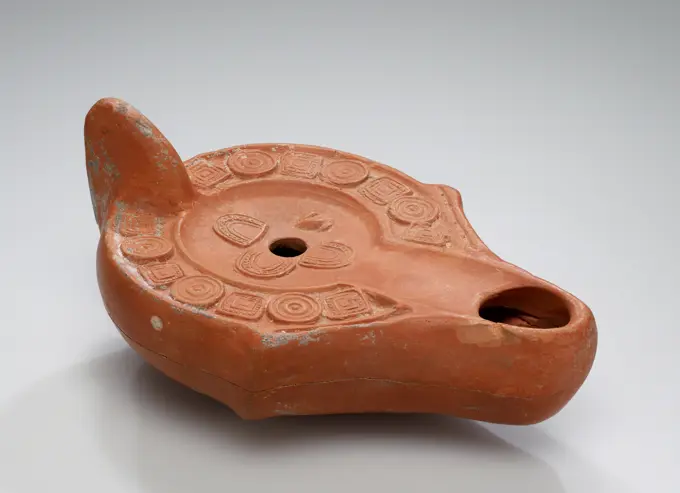
Collection of ancient terracotta oil lamps from Roman and North African origins, showcasing intricate designs, historical significance, and unique artistic styles.
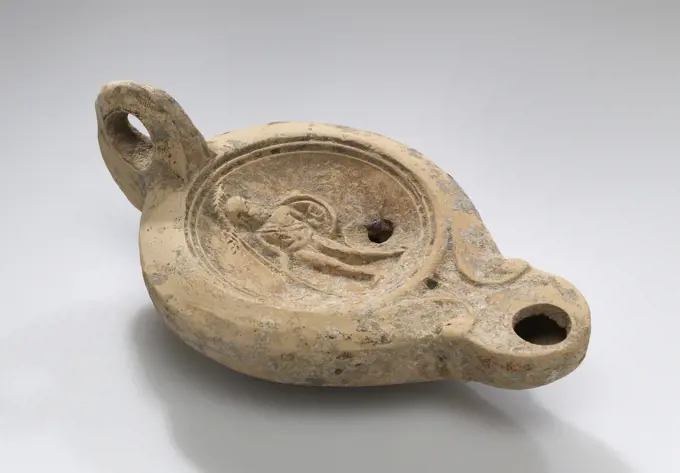
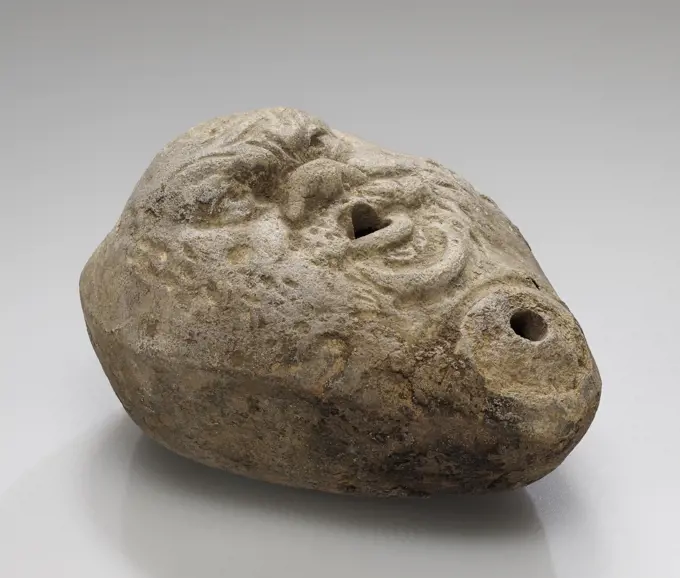
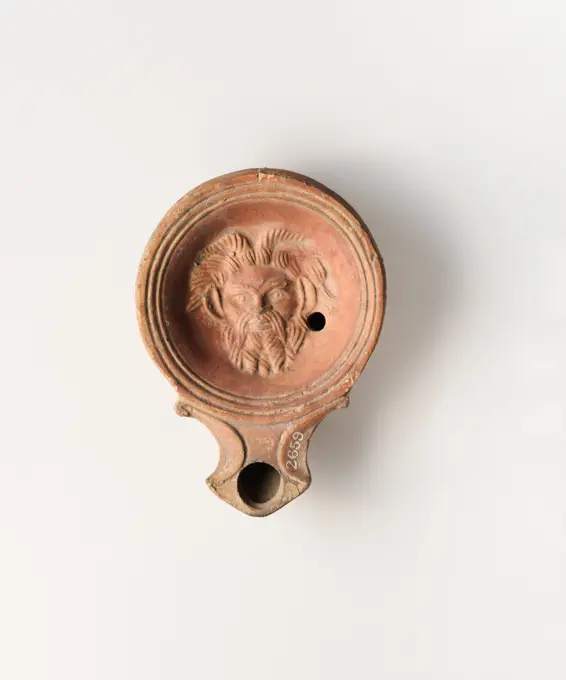
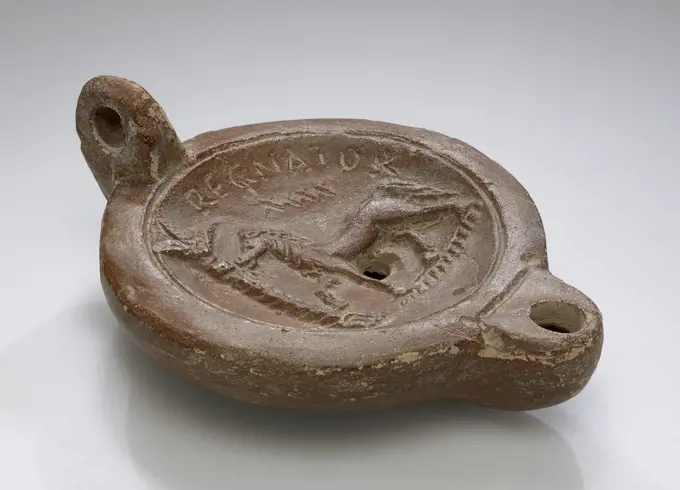
Lamp; North Africa, Tunisia; 1st - 2nd century; Terracotta; 12.2 x 4.9 x 7 cm (4 13,16 x 1 15,16 x 2 3,4 in.)
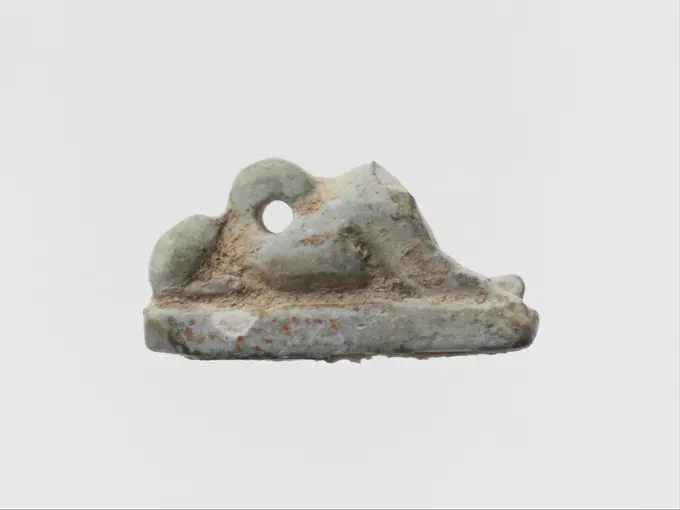
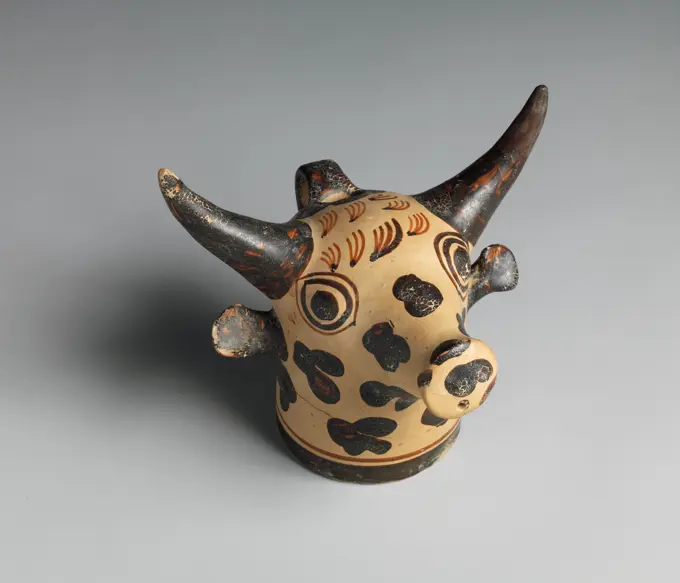
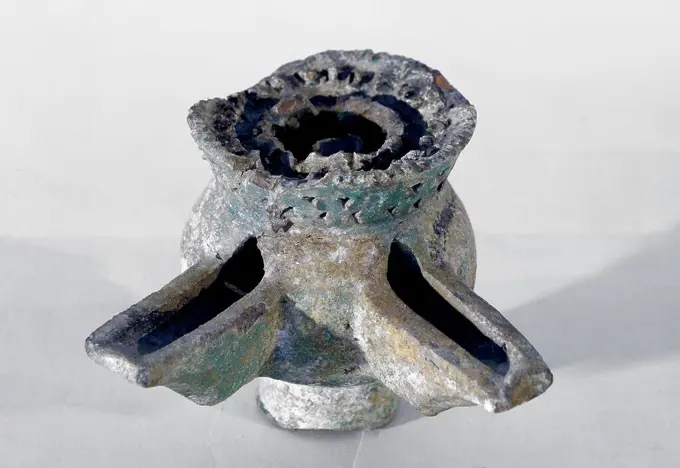
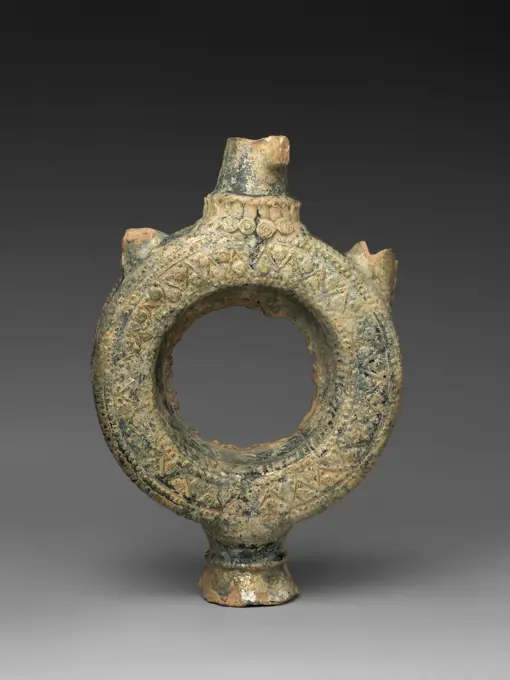
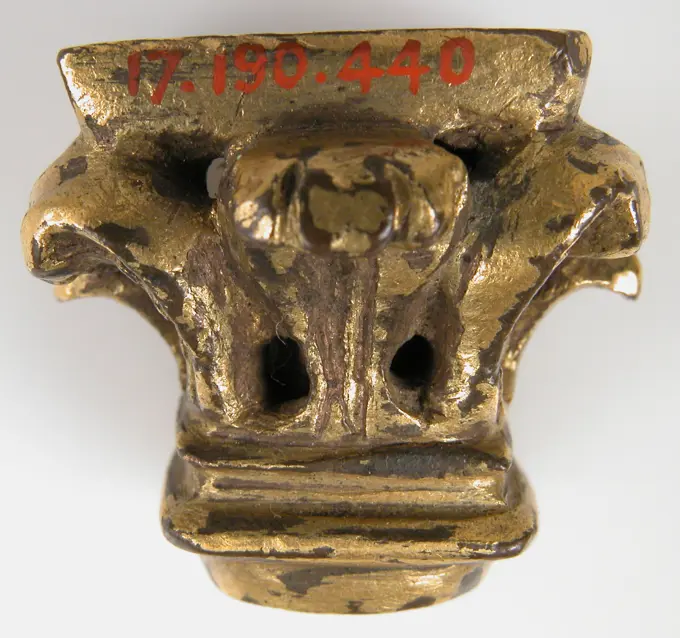
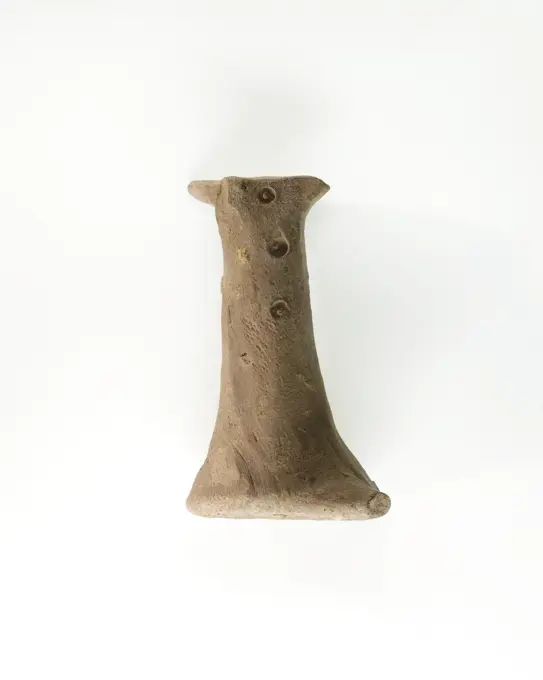
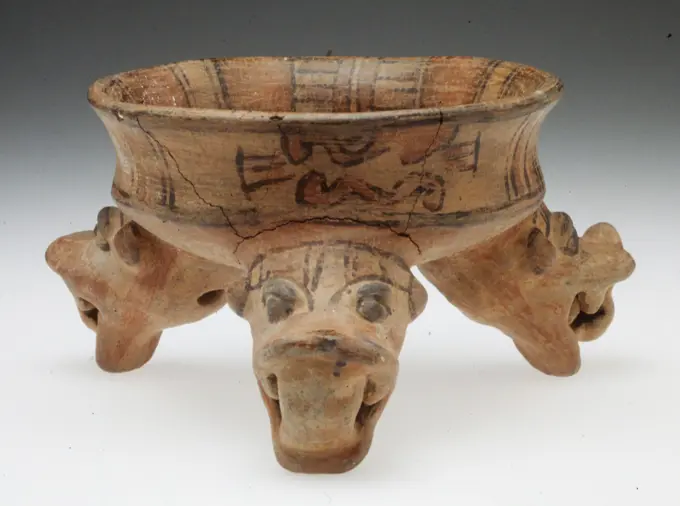
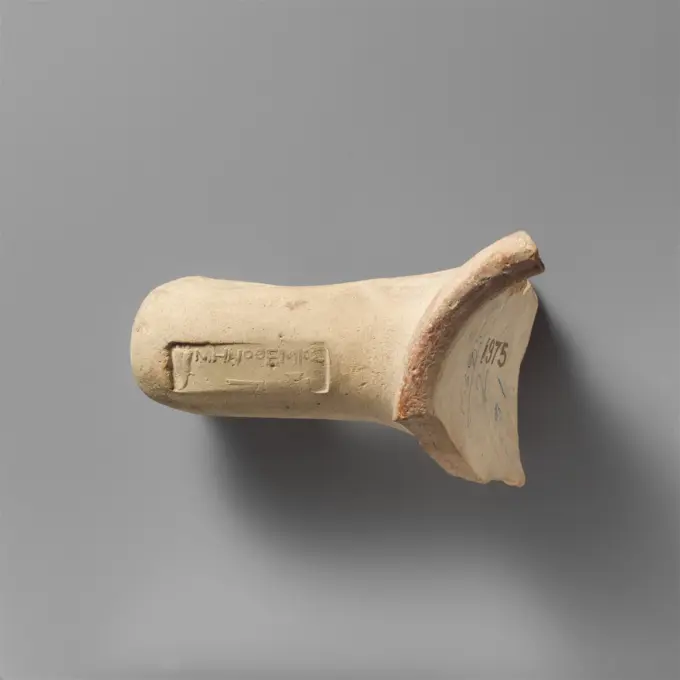
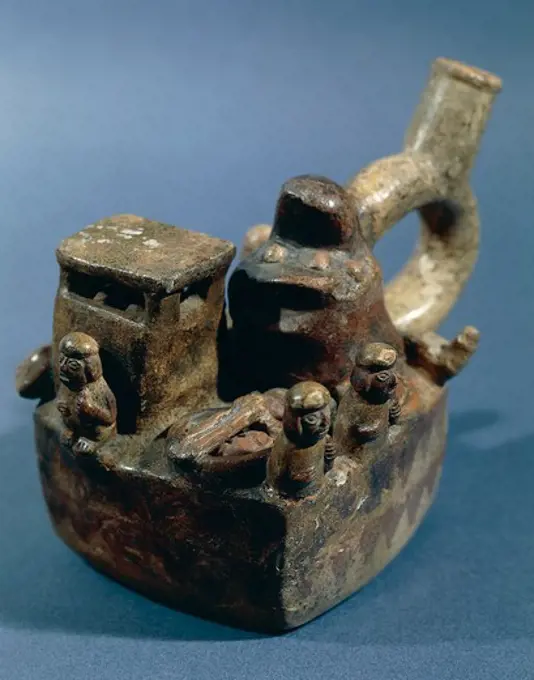
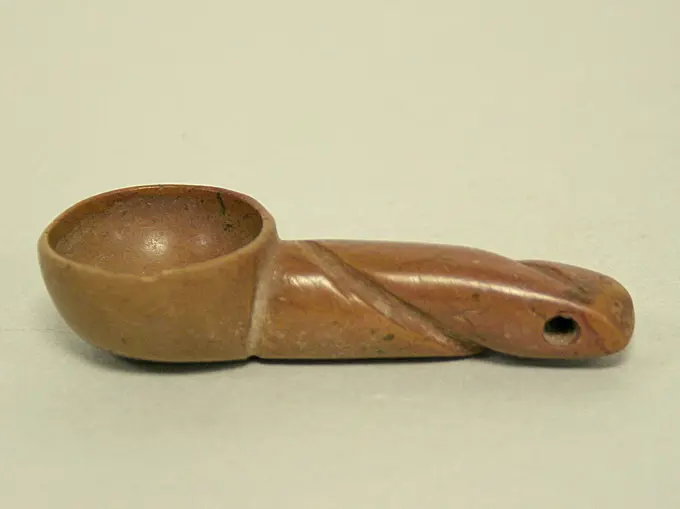
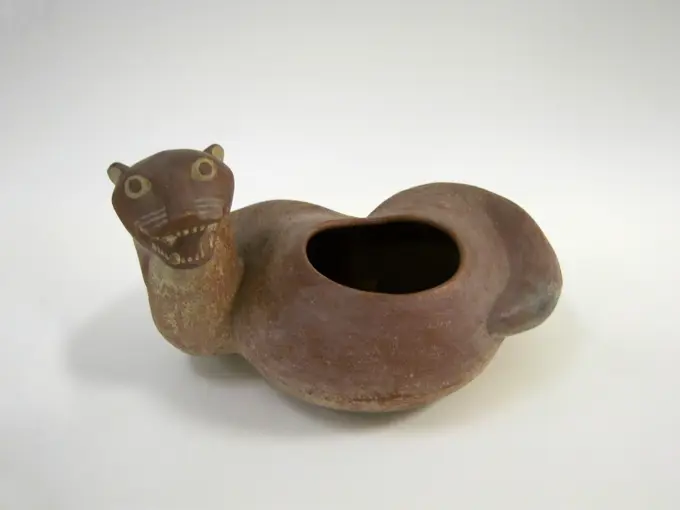
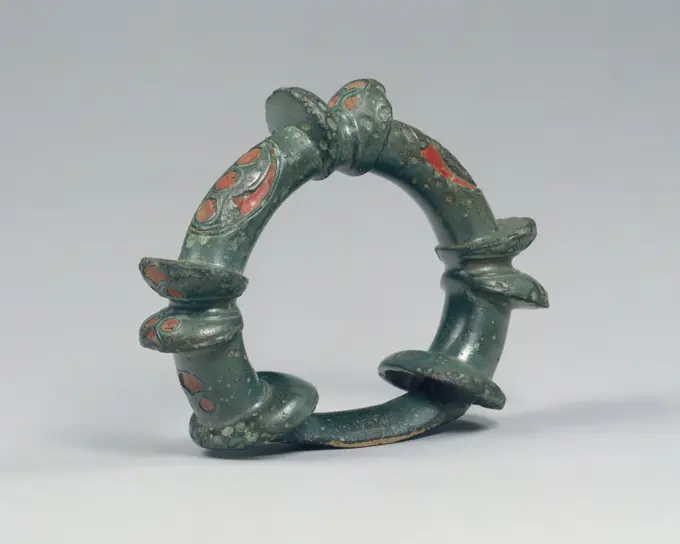
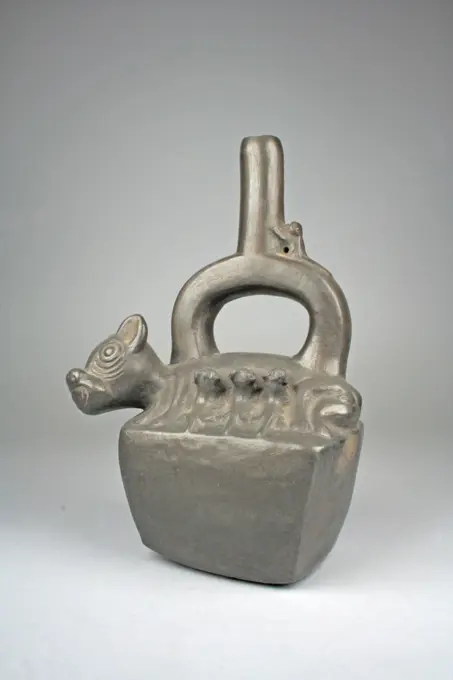
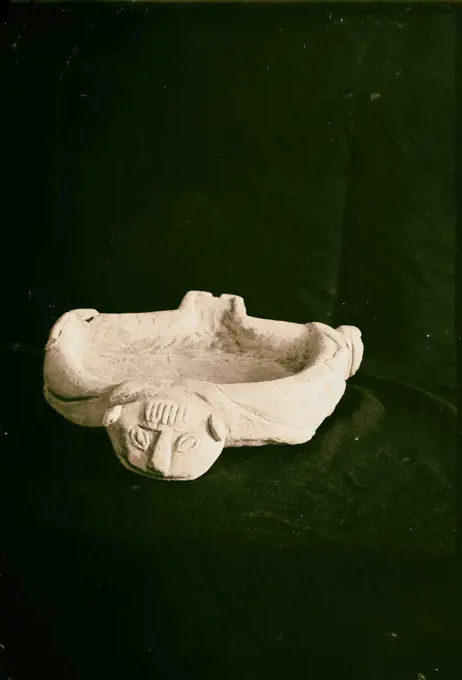
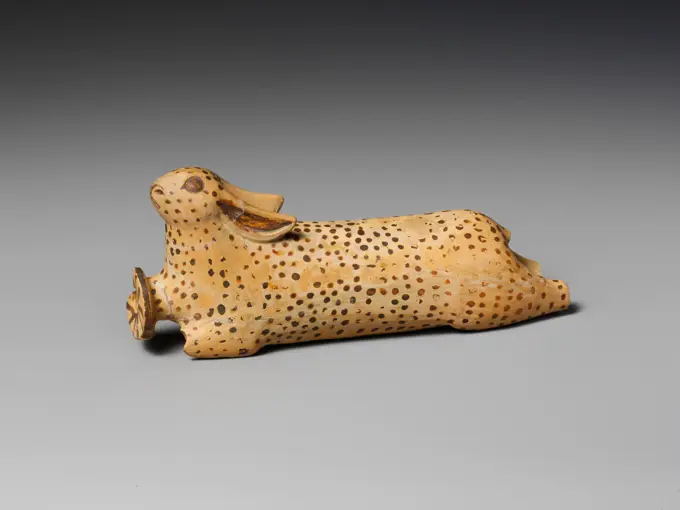
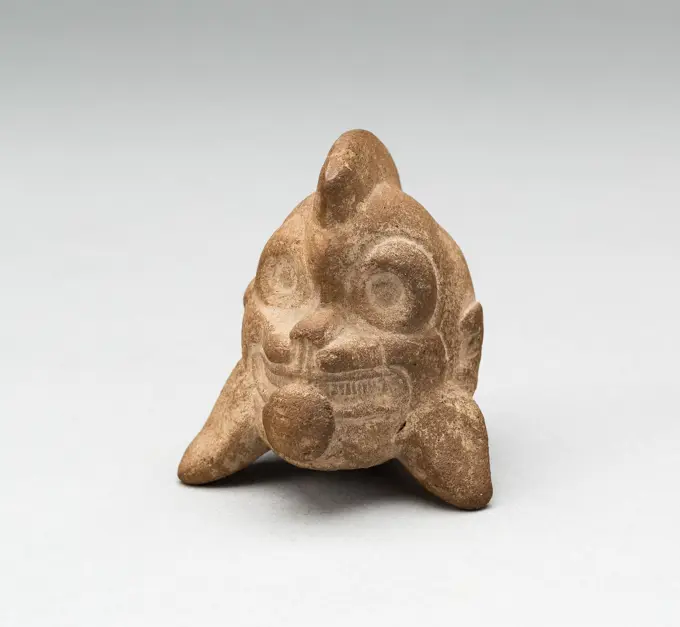
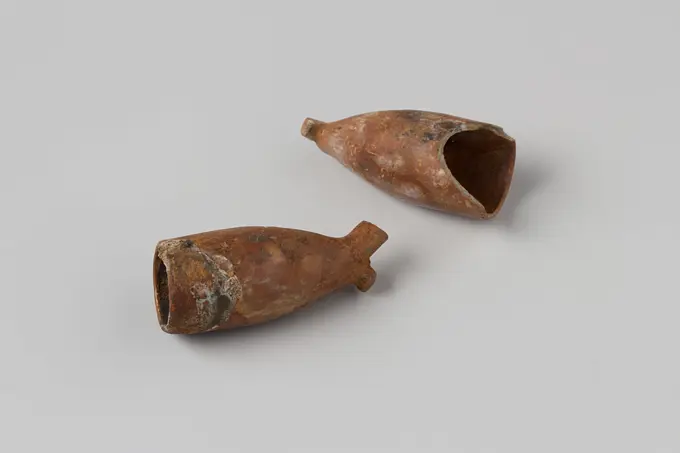
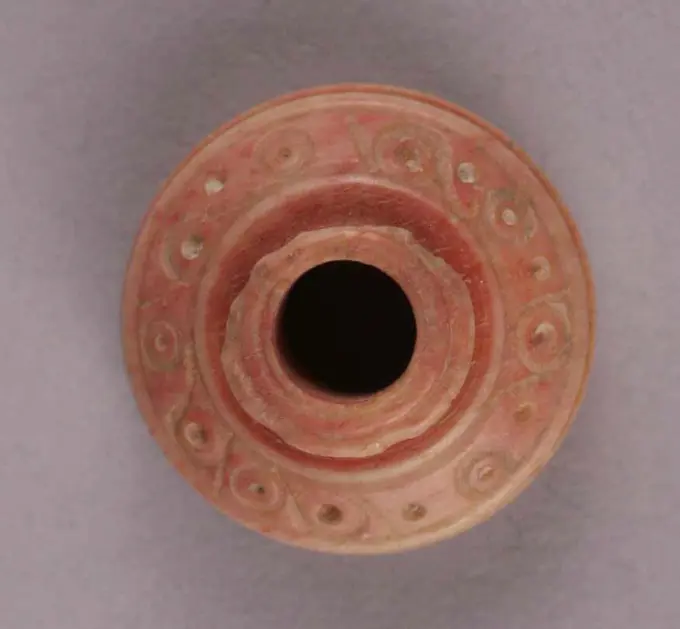
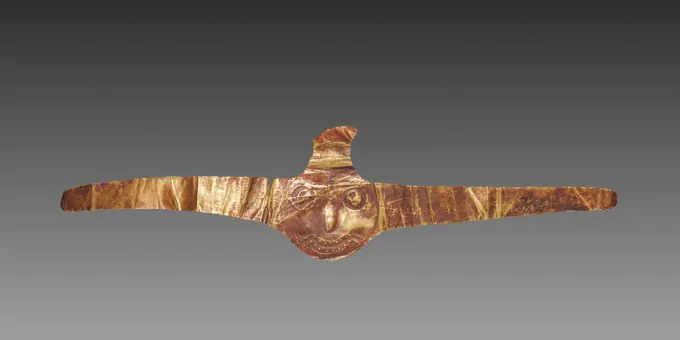
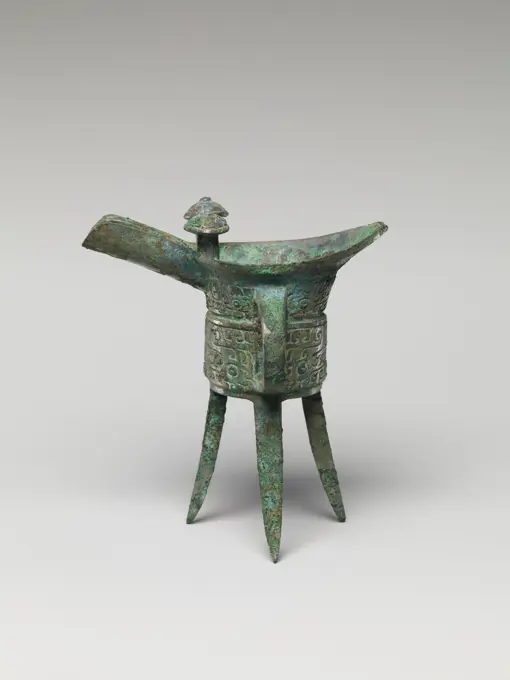
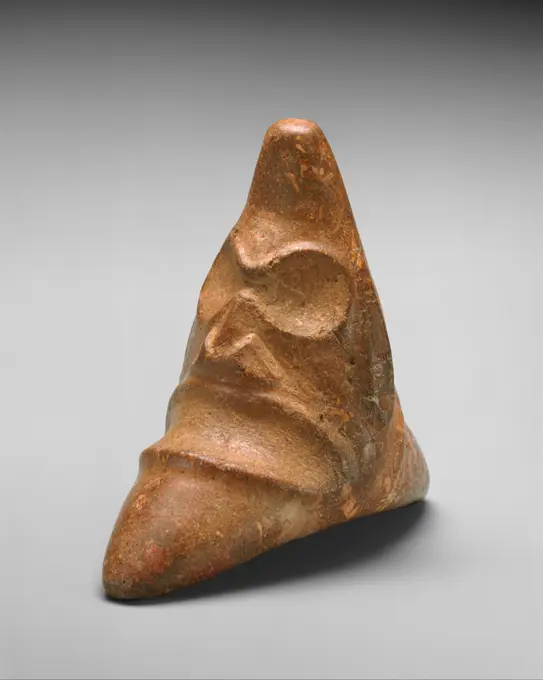
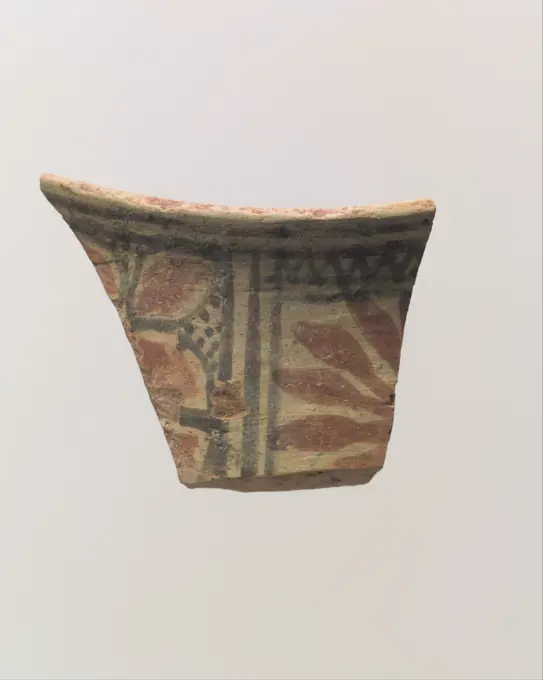
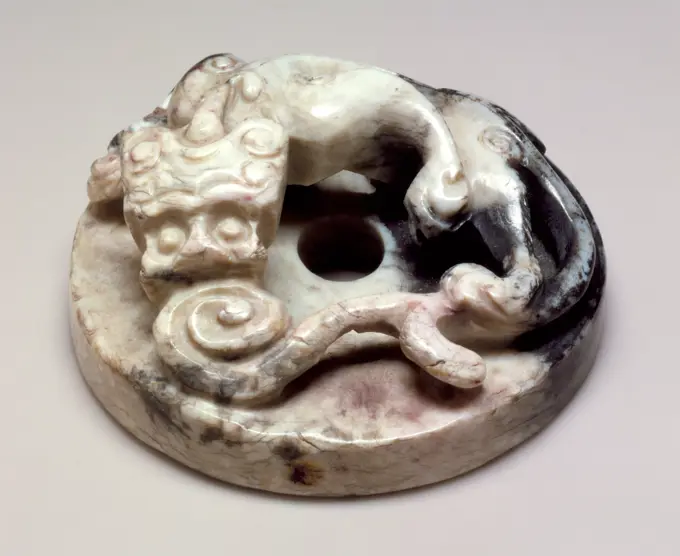
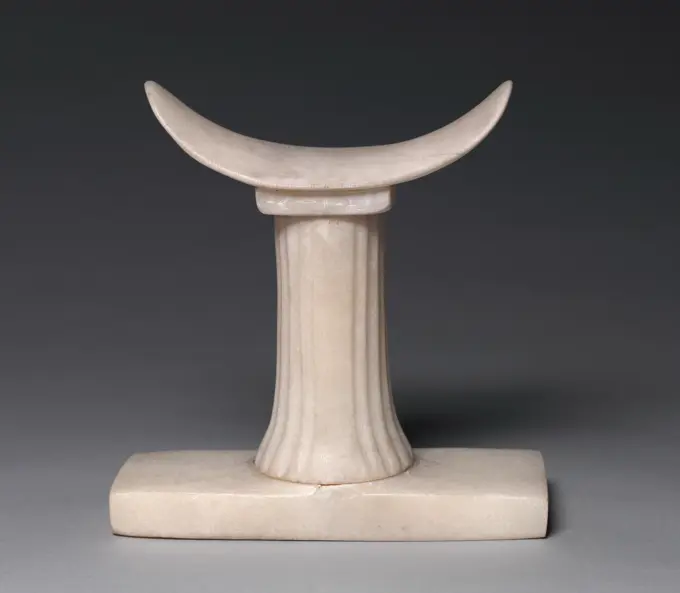
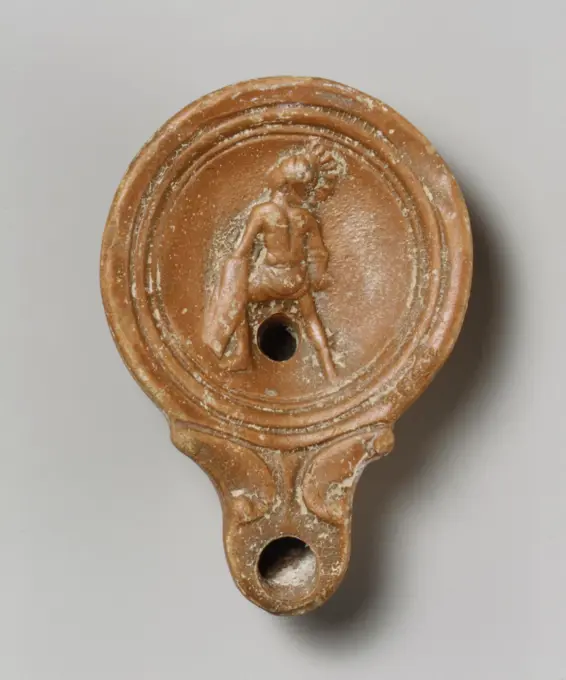
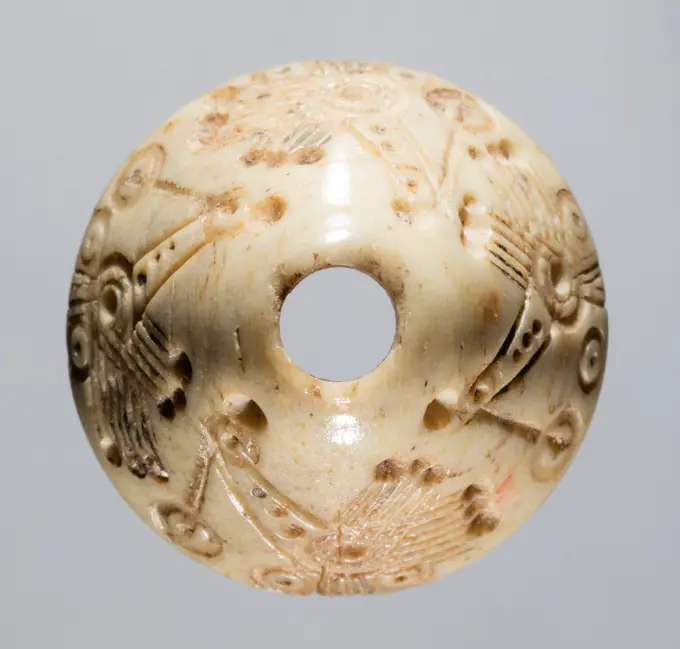
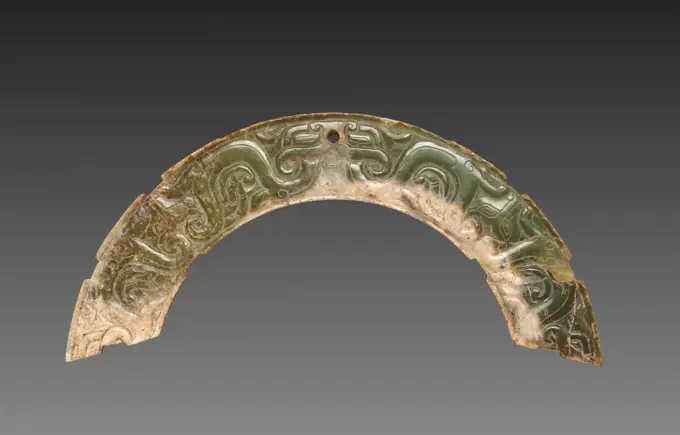
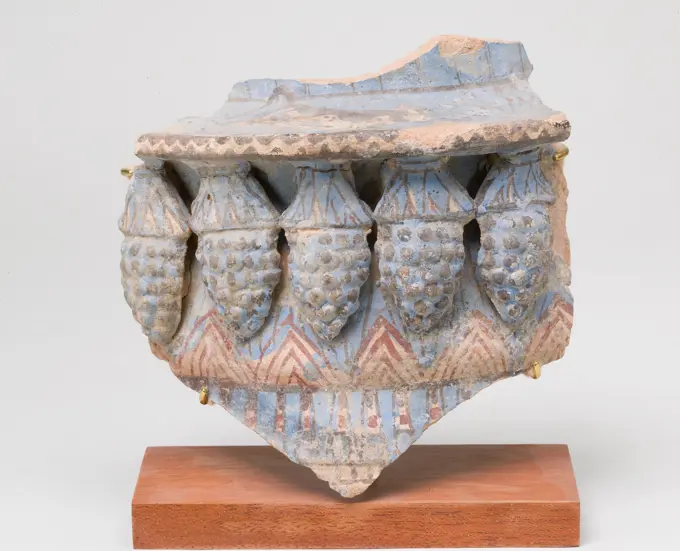
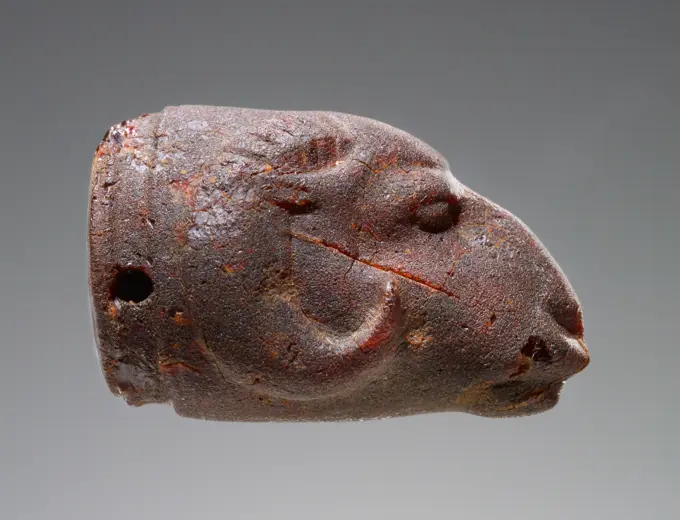
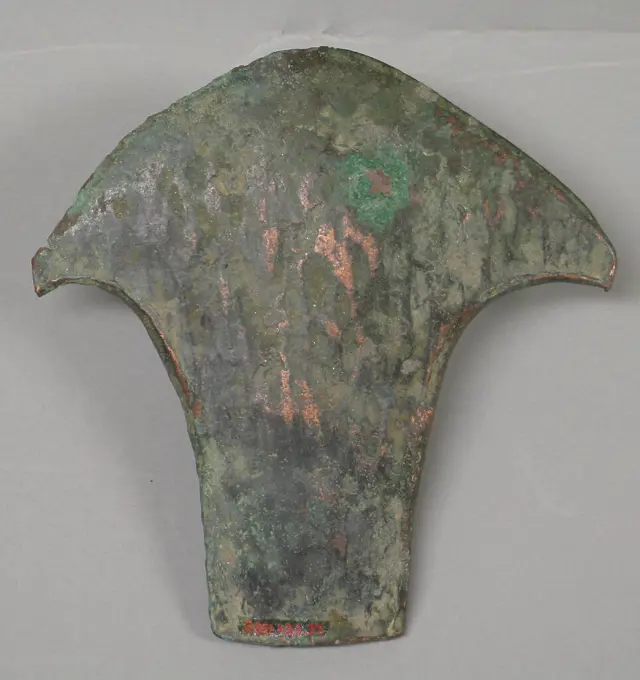
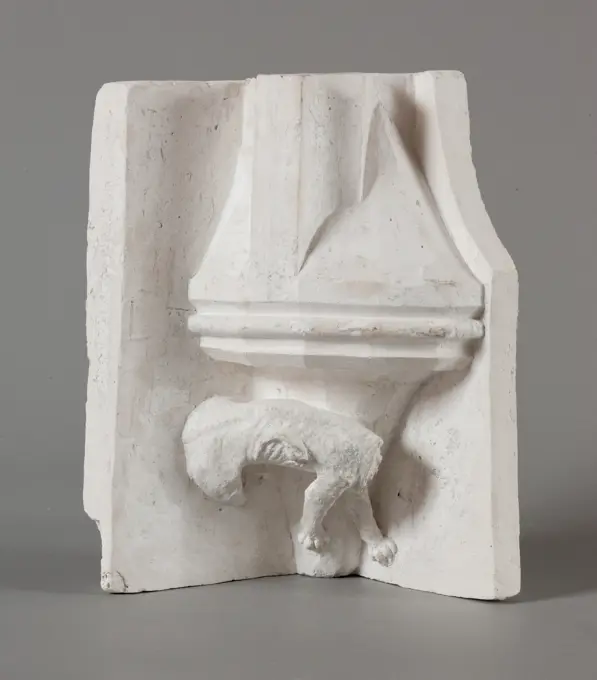
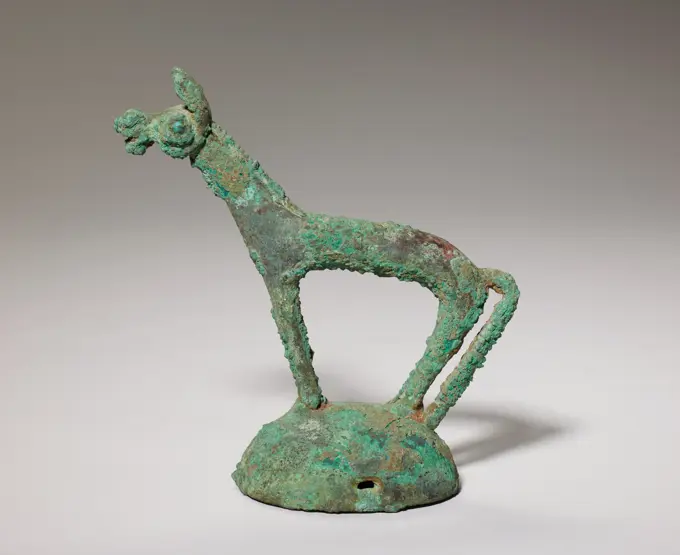
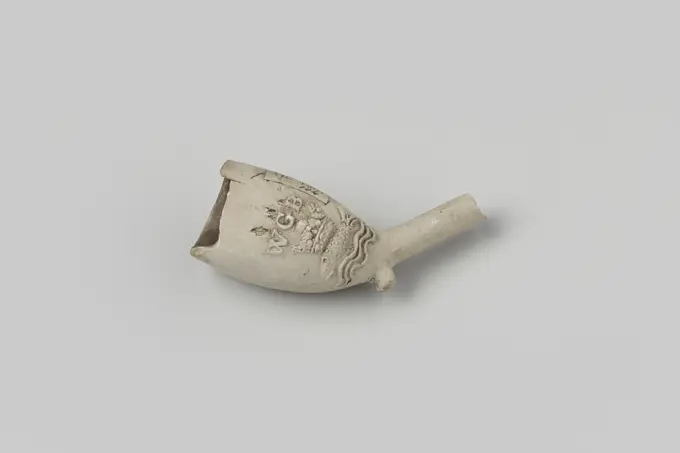
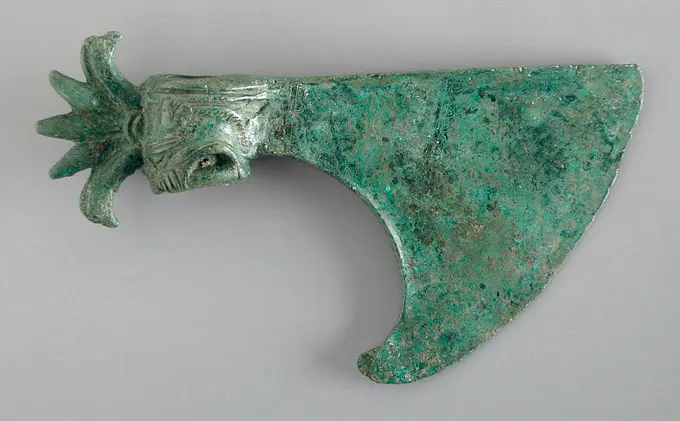
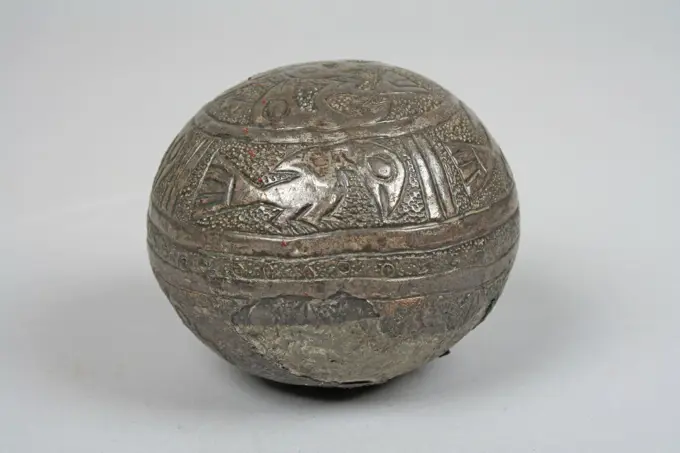
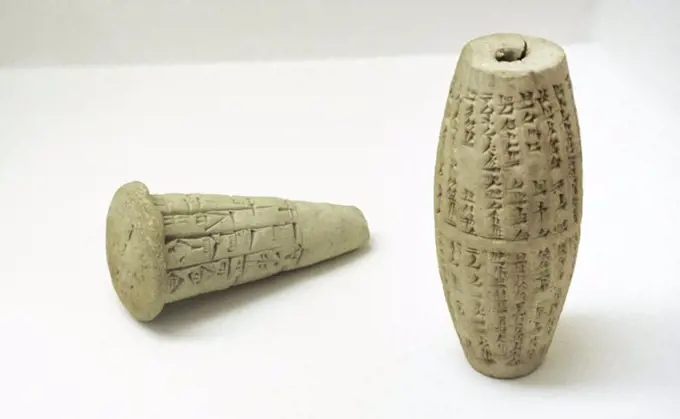
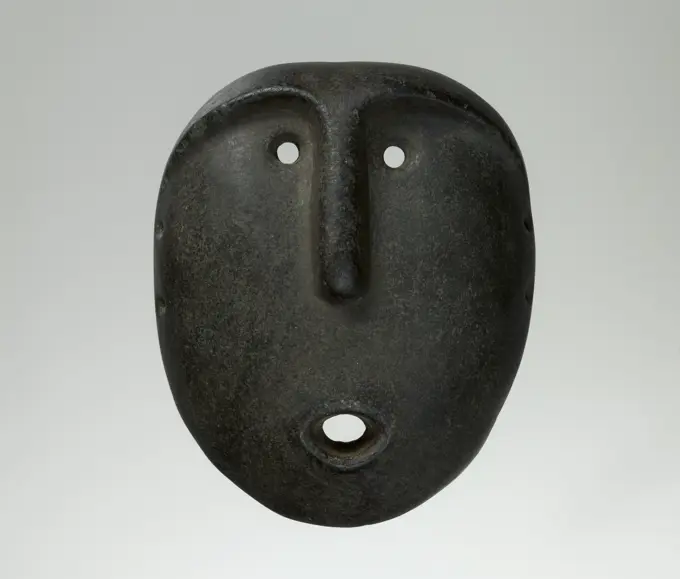
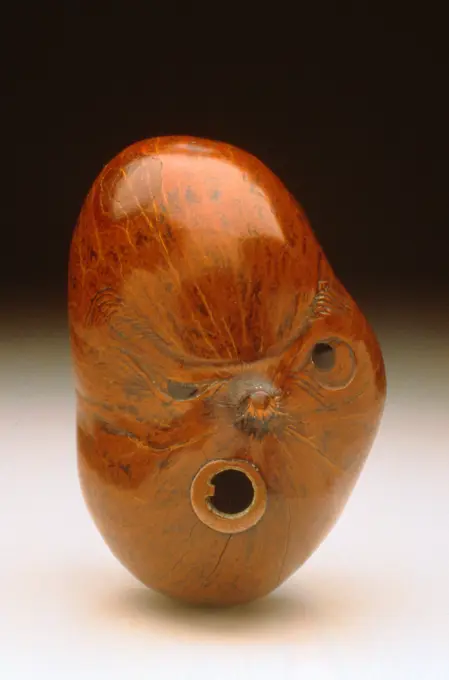
Teapot early 19th century Japan. Teapot. Japan. early 19th century. Pottery moulded, partly covered with glaze. Edo period (1615-1868). CeramicsCzarka "megaryjska". nieznany warsztat jońskiFaience amulet in the form of a lion 664-30 B.C. Egyptian Amulets representing animals were attributed to a deity: a hawk for Ra, the Sun God, a lion for Sakhmi, the War Goddess, a ram for Khnum and a cat for Bast.. Faience amulet in the form of a lion 243768Terracotta vase in the form of a bull's head ca. 1450-1400 B.C. Minoan This vase is a type of rhyton, or libation vase. The offering was poured through the hole in the animal's muzzle. The vase was filled either by immersion in a large container or through the hole on the head. Using the principle of the siphon, liquid would not flow out as long as the opening at the top was closed with the thumb. Listen to experts illuminate this artwork's story Listen Play or pause #1002. Terracotta vase in the form of a bull's head Supported by Bloomberg Philanthropies We're sorry, the transcript for this audio track is not available at this time. We are working to make it available as soon as possible.. Terracotta vase in the form of a bull's head. Minoan. ca. 1450-1400 B.C.. Terracotta. Late Minoan II. VasesFragment Martavaan from V.O.C. ship De 'Witte Leeuw', Anonymous, Before 1613  Fragment Martavaan from V.O.C. ship 'Witte Leeuw'. Mouth, ears, neck. southeast Asia stoneware. porcelain   Sint-HelenaCANDIL DE CERAMICA CON DOBLE PIQUERA. Location: ALHAMBRA-MUSEO-CERAMICA. GRANADA. SPAIN.Furniture Foot with Feline's Paw. Egypt, Roman Period - Byzantine Period (200 - 1200 CE). Sculpture. BronzePottery Whistle. Culture: Costa Rican. Dimensions: L. 50 mm.; W. 35 mm.; H. 42 mm.; Wt. 33 g.. Date: ca. 800-1500. Museum: Metropolitan Museum of Art, New York, USA.Lamp. Terracotta. High Empire. Rosette. Paris, Carnavalet museum. High-Empire, lamp, oil lamp, rosette, terracottaFragment of a Hacha 700 CE-900 CE Veracruz state. Stone . Veracruz, ClassicLamp, Syria; 5th century; Terracotta; 5.6 x 8 x 9.2 cm (2 3,16 x 3 1,8 x 3 5,8 in.)Feet Fragment 4th-7th century Coptic. Feet Fragment 478556Pelican 16th-17th century Chumash. Pelican 320846Lamp with Handle in the Form of a Horse's HeadFibula, boat-shaped type 8th-6th century B.C. Italic The bow is solid and decorated at each end with a series of incised lines.. Fibula, boat-shaped type 246330Terracotta oil lamp. Culture: Roman, Egyptian. Dimensions: Overall: 1 x 3 1/16 in. (2.5 x 7.8 cm). Date: 2nd-early 3rd century A.D..With palmette shaped design and maker's mark, "I". Museum: Metropolitan Museum of Art, New York, USA.Ring-Shaped Ewer 8th century Molded ceramic vessels - both with and without glaze - were made in the earliest centuries of the Islamic period, but the technique seems to have lost popularity as artists turned their attention to other techniques, notably lusterware. With its molded and applied decoration and monochrome glazing, this ewer is typical of the Umayyad and early Abbasid period. The piece is made of two halves that have been joined together, with applied elements including a spout and what appear to be a foot and handle. The center was once decorated with an openwork panel that was attached to half of the body before the two halves were joined.. Ring-Shaped Ewer. 8th century. Earthenware; molded and glazed. Made in Iran or Iraq. CeramicsCapital from a Reliquary Shrine ca. 1175-1200 German. Capital from a Reliquary Shrine. German. ca. 1175-1200. copper alloy, gilt. Made in Cologne, Germany. Metalwork-Copper alloyButton or Bead 9th-10th century The dot-in-circle motif recalls designs presumed to be of magical significance, most likely an abstract eye to ward off the evil-eye, which serves an apotropaic function. Easily reproduced with a tool and visible in many cultures and times, this symbol may have lost its meaning, and become simply a decorative pattern, or may have one that we have not yet discovered.. Button or Bead 449245Fragment pipe head. Fragment pipe head. Of the excavations at the Hofstede Arentsburg 1827-1831 under the supervision of professor Reuvens.Fragments of a cart or chariot, S-shaped braces ca. 500-480 B.C. Etruscan Large collection of bronze and iron attachments once belonging to a chariot.. Fragments of a cart or chariot, S-shaped braces 253017 Etruscan, Chariot fragments, S-shaped braces, ca. 500480 B.C., Bronze, Iron, K1, K3, K4: 6 9/16  3 5/8 in. (16.7  9.2 cm) K2: 6 1/8  3 5/8 in. (15.6  9.2 cm). The Metropolitan Museum of Art, New York. Fletcher Fund, 1929 (29.131.3k1k4)Italy, Lombardy, Brescia, Remedello, VaseLazio Frosinone Casamari Museo Archeologico6. Hutzel, Max 1960-1990 Post-medieval: paintings on canvas, paintings on wood, wooden church furnishings Governing Body: Abbazia di Casamari General Notes: This record is for the pinacoteca which is part of the Museo Archeologico, housed within the Abbey of Casamari. Hutzel assigned it a separate numbering sequence. German-born photographer and scholar Max Hutzel (1911-1988) photographed in Italy from the early 1960s until his death. The result of this project, referred to by Hutzel as Foto Arte Minore, is thorough documentation of art historical development in Italy up to the 18th century, including objects of the Etruscans and the Romans, as well as early Medieval, Romanesque, Gothic, Renaissance and Baroque monuments. Images are organized by geographic region in Italy, then by province, city, site complex and monument.Base of a sculpture., C. 1400 - c. 1950 Base or pedestal of a sculpture. The base is marked with the letter B and a rosette or flour.  earthenware Base or pedestal of a sculpture. The base is marked with the letter B and a rosette or flour.  earthenwareAnimal figure ca. 1850-1750 B.C. Middle Kingdom. Animal figure 557360Temple ModelTripod Serpent Bowl, 11th-16th century, 4 3/8 x 8 1/2 x 8 1/2 in. (11.11 x 21.59 x 21.59 cm), Polychrome earthenware, Costa Rica, 11th-16th centuryExcerpt (foot) with red shard, on the inside in double circle in white sludge a sitting bunny, anonymous, 1200 - 1899  Italy earthenware  Italy earthenwareLampka. unknown, authorAppliqué for a funeral couch. UnknownTerracotta stamped amphora handle ca. 220-180 B.C. Greek, Rhodian The rectangular stamp bears the name Menothemios, with a double cornucopia to its left and an axe below.. Terracotta stamped amphora handle. Greek, Rhodian. ca. 220-180 B.C.. Terracotta. Hellenistic. Cesnola InscriptionsLazio Latina Sezze Antiquarium Comunale16. Hutzel, Max 1960-1990 German-born photographer and scholar Max Hutzel (1911-1988) photographed in Italy from the early 1960s until his death. The result of this project, referred to by Hutzel as Foto Arte Minore, is thorough documentation of art historical development in Italy up to the 18th century, including objects of the Etruscans and the Romans, as well as early Medieval, Romanesque, Gothic, Renaissance and Baroque monuments. Images are organized by geographic region in Italy, then by province, city, site complex and monument.Vase depicting harvesting of grain on island, Vicus culture, circa 100 B.C.Emilia-Romagna Ferrara Ferrara Museo Civico di Schifanoia47. Hutzel, Max 1960-1990 General Notes: INCOMPLETE RECORD--NEGATIVES PROCESSED, PRINTS FILED German-born photographer and scholar Max Hutzel (1911-1988) photographed in Italy from the early 1960s until his death. The result of this project, referred to by Hutzel as Foto Arte Minore, is thorough documentation of art historical development in Italy up to the 18th century, including objects of the Etruscans and the Romans, as well as early Medieval, Romanesque, Gothic, Renaissance and Baroque monuments. Images are organized by geographic region in Italy, then by province, city, site complex and monument.Ring 4th-7th century Coptic. Ring 478918Top of Incense Burner 4th-7th century Coptic. Top of Incense Burner 477335Fragment 7th-8th century. Fragment 448751Spoon 7th-2nd century B.C. Chavin (). Spoon. Chavin (). 7th-2nd century B.C.. Stone. Peru. Stone-ImplementsBowl, 6 1/4 x 10 1/4 in. (15.9 x 26 cm), Earthenware, PeruArrowheads, needles, hooks and harpoons. Culture: Japan. Dimensions: W. 1/4 in. (.6 cm); L. 1 1/8 in. (2.9 cm). Museum: Metropolitan Museum of Art, New York, USA.Female Head, 2 11/16 x 2 7/16 x 2 13/16 in. (6.83 x 6.19 x 7.14 cm), Terracotta, EthiopiaAlabastron na wonne olejki. unknown, authorPendant: Hippocamp. UnknownTerret (Rein Guide) 1-100 Celtic or Roman The Celts use of chariots in warfare was legendary in the ancient world. This terret, made at the time of Romes conquest of Britain, comes from one of numerous Celtic workshops that specialized in the production of richly decorated, high-quality enamel fittings for horse and chariot.. Terret (Rein Guide). Celtic or Roman. 1-100. Copper alloy, champlevé enamel. Enamels-ChamplevéStirrup Spout Bottle with Animals 14th-15th century Chimú. Stirrup Spout Bottle with Animals 310194Arm and hand from statuette. Arm and hand from statuette 250660 Arm and hand from statuette, Bronze, Other: 3 5/16 in. (8.4 cm). The Metropolitan Museum of Art, New York. Rogers Fund, 1917 (17.230.136)Excavations. Tell Beit Mirsim, (Kirjath Sepher). Libation bowl with lion's head. 1930, Israel, Debir (Extinct city)Roman oil lamps. Roman-Germanic Museum. Cologne. Germany.Toy Cart with Lion Charging a Warrior on the Side and Wheels with Lotus Motifs 100 BCE-1 BCE Uttar Pradesh. Partially molded terracotta with red slip .Terracotta alabastron (perfume vase) in the shape of a hare ca. 600-550 B.C. Etruscan, Etrusco-Corinthian In the form of a dead hare.. Terracotta alabastron (perfume vase) in the shape of a hare 254198 Etruscan, Etrusco-Corinthian, Terracotta alabastron (perfume vase) in the shape of a hare, ca. 600550 B.C., Terracotta, H. 2 3/4 in. (6.9 cm) length 6 9/16 in. (16.6 cm). The Metropolitan Museum of Art, New York. Rogers Fund, 1941 (41.162.31)Vase with four feet originating from El Salvador. Pre-Colombian Civilization.Clay bowl containing red powder used for frescos, from PompeiWhistle in the Form of the Head of a Jaguar 250 CE-900 CE Campeche. Ceramic and pigment . MayaPipe heads from the wreck of the East India Hollandia.Pipe, Bowl, Whole Market: Crowned 47; 2HSM3, 2HSM1.3.Spindle Whorl 9th-10th century Spindle whorls aided in the making of thread by maintaining the momentum of the spindle. This pink-toned, semi-spherical spindle whorl was excavated during the Metropolitan Museums excavation at Nishapur, in eastern Iran. It is one piece but has been divided into three levels. A deep indention, below the raised lip, leads to an inverted slope shaped body on which there is a band of dot-in-circles Hundreds of spindle whorls were excavated at Nishapur, providing further evidence that the city possessed a thriving textile industry. Their incised designs exhibit a wide variety of motifs ranging from geometric forms to zoomorphic figures.. Spindle Whorl 450041Boss and Nail 15th-16th century European. Boss and Nail. European. 15th-16th century. Iron. Metalwork-IronHeaddress Ornament, c. 300 BC-AD 200. Peru, South Coast, Paracas, 3rd-2nd Century BC. Hammered and embossed gold-copper alloy; overall: 6.8 cm (2 11/16 in.).Miniature wine Vessel (Jue) late 14th century B.C. China. Miniature wine Vessel (Jue) 49386Three-Cornered Stone (Trigonolito) 13th-15th century Taíno Portable-sized sculptures, known as three-pointed stones or trigonolitos, were described by the Spanish chroniclers as having a connection to yucca or cassava, a staple root crop in the Caribbean. Three-pointed stones come in various sizes, from handheld to quite heavy, and feature a diversity of imagery ranging from anthropomorphic and zoomorphic phone. They mainly come from the Greater Antilles, but examples have been found as far south in the windward islands as The Grenadines. Creative sculptural expression, both extractive and additive, for the Taíno peoples was intertwined with sacred concepts such as zemí, ceremony, and rulership. Zemí figures were used as stands, reliquaries, or personal adornment. >. Zemí (or cemí) is a term used by Taíno peoples, the diverse societies that inhabited the Antilles archipelago before European contact, that linguistically relates to a quality akin to sweetness. Zemí refers not to an objecVessel with two spouts and carried by three figures, anonymous, c. 1600 - c. 1620 Drinking or donor of stoneware worn by three man figures and with a narrow neck and two wide spouts with sieve. The two C-shaped ears are attached to the shoulder and the body; An animal figure on the ears. The jug is decorated with vertical tires with stamped circles. On the shoulder a band with modeled tilting. Raeren. Rae stoneware. glaze vitrification Drinking or donor of stoneware worn by three man figures and with a narrow neck and two wide spouts with sieve. The two C-shaped ears are attached to the shoulder and the body; An animal figure on the ears. The jug is decorated with vertical tires with stamped circles. On the shoulder a band with modeled tilting. Raeren. Rae stoneware. glaze vitrificationJar 8th-10th century. Jar. 8th-10th century. Earthenware; glazed. Found/excavated Iraq, Ctesiphon. CeramicsTerracotta oil lamp 1st century B.C.-1st century A.D. Roman Loeschcke Type 1A. Mold-made. Discus: head of Silenus, with beard, pointed ears, and horns. Single filling hole at lower right, with a band of lines and grooves around edge. Volutes flanking angular nozzle. Raised base ring, and flat base.Complete, except for large hole in base and finial of volute at right.. Terracotta oil lamp. Roman. 1st century B.C.-1st century A.D.. Terracotta; mold-made. Early Imperial. TerracottasSherd ca. 5600-5000 B.C. Halaf Halaf potters far surpassed their predecessors and successors in the embellishment and delicacy of their designs and the fine quality of the pottery itself. The background is often, as here, a buff color with red and black decoration produced on the vessel from the same iron oxide pigment, technically a very advanced achievement. This fragment of a vessel with slightly flaring rim has the exterior painted with parts of two black-outlined metopes, one with a red rosette, the other with a red design outlined in black, on light buff ground. A red band decorates the interior rim.. Sherd 327375BowlLamp. UnknownItalic civilizations, Piceni, 7th-6th century b.C. Helmet. From the necropolis of Novilara, fondo Servici, province of Pesaro-Urbino.Papyrus column amulet 664-30 B.C. Late Period-Ptolemaic Period. Papyrus column amulet. 664-30 B.C.. Blue faience. Late Period-Ptolemaic Period. From EgyptSmall Perforated Disk (Bi) with Dragon. China, Han dynasty, 206 B.C.- A.D. 220. Sculpture. Abraded jadePrehistory, Italy, Iron Age. Villanovan culture. Zoomorphic bronze figurines. From the necropolis of Le Rose at Tarquinia, province of Viterbo.Crucible. Punic art. Terracotta. From Ibiza, Balearic Islands, Spain. Episcopal Museum. Vic. Spain.Stirrup Spout Vessel with Relief Depicting a Mythic Hunting Scene Made 1200-1450 North Coast. Ceramic . ChimúHeadrest of Irut, c. 2454-2140 BC. Egypt, Old Kingdom, Dynasties 5-6, 2454-2140 BC. Travertine; overall: 19.5 x 18.8 x 7.4 cm (7 11/16 x 7 3/8 x 2 15/16 in.).Terracotta oil lamp ca. A.D. 40-100 Roman, Cypriot Loeschcke Type 4. Mold-made. Discus: a gladiator, a samnis (Samnite), seen from the rear, wearing a crested helmet and loin-cloth, holding a large rectangular shield in front of his left leg; the weapon in his right hand is concealed behind his body; a single filling hole between the gladiator's legs, with a band of lines and grooves towards edge. Volutes flanking nozzle. Incised base ring, and slightly concave base.Intact.. Terracotta oil lamp 241405Fragment of an Architectural Model 1301-1500 Eastern Java. Terracotta .Spindle Whorl, 700s - 900s. Iran, early Islamic period, 8th - 10th century. Bone, incised; overall: 1 x 1.9 x 1.9 cm (3/8 x 3/4 x 3/4 in.).Arc-shaped Pendant with Animal Mask and Interlaced Animal Bands (Huang), 300-100 BC. China, Warring States period (475-221 BC) to Western Han dynasty (202 BC-AD 9). Nephrite; overall: 12.8 cm (5 1/16 in.).Lamp, Knidos (probably), Turkey; 1st century; Terracotta; 15 × 9.8 × 5.4 cm (5 7,8 × 3 7,8 × 2 1,8 in.)Joan Miró / "Galet plat" (flat pebble), 1956, Stoneware, 5.5 x 7 cm.Lamp, North Africa; 1st - 4th century; Terracotta; 2.7 x 8.5 x 11.5 cm (1 1,16 x 3 3,8 x 4 1,2 in.)Lamp. UnknownBlue-Painted Jar Fragment With Molded Decoration from Malqata ca. 1390-1353 B.C. New Kingdom. Blue-Painted Jar Fragment With Molded Decoration from Malqata. ca. 1390-1353 B.C.. pottery, slip, paint. New Kingdom. From Egypt, Upper Egypt, Thebes, Malqata, Palace of Amenhotep III, MMA excavations, 1910-11. Dynasty 18Pendant: Ram's Head. UnknownStone Temple Model. Culture: Mezcala. Dimensions: H. 4 5/16 x W. 3 1/2 in. (11 x 8.9 cm). Date: 1st-8th century. Museum: Metropolitan Museum of Art, New York, USA.Pendant. Unknown 5th century B.C.Ax. Culture: India. Dimensions: 6 1/2 x 3 5/16 in. (16.5 x 8.4 cm). Date: 1500-1000 B.C..These anthropomorphic figures, harpoons, ax blades (celts), and antennae swords were cast and hammered from unalloyed copper. They may be dated to 1500 to 1000 B.C. Given that pure copper is a relatively soft metal and most of the objects show little or no signs of wear, it seems likely that their function was largely dedicatory. Hoards of such objects have been found across north India, the greatest concentration being in Uttar Pradesh. The findspots suggest they were ritually deposited in rivers or marshes, though several related antennae swords were recorded in late Indus Valley civilization (ca. 1500 B.C.) burials at Sanauli. Museum: Metropolitan Museum of Art, New York, USA.Emilia-Romagna Ferrara Ferrara Museo Civico di Schifanoia60. Hutzel, Max 1960-1990 General Notes: INCOMPLETE RECORD--NEGATIVES PROCESSED, PRINTS FILED German-born photographer and scholar Max Hutzel (1911-1988) photographed in Italy from the early 1960s until his death. The result of this project, referred to by Hutzel as Foto Arte Minore, is thorough documentation of art historical development in Italy up to the 18th century, including objects of the Etruscans and the Romans, as well as early Medieval, Romanesque, Gothic, Renaissance and Baroque monuments. Images are organized by geographic region in Italy, then by province, city, site complex and monument.A bracket with the lioness (no head and rear paws of the lioness)  treasury, Wawel cathedral, KrakowKapitel wolutowy. warsztat nubijski, workshopAnimal on Domed Base, late 12th-11th century BCE, 5 3/4 in. (14.61 cm), Bronze, China, 12th-11th century BCECup Holder 19th century This cup holder is typical of the objects that were displayed in open niches in reception rooms of upper-class Syrian residences during the Ottoman period.. Cup Holder 455543Fragment tobacco pipe. Fragment tobacco pipe with a crown, a fish, waves and the letters W g b pictured. Of the excavations at the Hofstede Arentsburg 1827-1831 under the supervision of professor Reuvens.Shaft-hole Axehead. Iran, Luristan, circa 1350-1000 B.C.. Arms and Armor; axes. Bronze, castEmbossed Ball 10th-15th century Chincha (). Embossed Ball 307466Zoomorphic figure-whistle. Unknown provenance. (600-900 AD) Ceramic. Whistle shaped as an iguana.Near East. Mesopotamia. Clay cone with an inscription of Gudea. Lagash. 22nd Century BC. Clay cylinder with an inscription of Nebuchadnezzar II. Babylonia. 6th BC. The State Hermitage Museum. Saint Petersburg. Russia.Funerary mask 500 B.C.-A.D. 500 Condorhuasi-Alamito This stone mask features an anthropomorphic face with pronounced brow ridge, angular nose, and drilled perforations with raised carved ridges indicating the eyes and mouth. Additional drill holes line the outer edge of the mask, presumably to affix it with fibers to an armature. The mask was most likely attached to a funerary bundle.The Condorhuasi-Alamito peoples were llama pastoralists in the area that is now the Catamarca province of Argentina. They were skilled artisans in a variety of media, including ceramic, metal, and stone. Archaeological evidence suggests that the Condorhuasi-Alamito peoples maintained extensive long-distance contacts with other regions, including the important site of Tiwanaku, near Lake Titicaca in what is now Bolivia.. Funerary mask. Condorhuasi-Alamito. 500 B.C.-A.D. 500. Stone. Argentina, Northwest Argentina. Stone SculptureStirrup, c. 1525-1550. Germany, 16th century. Steel with modern black paint; overall: 10.8 x 13.2 cm (4 1/4 x 5 3/16 in.).Weird Face. Japan, 19th century. Costumes; Accessories. Gourd with lacquer, metal and other inlaysCopper and Shell Janus Mace Head 3rd century B.C.-A.D. 2nd century Vicús (). Copper and Shell Janus Mace Head 315259Anthropomorphic head pendant Zenú 1-1000 CE This hollow metal pendant is in the form of a human head. It was made primarily by lost-wax casting. The person depicted in the pendant wears a nose ornament, a separate triangular piece made of metal sheet. The cast head appears to be gold or likely a gold alloy with copper, while the pink hue of the nose ornament suggests it has higher copper content. A casting core made of ceramic would have been present in the space of the hollow interior; it was almost entirely removed after the metals solidification. The walls of the pendant, measured at the bottom edges on the reverse side, are 0.8 to 1 mm thick. All of the features discussed here, except the triangular nose ornament, were originally designed in wax as one continuous piece (please see Metropolitan Museum of Art 2008.569.13a, b for a more detailed discussion of lost-wax casting). The pendant is the work of Zenú peoples, who have lived and live today in the Caribbean Lowlands of Colombi