Ancient Terracotta Pottery

A collection of ancient pots and jars from various cultures, displaying distinctive shapes and decorative elements, showcasing historical pottery art.

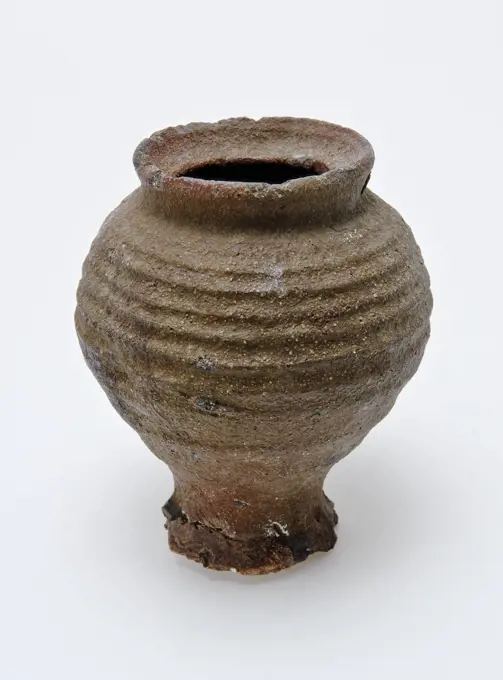
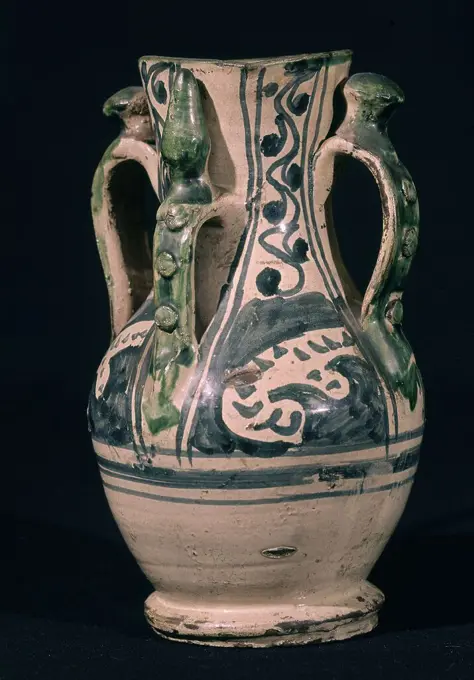
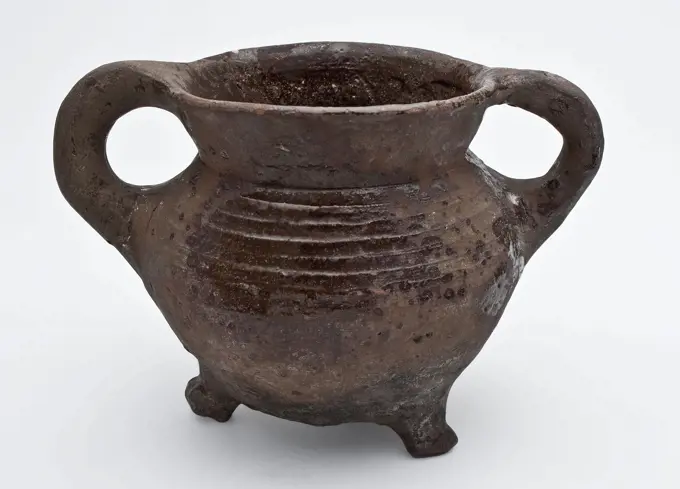
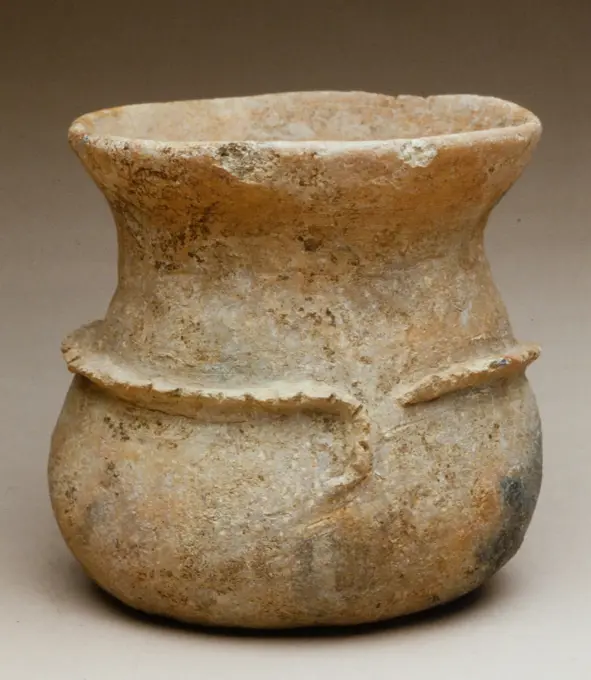
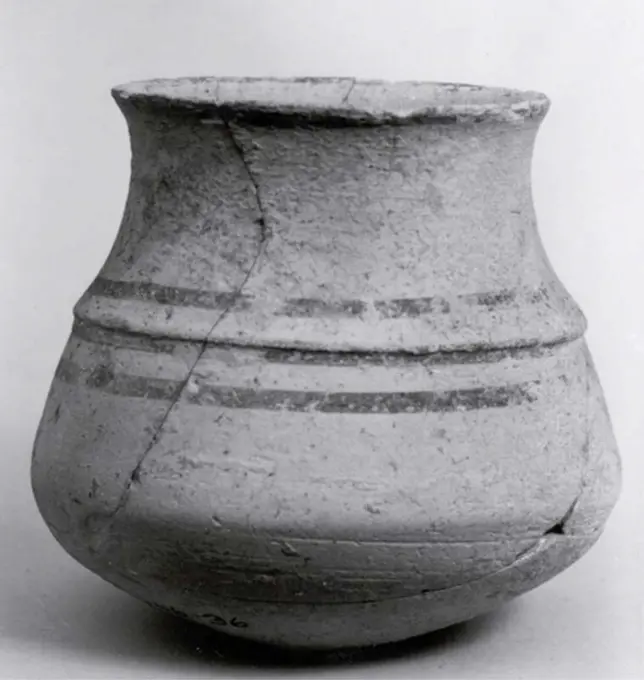
Pottery jug with two ears, on shoulder double notched line, pitcher water jug pitcher holder kitchenware soil find ceramics pottery clay engobe, hand turned pottery jug unglazed two standing bandstands stand. Double notched ring around the shoulder. The ears are attached between the shoulder and layer on the side wall. Sandy stand. Tapered model narrowing downwards. Gray shard smeared with brown engobe archeology to import indigenous pottery import water wrapping
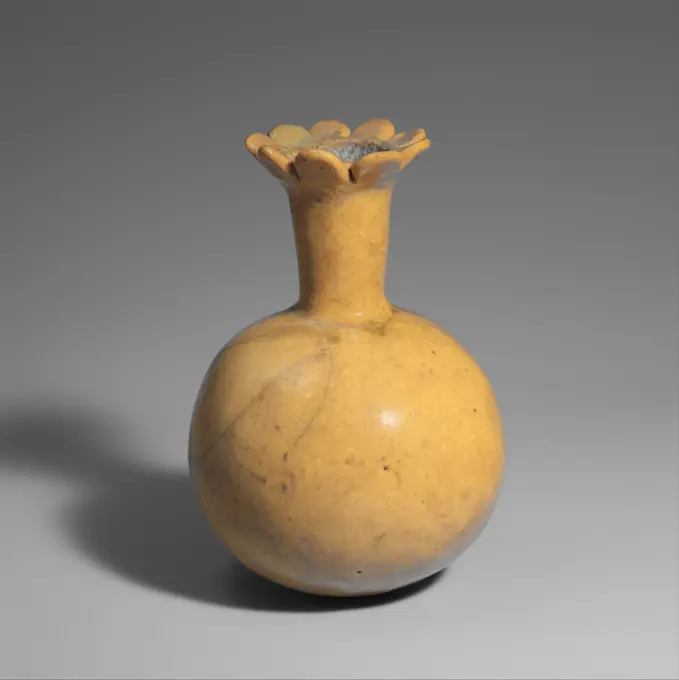
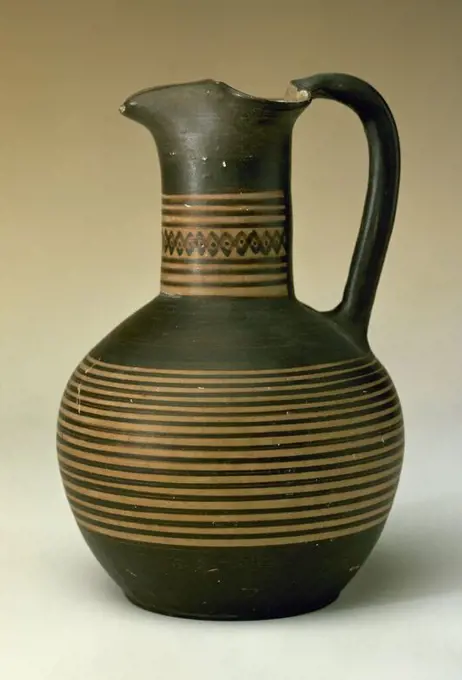
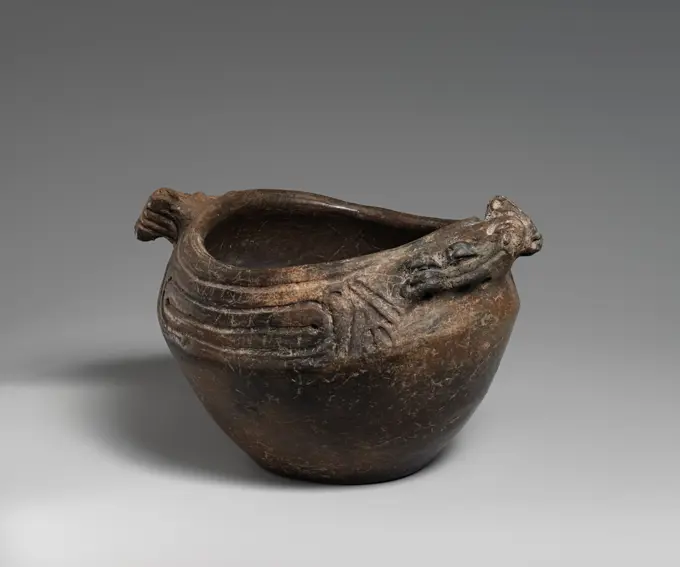
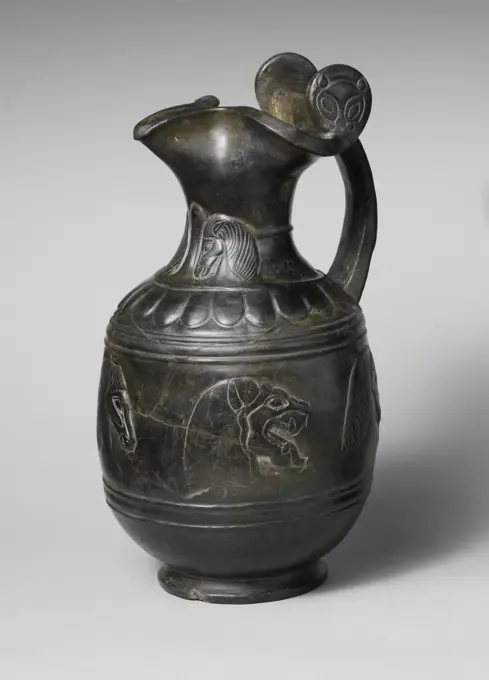
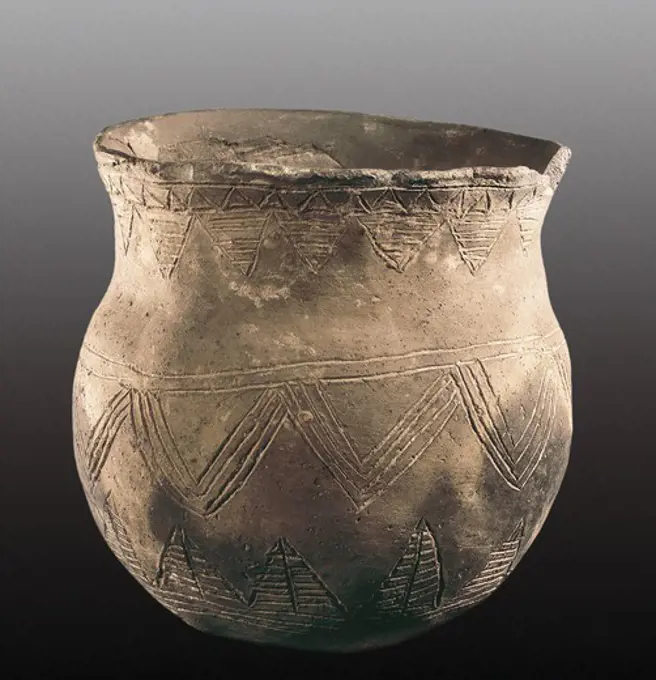
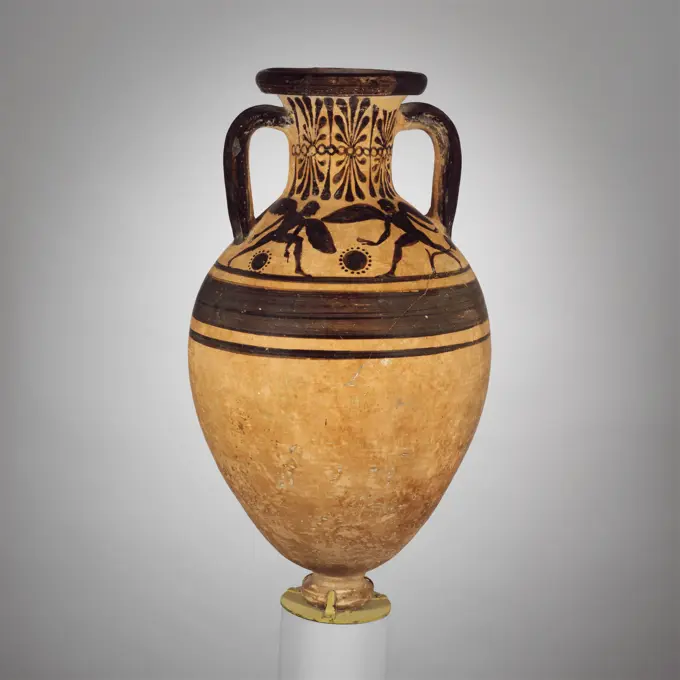
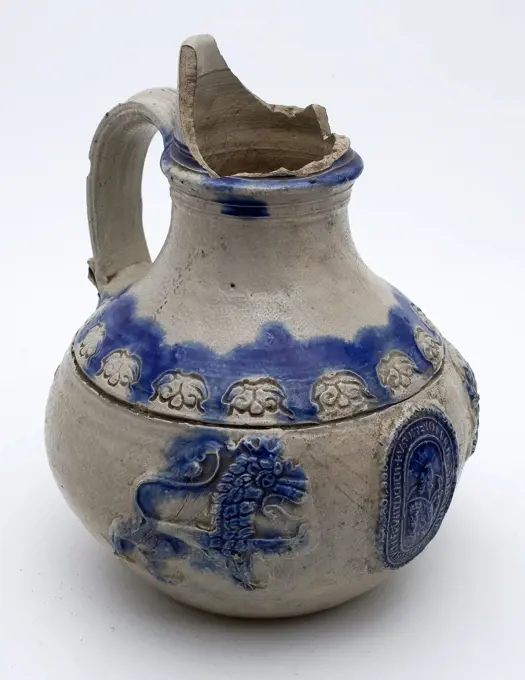
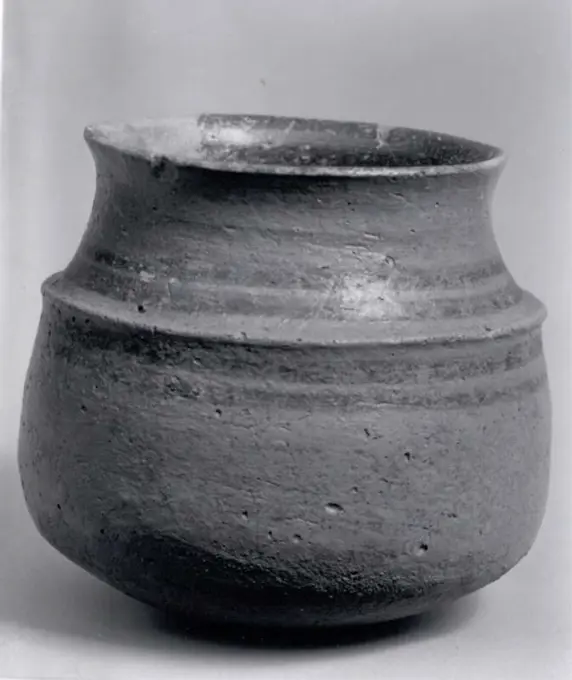
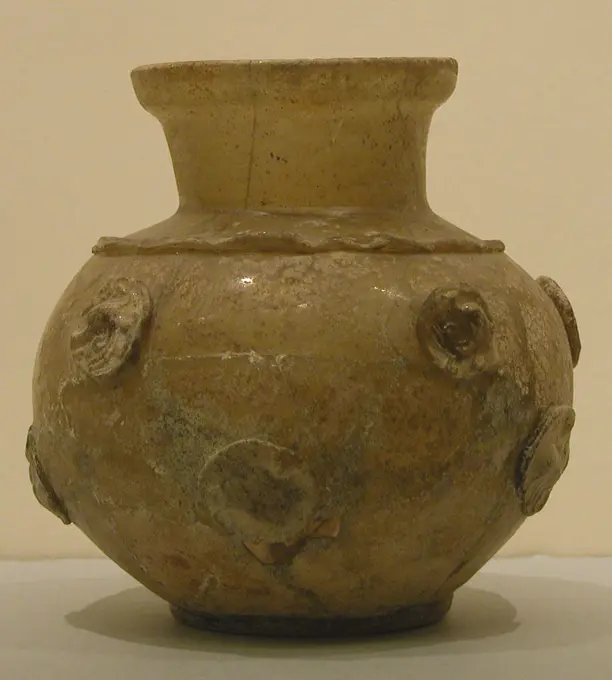
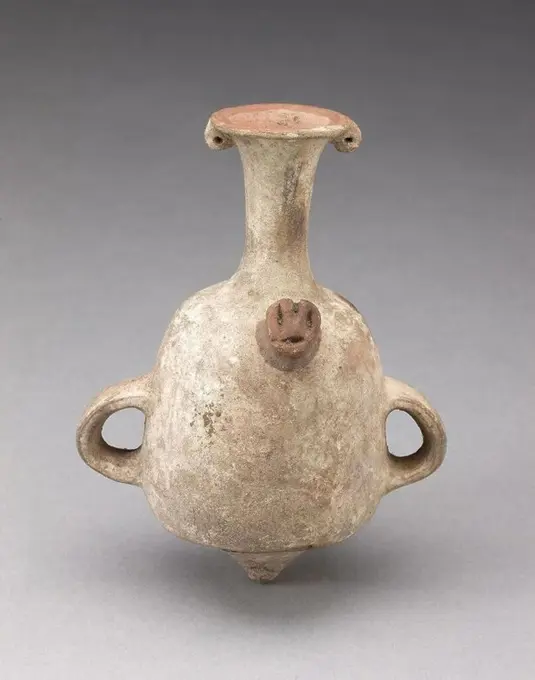
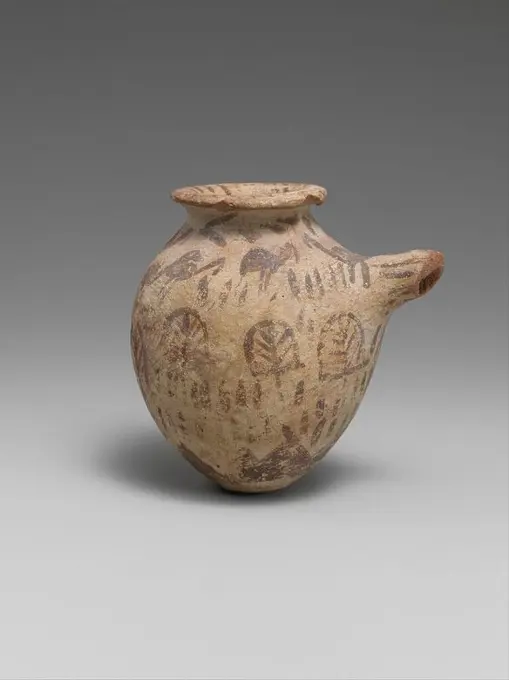
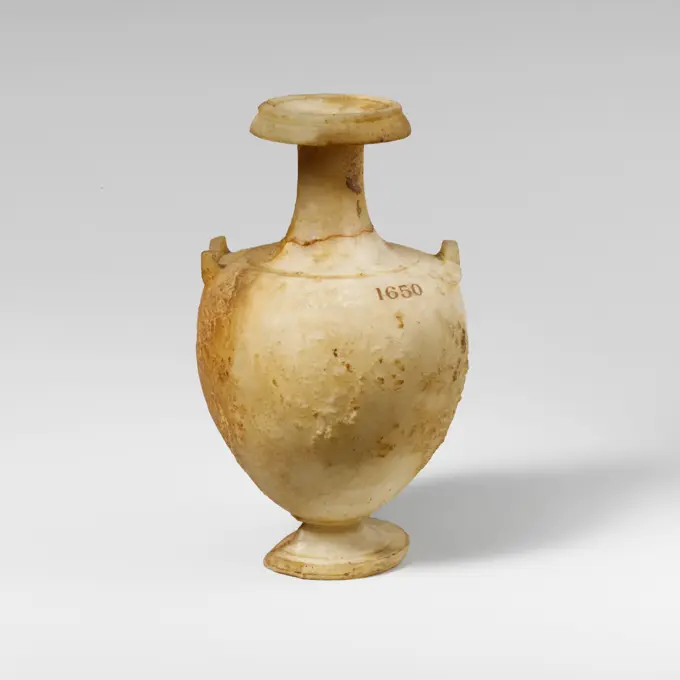
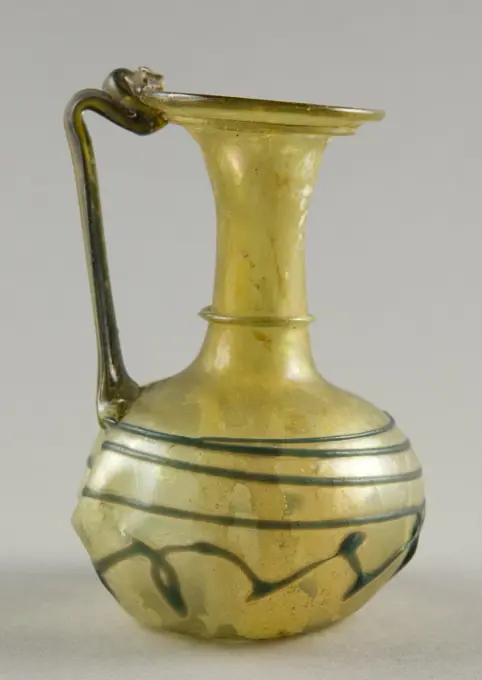
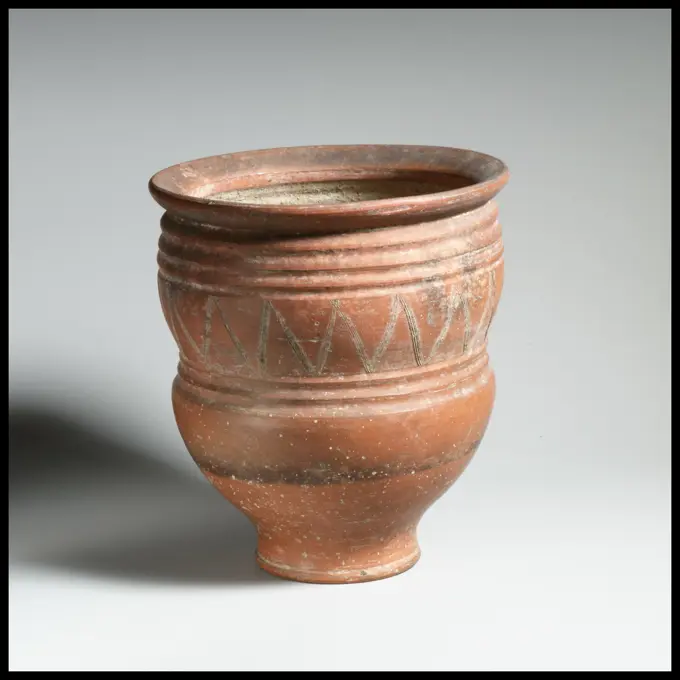
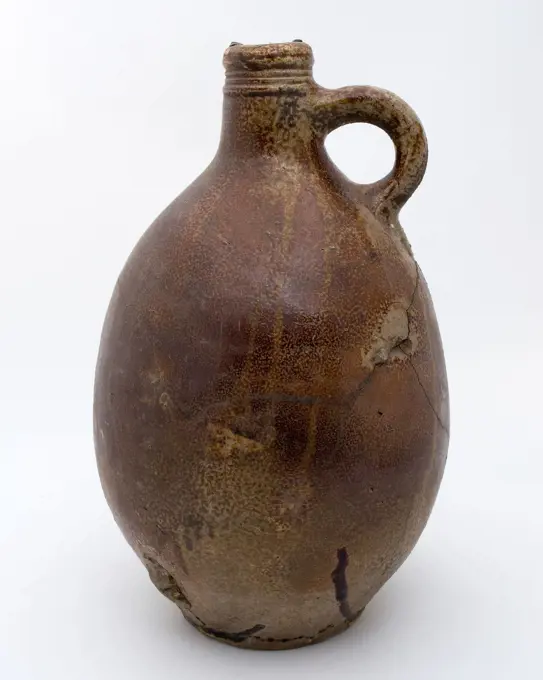
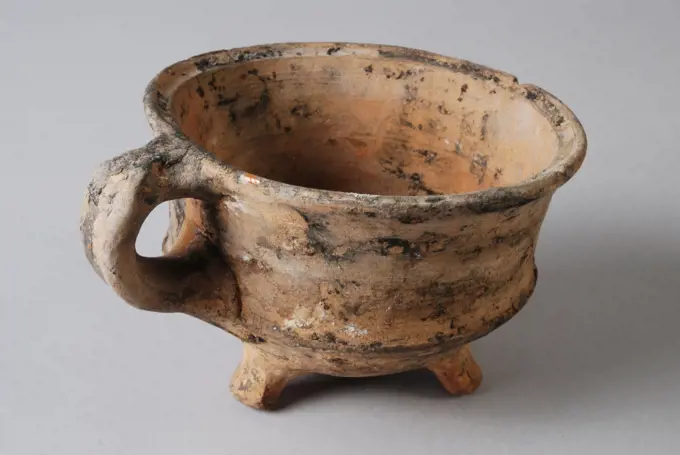
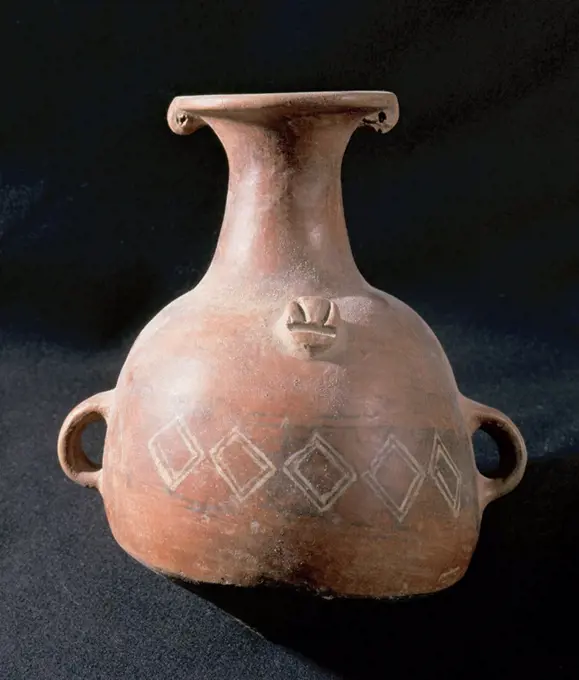
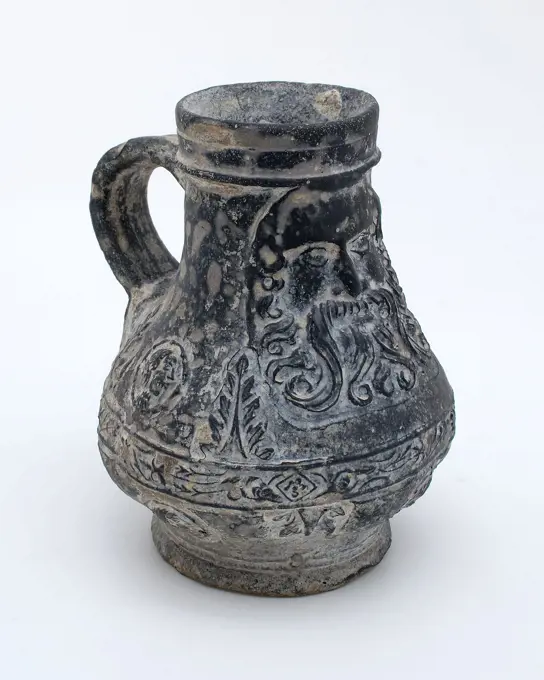
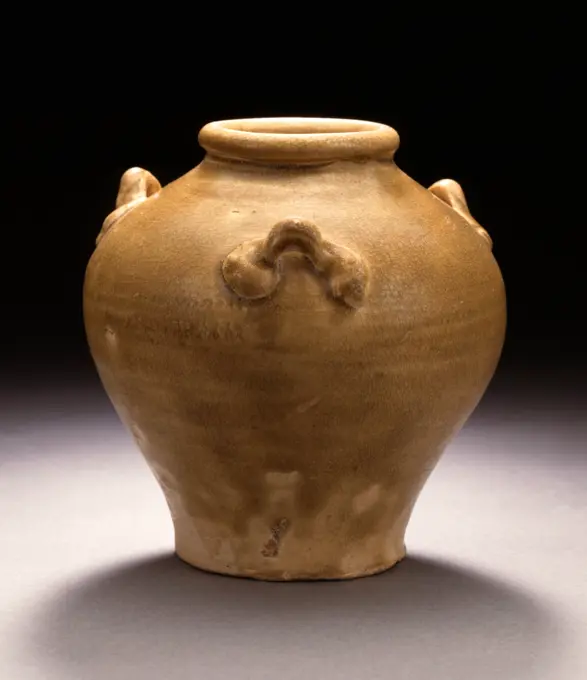
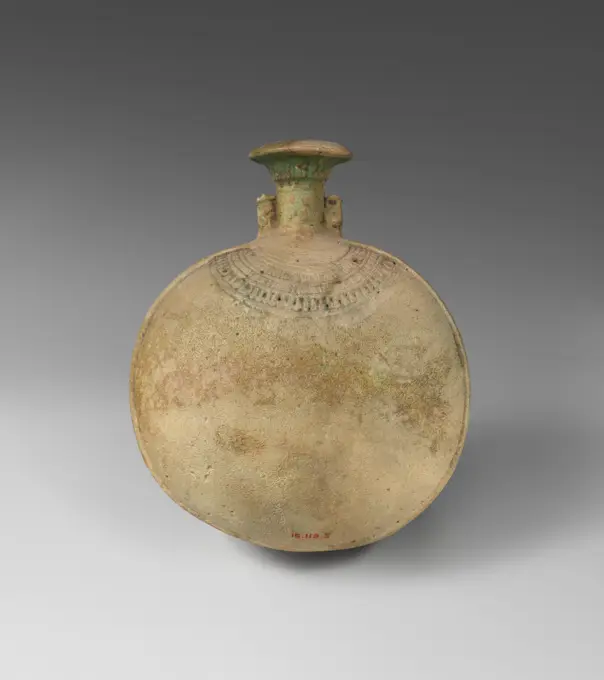
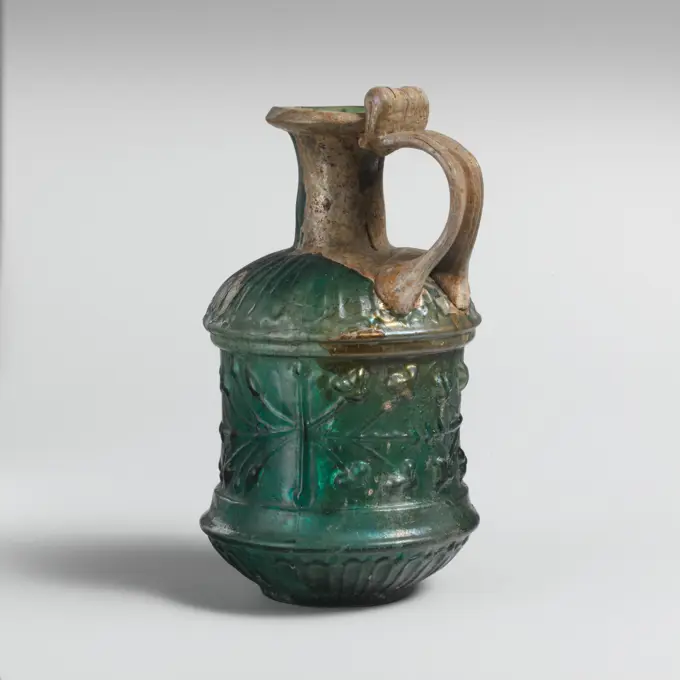
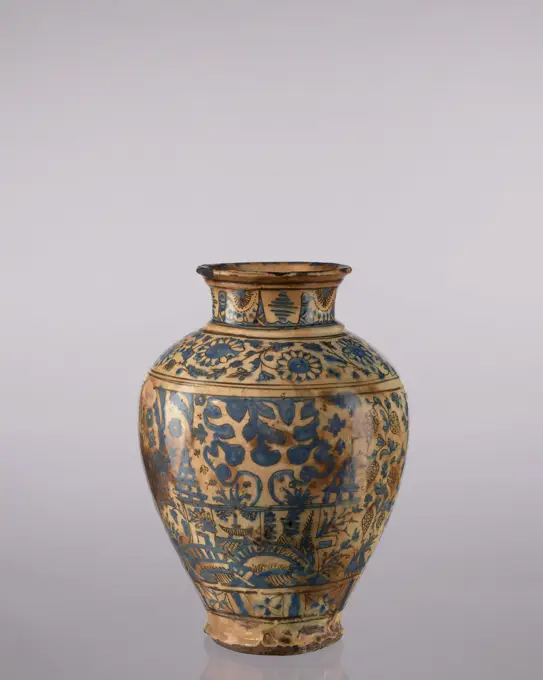
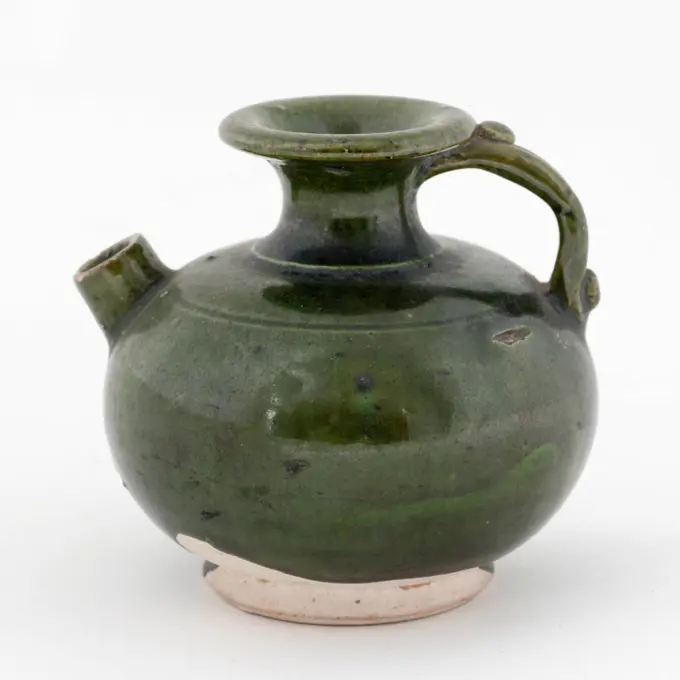
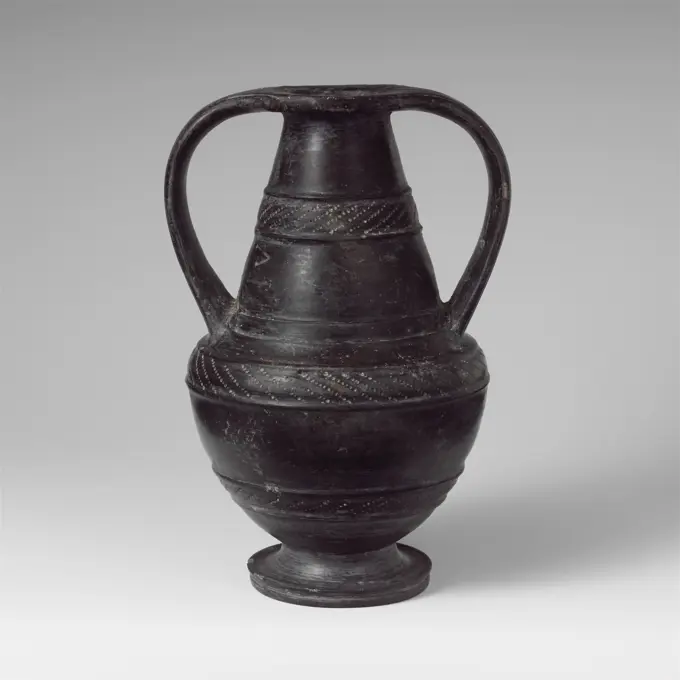
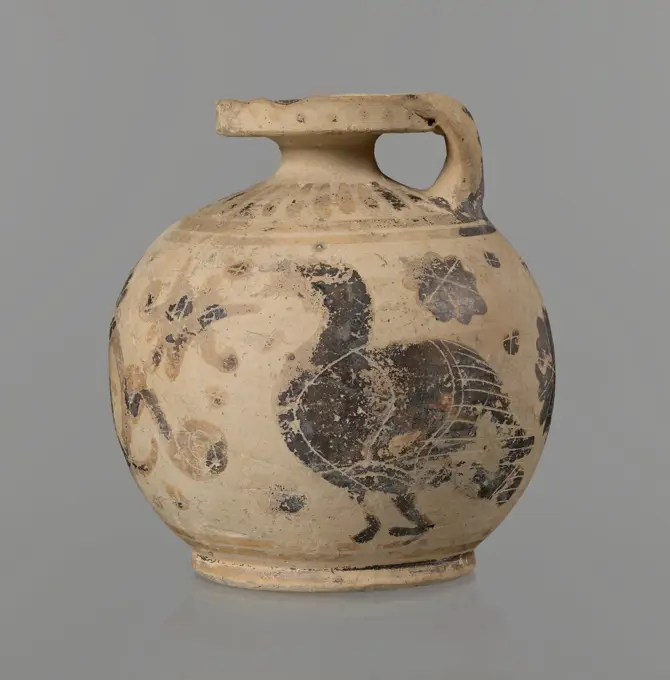
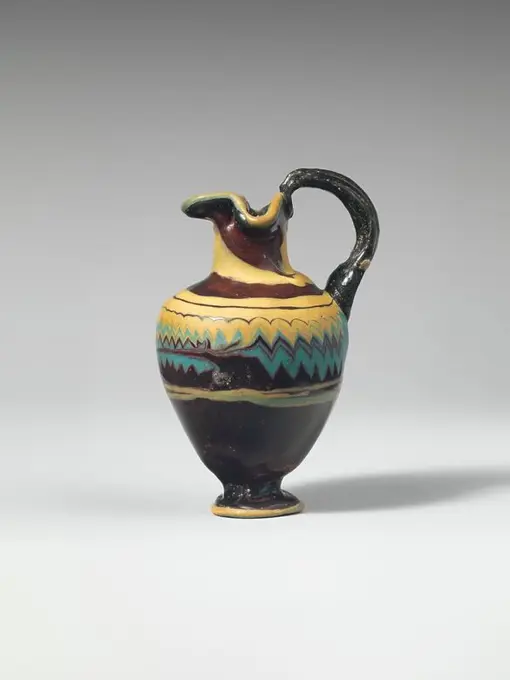
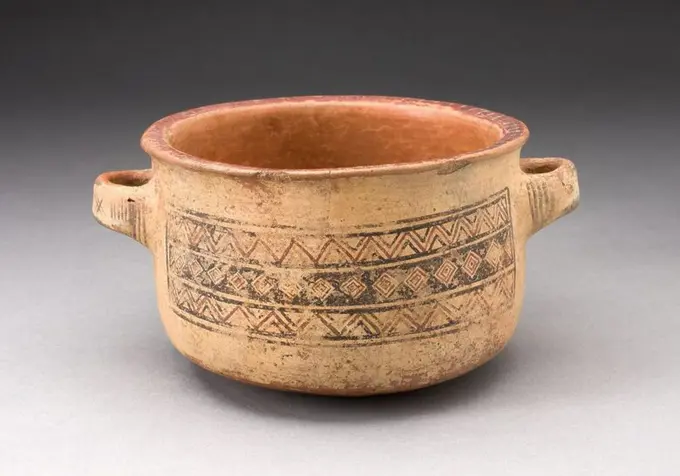
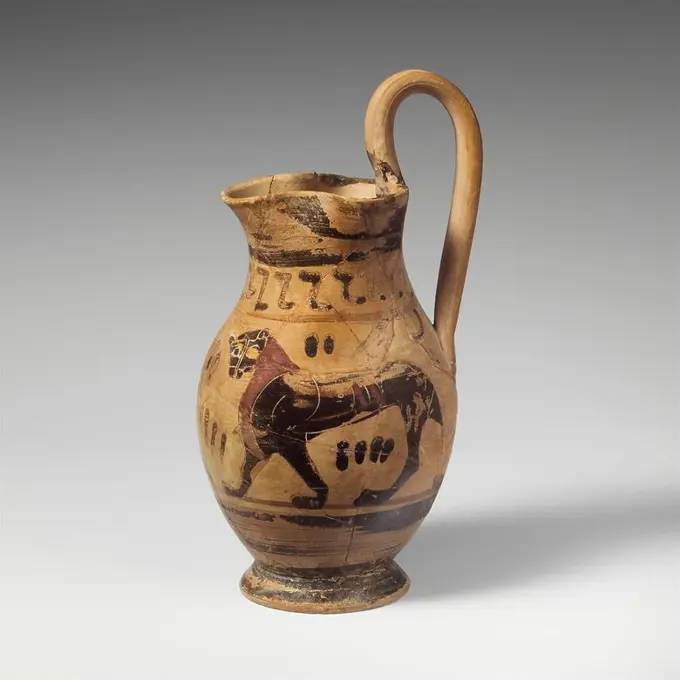
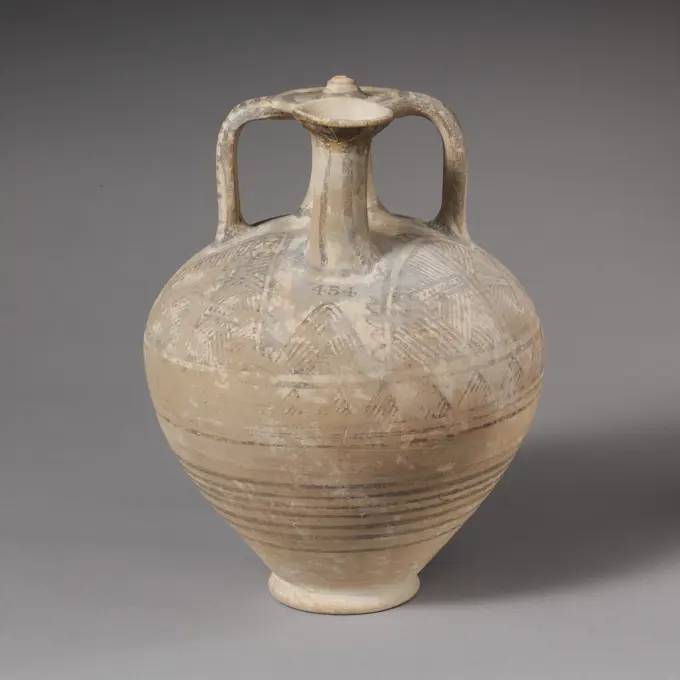
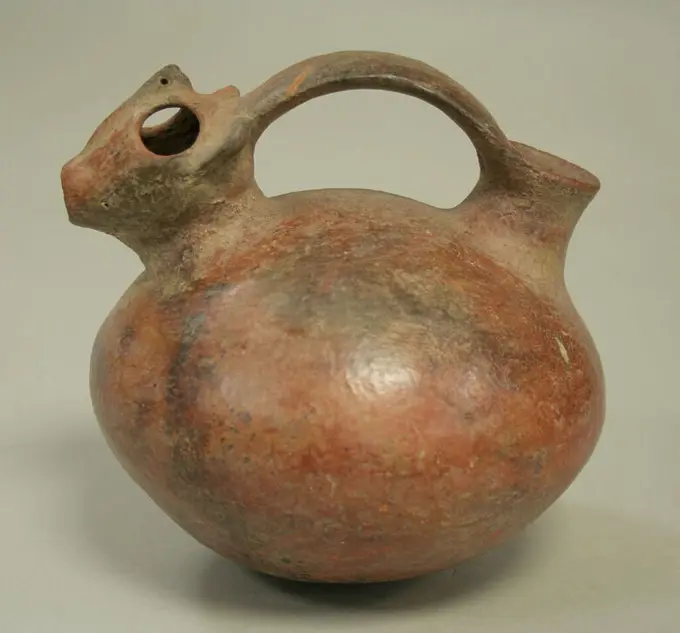
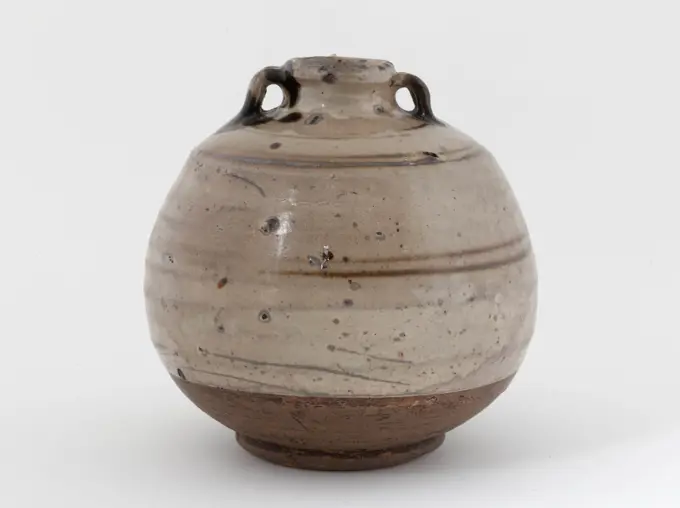
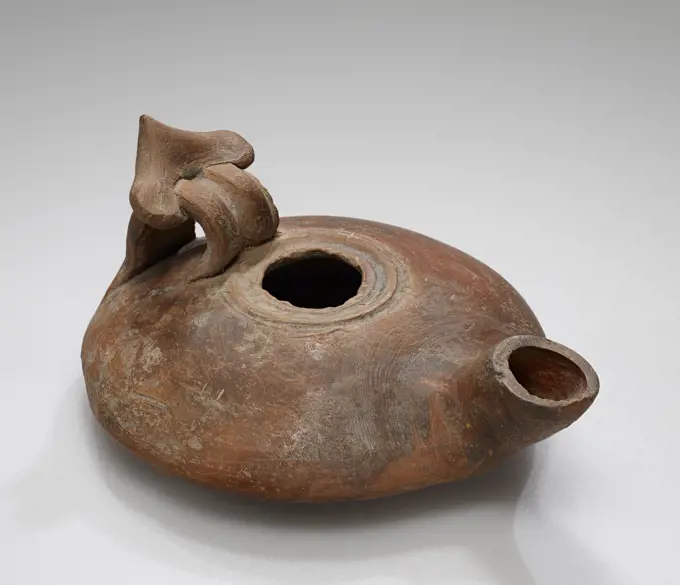
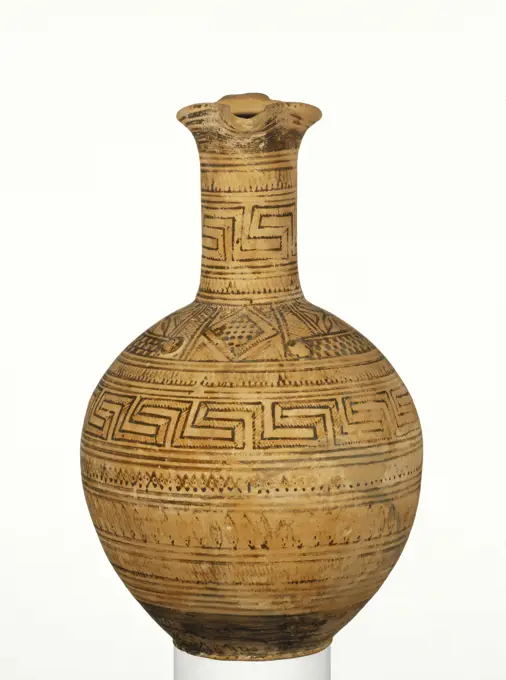
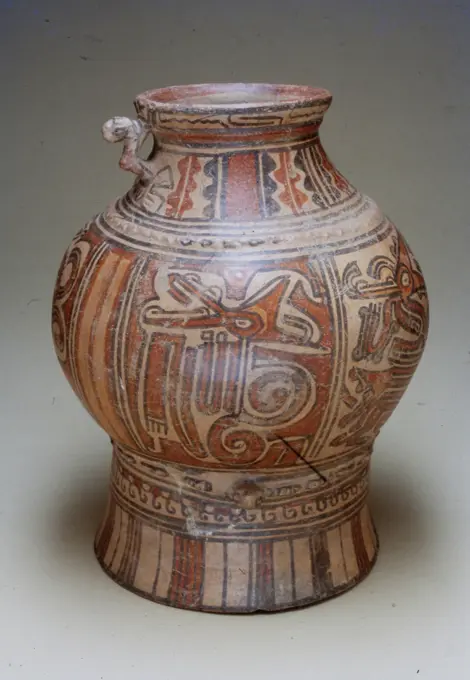
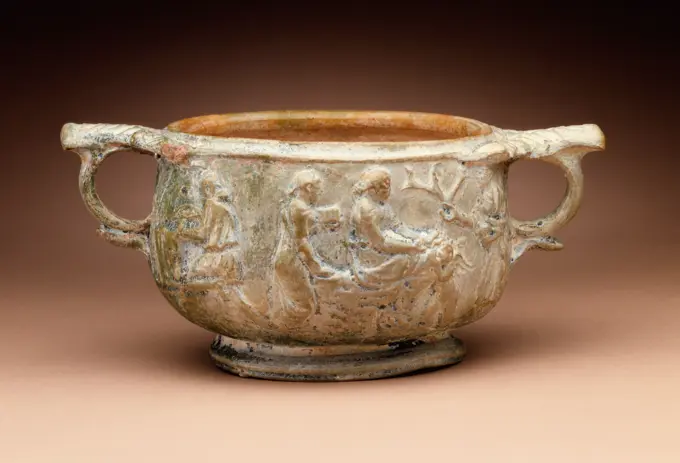
Lamp. UnknownJar. Roman, Levant or Syria. Date: 201 AD-400 AD. Dimensions: H. 3.2 cm (11/4 in.); diam. 2.9 cm (1 1/8 in.). Glass, blown technique. Origin: Syria. Museum: The Chicago Art Institute, Chicago, USA. Author: ANCIENT ROMAN.Glass indented jug Roman 4th-5th century CE Translucent pale blue green; trails and handle in translucent deep turquoise blue.Rounded rim with slight inward lip; broad, flaring mouth; cylindrical neck, expanding slightly downwards; sloping, rounded shoulder; convex curving side to small body; thick, slightly pushed-in bottom, with small central pontil mark; rod handle applied as an irregular pad to outer edge of shoulder, drawn up and outwards, then turned in and down, and trailed onto rim and underside of mouth over trail.One uneven trail wound twice around underside of mouth; another trail wound slightly more than once around lower part of neck; on body, ten elongated vertical indents.Intact, but slight weathered chips in side of handle; pinprick bubbles; dulling, thick creamy white weathering, and iridescence. View more. Glass indented jug. Roman. 4th-5th century CE. Glass; blown, tooled, and trailed. Late Imperial. GlassJug (Bartmann jug) with a coat of arms, anonymous, c. 1570 - c. 1630 Jug (beard fancier bush) of stoneware on a high base with a spherical body and narrow neck. The C-shaped ear is attached to the neck and shoulder. Profiles on the neck and the foot. Covered with a brown Engobe. On the abdomen three times printed and imposed medallion in relief with a crowned weapon surrounded by curl. On the neck, continuously on the shoulder, a bearded man. Frechten. Cheek stoneware. glaze. engobe vitrification Jug (beard fancier bush) of stoneware on a high base with a spherical body and narrow neck. The C-shaped ear is attached to the neck and shoulder. Profiles on the neck and the foot. Covered with a brown Engobe. On the abdomen three times printed and imposed medallion in relief with a crowned weapon surrounded by curl. On the neck, continuously on the shoulder, a bearded man. Frechten. Cheek stoneware. glaze. engobe vitrificationBottle in the Form of a Pomegranate ca. 1295-1070 B.C. New Kingdom, Ramesside Pomegranate juice was prized as a drink, but it can also be used as an astringent to shrink tissues and reduce swelling in wounds. This jar probably held juice for consumption as a drink. A smaller, green jar in the collection (44.4.52) depicts the fruit in its unripened state, when the juice is too sour to drink, and may have juice intended for medicinal purposes.. Bottle in the Form of a Pomegranate 590955LazyVase. Terre Civa. Vietnam. Paris, Muse Cernuschi. Vase Asian art, art of extreme orient, art of Vietnam, Vietnamese art, terracotta, dishesPottery chamber pot, easy to use with curved bottom, large neck opening and standing ear, pot holder sanitary soil find ceramic earthenware glaze lead glaze, hand turned glazed baked Pottery chamber pot red shard outside and inside sparingly glazed External only on the edge and third of the shoulder glazed internal only on the bottom under the neck opening Spacious neck opening with outstanding top edge with lid groove. Belly model with slanted neck. Standing sausage above the edge excellent Roetsporen on the underside archeology indigenous pottery drains night sleeping room hygieneStoneware cup on small foot, brown, proto stoneware, cup drinking utensils tableware holder soil find ceramic stoneware clay engobe, hand-turned baked Stoneware cup on small foot brown Spins on the entire height. Top edge without neck Proto stoneware archeology Rotterdam Kralingen-Crooswijk Rubroek indigenous pottery import drinking serve wine beer Soil discovery Crooswijk Huis te Rubroek.Greece. Geometric art. Middle Geometric period (850-760 BC). Oenochoe from Attica, Greece. National Archaeological Museum. Madrid, Spain.Terracotta alabastron (perfume vase) ca. 625-575 B.C. Etruscan, Etrusco-Corinthian Three-tiered body with pendant designs on the upper tier.. Terracotta alabastron (perfume vase) 255274Vase, 618-799, 5 3/4 x 6 1/4 in. (14.61 x 15.88 cm), Yue ware Porcelaneous stoneware with celadon glaze, China, 7th-8th century, This finely crazed, or crackled celadon exemplifies the best Chinese monochromes, whose beauty depends on their well-proportioned, restrained shapes and flawless, single-color glazes. In fact, the visual subtleties of monochromes stand in stark contrast to the polychromed exuberance of Tang tomb figurines. The Tang preference for monochrome ceramics was rooted in the sophisticated tastes of the previous Sui dynasty (589-618) and its admiration for certain all-white wares. By discarding the complex shapes and flamboyant ornament associated with western Asiatic taste, Tang potters created green, white and black ceramics that reassert a native preference for simple forms and single uniform colors. These aesthetic values, in turn, led to the great celadon and monochrome porcelains of the subsequent Song and Qing dynasties.Bowl 13th-15th century Taíno Most containers that survive from the Taíno civilizations of the ancestral Caribbean islands are ceramic vessels. While some feature whole or partial depictions of anthropomorphic and zoomorphic characters, many show the Taíno artists abilities to distill figural imagery into abstract and geometric motifs. Hands, eyes, gaping or grimacing mouths, and stylized linear passages appear in the modeled ceramic bottles and bowls.. Bowl. Taíno. 13th-15th century. Ceramic. Dominican Republic, Caribbean. Ceramics-ContainersJARRA ACCITANA SIN TAPA VIDRIADA - S XVII. Location: ALFARERIA. Andujar. JAEN. SPAIN.Pottery grape on three legs, rings on the shoulder, two ears, grape cooking pot crockery holder kitchen utensils earthenware ceramics earthenware glaze lead glaze, belly 12.2 bottom 7.1 hand turned glazed baked Grape dark red earth sparingly spicy glazed two round ears of which one in plaster high-profile neck little thickened round edge bullet-shaped coarse rotations three legs Completed ear is very thick and out of proportion archeology Capelle aan den IJssel House in Capelle castle indigenous pottery dinnerware tableware cooking kitchen food preparation Soil discovery: House in Capelle Capelle aan den IJssel.JARRA DE AGUA DE DOBLE PICO - PARCIALMENTE VIDRIADA. Location: ALFARERIA. NIÑODAGUIA. Orense. SPAIN.Terracotta trefoil oinochoe (jug) ca. 550 B.C. Etruscan Horse and lion protomai (foreparts) are often used to decorate bucchero jugs made at Chiusi. The horse motif is especially reminiscent of protomai on Attic black-figure amphorae of about 600-570 B.C., which probably influenced these Etruscan designs.. Terracotta trefoil oinochoe (jug). Etruscan. ca. 550 B.C.. Terracotta; bucchero pesante. Archaic. VasesBell-shaped vase. 2200 BC. Neolithic art. Ceramics. SPAIN. CATALONIA. BARCELONA. Barcelona. Archaeology Museum of Catalonia. Proc: SPAIN. CATALONIA. TARRAGONA. Benifallet.Terracotta neck-amphora (jar) early 5th century B.C. Attributed to the Group of New York GR 517 Obverse and reverse, on the shoulder, two winged figures, ErotesThis idiosyncratic vase reflects influence of both black-figure and red-figure prototypes. The general shape and the ornament on the neck are derived from Attic black-figure neck-amphorae. The decoration, however, reflects the freer drawing of red-figure during the first decades of the fifth century B.C.. Terracotta neck-amphora (jar) 246134Stoneware jug, dated, lions flanked by lions on belly with border text and weapon, bulletbay pot crockery holder soil find ceramic stoneware glaze salt glaze, hand twisted stamped glazed glazed baked Stoneware bulletbayer gray shard with salt glaze profiled bandoor with curled tail around the medallion: ICH. BRINS. DER. HERS. LEBSTENVM. I. FRONT LIGHTS. KVS. 1632 archeology import pottery serve serve serve drink wine beer remembranceJar with Flowers andPalmettesVase, before 1521. Mexico. Pottery; overall: 9 x 8 cm (3 9/16 x 3 1/8 in.).Jar ca. 2000-1600 B.C. Iran This jar has a flat base, bulging body, carinated shoulder and everted rim. It is made of a buff clay, with dark brown horizontal lines on the shoulder. It was found in a grave at Kamterlan II, a mound in Luristan in the Zagros Mountains of western Iran. Although it had been a settlement in the late third millennium B.C., by the second millennium the site had become a cemetery. The shape of the jar parallels that of bronze vessels, called inkwells’ by archaeologists, which have been found in burials elsewhere in Luristan, as well as in Elam; in fact, the carinated shoulder is a feature of metalwork but not of pottery. Although their purpose is unclear, bronze inkwells attest to interaction and exchange between the elites of Elam and Luristan during the Bronze Age. This ceramic version suggests that its owner aspired to elite status.It is often thought that the inhabitants of Luristan in this period were pastoral nomads, who moved with their herds from the hStirrup Spout Vessel with Geometric Motifs Made 100 BCE-500 CE North Coast. Ceramic and pigment . MochePot. Thailand, Ban Chiang culture, 4th-3rd century B.C.. Furnishings; Cookware. Black earthenware with incised decorationVase with Five Discs 8th century A fragment of this vase type was discovered during excavations in Qasri Abu Nasr, in southern Iran, and similar pieces were later found at sites in Guyuan, China, and even Japan, demonstrating that objects of this kind were highly prized in the Far East and traded as luxury items.. Vase with Five Discs 449160Miniature Aryballos. Inca; South coast or southern highlands, Peru. Date: 1450-1532. Dimensions: 12.1 x 9.2 cm (4 3/4 x 3 5/8 in.). Ceramic and pigment. Origin: Southern Highlands. Museum: The Chicago Art Institute, Chicago, USA.Spouted vessel in decorated ware. Dimensions: H. 8 × Diam. 8.2 cm (3 1/8 × 3 1/4 in.). Date: ca. 3500 B.C.. Museum: Metropolitan Museum of Art, New York, USA.Bowl 9th-10th century. Bowl. 9th-10th century. Earthenware; slip covered and unglazed. Excavated in Iran, Nishapur. CeramicsIncense Burner (Lu) in the Form of an Ancient Bronze Tripod (Liding)Dünnwandiges Glas Dünnwandiges Glas Copyright: xZoonar.com/TOLOxBALAGUERx 22568735Alabastron, 664-525 BC. Egypt, Late Period, Dynasty 26 or later. Travertine; diameter: 8 cm (3 1/8 in.); diameter of mouth: 2.1 cm (13/16 in.); overall: 25.4 cm (10 in.).Double gourd vase with ruyi form handles early 18th century China. Double gourd vase with ruyi form handles 48359Pottery test, round model on three legs with standing ear, unglazed, fire test test heating soil finding ceramics pottery, hand-turned baked Round model with standing ear on three legs, one in plaster terracotta-colored earthenware unglazed rings. Ledge on the transition from side wall to bottom archeology Valckensteyn Poortugaal Albrandswaard indigenous pottery stew cooking food preparation heating cooking kitchen Soil discovery: canal at kitchen castle Valckensteyn at Poortugaal now Albrandswaard 1961.Jug, Stoneware, Bulbous body on spreading foot, strait neck with two moldings, strap handle. Body decorated with applied serpentine branch and stamped leaves and berries. On neck, stamped lozenge motifs. Surface partly glossy, flecked brown and grey., Raeren, Germany, present-day Belgium, early 16th century, ceramics, Decorative Arts, JugMiniature alabaster amphora late 4th-3rd century B.C. Cypriot Long neck and two handles.. Miniature alabaster amphora 244015Pre-Colombian ceramic art in Larco Museum, Lima, Peru.Pitcher 301 CE-500 CE Syria. Glass, blown technique . ByzantineStorage Jar, c. 4000 BCE, 4 3/4 x 4 9/16 x 4 9/16 in. (12.1 x 11.59 x 11.59 cm), Earthenware, Thailand, 41st-40th century BCEBowl, molded Roman Lines painted around center and engraved chevrons.. Bowl, molded 250065Brown speckled jug with band ear with tail, jug kitchenware soil find ceramic stoneware glaze salt glaze, hand-turned baked glazed stoneware jug gray shard with brown brindled salt-glaze profile rings below the mouth rim small sausage ear with short pointy tail traces on the bottom archeology import pottery serve drinkGlass bottle with two handles 4th century A.D. Roman Translucent pale blue green; handles, foot ring, and trail in same color.Thick, vertical, cracked-off rim; cylindrical neck; pushed-in shoulder; globular body; applied solid foot ring; flat bottom, slightly pushed-in at center; two three-ribbed strap handles applied to top of body in large pads with downturned fins, drawn up in a circular loop, and attached to neck and underside of collar.Broad, flat collar applied as a coil to neck at midpoint; on body, bands of faint horizontal wheel-cut lines, either as single lines or in groups.Broken and repaired, with numerous cracks and three small losses to side of body; some pinprick bubbles; dulling, iridescence, and creamy brown weathering, with some soil encrustation on inside of neck.Greenish, two handled bottle with handle ridge.. Glass bottle with two handles 249363Glass double-bodied bottle with handle Roman, Syrian 2nd-4th century CE Translucent blue green; handle in same color.Everted tubular rims, folded over and in; cylindrical necks, expanding downwards; globular bodies, pressed together, forming flat inner wall; thick, slightly concave bottom, with central pontil mark; thick rod handle, applied as a large pad to base of neck over join of bodies, drawn up in a curving loop, and trailed onto top of necks and over upper lip of rims.Cracked and broken with three large holes in one body; few bubbles; dulling, some limy encrustation, brownish weathering, and iridescence.The bottle was made by joining vertically two separately blown vessels. Parallels are rare but are known from both the western and eastern halves of the Roman Empire. It is uncertain what liquids it contained but traditionally it is known as an "oil and vinegar" bottle.Jar, 13th century, 9 x 4 in. (22.9 x 10.16 cm) (diameter at lip), glazed pottery, Iran, 13th centuryPottery fire test, ungelazed, topped pinched ear, three legs, fire test test earthenware ceramic pottery, hand-turned baked Pottery fire-proof round model red shard with single lead glaze rail pinched at the top three-legged lead glaze accidentally baked during the baking archeology indigenous pottery food preparation heating cooking food kitchenARTE PRECOLOMBINO. INCA. S. XV-XVI (S. XV-S. XVI). JARRON INCA del tipo aríbalo, denominado así por su semejanza con los jarrones griegos. Años 1400-1533. Procede del Perú. Colección particular.Bartmann jug, also called Bellarmine jug, with frieze over the belly, acanthus leaf and portrait medallions, beard pottery tableware holder soil find ceramic stoneware glaze salt glaze, hand-turned molded baked glazed stoneware jug gray shard blue-gray color with white touch (salt glaze attacked by sea water or acid ) bandoor with broad blunt tail groove and ridge under mouth rim Profiled foot traces on the bottom archeology import pottery drink serve serveBeaker 'trichterhalsbecher' with the Expulsion from Paradise and floral scrolls, anonymous, c. 1560 - c. 1590 Cup (funnel neck cup) of stoneware on a wavy foot with an egg -shaped body and funnel -shaped neck. The C-shaped ear is attached to the shoulder and abdomen. The cup is decorated with hiring, where the shoulder is smoothed. On the abdomen in relief three times a printed and imposed medallion with the expulsion from paradise in one; The other two with flower vines and an angel. Siegburg. Siegburg stoneware. glaze vitrification  Zutphen Cup (funnel neck cup) of stoneware on a wavy foot with an egg -shaped body and funnel -shaped neck. The C-shaped ear is attached to the shoulder and abdomen. The cup is decorated with hiring, where the shoulder is smoothed. On the abdomen in relief three times a printed and imposed medallion with the expulsion from paradise in one; The other two with flower vines and an angel. Siegburg. Siegburg stoneware. glaze vitrification  ZutphenJar. Vietnam, 14th century. Furnishings; Serviceware. Stoneware with celadon glazeTerracotta column-krater (bowl for mixing wine and water) 2nd half of 6th century B.C. Greek, Laconian During the sixth century B.C., the production of glossy, all black pottery was exceptional in the Greek world. Besides Attica, Lakonia was a major center. Since this region was famous also for bronze-working, black-glazed kraters may have provided cheaper substitutes for examples of bronze.. Terracotta column-krater (bowl for mixing wine and water) 255226 Greek, Laconian, Terracotta column-krater (bowl for mixing wine and water), 2nd half of 6th century B.C., Terracotta, H. 11 in. (28 cm). The Metropolitan Museum of Art, New York. Rogers Fund, 1966 (66.11.16)Prehistory, Italy. Pantalica culture. Terracotta spout vase. From Sicily Region.Lentoid Bottle ("New Year's Bottle") Late Period 664-332 B.C. This is an example of a "New Year's Bottle." The short neck is in the form of a papyrus or lotus column, flanked by two squatting apes that take the place of handles.The shoulder is adorned front and back with the representation of a broad collar, echoing a type worn by Egyptians at festive occasions, or a floral garland. Faience flasks of this type, often inscribed with good wishes and apparently filled with water from the Nile, were given as gifts at the New Year. View more. Lentoid Bottle ("New Year's Bottle"). 664-332 B.C.. Faience. Late Period. From Egypt. Dynasty 26-30Slave-Made Colonoware” VesselCeremonial Vessel (Aryballos). Inca; South coast or southern highlands, Peru. Date: 1450-1532. Dimensions: 20.6 × 17.8 cm (8 1/8 × 7 in.). Ceramic and pigment. Origin: Peru, southern. Museum: The Chicago Art Institute, Chicago, USA.Red-Polished Ware Bowl with High Relief Decoration. UnknownAmphora; Unknown Egyptian workshop; VI century (501-00-00-600-00-00);Deposit of the University of Warsaw from 1937-1939, Egyptian ceramics, Polish-French excavations in Edfu (Egypt)Glass jug 1st half of 1st century A.D. Roman Translucent turquoise green, with handle in uncertain color.Rim folded out, round, and in, with beveled edges; flaring mouth; cylindrical neck with irregular indents around top; convex sloping shoulder; cylindrical body with recessed central panel, then cup-shaped below; low circular base with rounded edge and flat bottom; a strap handle applied to shoulder in a large bifurcated pad, drawn up in an outward curving loop, and pressed onto top of neck and underside of rim, with projecting thumb rest above rim. Three mold seams run from base of neck, across shoulder, and down sides to top of prominent horizontal ridge; a separate cup-shaped section forms the lower body and base.Decoration in three registers: on shoulder, downturned tongues in raised outline, interspersed at bottom with pointed darts, with two horizontal raised ridges below; on body, central panel divided into three sections by a vertical thrysos-like staff or rod, with bud-like Pitcher. unknown, craftsmanDish;  Medium Pa (-2055-00-00--1650-00-00);Deposit of the University of Warsaw from 1937-1939, stone vessels, Polish-French excavations in Edfu (Egypt)Ewer with Handle. Iran, no date. Furnishings; Serviceware. SilverBuire ". Terracotta with green glaze. China, Tang dynasty (618-907). Paris, Cernuschi museum. Anse, Chinese art, bun, Chinese Ceramic, container, tang dynasty, oval shape, green glacure, container, terracottaGlass jar. Culture: Roman. Dimensions: H.: 2 1/2 x 2 1/2 x 1 7/8 in. (6.4 x 6.4 x 4.8 cm). Date: ca. 2nd-3rd century A.D..Translucent blue green.Solid collared rim, folded down, round, and up, with downward sloping beveled outer edge and rounded upper lip; outsplayed mouth; short, concave neck; shoulder curving out to join bulbous body; slightly concave bottom.Intact, except for small chip in rim; some pinprick bubbles; dulling and slight pitting on exterior, large patches of limy brown weathering and brilliant iridescence on interior. Museum: Metropolitan Museum of Art, New York, USA.Terracotta Nicosthenic neck-amphora (jar) late 7th-6th century B.C. Etruscan This distinctive form of amphora with strap handles and a neck sharply separated from the body is originally Etruscan. The decoration here is limited to diagonal lines of impressed dots between pairs of relief lines. During the second half of the sixth century the shape was reinterpreted in Athenian pottery establishments for an Etruscan clientele. The fabric became thinner and, thanks to the techniques of black-figure and red-figure, allowed for vegetal and pictorial embellishment.The principal Athenian workshop purveying such vases to Etruria was that of Nikosthenes.. Terracotta Nicosthenic neck-amphora (jar) 244838Jar ca. 2000-1600 B.C. Iran This jar has a flat base, bulging body, carinated shoulder and everted rim. It is made of a buff clay, with dark brown horizontal lines on the shoulder. It was found at Kamterlan II, a mound in Luristan in the Zagros Mountains of western Iran. Although it had been a settlement in the late third millennium B.C., by the second millennium the site had become a cemetery. The shape of the jar parallels that of bronze vessels, called inkwells’ by archaeologists, which have been found in burials elsewhere in Luristan, as well as in Elam; in fact, the carinated shoulder is a feature of metalwork but not of pottery. Although their purpose is unclear, bronze inkwells attest to interaction and exchange between the elites of Elam and Luristan during the Bronze Age. This ceramic version suggests that its owner aspired to elite status.It is often thought that the inhabitants of Luristan in this period were pastoral nomads, who moved with their herds from the high valleysGermany, Stuttgard, Wurtembergisches Landesmuseum, Vase with geometric decoration.Ban Chiang Archaeological Site is a prehistoric human habitation and burial site. It is considered by scholars to be the most important prehistoric settlement so far discovered in Southeast Asia, marking the beginning and showing the development of the wet-rice culture typical of the region. The site has been dated by scientific chronometric means which have established that the site was continuously occupied from 1495 BCE until c. 900 BCE making it the earliest scientifically-dated prehistoric farming and habitation site in Southeast Asia. Ban Chiang is considered the most important prehistoric settlement so far discovered in South-East Asia. It marks an important stage in human cultural, social and technological evolution. The site presents the earliest evidence of farming in the region and of the manufacture and use of metals. Ban Chiang was officially inscribed as a UNESCO World Heritage Site in 1992.Storage Jar, c. 3000 BCE, 7 3/8 x 8 11/16 in. (18.7 x 22.07 cm), Earthenware, Thailand, 31st-30th century BCEAncient Greek vase isolated on white backgroundAryballos;  1. W. VI century BC (-600-00-00--576-00-00);CERAMICA IRANI-JARRO DE BARRO BLANCO S XII. Location: MUSEO ARQUEOLOGICO NACIONAL-COLECCION. MADRID. SPAIN.Barrel jug ca. late 8th-7th century B.C.. Barrel jug 323160Vase. Terre Civa. Vietnam. Paris, Muse Cernuschi. Vase Asian art, art of extreme orient, art of Vietnam, Vietnamese art, terracotta, dishesGlass oinochoe (perfume jug). Culture: Greek, Eastern Mediterranean. Dimensions: H.: 3 3/4 in. (9.5 cm). Date: late 6th-5th century B.C..Translucent cobalt blue, with handle in same color; trails in opaque yellow and opaque turquoise blue.Applied broad trefoil rim-disk; rather tall cylindrical neck; broad sloping shoulder; ovoid body; applied outsplayed foot with radiating tooling marks on upper surface and deep concave bottom; broad handle attached in a pad to shoulder over trail decoration, drawn up and out, then turned in, arching well above rim-disk, and pressed on to back of rim-disk and neck.Yellow trail attached at edge of rim-disk; a yellow trail applied unevenly to top of neck and wound down spirally across shoulder, then tooled on body around upper half of body with deep vertical ribs; a turquoise blue trail added over yellow and intermingling with it, forming a close-set zigzag pattern; below this, the yellow trail continues in a spiral as an irregular festoon pattern aroGlass oinochoe (perfume jug). Culture: Greek, Eastern Mediterranean. Dimensions: Other: 3 1/4 × 1 7/8 in. (8.3 × 4.8 cm)Diam. of foot: 15/16 in. (2.4 cm). Date: 5th century B.C..Opaque streaky red-brown, with foot in same color; rim-disk and handle in uncertain dark color, appearing opaque black; trails in opaque yellow and opaque turquoise blue.Applied broad trefoil rim-disk; rather tall cylindrical neck; broad sloping shoulder; ovoid body; applied outsplayed foot with uneven concave bottom; handle attached to edge of shoulder over trail decoration, drawn up and out, then turned in and pressed on to back of neck below rim.Intermingled yellow and turquoise blue trails attached at edge of rim-disk; a wide yellow trail applied unevenly to neck and wound down spirally across shoulder and around top of body in horizontal lines, then tooled into a close-set zigzag pattern around upper half of body, at which point a turquoise blue trail is added; below this, another thin yellow trail wouJug ca. late 8th-7th century B.C. Israelite. Jug 323147Bearded manner. Gray bearded manner with pewter lid, brown speckled. On the bullet-shaped belly 3 round medallions with a rosette. Before on the neck a beard man.Bowl 10th century. Bowl 449333Minature Handled Bowl with Textile-like Design. Inca; South coast or southern highlands, Peru. Date: 1450-1532. Dimensions: 9.5 × 13.3 cm (3 3/4 × 5 1/4 in.). Ceramic and pigment. Origin: Peru, southern. Museum: The Chicago Art Institute, Chicago, USA.Incense Burner China. Incense Burner 53844Terracotta oinochoe: olpe (jug). Culture: Greek, Attic. Dimensions: 6 3/4in. (17.1cm)Other (height with handle): 6 3/4in. (17.1cm). Date: 1st half of 6th century B.C..Two panthers. Museum: Metropolitan Museum of Art, New York, USA.Terracotta stirrup jar ca. 1200-1050 B.C. Cypriot Narrow bands and on shoulder shaded triangles.This is a native imitation of a Mycenaean ware.. Terracotta stirrup jar. Cypriot. ca. 1200-1050 B.C.. Terracotta. Late Cypriot III. VasesBridge and Spout Bottle in Animal Form. Culture: Vicús. Dimensions: Height 7 in. (17.8 cm). Date: 1st-5th century. Museum: Metropolitan Museum of Art, New York, USA.Glazed ceramic jug with a handle. Diameter edge 96 mm diameter base 60 mm Height 135 mm Width maximum 117 mm thickness 5 mm. (15 th - 17 th CE ) - Modern Age belonging of the " Burgo de Santiuste Museum" in Alcalá de Henares. (Madrid). SPAIN.Lamp. UnknownJarre ". Grès à urgobe peint en Brissow and Brun Sous Cerstle. Paris Museum Cernuski. Anse, Chinese art, Chinese Ceramic, Grisatre Engobe, Round shape, GRES, JARREEwer. Syria, 12th-13th century. Ceramics. Earthenware, incisedinkwellTerracotta rattle () in the form of an owl. Culture: Cypriot. Dimensions: H. 3 7/8 in. (9.9 cm). Date: ca. 1600-1450 B.C..Rattle with vertical bands of black paint. Museum: Metropolitan Museum of Art, New York, USA.Painted Animal Vessel. Culture: Huastec. Dimensions: H x W x D: 7 7/8 x 7 1/2 x 8 3/4in. (20 x 19.1 x 22.2cm). Date: 10th-13th century. Museum: Metropolitan Museum of Art, New York, USA.Pottery pot on stand, baluster shape, was used in the sugar industry, sugar bowl pot holder soil find ceramic earthenware glaze lead glaze, hand-turned glazed earthenware pot on stand. Baluster shape with round shoulder and narrow neck opening. Thick and round protruding neck edge Smooth finished Red shard internally glazed many glaze stains on one side. In it sugar cones were made archeology indigenous pottery sugar confectionery craft sugar industryLamp, Roman Empire; 4th - 1st century B.C; Terracotta; 2.6 x 9.4 x 11 cm (1 x 3 11,16 x 4 5,16 in.)Large EwerGlobular vessel, 3 1/4 x 2 x 3 3/8 in. (8.3 x 5.08 x 8.57 cm), Earthenware, Peru, Pre-ColumbianAttic Geometric Trefoil Oinochoe; Athens, Greece; about 750 - 725 B.C; Terracotta; 39.4 × 25.1 cm (15 1,2 × 9 7,8 in.)Pot (Olla), c. 300 - 799 BCE, 12 1/2 x 8 1/2 in. (31.75 x 21.59 cm), Clay, pigments, Costa Rica, 4th-8th centuryCan of earthenware, anonymous, c. 1700 - c. 1800 Red -brown can of earthenware, on which in colors and relief a heart, in which a cross and the letters BW. Hesse earthenware Red -brown can of earthenware, on which in colors and relief a heart, in which a cross and the letters BW. Hesse earthenwareTerracotta oinochoe (jug) 2nd half of 9th century B.C. Greek, Attic From the Hymettos deposit (see 30.118.1). Terracotta oinochoe (jug). Greek, Attic. 2nd half of 9th century B.C.. Terracotta. Geometric. VasesRelief Skyphos with Pasiphae, Daedalus and the HeiferTea caddy with a green brown glaze, anonymous, anonymous, c. 1700 - c. 1799 Dust bar or Chare van Steengoed with an ivory lid, partially covered with a green brown glaze. The lower part of the bus is unglazed. Old label on the inside with 'Style Karatsu/ 18th'. Karatsu. Japan stoneware. glaze. deksel: ivory vitrification Dust bar or Chare van Steengoed with an ivory lid, partially covered with a green brown glaze. The lower part of the bus is unglazed. Old label on the inside with 'Style Karatsu/ 18th'. Karatsu. Japan stoneware. glaze. deksel: ivory vitrificationCovered Jar with Handle 5th-6th century Korea. Covered Jar with Handle 39505