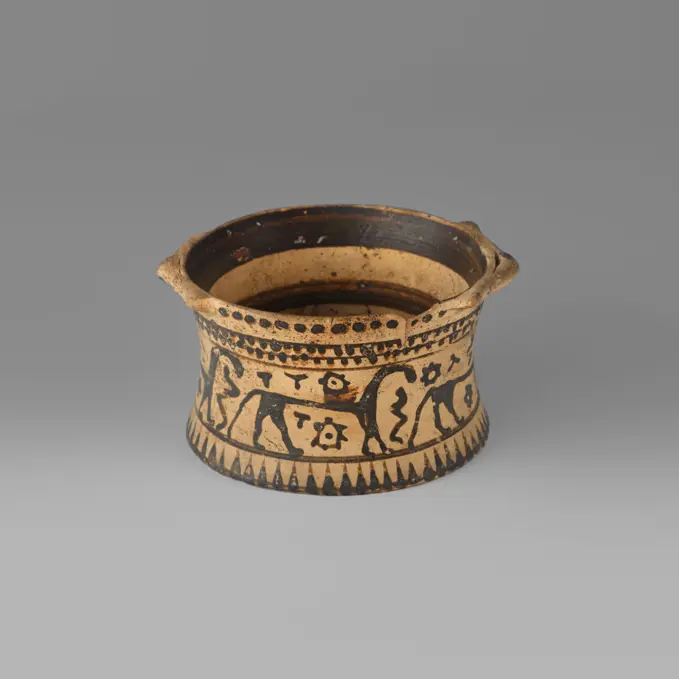
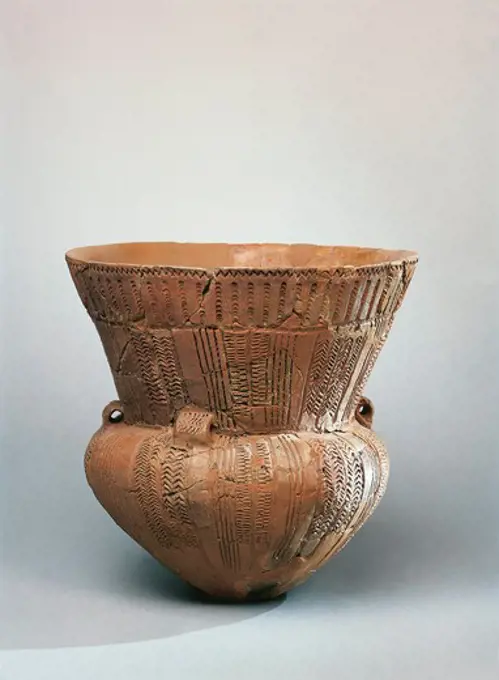
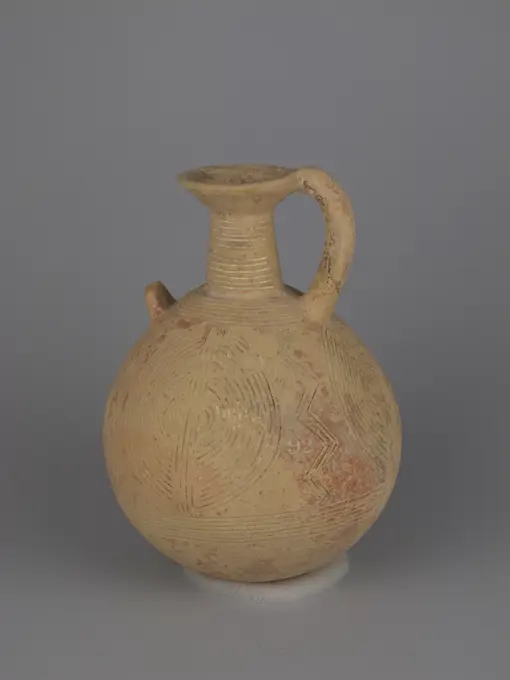
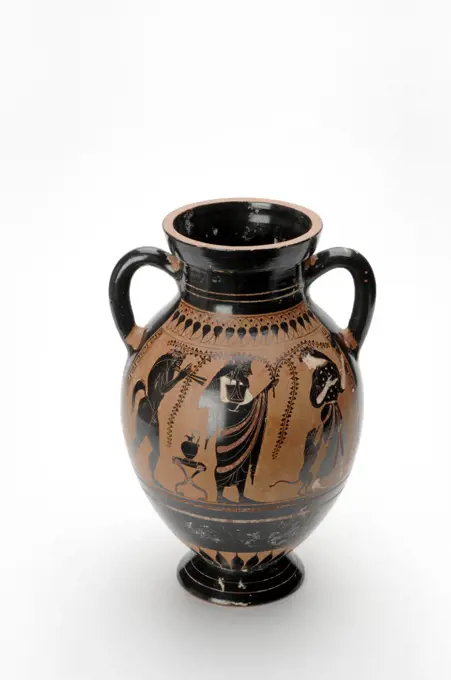
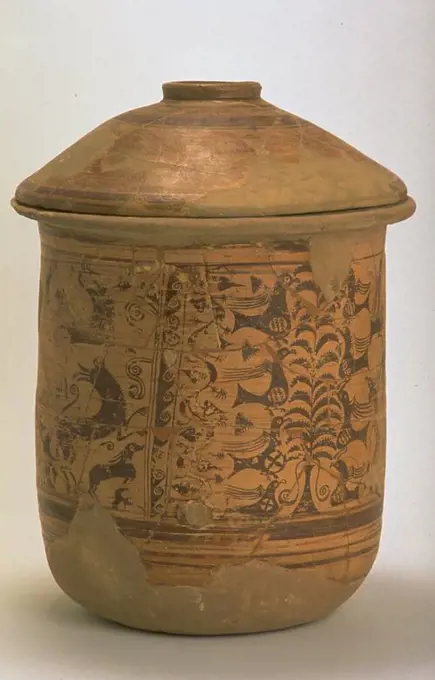
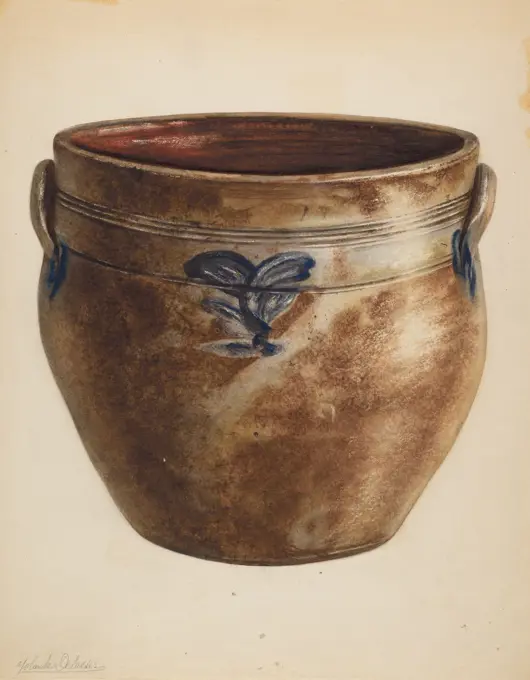
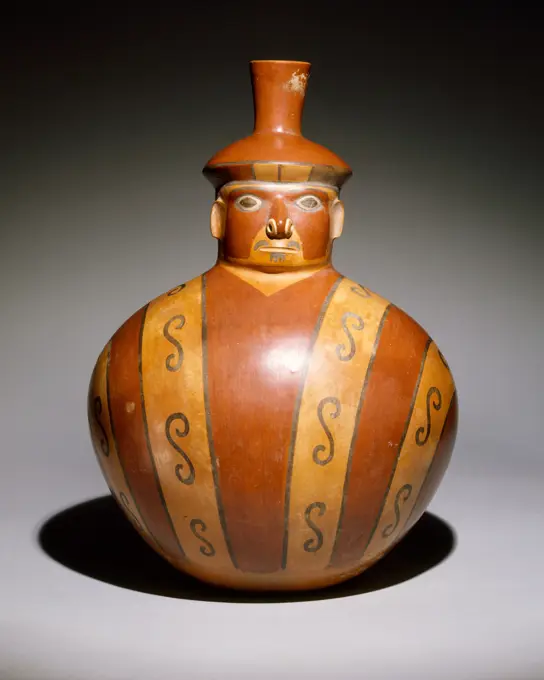
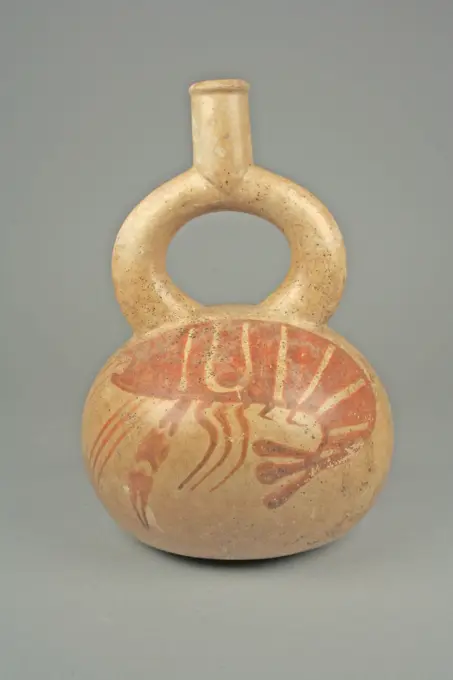
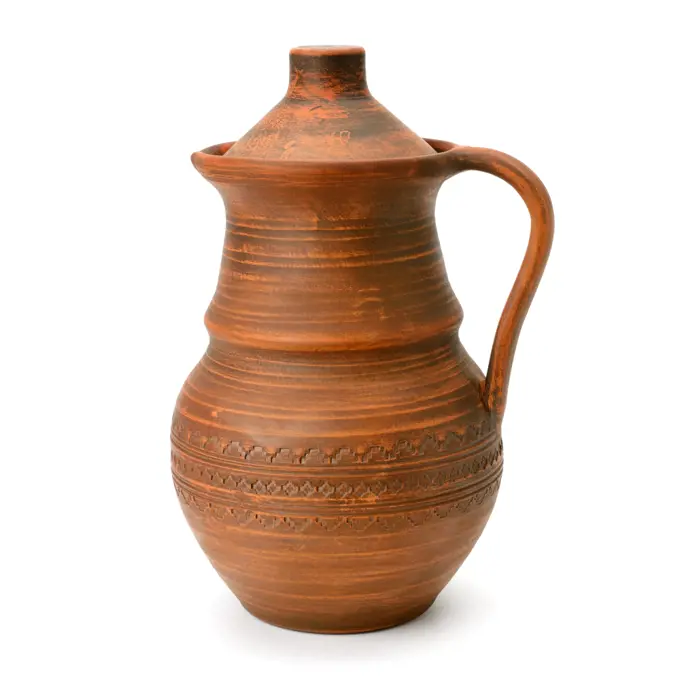
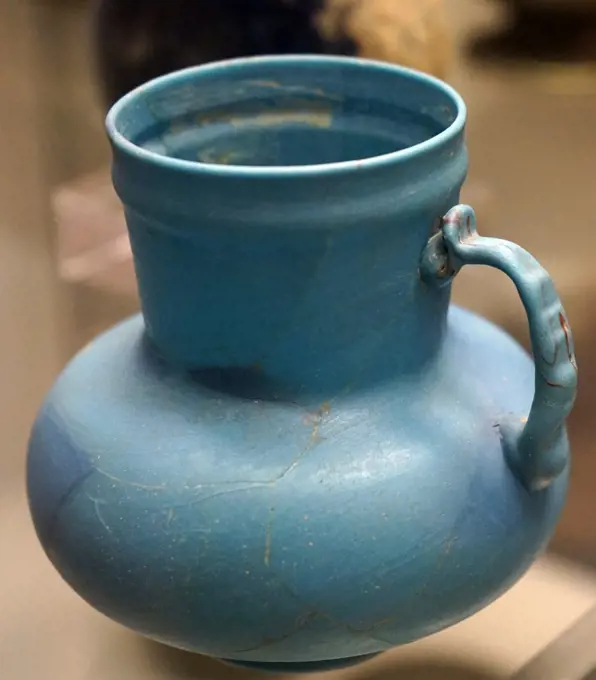
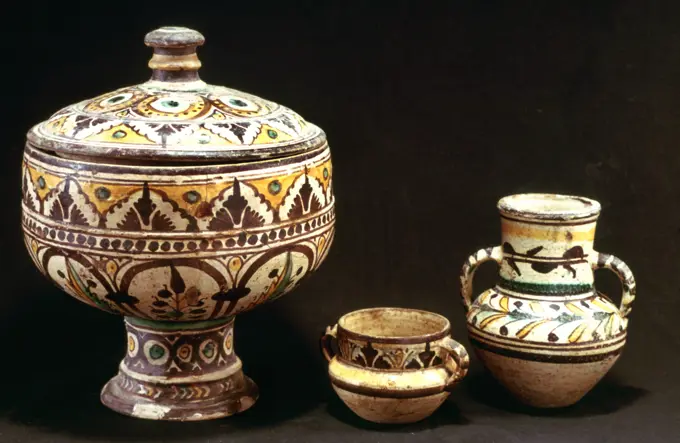
Ancient Terracotta Pottery

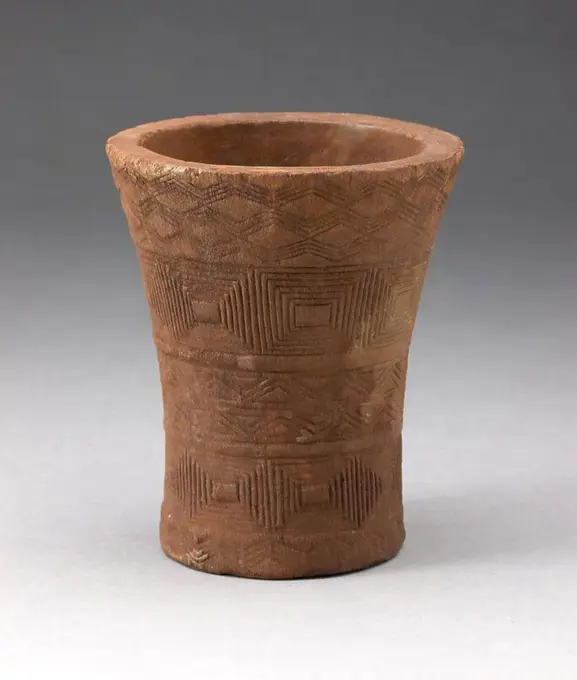
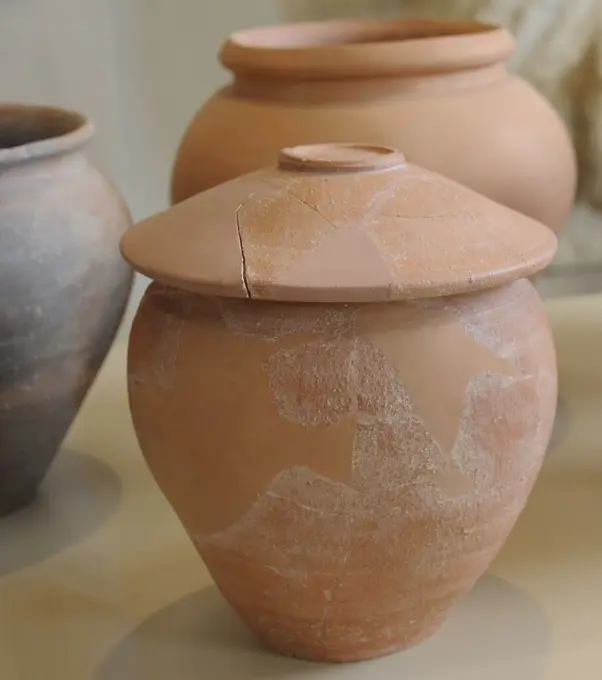
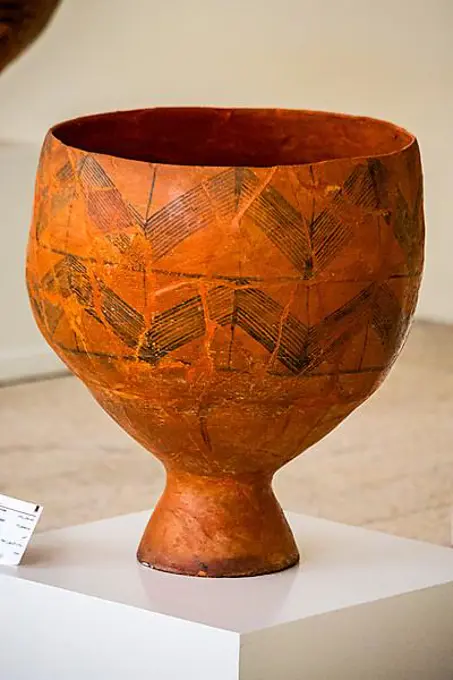
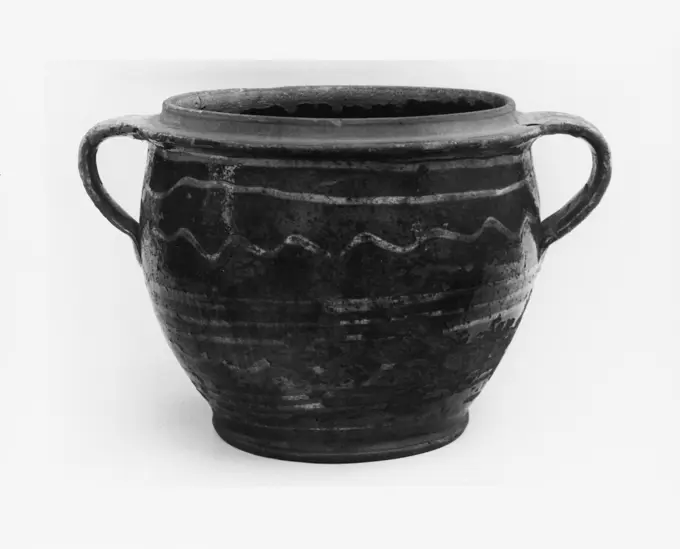
A collection of ancient pots and jars from various cultures, displaying distinctive shapes and decorative elements, showcasing historical pottery art.

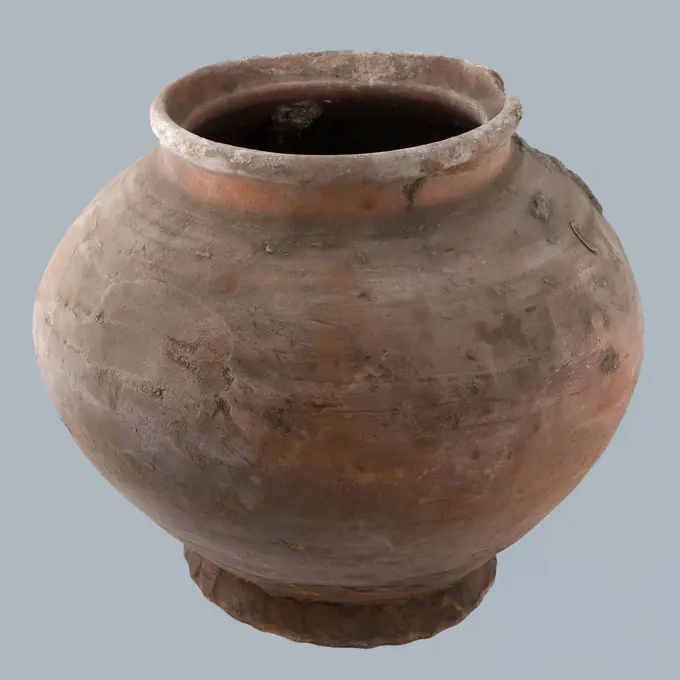
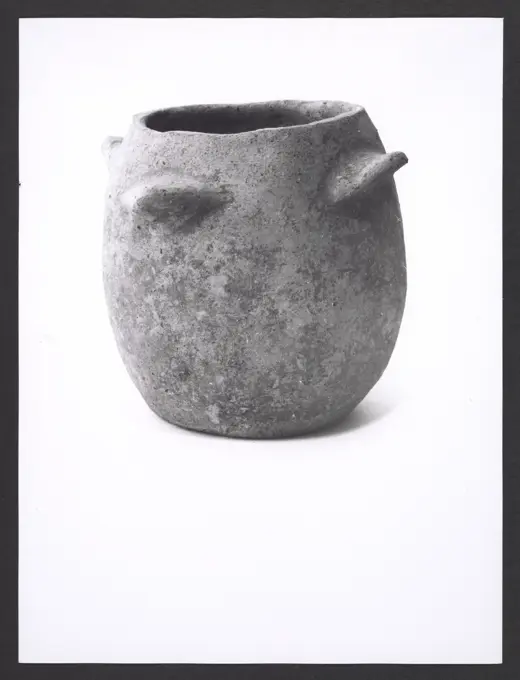
Pottery jug with two ears, on shoulder double notched line, pitcher water jug pitcher holder kitchenware soil find ceramics pottery clay engobe, hand turned pottery jug unglazed two standing bandstands stand. Double notched ring around the shoulder. The ears are attached between the shoulder and layer on the side wall. Sandy stand. Tapered model narrowing downwards. Gray shard smeared with brown engobe archeology to import indigenous pottery import water wrapping
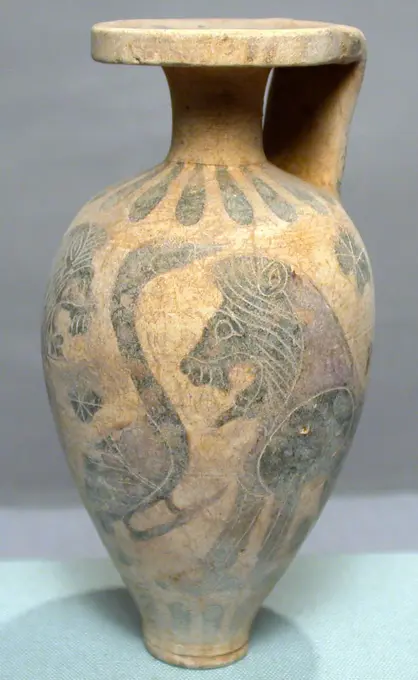
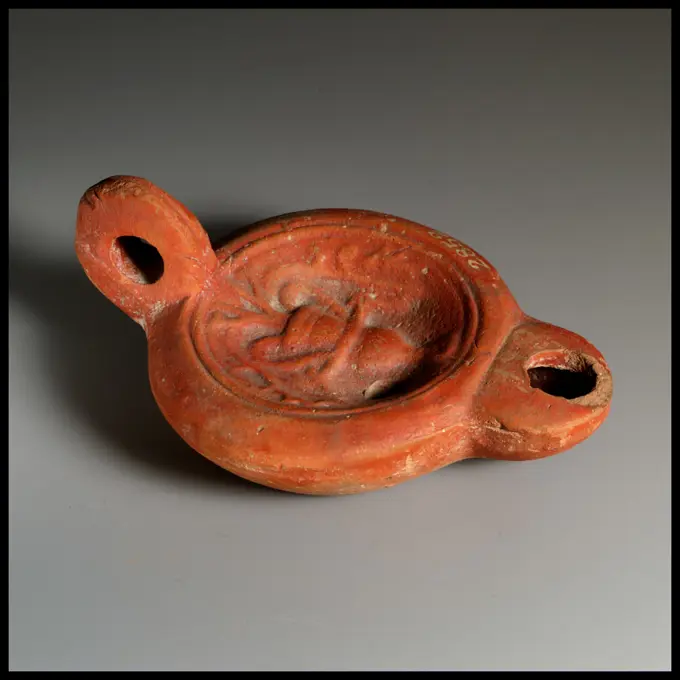
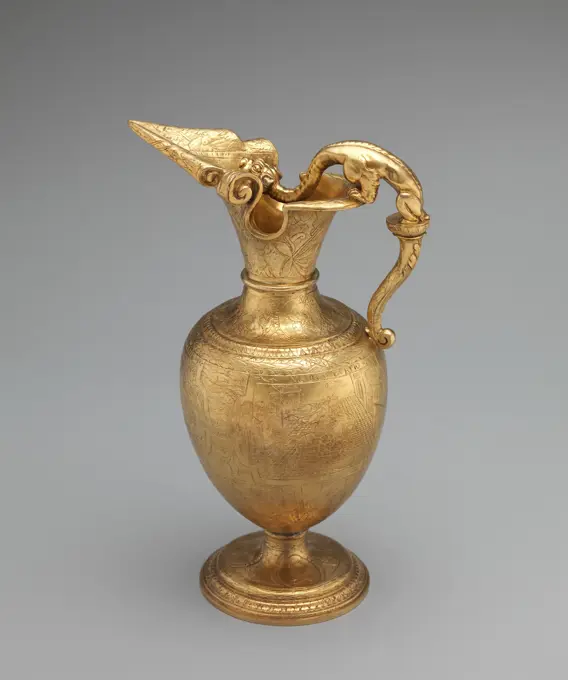
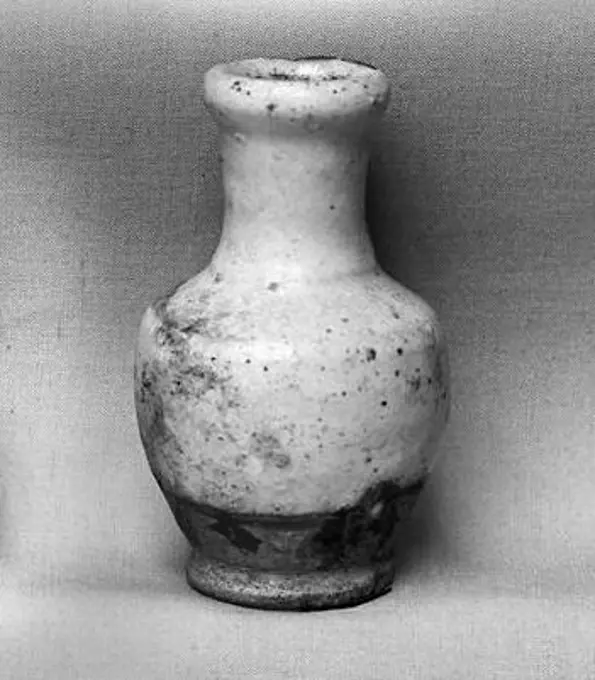
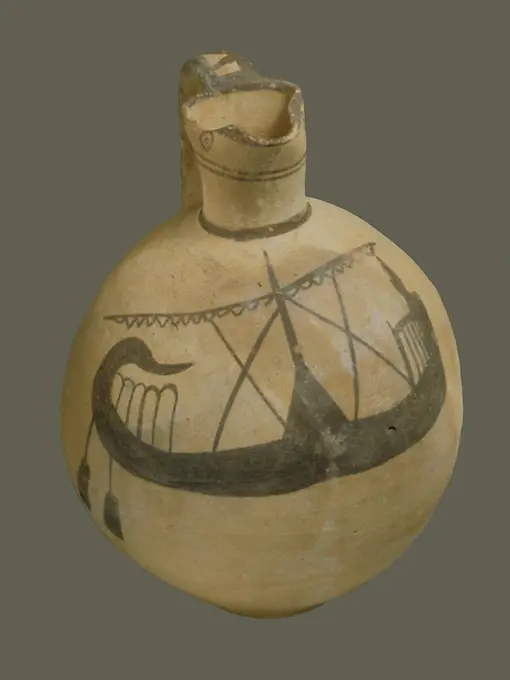
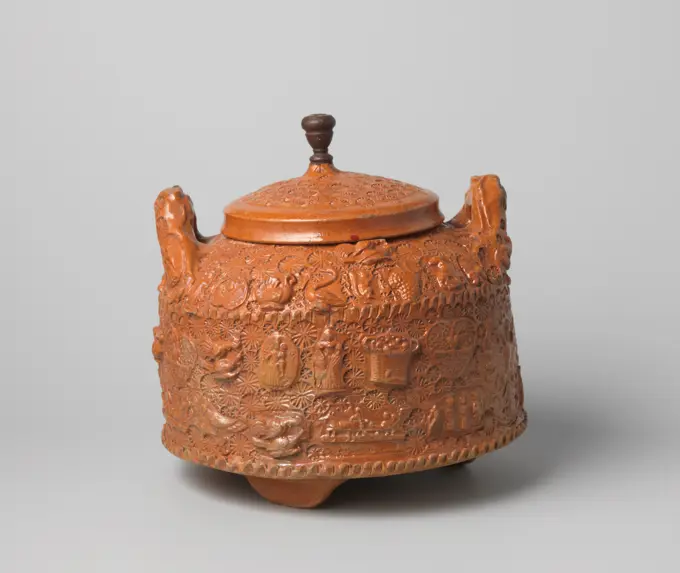
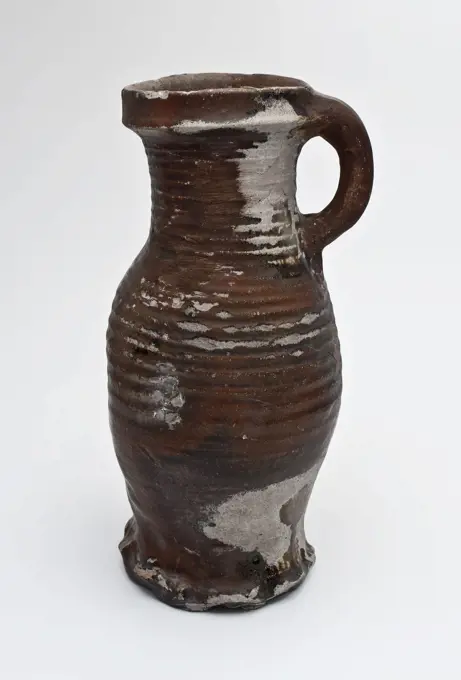
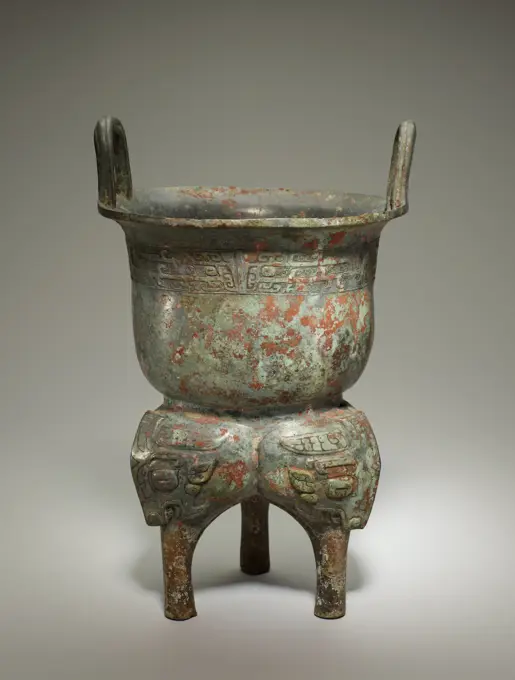
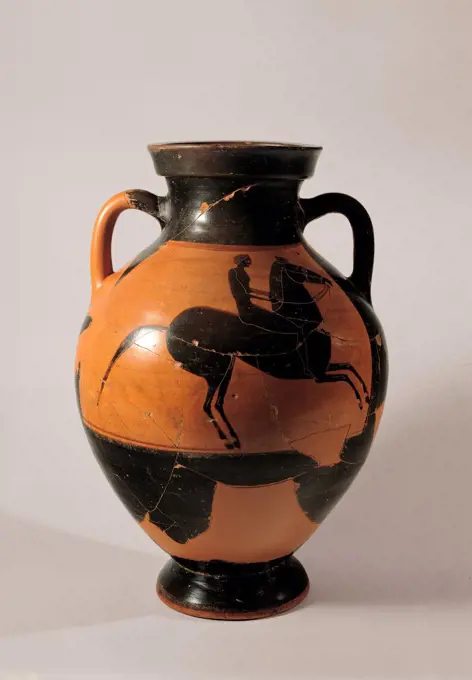
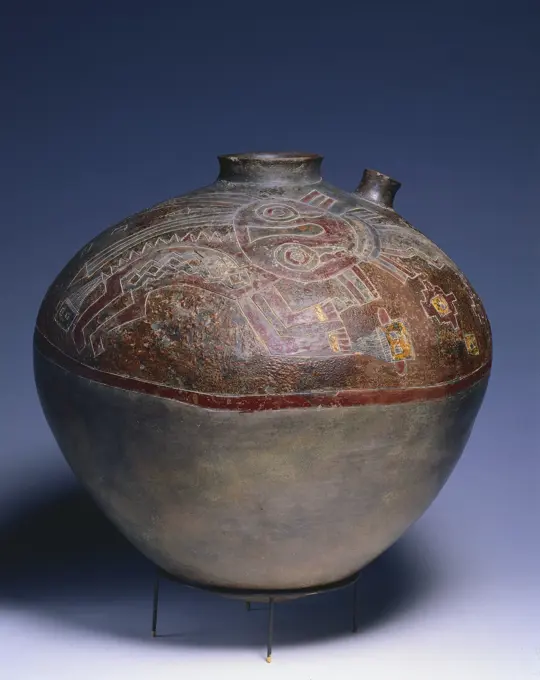
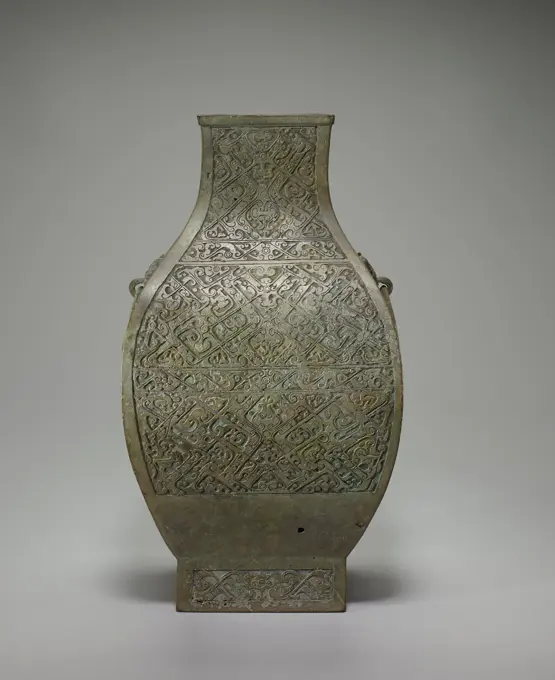
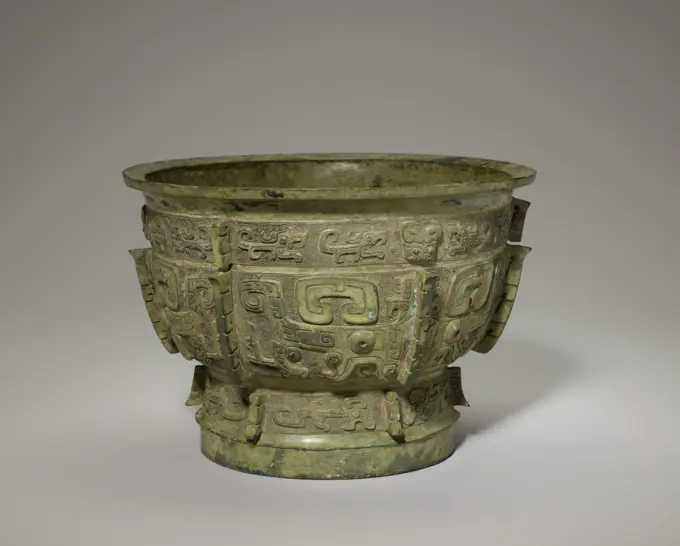
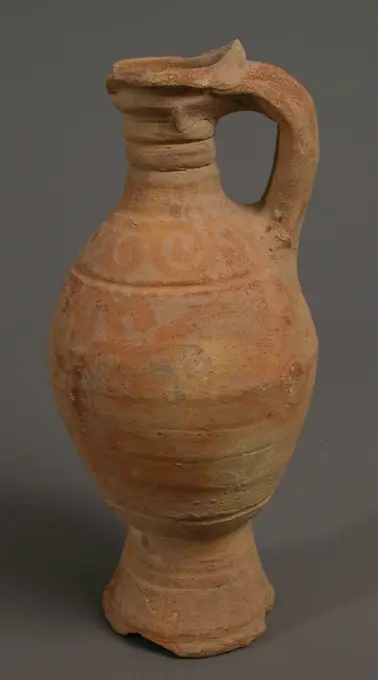
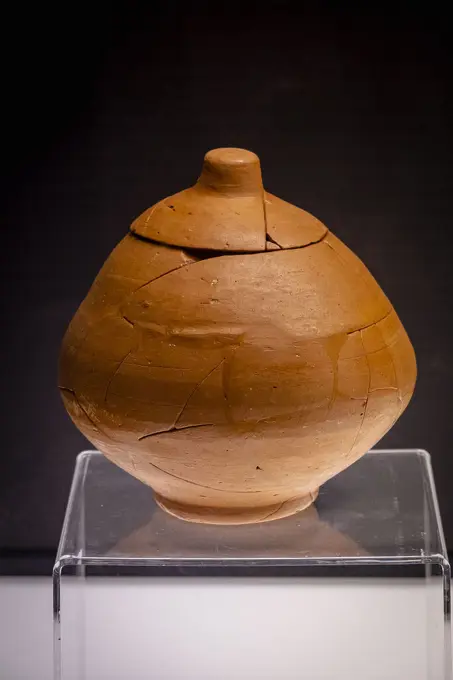
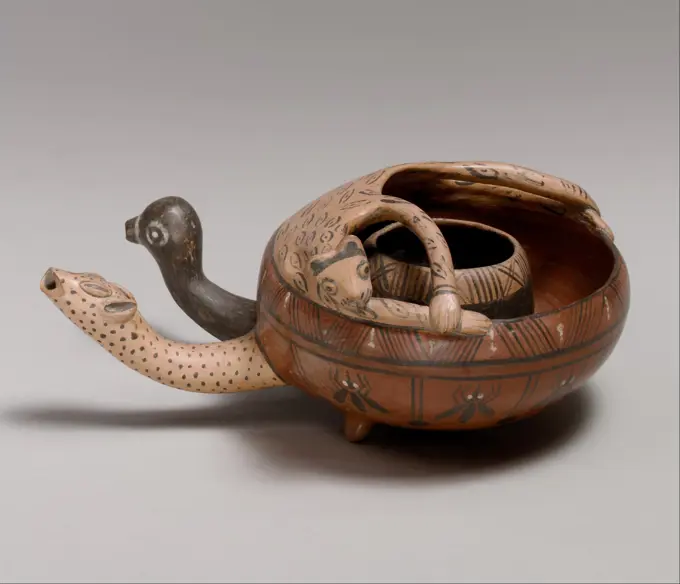
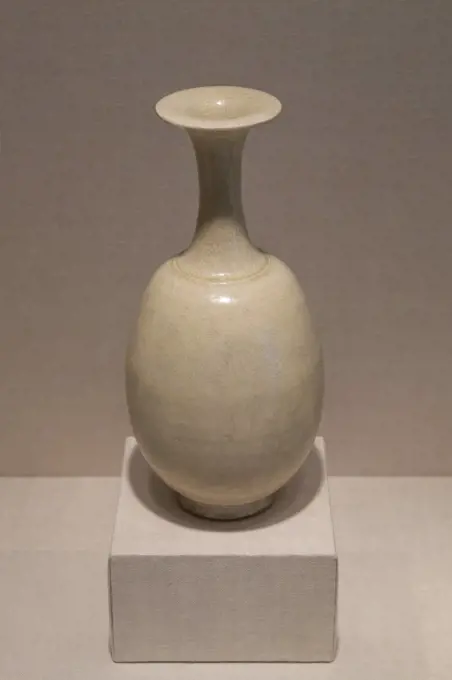
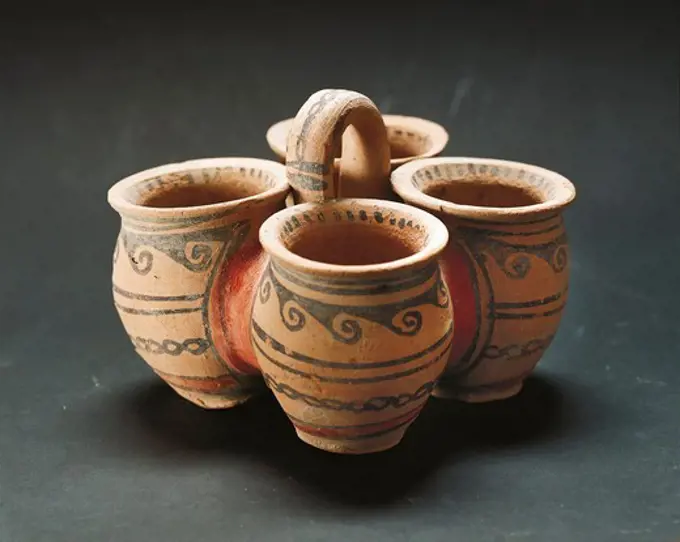
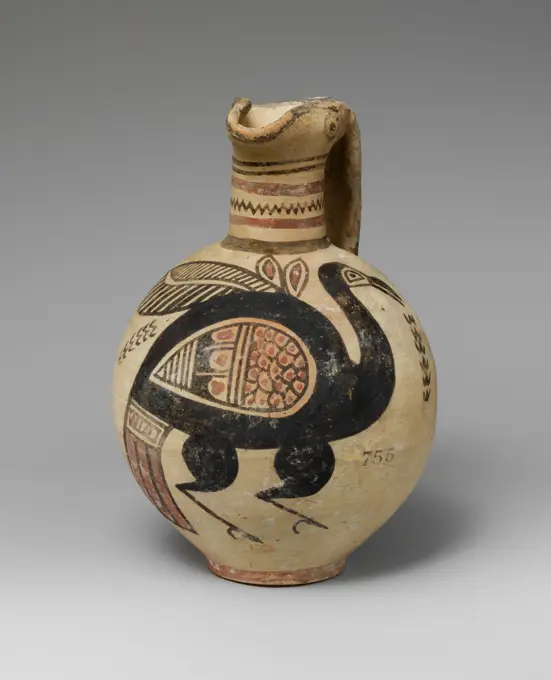
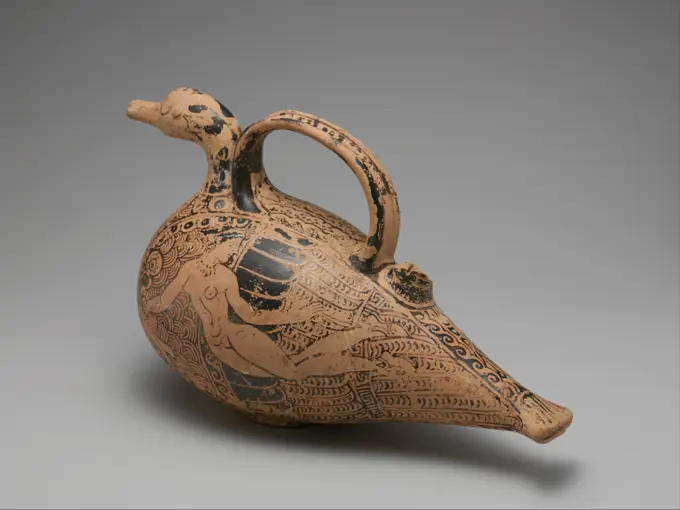
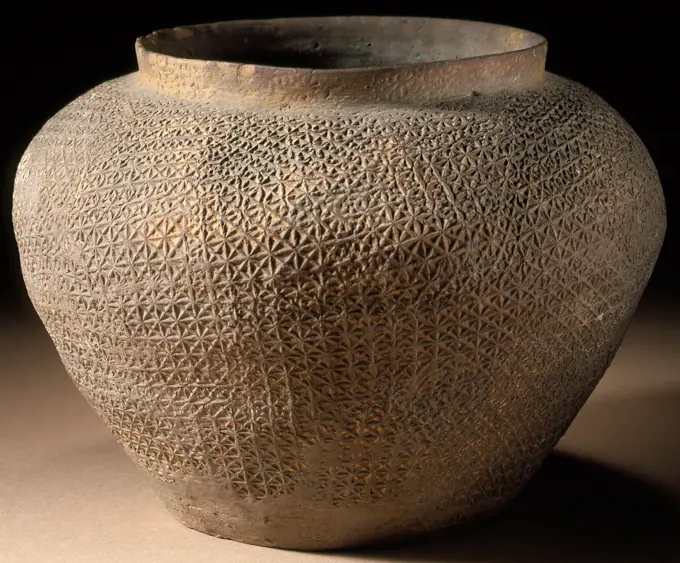
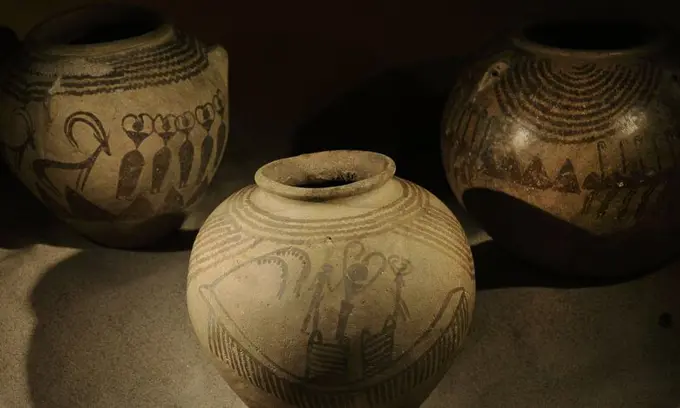
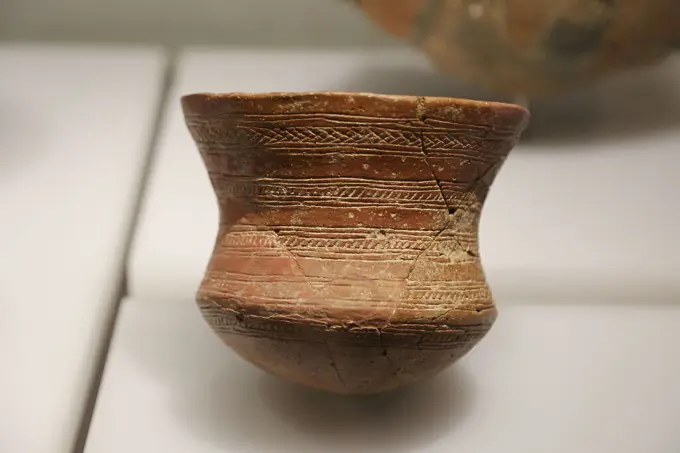
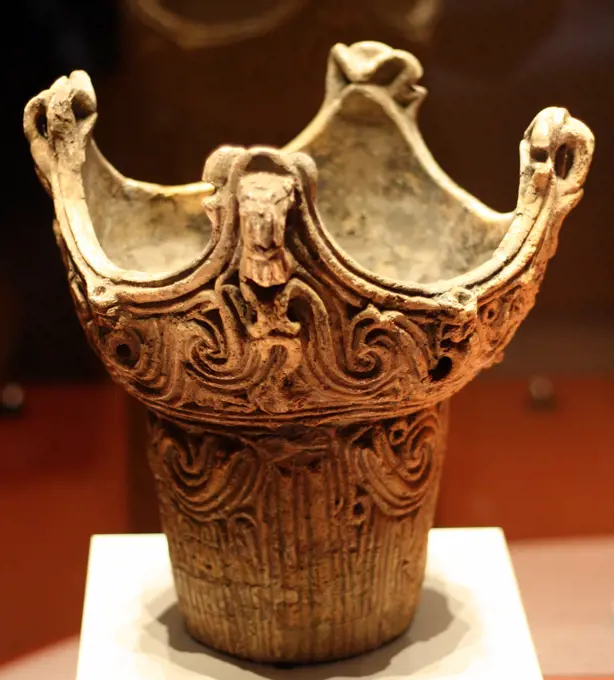
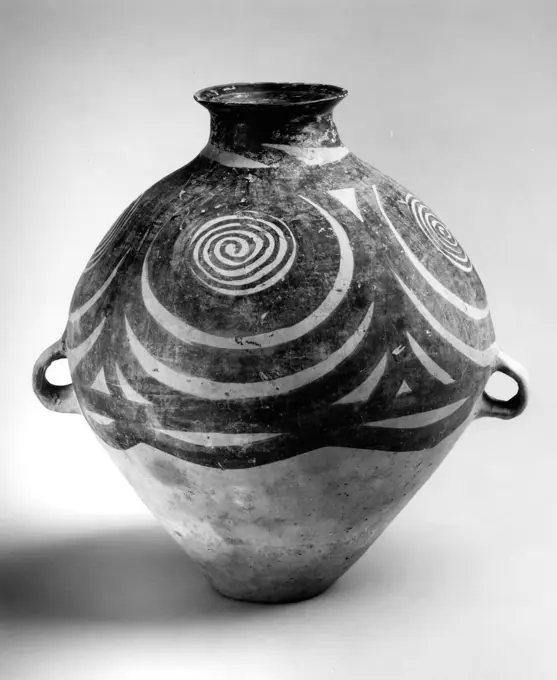
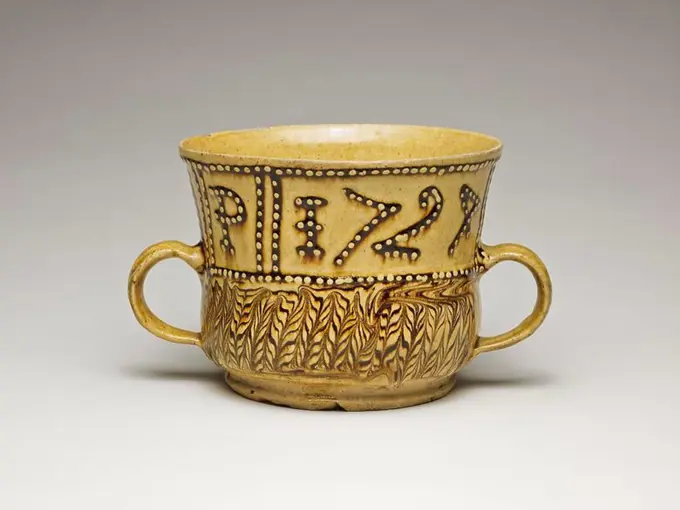
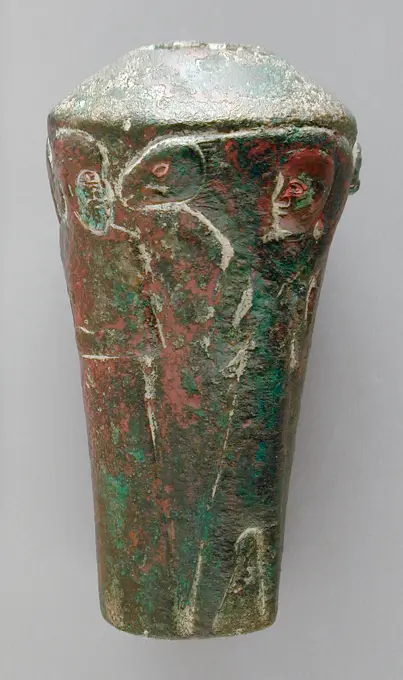
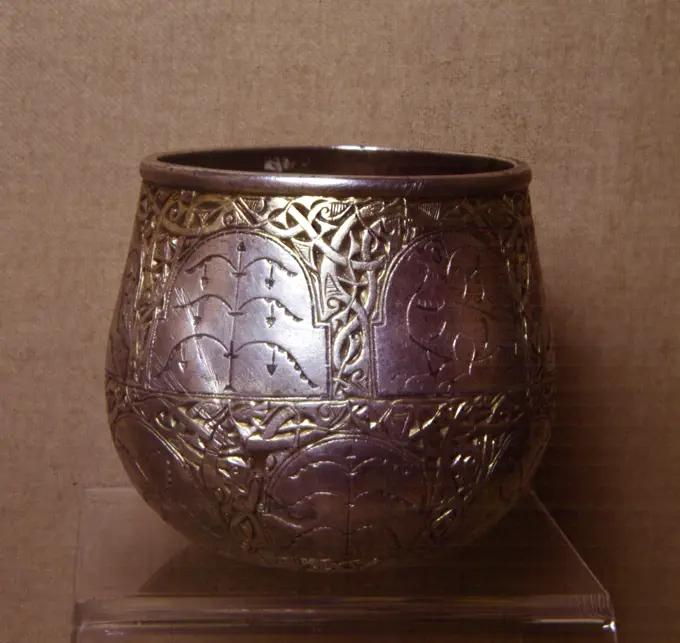
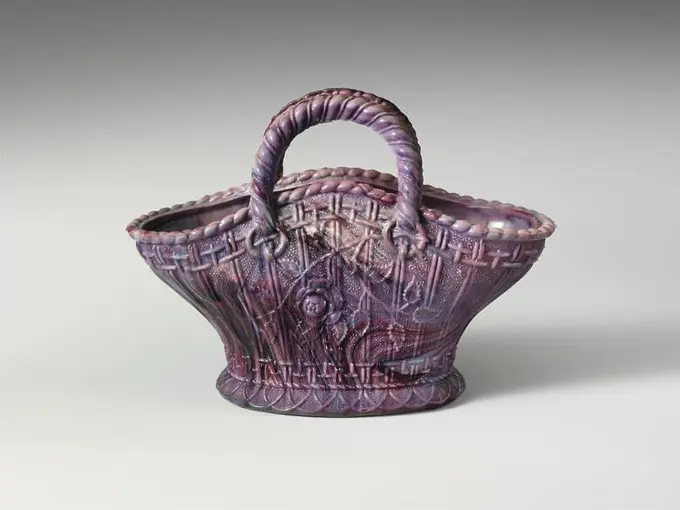
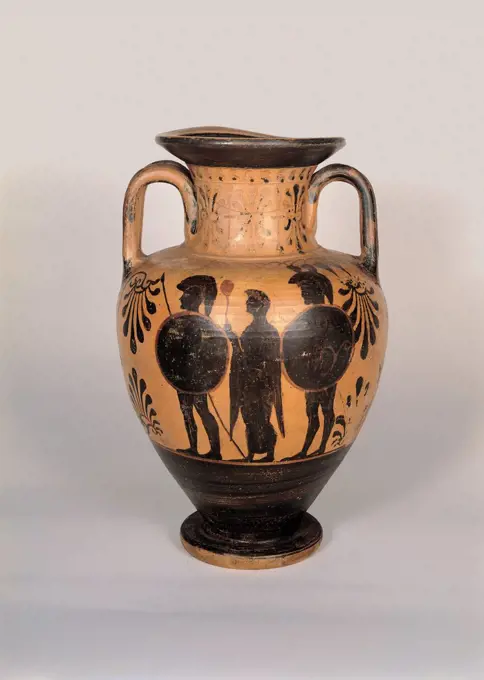
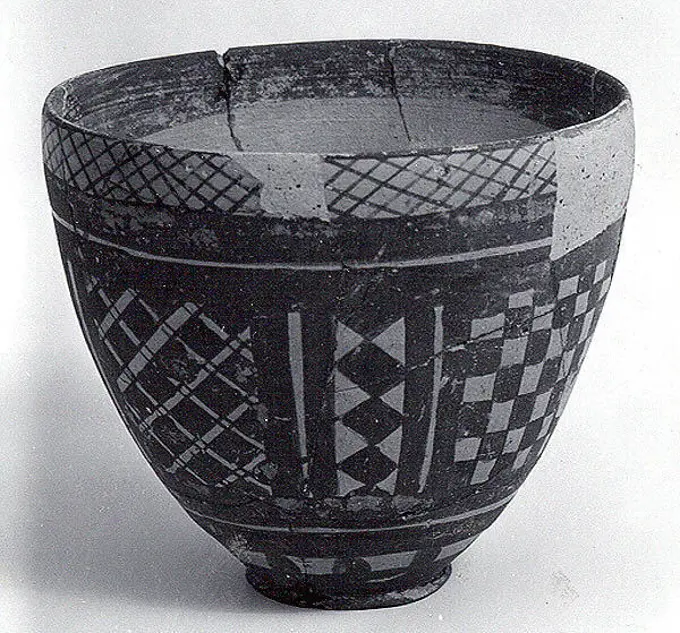
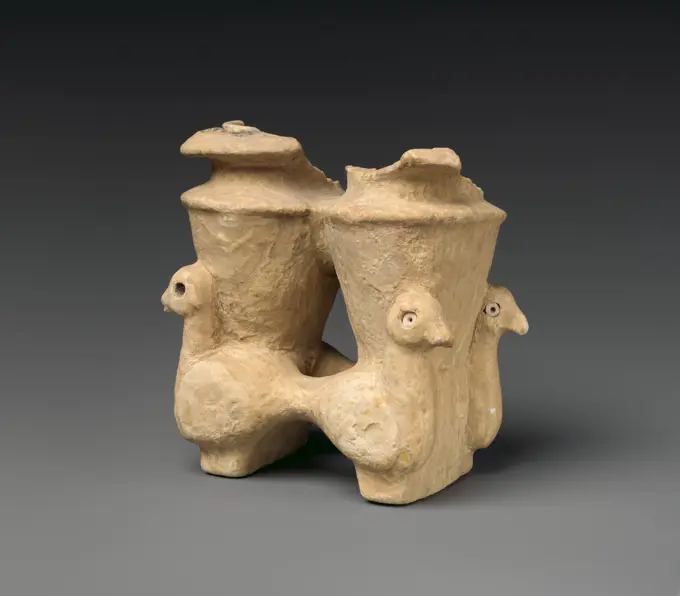
Double vessel with duck-shaped supports ca. 2600-2500 B.C. Sumerian. Double vessel with duck-shaped supports. Sumerian. ca. 2600-2500 B.C.. Gypsum alabaster, shell inlay, bitumen. Early Dynastic IIIa. Mesopotamia, NippurTerracotta pointed aryballos ca. 620-590 B.C. Greek, Corinthian Small aryballoi were used as containers to hold scented oil. Olive oil in particular was treated with aromatic plants such as rose, sage, coriander, and pomegranate. Since this was a valuable luxury item in the Mediterranean, it was usually stored in bottles with narrow necks that limited the flow of the liquid. Corinth was one of the most important centers of production and distribution of such vases, which were widely exported all over Greece as well as in South Italy and Sicily.. Terracotta pointed aryballos 330053Terracotta oil lamp early 2nd century A.D. Roman Loeschcke Type 8. Pierced handle. Mold-made. Discus: large, handled krater, from which leafy fronds (vines) hang to either side; a single filling hole to left above nozzle, with a band of a line and two grooves around edge. Narrow, plain, sloping shoulder. Within incised base ring, flat base, with small impressed letters across center: obscure but possibly ROMANESIS.Intact.. Terracotta oil lamp. Roman. early 2nd century A.D.. Terracotta. Mid Imperial. TerracottasPrehistory, China, Neolithic. Ceramic funerary urn with black and red geometric decoration. From Gansu.Ewer 19th century, after ca. 1540 original Franchi and Son This electrotype is after a ca. 1540 original in the Victoria and Albert Museum, London, at the time of reproduction.. Ewer. British, London, after Italian original. 19th century, after ca. 1540 original. Bronze. Metalwork-ElectrotypeMiniature vase China. Miniature vase 48124Terracotta jug ca. 750-600 B.C. Cypriot Ships provided the link between Cyprus and the surrounding world, and the island was renowned for its shipbuilding. The vessel here is clearly provided with a mast, a sail shown furled, and a pair of steering oars. Of particular interest is the bird's head ornamenting the stern. This feature seems to have originated in the Aegean during the prehistoric period, and it survived well into the first millennium B.C. We do not know if the ship is Cypriot or foreign.. Terracotta jug 240098Tankard (schnelle) with King Arthur and Constantine the Great, anonymous, c. 1588 - c. 1600 Jug (schnelle) of stoneware with cylindrical, tapered body and C-shaped ear. Profiles under the edge and above the foot. On the body in relief three times a printed and imposed, elongated box with a performance of King Arthur in the middle with the inscription 'Cvnnig Artvs 1588'. The two other courses with Emperor Constantijn and the inscription 'Keiser Constantin'. Above each box a mask with rolling work and a weapon at the bottom. Siegburg. Siegburg stoneware. glaze vitrification Jug (schnelle) of stoneware with cylindrical, tapered body and C-shaped ear. Profiles under the edge and above the foot. On the body in relief three times a printed and imposed, elongated box with a performance of King Arthur in the middle with the inscription 'Cvnnig Artvs 1588'. The two other courses with Emperor Constantijn and the inscription 'Keiser Constantin'. Above each box a mask with rolling work and a weapDoofpot, anonymous, c. 1650 - c. 1780 Doffpot of lead glaze pottery. The pot is on three legs and has two ears. The pot is richly ornamented with human figures, animals and weapons in relief, between which pressed rosettes. Netherlands earthenware. lead glaze Doffpot of lead glaze pottery. The pot is on three legs and has two ears. The pot is richly ornamented with human figures, animals and weapons in relief, between which pressed rosettes. Netherlands earthenware. lead glazeTerracotta guttus (flask with handle and vertical spout) 4th century B.C. Greek, South Italian, Campanian On top, head of Athena, in relief.. Terracotta guttus (flask with handle and vertical spout) 247436Lazio Frosinone Casamari Museo Archeologico0. Hutzel, Max 1960-1990 Post-medieval: paintings on canvas, paintings on wood, wooden church furnishings Governing Body: Abbazia di Casamari General Notes: This record is for the pinacoteca which is part of the Museo Archeologico, housed within the Abbey of Casamari. Hutzel assigned it a separate numbering sequence. German-born photographer and scholar Max Hutzel (1911-1988) photographed in Italy from the early 1960s until his death. The result of this project, referred to by Hutzel as Foto Arte Minore, is thorough documentation of art historical development in Italy up to the 18th century, including objects of the Etruscans and the Romans, as well as early Medieval, Romanesque, Gothic, Renaissance and Baroque monuments. Images are organized by geographic region in Italy, then by province, city, site complex and monument.Changsha (ceramic production center), miniature jar (usual name), 0618. Porcelain. Covered Qingbai. Cernuschi Museum, Asia Museum of Asia in the city of Paris.Tankard ca. 1560 Hans Glier German stoneware tankards were brought to America in large numbers on Dutch fur-trading ships. Shards of these popular vessels have been uncovered at seventeenth century sites in New York and New England.. Tankard. German, Saxony (Zeitz or Waldenburg). ca. 1560. Salt-glazed stoneware. Ceramics-PotteryStoneware jug pinched on foot, brown engobe, dents and deformed, pot jug tableware holder soil find ceramic stoneware clay engobe glaze salt glaze, tummy 11.0 bottom 8.5 hand turned glazed fired One ear stoneware jug brown exterior engobe thickened edge edged foot rings flat ear restoration in plaster dent in belly Misbaksel: part enamel and engobe is fading distorted Slim jug with broad neck to the belly with rings Archeology Capelle aan den IJssel House in Capelle castle indigenous pottery tableware kitchenware tableware drink import pottery Soil discovery: canal south side house in Capelle ± 1395-1500 Capelle aan den IJssel 1963.Yan steamer, 11th century BCE, T'Ien Nung, 15 × 9 9/16 × 9 3/16 in., 9.9 lb. (38.1 × 24.3 × 23.4 cm, 4.5 kg), Bronze, China, 11th century BCE, The yan is a type of steamer, or cooking vessel, used chiefly for grain. It consists of a zeng, or deep upper bowl with a pierced bottom, which was placed upon or attached to a lower, legged vessel known as a li (in this example the two parts are cast into an inseparable unit). Water contained within the li would be boiled, steaming the food in the upper bowl. Yan first appeared during the late Shang dynasty (c. 1300-1046 BCE), around the 12th to 11th century BCE, and was a popular form throughout the Western Zhou (c. 1046-771 BCE) and early Spring and Autumn (770-476 BCE) periods. This is a typical yan from the early Western Zhou period. The decoration on the upper section is fairly restrained, with only a narrow ornamental band of animal masks below the lip. The three lobes of the li end in cylindrical legs decorated with buffalo heads: the riBlack-figured amphora, ceramic,Nicholas Amantea, Jug, c 1936 JugPottery storage jar on pinched stand, squat ovoid, storage jar pot holder soil find ceramic earthenware glaze lead glaze, hand-turned glazed earthenware pot on stand. Storage jar Squeezed ovoid Slightly protruding upper edge with lid slot for inner lid Position ring slightly pinched. Red shard sparingly glazed only at the bottom of the inside. Possibly secondarily used as an ashes archeology indigenous pottery stock store basement store reuseEtruscan Beak-Spouted Oinochoe. UnknownEmilia-Romagna Ferrara Ferrara Museo Civico di Schifanoia83. Hutzel, Max 1960-1990 General Notes: INCOMPLETE RECORD--NEGATIVES PROCESSED, PRINTS FILED German-born photographer and scholar Max Hutzel (1911-1988) photographed in Italy from the early 1960s until his death. The result of this project, referred to by Hutzel as Foto Arte Minore, is thorough documentation of art historical development in Italy up to the 18th century, including objects of the Etruscans and the Romans, as well as early Medieval, Romanesque, Gothic, Renaissance and Baroque monuments. Images are organized by geographic region in Italy, then by province, city, site complex and monument.Stoneware jug with weapon medallions, Amsterdam city coat of arms, ribs around neck and on shoulder, jug crockery holder soil find ceramic stoneware glaze salt glaze, opening 3.0 hand turned fried glazed stoneware jug gray shard with salt glaze ear with tail pivots around the neck profiled foot archeology heraldry import pottery serving drink pouring wine beer AmsterdamVessel with Oculate Being, 300 BC-1. Peru, South Coast, Paracas (Cavernas) style (700 BC-AD 1), 300 B.C. to A.D. 1. Earthenware with resin-based paint; overall: 40.8 cm (16 1/16 in.).Fanghu wine vessel, 5th-4th century BCE, 14 3/16 × 8 3/16 × 7 7/8 in., 9.3 lb. (36.04 × 20.8 × 20 cm, 4.2 kg)3 13/16 × 3 7/8 in. (9.68 × 9.84 cm) (object part, mouth)4 7/8 × 4 15/16 in. (12.38 × 12.54 cm) (object part, foot), Bronze, China, 5th-4th century BCE, The complex recessed pattern that covers this elegant vessel suggests that it may have originally been inlaid with silver or turquoise. Although the geometric pattern is derived from highly stylized interlaced dragons, the ultimate inspiration for this rich embellishment may well have been painted lacquers or multicolored silk brocades of the Warring States era.Vessel (Peru); earthenware, slipGui food vessel, 12th century BCE, 7 × 9 15/16 in., 8.8 lb. (17.8 × 25.3 cm, 4 kg), Bronze, China, 12th century BCE, Stylized animal motifs predominate Shang bronze decoration. The dragon, snake, cicada, ram, owl, tiger, and even elephant all make appearances. Yet these creatures were almost always less important than the taotie (composite animal) mask, which typically dominates the largest or most important register of nearly all Shang bronzes. This exquisite food bowl, an early form of the gui with looped handles that became prevalent particularly in the Western Zhou dynasty, has three such masks clearly cast in high relief encircling its cauldron. Below each mask, in the foot band, are two opposing dragons shown in profile, while four similar dragons appear above each mask in the top decorative band. The exact meaning of the taotie mask is unknown. A nine-character inscription cast on the interior bottom may stand for branches of a big clan.Lamp. UnknownTerracotta oil lamp. Culture: Roman. Dimensions: Overall: 1 x 3 3/8 in. (2.5 x 8.6 cm). Date: ca. A.D. 40-100.Loeschcke Type 4. Mold-made. Discus: Aktaion, standing to front, facing left, being attacked by a hound at left, and holding a spear in his left hand; all on a ground line across bottom of discus. Museum: Metropolitan Museum of Art, New York, USA.Jug 4th-7th century Coptic. Jug 477274Glass polygonal bottle 2nd-3rd century A.D. Roman Translucent pale blue green; handle in same color.Rim folded out, down, round, in, and flattened on top, with flaring mouth; cylindrical neck, expanding downward; broad shoulder, curving downward; straight, fluted sides to body; slightly concave bottom; strap handle applied as a broad, thin pad on shoulder, drawn up vertical, turned in at sharp angle, and trailed on to neck and underside of rim.Sides formed in mold into twelve concave vertical flutes.Intact; few bubbles but many impurities in rim and handle; dulling and faint iridescent weathering; soli encrustation on bottom of interior.. Glass polygonal bottle 239695urna cineraria, Necrópolis de Carratiermes, siglo IV-II a.C. museo del Yacimiento arqueológico de Tiermes, Soria, comunidad autónoma de Castilla y León, Spain, Europe.Double Bowl 15th-early 16th century Inca During Inca times, the production and distribution of ceramics was controlled by the state. Those made and used in Cuzco, the capital of the Inca empire, and its vicinity are known as Cuzco Inca style. Characterized by superb craftsmanship, these ceramics show a limited range of distinctive forms and designs but some unique and exceptionally appealing and creative shapes; the present example falls into that category. The shallow, slightly incurved bowl sits on three short supports; it has a smaller bowl inside. Two long-necked animals, a llama and a bird, are attached on one side and connected to the inner and outer bowls respectively; they serve as pouring spouts. The slender, spotted body of a third animal, probably a feline, is draped over part of the top of the larger bowl, its paws gripping the rim. The vessel is slip-painted in black and red over buff; around the outer wall is a segmented band depicting insects.The vessel probably served aPyksis orientalized with a Silhouette style animal;  590-570 BC (-590-00-00--570-00-00);Castellani, Alessandro (1823-1883)-collection, Działyńska, Izabela (1830-1899), Działyński, Jan (1829-1880), Cats, Central and Corvo period, Images of animalsGermany, Hanover, Funerary funnel-shaped vase from megalithic tomb in HelvesiekNaczyńko baniaste. nieznany warsztat północno mezopotamski (ca 2600-ca 2350 a.C.), workshopJug 2500-1900 B.C. Cypriot Globular with handle, incised concentric circles and zigzags.. Jug. Cypriot. 2500-1900 B.C.. Terracotta. Early Cypriot. VasesPotOvoid Bottle, China, 7th century, Art Institute of Chicago, Chicago, Illinois, USA, North America,Ceramic kernos on black backgroundTerracotta tankard late 8th century B.C. Greek, Attic From the Hymettos deposit (see 30.118.1). Terracotta tankard. Greek, Attic. late 8th century B.C.. Terracotta. Geometric. VasesBowl with Serpents and Lid. Sri Lanka, 19th century. Furnishings; Serviceware. Earthenware with opaque watercolorTerracotta jug 750-600 B.C. Cypriot Standing bird.. Terracotta jug 240094Terracotta duck-askos (flask with spout and handle) ca. 350-325 B.C. Attributed to the Clusium Group This Etruscan pottery style is associated with workshops active in Chiusi and Volterra during the second half of the fourth century B.C. In addition to the duck's body and wings with carefully rendered feathers, each side is decorated with a floating nude female holding a ribbon. On some related pieces, these figures are winged and have often been identified as Etruscan lasas, nymph-like characters frequently depicted on engraved mirrors and pottery. The precise function of duck-askoi has been hotly debated. Many seem too large to have been used for expensive scented oils and instead may have contained lamp oil or olive oil. Because some earlier duck-askoi have been found with a special type of barrel-shaped vase, some scholars have suggested a connection with wine.. Terracotta duck-askos (flask with spout and handle) 250747 : Attributed to the Clusium Group, Terracotta duck-askos (flaKHALATOS. IBERICO. (DEPOSITO: MUSEO ARQUEOLOGICO NACIONAL).Vessel with a hieratic inscription;  around 2686- 2181 BC ; Old state (-2686-00-00--2181-00-00);Yolande Delasser, Crock, c 1937 CrockFigure Vessel 6th-9th century Wari. Figure Vessel. Wari. 6th-9th century. Ceramic. Peru. Ceramics-ContainersAntique glass 1898, Middle EastBottle, Boat. Culture: Moche. Dimensions: Overall: 8 3/4 in. (22.23 cm)Other: 6 3/8 in. (16.21 cm). Date: 1st-3rd century. Museum: Metropolitan Museum of Art, New York, USA.Stirrup Spout Bottle with Crayfish 1st century B.C.-A.D. 2nd century Moche. Stirrup Spout Bottle with Crayfish 310231Jar (Guan) with Textured SurfaceFlora TempleBottle. Maker, attributed to: Whitney Glass Works, AmericanFrom left to right: Pot with five women with raised arms and antelopes. Below there, mountains in shaped of pyramids. At the top, wavy lines depicting water; Pot with boat an many oars and human figures and pot with birds, probably flamingos, and mountains in shaped of pyramids. Predynastic Egypt. Naqada II (3500-3150 BC). Museum of Mediterranean and Near Eastern Antiquities. Stockholm. Sweden.VASIJAS DE PLATA DEL TESORO DE SALVACAÑETE. Location: MUSEO ARQUEOLOGICO NACIONAL-COLECCION. MADRID. SPAIN.Beaker culture. Fragment of a decorated beaker. Early Bronze Age. Fuente de San Gines, Seville, Andalusia, Spain. National Archaeological Museum, Madrid. Spain.Terracotta vase in the form of a basket late 8th century B.C. Greek, Attic From the Hymettos deposit (see 30.118.1)It is not certain whether the vase originally had a handle.. Terracotta vase in the form of a basket 253201 Greek, Attic, Vase fragment, 8th century B.C., Terracotta, 1 3/4in. (4.5cm). The Metropolitan Museum of Art, New York. Gift of the Greek Government, 1930 (30.118.72)Jomon crown pot. The protrusions on the rim of this crown pot may have been inspired by the architecture of Jomon houses. The crown pot appears rigid in comparison to the fluid form of the flame pot. These contrasting styles seem to be important in Jomon culture and can be seen in the arrangement of buildings and burials.Bronze ritual vessel, yi. Early Eastern Zhou, 7th - 6th century BC.Drinking Vessel (Kero). Inca; South coast or southern highlands, Peru. Date: 1450-1532. Dimensions: 10.8 x 8.9 cm (4 1/4 x 3 1/2 in.). Wood and pigment. Origin: Peru, southern. Museum: The Chicago Art Institute, Chicago, USA.Roman Era. Ceramic urns. The burial zone located at Robert d'Aguilo Street. Tarragona, Spain. National Archaeological Museum. Tarragona. Spain.Painted pottery vessel (Tehran), 5th century BC National Museum, Tehran, Tehran, Iran, AsiaFragmentary terracotta scyphus (drinking cup) 1st half of 1st century A.D. Roman The sides of this very large drinking cup are decorated with various appliqués, including heads, sea monsters, rosettes, and leaves. Fragmentary terracotta scyphus (drinking cup). Roman. 1st half of 1st century A.D.. Terracotta. Vasespottery with cardium impression decorations, early Neolithic, Huesca museum, Aragon community, Spain.Bottle 7th-3rd century B.C. Paracas. Bottle 310481Stirrup Spout Bottle with Long Necked Birds 1st-6th century Moche. Stirrup Spout Bottle with Long Necked Birds 314694Kantharos (Wine Cup) in the Shape of a Female Head 480 BCE Athens. This is an example of one of the most popular types of wine cup in ancient Greece, the kantharos. This particular cup takes the form of a womanís head, which is mirrored on the opposite side. Rising from a round foot, the womanís neck forms a wide stem, above which the cup flares out to a wide bowl with two handles on opposite sides.. terracotta, white-ground and black-figure technique . Ancient GreekJar ca. 1820-50 American. Jar. American. ca. 1820-50. Earthenware; Redware. Made in Pennsylvania, United StatesDough Bowl, 1890. Southwest,Pueblo, Zia, Post-Contact Period,19th century. Ceramic; overall: 43.2 x 29.2 cm (17 x 11 1/2 in.).Footed Vase, 1000-1550. Costa Rica. Earthenware; diameter of mouth: 26.6 x 27.1 x 22.5 cm (10 1/2 x 10 11/16 x 8 7/8 in.); overall: 26.4 x 23 cm (10 3/8 x 9 1/16 in.).Jug, from Katsambas, GreeceLazio Viterbo Viterbo Museo Civico58. Hutzel, Max 1960-1990 Views of paintings (Middle Ages through 18th c.), frescoes, a tabernacle, coffin, sculpture reliefs, portal fragments, busts, sculpture, tapestry found in the Pinacoteca, Second floor gallery and Second floor cloister sequences. Antiquities: Many views of Etruscan and Roman fragments, sculpture, sarcophagi, pottery, masks, jewelry and other objects found in the Storeroom sequence (inventory numbers on back of prints), and the Cloister, Second floor Cloister, Valle Giulia, Sala Romana and Sala Etrusca sequences. General Notes: There are eight separate numerical sequences for this location. The cloister as an architectural structure, rather than museum site, is documented in the record and file for S. Maria della Verita, Cloister, all views of which are stored in Medieval core collection. Five views from the Museo Civico Second floor cloister sequence are stored in Medieval. German-born photographer and scholar Max Hutzel (1911-Jar with Spiral Decoration Machang type (ca. 2350-2050 B.C.) China Based in the northwest, the Majiaoyao represents one phase of the extensive Yangshao culture of north China during the Neolithic period.. Jar with Spiral Decoration. China. Machang type (ca. 2350-2050 B.C.). Earthenware with pigment. Neolithic (ca. 3300-2500 B.C.) Majiaoyao phase (3200-2650 B.C.). CeramicsWine Jug with Knucklebone Players; Group of Boston 10.190; Athens, Greece; 420 B.C; Terracotta; 17.3 cm (6 13,16 in.). Can be made of stoneware with remains of a pewter lid. The egg-shaped belly is strewn with round and diamond-shaped medallions. For the neck and spout a medallion with a sater mask.Vessel, ceramics, Chalcolithic, fifth millennium BC,, Novo Selo, Vidin region, Bulgarian National Archaeological Museum, Sofia, Republic of Bulgaria, Europe.. Komfoor of pottery with light yellow shard and brown plumbing. The Komfoor stands on three legs, has a ribbed container, to which two ears and originally support three to the top edge.Terracotta pot. From Congo.Brush Holder with Fisherman and Traveler. Culture: China. Dimensions: H. 5 in. (12.7 cm); Diam. 2 3/4 in. (7 cm). Date: 19th century. Museum: Metropolitan Museum of Art, New York, USA.Lazio Viterbo Viterbo Museo Civico21. Hutzel, Max 1960-1990 Views of paintings (Middle Ages through 18th c.), frescoes, a tabernacle, coffin, sculpture reliefs, portal fragments, busts, sculpture, tapestry found in the Pinacoteca, Second floor gallery and Second floor cloister sequences. Antiquities: Many views of Etruscan and Roman fragments, sculpture, sarcophagi, pottery, masks, jewelry and other objects found in the Storeroom sequence (inventory numbers on back of prints), and the Cloister, Second floor Cloister, Valle Giulia, Sala Romana and Sala Etrusca sequences. General Notes: There are eight separate numerical sequences for this location. The cloister as an architectural structure, rather than museum site, is documented in the record and file for S. Maria della Verita, Cloister, all views of which are stored in Medieval core collection. Five views from the Museo Civico Second floor cloister sequence are stored in Medieval. German-born photographer and scholar Max Hutzel (1911-Cup. Staffordshire, England. Date: 1724. Dimensions: 21.8 × 12.9 cm (8 9/16 × 5 1/16 in.). Earthenware with slipware decoration. Origin: Staffordshire. Museum: The Chicago Art Institute, Chicago, USA. Author: Staffordshire Potteries.Macehead. Western Iran, circa 1450-1200 B.C.. Arms and Armor; maces. Bronze, castCardingian cup, 9th cent. Denmark. VIKING.Italian 16th Century, Mortar with Birds, Cherubim, Armorial Shield, and Festoons, early 16th century Mortar with Birds, Cherubim, Armorial Shield, and FestoonsZoomorphic Vessel. Iraq or Iran, Sasanian, 224-651. Furnishings; Serviceware. Buff wareFire pot. Round earthenware pot with a short neck. This pot has three ears and cork.urn with decoration painted in red, necropolis of La Carada, Espeluy, Iberian Museum of Jaén, Andalusia, Spain.Fragment of a tankard (schnelle) with scenes from the Prodical Son, anonymous, c. 1570 - c. 1580 Fragment of a jug (schnelle) of stoneware with cylindrical, tapered body. Ear and edge are missing. Profiles above the foot. On the body in relief three times a printed and imposed, elongated box containing representations of the lost son. Siegburg. Siegburg stoneware. glaze vitrification Fragment of a jug (schnelle) of stoneware with cylindrical, tapered body. Ear and edge are missing. Profiles above the foot. On the body in relief three times a printed and imposed, elongated box containing representations of the lost son. Siegburg. Siegburg stoneware. glaze vitrificationBasket. Dimensions: 4 1/2 x 6 1/4 in. (11.4 x 15.9 cm). Date: 1880-90. Museum: Metropolitan Museum of Art, New York, USA.Lazio Viterbo Viterbo Museo Civico17. Hutzel, Max 1960-1990 Views of paintings (Middle Ages through 18th c.), frescoes, a tabernacle, coffin, sculpture reliefs, portal fragments, busts, sculpture, tapestry found in the Pinacoteca, Second floor gallery and Second floor cloister sequences. Antiquities: Many views of Etruscan and Roman fragments, sculpture, sarcophagi, pottery, masks, jewelry and other objects found in the Storeroom sequence (inventory numbers on back of prints), and the Cloister, Second floor Cloister, Valle Giulia, Sala Romana and Sala Etrusca sequences. General Notes: There are eight separate numerical sequences for this location. The cloister as an architectural structure, rather than museum site, is documented in the record and file for S. Maria della Verita, Cloister, all views of which are stored in Medieval core collection. Five views from the Museo Civico Second floor cloister sequence are stored in Medieval. German-born photographer and scholar Max Hutzel (1911-Black-figured amphora, 8th Century, ceramic,Polychrome Oinochoe (Wine Jug): Deer and Lions (), c. 600-575 BC. Etruscan (Etrusco-Corinthian), probably made at Vulci. Ceramic; overall: 30.6 cm (12 1/16 in.).Mug. UnknownTerracotta neck-amphora. Culture: Greek, Attic. Dimensions: H. 30 9/16 in. (77.7 cm). Date: 4th quarter of the 8th century B.C..The procession of chariots on the body is complemented by heraldic lions on the shoulder and mourning women on the neck. Here again, snakes were added. While we do not know how these vases were used, it is possible that this example was for a woman and that 10.210.7 was for a man. Museum: Metropolitan Museum of Art, New York, USA.Persja - 3 tys. p.n.e., Kubki gliniane: 1. 8,4 x 7,8 cm, 2. 7 x 7,3 cm; ze zbiorów Muzeum Narodowego w Warszawie, nry inw.: 1. 76050 (strata wojenna), 2. 76051 (strata wojenna). Ryś, Jan (1889-1939), photographerCup with geometric decoration ca. 900-700 B.C. Iran This cup is shaped like a modern teacup, albeit without a handle. It has a ring base, curved sides, and a straight rim. It is made of grey clay with extensive painted red decoration, including crosshatching, checkerboards, diamonds and dots. Wheel lines on the interior indicate that it was made on a potters wheel.This cup was excavated at Tepe Sialk, near Kashan in central Iran. Sialk was the site of a fortified town, constructed in the early first millennium B.C. Several hundred yards from the town there was a large cemetery, called Necropolis B by the archaeologists who explored it between 1933 and 1937. The graves were pits covered with pitched roofs made of stone or clay, and in addition to the bodies of the dead they contained jewelry, weapons, leather armor, horse trappings and ceramic vessels, including many similar cups. Possibly it was used in a funerary banquet or ritual before it was placed in the grave; regardless, its buPrehistory, Italy, Iron Age. Golasecca culture. Funerary vases.Lazio Frosinone Casamari Museo Archeologico4. Hutzel, Max 1960-1990 Post-medieval: paintings on canvas, paintings on wood, wooden church furnishings Governing Body: Abbazia di Casamari General Notes: This record is for the pinacoteca which is part of the Museo Archeologico, housed within the Abbey of Casamari. Hutzel assigned it a separate numbering sequence. German-born photographer and scholar Max Hutzel (1911-1988) photographed in Italy from the early 1960s until his death. The result of this project, referred to by Hutzel as Foto Arte Minore, is thorough documentation of art historical development in Italy up to the 18th century, including objects of the Etruscans and the Romans, as well as early Medieval, Romanesque, Gothic, Renaissance and Baroque monuments. Images are organized by geographic region in Italy, then by province, city, site complex and monument.clay jug with a lid isolated on a white backgroundOpaque turquoise glass tankard used to make glass stamps, from Syria. Dated 12th CenturyAn amphora (English plural: amphorae or amphoras) is a type of container of a characteristic shape and size, descending from at least as early as the Neolithic Period. Amphorae were used in vast numbers for the transport and storage of various products, both liquid and dry, but mostly for wine. It is most often ceramic, but examples in metals and other materials have been found. Stoppers of perishable materials, which have rarely survived, were used to seal the contents. Two principal types of amphorae existed: the neck amphora, in which the neck and body meet at a sharp angle; and the one-piece amphora, in which the neck and body form a continuous curve. Neck amphorae were commonly used in the early history of ancient Greece, but were gradually replaced by the one-piece type from around the 7th century BCE.Bardo Museum, Tubnisia: 11th Century Fatimid, Islamic apothecary jars, pottery dishes