Ancient Terracotta Vessels

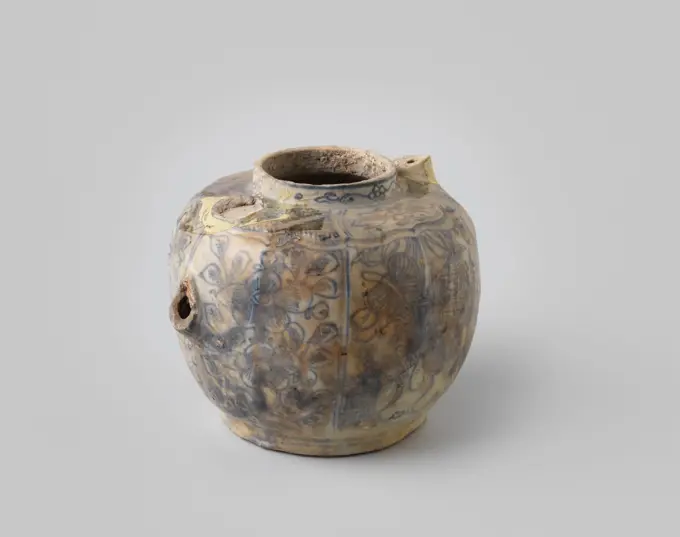
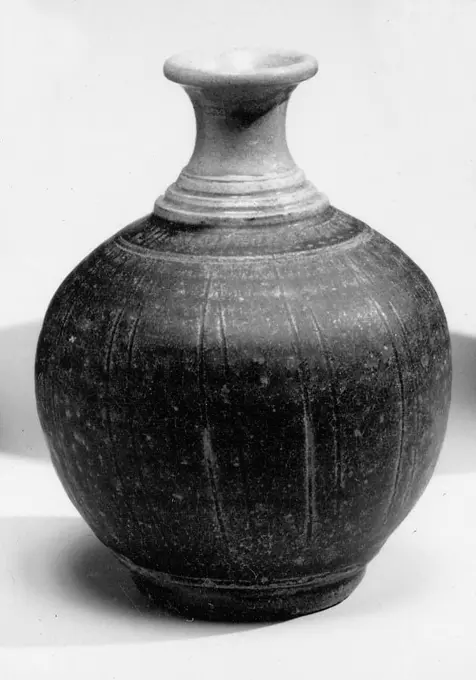
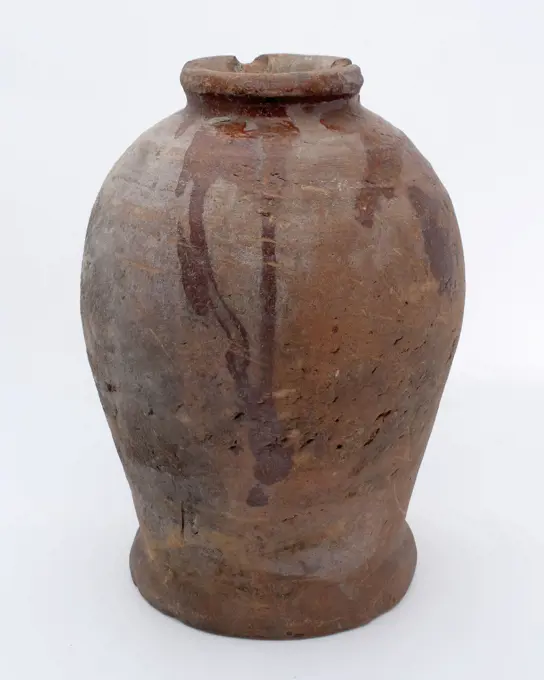
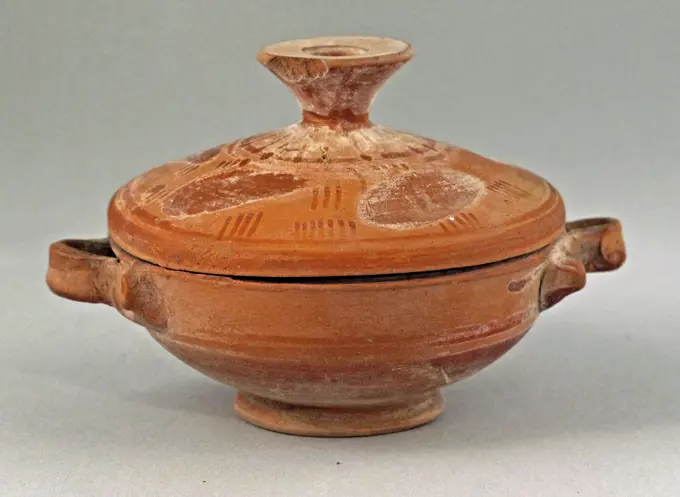
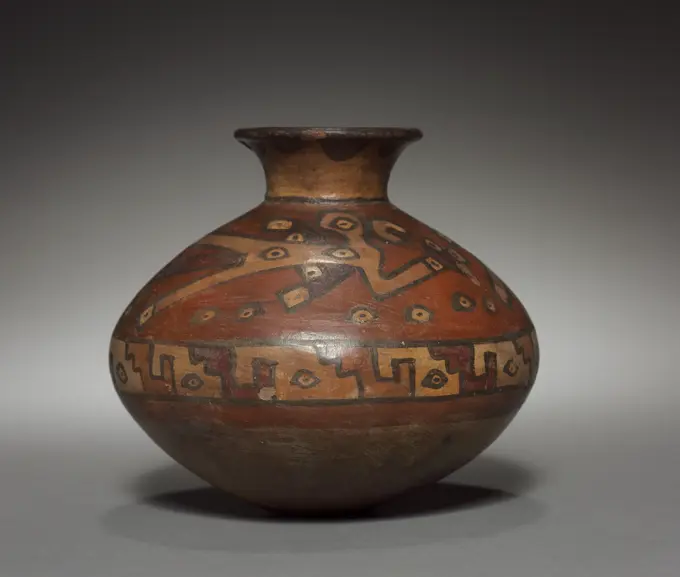
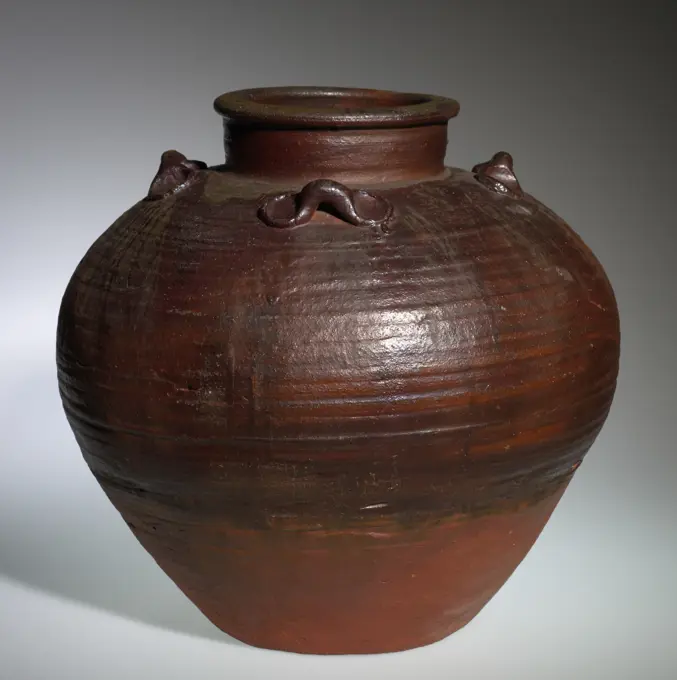
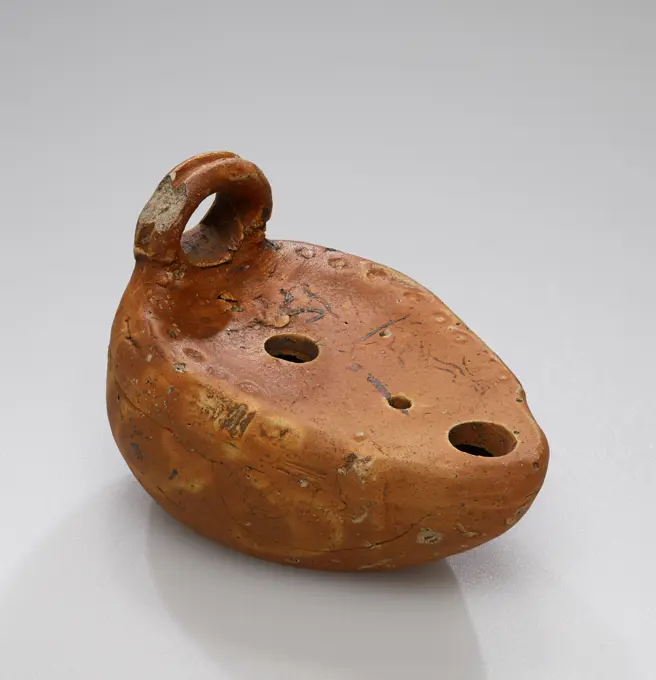
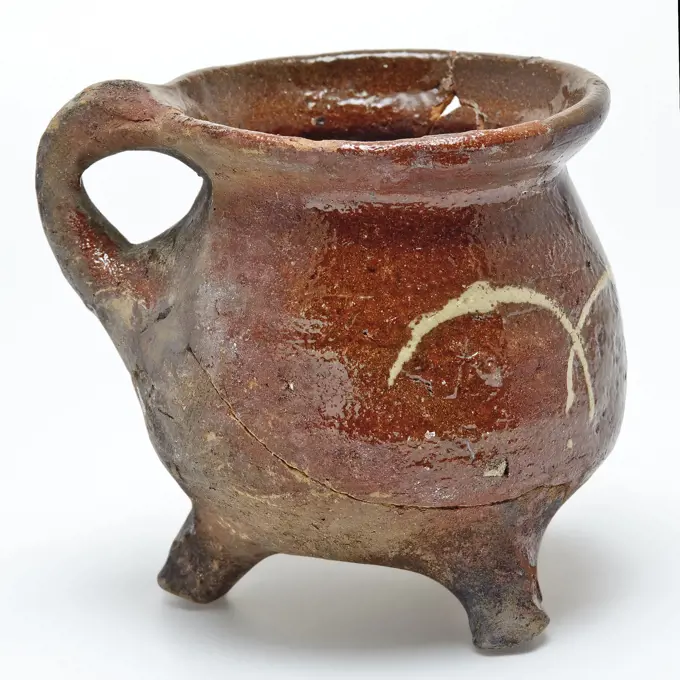
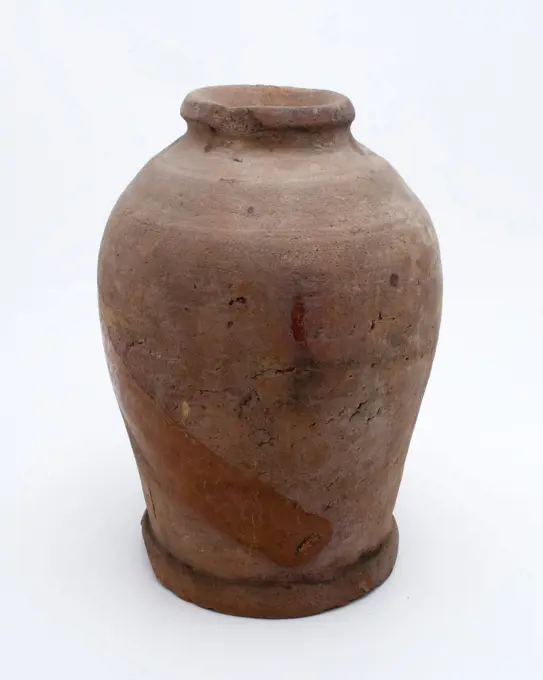
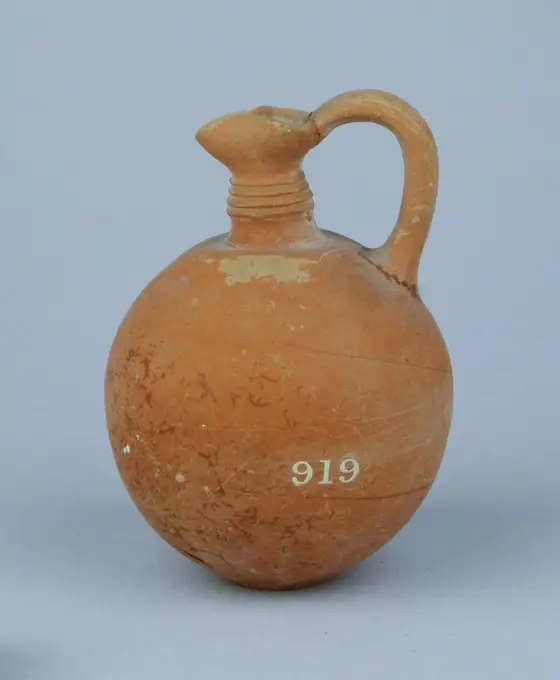
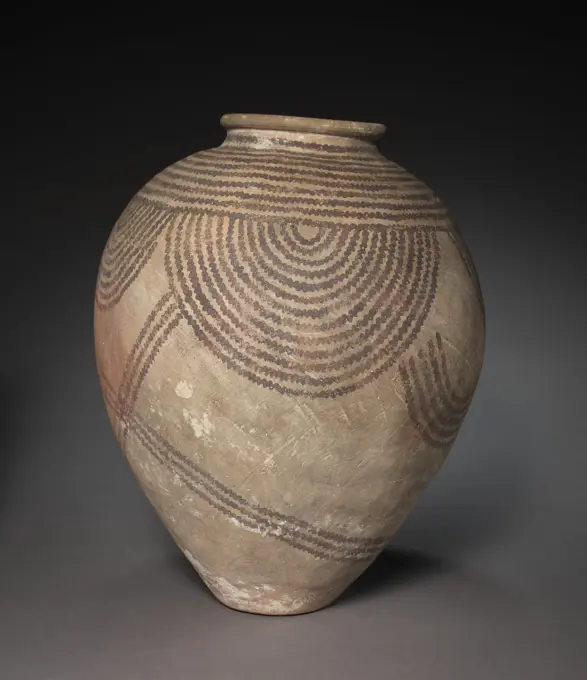
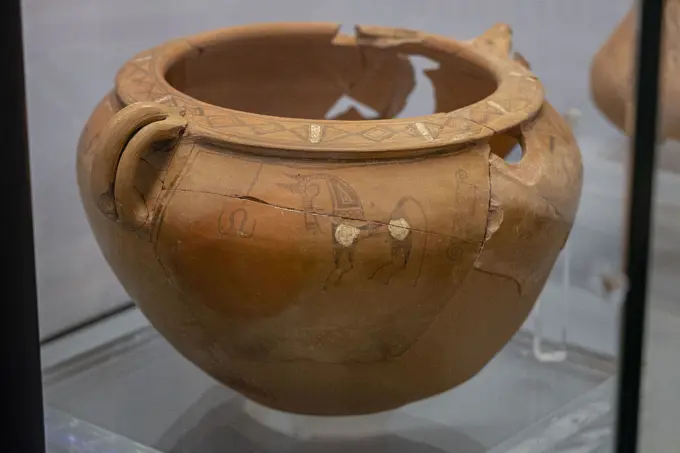
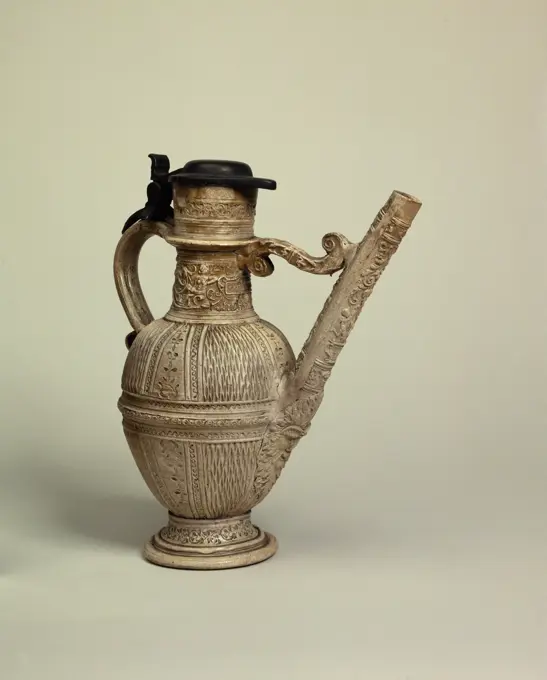
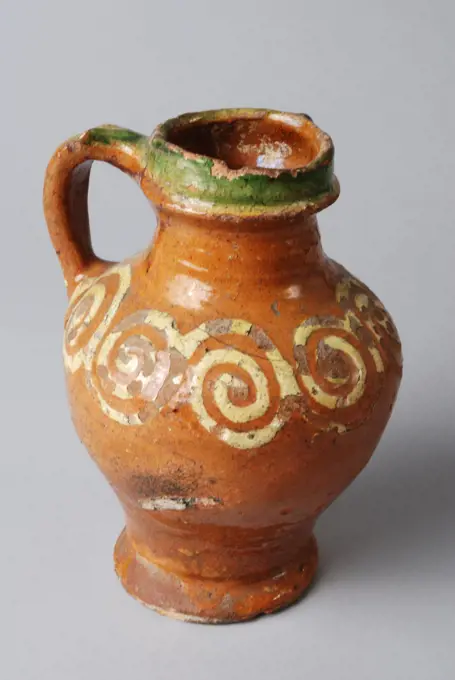
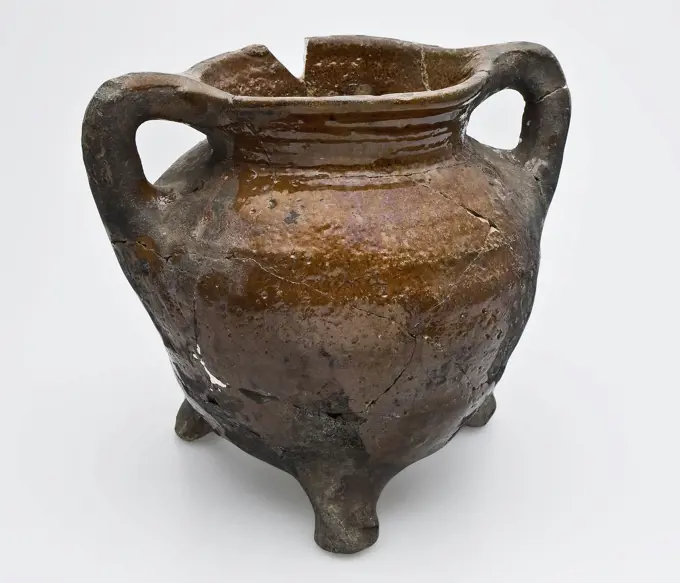
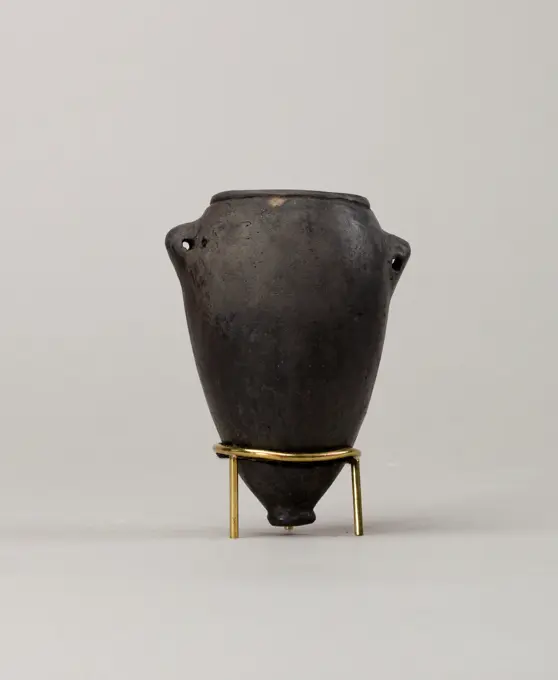
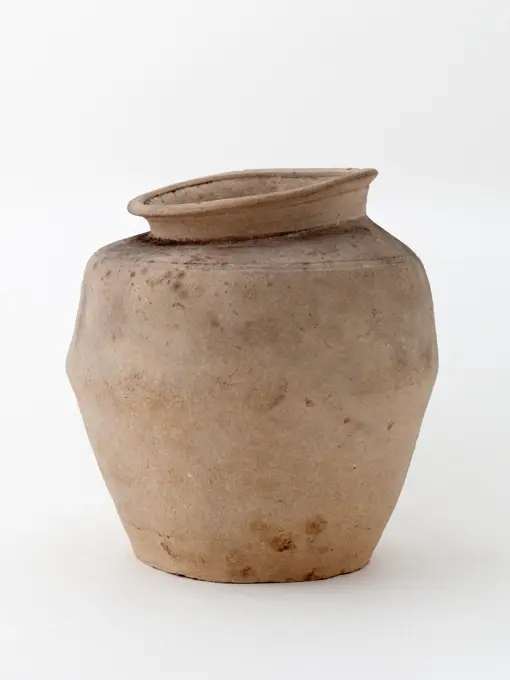
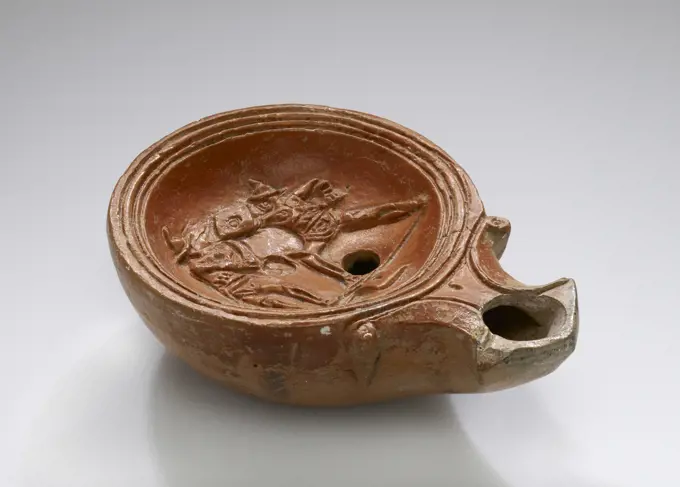
A selection of historical terracotta jars and vases from different eras, showcasing decorative motifs and traditional craftsmanship.
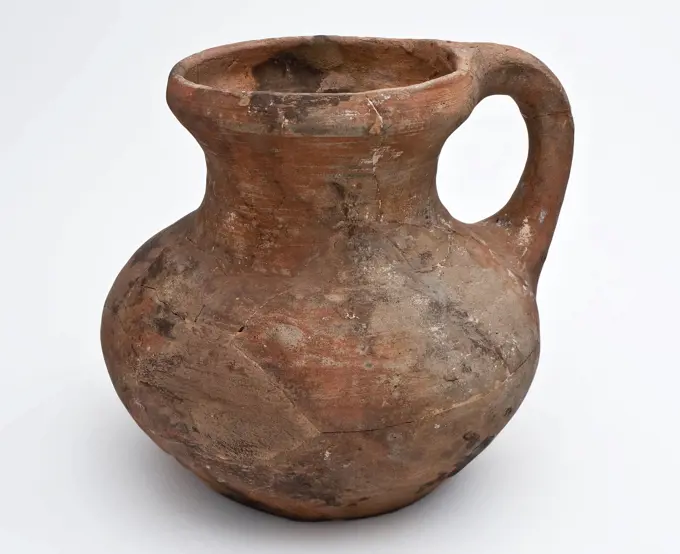
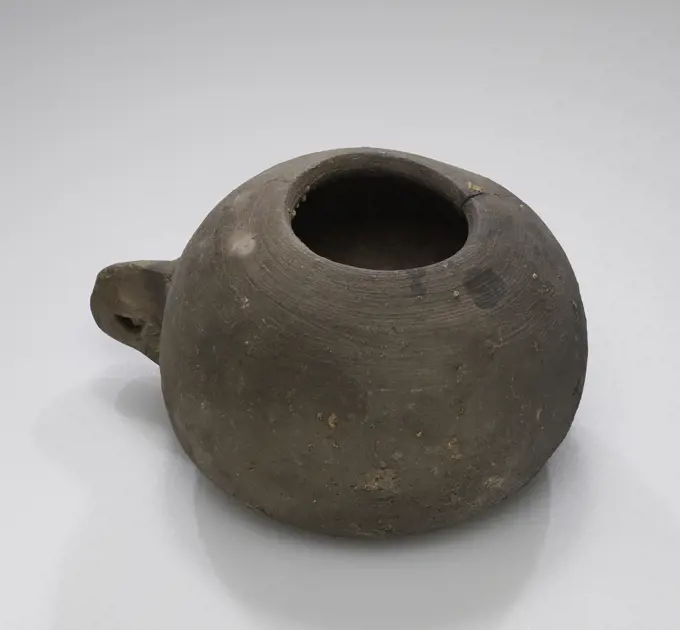
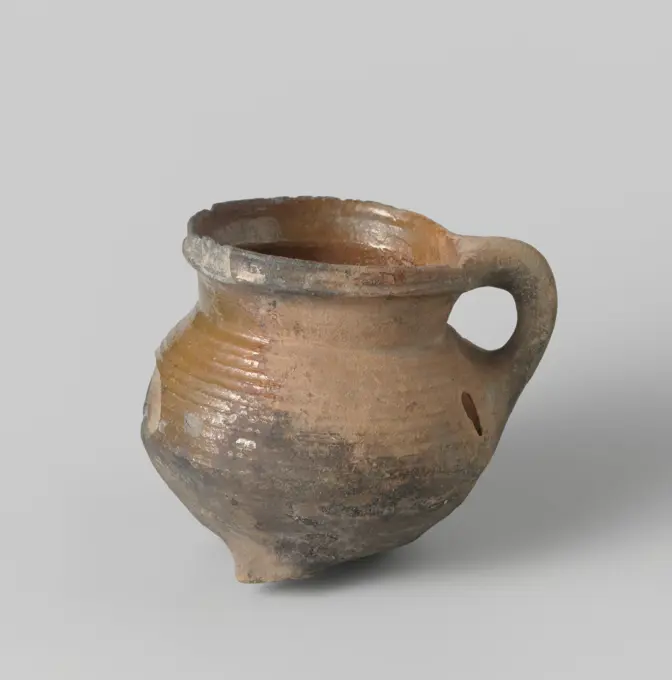
Pottery chamber pot on curved bottom, unglazed, narrow neck, pot holder sanitary earthenware ceramic pottery, belly 19,5 bottom 10,0 hand-turned baked pot brown-red earthenware unglazed vaulted bottom with soul round ear round belly long and narrow neck Shallow cuff along the neck edge. Deep finger impression next to the attachment of the ear and repair of the neck by the potter archeology Capelle aan den IJssel House in Capelle castle indigenous pottery toilet disposal night sleeping room hygiene Soil discovery: cesspool 1420-1425 house in Capelle Capelle aan den IJssel 1963.
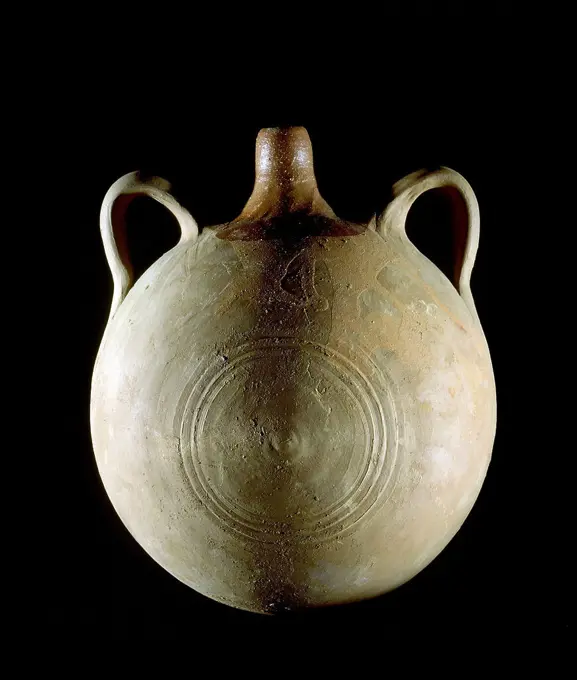
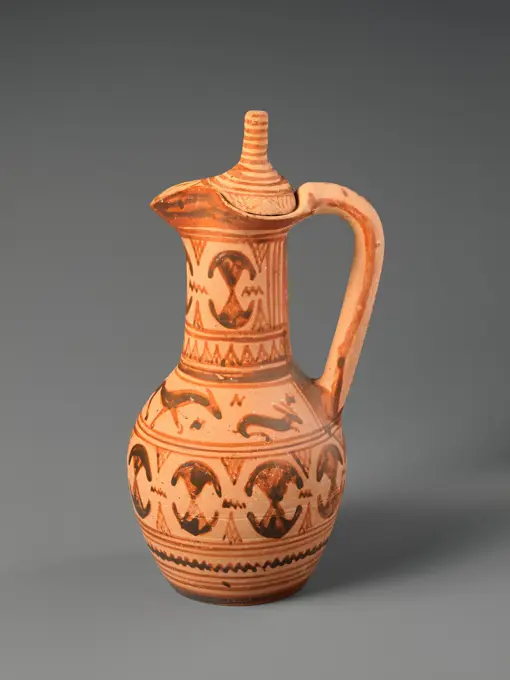
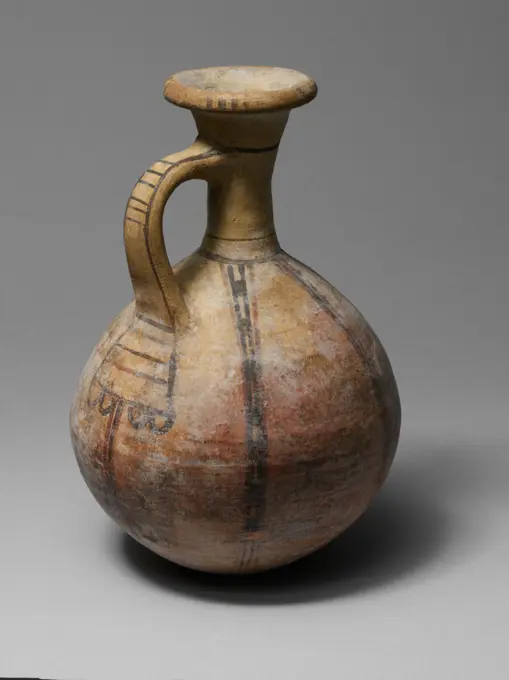
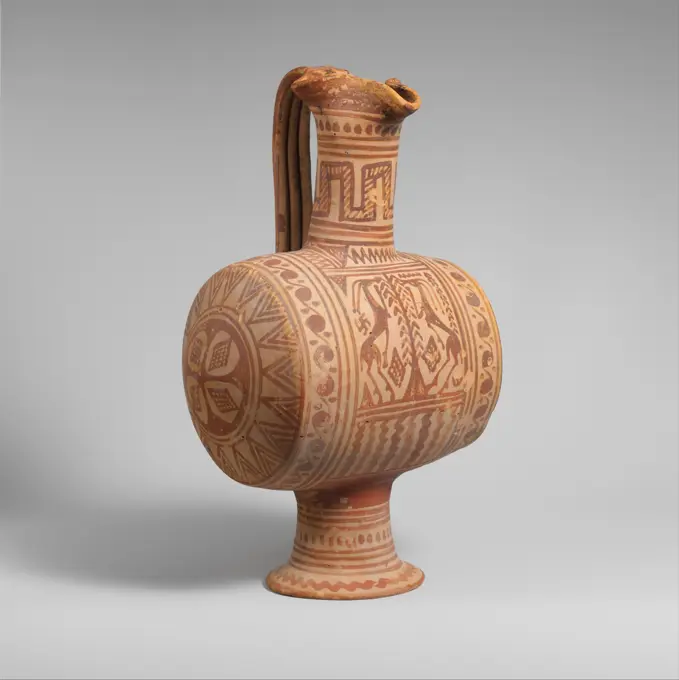
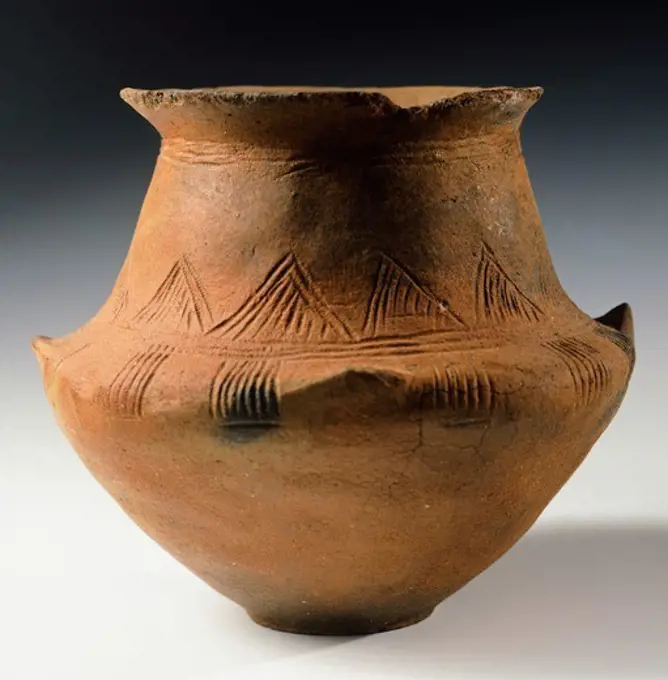
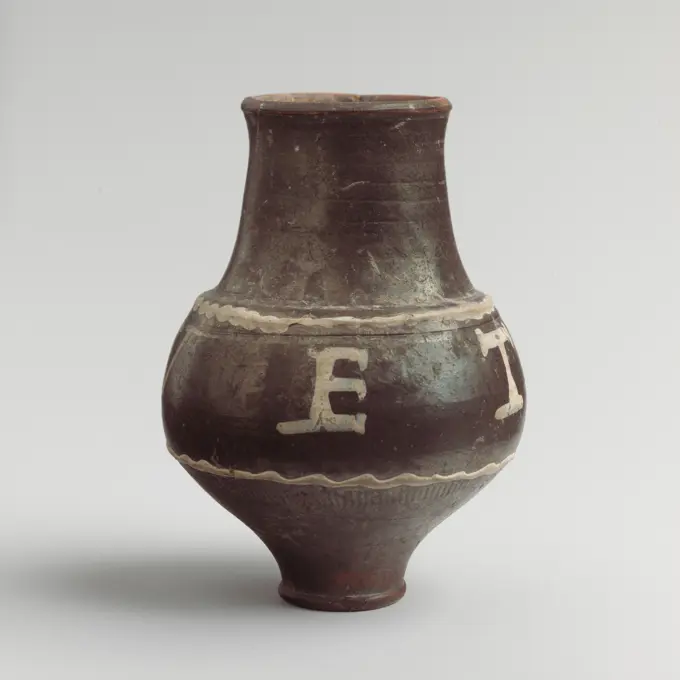
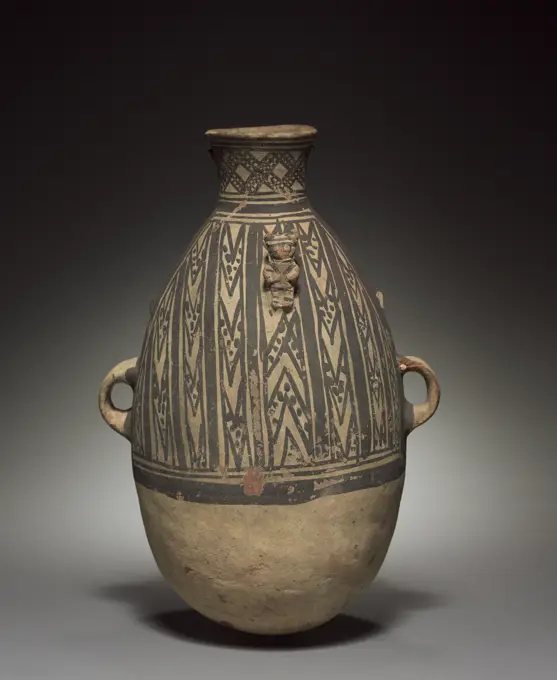
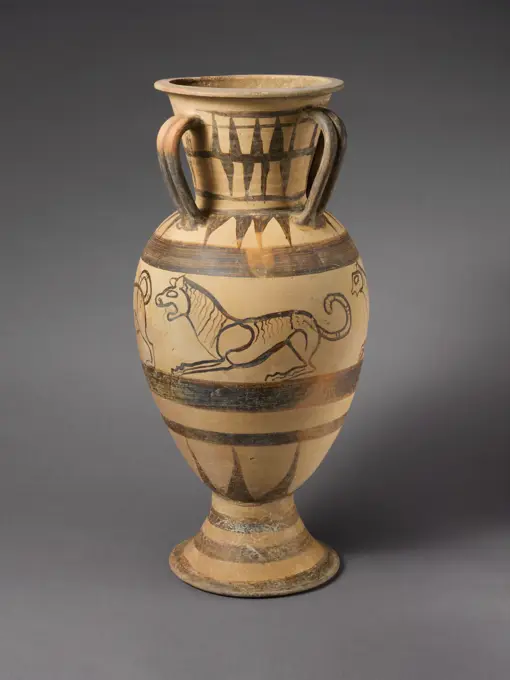
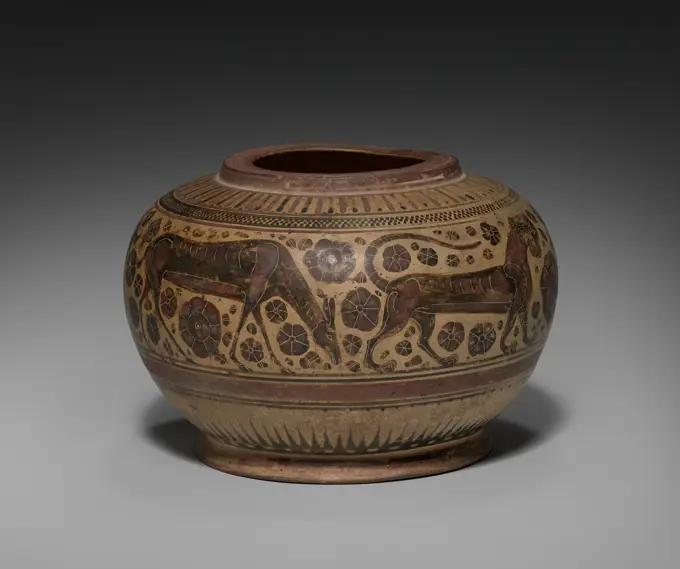
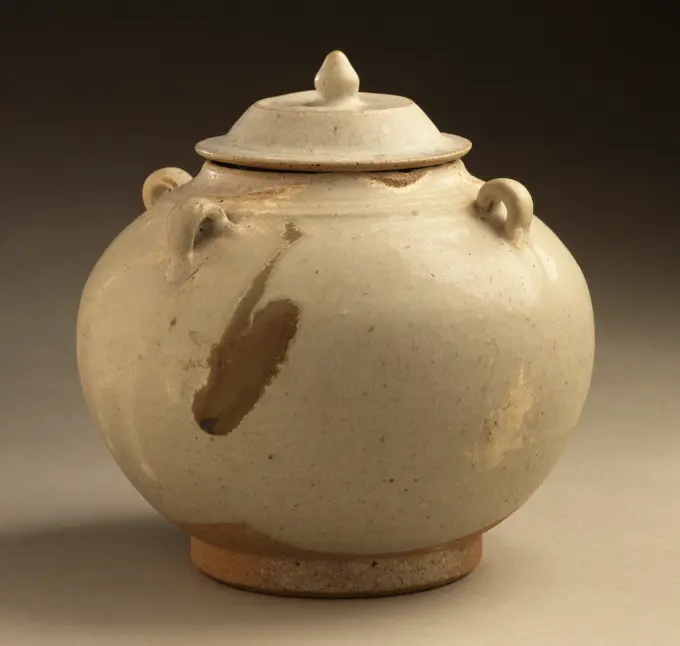
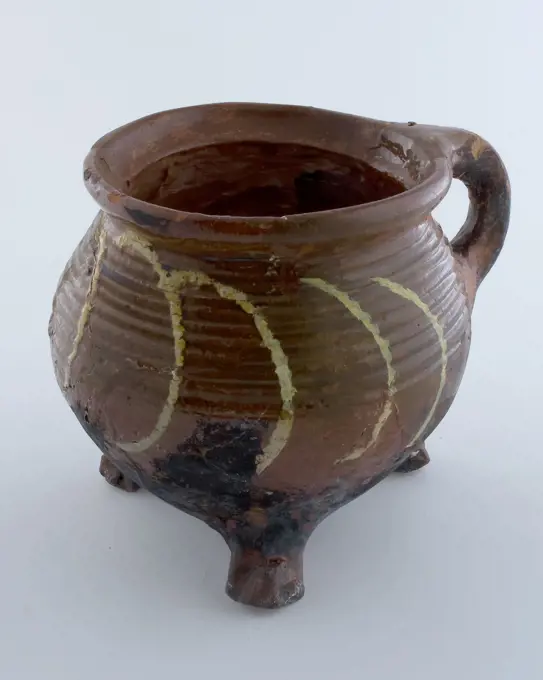
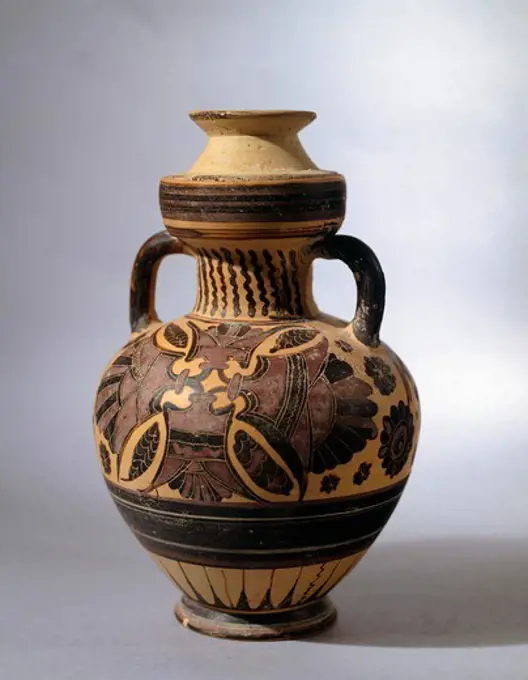
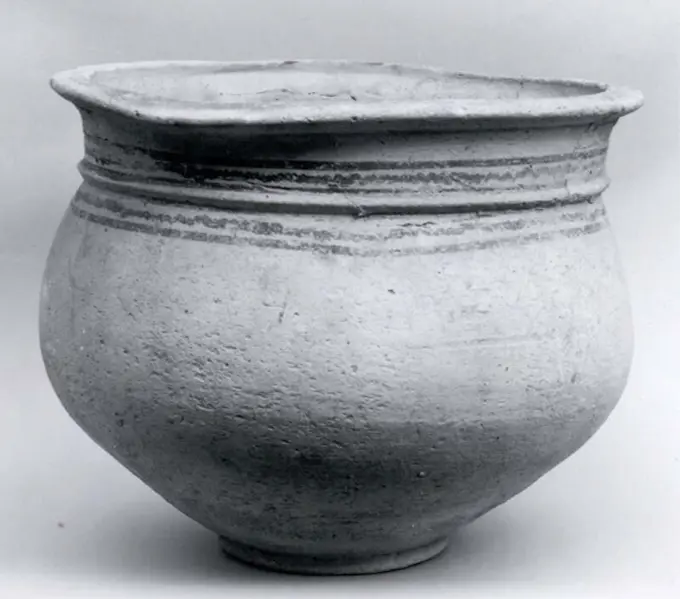
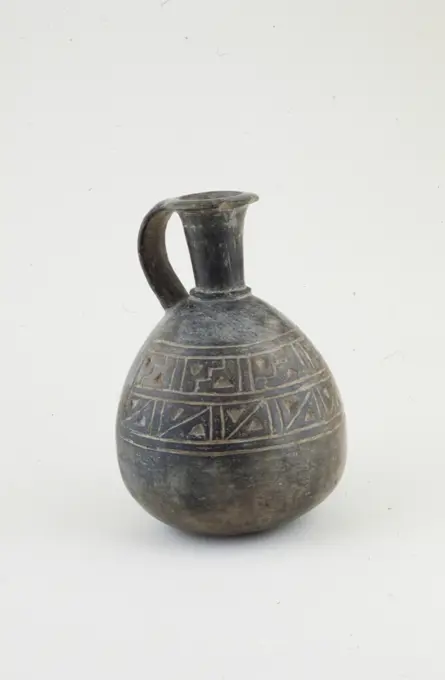
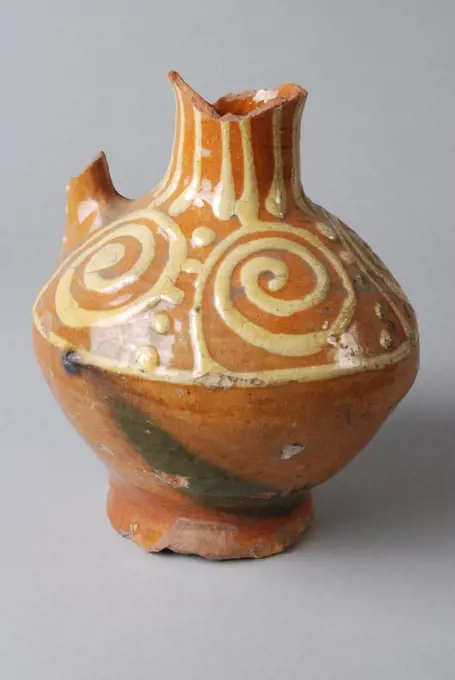
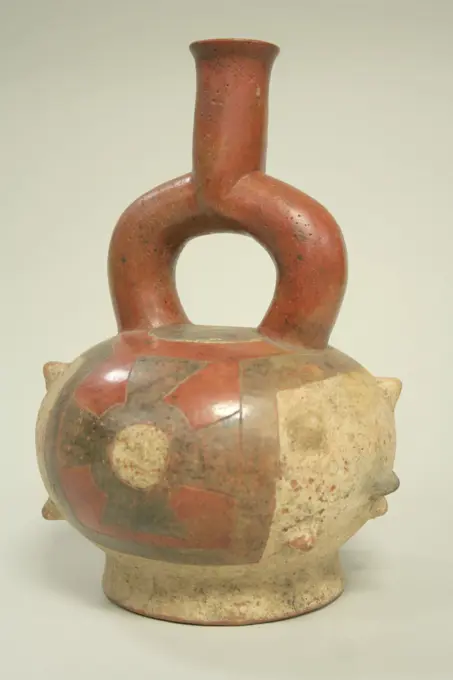
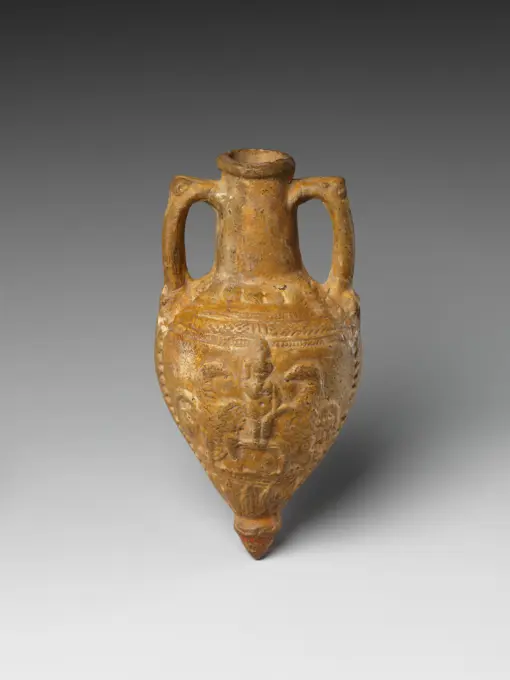
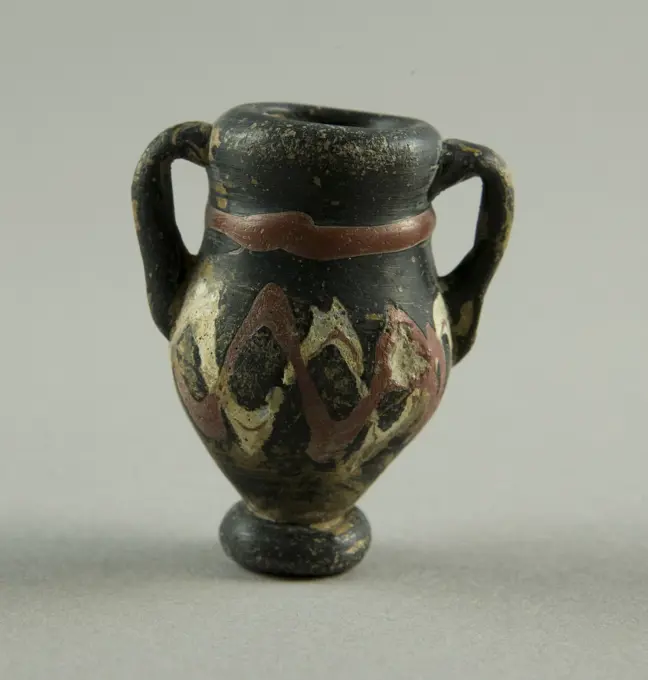
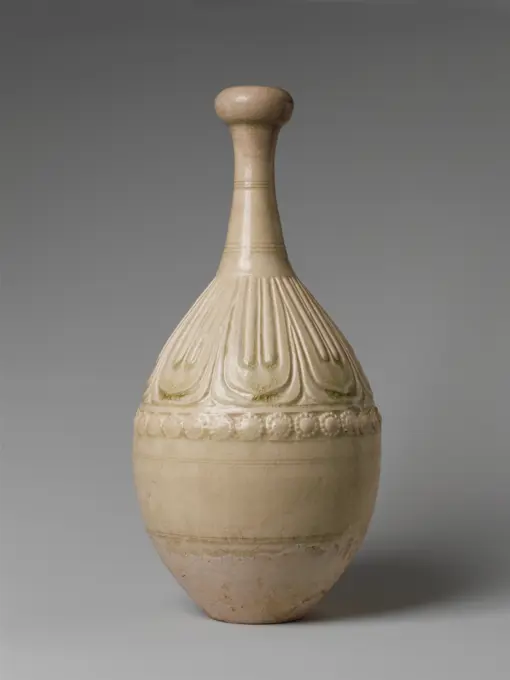
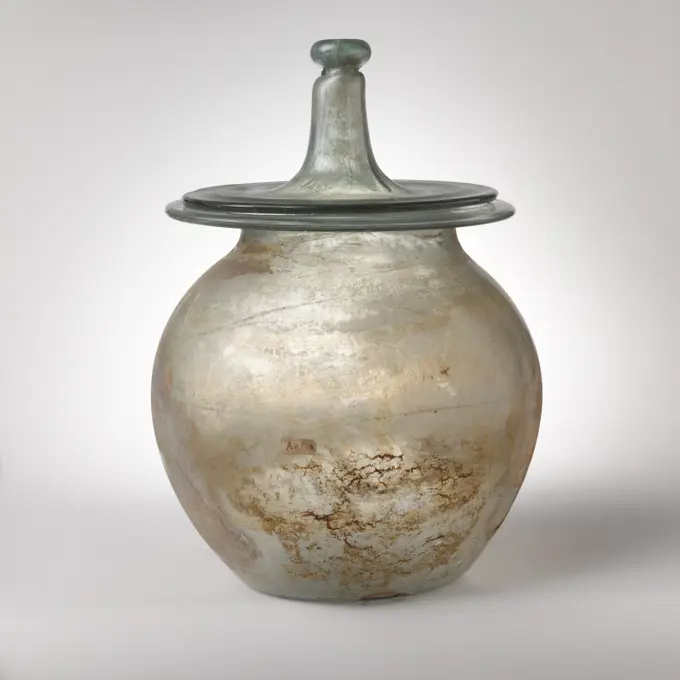
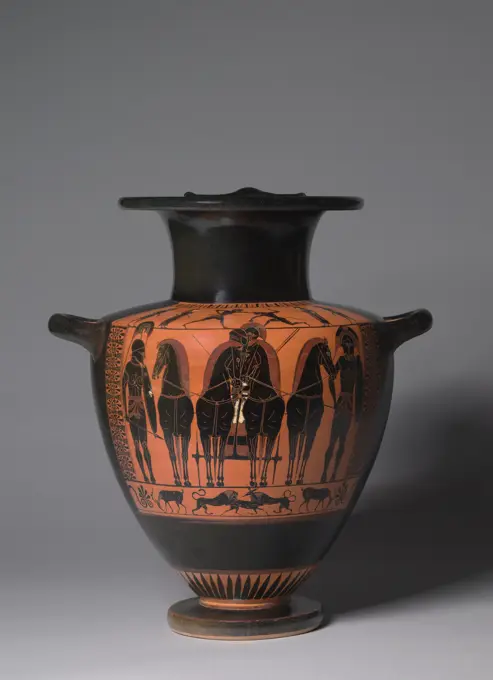
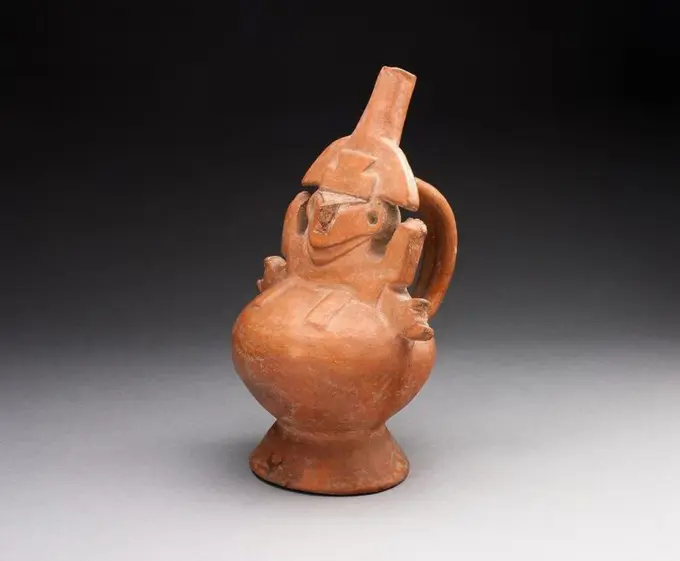
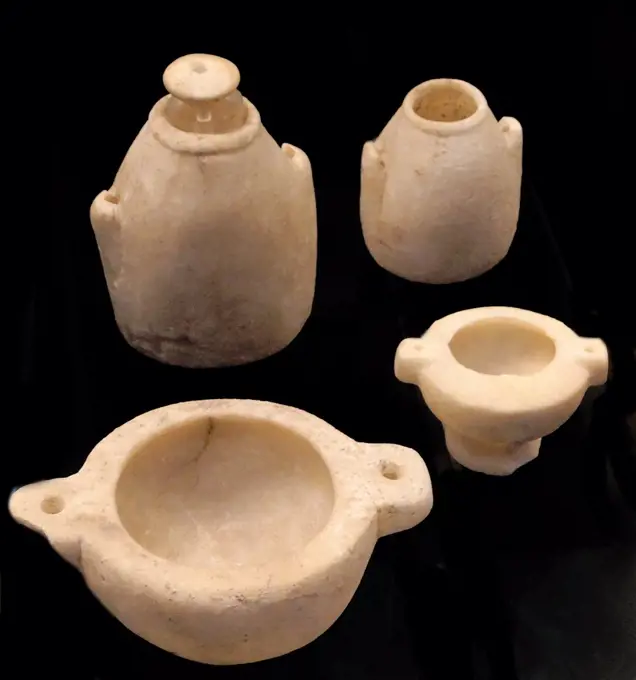
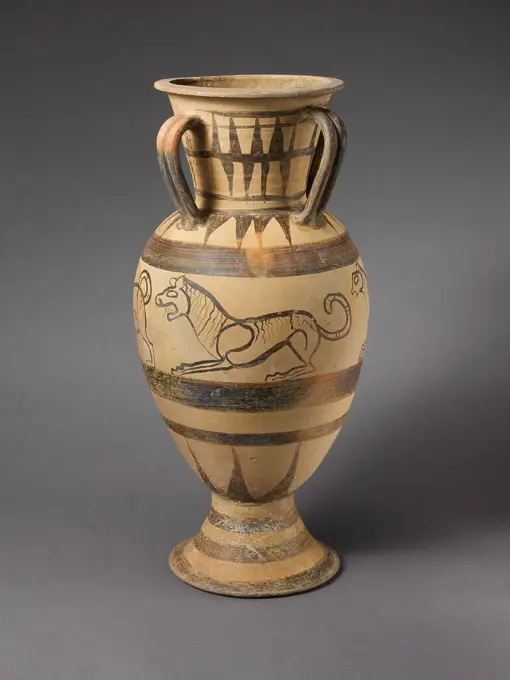
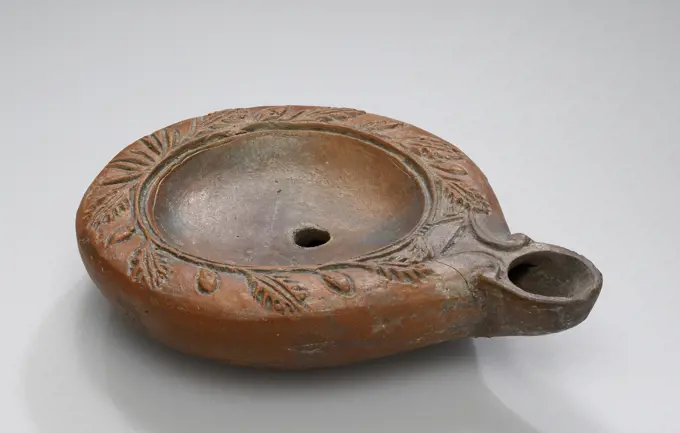
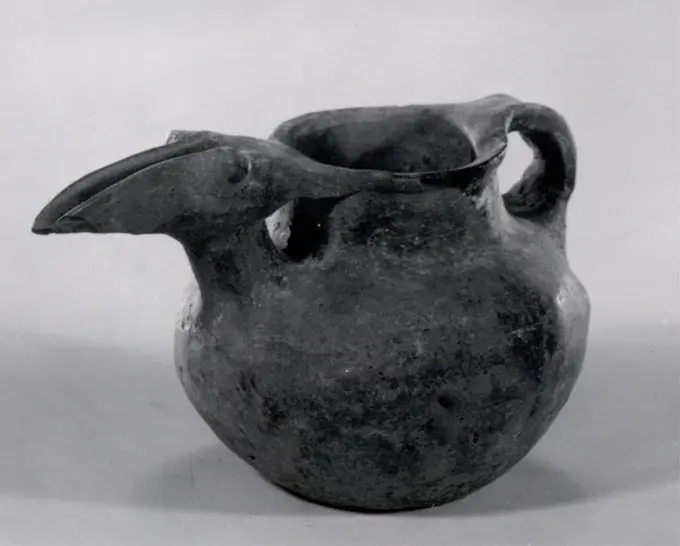
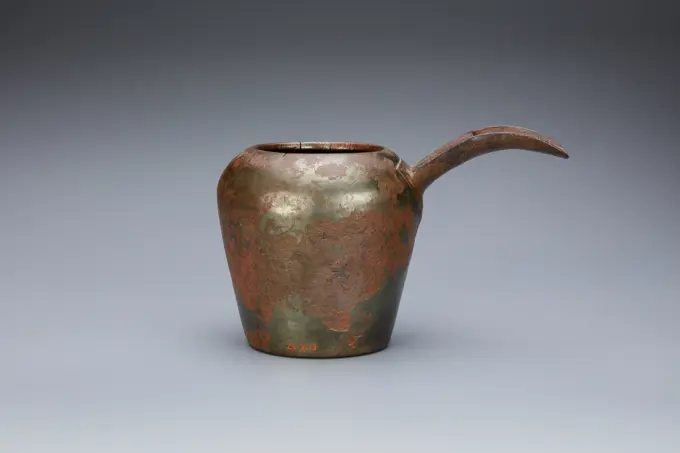
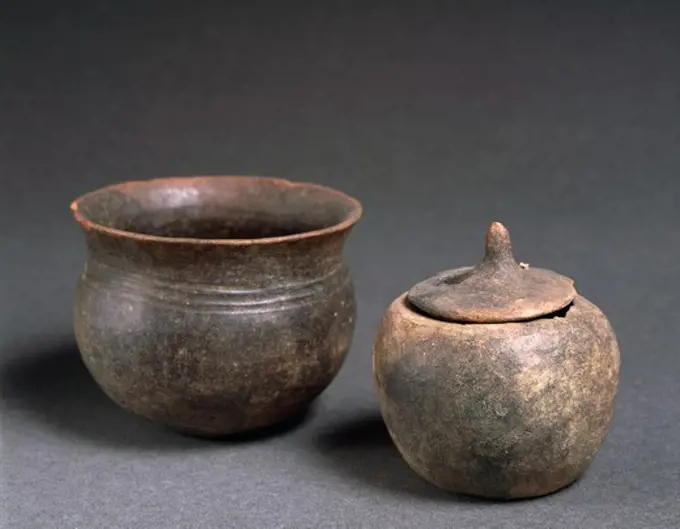
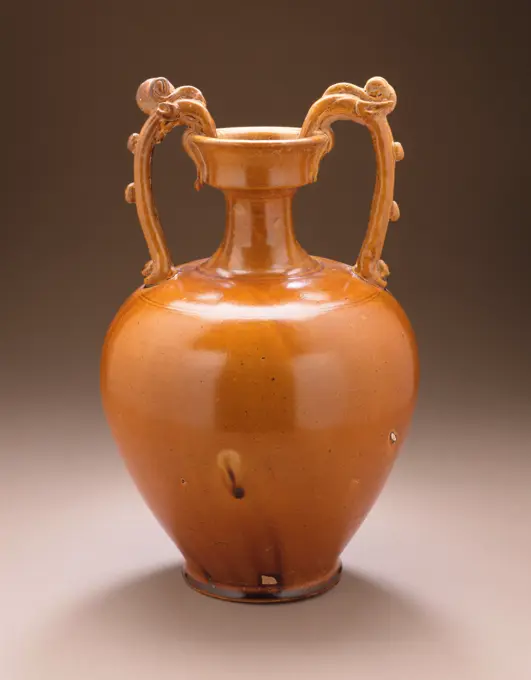
Dish;  around 2686- 2181 BC ; Old state (-2686-00-00--2181-00-00);BARRIL REDONDO CON VIDRIADO PARCIAL EN BOCA Y ASAS - ARTE POPULAR S XX. Location: ALFARERIA. TAGARABUENA. Zamora. SPAIN.Terracotta oinochoe (jug) ca. 700 B.C. Greek, Attic The neck and body are decorated with shields. On the shoulder, hounds course a hare.. Terracotta oinochoe (jug). Greek, Attic. ca. 700 B.C.. Terracotta. Geometric. VasesKandila. UnknownLazio Viterbo Viterbo Museo Civico75. Hutzel, Max 1960-1990 Views of paintings (Middle Ages through 18th c.), frescoes, a tabernacle, coffin, sculpture reliefs, portal fragments, busts, sculpture, tapestry found in the Pinacoteca, Second floor gallery and Second floor cloister sequences. Antiquities: Many views of Etruscan and Roman fragments, sculpture, sarcophagi, pottery, masks, jewelry and other objects found in the Storeroom sequence (inventory numbers on back of prints), and the Cloister, Second floor Cloister, Valle Giulia, Sala Romana and Sala Etrusca sequences. General Notes: There are eight separate numerical sequences for this location. The cloister as an architectural structure, rather than museum site, is documented in the record and file for S. Maria della Verita, Cloister, all views of which are stored in Medieval core collection. Five views from the Museo Civico Second floor cloister sequence are stored in Medieval. German-born photographer and scholar Max Hutzel (1911-Powhoge polychrome storage jar Tewa, Native American ca. 1790 View more. Powhoge polychrome storage jar. Tewa, Native American. ca. 1790. Clay and pigment. Made in New Mexico, United States. Egg-shaped lid vase or can of stoneware, covered with a cream-colored, cracked glaze. On the shoulder a band with modeled flower leaves. On the belly on one side an ear and on the other side on the shoulder a spout. To the lid knob a band with modeled flower leaves.Jug ca. 1550-1458 B.C. New Kingdom This wheel-made jug and a jar with basket handles (16.10.427) are made of marl clay, covered with a pale coating, burnished, and decorated in red and black paint. The shape of the jug and the contrast between the light-colored surface and the darker ladderlike designs dividing the vessel body into segments recall Cypriot White Pendant Line juglets that were imported into Egypt a generation or two earlier, at the end of the Second Intermediate Period. The Egyptian potters of early Dynasty 18 adapted both the shape and the style of red and black decoration which they also used on typically Egyptian pottery forms.The jug was excavated by the Museum's Egyptian Expedition. It had been placed at the head end of an anthropoid (human-shaped) coffin along with several other containers, several of which came to the Museum when the finds were divided with the Egyptian Antiquities Service. These include the pottery jar mentioned above, three jars of Egyptian alabPottery strawberry pot, red shard, internally glazed, hole in the bottom, on stand, Strawberry pottery pottery container soil find ceramic pottery glaze lead glaze, hand-turned glazed baked earthenware pottery red shard inside covered with lead glaze sausage ear hole in the bottom standring archeology indigenous pottery serving selling food kitchen cookingTerracotta barrel-shaped oinochoe (jug) ca.725-700 B.C. Etruscan, Italo-geometric This unusual shape is often found with another distinctive container, a bird-shaped askos. Some scholars have proposed a connection with a wine ritual. Such vases, their painted ornaments heavily influenced by Greek geometric pottery, were produced at Vulci. The originally Near Eastern motif of two goats flanking a tree of life also occurs on a celebrated Euboean geometric krater found on Cyprus (74.51.965), which is on view in the early Greek galleries (The Belfer Court).. Terracotta barrel-shaped oinochoe (jug). Etruscan, Italo-geometric. ca.725-700 B.C.. Terracotta. Geometric. VasesOssuary from a tomb in Lozzo Atesino, Veneto, Italy. Paleoveneti Civilization, 9th Century BC.Terracotta beaker with painted inscription 3rd century A.D. Roman Red vase with dark brown glaze; white barbotine decoration, and white painted letters "AVETE" between white circles of dots.. Terracotta beaker with painted inscription 250070Bottle, 800-1500. Peru, Chimú, 9th-15th Century. Pottery; overall: 40.1 x 25.7 x 23.5 cm (15 13/16 x 10 1/8 x 9 1/4 in.).Terracotta four-handled amphora (jar) ca. 675-650 B.C. Etruscan, Italo-Corinthian Three felines and a winged hybridVases of the same elongated shape and with similar painted decoration have been found in the Monte Michele cemetery at Veii, just north of Rome. The type represents a local response to the animals painted on Protocorinthian pottery imported from Greece. Although the felines are standard types, the odd griffin-like hybrid is a unique invention.. Terracotta four-handled amphora (jar) 257602Teapot of Wijnkan from V.O.C. ship De 'Witte Leeuw', Before 1613  Teapot of Wijnkan from V.O.C. ship the 'Witte Leeuw'. Jingdezhen bone china (material)   Sint-HelenaJar; glassLamp. UnknownJug ca. 1st century B.C.-1st century A.D. Parthian This jug has a teardrop-shaped body, a flat base and a rolled rim. A single loop handle connects the shoulder to the rim. It is made of a light red clay, using a potters wheel, with a pale slip added. It was excavated at Shahr-i Qumis in northern Iran, which has been identified as the ancient city of Hecatompylos, established by the Parthians as their capital by about 200 B.C. In Greek Hecatompylos means ‘a hundred gates, suggesting that the city was quite large. Indeed, the modern archaeological site includes several mounds, only a few of which have been excavated, and a vast area covered with potsherds. This vessel was found in a large building at Site V, which has been tentatively identified as an elite residence. This building was completely filled with dirt sometime in the late 1st century B.C. or early 1st century A.D., perhaps when the Parthian capital was moved elsewhere and the citys elite residents left with it. The jug waAJUAR DE LA TUMBA 11. TARTESICO EDAD DEL HIERRO.(DEPOSITO: MUSEO ARQUEOLOGICO NACIONAL).Bottle late 12th century Cambodia. Bottle 37435Pottery pot on stand, baluster shape, used in the sugar industry, sugar pot pot holder soil find ceramic earthenware glaze lead glaze, hand-turned glazed earthenware pot on stand. Baluster shape with round shoulder and narrow neck opening. Thick and round neckline. Red shard internal glazed Here sugar cones were made archeology indigenous earthenware sugar confectionery craft sugar industryFreshwater jar (mizusashi) in seed jar shape Japan late 16th century During the last decades of the Muromachi period, the custom of holding tea gatherings gradually spread beyond the ruling military class to wealthy urban merchants. Murata Juk (1423-1502) introduced Shigaraki and Bizen vessels into the tearoom, replacing the coveted imported Chinese ceramics. Takeno J (1502-1555), a leading tea master of the time, also used found Japanese objects in his tea gatherings some of these tea utensils were found among household wares and turned into aesthetically valuable pieces through their recontextualization. However, from the mid-16th century there were Bizen tea utensils commissioned separately from the production of ordinary household items.This freshwater jar, made around the end of the 16th century, takes the shape of a vessel used to store seeds for planting. While it was designed to be a freshwater jar, the form is inspired by a simple household vessel. Its thick body was built up Ewer with a handle, anonymous, c. -3300 - c. -2050 Pass with an ear of red earthenware, painted in black and red with spiral motif and a herringbone pattern around the neck. Themselves earthenware painting Pass with an ear of red earthenware, painted in black and red with spiral motif and a herringbone pattern around the neck. Themselves earthenware paintingStoneware pot jug, with pinched foot, glazed, ribbon ear, pot jug crockery holder soil find ceramic stoneware clay engobe glaze salt glaze, surface 8.5 hand turned glazed baked stoneware drinking jug gray shard salt glaze brown engobe locally polished and mottled bandoor protruding ring around transition neck shoulder rotations lower part of the belly pinched foot. Belly model with large neck opening and cylindrical neck archeology import pottery serving drink wine beerLekanis with lid, miniature mid-6th century B.C. Attributed to the Swan Group. Lekanis with lid, miniature. Greek, Attic. mid-6th century B.C.. Terracotta; black-figure. Archaic. VasesEwer 8th century. Ewer 448726Glass jar. Culture: Roman. Dimensions: 4 1/16 in. (10.2 cm)Diameter: 3 x 2 5/16 in. (7.6 x 5.9 cm). Date: 3rd to mid-4th century A.D..Translucent pale blue green, with trail in same color.Plain, rounded rim; flaring neck; conical body, rounded at base; kick in bottom.Single horizontal trail wound around top of body; on lower body extending onto bottom, six irregular short ribs.Intact; pinprick bubbles and blowing striations; dulling, pitting, and patches of creamy weathering on exterior; soil encrustion with weathering and iridescence on interior. Museum: Metropolitan Museum of Art, New York, USA.Corinthian Vase, 600s. Greece, 7th Century BC. Earthenware; overall: 17.5 cm (6 7/8 in.).Lamp, Cologne, Germany; 1st - 2nd century; Terracotta; 4.8 x 6.5 x 6.5 cm (1 7,8 x 2 9,16 x 2 9,16 in.)Covered Globular Jar with Four Shoulder Lugs. Thailand, Sawankhalok, 16th century. Furnishings; Serviceware. Wheel-thrown stoneware with applied decoration and cream glazeBottle with Arabesque Scroll Design in Underglaze IronBOTELLA DE BOLA - S XX ARTE POPULAR. Location: ALFARERIA. LA BISBAL. GERONA. SPAIN.Pottery cooker on three legs, sausage ear, yellow sludge decoration on the shoulder, grape cooking pot tableware holder utensils earthenware ceramics earthenware glaze lead glaze clay, hand turned glazed decorated fried loin cord Small pottery cooking cane grape model on three legs Legs are triangular shaped with hollow stand. Ball-shaped body with fine twisted pearls on the shoulder Decorated in sludge technology Decoration consists of standing yellow arches or sickles on the shoulder Sparingly glazed internal only under the neck opening Restoration is repainted archeology underground pit Rotterdam City center Stadsdriehoek Groenendaal indigenous pottery cooking kitchen food food preparation Soil discovery underground pit Groenendaal large waste well at ± 4 meters - NAP 1977.06.27.Vessel with Bird Designs, 700-1000. Peru, South Coast, Middle Horizon. Pottery with burnished, colored slips; diameter: 12.6 x 14.1 cm (4 15/16 x 5 9/16 in.); overall: 12.5 cm (4 15/16 in.).Amphora of orientalization;  620-590 BC (-620-00-00--590-00-00);Tea Storage Jar, c. 1600. Japan, Momoyama period (1573-1615). Stoneware with natural ash glaze and fire mark (hidasuki) decoration (Bizen ware); diameter: 37.5 cm (14 3/4 in.); overall: 38.1 cm (15 in.).Lamp. UnknownSmall pottery cooking jug on three legs, sausage ear, decorated with yellow bows in sludge technology, grape cooking pot tableware holder kitchenware earthenware ceramics earthenware glaze lead glaze clay, hand turned decorated glazed fried lemonade Pottery cooker grape-model with one standing sausage ear Small size. Three legs. Red shard sparsely glazed. Pouch-shaped body with outstanding upper edge On the shoulder decorated with yellow bows applied in sludge technique archeology inn Het Hart Geervliet Bernisse indigenous pottery cooking kitchen preparing food Soil discovery: Geervliet Dorpsplein 1 demolition Trouw put 5 city inn 't Hart 1985.Terracotta Hadra hydria (water jar). Culture: Greek, Egypt, Alexandria-Hadra. Dimensions: Overall: 14 3/8 x 11 7/16 in. (36.5 x 29.1 cm). Date: 3rd century B.C..On body, laurel branch and network between bands; on neck, laurel sprays. Museum: Metropolitan Museum of Art, New York, USA.Pottery toy room bowl, fully glazed, on three legs, crockery pot crockery holder toy relaxation medium soil find ceramic earthenware glaze lead glaze, hand-turned glazed baked Pottery toy room bowl fully glazed on three legs Pan fixed horizontal ear with spout on the other side . Restored fragments are repainted archeology Rotterdam Stadscentrum Stadsdriehoek Oudehaven indigenous pottery kitchen serving table playing child Soil discovery: Oude Haven Rotterdam.Mid-Corinthian amphora in pottery, Greece. Greek Civilization, 7th-6th Century BC.Jar ca. 1600-1200 B.C. Iran This globular jar has a ring base, a ridge around its shoulder and an everted rim. It is made of a buff clay, with dark brown horizontal lines on the shoulder. It was found in a grave at Kamterlan II, a mound in Luristan in the Zagros Mountains of western Iran. Although it had been a settlement in the late third millennium B.C., by the second millennium the site had become a cemetery. It is difficult to say what purpose this bowl served, or even to determine whether it was a special funerary item or an object of everyday use. The raised ridge at the shoulder might suggest that the shape of this vessel imitates a metal prototype.It is often thought that the inhabitants of Luristan in this period were pastoral nomads, who moved with their herds from the high valleys of the Zagros during the summer to lowland pastures in the winter. This theory arises from the dearth of evidence for settlements, and the occurrence of isolated cemetery sites. At the same time, tBlack-ware aryballos, 15th-16th century, 7 1/4 x 5 1/8 x 5 1/8 in. (18.4 x 13.0 x 13 cm), Earthenware, Peru, 15th-16th centuryEarthenware oil jug on stand with standing ear and silt decoration on the neck and shoulder, oil jug pottery holder soil find ceramic earthenware glaze lead glaze clay, ring 8.5 hand-turned decorated glazed fried lemonade Pottery jug cut red shard topped bandoor stand ring archeology indigenous earthenware oil lamp enlighten tear pour servingGlass amphoriskos (perfume bottle). Culture: Greek, Eastern Mediterranean. Dimensions: H. 5 13/16 in. (14.8 cm). Date: 2nd-mid-1st century B.C..Translucent light blue; handles and base-knob in translucent blue green; trails in opaque white and opaque yellow.Inward-sloping rim-disk, with tooling indent underneath; tall, slightly concave, cylindrical neck; sloping shoulder; elongated piriform body; large applied knob-base; two rod handles applied in pads across shoulder, drawn up vertically to just below rim, then looped in and down, and attached to neck below rim over trail decoration.Thick yellow trail applied to top of neck, wound in a spiral down neck and across shoulder to body; a white trail applied over yellow two-thirds down neck, wound round in a spiral to top of body, then tooled into a close-set festoon pattern with thirty-one irregular upward strokes, continuing in a plain spiral around lower part of body, ending under base knob.Body complete, but one of handles broken anStirrup Spout Bottle 12th-5th century B.C. Cupisnique (). Stirrup Spout Bottle 309514Terracotta miniature jug ca. 8th century B.C. Cypriot Miniature vases are found in Geometric-period tombs in Cyprus. As small-scale versions of full-size vessels, these miniature vases provide insights into the lives and funerary practices of non-elite segments of the population.. Terracotta miniature jug 330049Amphoriskos with molded design of Harpokrates and eagles 300 B.C.-A.D. 50 Ptolemaic Period-Roman Period Light ground relief vessels of this nature begin to be made in the 3rd century B.C. This example depicts Harpokrates, possibly standing on the thunderbolt, between two eagles. Little is known about their use context, but recently relief ceramics have been found in a terracotta workshop at Athribis dated to the time of Ptolemy IV (222-204 B.C.); the workshop seemed to serve an area of baths attached to a sacral structure, now missing.. Amphoriskos with molded design of Harpokrates and eagles 568200Amphoriskos (Container for Oil) 400 CE-600 CE Mediterranean Region. Initially affordable only among the wealthy, glass was used in ancient Rome as containers for oils, perfume, and tablewares. The word ìamphoriskosî, Greek for ìsmall amphoraî, refers to this objectís shape, a miniature version of the two-handled metal or ceramic vessels that contained oil or wine. Core-formed glass was made by dipping a removable core that gives the vessel its shape into a molten glass mixture. The technical achievements and prestige of glass continued through the Byzantine period.. Glass, core-formed technique . ByzantinePot 4th-7th century Coptic. Pot 477286Glass cup. Culture: Roman. Dimensions: Overall: 2 3/16in. (5.5cm)Diam.: 3 1/16 x 2 1/2 in. (7.8 x 6.4 cm). Date: 2nd-3rd century A.D..Translucent pale blue green.Knocked-off, uneven rim; slightly bulging collar below rim; straight sides expanding downward, with pronounced projecting ridge below, then angled in to join slightly convex bottom.No trace of any wheel-cut decoration.Intact; many pinprick bubbles; deep pitting, dulling, and iridescence on exterior; creamy brown weathering on interior. Museum: Metropolitan Museum of Art, New York, USA.Dark Brown Glazed Bottle. Korea, Korean, Joseon dynasty (1392-1910), 18th century. Furnishings; Accessories. Wheel-thrown stoneware with mottled brown glazeLifan amphora, 1st century BCE - 1st century CE, H.13-1/2 x W.11-1/4 x D.12-11/16 in., Burnished pottery, China, 1st century BCE - 1st century CE, This hand built amphora has a unique and elegant shape. Round at the base, divided into four raised spiralling sections at the body, two long handles extending to the mouth and neck which have been squared off.Bottle 6th-7th century China. Bottle 73366Czarka z dekoracją barbotine. unknown, authorDouble Spout Vessel with Incised and Painted Abstract Feline Head 650 BCE-150 BCE South Coast. Ceramic and pigment . ParacasPottery cooking jug, grape model, with high neck, on three legs, casserole tableware container kitchen utensils earthenware ceramics earthenware glaze lead glaze, hand-turned baked Pottery cooking jug grape model with high neck on three legs. Vertical sausage by fine twisted arms on the shoulder Fully glazed. Restauration repainted archeology Rotterdam Spangen castle indigenous pottery cooking kitchen preparing food Soil discovery: Spangen Spanisch Spaanse Polder Rotterdam.Cooking pot on 2 legs from v.o.c. ship De 'Witte Leeuw', Before 1613  Cast iron cooking pot of the grapetype, originally on three legs of which two remaining, from the wreck of the V.O.C. ship the 'Witte Leeuw'.  iron (metal)   Sint-HelenaTerracotta jug ca. 750-600 B.C. Cypriot In vase-painting of mainland Greece, floral and foliate ornament is always contained and precise. This jug and 74.51.509 are noteworthy for the almost tropical lushness that envelops the body of the vase and the four figures on it. An elaborate central lotus stalk is flanked by two birds. Behind them, a winged stag grazes on the left, a winged doe turns as she walks away on the right. The stylistic contrast to the hard-edged depictions of birds and fish is noteworthy. It is not clear whether the reason is purely artistic or in some way iconographic.. Terracotta jug 240097Glass cinerary urn with lid mid-1st-2nd century A.D. Roman Urn: Translucent pale blue green.Broad, horizontal rim, with rounded tubular edge made by folding out, down, and in; short, concave neck; ovoid body; deep concave bottom.Intact; some bubbles, a few very large; dulling, limy encrustation, faint iridescence, and patchy brown weathering on exterior, slight dulling on interior.Lid: Translucent blue green.Thickened horizontal rim, with slight downward and inverted lip and beveled outer edge; horizontal side with concentric ridge near rim and broad concave band within on upper surface; hollow stem, tapering upwards to slightly flattened circular knob; small, tooled indent on top and tiny hole in center of knob.Intact, except for small chip in rim; many bubbles, some very large; slight dulling, iridescence, and creamy brown weathering.The lid is slightly smaller than the rim of the urn but sits evenly on inner edge of rim and mouth.In addition to handled vessels, large plain jars wereKettle 12th century Buckets of this type are represented in Iranian miniature paintings illustrating hammam or bath house scenes. The inscription extends best wishes to an anonymous owner.. Kettle 449024Bowl, molded. Culture: Roman. Dimensions: H. 18.47 cm. Diameter 16.3 cm..Lines painted around center and engraved chevrons. Museum: Metropolitan Museum of Art, New York, USA.Black-Figure Hydria (Water Vessel): Frontal Quadriga (Body); Theseus and Minotaur (Shoulder), c. 520 BC. Attributed to Antimenes Painter (Greek, Attic, active c. 530-510 BC). Ceramic; overall: 43.2 cm (17 in.); diameter of rim: 24.7 cm (9 3/4 in.); diameter of foot: 15.2 cm (6 in.).Bitroncoconica body ceramic jar- bottle with two handles. Height 184 mm Width 90 mm (7 th CE ) - Visigoth period from the "Afflicted Necropolis - Villa del Val" - Archaeological site of Complutum in Alcalá de Henares ( Madrid ). SPAIN.Terracotta alabastron (perfume vase) ca. 630-615 B.C. Greek, Corinthian Winged male figure.. Terracotta alabastron (perfume vase) 240977Pottery pot on stand, baluster shape, used in the sugar industry, sugar bowl pot holder soil find ceramic earthenware glaze lead glaze, opening 7.5 hand turned glazed baked Pottery pot on stand. Baluster shape with round shoulder and narrow neck opening. Thick round neckline with waistline. Made from fairly dry clay Red shard internally glazed along the outside wide glaze. Here sugar cones were made archeology indigenous earthenware sugar confectionery sugar industryJuglet 750-600 B.C. Cypriot Vase with modeled rings on neck; fine salmon-colored clay.. Juglet. Cypriot. 750-600 B.C.. Terracotta. Cypro-Archaic I. VasesLamp, Anatolia; 1st century B.C. - 4th century A.D; Terracotta; 3.6 × 9.5 × 13.1 cm (1 7,16 × 3 3,4 × 5 3,16 in.)Decorated Jar with Rope Pattern, 4000-3000 BC. Egypt, Predynastic Period,Naqada IId Period. Marl clay; diameter: 29.4 cm (11 9/16 in.); diameter of mouth: 9.5 cm (3 3/4 in.); overall: 36.8 cm (14 1/2 in.).olla decorada con friso de animales, , siglo I a.C. Procedente de Numancia, Garray, museo Numantino de Soria, Soria, Comunidad Autónoma de Castilla, Spain, Europe.Single Spout Vessel with Molded Abstract Figure. Lambayeque; North coast, Peru. Date: 1000-1476. Dimensions: H. 23.9 cm (9 3/8 in.). Ceramic and pigment. Origin: Peruvian North Coast. Museum: The Chicago Art Institute, Chicago, USA.Elephant-Shaped Jar, 13th century, 4 x 5 1/4 x 5 5/8 in. (10.2 x 13.3 x 14.29 cm) (nose-tail), Stoneware, Thailand, 13th centuryAlabaster vessels (1250-1150 BC) Although termed ëalabasterí (calcium carbonate) these locally made pieces are of gypsum which is calcium sulphate. at the end of the 13th century BC, from Tell es-Saëidiyeh, EgyptGallic civilization. Yellow-pink clay vase.Grape of lead glaze earthenware, anonymous, c. 1500 - c. 1600 Grape of lead glaze earthenware. Splash glaze and soot residues. The cooking pot has an ear and stands on two legs. The third leg is missing.  earthenware. lead glaze Grape of lead glaze earthenware. Splash glaze and soot residues. The cooking pot has an ear and stands on two legs. The third leg is missing.  earthenware. lead glazeWine Jar (Hu) Artist's working dates 206 BCE-9 CE China. Gilt bronze .Terracotta four-handled amphora (jar). Culture: Etruscan, Italo-Corinthian. Dimensions: H. 24 in. (61 cm); diameter 11 1/4 in. (28.6 cm). Date: ca. 675-650 B.C..Three felines and a winged hybridVases of the same elongated shape and with similar painted decoration have been found in the Monte Michele cemetery at Veii, just north of Rome. The type represents a local response to the animals painted on Protocorinthian pottery imported from Greece. Although the felines are standard types, the odd griffin-like hybrid is a unique invention. Museum: Metropolitan Museum of Art, New York, USA.Anonymous. Aguirate with tin cover, Germany, between 1575 and 1600. Natural white sandstone. Museum of Fine Arts of the City of Paris, Petit Palais. Acute, handle, beak, jug, container on foot, 16th 16th XVI 16th 16th 16 CenterEarthenware oil jug on stand, standing ear and cuff collar, sludge decoration on neck and shoulder, oil jug crockery holder soil find ceramic earthenware clay engobe glaze lead glaze, ring 8.0 hand turned bezel glazed baked Pottery jug be red shard entirely covered with lead glaze cuff shaped neck edge at the top pinched bandoor stand. Yellow sludge decoration with green accents (copper oxide) around the top edge horizontal stripes on the ear spiral motifs around the shoulder Round model with high shoulder and fairly wide neck archeology indigenous pottery oil tear lamp lighten donate.Jug or 'Jacobakan', anonymous, c. 1300 - c. 1399 Ribde can (Jacobakan) of stoneware on a corrugated base with an egg -shaped body and wide neck with a profiled edge. The C-shaped ear is attached to the edge and the shoulder. The jug is decorated with turning rings. The lower part of the abdomen has been smoothed. Siegburg. Siegburg stoneware. glaze vitrification Ribde can (Jacobakan) of stoneware on a corrugated base with an egg -shaped body and wide neck with a profiled edge. The C-shaped ear is attached to the edge and the shoulder. The jug is decorated with turning rings. The lower part of the abdomen has been smoothed. Siegburg. Siegburg stoneware. glaze vitrificationPottery grape on three legs, pouch-shaped, funnel neck and two hook ears, sparing glaze, grape cooking pot crockery holder kitchenware earthenware ceramics earthenware glaze lead glaze, edge 12.0 hand-turned glazed baked Pottery grape or cooking pot on three legs. Pouch-shaped. Funnel-shaped neck without profiling. Two upright ears of hook ears Red shard and sparingly glazed Heavy rambut at the bottom archeology Blicksteyn Heenvliet Bernisse indigenous pottery cooking kitchen food preparation nutrition Soil discovery Heenvliet Blicksteyn 1967-1968.Black polish ware jar with lugs ca. 3850-2960 B.C. Predynastic Period. Black polish ware jar with lugs. ca. 3850-2960 B.C.. Pottery. Predynastic Period. From Egypt; Said to be from Northern Upper Egypt, AmraOlpe, 1-100. Italy, Roman, 1st Century. Cast bronze; diameter: 16.3 cm (6 7/16 in.); overall: 35.5 x 19.8 cm (14 x 7 13/16 in.).Naczynie z falistymi uchami. unknown, authorLamp, Anatolia; 1st - 4th century; Terracotta; 1.8 x 7.7 x 10 cm (11,16 x 3 1,16 x 3 15,16 in.)Pot of red -baking clay, with colorless lead glaze on the inside and outside, damaged, anonymous, c. 1400 - c. 1950   earthenware. lead glaze   earthenware. lead glazePitcher ca. 9th century B.C. Iran. Pitcher 326186Ewer, from basin and ewer set ca. 2465-2323 B.C. Old Kingdom This ewer is from a set that also included a basin (26.9.12) and would have been used for hand washing. Since all excavated examples come from tombs, it is likely that their primary purpose was for ritual purification. Two such sets can be seen in the Tomb of Perneb (13.183.3), in a relief representing the funerary meal.. Ewer, from basin and ewer set. ca. 2465-2323 B.C.. Arsenical copper, surface enriched in arsenic. Old Kingdom. From Egypt. Dynasty 5 ()Prehistory, Italy, Iron Age. Golasecca culture. Pottery vessels.AmphoraBottle 9th-10th century. Bottle. 9th-10th century. Glass; free blown. Excavated in Iran, Nishapur. GlassHU type vessel;  19th century () (1801-00-00-1900-00-00);Ritual Sacrifice scale, Anonymous, -800 --500 Ritual grasp for food with decoration on two tires and circles in relief over the belly. The ears have the shape of a monster that devours a stylized bird. China bronze (metal) Ritual grasp for food with decoration on two tires and circles in relief over the belly. The ears have the shape of a monster that devours a stylized bird. China bronze (metal)Jar ". Terracotta. Vietnam-Xe-Xive s. Paris, Cernuschi museum. 72185-27 Jar, Vietnamese object, terracottaAmphora (Ping) with Dragon Handles. China, Middle Tang dynasty, about 700-800. Furnishings; Serviceware. Wheel-thrown earthenware with modeled and applied decoration and amber glazeLamp, Anatolia; 1st - 4th century; Terracotta; 3 x 6.9 x 9.5 cm (1 3,16 x 2 11,16 x 3 3,4 in.)Whistle with an Iguana or Saurian Sculpted on its Surface 1200-1400 Colombia. Ceramic and pigment . TaironaJar. Mexico, Basin of Mexico, Teotihuacan, Teotihuacan, 200-500 CE. Ceramics. Thin Orange ceramicLamp, Central Anatolia, Anatolia; 3rd - 2nd century B.C; Terracotta; 3.2 × 5.2 × 9 cm (1 1,4 × 2 1,16 × 3 9,16 in.)Botijo de La Bisbal. Museu Català de les Arts i Tradicions Populars.