Ancient Terracotta Vessels

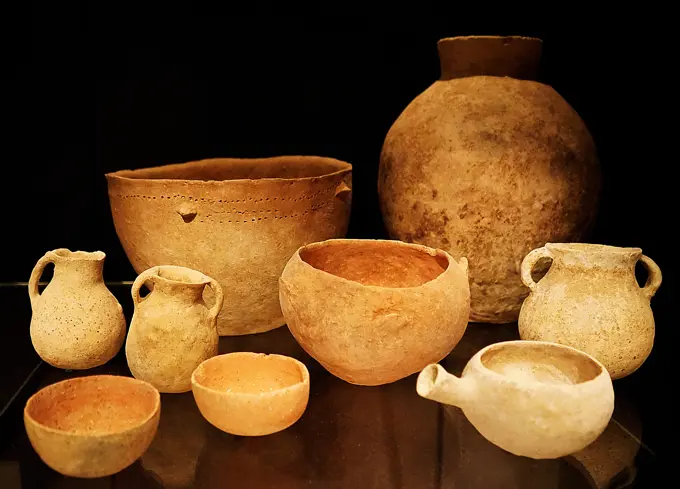
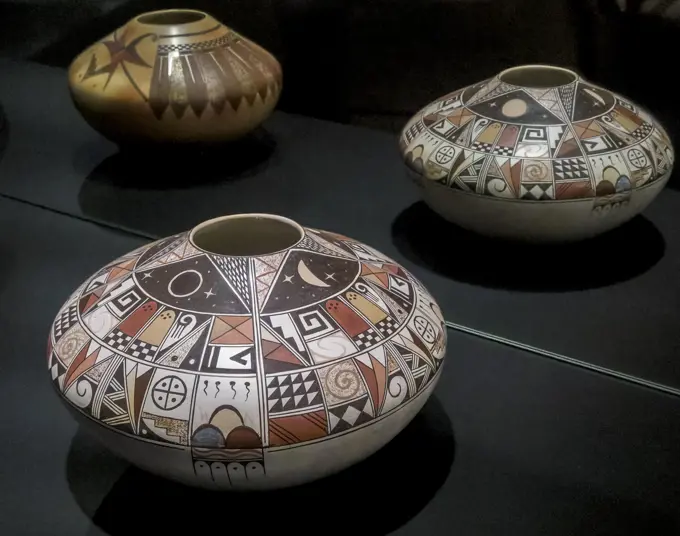
Selection of terracotta jars and flasks from various ancient cultures, displaying unique shapes and decorative styles from history.
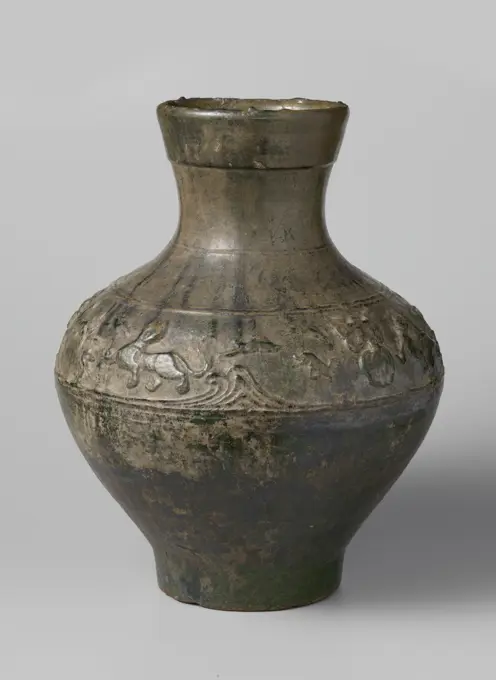
Vase, anonymous, c. -206 - c. 220 Vase of earthenware, covered with a green glaze. On the shoulder a bond with hunting scenes with human and animal figures in relief. In between twice a 'Taotie' mask with a ring. China earthenware. glaze vitrification Vase of earthenware, covered with a green glaze. On the shoulder a bond with hunting scenes with human and animal figures in relief. In between twice a 'Taotie' mask with a ring. China earthenware. glaze vitrification
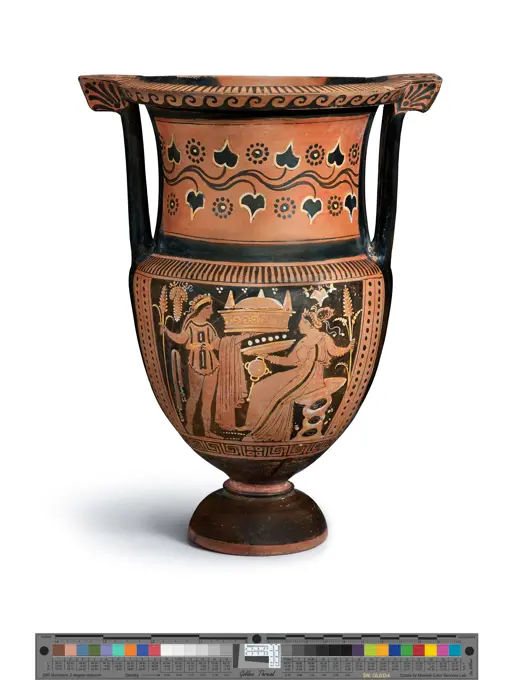
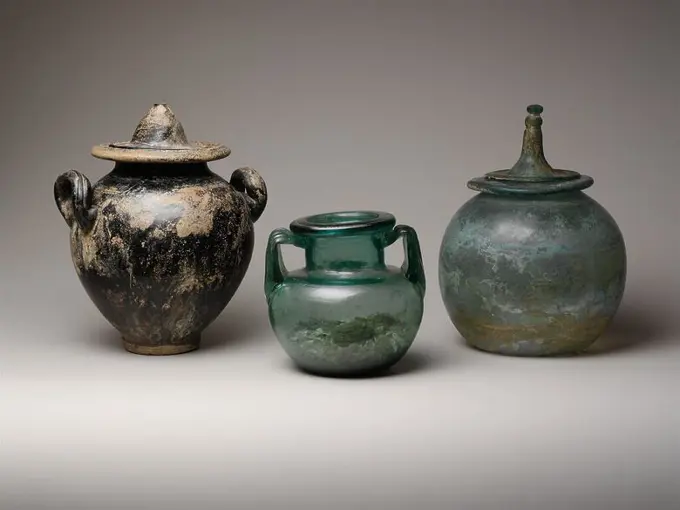
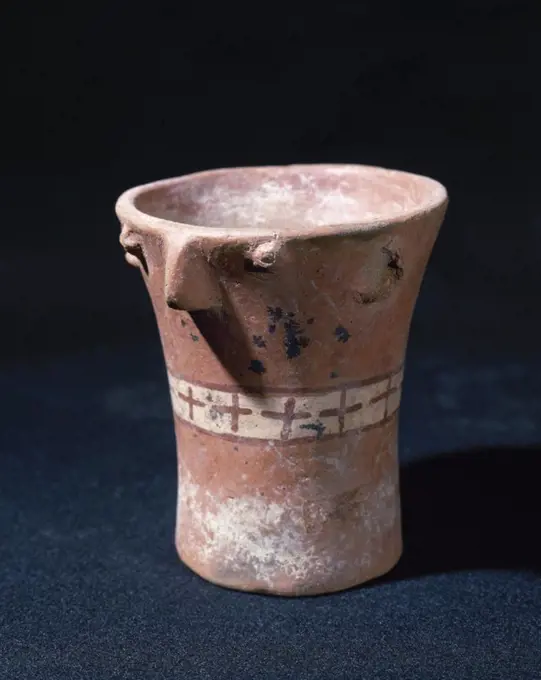
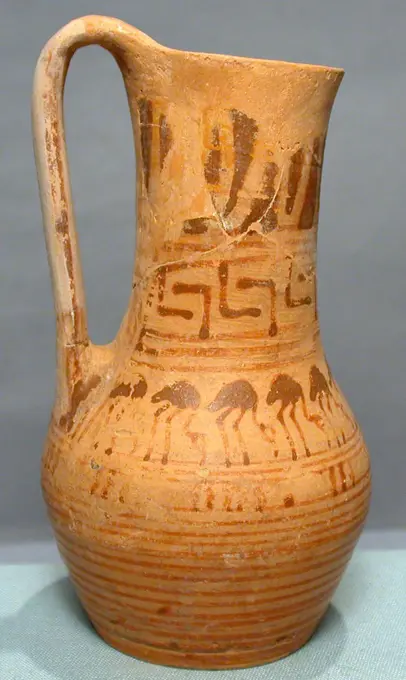
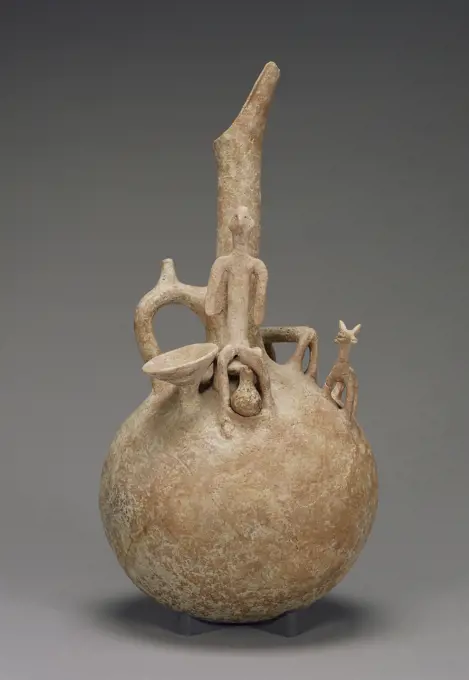
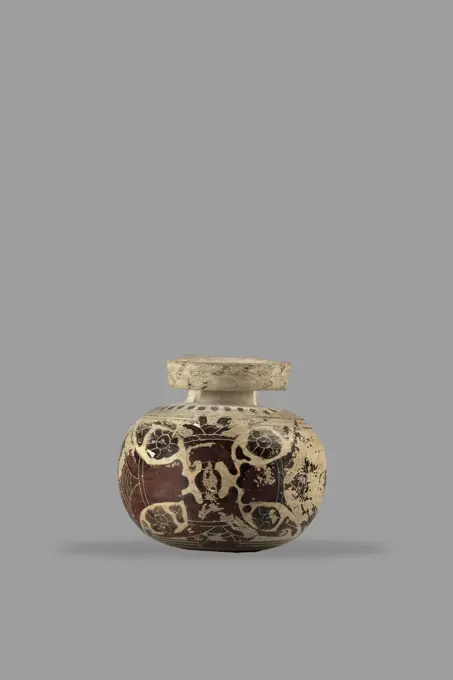
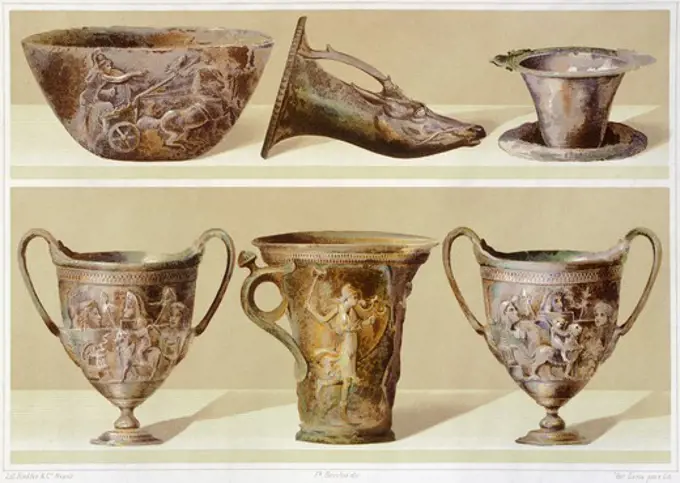
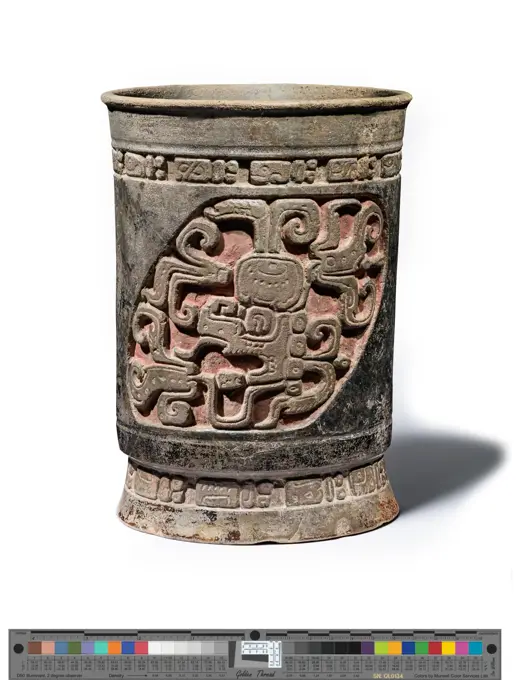
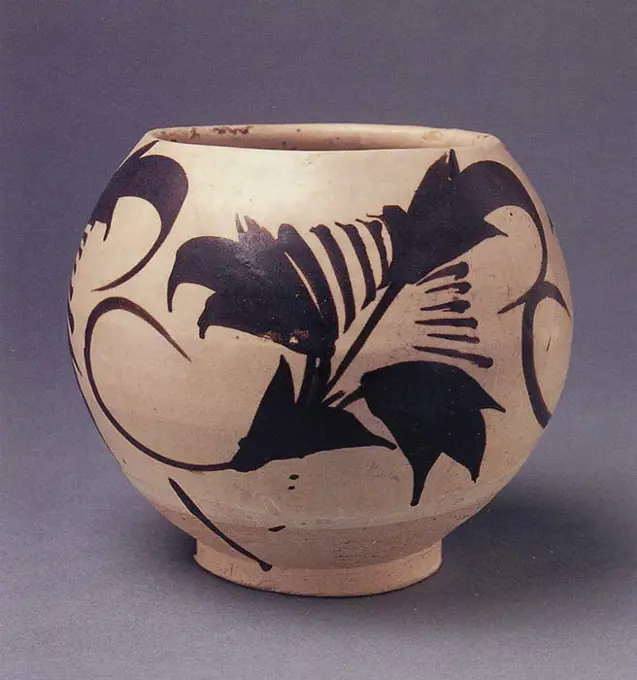
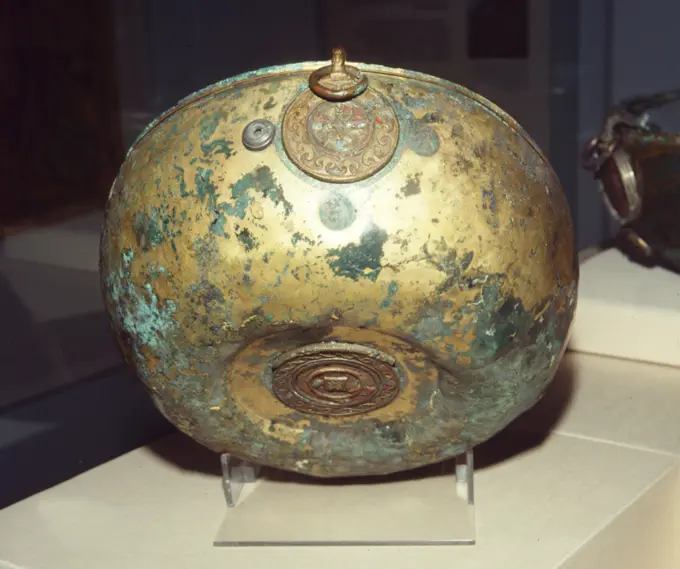
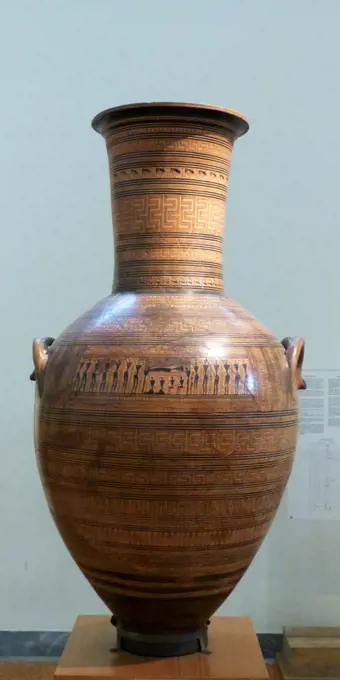
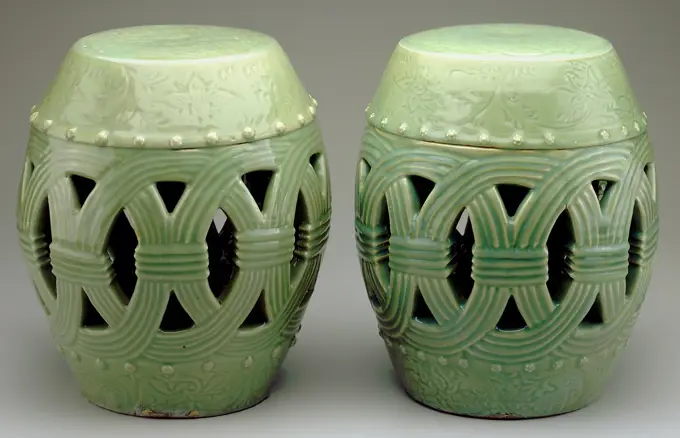
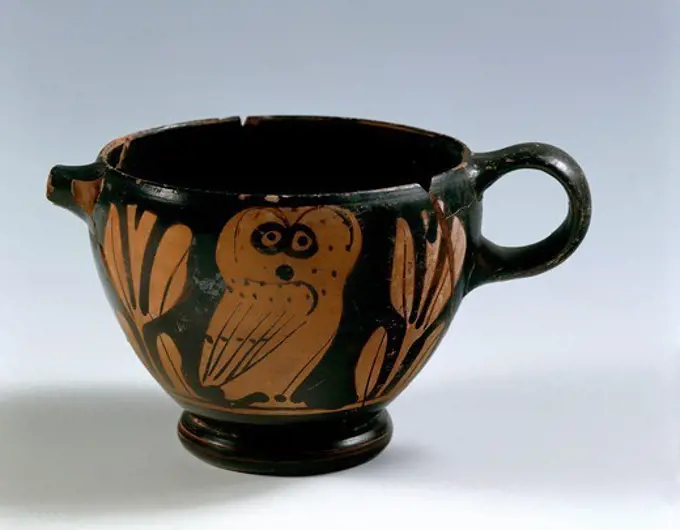
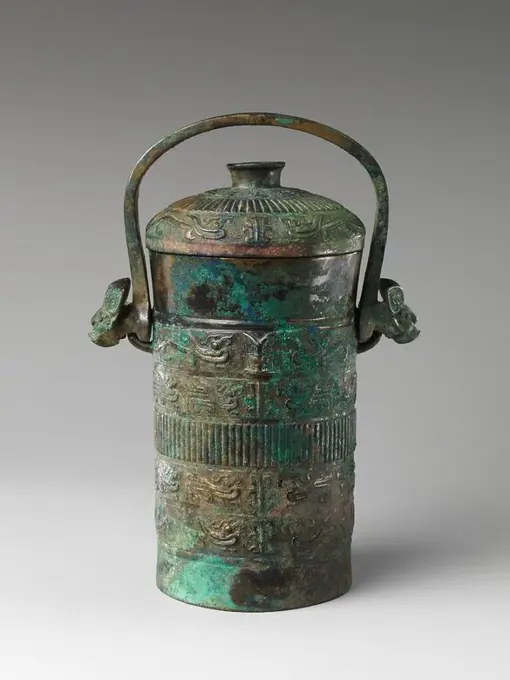
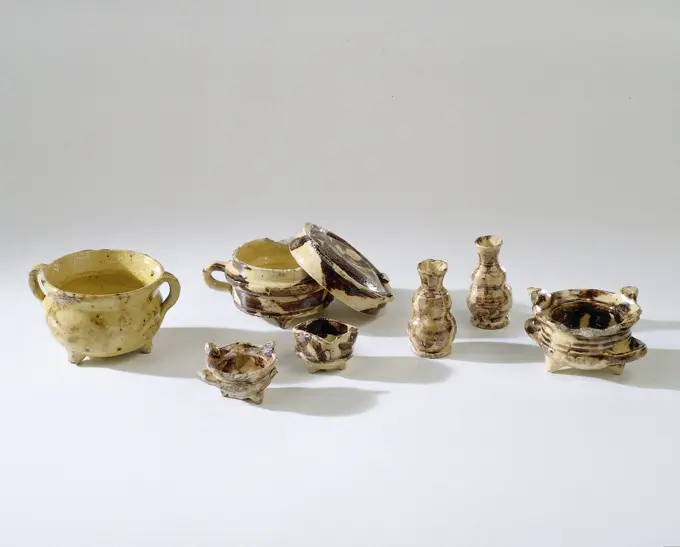
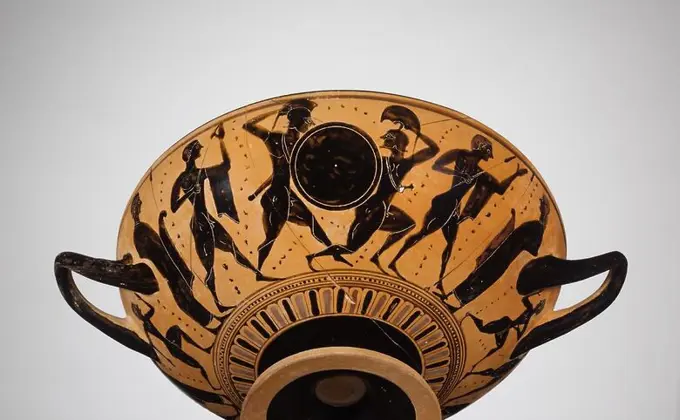
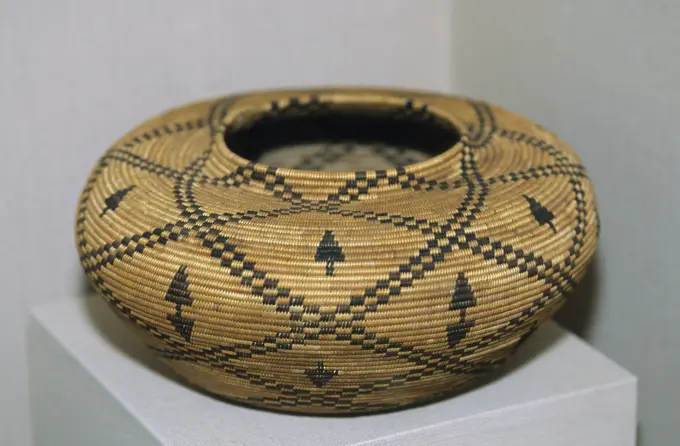
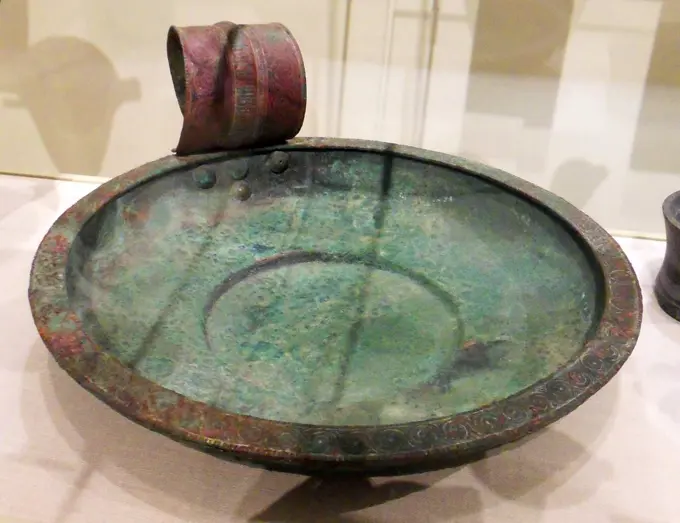
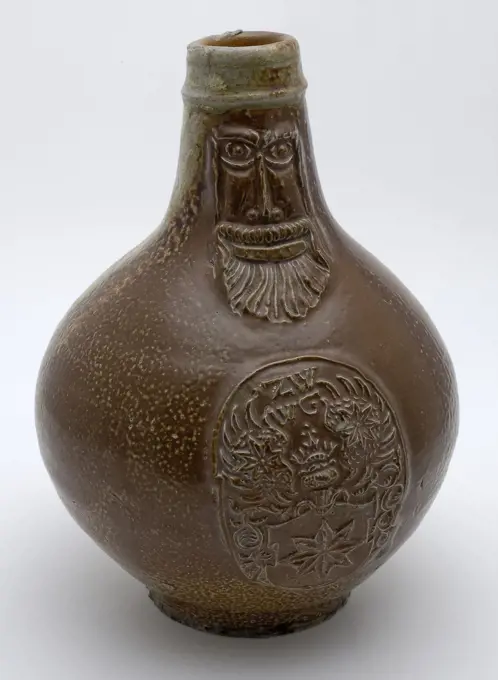
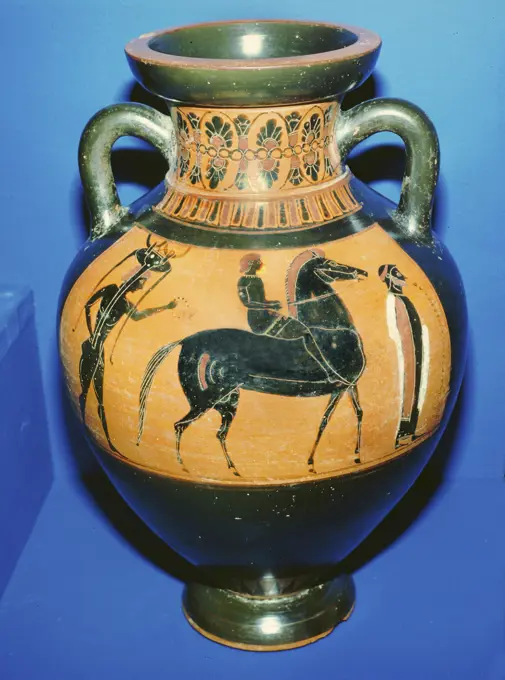
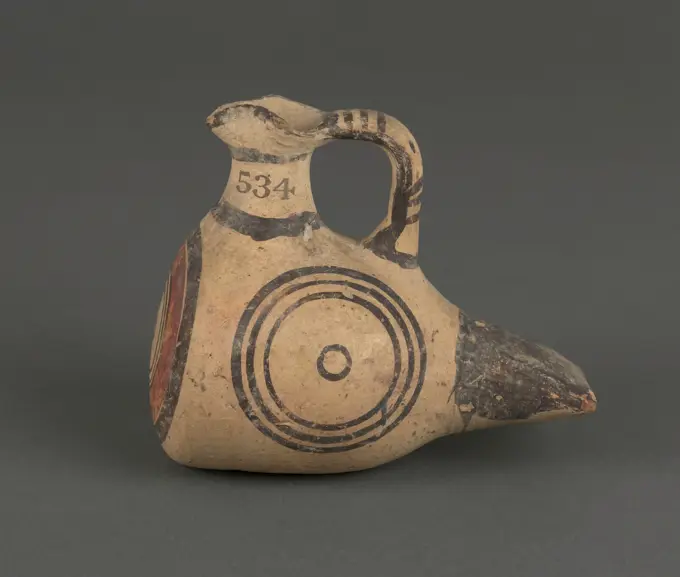
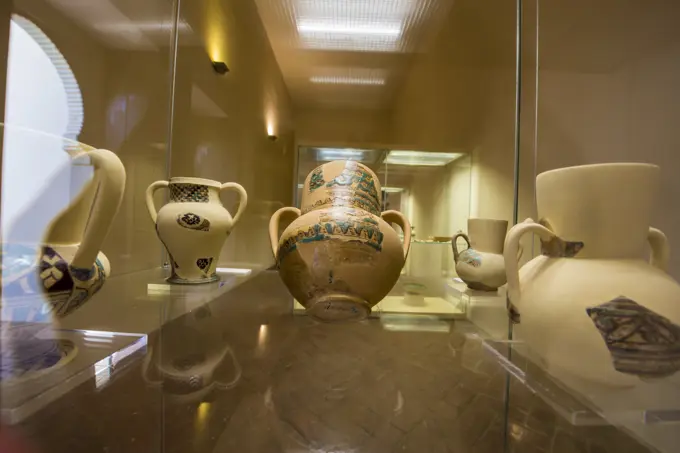
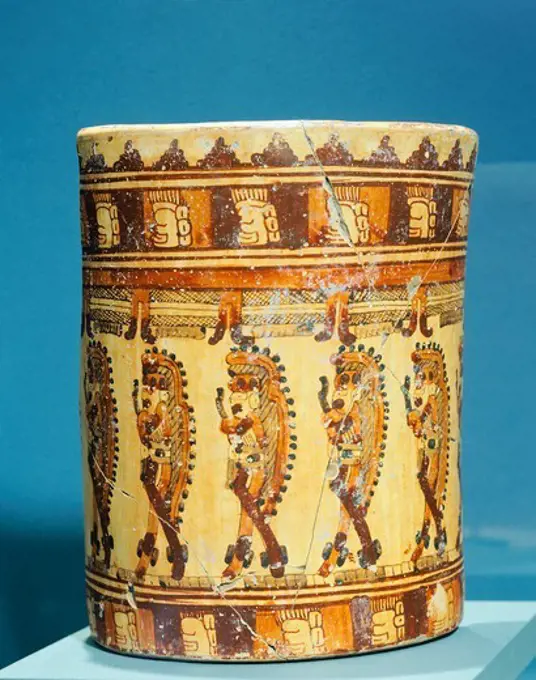
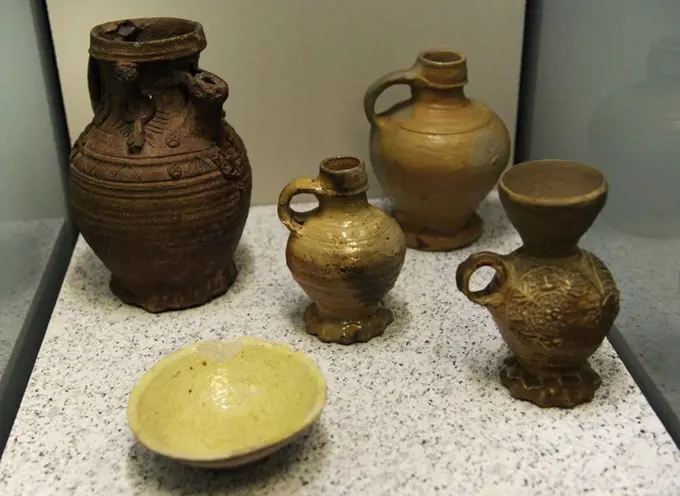
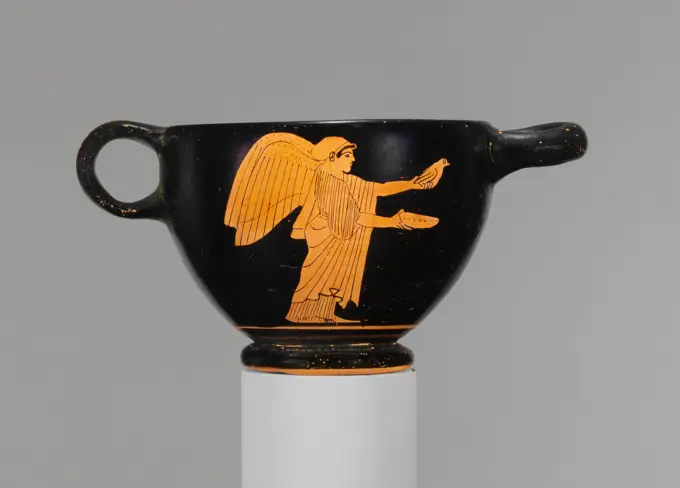
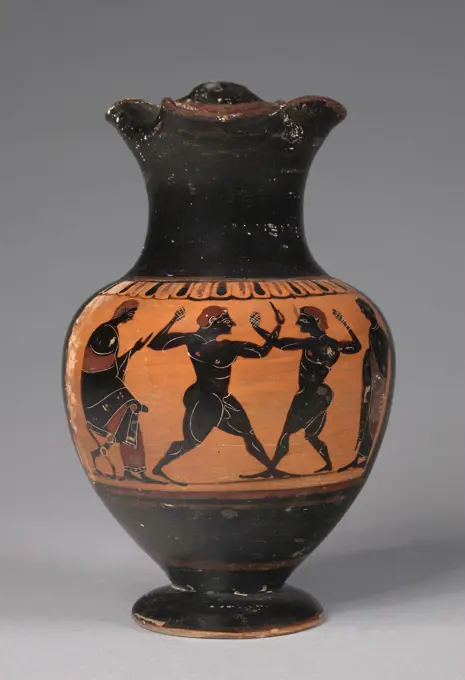
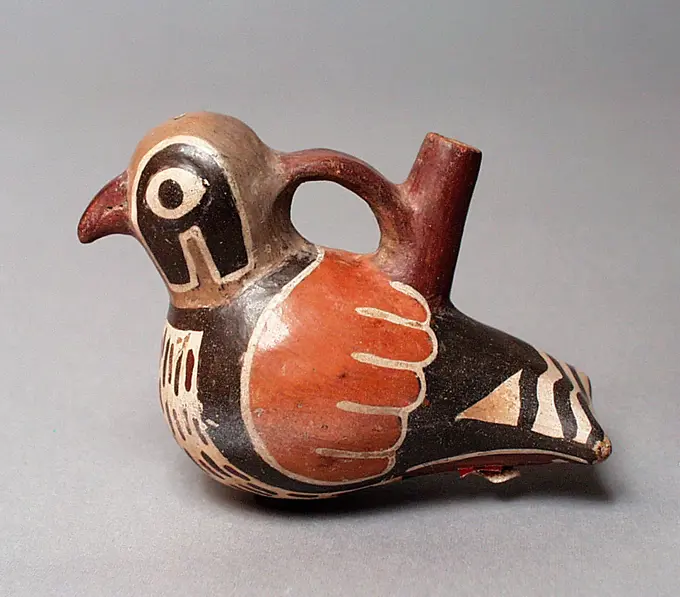
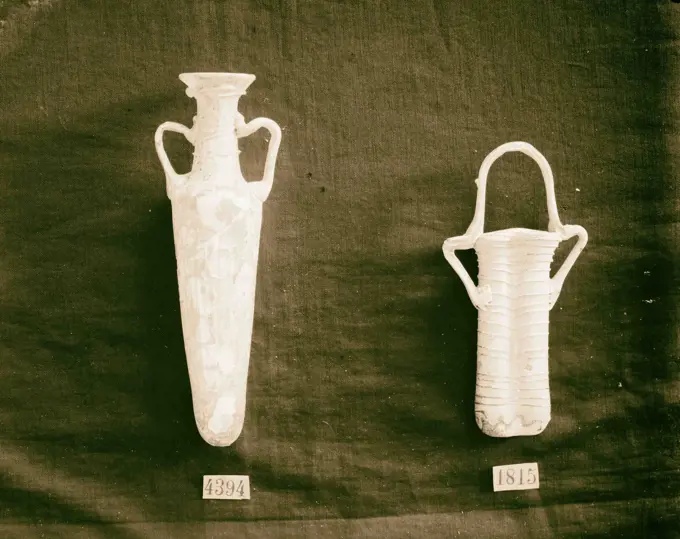
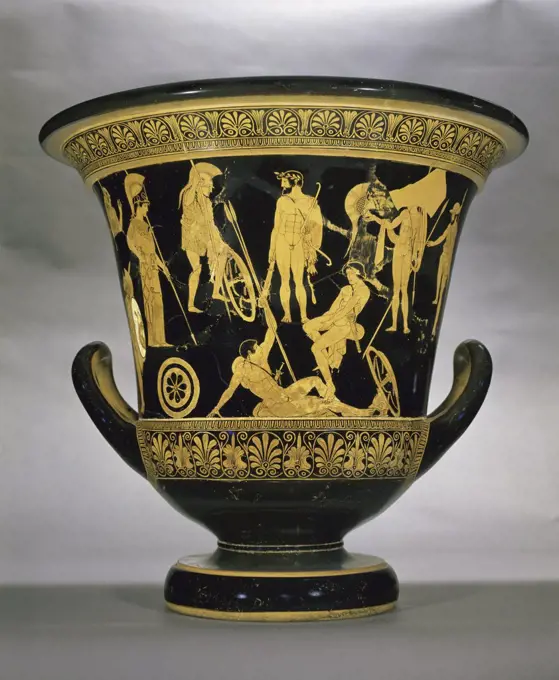
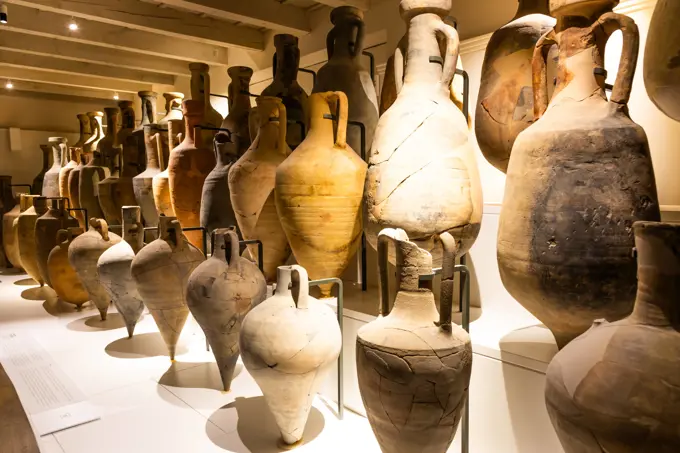
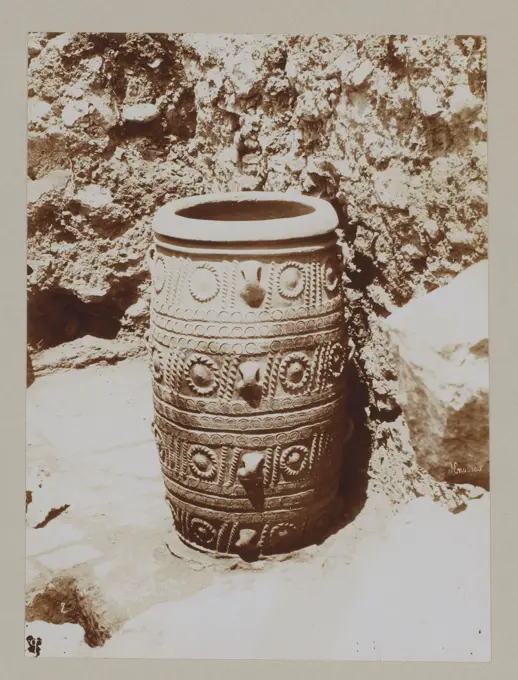
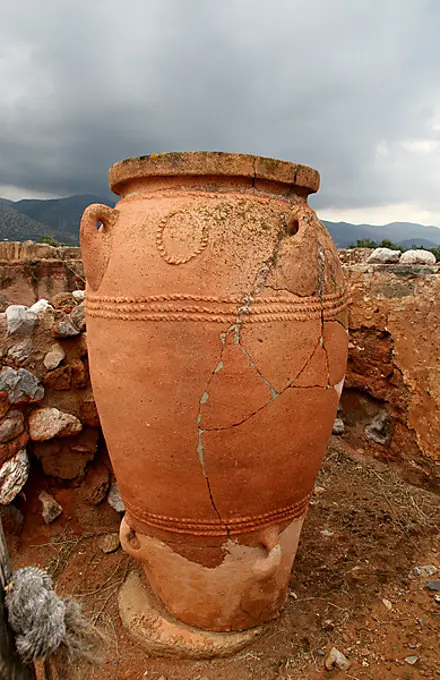
Pair of flagons probably ca. 1765-94 Joseph Samain. Pair of flagons 207970Column-Krater with (A) Youth and Seated Woman and (B) Two Youthsurn with decoration painted in red, necropolis of Los Ventorrillos, Lucena, 2nd to 1st century BC, Iberian Museum of Jaén, Andalusia, Spain.Glass two-handled jar with ashes. Culture: Roman. Dimensions: H.: 7 9/16 x 9 3/8 in. (19.2 x 23.8 cm). Date: 2nd half of 1st century A.D..Translucent deep blue green; handles in same color.Thick, tubular rim, folded out, up, and in, and pressed flat on upper surface and top of mouth; broad cylindrical neck with irregular tooling marks around base; almost horizontal, sloping shoulder with rounded edge; bulbous body; thick slightly concave bottom; two broad strap handles, with five ribs, attached to edge of shoulder, drawn up vertically, then folded in and down on to neck, and trailed off under rim.Body complete, but one crack in rim, and top part of one handle broken and missing; some pinprick bubbles, especially in handles; faint weathering and iridescence.In the first century A.D., glass vessels became a popular choice for use as cinerary urns. Many have been found still containing cremated remains, as was this vessel. Museum: Metropolitan Museum of Art, New York, USA.Attic Red-Figure Calyx Krater Fragment. UnknownRed-figured krater on black ground. Decorated with two figures holding a staff. Exhibition Myth and Nature. From Greece to Pompeii, National Archaeological Museum, Naples, Italy.Romania, Bucharest, Muzeul National de Istorie al Romaniei, Terracotta female statuettesCup 17th century. Cup 444493Covered Ritual Wine Bucket 11th-10th century B.C. China. Covered Ritual Wine Bucket. China. 11th-10th century B.C.. Bronze. Western Zhou dynasty (1046-771 B.C.). MetalworkPre-Columbian art. Pre-Incan. Cashaloma Culture. Anthropomorphic ceramic vessel. 1o x 8,5 cm (diameter). From Ecuador. Private collection.Terracotta oinochoe late 8th century B.C. Greek, Attic This oinochoe is characteristic of locally made pottery produced in Athens during the Geometric period. It is comparable to vases found in a sanctuary of Zeus on Mount Hymettos, a number of which are in the Mets collection. Many of the vessels were associated with an altar on the summit of the mountain, and may have been intended for ritual use, such as pouring libations or ritual drinking and dining.. Terracotta oinochoe 330048Jug with a Man and Deer; Cyprus; 2300 - 1650 B.C; Terracotta; 44.2 × 21.9 cm (17 3,8 × 8 5,8 in.)Aryballos orientalizujący z przedstawieniami kwiatów lotosu. unknown, authorReproduction of silver objects, from The Houses and Monuments of Pompeii, by Fausto and Felice Niccolini, Volume II, General Descriptions, Plate LXXII, 1854-1896.Footed Vessel with K'awiil. Guatemala, Maya, 600-900 CE. Ceramics. Slip-painted ceramic with post-fire stucco and pigmentJARRA O LEBES NUNCIAL DEL SIGLO IV AC (REGALO DE BODA). Location: MUSEO ARQUEOLOGICO NACIONAL-COLECCION. MADRID. SPAIN.Seti I Scarab, 1295-1186 BC. Egypt, New Kingdom, Dynasty 19 or later. Green glazed steatite; overall: 1.5 cm (9/16 in.).Jar with Abstract Floral Design 12th-13th century China. Jar with Abstract Floral Design 42469Anglo saxon hanging bowl, ENGLAND.Attic grave amphora from the Kerameikos cemetery, the main scene dhows mourning for the dead. Late geometric period 760-750 BCPair of pomade pots (part of a toilet service). Culture: British, London. Dimensions: Overall: H. 2 3/16 x W. 2 x D. 2 in., 3 oz. 4 dwt. (5.6 x 5.1 x 5.1 cm, 0.1kg). Maker: Probably by Thomas Jenkins (active 1668-1708). Date: ca. 1684. Museum: Metropolitan Museum of Art, New York, USA.Garden stool, one of a pair, 17th century, 15 5/8 x 13 3/8 in. (39.69 x 33.97 cm), Stoneware with celadon glaze, China, 17th century, This pair of ceramic garden seats is inspired by stools made of wrapped cane or bamboo. Ancient Chinese paintings depict simple stools made of bundled rush, cane, or bamboo being used both inside and out-of-doors. Such drum-shaped stools were comprised of overlapping loops of cane which, when tied together, created a light, rigid framework that left openings in the body of the stool. The present examples clearly reflect the circles of bundled cane lashed together that the less expensive stools were made of. The idea of imitating humble bamboo furniture in precious hardwoods was popular during Ming and Ch'ing and these stools can be seen as an extension of that same tradition: loosely imitating an inexpensive material with a more prestigious and permanent one.Skypos with the figure of an owl, red-figure Greek pottery, Scythian Civilization, 4th Century BC.Tripod Bowl with Alligator KnobWine Vessel (You). Culture: China. Dimensions: H. 10 7/8 in. (27.6 cm); H. (to handle) 11 1/4 in. (28.6 cm); W. (betw. knobs) 7 1/2 in. (19.1 cm); Diam. 5 in. (12.7 cm). Date: 11th-10th century B.C.. Museum: Metropolitan Museum of Art, New York, USA.Brush holder with flowers and poems 19th century China This brush holder epitomizes the kind of molded gourd vessels made in the imperial workshop during the Qing dynasty. These ingeniously crafted containers were made by encasing a young gourd in a wooden mold composed of several sectional wood panels with engraved motifs. As the gourd grew, it filled the mold and took its shape, including the surface decoration.. Brush holder with flowers and poems. China. 19th century. Molded gourd, black lacquer. Qing dynasty (1644-1911), Jiaqing mark and period (1796-1820). GourdEngaged Capital 13th century French. Engaged Capital. French. 13th century. Stone.. Sculpture-ArchitecturalCampania Salerno Nocera Inferiore Museo dell'Agro Nocerino. Hutzel, Max German-born photographer and scholar Max Hutzel (1911-1988) photographed in Italy from the early 1960s until his death. The result of this project, referred to by Hutzel as Foto Arte Minore, is thorough documentation of art historical development in Italy up to the 18th century, including objects of the Etruscans and the Romans, as well as early Medieval, Romanesque, Gothic, Renaissance and Baroque monuments. Images are organized by geographic region in Italy, then by province, city, site complex and monument.Fles, anonymous, c. 1675 - c. 1699 Bottle of pottery with light yellow shard and brown -bleached lead glaze. The bottle has a slim model with constricted belly, outstanding neckcand, and a stand ring. Netherlands earthenware. lead glaze Bottle of pottery with light yellow shard and brown -bleached lead glaze. The bottle has a slim model with constricted belly, outstanding neckcand, and a stand ring. Netherlands earthenware. lead glazeTerracotta kylix (drinking cup). Culture: Greek, Attic. Dimensions: Other: 4 13/16 x 10 in. (12.2 x 25.4 cm). Date: ca. 550 B.C..Exterior, obverse and reverse, combat between spectatorsCompared with the Little Master cups--the Lip cups and Band cups--that predominated in Athens during the middle of the sixth century B.C., this example shows a deeper bowl that permitted a more expansive scene on the exterior. Such kylikes became established during the third quarter of the century, thanks especially to the innovations of the potter and painter Exekias. Museum: Metropolitan Museum of Art, New York, USA.Wheel-axle Cap, one of a pair, 570-476 BCE, 4 13/16 × 6 7/16 × 2 1/4 in., 2.6 lb. (12.3 × 16.3 × 5.7 cm, 1.2 kg), Bronze with wavy bands and animal head lynch pin, China, 6th-5th century BCEBurial objects, clay vessels, Moche culture, Museum Tumbas Reales or Museum of Sipan, Lambayeque, near Chiclayo, Peru, South AmericaLarge Pomo storage basket decorated with geometric designs with pine tree motifs and arrow patterns.Lamp, Anatolia; 1st - 4th century; Terracotta; 2.3 x 8 x 9 cm (7,8 x 3 1,8 x 3 9,16 in.)Incense Burner. Culture: China. Dimensions: H. 17 1/8 in. (43.5 cm) (without lid); W. 13 in. (33 cm). Date: dated 1512. Museum: Metropolitan Museum of Art, New York, USA.Bronze bowl, Cretan, late Minoan I, ca. 1600-1500 B.C.Bartmann jug, also called Bellarmine jug, on the stomach an applique with the coat of arms of Kralingen, tableware holder soil find ceramic stoneware icing saltglaze h 20.0 neck 3.6 belly 14.9 standing surface 8.0 hand turned fried glazed Stoneware Bartmann jug gray shard brown partly gray brindled salt glaze sausage ear with short spiked tail groove and protruding ring underneath mondrand At the top of the medallion: ZW WG archeology heraldry import pottery drink pouring transport beer wine Kralingen RotterdamChalice 3rd-12th century. Chalice 447104Horse race winer with prize tripod and wreath, 500 BC. Vulci. Black Figure vase GREECE.Askos in the form of a bird 750-480 B.C. Cypriot. Askos in the form of a bird. Cypriot. 750-480 B.C.. Terracotta. Cypro-Archaic I. VasesPre-Columbian pottery in the Museum of Archaeology, Trujillo, Peru.Lazio Viterbo Viterbo Museo Civico17. Hutzel, Max 1960-1990 Views of paintings (Middle Ages through 18th c.), frescoes, a tabernacle, coffin, sculpture reliefs, portal fragments, busts, sculpture, tapestry found in the Pinacoteca, Second floor gallery and Second floor cloister sequences. Antiquities: Many views of Etruscan and Roman fragments, sculpture, sarcophagi, pottery, masks, jewelry and other objects found in the Storeroom sequence (inventory numbers on back of prints), and the Cloister, Second floor Cloister, Valle Giulia, Sala Romana and Sala Etrusca sequences. General Notes: There are eight separate numerical sequences for this location. The cloister as an architectural structure, rather than museum site, is documented in the record and file for S. Maria della Verita, Cloister, all views of which are stored in Medieval core collection. Five views from the Museo Civico Second floor cloister sequence are stored in Medieval. German-born photographer and scholar Max Hutzel (1911-Canosan Askos. UnknownSilver cup with decorations in relief, from Trajan Augusta (now Stara Zagora), Bulgaria. Thracian Civilization, 1st Century BC.Artifacts in the museum at the Alcazaba and Castle of Gibralfaro on Mount Malaga above the old town, Malaga, Spain. (Editorial Use Only)Censer of Fire God QuetzalpapalotlUlua polychrome terracotta vase shaped, painted, Contador type, variety Mellizo, height 21,5cm, width 15cm. Artifact originating from the Valley of Sula, Campo Pineda site (Honduras). Mayan Civilization, mid-classical period 600-900.. The cast round auger widens upwards, has a high-cutting edge and a profiled base, which is mounted higher than the bottom of the object. On the edge in Latin Majuskels The inscription Soli Deo Gloria Ovwerrogge FECIT 1637 with interpunctions consisting of a window (five times) and an eight-leaved rosette. The wall is divided into two by a profiled rib. The upper fries is made up of stylized leaves on reverse three-lycons. The more than twice-repeated motif from the lower fries consists of a bird with spread wings between symmetrical tendrils work, which consists of two volutes on both sides, the first of which ends in a flower and the second in stylized acanthus leaf has been executed.Globular votive vase with mythological scene, Mochica culture, Peru, III-IV century after Christ, pottery, Sa Bassa Blanca Museum (msbb) Yannick Vu and Ben Jakober, Alcudia, Majorca, Spain, EuropeCeramic pot, 13th century. Yellow clay bowl, Cologne or Frechen (Germany), 14th century. Glazed pottery, Rhineland, 13th century. Pieces loaned by the Museum of Cologne. German Historical Museum. Berlin. Germany.Temple. Culture: Mezcala. Dimensions: Height 4-15/16 in.. Date: 1st-8th century. Museum: Metropolitan Museum of Art, New York, USA.CERAMICA PROCEDENTE DE TEPE SIALK S VIII AC. Location: MUSEO BASTAN. Teheran. IRAN.Terracotta skyphos (deep drinking cup) ca. 460 B.C. Greek, Attic Obverse, Athena with gooseReverse, Nike (the personification of victory) with phiale (libation bowl) and birdThe goose was traditionally associated with Aphrodite, the goddess of love. Here, a startled goose is addressed by Athena. The shape of the skyphos is a special variety with one vertical, one horizontal handle.. Terracotta skyphos (deep drinking cup) 255247 Greek, Attic, Terracotta skyphos (deep drinking cup), ca. 460 B.C., Terracotta, Overall: 3 1/4 x 6 5/8in. (8.2 x 16.9cm); diameter 4 3/8in. (11.2cm). The Metropolitan Museum of Art, New York. Rogers Fund, 1967 (67.11.23)Black-Figure Oinochoe (Wine Jug): Boxers, c. 550-540 BC. Attributed to Class of London B 524. Ceramic; overall: 22.3 cm (8 3/4 in.). Two stout young boxers, unbearded, face off on this small wine jug. Curiously, while one boxer has both hands wrapped for fighting (in leather straps known as himantes), the other has left one hand bare, holding it up to fend off punches. The seated figure at left, with one hand raised, may be a judge. The standing figure at right, whose white hair and beard are now mostly gone, is likely a spectator.Spice Jar. Dated: c. 1937. Dimensions: overall: 25.4 x 19.1 cm (10 x 7 1/2 in.) Original IAD Object: 6" High. Medium: watercolor and colored pencil on paper. Museum: National Gallery of Art, Washington DC. Author: John Matulis.Plate. Culture: Marajo. Dimensions: H. 9 1/4 x W. 10 1/4 in. (23.5 x 26 cm). Date: 8th-12th century. Museum: Metropolitan Museum of Art, New York, USA.Bird-Shaped Vessel with Single SpoutCollection of funerary pottery found in Bab edh-Dhra, an Early Bronze Age city located near the Dead Sea. Dated 35th Century BCAntique glass 1898, Middle EastHistorical artefacts, exhibits, Archaeological Museum in the former Order of St John Hospital, 15th c., Old Town, Rhodes Town, Greece, EuropeKrater: Red-Figure Footed  Painter of the Niobides  Greek Art  Musee du Louvre, Paris Ancient broken pottery vase, old ceramic cracked pot or jug, vector antique Greek pottery. Clay amphora or bowl with handles, classic Roman or Greek ancient vase or archeology earthenware. Ancient broken pottery vase, ceramic cracked potMediterranean amphoras. Italic and Greek wine and oil container. Comacchio, Italy - 11 June 2024, Delta Antique museum interior. Mediterranean amphoras. Italic and Greek wine and oil container. Copyright: xZoonar.com/PaoloxGallox 22243597unknown, Large vase () at the palace of Knossos, verso upper left - handwritten on cardboard with pen in black ink, photograph, photo, photos, 54. Crete. Palace at Knossos., height 219 mm, width 162 mm, height 328 mm, width 239 mm, photographer, 1895 - 1915, fourth quarter 19th century, first quarter 20st century, first quarter 20th century, paper, cardboard, daylight gelatin silver printUSA, Arizona, Scottsdale. Decorated Native-American pottery jugs.Japanese Lacquers. Round box with a noble coat of arms  mon o kamon of the  Fuji-Wara family. among  Japans oldest. XVII century. Edo period. Terracotta kylix (drinking cup) ca. 480-470 B.C. Attributed to the manner of the Pistoxenos Painter Interior, kithara playerExterior, obverse and reverse, symposium (drinking party)The decoration of the exterior is carefully placed. When the cup was suspended, the underside of the foot with the black band melded with the impression of the continuous couch on which the figures are reclining. A representation such as this one implies the homosexual relationships between men and youths that were part of an Athenian male's culture.. Terracotta kylix (drinking cup) 246647Greek vases silhouettes. Ancient amphoras and pots glyph illustration. Clay ceramic earthenware. Vector. Greek vases silhouettes. Ancient amphoras and pots glyph illustration. Clay ceramic earthenware. Vector.Amphora, excavation site, imperial palace, Malia, Crete, Greece, EuropeClay jug, Banos califales, Arab baths in Cordoba, Andalusia, Spain, Europe