Ancient Tools and Blades

An assortment of ancient knives, blades, and tools made from iron and wood, highlighting archaeological finds with historical value.

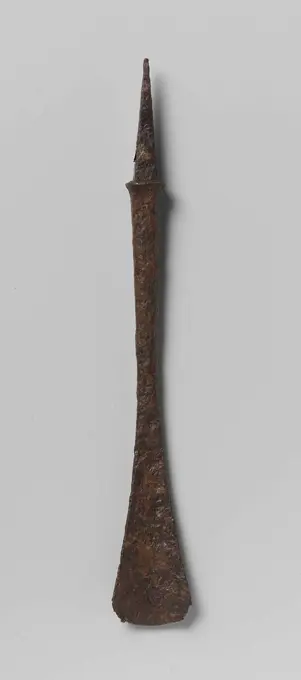
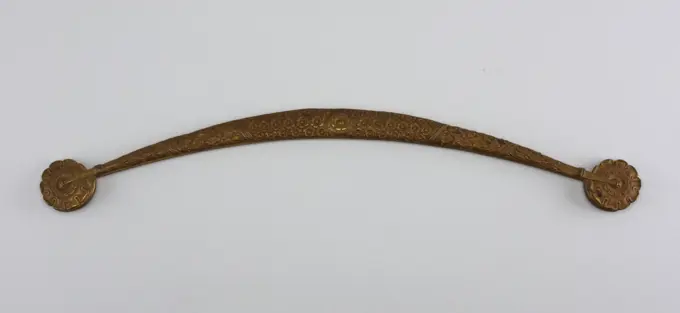
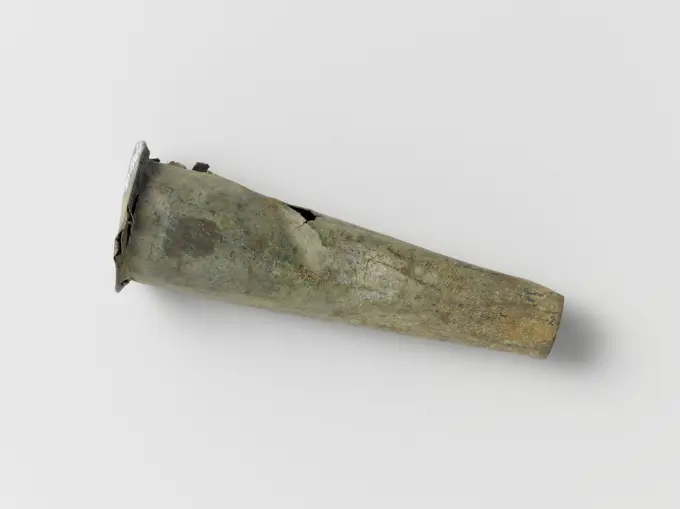
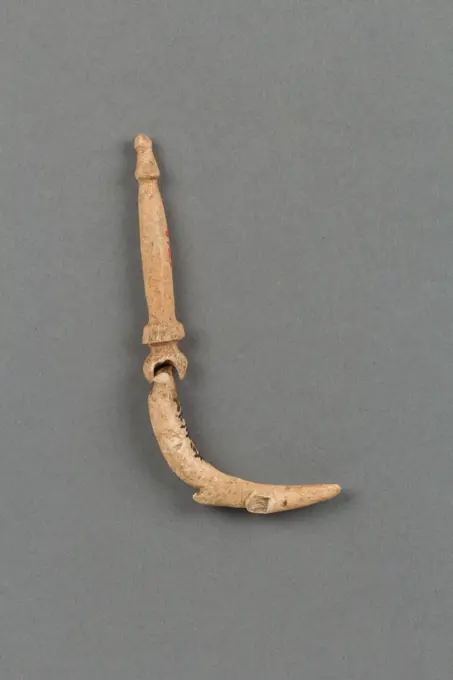
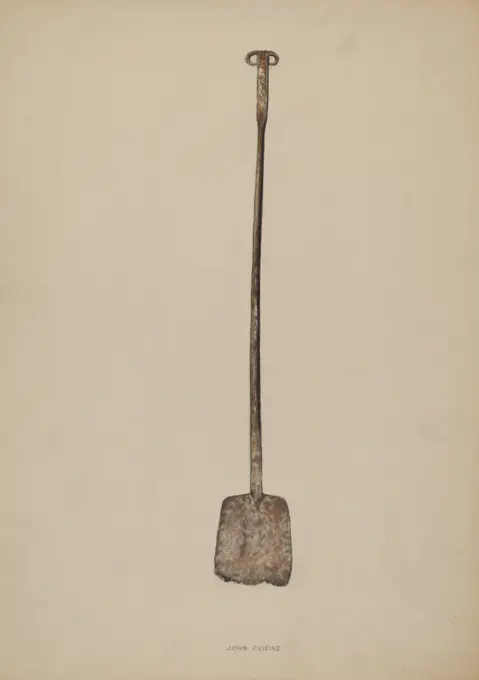
Shovel for fire, shovel scoop soil find iron metal, Rectangular shovel shank is round in cross section at scoop shovel flat and handle flat. End handle an open curved eye hook engraved in flat sections of stem: six horizontal lines archeology Rotterdam railway tunnel creation Soil discovery: rail tunnel Rotterdam.
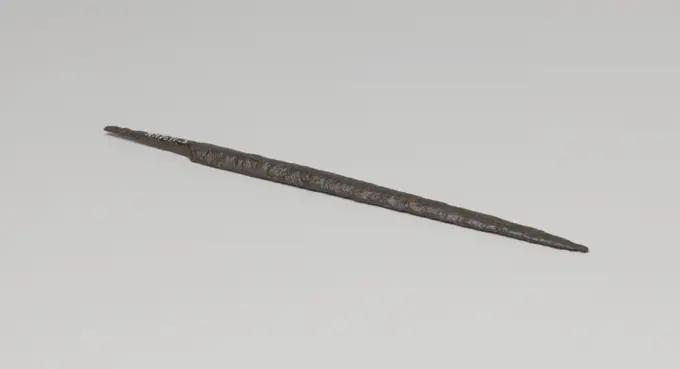
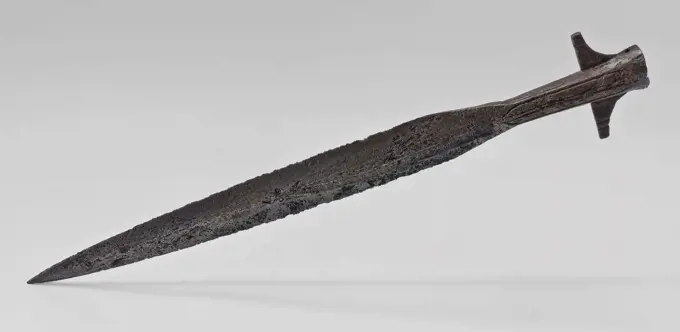
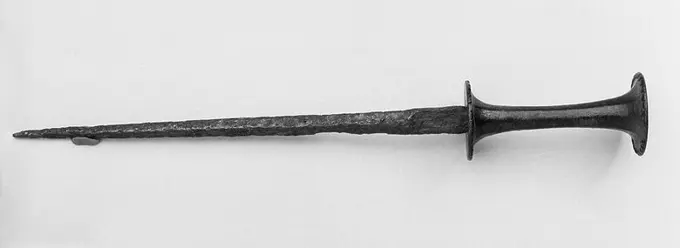
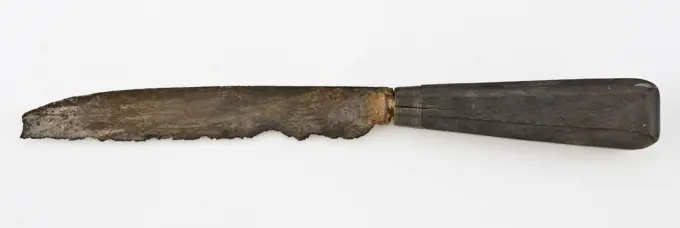
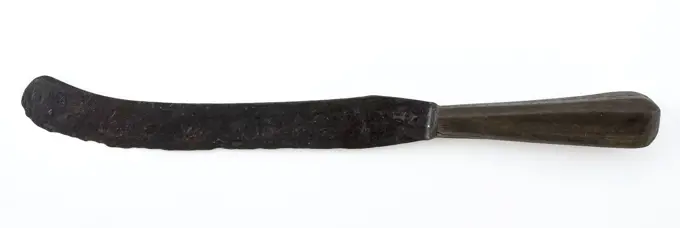
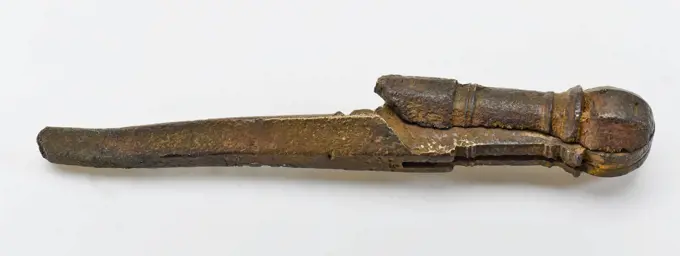
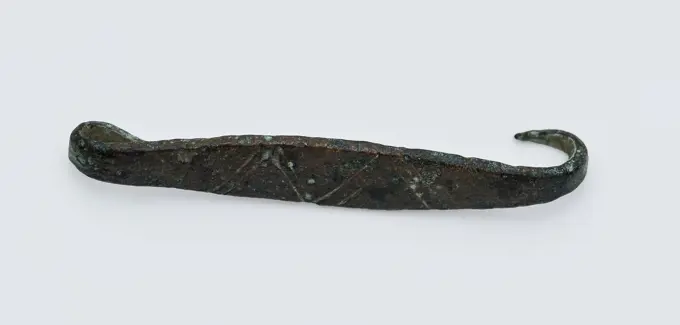
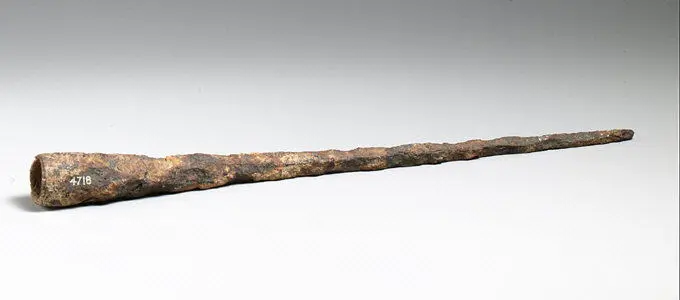
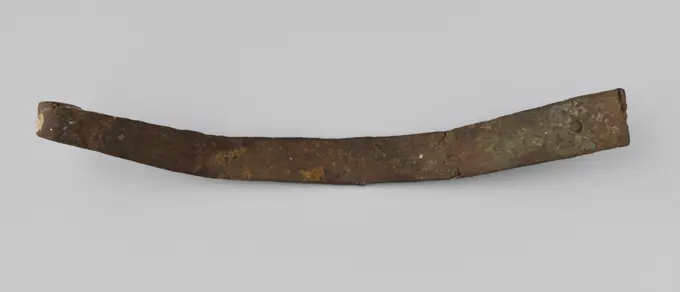
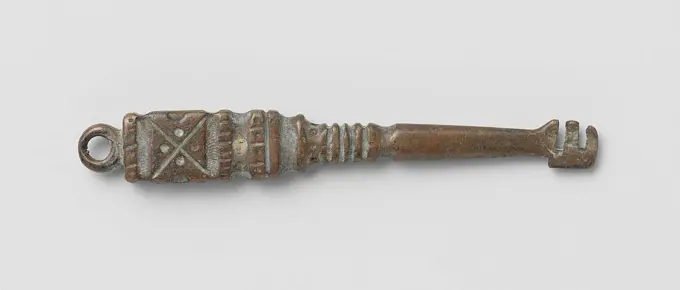
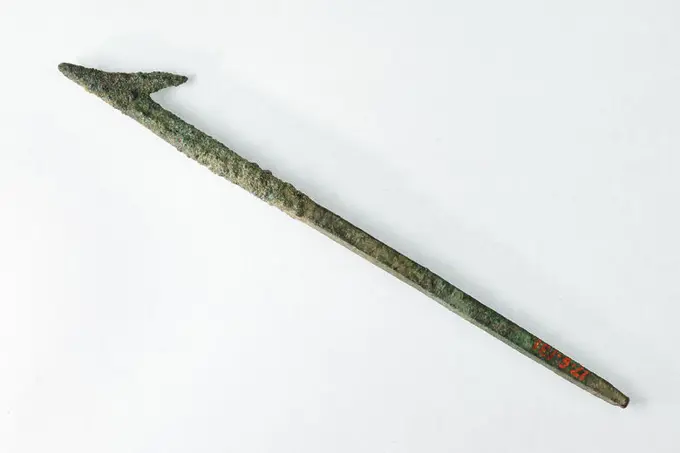
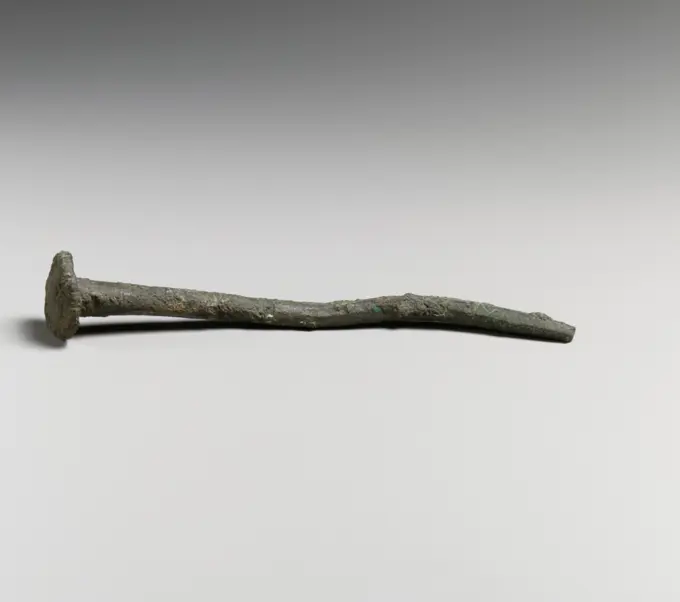
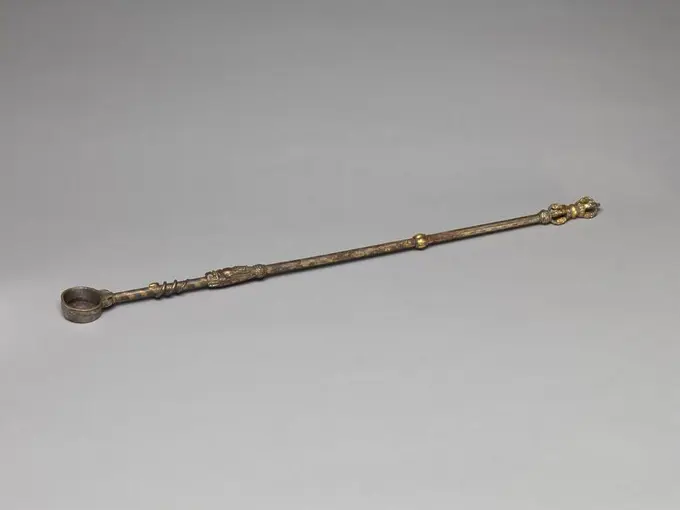
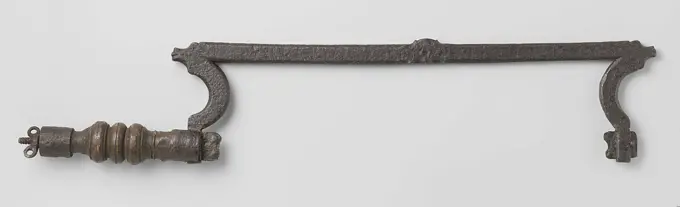
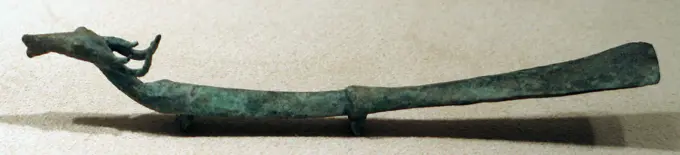
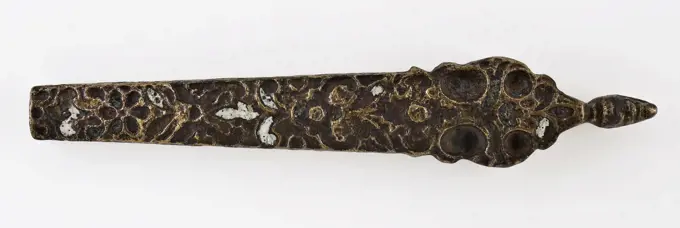
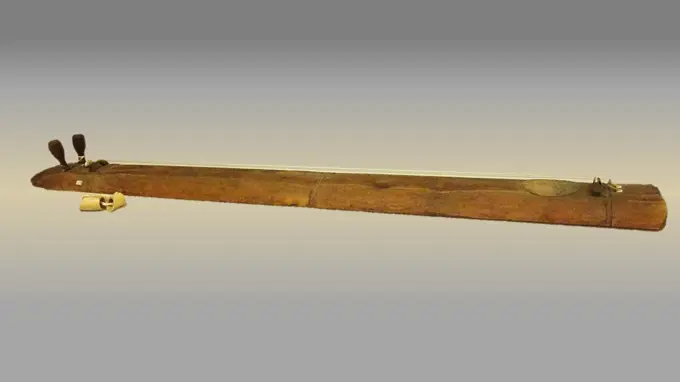
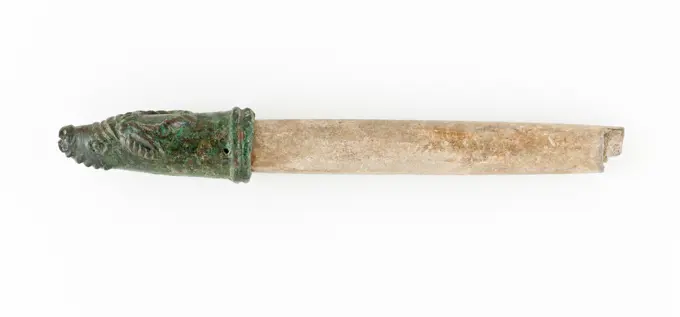
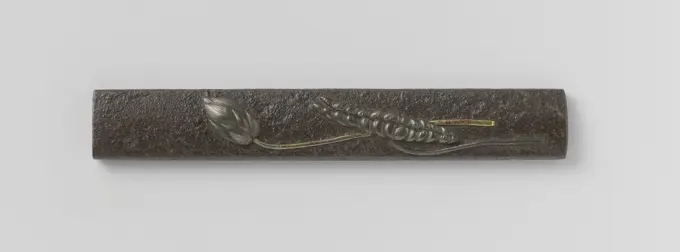
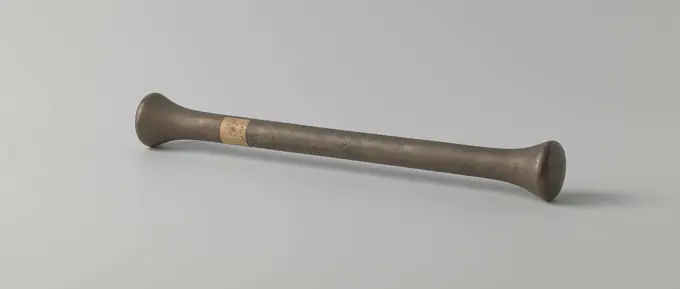
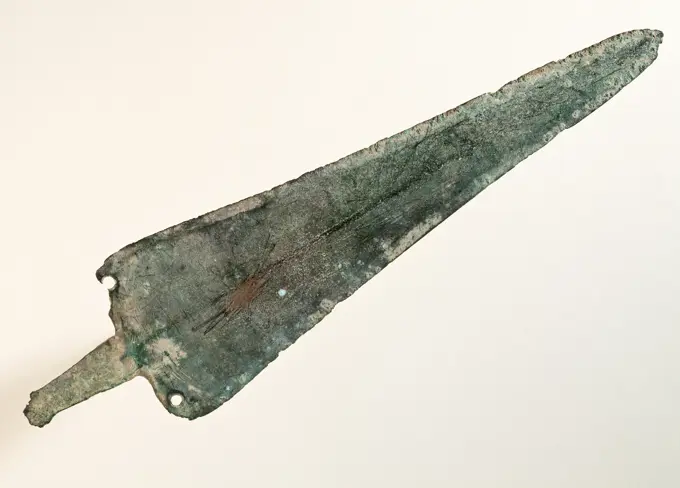
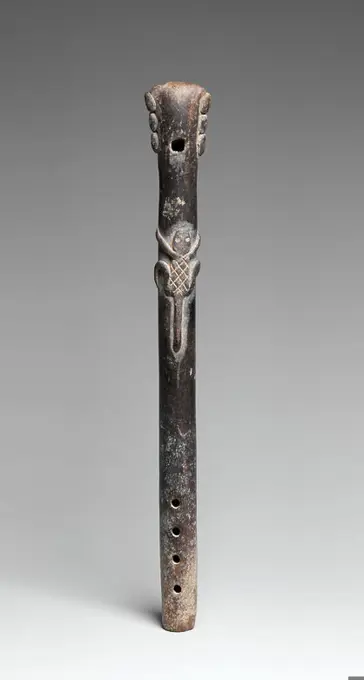
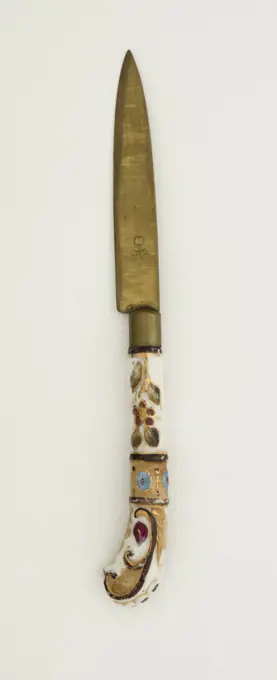
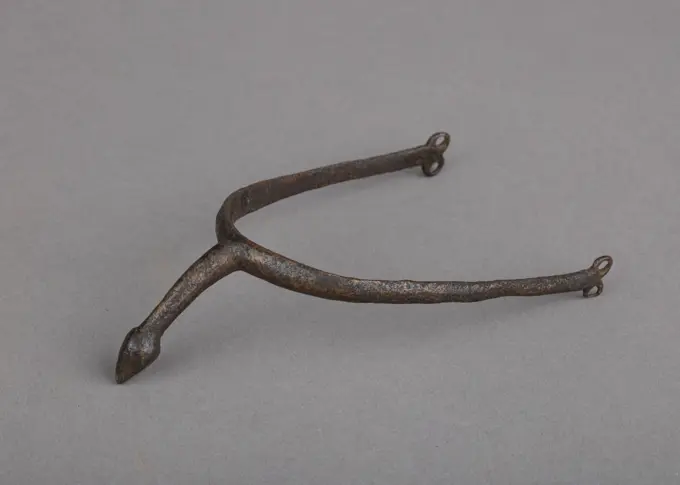
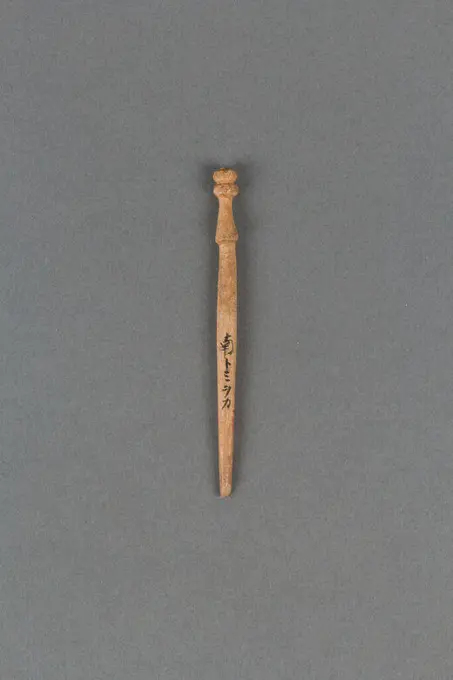
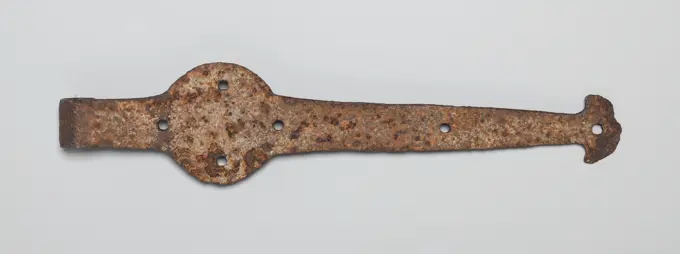
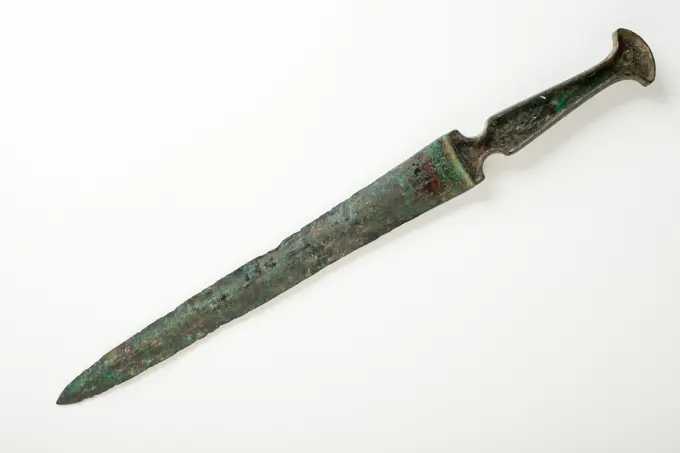
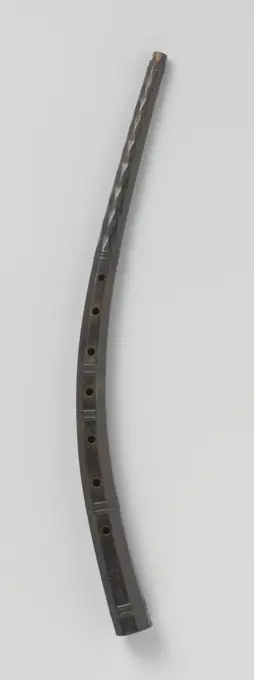
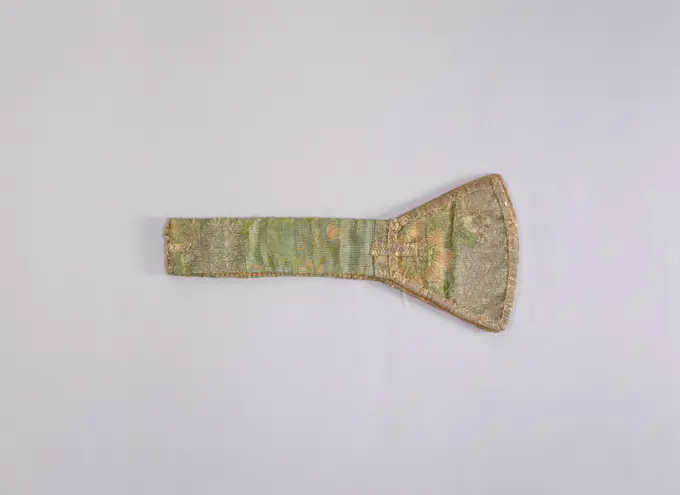
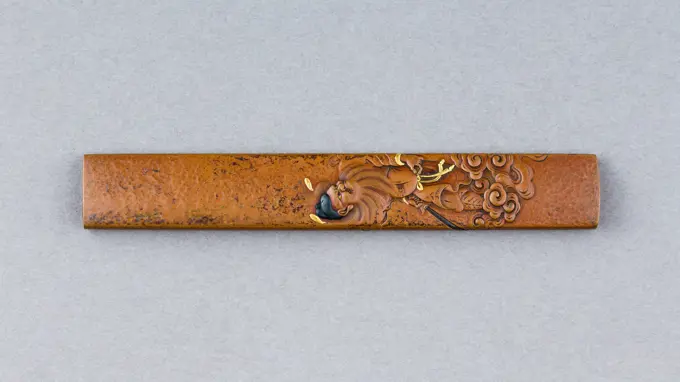
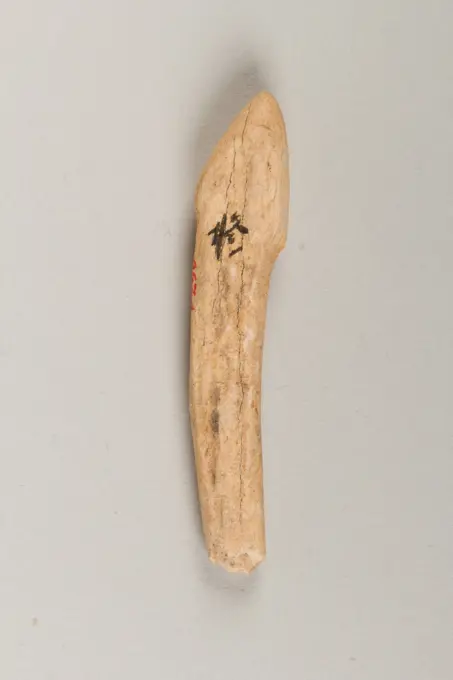
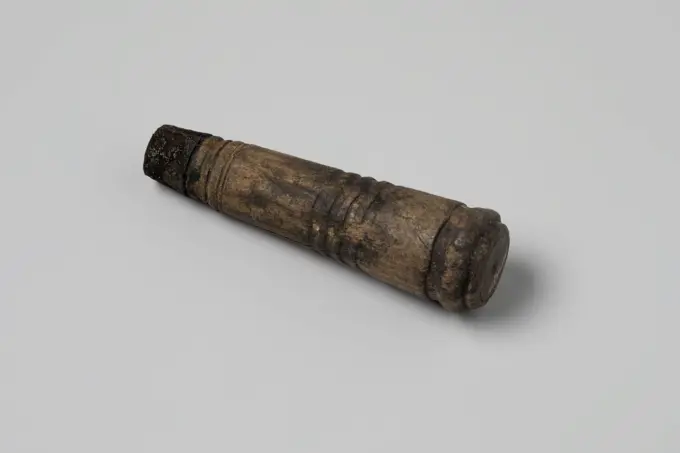
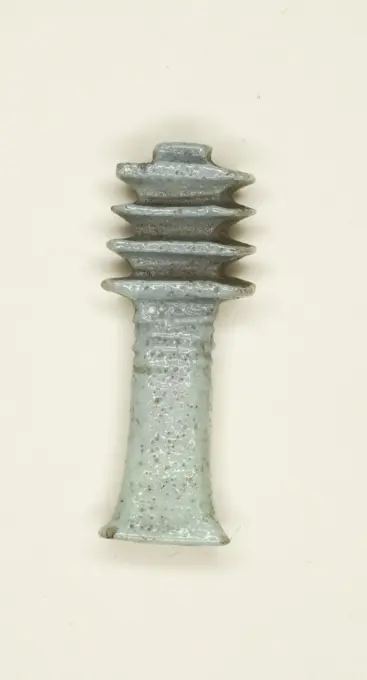
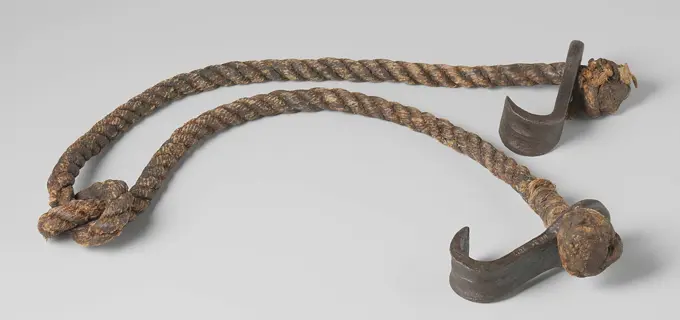
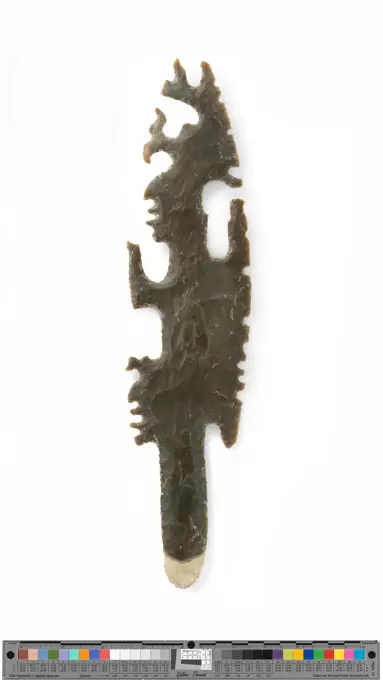
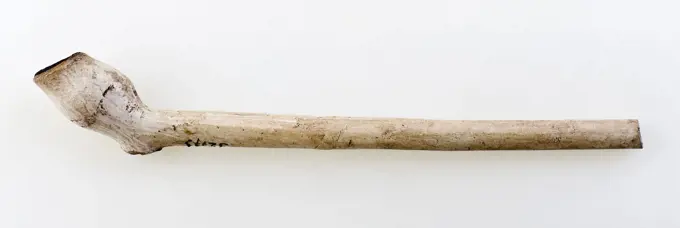
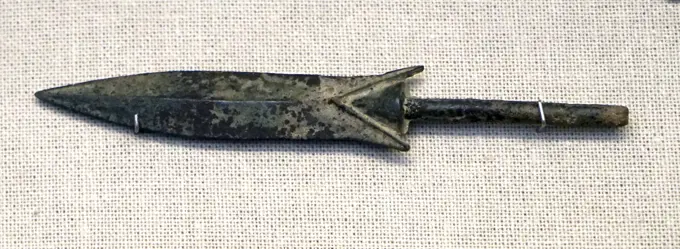
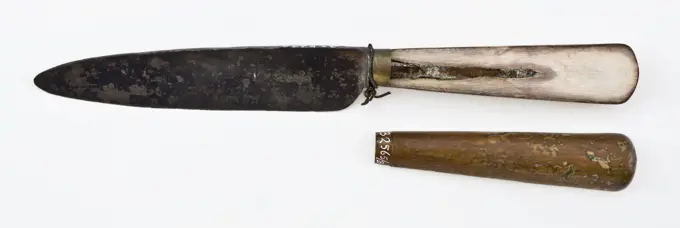
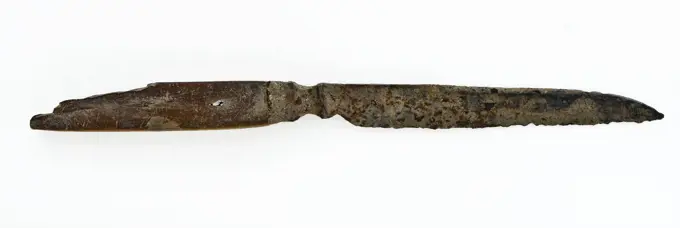
Blade with fragment legs raises, knife cutlery soil find iron bone metal, archeology Rotterdam railway tunnel Soil discovery Rotterdam.File, half round without a handle, with parallel notches, anonymous, c. 1590 - c. 1596  File, half round without a handle, with parallel notches. The file is grater with sharp dots.  iron (metal) forging  Nova Zembla. Saving HuysKnife (Pisau Raut) 18th-19th century Malayan. Knife (Pisau Raut) 31603Weaving tool ca. 1295-1070 B.C. New Kingdom, Ramesside. Weaving tool. ca. 1295-1070 B.C.. Wood. New Kingdom, Ramesside. From Egypt, Memphite Region, Lisht North, Late New Kingdom Settlement, MMA excavations, 1920-22. Dynasty 19-20Blade, most probably of Frankish wing lance, blade lance arm soil found iron metal, forged draped narrow Narrow lancet-shaped leaves in which the 'Wurmbund' is decorated in three layers; above it, diamond-shaped decoration on both sides; trapezoidal (underside) wings with two notches and thickening at each end; on shaft on four sides tapered cannelures; under the wings on both sides small hole archeology Rotterdam war Maas wienenoordwug Franken smid militaria Soil discovery dredged by sand suction dredger at the first wienenoord bridge.Dagger Blade. Cyprus, 3000-2400 B.C.. Arms and Armor; daggers. BronzeRoundel Dagger. Culture: possibly British. Dimensions: L. 13 in. (33 cm); L. of blade 9 7/16 in. (24 cm); W. 1 3/4 in. (4.4 cm); W. of blade 9/16 in. (1.5 cm); thickness of blade 3/8 in. (1 cm); Wt. 7 oz. (198.4 g). Date: 14th century. Museum: Metropolitan Museum of Art, New York, USA.Roman needle, bone, 3rd century, Can Rafart. Museum: MUSEO DE MATARÓ.Knife with iron blade and octagonal wooden handle, knife cutlery soil find iron wood metal, archeologyShovel for fire, shovel scoop soil find iron metal, Rectangular shovel shank is round in cross section at scoop shovel flat and handle flat. End handle an open curved eye hook engraved in flat sections of stem: six horizontal lines archeology Rotterdam railway tunnel creation Soil discovery: rail tunnel Rotterdam.Crossbow Bolt, 1500s-1600s. Germany, 16th-17th century. Wood, leather, steel; average: 37.2 cm (14 5/8 in.).Knife with slightly curved blade and wooden handle, knife cutlery soil find iron wood metal, Long back curved blade with forged lifting guard narrowed angel handle tapered and rhombic in cross section Blade stamped mark: spoon Archeology Rotterdam rail tunnel cutting food Soil discovery: rail tunnel Rotterdam.Knife. Western Asia, 6th-4th century B.C.. Arms and Armor; knives. BronzeProbe, double Cypriot. Probe, double 244397Spoon or ligula Roman Used for extracting ointment, balsams, and powders from tubes and boxes.. Spoon or ligula 250637 Roman, Spoon or ligula, Bronze, Other: 4 5/16 in. (11 cm). The Metropolitan Museum of Art, New York. Rogers Fund, 1917 (17.230.110)Hunting hornDessert fork; Würtembergische metallwarefabrik - WMF (Germany; Wytwónia Z Otnarz; 1880-1914); after 1880 (1890-00-00-1914-00-00);Guts of holle steekbeitel met schuin uitlopende snede.Guts or hollow stitches with sloping sliding cut. The corresponding handle of wood is missing.Fragment of a musket from the wreck of the East Indied Flying Heart. The gray-brown wood fragment is a kind of half tube with a band on one side. Probably it was part of a musket (stick tape).Musket butt with side plate from the wreck of the Dutch East Indiaman Hollandia, anonymous, 1700 - in or before 1743  Musket, stock with fitting; fragm, butt and lock section, barrel stock broken off, butt-plate missing; side plate id. NG 1980-27H3068, trigger plate id. NG 1980-27H2541. Netherlands wood (plant material). copper (metal)   SecondHinged metal compass with round knob, passer measuring instrument Soil discovery copper iron metal, cast Hinge point with knob of compasser Decorated with knob and circumferential ridges archeology Rotterdam rail tunnel signs measuring navigating outbound shipping Soil discovery: trajectory rail tunnel Rotterdam.Coat hook or coat closure with linear zigzag decoration, closure clothing accessory clothing soil find copper metal, archeology dress closeSpearhead. Spearhead 244262Part or fittings from the wreck of the East Indians Hollandia, Anonymous, 1700 - in Or Before 1743 part Strip-shaped fitting; squashed, slightly bent; flat, tapering, straight ends, bevelled rims with notches at one end, 1 rivet and 3 small circular holes along centre. Netherlands copper (metal)Hairpin With decoration at the end, hairpin pin part soil find copper metal, cast Long copper strip ending in crooked hook Decorated with two hands above which crown Oval hole under the decoration. Possible part of hairpin archeologyBaton of Maerten Harpertsz Tromp, anonymous, c. 1639 - c. 1653  Wooden rotting; Made from very knotty branch; At the top silver button that follows the shape of wood bit; On top of the button image of coat of arms with above French lily under a 'corner', above it harnashelm from which plants fan, on either side of helmet a small shield (coat of arms of Maarten Harpertsz. Tromp); Just under silver hole through wood. Netherlands wood (plant material). silver (metal)Blade of knife with profiled transition to sting, with knob at end, blade knife cutlery soil find tin copper metal, archeologyBrass book fitting with end hook, decorative fittings ground find copper brass metal, whipped riveted engraved Double batter with at the end hook Other end flares into two pointed triangles Hole with pin archeology Rotterdam rail tunnel close book adorn Soil discovery: trajectory Rotterdam rail tunnel.The Amsterdam apothecary and art collector Emmanuel Vita Israël. He donated his collection, comprising keys dating from Roman antiquity to the 19th century, to the Koninklijk Oudheidkundig Genootschap (Royal Antiquarian Society) in 1937. Vita Israël claimed that his key collection had grown more or less by accident: being one of the few collectors of keys, dealers automatically made their way to him.ShadersCentrally located in the Safe House’ was a fireplace with a chimney above it. The food was cooked there and the men could warm themselves by the open hearth. When the Safe House’ was rediscovered at the end of the 19th century, the andiron and the cooking pots were still in place.Point of a Harpoon. Dimensions: L. 13 (5 1/8 in.); W. 1 cm (3/8 in.). Date: ca. 1550-1070 B.C.. Museum: Metropolitan Museum of Art, New York, USA.Nail ca. 1100-700 B.C. Greek, Laconian. Nail 251782 Greek, Laconian, Nail, ca. 1100700 B.C., Bronze, Other: 4 7/8 in. (12.4 cm). The Metropolitan Museum of Art, New York. Gift of A. J. B. Wace, 1924 (24.195.216)Fire-Offering Ladle. Culture: Eastern Tibet, Derge, for China. Dimensions: L. 27 1/2 in. (69.9 cm).This ladle and its companion (1993.477.1.1a, b) were used to make offerings of fuel during a Homa ceremony. The superb gold and silver inlay is characteristic of early fifteenth-century Tibetan workmanship associated with Derge, Kham Province, eastern Tibet. Museum: Metropolitan Museum of Art, New York, USA.Boarding Axe, D. van den Bosch (attributed to), 1831 boarding axe Enterbijl with long, whitewashed steel. The leaf has a curved cutting surface and on the other side a four -flat peak, slightly bent down. There are two feathers on the leaf that grab the stem. The stem has a round button at the end with an iron button. Netherlands iron (metal). wood (plant material). paint (coating)Double -edged sword; Bospor's workshop; VI century BC (-600-00-00--501-00-00);Purchase (provenance)Most of the implements found on Nova Zembla are carpentry and shipbuilding tools. The (surgeons) saw is the exception and was probably used to perform amputations.Lime Spatula with Animal Head 500 B.C.-A.D. 300 Indonesia (Java, Lumajang, Pasiran). Lime Spatula with Animal Head. Indonesia (Java, Lumajang, Pasiran). 500 B.C.-A.D. 300. Bronze. Bronze and Iron Age period. MetalworkShort straight sword with copper pare rod and hert shorns grabbed with Schede, Gerrit Burghorst, 1700 - 1800 sword Short straight sword with copper pare rod and Hertshoornen grabbed. Heart vang -like short saber; Straight flat wide blade with wide shallow blood channel. On one side image of a running deer, on the other side of a running wild boar. On either side a cartouche with braided band work and the inscription: Gerrit Burghorst MR Zwaardveger in the Kalverstraat to Amsterdam. Grasp of torch Hertshoorn; yellow copper button; Short S-shaped pare rod. Damaged brown leather sheath with yellow copper point, broken mouth edge and wood reinforcement inside. Amsterdam Kling: Iron (Metal). Handle: Horn (Animal Material). Pare rod: copper (metal). Schede: LeatherHead of ice ax or elongated narrow ax, ax tool equipment soil find iron metal, forged Ice ax Oblong thin blade with somewhat short face in relation to the length of the blade. Very sharp sharpening angle of 15-20 degrees. Heavy wooden handle (which is missing here). Unreadable smashed mark on the archeology magazine Rotterdam militaria ice maintenance water drinking fire extinguishing fire brigade washing fern fishing siege fortress Soil discovery Rotterdam.Arrowheads, needles, hooks and harpoons. Culture: Japan. Dimensions: W. 1 in. (2.5 cm); L. 6 7/8 in. (17.5 cm). Museum: Metropolitan Museum of Art, New York, USA.SwordDagger with Turned Handle. Egypt, probably Greco-Roman Period (323 BCE - 300 CE). Arms and Armor; daggers. BronzeCutlery holder with embossed decoration and remnants of enamelled enamel, has knife cutlery soil find brass bronze copper enamel metal, archeology Rotterdam Kralingen-Crooswijk Kralingsche Bos Kralingse Plas Soil discovery: collected in 1972 at the Kralingse Plas from sprayed dredge: metal detector finds and sight finds.Nigenkin ( 弦 琴 ) 19th century possibly by Asano Tōshichi. Nigenkin ( 弦 琴 ) 500673Mount; L x W x D: 57 x 7 cm (22 7/16 x 2 3/4 in.)bronze dagger, 1st millennium BC, middle east, Álava Armory Museum, Vitoria, Basque Country, SpainWhite clay pipe, marked with stalk decorated with fleur de lis stamps, clay pipe smoking equipment smoke floor pottery ceramic pottery, hand-formed baked White clay pipe marked with fleur de lis stamps decorated handle Heel mark sloppy applied heel mark: II inside double circle archeology smoking tobaccoGoldweight Sword, 19th-20th century, 3/4 x 1 1/4 x 4 1/2 in. (1.91 x 3.18 x 11.43 cm), Brass, Ghana, 19th-20th centuryLance Point; wrought steelWhetstone Socket. Iran, Luristan, circa 1350-1000 B.C.. Tools and Equipment; sockets. Bronze, castPin ca. 1780-1580 B.C.. Pin. ca. 1780-1580 B.C.. Bronze. Dynasty 15-17, 2nd Intermediate Period, Hyksos. Levant, Lachish (modern Tell ed-Duweir)Sword knife hilt with lotus, anonymous, c. 1800 - c. 1900 Decoration with lotus flower and leaf (both closed) in gold and silver on iron. Japan iron (metal). gold (metal). silver (metal) Decoration with lotus flower and leaf (both closed) in gold and silver on iron. Japan iron (metal). gold (metal). silver (metal)Goldweight Gun, 19th-20th century, 9/16 x 2 1/4 x 7/16 in. (1.43 x 5.72 x 1.11 cm), Brass, Ghana, 19th-20th centurySheath of knife from the wreck of the East India Hollandia. Knife, scabbard; Fragm, eroded: tapering, pointed Lower End, Longitudinal Seam, Oval in Section.Belt ca. 1834 French (Breton). Belt 79089FOREIGN OLDStamper van brons.Stamper of cast bronze. This is slightly wider to the ends.Cosmetic tool () ca. 1550-1295 B.C. New Kingdom. Cosmetic tool (). ca. 1550-1295 B.C.. Glazed steatite. New Kingdom. From Egypt. Dynasty 18Spearhead. Iran, Luristan, circa 1000-5500 B.C.. Arms and Armor; spears. BronzeFlute. Culture: Colima. Dimensions: L. 14 1/2 × Diam. 1 in. (36.8 × 2.5 cm). Date: 200 B.C.-100 A.D.. Museum: Metropolitan Museum of Art, New York, USA.Musketmaat, fragment consisting of highly distorted brass sleeve with holes, anonymous, c. 1590 - c. 1596  Musketmaat, fragment consisting of distorted brass huls with holes.  brass (alloy) striking (metalworking)  Nova Zembla. Saving HuysBlack abstract background in watercolorKnife with Porcelain Handle, porcelain, brass, Leaf-shaped brass blade, brass ferrule. Pistol-shaped porcelain handle. Painted floral design in yellow, brown, blue, red and gold on a white ground., possibly Europe, ca. 1800-1900, cutlery, Decorative Arts, knife, knifePrick Spur 12th century possibly German The prick spur was the first type of spur to be invented, and it consists of a goad or prick, more or less pointed, connected to side arms or a heel plate. The earliest spurs were probably simple thorns attached at the back of the heel, before they started to be made out of metal in antiquity. Prick spurs were the main type of spurs used in the Middle Ages until the mid-14th century, when they were supplanted by rowel spurs, which appeared in Europe a century before and with which they had cohabitated for a time. As a knights status was closely related to his horse, spurs became one of the symbols of chivalry, and one of the tokens given to him during his knighting.. Prick Spur. possibly German. 12th century. Copper alloy. Equestrian Equipment-SpursArrowheads, needles, hooks and harpoons. Culture: Japan. Dimensions: W. 1/8 in. (.3 cm); L. 2 3/4 in. (7 cm). Museum: Metropolitan Museum of Art, New York, USA.Blades and Mountings for a Pair of Swords (Daish) Blades inscribed by Yokoyama Kzukedaij Sukesada Japanese Fittings inscribed by  Otsuryken Masanobu Japanese blades, 17th century; mountings, early 19th century This pair of long and short swords (daish) is mounted with a matching set of fittings depicting insects and plants that are traditionally associated with fall in Japan. The fittings were made by Otsuryken Masanobu (, born 1773), who was the fourth generation of the Hamano () School. Some are inscribed with statements such as “made at the age of sixty-two” and “made at the age of sixty-three,” an indication of the lengthy time it took him to produce the full set. The lower parts of the scabbard are lacquered by implementing broad brush strokes, a technique that is referred to as seikaiha-nuri (literally “blue waves lacquer”). View more. Blades and Mountings for a Pair of Swords (Daish). Japanese. blades, 17th century; mountings, early 19th century. Steel, wood, Ink pot with tube for writing tools, anonymous, c. 1600 - c. 1699 The object consists of an ink pot and a tube that are brass together. The inkpot has a cast-shovel-four-litter wall with a cbrased bottom and upper plate, in which an oval opening. A lid to two eyes can be closed with a hook. The long and narrow tube made from plate has two cast parts on the ends, one of which is designed as a lid with hinge and button. The tube is equipped with a smashed brand in three places, consisting of a square surrounded by a star, in which a charit. Turkey brass (alloy) casting The object consists of an ink pot and a tube that are brass together. The inkpot has a cast-shovel-four-litter wall with a cbrased bottom and upper plate, in which an oval opening. A lid to two eyes can be closed with a hook. The long and narrow tube made from plate has two cast parts on the ends, one of which is designed as a lid with hinge and button. The tube is equipped with a smashed brand in three places, consisting Hinge from the Hendrick Smit House ca. 1704 American. Hinge from the Hendrick Smit House 20213Barbed Copper Point 3rd century B.C.-A.D. 2nd century Vicús. Barbed Copper Point 315626Dagger. Iran, Luristan, circa 1350-1000 B.C.. Tools and Equipment; sockets. BronzeCornett, Bassano (musical instrument builder) (Possible), c. 1600 - c. 1650 Soprano zinc (also called cornetto) of fruit wood exaggerated with leather. The instrument has seven finger holes on the front and one thumb hole at the rear. The lower part is marked with the brand of the Bassano family: !! !! / /!! rabbit base/silkworm moth. Decorated in three places on the top with double heart figures pressed into the leather. musical instrument maker: Londonmusical instrument maker: Venice wood (plant material). leather Soprano zinc (also called cornetto) of fruit wood exaggerated with leather. The instrument has seven finger holes on the front and one thumb hole at the rear. The lower part is marked with the brand of the Bassano family: !! !! / /!! rabbit base/silkworm moth. Decorated in three places on the top with double heart figures pressed into the leather. musical instrument maker: Londonmusical instrument maker: Venice wood (plant material). leatherBroken spoon from the wreck of the East Indians Hollandia, Anonymous, 1700 - in Or Before 1743 spoon Cutlery, spoon; fragment, stem and bowl fragm, eroded, id. NG 1980-27H2608, marks illegible. Netherlands silver (metal)   SecondSpout of copper tap, spout part soil find copper metal, molded filed Gray spout of tap in the shape of stylized animal head Curved spout with flat sides. Curvature only at the bottom. Small protruding lip at the front. Decorated with groove along the contour archeology Rotterdam rail tunnel tap crane holder component barrel of wine Soil discovery: trajectory Rotterdam rail tunnel.Maniple. unknown, authorCosmetic Applicator 301 CE-400 CE Syria. Bronze . Ancient LevantineMusketmaat complete with the exception of strings. Musketmaat, Comet with the exception of string and torn leather.Wooden WritingToolKnife -Eared Dagger 1350-1400 British. Eared Dagger 32779Epingle (title awarded). Stretched thread, golden color. Carnavalet museum, history of Paris.Fish hook Japan The Jmon period is the earliest period in Japanese history, lasting from roughly 14,000 to 300 BCE. The Jmon people were primarily hunter-gatherers, hunting land animals and gathering vegetables and nuts on the land as well as hunting and fishing at sea. Using implements such as this fishhook, Jmon communities, especially those close to the sea, were able to consume a variety of fish. Fish bones found at Jmon archaeological sites indicate that the Jmon hunted fish not only close to the shore but also farther out in the open sea, where larger fish such as tuna could be caught. There is even evidence that the Jmon ate pufferfish, a poisonous fish considered a delicacy in modern Japan.. Fish hook. Japan. Bone. Final Jmon period (ca. 1000-300 B.C.). BoneKnife Handle (Kozuka) ca. 1615-1868 Japanese A kozuka is a handle of a by-knife that is part of a sword mounting. It is kept in a slot on the reverse of a katana scabbard, often with a matching kōgai (hairdressing tool).. Knife Handle (Kozuka) 34589Harpoon head Japan The Jōmon period is the earliest period in Japanese history, lasting from roughly 14,000 to 300 BCE. The Jōmon people were primarily hunter-gatherers, hunting land animals and gathering vegetables and nuts on the land as well as hunting and fishing at sea. Harpoon heads such as this one testify to the importance of seafood in the diets of some Jōmon communities, especially those close to the sea. Fish bones found at Jōmon archaeological sites indicate that the Jōmon hunted fish not only close to the shore but also farther out in the open sea, where larger fish could be caught. There is even evidence that the Jōmon ate pufferfish, a poisonous fish considered a delicacy in modern Japan.. Harpoon head 62271Sword with Scabbard. Culture: Bornean. Dimensions: H. with sheath 17 in. (43.2 cm); H. without sheath 16 7/16 in. (41.8 cm); H. of blade 11 3/4 in. (29.8 cm); W. 3 in. (7.6 cm); Wt. 1 lb. 0.6 oz. (470.6 g); Wt. of sheath 5.8 oz. (164.4 g). Date: 18th-19th century. Museum: Metropolitan Museum of Art, New York, USA.Seat Hook, Anonymous, -500 --300 Concave profile in the middle, limited by two ditto profiles; geometric decor; Inlaying with silver and gold. China bronze (metal). silver (metal). gold (metal) Concave profile in the middle, limited by two ditto profiles; geometric decor; Inlaying with silver and gold. China bronze (metal). silver (metal). gold (metal)Messchede van Leer, Anonymous, c. 1600 - c. 1900 Messchede van Leer with pressed pattern of circles and stars and marked: R.B. 1776. In the sheath a knife with legs, the seven high -minded people represent. Decorated with silver band. In the sheath also a matching fork with slightly smaller.  leather. bone (material). silver (metal) Messchede van Leer with pressed pattern of circles and stars and marked: R.B. 1776. In the sheath a knife with legs, the seven high -minded people represent. Decorated with silver band. In the sheath also a matching fork with slightly smaller.  leather. bone (material). silver (metal)Knife Blade 11th-13th century Afghanistani The finely damascened gold ornament on this diminutive blade identifies it as belonging to a small and only recently recognized group of similarly decorated knives. Based on the style of decoration, they have been attributed to the Ghaznavid or Seljuq dynasties, which once ruled parts of present-day Iran, Afghanistan, and northern India.. Knife Blade 27965Messenheft from the wreck of the East Indians Hollandia, Anonymous, 1700 - in Or Before 1743  Knife, handle, cylindrical: tapering; knob-shaped flat upper end, turned decoration of wavy lines, concentric circles at lower end, ferrule. Netherlands wood (plant material). metal   SecondFinial FragmentAmulet of a Djed Pillar 1070 BCE-656 BCE Egypt. Faience . Ancient EgyptianShips essentials.Pulleys, boathooks and rope, all these items were recovered on Nova Zembla. The rope in particular is stillsurprisingly intact. A piece of the hull of Barentsz ship has also been preserved and is now kept in St Petersburg.Anthropomorphic Eccentric Flint. Belize, Guatemala, Honduras, or Mexico, Maya, 600-900 CE. Stone. ChertClay pipe with star as heel mark, clay pipe smoking equipment smoking ground find ceramics pottery, pressed finished baked Clay pipe with smooth handle marked with an incised star Heel mark: six-pointed star archeology Rotterdam Stadscentrum Stadsdriehoek Delftsevaart Soil discovery of the partial reclamation of the Delftse Vaart here for the purpose of making the lift over the Vaart in the summer of 1928.Bronze arrow-head from ancient Greece. Dated 4th Century BCJohn Cooke, Flue Shovel, c 1937 Flue ShovelMolding; wood, carvedCorner fittings from the wreck of the East India Hollandiaia. Corner-fitting; Fragm, ID. NG 1980-27H801: 1 half.Knife with wide blade and wooden handle with oval cross-section, knife cutlery soil find buyer wood metal, archeology