Ancient Tools and Implements

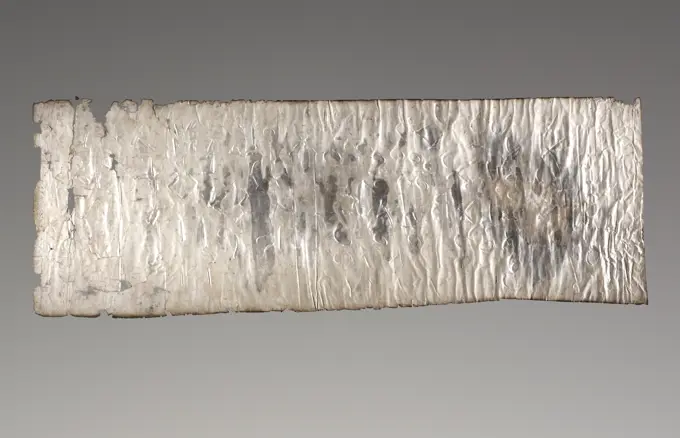
A collection of ancient tools including a razor-knife, file, bronze chisel, lancer point, and a tin fragment, showcasing historical craftsmanship and materials.
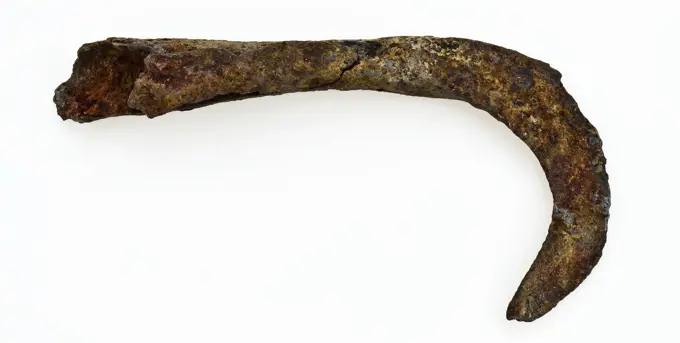
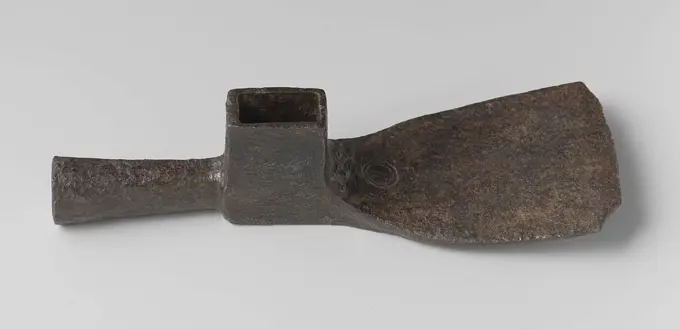
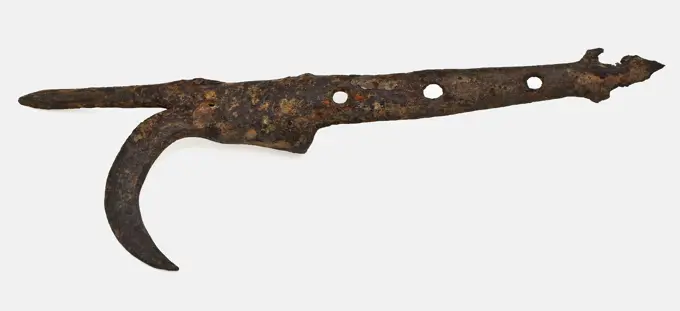
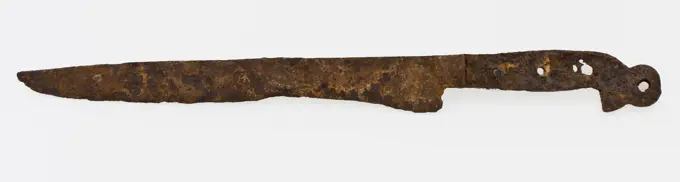
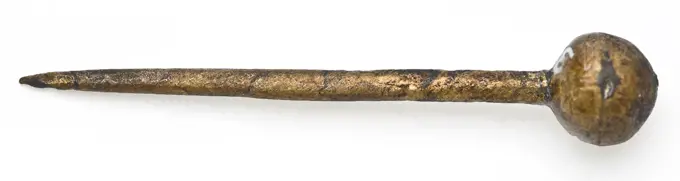
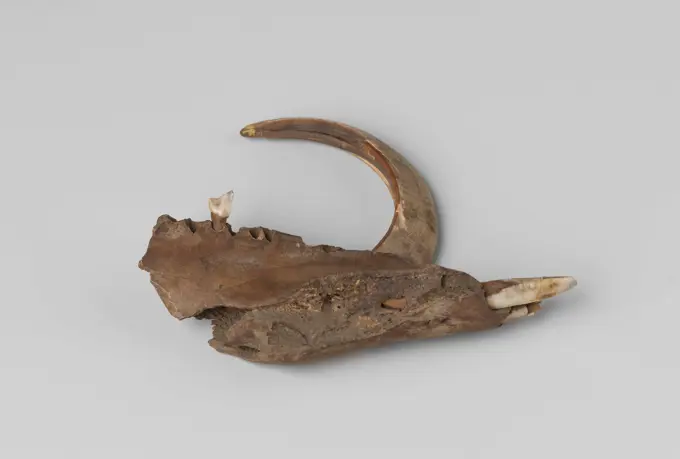
Scraper with sickle-shaped, rounded blade and forged, hollow connector to handle, knife cutting tool soil found iron metal, Sick shaped blade with tapered, forged hollow connector to handle. Probably double-edged archeology Rotterdam rail tunnel craft cutting Soil discovery: rail tunnel Rotterdam.
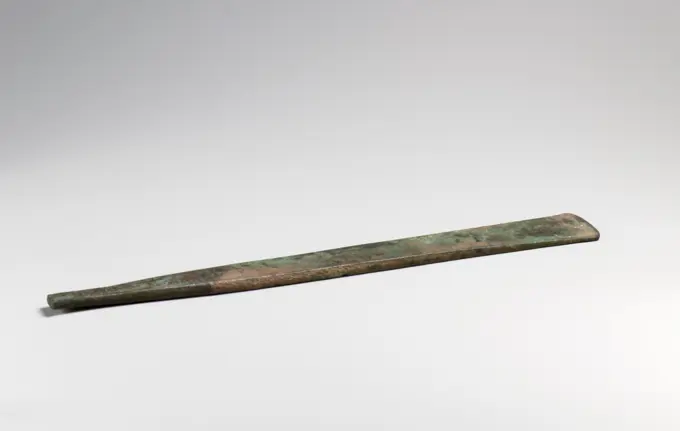
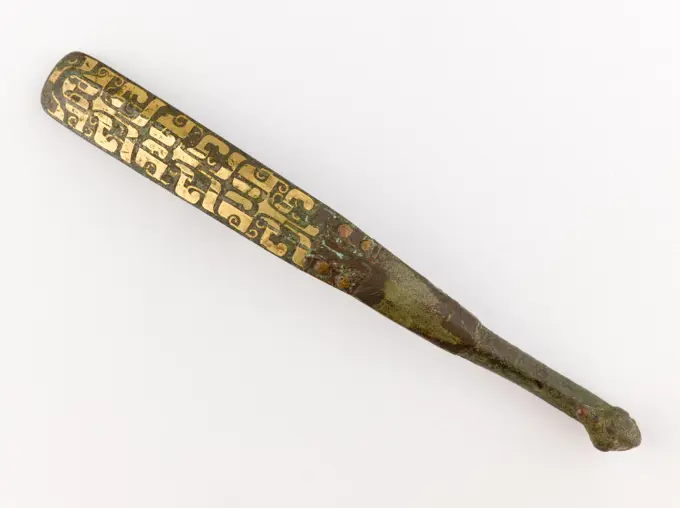
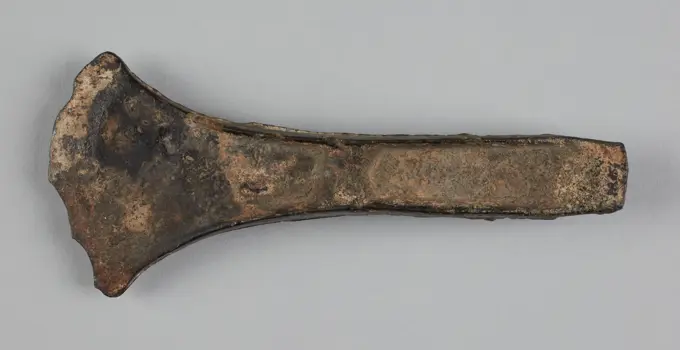
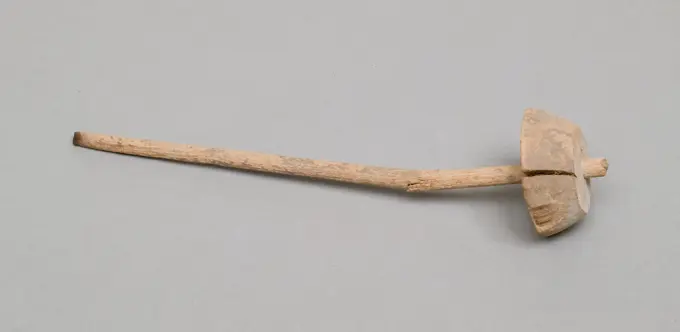
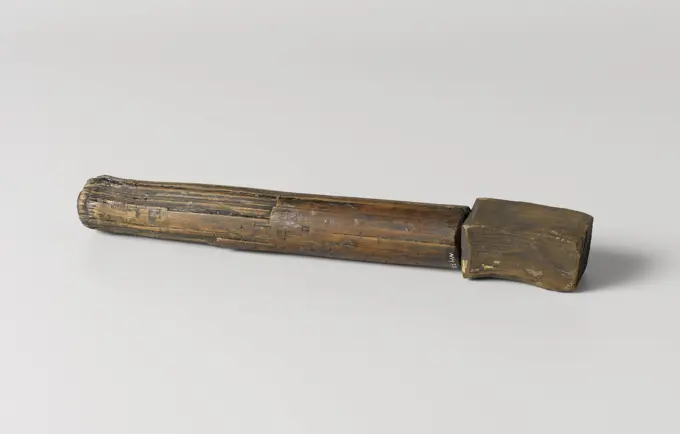
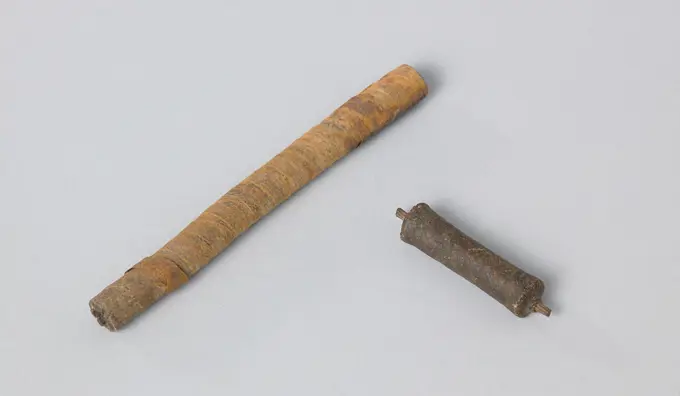
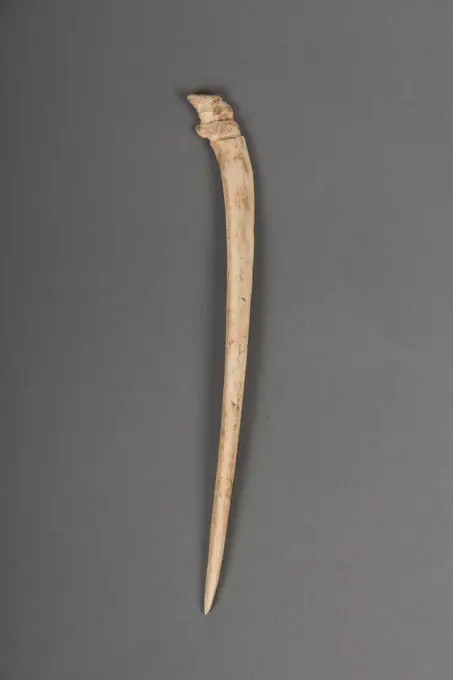
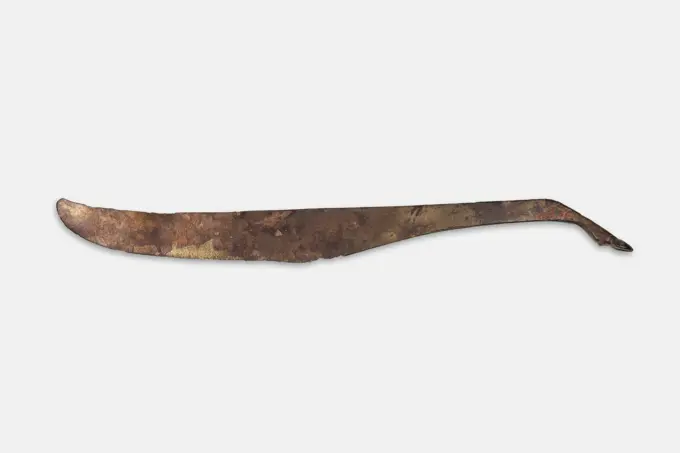
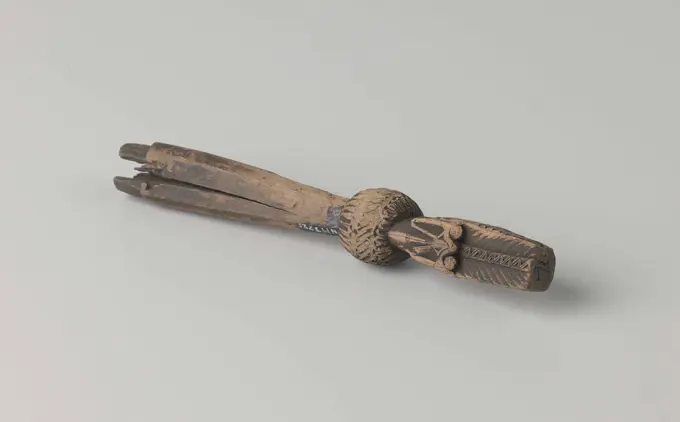
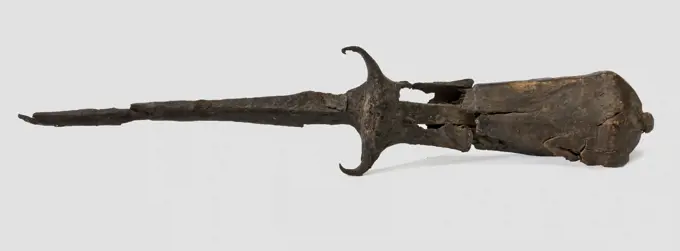
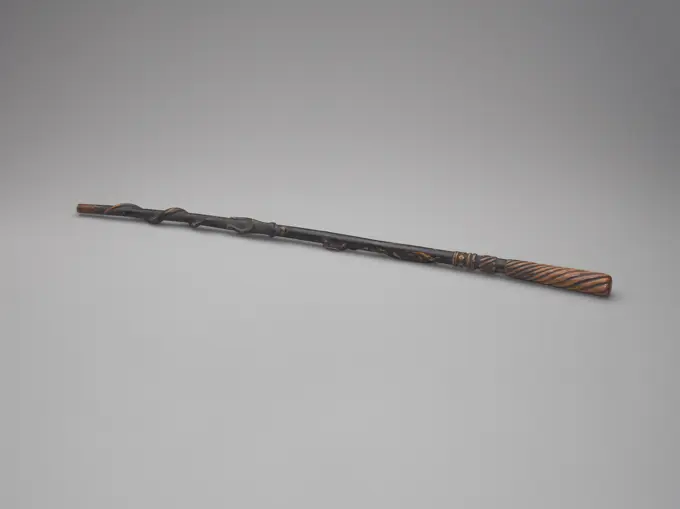
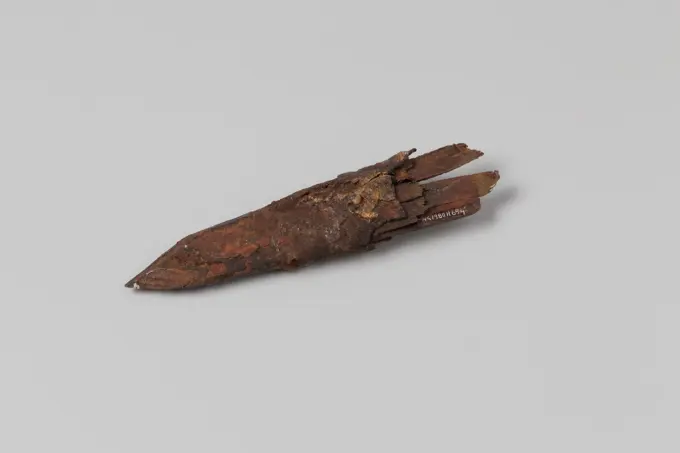
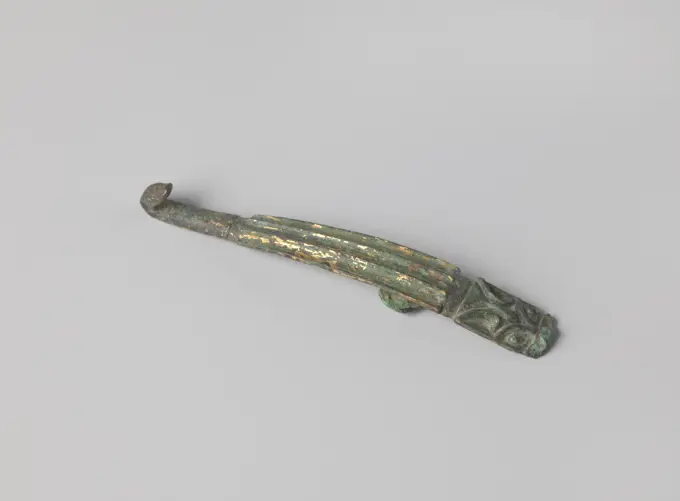
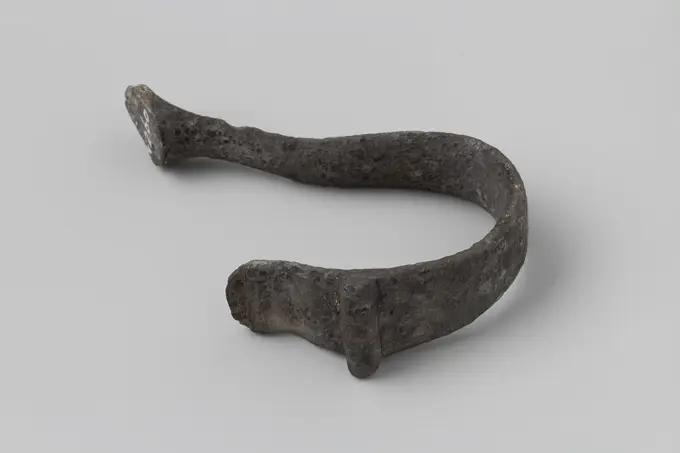
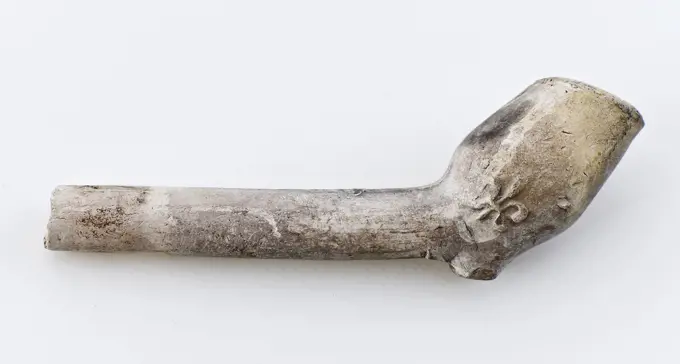
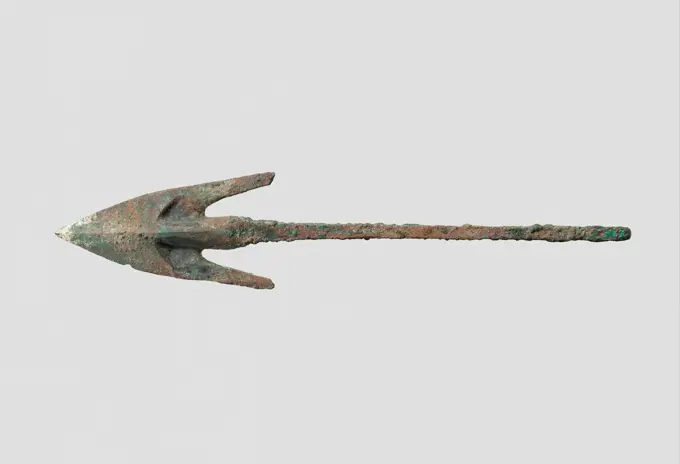
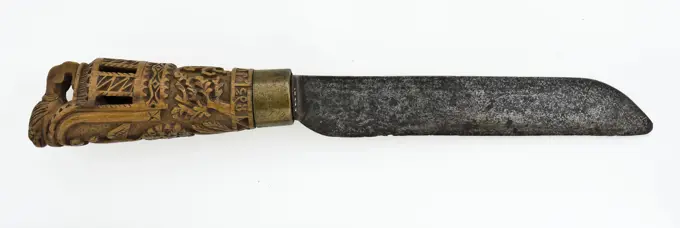
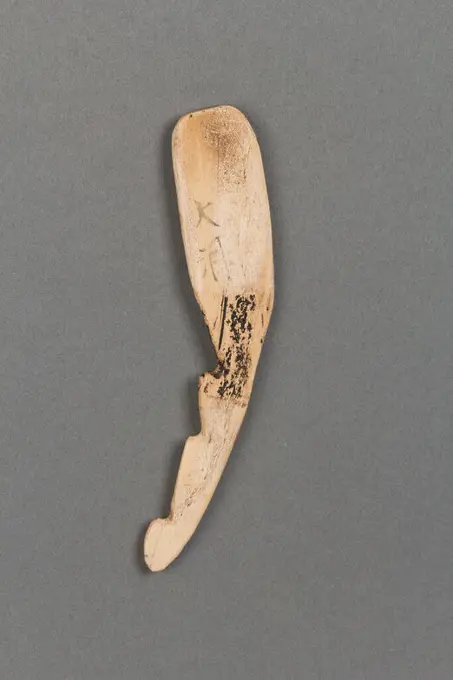
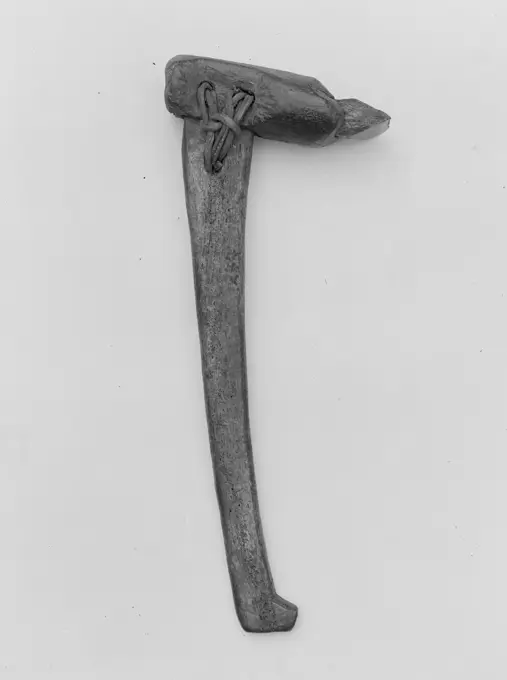
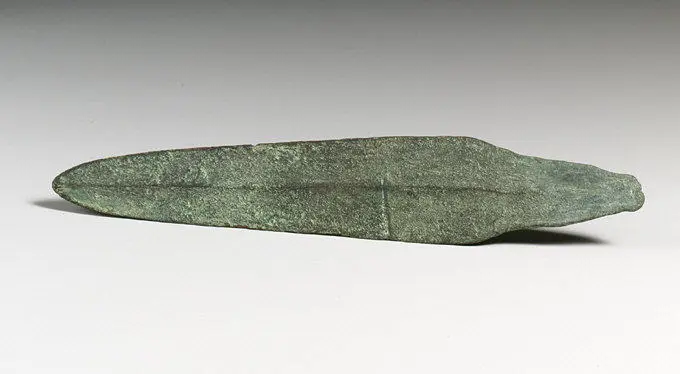
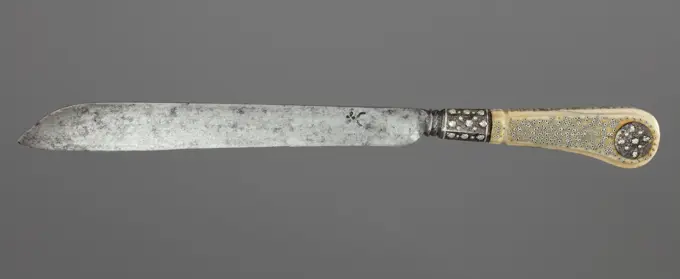
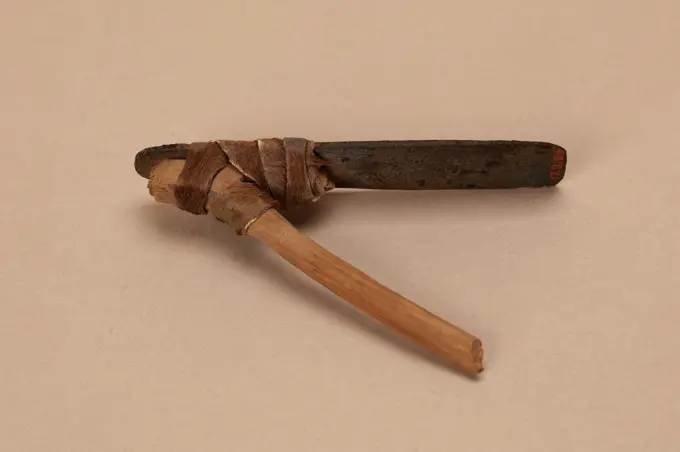
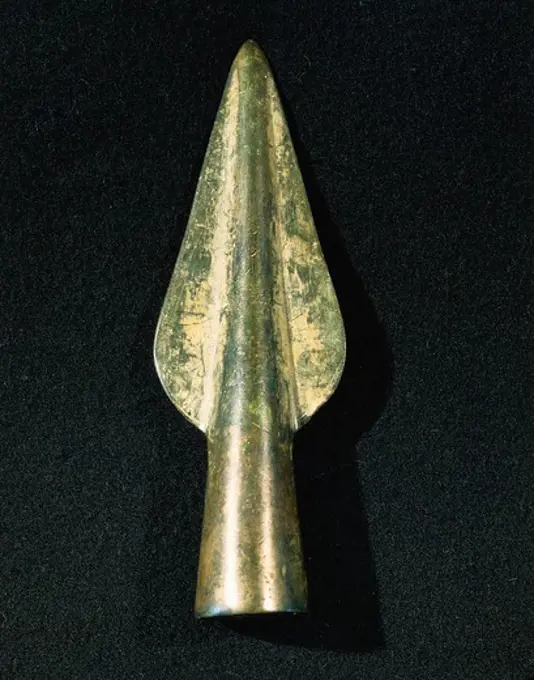
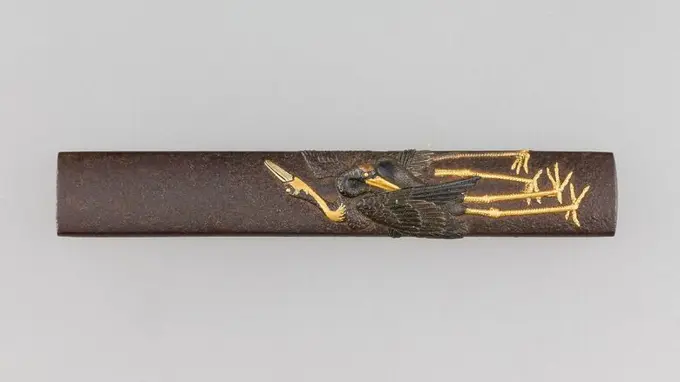
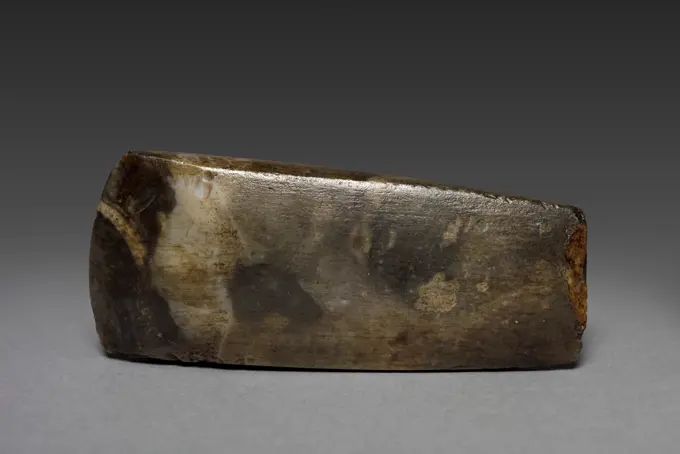
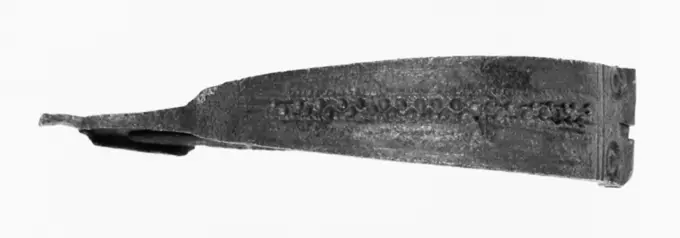
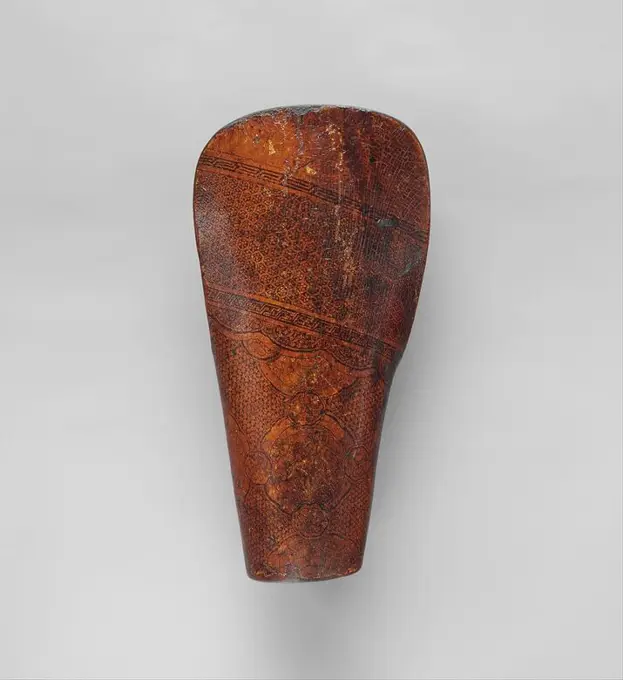
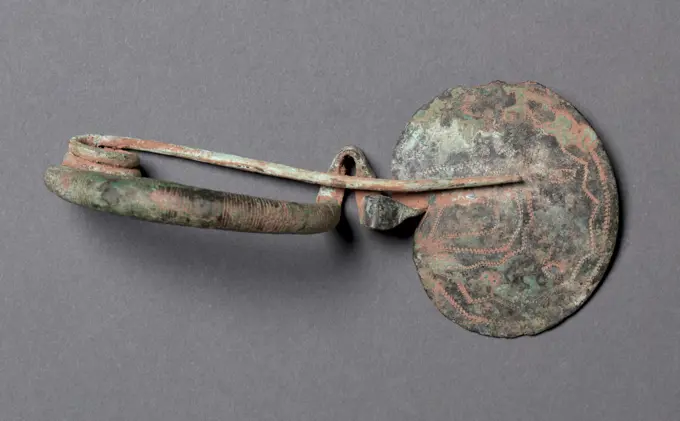
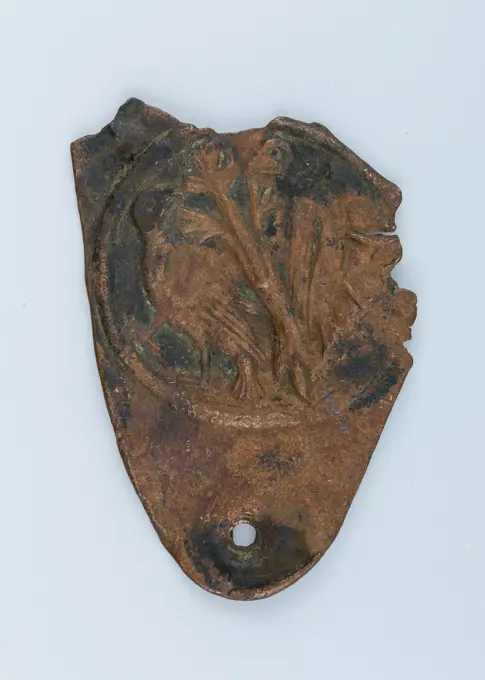
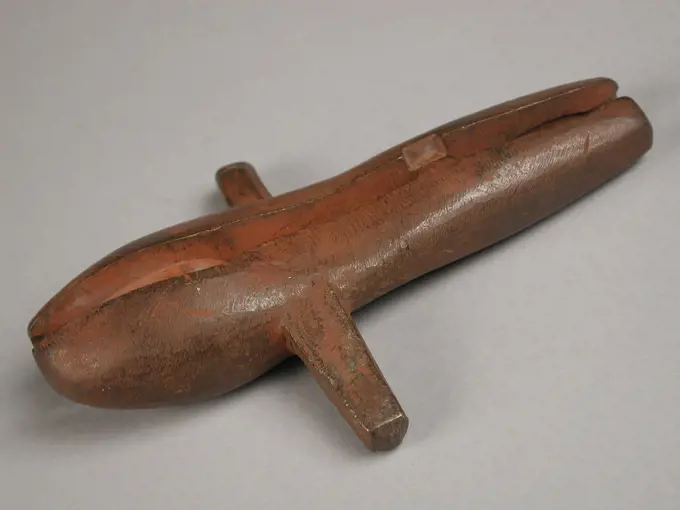
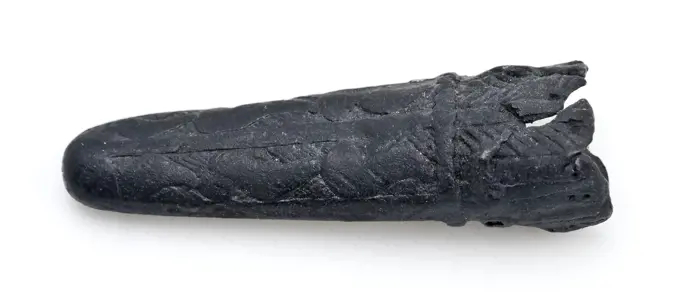
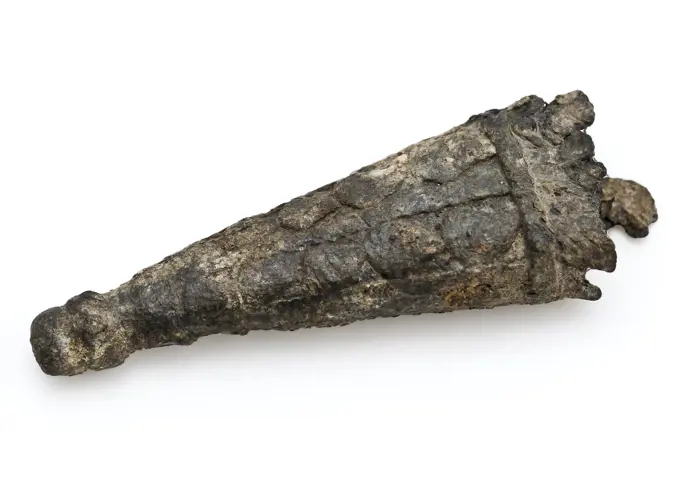
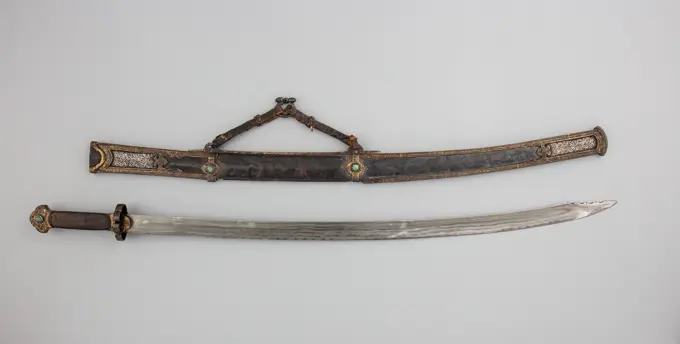
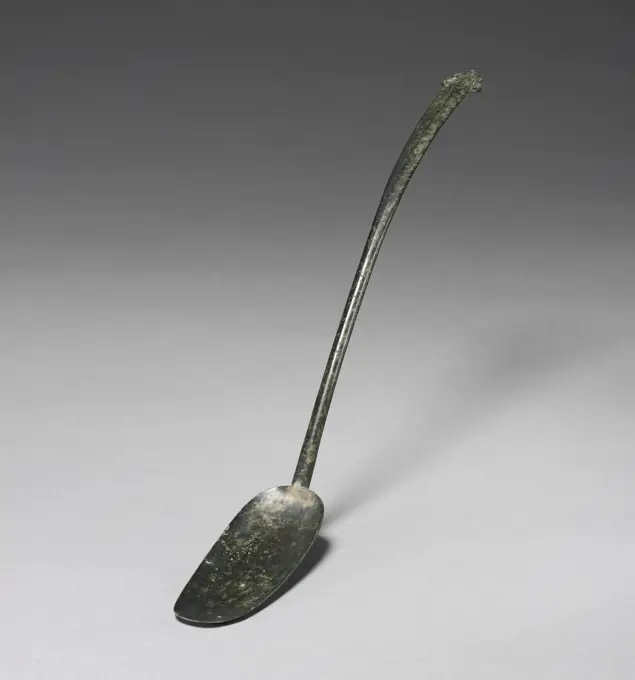
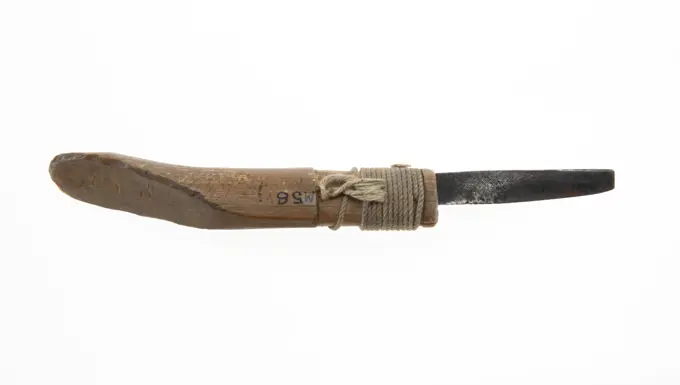
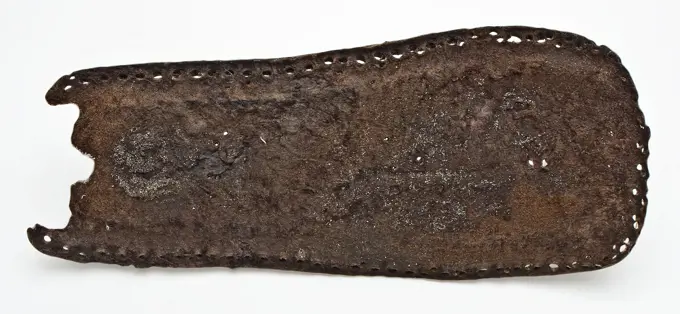
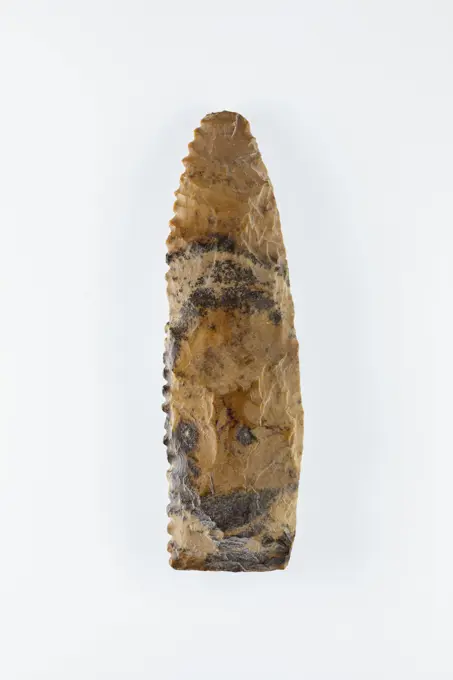
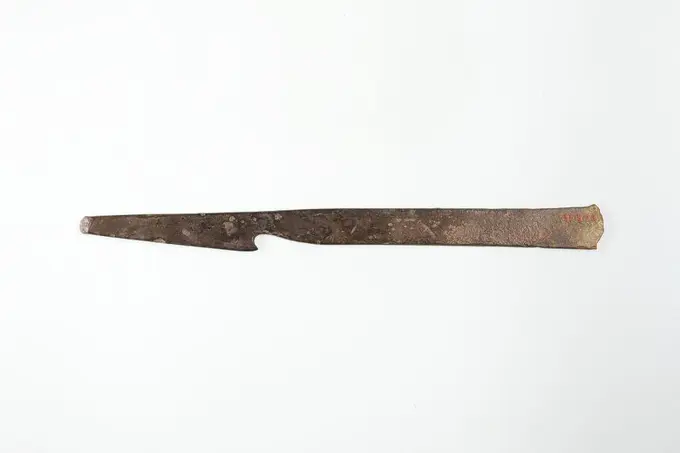
Amenemhat's Razor-Knife. Dimensions: L. 15.5 cm (6 1/8 in.); W. 1.3 cm (1/2 in.); Greatest thickness 0.2 cm (1/16 in.). Dynasty: Dynasty 18, early. Reign: reign of Thutmose I-early sole Thutmose III. Date: ca. 1504-1447 B.C.. Museum: Metropolitan Museum of Art, New York, USA.File, half round without handle, with parallel reversals and on the convex side local notches. File, half round without handle, with parallel reversions. The file is grater shaped with sharp dots, on the convex side locally notches are visible.Bronze chisel ca. 1600-1450 B.C. Minoan With narrow handle and flat, blunt end.. Bronze chisel 252399 Minoan, Bronze chisel, ca. 16001450 B.C., Bronze, L. 10 3/8 in. (26.4 cm). The Metropolitan Museum of Art, New York. Bequest of Richard B. Seager, 1926 (26.31.479)Lancer point (title awarded). Bronze. Carnavalet museum, history of Paris.Fragment of Tin from the wreck of the East Indians Hollandia, 1700 - in Or Before 1743 fragment Varied parts or fragments, unidentified and miscellaneous parts or fragments. Netherlands tin (metal)   SecondScraper with sickle-shaped, rounded blade and forged, hollow connector to handle, knife cutting tool soil found iron metal, Sick shaped blade with tapered, forged hollow connector to handle. Probably double-edged archeology Rotterdam rail tunnel craft cutting Soil discovery: rail tunnel Rotterdam.Spoon 5th-8th century. Spoon 449194Clip. Bronze, China, Han dynasty (206 BC AP.J.-C.). Paris, Cernuschi museum. Staple, Asian art, Chinese art, bronze, Han dynastyHammer with iron cup and wooden handle.Handles of a situla 6th-5th century B.C. Etruscan. Handles of a situla 251436 Etruscan, Handles of a situla, 6th5th century B.C., Bronze, H.: 3 3/4 x 8 3/4 in. (9.5 x 22.2 cm). The Metropolitan Museum of Art, New York. Rogers Fund, 1923 (23.160.103a, b)Fragment of the blade of a beach cutders, c. 1400 - c. 1950 knife (tool) The upper part of the blade of a beach cutter's knife.  iron (metal)   Zeeuwsche UytkyckTalon ax (title awarded). Bronze. Carnavalet museum, history of Paris.Drawbar, tool with which one can chop and whose leaves are transverse to the stem. The leaf is slightly bent, the house is rectangular and runs slightly tapes, the hammer-shaped head is octogonal and walks up a bit wider. The handle is missing.Spindle ca. 1295-1070 B.C. New Kingdom, Ramesside. Spindle. ca. 1295-1070 B.C.. Wood. New Kingdom, Ramesside. From Egypt, Memphite Region, Lisht North, Cemetery, MMA excavations, 1913-14. Dynasty 19-20Inner part of pattern mold consisting of rectangular blocks and stick, anonymous, c. 1590 - c. 1596  Inner part of a pattern mold consisting of a rectangular block with a straight stick with a round cross -section. Part of pattern shape. Description NM-7769-1 and NM-7769-2. The mold served to make a paper pattern in which the load of gunpowder and the bullet could be prepared for a shot. Kruit and bullet were fixed by means of a wire. The shooter had to do not do more than bite his firearm than to bite the bottom of the pattern and to stomp the pattern with bullet and all in the course of his weapon. The military musket was not loaded with so much precaution in the fight, the bullet went loose in the barrel, possibly wounded with a piece or a piece of paper. If they wanted to shoot over any distance, carefully loading was needed, hence the presence of this device in the preserved huys.  wood (plant material) cutting  Nova Zembla. Saving HuysTwo Samples of Telegraph Cable for Mines.Two samples with a core of seven copper threads in a thick insulating layer of a black plastic and paper.Hairpin Japan The Jmon period is the earliest period in Japanese history, lasting from roughly 14,000 to 300 BCE. Using materials such as bone, antlers, and stone, the Jmon people created not only utilitarian objects, such as harpoons and arrowheads, which supported their hunter-gatherer lifestyle, but also a variety of jewelry and objects used for religious purposes. Hairpins such as this one are relatively common, and may have had a spiritual as well as decorative purpose.. Hairpin. Japan. Bone. Final Jmon period (ca. 1000-300 B.C.). BoneScribe's Knife from the Burial of Amenemhat ca. 1504-1447 B.C. New Kingdom. Scribe's Knife from the Burial of Amenemhat. ca. 1504-1447 B.C.. Bronze or copper alloy. New Kingdom. From Egypt, Upper Egypt, Thebes, Asasif, Tomb of Neferkhawet (MMA 729), east chamber, Burial of Amenemhat (V), inside coffin, by head, MMA excavations, 1934-35. Dynasty 18, earlyMusketie, fragment consisting of brass sleeve with loose bottom. Musk size, fragment consisting of brass sleeve with loose bottom.Long narrow blade of knife, with narrowed sting, blade knife cutlery soil find iron copper metal, blade, angel, forged Long and narrow blade narrow forged handle protector narrowed angel two fantasy brands (debossed and copper-filled table side blade) archeology Rotterdam City Triangle Oostplein New harbor cutting food Soil discovery: Oostplein end Nieuwe Haven 1985Pin, eyelet type Cypriot. Pin, eyelet type 244400Armored Belt 18th-19th century Tibetan. Armored Belt 35942Lifts from a knife. Lifts from a knife whose button is decorated with incisions and the end with a cut-out representation of, presumably, human figures. The lifts is possible from Noordeuropese origin.CUCHILLA DE AFEITAR. Nº INV. 55868. ANCHO 5,3 CM. MUSULMAN. (EXPOSICION: ARTE ISLAMICO ESPAÑOL) (DEPOSITO: MUSEO ARQUEOLOGICO NACIONAL).Knife -Spear 19th century Indian, Assam. Spear 30655Dagger, dagger knife stab weapon arm foundations wood iron metal, forged Knife with angular and cut in planes towards the knob fluttering the baffle is rudimentary and curly. The blade is bent and no longer identifiable archeology cave dagger dagger dagger dagger ball dagger decoration status symbol personal equipment defense clothing accessory militariametal hammer over white background The old metal hammer with the wooden handle lies on a white background Copyright: xZoonar.com/AlexanderxStrelax 3921724Cane. Carver: Henry Gudgell, American, 1826-1895Belt Buckle Fragment. Culture: Frankish. Dimensions: Overall (attached together with x.209.21, .25): 4 15/16 x 1 3/4 x 11/16 in. (12.5 x 4.5 x 1.7 cm)Overall (plate and loop only): 4 3/8 x 1 3/4 x 1/2 in. (11.1 x 4.5 x 1.2 cm). Date: 4th-7th century. Museum: Metropolitan Museum of Art, New York, USA.Schede from the wreck of the East Indians Hollandia, Anonymous, 1700 - in Or Before 1743 sheath Scabbard; fragm, lower end, tapering, pointed. Netherlands wood (plant material). leather   SecondSeat Hook, Anonymous, -206 - 220 Three cannelures on the middle part, ending in a monster head; Gilding. China bronze (metal). gilding (material) gilding Three cannelures on the middle part, ending in a monster head; Gilding. China bronze (metal). gilding (material) gildingHandle from the wreck of the East India Flying Heart. Impriled black-gray curved handle that widened at the ends.White pipe bowl, unnoticed, embossed fleurs de lis on the kettle, with stem fragment, clay pipe smoking equipment smoke floor pottery ceramics pottery, pressed baked archeology Rotterdam Hillegersberg-Schiebroek Hillegersberg Noord Hillegersberg Zuid Judge Rottekade smoking tobacco Soil discovery: 1869 when making the covering at the Rottekade Rotterdam.Collection of the Dutch Heidematschappij. Forest protection, diseases, roots, larvases, large pine nicker, pine root, doll cots. undatedIron boat hook with straight and curved pin, boat hook tool kit soil find iron metal, forged Iron boat hook with straight and curved pin. Sleeve with long fitting for the seat of the handle. Three large nail holes in the fitting archeology underground pit Rotterdam City Triangle Blaak Groenendaal shipping trade port Soil discovery dirty low underground pit Groenendaal direction Blaakstation 3-4 meters below N..P. 1977.Large type of house knife with long narrow blade and leaf-shaped sting, originally with two handle plates on each side, possible meat knife, meat knife knife cutlery soil find iron metal, archeology household table dinner prepare foodBronze pen with round head, probably closing pin of book fitting, pin fitting ground find bronze copper metal, cast drawn Locking pin or fastening pin. Pin-shaped with thick round head. Most fitted as separate hinge pin of book closure archeology close adorn fasten confirmKnife lift from the wreck of the East India Hollandia. Knife-Handle, Tangplate; ID. NG 1980-27H162, 4 Rivet-Holes.Tusk with lower jaw of a wild boar, found in 1724 when working in the Hillegommerbeek. Lower jaw of a wild boar with raised curve tusk and a number of other teeth that are partly loose.Key Handle 1st-7th century Roman. Key Handle 462895Arrowhead ca. early 1st millennium B.C. In the early first millennium B.C., the area of the Transcaucasia and northwestern Iran was inhabited by many different tribes of varying wealth and power. Many characteristics of these groups are known primarily from grave goods found in their cemeteries. Although there is great variation in artistic styles from place to place and time to time in this area, the weapons seem to be widely distributed and shared by many groups.One class of weapons excavated in northwestern Iran and Transcaucasia is the cast bronze arrowhead with a triangular head, raised midrib, and tang (shaft) that is usually square or rectangular in section. This arrowhead is of that type pictured along with five other examples (MMA 1991.314.3-.8). This type seems to have been used in small numbers even when generally replaced by socketed bronze arrowheads in this area in about the seventh century B.C.. Arrowhead. ca. early 1st millennium B.C.. Bronze. Iron Age. TranscaucasiaFragment of a tobacco pipe., C. 1600 - c. 1699 A fragment of a small white tobacco pipe. Marked: mh. Note: burned out.  pipe clay A fragment of a small white tobacco pipe. Marked: mh. Note: burned out.  pipe clayFire hose ring from the wreck of the East Indians Hollandia, Anonymous, 1700 - in Or Before 1743  Firehose, fragm, id. NG 1975-20H1271a, squashed. Netherlands copper (metal)   Second39 keys from the collection of Emmanuel Vita Israël, anonymous Key whose handle consists of the front section of a leopard with stretched front legs. At the height of the beard is a radio side piece. The handle is cracked at the bottom and has a hole.  bronze (metal) Key whose handle consists of the front section of a leopard with stretched front legs. At the height of the beard is a radio side piece. The handle is cracked at the bottom and has a hole.  bronze (metal)Konynenburg, Knife with wooden handle with elaborate carving, hunting scene, on top of lion, in the lattice grating with inside cut ball, forged blade with brass ring, knife cutlery soil find wood iron brass metal, Rotterdam knife with Zeeland carved handle from 1863 On the wooden handle: above rider left tree right male large rifle drags On the other side above the zigzag edge large tree of life motif with beautiful flower rosette on which bird with spread wings The hilt is crowned by crest consisting of two symmetrical volute curls running against each other on which frontally lion carved in handle: 1863 (the 6 in mirror image) and L. JOBELS archeology folk art Zeeland RotterdamLamella. UnknownArrowheads, needles, hooks and harpoons. Culture: Japan. Dimensions: W. 5/8 in. (1.6 cm); L. 3 1/2 in. (8.9 cm).These implements--an arrowhead, fishhooks, needle, and harpoon--were skillfully carved from bone, a material worked by Japanese artisans since Paleolithic times. They were found in the Obara Shell Mound at Ofunato Bay in Iwate Prefecture. According to information gleaned from shell mounds, or middens, the people of the Jomon period relied on a variety of strategies to obtain food. The large number of fishhooks, fashioned with and without barbs, together with the rich array of marine remains found in these rubbish heaps since very early times indicate that some fifty species of fish and shellfish constituted an essential dietary staple. Toggle-head harpoons, a later innovation, facilitated the hunting of sea mammals. Attaching a line to the toggle allowed the hunter to draw in his prey once the toggle had broken away from the harpoon shaft. Further evidence gathered from thesBronze knife with ram's-head handle ca. 1st century A.D. Roman Handle ending in a head of a ram.. Bronze knife with ram's-head handle. Roman. ca. 1st century A.D.. Bronze. BronzesElephant Sword. Culture: Indian. Dimensions: L. 24 in. (61.2 cm); Wt. 5 lb. 3 oz. (2362 g). Date: 15th-17th century.Elephants were used in warfare in India for approximately a thousand years. In addition to armor, war elephants sometimes were equipped with swords, also called tusk swords, which are pairs of blades specially designed to be attached to their tusks. Although hundreds, possibly thousands of elephant swords may have existed in the past, only four pairs and this single example are known to survive today. Museum: Metropolitan Museum of Art, New York, USA.Messenheft from the wreck of the East Indians Hollandia, Anonymous, 1700 - in Or Before 1743  Knife, handle, cylindrical: tapering; id. NG 1979-403H, eroded. Netherlands wood (plant material)   SecondAdze (Hootar) North America (Alaska, Point Barrow). Adze (Hootar). North America (Alaska, Point Barrow). Nephrite, spinach green. Prehistoric. JadeDagger blade. Dagger blade 244180Cinnamon sticks over white backgroundFragment pin from the wreck of the East Indieschief Hollandia. Tools and Instruments, Sewing and Sailmaking, PIN; Fragm or Shaft with Blade-Mount, 3 Rivet-Holes, ID. NG 1980-27H3265.Razor sharpening toolPassement of linen and yellow side in zigzag pattern, anonymous, c. 1700 - c. 1899 Passement of linen and yellow side in a pattern of parallel lines in a zigzag pattern. Object in accordance with BK-NM-12186-23. Europe silk. linen (material) Passement of linen and yellow side in a pattern of parallel lines in a zigzag pattern. Object in accordance with BK-NM-12186-23. Europe silk. linen (material)Ritual object. Cernuschi Museum, Asia Museum of Asia in the city of Paris.Knife with the Inscription: I won't let me like to seb unknownModel adze ca. 1981-1802 B.C. Middle Kingdom. Model adze. ca. 1981-1802 B.C.. Copper, wood, animal hide. Middle Kingdom. From Egypt, Middle Egypt, Asyut (Lykopolis), Tomb of Ankhef (Tomb 9), Khashaba excavations. Dynasty 12Italy, Prehistory, Age of Bronze, Spearhead, From Pioraco (Macerata Province)Knife Handle (Kozuka). Culture: Japanese. Dimensions: L. 3 13/16 in. (9.7 cm); W. 9/16 in. (1.4 cm); thickness 5/16 in. (0.8 cm); Wt. 1.4 oz. (39.7 g). Date: 18th century. Museum: Metropolitan Museum of Art, New York, USA.Hatchet, Neolithic Period. Germany, Austria, Celt, Neolithic. Flint; overall: 4.9 cm (1 15/16 in.).Fragment stitch passer from the wreck of the East Indians Hollandia, Anonymous, 1700 - in Or Before 1743  Divider; fragment, semicircular ring: flat in section, pierced circular end (acting as pivot), leg broken off. Netherlands copper (metal)   SecondWhite clay pipe, unnoticed, with smooth handle and stylized Tudor rose on the kettle, clay pipe smoking equipment smoke floor pottery ceramic pottery, lb steel 3.4 pressed finished baked White clay pipe unnoticed with smooth handle and stylized Tudor rose on the kettle The rose consists of circle of six dots around center spot Pipe is probably still smoked with the very short handle of today black discolouration on fracture of the stem points in that direction archeology smoking tobaccoKnife Coin. Culture: China. Dimensions: L. 5 1/2 in. (14 cm). Museum: Metropolitan Museum of Art, New York, USA.Spoon from the wreck of the East Indians Princesse Maria, Anonymous, 1670 - 1686 spoon Pewter damaged spoon, massive round stem and round spoon. Netherlands tin (metal)Fibula. UnknownMusketmaat reasonably complete, only the strings are missing, anonymous, c. 1590 - c. 1596  Musket size, reasonably complete, consisting of cone -shaped copper van with lid and (goats) leather upholstery. The string is missing.  brass (alloy). leather soldering / striking (metalworking)  Nova Zembla. Saving HuysThree Forearm Guards for the Left Arm. Culture: Tibetan or Mongolian. Dimensions: 2001.35a; L. 11 1/8 in. (28.3 cm); W. 5 1/2 in. (14 cm); 2001.35b; L. 11 5/8 in. (29.5 cm); W. 6 in. (15.2 cm); 2001.35c; L. 11 1/2 in. (29.2 cm); W. 6 1/2 in. (16.5 cm). Date: possibly 15th-17th century. Museum: Metropolitan Museum of Art, New York, USA.vanilla pods on white backgroundPin 4th century B.C. European. Pin 90133Pair of spursGauntlet for the Right Hand. French. Date: 1560-1600. Dimensions: L. 31.8 cm (12 1/2 in.). Steel. Origin: France. Museum: The Chicago Art Institute, Chicago, USA.Lead Role from the wreck of the East Indies' t Vliegend Hart ,, 1700 - 1735 lead Tubes rolled plates. Black-gray in color. Roll of Lead. Middelburg lead (metal)Plate Fibula, 900-700 BC. Italy. Bronze; overall: 11.1 cm (4 3/8 in.).Topór bojowy. warsztat luristański (2. poł. 2. tys. p.n.e.), workshopBronze tweezers ca. 2900-1050 B.C. Minoan Tweezers.. Bronze tweezers 252390 Minoan, Bronze tweezers, ca. 29001050 B.C., Bronze, L. 3 3/16 in. (8.1 cm). The Metropolitan Museum of Art, New York. Bequest of Richard B. Seager, 1926 (26.31.468)Pendant 12th century French. Pendant. French. 12th century. Bronze. Miscellaneous-Buckles & OrnamentTwo-piece bronze mold for spoon, mold casting tool tools equipment base metal bronze, cast Two-piece bronze mold for casting small spoon with oval bowl and with rat tail or needle as transition to the handle Rotterdam tingieterij tinnegieter tin Meeuws Druy craft Forms come from the originally 18th century Rotterdam tinnegieter J Druy. The large molds that were not signed or dated were the property of the tinker guild and were rented to the small tin caster.Point of knife edge or quiver with linear decoration, leather fitting, sheath casing batter ground find tin metal, cast Leather fittings in the shape of tip for sheath casing or quiver In relief decorated with sprung arrow and wreath of feathers along the upper edge archeology Rotterdam City Triangle Botersloot Keep inner raft transport stiffening Soil discovery collapses Binnenrotte backside Botersloot (savings bank) from the Middle Ages.Pewter hinge, point of sheath or quiver, fitting casing soil find tin metal, cast Heft: hollow tube in point archaeological Rotterdam reinforcing rail tunnel protecting transport bow and arrow Soil discovery: trajectory rail tunnel Rotterdam.Buckle of shoe or belt, rectangularly bent with fitting lip, clasp fastener component soil found brass metal, archeology Rotterdam Kralingen-Crooswijk Kralingche Bos Kralingse Plas Soil discovery: collected from sprayed dredging at the Kralingse Plas in 1972, metal detector finds and sight finds.Saber and Scabbard 17th-18th century Sino-Tibetan This saber and matching scabbard are distinguished by a unique combination of Tibetan, Mongolian, and Chinese features, executed with great skill and harmoniously united in a single object. Most important is the distinctively pattern welded blade, a technique which involves purposely forging together iron and steel of different properties to produce particular patterns that are visible throughout the surface of the finished blade. In this example, the center of the blade has a classic Tibetan hairpin pattern, named for the series of nested lines that form the body of the blade. The edge of the blade has a tooth-like pattern, called tiger teeth or horse teeth and is characteristic of Chinese and Mongolian blade forging techniques. The weight, shape, and form of the blade, particularly the distinctive tip, are Mongolian in influence. These features do not appear to be combined in this way on any other blade. The suspension bands and the sStole;  18th century (1701-00-00-1800-00-00);Spoon, 918-1392. Korea, Goryeo period (918-1392). Silver bronze; overall: 31 cm (12 3/16 in.).Coin-sword. This kind of swords were designed to ward off evil spirits and bring good luck and health. 18th century. Bronze. Length: 53 cm, maximum width: 11.50 cm. From China. National Archaeological Museum. Madrid. Spain.Janet Riza, Knitting Needle Holder, c 1936 Knitting Needle HolderCrooked knife -Leather sole of shoe, round heel, flat nose, around sewing thread, shoe footwear clothing soil find leather, archeology underground pit Rotterdam City Triangle Groenendaal Soil discovery: underground pit Groenendaal 11 September 1975 15th century cesspool.Pin from the wreck of the East Indiesman Hollandia. Tools and Instruments, Sewing and Sailmaking, PIN; Fragm or Shaft With Bow, ID. NG 1980-27H3265.Bifacial Sickle Insert ca. 4500-4000 B.C. Neolithic Period This small piece of flint was a key element to a successful agricultural season in ancient Egypt. Grain was a staple of the economy, as bread and beer made from grain were consumed daily. They also formed the foundation of eternal sustenance, as funerary offerings. Ancient Egyptians used sickles made from flint and wood to reap grain. Pieces of flint such as this one were shaped to fit into a wooden haft along with a number of other such inserts, and secured with an adhesive. The flint pieces provided a sharp edge to cut the grain stalks. With use, the flint would wear down and develop a shiny gloss. The flint inserts could be re-sharpened or replaced as needed. Bifacial sickle inserts like this constitute some of the earliest evidence for farming in Egypt. They were made mainly during the 5th- 4th millennia BC, after which they were replaced by sickle inserts made on thin blades with less invasive retouch. The sickle inserts oBells, Probably for a Horse Harness ca. 3rd century Japanese. Bells, Probably for a Horse Harness. Japanese. ca. 3rd century. Bronze. Miscellaneous-Buckles & OrnamentTraveler secretaryBiglobularer Dolch Biglobularer Dolch Copyright: xZoonar.com/BartomeuxBalaguerxRotgerx 23057969wooden last for a kids shoe wooden last for a kids shoe Copyright: xZoonar.com/BorisxZerwannx 7006190Fish. A fish with a wide, flat beak and a long mustache. An inscription on the abdomen.Axe Head possibly 16th-17th century possibly Tartar-Circassian, Crimean Khanate This steel head for a small axe or hatchet has a single asymmetrical blade at one end and a squared poll, or butt, at the opposite end. The top of the axe head forms a straight horizontal line from the upper corner, or toe, of the blade to the end of the poll. The bottom corner, or heel, of the cutting edge is set slightly back to form a steep point, or beard, at the base of the blade. The eye (opening for the missing haft) is slightly oval. The axe head is incised with the same decorative patterns along the length of both sides. These designs feature a triangle with a spade at each corner on the cheeks of the blade and a circle containing a whirling motif on the sides of the poll. Portions of the triangle-spade motif, the whirling motif, and other incised patterns are overlaid with copper alloy. The top of the poll and the area forward of the eye also have incised decoration, including a crescent overlaid Fragment Sampler from the wreck of the East Indieschief Hollandia. Divider; Fragment, Semicircular Ring, ID. NG 1980-27H1171, eroded.Messenheft from the wreck of the East Indians Hollandia, Anonymous, 1700 - in Or Before 1743  Knife, handle, cylindrical: tapering; id. NG 1979-403H, ferrules id. NG 1980-27H426. Netherlands wood (plant material)   Second