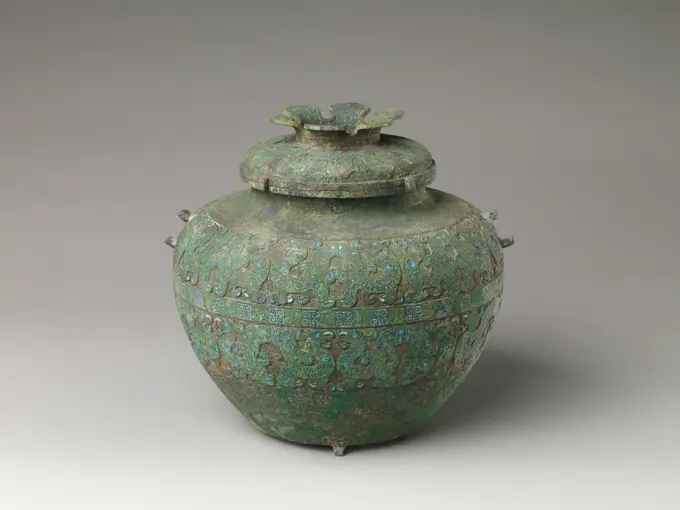
Ancient Vessels

A variety of ancient pottery and ceremonial vessels showcasing intricate designs and textures, reflecting rich historical significance across different cultures.

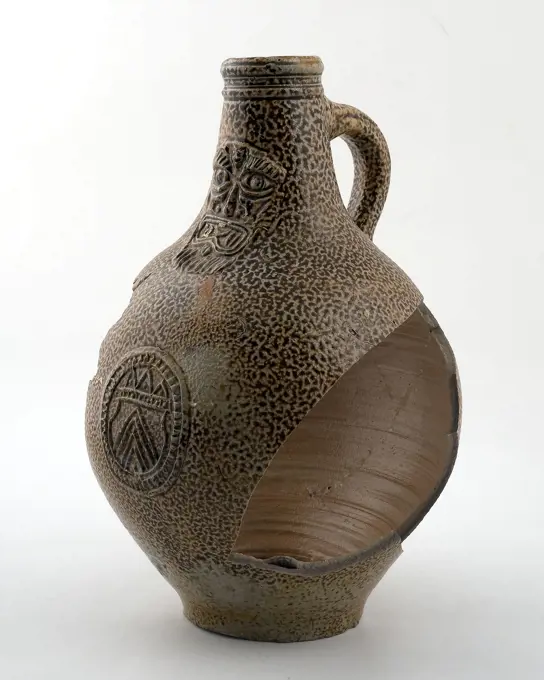
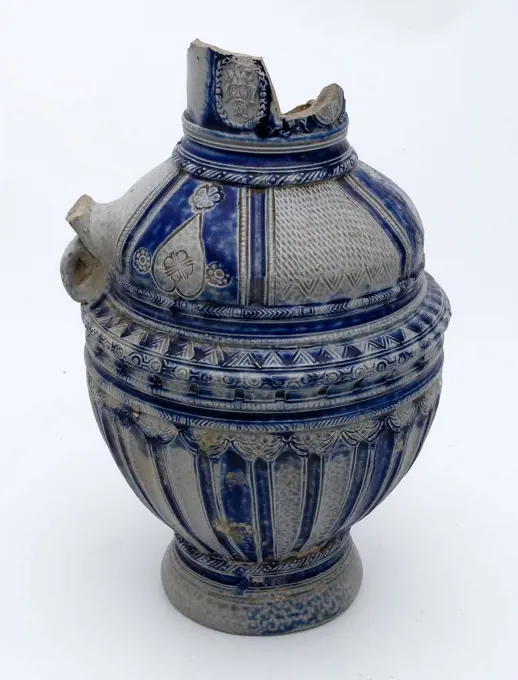
Jug with a mask and incised borders, anonymous, c. 1550 - c. 1599 Can be made of stoneware on the stand ring with a spherical body and narrow neck with a pinched spout. The C-shaped ear is attached to the neck and shoulder. Some profiles and a printed and imposed mask on the neck in relief. Covered with a brown glaze. On the abdomen vertical, taken tires. The neck and foot with horizontal tires. Raeren. Rae stoneware. glaze vitrification Can be made of stoneware on the stand ring with a spherical body and narrow neck with a pinched spout. The C-shaped ear is attached to the neck and shoulder. Some profiles and a printed and imposed mask on the neck in relief. Covered with a brown glaze. On the abdomen vertical, taken tires. The neck and foot with horizontal tires. Raeren. Rae stoneware. glaze vitrification
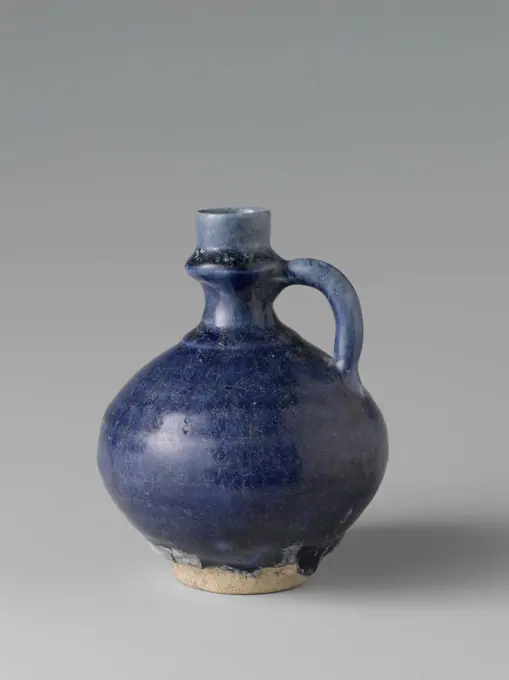
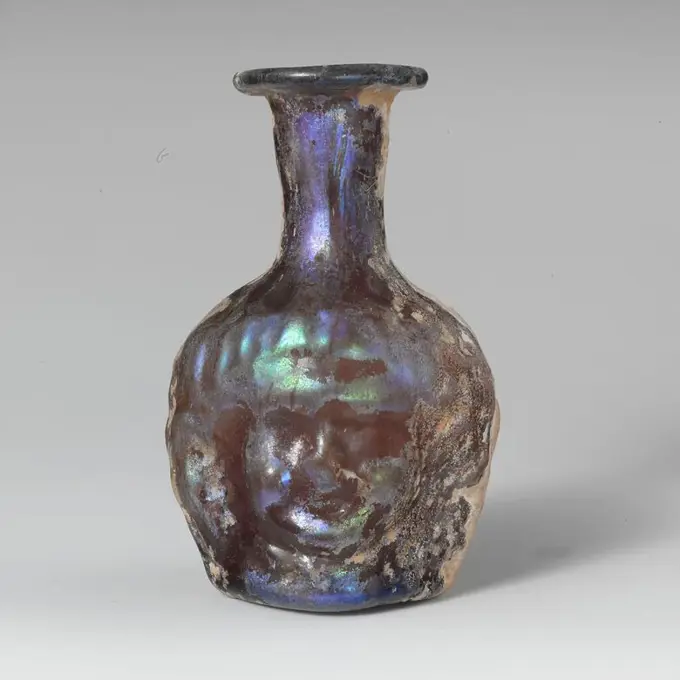
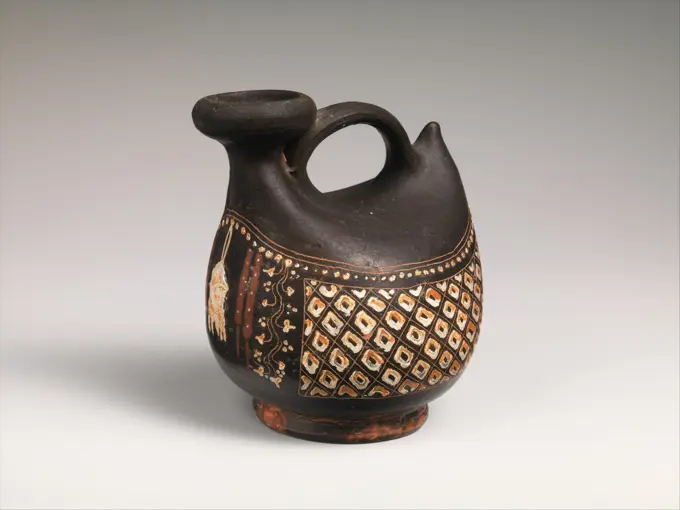
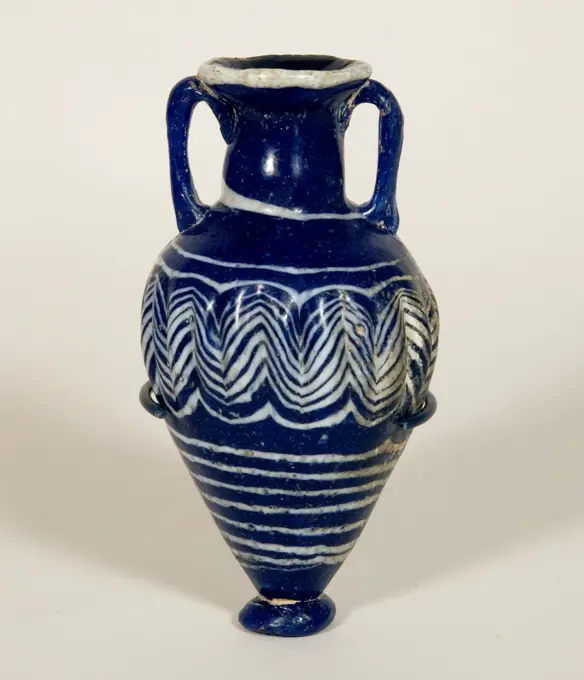
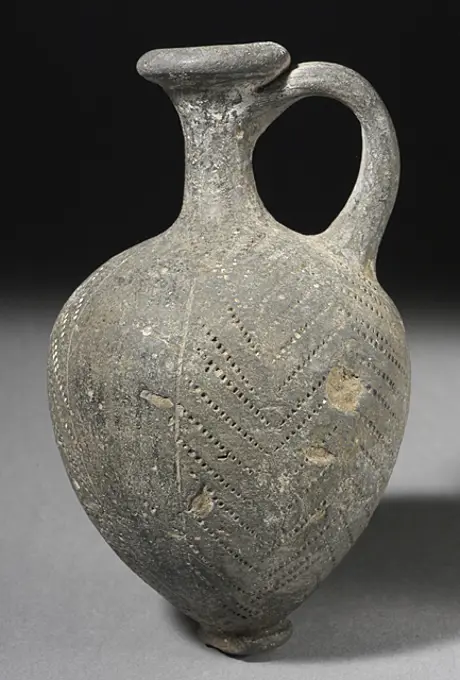
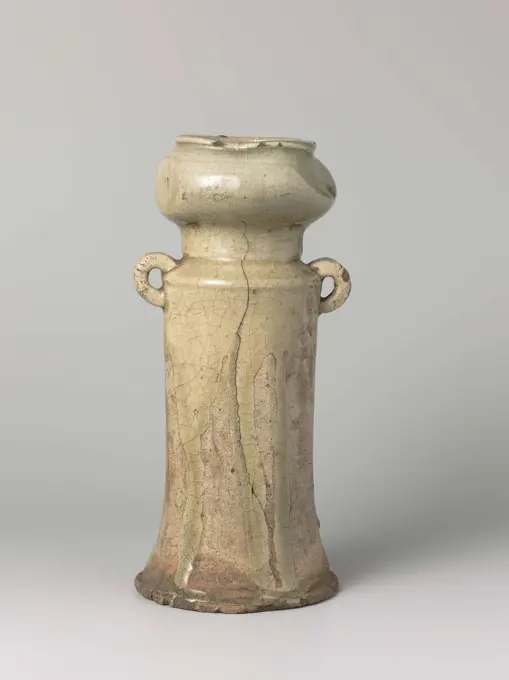
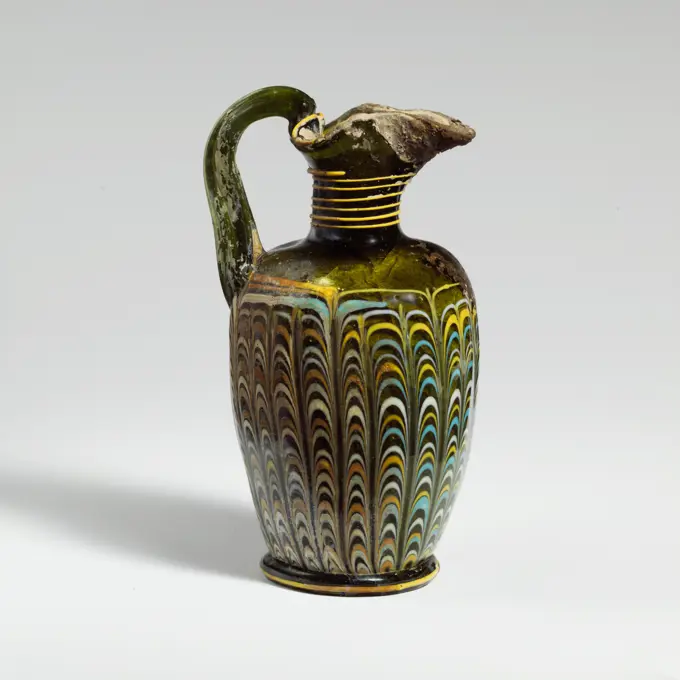
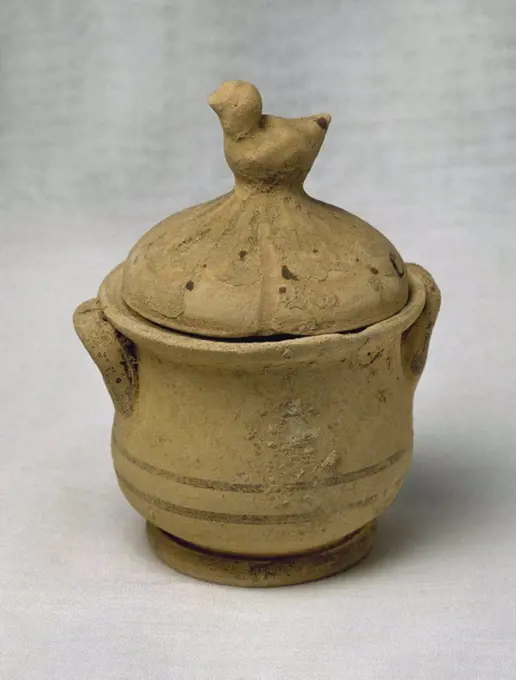
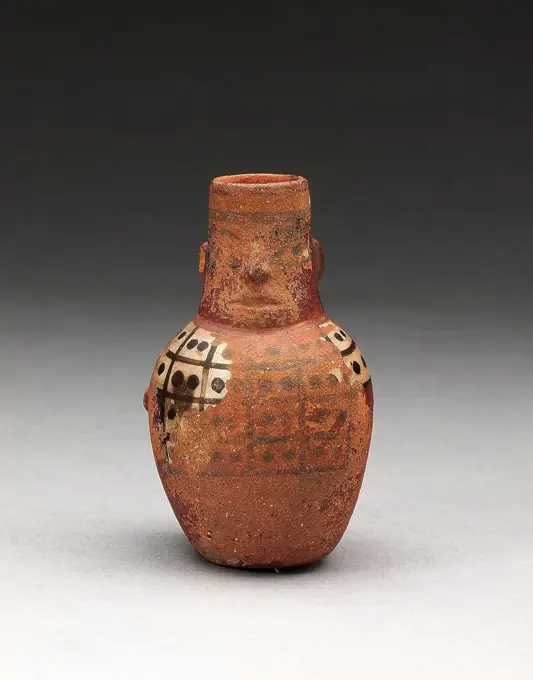
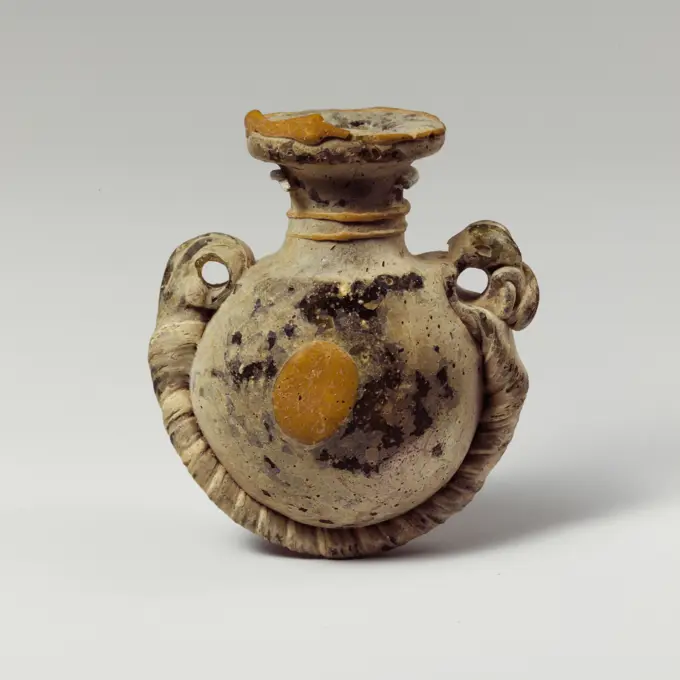
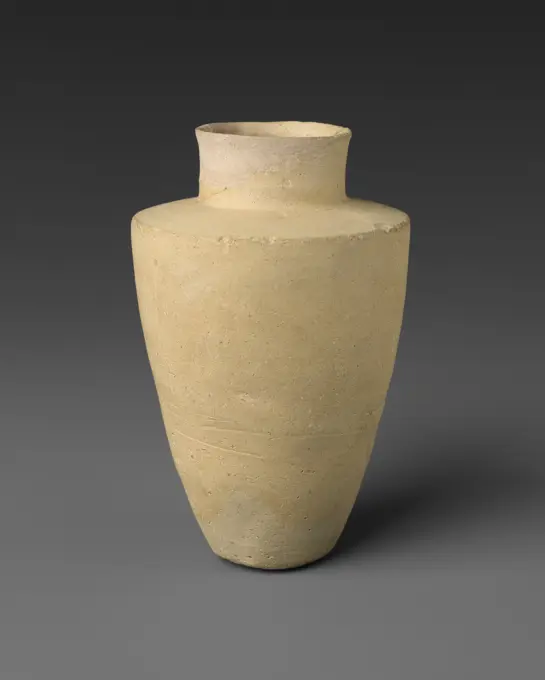
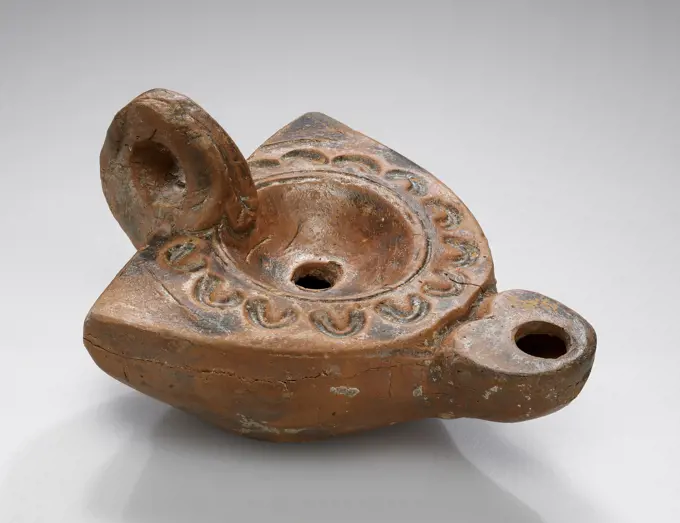
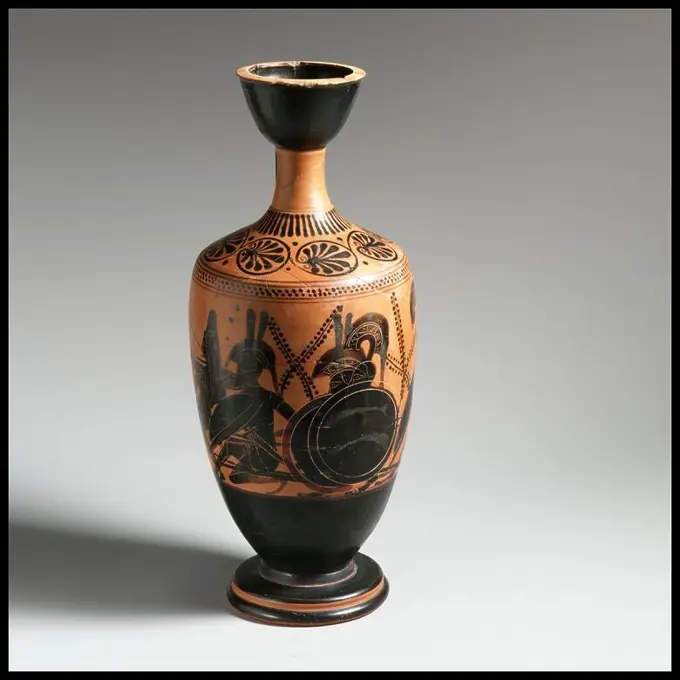
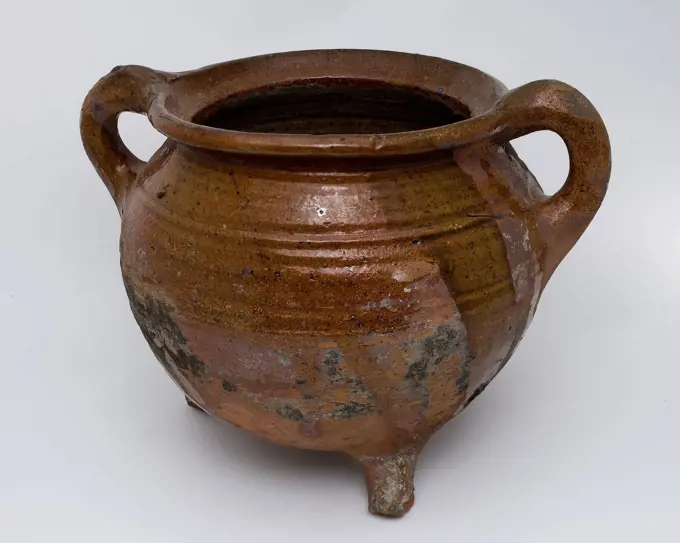
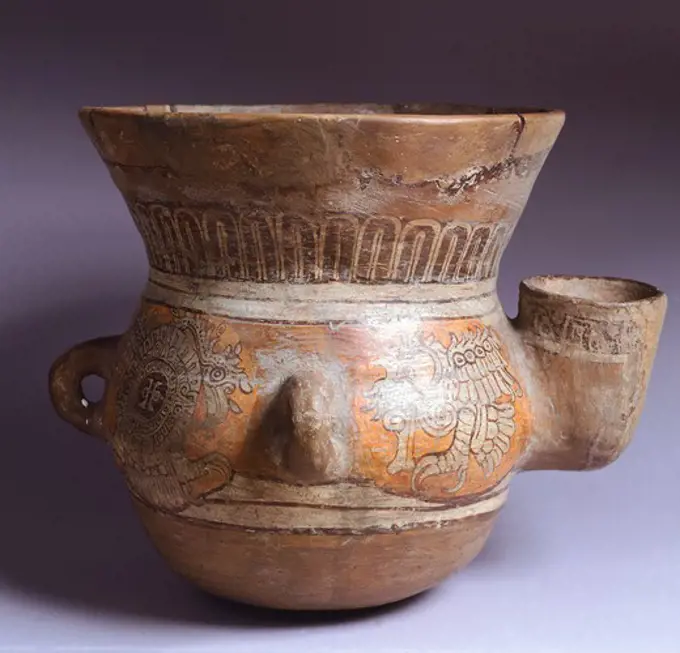
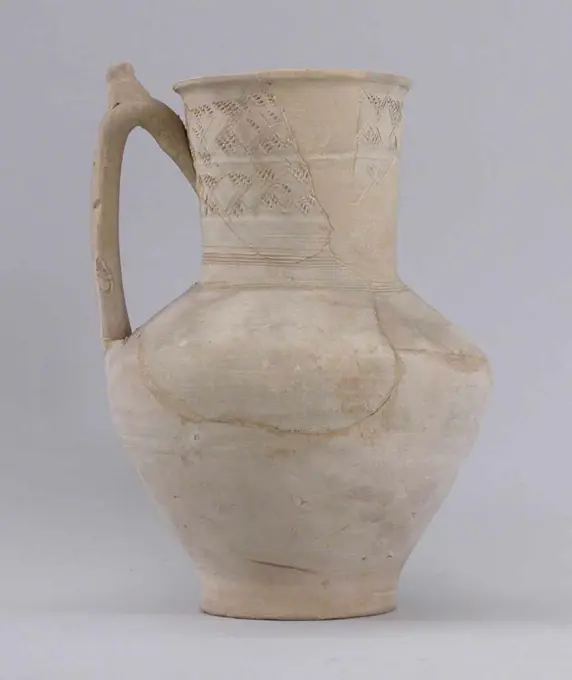
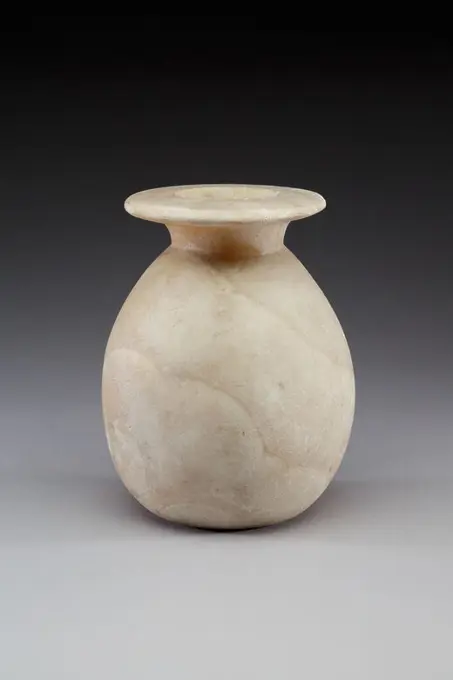
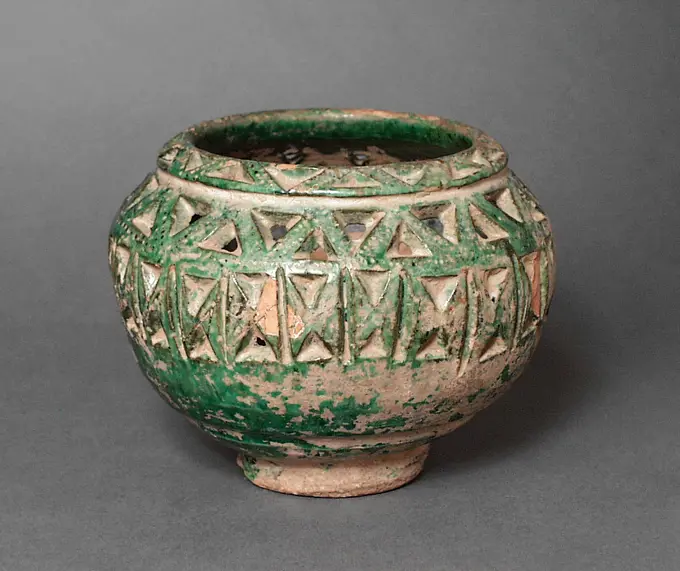
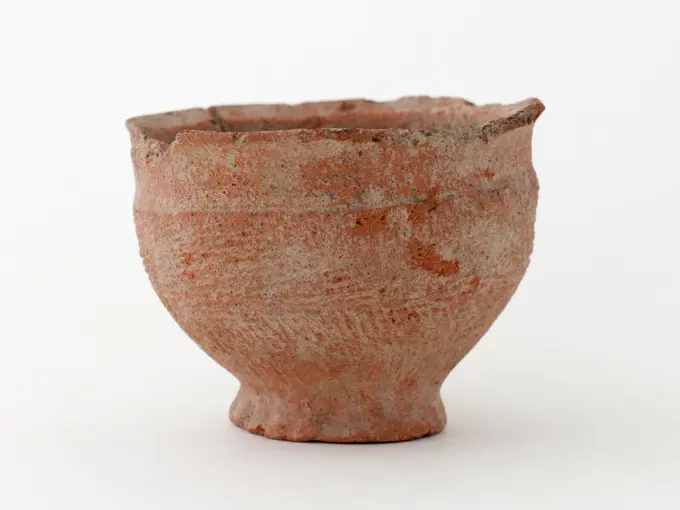
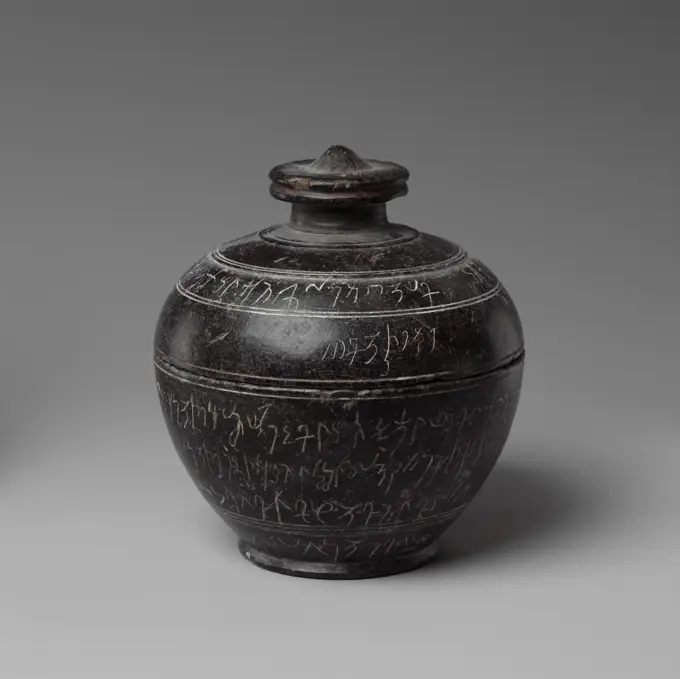
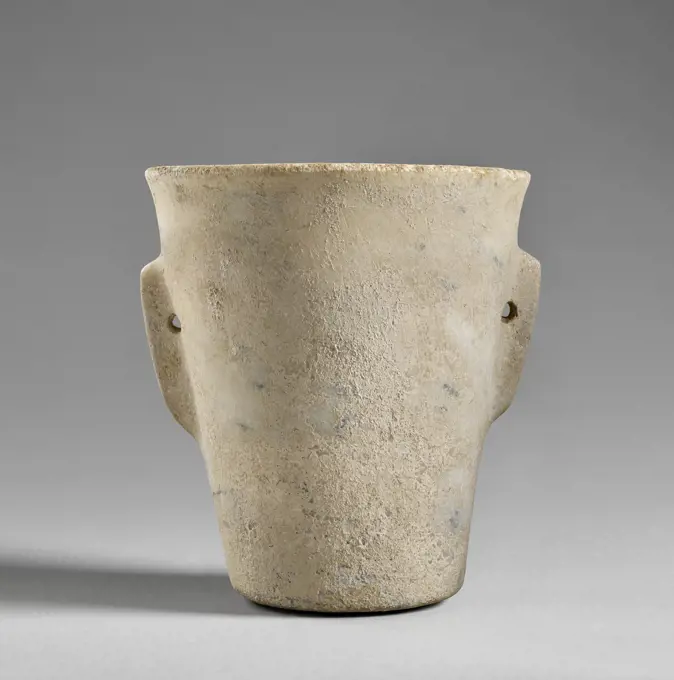
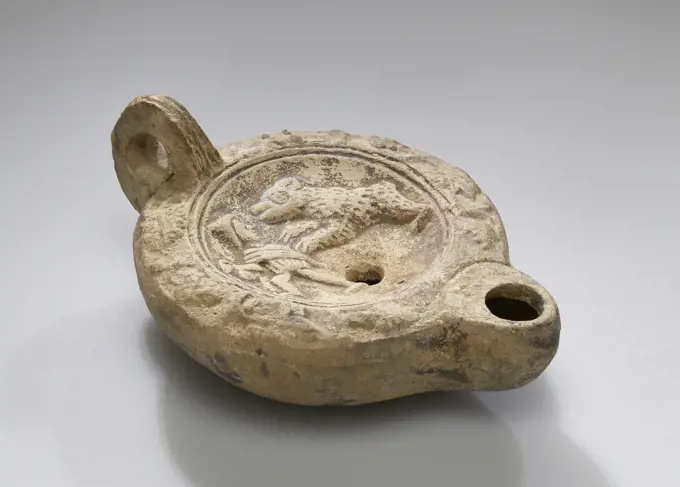
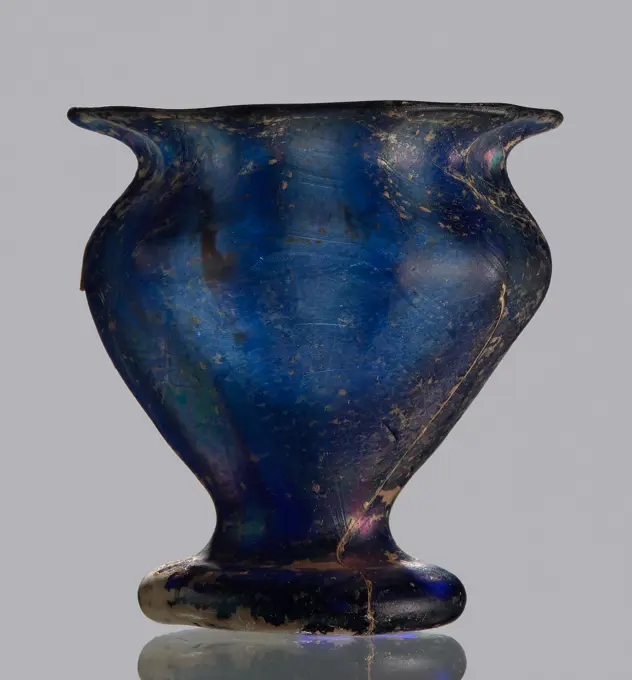
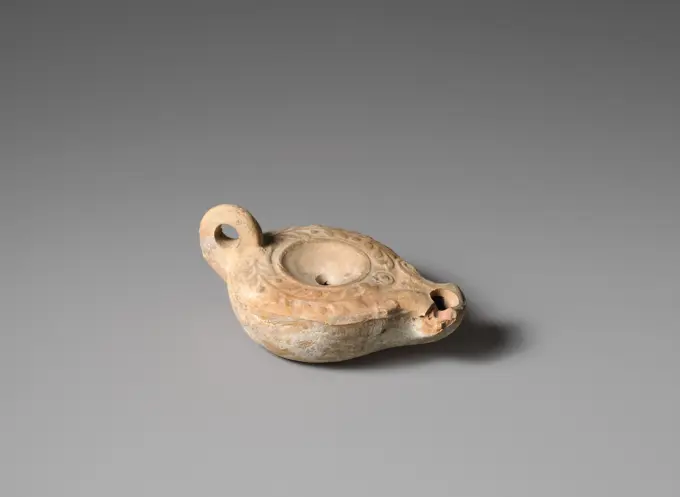
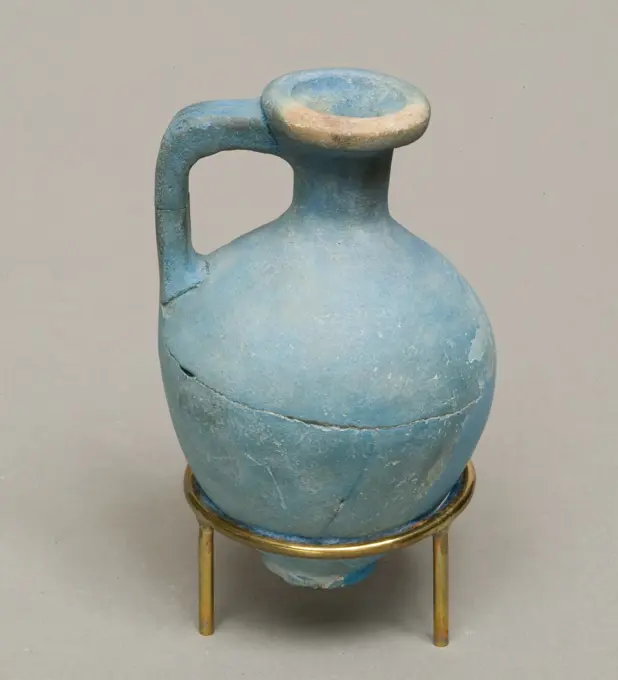
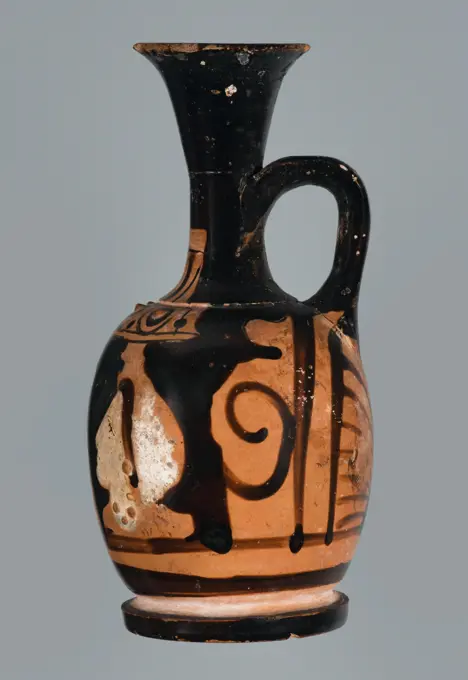
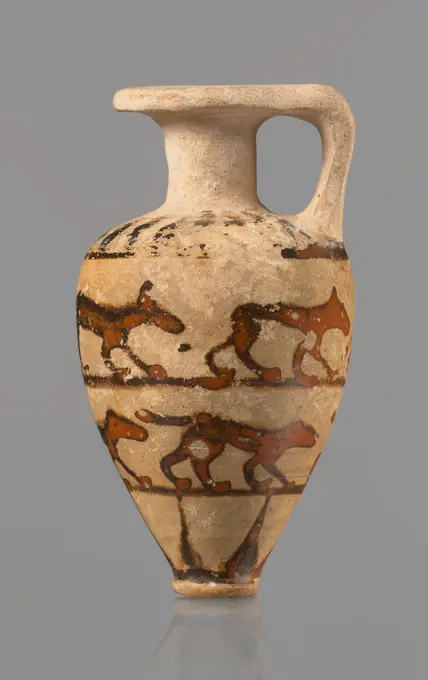
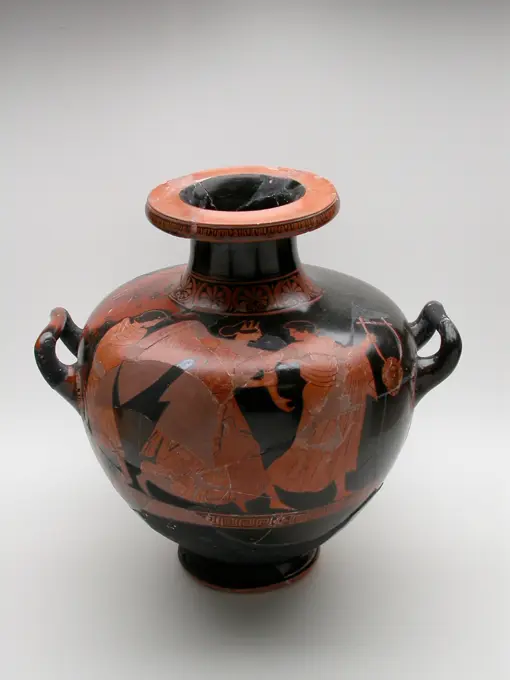
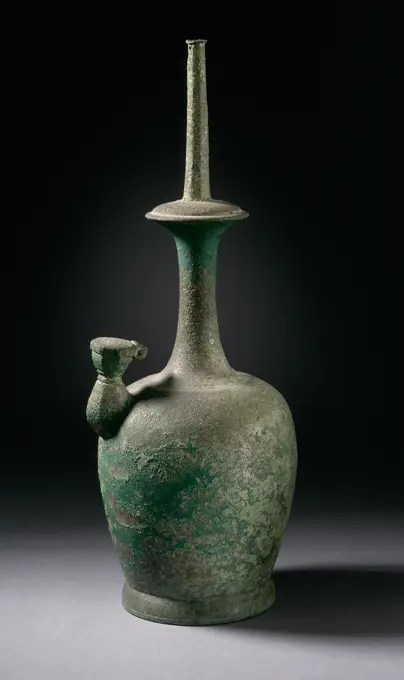
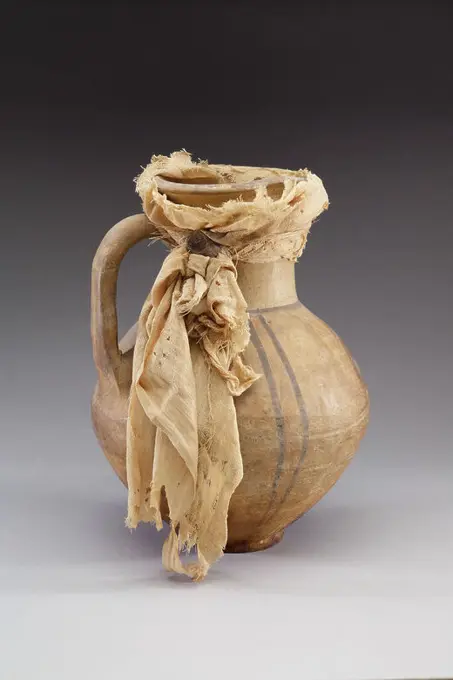
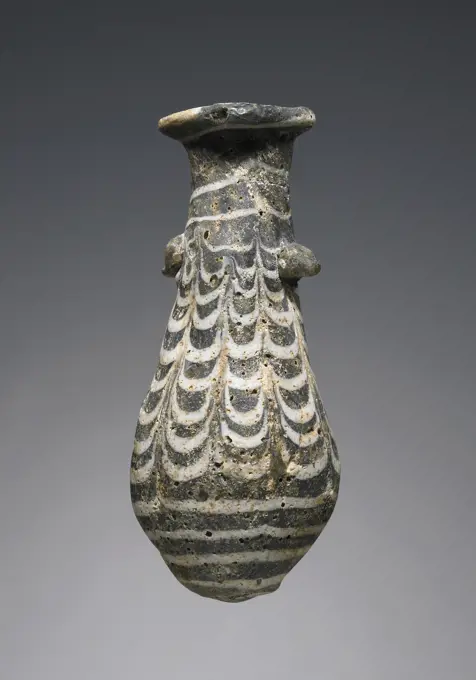
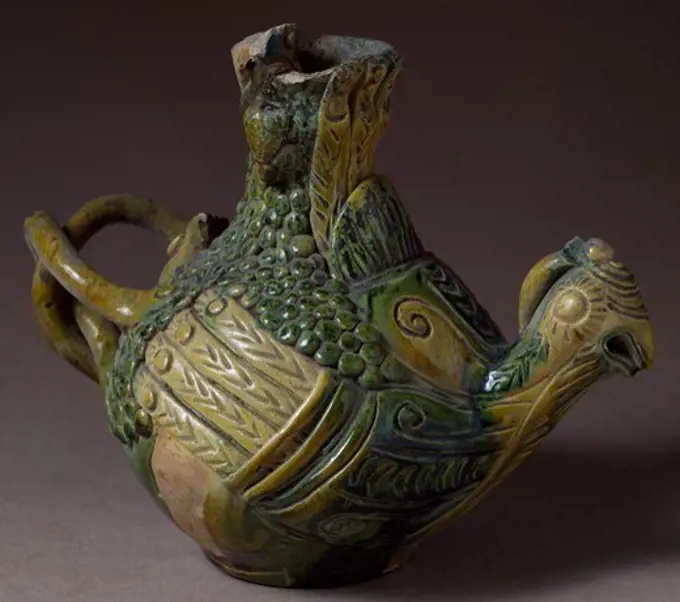
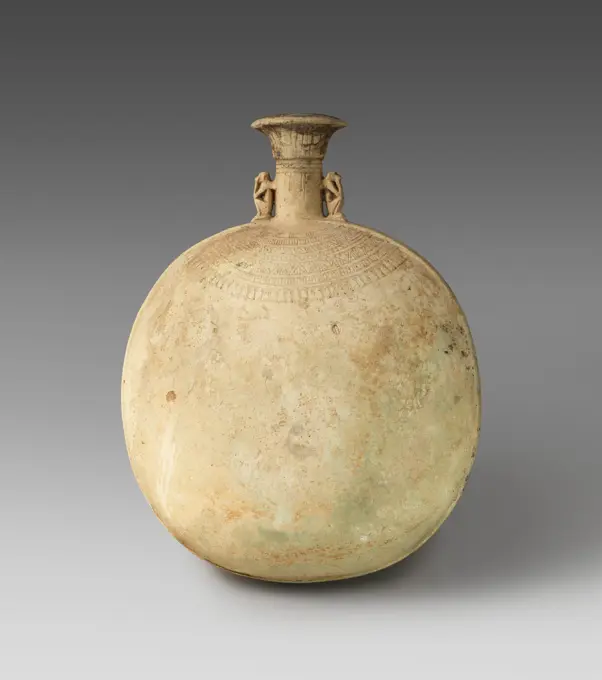
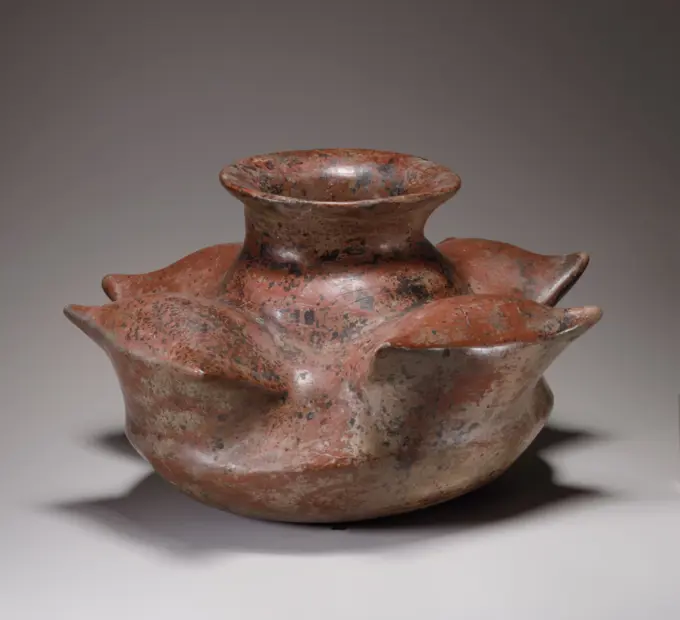
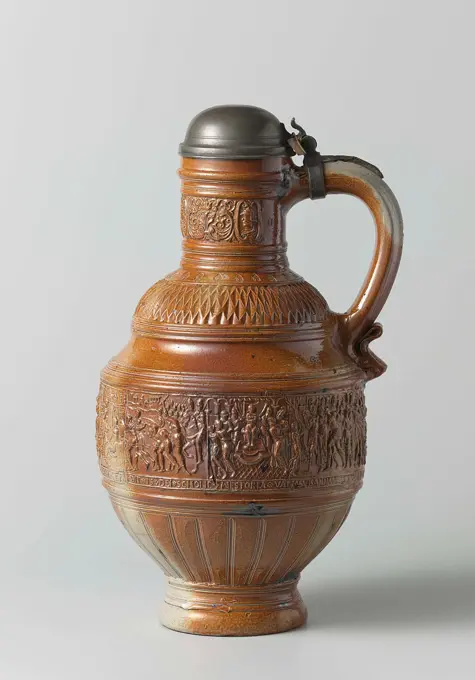
Fragment brown speckled beard man jar with beard and cartouche, Bartmann juggeruik tableware holder soil find ceramic stoneware enamel, hand turned stamped glazed baked Stoneware beard jug with dark brown mottled glaze. Bartmann jug and cartouche Neck with some profile rings. Ball-shaped model with small foot Stand with soul and pull-off tracks Standing sausage ear with on top of hole for the attachment of pewter lid attached to the belly with short rat tail Spindle on the inside in cartouche: escutcheon with three points on the upper edge in which four lines in reverse V-form archeology underground pit Rotterdam Kralingen Gedempte Slaak heraldiek uitheems pottery import drink transport store serve serve Soil discovery underground pit Gedempte Slaak January 16, 1978.Jug 4th century B.C. East Greek. Jug 250572 East Greek, Jug, 4th century B.C., Terracotta, H. with handle 7 in. (17.8 cm). The Metropolitan Museum of Art, New York. Rogers Fund, 1917 (17.230.39). Vase of stoneware with two ears on the shoulder, partly covered with a celadongin glaze. The belly is cylindrical and slightly finished to the foot. The neck has a spherical thickening and short, raised edge. The back and the lower part of the vase are unglazed. A baking tear in the wall. I go.Pitcher Dudziewicz, Wawrzyniec (1822 1891)Bronze aryballos 1st-2nd century A.D. Roman Concentric circles on the bottom; high shouldered, with short, narrow neck.. Bronze aryballos 246904Glass oinochoe (perfume jug) late 4th-early 3rd century B.C. Eastern Mediterranean or South Italian Translucent green, with handle and pad-base in same color; trails in opaque yellow, opaque white, and opaque turquoise blue.Applied trefoil rim-disk with long spout; cylindrical neck; broad rounded shoulder; slightly convex sides to body with downward taper; applied low oval pad-base with concave bottom; strap handle attached to outer edge of shoulder drawn up and round in a loop, arching above the rim-disk, and pressed onto back of rim-disk and top of neck.A fine yellow trail attached at edge of rim-disk; another unmarvered yellow trail wound spirally six and a half times around neck; a third yellow trail, marvered, begun at edge of shoulder and wound round once in a horizontal line on body, then tooled into an inverted festoon pattern, extending to base; mingling with it in alternating lines, turquoise blue and white trails in twenty-three vertical panels with downward strokes, creatinARTE ETRUSCO. SIGLOS. VII-VI a J. C. PIXIDE. Caja de tocador, con dos asas a los lados. La tapa culmina con la figura de una paloma. Restos de policromía. Tiene 120 mm de altura y 85 mm de diámetro. Procede de Eruria. Museo del Perfume. Barcelona. Cataluña.Miniature Jar in the Form of a Figure Wearing a Tunic. Tiwanaku-Wari; South coast Peru or northern Bolivia. Date: 600 AD-1000. Dimensions: 9.5 × 5.7 cm (3 3/4 × 2 1/4 in.). Ceramic and pigment. Origin: Bolivia. Museum: The Chicago Art Institute, USA.. Can be decorated from quartz Fritgoed with a caption ('Barakat', 'blessing'), ingrangled leaf refueling drinks and covered with a monochrome turquoise alkalilation.Lamp. UnknownGlass alabastron (perfume bottle). Culture: Greek, Eastern Mediterranean. Dimensions: H.: 5 3/16 in. (13.2 cm)Diam.: 1 9/16 x 1 1/8 in. (4 x 2.9 cm). Date: 2nd-mid-1st century B.C.. Museum: Metropolitan Museum of Art, New York, USA.Hes Vase from the Burial of Amenemhat. Dimensions: H. 21 cm (8 1/4 in.); Diam. 8.5 cm (3/8 in.); Rim exterior diam. 7.3 cm (2 7/8 in.); Base diam. 6.2 cm (2 7/16 in.). Dynasty: Dynasty 18, early. Reign: reign of Thutmose I-early sole Thutmose III. Date: ca. 1504-1447 B.C..The burial of a scribe named Amenemhat was found in the family tomb of Neferkhawet who was probably his father. Inside Amenemhat's coffin were two ceremonial hes-vases, one on either side of the mummy's legs near the knees. The mouth of each vase had been closed with a wad of fine linen cloth. The jars appear to have held a dark liquid that had stained the inside and permeated the cloth stoppers which were blackened and disintegrating.Neferkhawet's tomb was excavated by the Museum's Egyptian Expedition in 1935 and in the division of finds at the end of the excavation season, one of the hes-vases went to the Egyptian Museum in Cairo and this one came to New York. Museum: Metropolitan Museum of Art, New York, USA.Glass lentoid aryballos (perfume bottle) 4th-3rd century B.C. Greek Semi-opaque yellowish green, with same color handles and cord; trails and blobs in opaque yellow, and trail on cord in opaque white.Broad flat rim-disk with radiating tooling marks on upper surface; cylindrical neck; almost horizontal shoulder; globular lentoid body; convex bottom; two large vertical ring handles attached to shoulder over cord.A trail attached unevenly at edge of rim-disk and partially projecting above rim; another unmarvered fine trail wound in a spiral twice around neck; an oval marvered blob applied to both faces of body; a large cord, twisted together with a white trail, attached under handles runs down sides and across bottom.Intact; some pitting, most of surfaces covered with thick creamy weathering and iridescence.Together with the other two similar aryballoi displayed here (91.1.1367 and 17.194.309), this bottle belongs to a small group of core-formed glass that may have been made in southern IJar 4th millennium B.C.. Jar. 4th millennium B.C.. Ceramic. Uruk. Mesopotamia, NippurBronze oinochoe (pitcher) 4th century B.C. Greek The high handle terminates in a beautiful relief of an inverted palmette and lotos rising from acanthus leaves. In the past the piece was severely cleaned of all archaeological corrosion products. It has recently been cosmetically toned with removable pigments.. Bronze oinochoe (pitcher). Greek. 4th century B.C.. Bronze. Classical. BronzesPanathenaic Amphora with Lid. Attributed to the Nichomachos Group (Greek (Attic))Wine bottle from the wreck of the East Indies Hollandia, Anonymous, 1700 - in or before 1743  Wine bottle, continental production, onion-shaped, complete; broad vs-string rim, tcs-kick-up. Netherlands .   SecondBronze jar with two handles 1st century A.D. Roman The handles have been restored, possibly in antiquity.. Bronze jar with two handles. Roman. 1st century A.D.. Bronze. Imperial. BronzesLamp; South Anatolia, Anatolia; 1st - 4th century; Terracotta; 3.2 x 7.5 x 9.7 cm (1 1,4 x 2 15,16 x 3 13,16 in.)Terracotta lekythos (oil flask). Culture: Greek, Attic. Dimensions: H. 11 1/2 in. (29.2 cm). Date: late 6th-early 5th century B.C..Hoplites and archer in an ambushThe row of warriors keeping low to the ground suggests that the situation is an ambush. Museum: Metropolitan Museum of Art, New York, USA.Large pottery grape, pot on three legs, two standing ears and rings on shoulder, grape cooking pot crockery holder kitchenware earth discovery ceramics earthenware glaze lead glaze, hand turned glazed fried Large pottery cooking pot grape-model red shard inside and outside partially glazed lid slot two vertical sausage ears squeezed on the top and above the edge excellent. Internal glazed only under the neck opening at the bottom. Ball-shaped in shape with large neck opening. Rotating on the shoulder three legs. Restoration is repainted on color archeology native pottery food prepare cooking cuisineclay pot, Chalcolithic, fifth millennium BC, Bulgarian National Archaeological Museum, Sofia, Republic of Bulgaria, Europe.Pot, 9 3/8 x 6 1/4 in. (23.81 x 15.88 cm), Terra cotta, MaliWine bottle with wine from the wreck of the East Indians' t Vliegend Hart ,, 1700 - 1735 wine Uivid wine bottle of green glass filled with red (port) wine, closed with a cork. The thread that the cork had to keep on the bottle has disappeared. Netherlands glassFuneral urn miniature originating from the Mayor Temple in Tenochtitlan (Mexico). Aztec Civilization, 15th Century.Jug late 8th-first half 9th century. Jug 449402Beaker 3500 BCE-3000 BCE Dahestan. Ceramic . IranianAmphora Cypriot Broad and narrow bands in black and red.. Amphora. Cypriot. Terracotta. Iron Age. VasesMortar. Culture: German, Nuremberg. Dimensions: Height: 4 15/16 in. (12.5 cm); Diam. of rim: 6 1/2 in. (16.5 cm). Maker: Wenzel Jamnitzer (German, Vienna 1507/8-1585 Nuremberg). Date: ca. 1550.Wenzel Jamnitzer was the preeminent Mannerist goldsmith in the German-speaking area of the Holy Roman Empire. He became a master of the Nuremberg goldsmiths guild in 1534 and established one of the most important workshops in this great center for luxury goods in the 16th century. Much of Jamnitzer's fame is based on his virtuoso casting of animals and plants after nature. The mortar is decorated with such sculptural ornaments, including the life-casts of medicinal herbs and a lizard. According to legend this reptile could rejuvenate by shedding its skin and growing new tails. It was also believed to regenerate in fire and was therefore interpreted as a symbol of immortality and unchanging logic. This alchemical connotation befitted the use of a mortar to grind the ingredients for medicines. TheLamp. UnknownPottery cooking pot, cooking jug, with one sausage ear, on three legs, cooking pot crockery holder kitchenware earthenware ceramics earthenware glaze lead glaze, hand-turned glazed baked Pottery cooking jug on three legs. Sausage handle attached to the top edge Funnel shaped top edge. Turning on the shoulder. Red shard sparsely glazed Restoration is repainted archeology Rotterdam City center Stadsdriehoek Bulgersteyn indigenous pottery cooking food preparation kitchen food Soil discovery: slot Bulgersteyn in Rotterdam.Jar 25 CE-200 CE China. Earthenware with lead green glaze .Red Ware Pithos. UnknownJug with floral scrolls in panels, anonymous, c. 1725 - c. 1774 Can of stoneware on high foot with a pear -shaped body and wide neck with pinched spout. The C-shaped ear is attached to the neck and shoulder. Some lines and profiles on the neck and foot. Partly covered with cobalt blue. On the body two horizontal tires with stamped flower rosettes. In between a wide, rectangular compartment with an Ingrift Monogram  With flower vines underneath. Two Smallen compartments with flower vines on both sides. Blue lines on the neck and foot. Westerwald. Westerwald stoneware. glaze. cobalt (mineral) vitrification Can of stoneware on high foot with a pear -shaped body and wide neck with pinched spout. The C-shaped ear is attached to the neck and shoulder. Some lines and profiles on the neck and foot. Partly covered with cobalt blue. On the body two horizontal tires with stamped flower rosettes. In between a wide, rectangular compartment with an Ingrift Monogram  With flower vines underneath. Two. Can be covered with quartz frites with monochrome blue alkalilation.Glass double head-shaped flask. Culture: Roman. Dimensions: H.: 2 15/16 in. (7.5 cm). Date: 3rd century A.D..Translucent purple.Rim folded out, round, and in; flaring mouth; cylindrical neck, tapering downwards, with shallow irregular indents; plastic body; uneven, squarish bottom with rounded edges. Mold seams visible at sides of head, extending to base of neck.Body in the shape of two heads, back to back, with similar features; hair in vertical strands across forehead and longer flowing locks to either side of face, extending to neck; prominent forehead, indistinct sunken eyes, broad nose, plump round cheeks, large mouth, and rounded chin; below chin, collar-like strap.Intact, but internal crack across one face; dulling, pitting, creamy brown weathering, and brilliant iridescence. Museum: Metropolitan Museum of Art, New York, USA.Terracotta askos (flask with spout and handle over top) ca. 340-320 B.C. Greek, South Italian, Apulian, Gnathian These two flasks, 2015.641 and 2015.642, undoubtedly for oil, have been known since the early 1880's, when they were purchased by the noted British archaeologist Augustus Henry Lane Fox Pitt-Rivers. They remained with his descendants until 1992. Documentation indicates that they were found together at Capua, a major center in the Italian region of Campania. However, the technique of decoration, in which color is applied onto the vase, points to neighboring Apulia as the place of production. The simple motifs are adapted with exceptional sureness to the irregular surfaces of the respective shapes. Under the spout, the askos additionally shows a suspended theatrical mask between ribbons and ivy leaves, popular details associated with the wine god, Dionysos.. Terracotta askos (flask with spout and handle over top) 698255Amphoriskos (Container for Oil) 500 BCE-301 BCE Rhodes. Glass, core-formed technique . Ancient Eastern MediterraneanPiriform Jar of Rennefer. Dimensions: H. 17.8 cm (7 in.); Diam. 14.8 cm (4 13/16 in.); Diam. of rim 10.9 cm (4 5/16 in.). Dynasty: Dynasty 18, early. Reign: reign of Thutmose I-early sole Thutmose III. Date: ca. 1504-1447 B.C.. Museum: Metropolitan Museum of Art, New York, USA.Bowl or LampVessel. Glazed ceramics. Caliphate (Iraq). 8th-9th centuries. Islamic. The State Hermitage Museum. Saint Petersburg. Russia.Mayan funerary urn, made from terracotta. From Guatemala. 1250-1520 ADOinochoe, Corinthian pottery from Apulia, Italy. Ancient Greek civilization, Magna Graecia.Copper pitcher with enameled and engraved decorationsBridge and Spout Bottle 4th-3rd century B.C. Paracas. Bridge and Spout Bottle 308293Cup ". Terracotta. Vietnam-Xe-Xive s. Paris, Cernuschi museum. 72186-38 Cup, Vietnamese object, terracottaInscribed Reliquary, Donated by King Indravarman A.D. 5-6 Pakistan (ancient region of Gandhara, Bajaur) Inscribed: "In the sixty-third year of the late Great King Aya Azes, on the sixteenth day of the month Kartia Kartika; at this auspicious ? time, Prince Indravarma Indravarman, son of the King of Apraca, establishes these bodily relics of Lord Shakyamuni;.. he produces brahma-merit together with his mother, Rukhunaka, daughter of Aji.. And these bodily relics, having been brought in procession from the Muryaka cave stupa, were established in a secure ?, safe, deep ? depository.. .". Inscribed Reliquary, Donated by King Indravarman. Pakistan (ancient region of Gandhara, Bajaur). A.D. 5-6. Schist. SculptureBeaker with Lug Handles; Cyclades, Greece; 3000 - 2800 B.C; Marble; 15.6 × 12.4 × 13.2 cm (6 1,8 × 4 7,8 × 5 3,16 in.)Banquet; Unknown Night -Tamanian workshop; approx. 2600 2350 BC ; Early period D Azira III (-2600-00-00--2350-00-00);Lamp; North Africa, Tunisia; 2nd - 3rd century; Terracotta; 11.1 x 5.2 x 7.7 cm (4 3,8 x 2 1,16 x 3 1,16 in.)Kratritekos; unknown eastern workshop; III-IV century AD (290-00-00-310-00-00);Wine pitcher with animal motifs from the Vulci territory (Lazio). Etrusco-Corinthian Civilization, 580-560 BC.Jug with a dancing couple, anonymous, c. 1580 - c. 1600 Jug of stoneware on high foot with a cylindrical body, round shoulder and wide neck. Profiles on the neck, the body and the foot. Covered with a brown Engobe. On the belly in relief a printed and laid bond with a farm dance. The musicians are depicted on the left with the dancing pair next to it. In the second box from the left the date '1597'. Under the band the inscription 'Gerhet dv mvs daper blasen so danssen dei bvren as a repeat offenses vf spricht bastor ich far dance dy kapa ko ...'. Between the musicians and the first pair the brand 'W.Z.'. The lower part of the abdomen runs slanted to the foot and, like the shoulder, has entered courses. On the neck a band in relief with vases with flower vines interrupted by masks in medallions. Raeren. Rae stoneware. glaze. engobe vitrification Jug of stoneware on high foot with a cylindrical body, round shoulder and wide neck. Profiles on the neck, the body and the foot. Covered with Painted Wide-Mouthed Jug ca. 1479-1458 B.C. New Kingdom This jar contains the remains of a vegetable oil. It was originally covered with a small dish which was tied in place with linen cloth. A coffin, this jar, and other personal possessions were discovered with the burial of an unknown woman who may have been related to Senenmut, one of Hatshepsut's officials. The woman's coffin and personal possessions came to the Museum in the division of finds.. Painted Wide-Mouthed Jug. ca. 1479-1458 B.C.. Pottery (marl A, variant 4), paint, linen, mud. New Kingdom. From Egypt, Upper Egypt, Thebes, Sheikh Abd el-Qurna, below the Tomb of Senenmut (TT 71), burial 2, MMA excavations, 1935-36. Dynasty 18Terracotta oil lamp 1st century B.C.-1st century A.D. Greek or Roman Vessberg Type 11a. Mold-made, with ring handle. Plain, concave discus with central filling hole; broad, slightly sloping shoulder, decorated in relief with laurel sprays issuing from handle, with circle and large dot at front behind nozzle; stylized volutes on sides of angular nozzle; undefined, hollow base.Almost complete, but crack around front right side of top and left edge of nozzle missing; some limy encrustation on underside and base.. Terracotta oil lamp. Greek or Roman. 1st century B.C.-1st century A.D.. Terracotta. Late Hellenistic or Early Imperial. TerracottasRECIPIENTE OVOIDE EN BARRO COCIDO. CULTURA GERZIENSE 3400 AC. Location: EGYPTIAN MUSEUM. KAIRO. EGYPT.Juglet ca. 1750-1640 B.C. Middle Kingdom. Juglet. ca. 1750-1640 B.C.. Egyptian blue. Middle Kingdom. From Egypt, Memphite Region, Lisht North, cemetery south of pyramid, southeast corner platform, Pit 378, MMA excavations, 1920-22. Dynasty 13Vase 19th century. Vase 447032Vase China. Vase 53798Aryball lease;  4th century BC (-400-00-00--301-00-00);Jug with round base and round spout, Incised Red Polished Ware, Early Bronze Age, 2000 BC. from CyprusVase ca. 1800-1550 B.C. Middle Kingdom. Vase 561516Hydria, 400-200 BC. Sicily, Italy. Ancient Greek Hydria (pitcher with three handles).URNE. Bronze. Chine. Par musée musée malée. Handle, Chinese art, bronze, decorative motif, urnTerracotta miniature jar with two handles. Culture: Greek, Laconian. Dimensions: H. 1 3/4 in. (4.5 cm). Date: 7th-6th century B.C..Two handles, traces of white paint. Museum: Metropolitan Museum of Art, New York, USA.Tripod Vessel with Squared Handles, Wheel Patterns at Neck 1100-1199 China. Stoneware with molded/applied relief and iron brown glaze .Wine jug with fixed lid from V.O.C. ship De 'Witte Leeuw', 1585 lid Wine jug with fixed lid from V.O.C. ship the 'Witte Leeuw', 100  present. Wine jug with baluster -shaped wall ending in a narrow neck and small mouth. Halfway through the neck a ledge or chill of clay. A vertical ear runs from this height to the shoulder. A pewter valve cover is attached to the ear. Incision line runs around the jug on shoulder. On the abdomen: three relief medallions with coat of arms and the year 1585. Gray-white glaze on crème shard. Neck decorated with radial ridges. Siegburg stoneware. tin (metal)   Sint-HelenaAryballos in a skodenny orientalized with animal frieze;  650-630 BC (-650-00-00--630-00-00);Stoneware jug with ear, belly with cannelures, shoulder with kerfsnedecor, medallions around neck, jug crockery holder soil find ceramic stoneware glaze salt glaze, hand turned fried glazed stoneware jug gray shard with salt glaze profiled bandoor with curled tail profile rings and cord straps around the neck and foot archeology import pottery serve serve serve beer wineBronze jug with handle attachment showing running youth 450-400 B.C. Etruscan With a beaked, trefoil mouth and body of angular outline. The attatchment at the base of the handle is in the form of a running youth.. Bronze jug with handle attachment showing running youth. Etruscan. 450-400 B.C.. Bronze. Classical. BronzesPIEZA DE PAREDES FINAS. ROMANO. (DEPOSITO: MUSEO ARQUEOLOGICO NACIONAL).Hydria (Water Jar) 480 BCE-470 BCE Greece. This vase depicts the winged goddess Eos (Dawn), wearing a diadem, chiton and himation, pursuing an unnamed youth who is probably Tithonos she has caught him by the arm. He wears a himation and holds a lyre in his left hand. On the left of the scene a boy, heavily wrapped in his himation, flees to the left, but turns his head back to the right he was perhaps intended to be a schoolmate.. terracotta, decorated in the red-figure technique . The Orchard PainterStand with tall, perforated base, second half of 5th century, Unknown Korean, 10 5/8 × 12 3/4 × 12 1/8 in. (26.99 × 32.39 × 30.8 cm), Stoneware, Korea, 5th-6th centuryVase 300-290 B.C. Etruscan Two handles joined to vase by cross-bars; no decoration.. Vase. Etruscan. 300-290 B.C.. Terracotta; grey ware, "depurata". Hellenistic. VasesBottle 1 CE-200 CE Syria. Glass, blown technique . Ancient RomanKundika. Korea, Goryeo dynasty (918-1392), 13th-14th century. Tools and Equipment; sprinklers. Cast bronzePainted Wide-Mouthed Jug. Dimensions: Jug: H. 26.8 cm (10 9/16 in.); Maximum diam. 19.9 cm (7 13/16 in.); Rim diam. 11.3 cm (4 8/16 in.). Dynasty: Dynasty 18. Reign: Joint reign of Hatshepsut and Thutmose III. Date: ca. 1479-1458 B.C.. Museum: Metropolitan Museum of Art, New York, USA.domestic amphora , from Rachidieh necropolis, Clay, iron age II, Beirut National Museum, The Coliseum , Rome, Lazio, Italy ,.Beaker. Culture: South German. Dimensions: Overall: 3 13/16 x 3 1/4 in. (9.7 x 8.3 cm)at foot: 2 in. (5.1 cm). Date: 13th century. Museum: Metropolitan Museum of Art, New York, USA.Alabastron; Eastern Mediterranean; 2nd - 1st century B.C; Glass; 7.9 cm (3 1,8 in.)Phonenix-shaped tri-colour terracotta flask, China. Chinese Civilisation, early Sung Dynasty, 10th or 11th century.Stoneware jug have gray rosettes on the neck and belly, shoulder with two gray bands, jug crockery holder soil find ceramic stoneware salt glaze glaze, hand turned stamped glazed glazed baked Stoneware jug gray shard with salt-glazed curled tail archeology Rotterdam City center Stadsdriehoek Hoogstraat import pottery serving drinks drinking wine beer archaeological find in the soil Rotterdam: Found during excavation work for the construction of the air track (Hoogstraat 1872).Jug 'trichterhalskrug' with floral scrolls and ribbed body, anonymous, c. 1600 - c. 1630 Jug (funnel of jug) of stoneware on a high foot with an egg -shaped abdomen and funnel -shaped neck. The C-shaped ear is attached to the shoulder. Profiles on the neck, belly and foot. Partly covered with cobalt blue. The lower part of the abdomen is ribbed and separated from the shoulder by means of a profile. The shoulder is divided into wide and narrow courses; A stamped flower drink in the wide courses. Westerwald. Westerwald stoneware. glaze. cobalt (mineral) vitrification Jug (funnel of jug) of stoneware on a high foot with an egg -shaped abdomen and funnel -shaped neck. The C-shaped ear is attached to the shoulder. Profiles on the neck, belly and foot. Partly covered with cobalt blue. The lower part of the abdomen is ribbed and separated from the shoulder by means of a profile. The shoulder is divided into wide and narrow courses; A stamped flower drink in the wide courses. Westerwald. WesteLentoid Bottle ("New Year's Bottle") Late Period 664-332 B.C. The neck of this "New Year's Bottle" is in the form of a papyrus or lotus column, flanked by two squatting apes that take the place of handles.The shoulder of the lentoid body is adorned front and back with the representation of a garland, echoing the broad collars which would have been worn by Egyptians at festivals and banquets. There is a band of inscription on the side. Faience flasks of this type, often inscribed with good wishes and apparently filled with water from the Nile, were given as gifts at the New Year. View more. Lentoid Bottle ("New Year's Bottle"). 664-332 B.C.. Faience. Late Period. From Egypt. Dynasty 26-30Jar with Cut Maguey Leaves 2nd century B.C.-A.D. 3rd century Colima Like other ceramic objects from Colima, the subject matter of this vessel was taken directly from the imagery of daily life. The four projecting elements of this pot are representations of a regional food staple, the succulent base of the maguey agave cactus leaf that even today is roasted and sold in the local markets of western Mexico, the area from which this jar came. Other Colima vessels of this type depict piles of fruits and vegetables, such as zapotes and squashes. All are characterized by simple, elegant motifs rendered three-dimensionally and presented in repetition. These ceramics have been found in burial contexts and their shape suggests that they would have held a liquid, perhaps one derived from the object that they depict. In this vessel, the roasted cactus, called mescal, like the fermented beverage produced by it, is depicted as if set in a bowl ready for consumption.. Jar with Cut Maguey Leaves 3131Glass hydriske (perfume bottle). Culture: Greek, Eastern Mediterranean. Dimensions: H.: 2 1/4 in. (5.7 cm). Date: late 4th-3rd century B.C..Translucent cobalt blue, with handles in same color; trails in opaque white and opaque yellow.Horizontal rim-disk, with rounded edge; cylindrical neck, with slight upward taper; broad almost horizontal rounded shoulder; ovoid body; applied circular pad-base, with uneven bottom; on sides of upper body, two small vertical loop handles; strap handle applied at junction of shoulder and body in a pad and pressed on to underside of rim-disk and top of neck.Unmarvered yellow and white trails attached on shoulder and wound round; both trails tooled in a close-set zigzag pattern with deep vertical ribs over top half of body, then white trail continuing down in a spiral around lower body.Complete, except for most of one loop handle and strap handle; dulling and pitting, with patches of brownish weathering and faint iridescence. Museum: Metropolitan MuseuSusanna jug. The body of this large pitcher is embellished with scenes from the story of the chaste Susanna. When the beautiful Susanna refused to submit to the dishonourable proposals of two elderly men, they accused her of adultery. However, the young Daniel exposed the two greybeards as liars. The two men suffered a gruesome death.Storage jar decorated with mountain goats ca. 4000-3600 B.C. People of the ancient Near East used the abundant supply of clay to construct bricks for their cities and also as a surface upon which to record their histories, religious beliefs, and business transactions. In addition, clay was widely used for making pottery  so much so that archaeologists find more pottery in the ruins of ancient cities than any other form of art.In the fourth millennium B.C. in central and southwestern Iran, painted decoration on pottery like this large jar reached a new level of sophistication. Combinations of geometric patterns, birds, and animals were silhouetted in dark brown on buff clay. These fine vessels were often found in tombs and therefore may have been used in religious or burial rituals.This ovoid storage jar is a masterpiece of early pottery making, incorporating a design that is stylized but not static. A mountain goat, or ibex, stands in profile on the topmost of six bands, which circlesJug with handle ca. 6th-8th century A.D. Sasanian or Islamic. Jug with handle 322946Small Cup. Afghanistan, 6th-7th century. Ceramics. CeramicCreamer. Dated: c. 1938. Dimensions: overall: 21.1 x 13.5 cm (8 5/16 x 5 5/16 in.) Original IAD Object: 5 1/2" High. Medium: watercolor and colored pencil on paper. Museum: National Gallery of Art, Washington DC. Author: John Matulis.Vessel Made 2613 BCE-2181 BCE Egypt. Calcite . Ancient EgyptianGlass bottle 2nd-3rd century A.D. Roman Translucent blue green.Thick everted rim, folded in and pressed flat on top, forming inner lip to mouth; cylindrical neck, expanding downwards; slightly concave shoulder; large globular body; pushed-in bottom.Wheel-abraded decoration in parallel horizontal bands around body, comprising two broad bands around upper body, six narrower lines aroudn center, and a single broad band around lower body.Intact; some pinprick and elongated bubbles; dulling and faint limy weathering on exterior, iridescent weathering on interior.Greenish blown glass vase with slender neck.. Glass bottle 239733Pottery test on stand ring with standing bandoor and sludge decoration, test fire test heating soil discovery ceramics earthenware glaze lead glaze clay, hand turned decorated glazed baked loin cord Pottery test on stand ring. Red shard entirely glazed. Tapered model with wide neck and narrow foot Internal partial yellow glazed External band of yellow waves in sludge technique. Misbaksel: baking error on the inside remnants of strange baked stoneware. Traces around standring archeology indigenous pottery heat food prepare cooking kitchen stew roomNikon D100 Digital CaptureStirrup Spout Bottle with Scrolls 5th-7th century Moche. Stirrup Spout Bottle with Scrolls 309301Flask (bianhu) Made 475 BCE-221 BCE China. This canteen-shaped container was probably modeled after leather flasks designed to be slung from the shoulder by cords. The bricklike pattern of inlaid copper may allude to this cord wrapping. A stamp carved with a pattern of feather-curls was repeatedly impressed into the clay mold to create this intricate surface decoration.. Bronze inlaid with copper .Situla, 715-332 BC. Egypt, Late Period. Turquoise faience; diameter: 7.5 cm (2 15/16 in.); diameter of mouth: 3.5 cm (1 3/8 in.); overall: 12.4 cm (4 7/8 in.).Bronze oinochoe (jug) late 6th century B.C. East Greek Handle is worked separately; it may be an ancient replacement.. Bronze oinochoe (jug). East Greek. late 6th century B.C.. Bronze. Archaic. BronzesWine Container (Fou) ca. 6th-5th century B.C. China. Wine Container (Fou) 39760